

The White Desert of Egypt, known in Arabic as Sahara El Beyda, is the most otherworldly, the most visually astonishing, and the most internationally celebrated natural landscape in all of Egypt outside the ancient monuments of the Nile Valley, a vast protected national park in the Farafra Depression of the Western Desert whose landscape of brilliantly white chalk and limestone rock formations sculpted by millions of years of wind erosion into the most extraordinary and the most fantastically varied collection of natural sculptures in the world creates an environment of such complete alien beauty and such immediate visual overwhelm that virtually every traveler who encounters it for the first time describes the experience as unlike anything they have ever seen or could have imagined in any desert on earth. Located approximately 45 kilometers southwest of the Farafra Oasis and approximately 500 kilometers southwest of Cairo in the heart of the Egyptian Western Desert, the White Desert National Park encompasses an area of approximately 3,010 square kilometers of chalk and limestone desert whose extraordinary wind-sculpted formations, ranging from the famous mushroom-shaped chalk rocks and the dramatic inselberg pinnacles to the sprawling flat chalk plains and the isolated chalk mountain massifs of the park interior, have made the White Desert the most photographed natural landscape in the Egyptian Western Desert and one of the most internationally recognized natural heritage sites in the entire African continent. This extraordinary destination is accessible through Egypt Desert Safari Tours and Egypt Travel Packages, both of which WOW Egypt Tours proudly offers to travelers from around the world as part of Egypt Tours Packages that encompass the complete natural and geological heritage of the magnificent Western Desert.
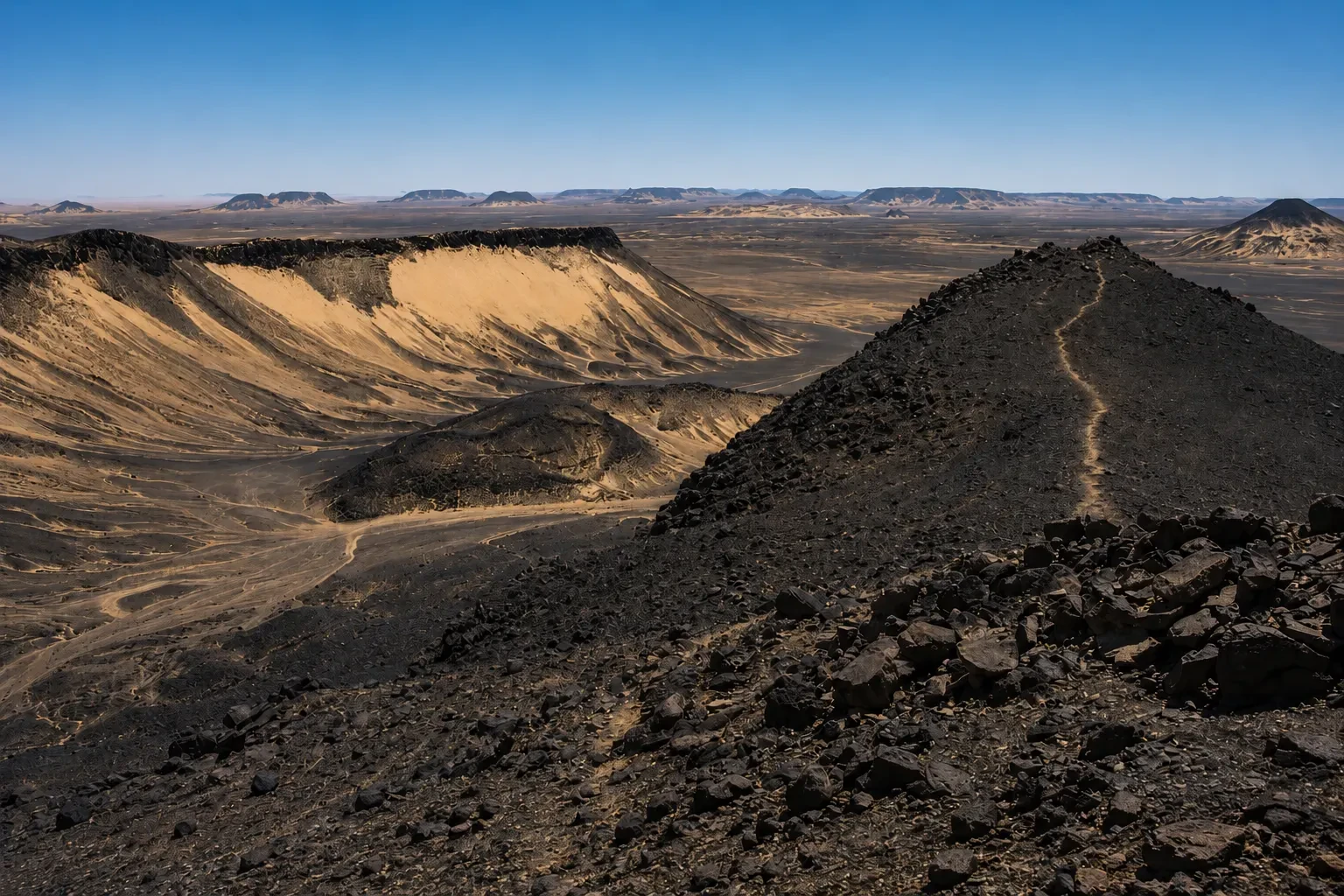
The White Desert Egypt is the supreme natural heritage destination of the Egyptian Western Desert safari circuit, the final and the most dramatically beautiful chapter of the complete Western Desert journey that begins in the volcanic drama of the Black Desert to the north, passes through the ancient oasis culture and extraordinary archaeology of the Bahariya Oasis and the crystalline mineral beauty of Crystal Mountain, and culminates in the White Desert in a landscape of such complete and such overwhelming natural beauty that travelers who have visited both the ancient monuments of the Nile Valley and the White Desert consistently struggle to choose between them as the single most memorable natural and cultural experience of their entire Egypt journey. The chalk formations of the White Desert, whose brilliant white surfaces glow with a particular luminosity in the desert sunlight and acquire the most extraordinary range of warm colors at sunset and dawn, the deep silence of the national park interior where the only sounds are the desert wind and the distant calls of desert birds, the extraordinary concentration of natural sculptural forms of every conceivable scale and shape distributed across the chalk plains and among the chalk inselbergs, and the incomparable experience of camping overnight in the White Desert under the most spectacular starry sky visible from any accessible camping location in Egypt together make the White Desert the single most personally extraordinary natural heritage experience available anywhere in the country. WOW Egypt Tours includes the White Desert as the centerpiece and the supreme destination of all Western Desert Safari Tours and Egypt Desert Safari programmes, combining it with the Black Desert, the Bahariya Oasis, and the Farafra Oasis in the most comprehensive and the most expertly guided Western Desert safari experience available in Egypt.

What Is The White Desert?
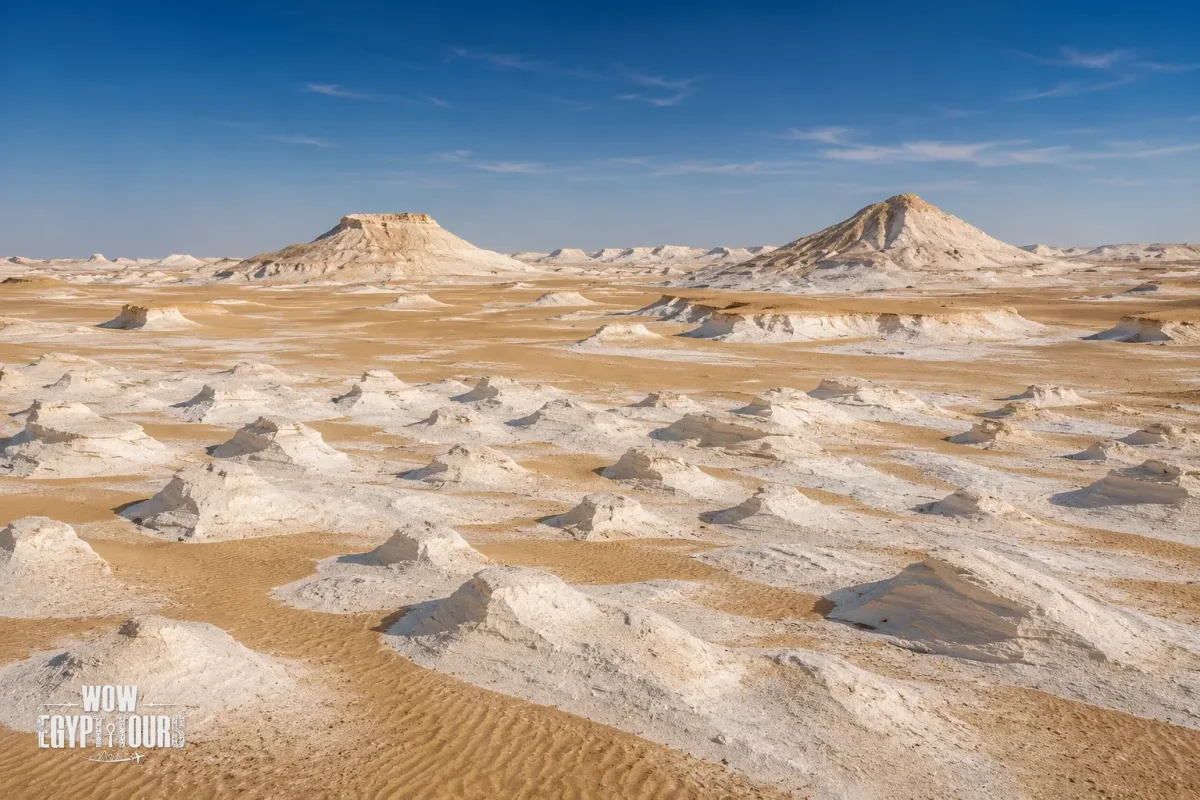
The White Desert is a national park and natural heritage area in the Farafra Depression of the Egyptian Western Desert, protected since 2002 under the designation of White Desert National Park and encompassing approximately 3,010 square kilometers of chalk and limestone desert whose dominant visual character is defined by the brilliant white rock formations that give the park its name and its extraordinary visual identity. The white color of the formations is the product of the specific geological character of the rock that dominates the landscape, a chalk and soft limestone deposited on the floor of a shallow Cretaceous sea that covered the Western Desert region approximately 80 to 90 million years ago, and subsequently exposed at the surface by the uplift and erosion of the overlying strata over the past tens of millions of years to create the extraordinary landscape of white rock formations that stretches for dozens of kilometers across the Farafra Depression floor. The white chalk formations are not uniform in character throughout the park but vary enormously in scale, form, and visual character from section to section of the protected area, ranging from the large isolated chalk mountain massifs of the southern park that rise to heights of 20 to 30 meters above the desert floor in the most dramatically monumental landscape available in the park, through the famous mushroom-shaped formations of the central park whose wind-sculpted bases and larger caps create the most immediately photogenic and the most widely reproduced image of the White Desert in international travel photography, to the flatter chalk plains of the northern park where the erosion has reduced the chalk formations to a carpet of smaller white shapes distributed across the desert floor in a composition of more intimate but equally extraordinary natural beauty.
The White Desert National Park is the most significant nature conservation area in the Egyptian Western Desert and one of the most important protected natural areas in the entire North African desert landscape, protecting not only the extraordinary geological formations that define its visual character but also the remarkable desert ecosystem that has adapted to the extreme conditions of the Western Desert environment, including the endemic desert plants, the migratory bird populations that use the park as a staging area on the African-Eurasian flyway, and the desert mammals including the rare dorcas gazelle and the endangered Barbary sheep that find refuge in the park's remote interior away from human disturbance.
What Created The White Desert?
The White Desert was created by a geological process of extraordinary duration and extraordinary complexity that began with the deposition of chalk and soft limestone on the floor of the Cretaceous sea that covered the Western Desert region approximately 80 to 90 million years ago, continued with the uplift and exposure of these marine sedimentary rocks at the desert surface through tectonic processes and erosional removal of the overlying strata over the past tens of millions of years, and culminated in the spectacular wind erosion process that has sculpted the exposed chalk and limestone formations into the extraordinary variety of natural forms visible in the park today over a period of approximately 30 to 35 million years of continuous desert conditions in the Western Desert region. The geological history of the White Desert is therefore a story of marine deposition, tectonic uplift, atmospheric exposure, and finally wind erosion, each stage contributing a different and essential chapter to the geological biography of the landscape that visitors encounter today.
The wind erosion process that is most directly responsible for the visual character of the White Desert formations is one of the most powerful and the most geologically productive physical processes operating in the Western Desert environment, using the sand and dust carried by the prevailing desert winds as the primary abrasive tool to carve and sculpture the exposed chalk and limestone rock surfaces into the extraordinary variety of forms visible in the park. The wind erosion is most intense at the base of the chalk formations, where the sand-laden air moving close to the desert floor abrades the rock surface most aggressively, creating the characteristic undercut and narrowed base forms that produce the famous mushroom-shaped rocks whose broader upper portions, protected from the most intense sand abrasion by their height above the desert floor, project outward from the narrowed wind-eroded base in compositions of extraordinary natural sculptural ingenuity. The enormous variety of forms produced by this erosional process in the different chalk and limestone formations of the park, from the monumental mushroom rocks and the dramatic spire formations to the sweeping inselberg massifs and the delicate isolated chalk pillars, reflects the extraordinary range of outcomes that a single fundamental physical process can produce when applied to different scales, different rock compositions, and different structural orientations of the geological raw material over millions of years of continuous geological time.
The Famous White Desert Rock Formations
The White Desert's most celebrated and most individually named rock formations have achieved a degree of popular recognition that extends well beyond the specialist circles of geological heritage tourism into the broader international travel and natural heritage consciousness, with individual formations such as the Mushroom Rock, the Chicken Rock, and the Rabbit Rock reproduced in photography collections, travel documentaries, and natural heritage publications throughout the world as the most immediately recognizable and the most visually compelling symbols of the extraordinary natural heritage of the Egyptian Western Desert. These named formations, while individually celebrated and individually distinctive, are only the most famous examples of the literally hundreds of extraordinary chalk and limestone natural sculptures distributed across the landscape of the White Desert National Park, each one the product of the same wind erosion process applied to a different scale and a different structural configuration of the white chalk rock, each one unique in its precise form and its visual character while sharing the fundamental geological origin that makes the White Desert landscape a coherent and unified natural heritage experience of the first order.
The Mushroom Rock, the most famous and the most widely reproduced single formation in the entire White Desert, is a large chalk inselberg whose wind-eroded base has been progressively narrowed by the sand-abrasion of the prevailing desert winds to create a dramatically undercut profile in which a substantial upper portion of the rock projects well beyond its narrowed base in a composition that perfectly replicates the form of a giant mushroom or toadstool, with the cap portion of the rock extending several meters on all sides beyond the stem-like base below. The visual impact of the Mushroom Rock, standing in the brilliant white chalk landscape with the blue desert sky behind it and the desert floor of sand and smaller chalk fragments around its base, is one of the most immediately dramatic and the most personally satisfying natural sculptural experiences available at any accessible natural heritage site in Egypt. The Chicken Rock and the Rabbit Rock, whose names describe with varying degrees of precision the animal forms that the wind has carved into the white chalk of these specific formations, provide equally compelling examples of the anthropomorphic and zoomorphic forms that human perception inevitably discovers in the random shapes produced by wind erosion on white rock, and their naming reflects the deep human tendency to impose familiar forms and familiar narratives on the extraordinary variety of natural sculptural inventions that the White Desert landscape continuously reveals.
White Desert Location In Egypt
The White Desert National Park is located in the Farafra Depression of the Egyptian Western Desert, in the New Valley Governorate (Wadi El Gedid), approximately 45 kilometers southwest of the Farafra Oasis town and approximately 500 kilometers southwest of Cairo. The park is accessible from Cairo via the Desert Road to the Bahariya Oasis (approximately 370 kilometers, 3.5 to 4 hours driving) and then south on the road from Bahariya through Crystal Mountain to Farafra (approximately 180 kilometers, 2 to 2.5 hours driving), making the White Desert the most distant and the most logistically demanding of the three primary Egyptian desert natural heritage destinations. The access road from Bahariya to Farafra passes through the Crystal Mountain stopping point at the geological boundary between the Black Desert terrain to the north and the White Desert chalk landscape to the south, providing the most dramatic and the most geologically informative approach to the White Desert available from any direction. The park entrance is marked on the road southwest of the Farafra Oasis town, and all vehicle access to the interior of the park beyond the entrance requires the use of a licensed four-wheel-drive vehicle and a licensed desert guide, as the off-road terrain of the park interior is not navigable by standard vehicles and the risk of getting lost in the desert without a knowledgeable guide is a genuine and serious safety concern. WOW Egypt Tours provides private four-wheel-drive vehicle transportation and licensed desert guide services for all White Desert visits as part of comprehensive Western Desert Safari Tours and Egypt Desert Safari programmes.
White Desert Fun Facts
The White Desert National Park was established in 2002 as Egypt's first protected natural area in the Western Desert, a conservation designation that reflects both the extraordinary natural heritage value of the chalk formation landscape and the growing recognition by the Egyptian environmental authorities of the ecological significance of the Western Desert ecosystem and the need to protect it from the unsustainable tourism development that had begun to threaten its environmental integrity in the 1990s as the Western Desert safari circuit became an increasingly popular tourism product. The establishment of the national park brought the White Desert under the regulatory framework of the Egyptian Environmental Affairs Agency and established the rules regarding vehicle access, camping locations, and guide requirements that ensure the most significant natural formations and the most sensitive ecological zones of the park are protected from direct physical damage by tourism activities.
The chalk formations of the White Desert are composed primarily of nummulitic limestone, a specific variety of limestone formed from the accumulated shells of nummulites, the coin-shaped foraminifera organisms whose enormous populations lived in the shallow Cretaceous sea that covered the Western Desert region approximately 80 to 90 million years ago and whose shells, preserved in the rock as fossils, give the White Desert limestone its characteristic granular texture and its brilliant white color. The presence of nummulite fossils in the White Desert chalk formations means that virtually every piece of white rock picked up from the desert floor in the park contains the preserved shells of ancient marine organisms that lived in the Cretaceous sea that once covered this landscape, giving the White Desert an extraordinary dimension of biological deep time that complements and enriches the geological deep time of the rock formations themselves.
The overnight camping experience in the White Desert is consistently described by those who have experienced it as one of the most extraordinary natural experiences available anywhere in the world, not only for the extraordinary visual beauty of the chalk formations in the sunset and dawn light and the supernatural quality of the landscape by moonlight, when the white chalk formations glow with an ethereal blue-white luminosity that makes the desert floor resemble the surface of the moon, but also for the extraordinary quality of the night sky visible from the White Desert interior, where the complete absence of light pollution in the most remote sections of the park reveals the Milky Way and the full stellar canopy of the Egyptian night sky in a display of astronomical beauty that is simply unavailable from any light-polluted urban or suburban environment in the modern world.
Why Is It Called The White Desert?
The White Desert takes its name from the most immediately obvious and the most fundamentally defining visual characteristic of the landscape: the brilliant white color of the chalk and limestone rock formations that dominate the park's visual environment and that distinguish it from every other desert landscape in Egypt and in the broader North African world. The Arabic name Sahara El Beyda translates directly as White Desert, a designation of complete descriptive accuracy that requires no interpretive elaboration to convey the essential character of the landscape to anyone who has not yet seen it and that perfectly anticipates the first visual impression of the chalk formations that every first-time visitor experiences with the same response of astonished recognition that the name they have been given for the landscape is, if anything, an understatement of the visual reality it describes. The name White Desert also carries within it the implicit contrast with the nearby Black Desert to the north, whose name provides the perfect geological and visual counterpoint to the White Desert designation in the binary naming system of the Western Desert safari circuit, and the pairing of the Black Desert and the White Desert as the two primary natural heritage destinations of the Egyptian Western Desert safari route creates the most immediately comprehensible and the most geologically accurate possible description of the two most dramatic and the two most completely contrasting natural landscape experiences available within the Egyptian desert heritage.
White Desert History
The geological history of the White Desert spans approximately 80 to 90 million years from the deposition of the nummulitic limestone in the Cretaceous sea to the present day wind erosion that continues to sculpt the formations at a pace imperceptible within a human lifetime but geologically rapid in the context of the millions of years that have already produced the extraordinary landscape visible to current visitors. The human history of the White Desert region is intertwined with the broader history of the Farafra Oasis and the Western Desert oasis chain, whose communities have occupied the oasis environments of the Western Desert since at least the Pharaonic period and whose relationships with the surrounding desert landscape, including the chalk formations of the White Desert, have been shaped by the practical realities of desert navigation, water resource management, and the cultural geography of the oasis world for thousands of years. The ancient Egyptian oasis communities of the Farafra region recognized the White Desert landscape as a distinctive and navigationally significant feature of their desert territory, though the specifically aesthetic appreciation of the chalk formations as a natural heritage of outstanding value is a development of the modern era of desert tourism rather than of the ancient oasis civilization.
The discovery of the White Desert as a major international tourism destination is a development primarily of the 1990s, when the rapid growth of the Western Desert safari circuit as an adventure tourism product brought increasing numbers of European and international travelers to the Egyptian Western Desert and established the combination of the Black Desert, the Bahariya Oasis, Crystal Mountain, the White Desert, and the Farafra Oasis as the standard itinerary of the Western Desert safari experience. The establishment of the White Desert National Park in 2002 formalized the conservation status of the chalk formation landscape and provided the regulatory framework within which the tourism industry of the Western Desert safari circuit has subsequently operated, balancing the economic importance of desert tourism for the oasis communities with the environmental imperative of protecting the extraordinary natural heritage of the chalk formations from the physical damage that unregulated vehicle access and camping would inevitably produce. The White Desert has in the two decades since the national park's establishment become one of the most internationally recognized and the most widely publicized natural heritage destinations in Egypt, featured in international travel media and natural heritage publications throughout the world and consistently rated by travelers who have experienced both the ancient monuments of the Nile Valley and the Western Desert safari circuit as one of the two or three most extraordinary natural experiences available anywhere in the country.
The Story Of The White Desert At Night
The most celebrated and the most personally extraordinary dimension of the White Desert experience that distinguishes it from every other desert natural heritage destination in Egypt and from most natural heritage sites anywhere in the world is the overnight camping experience, the opportunity to spend the night in the White Desert National Park under the most spectacular night sky visible from any accessible camping location in Egypt and to witness the full range of visual transformations that the chalk formations undergo as the daylight fades, the sunset colors develop, the night falls, and the dawn light begins to rebuild the landscape from darkness to dazzling white brilliance in a daily cycle of visual drama of extraordinary completeness and extraordinary personal impact. The sunset in the White Desert, when the warm orange and red light of the setting desert sun transforms the brilliant white chalk surfaces into a glowing palette of apricot, salmon, rose, and deep gold in a color transformation so rapid and so dramatic that the entire landscape seems to change character within minutes, is consistently described by experienced desert campers as the single most beautiful natural light event they have ever witnessed in any landscape anywhere in the world, a comparison that includes the sunrise at the summit of Mount Sinai, the sunset over the Sahara in Morocco, and the Aurora Borealis in Scandinavia, among the other candidate natural light experiences that travelers from across the world bring to the comparison.
The night in the White Desert, after the sunset colors have faded and the chalk formations have taken on the ethereal blue-white luminosity of the moonlit desert, is the most completely extraordinary section of the complete overnight experience, a night of absolute silence broken only by the desert wind and the occasional distant calls of nocturnal desert wildlife, under a sky of such complete darkness away from any light pollution that the Milky Way appears as a dense band of light across the full arc of the desert sky and individual stars are visible with a clarity and a brilliance that urban stargazers have never experienced in their light-polluted home environments. The pre-dawn experience, lying in the sleeping bag in the open desert air as the eastern sky gradually lightens from deep black through dark blue to the first pale grey of the approaching dawn, is followed by the sunrise itself, when the same transformation that the sunset had performed in warm orange and gold is now enacted in cool pink, lavender, and the purest possible white of the chalk formations as they emerge from the darkness into the crystal clarity of the desert morning, completing the full daily cycle of visual drama that makes the overnight White Desert camping experience one of the most completely extraordinary natural heritage encounters available anywhere on earth.
White Desert Key Features
The Mushroom Rocks And Named Formations
The most famous and the most internationally recognized features of the White Desert National Park are the large chalk inselbergs and isolated formations whose wind erosion profiles have created the distinctive natural sculptural forms that have given them their popular names and their status as the primary photography subjects of the Western Desert safari experience. The Mushroom Rock, with its dramatically undercut wind-eroded base and its broader cap projecting well beyond the narrowed stem below, is the single most reproduced image of the White Desert in international travel photography and the formation most immediately associated with the park in the popular cultural imagination. The Chicken Rock, whose eroded silhouette suggests the forward-leaning form of a chicken pecking at the desert floor in a composition of remarkable naturalistic accuracy, and the Rabbit Rock, whose profile echoes with varying degrees of precision the resting form of a rabbit with ears laid back, are equally celebrated in the catalogue of White Desert named formations and provide the most accessible examples of the zoomorphic image-finding that the White Desert's extraordinary sculptural variety consistently encourages in human perception. Beyond these most famous examples, the White Desert contains hundreds of individually remarkable formations of every conceivable scale and profile, each one the product of the same wind erosion process applied to different raw material with different results, together creating the most comprehensive natural sculpture gallery in the Egyptian desert heritage.
The Great Chalk Inselbergs And Massifs
The most monumental landscape elements of the White Desert are the great chalk inselberg massifs of the park interior, enormous isolated chalk rock masses rising 15 to 30 meters or more above the surrounding desert floor in profiles of such geological authority and such immediate visual power that they dominate the landscape for kilometers in every direction and provide the most dramatically impressive available context for the camp fires and the desert camping of the overnight White Desert experience. These larger chalk massifs, whose upper surfaces and vertical faces are sculpted by the wind into complex landscapes of ridges, recesses, overhangs, and alcoves of extraordinary geological texture, are the largest and the most impressive individual geological formations in the White Desert National Park and provide the most sheltered and the most atmospherically dramatic camping locations in the park interior, with the chalk faces of the massifs providing both windbreak protection for desert camps and the most spectacular available backdrop for the sunset, moonlight, and sunrise photography that is the most personally satisfying natural heritage activity of the overnight White Desert experience.
The White Chalk Plains
Between and around the individual inselbergs and larger massifs, the White Desert is characterized by extensive flat chalk plains whose surfaces are covered with a carpet of smaller white chalk fragments, isolated chalk pillars of modest scale, and the occasional larger isolated formation rising from the plain in the most dramatically stark natural landscape composition available in the park. These chalk plains, extending for kilometers in every direction from any elevated viewpoint within the park interior, create the most completely immersive White Desert experience available, surrounding the visitor in a landscape of uninterrupted white chalk extending to every horizon in a visual environment so completely unlike any other desert in Egypt that the most experienced desert travelers consistently describe their first impression of the chalk plains as genuinely otherworldly, as if the landscape belonged to a different planet rather than to the same desert that contains the Black Desert, the sand seas of the Great Sand Sea, and the other vastly different but equally extraordinary natural landscapes of the Egyptian Western Desert.
The Desert Wildlife And Ecosystem
The White Desert National Park protects not only the extraordinary geological formations of its landscape but also the remarkable desert ecosystem that has adapted to the extreme conditions of the Farafra Depression environment, including plant species, invertebrate communities, and vertebrate animals of significant conservation interest. The most celebrated larger animals of the White Desert ecosystem are the dorcas gazelle, a small and elegant desert antelope adapted to the most extreme desert conditions of the Western Desert, and the Barbary sheep, or aoudad, a large and impressive wild sheep species of the North African desert mountains whose presence in the White Desert National Park represents one of the most significant populations of this increasingly rare species in the Egyptian Western Desert. Desert foxes, desert hares, and various lizard and snake species are also resident in the park, and the White Desert's position on the African-Eurasian bird migration flyway makes it an important staging area for migratory bird species that include raptors, passerines, and waders that use the park's chalk plains and oasis margins as resting and feeding areas during their twice-annual migrations between their European and Central Asian breeding grounds and their African wintering areas.
The Extraordinary Night Sky
One of the most frequently cited and the most universally agreed-upon extraordinary qualities of the overnight White Desert camping experience is the night sky visible from the national park interior, where the complete absence of any significant artificial light pollution in one of the most remote and the most sparsely inhabited regions of Egypt reveals the stellar canopy of the Egyptian night sky in its complete and uncompromised natural brilliance. The Milky Way, visible as a faint band of light from most dark rural environments in the world, appears in the White Desert sky as a dense and brilliantly luminous river of stars whose detail and whose structural complexity are visible to the naked eye in a way that requires significant astronomical dark adaptation to appreciate from any location subject to significant light pollution. Individual deep-sky objects including star clusters, nebulae, and even distant galaxies are visible to the naked eye from the White Desert under optimal conditions, providing the most accessible and the most dramatically rewarding astronomical experience available at any camping destination in Egypt. The combination of the extraordinary night sky with the ghostly luminosity of the chalk formations under moonlight creates a nocturnal landscape experience of such complete and such overwhelmingly beautiful strangeness that even those who camp in the White Desert with moderate expectations consistently emerge from the experience reporting it as one of the most extraordinary nights of their entire travel lives.
Why Is The White Desert Important?
The White Desert is important for reasons that span geological heritage, biodiversity conservation, scientific research, tourism economics, and the broader cultural and aesthetic significance of the Egyptian Western Desert as one of the most extraordinary natural heritage landscapes in the world. As a geological site, the White Desert National Park preserves the most extensive and the most visually spectacular exposure of wind-eroded chalk and nummulitic limestone formations in the entire Saharan Desert, providing an irreplaceable natural laboratory for the study of desert erosion processes, chalk geomorphology, and the long-term evolution of Saharan desert landscapes that is of major scientific importance to geologists, geomorphologists, and environmental scientists working in the field of desert landscape research. As a biodiversity conservation site, the national park protects a range of desert plant and animal species adapted to the most extreme conditions of the Western Desert environment, including the dorcas gazelle and the Barbary sheep whose populations in the protected area of the park are among the most significant surviving populations of these increasingly threatened species in the Egyptian desert.
As a tourism destination, the White Desert is the most internationally celebrated and the most economically significant natural heritage tourism site in the Egyptian Western Desert, providing the primary market appeal of the Western Desert safari circuit that supports the tourism economy of the Bahariya and Farafra oasis communities and that has become one of the most important sources of income for the licensed desert guide industry of the Egyptian Western Desert. WOW Egypt Tours includes the White Desert as the supreme destination of all Western Desert Safari Tours and Egypt Desert Safari programmes, recognizing it as the single most personally extraordinary and the most completely beautiful natural heritage experience available in the Egyptian desert world.
What Are Some Interesting Facts About The White Desert?
Sea Creatures In The Desert
One of the most intellectually astonishing facts about the White Desert, and one that reveals the extraordinary geological deep time encoded in the chalk formations of the park, is that the white rock underfoot contains the preserved shells of ancient marine organisms that lived in a shallow sea that covered the Western Desert region approximately 80 to 90 million years ago. The nummulites whose fossilized shells give the White Desert limestone its characteristic granular texture and its brilliant white color were coin-shaped foraminifera, single-celled marine organisms that lived in enormous populations in the warm shallow Cretaceous sea, and whose accumulated shells, deposited on the sea floor over millions of years and subsequently lithified into the limestone now exposed at the desert surface, are literally under the feet of every visitor who walks on the White Desert chalk plains. The realization that the most alien and the most unworldly landscape in Egypt, a landscape that seems to belong to another planet rather than to the familiar geological world of the African continent, is literally built from the accumulated remains of sea creatures that lived in a warm tropical ocean 90 million years ago, is one of the most profound geological facts available at any natural heritage site in Egypt and one that transforms the aesthetic experience of the White Desert into a genuinely philosophical encounter with the deep time of the Earth and the extraordinary transformations that geological processes can produce in the most familiar natural materials over the immensity of geological time.
The Moonscape That Is Not The Moon
The White Desert's most frequently used comparative description in the international travel literature is a comparison with the surface of the Moon, and the comparison is not simply a lazy travel writer's cliche but an accurate and genuinely illuminating characterization of the visual experience that the chalk formation landscape produces, particularly in the moonlit night hours when the brilliant white surfaces of the formations reflect the light of the full moon in a glow of ethereal blue-white luminosity that genuinely resembles the photographs of the lunar surface returned by the Apollo missions. The chalk plains of the White Desert, covered with white rock fragments and isolated white formations under the full moon of the clear desert night, create a visual environment so alien to everyday human experience of landscape, so completely stripped of the familiar chromatic diversity of the natural world and so uniformly reduced to the single visual parameter of brilliant white on dark shadow, that the comparison with the lunar surface is not metaphorical but genuinely descriptive of the perceptual experience of being present in the moonlit desert. The White Desert's reputation as Egypt's Moon landscape is one of the most enduring and the most travel-culturally powerful of all the descriptive characterizations applied to any natural heritage site in the country, and it captures with genuine accuracy the quality of complete visual otherness that makes the overnight White Desert experience the most personally extraordinary natural heritage encounter available in the Egyptian desert world.
Wind As The World's Greatest Sculptor
The White Desert is the supreme natural demonstration available at any accessible site in Egypt of the extraordinary creative power of wind as a geological agent, the process of aeolian erosion by which sand-laden desert winds progressively abrade, sculpt, and transform the exposed rock surfaces of desert landscapes into natural forms of extraordinary variety and extraordinary beauty over millions of years of continuous geological work. The wind erosion that has produced the White Desert formations operates by the same fundamental physical mechanism as the stone-carving tools of a human sculptor, using the impact kinetic energy of sand grains carried at high velocity by the desert wind to chip away at the exposed rock surface molecule by molecule and grain by grain, but it works at a scale in time and in space that no human sculptor can approach and produces results of a compositional variety and a formal ingenuity that no individual human creative intelligence could replicate. To walk through the White Desert and to examine the extraordinary variety of natural sculptural forms distributed across the chalk plains, each one the product of the same wind erosion process applied to different rock masses at different orientations and different scales over different periods of geological time, is to witness the most complete and the most aesthetically compelling natural demonstration of the geological principle that given sufficient time and sufficient energy, natural physical processes can produce results of extraordinary beauty, extraordinary complexity, and extraordinary variety without the intervention of any directing human intelligence.
What Is So Special About The White Desert?
The Most Beautiful Natural Landscape In Egypt
What makes the White Desert uniquely special among all the natural heritage destinations in Egypt is the extraordinary and undeniable quality of its natural beauty, a beauty so immediate, so complete, and so universally recognized that travelers from every cultural background and every aesthetic tradition describe their first encounter with the chalk formations in the same language of astonishment, wonder, and inadequate superlatives that the landscape provokes in virtually every visitor who encounters it for the first time. Egypt is a country of extraordinary natural and cultural heritage, with the ancient monuments of the Nile Valley, the Red Sea coral reefs, the Sinai mountain landscapes, the Eastern Desert wadi canyons, and the immense sand seas of the Western Desert all providing natural heritage experiences of genuine quality and genuine personal impact, but the White Desert stands apart from all of these as the single natural landscape in the country that most consistently produces the response of genuine aesthetic overwhelm, the sense that the landscape is simply too beautiful to be real, that no natural process could have produced something of such extreme and such varied beauty without the intervention of a designing intelligence of extraordinary creative power. This quality of natural beauty of the first order, available nowhere else in Egypt and comparable in its immediate aesthetic impact to only a handful of other natural landscapes in the entire world, is the most fundamental and the most irreplaceable quality of the White Desert experience and the primary reason why it must be considered the supreme natural heritage destination of the Egyptian Western Desert safari circuit.
An Experience That Stays With You Forever
The White Desert is also uniquely special for the durability of the personal impression it makes on visitors, the extraordinary quality it has of remaining in the memory with an immediacy and a vividness that few other natural or cultural heritage experiences can match. Travelers who visited the White Desert decades ago consistently describe their memories of the chalk formations, the sunset light, and the night sky with the same clarity and the same emotional intensity that they describe their memories of visiting the Pyramids of Giza or St. Peter's Basilica in Rome, the benchmark cultural heritage experiences against which the durability and the depth of other heritage encounters are typically measured. This quality of permanent personal impact, of creating a memory that remains fresh and vivid across decades and across the accumulated weight of all subsequent travel experiences, is the most subjective and the most personal of all the White Desert's extraordinary qualities, but it is also in some sense the most fundamental, since the ultimate test of any heritage experience is not whether it is historically important or geologically significant but whether it changes the person who encounters it in some permanent and personally meaningful way, and the White Desert passes this ultimate test with more complete and more consistent success than almost any other natural heritage site in Egypt or in the broader world of natural heritage tourism.
White Desert Through The Ages: From Ancient Sea To Modern Wonder
The complete timeline of the White Desert from the deposition of its chalk formations in the Cretaceous sea 80 to 90 million years ago through the millions of years of geological exposure and wind erosion to the present day encompasses one of the most dramatically eventful geological histories of any natural landscape accessible to visitors in Egypt, a history that began when the African plate was in a different geographical position, when the climate of North Africa was warm and humid rather than hyperarid, and when the life forms that inhabited the planet were fundamentally different from the organisms of the modern world. The human chapter in the White Desert's geological biography is in geological terms the most recent and the most brief, beginning with the earliest prehistoric communities of the Western Desert during the wetter climatic periods of the past 10,000 years when the current desert landscape supported grassland vegetation and human settlement, continuing through the ancient Egyptian oasis civilizations of the Farafra and the broader Western Desert oasis chain, and culminating in the most recent decades of conservation designation, tourism development, and international natural heritage recognition that have established the White Desert as one of the most celebrated and the most internationally recognized natural heritage sites in Africa.
The establishment of the White Desert National Park in 2002 was the defining moment in the recent history of the chalk formation landscape, transforming the extraordinary natural heritage of the Farafra Depression chalk formations from a popular but unregulated tourism destination into a formally protected national park with the legal status, the management infrastructure, and the conservation regulations necessary to ensure its long-term preservation in the most extraordinary state currently accessible to visitors. The subsequent two decades of national park management have demonstrated that it is possible to balance the significant and economically important tourism use of the White Desert with the conservation of the geological and ecological heritage that gives the park its extraordinary value, providing a model of desert tourism conservation management that is increasingly cited in the international literature on sustainable desert tourism as one of the most successful examples of its kind in the African desert world.
White Desert National Park Conservation
The White Desert National Park, established in 2002 and managed by the Egyptian Environmental Affairs Agency in partnership with the Egyptian Ministry of Tourism and Antiquities, is one of the most important protected natural areas in the Egyptian Western Desert and one of the most significant desert conservation sites in North Africa. The park's conservation mandate encompasses both the geological heritage of the chalk and limestone formations, which are irreplaceable natural heritage resources whose physical integrity must be protected from the direct damage that unregulated vehicle access and camping would inevitably produce, and the ecological heritage of the desert ecosystem, including the endemic plant species, the desert wildlife populations, and the migratory bird habitats that are the living heritage of the extreme desert environment. All visitors to the White Desert National Park are required to use the services of a licensed desert guide, to use designated camping areas within the park, and to observe the environmental regulations of the park management authority, including the prohibition on removing any rocks, fossils, or other natural materials from the park and the requirement to carry all waste out of the park rather than leaving it in the desert environment. WOW Egypt Tours operates all White Desert programmes in full compliance with the national park's environmental regulations and communicates these requirements clearly to all guests as part of the responsible tourism practice that defines the company's approach to the Egyptian desert heritage.
Best Time To Visit The White Desert
The best time to visit the White Desert is during the cooler months from October through April, when the Western Desert climate provides the most comfortable conditions for outdoor desert exploration and overnight camping, with daytime temperatures in the range of 15 to 25 degrees Celsius and the cold desert nights that make the White Desert camping experience most atmospherically complete in their combination of clear cold air, brilliant starry skies, and the extraordinary moonlit chalk landscape. The winter months of December through February offer the most comfortable daytime temperatures and the clearest desert nights, with temperatures dropping significantly after sunset and requiring warm sleeping bags and cold-weather clothing for overnight camping, but providing the finest possible stargazing conditions and the most dramatically beautiful sunset and sunrise light on the chalk formations. The autumn months of October and November and the spring months of March and April offer a balance of moderate temperatures, clear skies, and manageable conditions that many experienced desert travelers prefer for the combination of physical comfort and visual beauty they provide. The summer months from May to September bring extreme heat to the Western Desert, with daytime temperatures regularly exceeding 40 to 45 degrees Celsius, making the White Desert accessible only in the very early morning and the late afternoon during these months and making overnight camping a genuinely challenging physical experience for any but the most heat-adapted travelers. WOW Egypt Tours operates Western Desert Safari programmes year-round and provides expert guidance on the optimal seasonal timing for all desert destinations.
White Desert Opening Hours
The White Desert National Park is accessible throughout the daylight hours every day of the year without formal opening or closing times, but all vehicle access to the park interior beyond the marked entrance point requires the use of a licensed four-wheel-drive vehicle and a licensed desert guide, as required by the national park management regulations. Overnight camping in designated areas within the park is permitted with the appropriate guide services and with the payment of any applicable park access fees. The park entrance checkpoint on the road southwest of Farafra town is the standard access point for all organized tour groups and independent visitors with appropriate licensed guides. Day visitors who wish to see the White Desert formations without overnight camping can organize a half-day or full-day excursion from the Farafra Oasis town or from Bahariya in combination with the Black Desert visit, though the overnight camping experience is considered by the large majority of experienced visitors to be the most complete and the most personally rewarding form of White Desert engagement.
White Desert Entrance Fees
Access to the White Desert National Park requires the payment of a national park entrance fee at the park checkpoint, whose current rate should be confirmed with WOW Egypt Tours at the time of booking as national park fees in Egypt are subject to periodic adjustment by the Egyptian Environmental Affairs Agency. The national park entrance fee contributes directly to the conservation and management of the extraordinary natural heritage of the White Desert, funding the ranger services, the infrastructure maintenance, and the environmental monitoring programmes that ensure the chalk formations and the desert ecosystem are preserved for future generations. All national park entrance fees, licensed guide fees, and camping fees for the White Desert are included in the comprehensive Western Desert Safari Tour and Egypt Desert Safari programmes offered by WOW Egypt Tours.
How To Get To The White Desert
The White Desert National Park is located approximately 500 kilometers southwest of Cairo, accessible by the Desert Road southwest to the Bahariya Oasis (approximately 370 kilometers, 3.5 to 4 hours) and then south on the road from Bahariya through Crystal Mountain to the Farafra Oasis and the park entrance (approximately 180 kilometers further, 2 to 2.5 hours). The total driving time from Cairo to the White Desert park entrance is therefore approximately 5.5 to 6.5 hours, making it a minimum two-day excursion from Cairo to allow adequate time for both the Black Desert and the White Desert on the same safari programme. The return journey can be made either by the same route northward through Bahariya to Cairo, or by continuing south from Farafra to the Dakhla and Kharga oases and returning to Cairo via the Nile Valley, creating a complete oasis circuit of the Western Desert that requires several additional days but provides the most comprehensive available experience of the Egyptian Western Desert oasis chain. WOW Egypt Tours provides private four-wheel-drive vehicle transportation for all White Desert visits as part of comprehensive Western Desert Safari Tours and Egypt Desert Safari programmes.
How Long To Spend At The White Desert
The minimum recommended time for a genuinely satisfying White Desert experience is one overnight camping night in the park interior, which allows the complete daily cycle of daylight exploration of the formations, the magnificent sunset light transformation, the extraordinary moonlit or starlit night in the chalk landscape, and the beautiful dawn light that returns the formations to their daytime brilliant white brilliance. Most comprehensive Western Desert safari programmes allocate one to two nights in the White Desert, with two nights providing a substantially more relaxed and more completely immersive experience that allows exploration of a wider range of the park's formations and viewpoints. Travelers who wish to experience the White Desert in its most complete and its most personally rewarding form, with sufficient time to explore multiple sections of the park, to witness both sunset and sunrise from different viewpoints among the chalk formations, and to fully absorb the extraordinary silence and the extraordinary natural beauty of the desert interior at the most atmospheric hours of the day and night, should plan for at least two nights in the park as part of a three to four day Western Desert safari programme. The minimum day-visit to the White Desert, without overnight camping, allows approximately 3 to 4 hours of formation exploration and provides a genuine impression of the park's visual character, though without the complete daily cycle of light transformations that the overnight experience provides.
Tips For Visiting The White Desert
Camp overnight in the White Desert without hesitation or compromise on any other element of the programme that might reduce the overnight experience, as the sunset, the night, and the sunrise are the three most extraordinary dimensions of the White Desert experience and are completely unavailable to day visitors. Time your camp fire position and your photography position for the sunset in advance, selecting a viewpoint among or in front of a significant chalk formation that will create the most dramatically beautiful composition as the warming sunset light develops on the white surfaces. Resist the temptation to use artificial light sources including torches and headlamps during the critical stargazing hours after sunset, as even moderate artificial light sources significantly impair the dark adaptation of the human eye that is necessary to appreciate the full brilliance of the desert night sky and to see the detailed structure of the Milky Way. Walk well into the chalk plains away from the vehicles and the camp area at least once during the visit to experience the complete immersion in the white chalk landscape that is only available from within the formations rather than from the road or the camp perimeter. Look carefully at the individual chalk formations at close range, examining the surface textures, the fossil nummulite shells embedded in the rock, and the detailed erosional forms at the base of each formation where the wind erosion is most actively visible. Carry all waste including food packaging, cooking waste, and toilet paper completely out of the park, as the national park regulations require and as the environmental ethics of desert camping demand. A licensed desert guide from WOW Egypt Tours with specific knowledge of the White Desert's geology, ecology, and optimal camping and photography locations is essential for the most complete and the most personally rewarding White Desert experience.
What To Wear At The White Desert
The White Desert camping programme requires the most comprehensive and the most versatile desert clothing of any destination in the Egyptian Western Desert, encompassing the full range from the sun protection clothing of the hot desert day through the comfortable layers of the cool desert evening to the warm insulating clothing of the cold desert night in a complete wardrobe that must be carried in the field and adjusted continuously through the dramatic temperature changes of the desert diurnal cycle. During the daytime, lightweight, breathable, long-sleeved clothing covering the arms and legs, combined with a wide-brimmed hat and generous sunscreen, provides the best combination of sun protection and ventilation for outdoor desert activity in the warm months. In the cooler months of winter, a warm fleece layer is needed from the late afternoon onwards as the desert temperature drops rapidly after sunset, and a very warm jacket and thermal base layers are required for overnight camping when temperatures can approach freezing or below in the coldest winter months. For sleeping in the open desert, a high-quality sleeping bag rated to at least minus five degrees Celsius is strongly recommended for winter camping and a lighter bag rated to zero degrees for autumn and spring camping. Sturdy, closed-toe walking shoes or hiking boots with good ankle support are essential for walking on the chalk rock surfaces and the rough desert floor, which can be surprisingly uneven and occasionally sharp. A headlamp with both white and red light modes is essential for all evening and night activity in the camp area.
Photography At The White Desert
The White Desert is without question the single most photogenically extraordinary natural landscape in all of Egypt and one of the most rewarding natural landscape photography destinations in the entire North African and Middle Eastern world, combining the immediately striking visual character of the chalk formations with the extraordinary quality of the desert light at different times of day and the equally extraordinary quality of the desert night sky to create photography conditions that are virtually without parallel in the Egyptian natural heritage. The most spectacular photography results are achieved in the golden hour before and after sunset and sunrise, when the warm low-angle light transforms the brilliant white chalk surfaces into a glowing palette of apricot, gold, rose, and violet that creates the most extraordinary color photography possible in any natural landscape, before the formations return to their daylight brilliant white brilliance that provides the most clean and the most formally dramatic photography conditions of any time of day. Night photography of the chalk formations under moonlight and against the starry sky is the most technically challenging but potentially the most personally extraordinary photography available in the White Desert, requiring a camera capable of long exposures and high ISO settings but producing images of such surreal beauty and such otherworldly character that they are among the most dramatically memorable natural heritage photographs taken anywhere in Egypt. Wide-angle lenses or the widest available smartphone settings are most effective for capturing the scale and the spatial drama of the chalk formations in their desert landscape context. A tripod is essential for all low-light and night photography. Photography is freely permitted throughout the White Desert National Park without restriction. Professional photography or filming for commercial purposes may require advance permits from the park management authority.
White Desert Tours
Classic Western Desert Safari: Black Desert, Bahariya Oasis, Crystal Mountain, And White Desert Overnight Camping
This is the definitive Western Desert safari programme, combining the Black Desert, the Bahariya Oasis, Crystal Mountain, and the White Desert overnight camping in the most complete and the most personally rewarding format available, providing the full range of natural, geological, archaeological, and camping experiences that together make the Western Desert safari circuit one of the most extraordinary travel experiences available anywhere in Egypt.
What Is Covered
Day 1: Private four-wheel-drive vehicle from Cairo southwest on the Desert Road. Guided exploration of the Black Desert volcanic landscape including the dark stone plains, the conical volcanic hills, and the English Mountain summit with panoramic views. Arrival at the Bahariya Oasis for dinner and overnight accommodation.
Day 2: Optional morning visit to the Valley of the Golden Mummies archaeological site at Bahariya. Drive south through Crystal Mountain for the crystalline mineral formations. Enter the White Desert National Park. Afternoon guided exploration of the chalk formations including the Mushroom Rock, Chicken Rock, and the most significant named formations of the park. Desert camp setup among the chalk inselbergs. Sunset photography in the golden hour light on the chalk formations. Camp fire dinner and stargazing programme in the extraordinary dark desert sky. Overnight in the White Desert.
Day 3: Pre-dawn wake for sunrise photography programme on the chalk formations. Breakfast and final White Desert exploration. Drive north to the Farafra Oasis for lunch. Return to Cairo via Bahariya arriving in the early evening.
Duration
3 Days 2 Nights (1 night in Bahariya Oasis accommodation, 1 night desert camping in the White Desert). Extended 4 and 5 day programmes available for deeper exploration of the White Desert and the additional attractions of the Farafra Oasis and the Bahariya archaeological sites.
Includes
Private four-wheel-drive vehicle throughout, licensed desert guide, Bahariya Oasis hotel accommodation (Day 1 night), complete desert camping equipment and setup in the White Desert (tent, sleeping bag, cooking equipment), all meals from dinner on Day 1 through lunch on Day 3, national park entrance fees, conservation area fees, and all required desert logistics. All through WOW Egypt Tours Egypt Desert Safari Tours.
White Desert Premium Overnight Safari: Private Luxury Desert Camp
This premium White Desert programme provides the most luxurious and the most personally pampered version of the overnight White Desert camping experience, with a private luxury desert camp setup among the most dramatically beautiful chalk formations of the park interior, gourmet desert dining, and fully equipped private accommodation in the desert landscape.
What Is Covered
Private four-wheel-drive vehicle from Cairo with luxury catering. Black Desert and Crystal Mountain stops. Private luxury camp setup in a selected prime White Desert camping location among the most impressive chalk formations. Private guided geology and photography programme. Gourmet dinner under the stars with open fire and traditional Bedouin hospitality. Stargazing programme with telescope. Sunrise guided photography session. Gourmet breakfast. Extended White Desert exploration before return to Cairo.
Duration
2 Days 1 Night from Cairo, with the luxury camping night in the White Desert.
Includes
Private luxury four-wheel-drive vehicle, expert desert guide and geology specialist, all luxury camping equipment, gourmet meals, national park fees, and all logistics. All through WOW Egypt Tours Egypt Desert Safari Tours.
Combine The White Desert With Your Egypt Tours Package
The White Desert is featured as the supreme natural heritage destination of the Western Desert across the WOW Egypt Tours travel products that include the Egyptian Western Desert. Browse the options below to find the Egypt experience that includes the White Desert.
Egypt Tour Packages: Multi-day guided Egypt tours organized by duration, including 2 Days Egypt Packages, 3 Days Egypt Packages, 4 Days Egypt Packages, 5 Days Egypt Packages, 6 Days Egypt Packages, 7 Days Egypt Packages, 8 Days Egypt Packages, 10 Days Egypt Packages, and longer itineraries. All packages that include the Western Desert feature the White Desert as the supreme natural heritage destination and the culminating experience of the complete Western Desert safari programme. All packages include private four-wheel-drive vehicle, licensed desert guide, all accommodation and camping equipment, all meals, national park fees, and all desert logistics.
Egypt Travel Packages: Themed Egypt travel packages designed around specific travel styles and interests, including Egypt Honeymoon Travel Packages, Egypt Budget Travel Packages, Egypt Family Travel Packages, Egypt Luxury Travel Packages, Egypt Adventure Travel Packages, Egypt Cultural Travel Packages, and Egypt Christmas and New Year Travel Packages. The White Desert is the single most requested desert destination in all themed Egypt Travel Packages and is featured as the supreme natural heritage experience across Adventure, Luxury, Honeymoon, and Cultural themed packages. All packages include private transportation, licensed desert guide, all accommodation and camping, all meals, national park fees, and all logistics.
Egypt Desert Safari Tours: Specialized desert safari programmes covering the extraordinary natural and cultural heritage of Egypt's desert landscapes. The White Desert is the supreme destination of all Western Desert-focused Egypt Desert Safari Tours, combined with the Black Desert, Bahariya Oasis, Crystal Mountain, and the Farafra Oasis in programmes of two to five days from Cairo. All Desert Safari Tours include private four-wheel-drive vehicle, licensed desert guide, all accommodation and desert camping equipment, all meals, national park entrance fees, and all required desert logistics for the complete White Desert overnight experience.
Egypt Nile Cruise Packages: Complete Egypt travel packages combining Cairo sightseeing with a fully guided Nile cruise. The White Desert can be added as a Western Desert extension to any Egypt Nile Cruise Package for travelers wishing to combine the ancient Nile Valley heritage with the supreme natural landscape of the Egyptian Western Desert.
Nile River Cruises: All WOW Egypt Tours Nile cruise options. The White Desert is available as a Western Desert extension from Cairo added to any Nile River Cruise itinerary.
Luxor Aswan Nile Cruises: The classic Upper Egypt Nile cruise route. The White Desert is available as a Western Desert extension from Cairo combined with any Luxor-Aswan cruise programme.
Nearby Attractions To The White Desert
The White Desert is the supreme destination of the complete Western Desert safari circuit and its most naturally and most frequently combined nearby attractions are the extraordinary natural and cultural heritage destinations that together constitute the most comprehensive available Western Desert experience. Crystal Mountain, at the geological boundary between the Black Desert terrain to the north and the White Desert chalk landscape to the south, is a standard stopping point on all Western Desert safari programmes and provides the most spectacular mineralogical transition point in the circuit, its crystalline calcite and barite formations flashing with brilliant mineral light between the volcanic black of the north and the chalk white of the south. The Farafra Oasis, approximately 45 kilometers northeast of the White Desert park interior, is the nearest oasis settlement to the White Desert and the primary logistics base for extended White Desert programmes, with simple accommodation, local Bedouin restaurants, and the extraordinary quiet of one of the most isolated and the most traditionally character-preserved oasis communities in the entire Western Desert oasis chain.
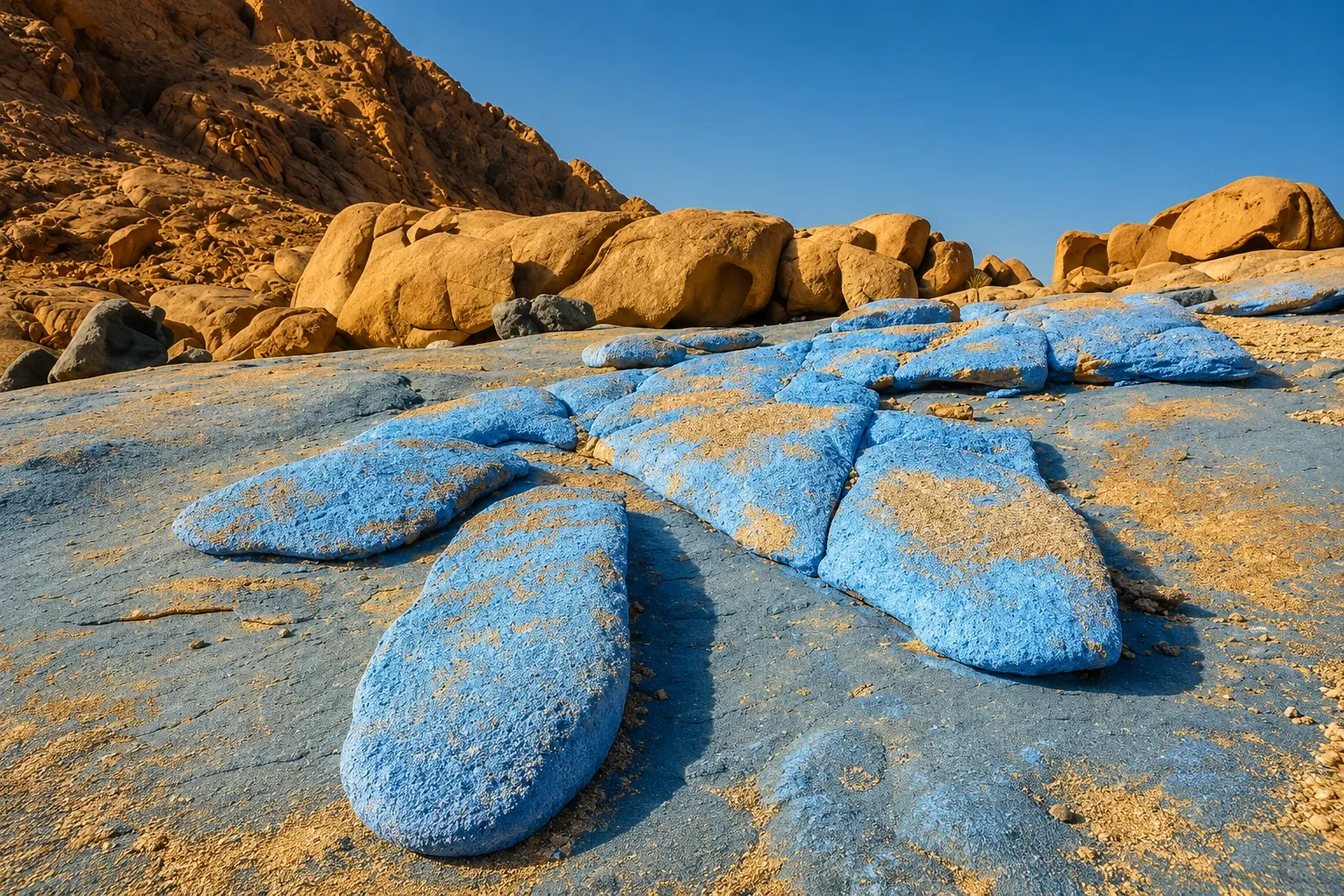
The Black Desert, approximately 180 kilometers north of the White Desert via the Bahariya Oasis, is the natural geological partner of the White Desert in the Western Desert safari circuit, providing the volcanic black counterpoint to the chalk white of the White Desert in the most complete geological contrast available at any two accessible natural heritage sites in the Egyptian Western Desert. The Bahariya Oasis, the primary base for Western Desert safari operations and the location of the Valley of the Golden Mummies, is approximately 180 kilometers north of the White Desert and provides the essential cultural and archaeological complement to the natural geological heritage of the White Desert safari circuit. The Blue Desert of Sinai, in the South Sinai Peninsula, provides a completely different desert landscape and desert art experience in a different geographical region that together with the Black Desert and the White Desert constitutes the most complete available programme of Egypt's extraordinary desert natural and cultural heritage. All these destinations are accessible through the Egypt Desert Safari Tours and Egypt Travel Packages offered by WOW Egypt Tours.
Frequently Asked Questions About The White Desert
What is the White Desert of Egypt?
The White Desert of Egypt, known in Arabic as Sahara El Beyda, is a national park in the Farafra Depression of the Western Desert approximately 500 kilometers southwest of Cairo, designated as White Desert National Park in 2002 and encompassing approximately 3,010 square kilometers of extraordinary chalk and limestone desert whose wind-sculpted formations, including the famous Mushroom Rock, Chicken Rock, and Rabbit Rock, create the most visually astonishing natural landscape in all of Egypt outside the ancient monuments of the Nile Valley. The White Desert is the supreme destination of the Western Desert safari circuit and is featured on Egypt Desert Safari Tours and Egypt Travel Packages offered by WOW Egypt Tours.
Why is the White Desert white?
The White Desert is white because its landscape is dominated by chalk and nummulitic limestone rock formations deposited on the floor of a shallow Cretaceous sea approximately 80 to 90 million years ago and subsequently exposed at the desert surface by the erosion of the overlying strata. The nummulitic limestone, composed of the fossilized shells of ancient coin-shaped marine organisms, has a brilliant white color that is further enhanced by the polished surfaces created by millions of years of wind erosion and sand abrasion.
What are the famous rock formations of the White Desert?
The most famous named formations of the White Desert include the Mushroom Rock, whose wind-eroded undercut base creates a perfect natural mushroom shape; the Chicken Rock, whose eroded profile suggests a pecking chicken; and the Rabbit Rock, whose silhouette resembles a resting rabbit. These are among the hundreds of extraordinary natural sculptures distributed across the park's chalk plains and inselberg landscapes, each formed by millions of years of desert wind erosion on the white chalk rock.
What created the White Desert formations?
The White Desert formations were created by wind erosion, the geological process by which sand-laden desert winds progressively abrade and sculpt exposed rock surfaces. The wind erosion is most intense at the base of the chalk formations where sand-carrying air moves closest to the desert floor, creating the characteristic undercut and narrowed base profiles that produce the mushroom and other distinctive sculptural forms. This process has been operating for approximately 30 to 35 million years in the Western Desert, producing the extraordinary variety of natural forms visible in the park today.
Is overnight camping possible in the White Desert?
Yes. Overnight camping in the White Desert National Park is not only possible but strongly recommended as the single most extraordinary and the most personally memorable natural heritage experience available in the Egyptian Western Desert. Desert camping in the park requires a licensed desert guide and must be in designated camping areas. WOW Egypt Tours organizes complete overnight camping programmes with all equipment, catering, and guide services included.
What is the best time to see the White Desert?
October through April is the most comfortable period for the complete White Desert overnight experience. The sunset and sunrise light on the chalk formations is extraordinary at any time of year. The winter months provide the coldest nights, requiring warm sleeping gear, but the finest stargazing conditions. Summer visits require limiting outdoor activity to the very early morning and late afternoon due to extreme heat.
What is Crystal Mountain?
Crystal Mountain is a large isolated rock formation at the geological boundary between the Black Desert to the north and the White Desert to the south, composed of crystalline calcite and barite crystals that catch the desert light to create brilliant mineral flashes of extraordinary beauty. It is a standard stopping point on all Western Desert safari programmes and serves as the mineralogical bridge between the volcanic black and chalk white landscapes of the circuit.
Can I see fossils in the White Desert?
Yes. The chalk and limestone of the White Desert is composed of nummulitic limestone, containing the fossilized shells of nummulites, coin-shaped foraminifera marine organisms that lived in the Cretaceous sea that covered the Western Desert 80 to 90 million years ago. These fossils are visible in virtually every piece of white chalk rock in the park. However, removing any rocks or fossils from the White Desert National Park is strictly prohibited by national park regulations.
What wildlife can I see in the White Desert?
The White Desert National Park protects desert wildlife including the dorcas gazelle, the Barbary sheep (aoudad), desert foxes, desert hares, and various lizard and snake species. The park is also an important staging area for migratory birds on the African-Eurasian flyway. Wildlife sightings are most likely in the early morning and at dusk when desert animals are most active.
How far is the White Desert from Cairo?
The White Desert is approximately 500 kilometers southwest of Cairo, a drive of approximately 5.5 to 6.5 hours via the Desert Road to Bahariya Oasis and then south to Farafra. The White Desert is therefore a minimum two-day excursion from Cairo, most commonly included in three to five day Western Desert safari programmes that also visit the Black Desert and the Bahariya Oasis.
What is the difference between the White Desert and the Black Desert?
The White Desert is a chalk and limestone landscape characterized by brilliant white wind-sculpted formations formed from ancient marine sedimentary rock approximately 80 to 90 million years old. The Black Desert is a volcanic landscape characterized by dark dolerite and basalt rocks formed by Cretaceous volcanic activity. The two deserts are dramatically different in color, geology, visual character, and landscape experience, and are visited together as the two primary natural heritage destinations of the Western Desert safari circuit separated by the Bahariya Oasis and Crystal Mountain.
Is the White Desert suitable for children?
Yes. The White Desert is an exceptional destination for children, who respond with enthusiasm and wonder to the extraordinary chalk formations, the desert camping experience, and the night sky. Children enjoy naming the formations and exploring the chalk landscape on foot. The overnight camping is an extraordinary adventure for children of school age and above. Appropriate sun protection, warm clothing for nights, and sufficient water are essential for all children. WOW Egypt Tours designs family-friendly Western Desert safari programmes for all ages.
What photographic equipment is best for the White Desert?
A wide-angle lens or the widest available smartphone setting is most useful for capturing the scale of the formations. A tripod is essential for sunset, moonlight, and night sky photography. A camera with good high-ISO performance is recommended for night photography. A polarizing filter enhances the contrast between the white formations and the blue desert sky. The golden hour before sunset and after sunrise provides the most spectacular photography light.
How do I book a White Desert safari with WOW Egypt Tours?
You can book any Egypt Desert Safari Tour, Egypt Tours Package, or Egypt Travel Package that includes the White Desert directly through WOW Egypt Tours. Our team of travel specialists will arrange everything from private four-wheel-drive vehicle and licensed desert guide to complete desert camping equipment, all meals in the field, national park entrance fees, and all the logistics of the complete White Desert overnight experience, ensuring a seamless and unforgettable encounter with the most beautiful and the most personally extraordinary natural landscape in all of Egypt.