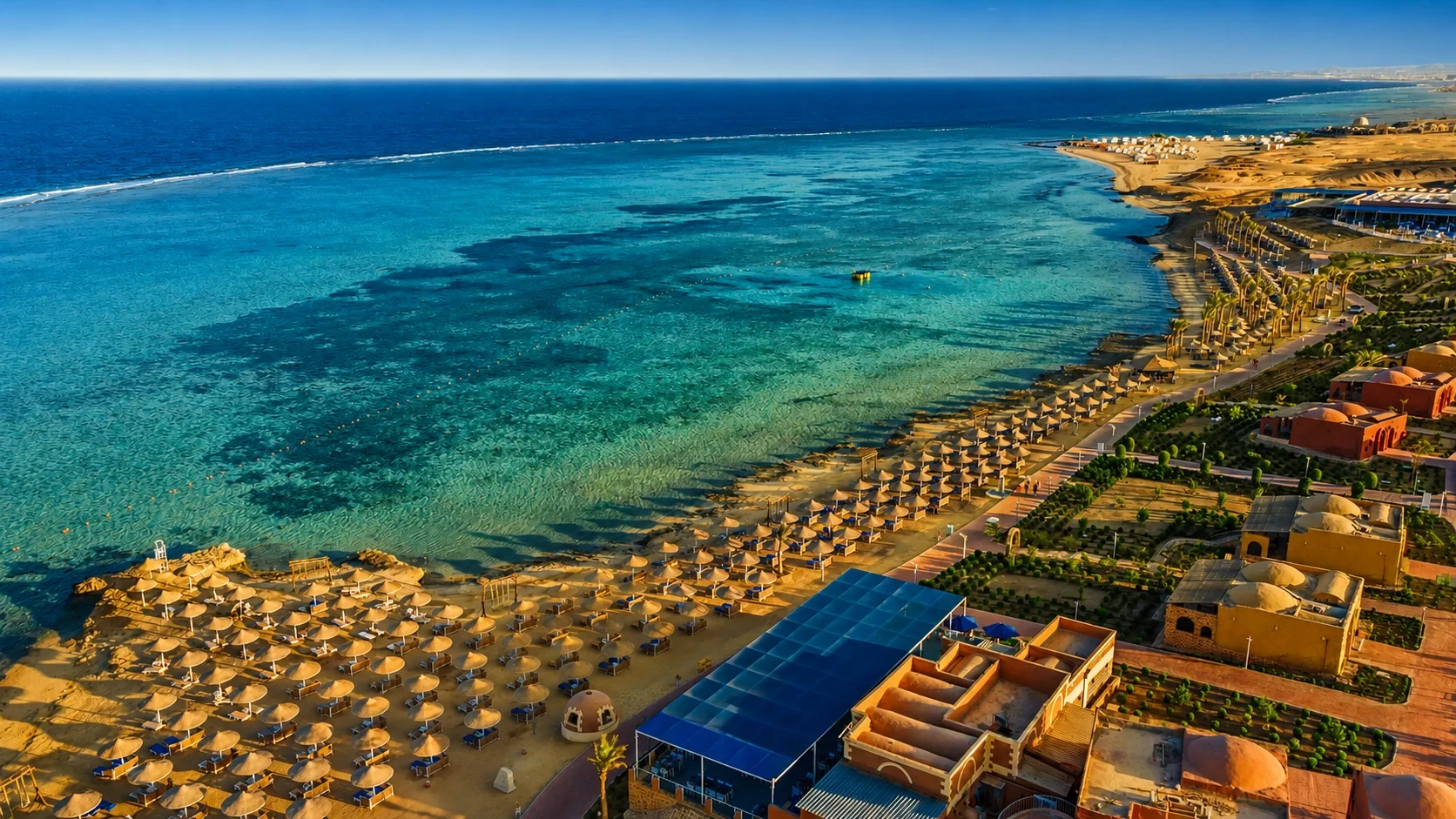

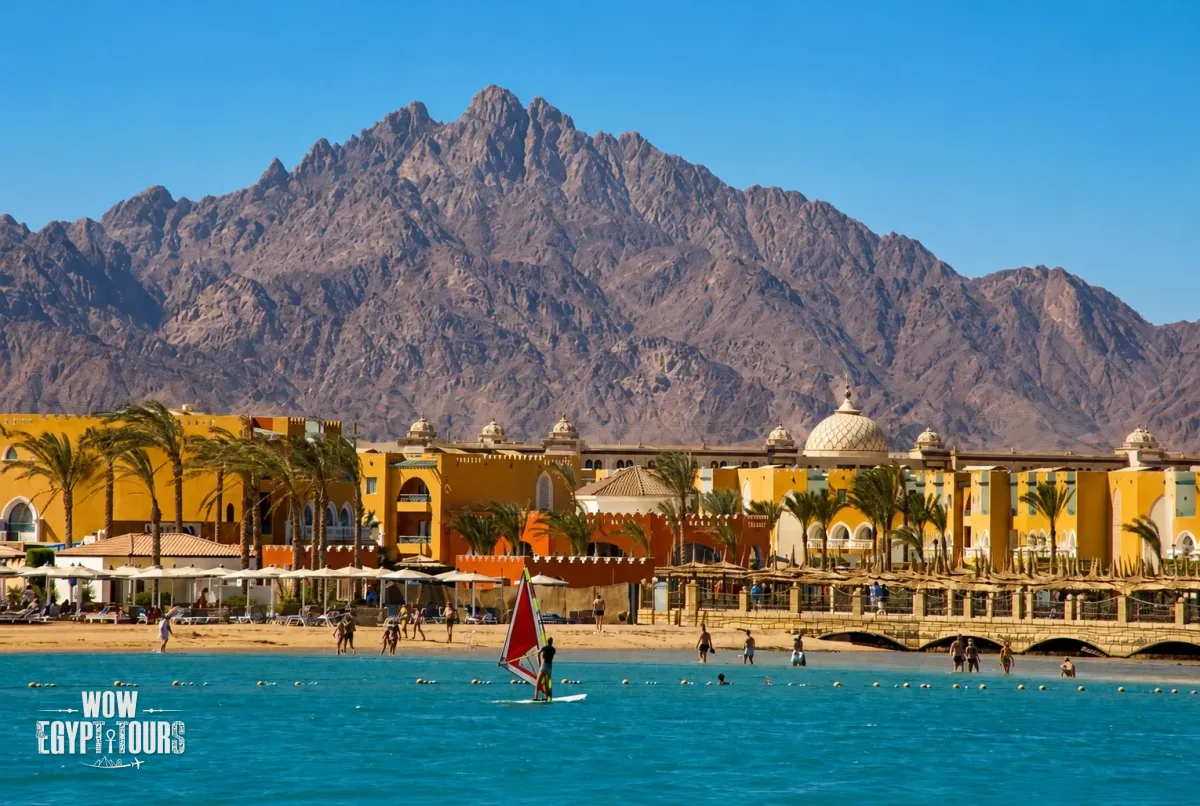

Safaga is one of the most genuinely extraordinary and one of the most consistently underestimated destinations on the entire Egyptian Red Sea coast, a working port city and a thriving resort community approximately 53 kilometers south of Hurghada on the western shore of the Red Sea whose combination of world-class windsurfing and kiteboarding conditions recognized by the international professional wind sports community as among the finest available anywhere in the world, an extraordinary coral reef system of remarkable biological richness and remarkable accessibility that is widely regarded by experienced Red Sea divers as providing some of the most rewarding and the most personally affecting reef diving encounters on the entire Egyptian mainland coast, and a strategic geographical position as the primary Red Sea port for the Nile Valley cross-desert route that makes Safaga the most naturally and the most efficiently positioned Red Sea destination for travelers combining a Red Sea coast experience with the ancient pharaonic heritage of Luxor and the Upper Egyptian Nile Valley, together make Safaga a destination of genuine and substantial excellence whose relative absence from the mainstream international beach resort marketing of the Egyptian Red Sea coast significantly underrepresents the extraordinary quality of the natural, sporting, and heritage experiences it provides. The name Safaga conjures in the international wind sports community the most immediately powerful associations with the extraordinary consistent thermal winds that blow across the Red Sea at this specific section of the coast from the direction of the Eastern Desert in conditions of such remarkable reliability, such remarkable power, and such remarkable suitability for the demands of competitive windsurfing and kiteboarding that Safaga has hosted multiple world championship events in both disciplines and is recognized in the professional wind sports world as one of the small number of genuinely world-class competitive wind sports venues available anywhere on earth. This extraordinary destination is featured on Safaga Tours, Egypt Red Sea Tours, and Egypt Honeymoon Tours, all of which WOW Egypt Tours proudly offers to travelers from around the world as part of Egypt Tours Packages and Egypt Travel Packages that encompass the extraordinary resort and natural heritage of the Egyptian Red Sea coast.
Safaga Egypt occupies a uniquely important position in the Egyptian Red Sea tourism geography not only for the extraordinary quality of its own natural and sporting heritage but for the extraordinary strategic significance of its position as the primary Red Sea ferry port for the crossing to the Arabian Peninsula, the primary Red Sea port of entry for the Mecca pilgrimage (Hajj) traffic from Egypt and North Africa, and above all the primary gateway port for the cross-desert road connection between the Red Sea coast and the Nile Valley city of Luxor, whose desert highway of approximately 160 to 185 kilometers connecting Safaga directly with the greatest concentration of ancient pharaonic monuments in the world makes the Safaga area the most naturally and the most efficiently positioned of all the Egyptian Red Sea resort destinations for day excursion access to the Luxor heritage programme. This extraordinary geographic connectivity gives the Safaga Red Sea resort experience a dimension of ancient Egyptian cultural heritage accessibility that is available at all the Red Sea mainland resorts that use the Safaga road but that is most directly and most practically expressed at the Safaga destination itself, where the Nile Valley ancient heritage is literally just across the desert plateau. The thriving coral reef communities of the Safaga Bay and the offshore reef systems of the northern and southern Safaga coast, combined with the world-class wind sports conditions of the bay's open water, the historical significance of the ancient Pharaonic and Roman Red Sea ports in the broader Safaga area, and the extraordinary cross-cultural significance of Safaga as the maritime gateway for both the ancient incense trade and the modern Hajj pilgrimage together give Safaga a heritage depth and a geographical significance that vastly exceed what its relatively modest international tourism profile would suggest. WOW Egypt Tours includes Safaga as a featured Red Sea destination in Egypt Red Sea Tours and Egypt Travel Packages and organizes all Safaga Port Excursion programmes for cruise ship passengers arriving at the Safaga maritime port.

What Is Safaga?
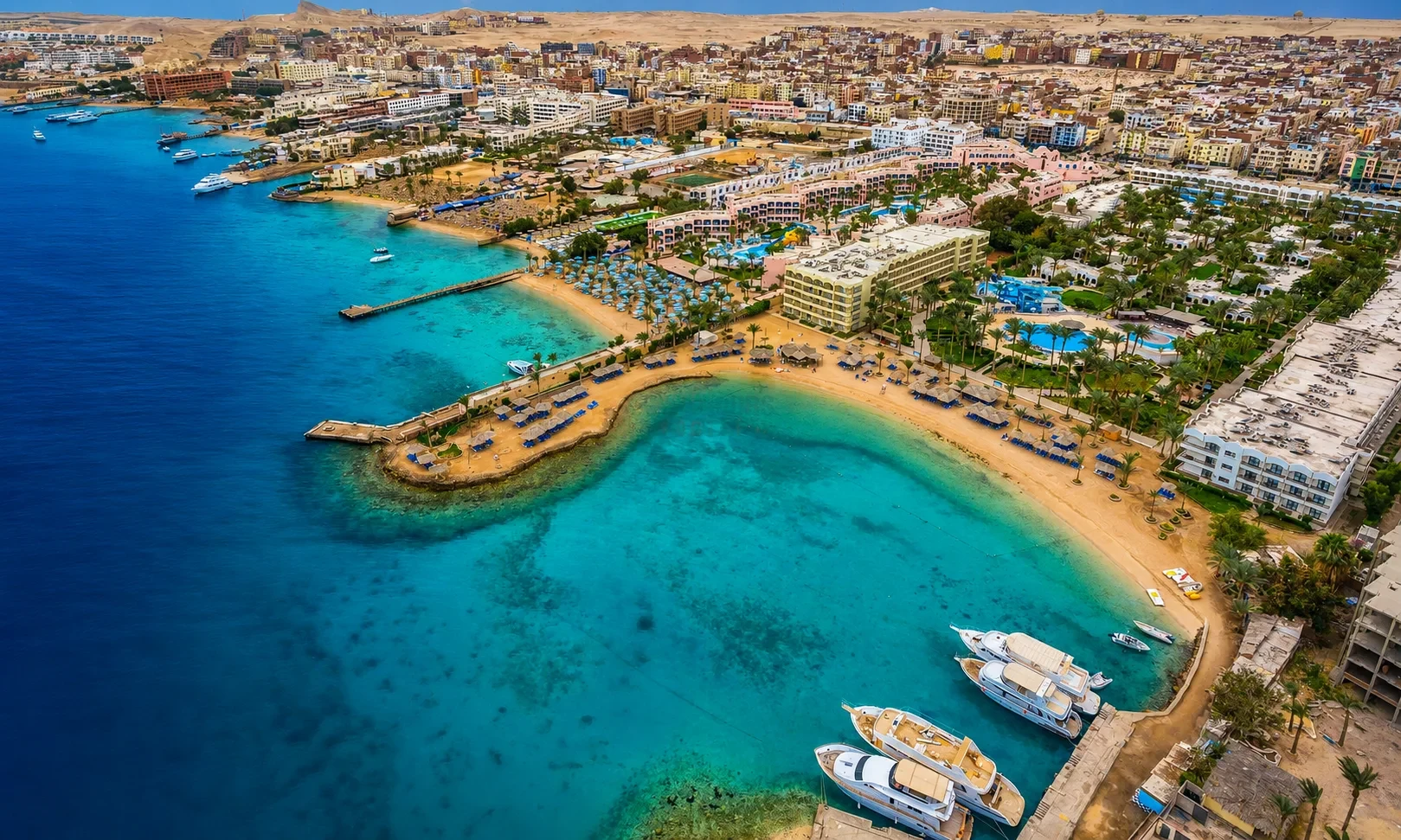
Safaga is a port city and Red Sea resort destination in the Red Sea Governorate of Egypt, located approximately 53 kilometers south of Hurghada and approximately 65 kilometers east of Luxor by the direct cross-desert highway, occupying a position on the western shore of the Red Sea where the extraordinary consistent thermal winds that characterize this section of the coast, the remarkable depth and variety of the offshore coral reef system, and the direct land access to the Nile Valley ancient heritage combine to create one of the most genuinely multi-dimensional and most genuinely rewarding destination experiences available at any Egyptian Red Sea coastal city. The Safaga Bay, whose semicircular natural harbor is one of the finest natural anchorages on the Egyptian Red Sea coast, is both the primary functional harbor of the city and the primary setting for the world-class windsurfing and kiteboarding activity that has made Safaga internationally celebrated in the global wind sports community, with the bay's open water providing the flat-water or choppy water surface conditions suitable for different technical disciplines of wind sports depending on the prevailing wind direction and speed at different seasons of the year. The broader Safaga coastline north and south of the bay encompasses an extraordinary range of coral reef environments accessible by a short boat ride from the city's dive centre infrastructure, including the famous House Reef immediately offshore of the northern Safaga resort area, the deeper offshore reef systems of the Panorama Reef and the Middle Reef to the north, and the extraordinary deep southern reef systems including the famous Abu Qifan reef and the Ras Abu Soma reef to the south whose remarkable coral cover, dramatic topography, and extraordinary fish populations give the Safaga diving programme one of the most varied and the most personally rewarding reef diving ranges available at any resort on the Egyptian mainland Red Sea coast.
Who Shaped The History Of Safaga?
The history of Safaga and its surrounding coastline as a significant point of human activity extends far beyond the modern resort era and the recent development of the port into one of the most commercially significant maritime facilities on the Egyptian Red Sea coast, encompassing a rich sequence of ancient Egyptian, Ptolemaic, Roman, Islamic, and Ottoman period maritime activity in the Red Sea trade system whose physical evidence is preserved in the ancient port sites, the inscriptions, and the archaeological remains of the broader Safaga area coastal landscape. The ancient Egyptians used the Red Sea coast in the vicinity of Safaga as a departure point for maritime expeditions to the legendary land of Punt, the ancient Egyptian source of the incense, myrrh, exotic woods, and tropical animals that were among the most valued luxury commodities of the pharaonic court, and the cross-desert road connecting the Nile Valley with the Red Sea coast via the Wadi Hammamat route was one of the most strategically important and the most consistently used desert roads in the ancient Egyptian world, connecting the Nile Valley city of Qift (ancient Coptos) directly with the Red Sea coast in a road of approximately 180 kilometers that passed through the remarkable rock art and inscriptional landscape of the Wadi Hammamat canyon before descending to the coast in the Safaga area.
The Ptolemaic period rulers of Egypt, who were particularly energetic developers of the Red Sea maritime trade system, built and maintained a series of Red Sea ports along the Egyptian coast including facilities in the broader Safaga coastal zone that served the extraordinary commercial networks connecting Ptolemaic Egypt with Arabia, India, and East Africa in the most extensively documented ancient maritime trade system in the pre-modern world. The Roman period continued and expanded the Ptolemaic maritime commercial infrastructure, and the Roman-era inscriptions and pottery sherds visible at various ancient coastal sites in the Safaga area provide the most directly accessible surviving physical evidence for the ancient Red Sea trade activity in the vicinity of the modern port city. The Islamic period saw the Safaga coastal area become one of the most important embarkation points for Egyptian and North African Muslims undertaking the Hajj pilgrimage to Mecca, a function that has given Safaga a continuing religious and humanitarian significance that extends from the medieval period of the established Islamic pilgrimage tradition to the present day, when Safaga port continues to handle pilgrimage traffic alongside its commercial and tourism port functions.
Safaga As The World Wind Sports Capital
The most internationally celebrated and the most professionally significant dimension of the modern Safaga destination heritage is the extraordinary wind sports environment of the Safaga Bay and coastline, whose remarkable combination of consistent thermal winds, flat-water bay conditions, and the shallow sandy bay bottom that makes the bay particularly safe and particularly suitable for the complex maneuvers and the high-speed water entry and exit that advanced and competitive windsurfing and kiteboarding require, has produced a wind sports venue of such complete excellence and such consistent quality that the international professional wind sports community has recognized Safaga as one of the handful of genuinely world-class competitive venues for both windsurfing and kiteboarding available anywhere on earth. The thermal winds that blow across the Safaga Bay from the direction of the Eastern Desert plateau are the product of the same atmospheric dynamic that creates the extraordinary wind conditions at El Gouna and Hurghada to the north, but the specific coastal geography of Safaga Bay, whose orientation relative to the prevailing wind direction creates a particularly consistent and particularly well-organized thermal wind pattern, produces wind conditions that are in many technical respects superior to those available at the northern Red Sea coast resorts for the most demanding competitive and recreational wind sports activity.
The international professional windsurfing and kiteboarding events that Safaga has hosted, including multiple rounds of the PWA World Windsurfing Tour and the GKA Kite World Cup, have brought the extraordinary quality of the Safaga wind sports environment to the attention of the global wind sports community and established the resort's reputation as a destination of genuine and substantial excellence for wind sports enthusiasts at all levels from complete beginners taking their first lessons on the bay's protected flat water to the world's finest competitive professionals pushing the limits of their discipline in the perfect conditions of the full-power thermal wind. The wind sports infrastructure of Safaga, encompassing a series of professional windsurfing and kiteboarding centres with the highest equipment standards, the most experienced instruction teams in the region, and the most complete range of rental equipment, coaching services, and competitive support facilities available at any wind sports venue on the Egyptian Red Sea coast, provides the most completely organized and the most professionally managed wind sports programme available at any resort on the Egyptian mainland coast and gives Safaga a claim to the title of the primary dedicated wind sports resort on the complete Egyptian Red Sea coast that the international professional and recreational wind sports community broadly endorses.
Safaga Location
Safaga is located on the western shore of the Red Sea in the Red Sea Governorate of Egypt, approximately 53 kilometers south of Hurghada by the coastal road, approximately 65 kilometers east of Luxor by the direct cross-desert highway via the Wadi Hammamat road, and approximately 530 kilometers southeast of Cairo. The city occupies the southern shore of the semicircular Safaga Bay, one of the finest natural harbors on the Egyptian Red Sea coast, with the resort and diving centre development concentrated primarily along the northern shore of the bay and along the coastal strip south of the main port facilities. The Safaga port terminal, which is the primary maritime facility for the commercial ferry crossings to the Saudi Arabian port of Duba and for the Hajj pilgrimage traffic, is located in the central section of the bay immediately adjacent to the city center, and the port's commercial maritime activity gives Safaga a quality of working port atmosphere and genuine coastal commercial character that distinguishes it from the purely resort-oriented coastal environments of the more tourist-focused Red Sea destinations to the north and south. The direct desert highway connecting Safaga with Luxor via the extraordinary Wadi Hammamat canyon route is approximately 160 to 185 kilometers of paved highway with a driving time of approximately 2 to 2.5 hours, making Safaga the Red Sea coastal point geographically closest to Luxor and the most naturally efficient access point for all cross-desert traffic between the Red Sea coast and the primary ancient heritage capital of the Upper Egyptian Nile Valley. WOW Egypt Tours provides all port transfer, inter-city transportation, and excursion vehicle services for all Safaga programmes and Safaga Port Excursion programmes.
Safaga Fun Facts
Safaga Bay is considered by the international professional windsurfing community to be one of the finest natural venues for professional windsurfing competition in the entire world, a distinction earned by the extraordinary consistency and the extraordinary technical quality of the thermal winds that blow across the bay's open water in conditions of such perfect suitability for the demands of the highest level of competitive wave and freestyle windsurfing that the professional circuit has returned to Safaga repeatedly over the decades as one of the most reliably excellent and the most consistently rewarding venues on the complete global competitive calendar. The combination of the powerful thermal wind, the flat bay water in the protected inner bay sections, and the choppy or wave-affected open water in the outer bay sections creates a single bay environment that can simultaneously accommodate the flat-water freestyle disciplines and the wave disciplines of competitive windsurfing in conditions of outstanding quality for both technical styles, giving Safaga a versatility as a competitive wind sports venue that very few comparable destinations anywhere in the world can match.
The Safaga to Luxor desert road passing through the extraordinary Wadi Hammamat canyon is one of the most archaeologically rich desert routes in the entire Egyptian landscape, its canyon walls covered with ancient Egyptian hieroglyphic and hieratic inscriptions, graffiti, and rock art spanning more than three thousand years of continuous ancient Egyptian quarrying, expedition, and pilgrimage activity in the most extensively inscribed ancient road canyon in Egypt. The Wadi Hammamat inscriptions, recording in the ancient Egyptian written tradition the expeditions of pharaohs, officials, quarry workers, and travelers who traversed this desert road from the Old Kingdom period through the Roman era, provide one of the most direct and the most personally vivid surviving records of the ancient Egyptian use of the Red Sea coastal access route whose southern terminus in the Safaga area gives the city a dimension of ancient Egyptian road heritage significance that is rarely acknowledged in the mainstream international tourism literature but that gives the Safaga landscape a historical depth entirely consistent with its extraordinary marine and wind sports natural heritage.
Safaga is one of the very few Red Sea resort destinations that has developed a reputation for therapeutic value beyond recreational tourism, with the combination of the specific mineral composition of the Safaga Bay seawater, the high radon content of the coastal sand and water in certain areas of the bay, and the extraordinarily high levels of solar ultraviolet radiation at this latitude and elevation together creating environmental conditions that several European medical research studies have found beneficial for the treatment of psoriasis, a skin condition that responds positively to the specific combination of UV radiation intensity, mineral seawater bathing, and dry desert climate that the Safaga environment provides in a particularly favorable combination, giving Safaga a small but internationally recognized medical tourism dimension that adds yet another layer of distinctive character to an already remarkably multi-dimensional destination.
Why Is It Called Safaga?
The name Safaga, whose precise linguistic origin is not definitively established in the available historical and etymological literature on Egyptian Red Sea coastal place names, is believed by most scholars of Egyptian Red Sea toponymy to derive from an ancient or medieval Arabic coastal geographical designation whose specific referential meaning has not been completely recovered in the modern linguistic record. Some proposed etymologies connect the name to Arabic roots relating to the transparency or the clarity of water, a designation that would be geographically appropriate for the extraordinarily clear waters of the Safaga Bay whose water clarity is one of the most immediately striking and the most practically significant qualities of the Safaga marine environment for the diving and snorkeling visitors who come to the city primarily for the underwater heritage of its remarkable reef system. Other proposed derivations suggest connections to ancient Egyptian or Coptic coastal place names that were adapted into Arabic phonetic forms in the process of Arabic linguistic adaptation of pre-Islamic Egyptian geographical vocabulary that produced many of the Arabic Red Sea coastal place names in current use. The name Safaga has been used in both Arabic and international geographical literature for many centuries as the standard designation for the port and coastal settlement at this specific location on the Egyptian western Red Sea shore, and it has been the universal international designation for the city in all tourism, trade, and geographical literature since the development of the modern Egyptian Red Sea tourism industry that has brought the extraordinary natural heritage of the Safaga wind sports and reef diving environment to international attention.
Safaga History
The history of the Safaga coastal zone as a site of significant human activity encompasses the full chronological range of the Egyptian Red Sea maritime tradition from the Pharaonic period of ancient Egypt through the Ptolemaic, Roman, Islamic, and Ottoman eras to the modern development of the port city and the Red Sea resort, a history whose most defining and most consequential thread is the ancient and continuous use of the cross-desert road connection between this section of the Red Sea coast and the Nile Valley, a connection whose strategic importance in the ancient Egyptian commercial, military, and pilgrimage geography has maintained the Safaga coastal zone as a significant node in the Egyptian geographical and economic system across more than three thousand years of documented history. The ancient Egyptian expeditions to the Red Sea coast, organized from the Nile Valley pharaonic centers of Coptos (modern Qift) and Luxor (ancient Thebes) and passing through the extraordinary inscriptional canyon of the Wadi Hammamat on their way to the Red Sea embarkation points in the broader Safaga area, are among the most extensively documented aspects of the ancient Egyptian maritime and commercial programme, recorded in the hieroglyphic inscriptions of the Wadi Hammamat canyon walls in a continuous record of pharaonic activity spanning from the Old Kingdom period of approximately 2500 BCE through the Roman era of approximately 200 CE.
The medieval Islamic period saw the Safaga Bay area become one of the primary Egyptian Red Sea embarkation points for the Hajj pilgrimage traffic from Egypt, North Africa, and the broader Islamic world, a function of enormous religious and humanitarian significance that gave the Safaga port a central role in the most important collective religious activity of the Islamic world and that has maintained the port's significance as a Hajj gateway through the subsequent centuries of Egyptian Islamic history to the present day, when the Safaga port continues to handle pilgrimage traffic alongside its commercial shipping and tourism functions. The modern development of Safaga as a Red Sea resort and as a competitive wind sports venue began in the 1980s and 1990s as the broader Egyptian Red Sea tourism development programme created the hotel and recreational infrastructure that transformed the commercial port town into a multi-function destination combining port commerce, international wind sports, Red Sea reef diving, and the Luxor cross-desert excursion programme that gives Safaga its most uniquely positioned heritage accessibility of any resort on the Egyptian mainland Red Sea coast.
The Story Of Safaga As The Gateway To Luxor From The Sea
The most historically resonant and the most personally meaningful story in the heritage biography of the modern Safaga destination is the story of the ancient cross-desert road that connects the Red Sea coast at Safaga with the Nile Valley city of Luxor via the extraordinary Wadi Hammamat canyon, a road whose use by the ancient Egyptians, the Ptolemaic rulers, the Roman administrators, the medieval Islamic pilgrims, and the modern tourists and cruise ship passengers who travel it today in private vehicles creates one of the most extraordinary examples of continuous historical use of a single geographical route available anywhere in the Egyptian landscape. The ancient Egyptians called this desert road the Road of the Wadis (Wadi Hammamat literally means the Wadi of the Baths or the Wadi of the Pigeons in Arabic, but the ancient Egyptian name referred to the specific topographical character of the canyon route), and the extraordinary concentration of ancient inscriptions, graffiti, and rock art left by the expeditions and the individual travelers who crossed this desert over a period of more than three thousand years makes the Wadi Hammamat canyon one of the most extensively inscribed and the most archaeologically informative ancient desert road landscapes in the entire Egyptian heritage world.
Today this same ancient road, paved and maintained as the primary cross-desert highway between the Safaga port and the Luxor Nile Valley city, carries the most significant single cross-desert tourist traffic flow in the Egyptian Red Sea tourism system, as the hundreds of thousands of cruise ship passengers who arrive at Safaga port each year on Nile Valley cruise ships take private vehicles from the port on the same desert crossing that the ancient Egyptian pharaohs' expeditions used to access the Red Sea coast more than four thousand years ago. The emotional and historical resonance of making this same desert crossing in the awareness that the road beneath the vehicle's wheels follows the route of some of the most famous expeditions in ancient Egyptian history, passing through the canyon whose walls carry the silent testimony of three thousand years of human passage in the hieroglyphic and demotic inscriptions of the ancient travelers, gives the Safaga to Luxor or Luxor to Safaga desert crossing one of the most personally affecting historical dimensions available as a transit experience at any port excursion destination in the entire Mediterranean and Red Sea cruise world.
Safaga Key Attractions And Features
Safaga Bay Wind Sports
The Safaga Bay wind sports environment is the most internationally celebrated and the most professionally recognized attraction of the complete Safaga destination, a natural wind sports venue of such complete excellence and such consistent quality that it has been recognized by the international professional windsurfing and kiteboarding communities as one of the finest dedicated wind sports venues in the entire world. The thermal winds that blow across the bay from the direction of the Eastern Desert plateau, typically in the speed range of 15 to 35 knots during the prime wind season and reliably strong for 6 to 8 hours per day throughout the most productive wind months, create conditions of extraordinary suitability for the full range of competitive and recreational wind sports disciplines. The bay's flat inner water provides the most suitable surface for freestyle kiteboarding and flatwater windsurfing slalom racing, while the choppier conditions of the outer bay provide the wave-influenced conditions that the wave windsurfing and wave kiteboarding disciplines require for their most technically demanding and most visually spectacular performance. The Safaga wind sports centres provide professional instruction at all levels, complete equipment rental, and the competition support infrastructure required by the world-class professional events that the bay has hosted, giving wind sports visitors at every level of experience the most completely equipped and the most expertly supported wind sports holiday programme available at any resort on the Egyptian Red Sea coast.
Safaga Coral Reef Diving
The coral reef system of the Safaga coastal zone, encompassing the house reef immediately offshore of the northern Safaga resort area, the acclaimed Panorama Reef and the Middle Reef to the north, and the extraordinary deeper southern reef systems of Abu Qifan, Ras Abu Soma, and the remarkable drift dive sites of the southern Safaga coast, provides one of the most varied and the most personally rewarding reef diving programmes available at any resort on the Egyptian mainland Red Sea coast, a programme whose quality, variety, and relative freedom from the diving congestion that affects the more intensively visited reef sites of the Hurghada area give it a quality of relative intimacy and ecological freshness that experienced Red Sea divers consistently report as one of the most immediately distinguishing and most personally appreciated qualities of the Safaga diving experience. The Panorama Reef, an offshore reef approximately 15 kilometers north of Safaga, is the single most celebrated dive site in the northern Safaga area, a spectacular pinnacle reef rising from 35 meters depth to just below the surface whose extraordinary coral cover, its dramatic overhangs and caverns, and its remarkable populations of sharks, barracuda, rays, and large pelagic species make it consistently one of the most highly rated reef dive experiences available at any site accessible from the Egyptian mainland Red Sea coast resorts. The Ras Abu Soma reef system at the southern boundary of the Safaga coastal zone is equally celebrated for its extraordinary combination of hard coral formations of exceptional coverage and exceptional health, the diversity and the density of the fish populations in its shallower reef zones, and the accessibility of the site for divers at intermediate and advanced certification levels who find at Ras Abu Soma a reef of such complete quality and such genuinely extraordinary natural beauty that it consistently produces the response of astonished admiration that the finest reef dives in the world reliably generate.
The Wadi Hammamat And The Ancient Cross-Desert Road
The extraordinary Wadi Hammamat canyon on the ancient cross-desert road between Safaga and Luxor is one of the most archaeologically significant and the most personally affecting desert heritage landscapes in the complete Egyptian landscape, a narrow canyon passage through the Eastern Desert plateau whose walls are covered with thousands of ancient Egyptian hieroglyphic and hieratic inscriptions, graffiti, and rock art panels spanning more than three thousand years of ancient Egyptian, Ptolemaic, and Roman period activity, recording in the direct and immediate language of the ancient writers and artists themselves the expeditions, the prayers, the commercial ventures, and the personal records of the ancient travelers who crossed this desert on their journeys between the Nile Valley and the Red Sea coast. The Wadi Hammamat inscriptions constitute the most extensive collection of ancient Egyptian desert road inscriptions available at any accessible site in the Egyptian landscape, a documentary record of ancient activity in the cross-desert route that is simultaneously one of the most historically informative and one of the most personally atmospheric ancient heritage encounters available on any land journey in the complete Egyptian desert world. For travelers making the Safaga to Luxor or Luxor to Safaga road crossing, the Wadi Hammamat passage, typically lasting approximately 30 to 45 minutes of driving through the canyon landscape, provides an experience of genuine ancient heritage immediacy whose emotional impact on visitors who understand what the inscriptions represent is consistently described as one of the most personally affecting encounters with the physical evidence for ancient Egyptian civilization available anywhere in the Egyptian landscape outside the great Nile Valley temple complexes.
The Safaga Port And The Hajj Gateway
The Safaga port, one of the largest and the most commercially active maritime facilities on the Egyptian Red Sea coast, is the functional and commercial heart of the Safaga city economy, handling commercial cargo, the regular ferry crossings to the Saudi Arabian port of Duba, the Hajj pilgrimage passenger traffic during the annual pilgrimage season, and the cruise ship arrivals of the Nile Valley cross-desert excursion programme that makes Safaga the primary Red Sea maritime gateway for the Egyptian Nile Valley cruise tourism system. The port's Hajj gateway function, which has given Safaga a significance in the religious geography of the Islamic world that extends far beyond its role as a Red Sea resort and dive destination, is one of the most historically resonant and the most humanly significant dimensions of the port city's character, connecting the modern Safaga to a centuries-long tradition of religious pilgrimage that has made the Red Sea crossing from the Egyptian coast to the Arabian Peninsula one of the most spiritually charged and the most humanly meaningful maritime journeys in the history of the Islamic world. The cruise ship terminal facilities of the Safaga port, which handle the arrivals of the Nile Valley cruise itinerary vessels whose passengers use the Safaga port as their Red Sea embarkation point for cross-desert excursions to Luxor and the Nile Valley heritage sites, represent the most immediately tourism-relevant dimension of the port's multi-function commercial character and the most directly consequential for the Safaga Port Excursion programmes organized by WOW Egypt Tours.
Luxor Day Excursion Via The Ancient Desert Road
The most important, the most historically resonant, and the most personally extraordinary excursion available from the Safaga resort base and from the Safaga port for cruise ship passengers is the day excursion to Luxor via the ancient Wadi Hammamat desert road, a journey of approximately 160 to 185 kilometers and approximately 2 to 2.5 hours that provides access to the most extraordinary concentration of ancient Egyptian pharaonic monuments in the entire world in the most efficiently organized and the most directly accessed format available from any Red Sea coastal point in Egypt. Luxor's incomparable ancient heritage, encompassing the Karnak Temple Complex, the Luxor Temple, the Valley of the Kings, the Temple of Queen Hatshepsut at Deir el-Bahari, the Colossi of Memnon, and the complete range of Luxor East and West Bank ancient monuments, is available as a comprehensive guided day programme from Safaga that gives both resort visitors and cruise ship port excursion passengers a complete and deeply satisfying encounter with the supreme ancient pharaonic heritage of Upper Egypt in a single day's journey whose historical and personal significance is enhanced by the extraordinary ancient road heritage of the Wadi Hammamat crossing itself. The combination of the Safaga marine and wind sports heritage with the Luxor ancient heritage day excursion gives the Safaga destination programme a depth of heritage variety and a personal completeness of Egyptian cultural engagement that is simply unavailable at any other Egyptian Red Sea resort destination whose land heritage excursion accessibility is comparable to Safaga's extraordinary proximity to Luxor.
The Safaga Reef House Reef And Snorkeling
The house reef of the northern Safaga resort area, accessible directly from several of the resort's beachfront hotels and by a very short boat ride of 5 to 10 minutes from the Safaga dive centres, provides the most immediately accessible introduction to the extraordinary coral reef world of the Safaga marine environment available at any point along the resort's coastline, with the shallow inner reef sections populated by an extraordinary variety of reef fish species in densities and visual immediacy that consistently astonish first-time snorkelers who have no prior experience of the Red Sea marine heritage and that continue to reward the most experienced reef divers who explore the deeper sections of the same reef structure in conditions of genuinely extraordinary biological richness and genuinely extraordinary visual beauty. The quality of the Safaga house reef as a snorkeling environment, with its water clarity regularly exceeding 20 meters, its extraordinary fish diversity, and its accessibility from the resort beach without any boat travel, makes it one of the finest directly beach-accessible reef snorkeling experiences available at any resort on the Egyptian mainland Red Sea coast, a natural heritage encounter of immediate and completely overwhelming beauty that is available to any guest of the Safaga resort hotels who simply walks to the beach and puts on a mask.
Why Is Safaga Important?
Safaga is important for reasons spanning ancient maritime heritage, Islamic pilgrimage geography, world-class wind sports excellence, remarkable coral reef natural heritage, and the extraordinary strategic significance of its position as the Red Sea coastal point most naturally and most efficiently connected to the ancient pharaonic heritage of Luxor and the Upper Egyptian Nile Valley. As an ancient maritime heritage site, the Safaga coastal zone and the Wadi Hammamat desert road that connects it with the Nile Valley preserve the most direct and the most archaeologically documented evidence for the ancient Egyptian Red Sea maritime trade system, whose pharaonic period inscriptions and Ptolemaic and Roman period remains represent the most extensive surviving physical record of the ancient commercial networks that connected Egypt with Arabia, India, and East Africa through the Red Sea from the earliest historical period. As an Islamic pilgrimage gateway, the Safaga port has played a central role in the Egyptian Hajj tradition for centuries, a role of profound religious and humanitarian significance in the history of the Islamic world's most important collective religious practice. As a wind sports venue, Safaga Bay is recognized by the international professional windsurfing and kiteboarding community as one of the finest natural wind sports environments in the entire world. WOW Egypt Tours includes Safaga as a featured Red Sea destination in Egypt Red Sea Tours and organizes the complete range of Safaga Port Excursion programmes for cruise ship passengers from the Nile Valley cruise system.
What Are Some Interesting Facts About Safaga?
The Wind Capital Of The Red Sea Mainland Coast
Safaga's claim to the title of the finest wind sports venue on the Egyptian Red Sea mainland coast is based not simply on the consistent quality of its thermal winds but on the specific character of the Safaga Bay's wind environment, which consistently produces the conditions that the international professional wind sports community has identified as most suitable for the highest level of competitive performance across both the wave and the freestyle disciplines of professional windsurfing and kiteboarding. The professional world circuit's repeated return to Safaga for world championship events, whose demanding technical requirements mean that only the finest venues in the world can be considered for competition hosting, provides the most authoritative possible endorsement of the extraordinary quality of the Safaga wind sports environment and gives the city a claim to global wind sports significance that is entirely unique among Egyptian Red Sea mainland resort destinations.
Three Thousand Years Of Desert Road Heritage
The Wadi Hammamat inscriptions on the desert road between Safaga and Luxor constitute the most continuously used and the most extensively inscribed ancient desert road in the entire Egyptian landscape, with hieroglyphic and hieratic texts spanning from the Old Kingdom period of approximately 2500 BCE through the Roman era of approximately 200 CE recording in an unbroken documentary sequence three thousand years of ancient Egyptian use of this specific desert route. The oldest inscriptions at Wadi Hammamat predate the pyramids of Giza, and the most recent ancient inscriptions record Roman military expeditions in the 2nd century CE, giving the canyon wall documentary record a chronological span that encompasses virtually the entire period of ancient Egyptian and classical civilization and that makes the Wadi Hammamat the single most chronologically comprehensive ancient desert road inscription landscape available at any accessible heritage site in the complete Egyptian landscape.
The Therapeutic Coast
The recognized therapeutic properties of the Safaga Bay marine environment, whose specific combination of mineral seawater composition, elevated radon content in coastal sand and water, and the most intense solar ultraviolet radiation available at any populated coastal location in Egypt creates environmental conditions that multiple European medical research studies have found clinically beneficial for the treatment of psoriasis and certain other skin conditions, give Safaga a medical tourism dimension that is entirely unique among Egyptian Red Sea resort destinations and that attracts a specific category of visitors from Europe and the broader international health tourism market who come to Safaga specifically for the therapeutic bathing programme whose clinical protocols have been developed and validated by the medical research institutions that have studied the Safaga therapeutic environment most extensively. The combination of the therapeutic coastal environment with the extraordinary recreational marine and wind sports heritage of the same bay creates a destination whose therapeutic dimension gives the standard Red Sea resort experience an entirely unexpected additional dimension of genuine health and wellbeing value.
What Is So Special About Safaga?
The Most Multi-Dimensional Red Sea Destination
What makes Safaga uniquely special among all the Egyptian Red Sea destinations is the extraordinary combination of completely different and completely non-overlapping dimensions of heritage and natural excellence that the Safaga destination encompasses in a single coastal city, combining the world-class wind sports environment of the bay, the remarkable coral reef diving programme of the offshore reef system, the most direct accessible link to the ancient pharaonic heritage of Luxor of any Egyptian Red Sea coastal destination, the extraordinary ancient desert road heritage of the Wadi Hammamat crossing, the continuing religious significance of the Hajj gateway port, and the unique therapeutic coastal environment whose properties are recognized by European medical research as genuinely beneficial for certain skin conditions, in a combination of destination dimensions that is simply not available in the same completeness at any other single Egyptian Red Sea coastal city. The visitor who spends a week in Safaga can experience in the same trip the world's finest windsurfing conditions, remarkable Red Sea reef diving, a day excursion to the world's greatest ancient pharaonic monuments at Luxor, a passage through one of the most extensively inscribed ancient desert road landscapes in the entire Egyptian heritage world, and therapeutic bathing in one of the most unusual and the most scientifically recognized natural therapeutic coastal environments available anywhere on the Egyptian coast, in a combination of completely different and completely extraordinary personal experiences that gives the Safaga destination programme a variety and a personal completeness that the more one-dimensional purely beach resort destinations of the Egyptian Red Sea coast simply cannot match.
The Red Sea's Best-Kept Secret
Safaga is also uniquely special for the quality of relative discovery that it offers to the international visitor who comes to it with open curiosity and without the preconceptions that the more heavily marketed and more internationally recognized resort destinations of the Egyptian Red Sea coast tend to generate in their visitors before they arrive. The combination of the genuinely world-class wind sports heritage, the remarkably rich and relatively uncrowded reef diving programme, the extraordinary ancient heritage of the desert road connection to Luxor, and the genuine character of the working port city whose commercial and religious significance gives it a human authenticity and a social depth that the purely tourist-oriented coastal resorts entirely lack, all available in a destination whose international profile significantly underrepresents the extraordinary quality of what it offers, gives the Safaga visitor the consistently extraordinary pleasure of finding that their destination is dramatically better than they expected it to be, a quality of pleasurable surprise that is one of the most personally rewarding dimensions of any travel experience and that is available at Safaga in a degree rarely matched at any Egyptian Red Sea destination of comparable natural and heritage quality.
Safaga Through The Ages
The complete narrative of Safaga's history from the ancient pharaonic maritime expeditions of the Old Kingdom period through the extraordinary Wadi Hammamat inscription tradition, the Ptolemaic and Roman Red Sea trade system, the medieval Islamic Hajj gateway tradition, the Ottoman period commercial port, and the modern development of the wind sports resort and the cruise ship port excursion programme traces one of the most continuously significant and the most historically multi-layered of all the Egyptian Red Sea coastal destination biographies, a history whose most defining thread is the ancient and persistent use of the cross-desert road connection between the Red Sea coast at this specific point and the Nile Valley, a connection whose strategic, commercial, religious, and heritage significance has maintained Safaga's relevance in the Egyptian geographical and economic system across more than three thousand years of documented history in a continuity of human use and human significance that gives the modern port city a historical depth entirely appropriate to the extraordinary quality of its natural and cultural heritage.
Best Time To Visit Safaga
Safaga is an excellent year-round Red Sea destination with reliably sunny and dry conditions throughout the year, but with distinct seasonal variation that makes certain periods particularly rewarding for specific activities. For wind sports, the prime windsurfing and kiteboarding season runs from approximately April through October when the thermal winds are strongest, most consistent, and most reliable, with June, July, and August typically providing the most powerful wind conditions of the entire year. For reef diving and snorkeling, the winter months from November through March provide the finest water clarity, the most comfortable diving water temperatures with a 3mm wetsuit, and the best conditions for encounters with the larger pelagic species that visit the Safaga offshore reefs in the cooler water temperatures. For the Luxor day excursion and the Wadi Hammamat desert road crossing, the winter months provide the most comfortable desert road journey conditions, with the extreme summer heat making the long desert drive significantly more physically demanding and the outdoor walking at the Luxor monument sites most uncomfortable in the June through August period. The spring months of March through May and the autumn months of September through November provide the most complete year-round combination of good wind sport conditions, comfortable diving water temperatures, and pleasant desert excursion conditions that gives visitors whose programme includes both water sports and the Luxor excursion the best overall seasonal conditions for the complete Safaga programme. WOW Egypt Tours organizes comprehensive Safaga programmes and Safaga Port Excursions throughout the year.
Safaga Opening Hours
The Safaga wind sports centres are typically open daily from approximately 9:00 AM through sunset during the wind season, with peak wind activity typically occurring from late morning through late afternoon. Safaga diving centres typically operate morning boat departures from 7:30 AM to 8:30 AM and afternoon departures from approximately 12:30 PM. The Safaga port cruise terminal operates on individual cruise ship schedules and all port excursion timings are coordinated with ship departure requirements by WOW Egypt Tours. The resort area beach and hotel facilities are accessible throughout the day. All day excursion programmes including the Luxor heritage excursion and the Wadi Hammamat desert road crossing depart from Safaga in the early morning with the exact timing coordinated to maximize time at the Luxor ancient heritage sites. All Safaga excursion programmes including Safaga Port Excursions are organized by Safaga Tours from WOW Egypt Tours.
Safaga Entrance Fees
Reef dive and snorkel boat excursion fees are priced by the individual Safaga diving operator. Wind sports instruction and equipment rental fees are priced by the individual wind sports centre. All Luxor heritage site entrance fees for excursions departing from Safaga, including Karnak Temple, the Luxor Temple, and the Valley of the Kings, are included in the relevant Safaga Tours and Safaga Port Excursion programmes organized by WOW Egypt Tours. Specific fee schedules for all Safaga excursion and port excursion programmes are confirmed at time of booking.
How To Get To Safaga
Safaga is accessible from Hurghada International Airport, the primary air gateway for the northern Red Sea mainland coast, by private vehicle in approximately 45 to 60 minutes on the coastal road south from the airport through the Hurghada hotel zones and then south to Safaga. This makes Safaga effectively served by the same international and domestic flight connections as Hurghada, with the short coastal road transfer from the airport to the Safaga resort area making the airport access time comparable to the internal Hurghada hotel zone transfers for hotels in the southern sections of the Hurghada resort. From Cairo, Safaga is accessible by the desert road southeast to Hurghada and then south on the coastal road (approximately 510 to 530 kilometers, approximately 5.5 to 6.5 hours by private vehicle), or by domestic flight from Cairo to Hurghada Airport followed by the 45-minute road transfer to Safaga. From Luxor, Safaga is accessible by the direct cross-desert highway of approximately 160 to 185 kilometers, approximately 2 to 2.5 hours by private vehicle, making the Luxor to Safaga road crossing the fastest and the most convenient approach to any Egyptian mainland Red Sea resort from any Nile Valley heritage city. For cruise ship passengers, Safaga is the port of call for Nile Valley cruise itineraries whose ships dock at the Safaga cruise terminal where all port excursion programmes are organized by WOW Egypt Tours. WOW Egypt Tours provides all port transfers, airport transfers from Hurghada, and inter-city transportation for all Safaga programmes.
How Long To Spend In Safaga
For dedicated wind sports visitors, stays of five to fourteen nights are standard, providing sufficient time to develop technical skills in the extraordinary wind conditions of the bay, to complete a comprehensive diving programme on the Safaga reef systems, and to include the Luxor day excursion. For cruise ship passengers on Safaga Port Excursions, the available time is determined by the ship's port call schedule, with most programmes designed for either a full-day Luxor excursion or a half-day marine programme combined with a brief resort visit. For general resort visitors whose programme combines reef diving, beach relaxation, and the Luxor excursion, five to seven nights provide the most personally satisfying and the most practically complete engagement with the complete Safaga destination programme. WOW Egypt Tours designs Safaga programmes in all durations from port excursion day programmes to comprehensive multi-week wind sports and diving programmes.
Tips For Visiting Safaga
For wind sports visitors, arrive at the bay in the late morning when the thermal wind is building to its peak rather than in the early morning when the conditions are often lighter and less reliable, as the Safaga thermal wind consistently reaches its best conditions from approximately 11:00 AM through 5:00 PM throughout the prime wind season. For reef diving, request a guided dive at the Panorama Reef on a morning when the wind is not yet established for its full strength, as the exposed position of the Panorama Reef offshore makes the boat journey from the dive centre most comfortable in the morning calm before the afternoon thermal wind has fully developed. For the Luxor day excursion, depart from Safaga no later than 7:00 AM to ensure sufficient time for the complete Luxor ancient heritage programme and a comfortable return before dark, and ask your licensed guide from WOW Egypt Tours to stop briefly at the most significant inscribed section of the Wadi Hammamat canyon en route, as even a 15-minute stop at the canyon inscription panels provides one of the most personally affecting encounters with the direct physical evidence for ancient Egyptian desert road activity available anywhere in the Egyptian landscape. For cruise ship passengers on port excursions, confirm the Luxor programme timing with the port excursion organizer before the ship arrives to ensure that the excursion timetable is optimized for the maximum time at the Luxor heritage sites within the constraints of the ship's departure schedule.
What To Wear In Safaga
Safaga's combination of wind sports, reef diving and snorkeling, beach resort relaxation, and the Luxor heritage site excursion via the desert road requires practical and versatile clothing appropriate for all these different environments and activities. For wind sports on the bay, a wetsuit appropriate for the water temperature of the season (3mm in winter, 1mm or skin suit in summer) and a rash guard are the standard water attire, with UV-protective clothing and a hat essential for the boat travel to and from the bay. For reef diving and snorkeling, a rash guard or wetsuit appropriate to the season provides both sun protection and minor thermal protection. For beach resort time, standard international resort beachwear is entirely appropriate in the hotel and beach areas. For the Luxor day excursion, modest clothing covering the shoulders and knees is required for entry to all the ancient temple and tomb sites of the Luxor heritage programme, and comfortable walking shoes are essential for the extended walking at the monument sites. For the desert road crossing through the Wadi Hammamat, lightweight sun-protection clothing and a sun hat are appropriate for the brief outdoor stop at the inscription panels. Generous high-SPF sunscreen and UV-protective sunglasses are essential for all outdoor activities throughout the year.
Photography In Safaga
Safaga provides a distinctive and personally rewarding photography programme that is entirely different from the purely resort-oriented photography of the more commercially developed northern Red Sea coast destinations, combining the action photography of the world-class wind sports on the bay, the underwater photography of the extraordinary Panorama Reef and house reef coral systems, the ancient heritage photography of the Wadi Hammamat inscription panels and the Luxor monuments accessible on the day excursion, and the atmospheric photography of the working port city whose commercial maritime character and genuine Egyptian urban life give the Safaga cityscape a quality of authentic documentary photography interest unavailable at the more purely tourist-oriented resort destinations of the northern coast. Wind sports action photography at Safaga, with the extraordinary light of the afternoon sun on the Red Sea's crystal-clear water and the dramatic silhouettes of the kite surfers and windsurfers against the deep blue of the open bay, produces some of the finest water sports action photography available at any wind sports venue in the Middle East and North African world. The Wadi Hammamat ancient inscription panels, photographed in the extraordinary desert light of the early morning or the late afternoon when the low-angle sun creates the most revealing shadows in the carved hieroglyphic surfaces of the canyon walls, provide one of the most immediately historically evocative and the most personally affecting heritage photography subjects available on any road journey in the complete Egyptian landscape.
Safaga Tours
Safaga Reef Diving And Snorkeling Programme
This comprehensive marine heritage programme covers the most significant and the most celebrated reef dive and snorkel sites in the Safaga coastal zone, combining the accessible house reef for beginners and snorkelers with the offshore Panorama Reef and the southern Ras Abu Soma reef systems for the most complete and the most personally rewarding reef encounter available on the Egyptian mainland Red Sea coast north of Marsa Alam.
What Is Covered
Licensed Safaga dive boat to Panorama Reef for morning dive or snorkel. Second dive or snorkel at the house reef or the Ras Abu Soma system. Full snorkeling equipment or dive equipment provided. Marine guide throughout. Return to Safaga resort.
Duration
Full day or half day depending on programme selection.
Includes
Boat, equipment, marine guide, refreshments, and all logistics. Through WOW Egypt Tours Safaga Tours.
Luxor Heritage Day Excursion From Safaga
This is the most historically extraordinary and the most personally transformative excursion available from the Safaga base, combining the world's finest concentration of ancient pharaonic monuments at Luxor with the extraordinary ancient heritage of the Wadi Hammamat desert road crossing in a single day programme of unique historical depth and personal impact.
What Is Covered
Private vehicle from Safaga resort or port with early morning departure. Desert road crossing via Wadi Hammamat canyon with brief stop at the ancient inscription panels. Guided visit to the Karnak Temple Complex. Guided visit to the Luxor Temple. Guided visit to the Valley of the Kings with entry to three royal tombs. Optional: Hatshepsut Temple at Deir el-Bahari. Lunch in Luxor. Return to Safaga by private vehicle arriving evening.
Duration
Full day from Safaga with early morning departure and evening return.
Includes
Private vehicle, licensed Egyptology guide, all Luxor site entrance fees, lunch, and all logistics. Through WOW Egypt Tours Safaga Tours and Luxor Tours.
Combine Safaga With Your Egypt Tours Package
Safaga is featured as the primary wind sports and diving Red Sea destination and the most directly accessible Red Sea gateway to Luxor across the WOW Egypt Tours travel products. Browse the options below to find the Egypt experience that includes Safaga.
Egypt Tour Packages: Multi-day guided Egypt tours organized by duration, including 2 Days Egypt Packages, 3 Days Egypt Packages, 4 Days Egypt Packages, 5 Days Egypt Packages, 6 Days Egypt Packages, 7 Days Egypt Packages, 8 Days Egypt Packages, 10 Days Egypt Packages, and longer itineraries. Safaga is featured in packages combining the Luxor Nile Valley heritage with the Red Sea coast, taking advantage of Safaga's extraordinary proximity to Luxor as the most geographically direct Red Sea to Nile Valley connection available at any Egyptian mainland Red Sea resort. All packages include private vehicle, licensed guide, accommodation, excursion fees, and all logistics.
Egypt Travel Packages: Themed Egypt travel packages including Egypt Honeymoon Travel Packages, Egypt Budget Travel Packages, Egypt Family Travel Packages, Egypt Luxury Travel Packages, Egypt Adventure Travel Packages, Egypt Cultural Travel Packages, and Egypt Christmas and New Year Travel Packages. Safaga is particularly suited to Adventure and Cultural themed packages for its extraordinary combination of world-class wind sports, remarkable reef diving, ancient Wadi Hammamat heritage, and the most direct Luxor day excursion access available from any Red Sea mainland resort.
Egypt Red Sea Tours: Specialized Red Sea resort and marine heritage programmes for which Safaga is the dedicated wind sports destination and the primary Luxor-access Red Sea resort. Egypt Red Sea Tours covering Safaga are organized as standalone Safaga wind sports and diving programmes or as part of broader Red Sea itineraries combining Safaga with Hurghada, El Gouna, and Marsa Alam. All programmes include accommodation, excursion packages, marine and wind sport activity programmes, and all resort logistics.
Egypt Honeymoon Tours: Dedicated honeymoon packages for which Safaga provides a more intimate and more genuinely distinctive alternative to the larger northern Red Sea resorts, combining the extraordinary natural beauty of the bay and the reef with the romantic adventure of the Luxor day excursion and the extraordinary quality of the therapeutic coastal environment in one of the most completely personal and most genuinely memorable Red Sea honeymoon experiences available on the Egyptian mainland coast.
Egypt Nile Cruise Packages: Safaga is the primary Red Sea port for Egypt Nile Cruise Package sea extensions, the most naturally and the most efficiently combined Red Sea destination for any Nile Valley cruise programme via the direct Luxor-Safaga desert road connection.
Nile River Cruises: All WOW Egypt Tours Nile cruise options. Safaga is the most naturally and most efficiently combined Red Sea extension from the Luxor area for any Nile River Cruise itinerary, via the direct desert road of approximately 2 to 2.5 hours.
Luxor Aswan Nile Cruises: Safaga is the most directly accessible Red Sea resort from the Luxor departure or arrival point of the Luxor-Aswan Nile cruise, providing the most geographically efficient and the most historically resonant Red Sea complement to the supreme ancient pharaonic heritage of the Nile Valley cruise experience.
Luxor Tours: Safaga is the Red Sea mainland coastal point from which the Luxor heritage programme is most directly and most efficiently accessible, with the 2 to 2.5 hour desert road crossing via Wadi Hammamat making the full Luxor monument programme an entirely practical one-day excursion from the Safaga resort or from the Safaga cruise port for passengers with sufficient available port time.
Safaga Tours: The complete range of guided excursion programmes available from the Safaga resort base and for Safaga port cruise ship passengers, including the Luxor heritage day excursion via the Wadi Hammamat desert road, the Panorama Reef diving and snorkeling programme, the Ras Abu Soma reef excursion, the Safaga Bay windsurfing and kiteboarding programme, the Hurghada day visit via the coastal road, and the El Gouna architectural resort discovery excursion. All Safaga Tours include private vehicle or licensed boat, guide or marine/wind sports instructor, all entrance fees, and all excursion logistics organized by WOW Egypt Tours.
Safaga Port Excursions: Dedicated shore excursion programmes for cruise ship passengers arriving at Safaga Port on Nile Valley cruise itineraries, the most important and the most frequently chosen category of Safaga excursion programme for the large international cruise ship passenger community that uses the Safaga port as its Red Sea gateway on the Egyptian Nile Valley cruise. Safaga Port Excursions are organized around each individual ship's port call schedule with guaranteed vehicle and guide availability from the moment of docking and guaranteed return to the ship before departure at every programme. The Safaga Port Excursion to Luxor, the most popular and the most personally important of all the Safaga port excursion programmes, provides cruise ship passengers with the most direct and the most efficiently organized access to the complete Luxor ancient heritage programme available from any Red Sea port in Egypt, covering Karnak Temple, Luxor Temple, and the Valley of the Kings in the most complete format achievable within the available port call time. Additional Safaga Port Excursion programmes available for ships with shorter port calls or for passengers whose primary interest is the Red Sea marine heritage rather than the Luxor ancient monuments include the Safaga Bay windsurfing introduction and bay excursion, the Panorama Reef snorkeling trip, the Hurghada marina and resort visit, and the El Gouna architectural resort tour. All Safaga Port Excursions include private vehicle from the port terminal, licensed guide, all site entrance fees, refreshments or lunch as appropriate, and guaranteed return transfer to the ship before departure.
Nearby Attractions To Safaga
Safaga's extraordinary geographical position at the convergence of the Red Sea coast and the most direct cross-desert route to Luxor gives it the most diverse and the most geographically comprehensive range of nearby attractions of any resort on the Egyptian Red Sea mainland coast. To the north, approximately 53 kilometers by the coastal road, Hurghada provides the most extensive Red Sea resort infrastructure in Egypt, Hurghada International Airport giving Safaga-based visitors convenient air access to Cairo and to the international routes, and the most comprehensive range of marine excursion, entertainment, and commercial resort facilities available at any Egyptian mainland Red Sea destination. The extraordinary planned resort city of El Gouna is approximately 75 kilometers north of Safaga via the coastal road, providing the most architecturally beautiful and the most culturally sophisticated Red Sea resort environment accessible from Safaga as a day visit or as an extended programme.
To the west, across the extraordinary Wadi Hammamat canyon route, Luxor and the supreme ancient pharaonic monuments of Upper Egypt are approximately 2 to 2.5 hours by private vehicle, the most directly accessible ancient heritage city from any Egyptian mainland Red Sea coastal point and the primary heritage excursion destination for all Safaga resort visitors and all Safaga port cruise passengers. The ancient inscriptions of the Wadi Hammamat canyon itself, visible from the road through the canyon passage approximately halfway between Safaga and Luxor, provide a unique and completely unmissable ancient heritage encounter on every Safaga to Luxor journey. To the south, approximately 200 kilometers beyond the Safaga area on the coastal road, Marsa Alam provides the most ecologically pristine and the most biologically extraordinary coral reef environments on the Egyptian mainland Red Sea coast, accessible from Safaga as a multi-day southern extension of the Red Sea coastal programme for divers and marine wildlife enthusiasts who want the most remote and the most completely undisturbed reef environments south of Hurghada. The Sinai Peninsula resort of Sharm El Sheikh is accessible from the Hurghada ferry terminal across the Red Sea in approximately 90 minutes to 2 hours. All these destinations are accessible through the Egypt Red Sea Tours and Egypt Travel Packages offered by WOW Egypt Tours.
Frequently Asked Questions About Safaga
What is Safaga?
Safaga is a Red Sea port city and resort destination approximately 53 kilometers south of Hurghada on the Egyptian mainland Red Sea coast, internationally celebrated for its world-class windsurfing and kiteboarding conditions recognized by the professional wind sports community as among the finest in the world, an extraordinary coral reef system including the acclaimed Panorama Reef, and its position as the most directly accessible Egyptian mainland Red Sea destination to the ancient heritage of Luxor via the cross-desert Wadi Hammamat road of approximately 2 to 2.5 hours. It also serves as the primary Red Sea port for Egyptian Nile Valley cruise ships and is accessible through Safaga Tours, Egypt Red Sea Tours, and Safaga Port Excursions offered by WOW Egypt Tours.
Why is Safaga famous for windsurfing?
Safaga Bay produces extraordinarily consistent and powerful thermal winds created by the interaction of the Eastern Desert plateau heat and the Red Sea surface, in conditions of such complete technical suitability for competitive windsurfing and kiteboarding that the bay has hosted multiple PWA World Windsurfing Tour rounds and GKA Kite World Cup events. The bay's combination of flat inner water for freestyle disciplines and choppier outer water for wave disciplines gives it a technical versatility as a wind sports venue that very few comparable locations in the world can match.
Can I visit Luxor from Safaga?
Yes. Luxor is approximately 2 to 2.5 hours from Safaga by the direct cross-desert Wadi Hammamat road, making Safaga the closest Egyptian Red Sea coastal point to Luxor and the most efficiently accessed Red Sea base for the Luxor heritage day excursion. The full Luxor heritage programme including Karnak, Luxor Temple, and the Valley of the Kings is available from Safaga as both a resort day excursion and as a Safaga Port Excursion for cruise ship passengers.
What are Safaga Port Excursions?
Safaga Port Excursions are organized shore excursion programmes for cruise ship passengers arriving at Safaga Port on Nile Valley cruise itineraries. The most important is the Luxor heritage day excursion via the Wadi Hammamat desert road, covering Karnak Temple, Luxor Temple, and the Valley of the Kings. Additional programmes include the Panorama Reef snorkeling trip, Safaga Bay wind sports experience, Hurghada resort visit, and El Gouna architectural tour. All programmes are organized by WOW Egypt Tours with guaranteed return to the ship before departure.
What is the Wadi Hammamat?
The Wadi Hammamat is an extraordinary canyon on the ancient cross-desert road between Safaga and Luxor whose walls are covered with thousands of ancient Egyptian hieroglyphic and hieratic inscriptions spanning more than three thousand years of ancient Egyptian, Ptolemaic, and Roman activity, constituting the most extensively inscribed ancient desert road canyon in the entire Egyptian landscape. It is passed through on every Safaga to Luxor road journey and provides one of the most personally affecting encounters with the physical evidence for ancient Egyptian desert activity available anywhere in Egypt.
What is the Panorama Reef near Safaga?
The Panorama Reef is an offshore pinnacle reef approximately 15 kilometers north of Safaga, consistently rated as one of the finest dive sites on the Egyptian mainland Red Sea coast, rising from 35 meters depth to just below the surface with extraordinary coral cover, dramatic overhangs and caverns, and remarkable populations of sharks, barracuda, rays, and large pelagic species that make it one of the most celebrated and the most highly rated reef dive experiences available at any site accessible from the Egyptian mainland coast.
How far is Safaga from Hurghada?
Safaga is approximately 53 kilometers south of Hurghada by the coastal road, approximately 45 to 60 minutes by private vehicle. Hurghada International Airport is the nearest major air gateway for Safaga visitors, approximately 45 to 60 minutes north of the Safaga resort area via the airport and the coastal road.
What is the best time to visit Safaga for wind sports?
The prime wind sports season at Safaga runs from approximately April through October, with the strongest and most consistent thermal winds occurring in June, July, and August. For beginners or those who prefer moderate conditions, the spring and autumn months of April, May, September, and October provide excellent wind conditions with more manageable wind strengths suitable for learning and intermediate skill development.
Is Safaga good for diving beginners?
Yes. The Safaga house reef, accessible directly from several resort hotels and by a very short boat ride, provides excellent shallow water diving and snorkeling conditions with extraordinary fish diversity and exceptional clarity that make it an outstanding environment for beginners and for Open Water certification courses. The calm bay conditions also make Safaga particularly suitable for beginner dive training in conditions of maximum comfort and safety.
What is the therapeutic environment of Safaga?
Safaga Bay has been recognized by European medical research studies as having therapeutic properties beneficial for the treatment of psoriasis and certain other skin conditions, a result of the specific combination of the bay's mineral seawater composition, elevated radon content in coastal sand and water in certain areas, and the extraordinarily intense solar ultraviolet radiation at this coastal latitude and elevation. A small but internationally recognized medical tourism community visits Safaga specifically for therapeutic bathing programmes developed around these specific environmental properties.
Is Safaga good for a Red Sea and Luxor combined holiday?
Yes. Safaga is the single best Egyptian mainland Red Sea resort base for a combined Red Sea and Luxor ancient heritage holiday, with the 2 to 2.5 hour direct Wadi Hammamat desert road connection to Luxor making the combination of Safaga beach and reef activities with a Luxor day excursion the most geographically efficient and the most personally complete expression of the combined Red Sea and Nile Valley Egypt holiday concept available at any Egyptian mainland Red Sea resort.
What other Red Sea destinations can I combine with Safaga?
Hurghada is 53 kilometers north and provides the most extensive resort infrastructure and the international airport. El Gouna is approximately 75 kilometers north with the most architecturally beautiful resort environment. Marsa Alam is further south with the most pristine reef environments. Sharm El Sheikh is accessible via the Hurghada ferry. All are featured in comprehensive Egypt Red Sea Tours organized by WOW Egypt Tours.
How do I book a Safaga tour or port excursion with WOW Egypt Tours?
You can book any Safaga Tours programme, Safaga Port Excursions programme, Egypt Red Sea Tours package, Egypt Honeymoon Tours programme, Egypt Tours Package, or Egypt Travel Package that includes Safaga directly through WOW Egypt Tours. Our team of travel specialists will arrange everything from accommodation across the Safaga resort options and transfers from Hurghada Airport to the complete excursion programme including the Luxor heritage day excursion via the extraordinary Wadi Hammamat desert road, the Panorama Reef diving and snorkeling programme, the world-class windsurfing and kiteboarding programme on the extraordinary Safaga Bay, and all the Safaga Port Excursion programmes for cruise ship passengers, ensuring the most complete and the most personally rewarding encounter with the most multi-dimensional and the most genuinely extraordinary resort destination on the Egyptian mainland Red Sea coast.