

The Lighthouse of Alexandria, also known as the Pharos of Alexandria, was one of the Seven Wonders of the Ancient World, the tallest building in the world at the time of its construction, the most technically extraordinary navigational monument ever built in the ancient Mediterranean, and the single most influential piece of functional architecture in the entire history of human civilization, a structure so celebrated, so widely described, and so consequential in its practical and cultural impact that its name, Pharos, became the universal word for lighthouse in French, Spanish, Italian, Portuguese, and dozens of other languages and dialects of the Mediterranean and Atlantic world, ensuring that the ancient Alexandrian wonder lives on in the everyday vocabulary of maritime civilization long after the physical monument itself was lost to the earthquakes of the medieval period. Standing on the small island of Pharos at the entrance to the Eastern Harbor of Alexandria from approximately 280 BCE to the final collapse of its ruins in the 14th century CE, a continuous presence of approximately sixteen hundred years, the ancient Lighthouse of Alexandria guided the ships of every Mediterranean civilization from the Ptolemaic through the Roman and Byzantine to the early Islamic world into the most prosperous commercial harbor of the ancient Mediterranean, and its legendary status as the supreme achievement of ancient engineering and architectural ambition made it one of the most described, most depicted, and most admired structures in the entire ancient and medieval literary and visual tradition. This extraordinary legacy is a featured dimension of all Alexandria Day Tours, Cairo and Alexandria Day Tours, and Alexandria Port Excursions, all of which WOW Egypt Tours proudly offers to travelers from around the world as part of Egypt Tours Packages and Egypt Travel Packages that encompass the magnificent heritage of the city of Alexander the Great.
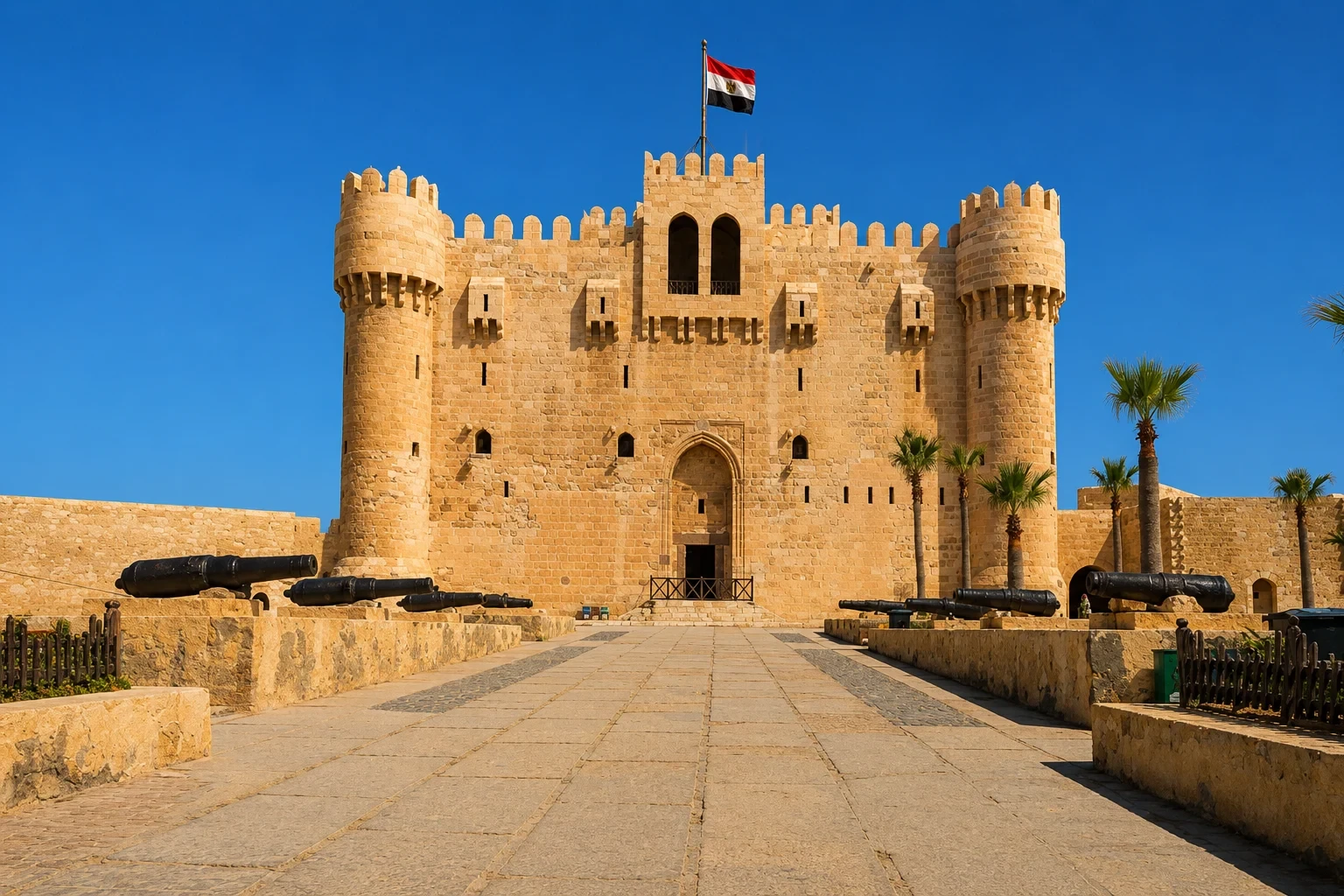
The Lighthouse of Alexandria Egypt no longer stands above ground. The ancient wonder was progressively damaged by a series of catastrophic earthquakes that struck the Egyptian Mediterranean coast in the medieval period, and the final collapse of its standing remains occurred sometime before the construction of the Citadel of Qaitbay in 1477 CE on the exact site of the lighthouse, a Mamluk fortress whose walls were built from the great stone blocks of the fallen ancient wonder. Today the site of the ancient lighthouse is occupied by the Citadel of Qaitbay, where visitors can stand on the precise ground of one of the Seven Wonders of the Ancient World and look across the Mediterranean that the ancient lighthouse once illuminated, and where on the seabed surrounding the Pharos promontory the extraordinary underwater archaeological discoveries of Franck Goddio's team since 1994 have revealed thousands of ancient architectural fragments and colossal statuary from the lighthouse and its associated Ptolemaic royal precinct, making the waters around the Qaitbay Citadel one of the most significant underwater ancient heritage sites in the entire Mediterranean world. The Lighthouse of Alexandria guide is therefore a guide not only to a lost ancient wonder but to the complete experience of its site, its physical remains, its historical legacy, and its enduring cultural significance in the heritage landscape of the city it served for sixteen centuries.

Who Built The Lighthouse Of Alexandria?
The Lighthouse of Alexandria was commissioned by Ptolemy I Soter, the founder of the Ptolemaic dynasty of Egypt and one of the most politically ambitious and culturally visionary rulers in the history of the ancient world, who initiated the project as part of his comprehensive programme of transforming the new city of Alexandria into the supreme metropolis of the Hellenistic world. Ptolemy I recognized that the new city's maritime commerce, which was to be the primary engine of Ptolemaic wealth and imperial power, required the most reliable and the most impressive navigational landmark that ancient engineering could produce at the entrance to Alexandria's harbor, and the Lighthouse of Alexandria was the result of that vision and that ambition. The lighthouse was completed approximately around 280 BCE under the reign of Ptolemy I's son and successor Ptolemy II Philadelphus, who inherited both the building project and the expansive cultural ambitions of his father and under whose reign the construction of the lighthouse was brought to its celebrated completion.
The architect of the lighthouse was Sostratus of Cnidus, a Greek architect from the city of Cnidus on the southwestern coast of modern Turkey, whose name is connected to the lighthouse in one of the most celebrated anecdotes of ancient architectural history. According to the Roman writer Strabo and other ancient sources, Sostratus was so proud of his achievement that he inscribed his own name on the lighthouse base in the following form: Sostratus, son of Dexiphanes, the Cnidian, dedicated this to the Divine Protectors, on behalf of those who sail the seas, and covered the inscription with plaster on which he carved the name of Ptolemy II as the apparent dedicant, calculating that when the plaster eventually fell away posterity would know the true architect of the greatest monument of the age rather than simply the royal patron who had funded its construction. Whether this story is historically accurate or represents the embellishment of later tradition, it has been one of the most frequently told anecdotes in the literature of ancient architecture for more than two thousand years, and the name of Sostratus of Cnidus has been associated with the Lighthouse of Alexandria as firmly and as universally as the name of Ictinus with the Parthenon or the name of Imhotep with the Step Pyramid.
The Ancient Lighthouse: Scale, Form, And Engineering
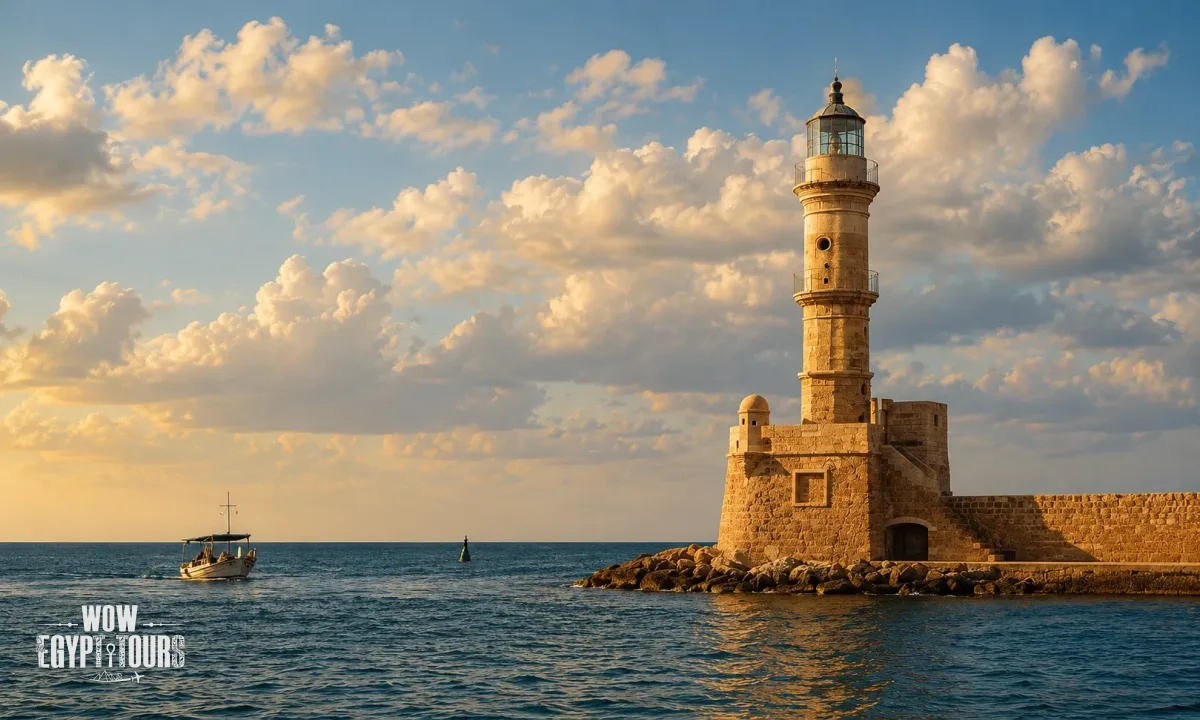
The ancient Lighthouse of Alexandria was a structure of three sequential stages built one above the other in a compositional sequence that became the canonical form of all subsequent lighthouse architecture in the Mediterranean and beyond, a formal grammar of lighthouse design so logically conceived and so practically effective that variations of it continued to be built in lighthouse construction throughout the Mediterranean for more than a thousand years after the ancient original had been destroyed. The lowest and the most massive stage was a square base section of approximately 55 to 60 meters height, built of large limestone blocks that gave the structure the stability and the base width necessary to carry the upper stages at their extraordinary height and to resist the seismic stresses and the storm forces that would periodically test the structure throughout its long history. Above the square base, the second stage was an octagonal tower of approximately 25 to 30 meters height, whose eight-sided plan provided a transition between the massive square footprint of the base and the circular form of the top stage while also being more aerodynamically efficient than a square form in the exposure to sea winds at this height. Above the octagonal middle stage, the third and topmost stage was a circular tower of approximately 8 to 10 meters height, at the top of which the fire or mirror mechanism that gave the lighthouse its practical function was housed in a lantern or beacon chamber surrounded by a colonnade of columns in the classical architectural order.
The total height of the lighthouse, combining all three stages with the lantern or beacon at the top, is estimated by ancient and modern scholars at between approximately 100 and 140 meters, with the most commonly cited figure in the modern scholarly literature being approximately 115 to 120 meters. If these estimates are even approximately correct, the Lighthouse of Alexandria was the tallest building in the ancient world after the Great Pyramid of Giza, a structure of such overwhelming vertical scale that it must have dominated the entire coastal horizon for enormous distances in every direction, visible far out to sea and an unmistakable visual reference point for every ship approaching Alexandria from the north, south, east, or west on the maritime trade routes of the ancient Mediterranean. The visibility of the lighthouse's fire or reflected light at sea was reported in ancient sources at distances of up to 47 kilometers, an extraordinary navigational range that made it the most effective and the most relied-upon fixed navigational aid in the entire ancient Mediterranean world and that transformed the approach to the Alexandrian harbor from a navigationally hazardous night passage into a relatively straightforward maritime operation guided by the most powerful artificial light source in the ancient world.
The Key Figures Of The Pharos Story
The story of the ancient Lighthouse of Alexandria involves three individuals whose names are permanently associated with the monument: Ptolemy I Soter who commissioned it, Ptolemy II Philadelphus who completed it, and Sostratus of Cnidus who designed and built it. Of these three, the figure of Sostratus of Cnidus is the most intellectually fascinating, both for the extraordinary technical achievement his lighthouse represented and for the celebrated anecdote of his self-inscription under the royal plaster, which presents him as the first clearly documented case in ancient architectural history of an architect claiming personal authorship credit for his building in the face of the normal ancient convention of attributing all great works to their royal or divine patron. The story of Sostratus's hidden inscription, whether strictly historical or legendarily embellished, has resonated with architects, scholars, and readers throughout the subsequent history of Western culture as a story about the relationship between the creative individual and the powerful patron, between the maker and the commissioner of great works, and between the desire for personal recognition and the cultural conventions that suppress it. It is a story so perfectly suited to the monument it describes, the most ambitious and the most celebrated ancient building outside Egypt, that it has maintained its hold on the cultural imagination for more than two thousand years and continues to be cited and discussed in every serious treatment of the ancient lighthouse in the modern scholarly and popular literature.
Lighthouse Of Alexandria Location
The ancient Lighthouse of Alexandria stood on the island of Pharos, a small rocky island approximately 1.3 kilometers long that lay in the sea north of the ancient Egyptian settlement of Rhakotis on the Egyptian Mediterranean coast, and which Alexander the Great identified as the ideal natural platform for the eastern harbor breakwater and the primary navigational landmark of his new city when he chose the site for Alexandria in 331 BCE. The island of Pharos was connected to the mainland of Alexandria by the ancient causeway called the Heptastadion, meaning the Seven Stadia, which divided the sea between the island and the mainland into the two harbor basins, the Great Eastern Harbor and the Eunostos or Western Harbor, that together constituted the commercial and military harbor infrastructure of the ancient Ptolemaic capital. Over the centuries, the Heptastadion causeway accumulated sediment and gradually became wider and more substantial, eventually becoming the permanent isthmus or peninsula that connects the former island to the main body of the modern city and that is now the densely inhabited residential and commercial district of the Anfushi and Al-Gomrok neighborhoods of modern Alexandria.
The precise location of the lighthouse on the ancient Pharos island corresponds to the current position of the Citadel of Qaitbay, at the westernmost tip of the Pharos peninsula, whose medieval walls were built directly over the ancient lighthouse foundations using the great stone blocks of the fallen ancient wonder as their primary building material. Visitors to the current Qaitbay Citadel therefore stand on the exact site of one of the Seven Wonders of the Ancient World, with the underwater remains of the lighthouse and the Ptolemaic royal precinct lying on the seabed of the Mediterranean immediately surrounding the Citadel promontory. WOW Egypt Tours includes the Lighthouse of Alexandria site, experienced through a visit to the Citadel of Qaitbay, on all Alexandria Day Tours and Alexandria Port Excursion programmes.
Lighthouse Of Alexandria Fun Facts
The Lighthouse of Alexandria gave its name to the concept of the lighthouse in more than a dozen modern languages. In French the word phare, meaning lighthouse, derives directly from the ancient name Pharos. In Spanish and Italian, faro means lighthouse. In Portuguese, farol. In Catalan, far. In modern Greek, faros. In Romanian, far. In Albanian, far. Even in some non-Romance and non-Greek languages, the ancient Alexandrian name has survived in adapted forms as the standard word for a lighthouse structure. This extraordinary linguistic legacy, the most tangible of all the forms of ancient Alexandrian cultural influence still visible in the everyday vocabulary of the modern world, is the most permanent monument to the ancient lighthouse's significance, a monument that has outlasted the physical structure by more than six centuries and that shows no signs of disappearing from the maritime languages of the world any time soon.
The ancient Lighthouse of Alexandria appears on numerous ancient coins, in ancient literary descriptions, in ancient relief carvings, and in the backgrounds of ancient paintings and mosaics from sites throughout the Roman Mediterranean world, providing an extraordinary quantity of visual and textual documentation for its appearance that is quite exceptional for any single ancient building that no longer stands. The numismatic representations of the lighthouse on Alexandrian coins of the 1st and 2nd centuries CE are the most precisely informative visual sources for the appearance of the three-stage tower structure, showing it with considerable detail of the three stages, the lantern at the top, and the general proportional relationships of the different sections that give scholars the primary basis for the reconstruction drawings of the ancient structure.
The underwater archaeological discoveries made by the French underwater archaeologist Franck Goddio and his team around the Qaitbay Citadel promontory since 1994 have recovered from the seabed more than 2,000 individual ancient architectural fragments and objects, including massive stone blocks weighing up to 70 tonnes, colossal statue fragments of Ptolemaic rulers, sphinx figures, and granite architectural elements of various types that are now recognized as the physical remains of the lighthouse and the associated Ptolemaic royal precinct of the ancient Pharos island. These underwater discoveries have transformed scholarly understanding of the physical appearance and the architectural context of the ancient lighthouse, providing the first direct physical evidence for the scale and the material character of the ancient wonder that ancient literary descriptions alone could never fully convey.
Why Is It Called The Pharos Of Alexandria?
The Lighthouse of Alexandria is called the Pharos of Alexandria after the ancient name of the island on which it was built, the island of Pharos, whose name in the ancient Greek and pre-Greek traditions of the eastern Mediterranean designated the small rocky offshore island that became the foundation for the ancient wonder. The etymology of the name Pharos is debated among ancient language scholars, with competing proposals deriving it from an ancient Egyptian toponym, from a pre-Greek Aegean language root, or from an ancient Semitic root whose precise relationship to the Greek form of the name is unclear. The name Pharos appears in the oldest Greek literary sources referring to the island, including the reference in Homer's Odyssey where the island of Pharos is described as a day's sail from the Egyptian coast, suggesting that the island was known by this name in the Greek literary tradition long before the foundation of Alexandria and the construction of the lighthouse.
The identification of the island name Pharos with the lighthouse structure built upon it was so complete and so universal in the ancient world that by the Roman period the word pharos was used in Greek and Latin as a common noun meaning lighthouse, the structure rather than the specific ancient building, and this generic usage of the ancient island name as the standard Mediterranean word for lighthouse is the direct linguistic origin of the dozen or more modern European language words for lighthouse that derive from the ancient Alexandrian toponym. The transition from the proper name of the ancient island to the common noun of the modern lighthouse vocabulary is the most extraordinary case of ancient place-name survival in the entire heritage of the ancient Mediterranean world, a linguistic transformation that has carried the name of a small Egyptian offshore island used by a Homeric hero for an overnight stay across more than two and a half thousand years of cultural and linguistic change to become the standard navigational vocabulary word of modern European maritime civilization.
Lighthouse Of Alexandria History
The history of the Lighthouse of Alexandria begins with the foundation of the city of Alexandria in 331 BCE by Alexander the Great, who identified the site on the Egyptian Mediterranean coast between the ancient settlement of Rhakotis and the sea as the ideal location for his new Mediterranean capital and who recognized the offshore island of Pharos as the natural foundation for the harbor breakwater and the navigational landmark that his new city would require. The lighthouse project was conceived as one of the foundational building programmes of the new Ptolemaic capital, undertaken by Ptolemy I Soter in the decades following Alexander's death and the establishment of Ptolemaic rule over Egypt as a deliberate statement of the new dynasty's technical ambition, commercial priorities, and cultural aspirations. The completion of the lighthouse under Ptolemy II around 280 BCE, approximately fifty years after Alexander's foundation of the city, coincided with the period of Alexandria's greatest early cultural achievement, the founding of the ancient Library and Museum under Ptolemy II's patronage, and the lighthouse's dedication to the divine protectors on behalf of those who sail the seas expressed the maritime religious tradition within which the Ptolemaic commercial empire operated its harbor infrastructure.
The lighthouse served the navigation of the Alexandria harbor continuously throughout the Ptolemaic period, the Roman period, the Byzantine period, and into the early Islamic era after the Arab conquest of Egypt in 641 CE, maintained and repaired by successive rulers and administrations who recognized its indispensable practical value to the commercial life of Egypt's primary Mediterranean port. The first major earthquake damage to the structure was reported in 956 CE, when the Arab writer al-Masudi described the lighthouse as already partially ruined at its upper levels but still functioning in some form. The earthquake of 1303 CE caused severe damage to the surviving lower sections of the structure, and Ibn Battuta's account of his visit to Alexandria in 1326 CE describes the lighthouse as already in a condition of advanced ruin with access to its interior no longer possible. Ibn Battuta's second visit in 1349 CE found even the base structure inaccessible. The final collapse of the surviving ancient remains occurred sometime in the 14th or early 15th century CE, and when Sultan Qaitbay undertook the construction of his coastal fortress on the site in 1477 CE, he found only a vast field of fallen ancient stone blocks that he used as the primary building material for the new citadel's massive defensive walls.
The Story Of The Lost Wonder: From Ancient Glory To Underwater Discovery
The story of the Lighthouse of Alexandria from its completion around 280 BCE to the underwater archaeological discoveries of the 1990s is a narrative arc of extraordinary historical sweep, encompassing sixteen centuries of functional maritime service, four centuries of progressive earthquake damage and structural collapse, five centuries of complete physical disappearance under the waves, and a single decade of dramatic underwater rediscovery that brought the physical reality of the ancient wonder back into the scholarly and public consciousness for the first time in more than five hundred years. The lighthouse's sixteen-century career as the most celebrated navigational monument of the ancient Mediterranean world established it as a cultural icon whose loss in the medieval period was recognized as a cultural catastrophe comparable in symbolic significance to the earlier destruction of the ancient Library, and the rediscovery of its physical remains on the seabed around the Qaitbay Citadel in the 1990s has given the ancient wonder a kind of archaeological afterlife that no one predicted and whose implications for the scholarly understanding of the monument and its precinct are still being worked out in the ongoing programme of underwater investigation.
The underwater archaeological discoveries made by Franck Goddio's team beginning in 1994 and continued by subsequent Egyptian underwater archaeological expeditions have transformed the scholarly understanding of the Pharos site, revealing on the seabed covering approximately two hectares immediately north and east of the Qaitbay Citadel promontory the most substantial physical evidence for the ancient lighthouse complex ever discovered. The objects recovered from the underwater site include massive carved stone blocks of various building materials, column shafts, architectural cornices and capitals, fragments of colossal statuary representing Ptolemaic rulers and Egyptian deities, and smaller finds including pottery, bronze objects, and inscribed elements, all lying on the seabed at depths of approximately 6 to 8 meters in the clear Mediterranean water below the Qaitbay Citadel. Some of the most spectacular recovered objects, including a magnificent head of a Ptolemaic ruler of exceptional sculptural quality and large sections of a colossal figure identified as either Isis or a Ptolemaic queen, are now displayed in Alexandrian museums including the Greco-Roman Museum, providing the most direct available visual encounter with the artistic traditions of the ancient Pharos precinct. The ongoing underwater investigations have also produced evidence for the land subsidence that caused the partial submersion of the ancient coastal landscape around the Pharos island, providing important geological and geomorphological data about the coastal changes that progressively threatened and ultimately contributed to the destruction of the ancient lighthouse over the medieval centuries.
Lighthouse Of Alexandria Architecture: What Ancient Sources Tell Us
The Three-Stage Composition
The three-stage composition of the ancient Lighthouse of Alexandria, with its square lower stage, octagonal middle stage, and circular upper stage, is the most consistently reported structural feature of the ancient monument across the multiple literary and visual sources that describe it, and the extraordinary consistency of this three-stage description across sources from different periods and different traditions gives scholars confidence that the basic structural scheme of the ancient lighthouse is reliably known even in the absence of any surviving ancient architectural drawing or specification. The square-octagonal-circular progression of the three stages creates a logical structural and visual sequence from the maximum stability and minimum wind resistance of the square base through the transitional aerodynamic efficiency of the octagonal middle section to the maximum visual elegance and rotational wind efficiency of the circular top stage, a sequence that appears to reflect the genuine engineering logic of the ancient designers rather than simply the descriptive conventions of later sources.
The Fire And Mirror Mechanism
The precise technical mechanism by which the ancient lighthouse produced its famous light that was visible up to 47 kilometers at sea has been the subject of scholarly debate since the Renaissance, with competing proposals in the modern literature including a simple wood fire in an open lantern at the top of the tower, a system of bronze or polished stone mirrors reflecting and concentrating the firelight into a directional beam, a lens or reflector of polished crystal concentrating sunlight by day and firelight by night, and various combinations of these basic optical and pyrotechnic elements. The ancient sources are not specific enough about the technical details of the light mechanism to resolve this debate definitively, but the consensus of modern optical and engineering analysis suggests that some form of mirror or reflector system must have been employed to achieve the extraordinary range of visibility reported in the ancient sources, as a simple unenhanced wood fire visible at 47 kilometers would have required a fire of quite extraordinary scale and intensity that would have been difficult to maintain continuously through the night and in adverse weather conditions.
The Dedication And The Sostratus Inscription
The ancient lighthouse bore on its base the dedication inscription attributed to Sostratus of Cnidus, reading in the most frequently cited ancient form: Sostratus, son of Dexiphanes, the Cnidian, dedicated this to the Divine Protectors, on behalf of those who sail the seas. This dedication, with its explicit orientation toward the practical maritime function of the structure and its invocation of divine protection for seafarers rather than royal glorification for the patron, distinguishes the Pharos inscription from the typical conventions of Ptolemaic royal dedicatory inscriptions and reflects the genuinely practical, maritimely oriented self-understanding of the lighthouse as a structure of utilitarian as well as symbolic significance. The inscription's reference to the Divine Protectors, the Dioscuri Castor and Pollux who were the patron deities of ancient sailors and whose appearance as the twin lights of St. Elmo's fire at sea was regarded as a divine omen of safety and protection, connects the lighthouse directly to the ancient maritime religious tradition and gives the monument a dimension of sacred function that complemented its purely practical navigational role.
The Statues And The Royal Precinct
Ancient sources and the underwater archaeological discoveries together establish that the ancient lighthouse was surrounded by a more extensive royal and sacred precinct on the Pharos island, including colossal statues of Ptolemaic rulers, temples or shrine buildings associated with the maritime deities venerated at the site, and various other architectural and sculptural elements that gave the Pharos complex a character not simply of a utilitarian navigation structure but of a major sacred and royal landmark of the Ptolemaic capital. The colossal statuary recovered from the underwater site, including the magnificent Ptolemaic ruler head and the large fragments of divine or royal female figures, are the most tangible surviving evidence for this broader sculptural and royal programme, and their quality and scale confirm that the Pharos island precinct was endowed with the finest sculptural works of the Ptolemaic royal workshop tradition in a display of royal piety and maritime religious devotion appropriate to the most important harbor entrance in the ancient Mediterranean world.
Why Is The Lighthouse Of Alexandria Important?
The Lighthouse of Alexandria is important in ways that span ancient engineering history, maritime heritage, cultural linguistics, architectural history, and the history of scientific knowledge. As an ancient engineering achievement, it was the tallest building in the world at the time of its construction and the most technically sophisticated navigational structure ever built in antiquity, a monument that demonstrated the extraordinary capabilities of Ptolemaic engineering and construction technology at the height of the Hellenistic golden age of Alexandria and that established practical and formal standards for lighthouse architecture that influenced the design of beacon towers and harbor lighthouses throughout the Mediterranean world for more than a thousand years. As a cultural monument, the Pharos was the most universally known and the most consistently admired artificial structure of the ancient Mediterranean world other than the Egyptian pyramids, celebrated in poetry, described in prose, depicted in visual art, and invoked as the supreme example of human technical achievement in dozens of ancient and medieval sources from every culture that had contact with the ancient Mediterranean world.
As a heritage site in the modern world, the Lighthouse of Alexandria lives on through its linguistic legacy in the lighthouse vocabulary of a dozen European languages, through the physical remains of its stone blocks incorporated in the walls of the Citadel of Qaitbay, through the spectacular underwater archaeological remains on the seabed around the Pharos promontory, and through the objects recovered from those underwater excavations and now displayed in the Greco-Roman Museum and other Alexandrian collections, making the encounter with the Lighthouse of Alexandria heritage one of the most geographically and institutionally distributed ancient heritage experiences available to any visitor in the city. WOW Egypt Tours provides the essential interpretive expertise that makes the complete Lighthouse of Alexandria heritage experience, spread across the Qaitbay Citadel site, the waterfront, and the Greco-Roman Museum, fully accessible and fully meaningful for every visitor to the city.
What Are Some Interesting Facts About The Lighthouse Of Alexandria?
The Wonder That Named All Lighthouses
The most remarkable fact about the linguistic legacy of the Lighthouse of Alexandria is not simply that a few languages preserved its ancient name but that the specific Greek name of the island on which it was built became the standard word for lighthouse in the entire Romance language family and in several other European languages influenced by Mediterranean maritime vocabulary, an outcome so linguistically improbable and so culturally consequential that it stands as the most extraordinary example of ancient place-name survival in the entire vocabulary of the modern Western world. The ancient island of Pharos was a small and geographically unremarkable rocky outcrop off the Egyptian coast whose name had nothing to do with lighthouses in any etymological sense, since the ancient Greek word for fire or light, pyr or phos, was not the source of the island's name. Yet through the universal association of the island with its lighthouse and the lighthouse with its Alexandrian island, the name Pharos became so thoroughly identified with the concept of the lighthouse structure in the ancient and medieval Mediterranean mind that when the Romance languages of medieval and modern Europe needed a word for the lighthouse technology they were adopting and developing, they reached automatically for the ancient Alexandrian place name as the most immediately available and the most universally recognized designation for the thing they were naming. Every French sailor who says phare, every Spanish sailor who says faro, every Italian sailor who says faro, and every Portuguese sailor who says farol is, whether they know it or not, speaking the name of a small rocky island off the coast of Egypt where a man named Sostratus of Cnidus built the tallest and the most celebrated building of the ancient world approximately 2,300 years ago.
The Architect Who Signed His Own Name
The story of Sostratus of Cnidus inscribing his own name on the lighthouse base under a plaster layer bearing the name of his royal patron, calculating that when the plaster fell away posterity would know the true creator of the monument, is one of the most enduring and the most philosophically resonant anecdotes in the entire history of architecture, a story that encapsulates in a single act of calculated self-inscription the eternal tension between the creative individual and the powerful patron, between the architect's desire for personal recognition and the cultural conventions that attributed all great achievements to royal or divine authority. The story has been told, cited, and interpreted in every major language of European civilization since the Renaissance, and it retains its power to illuminate not only the specific historical situation of the ancient architect but the universal human condition of the creative professional working within the constraints of institutional patronage. Whether or not the story is historically accurate in its specific details, it captures something genuinely true about the relationship between Sostratus and his lighthouse, a relationship in which the architect's achievement was so extraordinary and so obviously personal that the normal convention of attributing great buildings entirely to their royal patrons seemed to him, and to many subsequent observers, inadequate to the reality of what had been accomplished.
Visible From Space In The Ancient Imagination
The ancient claims about the visibility range of the lighthouse's light at sea, with some sources reporting visibility of up to 47 kilometers, have been the subject of extended scholarly discussion since the Renaissance, with both ancient enthusiasts and modern skeptics contributing to a debate about the optical and atmospheric plausibility of the reported range that has never been definitively resolved. Modern optical physics confirms that under ideal atmospheric conditions, a sufficiently powerful concentrated light source elevated to the height of the ancient lighthouse could theoretically achieve visibility at the distances claimed by ancient sources, but that the normal conditions of Mediterranean sea haze, atmospheric moisture, and light scattering would typically reduce this theoretical maximum visibility very significantly. The debate about the lighthouse's actual visibility range at sea is itself a tribute to the extraordinary scale of the ancient structure, since no other ancient artificial light source even approached the question of such long-range visibility, and the fact that scholars have considered the ancient claims plausible enough to merit serious optical analysis rather than dismissing them as obvious exaggeration is itself the strongest possible testimony to the impression the ancient lighthouse made on those who encountered it and described it.
What Is So Special About The Lighthouse Of Alexandria Heritage Experience?
Standing On The Exact Ground Of An Ancient Wonder
What makes the Lighthouse of Alexandria heritage experience uniquely special among all the ancient wonder sites and all the lost monument locations of the ancient world is the extraordinary directness of the physical connection between the modern visitor and the ancient wonder available at the Citadel of Qaitbay. Of the Seven Wonders of the Ancient World, only the Great Pyramid of Giza survives substantially intact, while the other six, including the Lighthouse of Alexandria, were destroyed in antiquity or the medieval period and are known only through ancient descriptions and representations. Yet the Lighthouse of Alexandria is the one lost ancient wonder whose site is precisely and unambiguously identified with a location that visitors can access today, where they can stand on the exact ground of the ancient wonder, look out across the same Mediterranean sea that the ancient lighthouse illuminated for sixteen centuries, and where they can look down through the clear harbor water to the seabed where the physical remains of the ancient wonder lie within a few meters of the surface. No other lost ancient wonder offers this combination of precise site location, physical accessibility, and underwater material survival that gives the Lighthouse of Alexandria heritage experience its quality of direct and almost unmediated encounter with the ancient world.
The Wonder That Lives In Every Language
The Lighthouse of Alexandria is also uniquely special among all the ancient wonders for the quality and the scope of its living legacy in the modern world, the extraordinary linguistic survival of its name in the lighthouse vocabulary of a dozen modern European languages that makes the ancient Alexandrian wonder present in the everyday consciousness of every French, Spanish, Italian, Portuguese, and Greek speaker who uses their language's word for lighthouse in maritime or everyday contexts. This linguistic legacy gives the Lighthouse of Alexandria a kind of immortality that no other ancient wonder possesses, a mode of cultural survival that is entirely independent of physical remains or heritage site access and that operates at the most fundamental level of everyday linguistic communication, ensuring that the memory of the ancient Alexandrian wonder is perpetuated not only in the specialized discourse of classical scholarship and heritage tourism but in the daily vocabulary of millions of ordinary speakers of living European languages who have no awareness that the maritime word they use routinely preserves the name of an Egyptian island where Sostratus of Cnidus built the tallest and the most celebrated lighthouse of the ancient world more than two thousand years ago.
Lighthouse Of Alexandria Through The Ages: From Wonder To Ruin To Discovery
The sixteen-century career of the ancient Lighthouse of Alexandria from its completion around 280 BCE to the final collapse of its surviving ruins in the 14th or early 15th century CE is the story of the most enduring ancient wonder of engineering in the ancient and medieval world, a monument that outlasted every other ancient wonder in structural continuity, that guided generations of sailors, merchants, scholars, pilgrims, and invaders into the harbor of the most cosmopolitan city of the ancient Mediterranean, and that maintained its functional and symbolic significance through every major transformation of the cultural and political world around it from Ptolemaic to Roman to Byzantine to early Islamic. The earthquake of 1303 CE that caused severe damage to the lighthouse was the same earthquake that devastated large areas of the eastern Mediterranean including Cyprus and Palestine, and the progressive structural failure of the already earthquake-damaged lighthouse in the decades that followed brought the sixteen-century career of the ancient wonder to its final end sometime before 1477 CE.
The five centuries of complete disappearance from approximately 1400 CE to the underwater discoveries of the 1990s were ended by the systematic underwater archaeological investigations that revealed the physical remains of the lighthouse on the seabed around the Qaitbay Citadel promontory, restoring to the ancient wonder a physical presence, however submerged and fragmented, that scholars and visitors of the modern era had abandoned hope of ever recovering. The ongoing underwater investigations continue to add to the scholarly understanding of the ancient lighthouse and its precinct, and the recovered objects now displayed in the Greco-Roman Museum and other Alexandrian collections ensure that the physical substance of the ancient wonder is available to modern visitors in a way that no amount of ancient literary description or modern reconstruction drawing can substitute for. Today the Lighthouse of Alexandria site, experienced through the combined heritage of the Qaitbay Citadel visit, the waterfront panorama, and the Greco-Roman Museum collections, provides one of the most historically rich and the most personally resonant ancient wonder heritage experiences available anywhere in the Mediterranean world.
Lighthouse Of Alexandria And The Seven Wonders
The Seven Wonders of the Ancient World, as listed in the canonical ancient Greek tradition compiled by writers including Antipater of Sidon in approximately 100 BCE and Philo of Byzantium at a similar date, comprised the Great Pyramid of Giza, the Hanging Gardens of Babylon, the Temple of Artemis at Ephesus, the Statue of Zeus at Olympia, the Mausoleum at Halicarnassus, the Colossus of Rhodes, and the Lighthouse of Alexandria. The Lighthouse appears on most ancient versions of the Seven Wonders list but was not included on all versions, and some ancient lists substituted other monuments for it, reflecting the fact that the canonical Seven Wonders list was never fixed by any single authoritative ancient source but evolved through successive versions in the ancient and medieval literary tradition. The Lighthouse's inclusion on the most widely accepted ancient list reflects its universal recognition in the ancient Mediterranean world as the most technically extraordinary and the most practically significant human-made structure of the Hellenistic world, a monument whose combination of enormous scale, sophisticated engineering, and practical maritime utility made it immediately comprehensible as a wonder to every ancient observer regardless of cultural background or geographical origin, unlike the more culturally specific religious monuments or the more geographically remote wonders on the same list.
Best Time To Experience The Lighthouse Of Alexandria Heritage
The Lighthouse of Alexandria heritage experience is available in multiple forms and at multiple sites in Alexandria, each with its own optimal visiting conditions. The primary site experience, standing on the exact ground of the ancient lighthouse at the Citadel of Qaitbay, is most rewarding during the cooler Mediterranean months from October through April when the Citadel ramparts and the waterfront panorama can be explored in comfort. The museum component of the experience, viewing the recovered underwater objects in the Greco-Roman Museum, is equally rewarding at any time of year in the air-conditioned museum environment. The waterfront experience of looking across the Mediterranean from the Eastern Harbor Corniche toward the Pharos promontory, imagining the ancient lighthouse rising from the same sea on the same horizon, is most atmospheric in the early morning and late afternoon when the Mediterranean light is at its most beautiful and the harbor waterscape is at its most evocative. WOW Egypt Tours plans all Lighthouse of Alexandria heritage visits as an integrated component of the complete Alexandria day programme.
How To Experience The Lighthouse Of Alexandria Heritage Today
The Lighthouse of Alexandria heritage is experienced today through four distinct but interconnected components, each offering a different mode of encounter with the ancient wonder and its legacy. The primary site experience is the visit to the Citadel of Qaitbay on the Pharos promontory, where visitors stand on the exact ground of the ancient lighthouse, can identify ancient lighthouse stones incorporated in the citadel walls, and look out across the Mediterranean from the same geographical position that dominated the approach to Alexandria for sixteen centuries. The museum component is the visit to the Greco-Roman Museum, where recovered underwater objects from the lighthouse and its Ptolemaic precinct, including the magnificent Ptolemaic ruler head and the colossal statue fragments, are displayed in a museum context that makes their historical significance fully comprehensible. The waterfront component is the experience of the Eastern Harbor Corniche walk, looking across the harbor at the Pharos promontory and appreciating the geographical logic of the ancient lighthouse's position that is immediately comprehensible from the water side. The scholarly component is the guided explanation of the ancient lighthouse's history, architecture, and cultural legacy provided by a knowledgeable WOW Egypt Tours guide on all Alexandria Day Tours and Alexandria Port Excursion programmes.
Tips For Experiencing The Lighthouse Of Alexandria
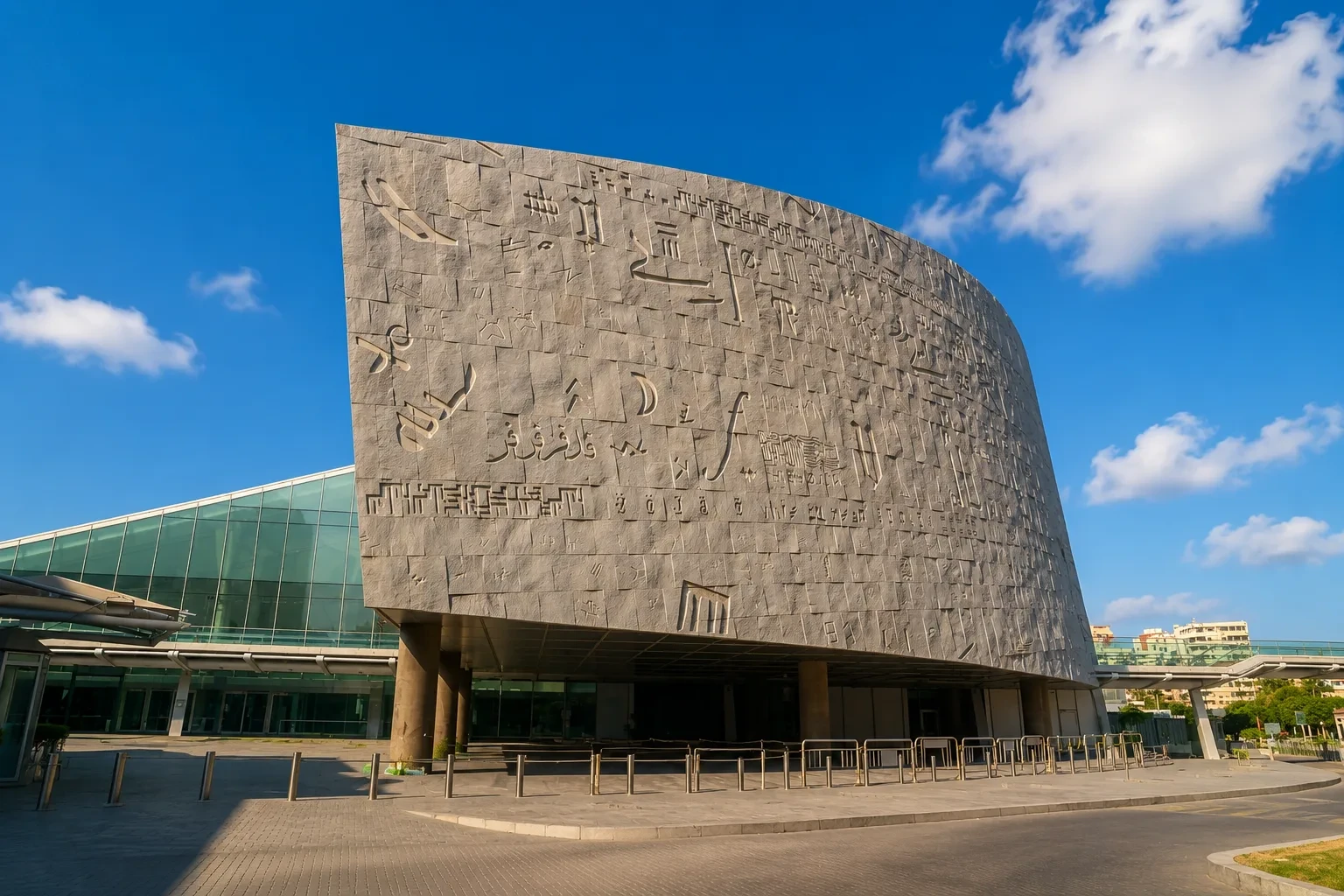
Begin the Lighthouse of Alexandria heritage experience at the Greco-Roman Museum where the recovered underwater objects from the lighthouse site, particularly the colossal Ptolemaic sculpture fragments, provide the most direct physical encounter with the ancient wonder's artistic programme and give the subsequent Qaitbay Citadel visit a richer and more specific visual context. When visiting the Citadel of Qaitbay, ask your guide specifically to identify examples of the ancient lighthouse stones incorporated in the citadel walls, as these are the most directly tangible above-water physical remains of the ancient wonder available to visitors and their identification in the medieval masonry is one of the most immediate and most physically compelling experiences of the Lighthouse of Alexandria heritage. Stand at the highest point of the Qaitbay Citadel's central tower and look north across the open Mediterranean, and ask your guide to help you calculate the horizon distance at this elevation: the realization that the ancient lighthouse, more than three times the height of the current citadel tower, would have extended the visible horizon to approximately 47 kilometers makes the ancient reports of the lighthouse's visibility range suddenly physically comprehensible. Walk the Eastern Harbor Corniche from the Bibliotheca Alexandrina to the Qaitbay Citadel, looking across the harbor as a ship's captain would have done approaching Alexandria from the north, and appreciate how the Pharos promontory dominates the harbor entrance from the water side in a way that makes the ancient lighthouse's position immediately logical and immediately dramatic. A licensed guide from WOW Egypt Tours with detailed knowledge of the ancient lighthouse's history, architecture, and cultural legacy is essential for the fullest possible appreciation of this multi-component heritage experience.
What To Wear For The Lighthouse Of Alexandria Experience
The Lighthouse of Alexandria heritage experience involves both outdoor and indoor elements, requiring versatile clothing appropriate for the multiple visiting environments. For the outdoor component at the Citadel of Qaitbay site, the exposed coastal position on the Pharos promontory requires a hat, sunscreen, and comfortable walking shoes with good grip for the uneven ancient and medieval stone surfaces of the citadel. For the indoor museum component at the Greco-Roman Museum, the air-conditioned gallery environment is comfortable in casual clothing, with a light warm layer recommended if you are sensitive to air conditioning. For the waterfront Corniche walk component, comfortable walking shoes and appropriate weather clothing for the Mediterranean coastal conditions are recommended. Modest dress covering the shoulders and knees is appropriate for the complete Alexandria day programme in the broader social context of the city.
Photography Of The Lighthouse Of Alexandria Heritage
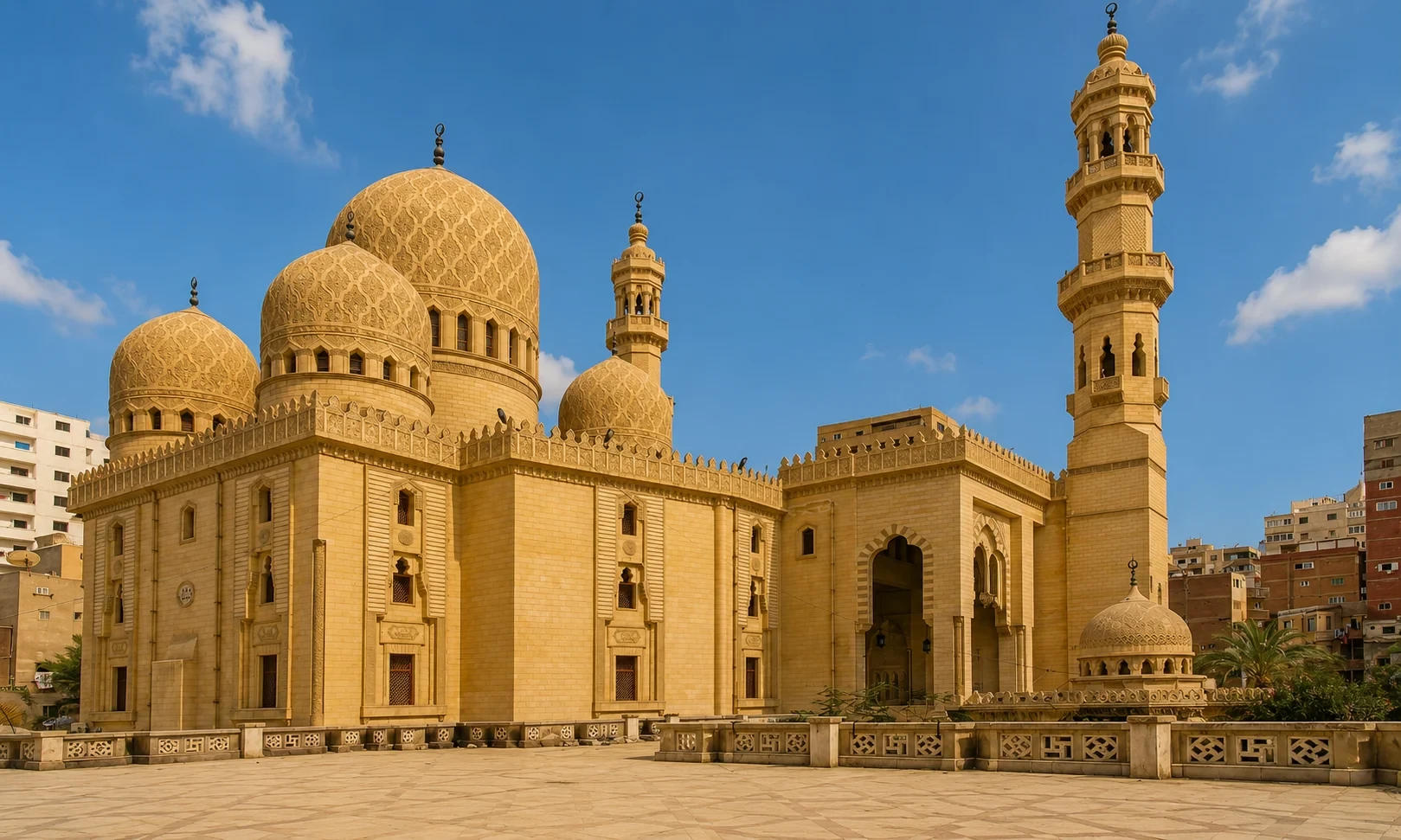
The Lighthouse of Alexandria heritage experience offers exceptional photography opportunities at multiple locations, each providing a different visual perspective on the ancient wonder and its legacy. The most dramatically evocative photography of the lighthouse site is from the Corniche waterfront looking west toward the Pharos promontory and the Qaitbay Citadel, a composition that places the medieval fortress on the precise horizon position where the ancient lighthouse would have appeared to approaching ships and that communicates the geographical logic of the lighthouse's position with immediate visual clarity. The stone blocks in the Qaitbay Citadel walls that can be identified as ancient lighthouse material photograph most clearly in low-angle morning or afternoon light that creates surface relief between the ancient and medieval masonry. The recovered underwater objects in the Greco-Roman Museum provide the most photographically spectacular direct encounters with the physical substance of the ancient wonder, subject to the museum's standard no-flash photography policy. Photography along the Eastern Harbor Corniche, with the Pharos promontory and the four minarets of the Abu Al-Abbas Al-Mursi Mosque in the background, creates one of the most panoramically beautiful and the most culturally layered urban waterfront compositions available in the entire Egyptian heritage landscape.
Lighthouse Of Alexandria Tours
Alexandria Day Tour From Cairo: The Complete Lighthouse Of Alexandria Heritage Experience
This comprehensive full-day tour from Cairo provides the complete multi-component Lighthouse of Alexandria heritage experience, combining the Qaitbay Citadel site visit with the Greco-Roman Museum and the Eastern Harbor waterfront in a single integrated programme that gives visitors the fullest possible encounter with the ancient wonder's site, its physical remains, and its cultural legacy.
What Is Covered
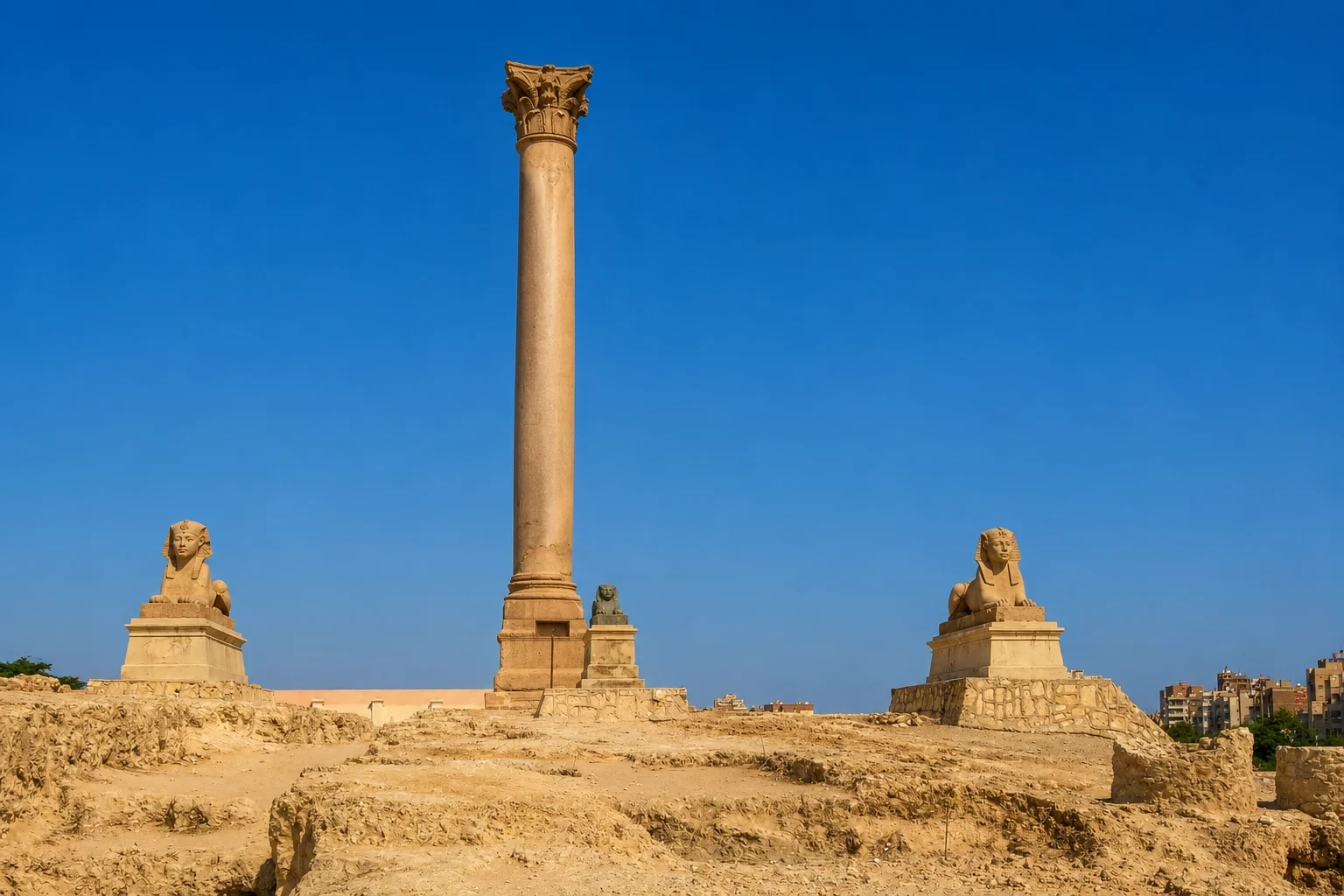
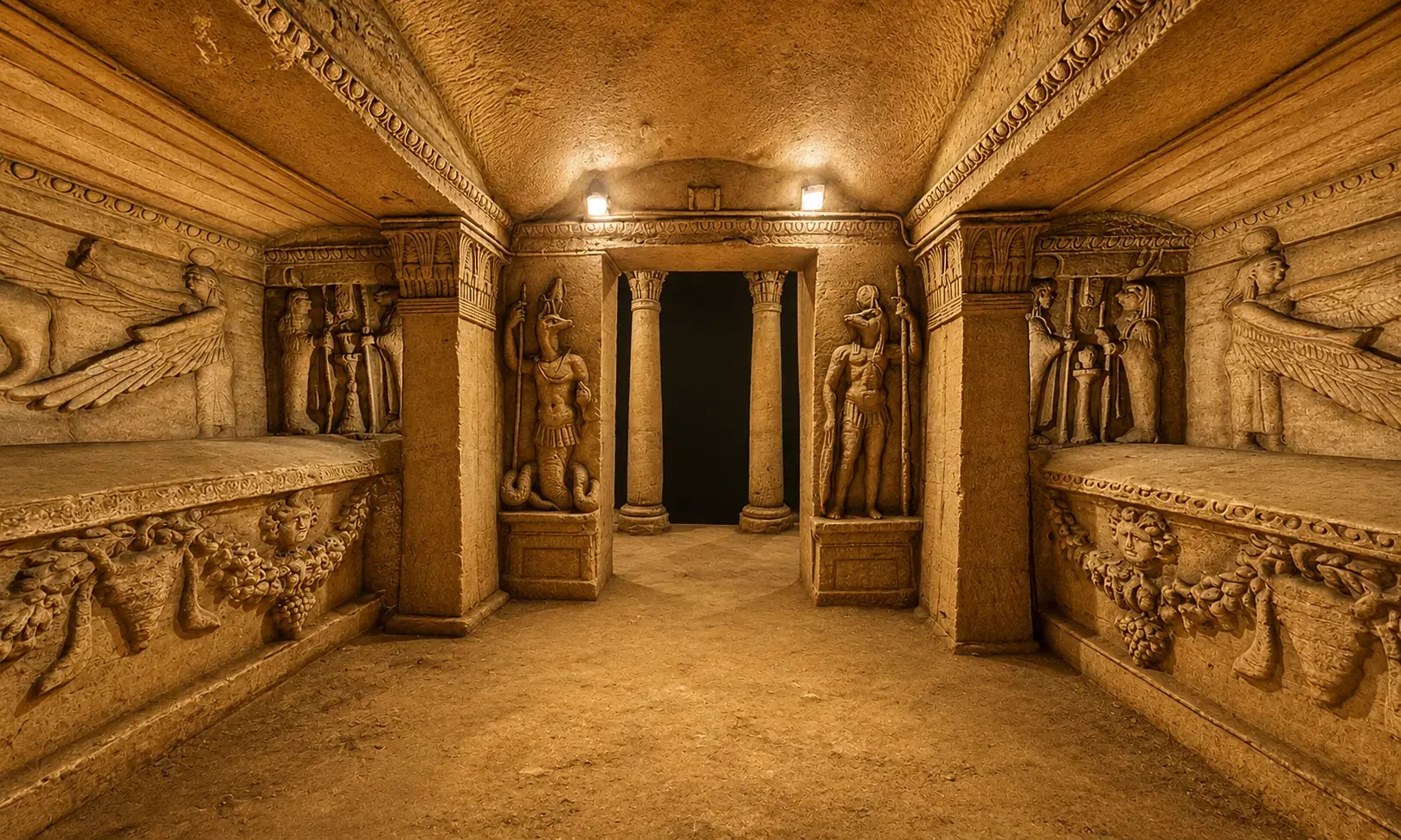
Private vehicle from Cairo hotel to Alexandria along the Desert Road. Guided visit to the Greco-Roman Museum to see the recovered underwater objects from the lighthouse and the Ptolemaic royal precinct. Guided visit to the Citadel of Qaitbay on the exact site of the ancient lighthouse, with identification of ancient lighthouse stones in the citadel walls and panoramic views from the tower. Eastern Harbor Corniche walk with the guided explanation of the ancient harbor geography and the lighthouse's position. Combined guided visit to the Catacombs of Kom El Shoqafa and Pompey's Pillar. Return to Cairo by private vehicle.
Duration
Full day from Cairo, with proportionate time at each site and approximately 2 to 2.5 hours driving each way.
Includes
Private air-conditioned vehicle from Cairo hotel, private licensed guide with specific expertise in the ancient lighthouse's history and the Ptolemaic heritage of Alexandria, and entrance fees to all sites that have admission charges.
Alexandria Day Tour: Complete Cultural Programme Including The Lighthouse Of Alexandria Heritage
This full-day Alexandria city tour covers the complete range of Alexandria's most significant cultural and heritage attractions, with the Lighthouse of Alexandria heritage experience integrated throughout the programme as the ancient wonder whose site and legacy permeates the entire Eastern Harbor landscape of the city.
What Is Covered
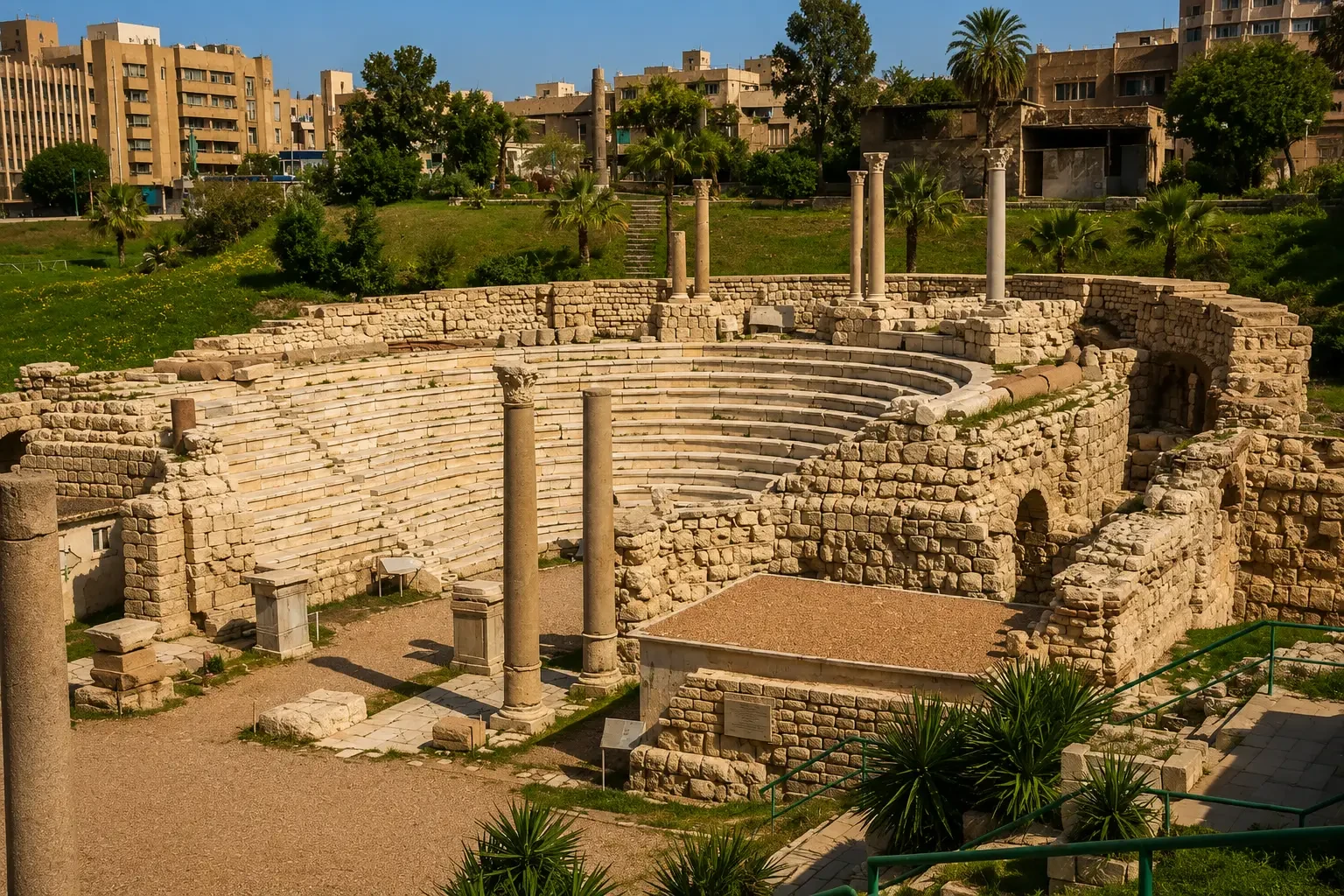
Bibliotheca Alexandrina. Greco-Roman Museum with lighthouse underwater finds. Catacombs of Kom El Shoqafa and Pompey's Pillar. Roman Amphitheatre. Abu Al-Abbas Al-Mursi Mosque. Citadel of Qaitbay on the lighthouse site with guided identification of ancient lighthouse stones.
Duration
Full day from Alexandria hotel or cruise ship terminal, with proportionate time at each site and the lighthouse heritage integrated into the Qaitbay Citadel and Greco-Roman Museum visits.
Includes
Private air-conditioned transportation from hotel or port, private licensed guide with specific Lighthouse of Alexandria expertise, and entrance fees to all sites with admission charges.
Alexandria Port Excursion: Lighthouse Of Alexandria Site And City Highlights
For cruise ship passengers arriving at Alexandria Port, this shore excursion includes the Lighthouse of Alexandria site at the Qaitbay Citadel as one of the most historically significant stops of the complete programme.
What Is Covered
Private vehicle from Alexandria Port. Combined guided visit to the Catacombs of Kom El Shoqafa and Pompey's Pillar. Abu Al-Abbas Al-Mursi Mosque. Guided visit to the Citadel of Qaitbay on the exact site of the Lighthouse of Alexandria. Optional: Bibliotheca Alexandrina. Return transfer to Alexandria Port before ship departure.
Duration
Full day or half day from Alexandria Port depending on ship schedule.
Includes
Private air-conditioned vehicle from Alexandria Port, private licensed guide with Lighthouse of Alexandria heritage expertise, entrance fees to all sites with admission charges, and guaranteed return transfer to the ship.
Combine The Lighthouse Of Alexandria With Your Egypt Tours Package
The Lighthouse of Alexandria heritage experience is featured across the full range of WOW Egypt Tours travel products that include Alexandria. Browse the options below to find the Egypt experience that includes the Lighthouse of Alexandria.
Egypt Tour Packages: Multi-day guided Egypt tours organized by duration, including 2 Days Egypt Packages, 3 Days Egypt Packages, 4 Days Egypt Packages, 5 Days Egypt Packages, 6 Days Egypt Packages, 7 Days Egypt Packages, 8 Days Egypt Packages, 10 Days Egypt Packages, and longer itineraries. All packages that include Alexandria feature the Lighthouse of Alexandria heritage experience through the Qaitbay Citadel visit and the Greco-Roman Museum. All packages include private air-conditioned transportation, private licensed guide, accommodations, entrance fees to all included sites, and private transfers throughout Egypt.
Egypt Travel Packages: Themed Egypt travel packages designed around specific travel styles and interests, including Egypt Honeymoon Travel Packages, Egypt Budget Travel Packages, Egypt Family Travel Packages, Egypt Luxury Travel Packages, Egypt Adventure Travel Packages, Egypt Cultural Travel Packages, and Egypt Christmas and New Year Travel Packages. The Lighthouse of Alexandria heritage is particularly suited to Cultural, Luxury, and Educational themed packages. All packages include private transportation, licensed guide, accommodations, meals, and private transfers.
Egypt Nile Cruise Packages: Complete Egypt travel packages combining Cairo sightseeing with a fully guided Nile cruise. Alexandria and the Lighthouse of Alexandria heritage can be added as an extension to any Egypt Nile Cruise Package.
Nile River Cruises: All WOW Egypt Tours Nile cruise options. Alexandria and the Lighthouse of Alexandria heritage are available as an extension from Cairo added to the beginning or end of any Nile River Cruise itinerary.
Cairo Tours: Day tours from Cairo covering the major attractions of the Egyptian capital. Cairo-based travelers can visit Alexandria and the Lighthouse of Alexandria heritage as a full-day excursion from Cairo by private vehicle or train. All tours include private air-conditioned transportation, private licensed guide, entrance fees, and private transfers.
Alexandria Tours: Dedicated day tours based in Alexandria covering the complete range of the city's cultural and heritage attractions. The Lighthouse of Alexandria heritage is integrated throughout the Alexandria tour programme, experienced through the Qaitbay Citadel visit, the Greco-Roman Museum, and the Eastern Harbor Corniche. All tours include private air-conditioned transportation, private licensed guide with Lighthouse of Alexandria expertise, entrance fees to all included sites, and private transfers.
Alexandria Port Excursions: Shore excursion programmes from Alexandria Port for Mediterranean cruise ship passengers. The Lighthouse of Alexandria site at the Qaitbay Citadel is featured on all Alexandria Port Excursion programmes. All excursions include private air-conditioned vehicle from the port, private licensed guide, entrance fees to all sites with admission charges, and guaranteed return transfer to the ship.
Nearby Attractions To The Lighthouse Of Alexandria Site
The Lighthouse of Alexandria site, experienced through the Citadel of Qaitbay on the Pharos promontory, is surrounded by the most significant heritage landmarks of the Eastern Harbor waterfront, each of which has a specific historical connection to the ancient lighthouse and its era. The Abu Al-Abbas Al-Mursi Mosque is approximately 1 kilometer east along the Corniche, the most beautiful Islamic building of the waterfront whose position on the same harbor shoreline as the ancient lighthouse gives the two monuments a visual and geographical relationship of extraordinary historical depth. The Bibliotheca Alexandrina is approximately 2 kilometers east, the most direct modern institutional successor to the ancient intellectual tradition of the city that the lighthouse served for sixteen centuries. The Catacombs of Kom El Shoqafa and Pompey's Pillar are approximately 4 to 5 kilometers south, representing the ancient underground funerary and religious heritage of the Ptolemaic and Roman city that the lighthouse guarded at its harbor entrance. The Greco-Roman Museum, housing the recovered underwater objects from the lighthouse site, is approximately 3 to 4 kilometers east in the central city, providing the essential museum complement to the outdoor site visit. The Roman Amphitheatre, the Greco-Roman Museum, and the broader Alexandria Pride of the Mediterranean heritage landscape are all accessible through the Alexandria Day Tours and Alexandria Port Excursions offered by WOW Egypt Tours.
Frequently Asked Questions About The Lighthouse Of Alexandria
What was the Lighthouse of Alexandria?
The Lighthouse of Alexandria, also known as the Pharos of Alexandria, was one of the Seven Wonders of the Ancient World, built on the island of Pharos at the entrance to the Eastern Harbor of Alexandria around 280 BCE under the Ptolemaic rulers of Egypt. Estimated at 115 to 135 meters height, it was the tallest building in the ancient world after the Great Pyramids and guided Mediterranean ships into the most prosperous commercial harbor of the ancient world for approximately sixteen centuries before its final destruction by earthquakes in the medieval period. Its name, Pharos, became the standard word for lighthouse in French (phare), Spanish (faro), Italian (faro), Portuguese (farol), and other European languages. The site of the ancient lighthouse is now occupied by the Citadel of Qaitbay, whose walls were built from the stones of the fallen lighthouse. The heritage experience is a featured dimension of all Alexandria Tours and Alexandria Port Excursions offered by WOW Egypt Tours.
Does the Lighthouse of Alexandria still exist?
The Lighthouse of Alexandria no longer stands above ground. It was progressively damaged by a series of earthquakes in 956 CE, 1303 CE, and thereafter, with the final collapse of its surviving remains occurring before 1477 CE when Sultan Qaitbay built his citadel on the same site using the fallen lighthouse stones as building material. However, thousands of ancient architectural fragments and colossal statues from the lighthouse and its Ptolemaic precinct were discovered on the seabed around the Qaitbay Citadel promontory by underwater archaeologist Franck Goddio's team in 1994, and recovered objects are now displayed in the Greco-Roman Museum.
Where was the Lighthouse of Alexandria located?
The Lighthouse of Alexandria stood on the ancient island of Pharos, at the entrance to the Eastern Harbor of Alexandria. The ancient island is now the Pharos peninsula, and the exact site of the lighthouse is now occupied by the Citadel of Qaitbay at the westernmost tip of the peninsula.
Who built the Lighthouse of Alexandria?
The lighthouse was commissioned by Ptolemy I Soter and completed around 280 BCE under Ptolemy II Philadelphus. The architect was Sostratus of Cnidus, a Greek architect from the city of Cnidus in modern Turkey, who according to ancient tradition inscribed his own name on the lighthouse base under a plaster layer bearing the name of the royal patron.
How tall was the Lighthouse of Alexandria?
The height of the ancient lighthouse is estimated by modern scholars at approximately 115 to 135 meters total height, combining the three stages (square lower, octagonal middle, circular upper) with the lantern or beacon at the top. If these estimates are approximately correct, it was the tallest building in the ancient world after the Great Pyramid of Giza.
Why is it called the Pharos of Alexandria?
The lighthouse is called the Pharos of Alexandria after the ancient name of the island of Pharos on which it was built. The name Pharos subsequently became so universally associated with the lighthouse concept that it became the standard word for lighthouse in French (phare), Spanish, Italian, Portuguese, modern Greek, and other European languages.
What happened to the Lighthouse of Alexandria?
The lighthouse was progressively damaged by a series of major earthquakes on the Egyptian Mediterranean coast, with significant damage reported in 956 CE, severe structural damage in 1303 CE, and the final collapse of the remaining ancient structure occurring sometime before 1477 CE when the Mamluk Sultan Qaitbay built his citadel on the site using the fallen lighthouse stones as primary building material.
Can I see the remains of the lighthouse?
Yes, in several ways. Ancient lighthouse stones are incorporated in the visible walls of the Citadel of Qaitbay and can be identified with the guidance of a knowledgeable guide. Recovered objects from the underwater lighthouse site, including colossal Ptolemaic sculpture fragments, are displayed in the Greco-Roman Museum. Thousands more architectural fragments lie on the seabed immediately surrounding the Qaitbay Citadel promontory at depths of approximately 6 to 8 meters.
What is the story of Sostratus and his hidden inscription?
According to ancient sources, the architect Sostratus of Cnidus inscribed his own name on the lighthouse base in the form Sostratus, son of Dexiphanes, the Cnidian, dedicated this to the Divine Protectors, on behalf of those who sail the seas, then covered it with plaster bearing the name of Ptolemy II as the royal patron, calculating that when the plaster fell away posterity would know the true architect of the monument. This story has resonated throughout Western cultural history as a narrative about the creative individual's desire for recognition against the conventions of royal attribution.
What were the Seven Wonders of the Ancient World?
The canonical Seven Wonders of the Ancient World were the Great Pyramid of Giza, the Hanging Gardens of Babylon, the Temple of Artemis at Ephesus, the Statue of Zeus at Olympia, the Mausoleum at Halicarnassus, the Colossus of Rhodes, and the Lighthouse of Alexandria. Of these, only the Great Pyramid of Giza survives substantially intact. The Lighthouse of Alexandria is the only lost ancient wonder whose precise site is identified with a currently accessible location, the Qaitbay Citadel on the Pharos promontory.
Is a guide necessary for the Lighthouse of Alexandria experience?
A guide with specific knowledge of the ancient lighthouse's history, architecture, and cultural legacy is essential for the full appreciation of the multi-component Lighthouse of Alexandria heritage experience, as identifying the ancient lighthouse stones in the Qaitbay Citadel walls, understanding the significance of the recovered underwater objects in the Greco-Roman Museum, and appreciating the geographical logic of the lighthouse's position at the harbor entrance all require expert explanation to be fully meaningful. WOW Egypt Tours provides licensed guides with specific Lighthouse of Alexandria expertise on all Alexandria Day Tours.
How do I experience the Lighthouse of Alexandria today?
The complete Lighthouse of Alexandria heritage experience combines a visit to the Citadel of Qaitbay on the exact site of the ancient lighthouse, a visit to the Greco-Roman Museum to see the recovered underwater objects, and the Eastern Harbor Corniche walk for the geographic context. WOW Egypt Tours integrates all these components into the Alexandria Tours and Alexandria Port Excursions it offers, ensuring a seamless and fully contextualized encounter with one of the most celebrated lost wonders of the ancient world.
How do I book a Lighthouse of Alexandria heritage tour with WOW Egypt Tours?
You can book any Alexandria Day Tour, Cairo and Alexandria Day Tour, Alexandria Port Excursion, Egypt Tours Package, or Egypt Travel Package that includes the Lighthouse of Alexandria heritage experience directly through WOW Egypt Tours. Our team of travel specialists will arrange everything from private transportation and licensed guides to entrance fees and all the logistics of the complete Alexandria cultural experience, ensuring a seamless and unforgettable encounter with the site, the stones, and the enduring linguistic legacy of the most celebrated ancient wonder in the heritage landscape of the city of Alexander the Great.