
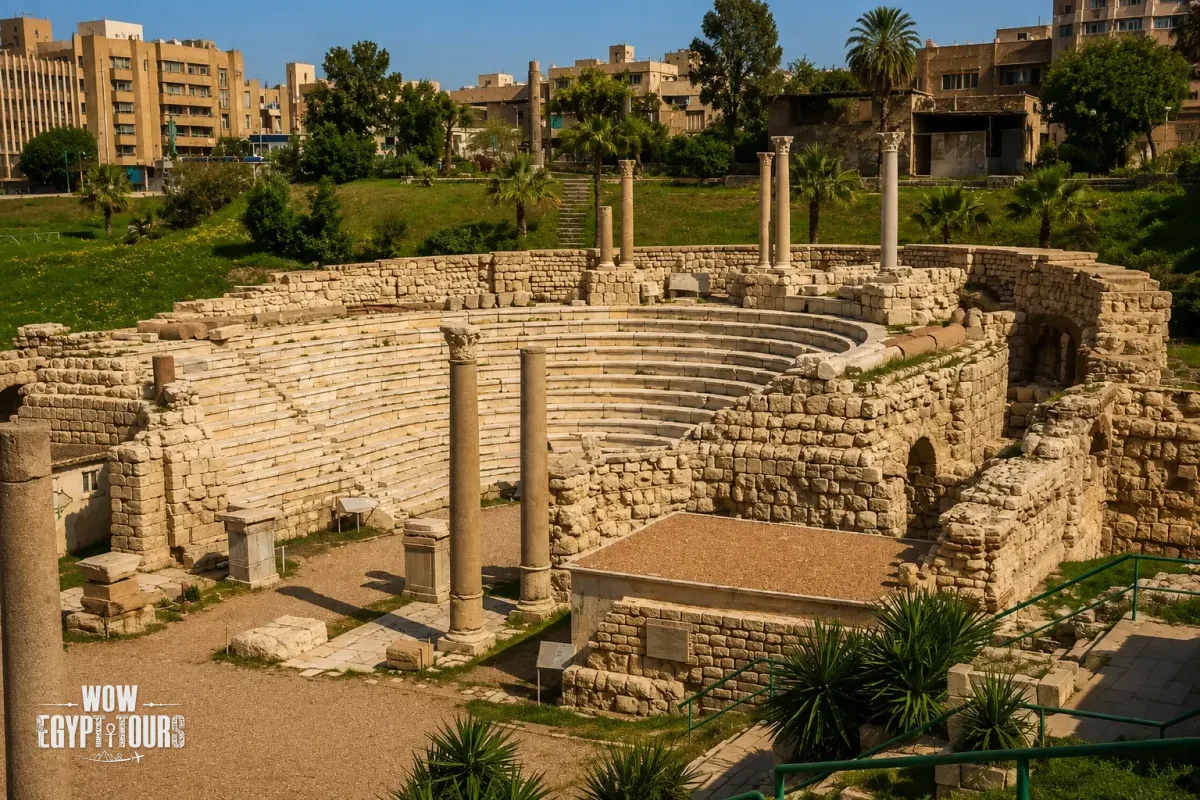

The Roman Amphitheatre of Alexandria, more precisely known to archaeologists as the Roman Theatre at Kom El Dikka, is the only surviving ancient Roman theatre in all of Egypt and one of the most complete and the most beautifully preserved examples of Roman period entertainment and civic architecture in the entire African Mediterranean heritage landscape, a monument of extraordinary archaeological significance discovered accidentally during construction work in the heart of modern Alexandria in 1960 and subsequently revealed through decades of patient excavation to be the centerpiece of a much larger and much more complex ancient urban district than its discoverers initially imagined. Rising from an excavated urban site in the central districts of Alexandria with its thirteen rows of polished white Syenite marble seating still intact after nearly two thousand years, the Roman Theatre at Kom El Dikka provides the most directly accessible and the most completely intelligible encounter with ancient Roman civic architecture available anywhere in Egypt, a monument that needs no prior knowledge of ancient history or archaeology to communicate its essential message of ancient urban sophistication and theatrical ambition. This extraordinary monument is a featured attraction on Alexandria Day Tours, Cairo and Alexandria Day Tours, and Alexandria Port Excursions, all of which WOW Egypt Tours proudly offers to travelers from around the world as part of Egypt Tours Packages and Egypt Travel Packages that include the remarkable heritage of the city of Alexander the Great.
The Roman Amphitheatre Alexandria, as it is popularly known in heritage tourism usage despite the technically more accurate designation as a theatre or odeon rather than an amphitheatre, is set within the broader ancient urban complex of the Kom El Dikka archaeological site, which encompasses not only the theatre itself but also the remains of Roman villas with mosaic pavements, a large complex of Roman-period imperial baths, thirteen individual lecture halls or auditoriums whose presence at the site has led archaeologists to identify the Kom El Dikka complex as the location of the ancient university of Alexandria, and extensive residential and commercial remains from multiple phases of ancient Alexandrian urban life spanning approximately five hundred years from the 1st to the 7th century CE. The combination of theatrical entertainment space, bathing facilities, residential architecture, and academic lecture halls within a single urban archaeological complex gives the Kom El Dikka site a quality of ancient urban completeness that is virtually unique in the Alexandrian archaeological record, and that makes a visit to the Roman Amphitheatre not simply an encounter with a single ancient building but a direct engagement with the texture and the complexity of everyday life in one of the most sophisticated urban environments of the ancient world. WOW Egypt Tours includes the Roman Amphitheatre at Kom El Dikka as a standard destination on all comprehensive Alexandria heritage programmes.

Who Built The Roman Amphitheatre Of Alexandria?
The Roman Theatre at Kom El Dikka was built during the Roman imperial period of Alexandria, most probably in the 2nd century CE, during the reigns of the Antonine emperors whose patronage of civic architecture throughout the Roman Empire produced some of the finest public buildings of the entire ancient world. The construction of the theatre was the work of the Roman imperial administration of Alexandria acting through the standard Roman mechanism of imperial patronage and civic benefaction, by which wealthy individuals, civic institutions, and the imperial government itself funded the construction of public entertainment and civic facilities as expressions of their generosity, their civic virtue, and their commitment to the cultural life of the urban communities they governed or inhabited. The specific patron or patrons who funded the construction of the Kom El Dikka theatre are not known from surviving inscriptions, as the dedicatory texts that would have identified the original founders have not survived in legible form, but the quality of the construction, the expense of the white Syenite granite seating, and the overall architectural ambition of the design all suggest a patron of considerable means and civic standing.
The lecture halls at the Kom El Dikka site, which were identified through systematic Polish-Egyptian Archaeological Mission excavations beginning in the 1960s, were built in the late antique period, most probably in the 4th or 5th century CE, when Alexandria was one of the most important academic centers in the late Roman world and when the philosophical schools and the teaching institutions of the city attracted students from across the Roman Mediterranean. The lecture halls are smaller and more functionally specific structures than the theatre, designed for the formal classroom teaching of the Neoplatonist philosophical tradition that dominated Alexandrian academic life in the late antique period, and their presence at the Kom El Dikka site in close association with the theatre, the baths, and the residential areas confirms the interpretation of the site as a major center of Alexandrian civic, cultural, and intellectual life from the Roman imperial period through the early Byzantine era.
The Ancient University Of Alexandria At Kom El Dikka
One of the most historically significant discoveries of the long-running Polish-Egyptian Archaeological Mission excavations at Kom El Dikka was the identification of thirteen individual lecture halls arranged in a row on the eastern side of the theatre complex, each consisting of a semicircular apse at one end with tiered stone benches on three sides and a central raised platform or chair position for the teacher, in an arrangement that is immediately recognizable as a formal teaching environment and that corresponds precisely to the ancient descriptions of the teaching spaces used by the philosophical schools of late antique Alexandria. The discovery of thirteen of these lecture halls in a single row at the Kom El Dikka site, a concentration of formal teaching spaces unmatched at any other excavated ancient Mediterranean site, led the excavators and subsequent scholars to identify the Kom El Dikka complex as the location of the ancient Alexandrian academic institution known from ancient sources as the Mouseion or the late antique university of Alexandria, where the Neoplatonist philosophers, the medical scholars, and the literary commentators of the 4th and 5th centuries CE conducted their teaching in an institutional setting of considerable physical dignity and scholarly organization.
The identification of Kom El Dikka as the site of the ancient Alexandrian university gives the Roman Amphitheatre and its associated structures a significance that extends far beyond the usual scope of ancient theatrical architecture. The scholars who lectured in the Kom El Dikka halls included some of the most celebrated intellectual figures of the late antique world, most famously Hypatia, the brilliant mathematician and philosopher who was killed by a Christian mob in 415 CE in one of the most notorious acts of religious violence against a scholar in the ancient world. Hypatia's teaching at Alexandria, her mathematical and astronomical scholarship, and her violent death at the hands of a mob incited by the bishop Cyril of Alexandria, have made her one of the most celebrated and the most symbolically charged figures in the history of ancient scholarship, and her association with the academic institutions of Alexandria, possibly including the lecture halls at Kom El Dikka, gives the site a dimension of intellectual and human historical significance that few other ancient monument sites in any Mediterranean city can match.
Roman Amphitheatre Location In Alexandria
The Roman Amphitheatre at Kom El Dikka is located in the central districts of modern Alexandria, in the Al-Manshiyya neighborhood approximately 2 to 3 kilometers east of the Bibliotheca Alexandrina on the Eastern Harbor waterfront and approximately 1 to 2 kilometers west of the Alexandria Misr Station railway terminus, in one of the most central and most easily accessible urban positions of any heritage site in the city. The Kom El Dikka archaeological site is an excavated urban dig in the heart of the modern city, surrounded by contemporary residential and commercial buildings that press directly against its boundaries, creating one of the most dramatically contrasting ancient and modern urban landscapes available at any archaeological site in Egypt, where the ancient Roman marble seating and the stone floor surfaces of the lecture halls are directly flanked by modern apartment blocks and commercial streets. The site is accessible from most central Alexandria hotels in approximately 10 to 15 minutes by private vehicle, making it one of the most conveniently located heritage destinations in the city. WOW Egypt Tours provides private air-conditioned transportation to the Roman Amphitheatre on all Alexandria Day Tours, Cairo and Alexandria Day Tours, and Alexandria Port Excursion programmes.
Roman Amphitheatre Fun Facts
The Roman Theatre at Kom El Dikka is the only surviving ancient Roman theatre in all of Egypt, a distinction that gives it a singular archaeological importance in the heritage landscape of the country and that makes it unique in the entire Nile Valley record of ancient Roman civilization. While Roman-period buildings are known from numerous sites throughout Egypt, no other example of the characteristic Roman theatre form with its curved cavea of tiered stone seating, its orchestra level, and its stage building has survived to a comparable state of preservation and completeness anywhere in the country, making the Kom El Dikka theatre the single best available evidence for the character and the quality of Roman-period theatrical architecture in ancient Egypt.
The seating of the Kom El Dikka theatre is constructed of white Syenite granite, more accurately described in modern petrographic terminology as a granodiorite from the ancient quarry region near Aswan, whose polished surface and luminous white appearance give the surviving cavea a visual freshness and an architectural quality that is extraordinarily well preserved for a structure of nearly two thousand years of age. The thirteen rows of surviving seating can accommodate approximately 700 spectators, making the theatre a relatively intimate performance space by the standards of the major Roman theatres of North Africa and the Levant, and suggesting that it functioned primarily as an odeon or bouleuterion, a covered or semi-covered theatre for musical performances, recitations, lectures, and council meetings rather than the large-scale theatrical productions that the great open theatres of the Roman world were designed to accommodate.
The Kom El Dikka site takes its Arabic name, meaning Mound of Rubble, from the elevated mound of ancient debris that covered the entire complex before the 1960 discovery, a common designation for any raised area of urban ground in Alexandria that resulted from the accumulated building debris of centuries of continuous habitation above ancient ruins. The discovery of the theatre in 1960 was itself the result of a dramatic accident: construction workers digging foundations for a new building on the rubble mound broke through into the ancient cavea of the buried theatre, and the subsequent archaeological investigation that halted the construction and replaced it with excavation revealed the complete ancient complex that now forms one of the most significant archaeological sites in the city center.
Why Is It Called The Roman Amphitheatre?
The popular name Roman Amphitheatre is technically inaccurate but has become the universally used heritage tourism designation for the Kom El Dikka Roman Theatre, reflecting a widespread popular conflation of the terms theatre, odeon, and amphitheatre that collapses the important architectural and functional distinctions between these three different ancient building types into a single familiar term. In precise ancient Roman architectural terminology, a theatre was a semicircular structure with a curved bank of tiered seating facing a flat orchestra level and a stage building, used for theatrical performances and recitations. An amphitheatre was an elliptical structure with tiered seating on all sides surrounding a central arena, used primarily for gladiatorial combats and animal hunts. An odeon was a smaller version of the theatre, typically roofed, used for musical performances and intimate theatrical events. The Kom El Dikka structure is most accurately classified as a theatre or odeon rather than an amphitheatre, as its architectural form is the standard semicircular theatre design rather than the elliptical arena design of the true amphitheatre.
The popular designation as Roman Amphitheatre has persisted in Alexandria heritage tourism usage because the word amphitheatre is more widely recognized by international visitors than the more precise terms theatre or odeon, and because the popular imagination of ancient Roman entertainment architecture tends to default to the amphitheatre as the most iconic ancient Roman entertainment building type. The Egyptian heritage authorities and most guidebooks that use the popular name for tourism purposes typically add a clarifying note that the structure is architecturally a theatre rather than an amphitheatre, and the official archaeological designation remains the Roman Theatre at Kom El Dikka in all scholarly and institutional contexts. The distinction matters somewhat for understanding the function of the building, as a theatre is primarily a venue for theatrical and musical performances rather than for gladiatorial combat, but for the heritage visitor the popular name provides a sufficiently clear identification of the building type to serve its navigational and descriptive purpose.
Roman Amphitheatre History
The history of the Kom El Dikka site begins in the late Ptolemaic or very early Roman period, when the area in the central residential district of ancient Alexandria was developed as part of the urban infrastructure of the city's Greek and Egyptian population quarters. The theatre itself was most probably constructed in the 2nd century CE during the Antonine imperial period, at a time when Alexandria was one of the most prosperous and the most culturally sophisticated cities in the Roman Empire and when the Roman administration was investing substantially in the public infrastructure and the civic amenities of the city. The construction of the theatre would have served the substantial Greek-speaking population of Roman Alexandria's central districts, providing a venue for the theatrical performances, musical recitals, public readings, and civic assemblies that were the primary entertainment and cultural activities of the educated urban elite in the Roman provincial world.
The lecture halls associated with the site were constructed in the 4th or 5th century CE, during the period of Alexandria's greatest prominence as the primary academic center of the late antique world, when the Neoplatonist philosophical schools of the city attracted students and scholars from across the Roman Mediterranean and when the teaching of philosophy, mathematics, medicine, and literary commentary in Alexandria was at its most intellectually vital and its most internationally recognized. The most vivid historical event associated with the academic life of the Kom El Dikka site, even if the specific location of the tragedy cannot be confirmed, is the murder of Hypatia in 415 CE, whose death at the hands of a Christian mob ended the life of the most celebrated ancient woman scholar and symbolized the violent suppression of the ancient pagan philosophical tradition by the increasingly aggressive Christian ecclesiastical establishment of early Byzantine Alexandria.
The site was gradually abandoned and covered with accumulated urban debris after the Arab conquest of Egypt in 641 CE, as the Byzantine urban institutions of the late antique city were replaced by the new administrative and social structures of the early Islamic period and the ancient buildings of the Kom El Dikka complex fell progressively out of use and were quarried for building material or simply buried under the rising debris of centuries of urban accumulation. The modern history of the site begins with the 1960 discovery during construction work, followed by the systematic excavation of the Polish-Egyptian Archaeological Mission from 1960 onwards, which has continued to the present day and has progressively revealed the extraordinary completeness and complexity of the ancient urban complex preserved beneath the modern city surface.
The Story Of The Discovery Of The Kom El Dikka Theatre
The discovery of the Roman Theatre at Kom El Dikka in 1960 is one of the most consequential accidental archaeological discoveries of the 20th century in Egypt, a moment when the routine activity of modern urban construction unexpectedly intersected with a perfectly preserved ancient civic monument of extraordinary quality and uniqueness, producing one of the most significant archaeological sites in the city of Alexandria and launching one of the longest-running and most productive urban excavation programmes in the history of Egyptian archaeology. The construction workers who broke through into the ancient theatre cavea in 1960 were laying foundations for a new building on the central Alexandria rubble mound known as Kom El Dikka, following the standard practice of urban construction in Alexandria where ancient remains were routinely encountered and as routinely destroyed in the course of modern development. The sight of the ancient theatre seats emerging from the rubble as the excavation deepened was immediately dramatic, and the Egyptian archaeological authorities responded with sufficient speed to halt the construction programme and establish the excavation that has continued at the site for more than sixty years.
The Polish-Egyptian Archaeological Mission that took over the systematic excavation of the site from 1960 onwards, operating under a bilateral agreement between the Polish Centre of Mediterranean Archaeology of the University of Warsaw and the Egyptian Supreme Council of Antiquities, conducted one of the most sustained and the most methodologically rigorous urban archaeological excavations in the history of Egyptology, progressively revealing the complete ancient complex of theatre, baths, villas, lecture halls, and residential structures over a period of decades while simultaneously developing new methods for the archaeology of urban ancient sites that have influenced excavation practice throughout the Mediterranean world. The Polish-Egyptian Mission is still active at the Kom El Dikka site today, continuing to uncover new elements of the ancient urban complex and continuing to publish the results of their work in the scholarly literature of classical archaeology.
Roman Amphitheatre Architecture And Key Features
The Cavea And White Marble Seating
The most immediately striking and the most photographically compelling feature of the Roman Theatre at Kom El Dikka is its cavea, the curved bank of tiered stone seating that rises in thirteen rows of polished white Syenite granite from the orchestra level to the top of the surviving structure, creating one of the most complete and the most visually beautiful examples of ancient Roman theatre architecture preserved anywhere in the Mediterranean world. The seating is arranged in the standard Roman theatre plan with the cavea forming a semicircle facing the orchestra and stage area, divided into sections by radial staircases and by horizontal walkways that separate the individual tiers of seating. The luminous white of the polished Syenite granite, which has survived the centuries with its surface finish remarkably well preserved, gives the Kom El Dikka cavea a visual freshness and an architectural elegance that consistently surprises visitors who approach the theatre with expectations shaped by the more weathered and more eroded ancient theatres of the broader Roman Mediterranean world.
The Orchestra Level
At the base of the cavea, the orchestra level of the Roman Theatre at Kom El Dikka is a semicircular flat floor area of ancient marble and stone paving that served as the performance space for the central activities of the ancient theatre, whether those activities were formal theatrical performances, musical recitals, public assemblies, or the more informal entertainment events that filled the social life of the ancient Alexandrian urban community. The orchestra floor preserves in places the original ancient marble paving in good condition, providing a direct encounter with the surface on which the ancient performers and speakers stood as they addressed their ancient Alexandrian audiences. The orchestra area also includes the positions of the ancient drainage channels and water management features that kept the floor surface dry and functional during the wet Mediterranean winter season.
The Stage Building Remains
The remains of the ancient stage building, the scaenae frons in Roman theatrical terminology, are preserved at a lower level of completeness than the cavea but are sufficiently substantial to allow the reconstruction of the original theatre's complete architectural arrangement in scholarly drawings and in the visual presentation of the site. The stage building faced the orchestra and the cavea across the performance space and provided the architectural backdrop against which theatrical performances took place, incorporating niches, columns, and decorative elements in the standard Roman scaenae frons tradition that transformed the functional stage back wall into an elaborate architectural façade of considerable decorative ambition. The columns and architectural fragments from the stage building that have been recovered during excavation are displayed around the site and in storage, contributing to the scholarly reconstruction of the complete original theatre design.
The Thirteen Lecture Halls
The thirteen lecture halls or auditoriums discovered along the eastern edge of the Kom El Dikka complex are among the most historically significant elements of the entire site, providing the primary physical evidence for the identification of Kom El Dikka as the location of the ancient Alexandrian academic institution and giving the site its claim to be the most important surviving location of ancient higher education in the entire Mediterranean world. Each lecture hall is a relatively small room, approximately 8 by 6 meters, with a semicircular apse containing a single elevated seat or throne at one end for the teacher and tiered stone benches on the remaining three walls for the students, in a spatial arrangement that accommodates approximately twenty to thirty students per room in the formal hierarchical relationship of ancient philosophical teaching where the master spoke from his elevated seat and the students sat in fixed positions on the surrounding benches. The thirteen lecture halls at Kom El Dikka represent the largest single concentration of formal ancient academic teaching spaces ever discovered in any Mediterranean archaeological context, and their identification as the physical remains of the ancient Alexandrian philosophical schools has given the Kom El Dikka site a unique status in the history of ancient education that adds an extraordinary intellectual dimension to the already significant architectural and archaeological heritage of the Roman theatre.
The Roman Villas And Mosaic Pavements
The excavated areas of the Kom El Dikka site include remains of Roman-period residential villas whose mosaic floor pavements survive in partial but often remarkably well-preserved condition, providing the most direct available evidence for the luxury interior decoration of upper-class Alexandrian private houses in the Roman imperial period. The mosaic pavements range from simple geometric patterns in black and white to more elaborate polychrome figurative compositions, and their preservation within the context of the larger Kom El Dikka urban complex gives visitors an unusually complete picture of the physical environment in which the residents of the ancient Alexandrian central districts lived, worked, and entertained within walking distance of the theatre, the baths, and the lecture halls of their urban neighborhood.
The Imperial Baths
Adjacent to the theatre complex, the substantial remains of a large Roman imperial bath complex have been identified and partially excavated at the Kom El Dikka site, providing evidence for the standard Roman urban infrastructure of public bathing facilities that was as fundamental to the social and hygienic life of the ancient Roman city as the theatre and the lecture halls were to its cultural and intellectual life. The bath complex at Kom El Dikka reflects the standard Roman bath organization of cold rooms, warm rooms, and hot rooms arranged in a logical sequence around the furnace heating system, and its presence at the site confirms the comprehensive character of the Kom El Dikka complex as a full-service urban civic district providing the complete range of Roman public amenities within a single accessible neighborhood of the ancient city center.
Why Is The Roman Amphitheatre Important?
The Roman Theatre at Kom El Dikka is important in ways that span architecture, urban archaeology, the history of ancient entertainment, the history of ancient education, and the broader story of Roman-period Alexandria as one of the most sophisticated and most culturally complex urban centers in the ancient world. As the only surviving ancient Roman theatre in Egypt, it provides unique evidence for the character of Roman-period civic architecture in the country, filling a significant gap in the archaeological record of ancient Roman Egypt that the absence of any comparable surviving structure would otherwise leave completely undocumented. As a component of the larger Kom El Dikka urban complex with its lecture halls, baths, and villas, it provides the most complete available picture of the physical organization of an ancient Alexandrian urban neighborhood, giving scholars and visitors alike an extraordinarily detailed encounter with the full range of civic, cultural, and intellectual activities that filled the daily life of the ancient Alexandrian urban community.
The identification of the Kom El Dikka complex as the site of the ancient Alexandrian academic institution and its association with figures including Hypatia gives it an intellectual and human historical significance that elevates it beyond the usual scope of ancient architectural interest into the domain of the history of human thought, scholarship, and the tragic vulnerability of ancient intellectual achievement to religious and political violence. WOW Egypt Tours includes the Roman Amphitheatre at Kom El Dikka as a standard destination on all comprehensive Alexandria heritage programmes, recognizing it as the most archaeologically complete and the most historically multidimensional ancient monument in the central city districts of Alexandria.
What Are Some Interesting Facts About The Roman Amphitheatre?
The Only Roman Theatre In Egypt
The Roman Theatre at Kom El Dikka holds a distinction that gives it an automatic and unqualified claim to archaeological significance: it is the only surviving ancient Roman theatre anywhere in Egypt, a country that was part of the Roman Empire for more than six centuries and that produced an extraordinary range of Roman-period buildings, inscriptions, documents, and art objects, but that has preserved in standing form only this single example of the theatrical architecture that was as fundamental to Roman civic life as the temple, the forum, and the bath. The survival of the Kom El Dikka theatre in its current state of preservation, with thirteen rows of original stone seating intact and the overall architectural arrangement of the cavea clearly readable, is the result of a combination of exceptional burial conditions under the urban rubble of centuries and the complete absence of any subsequent reuse of the site that might have quarried its stone away, as happened at virtually every other Roman-period building in Alexandria and throughout Egypt.
Where Hypatia May Have Taught
The identification of the Kom El Dikka lecture halls as the physical remains of the ancient Alexandrian philosophical schools makes the site one of the most intellectually and humanly significant ancient monument locations in the city of Alexandria, and potentially one of the most personally significant for modern visitors with an interest in the history of science, mathematics, and philosophy. Hypatia of Alexandria, who was killed by a Christian mob in 415 CE, was the most celebrated female scholar of the ancient world, a mathematician and astronomer of the first rank whose works on Diophantus and on the geometric models of the planets and the moon were among the most significant scientific and mathematical texts of the late antique period, and a Neoplatonist philosopher of such reputation that students traveled from across the Roman Mediterranean to attend her teaching. Whether Hypatia lectured in the Kom El Dikka halls specifically, in other teaching spaces of ancient Alexandria, or in some combination of locations cannot be confirmed from surviving evidence, but the association between the Kom El Dikka academic complex and the philosophical schools of late antique Alexandria makes the site the most archaeologically plausible candidate for the physical setting of her legendary teaching career, and the thought that the ancient stone benches of the Kom El Dikka lecture halls may have been occupied by students listening to one of the most brilliant and most courageous scholars of the ancient world gives the modest rooms a quality of human and intellectual historical significance out of all proportion to their physical scale.
Ancient Theatre In The Heart Of A Modern City
One of the most immediately striking and the most visually memorable aspects of the Roman Theatre at Kom El Dikka is the dramatic contrast between the ancient monument and its modern urban context, with the ancient white marble theatre seats and the excavated Roman streets and floor surfaces directly flanked by the modern apartment buildings, commercial premises, and street infrastructure of central Alexandria. This juxtaposition of ancient and modern at the Kom El Dikka site creates one of the most powerfully evocative urban heritage experiences available in any major Egyptian city, a direct and almost surreal encounter with the continuity and the discontinuity of urban life in a city that has been continuously inhabited for more than two thousand years, where the modern city is built directly on top of the ancient one and where the ancient surfaces are only a meter or two below the modern street level in many areas of the central city. The fact that Alexandrians today live, work, shop, and travel their daily routines in buildings and streets directly above the ancient civic spaces of the Roman city gives the Kom El Dikka visit a quality of living urban heritage that is quite different from the more isolated ancient monument experience available at the city's other heritage sites.
What Is So Special About The Roman Amphitheatre?
A Complete Ancient Civic District In The Heart Of The Modern City
What makes the Roman Amphitheatre and the broader Kom El Dikka complex uniquely special among all the ancient monuments of Alexandria is the extraordinary degree of urban completeness it represents, the fact that the excavated site preserves not just a single ancient building but an entire section of an ancient Alexandrian neighborhood with all its component civic functions, theatre, baths, lecture halls, villas, and streets, each component bearing witness to a different dimension of the daily urban life of the Roman Alexandrian community that inhabited this district more than fifteen hundred years ago. No other archaeological site in Alexandria provides this quality of urban completeness, where the visitor can see in a single visit not just a monument but a neighborhood, not just architecture but the full civic fabric of an ancient community, and can begin to understand not just how the Romans built but how they lived, how they entertained themselves, how they educated their children, how they kept clean, and how they organized the daily social interactions of a sophisticated ancient urban life.
The Most Intellectually Layered Site In Alexandria
The Kom El Dikka complex is also uniquely special for the extraordinary density of historically significant associations it carries, from the theatrical performances of the Roman imperial period through the philosophical teaching of the Neoplatonist schools to the possible presence of Hypatia in its lecture halls and the violent end of the ancient academic tradition in the early Byzantine period. Few ancient monument sites anywhere in the Mediterranean world carry within their relatively modest physical extent such a rich and such a specifically documented human intellectual history, and the quality of scholarly and personal engagement that the site offers to visitors who approach it with knowledge of this history is among the deepest and the most personally affecting available at any heritage destination in the Alexandria programme.
Roman Amphitheatre Through The Ages: From Ancient Performance To The Present
The Roman Theatre at Kom El Dikka was in active use as a civic performance and assembly space from its construction in the 2nd century CE through the late antique period, serving the theatrical, musical, and civic assembly needs of the central Alexandrian community through the Roman imperial period and into the early Byzantine era. The associated lecture halls that were constructed in the 4th or 5th century CE added an academic dimension to the Kom El Dikka complex that reflects the transformation of Alexandria in this period from a primarily commercial and administrative Roman provincial capital into the supreme intellectual center of the late antique world, where the last great tradition of ancient pagan philosophical scholarship was maintained with extraordinary vitality in the face of increasing pressure from the Christianizing empire and the increasingly aggressive Alexandrian ecclesiastical establishment.
The Arab conquest of Egypt in 641 CE brought the ancient civic institutions of the late antique city to an end, and the theatre, the baths, and the lecture halls of Kom El Dikka gradually fell out of use and were covered by the accumulating debris of subsequent centuries of urban life. The discovery of the theatre in 1960 and the subsequent decades of Polish-Egyptian excavation have progressively revealed the extent and the quality of the ancient complex, transforming it from a buried accident of urban archaeology into one of the most visited and the most historically significant ancient monument sites in the center of the modern city. Today the Kom El Dikka archaeological site and Roman Theatre are managed by the Egyptian Ministry of Tourism and Antiquities as an open-air archaeological museum within the urban fabric of central Alexandria, receiving tens of thousands of Egyptian and international visitors annually and continuing to yield new information from the ongoing excavation programme that surrounds and extends the publicly accessible areas of the site.
Roman Amphitheatre UNESCO Recognition
The Roman Theatre at Kom El Dikka and the broader Kom El Dikka archaeological complex are recognized as part of the outstanding ancient heritage of Alexandria within the framework of UNESCO's assessment of the city's cultural significance, and are included in the broader consideration of the archaeological heritage of ancient Alexandria for potential World Heritage designation. The unique status of the Kom El Dikka theatre as the only surviving Roman theatre in Egypt has been recognized by international archaeological and heritage organizations, and the long-running Polish-Egyptian excavation programme at the site has been internationally acknowledged as one of the most rigorous and the most productive urban archaeological investigations in the Mediterranean world. The continued archaeological investigation and the public presentation of the site as an open-air museum accessible to visitors within the heart of the modern city represents a model of urban heritage management that has attracted international attention and recognition for its integration of ongoing archaeological research with public heritage access.
Best Time To Visit The Roman Amphitheatre
The Roman Amphitheatre at Kom El Dikka is an outdoor archaeological site whose visiting conditions are strongly influenced by the Mediterranean climate of Alexandria, making the cooler months from October through April the most comfortable and the most pleasant time for the open-air exploration of the theatre cavea, the lecture halls, the excavated streets, and the villa remains. The early morning hours after opening provide the most comfortable temperature conditions and the most beautiful photographic light, particularly in autumn and spring when the low-angle morning sun illuminates the white granite seating with a warm golden quality that the harsh overhead light of midday cannot match. The summer months from June to August can be warm and humid in Alexandria, though the central urban location of the site and the absence of the reflective water surfaces that intensify the heat at the coastal sites means that the Kom El Dikka theatre is somewhat more manageable in summer than the exposed harbor-side monuments. Weekday morning visits are recommended for the most peaceful conditions, as the site can become busy with school groups and weekend family visitors during the peak educational and holiday seasons. WOW Egypt Tours plans all Roman Amphitheatre visits at the optimal time for the specific Alexandria day itinerary.
Roman Amphitheatre Opening Hours
The Roman Amphitheatre and Kom El Dikka archaeological site are open every day of the week including public holidays. The site opens at 9:00 AM and closes at 5:00 PM from October through May, and from 9:00 AM to 6:00 PM from June through September. The open-air archaeological site is accessible throughout the opening hours, with the theatre cavea, the lecture halls, the villa remains, and the excavated street surfaces all visible within the managed site boundaries. Active excavation areas adjacent to the publicly accessible zones may be cordoned off during working hours but are visible to visitors. A modern visitor reception and ticketing facility is located at the site entrance on the street above the excavated area.
Roman Amphitheatre Entrance Fees
Adults: EGP 200
Students: EGP 100
The entrance fee covers access to the complete Kom El Dikka archaeological site including the Roman Theatre cavea and orchestra level, the thirteen lecture halls, the Roman villa mosaic pavements, the bath complex remains, and the excavated street surfaces. Entrance fees to the Roman Amphitheatre are included in all Alexandria Day Tours and Alexandria Port Excursion programmes booked through WOW Egypt Tours.
How To Get To The Roman Amphitheatre
The Roman Amphitheatre at Kom El Dikka is located in the central districts of Alexandria in the Al-Manshiyya neighborhood, approximately 2 to 3 kilometers east of the Eastern Harbor waterfront and approximately 1 to 2 kilometers from the Alexandria Misr Station railway terminus, making it one of the most centrally and the most conveniently accessible heritage sites in the city. From most central Alexandria hotels the site is approximately 10 to 15 minutes by private vehicle, and from the Alexandria Port area approximately 20 to 25 minutes. The Kom El Dikka site entrance is on the street above the excavated complex and is marked with standard Egyptian heritage site signage. WOW Egypt Tours provides private air-conditioned transportation directly to the Roman Amphitheatre on all Alexandria Day Tours, Cairo and Alexandria Day Tours, and Alexandria Port Excursion programmes.
How Long To Spend At The Roman Amphitheatre
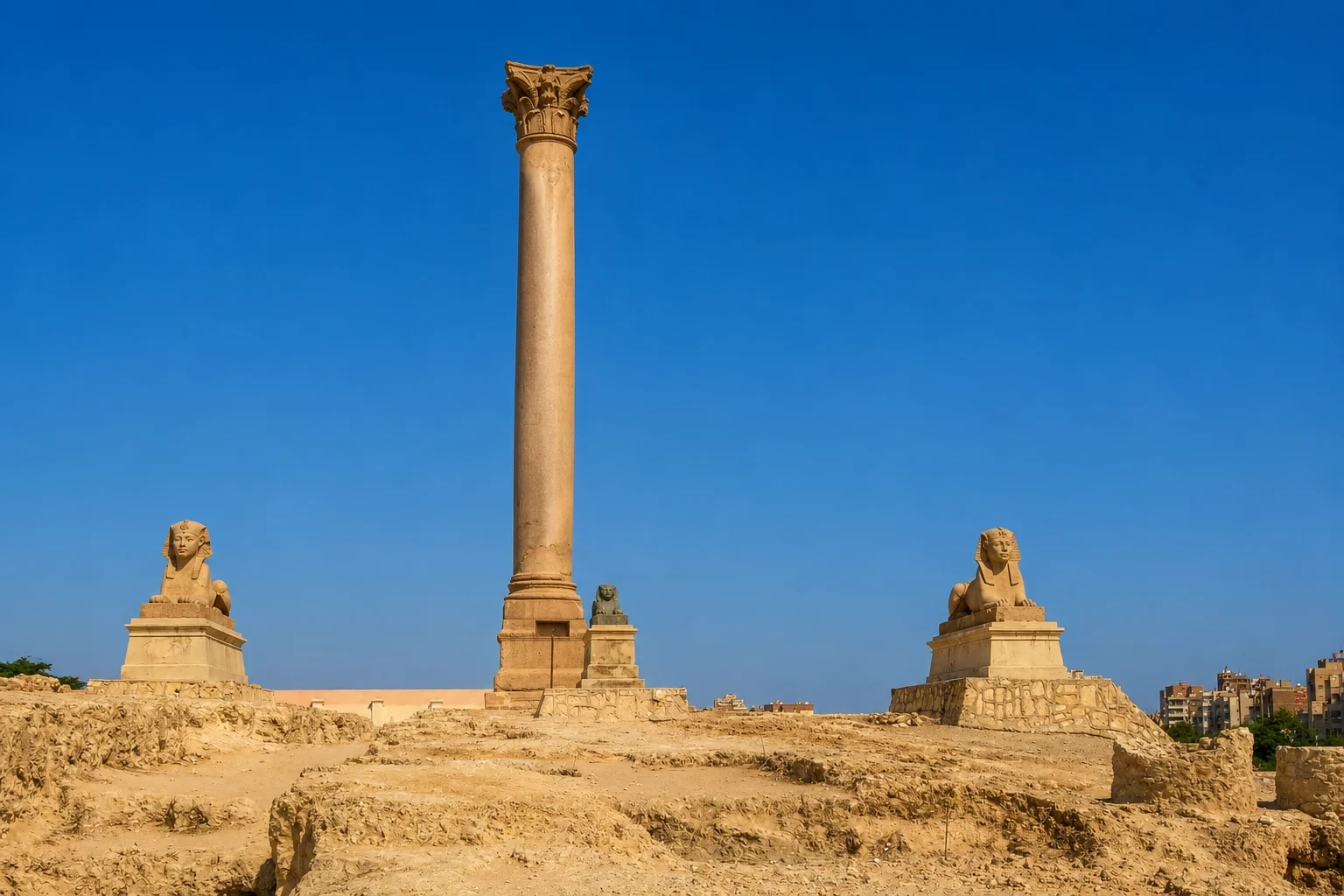
Most visitors spend approximately 45 minutes to one hour at the Roman Amphitheatre and Kom El Dikka archaeological site, which is sufficient time for a complete walk through the theatre cavea and orchestra level, a thorough examination of the thirteen lecture halls with their distinctive semicircular apse and tiered bench arrangement, a viewing of the Roman villa mosaic pavements, and an appreciation of the overall archaeological landscape of the ancient civic district as revealed by the ongoing excavations. Visitors with a particular interest in Roman theatre architecture, the ancient Alexandrian academic tradition and its association with Hypatia, or the methodology and results of the Polish-Egyptian excavation programme may wish to allow up to one and a half hours. The Roman Amphitheatre visit is most naturally combined in an Alexandria day programme with the other central city monuments including the Greco-Roman Museum and the Catacombs of Kom El Shoqafa with the adjacent Pompey's Pillar.
Tips For Visiting The Roman Amphitheatre
Climb to the highest row of the theatre cavea at the beginning of your visit to appreciate the complete semicircular sweep of the ancient seating from above before descending to the orchestra level, as the view from the top of the cavea looking down across the white marble seats to the orchestra floor provides the most architecturally complete and the most dramatically beautiful perspective of the ancient theatre available at the site. Ask your guide to explain the distinction between a Roman theatre and a Roman amphitheatre before you begin the detailed examination of the monument, as understanding the architectural type correctly and appreciating the theatrical rather than gladiatorial function of the building fundamentally shapes the way the space is understood and appreciated. Pay careful attention to the thirteen lecture halls on the eastern side of the complex, as their relatively modest physical scale belies their extraordinary historical significance as the possible teaching spaces of the ancient Alexandrian philosophical schools, and the thought experiment of imagining Hypatia and her students occupying these small rooms gives the modest stone benches a human historical depth that the architecture alone cannot communicate. Look at the mosaic pavements in the Roman villa remains, as even the surviving fragments demonstrate the high standard of domestic decoration in the ancient Alexandrian upper-class residential tradition. Ask your guide about the Polish-Egyptian Archaeological Mission and the extraordinary sixty-year excavation history that has produced the site in its current form, as the story of the ongoing scholarly investigation is itself one of the most interesting dimensions of the Kom El Dikka heritage experience. A licensed guide from WOW Egypt Tours with expertise in Roman-period Alexandrian urban history and ancient theatrical architecture is essential for the fullest appreciation of the site.
What To Wear At The Roman Amphitheatre
The Roman Amphitheatre at Kom El Dikka is an outdoor archaeological site in the central urban districts of Alexandria, with surfaces that include uneven ancient stone pavements, stepped cavea seating, and the general terrain of an active excavation site. Comfortable, flat-soled walking shoes with good grip are strongly recommended for the uneven stone surfaces of the ancient orchestra floor, the stepped theatre seating, and the excavated street surfaces, which include a variety of surface types and levels that require careful footing. High heels and sandals with poor ankle support are not suitable for the site. Lightweight, breathable clothing is appropriate for the outdoor site in all seasons. A wide-brimmed hat and sunscreen are recommended for the exposed open-air theatre in the warmer months and during sunny days at any time of year. A light warm layer is recommended for early morning visits in winter when the temperature in the open-air excavated area can be noticeably cool. The urban central location of the site means that modest dress is appropriate in the broader social context of the surrounding neighborhood.
Photography At The Roman Amphitheatre
The Roman Amphitheatre at Kom El Dikka provides some of the finest and the most architecturally distinctive photography opportunities of any heritage site in central Alexandria, with the ancient white granite theatre seating, the semicircular cavea form, the orchestra level, and the dramatic contrast between the ancient monument and the modern city buildings that surround it all offering subjects of compelling visual interest. The most photographically spectacular single view of the theatre is from the top of the cavea looking down across the thirteen rows of white granite seating to the orchestra level, a composition that captures the complete architectural form of the Roman theatre in a single frame of extraordinary visual clarity and spatial drama. The morning light from the east, entering the open theatre from the direction of the sunrise, illuminates the white granite seating with a warm golden quality that creates the finest photography conditions of any time of day. The contrast between the ancient white marble seats and the modern city buildings visible beyond the excavated site boundary is one of the most immediately evocative photographic compositions available in Alexandria, expressing in a single image the two-thousand-year continuity of urban life in the city. Photography is permitted freely throughout the site. Areas of active excavation may be behind barriers but are usually photographable from the visitor paths. Professional photography or filming requires advance permission from the site administration.
Roman Amphitheatre Tours
Alexandria Day Tour From Cairo Including Roman Amphitheatre
This comprehensive full-day tour from Cairo covers the most significant cultural and heritage destinations in Alexandria, with the Roman Amphitheatre at Kom El Dikka as the most archaeologically complete ancient urban monument in the city center and the only surviving Roman theatre in all of Egypt.
What Is Covered
Private vehicle from Cairo hotel to Alexandria along the Desert Road (approximately 2 to 2.5 hours). Guided visit to the Roman Amphitheatre at Kom El Dikka including the complete theatre cavea, the orchestra level, the thirteen lecture halls with their Hypatia association, the Roman villa mosaic pavements, and the bath complex. Guided visit to the combined Catacombs of Kom El Shoqafa and Pompey's Pillar on the Rhakotis hill. Guided visit to the Citadel of Qaitbay. Optional: Bibliotheca Alexandrina. Return to Cairo by private vehicle arriving in the early evening.
Duration
Full day from Cairo, approximately 45 minutes to 1 hour at the Roman Amphitheatre and proportionate time at each additional site, with approximately 2 to 2.5 hours driving each way.
Includes
Private air-conditioned vehicle from Cairo hotel, private licensed guide with expertise in Roman-period Alexandrian urban history and ancient theatrical architecture, and entrance fees to all included sites.
Alexandria Day Tour: Complete Cultural Programme Including Roman Amphitheatre
This full-day Alexandria city tour covers the complete range of Alexandria's most significant cultural and heritage attractions, with the Roman Amphitheatre at Kom El Dikka as the most archaeologically complete ancient urban monument and the most intellectually multidimensional heritage site of the complete programme.
What Is Covered
Guided visit to the Bibliotheca Alexandrina. Combined guided visit to the Catacombs of Kom El Shoqafa and Pompey's Pillar. Guided visit to the Roman Amphitheatre at Kom El Dikka. Citadel of Qaitbay. Abu El Abbas El Mursi Mosque. Optional: Greco-Roman Museum.
Duration
Full day from Alexandria hotel or cruise ship terminal, approximately 45 minutes to 1 hour at the Roman Amphitheatre and proportionate time at each additional site.
Includes
Private air-conditioned transportation from hotel or port, private licensed guide with Alexandrian heritage expertise, and entrance fees to all included sites.
Alexandria Port Excursion: Roman Amphitheatre And City Highlights
For cruise ship passengers arriving at Alexandria Port, this shore excursion covers the Roman Amphitheatre and the most significant Alexandria heritage sites within the available port time.
What Is Covered
Private vehicle from Alexandria Port. Guided visit to the Roman Amphitheatre at Kom El Dikka. Combined guided visit to the Catacombs of Kom El Shoqafa and Pompey's Pillar. Guided visit to the Citadel of Qaitbay. Optional: Bibliotheca Alexandrina. Return transfer to Alexandria Port in time for all ship departure requirements.
Duration
Full day or half day from Alexandria Port depending on ship schedule and port time availability.
Includes
Private air-conditioned vehicle from Alexandria Port, private licensed guide, entrance fees to all included sites, and guaranteed return transfer to the ship.
Combine The Roman Amphitheatre With Your Egypt Tours Package
The Roman Amphitheatre at Kom El Dikka is featured as a standard destination across the full range of WOW Egypt Tours travel products that include Alexandria. Browse the options below to find the Egypt experience that includes the Roman Amphitheatre.
Egypt Tour Packages: Multi-day guided Egypt tours organized by duration, including 2 Days Egypt Packages, 3 Days Egypt Packages, 4 Days Egypt Packages, 5 Days Egypt Packages, 6 Days Egypt Packages, 7 Days Egypt Packages, 8 Days Egypt Packages, 10 Days Egypt Packages, and longer itineraries. All packages that include Alexandria feature the Roman Amphitheatre at Kom El Dikka as a standard component of the Alexandria programme. All packages include private air-conditioned transportation, private licensed guide, accommodations, entrance fees to all included sites, and private transfers throughout Egypt.
Egypt Travel Packages: Themed Egypt travel packages designed around specific travel styles and interests, including Egypt Honeymoon Travel Packages, Egypt Budget Travel Packages, Egypt Family Travel Packages, Egypt Luxury Travel Packages, Egypt Adventure Travel Packages, Egypt Cultural Travel Packages, and Egypt Christmas and New Year Travel Packages. The Roman Amphitheatre is particularly well suited to Cultural, Family, and Educational themed packages. All packages include private transportation, licensed guide, accommodations, meals, and private transfers.
Egypt Nile Cruise Packages: Complete Egypt travel packages combining Cairo sightseeing with a fully guided Nile cruise. Alexandria and the Roman Amphitheatre can be added as an extension to any Egypt Nile Cruise Package for travelers wishing to combine the Nile Valley heritage with the Greco-Roman heritage of Alexandria.
Nile River Cruises: All WOW Egypt Tours Nile cruise options. Alexandria and the Roman Amphitheatre are available as an extension from Cairo added to the beginning or end of any Nile River Cruise itinerary.
Cairo Tours: Day tours from Cairo covering the major attractions of the Egyptian capital and its environs. Cairo-based travelers can visit Alexandria and the Roman Amphitheatre as a full-day excursion from Cairo by private vehicle or train. All tours include private air-conditioned transportation, private licensed guide, entrance fees, and private transfers.
Alexandria Tours: Dedicated day tours based in Alexandria covering the complete range of the city's cultural and heritage attractions. The Roman Amphitheatre at Kom El Dikka is featured as a standard stop on the full-day Alexandria heritage tour. All tours include private air-conditioned transportation, private licensed guide with Alexandrian heritage expertise, entrance fees to all included sites, and private transfers.
Alexandria Port Excursions: Shore excursion programmes from Alexandria Port for Mediterranean cruise ship passengers, coordinated around each ship's port schedule with guaranteed return to the ship before departure. The Roman Amphitheatre is featured on all comprehensive Alexandria Port Excursion programmes. All excursions include private air-conditioned vehicle from the port, private licensed guide, entrance fees to all included sites, and guaranteed return transfer to the ship.
Nearby Attractions To The Roman Amphitheatre
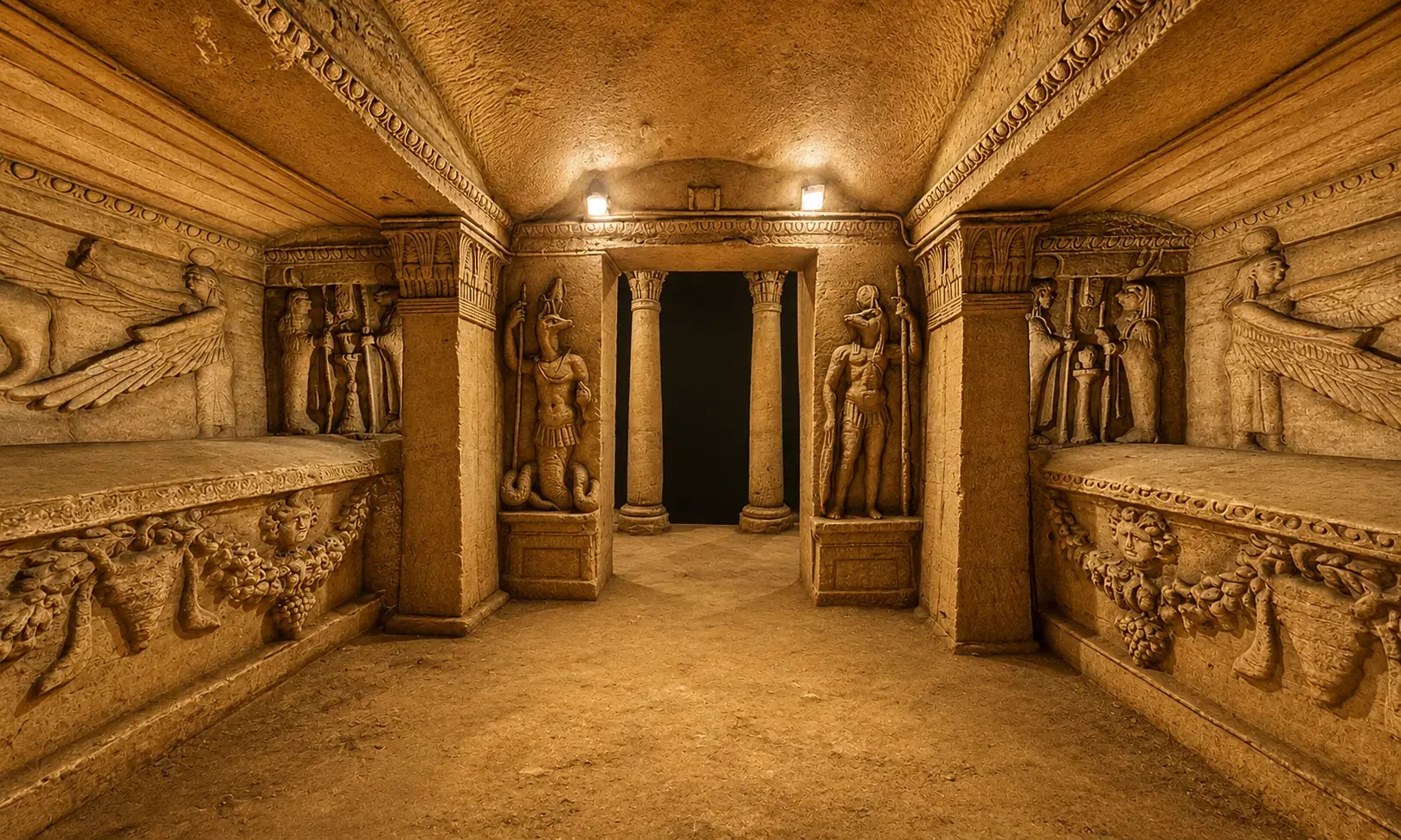
The Roman Amphitheatre at Kom El Dikka occupies a central urban location in Alexandria that places it within easy reach of all the major heritage sites of both the central city districts and the Eastern Harbor waterfront. The most naturally combined visit with the Roman Amphitheatre is the Greco-Roman Museum, expected to reopen following its renovation, which is located approximately 1 kilometer from the Kom El Dikka site and houses the primary collection of Greco-Roman antiquities in Egypt outside Cairo, providing the ideal museum context for the urban archaeological experience of the Roman Amphitheatre visit. The Catacombs of Kom El Shoqafa and Pompey's Pillar are approximately 3 to 4 kilometers to the southwest on the Rhakotis hill, providing the underground funerary and the outdoor religious dimensions of the Greco-Roman Alexandrian heritage that complement the civic and academic character of the Kom El Dikka theatre complex.
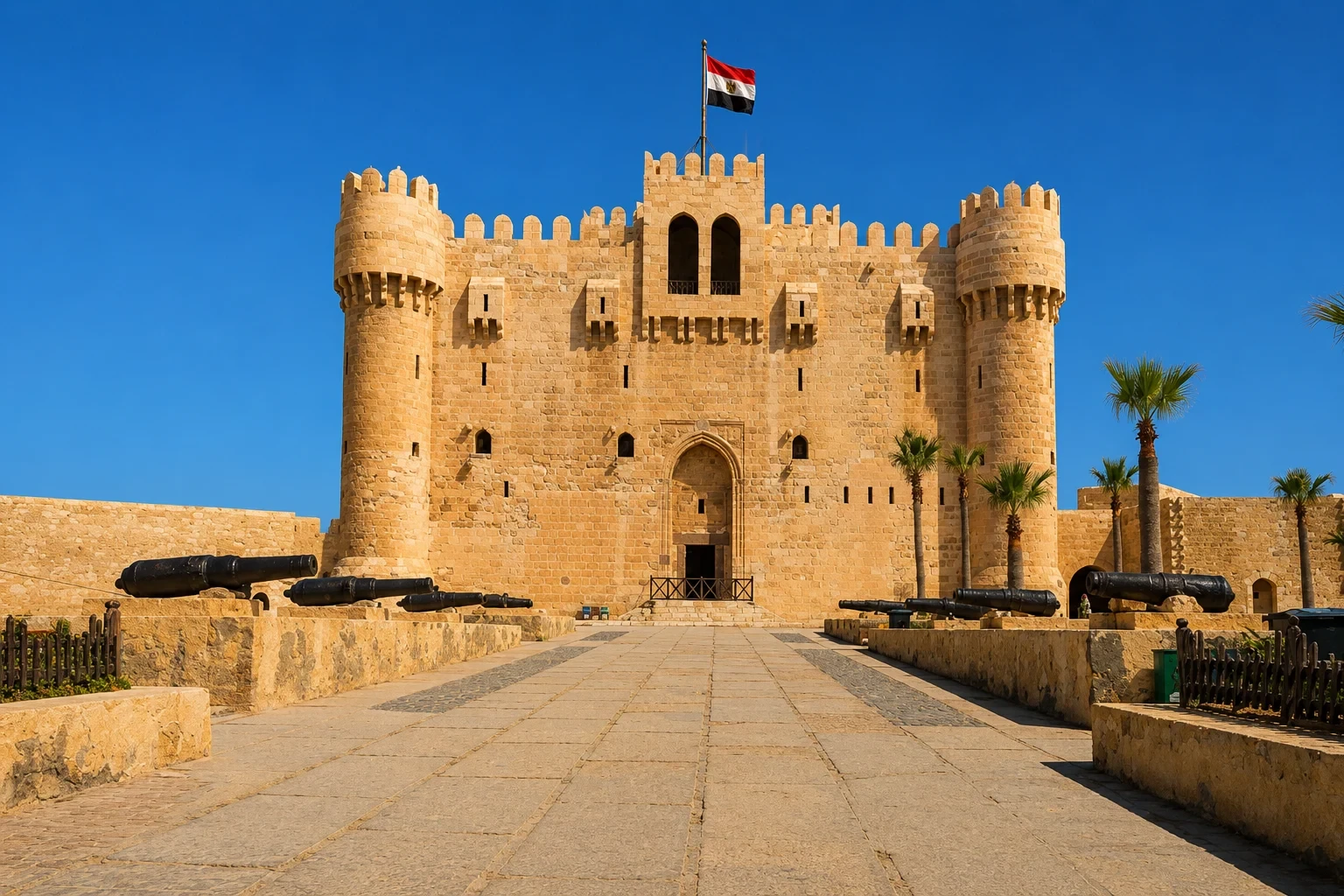
The Bibliotheca Alexandrina on the Eastern Harbor waterfront is approximately 2 to 3 kilometers to the west, providing the modern cultural counterpart to the ancient academic tradition of the Kom El Dikka lecture halls. The Citadel of Qaitbay is approximately 4 to 5 kilometers to the northwest on the Pharos peninsula, providing the medieval Islamic heritage complement to the ancient Greco-Roman experience of the Kom El Dikka site. The Abu El Abbas El Mursi Mosque on the waterfront Corniche, the ancient Lighthouse of Alexandria site at the Qaitbay Citadel promontory, and the broader Alexandria Pride of the Mediterranean cultural landscape are all accessible through the Alexandria Day Tours and Alexandria Port Excursions offered by WOW Egypt Tours.
Frequently Asked Questions About The Roman Amphitheatre
What is the Roman Amphitheatre in Alexandria?
The Roman Amphitheatre, more precisely known as the Roman Theatre at Kom El Dikka, is the only surviving ancient Roman theatre in all of Egypt, a 2nd century CE civic entertainment structure with thirteen rows of white Syenite granite seating still intact, located in the central districts of Alexandria within a larger ancient urban complex that also includes thirteen lecture halls identified as the ancient Alexandrian university, Roman bath remains, and villa mosaic pavements. It was discovered accidentally in 1960 during construction work and has been systematically excavated by the Polish-Egyptian Archaeological Mission since that date. It is a standard destination on all Alexandria Tours and Alexandria Port Excursions offered by WOW Egypt Tours.
Is it a theatre or an amphitheatre?
Architecturally it is a Roman theatre (or odeon), not an amphitheatre. A theatre has a semicircular bank of seating facing a stage and orchestra; an amphitheatre has elliptical seating surrounding a central arena for gladiatorial combat. The popular designation as Roman Amphitheatre is a heritage tourism convention that has persisted despite the technical inaccuracy, and the official archaeological name is the Roman Theatre at Kom El Dikka.
Why is it the only Roman theatre in Egypt?
While Egypt was part of the Roman Empire for more than six centuries, most Roman-period buildings in the country were quarried for their stone or demolished in subsequent centuries. The Kom El Dikka theatre survived because it was buried under urban rubble after its abandonment and remained unknown until the 1960 construction accident, after which its archaeological significance was recognized and its protection established before the stone could be removed.
What are the lecture halls at Kom El Dikka?
The thirteen lecture halls at Kom El Dikka are small rooms each with a semicircular apse containing an elevated teacher's seat and tiered stone benches for approximately twenty to thirty students, identified as the formal teaching spaces of the ancient Alexandrian philosophical schools from the 4th and 5th centuries CE. Their presence in a row at the Kom El Dikka site makes it the largest single concentration of formal ancient academic teaching spaces ever discovered in the Mediterranean world, leading scholars to identify the complex as the location of the ancient Alexandrian university.
What is the connection to Hypatia?
Hypatia of Alexandria, the most celebrated ancient woman scholar, a mathematician, astronomer, and Neoplatonist philosopher killed by a Christian mob in 415 CE, taught at the philosophical schools of late antique Alexandria. Whether she lectured in the Kom El Dikka halls specifically cannot be confirmed, but the Kom El Dikka lecture halls are the primary surviving physical evidence for the ancient Alexandrian philosophical teaching institutions with which she was associated, making the site the most archaeologically plausible candidate for the physical setting of her legendary teaching career.
How was the Roman Amphitheatre discovered?
The theatre was discovered in 1960 when construction workers digging foundations for a new building on the central Alexandria rubble mound known as Kom El Dikka broke through into the ancient cavea of the buried theatre, revealing the white granite seating that had been preserved underground since the late antique period. The construction was halted and the Polish-Egyptian Archaeological Mission took over the systematic excavation of the site.
What are the opening hours?
The site is open daily from 9:00 AM to 5:00 PM (October to May) and 9:00 AM to 6:00 PM (June to September).
How much does it cost to enter?
The entrance fee is EGP 200 for adults and EGP 100 for students, covering access to the complete Kom El Dikka archaeological site. Entrance fees are included in all Alexandria Day Tours and Alexandria Port Excursion programmes booked through WOW Egypt Tours.
How long does a visit take?
Most visitors spend 45 minutes to 1 hour for a complete guided visit covering the theatre, lecture halls, villa mosaics, and bath remains.
Is the Roman Amphitheatre suitable for children?
Yes. The Roman Theatre at Kom El Dikka is an excellent site for children of all ages, who almost universally respond with enthusiasm to the ancient theatre seating, which is immediately comprehensible as a performance space and allows the imagination to populate it with ancient Alexandrian audiences. The lecture halls are also engaging for children with a historical imagination, particularly when the Hypatia story is explained appropriately for their age.
What is the white stone used for the seating?
The seating is constructed of white Syenite granite (more precisely described as granodiorite), quarried from the ancient quarry region near Aswan and polished to a smooth, luminous finish. The white color and the polished surface of the seating have survived nearly two thousand years in a remarkable state of preservation that gives the cavea its immediately striking visual freshness.
What else is at the Kom El Dikka archaeological site beyond the theatre?
The Kom El Dikka complex includes the thirteen lecture halls of the ancient Alexandrian university, Roman-period residential villas with mosaic pavements, the remains of a large imperial Roman bath complex, excavated ancient street surfaces, and various architectural fragments from multiple phases of ancient Alexandrian urban life spanning approximately five hundred years from the 1st to the 7th century CE.
Is a guide necessary at the Roman Amphitheatre?
A guide with knowledge of Roman theatrical architecture, the ancient Alexandrian academic tradition, and the specific history of the Polish-Egyptian excavation programme is strongly recommended, as the historical significance of the lecture halls and their Hypatia association requires expert explanation to be fully appreciated. WOW Egypt Tours provides licensed guides with Alexandrian heritage expertise on all Alexandria Day Tours.
What other Alexandria attractions are near the Roman Amphitheatre?
The Greco-Roman Museum is approximately 1 kilometer away. The Catacombs of Kom El Shoqafa and Pompey's Pillar are approximately 3 to 4 kilometers southwest. The Bibliotheca Alexandrina is approximately 2 to 3 kilometers west, and the Citadel of Qaitbay is approximately 4 to 5 kilometers northwest.
How do I book a Roman Amphitheatre tour with WOW Egypt Tours?
You can book any Alexandria Day Tour, Cairo and Alexandria Day Tour, Alexandria Port Excursion, Egypt Tours Package, or Egypt Travel Package that includes the Roman Amphitheatre directly through WOW Egypt Tours. Our team of travel specialists will arrange everything from private transportation and licensed guides to entrance fees and all the logistics of the complete Alexandria cultural experience, ensuring a seamless and unforgettable encounter with the only surviving ancient Roman theatre in Egypt and the most archaeologically complete ancient civic district in the heritage landscape of the city of Alexander the Great.