

Alexandria, the Pride of the Mediterranean, is the most historically layered, the most culturally complex, and the most endlessly fascinating city in all of Egypt after Cairo, a Mediterranean metropolis of extraordinary heritage and extraordinary contemporary vitality that has occupied the same stretch of the Egyptian coast for more than two thousand three hundred years and that has in that time served as the capital of the ancient Ptolemaic empire, the most intellectually productive city of the ancient Mediterranean world, the primary port of Roman Egypt, the birthplace of Christian theology as a systematic discipline, the second city of the Islamic Nile Valley, and the principal Mediterranean window of the modern Egyptian state. Founded by Alexander the Great in 331 BCE at the northernmost point where the western edge of the Nile Delta meets the open Mediterranean, Alexandria was from its very first days a city of exceptional geographical intelligence and exceptional cultural ambition, a deliberate creation of the most brilliant military commander of the ancient world who recognized in the Egyptian coastal site between Lake Mariut and the sea the ideal natural harbor system for the maritime capital of the empire he was building across the known world. This extraordinary city is the destination of Alexandria Day Tours, Cairo and Alexandria Day Tours, and Alexandria Port Excursions, all of which WOW Egypt Tours proudly offers to travelers from around the world as part of Egypt Tours Packages and Egypt Travel Packages that encompass the complete cultural and heritage richness of Egypt's magnificent Mediterranean gateway.
Alexandria the Pride of the Mediterranean is not simply a heritage city, though its heritage is extraordinary. It is a living city of approximately five million people whose present-day character, compounded from the accumulated layers of its Ptolemaic, Roman, Byzantine, Arab, Ottoman, and modern history, gives it a quality of cultural depth and urban personality that is entirely distinctive in the Egyptian landscape and that makes a visit to Alexandria an experience as different from a visit to Cairo, Luxor, or Aswan as a journey to a different country. The ancient Greco-Roman monuments of Alexandria, the Catacombs of Kom El Shoqafa, the Serapeum of Alexandria and Pompey's Pillar, the Roman Amphitheatre at Kom El Dikka, and the site of the ancient Lighthouse of Alexandria at the Citadel of Qaitbay, speak of an ancient world of extraordinary cultural sophistication whose physical remains are as compelling and as personally affecting as any ancient monuments in Egypt. The medieval Islamic heritage of the city, centered on the magnificent Abu Al-Abbas Al-Mursi Mosque on the Eastern Harbor waterfront, documents the continued significance of the city as a center of Islamic spiritual and intellectual life from the medieval period to the present. The modern cultural heritage of the Bibliotheca Alexandrina and the institutional collections of the Greco-Roman Museum place Alexandria firmly in the conversation about the great cultural institutions of the contemporary Mediterranean world. Together these extraordinary monuments, set in the context of the most beautiful Mediterranean waterfront in Egypt, make Alexandria the Pride of the Mediterranean in the fullest and the most honestly deserved sense of that designation.

What Is Alexandria The Pride Of The Mediterranean?
Alexandria is the second largest city in Egypt and the country's primary Mediterranean port, a coastal city of approximately five million inhabitants built on a narrow strip of land between the Mediterranean Sea to the north and Lake Mariut to the south, at the northwestern edge of the Nile Delta approximately 225 kilometers northwest of Cairo. The city extends for approximately 30 kilometers along the Mediterranean coast in a linear pattern determined by its coastal geography, with the famous Corniche waterfront promenade running along the sea front for the entire length of the city and providing one of the most beautiful urban waterfronts in the eastern Mediterranean. Alexandria serves as the capital of the Alexandria Governorate, the primary administrative and commercial hub of the Egyptian Mediterranean coast, the primary port for Egyptian foreign trade, and the country's most important center of maritime industry and naval activity.
The designation of Alexandria as the Pride of the Mediterranean reflects the extraordinary combination of historical significance, architectural beauty, cultural richness, and contemporary urban vitality that distinguishes the city from every other settlement on the Egyptian coast and that makes it unique in the broader Mediterranean world as a city of genuinely ancient foundation whose character and whose significance have been continuously renewed and continuously enriched by each successive civilization that has inhabited, governed, and transformed it. The pride Alexandria takes in its Mediterranean identity, its connection to the ancient world through the monuments and the collections that document its Ptolemaic and Roman golden age, and its role as the primary interface between Egyptian and Mediterranean civilization, is the most fundamental dimension of the city's cultural self-understanding and the most immediate quality that a visitor from anywhere in the world will perceive in the city's atmosphere, its architecture, and its people within the first hours of arrival.
Who Founded Alexandria?
Alexandria was founded by Alexander the Great of Macedon in 331 BCE, during the period immediately following his conquest of Egypt from the Persian Achaemenid Empire in 332 BCE, when the young king was traveling through his newly acquired Egyptian territory on his way to visit the oracle of Amun at the Siwa Oasis in the western desert and recognized in the coastal site near the ancient Egyptian settlement of Rhakotis and the island of Pharos the ideal geographical setting for the great Mediterranean capital he intended to create at the crossroads of his expanding empire. Alexander's choice of the site has been praised by every subsequent geographer, military strategist, and urban planner who has examined it, as the position between the sea and Lake Mariut, with its natural harbor formed by the offshore Pharos island acting as a breakwater, its access to the Nile Delta trade routes via the canal that would connect the city to the river, and its situation at the geographical junction between the African continent and the Mediterranean maritime world, was indeed one of the most geographically perfect sites for a great commercial and administrative capital that the eastern Mediterranean coast had to offer.
Alexander himself laid out the basic street grid of the new city, reportedly using grain poured from soldiers' packs to mark the lines of the principal streets when no chalk was available, a practical improvisation that was subsequently interpreted by the court historians as a divine omen when birds descended to eat the grain and the augurs told Alexander that the city would be abundantly wealthy and productive. Alexander never lived to see his new city grow beyond the most preliminary stages of construction, as his death in Babylon in 323 BCE, when he was only thirty-two years old, came before any significant building had been completed. It was his successors, the Ptolemaic dynasty founded by his general Ptolemy I Soter, who built the great city that Alexander had envisioned, creating over the course of three centuries one of the largest, the most prosperous, and the most culturally brilliant metropolises in the history of the ancient world.
The Key Figure Of Alexandria: Alexander The Great
Alexander III of Macedon, known to history as Alexander the Great, is the most consequential individual in the entire history of Alexandria, not simply because he founded the city that bears his name but because the concept of the city, its geographical intelligence, its multicultural ambition, and its positioning at the crossroads between Greece, Egypt, and the broader eastern Mediterranean world, all reflect his personal vision and his political genius in ways that shaped the character of Alexandria for all subsequent centuries. Born in 356 BCE in the Macedonian kingdom of northern Greece, Alexander was educated by the philosopher Aristotle and inherited from his father Philip II of Macedon both the military kingdom of Macedon and the leadership of the Hellenic League of Greek cities. His campaigns of conquest from 334 BCE until his death in 323 BCE took him from Macedonia through Anatolia, the Levant, and Egypt to Persia, Central Asia, and the edge of the Indian subcontinent, creating in the process the largest empire the ancient world had ever seen and transforming the cultural landscape of the eastern Mediterranean and the Middle East in ways whose consequences are still visible in the languages, the religions, and the cultural traditions of the modern world.
Alexander's visit to Egypt in 332 BCE was brief, lasting only a few months before he continued his campaigns eastward, but its consequences for the cultural history of humanity were incalculably profound. The foundation of Alexandria during those few months, the visit to the oracle of Amun at Siwa where Alexander was proclaimed the son of the god and recognized as the legitimate pharaoh of Egypt, and the administrative reorganization of Egypt that established the framework for the subsequent Ptolemaic government of the country, all accomplished in the space of a single winter, constitute one of the most productive brief visits of any military leader to any country in the entire history of the ancient world. Alexander was buried in Alexandria, in a magnificent tomb whose precise location has never been definitively identified by modern archaeologists despite more than a century of systematic searching throughout the city, and his body remained in the city he founded as the most sacred relic of the Ptolemaic royal tradition until late antiquity, when it disappeared from the historical record under circumstances that remain one of the most enduring mysteries of ancient Mediterranean archaeology.
Alexandria Location In Egypt
Alexandria is located on the northwestern coast of Egypt, on the Mediterranean Sea at the western edge of the Nile Delta, approximately 225 kilometers northwest of Cairo by road and approximately 185 kilometers as the crow flies. The city occupies a narrow coastal strip of land, generally 2 to 5 kilometers wide, between the Mediterranean Sea to the north and the lagoon of Lake Mariut (Lake Maryut) to the south, at an average elevation of only a few meters above sea level throughout most of its urban extent. The city extends approximately 30 kilometers from east to west along the Mediterranean coastline, with the famous Corniche waterfront road running the entire length of the built-up coastal frontage. The two primary harbor basins, the Eastern Harbor and the Western Harbor, are protected from the open sea by the Pharos peninsula, the ancient island of Pharos that is now permanently connected to the mainland by the accumulated sediment of the ancient Heptastadion causeway. Alexandria International Airport (Borg El Arab Airport) is located approximately 45 kilometers southwest of the city center. WOW Egypt Tours provides private air-conditioned transportation from Cairo and from Alexandria Airport to all Alexandria heritage sites on all Alexandria Day Tours and Alexandria Port Excursion programmes.
Alexandria Fun Facts
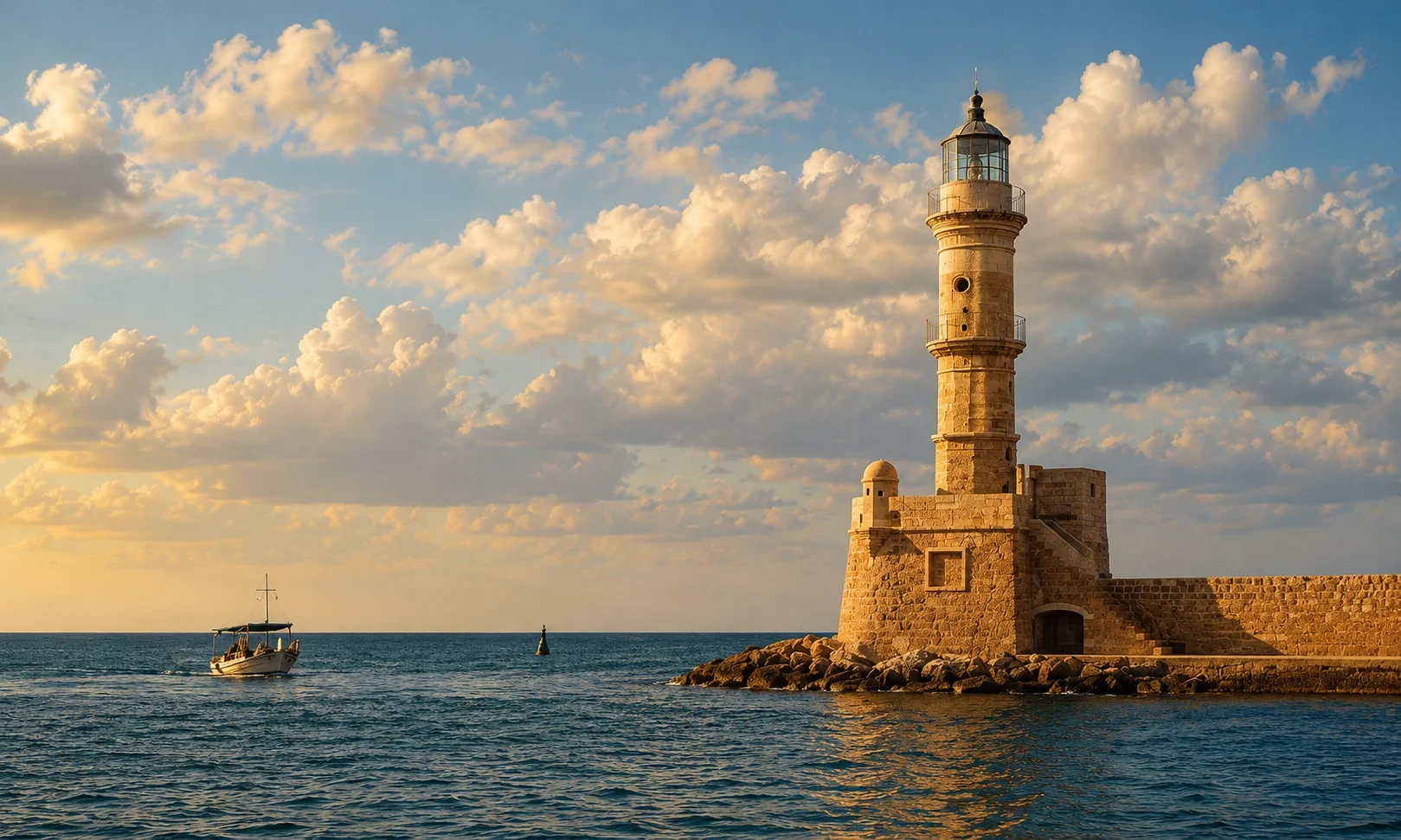
Alexandria is the only city in the world to have given its name to a lighthouse in a dozen European languages. The ancient Lighthouse of Alexandria, known in Greek as the Pharos after the island on which it stood, was so universally celebrated in the ancient Mediterranean world that its island name became the standard word for lighthouse in French (phare), Spanish (faro), Italian (faro), Portuguese (farol), modern Greek (faros), Catalan (far), Romanian (far), and several other European and Mediterranean languages, ensuring that the ancient Alexandrian wonder lives on in the everyday maritime vocabulary of the modern world more than six centuries after the physical lighthouse was destroyed by medieval earthquakes.
The ancient Library of Alexandria, founded in the 3rd century BCE under the patronage of Ptolemy I and II, was the largest library in the ancient world with an estimated collection of between 400,000 and 700,000 papyrus scrolls at its height, making it the single greatest concentration of recorded human knowledge in the history of the ancient Mediterranean world. The scholars who worked in or were associated with the Library included Euclid, who developed the foundations of geometry; Eratosthenes, who calculated the Earth's circumference using the sun angle at Aswan; Archimedes, who developed the principles of buoyancy; Aristarchus of Samos, who proposed the heliocentric solar system; and Hypatia, the celebrated mathematician and philosopher, making the ancient Library of Alexandria the most consequential single institution in the history of ancient science and mathematics.
Alexandria is the only Mediterranean city to have been simultaneously the capital of a great ancient empire, the primary center of global scholarship in the ancient world, the birthplace of several of the world's major religious traditions in their systematic theological form, and the home of one of the Seven Wonders of the Ancient World, all within the same urban boundaries and within overlapping historical periods, a combination of civilizational achievements that is unique in the entire history of Mediterranean urban culture and that gives Alexandria a claim to historical significance that no other single city outside Rome and Athens can seriously contest.
Why Is Alexandria Called The Pride Of The Mediterranean?
Alexandria is called the Pride of the Mediterranean because it represents, more completely than any other single city on the Egyptian or North African coast, the full creative potential of the Mediterranean world at the point where the ancient Egyptian civilization of the Nile Valley meets the Greek and later Roman civilizations of the northern Mediterranean shore. The title Pride of the Mediterranean acknowledges the extraordinary historical role that Alexandria played as the supreme synthesis city of the ancient Mediterranean world, the place where the Greek philosophical tradition met the ancient Egyptian religious tradition and produced between them the intellectual and spiritual foundations of Western, Byzantine, and Islamic civilization in a process of cultural creativity whose consequences are still felt in every library, every university, every church, mosque, and synagogue, and every system of mathematics and scientific method in the contemporary world.
The title also acknowledges the physical beauty of the city itself, whose long Mediterranean waterfront with its famous Corniche, its Eastern Harbor backed by the Bibliotheca Alexandrina and the Abu Al-Abbas Al-Mursi Mosque, its Pharos promontory crowned by the Citadel of Qaitbay, and its open Mediterranean horizon beyond, creates one of the most beautiful and the most historically resonant urban waterscapes in the entire Mediterranean world, a composition of ancient history, Islamic architecture, modern cultural ambition, and natural maritime beauty that justifies the pride with which every Alexandrian regards their city and every visitor discovers it for the first time.
Alexandria History
The history of Alexandria from its foundation in 331 BCE to the present day encompasses one of the most extraordinary cultural narratives in the history of any city in the world, a story of foundation by a military genius, development into the supreme metropolis of the ancient Mediterranean world, gradual transformation through Roman, Byzantine, and Islamic rule, near oblivion in the medieval period, spectacular revival as a 19th century cosmopolitan commercial city, and contemporary reinvention as the primary Mediterranean cultural gateway of the modern Egyptian state. The Ptolemaic period from 323 BCE to 30 BCE represents the golden age of ancient Alexandria, when the city was the largest and the most prosperous in the Mediterranean world, the home of the great Library and Museum, the seat of the Ptolemaic royal court whose patronage of scholarship, art, and architecture created the supreme expression of Hellenistic civilization, and the commercial hub of the Mediterranean and eastern trade routes whose revenues funded the most ambitious cultural patronage in the history of the ancient world.
The Roman conquest of Egypt in 30 BCE following the defeat of Cleopatra VII and Mark Antony brought the independent Ptolemaic golden age to an end but preserved Alexandria as the most important city in the Roman east after Rome and later Constantinople, the primary administrative capital of Roman Egypt, the primary Mediterranean port of the Roman grain supply, and one of the most significant intellectual and religious centers in the Roman world. The early Christian period saw Alexandria emerge as one of the three primary centers of the new religion alongside Rome and Antioch, the home of the Catechetical School that produced the first systematic theology of Christianity under scholars including Clement and Origen, and the seat of the Alexandrian patriarchate whose theological authority over the Christian communities of Africa and the east made it one of the most powerful ecclesiastical institutions in the late antique world. The Arab conquest of Egypt in 641 CE transformed Alexandria from the capital of Roman Egypt into the second city of Islamic Egypt, with Cairo established as the new capital, and the city entered a long period of relative secondary status in the medieval Islamic period during which much of its ancient physical fabric was quarried, rebuilt, or lost. The extraordinary revival of Alexandria in the 19th century under Muhammad Ali Pasha and his successors, who transformed the nearly deserted medieval city into a thriving cosmopolitan commercial metropolis with a large European expatriate community and a rebuilt urban fabric that gave the city its current neoclassical and eclectic architectural character, represents the beginning of the modern Alexandrian story that continues to the present day.
The Story Of Alexandria: Where East Meets West
The defining story of Alexandria throughout its more than two thousand year history is the story of a city at the meeting point of civilizations, a place where East and West, ancient Egyptian and ancient Greek, pharaonic and Hellenistic, pagan and Christian, Islamic and European, have met and interacted in processes of cultural encounter that have produced some of the most consequential intellectual, religious, and artistic achievements in the history of the human world. The ancient Ptolemaic city, where Greek-speaking Alexandrians and Egyptian-speaking Copts and Jewish communities and traders from across the Mediterranean and the east all lived within the same urban boundaries, was the first genuinely multicultural great city in the history of the Mediterranean, a city where the interaction of different cultural traditions in the common institutional spaces of the Library, the gymnasium, the Serapeum, and the harbor front produced the extraordinary intellectual syntheses of Hellenistic Alexandria that shaped the development of Western civilization for two thousand years.
This quality of cultural encounter, of productive interaction between different traditions and different peoples, has remained the defining characteristic of Alexandria throughout its history, recognizable in the syncretic art of the Catacombs of Kom El Shoqafa where Egyptian, Greek, and Roman religious traditions were combined in a single funerary decoration programme of extraordinary originality, in the religious geography of the Serapeum where the most successful synthetic deity in the history of ancient religion was worshipped by a community drawn from every ethnic and religious tradition of the Mediterranean, in the intellectual tradition of the Roman Amphitheatre's adjacent lecture halls where Neoplatonist philosophy in its most universally inclusive form was taught to students from across the Roman Mediterranean, and in the contemporary mission of the Bibliotheca Alexandrina which positions itself explicitly as the successor of the ancient Library's universal aspiration to collect and preserve all human knowledge in a single institution accessible to all. Alexandria's story is a story about what happens when different worlds meet at the edge of the sea, and the heritage of that story is the most extraordinary concentration of cultural achievement available at any city in the Egyptian and North African Mediterranean landscape.
The Major Attractions Of Alexandria The Pride Of The Mediterranean
The Bibliotheca Alexandrina
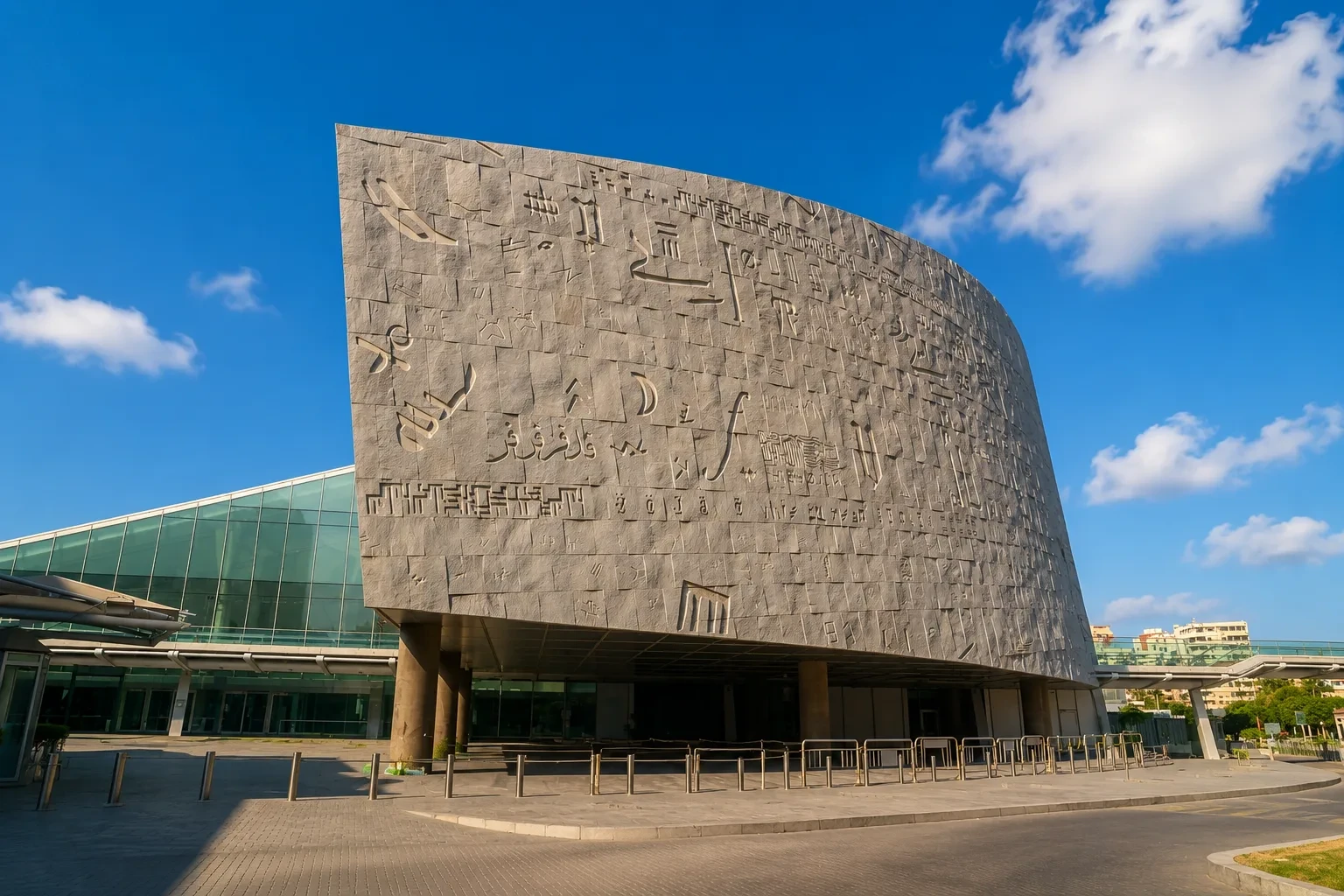
The Bibliotheca Alexandrina is the most architecturally spectacular and the most symbolically resonant cultural institution in modern Alexandria, a magnificent contemporary library and cultural complex inaugurated in 2002 on the shores of the Mediterranean to revive the spirit of the most celebrated library of the ancient world. Designed by the Norwegian architectural firm Snøhetta with its extraordinary tilted disc exterior covered in characters from more than 120 writing systems, the Bibliotheca houses approximately 2 million books, seven specialized research libraries, four museums, four art galleries, and a planetarium in a building that is one of the masterworks of late 20th century institutional architecture. A visit to the Bibliotheca Alexandrina is the most powerful single encounter with the aspirational identity of modern Alexandria as the intellectual successor to the ancient city of scholars available anywhere in the city.
The Citadel Of Qaitbay And The Lighthouse Of Alexandria Site
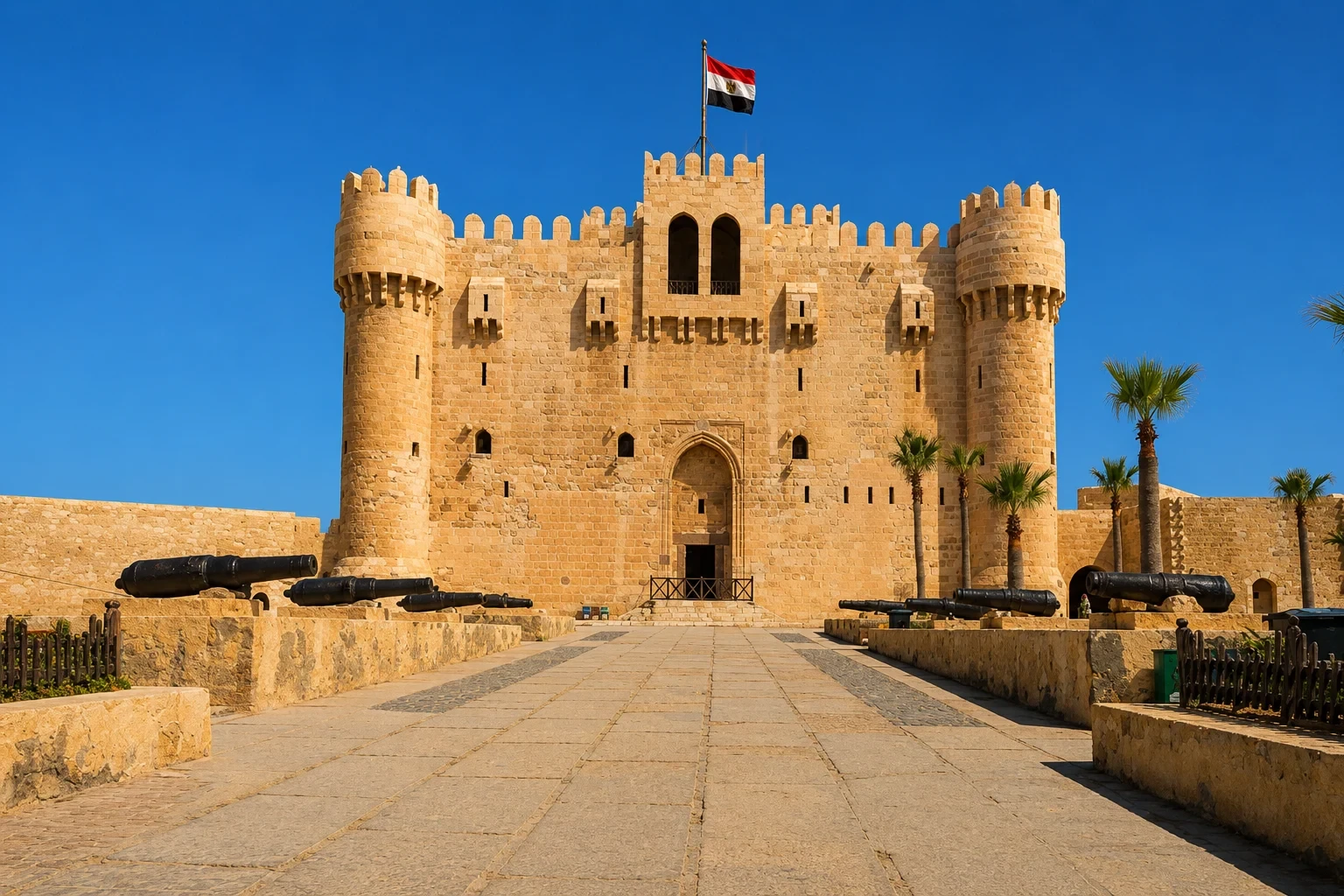
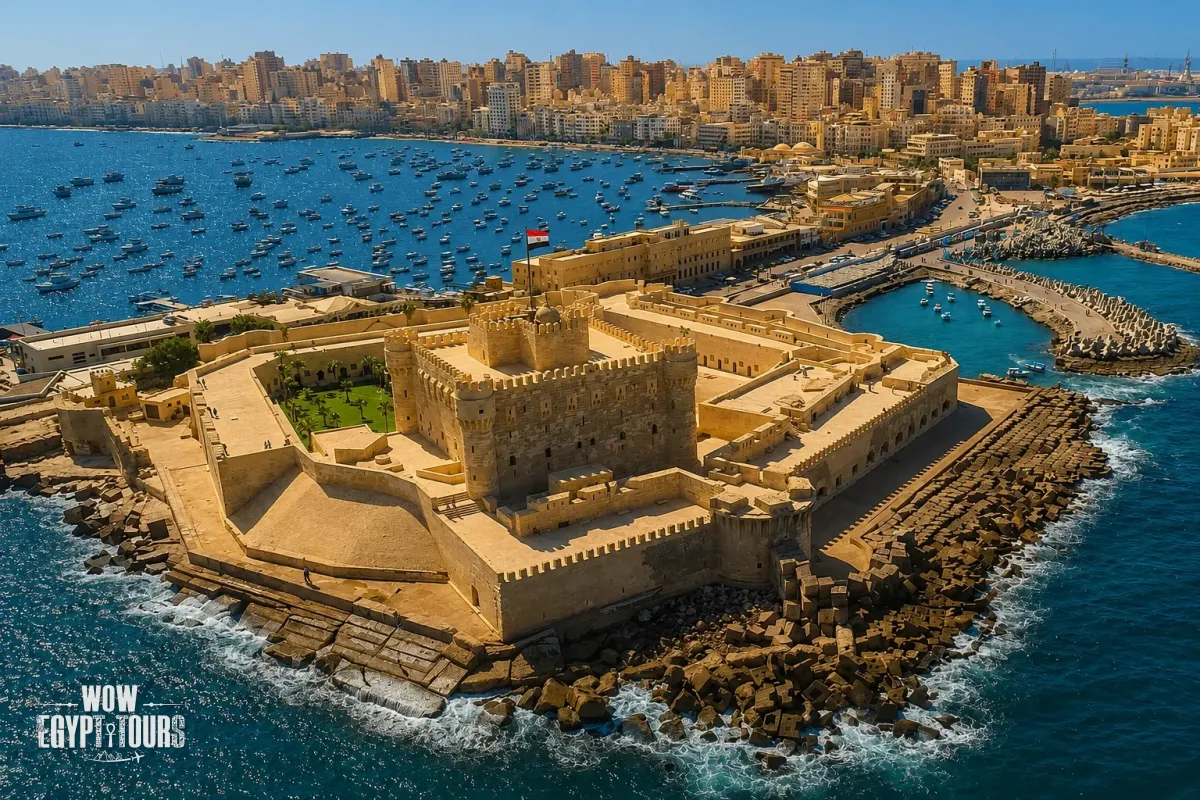
The Citadel of Qaitbay is the most dramatically situated medieval monument in Alexandria, a magnificent 15th century Mamluk fortress built on the exact site of the ancient Lighthouse of Alexandria, one of the Seven Wonders of the Ancient World, using stones from the fallen ancient wonder as its primary building material. The Citadel provides the most spectacular panoramic views of the Eastern Harbor and the Mediterranean available from any accessible point in the city, and the experience of standing on the exact ground of one of the Seven Wonders of the Ancient World, looking out across the same sea that the ancient lighthouse illuminated for sixteen centuries, is one of the most historically charged single experiences available in all of Alexandria.
The Catacombs Of Kom El Shoqafa
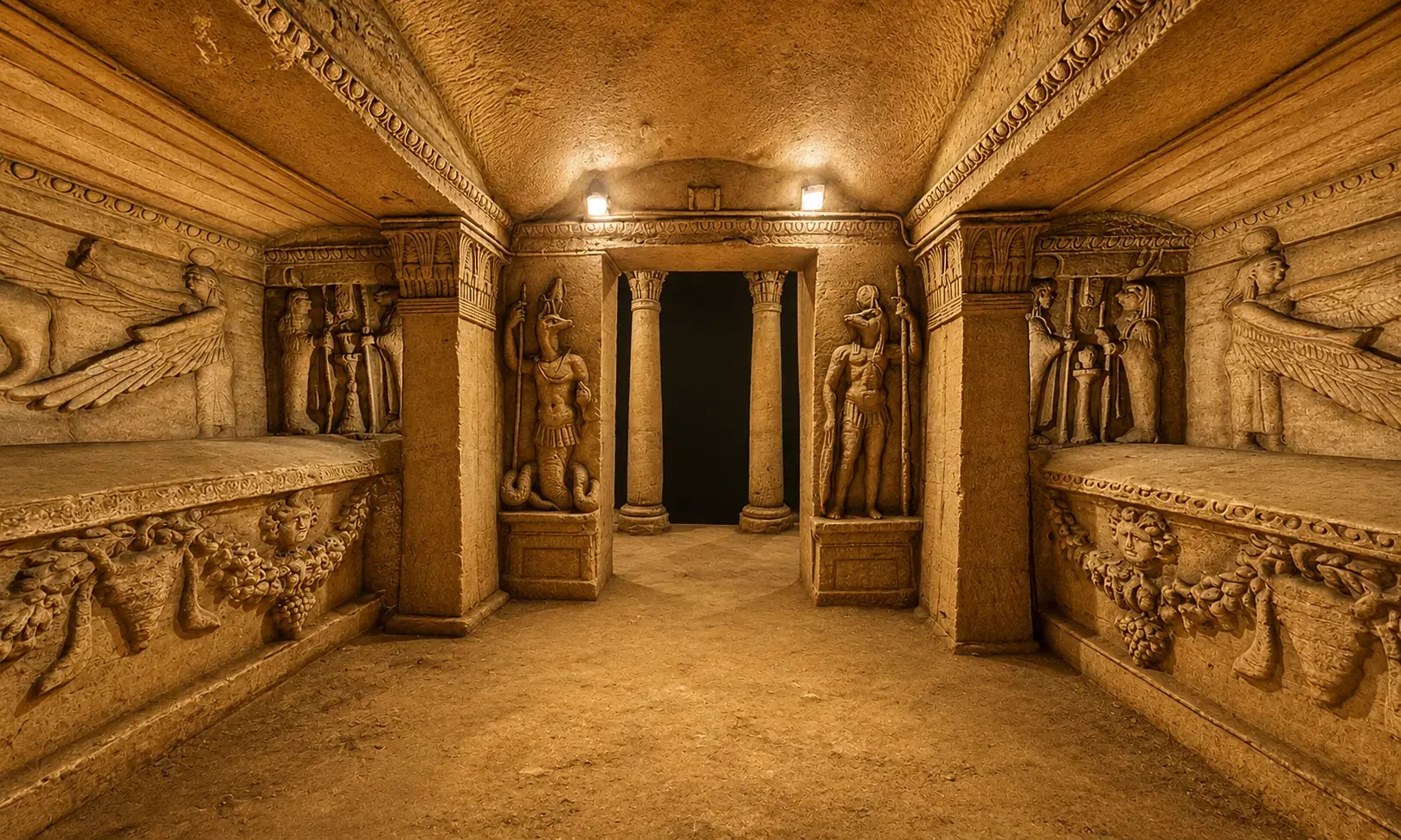
The Catacombs of Kom El Shoqafa are the largest and the most architecturally extraordinary ancient funerary complex of the Greco-Roman period in all of Egypt, a subterranean necropolis discovered in 1900 whose main tomb vestibule preserves the most remarkable syncretic relief carving programme in the entire ancient art record, combining Egyptian, Greek, and Roman artistic traditions in a synthesis whose most celebrated expression is the figure of the ancient Egyptian jackal-headed god Anubis wearing Roman military armor. Descending into the underground chambers of Kom El Shoqafa is the most immediately surprising and the most intellectually astonishing heritage experience available anywhere in the city.
Pompey's Pillar And The Serapeum Of Alexandria
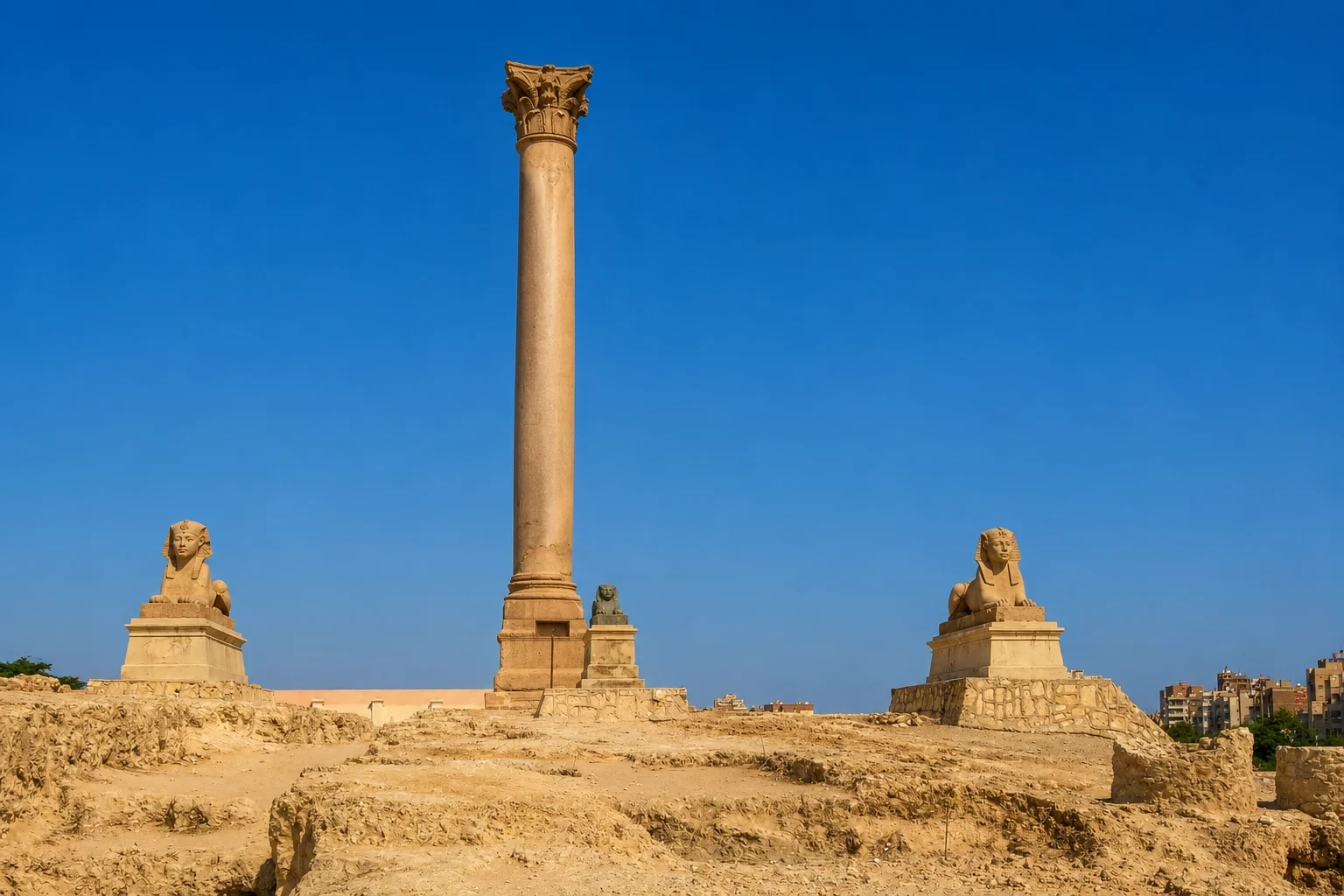
Pompey's Pillar, standing more than 26 meters above the ancient Rhakotis hill on the site of the ancient Serapeum, is the largest ancient monolithic column ever erected outside Rome and the most imposing above-ground ancient structure in the entire city of Alexandria. Erected in approximately 297 CE in honor of the Emperor Diocletian by the Prefect of Egypt, the column rises from the ruins of the once-magnificent Serapeum temple complex that was destroyed by the Christian community in 391 CE in one of the most symbolically significant acts of religious transformation in the entire history of the ancient Mediterranean. Standing at the base of the solitary column and contemplating what once surrounded it is the most poignant and the most historically resonant outdoor ancient heritage experience available in Alexandria.
The Roman Amphitheatre At Kom El Dikka
The Roman Amphitheatre at Kom El Dikka, more precisely known as the Roman Theatre, is the only surviving ancient Roman theatre in all of Egypt, a 2nd century CE civic entertainment structure with thirteen rows of white Syenite granite seating still intact, set within the broader Kom El Dikka archaeological complex that also includes thirteen lecture halls identified as the ancient Alexandrian university where Hypatia and other Neoplatonist philosophers taught, Roman bath remains, and villa mosaic pavements. The combination of theatrical space, academic lecture halls, and residential architecture within a single excavated urban site gives Kom El Dikka a quality of ancient civic completeness unique in the Alexandrian archaeological record.
The Greco-Roman Museum
The Greco-Roman Museum, founded in 1892 and recently renovated and reopened, is the oldest museum in Alexandria and the most important museum of ancient Greco-Roman civilization in all of Egypt, housing more than forty thousand artifacts in twenty-five galleries that span approximately one thousand years of Ptolemaic, Roman, and late antique Alexandrian cultural history. The collection includes the Ptolemaic royal sculpture, the Serapis and Isis collections, Fayum mummy portraits, extraordinary ancient glass, the portrait coins of Cleopatra VII, and the recovered underwater objects from the ancient Lighthouse of Alexandria site, making it the essential institutional key to the complete understanding of every other ancient monument in the city.
The Abu Al-Abbas Al-Mursi Mosque
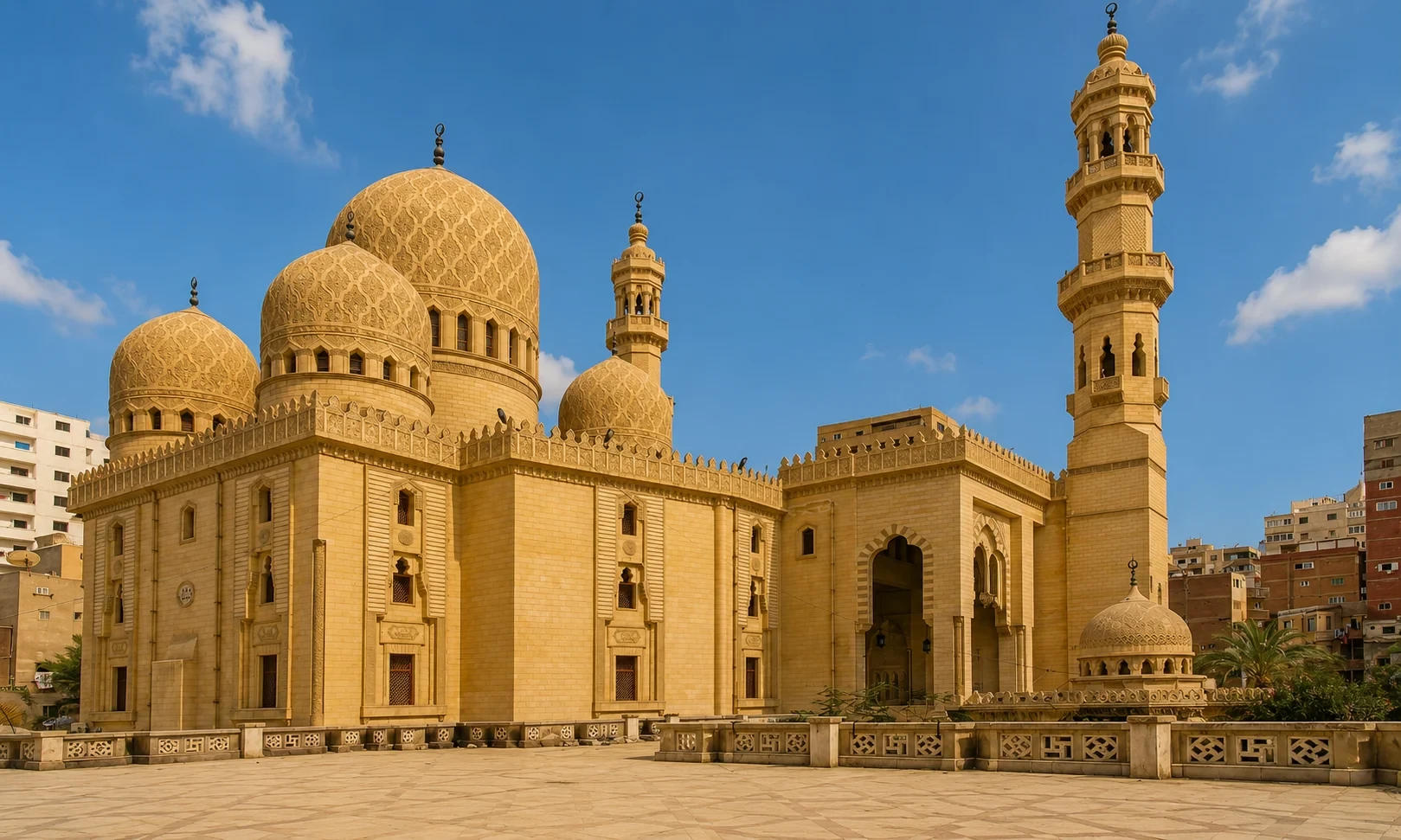
The Abu Al-Abbas Al-Mursi Mosque is the most beautiful and the most spiritually significant Islamic sacred building in Alexandria, a masterpiece of Andalusian-influenced North African mosque architecture completed in 1943 on the Eastern Harbor waterfront Corniche above the tomb of the 13th century Andalusian Sufi saint Abu Al-Abbas Al-Mursi, who died in Alexandria in 1287 CE after a lifetime of spiritual teaching and who is venerated as the patron saint of Alexandrian sailors and fishermen. The mosque's four minarets, carved stone facade, and extraordinary interior of domes, muqarnas, and calligraphic decoration make it the most immediately visually compelling Islamic sacred building on the Egyptian Mediterranean coast.
Why Is Alexandria Important?
Alexandria is important in ways that span ancient history, modern heritage, contemporary culture, and the essential geographic and commercial logic of the Egyptian Mediterranean economy. In ancient history, it was the founding city of the Hellenistic world, the site of the greatest ancient library and museum, the home of the Pharos lighthouse that gave its name to lighthouses in a dozen European languages, the birthplace of systematic Christian theology, and the setting for the final act of the Ptolemaic dynasty with the death of Cleopatra VII, one of the most celebrated historical figures of the ancient world. In the history of science and scholarship, the ancient Library of Alexandria was the primary engine of ancient intellectual progress, where the Earth's circumference was first calculated, where the heliocentric solar system was first proposed, where the foundations of geometry were established, and where hundreds of other scientific and philosophical achievements were made that shaped the intellectual tradition of the Western and Islamic worlds for two thousand years.
In modern heritage tourism, Alexandria is the primary Mediterranean heritage destination in Egypt, the city that provides the most complete available encounter with the ancient Greco-Roman cultural synthesis that defined the cultural world of the eastern Mediterranean in the Hellenistic and Roman periods, and the city whose contemporary cultural institutions, particularly the Bibliotheca Alexandrina, demonstrate most powerfully the aspiration of the modern Egyptian state to maintain and renew the cultural legacy of the ancient city. WOW Egypt Tours positions Alexandria as the essential Mediterranean cultural complement to the ancient Nile Valley heritage of Luxor and Aswan in all comprehensive Egypt itineraries, offering the complete range of Alexandria Day Tours, Alexandria Port Excursions, and Egypt Tours Packages that include Alexandria as a dedicated destination.
What Are Some Interesting Facts About Alexandria?
Cleopatra: The Last Queen Of Alexandria
Of all the historical figures associated with the city of Alexandria, none is more immediately recognized in the popular cultural imagination than Cleopatra VII, the last Queen of Egypt, whose extraordinary life, whose legendary intelligence and political brilliance, whose romantic relationships with the two most powerful Roman men of her age, Julius Caesar and Mark Antony, and whose death in Alexandria in 30 BCE with the asp or poison that ended the independent Ptolemaic dynasty and the ancient Alexandrian golden age, have made her one of the most mythologized figures in the entire history of the ancient world. Cleopatra was not simply a romantic heroine but a genuinely formidable political leader who spoke nine languages including ancient Egyptian, the only Ptolemaic ruler to bother learning the language of the country they ruled, who understood the complex geopolitics of the Roman Republic and its successor empire with extraordinary sophistication, and who made the most intelligent and the most personally courageous choices available to her in the impossible political situation created by the Roman civil wars of the 1st century BCE. Her death in Alexandria, choosing suicide over the humiliation of being paraded in a Roman triumph, was the end of the independent ancient Alexandrian world and the beginning of the Roman provincial period whose monuments are still visible in the city she loved. The Greco-Roman Museum's collection of Cleopatra VII portrait coins provides the only authentic contemporary images of the most famous queen of antiquity, making the museum visit one of the closest encounters with the historical reality of this most mythologized of ancient figures available anywhere in the world.
The City That Changed Human Knowledge
The concentration of scientific and intellectual achievement associated with the ancient Library and Museum of Alexandria is so extraordinary and so consequential in the history of human civilization that it deserves special recognition as one of the most remarkable facts about any city in the history of the world. The scholars who worked in or were associated with the ancient Alexandrian institutions in the 3rd and 2nd centuries BCE include Euclid, whose Elements of Geometry remained the standard mathematics textbook in European universities for more than two thousand years; Eratosthenes, who calculated the Earth's circumference to within about 2 percent of the modern value using shadow angles at Alexandria and Aswan; Aristarchus of Samos, who proposed the heliocentric model of the solar system approximately 1,800 years before Copernicus; Archimedes, whose works on buoyancy, levers, and spiral screws were the most significant contributions to applied physics between Aristotle and Galileo; Hero of Alexandria, who invented the first steam-powered device; and Hypatia, whose mathematical and astronomical works and whose Neoplatonist philosophy made her the most celebrated scholar of the late antique period. No other city in the ancient world produced a comparable concentration of scientific and intellectual achievement in a comparable period of time, and the claim that the ancient Library of Alexandria was the single most productive institution in the entire history of ancient science is not an exaggeration but a sober assessment of the documented evidence.
The City Where Major Religions Were Shaped
Alexandria's role in the formation of the major world religious traditions that continue to shape the lives of billions of people in the contemporary world is one of the most consequential and the most underappreciated dimensions of the city's historical significance. The systematic development of Christian theology as an academic discipline, undertaken in the Catechetical School of Alexandria under scholars including Clement of Alexandria and Origen in the 2nd and 3rd centuries CE, produced the intellectual framework within which Christianity was defined as a coherent theological system rather than simply a collection of doctrinal beliefs, a contribution to the development of the world's largest religion that was made possible by the unique combination of Greek philosophical methodology and biblical religious content that only the Alexandrian intellectual tradition could have produced. The Neoplatonist philosophy developed in the Alexandrian schools, particularly by Plotinus and the subsequently Alexandrian-trained Neoplatonists of the 3rd and 4th centuries CE, provided the philosophical vocabulary and the metaphysical framework within which Islamic philosophy would develop its most sophisticated expressions in the 9th and 10th centuries, making Alexandria's intellectual tradition one of the foundational sources of Islamic philosophical theology. The Jewish community of ancient Alexandria, one of the largest and most intellectually active Jewish communities of the ancient diaspora, produced the Septuagint translation of the Hebrew Bible into Greek in the 3rd century BCE, the translation through which the entire Christian tradition received the Hebrew scriptures and through which the Hebrew religious tradition entered the Greek philosophical world in a synthesis of extraordinary cultural consequence.
What Is So Special About Alexandria The Pride Of The Mediterranean?
The City Where The Ancient World Was At Its Most Creative
What makes Alexandria uniquely special among all the cities of the Egyptian and North African Mediterranean is the extraordinary concentration of ancient human creativity and intellectual ambition that the city has housed, inspired, and produced throughout its more than two thousand year history, a concentration whose legacy in the cultural, religious, scientific, and philosophical traditions of the contemporary world is more pervasive and more consequential than that of any other single ancient city except Rome and Athens. The ancient Library of Alexandria, the Serapeum, the Mouseion, the Jewish Synagogue, the early Christian Catechetical School, the Neoplatonist philosophical schools, and the maritime engineering tradition that produced the Pharos lighthouse were all institutions that made transformative contributions to the development of human civilization in their respective fields, and their concentration within the boundaries of a single city over a period of approximately six hundred years represents the most extraordinary example of civilizational productivity in the history of the ancient world. Visiting Alexandria is not simply visiting a city with interesting monuments; it is visiting the site of one of the most creative episodes in the entire history of human thought.
The Most Complete Mediterranean Heritage Experience In Egypt
Alexandria is also uniquely special as the only destination in Egypt that provides the complete range of Mediterranean cultural heritage experiences, from the ancient Greco-Roman monuments of the Ptolemaic and Roman periods through the medieval Islamic sacred architecture of the Mamluk and Ottoman periods to the 19th century neoclassical and eclectic urban fabric of the Khedival modernization period and the contemporary cultural institutions of the 21st century Egyptian state. No other Egyptian city offers this complete temporal arc of Mediterranean cultural history in a single urban landscape, and the combination of the ancient underground world of the Catacombs of Kom El Shoqafa, the medieval waterfront drama of the Citadel of Qaitbay, the living Islamic spiritual tradition of the Abu Al-Abbas Al-Mursi Mosque, and the contemporary intellectual ambition of the Bibliotheca Alexandrina in a single city visited in a single day creates a heritage experience of extraordinary temporal and cultural comprehensiveness that is available nowhere else in Egypt.
Alexandria Through The Ages: From Ancient Capital To Modern Gateway
The complete history of Alexandria from its foundation in 331 BCE to the present day traces one of the most dramatic arcs of any city in the history of the Mediterranean world, from the supreme cultural and commercial capital of the ancient Hellenistic world through the productive provincial capital of Roman Egypt, the birthplace of systematic Christian theology, the second city of Islamic Egypt, the nearly abandoned medieval port, the spectacular 19th century cosmopolitan revival, and the contemporary Egyptian Mediterranean gateway that Alexandria is today. The Ptolemaic period of 323 to 30 BCE was the ancient golden age of absolute cultural dominance, when Alexandria was the largest city in the Mediterranean world and its Library the greatest repository of human knowledge ever assembled. The Roman period of 30 BCE to 641 CE was the long productive century of continued intellectual vitality, Christian theological development, and commercial prosperity under imperial administration. The medieval Islamic period of 641 to approximately 1800 CE was the long contraction, when the city declined from Mediterranean supremacy to provincial obscurity as the center of Egyptian power shifted inland to Cairo.
The 19th century revival under Muhammad Ali Pasha and his successors was the most dramatic urban transformation in the city's history since the Ptolemaic foundation, rebuilding Alexandria from a town of perhaps 10,000 inhabitants in 1800 to a cosmopolitan city of several hundred thousand by 1900, with a large European expatriate community, a rebuilt harbor infrastructure, a new urban fabric of neoclassical and eclectic buildings that gave the city its current architectural character, and a revived commercial and cultural significance as the primary Mediterranean interface of the modernizing Egyptian state. The 20th century nationalization period following the Egyptian Revolution of 1952 and the Suez Crisis of 1956 ended the cosmopolitan era as the European communities departed and Alexandria became an Egyptian national city, losing some of the commercial vitality of the cosmopolitan period but gaining in the process a more authentically Egyptian and more deeply rooted Mediterranean identity that characterizes the contemporary city. Today Alexandria is a city of approximately five million people, Egypt's primary Mediterranean port and second most important city, whose extraordinary heritage is being actively conserved, presented, and celebrated through institutions including the Bibliotheca Alexandrina and the renovated Greco-Roman Museum that represent the most ambitious commitments to cultural heritage preservation and cultural institution building in the modern history of Egyptian Mediterranean civilization.
Alexandria UNESCO World Heritage Recognition
The ancient heritage of Alexandria is under active consideration for UNESCO World Heritage designation, with the city's extraordinary archaeological heritage landscape, including the documented ancient sites of the Library and Museum quarter, the Serapeum, the ancient Royal Quarter, the ancient harbor areas, the Kom El Dikka complex, the Catacombs of Kom El Shoqafa, and the underwater archaeological sites of the Eastern and Western harbors where the remains of the ancient Ptolemaic royal quarter and the ancient Lighthouse of Alexandria lie on the seabed, all contributing to a heritage landscape of outstanding universal value that scholars and heritage authorities have consistently recognized as deserving the highest level of international heritage protection. The Bibliotheca Alexandrina, founded as a UNESCO-associated institution and continuing to operate in close partnership with UNESCO's cultural heritage and knowledge access programmes, represents the most significant existing institutional expression of UNESCO's engagement with the Alexandrian cultural legacy, and the institution's ongoing digitization and preservation work contributes directly to the accessibility of the ancient Alexandrian cultural heritage to the global scholarly and public audience that UNESCO's mission is intended to serve.
Best Time To Visit Alexandria
The best time to visit Alexandria is during the spring and autumn months from March through May and from September through November, when the Mediterranean climate of the city provides the most pleasant combination of mild temperatures, moderate sunshine, and relatively low humidity that makes both outdoor site exploration and indoor museum visiting comfortable and enjoyable. The summer months from June through August bring the warmest and the most humid weather to Alexandria, with temperatures regularly reaching 30 to 35 degrees Celsius and the humidity of the coastal location making the heat more intense than equivalent inland temperatures might suggest. However, Alexandria's Mediterranean location makes its summer weather significantly more pleasant than the extreme desert heat of Luxor and Aswan in the same season, and the abundant air-conditioned indoor heritage experiences, particularly the Bibliotheca Alexandrina and the Greco-Roman Museum, make summer visits entirely feasible and rewarding. The winter months from December through February bring the coolest and sometimes the wettest weather, with temperatures dropping to 10 to 15 degrees Celsius and occasional Mediterranean rain systems providing the rainfall that gives the city its Mediterranean green character, but the historic monuments and cultural institutions are fully accessible throughout the winter and the smaller visitor numbers of the off-season make for a more peaceful and more personally rewarding experience at the most popular sites. WOW Egypt Tours operates Alexandria Day Tours, Alexandria Port Excursions, and Egypt Tours Packages that include Alexandria throughout the year.
Getting To Alexandria
Alexandria is accessible from Cairo and from the major international arrival points in Egypt by several different transport modes, all of which WOW Egypt Tours can arrange as part of any Egypt Tours Package or Egypt Travel Package that includes Alexandria. By road from Cairo, the Desert Road (the faster of the two main Cairo to Alexandria highways) covers the approximately 225 kilometers between the two cities in approximately 2 to 2.5 hours by private air-conditioned vehicle, making Alexandria easily accessible as a day excursion from Cairo for travelers based in the Egyptian capital. By train from Cairo, the high-speed train services between Cairo Ramses Station and Alexandria Misr Station cover the journey in approximately 2 hours in comfortable air-conditioned carriages, with multiple daily departures from both cities. By domestic flight from Cairo, the service to Borg El Arab Airport approximately 45 kilometers southwest of the Alexandria city center takes approximately 45 minutes, with the subsequent road transfer from the airport to the city center adding approximately 45 minutes to the total journey time. Mediterranean cruise ships dock at the Alexandria Port, located in the Western Harbor of the city approximately 3 to 4 kilometers from the central heritage sites, and Alexandria Port Excursions are available from WOW Egypt Tours for cruise passengers with any duration of port time.
How Long To Spend In Alexandria
A minimum of one full day is required to experience the most essential Alexandria heritage sites in a single visit, typically covering the Bibliotheca Alexandrina, the Catacombs of Kom El Shoqafa and adjacent Pompey's Pillar, and the Citadel of Qaitbay on the lighthouse site, with the Abu Al-Abbas Al-Mursi Mosque as a natural addition to the Eastern Harbor waterfront programme. Two full days allow a more comprehensive and more relaxed experience that can also include the Greco-Roman Museum, the Roman Amphitheatre at Kom El Dikka, a complete Eastern Harbor Corniche walk from the Bibliotheca to the Citadel, and the exploration of the modern city's distinctive neoclassical urban fabric including the Stanley Bay and Montazah Palace areas. For travelers who wish to experience Alexandria in the full depth of its cultural and heritage richness, three days would not exhaust the city's offerings, and many experienced travelers describe Alexandria as a city that rewards repeated visits across multiple trips to Egypt with continuously renewed discoveries and continuously deepened appreciation.
Tips For Visiting Alexandria
Visit the Greco-Roman Museum at the beginning of your Alexandria visit rather than at the end, as the cultural and artistic context it provides for the outdoor ancient monuments significantly enhances the quality and depth of subsequent site visits throughout the day. Plan the complete Eastern Harbor Corniche walk from the Bibliotheca Alexandrina to the Citadel of Qaitbay at either the early morning or the late afternoon for the most beautiful Mediterranean light on the waterfront monuments. Combine the Catacombs of Kom El Shoqafa and Pompey's Pillar as a single Rhakotis hill visit to maximize time efficiency. Experience the Abu Al-Abbas Al-Mursi Mosque outside prayer times to explore the interior at leisure. Take time to sit in a waterfront cafe on the Eastern Harbor Corniche and absorb the atmosphere of the Mediterranean city, as the daily life and the urban character of Alexandria are themselves part of the heritage experience. Try the Alexandrian seafood, which is widely regarded as the finest in Egypt, as a genuine cultural encounter with the city's Mediterranean gastronomic tradition. A licensed guide from WOW Egypt Tours with comprehensive knowledge of the complete Alexandrian heritage landscape is essential throughout the Alexandria programme.
What To Wear In Alexandria
Alexandria's combination of outdoor coastal monuments, underground catacomb spaces, air-conditioned museum galleries, active Islamic mosques, and urban waterfront promenades requires practical and versatile clothing appropriate for multiple different environments within a single day's visit. Lightweight, breathable clothing covering the shoulders and knees is recommended throughout as a mark of respect for the Islamic and ancient sacred spaces and as practical protection from the Mediterranean sun during outdoor visits. A headscarf for women visiting the Abu Al-Abbas Al-Mursi Mosque is essential. A light warm layer is recommended for the air-conditioned museum interiors and for the underground Catacombs of Kom El Shoqafa whose constant underground temperature of approximately 18 degrees is noticeably cooler than the summer surface. Comfortable flat-soled walking shoes with good grip are essential for the uneven ancient stone surfaces of the catacomb stairs, the Citadel of Qaitbay's ramparts, and the excavated surfaces of the Roman Amphitheatre. Sunscreen and a hat are recommended for the exposed outdoor sites in the warmer months. A light rain layer is useful in winter when Mediterranean rain systems can produce brief but sometimes heavy showers.
Photography In Alexandria
Alexandria is one of the most photographically rewarding cities in Egypt, offering an extraordinary range of subjects from the ancient carved relief surfaces of the Catacombs to the dramatic medieval architecture of the Citadel of Qaitbay, the luminous white granite seating of the Roman Amphitheatre, the spectacular tilted disc exterior of the Bibliotheca Alexandrina, the four minarets of the Abu Al-Abbas Al-Mursi Mosque against the Mediterranean sky, and the panoramic Eastern Harbor waterscape that provides the most beautiful urban waterfront backdrop in the country. The Eastern Harbor Corniche, particularly in the early morning and late afternoon when the Mediterranean light is most beautiful, offers photographic compositions of extraordinary quality combining the historic waterfront, the sea, the distant Citadel, and the contemporary urban life of the city in a single visual field. Specific photography rules at individual sites apply as described in the individual monument guides: flash photography is prohibited in all underground and enclosed ancient spaces; photography in the Abu Al-Abbas Al-Mursi Mosque requires respectful behavior and no intrusion on worshippers. The Greco-Roman Museum allows photography without flash in most galleries.
Alexandria Tours
Alexandria Day Tour From Cairo: The Essential Programme
This comprehensive full-day tour from Cairo covers the most essential and the most rewarding cultural and heritage destinations in Alexandria, providing the most complete single-day Alexandria experience available from the Egyptian capital, combining the modern cultural brilliance of the Bibliotheca Alexandrina with the ancient underground world of the Catacombs, the outdoor ancient grandeur of Pompey's Pillar, and the medieval maritime drama of the Citadel of Qaitbay.
What Is Covered
Private vehicle from Cairo hotel to Alexandria along the Desert Road (approximately 2 to 2.5 hours). Guided visit to the Bibliotheca Alexandrina including the main reading room, the Antiquities Museum, and the exterior writing systems wall. Combined guided visit to the Catacombs of Kom El Shoqafa and Pompey's Pillar on the Rhakotis hill. Guided visit to the Abu Al-Abbas Al-Mursi Mosque. Guided visit to the Citadel of Qaitbay on the site of the ancient Lighthouse. Return to Cairo by private vehicle arriving in the early evening.
Duration
Full day from Cairo, with approximately 2 to 2.5 hours driving each way and proportionate time at each site.
Includes
Private air-conditioned vehicle from Cairo hotel, private licensed guide with comprehensive Alexandrian heritage expertise, and entrance fees to all sites with admission charges.
Complete Alexandria Cultural Programme: Two-Day Alexandria Experience
This two-day programme covers the complete range of Alexandria's most significant cultural and heritage attractions in the most comprehensive and the most relaxed format available, dedicating the first day to the waterfront heritage and the modern cultural institutions and the second day to the Greco-Roman ancient monuments and the Islamic sacred heritage.
Day One
Greco-Roman Museum in the morning for essential cultural context. Bibliotheca Alexandrina. Abu Al-Abbas Al-Mursi Mosque. Citadel of Qaitbay. Eastern Harbor Corniche walk. Optional evening waterfront dinner.
Day Two
Catacombs of Kom El Shoqafa and Pompey's Pillar on the Rhakotis hill. Roman Amphitheatre at Kom El Dikka. Afternoon at leisure to explore the city's neoclassical urban fabric, the Stanley Bay waterfront, and the Montazah area.
Includes
Private air-conditioned transportation throughout, one night in a central Alexandria hotel, private licensed guide, and entrance fees to all included sites.
Alexandria Port Excursion: The Complete Alexandria Heritage Experience
For Mediterranean cruise ship passengers arriving at Alexandria Port, this shore excursion covers the most significant Alexandria heritage sites within the available port time, providing the most comprehensive and the most efficiently organized programme of Alexandria's major cultural attractions within a standard Mediterranean cruise port call.
What Is Covered
Private vehicle from Alexandria Port. Bibliotheca Alexandrina. Combined guided visit to the Catacombs of Kom El Shoqafa and Pompey's Pillar. Abu Al-Abbas Al-Mursi Mosque. Citadel of Qaitbay. Return to Alexandria Port before ship departure.
Duration
Full day or half day from Alexandria Port depending on ship schedule and port time availability.
Includes
Private air-conditioned vehicle from the port, private licensed guide, entrance fees to all sites with admission charges, and guaranteed return transfer to the ship before departure.
Combine Alexandria With Your Egypt Tours Package
Alexandria the Pride of the Mediterranean is featured across the full range of WOW Egypt Tours travel products as the essential Mediterranean cultural complement to the ancient Nile Valley heritage of Luxor and Aswan. Browse the options below to find the Egypt experience that includes Alexandria.
Egypt Tour Packages: Multi-day guided Egypt tours organized by duration, including 2 Days Egypt Packages, 3 Days Egypt Packages, 4 Days Egypt Packages, 5 Days Egypt Packages, 6 Days Egypt Packages, 7 Days Egypt Packages, 8 Days Egypt Packages, 10 Days Egypt Packages, and longer itineraries. All packages that include Alexandria feature the city's major attractions as core components of the Alexandria programme. All packages include private air-conditioned transportation, private licensed guide, accommodations, entrance fees to all included sites, and private transfers throughout Egypt.
Egypt Travel Packages: Themed Egypt travel packages designed around specific travel styles and interests, including Egypt Honeymoon Travel Packages, Egypt Budget Travel Packages, Egypt Family Travel Packages, Egypt Luxury Travel Packages, Egypt Adventure Travel Packages, Egypt Cultural Travel Packages, and Egypt Christmas and New Year Travel Packages. Alexandria is featured in Cultural, Luxury, and Honeymoon themed packages as the supreme Mediterranean heritage and cultural experience in the complete Egypt itinerary. All packages include private transportation, licensed guide, accommodations, meals, and private transfers.
Egypt Nile Cruise Packages: Complete Egypt travel packages combining Cairo sightseeing with a fully guided Nile cruise. Alexandria can be added as an extension to any Egypt Nile Cruise Package, creating the most comprehensive possible Egypt itinerary encompassing both the ancient Nile Valley heritage and the Mediterranean heritage of the city of Alexander the Great. All packages include private cabin, all meals, licensed guide, and private transfers.
Nile River Cruises: All WOW Egypt Tours Nile cruise options. Alexandria is available as a pre- or post-cruise extension from Cairo added to any Nile River Cruise itinerary, providing the Mediterranean cultural complement to the ancient Egyptian Nile Valley heritage programme.
Cairo Tours: Day tours from Cairo covering the major attractions of the Egyptian capital and its environs. Alexandria is the most significant and the most rewarding day excursion destination from Cairo, accessible in approximately 2 to 2.5 hours by private vehicle along the Desert Road and providing a complete change of cultural atmosphere and heritage character from the pharaonic and Islamic Cairo experience. All tours include private air-conditioned transportation, private licensed guide, entrance fees, and private transfers.
Alexandria Tours: Dedicated day tours based in Alexandria covering the complete range of the city's cultural and heritage attractions in programmes designed to provide the most comprehensive and the most personally rewarding possible encounter with the extraordinary multi-layered heritage of the Pride of the Mediterranean. All tours include private air-conditioned transportation, private licensed guide with comprehensive Alexandrian heritage expertise, entrance fees to all included sites, and private transfers.
Alexandria Port Excursions: Shore excursion programmes from Alexandria Port for Mediterranean cruise ship passengers, coordinated around each ship's port schedule with guaranteed return to the ship before departure. WOW Egypt Tours operates the most comprehensive and the most expertly guided Alexandria Port Excursion programmes available, covering all the major monuments and cultural institutions in the most efficiently designed itinerary for any available port time from a half-day minimum to a complete full-day maximum programme. All excursions include private air-conditioned vehicle from the port, private licensed guide, entrance fees to all sites with admission charges, and guaranteed return transfer to the ship.
All Alexandria Attractions
The major attractions of Alexandria the Pride of the Mediterranean are listed below. Each attraction is the subject of a comprehensive individual visitor's guide on the WOW Egypt Tours website, and all are accessible through the Alexandria Day Tours, Alexandria Port Excursions, Egypt Tours Packages, and Egypt Travel Packages offered by WOW Egypt Tours.
The Bibliotheca Alexandrina, the most architecturally spectacular modern building in Alexandria and the most powerful statement of the ancient Alexandrian ideal of universal knowledge in the contemporary world, inaugurated in 2002 on the Eastern Harbor waterfront as the modern successor to the ancient Library of Alexandria, housing more than 2 million books, four museums, four galleries, and a planetarium in a tilted disc building covered with characters from 120 writing systems.
The Citadel of Qaitbay, the most dramatically situated medieval monument in Alexandria and the most historically layered site in the city, a magnificent 15th century Mamluk fortress built on the exact site of the ancient Lighthouse of Alexandria whose fallen stones provided the primary building material for the citadel walls, offering the most spectacular panoramic views of the Eastern Harbor and the Mediterranean from any accessible point in the city.
The Catacombs of Kom El Shoqafa, the largest and most architecturally extraordinary ancient funerary complex of the Greco-Roman period in Egypt, discovered in 1900 on the ancient Rhakotis hill, preserving the most remarkable syncretic art programme of the entire ancient Mediterranean world, including the celebrated figure of the Egyptian god Anubis in Roman military armor, in three underground levels descending approximately 30 meters below the surface.
Pompey's Pillar and the Serapeum of Alexandria, the largest ancient monolithic column ever erected outside Rome, standing more than 26 meters above the ruins of the ancient Serapeum complex on the Rhakotis hill, the site where the most celebrated synthetic deity of the ancient world was worshipped and where the destruction of the Serapeum temple by the Christian community in 391 CE marked one of the most symbolically significant events in the religious history of the ancient Mediterranean.
The Roman Amphitheatre at Kom El Dikka, the only surviving ancient Roman theatre in all of Egypt, a 2nd century CE civic entertainment structure with thirteen rows of white granite seating still intact within the broader Kom El Dikka archaeological complex that includes thirteen lecture halls identified as the ancient Alexandrian university where Hypatia may have taught, Roman bath remains, and villa mosaic pavements.
The Greco-Roman Museum, the oldest museum in Alexandria, founded in 1892 and recently renovated, housing more than forty thousand artifacts in twenty-five galleries that span one thousand years of Ptolemaic, Roman, and late antique Alexandrian cultural history, including the Ptolemaic royal sculpture, the Serapis and Isis collections, the Fayum mummy portraits, the portrait coins of Cleopatra VII, and the recovered underwater objects from the ancient Lighthouse of Alexandria site.
The Abu Al-Abbas Al-Mursi Mosque, the most beautiful and the most spiritually significant Islamic sacred building in Alexandria, a masterpiece of Andalusian-influenced North African mosque architecture completed in 1943 on the Eastern Harbor Corniche, housing the tomb of the 13th century Andalusian Sufi saint and patron of Alexandrian sailors, with four minarets and an extraordinary interior of domes, muqarnas, and calligraphic decoration.
The Lighthouse of Alexandria, one of the Seven Wonders of the Ancient World, the most celebrated ancient navigational monument, and the structure whose name gave European languages their word for lighthouse, experienced today through the site visit to the Citadel of Qaitbay on the exact Pharos promontory position of the ancient wonder, the recovered underwater objects in the Greco-Roman Museum, and the Eastern Harbor waterfront panorama that recreates the geographic logic of the ancient lighthouse's position at the entrance to the most prosperous harbor in the ancient Mediterranean.
Frequently Asked Questions About Alexandria The Pride Of The Mediterranean
What is Alexandria the Pride of the Mediterranean?
Alexandria is Egypt's second largest city and its primary Mediterranean port, founded by Alexander the Great in 331 BCE and developed by the Ptolemaic dynasty into the supreme cultural and commercial capital of the ancient Hellenistic world. Home to the ancient Library of Alexandria, the Lighthouse of Alexandria (one of the Seven Wonders), the birthplace of systematic Christian theology, and a living city of approximately five million people today, Alexandria is the most culturally layered and the most historically significant Mediterranean city in all of Africa. WOW Egypt Tours offers Alexandria Day Tours, Alexandria Port Excursions, and Egypt Tours Packages that include Alexandria.
Who founded Alexandria?
Alexandria was founded by Alexander the Great of Macedon in 331 BCE during his brief visit to Egypt following his conquest of the country from the Persian Achaemenid Empire. The city was developed into a major metropolis by his successors, the Ptolemaic dynasty, over the subsequent three centuries.
What are the major attractions in Alexandria?
The major attractions in Alexandria include the Bibliotheca Alexandrina, the Citadel of Qaitbay on the site of the ancient Lighthouse of Alexandria, the Catacombs of Kom El Shoqafa, Pompey's Pillar and the Serapeum, the Roman Amphitheatre at Kom El Dikka, the Greco-Roman Museum, and the Abu Al-Abbas Al-Mursi Mosque.
How long should I spend in Alexandria?
A minimum of one full day is essential to cover the most significant attractions. Two full days allow a comprehensive and relaxed experience including the Greco-Roman Museum, the Roman Amphitheatre, and the Eastern Harbor Corniche walk. Three days would not exhaust what Alexandria has to offer.
What is the best time of year to visit Alexandria?
Spring (March to May) and autumn (September to November) offer the most pleasant Mediterranean conditions. Summer is warmer and more humid but significantly cooler than inland Egypt. Winter brings occasional rain but smaller visitor numbers and a more atmospheric Mediterranean quality to the city.
How do I get to Alexandria from Cairo?
By private vehicle on the Desert Road (approximately 2 to 2.5 hours), by high-speed train from Cairo Ramses Station (approximately 2 hours), or by domestic flight to Borg El Arab Airport (approximately 45 minutes flight plus 45 minutes road transfer). WOW Egypt Tours arranges all transportation options.
What was the ancient Library of Alexandria?
The ancient Library of Alexandria was the greatest library of the ancient world, founded in the 3rd century BCE by Ptolemy I and II, holding between 400,000 and 700,000 papyrus scrolls at its height and supporting scholars including Euclid, Eratosthenes, Archimedes, and Hypatia who made foundational contributions to mathematics, astronomy, physics, and philosophy. The modern Bibliotheca Alexandrina was built on the same waterfront area to revive its spirit.
Was Alexandria home to Cleopatra?
Yes. Cleopatra VII, the last Queen of Egypt, lived and died in Alexandria in 30 BCE. She was the only Ptolemaic ruler to learn the ancient Egyptian language, spoke nine languages, and was a formidable political strategist whose romantic and political relationships with Julius Caesar and Mark Antony shaped the final decades of the Roman Republic. The Greco-Roman Museum's coin collection includes the only authentic contemporary portraits of Cleopatra VII.
What is the Eastern Harbor Corniche?
The Eastern Harbor Corniche is the famous waterfront promenade that runs along the shore of the Eastern Harbor of Alexandria, connecting the Bibliotheca Alexandrina at its eastern end to the Abu Al-Abbas Al-Mursi Mosque and the Citadel of Qaitbay at its western end in one of the most beautiful and the most historically evocative urban waterfront walks in the Mediterranean world.
Can I visit Alexandria as a day trip from Cairo?
Yes. Alexandria is one of the most rewarding and the most frequently made day excursions from Cairo, accessible in approximately 2 to 2.5 hours by private vehicle and providing a complete change of cultural atmosphere and heritage character from the pharaonic and Islamic Cairo experience. Cairo Day Tours from WOW Egypt Tours include full-day Alexandria excursions with private vehicle, licensed guide, and entrance fees.
What makes Alexandria different from Cairo, Luxor, and Aswan?
Alexandria's character is defined by its Mediterranean identity, its Greco-Roman cultural heritage, its cosmopolitan history, and its unique position as the city where the ancient Egyptian and ancient Greek civilizations met and merged in the most creative cultural synthesis of the ancient Mediterranean world. While Cairo is the pharaonic and Islamic capital, Luxor is the supreme pharaonic temple city, and Aswan is the Nubian cultural gateway, Alexandria is the Mediterranean city, with a completely different atmosphere, architecture, cuisine, and cultural character that gives it a unique and essential place in any comprehensive Egypt itinerary.
Is Alexandria suitable for families with children?
Yes. Alexandria is an excellent destination for families with children. The Bibliotheca Alexandrina's planetarium and interactive science exhibits are excellent for children. The Roman Amphitheatre is immediately comprehensible and exciting for children as a performance space. The Citadel of Qaitbay's ramparts and harbor views captivate children of all ages. The Catacombs require adult supervision of younger children in the underground environment. WOW Egypt Tours designs family-friendly Alexandria itineraries for all ages.
What is special about Alexandrian food?
Alexandria is renowned throughout Egypt for the finest seafood in the country, with the Mediterranean providing an extraordinary variety of fresh fish, shrimp, calamari, and other seafood that is prepared in both traditional Egyptian and Mediterranean styles in the excellent fish restaurants along the Corniche waterfront and in the city's traditional neighborhoods. Alexandrian ta'amiya (falafel), Alexandrian feteer (pastry), and the fresh Mediterranean fish served at the famous fish restaurants of the Abu Qir and Stanley Bay areas are culinary experiences that locals and visitors alike consider essential components of the complete Alexandria experience.
Are there shore excursions available for cruise ship passengers?
Yes. Alexandria Port Excursions from WOW Egypt Tours are available for Mediterranean cruise ship passengers with any duration of port time, from a half-day minimum covering the most essential sites to a complete full-day programme covering the comprehensive range of Alexandria's major cultural and heritage attractions, all with guaranteed return to the ship before departure.
How do I book an Alexandria tour with WOW Egypt Tours?
You can book any Alexandria Day Tour, Cairo and Alexandria Day Tour, Alexandria Port Excursion, Egypt Tours Package, or Egypt Travel Package that includes Alexandria directly through WOW Egypt Tours. Our team of travel specialists will arrange everything from private transportation and licensed guides to hotel accommodations, entrance fees to all included monuments, and all the logistics of the complete Alexandria experience, ensuring a seamless and unforgettable encounter with the most extraordinary and the most historically consequential Mediterranean city in all of Africa, the ancient Pride of the Mediterranean that continues to astonish and to inspire every traveler who reaches its shores.