

The Catacombs of Kom El Shoqafa are the largest, the most architecturally extraordinary, and the most historically significant ancient funerary complex of the Greco-Roman period in all of Egypt, a subterranean necropolis of breathtaking scale and astonishing artistic invention discovered beneath the streets of Alexandria in 1900 and recognized by scholars as the supreme surviving monument of the cultural synthesis that defined ancient Alexandrian civilization at its most creative and most original. Descending through three levels carved directly into the bedrock beneath the Rhakotis hill in the southwestern district of Alexandria, the Catacombs of Kom El Shoqafa preserve in their carved and painted chambers and corridors the most extraordinary fusion of ancient Egyptian religious art, Greek Hellenistic sculpture, and Roman architectural decoration available at any single ancient monument site in the entire Nile Valley, a visual synthesis that is so unexpected, so inventive, and so densely layered that it has fascinated every scholar and every visitor who has encountered it since the moment of its discovery. This remarkable destination is a featured attraction on Alexandria Day Tours, Cairo and Alexandria Day Tours, and Alexandria Port Excursions, all of which WOW Egypt Tours proudly offers to travelers from around the world as part of Egypt Tours Packages and Egypt Travel Packages that include the extraordinary cultural heritage of the city of Alexander the Great.
The Catacombs of Kom El Shoqafa Egypt take their Arabic name, meaning Mound of Shards, from the large quantities of broken terracotta pottery, food vessels, and wine amphorae that were found scattered across the hill above the underground site, the remains of the ritual meals and funerary offerings that ancient mourners consumed and then smashed on the ground according to the ancient Alexandrian funerary tradition before descending into the underground chambers to conduct their burial rites. This scatter of pottery fragments on the surface had been noticed by local inhabitants for centuries before the systematic excavation of the site, but it was only in 1900 that the full extent of the underground complex was first accessed when, according to the famous account, a donkey fell through the ground into the central shaft of the ancient catacomb system, revealing the entrance to one of the most spectacular ancient underground spaces in the entire Mediterranean world. The catacombs were carved into the limestone bedrock of the ancient Rhakotis hill over a period extending from approximately the 2nd century CE through the 4th century CE, when Alexandria was a major center of the Roman provincial administration and a city of extraordinary cultural diversity, and the art programme of their principal chambers reflects with extraordinary completeness the syncretic religious and artistic world of Roman-period Alexandria, where Greek, Egyptian, and Roman traditions were not simply placed side by side but were actively and creatively combined to produce something genuinely new. The Catacombs of Kom El Shoqafa are designated by UNESCO as part of the World Heritage Site of Abu Mena and the broader archaeological heritage of Alexandria, and WOW Egypt Tours includes them as the most archaeologically significant and the most visually surprising ancient monument in the standard Alexandria heritage programme.

Who Built The Catacombs Of Kom El Shoqafa?
The Catacombs of Kom El Shoqafa were not built by a single patron or a single ruling authority but were carved incrementally by a succession of wealthy Alexandrian families over a period extending from approximately the 1st or 2nd century CE through the 4th century CE, beginning as a private family tomb for a single wealthy household and expanding progressively as the complex was extended to accommodate additional burials, first for the extended family and then for the broader community of Alexandrian citizens who purchased burial rights in the catacomb system. The principal chamber of the complex, known as the Main Tomb, was the original private family tomb of the founding household, carved in the Roman-period architectural tradition of Egypt with a vestibule, a triclinium or dining room for funerary banquets, and an inner sanctuary with three burial niches carved in the style of Egyptian royal naos shrines but decorated with a programme of relief carvings that combines Egyptian, Greek, and Roman artistic and religious traditions in a synthesis of extraordinary inventive originality.
The expansion of the complex beyond the original family tomb into the larger catacomb system that visitors explore today was the work of successive owners and users who purchased burial rights in the complex and whose tombs were cut into the rock at progressively greater depths below the original chamber, creating the three-level underground structure that descends approximately 30 meters below the surface of the Rhakotis hill. The construction technique throughout the complex is that of the skilled Alexandrian quarry workers of the Roman period, whose mastery of limestone cutting and their familiarity with both Egyptian tomb-cutting traditions and Greco-Roman architectural forms allowed them to create the seamless stylistic syntheses that are the defining artistic achievement of the Kom El Shoqafa catacombs. The patrons of the catacombs are not individually identified in surviving inscriptions, but their cultural background is clearly Alexandrian, meaning Greek-speaking and culturally Hellenized but also deeply engaged with the ancient Egyptian religious traditions that had defined the sacred landscape of the Nile Valley for three thousand years before the Roman conquest of Egypt.
The Key Cultural Synthesis Of Kom El Shoqafa
The most historically and artistically significant aspect of the Catacombs of Kom El Shoqafa is not any individual monument or any single decorative programme but the extraordinary quality of the cultural synthesis that pervades the entire complex, a synthesis in which the artistic traditions of three ancient civilizations, ancient Egypt, ancient Greece, and ancient Rome, are combined in a single decorative and architectural programme with such creative confidence and such genuine originality that the result is something entirely its own, an Alexandrian art form that belongs equally to all three traditions and to none of them exclusively. The ancient Egyptian elements in the Kom El Shoqafa art programme include the use of the pharaonic divine iconography of the Egyptian gods, particularly Anubis, Thoth, Horus, and Sobek, carved in the canonical ancient Egyptian relief style with frontal torsos and profile heads and feet, the hieroglyphic-style decorative bands and architectural elements that frame the sanctuary niches, the falcons, cobras, and solar discs of the pharaonic decorative tradition, and the deeply conservative ancient Egyptian theological framework that treats the afterlife as the primary concern of sacred art and sacred architecture.
The Hellenistic Greek elements include the sculptural style of the faces and figures carved in the round in the vestibule and the sanctuary, which follow the conventions of Hellenistic portraiture rather than the flat profile conventions of Egyptian relief art, the architectural vocabulary of the columns, capitals, and entablatures that frame the entrances to the burial chambers in the Doric, Ionic, and Composite orders of classical Greek architecture, and the figured decoration of the triclinium room where the mythological imagery draws on the Greek and Roman traditions of banquet decoration. The Roman elements include the overall architectural planning of the triclinium as a formal dining room in the Roman tradition, the use of Roman period decorative motifs including gorgon heads and military trophies in the vestibule decoration, and the general organization of the complex as a commercial burial facility serving a diverse urban community rather than as a royal or priestly tomb of the Egyptian tradition. The synthesis of these three traditions in the Kom El Shoqafa catacombs is so complete and so creatively achieved that art historians and archaeologists who study Greco-Roman Egypt consistently cite the catacombs as the finest single expression of Alexandrian syncretic culture in the entire surviving archaeological record.
Catacombs Of Kom El Shoqafa Location In Alexandria
The Catacombs of Kom El Shoqafa are located in the Karmouz district of southwestern Alexandria, on the ancient Rhakotis hill that was the original settlement nucleus of the pre-Alexandrian city, approximately 3 to 4 kilometers south of the Eastern Harbor waterfront and the Bibliotheca Alexandrina, and immediately adjacent to the site of Pompey's Pillar and the ancient Serapeum on the same hill. The site is accessible from the Alexandria city center by private vehicle in approximately 15 to 20 minutes from most central Alexandria hotels or from the Eastern Harbor waterfront area. The entrance to the catacombs is marked by a modern visitor reception facility on the surface above the underground complex, from which a spiral staircase descends through the ancient entry shaft to the first underground level. WOW Egypt Tours provides private air-conditioned transportation to the Catacombs of Kom El Shoqafa on all Alexandria Day Tours, Cairo and Alexandria Day Tours, and Alexandria Port Excursion programmes.
Catacombs Of Kom El Shoqafa Fun Facts
The Catacombs of Kom El Shoqafa were discovered accidentally in 1900 when, according to the most celebrated account of the discovery, a donkey fell through the surface of the Rhakotis hill into the central shaft of the ancient catacomb system, revealing the entrance to the underground complex that had been sealed and forgotten since the ancient period. The donkey's unintentional archaeological contribution is commemorated in the popular narrative of the discovery even if the precise details of the account vary between different tellings, and the story has become one of the most frequently cited anecdotes in the heritage literature of Alexandria as a reminder that some of the most significant ancient discoveries have resulted from the most prosaic and most accidental circumstances.
The catacombs can accommodate up to three hundred bodies in their loculi, the rectangular niches cut into the walls of the corridors and chambers at multiple levels throughout the complex, as well as the more elaborate sarcophagus burials in the main tomb's three principal burial niches. The total number of burials in the Kom El Shoqafa complex over its period of use from the 1st or 2nd through the 4th century CE is estimated by archaeologists at several hundred individuals, making it not simply a family tomb but a significant community burial facility that served a substantial portion of the Alexandrian urban community in the Roman provincial period.
The Hall of Caracalla, a large chamber discovered adjacent to the main catacomb complex, is named after the Roman emperor Caracalla, who is reported by ancient sources to have massacred a large number of Alexandrian young men in 215 CE after they had satirized him in their popular entertainments. The chamber contains the disarticulated bones of both humans and horses, and while the identification of these remains with the victims of Caracalla's massacre is traditional rather than archaeologically confirmed, the Hall of Caracalla adds another layer of historical drama to the already extraordinary underground heritage of the Kom El Shoqafa complex.
Why Are They Called The Catacombs Of Kom El Shoqafa?
The name Catacombs of Kom El Shoqafa combines two distinct linguistic and topographic references. The word catacombs derives from the Latin catacumbas, the name originally applied to the famous underground Christian burial complex near Rome on the Appian Way, which became in subsequent centuries the general term in European languages for any underground burial complex of comparable character. The application of the catacomb designation to the Alexandrian complex reflects the typological similarity between the underground corridor-and-chamber burial architecture of the Alexandrian complex and the Roman Christian catacombs, and became the standard designation for the site in the European Egyptological and travel literature from the 19th century onwards. The Arabic name Kom El Shoqafa, meaning Mound of Shards or Hill of Pottery, refers to the large quantities of broken pottery, food vessels, and wine amphorae found scattered across the hill above the underground complex, the physical remains of the ritual funerary meals that ancient Alexandrian mourners consumed at the graveside before smashing the vessels according to the ancient custom. This scatter of pottery shards on the surface of the Rhakotis hill, visible for centuries before the systematic investigation of the site, was the primary local designation for the location in the Arabic-speaking community of medieval and modern Alexandria, and it is this name that has survived as the universal designation for the site in both Arabic and international usage.
Catacombs Of Kom El Shoqafa History
The history of the Catacombs of Kom El Shoqafa begins in the Roman provincial period of Alexandria, in the 1st or 2nd century CE when the complex was first carved as a private family tomb for a wealthy Alexandrian household on the ancient Rhakotis hill in the southwestern part of the city. Alexandria in the 1st and 2nd centuries CE was one of the largest, the most cosmopolitan, and the most culturally dynamic cities in the Roman Empire, a metropolis of perhaps half a million inhabitants where Greek-speaking Alexandrians, Egyptian-speaking Copts, Jewish communities, Roman administrators, and traders and immigrants from across the Mediterranean world lived in close proximity and interacted across cultural and religious boundaries in ways that produced the extraordinary syncretic culture documented in the Kom El Shoqafa art programme. The wealthy Alexandrian families who commissioned the catacombs and patronized their remarkable decorative programme were almost certainly Greek-speaking Alexandrians of the educated Hellenized class, deeply familiar with both the Greek philosophical and artistic traditions and the ancient Egyptian religious and funerary traditions, and entirely comfortable combining elements of both in their private religious practice.
The progressive expansion of the complex from a private family tomb into the larger multi-family and community catacomb system visible today continued through the 2nd, 3rd, and 4th centuries CE, reflecting the continued use of the site for burial even as the cultural and religious landscape of Alexandria was being transformed by the spread of Christianity through the city's population. The Hall of Caracalla, associated with events of 215 CE, places the catacombs firmly in the historical context of the turbulent 3rd century Roman period when Alexandria was repeatedly the scene of political violence and imperial reprisal. The final period of use of the catacombs, in the 4th century CE, coincided with the Christianization of the Alexandrian population under Constantine and his successors, and the catacombs were eventually sealed and forgotten as the ancient Egyptian and Greco-Roman funerary traditions they embodied were replaced by the new Christian burial practices of the late antique period. The catacombs remained sealed and unknown to the modern world from the late antique period until the accidental discovery in 1900, after which systematic archaeological investigation by the Egyptian Antiquities Service, beginning with the pioneering work of Giuseppe Botti, revealed the full extent and the extraordinary artistic richness of the underground complex.
The Story Of The Discovery Of The Catacombs
The story of the discovery of the Catacombs of Kom El Shoqafa in 1900 is one of the most dramatically accidental and the most immediately consequential archaeological discoveries of the late 19th or early 20th century in Egypt, a discovery that revealed in an instant one of the most spectacular ancient underground spaces in the entire Mediterranean world, entirely unknown to modern scholarship up to the moment of its chance exposure. The hill of Kom El Shoqafa above the ancient catacomb complex had been known to local Alexandrian residents for centuries as a source of scattered ancient pottery and occasional ancient artifacts, and it had been vaguely associated by local tradition with the presence of underground ancient remains, but no systematic investigation of the site had been undertaken before 1900 and the extent and the quality of the underground complex was completely unsuspected by the Alexandrian archaeological establishment.
The 1900 discovery, whether precipitated by the famous donkey or by some other more prosaic circumstance of accidental ground collapse, immediately attracted the attention of the Egyptian Antiquities Service, whose Director Giuseppe Botti recognized the extraordinary significance of the underground complex and initiated the systematic archaeological investigation that revealed the complete three-level structure, the main tomb with its remarkable syncretic art programme, the triclinium and vestibule, the extensive corridor system with its hundreds of loculi burial niches, and the adjacent Hall of Caracalla. Botti's initial reports on the discovery, published in the early 1900s, attracted immediate international scholarly attention and established the Kom El Shoqafa catacombs as one of the most important and the most visually extraordinary ancient monuments accessible to visitors in the city of Alexandria, a status they have maintained without interruption in the more than century of scholarly study and tourist visitation since the discovery.
Catacombs Of Kom El Shoqafa Architecture And Key Features
The Entry Shaft And Spiral Staircase
The descent into the Catacombs of Kom El Shoqafa begins at the entry shaft, a circular vertical shaft approximately 7 meters in diameter cut straight down through the limestone bedrock of the Rhakotis hill, around which a spiral staircase winds downward to the first underground level approximately 9 meters below the surface. The staircase is lit by a series of windows cut through the central shaft wall at intervals, which in the ancient period admitted natural daylight from the surface through the open shaft top and which today are supplemented by modern artificial lighting to allow safe descent. The experience of descending the spiral staircase into the earth, with the ancient limestone walls closing in around the visitor and the natural light from the shaft windows progressively diminishing as the depth increases, provides an immediate and physically powerful introduction to the subterranean world of the ancient Alexandrian dead that no amount of prior description quite prepares the visitor to experience.
The Vestibule And The Rotunda
At the base of the descending staircase, the first major underground space of the catacomb complex is a circular rotunda that serves as the primary vestibule and circulation hub for the main level of the complex, from which the principal tomb chamber, the triclinium, and the access ways to the lower levels all radiate. The rotunda is carved from the limestone bedrock with a shallow domed ceiling and rock-cut benches around its circumference, providing a formal reception space at the threshold between the world of the living above and the world of the dead below. Carved niches in the rotunda walls originally housed the loculi burial containers of specific individuals, and the overall design of the space, with its combination of architectural formality and funerary function, reflects the Alexandrian tradition of treating the entrance to the burial complex as a significant architectural statement rather than a merely functional transition space.
The Triclinium Or Funerary Banquet Hall
One of the most unusual and the most socially revealing spaces in the entire catacomb complex is the triclinium, a room immediately adjacent to the main tomb entrance whose function was not burial but dining, specifically the formal funerary banquets that Alexandrian families consumed in the presence of their dead according to the Roman-period Alexandrian funerary custom. The triclinium is furnished with three rock-cut dining couches arranged around three walls of the room in the standard Roman triclinium layout, with space in the center for serving tables and for the ritual activities that accompanied the funerary meal. The room is carved with architectural decoration including pilasters, entablatures, and decorative niches that reflect the formal character of a proper Roman dining room, and the overall impression is of a domestic interior space of considerable comfort and social ceremony, entirely unlike the austere severity of the tomb chambers that lie immediately beyond. The triclinium is unique in the Alexandrian funerary record as the only known example of a fully furnished ritual dining room within an underground funerary complex, and its presence in the Kom El Shoqafa catacomb provides an extraordinary direct encounter with the social customs and the funerary practices of the wealthy Alexandrian community in the Roman provincial period.
The Main Tomb Vestibule And The Syncretic Relief Carvings
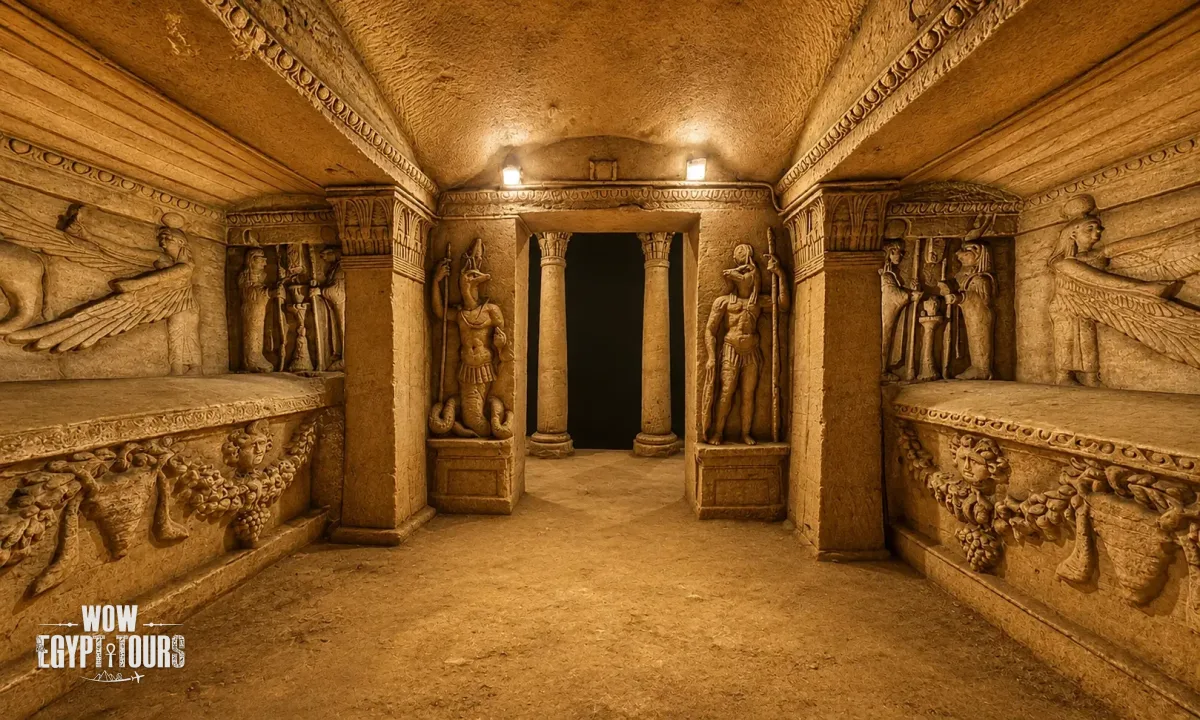
The most artistically extraordinary space in the entire Catacombs of Kom El Shoqafa is the vestibule of the main tomb, the formal entrance hall that precedes the three burial niches of the principal chamber and that is covered on its walls with the most remarkable syncretic relief carving programme in the entire ancient art record of Egypt. The two outer walls of the vestibule are carved with large-scale standing figures of Egyptian gods in the pharaonic relief style, but these Egyptian gods wear the composite iconography of the Greco-Roman syncretic tradition: Anubis, the Egyptian jackal-headed god of embalming, is shown wearing Roman military armor over his traditional Egyptian divine form, a figure so startlingly unexpected in its combination of warrior iconography and divine jackalism that it invariably produces a response of astonished delight in every visitor who encounters it for the first time. Thoth, the ibis-headed god of wisdom, is similarly shown in Roman military dress with the traditional Egyptian divine head. Serpents of the Egyptian protective tradition are combined with Greek Medusa-head gorgoneion shields in a decorative programme of extraordinary inventive freedom.
The Three Burial Niches And The Central Sarcophagus
The innermost space of the main tomb consists of three burial niches, or exedrae, carved into the rear and side walls of the burial chamber in the form of ancient Egyptian royal naos shrines with their characteristic cavetto cornices, uraeus friezes, and lotus column flanking elements, but each niche contains a sarcophagus carved in the Roman tradition with realistic portrait heads of the deceased on the lid and garland decoration on the sides. The combination of the Egyptian naos shrine form with the Roman portrait sarcophagus within each niche is another expression of the same syncretic principle that governs the entire decorative programme of the main tomb: the Egyptian architectural container expressing the cosmic and divine framework of the ancient Egyptian afterlife belief, and the Roman portrait container expressing the individual identity and the personal memorial tradition of the Greek and Roman worlds. The ceiling of the burial chamber is decorated with a large carved disc combining Egyptian solar and astronomical symbolism with Hellenistic decorative motifs, a cosmic ceiling programme that echoes the ancient Egyptian tradition of painted astronomical ceilings in royal tombs while using a vocabulary that is equally intelligible to a Hellenized viewer familiar with the Greco-Roman astronomical tradition.
The Lower Levels And The Corridor System
Below the main tomb level, the catacomb complex extends through two additional underground levels whose corridors and chambers are cut into the bedrock at progressively greater depths below the surface. The lower levels contain the largest concentration of loculi, the rectangular niches cut into the corridor walls for individual burials in sealed pottery or lead containers, that provide the evidence for the large-scale community use of the complex beyond the original private family tomb function. The lower levels also contain additional tomb chambers of varying size and decoration quality, reflecting the range of economic means of the Alexandrian families who purchased burial rights in the complex over its several centuries of use. The lower levels are partially flooded with groundwater that has accumulated since the ancient period, limiting visitor access but adding an atmospheric dimension of mystery and antiquity to the underground experience that is entirely appropriate for one of the most ancient and the most deeply buried monuments in the Alexandrian heritage landscape.
The Hall Of Caracalla
Discovered separately from but adjacent to the main catacomb complex, the Hall of Caracalla is a large underground chamber that contains the disarticulated skeletal remains of both humans and horses in a mixed deposit that has been traditionally associated with the massacre of Alexandrian young men by the Roman emperor Caracalla in 215 CE, when the emperor's anger at Alexandrian mockery reportedly led him to order the indiscriminate killing of a large number of young Alexandrian men. While the archaeological evidence for this specific identification is not conclusive, the Hall of Caracalla adds a dimension of historical drama and Roman-period political violence to the catacomb complex that reinforces the already vivid picture of Roman-period Alexandrian life and death that the catacombs as a whole provide.
Why Are The Catacombs Of Kom El Shoqafa Important?
The Catacombs of Kom El Shoqafa are important as the primary surviving monument of the Greco-Roman cultural synthesis that defined ancient Alexandrian civilization and that represents one of the most creative and most historically significant cultural interactions in the ancient Mediterranean world. As an archaeological site, the catacombs provide the most complete and the most visually eloquent surviving evidence for the hybrid cultural world of Roman-period Alexandria, a city where the three great ancient civilizations of the Mediterranean, Greek, Egyptian, and Roman, were not simply coexisting but actively combining in the religious, artistic, and funerary practices of the city's diverse population. The art programme of the main tomb, with its Anubis in Roman armor, its Greek architectural vocabulary framing Egyptian naos shrines, and its Roman portrait sarcophagi placed within pharaonic naos containers, is the single most concentrated and the single most visually immediate surviving expression of this cultural synthesis that is available to modern visitors anywhere in the Egyptian heritage landscape.
The catacombs are also important as the largest known funerary complex of the Greco-Roman period in Egypt, providing the most substantial physical evidence for the funerary customs, the burial practices, and the social organization of the Alexandrian urban community in the Roman provincial period. WOW Egypt Tours includes the Catacombs of Kom El Shoqafa as a standard destination on all Alexandria Day Tours and Alexandria Port Excursion programmes, recognizing them as the most archaeologically significant and the most artistically surprising ancient monument in the Alexandria heritage landscape.
What Are Some Interesting Facts About The Catacombs Of Kom El Shoqafa?
Anubis In Roman Armor
The most immediately startling and the most widely reproduced single image from the entire Catacombs of Kom El Shoqafa is the carved relief figure of Anubis, the ancient Egyptian jackal-headed god of embalming and the guardian of the dead, wearing the full dress uniform of a Roman legionary soldier, with a Roman military cuirass over his torso, a Roman military cloak, Roman military greaves on his legs, and the Roman legionary's standard shield and spear in his hands. This figure, combining the most canonical ancient Egyptian divine form, the jackal head on a human body in the traditional relief style of three-thousand-year-old Egyptian art, with the most immediately recognizable symbol of Roman imperial military power, is so unexpected, so inventive, and so perfectly realized as a single image that it has become the most frequently cited and the most frequently illustrated example of Alexandrian syncretic art in the entire scholarly literature of the subject. The Anubis in Roman armor encapsulates in a single carved image the entire cultural project of the Kom El Shoqafa catacombs: the creative and confident combination of two entirely different cultural and artistic traditions into something genuinely new and genuinely Alexandrian, a synthesis in which neither tradition dominates and both traditions are transformed by their encounter.
Found By Accident, A Century Of Discovery
The Catacombs of Kom El Shoqafa were completely unknown to modern scholarship until their accidental discovery in 1900, having been sealed and forgotten since the late antique period approximately fifteen hundred years earlier. The century of archaeological investigation, scholarly study, and visitor exploration that has followed the 1900 discovery has progressively revealed the full extent and the extraordinary richness of the underground complex, but has also demonstrated that the catacombs continue to yield new information and new understanding to every generation of scholars who approach them with fresh questions and new methodological tools. The partial flooding of the lower levels has meant that significant portions of the complex remain incompletely investigated, and the ongoing work of the Egyptian Ministry of Tourism and Antiquities and international archaeological teams at the site continues to refine and expand the understanding of this most surprising and most inventive of all the ancient monuments of Alexandria.
The Finest Surviving Example Of Alexandrian Syncretic Art
Art historians and archaeologists who specialize in the cultural history of Greco-Roman Egypt consistently describe the Catacombs of Kom El Shoqafa as the finest single surviving example of the Alexandrian syncretic art style, the distinctive visual tradition of Roman-period Alexandria in which Greek, Egyptian, and Roman artistic elements were combined not superficially but at a deep structural level to produce a genuinely original artistic idiom that belongs to no single ancient tradition and represents a creative achievement of the multicultural Alexandrian urban world at its most inventive. The quality of the carving in the principal tomb vestibule and the burial chamber is demonstrably of the highest ancient workshop standard, executed with technical precision and compositional assurance that matches the finest metropolitan Roman and Ptolemaic Egyptian carving of the same period. The conceptual audacity of the decorative programme, combining divine iconographies from three different religious traditions in a single coherent funerary theology, represents an intellectual achievement of the syncretic religious world of Roman Alexandria that deserves to be far better known in the general public imagination than it currently is.
What Is So Special About The Catacombs Of Kom El Shoqafa?
The Most Surprising Ancient Monument In Egypt
What makes the Catacombs of Kom El Shoqafa uniquely special among all the ancient monuments of Alexandria and among all the ancient monuments of Egypt is the quality of sheer surprise and intellectual delight they produce in every visitor who descends into their underground chambers with any knowledge of the ancient world and its artistic traditions. The visitor who enters the catacombs expecting a straightforward ancient Egyptian monument will be astonished by the Greek and Roman elements in the architectural programme. The visitor expecting a Greco-Roman monument will be equally astonished by the pharaonic Egyptian iconography of the divine figures and the naos shrine burial niches. And every visitor, regardless of their prior expectations, will be stopped in their tracks by the figure of Anubis in Roman military armor, the single most unexpected and the single most conceptually powerful image in the entire ancient art record of Egypt, which confronts the viewer with a visual synthesis so perfectly realized and so totally surprising that it demands a fundamental rethinking of everything one thought one knew about the boundaries between ancient civilizations and the creative possibilities of cultural encounter.
A Journey Into The Ancient Underground World
The Catacombs of Kom El Shoqafa are also uniquely special for the physical experience of their underground setting, which is unlike anything available at any other ancient monument in the Alexandria heritage landscape. The descent through the entry shaft, the progression through the underground corridors and chambers, the dimly lit rock-cut spaces and the ancient carved surfaces illuminated by modern lighting in the darkness of the limestone bedrock, the physical proximity to the ancient dead in their carved niches and sarcophagi, and the pervading atmosphere of subterranean antiquity that is impossible to replicate in any above-ground monument give the catacomb visit a quality of physical immersion in the ancient world that produces in most visitors a response of genuine awe at the directness of their encounter with an ancient funerary tradition that was buried and forgotten for fifteen centuries before modern scholarship revealed it to the contemporary world.
Catacombs Of Kom El Shoqafa Through The Ages: From Ancient Use To The Present
The Catacombs of Kom El Shoqafa were in active use as a burial facility from approximately the 1st or 2nd century CE through the 4th century CE, a period of approximately two to three hundred years during which successive generations of Alexandrian families used the complex for the interment of their dead and for the ritual funerary meals that accompanied burial in the Alexandrian Roman-period tradition. The Hall of Caracalla deposits, associated with the early 3rd century, place the complex in the context of the political violence and imperial reprisal that characterized the relationship between Alexandria and the Roman imperial court in the period of the military emperors. The Christianization of the Alexandrian population in the 4th century CE gradually ended the use of the complex as its pagan and polytheistic funerary traditions became incompatible with the new Christian burial practices that were replacing them throughout the city, and the catacombs were eventually sealed and abandoned as their final users and their descendants converted to the new religion and adopted its burial customs.
The long period of oblivion from the late antique period to 1900 was paradoxically the best possible outcome for the preservation of the catacombs' remarkable art programme, as the sealed underground environment protected the carved surfaces from the atmospheric deterioration, vandalism, and stone robbery that have damaged or destroyed comparable ancient monuments in the more accessible parts of the Alexandria heritage landscape. The systematic archaeological investigation following the 1900 discovery has been punctuated by ongoing conservation challenges including groundwater flooding of the lower levels and the need for continuous maintenance of the carved surfaces in the humid underground environment. Today the Catacombs of Kom El Shoqafa are one of the most visited ancient monuments in Alexandria, receiving tens of thousands of visitors annually from Egypt and from the international heritage tourism market, and continuing to reward the attention of every scholar and every visitor who takes the time to engage fully with the extraordinary artistic and cultural achievement they embody.
Catacombs Of Kom El Shoqafa UNESCO Recognition
The Catacombs of Kom El Shoqafa are recognized as part of the outstanding ancient heritage of Alexandria that is under consideration for UNESCO World Heritage designation, within the broader framework of the archaeological heritage of the ancient city. The catacombs were included in UNESCO's tentative list of Egyptian World Heritage Sites and are recognized internationally as one of the most significant and the most artistically extraordinary surviving monuments of the Greco-Roman cultural heritage of the ancient Mediterranean world. Their importance as the primary surviving monument of Alexandrian syncretic culture and as the largest known funerary complex of the Greco-Roman period in Egypt has been recognized by every major international scholarly institution and heritage organization engaged with the cultural heritage of ancient Alexandria and the broader Greco-Roman world.
Best Time To Visit The Catacombs Of Kom El Shoqafa
The Catacombs of Kom El Shoqafa are an entirely underground site maintained at a constant cool temperature throughout the year, making them one of the most seasonally flexible heritage destinations in Alexandria and one of the most pleasant sites to visit in the summer months when the outdoor monuments of the city are uncomfortably hot. The constant underground temperature of approximately 18 to 20 degrees Celsius makes the catacombs significantly cooler than the surface in summer and slightly warmer than the surface in winter, providing comfortable visiting conditions at any time of year. The best time in terms of visitor numbers is during the weekday mornings when the site is less crowded than on weekends and Egyptian public holidays. The morning hours also provide the best conditions for the entry shaft lighting, which admits natural light from the surface through the shaft windows in a particularly beautiful way in the mid-morning when the sun angle creates dramatic diagonal light beams in the descending spiral staircase. WOW Egypt Tours plans all Catacombs visits at the optimal time for the specific Alexandria day itinerary.
Catacombs Of Kom El Shoqafa Opening Hours
The Catacombs of Kom El Shoqafa are open every day of the week including public holidays. The site opens at 9:00 AM and closes at 5:00 PM from October through May, and from 9:00 AM to 6:00 PM from June through September. The site can become crowded during peak Egyptian tourism seasons (winter school holidays, spring, and summer weekends) when large groups of Egyptian students and family visitors are present; early morning arrival is strongly recommended to visit the principal chambers before the main flow of visitors arrives. The underground lighting system that illuminates the carved chambers and corridors is modern and maintained to a good standard, providing adequate visibility for the examination of the carved and painted surfaces throughout the main accessible levels of the complex.
Catacombs Of Kom El Shoqafa Entrance Fees
Adults: EGP 200
Students: EGP 100
The entrance fee covers access to all accessible levels of the Catacombs of Kom El Shoqafa including the entry shaft and spiral staircase, the rotunda, the triclinium, the main tomb vestibule and burial chamber with the syncretic relief carvings, and the Hall of Caracalla. Entrance fees to the Catacombs of Kom El Shoqafa are included in all Alexandria Day Tours and Alexandria Port Excursion programmes booked through WOW Egypt Tours.
How To Get To The Catacombs Of Kom El Shoqafa
The Catacombs of Kom El Shoqafa are located in the Karmouz district of southwestern Alexandria, approximately 3 to 4 kilometers from the Eastern Harbor waterfront and approximately 15 to 20 minutes by private vehicle from most central Alexandria hotels. The site is immediately adjacent to Pompey's Pillar and the ancient Serapeum hill, and both monuments are most conveniently visited together in a single visit to the Rhakotis hill area. From the Alexandria Port area, the catacombs are approximately 4 to 5 kilometers and are similarly most conveniently reached by private vehicle. The entrance to the catacombs is marked at street level by the modern visitor reception facility on the Karmouz hill surface, from which the descent begins. WOW Egypt Tours provides private air-conditioned transportation to the Catacombs of Kom El Shoqafa on all Alexandria Day Tours, Cairo and Alexandria Day Tours, and Alexandria Port Excursion programmes.
How Long To Spend At The Catacombs Of Kom El Shoqafa
Most visitors spend between 45 minutes and one hour at the Catacombs of Kom El Shoqafa, which is sufficient time for the complete descent through the entry shaft and spiral staircase, a thorough examination of the rotunda and the triclinium, a careful guided study of the syncretic relief carvings in the main tomb vestibule including the famous Anubis in Roman armor, a complete inspection of the three burial niches with their sarcophagi, and a visit to the Hall of Caracalla. Visitors with a particular interest in the art historical details of the syncretic carving programme, the architectural vocabulary of the chamber decoration, or the social history of Roman-period Alexandrian funerary customs may wish to allow up to one and a half hours. The catacombs are most naturally combined in an Alexandria day programme with an immediately adjacent visit to Pompey's Pillar on the same Rhakotis hill site, which adds minimal additional travel time and provides a complementary outdoor ancient monument experience to the underground catacomb visit.
Tips For Visiting The Catacombs Of Kom El Shoqafa
Descend as early as possible after opening to experience the principal chambers, particularly the main tomb vestibule with its extraordinary syncretic relief carvings, before the first large tour groups of the day arrive, as the carved surfaces are best appreciated in the relative quiet and the concentrated attention that is only possible before the underground space fills with multiple groups of visitors. Carry a small flashlight or use your smartphone light to supplement the site's overhead lighting when examining specific carved details on the vestibule walls, as the relief carvings are deeply carved and reveal their full detail most clearly in directional raking light that the overhead installation does not always provide. Ask your guide to explain the full iconographic programme of the main tomb vestibule and burial chamber before you enter the space, as the synthesis of Egyptian, Greek, and Roman elements in the decoration is most fully appreciated when the visitor enters already briefed on what to look for and why each element is significant. Pay particular attention to the Anubis figure in Roman military armor on the vestibule wall, to the figure of Sobek the crocodile god in Roman military dress on the opposite wall, and to the composite architectural decoration of the burial niche framing that combines Egyptian naos shrine elements with Greek column orders. A light warm layer is recommended for the underground visit even in summer, as the constant underground temperature of approximately 18 degrees is noticeably cooler than the summer surface. A licensed guide from WOW Egypt Tours with specific expertise in Greco-Roman Alexandrian art and culture is essential for the fullest appreciation of the catacombs.
What To Wear At The Catacombs Of Kom El Shoqafa
The underground setting of the Catacombs of Kom El Shoqafa and their constant cool temperature make the clothing requirements for this visit somewhat different from those for the outdoor monuments of Alexandria. A light warm layer is recommended even in summer, as the underground temperature of approximately 18 degrees Celsius is significantly cooler than the summer surface temperature and can feel quite cold to visitors arriving from the outdoor heat. In winter the underground temperature is slightly warmer than the cool surface, making the catacombs one of the more comfortable winter visiting environments in the Alexandria heritage landscape. Comfortable, flat-soled shoes with good grip are essential for the spiral staircase descent and ascent and for the uneven ancient stone floor surfaces of the underground chambers and corridors, which include worn steps, narrow passages, and occasional low headroom sections that require careful footing. High heels and sandals with poor ankle support are strongly discouraged as genuinely hazardous in the underground environment. Casual clothing covering the shoulders and knees is appropriate for the visit. The entrance to the catacombs can be slippery near the base of the descent if groundwater has accumulated on the stone floor, so sturdy footwear is particularly important.
Photography At The Catacombs Of Kom El Shoqafa
Photography at the Catacombs of Kom El Shoqafa is permitted throughout the accessible areas of the complex. The principal photographic challenge of the underground environment is the relatively low and non-directional overhead lighting that illuminates the carved chambers, which while adequate for visitor orientation is not ideal for close-up photography of the detailed relief carvings on the vestibule and burial chamber walls. Flash photography, while permitted in the Kom El Shoqafa catacombs unlike in some other Egyptian ancient monuments, can produce flat and glare-affected results on the carved limestone surfaces and is generally less effective than available-light photography with a camera or smartphone capable of good low-light performance. The most photographically spectacular subject in the entire complex is the full wall composition of the main tomb vestibule, showing the syncretic divine figures in their complete architectural setting, which rewards a wide-angle lens or the widest available camera setting to capture the full spatial context of the carved programme. The spiral staircase entry shaft is also a striking photography subject from both the top and the bottom, with the circular shaft and the winding staircase creating a dramatically geometric architectural composition. Individual close-up details of the Anubis in Roman armor and the other syncretic divine figures are the most internationally reproduced images from the catacombs and the most immediately compelling photographic subjects for visitors interested in documenting the extraordinary artistic achievement of the site.
Catacombs Of Kom El Shoqafa Tours
Alexandria Day Tour From Cairo Including Catacombs Of Kom El Shoqafa
This comprehensive full-day tour from Cairo covers the most significant cultural and heritage destinations in Alexandria, with the Catacombs of Kom El Shoqafa as the most archaeologically significant and the most visually surprising ancient monument of the complete programme.
What Is Covered
Private vehicle from Cairo hotel to Alexandria along the Desert Road (approximately 2 to 2.5 hours). Guided visit to the Catacombs of Kom El Shoqafa including the complete descent through the entry shaft, the rotunda, the triclinium, the main tomb vestibule with the syncretic relief carvings, the three burial niches, and the Hall of Caracalla. Guided visit to Pompey's Pillar on the adjacent Serapeum hill. Guided visit to the Citadel of Qaitbay. Optional: Bibliotheca Alexandrina. Return to Cairo by private vehicle arriving in the early evening.
Duration
Full day from Cairo, approximately 45 minutes to 1 hour at the Catacombs and proportionate time at each additional site, with approximately 2 to 2.5 hours driving each way.
Includes
Private air-conditioned vehicle from Cairo hotel, private licensed guide with expertise in Greco-Roman Alexandrian art and the syncretic heritage of ancient Alexandria, and entrance fees to all included sites.
Alexandria Day Tour: Complete Cultural Programme Including Catacombs Of Kom El Shoqafa
This full-day Alexandria city tour covers the complete range of Alexandria's most significant cultural and heritage attractions, with the Catacombs of Kom El Shoqafa as the most archaeologically significant and the most intellectually surprising monument of the entire programme.
What Is Covered
Guided visit to the Bibliotheca Alexandrina. Guided visit to the Catacombs of Kom El Shoqafa with complete guided explanation of the syncretic art programme. Pompey's Pillar on the adjacent Serapeum site. Roman Amphitheatre at Kom El Dikka. Citadel of Qaitbay. Abu El Abbas El Mursi Mosque. Optional: Greco-Roman Museum.
Duration
Full day from Alexandria hotel or cruise ship terminal, approximately 45 minutes to 1 hour at the Catacombs and proportionate time at each additional site.
Includes
Private air-conditioned transportation from hotel or port, private licensed guide with Greco-Roman Alexandrian heritage expertise, and entrance fees to all included sites.
Alexandria Port Excursion: Catacombs Of Kom El Shoqafa And City Highlights
For cruise ship passengers arriving at Alexandria Port, this shore excursion combines the Catacombs of Kom El Shoqafa with the most significant Alexandria heritage sites within the available port time. The catacombs are a standard stop on all Alexandria Port Excursion programmes as the most archaeologically unique ancient monument in the city.
What Is Covered
Private vehicle from Alexandria Port. Guided visit to the Catacombs of Kom El Shoqafa including the complete guided syncretic art programme explanation. Pompey's Pillar. Guided visit to the Citadel of Qaitbay. Optional: Bibliotheca Alexandrina. Return transfer to Alexandria Port in time for all ship departure requirements.
Duration
Full day or half day from Alexandria Port depending on ship schedule and port time availability.
Includes
Private air-conditioned vehicle from Alexandria Port, private licensed guide, entrance fees to all included sites, and guaranteed return transfer to the ship.
Combine The Catacombs Of Kom El Shoqafa With Your Egypt Tours Package
The Catacombs of Kom El Shoqafa are featured as a standard destination across the full range of WOW Egypt Tours travel products that include Alexandria. Browse the options below to find the Egypt experience that includes the Catacombs of Kom El Shoqafa.
Egypt Tour Packages: Multi-day guided Egypt tours organized by duration, including 2 Days Egypt Packages, 3 Days Egypt Packages, 4 Days Egypt Packages, 5 Days Egypt Packages, 6 Days Egypt Packages, 7 Days Egypt Packages, 8 Days Egypt Packages, 10 Days Egypt Packages, and longer itineraries. All packages that include Alexandria feature the Catacombs of Kom El Shoqafa as a standard component of the Alexandria programme. All packages include private air-conditioned transportation, private licensed guide, accommodations, entrance fees to all included sites, and private transfers throughout Egypt.
Egypt Travel Packages: Themed Egypt travel packages designed around specific travel styles and interests, including Egypt Honeymoon Travel Packages, Egypt Budget Travel Packages, Egypt Family Travel Packages, Egypt Luxury Travel Packages, Egypt Adventure Travel Packages, Egypt Cultural Travel Packages, and Egypt Christmas and New Year Travel Packages. The Catacombs of Kom El Shoqafa are particularly well suited to Cultural, Luxury, and Adventure themed packages for the unique underground heritage experience they offer. All packages include private transportation, licensed guide, accommodations, meals, and private transfers.
Egypt Nile Cruise Packages: Complete Egypt travel packages combining Cairo sightseeing with a fully guided Nile cruise. Alexandria and the Catacombs of Kom El Shoqafa can be added as an extension to any Egypt Nile Cruise Package for travelers wishing to combine the Nile Valley heritage experience with the Alexandrian Mediterranean and Greco-Roman heritage.
Nile River Cruises: All WOW Egypt Tours Nile cruise options. Alexandria and the Catacombs of Kom El Shoqafa are available as an extension from Cairo added to the beginning or end of any Nile River Cruise itinerary.
Cairo Tours: Day tours from Cairo covering the major attractions of the Egyptian capital and its environs. Cairo-based travelers can visit Alexandria and the Catacombs of Kom El Shoqafa as a full-day excursion from Cairo by private vehicle or train, combined with Pompey's Pillar, the Citadel of Qaitbay, and the Bibliotheca Alexandrina in a comprehensive day programme. All tours include private air-conditioned transportation, private licensed guide, entrance fees, and private transfers.
Alexandria Tours: Dedicated day tours based in Alexandria covering the complete range of the city's cultural and heritage attractions. The Catacombs of Kom El Shoqafa are featured as the most archaeologically significant ancient monument of the standard full-day Alexandria heritage tour, typically combined with Pompey's Pillar on the adjacent site and the Bibliotheca Alexandrina, Citadel of Qaitbay, and Abu El Abbas El Mursi Mosque in the complete Alexandria programme. All tours include private air-conditioned transportation, private licensed guide with Greco-Roman Alexandrian heritage expertise, entrance fees to all included sites, and private transfers.
Alexandria Port Excursions: Shore excursion programmes from Alexandria Port for Mediterranean cruise ship passengers, coordinated around each ship's port schedule with guaranteed return to the ship before departure. The Catacombs of Kom El Shoqafa are a standard stop on all Alexandria Port Excursion programmes, recognized as the most archaeologically unique and the most visually surprising ancient monument available within the standard Alexandria port call time. All excursions include private air-conditioned vehicle from the port, private licensed guide, entrance fees to all included sites, and guaranteed return transfer to the ship.
Nearby Attractions To The Catacombs Of Kom El Shoqafa
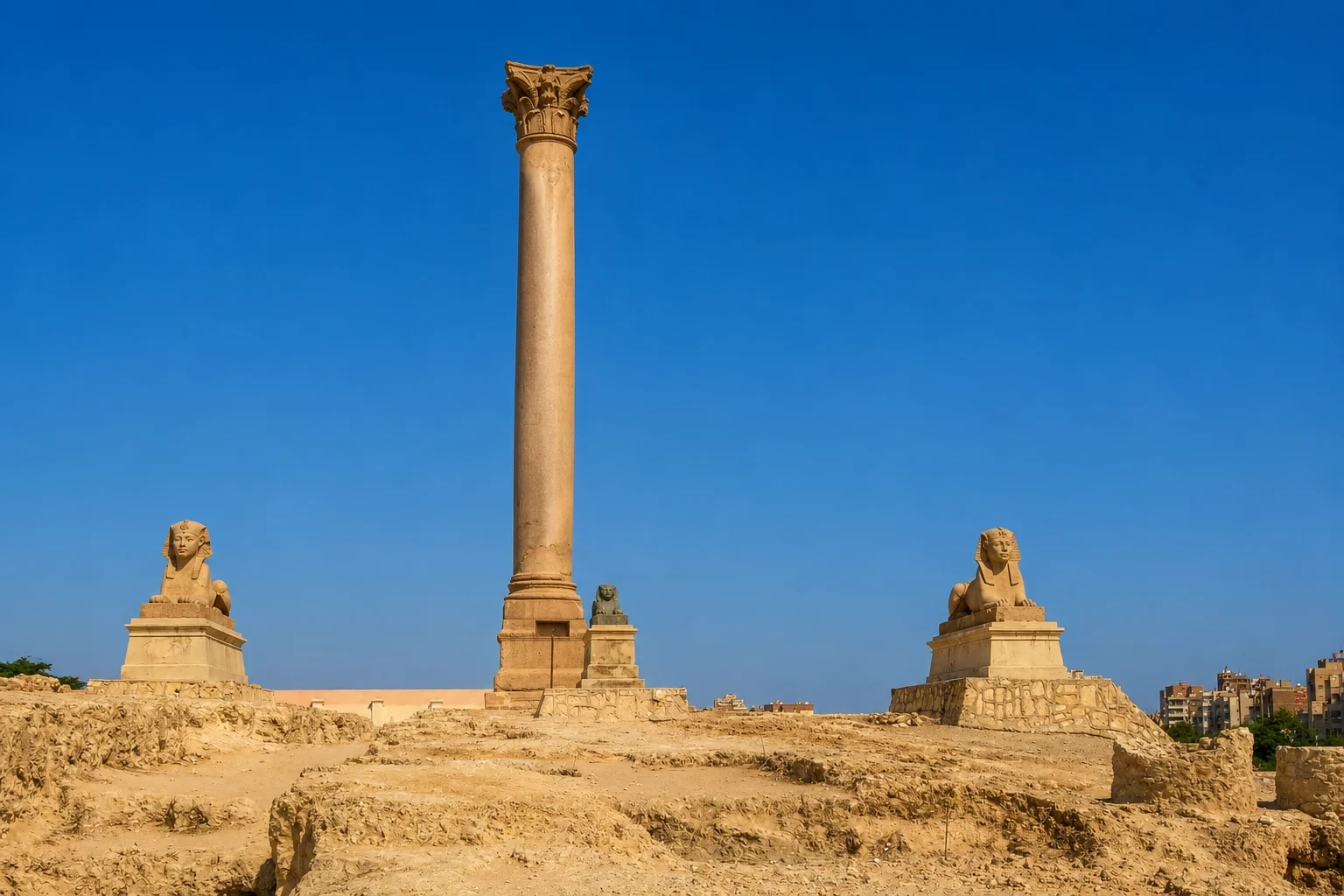
The most immediately proximate attraction to the Catacombs of Kom El Shoqafa is Pompey's Pillar, the largest ancient monolithic column in Egypt standing more than 26 meters above the ancient Serapeum hill immediately adjacent to the catacomb entrance, making it the most natural and the most time-efficient combination with the catacomb visit in any Alexandria day programme. The two sites together constitute the most complete surviving ancient heritage of the ancient Rhakotis hill neighborhood in southwestern Alexandria, the oldest settled quarter of the city before its foundation by Alexander the Great, and their combined visit provides the most comprehensive available experience of the ancient Egyptian and Greco-Roman heritage of the southwestern city in a single neighborhood stop.
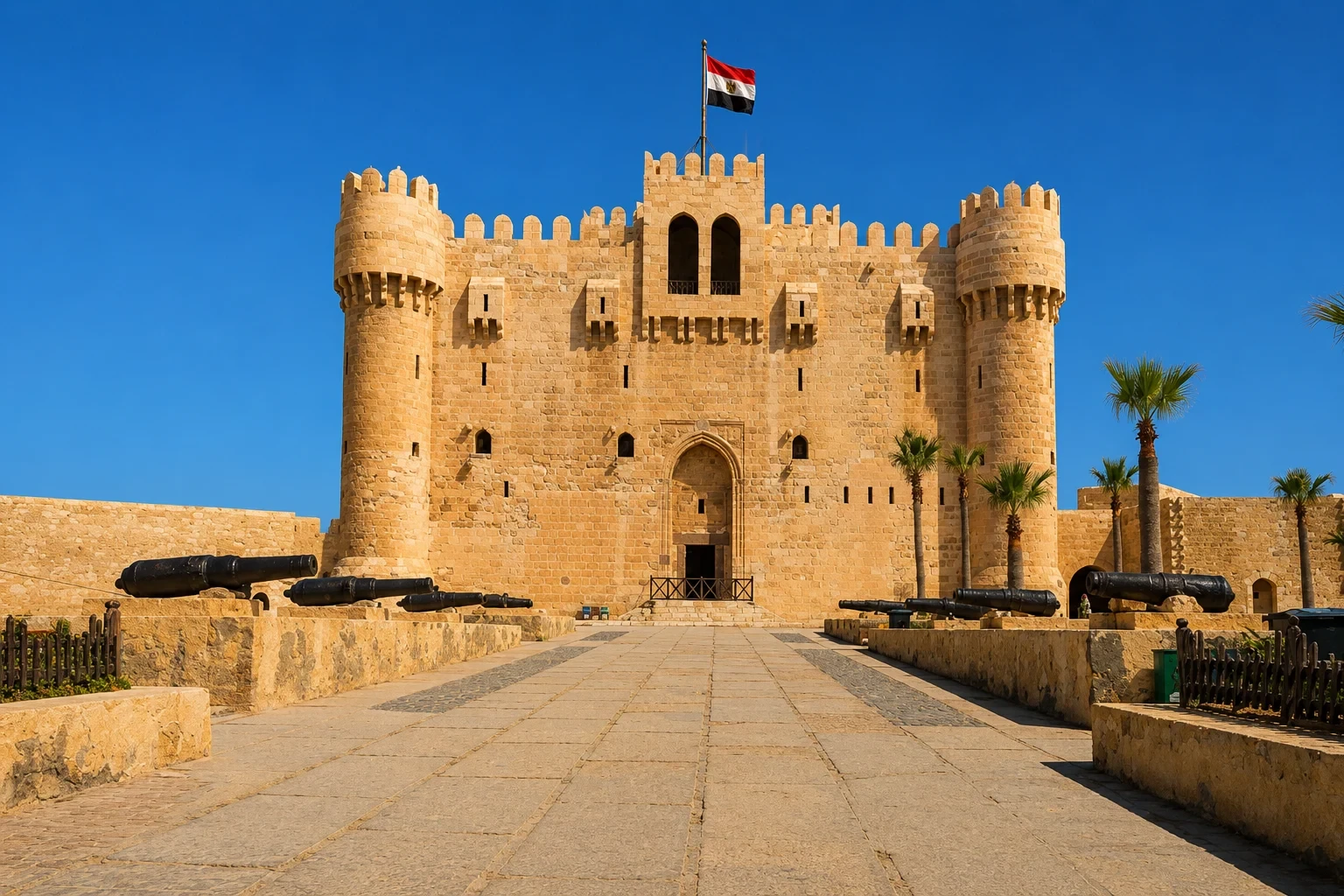
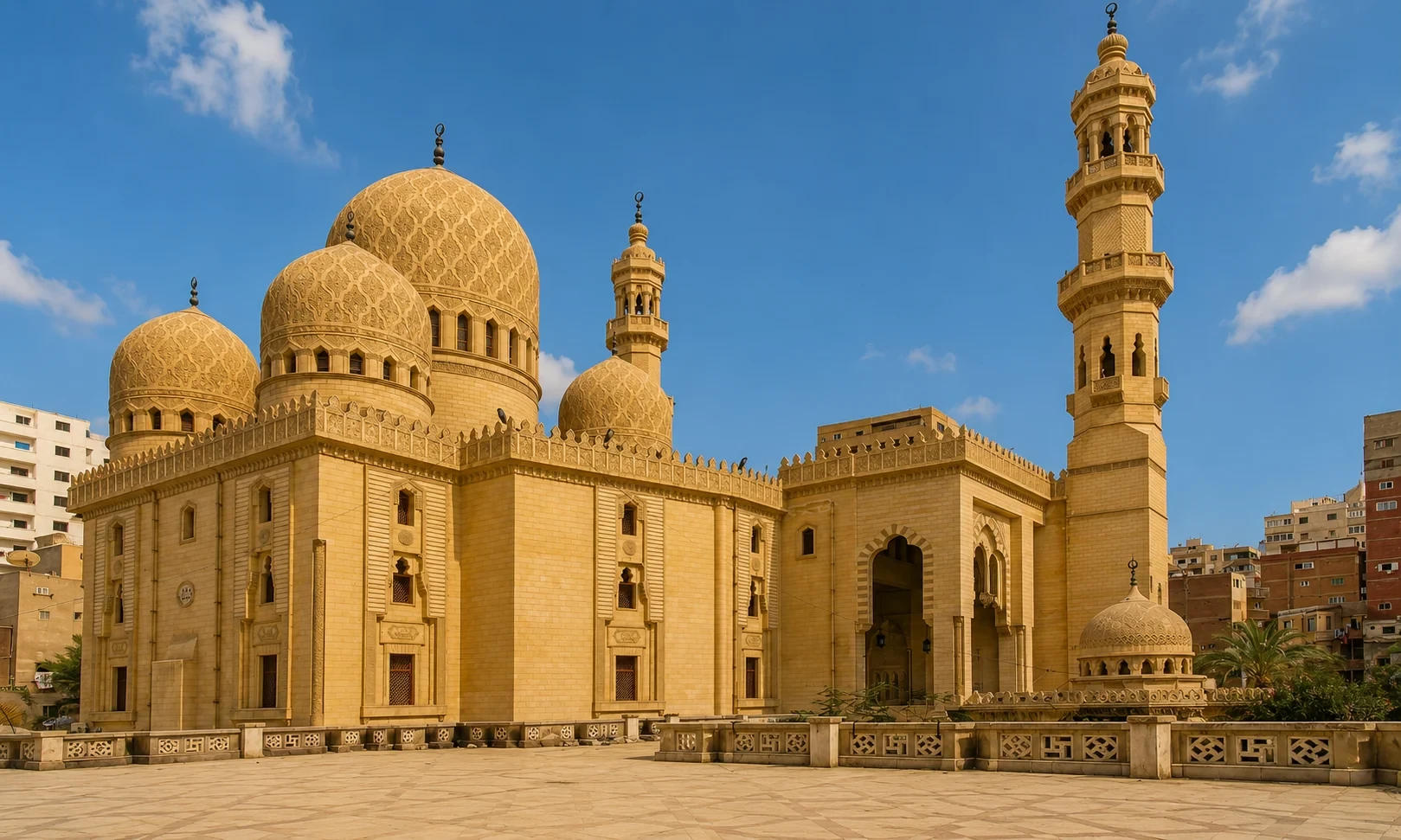
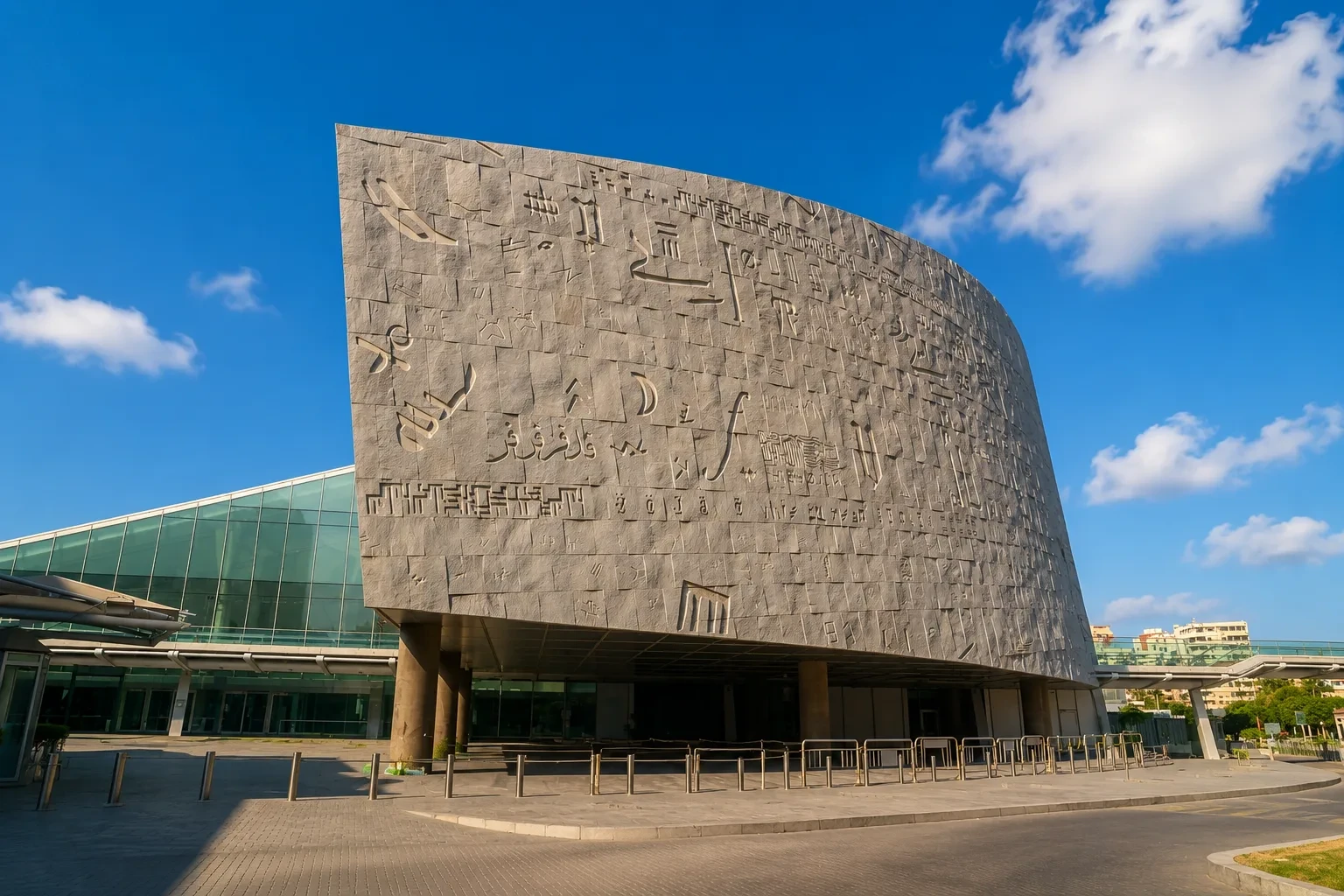
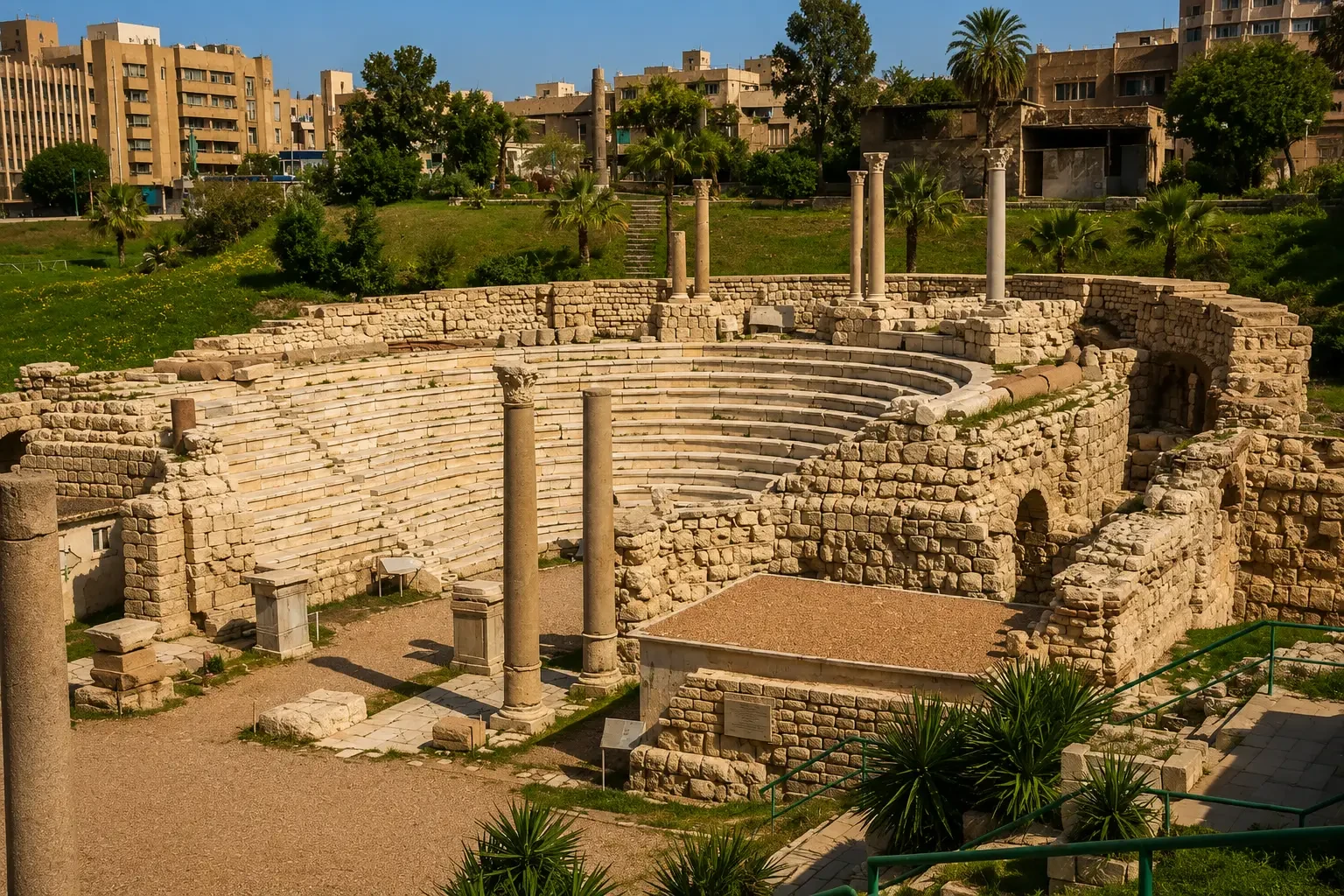
The Greco-Roman Museum, currently undergoing renovation and expected to reopen with an upgraded display of its extraordinary collection of Greco-Roman antiquities, is located in the central city approximately 3 to 4 kilometers from the catacombs and provides the most important collection context for the syncretic art tradition documented so brilliantly in the Kom El Shoqafa decoration. The Roman Amphitheatre at Kom El Dikka is approximately 3 to 4 kilometers northeast of the catacombs in the city center, providing another major Greco-Roman heritage encounter. The Bibliotheca Alexandrina and the Citadel of Qaitbay are approximately 4 to 5 kilometers to the north on the Eastern Harbor waterfront, providing the complementary modern cultural and medieval Islamic heritage experiences that complete the comprehensive Alexandria day programme. The Abu El Abbas El Mursi Mosque on the waterfront Corniche and the Lighthouse of Alexandria site and the broader Alexandria Pride of the Mediterranean cultural landscape are all accessible through the Alexandria Day Tours and Alexandria Port Excursions offered by WOW Egypt Tours.
Frequently Asked Questions About The Catacombs Of Kom El Shoqafa
What are the Catacombs of Kom El Shoqafa?
The Catacombs of Kom El Shoqafa are the largest and most architecturally significant ancient funerary complex of the Greco-Roman period in all of Egypt, a subterranean necropolis carved into the limestone bedrock beneath the Rhakotis hill in southwestern Alexandria from approximately the 1st or 2nd century CE through the 4th century CE. The complex is renowned above all for the extraordinary syncretic art programme of its main tomb vestibule and burial chamber, where ancient Egyptian, Greek, and Roman artistic traditions are combined in a synthesis of stunning originality, most dramatically expressed in the carved figure of Anubis, the ancient Egyptian jackal-headed god, wearing Roman military armor. The site was discovered accidentally in 1900 and is a standard destination on all Alexandria Tours and Alexandria Port Excursions offered by WOW Egypt Tours.
Why are they called Catacombs of Kom El Shoqafa?
The name combines the Latin term catacombs (for any underground burial complex) with the Arabic Kom El Shoqafa, meaning Mound of Shards, which refers to the large quantities of broken ancient pottery vessels found scattered on the hill above the underground complex, the remains of ritual funerary meals consumed and smashed by ancient mourners before descending to conduct their burial rites.
What is the syncretic art in the catacombs?
The syncretic art of the Catacombs of Kom El Shoqafa is a style of decoration that combines ancient Egyptian, Greek, and Roman artistic elements in a single coherent programme. The most celebrated example is Anubis, the Egyptian jackal-headed god of embalming, carved in the traditional Egyptian relief style but wearing Roman military armor. Similarly, the burial niches are framed by Egyptian naos shrine architecture but contain Roman-style portrait sarcophagi. This creative synthesis is considered the finest surviving example of Alexandrian syncretic culture in any surviving ancient monument.
How were the Catacombs of Kom El Shoqafa discovered?
The catacombs were discovered accidentally in 1900 when a donkey reportedly fell through the surface of the Rhakotis hill into the central shaft of the ancient catacomb system, revealing the entrance to the underground complex that had been sealed and unknown since the late antique period. The discovery attracted immediate archaeological attention and was followed by systematic investigation by the Egyptian Antiquities Service.
What is the triclinium in the catacombs?
The triclinium is a rock-cut dining room with three carved couches arranged around the walls in the standard Roman dining room layout, used by ancient Alexandrian families for the ritual funerary banquets that accompanied burial in the Roman-period Alexandrian tradition. It is one of the most socially revealing and most historically informative spaces in the complex, providing direct evidence for the funerary customs of wealthy Roman-period Alexandrians.
What is the Hall of Caracalla?
The Hall of Caracalla is a large underground chamber adjacent to the main catacomb complex containing disarticulated human and horse skeletal remains, traditionally associated with the massacre of Alexandrian young men by the Roman emperor Caracalla in 215 CE. The identification is traditional rather than archaeologically confirmed, but the chamber adds a dimension of Roman-period historical drama to the catacomb complex.
What are the opening hours of the Catacombs of Kom El Shoqafa?
The catacombs are open daily from 9:00 AM to 5:00 PM (October to May) and 9:00 AM to 6:00 PM (June to September).
How much does it cost to enter the Catacombs of Kom El Shoqafa?
The entrance fee is EGP 200 for adults and EGP 100 for students, covering access to all accessible levels of the complex. Entrance fees are included in all Alexandria Day Tours and Alexandria Port Excursion programmes booked through WOW Egypt Tours.
How long does it take to visit the Catacombs of Kom El Shoqafa?
Most visitors spend 45 minutes to 1 hour for a complete guided visit covering all accessible areas including the entry shaft, rotunda, triclinium, main tomb vestibule and burial chamber, and Hall of Caracalla.
Is it cold inside the catacombs?
The underground temperature is constant at approximately 18 to 20 degrees Celsius throughout the year, which is significantly cooler than the summer surface temperature. A light warm layer is recommended even in summer. In winter the underground is slightly warmer than the cool surface.
What shoes should I wear to the catacombs?
Flat-soled shoes with good grip are essential for the spiral staircase descent and ascent and for the uneven ancient stone floor surfaces of the underground chambers and corridors. High heels and sandals with poor ankle support are strongly discouraged as genuinely hazardous in the underground environment.
How deep underground are the catacombs?
The catacombs extend through three underground levels descending approximately 30 meters below the surface of the Rhakotis hill. The main tomb complex is on the first and second levels, with the lower levels partially flooded with groundwater that limits visitor access.
Is a guide necessary at the Catacombs of Kom El Shoqafa?
A guide with expertise in Greco-Roman Alexandrian art and the syncretic cultural tradition of Roman-period Alexandria is strongly recommended, as the identification and explanation of the Egyptian, Greek, and Roman elements in the complex decorative programme requires expert knowledge to be fully appreciated. WOW Egypt Tours provides licensed guides with specialist knowledge of Greco-Roman Alexandria on all Alexandria Day Tours.
What other Alexandria attractions are near the catacombs?
Pompey's Pillar is immediately adjacent to the catacomb entrance on the same Rhakotis hill site and is always combined with the catacomb visit. The Greco-Roman Museum, the Roman Amphitheatre, the Bibliotheca Alexandrina, and the Citadel of Qaitbay are all within the standard Alexandria day tour programme.
Can children visit the Catacombs of Kom El Shoqafa?
Yes, children can visit the catacombs, but parents should be aware that the spiral staircase descent and the underground corridors require careful adult supervision of younger children, and that some children may find the underground funerary environment, with its sarcophagi and burial niches, emotionally challenging. The darkness and the confined underground spaces may also be disconcerting for children who are sensitive to enclosed environments. For most children of school age and above, the catacombs are a fascinating and educational experience. WOW Egypt Tours designs family-friendly Alexandria itineraries that prepare children appropriately for the underground visit.
How do I book a Catacombs of Kom El Shoqafa tour with WOW Egypt Tours?
You can book any Alexandria Day Tour, Cairo and Alexandria Day Tour, Alexandria Port Excursion, Egypt Tours Package, or Egypt Travel Package that includes the Catacombs of Kom El Shoqafa directly through WOW Egypt Tours. Our team of travel specialists will arrange everything from private transportation and licensed guides to entrance fees and all the logistics of the complete Alexandria cultural experience, ensuring a seamless and unforgettable encounter with the most archaeologically extraordinary and the most artistically surprising ancient monument in the heritage landscape of the city of Alexander the Great.