
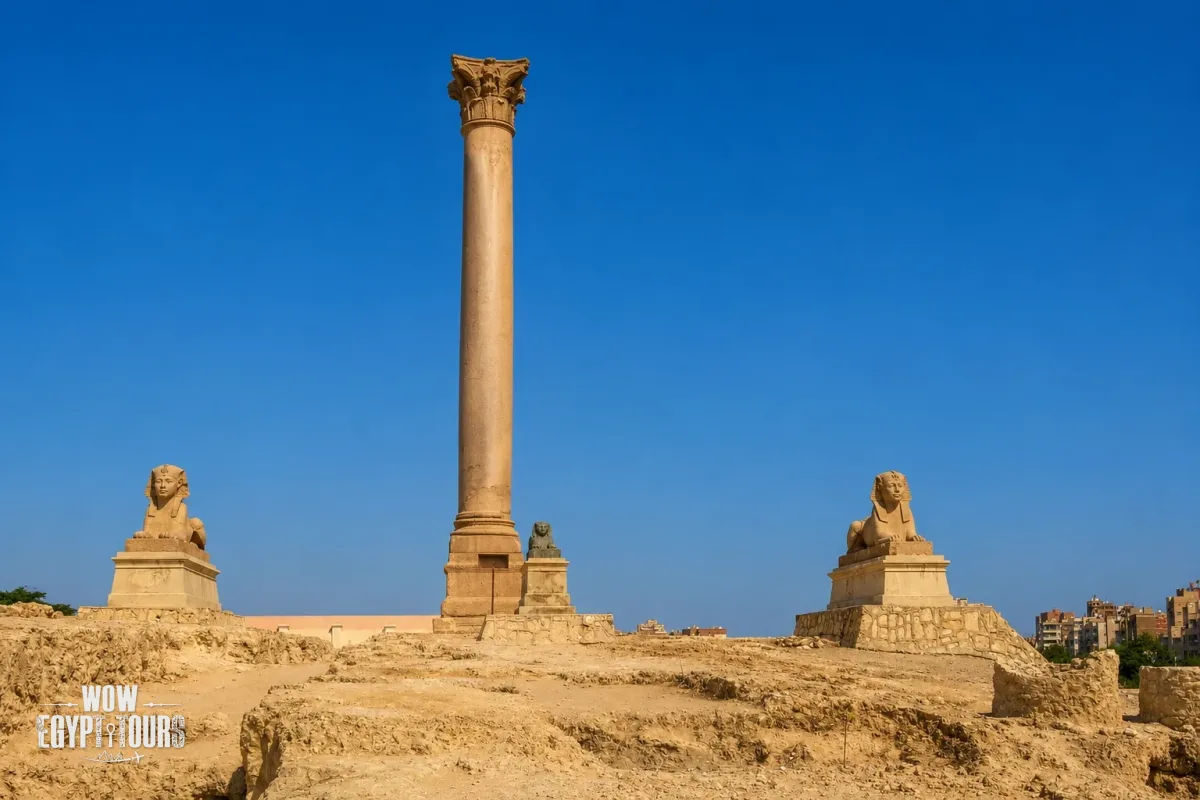

Pompey's Pillar, also known as the Serapeum of Alexandria, is the most imposing ancient monument standing above ground in the city of Alexander the Great, a single monolithic column of polished red Aswan granite rising more than 26 meters into the Mediterranean sky above the ancient Rhakotis hill in southwestern Alexandria, the largest ancient monolithic column ever erected outside Rome and the most immediately dramatic surviving ancient architectural element in the entire heritage landscape of the Egyptian Mediterranean coast. The Serapeum of Alexandria, the sacred precinct of the god Serapis that once surrounded the column with one of the most magnificent temple complexes in the ancient world, was the religious heart of Ptolemaic and Roman Alexandria, a sanctuary of such splendor, such intellectual prestige, and such religious significance that it rivaled the great temples of Athens, Rome, and Ephesus in the estimation of the ancient world and served as the final refuge of the ancient Alexandrian pagan tradition before its violent suppression by the Christian community in 391 CE. This extraordinary landmark is a featured attraction on Alexandria Day Tours, Cairo and Alexandria Day Tours, and Alexandria Port Excursions, all of which WOW Egypt Tours proudly offers to travelers from around the world as part of Egypt Tours Packages and Egypt Travel Packages that include the magnificent heritage of Alexandria.
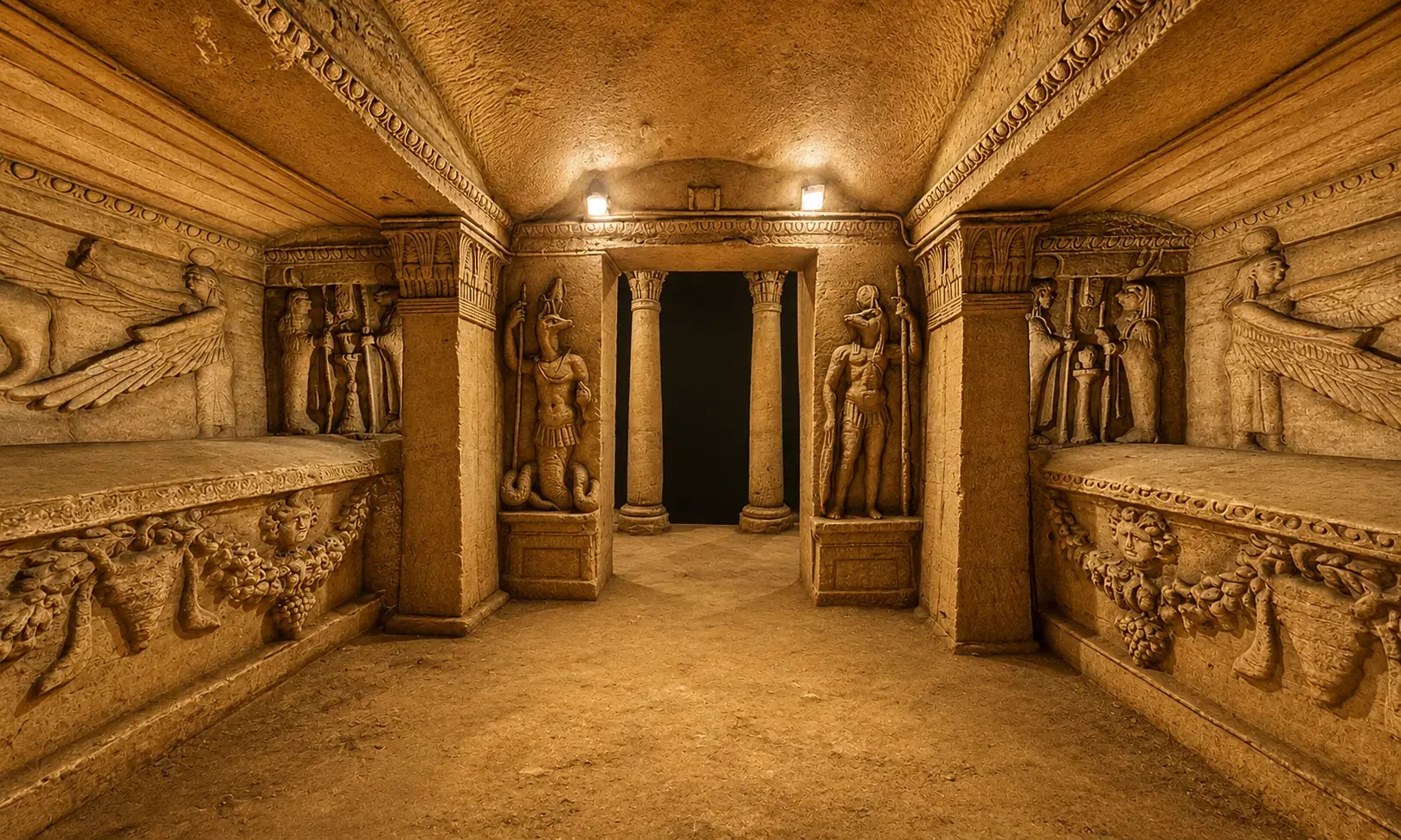
Pompey's Pillar and the Serapeum of Alexandria occupy a site of extraordinary historical and religious significance on the ancient Rhakotis hill, the pre-Alexandrian Egyptian settlement that became the religious quarter of the Ptolemaic city and the neighborhood where the ancient Egyptian population of Alexandria lived and worshipped in their own traditions while the Greek community occupied the northern and eastern quarters of the city. The site encompasses not only the great standing column itself but also the substantial ruins of the Serapeum temple complex, the underground galleries of the Apis bull cult that lie beneath the hill, the two pink granite sphinxes that flank the column's base, and the immediately adjacent site of the Catacombs of Kom El Shoqafa, making the Rhakotis hill visit the most concentrated and the most chronologically comprehensive ancient heritage experience available in the southern districts of Alexandria. Pompey's Pillar is most naturally and most efficiently visited in combination with the Catacombs of Kom El Shoqafa as a single site visit to the Rhakotis area, and the two monuments together provide the most complete single-neighborhood encounter with ancient Alexandria's religious and funerary heritage available to visitors in the modern city. WOW Egypt Tours includes both monuments as standard stops on all comprehensive Alexandria heritage programmes.

Who Built Pompey's Pillar And The Serapeum Of Alexandria?
The Serapeum of Alexandria as a major temple complex was founded by Ptolemy III Euergetes in the 3rd century BCE, approximately around 247 BCE, on the site of an earlier sacred precinct on the Rhakotis hill that had been dedicated to the syncretic deity Serapis, a divine figure created by Ptolemy I Soter in the early years of the Ptolemaic dynasty as the supreme shared god of the new Greco-Egyptian cultural world of Alexandria. The Serapeum complex was subsequently extended, enriched, and embellished by successive Ptolemaic rulers and Roman emperors over a period of approximately six centuries, becoming by the 1st and 2nd centuries CE one of the most magnificent and most extensively decorated religious complexes in the ancient Mediterranean world, with a great temple of Serapis at its center, a subsidiary library attached to the temple precinct, extensive colonnaded courtyards and exedrae, and a collection of ancient artworks and sacred objects that made the Serapeum as much a cultural institution as a religious one.
The great column that is now the most conspicuous surviving element of the Serapeum complex was erected not in the Ptolemaic period but in the Roman period, specifically in approximately 297 CE during the reign of the emperor Diocletian. The column was commissioned by Pompejus, the Prefect of Egypt under Diocletian, to honor Emperor Diocletian after his successful suppression of the revolt of the usurper Domitianus in Alexandria and his subsequent bestowal of grain rations on the Alexandrian population from his personal supplies during a period of food shortage, an act of imperial generosity that the column's dedicatory inscription, still visible on the base, commemorates in formal Latin. The column is therefore a monument of Roman imperial propaganda and administrative gratitude rather than a religious monument in the strict sense, though its erection within the sacred precinct of the Serapeum gives it an inseparably religious context and setting.
Who Was The God Serapis?
Serapis was one of the most remarkable and the most historically significant divine creations of the ancient world, a synthetic deity invented by Ptolemy I Soter of Egypt around 300 BCE to serve as the shared supreme god of the new Greco-Egyptian cultural world of Ptolemaic Alexandria, a divine figure who could be worshipped by both the Greek-speaking immigrants who had settled in Alexandria after Alexander's conquest and the ancient Egyptian population of the Nile Valley without either community having to abandon its own deepest religious traditions. The creation of Serapis was an act of deliberate religious policy rather than the organic development of a traditional cult, a conscious decision by the Ptolemaic state to engineer a divine figure who would bridge the cultural divide between the Greek and Egyptian communities of the new multicultural city and provide a shared focus of royal religious patronage that could serve as the theological foundation of the Ptolemaic imperial project.
Serapis combined elements of the two most important divine figures in the Ptolemaic religious landscape: Osiris-Apis, the sacred bull of Memphis and the Egyptian god of the underworld and resurrection, and Zeus-Jupiter-Pluto, the supreme ruler of the Greek divine hierarchy in his aspect as a god of the underworld and the afterlife. The iconography of Serapis, as developed in the canonical statue tradition of the Alexandrian school, showed him as a bearded, mature male figure of majestic presence in the fully naturalistic Hellenistic sculptural style, wearing the modius or grain basket on his head as a symbol of his agricultural and chthonic fertility associations, with the three-headed dog Cerberus at his side as a reference to his underworld and Pluto associations. This iconography, entirely Greek in its artistic style and entirely syncretic in its symbolic content, was so successful as a universal divine image that the cult of Serapis spread from Alexandria throughout the Hellenistic and Roman Mediterranean world, becoming one of the most widely worshipped of all the mystery cults of the Greco-Roman world and establishing Alexandrian religious influence on the broadest scale throughout the ancient Mediterranean.
Pompey's Pillar Location In Alexandria
Pompey's Pillar stands on the ancient Rhakotis hill in the Karmouz district of southwestern Alexandria, approximately 3 to 4 kilometers south of the Eastern Harbor waterfront and the Bibliotheca Alexandrina, on the same hill that contains the immediately adjacent Catacombs of Kom El Shoqafa entrance approximately 100 meters to the southeast of the column base. The Rhakotis hill, the highest point in the ancient topography of southwestern Alexandria, was chosen by the Ptolemaic rulers as the site of the Serapeum precisely because its elevated position made the great temple of Serapis visible from across the city and from the approaching sea, giving the cult center of the supreme Alexandrian god the most commanding and the most publicly visible situation in the urban landscape. The modern visitor reaches the site by private vehicle from the Alexandria city center in approximately 15 to 20 minutes from most central Alexandria hotels or from the Eastern Harbor waterfront area, entering through a modern visitor reception facility at street level on the Karmouz hill. WOW Egypt Tours provides private air-conditioned transportation to Pompey's Pillar and the Serapeum site on all Alexandria Day Tours, Cairo and Alexandria Day Tours, and Alexandria Port Excursion programmes.
Pompey's Pillar Fun Facts
Pompey's Pillar is the largest ancient monolithic column ever erected outside the city of Rome, a single shaft of polished red Aswan granite measuring approximately 20.46 meters in height with a circumference of approximately 9 meters at the base, mounted on a base of approximately 2.71 meters and topped by a Corinthian capital of approximately 2.87 meters, giving the complete structure a total height of approximately 26.85 meters from the base of the pedestal to the top of the capital. The column was quarried as a single piece from the granite outcrops of Aswan, transported approximately 900 kilometers down the Nile to Alexandria, and erected on the Rhakotis hill in a single piece without joints or seams, a feat of ancient engineering logistics and skill that gives the column its primary claim to architectural distinction as the most impressive example of ancient monolithic column construction in the world outside the capital of the Roman Empire.
The name Pompey's Pillar is a complete misnomer that has nothing whatsoever to do with the Roman general Pompey the Great, who was indeed murdered in Egypt in 48 BCE after his defeat by Julius Caesar at the Battle of Pharsalus, but whose tomb is not and was never associated with this column. The erroneous association of the column with Pompey was made by medieval European travelers who visited Alexandria and, seeing the single great column standing above the ruins of the ancient city, assumed it must be associated with the most famous Roman to have died in Egypt. The name Pompey's Pillar appears in European travel literature from at least the 12th century CE and has persisted to the present day in international tourism usage despite the complete lack of any historical connection between the column and the Roman general, and despite the fact that the column's actual dedicatory inscription on the base, clearly legible in Latin, identifies it as an honor to the emperor Diocletian erected by the Prefect Pompejus in approximately 297 CE.
The subsidiary library of the Serapeum, sometimes called the Daughter Library of the great Library of Alexandria, was housed within the Serapeum precinct and was associated with the great Library by ancient scholars who regarded the two institutions as part of a single Alexandrian scholarly infrastructure. The destruction of the Serapeum complex in 391 CE by the Christian community under Bishop Theophilus therefore also involved the destruction of this subsidiary library, adding another dimension to the cultural catastrophe of the Serapeum's end and connecting the site of Pompey's Pillar directly to the most famous act of ancient intellectual loss in the history of the Mediterranean world.
Why Is It Called Pompey's Pillar?
The name Pompey's Pillar is one of the most celebrated misnomers in the history of European travel in Egypt, applied to the column by medieval European visitors and travelers who erroneously associated the single great column standing above the ruins of the ancient Serapeum with the Roman general and statesman Gnaeus Pompeius Magnus, known in English as Pompey the Great, who was assassinated in Egypt in 48 BCE when he arrived seeking refuge after his defeat by Julius Caesar at the Battle of Pharsalus in Greece. Pompey was murdered on the beach near Pelusium in the eastern Delta as he stepped ashore from his boat, killed by Egyptian officials of the court of Ptolemy XIII who hoped to curry favor with the victorious Caesar by removing his defeated rival, and his head was presented to Caesar on his arrival in Alexandria in a gesture that reportedly caused the Roman general to weep rather than to rejoice. The column on the Rhakotis hill has no historical connection to any of these events.
The persistent survival of the name Pompey's Pillar in international usage for more than eight centuries despite the complete historical error it represents is a striking illustration of the power of early misnomers to shape the cultural geography of heritage sites, and the column is now so universally known by this incorrect name in English that the accurate name, the Column of Diocletian or the Serapeum Column, is known primarily to scholars rather than to the general public. The actual dedication of the column is clearly stated in the Latin inscription carved on its base: the column was erected by Publius, the Prefect of Egypt under the emperor Diocletian, to honor the emperor's suppression of the Alexandrian revolt and his subsequent gift of grain to the Alexandrian population, making it a monument of Roman imperial administrative gratitude rather than a memorial to any specific individual's death at the site.
Pompey's Pillar And Serapeum Of Alexandria History
The history of the Serapeum hill and its religious complex begins in the early Ptolemaic period with the foundation of the Serapis cult by Ptolemy I around 300 BCE and the establishment of the first Serapeum temple on the Rhakotis hill, the pre-existing Egyptian sacred hill that became the center of the new syncretic god's worship in the new Ptolemaic capital. The precise date of the first temple construction is debated, but the major building campaign of Ptolemy III Euergetes around 247 BCE is the best-documented early phase of the Serapeum complex, creating the substantial temple precinct that formed the basis for all subsequent expansion. The Serapeum complex grew throughout the Ptolemaic period as successive rulers added temples, colonnades, statuary, and sacred objects to the precinct, and the attachment of a subsidiary library to the complex under the Ptolemies made the Serapeum not only a religious but an intellectual center of the highest order.
The Roman period saw the Serapeum's greatest physical development, with the major emperors of the 1st and 2nd centuries CE contributing substantially to the expansion and embellishment of the complex, and the erection of the great column by the Prefect Pompejus around 297 CE marking the final phase of major architectural investment in the site. The Serapeum was at this period one of the most visited and most celebrated religious sites in the entire Roman Empire, attracting pilgrims, scholars, and tourists from across the Mediterranean world to its famous oracle, its magnificent temple, and its subsidiary library. The violent end of the Serapeum in 391 CE, when the Christian community of Alexandria under the leadership of Bishop Theophilus used an imperial edict against pagan temples as the justification for a physical attack on the Serapeum precinct that resulted in the destruction of the temple buildings, the burning of the library, and the smashing of the great cult statue of Serapis, was one of the most symbolically charged events in the history of ancient religion, marking the effective end of the ancient Alexandrian pagan tradition and the triumph of Christianity in the most cosmopolitan city of the late antique Mediterranean. After the destruction of the temple complex, the hill site was abandoned or converted to other uses, and the ruins of the great Serapeum gradually disappeared beneath the accumulated debris of the centuries until only the great column remained standing as a solitary marker of the former glory of the ancient precinct.
The Story Of The Serapeum's Destruction In 391 CE
The destruction of the Serapeum of Alexandria in 391 CE is one of the most historically dramatic and the most culturally consequential events in the entire history of the ancient Mediterranean world, a moment that symbolizes with particular force and clarity the transition from the ancient pagan world to the Christian late antique world and the violence and the cultural loss that accompanied that transition in many of the great cities of the Roman Empire. The events of 391 CE unfolded in the context of the increasingly aggressive anti-pagan policies of the Christian emperor Theodosius I, whose edicts against pagan temples and pagan worship provided the legal and ideological framework within which the bishop of Alexandria and his followers operated. Bishop Theophilus of Alexandria, one of the most combative and most politically aggressive bishops of the late antique church, used Theodosius's anti-pagan legislation as an occasion to move against the most significant surviving center of pagan religious life in his city, the great Serapeum on the Rhakotis hill whose continued operation as a major cult center, oracle, and cultural institution was an affront to his vision of a fully Christianized Alexandria.
According to the ancient sources, the assault on the Serapeum followed a period of sectarian conflict between the pagan and Christian communities of Alexandria in which a group of pagans reportedly barricaded themselves within the Serapeum precinct and killed or wounded a number of Christians before being overcome by the Christian crowd and the imperial authorities. The victorious Christian community, with the tacit or explicit support of the imperial government, proceeded to destroy the interior of the great temple, smashing the enormous chryselephantine cult statue of Serapis, reportedly one of the great masterworks of Hellenistic sculpture, burning the library and its contents, and systematically demolishing the temple buildings and their decorations. The destruction of the Serapeum in 391 CE was not simply the end of a religious institution; it was the end of the ancient Alexandrian world, the destruction of the last great institutional expression of the syncretic Greco-Egyptian pagan tradition that had defined the cultural character of Alexandria since its foundation more than six centuries earlier. The single column that stands today on the Rhakotis hill is the most poignant surviving physical reminder of the magnitude of what was lost in 391 CE, and its solitary presence above the ruins of the once-magnificent precinct gives the Pompey's Pillar site a quality of melancholy historical grandeur that is entirely appropriate to its role as the sole standing witness to one of the most significant cultural destructions of the ancient world.
Pompey's Pillar Architecture And Key Features
The Column Itself
The column of Pompey's Pillar is a monolith of polished red Aswan granite, quarried as a single piece from the granite outcrops of the First Cataract region near Aswan and transported down the Nile to Alexandria for erection on the Rhakotis hill. The column shaft measures approximately 20.46 meters in height and approximately 2.71 meters in diameter at the base, slightly tapering toward the top in the classical entasis of the ancient column-making tradition, and is polished to a smooth finish that was originally much brighter and more reflective than the somewhat weathered surface visible today. The column is mounted on a base of ancient limestone blocks of ancient recycled material, and it is topped by a pink granite Corinthian capital of substantial size whose acanthus leaf and volute decoration identifies the column order as Corinthian, the most elaborate of the three main ancient Greek architectural orders and the one most commonly used in monuments of the Roman imperial period. The complete structure, from the base to the top of the capital, reaches approximately 26.85 meters, giving it a visual dominance over the surrounding landscape and an immediate physical impact that is the primary experience of the Pompey's Pillar visit.
The Dedicatory Inscription
The base of the column preserves the Latin dedicatory inscription that identifies the column's patron and its purpose, making it the primary documentary source for the actual history of the monument as opposed to the legendary history imposed on it by the erroneous medieval designation as Pompey's Pillar. The inscription, carved in formal Roman capital letters on one face of the base pedestal, reads in Latin to the effect that the Prefect Publius (whose full name is given in the inscription) erected this column in honor of the most just emperor, the victorious Diocletian, after his victory over the Alexandrian revolt. The inscription is the decisive evidence that the column has nothing to do with Pompey the Great and everything to do with the Roman administrative history of Egypt under Diocletian in the late 3rd century CE, and it provides the only precise historical document for any of the visible ancient structures currently standing on the Rhakotis hill.
The Sphinxes And Ancient Sculptural Fragments
At the base of Pompey's Pillar, two pink granite sphinxes of ancient Egyptian tradition lie on low pedestals on either side of the column base, their calm leonine forms and the serene faces of the human head providing an immediate visual reference to the ancient Egyptian religious tradition that preceded the Ptolemaic Serapeum on the Rhakotis hill and that continued to inform the religious landscape of the site throughout the Ptolemaic and Roman periods. The sphinxes are not of the same period as the column itself but represent earlier ancient Egyptian sculptural tradition, either from the pre-Ptolemaic Egyptian precinct on the Rhakotis hill or from the early Ptolemaic development of the site, and their presence at the base of the Roman-period column creates one of the most immediately vivid examples of the multi-period stratification of the Alexandrian ancient heritage available at any accessible surface site in the city. Additional ancient sculptural fragments and architectural elements are scattered across the excavated areas of the Serapeum hill site, including column bases, capitals, and wall fragments from the various phases of the temple complex, providing physical evidence for the magnificent precinct that once surrounded the great column.
The Serapeum Underground Galleries
Beneath the surface of the Rhakotis hill, accessible through underground galleries cut into the limestone bedrock, are the subterranean sacred spaces of the ancient Serapeum complex that were associated with the Apis bull cult and with the mystery religion of Serapis, including niches cut into the gallery walls for the storage of sacred Apis bull burial containers and larger chambers associated with the ritual activities of the Serapeum underground precinct. These galleries, which predate the Ptolemaic Serapeum and may go back to the pre-Alexandrian Egyptian sacred precinct on the Rhakotis hill, provide the most direct physical evidence for the depth and the antiquity of the religious traditions of the hill site, demonstrating that the sacred character of the Rhakotis hill was recognized and exploited for religious purposes long before the Ptolemaic invention of Serapis and the construction of the great temple complex above.
The Panoramic View From The Hill
The elevated position of the Rhakotis hill on which Pompey's Pillar stands provides visitors with one of the finest panoramic views of the Alexandria cityscape available from any accessible point in the southwestern districts of the city, encompassing the modern urban landscape of Alexandria in all directions with the Mediterranean visible in the distance to the north beyond the rooftops and minarets of the modern city. The view from the hill, while not as dramatically maritime as the view from the Citadel of Qaitbay or as panoramically expansive as the view from the top of the Bibliotheca Alexandrina, provides an important perspective on the urban geography of ancient and modern Alexandria and on the relationship between the Rhakotis hill and the surrounding city districts that gives the elevated position of the Serapeum its historical logic as the most commanding public site in the ancient southwestern city.
Why Is Pompey's Pillar Important?
Pompey's Pillar is important for reasons that encompass ancient engineering achievement, religious history, cultural politics, and the continuous story of the ancient Alexandrian world from its Ptolemaic foundation through its Roman elaboration to its violent Christian end. As an ancient engineering achievement, it is the largest and most impressive surviving monolithic column outside Rome, a demonstration of the extraordinary logistical and technical capabilities of the Roman period that transported and erected a single granite shaft of nearly 300 tonnes from the quarries of Aswan to the Rhakotis hill of Alexandria. As a religious site, the Serapeum complex that once surrounded the column was the primary cult center of Serapis, the most internationally successful synthetic deity in the history of ancient religion and the divine patron of the Ptolemaic cultural project that created the world's first great multicultural city.
As a historical marker, the column and its hill site are the most tangible surviving reminder of the Serapeum's destruction in 391 CE, one of the most symbolically significant events in the religious history of the ancient Mediterranean world, marking the end of the ancient Alexandrian pagan tradition and the definitive triumph of Christianity in the most cosmopolitan city of the late antique world. The solitary standing column above the ruins of the once-magnificent temple complex is the most eloquent possible physical expression of that historical transition, a monument that speaks with particular force about the magnitude of what was lost in 391 CE and about the fragility of even the greatest ancient cultural institutions in the face of historical change. WOW Egypt Tours includes Pompey's Pillar and the Serapeum site as a standard destination on all Alexandria Day Tours and Alexandria Port Excursion programmes.
What Are Some Interesting Facts About Pompey's Pillar?
Named After The Wrong Roman
The story of the misidentification of the Diocletian column as Pompey's Pillar is one of the most enduring and most instructive examples of heritage misnaming in the entire Mediterranean travel tradition, a case study in the way that powerful historical narratives can attach themselves to impressive physical remains and resist correction for centuries despite the availability of contradicting evidence. The column's base inscription in clear Latin clearly identifies the monument as a dedication to Diocletian by his Prefect Pompejus, not as any memorial to Gnaeus Pompeius Magnus, but the medieval European travelers who coined and propagated the name Pompey's Pillar had either not read the inscription, could not read Latin, or chose to ignore the contradicting evidence in favor of the more romantic and more narratively satisfying association with the famous Roman general whose murder in Egypt was one of the best-known stories in the ancient and medieval historical tradition. The persistence of the name Pompey's Pillar in international usage to the present day, despite more than two centuries of scholarly correction and clear documentary evidence of its incorrectness, is a reminder that in heritage tourism, as in many areas of human culture, a vivid story consistently defeats an accurate but less compelling historical fact.
The Great Statue Of Serapis That No Longer Exists
The most celebrated single object associated with the ancient Serapeum was the great cult statue of Serapis that stood in the inner sanctuary of the temple, described by ancient authors as one of the most magnificent works of ancient sculpture ever created and as one of the Seven Wonders of the post-classical world in some ancient lists. The statue was a chryselephantine work combining gold and ivory with other precious materials in the tradition of the great cult statues of Zeus at Olympia and Athena in the Parthenon at Athens, and was attributed by ancient tradition to the sculptor Bryaxis of the 4th century BCE, though the attribution and the date are debated by modern scholars. The statue showed Serapis as a majestic bearded male figure of overwhelming size and presence, with the modius grain basket on his head, the staff of authority in one hand, and the three-headed dog Cerberus at his feet, in a composition of such divine authority and aesthetic power that ancient pilgrims to the Serapeum consistently described their encounter with the statue as a genuinely overwhelming religious experience. The destruction of this statue by the Christian community in 391 CE, along with the burning of the library and the demolition of the temple buildings, was one of the most dramatic acts of ancient artistic destruction in the history of the Mediterranean world, and the complete disappearance of all physical remains of the statue means that it now survives only in ancient literary descriptions and in the smaller marble and bronze versions recovered from archaeological sites throughout the ancient world.
Napoleon's Soldiers Could Not Topple It
Pompey's Pillar has a celebrated episode in its modern history involving the soldiers of Napoleon Bonaparte's Egyptian expedition of 1798 to 1801, who reportedly attempted to topple the great column from its base using the resources available to them, motivated apparently by a combination of curiosity about whether the feat was physically possible and the general French Revolutionary enthusiasm for iconoclasm against the monuments of the ancient and feudal worlds. According to the popular account, the French soldiers attached ropes to the column and organized themselves in sufficient numbers to attempt to pull it over, but the column proved too massive and too solidly seated on its base to be moved by their combined effort, and the attempt was abandoned. Whether strictly accurate or somewhat legendary, the story has become one of the standard anecdotes in the heritage literature of Pompey's Pillar and encapsulates something genuinely true about the physical presence of the column, which is so massive and so solidly embedded in its ancient setting that it conveys an impression of absolute physical permanence and resistance to human interference that makes it seem immovable even to the modern visitor who stands at its base and looks up.
What Is So Special About Pompey's Pillar And The Serapeum?
The Most Poignant Site In Alexandria
What makes Pompey's Pillar and the Serapeum site uniquely special among all the monuments of Alexandria is the extraordinary quality of melancholy historical grandeur that the site generates through the contrast between the solitary magnificence of the standing column and the ruined fragments of the once-magnificent temple complex that surrounds it at ground level. A visitor who approaches the Rhakotis hill with knowledge of what the Serapeum once was, one of the most magnificent religious precincts in the ancient world, a complex of such splendor, such intellectual prestige, and such cultural significance that it was visited and praised by travelers from across the Mediterranean and beyond, and then stands on the hill with only the single column and the scattered architectural fragments around it as evidence of all that ancient magnificence, experiences one of the most poignant and the most historically resonant encounters with cultural loss available at any heritage site in the Egyptian Mediterranean landscape. The site of Pompey's Pillar is not simply impressive; it is moving, in the particular way that a great solitary survivor of a destroyed world is always moving, confronting the visitor with the most immediate and the most physically tangible evidence available in Alexandria for the irreversibility of the cultural transformations that ended the ancient Alexandrian world.
Where The Ancient Pagan World Ended
Pompey's Pillar and the Serapeum site are also uniquely special as the single most historically consequential location in Alexandria for the story of the transition from the ancient pagan to the Christian world, the site where the last great institutional expression of the ancient Alexandrian religious tradition was physically destroyed and its most celebrated cult objects were smashed and burned. This historical significance gives the Pompey's Pillar visit a dimension of engagement with the large themes of religious history and cultural transformation that is available at very few other heritage sites in Egypt, where most ancient monuments tell stories of construction and creation rather than destruction and loss. Standing at the base of the great column and looking across the ruined precinct of the ancient Serapeum, the visitor is standing at the physical location of one of the most significant and the most symbolically resonant acts of cultural destruction in the history of the ancient Mediterranean world, a fact that gives the site a quality of historical weight and philosophical seriousness that the more conventionally impressive ancient monuments of Alexandria cannot quite match.
Pompey's Pillar Through The Ages: From Ancient Glory To The Present
After the destruction of the Serapeum complex in 391 CE and the end of the active pagan cult of Serapis, the Rhakotis hill site entered a long period of progressive ruination and gradual disappearance under the accumulating debris of the Byzantine and early Islamic periods. The temple buildings, systematically demolished in 391 and subsequently quarried for building material by the Christian and later Islamic communities of Alexandria, disappeared over the following centuries until only the great column remained standing as a solitary monument above the ruins of what had been one of the most magnificent religious precincts in the ancient world. The column survived intact through the Byzantine and medieval Islamic periods not because it was maintained or protected by any institution but simply because of its extraordinary physical mass and structural solidity, which made it both difficult to demolish and useless as a source of building material in the fragmented form that would have resulted from its destruction.
The medieval European travelers who began visiting Alexandria from the 12th century CE onwards and who coined the erroneous name Pompey's Pillar gave the column a place in the European heritage tourism literature that it has retained without interruption to the present day, and the site became one of the standard stops on the ancient monuments itinerary of Alexandria for European visitors in the 18th and 19th centuries. The systematic archaeological investigation of the Serapeum hill site by the Egyptian Antiquities Service in the 19th and 20th centuries revealed the extent of the underground galleries, the fragmentary remains of the ancient temple complex at surface level, and the significance of the sphinxes and other sculptural elements associated with the site. Today Pompey's Pillar is one of the most visited ancient monuments in Alexandria, recognized as the most imposing single ancient structure standing above ground in the city and as a direct physical link to the most dramatic chapter in the ancient religious history of the Alexandrian world.
Pompey's Pillar UNESCO Recognition
Pompey's Pillar and the Serapeum site are recognized as part of the outstanding ancient heritage of Alexandria within UNESCO's assessment of the city's cultural significance, and are included in the broader framework of the archaeological heritage of ancient Alexandria that is under consideration for UNESCO World Heritage designation. The site's international importance has been recognized by the UNESCO-associated institutions engaged with the Mediterranean cultural heritage, and the continuing archaeological work at the site, both at surface level and in the underground galleries, is conducted under the oversight of the Egyptian Ministry of Tourism and Antiquities in accordance with international heritage conservation standards. The preservation of the site and its accessibility to international visitors as part of the standard Alexandria heritage programme is maintained by the Egyptian heritage authorities as an important component of the city's tourism infrastructure and its international cultural profile.
Best Time To Visit Pompey's Pillar
The best time to visit Pompey's Pillar and the Serapeum site is during the cooler months from October through April, when the Mediterranean climate of Alexandria provides mild and pleasant conditions for the outdoor exploration of the site, the examination of the column up close, and the appreciation of the panoramic views from the Rhakotis hill. The summer months from June to August can be warm and humid in Alexandria, though the elevated position of the Rhakotis hill and the sea breezes that reach the southwestern city make the site somewhat more comfortable than more sheltered inland locations at the same temperature. The morning hours after opening provide the most comfortable conditions and the most beautiful photographic light, with the morning sun illuminating the red granite of the column shaft in a warm golden tone that the harsh midday overhead light does not produce. The site is most naturally visited in combination with the immediately adjacent Catacombs of Kom El Shoqafa, whose underground setting provides welcome shelter from the sun during the warmer months and whose visit is most efficiently combined with Pompey's Pillar in a single Rhakotis hill programme. WOW Egypt Tours plans all Pompey's Pillar visits at the optimal time for the specific Alexandria day itinerary.
Pompey's Pillar Opening Hours
The Pompey's Pillar and Serapeum site is open every day of the week including public holidays. The site opens at 9:00 AM and closes at 5:00 PM from October through May, and from 9:00 AM to 6:00 PM from June through September. The site is managed as a combined attraction with the immediately adjacent Catacombs of Kom El Shoqafa, and the two sites can be visited on a combined ticket for the most efficient and the most comprehensive experience of the ancient heritage of the Rhakotis hill. Weekday morning visits are recommended for the most peaceful conditions, as the site can become crowded on weekends and Egyptian school holidays when large groups of Egyptian student and family visitors are present.
Pompey's Pillar Entrance Fees
Adults: EGP 200
Students: EGP 100
The entrance fee covers access to the complete Pompey's Pillar and Serapeum site including the column base and surrounding excavated area, the sphinx pedestals, the scattered ancient architectural fragments, the underground Apis bull galleries where accessible, and the panoramic hilltop setting with views across the city. A combined ticket covering both Pompey's Pillar and the Catacombs of Kom El Shoqafa is available at a reduced combined rate. Entrance fees to Pompey's Pillar are included in all Alexandria Day Tours and Alexandria Port Excursion programmes booked through WOW Egypt Tours.
How To Get To Pompey's Pillar
Pompey's Pillar is located on the Rhakotis hill in the Karmouz district of southwestern Alexandria, immediately adjacent to the entrance of the Catacombs of Kom El Shoqafa, approximately 3 to 4 kilometers from the Eastern Harbor waterfront and approximately 15 to 20 minutes by private vehicle from most central Alexandria hotels. From the Alexandria Port area, the site is approximately 4 to 5 kilometers and is similarly most conveniently reached by private vehicle. The column is visible from various points in the southwestern city as a tall red granite shaft rising above the surrounding buildings, making it a recognizable landmark when navigating toward the Rhakotis hill neighborhood. The entrance to the combined Pompey's Pillar and Catacombs site is marked at street level and is shared between both monuments, making the combined visit entirely straightforward. WOW Egypt Tours provides private air-conditioned transportation directly to the Pompey's Pillar and Serapeum site on all Alexandria Day Tours, Cairo and Alexandria Day Tours, and Alexandria Port Excursion programmes.
How Long To Spend At Pompey's Pillar
Most visitors spend approximately 30 to 45 minutes at the Pompey's Pillar and Serapeum site, walking around the column base to examine it from all sides, reading the dedicatory inscription, viewing the two sphinxes, exploring the accessible areas of the excavated temple precinct, and appreciating the panoramic view from the hilltop. The site is almost always visited in combination with the immediately adjacent Catacombs of Kom El Shoqafa, and the combined Rhakotis hill visit typically takes approximately one and a half to two hours including both monuments. Visitors with a particular interest in ancient religious history, the destruction of the Serapeum in 391 CE, or the specific engineering achievement represented by the monolithic column may wish to allow additional time for more detailed examination and guided explanation. The Pompey's Pillar visit provides an excellent outdoor complement to the underground experience of the adjacent catacombs, and the combination of the two Rhakotis hill monuments covers the most significant concentration of ancient heritage in the southwestern districts of Alexandria within a single efficient site visit.
Tips For Visiting Pompey's Pillar
Walk completely around the column base before taking any photographs, as different angles reveal different aspects of the column's extraordinary scale and the varying quality of the natural light on the polished granite surface at different times of day. Ask your guide to point out and read the Latin dedicatory inscription on the column base, as understanding the actual history of the monument as a dedication to Diocletian rather than a memorial to Pompey fundamentally changes the way the column is understood and gives it a much richer and more specific historical context. Ask about the Serapeum complex that once surrounded the column, the great temple of Serapis, the subsidiary library, and the events of 391 CE that destroyed them all, as this historical story gives the solitary column and the scattered fragments around it a depth of significance that the physical remains alone do not communicate. Visit the two pink granite sphinxes at the column base and examine the contrast between their ancient Egyptian sculptural style and the Roman Corinthian capital at the top of the column, as this visual juxtaposition captures in concentrated form the multi-period character of the site. Combine the Pompey's Pillar visit with the immediately adjacent Catacombs of Kom El Shoqafa for the most comprehensive and the most efficiently organized experience of the Rhakotis hill ancient heritage. A licensed guide from WOW Egypt Tours with expertise in Ptolemaic and Roman Alexandrian religious history is essential for the fullest appreciation of the site's significance.
What To Wear At Pompey's Pillar
The Pompey's Pillar and Serapeum site is an outdoor ancient monument on an elevated hill position exposed to the Mediterranean sun and the sea breezes of the southwestern Alexandria neighborhoods. Lightweight, breathable clothing covering the shoulders and knees is recommended for both comfort in the Mediterranean sun and respect for the ancient religious character of the site. A wide-brimmed hat and sunscreen are recommended for the exposed hilltop conditions, particularly during the summer months and the hotter hours of spring and autumn days. Comfortable, flat walking shoes with good grip are suitable for the uneven ancient stone surfaces of the excavated precinct and for the access paths around the column base and through the site. The underground Apis bull galleries, if accessible, require the same footwear considerations as the adjacent Catacombs, with flat non-slip soles recommended for the ancient stone floor surfaces. A light warm layer is recommended for early morning visits in winter when the elevated hilltop position can be noticeably cool in the sea breeze even when the city itself is mild.
Photography At Pompey's Pillar
Pompey's Pillar is one of the most photographically compelling ancient monuments in Alexandria, offering the most immediately striking single architectural subject in the city in the form of the great solitary column rising against the Mediterranean sky, as well as the more intimate subjects of the sphinxes at the column base, the scattered ancient architectural fragments of the Serapeum precinct, and the panoramic city view from the Rhakotis hilltop. The column is most dramatically photographed in the morning or late afternoon when the low sun illuminates the polished red granite in warm raking light that brings out the texture and color of the ancient surface most beautifully, as opposed to the flat overhead illumination of midday that reduces the visual drama of the polished stone surface. The combination of the great column shaft and the ancient sphinxes at its base provides the most visually satisfying and the most compositionally complete photographic subject at the site, allowing the visitor to capture in a single frame the multiple historical periods represented at the Rhakotis hill in a composition that is both architecturally dramatic and historically resonant. Photography is permitted freely throughout the site. Professional photography or filming requires advance permission from the site administration.
Pompey's Pillar And Serapeum Tours
Alexandria Day Tour From Cairo Including Pompey's Pillar
This comprehensive full-day tour from Cairo covers the most significant cultural and heritage destinations in Alexandria, with Pompey's Pillar combined with the immediately adjacent Catacombs of Kom El Shoqafa as the most archaeologically significant and the most historically resonant combined site on the Rhakotis hill.
What Is Covered
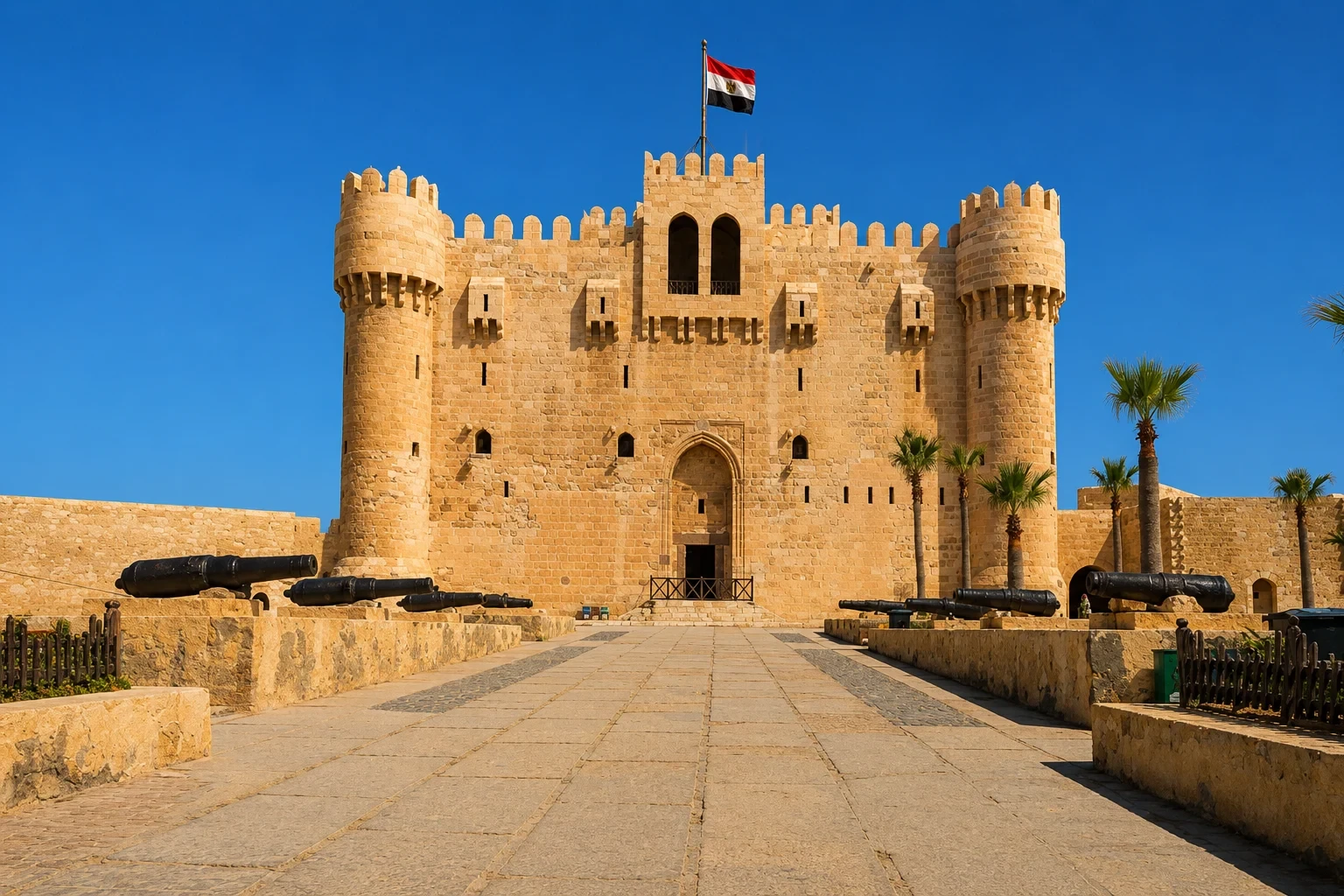
Private vehicle from Cairo hotel to Alexandria along the Desert Road (approximately 2 to 2.5 hours). Guided visit to the Catacombs of Kom El Shoqafa and Pompey's Pillar on the combined Rhakotis hill site, with expert guided explanation of the Serapeum complex, the history of Serapis, the destruction of 391 CE, and the engineering achievement of the monolithic column. Guided visit to the Citadel of Qaitbay. Optional: Bibliotheca Alexandrina. Return to Cairo by private vehicle arriving in the early evening.
Duration
Full day from Cairo, approximately 30 to 45 minutes at Pompey's Pillar combined with 45 minutes to 1 hour at the adjacent Catacombs, and proportionate time at each additional site, with approximately 2 to 2.5 hours driving each way.
Includes
Private air-conditioned vehicle from Cairo hotel, private licensed guide with expertise in Alexandrian Ptolemaic and Roman religious history, and entrance fees to all included sites.
Alexandria Day Tour: Complete Cultural Programme Including Pompey's Pillar
This full-day Alexandria city tour covers the complete range of Alexandria's most significant cultural and heritage attractions, with Pompey's Pillar and the Serapeum providing the most historically resonant ancient outdoor monument experience of the complete programme.
What Is Covered
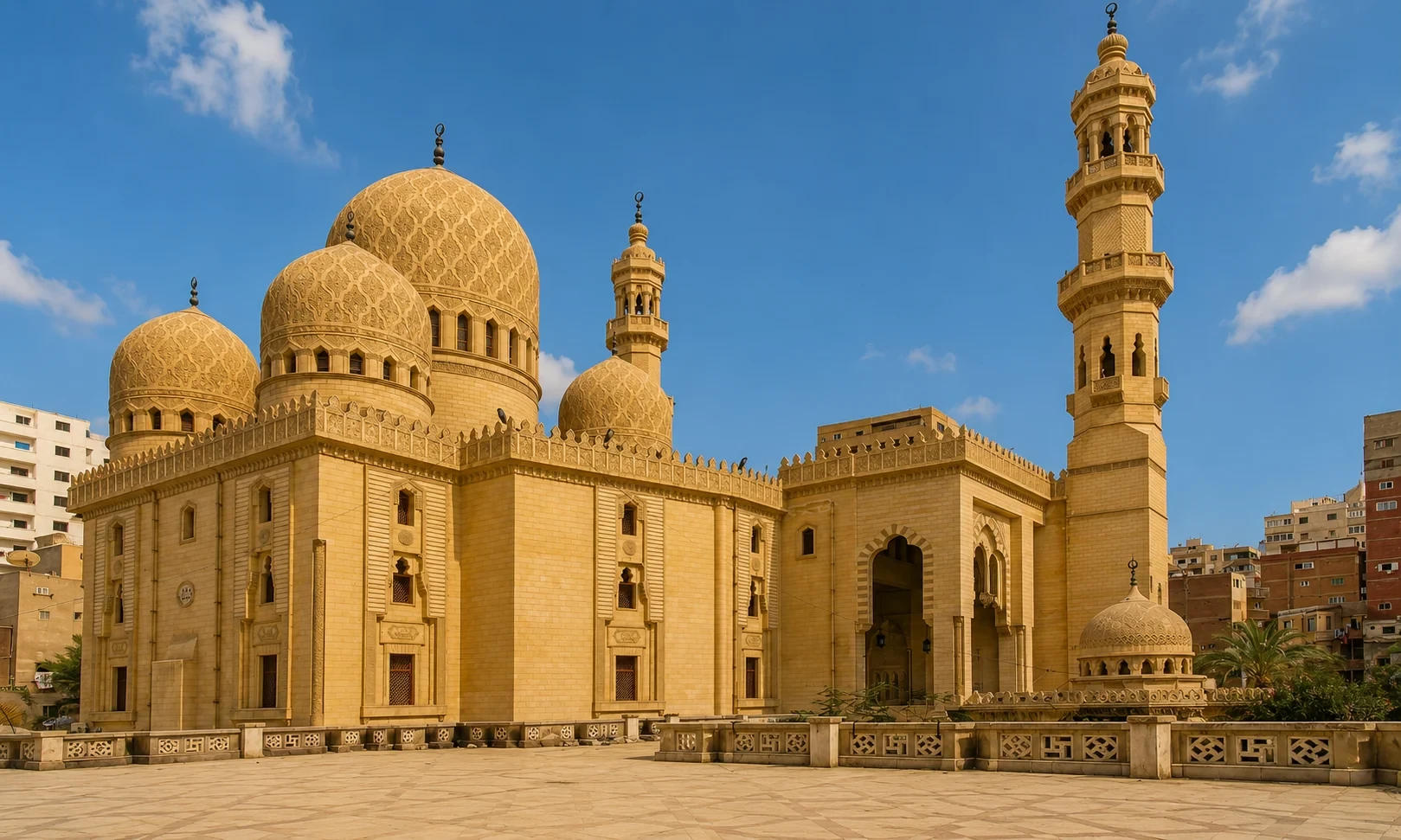
Guided visit to the Bibliotheca Alexandrina. Combined guided visit to the Catacombs of Kom El Shoqafa and Pompey's Pillar on the Rhakotis hill. Roman Amphitheatre at Kom El Dikka. Citadel of Qaitbay. Abu El Abbas El Mursi Mosque. Optional: Greco-Roman Museum.
Duration
Full day from Alexandria hotel or cruise ship terminal, approximately 30 to 45 minutes at Pompey's Pillar and proportionate time at each additional site.
Includes
Private air-conditioned transportation from hotel or port, private licensed guide with Alexandrian heritage expertise, and entrance fees to all included sites.
Alexandria Port Excursion: Pompey's Pillar And City Highlights
For cruise ship passengers arriving at Alexandria Port, this shore excursion covers Pompey's Pillar combined with the most significant Alexandria heritage sites within the available port time. The combined Pompey's Pillar and Catacombs of Kom El Shoqafa visit is a standard component of all Alexandria Port Excursion programmes.
What Is Covered
Private vehicle from Alexandria Port. Combined guided visit to the Catacombs of Kom El Shoqafa and Pompey's Pillar. Guided visit to the Citadel of Qaitbay. Optional: Bibliotheca Alexandrina. Return transfer to Alexandria Port in time for all ship departure requirements.
Duration
Full day or half day from Alexandria Port depending on ship schedule and port time availability.
Includes
Private air-conditioned vehicle from Alexandria Port, private licensed guide, entrance fees to all included sites, and guaranteed return transfer to the ship.
Combine Pompey's Pillar With Your Egypt Tours Package
Pompey's Pillar and the Serapeum of Alexandria are featured as a standard destination across the full range of WOW Egypt Tours travel products that include Alexandria. Browse the options below to find the Egypt experience that includes Pompey's Pillar.
Egypt Tour Packages: Multi-day guided Egypt tours organized by duration, including 2 Days Egypt Packages, 3 Days Egypt Packages, 4 Days Egypt Packages, 5 Days Egypt Packages, 6 Days Egypt Packages, 7 Days Egypt Packages, 8 Days Egypt Packages, 10 Days Egypt Packages, and longer itineraries. All packages that include Alexandria feature Pompey's Pillar as a standard component of the Alexandria programme, typically combined with the adjacent Catacombs of Kom El Shoqafa. All packages include private air-conditioned transportation, private licensed guide, accommodations, entrance fees to all included sites, and private transfers throughout Egypt.
Egypt Travel Packages: Themed Egypt travel packages designed around specific travel styles and interests, including Egypt Honeymoon Travel Packages, Egypt Budget Travel Packages, Egypt Family Travel Packages, Egypt Luxury Travel Packages, Egypt Adventure Travel Packages, Egypt Cultural Travel Packages, and Egypt Christmas and New Year Travel Packages. Pompey's Pillar is well suited to Cultural, Luxury, and Family themed packages. All packages include private transportation, licensed guide, accommodations, meals, and private transfers.
Egypt Nile Cruise Packages: Complete Egypt travel packages combining Cairo sightseeing with a fully guided Nile cruise. Alexandria and Pompey's Pillar can be added as an extension to any Egypt Nile Cruise Package for travelers wishing to combine the Nile Valley heritage experience with the ancient Greco-Roman heritage of Alexandria.
Nile River Cruises: All WOW Egypt Tours Nile cruise options. Alexandria and Pompey's Pillar are available as an extension from Cairo added to the beginning or end of any Nile River Cruise itinerary.
Cairo Tours: Day tours from Cairo covering the major attractions of the Egyptian capital and its environs. Cairo-based travelers can visit Alexandria and Pompey's Pillar as a full-day excursion from Cairo by private vehicle or train, combined with the Catacombs of Kom El Shoqafa, the Citadel of Qaitbay, and the Bibliotheca Alexandrina in a comprehensive day programme. All tours include private air-conditioned transportation, private licensed guide, entrance fees, and private transfers.
Alexandria Tours: Dedicated day tours based in Alexandria covering the complete range of the city's cultural and heritage attractions. Pompey's Pillar is featured as a standard stop on the full-day Alexandria heritage tour, always combined with the immediately adjacent Catacombs of Kom El Shoqafa on the same Rhakotis hill site. All tours include private air-conditioned transportation, private licensed guide with Alexandrian heritage expertise, entrance fees to all included sites, and private transfers.
Alexandria Port Excursions: Shore excursion programmes from Alexandria Port for Mediterranean cruise ship passengers, coordinated around each ship's port schedule with guaranteed return to the ship before departure. Pompey's Pillar combined with the Catacombs of Kom El Shoqafa is a standard stop on all Alexandria Port Excursion programmes, providing the most archaeologically rich and the most historically substantial combined ancient monument experience available within the standard Alexandria port call time. All excursions include private air-conditioned vehicle from the port, private licensed guide, entrance fees to all included sites, and guaranteed return transfer to the ship.
Nearby Attractions To Pompey's Pillar
The most immediately proximate attraction to Pompey's Pillar is the Catacombs of Kom El Shoqafa, located approximately 100 meters southeast of the column base on the same Rhakotis hill site, providing the underground funerary heritage complement to the outdoor religious heritage of the Serapeum in a combined visit that covers the complete range of the ancient Rhakotis neighborhood's archaeological significance in a single site stop. The combined visit to Pompey's Pillar and the Catacombs is the single most efficient and the single most archaeologically comprehensive heritage experience available per unit of time in the southwestern districts of Alexandria, and the two sites are almost universally combined in every Alexandria day tour and port excursion programme.
The Greco-Roman Museum, expected to reopen following its renovation, is the primary institutional repository for the artifacts recovered from the Serapeum and the surrounding ancient Rhakotis neighborhood, and a visit to the museum in combination with the Pompey's Pillar site provides the fullest available experience of the ancient Serapeum heritage. The Roman Amphitheatre at Kom El Dikka is approximately 3 to 4 kilometers northeast of the Rhakotis hill in the city center. The Bibliotheca Alexandrina and the Citadel of Qaitbay are approximately 4 to 5 kilometers to the north on the Eastern Harbor waterfront. The Abu El Abbas El Mursi Mosque on the waterfront Corniche, the ancient Lighthouse of Alexandria site, and the broader Alexandria Pride of the Mediterranean heritage landscape are all accessible through the Alexandria Day Tours and Alexandria Port Excursions offered by WOW Egypt Tours.
Frequently Asked Questions About Pompey's Pillar And The Serapeum Of Alexandria
What is Pompey's Pillar?
Pompey's Pillar is a massive ancient monolithic column of red Aswan granite rising approximately 26.85 meters above the ancient Rhakotis hill in southwestern Alexandria, the largest ancient monolithic column ever erected outside Rome. It was commissioned by Pompejus, the Roman Prefect of Egypt, around 297 CE to honor Emperor Diocletian after his suppression of an Alexandrian revolt and his gift of grain to the city's population. It stands within the ruins of the ancient Serapeum, once one of the most magnificent religious complexes in the ancient Mediterranean world. It is a standard destination on all Alexandria Tours and Alexandria Port Excursions offered by WOW Egypt Tours.
Why is it called Pompey's Pillar if it has nothing to do with Pompey?
The name Pompey's Pillar was given to the column by medieval European travelers who erroneously associated it with Gnaeus Pompeius Magnus (Pompey the Great), the Roman general murdered in Egypt in 48 BCE. The column's actual dedicatory inscription on its base clearly identifies it as a monument to Emperor Diocletian erected by the Prefect Pompejus around 297 CE, with no connection to Pompey the Great. The erroneous name has persisted in international usage for more than eight centuries despite the clear documentary evidence of its incorrectness.
What was the Serapeum of Alexandria?
The Serapeum of Alexandria was one of the most magnificent religious complexes of the ancient Mediterranean world, a great temple precinct dedicated to the syncretic god Serapis located on the Rhakotis hill in southwestern Alexandria. Founded by Ptolemy III Euergetes around 247 BCE and expanded by successive Ptolemaic rulers and Roman emperors, it contained the great temple of Serapis, a subsidiary library associated with the great Library of Alexandria, extensive colonnaded courtyards, and a collection of the most celebrated ancient artworks. It was destroyed by the Christian community of Alexandria under Bishop Theophilus in 391 CE.
Who was the god Serapis?
Serapis was a synthetic deity created by Ptolemy I around 300 BCE as the shared supreme god of the new multicultural Alexandrian society, combining elements of the Egyptian Osiris-Apis with the Greek Zeus-Pluto in a divine figure depicted as a majestic bearded male in Hellenistic sculptural style wearing the grain basket modius and accompanied by the three-headed dog Cerberus. The cult of Serapis spread from Alexandria throughout the Hellenistic and Roman Mediterranean world, becoming one of the most widely worshipped mystery cult deities of the Greco-Roman world.
How big is Pompey's Pillar?
The column shaft measures approximately 20.46 meters in height and approximately 2.71 meters in diameter at the base. With the base pedestal and the Corinthian capital, the complete structure reaches approximately 26.85 meters in total height. The column was quarried as a single piece of red Aswan granite, making it the largest ancient monolithic column ever erected outside Rome.
What happened to the Serapeum in 391 CE?
In 391 CE, the Christian community of Alexandria under Bishop Theophilus used an imperial edict by Emperor Theodosius I against pagan temples to justify a physical attack on the Serapeum complex. The Christian crowd destroyed the interior of the great temple, smashed the enormous gold and ivory cult statue of Serapis, burned the subsidiary library and its contents, and systematically demolished the temple buildings. The destruction of the Serapeum in 391 CE is considered one of the most symbolically significant events marking the end of the ancient pagan world in the Mediterranean.
What are the sphinxes at the base of Pompey's Pillar?
The two pink granite sphinxes that flank the base of Pompey's Pillar are ancient Egyptian sculptural works from an earlier period than the Roman column itself, representing the Egyptian religious tradition that predated the Ptolemaic Serapeum on the Rhakotis hill or from the early Ptolemaic development of the site. Their combination with the Roman Corinthian capital at the top of the column creates an immediate visual expression of the multi-period character of the Serapeum site.
What are the opening hours of Pompey's Pillar?
The site is open daily from 9:00 AM to 5:00 PM (October to May) and 9:00 AM to 6:00 PM (June to September).
How much does it cost to visit Pompey's Pillar?
The entrance fee is EGP 200 for adults and EGP 100 for students. A combined ticket with the adjacent Catacombs of Kom El Shoqafa is available at a reduced combined rate. Entrance fees are included in all Alexandria Day Tours and Alexandria Port Excursion programmes booked through WOW Egypt Tours.
How long does it take to visit Pompey's Pillar?
Most visitors spend approximately 30 to 45 minutes at the Pompey's Pillar and Serapeum site. Combined with the immediately adjacent Catacombs of Kom El Shoqafa, the total Rhakotis hill visit takes approximately 1.5 to 2 hours.
Is Pompey's Pillar always visited with the Catacombs?
Yes. Pompey's Pillar and the Catacombs of Kom El Shoqafa are located approximately 100 meters apart on the same Rhakotis hill site and are almost universally combined in a single visit in every Alexandria day tour and port excursion programme. The shared site entrance and the complementary outdoor and underground heritage experiences of the two monuments make the combined visit the standard approach.
What was the library associated with the Serapeum?
The Serapeum housed a subsidiary library sometimes called the Daughter Library of the great Library of Alexandria, associated with the main Library institution and serving as an extension of the Alexandrian scholarly infrastructure. It was destroyed along with the Serapeum temple in the Christian attack of 391 CE, adding another dimension to the cultural catastrophe of that event and connecting the Pompey's Pillar site directly to the story of the destruction of ancient Alexandrian learning.
Is a guide necessary at Pompey's Pillar?
A guide with knowledge of Ptolemaic religious history, the cult of Serapis, and the events of 391 CE is strongly recommended, as the physical remains of the site are relatively sparse and their full historical significance requires expert explanation to be properly appreciated. WOW Egypt Tours provides licensed guides with Alexandrian heritage expertise on all Alexandria Day Tours and Alexandria Port Excursions.
Can I combine Pompey's Pillar with a Cairo visit?
Yes. Alexandria and Pompey's Pillar are accessible as a full-day excursion from Cairo by private vehicle (approximately 2 to 2.5 hours each way) or by high-speed train (approximately 2 hours each way). Cairo Day Tours from WOW Egypt Tours include full-day Alexandria excursions from Cairo hotels with private transportation and a licensed guide.
What other Alexandria attractions are near Pompey's Pillar?
The Catacombs of Kom El Shoqafa are immediately adjacent. Further afield are the Greco-Roman Museum, the Roman Amphitheatre, the Bibliotheca Alexandrina, the Citadel of Qaitbay, and the Abu El Abbas El Mursi Mosque.
How do I book a Pompey's Pillar tour with WOW Egypt Tours?
You can book any Alexandria Day Tour, Cairo and Alexandria Day Tour, Alexandria Port Excursion, Egypt Tours Package, or Egypt Travel Package that includes Pompey's Pillar directly through WOW Egypt Tours. Our team of travel specialists will arrange everything from private transportation and licensed guides to entrance fees and all the logistics of the complete Alexandria cultural experience, ensuring a seamless and unforgettable encounter with the most imposing ancient column and the most historically resonant religious site in the Mediterranean heritage landscape of the city of Alexander the Great.