
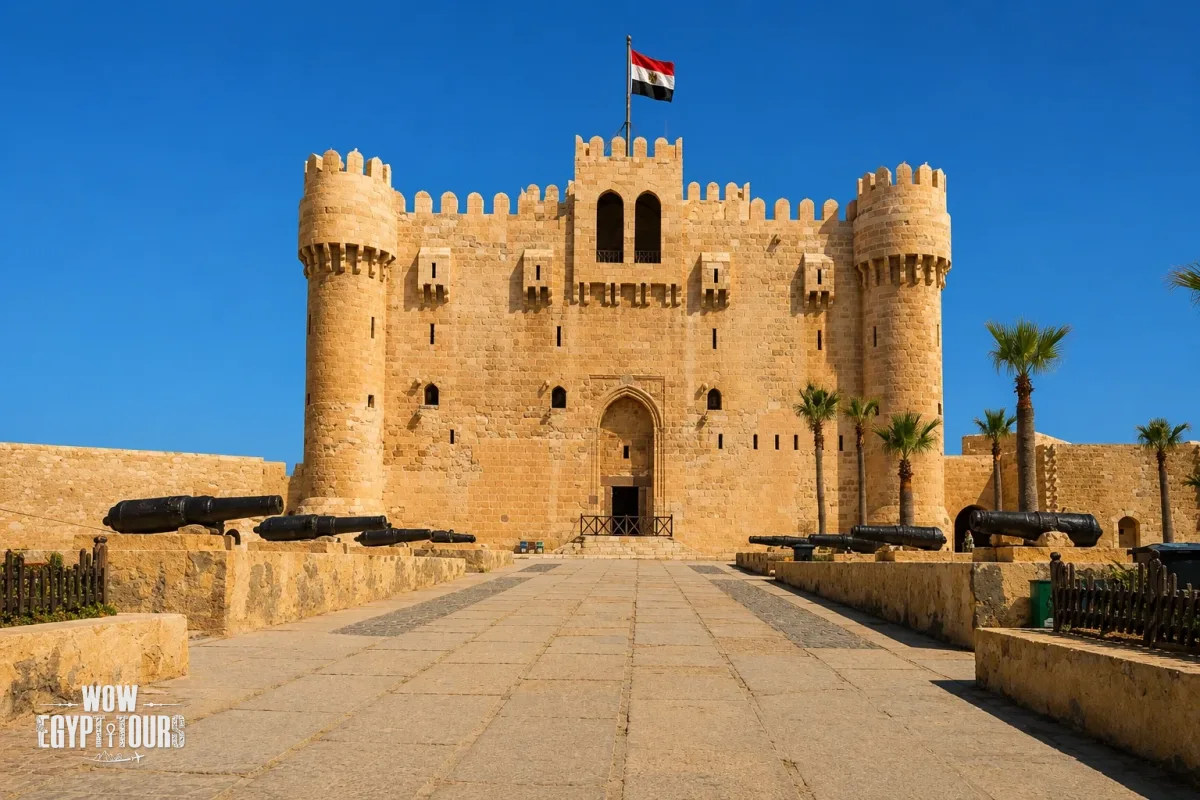

The Citadel of Qaitbay, also known as Qaitbay Citadel or the Fort of Qaitbay, is the most dramatically situated, the most historically layered, and the most immediately visually powerful medieval monument in all of Alexandria, a magnificent 15th century Mamluk fortress that stands on the very tip of the ancient Pharos peninsula at the entrance to the Eastern Harbor, on the exact site where one of the Seven Wonders of the Ancient World, the Lighthouse of Alexandria, rose for nearly sixteen hundred years as the most celebrated and the most technically extraordinary navigational monument of the ancient Mediterranean world. Built in 1477 CE by Sultan Ashraf Qaitbay, the eighteenth Mamluk Sultan of Egypt, using stones taken from the ruins of the fallen ancient lighthouse as the primary building material for the citadel's massive walls and towers, the Citadel of Qaitbay is simultaneously the most significant surviving Mamluk fortification in Egypt and the most tangible physical connection to the ancient lighthouse whose legendary status as one of the supreme technological achievements of the ancient world makes it one of the most symbolically charged historic sites in all of the Mediterranean. This extraordinary landmark sits at the heart of the Alexandria heritage experience, and is a featured destination on Alexandria Day Tours, Cairo and Alexandria Day Tours, and Alexandria Port Excursions, all of which WOW Egypt Tours proudly offers to travelers from around the world as part of Egypt Tours Packages and Egypt Travel Packages that include the magnificent Mediterranean heritage of the city of Alexander the Great.
The Citadel of Qaitbay Egypt commands one of the most dramatic and most visually beautiful natural positions of any medieval fortress in the Islamic world, rising from the sea at the very tip of the narrow Pharos peninsula with the open Mediterranean to the north, the Eastern Harbor of Alexandria stretching to the south and east, and the Western Harbor visible beyond the peninsula to the west, in a panoramic setting of such geographic grandeur and such historical resonance that every visitor who reaches the citadel experiences the immediate and physical sense of standing at the most significant maritime threshold in the ancient and medieval Mediterranean world. The view from the citadel's ramparts and towers encompasses the complete arc of the Alexandrian waterfront, from the Bibliotheca Alexandrina on the Eastern Harbor shore to the east, through the curved waterfront of the modern Corniche, to the western harbor and the open sea beyond, providing the most complete and the most historically evocative panoramic view of Alexandria available from any single viewpoint in the city. A visit to the Citadel of Qaitbay is one of the most essential experiences in any Alexandria itinerary, equally rewarding for its Mamluk military architecture, its ancient site associations, its maritime panorama, and its immediate encounter with the layered historical geography of one of the most storied cities in the ancient and medieval Mediterranean world.

Who Built The Citadel Of Qaitbay?
The Citadel of Qaitbay was built by Sultan Ashraf Sayf al-Din Qaitbay, the eighteenth Sultan of the Mamluk Sultanate of Egypt and Syria, who reigned from 1468 to 1496 CE in one of the longest, the most politically stable, and the most architecturally productive of all the Mamluk reigns in the history of Egypt. Qaitbay ordered the construction of the fortress at Alexandria in 1477 CE as part of a comprehensive programme of coastal fortification along the Egyptian and Syrian Mediterranean shore, motivated by the growing military threat posed by the Ottoman Empire under Sultan Mehmed II, who had completed the conquest of Constantinople in 1453 and was increasingly turning his ambitions toward the Mamluk-controlled territories of Egypt and the Levant. The Alexandria citadel, positioned at the most strategically critical point on the Egyptian Mediterranean coast, where any naval attack on the most important Egyptian port city would first encounter a defensive structure, was the centerpiece of Qaitbay's coastal defence programme and represented the most ambitious and the most technically accomplished of all the fortifications he ordered constructed along the Egyptian shore.
The construction of the citadel was carried out by Egyptian and Syrian craftsmen and military engineers under Qaitbay's personal supervision and patronage, over a period of approximately two years from 1477 to 1479 CE. The primary building material for the massive walls, towers, and central keep of the fortress was stone taken from the ruins of the ancient Lighthouse of Alexandria that had stood on the same site and that had been progressively damaged and partially collapsed by the series of catastrophic earthquakes that struck the Egyptian Mediterranean coast in the 10th, 11th, 12th, and 14th centuries, leaving a vast field of ancient dressed stone blocks available for reuse in the new Mamluk construction. The decision to build the citadel using the stones of the ancient lighthouse was therefore partly a practical one, exploiting the most immediately available and most abundantly supplied source of high-quality dressed stone on the site, and partly a symbolic one, asserting Mamluk sovereignty over the ancient heritage of Alexandria and the maritime supremacy of the Egyptian state over the approaches to its most important port.
Who Was Sultan Qaitbay?
Sultan Ashraf Sayf al-Din Qaitbay is regarded by historians of the Mamluk period as one of the greatest and most accomplished of all the Mamluk Sultans of Egypt, a ruler whose long reign of 28 years from 1468 to 1496 CE combined military effectiveness against the Ottoman threat with an extraordinary programme of architectural patronage throughout Egypt, Syria, and the Hijaz that left a physical legacy of mosques, madrasas, mausolea, and fortifications whose quality and scale place him among the most significant builders in the entire history of Islamic Egypt. Qaitbay was born around 1418 CE as a Circassian slave from the Caucasus region, purchased as a child and brought to Egypt in the Mamluk tradition of elite military slavery by which the Sultanate recruited and trained its ruling class from slave boys of Circassian and Turkish origin, who were given the military, religious, and administrative education necessary to serve as soldiers, commanders, and ultimately as rulers of the most powerful Islamic state of the medieval world.
Qaitbay's military career was distinguished by his defence of the Mamluk Sultanate against the growing Ottoman power to the north, conducting a series of military campaigns in Anatolia and the Levant that succeeded in delaying the Ottoman conquest of Egypt for more than two decades after Qaitbay's death. His architectural legacy, however, is arguably even more significant than his military record. The buildings he commissioned throughout Egypt and the Islamic world include the magnificent Qaitbay complex in Cairo's Northern Cemetery, which contains his mosque, madrasa, khanqah, and mausoleum in a single architectural ensemble of exceptional beauty and technical refinement; the mosque-madrasa of Qaitbay in Jerusalem near the Dome of the Rock; major additions to the Prophet's Mosque in Medina; and dozens of mosques, schools, and caravanserais throughout Egypt and Syria that make his reign one of the most productive periods of Islamic architectural patronage in the entire history of the Mamluk Sultanate. The Citadel of Qaitbay in Alexandria, built at the beginning of his most active architectural period in 1477 CE, represents the military dimension of his architectural legacy and stands as the most dramatically sited and the most immediately impressive of all the constructions associated with his name.
The Ancient Lighthouse Of Alexandria: The Wonder Of The World On This Site
The ancient Lighthouse of Alexandria, one of the Seven Wonders of the Ancient World and the most celebrated navigational monument ever built in the ancient Mediterranean, stood on the site of the current Citadel of Qaitbay for approximately sixteen hundred years from its construction in the 3rd century BCE to its final destruction by earthquake in the 14th century CE, a period of continuous standing longer than any other surviving ancient monument of comparable scale. The lighthouse was commissioned by Ptolemy I Soter and completed under Ptolemy II Philadelphus around 280 BCE on the small island of Pharos, which was connected to the mainland of Alexandria by a man-made causeway called the Heptastadion, and its construction was entrusted to the Greek architect Sostratus of Cnidus, who is reported to have insisted on inscribing his own name on the lighthouse base under a plaster coating that bore the name of Ptolemy II, so that when the plaster eventually fell away posterity would know the true architect of the greatest monument of the age.
The ancient lighthouse was a structure of three stages: a square base section of approximately 55 meters height, an octagonal middle section of approximately 25 meters height, and a circular top section of approximately 15 meters height, giving the complete structure a total height estimated by ancient sources at between 120 and 140 meters, the tallest building in the ancient world after the Great Pyramid of Giza and the most recognizable landmark on the Mediterranean sea lanes for the ships approaching the busy port of Alexandria from every direction. A fire or mirror system at the top of the lighthouse, whose precise technical mechanism has been debated by scholars since ancient times, reflected sunlight by day and firelight by night to create a beam visible at distances estimated in ancient sources at up to 47 kilometers, providing navigational guidance for the ships that made Alexandria the most prosperous commercial port of the ancient Mediterranean. The lighthouse was maintained and repaired by successive ancient rulers and was still standing and functioning in various states of repair through the Byzantine period and into the early Islamic era. The series of earthquakes that struck the Egyptian coast in the 10th, 11th, 12th, and 14th centuries progressively damaged and ultimately destroyed the lighthouse over a period of approximately four centuries, with the Arab geographer and traveler Ibn Battuta reporting in 1326 CE that the lighthouse was already in a ruinous condition with only the base section partially accessible, and the final collapse of the remaining ancient structure occurring before the construction of the Mamluk citadel in 1477 CE.
Citadel Of Qaitbay Location In Alexandria
The Citadel of Qaitbay stands at the very tip of the Pharos peninsula, the narrow strip of land that extends westward from the main body of the Alexandrian city into the Mediterranean Sea, at the entrance to the Eastern Harbor of Alexandria, approximately 2 kilometers northwest of the Bibliotheca Alexandrina along the waterfront Corniche. The peninsula, known in antiquity as the island of Pharos and connected to the mainland by the ancient causeway of the Heptastadion that has long since silted up into a permanent isthmus, is today entirely urban and forms part of the dense residential and commercial district of the Alexandria waterfront, with the Citadel occupying the westernmost and most dramatically exposed tip of the peninsula above the sea. The site is accessible from the Alexandria city center by private vehicle along the Corniche waterfront road in approximately 10 to 15 minutes from most central Alexandria hotels, or approximately 30 minutes from the Alexandria Port area. WOW Egypt Tours provides private air-conditioned transportation to the Citadel of Qaitbay on all Alexandria Day Tours, Cairo and Alexandria Day Tours, and Alexandria Port Excursion programmes.
Citadel Of Qaitbay Fun Facts
The most extraordinary archaeological discovery associated with the Citadel of Qaitbay is the remarkable finding by the Egyptian underwater archaeologist Franck Goddio and his team in 1994, who discovered on the seabed immediately surrounding the citadel and the Pharos peninsula enormous quantities of ancient carved stone blocks, architectural fragments, and colossal statuary that are now recognized as the physical remains of the ancient Lighthouse of Alexandria and of the ancient Ptolemaic royal quarter that was submerged by the series of earthquakes and consequent land subsidence that transformed the ancient topography of the Alexandrian waterfront during the early medieval period. The underwater discoveries include massive column bases, architectural cornices, and granite blocks carved with the cartouches of Ramesses II that were used as building material in the ancient lighthouse and its precinct, as well as fragments of colossal statuary that appear to represent Ptolemaic rulers in the tradition of the pharaonic divine monarchy. The ongoing underwater archaeological investigations around the Citadel of Qaitbay have effectively relocated the ancient lighthouse to its known physical position on the modern sea floor, confirming the identification of the citadel site with the ancient Pharos and giving the current medieval fortress a direct and tangible archaeological connection to the ancient wonder it replaced.
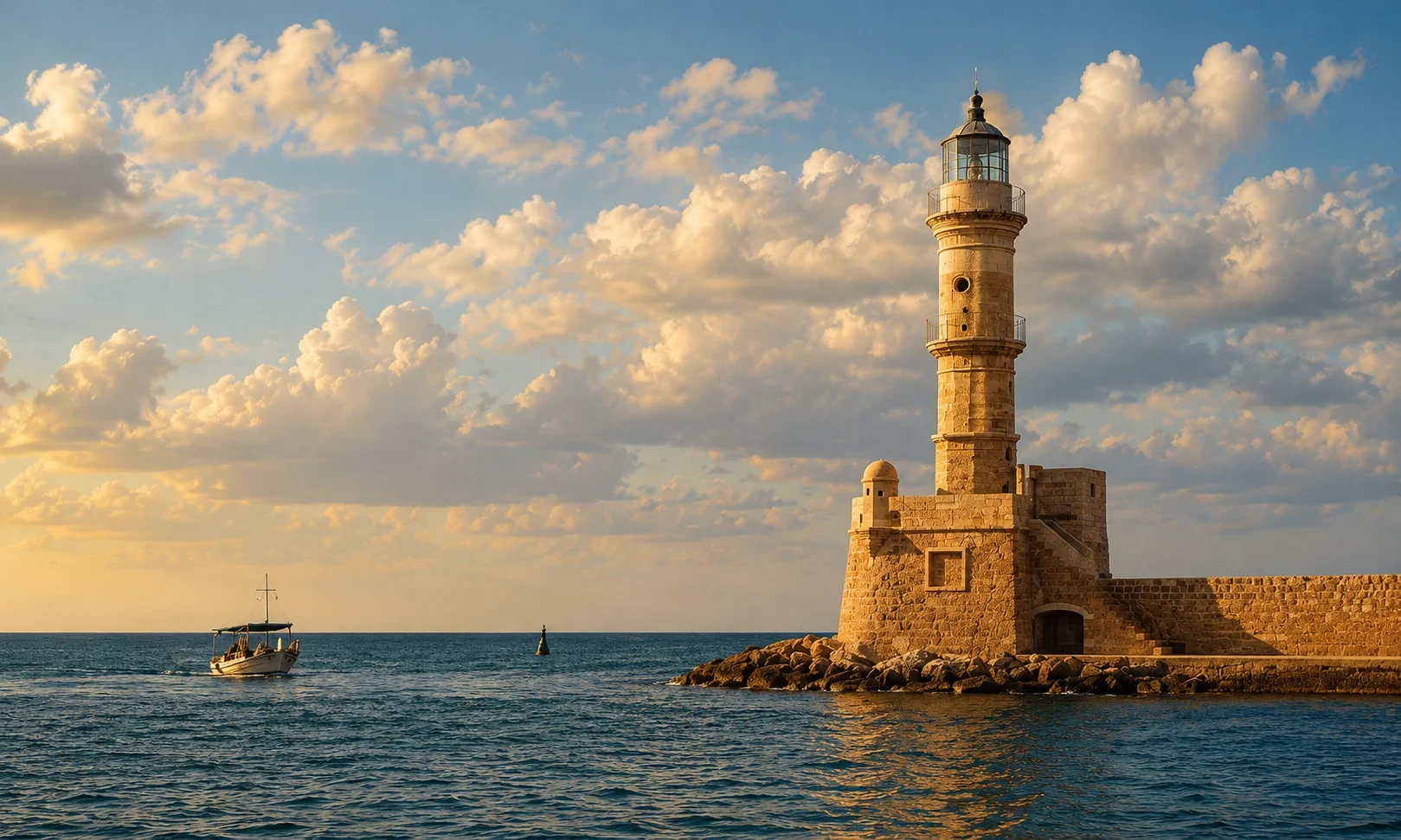
The Citadel of Qaitbay was not only a fortress but also served as a lighthouse in its own right after the ancient lighthouse's final collapse, with a light maintained at the top of the central tower to guide ships into the Eastern Harbor at night in continuation of the ancient Pharos function that had defined this location for more than fifteen hundred years. The continuity of the lighthouse function at the Pharos tip from the ancient Ptolemaic lighthouse through the medieval Mamluk citadel tower to the modern navigation light that still operates near the citadel today is one of the most remarkable examples of continuous functional heritage in any Mediterranean location, a light-giving tradition that has persisted at the entrance to the Alexandria harbor in various technological forms for approximately 2,300 years.
The stones of the ancient lighthouse used in the construction of the Citadel of Qaitbay are visible throughout the fabric of the fortress walls, and in many places visitors can identify massive ancient granite and limestone blocks of clearly different origin from the smaller Mamluk-period masonry that surrounds them, providing direct physical evidence for the recycling of ancient lighthouse material in the medieval construction. Some of these ancient blocks bear traces of carved decoration, inscription remnants, or architectural moldings that identify them as dressed components of the ancient lighthouse superstructure or of the ancient Ptolemaic palace precinct that surrounded the lighthouse on the island of Pharos.
Why Is The Citadel Called Qaitbay?
The Citadel is called Qaitbay after the Mamluk Sultan Ashraf Qaitbay, who commissioned its construction in 1477 CE. In the standard Mamluk tradition of royal architectural patronage, major buildings commissioned by a sultan bore the sultan's name as their primary designation, a practice that ensured the perpetual commemoration of the royal patron in the name of the monument and that reflected the Islamic tradition of associating architectural beneficence with divine approval and personal religious merit. The fortress at Alexandria was known from its construction as the Citadel of Qaitbay or the Fort of Qaitbay (Qal'at Qaitbay in Arabic), a name that has been retained without significant variation through the Ottoman period, the Egyptian modernization period, and the present day, making it one of the most continuously and most consistently named monuments in the modern Egyptian heritage record. The name Qaitbay is itself a Turkish compound name meaning brave lion in one common interpretation, reflecting the Circassian Turkish cultural background from which the Mamluk ruling class drew its nomenclature tradition and its identity. The Lighthouse of Alexandria, whose site the citadel occupies, was known in antiquity simply as the Pharos, after the island on which it stood, a name that became so universally associated with lighthouse structures throughout the Mediterranean and beyond that it gave rise to the word for lighthouse in many European languages: phare in French, faro in Spanish and Italian, and farol in Portuguese.
Citadel Of Qaitbay History
The history of the Citadel of Qaitbay begins in 1477 CE with its construction by Sultan Qaitbay, but the history of the site on which it stands extends back more than two and a half thousand years to the founding of the island of Pharos as a major navigational landmark of the ancient Egyptian coastline in the pre-Alexandrian period, long before the foundation of the city of Alexandria by Alexander the Great in 331 BCE. The island of Pharos, mentioned by Homer in the Odyssey as a waypoint on the sailing routes of the ancient Mediterranean, was incorporated into the urban fabric of the new Alexandrian city when the Ptolemaic rulers connected it to the mainland by the Heptastadion causeway and transformed it from an isolated offshore island into a strategic peninsula at the entrance to the newly created harbor system of Alexandria. The construction of the lighthouse on the Pharos island under Ptolemy II around 280 BCE established the definitive function of the site as the primary navigational landmark of the Alexandrian harbor, a function it maintained through the entire ancient period from the 3rd century BCE through the Roman and Byzantine eras to the early Islamic period.
After the progressive earthquakes of the medieval period damaged and ultimately destroyed the ancient lighthouse, the site remained as a field of ancient ruins until Qaitbay's fortress was constructed in 1477. The Ottoman conquest of Egypt in 1517 under Sultan Selim I brought the citadel within the Ottoman administrative system, and the fortress underwent various modifications and repairs during the centuries of Ottoman rule, including reinforcements to its defensive capability and adaptations of its interior spaces to the changing military technology of the gunpowder era. The French expedition of 1798 under Napoleon Bonaparte encountered a partially ruined citadel that had been allowed to deteriorate during the later Ottoman period, and the subsequent British and Ottoman restoration of Egypt in the early 19th century included some repair work at the site. Under the rule of Muhammad Ali Pasha and his successors in the 19th century, the citadel was used as a military installation and underwent significant modifications including the construction of a new mosque within the fortress precinct that replaced the original Qaitbay mosque destroyed by British naval bombardment during the Alexandria bombardment of 1882. Major conservation and restoration work was carried out on the citadel in the 20th century, and the building was converted from military use to heritage tourism use during the latter decades of the century, opening as one of the most visited monuments in Alexandria.
The Story Of The Lighthouse And The Citadel
The story of the relationship between the ancient Lighthouse of Alexandria and the Mamluk Citadel of Qaitbay is one of the most remarkable cases of architectural succession in the entire history of Mediterranean heritage, a narrative in which one of the most celebrated ancient monuments of the ancient world provided both the physical building material and the functional model for the medieval fortress that replaced it on the same site more than fifteen centuries later. The lighthouse had stood at the Pharos tip since its completion around 280 BCE, serving generation after generation of Mediterranean sailors as the most visible and the most reliable navigational landmark in the ancient world, when the first major earthquake struck the Egyptian coast in the 10th century CE and began the process of progressive structural damage that would eventually bring the ancient wonder to its final collapse.
The Arab traveler al-Masudi, writing in 956 CE, described the lighthouse as still partially functional. Ibn Hawqal, writing shortly afterwards, described it as already partly ruined. The great Arab traveler al-Idrisi, writing in the 12th century CE, described the lighthouse as still standing but significantly reduced from its ancient height. By the time Ibn Battuta visited Alexandria in 1326 CE, the lighthouse was already in a condition of advanced ruin with only the base section accessible. By 1349, when Ibn Battuta visited a second time, even the surviving base was no longer accessible, and the ancient wonder had effectively ceased to exist as a standing structure. When Sultan Qaitbay ordered the construction of his fortress in 1477, approximately 130 years after Ibn Battuta's second visit and the final collapse of the lighthouse, the ancient site was covered with a vast field of fallen ancient stone blocks whose size and quality made them the ideal building material for the heavy defensive walls and towers of the new Mamluk fortress. The practical decision to reuse the ancient lighthouse stones in the Qaitbay construction ensured that the physical substance of the ancient wonder was not simply abandoned on the sea floor but incorporated into a new structure that continued for five centuries to serve the strategic and navigational needs of Alexandria's harbor at the same iconic location, a continuity of human purpose and physical material at one of the most historically charged sites in the Mediterranean world.
Citadel Of Qaitbay Architecture And Key Features
The Outer Enclosure Walls And Sea Defences
The Citadel of Qaitbay is defended by a massive outer enclosure wall of Mamluk period masonry that surrounds the complete perimeter of the fortress on all sides, with its seaward faces extending directly from the water's edge and its landward sides incorporating a dry moat and gatehouse entrance system that controlled access from the Pharos peninsula to the fortress interior. The outer walls are constructed primarily of large limestone and granite blocks, many of which are visibly ancient blocks of significantly larger size and different stone type from the Mamluk-period fill masonry, providing direct physical evidence for the reuse of ancient lighthouse material in the construction of the defensive perimeter. The seaward faces of the outer walls are reinforced by projecting semicircular towers at regular intervals, providing flanking fire coverage along the wall faces and the additional defensive capability that Mamluk military engineers had developed through the experience of castle building throughout Egypt and the Levant over the preceding centuries. The outer enclosure wall encloses an irregular trapezoidal area that accommodates the complete internal programme of the fortress including the central keep, the mosque, the barracks, the cisterns, and the various service spaces required for a permanent military garrison.
The Central Keep And Main Tower
The dominant architectural element of the Citadel of Qaitbay is the central keep, a massive square tower rising from the center of the enclosed fortress compound to approximately 17 meters above the fortress platform, whose combination of defensive function and architectural refinement represents the finest achievement of Mamluk military architecture in Egypt. The keep consists of three stories above a massive basement level, with the first two stories serving military and garrison functions and the upper story incorporating the spaces associated with the sultan's personal presence and the official ceremonial functions of the fortress. The corners of the keep are reinforced by massive quarter-round towers that provide structural buttressing as well as additional defensive positions, and the crenellated parapet at the top of the keep provides the most panoramic and the most dramatically situated viewpoint available at the entire citadel site, with 360-degree views over the Mediterranean, the Eastern Harbor, the Western Harbor, and the complete Alexandrian waterfront that are among the most spectacular panoramic views available from any historic monument in Egypt.
The Mosque Within The Citadel
Within the fortress enclosure, the mosque of the Citadel of Qaitbay provides the most architecturally refined interior space in the complete fortress complex, a prayer hall of moderate scale built in the Mamluk architectural tradition with a prayer niche, or mihrab, indicating the direction of Mecca, a minbar or pulpit for the Friday prayer sermon, and carved decorative details in the Mamluk style that reflect the high standard of craftsmanship associated with Qaitbay's personal patronage of religious architecture. The current mosque is a reconstruction of the original Qaitbay mosque, which was destroyed by the British naval bombardment of Alexandria in 1882 during the Urabi Revolt, rebuilt in the early 20th century on the same footprint and in a style that aims to recreate the character of the original Mamluk prayer space. The mosque is an active place of worship used by the garrison and the site staff as well as being accessible to visiting tourists as part of the general citadel tour, providing a living religious function within the historic monument that is entirely in keeping with the original Qaitbay conception of the fortress as a fully equipped military establishment with its own religious infrastructure.
The Naval Museum
The Citadel of Qaitbay houses the Alexandria Naval Museum, a permanent exhibition of maritime history, naval equipment, and seafaring technology that makes use of the fortress's ground floor spaces and courtyard areas to display a collection of model ships, navigation instruments, naval weapons, and maritime artifacts that traces the history of Egyptian seafaring from the ancient period through the modern navy. The naval museum provides an informative and sometimes unexpected additional dimension to the citadel visit, connecting the fortress's function as a coastal defense installation to the broader history of Egyptian and Mediterranean maritime activity that the site of the ancient Lighthouse of Alexandria has presided over since the 3rd century BCE.
The Ancient Stones In The Walls
One of the most intellectually rewarding aspects of exploring the Citadel of Qaitbay is the direct visual encounter with the ancient lighthouse stones incorporated throughout the fabric of the medieval fortress, visible in the walls, the towers, and the floor surfaces as massive granite and limestone blocks of clearly greater age, greater size, and different material character from the Mamluk-period masonry that surrounds them. In several locations within the fortress, visitors can identify large granite column drums, carved architectural moldings, inscription-bearing stone blocks, and other unmistakably ancient architectural elements that were salvaged from the ruins of the lighthouse and built directly into the walls of the 15th century fortress, creating a physical stratigraphy of ancient and medieval heritage in the masonry of a single standing structure that is as immediately comprehensible and as historically evocative as any more formally presented archaeological display.
Why Is The Citadel Of Qaitbay Important?
The Citadel of Qaitbay is important in ways that encompass medieval military architecture, Islamic heritage, ancient site archaeology, and the continuous history of the most significant maritime location in the ancient and medieval Mediterranean world. As a work of Mamluk military architecture it is the finest and most completely preserved example of the Mamluk coastal fortress tradition in Egypt, a building type whose technical sophistication and architectural refinement reflect the accumulated experience of centuries of Levantine castle building in the tradition that produced the great Crusader fortresses of the Syrian coast and their Mamluk successors and adversaries. As an ancient site, it is the only location on earth where the physical remains of one of the Seven Wonders of the Ancient World, the ancient Lighthouse of Alexandria, are still visible in situ as incorporated architectural elements within a standing medieval building, giving it a quality of direct material connection to the ancient wonder that no other location in the world can offer.
The panoramic views from the citadel's ramparts and towers also give it a unique practical importance as the finest single viewpoint in Alexandria for appreciating the complete geography of the ancient and modern city, the harbor system that made Alexandria the most important commercial port in the ancient Mediterranean, and the relationship between the city and the sea that has defined its character and its historical significance for more than two thousand years. WOW Egypt Tours includes the Citadel of Qaitbay as a featured destination on all Alexandria Day Tours, recognizing it as the most dramatic and the most historically resonant single monument in the Alexandria heritage landscape.
What Are Some Interesting Facts About The Citadel Of Qaitbay?
Ruins Of A Wonder Built Into Its Walls
The Citadel of Qaitbay is unique among all the medieval Islamic monuments of Egypt, and perhaps among all the medieval buildings in the world, in that it was constructed using as its primary building material the physical ruins of one of the Seven Wonders of the Ancient World, the ancient Lighthouse of Alexandria. The massive granite and limestone blocks from the collapsed lighthouse that are incorporated throughout the fabric of the citadel walls are not simply anonymous ancient masonry; they are the actual physical substance of what was once the most celebrated lighthouse in the ancient world, the most technologically impressive navigational structure of antiquity, and one of the most universally recognized architectural achievements in the entire history of human civilization. Walking through the Citadel of Qaitbay and examining the ancient blocks in its walls, the visitor is not simply looking at medieval military architecture; they are looking at the physical remains of the most famous ancient wonder whose original site they are standing on, in a direct material encounter with the ancient past that is available nowhere else in the Mediterranean world.
Discovered Underwater: The Lighthouse That Sank
The underwater archaeological discoveries made by Franck Goddio's team in 1994 and by subsequent Egyptian underwater archaeological expeditions around the Citadel of Qaitbay have transformed scholarly and public understanding of the ancient Pharos and its fate, revealing on the seabed surrounding the citadel the most substantial physical evidence for the ancient Lighthouse of Alexandria ever discovered. The underwater site, covering an area of approximately two hectares immediately north and east of the citadel promontory, contains thousands of individual ancient architectural fragments, massive carved stone blocks weighing up to 70 tonnes, column shafts, architectural cornices, and fragments of colossal statuary that together constitute the most significant underwater ancient heritage site in the Egyptian Mediterranean. The colossal statue fragments recovered from the underwater site, including a magnificent head of a Ptolemaic ruler and large sections of a colossal figure of the goddess Isis, are now displayed in Alexandria's museums and provide the most direct visual encounter with the ancient artistic traditions of the Ptolemaic lighthouse precinct available to modern visitors. The ongoing underwater investigations continue to refine understanding of the ancient lighthouse's architecture, its associated Ptolemaic royal precinct, and the sequence of earthquake events that progressively destroyed both the lighthouse and the ancient palace quarter that surrounded it.
The Portrait On The Egyptian Pound
The Citadel of Qaitbay is one of the most universally recognized architectural images in modern Egypt, depicted on the Egyptian pound note as one of the iconic symbols of Egyptian national heritage alongside the Pyramids of Giza and the Abu Simbel temples. The appearance of the citadel on Egyptian currency reflects its special status in the Egyptian national heritage imagination as the most visually distinctive and the most historically significant medieval monument in the country's Mediterranean heritage landscape, and as the most immediately recognizable symbol of the city of Alexandria in the visual shorthand of Egyptian national iconography. The citadel's silhouette, with its central tower rising above the battlemented walls against the Mediterranean sky, is as immediately recognizable to Egyptians as the Eiffel Tower is to the French or Big Ben is to the British, making it not simply a regional heritage monument but one of the defining national symbols of the entire country.
What Is So Special About The Citadel Of Qaitbay?
Where Ancient Wonder Meets Medieval Masterpiece
What makes the Citadel of Qaitbay uniquely special among all the monuments of Alexandria, and arguably among all the medieval monuments of the entire Mediterranean world, is the extraordinary double historical significance of its site and its fabric: it is simultaneously a great medieval Islamic fortress of the first order in its own architectural right and the physical location and partial material embodiment of one of the Seven Wonders of the Ancient World. No other standing medieval building in the world occupies a site of such ancient significance, and no other medieval building anywhere incorporates in its walls the identifiable physical remains of an ancient wonder. The combination of these two layers of significance, the medieval Islamic and the ancient Hellenic, gives the Citadel of Qaitbay a depth of historical resonance that is available at no other single monument in Egypt outside the Pyramids of Giza, and that makes a visit to the citadel an encounter with approximately two and a half thousand years of continuous human presence and significant human achievement at a single sea-girt promontory on the Mediterranean coast of Africa.
The Most Spectacular View In Alexandria
The Citadel of Qaitbay is also uniquely special for the panoramic view it provides from its ramparts and towers, which is simply the most spectacular and the most historically evocative viewpoint available in the entire city of Alexandria. Standing on the citadel battlements and looking east across the Eastern Harbor toward the Bibliotheca Alexandrina and the Alexandrian waterfront, and then turning to look north across the open Mediterranean and west across the Western Harbor to the sea, visitors experience in the most physical and the most immediate way possible the geographical reality that made Alexandria the most important city in the ancient Mediterranean world: the extraordinary position of the city between the sea, the harbor, and the desert, at the crossroads of the great maritime trade routes between the Mediterranean east and west, and at the junction between the African continent and the broader Mediterranean world. This geographical reality, which determined every major event in Alexandrian history from Alexander's foundation of the city in 331 BCE through the Ptolemaic golden age, the Roman conquest, the Arab founding of Islamic Egypt, and the Ottoman and modern periods to the present, is nowhere more immediately comprehensible and nowhere more viscerally felt than from the battlements of the Citadel of Qaitbay on the ancient Pharos promontory.
Citadel Of Qaitbay Through The Ages: From Ancient Pharos To The Present
The complete history of the Pharos site from its first mention in Homer's Odyssey through the ancient lighthouse, the Mamluk citadel, and the modern heritage monument encompasses one of the longest and the most dramatically eventful site histories of any location in the ancient and medieval Mediterranean world. The pre-Alexandrian Pharos island, mentioned by Homer around 800 BCE and described by ancient authors as a waypoint on the Mediterranean sea lanes in the pre-Greek period, was already recognized as a significant maritime landmark centuries before the foundation of Alexandria and the construction of the lighthouse. Alexander the Great's choice of the site for his new city in 331 BCE and the Ptolemaic rulers' decision to connect the Pharos island to the mainland and build the lighthouse on its tip transformed the site from a maritime waypoint into the most important harbor entrance in the ancient Mediterranean, a transformation that created the geographic and commercial foundation for Alexandria's extraordinary five-century golden age as the supreme city of the Hellenistic world.
The transition from the ancient lighthouse to the medieval citadel, while representing an enormous cultural and historical transformation in the character of the site and the civilization that occupied it, maintained the fundamental continuity of the site's function as the primary guardian of the Alexandria harbor entrance and the most important military and navigational position on the Egyptian Mediterranean coast. The Ottoman modifications of the citadel in the 16th through 18th centuries, the French encounter with the half-ruined fortress in 1798, the British bombardment and the subsequent reconstruction of the mosque in the 19th century, and the major conservation and restoration work of the 20th century all added their own layers to the accumulated historical palimpsest of the site, creating the monument that visitors encounter today: a beautifully preserved 15th century Mamluk fortress that carries within its walls the physical memory of the most celebrated ancient wonder in the Mediterranean world, standing as it has stood for more than five centuries at the most historically charged maritime location in all of Egypt.
Citadel Of Qaitbay And The Seven Wonders Of The Ancient World
The ancient Lighthouse of Alexandria was one of the canonical Seven Wonders of the Ancient World, a list compiled by ancient Greek and Roman authors to identify the most extraordinary and the most technically impressive human-made structures of the ancient Mediterranean world. The Seven Wonders as most commonly listed comprised the Great Pyramid of Giza, the Hanging Gardens of Babylon, the Temple of Artemis at Ephesus, the Statue of Zeus at Olympia, the Mausoleum at Halicarnassus, the Colossus of Rhodes, and the Lighthouse of Alexandria. Of these seven, only the Great Pyramid of Giza survives substantially intact to the present day; all the others were destroyed at various points in the ancient and medieval periods, leaving no substantial physical remains above ground. The Citadel of Qaitbay, uniquely among all the sites associated with the Seven Wonders, preserves in the walls of its medieval fortress the identifiable physical remains of the ancient wonder whose site it occupies, making it the only location associated with any of the Seven Wonders outside Egypt where a direct material encounter with the ancient wonder is available to modern visitors. The juxtaposition of this ancient heritage with the medieval Islamic architecture of the Mamluk citadel, at a site that has maintained its strategic and navigational significance for more than two and a half thousand years of continuous human presence, gives the Citadel of Qaitbay a quality of accumulated historical significance that places it in a category of heritage importance shared with very few other monuments anywhere in the world.
Best Time To Visit The Citadel Of Qaitbay
The best time to visit the Citadel of Qaitbay is during the cooler months from October through April, when the Mediterranean climate of Alexandria provides mild and pleasant conditions for exploring the open ramparts, towers, and courtyards of the fortress and for fully appreciating the panoramic views across the sea and the harbor. The summer months from June to August can be warm and humid in Alexandria, though the sea breezes at the exposed Pharos promontory generally make the citadel more comfortable than inland sites at the same temperature. The early morning hours after opening provide the most peaceful and the most beautiful conditions for exploring the citadel, with the morning sea light illuminating the ancient and medieval stones in a clarity and warmth that the harsh midday light cannot match and with significantly fewer visitors than the peak hours of the late morning and early afternoon when tour groups and day visitors are most numerous. The citadel at sunset, when the western light creates dramatic shadows on the battlements and the harbor waters turn golden around the fortress base, is one of the most romantically beautiful heritage views in all of Alexandria. WOW Egypt Tours plans all Citadel of Qaitbay visits at the optimal time of day for the season and the specific Alexandria itinerary.
Citadel Of Qaitbay Opening Hours
The Citadel of Qaitbay is open every day of the week, including public holidays. The site opens at 9:00 AM and closes at 5:00 PM from October through May, and from 9:00 AM to 6:00 PM from June through September, with the extended summer hours taking advantage of the longer daylight available in the summer months. The Naval Museum within the citadel operates on the same hours as the main fortress. The mosque within the citadel may be closed to non-Muslim visitors during prayer times. The citadel can become crowded on weekends and Egyptian public holidays when large numbers of Egyptian family visitors come to the site; weekday morning visits are recommended for the most peaceful experience.
Citadel Of Qaitbay Entrance Fees
Adults: EGP 200
Students: EGP 100
The entrance fee covers access to the complete Citadel of Qaitbay including all interior rooms of the central keep, the Naval Museum, the mosque, the outer courtyards, all rampart walkways, and all towers with their panoramic views. Entrance fees to the Citadel of Qaitbay are included in all Alexandria Day Tours and Alexandria Port Excursion programmes booked through WOW Egypt Tours.
How To Get To The Citadel Of Qaitbay
The Citadel of Qaitbay is located at the western tip of the Pharos peninsula in Alexandria, accessible by private vehicle along the Corniche waterfront road from the city center in approximately 10 to 15 minutes from most central Alexandria hotels. From Alexandria's main railway station, the citadel is approximately 5 to 6 kilometers and is most conveniently reached by private vehicle or taxi. From the Alexandria Port area, the citadel is approximately 4 to 5 kilometers along the waterfront and is similarly most conveniently reached by private vehicle. The building is visible from the Corniche road and from most points on the Eastern Harbor waterfront as the dominant structure on the Pharos peninsula tip, making it easy to navigate to without precise local knowledge. WOW Egypt Tours provides private air-conditioned transportation directly to the Citadel of Qaitbay on all Alexandria Day Tours, Cairo and Alexandria Day Tours, and Alexandria Port Excursion programmes.
How Long To Spend At The Citadel Of Qaitbay
Most visitors spend between one and one and a half hours at the Citadel of Qaitbay, which is sufficient time to walk the complete outer ramparts, visit the central keep on all accessible floors, examine the ancient stones incorporated in the fortress walls, visit the Naval Museum on the ground level, see the mosque, and spend time on the upper tower taking in the panoramic views across the Mediterranean and the two harbors. Visitors with a particular interest in medieval Islamic military architecture, the ancient lighthouse heritage, or the Napoleon and 1882 bombardment episodes in the citadel's modern history may wish to allow up to two hours. The citadel is most naturally combined in an Alexandria day programme with the Bibliotheca Alexandrina, the Catacombs of Kom El Shoqafa, and Pompey's Pillar, which together provide the most complete single-day Alexandria heritage experience available.
Tips For Visiting The Citadel Of Qaitbay
Climb to the top of the central keep tower as early as possible in your visit, as the panoramic views across the Mediterranean and the two harbors are the single most dramatic and most memorable experience available at the citadel, and are best appreciated in the clear morning light before sea haze begins to reduce visibility in the warmer months. Walk the complete circuit of the outer ramparts before entering the central keep, as the rampart walkway provides the most continuous and the most varied sequence of views across the sea and the harbor and the best opportunity to appreciate the overall defensive layout of the fortress from a circuit perspective. Look carefully at the ancient stones incorporated in the citadel walls as you walk through the fortress, and ask your guide to identify specific blocks that can be recognized as ancient lighthouse material by their larger size, different stone type, or traces of ancient carved decoration. Visit the Naval Museum on the ground floor, whose collection of ancient and medieval maritime artifacts provides important context for the site's role as a harbor guardian. A licensed guide from WOW Egypt Tours with expertise in both Mamluk history and the ancient Pharos is essential for the fullest appreciation of the layered historical significance of the site. Bring a hat and sunscreen for the exposed rampart walkways, which have minimal shade.
What To Wear At The Citadel Of Qaitbay
The Citadel of Qaitbay is primarily an outdoor site with extensive open rampart walkways, exterior courtyards, and tower staircases exposed to the Mediterranean sun and the sea breeze from the Pharos promontory, requiring practical outdoor clothing appropriate for an exposed coastal heritage site. Lightweight, breathable clothing covering the shoulders and knees is recommended for both comfort in the Mediterranean sun and respect for the Islamic heritage of the site and the active mosque within the fortress. Women visiting the mosque should have a headscarf available. A wide-brimmed hat and sunscreen are recommended for the exposed rampart walkways and tower viewing platforms. Comfortable walking shoes with good grip are essential for the uneven ancient and medieval stone surfaces of the fortress courtyards, rampart walkways, and keep staircase, which include irregular steps, worn stone surfaces, and occasionally narrow passages that require careful footing. Flat non-slip soles are preferable to heels or sandals with poor ankle support. A light warm layer is recommended for morning visits in winter, when the sea breeze at the exposed Pharos tip can be noticeably cool even when the city itself is mild.
Photography At The Citadel Of Qaitbay
The Citadel of Qaitbay is one of the most photographically rewarding heritage sites in all of Alexandria, offering an extraordinary combination of medieval military architecture, ancient stone detail, panoramic sea and harbor views, and the dramatic natural setting of the Pharos promontory in a single compact site of exceptional visual variety. The most spectacular photography of the fortress exterior is achieved from the Corniche waterfront east of the citadel, where the complete fortress silhouette is visible rising from the sea against the Mediterranean sky, or from the waterfront west of the site looking back across the Western Harbor. From within the fortress, the rampart walkways provide dramatic architectural perspectives of the towers and battlements with the sea and harbor beyond, and the upper tower viewing platform offers the finest panoramic photography in Alexandria. The ancient stones incorporated in the citadel walls photograph most clearly in the morning or afternoon raking light that creates relief and texture on the varied stone surfaces and allows the differences between the ancient and medieval masonry to be seen most distinctly. Photography is permitted throughout the site including all interior rooms and the mosque interior when it is not during prayer times. Professional photography or filming requires advance permission from the site administration.
Citadel Of Qaitbay Tours
Alexandria Day Tour From Cairo Including Citadel Of Qaitbay
This comprehensive full-day tour from Cairo covers the most significant cultural and heritage destinations in Alexandria including the Citadel of Qaitbay, the Bibliotheca Alexandrina, and the Catacombs of Kom El Shoqafa, providing the most complete single-day Alexandria experience available from the Egyptian capital.
What Is Covered
Private vehicle from Cairo hotel to Alexandria along the Desert Road (approximately 2 to 2.5 hours). Guided visit to the Bibliotheca Alexandrina. Guided visit to the Citadel of Qaitbay including the complete outer rampart circuit, the central keep with all accessible floors, the ancient lighthouse stones in the walls, the Naval Museum, and the panoramic views from the upper tower across the Mediterranean and both harbors. Guided visit to the Catacombs of Kom El Shoqafa. Optional: Pompey's Pillar. Return to Cairo by private vehicle arriving in the early evening.
Duration
Full day from Cairo, approximately 1 to 1.5 hours at the Citadel of Qaitbay and proportionate time at each additional site, with approximately 2 to 2.5 hours driving each way.
Includes
Private air-conditioned vehicle from Cairo hotel, private licensed guide with expertise in Alexandrian Mamluk history and ancient heritage, and entrance fees to all included sites.
Alexandria Day Tour: Complete Cultural Programme Including Citadel Of Qaitbay
This full-day Alexandria city tour covers the complete range of Alexandria's most significant cultural and heritage attractions, with the Citadel of Qaitbay as the most dramatically situated and the most visually memorable monument of the entire programme.
What Is Covered
Guided visit to the Bibliotheca Alexandrina. Guided visit to the Catacombs of Kom El Shoqafa. Pompey's Pillar. Roman Amphitheatre at Kom El Dikka. Citadel of Qaitbay. Abu El Abbas El Mursi Mosque. Optional: Greco-Roman Museum.
Duration
Full day from Alexandria hotel or cruise ship terminal, approximately 1 to 1.5 hours at the Citadel and proportionate time at each additional site.
Includes
Private air-conditioned transportation from hotel or port, private licensed guide, and entrance fees to all included sites.
Alexandria Port Excursion: Citadel Of Qaitbay And City Highlights
For cruise ship passengers arriving at Alexandria Port, this shore excursion covers the Citadel of Qaitbay and the most significant Alexandria heritage sites within the available port time. The Citadel of Qaitbay, as the most visually dramatic and the most geographically distinctive monument in Alexandria, is the single most strongly recommended stop on any Alexandria Port Excursion programme.
What Is Covered
Private vehicle from Alexandria Port. Guided visit to the Catacombs of Kom El Shoqafa. Pompey's Pillar. Guided visit to the Citadel of Qaitbay including the rampart circuit, the central keep, and the panoramic harbor views. Optional: Bibliotheca Alexandrina. Return transfer to Alexandria Port in time for all ship departure requirements.
Duration
Full day or half day from Alexandria Port depending on ship schedule and port time availability.
Includes
Private air-conditioned vehicle from Alexandria Port, private licensed guide, entrance fees to all included sites, and guaranteed return transfer to the ship.
Combine The Citadel Of Qaitbay With Your Egypt Tours Package
The Citadel of Qaitbay is featured as a leading destination across the full range of WOW Egypt Tours travel products that include Alexandria. Browse the options below to find the Egypt experience that includes the Citadel of Qaitbay.
Egypt Tour Packages: Multi-day guided Egypt tours organized by duration, including 2 Days Egypt Packages, 3 Days Egypt Packages, 4 Days Egypt Packages, 5 Days Egypt Packages, 6 Days Egypt Packages, 7 Days Egypt Packages, 8 Days Egypt Packages, 10 Days Egypt Packages, and longer itineraries. All packages that include Alexandria feature the Citadel of Qaitbay as a standard component of the Alexandria programme. All packages include private air-conditioned transportation, private licensed guide, accommodations, entrance fees to all included sites, and private transfers throughout Egypt.
Egypt Travel Packages: Themed Egypt travel packages designed around specific travel styles and interests, including Egypt Honeymoon Travel Packages, Egypt Budget Travel Packages, Egypt Family Travel Packages, Egypt Luxury Travel Packages, Egypt Adventure Travel Packages, Egypt Cultural Travel Packages, and Egypt Christmas and New Year Travel Packages. The Citadel of Qaitbay is particularly well suited to Cultural, Luxury, and Family themed packages, offering a combination of dramatic architecture, ancient site heritage, and spectacular harbor views that appeals to all travel styles. All packages include private transportation, licensed guide, accommodations, meals, and private transfers.
Egypt Nile Cruise Packages: Complete Egypt travel packages combining Cairo sightseeing with a fully guided Nile cruise. Alexandria and the Citadel of Qaitbay can be added as an extension to any Egypt Nile Cruise Package for travelers wishing to combine the Nile Valley heritage experience with the Alexandrian Mediterranean heritage.
Nile River Cruises: All WOW Egypt Tours Nile cruise options. Alexandria and the Citadel of Qaitbay are available as an extension from Cairo added to the beginning or end of any Nile River Cruise itinerary.
Cairo Tours: Day tours from Cairo covering the major attractions of the Egyptian capital and its environs. Cairo-based travelers can visit Alexandria and the Citadel of Qaitbay as a full-day excursion from Cairo by private vehicle or train, combining the citadel with the other major Alexandria attractions in a comprehensive day programme. All tours include private air-conditioned transportation, private licensed guide, entrance fees, and private transfers.
Alexandria Tours: Dedicated day tours based in Alexandria covering the complete range of the city's cultural and heritage attractions. The Citadel of Qaitbay is featured as the most dramatically situated and the most visually memorable monument of the standard full-day Alexandria heritage tour, typically combined with the Bibliotheca Alexandrina, the Catacombs of Kom El Shoqafa, Pompey's Pillar, and the Abu El Abbas El Mursi Mosque in the most comprehensive available programme. All tours include private air-conditioned transportation, private licensed guide with Alexandrian heritage expertise, entrance fees to all included sites, and private transfers.
Alexandria Port Excursions: Shore excursion programmes from Alexandria Port for Mediterranean cruise ship passengers, coordinated around each ship's port schedule with guaranteed return to the ship before departure. The Citadel of Qaitbay is a featured stop on all Alexandria Port Excursion programmes, recognized as the most visually dramatic and the most historically layered single monument available within the standard Alexandria port call time. All excursions include private air-conditioned vehicle from the port, private licensed guide, entrance fees to all included sites, and guaranteed return transfer to the ship.
Nearby Attractions To The Citadel Of Qaitbay
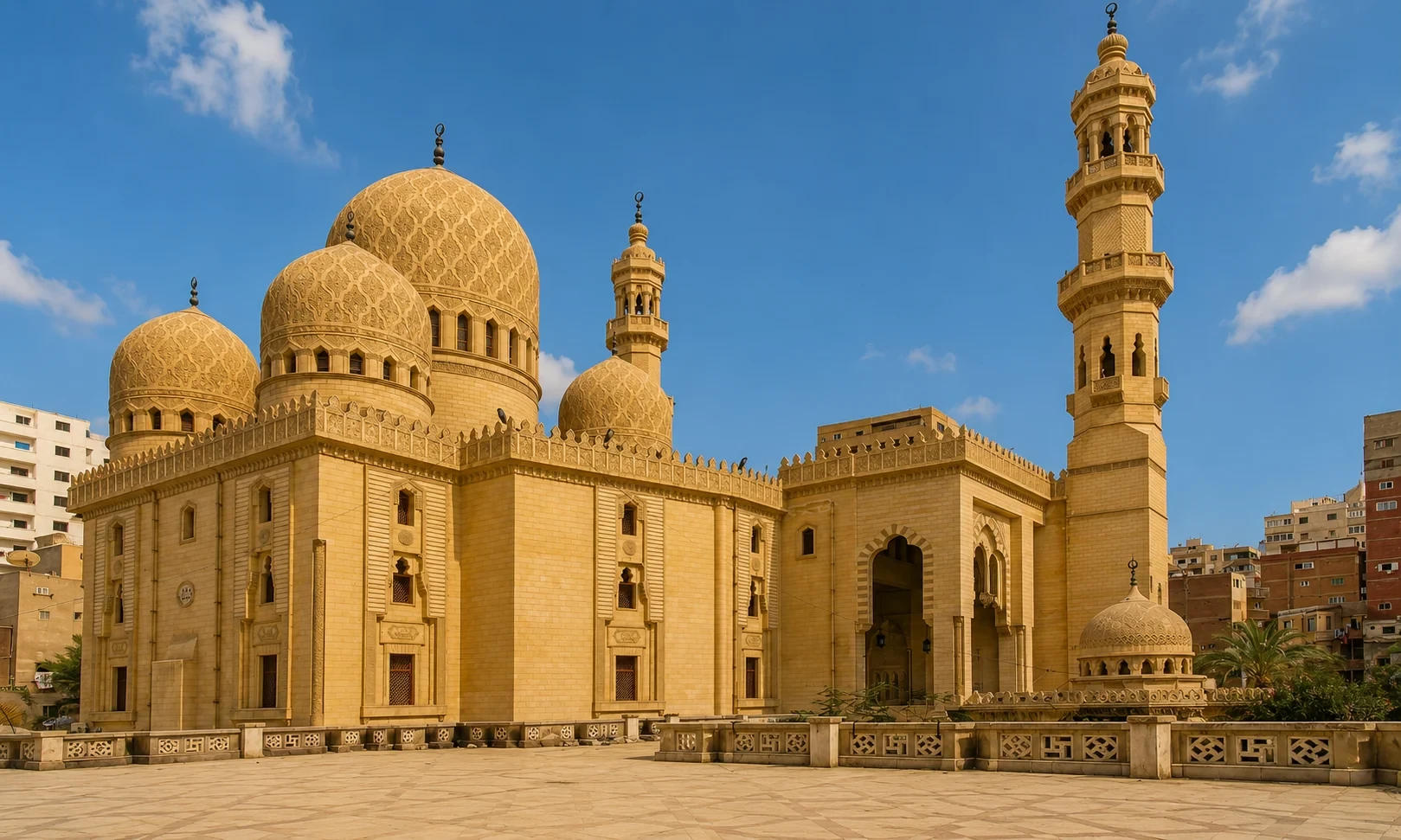
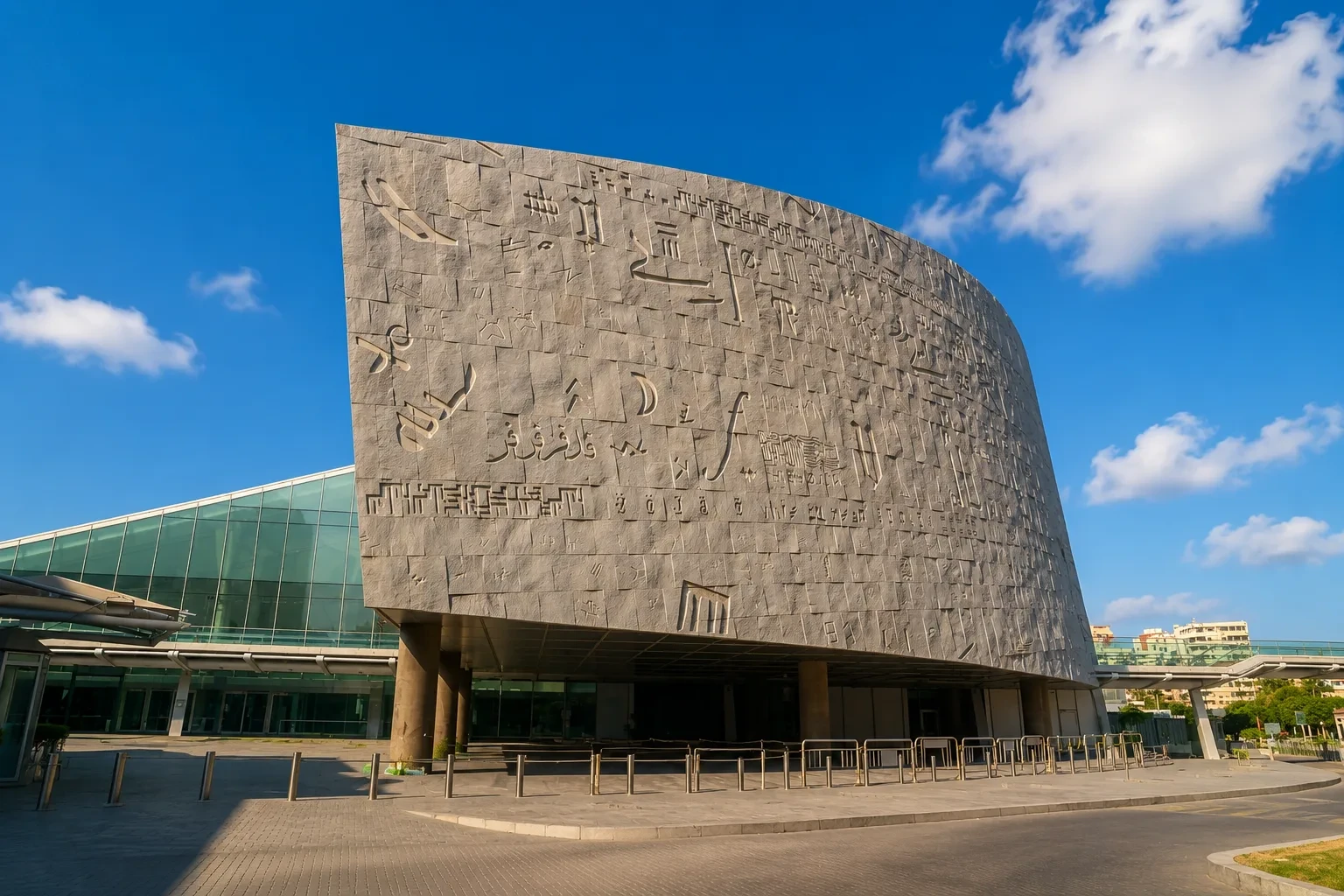
The Citadel of Qaitbay is located at the western tip of the Pharos peninsula, approximately 2 kilometers along the Corniche waterfront from the Bibliotheca Alexandrina, which is the most naturally combined visit with the citadel in any Alexandria day programme. The Abu El Abbas El Mursi Mosque, one of the most beautifully designed Islamic monuments in Alexandria, is located approximately 1 kilometer east of the citadel along the same waterfront Corniche, making it the most physically proximate heritage site to the fortress and a natural addition to any citadel visit. The Eastern Harbor waterfront between the citadel and the Bibliotheca, including the historic Fish Market area and the various small monuments and archaeological fragments scattered along the ancient harbor shore, provides a richly atmospheric walking connection between the two principal Eastern Harbor monuments.
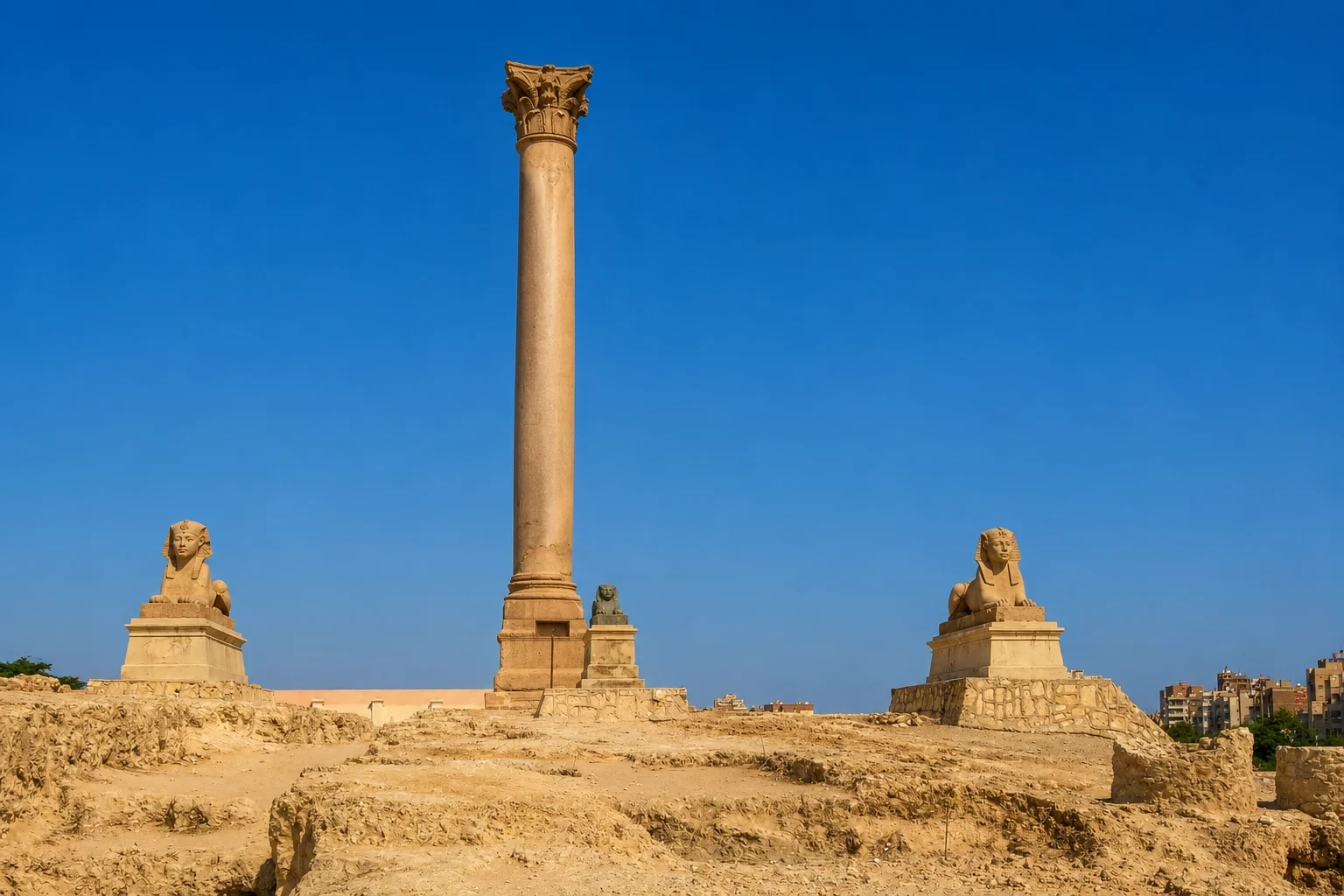
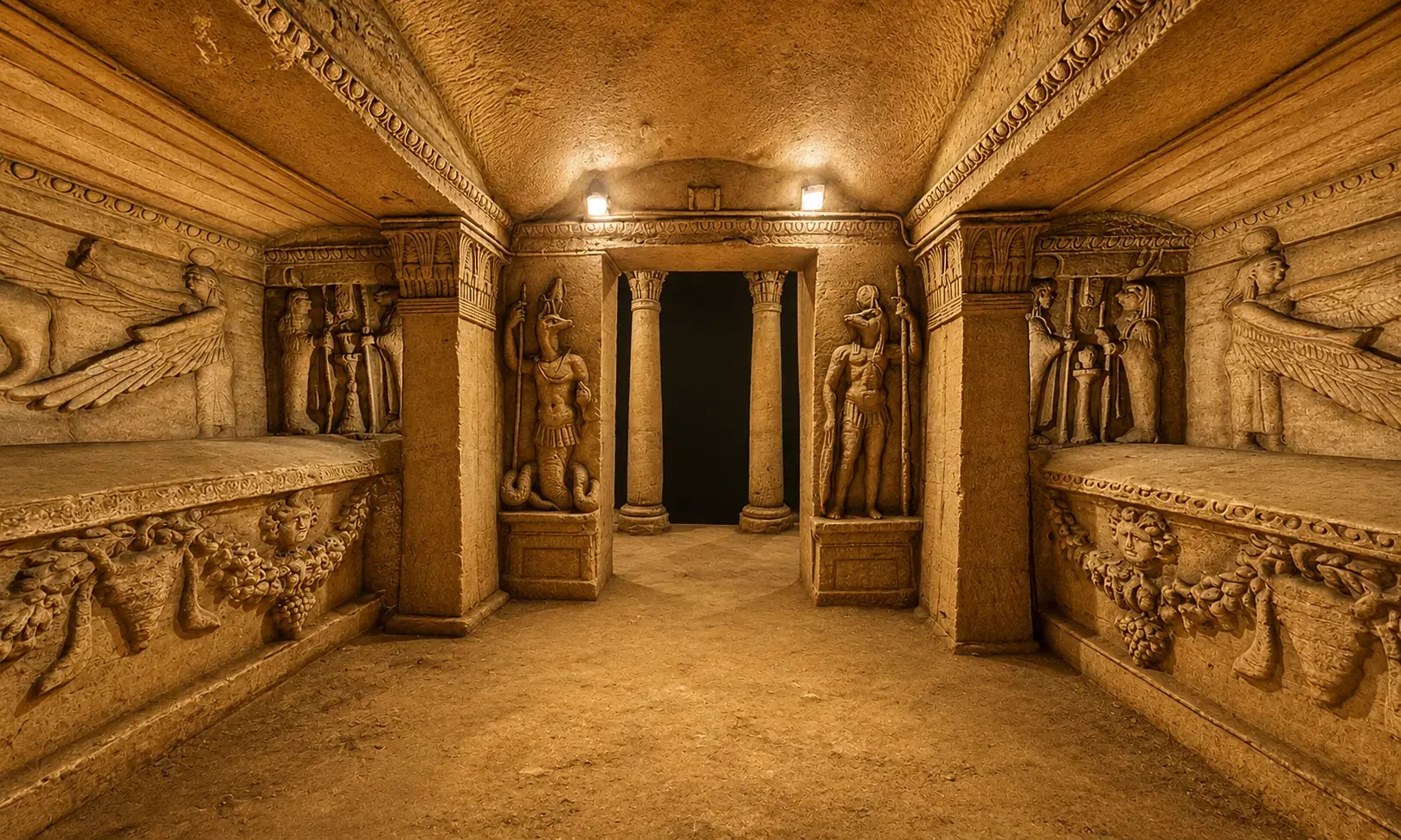
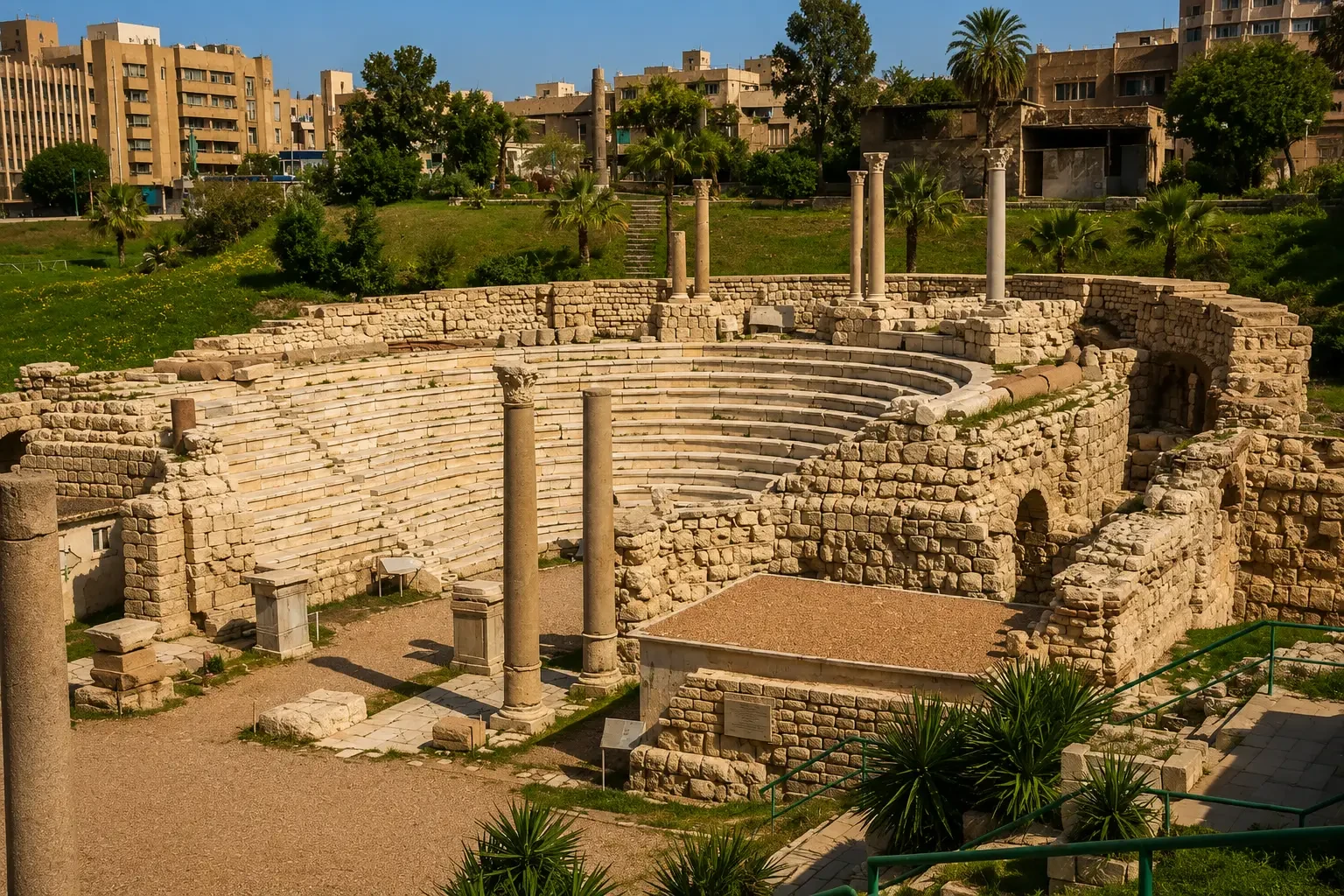
Further afield in the city, the Catacombs of Kom El Shoqafa, the largest known funerary complex of the Greco-Roman period in Egypt, are approximately 4 to 5 kilometers south of the citadel in the southern residential districts of Alexandria, and are the most archaeologically significant ancient monument in the city after the citadel site itself. Pompey's Pillar, the largest ancient monolithic column in Egypt at more than 26 meters height, stands on the ancient Serapeum hill adjacent to the catacombs. The Roman Amphitheatre at Kom El Dikka, the only surviving ancient Roman theatre in Egypt, is approximately 3 to 4 kilometers east of the citadel in the central city. The Greco-Roman Museum houses the most important collection of Greco-Roman antiquities in Egypt outside Cairo. The ancient site of the Lighthouse of Alexandria, whose underwater remains surround the citadel on the seabed, and the Alexandria Pride of the Mediterranean overview provide the broader cultural and historical context for the complete Alexandria experience. All these sites are accessible through the Alexandria Day Tours and Alexandria Port Excursions offered by WOW Egypt Tours.
Frequently Asked Questions About The Citadel Of Qaitbay
What is the Citadel of Qaitbay?
The Citadel of Qaitbay is a magnificent 15th century Mamluk fortress built in 1477 CE by Sultan Ashraf Qaitbay on the very tip of the Pharos peninsula at the entrance to the Eastern Harbor of Alexandria, on the exact site where the ancient Lighthouse of Alexandria, one of the Seven Wonders of the Ancient World, stood for approximately sixteen hundred years. It is the finest surviving Mamluk coastal fortress in Egypt and the most dramatic and most historically significant medieval monument in Alexandria, incorporating stones from the fallen ancient lighthouse in its construction. The citadel is a featured destination on all Alexandria Tours and Alexandria Port Excursions offered by WOW Egypt Tours.
Who was Sultan Qaitbay?
Sultan Ashraf Sayf al-Din Qaitbay was the eighteenth Mamluk Sultan of Egypt and Syria, who reigned from 1468 to 1496 CE. He was one of the most accomplished and most architecturally productive of all the Mamluk sultans, known both for his military defence of Egypt against the Ottoman threat and for his extraordinary programme of architectural patronage throughout Egypt, Syria, and the Hijaz. His buildings include the magnificent Qaitbay complex in Cairo's Northern Cemetery, the mosque-madrasa of Qaitbay in Jerusalem, major additions to the Prophet's Mosque in Medina, and the Citadel of Qaitbay in Alexandria.
Was the Citadel built on the site of the Lighthouse of Alexandria?
Yes. The Citadel of Qaitbay was built in 1477 CE on the exact site of the ancient Lighthouse of Alexandria, one of the Seven Wonders of the Ancient World, which had stood on the island of Pharos (now the Pharos peninsula) from approximately 280 BCE until its final destruction by earthquakes in the 14th century CE. The stones of the fallen lighthouse were used as the primary building material for the citadel walls and towers.
Can I see ancient lighthouse stones in the citadel?
Yes. Ancient stones from the fallen Lighthouse of Alexandria are visible throughout the fabric of the Citadel of Qaitbay, identifiable by their larger size, different stone type (primarily granite and limestone), and occasional traces of ancient carved decoration, inscription remnants, or architectural moldings that distinguish them from the surrounding Mamluk-period masonry. A knowledgeable guide can identify specific examples throughout the citadel walls.
What is the view like from the citadel?
The view from the citadel's ramparts and towers is the most spectacular and the most historically evocative panoramic view available in all of Alexandria, encompassing the complete arc of the Eastern Harbor, the Bibliotheca Alexandrina and the Alexandrian Corniche waterfront to the east, the open Mediterranean to the north, the Western Harbor to the west, and the complete urban landscape of the city in all directions from the most dramatically exposed maritime position in Alexandria.
What is the Naval Museum inside the citadel?
The Naval Museum within the citadel is a permanent exhibition of Egyptian maritime history displayed in the ground floor spaces and courtyard areas of the fortress, presenting model ships, navigation instruments, naval weapons, and maritime artifacts that trace the history of Egyptian and Mediterranean seafaring from the ancient period through the modern navy. It provides an informative additional dimension to the citadel visit, connecting the fortress's defensive function to the broader history of Mediterranean maritime activity at the Pharos site.
What are the opening hours of the Citadel of Qaitbay?
The Citadel of Qaitbay is open daily from 9:00 AM to 5:00 PM (October to May) and 9:00 AM to 6:00 PM (June to September).
How much does it cost to enter the Citadel of Qaitbay?
The entrance fee is EGP 200 for adults and EGP 100 for students, covering access to the complete fortress including all interior spaces, the Naval Museum, the outer ramparts, and the tower viewing platforms. Entrance fees are included in all Alexandria Day Tours and Alexandria Port Excursion programmes booked through WOW Egypt Tours.
How long does it take to visit the Citadel of Qaitbay?
Most visitors spend 1 to 1.5 hours for a comprehensive visit covering the outer rampart circuit, the central keep, the Naval Museum, the ancient stones in the walls, and the panoramic views from the upper tower. Allow up to 2 hours for a more leisurely and detailed exploration.
Is the Citadel of Qaitbay on Egyptian currency?
Yes. The Citadel of Qaitbay is depicted on the Egyptian pound note as one of the iconic symbols of Egyptian national heritage alongside the Pyramids of Giza and the Abu Simbel temples, reflecting its special status as the most visually distinctive medieval monument in the Egyptian heritage landscape and the most recognizable symbol of the city of Alexandria.
What ancient remains have been found underwater near the citadel?
Underwater archaeological investigations by Franck Goddio's team in 1994 and subsequent Egyptian expeditions have discovered on the seabed around the citadel thousands of ancient architectural fragments, massive carved stone blocks weighing up to 70 tonnes, column shafts, and fragments of colossal statuary that are recognized as the physical remains of the ancient Lighthouse of Alexandria and the Ptolemaic royal palace precinct that surrounded it. Recovered statue fragments including a Ptolemaic ruler's head and sections of a colossal figure of Isis are now displayed in Alexandrian museums.
What is the best time of year to visit the citadel?
October to April offers the most comfortable Mediterranean climate for the exposed outdoor rampart walkways and tower viewing platforms. Early morning visits are recommended for the most peaceful conditions and the finest sea light on the ancient and medieval stones.
Is a guide necessary at the Citadel of Qaitbay?
A guide with knowledge of both Mamluk history and the ancient Lighthouse of Alexandria greatly enriches the experience, particularly for identifying the ancient lighthouse stones in the citadel walls and for explaining the full historical significance of the site as both a Mamluk military monument and an ancient wonder site. WOW Egypt Tours provides licensed guides with Alexandrian heritage expertise on all Alexandria Day Tours.
What other Alexandria attractions can I combine with the Citadel?
The Citadel of Qaitbay is most naturally combined with the Bibliotheca Alexandrina, the Abu El Abbas El Mursi Mosque, the Catacombs of Kom El Shoqafa, Pompey's Pillar, and the Roman Amphitheatre in a comprehensive full-day Alexandria cultural programme.
How do I book a Citadel of Qaitbay tour with WOW Egypt Tours?
You can book any Alexandria Day Tour, Cairo and Alexandria Day Tour, Alexandria Port Excursion, Egypt Tours Package, or Egypt Travel Package that includes the Citadel of Qaitbay directly through WOW Egypt Tours. Our team of travel specialists will arrange everything from private transportation and licensed guides to entrance fees and all the logistics of the complete Alexandria cultural experience, ensuring a seamless and unforgettable encounter with the most dramatically situated and the most historically resonant medieval monument in the city of Alexander the Great.