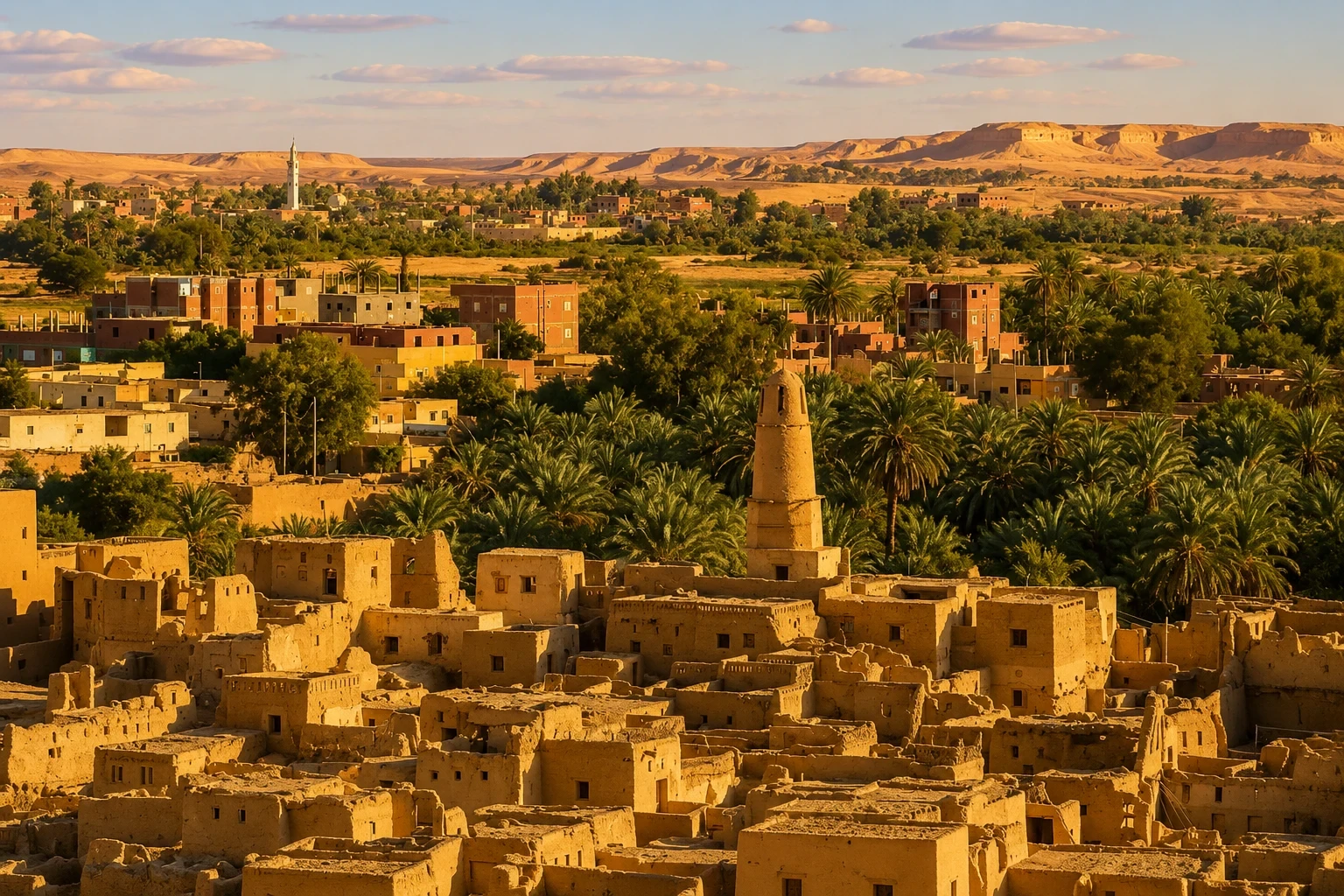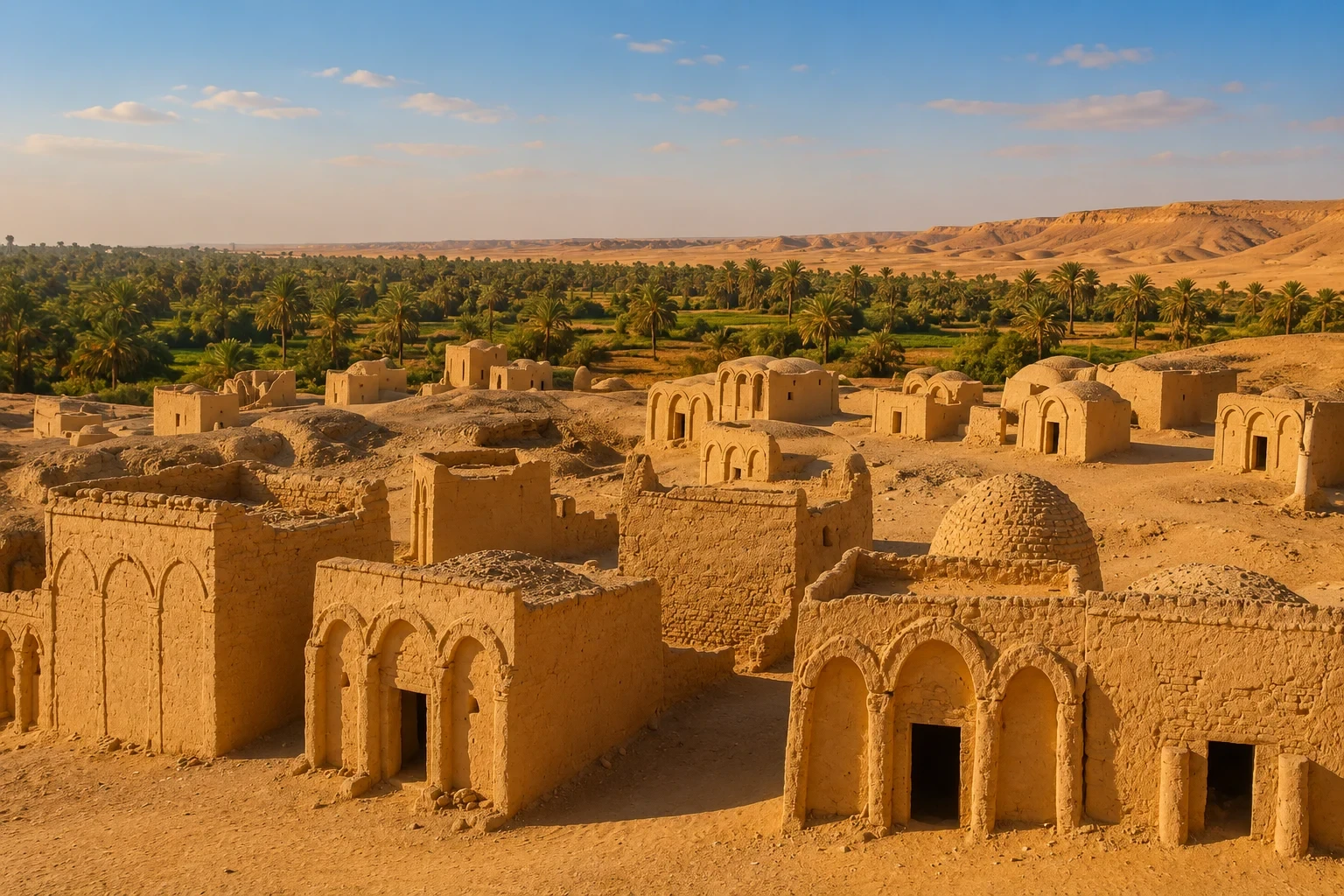

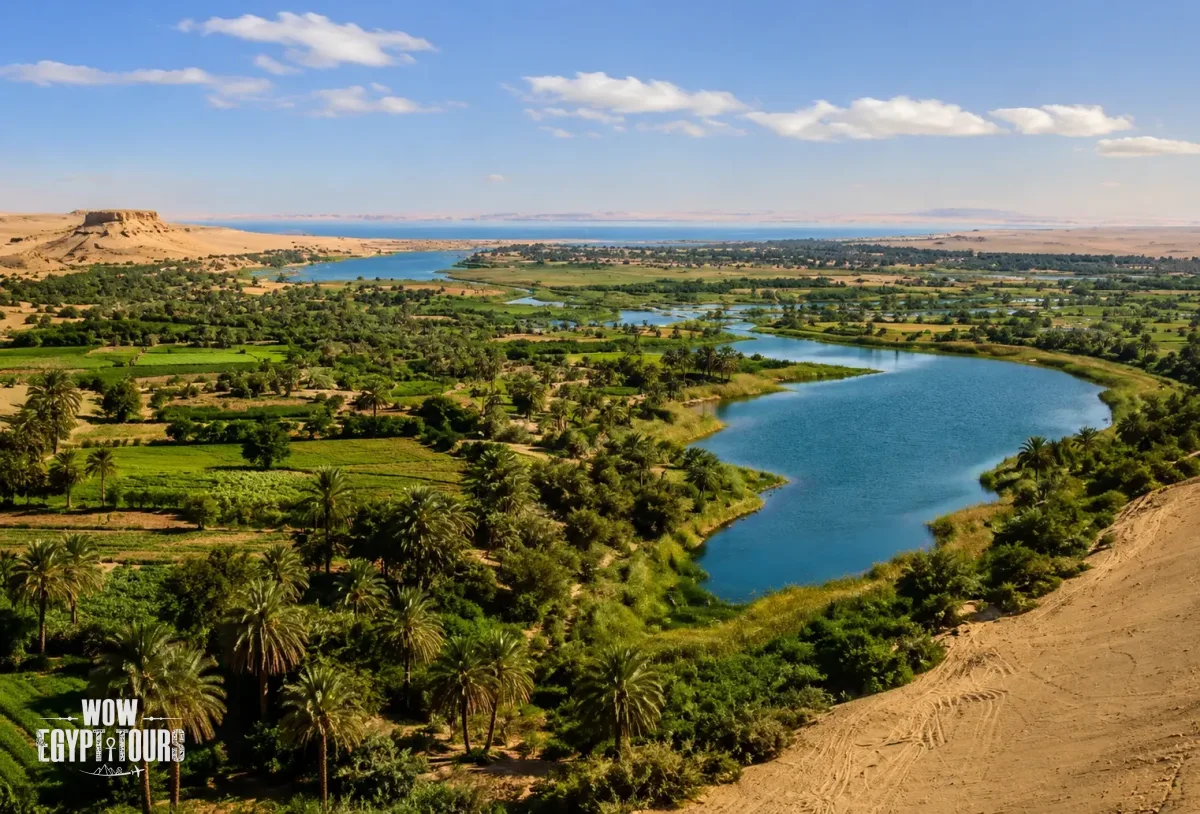

The Bahariya Oasis is the most archaeologically sensational, the most geologically dramatic, and the most completely rewarding of all the great oasis destinations in the Egyptian Western Desert, a fertile depression in the limestone plateau of the Western Desert approximately 370 kilometers southwest of Cairo that conceals beneath its date palm gardens and its ancient volcanic hills one of the most extraordinary collections of ancient Egyptian, Greco-Roman, and geological heritage available at any single destination in the Egyptian interior, and that serves as the primary base and the essential hub for the most celebrated and the most internationally recognized adventure travel circuit in all of Egypt, the Western Desert safari that encompasses the Black Desert to the north and the magnificent White Desert to the south. Known in antiquity as the Oasis of the North, the Bahariya Oasis was one of the most agriculturally productive and the most politically significant of the seven major oases of the Egyptian Western Desert, producing wine of such celebrated quality in the Pharaonic and Roman periods that it was exported throughout Egypt and into the Mediterranean trade networks as a luxury agricultural commodity of the highest prestige, and serving as a strategic administrative and military outpost of the Egyptian state on the desert routes connecting the Nile Valley with the Libyan Desert territories to the west. This extraordinary destination is accessible through Egypt Desert Safari Tours and Egypt Travel Packages, both of which WOW Egypt Tours proudly offers to travelers from around the world as part of Egypt Tours Packages that encompass the extraordinary natural and cultural heritage of the Egyptian Western Desert.
The Bahariya Oasis Egypt achieved its most dramatic modern moment of international archaeological recognition with the discovery in 1996 of the Valley of the Golden Mummies, a vast Greco-Roman period cemetery containing hundreds of magnificently decorated mummies with golden masks, elaborate painted cartonnage, and painted linen wrappings of exceptional artistic quality, discovered by the most prosaic possible means when an Egyptian Antiquities Inspector's donkey stumbled into an underground burial shaft north of the main oasis town of Bawiti and revealed the opening of one of the most extraordinary ancient burial sites ever discovered in the entire Egyptian archaeological record. The Valley of the Golden Mummies, estimated to contain the remains of between four thousand and ten thousand individuals from the Greco-Roman period of Bahariya's history, is now recognized as potentially the largest ancient mummy cemetery in all of Egypt, a discovery of such magnitude and such immediate visual drama that it transformed the scholarly and popular understanding of the Bahariya Oasis from a remote desert curiosity and adventure travel staging post into one of the most archaeologically significant sites in the entire Nile Valley heritage landscape. Combined with the extraordinary natural heritage of the Black Desert that lies immediately to the north of the oasis depression and the supreme natural beauty of the White Desert that stretches south from the Farafra Oasis approximately 180 kilometers beyond, the Bahariya Oasis provides the most complete and the most personally extraordinary combination of archaeological, geological, and natural heritage experiences available at any single destination in the Egyptian Western Desert. WOW Egypt Tours includes the Bahariya Oasis as the essential hub and the primary archaeological and cultural destination of all comprehensive Western Desert Safari Tours and Egypt Desert Safari programmes.

What Is The Bahariya Oasis?
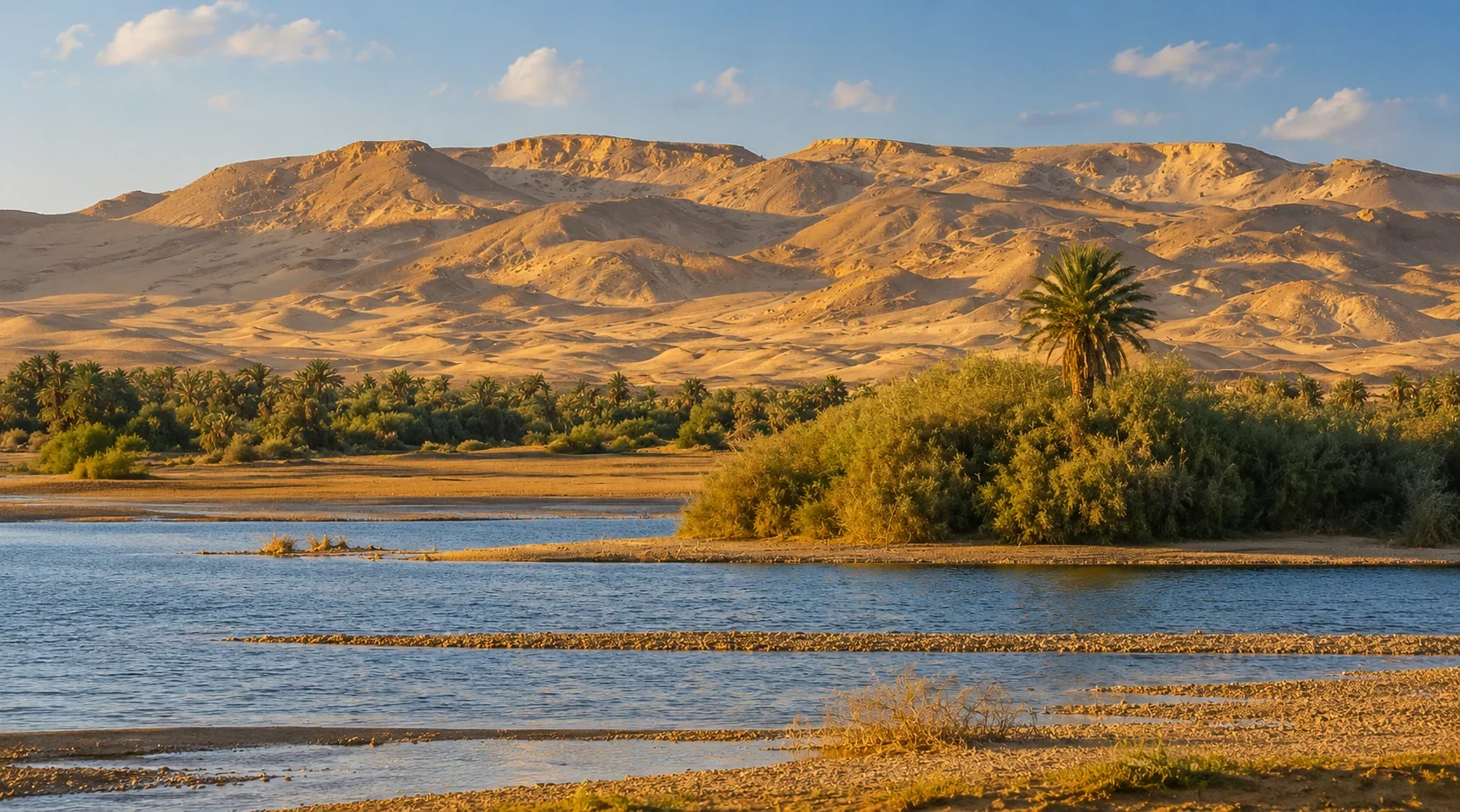
The Bahariya Oasis is a natural depression in the limestone plateau of the Egyptian Western Desert, occupying an elliptical basin approximately 94 kilometers long from north to south and approximately 42 kilometers wide from east to west, whose floor lies at an average elevation of approximately 120 meters below the surrounding plateau surface, with the lowest points of the depression approximately 133 meters below the plateau rim. The oasis depression is fed by a system of natural artesian springs and wells that draw on the Nubian Sandstone Aquifer System, one of the largest underground freshwater reservoirs in the world, whose water resources support the agricultural economy of the oasis and the lush vegetation of the date palm gardens, olive groves, apricot orchards, and vegetable gardens that give the Bahariya its character as a fertile island of green in the surrounding desert landscape. The main settlement of the oasis is the town of Bawiti, the administrative capital of the Bahariya region and the primary base for all tourism operations in the Western Desert safari circuit, which together with the adjacent villages of Qasr and El Aguz constitutes the main inhabited area of the oasis depression with a combined population of approximately 30,000 people.
The Bahariya Oasis is geologically and topographically the most varied and the most visually dramatic of the seven major oases of the Egyptian Western Desert, encompassing within its depression boundaries not only the fertile agricultural areas around the springs and villages but also the extraordinary Black Desert volcanic landscape that forms the northern approach to the oasis, the isolated basalt and dolerite peaks and hills that rise from the oasis floor and its surroundings in dramatic geological formations that give the Bahariya landscape a volcanic character entirely different from the sandstone and limestone geology of the other Western Desert oases, the hot and cold springs of the oasis depression whose therapeutic mineral waters have attracted visitors since ancient times, and the archaeological sites of extraordinary significance that include the Valley of the Golden Mummies, the ancient tombs of the New Kingdom oasis governors, and the ruins of the Ptolemaic and Roman period settlements that document more than three thousand years of continuous human occupation of this remarkable desert outpost.
Who Were The Ancient Rulers Of Bahariya Oasis?
The Bahariya Oasis has been under the administration of successive Egyptian ruling powers from the earliest documented period of Pharaonic history through the New Kingdom, the Late Period, the Ptolemaic, Roman, Byzantine, and Islamic eras to the present day Egyptian national administration, and the archaeological record of the oasis preserves significant physical evidence for most of these successive phases of political authority in the form of royal monuments, administrative buildings, temples, and funerary installations of considerable historical and artistic significance. The most important ancient rulers associated with the Bahariya Oasis are the New Kingdom pharaohs of the 18th and 19th Dynasties, particularly Amenhotep III and Ramesses II, whose administrative attention to the oasis region is documented in the contemporary Egyptian historical record, and the local oasis governors of the New Kingdom period whose elaborately decorated rock-cut tombs near Bawiti are among the most significant and the most visually impressive ancient Egyptian monuments available at any oasis site in the Western Desert.
The oasis governors of the 26th Dynasty (Saite Period), particularly the governors Bannentiu and Zed-Amun-efankh whose elaborately painted burial chambers in the El Qasr necropolis are among the finest examples of late Pharaonic funerary art available anywhere in the Western Desert, represent another peak of political and cultural significance for the Bahariya Oasis in the ancient Egyptian record, providing the most detailed and the most artistically accomplished surviving evidence for the administrative and religious life of the oasis community in the first millennium BCE. The Ptolemaic and Roman periods, during which the Valley of the Golden Mummies was created and during which the oasis was reorganized as a productive agricultural province of the Ptolemaic and Roman empires, represent the most archaeologically spectacular period of Bahariya's ancient history, with the extraordinary Golden Mummies cemetery providing a visual record of the oasis community's economic prosperity, cultural sophistication, and religious life in the Greco-Roman period that is without parallel in the Western Desert archaeological record.
The Valley Of The Golden Mummies
The Valley of the Golden Mummies is the most sensational and the most internationally celebrated archaeological discovery associated with the Bahariya Oasis, a vast Greco-Roman period cemetery discovered in 1996 when an Egyptian Antiquities Inspector named Zahi Hawass, later to become one of the most prominent Egyptologists in the world as Secretary General of the Egyptian Supreme Council of Antiquities, was investigating the area north of Bawiti where a donkey belonging to a local guard had stumbled into an underground burial shaft. The discovery of the underground tomb chamber revealed the opening of what has proved to be one of the largest and the most magnificently decorated ancient burial sites ever found in the entire Egyptian archaeological record, a complex of underground tombs and burial chambers containing the remains of hundreds of individuals from the Greco-Roman period decorated with some of the finest and the most elaborate mummy preparation, golden funerary masks, and painted cartonnage work available from any ancient Egyptian burial site outside the Cairo Museum's main collection.
The mummies of the Valley of the Golden Mummies are remarkable not only for the quantity of individuals represented in the cemetery, estimated at between four thousand and ten thousand based on the initial survey of the site boundaries, but for the extraordinary quality of their funerary equipment and the range of social classes and economic levels represented in the different types of burial found at the site. The most spectacular mummies are those decorated with full golden face masks of beaten gold leaf applied over a plaster base, covering the entire face and sometimes extending to the upper chest in a tradition that combines the ancient Egyptian mummy mask tradition with the Hellenistic artistic traditions of the Ptolemaic and Roman periods to create funerary masks of extraordinary artistic synthesis and individual expressive power. Other mummies are wrapped in elaborately painted linen cartonnage covers depicting traditional Egyptian funerary scenes including the weighing of the heart, the journey through the underworld, and the reception of the deceased by Osiris and the other gods of the Egyptian afterlife tradition, while the simplest burials of the cemetery represent individuals of more modest economic means whose mummies were prepared with great care but with less elaborate decorative treatment than the golden mask burials of the wealthier members of the Bahariya community.
The systematic excavation of the Valley of the Golden Mummies, conducted by the Egyptian Supreme Council of Antiquities under the direction of Zahi Hawass since the initial discovery in 1996, has so far exposed only a small fraction of the estimated total cemetery extent, with approximately 250 mummies recovered from the initial excavation seasons and the vast majority of the cemetery's estimated contents still unexcavated. The mummies recovered from the initial excavations are now displayed in the Bahariya Museum in Bawiti, providing the most accessible public encounter with the extraordinary funerary heritage of the Greco-Roman period Bahariya community available to visitors to the oasis, while the site of the Valley of the Golden Mummies itself is accessible to visitors through organized guided visits that provide access to the partially excavated and partially preserved cemetery complex in the desert north of Bawiti.
Bahariya Oasis Location In Egypt
The Bahariya Oasis is located in the Giza Governorate of the Egyptian Western Desert, approximately 370 kilometers southwest of Cairo on the Desert Road that connects the Egyptian capital with the Western Desert oasis chain, approximately 8 hours drive in the era before the Desert Road was fully paved and now approximately 3.5 to 4 hours by private vehicle on the modern paved highway. The oasis occupies a depression in the Great Sand Sea Plateau at an elevation approximately 120 meters below the surrounding plateau surface, with the rim of the depression forming the dramatic escarpment landscape that frames the oasis when approached from the north along the Desert Road. The main town of Bawiti, the administrative capital of the Bahariya district and the primary tourism base for the Western Desert safari circuit, is located at the northern end of the oasis depression approximately 8 kilometers from the Desert Road junction. To the north of Bawiti, beyond the rim of the oasis depression, the Black Desert volcanic landscape begins approximately 50 kilometers from the town, providing the most immediately dramatic natural heritage experience of the northern approach to the Bahariya safari circuit. To the south, the Desert Road continues approximately 180 kilometers through Crystal Mountain to the Farafra Oasis and the entrance to the White Desert National Park, providing the most celebrated and the most internationally recognized natural heritage destination of the complete Western Desert safari circuit. WOW Egypt Tours provides private four-wheel-drive vehicle transportation from Cairo to the Bahariya Oasis as part of all comprehensive Western Desert Safari Tours and Egypt Desert Safari programmes.
Bahariya Oasis Fun Facts
The ancient Bahariya Oasis was one of the most celebrated wine-producing regions in ancient Egypt, with the wines of Bahariya mentioned in ancient Egyptian texts as a luxury product of high quality exported to the royal court and the wealthy elite of the Nile Valley from at least the New Kingdom period through the Roman era. The remains of ancient wine presses and storage facilities have been identified at several locations in the oasis, providing physical evidence for the large-scale viticulture that made Bahariya wines a prestigious commodity in the ancient Egyptian and Roman Mediterranean economies. The cultivation of wine grapes in the oasis, supported by the artesian spring waters and the agricultural expertise of the oasis community, was an agricultural specialization of considerable economic importance that gave the Bahariya Oasis a distinctive place in the ancient Egyptian agricultural and commercial landscape as a producer of a commodity unavailable in the main Nile Valley agricultural system.
The Bahariya Oasis contains within its boundaries or immediately adjacent to them some of the finest examples of ancient Egyptian volcanic hill geology in the entire Western Desert, including the extraordinary basalt-capped mountains and volcanic hills that give the oasis landscape its most dramatic visual character. The most famous of these volcanic formations is Gebel el-Dist, or the Pyramid Mountain, an isolated basalt-capped hill of such perfect pyramidal form that it was noted by ancient Egyptians and is still immediately recognizable as a natural geological echo of the artificial pyramid forms of the Nile Valley royal funerary tradition, its geometrically regular silhouette rising from the flat oasis floor in a composition of natural geological precision that has made it one of the most photographed natural landforms in the entire Bahariya landscape.
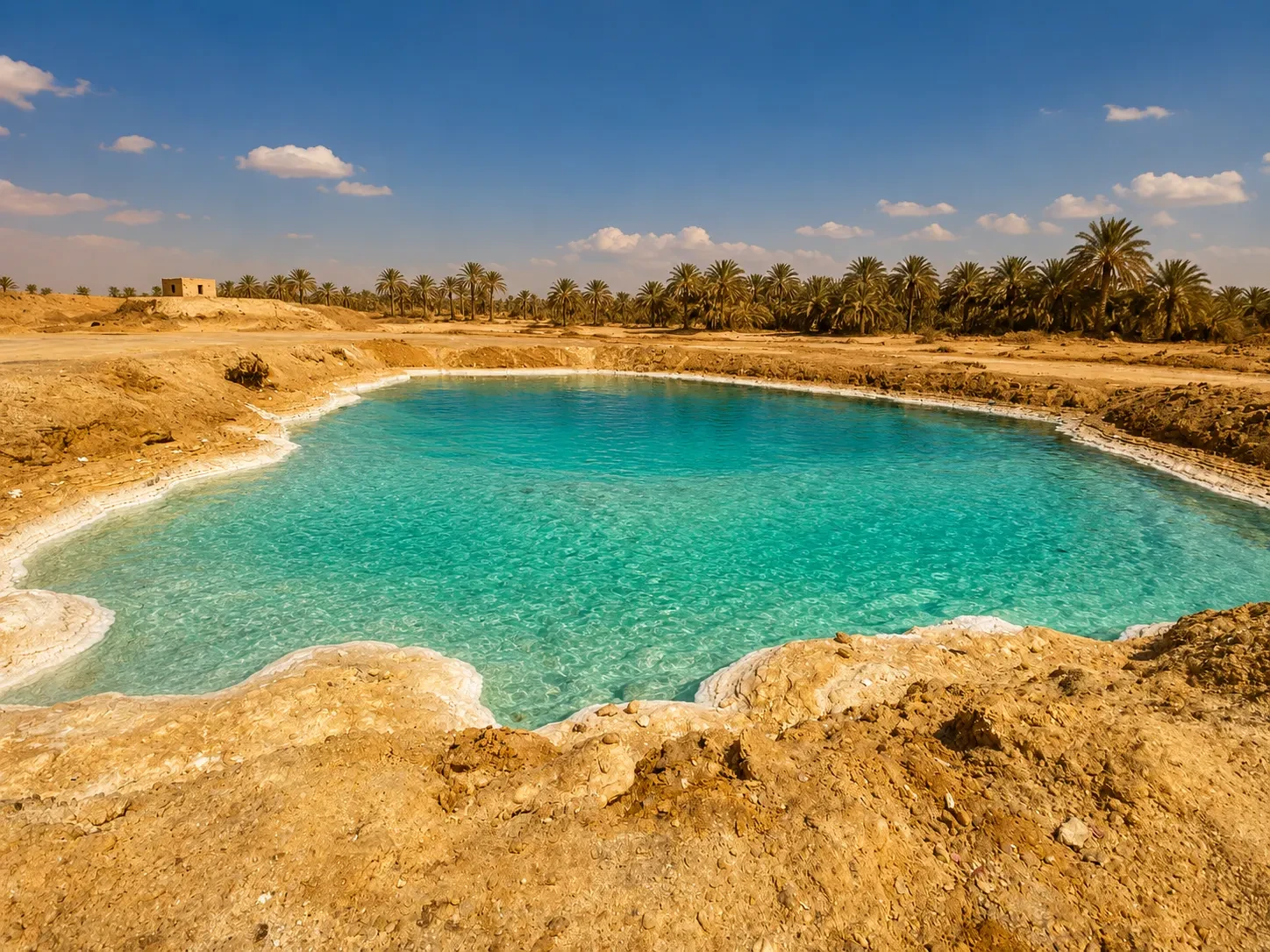
The hot springs of the Bahariya Oasis, whose mineral-rich thermal waters emerge at temperatures of approximately 40 to 45 degrees Celsius from the underground aquifer system, have been used for therapeutic bathing since ancient times and continue to attract visitors seeking the relaxing and therapeutically reputed benefits of the mineral-rich desert spring waters. The most accessible of the Bahariya hot springs provide a deeply atmospheric and genuinely relaxing desert bathing experience that is entirely unlike anything available at any resort or hotel in the Egyptian Nile Valley, combining the therapeutic warmth of the mineral waters with the extraordinary silence and the extraordinary visual drama of the desert landscape surrounding the spring pools.
Why Is It Called Bahariya Oasis?
The name Bahariya derives from the Arabic word Bahar, meaning sea or large body of water, combined with the suffix iya that forms a relational adjective in Arabic, giving the name the approximate meaning of the northerly one or the one of the sea direction. The ancient Arabic name for the oasis reflects its geographical position as the northernmost of the great western oasis chain of Egypt, situated closest to the Mediterranean Sea and the Nile Delta in the chain of oases that extends southward through the Western Desert from Bahariya through Farafra, Dakhla, and Kharga. The direction north, toward the Mediterranean, was in the classical Arabic geographical tradition associated with the direction of water and of the sea, and the designation of the northernmost Western Desert oasis as the sea-direction oasis or the northern oasis accurately reflects its position in the geographical hierarchy of the oasis chain relative to the more southerly oases. The oasis was known in antiquity by the ancient Egyptian name Wahat el-Bahariya, oasis of the north, which captures the same geographical positioning in the ancient Egyptian language, and the Arabic name is a direct linguistic successor to this ancient Egyptian geographical designation rather than an independent Arabic coinage. The name Bahariya is also sometimes transliterated as Bahareyya or Bahariye in older Western travel and scholarly literature, reflecting the variant pronunciations of the Arabic name in different Egyptian dialect traditions, but the standard transliteration Bahariya is now universally used in Egyptian tourism and heritage literature.
Bahariya Oasis History
The history of human occupation in the Bahariya Oasis extends back at least to the Predynastic period of ancient Egyptian civilization, approximately 5,000 years ago, when the oasis depression's artesian spring system and its agricultural potential first attracted permanent settlement by communities who recognized in the natural water resources of the depression a basis for sustainable desert agriculture of the date palms, grains, and other crops that formed the foundation of oasis subsistence. The earliest documented period of significant historical importance for the Bahariya Oasis is the New Kingdom of ancient Egypt, approximately 1550 to 1070 BCE, when the oasis was incorporated into the administrative system of the Egyptian state as an outpost of the pharaonic government on the western desert frontier, with a governor appointed by the pharaoh to administer the oasis territory, collect agricultural taxes, and maintain Egyptian military and commercial control of the desert routes that connected the Nile Valley with the oases and with the Libyan territories beyond. The elaborately decorated rock-cut tombs of the New Kingdom oasis governors discovered in the El Qasr area near Bawiti, particularly the tomb of the governor Amenhotep and the adjacent tombs of other oasis officials of the 18th and 26th Dynasties, are the most significant surviving monuments of this Pharaonic period of Bahariya's history and provide the most direct available evidence for the political, religious, and cultural life of the oasis community in the age of the great Egyptian empire.
The Ptolemaic period (323 to 30 BCE) and the subsequent Roman period (30 BCE to 395 CE) represent the most archaeologically spectacular phase of Bahariya's ancient history, when the oasis was reorganized and developed as a productive agricultural province of the Ptolemaic and Roman empires whose wine, olive oil, dates, and other agricultural products were integrated into the Mediterranean commercial networks of the Hellenistic and Roman worlds. The Valley of the Golden Mummies cemetery, created during this period to accommodate the growing and increasingly prosperous oasis community, provides the most dramatic and the most internationally celebrated evidence for the extraordinary cultural richness and the economic vitality of the Greco-Roman period Bahariya community, whose funerary investments in the elaborately decorated mummies and the extensively equipped burial chambers of the Golden Mummies cemetery reflect a level of community wealth and cultural sophistication that compares favorably with the contemporaneous urban communities of the Egyptian Nile Valley cities. The Byzantine period and the subsequent Arab conquest of Egypt in 641 CE brought the ancient oasis civilization to the end of its most archaeologically documented phase, and the subsequent medieval Islamic period saw the oasis community continue as an agricultural and trading outpost of the Islamic Egyptian state, producing dates, olives, and other desert agricultural products for the markets of Cairo and the Nile Valley while maintaining its distinctive oasis cultural traditions under successive Mamluk, Ottoman, and modern Egyptian administrations.
The Story Of The Golden Mummies Discovery
The story of the discovery of the Valley of the Golden Mummies in 1996 is one of the most dramatically accidental and the most immediately consequential archaeological discoveries of the late 20th century in Egypt, a discovery that rivals in its sudden revelation of a completely unsuspected ancient heritage dimension the most celebrated accidental archaeological finds of the entire history of Egyptology. The discovery was made not by a systematic archaeological survey or by a planned excavation programme but by the most prosaic and the most mundane of accidental circumstances: an antiquities guard named Abu al-Nasr Muhammed al-Muhammed Rashed was walking his donkey through the desert north of Bawiti in 1996 when the animal's leg broke through the desert surface into the roof of an ancient underground burial chamber, revealing an opening in the desert floor through which the antiquities inspector Zahi Hawass, summoned immediately to investigate the find, could look down into a burial chamber containing ancient mummies of extraordinary visual splendor and immediate archaeological significance. The sight of the golden masks glinting in the flashlight beam as Hawass peered down through the donkey's accidental excavation into the burial chamber below is one of the most celebrated moments of modern Egyptian archaeological discovery, comparable in its sudden revelation of ancient treasure to the moment when Howard Carter looked through the breach in the wall of Tutankhamun's tomb in 1922 and saw the gold glinting in the darkness beyond.
The initial excavation of the site, conducted by Hawass and his team over the following seasons, revealed not simply a single burial chamber but a complex of underground tombs extending over a wide area of desert north of Bawiti, with multiple family tombs of varying size and varying degrees of decoration containing a total of 254 mummies in the initial excavation area and suggesting by the survey of the site boundaries that the total cemetery might extend over an area large enough to contain between four thousand and ten thousand individuals. The scale of the discovery, combined with the extraordinary quality of the funerary equipment particularly the gold-masked mummies, made the Valley of the Golden Mummies an immediate international sensation, reported in newspapers, magazines, and television documentaries throughout the world and attracting the attention of the entire global archaeological and heritage tourism community to the Bahariya Oasis as the site of one of the most significant archaeological discoveries of the century. The ongoing excavation of the site, conducted in stages as resources and archaeological priorities permit, continues to yield new mummies and new information about the Greco-Roman period oasis community, and the site's partial public accessibility through organized guided visits makes it one of the most compelling and the most personally affecting heritage experiences available at any oasis destination in the Egyptian Western Desert.
Bahariya Oasis Key Attractions And Features
The Bahariya Museum
The Bahariya Museum in Bawiti is the primary institutional repository for the extraordinary funerary heritage recovered from the Valley of the Golden Mummies excavations, displaying the most significant and the most visually spectacular mummies and funerary artifacts from the initial excavation seasons in a purpose-built museum facility that provides the most accessible and the most completely interpreted public encounter with the Golden Mummies heritage available at any point in the Bahariya Oasis. The museum's collection includes examples of all the different burial types found in the Valley of the Golden Mummies, from the most elaborate gold-masked mummies of the wealthy oasis elite to the more modestly decorated but equally carefully prepared mummies of the middle and lower economic levels of the oasis community, providing a visually extraordinary and socially comprehensive picture of the Greco-Roman period Bahariya community's funerary practices and religious beliefs. The museum also displays artifacts from other archaeological sites in the Bahariya region, including items from the ancient tombs of the New Kingdom oasis governors and from the various Pharaonic and Ptolemaic period sites distributed across the oasis landscape, giving the institution a broader chronological scope than the Golden Mummies alone and making it the most comprehensive single source of interpretive information about the complete archaeological heritage of the Bahariya Oasis available to visitors. A visit to the Bahariya Museum at the beginning of any Bahariya heritage programme is strongly recommended, as the museum provides the essential visual and historical context that makes the subsequent visit to the Valley of the Golden Mummies site and the other Bahariya archaeological sites most fully comprehensible and most personally rewarding.
The Valley Of The Golden Mummies Site
The site of the Valley of the Golden Mummies north of Bawiti is accessible to visitors through organized guided visits that allow access to the partially excavated and partially preserved cemetery complex in the desert beyond the town, providing a direct encounter with the archaeological landscape of the discovery that is entirely different from the museum experience of the individual mummies and artifacts. The site visit allows visitors to understand the physical scale of the cemetery, to appreciate the desert landscape context in which the ancient burials are situated, and to see the partially excavated tomb chambers whose architecture and spatial organization provide direct evidence for the burial practices and the social organization of the Greco-Roman period Bahariya community. The visibility of the ongoing archaeological work at the site, where areas of active excavation are visible alongside the preserved sections of previously excavated tombs, gives the Valley of the Golden Mummies site visit a quality of living archaeological drama that is available at very few heritage sites in Egypt and that reinforces the excitement of the original 1996 discovery with the continuing evidence of new archaeological understanding being actively produced at the site.
The Ancient Tombs Of The New Kingdom Governors
Among the most historically significant and the most artistically accomplished ancient monuments in the Bahariya Oasis are the rock-cut tombs of the oasis governors of the New Kingdom and Late Period of ancient Egyptian history, located in the El Qasr area near Bawiti and providing the most direct available evidence for the political, religious, and artistic culture of the Pharaonic period Bahariya community. The tomb of the New Kingdom governor Amenhotep, one of the most elaborately decorated ancient Egyptian tombs in the entire Western Desert, preserves in its underground chambers painted decoration of considerable artistic quality depicting the standard scenes of the ancient Egyptian funerary tradition including the voyage of the solar boat, the weighing of the heart, and the reception of the deceased by Osiris and the other gods of the underworld, providing a visual programme that connects the remote oasis community directly to the mainstream ancient Egyptian religious and artistic traditions of the Nile Valley royal and noble tombs. The adjacent tombs of the Late Period governors Bannentiu and Zed-Amun-efankh, belonging to the 26th Dynasty when the Bahariya Oasis reached a peak of political and cultural significance within the Egyptian state, are equally remarkable for the quality and the completeness of their painted decoration and for the historical information they provide about the administration and the religious life of the oasis community in the first millennium BCE.
The Black Desert And English Mountain
The most dramatic and the most immediately visually overwhelming natural heritage experience associated with the Bahariya Oasis is the Black Desert, the vast volcanic landscape of dark dolerite and basalt rocks that covers the desert terrain north of the oasis depression and that is the first and the most geologically dramatic natural heritage destination of the complete Western Desert safari circuit. The Black Desert, accessible from Bawiti by private four-wheel-drive vehicle in approximately 30 to 45 minutes, provides an experience of primordial geological drama in the ancient volcanic landscape whose conical black hills, dark stone plains, and the extraordinary panoramic viewpoint of the English Mountain summit (Gebel El Ingilizi, a WWII British military observation post) combine to create one of the most personally affecting natural heritage encounters available in the Egyptian desert world. The Black Desert visit, typically organized as the opening chapter of the Bahariya-based Western Desert safari that subsequently continues south to Crystal Mountain and the White Desert, provides the geological counterpoint to the chalk white beauty of the White Desert in the most dramatically complete natural landscape contrast available at any pair of desert destinations within driving distance of each other in the entire Egyptian natural heritage landscape.
The Hot Springs Of Bahariya
The artesian hot springs of the Bahariya Oasis, emerging at temperatures of approximately 40 to 45 degrees Celsius from the underground Nubian Sandstone Aquifer system, are one of the most distinctive and the most sensory-rich heritage experiences available in the oasis, providing an opportunity for therapeutic desert bathing in the mineral-rich thermal waters that has attracted travelers, pilgrims, and health seekers to the Bahariya springs since ancient times. The most accessible hot springs near Bawiti are organized as simple bathing facilities whose rustic desert character and complete absence of commercial resort infrastructure give the hot spring experience an authenticity and an atmospheric quality entirely appropriate to the remote oasis context, creating an experience of relaxing immersion in warm desert mineral waters under the open sky of the Western Desert that is genuinely unlike anything available at any more formal or more commercially developed thermal spring facility in Egypt. The combination of the therapeutic warmth of the spring waters, the extraordinary silence of the surrounding desert landscape, and the visual drama of the volcanic hills and the palm garden landscape of the oasis visible from the spring pools gives the Bahariya hot spring experience a quality of restorative desert peace and sensory richness that makes it one of the most deeply satisfying and the most personally memorable components of any Bahariya Oasis programme.
Gebel El-Dist And The Volcanic Hills
The Bahariya Oasis depression and its immediate surroundings contain some of the most dramatically volcanic geological formations in the entire Egyptian Western Desert, including the extraordinary Gebel el-Dist or Pyramid Mountain, an isolated basalt-capped hill of such geometrically regular pyramidal form that its natural geological profile immediately echoes the artificial pyramid forms of the ancient Egyptian royal funerary tradition, creating one of the most visually striking natural geological illusions available at any desert site in Egypt. Gebel el-Dist rises approximately 300 meters above the surrounding desert floor in a symmetrical pyramidal profile of ancient black basalt that can be admired from various viewpoints around the northern oasis depression, its perfectly regular cone form a product of the same volcanic cap rock erosion process that creates the conical hills of the adjacent Black Desert terrain but operating at a much larger scale to produce one of the most impressive natural volcanic landforms in the entire Western Desert region. The climb to viewpoints overlooking Gebel el-Dist and the other significant volcanic hills of the northern Bahariya depression provides some of the finest elevated perspectives on the complete oasis landscape available at any accessible point in the region.
The Palm Gardens And Agricultural Landscape
The agricultural landscape of the Bahariya Oasis, with its extensive date palm gardens, olive groves, apricot orchards, and vegetable gardens watered by the artesian spring system, provides one of the most visually rewarding and the most culturally authentic dimensions of the complete Bahariya experience, a direct encounter with the living agricultural tradition that has sustained oasis communities in the Western Desert for thousands of years and that gives the Bahariya Oasis its most immediately appealing character as a genuine fertility island in the surrounding desert. Walking through the palm gardens of the oasis in the early morning or the late afternoon, with the sunlight filtering through the dense canopy of date palm fronds and the sounds of the irrigation channels and the agricultural activity of the oasis farmers creating an atmosphere of active rural life entirely unlike the silent natural heritage of the adjacent desert landscapes, is one of the most personally satisfying and the most authentically Egyptian cultural experiences available at any oasis destination in the Western Desert.
Why Is The Bahariya Oasis Important?
The Bahariya Oasis is important for reasons that span archaeological heritage, geological natural heritage, living cultural tradition, and the essential logistical and strategic role it plays as the hub of the most celebrated natural adventure tourism circuit in all of Egypt. As an archaeological site, it is the location of the Valley of the Golden Mummies, potentially the largest and the most magnificently equipped ancient mummy cemetery in the entire Egyptian heritage record, a discovery of such magnitude and such immediate visual drama that it has transformed the scholarly and the popular understanding of the Greco-Roman period in the Egyptian Western Desert and that continues to yield new archaeological information with each season of ongoing excavation. The ancient tombs of the New Kingdom and Late Period oasis governors provide equally significant evidence for the Pharaonic period heritage of the oasis, connecting the remote Western Desert community directly to the mainstream ancient Egyptian artistic and religious traditions of the Nile Valley in a programme of funerary art of considerable historical and artistic importance.
As a natural heritage hub, the Bahariya Oasis is the essential gateway and the primary base for the complete Western Desert safari circuit, the combination of the Black Desert, Crystal Mountain, and the White Desert that is the most internationally celebrated adventure and natural heritage travel experience in all of Egypt. Without the Bahariya Oasis as the accommodation base, the food and fuel supply hub, and the logistical center of the Western Desert safari circuit, the extraordinarily beautiful and extraordinarily remote natural heritage destinations of the desert surrounding the oasis would be inaccessible to most visitors. WOW Egypt Tours uses the Bahariya Oasis as the essential hub of all comprehensive Western Desert Safari Tours and Egypt Desert Safari programmes, providing the expert local knowledge, the accommodation arrangements, and the desert logistics that make the complete Western Desert experience available to visitors from around the world.
What Are Some Interesting Facts About Bahariya Oasis?
The Donkey That Changed History
The story of the donkey whose stumbling leg in 1996 revealed the entrance to the Valley of the Golden Mummies is the most celebrated and the most frequently retold accidental discovery anecdote in the modern history of Egyptian archaeology, a story that has entered the popular heritage consciousness of Egyptology alongside the most celebrated accidental discoveries of the discipline's history, including the discovery of the Rosetta Stone by Napoleon's soldiers in 1799 and the exposure of Tutankhamun's tomb by Howard Carter's construction workers in 1922. The story has been told in books, documentaries, newspaper articles, and travel guides in every major language of the world, and it has given the humble donkey of the Bahariya guard Rashed a somewhat unexpected celebrity in the international archaeological imagination as the inadvertent agent of one of the most significant ancient Egyptian discoveries of the 20th century. The story also illustrates with particular vividness the characteristic pattern of accidental archaeological discovery that has produced many of the most important finds in the Egyptian heritage record, where the most extraordinary ancient heritage lies concealed just below the desert surface waiting to be revealed by the most prosaic and the most accidental of excavating agents.
The Ancient Wine Capital Of The Western Desert
The ancient reputation of the Bahariya Oasis as one of the finest wine-producing regions in ancient Egypt, documented in both ancient Egyptian administrative records and in the Roman-period accounts of the Western Desert oases, represents one of the most unexpected and the most historically intriguing dimensions of the oasis's ancient cultural heritage, connecting the remote desert community directly to one of the most prestigious and the most widely traded luxury commodities of the ancient Mediterranean world. The climate and the soil conditions of the Bahariya depression, with its artesian spring waters, its fertile alluvial soils, and its combination of hot days and cool nights that is ideal for the production of high-quality wine grapes, made it one of the most suitable viticulture environments in the Egyptian Western Desert, and the ancient Egyptian and Roman administrations both recognized and exploited this agricultural advantage by organizing the oasis wine production as a specialized commercial agriculture serving the luxury markets of the Egyptian state and the Mediterranean trading networks. The ancient wine presses, storage facilities, and wine-related artifacts identified at several Bahariya sites provide direct physical evidence for this ancient viticulture tradition and give the modern visitor to the oasis an unexpected agricultural heritage dimension that significantly enriches the more familiar archaeological and geological heritage of the Bahariya landscape.
The Oasis That Connects Three Deserts
The Bahariya Oasis holds a unique position in the geography of the Egyptian Western Desert as the single oasis that serves as the essential geographical and logistical connection between three of the most extraordinary desert natural heritage landscapes in Egypt: the Black Desert to the north whose volcanic landscape represents the geological deep past of the Western Desert region, the White Desert to the south whose chalk formation landscape represents the geological deep past of the Cretaceous sea that once covered the region, and the Great Sand Sea to the west whose immense erg landscape represents the ongoing aeolian processes that continue to shape the Western Desert surface in the present. This geographical position at the junction of three dramatically different geological and natural heritage environments gives the Bahariya Oasis a natural heritage significance that extends far beyond its own considerable geological and archaeological interest, making it the most strategically important single node in the complete Western Desert natural heritage network and the destination whose understanding is most essential to the fullest possible appreciation of the complete Western Desert landscape in all its extraordinary geological variety.
What Is So Special About Bahariya Oasis?
The Most Complete Desert Heritage Experience In Egypt
What makes the Bahariya Oasis uniquely special among all the oasis destinations of the Egyptian Western Desert is the extraordinary completeness of the heritage experience it provides, combining in a single accessible destination the most sensational Greco-Roman period archaeological discovery of the late 20th century in Egypt, the most dramatically volcanic geological landscape in the Western Desert, the most celebrated adventure travel natural heritage circuit in the country, the most therapeutically authentic desert hot spring experience in the oasis tradition, the most characterful and the most historically rooted living oasis community in the Western Desert chain, and the essential gateway function that makes all the extraordinary natural heritage of the surrounding desert accessible to the visiting world. No other oasis in the Egyptian Western Desert offers this combination of archaeological drama, geological interest, natural heritage access, living cultural authenticity, and logistical importance in a single destination, and the Bahariya Oasis's unique combination of all these qualities in a single accessible package represents the most complete possible single-destination desert heritage experience available anywhere in the Egyptian interior.
Where Ancient History Meets Natural Wonder
The Bahariya Oasis is also uniquely special for the quality of the synthesis it achieves between ancient human heritage and natural geological heritage, a synthesis in which the same desert landscape that contains the golden mummies of the Greco-Roman period cemetery also contains the volcanic hills of the Black Desert geological heritage and provides the essential base for the chalk formation natural wonder of the White Desert, creating a single destination in which the ancient human story of oasis civilization, the geological deep time of the volcanic and chalk landscapes, and the living cultural tradition of the contemporary oasis community all coexist and mutually enrich each other in a heritage experience of extraordinary density and extraordinary personal impact. This quality of heritage synthesis, of multiple different kinds of extraordinary heritage experience converging on and enriching each other within the boundaries of a single accessible destination, is the most fundamental and the most irreplaceable quality of the Bahariya Oasis experience and the primary reason why it occupies such a central and such an indispensable position in the Western Desert safari circuit that makes it one of the most personally extraordinary adventure travel destinations in all of Egypt.
Bahariya Oasis Through The Ages
The complete history of the Bahariya Oasis from its first prehistoric settlement through the successive phases of Pharaonic, Ptolemaic, Roman, Byzantine, Islamic, and modern Egyptian administration traces one of the most continuously inhabited and the most consistently productive of the great oasis communities in the Egyptian Western Desert, a community whose resilience, whose agricultural expertise, and whose capacity to adapt to the successive political and cultural changes of more than five thousand years of continuous occupation have made it one of the most enduring and the most culturally distinctive communities in the entire North African desert world. The Pharaonic period, represented most significantly by the New Kingdom and Late Period governors' tombs of the El Qasr necropolis, documents the integration of the oasis community into the Egyptian state administrative system and its participation in the mainstream ancient Egyptian religious and artistic traditions. The Ptolemaic and Roman period, represented most dramatically by the Valley of the Golden Mummies, documents the transformation of the oasis community under the Hellenistic and Roman cultural influences into a prosperous and culturally sophisticated community whose funerary investments rival in their quality and their elaboration anything produced by the contemporaneous communities of the Egyptian Nile Valley cities.
The Islamic period, from the Arab conquest of Egypt in 641 CE to the present day, has been the longest single phase of the Bahariya community's history, encompassing more than thirteen centuries of continuous oasis life under successive Mamluk, Ottoman, and modern Egyptian administrations in which the community has maintained its distinctive oasis agricultural traditions of date palm cultivation, olive production, and desert water management while gradually developing the more diversified economy of the modern era that includes tourism infrastructure serving the rapidly growing Western Desert safari market. The modern development of the Bahariya Oasis as the primary hub of the Egyptian Western Desert safari circuit, accelerating from the 1980s onwards with the growing international popularity of the Western Desert safari experience, has brought significant economic benefits to the oasis community while also presenting significant challenges in the management of tourism growth and the preservation of the extraordinary natural and cultural heritage that makes the Bahariya Oasis one of the most remarkable desert destinations in the world.
Bahariya Oasis UNESCO Recognition
The archaeological heritage of the Bahariya Oasis, particularly the Valley of the Golden Mummies and the ancient tombs of the oasis governors, is recognized by UNESCO and by the international archaeological and heritage community as one of the most significant ancient heritage discoveries of the late 20th century in Egypt and as a site of outstanding universal value whose continued investigation and protection are of major importance for the scholarly understanding of the Greco-Roman period in the Egyptian Western Desert. The Egyptian Supreme Council of Antiquities, working in partnership with international archaeological missions and with the Egyptian Ministry of Tourism and Antiquities, manages the Valley of the Golden Mummies site and the other significant archaeological monuments of the Bahariya Oasis within the framework of Egypt's national heritage protection legislation and in accordance with international heritage conservation standards that ensure the long-term preservation of these extraordinary ancient monuments for future generations of scholars and visitors.
Best Time To Visit Bahariya Oasis
The best time to visit the Bahariya Oasis is during the cooler months from October through April, when the Western Desert climate provides the most comfortable conditions for outdoor desert exploration, hot spring bathing, archaeological site visits, and the desert camping that is the primary activity of the White Desert component of the Western Desert safari circuit. The spring months of March and April and the autumn months of October and November offer the most pleasant combination of warm daytime temperatures and cool evenings that make outdoor activity in the desert landscape most enjoyable without the extreme heat of the summer or the potential cold of the deepest winter nights. The winter months of December through February bring cool and sometimes cold conditions to the Bahariya depression, with temperatures dropping significantly at night and occasional cold desert winds that require warm clothing for outdoor activities, but providing the finest desert skies and the most atmospheric desert camping conditions of any season. The summer months of June through August bring extreme heat to the Bahariya Oasis, with temperatures regularly exceeding 40 degrees Celsius during the day, making outdoor archaeological site visits most comfortable only in the very early morning and restricting the most active desert exploration to the cooler hours of the day. WOW Egypt Tours operates Western Desert Safari programmes to the Bahariya Oasis year-round and provides expert guidance on optimal seasonal timing for all oasis and desert destinations.
Bahariya Oasis Opening Hours
The Bahariya Museum in Bawiti is open Saturday through Thursday from 9:00 AM to 5:00 PM and is closed on Fridays. The Valley of the Golden Mummies archaeological site is accessible through organized guided visits that can be arranged through licensed local guide services and through WOW Egypt Tours as part of comprehensive Bahariya Oasis heritage programmes. The ancient tombs of the New Kingdom governors are accessible through organized visits with licensed guides. The hot springs are accessible throughout the day and into the evening hours at the facilities near Bawiti. The natural heritage destinations including the Black Desert volcanic landscape are accessible throughout daylight hours with four-wheel-drive vehicles and licensed desert guides.
Bahariya Oasis Entrance Fees
Entrance to the Bahariya Museum: EGP 50 for adults, EGP 25 for students.
Entrance to the Valley of the Golden Mummies site and the ancient tombs of the oasis governors is subject to separate admission fees whose current rates should be confirmed with WOW Egypt Tours at the time of booking. All museum entrance fees and archaeological site admission fees for the Bahariya Oasis are included in the comprehensive Western Desert Safari Tour and Egypt Desert Safari programmes offered by WOW Egypt Tours.
How To Get To Bahariya Oasis
The Bahariya Oasis is located approximately 370 kilometers southwest of Cairo on the Desert Road, a drive of approximately 3.5 to 4 hours by private four-wheel-drive vehicle on the modern paved highway that connects Cairo with the Western Desert oasis chain. The Desert Road departs from the southwestern suburbs of Cairo in the direction of the Giza Pyramids plateau and then continues southwest through the desert plateau, passing the rest stops at approximately 100 and 200 kilometers from Cairo before reaching the Bahariya Oasis escarpment from which the oasis depression and the main town of Bawiti become visible approximately 370 kilometers from Cairo. Regular public bus services operate between Cairo and the Bahariya Oasis from the Cairo Turgoman Bus Station, but the most comfortable and the most practically appropriate transport for the Western Desert safari circuit is private four-wheel-drive vehicle, which is essential for the off-road desert exploration of the Black Desert and the White Desert that are the primary natural heritage destinations of the complete circuit. WOW Egypt Tours provides private four-wheel-drive vehicle transportation from Cairo to the Bahariya Oasis and throughout the complete Western Desert safari circuit as part of all Egypt Desert Safari Tours and Egypt Travel Packages that include the Western Desert.
How Long To Spend At Bahariya Oasis
Most Western Desert safari programmes allocate one overnight stay in the Bahariya Oasis as the first night's base for the complete circuit, with the second night's desert camping in the White Desert providing the most atmospheric overnight experience of the complete programme. A single night in Bahariya, with the afternoon and evening of the arrival day and the morning of the following day available for oasis heritage activities, is sufficient for a focused visit to the Bahariya Museum, a guided visit to the Valley of the Golden Mummies site or the governors' tombs, and an evening at the hot springs. Travelers with a serious interest in the Bahariya archaeological heritage, including the Valley of the Golden Mummies excavations, the New Kingdom tombs, and the Late Period funerary art, will benefit from a two-night Bahariya stay that allows a more comprehensive and more leisurely exploration of the oasis heritage before continuing south to Crystal Mountain and the White Desert. The Bahariya Oasis activities are most naturally and most effectively organized as the archaeological and cultural component of a complete Western Desert safari programme that also includes the Black Desert, Crystal Mountain, and the White Desert in a multi-day itinerary of three to five days from Cairo.
Tips For Visiting Bahariya Oasis
Visit the Bahariya Museum before any other heritage site in the oasis, as the museum's comprehensive display of Golden Mummies and associated artifacts provides the essential visual and historical context that makes all subsequent site visits most fully comprehensible and most personally rewarding. Ask your guide to explain the story of the 1996 discovery and the subsequent excavation history of the Valley of the Golden Mummies before visiting the site itself, as the dramatic narrative of the accidental discovery and the progressive revelation of the cemetery's extraordinary extent gives the site visit a quality of archaeological drama and personal immediacy that significantly enhances the experience beyond what the physical remains of the excavated tombs alone communicate. Arrange the hot springs visit for the late afternoon or early evening when the contrast between the cooling air temperature and the warm mineral water of the springs is most pleasant and most therapeutically effective, and when the desert light on the surrounding landscape is at its most atmospherically beautiful. Plan to spend at least part of an early morning walking through the palm gardens of the oasis, where the combination of the golden early light filtering through the date palm fronds, the sound of the irrigation channels, and the activity of the oasis farmers creates the most authentically immersive encounter with the living agricultural tradition of the Western Desert oasis available at any point in the Bahariya heritage programme. A licensed guide from WOW Egypt Tours with specific expertise in the Bahariya archaeological heritage and the Western Desert safari circuit is essential for the fullest appreciation of all the oasis's extraordinary heritage dimensions.
What To Wear At Bahariya Oasis
The Bahariya Oasis programme encompasses a range of activities from archaeological site visits and museum visits through open desert exploration and hot spring bathing, requiring practical and versatile clothing appropriate for multiple different environments. For archaeological site visits and museum visits, comfortable casual clothing covering the shoulders and knees is appropriate. For hot spring bathing, a swimsuit is required for the bathing facilities, with a light cover-up for walking to and from the spring pools. For desert exploration including the Black Desert visit, all the desert clothing requirements described in the Black Desert guide apply: lightweight, breathable, long-sleeved clothing with a wide-brimmed hat and generous sunscreen for daytime, warm layers for the evening and night in the cooler months. Sturdy closed-toe walking shoes with good grip are essential for all archaeological site visits and desert exploration. For overnight desert camping as part of the White Desert extension, a warm sleeping bag rated to at least minus five degrees Celsius is required for winter camping. Carry at least two liters of water per person for all outdoor desert activities.
Photography At Bahariya Oasis
The Bahariya Oasis provides an extraordinary range of photography subjects encompassing the archaeological drama of the Golden Mummies heritage, the geological spectacle of the volcanic hills and the Black Desert landscape, the cultural richness of the living oasis agricultural community, and the atmospheric beauty of the hot springs in the desert setting. Photography within the Bahariya Museum and at the Valley of the Golden Mummies archaeological site requires advance confirmation of the current photography policy with the site management, as photography restrictions at sensitive archaeological sites can change. Photography of the volcanic hills and the Black Desert landscape from the oasis rim viewpoints and from within the Black Desert terrain itself is freely permitted and provides some of the finest and most dramatically geological desert landscape photography available in the Egyptian Western Desert. Photography of the palm garden landscape, the agricultural activities of the oasis community, and the hot springs in the desert setting provides the most distinctively cultural and the most personally immersive photography subjects of the complete Bahariya programme. The early morning and late afternoon light in the oasis depression creates the most beautiful conditions for photography of both the natural and the cultural landscape, with the warm low-angle light of these hours illuminating the palm gardens, the volcanic hills, and the desert floor with a quality of warm golden light that the harsh overhead light of midday cannot replicate.
Bahariya Oasis Tours
Classic Western Desert Safari: Bahariya Oasis, Black Desert, White Desert Overnight
This is the definitive Western Desert safari programme that uses the Bahariya Oasis as its essential hub and primary archaeological destination, combining the oasis's extraordinary Golden Mummies heritage with the volcanic drama of the Black Desert and the supreme natural beauty of the White Desert in the most complete and the most personally rewarding Western Desert experience available in Egypt.
What Is Covered
Day 1: Private four-wheel-drive vehicle from Cairo. Guided exploration of the Black Desert en route including the English Mountain. Arrival at Bahariya Oasis. Afternoon guided visit to the Bahariya Museum to see the Golden Mummies collection. Optional evening at the hot springs. Overnight in Bahariya Oasis accommodation.
Day 2: Morning guided visit to the Valley of the Golden Mummies site and the ancient governors' tombs. Drive south through Crystal Mountain stopping point. Enter the White Desert National Park. Afternoon guided exploration of the chalk formations. Desert camp overnight in the White Desert.
Day 3: Sunrise photography in the White Desert. Breakfast camp. Drive north via the Farafra Oasis. Return to Cairo.
Duration
3 Days 2 Nights (1 night Bahariya Oasis accommodation, 1 night White Desert desert camping). Extended 4 and 5 day programmes available.
Includes
Private four-wheel-drive vehicle, licensed desert guide, all accommodation and camping equipment, all meals from dinner Day 1 through lunch Day 3, all site entrance fees, and all desert logistics. All through WOW Egypt Tours Egypt Desert Safari Tours.
Bahariya Oasis Archaeology And Hot Springs Programme
For travelers with a primary interest in the extraordinary archaeological heritage of the Bahariya Oasis, this focused programme provides the most comprehensive available guided encounter with the Valley of the Golden Mummies, the governors' tombs, and the Bahariya Museum, combined with the hot springs experience and the volcanic hill landscape of the oasis surroundings.
What Is Covered
Private four-wheel-drive vehicle from Cairo. Arrival at Bahariya Oasis. Guided visit to the Bahariya Museum covering the complete Golden Mummies collection and associated Pharaonic artifacts. Guided visit to the Valley of the Golden Mummies archaeological site. Guided visit to the New Kingdom governors' tombs at El Qasr. Geological tour of the volcanic hills including viewpoints over Gebel el-Dist. Evening hot springs bathing. Overnight in Bahariya Oasis. Return to Cairo the following morning, with Black Desert stops en route.
Duration
2 Days 1 Night from Cairo.
Includes
Private four-wheel-drive vehicle, licensed archaeological guide with Bahariya specialization, Bahariya accommodation, all meals, all site entrance fees, and transportation throughout. All through WOW Egypt Tours Egypt Desert Safari Tours.
Combine Bahariya Oasis With Your Egypt Tours Package
The Bahariya Oasis is featured as the essential hub and primary heritage destination of the Western Desert across the WOW Egypt Tours travel products that include the Egyptian Western Desert. Browse the options below to find the Egypt experience that includes the Bahariya Oasis.
Egypt Tour Packages: Multi-day guided Egypt tours organized by duration, including 2 Days Egypt Packages, 3 Days Egypt Packages, 4 Days Egypt Packages, 5 Days Egypt Packages, 6 Days Egypt Packages, 7 Days Egypt Packages, 8 Days Egypt Packages, 10 Days Egypt Packages, and longer itineraries. All packages that include the Western Desert feature the Bahariya Oasis as the archaeological and cultural hub of the complete Western Desert safari programme. All packages include private vehicle, licensed guide, accommodation, entrance fees, and all desert logistics.
Egypt Travel Packages: Themed Egypt travel packages including Egypt Honeymoon Travel Packages, Egypt Budget Travel Packages, Egypt Family Travel Packages, Egypt Luxury Travel Packages, Egypt Adventure Travel Packages, Egypt Cultural Travel Packages, and Egypt Christmas and New Year Travel Packages. The Bahariya Oasis is particularly well suited to Adventure, Cultural, and Family themed packages. All packages include private transportation, licensed guide, accommodations, meals, and private transfers.
Egypt Desert Safari Tours: Specialized desert safari programmes for which the Bahariya Oasis is the essential hub. All Western Desert-focused Egypt Desert Safari Tours are based on the Bahariya Oasis accommodation for the first overnight of the circuit, combining the Golden Mummies archaeological heritage with the Black Desert volcanic landscape and the White Desert chalk formations in the most complete available Western Desert safari experience. All Desert Safari Tours include private four-wheel-drive vehicle, licensed guide, all accommodation and camping, all meals, all site fees, and all desert logistics.
Egypt Nile Cruise Packages: The Bahariya Oasis can be added as a Western Desert extension to any Egypt Nile Cruise Package for travelers wishing to combine the ancient Nile Valley heritage with the extraordinary archaeological and natural heritage of the Western Desert.
Nile River Cruises: All WOW Egypt Tours Nile cruise options. The Bahariya Oasis is available as a Western Desert extension from Cairo added to any Nile River Cruise itinerary.
Luxor Aswan Nile Cruises: The Bahariya Oasis is available as a Western Desert extension from Cairo combined with any Luxor-Aswan cruise programme.
Nearby Attractions To Bahariya Oasis
The Bahariya Oasis is the essential hub of the complete Western Desert safari circuit and its most naturally combined nearby attractions are the extraordinary natural and cultural heritage destinations of the surrounding desert landscape. Immediately to the north, the Black Desert volcanic landscape approximately 50 kilometers from Bawiti provides the most immediately dramatic natural heritage experience of the northern Western Desert approach, combining the dark volcanic hills, the dark stone plains, and the English Mountain WWII observation post summit panorama in the most primordially geological desert experience available in the Egyptian Western Desert. Crystal Mountain, at the geological boundary between the Black Desert and the White Desert approximately 100 kilometers south of Bahariya on the Farafra road, provides the mineralogical transition point between the two primary desert landscapes of the circuit, its crystalline calcite and barite formations flashing with mineral light between the volcanic north and the chalk south.
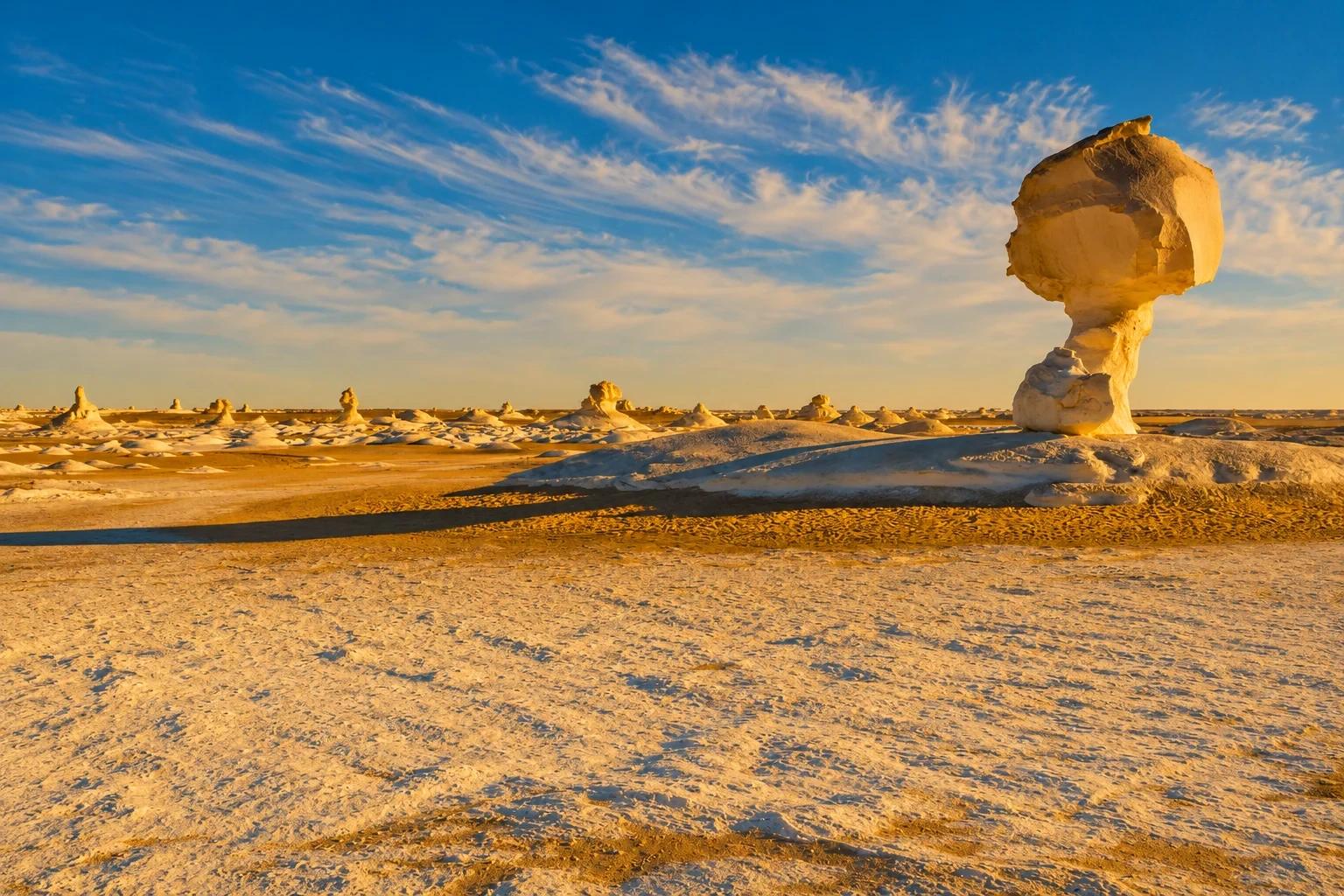
The White Desert, approximately 180 kilometers south of Bahariya via the Farafra road and the White Desert National Park entrance, is the supreme natural heritage destination of the complete Western Desert circuit, whose extraordinary chalk formation landscape and incomparable overnight camping experience make it the most internationally celebrated and the most personally extraordinary natural heritage experience in the Egyptian desert world. The Farafra Oasis, approximately 180 kilometers south of Bahariya on the Desert Road, is the nearest oasis settlement to the White Desert and the most isolated and the most traditionally character-preserved oasis community in the Egyptian Western Desert, providing a complementary oasis cultural experience to the more visited and more archaeologically developed Bahariya community. The Dakhla Oasis and the Kharga Oasis further south in the New Valley Governorate provide additional oasis heritage experiences for travelers undertaking the complete Western Desert oasis circuit. The Blue Desert of Sinai provides a completely different desert landscape and desert art experience in the South Sinai Peninsula for travelers wishing to complement the Western Desert natural heritage with the extraordinary landscape art installation of the Sinai. All these destinations are accessible through the Egypt Desert Safari Tours and Egypt Travel Packages offered by WOW Egypt Tours.
Frequently Asked Questions About Bahariya Oasis
What is Bahariya Oasis?
Bahariya Oasis is a fertile depression in the limestone plateau of the Egyptian Western Desert approximately 370 kilometers southwest of Cairo, known for the Valley of the Golden Mummies (one of the most sensational archaeological discoveries in Egypt in the 20th century), the ancient tombs of the Pharaonic oasis governors, the extraordinary Black Desert volcanic landscape to its north, the therapeutic hot springs, and its role as the essential hub and primary base for the Western Desert safari circuit encompassing the Black Desert and White Desert. It is accessible through Egypt Desert Safari Tours and Egypt Travel Packages offered by WOW Egypt Tours.
What is the Valley of the Golden Mummies?
The Valley of the Golden Mummies is a vast Greco-Roman period cemetery discovered in 1996 north of Bawiti in the Bahariya Oasis, estimated to contain between four thousand and ten thousand mummies decorated with golden masks, elaborately painted cartonnage, and painted linen wrappings. It is potentially the largest ancient mummy cemetery in all of Egypt. The most significant mummies are displayed in the Bahariya Museum and the site itself is accessible through organized guided visits.
How was the Valley of the Golden Mummies discovered?
The Valley of the Golden Mummies was discovered in 1996 when a donkey belonging to an antiquities guard stumbled through the desert surface into an underground burial chamber north of Bawiti, revealing the opening of the ancient cemetery. The antiquities inspector Zahi Hawass, later Secretary General of the Egyptian Supreme Council of Antiquities, was summoned to investigate and confirmed the extraordinary archaeological significance of the find, initiating the systematic excavation that has been ongoing since 1996.
What is the Bahariya Museum?
The Bahariya Museum in Bawiti is the primary public museum displaying the mummies and artifacts from the Valley of the Golden Mummies excavations, including examples of all the different burial types found in the cemetery from the most elaborate gold-masked mummies to the more modestly decorated burials of the middle-class oasis community, as well as artifacts from the Pharaonic period governors' tombs and other Bahariya archaeological sites.
What are the ancient governors' tombs?
The ancient governors' tombs of Bahariya are rock-cut burial chambers in the El Qasr area near Bawiti, dating primarily to the New Kingdom 18th Dynasty and the Late Period 26th Dynasty, whose painted decoration depicts traditional ancient Egyptian funerary scenes of high artistic quality that connect the remote oasis community directly to the mainstream ancient Egyptian religious and artistic traditions of the Nile Valley royal and noble tombs.
What are the hot springs of Bahariya?
The Bahariya hot springs are artesian springs emerging at approximately 40 to 45 degrees Celsius from the underground Nubian Sandstone Aquifer system, providing mineral-rich thermal bathing facilities that have been used therapeutically since ancient times and that offer one of the most atmospherically authentic and personally restorative desert bathing experiences available at any Western Desert oasis destination.
How far is Bahariya Oasis from Cairo?
Bahariya Oasis is approximately 370 kilometers southwest of Cairo on the Desert Road, a drive of approximately 3.5 to 4 hours by private vehicle on the modern paved highway.
What is the best time of year to visit Bahariya Oasis?
October through April is the most comfortable period, with pleasant daytime temperatures of 15 to 25 degrees Celsius. Summer months bring extreme heat exceeding 40 degrees Celsius. Winter provides the finest desert skies and most atmospheric conditions but requires warm clothing for evenings and cold nights.
What is the Black Desert near Bahariya?
The Black Desert is a vast volcanic landscape approximately 50 kilometers north of Bawiti, characterized by ancient dark dolerite and basalt rocks that cover the desert surface and cap the numerous conical volcanic hills of the landscape, including the English Mountain (Gebel El Ingilizi) WWII observation post. It is the opening natural heritage destination of the Western Desert safari circuit departing from Bahariya.
Can I combine Bahariya Oasis with the White Desert?
Yes. Combining the Bahariya Oasis with the White Desert is the standard and most highly recommended Western Desert safari programme, with Bahariya providing the archaeological and cultural heritage hub and the White Desert providing the supreme natural landscape experience of the complete circuit. The two destinations are approximately 180 kilometers apart via Crystal Mountain and the Farafra Oasis, and all WOW Egypt Tours Western Desert Safari Tours combine them as the essential two-destination core of the complete circuit.
What other oases are near Bahariya?
The nearest oasis to Bahariya is the Farafra Oasis approximately 180 kilometers south, which is the nearest settlement to the White Desert and one of the most isolated oasis communities in the Egyptian Western Desert. The Dakhla Oasis and the Kharga Oasis are further south in the New Valley Governorate for travelers undertaking the complete Western Desert oasis circuit.
Is Bahariya Oasis suitable for children?
Yes. Bahariya Oasis is an excellent destination for children, who are typically fascinated by the Golden Mummies and excited by the volcanic hill landscape and the hot spring bathing. The archaeological site visits are appropriate for children of school age with appropriate adult supervision and guided explanation. The hot springs provide a safe and enjoyable physical experience for older children. All WOW Egypt Tours Western Desert Safari programmes can be adapted for family groups with children.
How do I book a Bahariya Oasis tour with WOW Egypt Tours?
You can book any Egypt Desert Safari Tour, Egypt Tours Package, or Egypt Travel Package that includes the Bahariya Oasis directly through WOW Egypt Tours. Our team of travel specialists will arrange everything from private four-wheel-drive vehicle and licensed desert and archaeological guide to Bahariya Oasis accommodation, all site entrance fees, the hot springs programme, and all the logistics of the complete Western Desert safari experience, ensuring a seamless and unforgettable encounter with the most archaeologically extraordinary and the most naturally spectacular oasis destination in the Egyptian Western Desert.