

The Siwa Oasis is the most remote, the most culturally distinctive, the most historically dramatic, and the most completely extraordinary of all the great oasis destinations in the Egyptian Western Desert, a magnificent natural depression of ancient date palm forests, glittering saltwater lakes, natural spring pools, and vast golden sand dunes of the Great Sand Sea lying approximately 560 kilometers west of Cairo and approximately 50 kilometers from the Libyan border in the most northwestern corner of the Egyptian Western Desert, a landscape of such primordial beauty, such cultural depth, and such immediate magnetic power that it has drawn travelers, seekers, conquerors, and explorers from every civilization and every era of the Mediterranean and African world since the ancient Libyan and Egyptian communities first established their sacred oracle at the spring-fed oasis depression and made it one of the most celebrated pilgrimage destinations of the entire ancient world. The Siwa Oasis is inseparable in the historical imagination from the figure of Alexander the Great, the young Macedonian conqueror of the ancient world who made the extraordinary journey across the desert from the Egyptian Mediterranean coast to the Siwa Oasis in the winter of 331 BCE specifically to consult the Oracle of Amun, the most celebrated and the most internationally revered prophetic oracle in the ancient world outside the Oracle of Apollo at Delphi, and whose consultation with the Oracle at Siwa, during which the divine voice reportedly confirmed that Alexander was the son of the god Amun and therefore of divine royal heritage, is one of the most consequential and the most personally defining moments in the entire biography of the most celebrated military genius of the ancient world. This extraordinary destination is accessible through Egypt Desert Safari Tours and Egypt Travel Packages, both of which WOW Egypt Tours proudly offers to travelers from around the world as part of Egypt Tours Packages that encompass the extraordinary natural, cultural, and historical heritage of the Egyptian Western Desert.
The Siwa Oasis Egypt stands apart from every other oasis destination in the Egyptian Western Desert not only for the extraordinary drama of its ancient history but for the equally extraordinary distinctiveness of its living cultural tradition, a Berber culture of the indigenous Siwi community whose language, the ancient Siwi dialect of the Berber or Amazigh linguistic family, whose traditional crafts of silver jewelry and silk embroidery of patterns and techniques unchanged for centuries, whose ancient social traditions and whose relationship with the sacred landscape of the oasis are so completely unlike anything else available in the Egyptian cultural landscape that a visit to Siwa is genuinely the experience of visiting a different cultural world within the boundaries of Egypt, an encounter with a living ancient tradition of desert oasis civilization that has no parallel anywhere else in the country. The combination of Alexander the Great and the Oracle of Amun, the extraordinary Berber Siwi cultural tradition, the vast dune landscape of the Great Sand Sea with its extraordinary desert safari and dune experience, the natural spring pools including the famous Cleopatra's Bath, the saltwater lakes of the oasis depression, and the extraordinary ancient tombs of Gebel el-Mawta together make Siwa one of the most completely diverse and the most personally extraordinary heritage travel destinations in all of Egypt, an oasis that rewards every traveler who makes the significant journey to its remote northwestern location with an encounter so completely outside the conventional Egyptian tourism experience that it is consistently described by those who have made the journey as the single most surprising and the single most unforgettable destination of their entire Egypt journey. WOW Egypt Tours includes Siwa Oasis as a featured destination on Egypt Desert Safari Tours and comprehensive Egypt Travel Packages for travelers seeking the most complete and the most extraordinary encounter with the Egyptian Western Desert heritage.

What Is Siwa Oasis?
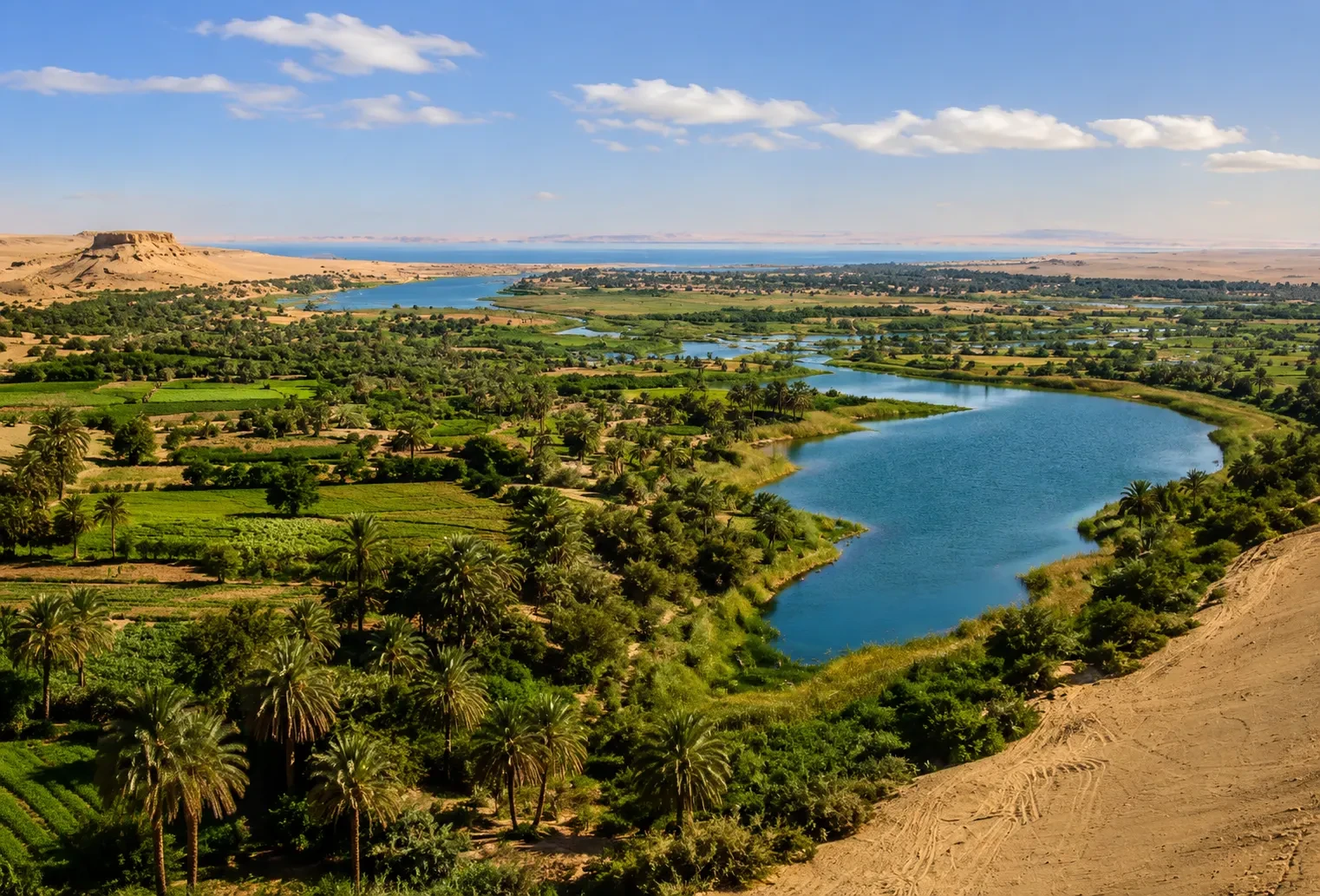
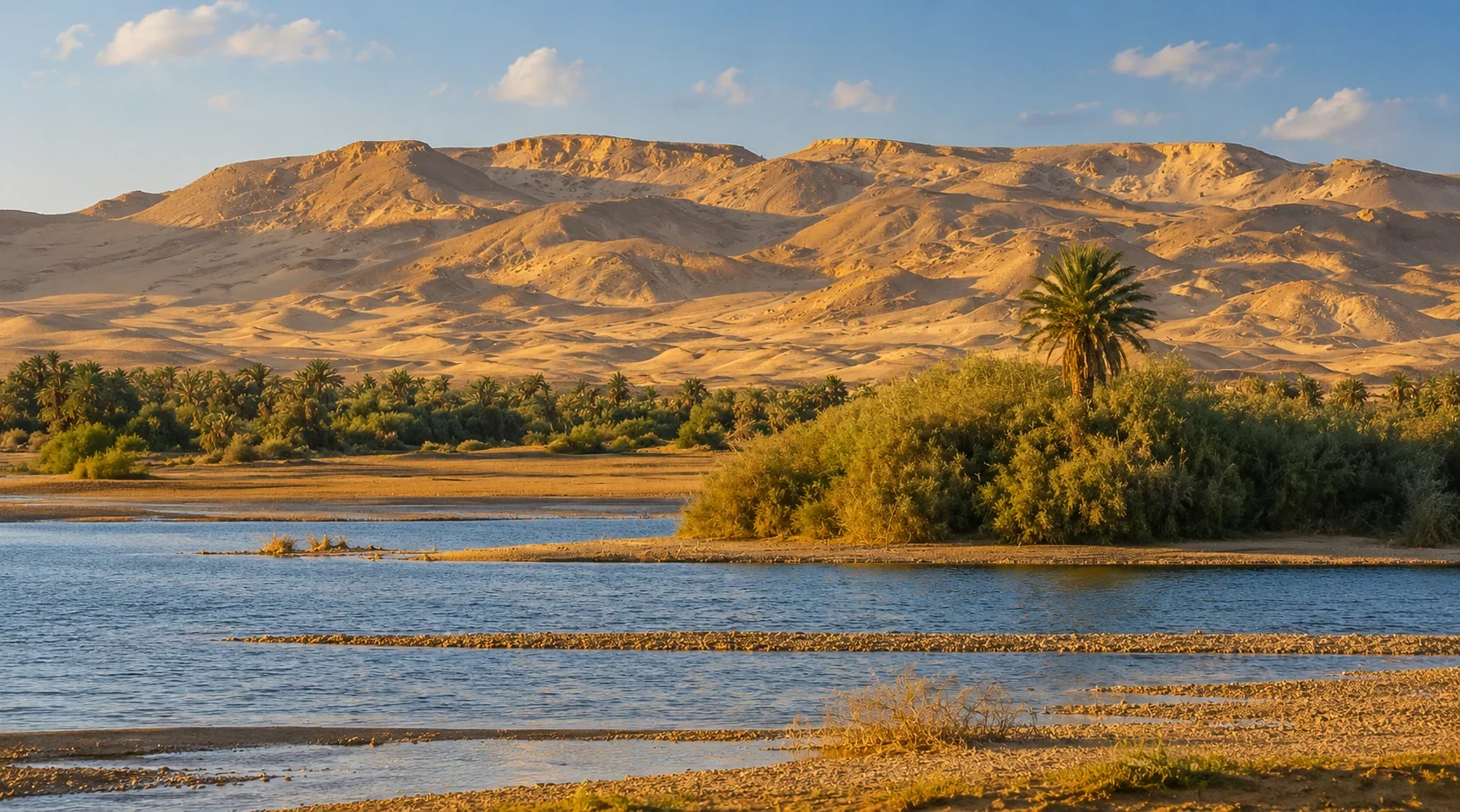
Siwa Oasis is a natural depression in the Western Desert of Egypt located approximately 560 kilometers west of Cairo and approximately 50 kilometers east of the Libyan border in the Matrouh Governorate of the northwestern Egyptian desert, occupying an elongated basin whose floor lies at elevations ranging from approximately 18 meters above sea level at the eastern end to approximately 15 meters below sea level at the western end in the area of the largest saltwater lakes, making the western part of the Siwa depression one of the lowest-lying inhabited areas in all of Egypt. The oasis is fed by more than two hundred natural freshwater springs and wells, including the famous Ein El Guba, Ain Qurayshat, and the spring known since antiquity as Cleopatra's Bath, whose flow of cold, clear, constantly replenished spring water supports the extraordinary fertility of the oasis agricultural landscape and its population of approximately 35,000 people, predominantly of Siwi Berber origin, who inhabit the oasis town and the surrounding agricultural settlements. The agricultural landscape of the oasis encompasses approximately 300,000 date palms, approximately 70,000 olive trees, and extensive gardens of fruit trees, vegetables, and herbs watered by the spring system and by the traditional irrigation channels that distribute the spring water throughout the oasis agricultural area in a sophisticated water management system whose fundamental engineering principles have remained essentially unchanged since ancient times.
The most immediately dramatic natural feature of the Siwa Oasis landscape is the Great Sand Sea, the vast erg desert whose enormous sand dunes begin at the southern edge of the oasis depression and extend hundreds of kilometers into the Libyan Desert in one of the most extensive and the most visually spectacular sand seas in the entire Sahara. The Great Sand Sea, covering an area of approximately 72,000 square kilometers of continuous sand dunes rising to heights of 100 meters and more in the most impressive sections of the dune field, provides the most dramatic and the most physically exhilarating desert safari experience available anywhere in the Egyptian Western Desert and gives the Siwa Oasis landscape its most immediately striking and its most geographically distinctive visual setting, the green oasis palm gardens framed on the south and west by the endless golden dune horizon of the Great Sand Sea in a natural landscape composition of extraordinary beauty and extraordinary geological drama.
Who Founded The Oracle Of Siwa?
The Oracle of Amun at Siwa was established and developed by the ancient Egyptian and Libyan communities of the northwestern desert over a period extending from at least the 26th Dynasty (Saite Period) of ancient Egypt, approximately 650 to 525 BCE, when the Oracle first appears in the documented historical record as a significant religious institution of wide reputation, through the Persian, Greek, and Roman periods when its fame spread throughout the Mediterranean world and it became one of the most consulted and the most celebrated prophetic oracles in the entire ancient world. The physical infrastructure of the oracle, the great Temple of Amun at Aghurmi, was constructed primarily in the 26th Dynasty on the commanding rocky promontory of Aghurmi hill that rises above the surrounding oasis floor and that provides from its ruins today the finest elevated view of the complete Siwa Oasis landscape available at any accessible point within the oasis territory. The priests of the Amun oracle at Siwa were famous in the ancient world for the dramatic and the authoritative character of their prophetic consultations, in which the statue of the god Amun was carried on a golden boat by the priests and the movements of the divine statue in response to questions put to it by the consulting party were interpreted as the oracular answer, a consultation procedure of considerable theatrical power and considerable religious authority that attracted suppliants and questioners from throughout the ancient Mediterranean world to the remote oasis in the northwestern desert.
The most famous single consultation of the Siwa Oracle was Alexander the Great's visit in 331 BCE, which stands as the most historically consequential moment in the entire history of the ancient oracle and one of the most historically consequential moments in the complete biography of Alexander himself. The oracle's reported confirmation that Alexander was the son of Amun, the divine confirmation of Alexander's divine royal heritage that he had sought specifically by making the extraordinary desert journey from the coast, transformed Alexander's self-understanding and his public presentation of his royal authority in ways that directly affected the subsequent development of the Hellenistic kingdoms and the Ptolemaic royal ideology that made the worship of Serapis and the divine kingship of the Ptolemaic pharaohs the defining religious and political institutions of Ptolemaic Egypt.
Alexander The Great And The Oracle Of Siwa
The story of Alexander the Great's journey to the Siwa Oasis in the winter of 331 BCE is one of the most dramatically consequential and the most personally revealing episodes in the entire biography of the most celebrated military commander of the ancient world, a journey that combined extraordinary physical courage, extraordinary logistical audacity, and the deepest possible personal religious motivation in a desert crossing of such difficulty and such personal risk that even Alexander's most devoted ancient biographers described it in terms of astonishment at the physical and spiritual commitment it represented. Alexander had just completed his conquest of Egypt from the Persian Achaemenid Empire, founded the city of Alexandria at the Egyptian Mediterranean coast, and was preparing his forces for the continuation of the campaign against Persia when he made the decision to detour into the desert specifically to consult the Oracle of Amun at Siwa, a journey of approximately 550 kilometers from the Egyptian Mediterranean coast through some of the most inhospitable desert terrain in the entire Sahara, at a season of extreme desert conditions in the dead of winter.
The ancient accounts of Alexander's desert crossing to Siwa describe a journey of extraordinary peril in which the army nearly perished from thirst and heat in the desert before being guided to the oasis, according to some accounts, by divine signs including ravens who appeared from nowhere to lead the column in the right direction when they had lost their way in the desert terrain. The dramatic and the supernatural character of the journey's successful completion reinforced for Alexander and for his contemporaries the sense that the gods themselves had sanctioned and guided the mission, a conviction that was powerfully confirmed when the great oracle of Amun, one of the most authoritative divine voices in the ancient world, reportedly greeted Alexander not as a mortal suppliant but as the son of the god, confirming the divine paternity that Alexander had claimed and that formed the theological foundation of his claim to pharaonic legitimacy in Egypt and to divine royal authority throughout his empire. The specific content of Alexander's private consultation with the Oracle is not recorded in any ancient source, as Alexander himself reportedly refused to share the details of the divine communication, saying only that he had been told what he wished to hear, a tantalizing historical mystery that has attracted scholarly speculation for more than two thousand years and that gives the Siwa Oracle site a quality of historical depth and personal biographical drama unmatched at any other ancient monument site in the Egyptian desert world.
The question of Alexander's tomb, which is connected to Siwa by one of the most persistent and the most archaeologically intriguing traditions in the entire history of Alexandrian archaeology, adds a further dimension of mystery and historical drama to the Siwa Oasis heritage. Ancient sources record that Alexander's body was initially buried in Memphis before being moved to Alexandria, where it remained in a magnificent royal tomb for centuries. The precise location of Alexander's Alexandrian tomb has never been confirmed by modern archaeology despite more than a century of systematic searching in Alexandria, and a persistent alternative tradition maintained by some scholars and local Siwan community members holds that Alexander's body was ultimately returned to Siwa, the site of the divine consultation that meant more to him personally than any other sacred location in his empire, and that the actual tomb of Alexander the Great lies somewhere in or near the Siwa Oasis rather than in Alexandria.
The Siwi Berber Culture
The most completely distinctive and the most culturally extraordinary dimension of the Siwa Oasis heritage is the living Berber culture of the indigenous Siwi community, whose ancient Amazigh traditions of language, craft, social organization, and relationship to the oasis landscape are so completely unlike anything else in the Egyptian cultural world that a serious engagement with the Siwi cultural heritage gives the Siwa Oasis visit a dimension of genuine cultural encounter that is unavailable at any other oasis destination in the Egyptian Western Desert. The Siwi people are the indigenous Berber community of the northwestern Egyptian desert, descended from the ancient Libyan and Berber populations who inhabited the oasis and its surrounding desert long before the integration of the Siwa region into the Egyptian state system in the Pharaonic period, and whose language, the Siwi dialect of the Berber or Amazigh linguistic family, is linguistically related to the Berber languages of Morocco, Algeria, and Tunisia rather than to the Arabic that is the dominant language of the rest of the Egyptian population. Siwi is still spoken by the majority of the Siwa Oasis population as their first language, making it one of the very few surviving indigenous pre-Arabic languages in active use in Egypt and one of the most linguistically significant endangered language communities in the entire North African world.
The traditional crafts of the Siwi community are among the most distinctive and the most beautiful indigenous craft traditions in the Egyptian and North African heritage landscape, including the extraordinary silver jewelry tradition of the Siwa silversmiths, whose bracelets, necklaces, earrings, and hair ornaments of heavily worked silver set with coral, carnelian, and glass inlays in traditional geometric and naturalistic patterns are recognized throughout the Egyptian and North African craft world as among the finest examples of traditional Berber jewelry-making available at any accessible craft market in the region. The embroidery tradition of Siwa, executed by Siwi women on traditional garments and household textiles in patterns of extraordinary geometric complexity and extraordinary color richness, represents another living expression of an ancient craft tradition of considerable age and considerable artistic accomplishment, whose textiles are among the most distinctive and the most immediately recognizable traditional craft products of the entire Egyptian oasis heritage landscape. The distinctive mud-brick architecture of the ancient Siwa community, most dramatically expressed in the extraordinary ruins of the Shali Fortress, the ancient fortified mud-brick city at the center of the oasis, represents yet another dimension of the Siwi cultural heritage whose architectural tradition, using the distinctive local material of kershef, a mixture of salt rock, mud, and palm fiber, creates buildings of extraordinary visual character and considerable structural ingenuity that are entirely unlike anything in the mainstream Egyptian architectural tradition.
Siwa Oasis Location In Egypt
Siwa Oasis is located in the Matrouh Governorate of northwestern Egypt, approximately 560 kilometers west of Cairo, approximately 300 kilometers south of the Mediterranean coastal city of Marsa Matruh, and approximately 50 kilometers east of the Libyan border in the most remote and the most isolated corner of the Egyptian Western Desert accessible by road. The oasis is accessible from Cairo by private vehicle via the Desert Road to Alexandria and then west along the Mediterranean coast highway to Marsa Matruh, followed by the desert road south from Marsa Matruh to Siwa, a total driving distance of approximately 750 kilometers and a driving time of approximately 8 to 9 hours in a single day's journey or most comfortably accomplished as a two-day journey with an overnight stop at Marsa Matruh. From Alexandria, the journey to Siwa is approximately 550 kilometers via the Mediterranean coastal road to Marsa Matruh and then south to Siwa, approximately 6 to 7 hours of driving. The main oasis town of Siwa, whose central square and traditional market are the social and commercial heart of the oasis community, is the primary base for all Siwa Oasis heritage and desert safari programmes. WOW Egypt Tours provides private air-conditioned vehicle transportation from Cairo to Siwa Oasis as part of all comprehensive Egypt Desert Safari Tours and Egypt Travel Packages that include Siwa.
Siwa Oasis Fun Facts
The Siwa Oasis contains more than two hundred natural freshwater springs, making it the most abundantly spring-fed oasis in the Egyptian Western Desert and one of the most prolific natural spring environments in the entire North African Sahara. The spring system that supports the Siwa agricultural landscape is fed by the Nubian Sandstone Aquifer System, the same vast underground freshwater reservoir that supplies the artesian wells of the other Western Desert oases, but whose expression in Siwa is characterized by particularly abundant natural spring flow that has historically allowed the oasis to sustain one of the most productive and the most densely cultivated agricultural landscapes in the Egyptian desert world. The approximately 300,000 date palms of the Siwa agricultural landscape produce dates of such celebrated quality, particularly the variety known as Siwa dates or desert dates, that they are recognized throughout Egypt and in the international market as among the finest quality dates available from any Egyptian oasis or desert agricultural region.
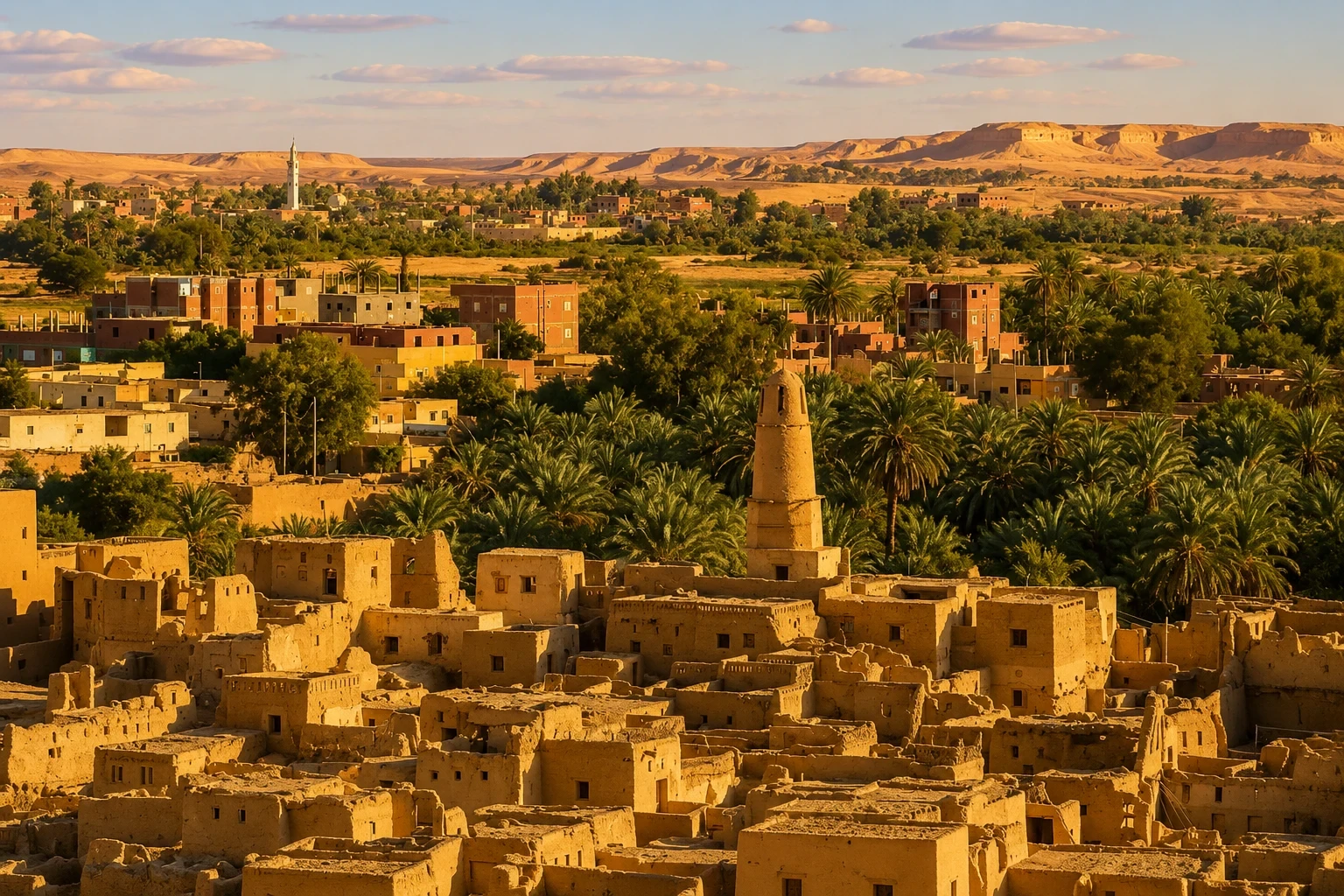
The ancient fortified mud-brick city of Shali in the center of the Siwa Oasis town is one of the most dramatically ruined and the most visually extraordinary medieval Islamic urban monuments in the entire Egyptian Western Desert, a labyrinthine complex of narrow alleys, multi-story mud-brick houses, defensive towers, and communal spaces built in the distinctive kershef material of the Siwi architectural tradition and inhabited continuously from the 13th century CE until the devastating rains of 1926 caused widespread structural collapse throughout the mud-brick buildings, forcing the community to abandon the Shali fortress and establish new houses in modern materials on the surrounding lower ground. The abandoned ruins of Shali, rising dramatically above the modern Siwa town on the rocky hill that has been the center of the Siwi community since its medieval construction, are one of the most immediately striking and the most atmospherically haunting ancient urban ruins accessible at any oasis destination in the Egyptian Western Desert, a ghost city of considerable architectural ambition and considerable visual power whose collapse and abandonment are within living community memory rather than buried in the distant archaeological past.
The Great Sand Sea adjacent to the Siwa Oasis, the vast erg desert of approximately 72,000 square kilometers of continuous sand dunes that covers the desert to the south and west of the oasis, is one of the largest and the most impressive sand seas in the entire Sahara, and the dune safari experience it provides for visitors to Siwa, riding over the enormous golden dunes in four-wheel-drive vehicles or on sandboards sliding down their steep faces, is one of the most exhilarating and the most completely memorable physical adventure experiences available at any desert destination in Egypt. The hot spring pools scattered in the desert landscape immediately outside the Siwa oasis, including the famous Fatnis Island spring pool on the edge of Lake Siwa and the desert pools of Ein El Guba, provide extraordinarily atmospheric bathing experiences in natural warm spring water surrounded by the extraordinary visual drama of the oasis desert landscape.
Why Is It Called Siwa Oasis?
The name Siwa, applied to the oasis in both Arabic and in the historical record of the European travel and scholarship tradition, is a toponym of ancient origin whose precise etymology is debated in the scholarly literature of Egyptian and North African historical linguistics. The most commonly cited ancient name for the oasis in classical Greek and Latin sources is Ammonion or Ammon, a reference to the Oracle of Amun whose divine presence at the oasis defined the site's primary significance in the ancient Mediterranean world and whose name in the Hellenized form Ammon was used as the primary designation for both the oracle and the oasis community in ancient Greek and Roman geographical and historical literature from Herodotus in the 5th century BCE through the late antique period. The current Arabic name Siwa appears in the medieval Arabic geographical and travel literature from approximately the 13th century CE onwards, gradually replacing the classical Ammon designation as the primary toponym for the oasis in both Arabic and subsequently in European travel and scholarly usage. The precise linguistic origin of the name Siwa is uncertain, with proposed derivations including a Berber or Amazigh linguistic root related to words for shadow or shade, referring to the shelter provided by the oasis date palm canopy from the surrounding desert sun, or a pre-Berber toponym of unknown linguistic affiliation preserved in the modern Arabic form of the name. Regardless of its precise etymology, the name Siwa has been the universal designation for the oasis in Arabic and international usage for more than seven centuries and is the name by which the oasis is universally known in all modern heritage tourism and geographical literature.
Siwa Oasis History
The history of human occupation at the Siwa Oasis extends back at least to the prehistoric period, with archaeological evidence for Neolithic and pre-dynastic human presence at the oasis site, but the oasis's documented historical significance begins in the Pharaonic period of the first millennium BCE when the Oracle of Amun at Siwa first appears in the ancient Egyptian and Greek historical records as a religious institution of wide reputation and considerable political influence. The 26th Dynasty (Saite Period) of ancient Egypt, approximately 664 to 525 BCE, represents the first extensively documented period of the Siwa Oracle's political significance, when the oracle's reputation for reliable and authoritative prophetic consultation had spread throughout the Mediterranean world and rulers, military commanders, and individuals seeking divine guidance were already making the extraordinary desert journey to Siwa to consult the oracle on matters of war, succession, and political legitimacy.
The Persian conquest of Egypt in 525 BCE and the subsequent attempt by the Persian King Cambyses to send an army across the desert to destroy the Siwa Oracle, which according to the ancient accounts ended in catastrophe when the Persian army was swallowed by a massive sandstorm and disappeared without trace in the desert between the Nile Valley and Siwa, gave the Oracle of Siwa a dramatic story of divine protection and Persian military disaster that significantly enhanced its reputation for divine power and divine favor in the ancient world. The Greek period, from the foundation of Cyrene in 631 BCE through the Ptolemaic era, saw the Siwa Oracle's reputation reach its greatest international extent, with Greek city-states, Greek rulers, and Greek individuals consulting the oracle on matters of the highest political and personal significance and the oracle's pronouncements reported throughout the Greek world as authoritative divine communications of exceptional reliability. Alexander the Great's consultation in 331 BCE, the most celebrated single consultation in the oracle's entire history, brought the Siwa Oracle to the absolute peak of its international fame and gave it a place in the historical biography of the most celebrated figure of the ancient world that no other oracle of the ancient Mediterranean could match.
The Roman period saw the Siwa Oracle's political significance gradually decline as the Roman administrative system incorporated the Egyptian and Libyan desert communities into its provincial structure and the oracle's role as a politically significant divine institution was replaced by the new religious traditions of the imperial cult and subsequently of Christianity. The Christian and subsequently Islamic period brought the gradual conversion of the oasis community and the end of the ancient oracle cult, and the medieval history of the Siwa Oasis from the Islamic conquest onwards is primarily the history of the indigenous Siwi Berber community's relationship with the successive Mamluk, Ottoman, and modern Egyptian state administrations, a relationship characterized by considerable practical autonomy for the oasis community given its extraordinary remoteness from the Nile Valley centers of Egyptian political power. The modern history of Siwa, from the 19th century onwards, includes the gradual integration of the oasis into the Egyptian national administrative system, the development of the road connection to the Mediterranean coast that made the oasis accessible to regular vehicle traffic only in the 20th century, and the growing international tourism interest in the Siwa heritage that has made it one of the most internationally celebrated and the most sought-after off-the-beaten-track destinations in the entire Egyptian tourism landscape.
The Story Of The Oracle That Changed The Ancient World
The story of the Oracle of Amun at Siwa and its role in the biography of Alexander the Great is one of the most dramatic and the most historically consequential religious narratives of the entire ancient world, a story that begins with the ancient Egyptian tradition of the Amun oracle at Siwa and culminates in the single consultation of 331 BCE that transformed Alexander's self-understanding, his political ideology, and ultimately the religious foundations of the entire Hellenistic world whose development he had set in motion. The Oracle of Amun at Siwa had for centuries before Alexander's visit been recognized throughout the Mediterranean world as one of the most authoritative and the most reliably prophetic oracles in the ancient tradition, consulted by the Athenians before the Battle of Salamis, by various Greek rulers and military commanders on matters of war and succession, and by the Libyan king Croesus on the wealth and power of his kingdom, in each case providing oracular pronouncements whose subsequent fulfillment by events had reinforced the oracle's reputation for divine accuracy and divine authority.
Alexander's journey to consult this oracle in the winter of 331 BCE was therefore not an eccentric personal whim but a politically calculated act of royal self-presentation, designed to obtain from the most authoritative divine voice in the ancient world the confirmation of the divine parentage and divine royal legitimacy that Alexander needed to substantiate his claim to pharaonic succession in Egypt and to the universal royal authority he was asserting throughout his expanding empire. The oracle's reported greeting of Alexander as the son of Amun, combining the Egyptian divine royal theology that made every legitimate pharaoh the son of the sun god with the Greek identification of Amun with Zeus to create a divine paternity claim of universal ancient religious significance, gave Alexander exactly the theological foundation he needed, and the subsequent incorporation of the Amun-son ideology into the iconographic and titulary programme of Alexander's royal presentation, visible in the coins showing Alexander with the ram horns of Amun, in the divine patronage claimed by the Ptolemaic successors, and in the development of the Serapis cult by Ptolemy I, shows how immediately and how completely Alexander exploited the oracle's confirmation in his political and religious self-presentation for the remainder of his reign.
Siwa Oasis Key Attractions And Features
The Temple Of The Oracle At Aghurmi
The most historically significant ancient monument in the entire Siwa Oasis is the Temple of the Oracle at Aghurmi, the ruined ancient Egyptian temple complex of the 26th Dynasty built on the commanding rocky promontory of Aghurmi hill approximately 4 kilometers from the center of the modern Siwa town, whose surviving ruins include sections of the original temple walls, hieroglyphic inscriptions, and architectural elements that provide direct physical evidence for the great oracle sanctuary that was one of the most celebrated sacred sites in the entire ancient Mediterranean world. The Aghurmi hill, rising dramatically above the surrounding palm garden landscape of the oasis floor, was the most commanding position available in the immediate oasis landscape and was chosen for the oracle temple precisely because of its visual authority, the way in which the temple complex rising from the hilltop promontory dominated the entire oasis landscape and communicated the divine power of the Amun cult to all who could see it from any point in the oasis below. The views from the Aghurmi hill ruins across the complete Siwa Oasis landscape, with the date palm forests stretching to the saltwater lakes in the distance and the Great Sand Sea dunes visible on the southern horizon, are among the most panoramically beautiful elevated perspectives available at any heritage site in the Egyptian Western Desert, combining the archaeological drama of the ancient oracle ruins with the natural beauty of the complete oasis landscape in a single composition of extraordinary historical and visual power. It was in this temple, in the inner sanctuary where the divine statue of Amun was kept, that the priests of the oracle conducted the famous consultation with Alexander the Great in 331 BCE, making the Aghurmi temple ruins one of the most historically charged ancient sites in the entire heritage landscape of the Egyptian desert world.
The Temple Of Umm Ubaida
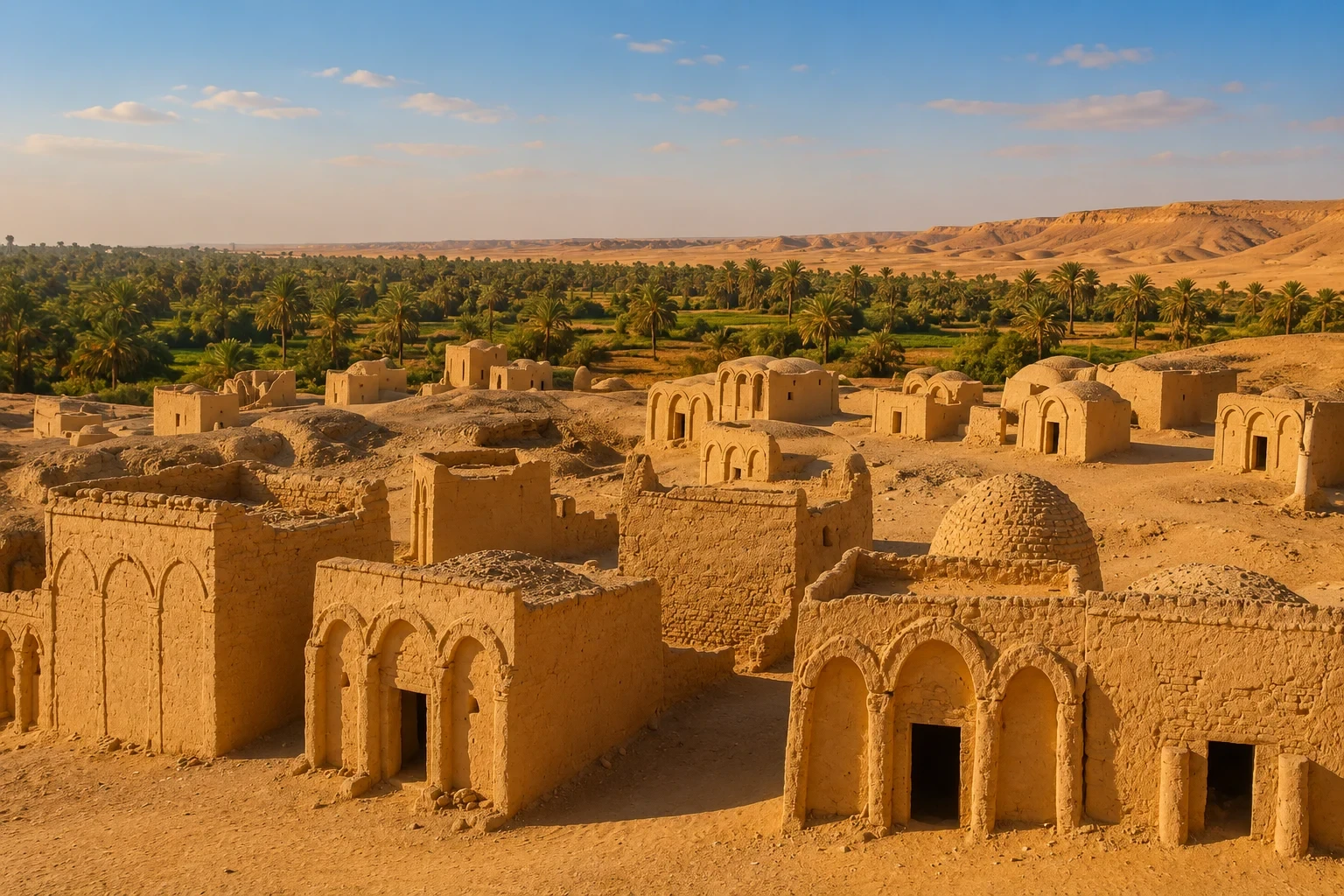
Immediately adjacent to the Aghurmi hill, the Temple of Umm Ubaida is a second ancient Egyptian temple complex of the same general period as the Aghurmi oracle temple, built during the reign of Nectanebo II in the 30th Dynasty approximately 360 to 343 BCE and subsequently expanded in the Ptolemaic period, whose surviving architectural and epigraphic remains, though more extensively damaged than the Aghurmi temple, provide additional important evidence for the ancient religious traditions and the artistic programmes of the Siwa oracle community. The Temple of Umm Ubaida's most significant surviving element is the remains of a decorated hall whose carved and painted surfaces bear Ptolemaic period divine imagery of considerable quality, providing visual evidence for the continuing importance of the Siwa oracle precinct in the Ptolemaic period and for the artistic standards maintained at the site by the Ptolemaic royal patronage. The two ancient temple sites at Aghurmi and Umm Ubaida together constitute the most significant concentration of ancient Egyptian architectural and epigraphic heritage available at any point in the Siwa Oasis landscape and provide the most direct physical evidence for the historical oracle tradition that gave the Siwa Oasis its most enduring significance in the ancient world.
The Shali Fortress
The dramatic ruins of the Shali Fortress, the ancient mud-brick fortified city at the heart of the modern Siwa town, are the most visually compelling and the most atmospherically extraordinary medieval heritage monument in the entire Egyptian Western Desert, a labyrinthine complex of ruined multi-story mud-brick houses, narrow alleys, defensive towers, communal wells, and the mosque that served the community for centuries, all built in the distinctive local kershef material and all partially collapsed in the catastrophic rains of 1926 that ended the continuous seven-century occupation of the fortress and forced the Siwi community into new modern-material houses on the surrounding lower ground. The Shali Fortress was built in the 13th century CE to provide a communal fortified refuge for the Siwi community against the Bedouin raids and military incursions that periodically threatened the oasis from the desert, and its defensive design reflects the specific military and social imperatives of a small oasis community's need for collective security in a remote desert environment. The ruins of Shali, illuminated spectacularly at night when the modern Siwa town has organized a lighting installation on the fortress ruins that creates one of the most dramatically beautiful heritage illumination effects available at any ancient urban site in Egypt, are visible from every point in the modern Siwa town and provide a continuous visual reminder of the extraordinary historical depth and the extraordinary architectural distinctiveness of the Siwi cultural tradition.
Gebel El-Mawta And The Mountain Of The Dead
The Gebel el-Mawta, or Mountain of the Dead, is a rocky hill approximately 1 kilometer north of the Siwa town center whose surface is honeycombed with ancient rock-cut tombs of various periods from the Ptolemaic through the late antique era, providing one of the most concentrated and the most publicly accessible collections of ancient funerary monuments available at any desert oasis site in Egypt. The most celebrated individual tomb on the Gebel el-Mawta is the tomb of Mesu-Isis, a well-preserved Ptolemaic period rock-cut burial chamber whose painted decoration includes a remarkable programme of ancient Egyptian funerary imagery executed in a style that combines mainstream Nile Valley Egyptian artistic traditions with the local Siwi artistic conventions of the northwestern desert community in a visual synthesis characteristic of the broader Ptolemaic period artistic world. The tombs of the Gebel el-Mawta provide the most direct available physical evidence for the funerary traditions and the religious life of the ancient oasis community, complementing the oracle temple heritage of the Aghurmi hill with a funerary heritage dimension that reveals the domestic and the mortuary dimensions of the ancient Siwi community's relationship with the traditional ancient Egyptian religious culture. The Gebel el-Mawta also played a historically dramatic role in the Second World War when the local Siwi population sheltered in the ancient tomb chambers to escape the bombing campaigns of the North African desert war, a fact that adds a modern historical layer to the ancient funerary heritage of the hill and that connects the ancient Siwa landscape directly to the most significant military conflict of the 20th century.
Cleopatra's Bath
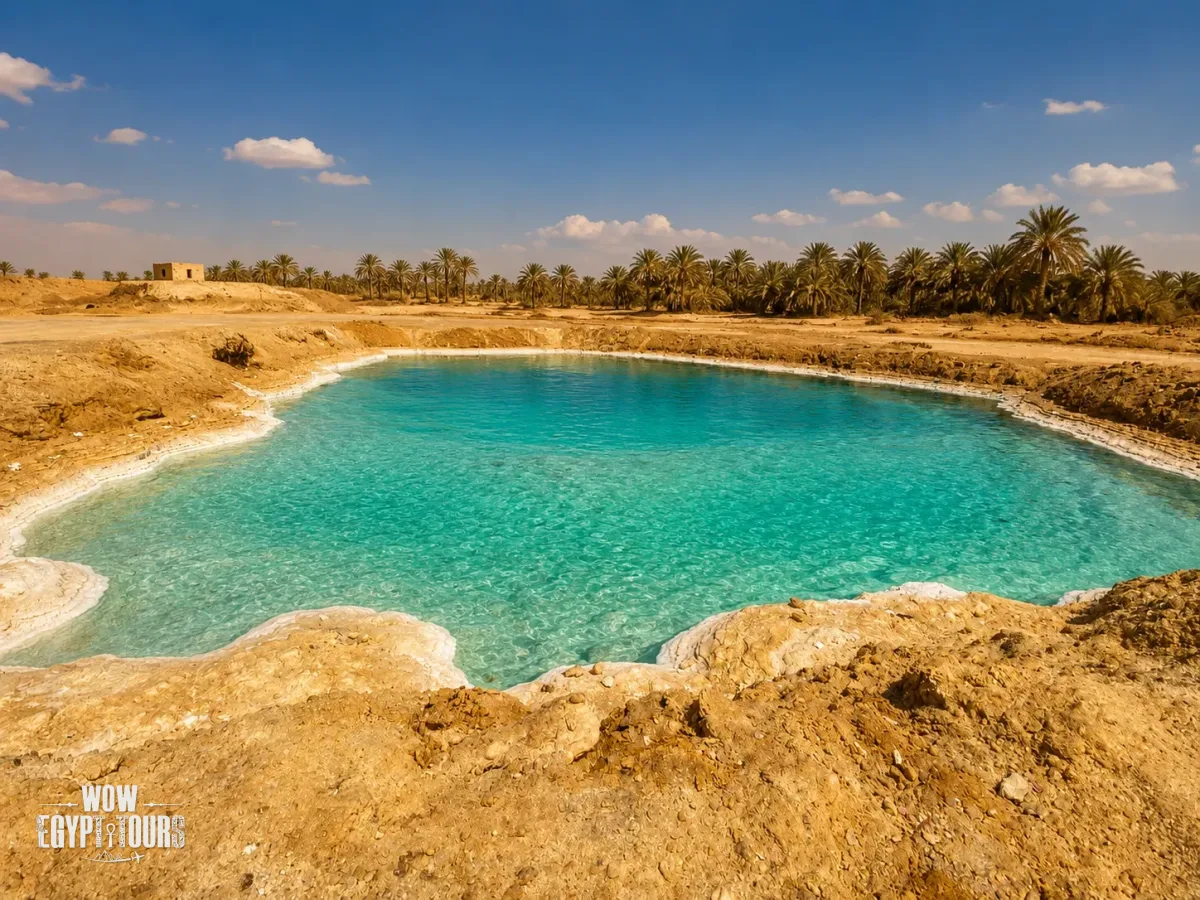
The natural spring pool known universally as Cleopatra's Bath is the most famous and the most visited of the many natural freshwater springs of the Siwa Oasis, a circular natural pool of constantly replenished clear cold spring water approximately 20 meters in diameter whose remarkable clarity and whose constant temperature of approximately 18 degrees Celsius, unchanged throughout the year regardless of the desert surface temperature above, have made it one of the most celebrated natural bathing sites in the entire Egyptian travel tradition since at least the 19th century when European travelers began regularly visiting the Siwa Oasis. The name Cleopatra's Bath, applied to the spring in the European travel literature from the colonial period, has no historical foundation in any documented association between Cleopatra VII or any other historical queen of that name with the specific spring, and is another example of the tendency of European travel writers to attach the names of famous ancient figures to natural phenomena in landscapes with ancient historical associations, but the name has persisted in international tourism usage for more than a century and is now universally used as the primary identifier for the spring pool in all tourism literature. Despite the historical inaccuracy of its name, the spring pool itself is a genuinely beautiful and genuinely extraordinary natural feature, and the experience of bathing in the cold clear spring water under the open desert sky of the Siwa Oasis, surrounded by the date palms and the ancient landscape of the most historic oasis in Egypt, is one of the most sensory-rich and the most personally atmospheric natural experiences available at any desert destination in the Egyptian Western Desert.
The Saltwater Lakes And Fatnis Island
The Siwa Oasis depression contains several significant saltwater lakes, of which Lake Siwa (Birket Siwa) and Lake Zeitoun (Birket Zeitoun) are the largest and the most ecologically significant, occupying the lowest-lying areas of the oasis floor at the western end of the depression where the drainage of irrigation water and the natural spring outflows accumulate in shallow hypersaline lakes of extraordinary ecological richness. The saltwater lakes of the Siwa depression support substantial populations of waterbirds including flamingos, herons, ducks, and various waders whose concentrations on the lake surfaces create one of the most visually beautiful and the most unexpected natural wildlife spectacles available in the Egyptian desert landscape, the sight of pink flamingos on a saltwater lake surrounded by date palm gardens and desert dunes being one of the most immediately astonishing natural heritage compositions available at any accessible point in the Siwa oasis landscape. The most celebrated single lake viewpoint in the Siwa oasis landscape is Fatnis Island, a small rocky promontory extending into Lake Siwa that has been developed as the primary sunset viewing and relaxation destination of the Siwa oasis, with a natural spring pool on the island surface whose cold spring water flowing into the warm saltwater lake of the depression below creates the most atmospheric and the most personally luxurious natural bathing experience available in the Siwa oasis, particularly at sunset when the extraordinary colors of the Siwa sky reflected on the lake surface and the distant dunes of the Great Sand Sea illuminated in the warm evening light create one of the most beautiful natural landscape compositions available at any time of day in the oasis.
The Great Sand Sea And Desert Safari
The most physically exhilarating and the most geographically dramatic natural heritage experience available at the Siwa Oasis is the desert safari into the Great Sand Sea, the vast erg desert of approximately 72,000 square kilometers of continuous sand dunes that begins at the southern edge of the oasis depression and extends hundreds of kilometers into the Libyan Desert in one of the most impressive and the most awe-inspiring sand sea landscapes in the entire Sahara. The Great Sand Sea safari from Siwa, conducted in specialized four-wheel-drive vehicles driven by skilled local desert drivers whose knowledge of the dune terrain and the desert navigation of the Great Sand Sea is essential for safe operation in the massive dune environment, provides the most dramatic and the most physically intense desert vehicle experience available anywhere in the Egyptian Western Desert, with the vehicles climbing the enormous dune crests, descending their steep sandy faces, and navigating the complex three-dimensional terrain of the dune field in a combination of driver skill and vehicle capability that creates an experience of constant physical excitement and constant visual astonishment in the passengers. The hot spring pools scattered in the desert immediately outside the oasis depression, including the Ein El Guba and Ain Qurayshat springs, provide extraordinary contrasts of cold spring water in hot desert terrain that are among the most sensory-rich and the most personally extraordinary natural experiences of the Great Sand Sea safari programme.
Why Is Siwa Oasis Important?
Siwa Oasis is important for reasons spanning ancient oracle heritage, military history, living indigenous Berber culture, natural desert landscape heritage, and the broader significance of the Western Desert oasis tradition as one of the most extraordinary desert civilization legacies in the entire Saharan world. As an ancient religious site, the Oracle of Amun at Siwa is one of the most historically significant and the most internationally famous sacred sites in the entire ancient Mediterranean world, whose prophetic tradition attracted suppliants from across the ancient Mediterranean world and whose consultation by Alexander the Great in 331 BCE was one of the most consequential single events in the religious and political history of the Hellenistic age. As a living cultural heritage site, Siwa is the primary surviving location of the ancient Siwi Berber cultural tradition, whose language, crafts, architecture, and social traditions are among the most distinctive and the most endangered indigenous cultural heritages in the entire North African world. As a natural heritage site, the Great Sand Sea adjacent to Siwa is one of the most impressive and the most physically extraordinary desert landscapes in the entire Sahara, whose enormous dune fields provide the most dramatic and the most exhilarating desert safari experience available in the Egyptian Western Desert. WOW Egypt Tours includes Siwa Oasis as a featured destination on Egypt Desert Safari Tours and Egypt Travel Packages, recognizing it as the most historically significant and the most culturally extraordinary oasis destination in the Egyptian Western Desert.
What Are Some Interesting Facts About Siwa Oasis?
The Oracle That Alexander The Great Could Not Resist
Of all the extraordinary historical events associated with the Siwa Oasis, the most immediately gripping and the most historically consequential is Alexander the Great's remarkable decision in the winter of 331 BCE to cross approximately 550 kilometers of Saharan desert to consult the Oracle of Amun when he was already on the verge of the most significant military campaign of his career, his push east toward the final confrontation with the Persian Achaemenid Empire at the Battle of Gaugamela. The logistical audacity of the decision, committing a significant military force to a desert crossing of extreme difficulty and considerable danger at a moment when every military priority demanded concentration of force and preparation for the decisive campaign ahead, speaks directly and powerfully to the depth of Alexander's personal religious conviction and his political calculation that the oracle's divine confirmation of his royal legitimacy was worth any military risk and any logistical difficulty. The subsequent development of the Ammon-son ideology throughout Alexander's reign, culminating in his demand for divine honors at his court and in the posthumous deification that made him the supreme divine prototype for all the Hellenistic successor kings, demonstrates that the Siwa consultation was not a passing political calculation but a genuine turning point in Alexander's conception of his own nature and his own divine destiny, making the ruined oracle temple on the Aghurmi hill in the Siwa Oasis one of the most personally significant and the most historically consequential ancient religious sites accessible to modern visitors anywhere in the heritage landscape of the Egyptian desert world.
A Language Unlike Any Other In Egypt
The Siwi language, spoken by the indigenous Berber community of the Siwa Oasis as their first and primary language, is one of the most linguistically remarkable and the most culturally precious endangered languages in the entire North African world, the sole surviving member of the Berber or Amazigh linguistic family spoken as a living community language within the boundaries of the Egyptian state and one of the most direct linguistic links to the ancient indigenous cultural tradition of the northwestern African desert that predates the Arabization of North Africa by more than a thousand years. Siwi is classified by linguists as an Eastern Berber language closely related to the Berber languages of the Siwa-adjacent Libyan oasis of Jalu and more distantly related to the larger Berber language communities of Morocco, Algeria, and Tunisia, and its grammatical structure, its vocabulary, and its phonological system are sufficiently different from Arabic that the two languages are mutually completely unintelligible, making Siwi speakers within the Egyptian state a genuine linguistic community of their own rather than speakers of an Arabic dialect or an Arabic-influenced variety. The survival of Siwi as a living language in the Siwa Oasis, surrounded by the Arabic-speaking majority of the Egyptian population and with the full range of Arabic-language educational, media, and governmental institutions operating in the oasis alongside the indigenous language community, is a remarkable testimony to the cultural resilience and the community identity of the Siwi people and to the degree to which the oasis's historical remoteness from the centers of Egyptian cultural and political power has allowed the indigenous cultural traditions to survive in a degree of vitality unavailable to other indigenous North African cultural communities more closely integrated into the Arabic-speaking majority culture.
Where The Sahara Is At Its Most Magnificent
The Great Sand Sea adjacent to Siwa represents the Saharan dune desert at its most magnificent and its most geographically overwhelming scale, with individual dunes reaching heights of 100 meters and more in the most impressive sections of the dune field and the visual horizon in every direction defined entirely by the rolling golden topography of the sand sea rather than by any rock outcrop, escarpment, or other non-sand geological feature. The experience of driving into the Great Sand Sea from the Siwa Oasis in a specialized four-wheel-drive vehicle, watching the date palms and the buildings of the oasis town progressively disappear below the dune horizons as the vehicle climbs the first major dune crests and the entire surrounding visual world is replaced by the golden sand topography of the sand sea, is one of the most powerful and the most immediately overwhelming natural environment transitions available at any desert destination in Egypt or in the broader Saharan world, a transition from the human-scale and culturally rich landscape of the oasis to the geological-scale and utterly human-free landscape of the sand sea that takes only minutes of driving to accomplish but that creates a sense of entering a completely different world whose scale, whose visual character, and whose relationship to human presence are entirely different from anything in the normal environmental experience of any visitor from any urban or agricultural cultural background.
What Is So Special About Siwa Oasis?
The Most Extraordinary Destination In The Egyptian Desert
What makes Siwa Oasis uniquely special among all the oasis and desert heritage destinations in Egypt is the extraordinary combination of historical drama, living cultural distinctiveness, natural landscape grandeur, and complete physical remoteness from the mainstream Egyptian tourism circuit that gives the Siwa visit a quality of genuine discovery and genuine personal transformation that very few other destinations in the country can provide. The historical drama of the Oracle of Amun and Alexander's consultation gives Siwa a connection to one of the most consequential events in ancient world history that is available at no other accessible site in the Egyptian landscape. The living cultural distinctiveness of the Siwi Berber community, with its unique language, its extraordinary silver jewelry tradition, its traditional mud-brick architecture, and its ancient social customs, gives the Siwa visit a dimension of genuine cultural encounter with an indigenous tradition entirely different from the mainstream Egyptian cultural experience that is available at no other Egyptian oasis destination. The natural landscape grandeur of the Great Sand Sea, the saltwater lakes, and the extraordinary spring pools gives Siwa the most diverse and the most physically spectacular natural heritage setting of any oasis in the Egyptian Western Desert. And the physical remoteness of Siwa, its position at the extreme northwestern edge of the Egyptian desert accessible only after a journey of 8 to 9 hours from Cairo, gives the arrival at the oasis a quality of genuine earned discovery that destinations accessible by short drives from major cities simply cannot replicate.
The Oasis Of Complete Contrast And Complete Beauty
Siwa is also uniquely special for the extraordinary quality of visual and sensory contrast that the oasis landscape creates at every moment of the visit, the constant and the constantly surprising alternation between the brilliant green of the date palm gardens and the golden sand of the adjacent dune sea, between the cold clarity of the spring pools and the warm salt of the lake waters, between the ancient stone of the oracle temple ruins and the mud-brick ruins of the medieval Shali Fortress, between the desert silence of the Great Sand Sea and the human warmth of the Siwi community market. This quality of continuous and continuously beautiful contrast is the most fundamental and the most immediately rewarding quality of the complete Siwa experience, giving the oasis a visual and sensory richness that few natural destinations anywhere in the world can match and that makes every moment of the visit simultaneously a natural heritage encounter and a cultural heritage encounter of the most personally engaging and the most genuinely extraordinary kind.
Siwa Oasis Through The Ages
The complete history of the Siwa Oasis from the prehistoric period through the Pharaonic, Hellenistic, Roman, Byzantine, Islamic, and modern Egyptian eras traces one of the longest and the most continuously documented heritage histories of any oasis community in the entire North African Saharan world, a history whose most dramatic ancient moment was the consultation of the Siwa Oracle by Alexander the Great in 331 BCE, whose most distinctive continuous thread is the unbroken tradition of the indigenous Siwi Berber cultural heritage, and whose most recent chapter is the development of the oasis as one of the most celebrated and the most internationally sought-after desert heritage tourism destinations in the entire Egyptian landscape. The ancient oracle tradition of the Siwa Oasis, spanning from at least the 26th Dynasty through the classical and Hellenistic periods to the final decline of the pagan oracle under Christian and Islamic influence, represents the single most historically significant continuous religious tradition of any Egyptian oasis community and gives the Siwa Oasis a dimension of ancient religious heritage depth and international historical significance that is simply unavailable at any other Egyptian oasis destination.
The medieval period of the Siwa Oasis history, from the Islamic conquest of Egypt in 641 CE through the construction of the Shali Fortress in the 13th century and the subsequent centuries of oasis community life under Mamluk and Ottoman administration, is most dramatically represented by the extraordinary ruins of the Shali Fortress that dominate the center of the modern Siwa town and that provide the most visible and the most immediately compelling heritage evidence for the self-governing and the culturally autonomous tradition of the Siwi community under the successive Islamic administrations that governed the broader region. The modern period, from the first European scientific expeditions in the early 19th century through the integration of Siwa into the Egyptian state administration following the 1820 expedition of Muhammad Ali and the development of the current road connection to the Mediterranean coast in the 20th century, has brought the Siwa Oasis into the global heritage and tourism consciousness while maintaining the essential character and the essential cultural distinctiveness of the Siwi community in a balance of integration and preservation that gives the modern Siwa Oasis its distinctive combination of ancient heritage and living contemporary tradition.
Siwa Oasis UNESCO Recognition
The extraordinary natural and cultural heritage of the Siwa Oasis, encompassing the ancient Oracle of Amun temple complex, the distinctive Siwi Berber cultural tradition, the remarkable mud-brick architecture of the Shali Fortress, and the extraordinary natural landscape of the Great Sand Sea and the saltwater lakes, has attracted significant international heritage recognition and is under ongoing consideration for various forms of UNESCO protection and recognition. The Siwi Berber cultural tradition, including the Siwi language and the traditional craft traditions of silver jewelry and embroidery, has been recognized by UNESCO and by the broader international community of intangible cultural heritage protection as a heritage of significant endangered cultural value requiring active conservation and documentation. The Egyptian Ministry of Tourism and Antiquities manages the Siwa ancient monuments including the Aghurmi oracle temple and the Umm Ubaida temple within the framework of Egypt's national heritage protection legislation, and international archaeological and conservation missions have been active at the Siwa heritage sites in recent decades, contributing new archaeological knowledge and new conservation expertise to the preservation of the most significant ancient monuments of the oasis.
Best Time To Visit Siwa Oasis
The best time to visit Siwa Oasis is during the cooler months from October through April, when the northwestern desert climate of the Siwa depression provides the most comfortable conditions for outdoor heritage site exploration, Great Sand Sea desert safari, spring pool bathing, and the exploration of the date palm garden landscape that is the most immediately rewarding natural cultural experience of the complete Siwa programme. The spring months of March and April offer particularly beautiful conditions at Siwa, with the date palm trees in their most productive and most visually luxuriant state, the desert wildflowers that emerge briefly in the desert landscape around the oasis following the winter rainfall season, and the migratory bird populations that use the Siwa saltwater lakes as a staging area on their spring migration passage. The autumn months of October and November provide similarly pleasant conditions, with the added attraction of the date harvest season when the date palms of the oasis are at peak production and the markets of the Siwa town are filled with the extraordinary variety of fresh-picked Siwa dates of legendary quality. The annual Siwa Date Festival, held in October, is one of the most colorful and the most authentically culturally immersive events in the entire Egyptian oasis calendar, attracting visitors from across Egypt and from the international heritage tourism market to experience the traditional harvest celebrations and the Siwi cultural performances that accompany the date harvest. The summer months of June through August bring extreme heat to the Siwa desert, with temperatures regularly exceeding 40 degrees Celsius, making the Great Sand Sea desert safari advisable only in the very early morning and making spring pool and lake bathing the most comfortable outdoor activities for the middle of the day. WOW Egypt Tours organizes Siwa Oasis programmes throughout the year and provides expert guidance on optimal seasonal timing.
Siwa Oasis Opening Hours
The Aghurmi Oracle Temple site is accessible throughout daylight hours with licensed guides. The Temple of Umm Ubaida ruins are accessible throughout daylight hours. The Gebel el-Mawta ancient tombs are accessible Saturday through Thursday from 9:00 AM to 5:00 PM. Cleopatra's Bath spring pool is accessible throughout the day. The Shali Fortress ruins in the center of Siwa town are accessible throughout the day and illuminated at night. Fatnis Island and the Lake Siwa viewpoint are accessible throughout the day until sunset. The Great Sand Sea desert safari is most comfortably organized departing from Siwa in the early morning. Specific opening hours for individual sites may be subject to variation and visitors are advised to confirm current access arrangements with WOW Egypt Tours at the time of booking.
Siwa Oasis Entrance Fees
Aghurmi Temple of the Oracle and Umm Ubaida Temple: EGP 60 for adults, EGP 30 for students.
Gebel el-Mawta ancient tombs: EGP 50 for adults, EGP 25 for students.
Great Sand Sea safari and spring pool access: fees subject to local guide and safari arrangements confirmed with WOW Egypt Tours at time of booking.
All entrance fees for Siwa Oasis heritage sites, Great Sand Sea safari fees, and licensed local guide fees are included in the comprehensive Egypt Desert Safari Tours and Egypt Travel Packages offered by WOW Egypt Tours.
How To Get To Siwa Oasis
Siwa Oasis is the most remote of all the major Egyptian oasis destinations from Cairo, located approximately 560 kilometers west of the Egyptian capital and approximately 750 kilometers by road via the most direct route, which follows the Desert Road to Alexandria (approximately 220 kilometers), then the Mediterranean coastal highway west to Marsa Matruh (approximately 290 kilometers more), and finally the desert road south from Marsa Matruh to Siwa (approximately 300 kilometers more), a total driving time of approximately 8 to 9 hours in a single very long day's journey or most comfortably accomplished as a two-day journey with an overnight stop at Marsa Matruh on the Mediterranean coast. From Alexandria, the journey is approximately 6 to 7 hours via Marsa Matruh. Regular public bus services operate between Cairo, Marsa Matruh, and Siwa, with the journey from Cairo to Siwa by public bus taking approximately 9 to 10 hours. The most comfortable and the most practically organized approach to the Siwa journey is by private vehicle, which provides the flexibility to stop at the Marsa Matruh Mediterranean coast, to organize the complete Siwa programme in the most efficient sequence, and to undertake the Great Sand Sea desert safari without the constraints of public transport timetables. WOW Egypt Tours provides private air-conditioned vehicle transportation from Cairo to Siwa Oasis, including the two-day journey with Mediterranean coast overnight, as part of all Egypt Desert Safari Tours and Egypt Travel Packages that include Siwa.
How Long To Spend At Siwa Oasis
Given the extraordinary distance of Siwa from Cairo and the significant time investment required to reach the oasis in either direction, a minimum stay of three nights in Siwa is strongly recommended to justify the journey and to allow a genuinely comprehensive engagement with the oasis's extraordinary heritage and natural landscape. Three nights in Siwa allow a full day for the ancient heritage programme (Aghurmi oracle temple, Umm Ubaida temple, Gebel el-Mawta tombs, Shali Fortress), a full day for the natural landscape programme (Cleopatra's Bath, Fatnis Island sunset, Lake Siwa, Wadi el-Assiutin springs), and a full day for the Great Sand Sea desert safari, together providing the most complete and the most personally rewarding available encounter with the complete Siwa heritage and natural landscape. Four nights allow the addition of a visit to the surrounding desert landscape beyond the main oasis and the Siwi craft market exploration. Five nights or more, while a significant time commitment, provide the most deeply immersive Siwa experience and the opportunity to engage most fully with the cultural life of the Siwi community, the spring pool bathing at different times of day, and the extraordinary desert landscape in the most relaxed and the most personally resonant format. WOW Egypt Tours designs Siwa Oasis programmes in all durations from a focused three-night minimum to extended five or seven night immersive cultural and adventure programmes.
Tips For Visiting Siwa Oasis
Invest the additional time for a two-day journey to Siwa from Cairo with an overnight stop on the Mediterranean coast at Marsa Matruh rather than attempting the full 8 to 9 hour drive in a single day, as arriving at the Siwa Oasis after a punishing single-day desert drive removes the energy and the openness required to appreciate fully the extraordinary heritage and natural beauty of the oasis on the first day of the visit. Visit the Aghurmi Oracle Temple in the early morning before the heat of the day makes the exposed hilltop exploration uncomfortable, and stay at the temple long enough to absorb the full panoramic view of the complete oasis landscape from the oracle hill summit, as this view of the palm forests, the saltwater lakes, and the distant dune horizon of the Great Sand Sea from the precise location where Alexander the Great received the oracle's divine confirmation is one of the most historically charged and the most personally affecting elevated perspectives available at any ancient heritage site in the Egyptian desert world. Attend the Fatnis Island sunset from the lake viewpoint at least once during the visit, as the sunset over the Siwa saltwater lakes with the Great Sand Sea dunes in the background is consistently described by experienced travelers as the single most beautiful sunset landscape available at any accessible point in the Egyptian Western Desert. Engage with the Siwi craft market and purchase examples of the traditional Siwi silver jewelry and embroidery directly from Siwi craftspeople rather than from intermediary shops, as the authenticity, the quality, and the cultural significance of the craft heritage are most completely experienced in direct engagement with the makers. Rent a bicycle or a traditional donkey cart for at least part of the oasis exploration, as the scale of the Siwa date palm landscape and the agricultural oasis terrain is most completely and most atmospherically experienced at the pace of cycling or cart travel rather than from a vehicle. A licensed guide from WOW Egypt Tours with specific expertise in the Siwa ancient heritage and the Siwi Berber cultural tradition is essential for the deepest and the most historically informed appreciation of the oracle temple heritage and the cultural life of the oasis community.
What To Wear At Siwa Oasis
Siwa Oasis requires versatile clothing appropriate for both the cultural sensitivities of a conservative Islamic and Berber oasis community and the physical demands of outdoor desert exploration, ancient site visits, spring pool bathing, and Great Sand Sea safari. The Siwi community is more conservative in its social customs and its expectations of visitor dress than the mainstream Egyptian urban tourist environment, and modest clothing covering the shoulders, upper arms, and knees is strongly recommended for all movement within the Siwa town and the agricultural oasis community, both as a matter of cultural respect and as a practical expression of the social awareness that most Siwa visitors find makes their interactions with the Siwi community significantly warmer and more personally rewarding. Lightweight, breathable, long-sleeved sun-protection clothing is ideal for the daytime outdoor activities of oracle temple exploration, Gebel el-Mawta tomb visits, and the landscape walk. A swimsuit is required for Cleopatra's Bath and the spring pool bathing, worn under a covering garment for the approach and departure from the pool. For the Great Sand Sea desert safari, all the requirements of desert clothing apply including sun hat, generous sunscreen, and sufficient water. For the cooler evenings and nights of the winter months, a warm layer is recommended for outdoor evening activities. Sturdy, closed-toe walking shoes with good grip are essential for the rocky hilltop terrain of the Aghurmi oracle temple site, the Gebel el-Mawta tomb climb, and the Shali Fortress ruins exploration. Sandals appropriate for the date palm garden and agricultural landscape walking are comfortable for the lower terrain of the oasis floor.
Photography At Siwa Oasis
Siwa Oasis is one of the most photogenically extraordinary destinations in the entire Egyptian desert and oasis heritage landscape, combining the ancient drama of the oracle temple ruins on the Aghurmi hilltop, the medieval architectural grandeur of the Shali Fortress ruins illuminated at night, the natural beauty of Cleopatra's Bath and the saltwater lakes at sunset, the extraordinary visual spectacle of the Great Sand Sea dune landscape, and the distinctive visual character of the Siwi cultural heritage of silver jewelry, traditional dress, and palm garden landscape in a single destination of almost inexhaustible photography subjects. The most dramatically beautiful photography of the oracle temple at Aghurmi is achieved in the early morning when the low eastern sun rakes across the ancient stonework and creates the most revealing light on the carved surfaces and the architectural forms of the temple ruins. The Shali Fortress illumination at night, when the mud-brick ruins of the medieval city glow with dramatic uplighting against the dark desert sky, is one of the most spectacular ancient urban illumination installations available at any heritage site in the Egyptian oasis world and creates photography conditions of extraordinary visual drama. Fatnis Island sunset photography, with the lake surface reflecting the extraordinary colors of the Siwa sunset and the Great Sand Sea dune horizon in the background, provides the most panoramically beautiful and the most immediately memorable landscape composition available at any time of day in the Siwa oasis. Great Sand Sea dune photography, with the enormous dune crests creating dramatic light and shadow compositions in the low-angle morning and afternoon desert light, is most spectacular in the first two hours after dawn and the last two hours before sunset when the angle of illumination creates the deepest and the most dramatic dune shadow contrasts. Photography of Siwi people and their traditional activities should always be approached with explicit permission and genuine sensitivity to the community's established cultural norms regarding photography, particularly of Siwi women, who generally prefer not to be photographed by strangers. Photography is freely permitted at all Siwa ancient heritage sites subject to standard Egyptian Antiquities photography permissions. Professional photography or filming for commercial purposes requires advance permits from the relevant Egyptian authorities.
Siwa Oasis Tours
Siwa Oasis Complete Heritage And Adventure Safari
This comprehensive Siwa Oasis programme combines the most historically significant ancient heritage sites, the most culturally immersive Siwi community experiences, the most extraordinary natural spring and lake landscapes, and the most physically exhilarating Great Sand Sea desert safari in the most complete and the most personally rewarding Siwa programme available, organized over a minimum of three nights in the oasis to provide sufficient time for each dimension of the extraordinary Siwa heritage.
What Is Covered
Day 1 (from Cairo or Alexandria): Private vehicle from Cairo or Alexandria via Marsa Matruh Mediterranean coast. Overnight at Marsa Matruh.
Day 2: Drive south from Marsa Matruh to Siwa. Afternoon arrival in Siwa. Visit to Shali Fortress ruins and Siwa town market. Sunset at Fatnis Island. Overnight in Siwa accommodation.
Day 3: Full ancient heritage programme. Morning guided visit to the Aghurmi Oracle Temple with expert guided explanation of the Oracle of Amun tradition and Alexander the Great's 331 BCE consultation. Temple of Umm Ubaida. Gebel el-Mawta ancient tombs. Afternoon: Cleopatra's Bath spring pool. Traditional Siwi craft market. Evening Shali Fortress illumination. Overnight in Siwa.
Day 4: Great Sand Sea desert safari programme. Full-day four-wheel-drive vehicle safari into the Great Sand Sea dune landscape. Hot spring pools in the desert. Dune sandboarding. Sunset in the sand sea. Return to Siwa. Overnight in Siwa.
Day 5: Morning exploration of the Siwa date palm agricultural landscape and the saltwater lake shoreline. Departure from Siwa and return to Cairo or Alexandria via Marsa Matruh.
Duration
5 Days 4 Nights (1 night Marsa Matruh, 3 nights Siwa). Extended 7 day programmes available for deeper cultural immersion.
Includes
Private air-conditioned vehicle from Cairo or Alexandria, licensed guide with Siwa ancient heritage expertise, all accommodation in Marsa Matruh and Siwa, all meals from dinner Day 1 through breakfast Day 5, Great Sand Sea specialized four-wheel-drive safari vehicle and driver, all site entrance fees, and all programme logistics. All through WOW Egypt Tours Egypt Desert Safari Tours.
Siwa Oasis Focused Alexander The Great Heritage Programme
For travelers with a primary interest in the ancient oracle heritage of Siwa and the story of Alexander the Great's consultation of 331 BCE, this focused programme provides the most historically informed and the most archaeologically comprehensive guided encounter with the ancient monuments of the Siwa oracle tradition.
What Is Covered
Private vehicle from Cairo or Alexandria to Siwa via Marsa Matruh. Full guided programme of all ancient Siwa heritage sites including the Aghurmi Oracle Temple with complete expert historical narrative of the Oracle of Amun tradition and Alexander's consultation, the Temple of Umm Ubaida with Ptolemaic period decoration, the Gebel el-Mawta ancient tombs. Lake Qarun landscape exploration. Cleopatra's Bath. Traditional Siwi craft market with silver jewelry and embroidery. Return to Cairo or Alexandria.
Duration
3 Days 2 Nights from Cairo or Alexandria, with 2 nights in Siwa accommodation.
Includes
Private air-conditioned vehicle, licensed guide with Siwa ancient heritage specialization, all accommodation, all site entrance fees, and all logistics. Through WOW Egypt Tours Egypt Desert Safari Tours.
Combine Siwa Oasis With Your Egypt Tours Package
Siwa Oasis is featured as the most remote and the most historically extraordinary oasis destination across the WOW Egypt Tours travel products. Browse the options below to find the Egypt experience that includes Siwa Oasis.
Egypt Tour Packages: Multi-day guided Egypt tours organized by duration, including 2 Days Egypt Packages, 3 Days Egypt Packages, 4 Days Egypt Packages, 5 Days Egypt Packages, 6 Days Egypt Packages, 7 Days Egypt Packages, 8 Days Egypt Packages, 10 Days Egypt Packages, and longer itineraries. Siwa Oasis is featured in longer itineraries of 8 days and above that combine the Nile Valley heritage with the extraordinary natural, cultural, and historical heritage of the northwestern Egyptian desert. All packages include private vehicle, licensed guide, accommodation, entrance fees, and all logistics.
Egypt Travel Packages: Themed Egypt travel packages including Egypt Honeymoon Travel Packages, Egypt Budget Travel Packages, Egypt Family Travel Packages, Egypt Luxury Travel Packages, Egypt Adventure Travel Packages, Egypt Cultural Travel Packages, and Egypt Christmas and New Year Travel Packages. Siwa Oasis is particularly well suited to Adventure, Luxury, Cultural, and Honeymoon themed packages for its extraordinary combination of ancient oracle heritage, living Berber cultural tradition, Great Sand Sea adventure, and natural spring beauty. All packages include private transportation, licensed guide, accommodation, meals, and private transfers.
Egypt Desert Safari Tours: Specialized desert safari programmes for which Siwa Oasis is the most historically significant and the most culturally extraordinary destination. Egypt Desert Safari Tours covering Siwa are organized as comprehensive 4 to 7 day Siwa-focused programmes combining the ancient oracle heritage, the Siwi cultural experience, and the Great Sand Sea safari in the most complete available Siwa desert heritage programme.
Egypt Nile Cruise Packages: Siwa Oasis can be added as a Northwestern Desert extension to any Egypt Nile Cruise Package for travelers wishing to combine the ancient Nile Valley heritage with the most historically dramatic and the most culturally extraordinary oasis in the Egyptian Western Desert.
Nile River Cruises: All WOW Egypt Tours Nile cruise options. Siwa Oasis is available as an extension from Cairo added to any Nile River Cruise itinerary for travelers adding the extraordinary oracle heritage and Great Sand Sea experience to their Egypt journey.
Luxor Aswan Nile Cruises: Siwa Oasis available as a Northwestern Desert extension from Cairo combined with any Luxor-Aswan cruise programme.
Nearby Attractions To Siwa Oasis
Siwa Oasis is the most geographically remote of the major Egyptian oasis destinations and its most naturally combined nearby attraction is Marsa Matruh, the Mediterranean coastal resort city on the route between Cairo and Siwa whose extraordinary beaches and crystal-clear Mediterranean water provide a complete contrast to the desert oasis landscape of Siwa and whose position midway on the Cairo to Siwa route makes it the natural overnight stop for the two-day journey in each direction. The Marsa Matruh area also contains the historical sites of the WWII North African Campaign, including the El Alamein War Museum and the Allied and Axis military cemeteries at the El Alamein site approximately 100 kilometers east of Marsa Matruh, which add an important modern historical dimension to the route between Cairo and Siwa for travelers with an interest in 20th century military history.
Within the Siwa oasis territory itself, the principal heritage attractions are organized around the oracle temple precinct at Aghurmi, the Shali Fortress ruins in the oasis center, the Gebel el-Mawta tombs north of the town, the spring pools and lake viewpoints of the oasis floor, and the Great Sand Sea desert safari departing from the southern edge of the oasis. The Bahariya Oasis, approximately 500 kilometers to the southeast via the desert road system, is the most commonly combined Western Desert oasis destination with Siwa in extended Egyptian desert circuit programmes. The Faiyum Oasis approximately 450 kilometers to the east via Cairo provides the UNESCO Wadi El Hitan fossil whale heritage as a complementary oasis natural heritage destination. The Farafra Oasis and the White Desert, the Dakhla Oasis, and the Kharga Oasis further south provide additional oasis heritage destinations for travelers undertaking the most comprehensive possible Egyptian Western Desert oasis circuit. The Black Desert and the Blue Desert of Sinai complete the full spectrum of Egyptian desert natural and cultural heritage destinations available through the Egypt Desert Safari Tours and Egypt Travel Packages offered by WOW Egypt Tours.
Frequently Asked Questions About Siwa Oasis
What is Siwa Oasis?
Siwa Oasis is the most remote and the most historically extraordinary oasis destination in the Egyptian Western Desert, located approximately 560 kilometers west of Cairo near the Libyan border, famous as the site of the ancient Oracle of Amun consulted by Alexander the Great in 331 BCE, for the distinctive living Berber Siwi cultural tradition of its indigenous community, for the Great Sand Sea desert safari, and for the natural spring pools including Cleopatra's Bath. It is accessible through Egypt Desert Safari Tours and Egypt Travel Packages offered by WOW Egypt Tours.
What was the Oracle of Amun at Siwa?
The Oracle of Amun was an ancient Egyptian prophetic oracle based at the Temple of Amun on the Aghurmi hill in the Siwa Oasis, one of the most celebrated and the most internationally famous oracles in the ancient world, consulted by rulers, military commanders, and individuals from across the Mediterranean for divine guidance on matters of war, succession, and personal destiny. The oracle operated through a dramatic consultation procedure in which the divine statue of Amun was carried by priests and its movements interpreted as the oracular answer to questions put by the consulting party.
What happened when Alexander the Great visited Siwa?
Alexander the Great made the extraordinary desert journey from the Egyptian Mediterranean coast to Siwa in the winter of 331 BCE to consult the Oracle of Amun, seeking divine confirmation of his divine royal heritage and his legitimacy as pharaoh of Egypt. The oracle reportedly greeted Alexander as the son of Amun, confirming the divine paternity he claimed. The specific private content of the consultation was never revealed by Alexander, who said only that he had heard what he wished to hear. This divine confirmation of his son-of-god status profoundly influenced Alexander's subsequent royal ideology and political self-presentation.
What is the Siwi language?
Siwi is an ancient Berber or Amazigh language spoken by the indigenous Siwi community of the Siwa Oasis as their first language, linguistically related to the Berber languages of Morocco, Algeria, and Tunisia rather than to Arabic, and completely mutually unintelligible with Arabic. It is the sole surviving indigenous pre-Arabic language spoken as a living community language within the boundaries of Egypt and one of the most linguistically significant endangered languages in North Africa.
What is Cleopatra's Bath?
Cleopatra's Bath is the popular name for a natural spring pool in the Siwa Oasis, a circular pool of approximately 20 meters diameter filled with constantly replenished cold clear spring water at a constant temperature of approximately 18 degrees Celsius. Despite its name, there is no historical documentation of any connection between Cleopatra VII or any other historical queen of that name with the specific spring. The name was applied by European travel writers and has persisted in international tourism usage.
What is the Great Sand Sea?
The Great Sand Sea is a vast erg desert of approximately 72,000 square kilometers of continuous sand dunes adjacent to the Siwa Oasis on its south and west, with individual dunes reaching heights of 100 meters and more, one of the most extensive and the most impressive sand seas in the entire Sahara. It provides the most dramatic and the most physically exhilarating four-wheel-drive desert safari experience available in the Egyptian Western Desert.
What is the Shali Fortress?
Shali is an ancient fortified mud-brick city at the center of the modern Siwa town, built in the 13th century CE in the distinctive local kershef material of salt rock, mud, and palm fiber, continuously inhabited until catastrophic rains in 1926 caused widespread structural collapse and forced the community to abandon the fortress. The dramatic ruins, illuminated at night, are the most visually compelling medieval Islamic urban monument in the Egyptian Western Desert.
How far is Siwa Oasis from Cairo?
Siwa is approximately 560 kilometers from Cairo as the crow flies and approximately 750 kilometers by the most direct road route via Marsa Matruh, a total driving time of approximately 8 to 9 hours. Most comfortable as a two-day journey with an overnight stop at Marsa Matruh. WOW Egypt Tours organizes the complete Cairo to Siwa journey with all accommodation arrangements.
What is the best time of year to visit Siwa?
October through April is the most comfortable period. October brings the date harvest and the annual Date Festival. Spring brings desert wildflowers and migratory birds. Summer heat exceeds 40 degrees Celsius making midday outdoor activity difficult. The winter months offer the finest desert nights for stargazing but require warm clothing for evenings and nights.
Is Siwa suitable for families with children?
Yes. Siwa Oasis is an excellent family destination, with the spring pool bathing, the Shali Fortress ruins exploration, the date palm garden cycling, and the Great Sand Sea dune driving all providing engaging experiences for children. The traditional Siwi craft market and the oracle temple ruins are educational and visually compelling for older children. The conservative cultural environment of the Siwi community requires culturally sensitive clothing and behavior that parents should explain to children before the visit.
What is the Siwa Date Festival?
The Siwa Date Festival is an annual celebration held in October during the date harvest season, one of the most colorful and the most authentically culturally immersive events in the Egyptian oasis calendar, featuring traditional harvest celebrations, Siwi cultural performances, music, and community gatherings that provide the most accessible and the most personally engaging encounter with the living cultural traditions of the Siwi Berber community available to visitors.
Is Alexander's tomb in Siwa?
No confirmed archaeological evidence has established the location of Alexander the Great's tomb at Siwa. Ancient sources record that Alexander was buried first in Memphis and then in Alexandria. However, a persistent scholarly and local tradition holds that Alexander's body may have been returned to Siwa, the site of his most personally meaningful divine consultation, and the question remains one of the most intriguing unresolved mysteries in ancient Mediterranean archaeology.
How do I book a Siwa Oasis tour with WOW Egypt Tours?
You can book any Egypt Desert Safari Tour, Egypt Tours Package, or Egypt Travel Package that includes Siwa Oasis directly through WOW Egypt Tours. Our team of travel specialists will arrange everything from private vehicle transportation via Marsa Matruh and licensed expert guides to Siwa accommodation, the Great Sand Sea desert safari, all site entrance fees, and all the logistics of the most extraordinary and the most personally unforgettable oasis heritage journey in the entire Egyptian Western Desert world.