

The Kharga Oasis is the largest, the most accessible, the most administratively significant, and the most historically strategic of all the great Western Desert oases in Egypt, a magnificent natural depression approximately 600 kilometers southwest of Cairo and approximately 230 kilometers west of Luxor that serves simultaneously as the capital of the New Valley Governorate, the primary administrative hub of the complete Egyptian Western Desert oasis system, the most important ancient waystation on the Darb el-Arbain, the legendary forty-day trans-Saharan caravan road that connected the sub-Saharan African kingdoms with the markets of ancient Egypt for more than three thousand years, and the most easily accessible entry point to the deep Western Desert oasis heritage for travelers arriving from the Nile Valley. The Kharga Oasis is the home of the Temple of Hibis, the most completely preserved and the most architecturally significant ancient Egyptian temple in the entire Western Desert, a magnificent 30th Dynasty and Persian-period sanctuary of Amun of Hibis whose extraordinary preservation, whose remarkably complete decorative programme of carved and painted walls, and whose historical significance as one of the very few surviving ancient Egyptian monuments that preserves clear evidence of Persian royal patronage of the ancient Egyptian religious tradition make it the single most important ancient monument available at any accessible Western Desert heritage destination. The Kharga Oasis also contains the El-Bagawat Necropolis, one of the oldest and the most completely preserved early Christian cemeteries in the entire world, whose more than 260 mud-brick funerary chapels and their extraordinary painted biblical scenes constitute one of the most significant and the most internationally recognized monuments of early Christian art and archaeology in the African continent. This extraordinary destination is accessible through Egypt Desert Safari Tours and Egypt Travel Packages, both of which WOW Egypt Tours proudly offers to travelers from around the world as part of Egypt Tours Packages that encompass the extraordinary natural and cultural heritage of the Egyptian Western Desert.
The Kharga Oasis Egypt is uniquely positioned in the Egyptian heritage and tourism landscape as the Western Desert destination that is most naturally and most efficiently combined with the Nile Valley heritage programme of Luxor, accessible from the ancient temple capital of Upper Egypt by a desert road of only approximately 230 kilometers and approximately 2.5 to 3 hours of driving, creating the most dramatic and the most personally extraordinary one-day or two-day heritage excursion available from any Nile Valley city in Egypt, in which the traveler moves from the supreme ancient Egyptian Nile Valley heritage of Luxor across the desert plateau to the most completely preserved ancient Egyptian temple in the Western Desert and one of the oldest early Christian cemeteries in the world, all within a single day's journey of extraordinary historical sweep and extraordinary cultural variety. The combination of the Kharga Oasis with the Dakhla Oasis to the west, accessible from Kharga by a desert road of approximately 185 kilometers and approximately 2 hours of driving, creates the most comprehensive and the most archaeologically complete inner Western Desert oasis heritage programme available in the Egyptian desert circuit, a two-oasis journey of such complete heritage richness and such genuinely extraordinary monument quality that it deserves to be recognized as one of the finest heritage travel programmes available anywhere in Egypt. WOW Egypt Tours includes Kharga Oasis as a featured heritage destination on Egypt Desert Safari Tours and Egypt Travel Packages for travelers seeking the most historically complete and the most conveniently accessible encounter with the ancient and early Christian heritage of the Egyptian Western Desert.

What Is Kharga Oasis?
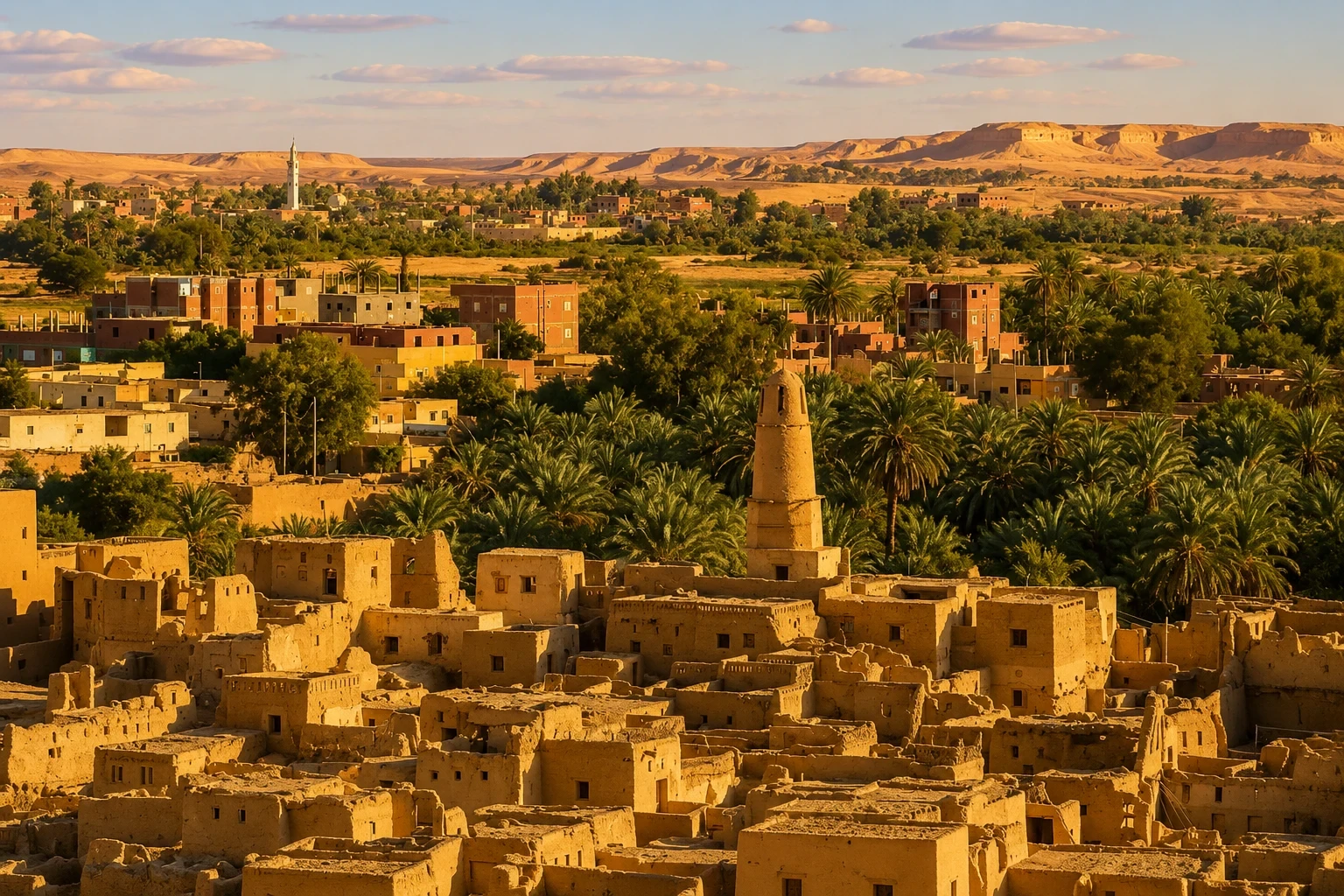
Kharga Oasis is the largest and the most substantially populated of the Egyptian Western Desert oases, occupying a natural depression of approximately 160 kilometers in length from north to south in the New Valley Governorate (Wadi El Gedid) of the Egyptian Western Desert, whose population of approximately 180,000 to 200,000 people makes it by far the most populous of the Western Desert oasis communities and whose status as the capital of the New Valley Governorate gives it an administrative significance within the Egyptian regional government system that the other Western Desert oases do not possess. The main city of Kharga (Al Kharga), the administrative capital of both the Kharga Oasis district and the entire New Valley Governorate, is a substantial provincial city of considerable commercial vitality whose modern infrastructure, regular markets, government institutions, and growing urban population give it a character much more similar to a medium-sized Egyptian provincial city than to the more intimate and more traditionally characterful oasis settlements of the inner and northwestern Western Desert oases.
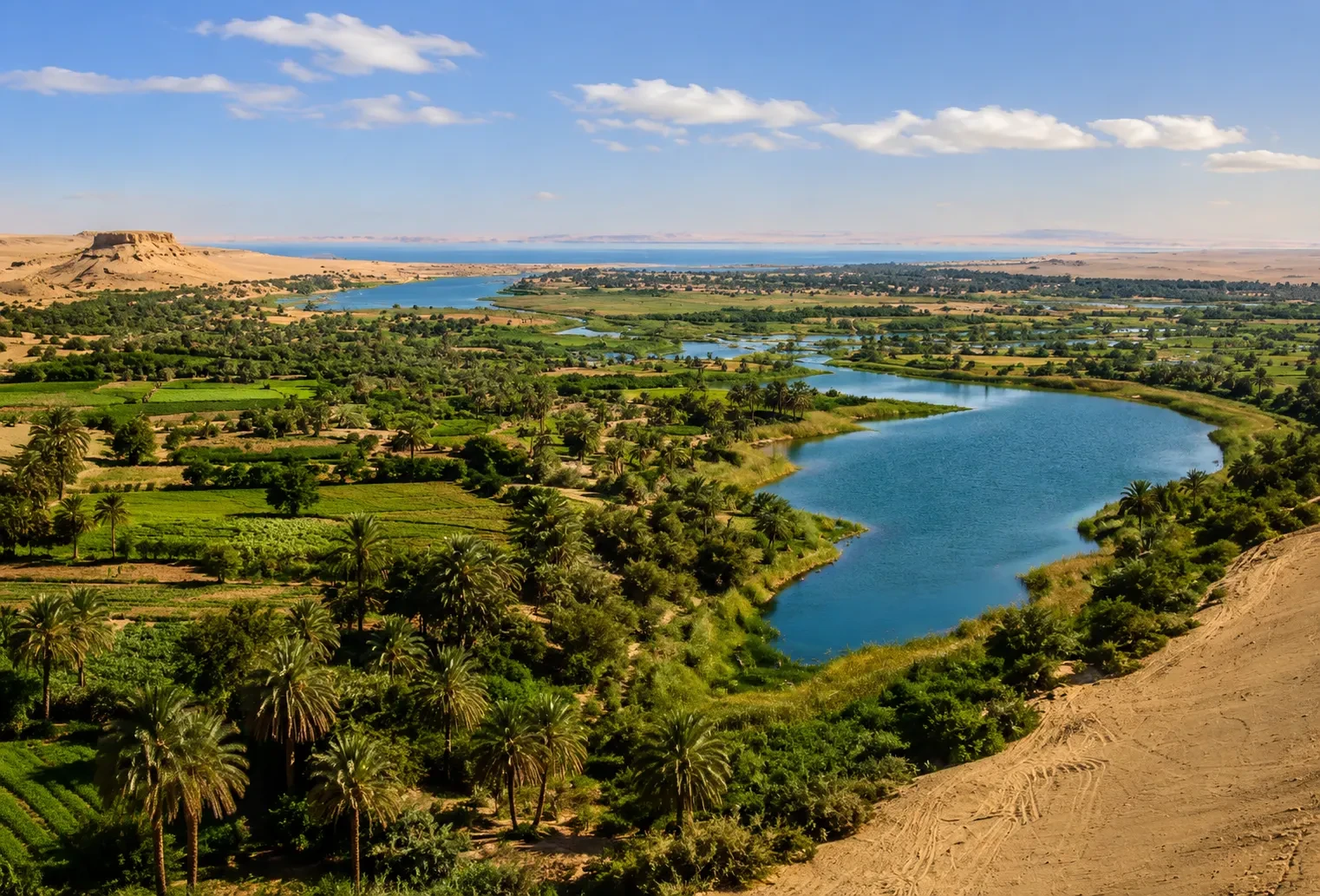
The Kharga Oasis depression is fed by the Nubian Sandstone Aquifer System, one of the largest underground freshwater reservoirs in the world, whose abundant artesian water resources support an extensive agricultural economy of date palms, cotton cultivation, wheat, and a diverse range of other crops across the large irrigated agricultural area of the depression. The oasis has experienced significant modern development and population growth through the Egyptian government's New Valley development programme, which has invested substantially in the irrigation, agricultural, and urban infrastructure of the Kharga Oasis since the 1950s as part of the broader national strategy of developing the Egyptian Western Desert oases as a complementary agricultural and population resource to the more densely settled Nile Valley. This modern development context gives Kharga a somewhat different character from the more traditionally preserved inner oases of Dakhla and Farafra, with the extraordinary ancient and early Christian heritage of the oasis's most significant monuments existing in a more contemporary urban context than the desert solitude of the smaller and less developed inner oases.
Who Built The Ancient Monuments Of Kharga Oasis?
The ancient monuments of the Kharga Oasis were built by a remarkable succession of Egyptian ruling powers spanning from the New Kingdom through the Ptolemaic and Roman periods, with the most significant surviving monuments attributable to the pharaohs of the 26th and 30th Dynasties of the Late Period of ancient Egypt, to the Persian Great King Darius I and his successors in their period of rule over Egypt as the 27th Dynasty, and to the Roman emperors of the 1st through 4th centuries CE whose administrative and religious patronage created the most extensive and the most physically complete Roman-period monument landscape available at any accessible Western Desert oasis site. The most important single ancient monument builder at the Kharga Oasis is the 30th Dynasty pharaoh Nectanebo I, approximately 380 to 362 BCE, who was responsible for the major building campaign at the Temple of Hibis that produced the essential architectural form of the most completely preserved ancient Egyptian temple in the Western Desert, although the temple's history of construction and decoration encompasses multiple earlier and later phases from the New Kingdom through the Ptolemaic period that give the building a chronological complexity reflecting its extraordinary historical importance as the primary sacred site of the Kharga oasis community across nearly a thousand years of continuous use.
The Persian Great King Darius I (522 to 486 BCE), who ruled Egypt as the 27th Dynasty in the period between the two Egyptian native dynasties of the Late Period, made significant contributions to the Temple of Hibis that are documented in the temple's carved relief decoration and that make the Hibis temple one of the very few accessible ancient Egyptian monuments to preserve clear evidence of Persian royal engagement with and patronage of the ancient Egyptian religious tradition, a dimension of the Persian period of Egyptian history that is rarely visible in surviving architectural monuments and that gives the Hibis temple a unique and historically irreplaceable significance for the understanding of this poorly documented period of Egyptian political history. The Roman period emperors from Augustus through the 3rd century CE were responsible for the most extensive development of the broader Kharga Oasis monument landscape, constructing or substantially modifying a series of fortress-temples, Roman road stations, and agricultural infrastructure elements including the remarkable ancient aqueduct system of Ain Umm el-Dabadib that constitute the most complete surviving evidence for the Roman administrative and economic management of the Kharga Oasis as a productive agricultural and strategic commercial territory.
The Darb El-Arbain: The Ancient Road Of Forty Days
The most historically consequential and the most geographically dramatic dimension of the Kharga Oasis's ancient heritage is its position as the primary Egyptian waystation on the Darb el-Arbain, the legendary trans-Saharan caravan road that connected the kingdoms and the trading communities of sub-Saharan Africa, particularly the ancient Sudanese kingdoms of Kush and Darfur and the commercial communities of the central African savanna, with the markets and the ports of ancient and medieval Egypt over a period of more than three thousand years of continuous commercial use from the ancient Egyptian Pharaonic period through the Ottoman era. The Darb el-Arbain, whose Arabic name means the Road of Forty Days, referring to the approximate duration of the full caravan journey from the Sudanese town of Kobbei near El-Fasher in Darfur to the Egyptian city of Asyut on the Nile Valley, was one of the most important and the most consistently profitable commercial arteries of the ancient and medieval world, carrying across the Saharan desert an extraordinary range of sub-Saharan African luxury commodities including ivory, gold, ebony, ostrich feathers, exotic animal skins, live animals including lions and elephants destined for the Egyptian royal zoo and the Roman amphitheater, and enormous numbers of enslaved people who constituted the most economically valuable single commodity of the trans-Saharan trade throughout most of the documented history of the route.
The Kharga Oasis, positioned approximately midway between the Sudanese terminus of the Darb el-Arbain and the Nile Valley market center of Asyut on the eastern edge of the oasis depression, served as the primary resupply point, the primary rest station, and the primary customs and commercial inspection post for all caravans traveling in both directions along the Darb el-Arbain road, giving the oasis an economic and strategic importance in the ancient and medieval commercial geography of the northeastern African world that far exceeded what its agricultural productivity alone would have warranted. The extraordinary wealth generated by the Darb el-Arbain commerce passing through the Kharga Oasis explains in significant part the extraordinary quality and the extraordinary scale of the ancient monuments that successive Egyptian rulers invested in the oasis, as the commercial revenues of the caravan trade provided the resources and the political motivation for the construction of the most impressive temples, the most elaborate funerary infrastructure, and the most substantial administrative monuments in the complete Western Desert oasis heritage landscape. The Darb el-Arbain continued as an active commercial route well into the 19th century, and its physical traces in the form of ancient road markers, fortified water stations, and caravan campsites are visible in the desert landscape surrounding the Kharga Oasis in a direct physical record of the most important trans-Saharan commercial artery in the history of the northeastern African world.
Kharga Oasis Location In Egypt
Kharga Oasis is located in the New Valley Governorate of the Egyptian Western Desert, approximately 600 kilometers southwest of Cairo by the desert road approach from the north and approximately 230 kilometers west of Luxor and approximately 200 kilometers west of Asyut by the most direct Nile Valley approach roads. The oasis is the most accessibly positioned of the deep Western Desert oases from the Nile Valley, connected to Luxor by the paved desert highway that crosses the Eastern Desert plateau from the Nile Valley near Luxor west to the eastern edge of the Kharga depression in a journey of approximately 2.5 to 3 hours by private vehicle, making Kharga the only major deep Western Desert oasis reachable in a comfortable half-day's drive from a major Nile Valley tourism center. The main city of Kharga, the administrative capital of the New Valley Governorate, is located at the northern end of the oasis depression and is the standard arrival and accommodation point for all Kharga Oasis heritage programmes. The Temple of Hibis is located approximately 2 kilometers north of the main Kharga city center, and the El-Bagawat Necropolis is located immediately adjacent to the Temple of Hibis on the adjacent escarpment hillside, making both monuments accessible as a combined site visit from any accommodation in the oasis city. WOW Egypt Tours provides private vehicle transportation from Luxor, Asyut, and Cairo to the Kharga Oasis as part of all Egypt Desert Safari Tours and Egypt Travel Packages that include the Kharga heritage programme.
Kharga Oasis Fun Facts
The Temple of Hibis at Kharga Oasis is the most completely preserved ancient Egyptian temple in the entire Egyptian Western Desert and one of the best preserved Late Period temples anywhere in Egypt, a distinction that gives the Hibis temple an importance in the study of ancient Egyptian late period religious art and architecture that is disproportionate to its relatively modest size by the standards of the great Nile Valley temples and that makes it one of the most visited and the most extensively studied ancient monuments in the complete Western Desert heritage landscape. The temple's preservation is in part a result of its remote desert location which protected it from the systematic stone-quarrying that destroyed the Nile Valley Late Period temples during the medieval period, and in part the product of the relatively dry and stable desert climate of the Kharga Oasis that has maintained the painted surfaces and the carved relief details of the temple interior in a state of preservation significantly better than the more exposed Nile Valley temples of comparable age.
The El-Bagawat Necropolis adjacent to the Temple of Hibis contains more than 260 individual mud-brick funerary chapel structures dating from approximately the 4th through the 7th century CE, making it the largest and the most completely preserved early Christian cemetery in Africa and one of the most significant early Christian archaeological sites in the entire Mediterranean and African world. The extraordinary painted chapels of El-Bagawat, whose biblical narrative scenes executed in the distinctive late antique artistic tradition of the Egyptian Christian church include some of the earliest surviving representations of biblical narrative subjects in any painting medium available anywhere in the world, give the necropolis a significance for the history of early Christian art that extends far beyond the Egyptian or even the African heritage landscape and places it in the most significant company of early Christian art sites anywhere in the Mediterranean world.
The ancient aqueduct system of Ain Umm el-Dabadib in the northern Kharga Oasis, constructed during the Roman period to deliver spring water from its source to the fields and settlements of the agricultural community through an underground channel system of considerable engineering sophistication, is one of the most impressive examples of ancient Roman water management engineering available at any accessible heritage site in the Egyptian Western Desert, providing the most direct evidence for the technical sophistication and the economic ambition of the Roman administration of the Kharga Oasis in the 1st to 3rd centuries CE. The Ain Umm el-Dabadib aqueduct system, combined with the fortress ruins and the ancient agricultural settlement remains of the same site, creates one of the most completely preserved Roman-period agricultural and military landscape ensembles available at any accessible Western Desert heritage destination.
Why Is It Called Kharga Oasis?
The name Kharga, also spelled Kharga, Al Kharga, or El Kharga in various transliterations of the Arabic toponym, derives from the Arabic root kharaja, meaning to go out or to exit, giving the name the approximate meaning of the outer one or the exterior oasis, a geographical designation that captures with considerable accuracy the position of the Kharga Oasis as the most eastward-situated and the most accessible of the inner Western Desert oases, the first oasis encountered when traveling west from the Nile Valley into the interior of the Western Desert and therefore the most outwardly positioned of the oasis chain relative to the Nile Valley heartland of the Egyptian state. The Kharga designation as the outer oasis is most meaningful when understood in its paired relationship with the Dakhla Oasis to the west, whose name derives from the contrasting Arabic root dakhala, meaning to enter or to go inside, creating the perfectly complementary pair of the outer oasis and the inner oasis that in ancient and medieval Arabic geographical literature designated the two most substantial and the most closely linked of the Egyptian Western Desert oasis communities. The ancient Egyptian name for the Kharga Oasis was Weset, meaning the southern oasis in the ancient Egyptian geographical system that divided the oasis chain into northern and southern administrative units, and this ancient Egyptian designation identifies Kharga as the southernmost of the two inner oases in the ancient administrative geography of the western desert territories, complementing the Dakhla Oasis to the west in the same paired administrative framework that the Arabic outer and inner designations replicate in a different geographical logic.
Kharga Oasis History
The history of human occupation in the Kharga Oasis extends from the Paleolithic period through the complete span of Egyptian and North African history to the present day in one of the most continuously occupied and the most historically documented of all the Western Desert oasis communities, a history that encompasses the ancient Egyptian state's engagement with the oasis from the New Kingdom through the Late Period and the Persian occupation, the Ptolemaic and Roman administration of the most commercially strategic oasis in the Western Desert, the early Christian period whose exceptional El-Bagawat Necropolis is the most visually accessible and the most historically significant surviving monument of the Kharga community's early Christian heritage, the medieval Islamic period of the Darb el-Arbain commercial golden age, and the modern Egyptian period of the New Valley development programme that has transformed the Kharga Oasis into the largest and the most substantially developed Western Desert oasis community in the country.
The Kharga Oasis achieved its greatest ancient historical significance during the Late Period of ancient Egypt, approximately 650 to 332 BCE, when the combination of the oasis's strategic position on the Darb el-Arbain caravan route, its proximity to the Nubian kingdom of Kush and the sub-Saharan African trade networks, and its abundant agricultural resources made it one of the most economically important and the most politically significant oasis territories in the ancient Egyptian administrative system. The extraordinary investment of the 26th Dynasty Saite pharaohs and the 30th Dynasty native pharaohs in the Temple of Hibis reflects this political and commercial importance, as both dynasties recognized the Kharga Oasis as a strategic asset worth investing in at the highest level of royal architectural patronage. The Persian period of Egyptian history, when the Persian Great King Darius I and his successors ruled Egypt as the 27th Dynasty approximately 525 to 402 BCE, added an extraordinary and historically unique layer to the Hibis temple's decorative programme, making the temple the primary surviving evidence in any accessible Egyptian ancient monument for the character of Persian royal engagement with the ancient Egyptian religious tradition in the period of Persian rule over Egypt.
The Roman period from the 1st century CE through the 4th century CE saw the Kharga Oasis reach its greatest physical extent of monument construction and its greatest economic prosperity as a component of the Roman provincial administration of Egypt, with the construction of the fortress-temples of Qasr el-Ghueida, Qasr el-Dush, and the Nadura temple complex on the escarpment above the city creating the most extensive Roman-period monument landscape available at any accessible Western Desert oasis site, and the construction of the remarkable Ain Umm el-Dabadib agricultural and hydraulic infrastructure extending the productive agricultural area of the oasis to its maximum Roman-period extent. The early Christian period of the 4th through 7th centuries CE left the most visually extraordinary and the most internationally significant legacy of the complete Kharga heritage sequence in the extraordinary El-Bagawat Necropolis, whose painted biblical chapels are among the most important early Christian monuments in the entire African continent and whose extraordinary preservation in the dry desert air of the Kharga depression makes them uniquely available for direct visual engagement with the artistic tradition of the earliest Christianity in Egypt.
The Story Of The Temple Of Hibis
The Temple of Hibis is the most historically significant and the most architecturally complete ancient Egyptian monument in the entire Western Desert, a fact that gives it a claim to scholarly and heritage importance that is entirely independent of the relative modesty of its scale compared to the great Nile Valley temples of Karnak, Luxor, and Abu Simbel, and that makes it one of the most valuable and the most carefully studied ancient Egyptian religious buildings available at any accessible heritage site outside the main Nile Valley. The temple's extraordinary historical significance derives from the combination of its remarkable preservation, its exceptional decorative completeness, its remarkable chronological complexity spanning nearly a thousand years of construction and use from the New Kingdom through the Ptolemaic period, and above all its unique status as the primary surviving evidence for Persian royal patronage of the ancient Egyptian religious tradition in the period of Persian rule over Egypt as the 27th Dynasty.
The Temple of Hibis is dedicated to Amun of Hibis, the local manifestation of the supreme ancient Egyptian god Amun who was the primary sacred patron of the Kharga Oasis community, and its architectural programme follows the standard ancient Egyptian temple plan of successive pylons, hypostyle halls, and inner sanctuaries leading to the innermost holy of holies where the divine statue resided, adapted to the specific spatial requirements and the specific religious traditions of the oasis cult. What makes the Hibis temple's decorative programme particularly extraordinary is the exceptional completeness with which the original carved and painted relief decoration has survived on the walls and ceilings of the temple interior, providing art historians with the most completely readable ancient Egyptian Late Period decorative programme available at any accessible temple site in the Western Desert and one of the most complete programmes of this period anywhere in Egypt. The Persian-period decoration added by Darius I and his court to specific sections of the temple interior, identifiable by the royal cartouches of the Persian ruler in the ancient Egyptian hieroglyphic tradition alongside the fully canonical ancient Egyptian divine iconographic programme, represents a dimension of the temple's historical record that is unique in the accessible ancient Egyptian heritage landscape and whose discovery and scholarly interpretation have profoundly affected the understanding of the cultural and religious relationship between the Persian conquerors of Egypt and the ancient Egyptian priestly and religious tradition that they ruled.
Kharga Oasis Key Attractions And Features
The Temple Of Hibis
The Temple of Hibis is the supreme ancient monument of the Kharga Oasis heritage and the primary reason for the oasis's claim to international archaeological and heritage significance, a temple of the Late Period and Persian era whose remarkable preservation of its architectural form, its carved relief decoration, and its painted colour scheme in many sections of the interior provides the most completely readable ancient Egyptian temple interior available at any heritage site in the Western Desert and one of the most significant examples of late ancient Egyptian religious art and architecture available anywhere in the country. The temple's architectural history spans an extraordinary range from the earliest surviving foundations of the New Kingdom period through the 26th Dynasty Saite period construction campaign, the Persian-period additions of Darius I, the major building campaign of Nectanebo I in the 30th Dynasty, and the subsequent Ptolemaic-period additions and modifications, creating a building whose walls preserve in their superimposed decorative programmes a visual record of the ancient Egyptian religious tradition across nearly a thousand years of continuous sacred use that is simply unavailable in its combination of completeness, legibility, and historical range at any comparable ancient temple site in the Egyptian Western Desert. The hypostyle hall of the Hibis temple, whose columns bear carved reliefs of impressive quality and significant historical information, the sanctuary corridors whose walls preserve painted and carved divine figure programmes of exceptional completeness, and the innermost sanctuary whose sacred architectural character is most completely and most atmospherically maintained of any section of the temple interior together create a monument of genuine awe-inspiring quality that consistently produces in informed visitors a response of genuine respect for the ancient Egyptian religious and artistic tradition at the moment of its most complete surviving expression in the Western Desert heritage landscape.
The El-Bagawat Necropolis
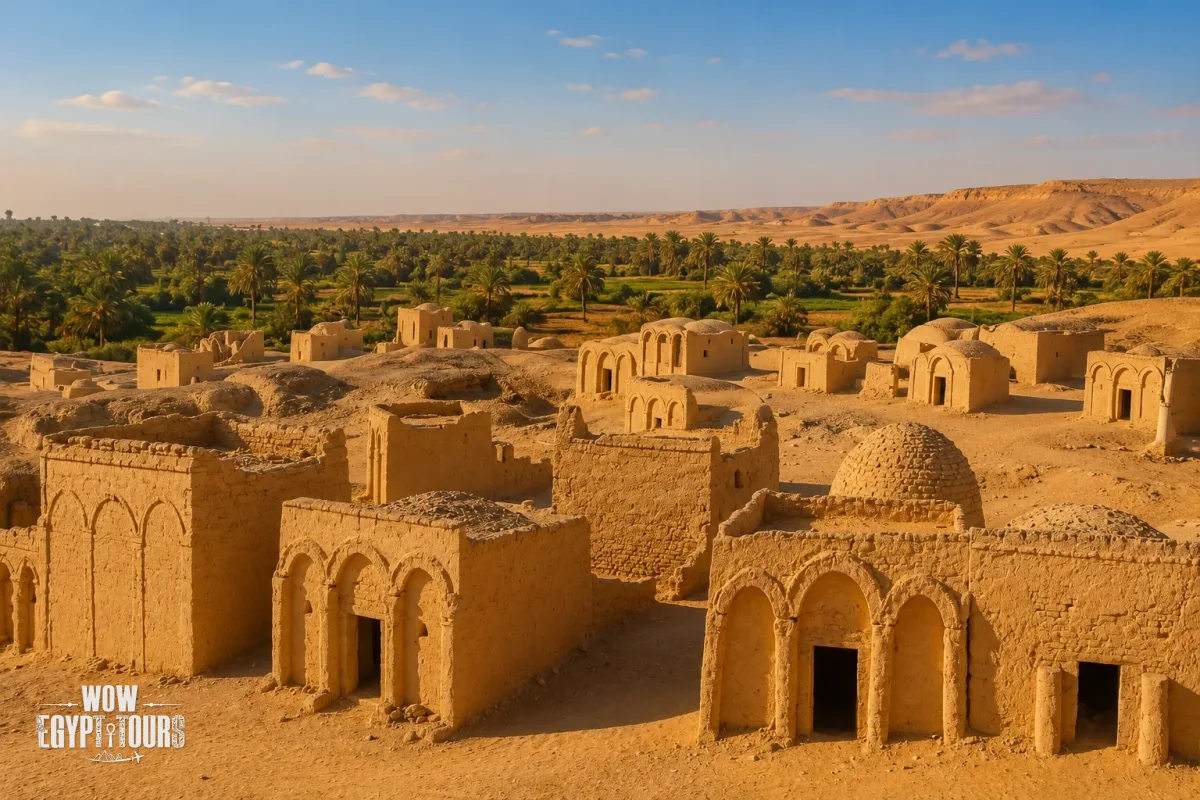
The El-Bagawat Necropolis on the escarpment hillside immediately north of the Temple of Hibis is the most internationally significant and the most visually extraordinary early Christian heritage monument in the entire Egyptian Western Desert, a vast cemetery of more than 260 individual mud-brick funerary chapel structures dating from approximately the 4th through the 7th century CE whose preservation in the exceptionally dry air of the Kharga desert environment has maintained the painted biblical scenes of the most elaborately decorated chapels in a condition of such remarkable legibility that they constitute some of the earliest surviving examples of Christian pictorial narrative art in any medium accessible to direct visual examination anywhere in the world. El-Bagawat is not simply a cemetery of historical interest; it is an art historical site of the first order, preserving in its painted chapel interiors the most complete and the most visually immediate encounter with the artistic conventions, the theological concerns, and the narrative traditions of the earliest Egyptian Christianity available at any accessible archaeological site in the country. The most celebrated individual structures within the El-Bagawat Necropolis are the Chapel of the Exodus and the Chapel of Peace, both containing extraordinarily well-preserved painted scenes of Old and New Testament biblical narrative executed in the distinctive late antique linear style of the Egyptian Coptic artistic tradition, whose bold figurative compositions, vivid colour, and direct narrative legibility make them one of the most immediately accessible and the most personally affecting ancient art encounters available anywhere in the Egyptian heritage landscape. The Chapel of the Exodus, whose painted interior depicts the escape of the Hebrew people from Egypt across the Red Sea with a narrative directness and a compositional clarity that is genuinely astonishing in a monument of the 4th or 5th century CE, is the single most celebrated individual monument in the El-Bagawat Necropolis and one of the most significant surviving early Christian narrative painting cycles in the entire African continent.
The Nadura Temple
The Nadura Temple complex, located on the hilltop immediately above the Kharga city center on the northern escarpment of the oasis depression, is a Roman-period temple of the 2nd century CE whose elevated hilltop position provides the most panoramic and the most architecturally framed viewpoint over the complete Kharga city landscape and the full extent of the northern oasis depression available at any accessible elevated point in the oasis, making it simultaneously an important ancient religious monument in its own right and the most rewarding natural viewpoint for photography and panoramic appreciation of the complete Kharga landscape. The Nadura temple, though partially ruined, preserves sections of its original sandstone construction and its relief decoration programme in sufficient completeness to communicate the architectural character and the religious function of a modest but carefully built Roman provincial temple of the Egyptian Amun cult tradition, and its hilltop escarpment setting against the vast open sky of the western desert gives it a quality of elevated divine presence and natural landscape drama that the more completely preserved but less dramatically situated Hibis temple in the palm garden below lacks.
Qasr El-Ghueida
Qasr el-Ghueida, located approximately 18 kilometers south of the main Kharga city on the desert road toward Dakhla, is a Ptolemaic-period temple complex of the 3rd and 2nd centuries BCE whose mud-brick enclosure walls and sandstone temple structure, though partially ruined, preserve sufficient architectural and decorative evidence to give the site one of the most completely evocative and the most atmospherically isolated ancient monument settings available at any heritage site in the northern Kharga landscape. The temple was dedicated to the Theban triad of Amun, Mut, and Khons in the standard Ptolemaic tradition of ancient Egyptian religious patronage in the Western Desert oasis communities, and its construction represents the continuation of the centuries-long tradition of royal religious investment in the Kharga Oasis that the earlier 30th Dynasty Hibis temple had established and that the Roman-period fortress-temples at the southern end of the depression subsequently extended in the most physically dramatic form available at any Kharga heritage site.
Qasr El-Dush And The Southern Fortress-Temple
At the extreme southern end of the Kharga depression, approximately 100 kilometers south of the main Kharga city and at the very terminus of the Darb el-Arbain route where the caravan road entered the Kharga Oasis from the south, the remarkable fortress-temple complex of Qasr el-Dush constitutes the most dramatic and the most strategically expressive ancient monument in the complete Kharga Oasis heritage landscape, a Roman-period fortified temple complex dedicated to the syncretic Greco-Egyptian deities Isis and Serapis whose heavy mud-brick defensive walls, imposing gateway towers, and surviving temple sanctuary create one of the most completely preserved Roman-period military and religious landscape ensembles available at any accessible Western Desert heritage site. Qasr el-Dush was positioned at the strategic point where the Darb el-Arbain entered the Kharga Oasis from the south, the point at which all caravans traveling north from Sudan and sub-Saharan Africa arrived at the first major Egyptian commercial and administrative center on their journey to the Nile Valley markets, and its function as both a military fortress controlling the strategic caravan road entrance and a religious sanctuary providing divine protection for the commercial community passing through the terminal gateway of the most important trans-Saharan trade route in the ancient African world gives it a heritage significance and a strategic historical drama that the more purely religious monuments of the northern Kharga landscape cannot quite match. The gilded sandstone blocks discovered in the sanctuary of the Qasr el-Dush temple during archaeological investigations, evidence for the extraordinary decorative investment of the Roman administration in the terminal gateway temple of the Darb el-Arbain route, give the site an additional dimension of archaeological richness and historical specificity that reinforces its status as one of the most historically consequential and the most archaeologically significant individual heritage sites in the complete Kharga Oasis landscape.
Ain Umm El-Dabadib And The Roman Aqueduct System
The ancient Roman-period agricultural settlement and aqueduct system of Ain Umm el-Dabadib in the northern Kharga Oasis, approximately 60 kilometers north of the main Kharga city in an isolated desert location accessible by four-wheel-drive vehicle, constitutes one of the most remarkable and the most completely preserved examples of ancient Roman agricultural and hydraulic engineering in the entire Egyptian desert heritage landscape, a system of underground channels delivering spring water from its natural source to the fields and settlements of the Roman agricultural community through a sophisticated qanat-style aqueduct whose engineering principles and physical construction represent the most ambitious hydraulic management programme in the Roman period Western Desert heritage of the Kharga Oasis. The Ain Umm el-Dabadib site encompasses not only the aqueduct system itself but also the ruins of a Roman-period fortified settlement whose mud-brick walls, grain storage facilities, water distribution channels, and domestic building remains together create the most complete surviving picture of a Roman-period desert agricultural community available at any accessible heritage site in the northern Kharga landscape, giving the site a dimension of everyday ancient social and economic history that complements the more formal religious and funerary heritage of the major monument sites of the southern Kharga programme.
The Kharga Museum Of Antiquities
The Kharga Museum of Antiquities in the main Kharga city, also known as the New Valley Museum, is the primary institutional repository for the extraordinary archaeological heritage of the Kharga Oasis and the broader New Valley Governorate region, displaying in its galleries a comprehensive collection of artifacts from all the major periods of Kharga's ancient and early Christian history in a display programme of considerable scholarly depth and considerable public interpretive richness. The museum's collection includes selected finds from the Temple of Hibis excavations documenting the Late Period and Persian religious heritage of the oasis, Roman-period artifacts from the fortress-temples and the ancient settlements of the oasis including pottery, coins, glass, and personal objects of the Roman provincial community, Coptic Christian artifacts from the El-Bagawat Necropolis and the other early Christian sites of the Kharga landscape, and a range of prehistoric archaeological material from the Paleolithic and Neolithic periods that documents the most ancient phases of human presence in the Kharga depression. A visit to the Kharga Museum is the most naturally appropriate first engagement with the complete Kharga heritage landscape, providing the chronological framework and the material culture context that makes all subsequent monument visits most fully comprehensible and most personally rewarding.
Why Is Kharga Oasis Important?
Kharga Oasis is important for reasons spanning ancient Egyptian religious heritage, Persian period Egyptian history, Roman provincial administration, early Christian art and archaeology, trans-Saharan commercial history, and the practical geography of Egyptian Western Desert heritage tourism as the most accessible deep Western Desert oasis from the Nile Valley. As the site of the Temple of Hibis, Kharga preserves the most completely decorated and the most historically complex ancient Egyptian temple in the Western Desert and one of the most significant Late Period temples accessible anywhere in Egypt. As the site of the El-Bagawat Necropolis, Kharga preserves the oldest and the most completely preserved early Christian cemetery in Africa and one of the most significant early Christian art monuments in the entire Mediterranean and African world. As the primary Egyptian waystation of the Darb el-Arbain, Kharga was for more than three thousand years the commercial gateway between sub-Saharan Africa and Egypt, a strategic position whose economic and political consequences are directly expressed in the extraordinary investment of successive Egyptian ruling powers in the oasis's ancient monuments. As the capital of the New Valley Governorate, Kharga is the administrative hub of the entire Egyptian Western Desert oasis system. WOW Egypt Tours includes Kharga Oasis as a featured heritage destination on Egypt Desert Safari Tours and Egypt Travel Packages, recognizing it as the most conveniently accessible and the most heritage-diverse deep Western Desert oasis destination for travelers whose primary base is in the Nile Valley cities of Luxor or Asyut.
What Are Some Interesting Facts About Kharga Oasis?
The Persian Pharaoh's Temple
The most historically unique and the most intellectually astonishing aspect of the Temple of Hibis at Kharga is the presence within its decorative programme of the cartouches and the royal epithets of the Persian Great King Darius I, making the Hibis temple the primary surviving evidence in any accessible ancient Egyptian monument for the extraordinary fact that the Persian rulers of Egypt, whom the Egyptians regarded as foreign conquerors and usurpers of the legitimate pharaonic tradition, adopted the full conventional programme of Egyptian royal religious patronage and presented themselves in the traditional iconographic and textual language of the ancient Egyptian pharaonic tradition as legitimate successors to the ancient divine kingship of the pharaohs. The sight of Darius I's cartouche in the conventional ancient Egyptian hieroglyphic royal name ring on the walls of an ancient Egyptian temple in the Kharga Oasis, presented in exactly the same formal language and exactly the same iconographic programme as the cartouches of the native Egyptian pharaohs who preceded and followed him, is one of the most immediately intellectually astonishing experiences available at any ancient monument in the Western Desert heritage landscape, confronting the visitor with the direct visual evidence for the most remarkable cultural accommodation in the history of the ancient Egyptian religious tradition and giving the Hibis temple a dimension of cross-cultural historical significance that is simply unavailable at any other accessible ancient Egyptian temple site in the country.
The Oldest Christian Cemetery In Africa
The El-Bagawat Necropolis's status as the oldest and the most completely preserved early Christian cemetery in Africa gives the Kharga Oasis a claim to early Christian heritage significance that is simply unavailable at any other accessible Western Desert heritage destination, making the oasis the most important site in Egypt for the study of early Christianity as expressed in funerary architecture and funerary art in the desert oasis communities of the Egyptian late antique world. The 260 plus individual mud-brick funerary chapels of El-Bagawat, ranging in date from the 4th through the 7th century CE and in architectural ambition from the simplest single-room burial chambers to the most elaborate multi-room painted chapel complexes with dome or barrel vault ceilings, together constitute the largest surviving ensemble of early Christian funerary architecture available at any accessible site in Africa and one of the largest anywhere in the Mediterranean world. The painted biblical narrative scenes of the most elaborately decorated chapels, including the famous Chapel of the Exodus with its vivid depiction of the Hebrew escape from Egypt and crossing of the Red Sea, and the Chapel of Peace with its extraordinary symbolic programme of Old Testament figures and New Testament themes, are among the earliest surviving Christian pictorial narrative paintings available anywhere in the world and are recognized by art historians of early Christianity as monuments of major importance for the understanding of the visual artistic tradition of the first centuries of the Christian church in Egypt and in the broader eastern Mediterranean world.
The Road That Crossed The Sahara
The story of the Darb el-Arbain and Kharga's role as the primary Egyptian gateway for the most important trans-Saharan caravan route of the ancient and medieval world is one of the most dramatically consequential and the most geographically astonishing commercial narratives in the entire history of the northeastern African world, a story of human endurance, commercial ambition, and geographical courage across the most hostile desert terrain on earth that challenges the imagination of any modern visitor who stands in the Kharga Oasis and tries to comprehend the reality of the forty-day desert crossing that connected the sub-Saharan African kingdoms with the ancient Egyptian markets across more than a thousand kilometers of waterless Saharan terrain. The physical traces of the Darb el-Arbain in the desert landscape around the Kharga Oasis, including the ancient road surface markers, the fortified water stations, and the caravan campsites whose remains are visible in the desert to the south of the oasis, give the historical narrative of the trans-Saharan trade a physical and geographical immediacy that no amount of historical description can substitute for, confronting the visitor with the direct material evidence for one of the most ambitious and the most consistently profitable commercial enterprises of the ancient and medieval African world and giving the Kharga Oasis a commercial historical significance that is unique in the Western Desert oasis heritage landscape and deeply consequential for the understanding of the ancient African economic world.
What Is So Special About Kharga Oasis?
The Most Conveniently Accessible Deep Western Desert Heritage
What makes Kharga Oasis uniquely special in the practical context of Egyptian heritage tourism is its extraordinary accessibility from the Nile Valley, which makes it the only deep Western Desert oasis heritage destination reachable as a comfortable day excursion or a very manageable overnight programme from the major Nile Valley tourism city of Luxor. This accessibility opens the extraordinary ancient and early Christian heritage of the Western Desert to the enormous number of travelers who are visiting Luxor for the supreme pharaonic monuments of the Nile Valley but who have limited additional time for the longer journeys required to reach the other deep Western Desert oases. The combination of the Temple of Hibis, the El-Bagawat Necropolis, and the panoramic Nadura hilltop viewpoint, all accessible within a single full day's excursion from Luxor, creates the most heritage-rich and the most chronologically diverse single-day or two-day excursion programme available from any Nile Valley tourism center in Egypt, a programme that takes the traveler from the supreme pharaonic monuments of Luxor across the desert to the most completely preserved ancient Egyptian temple in the Western Desert and the oldest early Christian cemetery in Africa in a single journey of extraordinary historical sweep and extraordinary personal impact.
Where Pharaonic, Persian, Roman, And Early Christian Heritage Meet
Kharga is also uniquely special for the extraordinary concentration of different historical periods and different cultural traditions that its monument landscape brings together within the accessible boundaries of a single oasis visit, encompassing within the Kharga heritage programme a chronological sequence that moves from the native Egyptian Late Period pharaohs through the Persian conquerors to the Roman provincial administrators and then to the early Christian communities of the 4th to 7th century in a historical narrative of four major cultural transitions all directly visible and directly experienceable in the physical remains of the monuments themselves. No other Western Desert oasis destination offers this combination of Pharaonic, Persian, Roman, and early Christian heritage within a single accessible visit, and the quality of complete historical engagement that the complete Kharga monument programme provides, the sense of having encountered the full sweep of the major cultural transitions of the ancient and late antique Egyptian world in a single oasis landscape, gives the Kharga visit a quality of historical comprehensiveness and personal educational completeness that is unique in the Egyptian Western Desert heritage circuit.
Kharga Oasis Through The Ages
The complete history of the Kharga Oasis from the Paleolithic period through the present encompasses one of the most extensively documented and the most historically consequential of all the Egyptian Western Desert oasis biographies, a history in which the oasis's strategic position at the intersection of the trans-Saharan caravan route and the Western Desert oasis chain has given it a consistent political, commercial, and cultural significance that has attracted the patronage of successive Egyptian ruling powers across nearly five thousand years of documented history and has produced in the monument landscape of the oasis the most complete and the most chronologically diverse ancient and medieval heritage available at any accessible Western Desert oasis destination in Egypt.
The modern period of Kharga Oasis history, from the integration of the oasis into the Egyptian national administrative system in the 19th century through the designation of the New Valley Governorate with Kharga as its capital city in the 20th century and the New Valley development programme that has significantly expanded the oasis's population, agricultural land, and urban infrastructure since the 1950s, has transformed Kharga from a remote desert oasis community into the administrative hub of the entire Egyptian Western Desert oasis system and the most substantially developed and the most urban of all the major oasis destinations in the country. This transformation has given Kharga a character distinct from the more traditionally preserved and the more intimately traditional inner oases of the circuit, but has not diminished the extraordinary quality and the extraordinary historical significance of the ancient and early Christian monument heritage that makes the oasis one of the most important and the most personally rewarding heritage destinations in the complete Egyptian Western Desert landscape.
Kharga Oasis UNESCO Recognition
The El-Bagawat Necropolis and the Temple of Hibis are recognized by UNESCO and by the international archaeological and heritage community as monuments of outstanding universal value whose extraordinary preservation, historical significance, and cultural importance place them among the most significant heritage assets in the Egyptian Western Desert and among the most important monuments of early Christian art and ancient Egyptian Late Period religious architecture accessible at any heritage site in the African continent. The El-Bagawat Necropolis has been specifically recognized as one of the most significant early Christian cemeteries in the world and as a monument of major importance for the understanding of early Christian art in the eastern Mediterranean and North African world, attracting the sustained engagement of international art historians, archaeologists, and conservation specialists from throughout the global heritage community. The Egyptian Ministry of Tourism and Antiquities has undertaken significant conservation and presentation work at both the Temple of Hibis and the El-Bagawat Necropolis in recent decades, and the ongoing conservation efforts at these extraordinary monuments reflect the Egyptian state's recognition of their outstanding heritage significance and their importance for the heritage tourism programme of the Egyptian Western Desert.
Best Time To Visit Kharga Oasis
The best time to visit Kharga Oasis is during the cooler months from October through April, when the desert climate of the Kharga depression provides the most comfortable conditions for the outdoor heritage site exploration of the Temple of Hibis, the El-Bagawat Necropolis, the Nadura hilltop viewpoint, and the more remote southern sites of Qasr el-Dush and Ain Umm el-Dabadib. The winter months of December through February offer the most pleasant outdoor exploration conditions, with daytime temperatures in the range of 15 to 22 degrees Celsius that make extended walking through the monument sites comfortable and rewarding without the heat stress of the warmer months. The autumn months of October and November and the spring months of March and April provide similarly excellent conditions, and the spring months in particular benefit from the exceptional desert clarity of the atmosphere following the winter season's minimal rainfall, providing the finest photography light of any season at the outdoor monuments. The summer months of June through August bring extreme heat to the Kharga depression, with temperatures regularly exceeding 40 to 45 degrees Celsius at midday, making the outdoor heritage site visits most comfortable only in the very early morning before 9:00 AM and in the late afternoon after 4:00 PM, and making the air-conditioned museum visit the most comfortable midday activity. WOW Egypt Tours organizes Kharga Oasis programmes throughout the year and provides expert guidance on optimal seasonal timing for all heritage activities.
Kharga Oasis Opening Hours
The Temple of Hibis is open daily from 8:00 AM to 5:00 PM. The El-Bagawat Necropolis is open daily from 8:00 AM to 5:00 PM. The Kharga Museum of Antiquities is open Saturday through Thursday from 9:00 AM to 5:00 PM and is closed on Fridays. The Nadura Temple hilltop site is accessible throughout daylight hours. Qasr el-Ghueida is accessible throughout daylight hours. Qasr el-Dush at the southern end of the oasis is accessible with a licensed guide and appropriate vehicle; current access arrangements should be confirmed with WOW Egypt Tours at the time of booking. Ain Umm el-Dabadib requires a licensed guide and four-wheel-drive vehicle for access; arrangements should be confirmed at time of booking. All Kharga Oasis heritage site visits are organized by WOW Egypt Tours as part of comprehensive Egypt Desert Safari Tours and Egypt Travel Packages.
Kharga Oasis Entrance Fees
Temple of Hibis: EGP 80 for adults, EGP 40 for students.
El-Bagawat Necropolis: EGP 80 for adults, EGP 40 for students. (Combined ticket with Temple of Hibis often available.)
Kharga Museum of Antiquities: EGP 50 for adults, EGP 25 for students.
Qasr el-Ghueida: EGP 40 for adults, EGP 20 for students.
Additional site fees for Qasr el-Dush, Ain Umm el-Dabadib, and the Nadura temple site should be confirmed with WOW Egypt Tours at time of booking. All Kharga Oasis entrance fees are included in the comprehensive Egypt Desert Safari Tours and Egypt Travel Packages offered by WOW Egypt Tours.
How To Get To Kharga Oasis
Kharga Oasis is the most conveniently accessible of the deep Western Desert oases from the Nile Valley, connected to Luxor by a paved desert highway of approximately 230 kilometers (approximately 2.5 to 3 hours by private vehicle) and to Asyut by a road of approximately 200 kilometers (approximately 2 to 2.5 hours). From Cairo, the most direct approach is via the Desert Road to Asyut (approximately 370 kilometers from Cairo) and then southwest on the Asyut-Kharga road (approximately 200 kilometers more), giving a total driving time of approximately 6 to 7 hours from Cairo. An alternative approach from Cairo via the Western Desert circuit through Bahariya, Farafra, and Dakhla reaches Kharga from the west as the final oasis destination of the complete circuit, adding the full heritage of the circuit to the Kharga visit in a comprehensive programme of 7 to 10 days. For travelers based in Luxor, the direct 230-kilometer desert road connection makes Kharga a comfortable day excursion with an early start, or a very rewarding overnight programme that allows a second day for the more remote sites of Qasr el-Dush and Ain Umm el-Dabadib. WOW Egypt Tours provides private vehicle transportation from Luxor, Asyut, and Cairo to Kharga Oasis and organizes all Kharga heritage programmes from either Nile Valley or Desert Road approach directions.
How Long To Spend At Kharga Oasis
A focused one-day programme from Luxor can comfortably include the Kharga Museum of Antiquities, the Temple of Hibis, the El-Bagawat Necropolis, and the Nadura hilltop viewpoint, providing the most important and the most internationally significant heritage encounters of the complete Kharga landscape in a single very rewarding day's programme accessible from Luxor with an early morning departure. An overnight stay in Kharga allows a more relaxed and more complete two-day programme that can additionally include Qasr el-Ghueida approximately 18 kilometers south of the city and the more remote Qasr el-Dush at the southern end of the oasis, together providing the most complete available encounter with the Roman-period fortress-temple tradition of the complete Kharga depression. A two-night programme that also includes Ain Umm el-Dabadib, the remarkable Roman-period agricultural and aqueduct site in the northern desert, provides the most comprehensive available single-destination Kharga heritage experience and is the most strongly recommended approach for travelers whose primary interest is the complete archaeological heritage of the oasis. The Kharga Oasis is most naturally combined in a Western Desert heritage circuit with the Dakhla Oasis to the west, accessible from Kharga in approximately 2 hours, creating the most complete and the most archaeologically rich inner Western Desert oasis heritage programme in a single two-oasis circuit of three to five days.
Tips For Visiting Kharga Oasis
Visit the Kharga Museum of Antiquities as the first activity of the Kharga programme, before the Temple of Hibis and El-Bagawat, as the museum's comprehensive display of artifacts from all periods of Kharga's ancient and early Christian history provides the essential material culture context and the chronological framework that makes the subsequent monument visits most fully comprehensible and most personally rewarding. At the Temple of Hibis, ask your guide to explain the full chronological history of the temple's construction and decoration, and specifically to point out and explain the Persian-period cartouches of Darius I, as the identification of the Persian king's name in the ancient Egyptian hieroglyphic tradition on the walls of an ancient Egyptian temple is one of the most historically astonishing discoveries available to the visitor with appropriate preparation and appropriate guided explanation. At El-Bagawat, allocate at least 45 minutes to one hour for the necropolis exploration, and ask specifically to visit the Chapel of the Exodus and the Chapel of Peace, as these two monuments contain the most visually extraordinary and the most art historically significant painted biblical scenes in the complete necropolis and deserve sufficient time for both the guided explanation of their iconographic programme and the personal absorption of their extraordinary visual character. Climb the Nadura hill above the Kharga city in the late afternoon when the low-angle western light illuminates the complete oasis landscape below in the most dramatically beautiful and the most photographically rewarding desert light conditions of the entire day. For the southern sites of Qasr el-Dush and Ain Umm el-Dabadib, an overnight stay in Kharga is essential as these sites are most comfortably visited with an early morning departure that avoids the extreme midday heat of the desert road between the city and the remote southern monuments. A licensed guide from WOW Egypt Tours with comprehensive knowledge of the Kharga ancient, Persian, Roman, and early Christian heritage is essential for the fullest and the most personally enriching appreciation of the oasis's extraordinary monument landscape.
What To Wear At Kharga Oasis
The Kharga Oasis monument programme encompasses a range of environments from the outdoor desert monument sites of the Temple of Hibis, the El-Bagawat Necropolis, the Nadura hilltop, Qasr el-Ghueida, and Qasr el-Dush through the indoor chapel interiors of the El-Bagawat painted monuments and the air-conditioned galleries of the Kharga Museum, requiring practical and versatile clothing appropriate for all these different contexts. For all outdoor monument site visits, lightweight, breathable, long-sleeved clothing covering the arms and legs with a wide-brimmed hat and generous sunscreen is essential for sun protection in the exposed desert environment. For the El-Bagawat chapel interiors, the same sun-protection clothing is comfortable as the chapels have limited natural light and are not air-conditioned. For the museum, comfortable casual clothing is appropriate in the air-conditioned gallery environment, with a light warm layer recommended if you are sensitive to air conditioning. Sturdy, flat-soled walking shoes with good grip are essential for the uneven terrain of all monument sites, particularly the rocky hillside of the Nadura temple approach, the El-Bagawat necropolis paths between the chapel structures, and the Ain Umm el-Dabadib desert terrain that requires particularly robust footwear. For the Qasr el-Dush and Ain Umm el-Dabadib visits requiring longer desert drives, carry a minimum of two liters of water per person. Modest dress covering the shoulders and knees is appropriate throughout the Kharga oasis community context.
Photography At Kharga Oasis
Kharga Oasis provides an extraordinary range of photography subjects spanning the ancient Egyptian temple art of the Hibis sanctuary reliefs, the early Christian painted chapels of El-Bagawat, the Roman fortress landscape of Qasr el-Dush, and the panoramic oasis landscape viewpoints from the Nadura hilltop, together encompassing a photographic programme of remarkable historical variety and remarkable visual richness. The Temple of Hibis photographs most dramatically in the early morning when the low eastern sun illuminates the sandstone facade and the courtyard columns in the most revealing and the most architecturally expressive angle of desert light, and the interior wall reliefs are most clearly photographed with a good available-light camera as flash is generally prohibited. The El-Bagawat painted chapel interiors require sensitive photography technique to capture the remarkable but often dimly lit painted biblical scenes on the mud-brick chapel walls; a camera with good low-light capability and supplementary small light source is recommended for the most complete documentation of the painted programme. The Nadura hilltop provides the most panoramically beautiful and the most compositionally dramatic photography of the complete Kharga city and oasis landscape, most spectacularly in the late afternoon when the warm desert light illuminates the agricultural landscape below and the distant desert horizon beyond in a composition of extraordinary scale and extraordinary visual beauty. Qasr el-Dush photographs most powerfully in the early morning when the low-angle light creates the deepest shadows on the fortress walls and the most dramatic three-dimensional expression of the massive mud-brick defensive architecture. Photography is freely permitted at all Kharga heritage sites subject to standard Egyptian Antiquities photography permissions for the ancient monuments. Professional photography or filming requires advance permits.
Kharga Oasis Tours
Kharga Oasis Heritage Programme From Luxor: Temple Of Hibis And El-Bagawat
This focused heritage programme from Luxor provides the most efficient and the most historically comprehensive available encounter with the primary monuments of the Kharga Oasis heritage, combining the most completely preserved ancient Egyptian temple in the Western Desert with the oldest early Christian cemetery in Africa in a single day's extraordinary historical journey from the supreme pharaonic monument capital of the Nile Valley to the most heritage-rich Western Desert oasis within practical day-excursion distance of Luxor.
What Is Covered
Private vehicle from Luxor hotel early morning departure. Desert road crossing of approximately 2.5 to 3 hours to Kharga Oasis. Guided visit to the Kharga Museum of Antiquities. Guided visit to the Temple of Hibis with complete explanation of the Late Period, Persian-period, and complete decorative programme. Guided visit to the El-Bagawat Necropolis including the Chapel of the Exodus and the Chapel of Peace with full art historical interpretation. Nadura hilltop viewpoint and panoramic landscape photography. Optional: Qasr el-Ghueida temple complex south of the city. Return to Luxor by private vehicle arriving in the evening.
Duration
Full day from Luxor (early departure recommended). Overnight in Kharga accommodation available for a more relaxed two-day programme including Qasr el-Dush.
Includes
Private vehicle from Luxor, licensed heritage guide with Kharga archaeological specialization, all site entrance fees, and all logistics. All through WOW Egypt Tours Egypt Desert Safari Tours.
Inner Oasis Circuit: Kharga And Dakhla Combined
This comprehensive inner oasis circuit programme combines the extraordinary ancient and early Christian heritage of Kharga with the medieval Islamic village of El-Qasr and the Roman monuments of Dakhla in the most heritage-rich and the most archaeologically complete two-oasis circuit programme available in the Egyptian Western Desert, accessible from either Luxor or Cairo.
What Is Covered
Day 1: Arrive Kharga from Luxor or Cairo. Kharga Museum. Temple of Hibis. El-Bagawat Necropolis. Overnight Kharga.
Day 2: Nadura hilltop viewpoint. Qasr el-Ghueida. Optional Qasr el-Dush at southern terminus of oasis. Drive west to Dakhla Oasis (approximately 2 hours). Dakhla Museum. El-Qasr medieval Islamic village first exploration. Overnight Dakhla.
Day 3: Deir el-Hagar Roman temple. Muzawwaqa painted tombs (zodiac ceiling). Pottery workshop visit. Return to Luxor via Kharga or continue to Farafra and the White Desert.
Duration
3 Days 2 Nights (1 night Kharga, 1 night Dakhla). Extended programmes adding Farafra and the White Desert available.
Includes
Private vehicle, licensed heritage guide, all accommodation, all meals, all entrance fees, and all logistics. All through WOW Egypt Tours Egypt Desert Safari Tours.
Combine Kharga Oasis With Your Egypt Tours Package
Kharga Oasis is featured as the most accessible deep Western Desert oasis and the most conveniently combined Nile Valley heritage extension across the WOW Egypt Tours travel products. Browse the options below to find the Egypt experience that includes Kharga Oasis.
Egypt Tour Packages: Multi-day guided Egypt tours organized by duration, including 2 Days Egypt Packages, 3 Days Egypt Packages, 4 Days Egypt Packages, 5 Days Egypt Packages, 6 Days Egypt Packages, 7 Days Egypt Packages, 8 Days Egypt Packages, 10 Days Egypt Packages, and longer itineraries. Kharga Oasis is featured in packages of 5 days and above that extend the Luxor heritage programme across the desert to the Western Desert oasis heritage. All packages include private vehicle, licensed guide, accommodation, entrance fees, and all logistics.
Egypt Travel Packages: Themed Egypt travel packages including Egypt Honeymoon Travel Packages, Egypt Budget Travel Packages, Egypt Family Travel Packages, Egypt Luxury Travel Packages, Egypt Adventure Travel Packages, Egypt Cultural Travel Packages, and Egypt Christmas and New Year Travel Packages. Kharga Oasis is particularly suited to Cultural, Archaeological, and Adventure themed packages for its extraordinary combination of ancient Egyptian, Persian, Roman, and early Christian heritage. All packages include private transportation, licensed guide, accommodations, meals, and private transfers.
Egypt Desert Safari Tours: Specialized desert safari programmes for which Kharga Oasis is a featured heritage destination, either as a standalone Nile Valley extension programme from Luxor or as the eastern gateway of the complete inner oasis circuit combining Kharga and Dakhla, or as the final destination of the complete Western Desert circuit from Cairo through Bahariya, Farafra, Dakhla, and Kharga. All Desert Safari Tours include private vehicle, licensed guide, all accommodation, all meals, all entrance fees, and all logistics.
Egypt Nile Cruise Packages: Kharga Oasis is the most naturally and the most conveniently combined Western Desert heritage extension for any Egypt Nile Cruise Package based on Luxor, accessible in 2.5 to 3 hours from Luxor and providing the most heritage-rich and the most historically diverse Western Desert oasis heritage available as a Luxor extension.
Nile River Cruises: All WOW Egypt Tours Nile cruise options. Kharga Oasis is available as a Luxor-based extension for any Nile River Cruise itinerary.
Luxor Aswan Nile Cruises: The most naturally combined extension with the Luxor-Aswan Nile cruise. Kharga Oasis is accessible from Luxor in one day and is the most heritage-rich and the most easily accessible Western Desert heritage complement to the supreme ancient Egyptian Nile Valley programme of the Luxor-Aswan cruise.
Standard Nile Cruises: Kharga Oasis available as an extension from Luxor.
Deluxe Nile Cruises: Kharga Oasis available as an extension from Luxor.
Ultra Deluxe Nile Cruises: Kharga Oasis available as an extension from Luxor.
Luxury Nile Cruises: Kharga Oasis available as an extension from Luxor.
Dahabiya Nile Cruises: Kharga Oasis is the most natural and the most geographically convenient Western Desert heritage extension for travelers on a private Dahabiya cruise based in the Luxor area, combining the most intimate Nile sailing experience with the most conveniently accessible deep Western Desert ancient and early Christian heritage.
Lake Nasser Cruises: Kharga Oasis available as a Western Desert extension from Luxor or Aswan combined with any Lake Nasser cruise programme, creating the most comprehensive available programme combining Nubian heritage, ancient Nile Valley temples, and the finest Western Desert oasis monuments in a single Egypt journey.
Nearby Attractions To Kharga Oasis
Kharga Oasis is positioned as the eastern gateway to the inner Western Desert oasis circuit and its most naturally combined nearby attractions include both the Nile Valley heritage cities from which it is most easily approached and the Western Desert oasis heritage destinations of the inner circuit that lie to its west. The most immediately proximate and the most naturally combined heritage destination is the Dakhla Oasis, approximately 185 kilometers west of Kharga on the desert road, whose extraordinary medieval Islamic village of El-Qasr, Roman temple of Deir el-Hagar, and ancient painted Muzawwaqa tombs provide the most archaeologically rich and the most architecturally varied complementary oasis heritage programme for travelers combining the two inner oases in a single three to five day circuit. The ancient temples of Luxor, accessible from Kharga in approximately 2.5 to 3 hours, are the most naturally combined Nile Valley heritage complement to the Kharga oasis programme, with the supreme pharaonic monuments of the Luxor East and West Banks, the Karnak temple complex, and the Valley of the Kings providing the most dramatic ancient Egyptian monument context for the journey across the desert to the Temple of Hibis and the El-Bagawat Necropolis.
To the north, along the Desert Road from Kharga toward Cairo, the complete Western Desert oasis circuit of Farafra Oasis, the White Desert, and the Bahariya Oasis with the Black Desert to the north provides the most complete Western Desert safari extension for travelers who approach Kharga from the Nile Valley and wish to continue through the complete circuit to Cairo. The Siwa Oasis in the far northwest, the Faiyum Oasis near Cairo, and the Blue Desert of Sinai complete the full spectrum of Egyptian oasis and desert heritage accessible through the Egypt Desert Safari Tours and Egypt Travel Packages offered by WOW Egypt Tours.
Frequently Asked Questions About Kharga Oasis
What is Kharga Oasis?
Kharga Oasis is the largest and the most accessible of the Egyptian deep Western Desert oases, located approximately 600 kilometers southwest of Cairo and 230 kilometers west of Luxor in the New Valley Governorate, serving as the capital of the New Valley Governorate and the primary administrative hub of the complete Egyptian Western Desert oasis system. It is home to the Temple of Hibis (the most completely preserved ancient Egyptian temple in the Western Desert), the El-Bagawat Necropolis (the oldest early Christian cemetery in Africa), and several Roman-period fortress-temples, and served for thousands of years as the primary Egyptian waystation on the Darb el-Arbain trans-Saharan caravan route. Accessible through Egypt Desert Safari Tours and Egypt Travel Packages offered by WOW Egypt Tours.
What is the Temple of Hibis?
The Temple of Hibis is the most completely preserved ancient Egyptian temple in the entire Western Desert, dedicated to Amun of Hibis, whose construction spans the New Kingdom, 26th Dynasty, Persian period (Darius I), 30th Dynasty (Nectanebo I), and Ptolemaic period. It is uniquely significant as the primary surviving evidence in any accessible ancient Egyptian monument of Persian royal patronage of the ancient Egyptian religious tradition, with the cartouches of Darius I visible within the temple's canonical ancient Egyptian hieroglyphic decorative programme.
What is El-Bagawat Necropolis?
El-Bagawat Necropolis is one of the oldest and most completely preserved early Christian cemeteries in the world, dating from approximately the 4th through the 7th century CE, containing more than 260 mud-brick funerary chapel structures on the escarpment hillside adjacent to the Temple of Hibis. The most celebrated chapels, including the Chapel of the Exodus and the Chapel of Peace, contain extraordinary painted biblical narrative scenes that are among the earliest surviving examples of Christian pictorial narrative art in any medium accessible to direct visual examination anywhere in the world.
What is the Darb el-Arbain?
The Darb el-Arbain, or Road of Forty Days, is the legendary trans-Saharan caravan route connecting the kingdoms of sub-Saharan Africa (particularly the Sudanese kingdoms of Darfur and Kush) with the Egyptian Nile Valley markets over more than a thousand kilometers of desert, used continuously for more than three thousand years from the Pharaonic period through the Ottoman era. Kharga Oasis was the primary Egyptian waystation of the route, where all caravans traveling between sub-Saharan Africa and the Nile Valley stopped to rest, resupply, and submit to commercial inspection. The extraordinary commercial revenues of the Darb el-Arbain trade explain the exceptional quality of the ancient monuments built at Kharga by successive Egyptian rulers.
What is unique about the Persian pharaoh at Hibis?
The Temple of Hibis contains cartouches of Darius I, the Persian Great King who ruled Egypt as the 27th Dynasty, within the standard ancient Egyptian hieroglyphic royal decorative programme of the temple walls. This makes the Hibis temple the primary surviving accessible ancient Egyptian monument to preserve clear evidence of Persian royal adoption of the ancient Egyptian religious tradition and pharaonic religious patronage, a historically extraordinary and uniquely visible dimension of Persian rule over Egypt in the 6th and 5th centuries BCE.
How far is Kharga from Luxor?
Kharga is approximately 230 kilometers west of Luxor on a paved desert highway, approximately 2.5 to 3 hours by private vehicle, making it the only major deep Western Desert oasis heritage destination accessible as a comfortable day excursion from a major Nile Valley tourism center.
Can I visit Kharga as a day trip from Luxor?
Yes. Kharga is accessible as a day excursion from Luxor with an early morning departure, providing sufficient time for the Kharga Museum, the Temple of Hibis, the El-Bagawat Necropolis, and the Nadura viewpoint in a single very rewarding day's programme before returning to Luxor in the evening. An overnight stay significantly enhances the experience by allowing more relaxed engagement and access to the southern sites of Qasr el-Ghueida and Qasr el-Dush.
What are the painted chapels of El-Bagawat?
The painted chapels of El-Bagawat are a series of elaborately decorated mud-brick funerary chapel interiors within the necropolis complex, whose painted biblical narrative scenes executed in late antique Coptic artistic style include the famous Chapel of the Exodus (depicting the Hebrew crossing of the Red Sea) and the Chapel of Peace (with Old and New Testament symbolic figures). These are among the earliest surviving Christian pictorial narrative paintings in any accessible medium in the world.
What is Qasr el-Dush?
Qasr el-Dush is a Roman-period fortified temple complex at the southern end of the Kharga Oasis depression, dedicated to Isis and Serapis, positioned at the strategic point where the Darb el-Arbain caravan route entered the Kharga Oasis from the south. It is one of the most completely preserved Roman-period military and religious monument ensembles in the Egyptian Western Desert and provides the most dramatic physical expression of the commercial and strategic importance of the Darb el-Arbain gateway function of the Kharga Oasis.
What other oases can I combine with Kharga?
The Dakhla Oasis approximately 185 kilometers to the west is the most naturally combined oasis destination with Kharga, together creating the most comprehensive inner oasis heritage circuit. The complete Western Desert circuit via Farafra Oasis, the White Desert, and Bahariya Oasis extends the Kharga visit into the complete northern oasis heritage programme.
What is the best time of year to visit Kharga?
October through April is the most comfortable period, with winter months of December through February providing the most pleasant outdoor exploration conditions. Summer heat exceeds 40 to 45 degrees Celsius at midday, restricting outdoor monument visits to early morning and late afternoon. The Temple of Hibis and El-Bagawat are most dramatically lit by the low-angle morning light of the winter and autumn months.
Is Kharga suitable for families with children?
Yes. The El-Bagawat painted chapels with their vivid biblical narrative scenes engage children of school age very effectively, particularly the dramatic Chapel of the Exodus. The Temple of Hibis is architecturally impressive for children. The Nadura hilltop viewpoint is an exciting physical adventure for older children. WOW Egypt Tours designs family-friendly Kharga Oasis programmes adapted for all ages.
How do I book a Kharga Oasis tour with WOW Egypt Tours?
You can book any Egypt Desert Safari Tour, Egypt Tours Package, or Egypt Travel Package that includes Kharga Oasis directly through WOW Egypt Tours. Our team of travel specialists will arrange everything from private vehicle transportation from Luxor, Asyut, or Cairo and licensed specialist heritage guides to all accommodation, all site entrance fees, and all the logistics of the most historically extraordinary and the most conveniently accessible Western Desert oasis heritage programme available as a Nile Valley extension in all of Egypt.