

The Farafra Oasis is the most isolated, the most unspoiled, the most authentically desert in character, and the most deeply peaceful of all the great oasis destinations in the Egyptian Western Desert, a remote natural depression of extraordinary tranquility located approximately 600 kilometers southwest of Cairo in the heart of the Farafra Depression of the New Valley Governorate, whose population of approximately five thousand people in and around the single oasis settlement of Qasr Farafra makes it the smallest and the least developed of the major Egyptian Western Desert oases and gives it a quality of genuine desert solitude, genuine human warmth, and genuine cultural authenticity that the more visited and more commercially developed oases of the Egyptian desert circuit simply cannot replicate at any price or in any planned heritage programme. The Farafra Oasis is positioned at the heart of the most extraordinary natural heritage landscape in the entire Egyptian Western Desert, standing as the primary gateway to the White Desert National Park approximately 45 kilometers to its south, within reach of Crystal Mountain at the geological boundary between the Black Desert and the White Desert, and surrounded on every side by the most dramatically geological and the most visually overwhelming desert landscape accessible at any point in the complete Western Desert safari circuit, making the Farafra Oasis the most perfectly positioned desert oasis base for any traveler whose primary motivation for the Western Desert journey is the experience of the extraordinary natural heritage of the surrounding desert rather than the archaeological heritage of the oasis itself. This extraordinary destination is accessible through Egypt Desert Safari Tours and Egypt Travel Packages, both of which WOW Egypt Tours proudly offers to travelers from around the world as part of Egypt Tours Packages that encompass the extraordinary natural and cultural heritage of the Egyptian Western Desert.
The Farafra Oasis Egypt is the destination within the Western Desert safari circuit that most completely rewards the traveler who is willing to slow down, to be genuinely present, and to allow the extraordinary qualities of the desert oasis environment to reveal themselves at the pace they naturally take rather than at the pace imposed by a busy touring itinerary. The qualities of Farafra that most consistently and most powerfully impress visitors who spend more than a passing stop in the oasis are qualities of atmosphere rather than of monument, of texture rather than of spectacle: the extraordinary silence of the oasis at night when the date palms are still and the desert beyond is completely without sound or artificial light; the warmth of the small Farafra community whose long experience of hosting desert travelers has given the local people a quality of natural hospitality and genuine human interest in their visitors that is among the most personally affecting dimensions of any oasis experience in the Egyptian desert; the visual drama of the White Desert chalk formation landscape visible from any elevated point in the oasis as the most extraordinary natural backdrop to an inhabited landscape available at any oasis destination in Egypt; and the extraordinary quality of the desert light at dawn and sunset over the Farafra landscape, when the chalk formations of the approaching White Desert to the south glow in the warm colors of the low sun and the palm gardens of the oasis floor are bathed in the most beautiful golden light of the Western Desert day. WOW Egypt Tours includes Farafra Oasis as both a heritage destination in its own right and as the primary gateway and the most beautifully positioned overnight base for the White Desert National Park in all comprehensive Western Desert Safari Tours and Egypt Desert Safari programmes.

What Is Farafra Oasis?
Farafra Oasis is a natural oasis depression in the New Valley Governorate (Wadi El Gedid) of the Egyptian Western Desert, occupying a position approximately 600 kilometers southwest of Cairo and approximately 180 kilometers south of the Bahariya Oasis along the Desert Road that connects the Egyptian capital with the complete chain of Western Desert oases. The Farafra depression is the second largest of the Western Desert oasis depressions by total area, encompassing an elongated basin of considerable geographical extent, but it is also the least populated and the most sparsely settled of the major oases, with a total population of only approximately five thousand people concentrated primarily in the single settlement of Qasr Farafra, the administrative capital of the Farafra district, making it by both population and settlement density the most intimate and the most village-scale of all the major Egyptian Western Desert oasis communities.
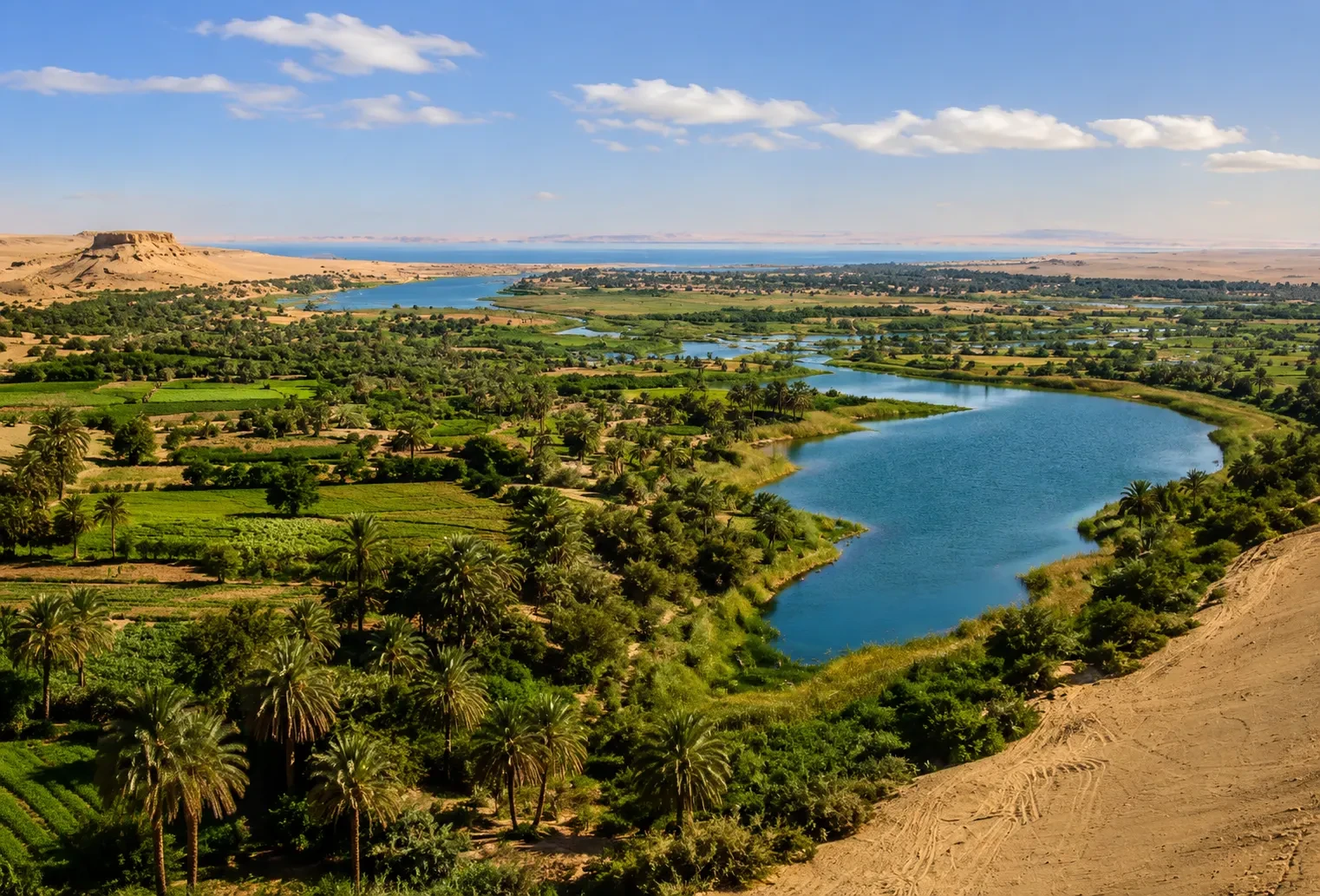
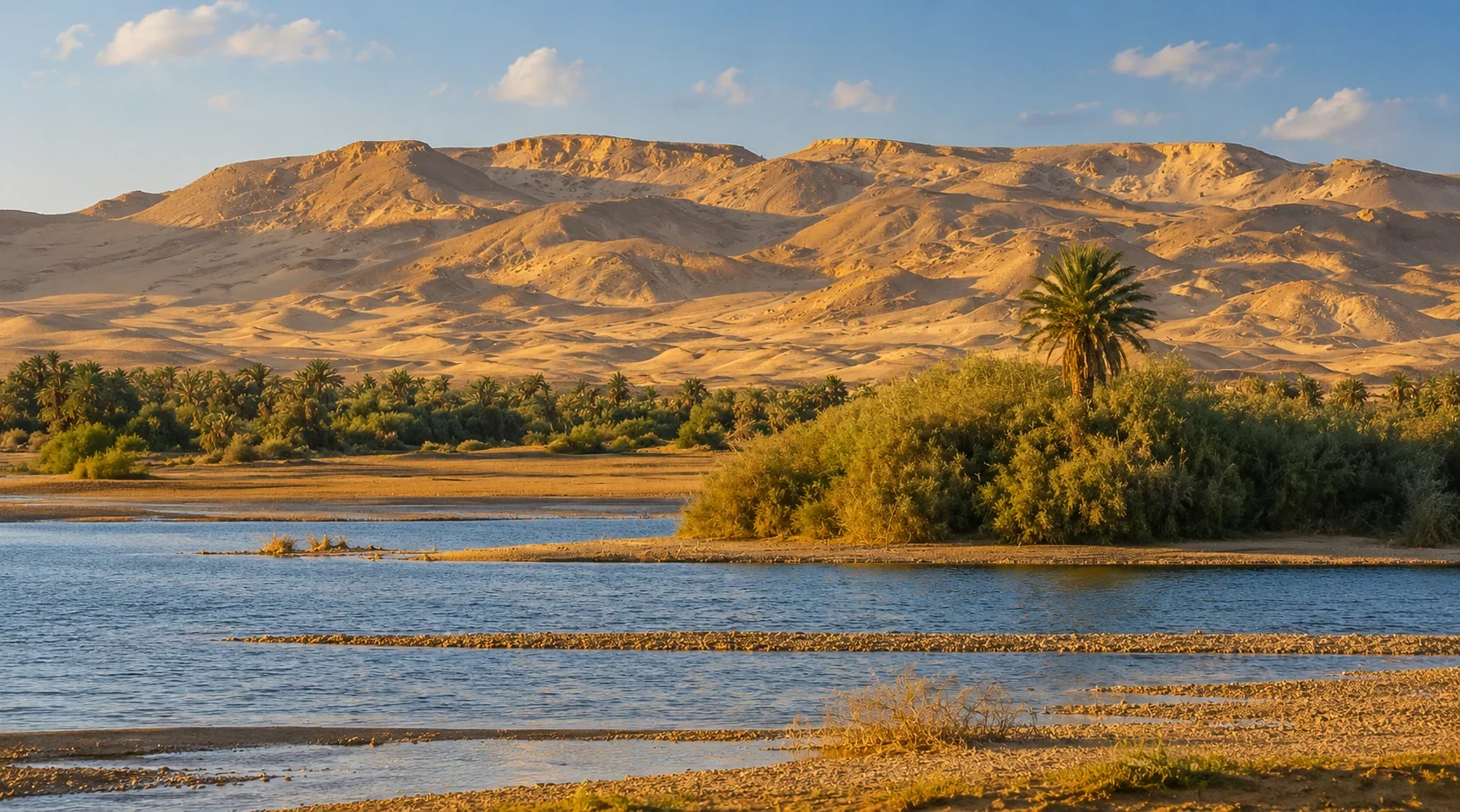
The oasis depression is fed by a system of natural springs and artesian wells drawing on the Nubian Sandstone Aquifer System, the same vast underground freshwater reservoir that sustains the other Western Desert oases, whose water supports the agricultural landscape of date palm gardens, olive groves, fruit orchards, and vegetable gardens that constitutes the primary economic base of the small Farafra community. The most immediately striking physical characteristic of the Farafra Oasis landscape, visible from the moment of arrival along the Desert Road from Bahariya to the north, is the extraordinary visual drama of the white chalk formation landscape of the White Desert National Park visible to the south and west of the oasis settlement, whose brilliant chalk-white rock formations on the horizon give the Farafra landscape a natural backdrop of geological drama and visual beauty that is simply unavailable at any other oasis in the Egyptian Western Desert and that makes the Farafra landscape composition, the green date palm gardens of the oasis floor framed by the chalk-white horizon of the approaching White Desert, one of the most extraordinary and the most immediately distinctive natural heritage landscape compositions available anywhere in Egypt.
Who Inhabited The Ancient Farafra Oasis?
The Farafra Oasis has been inhabited since at least the Pharaonic period of ancient Egyptian civilization, when the oasis was known by the ancient Egyptian name Ta-iht, meaning the Land of the Cow, a designation that may reflect the importance of cattle herding or the symbolic association of the fertile desert oasis with the cow goddess Hathor in the ancient Egyptian religious imagination. The ancient Egyptian administrative records and historical texts mention the Farafra Oasis in the context of the broader western oasis chain administration, documenting its integration into the Egyptian state system as an agricultural outpost and a way-station on the desert routes connecting the Nile Valley with the more remote western desert territories. Archaeological investigations at Qasr Farafra and in the surrounding desert landscape have identified ancient Egyptian occupation evidence spanning several periods of Pharaonic history, including ceramics, artifacts, and structural remains that document the continuous occupation of the oasis through multiple historical periods from the Predynastic era to the New Kingdom and beyond.
The Farafra Oasis's relative isolation and relatively modest population have resulted in a proportionally smaller and less spectacularly developed archaeological heritage than the larger and more politically significant oases of Bahariya, Dakhla, and Kharga, whose greater populations, greater agricultural productivity, and greater strategic importance in the ancient Egyptian administrative system attracted more substantial royal and institutional investment in monumental architecture, temple construction, and funerary monument building. However, the very modesty of Farafra's ancient archaeological heritage is itself a historically significant fact, documenting the differential development of the Western Desert oasis communities in the ancient Egyptian administrative system and giving the Farafra Oasis a distinctive character as the small and relatively self-sufficient desert community that has maintained its essential character as a quiet, intimate, and authentically traditional oasis town through the entire span of its historically documented existence.
The Badr Museum And The Art Of The Desert
The most completely unexpected and the most personally affecting cultural heritage experience available in the entire Farafra Oasis is the Badr Museum, a unique private folk art museum and gallery created by the Farafra-born artist Badr Abdel Moghny within his family's traditional mud-brick home in the center of Qasr Farafra, filling the rooms and the courtyard of the traditional house with his extraordinary collection of sculptures, paintings, and mixed-media artworks that together constitute one of the most original and the most immediately visually compelling self-taught folk art traditions in the entire Egyptian artistic landscape. Badr Abdel Moghny, born and raised in Farafra and entirely self-taught as an artist with no formal art education and no exposure to the mainstream contemporary art world of Cairo or the international contemporary art scene, developed his distinctive artistic practice from an intimate daily engagement with the materials, the landscape, and the human community of the Farafra Oasis, creating works of extraordinary variety, extraordinary material ingenuity, and extraordinary personal expressiveness that draw their subjects, their materials, and their visual language directly from the desert oasis world he inhabits and knows with complete and profound intimacy.
The Badr Museum's collection encompasses sculptures of desert animals and oasis life figures modeled in clay and sand, large-scale paintings of desert landscape and oasis community scenes executed in vivid colors that capture the particular quality of the Farafra light and the particular character of the Farafra people with an immediacy that no academic or formally trained artist approaching the same subjects from outside the community could easily replicate, and mixed media installations combining desert materials including sand, rock, salt, and plant fiber with more conventional art materials in compositions of considerable formal inventiveness and considerable material beauty. The most celebrated individual works in the Badr Museum collection are the large painted depictions of traditional Farafra oasis life, desert wildlife, and the supernatural and mythological dimensions of the desert landscape as experienced by the small Farafra community in its daily engagement with the extraordinary natural world that surrounds it, paintings of such immediate human warmth and such complete artistic originality that they have attracted the attention of international art critics and collectors who have written about Badr's work as one of the most authentic and the most artistically significant self-taught folk art traditions in the contemporary Arab world. A visit to the Badr Museum is the most completely unexpected and the most personally moving heritage experience available in the Farafra Oasis, a genuine encounter with an extraordinary artistic vision that could only have been formed in and by the very specific and very extraordinary landscape of the most remote inhabited oasis in the Egyptian Western Desert.
Farafra Oasis Location In Egypt
Farafra Oasis is located in the New Valley Governorate (Wadi El Gedid) of the Egyptian Western Desert, approximately 600 kilometers southwest of Cairo and approximately 180 kilometers south of the Bahariya Oasis along the Desert Road that is the primary paved access route to the complete chain of Western Desert oases. The oasis is accessible from Cairo by driving the Desert Road southwest to Bahariya (approximately 370 kilometers, 3.5 to 4 hours) and then continuing south from Bahariya through Crystal Mountain to Farafra (approximately 180 kilometers more, approximately 2 to 2.5 hours additional driving), giving a total driving time of approximately 5.5 to 6.5 hours from Cairo to the Farafra Oasis main settlement of Qasr Farafra. The alternative approach from the south, via the Dakhla Oasis approximately 310 kilometers to the southeast, is the standard return route for travelers completing the full Western Desert oasis circuit from Cairo through Bahariya, Farafra, Dakhla, and Kharga. The White Desert National Park entrance is located approximately 45 kilometers south of Qasr Farafra on the Desert Road toward Dakhla, making Farafra the closest oasis settlement to the most internationally celebrated natural heritage destination in the Egyptian Western Desert and the most naturally positioned overnight base for the White Desert camping experience. WOW Egypt Tours provides private four-wheel-drive vehicle transportation from Cairo and from Bahariya to Farafra Oasis as part of all comprehensive Western Desert Safari Tours and Egypt Desert Safari programmes.
Farafra Oasis Fun Facts
The Farafra Oasis is the least populated of the seven major Egyptian Western Desert oases, with a total resident population of approximately five thousand people in and around the single settlement of Qasr Farafra, a community small enough that local social relationships, family networks, and community knowledge of individual residents create a village-scale social environment of extraordinary intimacy and warmth that is entirely unlike the more anonymous and more commercially driven social environment of the larger oasis towns. This small population gives Farafra a quality of genuine community character and genuine personal encounter with the local oasis tradition that the more visited oases cannot provide, and many travelers who pass through Farafra as part of the Western Desert safari circuit describe their brief encounters with the Farafra community as among the most personally memorable and the most humanly authentic dimensions of the complete Western Desert experience.
The ancient Egyptian name for the Farafra Oasis, Ta-iht, meaning the Land of the Cow, is one of the most intriguing and the most poetically evocative of all the ancient Egyptian oasis toponyms, a designation whose precise origin and whose specific referential content have attracted various scholarly interpretations over the years. The most commonly proposed explanation connects the name to the ancient Egyptian cattle-herding traditions of the Western Desert, suggesting that the Farafra Oasis was specifically associated with cattle grazing and cattle herding in the ancient Egyptian administrative imagination, reflecting either the actual importance of cattle in the oasis economy of the ancient period or the mythological association of the oasis's sacred feminine character with the cow goddess Hathor, one of the most important deities of the ancient Egyptian religious tradition whose cosmic association with fertility, nurturing, and the western desert landscape made her a natural patron deity of the oasis communities.
The hot spring known as Bir Sitta (Well Number Six) in the desert immediately north of Qasr Farafra is one of the most atmospherically extraordinary thermal spring experiences available in the Egyptian Western Desert, a natural pool of warm artesian water in a completely isolated desert setting without any commercial development or tourist infrastructure, accessible only on foot or by vehicle from the oasis town and providing a bathing experience of extraordinary desert solitude and extraordinary natural simplicity that is entirely unlike the more commercially organized thermal spring experiences available at the other Western Desert oases. Bathing in the warm waters of Bir Sitta under the open desert sky with the complete silence of the surrounding Farafra desert as the only accompaniment is one of the most deeply restorative and the most genuinely meditative natural experiences available at any oasis destination in the Egyptian Western Desert.
Why Is It Called Farafra Oasis?
The name Farafra, applied to the oasis in both Arabic and in the European heritage and travel literature tradition, is a toponym of debated linguistic origin whose precise etymology has attracted scholarly interest without producing a definitive consensus explanation. The most commonly cited proposed etymology derives the name from the ancient Egyptian Ta-Farfara or related ancient Egyptian phonetic forms, connecting the Arabic name directly to the ancient Egyptian designation for the oasis community through the standard linguistic process of Arabic phonetic adaptation of pre-Islamic Egyptian toponyms that produced many of the Arabic oasis and site names in use throughout the Egyptian Western Desert. Alternative proposed etymologies derive the name from a Coptic or a Berber linguistic root, reflecting the complex linguistic history of the western desert region where ancient Egyptian, Coptic, Greek, Berber, and Arabic have all been spoken at different periods and in different community contexts over the course of the region's more than five thousand year documented history of human occupation. The ancient Egyptian name Ta-iht, meaning the Land of the Cow, is documented in the Pharaonic period historical record as the designation for what most scholars identify with the Farafra Oasis, while the Arabic name Farafra appears in the medieval Arabic geographical literature as the standard designation for the same oasis community, with the relationship between the ancient Egyptian and the Arabic toponym remaining a matter of scholarly interpretation rather than established linguistic fact. Whatever its precise linguistic origin, the name Farafra has been the universal designation for the oasis in Arabic and international geographical and heritage literature for many centuries and is the name by which the oasis is universally known in the modern Western Desert tourism and heritage world.
Farafra Oasis History
The history of human occupation in the Farafra Oasis extends from the prehistoric period through the ancient Egyptian, Greco-Roman, Byzantine, Islamic, and modern eras in a continuous thread of desert community life that has maintained the essential character of the oasis as a small, self-sufficient, and culturally cohesive desert community through all the major political and cultural transformations of the broader Egyptian historical record. The prehistoric evidence for human presence in the Farafra depression includes the extraordinary fossil and archaeological landscape of the surrounding desert, which has yielded stone tools, ancient hearths, and other evidence for prehistoric human activity in the region during the wetter climatic periods of the early Holocene when the current desert landscape supported more productive vegetation and more reliable water resources than the hyperarid conditions of the present day. The ancient Egyptian Pharaonic period is documented in the Farafra Oasis by a relatively modest but historically significant record of ancient Egyptian material culture and administrative engagement, reflecting the oasis's position as the smallest and the most remote of the western oasis administrative districts under the Egyptian state system of the New Kingdom and later periods.
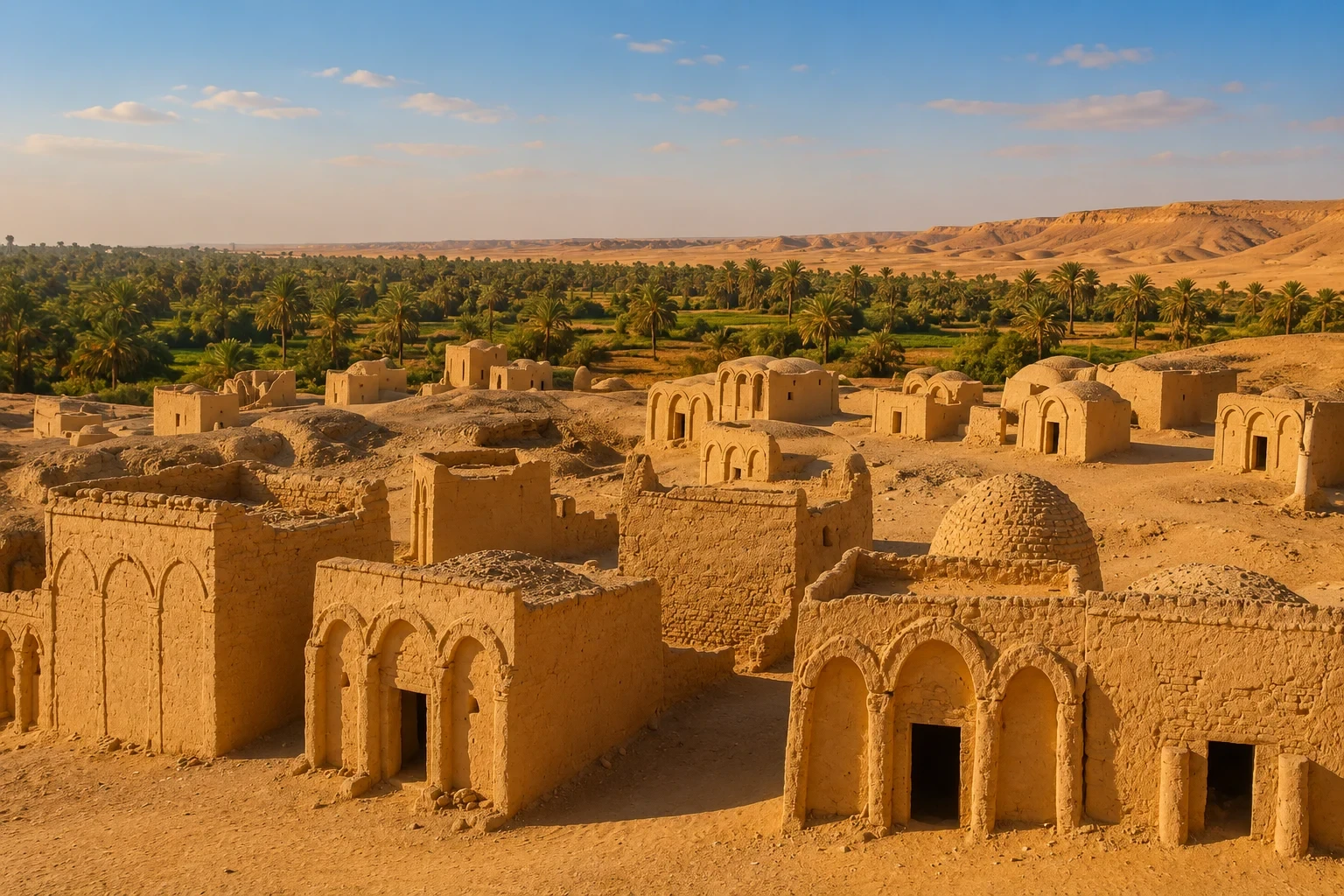
The medieval Islamic period, from the Arab conquest of Egypt in 641 CE through the subsequent centuries of Mamluk and Ottoman administration, saw the Farafra Oasis community develop its most distinctive cultural character as a small, relatively isolated, and substantially self-governing desert community whose relationship with the central Egyptian state administration was mediated primarily by the annual caravan routes that connected the oasis to the Nile Valley markets and the broader Western Desert oasis chain trade network. The traditional social structures, the agricultural practices, and the architectural traditions of the medieval Farafra community are most directly visible in the ancient mud-brick ruins of the old Qasr Farafra village, whose traditional building techniques and spatial organization reflect the centuries-old adaptation of the Farafra community to the specific environmental conditions and the specific social requirements of life in the most remote and the most physically isolated of the major Egyptian Western Desert oases. The modern period, from the integration of the Farafra Oasis into the Egyptian national administrative system in the 19th and early 20th centuries through the paving of the Desert Road that first made the oasis accessible to regular vehicle traffic and subsequently to the growing international desert tourism market, has brought the Farafra community into the contemporary Egyptian economic and cultural world while maintaining in remarkable degree the essential character and the essential simplicity that make the oasis one of the most authentically traditional and the most personally affecting desert community experiences available in the entire Egyptian heritage landscape.
The Story Of Farafra As The Gateway To The White Desert
The most historically recent and the most practically significant story in the modern heritage biography of the Farafra Oasis is the story of the oasis's transformation from a completely anonymous and completely overlooked waypoint on the seldom-traveled desert road between the Bahariya and Dakhla Oases into the primary gateway and the most important accommodation base for the rapidly growing international tourism traffic to the White Desert National Park approximately 45 kilometers to the south, a transformation that began in the 1980s and 1990s as the Western Desert safari circuit was developed as a major Egyptian tourism product and that has fundamentally changed the economic and the cultural relationship of the Farafra community with the extraordinary natural heritage landscape that surrounds it. Before the development of the Western Desert safari circuit as a tourism product, the White Desert chalk formation landscape adjacent to Farafra was entirely unknown to the international travel world and visited only by the small number of Egyptian geologists, naturalists, and adventure travelers who had sufficient desert experience and sufficient logistical self-sufficiency to reach the remote Farafra Depression by four-wheel-drive vehicle from the Nile Valley.
The gradual discovery of the White Desert by the growing international desert tourism market in the 1980s and 1990s, driven primarily by European adventure travel operators who recognized the extraordinary natural beauty of the chalk formation landscape and began including it in their Western Desert itineraries, transformed Farafra from a sleepy and largely ignored desert village into the primary logistical base for White Desert tourism and subsequently into a heritage destination in its own right, as the Badr Museum, the hot springs, the old Qasr village ruins, and the extraordinary natural landscape of the Farafra depression itself became recognized as distinctive and worthwhile heritage experiences complementing the supreme natural spectacle of the adjacent White Desert. Today Farafra's identity is inseparably linked with the White Desert, with the oasis serving simultaneously as the southern gateway to the national park, the primary accommodation base for overnight desert camping programmes, the primary food and fuel supply point for all White Desert safari operations, and an increasingly recognized heritage destination in its own right whose distinctive character of desert simplicity, artistic originality, and community warmth gives it a personal travel value that no amount of natural landscape beauty or ancient archaeological significance can quite substitute for.
Farafra Oasis Key Attractions And Features
The White Desert National Park Gateway
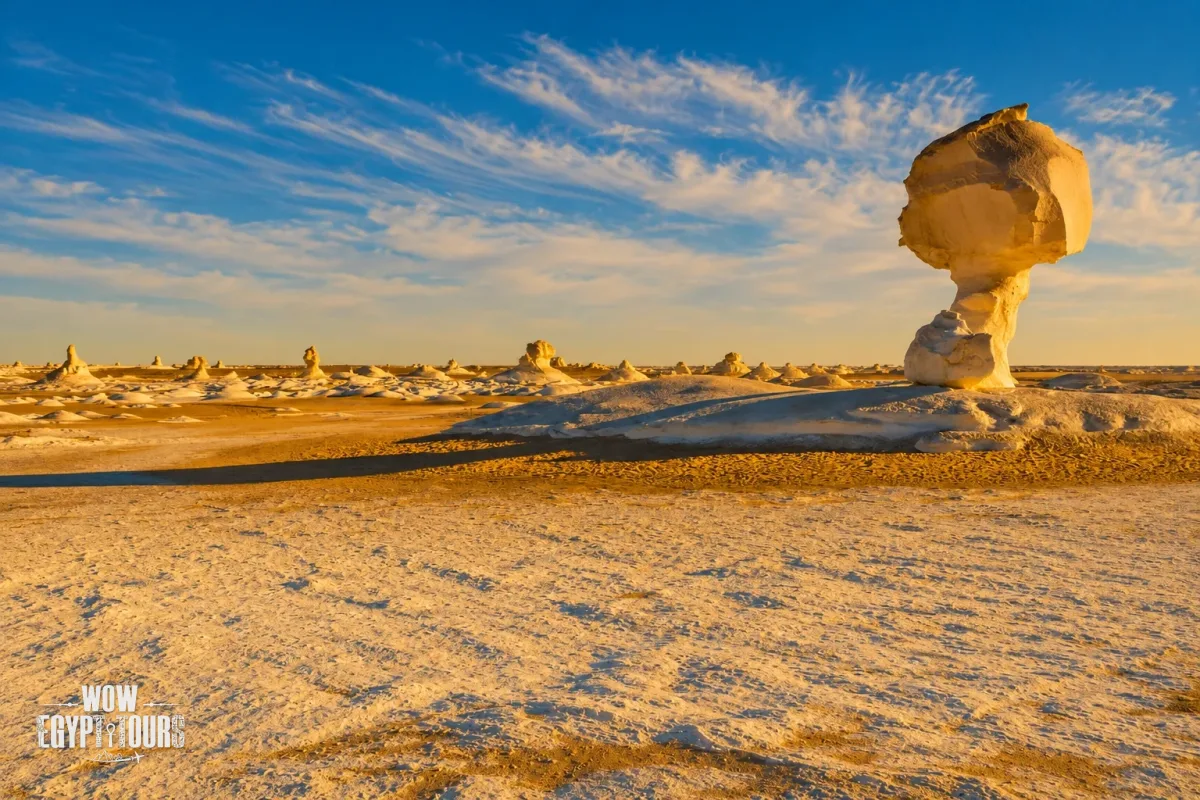
The most internationally significant and the most frequently visited natural heritage destination associated with the Farafra Oasis is the White Desert National Park, the UNESCO-nominated chalk formation landscape approximately 45 kilometers south of Qasr Farafra on the Desert Road toward Dakhla, whose extraordinary wind-sculpted chalk formations including the famous Mushroom Rock, Chicken Rock, and Rabbit Rock have made it the most internationally celebrated natural heritage destination in the Egyptian Western Desert and one of the most visually astonishing natural landscapes in the entire North African and Middle Eastern world. As the closest oasis settlement to the White Desert park entrance, Farafra is the natural staging point for all White Desert visits, providing the accommodation, the food and fuel supply, and the local desert guide services that make the White Desert overnight camping experience feasible and comfortable for visitors from Cairo and from the international tourism market. The White Desert chalk formations begin to be visible as a white horizon to the south even before leaving the Farafra oasis settlement, providing a constant visual invitation from within the oasis itself to the extraordinary natural landscape that lies immediately beyond its southern boundary and creating a relationship between the oasis community and its surrounding natural heritage that is unique in the Egyptian oasis landscape.
The Badr Museum
The Badr Museum in the center of Qasr Farafra is the most unexpected, the most personally moving, and the most completely original cultural heritage experience available at any oasis destination in the Egyptian Western Desert, a private folk art museum and gallery created by the self-taught Farafra artist Badr Abdel Moghny in his traditional mud-brick family home whose rooms and courtyard are filled with sculptures, paintings, and mixed-media artworks of extraordinary originality, extraordinary material invention, and extraordinary personal expressiveness. The museum is open to visitors throughout the day and evening and the artist himself is frequently present, making a visit to the Badr Museum potentially the most directly personal and the most authentically human cultural heritage encounter available at any Egyptian oasis destination, an opportunity to meet and speak with a genuinely extraordinary creative intelligence whose artistic vision has been formed entirely by and within the remarkable desert landscape of the Farafra Oasis. The Badr Museum is not an adjunct or an optional addition to the Farafra oasis heritage programme; it is its cultural centerpiece, the single most distinctive and the single most memorable heritage experience that the Farafra community has to offer the world and that the world cannot find in quite the same form at any other accessible oasis destination in Egypt.
The Old Qasr Farafra Village Ruins
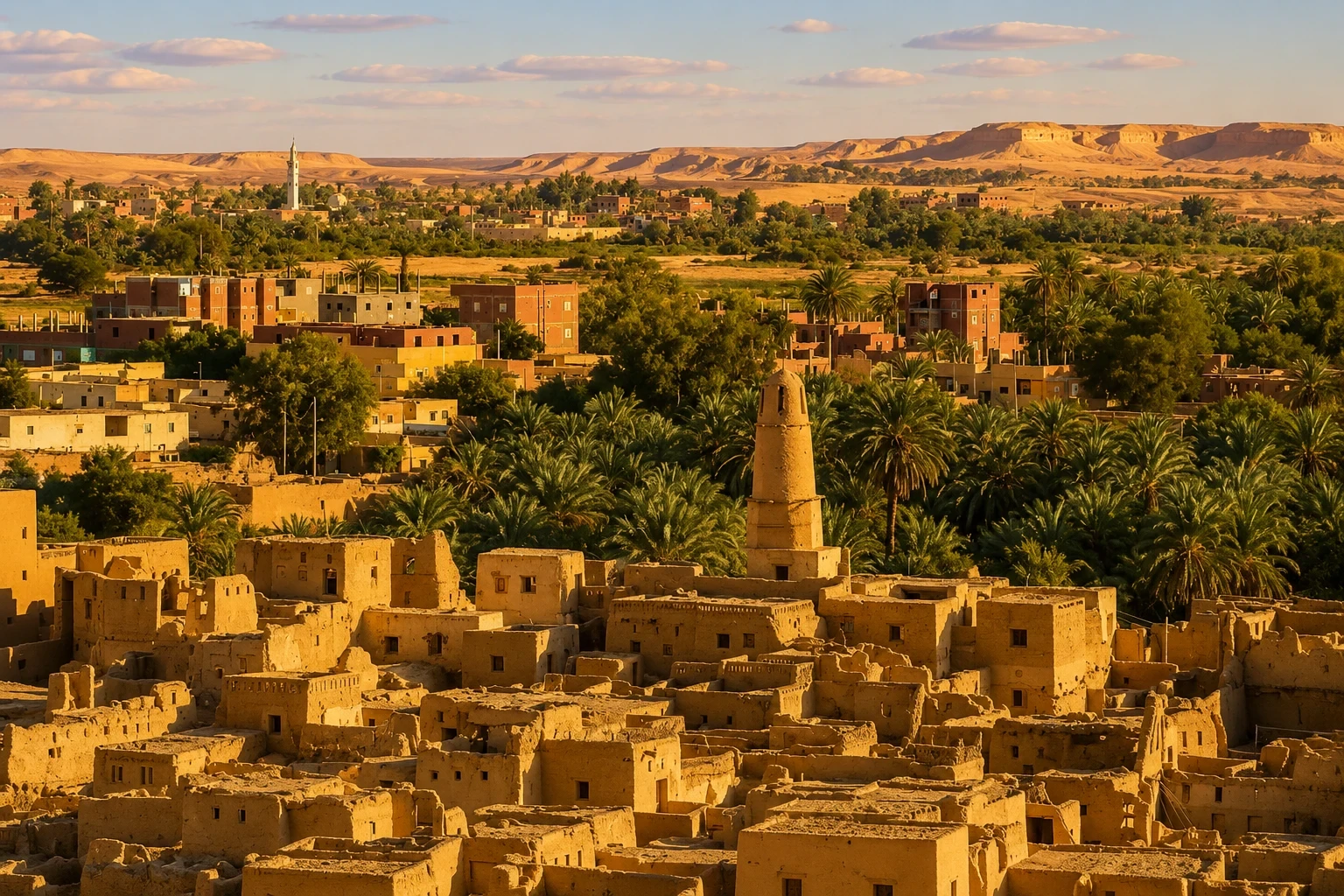
The ruins of the old Qasr Farafra village, the ancient mud-brick settlement that constituted the primary inhabited center of the Farafra Oasis community before the construction of the modern concrete buildings of the present town, are located at the edge of the modern oasis settlement and provide the most direct available physical evidence for the traditional architectural character and the historical spatial organization of the Farafra desert community in the centuries before the arrival of modern building materials and modern construction techniques. The old Qasr Farafra, like the Shali Fortress of the Siwa Oasis, was built in the distinctive mud-brick building tradition of the desert oasis communities, using the locally available materials of mud, sand, and palm fiber to create multi-story communal structures of considerable spatial complexity and considerable defensive logic, in which the densely packed rooms, narrow alleys, and communal wells of the village were organized within an overall enclosure structure that provided collective defense against the periodic raids and military threats that the remote desert community had to contend with throughout its medieval and early modern history. The ruins of the old Qasr, though less dramatically preserved and less architecturally monumental than the Shali Fortress of Siwa, provide an important and genuinely interesting heritage encounter with the building traditions and the community spatial organization of the traditional Farafra oasis community.
The Bir Sitta Hot Spring
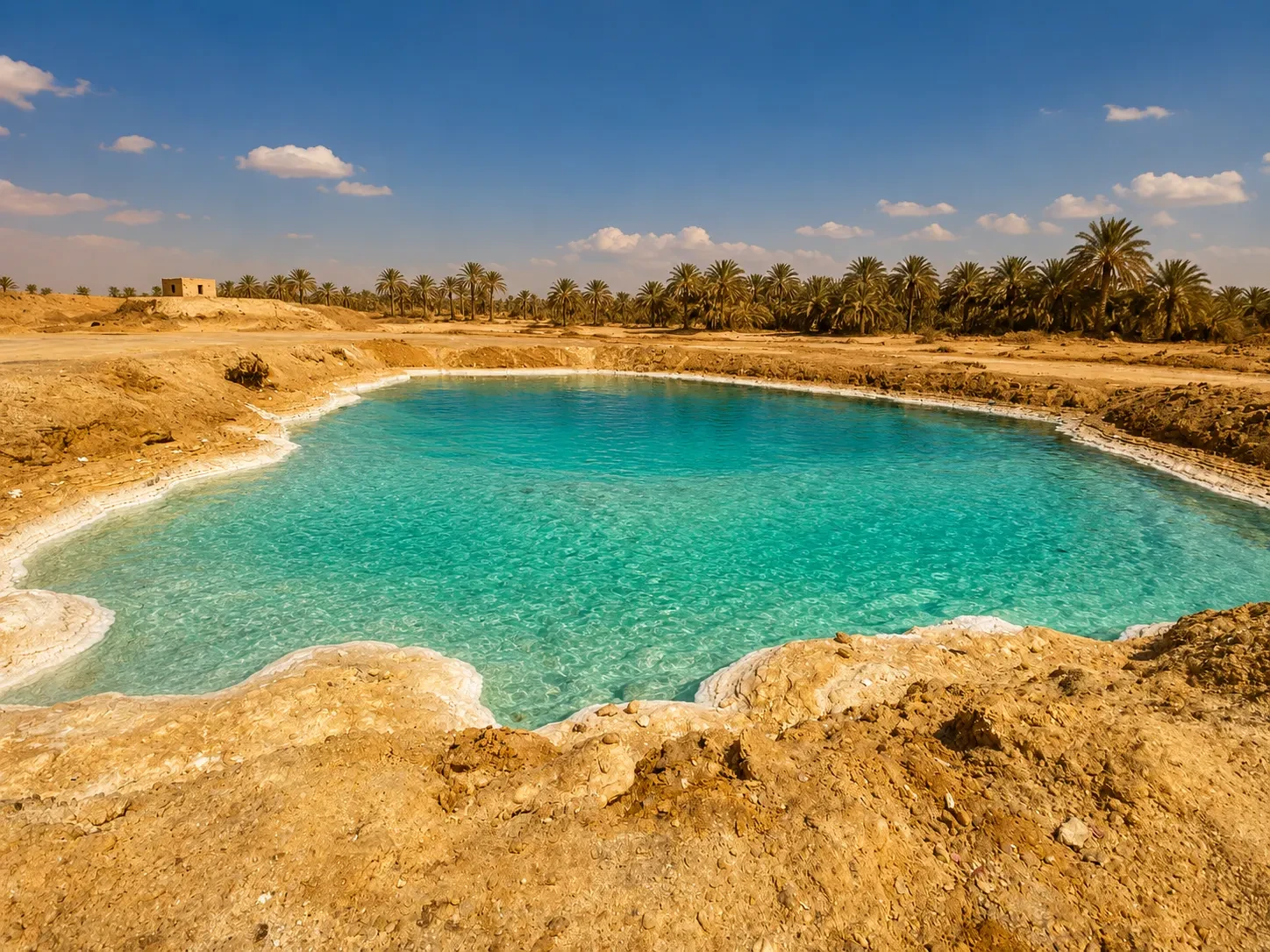
The Bir Sitta hot spring, whose Arabic name means Well Number Six in reference to its position in the numbered sequence of artesian wells drilled in the Farafra Oasis area during the 20th century expansion of the oasis water supply infrastructure, is one of the most atmospherically extraordinary and the most genuinely isolated natural spring bathing experiences available at any point in the Egyptian Western Desert, a pool of warm artesian water in a completely undeveloped desert setting approximately 6 kilometers north of Qasr Farafra without any commercial infrastructure, any formal bathing facilities, or any tourist amenity beyond the spring pool itself and the extraordinary desert landscape that surrounds it in absolute silence in every direction. The temperature of the Bir Sitta spring water, significantly warmer than the ambient desert air temperature in the cooler months and slightly cooler than the ambient air temperature in the summer, provides a thermal bathing experience of genuine desert authenticity whose most important quality is not the precise temperature of the water but the extraordinary atmosphere of complete desert solitude in which the bathing takes place, with nothing between the bather and the horizon in any direction but the flat desert terrain and the distant escarpments of the Farafra depression rim and with nothing to hear but the desert wind and the sound of the spring water itself. This quality of complete natural isolation in warm spring water under the open desert sky is simply unavailable at any more commercially developed thermal spring facility in any other Egyptian oasis, and it gives the Bir Sitta experience a quality of genuinely restorative desert simplicity that many visitors describe as the single most personally peaceful moment of their entire Western Desert journey.
Crystal Mountain
At the northern edge of the Farafra landscape, at the geological boundary between the volcanic terrain of the Black Desert to the north and the chalk formation landscape of the White Desert to the south, the extraordinary Crystal Mountain is a standard stopping point for all Western Desert safari programmes traveling between the Bahariya and Farafra Oases and one of the most mineralogically spectacular natural formations in the entire Western Desert circuit. Crystal Mountain is a large isolated rock formation composed of crystalline calcite and barite crystals embedded in a limestone and sandstone matrix, whose exposed crystalline surfaces catch the desert light and create brilliant flashes of mineral beauty of extraordinary visual impact, offering in its concentrated and dramatic mineral display a complete geological contrast to both the volcanic darkness of the Black Desert and the chalk whiteness of the White Desert and serving as the most physically immediate and the most visually striking geological transition marker between the two primary desert landscapes of the complete circuit. The Crystal Mountain stop, typically lasting approximately 20 to 30 minutes for the geological examination and photography of the crystalline formations and the elevated views across the desert terrain in both directions, is one of the most consistently enjoyed and the most enthusiastically photographed stops of the complete Western Desert safari circuit, providing in a very compact and very accessible form one of the most extraordinary natural mineralogical specimens in the entire Egyptian desert heritage.
The Farafra Date Palm Gardens And Agricultural Landscape
The agricultural landscape of the Farafra Oasis, though modest in scale compared to the larger and more extensively cultivated oases of Bahariya, Dakhla, and Kharga, provides one of the most intimate and the most authentically traditional encounters with the ancient agricultural tradition of the Western Desert oasis community available at any accessible oasis destination in Egypt, a landscape of date palm gardens, olive groves, fruit trees, and vegetable plots watered by the artesian spring system and organized according to traditional water management practices whose fundamental principles have remained essentially unchanged since ancient times. The date palms of the Farafra Oasis produce dates of excellent quality whose varieties include several traditional Farafra strains not commercially cultivated elsewhere in the Egyptian oasis world, and the traditional hand-harvesting of the Farafra dates in the autumn harvest season provides visitors who time their Farafra visit correctly with the opportunity to observe and participate in one of the most ancient and the most authentically practiced agricultural traditions in the Egyptian desert heritage. The combination of the palm garden landscape, the spring-fed irrigation channels, the traditional pottery workshops, and the extraordinary visual backdrop of the White Desert chalk formations visible on the southern horizon from any elevated point in the oasis floor creates a visual and cultural heritage composition of extraordinary beauty and extraordinary authenticity that gives the Farafra agricultural landscape a quality of living desert oasis heritage that the more developed and the more commercially oriented oases of the circuit cannot quite replicate.
The Desert Landscape And Night Sky
The most universally celebrated and the most consistently reported extraordinary quality of the Farafra Oasis for visitors who spend at least one night in the oasis itself before or after the White Desert camping programme is the extraordinary quality of the night sky visible from the oasis and its surrounding desert, where the complete absence of significant artificial light pollution in the most sparsely inhabited stretch of the entire Egyptian Western Desert reveals the stellar canopy of the Egyptian night sky in the most complete and the most brilliantly detailed presentation available at any inhabited oasis destination in the country. The Milky Way, the various star clusters, nebulae, and the planets visible to the naked eye from the Farafra landscape in conditions of optimal atmospheric clarity, create a night sky experience of such overwhelming beauty and such profound scientific interest that many visitors to Farafra describe the night sky observation from the oasis as the single most completely extraordinary natural experience of their entire Western Desert journey, an experience made more personally affecting by the physical remoteness and the complete human silence of the Farafra landscape that allows the stellar canopy to be appreciated in the most complete possible conditions of natural atmospheric darkness. The stars of Farafra are often described by visitors as the finest accessible stargazing in Egypt after the White Desert camping site itself, and the combination of the oasis palm garden landscape, the distant chalk formation glow of the White Desert horizon, and the extraordinary stellar dome overhead creates at Farafra a nocturnal landscape experience of extraordinary beauty and extraordinary personal impact.
Why Is Farafra Oasis Important?
Farafra Oasis is important for reasons spanning natural heritage gateway function, authentic cultural heritage, folk art significance, geological heritage access, and the broader significance of the Western Desert oasis tradition as a living human achievement of extraordinary duration and extraordinary resilience. As the primary gateway to the White Desert National Park, Farafra performs an indispensable practical and logistical function in the Western Desert safari circuit that makes the most extraordinary natural heritage destination in the Egyptian Western Desert accessible to the growing international tourist audience that visits it. As a cultural heritage destination in its own right, the Badr Museum represents one of the most original and the most internationally recognized examples of self-taught folk art in the contemporary Arab world, a genuinely extraordinary creative tradition that deserves recognition as a cultural heritage of significant value entirely independent of the oasis's natural heritage gateway function. As an authentic traditional desert oasis community, Farafra preserves in its small and relatively unchanging community the most complete and the most genuinely traditional example of the Western Desert oasis way of life available at any accessible oasis destination in the Egyptian desert circuit.
As a geological heritage access point, the Crystal Mountain stop between Bahariya and Farafra and the White Desert chalk formations visible from the southern edge of the oasis territory give Farafra the most dramatically geological natural backdrop of any inhabited oasis in the Egyptian Western Desert, making the oasis simultaneously a geological heritage destination and a gateway to the most extraordinary geological heritage landscape in the country. WOW Egypt Tours includes Farafra Oasis as both a heritage destination in its own right and as the essential gateway and the most naturally positioned accommodation base for the White Desert camping experience in all comprehensive Western Desert Safari Tours and Egypt Desert Safari programmes.
What Are Some Interesting Facts About Farafra Oasis?
The Smallest Oasis With The Biggest Natural Backdrop
The most paradoxically extraordinary quality of the Farafra Oasis is the complete disproportion between the modest scale of the oasis community itself, with its population of only approximately five thousand people and its single small settlement of Qasr Farafra, and the extraordinary grandeur of the natural heritage landscape that immediately surrounds it. A small community of five thousand people serving as the gateway to one of the most internationally celebrated natural heritage destinations in Africa, visible from the oasis town as a brilliant white formation horizon filling the entire southern sky and accessible by a 45-kilometer drive on a perfectly maintained desert highway, gives Farafra a quality of natural heritage immediacy and natural heritage intimacy that the much larger and much more commercially developed oases of the circuit with their many thousands of residents and their much more extensive tourism infrastructure cannot provide. The visitor who arrives in Farafra from the Bahariya direction after passing through the Black Desert volcanic landscape and Crystal Mountain has already experienced two extraordinary geological environments before reaching the oasis, and the sight of the White Desert chalk formations visible from the Farafra town itself, glowing on the southern horizon in the late afternoon light, creates one of the most dramatically compelling natural heritage previews available at any inhabited desert location in Egypt.
A Self-Taught Artist Of International Recognition
The story of Badr Abdel Moghny and the extraordinary folk art tradition he has created in the Farafra Oasis entirely independently of any formal art education, any external artistic influence, or any institutional support is one of the most remarkable stories of individual artistic creativity in the contemporary Egyptian cultural landscape, a story that demonstrates with particular vividness and particular force the capacity of genuine artistic vision to develop from the most apparently unpromising circumstances of complete creative isolation into a practice of genuine artistic significance and genuine international recognition. Badr's works, created from the materials of the desert oasis environment he inhabits, drawing on the visual traditions of the Farafra community and the mythological and spiritual dimensions of the desert landscape as experienced by a person of deep indigenous desert knowledge, communicate to international viewers a quality of authentic natural and human experience that is available only in and through the work of an artist who is genuinely indigenous to his subject matter in a way that no trained artist approaching the same landscape from outside could replicate. The international attention that Badr's museum and his work have received from art critics, collectors, and heritage travelers from across the world has established him as the most celebrated cultural ambassador of the Farafra Oasis and as one of the most genuinely original folk art voices in the contemporary Arab world.
The Land Of The Cow In The Sea Of Chalk
The extraordinary geological positioning of the Farafra Oasis at the center of the most dramatic chalk formation landscape in the entire Sahara creates a heritage narrative of remarkable geological depth and remarkable visual poetry, a desert community whose ancient ancestors named their home the Land of the Cow now surrounded on three sides by the most extraordinary concentration of wind-sculpted white chalk natural sculptures in the world, whose formations visible from the oasis rim suggest not cows but every other possible natural animal form including the Chicken Rock, the Rabbit Rock, the Mushroom Rock, and dozens of other zoomorphic and anthropomorphic shapes that the wind has carved from the ancient Cretaceous chalk of the Farafra Depression over thirty million years of continuous geological work. The juxtaposition of the ancient human name, with its agricultural and bovine associations, and the contemporary geological reality of the chalk sculpture landscape visible on every horizon from the oasis settlement, creates a heritage narrative of extraordinary poetic contrast and extraordinary geological depth that gives the Farafra Oasis a quality of place identity uniquely its own in the complete Egyptian oasis heritage landscape.
What Is So Special About Farafra Oasis?
The Most Genuinely Authentic Oasis In Egypt
What makes Farafra Oasis uniquely special among all the oasis destinations in the Egyptian Western Desert is the extraordinary quality of genuine authenticity that the oasis community and its heritage offer to visitors who approach it with the patience, the attention, and the genuine curiosity that the most rewarding desert oasis experiences require. The Farafra Oasis has not been transformed by tourism development into a primarily commercial heritage destination in the way that the more popular and more frequently visited oases of the circuit have been to varying degrees, and the essential character of the oasis community, its small scale, its self-sufficiency, its traditional agricultural practices, its folk art tradition, and its extraordinary natural setting, is still available to visitors who make the journey to Farafra in something very close to its authentic form rather than in the commercially curated version that the more developed oasis destinations necessarily present. The Badr Museum, whose extraordinary folk art collection represents the most direct available expression of the Farafra community's engagement with its own desert landscape and its own cultural heritage, is the most concentrated and the most immediately accessible expression of this authentic character, a heritage experience of genuine originality that could only exist in and through the specific community and the specific landscape of the Farafra Oasis and that is simply unavailable in any comparable form at any other accessible destination in the Egyptian Western Desert.
The Perfect Balance Of Desert And Community
Farafra is also uniquely special for the extraordinary balance it achieves between the extraordinary natural heritage of the immediately surrounding desert landscape and the extraordinary human heritage of the small but culturally rich oasis community, a balance in which neither the natural nor the human heritage overwhelms or diminishes the other but in which each reinforces and enriches the experience of the other in a combination of natural and cultural heritage encounter that is the most personally complete and the most humanly satisfying available at any oasis destination in the Egyptian desert circuit. The traveler who visits Farafra experiences not simply a geological heritage site with an accommodation base, nor simply a folk art museum with a desert backdrop, but a genuinely integrated and genuinely complete encounter with a living desert oasis culture in the most extraordinary natural setting available to any inhabited community in the Egyptian Western Desert, a combination of the geological deep time of the chalk formation landscape, the agricultural ancient time of the oasis community tradition, and the individual human present time of the Badr Museum's artistic vision that makes the Farafra experience the most multi-temporally rich and the most personally resonant of all the oasis heritage encounters available in the complete Egyptian Western Desert circuit.
Farafra Oasis Through The Ages
The complete history of the Farafra Oasis from the prehistoric period through the Pharaonic Land of the Cow, the modest but continuous Greco-Roman and Byzantine presence, the medieval Islamic community of the old Qasr village, and the modern emergence as the gateway to the White Desert traces one of the most consistently intimate and the most genuinely community-scale heritage histories of any Western Desert oasis, a history in which the small scale of the Farafra community has been not a limitation but a characteristic, not a deficiency but a quality, that has maintained across the millennia the essential character of a self-sufficient and culturally coherent desert oasis community whose relationship with its extraordinary natural surroundings has been shaped by the deep knowledge and the deep respect of a small community that has no other home and no other world beyond the date palm gardens and the chalk formation horizons of the Farafra Depression.
The modern chapter of the Farafra story, from the development of the Desert Road connection and the emergence of the White Desert safari circuit in the late 20th century through the growing international recognition of the Badr Museum and the oasis's distinctive cultural character in the early 21st century, represents the most rapidly transformative period in the oasis's entire recorded history, a period in which the Farafra community has navigated the challenges and the opportunities of international tourism engagement with remarkable grace and remarkable cultural resilience, maintaining the essential authenticity of its heritage and its community character while developing the accommodation, guide, and logistics infrastructure that makes the White Desert accessible to the growing international audience that visits it. The future of the Farafra Oasis as both a community and a heritage destination depends on the continued ability of the oasis community to balance the economic benefits of tourism engagement with the cultural and natural heritage preservation imperatives that make the oasis worth visiting in the first place, a balance that WOW Egypt Tours supports through its commitment to responsible and community-respectful desert tourism in all its Western Desert Safari Tour and Egypt Desert Safari programmes.
Farafra Oasis And Nature Conservation
The Farafra Oasis serves as the southern gateway and the primary logistical support base for the White Desert National Park, whose conservation management under the Egyptian Environmental Affairs Agency requires the active cooperation of the Farafra community as guide service providers, accommodation operators, and environmental compliance monitors for the tourism activities occurring within the park boundaries. The Farafra-based desert guide community, whose members are licensed by the Egyptian authorities to operate within the White Desert National Park, play an essential role in the practical implementation of the park's environmental regulations, communicating the rules regarding designated camping areas, waste management, and protection of geological formations to all visitors and ensuring that the extraordinary natural heritage of the White Desert chalk formation landscape is preserved in its extraordinary current condition for future generations of visitors and scholars. The conservation of the natural heritage of the Farafra Depression itself, including the protection of the spring system, the preservation of the date palm agricultural landscape, and the sustainable management of the desert terrain around the oasis settlement, is equally important for the long-term preservation of the oasis as both a living community and a heritage destination, and WOW Egypt Tours actively supports these conservation objectives in the design and operation of all Farafra-based desert safari programmes.
Best Time To Visit Farafra Oasis
The best time to visit Farafra Oasis is during the cooler months from October through April, when the Western Desert climate of the Farafra Depression provides the most comfortable conditions for all the oasis's heritage activities including the Badr Museum visit, the old Qasr village ruins exploration, the Bir Sitta hot spring bathing, the Crystal Mountain stop, and above all the White Desert overnight camping experience that is the most important natural heritage activity of any Farafra-based programme. The winter months of December through February offer the most comfortable daytime temperatures and the clearest desert skies, with the cold desert nights requiring warm sleeping bags and warm clothing for the White Desert camping but providing the finest possible stargazing conditions and the most dramatically beautiful sunset and sunrise light on the chalk formations. The autumn months of October and November coincide with the date harvest season in the Farafra palm gardens, when the oasis is at its most agricultural and its most culturally active, providing the most authentic encounter with the traditional oasis agricultural calendar available at any time of year. The spring months of March and April bring the warmest and the most pleasant daytime conditions without the extreme heat of summer, and the desert wildflowers that appear briefly around the oasis margins following the winter rainfall season add an unexpected natural beauty to the desert landscape in these months. The summer months of June through August bring extreme heat to the Farafra Depression, with temperatures regularly exceeding 40 to 45 degrees Celsius at midday, making the outdoor activities of the oasis most comfortable only in the very early morning and the late afternoon and making the White Desert camping experience genuinely challenging in the midday hours without the most comprehensive heat protection. WOW Egypt Tours operates Western Desert Safari programmes including Farafra year-round and advises on optimal seasonal timing for all desert destinations.
Farafra Oasis Opening Hours
The Badr Museum in Qasr Farafra is accessible to visitors throughout the day and into the evening hours, with the artist himself frequently present and available to meet visitors and discuss his work. The old Qasr Farafra village ruins are accessible throughout daylight hours without any formal entrance requirement. The Bir Sitta hot spring is accessible throughout the day and can also be visited in the evening hours. Crystal Mountain on the Bahariya to Farafra road is accessible throughout daylight hours. The White Desert National Park is accessible throughout daylight hours with the park entrance checkpoint on the road south of Farafra, with overnight camping in designated areas permitted with licensed guide services. All Farafra oasis activities and White Desert access are organized by WOW Egypt Tours as part of comprehensive Western Desert Safari Tours and Egypt Desert Safari programmes.
Farafra Oasis Entrance Fees
The Badr Museum charges a modest entrance fee whose current rate should be confirmed with WOW Egypt Tours at the time of booking. The White Desert National Park charges a national park entrance fee at the park checkpoint approximately 45 kilometers south of Qasr Farafra whose current rate should similarly be confirmed at time of booking. Crystal Mountain access is subject to any applicable conservation area fees. The Bir Sitta hot spring and the old Qasr village ruins are accessible without formal entrance fees. All Farafra Oasis entrance fees and White Desert National Park fees are included in the comprehensive Western Desert Safari Tour and Egypt Desert Safari programmes offered by WOW Egypt Tours.
How To Get To Farafra Oasis
Farafra Oasis is accessible from Cairo by the Desert Road southwest to the Bahariya Oasis (approximately 370 kilometers, 3.5 to 4 hours) and then south from Bahariya through Crystal Mountain to Farafra (approximately 180 kilometers more, approximately 2 to 2.5 hours additional driving), giving a total driving time of approximately 5.5 to 6.5 hours from Cairo to Qasr Farafra. This is the standard approach for all Western Desert safari programmes departing from Cairo. The alternative approach from the south, via the Dakhla Oasis approximately 310 kilometers to the southeast, is the standard return route for travelers completing the full Western Desert oasis circuit. Public bus services operate between Cairo and Farafra with connection at Bahariya, but the four-wheel-drive vehicle essential for the White Desert and Crystal Mountain visits makes private vehicle the most practical transport option for any complete Farafra and White Desert programme. WOW Egypt Tours provides private four-wheel-drive vehicle transportation from Cairo to Farafra and throughout the White Desert safari circuit in all Egypt Desert Safari Tours and Egypt Travel Packages that include the Farafra and White Desert programme.
How Long To Spend At Farafra Oasis
Most Western Desert safari programmes allocate one to two nights based in Farafra Oasis accommodation, with the primary activity of one or two nights of desert camping in the White Desert National Park to the south making Farafra the essential accommodation hub for the complete White Desert programme. A single night in Farafra before or after the White Desert camping allows time for the Badr Museum visit, the old Qasr village ruins, the Bir Sitta hot spring, and the Crystal Mountain stop on the Bahariya approach road, together providing a genuinely complete oasis heritage programme complementing the extraordinary natural heritage of the White Desert camping. Two nights in Farafra, one before and one after the White Desert overnight camping, allows the most relaxed and the most personally rewarding engagement with both the oasis heritage and the White Desert natural heritage, with sufficient time to experience the Farafra landscape at different times of day and in different light conditions and to engage more fully with the Farafra community, the Badr Museum, and the extraordinary night sky of the oasis. WOW Egypt Tours designs the most complete and the most personally rewarding Farafra and White Desert programmes available in the Egyptian Western Desert safari market.
Tips For Visiting Farafra Oasis
Visit the Badr Museum on your first afternoon in Farafra rather than leaving it for the final morning, as the museum's extraordinary collection and the potential opportunity to meet the artist himself deserve the most unhurried and the most genuinely attentive engagement that a visit at the beginning of the oasis stay allows, before the other programme activities have used the freshest energy and the most open attention of the visit. Ask the museum to explain his artistic process and the sources of his visual imagery, as his descriptions of how the desert landscape, the oasis community, and the mythological dimensions of the desert world are expressed in his artistic practice are as illuminating and as personally moving as the artworks themselves. Arrange the Bir Sitta hot spring visit for the late afternoon when the desert air temperature is cooling and the contrast between the warm spring water and the cooler air creates the most comfortable and the most atmospherically beautiful bathing conditions, with the desert sunset light on the surrounding landscape adding the most visually dramatic dimension to the natural bathing experience. Walk the old Qasr village ruins in the early morning when the low morning light creates the most revealing shadows on the mud-brick surfaces and the most atmospheric quality of ancient community presence in the empty spaces of the deserted village. Ask your guide to stop at the viewpoint where the White Desert chalk formation horizon first becomes fully visible to the south of Farafra, as this first sight of the chalk formations from the direction of the oasis, with the date palm gardens of the oasis floor in the foreground and the chalk white horizon in the distance, is one of the most beautiful landscape compositions available at any viewpoint in the complete Western Desert circuit. A licensed desert guide from WOW Egypt Tours with specific knowledge of the Farafra community, the Badr Museum's artistic tradition, and the White Desert geography is essential for the fullest and the most personally rewarding Farafra oasis experience.
What To Wear At Farafra Oasis
Farafra Oasis requires the same practical and versatile desert clothing appropriate for all activities in the Western Desert safari circuit, encompassing the range from the sun protection clothing of the desert day through the comfortable layers of the cool oasis evening to the warm insulating clothing essential for the cold nights of the White Desert camping programme. For all daytime outdoor activities including the old Qasr village ruins walk, the Bir Sitta hot spring visit, and the Crystal Mountain stop, lightweight, breathable, long-sleeved clothing covering the arms and legs, combined with a wide-brimmed hat and generous sunscreen, provides the best sun protection and ventilation combination for the exposed desert environment. For the Badr Museum visit and the oasis town exploration, comfortable casual clothing covering the shoulders and knees is appropriate in the conservative oasis community social context. For the White Desert overnight camping from Farafra, a high-quality sleeping bag rated to at least minus five degrees Celsius is required for winter camping and a lighter bag for autumn and spring, with warm fleece layers, a warm jacket, and thermal base layers for the cold desert nights. Sturdy, closed-toe walking shoes with good grip are necessary for the Bir Sitta desert walk, the Qasr ruins exploration, and all desert terrain. Carry at least two liters of water per person for all outdoor desert activities.
Photography At Farafra Oasis
Farafra Oasis offers a distinctive and personally rewarding range of photography subjects that are entirely different from the geological spectacle of the adjacent White Desert and that capture the human and cultural dimensions of the Farafra oasis heritage with a directness and an authenticity that more commercially developed oasis destinations cannot match. The most immediately distinctive photography subjects at Farafra are the Badr Museum's extraordinary folk art collection, whose sculptures and paintings photograph most effectively in the warm light of the traditional mud-brick museum courtyard and interior spaces, combining the artworks themselves with the architectural character of the traditional building that contains them in compositions of considerable visual richness and considerable cultural depth. The old Qasr village ruins photograph most powerfully in the early morning or late afternoon low-angle light that creates dramatic relief on the eroded mud-brick surfaces and most clearly communicates the ancient architectural character of the deserted village. The Bir Sitta hot spring in its desert setting is most effectively photographed as a wide landscape composition that emphasizes the complete isolation of the warm water pool in the surrounding desert terrain, preferably at dawn or sunset when the desert light is most beautiful. The Crystal Mountain's crystalline surfaces photograph most effectively when the light source is at an angle that creates brilliant mineral reflections from the exposed crystal faces, typically achieved in the early morning or late afternoon. The White Desert chalk formation horizon visible from the southern edge of the Farafra oasis is most photographically spectacular at sunset when the chalk surfaces begin their extraordinary color transformation from brilliant white to warm gold and apricot in the changing light, creating one of the most beautiful natural photography compositions available at any viewpoint in the complete Western Desert circuit. Photography within the Badr Museum requires sensitive engagement with the artist and his family, who are generally welcoming but deserve the same respectful approach to personal and artistic photography that any professional artist's private studio deserves.
Farafra Oasis Tours
Western Desert Safari: Bahariya, Crystal Mountain, Farafra, And White Desert Overnight Camping
This is the definitive Western Desert safari programme that uses Farafra Oasis as its southern overnight base and its essential gateway to the supreme natural heritage experience of the White Desert overnight camping, combining the Black Desert volcanic drama, the Crystal Mountain mineralogical spectacle, the Farafra oasis cultural heritage, and the extraordinary natural beauty of the White Desert in the most complete and the most personally rewarding Western Desert safari circuit available in Egypt.
What Is Covered
Day 1: Private four-wheel-drive vehicle from Cairo. Guided exploration of the Black Desert including the English Mountain. Arrival at Bahariya Oasis. Guided visit to Bahariya Museum (Golden Mummies). Overnight in Bahariya Oasis accommodation.
Day 2: Morning guided visit to Valley of the Golden Mummies site and ancient governors' tombs. Drive south via Crystal Mountain stopping point. Enter the Farafra Depression. Afternoon visit to Farafra Oasis: Badr Museum folk art collection, old Qasr village ruins, Bir Sitta hot spring. Overnight in Farafra Oasis accommodation.
Day 3: Drive south to the White Desert National Park entrance. Full-day guided exploration of the extraordinary chalk formation landscape including the Mushroom Rock, Chicken Rock, and the most dramatically beautiful formations of the park interior. Desert camp setup among the chalk inselbergs. Sunset photography on the chalk formations. Camp fire dinner and stargazing. Overnight White Desert camping.
Day 4: Pre-dawn wake for sunrise photography on the chalk formations. Breakfast camp. Extended morning White Desert exploration. Drive north through Farafra for lunch. Return to Cairo via the Bahariya route or continue south to Dakhla Oasis for an extended circuit programme.
Duration
4 Days 3 Nights (1 night Bahariya, 1 night Farafra, 1 night White Desert camping). Extended 5 and 6 day programmes available.
Includes
Private four-wheel-drive vehicle, licensed desert guide, all accommodation and White Desert camping equipment, all meals from dinner Day 1 through lunch Day 4, all site and national park fees, and all desert logistics. All through WOW Egypt Tours Egypt Desert Safari Tours.
Farafra Oasis And White Desert Cultural Focus Programme
For travelers with a specific interest in the Farafra Oasis cultural heritage alongside the White Desert natural heritage, this focused programme provides the most comprehensive available engagement with the Badr Museum, the oasis traditional life, and the White Desert in a format that allows sufficient time for genuine cultural engagement with the Farafra community.
What Is Covered
Private four-wheel-drive vehicle from Cairo via Bahariya. Crystal Mountain stop. Arrival in Farafra. Extended afternoon and evening programme: Badr Museum with extended artist engagement, old Qasr village ruins, Bir Sitta hot spring at sunset. Night sky observation from oasis. Overnight in Farafra. Following morning: early morning oasis palm garden walk, traditional craft market. Drive south to White Desert for afternoon exploration and sunset. Desert camp overnight. Dawn photography. Return to Cairo via Bahariya.
Duration
3 Days 2 Nights (1 night Farafra, 1 night White Desert camping).
Includes
Private four-wheel-drive vehicle, licensed guide, all accommodation and camping equipment, all meals, all fees. Through WOW Egypt Tours Egypt Desert Safari Tours.
Combine Farafra Oasis With Your Egypt Tours Package
Farafra Oasis is featured as both a heritage destination and an essential gateway base across the WOW Egypt Tours travel products that include the Egyptian Western Desert. Browse the options below to find the Egypt experience that includes Farafra Oasis.
Egypt Tour Packages: Multi-day guided Egypt tours organized by duration, including 2 Days Egypt Packages, 3 Days Egypt Packages, 4 Days Egypt Packages, 5 Days Egypt Packages, 6 Days Egypt Packages, 7 Days Egypt Packages, 8 Days Egypt Packages, 10 Days Egypt Packages, and longer itineraries. All packages that include the Western Desert feature Farafra Oasis as the overnight base and the southern gateway for the White Desert programme. All packages include private vehicle, licensed guide, accommodation, all meals, national park fees, and all desert logistics.
Egypt Travel Packages: Themed Egypt travel packages including Egypt Honeymoon Travel Packages, Egypt Budget Travel Packages, Egypt Family Travel Packages, Egypt Luxury Travel Packages, Egypt Adventure Travel Packages, Egypt Cultural Travel Packages, and Egypt Christmas and New Year Travel Packages. Farafra Oasis is particularly suited to Adventure, Cultural, and Honeymoon themed packages for the extraordinary combination of authentic desert oasis culture, folk art heritage, and White Desert natural beauty it provides. All packages include private transportation, licensed guide, accommodations, meals, and private transfers.
Egypt Desert Safari Tours: Specialized desert safari programmes for which Farafra Oasis is the essential southern gateway and the primary accommodation base for all White Desert National Park camping programmes. All Western Desert-focused Egypt Desert Safari Tours use Farafra as the overnight base for the White Desert camping night. All Desert Safari Tours include private four-wheel-drive vehicle, licensed desert guide, all accommodation and desert camping equipment, all meals, national park fees, and all logistics.
Egypt Nile Cruise Packages: Farafra Oasis can be added as a Western Desert extension to any Egypt Nile Cruise Package for travelers wishing to combine the ancient Nile Valley heritage with the extraordinary natural heritage of the White Desert and the authentic cultural character of the Farafra Oasis.
Nile River Cruises: All WOW Egypt Tours Nile cruise options. Farafra Oasis and the White Desert are available as a Western Desert extension from Cairo added to any Nile River Cruise itinerary.
Nearby Attractions To Farafra Oasis
The Farafra Oasis is positioned at the geographic and logistical center of the most extraordinary concentration of desert natural heritage in the Egyptian Western Desert, and its most naturally combined nearby attractions encompass both the northern and the southern dimensions of the complete Western Desert safari circuit. To the south, just 45 kilometers beyond the Farafra Oasis on the Desert Road toward Dakhla, the White Desert National Park provides the supreme natural heritage experience of the complete circuit, whose extraordinary chalk formation landscape is the primary destination and the primary motivation for most visitors who make the journey to the Farafra Oasis. Crystal Mountain, at the geological transition zone between the Black Desert and the White Desert approximately 50 kilometers north of Farafra on the Bahariya road, provides the most dramatic and the most mineralogically spectacular natural geology stop of the complete circuit immediately accessible from the Farafra base.
To the north, approximately 180 kilometers beyond Crystal Mountain, the Bahariya Oasis with its extraordinary Valley of the Golden Mummies archaeological heritage and its gateway to the Black Desert volcanic landscape provides the complete northern dimension of the Western Desert circuit, accessible from Farafra as the second oasis overnight base of the complete safari programme. To the southeast, approximately 310 kilometers beyond the White Desert on the desert road toward the Nile Valley, the Dakhla Oasis provides the next major oasis heritage destination of the complete oasis circuit, accessible from Farafra as the continuation point for travelers undertaking the full western oasis chain from Bahariya through Farafra, Dakhla, and Kharga back to the Nile Valley. The Siwa Oasis in the far northwest, the Faiyum Oasis near Cairo, and the Blue Desert of Sinai in the South Sinai Peninsula complete the full spectrum of Egyptian desert and oasis natural heritage destinations accessible through the Egypt Desert Safari Tours and Egypt Travel Packages offered by WOW Egypt Tours.
Frequently Asked Questions About Farafra Oasis
What is Farafra Oasis?
Farafra Oasis is the most isolated, the least populated, and the most authentically traditional of the major Egyptian Western Desert oases, located approximately 600 kilometers southwest of Cairo in the New Valley Governorate, with a population of approximately five thousand people in the single settlement of Qasr Farafra. It is the primary gateway to the White Desert National Park 45 kilometers to its south, the location of the extraordinary Badr Museum folk art collection, and the essential overnight base for the White Desert camping experience. It is accessible through Egypt Desert Safari Tours and Egypt Travel Packages offered by WOW Egypt Tours.
What is the Badr Museum in Farafra?
The Badr Museum is a unique private folk art museum and gallery created by the self-taught Farafra-born artist Badr Abdel Moghny in his traditional mud-brick family home in Qasr Farafra, filled with sculptures, paintings, and mixed-media artworks of extraordinary originality drawn from the desert landscape and community life of the Farafra Oasis. The artist is frequently present and available to meet visitors. The museum is considered one of the most significant and the most original self-taught folk art traditions in the contemporary Arab world.
How close is Farafra to the White Desert?
The White Desert National Park entrance is approximately 45 kilometers south of Qasr Farafra on the Desert Road toward Dakhla, approximately 30 to 45 minutes by four-wheel-drive vehicle. This makes Farafra the closest oasis settlement to the most internationally celebrated natural heritage destination in the Egyptian Western Desert and the most naturally positioned overnight base for the White Desert camping experience.
What is Crystal Mountain and where is it relative to Farafra?
Crystal Mountain is a spectacular natural rock formation composed of crystalline calcite and barite crystals at the geological boundary between the Black Desert to the north and the White Desert to the south, located approximately 50 kilometers north of Farafra on the Bahariya road. It is a standard stopping point for all Western Desert safari programmes traveling between the Bahariya and Farafra Oases and one of the most mineralogically spectacular natural geology sites in the complete Western Desert circuit.
What is the ancient Egyptian name for Farafra?
The ancient Egyptian name for the Farafra Oasis was Ta-iht, meaning the Land of the Cow, a designation documented in the Pharaonic period historical record that may reflect the importance of cattle herding in the ancient oasis economy or the mythological association of the fertile desert oasis with the cow goddess Hathor of the ancient Egyptian religious tradition.
What is Bir Sitta?
Bir Sitta, meaning Well Number Six in Arabic, is a natural artesian hot spring approximately 6 kilometers north of Qasr Farafra whose warm mineral-rich water emerges in a completely undeveloped desert setting without any commercial infrastructure, providing one of the most atmospherically extraordinary and the most genuinely isolated natural spring bathing experiences available in the Egyptian Western Desert.
How far is Farafra Oasis from Cairo?
Farafra is approximately 600 kilometers from Cairo by road, accessible via the Desert Road to Bahariya (approximately 370 kilometers, 3.5 to 4 hours) and then south through Crystal Mountain to Farafra (approximately 180 kilometers more, 2 to 2.5 hours), giving a total driving time of approximately 5.5 to 6.5 hours from Cairo.
What is the best time to visit Farafra Oasis?
October through April is the most comfortable period. October and November coincide with the date harvest season. December through February provide the finest desert nights for stargazing and the most atmospheric White Desert camping but require warm sleeping gear. Spring months offer pleasant daytime conditions. Summer heat exceeds 40 to 45 degrees Celsius at midday, restricting outdoor activity to early morning and late afternoon.
Is Farafra suitable for families with children?
Yes. The Badr Museum is an excellent experience for children who respond to the colorful and imaginative folk art sculptures. The Crystal Mountain geology stop fascinates children. The White Desert camping is an extraordinary adventure for children of school age and above. The Bir Sitta hot spring bathing is suitable for older children. The desert community warmth of the small Farafra settlement creates a safe and personally engaging environment for family visitors.
Can I stay overnight in Farafra?
Yes. Farafra Oasis has simple and comfortable accommodation in oasis guesthouses and lodges that provide the essential overnight base for all Western Desert safari programmes using Farafra as the gateway to the White Desert. The accommodation is characterful and authentic rather than luxury resort standard, reflecting the simple and traditional character of the oasis community. All WOW Egypt Tours Western Desert Safari programmes include Farafra accommodation in the overall programme price.
What other oases can I combine with Farafra?
Farafra is most naturally combined with the Bahariya Oasis to the north in the standard Western Desert safari circuit. The Dakhla Oasis to the southeast is the natural continuation for the complete oasis circuit. The Kharga Oasis, Siwa Oasis, and Faiyum Oasis complete the Egyptian oasis circuit available through WOW Egypt Tours.
Is Farafra the best base for the White Desert?
Yes. Farafra, at approximately 45 kilometers from the White Desert National Park entrance, is the closest oasis settlement to the White Desert and the most naturally positioned overnight base for the White Desert camping programme. All WOW Egypt Tours Western Desert Safari programmes that include White Desert overnight camping use Farafra as the accommodation base for the nights before and after the camping programme.
How do I book a Farafra Oasis tour with WOW Egypt Tours?
You can book any Egypt Desert Safari Tour, Egypt Tours Package, or Egypt Travel Package that includes Farafra Oasis directly through WOW Egypt Tours. Our team of travel specialists will arrange everything from private four-wheel-drive vehicle and licensed desert guide to Farafra accommodation, the Badr Museum visit, the Bir Sitta hot spring programme, Crystal Mountain, and all the logistics of the complete White Desert safari experience, ensuring a seamless and unforgettable encounter with the most authentic, the most genuinely peaceful, and the most beautifully positioned oasis community in the Egyptian Western Desert.