 Travel Deals

 Tailor-Made
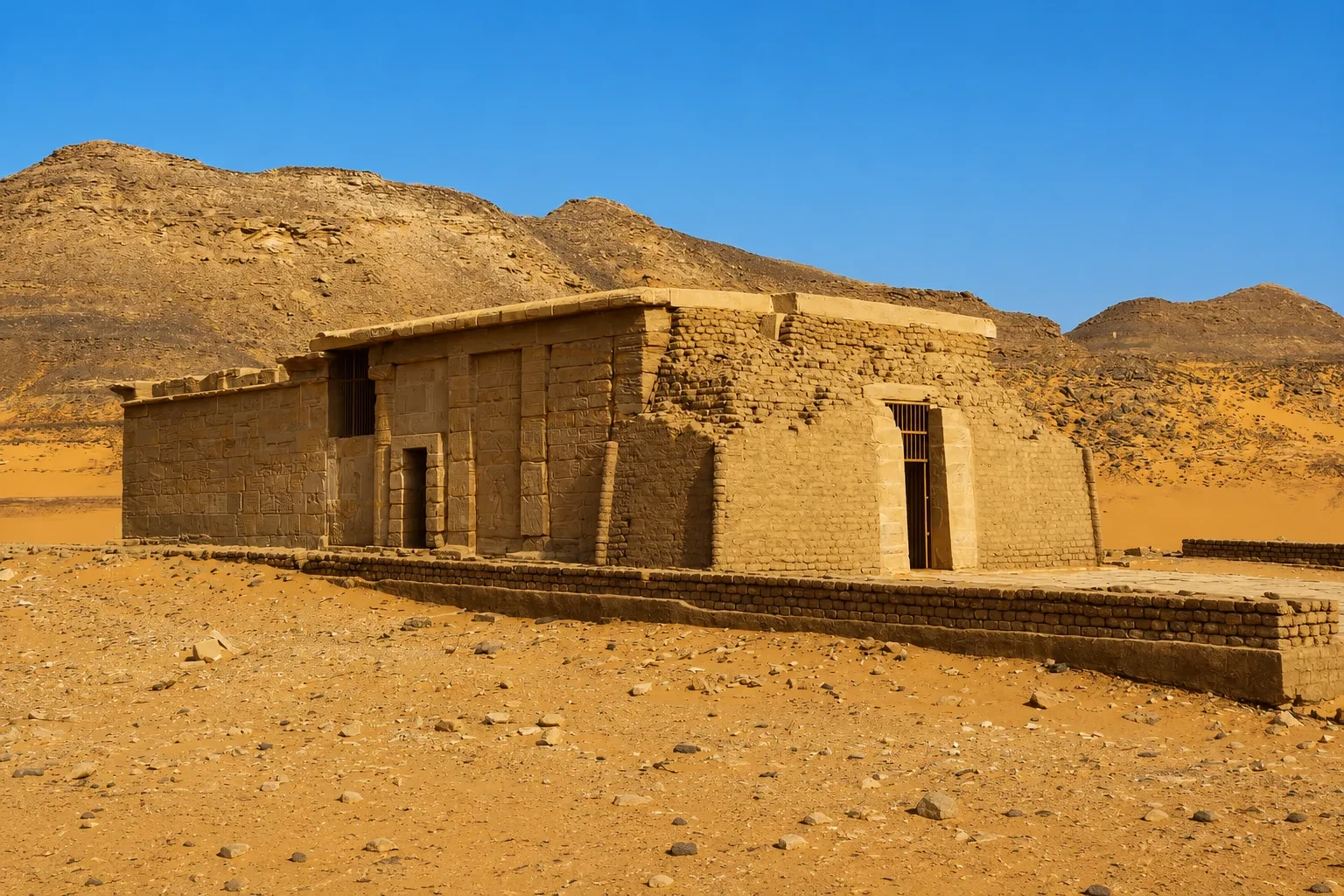

The Temple of Amada is the oldest surviving ancient temple on the shores of Lake Nasser, a jewel of New Kingdom Nubian sacred architecture whose extraordinary state of painted relief preservation places it among the most visually magnificent and most historically significant of all the ancient monuments rescued from the rising waters during the UNESCO International Campaign to Save the Monuments of Nubia. Located on the western shore of Lake Nasser approximately 180 kilometers south of the Aswan High Dam and approximately 100 kilometers north of the Abu Simbel Temples, the Temple of Amada was built over a period spanning the reigns of three successive New Kingdom pharaohs, Thutmose III, Amenhotep II, and Thutmose IV, during the height of the Egyptian imperial presence in Nubia in the 15th and 14th centuries BCE, and its inner sanctuary and transverse hall preserve some of the finest and most completely intact examples of New Kingdom painted relief decoration available at any ancient site in the entire Nile Valley. This extraordinary monument forms an essential component of the complete Lake Nasser Cruise heritage programme that WOW Egypt Tours proudly offers to travelers from around the world as part of Egypt Tours Packages and Egypt Travel Packages encompassing the complete ancient Nubian heritage landscape south of Aswan.
The Temple of Amada Egypt is important not only for the extraordinary quality of its painted decoration, which surpasses in completeness and in preservation all other New Kingdom temples in the Lake Nasser heritage zone and rivals the finest painted chambers of the royal tombs in the Valley of the Kings at Luxor for the brightness and the intricacy of its colors, but also for two historically crucial royal inscriptions that are among the most important primary documentary sources for the military history of the early 18th Dynasty. The stela of Amenhotep II in the inner sanctuary records the pharaoh's brutal suppression of a Nubian rebellion and his public display of executed rebel princes as a deterrent to further resistance, in one of the most direct and most historically frank royal military proclamations from any period of ancient Egyptian history. A second commemorative text from the reign of Merenptah, carved on a doorpost of the temple in the 13th century BCE, records an Asiatic invasion of Egypt and provides corroborating evidence for the turbulent end of the Ramesside period, making the Temple of Amada the location of two of the most historically significant military proclamations of the entire New Kingdom period. The Temple of Amada is also directly adjacent to two additional ancient monuments of independent significance: the rock-cut tomb-chapel of the Viceroy of Kush Pennut, one of the most important New Kingdom administrative officials in Nubia, and the small Temple of Derr, a hemispeos rock-cut temple built by Ramesses II and dedicated to Ra-Horakhty, together making the Amada area one of the most concentrated and most rewarding heritage clusters in the middle Lake Nasser heritage zone. All three monuments are visited as a single shore excursion stop on all Lake Nasser Cruise itineraries operated by WOW Egypt Tours.

Who Built The Temple Of Amada?
The Temple of Amada was built and decorated by three successive pharaohs of the 18th Dynasty, the founding dynasty of the New Kingdom and the most militarily and architecturally ambitious period of ancient Egyptian history. The temple was founded by Pharaoh Thutmose III, the greatest military commander of the New Kingdom and the pharaoh who extended Egyptian imperial control to its greatest territorial extent, reaching from the Euphrates River in the north to the Fourth Cataract of the Nile in the south. Thutmose III built the first version of the Amada temple around 1460 BCE, dedicating it to the principal Egyptian imperial gods Amun-Ra and Ra-Horakhty, the two solar divine powers that legitimized Egyptian royal authority throughout the empire and that were venerated at every major New Kingdom temple installation in the Nubian province. The original Thutmose III sanctuary and its immediately surrounding structure established the basic architectural and theological programme of the Amada temple.
Thutmose III's son and successor Amenhotep II continued the construction and decoration of the temple, adding the hypostyle hall and contributing significant new decorative elements to the sanctuary that was already established by his father, including the historically crucial commemorative stela recording his campaigns in Nubia and Asia. Amenhotep II was a physically powerful and militarily vigorous pharaoh celebrated in the royal tradition for his athletic prowess, including his legendary skill in archery, rowing, and horse training, and his contributions to the Amada temple reflect the specific royal ideology of a warrior pharaoh asserting his divine authority over the conquered Nubian province. The third New Kingdom contributor to the Amada temple was Thutmose IV, the son of Amenhotep II, who completed the temple's hypostyle hall decoration and added the entrance vestibule that gives the completed temple its final architectural form. Later additions by the pharaoh Seti I of the 19th Dynasty, who restored and added to portions of the earlier 18th Dynasty decoration, complete the building history of the main temple structure. The adjacent Temple of Derr was built separately by Ramesses II around 1260 BCE, while the tomb-chapel of Pennut dates to the reign of Ramesses VI of the 20th Dynasty around 1145 BCE.
The Key Pharaohs Of The Temple Of Amada
The three pharaohs most directly associated with the construction and decoration of the Temple of Amada represent the greatest generation of military and administrative leadership of the New Kingdom's most dynamic imperial dynasty. Thutmose III, the founder, is universally regarded by Egyptologists as the Napoleon of ancient Egypt, the supreme military commander of the entire pharaonic tradition whose seventeen Asiatic campaigns in the course of his long reign from approximately 1479 BCE to 1425 BCE created the largest territorial empire in Egyptian history and whose administrative and architectural legacy shaped the entire subsequent course of the 18th Dynasty. His construction of the Amada temple was part of a comprehensive programme of Nubian temple building that established Egyptian religious and administrative authority throughout the colonized Nubian province at the height of the imperial age.
Amenhotep II, the son and successor of Thutmose III, ruled from approximately 1427 BCE to 1400 BCE and is best known in the royal tradition for his exceptional physical qualities, celebrated in his own inscriptions in terms of his extraordinary strength, his unmatched archery skill, his speed in the chariot, and his ability to handle horses that no ordinary man could control. The Amada stela of Amenhotep II, carved in the temple sanctuary during his reign, records with an unusual directness and brutality the military consequences of his Nubian campaign, describing the execution of rebel chieftains and the display of their bodies on the prow of the royal ship as a warning to the Nubian population. Thutmose IV, the son of Amenhotep II, ruled from approximately 1400 BCE to 1390 BCE and is best known for the famous Dream Stela at Giza, recording his promise to excavate the buried Great Sphinx from the sand in exchange for the throne of Egypt, but his contributions to the Amada temple decoration, completing the hypostyle hall begun by his father and grandfather, demonstrate that he was a serious and committed temple builder in the tradition of his illustrious predecessors.
Temple Of Amada Location On Lake Nasser
The Temple of Amada is located on the western shore of Lake Nasser, approximately 180 kilometers south of the Aswan High Dam and approximately 100 kilometers north of the Abu Simbel Temples, at roughly the midpoint of the Egyptian section of Lake Nasser between the northern Kalabsha monument group and the southern Abu Simbel destination. The temple was originally located on the west bank of the Nile in the ancient Nubian landscape of the Amada region, at a position that placed it in the heart of the intensively colonized middle section of the Egyptian Nubian province during the New Kingdom period. During the UNESCO International Campaign, the temple was relocated to its current position above the Lake Nasser waterline by one of the most technically demanding rescue operations of the entire campaign, which involved moving the complete temple structure on a specially designed tracked transportation system without dismantling it into blocks. The adjacent Temple of Derr was moved separately to a position near the Amada temple, making the two temples neighbors in their new relocated positions as they were in their original locations on the ancient Nile west bank. The current site is accessible from Lake Nasser by small motorboat from the cruise ship anchorage, a transfer of approximately 5 to 10 minutes from the anchored vessel to the ancient platform landing. WOW Egypt Tours includes the Temple of Amada and its associated monuments as a standard guided stop on all Lake Nasser Cruise itineraries between Aswan and Abu Simbel.
Temple Of Amada Fun Facts
The Temple of Amada holds the extraordinary distinction of being moved to its current position above the Lake Nasser waterline not by the block-by-block dismantling technique used for most of the other rescued Nubian temples, but by a unique and technically unprecedented method in which the complete temple structure was moved as a single intact unit on a specially designed hydraulic and mechanical transport system. The French engineering team responsible for the Amada rescue developed a purpose-built system of hydraulic jacks, railway tracks, and wheeled carriages that lifted the entire temple off its ancient foundations and transported it approximately 2.6 kilometers to its new elevated position over the course of several months in 1975 and 1976, without separating any of the ancient stone blocks from their neighbors and without causing any damage to the painted relief surfaces on the interior walls. This method of moving the complete temple as an intact monolith was chosen specifically because of the exceptional quality and fragility of the Amada painted decoration, which the engineering team correctly judged would be at greater risk of damage from the vibration and handling of individual block cutting and reassembly than from the slower but more controlled movement of the complete structure as a single unit. The success of the Amada intact transport method demonstrated the feasibility of an alternative approach to ancient temple rescue that preserved the original structural integrity of the building in a way that block-by-block dismantling could not achieve.
The Temple of Amada contains one of the oldest dated texts in the entire Lake Nasser heritage zone, a foundation text from the reign of Thutmose III that records the establishment of the original temple sanctuary and its dedication to the gods Amun-Ra and Ra-Horakhty, providing a fixed chronological anchor for the entire building history of the temple. The Amenhotep II stela in the sanctuary, dated to approximately the third year of his reign around 1424 BCE, is one of the most brutally frank military proclamation texts from the New Kingdom period, recording with unusual directness the execution of seven rebel chieftains who had been captured in Nubia and the display of six of their bodies on the walls of Thebes and one on the walls of Napata as a demonstration of pharaonic military power and a warning to future rebels. The stela's combination of military proclamation and physical description of the display of executed enemies is unique in its graphic specificity among New Kingdom royal inscriptions and provides historians with unusually direct evidence for the nature of Egyptian imperial violence in the Nubian province during the early 18th Dynasty.
Why Is The Temple Of Amada Called By This Name?
The name Amada is the modern Arabic name for the ancient site, derived from the name of the ancient Nubian settlement that existed at this location in the Lower Nubian Nile Valley during the New Kingdom and subsequent periods. The ancient Egyptian name for the settlement associated with the temple is not definitively known from the surviving inscriptions, as the temple texts refer primarily to the divine inhabitants and the royal patrons rather than to the topographic name of the location. The modern Arabic name Amada, by which the site has been known to the local Nubian community since at least the medieval period, is preserved in the name of the nearby modern town of Amada and in the traditional geographic designation of this stretch of the Lake Nasser shore. The Temple of Amada is sometimes referred to in Egyptological literature as the Temple of Amada of Thutmose III, to distinguish the original Thutmose foundation from the subsequent additions of Amenhotep II and Thutmose IV, but the simple designation Temple of Amada is universally understood to refer to the complete 18th Dynasty temple complex in its current relocated position on the Lake Nasser shore. The adjacent Temple of Derr takes its name from the nearby ancient settlement of Derr, the principal administrative center of the middle Nubian province during the New Kingdom period, which is now submerged under the waters of Lake Nasser.
Temple Of Amada History
The history of the Amada sacred site begins with the Egyptian imperial expansion into Nubia during the early 18th Dynasty, when the pharaohs Ahmose I and his successors pushed the Egyptian border progressively southward, establishing a network of administrative centers, trading posts, and religious foundations throughout the colonized Nubian territory. By the reign of Thutmose III, the middle section of the Nubian Nile Valley in which the Amada temple was built had been an Egyptian colonial province for nearly a century, with a dense network of Egyptian temple foundations, royal estates, gold mines, and administrative installations extending from the First Cataract at Aswan deep into the Nubian interior. The foundation of the Amada temple by Thutmose III around 1460 BCE placed a major religious institution at one of the most important settlement nodes of the middle Nubian province, the area around the ancient settlement of Derr that served as the primary administrative center of the middle Nubian territory throughout the New Kingdom period.
The successive contributions of Amenhotep II and Thutmose IV over the following three or four decades completed the basic structure of the temple and established the decorative programme that is today the primary source of the temple's renown. The addition of the Amenhotep II stela, recording the military campaigns of the second year of his reign and the brutal suppression of Nubian resistance, transformed the temple into one of the most important repositories of New Kingdom military historical documentation in the entire Nubian province. During the Amarna period, when the pharaoh Akhenaten attempted to impose a monotheistic solar religion on Egypt and ordered the destruction of images and inscriptions of the god Amun throughout the Egyptian world including Nubia, the Amada temple suffered significant damage to its Amun inscriptions and reliefs, which were subsequently restored under Seti I of the 19th Dynasty. These Seti I restorations, carried out with considerable care and skill, replaced the damaged Amun images and inscriptions and added new decoration to several areas of the temple, creating a layered building history that spans from the earliest 18th Dynasty foundation through the Ramesside restoration programme.
The Christian period brought the conversion of portions of the Amada temple to church use, with crosses carved on some ancient divine figures and Coptic Christian inscriptions added to the walls, before the ultimate abandonment of the site and its progressive burial under the desert sand. During the medieval Islamic period, the local community designated the ancient structure as Kanisa, the Arabic word for Church, reflecting the living memory of the building's Christian phase even after the community had been Islamized. The 19th century rediscovery and systematic documentation of the Amada temple by European scholars, beginning with the Napoleonic expedition and continuing through the great Egyptological surveys of the 19th century, established the scholarly record that made the rescue feasible when the Lake Nasser threat materialized. The French rescue operation of 1975 and 1976, which moved the complete temple intact on its specially designed transport system, preserved the Amada painted decoration in the condition visible today and made it accessible to the Lake Nasser Cruise visitors who form the primary audience for the temple in the modern era.
The Story Of The French Rescue Of The Temple Of Amada
The rescue of the Temple of Amada by a French engineering team in 1975 and 1976 was one of the most technically innovative and most precisely executed operations in the entire history of ancient monument conservation, a project that solved a unique engineering challenge with an approach of considerable elegance and technical sophistication. The challenge was straightforward: the Temple of Amada contained some of the finest and most fragile painted decoration of any ancient Egyptian temple in Nubia, and the standard method of block-by-block dismantling that had been used for most other rescued Nubian temples posed an unacceptable risk of damage to the painted surfaces through the vibration and physical handling involved in cutting the blocks apart. The UNESCO technical committee agreed that an alternative approach was needed, and the French team developed the solution of moving the entire temple as a single intact unit.
The French engineers designed a purpose-built transport system consisting of a reinforced concrete cradle that was built around and beneath the temple structure to provide rigid support for the ancient masonry during transport, a series of hydraulic jacks that lifted the combined weight of the temple and its cradle off the ancient foundations, and a railway track system of approximately 2.6 kilometers length that extended from the original site to the new elevated position above the Lake Nasser waterline. Over the course of the rescue operation in 1975 and 1976, the temple and its concrete cradle, weighing a combined total of approximately 900 tonnes, were lifted off the original foundations, rolled onto the railway carriages, and moved at an extremely slow speed of approximately 1 to 2 meters per day along the track system to the new site, a journey of approximately 2.6 kilometers that took several months to complete. At the new site, the temple was lowered onto new foundations that had been carefully prepared to support the ancient masonry in the same structural configuration as the original, and the concrete transport cradle was progressively removed to reveal the standing temple in its new elevated position. The precision of the operation was such that the temple structure suffered no detectable damage to any carved or painted surface during the entire transport process, and the painted decoration visible today in the inner sanctuary and hypostyle hall is in substantially the condition it was in before the rescue operation began. The French rescue of the Temple of Amada remains one of the most technically impressive engineering achievements in the history of ancient monument conservation and a demonstration that alternatives to block dismantling can in certain circumstances be both feasible and preferable for the preservation of exceptionally fragile ancient heritage.
Temple Of Amada Architecture And Key Features
The Exterior And Entrance Vestibule
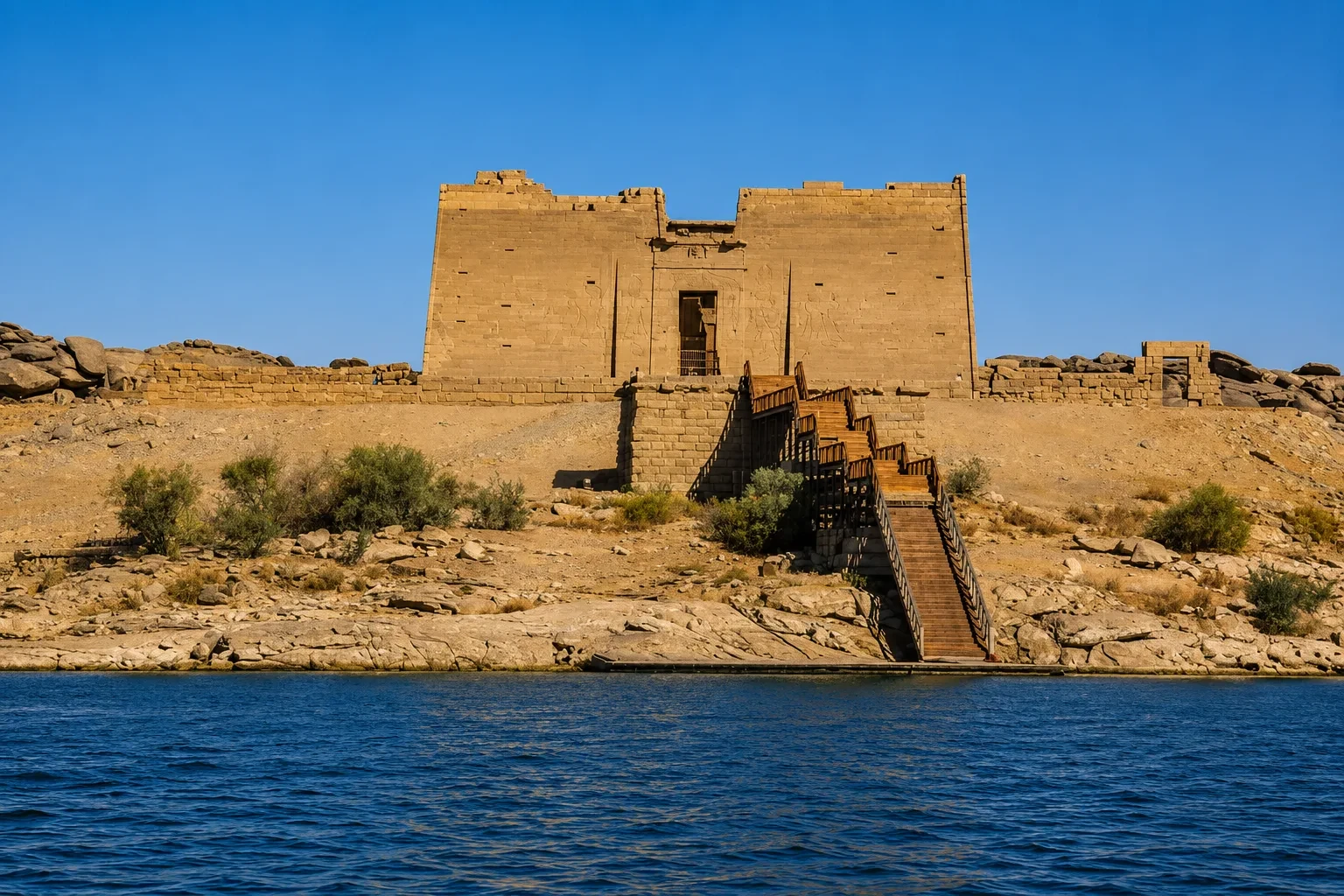
The Temple of Amada presents a modest exterior in comparison with the grand pylons of the Roman-period Kalabsha temple or the colossal facade of the Abu Simbel temples, with a simple entrance vestibule added by Thutmose IV forming the outermost element of the temple's architectural sequence. The vestibule, an open fronted hall of two columns that serves as the transition between the exterior landscape and the interior temple spaces, preserves carved relief decoration on its walls and columns showing Thutmose IV and his divine patrons in the standard 18th Dynasty royal offering programme. The relatively plain exterior of the temple, by comparison with its extraordinarily rich interior, reflects the fundamental 18th Dynasty architectural tradition in which the most sacred and most carefully decorated spaces were the innermost rooms of the temple, accessible only to the priestly officiants, while the outer areas that were more publicly accessible received less elaborate treatment. The contrast between the modest exterior and the spectacular interior of the Amada temple is itself an important architectural lesson about the spatial and social organization of ancient Egyptian sacred space.
The Hypostyle Hall
The hypostyle hall of the Temple of Amada, with its 12 columns arranged in three rows and its decorated walls and ceiling, is the primary interior architectural space of the temple and the room where visitors first encounter the full quality and the full survival of the ancient painted decoration that makes the Amada temple unique among all the New Kingdom temples of the Lake Nasser heritage zone. The columns of the hypostyle hall bear carved relief scenes of the royal pharaoh in the company of the divine family of Amada, shown making offerings and receiving divine approval in the standard formulaic compositions of the 18th Dynasty royal temple programme. The walls of the hypostyle hall are covered on all sides with relief carved and painted scenes of ritual, offering, and divine presence, with the colors of the original New Kingdom painting surviving in many areas with a brightness and intensity that gives the interior an almost overwhelming visual richness. The ceiling of the hypostyle hall preserves astronomical decoration including star patterns and divine figures that complement the terrestrial royal and divine programme on the walls below, creating an interior environment of extraordinary decorative completeness in which every architectural surface participates in the total theological statement of the ancient sacred building.
The Transverse Hall And Inner Sanctuary
Beyond the hypostyle hall, a transverse hall and then the innermost sanctuary of the temple preserve the finest and most completely intact areas of New Kingdom painted decoration in the entire temple, spaces that were most effectively protected by their deep interior position from the physical processes of deterioration, human interference, and Amarna-period iconoclasm that affected the outer areas of the temple more severely. The sanctuary walls present the complete programme of the divine family of Amada in the most intimate and most sacred religious context, with the primary deities Amun-Ra and Ra-Horakhty shown receiving the royal offerings of the pharaoh in the specific ritual acts that formed the daily cult programme of the temple. The painted colors in the sanctuary and transverse hall, executed in the precise and harmonious New Kingdom palette of red, yellow, blue, green, black, and white, are preserved in some areas with a freshness and a brightness that is barely distinguishable from what a contemporary of Thutmose III would have seen when the decoration was first completed around 1460 BCE, creating one of the most direct and most emotionally powerful encounters with the original ancient Egyptian temple aesthetic available anywhere in the Nile Valley heritage zone.
The Stela Of Amenhotep II
The most historically significant single element of the Temple of Amada is the commemorative stela carved in the sanctuary by Pharaoh Amenhotep II, recording the military events of the third year of his reign in the most directly stated and most graphically specific military proclamation text in any New Kingdom Nubian temple. The stela records the pharaoh's campaign against rebel forces in Nubia and Asia, the capture of seven rebel chieftains, their execution by the pharaoh's own hand, and the subsequent display of their bodies: six of the executed chiefs were hung from the walls of Thebes as public demonstrations of Egyptian military power, while the seventh was transported to Nubia and hung from the walls of the Nubian city of Napata as a specific warning to the Nubian population that pharaonic military retribution would follow any future rebellion against Egyptian authority. The stela's combination of military proclamation, royal self-presentation, and physical description of exemplary punishment is unprecedented in its explicitness among New Kingdom royal inscriptions, and its location in the innermost sanctuary of the Amada temple, a space normally reserved for purely divine ritual content rather than historical proclamation, reflects the particular importance that Amenhotep II attached to this military victory and its political message in the context of Egyptian imperial authority over the Nubian province.
The Merenptah Inscription
A second historically significant text at the Temple of Amada, less well known than the Amenhotep II stela but equally important for New Kingdom historical scholarship, is an inscription of the pharaoh Merenptah, the thirteenth son and eventual successor of Ramesses II who ruled from approximately 1213 BCE to 1203 BCE, carved on a doorpost of the temple and recording the events of an Asiatic invasion of Egypt in the fifth year of his reign. The Merenptah text at Amada is one of two primary documentary sources for the Libyan and Asiatic military crisis of the early 13th century BCE, the other being the great Victory Stela of Merenptah at Karnak that contains the famous Israel Stela inscription, the earliest known written reference to the people of Israel in any ancient Egyptian text. Together these two inscriptions provide the primary evidence for one of the most dramatic military episodes of the late New Kingdom, and the presence of the Merenptah text at the remote Nubian temple of Amada demonstrates the importance of the Nubian province as an appropriate location for royal military proclamations even in the later stages of the New Kingdom imperial age.
The Temple Of Derr
Relocated to a position adjacent to the Temple of Amada during the UNESCO rescue operations, the Temple of Derr is a rock-cut hemispeos temple built by Ramesses II around 1260 BCE and dedicated to Ra-Horakhty, the Ramesside solar aspect of the sun god that was one of the primary divine patrons of Ramesses's personal theological programme. The Derr temple is smaller in scale than the Abu Simbel temples but similar in its rock-cut hemispeos format, with a facade cut from the sandstone cliff face and interior halls and sanctuary chambers carved from the living rock behind. The decoration of the Derr temple interior, while less completely preserved than the finest areas of the Amada painted reliefs, includes carved relief scenes of the Ramesside royal offering programme and the divine family of Ra-Horakhty in the characteristic late New Kingdom style. The juxtaposition of the Amada and Derr temples at their adjacent relocated positions, with a century separating their construction and the entire artistic transformation from the refined elegance of the early 18th Dynasty to the more robust expressiveness of the Ramesside style visible in the contrast between their decorated surfaces, makes the combined Amada-Derr visit one of the most instructive comparative exercises in ancient Egyptian art history available at any single Lake Nasser heritage site.
The Tomb-Chapel Of Pennut
The third ancient monument at the Amada heritage cluster is the rock-cut tomb-chapel of Pennut, the Viceroy of Kush and Deputy of Kush under the pharaoh Ramesses VI of the 20th Dynasty, approximately dated to around 1145 BCE. Pennut was one of the most senior Egyptian administrative officials in the Nubian province at the close of the New Kingdom period, and his rock-cut tomb-chapel, with its decorated walls recording the events of his official career and his devotion to the gods, provides a uniquely detailed picture of the life and responsibilities of a senior Egyptian colonial official in Nubia during the final decades of the Egyptian imperial presence in the south. The decoration of the Pennut tomb-chapel includes scenes of the viceroy receiving honors from the pharaoh, making offerings to the gods, and overseeing the construction of a statue, as well as funerary scenes of ritual and divine protection. The quality of the painted decoration in the Pennut chapel, while more modest in scale than the great royal temples, is fine enough to provide a genuinely rewarding art historical experience and the historical information conveyed by its biographical texts and royal inscriptions makes it one of the most important administrative documents of the late New Kingdom Nubian province.
Why Is The Temple Of Amada Important?
The Temple of Amada is important for a combination of reasons that together make it one of the most significant ancient monuments in the entire Lake Nasser heritage zone, despite its relatively modest scale by comparison with the colossal Abu Simbel facades or the great pylon of the Kalabsha temple. As the oldest surviving ancient temple on Lake Nasser, the Amada temple provides the most direct surviving architectural evidence for the earliest phase of New Kingdom Egyptian temple building in Nubia, documenting the religious and architectural priorities of the 18th Dynasty imperial programme in the conquered Nubian province at the height of the Egyptian empire. As the holder of the finest and most completely preserved New Kingdom painted decoration of any Lake Nasser heritage temple, it offers the most vivid and the most complete surviving encounter with the original aesthetic achievement of the 18th Dynasty royal workshop tradition in a Nubian sacred context.
As a repository of primary historical documentation, the Amenhotep II stela and the Merenptah inscription together make the Temple of Amada one of the most important archives of New Kingdom military and political history in the entire Nubian heritage zone, providing direct evidence for the nature of Egyptian imperial authority in the Nubian province at two critical moments of the New Kingdom period. And as the subject of one of the most technically innovative conservation operations in the history of ancient monument rescue, the French intact-transport rescue of 1975 and 1976, the Temple of Amada occupies an important place in the history of international heritage conservation as the monument that proved the feasibility of the alternative method of moving ancient structures as complete intact units. WOW Egypt Tours includes the Temple of Amada and its associated monuments as a standard guided stop on all Lake Nasser Cruise itineraries, recognizing it as one of the most intellectually rewarding and most aesthetically memorable stops in the complete Lake Nasser heritage programme.
What Are Some Interesting Facts About The Temple Of Amada?
Moved In One Piece
The decision to move the Temple of Amada as a single intact unit rather than dismantling it into individual blocks was one of the most consequential and most daring technical choices made in the entire UNESCO Nubian rescue campaign, and its success demonstrated a conservation philosophy that prioritized the structural and decorative integrity of the ancient monument over the logistical convenience of the more standard dismantling approach. The French engineers who designed and executed the Amada transport system were motivated primarily by their concern for the exceptional quality of the painted decoration, which they correctly judged to be at greater risk from the vibration and physical handling of block dismantling than from the controlled movement of the complete structure. By moving the temple on its specially designed transport system at a speed of approximately 1 to 2 meters per day, they ensured that the ancient masonry was subjected to only the most gradual and most controlled forces during the relocation process, preserving the structural bonds between individual blocks and the paint layers on their surfaces in the condition that makes the Amada interior one of the finest and best-preserved New Kingdom painted environments in any surviving Nubian ancient monument.
A Military Proclamation More Direct Than Any Other
The Amenhotep II stela in the Amada sanctuary stands out among the extensive archive of New Kingdom military proclamation texts for the unusual directness and the graphic specificity with which it describes the physical consequences of pharaonic military power. Most New Kingdom royal military inscriptions, while describing victories and the bringing of prisoners and tribute in considerable detail, maintain a formulaic distance from the actual physical facts of military execution and the display of dead enemies. The Amada stela breaks with this convention by describing explicitly the personal role of the pharaoh in executing the captured Nubian and Asiatic chiefs, the precise number of bodies displayed in each location, and the specific audience intended for each display: the bodies at Thebes were meant to be seen by the Egyptian population and the royal court, while the body at Napata was specifically directed at the Nubian population of the conquered southern province. This combination of specific detail and specific audience targeting makes the Amada stela one of the most revealing documents of the psychology and the political strategy of New Kingdom imperial power in Nubia, demonstrating that the pharaohs understood terror as a deliberate and purposeful instrument of colonial administration alongside the more constructive tools of temple building and trade.
The Colors That Have Survived Three Thousand Years
The painted decoration of the Temple of Amada inner sanctuary and transverse hall represents one of the most remarkable survivals of ancient Egyptian polychrome painting anywhere in the Nile Valley heritage zone. The ancient Egyptian painters who decorated the Amada temple used mineral pigments of extraordinary stability: Egyptian blue from copper compounds, red and yellow ochre from iron oxides, carbon black from charred organic materials, white from calcium carbonate, and the precious malachite green that was reserved for the most important sacred contexts. These mineral pigments, applied in the protected interior environment of the rock-cut and masonry sanctuary chambers, have survived with minimal fading or chemical deterioration across more than three thousand years of desert conditions, producing an interior visual environment whose colors in the best-preserved areas approach the brightness and the chromatic intensity of the original New Kingdom decoration with a directness that few other ancient painted environments can match. The experience of standing in the Amada sanctuary surrounded by walls of vivid blue, red, yellow, and green painted reliefs of the divine royal offering programme, knowing that these colors have been essentially unchanged since the craftsmen of Thutmose III applied them around 1460 BCE, is one of the most extraordinary temporal encounters with the ancient world that any Lake Nasser heritage site can provide.
What Is So Special About The Temple Of Amada?
The Finest Painted Interior On Lake Nasser
What makes the Temple of Amada uniquely special among all the ancient monuments of the Lake Nasser heritage zone is the quality of its painted interior decoration, which surpasses in completeness and in preservation every other New Kingdom painted programme available at any site on the lake shore and rivals the finest painted chambers of the royal tombs in the Valley of the Kings at Luxor as an expression of the supreme achievement of the 18th Dynasty royal painting workshop tradition. The specific combination of factors that makes the Amada painted decoration so exceptional, the early 18th Dynasty date of the original painting that gives it a freshness and a refinement slightly different from the more massive Ramesside style familiar from Abu Simbel and the other late New Kingdom sites, the protected interior position of the sanctuary and transverse hall that shielded the painted surfaces from the most destructive processes of weathering and human interference, the minimal damage from the Amarna iconoclasm that affected mainly the Amun inscriptions rather than the painted compositions, and the successful intact-transport rescue that avoided the vibration and physical handling risks of block dismantling, together produce an interior painted environment of incomparable quality and completeness. No visitor to the Lake Nasser heritage zone who has an interest in ancient Egyptian art history can afford to miss the Amada sanctuary, and most visitors who see it describe it as the most beautiful and the most moving interior painted space available at any ancient monument site on the lake shore.
The Most Authentic Time Travel On Lake Nasser
The Temple of Amada also provides what is perhaps the most direct and most authentic experience of time travel available anywhere on the Lake Nasser heritage circuit. The combination of the extraordinary painted decoration, the intimate scale of the 18th Dynasty sanctuary, the historical specificity of the royal inscriptions, and the knowledge that the sanctuary space has been used, decorated, and preserved across more than three thousand years of continuous Nubian history from the New Kingdom through the Amarna restoration, the Ramesside additions, the late antique Christian use, the medieval Nubian memory, and the 20th century rescue operation produces in the attentive visitor a sense of direct and immediate connection with the ancient past that is difficult to articulate but impossible to mistake. Standing in the Amada sanctuary and reading the Amenhotep II stela, whose words were composed by a royal scribe and carved by a stone cutter in approximately 1424 BCE, in a room whose painted walls show the same pharaoh in the company of the same gods who received his offerings in this same space on the same day, is one of the most direct and most personal encounters with the ancient world available to any heritage traveler anywhere in Egypt.
Temple Of Amada Through The Ages: From Ancient Nubia To The Present
The complete history of the Temple of Amada from its New Kingdom foundation through to the present encompasses one of the most dramatically varied institutional biographies of any ancient monument in the Lake Nasser heritage zone, moving from its establishment as a premier royal religious foundation of the Thutmosid empire through the iconoclastic damage of the Amarna period, the Ramesside restoration programme of Seti I, the late New Kingdom military proclamations of Merenptah, the administrative biography of the Viceroy Pennut in the adjacent tomb-chapel, the Christian conversion of portions of the interior, the progressive burial under desert sand during the medieval period, the 19th century European rediscovery and documentation, and the extraordinary 20th century rescue by the French engineering team that preserved its exceptional painted decoration for all future generations.
The Amarna period represents one of the most significant episodes in the institutional biography of the Amada temple, as the theological revolution of Akhenaten's reign brought royal agents throughout Egypt and Nubia to systematically destroy images and inscriptions of the god Amun in every accessible temple and tomb, including the Amada sanctuary where the Amun names and figures in the principal offering scenes were methodically chiseled from the wall surfaces. The subsequent restoration under Seti I, who sent teams of skilled craftsmen to repair the Amarna damage throughout the Nubian temple province, involved not simply the mechanical restoration of the damaged texts but the careful re-carving and re-painting of the destroyed sections in a style that respected the original 18th Dynasty aesthetic, creating a layered decorative history that is still readable in certain areas of the Amada walls where the slightly different carving and painting style of the Seti I restoration can be distinguished from the original Thutmosid work around it. Today the Temple of Amada receives visitors exclusively from the Lake Nasser Cruise programme, maintaining its remote and special character as one of the most exceptional painted environments available to any heritage traveler on the shores of the great artificial Nubian lake.
Temple Of Amada UNESCO World Heritage Status
The Temple of Amada is part of the Nubian Monuments from Abu Simbel to Philae UNESCO World Heritage Site, inscribed in 1979 as one of the first ten entries on the UNESCO World Heritage List. The World Heritage designation recognizes the outstanding universal value of the complete collection of ancient Nubian monuments rescued from the rising waters of Lake Nasser during the UNESCO International Campaign, of which the Temple of Amada is one of the most significant individual components both as the oldest surviving temple on Lake Nasser and as the monument with the finest and most completely preserved New Kingdom painted decoration in the entire rescue collection. The innovative French rescue method of moving the complete temple intact on a specially designed transport system is also recognized within the UNESCO heritage documentation as one of the most technically significant conservation achievements of the entire campaign, demonstrating a conservation philosophy and a technical approach that has informed subsequent monument rescue and relocation projects worldwide.
Best Time To Visit The Temple Of Amada
The best time to visit the Temple of Amada is during the cooler months from October through April, when temperatures in the middle Lake Nasser region are moderate and comfortable for both the outdoor approach to the temple and the boat transfer from the cruise ship. The summer months bring intense heat to the Nubian desert environment of the Lake Nasser middle reach, with temperatures regularly exceeding 45 degrees Celsius from May to September, making the outdoor areas of the Amada site extremely challenging to visit comfortably. The interior of the temple itself provides considerable shade and some relief from the outdoor heat, but the approach and the surrounding area are exposed to direct sun. The most favorable visiting conditions within a Lake Nasser Cruise itinerary are on the morning of Day 3 on the southbound cruise from Aswan, when the ship typically arrives at the Amada area after two days of sailing from Aswan and the morning temperatures are generally more comfortable than the peak midday heat. The low morning light that enters the temple entrance and illuminates the inner sanctuary and transverse hall in the early morning hours produces particularly beautiful photographic and visual conditions for appreciating the painted decoration. WOW Egypt Tours plans all Amada visits at the optimal time of day and season as part of the complete Lake Nasser Cruise programme.
Temple Of Amada Opening Hours
The Temple of Amada and its associated monuments are accessible to Lake Nasser Cruise visitors during the daytime visiting hours coordinated with the cruise ship schedule. The site opens at 6:00 AM and closes at 5:00 PM throughout the year. Because the temples are accessible only from the lake by motorboat transfer, visiting outside of the Lake Nasser Cruise programme is not practically feasible for international visitors, and the site receives visitors exclusively from the Lake Nasser Cruise ships that anchor offshore during the standard cruise itinerary. The visiting schedule for cruise passengers is coordinated by WOW Egypt Tours to arrive at the most comfortable and most visually rewarding hours of the day.
Temple Of Amada Entrance Fees
Adults: EGP 150
Students: EGP 75
The entrance fee covers access to the complete Amada heritage cluster including the main Temple of Amada, the adjacent Temple of Derr, and the tomb-chapel of Pennut. Entrance fees to all three monuments at the Amada site are included in all Lake Nasser Cruise programmes booked through WOW Egypt Tours.
How To Get To The Temple Of Amada
The Temple of Amada is accessible exclusively by Lake Nasser Cruise, as the site is located approximately 180 kilometers south of the Aswan High Dam on the western shore of Lake Nasser in a position that has no practical road access for international visitors. The standard approach is by small motorboat from the cruise ship anchorage near the Amada temple landing, a transfer of approximately 5 to 10 minutes from the anchored vessel to the ancient monument platform. All motorboat transfers from the cruise ship to the Amada temple landing are included as a standard component of all Lake Nasser Cruise itineraries operated by WOW Egypt Tours.
How Long To Spend At The Temple Of Amada
Most Lake Nasser Cruise itineraries allocate approximately one to one and a half hours for the complete Amada heritage cluster visit, which is sufficient time to walk through the complete interior sequence of the Temple of Amada from the entrance vestibule through the hypostyle hall and transverse hall to the inner sanctuary, to examine the Amenhotep II stela and the Merenptah inscription, to visit the adjacent Temple of Derr with its Ramesside rock-cut interior, and to see the tomb-chapel of Pennut with its New Kingdom administrative biography texts and painted scenes. Visitors with a particular interest in the painted decoration of the sanctuary, the historical significance of the Amenhotep II stela, or the comparative art history of the 18th Dynasty Amada and Ramesside Derr decoration may wish for additional time at specific elements of the complex. The Amada visit on a Lake Nasser Cruise is typically combined on the same day with the Temples of Wadi El Seboua visit, which are visited either earlier or later in the same day's sailing programme.
Tips For Visiting The Temple Of Amada
Allow your eyes time to adjust from the bright Nubian sunlight to the interior light conditions of the temple before attempting to examine the painted decoration in detail, as the transition from intense daylight to the more subdued temple interior requires several minutes for the eyes to adapt fully and reveal the complete subtlety and richness of the painted surfaces. Bring a small flashlight or a camera with a built-in light source for examining the most detailed areas of the painted decoration in the sanctuary and transverse hall, as the official interior lighting is not always sufficient to reveal the full visual richness of the ancient painting programme. Ask your guide to identify and explain the specific areas where the Amarna iconoclasm damaged the Amun inscriptions and the subsequent Seti I restoration repaired them, as these layered interventions are visible in the wall surfaces and constitute some of the most interesting art historical evidence available in the temple. Make sure to examine the Amenhotep II stela carefully and ask your guide to translate or explain its content, as the historical information it contains is far more extraordinary than its physical appearance suggests. Do not overlook the Temple of Derr and the Pennut tomb-chapel, which receive less visitor attention than the main Amada temple but contribute essential historical and artistic dimensions to the complete Amada heritage experience. A licensed guide from WOW Egypt Tours with detailed knowledge of the 18th Dynasty Thutmosid art programme is essential. Bring water, a hat, and sunscreen for the outdoor transfer portions of the visit.
What To Wear At The Temple Of Amada
The Amada site involves both outdoor and indoor visiting environments. Lightweight, breathable clothing covering the shoulders and knees is recommended for both comfort and respect for the ancient sacred spaces. A wide-brimmed hat and sunscreen are essential for the outdoor approach to the temples, the motorboat transfer, and the movement between the three monuments of the Amada heritage cluster. The interior of the Temple of Amada provides welcome shade and some temperature relief from the outdoor heat. Comfortable, flat walking shoes are adequate for the well-maintained paths between the monuments and the smooth floor surfaces of the temple interiors. Bring a flashlight or headlamp for the most detailed examination of the painted sanctuary decoration. Bring adequate water as there are no refreshment facilities at the remote Amada site.
Photography At The Temple Of Amada
The Temple of Amada is one of the most rewarding and most challenging photography destinations in the Lake Nasser heritage zone, combining the exceptional visual richness of the painted sanctuary and hypostyle hall with the technical difficulties of low-light interior photography in an ancient monument setting where flash is strictly prohibited. The exterior of the temple group and the landscape setting on the Lake Nasser shore provide straightforward photography opportunities in the natural desert and lake light. Inside the temple, a camera with excellent low-light performance and a high ISO capability is strongly recommended, as the painted decoration in the sanctuary and transverse hall is best recorded at natural available light levels without flash, which is prohibited throughout the interior. The painted surfaces reward the closest possible examination and the most detailed close-up photography, as the quality and the survival of the individual brush strokes, color layering, and decorative detail in the finest areas of the Amada painting programme are only fully visible at intimate scale. Flash photography is strictly prohibited throughout the interior near all carved and painted surfaces. Photography of the exterior, the approach, and the landscape is permitted without restrictions. Professional photography or filming requires a separate permit from Egypt's Ministry of Tourism and Antiquities.
Temple Of Amada Tours
Temple Of Amada As Part Of The Lake Nasser Cruise Programme
The Temple of Amada and its associated monuments are accessible exclusively via the Lake Nasser Cruise and are a standard guided stop on all Lake Nasser Cruise itineraries between Aswan and Abu Simbel operated by WOW Egypt Tours. The Amada heritage cluster is typically visited on Day 3 of the 5-day southbound itinerary from Aswan to Abu Simbel, on the same day as the Temples of Wadi El Seboua.
What Is Covered
Motorboat transfer from the cruise ship to the Amada temple landing. Full guided visit of the Amada heritage cluster including the complete interior sequence of the Temple of Amada from the entrance vestibule through the hypostyle hall and transverse hall to the inner sanctuary with the Amenhotep II stela; the Merenptah inscription on the temple doorpost; the adjacent Temple of Derr with its Ramesside rock-cut interior; and the tomb-chapel of Pennut with its New Kingdom administrative biography and funerary scenes. Return motorboat transfer to the cruise ship.
Duration
Approximately 1 to 1.5 hours on shore, plus motorboat transfer time from the cruise ship anchorage.
Includes
Motorboat transfer from cruise ship, private licensed Egyptologist guide, and entrance fees to all three monuments. Included in all Lake Nasser Cruise programmes booked through WOW Egypt Tours.
Lake Nasser Cruise
A Lake Nasser Cruise is a luxury cruising experience on the waters of Lake Nasser, the vast artificial reservoir created by the Aswan High Dam, visiting the remarkable collection of ancient Nubian temples rescued from the rising waters along both shores of the lake. WOW Egypt Tours operates Lake Nasser Cruises with private cabins, all meals, a private licensed Egyptologist guide on board, and guided shore excursions at every stop. The Temple of Amada and its associated monuments are a standard guided stop on all Lake Nasser Cruise itineraries, forming one of the most rewarding and most intellectually enriching days of the complete Lake Nasser heritage programme.
5 Days 4 Nights Lake Nasser Cruise From Aswan To Abu Simbel
Route: Aswan to Abu Simbel, sailing south on Lake Nasser.
Itinerary
Day 1: Embarkation in Aswan. Guided visits to the Aswan High Dam, the Unfinished Obelisk, and Philae Temple. Embarkation and sail south on Lake Nasser. Overnight on board.
Day 2: Sail south to Kalabsha. Guided visit to the Temple of Kalabsha, including the main Temple of Mandulis, the Beit el-Wali rock-cut temple, and the Kertassi kiosk. Continue sailing south toward Wadi El Seboua. Overnight on board.
Day 3: Guided visit to the Temples of Wadi El Seboua, including the sphinx avenue, the Ramesside sanctuary palimpsest, the Temple of Dakka, and the Temple of Maharraka. Guided visit to the Temple of Amada, including the complete painted interior of the main temple, the Amenhotep II stela, the Merenptah inscription, the Temple of Derr, and the tomb-chapel of Pennut. Continue south. Overnight on board.
Day 4: Sail to Kasr Ibrim. Guided visit to Kasr Ibrim from the ship deck. Continue south to Abu Simbel. First guided visit to the Abu Simbel Temples. Optional Abu Simbel Sound and Light Show. Overnight on board at Abu Simbel.
Day 5: Second guided visit to the Abu Simbel Temples at sunrise. Farewell breakfast. Disembarkation at Abu Simbel.
Includes
Private cabin, all meals on board, private licensed Egyptologist guide, entrance fees to all temple visits including the Temple of Amada cluster, Philae Temple, and Abu Simbel Temples, motorboat transfers throughout, and private transfers.
4 Days 3 Nights Lake Nasser Cruise From Abu Simbel To Aswan
Route: Abu Simbel to Aswan, sailing north on Lake Nasser.
Itinerary
Day 1: Arrival at Abu Simbel by air or road from Aswan. Embarkation. Full guided visit to the Abu Simbel Temples. Optional Sound and Light Show. Overnight on board at Abu Simbel.
Day 2: Second guided visit to Abu Simbel Temples at dawn. Sail north. Guided visit to Kasr Ibrim from the ship deck. Guided visit to the Temple of Amada, including the complete painted interior, the Amenhotep II stela, the Merenptah inscription, the Temple of Derr, and the tomb-chapel of Pennut. Guided visit to the Temples of Wadi El Seboua. Overnight on board.
Day 3: Continue north to Kalabsha. Guided visit to the Temple of Kalabsha, including the main Temple of Mandulis, the Beit el-Wali, and the Kertassi kiosk. Continue north toward Aswan. Guided visits to the Aswan High Dam, the Unfinished Obelisk, and Philae Temple. Overnight on board in Aswan.
Day 4: Guided visits to the Nubian Museum and Nubian Village. Optional Elephantine Island and Kitchener's Island Botanical Garden. Farewell breakfast. Disembarkation in Aswan.
Includes
Private cabin, all meals on board, private licensed Egyptologist guide, entrance fees to all temple visits including the Temple of Amada cluster, Philae Temple, and Abu Simbel Temples, motorboat transfers throughout, and private transfers.
Combine The Temple Of Amada With Your Egypt Tours Package
The Temple of Amada is featured as a standard stop on the Lake Nasser Cruise programme across the full range of WOW Egypt Tours travel products. Browse the options below to find the Egypt experience that includes the Temple of Amada.
Egypt Tour Packages: Multi-day guided Egypt tours organized by duration, including 2 Days Egypt Packages, 3 Days Egypt Packages, 4 Days Egypt Packages, 5 Days Egypt Packages, 6 Days Egypt Packages, 7 Days Egypt Packages, 8 Days Egypt Packages, 10 Days Egypt Packages, and longer itineraries. All packages that include a Lake Nasser Cruise component feature the Temple of Amada cluster as a standard stop on the cruise itinerary. All packages include private air-conditioned transportation, private licensed Egyptologist guide, accommodations, entrance fees to all included sites, and private transfers throughout Egypt.
Egypt Travel Packages: Themed Egypt travel packages designed around specific travel styles and interests, including Egypt Honeymoon Travel Packages, Egypt Budget Travel Packages, Egypt Family Travel Packages, Egypt Luxury Travel Packages, Egypt Adventure Travel Packages, Egypt Cultural Travel Packages, and Egypt Christmas and New Year Travel Packages. All themed packages that include a Lake Nasser Cruise feature the Temple of Amada cluster as a standard stop. All packages include private transportation, licensed guide, accommodations, meals, and private transfers.
Egypt Nile Cruise Packages: Complete Egypt travel packages combining Cairo sightseeing with a fully guided Nile cruise. The Temple of Amada is accessible as part of a Lake Nasser Cruise extension added to any Egypt Nile Cruise Package that ends in Aswan. All packages include private cabin, all meals, licensed guide, and private transfers.
Nile River Cruises: All WOW Egypt Tours Nile cruise options. The Temple of Amada is a standard stop on the Lake Nasser Cruise and is accessible as an extension from the Aswan end of all other Nile River Cruise itineraries.
Lake Nasser Cruises: The exclusive means of visiting the Temple of Amada, the Lake Nasser Cruise between Aswan and Abu Simbel features the Temple of Amada cluster as a standard guided stop on both the 5 Days 4 Nights from Aswan to Abu Simbel and the 4 Days 3 Nights from Abu Simbel to Aswan itineraries, alongside the Temple of Kalabsha and the Temples of Wadi El Seboua. Includes private cabin, all meals, licensed guide, entrance fees to all temples including the complete Amada cluster, motorboat transfers, and private transfers.
Nearby Attractions To The Temple Of Amada
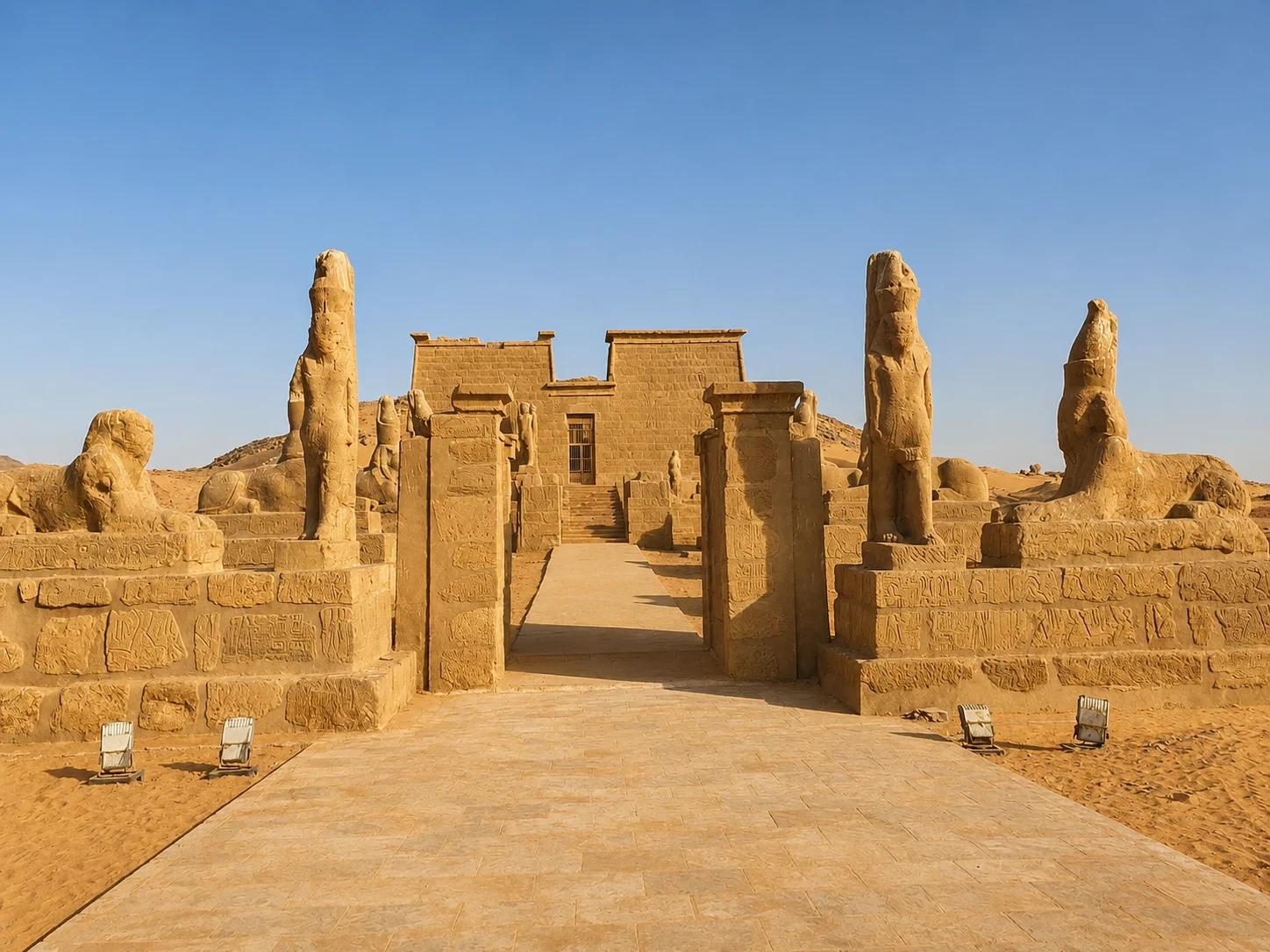
The Temple of Amada is situated in the middle section of the Lake Nasser heritage zone, equidistant from the northern Kalabsha monument group and the southern Abu Simbel temples, and its nearest heritage neighbors within the same Lake Nasser Cruise programme are the temples visited on the days immediately before and after the Amada stop. On the same day as the Amada visit, the Temples of Wadi El Seboua, approximately 35 kilometers to the north, are visited as part of the combined Day 3 programme on the southbound Lake Nasser Cruise itinerary, providing a day that encompasses both the extraordinary sphinx avenue and sanctuary palimpsest of Wadi El Seboua and the finest painted decoration of any New Kingdom temple on the lake shore at Amada in a single richly varied heritage day.
On the day before the Amada visit, the Temple of Kalabsha, the largest free-standing ancient temple in Nubia, provides the northern architectural anchor of the Lake Nasser heritage programme. On the day after, Kasr Ibrim and then the supreme monuments of Abu Simbel complete the southward journey through the Lake Nasser heritage landscape. The broader Aswan cultural programme, accessible at the northern embarkation or disembarkation point of the Lake Nasser Cruise, provides the ideal preparation or conclusion for the complete Lake Nasser heritage experience, with the Nubian Museum in Aswan providing the essential cultural context for understanding the Amada painted decoration and the history of the New Kingdom Nubian province that the temple documents so powerfully. All Lake Nasser heritage temples and all Aswan attractions are accessible through the Lake Nasser Cruises, Egypt Tours Packages, and Egypt Travel Packages offered by WOW Egypt Tours.
Frequently Asked Questions About The Temple Of Amada
What is the Temple of Amada?
The Temple of Amada is the oldest surviving ancient temple on the shores of Lake Nasser, a New Kingdom sacred complex founded by Pharaoh Thutmose III around 1460 BCE and completed by Amenhotep II and Thutmose IV, located approximately 180 kilometers south of the Aswan High Dam on the western shore of Lake Nasser. It is celebrated for its extraordinary state of painted relief preservation, which is the finest of any New Kingdom temple in the Lake Nasser heritage zone, and for two crucial historical inscriptions: the stela of Amenhotep II recording the brutal suppression of a Nubian rebellion, and the Merenptah inscription documenting an Asiatic invasion of Egypt. The temple cluster also includes the adjacent Temple of Derr built by Ramesses II and the tomb-chapel of the Viceroy Pennut. It is accessible exclusively by Lake Nasser Cruise as a standard guided stop on all WOW Egypt Tours Lake Nasser itineraries.
Who built the Temple of Amada?
The Temple of Amada was built and decorated by three successive pharaohs of the 18th Dynasty: Thutmose III, who founded the original temple around 1460 BCE; Amenhotep II, his son and successor, who added the hypostyle hall and the historically crucial military stela; and Thutmose IV, the son of Amenhotep II, who completed the hypostyle hall decoration and added the entrance vestibule. Seti I of the 19th Dynasty later restored the Amarna-period damage to the Amun inscriptions.
What makes the Amada painted decoration special?
The Temple of Amada preserves some of the finest and most completely intact New Kingdom painted relief decoration of any ancient site in the Lake Nasser heritage zone, with the sanctuary and transverse hall interiors showing 18th Dynasty royal painting of extraordinary quality and survival. The mineral pigments used by the ancient painters have maintained their brightness and chromatic intensity across more than three thousand years, creating an interior visual environment that approaches the original ancient aesthetic with remarkable directness.
What is the Amenhotep II stela?
The Amenhotep II stela is a commemorative military proclamation carved in the inner sanctuary of the Amada temple, recording the capture and execution of seven rebel chieftains in Nubia and Asia during the third year of Amenhotep II's reign around 1424 BCE, and the subsequent display of six of their bodies on the walls of Thebes and one on the walls of Napata. It is one of the most graphically explicit military proclamation texts from any period of ancient Egyptian history and provides direct evidence for the use of terror as a deliberate instrument of Egyptian colonial administration in the Nubian province.
What is the Merenptah inscription at Amada?
The Merenptah inscription is a text carved on a doorpost of the temple by the pharaoh Merenptah, son and successor of Ramesses II, recording the events of an Asiatic invasion of Egypt in the fifth year of his reign around 1208 BCE. It is one of two primary documentary sources for the military crisis of the late New Kingdom period, the other being the Victory Stela of Merenptah at Karnak that contains the famous Israel Stela inscription.
How was the Temple of Amada rescued?
The Temple of Amada was rescued by a French engineering team in 1975 and 1976 using an innovative method of moving the complete temple as a single intact unit on a specially designed hydraulic and mechanical transport system of railway tracks and wheeled carriages, covering approximately 2.6 kilometers to the new elevated position above the Lake Nasser waterline at a speed of approximately 1 to 2 meters per day. This method was chosen to avoid the vibration and handling risks of block dismantling that would have endangered the exceptional painted decoration.
What are the Temple of Derr and the Pennut tomb-chapel?
The Temple of Derr is a rock-cut hemispeos temple built by Ramesses II around 1260 BCE and dedicated to Ra-Horakhty, relocated to a position adjacent to the Temple of Amada during the UNESCO rescue operations. The tomb-chapel of Pennut is the decorated rock-cut burial chapel of the Viceroy of Kush under Ramesses VI, approximately dated to around 1145 BCE, recording the career and devotion of a senior Egyptian colonial administrator in the Nubian province. Both are visited as part of the standard Amada heritage cluster stop on all Lake Nasser Cruise itineraries.
How do I get to the Temple of Amada?
The Temple of Amada is accessible exclusively by Lake Nasser Cruise, with visitors transferred from the cruise ship to the temple landing by small motorboat. There is no practical road access for international visitors.
How much does it cost to enter the Temple of Amada?
The entrance fee is EGP 150 for adults and EGP 75 for students, covering access to all three monuments in the Amada heritage cluster. Entrance fees are included in all Lake Nasser Cruise programmes booked through WOW Egypt Tours.
How long does it take to visit the Temple of Amada?
Most Lake Nasser Cruise itineraries allow approximately 1 to 1.5 hours for a complete visit to all three monuments including the Temple of Amada interior with its painted sanctuary, the Temple of Derr, and the Pennut tomb-chapel.
What is the best time of year to visit?
October to April is the most comfortable period. The morning light entering the temple provides particularly beautiful conditions for experiencing and photographing the painted decoration.
Is a guide necessary at the Temple of Amada?
A guide is essential. The identification and translation of the Amenhotep II stela and Merenptah inscription, the recognition of the Amarna damage and Seti I restoration in the painted surfaces, the comparative art history of the Amada and Derr decoration, and the historical biography of Pennut in the tomb-chapel all require expert explanation. WOW Egypt Tours provides licensed Egyptologist guides with 18th Dynasty expertise on all Lake Nasser Cruise programmes.
Can I take photographs inside the Temple of Amada?
Photography is permitted inside the temple. Flash photography is strictly prohibited near all painted surfaces. A camera with excellent low-light performance is strongly recommended for the sanctuary and transverse hall interiors. A small flashlight helps reveal the full detail of the painted decoration.
What other Lake Nasser temples are visited near Amada?
The Temples of Wadi El Seboua are typically visited on the same day as Amada. The Temple of Kalabsha is visited on the previous day. The Abu Simbel Temples are the culminating destination one to two days further south.
Is the Temple of Amada the oldest temple on Lake Nasser?
Yes. The Temple of Amada is the oldest surviving temple on the shores of Lake Nasser, founded by Thutmose III around 1460 BCE, making it approximately 200 to 250 years older than the Ramesside temples of Abu Simbel and Wadi El Seboua and providing the earliest surviving evidence of New Kingdom royal temple building in the middle Nubian province.
How do I book a visit to the Temple of Amada?
A visit to the Temple of Amada can only be booked as part of a Lake Nasser Cruise programme. You can book any Lake Nasser Cruise, Egypt Tours Package, or Egypt Travel Package that includes the Lake Nasser Cruise directly through WOW Egypt Tours. Our team of travel specialists will arrange everything from the cruise cabin and all meals to the licensed Egyptologist guide, entrance fees to all temples including the complete Amada cluster, and all motorboat transfers, ensuring a seamless and unforgettable experience of the finest painted New Kingdom interior in the Lake Nasser heritage zone.