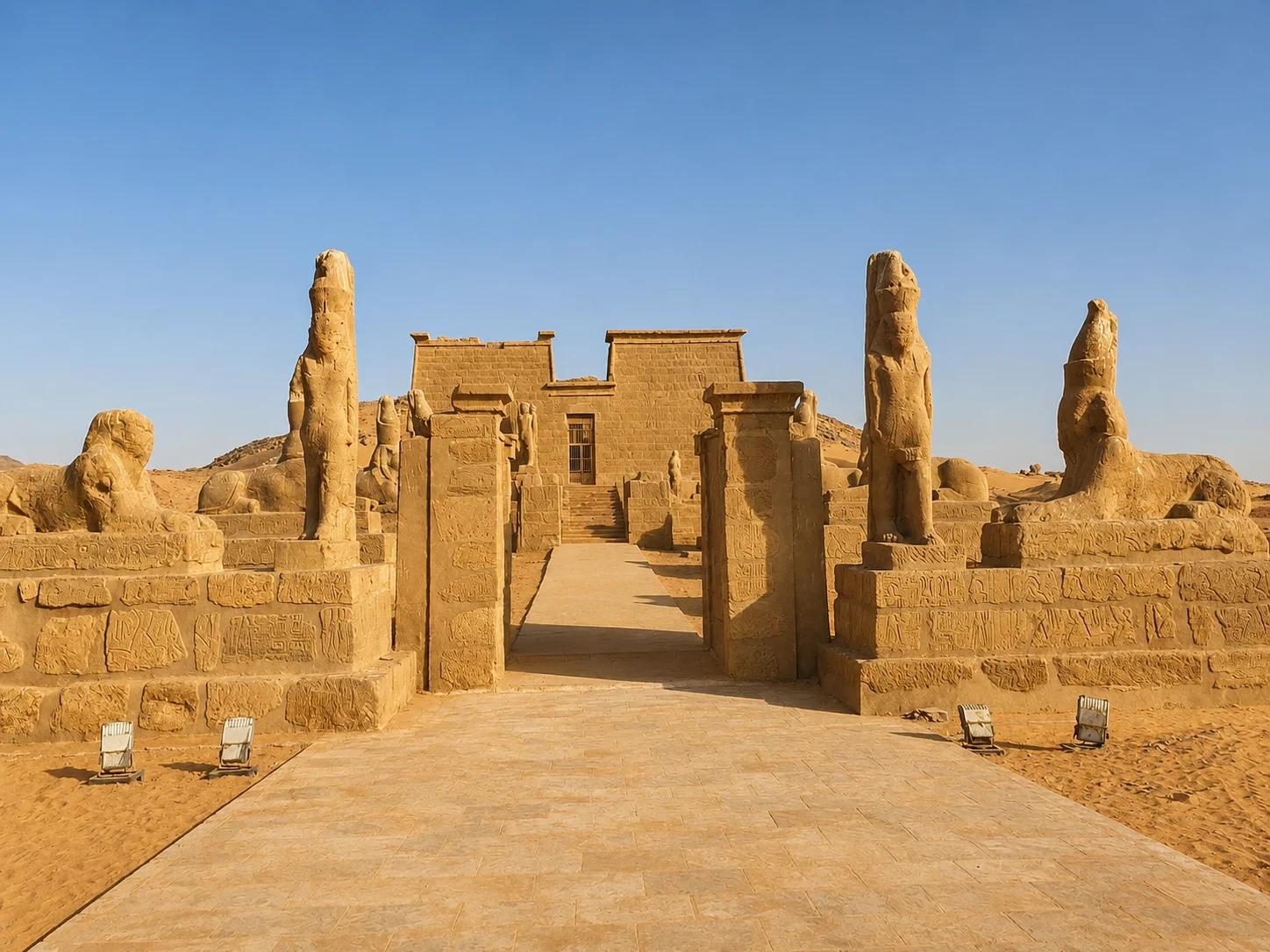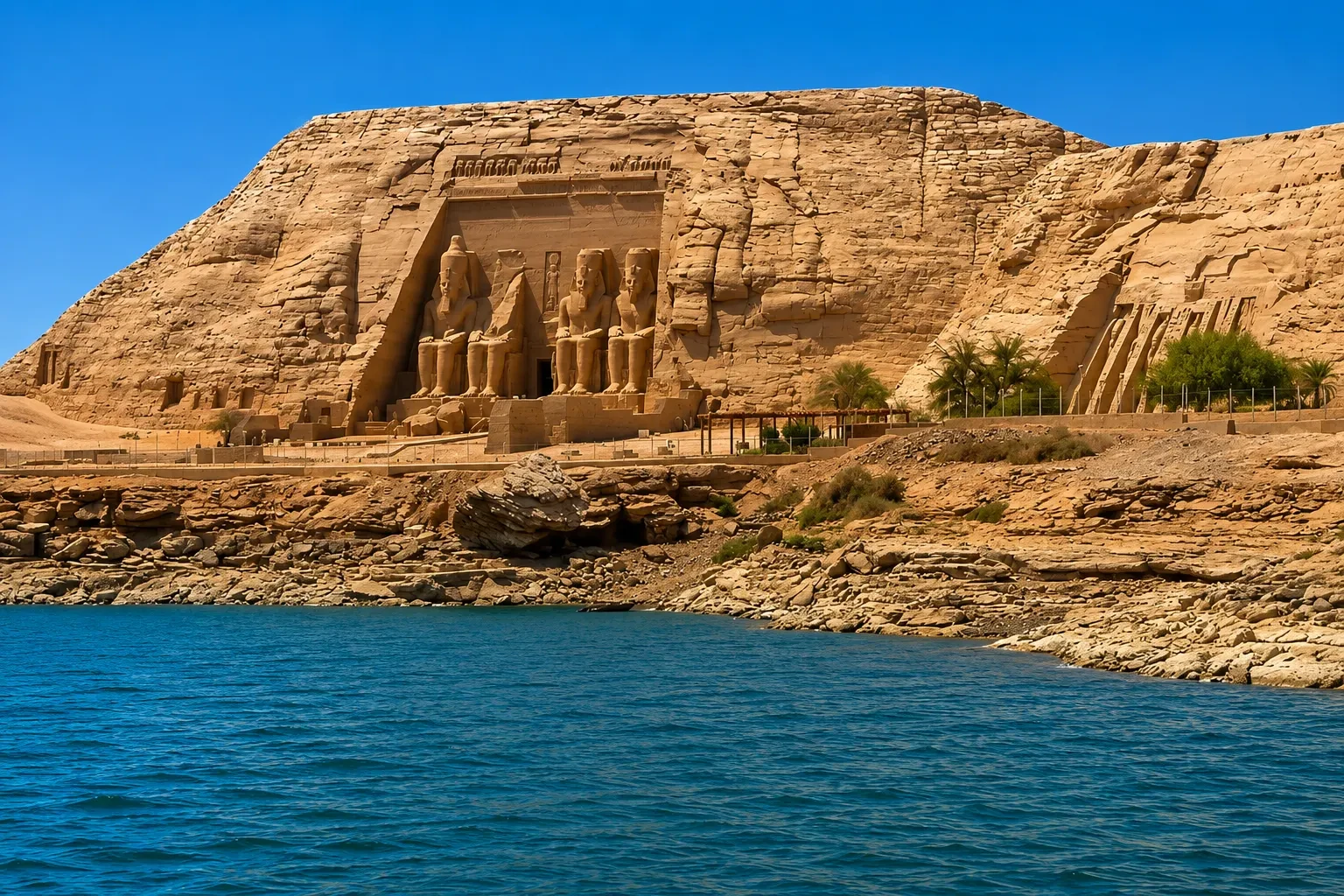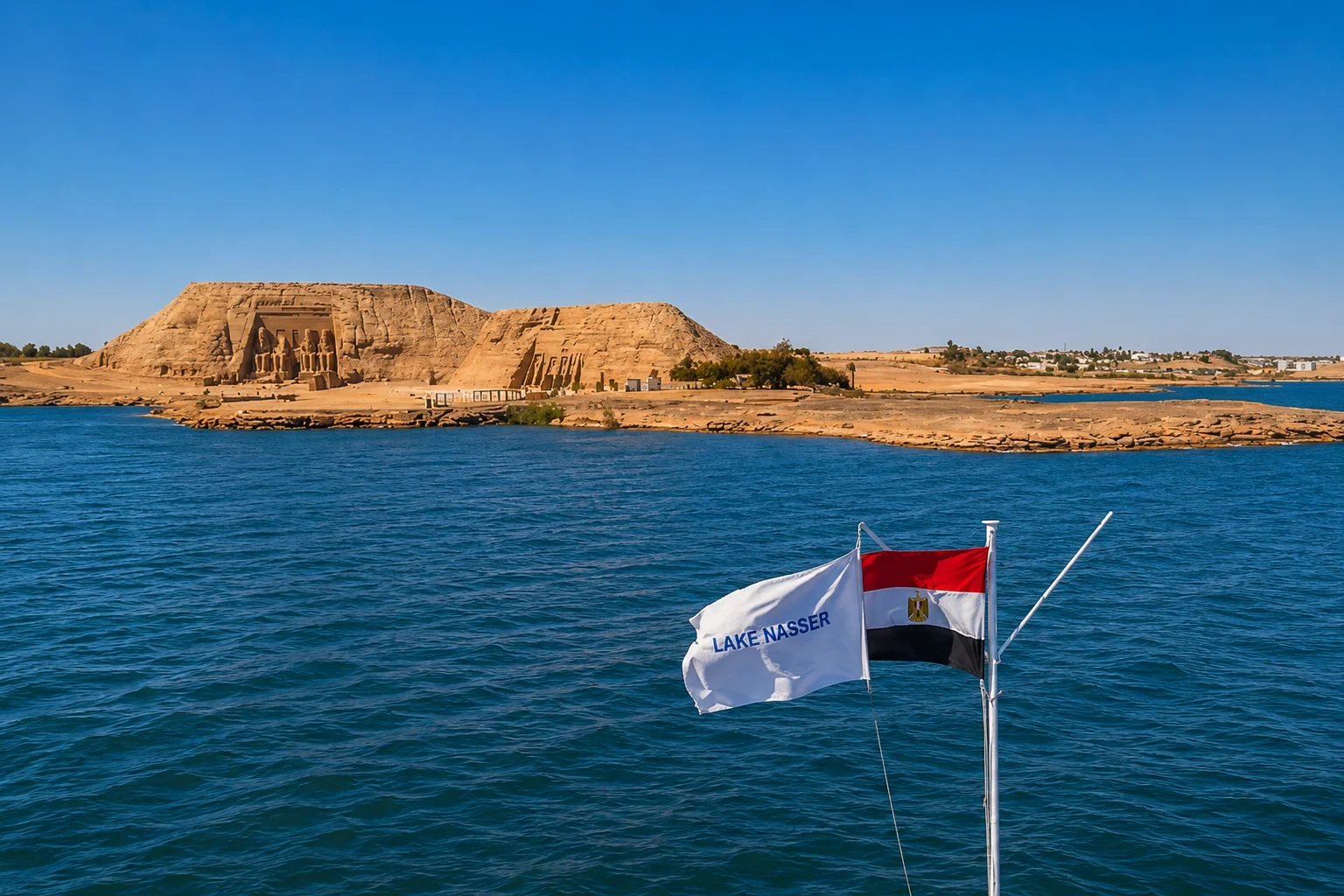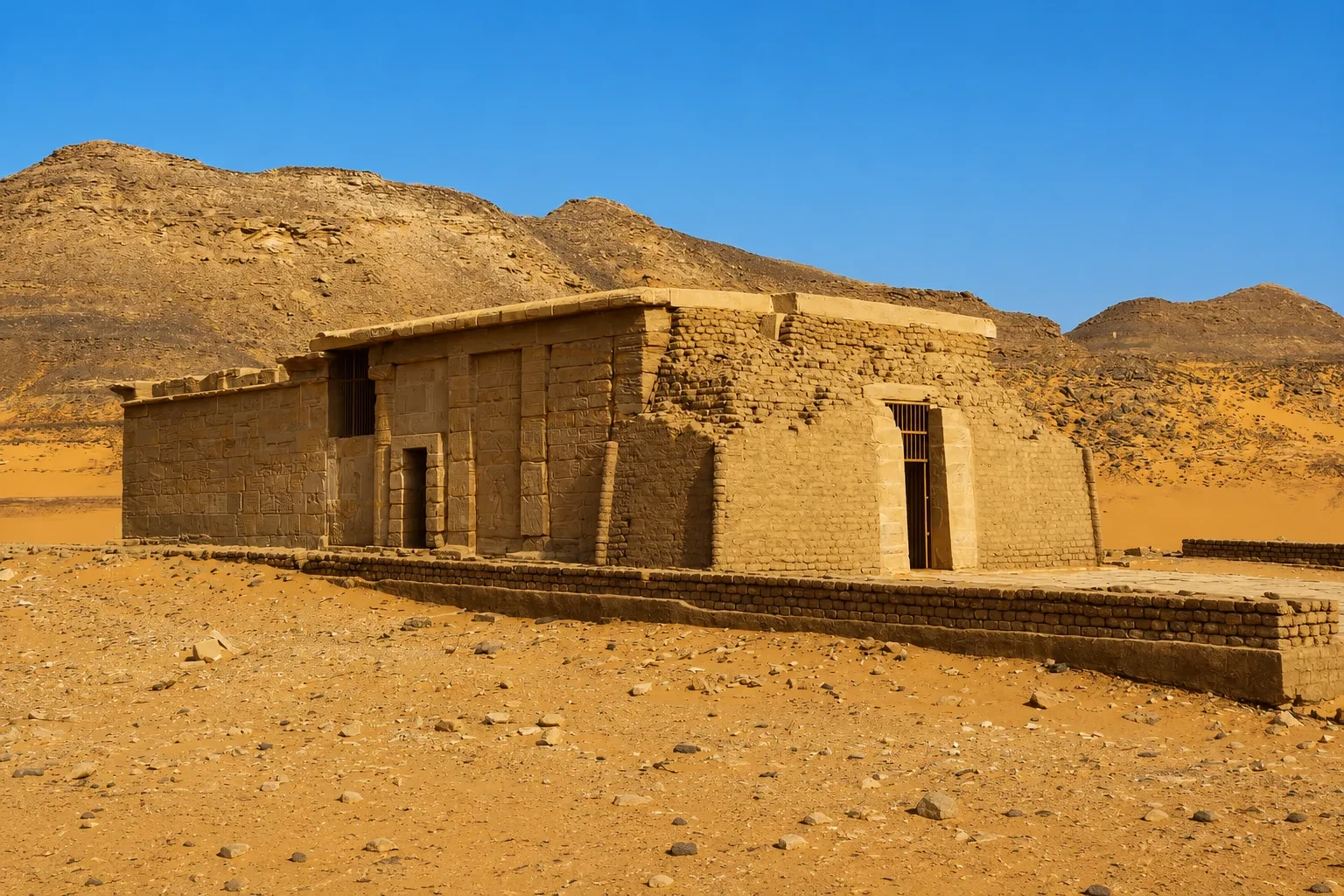

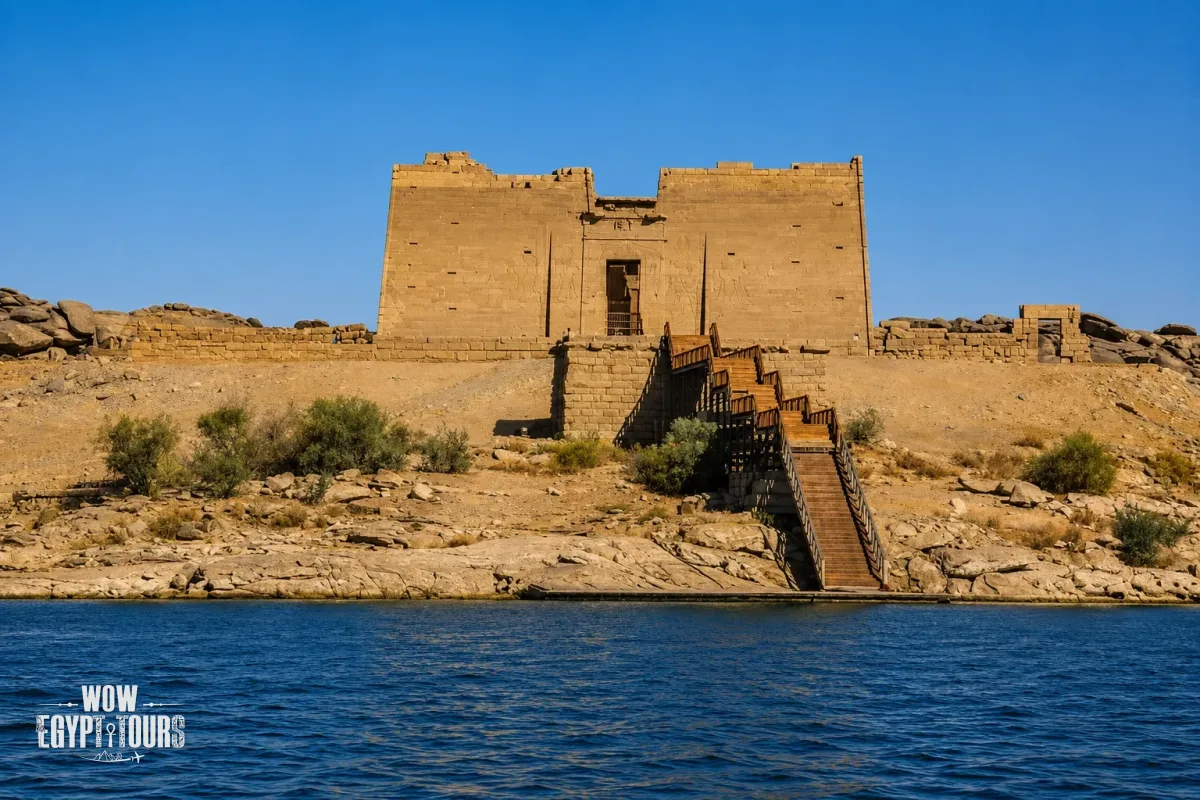

The Temple of Kalabsha is the largest and most completely preserved ancient free-standing temple in all of Nubia, a magnificent Ptolemaic and Roman sacred complex that has stood for more than two thousand years as the supreme architectural monument of the ancient religious landscape of the Nubian Nile Valley and that today rises from the shores of Lake Nasser near the Aswan High Dam as one of the most immediately accessible and most dramatically impressive ancient monuments in the entire Lake Nasser heritage zone. Located approximately 50 kilometers south of the city of Aswan on the western shore of Lake Nasser, the Temple of Kalabsha was relocated to its current elevated position near the Aswan High Dam in 1962 and 1963 in one of the earliest and most technically accomplished operations of the UNESCO International Campaign to Save the Monuments of Nubia, an operation carried out by a West German engineering team whose success in moving the entire temple complex without damage established crucial technical precedents for the more celebrated subsequent rescue operations at Abu Simbel and Philae. This extraordinary monument sits at the heart of the Lake Nasser heritage programme, and is the first or last ancient temple encountered by travelers on any Lake Nasser Cruise operated by WOW Egypt Tours, making it the northern gateway to the complete Nubian heritage landscape of Lake Nasser and one of the most rewarding ancient monument visits available in the Aswan area.
The Temple of Kalabsha Egypt is dedicated primarily to Mandulis, the great Nubian solar deity of the First Cataract region who was one of the most important indigenous Nubian divine figures of the ancient world and whose cult at Kalabsha attracted pilgrims and royal dedications from the Ptolemaic, Roman, and Meroitic traditions over a period of several centuries. The temple complex at Kalabsha comprises not only the great Kalabsha temple of Mandulis itself but also two additional ancient monuments of independent significance: the rock-cut Temple of Beit el-Wali, a Ramesside hemispeos temple built by Ramesses II that preserves some of the most vividly painted New Kingdom military narrative reliefs in any surviving Nubian temple, and the graceful Kertassi kiosk, a small Roman-period colonnaded pavilion with distinctive Hathor-headed column capitals that is architecturally one of the most elegant small structures in the Lake Nasser heritage zone. Together these three structures make the Kalabsha temple group the most architecturally varied and chronologically diverse monument complex in the northern Lake Nasser heritage area, spanning from the New Kingdom through the Ptolemaic and Roman periods in a concentrated archaeological ensemble that rewards extended and attentive exploration. The Kalabsha temple complex is reached from Aswan by motorboat from the Lake Nasser shore south of the High Dam, and is a standard guided stop on all Lake Nasser Cruise itineraries between Aswan and Abu Simbel offered by WOW Egypt Tours.

Who Built The Temple Of Kalabsha?
The Temple of Kalabsha was built primarily during the reign of the Roman emperor Augustus, who acceded to power in Egypt following the defeat of Cleopatra VII and Mark Antony in 30 BCE and who embarked almost immediately on an ambitious programme of temple construction and completion throughout Egypt and Nubia as a demonstration of his legitimacy as ruler of Egypt and his commitment to the ancient religious traditions of the Nile Valley. The main structure of the Kalabsha temple, including the great entrance pylon, the hypostyle hall, the transverse hall, the three-chambered sanctuary, and the surrounding enclosure wall, was built under Augustus in the first decades of the 1st century CE, making the temple one of the finest and most completely preserved examples of Roman imperial temple construction in the Nubian Nile Valley. Earlier Ptolemaic construction on the site is attested by carved relief elements that predate the Augustan programme and that suggest a Ptolemaic-period sanctuary existed at Kalabsha before the more ambitious Roman-period building replaced or incorporated it, but the Ptolemaic foundations are incorporated within the later Augustan structure and are not independently visible in the current standing temple.
Subsequent Roman emperors also contributed to the decoration of the Kalabsha temple, with carved relief inscriptions from the reigns of Augustus, Caligula, Tiberius, and Trajan identified on the temple walls, reflecting the same tradition of successive imperial contributions to Nubian temple decoration that characterizes the other great Roman-period Nubian temples including the Temple of Dakka and the Kertassi kiosk. The Beit el-Wali rock-cut temple within the Kalabsha complex was built approximately a thousand years earlier by Pharaoh Ramesses II of the 19th Dynasty, around 1290 BCE, as one of his earliest Nubian building projects and as a rock-cut hemispeos temple cut directly from the sandstone cliff face in the tradition established by his predecessors in the Egyptian colonization of Nubia. The Kertassi kiosk is a Roman-period structure of unknown precise date, built in the style characteristic of the small temple kiosks of the Roman period in Nubia, with its distinctive combination of Egyptian-style composite column capitals and Hathor-headed column busts that give it the most architecturally graceful character of any structure in the Kalabsha complex.
Who Was The God Mandulis?
Mandulis, also spelled Mandoulis, Merul, or Marul in various ancient scripts, was the principal indigenous Nubian solar deity of the First Cataract and Lower Nubian region, one of the most important and most widely venerated of the distinctively Nubian divine figures of the ancient world and the divine patron of the ancient city of Talmis, the ancient name of the Kalabsha region. Mandulis was a solar god in the ancient Egyptian tradition, identified with the sun at specific stages of its daily and annual cycle, and was closely associated with Horus the younger in the theological synthesis that characterized the religious world of the First Cataract region during the Ptolemaic and Roman periods. His name in the ancient Meroitic language, Marul or Merul, reflects the indigenous Nubian divine tradition from which his cult derived, and he is depicted in ancient reliefs as a young man wearing the elaborate solar crown typical of solar deity iconography in the late ancient Egyptian tradition, with tall ostrich plumes, ram horns, sun discs, and uraeus cobras arranged in a composite headdress of characteristic complexity.
The theological significance of Mandulis in the religious landscape of the ancient Nubian Nile Valley was considerable. His cult at Kalabsha, the ancient Talmis, was the primary center of his worship in the ancient world, and the temple of Kalabsha was the principal institutional expression of his divine presence in the First Cataract region throughout the Ptolemaic and Roman periods. Ancient dedications to Mandulis at Kalabsha include inscriptions in Greek, Latin, Meroitic, and Coptic left by worshippers from every cultural tradition that inhabited or passed through the First Cataract region in the Ptolemaic and Roman periods, demonstrating the broadly multicultural appeal of the Nubian solar deity as a local divine figure who could be approached and venerated by Greeks, Romans, Egyptians, and Nubians with equal religious sincerity. The Greek philosophical writer Maximus of Madauros, who visited the Kalabsha temple in the late antique period, left an extended hymn to Mandulis on the temple walls that is one of the most remarkable surviving expressions of ancient theological speculation about the nature of solar divinity, combining Greek philosophical categories with the ancient Egyptian solar theology of the temple context in a text of genuine intellectual sophistication and religious intensity.
Temple Of Kalabsha Location On Lake Nasser
The Temple of Kalabsha currently stands on the western shore of Lake Nasser, approximately 50 kilometers south of the city of Aswan and approximately 1 kilometer south of the Aswan High Dam, on a promontory of the lake shore that gives the temple complex a dramatic and visually commanding setting above the waters of Lake Nasser with views north toward the dam and south along the broad expanse of the lake. The temple was relocated from its original position at the ancient site of Talmis near the modern village of Kalabsha, which lies submerged approximately 50 kilometers south of the High Dam under the waters of Lake Nasser, to its current position near the dam in 1962 and 1963, a relocation of approximately 50 kilometers that placed it in the most accessible possible position for visitors coming from Aswan while preserving the complete structural integrity of the monument. The current site is reached by motorboat from the Lake Nasser shore south of the High Dam, a brief transfer of approximately 5 to 10 minutes from the landing point accessible by private vehicle from Aswan. For Lake Nasser Cruise passengers, the Kalabsha temple is typically visited on the first or second day of the cruise as the ship sails south from the Aswan embarkation point through the northern reaches of the lake. WOW Egypt Tours provides private transportation to the Kalabsha motorboat landing on all Aswan Day Tours and Lake Nasser Cruise programmes that include the Kalabsha temple complex.
Temple Of Kalabsha Fun Facts
The Temple of Kalabsha, at approximately 76 meters long and 34 meters wide within its enclosure wall, is the largest free-standing ancient temple in all of Nubia, surpassing all other Nubian temples except the rock-cut Abu Simbel temples in its absolute dimensions. Its scale places it in a category comparable to the major Ptolemaic temples of the Egyptian Nile Valley, and its state of preservation, with the complete sequence of entrance pylon, outer court, hypostyle hall, transverse hall, and three-chambered sanctuary all substantially intact, makes it one of the most complete surviving ancient temple sequences in the entire Nile Valley heritage zone.
The Temple of Kalabsha preserves on its walls one of the most historically significant political inscriptions from the post-ancient period of Nubian history: the Victory Inscription of Silko, carved on the outer face of the temple by the Nubian king Silko of the Noba tribe in approximately the 5th or 6th century CE. The inscription, written in a mixture of Greek and Coptic with distinctively Nubian orthographic features, records Silko's military victories over rival Nubian tribes in the First Cataract region and his conversion to Christianity, making it one of the primary documentary sources for the political and religious history of the Nubian kingdoms in the early Christian period. The Silko inscription demonstrates that the temple of Kalabsha remained a significant public monument and an appropriate location for royal proclamations even in the centuries after the formal end of the ancient Egyptian religious traditions that had created it.
The West German engineering team that relocated the Temple of Kalabsha in 1962 and 1963 performed one of the most technically precise ancient monument relocation operations ever undertaken, dismantling the temple into approximately 13,000 numbered blocks, transporting each block by motorboat and truck to the new site near the High Dam, and reassembling the complete temple in its precise original architectural arrangement without any structural modification or damage to the ancient carved surfaces. The German Federal Republic donated this rescue operation to the UNESCO International Campaign as its primary contribution to the Nubian heritage salvage effort, and the success of the Kalabsha relocation provided crucial technical lessons that informed the subsequent and more celebrated rescue operations at the Wadi El Seboua temples, the Philae temples, and ultimately the Abu Simbel temples.
Why Is The Temple Of Kalabsha Called By This Name?
The name Kalabsha is the modern Arabic name for the ancient site and its surrounding region, derived from the ancient name of the settlement that existed at this location in the Nubian Nile Valley. The ancient Egyptian and Ptolemaic name for the town was Talmis, the ancient Meroitic name appears to have been Qertassi or a related form, and the Roman Latin name was also Talmis or Talmi. The modern Arabic name Kalabsha, by which the site has been known since the medieval Islamic period, is believed to derive either from a Nubian language root or from a modified form of an ancient toponym, though the precise etymology is debated among scholars. The temple itself was known in antiquity primarily as the Sanctuary of Mandulis or the Temple of the Lord of Talmis, in reference to its primary deity and its ancient city. The alternative names used for the temple in Egyptological literature include the Temple of Talmis, the Sanctuary of Mandulis, and simply the Temple of Kalabsha, with the last name being the most universally used in modern heritage tourism and academic publications. The Beit el-Wali component of the Kalabsha complex takes its name from the Arabic term meaning House of the Governor or Wali, a designation applied to the rock-cut structure by the local community during the medieval period when the ancient function of the space was no longer understood and its enclosed chamber-like interior suggested to Arabic speakers the private residence of an important official.
Temple Of Kalabsha History
The history of the Kalabsha sacred site begins in the New Kingdom period, when the first substantial construction activities are attested at the ancient town of Talmis in the Lower Nubian Nile Valley. The earliest surviving monument at the site, the rock-cut Temple of Beit el-Wali, was carved by Ramesses II around 1290 BCE as one of his earliest Nubian building projects, establishing the sacred character of the Talmis site within the framework of the Egyptian colonial administration of Nubia at the height of the New Kingdom empire. The Beit el-Wali temple, with its vivid painted reliefs documenting Ramesses's military campaigns against the Nubians, Libyans, Syrians, and Asiatics in the first years of his reign, was the primary New Kingdom religious institution at the site and served as the sacred center of the Egyptian colonial presence in the lower Nubian Nile Valley for the duration of the New Kingdom period.
After the end of the New Kingdom and the withdrawal of the Egyptian administration from Nubia, the Kalabsha region came under the control of successive Nubian kingdoms, first Napata and then Meroe, and the indigenous cult of Mandulis, the Nubian solar deity, became the primary religious tradition of the site. The ancient Ptolemaic rulers of Egypt, who maintained a complex and often contested relationship with the Meroitic Nubian kingdom in the 3rd and 2nd centuries BCE, built or contributed to the construction of earlier temple phases at Talmis, recognizing the importance of the Mandulis cult site and the strategic significance of the Nubian border region. The principal surviving temple, however, was built primarily by the Roman emperor Augustus in the first decades of the 1st century CE as part of the extensive Roman programme of temple construction in Nubia following the Roman military campaigns in the region and the subsequent diplomatic settlement with the Meroitic kingdom. The Roman-period temple attracted dedications and graffiti from a wide range of ancient visitors, including Greek philosophical writers, Roman military officials, Meroitic Nubian princes, and ordinary worshippers from multiple cultural traditions, reflecting the broadly multicultural character of the First Cataract region in the Roman period. The temple was in active religious use until approximately the 6th century CE, when the Christianization of the Nubian kingdoms ended the traditional cult of Mandulis and the Kalabsha temple was either converted to Christian use or abandoned, a process documented by the Silko victory inscription of the early Christian period that uses the still-standing ancient temple facade as the appropriate public surface for a Christian king's proclamation of military success and religious faith.
The Story Of The Temple Of Kalabsha And The German Rescue
The story of the rescue of the Temple of Kalabsha is one of the most technically impressive and least celebrated episodes in the entire UNESCO International Campaign to Save the Monuments of Nubia, a brilliant engineering achievement that was completed so quickly and so successfully that it did not attract the international attention generated by the more dramatic subsequent operations at Abu Simbel and Philae but that was in many respects the proving ground for the technical and logistical approaches that made those later operations possible. When the UNESCO campaign was launched in 1960 and the international community was invited to contribute rescue operations for specific threatened monuments, the Federal Republic of West Germany offered to fund and carry out the complete relocation of the Temple of Kalabsha, the largest free-standing ancient temple in Nubia, as its primary contribution to the Nubian heritage salvage effort.
The German engineering team, working under considerable time pressure as the Lake Nasser water level began to rise behind the newly completed Aswan High Dam, dismantled the entire Temple of Kalabsha complex into approximately 13,000 individually numbered and catalogued blocks between 1962 and 1963, transported each block by motorboat and truck from the original site 50 kilometers south of the High Dam to the new site immediately south of the dam itself, and reassembled the complete temple complex in its precise original architectural arrangement at the new location. The operation was completed in the remarkably short period of approximately 18 months, ahead of the rising water schedule, and the quality of the reassembly was such that the joins between individual blocks are virtually invisible in the finished standing temple. The West German government presented the rescued temple to the Egyptian government as a gift, and several decorated blocks from the Kalabsha temple that could not be incorporated into the reassembled structure were donated by Egypt to the Berlin Museum, where they remain as part of the Egyptian collection. The success of the Kalabsha relocation, the first large-scale temple relocation operation of the entire UNESCO Nubian campaign, established the technical credibility of the relocation approach and provided the experience base on which the more ambitious subsequent operations were planned and executed.
Temple Of Kalabsha Architecture And Key Features
The Entrance Pylon And Quay
The Temple of Kalabsha is entered through a massive entrance pylon of Roman-period construction, one of the most impressive surviving Roman-period temple pylons in the Nubian heritage zone, whose two towers rise to a height of approximately 12 meters above the ancient temple platform and present outer faces decorated with carved relief scenes of Roman imperial rulers performing ritual activities before the gods of the temple. A stone quay and landing platform extend from the base of the pylon toward the lake, providing the ancient ceremonial approach from the Nile waterfront to the temple entrance in a spatial sequence that is still clearly readable in the current Lake Nasser setting where the water of the lake approaches the ancient quay stones at a level close to the original Nile waterfront. The pylon entrance gateway, flanked by shallow pilasters carved with relief figures of the pharaoh and the gods, frames the view through to the open forecourt beyond in a theatrical architectural sequence that creates immediate visual impact on visitors approaching the temple from the lake landing.
The Forecourt And Hypostyle Hall
Passing through the entrance pylon, visitors enter the open forecourt of the Kalabsha temple, a broad rectangular space surrounded on three sides by the pylon, the enclosure wall, and the hypostyle hall facade, with the central axis of the temple running east to west from the pylon entrance toward the innermost sanctuary. The forecourt is flanked on its long sides by a colonnade of columns with elaborate composite capitals combining palm frond, lotus bud, and other traditional Egyptian botanical elements in the style characteristic of Roman-period temple columns throughout the Nile Valley. The carved relief decoration of the forecourt walls presents the standard programme of Ptolemaic and Roman-period offering and ritual scenes, with various Roman emperors shown in full pharaonic regalia making offerings to Mandulis, Osiris, Isis, Horus, and other members of the Kalabsha divine family. The hypostyle hall beyond the forecourt is a columned interior space of moderate scale with a decorated ceiling and walls covered in carved relief scenes from the ritual programme of the Mandulis cult, providing the primary enclosed sacred space of the temple between the public forecourt and the restricted inner sanctuary area.
The Inner Sanctuary And Subsidiary Chambers
The innermost spaces of the Kalabsha temple consist of a transverse hall and three parallel sanctuary chambers aligned side by side in the rear of the temple, a tripartite sanctuary plan that is characteristic of the late Ptolemaic and Roman-period temple architectural tradition in the Nile Valley and that appears also at the great temples of Dendera and Edfu in modified form. The central sanctuary chamber was dedicated to the primary deity Mandulis, while the flanking chambers were dedicated to Osiris and Isis respectively in the theological programme of the Kalabsha divine family. The carved relief decoration of the sanctuary walls, while less completely preserved than in the best-maintained Ptolemaic temples of the Egyptian Nile Valley, preserves significant areas of the original ancient programme including offering scenes, divine family group compositions, and the representation of Mandulis himself in his characteristic composite solar headdress. The quality of the carving in the sanctuary spaces is demonstrably of high standard, reflecting the investment of Roman-period imperial resources in the decoration of this significant Nubian cult center.
The Victory Inscription Of Silko
On the outer face of the temple enclosure wall, one of the most historically significant post-ancient inscriptions in any Nubian monument records the military victories of the Nubian king Silko of the Noba tribe, approximately dated to the 5th or 6th century CE, in a text composed in a mixture of Greek and late antique Nubian orthographic conventions that is among the primary documentary sources for the political history of the Nubian kingdoms in the early Christian period. The Silko inscription records his military campaigns against rival Nubian tribes, his assertion of his dominance over the First Cataract region, and his identification as a Christian king using religious formulae that place him firmly within the Christianized political culture of the Nubian Nile Valley in the centuries following the formal conversion of the Nubian kingdoms to Christianity. The choice of the outer wall of the Kalabsha temple as the appropriate location for this royal proclamation demonstrates the continued significance of the ancient temple monument as a public and politically charged space long after the religious traditions that created it had been replaced by Christianity.
The Beit El-Wali Rock-Cut Temple Of Ramesses II
Immediately adjacent to the main Kalabsha temple, cut directly into the sandstone cliff face at the back of the temple platform, the Beit el-Wali is a rock-cut hemispeos temple built by Ramesses II approximately around 1290 BCE as one of his earliest building projects in Nubia. The Beit el-Wali consists of a narrow rock-cut entrance hall, a hypostyle hall with two Osiride pillars showing the deified Ramesses in the Osiris pose, and a small inner sanctuary with a divine cult niche, all carved from the living sandstone of the cliff and decorated with carved and originally painted relief scenes of exceptional historical interest. The most celebrated decorative cycle of the Beit el-Wali is the military campaign reliefs on the walls of the entrance hall, which present in vivid painted detail Ramesses II's campaigns against the Nubians, the Libyans, the Syrians and Asiatics, and other enemies in the early years of his reign. These reliefs, painted in the brilliant colors of the finest 19th Dynasty workshop tradition, are among the most completely and most beautifully preserved examples of New Kingdom Nubian military narrative relief available at any site on the Lake Nasser shore, and their combination of vivid action scenes, documentary detail of military equipment and tactics, and triumphant royal ideology makes them one of the most rewarding decorative programmes in the entire Kalabsha complex for visitors with an interest in the New Kingdom military tradition.
The Kertassi Kiosk
On the northern side of the Kalabsha temple platform, the Kertassi kiosk is one of the most architecturally elegant small structures in the entire Lake Nasser heritage zone, a Roman-period open colonnaded pavilion of modest scale whose combination of Egyptian-style composite column capitals and Hathor-headed column busts gives it an immediate visual charm and a refined decorative character that makes it stand out from the more massive and more elaborately programmatic architecture of the main Kalabsha temple. The Kertassi kiosk consists of two rows of columns supporting an entablature, with the front two columns bearing Hathor-headed capitals of the type most familiar from the Hall of Appearances at the Dendera Temple, and the remaining columns having composite plant-form capitals. The kiosk was originally used as a small temple or shrine pavilion, possibly serving as the reception point for ritual barque processions arriving by river at the Kalabsha sacred precinct, and its waterfront position on the northern edge of the Kalabsha platform reflects this ritual function as the divine landing stage for the cult objects of the Mandulis sanctuary. The beautiful proportions and the elegant carved details of the Kertassi kiosk make it a favorite photography subject at the Kalabsha site, offering the most intimate and most graceful architectural composition available in a complex otherwise dominated by the more massive presence of the main temple.
Why Is The Temple Of Kalabsha Important?
The Temple of Kalabsha is important for reasons that span ancient religious history, architectural significance, the history of heritage conservation, and the practical accessibility of the Lake Nasser heritage programme to international visitors. As the largest and most completely preserved free-standing ancient temple in all of Nubia, it represents the supreme surviving example of Roman-period imperial investment in the sacred architecture of the Nubian Nile Valley frontier, documenting both the religious ambitions of the Augustan administration in the annexed Nubian border region and the extraordinary vitality of the indigenous Nubian divine tradition represented by the Mandulis cult that attracted that investment. The presence within the Kalabsha complex of the New Kingdom Beit el-Wali alongside the Roman-period main temple and the Roman-period Kertassi kiosk makes the complete Kalabsha group one of the most chronologically comprehensive ancient monument complexes in the Lake Nasser heritage zone, spanning approximately 1,300 years of sacred building activity from the Ramesside period through the Roman era.
As a monument of heritage conservation history, the Kalabsha temple represents the first successful large-scale ancient temple relocation operation of the UNESCO International Campaign, establishing the technical precedents and the organizational experience that made all subsequent Lake Nasser rescue operations possible. Its accessibility near the Aswan High Dam also makes it one of the most practically convenient Lake Nasser heritage temples to visit, reachable in a brief motorboat journey from the land approach south of the High Dam and often included in extended Aswan Day Tour programmes in addition to its standard role as the opening or closing monument of the complete Lake Nasser Cruise heritage programme.
What Are Some Interesting Facts About The Temple Of Kalabsha?
Donated By Germany To Egypt
The relationship between the Temple of Kalabsha and the Federal Republic of West Germany is one of the most specific and most personally meaningful donor-monument relationships in the entire history of the UNESCO heritage conservation movement. The German government's decision to fund and carry out the complete relocation of the Kalabsha temple complex as its contribution to the Nubian rescue campaign, completing the operation ahead of schedule and with complete technical success, was recognized by the Egyptian government as one of the most significant international contributions to the Nubian heritage salvage effort, and the formal donation of the rescued temple to the Egyptian people was marked by a ceremony that acknowledged both the success of the operation and the importance of German-Egyptian cultural cooperation. Several carved blocks from the Kalabsha temple that could not be incorporated into the reassembled structure were donated by Egypt to the Berlin Museum as a reciprocal gesture of cultural exchange, and they now form part of one of the most significant Egyptian collections in Europe. The German-Egyptian partnership at Kalabsha therefore produced a heritage outcome that extended across two countries and two continents, with the primary monument preserved in Egypt and complementary documentation preserved in Germany, reflecting the genuinely international character of the UNESCO Nubian rescue effort at its most practically successful.
A Philosopher's Prayer At Kalabsha
Among the inscriptions preserved on the walls of the Temple of Kalabsha, the extended hymn to Mandulis composed by the late antique Greek philosophical writer Maximus of Madauros in approximately the 4th century CE is one of the most intellectually ambitious and most philosophically sophisticated religious texts from any ancient monument in the Nile Valley. Maximus, a philosopher in the Neoplatonist tradition, composed at Kalabsha a hymn to the Nubian solar deity that combines the traditional iconographic vocabulary of the ancient Egyptian sun cult with the abstract philosophical categories of Neoplatonist solar theology, creating a theological synthesis that treats the ancient Nubian god as a manifestation of the universal solar principle of Neoplatonist cosmology. The hymn is valuable both as an expression of the religious sophistication with which educated late antique Greeks could engage with the ancient Egyptian divine traditions and as a document of the extraordinary multicultural character of the Kalabsha cult site in the late antique period, when pilgrims from the Greek philosophical world, the Roman administrative world, and the Meroitic Nubian world all found reason to make dedications at the temple of the Nubian solar god in the remote desert landscape of the First Cataract frontier.
The First Temple Moved In The Nubian Campaign
The historical significance of the Kalabsha temple rescue as the first large-scale temple relocation of the entire UNESCO campaign is not simply a point of technical precedence but a genuinely important chapter in the history of international cultural cooperation and heritage conservation. Before the Kalabsha relocation, the concept of physically dismantling a major ancient temple and reassembling it at a new location was largely untested at this scale, and there was considerable scientific and engineering uncertainty about whether the operation could be accomplished without catastrophic structural damage to the ancient monuments. The successful completion of the Kalabsha relocation in 1963 demonstrated definitively that the approach was technically feasible, that the masonry of ancient Egyptian temples could withstand the stresses of dismantling, transportation, and reassembly without structural compromise, and that the organizational and logistical demands of such an operation were manageable within the resources available to a committed national government team. This demonstration of feasibility was the essential precondition for the more ambitious subsequent relocations, and the Temple of Kalabsha deserves to be recognized not only as a great ancient monument in its own right but as the heritage conservation pioneer whose successful rescue made all subsequent Nubian temple rescues possible.
What Is So Special About The Temple Of Kalabsha?
The Northern Gateway To The Lake Nasser Heritage World
What makes the Temple of Kalabsha uniquely special in the context of the Lake Nasser heritage programme is its position as the northern gateway to the entire Lake Nasser Nubian monument landscape, the first ancient temple encountered by travelers setting out south from Aswan on any Lake Nasser Cruise itinerary and the last ancient temple seen by travelers completing the northbound cruise journey back to Aswan. In both directions, the Kalabsha temple serves as the threshold between the Egyptian Nile Valley world of Aswan and the Lake Nasser Nubian heritage landscape to the south, a role that mirrors the ancient significance of the Kalabsha region as the transition point between the Egyptian administrative world to the north and the Nubian cultural world to the south. Arriving at Kalabsha on a Lake Nasser Cruise from Aswan, with the great pylon of the Roman-period temple rising from the lake shore against the desert sky and the Kertassi kiosk silhouetted against the blue expanse of the lake beyond, visitors have the immediate and physical sense of crossing a threshold, of leaving behind the familiar Nile Valley world of Luxor, Aswan, and the ancient Egyptian monuments and entering the more remote and more deeply ancient Nubian world of the lake, a world of extraordinary beauty and extraordinary historical depth that the Kalabsha temple inaugurates with appropriate grandeur.
Three Thousand Years Of Building In One Complex
The Kalabsha complex is also uniquely special for the span of sacred building history it encompasses within a single accessible site, from the New Kingdom military reliefs of the Beit el-Wali painted under Ramesses II around 1290 BCE through the Ptolemaic-period foundations of the main temple through the Augustan Roman construction that produced the standing temple today through the Silko inscription of the early Christian period around 500 CE. Few ancient monument complexes anywhere in the world offer within a comparable physical footprint such a direct and physically immediate encounter with three thousand years of continuous sacred building activity at a single location, and the intellectual and aesthetic pleasure of moving between the vivid Ramesside battle reliefs of the Beit el-Wali, the sophisticated Roman-period carved decoration of the main temple, the elegant Hathor columns of the Kertassi kiosk, and the post-ancient Silko inscription on the enclosure wall is one of the most genuinely educational and most personally rewarding heritage experiences available at any Lake Nasser site.
Temple Of Kalabsha Through The Ages: From Ancient Nubia To The Present
After the active religious life of the Kalabsha temple during the Ptolemaic and Roman periods, the site entered the gradual transition of the early Christian era, with the conversion of Nubian society to Christianity in the 5th and 6th centuries CE ending the traditional cult of Mandulis and transforming the sacred character of the ancient temple. The Silko inscription on the enclosure wall, dated to approximately the 5th or 6th century CE, marks the transition between the ancient pagan and the early Christian phases of the site's history, recording the victories of a Christian Nubian king on the walls of a temple that had been built for a pre-Christian Nubian deity. During the medieval period, the temple and its surrounding ancient settlement fell progressively out of active use and the structures were gradually buried under the accumulating desert sand, with the local community applying the generic Arabic name Beit el-Wali, the Governor's House, to the most accessible ancient structure on the site as the original religious functions of the ancient buildings became incomprehensible to the medieval inhabitants of the region.
European documentation of the Kalabsha temple site began with the Napoleonic expedition of 1798 to 1801 and continued through the 19th century with systematic archaeological surveys by various European scholars who recorded the inscriptions, reliefs, and architectural details of both the main temple and the Beit el-Wali. The threat posed by the Aswan High Dam prompted the German rescue of 1962 to 1963, which preserved the complete Kalabsha complex in its current position near the dam. Today the Temple of Kalabsha is accessible to visitors both as a day excursion from Aswan by motorboat from the lake shore south of the dam and as the opening or closing monument of the complete Lake Nasser Cruise programme, and it continues to reward the attention of every visitor who takes the time to engage fully with the three-thousand-year sacred heritage that its walls contain.
Temple Of Kalabsha UNESCO World Heritage Status
The Temple of Kalabsha is part of the Nubian Monuments from Abu Simbel to Philae UNESCO World Heritage Site, inscribed in 1979 as one of the first ten entries on the UNESCO World Heritage List. The World Heritage designation encompasses the complete collection of ancient Nubian monuments rescued from the rising waters of Lake Nasser during the UNESCO International Campaign, and the Kalabsha temple complex is specifically recognized within the designation as the largest and most completely preserved free-standing ancient temple in Nubia and as the first major temple relocation operation of the entire UNESCO Nubian campaign, whose successful completion in 1963 established the technical and organizational framework for all subsequent rescue operations of the campaign. The inclusion of Kalabsha in the World Heritage site reflects both the outstanding universal value of the monument itself and the unique historical significance of its rescue as the pioneering achievement that made the entire Nubian heritage conservation programme technically credible.
Best Time To Visit The Temple Of Kalabsha
The best time to visit the Temple of Kalabsha is during the cooler months from October through April, when temperatures near the Aswan High Dam area are moderate and comfortable for exploring the open platform of the Kalabsha temple complex, the Beit el-Wali, and the Kertassi kiosk in the outdoor Nubian desert setting. The summer months from May to September bring intense heat to the Aswan area, with temperatures regularly exceeding 40 to 45 degrees Celsius, making the open platform of the Kalabsha site challenging to visit comfortably except in the very early morning hours. For Lake Nasser Cruise passengers, the Kalabsha temple is typically visited on the first full day of the southbound cruise from Aswan, providing a morning or early afternoon visit in conditions that are generally more comfortable than the peak midday heat. The temple is particularly beautiful in the early morning light when the low sun creates long shadows on the carved pylon surfaces and the Kertassi kiosk columns, and in the late afternoon light that turns the Nubian sandstone of the structures a deep golden color against the blue expanse of Lake Nasser beyond. WOW Egypt Tours plans all Kalabsha visits at the optimal time of day and season as part of the Lake Nasser Cruise programme and Aswan Day Tour schedule.
Temple Of Kalabsha Opening Hours
The Temple of Kalabsha is open to visitors every day of the week, including public holidays. The site opens at 6:00 AM and closes at 5:00 PM throughout the year. Because the temple is accessible by motorboat from the lake shore south of the High Dam, visiting times are coordinated with the motorboat transfer schedule that operates from the designated landing point on the lakeside road south of the dam. For Lake Nasser Cruise passengers, the visiting schedule is coordinated by the cruise operator to arrive at the most comfortable and most visually rewarding time of day, typically the morning on the first full day out of Aswan on the southbound cruise itinerary.
Temple Of Kalabsha Entrance Fees
Adults: EGP 200
Students: EGP 100
The entrance fee covers access to the complete Kalabsha temple complex including the main Temple of Mandulis with all interior galleries, the Beit el-Wali rock-cut temple of Ramesses II, and the Kertassi kiosk, as well as the complete ancient platform and the Silko inscription on the enclosure wall. Entrance fees to the Kalabsha temple complex are included in all Lake Nasser Cruise programmes and Aswan Day Tour programmes that include Kalabsha, booked through WOW Egypt Tours.
How To Get To The Temple Of Kalabsha
The Temple of Kalabsha is accessible from Aswan by private vehicle to the motorboat landing point on the lakeside road south of the Aswan High Dam, approximately 50 to 60 kilometers from the Aswan city center, followed by a short motorboat transfer of approximately 5 to 10 minutes across the lake to the temple platform. The road journey from Aswan to the Kalabsha landing point takes approximately 45 to 60 minutes by private vehicle, making the Kalabsha temple accessible as a relatively convenient day excursion from Aswan for travelers who do not wish to undertake the complete Lake Nasser Cruise itinerary. For Lake Nasser Cruise passengers, the motorboat transfer from the anchored cruise ship to the Kalabsha landing is approximately 5 minutes and is included as a standard component of the cruise programme. WOW Egypt Tours provides private air-conditioned transportation from Aswan to the Kalabsha landing point and motorboat transfers to the temple platform on all programmes that include the Kalabsha temple complex.
How Long To Spend At The Temple Of Kalabsha
Most visitors spend between one and one and a half hours at the Kalabsha temple complex, which is sufficient time to walk through the complete sequence of the main Temple of Mandulis from the entrance pylon through the forecourt, hypostyle hall, and inner sanctuary, to examine the Silko victory inscription on the outer enclosure wall, to visit the Beit el-Wali rock-cut temple with its vivid painted Ramesside military reliefs, and to appreciate the Kertassi kiosk with its graceful Hathor column capitals. Visitors with a particular interest in the Roman-period inscription programme of the main temple, the Beit el-Wali military narrative reliefs, or the Silko inscription and its historical context may wish to allow one and a half to two hours. The Kalabsha temple complex is typically the opening or closing monument of the complete Lake Nasser Cruise itinerary, and for Aswan Day Tour visitors it is most naturally combined in a single day programme with the Aswan highlights of the Temple of Isis at Philae, the Aswan High Dam, and the Unfinished Obelisk.
Tips For Visiting The Temple Of Kalabsha
Begin with the Kertassi kiosk at the northern end of the complex, as its elegant proportions and Hathor columns provide a beautiful and intimate introduction to the Kalabsha aesthetic before the larger scale of the main temple. Walk the complete sequence of the main Temple of Mandulis from pylon to sanctuary, paying particular attention to the carved relief programme in the inner sanctuary and transverse hall where the representation of Mandulis in his characteristic solar headdress is most clearly visible. Ask your guide to locate and explain the Silko victory inscription on the outer enclosure wall, as its historical significance as one of the primary sources for early Christian Nubian political history is not immediately apparent from the physical appearance of the text but is one of the most important historical documents at the entire Kalabsha site. Spend time in the Beit el-Wali rock-cut temple, which receives less visitor attention than the main temple but whose painted Ramesside military reliefs are among the most vividly colored and most historically detailed New Kingdom narrative paintings available at any Lake Nasser heritage site. A licensed guide from WOW Egypt Tours with knowledge of both the ancient religious tradition of Mandulis and the history of the German rescue operation is essential for the fullest appreciation of the Kalabsha complex. Bring water, a hat, and sunscreen as the open platform provides limited shade in the warmer months.
What To Wear At The Temple Of Kalabsha
The Kalabsha temple complex is an open-air site with the ancient platform exposed to direct sun throughout most of the day. Lightweight, breathable clothing covering the shoulders and knees is recommended for both comfort and respect for the ancient sacred spaces. A wide-brimmed hat and generous sunscreen are essential, particularly in the warmer months when the combination of solar radiation and the light reflecting off the surface of Lake Nasser can be intense. Comfortable, flat walking shoes are adequate for the well-maintained paths and smooth stone surfaces of the temple platform and the interior floor levels. The motorboat transfer from the cruise ship or from the shore landing requires flat non-slip footwear for boarding and alighting safely. Bring water as there are no refreshment facilities on the Kalabsha temple platform itself. A light warm layer is recommended for early morning visits in winter when the temperature on the lake can be noticeably cool before the sun warms the air.
Photography At The Temple Of Kalabsha
The Temple of Kalabsha offers a rewarding and varied photography experience, combining the architectural grandeur of the great entrance pylon and the complete temple facade with the intimate elegance of the Kertassi kiosk, the vivid painted surfaces of the Beit el-Wali interior, and the dramatic Lake Nasser waterscape visible from the temple platform in every direction. The Kertassi kiosk provides one of the most graceful and most compositionally satisfying photographic subjects in the northern Lake Nasser heritage zone, with its slender columns and Hathor-headed capitals creating beautiful vertical compositions against the desert and lake horizon. The Beit el-Wali interior, with its painted Ramesside military reliefs in the vivid reds, blues, and greens of the New Kingdom workshop tradition, rewards close-up photography with a camera set for low-light interior conditions; flash photography is strictly prohibited near all painted surfaces. The main temple platform offers panoramic photography of the complete architectural ensemble including the pylon, the surrounding enclosure wall, the Kertassi kiosk, and the Lake Nasser setting that gives the Kalabsha site its dramatic geographical context. Photography is permitted throughout the site. Professional photography or filming requires a separate permit from Egypt's Ministry of Tourism and Antiquities.
Temple Of Kalabsha Tours
Kalabsha Temple Day Excursion From Aswan
The Temple of Kalabsha is the only Lake Nasser heritage temple accessible as a day excursion from Aswan without a full Lake Nasser Cruise itinerary, thanks to its proximity to the Aswan High Dam. This half-day or full-day excursion from Aswan visits the complete Kalabsha temple complex including the main Temple of Mandulis, the Beit el-Wali, and the Kertassi kiosk, most naturally combined with the other Aswan highlights on the same day.
What Is Covered
Private vehicle from Aswan hotel to the motorboat landing south of the High Dam. Motorboat transfer to the Kalabsha temple platform. Full guided visit of the complete temple complex including the entrance pylon and quay, the forecourt, the hypostyle hall, the transverse hall and inner sanctuary, the Silko victory inscription on the outer enclosure wall, the Beit el-Wali rock-cut temple with its Ramesside painted military reliefs, and the Kertassi kiosk. Return motorboat transfer and private vehicle to Aswan.
Duration
1 to 1.5 hours at the temple complex, plus approximately 45 to 60 minutes driving each way from Aswan and the brief motorboat transfer.
Includes
Private air-conditioned vehicle from Aswan hotel, motorboat transfer to and from the temple platform, private licensed Egyptologist guide, and entrance fees. Available for morning departures. Most naturally combined with the Aswan highlights programme covering the Aswan High Dam, the Unfinished Obelisk, and the Temple of Isis at Philae on the same day.
Kalabsha As Part Of The Lake Nasser Cruise Programme
The Temple of Kalabsha is a standard guided stop on all Lake Nasser Cruise itineraries between Aswan and Abu Simbel, typically visited on Day 2 of the southbound itinerary from Aswan and on Day 3 of the northbound itinerary from Abu Simbel, providing the most complete and most contextually rich experience of the Kalabsha temple complex as the opening or closing monument of the complete Lake Nasser heritage programme.
What Is Covered
Motorboat transfer from cruise ship to the Kalabsha temple platform. Full guided visit of the complete complex. Return motorboat transfer to the cruise ship.
Duration
Approximately 1 to 1.5 hours on shore, plus motorboat transfer time.
Includes
Motorboat transfers, private licensed Egyptologist guide, and entrance fees to the complete complex. Included in all Lake Nasser Cruise programmes booked through WOW Egypt Tours.
Lake Nasser Cruise
A Lake Nasser Cruise is a luxury cruising experience on the waters of Lake Nasser, the vast artificial reservoir created by the Aswan High Dam, visiting the remarkable collection of ancient Nubian temples rescued from the rising waters along both shores of the lake. WOW Egypt Tours operates Lake Nasser Cruises with private cabins, all meals, a private licensed Egyptologist guide on board, and guided shore excursions at every stop. The Temple of Kalabsha and its associated temples are a standard guided stop on all Lake Nasser Cruise itineraries, visited on the day after embarkation on the southbound cruise from Aswan and on the day before disembarkation on the northbound cruise from Abu Simbel.
5 Days 4 Nights Lake Nasser Cruise From Aswan To Abu Simbel
Route: Aswan to Abu Simbel, sailing south on Lake Nasser.
Itinerary
Day 1: Embarkation in Aswan. Guided visits to the Aswan High Dam, the Unfinished Obelisk, and Philae Temple. Embarkation and sail south on Lake Nasser. Overnight on board.
Day 2: Sail south to Kalabsha. Guided visit to the Temple of Kalabsha including the main Temple of Mandulis, the Beit el-Wali rock-cut temple of Ramesses II, and the Kertassi kiosk. Continue sailing south toward Wadi El Seboua. Overnight on board.
Day 3: Guided visit to the Temples of Wadi El Seboua, including the sphinx avenue, the Ramesside sanctuary palimpsest, the Temple of Dakka, and the Temple of Maharraka. Guided visit to the Temple of Amada. Continue south. Overnight on board.
Day 4: Sail to Kasr Ibrim. Guided visit to Kasr Ibrim from the ship deck. Continue south to Abu Simbel. First guided visit to the Abu Simbel Temples. Optional Abu Simbel Sound and Light Show. Overnight on board at Abu Simbel.
Day 5: Second guided visit to the Abu Simbel Temples at sunrise. Farewell breakfast. Disembarkation at Abu Simbel. Transfer by air or road to Aswan.
Includes
Private cabin, all meals on board, private licensed Egyptologist guide, entrance fees to all temple visits including the Kalabsha complex, Philae Temple, and Abu Simbel Temples, motorboat transfers throughout, and private transfers.
4 Days 3 Nights Lake Nasser Cruise From Abu Simbel To Aswan
Route: Abu Simbel to Aswan, sailing north on Lake Nasser.
Itinerary
Day 1: Arrival at Abu Simbel by air or road from Aswan. Embarkation. Full guided visit to the Abu Simbel Temples. Optional Sound and Light Show. Overnight on board at Abu Simbel.
Day 2: Second guided visit to Abu Simbel Temples at dawn. Sail north. Guided visit to Kasr Ibrim from the ship deck. Guided visit to the Temple of Amada. Guided visit to the Temples of Wadi El Seboua. Overnight on board.
Day 3: Continue north to Kalabsha. Guided visit to the Temple of Kalabsha including the main Temple of Mandulis, the Beit el-Wali rock-cut temple, and the Kertassi kiosk. Continue north toward Aswan. Guided visits to the Aswan High Dam, the Unfinished Obelisk, and Philae Temple. Overnight on board in Aswan.
Day 4: Guided visits to the Nubian Museum and Nubian Village. Optional Elephantine Island and Kitchener's Island Botanical Garden. Farewell breakfast. Disembarkation in Aswan.
Includes
Private cabin, all meals on board, private licensed Egyptologist guide, entrance fees to all temple visits including the Kalabsha complex, Philae Temple, and Abu Simbel Temples, motorboat transfers throughout, and private transfers.
Combine The Temple Of Kalabsha With Your Egypt Tours Package
The Temple of Kalabsha is featured as a standard stop on the Lake Nasser Cruise programme and as an optional day excursion from Aswan across the full range of WOW Egypt Tours travel products. Browse the options below to find the Egypt experience that includes Kalabsha.
Egypt Tour Packages: Multi-day guided Egypt tours organized by duration, including 2 Days Egypt Packages, 3 Days Egypt Packages, 4 Days Egypt Packages, 5 Days Egypt Packages, 6 Days Egypt Packages, 7 Days Egypt Packages, 8 Days Egypt Packages, 10 Days Egypt Packages, and longer itineraries. All packages that include a Lake Nasser Cruise component feature the Kalabsha complex as a standard stop. All packages include private air-conditioned transportation, private licensed Egyptologist guide, accommodations, entrance fees to all included sites, and private transfers throughout Egypt.
Egypt Travel Packages: Themed Egypt travel packages designed around specific travel styles and interests, including Egypt Honeymoon Travel Packages, Egypt Budget Travel Packages, Egypt Family Travel Packages, Egypt Luxury Travel Packages, Egypt Adventure Travel Packages, Egypt Cultural Travel Packages, and Egypt Christmas and New Year Travel Packages. All themed packages that include a Lake Nasser Cruise feature the Kalabsha temple complex as a standard opening or closing monument of the cruise programme. All packages include private transportation, licensed guide, accommodations, meals, and private transfers.
Egypt Nile Cruise Packages: Complete Egypt travel packages combining Cairo sightseeing with a fully guided Nile cruise. The Temple of Kalabsha is accessible as part of a Lake Nasser Cruise extension added to any Egypt Nile Cruise Package that ends in Aswan, or as a day excursion from Aswan on the Aswan day of any cruise package. All packages include private cabin, all meals, licensed guide, and private transfers.
Nile River Cruises: All WOW Egypt Tours Nile cruise options. The Temple of Kalabsha is a standard stop on the Lake Nasser Cruise and is accessible as a day excursion from the Aswan end of all standard Nile River Cruise itineraries.
Luxor Aswan Nile Cruises: Available in both directions and in durations of 4 Days 3 Nights, 5 Days 4 Nights, and 8 Days 7 Nights round trip. The Kalabsha temple is accessible as a day excursion from the Aswan overnight stop or as part of a Lake Nasser Cruise extension from Aswan.
Standard Nile Cruises: Comfortable standard-category cruise ships. Kalabsha accessible as a day excursion or Lake Nasser extension from Aswan.
Deluxe Nile Cruises: Deluxe-category cruise ships. Kalabsha accessible as a day excursion or Lake Nasser extension from Aswan.
Ultra Deluxe Nile Cruises: Ultra deluxe-category cruise ships. Kalabsha accessible as a day excursion or Lake Nasser extension from Aswan.
Luxury Nile Cruises: Luxury-category cruise ships. Kalabsha accessible as a day excursion or Lake Nasser extension from Aswan.
Dahabiya Nile Cruises: Private small-vessel sailing experience between Luxor and Aswan. The Kalabsha temple complex is accessible as a day excursion from the Aswan embarkation or disembarkation point of all Dahabiya itineraries, most naturally combined with the standard Aswan highlights programme on the embarkation or disembarkation day.
Lake Nasser Cruises: The primary way to experience the Temple of Kalabsha as part of the complete Lake Nasser Nubian heritage programme. The Kalabsha complex is a standard opening or closing monument of every Lake Nasser Cruise, visited on Day 2 of the southbound 5 Days 4 Nights itinerary from Aswan to Abu Simbel and on Day 3 of the northbound 4 Days 3 Nights itinerary from Abu Simbel to Aswan. Also visiting the Temples of Wadi El Seboua, the Temple of Amada, and the Abu Simbel Temples. Includes private cabin, all meals, licensed guide, entrance fees to all temples including the complete Kalabsha complex, motorboat transfers, and private transfers.
Nearby Attractions To The Temple Of Kalabsha
The Temple of Kalabsha occupies the most strategically accessible position of any Lake Nasser heritage temple, situated immediately south of the Aswan High Dam and within easy reach of all the major Aswan attractions on its northern side and the complete Lake Nasser heritage landscape on its southern side. The most immediately accessible nearby attractions are the extraordinary Aswan monuments that every traveler combines with a Kalabsha visit: the Aswan High Dam whose construction necessitated the Kalabsha rescue and whose engineering achievement provides the direct modern context for the ancient heritage, the Temple of Isis at Philae on the sacred island of Agilkia in the reservoir between the two dams, and the Unfinished Obelisk in the ancient granite quarries of Aswan whose stone tradition directly connects with the Nubian desert building materials of the Kalabsha temples.
Within the Lake Nasser heritage zone to the south, the complete sequence of rescued Nubian temples forms the natural extension of the Kalabsha visit for any traveler undertaking the full Lake Nasser heritage programme: the Temples of Wadi El Seboua with their famous sphinx avenue and Christian palimpsest approximately 150 kilometers south, the Temple of Amada with its extraordinary New Kingdom painted reliefs at a similar distance, and the supreme monuments of Abu Simbel approximately 280 kilometers south of Aswan as the culminating destination of the complete Lake Nasser Cruise itinerary. The broader Aswan cultural programme, including the Nubian Museum, the Nubian Village, Elephantine Island, and the Aswan Botanical Garden on Kitchener's Island, provides the ideal cultural preparation and completion for any visit to the Kalabsha temple complex. All these attractions are accessible through the Lake Nasser Cruises, Aswan Day Tours, Egypt Tours Packages, and Egypt Travel Packages offered by WOW Egypt Tours.
Frequently Asked Questions About The Temple Of Kalabsha
What is the Temple of Kalabsha?
The Temple of Kalabsha is the largest and most completely preserved free-standing ancient temple in all of Nubia, a magnificent Roman-period sacred complex dedicated to the Nubian solar deity Mandulis, located on the western shore of Lake Nasser approximately 50 kilometers south of Aswan near the Aswan High Dam. The temple complex includes the main Temple of Mandulis built primarily by the emperor Augustus, the adjacent rock-cut Temple of Beit el-Wali built by Ramesses II around 1290 BCE, and the Kertassi kiosk of the Roman period. It was relocated from its original position 50 kilometers to the south by a West German engineering team in 1962 and 1963 as one of the earliest operations of the UNESCO International Campaign to Save the Monuments of Nubia. It is a standard guided stop on all Lake Nasser Cruises operated by WOW Egypt Tours and is accessible as a day excursion from Aswan.
Who was Mandulis?
Mandulis was the principal indigenous Nubian solar deity of the First Cataract and Lower Nubian region, a solar god identified with Horus the younger and depicted with an elaborate composite solar crown of ostrich plumes, ram horns, sun discs, and uraeus cobras. His cult at Kalabsha attracted dedications in Greek, Latin, Meroitic, and Coptic from worshippers of every cultural tradition of the Ptolemaic and Roman periods, demonstrating the broad multicultural appeal of this indigenous Nubian solar deity in the ancient world.
What are the three temples at the Kalabsha complex?
The three monuments of the Kalabsha complex are the main Temple of Mandulis, a Roman-period structure built primarily by the emperor Augustus; the Beit el-Wali, a rock-cut hemispeos temple built by Ramesses II around 1290 BCE with vivid painted New Kingdom military reliefs; and the Kertassi kiosk, a graceful Roman-period colonnaded pavilion with distinctive Hathor-headed column capitals. Together they span approximately 1,300 years of sacred building activity from the New Kingdom through the Roman period.
Who rescued the Temple of Kalabsha?
The Temple of Kalabsha was rescued by a West German engineering team funded by the Federal Republic of Germany as Germany's primary contribution to the UNESCO International Campaign to Save the Monuments of Nubia. The operation dismantled the temple into approximately 13,000 numbered blocks between 1962 and 1963 and reassembled it near the Aswan High Dam, completing the rescue ahead of schedule and with complete structural integrity. Germany donated several carved blocks to the Berlin Museum as a reciprocal gesture.
What is the Silko inscription?
The Silko inscription is a victory inscription carved on the outer enclosure wall of the Kalabsha temple by the Nubian king Silko of the Noba tribe in approximately the 5th or 6th century CE, recording his military victories over rival Nubian tribes and his identification as a Christian king. It is composed in a mixture of Greek and late antique Nubian orthographic conventions and is one of the primary documentary sources for the political and religious history of the Nubian kingdoms in the early Christian period.
What are the Beit el-Wali military reliefs?
The Beit el-Wali rock-cut temple preserves on its entrance hall walls vivid painted reliefs showing the military campaigns of Ramesses II in the early years of his reign against Nubian, Libyan, Syrian, and Asiatic enemies. These New Kingdom painted military narrative reliefs are among the most completely preserved and most vividly colored examples at any Lake Nasser heritage site, depicting battle scenes, the bringing of prisoners and tribute, and the pharaoh's military triumphs in the detailed documentary style of the 19th Dynasty workshop tradition.
Can I visit Kalabsha without a Lake Nasser Cruise?
Yes. Unlike the other Lake Nasser heritage temples, the Temple of Kalabsha can be visited as a day excursion from Aswan without undertaking a full Lake Nasser Cruise itinerary, thanks to its position near the Aswan High Dam. Private vehicle from Aswan to the motorboat landing south of the dam, followed by a brief motorboat transfer to the temple platform, takes approximately 45 to 60 minutes each way from Aswan.
What are the opening hours of the Temple of Kalabsha?
The Kalabsha temple complex is open daily from 6:00 AM to 5:00 PM throughout the year.
How much does it cost to enter the Temple of Kalabsha?
The entrance fee is EGP 200 for adults and EGP 100 for students, covering access to the complete complex including all three monuments. Entrance fees are included in all Lake Nasser Cruise and Aswan Day Tour programmes that include Kalabsha, booked through WOW Egypt Tours.
How long does it take to visit the Temple of Kalabsha?
Most visitors spend 1 to 1.5 hours for a complete visit to all three monuments including the main temple, the Beit el-Wali, and the Kertassi kiosk. Visitors with a particular interest in the Silko inscription or the Beit el-Wali reliefs may wish to allow up to 2 hours.
Is a guide necessary at the Temple of Kalabsha?
A guide is strongly recommended. The theological significance of Mandulis, the historical context of the Silko inscription, the identification of the Ramesside campaign scenes in the Beit el-Wali, and the history of the German rescue operation all greatly benefit from expert explanation. WOW Egypt Tours provides licensed Egyptologist guides with expertise in Nubian heritage on all Kalabsha visits.
What is the Kertassi kiosk?
The Kertassi kiosk is a graceful Roman-period colonnaded pavilion at the northern end of the Kalabsha temple platform, characterized by its elegant proportions and its distinctive Hathor-headed column busts on the front two columns. It is one of the most architecturally refined small structures in the entire Lake Nasser heritage zone and is a popular photography subject at the Kalabsha site.
What is the best time of year to visit Kalabsha?
October to April is the most comfortable period. The early morning and late afternoon light is particularly beautiful on the Nubian sandstone surfaces of the temple platform.
What other Lake Nasser temples can I visit with Kalabsha?
As part of a complete Lake Nasser Cruise, the Kalabsha temple is followed by visits to the Temples of Wadi El Seboua, the Temple of Amada, and the Abu Simbel Temples.
Is Kalabsha the largest Nubian temple?
Yes. The Temple of Kalabsha is the largest free-standing ancient temple in all of Nubia, approximately 76 meters long and 34 meters wide within its enclosure wall. Only the rock-cut temples of Abu Simbel exceed it in absolute dimensions among Nubian ancient monuments.
How do I book a Kalabsha visit with WOW Egypt Tours?
You can book a Kalabsha Day Excursion from Aswan, a Lake Nasser Cruise that includes Kalabsha as a standard stop, or any Egypt Tours Package or Egypt Travel Package that includes the Lake Nasser Cruise directly through WOW Egypt Tours. Our team of travel specialists will arrange all transportation, motorboat transfers, licensed Egyptologist guides, and entrance fees for a seamless and unforgettable experience of the Temple of Kalabsha and the complete Lake Nasser Nubian heritage landscape.