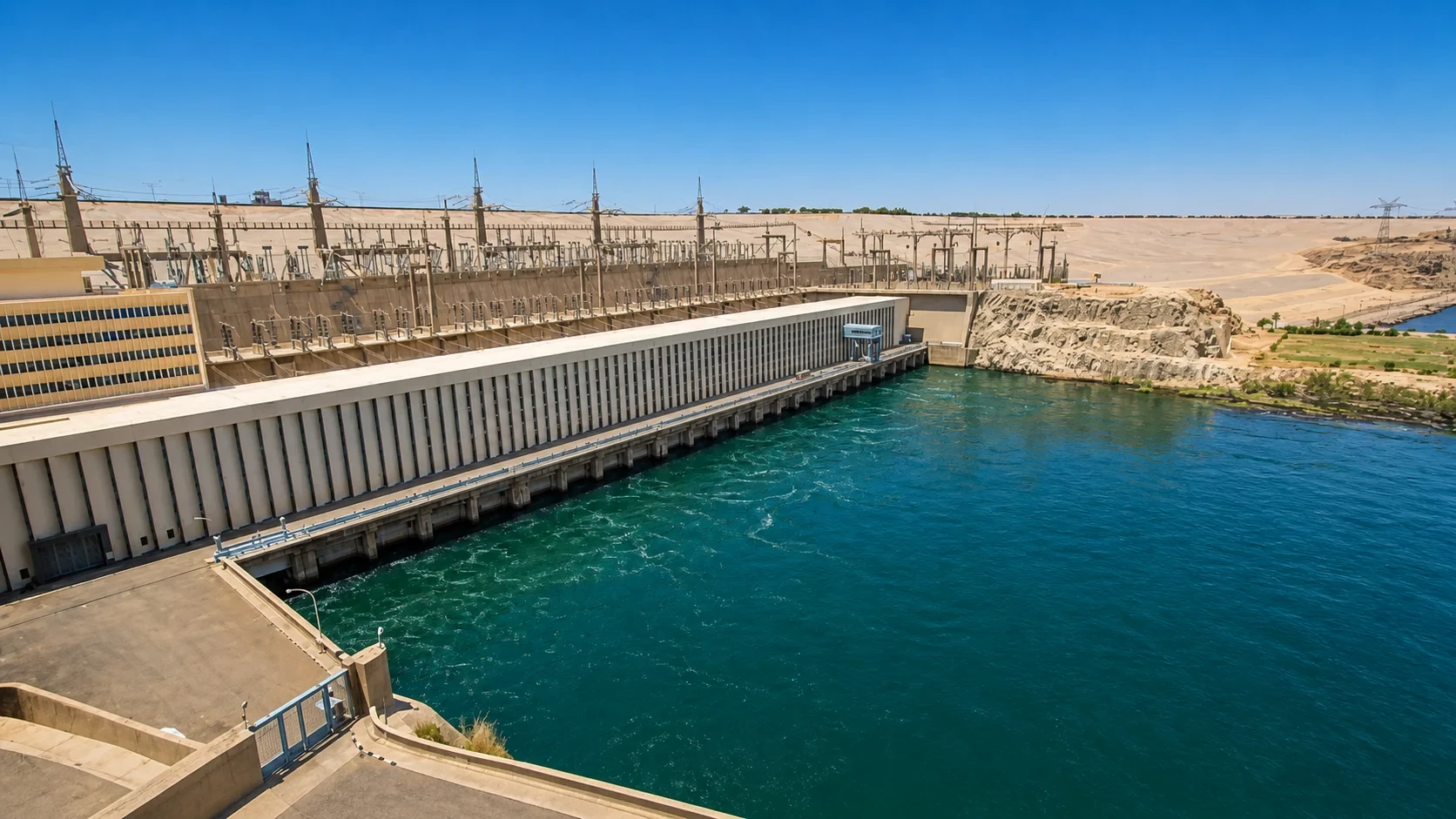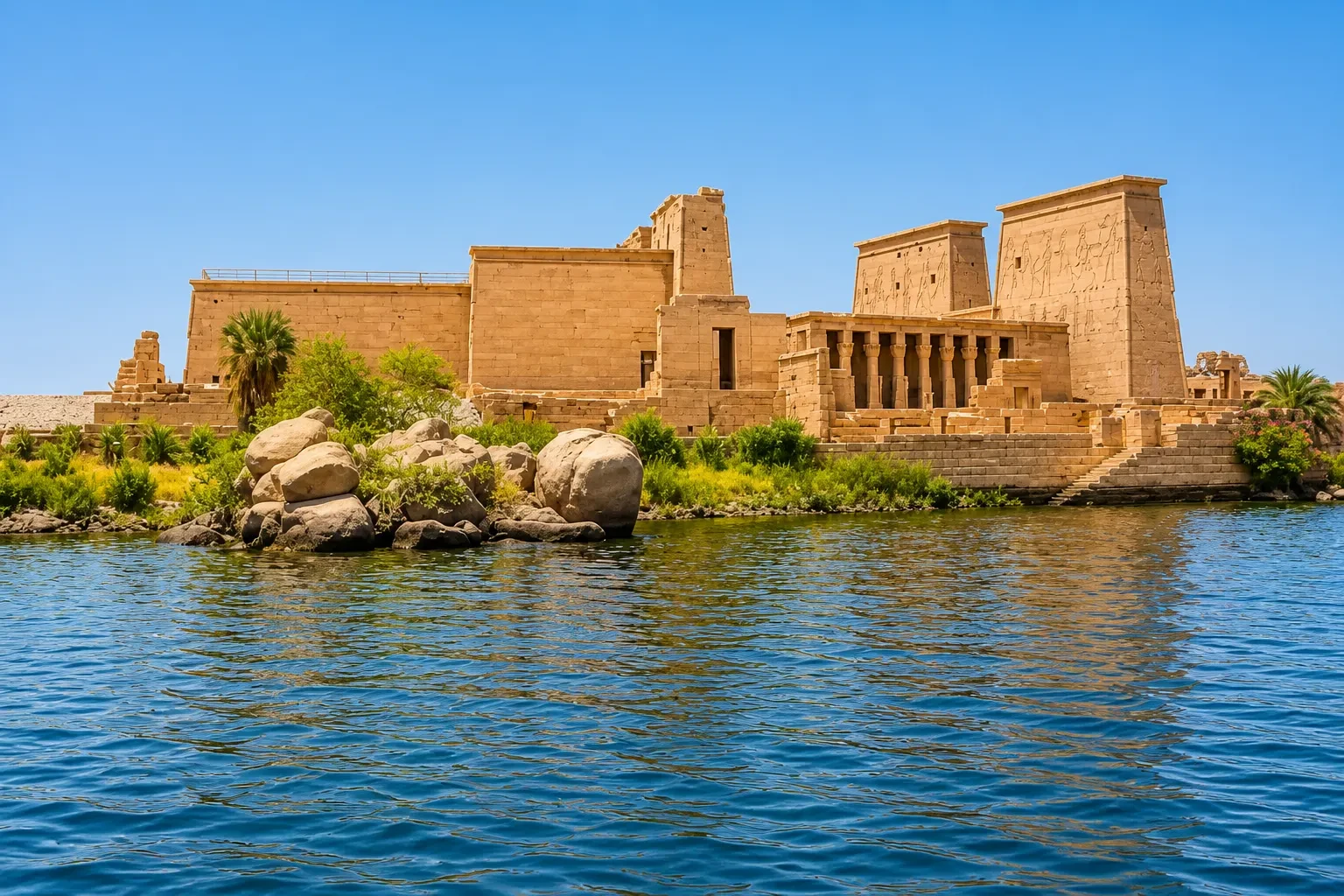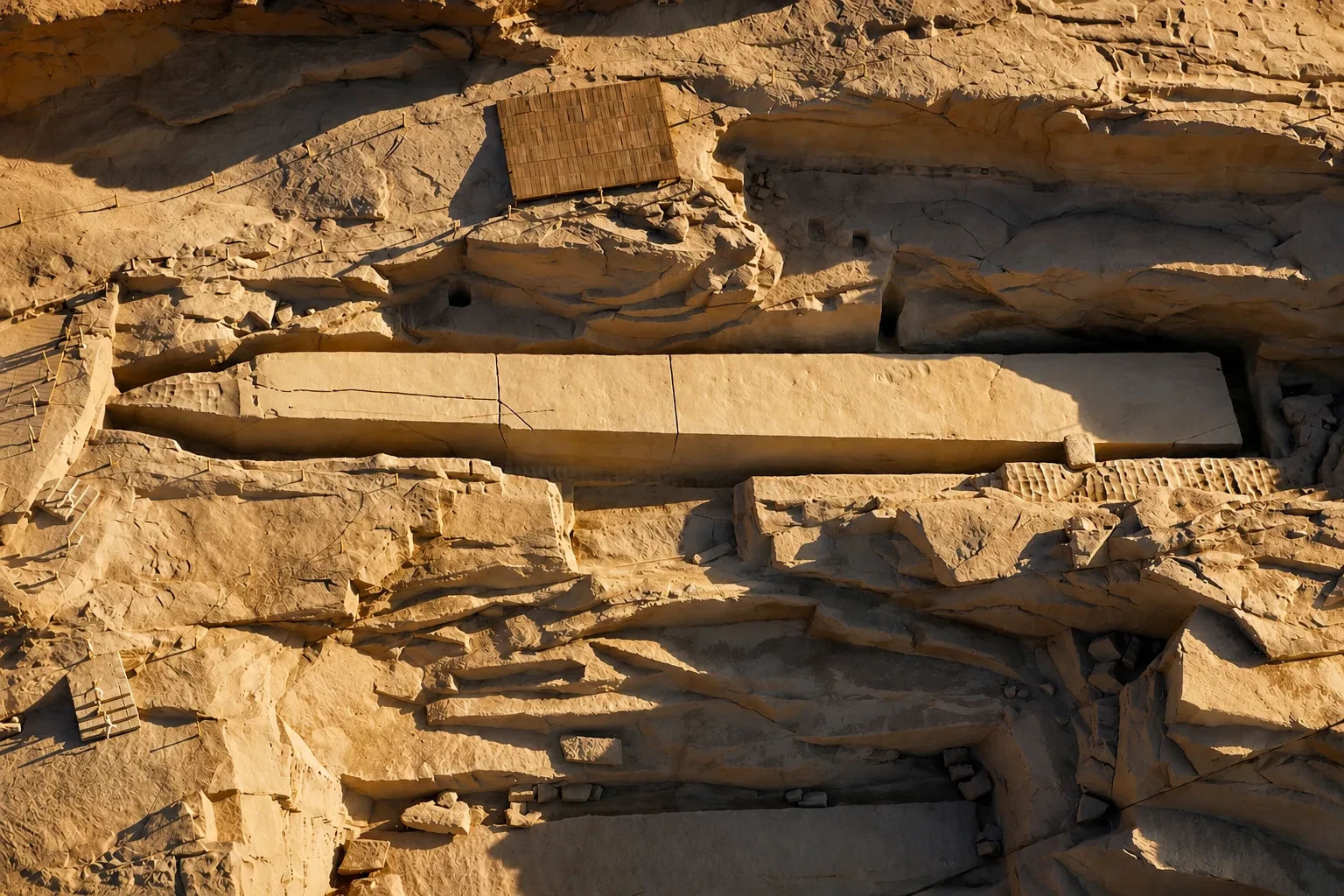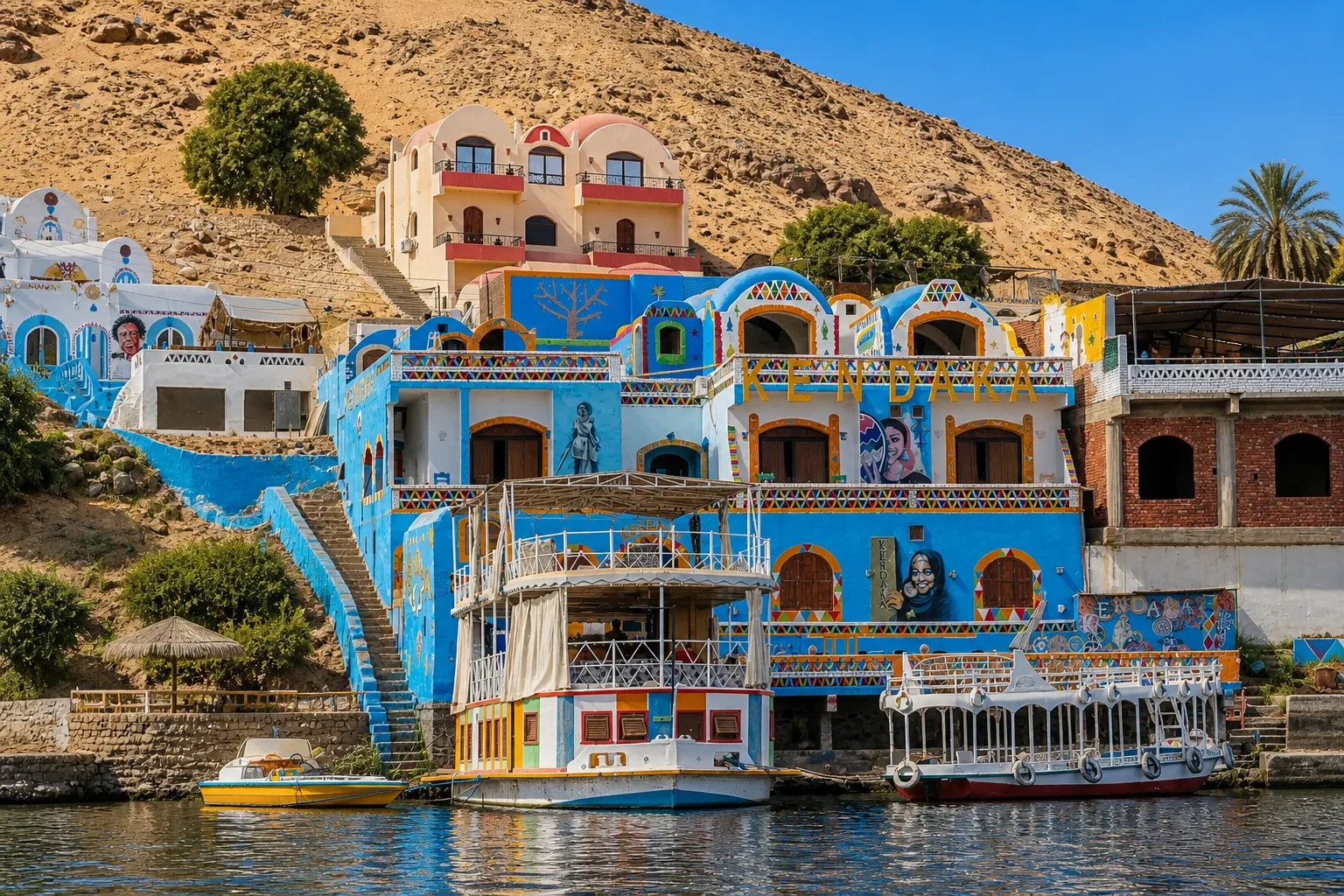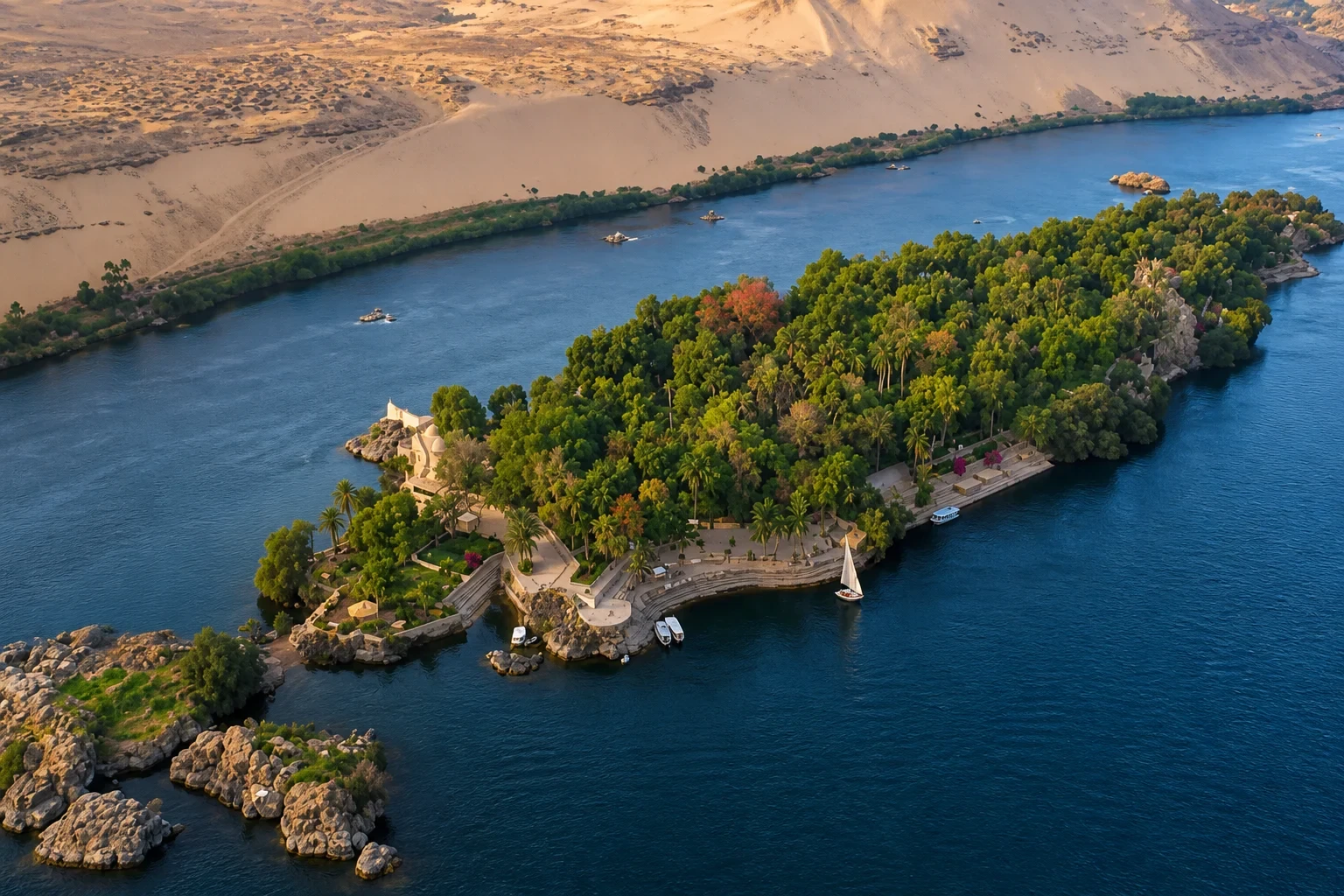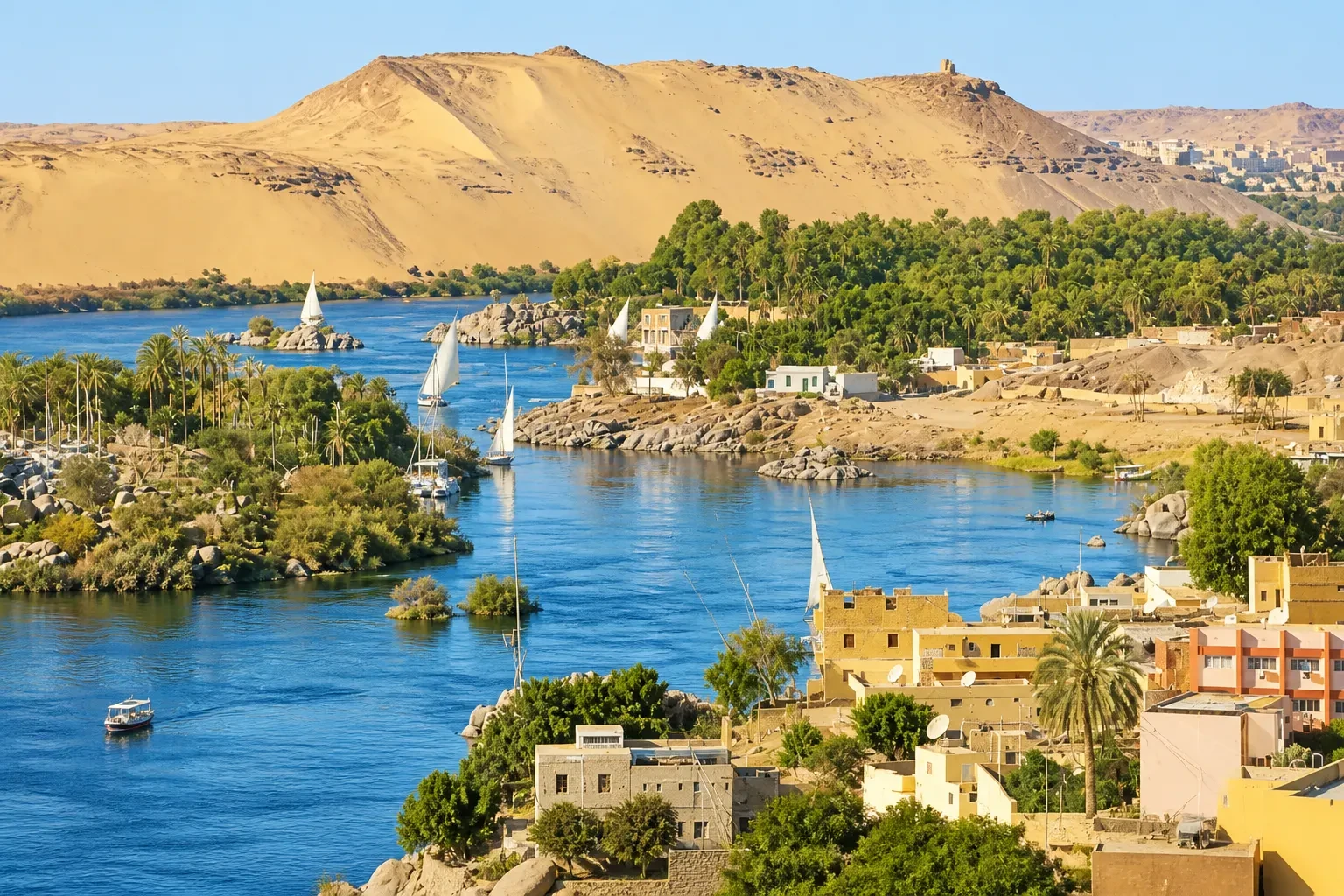


Kitchener's Island, home of the Aswan Botanical Garden, is the most tranquil, most verdantly beautiful, and most unexpectedly enchanting destination in all of Aswan, a small island paradise of tropical and subtropical vegetation sitting in the western channel of the Nile between Elephantine Island and the west bank desert, surrounded by the blue water and black granite of the First Cataract landscape and offering visitors a lush green escape from the desert heat that is unlike anything else available anywhere in Upper Egypt. Known officially as the Aswan Botanical Garden and equally well known as Kitchener's Island after the British military commander who created it at the end of the 19th century, this remarkable destination provides one of the most restoring and most visually beautiful interludes available on any Aswan itinerary, a visit to a garden of extraordinary botanical richness in a Nile island setting of almost impossibly perfect natural beauty. This delightful landmark sits at the heart of some of Egypt's most relaxing travel experiences, including Aswan Day Tours, Botanical Garden Tours, Dahabiya Nile River Cruises, Luxor Aswan Nile River Cruises, and Lake Nasser Cruises, all of which WOW Egypt Tours proudly offers to travelers from around the world. Kitchener's Island is also a highlight of Egypt Tours Packages and Egypt Travel Packages, making it one of the most pleasantly surprising and most memorably beautiful experiences in all of Aswan.
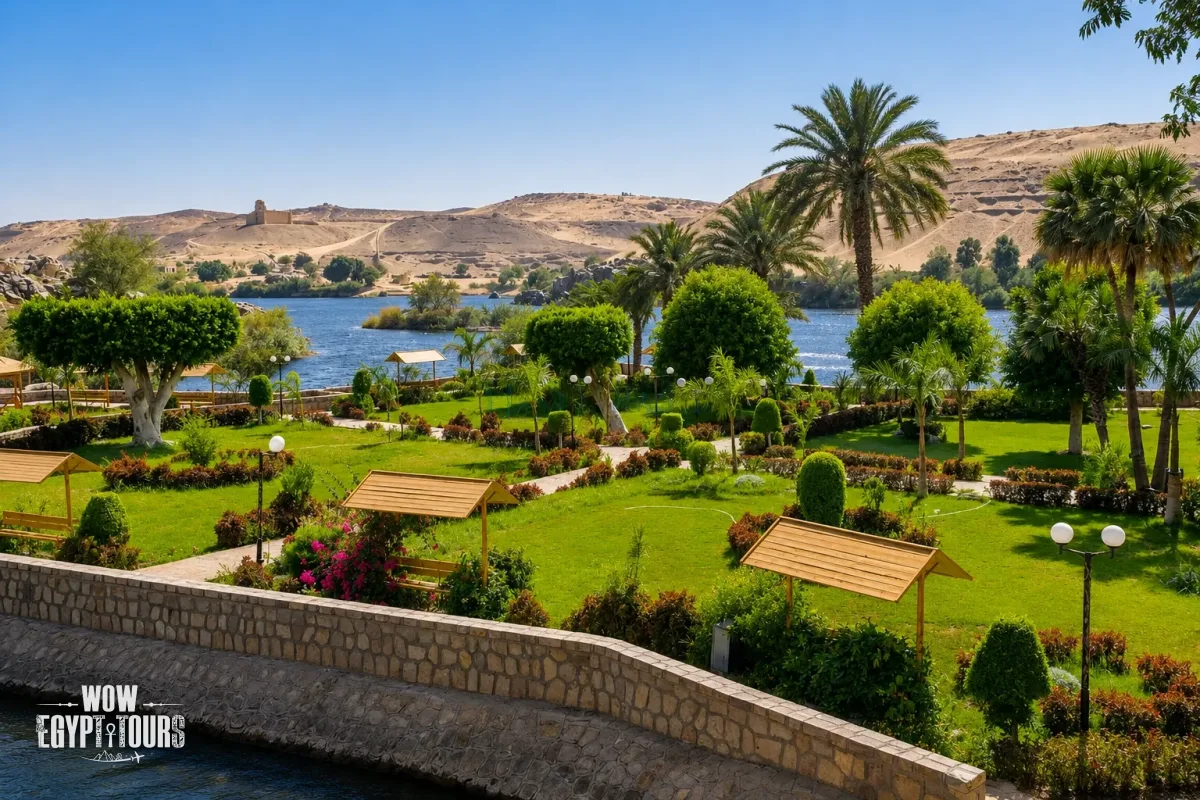
The Aswan Botanical Garden Egypt is one of those rare travel destinations that consistently exceeds expectations, because most visitors arrive expecting a pleasant but modest island garden and find instead a densely planted, beautifully maintained, and botanically extraordinary collection of trees, palms, flowering shrubs, and exotic plants from Africa, Asia, and the Americas, many of them growing to spectacular maturity in the uniquely favorable microclimate of the Nile island setting where year-round warmth, abundant Nile water, and protection from desert winds create near-perfect growing conditions. Walking through the shaded paths of Kitchener's Island beneath the canopy of towering palm trees, past flowering tropical shrubs, through avenues of exotic specimens from four continents, with the sparkling blue water of the Nile visible through the vegetation on all sides and the sound of birdsong overhead, is one of the most unexpectedly beautiful sensory experiences available anywhere on the Upper Egyptian heritage circuit, a reminder that ancient civilization, however magnificent, is only one of the extraordinary things that the Nile Valley has to offer. A visit to Kitchener's Island is most naturally combined with a visit to the neighboring Elephantine Island archaeological site and with the other major attractions of the Aswan waterscape including the Temple of Isis at Philae, the Aswan High Dam, and the Nubian Village.

Who Created Kitchener's Island And The Aswan Botanical Garden?
Kitchener's Island and its botanical garden were created by Field Marshal Herbert Horatio Kitchener, the British military commander who served as Sirdar (Commander-in-Chief) of the Egyptian Army from 1892 to 1899 and who subsequently became one of the most powerful and most celebrated figures in the late Victorian British imperial world. Kitchener was given the island as a personal gift from the Egyptian government in recognition of his military successes during the Sudan campaigns, particularly the Battle of Omdurman in 1898 in which he decisively defeated the Mahdist forces of the Sudan and avenged the death of General Gordon at Khartoum thirteen years earlier. The island, which had previously been known by various names and had served as a quarantine station, was transformed by Kitchener from 1899 onwards into a botanical garden of considerable ambition, as he used his military logistical networks throughout the British Empire to obtain seeds, seedlings, and mature specimens from botanical gardens and colonial agricultural stations in India, tropical Africa, Southeast Asia, and the Americas.
Kitchener's personal enthusiasm for horticulture and his access to the plant collection networks of the British colonial botanical garden system, which connected Kew Gardens in London with botanical stations throughout the empire, allowed him to assemble in a remarkably short period a collection of tropical and subtropical plants of genuine botanical interest and aesthetic beauty. When Kitchener left Egypt in 1899 to serve as Governor-General of Sudan, the island and its garden were transferred to the care of the Egyptian government, which has maintained and developed the botanical collection ever since. After Kitchener's death in 1916 when HMS Hampshire was sunk by a German mine in World War I, the island was renamed in his honor and the botanical garden came to be known throughout the region as Kitchener's Island, a name that has persisted alongside the official designation of Aswan Botanical Garden to the present day.
The Botanical History Of The Garden
The botanical history of Kitchener's Island is the history of the colonial-era botanical garden network, one of the most consequential scientific and agricultural institutions of the 19th century British Empire, through which plant species were systematically collected, propagated, and distributed around the world in a programme that was simultaneously a scientific research effort, an agricultural development project, and an expression of imperial ambition. Kitchener's access to this network, and his use of it to stock the Aswan island garden with specimens from multiple continents, gave the Aswan Botanical Garden from its earliest days a genuinely international character that distinguished it from the simple pleasure gardens of the period and gave it genuine scientific interest as a collection of tropical and subtropical species growing in the unusual microclimate of a Nile island at the First Cataract.
After the British colonial period, the garden was managed by the Egyptian Ministry of Agriculture, which continued to develop and expand the collection through the 20th century with additions from Egyptian botanical gardens and from international plant exchange programmes. The garden today is managed by the Egyptian government as a public botanical garden and tourist attraction, and while the collection is not maintained to the highest international botanical garden standards, it preserves a genuinely impressive diversity of mature tropical and subtropical trees, palms, and shrubs that give the island an extraordinary visual richness and a botanical interest that rewards visitors with any interest in plants, tropical ecology, or the natural world of the Nile Valley and its African hinterland.
Kitchener's Island Location In Egypt
Kitchener's Island is located in the western channel of the Nile at Aswan, between the western shore of Elephantine Island to the east and the west bank of the Nile to the west, approximately 1 kilometer north of the Aswan city center waterfront. The island is small, approximately 800 meters long from north to south and approximately 200 meters wide, entirely covered by the botanical garden and accessible only by motorboat from the Aswan Corniche or from the nearby Elephantine Island landing. The island's position between Elephantine Island and the west bank gives it particularly beautiful water views in both directions, with the ancient granite boulders of the First Cataract visible to the south and the desert hills of the west bank rising behind the narrow water channel to the west. The lush green vegetation of the garden, visible from a considerable distance as a vivid splash of tropical green against the golden desert landscape, makes Kitchener's Island one of the most immediately recognizable features of the Aswan Nile landscape and one of the most visually striking natural contrasts available anywhere in Upper Egypt. WOW Egypt Tours provides private motorboat transfers to Kitchener's Island on all Aswan Day Tours, Egypt Tours Packages, and Nile River Cruise programmes that include the botanical garden.
Kitchener's Island Fun Facts
Kitchener's Island is one of only a very small number of botanical gardens in the world located on a river island, and the only botanical garden in Egypt that combines a significant tropical and subtropical plant collection with a natural Nile island setting of exceptional scenic beauty. The island's position in the Nile gives it a uniquely favorable growing environment: the river provides abundant water for irrigation, the surrounding water moderates temperature extremes, the granite bedrock of the First Cataract provides excellent drainage, and the island's alignment between the east and west banks gives it protection from the strongest desert winds while allowing good air circulation. These combined factors create a microclimate that is significantly more humid and more equable than the surrounding desert landscape, allowing plants from tropical and subtropical regions of Africa, Asia, and the Americas to grow with a vigor and a scale that would be impossible in the open desert landscape of the surrounding Aswan area.
The garden contains significant specimens of the doum palm, Hyphaene thebaica, the ancient Egyptian fan palm whose distinctive forked trunk and nutlike fruit appear in ancient Egyptian art and medicine from the earliest periods of pharaonic civilization, and which was one of the most culturally important plants in the ancient Nile Valley. The island is also home to populations of various wading and water birds attracted by the combination of water, vegetation, and the relative tranquility of the island environment, making Kitchener's Island one of the best birdwatching locations in the Aswan area, with various heron species, egrets, kingfishers, and other Nile waterbirds commonly observed from the island paths and waterfront.
The garden was visited and described by numerous early 20th century travelers to Aswan, including Thomas Cook tour passengers who made the botanical garden a standard stop on the luxury winter Nile cruises that were one of the great travel fashions of the Edwardian era. Agatha Christie, who visited Aswan on multiple occasions and set her novel Death on the Nile in the Aswan area, was among the celebrated visitors who explored Kitchener's Island during the golden age of Nile tourism, and the island's lush and somewhat incongruously tropical character in the heart of the Egyptian desert contributed to the slightly dreamlike quality of the Aswan landscape that she described in her fiction.
Why Is Kitchener's Island Called By This Name In Egypt?
Kitchener's Island takes its popular name from Field Marshal Herbert Horatio Kitchener, 1st Earl Kitchener of Khartoum, who was given the island by the Egyptian government following his military victories in the Sudan at the end of the 19th century and who transformed it into a botanical garden between 1899 and his departure from Egypt in 1899. After Kitchener's death in 1916, the island was formally named in his honor, and the name Kitchener's Island has been in use ever since alongside the official designation of Aswan Botanical Garden or Aswan Island Garden. In Arabic, the island is commonly known as Jazirat al-Nabatat, meaning the Island of Plants, or simply as Jazirat Kitchener, Kitchener's Island, with both names in regular use among Aswan residents and tourism operators. The persistence of the colonial-era name is a reflection of the degree to which Kitchener's transformation of the island into a botanical garden created an identity for it that outlasted the British colonial context in which it was made.
Kitchener's Island History
The history of Kitchener's Island before Kitchener's tenure is somewhat obscure, but the island appears to have been used in the 19th century as a quarantine station for travelers and goods arriving from the Nile Valley to the south, reflecting the general concern in this period about the transmission of disease through Nile river traffic and the use of islands as natural isolation facilities. The island's position in the western channel of the Nile, separated from the main east bank of the city by the broad body of Elephantine Island, made it an appropriate location for a quarantine facility that was accessible by river but sufficiently removed from the city population to serve its isolation function.
Kitchener's transformation of the quarantine island into a botanical garden from 1899 onwards represented one of the most significant changes of purpose and character of any site in the Aswan area in the colonial period, replacing the negative associations of disease isolation with the positive associations of botanical cultivation and natural beauty. Kitchener's use of his military logistical networks and his connections with the British colonial botanical garden system to stock the island with exotic specimens from multiple continents was itself a characteristic expression of the late Victorian combination of scientific curiosity, imperial resource mobilization, and personal aesthetic enthusiasm that produced many of the great botanical gardens of the British Empire. After Kitchener's departure from Egypt, the garden was maintained by the Egyptian government and subsequently by the Egyptian Ministry of Agriculture, which oversaw its gradual development and occasional replanting through the 20th century. The garden was open to the public throughout the 20th century and became an increasingly popular tourist attraction as Aswan developed as a destination for Nile cruise tourism, particularly during the winter season when wealthy European and American travelers would combine visits to the ancient monuments of the Nile Valley with the physical pleasures of the Aswan waterscape and its islands.
The Story Of Kitchener And His Island Garden
The story of Field Marshal Kitchener and his Aswan island garden is one of the more unexpected and more humanizing episodes in the career of one of the most formidable figures of the late Victorian British military world. Kitchener is primarily remembered as a ruthless military commander, the organizer of one of the largest colonial armies in British imperial history and the face of the famous British Army recruiting poster from World War I. But the man who created the botanical garden on his Nile island was a passionate and knowledgeable horticulturalist, a collector of beautiful objects and beautiful plants with a genuine aesthetic sensitivity that his military public persona rarely revealed.
The letters and accounts from Kitchener's time in Egypt record a man who took intense personal pleasure in planning the layout of his island garden, in selecting and acquiring new plant specimens through his colonial networks, and in watching the imported trees and shrubs establish themselves in the favorable Nile island climate. He designed the garden's pathway system, chose the planting arrangements, and corresponded personally with botanical garden directors and colonial agricultural officers to obtain the rare and beautiful specimens that he wanted for his collection. This personal engagement with the garden as a creative and aesthetic project, rather than merely a practical or scientific one, gives the Aswan Botanical Garden a character of genuine personal vision that distinguishes it from institutionally planned botanical collections and that visitors can still feel in the slightly romantic and slightly idiosyncratic arrangement of the plantings and pathways that Kitchener laid out more than a century ago.
Kitchener's Island Botanical Collection And Key Features
The Palm Collection
The most immediately dramatic and most botanically significant element of the Kitchener's Island botanical collection is the palm collection, which includes one of the most diverse assemblages of palm species in Egypt and encompasses specimens from Africa, Asia, the Pacific, and the Americas. The garden contains multiple species of date palm in various varieties, the iconic doum palm with its distinctive forking trunk that appears in ancient Egyptian art from the earliest periods, the royal palm from the Caribbean and tropical America with its smooth silvery trunk and spectacular foliage crown, the fan palm in multiple forms from both the Old and New World tropics, and various specialized palms from subtropical Asia and Africa including the sugar palm, the fishtail palm, and the Bismarck palm, some of which have grown to spectacular maturity in the favorable island growing conditions. The palm collection is the botanical backbone of the island garden, providing the structural framework and the skyline character that makes the island visible from a considerable distance across the Nile as a distinctive profile of tropical vegetation rising above the desert landscape.
The Tropical And Subtropical Tree Collection
Beyond the palms, the botanical garden contains an extraordinary diversity of tropical and subtropical trees from multiple continents, many of which have grown to impressive maturity in the island's favorable microclimate. The collection includes mahogany and related species from tropical Africa and America, various species of ficus and banyan from tropical Asia and Africa, the spectacular jacaranda from South America with its purple flowering canopy that briefly transforms the garden in spring, the flamboyant or royal poinciana tree from Madagascar with its spectacular orange-red flowering display, various eucalyptus species from Australia, African acacia species, the Indian rubber tree, various tropical fig species, and numerous other trees from the global tropical and subtropical flora that give the garden an extraordinary visual richness and botanical diversity. The mature specimens of the largest trees create cathedral-like canopy spaces of deep green shade that are among the most physically refreshing and most visually beautiful natural environments available anywhere in the Aswan area during the heat of the day.
The Flowering Shrubs And Ornamental Plants
The undergrowth and border planting of the Kitchener's Island garden includes a wide range of flowering tropical and subtropical shrubs, vines, and ornamental plants that provide the most immediate and most colorful visual experience of the garden at ground level. Bougainvillea in multiple colors scrambles over walls, railings, and tree trunks throughout the garden, providing dramatic splashes of purple, pink, orange, red, and white against the green foliage. Oleander, hibiscus, poinsettia, plumbago, and various species of tropical flowering shrubs add additional color at different seasons. Spectacular vines including morning glory and various tropical climbers ascend the trunks of the larger trees, and the ground planting includes various tropical groundcovers, ornamental grasses, and shade-adapted perennials that fill the spaces beneath the tree canopy with a continuous carpet of interesting foliage. The combination of these ground-level flowering plants with the towering palms and tropical trees above creates a layered garden experience of great visual richness that rewards slow and attentive exploration rather than the hurried walk-through that the island's relatively small size might suggest.
The Nile Waterfront And Viewpoints
The western and southern waterfront of Kitchener's Island offers some of the most spectacular natural views available anywhere in the Aswan area, with the blue water of the western Nile channel in the foreground, the desert hills of the west bank in the middle distance, and the blue sky of Upper Egypt overhead. The southern waterfront of the island, where the garden paths come closest to the First Cataract rapids, provides particularly dramatic views of the black granite boulders rising from the Nile and of the Philae Temple island visible in the distance to the south. The eastern waterfront, facing Elephantine Island across the narrow channel, provides views of the ancient Nilometer and the southern archaeological zone of Elephantine against the background of the modern Aswan city waterfront. These multiple waterfront viewpoints, accessible from the garden paths that run around the perimeter of the island, make Kitchener's Island one of the finest natural viewpoint locations in Aswan for experiencing the beauty of the First Cataract Nile landscape in its full panoramic context.
The Birdlife
Kitchener's Island is one of the best birdwatching locations in the Aswan area, with the combination of dense vegetation, abundant Nile water, relative tranquility, and the island's position in the Nile flyway attracting a significant diversity of resident and migratory bird species. Common resident species include various heron and egret species including the gray heron, the little egret, and the cattle egret, the malachite kingfisher with its brilliant turquoise and orange coloring, the white-breasted kingfisher, the pied kingfisher which hovers over the water channels before plunging for fish, various species of dove and pigeon, the hoopoe with its distinctive crest, various sunbird species attracted to the flowering plants, and multiple species of warbler and flycatcher in the dense undergrowth. During the spring and autumn migration seasons, the island also receives a variety of passage migrants resting and feeding during their trans-Saharan journeys, making these seasons particularly rewarding for visitors with any interest in birdwatching. The combination of the botanical garden collection with the diverse birdlife it attracts gives Kitchener's Island a natural history interest that complements its visual beauty and its horticultural significance in making the visit a genuinely multi-layered natural experience.
The Shaded Pathways And Seating Areas
The practical infrastructure of Kitchener's Island is modest but adequate, with a network of shaded garden paths winding through the various sections of the botanical collection, several comfortable open-air seating areas beneath large trees or pergolas covered with flowering vines, and a small refreshment kiosk near the main landing area where basic drinks and snacks are available. The shaded pathway system, following the original alignment established by Kitchener and maintained through the garden's subsequent management, creates a pleasantly meandering garden walk of approximately 30 to 45 minutes at a comfortable pace, with the path network arranged to reveal different views and different plant groups in a sequence that maintains visual interest throughout the walk. The seating areas, particularly those on the Nile waterfront, are among the most peaceful and most beautiful resting places available anywhere in Aswan, offering a combination of shade, natural beauty, cool air from the river, and complete tranquility that makes a long pause in the garden one of the most restorative experiences on any Aswan itinerary.
Why Is Kitchener's Island Important?
Kitchener's Island is important for several interconnected reasons that extend beyond its immediate appeal as a beautiful garden in a spectacular natural setting. Botanically, it represents one of the most significant collections of tropical and subtropical exotic plants in Egypt, assembled over more than a century and including mature specimens of species that have reached a scale and magnificence in the favorable Nile island microclimate that would be difficult or impossible to replicate elsewhere in the country. Historically, it is a significant artifact of the British colonial period in Egypt, a physical remnant of the colonial botanical garden network that connected the resources of the British Empire across multiple continents and that produced, as a byproduct of imperial administration, some of the most remarkable plant collections in the world. Culturally, it has been a continuous presence in Aswan's public life for more than a century, providing the city's residents and visitors with a unique green public space in the heart of one of the world's most dramatic desert river landscapes.
For visitors to Aswan, Kitchener's Island provides an essential dimension of sensory and physical relief from the intensity of the ancient monument circuit, offering a space for quiet contemplation, natural beauty, and the simple pleasure of walking in shade through a garden of extraordinary plants beside one of the world's great rivers. WOW Egypt Tours includes Kitchener's Island as an optional addition to extended Aswan Day Tours and full Aswan programme itineraries, recognizing it as one of the most genuinely pleasant and most memorably beautiful experiences available in the Aswan area.
What Are Some Interesting Facts About Kitchener's Island?
A Garden Created By A Military Commander
The biographical paradox at the heart of Kitchener's Island is the contrast between the military severity that characterized Kitchener's public career and the horticultural sensitivity that his island garden reveals. The man who commanded the British forces at the Battle of Omdurman, one of the most lopsided military massacres of the colonial era, and who later served as Secretary of State for War during World War I, was simultaneously a passionate and deeply knowledgeable gardener who spent considerable personal time and effort creating a botanical garden of genuine beauty and scientific interest on his Nile island. This combination of military ruthlessness and aesthetic sensitivity is not unique in the history of powerful men, but it is unusually well documented in the case of Kitchener's Island, where the garden he created has outlasted his military reputation and his political legacy to become his most enduring and most universally appreciated contribution to the landscape of Upper Egypt.
The Doum Palm And Ancient Egypt
Among the most historically significant plants in the Kitchener's Island collection is the doum palm, Hyphaene thebaica, a distinctive palm species with a forking trunk that produces clusters of hard, fibrous orange-brown fruit with a sweet outer layer and a very hard white interior that has been used since ancient times as both a food source and a carving material. The doum palm appears frequently in ancient Egyptian art and archaeological deposits, with doum palm fruits found in the tombs of pharaohs including Tutankhamun and with the tree depicted in tomb paintings and temple reliefs from multiple periods of Egyptian history. The doum palm was one of the most culturally and economically important native trees in the ancient Egyptian Nile Valley, and its presence as a mature and impressive specimen in the Kitchener's Island botanical collection gives visitors a direct connection with the natural world of the ancient Nile Valley that complements the cultural and historical connections available at the nearby ancient monuments.
The Most Beautiful View In Aswan
Among the experienced travelers and longtime Aswan visitors who return to the city repeatedly over the years, there is a widely shared opinion that the most beautiful view in Aswan, the single image that most perfectly captures the extraordinary combination of natural beauty and historic grandeur that makes this city uniquely special among all the cities of Egypt, is the view from the southern waterfront of Kitchener's Island at sunset, looking south across the First Cataract granite boulders to the illuminated columns of the Philae Temple rising from their island in the distance, with the garden's tropical vegetation framing the foreground and the golden light of the Upper Egyptian sun turning everything amber and rose. This view, combining the natural landscape of the First Cataract with the ancient monument and the tropical garden in a single composition, is one of the most romantic and most photographically rewarding natural scenes available anywhere in Egypt and consistently elicits from visitors the kind of quietly overwhelming aesthetic response that is the highest achievement of the heritage tourism experience.
What Is So Special About Kitchener's Island?
An Unexpected Paradise
What makes Kitchener's Island uniquely special among all the experiences available in the Aswan area is the quality of genuine surprise and delight it provides to virtually every visitor who sees it for the first time. In a landscape defined by the drama of the desert, the grandeur of ancient monuments, and the sheer geological power of the Nile and its granite cataracts, the last thing most visitors expect is a lush tropical garden of extraordinary botanical diversity and almost implausible natural beauty. The contrast between the golden desert landscape visible all around and the vivid green of the island's dense tropical vegetation creates a visual and sensory shock that is among the most immediately joyful of any experience in the Aswan area, and the physical relief of walking from the heat of the open Nile into the deep shade of the garden's palm canopy is one of the most welcome and most literally refreshing sensory transitions available anywhere in Upper Egypt.
The Best Place In Aswan To Simply Be
Kitchener's Island is also uniquely special in the context of Egyptian cultural tourism because it is one of the very few destinations on any Egypt itinerary where the appropriate response is not to learn, to examine, to understand, or to photograph, but simply to be present in a beautiful natural environment and to allow the combination of shade, water, birdsong, flowering plants, and the gentle sounds of the Nile to provide a quality of physical and mental rest that no ancient monument or modern engineering achievement can offer. For travelers on intensive Egypt itineraries who have spent successive days walking through temples, descending into tombs, and absorbing the concentrated historical information of the Nile Valley's extraordinary heritage, the hour or two spent on Kitchener's Island provides the essential restorative pause that makes the subsequent heritage experiences more rather than less rewarding, a reminder that beauty takes many forms and that the natural world of the Nile Valley is as extraordinary in its way as the human civilization it sustained.
Kitchener's Island Through The Ages: From Colonial Garden To Public Paradise
The history of Kitchener's Island after Kitchener's departure in 1899 is primarily a history of custodial management under successive Egyptian government authorities, with the botanical collection maintained and gradually expanded through the 20th century without the active horticultural vision that characterized the initial creation of the garden. During the British colonial period, the island was managed as a public amenity and botanical research station, open to the public and visited by the Nile cruise tourists who made Aswan one of the premier destinations of the Edwardian and interwar luxury travel circuit. The warm winters, the spectacular Nile landscape, and the combination of ancient monuments with the unique natural attractions of the First Cataract, including the Kitchener's Island garden, made Aswan the most fashionable winter destination in the eastern Mediterranean for wealthy European and American travelers in the first half of the 20th century.
After Egyptian independence and the nationalization of the Suez Canal Company in 1956, the island passed fully into Egyptian state management and the botanical collection continued to be maintained as a public garden and tourist attraction, though without the active curatorial programme of a fully staffed botanical garden. The construction of the Aswan High Dam in the 1960s and 1970s and the development of Aswan as a major international tourism destination significantly increased the volume of visitors to Kitchener's Island, which became a standard addition to the Aswan tourist circuit alongside the Philae Temple, the High Dam, and the Nubian Village. Today the island is managed by the Egyptian Ministry of Tourism and Antiquities as a ticketed public attraction and is one of the most popular optional additions to any Aswan day programme, offering visitors the unique experience of a tropical botanical garden in a natural river island setting at the threshold of Nubia.
Kitchener's Island UNESCO And Heritage Recognition
Kitchener's Island is not itself a UNESCO World Heritage Site, but it forms part of the broader cultural and natural landscape of Aswan that is associated with the outstanding universal value of the First Cataract region and the Nubian Monuments heritage zone. The botanical garden's role as one of the most significant concentrations of introduced tropical and subtropical plant species in Egypt gives it a botanical heritage significance that is recognized by Egyptian agricultural and environmental authorities, and the island's association with the colonial-era botanical garden network that produced many of the world's most important plant collections gives it a place in the history of international horticultural science that is increasingly appreciated by botanical historians and heritage specialists. The garden also contributes to the biodiversity of the Aswan area by providing habitat for the bird populations of the First Cataract region, particularly the migratory species that use the Nile Valley flyway for their trans-Saharan journeys in spring and autumn.
Best Time To Visit Kitchener's Island
The best time to visit Kitchener's Island is during the cooler months from October through April, when temperatures in the Aswan area are moderate and the garden can be fully appreciated without the physical discomfort of the intense summer heat. The island garden is at its most beautiful in the cooler months when the tropical and subtropical plants are at their most vigorous growth, when the flowering shrubs are at peak bloom for many species, and when the garden's dense shade provides welcome shelter from the mild winter sun rather than merely inadequate protection from the summer furnace. In the spring months of March and April, many of the flowering trees and shrubs are at the height of their bloom, with jacaranda, poinsettia, bougainvillea, and other ornamental species producing their most spectacular color display, making this one of the finest seasons for the garden's visual beauty. In the summer months from May to September, the garden can still be visited comfortably in the early morning hours before the sun climbs above the tree canopy, and the deep shade of the mature tropical trees provides a genuine if temporary refuge from the intense Aswan heat. WOW Egypt Tours plans all Kitchener's Island visits at the optimal time of day for the season and the specific Aswan day programme.
Kitchener's Island Opening Hours
Kitchener's Island and the Aswan Botanical Garden are open to visitors every day of the week, including public holidays. The garden opens at 8:00 AM and closes at 5:00 PM throughout the year. The most beautiful and most tranquil time to visit is in the early morning when the garden is fresh and cool, the light is soft and golden, and the birdlife is at its most active. Late afternoon visits also have a particular charm as the low sun creates dramatic light patterns through the palm canopy and the Nile waterfront views to the south and west are at their most spectacular in the warm light of the pre-sunset hours. The garden receives its peak visitor numbers during the midday hours when Nile cruise passengers are brought to the island as part of their standard Aswan programme, so early morning or late afternoon visits provide a significantly more peaceful and more immersive experience of the garden's natural beauty.
Kitchener's Island Entrance Fees
Adults: EGP 200
Students: EGP 100
The entrance fee covers access to the complete botanical garden including all planting areas, garden paths, waterfront areas, and seating zones. The motorboat transfer to and from the island is charged separately. Entrance fees to Kitchener's Island and motorboat transfers are included in all Aswan Day Tours, Egypt Tours Packages, and Nile River Cruise programmes that include the botanical garden visit, booked through WOW Egypt Tours.
How To Get To Kitchener's Island
Kitchener's Island is accessible by motorboat from the Aswan Corniche waterfront, a crossing of approximately 10 to 15 minutes across the Nile channel, or by a shorter motorboat hop from the nearby Elephantine Island landing, making it very natural to combine the two island visits in a single excursion. Private motorboats are available for hire from the Aswan waterfront and from the Elephantine Island landing, and the crossing is arranged either as a dedicated garden visit or as part of a broader Nile island excursion programme. All motorboat transfers to and from Kitchener's Island are included in all Aswan Day Tours, Egypt Tours Packages, and Nile River Cruise programmes that include the botanical garden visit, booked through WOW Egypt Tours.
How Long To Spend At Kitchener's Island
Most visitors spend between 30 minutes and one hour at Kitchener's Island, which is sufficient time to walk the complete garden pathway system, examine the most significant plant specimens in the palm collection and the tropical tree collection, appreciate the Nile waterfront views from the island perimeter, and spend a few minutes resting in the shade of one of the garden's seating areas. Visitors with a particular interest in botany, tropical horticulture, or birdwatching may wish to allow one to one and a half hours. The Kitchener's Island visit is most naturally combined with a visit to the neighboring Elephantine Island archaeological site, with the two islands together constituting a complete Nile island excursion of two to three hours that combines the archaeological depth of Elephantine with the natural beauty of the botanical garden in a single motorboat excursion from the Aswan waterfront.
Tips For Visiting Kitchener's Island
Allow yourself more time than you think you need, as the garden invariably reveals more beauty and botanical interest with each additional ten minutes of exploration than the preceding ten. Walk the complete perimeter path around the island waterfront at the beginning or end of your visit to appreciate the full range of Nile landscape views available from different points of the island, as each waterfront aspect offers a different and equally beautiful perspective on the First Cataract landscape. Look up as well as around as you walk through the palm collection, as the scale and visual drama of the mature palm trunks and canopies is best appreciated from directly below. Take time to sit quietly in one of the shaded waterfront areas and listen to the birdlife, as the combination of natural sounds and natural beauty in this setting is one of the most genuinely peaceful experiences available anywhere in Aswan. If you have any interest in botany, ask your guide from WOW Egypt Tours to identify and explain the origin and significance of the major plant species encountered during the walk. Bring water as the garden's refreshment facilities are limited. The combination of a morning Elephantine Island archaeological visit with an afternoon Kitchener's Island garden visit is among the most perfect half-day programmes available in Aswan, contrasting the intellectual intensity of five thousand years of ancient history with the physical beauty of the tropical garden in a single island day.
What To Wear At Kitchener's Island
Kitchener's Island is a semi-shaded outdoor environment with the main garden paths beneath a dense tropical canopy, but with significant areas of open sun in the waterfront zones and some less densely planted sections of the garden. Lightweight, breathable clothing covering the shoulders and knees is appropriate for both comfort and general respect for the Egyptian public environment. A wide-brimmed hat and sunscreen are recommended for the open waterfront areas and the boat transfer, though the garden itself provides substantial shade throughout most of its path network. Comfortable, flat walking shoes are adequate for the well-maintained garden paths and the smooth stone surfaces of the waterfront areas. The garden is entirely flat and accessible without any significant climbing or uneven terrain, making it one of the most physically accessible ancient and cultural sites in the Aswan area. Bring insect repellent if visiting in summer as the dense tropical vegetation and the nearby water can harbor mosquitoes, particularly in the shaded path network during the warmer months.
Photography At Kitchener's Island
Kitchener's Island is one of the finest photography destinations in the Aswan area, offering an extraordinary range of natural subjects from the towering palm canopy and dramatic tropical tree forms to the intimate beauty of flowering shrubs, the vivid colors of the bougainvillea and ornamental plants, the architectural forms of the palm trunks in raking light, and the spectacular Nile waterfront views in every direction. The combination of tropical garden beauty with natural river landscape creates photography opportunities that are unique in the Egyptian heritage circuit and that produce images of great visual appeal and high personal emotional value as mementos of the Aswan experience. Photography with a standard camera or smartphone is permitted throughout the garden with no restrictions. The most dramatic plant photography is achieved in the early morning or late afternoon when the low sun penetrates the tree canopy and creates pools of golden light on the garden floor and the lower trunks of the palms. Waterfront photography of the Nile landscape and the distant Philae Temple is most spectacular in the late afternoon as the sun descends toward the western desert horizon. Bird photography rewards patience and a long telephoto lens, with the best opportunities in the early morning when the birds are most active. Professional photography or filming with specialized equipment should be arranged through the site management.
Kitchener's Island Tours
Single Attraction Visit: Kitchener's Island Botanical Garden Tour From Aswan
This dedicated tour visits Kitchener's Island as a standalone botanical garden and natural beauty excursion from Aswan, suitable for travelers with a particular interest in tropical botany, garden history, birdwatching, natural photography, or simply the pleasures of a beautiful island walk in a spectacular Nile setting.
What Is Covered
Motorboat transfer to and from Kitchener's Island. Complete guided walk of the botanical garden including the palm collection with identification of major species, the tropical tree collection, the flowering shrubs and ornamental plantings, the Nile waterfront views, and the garden seating areas. Birdwatching opportunities along the garden paths and waterfront. Brief historical explanation of Kitchener's role in creating the garden and the colonial-era botanical garden network that supplied its plant collection.
Duration
30 to 60 minutes in the garden, plus motorboat transfer time from the Aswan Corniche.
Includes
Private vehicle from Aswan hotel to the Corniche, motorboat transfer to and from the island, guide, and entrance fees. Available for morning and afternoon departures.
Elephantine Island And Kitchener's Island Combined Tour
This half-day tour combines the archaeological depth of Elephantine Island with the natural beauty of Kitchener's Island in a single island excursion programme, creating the most complete experience of the Aswan Nile island heritage available in a single half-day visit.
What Is Covered
Elephantine Island with a guided visit of the Nilometer, the Temple of Khnum and Temple of Satet remains, the German Archaeological Institute excavation areas, the Aswan Museum if open, and the living Nubian village streets. Short motorboat transfer to Kitchener's Island. Complete guided walk of the Aswan Botanical Garden including the palm collection, tropical tree collection, flowering shrubs, Nile waterfront views, and birdwatching.
Duration
Half day from Aswan, approximately 1 to 1.5 hours at Elephantine Island and 30 to 60 minutes at Kitchener's Island.
Includes
Private vehicle from Aswan hotel to the Corniche, motorboat transfers between the islands and back to the Corniche, licensed Egyptologist guide, and entrance fees to both sites. Available for morning departures.
Full Aswan Day Tour Including Kitchener's Island
This comprehensive full-day tour from Aswan covers the complete range of Aswan highlights, adding Kitchener's Island as the most beautiful and most restoring element of a day that also covers the Temple of Isis at Philae, the Aswan High Dam, the Unfinished Obelisk, Elephantine Island, and the Nubian Village.
What Is Covered
Elephantine Island with a guided archaeological visit. Kitchener's Island with a garden walk. The Aswan High Dam. The Unfinished Obelisk. The Temple of Isis at Philae with motorboat transfer and full guided island visit. A traditional Nubian Village on the west bank.
Duration
Full day from Aswan with appropriate time at each site.
Includes
Private air-conditioned transportation from Aswan hotel, motorboat transfers for all island visits, private licensed Egyptologist guide, and entrance fees to all included sites. Available for morning departures.
Dahabiya Nile River Cruise
A Dahabiya Nile River Cruise is a small-vessel sailing experience on the Nile between Luxor and Aswan aboard a traditional wooden dahabiya. WOW Egypt Tours operates dahabiya cruises with private cabins, all meals, a private licensed Egyptologist guide on board, and guided shore excursions at every stop. Kitchener's Island is available as an optional addition to all Dahabiya itineraries at the Aswan embarkation or disembarkation end of the journey.
4 Days 3 Nights Dahabiya Nile River Cruise From Aswan To Luxor
Route: Aswan to Luxor, sailing north.
Itinerary
Day 1: Embarkation in Aswan. Guided visits to Philae Temple, the Aswan High Dam, and the Unfinished Obelisk. Optional Kitchener's Island Botanical Garden visit. Sail north to Kom Ombo. Guided visit to Kom Ombo Temple and Crocodile Museum. Continue to Gebel el Silsila. Overnight on board.
Day 2: Guided visit to Gebel el Silsila. Sail to the Village of Basaw. Guided visit to Village of Basaw. Continue to Edfu. Guided visit to the Temple of Horus at Edfu. Overnight on board.
Day 3: Sail to El Kab. Guided visit to El Kab Tombs. Sail to El Hagaz Island. Swimming stop. Overnight on board.
Day 4: Sail to Esna. Visit Khnum Temple at Esna. Disembarkation in Esna. Transfer to Luxor, approximately 55 kilometers (35 miles).
Includes
Private cabin, all meals on board, private licensed Egyptologist guide, entrance fees to all site visits, and private transfers. Kitchener's Island visit available as an optional addition on embarkation day.
5 Days 4 Nights Dahabiya Nile River Cruise From Luxor To Aswan
Route: Luxor to Aswan, sailing south.
Itinerary
Day 1: Embarkation in Luxor. Transfer to Esna, approximately 55 kilometers (35 miles). Visit Khnum Temple at Esna. Sail to El Hagaz Island. Overnight on board.
Day 2: Sail to El Kab. Guided visit to El Kab Tombs. Continue to Edfu. Guided visit to the Temple of Horus at Edfu. Sail to the Village of Basaw. Guided visit to Village of Basaw. Overnight on board.
Day 3: Sail to Gebel el Silsila. Guided visit to Gebel el Silsila. Sail south to Kom Ombo. Guided visit to Kom Ombo Temple and Crocodile Museum. Sail to Daraw Village. Overnight on board.
Day 4: Guided visit to Daraw Village. Sail to Herbiab Island. Swimming stop. Philae Sound and Light Show. Overnight on board.
Day 5: Guided visits to Philae Temple, the Aswan High Dam, and the Unfinished Obelisk. Optional Kitchener's Island Botanical Garden visit. Disembarkation in Aswan.
Includes
Private cabin, all meals on board, private licensed Egyptologist guide, entrance fees to all site visits, and private transfers. Kitchener's Island visit available as an optional addition on disembarkation day.
8 Days 7 Nights Dahabiya Nile River Cruise Round Trip From Luxor (Via Aswan)
Route: Luxor and Aswan, sailing north and south.
Itinerary
Day 1: Embarkation in Luxor. Transfer to Esna, approximately 55 kilometers (35 miles). Visit Khnum Temple at Esna. Sail to El Hagaz Island. Overnight on board.
Day 2: Sail to El Kab. Continue to Edfu. Guided visit to the Temple of Horus at Edfu. Sail to the Village of Basaw. Guided visit to Village of Basaw. Overnight on board.
Day 3: Sail to Gebel el Silsila. Sail south to Kom Ombo. Guided visit to Kom Ombo Temple and Crocodile Museum. Sail to Daraw Village. Overnight on board.
Day 4: Guided visit to Daraw Village. Sail to Herbiab Island. Swimming stop. Philae Sound and Light Show. Overnight on board.
Day 5: Guided visits to Philae Temple, the Aswan High Dam, the Unfinished Obelisk. Optional Kitchener's Island Botanical Garden visit. Sail north to Kom Ombo. Continue to Gebel el Silsila. Overnight on board.
Day 6: Guided visit to Gebel el Silsila. Sail to the Village of Basaw. Continue to Edfu. Guided visit to the Temple of Horus at Edfu. Overnight on board.
Day 7: Sail to El Kab. Guided visit to El Kab Tombs. Sail to El Hagaz Island. Swimming stop. Overnight on board.
Day 8: Disembarkation in Esna. Transfer to Luxor, approximately 55 kilometers (35 miles).
Includes
Private cabin, all meals on board, private licensed Egyptologist guide, entrance fees to all site visits, and private transfers. Kitchener's Island visit available as an optional addition.
8 Days 7 Nights Dahabiya Nile River Cruise Round Trip From Aswan (Via Luxor)
Route: Luxor and Aswan, sailing north and south.
Itinerary
Day 1: Embarkation in Aswan. Guided visits to Philae Temple, the Aswan High Dam, and the Unfinished Obelisk. Optional Kitchener's Island Botanical Garden visit. Sail north to Kom Ombo. Guided visit to Kom Ombo Temple and Crocodile Museum. Continue to Gebel el Silsila. Overnight on board.
Day 2: Guided visit to Gebel el Silsila. Sail to the Village of Basaw. Continue to Edfu. Guided visit to the Temple of Horus at Edfu. Overnight on board.
Day 3: Sail to El Kab. Guided visit to El Kab Tombs. Sail to El Hagaz Island. Swimming stop. Overnight on board.
Day 4: Sail to Esna. Visit Khnum Temple at Esna. Sail to El Hagaz Island. Overnight on board.
Day 5: Sail to El Kab. Continue to Edfu. Guided visit to the Temple of Horus at Edfu. Sail to the Village of Basaw. Guided visit to Village of Basaw. Overnight on board.
Day 6: Sail to Gebel el Silsila. Sail south to Kom Ombo. Guided visit to Kom Ombo Temple and Crocodile Museum. Sail to Daraw Village. Overnight on board.
Day 7: Guided visit to Daraw Village. Sail to Herbiab Island. Swimming stop. Philae Sound and Light Show. Overnight on board.
Day 8: Guided visits to Philae Temple, the Aswan High Dam, and the Unfinished Obelisk. Optional Kitchener's Island Botanical Garden visit. Disembarkation in Aswan.
Includes
Private cabin, all meals on board, private licensed Egyptologist guide, entrance fees to all site visits, and private transfers. Kitchener's Island visit available as an optional addition.
Lake Nasser Cruise
A Lake Nasser Cruise is a luxury cruising experience on the waters of Lake Nasser, the vast reservoir created by the Aswan High Dam. WOW Egypt Tours operates Lake Nasser Cruises visiting the rescued Nubian temples along the lake shores. Kitchener's Island is available as an optional addition to all Lake Nasser Cruise itineraries on the embarkation or disembarkation day in Aswan, providing a beautiful and restorative natural experience to complement the historical intensity of the Lake Nasser temples.
5 Days 4 Nights Lake Nasser Cruise From Aswan To Abu Simbel
Route: Aswan to Abu Simbel, sailing south on Lake Nasser.
Itinerary
Day 1: Embarkation in Aswan. Guided visits to the Aswan High Dam, the Unfinished Obelisk, and Philae Temple. Optional Kitchener's Island Botanical Garden visit. Embarkation and sail south on Lake Nasser. Overnight on board.
Day 2: Sail south to Kalabsha. Guided visit to the Temple of Kalabsha and associated temples. Continue sailing south to Wadi el-Seboua. Overnight on board.
Day 3: Guided visit to the Temples of Wadi el-Seboua. Guided visit to the Temple of Amada. Continue south. Overnight on board.
Day 4: Sail to Kasr Ibrim. Guided visit to Kasr Ibrim. Continue south to Abu Simbel. Guided visit to the Abu Simbel Temples. Optional Sound and Light Show. Overnight on board at Abu Simbel.
Day 5: Second visit to Abu Simbel at sunrise. Farewell breakfast. Disembarkation at Abu Simbel. Transfer by air or road back to Aswan.
Includes
Private cabin, all meals on board, private licensed Egyptologist guide, entrance fees to all temple visits including Philae Temple and Abu Simbel Temples, motorboat transfers, and private transfers. Kitchener's Island visit available as an optional addition on embarkation day.
4 Days 3 Nights Lake Nasser Cruise From Abu Simbel To Aswan
Route: Abu Simbel to Aswan, sailing north on Lake Nasser.
Itinerary
Day 1: Arrival at Abu Simbel. Embarkation. Full guided visit to the Abu Simbel Temples. Optional Sound and Light Show. Overnight on board at Abu Simbel.
Day 2: Sail north. Guided visit to Kasr Ibrim. Guided visit to the Temple of Amada. Guided visit to the Temples of Wadi el-Seboua. Overnight on board.
Day 3: Continue north to Kalabsha. Guided visit to the Temple of Kalabsha and associated temples. Continue north toward Aswan. Guided visits to the Aswan High Dam, the Unfinished Obelisk, and Philae Temple. Overnight on board in Aswan.
Day 4: Kitchener's Island Botanical Garden visit. Guided visit to Elephantine Island. Optional Nubian Village visit. Farewell breakfast on board. Disembarkation in Aswan.
Includes
Private cabin, all meals on board, private licensed Egyptologist guide, entrance fees to all temple visits including Kitchener's Island, Elephantine Island, Philae Temple and Abu Simbel Temples, motorboat transfers, and private transfers.
Luxor And Aswan Nile River Cruise
The Luxor and Aswan Nile River Cruise is a standard Nile cruise product operated aboard a full-size cruise ship between Luxor and Aswan. WOW Egypt Tours operates this cruise in both directions with private licensed Egyptologist guides, all meals included, private cabins, and guided shore excursions at every port of call. Kitchener's Island is available as an optional addition to all cruise itineraries on the Aswan overnight day.
4 Days 3 Nights Luxor And Aswan Nile River Cruise From Aswan To Luxor
Route: Aswan to Luxor, sailing north.
Itinerary
Day 1: Embarkation in Aswan. Guided visits to Philae Temple, the Aswan High Dam, and the Unfinished Obelisk. Optional Kitchener's Island Botanical Garden visit. Overnight on board in Aswan.
Day 2: Sail north to Kom Ombo. Guided visit to Kom Ombo Temple and Crocodile Museum. Continue to Edfu. Overnight on board.
Day 3: Guided visit to the Temple of Horus at Edfu. Continue north toward Luxor. Pass through the Esna Lock. Optional visit to Khnum Temple at Esna. Guided visit to Luxor Temple and Karnak Temple. Overnight on board in Luxor.
Day 4: Optional Sunrise Hot Air Balloon available. Guided visits to Valley of the Kings, Queen Hatshepsut Temple, and Colossi of Memnon. Disembarkation in Luxor.
Includes
Private cabin, all meals on board, private licensed Egyptologist guide, entrance fees to all temple visits, motorboat transfer to Philae Island, and private transfers. Kitchener's Island visit available as an optional addition.
5 Days 4 Nights Luxor And Aswan Nile River Cruise From Luxor To Aswan
Route: Luxor to Aswan, sailing south.
Itinerary
Day 1: Embarkation in Luxor. Guided visits to Luxor Temple and Karnak Temple. Overnight on board in Luxor.
Day 2: Optional Sunrise Hot Air Balloon available. Guided visits to Valley of the Kings, Queen Hatshepsut Temple, and Colossi of Memnon. Pass through the Esna Lock. Visit to Khnum Temple at Esna. Sail south to Edfu. Overnight on board.
Day 3: Guided visit to the Temple of Horus at Edfu. Continue to Kom Ombo. Guided visit to Kom Ombo Temple and Crocodile Museum. Overnight on board.
Day 4: Continue south toward Aswan. Guided visits to Philae Temple, the Aswan High Dam, and the Unfinished Obelisk. Kitchener's Island Botanical Garden visit. Overnight on board in Aswan.
Day 5: Optional Abu Simbel visit available by air or road. Disembarkation in Aswan.
Includes
Private cabin, all meals on board, private licensed Egyptologist guide, entrance fees to all temple visits including Kitchener's Island, motorboat transfer to Philae Island, and private transfers.
8 Days 7 Nights Luxor And Aswan Nile River Cruise Round Trip From Luxor (Via Aswan)
Route: Luxor and Aswan, sailing north and south.
Itinerary
Day 1: Embarkation in Luxor. Guided visits to Luxor Temple and Karnak Temple. Overnight on board in Luxor.
Day 2: Guided visits to Luxor Museum. Pass through the Esna Lock. Visit to Khnum Temple at Esna. Sail south to Edfu. Overnight on board.
Day 3: Guided visit to the Temple of Horus at Edfu. Continue to Kom Ombo. Guided visit to Kom Ombo Temple and Crocodile Museum. Overnight on board.
Day 4: Continue south toward Aswan. Guided visits to Philae Temple, the Aswan High Dam, and the Unfinished Obelisk. Overnight on board in Aswan.
Day 5: Kitchener's Island Botanical Garden visit. Elephantine Island visit. Abu Simbel visit available by road or air. Sound and Light Show at Philae Temple. Overnight on board in Aswan.
Day 6: Sail north to Kom Ombo. Guided visit to Kom Ombo Temple. Continue north. Overnight on board.
Day 7: Guided visits to Valley of the Kings, Queen Hatshepsut Temple, and Colossi of Memnon. Pass through the Esna Lock. Visit to Khnum Temple at Esna. Overnight on board in Luxor.
Day 8: Optional Sunrise Hot Air Balloon available. Disembarkation in Luxor.
Includes
Private cabin, all meals on board, private licensed Egyptologist guide, entrance fees to all temple visits including Kitchener's Island, motorboat transfer to Philae Island, and private transfers.
8 Days 7 Nights Luxor And Aswan Nile River Cruise Round Trip From Aswan (Via Luxor)
Route: Luxor and Aswan, sailing north and south.
Itinerary
Day 1: Embarkation in Aswan. Guided visits to Philae Temple, the Aswan High Dam, and the Unfinished Obelisk. Kitchener's Island Botanical Garden visit. Overnight on board in Aswan.
Day 2: Sail north to Kom Ombo. Guided visit to Nubian Village and Kom Ombo Temple and Crocodile Museum. Continue to Edfu. Overnight on board.
Day 3: Continue north toward Luxor. Pass through the Esna Lock. Visit to Khnum Temple at Esna. Guided visit to Luxor Museum and Karnak Sound and Light Show. Overnight on board in Luxor.
Day 4: Guided visits to Luxor Temple and Karnak Temple. Overnight on board in Luxor.
Day 5: Optional Sunrise Hot Air Balloon available. Guided visits to Valley of the Kings, Queen Hatshepsut Temple, and Colossi of Memnon. Pass through the Esna Lock. Sail south to Edfu. Overnight on board.
Day 6: Guided visit to the Temple of Horus at Edfu. Continue to Kom Ombo. Guided visit to Kom Ombo Temple. Overnight on board.
Day 7: Sound and Light Show at Philae Temple. Overnight on board in Aswan.
Day 8: Abu Simbel visit available by road or air. Disembarkation in Aswan.
Includes
Private cabin, all meals on board, private licensed Egyptologist guide, entrance fees to all temple visits, motorboat transfer to Philae Island, and private transfers.
Combine Kitchener's Island With Your Egypt Tours Package
Kitchener's Island is included as an optional addition across the full range of WOW Egypt Tours travel products that include an Aswan component. Browse the options below to find the Egypt experience that is right for you.
Egypt Tour Packages: Multi-day guided Egypt tours organized by duration, including 2 Days Egypt Packages, 3 Days Egypt Packages, 4 Days Egypt Packages, 5 Days Egypt Packages, 6 Days Egypt Packages, 7 Days Egypt Packages, 8 Days Egypt Packages, 10 Days Egypt Packages, and longer itineraries. All packages that include Aswan can feature Kitchener's Island as an optional addition to the Aswan programme. All packages include private air-conditioned transportation, private licensed Egyptologist guide, accommodations, entrance fees to all included sites, and private transfers throughout Egypt.
Egypt Travel Packages: Themed Egypt travel packages designed around specific travel styles and interests, including Egypt Honeymoon Travel Packages, Egypt Budget Travel Packages, Egypt Family Travel Packages, Egypt Luxury Travel Packages, Egypt Adventure Travel Packages, Egypt Cultural Travel Packages, and Egypt Christmas and New Year Travel Packages. Kitchener's Island is particularly suited to Honeymoon and Luxury travel packages, where the exceptional beauty and tranquility of the island garden adds a dimension of natural romance and physical restoration to the heritage experience. All packages include private transportation, licensed guide, accommodations, meals, and private transfers.
Egypt Nile Cruise Packages: Complete Egypt travel packages combining Cairo sightseeing with a fully guided Nile cruise. Kitchener's Island is available as an optional addition on the Aswan overnight day of all Nile cruise packages.
Nile River Cruises: All WOW Egypt Tours Nile cruise options. Kitchener's Island is available as an optional addition at the Aswan end of all Nile River Cruise and Lake Nasser Cruise itineraries.
Luxor Aswan Nile Cruises: Available in both directions and in durations of 4 Days 3 Nights, 5 Days 4 Nights, and 8 Days 7 Nights round trip. Kitchener's Island available as an optional addition at the Aswan overnight stop.
Standard Nile Cruises: Comfortable standard-category cruise ships. Kitchener's Island available as an optional addition at Aswan.
Deluxe Nile Cruises: Deluxe-category cruise ships. Kitchener's Island available as an optional addition at Aswan.
Ultra Deluxe Nile Cruises: Ultra deluxe-category cruise ships. Kitchener's Island available as an optional addition at Aswan.
Luxury Nile Cruises: Luxury-category cruise ships. Kitchener's Island available as an optional addition at Aswan.
Dahabiya Nile Cruises: Private small-vessel sailing experience between Luxor and Aswan. Kitchener's Island is available as an optional addition at the Aswan embarkation or disembarkation end of all Dahabiya itineraries, providing a beautiful natural complement to the river landscape experience of the Dahabiya cruise.
Lake Nasser Cruises: Luxury cruising on Lake Nasser between Aswan and Abu Simbel. Kitchener's Island is an optional addition on the embarkation or disembarkation day in Aswan. Available in 5 Days 4 Nights from Aswan to Abu Simbel and 4 Days 3 Nights from Abu Simbel to Aswan.
Luxor Tours: Day tours from Luxor covering the major sites of Upper Egypt, including Aswan Day Tours that can incorporate Kitchener's Island as part of the full Aswan programme. All tours include private air-conditioned transportation, private licensed guide, entrance fees, and private transfers.
Nearby Attractions To Kitchener's Island
Kitchener's Island sits in the western channel of the Nile at the center of the Aswan island landscape, immediately adjacent to Elephantine Island to the east and a short motorboat ride from the Aswan city waterfront to the north. The most natural and most rewarding companion visit to Kitchener's Island is Elephantine Island, easily reached by a brief motorboat crossing from the Kitchener's Island landing and combining the natural beauty of the botanical garden with five thousand years of archaeological heritage at the First Cataract in a single island excursion.
The Nubian Village communities on the west bank of the Nile, a short motorboat ride to the west of Kitchener's Island, provide the most authentic living cultural encounter in the Aswan area, combining naturally with the garden visit as part of a day of Nile island and waterfront exploration. The Temple of Isis at Philae, accessible to the south, the Aswan High Dam, and the Unfinished Obelisk in the ancient granite quarries complete the essential Aswan heritage programme. For travelers looking south into the ancient Nubian homeland, the Lake Nasser Cruise provides access to the temples of Kalabsha, Wadi el-Seboua, Amada, and Abu Simbel. All these sites are accessible through the Aswan Day Tours, Nile cruise itineraries, Lake Nasser Cruises, and Egypt Tours Packages offered by WOW Egypt Tours.
Frequently Asked Questions About Kitchener's Island
What is Kitchener's Island?
Kitchener's Island, also known as the Aswan Botanical Garden, is a small island in the western channel of the Nile at Aswan, transformed into a botanical garden by Field Marshal Herbert Kitchener at the end of the 19th century and now containing one of the most diverse collections of tropical and subtropical plants in Egypt in a Nile island setting of exceptional natural beauty. The island is a featured optional addition to Aswan Day Tours, Nile River Cruises, Lake Nasser Cruises, and Egypt Tours Packages offered by WOW Egypt Tours.
Who was Kitchener and why did he create the garden?
Field Marshal Herbert Horatio Kitchener, 1st Earl Kitchener of Khartoum, was a British military commander who served as Sirdar of the Egyptian Army from 1892 to 1899. He was given the island as a personal gift from the Egyptian government following his military victories in the Sudan campaigns, and transformed it into a botanical garden using his connections with the British colonial botanical garden network to obtain plants from multiple continents. He was a passionate horticulturalist whose love of plants and gardens was a counterpart to his formidable military reputation.
What plants are in the Aswan Botanical Garden?
The Aswan Botanical Garden contains a diverse collection of tropical and subtropical plants including multiple palm species (date palm, doum palm, royal palm, fan palm, and many others), tropical trees from Africa, Asia, America, and Australia (mahogany, ficus, jacaranda, flamboyant, eucalyptus, Indian rubber tree, and many more), flowering shrubs including bougainvillea, oleander, hibiscus, and plumbago, and various tropical vines, ornamental groundcovers, and shade plants. The palm collection is particularly notable for its diversity and the maturity of many specimens.
What is the doum palm?
The doum palm, Hyphaene thebaica, is a distinctive African palm with a forking trunk that is native to the Nile Valley and is one of the most culturally significant plants in ancient Egyptian history, appearing in pharaonic art from the earliest periods and found as fruits in royal tombs including that of Tutankhamun. The doum palm is one of the historically significant specimens in the Kitchener's Island botanical collection.
Can I see birds at Kitchener's Island?
Yes. The island is one of the best birdwatching locations in Aswan, with resident species including various herons, egrets, malachite and pied kingfishers, hoopoe, sunbirds, doves, and various warblers, and with additional migratory species during the spring and autumn passage seasons. The combination of dense vegetation and Nile water provides excellent habitat for a diverse range of Nile Valley bird species.
What are the opening hours of Kitchener's Island?
Kitchener's Island is open daily from 8:00 AM to 5:00 PM throughout the year.
How much does it cost to enter Kitchener's Island?
The entrance fee is EGP 200 for adults and EGP 100 for students. The motorboat transfer to the island is charged separately. Entrance fees and motorboat transfers are included in all Aswan Day Tours and Nile River Cruise programmes booked through WOW Egypt Tours.
How long does it take to visit Kitchener's Island?
Most visitors spend 30 to 60 minutes for a complete garden walk. Those with a special interest in botany or birdwatching may allow up to one and a half hours.
What is the best time of year to visit Kitchener's Island?
October to April is the most comfortable period, with the spring months of March and April often particularly beautiful when many flowering trees and shrubs are in bloom. Summer visits are possible in the early morning when the shade of the mature trees provides welcome relief from the heat.
How do I get to Kitchener's Island?
Kitchener's Island is accessible by motorboat from the Aswan Corniche waterfront, approximately 10 to 15 minutes, or by a shorter hop from the nearby Elephantine Island landing. All motorboat transfers are included in Aswan Day Tours and Nile River Cruise programmes booked through WOW Egypt Tours.
Is a guide necessary at Kitchener's Island?
A guide with botanical or natural history knowledge adds significantly to the experience, enabling identification and explanation of the major plant species, their origins, and their historical and cultural significance. WOW Egypt Tours provides guides on all Kitchener's Island tours who can explain the garden's botanical collection and its colonial-era history.
Can I take photographs at Kitchener's Island?
Photography is permitted throughout the garden with no restrictions. The early morning and late afternoon light is most dramatic for plant and landscape photography. A long lens is useful for birdwatching photography.
What should I wear to visit Kitchener's Island?
Lightweight, breathable clothing covering the shoulders and knees, a wide-brimmed hat and sunscreen for the open waterfront areas, comfortable flat walking shoes, and insect repellent in summer. The garden paths are flat and well-maintained.
What other Aswan sites can I combine with Kitchener's Island?
Kitchener's Island is most naturally combined with the neighboring Elephantine Island archaeological site in a single island excursion, and as part of the full Aswan programme with the Temple of Isis at Philae, the Aswan High Dam, the Unfinished Obelisk, and the Nubian Village.
Is there food available on Kitchener's Island?
A small refreshment kiosk near the main landing area offers basic drinks and snacks. The garden is also a beautiful setting for a picnic, and visitors with more time may wish to bring their own provisions for a leisurely garden lunch in the shade of the tropical trees.
What Nile cruise options include Kitchener's Island?
Kitchener's Island is available as an optional addition on all WOW Egypt Tours Nile River Cruises, including Luxor Aswan Nile River Cruises, Dahabiya Nile River Cruises, and Lake Nasser Cruises at the Aswan end of the journey. All cruises are available as part of WOW Egypt Tours Egypt Tours Packages and Egypt Travel Packages.
How do I book a Kitchener's Island tour with WOW Egypt Tours?
You can book any Kitchener's Island visit as a standalone botanical garden excursion, as part of an Elephantine Island and Kitchener's Island combined visit, as part of a full Aswan Day Tour, as an addition to any Dahabiya Nile River Cruise, Luxor Aswan Nile River Cruise, Lake Nasser Cruise, Egypt Tours Package, or Egypt Travel Package directly through WOW Egypt Tours. Our team of travel specialists will arrange everything from motorboat transfers and guides to hotel pick-up and entrance fees, ensuring a beautiful and perfectly organized experience of Kitchener's Island and all the wonders of Aswan and the Upper Egyptian Nile Valley.