

Aswan, the Nubian City, is the most beautiful, the most culturally rich, and the most personally captivating city in all of Upper Egypt, a destination that combines the extraordinary ancient heritage of the First Cataract region with the warmth and color of a living Nubian culture unlike anything else in the Nile Valley, all set against a natural landscape of such dramatic and romantic beauty that every traveler who reaches Aswan finds it the most memorable and most human of all the great cities along the Egyptian Nile. Situated at the southernmost point of Egypt proper, where the Nile passes over the black granite outcrops of the First Cataract and the desert landscape opens to reveal the granite boulders, blue water, felucca-dotted Nile, and the desert hills of the west bank, Aswan is a city that astonishes with the beauty of its setting, the depth of its history, and the extraordinary warmth and hospitality of its people. This extraordinary destination sits at the heart of some of Egypt's greatest travel experiences, including Aswan Day Tours, Dahabiya Nile River Cruises, Luxor Aswan Nile River Cruises, and Lake Nasser Cruises, all of which WOW Egypt Tours proudly offers to travelers from around the world. Aswan is also the centerpiece of Egypt Tours Packages and Egypt Travel Packages, making it one of the most essential and most rewarding destinations on any comprehensive Egypt itinerary.
Aswan The Nubian City is not simply a gateway to the ancient monuments that surround it, magnificent as those monuments are. It is a living city with a specific and distinctive character that sets it apart from every other city in Egypt, a character shaped by its position at the frontier between Egypt and Africa, by the presence of the Nubian community whose culture, architecture, music, language, and traditions give the city a vivid and irresistible human warmth, by the extraordinary natural beauty of the First Cataract landscape, and by the remarkable concentration of ancient, medieval, modern, and living cultural heritage that makes Aswan the single most complete heritage and cultural experience available at any single location in all of Upper Egypt. The city of Aswan encompasses within its boundaries and immediate surroundings the Temple of Isis at Philae, the Unfinished Obelisk in the ancient granite quarries, the Aswan High Dam, the Nubian Villages, Elephantine Island with its five-thousand-year archaeological sequence, the Aswan Botanical Garden on Kitchener's Island, and the Nubian Museum, all within a natural river landscape of incomparable beauty. A minimum of two full days in Aswan is essential for any traveler who wants to experience even the most important of these extraordinary attractions; a week would not exhaust what Aswan has to offer.

What Is Aswan The Nubian City?
Aswan is the southernmost major city of Egypt proper, located at the First Cataract of the Nile approximately 550 kilometers south of Cairo and approximately 220 kilometers south of Luxor, at the point where the Nile passes over a series of black granite outcrops that created the most significant natural barrier on the Egyptian Nile and defined for more than five thousand years the southern boundary of Egypt and the northern boundary of the ancient Nubian world. The modern city of Aswan has a population of approximately 300,000 people and serves as the capital of the Aswan Governorate, the southernmost administrative unit of Egypt, encompassing the entire stretch of the Nile Valley from Aswan south to the Sudan border and the vast expanse of the Western Desert to the west. The city is built primarily on the east bank of the Nile, with the famous Corniche waterfront promenade running along the Nile waterfront between the city center and the southern suburbs, facing west across the river to the island of Elephantine and the west bank Nubian villages and desert cliffs beyond.
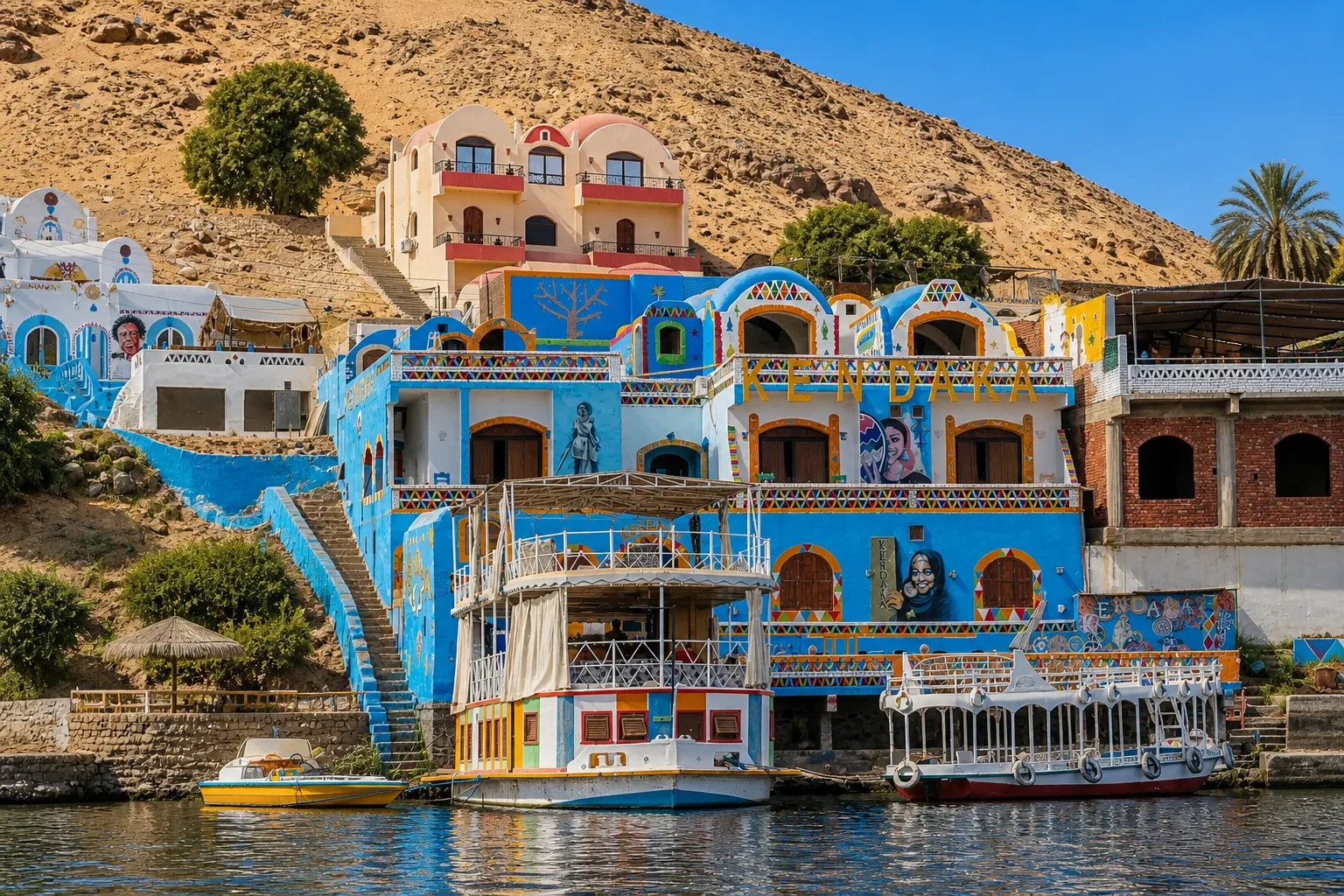
The designation of Aswan as the Nubian City reflects the dominant cultural character that distinguishes it from all other Egyptian cities. While Aswan is administratively and linguistically Arab-Egyptian in its public life, its most distinctive and most immediately felt character is Nubian, shaped by the large and culturally proud Nubian community that constitutes a significant portion of its population, that gives its architecture, its music, its food, and its social atmosphere a distinctive warmth, color, and cultural depth unlike anything in Cairo, Luxor, or any other major Egyptian city. Walking through the streets of Aswan, hearing Nubian music from a passing radio, seeing the brilliantly painted facades of Nubian homes in the west bank villages across the water, tasting karkade hibiscus tea in a riverside cafe, and watching feluccas sail past the black granite boulders of the First Cataract, every traveler feels immediately that Aswan is a different Egypt, an Egypt that opens onto Africa and onto the most ancient and most enduring of all the Nile Valley's human traditions.
Who Built Aswan?
Aswan as a major settlement and administrative center was built and developed over more than five thousand years by an extraordinary succession of civilizations, each of which added its own layer to the accumulated cultural heritage of the First Cataract city. The earliest inhabitants of the Aswan region were the Predynastic communities of the First Cataract who established the earliest settlements on and around Elephantine Island from approximately 3500 BCE onwards, exploiting the strategic position of the island at the First Cataract to control the trade routes between the Egyptian Nile Valley and the lands of Nubia and sub-Saharan Africa. The pharaohs of the Old Kingdom, Middle Kingdom, and New Kingdom developed the city of Elephantine-Aswan as the most important administrative and commercial center on the southern frontier of the Egyptian state, building temples to the local gods Khnum and Satet, establishing a network of quarrying operations in the granite outcrops of the First Cataract, and organizing the trading expeditions to Nubia that brought gold, ivory, ebony, and exotic animals to the pharaonic court.
The Ptolemaic rulers of Egypt developed Aswan as a significant center of the southern Nile Valley, constructing or rebuilding temples throughout the First Cataract region including the great island complex of the Temple of Isis at Philae and contributing to the development of the city's commercial and administrative infrastructure. The Roman emperors continued this process, adding to the temples and maintaining the commercial importance of the First Cataract crossing point. The Islamic period transformed the city from a temple-centered ancient town to a modern urban center with its current name of Aswan, derived from the ancient Egyptian Swenet and preserved through the Coptic Syene to the modern Arabic form. The Ottoman period integrated Aswan into the broader administrative structure of Egypt. The modern development of the city accelerated dramatically with the construction of the Aswan Low Dam in 1902 and the Aswan High Dam in 1970, which transformed Aswan from a moderately important provincial city into the primary economic and administrative center of Egypt's southernmost region and one of the most visited heritage tourism destinations in the country.
The Key Figure Of Ancient Aswan: The Governors Of Elephantine
The most historically significant individuals associated with the ancient city of Aswan are the Old Kingdom Governors of Elephantine, a hereditary line of nomarchs who served as the primary administrators of the southernmost province of the Egyptian state and whose rock-cut tombs, carved into the western desert cliffs above the modern city of Aswan on the plateau known as the Qubbet el-Hawa (Dome of the Wind), provide some of the most vivid and most historically detailed biographical inscriptions from any period of ancient Egyptian history. These governors, whose office was hereditary and whose authority over the First Cataract region was essentially independent within the framework of overall pharaonic sovereignty, organized and led the trading expeditions to Nubia, negotiated with the Nubian chiefs, supervised the granite quarrying operations that supplied the building material for the royal monuments of the Old Kingdom, and reported directly to the pharaoh on conditions in the southern borderlands.
Among the most celebrated of these governors was Harkhuf, who served under the pharaohs Merenre and Pepi II of the 6th Dynasty around 2280 BCE and who conducted four major expeditions to the land of Yam in the far south of Nubia, returning with gold, incense, oils, leopard skins, elephant tusks, and on his third expedition a dancing dwarf that delighted the young pharaoh Pepi II so much that the king wrote him a personal letter promising extraordinary rewards if the dwarf arrived at court safely. Harkhuf's tomb on the Qubbet el-Hawa hill, accessible by a steep staircase above the Aswan Corniche, preserves the full text of Pepi II's letter and Harkhuf's own account of his expeditions, making it one of the most directly human and most historically engaging biographical texts from any period of ancient Egyptian history. Another great governor, Pepiankh the Middle, led military campaigns deep into Nubia under Pepi II and left similarly detailed biographical accounts of his military and diplomatic activities in his own Qubbet el-Hawa tomb. These extraordinary men, whose careers connected the richest agricultural civilization of the ancient world with the gold mines, elephant herds, and trade routes of sub-Saharan Africa through the natural gateway of the First Cataract at Aswan, are the defining historical figures of the ancient city and deserve to be far better known than they are in the general heritage literature of ancient Egypt.
Aswan Location In Egypt
Aswan is located at approximately 24 degrees north latitude and 33 degrees east longitude, on the east bank of the Nile at the First Cataract, approximately 550 kilometers south of Cairo, 220 kilometers south of Luxor, and approximately 280 kilometers north of the Sudan border. The city sits at an elevation of approximately 85 meters above sea level, slightly higher than the Nile Valley to the north due to the granite bedrock of the First Cataract that raises the land surface around the river crossing. The Nile at Aswan is approximately 500 meters wide between the city Corniche on the east bank and the west bank at this point, with Elephantine Island dividing the river into two channels at the city center, the wider navigable eastern channel between the city and Elephantine and the narrower western channel between Elephantine and the west bank. To the south of the city, the reservoir between the old Aswan Low Dam and the Aswan High Dam creates a broad expanse of water dotted with black granite islands including the island of Agilkia where the Philae Temple stands. WOW Egypt Tours provides private air-conditioned transportation to and from Aswan on all Egypt Tours Packages, Nile River Cruise itineraries, and Lake Nasser Cruise programmes.
Aswan Fun Facts
Aswan is one of the sunniest and driest cities in the world, receiving virtually no rainfall throughout the year and enjoying an average of more than 3,800 hours of sunshine annually, making it one of the sunniest cities on earth. The city is also one of the hottest, with summer temperatures regularly exceeding 40 degrees Celsius and with the combination of intense solar radiation, low humidity, and the heat-absorbing black granite bedrock of the First Cataract creating one of the most intense summer climates of any inhabited city in Africa or the Middle East. This extraordinary solar intensity was recognized and exploited by the ancient Greeks and Romans, who noted that at Aswan (which they called Syene) the sun was directly overhead at noon on the summer solstice, casting no shadow in a deep well. The ancient Greek scholar Eratosthenes famously used this observation, combined with measurements of the shadow angle at Alexandria on the same day, to calculate the circumference of the Earth around 240 BCE, arriving at a figure remarkably close to the modern measured value, making Aswan the location of one of the most important scientific observations of the ancient world.
The ancient name of Aswan, Swenet in ancient Egyptian and Syene in Greek, gave geology one of its standard rock type names: Syenite, the coarse-grained igneous rock similar to granite that is quarried from the First Cataract outcrops and that was used throughout antiquity for the construction of monuments throughout the Nile Valley. The ancient pink granite of the Aswan quarries, recognizable by its distinctive rose-pink color and coarse crystalline texture, appears in monuments throughout Egypt and was exported throughout the ancient Mediterranean world as the supreme luxury building and monument material of the ancient world. The Aswan granite quarries were active for more than three thousand years of continuous use, from the earliest Dynastic Period through the Roman era, and the landscape of the First Cataract still bears the marks of this extraordinary sustained industrial activity in the cutting channels, quarrymen's inscriptions, and abandoned blocks that litter the granite outcrops throughout the Aswan area.
Why Is Aswan Called The Nubian City?
Aswan is called the Nubian City for two interrelated reasons: its geographical position at the threshold of the ancient Nubian world, and the living presence of the Nubian community that gives the city its most distinctive cultural character today. Geographically, Aswan sits precisely at the boundary between the Egyptian Nile Valley to the north and the Nubian Nile Valley to the south, a boundary marked by the natural barrier of the First Cataract rapids that made the Nile impassable for loaded boats at this point and that defined for more than five thousand years the southern limit of direct Egyptian administrative control. Beyond the First Cataract to the south lay the land of Nubia, the ancient land of Kush, the gold-bearing desert and the great Nubian kingdoms of Kerma, Napata, and Meroe, and the vast African interior whose exotic commodities entered the Egyptian economy through the gateway at Aswan. The city of Aswan was therefore from its very beginning a Nubian threshold, the point where Egypt ended and Nubia began, and this frontier character has shaped its identity for more than five thousand years.
The living Nubian character of modern Aswan derives from the large and culturally proud Nubian community that constitutes a significant portion of the city's population, displaced from their traditional riverside villages south of Aswan by the construction of the Aswan High Dam and the creation of Lake Nasser in the 1960s, and now concentrated in the west bank Nubian villages visible from the Aswan Corniche, in island communities on the Nile, and in specific neighborhoods of the city itself. This community, whose distinctive painted architecture, music, language, food, and social traditions give the city of Aswan a cultural character unlike any other city in Egypt, is the most immediate and most human expression of the Nubian identity that has defined the First Cataract region since the very beginning of Egyptian civilization. To call Aswan the Nubian City is therefore not merely a tourist marketing description but a precise historical and cultural characterization of the city's essential identity.
Aswan History
The history of Aswan as a human settlement stretches back more than five thousand years to the earliest Predynastic communities of the First Cataract region, with the island of Elephantine serving as the primary settlement nucleus from which the ancient city of Aswan developed over the course of the entire pharaonic period. As the most important administrative and commercial center on the southern frontier of the Egyptian state, ancient Aswan occupied a position of strategic and economic significance that kept it continuously important throughout the Old, Middle, and New Kingdoms, through the Late Period, the Ptolemaic Period, and the Roman Period, with each successive era adding its own monuments, its own administrative infrastructure, and its own population to the accumulated heritage of the First Cataract city.
The transition from ancient to medieval Aswan was gradual, with the Christian period bringing new religious institutions and social organization to the First Cataract region while the ancient temples fell progressively out of use in the 4th and 5th centuries CE. The Arab conquest of Egypt in 641 CE transformed the public language and the official religion of the city while leaving its fundamental geographic and commercial character intact, as the First Cataract crossing remained an important point of transit between the Egyptian Nile Valley and the Christian Nubian kingdoms to the south. The Ottoman period integrated Aswan into the broader Ottoman administrative system of Egypt, and the 19th century British colonial period brought the first modern infrastructure development to the city, including the construction of the Aswan Low Dam between 1898 and 1902 that was one of the major colonial engineering achievements of the era. The construction of the Aswan High Dam between 1960 and 1970 and the resulting displacement of the Nubian community transformed both the physical and the human landscape of the city in ways that continue to shape its character today, creating the living Nubian community of resettled and returned families that gives modern Aswan its most distinctive cultural identity.
The Story Of Aswan As The Gateway Between Two Worlds
The defining story of Aswan throughout its five-thousand-year history is the story of a city at the threshold between two worlds, the Egyptian world of the Nile Valley to the north and the African world of Nubia and the sub-Saharan interior to the south, whose position at this threshold gave it a unique character as a city that was simultaneously Egyptian and not Egyptian, part of the Nile Valley civilization and part of the African world beyond it. The First Cataract at Aswan was not simply a geographical boundary but a cultural and cosmic one, the point where the familiar ordered world of the Egyptian Nile gave way to the wild and spiritually powerful landscape of the African south, where the Nile emerged from the sacred caverns that the ancient Egyptians believed lay beneath the granite bedrock of the cataracts, and where the trading caravans from the gold mines of Nubia, the ivory markets of the Sudan, and the incense routes of equatorial Africa arrived with the exotic commodities that enriched the Egyptian state and fueled the construction of its monuments.
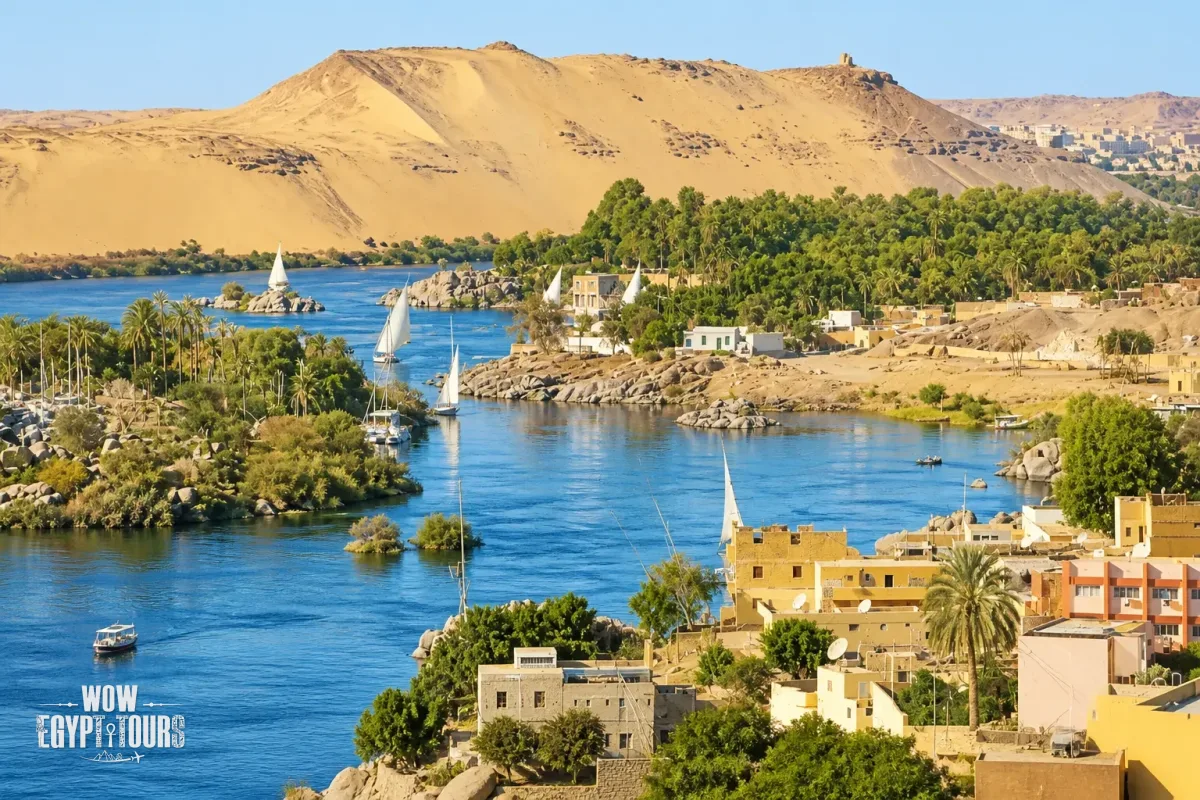
This dual identity as a threshold city, simultaneously the southernmost point of Egypt and the northernmost point of the Nubian world, is not merely an ancient historical fact but a living reality that visitors to Aswan experience directly in the present. The brilliantly painted Nubian houses visible from the Corniche across the Nile, the sound of Nubian music from the riverside cafes, the sight of the feluccas with their triangular sails moving between the black granite boulders of the First Cataract, the spice market of the Aswan souk with its African as well as Egyptian products, and the extraordinary warmth and hospitality of the Nubian people who welcome visitors into their community all communicate, in immediate and sensory ways, the dual character of a city that has always been the meeting point of two great civilizations, and whose current beauty and cultural richness is the direct product of this five-thousand-year history at the threshold between Egypt and Africa.
The Major Attractions Of Aswan The Nubian City
The Temple Of Isis At Philae
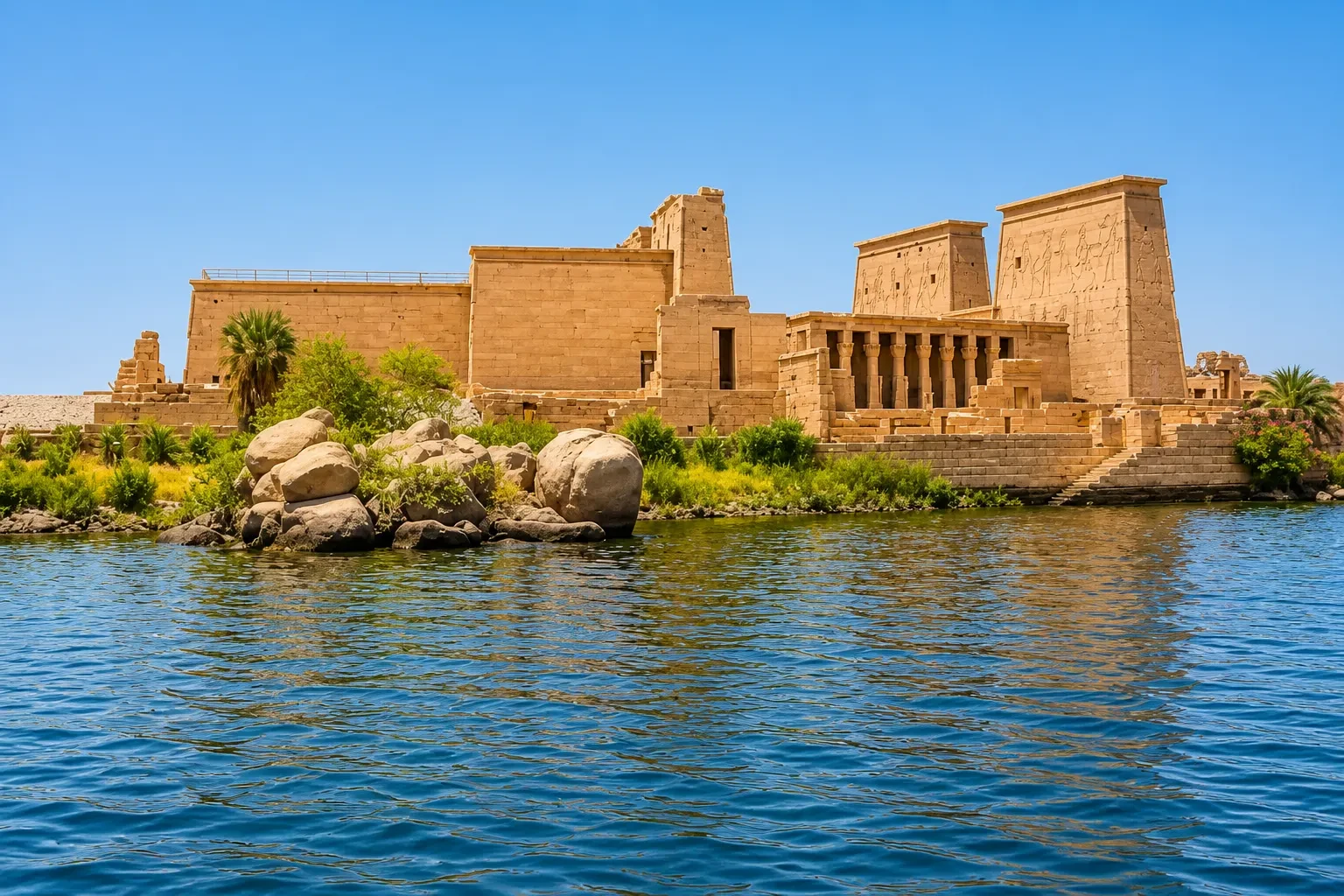
The Temple of Isis at Philae is the most romantically situated and most hauntingly beautiful ancient monument in all of Aswan, accessible exclusively by motorboat across the reservoir waters south of the city to the island of Agilkia where the entire Ptolemaic and Roman temple complex was reassembled following the UNESCO International Campaign rescue from the rising waters of Lake Nasser between 1972 and 1980. The temple is the site of the last ancient Egyptian hieroglyphic inscription, carved in 394 CE, and the last functioning ancient Egyptian temple cult, maintained until approximately 550 CE, making it the final chapter in the three-thousand-year story of pharaonic religious tradition. The Kiosk of Trajan, reflected perfectly in the surrounding water, is the most photographed single structure in Aswan and one of the most iconic images of ancient Egyptian architecture in the world. The evening Sound and Light Show at Philae is the most atmospheric of any Sound and Light Show in Egypt.
The Unfinished Obelisk
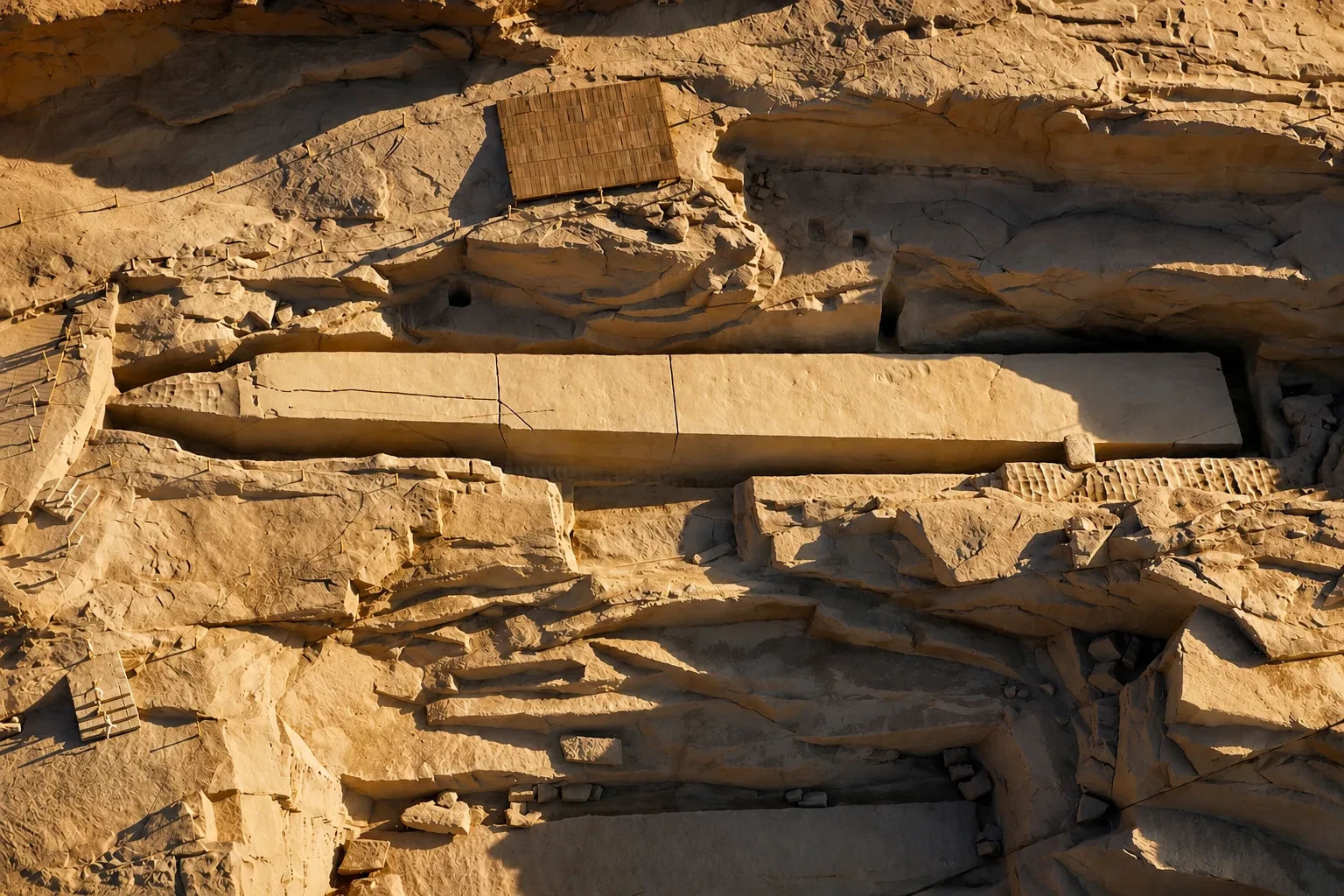
The Unfinished Obelisk in the ancient granite quarries of Aswan is the largest ancient Egyptian obelisk ever attempted, abandoned in its quarry floor when a fatal crack appeared in the granite during cutting, and the most informative single document of the ancient Egyptian obelisk-quarrying technique available anywhere in the world. Measuring approximately 41.75 meters in length and estimated to weigh approximately 1,168 tonnes, the Unfinished Obelisk reveals in exact physical detail how the ancient Egyptians went about extracting these enormous stone monuments from the living rock, with the cutting channels, the dolerite pounder tools, and the partially completed obelisk shape all preserved in the quarry floor exactly as the ancient workers left them more than three thousand years ago.
The Aswan High Dam
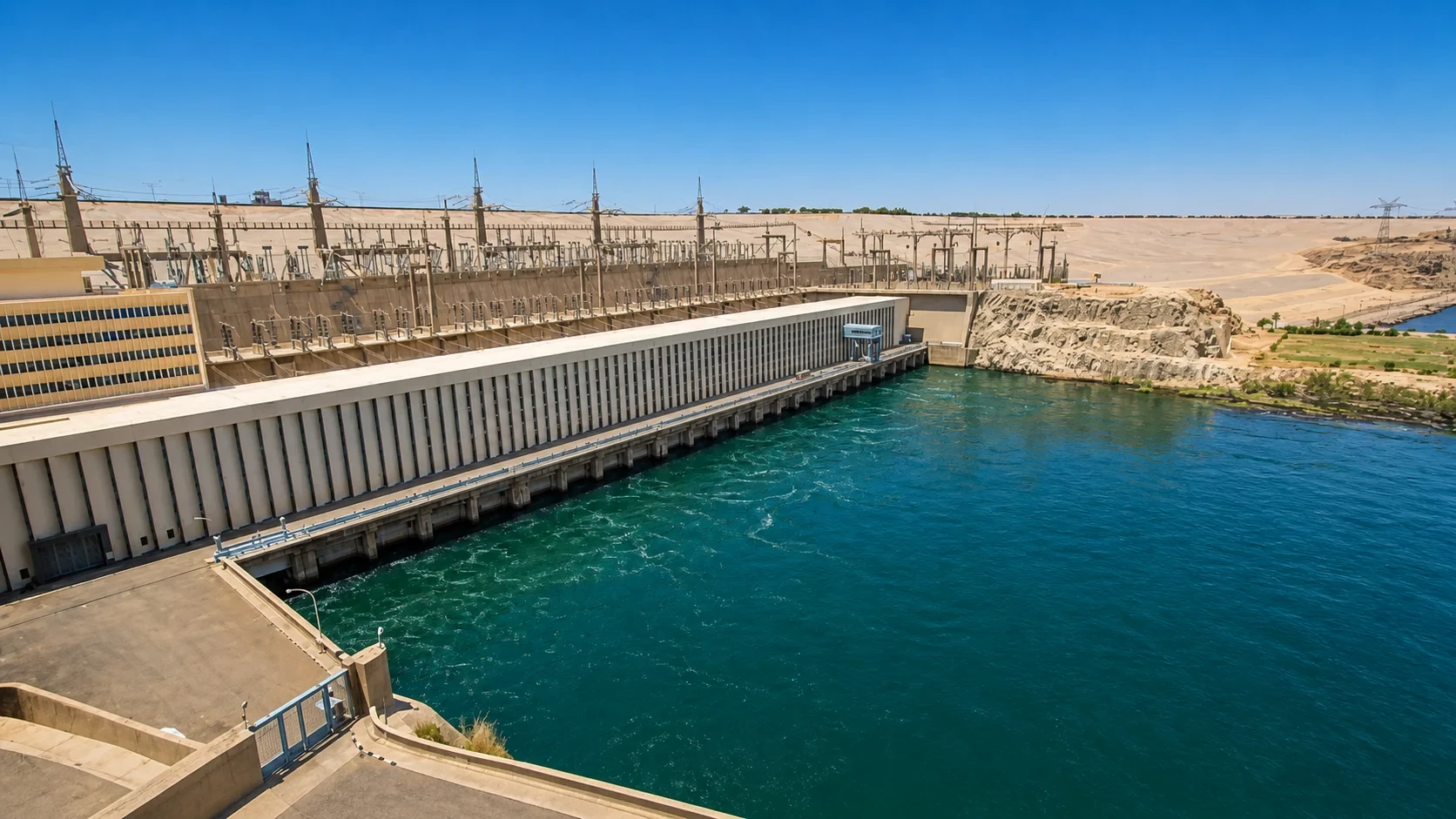
The Aswan High Dam, one of the most consequential engineering achievements of the 20th century, stands approximately 13 kilometers south of the city and provides the most dramatic available illustration of the transformation of the ancient Nile landscape by modern engineering ambition. The dam created Lake Nasser, the third largest artificial lake in the world by volume, and its construction required the UNESCO International Campaign that rescued the Philae temples and the Abu Simbel temples from permanent submersion, establishing the precedent for all subsequent international heritage conservation efforts. The view from the dam crest across the vast expanse of Lake Nasser to the south is one of the most dramatic available in the Aswan area.
The Nubian Village
The Nubian Village communities on the west bank of the Nile and on the islands of the First Cataract are the most human and most immediately memorable experience available in Aswan, offering a living encounter with one of the oldest, most distinctive, and most resilient indigenous cultures in the African Nile Valley. The brilliantly painted Nubian houses with their geometric and figurative decoration, the traditional hospitality of karkade hibiscus tea and Nubian sweets, the craft traditions of embroidered textiles and painted pottery, and the legendary warmth of the Nubian welcome make a village visit consistently the experience that travelers to Aswan describe as the most personally affecting of their entire Egypt journey.
Elephantine Island
Elephantine Island, in the center of the Nile directly opposite the Aswan Corniche, is the most archaeologically significant ancient site in the city of Aswan, a small granite island that has been continuously inhabited for more than five thousand years and that served as the most important frontier post, religious sanctuary, and commercial gateway between Egypt and the lands of Nubia throughout the entire pharaonic period. The island is home to the ancient Nilometer, the Temple of Khnum remains, the Temple of Satet, the Aswan Museum, and the ongoing German Archaeological Institute excavations that have been systematically revealing the complete five-thousand-year occupation sequence of the island since 1969.
Kitchener's Island Aswan Botanical Garden
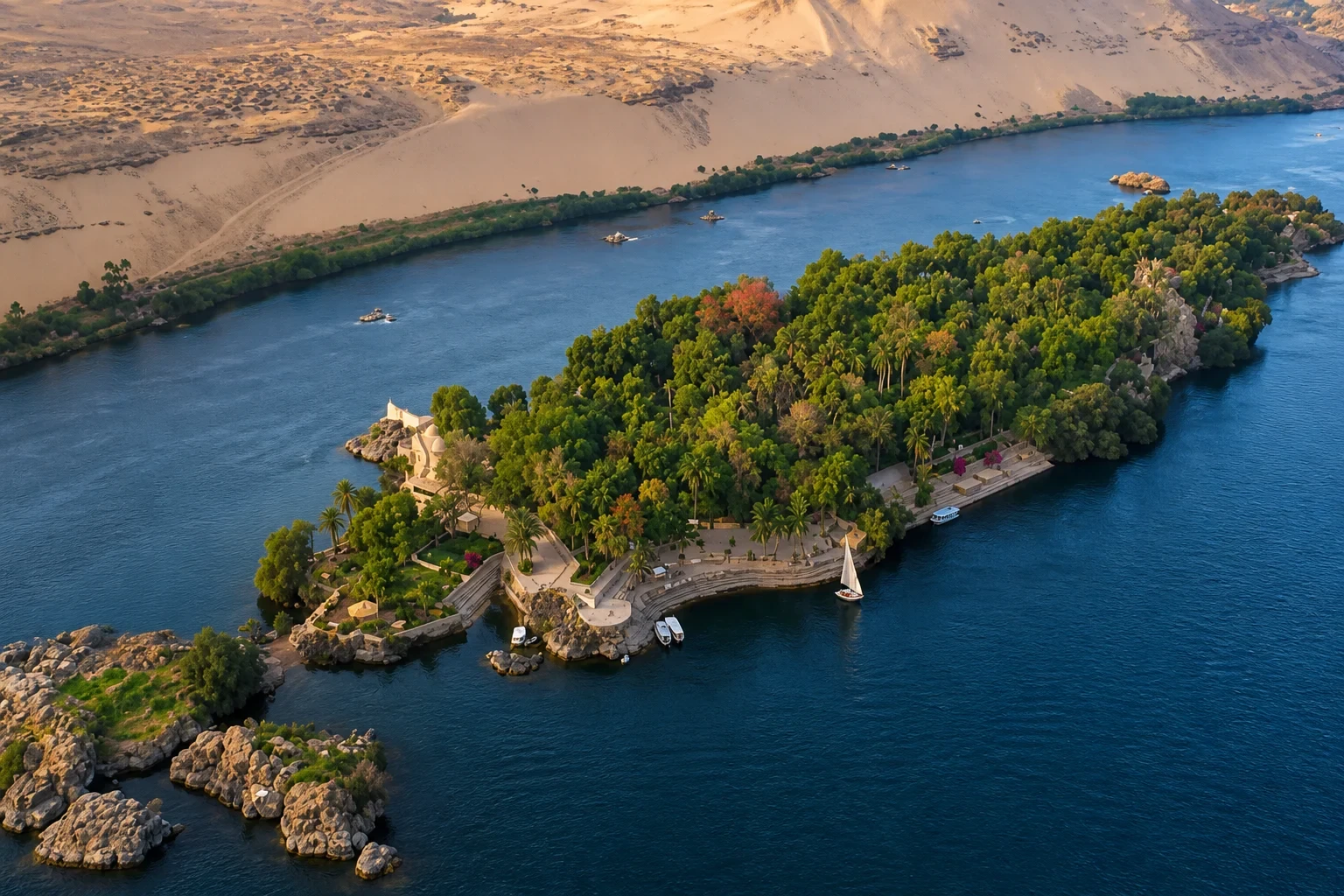
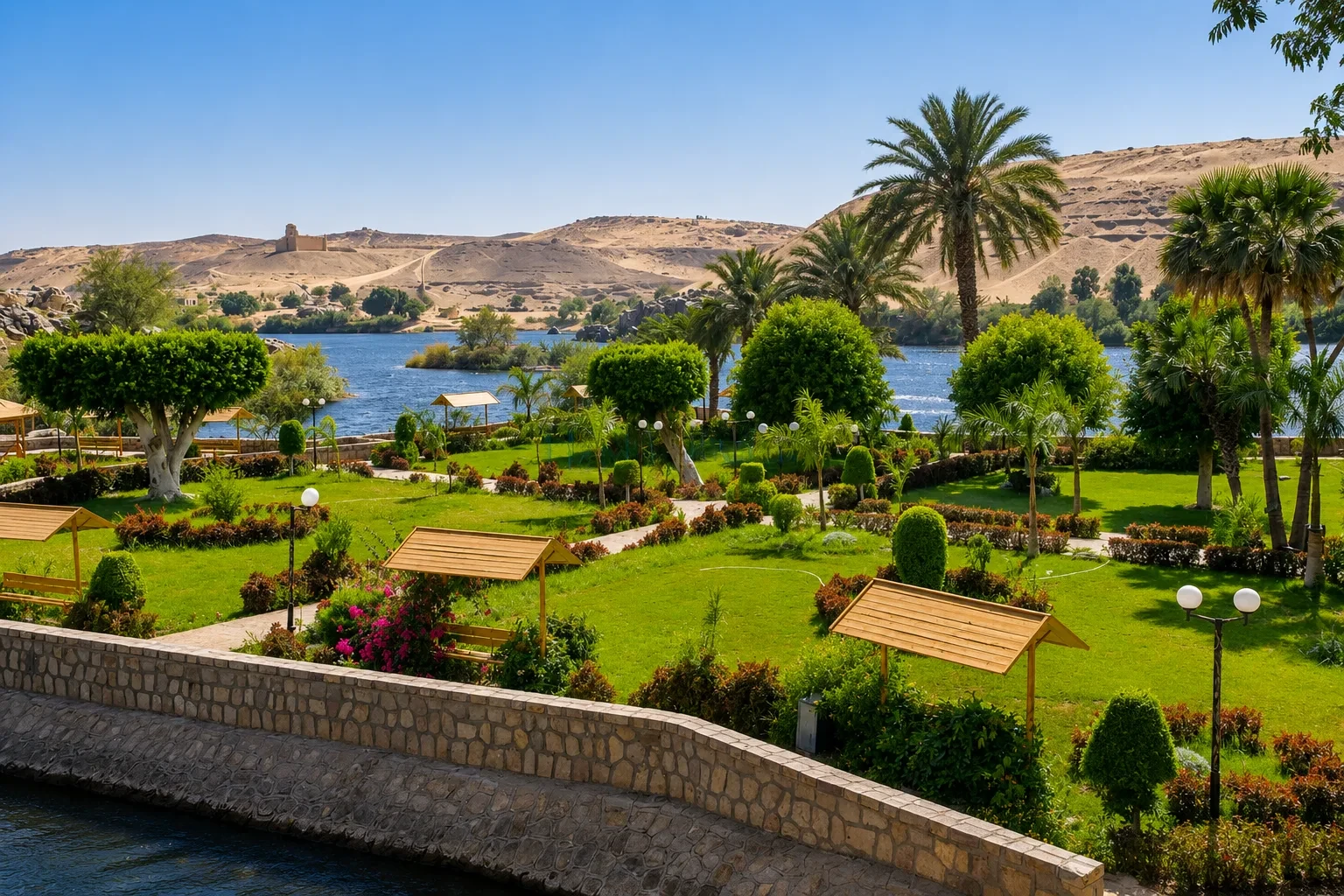
The Aswan Botanical Garden on Kitchener's Island, created by Field Marshal Kitchener at the end of the 19th century using his connections with the colonial botanical garden network to stock the island with plants from four continents, is the most unexpectedly beautiful natural destination in Aswan, a lush tropical paradise of mature palms, exotic trees, and flowering shrubs in a Nile island setting of incomparable visual beauty. The island is also one of the best birdwatching locations in the Aswan area, with a diverse resident and migratory bird population attracted by the dense vegetation and the surrounding Nile water. Winner of the most beautiful garden award, the island provides the most physically restorative and most visually enchanting natural experience available anywhere in Upper Egypt.
The Nubian Museum
The Nubian Museum, inaugurated in 1997 and winner of the Aga Khan Award for Architecture in 2001, is the finest and most intellectually comprehensive museum in all of Aswan and the primary institution dedicated to the history, culture, and artistic achievements of the Nubian people from the earliest prehistoric occupation of the First Cataract region through the present day. The museum provides the essential cultural preparation for every other experience in Aswan and on the Lake Nasser heritage circuit, giving visitors the historical context and the cultural vocabulary that makes the monuments, the living communities, and the natural landscape of the First Cataract fully comprehensible and fully meaningful.
The Qubbet El-Hawa Tombs
The Qubbet el-Hawa, the Dome of the Wind, is the desert plateau above the west bank of the Nile opposite Aswan where the rock-cut tombs of the ancient Governors of Elephantine are carved into the sandstone cliffs, providing some of the most historically detailed and most personally vivid biographical inscriptions from any period of ancient Egyptian history. The tombs of Harkhuf, Pepiankh, and other Old Kingdom governors record the expeditions to Nubia, the trade with sub-Saharan Africa, and the management of the First Cataract frontier in inscriptions of extraordinary directness and human interest, complemented by beautifully painted tomb chapel decoration from the Middle Kingdom period. The hilltop setting provides panoramic views across the Nile to the city of Aswan and southward along the river to the First Cataract, making the Qubbet el-Hawa visit both an archaeological and a scenic experience of the highest order.
The Aswan Souk And Corniche
The Aswan souk, the market district of the city, is one of the most atmospheric and most genuinely African market environments in all of Egypt, offering a range of products that reflects the city's position at the threshold between the Egyptian Nile Valley and the African world to the south. African spices, dried hibiscus, doum palm products, traditional Nubian textiles and embroideries, silver and gold jewelry in Nubian traditional styles, carved wooden items, and the complete range of Egyptian souvenir products are all available in the souk's narrow market streets and its permanent shop fronts. The Aswan Corniche, the waterfront promenade that runs along the east bank of the Nile, is one of the most pleasant urban riverside walkways in Egypt, offering continuous views across the Nile to Elephantine Island and the west bank throughout its length, and is particularly beautiful in the early morning and late afternoon when the quality of the light on the water and the desert hills is at its most spectacular.
Why Is Aswan Important?
Aswan is important for a combination of historical, cultural, natural, and contemporary reasons that together make it one of the most multidimensionally significant cities in all of Egypt. Historically, it was the most important frontier city and commercial gateway on the southern border of the ancient Egyptian state for more than two thousand years, the point through which all trade with Nubia and sub-Saharan Africa passed and from which the Egyptian colonial administration of Nubia was organized throughout the New Kingdom. Its position at the First Cataract made it the site of some of the most important ancient administrative, religious, and industrial activities in the Nile Valley, leaving a heritage of monuments and archaeological deposits that is among the richest of any city in Egypt outside Luxor and Cairo. Culturally, it is the primary center of the living Nubian civilization of Egypt, the city where the most distinctive and most historically significant indigenous culture of the Upper Nile Valley maintains its strongest contemporary presence and where the interaction between ancient heritage and living tradition is most immediately and most powerfully felt.
In contemporary terms, Aswan is important as the southern anchor of Egypt's primary heritage tourism circuit, providing the climactic conclusion of the Nile Valley journey from Cairo and Luxor and the gateway to the extraordinary Nubian monument heritage of Lake Nasser and the Abu Simbel temples to the south. WOW Egypt Tours positions Aswan at the center of all comprehensive Egypt itineraries, recognizing it as the single city that most completely represents the full range of Egypt's heritage, cultural, and natural attractions in a single destination of incomparable beauty and richness.
What Are Some Interesting Facts About Aswan The Nubian City?
Where Eratosthenes Measured The Earth
One of the most remarkable scientific facts associated with the city of Aswan is that it was the key location in the first scientifically rigorous measurement of the Earth's circumference, conducted by the ancient Greek scholar Eratosthenes around 240 BCE. Eratosthenes knew, from accounts and from his own observation, that at Aswan (which the Greeks called Syene) the sun was directly overhead at noon on the summer solstice, casting no shadow in a deep well and illuminating the water at the bottom. He also knew that at Alexandria, approximately 800 kilometers to the north, the sun was not directly overhead on the same day but cast a shadow at an angle of approximately one-fiftieth of a full circle. By combining this angular measurement with the known distance between Aswan and Alexandria, he calculated the circumference of the Earth as approximately 252,000 stades, which depending on the precise length of the stade unit gives a figure very close to the modern measured value of approximately 40,000 kilometers. This calculation, performed using the position of the sun at Aswan as its primary data point, was one of the most impressive scientific achievements of the ancient world and made the city of Aswan a significant location in the history of human scientific knowledge centuries before the modern era.
The City Where Ancient Egypt Ended And Africa Began
For the ancient Egyptians, the First Cataract at Aswan was not merely a geographical feature but a cosmic boundary, the point where the ordered world of the Nile Valley gave way to the wild and spiritually powerful landscape of the south, where the sacred caverns from which the annual Nile flood was believed to emerge lay beneath the granite bedrock, and where the powers of creation and destruction that the Nile represented were most immediately and most dramatically present. This cosmic significance of the First Cataract landscape gave ancient Aswan a sacred importance that went beyond its commercial and administrative functions, making it a place of pilgrimage and religious veneration as well as a frontier garrison and trading post. The great island temple of Isis at Philae, built on the threshold of this sacred southern landscape, and the ancient Nilometer on Elephantine Island where the life-giving flood was measured, are the most tangible surviving expressions of this ancient sense of Aswan as the city where the measured and ordered world of Egypt met the divine creative chaos of the African south, a significance that visitors can still feel in the extraordinary natural beauty and the concentrated spiritual power of the First Cataract landscape.
The Warmest Welcome In Egypt
Among experienced travelers to Egypt who have visited many cities along the Nile and compared the quality of the welcome and the warmth of the human encounters available in each, there is a widespread and consistent agreement that Aswan offers the warmest, the most genuine, and the most generous welcome of any city in the country. This reputation for exceptional hospitality is directly connected to the Nubian cultural tradition that permeates the city, since the legendary warmth and generosity of the Nubian people is one of the most consistently celebrated aspects of the Nubian cultural character and gives the social atmosphere of Aswan a quality of human openness and friendly curiosity toward visitors that is unlike anything in the more commercially oriented tourist environments of Cairo, Luxor, or the Red Sea resorts. Visitors who have experienced the Nubian welcome, whether in the village homes of the west bank communities, in the riverside restaurants of the Corniche, or in the friendly encounters of the daily street life of the city, consistently rate the human quality of the Aswan experience as the most moving and most personally enriching dimension of their entire Egypt journey.
What Is So Special About Aswan The Nubian City?
The Most Beautiful City On The Nile
What makes Aswan uniquely special among all the cities of the Egyptian Nile Valley is the extraordinary quality of its natural setting, which combines the dramatic geological power of the First Cataract granite landscape with the incomparable blue of the Upper Egyptian Nile in a visual composition of such beauty that virtually every traveler who reaches Aswan describes it as the most visually beautiful city they have encountered in Egypt. The combination of the black granite boulders rising from the blue water, the feluccas with their white sails moving between the islands, the green fringe of palm vegetation along the Nile banks, the golden desert hills of the west bank behind the white-painted Nubian houses, and the vast open sky of the Upper Egyptian desert creates a visual experience of such immediate and overwhelming beauty that it remains in the memory long after the archaeological details of the ancient monuments have begun to fade. No other city in Egypt offers this combination of natural grandeur, architectural beauty, and human warmth in a single river setting of such perfection, and this quality of natural and human beauty that surrounds and permeates the heritage experience of Aswan is what makes it, for most travelers who reach it, the most beloved of all the cities of the Egyptian Nile.
Where Ancient Heritage And Living Culture Are One
Aswan is also uniquely special for the degree to which ancient heritage and living culture are inseparable in the city's everyday experience. Unlike Luxor, where the ancient monuments are primarily encountered as formal heritage sites separated from the living city by barriers, entrance fees, and the social distance of the museum or archaeological park experience, in Aswan the ancient and the contemporary are woven together in the ordinary fabric of urban life. The Nubian Museum's collection of five-thousand-year-old artifacts directly mirrors the craft objects sold by Nubian women in the village market across the river. The ancient Nilometer on Elephantine Island measures the same Nile that flows past the Aswan Corniche today. The granite boulders from which the pharaohs quarried their obelisks rise from the water between the modern ferries that cross to Elephantine Island and Kitchener's Island. The Nubian music that ancient Egyptian records describe as one of the distinctive sounds of the southern frontier is still performed at weddings and festivals in the west bank villages. In Aswan, the distance between ancient civilization and contemporary life is smaller than anywhere else in Egypt, and this closeness of past and present gives the city an extraordinary sense of cultural depth and human continuity that is its most precious and most irreplaceable quality.
Aswan Through The Ages: From Ancient Swenet To The Present
The complete history of Aswan from its earliest ancient origins to the present day encompasses every major period of civilization in the Nile Valley and reflects in microcosm the entire cultural history of Egypt and Nubia from the Predynastic period to the 21st century. The ancient city of Swenet-Elephantine was at its most powerful and most historically documented during the Old Kingdom period, when the Governors of Elephantine served as the primary administrators of the southern frontier and left their extraordinary biographical inscriptions in the rock-cut tombs of the Qubbet el-Hawa. The city retained its importance throughout the Middle and New Kingdoms as a base for the military colonization of Nubia and as the commercial entrepot for the Nubian trade. The Ptolemaic period saw the construction of the great island temple complex of Philae and the development of Aswan as a significant center of the southern Ptolemaic administration. The Roman period maintained and added to the Ptolemaic heritage while increasingly integrating the city into the broader Mediterranean commercial world.
The medieval Islamic period transformed the city's public life while preserving its commercial function at the First Cataract crossing, and the Ottoman period integrated it into the broader administrative framework of Egypt without fundamentally changing its character as a frontier city at the threshold of the African world. The 19th century British colonial period brought the construction of the Aswan Low Dam and a new influx of European tourism, making Aswan one of the fashionable winter destinations of the Edwardian and interwar elite travel circuit. The construction of the Aswan High Dam between 1960 and 1970 was the single most transformative event in the modern history of the city, displacing the Nubian community from its traditional homeland and creating the resettlement communities that have gradually returned to and enriched the cultural character of contemporary Aswan. Today the city receives hundreds of thousands of visitors from around the world each year, combining Egyptological heritage tourism with the unique living cultural experience of the Nubian community and the extraordinary natural beauty of the First Cataract to create one of the most multidimensional and most personally rewarding travel destinations in the entire Middle East and Africa.
Aswan UNESCO World Heritage Status
The Aswan region encompasses multiple elements of the Nubian Monuments from Abu Simbel to Philae UNESCO World Heritage Site, inscribed in 1979, which recognizes the outstanding universal value of the collection of ancient Nubian monuments rescued from the rising waters of Lake Nasser during the UNESCO International Campaign to Save the Monuments of Nubia between 1960 and 1980. The heritage zone encompasses the Philae Temple complex on the island of Agilkia, the ancient quarry landscape of the Unfinished Obelisk, and the broader First Cataract heritage area that includes the Nilometer and ancient temple remains of Elephantine Island. Beyond the UNESCO-designated monuments, the broader Aswan heritage landscape, including the Qubbet el-Hawa tombs, the ancient quarrying installations throughout the First Cataract granite outcrops, and the living cultural heritage of the Nubian community, is recognized internationally as one of the most important concentrations of combined ancient and living cultural heritage in the African world.
Best Time To Visit Aswan The Nubian City
The best time to visit Aswan is during the cooler months from October through April, when temperatures are moderate and comfortable for the full range of outdoor heritage and cultural experiences that the city and its surroundings offer. December, January, and February are the coolest and most popular months, with daytime temperatures typically ranging from 18 to 28 degrees Celsius, making outdoor exploration of the Unfinished Obelisk quarry, the Philae Temple island, the Nubian Village streets, the Qubbet el-Hawa tombs, and the Elephantine Island archaeological site all comfortable throughout the day. The spring months of March and April offer excellent conditions with moderate temperatures and some of the finest natural light of the year for photography of the First Cataract landscape and the ancient monuments. The summer months from May to September bring intense heat to Aswan, with temperatures regularly exceeding 40 degrees Celsius, but the air-conditioned Nubian Museum provides a cool and intellectually rewarding indoor alternative, and early morning visits to the outdoor sites can still be managed effectively. WOW Egypt Tours provides expert guidance on the optimal seasonal timing for all Aswan activities on all Egypt Tours Packages, Nile River Cruises, and Lake Nasser Cruise itineraries.
Getting To Aswan
Aswan is accessible from Cairo and from the major international arrival points in Egypt by several different modes of transport. Aswan International Airport receives multiple daily flights from Cairo, typically lasting approximately 1 hour and 15 minutes, as well as direct international flights from several European and regional cities, making it one of the most conveniently air-accessible cities in Upper Egypt. Aswan Railway Station receives multiple daily train services from Cairo, with the journey taking approximately 12 to 14 hours by express train, and the overnight sleeper train from Cairo to Aswan being one of the most comfortable and most atmospheric rail experiences available in Egypt, arriving in Aswan at dawn with the First Cataract landscape bathed in morning light. Nile cruise ships arrive in Aswan from Luxor over the course of four to eight days depending on the itinerary, providing the most immersive and most atmospheric arrival experience of any transport mode. WOW Egypt Tours arranges all transportation to and from Aswan on all Egypt Tours Packages, Nile River Cruise itineraries, and Lake Nasser Cruise programmes, ensuring the most comfortable and most convenient possible arrival and departure experience for all guests.
How Long To Spend In Aswan
A minimum of two full days in Aswan is essential for any traveler who wants to experience even the most important of the city's attractions, encompassing the standard Aswan highlights programme of the Unfinished Obelisk, the Aswan High Dam, and the Philae Temple on the first day, and a combination of the Nubian Village, Elephantine Island, and the Nubian Museum on the second day. Three to four days allow a more relaxed and more comprehensive experience that can also include the Qubbet el-Hawa tombs on the west bank, the Kitchener's Island Botanical Garden, a felucca sailing experience on the First Cataract, a visit to the Philae Sound and Light Show in the evening, and a day excursion to Abu Simbel by air or by road. For travelers embarking on a Lake Nasser Cruise from Aswan, the cruise itinerary typically includes one or two Aswan days at the embarkation or disembarkation end of the journey, which should be combined with independent day programme activities to make the most of the extraordinary concentration of heritage and cultural experiences available in the First Cataract city. WOW Egypt Tours designs customized Aswan itineraries of any duration for all guests.
Tips For Visiting Aswan
Visit the Nubian Museum at the beginning of your Aswan stay rather than at the end, as the cultural context it provides for the entire Aswan heritage and cultural experience significantly enhances the quality and the depth of understanding available at every subsequent site. Plan the Philae Temple visit to include the evening Sound and Light Show, which is the most atmospheric of any Sound and Light Show in Egypt and takes full advantage of the unique island setting. Combine the Elephantine Island archaeological visit with the Kitchener's Island Botanical Garden in a single half-day island excursion for the most time-efficient experience of the two island destinations. Allow genuine time in the Nubian Village and do not rush the experience, as the most rewarding moments of any Nubian Village visit are the slow and unhurried encounters with host families, craftspeople, and the community atmosphere that reveal themselves gradually rather than on a timed tour schedule. A licensed guide from WOW Egypt Tours who is knowledgeable about both ancient Egyptology and Nubian culture is essential throughout the Aswan programme. Take time to walk the Aswan Corniche, particularly in the early morning and late afternoon, as the views across the Nile in this light are among the most beautiful in all of Egypt. Visit the Aswan souk in the early morning when it is at its most atmospheric and its most genuine. Carry water, a hat, and sunscreen for all outdoor activities.
What To Wear In Aswan
Aswan's combination of outdoor archaeological sites, island excursions, living community visits, museum interiors, and riverside urban strolls requires practical and versatile clothing for any visit. Lightweight, breathable clothing covering the shoulders and knees is recommended throughout as a mark of respect for both the ancient sacred spaces and the Muslim Nubian community, as well as for practical protection from the intense Aswan sun. A wide-brimmed hat and generous sunscreen are essential for all outdoor activities regardless of season. Comfortable, closed-toe walking shoes with good grip are necessary for the uneven surfaces of the ancient quarry landscape and the Elephantine Island archaeological site, while flat comfortable shoes are adequate for the museum and the Nubian Village streets. For the Philae Temple motorboat journey, flat shoes with good grip are preferred for boarding and alighting from the boat. A warm layer is recommended for winter evenings when temperatures can drop significantly after sunset, particularly on the water during the Philae Sound and Light Show. A light waterproof layer is useful for the motorboat transfers in windy conditions.
Photography In Aswan
Aswan is one of the finest photography destinations in all of Egypt, offering an extraordinary range of subjects from the ancient monuments and archaeological sites to the natural landscape of the First Cataract, the architectural beauty of the Nubian houses, the human warmth of the community encounters, and the spectacular Nile waterscape with its feluccas, granite boulders, and desert horizon. The Corniche waterfront provides beautiful photography of the Nile and the west bank at all times of day, with the early morning light particularly spectacular as it illuminates the granite boulders and the white felucca sails against the blue water. The Nubian Village streets offer some of the most visually rewarding architectural photography available in Egypt, with the painted house facades creating compositions of extraordinary color and geometric complexity that reward careful attention and a willingness to explore beyond the main tourist areas. Photography rules vary by site: flash photography is prohibited near all ancient carved and painted surfaces; photography permits may be required inside some museum galleries; photography in the Nubian Village requires respectful engagement with community members before pointing a camera. Professional photography or filming requires separate permits at all ancient sites and museums.
Aswan Day Tours
Aswan Highlights Half-Day Tour: Philae Temple, Unfinished Obelisk, And High Dam
This essential half-day tour covers the three most visited and most significant monuments in the immediate Aswan area, combining the sacred beauty of the Temple of Isis at Philae with the industrial revelation of the Unfinished Obelisk and the engineering drama of the Aswan High Dam in a single coherent morning programme.
Duration
Half day from Aswan, approximately 30 to 45 minutes at the Unfinished Obelisk, 30 minutes at the High Dam, and 1 to 1.5 hours at Philae Temple.
Includes
Private air-conditioned transportation from Aswan hotel, motorboat transfer to and from Philae Island, private licensed Egyptologist guide, and entrance fees to all three sites.
Full Aswan Cultural Day: Nubian Museum, Nubian Village, Elephantine Island, And Philae Temple
This comprehensive full-day tour covers the complete range of Aswan cultural and heritage experiences, beginning with the Nubian Museum for essential cultural context, continuing to a traditional Nubian Village for living cultural encounter, adding the archaeological depth of Elephantine Island, and concluding with the sacred beauty of the Temple of Isis at Philae.
Duration
Full day from Aswan with approximately 1.5 hours at the Nubian Museum and appropriate time at each additional site.
Includes
Private air-conditioned transportation from Aswan hotel, motorboat transfers for all island and village visits, private licensed Egyptologist guide with Nubian cultural expertise, and entrance fees to all included sites.
Complete Aswan Experience: Two-Day Aswan Programme
This two-day programme covers the complete range of Aswan attractions in the most comprehensive and most relaxed format available, dedicating the first day to the Aswan highlights and the Nubian Museum and the second day to the island experiences, living cultural encounters, and optional Qubbet el-Hawa tombs visit.
Day One
Nubian Museum in the morning for cultural preparation. Unfinished Obelisk and Aswan High Dam after lunch. Philae Temple in the late afternoon. Optional Philae Sound and Light Show in the evening.
Day Two
Elephantine Island and Kitchener's Island Botanical Garden in the morning. Nubian Village on the west bank in the afternoon. Optional Qubbet el-Hawa tombs visit. Optional felucca sailing on the Nile at sunset.
Includes
Private air-conditioned transportation throughout, motorboat transfers for all island and village visits, private licensed Egyptologist guide with Nubian cultural expertise, and entrance fees to all included sites.
Dahabiya Nile River Cruise
A Dahabiya Nile River Cruise is a small-vessel sailing experience on the Nile between Luxor and Aswan aboard a traditional wooden dahabiya, the most intimate and most historically authentic way to experience the Nile River Valley between the two greatest cities of ancient Egypt. WOW Egypt Tours operates dahabiya cruises with private cabins, all meals, a private licensed Egyptologist guide on board, and guided shore excursions at every stop. Aswan is the embarkation or disembarkation point for all Dahabiya itineraries, with a comprehensive day programme of Aswan highlights included at the beginning or end of every cruise.
4 Days 3 Nights Dahabiya Nile River Cruise From Aswan To Luxor
Route: Aswan to Luxor, sailing north.
Itinerary
Day 1: Embarkation in Aswan. Guided visits to Philae Temple, the Aswan High Dam, and the Unfinished Obelisk. Optional Nubian Museum and Nubian Village visits. Sail north to Kom Ombo. Guided visit to Kom Ombo Temple and Crocodile Museum. Continue to Gebel el Silsila. Overnight on board.
Day 2: Guided visit to Gebel el Silsila. Sail to the Village of Basaw. Guided visit to Village of Basaw. Continue to Edfu. Guided visit to the Temple of Horus at Edfu. Overnight on board.
Day 3: Sail to El Kab. Guided visit to El Kab Tombs. Sail to El Hagaz Island. Swimming stop. Overnight on board.
Day 4: Sail to Esna. Visit Khnum Temple at Esna. Disembarkation in Esna. Transfer to Luxor, approximately 55 kilometers (35 miles).
Includes
Private cabin, all meals on board, private licensed Egyptologist guide, entrance fees to all site visits, and private transfers.
5 Days 4 Nights Dahabiya Nile River Cruise From Luxor To Aswan
Route: Luxor to Aswan, sailing south.
Itinerary
Day 1: Embarkation in Luxor. Transfer to Esna, approximately 55 kilometers (35 miles). Visit Khnum Temple at Esna. Sail to El Hagaz Island. Overnight on board.
Day 2: Sail to El Kab. Guided visit to El Kab Tombs. Continue to Edfu. Guided visit to the Temple of Horus at Edfu. Sail to the Village of Basaw. Guided visit to Village of Basaw. Overnight on board.
Day 3: Sail to Gebel el Silsila. Guided visit to Gebel el Silsila. Sail south to Kom Ombo. Guided visit to Kom Ombo Temple and Crocodile Museum. Sail to Daraw Village. Overnight on board.
Day 4: Guided visit to Daraw Village. Sail to Herbiab Island. Swimming stop. Philae Sound and Light Show. Overnight on board.
Day 5: Guided visits to Philae Temple, the Aswan High Dam, and the Unfinished Obelisk. Optional Nubian Museum and Nubian Village visits. Disembarkation in Aswan.
Includes
Private cabin, all meals on board, private licensed Egyptologist guide, entrance fees to all site visits, and private transfers.
8 Days 7 Nights Dahabiya Nile River Cruise Round Trip From Luxor (Via Aswan)
Route: Luxor and Aswan, sailing north and south.
Itinerary
Day 1: Embarkation in Luxor. Transfer to Esna, approximately 55 kilometers (35 miles). Visit Khnum Temple at Esna. Sail to El Hagaz Island. Overnight on board.
Day 2: Sail to El Kab. Continue to Edfu. Guided visit to the Temple of Horus at Edfu. Sail to the Village of Basaw. Guided visit to Village of Basaw. Overnight on board.
Day 3: Sail to Gebel el Silsila. Sail south to Kom Ombo. Guided visit to Kom Ombo Temple and Crocodile Museum. Sail to Daraw Village. Overnight on board.
Day 4: Guided visit to Daraw Village. Sail to Herbiab Island. Swimming stop. Philae Sound and Light Show. Overnight on board.
Day 5: Guided visits to Philae Temple, the Aswan High Dam, the Unfinished Obelisk, and optional Nubian Museum. Sail north to Kom Ombo. Continue to Gebel el Silsila. Overnight on board.
Day 6: Guided visit to Gebel el Silsila. Sail to the Village of Basaw. Continue to Edfu. Guided visit to the Temple of Horus at Edfu. Overnight on board.
Day 7: Sail to El Kab. Guided visit to El Kab Tombs. Sail to El Hagaz Island. Swimming stop. Overnight on board.
Day 8: Disembarkation in Esna. Transfer to Luxor, approximately 55 kilometers (35 miles).
Includes
Private cabin, all meals on board, private licensed Egyptologist guide, entrance fees to all site visits, and private transfers.
8 Days 7 Nights Dahabiya Nile River Cruise Round Trip From Aswan (Via Luxor)
Route: Luxor and Aswan, sailing north and south.
Itinerary
Day 1: Embarkation in Aswan. Nubian Museum visit. Guided visits to Philae Temple, the Aswan High Dam, and the Unfinished Obelisk. Sail north to Kom Ombo. Guided visit to Kom Ombo Temple and Crocodile Museum. Continue to Gebel el Silsila. Overnight on board.
Day 2: Guided visit to Gebel el Silsila. Sail to the Village of Basaw. Continue to Edfu. Guided visit to the Temple of Horus at Edfu. Overnight on board.
Day 3: Sail to El Kab. Guided visit to El Kab Tombs. Sail to El Hagaz Island. Swimming stop. Overnight on board.
Day 4: Sail to Esna. Visit Khnum Temple at Esna. Sail to El Hagaz Island. Overnight on board.
Day 5: Sail to El Kab. Continue to Edfu. Guided visit to the Temple of Horus at Edfu. Sail to the Village of Basaw. Guided visit to Village of Basaw. Overnight on board.
Day 6: Sail to Gebel el Silsila. Sail south to Kom Ombo. Guided visit to Kom Ombo Temple and Crocodile Museum. Sail to Daraw Village. Overnight on board.
Day 7: Guided visit to Daraw Village. Sail to Herbiab Island. Swimming stop. Philae Sound and Light Show. Overnight on board.
Day 8: Guided visits to Philae Temple, the Aswan High Dam, and the Unfinished Obelisk. Nubian Village visit. Disembarkation in Aswan.
Includes
Private cabin, all meals on board, private licensed Egyptologist guide, entrance fees to all site visits, and private transfers.
Lake Nasser Cruise
A Lake Nasser Cruise is a luxury cruising experience on the waters of Lake Nasser, the vast reservoir created by the Aswan High Dam, visiting the remarkable collection of rescued Nubian temples along the lake shores that were saved from permanent submersion by the UNESCO International Campaign. WOW Egypt Tours operates Lake Nasser Cruises with private cabins, all meals, a private licensed Egyptologist guide on board, and guided shore excursions at every stop. Aswan is the embarkation or disembarkation point for all Lake Nasser Cruise itineraries, and the Aswan highlights programme including the Philae Temple, the Aswan High Dam, and the Unfinished Obelisk is included as the standard Aswan day programme at the beginning or end of every cruise.
5 Days 4 Nights Lake Nasser Cruise From Aswan To Abu Simbel
Route: Aswan to Abu Simbel, sailing south on Lake Nasser.
Itinerary
Day 1: Embarkation in Aswan. Guided visits to the Aswan High Dam, the Unfinished Obelisk, and Philae Temple. Embarkation and sail south on Lake Nasser. Overnight on board.
Day 2: Sail south to Kalabsha. Guided visit to the Temple of Kalabsha and associated temples. Continue sailing south to Wadi el-Seboua. Overnight on board.
Day 3: Guided visit to the Temples of Wadi el-Seboua. Guided visit to the Temple of Amada. Continue south. Overnight on board.
Day 4: Sail to Kasr Ibrim. Guided visit to Kasr Ibrim. Continue south to Abu Simbel. Guided visit to the Abu Simbel Temples. Optional Sound and Light Show. Overnight on board at Abu Simbel.
Day 5: Second visit to Abu Simbel at sunrise. Farewell breakfast. Disembarkation at Abu Simbel. Transfer by air or road back to Aswan.
Includes
Private cabin, all meals on board, private licensed Egyptologist guide, entrance fees to all temple visits including Philae Temple and Abu Simbel Temples, motorboat transfer to Philae Island, and private transfers.
4 Days 3 Nights Lake Nasser Cruise From Abu Simbel To Aswan
Route: Abu Simbel to Aswan, sailing north on Lake Nasser.
Itinerary
Day 1: Arrival at Abu Simbel. Embarkation. Full guided visit to the Abu Simbel Temples. Optional Sound and Light Show. Overnight on board at Abu Simbel.
Day 2: Sail north. Guided visit to Kasr Ibrim. Guided visit to the Temple of Amada. Guided visit to the Temples of Wadi el-Seboua. Overnight on board.
Day 3: Continue north to Kalabsha. Guided visit to the Temple of Kalabsha and associated temples. Continue north toward Aswan. Guided visits to the Aswan High Dam, the Unfinished Obelisk, and Philae Temple. Overnight on board in Aswan.
Day 4: Guided visits to the Nubian Museum and Nubian Village. Optional Elephantine Island and Kitchener's Island Botanical Garden. Farewell breakfast on board. Disembarkation in Aswan.
Includes
Private cabin, all meals on board, private licensed Egyptologist guide, entrance fees to all temple visits and museum, motorboat transfers, and private transfers.
Luxor And Aswan Nile River Cruise
The Luxor and Aswan Nile River Cruise is a standard Nile cruise product operated aboard a full-size cruise ship between the two greatest cities of ancient Egypt. WOW Egypt Tours operates this cruise in both directions with private licensed Egyptologist guides, all meals included, private cabins, and guided shore excursions at every port of call. Aswan is the southern terminus of all Luxor-Aswan Nile cruise itineraries, with the Aswan highlights programme of Philae Temple, the Aswan High Dam, and the Unfinished Obelisk included as standard on all itineraries and additional Aswan cultural experiences including the Nubian Museum and Nubian Village available on longer cruise programmes.
4 Days 3 Nights Luxor And Aswan Nile River Cruise From Aswan To Luxor
Route: Aswan to Luxor, sailing north.
Itinerary
Day 1: Embarkation in Aswan. Guided visits to Philae Temple, the Aswan High Dam, and the Unfinished Obelisk. Overnight on board in Aswan.
Day 2: Sail north to Kom Ombo. Guided visit to Kom Ombo Temple and Crocodile Museum. Continue to Edfu. Overnight on board.
Day 3: Guided visit to the Temple of Horus at Edfu. Continue north toward Luxor. Pass through the Esna Lock. Optional visit to Khnum Temple at Esna. Guided visit to Luxor Temple and Karnak Temple. Overnight on board in Luxor.
Day 4: Optional Sunrise Hot Air Balloon available. Guided visits to Valley of the Kings, Queen Hatshepsut Temple, and Colossi of Memnon. Disembarkation in Luxor.
Includes
Private cabin, all meals on board, private licensed Egyptologist guide, entrance fees to all temple visits, motorboat transfer to Philae Island, and private transfers.
5 Days 4 Nights Luxor And Aswan Nile River Cruise From Luxor To Aswan
Route: Luxor to Aswan, sailing south.
Itinerary
Day 1: Embarkation in Luxor. Guided visits to Luxor Temple and Karnak Temple. Overnight on board in Luxor.
Day 2: Optional Sunrise Hot Air Balloon available. Guided visits to Valley of the Kings, Queen Hatshepsut Temple, and Colossi of Memnon. Pass through the Esna Lock. Visit to Khnum Temple at Esna. Sail south to Edfu. Overnight on board.
Day 3: Guided visit to the Temple of Horus at Edfu. Continue to Kom Ombo. Guided visit to Kom Ombo Temple and Crocodile Museum. Overnight on board.
Day 4: Continue south toward Aswan. Guided visits to Philae Temple, the Aswan High Dam, and the Unfinished Obelisk. Nubian Museum visit. Overnight on board in Aswan.
Day 5: Optional Abu Simbel visit available by air or road. Nubian Village visit. Disembarkation in Aswan.
Includes
Private cabin, all meals on board, private licensed Egyptologist guide, entrance fees to all temple visits, motorboat transfer to Philae Island, and private transfers.
8 Days 7 Nights Luxor And Aswan Nile River Cruise Round Trip From Luxor (Via Aswan)
Route: Luxor and Aswan, sailing north and south.
Itinerary
Day 1: Embarkation in Luxor. Guided visits to Luxor Temple and Karnak Temple. Overnight on board in Luxor.
Day 2: Guided visits to Luxor Museum. Pass through the Esna Lock. Visit to Khnum Temple at Esna. Sail south to Edfu. Overnight on board.
Day 3: Guided visit to the Temple of Horus at Edfu. Continue to Kom Ombo. Guided visit to Kom Ombo Temple and Crocodile Museum. Overnight on board.
Day 4: Continue south toward Aswan. Guided visits to Philae Temple, the Aswan High Dam, and the Unfinished Obelisk. Overnight on board in Aswan.
Day 5: Nubian Museum visit. Nubian Village visit. Elephantine Island visit. Abu Simbel visit available by road or air. Sound and Light Show at Philae Temple. Overnight on board in Aswan.
Day 6: Sail north to Kom Ombo. Guided visit to Kom Ombo Temple. Continue north. Overnight on board.
Day 7: Guided visits to Valley of the Kings, Queen Hatshepsut Temple, and Colossi of Memnon. Pass through the Esna Lock. Visit to Khnum Temple at Esna. Overnight on board in Luxor.
Day 8: Optional Sunrise Hot Air Balloon available. Disembarkation in Luxor.
Includes
Private cabin, all meals on board, private licensed Egyptologist guide, entrance fees to all temple visits, motorboat transfer to Philae Island, and private transfers.
8 Days 7 Nights Luxor And Aswan Nile River Cruise Round Trip From Aswan (Via Luxor)
Route: Luxor and Aswan, sailing north and south.
Itinerary
Day 1: Embarkation in Aswan. Nubian Museum visit. Guided visits to Philae Temple, the Aswan High Dam, and the Unfinished Obelisk. Overnight on board in Aswan.
Day 2: Sail north to Kom Ombo. Guided visit to Nubian Village and Kom Ombo Temple and Crocodile Museum. Continue to Edfu. Overnight on board.
Day 3: Continue north toward Luxor. Pass through the Esna Lock. Visit to Khnum Temple at Esna. Guided visit to Luxor Museum and Karnak Sound and Light Show. Overnight on board in Luxor.
Day 4: Guided visits to Luxor Temple and Karnak Temple. Overnight on board in Luxor.
Day 5: Optional Sunrise Hot Air Balloon available. Guided visits to Valley of the Kings, Queen Hatshepsut Temple, and Colossi of Memnon. Pass through the Esna Lock. Sail south to Edfu. Overnight on board.
Day 6: Guided visit to the Temple of Horus at Edfu. Continue to Kom Ombo. Guided visit to Kom Ombo Temple. Overnight on board.
Day 7: Sound and Light Show at Philae Temple. Overnight on board in Aswan.
Day 8: Abu Simbel visit available by road or air. Elephantine Island and Kitchener's Island visits. Disembarkation in Aswan.
Includes
Private cabin, all meals on board, private licensed Egyptologist guide, entrance fees to all temple visits, motorboat transfer to Philae Island, and private transfers.
Combine Aswan With Your Egypt Tours Package
Aswan is included as the southern heritage and cultural destination across the full range of WOW Egypt Tours travel products. Browse the options below to find the Egypt experience that is right for you.
Egypt Tour Packages: Multi-day guided Egypt tours organized by duration, including 2 Days Egypt Packages, 3 Days Egypt Packages, 4 Days Egypt Packages, 5 Days Egypt Packages, 6 Days Egypt Packages, 7 Days Egypt Packages, 8 Days Egypt Packages, 10 Days Egypt Packages, and longer itineraries. All packages that include Aswan feature the city's major attractions and cultural experiences as core components of the Aswan programme. All packages include private air-conditioned transportation, private licensed Egyptologist guide, accommodations in Aswan, entrance fees to all included sites, and private transfers throughout Egypt.
Egypt Travel Packages: Themed Egypt travel packages designed around specific travel styles and interests, including Egypt Honeymoon Travel Packages, Egypt Budget Travel Packages, Egypt Family Travel Packages, Egypt Luxury Travel Packages, Egypt Adventure Travel Packages, Egypt Cultural Travel Packages, and Egypt Christmas and New Year Travel Packages. Aswan is a featured destination on all themed travel packages, offering the most complete combination of ancient heritage, living cultural experience, and natural beauty available at any single destination in Upper Egypt. All packages include private transportation, licensed guide, accommodations, meals, and private transfers.
Egypt Nile Cruise Packages: Complete Egypt travel packages combining Cairo sightseeing with a fully guided Nile cruise between Luxor and Aswan. Aswan is the southern terminus of all Nile cruise packages, with the complete Aswan highlights programme included as standard and additional cultural experiences available as optional additions. All packages include private cabin on board, all meals, licensed guide, entrance fees, and private transfers.
Nile River Cruises: All WOW Egypt Tours Nile cruise options between Luxor and Aswan and on Lake Nasser. Aswan is the primary destination at the southern end of all Nile River Cruise and Lake Nasser Cruise itineraries, with the Aswan highlights programme included as standard on all cruise programmes.
Luxor Aswan Nile Cruises: The classic Upper Egypt Nile cruise route between Luxor and Aswan, available in both directions and in durations of 4 Days 3 Nights, 5 Days 4 Nights, and 8 Days 7 Nights round trip. Aswan highlights including Philae Temple, the High Dam, and the Unfinished Obelisk are standard stops at the Aswan end of all itineraries.
Standard Nile Cruises: Comfortable standard-category cruise ships. Includes standard cabin, all meals, licensed guide, and entrance fees to all Aswan highlights.
Deluxe Nile Cruises: Deluxe-category cruise ships. Includes deluxe cabin, all meals, licensed guide, and entrance fees to all Aswan highlights.
Ultra Deluxe Nile Cruises: Ultra deluxe-category cruise ships. Includes ultra deluxe cabin, all meals, licensed guide, and entrance fees to all Aswan highlights.
Luxury Nile Cruises: Luxury-category cruise ships. Includes luxury cabin, all meals, licensed guide, and entrance fees to all Aswan highlights.
Dahabiya Nile Cruises: Private small-vessel sailing experience between Luxor and Aswan, available in four itineraries: 4 Days 3 Nights From Aswan To Luxor, 5 Days 4 Nights From Luxor To Aswan, 8 Days 7 Nights Round Trip From Luxor via Aswan, and 8 Days 7 Nights Round Trip From Aswan via Luxor. Aswan highlights programme is included at the embarkation or disembarkation end of all Dahabiya itineraries. Includes private cabin, all meals, licensed guide, entrance fees, and private transfers.
Lake Nasser Cruises: Luxury cruising on Lake Nasser between Aswan and Abu Simbel, visiting the Temple of Kalabsha, the Temples of Wadi el-Seboua, and the Temple of Amada. Aswan serves as the primary embarkation and disembarkation city for all Lake Nasser Cruise itineraries. Available in 5 Days 4 Nights from Aswan to Abu Simbel and 4 Days 3 Nights from Abu Simbel to Aswan. Includes private cabin, all meals, licensed guide, entrance fees to all Aswan and Lake Nasser monuments, and private transfers.
Luxor Tours: Day tours from Luxor covering the major sites of Upper Egypt, including specialized Aswan Day Tours that cover all the major Aswan attractions in a single long-day excursion from Luxor by private vehicle. All tours include private air-conditioned transportation, private licensed Egyptologist guide, entrance fees to all included sites, and private transfers.
All Aswan Attractions
The major attractions of Aswan covered in this guide are listed below. Each attraction is the subject of a comprehensive individual visitor's guide on the WOW Egypt Tours website, and all are accessible through the tours, cruises, packages, and day tours offered by WOW Egypt Tours.
The Temple of Isis at Philae, the most romantically situated ancient monument in Egypt, accessible by motorboat to the sacred island of Agilkia south of Aswan, site of the last ancient Egyptian hieroglyphic inscription and the last functioning ancient Egyptian temple cult, with the iconic Kiosk of Trajan and the celebrated evening Sound and Light Show.
The Unfinished Obelisk in the ancient granite quarries of Aswan, the largest ancient Egyptian obelisk ever attempted, still embedded in its parent rock where it was abandoned more than three thousand years ago when a fatal crack appeared during the cutting process, preserving the most informative surviving evidence for the ancient obelisk-quarrying technique.
The Aswan High Dam, the defining engineering achievement of modern Egypt, completed in 1970 with Soviet technical assistance under President Nasser, creating Lake Nasser and necessitating the UNESCO International Campaign to Save the Monuments of Nubia that established the foundations of modern international heritage conservation.
The Nubian Village communities on the west bank of the Nile and on the Nile islands near Aswan, the most human and most immediately memorable cultural experience in the city, offering a living encounter with the oldest, most distinctive, and most resilient indigenous culture of the Upper Nile Valley in an environment of extraordinary warmth and color.
Elephantine Island, in the center of the Nile opposite Aswan, the most archaeologically significant ancient site in the city, continuously inhabited for more than five thousand years, home to the ancient Nilometer, the Temple of Khnum remains, the Temple of Satet, the Aswan Museum, and the ongoing German Archaeological Institute excavations.
The Aswan Botanical Garden on Kitchener's Island, the most unexpectedly beautiful natural destination in Aswan, a lush tropical paradise of mature palms, exotic trees, and flowering shrubs created by Field Marshal Kitchener at the end of the 19th century, winner of the Aga Khan Award for Architecture context, and one of the finest birdwatching locations in the Aswan area.
The Nubian Museum, the finest museum in Aswan, inaugurated in 1997 and winner of the Aga Khan Award for Architecture in 2001, the primary institution dedicated to the history, culture, and artistic achievements of the Nubian people from the earliest prehistoric occupation of the First Cataract region to the present day, providing the essential cultural context for every other heritage and cultural experience in the Aswan area.
Frequently Asked Questions About Aswan The Nubian City
What is Aswan The Nubian City?
Aswan is the southernmost major city of Egypt, located at the First Cataract of the Nile approximately 550 kilometers south of Cairo, at the ancient boundary between Egypt and the Nubian world. Known as the Nubian City for its large and culturally proud Nubian community and its position at the threshold of the ancient Nubian homeland, Aswan combines extraordinary ancient heritage, living Nubian culture, and one of the most beautiful natural Nile landscapes in all of Egypt. It is the embarkation and disembarkation city for all Nile River Cruises, Lake Nasser Cruises, and Egypt Tours Packages offered by WOW Egypt Tours.
What are the major attractions in Aswan?
The major attractions in and around Aswan include the Temple of Isis at Philae, the Unfinished Obelisk, the Aswan High Dam, the Nubian Village, Elephantine Island, the Aswan Botanical Garden on Kitchener's Island, and the Nubian Museum, as well as the Qubbet el-Hawa Old Kingdom tombs on the west bank and the extraordinary natural beauty of the First Cataract Nile landscape.
Why is Aswan called the Nubian City?
Aswan is called the Nubian City because of its geographical position at the ancient boundary between Egypt and the Nubian world to the south, and because of the large and culturally proud Nubian community whose distinctive painted architecture, music, language, food, and traditions give the city a vivid and distinctive character unlike any other city in Egypt.
How long should I spend in Aswan?
A minimum of two full days is recommended to cover the major Aswan attractions. Three to four days allow a more comprehensive and more relaxed experience including the Qubbet el-Hawa tombs, the Kitchener's Island Botanical Garden, the Philae Sound and Light Show, and a day excursion to Abu Simbel. A full week would not exhaust what Aswan has to offer.
What is the best time of year to visit Aswan?
October to April is the most comfortable period, with moderate temperatures suitable for all outdoor and indoor activities. December, January, and February are the coolest and most popular months. Summer visits are possible with early morning timing for outdoor sites and the air-conditioned Nubian Museum as a cool alternative.
How do I get to Aswan?
Aswan is accessible by daily flights from Cairo (approximately 1 hour 15 minutes), by overnight sleeper train from Cairo (12 to 14 hours), and as the southern terminus of Nile cruise ships traveling from Luxor over four to eight days. WOW Egypt Tours arranges all transportation to and from Aswan on all Egypt Tours Packages and Nile River Cruise programmes.
Is a guide necessary in Aswan?
A licensed Egyptologist guide with Nubian cultural knowledge is strongly recommended throughout Aswan. The historical context of the ancient monuments, the cultural significance of the Nubian community traditions, the story of the High Dam displacement, and the connections between the different heritage sites all greatly benefit from expert explanation. WOW Egypt Tours provides guides with both Egyptological expertise and Nubian cultural knowledge on all Aswan programmes.
What is the Philae Sound and Light Show?
The Philae Sound and Light Show is an evening illuminated show held most evenings on the sacred island of Agilkia, using dramatic colored lighting to illuminate the temple buildings and narrating the history and mythology of Philae across the surrounding water. It is widely regarded as the most beautiful and most atmospheric Sound and Light Show in all of Egypt, taking advantage of the unique island setting and the reflections of the illuminated temples in the surrounding water.
Can I visit Abu Simbel from Aswan?
Yes. Abu Simbel can be visited as a single-day excursion from Aswan by air (approximately 45 minutes each way) or by road (approximately 3 to 3.5 hours each way), or as part of a Lake Nasser Cruise from Aswan that visits the Abu Simbel temples as the culminating monument of the lake cruise itinerary. WOW Egypt Tours arranges Abu Simbel day excursions and Lake Nasser Cruise itineraries from Aswan.
What is a Lake Nasser Cruise and does it start from Aswan?
A Lake Nasser Cruise is a luxury cruising experience on Lake Nasser, the vast reservoir created by the Aswan High Dam, visiting the remarkable collection of rescued Nubian temples including the Temple of Kalabsha, the Temples of Wadi el-Seboua, the Temple of Amada, and the Abu Simbel Temples. Yes, Aswan is the primary embarkation and disembarkation point for all Lake Nasser Cruise itineraries, with the Aswan highlights programme included on the first or last day of the cruise.
What is the Aswan Corniche?
The Aswan Corniche is the waterfront promenade running along the east bank of the Nile through the city of Aswan, offering continuous views across the Nile to Elephantine Island and the west bank throughout its length. It is one of the most pleasant urban riverside walkways in Egypt and is particularly beautiful in the early morning and late afternoon when the quality of the light on the water and the desert hills creates one of the most visually beautiful natural compositions available in any Egyptian city.
What is the Aswan souk?
The Aswan souk is the market district of the city, one of the most atmospheric and most genuinely African market environments in Egypt, offering a range of products including African spices, dried hibiscus, traditional Nubian textiles and embroideries, silver and gold jewelry in Nubian traditional styles, and the full range of Egyptian souvenir products in an environment that reflects Aswan's position at the threshold between the Egyptian Nile Valley and the African world to the south.
What is the Qubbet el-Hawa?
The Qubbet el-Hawa, meaning the Dome of the Wind, is the desert plateau above the west bank of the Nile opposite Aswan where the rock-cut tombs of the ancient Old Kingdom Governors of Elephantine are carved into the sandstone cliffs. The most celebrated of these tombs, including those of Harkhuf and Pepiankh, preserve extraordinary biographical inscriptions recording the ancient expeditions to Nubia and the management of the First Cataract frontier, complemented by beautifully painted tomb chapel decoration from the Middle Kingdom period. The hilltop setting provides panoramic views across the Nile to the city of Aswan and southward along the river to the First Cataract.
Is Aswan suitable for families with children?
Yes, Aswan is an excellent destination for families with children of all ages. The Nubian Village visit provides a genuinely engaging cultural experience for children, who are universally welcomed and delighted by the Nubian community. The Philae Temple motorboat journey and island setting are exciting for children. The Unfinished Obelisk provides an immediately comprehensible and genuinely impressive industrial heritage site. The Aswan Botanical Garden on Kitchener's Island and the Elephantine Island archaeological site are both well suited to family visits. WOW Egypt Tours designs family-friendly Aswan itineraries that engage children at every site.
What Nile cruise options are available from Aswan?
All WOW Egypt Tours Nile River Cruises, including Luxor Aswan Nile River Cruises in Standard, Deluxe, Ultra Deluxe, and Luxury categories, Dahabiya Nile River Cruises, and Lake Nasser Cruises, use Aswan as their primary southern terminus. All cruises are available as part of WOW Egypt Tours Egypt Tours Packages and Egypt Travel Packages.
How do I book an Aswan tour with WOW Egypt Tours?
You can book any Aswan Day Tour, multi-day Aswan itinerary, Dahabiya Nile River Cruise, Luxor Aswan Nile River Cruise, Lake Nasser Cruise, Egypt Tours Package, or Egypt Travel Package that includes Aswan directly through WOW Egypt Tours. Our team of travel specialists will arrange everything from flights and transfers to licensed Egyptologist guides, hotel accommodations, Nile cruise bookings, entrance fees, and all the logistics of the complete Aswan experience, ensuring a seamless and unforgettable encounter with the most beautiful, the most culturally rich, and the most personally captivating city on the Egyptian Nile.