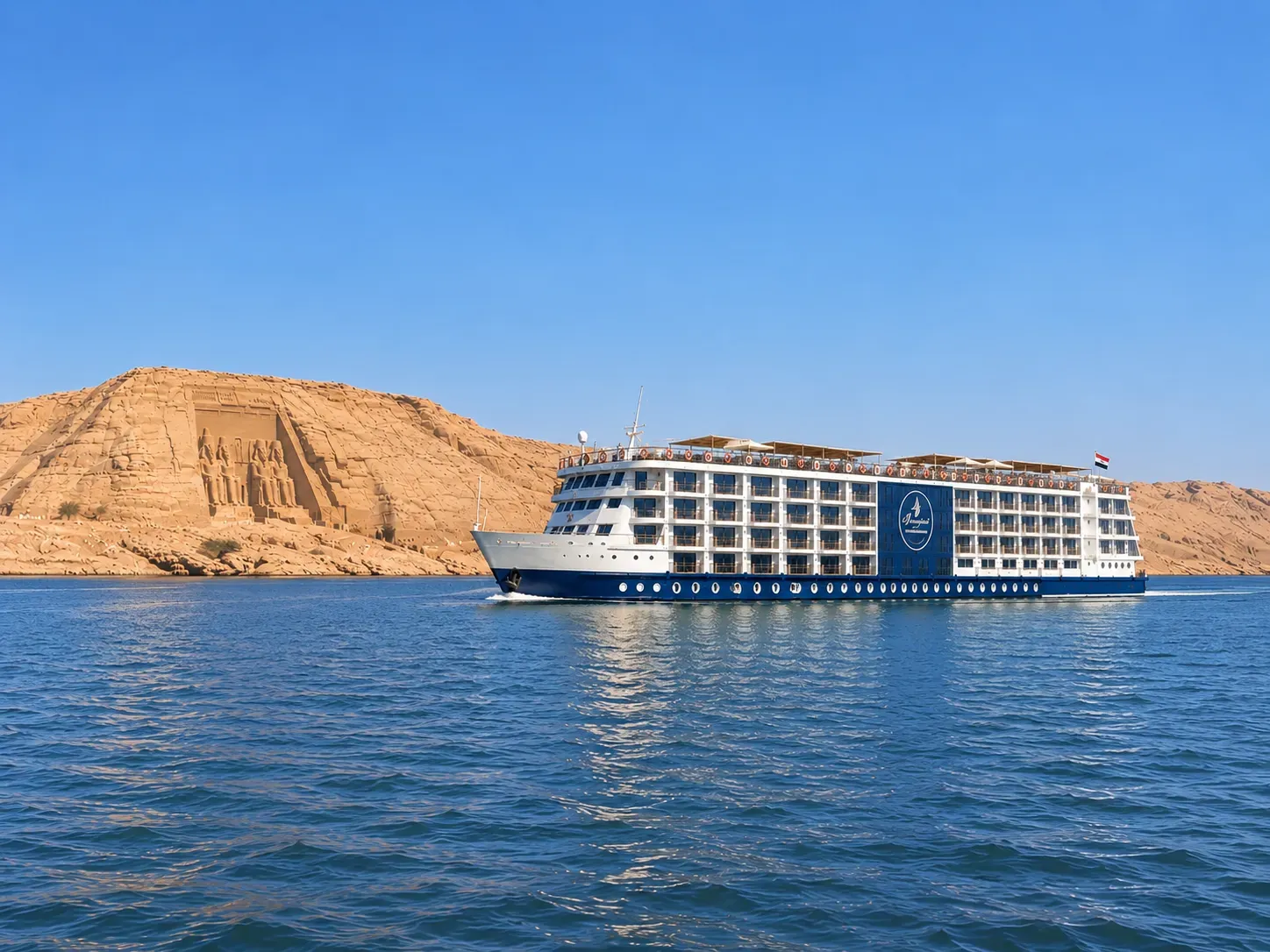
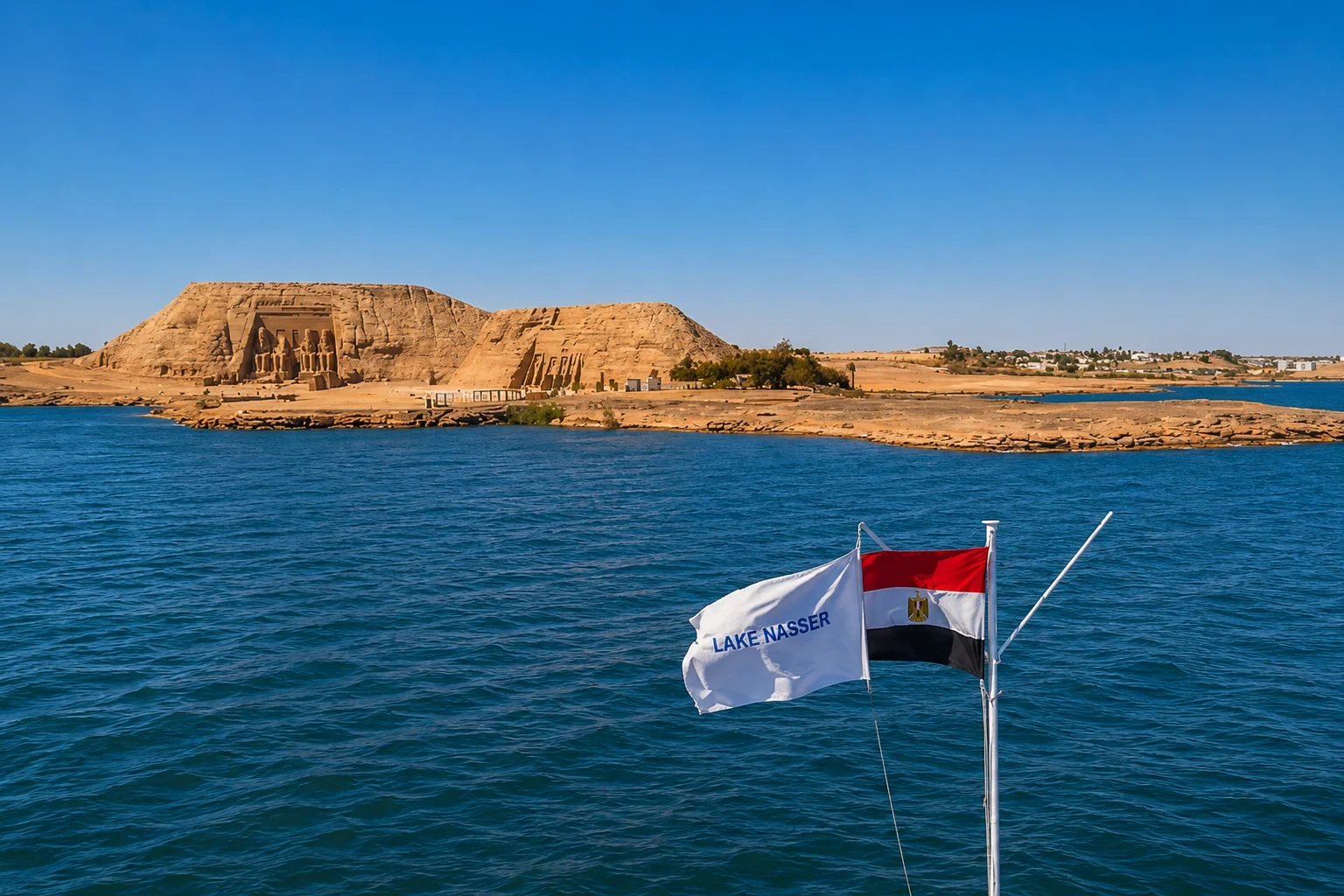
A Lake Nasser Cruise is Egypt's most remote and exclusive cruising experience. Sailing the vast waters of Lake Nasser between Aswan and the legendary Abu Simbel Temples, this Aswan Abu Simbel Cruise passes through a landscape of relocated Nubian temples, open desert scenery, and ancient monuments accessible only by water. No other Nile Cruise holiday in Egypt reaches these sites, and no other route offers this level of isolation and exclusivity on the river.
The Aswan to Abu Simbel Cruise takes 5 days / 4 nights and departs every Monday, while the Abu Simbel to Aswan Cruise takes 4 days / 3 nights and departs every Friday. Both are available as Cruising Lake Nasser, and as a Lake Nasser cruises packages with extra nights in Cairo, Luxor, or Aswan.
Cruise on Lake Nasser are available on 4 and 5 day itineraries sailing between Aswan and Abu Simbel in both directions. All Lake Nasser Cruise holidays include a Professional Egyptologist Guide, private air-conditioned vehicle, full board on board, a private high-deck cabin with en-suite bathroom and balcony, and all entrance fees throughout. Lake Nasser Cruise prices start from $803 per person. Departures from Aswan every Monday and from Abu Simbel every Friday.
A Lake Nasser Cruise Holiday can be arranged as a Lake Nasser Cruise Vacation, a Lake Nasser Cruise Package, or a Lake Nasser Cruise from Cairo with domestic flights, transfers, sightseeing, and cruise accommodation included. The best Lake Nasser cruise Price depends on the cruise category, cabin type, travel date, route, and included visits.
At WOW Egypt Tours, All Cruises Lake Nasser are available as Luxury Lake Nasser Cruises.
Every Cruise Lake Nasser booked through WOW Egypt Tours is fully inclusive. The price you are quoted is the price you pay, with all of the following included:
Professional Egyptologist Guide
A dedicated Professional Egyptologist Guide accompanies your cruise for the full duration of the itinerary, providing expert commentary at every temple, monument, and site along the route. Your guide is exclusively allocated to your cruise boat and travels with your group throughout, ensuring a consistent, knowledgeable, and personal experience at every stop.
Private Modern Air-Conditioned Vehicle
A private air-conditioned vehicle with a dedicated driver for all transfers between the cruise boat and every sightseeing site. Available at every port stop throughout the itinerary.
Domestic Flights When Needed
Domestic flights between Luxor, Cairo, Aswan, or Abu Simbel are included on cruises that require them, confirmed and coordinated by the WOW Team.
Private High-Deck Cabin with En-Suite Bathroom and Balcony
A private high-deck cabin on board with an en-suite bathroom and a personal balcony overlooking Lake Nasser. Cabin size and specification vary by cruise boat and category.
Full Board on Board
Breakfast, lunch, and dinner served on board daily throughout the cruise. All meals included with no additional dining costs.
All Entrance Fees and Tickets
All site admissions on the itinerary are included, from the Abu Simbel Temples and Kalabsha Temple to Philae Temple and the Aswan High Dam. No surprise costs on arrival.
Private Transfers Throughout
All airport and cruise boat transfers included and coordinated by the WOW Team. Internal flights from Cairo to Aswan or Abu Simbel can be added for a complete Lake Nasser Cruise from Cairo package.
The Lake Nasser Cruise route visits a series of ancient Nubian temples that were relocated to higher ground before the waters of the lake rose following the construction of the Aswan High Dam. Many of these temples are accessible only by water, making the Lake Nasser Cruise the only way to reach them. The sites visited on a Lake Nasser Nile Cruise Tour are among the most remarkable and least visited in all of Egypt.
Abu Simbel Temples
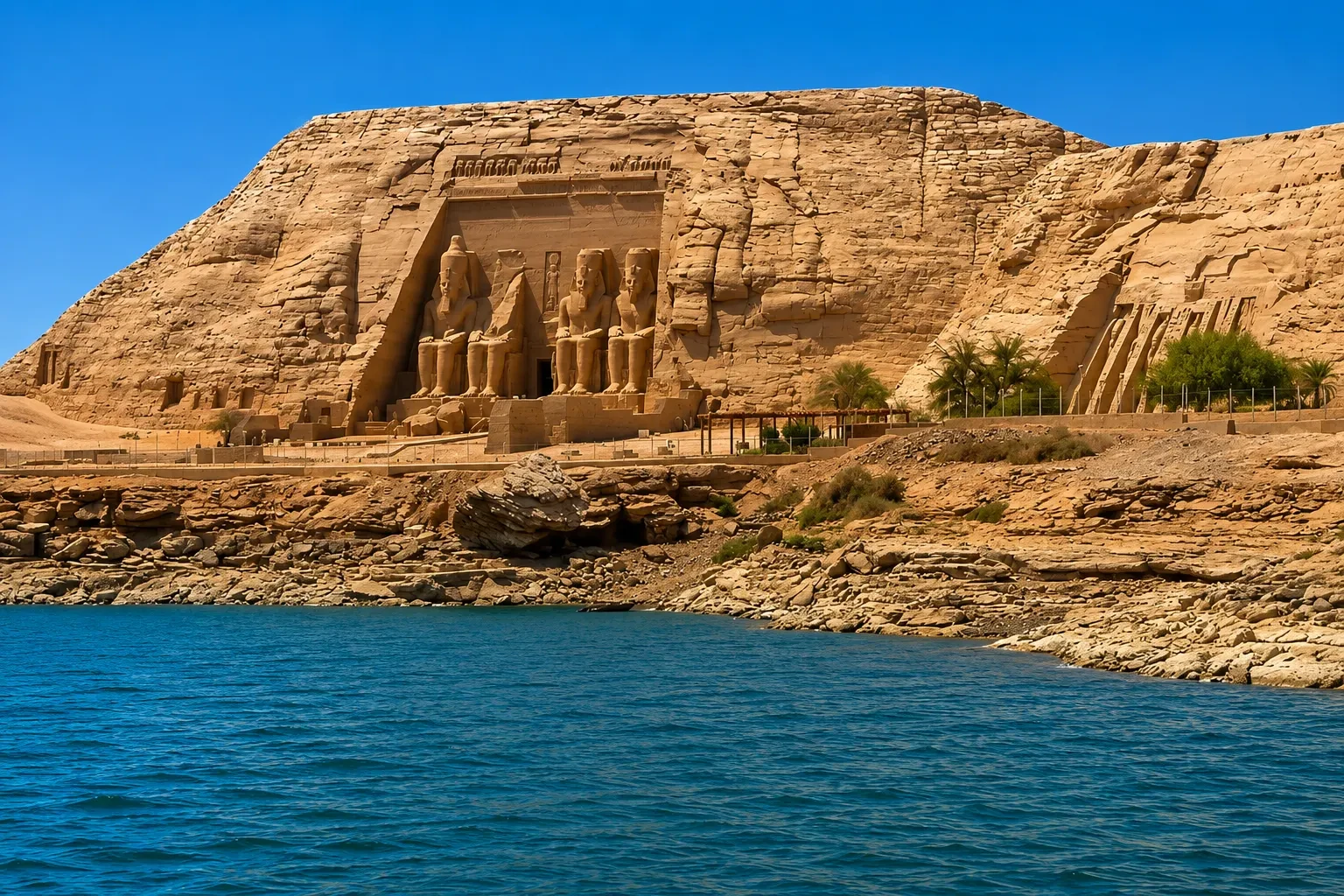
The highlight of every Lake Nasser Cruise is the Abu Simbel Temples, the twin rock-cut temples of Ramesses II and Queen Nefertari, considered among the most extraordinary ancient monuments in the world. The four colossal seated statues of Ramesses II guarding the entrance to the Great Temple are among the most recognizable images in ancient Egyptian history. A Professional Egyptologist Guide leads the full visit to both temples, with an optional evening Sound and Light Show available on selected departures.
Temples Along Lake Nasser
In addition to Abu Simbel, the Lake Nasser Cruise itinerary includes guided shore visits to Amada Temple, the oldest surviving temple in Nubia, Derr Temple, the Tomb of Pennut, Wadi El Seboua, Dakka Temple, and Maharraqa Temple. Panoramic views of the remarkable cliff fortress of Qasr Ibrim are enjoyed from the cruise boat as it sails past.
Aswan Highlights
In Aswan, the Lake Nasser Cruise program includes guided visits to Philae Temple, the Unfinished Obelisk, the Aswan High Dam, Kalabsha Temple, Beit El Wali Temple, and the Kiosk of Qertassi.
Lake Nasser Cruises from Aswan depart every Monday. Lake Nasser Cruises from Abu Simbel depart every Friday. The WOW Team confirms availability and secures your cabin on your preferred departure when you send your travel dates for 2026, 2027, and 2028.
The 4 Days/3 Nights Lake Nasser Cruise from Abu Simbel to Aswan departs from Abu Simbel every Friday and sails north to Aswan over 3 nights. This is the most compact Lake Nasser Cruise holiday, covering the key temples and monuments between Abu Simbel and Aswan on a fully guided itinerary.
The program starts at the Abu Simbel Temples with a full guided visit to the Great Temple of Ramesses II and the Temple of Queen Nefertari. An optional evening Sound and Light Show at Abu Simbel is available. Sailing north, the cruise stops at Wadi El Seboua, Dakka Temple, and Maharraqa Temple, with panoramic views of Qasr Ibrim from the water. In Aswan, the program covers Philae Temple, the Unfinished Obelisk, the Aswan High Dam, Kalabsha Temple, Beit El Wali Temple, and the Kiosk of Qertassi.
Lake Nasser Cruise 4 Days/3 Nights Abu Simbel to Aswan prices start from $803 per person. Rates vary by season. Prices differ for summer, winter, Christmas, New Year, and Easter. See the Lake Nasser Cruises page for current seasonal rates and full availability for 2026, 2027, and 2028.
The 5 Days/4 Nights Lake Nasser Cruise from Aswan to Abu Simbel is the most popular Egypt Lake Nasser Cruise package, departing from Aswan every Monday and sailing south to Abu Simbel over 4 nights. This itinerary covers the full Lake Nasser temple route at a comfortable pace with full professional guiding throughout.
The program starts in Aswan with guided visits to Philae Temple, the Unfinished Obelisk, the Aswan High Dam, Kalabsha Temple, Beit El Wali Temple, and the Kiosk of Qertassi. Sailing south on Lake Nasser, the cruise stops at Wadi El Seboua, Dakka Temple, Maharraqa Temple, Amada Temple, Derr Temple, and the Tomb of Pennut, with panoramic views of Qasr Ibrim from the water. The cruise concludes at the Abu Simbel Temples with a full guided visit to both temples and an optional evening Sound and Light Show.
Lake Nasser Cruise 5 Days/4 Nights Aswan to Abu Simbel prices start from $803 per person. Rates vary by season. Prices differ for summer, winter, Christmas, New Year, and Easter. See the Lake Nasser Cruises page for current seasonal rates and full availability for 2026, 2027, and 2028.
WOW Egypt Tours operates Lake Nasser Cruises on three 5-star cruise boats sailing between Aswan and Abu Simbel. All three Lake Nasser cruise ships are purpose-built for Lake Nasser, with spacious cabins, suites, private balconies, full-board dining, sun decks, and attentive crew throughout. The WOW Team advises on the best boat for your travel dates, group size, and budget.
The Mövenpick Prince Abbas, also known as M/S Mövenpick MS Prince Abbas Cruise, is a 5-star Lake Nasser cruise boat combining comfortable accommodation with spacious cabins, panoramic windows opening onto private balconies, a restaurant, lounges, sun deck, swimming pool, and full-board service throughout the sailing program. The cruise includes 43 cabins, with single, double, twin, and triple cabin options, in addition to 22 suites. All cabins are fully air-conditioned with individual control, private bathrooms with bathtubs, mini bars, in-cabin safety boxes, and Wi-Fi access. A 24-hour doctor service and laundry service are available onboard. The Mövenpick Prince Abbas operates both Lake Nasser Cruise programs: the 5 Days/4 Nights Lake Nasser Cruise from Aswan to Abu Simbel departing every Monday, and the 4 Days/3 Nights Lake Nasser Cruise from Abu Simbel to Aswan departing every Friday. Mövenpick Prince Abbas Lake Nasser Cruise prices start from $803 per person.
The Sunrise Grand Select African Dreams, also known as M/S Sunrise African Dreams Cruise, is a 5-star Luxury Lake Nasser Cruise boat spread over 5 decks, offering 87 cabins and suites in three room types. The fleet of cabins includes 79 Superior Cabins of about 27 square metres with twin or queen beds, a private bathroom, and a seating area with balcony, in addition to spacious 54 square metre Presidential Suites with a separate bedroom and living room. On board, guests enjoy a main restaurant serving international and local specialties, a bar, lounges, a sun deck, a spa, a sauna, and a cultural enrichment program, with full-board service throughout the sailing. All cabins are fully air-conditioned with individual control, with TV and mini bar. The Sunrise African Dreams operates both Lake Nasser Cruises programs: the 5 Days/4 Nights Lake Nasser Cruise from Aswan to Abu Simbel departing every Monday, and the 4 Days/3 Nights Lake Nasser Cruise from Abu Simbel to Aswan departing every Friday. Sunrise African Dreams Lake Nasser Cruise prices start from $937 per person.
The Steigenberger Omar El Khayam, also known as M/S Steigenberger Omar El Khayam Cruise, is a 5-star Lake Nasser cruise boat offering modern facilities with spacious cabins, large panoramic windows opening onto private balconies, a restaurant, lounges, sun deck, swimming pool, jacuzzi, gym, spa, sauna, bar, and billiards room. The cruise includes 68 Double Cabins, 8 Grand Suites, and 4 Royal Suites. All cabins are fully air-conditioned with individual control, private bathrooms with bathtubs and hair dryers, mini bars, in-cabin safety boxes, and Wi-Fi access. A 24-hour doctor service and laundry service are available onboard. The Steigenberger Omar El Khayam operates both Lake Nasser Cruise programs: the 5 Days/4 Nights Lake Nasser Cruise from Aswan to Abu Simbel departing every Monday, and the 4 Days/3 Nights Lake Nasser Cruise from Abu Simbel to Aswan departing every Friday. Steigenberger Omar El Khayam Lake Nasser Cruise prices start from $1,004 per person.

An optional evening Sound and Light Show at the Abu Simbel Temples is available on all Lake Nasser Cruise itineraries. After a daytime guided visit to both temples, the Sound and Light Show after dark illuminates the four colossal statues of Ramesses II and tells the story of ancient Nubia through light and narration. Experiencing Abu Simbel both in full daylight and again after dark is the finest way to appreciate the scale and power of this extraordinary site. The WOW Team arranges the Sound and Light Show as part of your Lake Nasser Cruise program on request.
Abu Simbel Solar Alignment
Twice a year, on 22 February and 22 October, the rising sun penetrates the full length of the Great Temple of Ramesses II at Abu Simbel and illuminates the innermost sanctuary, casting light directly onto the seated statues of Ramesses II, Amun-Ra, and Ra-Horakhty, while the statue of Ptah, god of darkness, remains in shadow. This phenomenon was engineered by the ancient builders of the temple over 3,000 years ago and occurs on dates believed to correspond with the birthday and coronation of Ramesses II.
The Abu Simbel Solar Alignment is one of the most extraordinary ancient astronomical events still observable anywhere in Egypt and draws visitors from around the world each February and October. Witnessing the solar alignment from inside the Great Temple, with the first light of dawn travelling 65 metres through the rock to illuminate the sanctuary, is an experience found nowhere else on earth. The Abu Simbel Sun Festival, as it is also known, is celebrated with gatherings at the temple site on both dates each year.
Travelers wishing to time their Lake Nasser Cruise to coincide with the February Solar Alignment at Abu Simbel or the October Solar Alignment at Abu Simbel should contact the WOW Team well in advance. Cabins on Lake Nasser Cruise departures closest to 22 February and 22 October sell out earlier than any other dates in the sailing calendar. The WOW Team confirms availability and secures your cabin for Solar Alignment departures on request.
All Lake Nasser Cruise boats on the WOW Egypt Tours program are available as Luxury Lake Nasser Cruises. Lake Nasser cruise boats are purpose-built for sailing the lake and are among the finest private cruise vessels in Egypt, with spacious cabins, large balconies overlooking the water, a high-quality restaurant, sun deck, lounge areas, and attentive crew throughout. The WOW Team selects the best available Lake Nasser cruise boat for your travel dates, group size, and budget, and advises on cabin type and deck position when arranging your package.
A Luxury Lake Nasser Cruise combined with a Professional Egyptologist Guide, private air-conditioned vehicle, and all entrance fees delivers the most exclusive private Egypt Nile Cruise holiday available anywhere on the river. Contact the WOW Team for current availability and pricing on Luxury Lake Nasser Cruise packages for 2026, 2027, and 2028.
A Lake Nasser Cruise holiday pairs perfectly with additional Egypt destinations before or after your time on the lake. The WOW Team can build a complete Egypt tour package by duration or a Egypt travel package by category, including family, honeymoon, classic, and group options, that combines your Lake Nasser Cruise with any of the following:
Cairo and the Pyramids
Add nights in Cairo before or after your Lake Nasser Cruise to visit the Pyramids of Giza, the Great Sphinx, the Egyptian Museum, and the Khan el-Khalili bazaar. A domestic flight connects Cairo to Aswan in approximately one hour. Browse Egypt tour packages by duration to find the right Cairo and Lake Nasser Cruise combination, or explore Egypt travel packages by category for family, honeymoon, and classic Egypt Lake Nasser Cruise vacation options.
Luxor and Aswan Nile Cruise Extension
The most complete Egypt Nile Cruise holiday combines a Luxor and Aswan Nile Cruise with a Lake Nasser Cruise into a single seamless package covering the entire river from Luxor all the way to Abu Simbel. The WOW Team connects both cruises with private transfers in Aswan and coordinates the full itinerary from start to finish.
Alexandria
Combine your Lake Nasser Cruise with a private tour of Alexandria, visiting the Catacombs of Kom el-Shoqafa, the Citadel of Qaitbay, the Bibliotheca Alexandrina, and the Montaza Palace gardens. Alexandria can be added as a day trip from Cairo or as an overnight extension to your Egypt Lake Nasser Cruise package.
Hurghada and the Red Sea
Extend your Lake Nasser Cruise package with nights in Hurghada on the Red Sea coast. A short domestic flight or private road transfer connects Hurghada to Luxor or Aswan, making it easy to combine a Lake Nasser Cruise holiday with a Red Sea beach stay in one complete Egypt vacation package. See Egypt travel packages for ready-made combination options.
Add Nights in Aswan
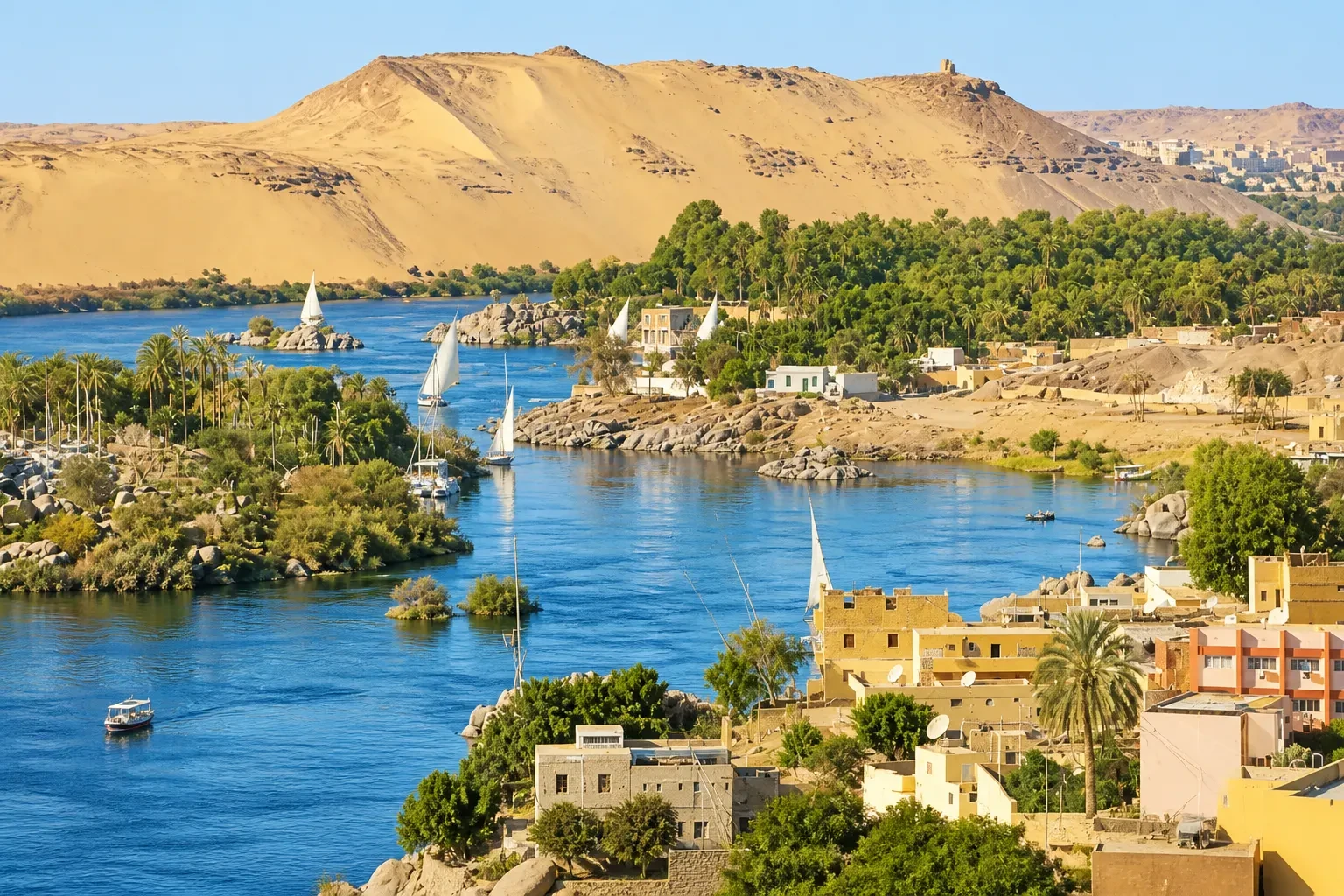
Add nights in Aswan before or after your Lake Nasser Cruise to visit Elephantine Island, Kitchener's Island botanical garden, the Philae Sound and Light Show, and the Nubian villages on the west bank of the Nile.
Add Nights in Luxor
Add nights in Luxor to cover the full East and West Bank program including Karnak Temple, Luxor Temple, the Valley of the Kings, the Temple of Queen Hatshepsut, the Colossi of Memnon, and a sunrise hot air balloon ride over the West Bank.
Browse all Egypt tour packages by duration or explore Egypt travel packages by category to find the right combination, or contact the WOW Team directly with your travel dates and interests for a tailored Egypt Lake Nasser Cruise vacation quote with no obligation.
A Lake Nasser Cruise and a classic Luxor and Aswan Nile Cruise are two completely different journeys on the same river. The Luxor Aswan Nile Cruise covers the most famous monuments of Upper Egypt between two of the country's greatest cities, with multiple weekly departures and four quality categories from Standard to Luxury. The Lake Nasser Cruise sails a remote stretch of water south of Aswan that sees a fraction of the visitors, visiting temples including Amada, Wadi El Seboua, and Dakka that are accessible only by boat, and culminating at the extraordinary Abu Simbel Temples. Both include a Professional Egyptologist Guide, private air-conditioned vehicle, full board, and all entrance fees. For the most complete Egypt Nile Cruise holiday, the WOW Team recommends combining both.
Lake Nasser Cruise holidays depart year-round in 2026, 2027, and 2028, with weekly departures from Aswan every Monday and from Abu Simbel every Friday. The WOW Team confirms availability, secures your cabin, and provides a full Egypt Lake Nasser Cruise package quote based on your travel dates, group size, and itinerary length. All current seasonal pricing and availability are listed on the Lake Nasser Cruises page. Browse Egypt tour packages by duration or Egypt travel packages by category for combination options, or send the WOW Team your travel dates to receive a clear, itemized quote for your Luxury Lake Nasser Cruise with no obligation.
How long is a Lake Nasser Cruise?
A Lake Nasser Cruise runs for either 4 days / 3 nights or 5 days / 4 nights depending on the direction of travel. The 4 Days / 3 Nights Lake Nasser Cruise departs from Abu Simbel every Friday and sails north to Aswan. The 5 Days / 4 Nights Lake Nasser Cruise departs from Aswan every Monday and sails south to Abu Simbel. Both itineraries visit the same core temples and monuments along Lake Nasser, with the longer itinerary allowing a more relaxed pace and additional temple visits.
How much does a Lake Nasser Cruise cost?
Lake Nasser Cruise prices start from $803 per person on the Mövenpick Prince Abbas, from $937 per person on the Sunrise African Dreams, and from $1,004 per person on the Steigenberger Omar El Khayam. Prices vary by cabin type, season, and itinerary length. All prices include a Professional Egyptologist Guide, private transfers, full board, and all entrance fees. There are no hidden costs.
What temples are visited on a Lake Nasser Cruise?
The Lake Nasser Cruise visits the Abu Simbel Temples, Amada Temple, Derr Temple, the Tomb of Pennut, Wadi El Seboua, Dakka Temple, Maharraqa Temple, Kalabsha Temple, Beit El Wali Temple, and the Kiosk of Qertassi. In Aswan, the program includes Philae Temple, the Unfinished Obelisk, and the Aswan High Dam. Panoramic views of Qasr Ibrim are enjoyed from the cruise boat. Many of these temples are accessible only by water and cannot be visited any other way.
When is the best time to take a Lake Nasser Cruise?
Lake Nasser Cruises depart year-round. The most comfortable months for sailing are October through April, when temperatures along the lake are mild and ideal for outdoor sightseeing at the temples. May through September brings intense heat in southern Egypt, though cruises continue to operate and the temples are far less crowded during this period. Christmas, New Year, and Easter are peak travel periods with higher prices and earlier booking requirements. Travelers interested in the Abu Simbel Solar Alignment should plan their cruise around 22 February or 22 October, when the rising sun illuminates the innermost sanctuary of the Great Temple. The WOW Team advises on the best travel dates based on your preferences and budget.
Can I get from Aswan to Abu Simbel by boat?
Yes. The Lake Nasser Cruise is the only way to travel between Aswan and Abu Simbel by water. The cruise sails across Lake Nasser, the vast reservoir created by the Aswan High Dam, stopping at Nubian temples along the way. Abu Simbel can also be reached from Aswan by domestic flight in approximately 45 minutes or by private road transfer in approximately 3 to 3.5 hours. The Lake Nasser Cruise is the most immersive and historically rich way to make the journey.
Is the Lake Nasser Cruise different from the Nile Cruise?
Yes, they are entirely different experiences. The classic Luxor to Aswan Nile Cruise sails the Nile River between Luxor and Aswan, visiting Karnak Temple, the Valley of the Kings, Edfu, Kom Ombo, and Philae. The Lake Nasser Cruise sails south of Aswan on Lake Nasser, visiting relocated Nubian temples including Abu Simbel, Amada, Wadi El Seboua, and Kalabsha that are completely inaccessible on a standard Nile Cruise. The two cruises cover different routes, different monuments, and different stretches of water. Many travelers combine both for the most complete Egypt river journey.
What is included in a Lake Nasser Cruise package?
Every Lake Nasser Cruise package through WOW Egypt Tours includes a Professional Egyptologist Guide for all temple visits, a private air-conditioned vehicle and driver for all transfers, full-board accommodation on board (breakfast, lunch, and dinner daily), a private cabin with en-suite bathroom and balcony, all entrance fees to every site on the itinerary, and all service charges and taxes. Domestic flights between Cairo, Aswan, and Abu Simbel can be added when required. There are no hidden costs.
Do I need to book the Lake Nasser Cruise in advance?
Yes. Lake Nasser cruise boats have a limited number of cabins and depart only once per week in each direction. Cabins sell out several weeks ahead during peak seasons including October to April, Christmas, New Year, and Easter. The WOW Team recommends booking as early as possible to secure your preferred cabin type and departure date. Contact the WOW Team with your travel dates for 2026, 2027, or 2028 and they will confirm availability and hold your cabin promptly.
Can I visit Abu Simbel on a Lake Nasser Cruise?
Yes. The Abu Simbel Temples are the centrepiece of every Lake Nasser Cruise itinerary. Both the Great Temple of Ramesses II and the Temple of Queen Nefertari are visited on a full guided tour with a Professional Egyptologist Guide. An optional evening Sound and Light Show at Abu Simbel is available on request. The cruise docks at Abu Simbel overnight, giving travelers the rare experience of visiting the temples both in daylight and after dark. Travelers interested in the Abu Simbel Solar Alignment, when the rising sun illuminates the innermost sanctuary of the Great Temple on 22 February and 22 October each year, should book their Lake Nasser Cruise well in advance as departures around these dates fill quickly.
Is the Lake Nasser Cruise suitable for families and children?
Yes. The Lake Nasser Cruise is well suited to families travelling with children. The cruise boats offer comfortable cabins, full-board dining, open sun decks, and a relaxed pace with shore visits spread across the itinerary. Children aged 2 to 5 are charged 25% of the adult price, children aged 6 to 11 are charged 50%, and children under 2 travel free when sharing a cabin with parents. The WOW Team can advise on the best cabin configuration and itinerary for families travelling with children of different ages.
What is the Abu Simbel Solar Alignment?
The Abu Simbel Solar Alignment is an ancient astronomical phenomenon that occurs twice a year, on 22 February and 22 October, when the rising sun shines directly through the entrance of the Great Temple of Ramesses II and travels 65 metres to illuminate the statues of Ramesses II, Amun-Ra, and Ra-Horakhty in the innermost sanctuary. The statue of Ptah, god of darkness, remains unlit. The alignment was deliberately engineered by the ancient builders over 3,000 years ago and is believed to mark the birthday and coronation of Ramesses II. It is one of the most remarkable examples of ancient solar engineering anywhere in the world and one of the most powerful reasons to time a Lake Nasser Cruise around these specific dates.