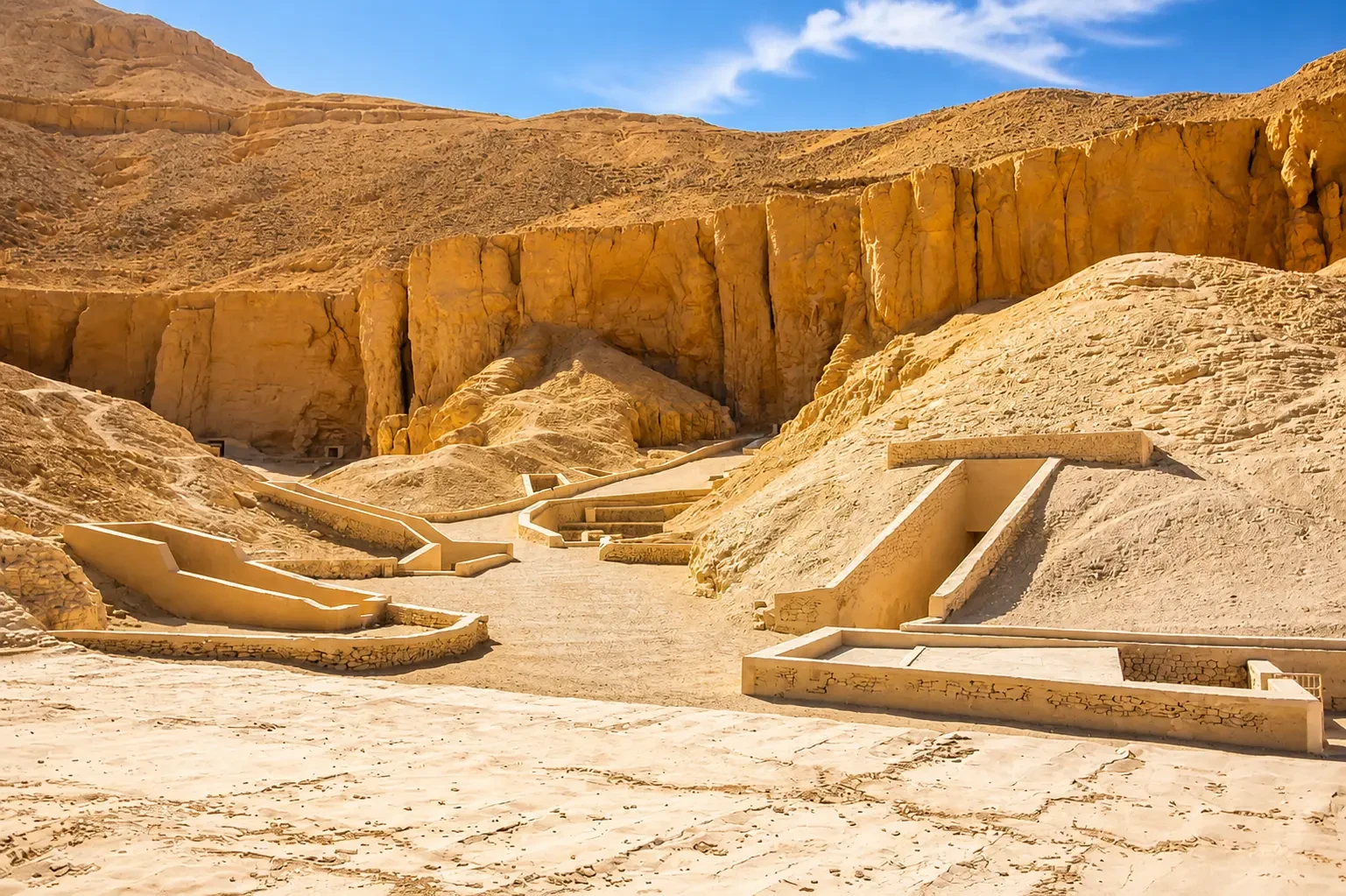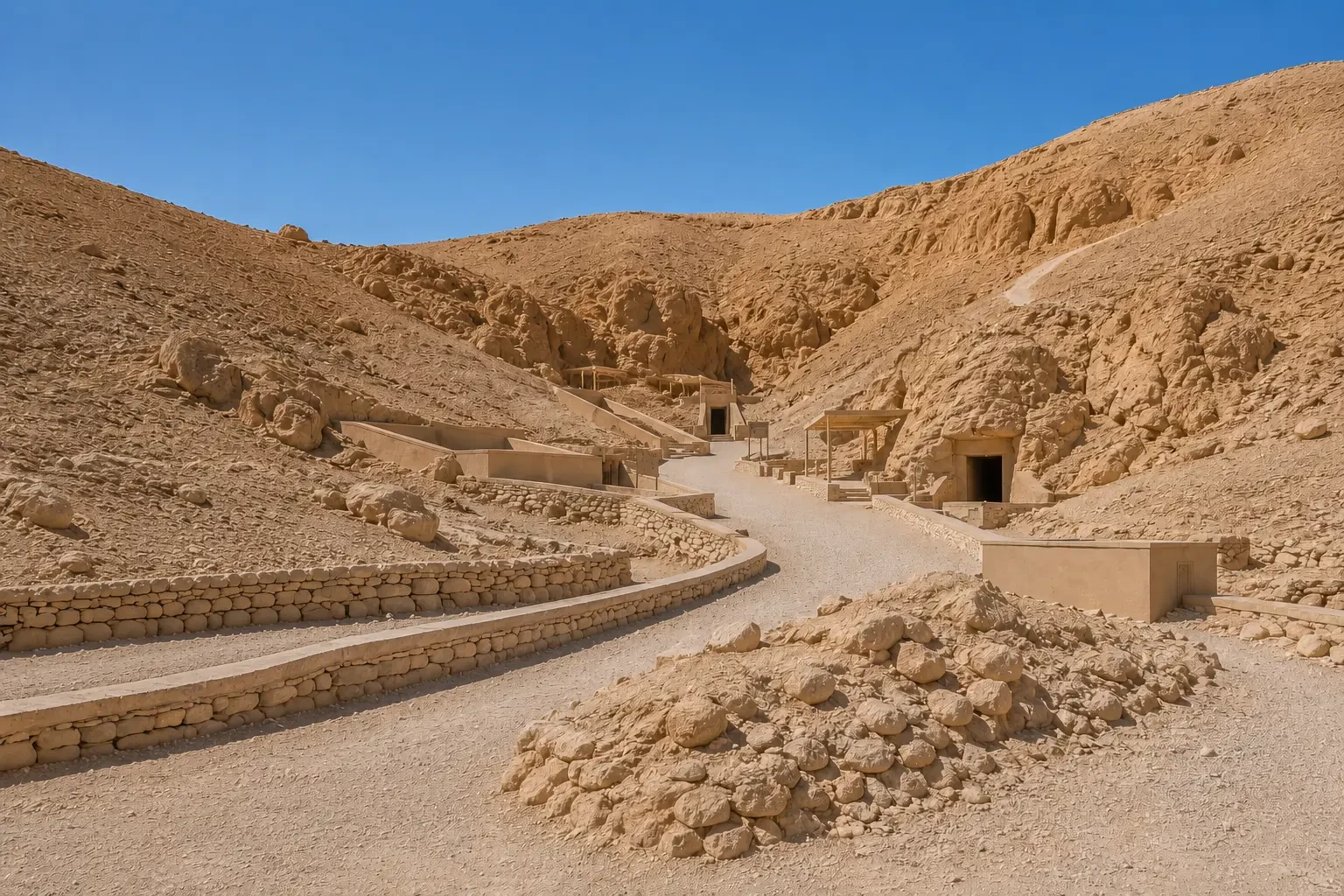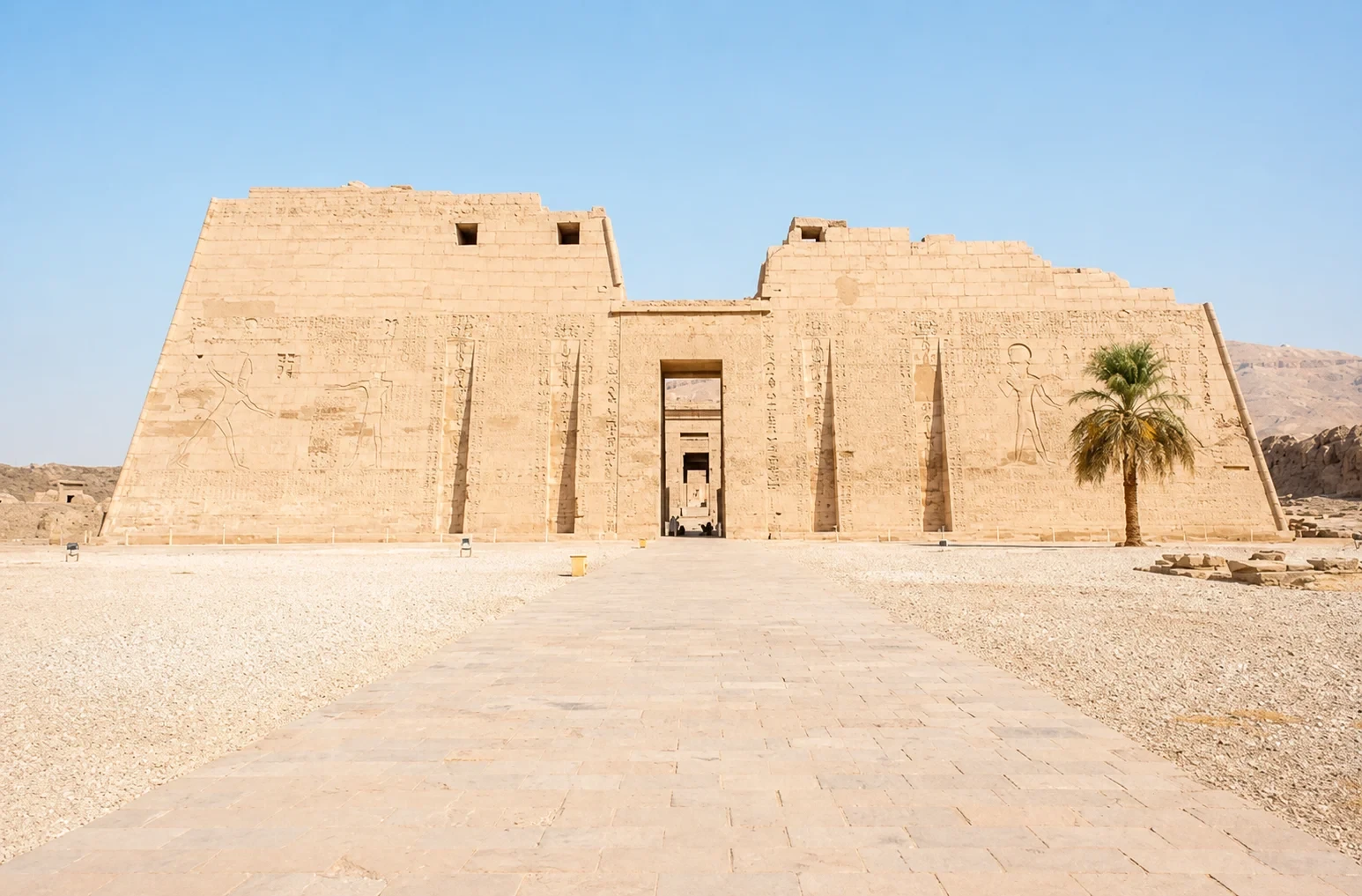


Luxor Temple is one of the most magnificent and best-preserved ancient Egyptian temple complexes in the world, and a destination that every traveler to Egypt must experience. Located on the east bank of the Nile River in the city of Luxor, ancient Thebes, the Temple of Luxor stands as a timeless monument to the power, religion, and artistic genius of ancient Egypt. This iconic landmark sits at the heart of some of Egypt's greatest travel experiences, including Luxor Tours, Luxor Day Tours, Luxor East Bank Tours, Luxor West Bank Tours, Luxor Temple Tours, Dahabiya Nile River Cruises, and Luxor Aswan Nile River Cruises, all of which WOW Egypt Tours proudly offers to travelers from around the world. The Temple of Luxor is also a highlight of Egypt Tours Packages, Egypt Travel Packages, and Safaga Shore Excursions, making it one of the most visited and most celebrated ancient sites in all of Egypt.
Built primarily during the New Kingdom period around 1400 BCE, Luxor Temple Egypt was dedicated to the Theban Triad: the god Amun, his wife Mut, and their son Khonsu. Unlike most Egyptian temples, which face the Nile, the Temple of Luxor faces north toward Karnak, its sister sanctuary, connected by the famous Avenue of Sphinxes. Visiting Luxor Temple is not simply a sightseeing stop; it is a journey through thousands of years of history, religion, and human civilization.
Over the centuries, the temple served as a place of worship for ancient Egyptians, a Roman military camp, a Coptic Christian church, and later an Islamic mosque, making it one of the most historically layered sites in all of Egypt.

Who Built Luxor Temple In Egypt?
King Amenhotep III built the largest part of Luxor Temple, with additions from other kings of the 18th Dynasty including Tutankhamun, King Ay, and King Horemheb. Kings of the 19th Dynasty also contributed to the Temple of Luxor, including Seti I, Ramesses II, Merneptah, and Seti II. The 20th Dynasty kings Ramesses III, IV, and VI added further elements. In the Late Period, King Nectanebo I and Alexander the Great also participated in its construction and decoration.
What Was Amenhotep III Known For?
Amenhotep III was the son of King Thutmose IV and his Mitannian wife Mutemwia. He married a commoner named Tiy and made her his primary wife, departing from the royal tradition of marrying a princess of royal blood. He was the father of Akhenaten, who succeeded him on the throne. Amenhotep III ruled Egypt for approximately 38 years and was known for his inclination toward peace, luxury, and artistic achievement rather than military conquest. During his reign, he built the Temple of Amun on the East Bank of Thebes, a tomb in the Valley of the Kings, and a funerary temple on the West Bank. He also constructed the third pylon of Karnak Temple. His architectural and artistic projects were guided by his brilliant royal engineer, Amenhotep Ibn Hapu.
Luxor Temple Location In Egypt
Luxor Temple is located in the heart of Luxor city on the east bank of the Nile River, south of Karnak Temple and east of ancient Thebes. The Temple of Luxor sits directly along the Corniche el-Nile road, the main riverside boulevard of modern Luxor, and is within easy walking distance of most hotels in the city center.
Luxor Temple Fun Facts
The name Luxor Temple comes from the ancient Egyptian word Ipet, which carries multiple meanings including temple, private palace, holy of holies, and the place where the royal harem was located in the palace. The Temple of Luxor embodied all of these meanings simultaneously. It was a sacred temple where Amun, Mut, and Khonsu were worshipped, and it also served as the private palace where Amun was believed to meet with his wife Mut each year in a great celebration commemorating their sacred marriage.
The duration of Amun's stay grew over time: 11 days in the 18th Dynasty, 23 days in the 19th Dynasty, and 27 days in the 20th Dynasty. In this sense, Luxor Temple represented both a place of public worship and a sacred royal retreat where the god secluded himself with his divine wife.
Why Is Luxor Temple Called By This Name In Egypt?
The word southern in the ancient name Ipet-Resyt refers to the geographical position of the temple relative to Karnak. The Arabic name Luxor was given by the Arabs who settled in the region and noticed that the temple contained enormous interconnected halls and chambers that resembled palatial fortresses, leading them to call it Al-Uqsur, meaning the palaces or the fortresses.
Luxor Temple History
King Amenhotep III gave his architect Amenhotep Ibn Hapu the orders to begin construction of the Temple of Ipet-Resyt, which he built from the inside out. The king died before the front section of the temple was completed. Work on the Temple of Luxor was halted entirely during the reign of Akhenaten, who erased the name and inscriptions of the god Amun from its walls.
After Akhenaten's death and the restoration of the Amun religion as the state faith, King Tutankhamun completed the great colonnade, followed by King Horemheb. Kings Seti I, Merneptah, Seti II, and Ramesses IV all made further additions. Ramesses II built the first pylon at the entrance to the temple and a large open courtyard behind it, placed six colossal statues and two obelisks before it, and extended the total length of the Temple of Luxor to 256 meters.
The Story Of Building The Luxor Temple
There were two very important reasons for building Luxor Temple. The first was that King Amenhotep III wanted to express his loyalty and devotion to the god Amun, his wife Mut, their son Khonsu, and the many other Egyptian gods depicted on its walls, thereby winning the support of the powerful priesthood and the Egyptian people. Because Amenhotep III was born to an Egyptian father and a foreign mother, he was not considered of pure royal blood. He had also broken tradition by marrying a commoner rather than a royal princess, which meant he needed to demonstrate his piety and earn popular legitimacy.
The second reason was the king's desire to record on the walls of the Temple of Luxor the story of his divine birth from the god Amun himself, and his coronation by Amun, in order to establish an unassailable claim to the throne. By presenting himself as literally the son of a god, Amenhotep III sought to place his right to rule beyond question.
Luxor Temple Architecture
Rams Road
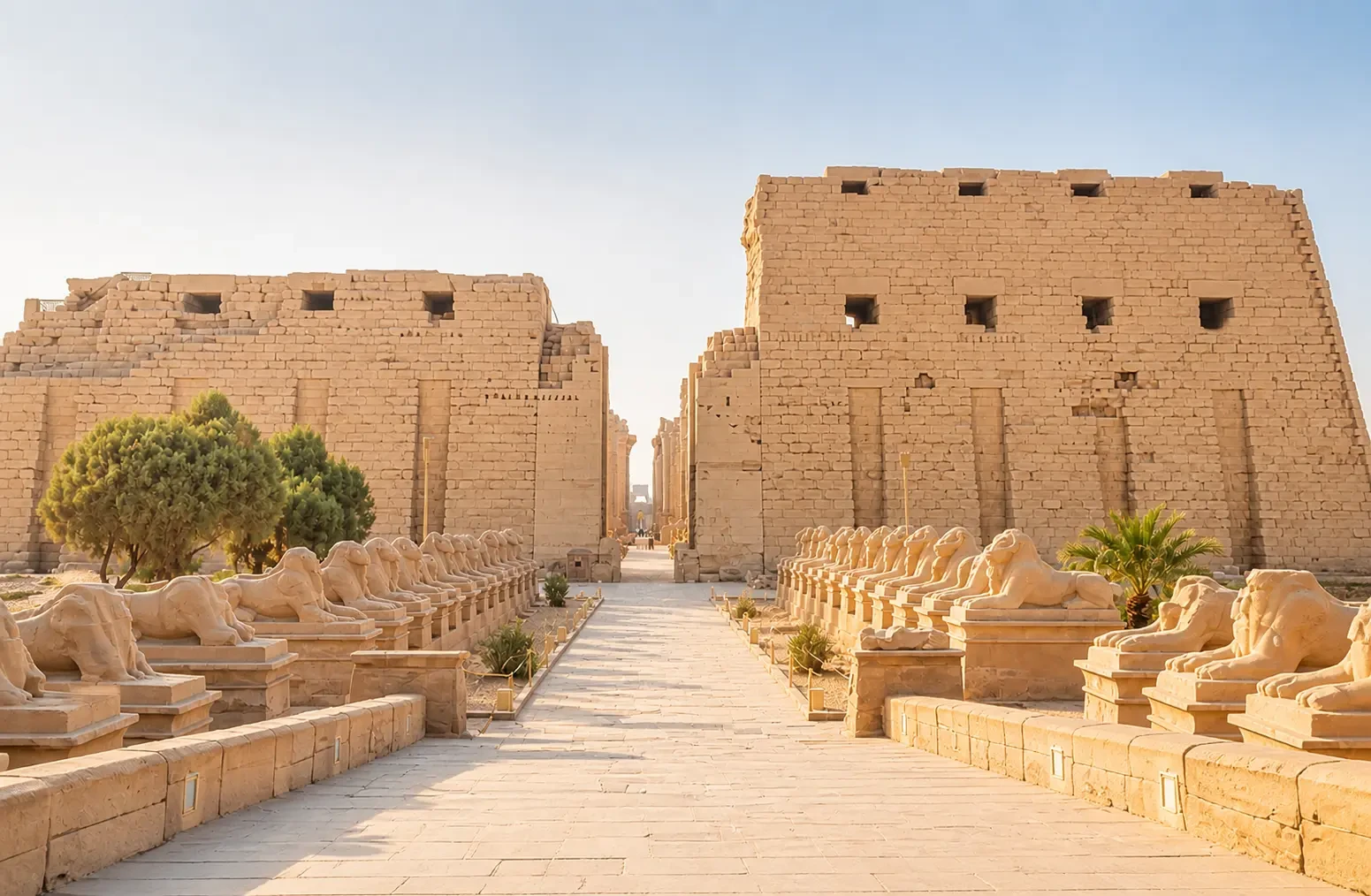
The approach to Luxor Temple was originally defined by a processional road lined on both sides with stone sphinxes bearing the body of a lion and the head of a ram. This road is called the Rams Road. The ram's head symbolizes the god Amun. Beneath each ram's head stood a small statue of the king in the Osirian form. The road originally led from the Temple of Khonsu south of Karnak Temple toward Luxor Temple. The original ram-headed sphinxes that stood before the Temple of Luxor have been lost, and only a group of statues in front of the Temple of Khonsu survives from that original avenue.
The Gate Of King Nectanebo I
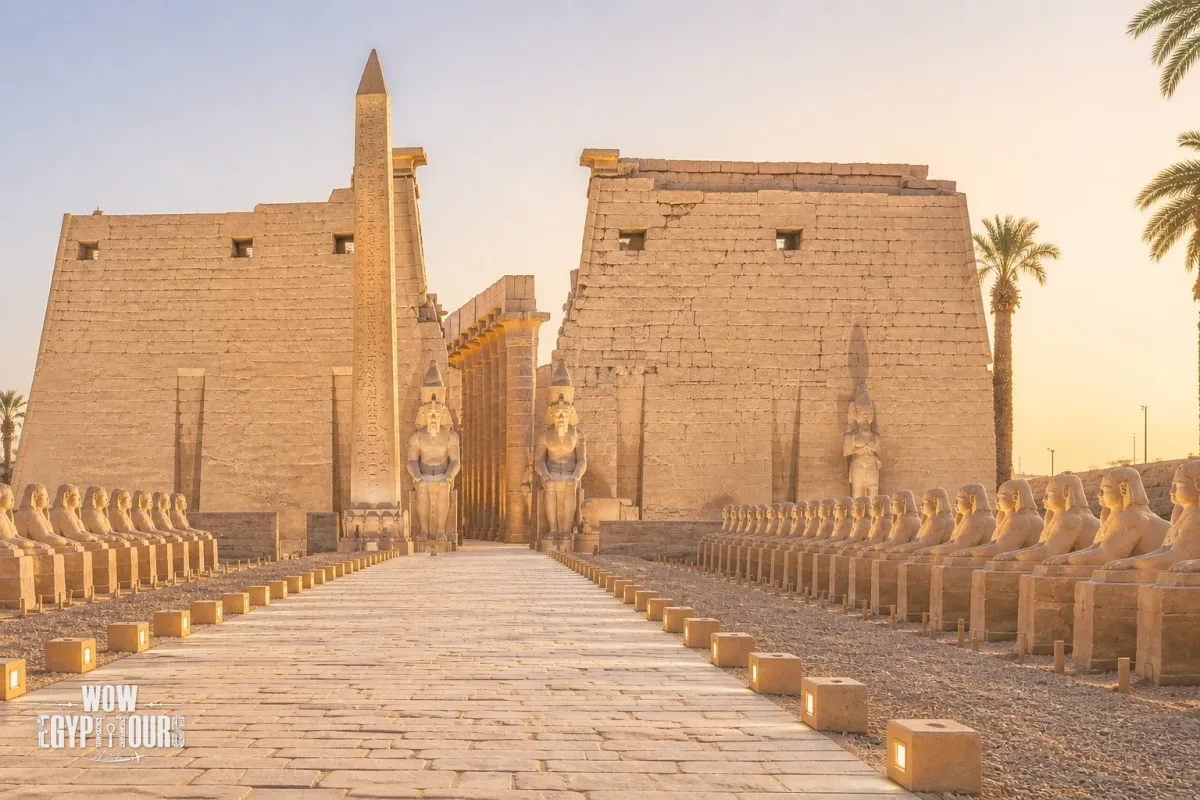
The entrance to the temple complex today begins with the gate built by King Nectanebo I of the Late Period. He replaced the earlier ram-headed sphinxes of Amenhotep III with sphinx statues bearing the body of a lion and the head of the king wearing a nemes headdress. These sphinx statues remain standing at the entrance to this day.
The First Pylon
The first pylon is a massive entrance gateway built by King Ramesses II of the 19th Dynasty. At the center of the pylon is the entrance to the Temple of Luxor. On the facade of the pylon are four deep openings at the base for the great flagpoles and additional openings higher up.
The Two Obelisks
The two obelisks at the entrance of Luxor Temple were made of pink granite. The western obelisk was transported to Paris in 1835 and 1836 and now stands in the Place de la Concorde. The eastern obelisk remains in its original position. Each of the four faces of the obelisks is engraved with scenes of the king kneeling before the seated god Amun and offering sacrifices, with three vertical lines of text recording the titles, names, and epithets of Ramesses II. The bases of the obelisks are decorated with scenes of Nile gods carrying offerings.
The Six Statues
Six colossal statues once stood before the first pylon of Luxor Temple, three on each side, with four standing figures flanking the entrance and two seated figures positioned at the doorway itself. The seated statues depicted Ramesses II wearing the double crown of Upper and Lower Egypt, with small figures of Queen Nefertari and the royal princes and princesses carved between the legs of the throne. The statues were made of pink granite, and the sides of the thrones were decorated with the Sematawy symbol representing the unity of Upper and Lower Egypt.
The First Courtyard
Passing through the first pylon leads into the courtyard of Ramesses II, an open space containing 74 papyrus columns. Between the columns stand statues of Ramesses II in the Osirian form. The walls of this courtyard are decorated with scenes of the king presenting offerings to the gods.
Abu Haggag Mosque In Luxor Temple
In the northwest of the first courtyard of the Temple of Luxor is a structure of three shrines built by Queen Hatshepsut and King Thutmose III and later rebuilt by Ramesses II. The middle shrine was dedicated to Amun, the western shrine to Mut, and the eastern shrine to Khonsu. Adjacent to this structure, in the northeast corner of the courtyard, stands the Abu al-Haggag Mosque, dedicated to the Islamic saint Yusuf Abu al-Haggag, who is said to have lived and been buried on this site. The mosque remains an active place of worship today and sits elevated significantly above the ancient temple floor, reflecting the layers of accumulated sand and debris that buried much of the temple over the centuries before its modern excavation.
The Second Pylon
The second pylon is considered the original facade of the Temple of Luxor as built by King Amenhotep III. In front of it, Ramesses II placed a seated statue of himself with a smaller statue of his wife Nefertari standing beside his right leg.
Corridor Of Columns
The second pylon leads into the great colonnade, a corridor of 14 massive papyrus columns arranged in two rows. The walls of this colonnade were completed and decorated by Tutankhamun with detailed scenes of the Opet Festival procession, providing one of the most complete visual records of an ancient Egyptian religious festival ever discovered.
Court Of Amenhotep III
The Courtyard of Amenhotep III, sometimes called the Cache Courtyard, contains approximately 64 graceful papyrus columns and is dedicated to King Amenhotep III. Its walls are decorated with scenes of the king in the presence of many gods. During restoration work on the floor of this courtyard in 1989, a remarkable cache was discovered containing more than 20 statues of gods and kings, now among the most prized exhibits in the Luxor Museum.
The Hall Of Fourteen Columns
Beyond the courtyard of Amenhotep III lies the Hall of Fourteen Columns, a hall whose ceiling is supported by four rows of eight columns each. This hall is decorated with scenes of King Amenhotep III with the gods. The Hall of Fourteen Columns has four entrances in its southern wall, two on each side, leading to the shrines where the sacred barques of the gods Mut and Khonsu could rest during festival processions.
The Hall Of The Eight Columns
The Hall of Fourteen Columns leads into a second columned hall whose ceiling is supported by eight columns, also decorated with scenes of Amenhotep III with the gods. Most notably, this hall was converted into a Christian place of worship during the Roman era, and traces of painted Christian imagery can still be seen on its walls, partially peeling away to reveal the original ancient Egyptian reliefs beneath.
The Hall Of The Divine Birth
The first of the four-column halls within the innermost part of the Temple of Luxor is known as the Hall of the Divine Birth. Here, Amenhotep III depicted scenes of his miraculous conception by the god Amun to confirm his divine right to assume the throne of Egypt.
Altar Of Alexander The Great
Following the Hall of Divine Birth is a square hall containing the altar of Alexander the Great. Alexander removed the original columns of this hall and erected a shrine for the god Amun at its center. The walls are decorated with scenes of Alexander making offerings to Amun, through which he sought recognition as a legitimate pharaoh of Egypt.
The Hall Of 12 Columns
Adjacent to the altar of Alexander the Great is the Hall of 12 Columns, decorated with scenes of King Amenhotep III in the presence of the gods.
Holy Of Holies
At the far end of the Hall of 12 Columns are three entrances leading to three sanctuaries dedicated to the gods of the Theban Triad. The central sanctuary is the Holy of Holies, dedicated to the god Amun himself, and represents the innermost and most sacred point of the entire Temple of Luxor.
The Avenue Of Sphinxes Connecting Luxor Temple To Karnak
One of the most awe-inspiring features associated with Luxor Temple is the Avenue of Sphinxes, also known as the Dromos. This ancient processional road stretches approximately three kilometers and once connected the Temple of Luxor directly to the great Karnak Temple complex to the north. The road is lined on both sides with hundreds of human-headed sphinx statues, which replaced the earlier ram-headed sphinxes built during the reign of Amenhotep III.
The avenue was used during the annual Opet Festival, when the sacred statues of Amun, Mut, and Khonsu were carried in a great procession from Karnak Temple to Luxor Temple. After decades of excavation and restoration work, the Avenue of Sphinxes was officially reopened in 2021, allowing visitors to walk the same ceremonial path that ancient Egyptians once used during their most sacred religious celebrations.
The Opet Festival At Luxor Temple
The Opet Festival was the most important annual religious event in ancient Thebes, and Luxor Temple was built specifically to host it. The festival took place during the second month of the Inundation season, when the Nile flooded its banks. During this time, the sacred statues of Amun, Mut, and Khonsu were carried from Karnak Temple along the Avenue of Sphinxes to the Temple of Luxor, where Amun was believed to reunite with his divine consort Mut in a sacred marriage ceremony.
The festival was a time of immense public celebration, with music, dancing, feasting, and offerings made to the gods. The duration of the festival grew over time, lasting 11 days during the 18th Dynasty, expanding to 23 days during the 19th Dynasty, and reaching 27 days during the 20th Dynasty, reflecting the growing religious and political importance of the event.
Luxor Temple Through The Ages: From Ancient Egypt To Islam
One of the most remarkable things about Luxor Temple is the way it reflects thousands of years of continuous human history, with each civilization leaving its mark on the sacred site.
After the decline of ancient Egyptian religion, the Roman Empire converted part of the Temple of Luxor into a Roman military camp. Roman soldiers painted over the ancient Egyptian reliefs and built their own shrines within the complex, several of which are still visible today. Following the Roman period, early Christians adopted the temple and converted the Hall of Eight Columns into a Coptic Christian church, painting Christian imagery over the pharaonic walls. Layers of this painted history can still be seen peeling away to reveal the original ancient Egyptian art beneath. Later, during the Islamic period, the Abu al-Haggag Mosque was built directly inside the temple courtyard, where it remains an active place of worship to this day.
Luxor Temple UNESCO World Heritage Site
Luxor Temple is part of the Ancient Thebes with its Necropolis UNESCO World Heritage Site, inscribed in 1979. This designation recognizes the outstanding universal value of the entire Theban region, which includes the Temple of Luxor, Karnak Temple, the Valley of the Kings, the Valley of the Queens, and the many temples and tombs on the West Bank of the Nile. UNESCO recognizes the site as an exceptional testimony to ancient Egyptian civilization and one of the greatest concentrations of monumental architecture and art in the world.
Best Time To Visit Luxor Temple
The best time to visit Luxor Temple is during the cooler months from October through April, when temperatures are moderate and the weather is suitable for outdoor exploration. The summer months from May to September can be extremely hot, with daytime temperatures regularly exceeding 40 degrees Celsius. If visiting in summer, plan your visit for early morning or the evening hours to avoid the heat.
Luxor Temple Opening Hours
Luxor Temple is open to visitors every day of the week, including public holidays. The temple opens at 6:00 AM and closes at 10:00 PM, making it one of the few ancient Egyptian temples that can be visited after dark. The extended evening hours allow visitors to explore the Temple of Luxor in cooler temperatures. Visitors who prefer fewer crowds should arrive early in the morning or after 4:00 PM, as peak hours are typically between 9:00 AM and 12:00 PM when large tour groups arrive.
Night Tours At Luxor Temple
Luxor Temple is open at night and the experience after dark is significantly different from a daytime visit. The temple is lit throughout, allowing visitors to see the columns, reliefs, and courtyards clearly after sunset. Visiting in the evening also avoids the midday heat, which is a practical consideration for most of the year. WOW Egypt Tours offers dedicated night tours of Luxor Temple with licensed Egyptologist guides, departing in the early evening and covering the main areas of the Temple of Luxor with full explanation of the history and architecture under the night lighting.
Luxor Temple Entrance Fees
Adults: EGP 500
Students: EGP 250
Visitors should keep their ticket throughout the visit as it may be checked at multiple points inside the complex. Entrance fees are included in all Luxor Temple Tours, Egypt Tours Packages, and Safaga Shore Excursions booked through WOW Egypt Tours.
How To Get To Luxor Temple
Luxor Temple is located on the Corniche el-Nile road in central Luxor on the East Bank of the Nile. The temple is within walking distance of most hotels in the city center. Visitors arriving by air land at Luxor International Airport, approximately 7 kilometers from the temple, with taxis available at the terminal. Travelers from Cairo or Aswan can take the train to Luxor Railway Station, which is a short taxi ride from the Temple of Luxor. Nile cruise ships dock along the Corniche road, directly in front of or close to the temple entrance.
Local transport options within Luxor include taxis, tuk-tuks, and horse-drawn carriages. Visitors coming from the West Bank can use the public Nile ferry and connect to local transport on the East Bank. All Luxor Tours, Luxor Day Tours, and Safaga Shore Excursions with WOW Egypt Tours include private air-conditioned transportation directly to and from the Temple of Luxor.
How Long To Spend At Luxor Temple
A standard visit to Luxor Temple takes between one and two hours, which covers the main areas including the entrance pylon, the two courtyards, the great colonnade, and the inner halls. Visitors who want to read the inscriptions in detail, photograph the architecture thoroughly, or cover the full architectural sequence from the pylon to the Holy of Holies should allow two to three hours. Many visitors choose to visit the Temple of Luxor twice, once during the day and once in the evening, to see it under both natural and artificial lighting.
Tips For Visiting Luxor Temple
Arrive early in the morning or after 4:00 PM to avoid the largest tour groups and the midday heat. Carry water, as there is limited shade inside the temple complex and temperatures can be high for most of the year. Wear flat, closed-toe shoes as the surfaces inside the Temple of Luxor are uneven ancient stone. Do not touch the carved reliefs or column surfaces, as contact causes gradual and irreversible damage to the stone. A licensed guide is recommended for a visit that goes beyond what the information panels provide. Photography is permitted in most areas of the temple. Keep your entrance ticket with you throughout the visit. Combining Luxor Temple with Karnak Temple and the Avenue of Sphinxes on the same day is the most efficient way to cover the East Bank.
What To Wear At Luxor Temple
Luxor Temple has no formal dress code but modest clothing that covers the shoulders and knees is appropriate for any historical or religious site in Egypt. Lightweight and breathable fabrics are practical given the heat. A hat and sunscreen are necessary for daytime visits. Flat walking shoes or sandals with grip are more practical than open sandals or heels given the stone surfaces. Visitors who wish to enter the Abu al-Haggag Mosque inside the first courtyard should wear clothing that covers the arms and legs, and women should cover their hair before entering the mosque.
Photography At Luxor Temple
Personal photography with a smartphone or camera is permitted throughout most areas of the Temple of Luxor. The best natural light for exterior photography is in the early morning and late afternoon when the sun is low. Evening photography after the temple lights are switched on produces strong contrast between the lit stone surfaces and the dark sky. Flash photography must not be used near painted wall surfaces as it degrades the ancient pigments over time. For professional photography or commercial filming with specialized equipment, a separate permit is required from Egypt's Ministry of Tourism and Antiquities.
Luxor Temple Tours
Single Attraction Visit: Luxor Temple Tour
This tour covers Luxor Temple as a standalone visit. It is suitable for travelers with limited time in Luxor, cruise passengers with a short port call, or visitors who have already covered other East Bank sites and want a dedicated visit to the Temple of Luxor.
What Is Covered
Full guided visit of Luxor Temple including the entrance pylon, the courtyard of Ramesses II, the Abu al-Haggag Mosque, the great colonnade, the courtyard of Amenhotep III, the inner halls, and the Holy of Holies.
Duration
1.5 to 2 hours inside the temple.
Includes
Private transportation, private licensed Egyptologist guide, and entrance fees. Available for morning, afternoon, and evening departures. Evening visits are recommended for first-time visitors.
Luxor East Bank Tours: Luxor Temple, Karnak Temple, Luxor Museum And Mummification Museum
This full-day tour covers the four main sites on the East Bank of Luxor. It is suitable for travelers who want a complete East Bank experience in a single day, including ancient temples and Luxor's two main museums.
What Is Covered
Luxor Temple with a full guided visit of the main areas and architecture. The Avenue of Sphinxes connecting Luxor Temple to Karnak Temple. Karnak Temple including the Great Hypostyle Hall, the sacred lake, the obelisks of Hatshepsut and Thutmose I, and the Precinct of Amun. The Luxor Museum housing the cache statues discovered beneath the courtyard of Amenhotep III in 1989. The Mummification Museum covering the tools, methods, and materials used in ancient Egyptian embalming.
Duration
Full day, approximately 6 to 7 hours.
Includes
Private air-conditioned transportation, private licensed Egyptologist guide, and entrance fees to all four sites. Available for morning departures.
Luxor West Bank Tours: Valley Of The Kings, Hatshepsut Temple And More
This full-day tour covers the major sites on the West Bank of Luxor, the ancient burial ground of the pharaohs.
What Is Covered
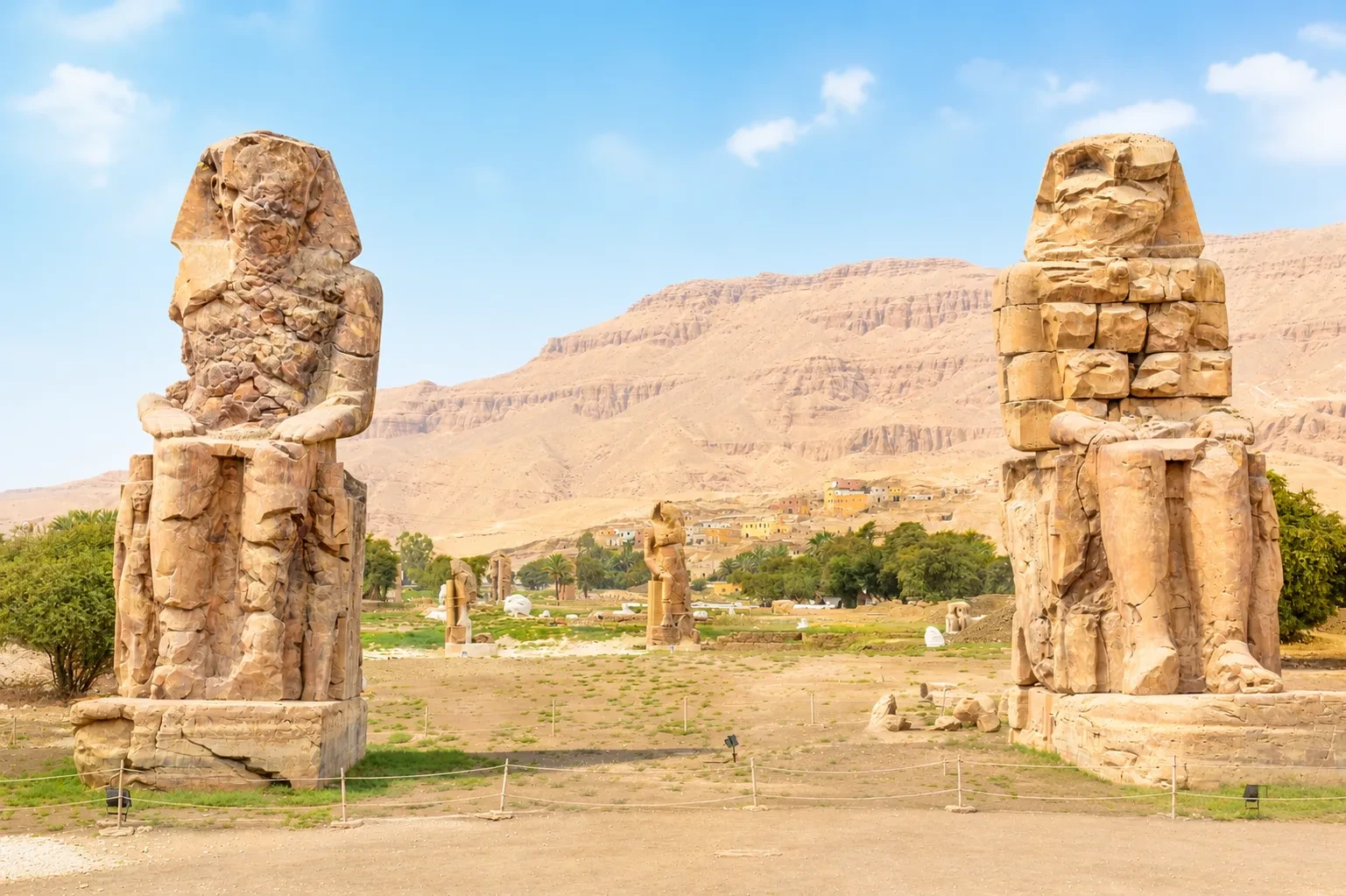
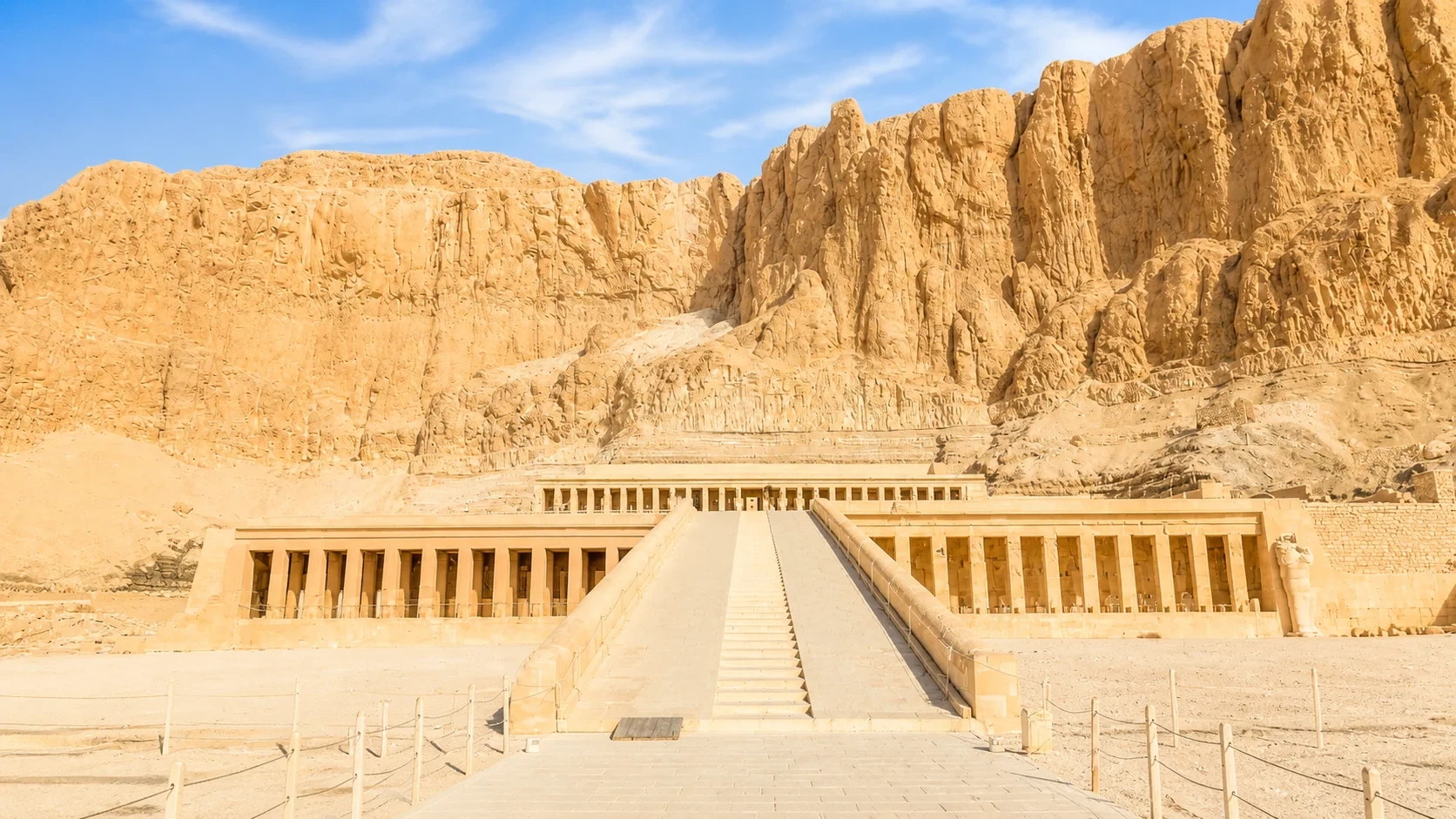
The Valley of the Kings with entry to three royal tombs, including options to visit the tombs of Tutankhamun, Ramesses II, Seti I, Ramesses III, and others depending on availability. The Temple of Hatshepsut at Deir el-Bahari, a three-tiered mortuary temple built into the limestone cliffs. The Colossi of Memnon, two 18-meter seated statues of Amenhotep III. Optional extensions include the Valley of the Queens, the Ramesseum, and Medinet Habu Temple.
Duration
Full day, approximately 6 to 7 hours.
Includes
Private air-conditioned transportation, private licensed Egyptologist guide, and entrance fees to the main sites. Available for morning departures.
Luxor Day Tours: Combined East Bank And West Bank
This full-day combined tour covers the most important sites on both banks of the Nile in Luxor in a single day. It is the most comprehensive Luxor Day Tour available and is suitable for travelers with one day in Luxor.
What Is Covered
East Bank: Luxor Temple, the Avenue of Sphinxes, and Karnak Temple. West Bank: Valley of the Kings with three tomb entries, Temple of Hatshepsut, and the Colossi of Memnon.
Duration
Full day, approximately 8 to 9 hours.
Includes
Private air-conditioned transportation, Nile crossing, private licensed Egyptologist guide, and entrance fees to all sites. Available for morning departures.
Safaga Shore Excursions To Luxor Temple
Safaga Port is located on the Red Sea coast, approximately 250 kilometers (155 miles) from Luxor. WOW Egypt Tours operates Safaga Shore Excursions that transfer cruise ship passengers from Safaga Port to Luxor and back within a single port day. The transfer is approximately 2.5 to 3 hours each way by private air-conditioned vehicle.
What Is Covered
Luxor Temple with a full guided visit. Karnak Temple including the Great Hypostyle Hall and the sacred lake. The Avenue of Sphinxes connecting the two temples. Optional addition: Luxor Museum for an extra fee and subject to available time.
Duration
Full day from port departure to port return, approximately 12 to 13 hours including transfers.
Includes
Private air-conditioned vehicle from Safaga Port, private licensed Egyptologist guide, entrance fees to Luxor Temple and Karnak Temple, and return transfer to the ship. All Safaga Shore Excursions are coordinated around each ship's port schedule to guarantee return to the vessel before departure.
Dahabiya Nile River Cruise
A Dahabiya Nile River Cruise is a small-vessel sailing experience on the Nile between Luxor and Aswan aboard a traditional wooden dahabiya. WOW Egypt Tours operates dahabiya cruises with private cabins, all meals, a private licensed Egyptologist guide on board, and guided shore excursions at every stop.
4 Days 3 Nights Dahabiya Nile River Cruise From Aswan To Luxor
Route: Aswan to Luxor, sailing north.
Itinerary
Day 1: Embarkation in Aswan. Visit to Philae Temple and the Unfinished Obelisk. Sail north to Kom Ombo. Guided visit to Kom Ombo Temple. Continue to Gebel el Silsila. Overnight on board.
Day 2: Guided visit to Gebel el Silsila. Sail to the Village of Basaw. Guided visit to Village of Basaw. Continue to Edfu. Guided visit to the Temple of Horus at Edfu. Overnight on board.
Day 3: Sail to El Kab. Guided visit to El Kab Tombs. Sail to El Hagaz Island. Swimming Stop. Overnight on board.
Day 4: Sail to Esna. Visit Khnum Temple at Esna. Disembarkation in Esna. Transfer to Luxor, approximately 55 kilometers (35 miles).
Includes
Private cabin, all meals on board, private licensed Egyptologist guide, entrance fees to all temple visits, and private transfers.
5 Days 4 Nights Dahabiya Nile River Cruise From Luxor To Aswan
Route: Luxor to Aswan, sailing south.
Itinerary
Day 1: Embarkation in Luxor. Transfer to Esna, approximately 55 kilometers (35 miles). Visit Khnum Temple at Esna. Sail to El Hagaz Island. Overnight on board.
Day 2: Sail to El Kab. Guided visit to El Kab Tombs. Continue to Edfu. Guided visit to the Temple of Horus at Edfu. Sail to the Village of Basaw. Guided visit to Village of Basaw. Overnight on board.
Day 3: Sail to Gebel el Silsila. Guided visit to Gebel el Silsila. Sail south to Kom Ombo. Guided visit to Kom Ombo Temple. Sail to Daraw Village. Overnight on board.
Day 4: Guided visit to Daraw Village. Sail to Herbiab Island. Swimming Stop. Philae Sound & Light Show. Overnight on board.
Day 5: Optional Abu Simbel visit available by Air or Road. Guided visits to Philae Temple, the High Dam, and the Unfinished Obelisk. Disembarkation in Aswan.
Includes
Private cabin, all meals on board, private licensed Egyptologist guide, entrance fees to all temple visits, and private transfers.
8 Days 7 Nights Dahabiya Nile River Cruise Round Trip From Luxor (Via Aswan)
Route: Luxor & Aswan, sailing north & south.
Itinerary
Day 1: Embarkation in Luxor. Transfer to Esna, approximately 55 kilometers (35 miles). Visit Khnum Temple at Esna. Sail to El Hagaz Island. Overnight on board.
Day 2: Sail to El Kab. Continue to Edfu. Guided visit to the Temple of Horus at Edfu. Sail to the Village of Basaw. Guided visit to Village of Basaw. Overnight on board.
Day 3: Sail to Gebel el Silsila. Sail south to Kom Ombo. Guided visit to Kom Ombo Temple. Sail to Daraw Village. Overnight on board.
Day 4: Guided visit to Daraw Village. Sail to Herbiab Island. Swimming Stop. Philae Sound & Light Show. Overnight on board.
Day 5: Optional Abu Simbel visit available by Air or Road. Guided visits to Philae Temple, the High Dam, and the Unfinished Obelisk. Sail north to Kom Ombo. Continue to Gebel el Silsila. Overnight on board.
Day 6: Guided visit to Gebel el Silsila. Sail to the Village of Basaw. Continue to Edfu. Overnight on board.
Day 7: Sail to El Kab. Guided visit to El Kab Tombs. Sail to El Hagaz Island. Swimming Stop. Overnight on board.
Day 8: Disembarkation in Esna. Transfer to Luxor, approximately 55 kilometers (35 miles).
Includes
Private cabin, all meals on board, private licensed Egyptologist guide, entrance fees to all temple visits, and private transfers.
8 Days 7 Nights Dahabiya Nile River Cruise Round Trip From Aswan (Via Luxor)
Route: Luxor & Aswan, sailing north & south.
Itinerary
Day 1: Embarkation in Aswan. Visit to Philae Temple and the Unfinished Obelisk. Sail north to Kom Ombo. Continue to Gebel el Silsila. Overnight on board.
Day 2: Guided visit to Gebel el Silsila. Sail to the Village of Basaw. Continue to Edfu. Overnight on board.
Day 3: Sail to El Kab. Guided visit to El Kab Tombs. Sail to El Hagaz Island. Swimming Stop. Overnight on board.
Day 4: Sail to Esna. Visit Khnum Temple at Esna. Sail to El Hagaz Island. Overnight on board.
Day 5: Sail to El Kab. Continue to Edfu. Guided visit to the Temple of Horus at Edfu. Sail to the Village of Basaw. Guided visit to Village of Basaw. Overnight on board.
Day 6: Sail to Gebel el Silsila. Sail south to Kom Ombo. Guided visit to Kom Ombo Temple. Sail to Daraw Village. Overnight on board.
Day 7: Guided visit to Daraw Village. Sail to Herbiab Island. Swimming Stop. Philae Sound & Light Show. Overnight on board.
Day 8: Disembarkation in Aswan.
Includes
Private cabin, all meals on board, private licensed Egyptologist guide, entrance fees to all temple visits, and private transfers.
Luxor And Aswan Nile River Cruise
The Luxor and Aswan Nile River Cruise is a standard Nile cruise product operated aboard a full-size cruise ship between Luxor and Aswan. WOW Egypt Tours operates this cruise in both directions with private licensed Egyptologist guides, all meals included, private cabins, and guided shore excursions at every port of call.
4 Days 3 Nights Luxor And Aswan Nile River Cruise From Aswan To Luxor
Route: Aswan to Luxor, sailing north.
Itinerary
Day 1: Embarkation in Aswan. Guided visits to Philae Temple, the High Dam, and the Unfinished Obelisk. Overnight on board in Aswan.
Day 2: Sail north to Kom Ombo. Guided visit to Kom Ombo Temple. Continue to Edfu. Overnight on board.
Day 3: Guided visit to the Temple of Horus at Edfu. Continue north toward Luxor. Guided visit to Luxor Temple and Karnak Temple. Overnight on board in Luxor.
Day 4: Optional Sunrise Hot Air Balloon available. Guided visits to Valley of the Kings, Queen Hatshepsut Temple and Colossi of Memnon. Disembarkation in Luxor.
Includes
Private cabin, all meals on board, private licensed Egyptologist guide, entrance fees to all temple visits, and private transfers.
5 Days 4 Nights Luxor And Aswan Nile River Cruise From Luxor To Aswan
Route: Luxor to Aswan, sailing south.
Itinerary
Day 1: Embarkation in Luxor. Guided visits to Luxor Temple and Karnak Temple. Overnight on board in Luxor.
Day 2: Optional Sunrise Hot Air Balloon available. Guided visits to Valley of the Kings, Queen Hatshepsut Temple and Colossi of Memnon. Pass through the Esna locks. Sail south to Edfu. Overnight on board.
Day 3: Guided visit to the Temple of Horus at Edfu. Continue to Kom Ombo. Guided visit to Kom Ombo Temple. Overnight on board.
Day 4: Continue south toward Aswan. Guided visits to Philae Temple, the High Dam, and the Unfinished Obelisk. Overnight on board in Aswan.
Day 5: Optional Abu Simbel visit available by Air or Road. Disembarkation in Aswan.
Includes
Private cabin, all meals on board, private licensed Egyptologist guide, entrance fees to all temple visits, and private transfers.
8 Days 7 Nights Luxor And Aswan Nile River Cruise Round Trip From Luxor (Via Aswan)
Route: Luxor & Aswan, sailing north & south.
Itinerary
Day 1: Embarkation in Luxor. Guided visits to Luxor Temple and Karnak Temple. Overnight on board in Luxor.
Day 2: Guided visits to Luxor Museum. Pass through the Esna locks. Sail south to Edfu. Overnight on board.
Day 3: Guided visit to the Temple of Horus at Edfu. Continue to Kom Ombo. Overnight on board.
Day 4: Continue south toward Aswan. Guided visits to Philae Temple, the High Dam, and the Unfinished Obelisk. Overnight on board in Aswan.
Day 5: Abu Simbel visit available by Road. Sound & Light Show at Philae Temple. Overnight on board in Aswan.
Day 6: Guided visits to Nubian Village. Sail north to Kom Ombo. Guided visit to Kom Ombo Temple. Continue to Edfu. Overnight on board.
Day 7: Guided visits to Valley of the Kings, Queen Hatshepsut Temple and Colossi of Memnon. Pass through the Esna locks. Sail south to Edfu. Overnight on board.
Day 8: Optional Sunrise Hot Air Balloon available. Disembarkation in Luxor.
Includes
Private cabin, all meals on board, private licensed Egyptologist guide, entrance fees to all temple visits, and private transfers.
8 Days 7 Nights Luxor And Aswan Nile River Cruise Round Trip From Aswan (Via Luxor)
Route: Luxor & Aswan, sailing north & south.
Itinerary
Day 1: Embarkation in Aswan. Guided visits to Philae Temple, the High Dam, and the Unfinished Obelisk. Overnight on board in Aswan.
Day 2: Sail north to Kom Ombo. Guided visit to Nubian Village and Kom Ombo Temple. Continue to Edfu. Overnight on board.
Day 3: Continue north toward Luxor. Guided visit to Luxor Museum and Karnak Sound & Light Show. Overnight on board in Luxor.
Day 4: Guided visits to Luxor Temple and Karnak Temple. Overnight on board in Luxor.
Day 5: Optional Sunrise Hot Air Balloon available. Guided visits to Valley of the Kings, Queen Hatshepsut Temple and Colossi of Memnon. Pass through the Esna locks. Sail south to Edfu. Overnight on board.
Day 6: Guided visit to the Temple of Horus at Edfu. Continue to Kom Ombo. Overnight on board.
Day 7: Sound & Light Show at Philae Temple. Overnight on board in Aswan.
Day 8: Abu Simbel visit available by Road. Disembarkation in Aswan.
Includes
Private cabin, all meals on board, private licensed Egyptologist guide, entrance fees to all temple visits, and private transfers.
Combine Luxor Temple With Your Egypt Tours Package
Luxor Temple is included as a featured stop across the full range of WOW Egypt Tours travel products. Browse the options below to find the Egypt experience that is right for you.
Egypt Tour Packages: Multi-day guided Egypt tours organized by duration, including 2 Days Egypt Packages, 3 Days Egypt Packages, 4 Days Egypt Packages, 5 Days Egypt Packages, 6 Days Egypt Packages, 7 Days Egypt Packages, 8 Days Egypt Packages, 10 Days Egypt Packages, and longer itineraries. All packages include private air-conditioned transportation, private licensed Egyptologist guide, accommodations, entrance fees to all included sites, and private transfers throughout Egypt.
Egypt Travel Packages: Themed Egypt travel packages designed around specific travel styles and interests, including Egypt Honeymoon Travel Packages, Egypt Budget Travel Packages, Egypt Family Travel Packages, Egypt Luxury Travel Packages, Egypt Adventure Travel Packages, Egypt Cultural Travel Packages, and Egypt Christmas and New Year Travel Packages. All packages include private air-conditioned transportation, private licensed Egyptologist guide, accommodations, meals, entrance fees to all included sites, and private transfers.
Egypt Nile Cruise Packages: Complete Egypt travel packages combining Cairo sightseeing with a fully guided Nile cruise between Luxor and Aswan, available as Cairo and Nile Cruise Packages, Egypt and Nile Cruise Packages, and Nile Cruise and Red Sea Packages. All packages include private cabin on board, all meals, private licensed Egyptologist guide, entrance fees to all temple visits including Luxor Temple, and private transfers.
Nile River Cruises: All WOW Egypt Tours Nile cruise options between Luxor and Aswan, available across four ship categories, Standard, Deluxe, Ultra Deluxe, and Luxury, as well as private Dahabiya sailing vessels. All cruises include private cabin on board, all meals, private licensed Egyptologist guide, entrance fees to all temple visits, and private transfers.
Luxor Aswan Nile Cruises: The classic Upper Egypt Nile cruise route between Luxor and Aswan, available in both directions and in durations of 4 Days 3 Nights, 5 Days 4 Nights, and 8 Days 7 Nights round trip. Luxor Temple is included as a guided stop on all itineraries. All cruises include private cabin on board, all meals, private licensed Egyptologist guide, entrance fees to all temple visits, and private transfers.
Standard Nile Cruises: Comfortable standard-category cruise ships sailing between Luxor and Aswan, available in 4 Days 3 Nights, 5 Days 4 Nights, and 8 Days 7 Nights itineraries in both directions. Includes standard cabin on board, all meals, private licensed Egyptologist guide, entrance fees to all temple visits, and private transfers.
Deluxe Nile Cruises: Deluxe-category cruise ships with enhanced cabin comfort and upgraded dining, sailing between Luxor and Aswan in 4 Days 3 Nights, 5 Days 4 Nights, and 8 Days 7 Nights itineraries in both directions. Includes deluxe cabin on board, all meals, private licensed Egyptologist guide, entrance fees to all temple visits, and private transfers.
Ultra Deluxe Nile Cruises: Ultra deluxe-category cruise ships offering superior cabins, premium dining, and an elevated onboard experience, sailing between Luxor and Aswan in 4 Days 3 Nights, 5 Days 4 Nights, and 8 Days 7 Nights itineraries in both directions. Includes ultra deluxe cabin on board, all meals, private licensed Egyptologist guide, entrance fees to all temple visits, and private transfers.
Luxury Nile Cruises: Luxury-category cruise ships with the finest cabins, exceptional cuisine, and premium onboard facilities, sailing between Luxor and Aswan in 4 Days 3 Nights, 5 Days 4 Nights, and 8 Days 7 Nights itineraries in both directions. Includes luxury cabin on board, all meals, private licensed Egyptologist guide, entrance fees to all temple visits, and private transfers.
Dahabiya Nile Cruises: Private small-vessel sailing experience aboard a traditional wooden dahabiya between Luxor and Aswan, available in four itineraries: Dahabiya From Aswan To Luxor 4 Days 3 Nights, Dahabiya From Luxor To Aswan 5 Days 4 Nights, Dahabiya Round Trip From Luxor via Aswan 8 Days 7 Nights, and Dahabiya Round Trip From Aswan via Luxor 8 Days 7 Nights. Includes private cabin on board, all meals, private licensed Egyptologist guide, entrance fees to all temple visits, and private transfers.
Luxor Tours: Day tours and multi-day tours of Luxor covering all major sites on both banks of the Nile, including Luxor East Bank Tours covering Luxor Temple, Karnak Temple, Luxor Museum, and Mummification Museum; Luxor West Bank Tours covering the Valley of the Kings, Temple of Hatshepsut, and Colossi of Memnon; and combined Luxor Day Tours covering the East and West Banks in a single day. All tours include private air-conditioned transportation, private licensed Egyptologist guide, entrance fees to all included sites, and private transfers.
Shore Excursions: Guided day excursions from Egypt's Red Sea ports to Luxor Temple and the monuments of Upper Egypt, available for cruise ship passengers with a port call at Safaga, Hurghada, Port Said, Alexandria, and Sokhna. Includes private air-conditioned transportation from the port, private licensed Egyptologist guide, entrance fees to all included sites, and return transfer to the ship, with all timings coordinated around each vessel's port schedule.
Safaga Port Excursions: Shore excursions departing from Safaga Port on the Red Sea coast, approximately 250 kilometers (155 miles) from Luxor, covering Luxor Temple, Karnak Temple, and the Luxor Museum as a full-day trip within a single port call. Available options include Safaga to Luxor East Bank Tours, Safaga to Luxor West Bank Tours, and combined Safaga to Luxor East and West Bank Day Tours. Includes private air-conditioned vehicle from Safaga Port, private licensed Egyptologist guide, entrance fees to all included sites, and return transfer to the ship.
Nearby Attractions To Luxor Temple
Luxor Temple sits at the center of one of the richest concentrations of ancient monuments in the world. Karnak Temple, the largest religious complex ever built in the ancient world, is located just 3 kilometers to the north and is connected to the Temple of Luxor by the Avenue of Sphinxes. On the West Bank of the Nile, directly across the river, lies the Valley of the Kings, where the tombs of Tutankhamun, Ramesses II, Seti I, and dozens of other pharaohs were cut into the limestone cliffs.
The Temple of Hatshepsut at Deir el-Bahari, the Colossi of Memnon, the Valley of the Queens, the Ramesseum, Medinet Habu Temple, the Valley of the Nobles, and Deir el-Medina are all within easy reach. The Luxor Museum, located along the Corniche between the Temple of Luxor and Karnak, houses an exceptional collection of ancient statues and artifacts discovered in the region, including several found in the famous Luxor Temple cache. The Mummification Museum, also on the East Bank, offers a detailed look at the ancient Egyptian practice of preserving the dead.
Frequently Asked Questions About Luxor Temple
What is Luxor Temple?
Luxor Temple is a large ancient Egyptian temple complex located on the east bank of the Nile in the city of Luxor, built around 1400 BCE and dedicated to the Theban Triad of Amun, Mut, and Khonsu. The Temple of Luxor is one of the most visited ancient sites in Egypt.
Who built Luxor Temple?
The Temple of Luxor was primarily built by King Amenhotep III, with major additions by Tutankhamun, Horemheb, Ramesses II, and later contributions from Alexander the Great and King Nectanebo I.
What does the name Luxor Temple mean?
The ancient Egyptian name was Ipet-Resyt, meaning the southern sanctuary. The Arabic name Luxor comes from Al-Uqsur, meaning the palaces or the fortresses, a reference to the Temple of Luxor's enormous halls and chambers.
What is the Avenue of Sphinxes?
The Avenue of Sphinxes is a 3-kilometer ancient processional road lined with sphinx statues that connected Luxor Temple to Karnak Temple. It was fully restored and reopened to the public in 2021.
What is the Opet Festival at Luxor Temple?
The Opet Festival was the most important annual religious celebration in ancient Thebes. It involved a grand procession of the sacred statues of Amun, Mut, and Khonsu from Karnak Temple to the Temple of Luxor. The festival lasted 11 days in the 18th Dynasty, 23 days in the 19th Dynasty, and 27 days in the 20th Dynasty.
Is there a mosque inside Luxor Temple?
Yes. The Abu al-Haggag Mosque is located within the first courtyard of the Temple of Luxor and remains an active place of worship today, dedicated to the Islamic saint Yusuf Abu al-Haggag.
What are the opening hours of Luxor Temple?
Luxor Temple is open every day of the week including public holidays. Opening hours are from 6:00 AM to 10:00 PM.
How much does it cost to enter Luxor Temple?
The entrance fee is EGP 500 for adults and EGP 250 for students. Entrance fees are included in all Luxor Temple Tours, Egypt Tours Packages, and Safaga Shore Excursions booked through WOW Egypt Tours.
Can I visit Luxor Temple at night?
Yes. The Temple of Luxor is open until 10:00 PM and is lit throughout after dark. WOW Egypt Tours offers dedicated night tours of Luxor Temple with licensed Egyptologist guides.
How long does it take to visit Luxor Temple?
A standard visit takes between one and two hours. Visitors covering the full architectural sequence and reading inscriptions in detail should allow two to three hours.
What is the best time of year to visit Luxor Temple?
October to April is the most practical period for visiting, with moderate temperatures suitable for outdoor exploration. Summer visits are best planned for early morning or evening hours.
How do I get to Luxor Temple?
Luxor Temple is on the Corniche el-Nile road in central Luxor. All Luxor Tours, Luxor Day Tours, and Safaga Shore Excursions with WOW Egypt Tours include private transportation directly to and from the Temple of Luxor.
Can I combine Luxor Temple with Karnak Temple in one day?
Yes. The two temples are connected by the Avenue of Sphinxes and are covered together on all WOW Egypt Tours Luxor East Bank Tours. The Luxor Museum and Mummification Museum can also be added on the same day as part of a full East Bank Tour.
Is a guide necessary at Luxor Temple?
A guide is not required to enter but is strongly recommended. WOW Egypt Tours provides licensed Egyptologist guides on all Luxor Temple Tours, Egypt Tours Packages, and Safaga Shore Excursions.
Can I take photographs at Luxor Temple?
Personal photography is permitted throughout most of the Temple of Luxor. Flash must not be used near painted surfaces. Professional filming requires a separate permit from Egypt's Ministry of Tourism and Antiquities.
What should I wear to visit Luxor Temple?
Modest clothing covering shoulders and knees, flat walking shoes, a hat, and sunscreen. Women entering the Abu al-Haggag Mosque should cover their hair.
Is Luxor Temple a UNESCO World Heritage Site?
Yes. The Temple of Luxor is part of the Ancient Thebes with its Necropolis UNESCO World Heritage Site, inscribed in 1979, which also includes Karnak Temple, the Valley of the Kings, and the monuments of the West Bank.
What is the difference between Luxor Temple and Karnak Temple?
Luxor Temple was a festival sanctuary used annually during the Opet Festival. Karnak Temple was the main religious complex and permanent seat of the god Amun. The Temple of Luxor served as the festival palace where Amun visited once a year for the sacred marriage ceremony with Mut.
What Nile cruise options include Luxor Temple?
WOW Egypt Tours offers Dahabiya Nile River Cruises and Luxor Aswan Nile River Cruises in both directions between Luxor and Aswan, ranging from 4 to 8 days. All itineraries include a guided visit to the Temple of Luxor. All are available as part of WOW Egypt Tours Egypt Tours Packages and Egypt Travel Packages.
Can I visit Luxor Temple as part of a Safaga Shore Excursion?
Yes. WOW Egypt Tours operates Safaga Shore Excursions from Safaga Port, approximately 250 kilometers (155 miles) from Luxor. All transportation, guiding, and entrance fees are included, with departure and return times coordinated around the ship's port schedule.
How do I book a Luxor Temple Tour with WOW Egypt Tours?
You can book any Luxor Temple Tour, Luxor Day Tour, Luxor East Bank Tour, Luxor West Bank Tour, Dahabiya Nile River Cruise, Luxor Aswan Nile River Cruise, Egypt Tours Package, Egypt Travel Package, or Safaga Shore Excursion directly through WOW Egypt Tours. All tours include private transportation, licensed Egyptologist guides, and entrance fees.