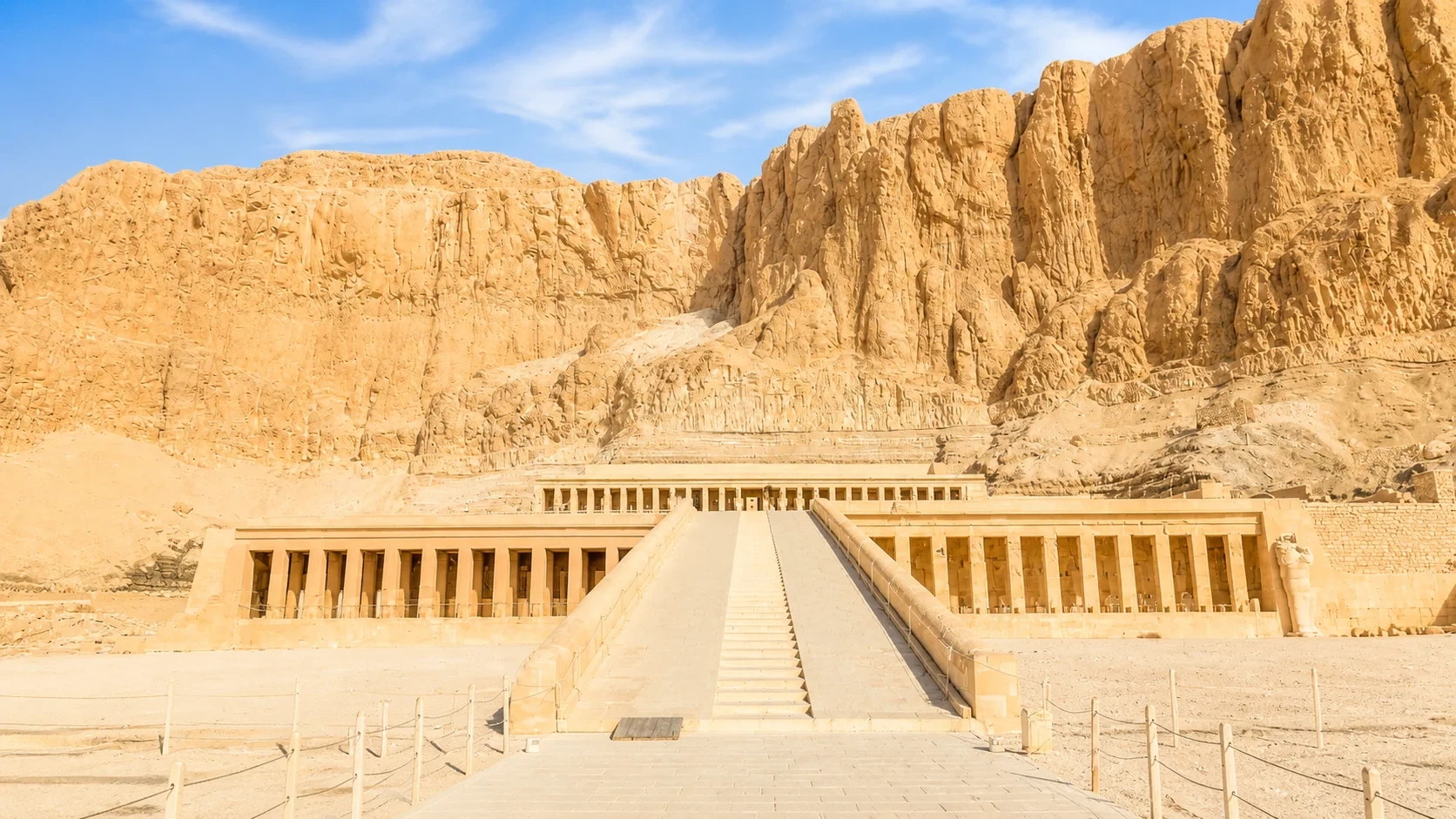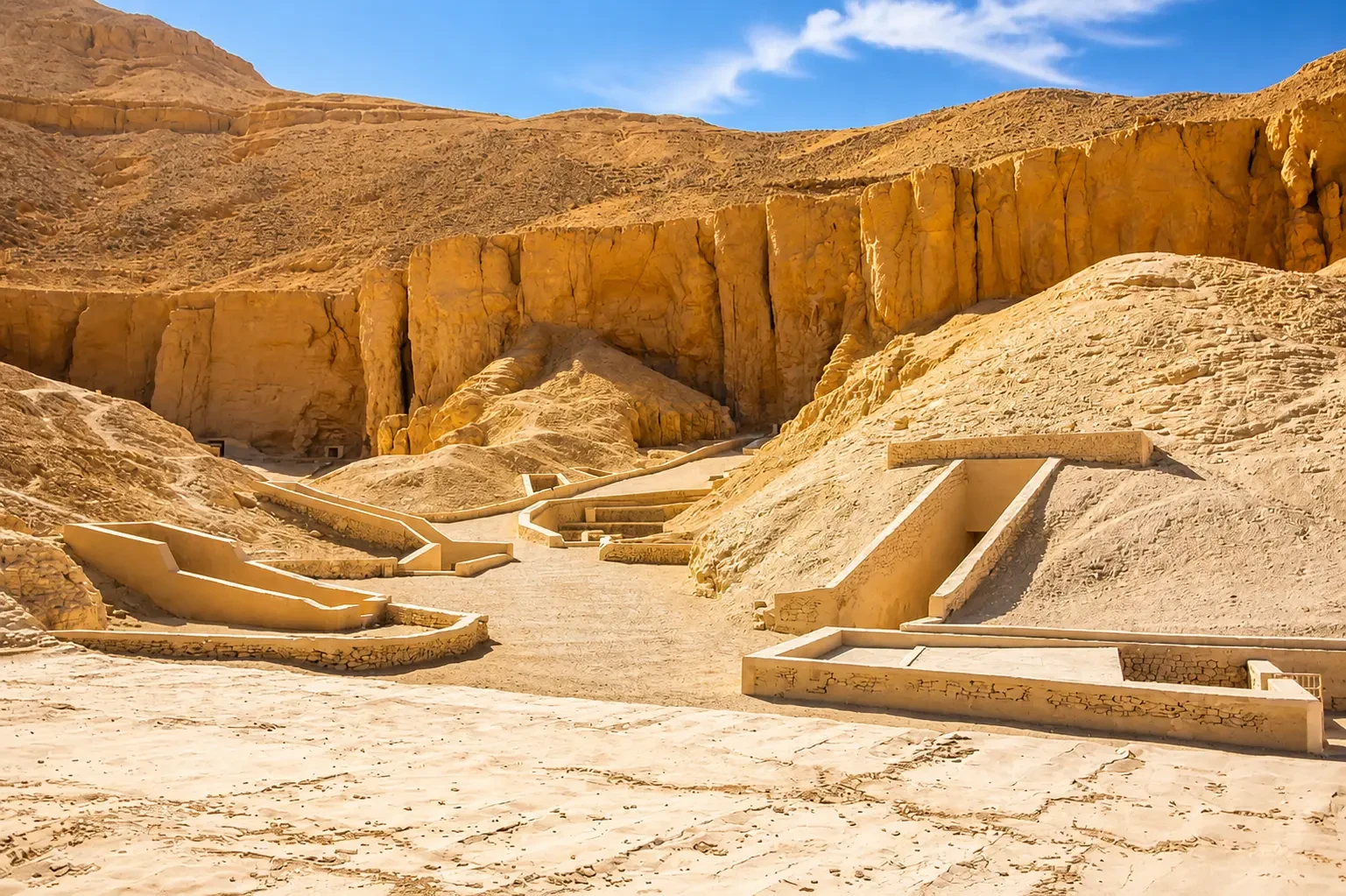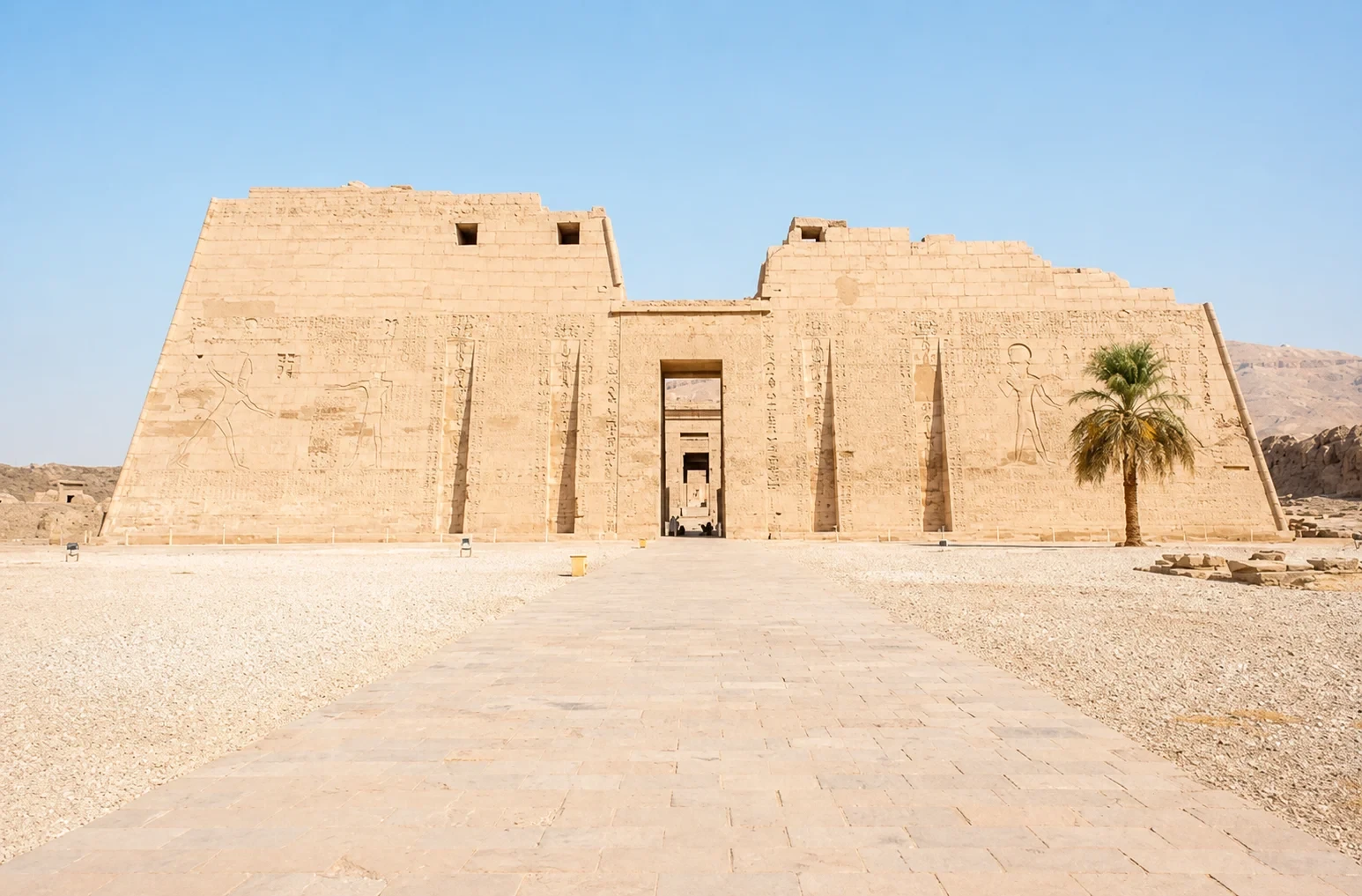

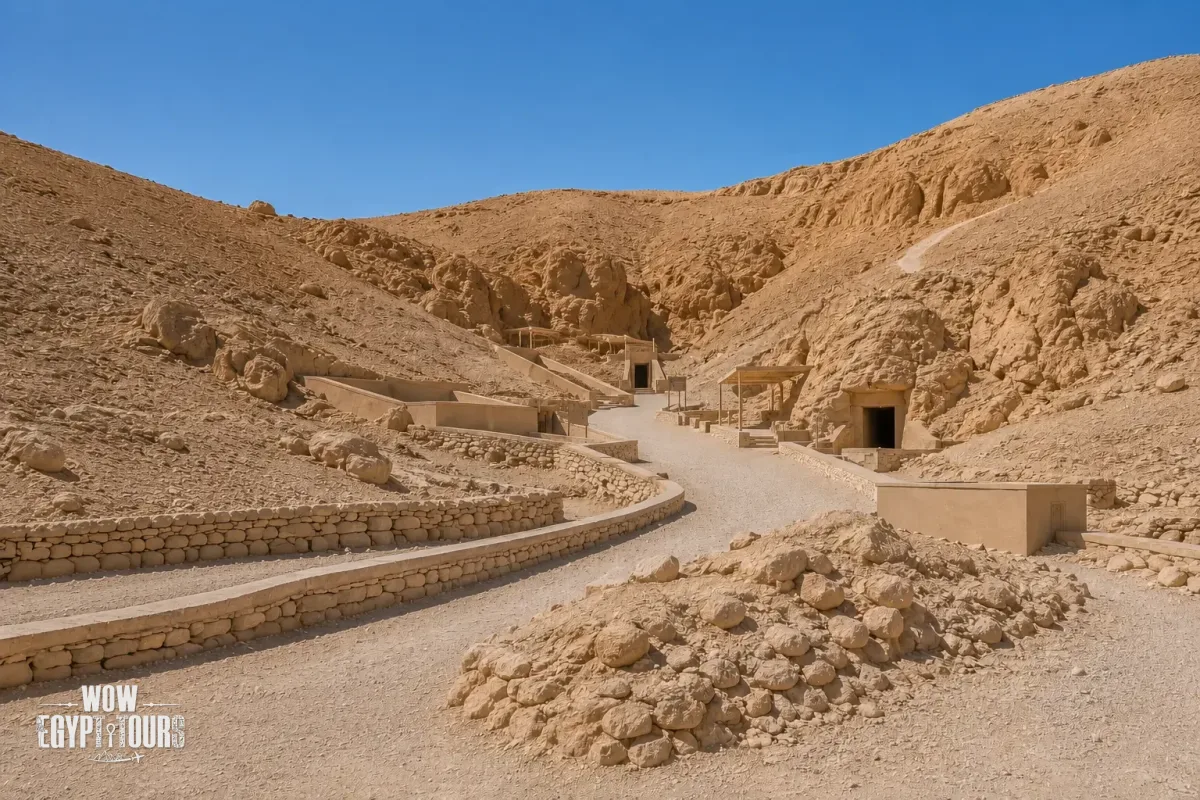

The Valley of the Queens is one of the most extraordinary and atmospheric ancient sites in Egypt, and a destination that every traveler to Luxor must experience. Located on the west bank of the Nile River in the city of Luxor, ancient Thebes, the Valley of the Queens stands as the royal burial ground of the queens, princes, and princesses of the New Kingdom, where some of the most magnificently decorated tombs in the entire Theban necropolis were carved into the limestone cliffs of the southern Theban hills. This remarkable site sits at the heart of some of Egypt's greatest travel experiences, including Luxor Tours, Luxor Day Tours, Luxor East Bank Tours, Luxor West Bank Tours, Valley of the Queens Tours, Dahabiya Nile River Cruises, and Luxor Aswan Nile River Cruises, all of which WOW Egypt Tours proudly offers to travelers from around the world. The Valley of the Queens is also a highlight of Egypt Tours Packages, Egypt Travel Packages, and Safaga Shore Excursions, making it one of the most rewarding and artistically significant ancient sites in all of Egypt.
Used as a royal burial ground primarily during the New Kingdom period from the 18th Dynasty onward, the Valley of the Queens Egypt contains more than 90 known tombs and chambers, ranging from simple undecorated pits to the extraordinary painted tomb of Queen Nefertari, wife of Ramesses II, which is universally considered the most beautiful ancient Egyptian tomb ever discovered and one of the supreme masterpieces of art from the ancient world. Visiting the Valley of the Queens is not simply a sightseeing experience; it is an encounter with some of the finest painted imagery ever created by human hands, preserved in breathtaking colors on tomb walls that have survived for more than three thousand years.
The Valley of the Queens is part of the ancient Theban necropolis, the vast city of the dead that spread across the entire west bank of the Nile opposite ancient Thebes, encompassing the Valley of the Kings, the Valley of the Nobles, Deir el-Medina, and the great mortuary temples of the Theban plain.

Who Built The Valley Of The Queens In Egypt?
The Valley of the Queens was established as a royal burial ground at the beginning of the New Kingdom, around 1550 BCE, although the earliest tombs in the valley date to the late 17th or early 18th Dynasty. The valley was used by the queens, princes, and princesses of the 18th, 19th, and 20th Dynasties, with the most elaborate and beautifully decorated tombs belonging to the great queens of the 19th Dynasty. The pharaohs of the New Kingdom selected this southern valley in the Theban hills as a companion burial ground to the Valley of the Kings, placing their most beloved queens and royal children in the protection of the same sacred Theban mountain. The most celebrated tombs in the Valley of the Queens were commissioned by Ramesses II, who provided for the burial of his beloved principal wife Nefertari in a tomb of unmatched magnificence, and by Ramesses III, who buried several of his sons in the valley in tombs decorated with intimate and moving scenes of the pharaoh presenting his children to the gods.
Who Was Queen Nefertari?
Queen Nefertari was the principal wife and great royal consort of Pharaoh Ramesses II, one of the most celebrated and powerful pharaohs in the entire history of ancient Egypt. She was the first and most beloved of Ramesses II's many wives, holding the highest queenly title in the land and appearing prominently alongside her husband in many of his greatest monuments, including the smaller of the two temples at Abu Simbel, which Ramesses dedicated entirely to Nefertari and the goddess Hathor. Nefertari's name means beautiful companion, and the extraordinary care and artistic investment that Ramesses lavished on her tomb in the Valley of the Queens reflects both his personal devotion to her and his desire to secure her eternal life with the most magnificent burial preparation Egypt's royal workshops could produce. Nefertari is believed to have died around 1255 BCE, during the middle years of Ramesses II's extraordinarily long reign of 67 years. The tomb he built for her, QV66, is the finest painted tomb ever discovered in Egypt and one of the greatest works of art in the world.
Valley Of The Queens Location In Egypt
The Valley of the Queens is located on the west bank of the Nile River in the city of Luxor, in the southern end of the Theban hills approximately 2 kilometers south of the Valley of the Kings and just west of the village of Deir el-Medina. The valley is reached from Luxor by crossing the Nile to the West Bank and then traveling through the agricultural plain and into the desert hills past the Colossi of Memnon and the Medinet Habu Temple. WOW Egypt Tours provides private air-conditioned transportation directly from Luxor hotels to the Valley of the Queens on all Luxor West Bank Tours, Egypt Tours Packages, Egypt Travel Packages, and Safaga Shore Excursions.
Valley Of The Queens Fun Facts
The Valley of the Queens contains more than 90 known tombs and chambers, designated by the abbreviation QV followed by their discovery number. The ancient Egyptian name for the valley was Ta Set Neferu, meaning the Place of Beauty or the Place of the Royal Children, a name that reflects both the extraordinary artistic quality of the tombs and the fact that not only queens but also royal princes and princesses were buried here. The most visited and celebrated tomb in the valley is QV66, the tomb of Queen Nefertari, which has been described by Egyptologists as the Sistine Chapel of ancient Egypt for the sublime quality of its painted decoration. The valley was also used for the burials of sons of Ramesses III, whose tombs, particularly those of Princes Khaemwaset and Amenherkhepshef, are decorated with touching scenes of the pharaoh personally guiding his sons through the halls of the underworld to introduce them to the gods.
The tomb of Queen Nefertari (QV66) was discovered by the Italian archaeologist Ernesto Schiaparelli in 1904. It was subsequently closed for decades due to the damaging effects of visitor humidity on the delicate painted plaster, and an extraordinary multi-year conservation project by the Getty Conservation Institute between 1986 and 1992 stabilized the tomb and restored it to a condition that allows limited daily visitor access today.
Why Is The Valley Of The Queens Called By This Name In Egypt?
The modern name Valley of the Queens refers to the fact that the valley was used primarily as the burial place of the royal wives and female members of the royal family during the New Kingdom period. The ancient Egyptian name for the site was Ta Set Neferu, which can be translated as the Place of Beauty, a reference to the extraordinary artistic quality of the tomb decoration, or alternatively as the Place of the Royal Children, reflecting the fact that not only queens but also royal princes and princesses were interred here. The Arabic name used in modern Luxor is Biban el-Harim, meaning the Gates of the Women, a name that echoes the ancient usage and distinguishes this valley clearly from the nearby Valley of the Kings, Biban el-Muluk.
Valley Of The Queens History
The Valley of the Queens was established as a royal burial ground during the early New Kingdom and was used continuously for royal and high-status burials throughout the 18th, 19th, and 20th Dynasties. The earliest tombs in the valley are relatively simple, but the scale and artistry of the tombs increases dramatically through the 19th Dynasty, reaching its absolute peak in the extraordinary tomb of Queen Nefertari commissioned by Ramesses II around 1255 BCE. The valley continued to receive burials through the 20th Dynasty, and the tomb of Ramesses III's sons represent some of the finest royal family burials of that period.
Like the tombs of the nearby Valley of the Kings, many tombs in the Valley of the Queens were plundered in antiquity, and most of the burial equipment originally placed in the tombs was removed in the waves of tomb robbery that accompanied the political instability of the late New Kingdom and Third Intermediate Period. The mummy of Queen Nefertari herself was never found intact, though fragments of her funerary equipment including parts of her alabaster canopic jars and gilded wooden ushabti figures were recovered from her tomb. The modern rediscovery of the valley began with European exploration in the early 19th century, and systematic excavation was carried out by the Italian Archaeological Mission from 1903 onwards under the direction of Ernesto Schiaparelli, who discovered the tomb of Nefertari in 1904 along with many other important tombs in the valley.
The Story Of The Royal Tombs In The Valley Of The Queens
The pharaohs of the New Kingdom built the tombs of the Valley of the Queens out of the same profound religious motivation that drove the construction of the royal tombs in the Valley of the Kings: the belief that death was not an ending but a transition, and that the physical preservation of the body and the provision of the correct religious texts and imagery were essential to securing eternal life in the presence of the gods. For a pharaoh, securing the eternal life of his principal wife and royal children was as much a religious obligation as his own funerary preparations, since the divine family of the king participated in his eternal nature and needed to be provided with appropriate protection for their journey through the underworld.
The extraordinary investment that Ramesses II made in the tomb of Queen Nefertari reflects not only his personal devotion to her but also the theological significance of the great royal wife in the New Kingdom religious system. The queen was the earthly counterpart of the goddess Hathor, the consort of the sun god, and her tomb was decorated not as a funerary monument but as a divine palace for a woman who had herself become a goddess. The scenes in Nefertari's tomb show her in direct conversation with the gods of the underworld as an equal, not as a supplicant, confirming her divine status and her secure place in eternity alongside the greatest deities of ancient Egypt.
Valley Of The Queens Architecture And The Royal Tombs
The Tomb Of Queen Nefertari (QV66)
The tomb of Queen Nefertari, QV66, is the most magnificent tomb in the Valley of the Queens and is universally regarded as the most beautifully painted ancient Egyptian tomb ever discovered. Commissioned by Ramesses II for his beloved principal wife around 1255 BCE and discovered by the Italian archaeologist Ernesto Schiaparelli in 1904, the tomb descends through a series of antechambers, corridors, and a principal burial hall decorated on every surface with painted scenes of extraordinary refinement and beauty. The walls show Nefertari in the presence of the gods of the underworld, being guided by Isis and Hathor, playing senet, and performing ritual offerings, all rendered in vivid mineral pigments on a finely prepared white plaster ground. The blue of the hieroglyphic texts, the gold of the divine figures, and the turquoise of Nefertari's translucent white linen gown create an effect of luminous, supernatural beauty that centuries of Egyptologists have struggled to adequately describe in words. Entry to the tomb of Nefertari requires a separate premium ticket and visitor numbers are strictly limited each day to protect the delicate painted plaster from the damaging effects of visitor humidity.
The Tomb Of Prince Khaemwaset (QV44)
The tomb of Prince Khaemwaset, QV44, is one of the most moving and intimate royal tombs in the Theban necropolis. Khaemwaset was a beloved son of Ramesses III who died young, and his tomb is decorated with scenes of extraordinary emotional resonance showing the pharaoh Ramesses III himself, dressed in his full royal regalia, personally conducting his young son through the halls of the underworld and presenting him to the gods one by one. The tenderness and paternal affection evident in these scenes gives the tomb of Khaemwaset a human quality that sets it apart from the more formal theological programs of the great pharaonic tombs, and its painted figures are among the most beautifully preserved in the entire Valley of the Queens.
The Tomb Of Prince Amenherkhepshef (QV55)
The tomb of Prince Amenherkhepshef, QV55, is another of the tombs of the sons of Ramesses III in the Valley of the Queens, and it shares the same intimate character and exquisite painted decoration as the nearby tomb of Prince Khaemwaset. Here too the pharaoh is shown guiding his young son through the underworld, introducing him to Thoth, Ptah, Geb, and the four sons of Horus in scenes of remarkable delicacy and color preservation. The tomb also contains, in its innermost chamber, a glass display case housing a mummified foetus that was found inside the tomb during excavation and is believed to be that of an unborn child who died with the prince's mother, creating one of the most poignant displays in the entire Theban necropolis.
The Tomb Of Queen Titi (QV52)
The tomb of Queen Titi, QV52, is one of the best-preserved and most accessible tombs in the Valley of the Queens. Titi was a queen of the 20th Dynasty, possibly a wife of one of the later Ramessid pharaohs, and her tomb is decorated with scenes of the queen in the presence of the gods of the underworld, with particular emphasis on her journey through the twelve hours of the night and her reception by the deities of the Amduat. The tomb's relatively small scale and excellent state of preservation make it one of the most rewarding tombs to visit in the Queens Valley for visitors who want an intimate and well-preserved example of royal funerary decoration without the crowds that surround the tomb of Nefertari.
The Tomb Of Queen Sitre (QV38)
The tomb of Queen Sitre, QV38, belongs to Sitre, who was the principal wife of Ramesses I and the mother of Seti I, placing her at the beginning of the great 19th Dynasty. Although the tomb's decoration is less complete than that of later queens in the valley, the scenes that do survive represent some of the earliest examples of the fully developed 19th Dynasty queenly tomb decoration program and provide a fascinating starting point for understanding the evolution of the funerary art tradition that would reach its peak in the nearby tomb of Nefertari a generation later.
The Valley Of The Queens Visitor Center
The Valley of the Queens has a small visitor center at the entrance to the valley where tickets are purchased. The standard entrance ticket provides access to the open tombs within the valley, with the exception of the tomb of Queen Nefertari, which requires a separate premium ticket due to the strict daily visitor limit imposed to protect its delicate painted plaster surfaces. WOW Egypt Tours includes all standard entrance fees and can arrange advance booking of the premium Nefertari ticket as part of all Luxor West Bank Tours, Egypt Tours Packages, and Safaga Shore Excursions.
Why Is The Valley Of The Queens Important?
The Valley of the Queens is important for several interconnected reasons. It is the most significant royal female necropolis of the ancient world, providing an irreplaceable record of how ancient Egyptian royal women were commemorated, prepared for the afterlife, and represented in funerary art at the height of New Kingdom civilization. The tombs of the Queens Valley demonstrate that the queens of the New Kingdom were accorded theological status and artistic treatment of the highest order, reflecting the central role of the royal wife in the divine economy of the pharaonic court.
The tomb of Queen Nefertari alone would be sufficient to make the Valley of the Queens one of the most important archaeological sites in the world. It is the finest surviving example of ancient Egyptian mural painting and represents a level of artistic achievement that rivals the greatest works of any civilization in any period of history. The Italian-American conservation project that stabilized the tomb between 1986 and 1992 is itself one of the most important achievements in the history of ancient heritage conservation, demonstrating what is possible when international expertise and resources are brought to bear on the protection of irreplaceable human heritage. WOW Egypt Tours is proud to include the Valley of the Queens as a featured destination in all Luxor West Bank Tours, Egypt Tours Packages, and Safaga Shore Excursions.
What Are Some Interesting Facts About The Valley Of The Queens?
The Sistine Chapel Of Ancient Egypt
The tomb of Queen Nefertari (QV66) is frequently described by Egyptologists and art historians as the Sistine Chapel of ancient Egypt, a comparison that reflects not only the extraordinary quality of the painting but also the total integration of art and architecture, the mastery of the human figure, and the overwhelming emotional and spiritual impact of the decorated space. The comparison is not hyperbole: the painted figures of Nefertari in QV66, with their graceful proportions, their luminous skin tones, and the extraordinary delicacy of their linen drapery and jewelry, represent ancient Egyptian figurative painting at its absolute zenith, and the complete programme of the tomb, with its perfectly balanced compositional sequence from the entrance corridor to the burial chamber, is one of the most sophisticated artistic achievements of the pre-modern world.
The Getty Conservation Project
Between 1986 and 1992, the Getty Conservation Institute carried out one of the most ambitious conservation projects in the history of ancient heritage preservation at the tomb of Queen Nefertari in the Valley of the Queens. The tomb had suffered severe deterioration over the decades following its discovery in 1904, with large areas of painted plaster detaching from the rock walls due to salt crystallization, structural settlement, and the damaging effects of visitor humidity. The Getty project employed a team of Italian and American conservators who spent six years stabilizing the detaching plaster, cleaning the painted surfaces, and developing new protocols for managing visitor access to protect the fragile paintings. The result was a conserved tomb of breathtaking beauty that has been maintained in its restored condition ever since, with strict daily visitor limits ensuring that the humidity generated by human breath does not again damage the ancient pigments.
A Father's Love Preserved In Paint
One of the most moving and humanly resonant features of the Valley of the Queens is the series of tombs built by Ramesses III for his young sons, particularly QV44 and QV55, where the pharaoh himself is depicted escorting his children through the halls of the underworld. In these scenes, Ramesses is not shown as a remote divine king performing formal rituals but as a father holding the hand of his son and presenting him personally to each deity in turn, a gesture of parental tenderness and protectiveness that reaches across three thousand years to touch every visitor who sees it. These tombs represent a deeply human dimension of ancient Egyptian royal religion that is rarely visible in the great public monuments, and they give the Queens Valley a quality of emotional intimacy that distinguishes it from any other site in the Theban necropolis.
What Is So Special About The Valley Of The Queens?
The Art Of The Tomb Of Nefertari
What sets the Valley of the Queens apart from every other ancient site in the Theban necropolis, and arguably from any ancient site in the world, is the presence of the tomb of Queen Nefertari. No other tomb anywhere in Egypt, not even the great royal tombs of the Valley of the Kings, approaches the painted decoration of QV66 in terms of color saturation, technical refinement, compositional elegance, and sheer visual beauty. The experience of entering the tomb and seeing for the first time the tall, graceful figure of Nefertari in her white linen gown, the walls around her blazing with color that has survived more than three thousand years underground, is one that no visitor ever forgets. WOW Egypt Tours strongly recommends booking the premium ticket for the tomb of Nefertari in advance, as the strict daily visitor limit means that access cannot be guaranteed without prior reservation.
A Less Crowded Alternative To The Valley Of The Kings
The Valley of the Queens receives significantly fewer visitors than the nearby Valley of the Kings, making it one of the most peaceful and uncrowded ancient sites available to visitors in Luxor. For travelers who want to experience the painted decoration of ancient Egyptian royal tombs without the crowds and time pressures of the more famous valley to the north, the Queens Valley offers an experience of comparable artistic richness in a far more intimate and tranquil setting. The tombs of Princes Khaemwaset and Amenherkhepshef, in particular, can often be visited in near-total solitude, allowing visitors to stand in silence before three-thousand-year-old paintings of a father walking his young son to meet the gods of eternity, an experience of profound historical and human significance that deserves as much attention as anything in the Valley of the Kings.
Valley Of The Queens Through The Ages: From Ancient Egypt To The Present
The Valley of the Queens has a history of human engagement stretching from its founding as a royal burial ground in the early New Kingdom to the present day. Like the tombs of the nearby Valley of the Kings, many tombs in the Queens Valley were plundered in antiquity, probably during the same waves of tomb robbery that accompanied the political instability of the late 20th Dynasty and Third Intermediate Period. Ancient Coptic Christian hermits occupied several of the larger and more accessible tombs in the early centuries of the Common Era, leaving traces of Coptic inscriptions and wall paintings on some tomb walls.
The modern rediscovery of the valley began in the early 19th century, but it was the systematic excavation campaign of the Italian Archaeological Mission between 1903 and 1920 under Ernesto Schiaparelli that transformed scholarly understanding of the site, resulting in the discovery of the tomb of Nefertari and dozens of other important burials. The 20th century brought increasing international attention to the valley, culminating in the landmark Getty Conservation Institute project at the tomb of Nefertari from 1986 to 1992, which established new standards for the conservation of ancient painted surfaces and set the model for heritage preservation projects around the world. Today the Valley of the Queens is managed by the Egyptian Ministry of Tourism and Antiquities and continues to receive visitors from every country in the world, serving as one of the most compelling destinations on the Luxor West Bank.
Valley Of The Queens UNESCO World Heritage Site
The Valley of the Queens is part of the Ancient Thebes with its Necropolis UNESCO World Heritage Site, inscribed in 1979. This designation recognizes the outstanding universal value of the entire Theban region, which includes the Valley of the Queens, the Valley of the Kings, Luxor Temple, Karnak Temple, and the many temples and tombs of the West Bank of the Nile. UNESCO recognizes the Valley of the Queens specifically as an exceptional concentration of royal funerary art and architecture representing the pinnacle of New Kingdom artistic achievement, and the tomb of Nefertari in particular as one of the most significant individual works of art surviving from the ancient world. The UNESCO inscription has supported international conservation efforts in the valley including the Getty project and ongoing monitoring of the painted tomb interiors.
Best Time To Visit The Valley Of The Queens
The best time to visit the Valley of the Queens is during the cooler months from October through April, when temperatures in Luxor are moderate and the desert valley is comfortable for outdoor exploration. The summer months from May to September can be extremely hot in the enclosed valley, with daytime temperatures regularly exceeding 40 degrees Celsius, making visits uncomfortable without careful preparation. If visiting during summer, plan your visit for the very first hours after opening when the valley is at its coolest. WOW Egypt Tours operates Luxor West Bank Tours throughout the year and plans all timings carefully to ensure the most comfortable and rewarding visit to the Valley of the Queens possible. If you plan to visit the tomb of Nefertari, WOW Egypt Tours recommends booking the premium ticket well in advance of your visit, as the strict daily visitor limit means entry cannot be guaranteed on the day without prior reservation.
Valley Of The Queens Opening Hours
The Valley of the Queens is open to visitors every day of the week, including public holidays. The valley opens at 6:00 AM and closes at 5:00 PM during the winter months from October to April, and remains open until 5:00 PM during the summer months from May to September. The tomb of Queen Nefertari has its own strictly limited daily visitor schedule and should be booked in advance to guarantee access. Visitors who prefer a quieter experience should arrive as early as possible in the morning, as the valley becomes more crowded from mid-morning onwards, particularly during the high tourism season from October to March.
Valley Of The Queens Entrance Fees
Standard ticket (entry to open tombs): EGP 220 for adults, EGP 110 for students
Tomb of Queen Nefertari (QV66): EGP 1,800 additional
Keep your ticket safe throughout your visit, as it will be checked at each tomb entrance. Entrance fees are included in all Valley of the Queens Tours, Egypt Tours Packages, and Safaga Shore Excursions booked through WOW Egypt Tours, with the premium Nefertari ticket available to arrange in advance.
How To Get To The Valley Of The Queens
The Valley of the Queens is located on the west bank of the Nile in Luxor, approximately 2 kilometers south of the Valley of the Kings in the southern end of the Theban hills. From central Luxor, visitors cross the Nile by public ferry or private motorboat to the West Bank landing, from which taxis, minibuses, and organized tour vehicles travel west through the agricultural plain and into the desert hills to the valley entrance. The journey from the Nile landing to the Valley of the Queens takes approximately 20 minutes by road.
Visitors arriving by air land at Luxor International Airport on the East Bank, from which private transfers to the West Bank are available. Those traveling from Cairo or Aswan by train arrive at Luxor Railway Station on the East Bank. Nile cruise ships dock along the Corniche on the East Bank and all cruise itineraries include organized transportation to the West Bank sites. Travelers joining Safaga Shore Excursions with WOW Egypt Tours are collected directly from Safaga Port and transferred comfortably to the Valley of the Queens by private air-conditioned vehicle, with all logistics handled by our experienced team. All Luxor West Bank Tours operated by WOW Egypt Tours include private air-conditioned transportation directly to and from the Valley of the Queens.
How Long To Spend At The Valley Of The Queens
Most visitors spend between one and two hours at the Valley of the Queens, which is sufficient time to visit two to three tombs comfortably including the principal highlights. Visitors who purchase the premium ticket for the tomb of Nefertari should allow extra time for the experience, as the strict access schedule means that entry times are fixed in advance. The Queens Valley is ideally combined on the same day with the Valley of the Kings, the Temple of Hatshepsut, and the Colossi of Memnon as part of a full Luxor West Bank Tour arranged by WOW Egypt Tours.
Tips For Visiting The Valley Of The Queens
Book the premium ticket for the tomb of Queen Nefertari in advance, as the strict daily visitor limit means access cannot be guaranteed without prior reservation. Arrive early in the morning for the smallest crowds and the coolest temperatures, particularly in summer. Bring plenty of water and wear a hat and sunscreen, as the valley offers very little shade between tombs. Do not touch the painted walls inside any of the tombs under any circumstances, as the oils from human hands cause irreversible damage to the ancient pigments. Photography without flash is permitted in the tombs included in the standard ticket; specific rules for the tomb of Nefertari should be confirmed at the time of booking your premium ticket. A licensed Egyptologist guide from WOW Egypt Tours is strongly recommended for the full historical and artistic context of the tomb decoration, which contains some of the richest theological imagery in the Theban necropolis. Wear comfortable, closed-toe walking shoes with good grip suitable for uneven ancient stone surfaces.
What To Wear At The Valley Of The Queens
The Valley of the Queens is an open-air archaeological site with no strict religious dress code. Lightweight, breathable clothing covering the shoulders and knees is recommended for both comfort in the Egyptian heat and as a mark of respect for the sacred nature of the site. A wide-brimmed hat and generous sunscreen are essential for any outdoor visit, particularly between May and September. Comfortable, closed-toe walking shoes with good grip are necessary, as the valley paths and the steps leading to some tombs involve uneven ancient stone surfaces. Visitors attending the tomb of Nefertari should be prepared for the internal temperature to feel slightly cooler than the valley exterior due to the climate-control measures in place to protect the painted walls, and should bring a light layer if particularly sensitive to cool temperatures.
Photography At The Valley Of The Queens
Photography at the Valley of the Queens is subject to specific rules that vary by tomb. Photography without flash is generally permitted in the tombs included in the standard ticket. Flash photography is absolutely prohibited in all tombs, as the intense light causes irreversible bleaching of the ancient organic pigments. The tomb of Queen Nefertari (QV66) has its own specific photography rules that will be communicated at the time of booking the premium ticket. Photography of the valley exterior and the landscape is freely permitted. For best exterior photography, early morning immediately after opening provides the most dramatic light across the limestone cliffs. Professional photography or filming with specialized equipment requires a separate permit from Egypt's Ministry of Tourism and Antiquities.
Valley Of The Queens Tours
Single Attraction Visit: Valley Of The Queens Tour
This tour covers the Valley of the Queens as a standalone visit. It is suitable for travelers with a particular interest in ancient Egyptian royal female funerary art, visitors who wish to complement a previous visit to the Valley of the Kings with the queens' necropolis, or those who want to experience the tomb of Nefertari in dedicated detail.
What Is Covered
Full guided visit of the Valley of the Queens including entry to the standard open tombs and, if the premium ticket is booked in advance, the extraordinary tomb of Queen Nefertari (QV66). The standard programme includes the tombs of Prince Khaemwaset (QV44), Prince Amenherkhepshef (QV55), and Queen Titi (QV52), with the tomb of Nefertari as a premium addition requiring advance booking.
Duration
1 to 2 hours inside the valley.
Includes
Private transportation, private licensed Egyptologist guide, and standard entrance fees. Premium Nefertari ticket available to arrange in advance. Available for morning departures.
Luxor West Bank Tours: Valley Of The Queens, Valley Of The Kings, Hatshepsut Temple And More
This full-day tour covers the major sites on the West Bank of Luxor, the ancient burial ground of the pharaohs and their families. It is suitable for travelers who want a complete West Bank experience in a single day.
What Is Covered
The Valley of the Kings with entry to three royal tombs. The Temple of Hatshepsut at Deir el-Bahari. The Colossi of Memnon. The Valley of the Queens including the tombs of Khaemwaset, Amenherkhepshef, and Queen Titi, with the tomb of Nefertari as a premium addition available to arrange in advance. Optional extensions include the Ramesseum, Medinet Habu Temple, the Valley of the Nobles, and Deir el-Medina.
Duration
Full day, approximately 7 to 8 hours.
Includes
Private air-conditioned transportation, Nile crossing, private licensed Egyptologist guide, and entrance fees to all main sites. Available for morning departures.
Luxor East Bank Tours: Karnak Temple, Luxor Temple, Luxor Museum And Mummification Museum
This full-day tour covers the four main sites on the East Bank of Luxor, combining the great open-air temple complexes with Luxor's two main museums.
What Is Covered
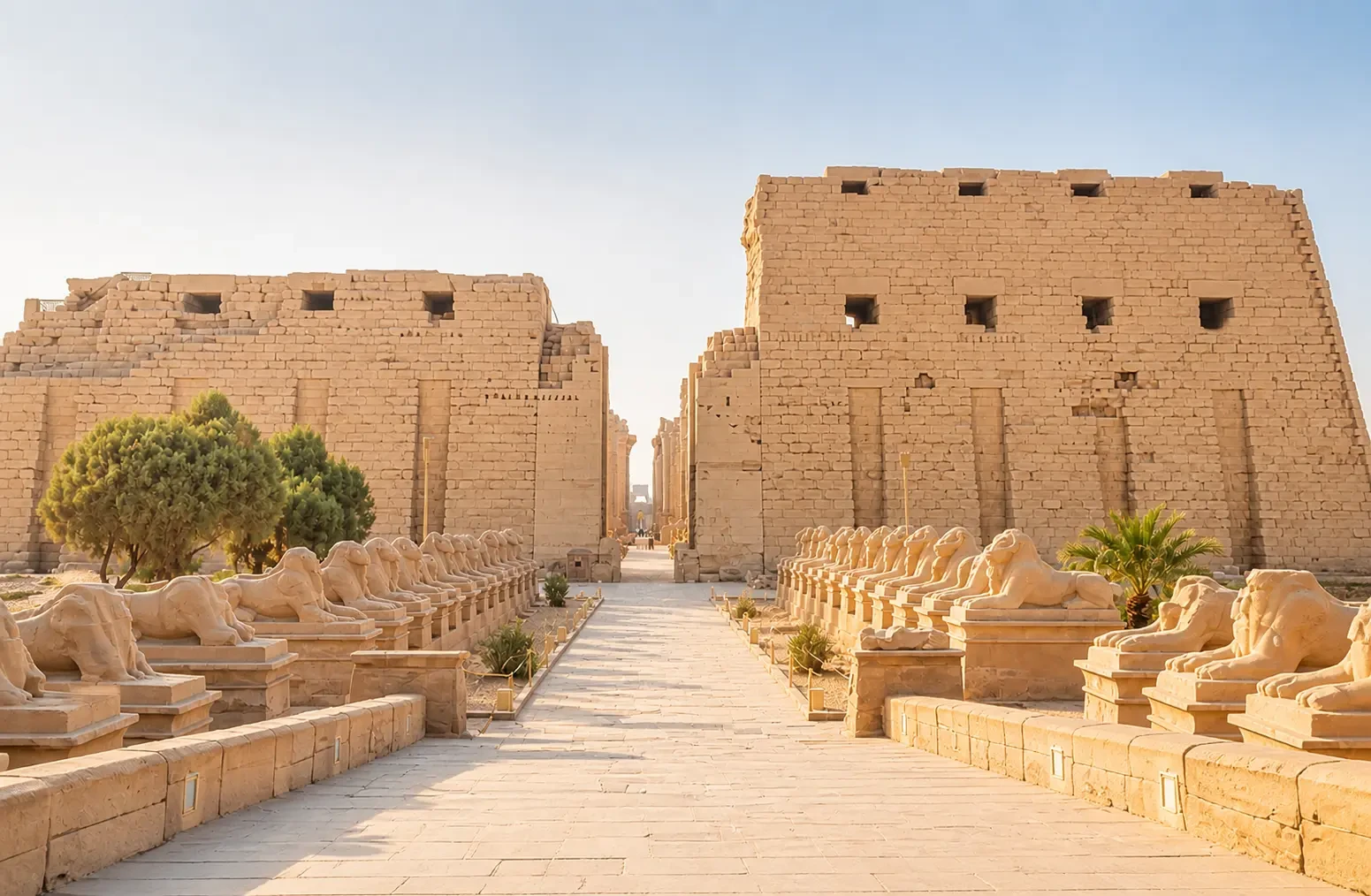
Karnak Temple with a full guided visit of the main precinct including the Great Hypostyle Hall, the Sacred Lake, and the Open Air Museum. The Avenue of Sphinxes connecting Karnak Temple to Luxor Temple. Luxor Temple including the entrance pylon, the great colonnade, the courtyard of Amenhotep III, and the inner halls. The Luxor Museum with a full guided visit of all galleries. The Mummification Museum covering the tools, methods, and materials used in ancient Egyptian embalming.
Duration
Full day, approximately 6 to 7 hours.
Includes
Private air-conditioned transportation, private licensed Egyptologist guide, and entrance fees to all four sites. Available for morning departures.
Luxor Day Tours: Combined East Bank And West Bank
This full-day combined tour covers the most important sites on both banks of the Nile in Luxor in a single day.
What Is Covered
West Bank: Valley of the Kings with three tomb entries, Temple of Hatshepsut, and the Colossi of Memnon. East Bank: Karnak Temple including the Great Hypostyle Hall and Sacred Lake, the Avenue of Sphinxes, and Luxor Temple.
Duration
Full day, approximately 8 to 9 hours.
Includes
Private air-conditioned transportation, Nile crossing, private licensed Egyptologist guide, and entrance fees to all sites. Available for morning departures.
Safaga Shore Excursions To The Valley Of The Queens
Safaga Port is located on the Red Sea coast, approximately 250 kilometers (155 miles) from Luxor. WOW Egypt Tours operates Safaga Shore Excursions that transfer cruise ship passengers from Safaga Port to Luxor and back within a single port day. The transfer is approximately 2.5 to 3 hours each way by private air-conditioned vehicle.
What Is Covered
The Valley of the Kings with entry to three royal tombs. The Colossi of Memnon. Karnak Temple including the Great Hypostyle Hall and the Sacred Lake. The Valley of the Queens including the tombs of Khaemwaset and Amenherkhepshef, with the tomb of Nefertari as a premium option subject to advance booking and available time. Optional addition: Luxor Temple subject to available time.
Duration
Full day from port departure to port return, approximately 12 to 13 hours including transfers.
Includes
Private air-conditioned vehicle from Safaga Port, private licensed Egyptologist guide, entrance fees to all included sites, and return transfer to the ship. All Safaga Shore Excursions are coordinated around each ship's port schedule to guarantee return to the vessel before departure.
Dahabiya Nile River Cruise
A Dahabiya Nile River Cruise is a small-vessel sailing experience on the Nile between Luxor and Aswan aboard a traditional wooden dahabiya. WOW Egypt Tours operates dahabiya cruises with private cabins, all meals, a private licensed Egyptologist guide on board, and guided shore excursions at every stop.
4 Days 3 Nights Dahabiya Nile River Cruise From Aswan To Luxor
Route: Aswan to Luxor, sailing north.
Itinerary
Day 1: Embarkation in Aswan. Visit to Philae Temple and the Unfinished Obelisk. Sail north to Kom Ombo. Guided visit to Kom Ombo Temple. Continue to Gebel el Silsila. Overnight on board.
Day 2: Guided visit to Gebel el Silsila. Sail to the Village of Basaw. Guided visit to Village of Basaw. Continue to Edfu. Guided visit to the Temple of Horus at Edfu. Overnight on board.
Day 3: Sail to El Kab. Guided visit to El Kab Tombs. Sail to El Hagaz Island. Swimming stop. Overnight on board.
Day 4: Sail to Esna. Visit Khnum Temple at Esna. Disembarkation in Esna. Transfer to Luxor, approximately 55 kilometers (35 miles).
Includes
Private cabin, all meals on board, private licensed Egyptologist guide, entrance fees to all temple visits, and private transfers.
5 Days 4 Nights Dahabiya Nile River Cruise From Luxor To Aswan
Route: Luxor to Aswan, sailing south.
Itinerary
Day 1: Embarkation in Luxor. Transfer to Esna, approximately 55 kilometers (35 miles). Visit Khnum Temple at Esna. Sail to El Hagaz Island. Overnight on board.
Day 2: Sail to El Kab. Guided visit to El Kab Tombs. Continue to Edfu. Guided visit to the Temple of Horus at Edfu. Sail to the Village of Basaw. Guided visit to Village of Basaw. Overnight on board.
Day 3: Sail to Gebel el Silsila. Guided visit to Gebel el Silsila. Sail south to Kom Ombo. Guided visit to Kom Ombo Temple. Sail to Daraw Village. Overnight on board.
Day 4: Guided visit to Daraw Village. Sail to Herbiab Island. Swimming stop. Philae Sound and Light Show. Overnight on board.
Day 5: Optional Abu Simbel visit available by air or road. Guided visits to Philae Temple, the High Dam, and the Unfinished Obelisk. Disembarkation in Aswan.
Includes
Private cabin, all meals on board, private licensed Egyptologist guide, entrance fees to all temple visits, and private transfers.
8 Days 7 Nights Dahabiya Nile River Cruise Round Trip From Luxor (Via Aswan)
Route: Luxor and Aswan, sailing north and south.
Itinerary
Day 1: Embarkation in Luxor. Transfer to Esna, approximately 55 kilometers (35 miles). Visit Khnum Temple at Esna. Sail to El Hagaz Island. Overnight on board.
Day 2: Sail to El Kab. Continue to Edfu. Guided visit to the Temple of Horus at Edfu. Sail to the Village of Basaw. Guided visit to Village of Basaw. Overnight on board.
Day 3: Sail to Gebel el Silsila. Sail south to Kom Ombo. Guided visit to Kom Ombo Temple. Sail to Daraw Village. Overnight on board.
Day 4: Guided visit to Daraw Village. Sail to Herbiab Island. Swimming stop. Philae Sound and Light Show. Overnight on board.
Day 5: Optional Abu Simbel visit available by air or road. Guided visits to Philae Temple, the High Dam, and the Unfinished Obelisk. Sail north to Kom Ombo. Continue to Gebel el Silsila. Overnight on board.
Day 6: Guided visit to Gebel el Silsila. Sail to the Village of Basaw. Continue to Edfu. Overnight on board.
Day 7: Sail to El Kab. Guided visit to El Kab Tombs. Sail to El Hagaz Island. Swimming stop. Overnight on board.
Day 8: Disembarkation in Esna. Transfer to Luxor, approximately 55 kilometers (35 miles).
Includes
Private cabin, all meals on board, private licensed Egyptologist guide, entrance fees to all temple visits, and private transfers.
8 Days 7 Nights Dahabiya Nile River Cruise Round Trip From Aswan (Via Luxor)
Route: Luxor and Aswan, sailing north and south.
Itinerary
Day 1: Embarkation in Aswan. Visit to Philae Temple and the Unfinished Obelisk. Sail north to Kom Ombo. Continue to Gebel el Silsila. Overnight on board.
Day 2: Guided visit to Gebel el Silsila. Sail to the Village of Basaw. Continue to Edfu. Overnight on board.
Day 3: Sail to El Kab. Guided visit to El Kab Tombs. Sail to El Hagaz Island. Swimming stop. Overnight on board.
Day 4: Sail to Esna. Visit Khnum Temple at Esna. Sail to El Hagaz Island. Overnight on board.
Day 5: Sail to El Kab. Continue to Edfu. Guided visit to the Temple of Horus at Edfu. Sail to the Village of Basaw. Guided visit to Village of Basaw. Overnight on board.
Day 6: Sail to Gebel el Silsila. Sail south to Kom Ombo. Guided visit to Kom Ombo Temple. Sail to Daraw Village. Overnight on board.
Day 7: Guided visit to Daraw Village. Sail to Herbiab Island. Swimming stop. Philae Sound and Light Show. Overnight on board.
Day 8: Disembarkation in Aswan.
Includes
Private cabin, all meals on board, private licensed Egyptologist guide, entrance fees to all temple visits, and private transfers.
Luxor And Aswan Nile River Cruise
The Luxor and Aswan Nile River Cruise is a standard Nile cruise product operated aboard a full-size cruise ship between Luxor and Aswan. WOW Egypt Tours operates this cruise in both directions with private licensed Egyptologist guides, all meals included, private cabins, and guided shore excursions at every port of call. The Valley of the Queens is available as an optional West Bank addition on all itineraries that include Luxor.
4 Days 3 Nights Luxor And Aswan Nile River Cruise From Aswan To Luxor
Route: Aswan to Luxor, sailing north.
Itinerary
Day 1: Embarkation in Aswan. Guided visits to Philae Temple, the High Dam, and the Unfinished Obelisk. Overnight on board in Aswan.
Day 2: Sail north to Kom Ombo. Guided visit to Kom Ombo Temple. Continue to Edfu. Overnight on board.
Day 3: Guided visit to the Temple of Horus at Edfu. Continue north toward Luxor. Guided visit to Luxor Temple and Karnak Temple. Overnight on board in Luxor.
Day 4: Optional Sunrise Hot Air Balloon available. Guided visits to Valley of the Kings, Queen Hatshepsut Temple, and Colossi of Memnon. Disembarkation in Luxor.
Includes
Private cabin, all meals on board, private licensed Egyptologist guide, entrance fees to all temple visits, and private transfers.
5 Days 4 Nights Luxor And Aswan Nile River Cruise From Luxor To Aswan
Route: Luxor to Aswan, sailing south.
Itinerary
Day 1: Embarkation in Luxor. Guided visits to Luxor Temple and Karnak Temple. Overnight on board in Luxor.
Day 2: Optional Sunrise Hot Air Balloon available. Guided visits to Valley of the Kings, Queen Hatshepsut Temple, and Colossi of Memnon. Pass through the Esna locks. Sail south to Edfu. Overnight on board.
Day 3: Guided visit to the Temple of Horus at Edfu. Continue to Kom Ombo. Guided visit to Kom Ombo Temple. Overnight on board.
Day 4: Continue south toward Aswan. Guided visits to Philae Temple, the High Dam, and the Unfinished Obelisk. Overnight on board in Aswan.
Day 5: Optional Abu Simbel visit available by air or road. Disembarkation in Aswan.
Includes
Private cabin, all meals on board, private licensed Egyptologist guide, entrance fees to all temple visits, and private transfers.
8 Days 7 Nights Luxor And Aswan Nile River Cruise Round Trip From Luxor (Via Aswan)
Route: Luxor and Aswan, sailing north and south.
Itinerary
Day 1: Embarkation in Luxor. Guided visits to Luxor Temple and Karnak Temple. Overnight on board in Luxor.
Day 2: Guided visits to Luxor Museum. Pass through the Esna locks. Sail south to Edfu. Overnight on board.
Day 3: Guided visit to the Temple of Horus at Edfu. Continue to Kom Ombo. Overnight on board.
Day 4: Continue south toward Aswan. Guided visits to Philae Temple, the High Dam, and the Unfinished Obelisk. Overnight on board in Aswan.
Day 5: Abu Simbel visit available by road. Sound and Light Show at Philae Temple. Overnight on board in Aswan.
Day 6: Guided visits to Nubian Village. Sail north to Kom Ombo. Guided visit to Kom Ombo Temple. Continue to Edfu. Overnight on board.
Day 7: Guided visits to Valley of the Kings, Queen Hatshepsut Temple, and Colossi of Memnon. Pass through the Esna locks. Sail south to Edfu. Overnight on board.
Day 8: Optional Sunrise Hot Air Balloon available. Disembarkation in Luxor.
Includes
Private cabin, all meals on board, private licensed Egyptologist guide, entrance fees to all temple visits, and private transfers.
8 Days 7 Nights Luxor And Aswan Nile River Cruise Round Trip From Aswan (Via Luxor)
Route: Luxor and Aswan, sailing north and south.
Itinerary
Day 1: Embarkation in Aswan. Guided visits to Philae Temple, the High Dam, and the Unfinished Obelisk. Overnight on board in Aswan.
Day 2: Sail north to Kom Ombo. Guided visit to Nubian Village and Kom Ombo Temple. Continue to Edfu. Overnight on board.
Day 3: Continue north toward Luxor. Guided visit to Luxor Museum and Karnak Sound and Light Show. Overnight on board in Luxor.
Day 4: Guided visits to Luxor Temple and Karnak Temple. Overnight on board in Luxor.
Day 5: Optional Sunrise Hot Air Balloon available. Guided visits to Valley of the Kings, Queen Hatshepsut Temple, and Colossi of Memnon. Pass through the Esna locks. Sail south to Edfu. Overnight on board.
Day 6: Guided visit to the Temple of Horus at Edfu. Continue to Kom Ombo. Overnight on board.
Day 7: Sound and Light Show at Philae Temple. Overnight on board in Aswan.
Day 8: Abu Simbel visit available by road. Disembarkation in Aswan.
Includes
Private cabin, all meals on board, private licensed Egyptologist guide, entrance fees to all temple visits, and private transfers.
Combine The Valley Of The Queens With Your Egypt Tours Package
The Valley of the Queens is included as a featured stop across the full range of WOW Egypt Tours travel products. Browse the options below to find the Egypt experience that is right for you.
Egypt Tour Packages: Multi-day guided Egypt tours organized by duration, including 2 Days Egypt Packages, 3 Days Egypt Packages, 4 Days Egypt Packages, 5 Days Egypt Packages, 6 Days Egypt Packages, 7 Days Egypt Packages, 8 Days Egypt Packages, 10 Days Egypt Packages, and longer itineraries. All packages include private air-conditioned transportation, private licensed Egyptologist guide, accommodations, entrance fees to all included sites, and private transfers throughout Egypt.
Egypt Travel Packages: Themed Egypt travel packages designed around specific travel styles and interests, including Egypt Honeymoon Travel Packages, Egypt Budget Travel Packages, Egypt Family Travel Packages, Egypt Luxury Travel Packages, Egypt Adventure Travel Packages, Egypt Cultural Travel Packages, and Egypt Christmas and New Year Travel Packages. All packages include private air-conditioned transportation, private licensed Egyptologist guide, accommodations, meals, entrance fees to all included sites, and private transfers.
Egypt Nile Cruise Packages: Complete Egypt travel packages combining Cairo sightseeing with a fully guided Nile cruise between Luxor and Aswan, available as Cairo and Nile Cruise Packages, Egypt and Nile Cruise Packages, and Nile Cruise and Red Sea Packages. All packages include private cabin on board, all meals, private licensed Egyptologist guide, entrance fees to all tomb and temple visits, and private transfers.
Nile River Cruises: All WOW Egypt Tours Nile cruise options between Luxor and Aswan, available across four ship categories, Standard, Deluxe, Ultra Deluxe, and Luxury, as well as private Dahabiya sailing vessels. All cruises include private cabin on board, all meals, private licensed Egyptologist guide, entrance fees to all temple visits, and private transfers.
Luxor Aswan Nile Cruises: The classic Upper Egypt Nile cruise route between Luxor and Aswan, available in both directions and in durations of 4 Days 3 Nights, 5 Days 4 Nights, and 8 Days 7 Nights round trip. The Valley of the Queens is available as a West Bank extension on all itineraries. All cruises include private cabin on board, all meals, private licensed Egyptologist guide, entrance fees to all sites, and private transfers.
Standard Nile Cruises: Comfortable standard-category cruise ships sailing between Luxor and Aswan, available in 4 Days 3 Nights, 5 Days 4 Nights, and 8 Days 7 Nights itineraries in both directions. Includes standard cabin on board, all meals, private licensed Egyptologist guide, entrance fees to all temple and tomb visits, and private transfers.
Deluxe Nile Cruises: Deluxe-category cruise ships with enhanced cabin comfort and upgraded dining, sailing between Luxor and Aswan in 4 Days 3 Nights, 5 Days 4 Nights, and 8 Days 7 Nights itineraries in both directions. Includes deluxe cabin on board, all meals, private licensed Egyptologist guide, entrance fees to all temple and tomb visits, and private transfers.
Ultra Deluxe Nile Cruises: Ultra deluxe-category cruise ships offering superior cabins, premium dining, and an elevated onboard experience, sailing between Luxor and Aswan in 4 Days 3 Nights, 5 Days 4 Nights, and 8 Days 7 Nights itineraries in both directions. Includes ultra deluxe cabin on board, all meals, private licensed Egyptologist guide, entrance fees to all temple and tomb visits, and private transfers.
Luxury Nile Cruises: Luxury-category cruise ships with the finest cabins, exceptional cuisine, and premium onboard facilities, sailing between Luxor and Aswan in 4 Days 3 Nights, 5 Days 4 Nights, and 8 Days 7 Nights itineraries in both directions. Includes luxury cabin on board, all meals, private licensed Egyptologist guide, entrance fees to all temple and tomb visits, and private transfers.
Dahabiya Nile Cruises: Private small-vessel sailing experience aboard a traditional wooden dahabiya between Luxor and Aswan, available in four itineraries: 4 Days 3 Nights Dahabiya From Aswan To Luxor, 5 Days 4 Nights Dahabiya From Luxor To Aswan, 8 Days 7 Nights Dahabiya Round Trip From Luxor via Aswan, and 8 Days 7 Nights Dahabiya Round Trip From Aswan via Luxor. Includes private cabin on board, all meals, private licensed Egyptologist guide, entrance fees to all temple and tomb visits, and private transfers.
Luxor Tours: Day tours and multi-day tours of Luxor covering all major sites on both banks of the Nile, including Luxor West Bank Tours covering the Valley of the Queens, Valley of the Kings, Temple of Hatshepsut, and Colossi of Memnon; Luxor East Bank Tours covering Karnak Temple, Luxor Temple, Luxor Museum, and Mummification Museum; and combined Luxor Day Tours covering both banks in a single day. All tours include private air-conditioned transportation, private licensed Egyptologist guide, entrance fees to all included sites, and private transfers.
Shore Excursions: Guided day excursions from Egypt's Red Sea ports to the Valley of the Queens and the monuments of Upper Egypt, available for cruise ship passengers with a port call at Safaga, Hurghada, Port Said, Alexandria, and Sokhna. Includes private air-conditioned transportation from the port, private licensed Egyptologist guide, entrance fees to all included sites, and return transfer to the ship, with all timings coordinated around each vessel's port schedule.
Safaga Port Excursions: Shore excursions departing from Safaga Port on the Red Sea coast, approximately 250 kilometers (155 miles) from Luxor, covering the Valley of the Queens, Valley of the Kings, Colossi of Memnon, Karnak Temple, and Luxor Temple as a full-day trip within a single port call. Available options include Safaga to Luxor West Bank Tours, Safaga to Luxor East Bank Tours, and combined Safaga to Luxor Day Tours. Includes private air-conditioned vehicle from Safaga Port, private licensed Egyptologist guide, entrance fees to all included sites, and return transfer to the ship.
Nearby Attractions To The Valley Of The Queens
The Valley of the Queens sits within one of the richest concentrations of ancient funerary monuments in the world. The Valley of the Kings is located approximately 2 kilometers to the north and is the essential companion visit on any Luxor West Bank Tour, housing the great royal tombs of the pharaohs of the New Kingdom. The village and tombs of Deir el-Medina, home of the craftsmen who built and decorated both the Valley of the Kings and the Valley of the Queens, is located just to the east and contains some of the most beautifully painted private tombs in all of ancient Egypt. The Medinet Habu Temple, the mortuary temple of Ramesses III and the best-preserved mortuary temple on the Luxor West Bank, is located a short distance to the north along the edge of the desert.
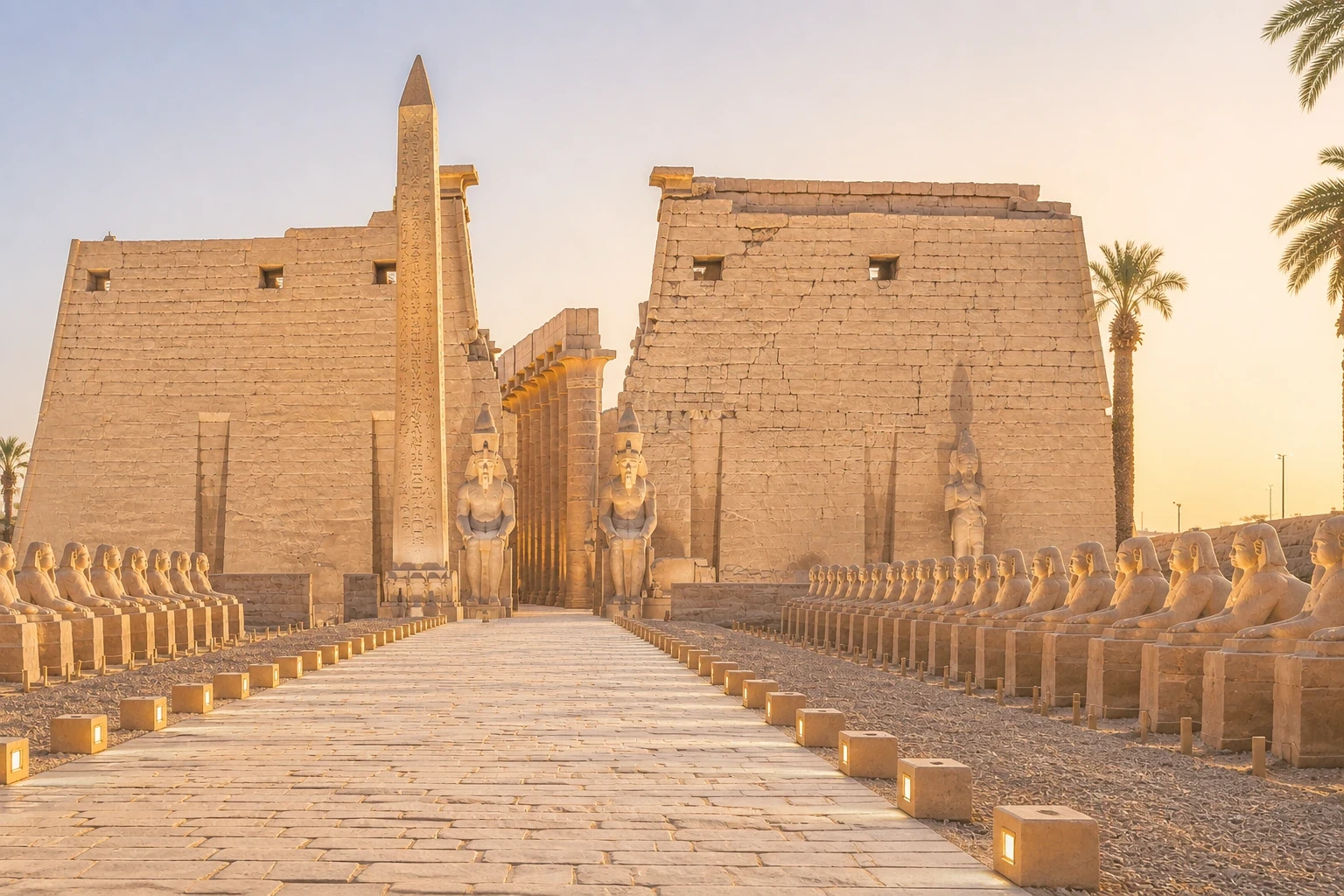
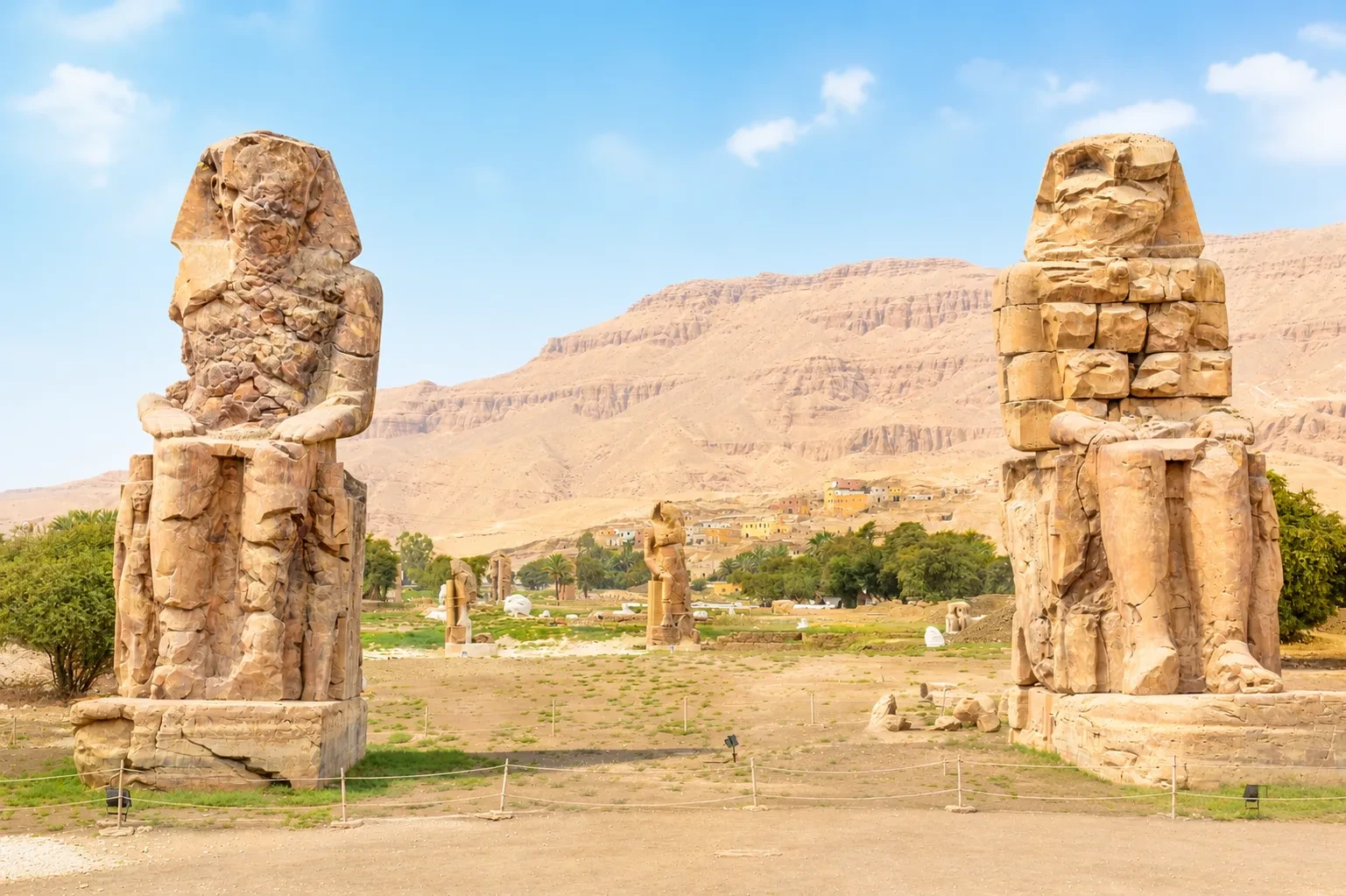
The Ramesseum, the mortuary temple of Ramesses II, lies to the north between Deir el-Medina and the Valley of the Kings road. The Temple of Hatshepsut at Deir el-Bahari is one of the most spectacularly situated ancient monuments in Egypt, built into a great natural amphitheater of limestone cliffs just over the ridge from the Valley of the Kings. The Colossi of Memnon stand at the entrance to the West Bank plain and are the first monuments encountered on arriving from the Nile. The Valley of the Nobles, with its vivid scenes of everyday New Kingdom life, completes the extraordinary range of West Bank funerary monuments available within easy reach of the Valley of the Queens. On the East Bank, the Luxor Museum and the Mummification Museum provide essential cultural context for understanding the funerary world that the Valley of the Queens represents.
Frequently Asked Questions About The Valley Of The Queens
What is the Valley of the Queens?
The Valley of the Queens is the royal necropolis on the west bank of the Nile in Luxor where the queens, princes, and princesses of the ancient Egyptian New Kingdom were buried, containing more than 90 known tombs. It is home to the tomb of Queen Nefertari (QV66), the most beautifully painted ancient Egyptian tomb ever discovered. The Valley of the Queens is a featured destination in all Luxor West Bank Tours, Egypt Tours Packages, Egypt Travel Packages, and Safaga Shore Excursions offered by WOW Egypt Tours.
Who is buried in the Valley of the Queens?
The Valley of the Queens contains the tombs of the queens, princes, and princesses of the New Kingdom, spanning the 18th, 19th, and 20th Dynasties. The most celebrated burials include Queen Nefertari (wife of Ramesses II), Queen Titi, Queen Sitre (wife of Ramesses I), and several sons of Ramesses III including Princes Khaemwaset and Amenherkhepshef.
What is the most famous tomb in the Valley of the Queens?
The most famous tomb in the valley is QV66, the tomb of Queen Nefertari, principal wife of Ramesses II, which is universally regarded as the most beautifully painted ancient Egyptian tomb ever discovered and is sometimes called the Sistine Chapel of ancient Egypt.
Who was Queen Nefertari?
Queen Nefertari was the principal wife and great royal consort of Pharaoh Ramesses II, one of the most powerful pharaohs of the New Kingdom. She held the highest queenly title in ancient Egypt and had a temple dedicated to her at Abu Simbel. Her name means beautiful companion, and the extraordinary tomb Ramesses II built for her in the Valley of the Queens is the supreme testament to her importance and his devotion.
Can I visit the tomb of Queen Nefertari?
Yes. The tomb of Queen Nefertari (QV66) is open to visitors but requires a separate premium ticket and has a strict daily visitor limit to protect the delicate painted plaster surfaces. WOW Egypt Tours strongly recommends booking this ticket in advance to guarantee access.
How many tombs are in the Valley of the Queens?
There are more than 90 known tombs and chambers in the Valley of the Queens, designated QV1 onwards. Not all are open to visitors at any given time.
What are the opening hours of the Valley of the Queens?
The Valley of the Queens is open daily from 6:00 AM to 5:00 PM, including public holidays.
How much does it cost to enter the Valley of the Queens?
The standard entrance fee is EGP 220 for adults and EGP 110 for students. The tomb of Queen Nefertari (QV66) requires an additional premium ticket of EGP 1,800. Standard entrance fees are included in all Valley of the Queens Tours, Egypt Tours Packages, and Safaga Shore Excursions booked through WOW Egypt Tours.
How long does it take to visit the Valley of the Queens?
Most visitors spend between one and two hours at the Valley of the Queens, sufficient for two to three tombs. Visitors who include the tomb of Nefertari should allow extra time for the premium access schedule.
What is the best time of year to visit the Valley of the Queens?
October to April is the most comfortable period for visiting, with moderate temperatures. Summer visits are best planned for early morning when the valley is coolest.
How do I get to the Valley of the Queens?
The Valley of the Queens is located on the West Bank of Luxor, reached by crossing the Nile and then traveling by road approximately 7 kilometers into the southern Theban hills. All Luxor West Bank Tours, Luxor Day Tours, and Safaga Shore Excursions with WOW Egypt Tours include private transportation directly to and from the valley.
Can I combine the Valley of the Queens with the Valley of the Kings in one day?
Yes. Both valleys can be combined on the same day as part of a comprehensive Luxor West Bank Tour with WOW Egypt Tours, along with the Temple of Hatshepsut and the Colossi of Memnon.
Is a guide necessary at the Valley of the Queens?
A guide is not required to enter but is strongly recommended. The theological and artistic programs of the royal tombs contain complex religious imagery that requires expert interpretation to fully appreciate. WOW Egypt Tours provides licensed Egyptologist guides for all Valley of the Queens Tours, Egypt Tours Packages, and Safaga Shore Excursions.
Can I take photographs at the Valley of the Queens?
Photography without flash is permitted in the standard open tombs. Flash photography is absolutely prohibited in all tombs. Specific rules for the tomb of Nefertari should be confirmed at the time of booking the premium ticket. Professional filming requires a separate permit from Egypt's Ministry of Tourism and Antiquities.
What should I wear to visit the Valley of the Queens?
Lightweight clothing covering the shoulders and knees, a wide-brimmed hat, generous sunscreen, and comfortable closed-toe walking shoes. Bring plenty of water, particularly in summer.
Is the Valley of the Queens a UNESCO World Heritage Site?
Yes. The Valley of the Queens is part of the Ancient Thebes with its Necropolis UNESCO World Heritage Site, inscribed in 1979, which also includes the Valley of the Kings, Luxor Temple, Karnak Temple, and the monuments of the West Bank.
What is the difference between the Valley of the Queens and the Valley of the Kings?
The Valley of the Kings was the royal burial ground reserved for the pharaohs of the New Kingdom and contains 63 known tombs. The Valley of the Queens was used for the burials of the queens, princes, and princesses of the same period and contains more than 90 tombs. While the Valley of the Kings holds the largest and most theologically complex royal tombs, the Valley of the Queens contains the most artistically refined painted tomb ever discovered, that of Queen Nefertari (QV66).
What Nile cruise options include the Valley of the Queens?
WOW Egypt Tours offers both Dahabiya Nile River Cruises and Luxor Aswan Nile River Cruises, all of which include West Bank excursions that can incorporate the Valley of the Queens as an extension. Itineraries range from 4 to 8 days and are available as part of all WOW Egypt Tours Egypt Tours Packages and Egypt Travel Packages.
Can I visit the Valley of the Queens as part of a Safaga Shore Excursion?
Yes. WOW Egypt Tours offers dedicated Safaga Shore Excursions that can include the Valley of the Queens as part of a full West Bank programme. Our team handles all transportation, guiding, entrance fees, and logistics to ensure a seamless and unforgettable visit.
How do I book a Valley of the Queens Tour with WOW Egypt Tours?
You can book any Valley of the Queens Tour, Luxor West Bank Tour, Luxor Day Tour, Dahabiya Nile River Cruise, Luxor Aswan Nile River Cruise, Egypt Tours Package, Egypt Travel Package, or Safaga Shore Excursion directly through WOW Egypt Tours. Our team of travel specialists will arrange everything from private transportation and licensed Egyptologist guides to hotel pick-up and entrance fees, ensuring a seamless and unforgettable experience of the Valley of the Queens and all the wonders of ancient Egypt.