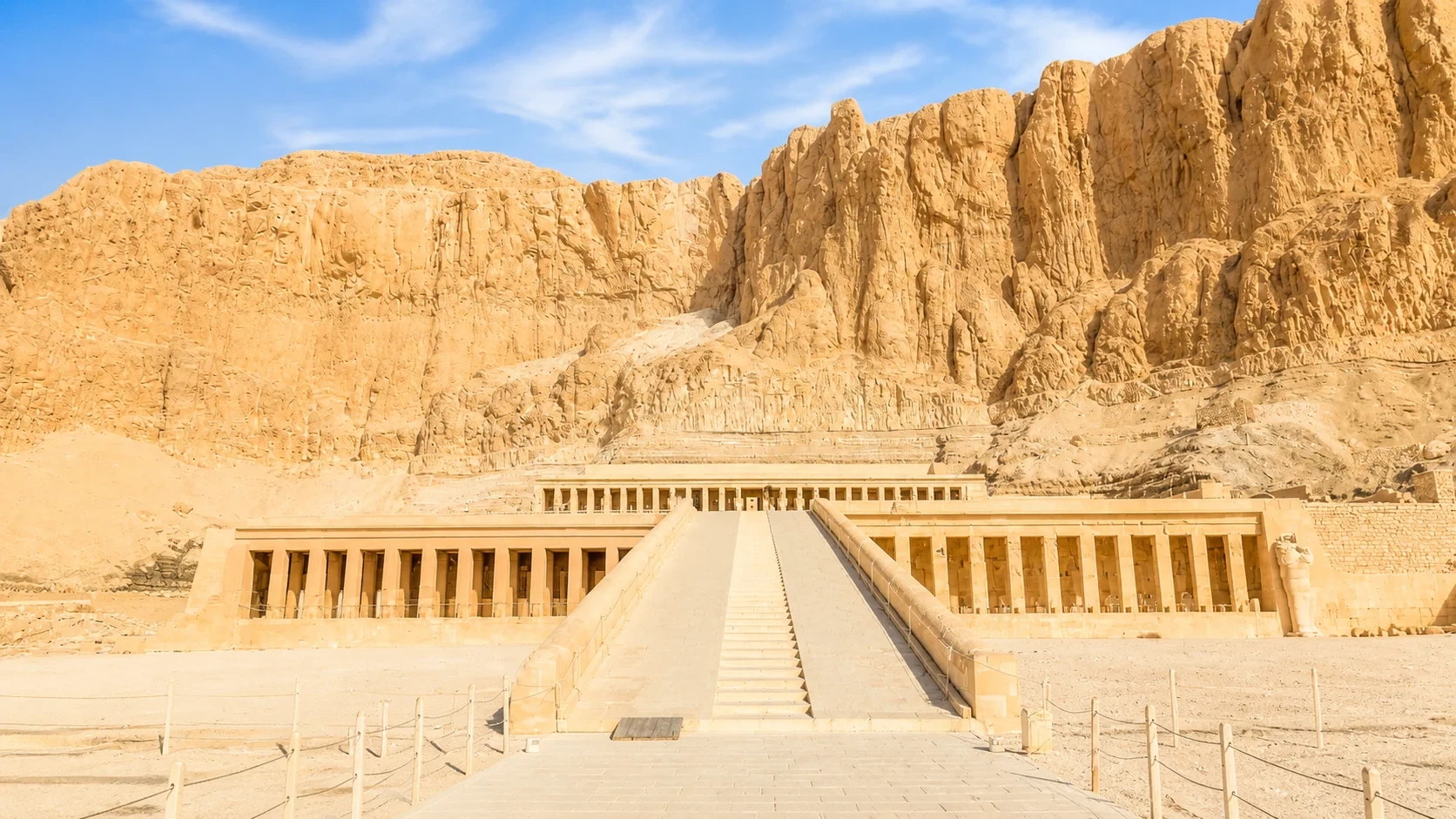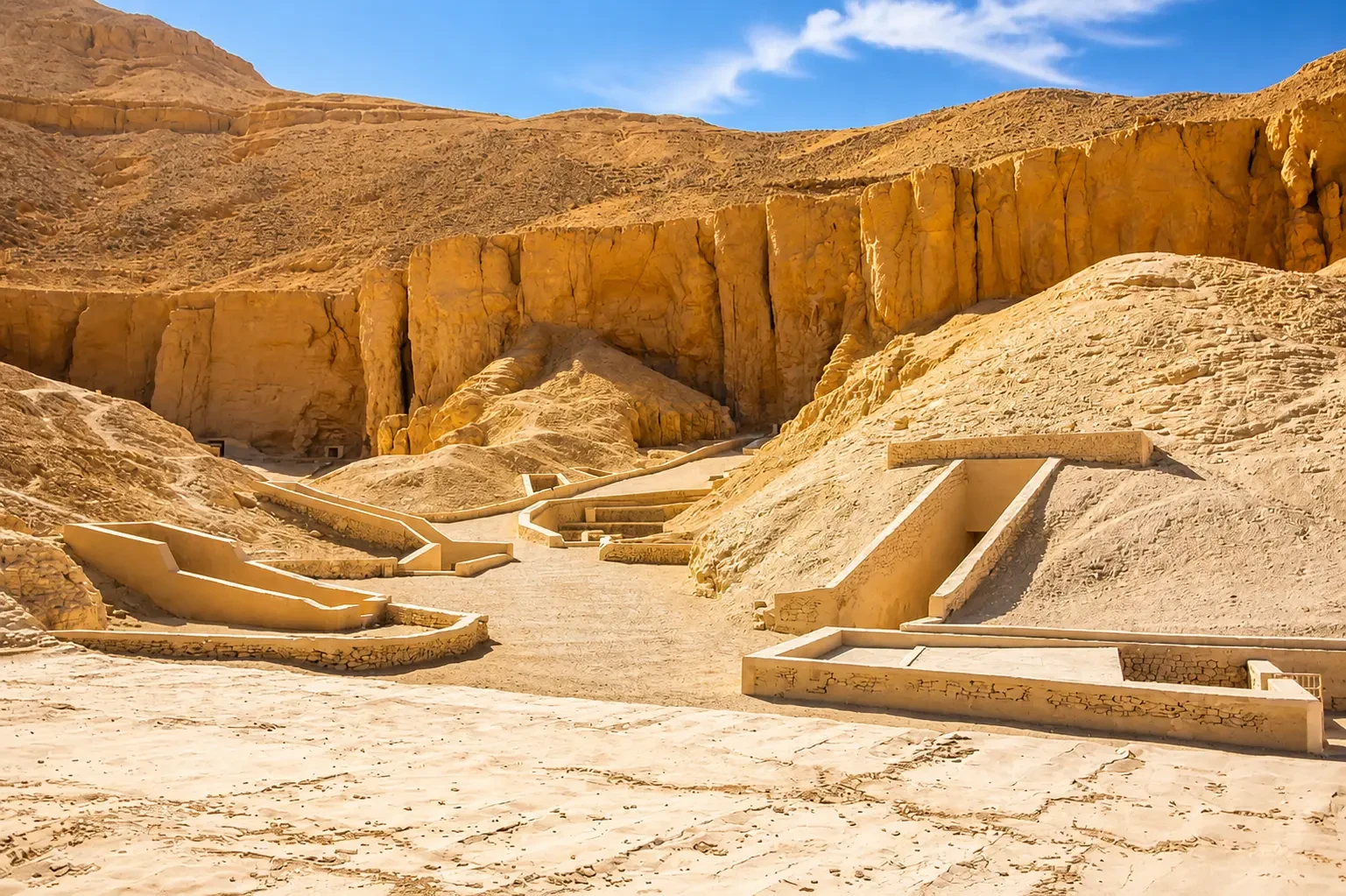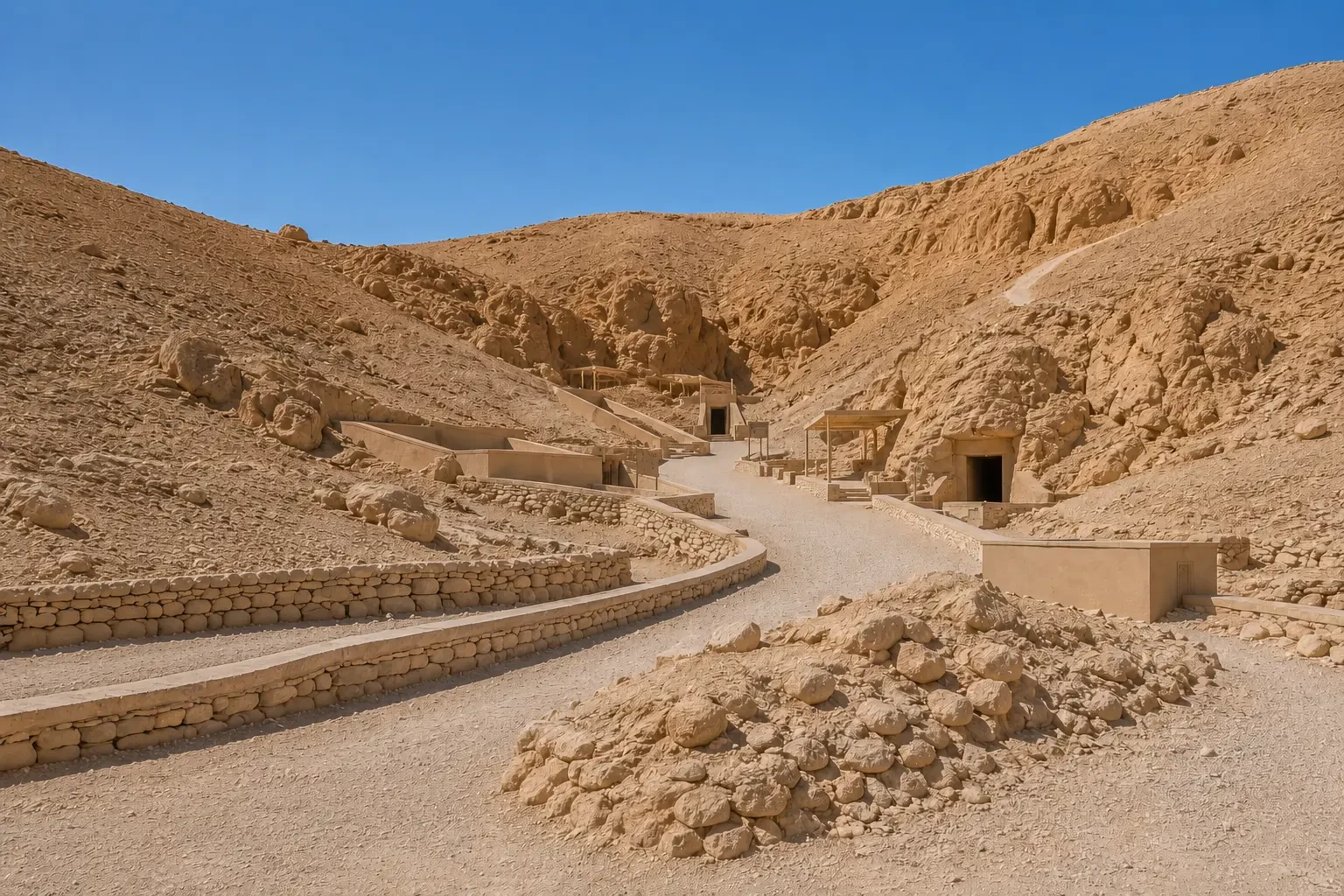

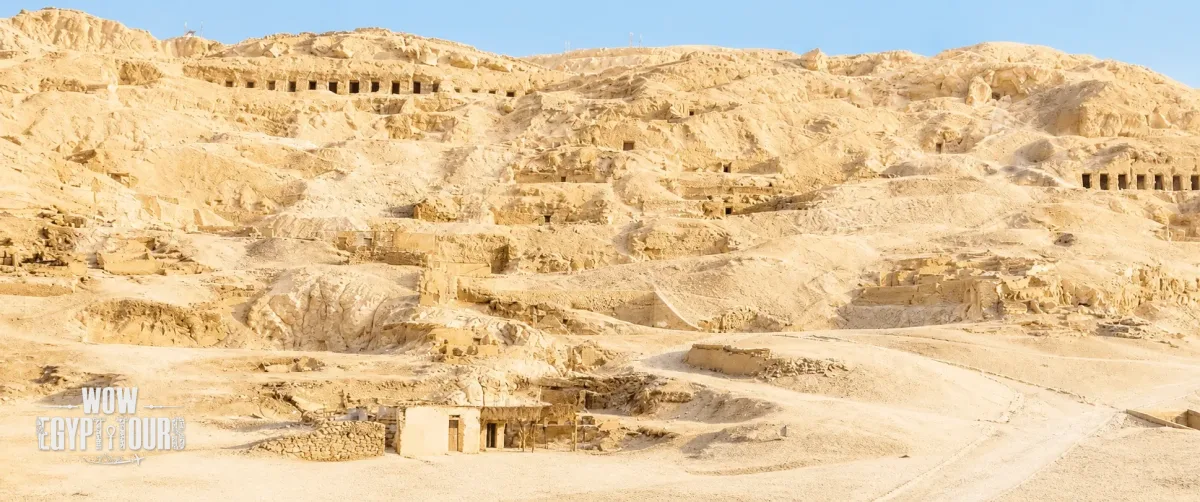

The Valley of the Nobles is one of the most vivid, intimate, and humanly compelling ancient sites in Egypt, and a destination that every traveler to Luxor who wants to go beyond the famous royal monuments must experience. Located on the west bank of the Nile River in the city of Luxor, ancient Thebes, the Valley of the Nobles, also widely known as the Tombs of the Nobles, contains more than 400 private tomb chapels belonging to the high officials, nobles, viziers, priests, and administrators who served the great pharaohs of the New Kingdom at the most powerful court in the ancient world. This extraordinary site sits at the heart of some of Egypt's greatest travel experiences, including Luxor Tours, Luxor Day Tours, Luxor East Bank Tours, Luxor West Bank Tours, Valley of the Nobles Tours, Dahabiya Nile River Cruises, and Luxor Aswan Nile River Cruises, all of which WOW Egypt Tours proudly offers to travelers from around the world. The Valley of the Nobles is also a highlight of Egypt Tours Packages, Egypt Travel Packages, and Safaga Shore Excursions, making it one of the most rewarding and artistically distinctive ancient sites available anywhere in Upper Egypt.
Spanning a period of more than a thousand years from the Middle Kingdom to the Late Period, the Tombs of the Nobles Egypt present an irreplaceable visual record of ancient Egyptian elite life that is utterly unlike anything available in the great royal tombs of the Valley of the Kings. While the royal tombs are decorated primarily with complex funerary religious texts and images of the pharaoh in the presence of the gods, the private tomb chapels of the Valley of the Nobles are covered with vivid, colorful, and often joyful scenes of everyday life: banquets filled with music and dancing, agricultural activities on great estates, hunting in the marshes, craft production in busy workshops, diplomatic receptions, and intimate family gatherings. These scenes, painted with extraordinary energy and naturalistic observation, give visitors a direct and uniquely personal window into the daily world of ancient Egypt at the height of the New Kingdom that no temple or royal tomb can provide. Visiting the Valley of the Nobles is not simply a sightseeing stop; it is an encounter with ancient Egypt as a living, breathing human civilization rather than a remote world of gods and pharaohs.
The Valley of the Nobles and the Tombs of the Nobles are part of the ancient Theban necropolis, the vast city of the dead that spread across the entire west bank of the Nile opposite ancient Thebes, encompassing the Valley of the Kings, the Valley of the Queens, Deir el-Medina, and the great mortuary temples of the Theban plain.

Who Built The Valley Of The Nobles In Egypt?
The tomb chapels of the Valley of the Nobles were built by the high officials and administrators of the New Kingdom Egyptian state, men and women who served the pharaohs as viziers, treasurers, chief stewards, high priests, military commanders, scribes, and overseers of various departments of the royal administration. Unlike the royal tombs of the Valley of the Kings, which were built entirely at state expense with the resources of the royal treasury, the private tomb chapels of the Tombs of the Nobles were commissioned and paid for by the tomb owners themselves, reflecting their personal wealth and status. The quality and scale of the tomb chapels therefore varies considerably, from the enormous and elaborately decorated complexes of the most senior officials such as the vizier Ramose and the viceroy of Nubia Huy to the more modest single-chamber chapels of lesser officials.
The concentration of tomb chapels in the Valley of the Nobles reflects the social geography of ancient Thebes: the senior officials of the Theban court naturally wished to be buried close to their pharaoh, in the shadow of the same sacred Theban hills that housed the royal tombs, and as close as possible to the great temple of Amun at Karnak whose service many of them had spent their careers performing. The result, accumulated over more than a thousand years, is the largest and most diverse collection of decorated private tomb chapels in the entire ancient world.
Who Were The Nobles Of The Valley Of The Nobles?
The term nobles in Valley of the Nobles is used broadly to describe the entire class of high officials and elite individuals who are buried in the tomb chapels of the Theban West Bank, ranging from the viziers, the most powerful administrators in the Egyptian state second only to the pharaoh himself, to high priests, military officials, royal scribes, overseers of treasuries and granaries, tutors of royal children, and officials responsible for the management of Amun's enormous estate. Many of the most celebrated tomb owners in the Tombs of the Nobles were figures of great historical significance in their own right: the vizier Rekhmire, whose tomb (TT100) preserves the most complete surviving description of the duties and powers of a vizier; the chief steward Sennefer, whose extraordinary tomb (TT96) is known as the Tomb of the Vineyards for its painted vine-covered ceiling; the royal scribe and steward Nakht, whose tomb (TT52) contains some of the most beautiful and frequently reproduced painted scenes of music, dancing, and feasting in the entire Theban necropolis; and the viceroy of Nubia Huy (TT40), whose tomb preserves the only surviving painted depiction of ancient Nubian tribute bearers in full ceremonial costume.
Valley Of The Nobles Location In Egypt
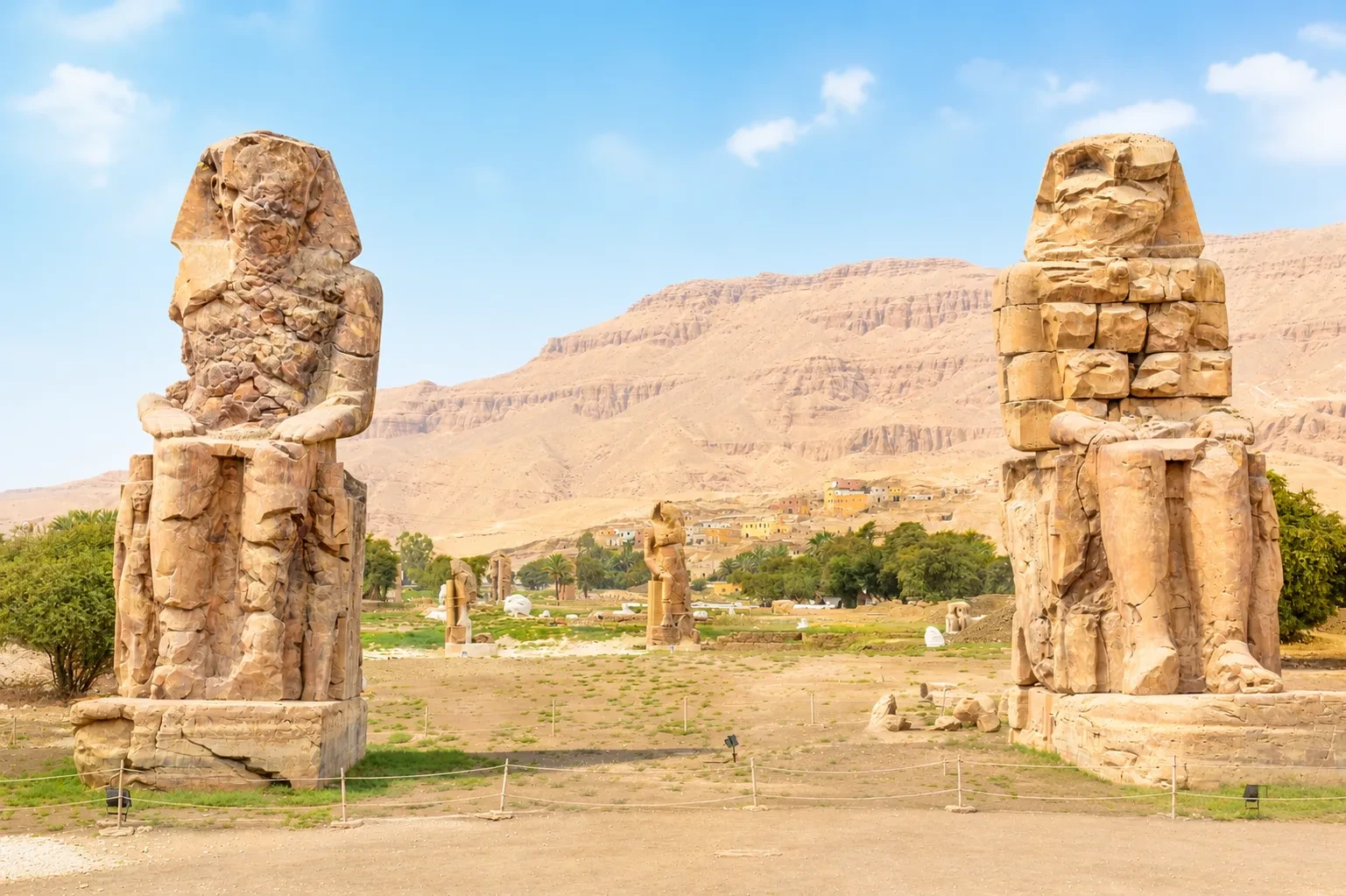
The Valley of the Nobles is located on the west bank of the Nile River in the city of Luxor, spread across the northern end of the Theban hills in an area known as Sheikh Abd el-Qurna, approximately 2 kilometers northwest of the Colossi of Memnon and immediately below the approach road to the Valley of the Kings. The Tombs of the Nobles occupy a broad hillside that overlooks the entire Theban plain, the Nile valley, and the East Bank city of Luxor, providing a magnificent panoramic setting that was clearly chosen by the ancient tomb owners for its visual splendor as well as its proximity to the royal necropolis. WOW Egypt Tours provides private air-conditioned transportation directly from Luxor hotels to the Valley of the Nobles on all extended Luxor West Bank Tours, Egypt Tours Packages, Egypt Travel Packages, and Safaga Shore Excursions.
Valley Of The Nobles Fun Facts
The Valley of the Nobles contains more than 400 numbered tomb chapels, designated by the abbreviation TT for Theban Tomb followed by their discovery number, making it the largest single concentration of decorated private funerary monuments in the ancient world. Not all of the tombs are open to visitors at any given time: the Egyptian Ministry of Tourism and Antiquities manages access on a rotating basis to protect the delicate painted surfaces from the damaging effects of visitor humidity and atmospheric change, and typically between 12 and 20 tombs are open to the public at any one time, organized into ticketed groups covering different areas of the hillside.
The painted scenes in the Tombs of the Nobles are unique in ancient Egyptian art for their depictions of everyday life. While the royal tombs of the Valley of the Kings are almost exclusively concerned with funerary religion and the journey through the underworld, the private tomb chapels of the Valley of the Nobles mix religious scenes with extraordinarily vivid depictions of banquets, hunting expeditions, agricultural activities, craft production, military ceremonies, diplomatic occasions, and family life, giving these tombs a warmth and immediacy that makes them among the most accessible and emotionally engaging ancient sites in all of Egypt.
Why Is The Valley Of The Nobles Called By This Name In Egypt?
The modern English name Valley of the Nobles is a descriptive designation reflecting the social status of the majority of the tomb owners whose chapels are clustered on the Sheikh Abd el-Qurna hillside: they were the nobility and high officialdom of the ancient Egyptian state, the senior administrators, priests, and courtiers who formed the ruling class of New Kingdom Thebes. The alternative name Tombs of the Nobles is equally widely used in scholarly literature and tourism and refers to the same collection of private funerary monument chapels. The ancient Egyptian name for the tomb owner community on the Theban hillside was simply the private tombs, distinguished from the royal tombs in the nearby valley by the absence of the special designation Place of Truth applied to the royal necropolis. The Arabic name for the area, Sheikh Abd el-Qurna, refers to a local holy man whose tomb or shrine was once located on the hillside, and this Arabic name is used in scholarly literature to refer specifically to the northern concentration of tomb chapels on the Sheikh Abd el-Qurna hill as distinct from other groups of private tomb chapels elsewhere on the Theban West Bank.
Valley Of The Nobles History
The Valley of the Nobles began to accumulate its extraordinary collection of decorated tomb chapels from the Middle Kingdom period, around 2000 BCE, though the great majority of the most celebrated and best-preserved tombs date to the 18th and 19th Dynasties of the New Kingdom, from around 1550 BCE to 1200 BCE. During the New Kingdom, the Theban West Bank was the most densely occupied funerary landscape in the ancient world, with the royal family buried in the Valley of the Kings, the queens and royal children in the Valley of the Queens, the royal craftsmen in the workers' village of Deir el-Medina, and the court officials and elite in the Tombs of the Nobles on the surrounding hillsides.
The private tomb chapels were decorated during the lifetime of the tomb owner, who commissioned artists from the pool of craftsmen available in Thebes, often including specialists from the same community that worked on the royal tombs. After the owner's death, the tomb chapel served as the focal point for the mortuary cult of the deceased, with offerings made at the false door or offering table in the chapel and priests performing regular rituals to ensure the eternal sustenance of the soul. Many tomb chapels were subsequently reused or modified in later periods, and a significant number were occupied as dwellings by Coptic Christian communities in the early Christian era, with painted Christian imagery sometimes overlaying the ancient Egyptian decoration. Modern systematic excavation and recording of the Theban private tombs began in the 19th century and continues today, with numerous international archaeological missions working on specific tomb groups throughout the Valley of the Nobles.
The Story Of The Private Tombs In The Valley Of The Nobles
The officials who built their tomb chapels in the Valley of the Nobles were motivated by the same fundamental religious imperatives that drove every ancient Egyptian with the means to do so to invest in a proper burial: the belief that the correct preparation of the tomb, the provision of the appropriate funerary equipment, and the establishment of a mortuary cult with regular offerings were essential to securing eternal life. For the senior officials of the New Kingdom Egyptian court, the tomb chapel was also a statement of social prestige, a permanent record of a lifetime of distinguished service to the pharaoh and the gods, and a visual autobiography inscribed on the walls of their eternal home.
The decoration of the private tomb chapels in the Tombs of the Nobles follows a broadly consistent programme that varies in its specific content according to the personal history and professional role of each tomb owner. The entrance corridor or portico typically shows the tomb owner in an official capacity, engaged in activities related to his professional role: a vizier presiding over legal proceedings, a treasurer supervising the weighing of gold, a military commander reviewing troops, or a chief steward receiving the products of distant provinces. The inner rooms of the tomb chapel increasingly focus on the religious and personal aspects of the owner's life, with scenes of the funeral, the judgment of the dead, the afterlife paradise, and the eternal enjoyment of all the good things of earthly life: food, drink, music, nature, and family. Together these scenes create a portrait of a life lived at the highest levels of the most sophisticated civilization in the ancient world.
Valley Of The Nobles Architecture And The Key Tombs
The Tomb Of Nakht (TT52)
The tomb of Nakht (TT52) is one of the most celebrated and most visited private tombs in the entire Valley of the Nobles, belonging to an astronomer of Amun and royal scribe who lived during the reign of Thutmose IV in the 18th Dynasty. Despite its relatively small size, the tomb of Nakht contains some of the most beautifully painted scenes in the Theban necropolis, with warm, fluid brushwork and vivid natural colors that have survived in exceptional condition. The most famous scene in the tomb shows three female musicians playing a lute, a double flute, and a harp at a banquet, rendered with extraordinary naturalness and sensory immediacy that makes it one of the most reproduced images of ancient Egyptian art in the world. The agricultural scenes on the outer walls of the chapel showing the grape harvest, the plowing of fields, and the gathering of grain are equally celebrated for their dynamic energy and vivid color.
The Tomb Of Menna (TT69)
The tomb of Menna (TT69) belongs to a scribe of the fields of the lord of the Two Lands who lived during the reign of Thutmose IV or Amenhotep III, and is one of the largest and most elaborately decorated private tombs in the Valley of the Nobles. The painted scenes in the tomb of Menna cover an enormous range of agricultural, ceremonial, and religious subjects, from the detailed documentation of land surveying and crop assessment in Menna's professional capacity as a field scribe to lively banquet scenes, fowling expeditions in the marshes, and elaborate funerary rituals. The tomb is particularly celebrated for the charming detail of its painted figures, which include many naturalistic observations of human behavior and individual characterization that are rare in ancient Egyptian formal art.
The Tomb Of Sennefer (TT96)
The tomb of Sennefer (TT96), known universally as the Tomb of the Vineyards, is one of the most dramatically distinctive tomb chapels in the entire Theban necropolis. Sennefer was the mayor of Thebes and chief steward of Amun during the reign of Amenhotep II, a position of enormous wealth and authority, and his tomb reflects the highest artistic resources available to a New Kingdom official at the height of the 18th Dynasty. The burial chamber of the tomb is entered by a low, irregularly shaped passage and opens into a series of rooms whose irregular rock-cut ceilings are painted with an overhead bower of vine leaves, bunches of grapes, and flowers that creates the impression of dining in a garden pavilion, an effect of extraordinary beauty and originality. The figures of Sennefer and his wife Meryt in the burial chamber are painted with unusual emotional warmth, showing the couple holding hands and enjoying eternal life together in an atmosphere of domestic tenderness that is rarely encountered in official New Kingdom funerary art.
The Tomb Of Rekhmire (TT100)
The tomb of Rekhmire (TT100) is the largest and most historically significant private tomb in the Valley of the Nobles, belonging to the vizier of Upper Egypt under Thutmose III and Amenhotep II, the most powerful administrator in Egypt second only to the pharaoh himself. The walls of the tomb of Rekhmire preserve the most complete surviving text of the Installation of the Vizier, the formal decree outlining the duties, responsibilities, and powers of the office of vizier, and the extended administrative scenes showing Rekhmire receiving tribute from foreign lands, overseeing craft workshops, and dispensing justice are among the most important documentary images in the entire Theban necropolis. The foreign tribute scenes are particularly celebrated for their depictions of the peoples of Keftiu (Crete or Minoan civilization), Nubia, Syria, and the Aegean bringing their characteristic products to the court of the Egyptian pharaoh, providing irreplaceable evidence for ancient Egyptian knowledge of and contact with the wider Mediterranean and African world.
The Tomb Of Userhat (TT56)
The tomb of Userhat (TT56) belongs to a royal scribe who served during the reign of Amenhotep II and is celebrated for the extraordinary delicacy and technical refinement of its painted decoration. The scenes in the tomb of Userhat are among the most elegant examples of 18th Dynasty private funerary art, with slender, graceful figures rendered in a linear style of exceptional precision. The tomb is particularly known for a remarkable scene showing a military haircutting, with Egyptian soldiers having their hair cut under a tree before a military campaign, an image of everyday military life completely unlike the formal battle scenes of royal temple reliefs that provides a unique glimpse into the daily experience of the Egyptian army.
The Tomb Of Ramose (TT55)
The tomb of Ramose (TT55) is unique in the Valley of the Nobles as a monument that spans the transition between the classic 18th Dynasty style and the revolutionary Amarna art of Akhenaten's reign, providing an unparalleled visual record of the most dramatic stylistic transformation in the history of ancient Egyptian art. Ramose was a vizier who served under both Amenhotep III and Akhenaten, and his tomb was decorated over a period that bridged the two reigns. The right wall of the tomb is decorated in the finest conventional 18th Dynasty style, with exquisitely carved low relief portraits of extraordinary quality that represent the absolute peak of New Kingdom private tomb sculpture. The left wall, begun slightly later, shows the unmistakable influence of the new Amarna style, with elongated figures and the characteristic naturalistic movement of the early Akhenaten period. The tomb was never fully completed, as Ramose appears to have followed Akhenaten to the new capital at Amarna, leaving the Theban tomb in its fascinating hybrid state as a document of a stylistic revolution caught in mid-process.
The Tomb Of Huy (TT40)
The tomb of Huy (TT40), viceroy of Nubia under Tutankhamun, is one of the most historically important private tombs in the Tombs of the Nobles, containing the only surviving painted depiction of ancient Nubian tribute bearers in their full ceremonial costume. The scenes show the Nubian chiefs and their attendants arriving at the Egyptian court bearing golden rings, animal skins, exotic animals, and other products of Nubia, dressed in the distinctive costume of their region with feathered headdresses, animal-skin capes, and elaborate jewelry. These scenes are a primary source for knowledge of ancient Nubian material culture and provide a vivid picture of the diplomatic and economic relationship between Egypt and its southern neighbor during the New Kingdom period.
Why Is The Valley Of The Nobles Important?
The Valley of the Nobles is important in ways that complement and extend the significance of the royal tombs and great temples of the Theban West Bank. While the royal monuments document the divine and official dimensions of ancient Egyptian civilization, covering the pharaoh's relationship with the gods, his military victories, his construction projects, and his funerary preparations, the Tombs of the Nobles document the human and social dimensions: what the ruling class ate and drank, how they entertained, how they governed, what they valued, whom they loved, and how they understood their place in the natural and cosmic order.
The private tombs are also essential historical documents. The tomb of Rekhmire preserves the most complete surviving account of how the Egyptian government actually functioned. The tomb of Huy provides irreplaceable evidence for ancient Nubian culture. The tomb of Ramose documents a stylistic revolution in ancient Egyptian art. The tomb of Nakht illustrates the music of ancient Egypt with unprecedented vividness. No other group of ancient monuments provides such a comprehensive visual and textual record of the daily life, administrative practice, and cultural achievement of a pre-modern civilization. WOW Egypt Tours includes the Valley of the Nobles as a recommended extension to all comprehensive Luxor West Bank programmes.
What Are Some Interesting Facts About The Valley Of The Nobles?
The Oldest Music Score In Egypt
Among the many extraordinary things preserved in the painted scenes of the Tombs of the Nobles is one of the most vivid and detailed records of ancient Egyptian music in existence. The banquet scenes in tomb after tomb show musicians playing harps, lutes, double flutes, clappers, and drums with a naturalness and technical precision that allows modern musicologists to reconstruct aspects of ancient Egyptian musical practice. The three musicians in the tomb of Nakht, a lute player, a double flute player, and a harpist, are rendered with such individual characterization and precise observation of hand position and instrumental technique that they represent some of the most musically informative images surviving from the ancient world. The presence of a blind harper in multiple Theban tomb scenes reflects a celebrated poetic tradition of harper's songs, philosophical reflections on the brevity of life and the importance of present enjoyment, that constitute some of the most beautiful lyrical texts in the entire Egyptian literary heritage.
The Only Depiction Of Minoan Figures In Egypt
In the tomb of Rekhmire (TT100), among the foreign tribute scenes depicting peoples from across the known world bringing their characteristic products to the Egyptian court, is a group of figures identified by the hieroglyphic text above them as people of Keftiu and the Isles in the Middle of the Great Green Sea. These figures, shown carrying distinctive conical rhyta, bull-head vessels, and other objects characteristic of Minoan Crete and the Aegean Bronze Age, are the primary ancient Egyptian visual documentation of the Minoan civilization, one of the most sophisticated cultures of the Bronze Age Mediterranean. The Keftiu figures in the tomb of Rekhmire are among the most important single images for understanding the diplomatic and economic connections between New Kingdom Egypt and the Minoan world, and their presence in the Valley of the Nobles gives these tombs a significance for Mediterranean Bronze Age history that extends far beyond Egypt itself.
Scenes Of Daily Life Found Nowhere Else
The private tomb chapels of the Tombs of the Nobles preserve scenes of ancient Egyptian daily life that are simply not found in any other category of ancient monument. A bricklayer mixing mud bricks while his foreman threatens him with a stick. Children playing games in the street. A woman scratching her head during a banquet. A craftsman blowing on a fire to heat a metal pot. A man catching butterflies in a garden. These intimate details, embedded within the more formal agricultural, ceremonial, and religious scenes that make up the majority of tomb decoration, give the Valley of the Nobles a quality of observed human reality that makes the ancient Egyptians feel extraordinarily close and alive to modern visitors, creating moments of recognition across the 3,000-year gap between their world and ours.
What Is So Special About The Valley Of The Nobles?
Ancient Egypt At Its Most Human
What makes the Valley of the Nobles uniquely special among all the great ancient sites of the Theban West Bank is the quality of human life and human feeling that its painted scenes preserve. At the great temples and royal tombs, the visitor experiences ancient Egypt as a world of overwhelming divine power and superhuman scale. At the Tombs of the Nobles, the visitor encounters ancient Egypt as a recognizable human society: people who loved music and dancing, who hunted in the marshes and harvested their vineyards, who grieved for the dead and celebrated births and marriages, who worried about the judgment of their souls and hoped for eternity with their families. The Valley of the Nobles makes ancient Egypt personal in a way that no other category of Theban monument achieves, and for many visitors it provides the most memorable and emotionally resonant experience of their entire time in Luxor.
A Site That Is Still Being Discovered
Unlike the Valley of the Kings and the Valley of the Queens, where the total number of monuments is relatively fixed and well-documented, the Valley of the Nobles and the Tombs of the Nobles continue to yield new discoveries. New tomb chapels are still being uncovered by ongoing excavations, previously closed tombs are reopening as conservation projects are completed, and new scholarly documentation is constantly revealing previously unrecognized scenes, inscriptions, and artistic details in tombs that have been known for more than a century. For visitors with a serious interest in ancient Egyptian art and history, the Valley of the Nobles offers the rare experience of an archaeological landscape that is still actively evolving, where the boundaries of knowledge are genuinely being pushed forward in the present day.
Valley Of The Nobles Through The Ages: From Ancient Egypt To The Present
The Valley of the Nobles has been accumulating its extraordinary collection of decorated tomb chapels since the Middle Kingdom period around 2000 BCE, and the hillside of Sheikh Abd el-Qurna was in continuous use as a funerary site for more than a thousand years of ancient Egyptian history. After the end of the New Kingdom, the Tombs of the Nobles gradually fell into disuse and were increasingly robbed of their burial equipment, though the decorated chapel walls survived in varying states of preservation depending on the quality of their construction and the degree of their subsequent reuse.
During the early Christian era, numerous tomb chapels were converted into Coptic Christian dwellings and places of worship, with painted Christian imagery added to the walls over or alongside the ancient Egyptian decoration. Many tomb chapels remained occupied as dwellings by local families well into the modern era, with the houses of the former village of Sheikh Abd el-Qurna built directly on top of and around the ancient tomb shafts, until the village was cleared in the early 21st century as part of a heritage conservation programme. Modern scholarly documentation of the Valley of the Nobles began in the 19th century and has continued through successive generations of Egyptologists and archaeologists, with major international missions including teams from France, Germany, Spain, Japan, and Egypt conducting ongoing excavation, recording, and conservation work throughout the site.
Valley Of The Nobles UNESCO World Heritage Site
The Valley of the Nobles is part of the Ancient Thebes with its Necropolis UNESCO World Heritage Site, inscribed in 1979. This designation recognizes the outstanding universal value of the entire Theban region, which includes the Valley of the Nobles, the Valley of the Kings, the Valley of the Queens, Luxor Temple, Karnak Temple, and the many temples and tombs of the West Bank of the Nile. UNESCO recognizes the Tombs of the Nobles specifically as an outstanding concentration of private funerary art representing the most complete surviving visual record of New Kingdom Egyptian elite culture and as a primary source for understanding the social, administrative, and cultural history of the most powerful state in the ancient world during the height of its imperial expansion.
Best Time To Visit The Valley Of The Nobles
The best time to visit the Valley of the Nobles is during the cooler months from October through April, when temperatures in Luxor are moderate and the hillside site is comfortable for extended outdoor and indoor exploration. The summer months from May to September can be very hot at the hillside location, though the enclosed tomb interiors provide significant shade and are considerably cooler than fully exposed outdoor sites. If visiting during summer, plan your visit for early morning when the temperatures are at their most manageable and the quality of light in the tomb interiors is at its best. WOW Egypt Tours operates Luxor West Bank Tours throughout the year and plans all timings carefully to ensure the most comfortable and rewarding visit to the Valley of the Nobles possible.
Valley Of The Nobles Opening Hours
The Valley of the Nobles is open to visitors every day of the week, including public holidays. The site opens at 6:00 AM and closes at 5:00 PM during both winter and summer months. The specific tombs open at any given time vary depending on conservation requirements and ongoing restoration work. Visitors who prefer the most uncrowded experience should arrive early in the morning, as the Tombs of the Nobles receive significantly fewer visitors than the major West Bank sites and are rarely crowded at any time of day.
Valley Of The Nobles Entrance Fees
The Valley of the Nobles is organized into ticketed groups covering different tomb clusters. Entrance fees vary by group:
Tombs of Nakht, Menna, and Amenhotep Sise: EGP 100 for adults, EGP 50 for students
Tombs of Rekhmire and Sennefer: EGP 100 for adults, EGP 50 for students
Tombs of Ramose, Userhat, and Khaemhet: EGP 100 for adults, EGP 50 for students
Keep your tickets safe throughout your visit. Entrance fees are included in all Valley of the Nobles Tours, Egypt Tours Packages, and Safaga Shore Excursions booked through WOW Egypt Tours.
How To Get To The Valley Of The Nobles
The Valley of the Nobles is located on the west bank of the Nile in Luxor, on the hillside of Sheikh Abd el-Qurna approximately 2 kilometers northwest of the Colossi of Memnon and below the main road to the Valley of the Kings. From central Luxor, visitors cross the Nile by public ferry or private motorboat to the West Bank landing, from which taxis, minibuses, and organized tour vehicles travel to the Valley of the Nobles site. The journey from the Nile landing takes approximately 15 to 20 minutes by road.
Visitors arriving by air land at Luxor International Airport on the East Bank, from which private transfers to the West Bank are readily available. Nile cruise ships dock along the Corniche on the East Bank and all cruise itineraries include organized transportation to the West Bank sites. Travelers joining Safaga Shore Excursions with WOW Egypt Tours are collected directly from Safaga Port and transferred comfortably to the Valley of the Nobles by private air-conditioned vehicle. All extended Luxor West Bank Tours operated by WOW Egypt Tours include private air-conditioned transportation to and from the Valley of the Nobles.
How Long To Spend At The Valley Of The Nobles
Most visitors spend between one and two hours at the Valley of the Nobles, visiting two or three tomb groups covering four to six individual tomb chapels. Visitors with a deeper interest in ancient Egyptian art history, social history, or the specific subjects depicted in the tomb decoration may wish to allow two to three hours. Because the tombs are organized into separate ticketed groups spread across the hillside, a comprehensive visit covering all the major tomb clusters requires careful advance planning. WOW Egypt Tours recommends the Tombs of the Nobles as a dedicated half-day or full-day West Bank extension for travelers who want to go beyond the standard Valley of the Kings, Temple of Hatshepsut, and Colossi of Memnon itinerary, or as an integral part of a comprehensive multi-day Luxor West Bank programme.
Tips For Visiting The Valley Of The Nobles
Check which tombs are currently open before your visit, as the rotation of accessible tombs changes regularly and the most celebrated individual chapels such as those of Nakht, Sennefer, and Rekhmire are not always available simultaneously. A licensed Egyptologist guide from WOW Egypt Tours is essential for getting the most from the Valley of the Nobles: the iconographic richness of the painted scenes, the historical identities of the tomb owners, and the social and administrative context of the depicted activities are all significantly enriched by expert narration that goes far beyond what the brief information panels provide. Do not touch the painted walls inside any of the tombs under any circumstances. Allow your eyes time to adjust when moving from bright sunlight into the dimly lit tomb interiors before examining the painted walls. Wear comfortable, closed-toe walking shoes with good grip for the hillside paths between tombs. Combine your visit with the nearby Valley of the Kings and Temple of Hatshepsut for the most comprehensive Theban West Bank experience available.
What To Wear At The Valley Of The Nobles
The Valley of the Nobles combines outdoor hillside paths and enclosed tomb interiors, requiring practical and adaptable clothing. Lightweight, breathable clothing covering the shoulders and knees is recommended for both comfort in the Egyptian heat and as a mark of respect for the sacred ancient burial sites. A wide-brimmed hat and sunscreen are necessary for the outdoor paths between the tomb entrances, which are on a hillside exposed to the sun. Comfortable, closed-toe walking shoes with good grip are essential for the uneven hillside terrain and the steps and slopes of the tomb entrance passages. Visitors entering the smaller tomb chambers should be prepared for low ceilings and restricted space in some interiors.
Photography At The Valley Of The Nobles
Photography at the Valley of the Nobles is subject to specific rules that vary by tomb group. Photography without flash is generally permitted in most of the accessible tomb chapels. Flash photography is absolutely prohibited in all tombs, as the intense light causes irreversible bleaching of the ancient organic pigments. Some individual tombs, particularly those with the finest and most fragile painted decoration such as the tomb of Nakht, may have additional photography restrictions that should be observed as indicated by the site guardian at the tomb entrance. For interior photography in the darker tomb chambers, a camera with strong low-light performance is essential. Photography of the hillside paths, the tomb facades, and the panoramic views across the Theban plain is freely permitted. Professional photography or filming with specialized equipment requires a separate permit from Egypt's Ministry of Tourism and Antiquities.
Valley Of The Nobles Tours
Single Attraction Visit: Valley Of The Nobles Tour
This tour covers the Valley of the Nobles as a standalone visit. It is suitable for travelers with a particular interest in ancient Egyptian art history, social history, private funerary art, or the daily life of the New Kingdom elite, as well as visitors who want to complement a previous visit to the royal tombs of the Valley of the Kings with a contrasting experience of private funerary art.
What Is Covered
Full guided visit of the Valley of the Nobles covering the main tomb groups currently open, including the tombs of Nakht (TT52) and Menna (TT69), the tombs of Rekhmire (TT100) and Sennefer (TT96), and the tombs of Ramose (TT55) and Userhat (TT56), with a private licensed Egyptologist guide providing detailed explanation of the painted scenes, the historical identities of the tomb owners, and the social context of the depicted activities.
Duration
1.5 to 2.5 hours at the site.
Includes
Private transportation, private licensed Egyptologist guide, and entrance fees to all visited tomb groups. Available for morning and afternoon departures.
Luxor West Bank Tours: Valley Of The Nobles, Valley Of The Kings, Hatshepsut Temple And More
This full-day extended tour covers the major sites on the West Bank of Luxor including the Valley of the Nobles as a dedicated stop. It is suitable for travelers who want the most comprehensive West Bank experience available in a single day.
What Is Covered
The Valley of the Kings with entry to three royal tombs. The Temple of Hatshepsut at Deir el-Bahari. The Colossi of Memnon. The Valley of the Nobles covering the main open tomb groups. Optional extensions include the Valley of the Queens, Medinet Habu Temple, Ramesseum, and Deir el-Medina.
Duration
Full day, approximately 7 to 8 hours.
Includes
Private air-conditioned transportation, Nile crossing, private licensed Egyptologist guide, and entrance fees to all main sites. Available for morning departures.
Luxor East Bank Tours: Karnak Temple, Luxor Temple, Luxor Museum And Mummification Museum
This full-day tour covers the four main sites on the East Bank of Luxor.
What Is Covered
Karnak Temple with a full guided visit including the Great Hypostyle Hall, the Sacred Lake, and the Open Air Museum. The Avenue of Sphinxes connecting Karnak Temple to Luxor Temple. Luxor Temple including the entrance pylon, the great colonnade, the courtyard of Amenhotep III, and the inner halls. The Luxor Museum with a full guided visit of all galleries. The Mummification Museum covering the tools, methods, and materials used in ancient Egyptian embalming.
Duration
Full day, approximately 6 to 7 hours.
Includes
Private air-conditioned transportation, private licensed Egyptologist guide, and entrance fees to all four sites. Available for morning departures.
Luxor Day Tours: Combined East Bank And West Bank
This full-day combined tour covers the most important sites on both banks of the Nile in Luxor in a single day.
What Is Covered
West Bank: Valley of the Kings with three tomb entries, Temple of Hatshepsut at Deir el-Bahari, the Colossi of Memnon, and the Valley of the Nobles subject to available time. East Bank: Karnak Temple including the Great Hypostyle Hall and Sacred Lake, the Avenue of Sphinxes, and Luxor Temple.
Duration
Full day, approximately 8 to 9 hours.
Includes
Private air-conditioned transportation, Nile crossing, private licensed Egyptologist guide, and entrance fees to all sites. Available for morning departures.
Safaga Shore Excursions To The Valley Of The Nobles
Safaga Port is located on the Red Sea coast, approximately 250 kilometers (155 miles) from Luxor. WOW Egypt Tours operates Safaga Shore Excursions that transfer cruise ship passengers from Safaga Port to Luxor and back within a single port day. The transfer is approximately 2.5 to 3 hours each way by private air-conditioned vehicle.
What Is Covered
The Valley of the Kings with entry to three royal tombs. The Colossi of Memnon. Karnak Temple including the Great Hypostyle Hall and the Sacred Lake. The Valley of the Nobles, the Tombs of the Nobles, subject to available time. Optional addition: Luxor Temple subject to available time.
Duration
Full day from port departure to port return, approximately 12 to 13 hours including transfers.
Includes
Private air-conditioned vehicle from Safaga Port, private licensed Egyptologist guide, entrance fees to all included sites, and return transfer to the ship. All Safaga Shore Excursions are coordinated around each ship's port schedule to guarantee return to the vessel before departure.
Dahabiya Nile River Cruise
A Dahabiya Nile River Cruise is a small-vessel sailing experience on the Nile between Luxor and Aswan aboard a traditional wooden dahabiya. WOW Egypt Tours operates dahabiya cruises with private cabins, all meals, a private licensed Egyptologist guide on board, and guided shore excursions at every stop.
4 Days 3 Nights Dahabiya Nile River Cruise From Aswan To Luxor
Route: Aswan to Luxor, sailing north.
Itinerary
Day 1: Embarkation in Aswan. Visit to Philae Temple and the Unfinished Obelisk. Sail north to Kom Ombo. Guided visit to Kom Ombo Temple. Continue to Gebel el Silsila. Overnight on board.
Day 2: Guided visit to Gebel el Silsila. Sail to the Village of Basaw. Guided visit to Village of Basaw. Continue to Edfu. Guided visit to the Temple of Horus at Edfu. Overnight on board.
Day 3: Sail to El Kab. Guided visit to El Kab Tombs. Sail to El Hagaz Island. Swimming stop. Overnight on board.
Day 4: Sail to Esna. Visit Khnum Temple at Esna. Disembarkation in Esna. Transfer to Luxor, approximately 55 kilometers (35 miles).
Includes
Private cabin, all meals on board, private licensed Egyptologist guide, entrance fees to all temple visits, and private transfers.
5 Days 4 Nights Dahabiya Nile River Cruise From Luxor To Aswan
Route: Luxor to Aswan, sailing south.
Itinerary
Day 1: Embarkation in Luxor. Transfer to Esna, approximately 55 kilometers (35 miles). Visit Khnum Temple at Esna. Sail to El Hagaz Island. Overnight on board.
Day 2: Sail to El Kab. Guided visit to El Kab Tombs. Continue to Edfu. Guided visit to the Temple of Horus at Edfu. Sail to the Village of Basaw. Guided visit to Village of Basaw. Overnight on board.
Day 3: Sail to Gebel el Silsila. Guided visit to Gebel el Silsila. Sail south to Kom Ombo. Guided visit to Kom Ombo Temple. Sail to Daraw Village. Overnight on board.
Day 4: Guided visit to Daraw Village. Sail to Herbiab Island. Swimming stop. Philae Sound and Light Show. Overnight on board.
Day 5: Optional Abu Simbel visit available by air or road. Guided visits to Philae Temple, the High Dam, and the Unfinished Obelisk. Disembarkation in Aswan.
Includes
Private cabin, all meals on board, private licensed Egyptologist guide, entrance fees to all temple visits, and private transfers.
8 Days 7 Nights Dahabiya Nile River Cruise Round Trip From Luxor (Via Aswan)
Route: Luxor and Aswan, sailing north and south.
Itinerary
Day 1: Embarkation in Luxor. Transfer to Esna, approximately 55 kilometers (35 miles). Visit Khnum Temple at Esna. Sail to El Hagaz Island. Overnight on board.
Day 2: Sail to El Kab. Continue to Edfu. Guided visit to the Temple of Horus at Edfu. Sail to the Village of Basaw. Guided visit to Village of Basaw. Overnight on board.
Day 3: Sail to Gebel el Silsila. Sail south to Kom Ombo. Guided visit to Kom Ombo Temple. Sail to Daraw Village. Overnight on board.
Day 4: Guided visit to Daraw Village. Sail to Herbiab Island. Swimming stop. Philae Sound and Light Show. Overnight on board.
Day 5: Optional Abu Simbel visit available by air or road. Guided visits to Philae Temple, the High Dam, and the Unfinished Obelisk. Sail north to Kom Ombo. Continue to Gebel el Silsila. Overnight on board.
Day 6: Guided visit to Gebel el Silsila. Sail to the Village of Basaw. Continue to Edfu. Overnight on board.
Day 7: Sail to El Kab. Guided visit to El Kab Tombs. Sail to El Hagaz Island. Swimming stop. Overnight on board.
Day 8: Disembarkation in Esna. Transfer to Luxor, approximately 55 kilometers (35 miles).
Includes
Private cabin, all meals on board, private licensed Egyptologist guide, entrance fees to all temple visits, and private transfers.
8 Days 7 Nights Dahabiya Nile River Cruise Round Trip From Aswan (Via Luxor)
Route: Luxor and Aswan, sailing north and south.
Itinerary
Day 1: Embarkation in Aswan. Visit to Philae Temple and the Unfinished Obelisk. Sail north to Kom Ombo. Continue to Gebel el Silsila. Overnight on board.
Day 2: Guided visit to Gebel el Silsila. Sail to the Village of Basaw. Continue to Edfu. Overnight on board.
Day 3: Sail to El Kab. Guided visit to El Kab Tombs. Sail to El Hagaz Island. Swimming stop. Overnight on board.
Day 4: Sail to Esna. Visit Khnum Temple at Esna. Sail to El Hagaz Island. Overnight on board.
Day 5: Sail to El Kab. Continue to Edfu. Guided visit to the Temple of Horus at Edfu. Sail to the Village of Basaw. Guided visit to Village of Basaw. Overnight on board.
Day 6: Sail to Gebel el Silsila. Sail south to Kom Ombo. Guided visit to Kom Ombo Temple. Sail to Daraw Village. Overnight on board.
Day 7: Guided visit to Daraw Village. Sail to Herbiab Island. Swimming stop. Philae Sound and Light Show. Overnight on board.
Day 8: Disembarkation in Aswan.
Includes
Private cabin, all meals on board, private licensed Egyptologist guide, entrance fees to all temple visits, and private transfers.
Luxor And Aswan Nile River Cruise
The Luxor and Aswan Nile River Cruise is a standard Nile cruise product operated aboard a full-size cruise ship between Luxor and Aswan. WOW Egypt Tours operates this cruise in both directions with private licensed Egyptologist guides, all meals included, private cabins, and guided shore excursions at every port of call. The Valley of the Nobles and the Tombs of the Nobles are available as an optional West Bank extension on all itineraries that include Luxor.
4 Days 3 Nights Luxor And Aswan Nile River Cruise From Aswan To Luxor
Route: Aswan to Luxor, sailing north.
Itinerary
Day 1: Embarkation in Aswan. Guided visits to Philae Temple, the High Dam, and the Unfinished Obelisk. Overnight on board in Aswan.
Day 2: Sail north to Kom Ombo. Guided visit to Kom Ombo Temple. Continue to Edfu. Overnight on board.
Day 3: Guided visit to the Temple of Horus at Edfu. Continue north toward Luxor. Guided visit to Luxor Temple and Karnak Temple. Overnight on board in Luxor.
Day 4: Optional Sunrise Hot Air Balloon available. Guided visits to Valley of the Kings, Queen Hatshepsut Temple, and Colossi of Memnon. Disembarkation in Luxor.
Includes
Private cabin, all meals on board, private licensed Egyptologist guide, entrance fees to all temple visits, and private transfers.
5 Days 4 Nights Luxor And Aswan Nile River Cruise From Luxor To Aswan
Route: Luxor to Aswan, sailing south.
Itinerary
Day 1: Embarkation in Luxor. Guided visits to Luxor Temple and Karnak Temple. Overnight on board in Luxor.
Day 2: Optional Sunrise Hot Air Balloon available. Guided visits to Valley of the Kings, Queen Hatshepsut Temple, and Colossi of Memnon. Pass through the Esna locks. Sail south to Edfu. Overnight on board.
Day 3: Guided visit to the Temple of Horus at Edfu. Continue to Kom Ombo. Guided visit to Kom Ombo Temple. Overnight on board.
Day 4: Continue south toward Aswan. Guided visits to Philae Temple, the High Dam, and the Unfinished Obelisk. Overnight on board in Aswan.
Day 5: Optional Abu Simbel visit available by air or road. Disembarkation in Aswan.
Includes
Private cabin, all meals on board, private licensed Egyptologist guide, entrance fees to all temple visits, and private transfers.
8 Days 7 Nights Luxor And Aswan Nile River Cruise Round Trip From Luxor (Via Aswan)
Route: Luxor and Aswan, sailing north and south.
Itinerary
Day 1: Embarkation in Luxor. Guided visits to Luxor Temple and Karnak Temple. Overnight on board in Luxor.
Day 2: Guided visits to Luxor Museum. Pass through the Esna locks. Sail south to Edfu. Overnight on board.
Day 3: Guided visit to the Temple of Horus at Edfu. Continue to Kom Ombo. Overnight on board.
Day 4: Continue south toward Aswan. Guided visits to Philae Temple, the High Dam, and the Unfinished Obelisk. Overnight on board in Aswan.
Day 5: Abu Simbel visit available by road. Sound and Light Show at Philae Temple. Overnight on board in Aswan.
Day 6: Guided visits to Nubian Village. Sail north to Kom Ombo. Guided visit to Kom Ombo Temple. Continue to Edfu. Overnight on board.
Day 7: Guided visits to Valley of the Kings, Queen Hatshepsut Temple, and Colossi of Memnon. Pass through the Esna locks. Sail south to Edfu. Overnight on board.
Day 8: Optional Sunrise Hot Air Balloon available. Disembarkation in Luxor.
Includes
Private cabin, all meals on board, private licensed Egyptologist guide, entrance fees to all temple visits, and private transfers.
8 Days 7 Nights Luxor And Aswan Nile River Cruise Round Trip From Aswan (Via Luxor)
Route: Luxor and Aswan, sailing north and south.
Itinerary
Day 1: Embarkation in Aswan. Guided visits to Philae Temple, the High Dam, and the Unfinished Obelisk. Overnight on board in Aswan.
Day 2: Sail north to Kom Ombo. Guided visit to Nubian Village and Kom Ombo Temple. Continue to Edfu. Overnight on board.
Day 3: Continue north toward Luxor. Guided visit to Luxor Museum and Karnak Sound and Light Show. Overnight on board in Luxor.
Day 4: Guided visits to Luxor Temple and Karnak Temple. Overnight on board in Luxor.
Day 5: Optional Sunrise Hot Air Balloon available. Guided visits to Valley of the Kings, Queen Hatshepsut Temple, and Colossi of Memnon. Pass through the Esna locks. Sail south to Edfu. Overnight on board.
Day 6: Guided visit to the Temple of Horus at Edfu. Continue to Kom Ombo. Overnight on board.
Day 7: Sound and Light Show at Philae Temple. Overnight on board in Aswan.
Day 8: Abu Simbel visit available by road. Disembarkation in Aswan.
Includes
Private cabin, all meals on board, private licensed Egyptologist guide, entrance fees to all temple visits, and private transfers.
Combine The Valley Of The Nobles With Your Egypt Tours Package
The Valley of the Nobles and the Tombs of the Nobles are included as featured West Bank stops across the full range of WOW Egypt Tours travel products. Browse the options below to find the Egypt experience that is right for you.
Egypt Tour Packages: Multi-day guided Egypt tours organized by duration, including 2 Days Egypt Packages, 3 Days Egypt Packages, 4 Days Egypt Packages, 5 Days Egypt Packages, 6 Days Egypt Packages, 7 Days Egypt Packages, 8 Days Egypt Packages, 10 Days Egypt Packages, and longer itineraries. All packages include private air-conditioned transportation, private licensed Egyptologist guide, accommodations, entrance fees to all included sites, and private transfers throughout Egypt.
Egypt Travel Packages: Themed Egypt travel packages designed around specific travel styles and interests, including Egypt Honeymoon Travel Packages, Egypt Budget Travel Packages, Egypt Family Travel Packages, Egypt Luxury Travel Packages, Egypt Adventure Travel Packages, Egypt Cultural Travel Packages, and Egypt Christmas and New Year Travel Packages. All packages include private air-conditioned transportation, private licensed Egyptologist guide, accommodations, meals, entrance fees to all included sites, and private transfers.
Egypt Nile Cruise Packages: Complete Egypt travel packages combining Cairo sightseeing with a fully guided Nile cruise between Luxor and Aswan, available as Cairo and Nile Cruise Packages, Egypt and Nile Cruise Packages, and Nile Cruise and Red Sea Packages. All packages include private cabin on board, all meals, private licensed Egyptologist guide, entrance fees to all temple and tomb visits, and private transfers.
Nile River Cruises: All WOW Egypt Tours Nile cruise options between Luxor and Aswan, available across four ship categories, Standard, Deluxe, Ultra Deluxe, and Luxury, as well as private Dahabiya sailing vessels. All cruises include private cabin on board, all meals, private licensed Egyptologist guide, entrance fees to all temple visits, and private transfers.
Luxor Aswan Nile Cruises: The classic Upper Egypt Nile cruise route between Luxor and Aswan, available in both directions and in durations of 4 Days 3 Nights, 5 Days 4 Nights, and 8 Days 7 Nights round trip. The Valley of the Nobles is available as a West Bank extension on all itineraries. All cruises include private cabin on board, all meals, private licensed Egyptologist guide, entrance fees to all sites, and private transfers.
Standard Nile Cruises: Comfortable standard-category cruise ships sailing between Luxor and Aswan, available in 4 Days 3 Nights, 5 Days 4 Nights, and 8 Days 7 Nights itineraries in both directions. Includes standard cabin on board, all meals, private licensed Egyptologist guide, entrance fees to all temple and tomb visits, and private transfers.
Deluxe Nile Cruises: Deluxe-category cruise ships with enhanced cabin comfort and upgraded dining, sailing between Luxor and Aswan in 4 Days 3 Nights, 5 Days 4 Nights, and 8 Days 7 Nights itineraries in both directions. Includes deluxe cabin on board, all meals, private licensed Egyptologist guide, entrance fees to all temple and tomb visits, and private transfers.
Ultra Deluxe Nile Cruises: Ultra deluxe-category cruise ships offering superior cabins, premium dining, and an elevated onboard experience, sailing between Luxor and Aswan in 4 Days 3 Nights, 5 Days 4 Nights, and 8 Days 7 Nights itineraries in both directions. Includes ultra deluxe cabin on board, all meals, private licensed Egyptologist guide, entrance fees to all temple and tomb visits, and private transfers.
Luxury Nile Cruises: Luxury-category cruise ships with the finest cabins, exceptional cuisine, and premium onboard facilities, sailing between Luxor and Aswan in 4 Days 3 Nights, 5 Days 4 Nights, and 8 Days 7 Nights itineraries in both directions. Includes luxury cabin on board, all meals, private licensed Egyptologist guide, entrance fees to all temple and tomb visits, and private transfers.
Dahabiya Nile Cruises: Private small-vessel sailing experience aboard a traditional wooden dahabiya between Luxor and Aswan, available in four itineraries: 4 Days 3 Nights Dahabiya From Aswan To Luxor, 5 Days 4 Nights Dahabiya From Luxor To Aswan, 8 Days 7 Nights Dahabiya Round Trip From Luxor via Aswan, and 8 Days 7 Nights Dahabiya Round Trip From Aswan via Luxor. Includes private cabin on board, all meals, private licensed Egyptologist guide, entrance fees to all temple and tomb visits, and private transfers.
Luxor Tours: Day tours and multi-day tours of Luxor covering all major sites on both banks of the Nile, including extended Luxor West Bank Tours covering the Valley of the Nobles, the Valley of the Kings, Temple of Hatshepsut, and Colossi of Memnon; Luxor East Bank Tours covering Karnak Temple, Luxor Temple, Luxor Museum, and Mummification Museum; and combined Luxor Day Tours covering both banks in a single day. All tours include private air-conditioned transportation, private licensed Egyptologist guide, entrance fees to all included sites, and private transfers.
Shore Excursions: Guided day excursions from Egypt's Red Sea ports to the Valley of the Nobles and the monuments of Upper Egypt, available for cruise ship passengers with a port call at Safaga, Hurghada, Port Said, Alexandria, and Sokhna. Includes private air-conditioned transportation from the port, private licensed Egyptologist guide, entrance fees to all included sites, and return transfer to the ship, with all timings coordinated around each vessel's port schedule.
Safaga Port Excursions: Shore excursions departing from Safaga Port on the Red Sea coast, approximately 250 kilometers (155 miles) from Luxor, covering the Valley of the Nobles, the Tombs of the Nobles, the Valley of the Kings, Colossi of Memnon, Karnak Temple, and Luxor Temple as a full-day trip within a single port call. Includes private air-conditioned vehicle from Safaga Port, private licensed Egyptologist guide, entrance fees to all included sites, and return transfer to the ship.
Nearby Attractions To The Valley Of The Nobles
The Valley of the Nobles, the Tombs of the Nobles, sits within the northern section of the Theban West Bank within easy reach of all the major sites of the Theban necropolis. The Valley of the Kings is located approximately 2 kilometers further up into the Theban hills to the northwest and is the essential companion visit on any West Bank day. The Temple of Hatshepsut at Deir el-Bahari is located in the same area, built into the cliff bay just below the Valley of the Kings approach. The Ramesseum, the mortuary temple of Ramesses II, is located immediately to the south of the Valley of the Nobles hillside and is an outstanding monument in its own right despite its ruined state.
Further to the south along the desert edge road lie Deir el-Medina, the Valley of the Artisans, and the Valley of the Queens, followed by Medinet Habu Temple, the best-preserved mortuary temple on the West Bank. The Colossi of Memnon stand at the entrance to the West Bank plain on the road between the Nile landing and all the West Bank sites. On the East Bank, Luxor Temple, Karnak Temple, the Luxor Museum, and the Mummification Museum complete the extraordinary range of monuments available in the greater Luxor area.
Frequently Asked Questions About The Valley Of The Nobles
What is the Valley of the Nobles?
The Valley of the Nobles, also known as the Tombs of the Nobles, is a collection of more than 400 private tomb chapels belonging to the high officials, nobles, and administrators of the ancient Egyptian New Kingdom court, located on the hillside of Sheikh Abd el-Qurna on the west bank of the Nile in Luxor. The Valley of the Nobles is a featured destination in extended Luxor West Bank Tours, Egypt Tours Packages, Egypt Travel Packages, and Safaga Shore Excursions offered by WOW Egypt Tours.
Why is it also called the Tombs of the Nobles?
The Valley of the Nobles and the Tombs of the Nobles are interchangeable names for the same site, both widely used in scholarly literature and tourism. Valley of the Nobles refers to the geographical area, while Tombs of the Nobles refers specifically to the decorated funerary chapels within it.
Who is buried in the Valley of the Nobles?
The Tombs of the Nobles contain the burial chapels of the senior officials and elite members of the New Kingdom Egyptian court, including viziers, high priests of Amun, royal scribes, military commanders, stewards, overseers of various state departments, tutors of royal children, and other high-ranking individuals who served the pharaohs of the 18th, 19th, and 20th Dynasties.
What are the most famous tombs in the Valley of the Nobles?
The most celebrated tombs in the Valley of the Nobles include TT52 (Nakht), celebrated for its music and banquet scenes; TT96 (Sennefer), known as the Tomb of the Vineyards; TT100 (Rekhmire), the largest tomb, with scenes of foreign tribute and administrative activities; TT69 (Menna), with vivid agricultural and ceremonial scenes; TT55 (Ramose), spanning the transition between 18th Dynasty and Amarna styles; and TT40 (Huy), containing the only surviving depiction of ancient Nubian tribute bearers.
How are the Valley of the Nobles tombs organized for visiting?
The Tombs of the Nobles are organized into ticketed groups, each covering two or three individual tomb chapels. Separate tickets are required for each group, and the specific tombs available to visit rotate based on conservation requirements and ongoing restoration work. WOW Egypt Tours Egyptologist guides advise on which tombs are currently open and which combinations are most rewarding on any given visit.
What are the opening hours of the Valley of the Nobles?
The Valley of the Nobles is open daily from 6:00 AM to 5:00 PM, including public holidays.
How much does it cost to enter the Valley of the Nobles?
Each tomb group ticket costs EGP 100 for adults and EGP 50 for students. Multiple tickets are required to visit all the major tomb groups. Entrance fees are included in all Valley of the Nobles Tours, Egypt Tours Packages, and Safaga Shore Excursions booked through WOW Egypt Tours.
How long does it take to visit the Valley of the Nobles?
Most visitors spend between one and two hours at the Tombs of the Nobles for a visit covering two or three tomb groups. Those wishing to visit all major open tomb clusters should allow two to three hours.
What is the best time of year to visit the Valley of the Nobles?
October to April is the most comfortable period for visiting. The enclosed tomb interiors are considerably cooler than the outside, making the Valley of the Nobles more manageable in summer than fully open-air sites.
How do I get to the Valley of the Nobles?
The Valley of the Nobles is located on the hillside of Sheikh Abd el-Qurna on the West Bank of Luxor, approximately 2 kilometers northwest of the Colossi of Memnon. All extended Luxor West Bank Tours, Luxor Day Tours, and Safaga Shore Excursions with WOW Egypt Tours include private transportation to and from the Valley of the Nobles.
Can I combine the Valley of the Nobles with the Valley of the Kings in one day?
Yes. The Valley of the Nobles and the Valley of the Kings can be combined on the same day as part of a comprehensive extended Luxor West Bank Tour with WOW Egypt Tours, along with the Temple of Hatshepsut and the Colossi of Memnon.
Is a guide necessary at the Valley of the Nobles?
A guide is not required to enter but is strongly recommended. The iconographic richness of the painted scenes, the historical identities of the tomb owners, and the social and administrative context of the depicted activities are all significantly enriched by expert narration. WOW Egypt Tours provides licensed Egyptologist guides for all Valley of the Nobles Tours, Egypt Tours Packages, and Safaga Shore Excursions.
Can I take photographs at the Valley of the Nobles?
Photography without flash is generally permitted in most accessible tomb chapels. Flash photography is strictly prohibited in all tombs. Some tombs such as that of Nakht may have additional restrictions. A camera with strong low-light performance is recommended for the tomb interiors. Professional filming requires a separate permit.
What should I wear to visit the Valley of the Nobles?
Lightweight clothing covering the shoulders and knees, a wide-brimmed hat, sunscreen, and comfortable closed-toe walking shoes with good grip for the hillside paths. A small torch or phone camera lighting for the darker tomb interiors is recommended.
Is the Valley of the Nobles a UNESCO World Heritage Site?
Yes. The Valley of the Nobles is part of the Ancient Thebes with its Necropolis UNESCO World Heritage Site, inscribed in 1979, which also includes the Valley of the Kings, Valley of the Queens, Luxor Temple, Karnak Temple, and the monuments of the West Bank.
What is the difference between the Valley of the Nobles and Deir el-Medina?
The Valley of the Nobles, the Tombs of the Nobles, contains the private tomb chapels of the high officials and court elite of the New Kingdom, men of great wealth and political power whose tombs reflect the resources of the ruling class. Deir el-Medina, the Valley of the Artisans, is the village and necropolis of the royal tomb builders themselves, a specific community of state employees documented through tens of thousands of written records. While both groups were highly skilled artists, the Valley of the Nobles tombs are larger and more elaborately decorated reflecting greater wealth, while Deir el-Medina provides a more intimate and personally documented picture of its specific community.
What Nile cruise options include the Valley of the Nobles?
WOW Egypt Tours offers both Dahabiya Nile River Cruises and Luxor Aswan Nile River Cruises, all of which include West Bank excursions in Luxor that can incorporate the Valley of the Nobles as an extended option. All cruises are available as part of WOW Egypt Tours Egypt Tours Packages and Egypt Travel Packages.
Can I visit the Valley of the Nobles as part of a Safaga Shore Excursion?
Yes. WOW Egypt Tours offers dedicated Safaga Shore Excursions that can include the Valley of the Nobles as part of an extended West Bank programme, subject to available time within the port schedule. Our team handles all transportation, guiding, entrance fees, and logistics.
How do I book a Valley of the Nobles Tour with WOW Egypt Tours?
You can book any Valley of the Nobles Tour, Luxor West Bank Tour, Luxor Day Tour, Dahabiya Nile River Cruise, Luxor Aswan Nile River Cruise, Egypt Tours Package, Egypt Travel Package, or Safaga Shore Excursion directly through WOW Egypt Tours. Our team of travel specialists will arrange everything from private transportation and licensed Egyptologist guides to hotel pick-up and entrance fees, ensuring a seamless and unforgettable experience of the Valley of the Nobles, the Tombs of the Nobles, and all the wonders of ancient Egypt.