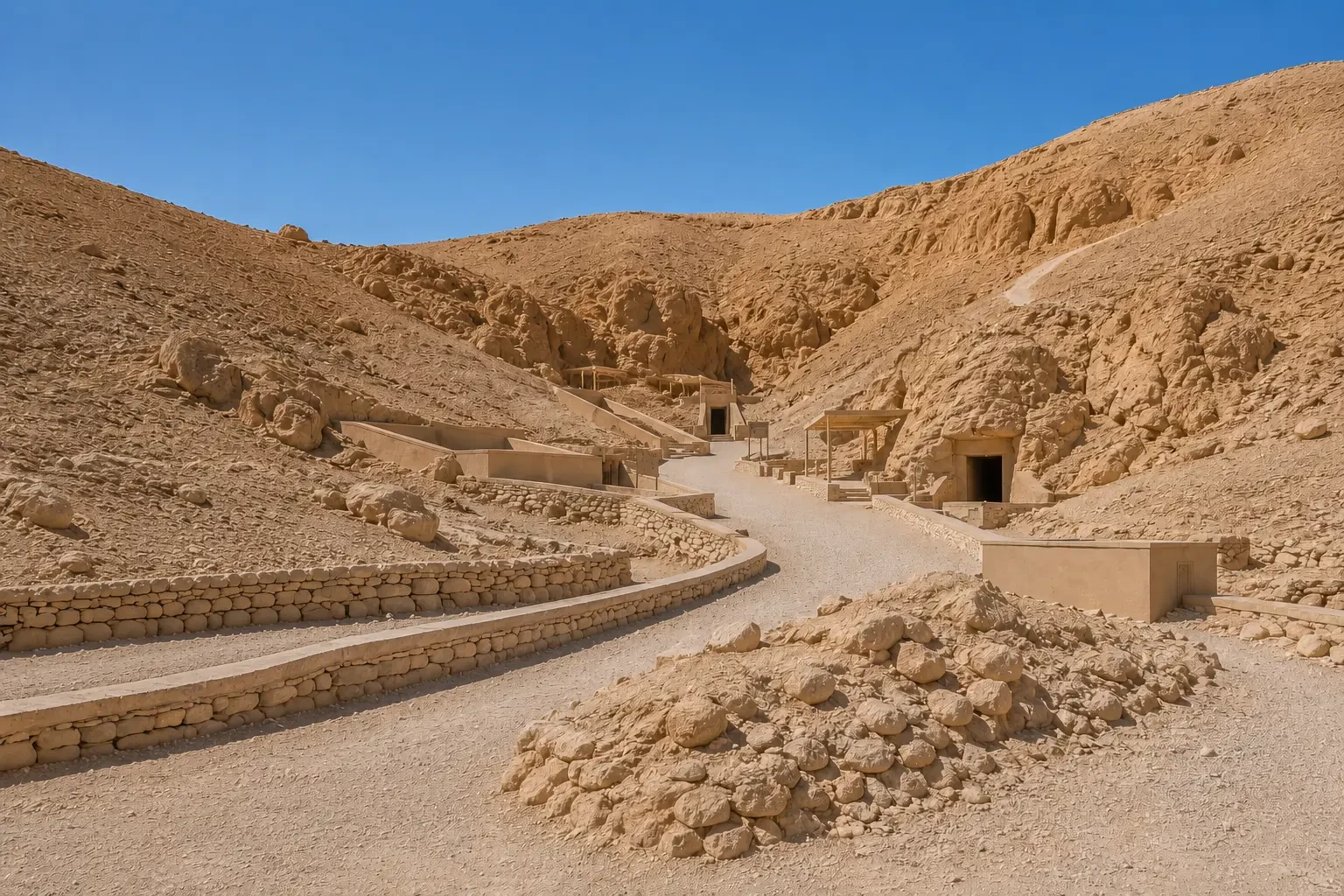

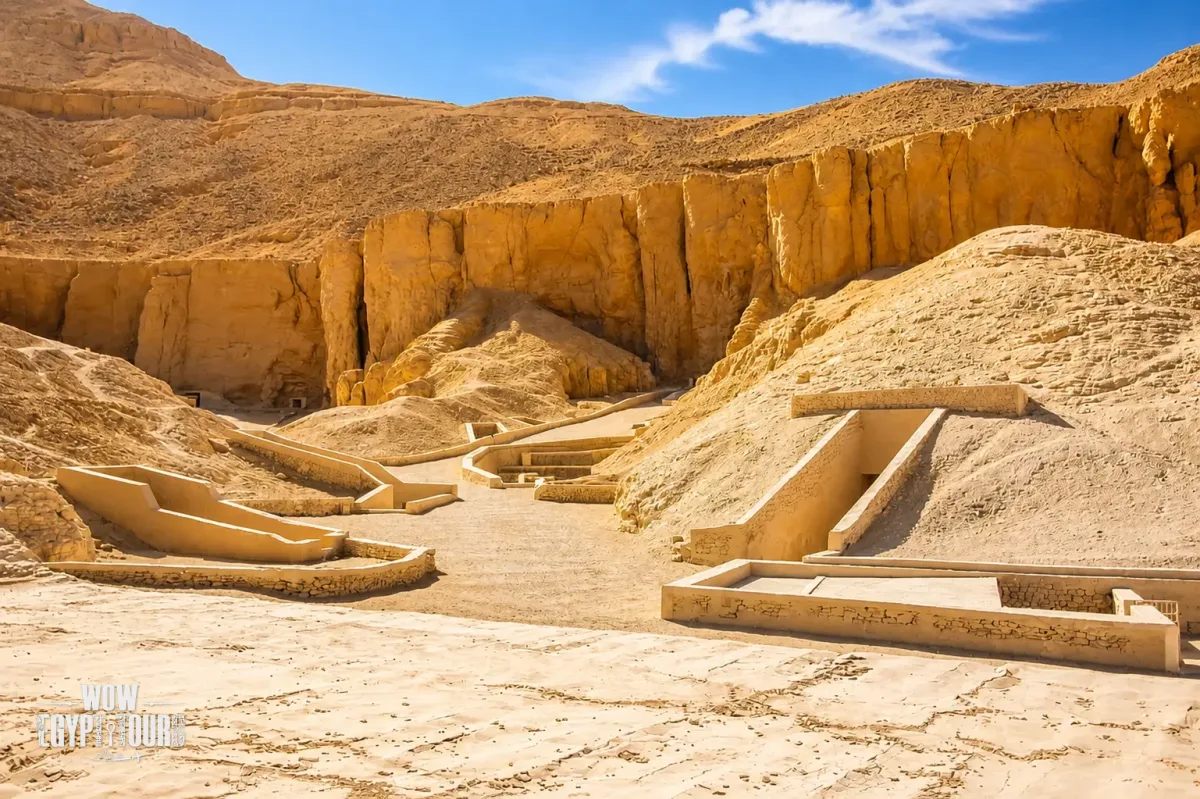

The Valley of the Kings is one of the most extraordinary and awe-inspiring ancient sites in the world, and a destination that every traveler to Egypt must experience. Located on the west bank of the Nile River in the city of Luxor, ancient Thebes, the Valley of the Kings stands as the greatest royal burial ground in the history of human civilization, where the most powerful pharaohs of the New Kingdom were laid to rest in elaborately decorated rock-cut tombs carved deep into the limestone cliffs of the Theban hills. This legendary landmark sits at the heart of some of Egypt's greatest travel experiences, including Luxor Tours, Luxor Day Tours, Luxor East Bank Tours, Luxor West Bank Tours, Valley of the Kings Tours, Dahabiya Nile River Cruises, and Luxor Aswan Nile River Cruises, all of which WOW Egypt Tours proudly offers to travelers from around the world. The Valley of the Kings is also a highlight of Egypt Tours Packages, Egypt Travel Packages, and Safaga Shore Excursions, making it one of the most visited and most celebrated ancient sites in all of Egypt.
Used as a royal burial ground for approximately 500 years, from the 18th Dynasty of the New Kingdom around 1550 BCE to the end of the 20th Dynasty around 1070 BCE, the Valley of the Kings Egypt contains 63 known tombs and chambers of varying scale and complexity, ranging from simple single-chamber pits to the enormous multi-room tomb of Seti I, which descends more than 137 meters into the rock and is considered the most magnificent royal tomb ever created in ancient Egypt. Visiting the Valley of the Kings is not simply a sightseeing stop; it is a journey into the innermost sacred world of ancient Egyptian royal religion, a world of gods, judgment, resurrection, and eternal life, preserved in breathtaking painted reliefs on tomb walls that have remained underground for more than three thousand years.
The Valley of the Kings is part of the ancient Theban necropolis, the city of the dead that spread across the entire west bank of the Nile opposite ancient Thebes, encompassing not only the royal tombs of the Valley of the Kings but also the Valley of the Queens, the Valley of the Nobles, Deir el-Medina, and the great mortuary temples of the Theban plain.

Who Built The Valley Of The Kings In Egypt?
The Valley of the Kings was not the creation of any single pharaoh but was selected as the royal burial ground at the beginning of the New Kingdom, around 1550 BCE, when Pharaoh Thutmose I became the first king to have his tomb cut into the cliffs of the valley. Before the New Kingdom, the pharaohs of the Old and Middle Kingdoms had been buried in pyramids on the desert plateau north of Memphis, but the New Kingdom pharaohs chose the remote and easily guarded valley in the Theban hills as a more secure alternative. Each successive pharaoh of the 18th, 19th, and 20th Dynasties commissioned the excavation and decoration of his own tomb within the valley, creating over approximately 500 years a concentration of royal burials unmatched anywhere in the ancient world. The most prolific builders of tombs in the Valley of the Kings include Thutmose I, Thutmose III, Amenhotep II, Seti I, Ramesses II, Ramesses III, Ramesses IV, and the boy king Tutankhamun, whose small but treasure-filled tomb became the most famous archaeological discovery in history when it was found intact by Howard Carter in 1922.
Who Was Howard Carter And What Did He Discover?
Howard Carter was a British archaeologist and Egyptologist who worked in Egypt for more than three decades before making the most sensational archaeological discovery of the 20th century. Funded by the British nobleman Lord Carnarvon, Carter had been systematically excavating in the Valley of the Kings for years with little success before his team uncovered a hidden staircase on the 4th of November 1922 that led to the sealed entrance of an intact royal tomb. On the 26th of November 1922, Carter made a small opening in the sealed inner doorway and, holding a candle to the gap, saw the glittering treasure chamber within. When Lord Carnarvon asked him what he could see, Carter replied with one of the most famous sentences in the history of archaeology: wonderful things. The tomb was that of the young pharaoh Tutankhamun of the 18th Dynasty, who had died around 1323 BCE at approximately 18 years of age. The discovery of the intact tomb of Tutankhamun, containing more than 5,000 objects including the famous golden death mask, the solid gold innermost coffin, the ceremonial throne, and hundreds of other objects of extraordinary beauty and historical significance, transformed Egyptology and captured the imagination of the entire world.
Valley Of The Kings Location In Egypt
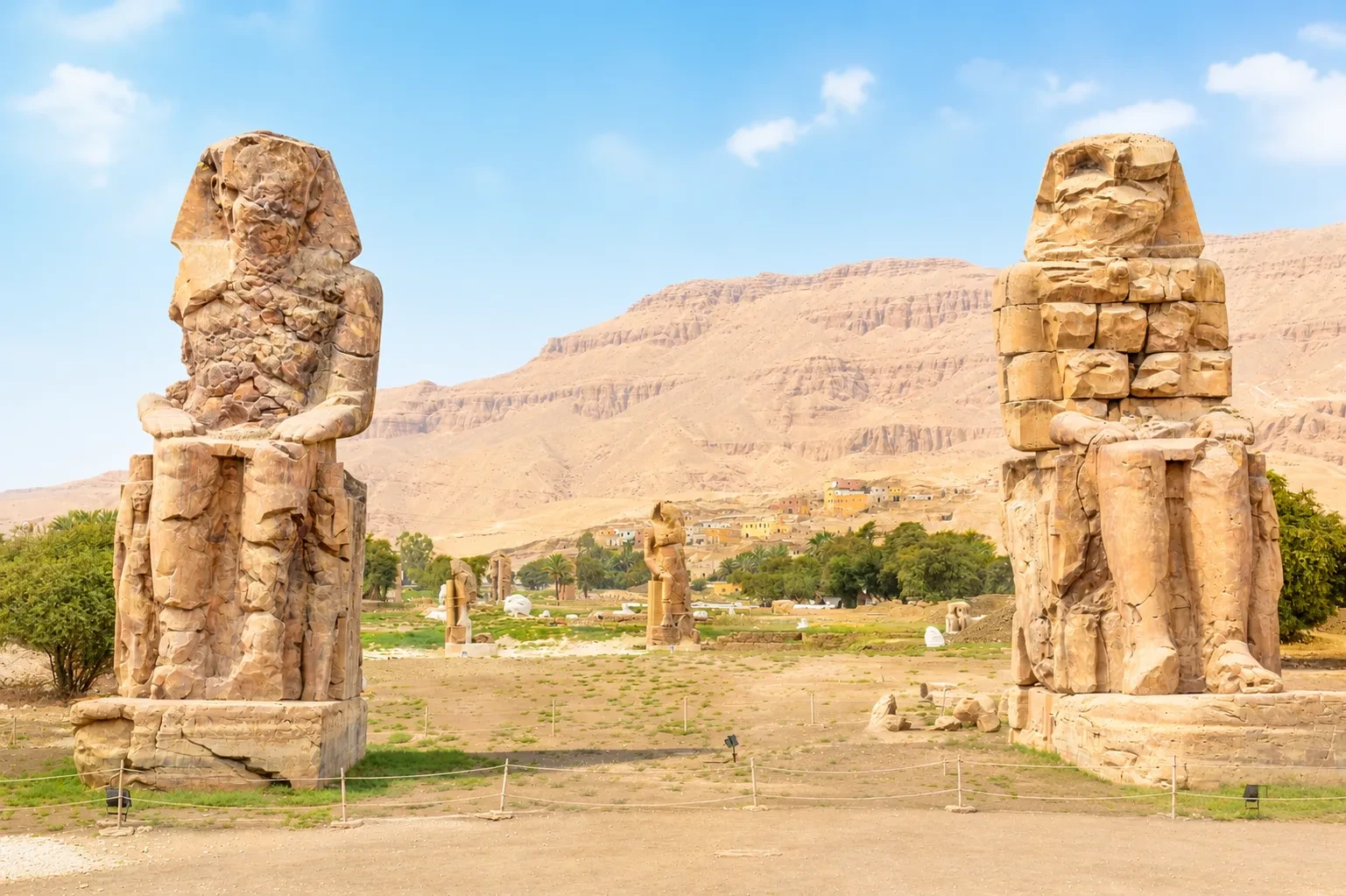
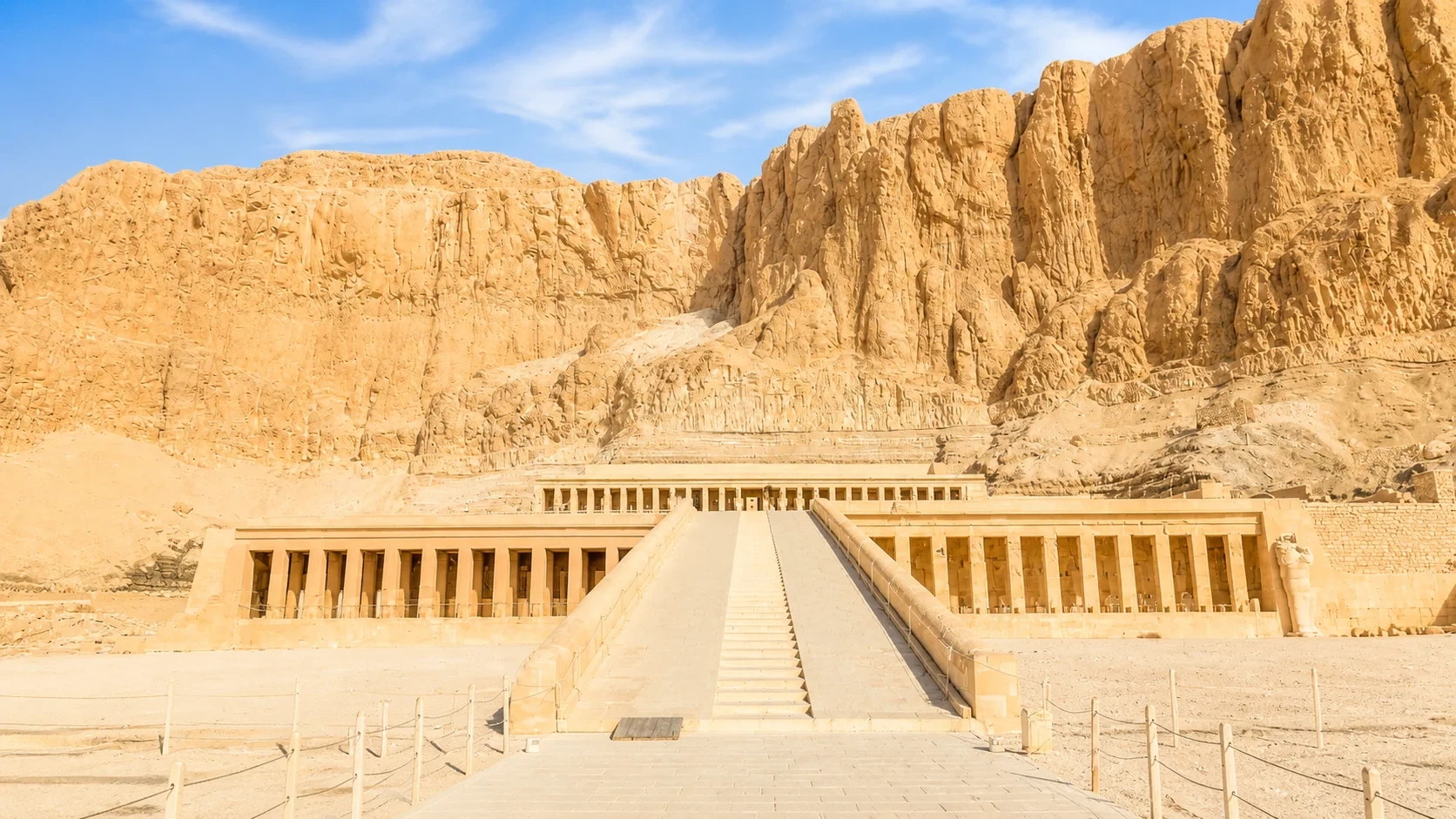
The Valley of the Kings is located on the west bank of the Nile River in the city of Luxor, approximately 5 kilometers west of the Nile riverbank, in a remote valley in the limestone hills of the Theban massif known to the ancient Egyptians as the Great Place. The valley is reached from Luxor by crossing the Nile to the West Bank and then traveling through the agricultural plain and up into the desert hills past the Colossi of Memnon and the Temple of Hatshepsut at Deir el-Bahari. WOW Egypt Tours provides private air-conditioned transportation directly from Luxor hotels to the Valley of the Kings on all Luxor West Bank Tours, Egypt Tours Packages, Egypt Travel Packages, and Safaga Shore Excursions.
Valley Of The Kings Fun Facts
The Valley of the Kings contains 63 known tombs and chambers, designated by the abbreviation KV followed by their discovery number, from KV1 (the tomb of Ramesses VII, the first to be recorded by modern scholars) to KV63 (an embalming cache discovered in 2005). The largest tomb in the valley is KV5, the tomb of the sons of Ramesses II, which contains more than 100 corridors and chambers and is the largest tomb ever discovered in Egypt. The deepest tomb is that of Seti I, KV17, which descends more than 137 meters into the rock. The smallest royal tomb is that of Tutankhamun, KV62, which is believed to have originally been prepared for a non-royal official before being hastily adapted for the young king's unexpected death.
The ancient Egyptians called the valley Ta Set Aat, meaning the Great Place, and it was overseen by a dedicated community of royal tomb-builders and craftsmen who lived in the nearby village of Deir el-Medina. These highly skilled workers, whose lives are documented in extraordinary detail in the thousands of ostraca and papyri recovered from their village, were among the most literate and artistically accomplished people in the ancient world.
Why Is The Valley Of The Kings Called By This Name In Egypt?
The modern name Valley of the Kings refers to the fact that the valley was used exclusively as the burial place of the pharaohs, the divine kings of ancient Egypt, during the New Kingdom period. The ancient Egyptian name for the site was Ta Set Aat, meaning the Great Place, or alternatively Ta Int, meaning the Valley. The Arabic name used by modern Egyptians and in local usage is Wadi el-Muluk, which translates directly as the Valley of the Kings, a name that has been in use since the Arab settlement of the region in the medieval period when the identity of the valley's royal occupants became widely known through ancient tradition and the visible evidence of the tomb entrances cut into its cliffs.
Valley Of The Kings History
The decision to establish a royal necropolis in the Valley of the Kings was made at the very beginning of the New Kingdom, when Pharaoh Thutmose I and his chief architect Ineni selected the remote valley as a secure and easily guarded burial site that would be more difficult to plunder than the conspicuous pyramid tombs of the earlier periods. Ineni boasted in his tomb inscription that he supervised the excavation of the tomb of Thutmose I in complete secrecy, with no one seeing and no one hearing. For the next five centuries, successive pharaohs of the 18th, 19th, and 20th Dynasties commissioned their own tombs in the valley, each attempting to outdo their predecessors in the scale, depth, and artistic richness of their burial chambers.
Despite the efforts at secrecy, many tombs were plundered in antiquity, particularly during the political instability of the late 20th Dynasty and the Third Intermediate Period. The priests of Amun responded to the wave of tomb robbery by collecting the surviving royal mummies and rewrapping them, adding new coffins and identification labels, and hiding them in two great caches: one in the tomb of Amenhotep II and one in a cliff shaft at Deir el-Bahari, where they remained undiscovered until the 19th century. The Valley of the Kings was visited and recorded by ancient Greek and Roman tourists, who left graffiti on the walls of the accessible tombs that survive to this day. Serious modern archaeological investigation of the valley began with the Napoleonic expedition to Egypt in 1798 and continued through the 19th and 20th centuries, culminating in Howard Carter's discovery of the intact tomb of Tutankhamun in 1922, which remains the single greatest archaeological discovery ever made in Egypt.
The Story Of The Royal Tombs In The Valley Of The Kings
The pharaohs of the New Kingdom built their tombs in the Valley of the Kings for two deeply interconnected reasons. The first was practical: the remote location of the valley, surrounded on all sides by sheer limestone cliffs and accessible only through a single narrow entrance, made it far more defensible and easier to guard than the pyramid tombs of the earlier periods, which had proved impossible to protect from determined robbers regardless of the elaborate physical precautions built into them.
The second reason was religious and symbolic. The pyramid-shaped peak that dominates the skyline above the Valley of the Kings, known today as the Qurn or the Horn, was venerated by the ancient Egyptians as a natural pyramid, a manifestation of the primeval mound of creation and a sacred mountain under the protection of the goddess Meretseger, She Who Loves Silence. By building their tombs in the valley beneath this sacred peak, the pharaohs placed themselves in the most sacred landscape in the Theban world, in the heart of the mountain that embodied the very mystery of death and resurrection. The tombs themselves were not merely burial chambers but functional religious monuments, filled with texts and images from the great funerary books of the New Kingdom that guided the king through the dangers of the underworld and secured his resurrection and eternal life among the gods.
Valley Of The Kings Architecture And The Royal Tombs
The Tomb Of Tutankhamun (KV62)
The tomb of Tutankhamun, KV62, is the most famous tomb in the Valley of the Kings and one of the most celebrated archaeological sites in the world. Although it is the smallest of the royal tombs in the valley, its extraordinary significance derives from the fact that it was discovered intact in 1922 by Howard Carter, with its treasures undisturbed for more than 3,300 years. The tomb consists of a short descending corridor, an antechamber, a treasury, a burial chamber, and an annex, all carved into the rock at a relatively shallow depth. The burial chamber walls are painted with scenes from the Book of the Dead and the Amduat, and the golden sarcophagus of the king still rests in the outermost stone sarcophagus where Carter found it. The treasures of Tutankhamun, including the golden death mask that is now in the Grand Egyptian Museum in Cairo, represent the finest surviving collection of New Kingdom royal funerary equipment in existence. Visiting the tombs in the Kings Valley begins for most visitors here, at the most iconic of all royal burials.
The Tomb Of Seti I (KV17)
The tomb of Seti I, KV17, is widely considered the most magnificent royal tomb in the entire Valley of the Kings. Discovered by the Italian explorer Giovanni Belzoni in 1817, the tomb descends more than 137 meters into the rock through a series of corridors, halls, and chambers decorated with the most exquisite painted and carved reliefs ever created for an ancient Egyptian royal burial. The walls of the tomb are covered with complete versions of all the major New Kingdom funerary texts including the Amduat, the Book of Gates, the Book of the Heavenly Cow, and the Litany of Ra, rendered in extraordinary detail and vivid color. The alabaster sarcophagus of Seti I, now in the Sir John Soane's Museum in London, was one of the most celebrated objects of its kind ever discovered. The tomb of Seti I is accessible to visitors but requires a separate additional ticket due to its exceptional significance and the need to limit visitor numbers to protect its extraordinary painted surfaces.
The Tomb Of Ramesses II (KV7)
The tomb of Ramesses II, KV7, is one of the largest royal tombs in the valley, befitting the most celebrated pharaoh of the New Kingdom. The tomb was heavily damaged by ancient floodwaters that repeatedly inundated the valley over the centuries, washing away much of the original plaster and paint from the walls and filling the chambers with debris. Despite this damage, the scale and ambition of the tomb are still clearly visible in its enormous descending corridors and vast burial hall. Conservation work by the Getty Conservation Institute has been ongoing for decades to stabilize the surviving decoration and prevent further deterioration.
The Tomb Of Ramesses III (KV11)
The tomb of Ramesses III, KV11, is one of the longest and most accessible royal tombs in the valley, with a total length of approximately 188 meters. It is particularly celebrated for the remarkable variety of its side chambers, which are decorated with unusual scenes of daily life including musicians, boats, and craftsmen at work, images that are rarely found in royal tombs and give KV11 a distinctive character unlike any other burial in the valley. The tomb was known to ancient Greek and Roman visitors as the Tomb of the Memnons or the Harper's Tomb, a reference to the famous scene of two blind harpists that decorated one of its side chambers.
The Tomb Of Ramesses IV (KV2)
The tomb of Ramesses IV, KV2, is one of the most visited and best-preserved tombs in the valley. It consists of a broad descending corridor leading directly to the burial chamber, which still contains the enormous granite sarcophagus of the king. The walls are decorated with complete versions of the Book of the Dead, the Book of Caverns, and the Book of the Heavenly Cow, rendered in a bold, clear style that remains exceptionally legible and vivid despite more than three thousand years of exposure. KV2 was one of the most frequently visited tombs in antiquity and contains hundreds of Greek, Latin, and Coptic graffiti inscribed by ancient visitors on its walls, providing fascinating evidence of the continuous tourist history of the Valley of the Kings from antiquity to the present day.
The Tomb Of Thutmose III (KV34)
The tomb of Thutmose III, KV34, is one of the earliest and most architecturally distinctive tombs in the valley. Located high in the cliff face and reached by a steep wooden staircase, the tomb features an unusual oval-shaped burial chamber whose walls are decorated in a deliberately archaic style, with the figures of gods and demons drawn in simple black outline on a cream background to resemble a giant unrolled papyrus scroll. This is the earliest complete version of the Amduat, the ancient Egyptian funerary text that describes the journey of the sun god through the twelve hours of the night, and it represents one of the most important surviving examples of New Kingdom funerary literature.
The Tomb Of Amenhotep II (KV35)
The tomb of Amenhotep II, KV35, is particularly significant in the history of Egyptology because it served as a cache for the mummies of nine royal pharaohs who were moved here by the priests of the 21st Dynasty to protect them from tomb robbers. When archaeologist Victor Loret discovered the tomb in 1898, he found not only the mummy of Amenhotep II still in its original sarcophagus but also the hidden cache of royal mummies, including those of Thutmose IV, Amenhotep III, Merenptah, Seti II, and Ramesses IV, V, and VI. Several of these mummies were transferred to the Egyptian Museum in Cairo, while the mummy of Amenhotep II was left in his tomb where it remains to this day.
The Tomb Of The Sons Of Ramesses II (KV5)
KV5, the tomb of the sons of Ramesses II, is the largest tomb ever discovered in Egypt and possibly in the world. First identified by James Burton in 1825 and later excavated by Egyptologist Kent Weeks from 1995 onwards, KV5 has proved to contain more than 100 corridors and chambers extending deep into the rock in multiple directions, making it an unprecedented architectural achievement. The tomb was intended to receive the burials of the many sons of Ramesses II, of whom he is believed to have had more than 50, and its construction reflects the extraordinary organizational and artistic resources available to the pharaoh who ruled Egypt for 67 years. KV5 is not currently open to visitors but continues to be excavated and studied by the Theban Mapping Project.
The Valley Of The Kings Visitor Center
The Valley of the Kings has a modern visitor center at the entrance to the valley where visitors purchase their tickets and can view detailed plans, models, and information about the tombs and the history of the valley. A small electric tram connects the visitor center to the main tomb area within the valley. The standard ticket grants access to three tombs chosen from the majority of currently open tombs; certain tombs including those of Seti I, Tutankhamun, and Ramesses V and VI require separate additional tickets. WOW Egypt Tours includes all standard entrance fees and can arrange additional tickets for premium tombs as part of all Luxor West Bank Tours, Egypt Tours Packages, and Safaga Shore Excursions.
Why Is The Valley Of The Kings Important?
The Valley of the Kings is important for reasons that extend far beyond its status as a magnificent tourist attraction. It is the most concentrated and best-documented royal necropolis of the ancient world, providing an irreplaceable record of New Kingdom royal religious belief, artistic achievement, and funerary practice spanning five centuries of ancient Egyptian history. The funerary texts preserved on the walls of the royal tombs, the Amduat, the Book of Gates, the Book of Caverns, the Book of the Dead, the Litany of Ra, and many others, represent the most complete surviving record of ancient Egyptian beliefs about death, the afterlife, the journey of the soul, and the mechanics of cosmic resurrection. No other site in the world preserves this body of religious literature in its original architectural and artistic context.
The Valley of the Kings also holds a central place in the history of Egyptology and archaeology. The discovery of the tomb of Tutankhamun by WOW Egypt Tours partner site Howard Carter in 1922 was the defining event of 20th-century archaeology and transformed public understanding of ancient Egypt throughout the world. New discoveries continue to be made in the valley: the 2005 discovery of KV63, an embalming cache, demonstrated that the valley has not yet yielded all its secrets, and ongoing excavations by international archaeological missions continue to expand knowledge of this extraordinary site.
What Are Some Interesting Facts About The Valley Of The Kings?
The Golden Death Mask Of Tutankhamun
The most famous single object ever recovered from the Valley of the Kings is the golden death mask of Tutankhamun, discovered by Howard Carter on the face of the king's innermost mummy in 1925. The mask is made of solid gold weighing approximately 10.23 kilograms, inlaid with lapis lazuli, carnelian, obsidian, turquoise, and colored glass, and depicts the young pharaoh with the striped nemes headdress, the false beard, and the double uraeus of royalty on his brow. It is universally regarded as the masterpiece of ancient Egyptian goldsmithing and one of the greatest works of art ever created by human hands. The mask is now displayed in the Grand Egyptian Museum in Giza, where it remains the most visited object in the museum.
The Curse Of The Pharaohs
The so-called Curse of the Pharaohs became a worldwide sensation following the death of Lord Carnarvon, Howard Carter's patron, in April 1923, just a few months after the opening of Tutankhamun's tomb. Carnarvon died of blood poisoning from an infected mosquito bite, and sensationalist newspaper reports claimed that an inscription inside the tomb had warned of death to those who disturbed the pharaoh's rest. In reality, no such inscription was ever found, and Carter himself lived until 1939 without any ill effects. Modern analysis has suggested that some deaths associated with the tomb opening may have been caused by ancient mold spores or other organic material released when the sealed tomb was opened after more than 3,000 years, though the statistical evidence for any genuine curse remains unconvincing. The story of the curse has become one of the most enduring popular myths associated with ancient Egypt and the Kings Valley.
The Painted Ceilings Of The Royal Tombs
One of the most breathtaking and least-discussed features of the royal tombs in the Valley of the Kings is their painted ceilings. While most visitors focus on the extraordinary wall paintings, the ceilings of the burial chambers and corridor halls are often covered with astronomical scenes of extraordinary beauty and complexity, depicting the night sky filled with stars, the constellations of the ancient Egyptian calendar, the bodies of sky goddesses stretched across the vault of heaven, and the complete texts of funerary books painted in minute hieroglyphic detail. The ceiling of the burial chamber of Seti I is particularly celebrated, depicting the complete northern sky with stars, planets, and constellations identified by their ancient Egyptian names in a composition that represents one of the earliest and most detailed astronomical charts in human history.
What Is So Special About The Valley Of The Kings?
The Art Of The Royal Tombs
The painted and carved reliefs that cover the walls of the royal tombs in the Valley of the Kings represent the pinnacle of ancient Egyptian funerary art, created by the most skilled craftsmen in the ancient world working under the direct patronage of the most powerful rulers of their age. Unlike the monumental public art of the great temples, the art of the royal tombs was created entirely for the benefit of the deceased king and the gods who would receive him, with no expectation that any living human being would ever see it again after the tomb was sealed. This fundamental difference in purpose gives the tomb paintings a directness, an intimacy, and a spiritual intensity that is unique among all forms of ancient Egyptian art, and the experience of standing inside a royal burial chamber surrounded by three thousand years of painted mythology is unlike anything else available anywhere in the world.
The Unbroken Thread Of Discovery
What makes the Valley of the Kings uniquely compelling among all the world's great archaeological sites is the sense that the story of discovery is still unfolding. Despite more than two centuries of intensive excavation, the valley has continued to yield new discoveries well into the 21st century, including the 2005 discovery of KV63, the first new chamber found in the valley since Tutankhamun's tomb in 1922. The Theban Mapping Project, led by Egyptologist Kent Weeks, has demonstrated through ground-penetrating radar surveys that significant unexplored areas still exist beneath the valley floor. The possibility that another intact royal tomb may still await discovery beneath the limestone cliffs of the Kings Valley gives every visit to the site a sense of participation in a living adventure that no amount of familiarity can diminish.
Valley Of The Kings Through The Ages: From Ancient Egypt To The Present
The Valley of the Kings has been known to, visited by, and written about by people from outside Egypt for more than two thousand years. Ancient Greek and Roman tourists visited the accessible tombs and left thousands of graffiti inscriptions on their walls, creating one of the largest bodies of ancient tourist evidence in the world. The Greek geographer Strabo described the valley in the first century BCE, and the Greek writer Diodorus Siculus recorded local traditions about the royal burials. After the spread of Christianity through Egypt in the Roman period, several of the larger tombs were converted into Coptic Christian hermitages and churches, and traces of Coptic paintings and inscriptions can still be seen on the walls of some tombs overlying the original ancient Egyptian decoration.
Following the Arab conquest of Egypt in 641 CE, knowledge of the valley's royal significance was preserved in local tradition, and the tombs continued to be visited and occasionally plundered throughout the medieval period. The modern scientific rediscovery of the valley began with the Napoleonic expedition of 1798, which produced the first systematic survey of the visible tombs. Throughout the 19th century, a succession of European explorers and archaeologists worked in the valley, including Belzoni, Lepsius, Mariette, and Maspero, recovering mummies, reliefs, and artifacts of extraordinary importance. The 20th century brought systematic excavation, conservation, and ultimately the establishment of the valley as one of the world's premier cultural heritage sites, receiving more than a million visitors per year under the management of the Egyptian Ministry of Tourism and Antiquities.
Valley Of The Kings UNESCO World Heritage Site
The Valley of the Kings is part of the Ancient Thebes with its Necropolis UNESCO World Heritage Site, inscribed in 1979. This designation recognizes the outstanding universal value of the entire Theban region, which includes the Valley of the Kings, Luxor Temple, Karnak Temple, the Valley of the Queens, and the many temples and tombs of the West Bank of the Nile. UNESCO recognizes the Kings Valley specifically as one of the most significant concentrations of royal funerary art and architecture in the world and an exceptional testimony to the religious and artistic genius of ancient Egyptian civilization. The UNESCO inscription has supported major international conservation projects in the valley, including the stabilization of flood-damaged tombs, the installation of climate control systems in the most visited tombs, and ongoing research into the long-term effects of visitor humidity on the ancient painted surfaces.
Best Time To Visit The Valley Of The Kings
The best time to visit the Valley of the Kings is during the cooler months from October through April, when temperatures in Luxor are moderate and the desert valley is comfortable for outdoor exploration. The summer months from May to September can be extremely hot, with daytime temperatures in the enclosed valley regularly exceeding 45 degrees Celsius, making visits genuinely uncomfortable and potentially hazardous without adequate preparation. If visiting during summer, plan your visit for the very first hour after opening, before 7:00 AM, when the valley is at its coolest and the crowd levels are at their lowest. WOW Egypt Tours operates Luxor West Bank Tours throughout the year and plans all timings carefully to ensure the most comfortable and rewarding visit to the Valley of the Kings possible, regardless of the season.
Valley Of The Kings Opening Hours
The Valley of the Kings is open to visitors every day of the week, including public holidays. The valley opens at 6:00 AM and closes at 5:00 PM during the winter months from October to April, and remains open until 5:00 PM during the summer months from May to September. The tomb of Tutankhamun has its own additional opening hours that may vary from the main valley schedule. Visitors who prefer a quieter experience with fewer crowds should arrive as close to opening time as possible, as the valley becomes significantly more crowded from 9:00 AM onwards when the main tourist buses arrive from Luxor.
Valley Of The Kings Entrance Fees
Standard ticket (entry to 3 tombs): EGP 360 for adults, EGP 180 for students
Tomb of Tutankhamun (KV62): EGP 300 additional
Tomb of Seti I (KV17): EGP 1,400 additional
Tomb of Ramesses V and VI (KV9): EGP 100 additional
Keep your ticket safe throughout your visit, as it will be checked at each tomb entrance. Entrance fees are included in all Valley of the Kings Tours, Egypt Tours Packages, and Safaga Shore Excursions booked through WOW Egypt Tours, with premium tomb tickets available to arrange in advance.
How To Get To The Valley Of The Kings
The Valley of the Kings is located on the west bank of the Nile in Luxor, approximately 5 kilometers west of the Nile riverbank. From central Luxor, visitors cross the Nile by public ferry or private motorboat to the West Bank landing, from which taxis, minibuses, and organized tour vehicles travel west along the road through the agricultural plain and up into the desert hills to the valley entrance. The journey from the Nile landing to the Valley of the Kings takes approximately 15 to 20 minutes by road.
Visitors arriving by air land at Luxor International Airport on the East Bank, from which private transfers to the West Bank are readily available. Those traveling from Cairo or Aswan by train arrive at Luxor Railway Station on the East Bank, a short transfer from the Nile crossing. Nile cruise ships dock along the Corniche on the East Bank, and all cruise itineraries include organized transportation to the West Bank sites. Travelers joining Safaga Shore Excursions with WOW Egypt Tours are collected directly from Safaga Port and transferred comfortably to the Valley of the Kings by private air-conditioned vehicle, with all logistics handled by our experienced team. All Luxor West Bank Tours operated by WOW Egypt Tours include private air-conditioned transportation directly to and from the Valley of the Kings.
How Long To Spend At The Valley Of The Kings
Most visitors spend between one and a half and two and a half hours at the Valley of the Kings, which is enough time to visit three tombs comfortably and explore the main area of the valley. Visitors who wish to visit premium tombs such as those of Tutankhamun or Seti I, or who want to spend extended time reading and photographing the tomb inscriptions, should allow three to four hours. The standard ticket covers three tombs chosen from those currently open, and WOW Egypt Tours Egyptologist guides will recommend the best combination of tombs based on your interests, available time, and current access conditions. The Kings Valley is ideally combined on the same day with the Temple of Hatshepsut and the Colossi of Memnon as part of a full Luxor West Bank Tour.
Tips For Visiting The Valley Of The Kings
Arrive at opening time for the smallest crowds and the coolest temperatures, particularly important in summer. Bring plenty of water, as the enclosed valley can be extremely hot and there is very little shade between the tombs. Wear a hat, apply sunscreen generously, and wear comfortable, closed-toe walking shoes. Do not touch the painted walls inside the tombs under any circumstances, as the oils from human hands cause irreversible damage to the ancient pigments. Photography without flash is permitted in most tombs, though restrictions vary by tomb and should be observed at all times as indicated by signage inside each chamber. A licensed Egyptologist guide from WOW Egypt Tours is strongly recommended: the tombs of the Kings Valley contain some of the most complex and theologically rich imagery in the ancient world, and understanding what you are looking at transforms the experience entirely. Keep your entrance ticket with you throughout the visit, as it will be checked at each tomb entrance individually.
What To Wear At The Valley Of The Kings
The Valley of the Kings is a vast open-air archaeological site with no strict religious dress code for general visitors. Lightweight, breathable clothing covering the shoulders and knees is strongly recommended both for comfort in the intense Egyptian heat and as a mark of respect for the sacred nature of the site. A wide-brimmed hat and generous application of sunscreen are essential for any visit, particularly between May and September when the desert valley can become dangerously hot. Comfortable, closed-toe walking shoes with good grip are essential, as the valley floor is uneven ancient stone and the paths leading to some tombs involve steep steps cut into the rock face. Visitors who plan to visit in summer should bring an electrolyte supplement or salts in addition to water, as heat exhaustion can occur quickly in the enclosed valley without adequate precautions.
Photography At The Valley Of The Kings
Photography at the Valley of the Kings is subject to specific rules that vary by tomb and should be carefully observed. Photography without flash is permitted in most tombs included in the standard ticket. Flash photography is absolutely prohibited in all tombs, as the intense light causes irreversible bleaching of the ancient organic pigments. The tomb of Tutankhamun and the tomb of Seti I have their own specific photography rules that should be checked at the entrance. Photography of the valley exterior, the entrance corridor, the visitor center, and the tram area is freely permitted. For the best natural light photography of the valley exterior and the rocky landscape, early morning immediately after opening provides the most dramatic raking light across the limestone cliffs. Professional photography or filming with specialized equipment requires a separate permit from Egypt's Ministry of Tourism and Antiquities.
Valley Of The Kings Tours
Single Attraction Visit: Valley Of The Kings Tour
This tour covers the Valley of the Kings as a standalone visit. It is suitable for travelers with limited time on the West Bank of Luxor, cruise passengers with a short port call, or visitors who have already covered other West Bank sites and want a dedicated visit to the Kings Valley.
What Is Covered
Full guided visit of the Valley of the Kings including entry to three tombs from the currently available selection, guided by a private licensed Egyptologist who will explain the funerary texts, artistic programs, and historical significance of each tomb. The standard visit covers three tombs of your choice, with premium tombs such as those of Tutankhamun and Seti I available as additional options.
Duration
1.5 to 2.5 hours inside the valley.
Includes
Private transportation, private licensed Egyptologist guide, and standard entrance fees to three tombs. Available for morning departures. Morning visits are strongly recommended to avoid the midday heat and peak crowd hours.
Luxor West Bank Tours: Valley Of The Kings, Hatshepsut Temple And More
This full-day tour covers the major sites on the West Bank of Luxor, the ancient burial ground of the pharaohs. It is suitable for travelers who want a complete West Bank experience in a single day, including the royal tombs, mortuary temples, and colossal monuments of the Theban necropolis.
What Is Covered
The Valley of the Kings with entry to three royal tombs, including options to visit the tombs of Tutankhamun, Ramesses II, Seti I, Ramesses III, Ramesses IV, and others depending on availability. The Temple of Hatshepsut at Deir el-Bahari, a three-tiered mortuary temple built into the limestone cliffs. The Colossi of Memnon, two 18-meter seated statues of Amenhotep III. Optional extensions include the Valley of the Queens, the Ramesseum, Medinet Habu Temple, the Valley of the Nobles, and Deir el-Medina.
Duration
Full day, approximately 6 to 7 hours.
Includes
Private air-conditioned transportation, Nile crossing, private licensed Egyptologist guide, and entrance fees to the main sites. Available for morning departures.
Luxor East Bank Tours: Karnak Temple, Luxor Temple, Luxor Museum And Mummification Museum
This full-day tour covers the four main sites on the East Bank of Luxor. It is suitable for travelers who want a complete East Bank experience in a single day, including the great open-air temple complexes and Luxor's two main museums.
What Is Covered
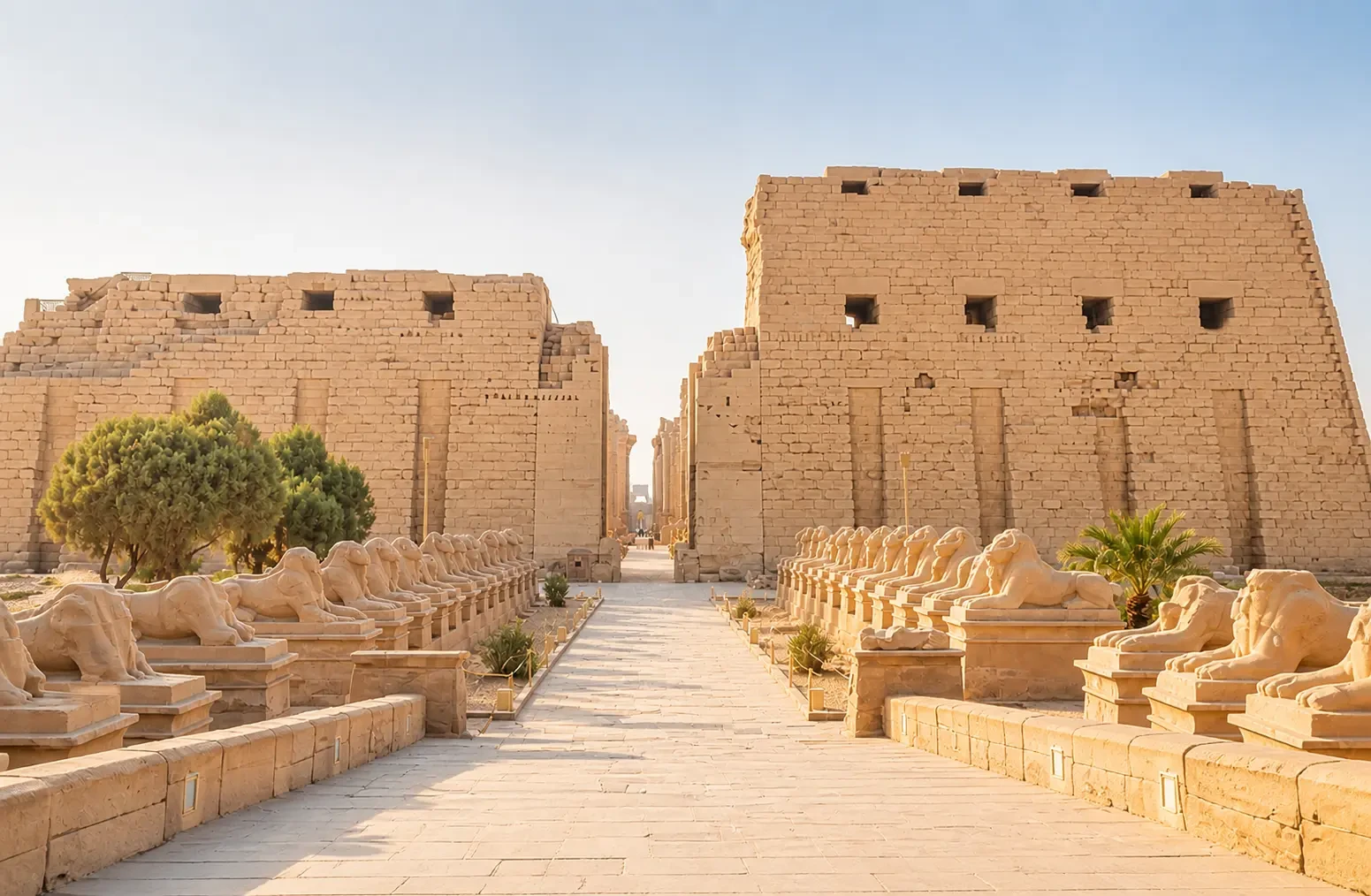
Karnak Temple with a full guided visit of the main precinct, including the Great Hypostyle Hall, the Sacred Lake, the obelisks of Hatshepsut and Thutmose I, and the Open Air Museum. The Avenue of Sphinxes connecting Karnak Temple to Luxor Temple. Luxor Temple including the entrance pylon, the courtyard of Ramesses II, the great colonnade, the courtyard of Amenhotep III, and the inner halls and Holy of Holies. The Luxor Museum with a full guided visit of all galleries. The Mummification Museum covering the tools, methods, and materials used in ancient Egyptian embalming.
Duration
Full day, approximately 6 to 7 hours.
Includes
Private air-conditioned transportation, private licensed Egyptologist guide, and entrance fees to all four sites. Available for morning departures.
Luxor Day Tours: Combined East Bank And West Bank
This full-day combined tour covers the most important sites on both banks of the Nile in Luxor in a single day. It is the most comprehensive Luxor Day Tour available and is suitable for travelers with one day in Luxor who want to cover both the East Bank temples and the West Bank tombs and mortuary temples.
What Is Covered
West Bank: Valley of the Kings with three tomb entries, Temple of Hatshepsut at Deir el-Bahari, and the Colossi of Memnon. East Bank: Karnak Temple including the Great Hypostyle Hall and Sacred Lake, the Avenue of Sphinxes, and Luxor Temple.
Duration
Full day, approximately 8 to 9 hours.
Includes
Private air-conditioned transportation, Nile crossing, private licensed Egyptologist guide, and entrance fees to all sites. Available for morning departures.
Safaga Shore Excursions To The Valley Of The Kings
Safaga Port is located on the Red Sea coast, approximately 250 kilometers (155 miles) from Luxor. WOW Egypt Tours operates Safaga Shore Excursions that transfer cruise ship passengers from Safaga Port to Luxor and back within a single port day. The transfer is approximately 2.5 to 3 hours each way by private air-conditioned vehicle.
What Is Covered
The Valley of the Kings with entry to three royal tombs including options for the tombs of Tutankhamun, Ramesses II, and others depending on availability. The Colossi of Memnon. Karnak Temple including the Great Hypostyle Hall and the Sacred Lake. Optional addition: Luxor Temple and Luxor Museum subject to available time.
Duration
Full day from port departure to port return, approximately 12 to 13 hours including transfers.
Includes
Private air-conditioned vehicle from Safaga Port, private licensed Egyptologist guide, entrance fees to all included sites, and return transfer to the ship. All Safaga Shore Excursions are coordinated around each ship's port schedule to guarantee return to the vessel before departure.
Dahabiya Nile River Cruise
A Dahabiya Nile River Cruise is a small-vessel sailing experience on the Nile between Luxor and Aswan aboard a traditional wooden dahabiya. WOW Egypt Tours operates dahabiya cruises with private cabins, all meals, a private licensed Egyptologist guide on board, and guided shore excursions at every stop.
4 Days 3 Nights Dahabiya Nile River Cruise From Aswan To Luxor
Route: Aswan to Luxor, sailing north.
Itinerary
Day 1: Embarkation in Aswan. Visit to Philae Temple and the Unfinished Obelisk. Sail north to Kom Ombo. Guided visit to Kom Ombo Temple. Continue to Gebel el Silsila. Overnight on board.
Day 2: Guided visit to Gebel el Silsila. Sail to the Village of Basaw. Guided visit to Village of Basaw. Continue to Edfu. Guided visit to the Temple of Horus at Edfu. Overnight on board.
Day 3: Sail to El Kab. Guided visit to El Kab Tombs. Sail to El Hagaz Island. Swimming stop. Overnight on board.
Day 4: Sail to Esna. Visit Khnum Temple at Esna. Disembarkation in Esna. Transfer to Luxor, approximately 55 kilometers (35 miles).
Includes
Private cabin, all meals on board, private licensed Egyptologist guide, entrance fees to all temple visits, and private transfers.
5 Days 4 Nights Dahabiya Nile River Cruise From Luxor To Aswan
Route: Luxor to Aswan, sailing south.
Itinerary
Day 1: Embarkation in Luxor. Transfer to Esna, approximately 55 kilometers (35 miles). Visit Khnum Temple at Esna. Sail to El Hagaz Island. Overnight on board.
Day 2: Sail to El Kab. Guided visit to El Kab Tombs. Continue to Edfu. Guided visit to the Temple of Horus at Edfu. Sail to the Village of Basaw. Guided visit to Village of Basaw. Overnight on board.
Day 3: Sail to Gebel el Silsila. Guided visit to Gebel el Silsila. Sail south to Kom Ombo. Guided visit to Kom Ombo Temple. Sail to Daraw Village. Overnight on board.
Day 4: Guided visit to Daraw Village. Sail to Herbiab Island. Swimming stop. Philae Sound and Light Show. Overnight on board.
Day 5: Optional Abu Simbel visit available by air or road. Guided visits to Philae Temple, the High Dam, and the Unfinished Obelisk. Disembarkation in Aswan.
Includes
Private cabin, all meals on board, private licensed Egyptologist guide, entrance fees to all temple visits, and private transfers.
8 Days 7 Nights Dahabiya Nile River Cruise Round Trip From Luxor (Via Aswan)
Route: Luxor and Aswan, sailing north and south.
Itinerary
Day 1: Embarkation in Luxor. Transfer to Esna, approximately 55 kilometers (35 miles). Visit Khnum Temple at Esna. Sail to El Hagaz Island. Overnight on board.
Day 2: Sail to El Kab. Continue to Edfu. Guided visit to the Temple of Horus at Edfu. Sail to the Village of Basaw. Guided visit to Village of Basaw. Overnight on board.
Day 3: Sail to Gebel el Silsila. Sail south to Kom Ombo. Guided visit to Kom Ombo Temple. Sail to Daraw Village. Overnight on board.
Day 4: Guided visit to Daraw Village. Sail to Herbiab Island. Swimming stop. Philae Sound and Light Show. Overnight on board.
Day 5: Optional Abu Simbel visit available by air or road. Guided visits to Philae Temple, the High Dam, and the Unfinished Obelisk. Sail north to Kom Ombo. Continue to Gebel el Silsila. Overnight on board.
Day 6: Guided visit to Gebel el Silsila. Sail to the Village of Basaw. Continue to Edfu. Overnight on board.
Day 7: Sail to El Kab. Guided visit to El Kab Tombs. Sail to El Hagaz Island. Swimming stop. Overnight on board.
Day 8: Disembarkation in Esna. Transfer to Luxor, approximately 55 kilometers (35 miles).
Includes
Private cabin, all meals on board, private licensed Egyptologist guide, entrance fees to all temple visits, and private transfers.
8 Days 7 Nights Dahabiya Nile River Cruise Round Trip From Aswan (Via Luxor)
Route: Luxor and Aswan, sailing north and south.
Itinerary
Day 1: Embarkation in Aswan. Visit to Philae Temple and the Unfinished Obelisk. Sail north to Kom Ombo. Continue to Gebel el Silsila. Overnight on board.
Day 2: Guided visit to Gebel el Silsila. Sail to the Village of Basaw. Continue to Edfu. Overnight on board.
Day 3: Sail to El Kab. Guided visit to El Kab Tombs. Sail to El Hagaz Island. Swimming stop. Overnight on board.
Day 4: Sail to Esna. Visit Khnum Temple at Esna. Sail to El Hagaz Island. Overnight on board.
Day 5: Sail to El Kab. Continue to Edfu. Guided visit to the Temple of Horus at Edfu. Sail to the Village of Basaw. Guided visit to Village of Basaw. Overnight on board.
Day 6: Sail to Gebel el Silsila. Sail south to Kom Ombo. Guided visit to Kom Ombo Temple. Sail to Daraw Village. Overnight on board.
Day 7: Guided visit to Daraw Village. Sail to Herbiab Island. Swimming stop. Philae Sound and Light Show. Overnight on board.
Day 8: Disembarkation in Aswan.
Includes
Private cabin, all meals on board, private licensed Egyptologist guide, entrance fees to all temple visits, and private transfers.
Luxor And Aswan Nile River Cruise
The Luxor and Aswan Nile River Cruise is a standard Nile cruise product operated aboard a full-size cruise ship between Luxor and Aswan. WOW Egypt Tours operates this cruise in both directions with private licensed Egyptologist guides, all meals included, private cabins, and guided shore excursions at every port of call. The Valley of the Kings is a guided stop on all itineraries in both directions.
4 Days 3 Nights Luxor And Aswan Nile River Cruise From Aswan To Luxor
Route: Aswan to Luxor, sailing north.
Itinerary
Day 1: Embarkation in Aswan. Guided visits to Philae Temple, the High Dam, and the Unfinished Obelisk. Overnight on board in Aswan.
Day 2: Sail north to Kom Ombo. Guided visit to Kom Ombo Temple. Continue to Edfu. Overnight on board.
Day 3: Guided visit to the Temple of Horus at Edfu. Continue north toward Luxor. Guided visit to Luxor Temple and Karnak Temple. Overnight on board in Luxor.
Day 4: Optional Sunrise Hot Air Balloon available. Guided visits to Valley of the Kings, Queen Hatshepsut Temple, and Colossi of Memnon. Disembarkation in Luxor.
Includes
Private cabin, all meals on board, private licensed Egyptologist guide, entrance fees to all temple visits, and private transfers.
5 Days 4 Nights Luxor And Aswan Nile River Cruise From Luxor To Aswan
Route: Luxor to Aswan, sailing south.
Itinerary
Day 1: Embarkation in Luxor. Guided visits to Luxor Temple and Karnak Temple. Overnight on board in Luxor.
Day 2: Optional Sunrise Hot Air Balloon available. Guided visits to Valley of the Kings, Queen Hatshepsut Temple, and Colossi of Memnon. Pass through the Esna locks. Sail south to Edfu. Overnight on board.
Day 3: Guided visit to the Temple of Horus at Edfu. Continue to Kom Ombo. Guided visit to Kom Ombo Temple. Overnight on board.
Day 4: Continue south toward Aswan. Guided visits to Philae Temple, the High Dam, and the Unfinished Obelisk. Overnight on board in Aswan.
Day 5: Optional Abu Simbel visit available by air or road. Disembarkation in Aswan.
Includes
Private cabin, all meals on board, private licensed Egyptologist guide, entrance fees to all temple visits, and private transfers.
8 Days 7 Nights Luxor And Aswan Nile River Cruise Round Trip From Luxor (Via Aswan)
Route: Luxor and Aswan, sailing north and south.
Itinerary
Day 1: Embarkation in Luxor. Guided visits to Luxor Temple and Karnak Temple. Overnight on board in Luxor.
Day 2: Guided visits to Luxor Museum. Pass through the Esna locks. Sail south to Edfu. Overnight on board.
Day 3: Guided visit to the Temple of Horus at Edfu. Continue to Kom Ombo. Overnight on board.
Day 4: Continue south toward Aswan. Guided visits to Philae Temple, the High Dam, and the Unfinished Obelisk. Overnight on board in Aswan.
Day 5: Abu Simbel visit available by road. Sound and Light Show at Philae Temple. Overnight on board in Aswan.
Day 6: Guided visits to Nubian Village. Sail north to Kom Ombo. Guided visit to Kom Ombo Temple. Continue to Edfu. Overnight on board.
Day 7: Guided visits to Valley of the Kings, Queen Hatshepsut Temple, and Colossi of Memnon. Pass through the Esna locks. Sail south to Edfu. Overnight on board.
Day 8: Optional Sunrise Hot Air Balloon available. Disembarkation in Luxor.
Includes
Private cabin, all meals on board, private licensed Egyptologist guide, entrance fees to all temple visits, and private transfers.
8 Days 7 Nights Luxor And Aswan Nile River Cruise Round Trip From Aswan (Via Luxor)
Route: Luxor and Aswan, sailing north and south.
Itinerary
Day 1: Embarkation in Aswan. Guided visits to Philae Temple, the High Dam, and the Unfinished Obelisk. Overnight on board in Aswan.
Day 2: Sail north to Kom Ombo. Guided visit to Nubian Village and Kom Ombo Temple. Continue to Edfu. Overnight on board.
Day 3: Continue north toward Luxor. Guided visit to Luxor Museum and Karnak Sound and Light Show. Overnight on board in Luxor.
Day 4: Guided visits to Luxor Temple and Karnak Temple. Overnight on board in Luxor.
Day 5: Optional Sunrise Hot Air Balloon available. Guided visits to Valley of the Kings, Queen Hatshepsut Temple, and Colossi of Memnon. Pass through the Esna locks. Sail south to Edfu. Overnight on board.
Day 6: Guided visit to the Temple of Horus at Edfu. Continue to Kom Ombo. Overnight on board.
Day 7: Sound and Light Show at Philae Temple. Overnight on board in Aswan.
Day 8: Abu Simbel visit available by road. Disembarkation in Aswan.
Includes
Private cabin, all meals on board, private licensed Egyptologist guide, entrance fees to all temple visits, and private transfers.
Combine The Valley Of The Kings With Your Egypt Tours Package
The Valley of the Kings is included as a featured stop across the full range of WOW Egypt Tours travel products. Browse the options below to find the Egypt experience that is right for you.
Egypt Tour Packages: Multi-day guided Egypt tours organized by duration, including 2 Days Egypt Packages, 3 Days Egypt Packages, 4 Days Egypt Packages, 5 Days Egypt Packages, 6 Days Egypt Packages, 7 Days Egypt Packages, 8 Days Egypt Packages, 10 Days Egypt Packages, and longer itineraries. All packages include private air-conditioned transportation, private licensed Egyptologist guide, accommodations, entrance fees to all included sites, and private transfers throughout Egypt.
Egypt Travel Packages: Themed Egypt travel packages designed around specific travel styles and interests, including Egypt Honeymoon Travel Packages, Egypt Budget Travel Packages, Egypt Family Travel Packages, Egypt Luxury Travel Packages, Egypt Adventure Travel Packages, Egypt Cultural Travel Packages, and Egypt Christmas and New Year Travel Packages. All packages include private air-conditioned transportation, private licensed Egyptologist guide, accommodations, meals, entrance fees to all included sites, and private transfers.
Egypt Nile Cruise Packages: Complete Egypt travel packages combining Cairo sightseeing with a fully guided Nile cruise between Luxor and Aswan, available as Cairo and Nile Cruise Packages, Egypt and Nile Cruise Packages, and Nile Cruise and Red Sea Packages. All packages include private cabin on board, all meals, private licensed Egyptologist guide, entrance fees to all temple and tomb visits including the Valley of the Kings, and private transfers.
Nile River Cruises: All WOW Egypt Tours Nile cruise options between Luxor and Aswan, available across four ship categories, Standard, Deluxe, Ultra Deluxe, and Luxury, as well as private Dahabiya sailing vessels. All cruises include private cabin on board, all meals, private licensed Egyptologist guide, entrance fees to all temple visits, and private transfers.
Luxor Aswan Nile Cruises: The classic Upper Egypt Nile cruise route between Luxor and Aswan, available in both directions and in durations of 4 Days 3 Nights, 5 Days 4 Nights, and 8 Days 7 Nights round trip. The Valley of the Kings is included as a guided stop on all itineraries. All cruises include private cabin on board, all meals, private licensed Egyptologist guide, entrance fees to all sites, and private transfers.
Standard Nile Cruises: Comfortable standard-category cruise ships sailing between Luxor and Aswan, available in 4 Days 3 Nights, 5 Days 4 Nights, and 8 Days 7 Nights itineraries in both directions. Includes standard cabin on board, all meals, private licensed Egyptologist guide, entrance fees to all temple and tomb visits, and private transfers.
Deluxe Nile Cruises: Deluxe-category cruise ships with enhanced cabin comfort and upgraded dining, sailing between Luxor and Aswan in 4 Days 3 Nights, 5 Days 4 Nights, and 8 Days 7 Nights itineraries in both directions. Includes deluxe cabin on board, all meals, private licensed Egyptologist guide, entrance fees to all temple and tomb visits, and private transfers.
Ultra Deluxe Nile Cruises: Ultra deluxe-category cruise ships offering superior cabins, premium dining, and an elevated onboard experience, sailing between Luxor and Aswan in 4 Days 3 Nights, 5 Days 4 Nights, and 8 Days 7 Nights itineraries in both directions. Includes ultra deluxe cabin on board, all meals, private licensed Egyptologist guide, entrance fees to all temple and tomb visits, and private transfers.
Luxury Nile Cruises: Luxury-category cruise ships with the finest cabins, exceptional cuisine, and premium onboard facilities, sailing between Luxor and Aswan in 4 Days 3 Nights, 5 Days 4 Nights, and 8 Days 7 Nights itineraries in both directions. Includes luxury cabin on board, all meals, private licensed Egyptologist guide, entrance fees to all temple and tomb visits, and private transfers.
Dahabiya Nile Cruises: Private small-vessel sailing experience aboard a traditional wooden dahabiya between Luxor and Aswan, available in four itineraries: 4 Days 3 Nights Dahabiya From Aswan To Luxor, 5 Days 4 Nights Dahabiya From Luxor To Aswan, 8 Days 7 Nights Dahabiya Round Trip From Luxor via Aswan, and 8 Days 7 Nights Dahabiya Round Trip From Aswan via Luxor. Includes private cabin on board, all meals, private licensed Egyptologist guide, entrance fees to all temple and tomb visits, and private transfers.
Luxor Tours: Day tours and multi-day tours of Luxor covering all major sites on both banks of the Nile, including Luxor West Bank Tours covering the Valley of the Kings, Temple of Hatshepsut, and Colossi of Memnon; Luxor East Bank Tours covering Karnak Temple, Luxor Temple, Luxor Museum, and Mummification Museum; and combined Luxor Day Tours covering both banks in a single day. All tours include private air-conditioned transportation, private licensed Egyptologist guide, entrance fees to all included sites, and private transfers.
Shore Excursions: Guided day excursions from Egypt's Red Sea ports to the Valley of the Kings and the monuments of Upper Egypt, available for cruise ship passengers with a port call at Safaga, Hurghada, Port Said, Alexandria, and Sokhna. Includes private air-conditioned transportation from the port, private licensed Egyptologist guide, entrance fees to all included sites, and return transfer to the ship, with all timings coordinated around each vessel's port schedule.
Safaga Port Excursions: Shore excursions departing from Safaga Port on the Red Sea coast, approximately 250 kilometers (155 miles) from Luxor, covering the Valley of the Kings, Temple of Hatshepsut, Colossi of Memnon, Karnak Temple, and Luxor Temple as a full-day trip within a single port call. Available options include Safaga to Luxor West Bank Tours, Safaga to Luxor East Bank Tours, and combined Safaga to Luxor East and West Bank Day Tours. Includes private air-conditioned vehicle from Safaga Port, private licensed Egyptologist guide, entrance fees to all included sites, and return transfer to the ship.
Nearby Attractions To The Valley Of The Kings
The Valley of the Kings sits at the heart of the richest concentration of royal and private funerary monuments in the ancient world. The Temple of Hatshepsut at Deir el-Bahari is located just over the ridge from the Kings Valley, approximately 15 minutes by road, and is one of the most spectacularly situated ancient monuments in Egypt. The Colossi of Memnon, two 18-meter seated statues of Amenhotep III, stand at the edge of the agricultural plain below the valley and are the first monuments visitors encounter on arriving at the West Bank. The Valley of the Queens, where the queens and royal children of the New Kingdom were buried, is located on the southern end of the Theban hills and contains more than 70 tombs including the spectacular tomb of Queen Nefertari, wife of Ramesses II, whose painted decoration is among the finest in all of ancient Egypt.
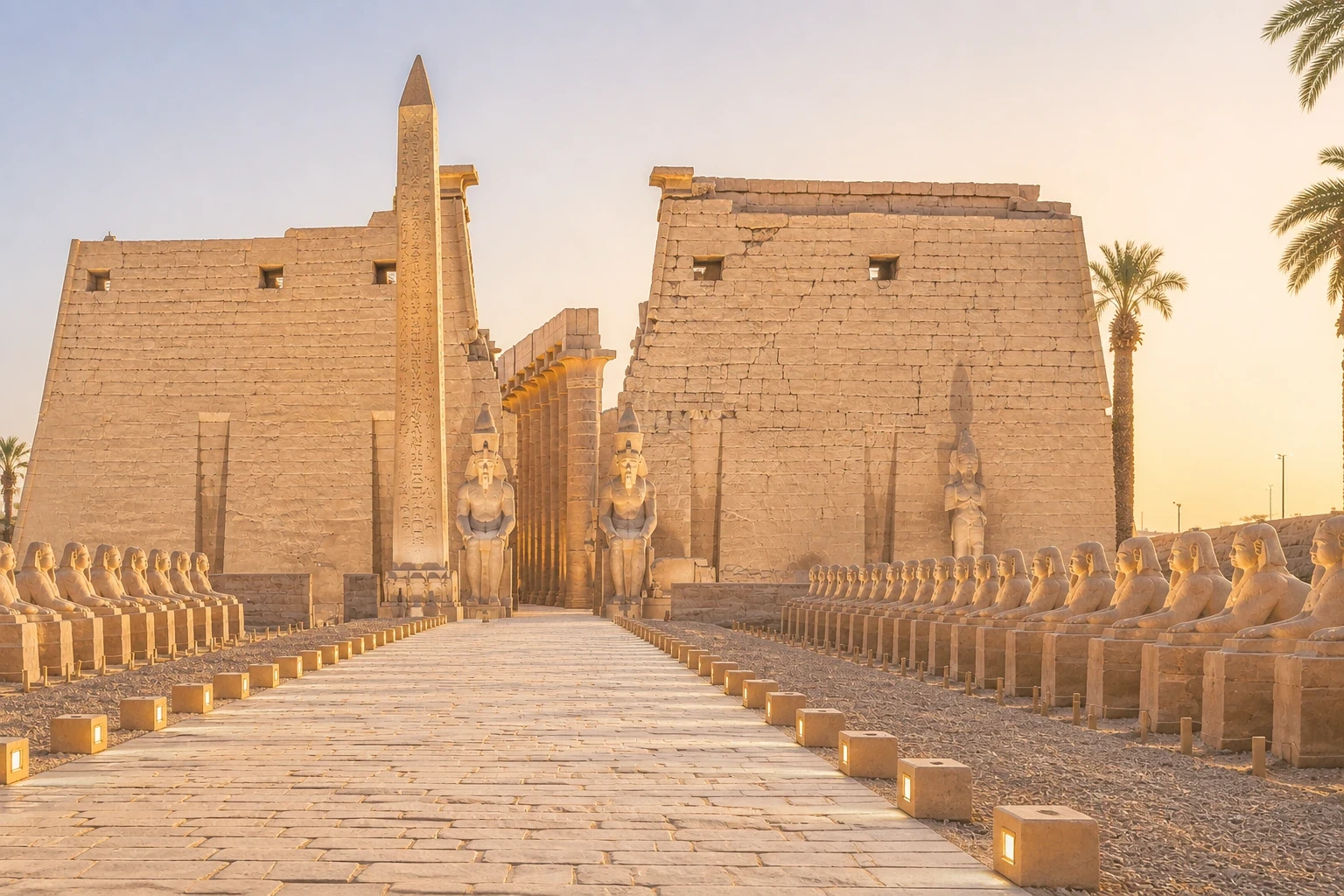
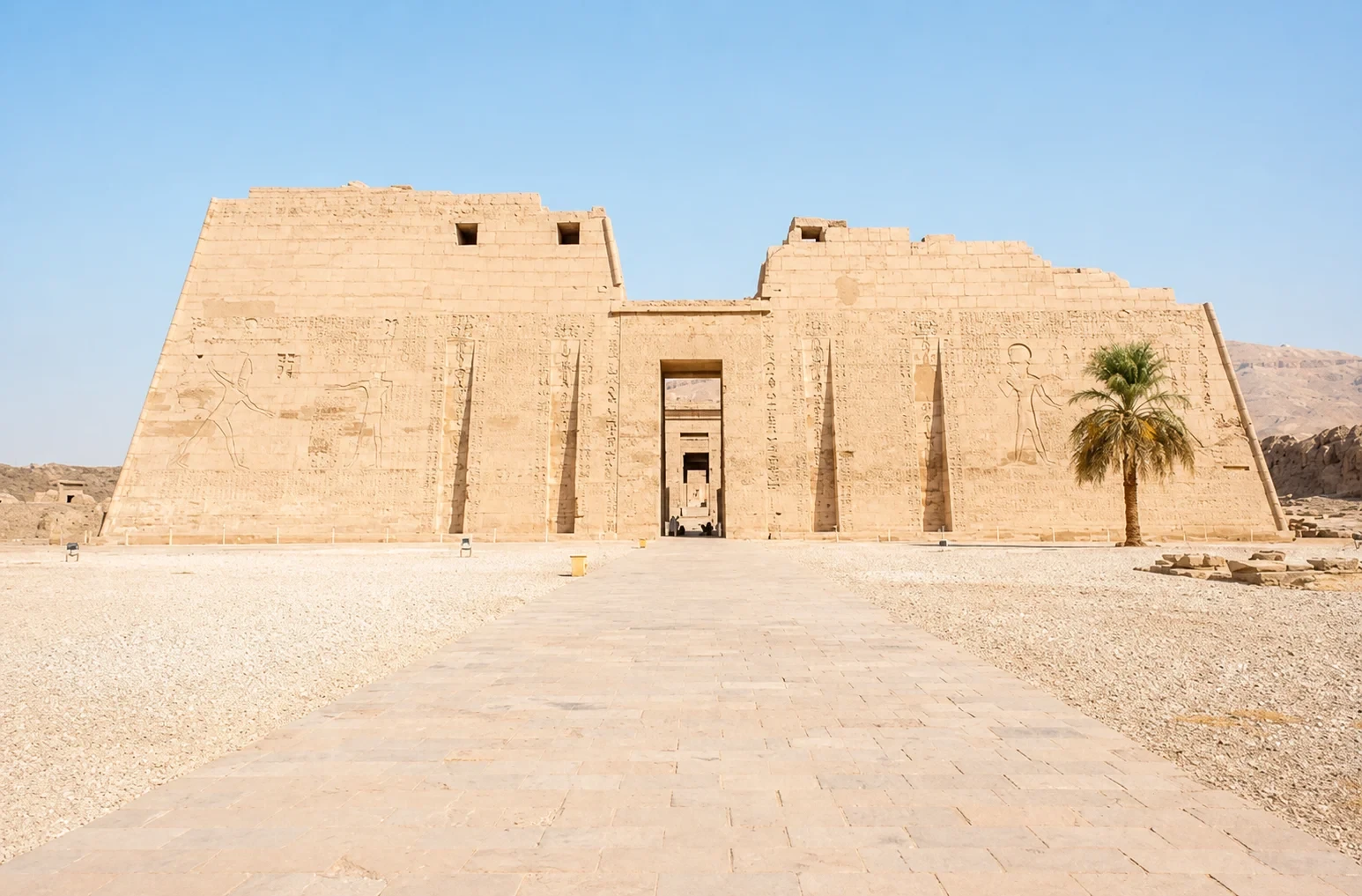
The Valley of the Nobles contains the tombs of the high officials and courtiers of the New Kingdom, decorated with vivid scenes of everyday life that provide an invaluable complement to the religious imagery of the royal tombs. Deir el-Medina, the village of the royal tomb builders, lies in the valley between the Valley of the Queens and the Theban plain and contains the tombs of the very craftsmen who decorated the Kings Valley, painted with some of the most exuberant and colorful imagery in all of ancient Egyptian art. The Ramesseum, the mortuary temple of Ramesses II, and Medinet Habu Temple, the mortuary temple of Ramesses III and the best-preserved mortuary temple on the West Bank, are also within easy reach. On the East Bank, the Luxor Museum and the Mummification Museum provide essential cultural context for the royal tombs of the Kings Valley.
Frequently Asked Questions About The Valley Of The Kings
What is the Valley of the Kings?
The Valley of the Kings is the royal necropolis of ancient Egypt's New Kingdom period, located on the west bank of the Nile in the city of Luxor, containing 63 known tombs of pharaohs and royal family members from the 18th, 19th, and 20th Dynasties. It is one of the most visited ancient sites in Egypt and a centerpiece of all Luxor West Bank Tours, Egypt Tours Packages, Egypt Travel Packages, and Safaga Shore Excursions offered by WOW Egypt Tours.
Who is buried in the Valley of the Kings?
The Valley of the Kings contains the tombs of the pharaohs of the 18th, 19th, and 20th Dynasties of the New Kingdom, including Thutmose I, Thutmose III, Amenhotep II, Seti I, Ramesses II, Ramesses III, Ramesses IV, and Tutankhamun, as well as some of their royal family members, nobles, and officials.
How many tombs are in the Valley of the Kings?
There are 63 known tombs and chambers in the Kings Valley, designated KV1 through KV63. Not all are open to visitors at any given time, and the number of accessible tombs changes based on conservation requirements and ongoing excavation work.
Who discovered the tomb of Tutankhamun?
The tomb of Tutankhamun (KV62) was discovered by British archaeologist Howard Carter on the 4th of November 1922, funded by the British nobleman Lord Carnarvon. It was found intact, with all its treasures undisturbed for more than 3,300 years, and remains the greatest single archaeological discovery in the history of Egyptology.
Can I visit the tomb of Tutankhamun?
Yes. The tomb of Tutankhamun (KV62) is open to visitors but requires a separate additional ticket beyond the standard Valley of the Kings entrance fee. The golden death mask and most of Tutankhamun's treasures are now displayed in the Grand Egyptian Museum in Giza, but the sarcophagus and the mummy of the king remain in the tomb.
What is the most impressive tomb in the Valley of the Kings?
The tomb of Seti I (KV17) is widely considered the most impressive royal tomb in the valley, descending more than 137 meters into the rock and decorated with the most exquisite painted reliefs in the entire necropolis. It requires a separate premium ticket due to its exceptional significance.
What are the opening hours of the Valley of the Kings?
The Valley of the Kings is open daily from 6:00 AM to 5:00 PM, including public holidays.
How much does it cost to enter the Valley of the Kings?
The standard entrance fee covers entry to three tombs: EGP 360 for adults and EGP 180 for students. Additional fees apply for the tombs of Tutankhamun (EGP 300), Seti I (EGP 1,400), and Ramesses V and VI (EGP 100). All standard entrance fees are included in Valley of the Kings Tours, Egypt Tours Packages, and Safaga Shore Excursions booked through WOW Egypt Tours.
How long does it take to visit the Valley of the Kings?
Most visitors spend between one and a half and two and a half hours at the Kings Valley for a standard three-tomb visit. Those visiting premium tombs or spending extended time with the inscriptions may wish to allow three to four hours.
What is the best time of year to visit the Valley of the Kings?
October to April is the most comfortable period for visiting, with moderate temperatures. Summer visits are best planned for the very first hour after opening when the valley is coolest.
How do I get to the Valley of the Kings?
The Valley of the Kings is located on the West Bank of Luxor, reached by crossing the Nile and then traveling by road approximately 5 kilometers into the desert hills. All Luxor West Bank Tours, Luxor Day Tours, and Safaga Shore Excursions with WOW Egypt Tours include private transportation directly to and from the valley.
Can I combine the Valley of the Kings with the Temple of Hatshepsut in one day?
Yes. The Valley of the Kings and the Temple of Hatshepsut are covered together on all WOW Egypt Tours Luxor West Bank Tours, along with the Colossi of Memnon and optional extensions to the Valley of the Queens and Medinet Habu Temple.
Is a guide necessary at the Valley of the Kings?
A guide is not required to enter the valley but is strongly recommended. The funerary texts and artistic programs of the royal tombs contain some of the most complex religious imagery in the ancient world, and understanding what you are looking at requires expert interpretation. WOW Egypt Tours provides licensed Egyptologist guides for all Valley of the Kings Tours, Egypt Tours Packages, and Safaga Shore Excursions.
Can I take photographs at the Valley of the Kings?
Photography without flash is permitted in most tombs included in the standard ticket. Flash photography is absolutely prohibited in all tombs. Specific photography rules vary by tomb and should be observed as indicated by signage inside each chamber. Professional filming requires a separate permit.
What should I wear to visit the Valley of the Kings?
Lightweight clothing covering the shoulders and knees, a wide-brimmed hat, generous sunscreen, and comfortable closed-toe walking shoes with good grip. Bring substantial quantities of water, particularly in summer.
Is the Valley of the Kings a UNESCO World Heritage Site?
Yes. The Valley of the Kings is part of the Ancient Thebes with its Necropolis UNESCO World Heritage Site, inscribed in 1979, which also includes Luxor Temple, Karnak Temple, the Valley of the Queens, and the monuments of the West Bank.
What is the difference between the Valley of the Kings and the Valley of the Queens?
The Valley of the Kings was the royal burial ground reserved exclusively for the pharaohs and selected high officials of the New Kingdom, containing 63 known tombs. The Valley of the Queens was used for the burials of the queens, royal princes, and princesses of the same period, containing more than 70 tombs including the celebrated tomb of Queen Nefertari.
What Nile cruise options include the Valley of the Kings?
WOW Egypt Tours offers both Dahabiya Nile River Cruises and Luxor Aswan Nile River Cruises, all of which include a guided visit to the Kings Valley. Itineraries run in both directions between Luxor and Aswan, ranging from 4 to 8 days, and are available as part of all WOW Egypt Tours Egypt Tours Packages and Egypt Travel Packages.
Can I visit the Valley of the Kings as part of a Safaga Shore Excursion?
Yes. WOW Egypt Tours offers dedicated Safaga Shore Excursions to the Valley of the Kings for cruise ship passengers arriving at Safaga Port. Our team handles all transportation, guiding, entrance fees, and logistics to ensure a seamless and unforgettable visit to the Kings Valley and the other great monuments of ancient Thebes.
How do I book a Valley of the Kings Tour with WOW Egypt Tours?
You can book any Valley of the Kings Tour, Luxor West Bank Tour, Luxor Day Tour, Dahabiya Nile River Cruise, Luxor Aswan Nile River Cruise, Egypt Tours Package, Egypt Travel Package, or Safaga Shore Excursion directly through WOW Egypt Tours. Our team of travel specialists will arrange everything from private transportation and licensed Egyptologist guides to hotel pick-up and entrance fees, ensuring a seamless and unforgettable experience of the Valley of the Kings and all the wonders of ancient Egypt.