

Luxor is the most extraordinary open-air museum in the world, and a destination that every traveler with any interest in human civilization must experience at least once in their lifetime. Located on the banks of the Nile River in Upper Egypt, the city of Luxor stands on the site of ancient Thebes, the greatest and most powerful city in the ancient world during the height of the New Kingdom period from approximately 1550 BCE to 1070 BCE, and the capital of an empire that stretched from the Euphrates River in the north to the Fourth Cataract of the Nile in the south. Luxor, the ancient city, sits at the heart of some of Egypt's greatest travel experiences, including Luxor Tours, Luxor Day Tours, Luxor East Bank Tours, Luxor West Bank Tours, Dahabiya Nile River Cruises, and Luxor Aswan Nile River Cruises, all of which WOW Egypt Tours proudly offers to travelers from around the world. Luxor The Ancient City is also the centerpiece of Egypt Tours Packages, Egypt Travel Packages, and Safaga Shore Excursions, making it the single most important destination in all of Egypt for anyone who wants to understand the achievement and the legacy of one of the greatest civilizations in human history.
The ancient city of Luxor, ancient Thebes, encompasses both banks of the Nile and contains within its boundaries the largest concentration of ancient temples, tombs, monuments, and artistic treasures in the world. On the East Bank of the Nile, the living city of Luxor is built over and around the remains of ancient Thebes, with the great temple complexes of Luxor Temple and Karnak Temple rising from the heart of the modern city, still dominating the urban landscape as they have for more than three thousand years. On the West Bank, the ancient city's necropolis, the city of the dead, spreads across the limestone hills and the desert plain in an unbroken chain of royal tombs, private tomb chapels, mortuary temples, and sacred villages that represents the most complete surviving record of ancient royal and elite funerary culture available anywhere in the world. Visiting Luxor The Ancient City is not simply a visit to a collection of ancient sites; it is an immersion in the living geography of the greatest civilization of the ancient world.

Who Built Luxor In Egypt?
The ancient city of Luxor, ancient Thebes, was not the creation of any single pharaoh or any single era but was built up over the course of more than three thousand years by successive generations of rulers, priests, officials, and craftsmen who each added to the extraordinary accumulation of monuments and architecture that makes Luxor the richest ancient city in the world. The earliest significant monuments in the Luxor area date to the Middle Kingdom, around 2000 BCE, but the city reached the height of its power and architectural glory during the New Kingdom from 1550 BCE to 1070 BCE, when Thebes was the capital of an empire and the home of the most powerful pharaohs in Egyptian history.
The great builders of the ancient city of Luxor include Thutmose I, who established the Valley of the Kings as the royal burial ground; Hatshepsut and Thutmose III, who transformed Karnak Temple into the greatest temple complex in the ancient world; Amenhotep III, who built Luxor Temple and whose enormous mortuary temple on the West Bank is represented today only by the Colossi of Memnon; Ramesses II, who added the great entrance pylon to Luxor Temple and built the Ramesseum; and Ramesses III, who built the extraordinary mortuary temple at Medinet Habu. The private tomb chapels of the Valley of the Nobles were built by the senior officials and courtiers of these pharaohs, and the workers' village of Deir el-Medina was built and inhabited by the craftsmen who created all these monuments.
Who Were The Pharaohs Of Ancient Thebes?
Ancient Thebes was the royal capital and the religious heart of Egypt during the New Kingdom period, and the pharaohs who ruled from this city were among the most powerful and most celebrated rulers in the history of the ancient world. Ahmose I founded the New Kingdom around 1550 BCE and expelled the Hyksos invaders who had occupied northern Egypt, establishing Thebes as the capital of a reunified and expansionist Egypt. His successors Amenhotep I and Thutmose I extended Egyptian power into Nubia and the Levant and established the great building programme at Karnak that would continue for the next five centuries. Hatshepsut, one of the few female pharaohs in Egyptian history, ruled for more than twenty years and built the greatest mortuary temple on the West Bank at Deir el-Bahari. Thutmose III created the largest empire in Egyptian history. Amenhotep III presided over a golden age of artistic and diplomatic achievement. His son Akhenaten briefly transferred the capital to a new city at Amarna before traditional worship was restored under Tutankhamun. Ramesses II, the most celebrated of all the pharaohs, ruled for 67 years and left his mark on virtually every major monument in Luxor The Ancient City. All these rulers, and the hundreds of officials, priests, and craftsmen who served them, are the collective builders of the ancient city of Luxor that visitors explore today.
Luxor The Ancient City Location In Egypt
The ancient city of Luxor is located in Upper Egypt, approximately 670 kilometers south of Cairo along the Nile River, at a point where the Nile valley is relatively narrow and the limestone cliffs of the Western Desert approach close to the river on the west bank. The modern city of Luxor occupies the East Bank of the Nile, built directly over and around the ancient ruins of Thebes, while the West Bank of the Nile, connected to the modern city by ferry and by road across the Luxor Bridge, preserves the great necropolis of ancient Thebes largely free of modern urban development. The ancient city of Luxor is served by Luxor International Airport, Luxor Railway Station, and the Luxor Nile waterfront, which receives the Nile cruise ships that bring the majority of tourists to the city. WOW Egypt Tours provides private air-conditioned transportation throughout the ancient city of Luxor on all Luxor Tours, Luxor Day Tours, Egypt Tours Packages, Egypt Travel Packages, and Safaga Shore Excursions.
Luxor The Ancient City Fun Facts
Luxor, the ancient city, contains approximately one third of all the ancient monuments in the world. The Theban necropolis on the West Bank of the Nile encompasses more than 60 royal tombs in the Valley of the Kings, more than 90 tombs in the Valley of the Queens, more than 400 private tomb chapels in the Valley of the Nobles, and the remains of at least eight major mortuary temples on the desert plain, in addition to the workers' village and necropolis of Deir el-Medina. On the East Bank, Karnak Temple is the largest ancient religious complex in the world, covering more than 200 acres of temple buildings, sacred lakes, processional avenues, and subsidiary chapels accumulated over approximately 2,000 years of continuous construction and religious use.
The ancient Egyptians called their great southern capital Waset, a name meaning the city of the scepter, reflecting its status as the seat of divine royal power. The ancient Greeks called it Thebes, a name that may have been derived from an ancient Egyptian toponym, while the medieval Arabs named it El-Uqsur, meaning the Palaces, referring to the great ruined temple buildings that still dominated the landscape when Arab settlers arrived in the 7th century CE. The modern English name Luxor is derived directly from this Arabic name El-Uqsur, and the ancient city of Luxor thus carries in its very name a testimony to the overwhelming architectural presence that its ancient monuments maintained through every subsequent civilization that occupied its site.
Why Is Luxor The Ancient City Called By This Name In Egypt?
The name Luxor is derived from the Arabic El-Uqsur, meaning the Palaces or the Castles, a name given by Arab settlers in the medieval period to the site of the ancient city of Thebes because the great ruined temple buildings of Luxor Temple and Karnak Temple appeared to them as the remains of enormous palaces or castles rather than religious monuments. The ancient Egyptian name for the city was Waset, meaning the city of the scepter, later simplified to just Niwt, meaning the city, reflecting its supreme status as the city par excellence among all the cities of Egypt. The ancient Greek name Thebes, which was used by Homer, Herodotus, Strabo, and all subsequent ancient Greek and Roman writers to refer to the Egyptian capital, is still widely used in scholarly literature today as a synonym for ancient Luxor, making Luxor The Ancient City simultaneously known as Waset, Thebes, El-Uqsur, and Luxor in the various languages and periods of its extraordinarily long history.
Luxor The Ancient City History
The history of the ancient city of Luxor spans more than five thousand years of continuous human occupation and encompasses some of the most transformative events in the political, religious, and cultural history of the ancient world. The earliest traces of significant settlement in the Luxor area date to the Predynastic period before 3000 BCE, and the site was already a regional religious center of importance during the Old Kingdom, when the local god Amun was beginning to accumulate the prestige and following that would eventually make him the supreme deity of the Egyptian state.
The rise of the 11th Dynasty around 2055 BCE established Thebes as the capital of a reunified Egypt after the political fragmentation of the First Intermediate Period, and the great mortuary temple of Mentuhotep II at Deir el-Bahari, still partially visible beside the Temple of Hatshepsut, is among the earliest surviving monumental structures in the Luxor area. The 12th Dynasty moved the capital north to Lisht, but Thebes retained its status as Egypt's most important religious city, and the great temple of Amun at Karnak, whose earliest surviving structures date to the Middle Kingdom, remained the most important religious institution in Egypt throughout this period. The Hyksos invasion of northern Egypt in the Second Intermediate Period left Thebes as the capital of the independent southern kingdom, and it was from Thebes that Ahmose I launched the campaigns that expelled the Hyksos and reunified Egypt under the 18th Dynasty around 1550 BCE, inaugurating the New Kingdom and the greatest period of Theban glory. During the New Kingdom, Luxor The Ancient City was the most powerful and most magnificent city in the world, and its monuments, accumulating over five centuries of pharaonic patronage, transformed the Nile valley landscape into the extraordinary archaeological heritage that visitors explore today. After the New Kingdom, Thebes gradually lost its political importance as successive dynasties established their capitals in the north, but it retained its religious prestige and continued to receive royal patronage through the Late Period, the Ptolemaic Period, and the early Roman Period.
The Story Of The Ancient City Of Luxor
The story of Luxor The Ancient City is inseparable from the story of the god Amun, whose temple at Karnak was the religious institution around which the entire city of ancient Thebes was organized. From relatively modest origins as a local deity of the Theban region, Amun rose over the course of the New Kingdom to become Amun-Ra, the king of the gods, the universal creator and sustainer of the cosmos, whose earthly manifestation was the pharaoh himself. The wealth and political power of the temple of Amun at Karnak eventually became so enormous that the high priests of Amun were able to challenge the authority of the pharaoh and, during the Third Intermediate Period, to assume direct royal power over Upper Egypt. The story of Amun and his city is the story of how a religious institution can accumulate sufficient cultural prestige and material wealth to become the dominant force in an entire civilization, and the monuments of Luxor The Ancient City are the physical record of that extraordinary process.
The story of the ancient city of Luxor is also the story of the west bank of the Nile as the city of the dead, the mirror image of the living city on the east bank. For the ancient Egyptians, the west was the direction of the setting sun and therefore the direction of death and the afterlife, and the entire west bank of the Nile at Thebes was consecrated as a vast funerary landscape, a city of the dead on a scale never approached in any other civilization. The pharaohs, their queens, their officials, and their craftsmen all built their eternal homes on the west bank, creating over more than a thousand years the most extraordinary concentration of funerary architecture and art in the history of humanity, which visitors to the ancient city of Luxor explore as the Theban necropolis.
The Major Monuments Of Luxor The Ancient City
Luxor Temple
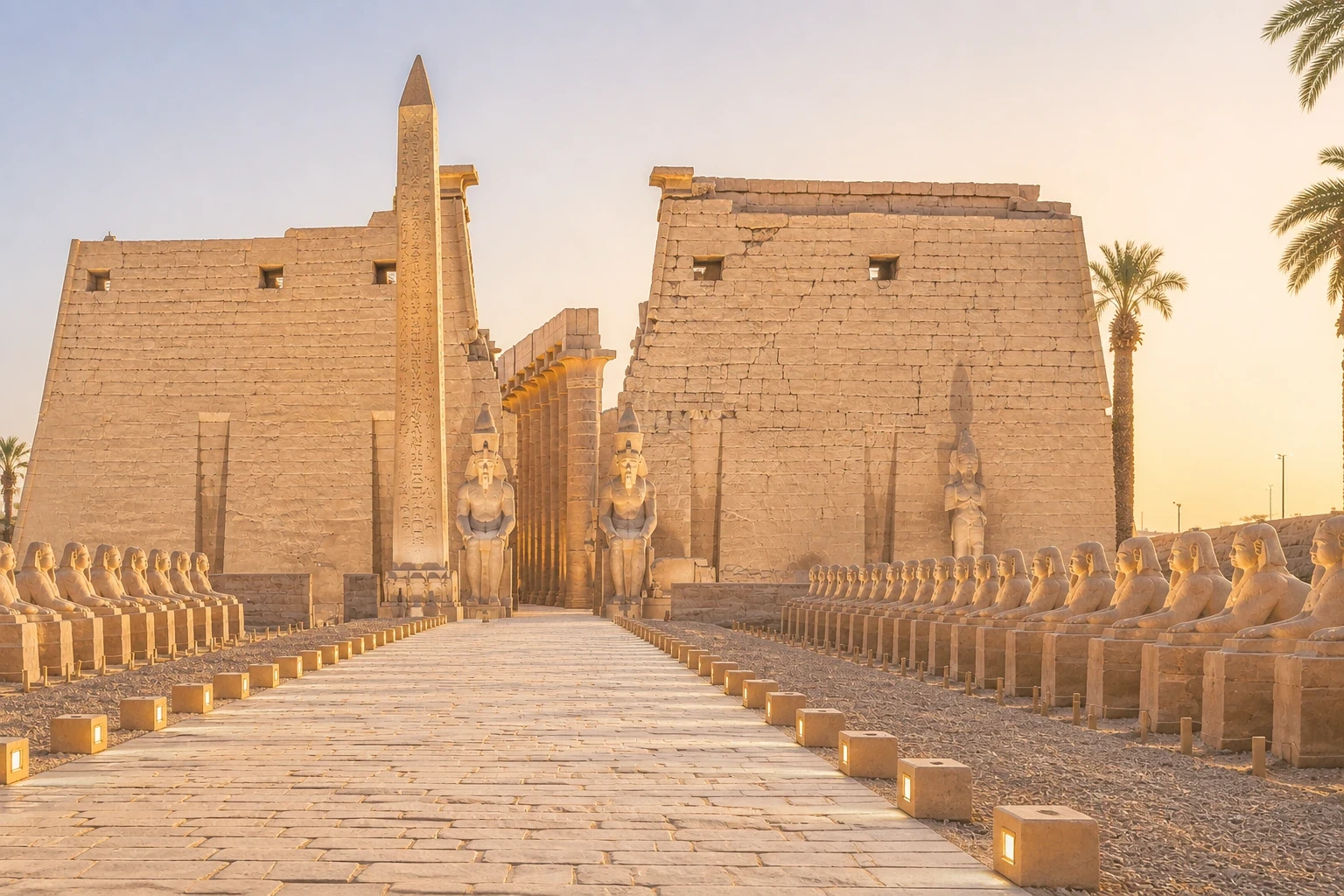
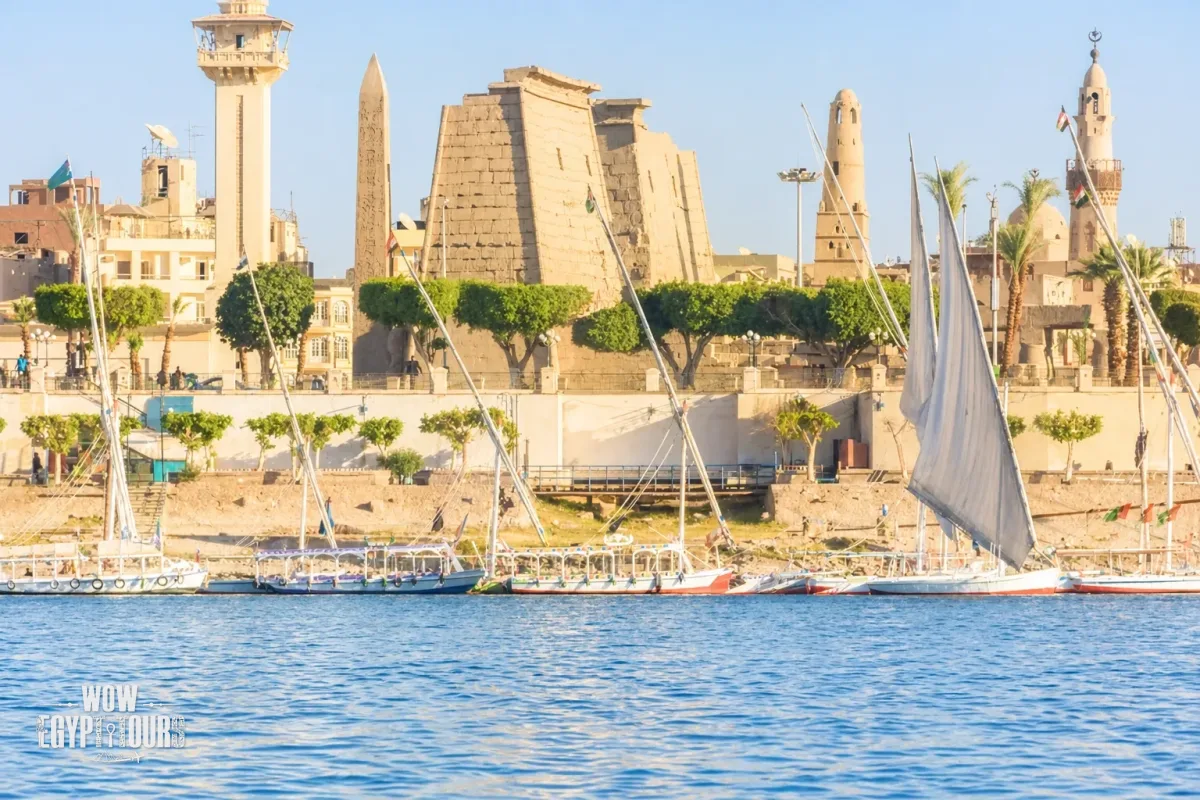
Luxor Temple stands at the heart of the modern city of Luxor, directly on the Nile Corniche, and is one of the most beautifully situated and best-preserved ancient temples in Egypt. Built primarily by Amenhotep III and extended by Ramesses II, the temple was the focus of the great Opet Festival, the most important annual religious celebration in the Theban calendar, during which the sacred barque of Amun was carried in procession from Karnak Temple to Luxor Temple and back over the course of several weeks. The temple contains the magnificent colonnade of Amenhotep III, the great entrance pylon and courtyard of Ramesses II with its standing obelisk (the twin of the obelisk now standing in the Place de la Concorde in Paris), the hypostyle hall, the birth room, and the inner sanctuary.
Karnak Temple
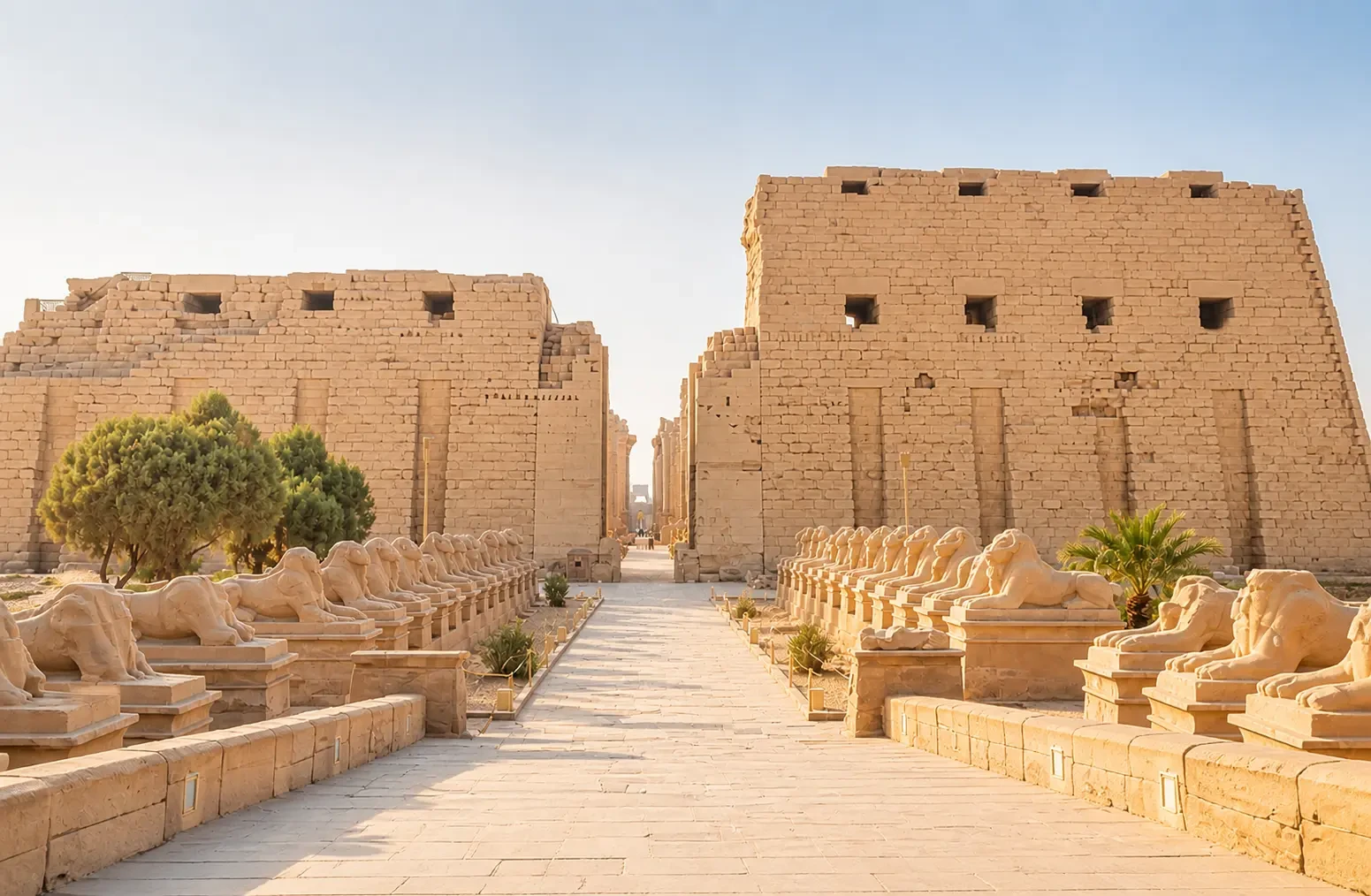
Karnak Temple is the largest ancient religious complex in the world and the most visited ancient monument in Egypt after the Pyramids of Giza. The temple precinct covers more than 200 acres and encompasses approximately 2,000 years of continuous construction, with contributions from virtually every significant pharaoh from the Middle Kingdom to the Ptolemaic Period. Its highlights include the Great Hypostyle Hall with its 134 colossal columns, the Sacred Lake, the Avenue of Ram-headed Sphinxes, the obelisks of Hatshepsut and Thutmose I, the Festival Hall of Thutmose III, and the Open Air Museum.
The Valley Of The Kings
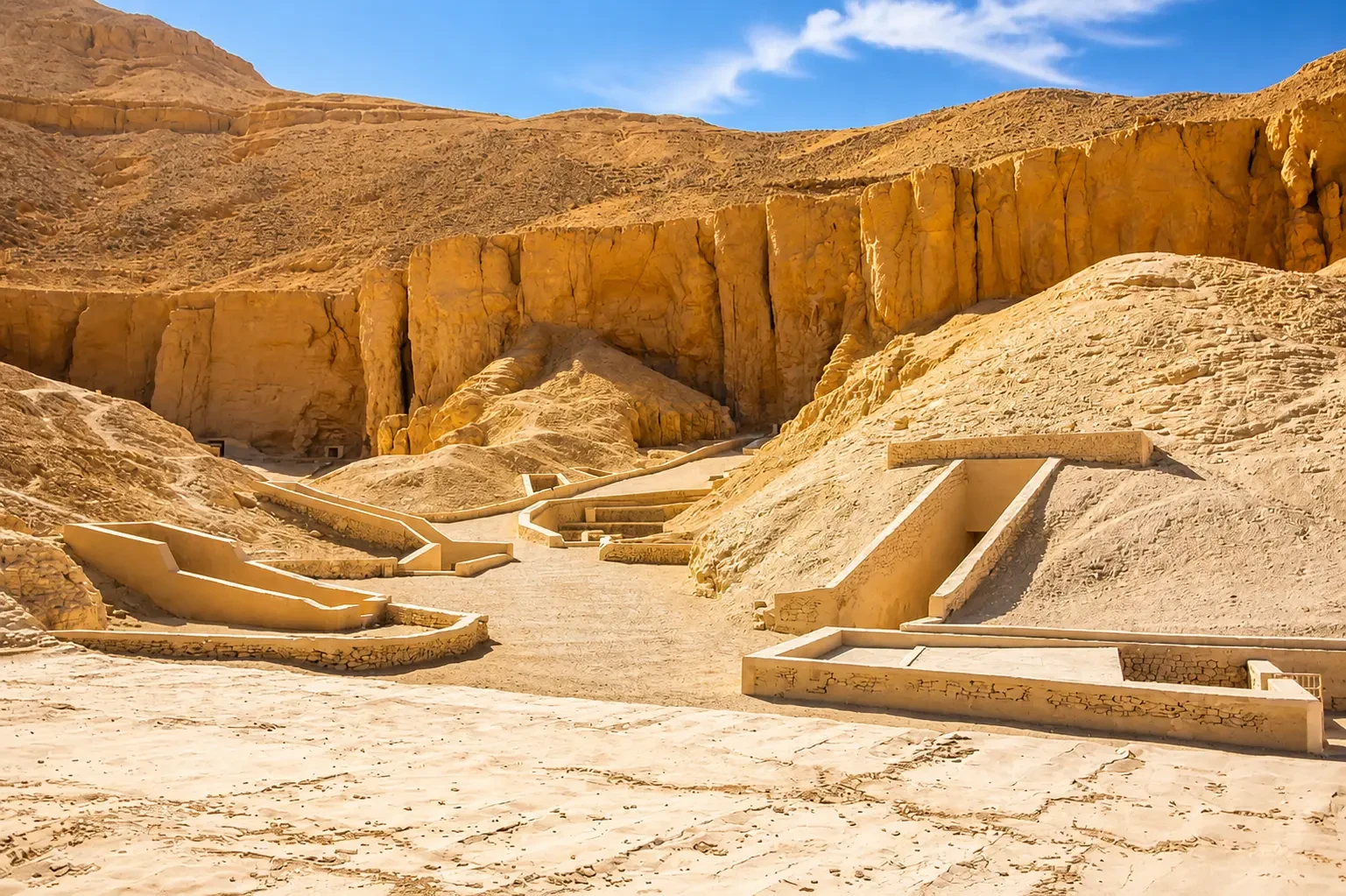
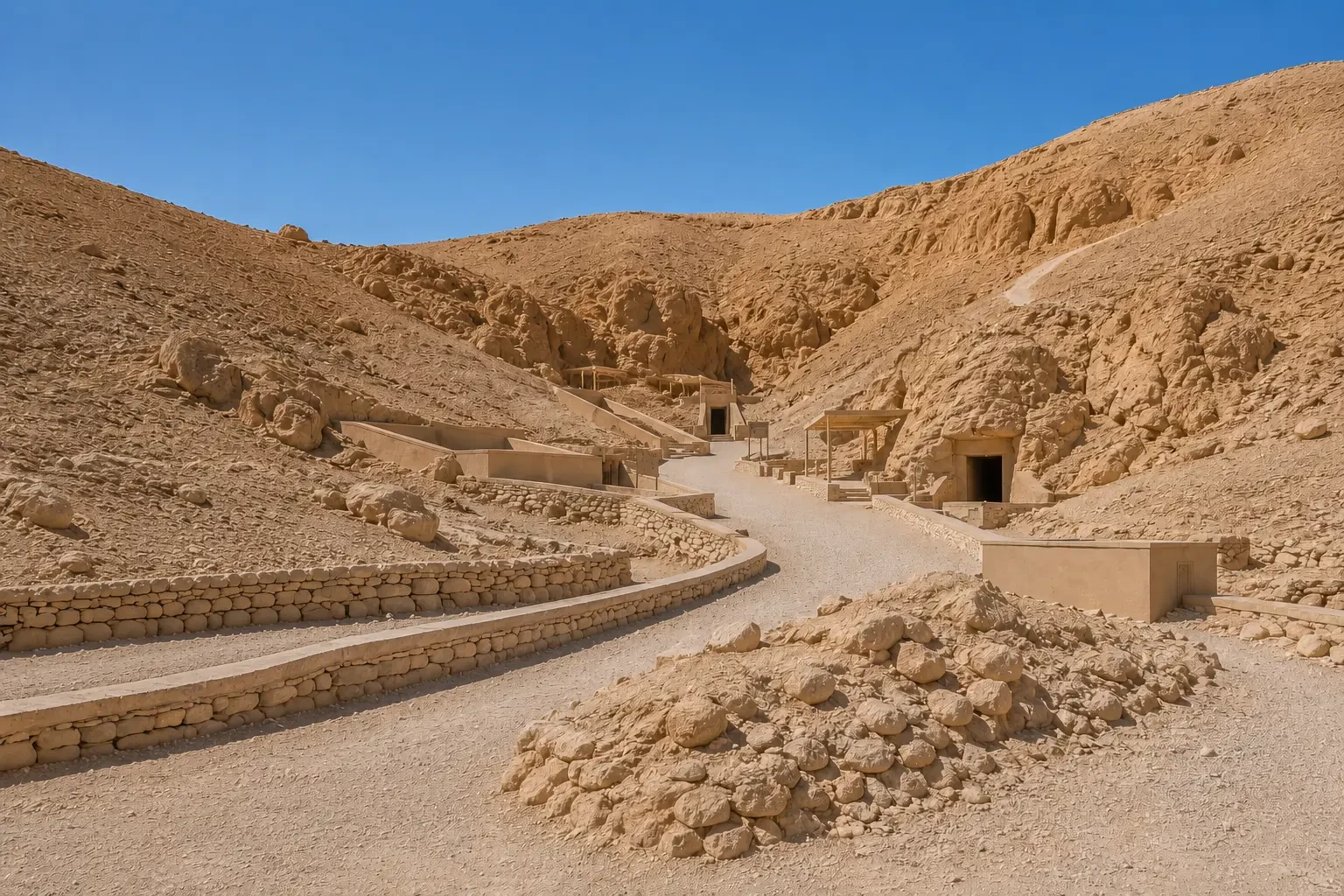
The Valley of the Kings is the royal necropolis of the New Kingdom, containing 63 known tombs of the pharaohs and some of their royal family members, decorated with extraordinary painted reliefs from the great funerary books of the underworld. The valley is dominated by the pyramid-shaped natural peak of the Qurn and is the most celebrated archaeological site in Egypt after Giza, home of the intact tomb of Tutankhamun discovered by Howard Carter in 1922.
The Valley Of The Queens
The Valley of the Queens contains more than 90 tombs of the queens, princes, and princesses of the New Kingdom, including the breathtakingly beautiful tomb of Queen Nefertari (QV66), universally regarded as the most magnificently painted ancient Egyptian tomb ever discovered and sometimes called the Sistine Chapel of ancient Egypt.
The Temple Of Queen Hatshepsut
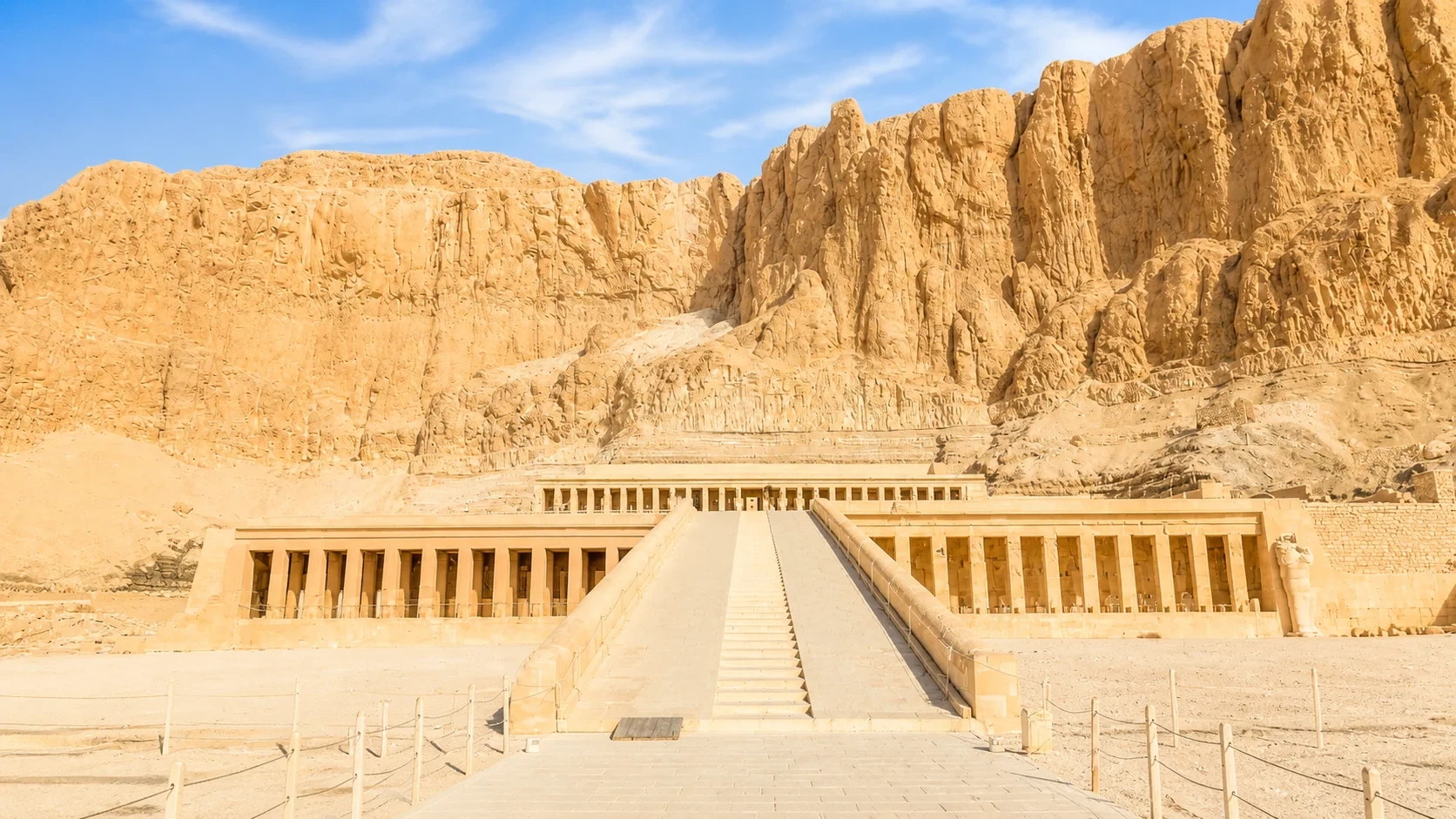
The Temple of Hatshepsut at Deir el-Bahari is universally regarded as the masterpiece of New Kingdom mortuary temple architecture, a three-tiered colonnaded temple built into a great natural amphitheater of limestone cliffs and containing the celebrated Punt Colonnade reliefs documenting Hatshepsut's famous trading expedition to the land of Punt.
Medinet Habu Temple
Medinet Habu Temple is the mortuary temple of Ramesses III and the largest and most completely preserved mortuary temple complex on the Theban West Bank, celebrated for its extraordinary battle reliefs documenting the wars of Ramesses III against the Sea Peoples and Libyans, its dramatic Migdol Gateway, and its well-preserved festival reliefs in the second courtyard.
The Ramesseum
The Ramesseum is the mortuary temple of Ramesses II, celebrated for its fallen colossal statue that inspired Shelley's poem Ozymandias, its extensive Battle of Kadesh reliefs and the Poem of Pentaur, its remarkable astronomical ceiling, and the extraordinary preserved mud-brick vaulted storerooms that once housed the temple's administrative and economic operations.
The Colossi Of Memnon
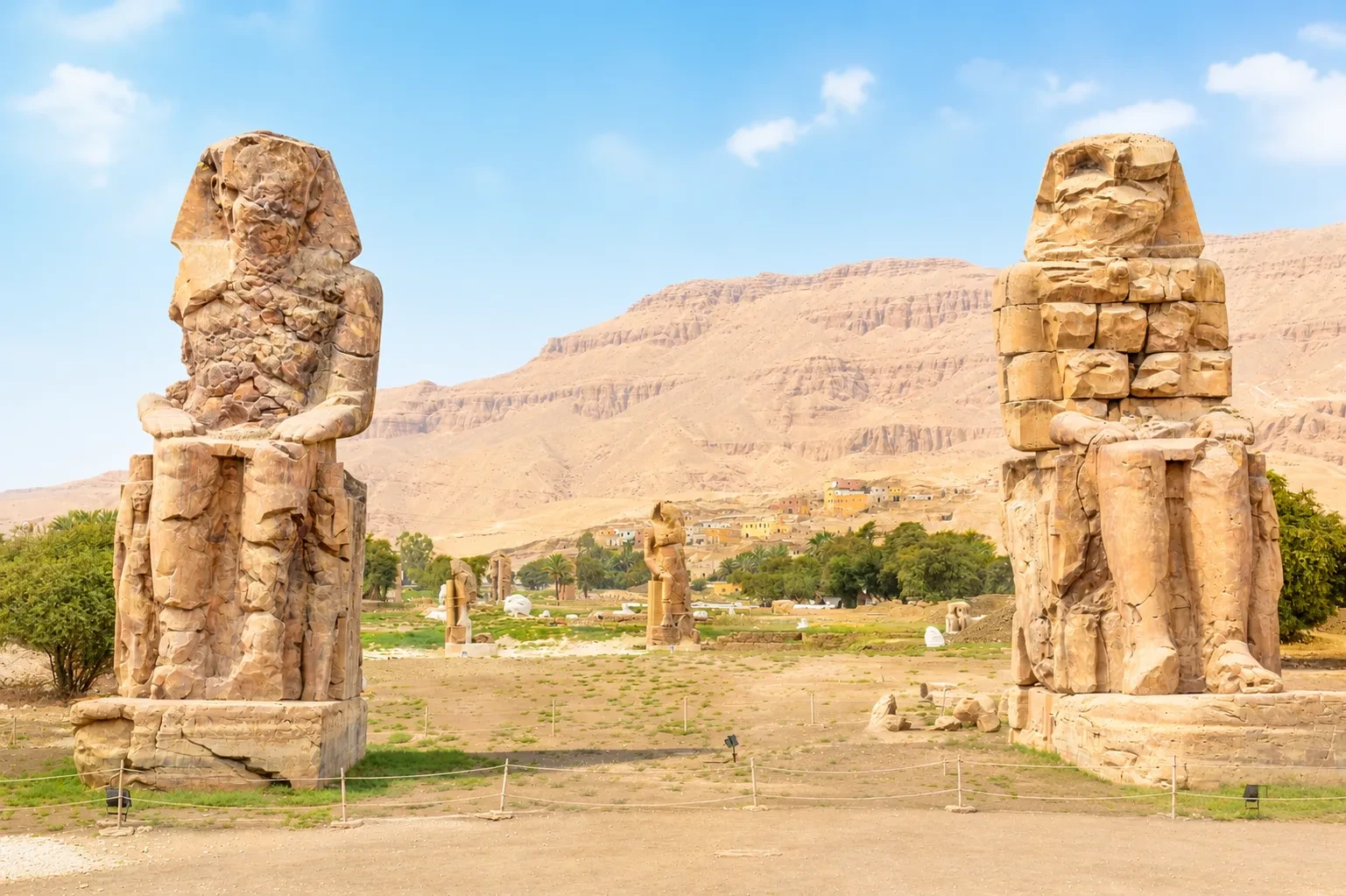
The Colossi of Memnon are two enormous seated statues of Amenhotep III standing approximately 18 meters high at the threshold of the West Bank plain, the only surviving above-ground remnants of what was once the largest temple complex in ancient Egypt, and the site of one of the most celebrated acoustic phenomena of the ancient world, the singing of the northern colossus that attracted tourists from across the Roman Empire for three centuries.
The Valley Of The Nobles
The Valley of the Nobles, also known as the Tombs of the Nobles, contains more than 400 decorated private tomb chapels of the high officials and courtiers of the New Kingdom, painted with vivid scenes of everyday life including banquets, agricultural activities, hunting, craftsmanship, and diplomatic occasions that provide the most complete surviving visual record of ancient Egyptian elite daily life.
Deir el-Medina
Deir el-Medina, the Valley of the Artisans or Workers' Village, is the preserved ancient village and necropolis of the royal tomb builders who created all the great monuments of the Theban West Bank, and is the best-documented ancient community in the world, preserving through tens of thousands of written documents an extraordinarily intimate picture of ancient Egyptian working-class life.
The Tomb Of Ramesses IV (KV2)
The Tomb of Ramesses IV (KV2) is one of the most visited and best-preserved tombs in the Valley of the Kings, with bold clear painted reliefs from the Book of the Dead and the Book of Caverns, and contains hundreds of ancient Greek, Latin, and Coptic visitor graffiti that document more than two thousand years of continuous tourism at the ancient city of Luxor.
The Luxor Museum
The Luxor Museum houses one of the finest collections of ancient Egyptian art outside Cairo, including masterpieces of New Kingdom royal sculpture, the cache of Karnak statues, a complete wall from the Aten Temple of Akhenaten, and a remarkable collection of objects spanning the entirety of ancient Egyptian history.
The Mummification Museum
The Mummification Museum in Luxor is the only museum in the world dedicated exclusively to the ancient Egyptian science and ritual of mummification, housing the tools, materials, and mummified specimens that illuminate one of the most sophisticated and culturally significant practices of the ancient world.
Why Is Luxor The Ancient City Important?
Luxor, the ancient city, is important in ways that are difficult to overstate. It is the single greatest concentration of ancient monuments in the world, containing within its boundaries a larger number of significant ancient sites than any other city on earth. It is the primary source for our knowledge of ancient Egyptian royal funerary religion, private funerary art, mortuary temple architecture, royal and elite daily life, and the administrative and economic organization of the ancient Egyptian state. It is the site where more discoveries have been made in the history of Egyptology than anywhere else in the world, including the discovery of the intact tomb of Tutankhamun in 1922, the Deir el-Bahari royal cache in 1881, and dozens of other transformative finds that have shaped our understanding of ancient Egypt. And it is the city whose monuments, preserved in stone and paint through more than three thousand years of human history, continue to attract millions of visitors from every country in the world, making Luxor The Ancient City one of the most significant cultural heritage destinations on earth.
WOW Egypt Tours is proud to offer the most comprehensive and expertly guided access to the ancient city of Luxor available to international travelers, with private licensed Egyptologist guides, private air-conditioned transportation, and meticulously planned itineraries covering every significant monument on both banks of the Nile in the ancient city of Luxor.
What Are Some Interesting Facts About Luxor The Ancient City?
One Third Of All The Ancient Monuments In The World
The ancient city of Luxor contains approximately one third of all the surviving ancient monuments in the entire world. This staggering statistic reflects both the extraordinary building ambition of the New Kingdom pharaohs, who over five centuries accumulated a density of temples, tombs, and sculptures unmatched in any other ancient civilization, and the remarkable preserving power of the desert climate of Upper Egypt, which has protected painted surfaces, carved reliefs, and organic materials from decay for thousands of years. Walking through Luxor The Ancient City is not walking through a historical theme park or a reconstruction; it is walking through the actual surviving physical fabric of one of the greatest civilizations in human history, preserved in its original context on the banks of the same river where it was created more than three thousand years ago.
The Beautiful Feast Of The Valley
One of the most extraordinary and revelatory aspects of the ancient city of Luxor is the religious geography that connected its East Bank temples with its West Bank necropolis through the great annual festival known as the Beautiful Feast of the Valley. During this festival, which took place at the time of the annual Nile inundation, the sacred barque of Amun was carried in elaborate procession from Karnak Temple on the East Bank, across the Nile, and up through the agricultural plain and into the desert hills to the mortuary temples of the West Bank. The entire population of Thebes participated in the festival, with families spending the night in the tomb chapels of their ancestors on the West Bank, eating and drinking and celebrating in the presence of the dead in a joyful communion that dissolved the boundary between the worlds of the living and the departed. The festival procession route connected virtually every major monument in the ancient city of Luxor into a single integrated sacred landscape, and understanding this connection transforms the experience of visiting the separate monuments of Luxor into something far richer and more coherent.
Ancient Thebes In World Literature
The ancient city of Luxor is one of the most celebrated cities in the history of world literature. Homer mentioned the hundred-gated Thebes and its legendary wealth in the Iliad, describing it as a city so rich that it could furnish two hundred chariots from each of its hundred gates. Herodotus visited Thebes in the 5th century BCE and marveled at its monuments. Strabo described the Valley of the Kings and its tombs. The Roman poet Juvenal described the tourist experience of hearing the singing of the Colossi of Memnon. Shelley wrote Ozymandias about the fallen colossus of Ramesses II at the Ramesseum. Agatha Christie wrote Death on the Nile while staying at the Winter Palace Hotel in Luxor. The ancient city of Luxor has inspired writers, poets, artists, and thinkers from Homer to the present day, and a visit to Luxor The Ancient City is therefore also a visit to one of the most continuously celebrated places in the history of human imagination.
What Is So Special About Luxor The Ancient City?
The Greatest Open-Air Museum In The World
What makes the ancient city of Luxor uniquely special among all the great destinations of cultural tourism in the world is the sheer density and quality of what it contains. Unlike other great ancient sites where one or two monuments of exceptional importance are surrounded by relatively empty landscape, every square kilometer of the Luxor area, on both banks of the Nile, contains ancient monuments of world historical significance. A single day in the ancient city of Luxor, covering the Valley of the Kings, the Temple of Hatshepsut, and the Colossi of Memnon on the West Bank and Karnak Temple and Luxor Temple on the East Bank, would exhaust the cultural capacity of most visitors to major museums or heritage sites. Luxor The Ancient City is unique in that it demands not one visit but many, and reveals something new and extraordinary with every return.
Where Ancient Egypt Is Still Alive
Luxor The Ancient City is also uniquely special because ancient Egypt is not merely a subject of historical study in Luxor but a living presence in the daily experience of the city. The temples of Luxor and Karnak stand within walking distance of the modern city center and are illuminated at night as functional landmarks of the modern urban landscape. The West Bank of the Nile is still farmed by local families whose fields directly abut the entrance to the Valley of the Kings. Ancient festivals and religious traditions associated with specific Theban sites have been maintained in adapted form by local communities for centuries. And the Luxor Museum and Mummification Museum bring the artifacts and practices of ancient Thebes directly into contact with the modern visitor in the heart of the living city. In Luxor The Ancient City, the three-thousand-year gap between antiquity and the present feels smaller than anywhere else in the world.
Luxor The Ancient City Through The Ages: From Ancient Egypt To The Present
The history of Luxor The Ancient City after the end of the New Kingdom is a story of gradual transformation from the greatest capital in the ancient world into the most extraordinary archaeological landscape in the modern one. After the political decline of Thebes in the Third Intermediate Period and Late Period, the city retained its religious significance as the home of Amun, and its temples continued to receive dedications and additions from pharaohs based in the northern capitals. During the Ptolemaic Period, Greek rulers made substantial additions to the existing temples and built new ones, including the well-preserved Ptolemaic temple at Deir el-Medina. During the Roman Period, the city was known as Diospolis Magna, the Great City of Zeus (a Greek identification of Amun with Zeus), and continued to attract tourists from across the empire, as documented in the inscriptions left by Roman visitors on the Colossi of Memnon and in the tombs of the Valley of the Kings.
During the early Christian era, the great temples of the ancient city of Luxor were gradually converted into churches and monasteries, with the hypostyle hall of Luxor Temple becoming one of the most important churches in Upper Egypt and the painted imagery of the gods being covered with whitewash. The Arab conquest of Egypt in 641 CE brought a new population and a new religion to the city, which was renamed El-Uqsur and gradually rebuilt on and around the ancient ruins. Through the medieval and Ottoman periods, the ancient monuments were alternately quarried for building materials, inhabited as dwellings, and venerated as sacred or mysterious relics of an incomprehensible past. The modern rediscovery of ancient Luxor began with the Napoleonic expedition of 1798, which produced the first systematic scientific survey of the Theban monuments, and continued through the 19th and 20th centuries with an extraordinary sequence of excavations, discoveries, and conservation projects that have transformed Luxor into the premier archaeological and cultural tourism destination in the world. Today the ancient city of Luxor receives more than a million visitors per year from every country in the world, and is recognized by WOW Egypt Tours as the single most important destination in all of Egypt.
Luxor The Ancient City UNESCO World Heritage Site
The ancient city of Luxor is part of the Ancient Thebes with its Necropolis UNESCO World Heritage Site, inscribed in 1979. This designation recognizes the outstanding universal value of the entire Theban region, encompassing both the East Bank temples of Luxor and Karnak and the complete West Bank necropolis including the Valley of the Kings, the Valley of the Queens, Medinet Habu Temple, the Ramesseum, the Temple of Hatshepsut, the Colossi of Memnon, the Valley of the Nobles, Deir el-Medina, and all the other monuments that together constitute the ancient city of Luxor. UNESCO recognizes Luxor The Ancient City as containing a higher concentration of sites of outstanding universal value than any other location on earth, and the UNESCO designation has supported major international conservation efforts throughout the ancient city including the stabilization of fragile painted tomb surfaces, the documentation of threatened reliefs, and the conservation of ancient organic materials in the tombs and village sites.
Best Time To Visit Luxor The Ancient City
The best time to visit the ancient city of Luxor is during the cooler months from October through April, when daytime temperatures range from approximately 20 to 32 degrees Celsius and outdoor exploration is comfortable throughout the day. The months of December, January, and February are the coolest and most popular with visitors, with mild temperatures and clear skies ideal for both outdoor sites on the West Bank and the great East Bank temples. The summer months from May to September are intensely hot in Luxor The Ancient City, with daytime temperatures regularly exceeding 40 degrees Celsius and occasionally reaching 45 degrees or higher, making outdoor sites such as the Valley of the Kings and the Colossi of Memnon genuinely challenging to visit in comfort. If visiting in summer, plan all outdoor visits for the very early morning hours immediately after opening, and save museum visits and enclosed tomb interiors for the middle of the day. WOW Egypt Tours operates Luxor Tours throughout the year and provides expert guidance on the best timing and sequencing of visits to all the monuments of the ancient city of Luxor regardless of the season.
Luxor The Ancient City Opening Hours
The individual monuments of the ancient city of Luxor each have their own specific opening hours, but as a general rule the outdoor archaeological sites on both the East Bank and West Bank open at 6:00 AM and close at 5:00 PM throughout the year. Luxor Temple is also open for a Sound and Light Show on most evenings. Karnak Temple offers its own Sound and Light Show several evenings per week. The Luxor Museum and Mummification Museum are open daily with morning and afternoon sessions. Individual site hours should be confirmed at the time of booking, as they are subject to change based on conservation requirements and official decisions by the Egyptian Ministry of Tourism and Antiquities. WOW Egypt Tours provides up-to-date information on all site opening hours as part of the tour planning process.
Entrance Fees For The Monuments Of Luxor The Ancient City
Each of the major monuments in the ancient city of Luxor has its own entrance fee. Representative fees for the most frequently visited sites are as follows:
Valley of the Kings standard ticket (3 tombs): EGP 360 adults, EGP 180 students. Additional fees apply for the tombs of Tutankhamun (EGP 300), Seti I (EGP 1,400), and Ramesses V and VI (EGP 100).
Temple of Hatshepsut: EGP 360 adults, EGP 180 students.
Karnak Temple: EGP 450 adults, EGP 225 students.
Luxor Temple: EGP 260 adults, EGP 130 students.
Valley of the Queens standard ticket: EGP 100 adults, EGP 50 students. Tomb of Nefertari: EGP 1,800 additional.
Colossi of Memnon: Free entry, no ticket required.
Medinet Habu Temple: EGP 200 adults, EGP 100 students.
Ramesseum: EGP 180 adults, EGP 90 students.
Valley of the Nobles (per tomb group): EGP 100 adults, EGP 50 students.
Deir el-Medina: EGP 100 adults, EGP 50 students.
Luxor Museum: EGP 300 adults, EGP 150 students.
Mummification Museum: EGP 200 adults, EGP 100 students.
All entrance fees to the monuments visited are included in all Luxor Tours, Egypt Tours Packages, and Safaga Shore Excursions booked through WOW Egypt Tours.
How To Get To Luxor The Ancient City
The ancient city of Luxor is accessible by air, rail, and river from Cairo and from other major Egyptian cities. Luxor International Airport receives daily flights from Cairo and a growing number of direct international flights from European cities. The journey from Cairo to Luxor by air takes approximately one hour. Luxor Railway Station receives multiple daily trains from Cairo, with the journey taking approximately nine to ten hours by overnight sleeper train or seven to eight hours by the fastest daytime service. Nile cruise ships travel between Luxor and Aswan over four to eight days depending on the itinerary, providing one of the most atmospheric and comprehensive ways to arrive at and explore the ancient city of Luxor. Travelers joining Safaga Shore Excursions with WOW Egypt Tours are collected directly from Safaga Port on the Red Sea coast, approximately 250 kilometers from Luxor, and transferred by private air-conditioned vehicle to the ancient city for a full day of guided sightseeing before returning to the ship. All transfers, internal transportation, and logistics throughout the ancient city of Luxor are handled by WOW Egypt Tours on all Luxor Tours, Egypt Tours Packages, Egypt Travel Packages, and Safaga Shore Excursions.
How Long To Spend In Luxor The Ancient City
The ancient city of Luxor rewards extended visits more than almost any other destination in the world, and the minimum recommended stay for a meaningful experience of the principal monuments is three to four days. A one-day visit to Luxor The Ancient City, as is typical for Safaga Shore Excursions, can cover the Valley of the Kings, the Temple of Hatshepsut, the Colossi of Memnon, and Karnak Temple, which represents a genuinely extraordinary introduction to the site. Two days allows the addition of Luxor Temple, the Luxor Museum, the Mummification Museum, and the Valley of the Queens. Three to four days opens up the full range of the West Bank including Medinet Habu Temple, the Ramesseum, the Valley of the Nobles, and Deir el-Medina, and allows for a more relaxed and contemplative pace that the ancient city of Luxor truly deserves. WOW Egypt Tours designs customized Luxor itineraries of any duration, from a single day to a week or more, ensuring that every visitor gets the most rewarding possible experience of the ancient city of Luxor within the time available to them.
Tips For Visiting Luxor The Ancient City
Plan your itinerary carefully in advance, dividing sites between East Bank and West Bank days to minimize unnecessary Nile crossings and maximize the time available at each monument. Book the Valley of the Kings and Karnak Temple for early morning visits when crowds are smallest and temperatures most manageable. A licensed Egyptologist guide from WOW Egypt Tours is essential for getting the most from Luxor The Ancient City: the density and complexity of the monuments, their interconnections, and the historical and religious context that makes them meaningful all require expert interpretation that no guidebook or audio guide can adequately provide. Carry water at all times during outdoor visits, particularly in summer. Wear lightweight breathable clothing and a wide-brimmed hat for all outdoor sites. Do not touch painted walls or carved relief surfaces anywhere in the ancient city, as the oils from human hands cause irreversible damage to the ancient pigments and stone. Plan at least one evening at Luxor Temple to see it lit at night, which is one of the most romantic and visually spectacular experiences available in the ancient city of Luxor. If possible, spend at least one sunrise on the West Bank to experience the extraordinary light on the Theban cliffs in the early morning.
What To Wear In Luxor The Ancient City
The ancient city of Luxor combines outdoor archaeological sites, enclosed tomb interiors, air-conditioned museums, and the spaces of the modern city, requiring practical and adaptable clothing for any visit. Lightweight, breathable clothing covering the shoulders and knees is recommended for all temple and tomb visits as a mark of respect for the sacred ancient spaces and as a practical response to the Egyptian sun. A wide-brimmed hat and generous sunscreen are essential for all outdoor visits regardless of season. Comfortable, closed-toe walking shoes with good grip are necessary for the uneven ancient stone surfaces that characterize all the major outdoor sites. For enclosed tomb interiors, particularly in summer, a light additional layer is useful as the temperature inside rock-cut tombs can be significantly lower than outside. In winter (December to February), a warm layer for evenings is recommended as temperatures in Luxor can drop noticeably after sunset even when daytime temperatures are warm.
Photography In Luxor The Ancient City
Luxor The Ancient City is one of the most photographically spectacular destinations in the world, offering an extraordinary range of subjects from the immense pylons and colonnades of Karnak Temple to the intimate painted chambers of the Valley of the Kings, from the dramatic cliff-backed facade of the Temple of Hatshepsut to the atmospheric vaulted storerooms of the Ramesseum. Photography rules vary by site and sometimes by individual monument within a site. Flash photography is strictly prohibited in all decorated tombs and chapels throughout the ancient city, as the intense light causes irreversible bleaching of the ancient organic pigments. Photography is generally permitted at most sites with a standard camera or smartphone. Some specific tombs and spaces have additional restrictions that are indicated by signage and should be observed. For the finest photography of the outdoor monuments, early morning and late afternoon provide the most dramatic light, while the Nile itself provides a spectacular reflective foreground for East Bank temple photography from a boat or the opposite bank. Professional photography or filming with specialized equipment requires permits from Egypt's Ministry of Tourism and Antiquities.
Luxor The Ancient City Tours
Luxor West Bank Tours: Valley Of The Kings, Hatshepsut Temple, Colossi Of Memnon And More
This full-day tour covers the major sites on the West Bank of Luxor, the ancient burial ground of the pharaohs and their families. It is the essential introduction to the Theban necropolis and is suitable for all travelers visiting the ancient city of Luxor with a full day available for the West Bank.
What Is Covered
The Valley of the Kings with entry to three royal tombs including options for the tombs of Tutankhamun, Ramesses II, Seti I, Ramesses III, and others. The Temple of Hatshepsut at Deir el-Bahari. The Colossi of Memnon. Optional extensions include the Valley of the Queens, Medinet Habu Temple, Ramesseum, Valley of the Nobles, and Deir el-Medina.
Duration
Full day, approximately 6 to 7 hours for the standard programme.
Includes
Private air-conditioned transportation, Nile crossing, private licensed Egyptologist guide, and entrance fees to all main sites. Available for morning departures.
Luxor East Bank Tours: Karnak Temple, Luxor Temple, Luxor Museum And Mummification Museum
This full-day tour covers the four main sites on the East Bank of the ancient city of Luxor, combining the great open-air temple complexes with Luxor's two main museums.
What Is Covered
Karnak Temple with a full guided visit of the main precinct including the Great Hypostyle Hall, the Sacred Lake, the obelisks of Hatshepsut and Thutmose I, and the Open Air Museum. The Avenue of Sphinxes connecting Karnak Temple to Luxor Temple. Luxor Temple including the entrance pylon, the courtyard of Ramesses II, the great colonnade of Amenhotep III, the inner halls, and the Holy of Holies. The Luxor Museum with a full guided visit of all galleries. The Mummification Museum covering the tools, methods, and materials used in ancient Egyptian embalming.
Duration
Full day, approximately 6 to 7 hours.
Includes
Private air-conditioned transportation, private licensed Egyptologist guide, and entrance fees to all four sites. Available for morning departures.
Luxor Day Tours: Combined East Bank And West Bank
This full-day combined tour covers the most important sites on both banks of the Nile in the ancient city of Luxor in a single day. It is suitable for travelers with one day in Luxor who want to cover both the East Bank temples and the West Bank tombs and mortuary temples.
What Is Covered
West Bank: Valley of the Kings with three tomb entries, Temple of Hatshepsut at Deir el-Bahari, and the Colossi of Memnon. East Bank: Karnak Temple including the Great Hypostyle Hall and Sacred Lake, the Avenue of Sphinxes, and Luxor Temple.
Duration
Full day, approximately 8 to 9 hours.
Includes
Private air-conditioned transportation, Nile crossing, private licensed Egyptologist guide, and entrance fees to all sites. Available for morning departures.
Safaga Shore Excursions To Luxor The Ancient City
Safaga Port is located on the Red Sea coast, approximately 250 kilometers (155 miles) from the ancient city of Luxor. WOW Egypt Tours operates Safaga Shore Excursions that transfer cruise ship passengers from Safaga Port to Luxor and back within a single port day. The transfer is approximately 2.5 to 3 hours each way by private air-conditioned vehicle.
What Is Covered
The Valley of the Kings with entry to three royal tombs. The Temple of Hatshepsut at Deir el-Bahari. The Colossi of Memnon. Karnak Temple including the Great Hypostyle Hall and the Sacred Lake. Optional addition: Luxor Temple and the Luxor Museum subject to available time.
Duration
Full day from port departure to port return, approximately 12 to 13 hours including transfers.
Includes
Private air-conditioned vehicle from Safaga Port, private licensed Egyptologist guide, entrance fees to all included sites, and return transfer to the ship. All Safaga Shore Excursions are coordinated around each ship's port schedule to guarantee return to the vessel before departure.
Dahabiya Nile River Cruise
A Dahabiya Nile River Cruise is a small-vessel sailing experience on the Nile between Luxor and Aswan aboard a traditional wooden dahabiya. WOW Egypt Tours operates dahabiya cruises with private cabins, all meals, a private licensed Egyptologist guide on board, and guided shore excursions at every stop. Luxor The Ancient City serves as the embarkation or disembarkation point for all Dahabiya itineraries.
4 Days 3 Nights Dahabiya Nile River Cruise From Aswan To Luxor
Route: Aswan to Luxor, sailing north.
Itinerary
Day 1: Embarkation in Aswan. Visit to Philae Temple and the Unfinished Obelisk. Sail north to Kom Ombo. Guided visit to Kom Ombo Temple. Continue to Gebel el Silsila. Overnight on board.
Day 2: Guided visit to Gebel el Silsila. Sail to the Village of Basaw. Guided visit to Village of Basaw. Continue to Edfu. Guided visit to the Temple of Horus at Edfu. Overnight on board.
Day 3: Sail to El Kab. Guided visit to El Kab Tombs. Sail to El Hagaz Island. Swimming stop. Overnight on board.
Day 4: Sail to Esna. Visit Khnum Temple at Esna. Disembarkation in Esna. Transfer to Luxor, approximately 55 kilometers (35 miles).
Includes
Private cabin, all meals on board, private licensed Egyptologist guide, entrance fees to all temple visits, and private transfers.
5 Days 4 Nights Dahabiya Nile River Cruise From Luxor To Aswan
Route: Luxor to Aswan, sailing south.
Itinerary
Day 1: Embarkation in Luxor. Transfer to Esna, approximately 55 kilometers (35 miles). Visit Khnum Temple at Esna. Sail to El Hagaz Island. Overnight on board.
Day 2: Sail to El Kab. Guided visit to El Kab Tombs. Continue to Edfu. Guided visit to the Temple of Horus at Edfu. Sail to the Village of Basaw. Guided visit to Village of Basaw. Overnight on board.
Day 3: Sail to Gebel el Silsila. Guided visit to Gebel el Silsila. Sail south to Kom Ombo. Guided visit to Kom Ombo Temple. Sail to Daraw Village. Overnight on board.
Day 4: Guided visit to Daraw Village. Sail to Herbiab Island. Swimming stop. Philae Sound and Light Show. Overnight on board.
Day 5: Optional Abu Simbel visit available by air or road. Guided visits to Philae Temple, the High Dam, and the Unfinished Obelisk. Disembarkation in Aswan.
Includes
Private cabin, all meals on board, private licensed Egyptologist guide, entrance fees to all temple visits, and private transfers.
8 Days 7 Nights Dahabiya Nile River Cruise Round Trip From Luxor (Via Aswan)
Route: Luxor and Aswan, sailing north and south.
Itinerary
Day 1: Embarkation in Luxor. Transfer to Esna, approximately 55 kilometers (35 miles). Visit Khnum Temple at Esna. Sail to El Hagaz Island. Overnight on board.
Day 2: Sail to El Kab. Continue to Edfu. Guided visit to the Temple of Horus at Edfu. Sail to the Village of Basaw. Guided visit to Village of Basaw. Overnight on board.
Day 3: Sail to Gebel el Silsila. Sail south to Kom Ombo. Guided visit to Kom Ombo Temple. Sail to Daraw Village. Overnight on board.
Day 4: Guided visit to Daraw Village. Sail to Herbiab Island. Swimming stop. Philae Sound and Light Show. Overnight on board.
Day 5: Optional Abu Simbel visit available by air or road. Guided visits to Philae Temple, the High Dam, and the Unfinished Obelisk. Sail north to Kom Ombo. Continue to Gebel el Silsila. Overnight on board.
Day 6: Guided visit to Gebel el Silsila. Sail to the Village of Basaw. Continue to Edfu. Overnight on board.
Day 7: Sail to El Kab. Guided visit to El Kab Tombs. Sail to El Hagaz Island. Swimming stop. Overnight on board.
Day 8: Disembarkation in Esna. Transfer to Luxor, approximately 55 kilometers (35 miles).
Includes
Private cabin, all meals on board, private licensed Egyptologist guide, entrance fees to all temple visits, and private transfers.
8 Days 7 Nights Dahabiya Nile River Cruise Round Trip From Aswan (Via Luxor)
Route: Luxor and Aswan, sailing north and south.
Itinerary
Day 1: Embarkation in Aswan. Visit to Philae Temple and the Unfinished Obelisk. Sail north to Kom Ombo. Continue to Gebel el Silsila. Overnight on board.
Day 2: Guided visit to Gebel el Silsila. Sail to the Village of Basaw. Continue to Edfu. Overnight on board.
Day 3: Sail to El Kab. Guided visit to El Kab Tombs. Sail to El Hagaz Island. Swimming stop. Overnight on board.
Day 4: Sail to Esna. Visit Khnum Temple at Esna. Sail to El Hagaz Island. Overnight on board.
Day 5: Sail to El Kab. Continue to Edfu. Guided visit to the Temple of Horus at Edfu. Sail to the Village of Basaw. Guided visit to Village of Basaw. Overnight on board.
Day 6: Sail to Gebel el Silsila. Sail south to Kom Ombo. Guided visit to Kom Ombo Temple. Sail to Daraw Village. Overnight on board.
Day 7: Guided visit to Daraw Village. Sail to Herbiab Island. Swimming stop. Philae Sound and Light Show. Overnight on board.
Day 8: Disembarkation in Aswan.
Includes
Private cabin, all meals on board, private licensed Egyptologist guide, entrance fees to all temple visits, and private transfers.
Luxor And Aswan Nile River Cruise
The Luxor and Aswan Nile River Cruise is a standard Nile cruise product operated aboard a full-size cruise ship between Luxor and Aswan. WOW Egypt Tours operates this cruise in both directions with private licensed Egyptologist guides, all meals included, private cabins, and guided shore excursions at every port of call. The ancient city of Luxor is the primary destination on all Luxor and Aswan Nile River Cruise itineraries in both directions.
4 Days 3 Nights Luxor And Aswan Nile River Cruise From Aswan To Luxor
Route: Aswan to Luxor, sailing north.
Itinerary
Day 1: Embarkation in Aswan. Guided visits to Philae Temple, the High Dam, and the Unfinished Obelisk. Overnight on board in Aswan.
Day 2: Sail north to Kom Ombo. Guided visit to Kom Ombo Temple. Continue to Edfu. Overnight on board.
Day 3: Guided visit to the Temple of Horus at Edfu. Continue north toward Luxor. Guided visit to Luxor Temple and Karnak Temple. Overnight on board in Luxor.
Day 4: Optional Sunrise Hot Air Balloon available. Guided visits to Valley of the Kings, Queen Hatshepsut Temple, and Colossi of Memnon. Disembarkation in Luxor.
Includes
Private cabin, all meals on board, private licensed Egyptologist guide, entrance fees to all temple visits, and private transfers.
5 Days 4 Nights Luxor And Aswan Nile River Cruise From Luxor To Aswan
Route: Luxor to Aswan, sailing south.
Itinerary
Day 1: Embarkation in Luxor. Guided visits to Luxor Temple and Karnak Temple. Overnight on board in Luxor.
Day 2: Optional Sunrise Hot Air Balloon available. Guided visits to Valley of the Kings, Queen Hatshepsut Temple, and Colossi of Memnon. Pass through the Esna locks. Sail south to Edfu. Overnight on board.
Day 3: Guided visit to the Temple of Horus at Edfu. Continue to Kom Ombo. Guided visit to Kom Ombo Temple. Overnight on board.
Day 4: Continue south toward Aswan. Guided visits to Philae Temple, the High Dam, and the Unfinished Obelisk. Overnight on board in Aswan.
Day 5: Optional Abu Simbel visit available by air or road. Disembarkation in Aswan.
Includes
Private cabin, all meals on board, private licensed Egyptologist guide, entrance fees to all temple visits, and private transfers.
8 Days 7 Nights Luxor And Aswan Nile River Cruise Round Trip From Luxor (Via Aswan)
Route: Luxor and Aswan, sailing north and south.
Itinerary
Day 1: Embarkation in Luxor. Guided visits to Luxor Temple and Karnak Temple. Overnight on board in Luxor.
Day 2: Guided visits to Luxor Museum. Pass through the Esna locks. Sail south to Edfu. Overnight on board.
Day 3: Guided visit to the Temple of Horus at Edfu. Continue to Kom Ombo. Overnight on board.
Day 4: Continue south toward Aswan. Guided visits to Philae Temple, the High Dam, and the Unfinished Obelisk. Overnight on board in Aswan.
Day 5: Abu Simbel visit available by road. Sound and Light Show at Philae Temple. Overnight on board in Aswan.
Day 6: Guided visits to Nubian Village. Sail north to Kom Ombo. Guided visit to Kom Ombo Temple. Continue to Edfu. Overnight on board.
Day 7: Guided visits to Valley of the Kings, Queen Hatshepsut Temple, and Colossi of Memnon. Pass through the Esna locks. Sail south to Edfu. Overnight on board.
Day 8: Optional Sunrise Hot Air Balloon available. Disembarkation in Luxor.
Includes
Private cabin, all meals on board, private licensed Egyptologist guide, entrance fees to all temple visits, and private transfers.
8 Days 7 Nights Luxor And Aswan Nile River Cruise Round Trip From Aswan (Via Luxor)
Route: Luxor and Aswan, sailing north and south.
Itinerary
Day 1: Embarkation in Aswan. Guided visits to Philae Temple, the High Dam, and the Unfinished Obelisk. Overnight on board in Aswan.
Day 2: Sail north to Kom Ombo. Guided visit to Nubian Village and Kom Ombo Temple. Continue to Edfu. Overnight on board.
Day 3: Continue north toward Luxor. Guided visit to Luxor Museum and Karnak Sound and Light Show. Overnight on board in Luxor.
Day 4: Guided visits to Luxor Temple and Karnak Temple. Overnight on board in Luxor.
Day 5: Optional Sunrise Hot Air Balloon available. Guided visits to Valley of the Kings, Queen Hatshepsut Temple, and Colossi of Memnon. Pass through the Esna locks. Sail south to Edfu. Overnight on board.
Day 6: Guided visit to the Temple of Horus at Edfu. Continue to Kom Ombo. Overnight on board.
Day 7: Sound and Light Show at Philae Temple. Overnight on board in Aswan.
Day 8: Abu Simbel visit available by road. Disembarkation in Aswan.
Includes
Private cabin, all meals on board, private licensed Egyptologist guide, entrance fees to all temple visits, and private transfers.
Combine Luxor The Ancient City With Your Egypt Tours Package
Luxor The Ancient City is the centerpiece of the full range of WOW Egypt Tours travel products. Browse the options below to find the Egypt experience that is right for you.
Egypt Tour Packages: Multi-day guided Egypt tours organized by duration, including 2 Days Egypt Packages, 3 Days Egypt Packages, 4 Days Egypt Packages, 5 Days Egypt Packages, 6 Days Egypt Packages, 7 Days Egypt Packages, 8 Days Egypt Packages, 10 Days Egypt Packages, and longer itineraries. All packages include private air-conditioned transportation, private licensed Egyptologist guide, accommodations, entrance fees to all included sites, and private transfers throughout Egypt.
Egypt Travel Packages: Themed Egypt travel packages designed around specific travel styles and interests, including Egypt Honeymoon Travel Packages, Egypt Budget Travel Packages, Egypt Family Travel Packages, Egypt Luxury Travel Packages, Egypt Adventure Travel Packages, Egypt Cultural Travel Packages, and Egypt Christmas and New Year Travel Packages. All packages include private air-conditioned transportation, private licensed Egyptologist guide, accommodations, meals, entrance fees to all included sites, and private transfers.
Egypt Nile Cruise Packages: Complete Egypt travel packages combining Cairo sightseeing with a fully guided Nile cruise between Luxor and Aswan, available as Cairo and Nile Cruise Packages, Egypt and Nile Cruise Packages, and Nile Cruise and Red Sea Packages. All packages include private cabin on board, all meals, private licensed Egyptologist guide, entrance fees to all temple visits, and private transfers.
Nile River Cruises: All WOW Egypt Tours Nile cruise options between Luxor and Aswan, available across four ship categories, Standard, Deluxe, Ultra Deluxe, and Luxury, as well as private Dahabiya sailing vessels. All cruises include private cabin on board, all meals, private licensed Egyptologist guide, entrance fees to all temple visits, and private transfers.
Luxor Aswan Nile Cruises: The classic Upper Egypt Nile cruise route between the ancient city of Luxor and Aswan, available in both directions and in durations of 4 Days 3 Nights, 5 Days 4 Nights, and 8 Days 7 Nights round trip. All cruises include private cabin on board, all meals, private licensed Egyptologist guide, entrance fees to all sites, and private transfers.
Standard Nile Cruises: Comfortable standard-category cruise ships sailing between Luxor and Aswan, available in 4 Days 3 Nights, 5 Days 4 Nights, and 8 Days 7 Nights itineraries in both directions. Includes standard cabin on board, all meals, private licensed Egyptologist guide, entrance fees to all temple visits, and private transfers.
Deluxe Nile Cruises: Deluxe-category cruise ships with enhanced cabin comfort and upgraded dining, sailing between Luxor and Aswan in 4 Days 3 Nights, 5 Days 4 Nights, and 8 Days 7 Nights itineraries in both directions. Includes deluxe cabin on board, all meals, private licensed Egyptologist guide, entrance fees to all temple visits, and private transfers.
Ultra Deluxe Nile Cruises: Ultra deluxe-category cruise ships offering superior cabins, premium dining, and an elevated onboard experience, sailing between Luxor and Aswan in 4 Days 3 Nights, 5 Days 4 Nights, and 8 Days 7 Nights itineraries in both directions. Includes ultra deluxe cabin on board, all meals, private licensed Egyptologist guide, entrance fees to all temple visits, and private transfers.
Luxury Nile Cruises: Luxury-category cruise ships with the finest cabins, exceptional cuisine, and premium onboard facilities, sailing between Luxor and Aswan in 4 Days 3 Nights, 5 Days 4 Nights, and 8 Days 7 Nights itineraries in both directions. Includes luxury cabin on board, all meals, private licensed Egyptologist guide, entrance fees to all temple visits, and private transfers.
Dahabiya Nile Cruises: Private small-vessel sailing experience aboard a traditional wooden dahabiya between Luxor and Aswan, available in four itineraries: 4 Days 3 Nights Dahabiya From Aswan To Luxor, 5 Days 4 Nights Dahabiya From Luxor To Aswan, 8 Days 7 Nights Dahabiya Round Trip From Luxor via Aswan, and 8 Days 7 Nights Dahabiya Round Trip From Aswan via Luxor. Includes private cabin on board, all meals, private licensed Egyptologist guide, entrance fees to all temple visits, and private transfers.
Luxor Tours: Day tours and multi-day tours of the ancient city of Luxor covering all major sites on both banks of the Nile, including Luxor West Bank Tours covering the Valley of the Kings, Temple of Hatshepsut, Colossi of Memnon, Valley of the Queens, Medinet Habu Temple, Ramesseum, Valley of the Nobles, and Deir el-Medina; Luxor East Bank Tours covering Karnak Temple, Luxor Temple, Luxor Museum, and Mummification Museum; and combined Luxor Day Tours covering both banks in a single day. All tours include private air-conditioned transportation, private licensed Egyptologist guide, entrance fees to all included sites, and private transfers.
Shore Excursions: Guided day excursions from Egypt's Red Sea ports to the ancient city of Luxor and its extraordinary monuments, available for cruise ship passengers with a port call at Safaga, Hurghada, Port Said, Alexandria, and Sokhna. Includes private air-conditioned transportation from the port, private licensed Egyptologist guide, entrance fees to all included sites, and return transfer to the ship, with all timings coordinated around each vessel's port schedule.
Safaga Port Excursions: Shore excursions departing from Safaga Port on the Red Sea coast, approximately 250 kilometers (155 miles) from the ancient city of Luxor, covering the Valley of the Kings, Temple of Hatshepsut, Colossi of Memnon, Karnak Temple, and Luxor Temple as a full-day trip within a single port call. Available options include Safaga to Luxor West Bank Tours, Safaga to Luxor East Bank Tours, and combined Safaga to Luxor Day Tours. Includes private air-conditioned vehicle from Safaga Port, private licensed Egyptologist guide, entrance fees to all included sites, and return transfer to the ship.
All Attractions Of Luxor The Ancient City
The ancient city of Luxor contains the following major attractions, all of which are available as guided visits through WOW Egypt Tours. On the East Bank: Luxor Temple, Karnak Temple, the Luxor Museum, and the Mummification Museum. On the West Bank: the Valley of the Kings, the Valley of the Queens, the Temple of Hatshepsut at Deir el-Bahari, Medinet Habu Temple, the Ramesseum, the Colossi of Memnon, the Valley of the Nobles, Deir el-Medina, and the Tomb of Ramesses IV (KV2).
Frequently Asked Questions About Luxor The Ancient City
What is Luxor The Ancient City?
Luxor The Ancient City is the modern city of Luxor in Upper Egypt, built on the site of ancient Thebes, the greatest capital of the ancient world during the New Kingdom period. It contains approximately one third of all the ancient monuments in the world, including the temples of Luxor and Karnak on the East Bank and the complete Theban necropolis on the West Bank, and is the most important destination for cultural tourism in Egypt and one of the most significant in the world. All the monuments of the ancient city of Luxor are accessible through the Luxor Tours, Egypt Tours Packages, Egypt Travel Packages, and Safaga Shore Excursions offered by WOW Egypt Tours.
What was ancient Thebes?
Ancient Thebes was the capital of Egypt during the New Kingdom period from approximately 1550 BCE to 1070 BCE, the most powerful state in the ancient world during this era, and the religious center of Egypt throughout the pharaonic period as the home of the supreme god Amun and his great temple complex at Karnak. The modern city of Luxor is built directly on the site of ancient Thebes, and its ancient monuments are the physical legacy of more than three thousand years of royal patronage and construction.
Why is Luxor called the world's greatest open-air museum?
Luxor The Ancient City is called the world's greatest open-air museum because it contains a higher concentration of significant ancient monuments than any other location on earth, with temples, tombs, statues, and inscriptions from more than three thousand years of ancient Egyptian civilization preserved in their original landscape on both banks of the Nile in and around the modern city of Luxor.
How many monuments are in the ancient city of Luxor?
The ancient city of Luxor contains approximately one third of all the ancient monuments in the world. The Theban West Bank alone includes more than 60 royal tombs, more than 90 queens' tombs, more than 400 private tomb chapels, at least eight major mortuary temples, a preserved ancient village and necropolis, and numerous smaller chapels, shrines, and administrative structures.
What are the most important sites in Luxor The Ancient City?
The most important sites in the ancient city of Luxor include the Valley of the Kings, Karnak Temple, Luxor Temple, the Temple of Hatshepsut at Deir el-Bahari, the Valley of the Queens, Medinet Habu Temple, the Colossi of Memnon, the Valley of the Nobles, Deir el-Medina, the Ramesseum, the Luxor Museum, and the Mummification Museum.
How many days do I need to visit Luxor The Ancient City?
The minimum recommended stay for a meaningful visit to the ancient city of Luxor is three to four days. One day covers the principal highlights of both banks. Two days allows a more comprehensive exploration of both East and West Bank sites. Three to four days opens up the full range of the West Bank including Medinet Habu, the Ramesseum, the Valley of the Nobles, and Deir el-Medina. WOW Egypt Tours designs customized Luxor itineraries of any duration to suit every traveler's schedule.
What is the best time of year to visit Luxor The Ancient City?
October to April is the most comfortable period, with moderate daytime temperatures and clear skies. The summer months from May to September are very hot but are manageable with early morning visits and careful itinerary planning. WOW Egypt Tours operates Luxor Tours throughout the year.
How do I get to Luxor The Ancient City?
The ancient city of Luxor is accessible by air from Cairo (approximately 1 hour), by overnight sleeper train from Cairo (approximately 9 to 10 hours), by Nile cruise ship from Aswan (4 to 8 days depending on itinerary), and by Safaga Shore Excursion from Safaga Port on the Red Sea coast (approximately 2.5 to 3 hours by private vehicle). WOW Egypt Tours handles all transfers and logistics for all arrival modes.
Is a guide necessary in the ancient city of Luxor?
A licensed Egyptologist guide is strongly recommended for any visit to the ancient city of Luxor. The density and complexity of the monuments, their historical and religious interconnections, and the richness of what they contain all require expert interpretation to be fully appreciated. WOW Egypt Tours provides private licensed Egyptologist guides on all Luxor Tours, Egypt Tours Packages, and Safaga Shore Excursions.
What is the Avenue of Sphinxes in Luxor The Ancient City?
The Avenue of Sphinxes is a 2.7-kilometer processional road lined with sphinx statues that connected Karnak Temple to Luxor Temple in ancient Thebes, used during the Opet Festival procession when the sacred barque of Amun was carried between the two temples. The avenue was excavated and restored in recent decades and is now one of the most spectacular walks available in the ancient city of Luxor.
What is the Opet Festival?
The Opet Festival was the most important annual religious celebration in ancient Thebes, during which the sacred barque of Amun was carried in procession from Karnak Temple to Luxor Temple along the Avenue of Sphinxes, accompanied by priests, musicians, and the entire population of the city. The festival lasted for up to 27 days and was the occasion for enormous public celebration, with the pharaoh performing rituals at Luxor Temple that renewed his divine kingship for the coming year.
Can I take a hot air balloon over the ancient city of Luxor?
Yes. Hot air balloon flights over the West Bank of the ancient city of Luxor at sunrise are one of the most spectacular tourism experiences available in Egypt, offering panoramic views of the Valley of the Kings, the Temple of Hatshepsut, Medinet Habu Temple, and the entire Theban landscape from above. WOW Egypt Tours can arrange sunrise balloon flights as an optional addition to all Luxor West Bank Tours and Egypt Tours Packages.
What is the Luxor Sound and Light Show?
Luxor Temple and Karnak Temple both offer evening Sound and Light Shows that illuminate the temple monuments with dramatic colored lighting while narrating the history of ancient Thebes through recorded commentary. The Karnak Sound and Light Show includes a promenade through the illuminated temple precinct past the Avenue of Ram-headed Sphinxes and the Sacred Lake. WOW Egypt Tours can arrange evening Sound and Light Show attendance as part of any multi-day Luxor itinerary.
Is the ancient city of Luxor a UNESCO World Heritage Site?
Yes. The ancient city of Luxor is part of the Ancient Thebes with its Necropolis UNESCO World Heritage Site, inscribed in 1979, which encompasses the complete Theban landscape on both banks of the Nile including all the major temples, tombs, and funerary monuments of the East and West Banks.
What is the Luxor Museum?
The Luxor Museum is a world-class archaeological museum on the Luxor Corniche housing one of the finest collections of ancient Egyptian art outside Cairo, including masterpieces of New Kingdom royal sculpture, the Karnak statue cache, a complete decorated wall from the Aten Temple of Akhenaten, and a Royal Mummies Hall displaying selected royal mummies in a special climate-controlled gallery.
What is the Mummification Museum in Luxor?
The Mummification Museum in Luxor is the only museum in the world dedicated exclusively to the ancient Egyptian science and ritual of mummification, housing the actual tools, resins, canopic jars, amulets, and mummified specimens that illuminate one of the most culturally and technologically sophisticated practices of the ancient world.
Can I visit the ancient city of Luxor as part of a Safaga Shore Excursion?
Yes. WOW Egypt Tours offers dedicated Safaga Shore Excursions to the ancient city of Luxor for cruise ship passengers arriving at Safaga Port on the Red Sea. Our team handles all transportation, guiding, entrance fees, and logistics to ensure a seamless and unforgettable experience of the greatest open-air museum in the world within a single port day.
What Nile cruise options include Luxor The Ancient City?
All WOW Egypt Tours Nile River Cruises, including both Luxor Aswan Nile River Cruises and Dahabiya Nile River Cruises, include the ancient city of Luxor as the primary destination on their itinerary, with guided visits to the principal West Bank and East Bank monuments as core components of the programme.
How do I book a Luxor Tour with WOW Egypt Tours?
You can book any Luxor Tour, Luxor West Bank Tour, Luxor East Bank Tour, Luxor Day Tour, Dahabiya Nile River Cruise, Luxor Aswan Nile River Cruise, Egypt Tours Package, Egypt Travel Package, or Safaga Shore Excursion directly through WOW Egypt Tours. Our team of travel specialists will arrange everything from private transportation and licensed Egyptologist guides to hotel pick-up and entrance fees, ensuring a seamless and unforgettable experience of Luxor The Ancient City and all the wonders of ancient Egypt.