

Karnak Temple is the largest and most awe-inspiring ancient religious complex ever built in the history of human civilization, and a destination that every traveler to Egypt must experience. Located on the east bank of the Nile River in the city of Luxor, ancient Thebes, the Temple of Karnak stands as the most colossal monument to divine power, religious devotion, and architectural mastery that ancient Egypt ever produced. This legendary landmark sits at the heart of some of Egypt's greatest travel experiences, including Luxor Tours, Luxor Day Tours, Luxor East Bank Tours, Luxor West Bank Tours, Karnak Temple Tours, Dahabiya Nile River Cruises, and Luxor Aswan Nile River Cruises, all of which WOW Egypt Tours proudly offers to travelers from around the world. The Temple of Karnak is also a highlight of Egypt Tours Packages, Egypt Travel Packages, and Safaga Shore Excursions, making it one of the most visited and most celebrated ancient sites in all of Egypt.
Built and expanded over a period of more than 2,000 years beginning in the Middle Kingdom period around 2000 BCE, Karnak Temple Egypt was primarily dedicated to the Theban Triad: the great god Amun-Ra, his wife Mut, and their son Khonsu. Unlike any other ancient site in Egypt, the Temple of Karnak is not the work of a single pharaoh but the accumulated devotion of more than 30 rulers across multiple dynasties, each adding pylons, halls, obelisks, and sanctuaries to create the most complex and multi-layered religious monument the ancient world ever produced.
Over the centuries, Karnak Temple served as the official seat of the god Amun-Ra, the state deity of the New Kingdom, the most powerful religious institution in ancient Egypt, and the administrative center of an enormous priestly establishment that at its height rivaled the power of the pharaoh himself.

Who Built Karnak Temple In Egypt?
Karnak Temple was not built by any single pharaoh but was constructed, expanded, and embellished by more than 30 rulers across approximately 2,000 years of ancient Egyptian history. The earliest known structures at the site date to the reign of Senusret I of the 12th Dynasty, around 1971 BCE. The New Kingdom period saw the most intensive phase of construction. Queen Hatshepsut erected two of the tallest obelisks ever created and built her own Festival Hall and Red Chapel within the complex. Her successor Thutmose III demolished many of her monuments, built his own Festival Hall known as the Akh-Menu, and extended the complex extensively. Amenhotep III constructed the third pylon and an enormous colonnade. Seti I of the 19th Dynasty began the Great Hypostyle Hall, and his son Ramesses II completed it, creating the most famous single space within the entire Karnak complex. Ramesses III added his own mortuary temple within the precinct. In the Late Period, Taharqa of the 25th Dynasty built a great colonnade in the first court, and in the Ptolemaic Period, the last pharaohs of ancient Egypt made final additions to the complex before its gradual decline.
What Was Thutmose III Known For?
Thutmose III is widely regarded as one of the greatest military commanders and pharaohs in the entire history of ancient Egypt. He was the son of Thutmose II and a secondary wife named Iset. Following the long co-regency with his stepmother Queen Hatshepsut, Thutmose III emerged as sole ruler and led seventeen military campaigns into the Near East, Syria, and Nubia, extending Egypt's empire to its greatest territorial extent. He was also a prolific builder, contributing more to Karnak Temple than almost any other pharaoh. At Karnak, Thutmose III built the magnificent Festival Hall known as the Akh-Menu, erected a great wall enclosing the sanctuary of Amun, and systematically had the images and names of Hatshepsut removed from the temple walls in the final years of his reign. He ruled Egypt for approximately 54 years and is sometimes called the Napoleon of ancient Egypt for his unmatched military achievements.
Karnak Temple Location In Egypt
Karnak Temple is located on the east bank of the Nile River in the city of Luxor, approximately 3 kilometers north of Luxor Temple, with which it is connected by the famous Avenue of Sphinxes. The Temple of Karnak is situated just east of the Corniche el-Nile road in the Karnak district of the city, and is accessible by road, taxi, calèche, and organized tour from all parts of Luxor. Its location makes it the essential second stop on all Luxor East Bank Tours arranged by WOW Egypt Tours, and it is one of the most prominent highlights in Egypt Tours Packages and Egypt Travel Packages that include Upper Egypt.
Karnak Temple Fun Facts
The name Karnak comes from the Arabic Al-Karnak, meaning fortified village, a reference to the enormous walled enclosures of the ancient temple complex that reminded Arab settlers of a great defended settlement. In ancient Egyptian, the site was called Ipet-Sut, meaning the most select of places, a name that reflects its supreme importance as the earthly home of Amun-Ra, the king of the gods. The Temple of Karnak covers an area of approximately 100 hectares, making it the largest religious building ever constructed in the ancient world and large enough to contain the entire island of Manhattan's Central Park with room to spare.
The Great Hypostyle Hall alone, measuring 54 meters long and 102 meters wide and containing 134 massive columns, is considered one of the greatest single architectural achievements of the ancient world. At its peak, the estate of Amun at Karnak owned 65 villages, 83 ships, and more than 400,000 head of livestock, making the temple not only a religious institution but one of the most powerful economic entities in the ancient Mediterranean world.
Why Is Karnak Temple Called By This Name In Egypt?
The ancient Egyptian name Ipet-Sut, meaning the most select of places, reflects the supreme religious status of the site as the principal sanctuary of Amun-Ra, the greatest god of the New Kingdom. The modern Arabic name Karnak derives from Al-Karnak, the name that Arab settlers gave to the ancient village that grew up amid the ruins of the temple, whose enormous walled enclosures and towering pylons reminded them of a great fortified settlement. This Arabic name eventually came to be applied to the ancient temple complex itself and remains in use today throughout the world.
Karnak Temple History
The earliest known structure at Karnak is the White Chapel of Senusret I, a beautifully carved calcite shrine dating to the 12th Dynasty around 1971 BCE, which was later dismantled by Amenhotep III and its blocks used as fill inside the third pylon, where they were rediscovered by archaeologists in the 20th century and reassembled in the Open Air Museum at Karnak. During the New Kingdom, beginning around 1550 BCE, Karnak Temple became the most important religious site in Egypt as the cult of Amun-Ra rose to supreme prominence. Each succeeding pharaoh sought to outdo their predecessor by adding new pylons, courts, and sanctuaries to the complex.
Hatshepsut erected two soaring obelisks and built her Red Chapel for the sacred barque of Amun. Thutmose III built the magnificent Akh-Menu Festival Hall behind the sanctuary. Amenhotep III replaced an earlier gateway with the magnificent third pylon using blocks from earlier monuments. Seti I began the Great Hypostyle Hall and Ramesses II completed it, filling it with 134 columns and covering every surface with carved reliefs. In the Third Intermediate Period, Karnak remained the most important religious center in Upper Egypt. During the Late Period, successive waves of foreign rulers including the Nubian pharaohs of the 25th Dynasty and the Persian kings all sought legitimacy by making donations and additions to Karnak. The complex continued to grow until the Ptolemaic Period, when the last additions were made before the gradual decline of the ancient Egyptian religion following the rise of Christianity in the Roman Empire.
The Story Of Building Karnak Temple
There were powerful reasons why so many pharaohs devoted their greatest resources to building and expanding Karnak Temple over more than two millennia. The primary reason was theological and political: Amun-Ra was the supreme state god of the New Kingdom, and the pharaoh's legitimacy as divine ruler of Egypt depended on maintaining a special relationship with this god. By building at Karnak, each pharaoh demonstrated his piety to the most powerful deity in Egypt, won the support of the enormously influential Amun priesthood, and reinforced his claim to divine kingship before the Egyptian people.
The second reason was the competitive desire of each pharaoh to surpass his predecessors in glory and devotion. Adding a new pylon, erecting a taller obelisk, or carving a more magnificent hall was a way of inscribing one's name and achievements into the most sacred and permanent monument in Egypt, ensuring immortality in both religious and historical memory. At Karnak, the accumulated ambition of thirty generations of pharaohs produced the most extraordinary single site in the ancient world.
Karnak Temple Architecture
The Avenue Of Sphinxes Connecting Karnak To Luxor Temple
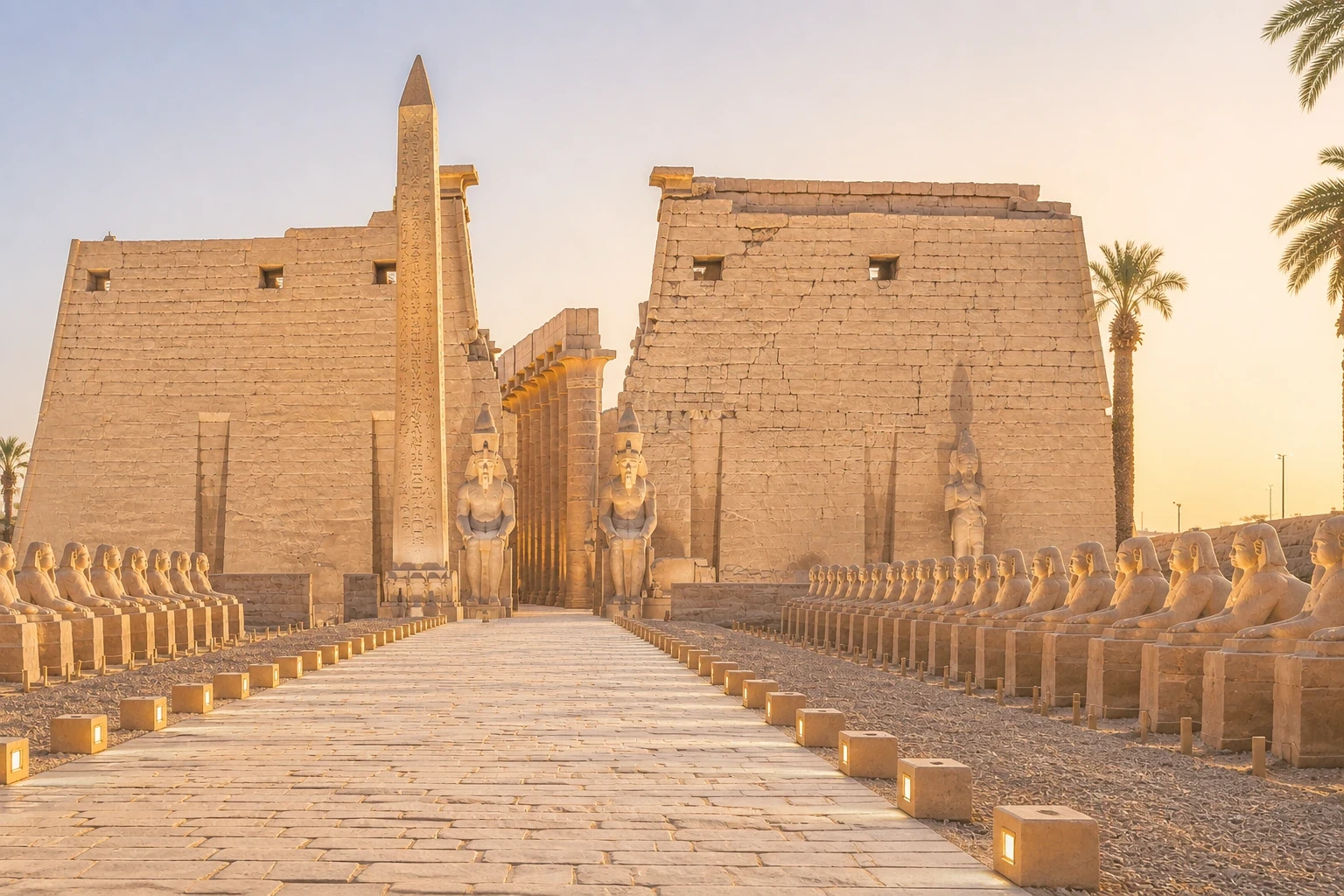
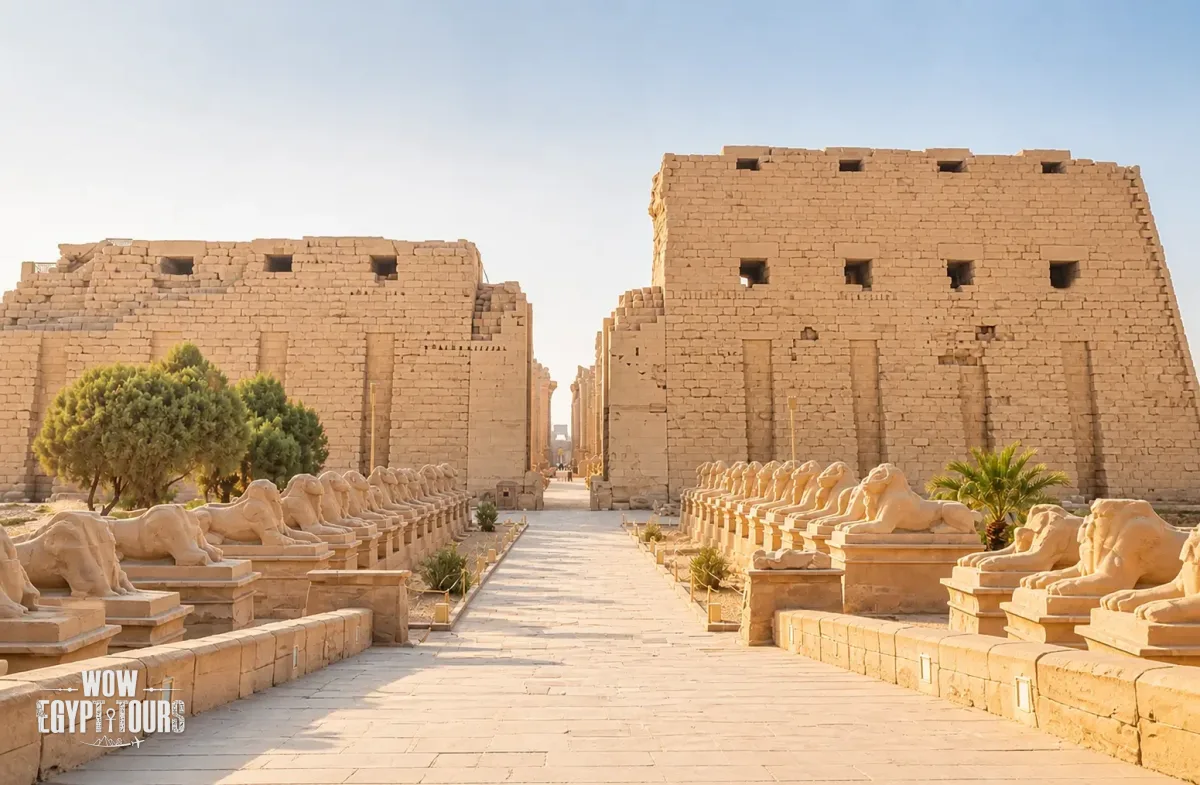
The approach to Karnak Temple from the south was defined by the Avenue of Sphinxes, a processional road stretching approximately 3 kilometers that once connected the main entrance of Karnak Temple directly to Luxor Temple to the south. This magnificent road is lined on both sides with hundreds of human-headed sphinx statues, which replaced the earlier ram-headed sphinxes constructed during the reign of Amenhotep III. The avenue was used during the great annual Opet Festival, when the sacred statues of Amun, Mut, and Khonsu were carried in a grand procession from Karnak Temple to Luxor Temple. After decades of excavation and restoration work, the Avenue of Sphinxes was officially reopened in 2021.
The Ram-Headed Sphinx Dromos
The entrance to Karnak Temple from the Nile landing is approached along a shorter dromos lined with ram-headed sphinxes, each protecting a small statue of the king between their front paws. The ram's head symbolizes the god Amun in his most ancient form as a fertility deity. This dromos leads directly from the ancient Nile quay to the first pylon of the temple, and its sphinx statues have been partially restored and remain standing today as one of the most photographed approaches to any ancient monument in Egypt.
The First Pylon
The first pylon of Karnak Temple is the largest of all ten pylons within the complex and one of the largest single structures in ancient Egypt. It stands approximately 43 meters high and 113 meters wide, with walls that are 15 meters thick at the base. Remarkably, despite its imposing scale, the first pylon was never fully completed: the mud-brick construction ramps used to raise the stones were never entirely removed, and their remains can still be seen against the interior walls, providing extraordinary evidence of the ancient Egyptian construction process.
The Great Court
Passing through the first pylon leads into the great court of Karnak, the largest open space within the temple complex, measuring approximately 100 meters wide. Within this court stand the remains of a colonnade built by Taharqa of the 25th Dynasty, the Triple Shrine of Seti II housing three small barque chapels dedicated to Amun, Mut, and Khonsu, and the Temple of Ramesses III on the southern side of the court, a complete temple within a temple that was used for festival celebrations. At the center of the court once stood a great kiosk of Taharqa, of which only a single column remains standing today.
The Second Pylon
The second pylon, built by Horemheb of the late 18th Dynasty, forms the gateway to the Great Hypostyle Hall. Horemheb filled the interior of this pylon with thousands of carved stone blocks removed from the temples and monuments of Akhenaten, the so-called heretic pharaoh who had briefly replaced the cult of Amun with the worship of the Aten sun disk. These blocks, known as talatat, were discovered when the pylon was dismantled by archaeologists in the 20th century and have provided an extraordinary record of Akhenaten's artistic and religious revolution.
The Great Hypostyle Hall
The Great Hypostyle Hall of Karnak Temple is one of the greatest architectural achievements of the ancient world and the single most celebrated space within the entire complex. Built and decorated by Seti I and Ramesses II of the 19th Dynasty, it covers an area of 5,000 square meters and is supported by 134 massive sandstone columns arranged in 16 rows. The 12 central columns are the tallest, standing approximately 21 meters high with capitals so large that 50 people could stand on top of a single capital. The outer columns stand approximately 14 meters high with closed bud capitals. Every surface of the hall is covered with carved and painted reliefs depicting the pharaohs in the presence of the gods, performing rituals, and recording their military victories. The northern wall shows scenes of Seti I's military campaigns in the Levant, while the southern wall depicts the famous battle scenes of Ramesses II at Qadesh.
The Third Pylon And The Cachette Court
Beyond the Great Hypostyle Hall lies the third pylon, built by Amenhotep III, who filled its interior with thousands of blocks from earlier monuments, including the beautiful White Chapel of Senusret I. In front of the third pylon, Amenhotep III originally placed four obelisks, two of which still stand today as a pair. The court between the third and fourth pylons is known as the Cachette Court, because in 1903 archaeologists discovered beneath its floor an extraordinary cache of 779 large stone statues and more than 17,000 bronze figurines that had been buried by the priests of Amun when the courtyard was cleared. This discovery remains one of the greatest single archaeological finds in Egypt's history and many of the recovered statues are now housed in the Egyptian Museum in Cairo and the Luxor Museum.
The Obelisks Of Hatshepsut And Thutmose I
Within the central axis of Karnak Temple stand some of the most celebrated obelisks of ancient Egypt. The obelisk of Thutmose I, the earliest surviving obelisk at Karnak, stands 21.75 meters high. The obelisk of Hatshepsut, which is the tallest surviving ancient obelisk still standing in Egypt, rises to 29.56 meters and is still capped with traces of the original electrum sheathing that once made it visible from miles away across the desert. Hatshepsut had the lower portions of her obelisks enclosed in stone to conceal them from her successor Thutmose III, which paradoxically preserved the original painted reliefs on those sections to this day.
The Sanctuary Of The Sacred Barque Of Amun
At the heart of the Karnak complex, beyond the series of pylons and halls, lies the sanctuary of the sacred barque of Amun, rebuilt by Philip Arrhidaeus, the half-brother and successor of Alexander the Great, on the site of an earlier sanctuary built by Thutmose III. This inner sanctuary was where the golden barque carrying the divine statue of Amun was kept between festival processions, and it represents the innermost and most sacred point of the entire Karnak Temple complex.
The Festival Hall Of Thutmose III — The Akh-Menu
Behind the sanctuary of Amun, Thutmose III built his great Festival Hall, the Akh-Menu, to celebrate his jubilee festivals and honor his royal ancestors. The hall is unique among Egyptian monuments because its central columns are shaped like the poles of a tent, suggesting that it was designed to evoke the field pavilions of the king's military campaigns. The walls are decorated with the famous Botanical Garden reliefs, depicting the exotic plants and animals that Thutmose III brought back from his campaigns in Syria and the Levant. A list of his royal ancestors known as the Karnak King List was also discovered in this hall, providing an invaluable historical record of the royal succession.
The Sacred Lake
One of the most atmospheric and unforgettable features of Karnak Temple is the Sacred Lake, a large rectangular artificial pool measuring approximately 130 by 77 meters, cut from the bedrock and lined with stone. The Sacred Lake served as a place of ritual purification for the priests of Amun, who bathed in its waters before performing their temple duties. Geese sacred to the god Amun were kept on the lake. Today, the Sacred Lake is the backdrop for the famous Karnak Sound and Light Show, performed each evening, during which its still waters reflect the illuminated pylons and columns of the ancient temple in a display that is among the most spectacular in all of Egypt.
The Open Air Museum
Adjacent to the main temple complex, the Open Air Museum at Karnak houses a remarkable collection of reconstructed structures and architectural elements that were discovered dismantled and buried within the pylons and foundations of the larger temple. Most celebrated among these is the White Chapel of Senusret I, one of the finest examples of Middle Kingdom relief carving in existence, reassembled from thousands of blocks found inside the third pylon. The Red Chapel of Hatshepsut, built to house the sacred barque of Amun and later dismantled by Thutmose III, has also been partially reconstructed from its recovered blocks and is displayed here.
The Precinct Of Mut
South of the main Precinct of Amun-Ra lies the Precinct of Mut, a separate walled enclosure dedicated to Amun's divine wife Mut. This precinct contains its own temple, its own sacred lake in the shape of a crescent, and a remarkable collection of hundreds of black granite statues of the lion-headed goddess Sekhmet, placed there by Amenhotep III. The Precinct of Mut is less visited than the main temple complex but offers a quieter and equally fascinating glimpse into the religious world of ancient Thebes.
The Precinct Of Montu
North of the main complex lies the smaller Precinct of Montu, dedicated to the ancient Theban war god Montu, who predated the rise of Amun as the dominant deity of Thebes. This precinct contains its own temple and is the least visited of the three main precincts of Karnak, offering a rare experience of complete solitude amid ancient monuments.
Why Is Karnak Temple Important?
The Cachette Court of Karnak Temple is one of the most archaeologically significant spaces in the ancient world. It was here in 1903 that the French archaeologist Georges Legrain discovered the extraordinary Karnak Cachette, a buried deposit of 779 stone statues and more than 17,000 bronze figurines spanning thousands of years of Egyptian art, buried by the priests when the courtyard was cleared for new construction. The walls of the adjacent Festival Hall of Thutmose III preserve the Karnak King List, one of the most important surviving records of the ancient Egyptian royal succession. Together, these discoveries make Karnak Temple not only the greatest architectural monument in ancient Egypt but also one of the most important archaeological sites in the world and an essential stop on any Egypt Tours Package or Egypt Travel Package.
What Are Some Interesting Facts About Karnak Temple?
The Botanical Garden Of Thutmose III
One of the most extraordinary and little-known wonders within Karnak Temple is the Botanical Garden room within the Festival Hall of Thutmose III. The walls of this chamber are covered with detailed carved and painted reliefs depicting the exotic flora and fauna that Thutmose III collected during his military campaigns in Syria and the Levant, including plants, birds, and animals never before seen in Egypt. This room represents one of the earliest known attempts at scientific record-keeping in the ancient world, translating directly observed natural specimens into permanent artistic documentation, and it remains one of the most charming and unexpected discoveries within the vast Karnak complex.
The Tallest Obelisk Still Standing In Egypt
The obelisk of Hatshepsut at Karnak Temple is the tallest ancient obelisk still standing on Egyptian soil, rising to a height of 29.56 meters and weighing approximately 320 tonnes. It was quarried from the pink granite of Aswan and transported by barge the entire length of Upper Egypt to Thebes, a logistical achievement of staggering proportions. The obelisk was originally sheathed in electrum, an alloy of gold and silver, from its tip to a point approximately one-third of the way down, so that it would catch the rays of the rising sun and blaze with reflected light visible across the entire city. It stands today as one of the most iconic images of ancient Egypt and a defining sight of any Karnak Temple Tour.
The Altar Of Alexander The Great
Within the sanctuary of the sacred barque of Amun at Karnak Temple stands a monument of remarkable political significance: the barque shrine built by Philip Arrhidaeus, the successor of Alexander the Great, who decorated it with scenes of himself performing ritual offerings to Amun. This shrine replaced an earlier sanctuary and demonstrates the determination of the Macedonian rulers of Egypt to present themselves as legitimate pharaohs and heirs to the ancient religious traditions of the Egyptian kingship, just as Alexander himself had done when he visited the oracle of Amun at the Siwa Oasis and was declared the son of Amun.
What Is So Special About Karnak Temple?
The Sound And Light Show At The Sacred Lake
One of the most spectacular experiences available at any ancient monument in Egypt is the Karnak Sound and Light Show, performed each evening at the Sacred Lake. Visitors are led through the illuminated pylons and hypostyle hall of the temple before taking their seats on tiered bleachers at the edge of the Sacred Lake. The show uses dramatic narration, music, and colored lighting to tell the story of ancient Thebes, with the towering columns and pylons of Karnak dramatically illuminated and their reflections shimmering across the dark waters of the sacred pool. The show is available in multiple languages and is a highlight of all WOW Egypt Tours Luxor East Bank Tours and Egypt Tours Packages that include an evening at Karnak.
The Great Hypostyle Hall — A Forest Of Giants
No feature of Karnak Temple captures the imagination more completely than the Great Hypostyle Hall, which is universally considered one of the greatest human architectural achievements ever created. Walking among its 134 colossal columns, the tallest of which rise 21 meters above the ancient stone floor, visitors experience a sense of overwhelming scale and power that no photograph can fully convey. The forest of columns, each covered with carved hieroglyphic texts and painted reliefs, filters the Egyptian sunlight into shifting shadows that change throughout the day, creating an atmosphere of profound mystery and divine presence that the ancient Egyptians experienced as the very dwelling place of their greatest god.
Karnak Temple Through The Ages: From Ancient Egypt To The Modern World
One of the most remarkable aspects of Karnak Temple is the way it encapsulates more than three millennia of continuous human history, with every great civilization that passed through Egypt leaving some mark upon its stones.
After the decline of the ancient Egyptian religion following the spread of Christianity through the Roman Empire, the Temple of Amun at Karnak was converted into a Christian church, and the surviving traces of painted Christian imagery can still be seen on the walls of several interior halls, overlaid on the original pharaonic reliefs in a vivid testament to the transformation of the site's religious identity. The sacred lake and outer enclosures continued to serve local communities in various ways through the Islamic period, and the great mud-brick enclosure walls of Karnak remained partially standing through the medieval period as landmarks visible from the Nile. Following the scientific rediscovery of ancient Egypt by European scholars in the late 18th and early 19th centuries, Karnak Temple became one of the most intensively studied and excavated archaeological sites in the world. The French Archaeological Mission, followed by the Egyptian Antiquities Organization and later the Egyptian Ministry of Tourism and Antiquities, have conducted continuous work at the site for more than two centuries, and new discoveries continue to be made regularly.
Karnak Temple UNESCO World Heritage Site
Karnak Temple is part of the Ancient Thebes with its Necropolis UNESCO World Heritage Site, inscribed in 1979. This designation recognizes the outstanding universal value of the entire Theban region, which includes Karnak Temple, Luxor Temple, the Valley of the Kings, the Valley of the Queens, and the many temples and tombs on the West Bank of the Nile. UNESCO recognizes Karnak specifically as the most significant ancient religious monument in the world and an exceptional testament to ancient Egyptian civilization at the height of its power and creativity. The inscription has supported major international conservation projects at Karnak, including structural stabilization of the Great Hypostyle Hall, restoration of painted reliefs, and management of the millions of visitors who visit the site each year.
Best Time To Visit Karnak Temple
The best time to visit Karnak Temple is during the cooler months from October through April, when temperatures are moderate and the weather is pleasant for outdoor exploration. The summer months from May to September can be extremely hot in Luxor, with daytime temperatures regularly exceeding 40 degrees Celsius, which can make an outdoor visit to the vast open courts of Karnak uncomfortable. If visiting during summer, plan your visit for early morning when the temple opens, or attend the evening Sound and Light Show at the Sacred Lake to enjoy the complex after dark. WOW Egypt Tours operates Luxor Day Tours throughout the year and can tailor your Karnak visit to the best hours of the day regardless of the season.
Karnak Temple Opening Hours
Karnak Temple is open to visitors every day of the week, including public holidays. The temple opens at 6:00 AM and closes at 5:30 PM during the winter months from October to April, and remains open until 6:00 PM during the summer months from May to September, allowing for visits in the cooler early morning and late afternoon hours. The Karnak Sound and Light Show takes place in the evenings at the Sacred Lake and operates on a separate schedule with multiple performances each evening in different languages. Visitors who prefer a quieter experience should arrive early in the morning when the site has fewer crowds and the light is particularly beautiful for photography among the columns of the Great Hypostyle Hall.
The Karnak Sound And Light Show
Karnak Temple offers one of the most famous and spectacular Sound and Light Shows in all of Egypt, performed each evening at the Sacred Lake. As darkness falls, visitors are guided through the illuminated first court, past the Great Hypostyle Hall, and to their seats overlooking the Sacred Lake, where the towering pylons of Karnak are reflected in the still waters below. A dramatic narration accompanied by music and shifting colored lights tells the story of ancient Thebes, the rise of the god Amun, and the great pharaohs who built and expanded the temple over thousands of years. The show runs for approximately one hour and is available in English, French, Arabic, Spanish, German, Italian, and Japanese. WOW Egypt Tours offers dedicated Karnak Sound and Light Show tours with private transportation and reserved seating, making this one of the most memorable evening experiences available anywhere in Egypt.
Karnak Temple Entrance Fees
Adults: EGP 600
Students: EGP 300
Open Air Museum: EGP 100 additional
Keep your ticket safe throughout your visit, as you may be asked to show it at different checkpoints within the vast complex. Entrance fees are included in all Karnak Temple Tours booked through WOW Egypt Tours, so you can explore the Temple of Karnak without worrying about any additional costs at the gate.
How To Get To Karnak Temple
Karnak Temple is located on the east bank of the Nile in the northern part of Luxor city, approximately 3 kilometers north of Luxor Temple and easily accessible from all parts of the city. The Temple of Karnak is reached by road along the Corniche el-Nile boulevard and its connecting streets, with the main entrance located east of the riverside road. Visitors arriving by air can fly into Luxor International Airport, approximately 10 kilometers southeast of the temple, with taxis and ride-hailing apps readily available. Those traveling from Cairo or Aswan can reach Luxor by train, arriving at Luxor Railway Station a short taxi ride from Karnak Temple.
Nile cruise ships dock along the Corniche, from which horse-drawn calèches, tuk-tuks, and taxis are the most common ways to reach the temple entrance. For visitors arriving from the West Bank, a public ferry crosses the Nile and connects to local transportation heading toward the East Bank attractions. Travelers joining Safaga Shore Excursions with WOW Egypt Tours will be collected directly from Safaga Port and transferred comfortably to Karnak Temple by private air-conditioned vehicle, with all logistics handled by our experienced team. All Luxor Tours and Luxor Day Tours operated by WOW Egypt Tours include comfortable private transportation directly to and from Karnak Temple.
How Long To Spend At Karnak Temple
Most visitors spend between two and three hours exploring Karnak Temple, which is enough time to walk through the main precinct, visit the Great Hypostyle Hall, see the obelisks, walk around the Sacred Lake, and take photographs. Visitors with a deeper interest in ancient Egyptian history, architecture, or religion may wish to allow three to four hours, particularly if they wish to visit the Open Air Museum and the less-visited outer precincts of Mut and Montu. Given the enormous size of the complex, covering approximately 100 hectares at its full extent, it is physically impossible to see everything in a single visit. Combining a daytime visit to Karnak with a return in the evening for the Sound and Light Show at the Sacred Lake is an experience many visitors consider the highlight of their entire trip to Egypt.
Tips For Visiting Karnak Temple
Arrive at opening time in the early morning to enjoy the Great Hypostyle Hall with fewer crowds and the most beautiful raking light among the columns. Bring plenty of water, especially during the summer months between May and September, as the heat in the open courts of Karnak can be extreme and shade is limited. Wear comfortable, well-supported walking shoes, as the site is vast and the ground is uneven ancient stone with significant distances between major monuments. Do not touch or lean against the carved reliefs and column surfaces, as the natural oils from human hands cause irreversible damage to ancient limestone and sandstone. Hiring a licensed Egyptologist guide is strongly recommended: the complexity and scale of Karnak Temple makes it very difficult to appreciate without expert narration and interpretation. Photography is permitted throughout most of the temple complex. Keep your ticket safe as you will need to show it at different entry points within the precinct. Combining your Karnak Temple visit with Luxor Temple and a walk along the Avenue of Sphinxes on the same day makes for an unforgettable full East Bank experience of ancient Thebes.
What To Wear At Karnak Temple
Karnak Temple is a vast open-air archaeological site with no strict religious dress code for general visitors. However, it is always advisable to dress modestly and respectfully when visiting any historical site in Egypt. Lightweight, breathable clothing covering the shoulders and knees is ideal for both comfort in the intense Egyptian heat and as a mark of cultural respect. A wide-brimmed hat or cap is strongly recommended at Karnak, where many of the most important areas including the great courts and the approach to the pylons are fully exposed to the sun with very little shade available. Apply sunscreen generously before your visit. Comfortable, closed-toe walking shoes or sandals with good grip are essential given the uneven ancient stone surfaces and the large distances involved in exploring the complex. Visitors who plan to attend the Karnak Sound and Light Show in the evening should bring a light jacket or wrap, as Luxor evenings can become noticeably cool from October through March.
Photography At Karnak Temple
Karnak Temple is one of the most extraordinary photography destinations on earth, offering unparalleled opportunities to capture colossal architecture, intricate ancient reliefs, soaring obelisks, and the play of golden Egyptian light through the columns of the Great Hypostyle Hall. Photography with a standard camera or smartphone is permitted throughout most of the Karnak Temple complex. The early morning golden hour immediately after the temple opens provides the most beautiful natural light for exterior shots of the pylons, obelisks, and hypostyle columns. The Sacred Lake at sunset and during the evening Sound and Light Show offers dramatic reflective photography opportunities unlike anything else available at an ancient monument. For interior shots in the darker sections of the temple, a camera with strong low-light performance is recommended. Visitors should never use flash photography near fragile painted surfaces, as artificial light causes damage to ancient pigments. Professional photography or filming with specialized equipment may require a separate permit from Egypt's Ministry of Tourism and Antiquities.
Karnak Temple Tours
Single Attraction Visit: Karnak Temple Tour
This tour covers Karnak Temple as a standalone visit. It is suitable for travelers with limited time in Luxor, cruise passengers with a short port call, or visitors who have already covered other East Bank sites and want a dedicated visit to the Temple of Karnak.
What Is Covered
Full guided visit of Karnak Temple including the ram-headed sphinx dromos, the first pylon, the great court, the second pylon, the Great Hypostyle Hall, the obelisks of Hatshepsut and Thutmose I, the sanctuary of the sacred barque of Amun, the Festival Hall of Thutmose III, the Sacred Lake, and the Open Air Museum.
Duration
2 to 3 hours inside the temple.
Includes
Private transportation, private licensed Egyptologist guide, and entrance fees. Available for morning and afternoon departures. Morning visits are recommended for first-time visitors to experience the Great Hypostyle Hall in its most beautiful early light.
Karnak Sound And Light Show Tour
This tour covers the Karnak Sound and Light Show as a standalone evening experience at the Sacred Lake. It is suitable for travelers who have already visited Karnak Temple during the day, visitors who prefer an evening activity, and those who wish to experience the temple in a completely different atmosphere after dark.
What Is Covered
Guided entry through the illuminated first court and Great Hypostyle Hall. Reserved seating on the tiered bleachers overlooking the Sacred Lake. The full Sound and Light Show performance, approximately one hour in duration, available in English, French, Arabic, Spanish, German, Italian, and Japanese. Dramatic narration, music, and colored lighting telling the story of Amun, the pharaohs of Thebes, and the 2,000-year history of Karnak Temple, with the illuminated pylons and obelisks reflected in the still waters of the Sacred Lake.
Duration
Approximately 1 to 1.5 hours for the full show.
Includes
Private transportation, reserved show seating, and show entrance fee. Also available as a combined full-day package with a morning Karnak Temple Tour, covering the monument in both its golden daytime light and its dramatic nocturnal illumination.
Luxor East Bank Tours: Karnak Temple, Luxor Temple, Luxor Museum And Mummification Museum
This full-day tour covers the four main sites on the East Bank of Luxor. It is suitable for travelers who want a complete East Bank experience in a single day, including ancient temples and Luxor's two main museums.
What Is Covered
Karnak Temple with a full guided visit of the main precinct, including the Great Hypostyle Hall, the Sacred Lake, the obelisks of Hatshepsut and Thutmose I, and the Open Air Museum. The Avenue of Sphinxes connecting Karnak Temple to Luxor Temple. Luxor Temple including the entrance pylon, the courtyard of Ramesses II, the great colonnade, the courtyard of Amenhotep III, and the inner halls and Holy of Holies. The Luxor Museum housing the Karnak Cachette statues. The Mummification Museum covering the tools, methods, and materials used in ancient Egyptian embalming.
Duration
Full day, approximately 6 to 7 hours.
Includes
Private air-conditioned transportation, private licensed Egyptologist guide, and entrance fees to all four sites. Available for morning departures.
Luxor West Bank Tours: Valley Of The Kings, Hatshepsut Temple And More
This full-day tour covers the major sites on the West Bank of Luxor, the ancient burial ground of the pharaohs. It is suitable for travelers who want to visit the royal tombs, mortuary temples, and monuments across the Nile from Luxor city.
What Is Covered
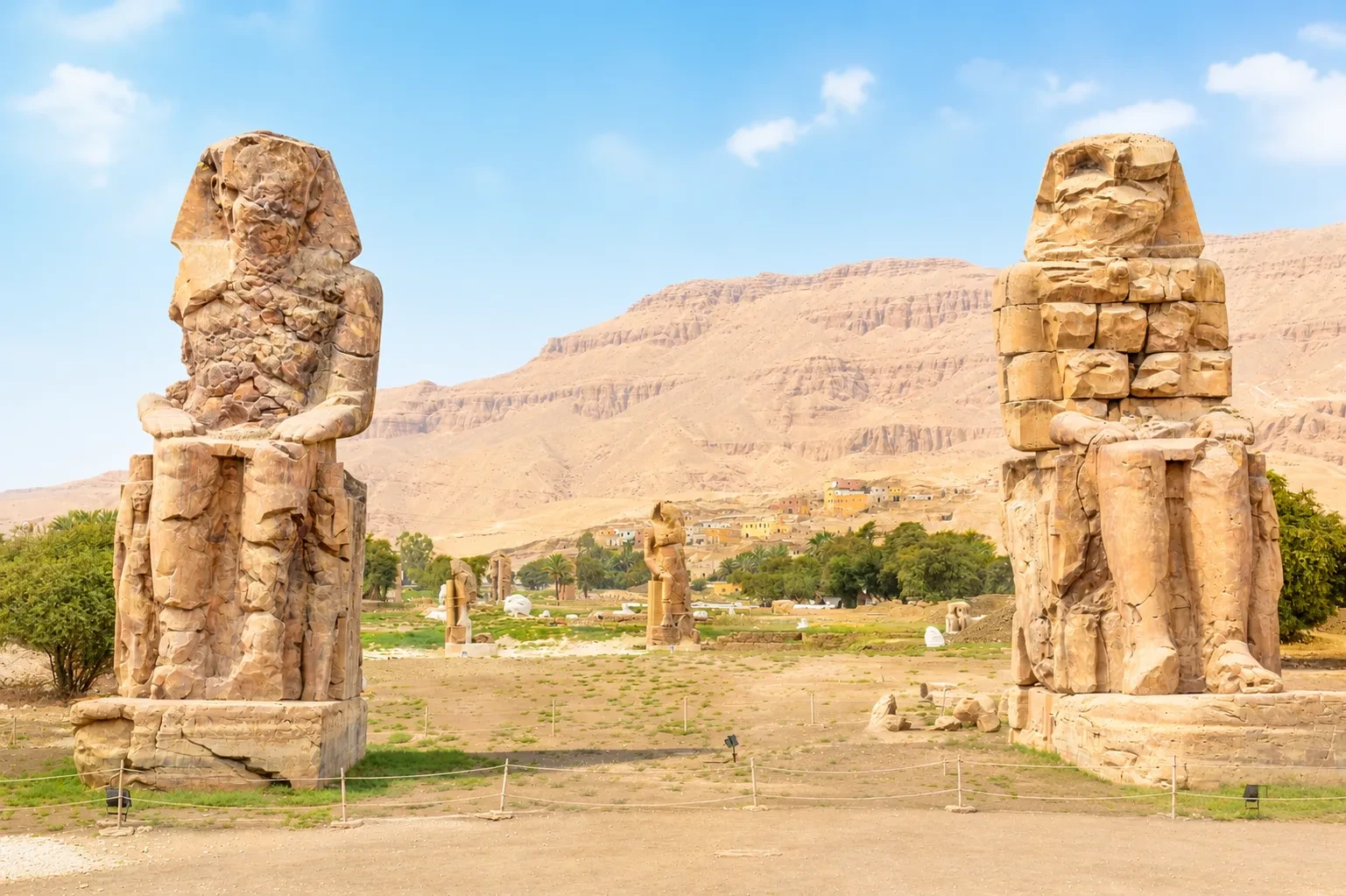
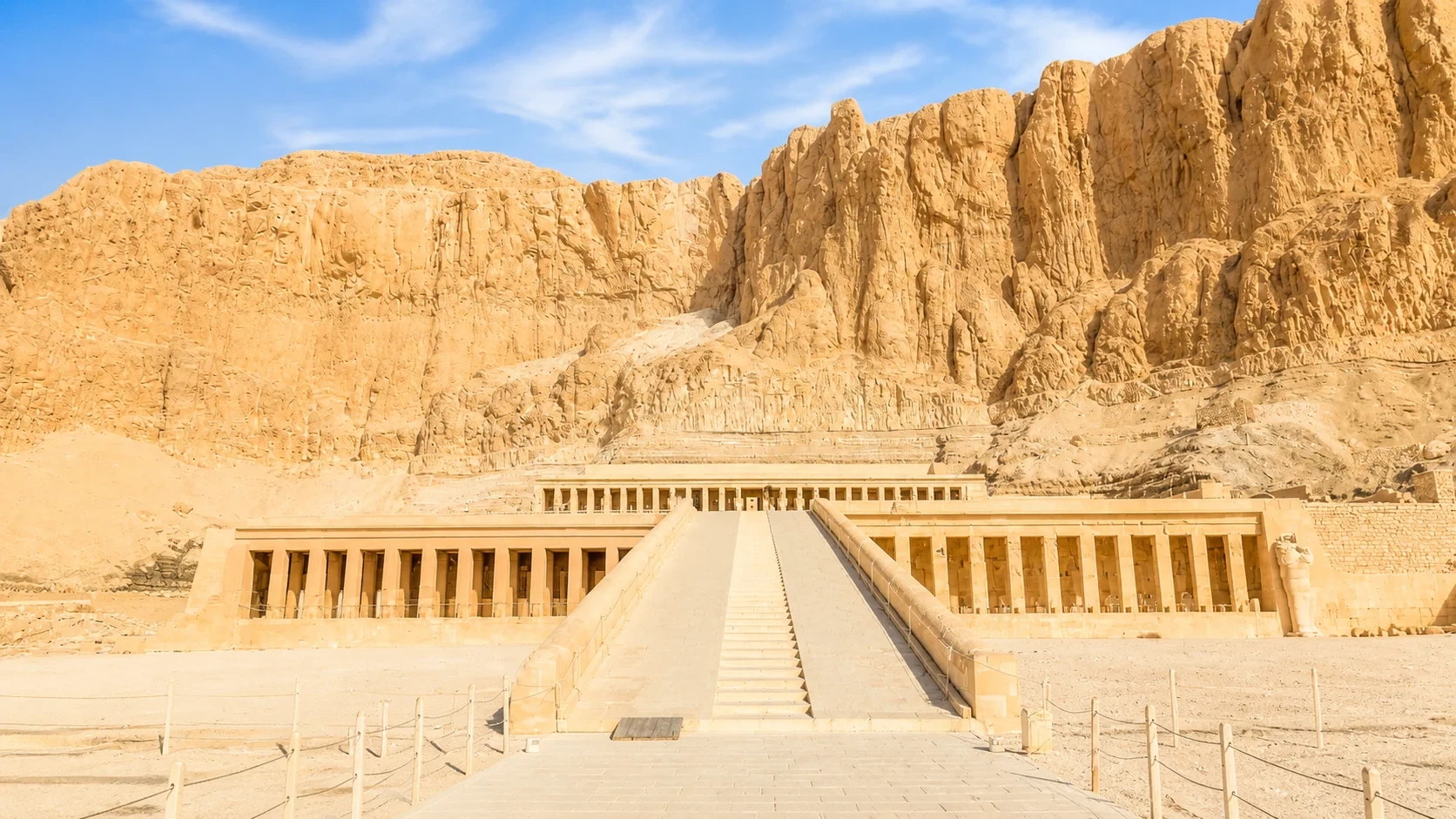
The Valley of the Kings with entry to three royal tombs, including options to visit the tombs of Tutankhamun, Ramesses II, Seti I, Ramesses III, and others depending on availability. The Temple of Hatshepsut at Deir el-Bahari, a three-tiered mortuary temple built into the limestone cliffs. The Colossi of Memnon, two 18-meter seated statues of Amenhotep III. Optional extensions include the Valley of the Queens, the Ramesseum, and Medinet Habu Temple.
Duration
Full day, approximately 6 to 7 hours.
Includes
Private air-conditioned transportation, private licensed Egyptologist guide, and entrance fees to the main sites. Available for morning departures.
Luxor Day Tours: Combined East Bank And West Bank
This full-day combined tour covers the most important sites on both banks of the Nile in Luxor in a single day. It is the most comprehensive Luxor Day Tour available and is suitable for travelers with one day in Luxor who want to cover both the East Bank temples and the West Bank tombs and mortuary temples.
What Is Covered
East Bank: Karnak Temple including the Great Hypostyle Hall and Sacred Lake, the Avenue of Sphinxes, and Luxor Temple. West Bank: Valley of the Kings with three tomb entries, Temple of Hatshepsut at Deir el-Bahari, and the Colossi of Memnon.
Duration
Full day, approximately 8 to 9 hours.
Includes
Private air-conditioned transportation, Nile crossing, private licensed Egyptologist guide, and entrance fees to all sites. Available for morning departures.
Safaga Shore Excursions To Karnak Temple
Safaga Port is located on the Red Sea coast, approximately 250 kilometers (155 miles) from Luxor. WOW Egypt Tours operates Safaga Shore Excursions that transfer cruise ship passengers from Safaga Port to Luxor and back within a single port day. The transfer is approximately 2.5 to 3 hours each way by private air-conditioned vehicle.
What Is Covered
Karnak Temple with a full guided visit including the Great Hypostyle Hall, the Sacred Lake, and the obelisks. The Avenue of Sphinxes connecting Karnak Temple to Luxor Temple. Luxor Temple including the entrance pylon, the great colonnade, and the inner courts. Optional addition: Luxor Museum for an extra fee and subject to available time.
Duration
Full day from port departure to port return, approximately 12 to 13 hours including transfers.
Includes
Private air-conditioned vehicle from Safaga Port, private licensed Egyptologist guide, entrance fees to Karnak Temple and Luxor Temple, and return transfer to the ship. All Safaga Shore Excursions are coordinated around each ship's port schedule to guarantee return to the vessel before departure.
Dahabiya Nile River Cruise
A Dahabiya Nile River Cruise is a small-vessel sailing experience on the Nile between Luxor and Aswan aboard a traditional wooden dahabiya. WOW Egypt Tours operates dahabiya cruises with private cabins, all meals, a private licensed Egyptologist guide on board, and guided shore excursions at every stop.
4 Days 3 Nights Dahabiya Nile River Cruise From Aswan To Luxor
Route: Aswan to Luxor, sailing north.
Itinerary
Day 1: Embarkation in Aswan. Visit to Philae Temple and the Unfinished Obelisk. Sail north to Kom Ombo. Guided visit to Kom Ombo Temple. Continue to Gebel el Silsila. Overnight on board.
Day 2: Guided visit to Gebel el Silsila. Sail to the Village of Basaw. Guided visit to Village of Basaw. Continue to Edfu. Guided visit to the Temple of Horus at Edfu. Overnight on board.
Day 3: Sail to El Kab. Guided visit to El Kab Tombs. Sail to El Hagaz Island. Swimming stop. Overnight on board.
Day 4: Sail to Esna. Visit Khnum Temple at Esna. Disembarkation in Esna. Transfer to Luxor, approximately 55 kilometers (35 miles).
Includes
Private cabin, all meals on board, private licensed Egyptologist guide, entrance fees to all temple visits, and private transfers.
5 Days 4 Nights Dahabiya Nile River Cruise From Luxor To Aswan
Route: Luxor to Aswan, sailing south.
Itinerary
Day 1: Embarkation in Luxor. Transfer to Esna, approximately 55 kilometers (35 miles). Visit Khnum Temple at Esna. Sail to El Hagaz Island. Overnight on board.
Day 2: Sail to El Kab. Guided visit to El Kab Tombs. Continue to Edfu. Guided visit to the Temple of Horus at Edfu. Sail to the Village of Basaw. Guided visit to Village of Basaw. Overnight on board.
Day 3: Sail to Gebel el Silsila. Guided visit to Gebel el Silsila. Sail south to Kom Ombo. Guided visit to Kom Ombo Temple. Sail to Daraw Village. Overnight on board.
Day 4: Guided visit to Daraw Village. Sail to Herbiab Island. Swimming stop. Philae Sound and Light Show. Overnight on board.
Day 5: Optional Abu Simbel visit available by air or road. Guided visits to Philae Temple, the High Dam, and the Unfinished Obelisk. Disembarkation in Aswan.
Includes
Private cabin, all meals on board, private licensed Egyptologist guide, entrance fees to all temple visits, and private transfers.
8 Days 7 Nights Dahabiya Nile River Cruise Round Trip From Luxor (Via Aswan)
Route: Luxor and Aswan, sailing north and south.
Itinerary
Day 1: Embarkation in Luxor. Transfer to Esna, approximately 55 kilometers (35 miles). Visit Khnum Temple at Esna. Sail to El Hagaz Island. Overnight on board.
Day 2: Sail to El Kab. Continue to Edfu. Guided visit to the Temple of Horus at Edfu. Sail to the Village of Basaw. Guided visit to Village of Basaw. Overnight on board.
Day 3: Sail to Gebel el Silsila. Sail south to Kom Ombo. Guided visit to Kom Ombo Temple. Sail to Daraw Village. Overnight on board.
Day 4: Guided visit to Daraw Village. Sail to Herbiab Island. Swimming stop. Philae Sound and Light Show. Overnight on board.
Day 5: Optional Abu Simbel visit available by air or road. Guided visits to Philae Temple, the High Dam, and the Unfinished Obelisk. Sail north to Kom Ombo. Continue to Gebel el Silsila. Overnight on board.
Day 6: Guided visit to Gebel el Silsila. Sail to the Village of Basaw. Continue to Edfu. Overnight on board.
Day 7: Sail to El Kab. Guided visit to El Kab Tombs. Sail to El Hagaz Island. Swimming stop. Overnight on board.
Day 8: Disembarkation in Esna. Transfer to Luxor, approximately 55 kilometers (35 miles).
Includes
Private cabin, all meals on board, private licensed Egyptologist guide, entrance fees to all temple visits, and private transfers.
8 Days 7 Nights Dahabiya Nile River Cruise Round Trip From Aswan (Via Luxor)
Route: Luxor and Aswan, sailing north and south.
Itinerary
Day 1: Embarkation in Aswan. Visit to Philae Temple and the Unfinished Obelisk. Sail north to Kom Ombo. Continue to Gebel el Silsila. Overnight on board.
Day 2: Guided visit to Gebel el Silsila. Sail to the Village of Basaw. Continue to Edfu. Overnight on board.
Day 3: Sail to El Kab. Guided visit to El Kab Tombs. Sail to El Hagaz Island. Swimming stop. Overnight on board.
Day 4: Sail to Esna. Visit Khnum Temple at Esna. Sail to El Hagaz Island. Overnight on board.
Day 5: Sail to El Kab. Continue to Edfu. Guided visit to the Temple of Horus at Edfu. Sail to the Village of Basaw. Guided visit to Village of Basaw. Overnight on board.
Day 6: Sail to Gebel el Silsila. Sail south to Kom Ombo. Guided visit to Kom Ombo Temple. Sail to Daraw Village. Overnight on board.
Day 7: Guided visit to Daraw Village. Sail to Herbiab Island. Swimming stop. Philae Sound and Light Show. Overnight on board.
Day 8: Disembarkation in Aswan.
Includes
Private cabin, all meals on board, private licensed Egyptologist guide, entrance fees to all temple visits, and private transfers.
Luxor And Aswan Nile River Cruise
The Luxor and Aswan Nile River Cruise is a standard Nile cruise product operated aboard a full-size cruise ship between Luxor and Aswan. WOW Egypt Tours operates this cruise in both directions with private licensed Egyptologist guides, all meals included, private cabins, and guided shore excursions at every port of call. Karnak Temple is a guided stop on all itineraries in both directions.
4 Days 3 Nights Luxor And Aswan Nile River Cruise From Aswan To Luxor
Route: Aswan to Luxor, sailing north.
Itinerary
Day 1: Embarkation in Aswan. Guided visits to Philae Temple, the High Dam, and the Unfinished Obelisk. Overnight on board in Aswan.
Day 2: Sail north to Kom Ombo. Guided visit to Kom Ombo Temple. Continue to Edfu. Overnight on board.
Day 3: Guided visit to the Temple of Horus at Edfu. Continue north toward Luxor. Guided visit to Luxor Temple and Karnak Temple. Overnight on board in Luxor.
Day 4: Optional Sunrise Hot Air Balloon available. Guided visits to Valley of the Kings, Queen Hatshepsut Temple, and Colossi of Memnon. Disembarkation in Luxor.
Includes
Private cabin, all meals on board, private licensed Egyptologist guide, entrance fees to all temple visits, and private transfers.
5 Days 4 Nights Luxor And Aswan Nile River Cruise From Luxor To Aswan
Route: Luxor to Aswan, sailing south.
Itinerary
Day 1: Embarkation in Luxor. Guided visits to Luxor Temple and Karnak Temple. Overnight on board in Luxor.
Day 2: Optional Sunrise Hot Air Balloon available. Guided visits to Valley of the Kings, Queen Hatshepsut Temple, and Colossi of Memnon. Pass through the Esna locks. Sail south to Edfu. Overnight on board.
Day 3: Guided visit to the Temple of Horus at Edfu. Continue to Kom Ombo. Guided visit to Kom Ombo Temple. Overnight on board.
Day 4: Continue south toward Aswan. Guided visits to Philae Temple, the High Dam, and the Unfinished Obelisk. Overnight on board in Aswan.
Day 5: Optional Abu Simbel visit available by air or road. Disembarkation in Aswan.
Includes
Private cabin, all meals on board, private licensed Egyptologist guide, entrance fees to all temple visits, and private transfers.
8 Days 7 Nights Luxor And Aswan Nile River Cruise Round Trip From Luxor (Via Aswan)
Route: Luxor and Aswan, sailing north and south.
Itinerary
Day 1: Embarkation in Luxor. Guided visits to Luxor Temple and Karnak Temple. Overnight on board in Luxor.
Day 2: Guided visits to Luxor Museum. Pass through the Esna locks. Sail south to Edfu. Overnight on board.
Day 3: Guided visit to the Temple of Horus at Edfu. Continue to Kom Ombo. Overnight on board.
Day 4: Continue south toward Aswan. Guided visits to Philae Temple, the High Dam, and the Unfinished Obelisk. Overnight on board in Aswan.
Day 5: Abu Simbel visit available by road. Sound and Light Show at Philae Temple. Overnight on board in Aswan.
Day 6: Guided visits to Nubian Village. Sail north to Kom Ombo. Guided visit to Kom Ombo Temple. Continue to Edfu. Overnight on board.
Day 7: Guided visits to Valley of the Kings, Queen Hatshepsut Temple, and Colossi of Memnon. Pass through the Esna locks. Sail south to Edfu. Overnight on board.
Day 8: Optional Sunrise Hot Air Balloon available. Disembarkation in Luxor.
Includes
Private cabin, all meals on board, private licensed Egyptologist guide, entrance fees to all temple visits, and private transfers.
8 Days 7 Nights Luxor And Aswan Nile River Cruise Round Trip From Aswan (Via Luxor)
Route: Luxor and Aswan, sailing north and south.
Itinerary
Day 1: Embarkation in Aswan. Guided visits to Philae Temple, the High Dam, and the Unfinished Obelisk. Overnight on board in Aswan.
Day 2: Sail north to Kom Ombo. Guided visit to Nubian Village and Kom Ombo Temple. Continue to Edfu. Overnight on board.
Day 3: Continue north toward Luxor. Guided visit to Luxor Museum and Karnak Sound and Light Show. Overnight on board in Luxor.
Day 4: Guided visits to Luxor Temple and Karnak Temple. Overnight on board in Luxor.
Day 5: Optional Sunrise Hot Air Balloon available. Guided visits to Valley of the Kings, Queen Hatshepsut Temple, and Colossi of Memnon. Pass through the Esna locks. Sail south to Edfu. Overnight on board.
Day 6: Guided visit to the Temple of Horus at Edfu. Continue to Kom Ombo. Overnight on board.
Day 7: Sound and Light Show at Philae Temple. Overnight on board in Aswan.
Day 8: Abu Simbel visit available by road. Disembarkation in Aswan.
Includes
Private cabin, all meals on board, private licensed Egyptologist guide, entrance fees to all temple visits, and private transfers.
Combine Karnak Temple With Your Egypt Tours Package
Karnak Temple is included as a featured stop across the full range of WOW Egypt Tours travel products. Browse the options below to find the Egypt experience that is right for you.
Egypt Tour Packages: Multi-day guided Egypt tours organized by duration, including 2 Days Egypt Packages, 3 Days Egypt Packages, 4 Days Egypt Packages, 5 Days Egypt Packages, 6 Days Egypt Packages, 7 Days Egypt Packages, 8 Days Egypt Packages, 10 Days Egypt Packages, and longer itineraries. All packages include private air-conditioned transportation, private licensed Egyptologist guide, accommodations, entrance fees to all included sites, and private transfers throughout Egypt.
Egypt Travel Packages: Themed Egypt travel packages designed around specific travel styles and interests, including Egypt Honeymoon Travel Packages, Egypt Budget Travel Packages, Egypt Family Travel Packages, Egypt Luxury Travel Packages, Egypt Adventure Travel Packages, Egypt Cultural Travel Packages, and Egypt Christmas and New Year Travel Packages. All packages include private air-conditioned transportation, private licensed Egyptologist guide, accommodations, meals, entrance fees to all included sites, and private transfers.
Egypt Nile Cruise Packages: Complete Egypt travel packages combining Cairo sightseeing with a fully guided Nile cruise between Luxor and Aswan, available as Cairo and Nile Cruise Packages, Egypt and Nile Cruise Packages, and Nile Cruise and Red Sea Packages. All packages include private cabin on board, all meals, private licensed Egyptologist guide, entrance fees to all temple visits including Karnak Temple, and private transfers.
Nile River Cruises: All WOW Egypt Tours Nile cruise options between Luxor and Aswan, available across four ship categories, Standard, Deluxe, Ultra Deluxe, and Luxury, as well as private Dahabiya sailing vessels. All cruises include private cabin on board, all meals, private licensed Egyptologist guide, entrance fees to all temple visits, and private transfers.
Luxor Aswan Nile Cruises: The classic Upper Egypt Nile cruise route between Luxor and Aswan, available in both directions and in durations of 4 Days 3 Nights, 5 Days 4 Nights, and 8 Days 7 Nights round trip. Karnak Temple is included as a guided stop on all itineraries. All cruises include private cabin on board, all meals, private licensed Egyptologist guide, entrance fees to all temple visits, and private transfers.
Standard Nile Cruises: Comfortable standard-category cruise ships sailing between Luxor and Aswan, available in 4 Days 3 Nights, 5 Days 4 Nights, and 8 Days 7 Nights itineraries in both directions. Includes standard cabin on board, all meals, private licensed Egyptologist guide, entrance fees to all temple visits, and private transfers.
Deluxe Nile Cruises: Deluxe-category cruise ships with enhanced cabin comfort and upgraded dining, sailing between Luxor and Aswan in 4 Days 3 Nights, 5 Days 4 Nights, and 8 Days 7 Nights itineraries in both directions. Includes deluxe cabin on board, all meals, private licensed Egyptologist guide, entrance fees to all temple visits, and private transfers.
Ultra Deluxe Nile Cruises: Ultra deluxe-category cruise ships offering superior cabins, premium dining, and an elevated onboard experience, sailing between Luxor and Aswan in 4 Days 3 Nights, 5 Days 4 Nights, and 8 Days 7 Nights itineraries in both directions. Includes ultra deluxe cabin on board, all meals, private licensed Egyptologist guide, entrance fees to all temple visits, and private transfers.
Luxury Nile Cruises: Luxury-category cruise ships with the finest cabins, exceptional cuisine, and premium onboard facilities, sailing between Luxor and Aswan in 4 Days 3 Nights, 5 Days 4 Nights, and 8 Days 7 Nights itineraries in both directions. Includes luxury cabin on board, all meals, private licensed Egyptologist guide, entrance fees to all temple visits, and private transfers.
Dahabiya Nile Cruises: Private small-vessel sailing experience aboard a traditional wooden dahabiya between Luxor and Aswan, available in four itineraries: Dahabiya From Aswan To Luxor 4 Days 3 Nights, Dahabiya From Luxor To Aswan 5 Days 4 Nights, Dahabiya Round Trip From Luxor via Aswan 8 Days 7 Nights, and Dahabiya Round Trip From Aswan via Luxor 8 Days 7 Nights. Includes private cabin on board, all meals, private licensed Egyptologist guide, entrance fees to all temple visits, and private transfers.
Luxor Tours: Day tours and multi-day tours of Luxor covering all major sites on both banks of the Nile, including Luxor East Bank Tours covering Karnak Temple, Luxor Temple, Luxor Museum, and Mummification Museum; Luxor West Bank Tours covering the Valley of the Kings, Temple of Hatshepsut, and Colossi of Memnon; and combined Luxor Day Tours covering the East and West Banks in a single day. All tours include private air-conditioned transportation, private licensed Egyptologist guide, entrance fees to all included sites, and private transfers.
Shore Excursions: Guided day excursions from Egypt's Red Sea ports to Karnak Temple and the monuments of Upper Egypt, available for cruise ship passengers with a port call at Safaga, Hurghada, Port Said, Alexandria, and Sokhna. Includes private air-conditioned transportation from the port, private licensed Egyptologist guide, entrance fees to all included sites, and return transfer to the ship, with all timings coordinated around each vessel's port schedule.
Safaga Port Excursions: Shore excursions departing from Safaga Port on the Red Sea coast, approximately 250 kilometers (155 miles) from Luxor, covering Karnak Temple, Luxor Temple, and the Luxor Museum as a full-day trip within a single port call. Available options include Safaga to Luxor East Bank Tours, Safaga to Luxor West Bank Tours, and combined Safaga to Luxor East and West Bank Day Tours. Includes private air-conditioned vehicle from Safaga Port, private licensed Egyptologist guide, entrance fees to all included sites, and return transfer to the ship.
Nearby Attractions To Karnak Temple
Karnak Temple sits at the northern end of one of the richest concentrations of ancient monuments in the world. Luxor Temple, connected to Karnak by the famous Avenue of Sphinxes, is located approximately 3 kilometers to the south along the Corniche and is an essential companion visit on any Luxor East Bank Tour. On the West Bank of the Nile, directly across the river, lies the Valley of the Kings, where the tombs of Tutankhamun, Ramesses II, Seti I, and dozens of other pharaohs were cut into the limestone cliffs. The Temple of Hatshepsut at Deir el-Bahari, the Colossi of Memnon, the Valley of the Queens, the Ramesseum, Medinet Habu Temple, the Valley of the Nobles, and Deir el-Medina are all within easy reach. The Luxor Museum, located along the Corniche between Karnak Temple and Luxor Temple, houses an exceptional collection of ancient statues and artifacts, including many pieces from the extraordinary Karnak Cachette of 1903. The Mummification Museum, also on the East Bank, offers a fascinating look at the ancient Egyptian art of preserving the dead.
Frequently Asked Questions About Karnak Temple
What is Karnak Temple?
Karnak Temple is the largest ancient religious complex ever built in human history, located on the east bank of the Nile in the city of Luxor, constructed and expanded over more than 2,000 years and dedicated primarily to the god Amun-Ra and the Theban Triad. The Temple of Karnak is one of the most visited ancient sites in Egypt and a centerpiece of all Luxor Tours, Egypt Tours Packages, Egypt Travel Packages, and Safaga Shore Excursions offered by WOW Egypt Tours.
Who built Karnak Temple?
Karnak Temple was built by more than 30 pharaohs over approximately 2,000 years. Major contributors include Senusret I, Hatshepsut, Thutmose III, Amenhotep III, Seti I, Ramesses II, Ramesses III, and numerous rulers of the Late Period and Ptolemaic Period.
What does the name Karnak mean?
The ancient Egyptian name was Ipet-Sut, meaning the most select of places. The modern name Karnak comes from the Arabic Al-Karnak, meaning the fortified village, a name given by Arab settlers who saw the enormous walled enclosures of the ancient temple.
What is the Great Hypostyle Hall?
The Great Hypostyle Hall is the most celebrated single space within Karnak Temple, a vast hall of 134 massive sandstone columns covering 5,000 square meters, built and decorated by Seti I and Ramesses II of the 19th Dynasty and considered one of the greatest architectural achievements of the ancient world.
What is the Sacred Lake at Karnak?
The Sacred Lake is a large rectangular artificial pool within the Karnak Temple complex where priests performed ritual purifications before their temple duties. Today it is the setting for the famous Karnak Sound and Light Show, performed every evening.
Is there a Sound and Light Show at Karnak Temple?
Yes. The Karnak Sound and Light Show is performed every evening at the Sacred Lake in multiple languages and is one of the most spectacular evening experiences at any ancient monument in Egypt. WOW Egypt Tours offers dedicated Sound and Light Show tours with private transportation and reserved seating.
What are the opening hours of Karnak Temple?
Karnak Temple is open daily from 6:00 AM to 5:30 PM in winter and from 6:00 AM to 6:00 PM in summer. The Sound and Light Show operates on a separate evening schedule.
How much does it cost to enter Karnak Temple?
The entrance fee is EGP 600 for adults and EGP 300 for students. Entry to the Open Air Museum requires an additional EGP 100. Entrance fees are included in all Karnak Temple Tours, Egypt Tours Packages, and Safaga Shore Excursions booked through WOW Egypt Tours.
How long does it take to visit Karnak Temple?
Most visitors spend between two and three hours exploring the main precinct of Karnak Temple. Those with a deeper interest in Egyptology or who wish to visit the Open Air Museum and the outer precincts may wish to allow three to four hours.
What is the best time of year to visit Karnak Temple?
The best time to visit Karnak Temple is from October to April, when temperatures are moderate and comfortable for outdoor exploration of the vast complex.
How do I get to Karnak Temple?
Karnak Temple is located in the northern part of Luxor city on the East Bank, accessible by taxi, calèche, tuk-tuk, or organized tour from all parts of the city. All Luxor Tours, Luxor Day Tours, and Safaga Shore Excursions with WOW Egypt Tours include private transportation directly to and from Karnak Temple.
Can I combine Karnak Temple with Luxor Temple in one day?
Yes. Karnak Temple and Luxor Temple are connected by the Avenue of Sphinxes and are ideally visited together as part of a Luxor East Bank Tour with WOW Egypt Tours. The Luxor Museum and Mummification Museum can also be added on the same day as part of a full East Bank Tour.
Is a guide necessary at Karnak Temple?
A guide is not required but is highly recommended given the complexity and scale of the site. WOW Egypt Tours provides licensed Egyptologist guides for all Karnak Temple Tours, Egypt Tours Packages, Egypt Travel Packages, and Safaga Shore Excursions.
Can I take photographs at Karnak Temple?
Photography with a smartphone or standard camera is permitted throughout most of the Karnak Temple complex. Flash photography should never be used near painted surfaces. Professional filming equipment requires a separate permit.
What should I wear to visit Karnak Temple?
Lightweight clothing covering the shoulders and knees is recommended, along with a wide-brimmed hat, sunscreen, and comfortable walking shoes with good grip for the uneven ancient surfaces and long walking distances.
Is Karnak Temple a UNESCO World Heritage Site?
Yes. Karnak Temple is part of the Ancient Thebes with its Necropolis UNESCO World Heritage Site, inscribed in 1979, which also includes Luxor Temple, the Valley of the Kings, and the monuments of the West Bank.
What is the difference between Karnak Temple and Luxor Temple?
Karnak Temple was the permanent home and main state sanctuary of the god Amun-Ra, the most powerful religious institution in ancient Egypt, built over 2,000 years by more than 30 pharaohs and covering 100 hectares. Luxor Temple was a smaller festival sanctuary used primarily during the annual Opet Festival when Amun came to meet his divine wife. Karnak is larger, older, and more complex; Luxor Temple is more unified in its design and better preserved in its original decoration.
What Nile cruise options include Karnak Temple?
WOW Egypt Tours offers both Dahabiya Nile River Cruises and Luxor Aswan Nile River Cruises, all of which include a guided visit to Karnak Temple. Itineraries run in both directions between Luxor and Aswan, ranging from 4 to 8 days, and are available as part of all WOW Egypt Tours Egypt Tours Packages and Egypt Travel Packages.
Can I visit Karnak Temple as part of a Safaga Shore Excursion?
Yes. WOW Egypt Tours offers dedicated Safaga Shore Excursions to Karnak Temple for cruise ship passengers arriving at Safaga Port. Our team handles all transportation, guiding, entrance fees, and logistics to ensure a seamless and unforgettable visit to Karnak Temple and the other great monuments of ancient Thebes.
How do I book a Karnak Temple Tour with WOW Egypt Tours?
You can book any Karnak Temple Tour, Luxor Day Tour, Luxor East Bank Tour, Luxor West Bank Tour, Dahabiya Nile River Cruise, Luxor Aswan Nile River Cruise, Egypt Tours Package, Egypt Travel Package, or Safaga Shore Excursion directly through WOW Egypt Tours. Our team of travel specialists will arrange everything from private transportation and licensed Egyptologist guides to hotel pick-up and entrance fees, ensuring a seamless and unforgettable experience of Karnak Temple and all the wonders of ancient Egypt.