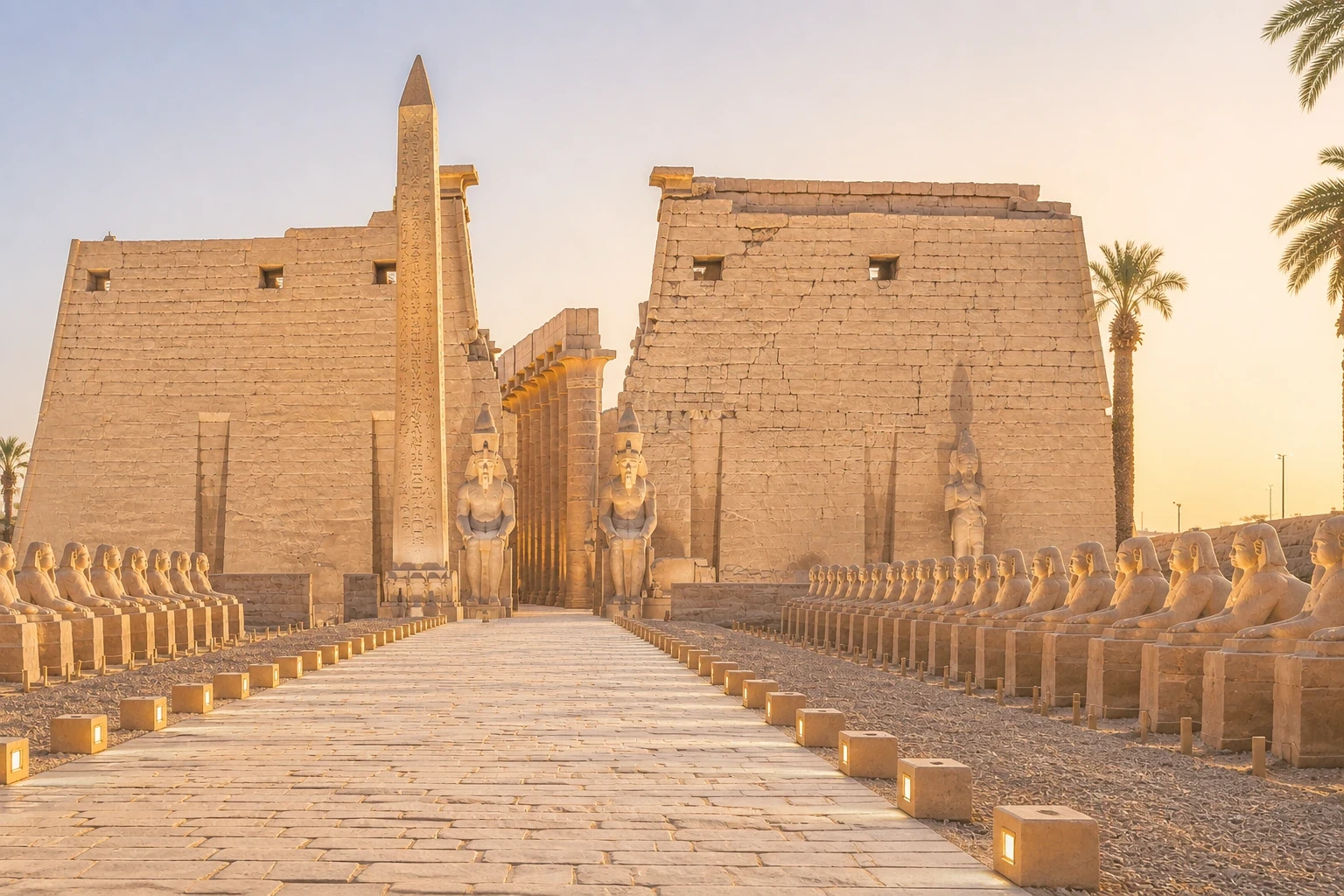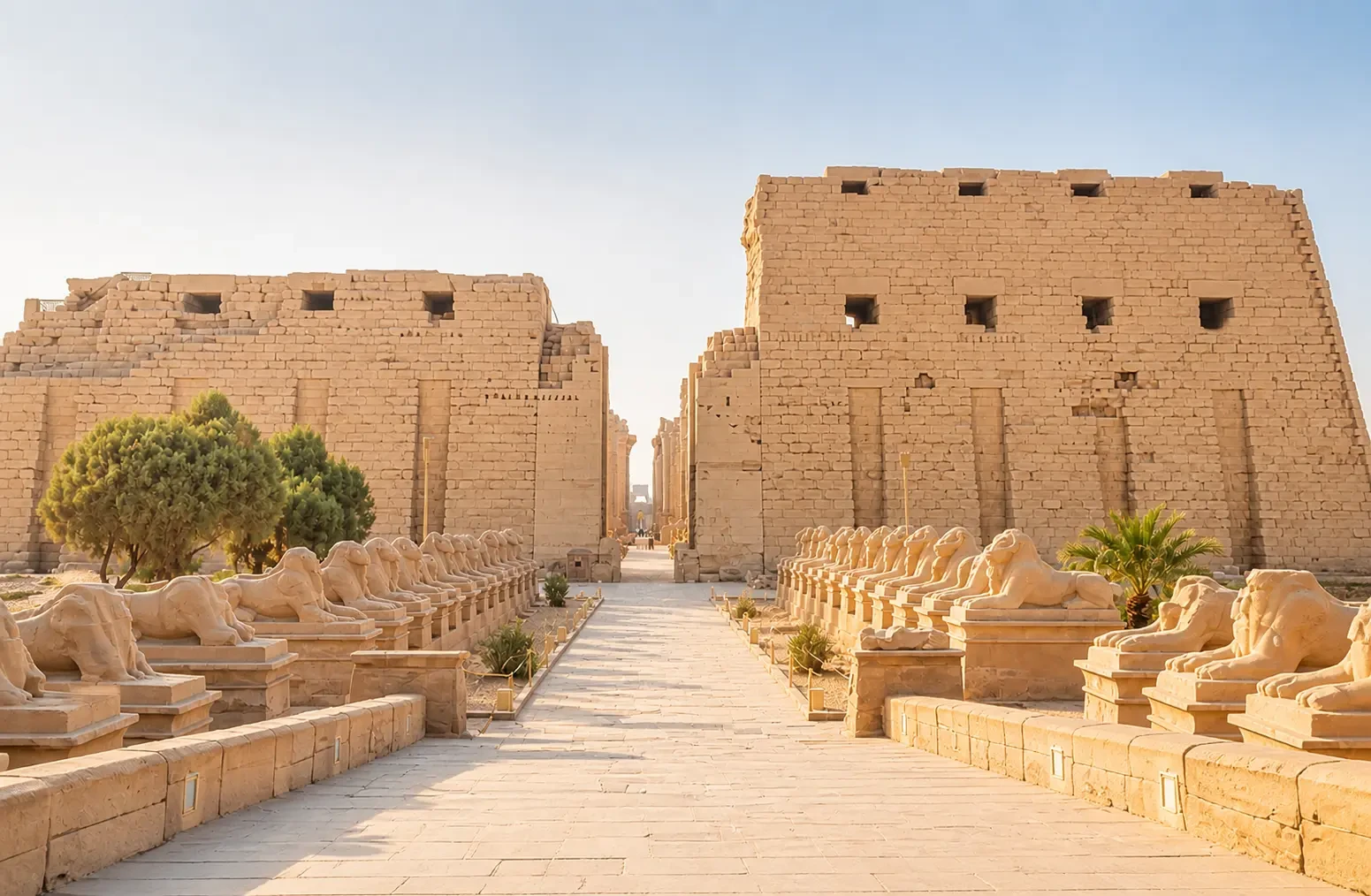


Luxor Museum is one of the finest and most beautifully curated archaeological museums in the entire world, and a destination that every traveler to Egypt must experience. Located on the east bank of the Nile River in the city of Luxor, ancient Thebes, the Museum of Luxor stands as an elegant and essential companion to the great open-air monuments of the surrounding region, presenting the finest artifacts recovered from Luxor Temple, Karnak Temple, the Valley of the Kings, and the many tombs and temples of the Theban necropolis in a world-class setting purpose-built to do them justice. This exceptional institution sits at the heart of some of Egypt's greatest travel experiences, including Luxor Tours, Luxor Day Tours, Luxor East Bank Tours, Luxor West Bank Tours, Luxor Museum Tours, Dahabiya Nile River Cruises, and Luxor Aswan Nile River Cruises, all of which WOW Egypt Tours proudly offers to travelers from around the world. The Museum of Luxor is also a highlight of Egypt Tours Packages, Egypt Travel Packages, and Safaga Shore Excursions, making it one of the most rewarding cultural stops available anywhere in Upper Egypt.
Opened in 1975 and significantly expanded in 2004, the Luxor Museum was designed specifically to house and display artifacts from the Theban region in conditions of exceptional quality, in stark contrast to the overcrowded galleries of older Egyptian institutions. Every object in the museum has been selected for its outstanding artistic, historical, or archaeological significance, and every display has been conceived to allow visitors to appreciate each piece with the care and attention it deserves. Visiting the Museum of Luxor is not simply a museum visit; it is an intimate encounter with some of the most extraordinary objects ever created by ancient Egyptian civilization, presented in a setting that honors both the objects and the visitor.
Over the decades since its founding, the Luxor Museum has grown to house an exceptional collection that spans more than three millennia of ancient Egyptian history, from the Middle Kingdom to the Byzantine period, with particular strength in the New Kingdom masterpieces of the 18th and 19th Dynasties that represent the golden age of ancient Thebes.

Who Founded The Luxor Museum In Egypt?
The Luxor Museum was founded under the direction of the Egyptian Antiquities Organization, which is today known as the Egyptian Ministry of Tourism and Antiquities, and was opened to the public in 1975. The original museum building was designed by the Egyptian architect Mahmoud El-Hakim and was conceived from the outset as a showcase institution, intended to demonstrate that Egyptian artifacts could be displayed to international standards within Egypt itself rather than being sent abroad. The museum was significantly extended in 2004 with a new wing that doubled its exhibition space and allowed for the display of major new acquisitions including the Royal Mummies Hall and the Military Gallery from the reign of Ahmose I. The Museum of Luxor continues to be administered by the Egyptian Ministry of Tourism and Antiquities and remains one of the most celebrated regional museums in the Middle East and North Africa.
What Is The Luxor Museum Known For?
The Museum of Luxor is known above all for the exceptional quality of its collection and the exceptionally high standards of its display. Unlike larger institutions such as the Egyptian Museum in Cairo, the Luxor Museum was designed from the beginning as a selective rather than comprehensive collection, containing only the finest and most significant objects recovered from the Theban region. The museum is particularly celebrated for the extraordinary cache of statues discovered beneath the floor of the Courtyard of Amenhotep III at Luxor Temple in 1989, for its collection of royal mummies including those of Ahmose I and Ramesses I, for the stunning Military Gallery from the reign of Ahmose I decorated with carved scenes of his campaigns against the Hyksos, and for its collection of New Kingdom masterpieces including a remarkable painted head of Amenhotep III and the celebrated Tutankhamun cow-head statue. The quality of individual pieces in the Museum of Luxor rivals anything on display in any museum in the world.
Luxor Museum Location In Egypt
The Museum of Luxor is located on the east bank of the Nile River in the city of Luxor, directly along the Corniche el-Nile road, the main riverside boulevard of modern Luxor, approximately midway between Luxor Temple to the south and Karnak Temple to the north. Its central riverside location makes the museum an ideal stop within all Luxor East Bank Tours arranged by WOW Egypt Tours, and it is one of the most conveniently situated cultural institutions in Egypt, easily reached on foot from most hotels in central Luxor and within easy taxi or calèche distance from all parts of the city.
Luxor Museum Fun Facts
The Museum of Luxor contains fewer than 400 objects on permanent display, making it one of the most selective major archaeological museums in the world. Every single object in the collection has been chosen for its exceptional quality or significance, meaning that the Luxor Museum offers an experience of concentrated excellence that is impossible to find in larger institutions where masterpieces are inevitably diluted by the sheer volume of the collection.
The museum's 2004 expansion wing was built specifically to house two of its most extraordinary acquisitions: a wall of reconstructed talatat blocks from the temple of Akhenaten at Karnak, which had been dismantled after the heretic pharaoh's death and used as fill inside the pylons of Karnak Temple, and the Royal Mummies Hall containing the actual mummified remains of two of ancient Egypt's greatest rulers, Ahmose I, the founder of the New Kingdom and liberator of Egypt from the Hyksos invaders, and Ramesses I, the founder of the great 19th Dynasty. The lighting throughout the museum is specifically calibrated to preserve the ancient pigments on painted objects while simultaneously presenting them in the most flattering possible conditions for visitors.
Why Is The Luxor Museum Called By This Name In Egypt?
The museum takes its name directly from the city in which it is located. The word Luxor itself derives from the Arabic Al-Uqsur, meaning the palaces or the fortresses, a name given by Arab settlers who observed the enormous ruins of Luxor Temple and Karnak Temple rising above the modern city and likened their vast halls and chambers to the palatial fortresses of a great city. The Luxor Museum was given its name to identify it specifically with the city and the Theban region whose archaeological heritage it exists to preserve and celebrate, distinguishing it from the national collections of the Egyptian Museum in Cairo and the grand new Grand Egyptian Museum at Giza.
Luxor Museum History
The origins of the Luxor Museum lie in the recognition by Egyptian cultural authorities in the 1960s and early 1970s that the exceptional concentration of archaeological discoveries being made in the Luxor region deserved a dedicated institution of the highest quality, separate from the already overcrowded Egyptian Museum in Cairo. Construction of the original museum building began in the early 1970s under the design of architect Mahmoud El-Hakim, and the museum was formally opened to the public in 1975. From its opening, the Museum of Luxor was recognized internationally as a model for how archaeological museums should be designed and operated, with its spacious galleries, carefully controlled lighting, and rigorous selectivity of display setting new standards for the presentation of ancient Egyptian artifacts.
In 1989, the museum's collection was enormously enriched by the accidental discovery of the Luxor Temple Cachette, a buried deposit of more than 20 large stone statues found beneath the floor of the Courtyard of Amenhotep III during routine restoration work. Several of the finest pieces from this extraordinary find were immediately transferred to the Luxor Museum. In 2004, the museum underwent a major expansion that doubled its floor area and added the new wing containing the Royal Mummies Hall and the Military Gallery, cementing its status as one of the most important museums in Egypt.
The Story Of The Luxor Museum Collection
The collection of the Luxor Museum came together through more than a century of archaeological work across the entire Theban region, combined with a deliberate policy of selecting only the finest pieces from among the thousands of objects recovered. The founding collection was drawn from artifacts that had been held in storage by the Egyptian Antiquities Organization following excavations at Luxor Temple, Karnak Temple, the Valley of the Kings, the Valley of the Queens, and the many private tombs of the Theban necropolis on the West Bank.
The museum's collection was dramatically transformed by the 1989 discovery of the Luxor Temple Cachette, which provided a group of large-scale sculptural masterpieces of extraordinary quality. The 2004 expansion further enriched the collection with the installation of the Military Gallery, featuring a stunning wall of carved relief blocks from a structure built by Ahmose I at Karnak to celebrate his expulsion of the Hyksos from Egypt, and the Royal Mummies Hall, which brought two of ancient Egypt's most historically significant royal mummies into the museum's permanent collection for the first time.
Luxor Museum Architecture
The Entrance Hall And Main Staircase
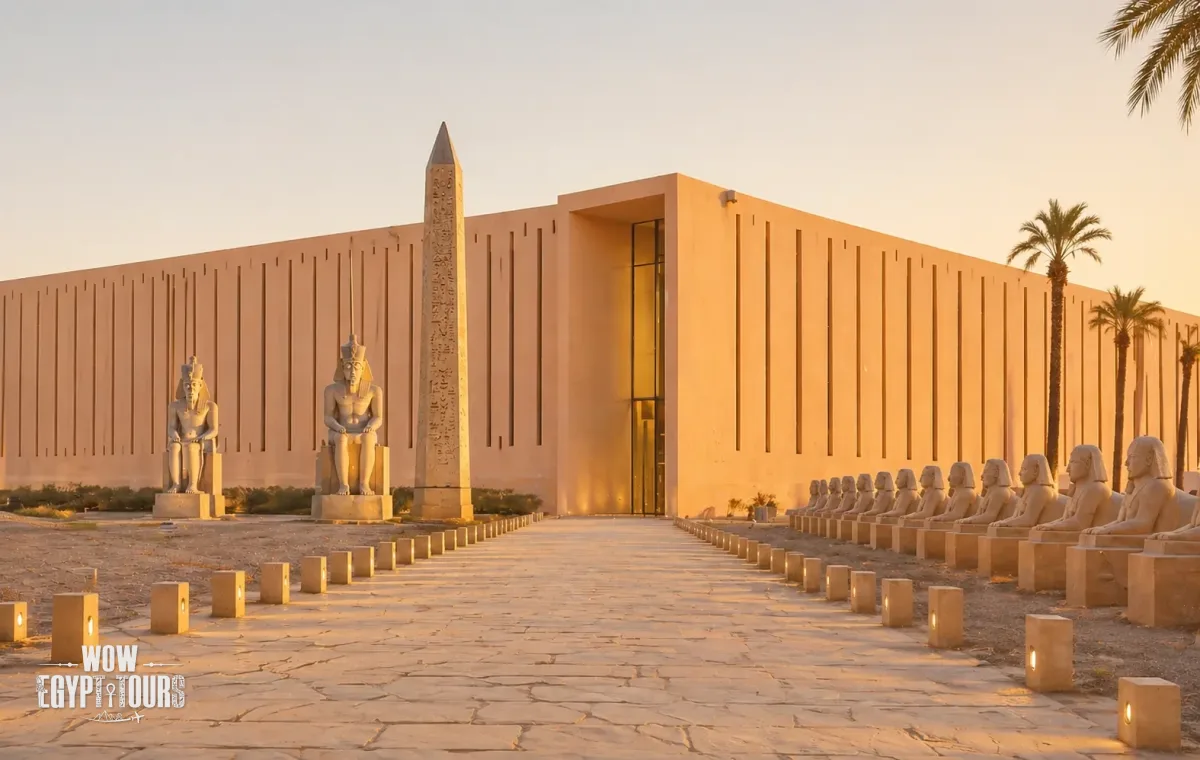
The Luxor Museum is housed in a purpose-built building on the Corniche el-Nile that was designed to take advantage of its riverside location and to create an atmosphere of quiet dignity appropriate to the quality of its collection. The entrance hall leads visitors into a soaring interior space where carefully calibrated lighting creates an atmosphere that is simultaneously modern and reverential, allowing each displayed object to be encountered individually and with full attention. The main staircase connecting the ground floor galleries to the upper level provides views across multiple display areas and gives the museum an openness and flow that encourages leisurely exploration rather than the crowded, hurried experience typical of larger institutions.
The Ground Floor Galleries
The ground floor galleries of the Museum of Luxor house the core of the permanent collection, presenting objects from the New Kingdom period of ancient Egyptian history with exceptional care. The displays are organized thematically and chronologically, allowing visitors to move from the early New Kingdom through the reign of Amenhotep III, the Amarna Period, the reign of Tutankhamun, the Ramessid Period, and beyond in a logical and enlightening sequence. Individual objects are given generous space and precise lighting, allowing their carved details, painted surfaces, and sculptural forms to be appreciated in conditions that no photograph can fully replicate.
The Luxor Temple Cachette Gallery
One of the most celebrated spaces within the Luxor Museum is the gallery dedicated to the statues recovered from the Luxor Temple Cachette of 1989. This extraordinary hoard of more than 20 large-scale stone statues was discovered buried beneath the floor of the Courtyard of Amenhotep III at Luxor Temple during routine restoration work, apparently having been buried by the priests of Amun at some point in the Late Period when the courtyard was being cleared for new construction. The statues represent a range of deities and royal figures spanning several centuries, and several pieces are among the finest examples of ancient Egyptian large-scale sculpture ever discovered. Their presence in the Museum of Luxor is one of the primary reasons that this institution is considered essential viewing for any visitor to Luxor.
The Military Gallery Of Ahmose I
The 2004 expansion wing of the Luxor Museum contains the Military Gallery, one of the most historically significant spaces in the entire museum. The gallery is dominated by a reconstructed wall of carved relief blocks from a structure built by Pharaoh Ahmose I at Karnak to commemorate his military campaigns against the Hyksos, the Asiatic rulers who had occupied Lower Egypt for more than a century before Ahmose I launched the wars of liberation that established the New Kingdom. The carved scenes on these blocks represent the earliest surviving narrative battle reliefs from ancient Egypt, predating the more famous battle scenes of Ramesses II by more than two centuries, and their preservation and display in the Museum of Luxor represents one of the most significant achievements of Egyptian archaeological conservation in the modern era.
The Royal Mummies Hall
Adjacent to the Military Gallery in the 2004 expansion wing, the Royal Mummies Hall houses the preserved remains of two of the most historically significant rulers of ancient Egypt. The mummy of Ahmose I, the founder of the New Kingdom and the pharaoh who expelled the Hyksos and reunified Egypt under native rule, rests in a climate-controlled display case alongside the mummy of Ramesses I, the founder of the great 19th Dynasty and grandfather of Ramesses II the Great. Both mummies were part of the great royal cache discovered at Deir el-Bahari in the 19th century and were later transferred from the Egyptian Museum in Cairo to the Luxor Museum, returning these ancient rulers to the region where they lived and were originally buried. The Royal Mummies Hall is among the most moving and historically resonant spaces in any museum in Egypt.
The Akhenaten Talatat Wall
One of the most visually dramatic features of the Museum of Luxor is the reconstructed wall of talatat blocks from the reign of the pharaoh Akhenaten, displayed in the 2004 expansion wing. Talatat are the small standardized sandstone blocks that Akhenaten used to construct his temples to the Aten sun disk at Karnak before the traditional religion was restored and his monuments were dismantled. Thousands of these blocks were used as fill inside the pylons of Karnak Temple and were discovered by archaeologists when the pylons were dismantled for conservation. A selection of the finest blocks have been painstakingly reassembled in the Luxor Museum to reconstruct a section of original wall decoration, offering a rare and extraordinary glimpse into the art and iconography of the Amarna Period, when Akhenaten briefly transformed Egyptian art, religion, and culture in the most radical revolution in the history of ancient Egypt.
The Upper Floor Galleries
The upper floor galleries of the Museum of Luxor continue the chronological and thematic presentation of the collection, with particular strength in objects from the New Kingdom and the Late Period. Among the highlights of the upper galleries are a stunning painted limestone head of Amenhotep III, considered one of the finest royal portraits from the entire New Kingdom; a remarkable quartzite head of Senusret III from the Middle Kingdom; a painted wooden statue of the god Amun in the form of a ram protecting the king; and numerous ushabti figures, canopic jars, jewelry, and small-scale objects of exceptional craftsmanship that reward close and careful attention.
Why Is The Luxor Museum Important?
The Museum of Luxor holds a unique place in Egyptian cultural life because it is the only major museum in Egypt dedicated exclusively to the heritage of a single region, and because that region, ancient Thebes, was the most important center of ancient Egyptian civilization during the New Kingdom period, the greatest era of pharaonic power, wealth, and artistic achievement. The museum's collection includes objects of a quality and historical significance that rival the finest pieces in any museum in the world, and its policy of rigorous selectivity means that every single object on display is worthy of extended attention.
The discovery and display of the Luxor Temple Cachette statues alone would be sufficient to make the Luxor Museum one of the most important archaeological institutions in Egypt. The addition of the Royal Mummies Hall, the Military Gallery of Ahmose I, and the Akhenaten Talatat Wall has made it an indispensable destination for any serious visitor to Luxor and an essential stop on any Egypt Tours Package or Egypt Travel Package covering Upper Egypt.
What Are Some Interesting Facts About The Luxor Museum?
The Tutankhamun Cow-Head Statue
Among the most celebrated individual objects in the Luxor Museum collection is a magnificent gilded wooden statue of the goddess Hathor in the form of a sacred cow, with the young king Tutankhamun standing beneath her head receiving her divine protection. This extraordinary piece was discovered in the tomb of Tutankhamun in the Valley of the Kings by Howard Carter during his famous 1922 excavation and was later transferred from the Egyptian Museum in Cairo to the Museum of Luxor, where it is now one of the most photographed objects in the collection. The statue is a masterpiece of New Kingdom craftsmanship, combining technical virtuosity with profound religious symbolism, and its presence in the Luxor Museum gives the institution a direct connection to the most famous archaeological discovery ever made in the Theban region.
The Painted Head Of Amenhotep III
One of the greatest treasures of the Museum of Luxor is a painted limestone head of Pharaoh Amenhotep III, recovered from his funerary temple on the West Bank of Luxor. The head, which is approximately life-size, retains exceptional traces of its original painted surface, including the blue of the king's crown, the red-ochre of his skin, and the precise cosmetic lines around his eyes. It is considered by many Egyptologists to be among the finest surviving royal portraits from the entire New Kingdom and represents the pinnacle of the extraordinary artistic tradition that flourished at the court of Amenhotep III, the builder of Luxor Temple. Its display in the Luxor Museum, within sight of the temple for whose decoration it was created, gives it an additional resonance that no museum in the world could replicate.
The Statue Of Thutmose III
The Museum of Luxor houses one of the most powerful royal portraits in ancient Egyptian art: a greywacke statue of Thutmose III, the great warrior pharaoh and prolific builder of Karnak Temple, depicted in a pose of calm divine authority. The statue was discovered during excavations at Karnak Temple and is considered one of the masterpieces of 18th Dynasty royal sculpture, combining idealized physical perfection with an impression of genuine individual character that is rare in ancient Egyptian art. Its display in the Luxor Museum, within the city where Thutmose III built his greatest monuments, makes it one of the most emotionally resonant encounters available to visitors to ancient Thebes.
What Is So Special About The Luxor Museum?
The Quality Of Display
What truly sets the Luxor Museum apart from every other archaeological museum in Egypt is the exceptional quality of its display environment. The museum's galleries are never overcrowded, its lighting is among the finest of any museum in the world, its labeling is clear and informative in both Arabic and English, and the spacing of objects allows every piece to be encountered individually and with full attention. In a country whose national museum in Cairo has long been criticized for overcrowding, inadequate lighting, and dated display practices, the Museum of Luxor represents a completely different standard of visitor experience, one that does full justice to the extraordinary objects it contains.
An Intimate Encounter With Ancient Egypt's Greatest Art
Because the Luxor Museum contains fewer than 400 objects on permanent display, a visit to the museum is an intimate rather than overwhelming experience. Visitors are not confronted with the sheer volume of material that characterizes larger institutions but are instead invited to spend time with individual objects, to notice the extraordinary detail of carved hieroglyphic inscriptions, the delicate modeling of a sculptured face, or the remaining traces of paint on a limestone relief. This quality of attention that the Museum of Luxor makes possible is genuinely rare in the world of archaeological museums and is one of the primary reasons that many visitors who have seen the Egyptian Museum in Cairo consider the Luxor Museum to offer a more deeply satisfying encounter with ancient Egyptian art.
Luxor Museum Through The Ages: From Ancient Egypt To The Present
The objects in the Luxor Museum span more than three thousand years of ancient Egyptian history, from the Middle Kingdom statues of Senusret III and the military reliefs of Ahmose I through the New Kingdom masterpieces of the 18th and 19th Dynasties to the Late Period and Ptolemaic objects that represent the final flowering of the ancient Egyptian artistic tradition. The museum building itself represents the best of Egyptian institutional architecture of the 1970s, updated and greatly enriched by the 2004 expansion that added the new wing and brought the Royal Mummies Hall and Military Gallery into the collection.
Today the Museum of Luxor continues to be managed by the Egyptian Ministry of Tourism and Antiquities and receives visitors from every country in the world, serving as a model for how regional archaeological museums can present the heritage of a specific place with exceptional quality and care. Conservation and documentation work continues at the museum, and its collection continues to grow as new discoveries are made across the Theban region.
Luxor Museum UNESCO World Heritage Site
The Museum of Luxor is not itself a UNESCO World Heritage Site, but it is the primary museum institution serving the Ancient Thebes with its Necropolis UNESCO World Heritage Site, inscribed in 1979. This designation recognizes the outstanding universal value of the entire Theban region, which includes Luxor Temple, Karnak Temple, the Valley of the Kings, the Valley of the Queens, and the many temples and tombs of the West Bank of the Nile. The Luxor Museum houses objects recovered from across this entire World Heritage landscape, making it the institutional guardian of a significant portion of the most important archaeological heritage in the world.
Best Time To Visit The Luxor Museum
The best time to visit the Luxor Museum is during the cooler months from October through April, when temperatures in Luxor are moderate and the city is at its most comfortable for outdoor exploration between museum visits. Because the Museum of Luxor is a fully enclosed and air-conditioned interior environment, it is one of the most comfortable places to spend time in Luxor during the intensely hot summer months from May to September, when daytime temperatures regularly exceed 40 degrees Celsius and outdoor sites such as Luxor Temple and Karnak Temple can be extremely demanding. WOW Egypt Tours recommends scheduling a museum visit during the middle of the day in summer, when the outdoor monuments are at their most uncomfortable, reserving the early morning and late afternoon for the open-air sites.
Luxor Museum Opening Hours
The Museum of Luxor is open to visitors every day of the week, including public holidays. The museum opens at 9:00 AM and closes at 4:00 PM during the winter months from October to April, and remains open from 9:00 AM to 9:00 PM during the summer months from May to September, with the extended evening hours providing a welcome refuge from the heat of the summer afternoon. Visitors who prefer a quieter experience should arrive early in the morning when the galleries are at their calmest and the quality of attention possible in front of individual objects is at its highest.
Luxor Museum Entrance Fees
Adults: EGP 400
Students: EGP 200
Royal Mummies Hall: EGP 100 additional
Visitors should keep their ticket throughout the visit as it may be checked at multiple points inside the museum. Entrance fees are included in all Museum of Luxor Tours, Egypt Tours Packages, and Safaga Shore Excursions booked through WOW Egypt Tours.
How To Get To The Luxor Museum
The Museum of Luxor is located directly on the Corniche el-Nile road on the east bank of the Nile in central Luxor, approximately midway between Luxor Temple to the south and Karnak Temple to the north. Its riverside location makes it one of the most easily accessible cultural institutions in Egypt. Visitors staying in central Luxor can walk to the museum from most hotels along the Corniche in under fifteen minutes. Those staying further from the Corniche can reach the museum by taxi, tuk-tuk, or horse-drawn calèche in a matter of minutes from any part of the city.
Visitors arriving by air land at Luxor International Airport approximately 7 kilometers east of the museum, with taxis and ride-hailing apps readily available. Those traveling from Cairo or Aswan by train arrive at Luxor Railway Station a short taxi ride from the museum. Nile cruise ships dock along the Corniche within walking distance of the museum entrance. Visitors coming from the West Bank can use the public Nile ferry and connect to local transport on the East Bank. All Luxor Tours, Luxor Day Tours, and Safaga Shore Excursions with WOW Egypt Tours include private air-conditioned transportation directly to and from the Luxor Museum.
How Long To Spend At The Luxor Museum
Most visitors spend between one and two hours exploring the Luxor Museum, which is sufficient time to move through both floors of the permanent collection and spend quality time with the major highlights including the Cachette Gallery, the Military Gallery, the Royal Mummies Hall, and the Akhenaten Talatat Wall. Visitors with a deeper interest in ancient Egyptian art history or Egyptology may wish to allow two to three hours to fully appreciate the collection. The relatively compact size of the museum means that it is never necessary to rush, and its exceptional display quality rewards the kind of slow, attentive viewing that larger institutions rarely permit. A visit to the Museum of Luxor is ideally combined with visits to Luxor Temple and Karnak Temple on the same day, as the museum provides an intimate indoor counterpoint to the overwhelming outdoor scale of the great temple complexes.
Tips For Visiting The Luxor Museum
Arrive early in the morning or plan your visit during the middle of the day in summer, when the air-conditioned galleries provide a welcome respite from the heat outside. The museum is relatively compact and never as crowded as larger institutions, making it a reliably comfortable and peaceful experience at any time of day. Photography with a smartphone or standard camera is permitted throughout most of the museum, though flash photography is strictly prohibited near all painted and gilded objects. A licensed Egyptologist guide is strongly recommended for a full understanding of the objects on display. Allow extra time for the Royal Mummies Hall and the Military Gallery in the 2004 expansion wing, as these are among the most historically significant spaces in the museum and reward extended attention. Combine your museum visit with a walk along the Corniche between Luxor Temple and Karnak Temple to understand the geographical setting of the ancient city whose heritage the museum preserves.
What To Wear At The Luxor Museum
The Luxor Museum is a fully enclosed and air-conditioned interior environment, making it one of the most comfortable places to visit in Luxor regardless of the season. Because the museum is air-conditioned, visitors should bring a light layer or jacket during the summer months, when the contrast between the intense outdoor heat and the cool interior can be significant. Modest dress is always advisable when visiting any cultural institution in Egypt. Comfortable flat shoes are recommended as the museum floors are polished stone. There is no strict dress code for the Museum of Luxor beyond the general standards of modesty appropriate to any public institution in Egypt.
Photography At The Luxor Museum
Personal photography with a smartphone or camera is permitted throughout most areas of the Museum of Luxor. The museum's exceptional lighting, which has been specifically calibrated to show each object at its best, also makes it one of the most rewarding indoor photography environments in any museum in Egypt. Flash photography is strictly prohibited throughout the entire museum, as the intense light can cause irreversible damage to ancient painted and gilded surfaces. The Royal Mummies Hall has specific photography restrictions that should be observed as indicated by museum signage. For professional photography or commercial filming with specialized equipment, a separate permit is required from Egypt's Ministry of Tourism and Antiquities.
Luxor Museum Tours
Single Attraction Visit: Luxor Museum Tour
This tour covers the Luxor Museum as a standalone visit. It is suitable for travelers with a particular interest in ancient Egyptian art and archaeology, visitors who wish to complement a previous visit to Luxor Temple or Karnak Temple with an in-depth museum experience, or those who want to encounter the finest objects from the Theban region in the exceptional display conditions that only the Museum of Luxor provides.
What Is Covered
Full guided visit of the Luxor Museum including the ground floor galleries, the Luxor Temple Cachette Gallery, the upper floor galleries, the Military Gallery of Ahmose I, the Royal Mummies Hall, and the Akhenaten Talatat Wall. All major highlights of the permanent collection including the Tutankhamun cow-head statue, the painted head of Amenhotep III, the statue of Thutmose III, and the Cachette statues from Luxor Temple.
Duration
1.5 to 2 hours inside the museum.
Includes
Private transportation, private licensed Egyptologist guide, and entrance fees including the Royal Mummies Hall. Available for morning and afternoon departures.
Luxor East Bank Tours: Luxor Museum, Luxor Temple, Karnak Temple And Mummification Museum
This full-day tour covers the four main sites on the East Bank of Luxor. It is suitable for travelers who want a complete East Bank experience in a single day, combining the great open-air temple complexes with Luxor's two main museums.
What Is Covered
Karnak Temple with a full guided visit of the main precinct, including the Great Hypostyle Hall, the Sacred Lake, the obelisks of Hatshepsut and Thutmose I, and the Open Air Museum. The Avenue of Sphinxes connecting Karnak Temple to Luxor Temple. Luxor Temple including the entrance pylon, the courtyard of Ramesses II, the great colonnade, the courtyard of Amenhotep III, and the inner halls and Holy of Holies. The Luxor Museum with a full guided visit of all galleries including the Cachette Gallery, the Military Gallery, the Royal Mummies Hall, and the Akhenaten Talatat Wall. The Mummification Museum covering the tools, methods, and materials used in ancient Egyptian embalming.
Duration
Full day, approximately 6 to 7 hours.
Includes
Private air-conditioned transportation, private licensed Egyptologist guide, and entrance fees to all four sites including the Royal Mummies Hall. Available for morning departures.
Luxor West Bank Tours: Valley Of The Kings, Hatshepsut Temple And More
This full-day tour covers the major sites on the West Bank of Luxor, the ancient burial ground of the pharaohs. It is suitable for travelers who want to visit the royal tombs, mortuary temples, and monuments across the Nile from Luxor city.
What Is Covered
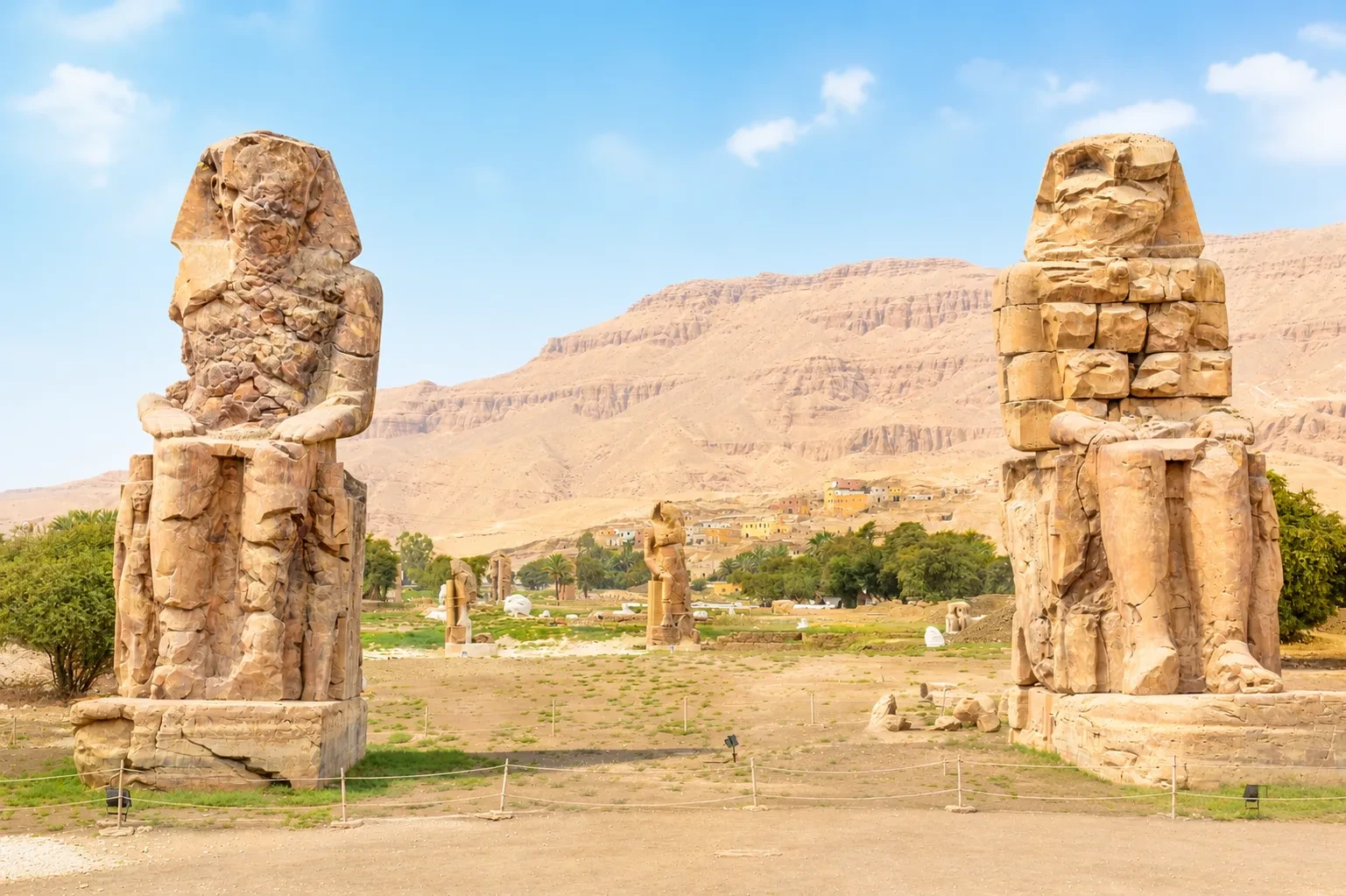
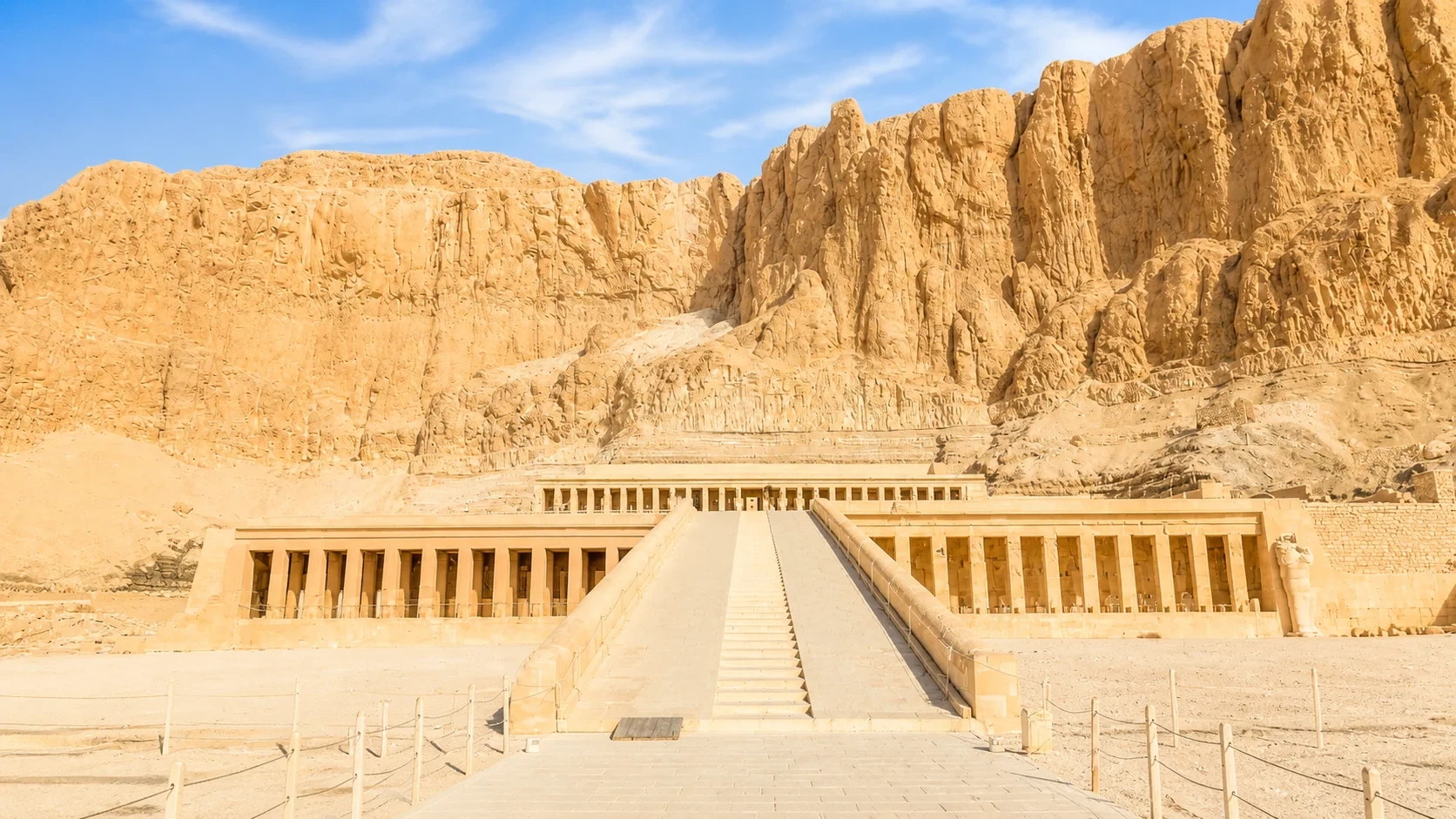
The Valley of the Kings with entry to three royal tombs, including options to visit the tombs of Tutankhamun, Ramesses II, Seti I, Ramesses III, and others depending on availability. The Temple of Hatshepsut at Deir el-Bahari, a three-tiered mortuary temple built into the limestone cliffs. The Colossi of Memnon, two 18-meter seated statues of Amenhotep III. Optional extensions include the Valley of the Queens, the Ramesseum, and Medinet Habu Temple.
Duration
Full day, approximately 6 to 7 hours.
Includes
Private air-conditioned transportation, private licensed Egyptologist guide, and entrance fees to the main sites. Available for morning departures.
Luxor Day Tours: Combined East Bank And West Bank
This full-day combined tour covers the most important sites on both banks of the Nile in Luxor in a single day. It is the most comprehensive Luxor Day Tour available and is suitable for travelers with one day in Luxor who want to cover both the East Bank temples and museums and the West Bank tombs and mortuary temples.
What Is Covered
East Bank: Karnak Temple including the Great Hypostyle Hall and Sacred Lake, the Avenue of Sphinxes, Luxor Temple, and the Museum of Luxor. West Bank: Valley of the Kings with three tomb entries, Temple of Hatshepsut at Deir el-Bahari, and the Colossi of Memnon.
Duration
Full day, approximately 8 to 9 hours.
Includes
Private air-conditioned transportation, Nile crossing, private licensed Egyptologist guide, and entrance fees to all sites including the Luxor Museum and Royal Mummies Hall. Available for morning departures.
Safaga Shore Excursions To The Luxor Museum
Safaga Port is located on the Red Sea coast, approximately 250 kilometers (155 miles) from Luxor. WOW Egypt Tours operates Safaga Shore Excursions that transfer cruise ship passengers from Safaga Port to Luxor and back within a single port day. The transfer is approximately 2.5 to 3 hours each way by private air-conditioned vehicle.
What Is Covered
Karnak Temple with a full guided visit including the Great Hypostyle Hall and the Sacred Lake. The Avenue of Sphinxes connecting Karnak Temple to Luxor Temple. Luxor Temple including the entrance pylon, the great colonnade, and the inner courts. The Luxor Museum with a guided visit to the main galleries and highlights, subject to available time.
Duration
Full day from port departure to port return, approximately 12 to 13 hours including transfers.
Includes
Private air-conditioned vehicle from Safaga Port, private licensed Egyptologist guide, entrance fees to all included sites, and return transfer to the ship. All Safaga Shore Excursions are coordinated around each ship's port schedule to guarantee return to the vessel before departure.
Dahabiya Nile River Cruise
A Dahabiya Nile River Cruise is a small-vessel sailing experience on the Nile between Luxor and Aswan aboard a traditional wooden dahabiya. WOW Egypt Tours operates dahabiya cruises with private cabins, all meals, a private licensed Egyptologist guide on board, and guided shore excursions at every stop.
4 Days 3 Nights Dahabiya Nile River Cruise From Aswan To Luxor
Route: Aswan to Luxor, sailing north.
Itinerary
Day 1: Embarkation in Aswan. Visit to Philae Temple and the Unfinished Obelisk. Sail north to Kom Ombo. Guided visit to Kom Ombo Temple. Continue to Gebel el Silsila. Overnight on board.
Day 2: Guided visit to Gebel el Silsila. Sail to the Village of Basaw. Guided visit to Village of Basaw. Continue to Edfu. Guided visit to the Temple of Horus at Edfu. Overnight on board.
Day 3: Sail to El Kab. Guided visit to El Kab Tombs. Sail to El Hagaz Island. Swimming Stop. Overnight on board.
Day 4: Sail to Esna. Visit Khnum Temple at Esna. Disembarkation in Esna. Transfer to Luxor, approximately 55 kilometers (35 miles).
Includes
Private cabin, all meals on board, private licensed Egyptologist guide, entrance fees to all temple visits, and private transfers.
5 Days 4 Nights Dahabiya Nile River Cruise From Luxor To Aswan
Route: Luxor to Aswan, sailing south.
Itinerary
Day 1: Embarkation in Luxor. Transfer to Esna, approximately 55 kilometers (35 miles). Visit Khnum Temple at Esna. Sail to El Hagaz Island. Overnight on board.
Day 2: Sail to El Kab. Guided visit to El Kab Tombs. Continue to Edfu. Guided visit to the Temple of Horus at Edfu. Sail to the Village of Basaw. Guided visit to Village of Basaw. Overnight on board.
Day 3: Sail to Gebel el Silsila. Guided visit to Gebel el Silsila. Sail south to Kom Ombo. Guided visit to Kom Ombo Temple. Sail to Daraw Village. Overnight on board.
Day 4: Guided visit to Daraw Village. Sail to Herbiab Island. Swimming Stop. Philae Sound & Light Show. Overnight on board.
Day 5: Optional Abu Simbel visit available by Air or Road. Guided visits to Philae Temple, the High Dam, and the Unfinished Obelisk. Disembarkation in Aswan.
Includes
Private cabin, all meals on board, private licensed Egyptologist guide, entrance fees to all temple visits, and private transfers.
8 Days 7 Nights Dahabiya Nile River Cruise Round Trip From Luxor (Via Aswan)
Route: Luxor & Aswan, sailing north & south.
Itinerary
Day 1: Embarkation in Luxor. Transfer to Esna, approximately 55 kilometers (35 miles). Visit Khnum Temple at Esna. Sail to El Hagaz Island. Overnight on board.
Day 2: Sail to El Kab. Continue to Edfu. Guided visit to the Temple of Horus at Edfu. Sail to the Village of Basaw. Guided visit to Village of Basaw. Overnight on board.
Day 3: Sail to Gebel el Silsila. Sail south to Kom Ombo. Guided visit to Kom Ombo Temple. Sail to Daraw Village. Overnight on board.
Day 4: Guided visit to Daraw Village. Sail to Herbiab Island. Swimming Stop. Philae Sound & Light Show. Overnight on board.
Day 5: Optional Abu Simbel visit available by Air or Road. Guided visits to Philae Temple, the High Dam, and the Unfinished Obelisk. Sail north to Kom Ombo. Continue to Gebel el Silsila. Overnight on board.
Day 6: Guided visit to Gebel el Silsila. Sail to the Village of Basaw. Continue to Edfu. Overnight on board.
Day 7: Sail to El Kab. Guided visit to El Kab Tombs. Sail to El Hagaz Island. Swimming Stop. Overnight on board.
Day 8: Disembarkation in Esna. Transfer to Luxor, approximately 55 kilometers (35 miles).
Includes
Private cabin, all meals on board, private licensed Egyptologist guide, entrance fees to all temple visits, and private transfers.
8 Days 7 Nights Dahabiya Nile River Cruise Round Trip From Aswan (Via Luxor)
Route: Luxor & Aswan, sailing north & south.
Itinerary
Day 1: Embarkation in Aswan. Visit to Philae Temple and the Unfinished Obelisk. Sail north to Kom Ombo. Continue to Gebel el Silsila. Overnight on board.
Day 2: Guided visit to Gebel el Silsila. Sail to the Village of Basaw. Continue to Edfu. Overnight on board.
Day 3: Sail to El Kab. Guided visit to El Kab Tombs. Sail to El Hagaz Island. Swimming Stop. Overnight on board.
Day 4: Sail to Esna. Visit Khnum Temple at Esna. Sail to El Hagaz Island. Overnight on board.
Day 5: Sail to El Kab. Continue to Edfu. Guided visit to the Temple of Horus at Edfu. Sail to the Village of Basaw. Guided visit to Village of Basaw. Overnight on board.
Day 6: Sail to Gebel el Silsila. Sail south to Kom Ombo. Guided visit to Kom Ombo Temple. Sail to Daraw Village. Overnight on board.
Day 7: Guided visit to Daraw Village. Sail to Herbiab Island. Swimming Stop. Philae Sound & Light Show. Overnight on board.
Day 8: Disembarkation in Aswan.
Includes
Private cabin, all meals on board, private licensed Egyptologist guide, entrance fees to all temple visits, and private transfers.
Luxor And Aswan Nile River Cruise
The Luxor and Aswan Nile River Cruise is a standard Nile cruise product operated aboard a full-size cruise ship between Luxor and Aswan. WOW Egypt Tours operates this cruise in both directions with private licensed Egyptologist guides, all meals included, private cabins, and guided shore excursions at every port of call.
5 Days 4 Nights Luxor And Aswan Nile River Cruise From Aswan To Luxor
Route: Aswan to Luxor, sailing north.
Itinerary
Day 1: Embarkation in Aswan. Guided visits to Philae Temple, the High Dam, and the Unfinished Obelisk. Overnight on board in Aswan.
Day 2: Sail north to Kom Ombo. Guided visit to Kom Ombo Temple. Continue to Edfu. Overnight on board.
Day 3: Guided visit to the Temple of Horus at Edfu. Continue north toward Luxor. Guided visit to Luxor Temple and Karnak Temple. Overnight on board in Luxor.
Day 4: Optional Sunrise Hot Air Balloon available. Guided visits to Valley of the Kings, Queen Hatshepsut Temple and Colossi of Memnon. Disembarkation in Luxor.
Includes
Private cabin, all meals on board, private licensed Egyptologist guide, entrance fees to all temple visits, and private transfers.
5 Days 4 Nights Luxor And Aswan Nile River Cruise From Luxor To Aswan
Route: Luxor to Aswan, sailing south.
Itinerary
Day 1: Embarkation in Luxor. Guided visits to Luxor Temple and Karnak Temple. Overnight on board in Luxor.
Day 2: Optional Sunrise Hot Air Balloon available. Guided visits to Valley of the Kings, Queen Hatshepsut Temple and Colossi of Memnon. Pass through the Esna locks. Sail south to Edfu. Overnight on board.
Day 3: Guided visit to the Temple of Horus at Edfu. Continue to Kom Ombo. Guided visit to Kom Ombo Temple. Overnight on board.
Day 4: Continue south toward Aswan. Guided visits to Philae Temple, the High Dam, and the Unfinished Obelisk. Overnight on board in Aswan.
Day 5: Optional Abu Simbel visit available by Air or Road. Disembarkation in Aswan.
Includes
Private cabin, all meals on board, private licensed Egyptologist guide, entrance fees to all temple visits, and private transfers.
8 Days 7 Nights Luxor And Aswan Nile River Cruise Round Trip From Luxor (Via Aswan)
Route: Luxor & Aswan, sailing north & south.
Itinerary
Day 1: Embarkation in Luxor. Guided visits to Luxor Temple and Karnak Temple. Overnight on board in Luxor.
Day 2: Guided visits to Museum of Luxor. Pass through the Esna locks. Sail south to Edfu. Overnight on board.
Day 3: Guided visit to the Temple of Horus at Edfu. Continue to Kom Ombo. Overnight on board.
Day 4: Continue south toward Aswan. Guided visits to Philae Temple, the High Dam, and the Unfinished Obelisk. Overnight on board in Aswan.
Day 5: Abu Simbel visit available by Road. Sound & Light Show at Philae Temple. Overnight on board in Aswan.
Day 6: Guided visits to Nubian Village. Sail north to Kom Ombo. Guided visit to Kom Ombo Temple. Continue to Edfu. Overnight on board.
Day 7: Guided visits to Valley of the Kings, Queen Hatshepsut Temple and Colossi of Memnon. Pass through the Esna locks. Sail south to Edfu. Overnight on board.
Day 8: Optional Sunrise Hot Air Balloon available. Disembarkation in Luxor.
Includes
Private cabin, all meals on board, private licensed Egyptologist guide, entrance fees to all temple visits, and private transfers.
8 Days 7 Nights Luxor And Aswan Nile River Cruise Round Trip From Aswan (Via Luxor)
Route: Luxor & Aswan, sailing north & south.
Itinerary
Day 1: Embarkation in Aswan. Guided visits to Philae Temple, the High Dam, and the Unfinished Obelisk. Overnight on board in Aswan.
Day 2: Sail north to Kom Ombo. Guided visit to Nubian Village and Kom Ombo Temple. Continue to Edfu. Overnight on board.
Day 3: Continue north toward Luxor. Guided visit to Luxor Museum and Karnak Sound & Light Show. Overnight on board in Luxor.
Day 4: Guided visits to Luxor Temple and Karnak Temple. Overnight on board in Luxor.
Day 5: Optional Sunrise Hot Air Balloon available. Guided visits to Valley of the Kings, Queen Hatshepsut Temple and Colossi of Memnon. Pass through the Esna locks. Sail south to Edfu. Overnight on board.
Day 6: Guided visit to the Temple of Horus at Edfu. Continue to Kom Ombo. Overnight on board.
Day 7: Sound & Light Show at Philae Temple. Overnight on board in Aswan.
Day 8: Abu Simbel visit available by Road. Disembarkation in Aswan.
Includes
Private cabin, all meals on board, private licensed Egyptologist guide, entrance fees to all temple visits, and private transfers.
Combine The Luxor Museum With Your Egypt Tours Package
The Luxor Museum is included as a featured stop across the full range of WOW Egypt Tours travel products. Browse the options below to find the Egypt experience that is right for you.
Egypt Tour Packages: Multi-day guided Egypt tours organized by duration, including 2 Days Egypt Packages, 3 Days Egypt Packages, 4 Days Egypt Packages, 5 Days Egypt Packages, 6 Days Egypt Packages, 7 Days Egypt Packages, 8 Days Egypt Packages, 10 Days Egypt Packages, and longer itineraries. All packages include private air-conditioned transportation, private licensed Egyptologist guide, accommodations, entrance fees to all included sites, and private transfers throughout Egypt.
Egypt Travel Packages: Themed Egypt travel packages designed around specific travel styles and interests, including Egypt Honeymoon Travel Packages, Egypt Budget Travel Packages, Egypt Family Travel Packages, Egypt Luxury Travel Packages, Egypt Adventure Travel Packages, Egypt Cultural Travel Packages, and Egypt Christmas and New Year Travel Packages. All packages include private air-conditioned transportation, private licensed Egyptologist guide, accommodations, meals, entrance fees to all included sites, and private transfers.
Egypt Nile Cruise Packages: Complete Egypt travel packages combining Cairo sightseeing with a fully guided Nile cruise between Luxor and Aswan, available as Cairo and Nile Cruise Packages, Egypt and Nile Cruise Packages, and Nile Cruise and Red Sea Packages. All packages include private cabin on board, all meals, private licensed Egyptologist guide, entrance fees to all temple visits including the Museum of Luxor, and private transfers.
Nile River Cruises: All WOW Egypt Tours Nile cruise options between Luxor and Aswan, available across four ship categories, Standard, Deluxe, Ultra Deluxe, and Luxury, as well as private Dahabiya sailing vessels. All cruises include private cabin on board, all meals, private licensed Egyptologist guide, entrance fees to all temple visits, and private transfers.
Luxor Aswan Nile Cruises: The classic Upper Egypt Nile cruise route between Luxor and Aswan, available in both directions and in durations of 4 Days 3 Nights, 5 Days 4 Nights, and 8 Days 7 Nights round trip. The Luxor Museum is included as a guided stop on all itineraries that begin or end in Luxor. All cruises include private cabin on board, all meals, private licensed Egyptologist guide, entrance fees to all temple visits, and private transfers.
Standard Nile Cruises: Comfortable standard-category cruise ships sailing between Luxor and Aswan, available in 4 Days 3 Nights, 5 Days 4 Nights, and 8 Days 7 Nights itineraries in both directions. Includes standard cabin on board, all meals, private licensed Egyptologist guide, entrance fees to all temple visits, and private transfers.
Deluxe Nile Cruises: Deluxe-category cruise ships with enhanced cabin comfort and upgraded dining, sailing between Luxor and Aswan in 4 Days 3 Nights, 5 Days 4 Nights, and 8 Days 7 Nights itineraries in both directions. Includes deluxe cabin on board, all meals, private licensed Egyptologist guide, entrance fees to all temple visits, and private transfers.
Ultra Deluxe Nile Cruises: Ultra deluxe-category cruise ships offering superior cabins, premium dining, and an elevated onboard experience, sailing between Luxor and Aswan in 4 Days 3 Nights, 5 Days 4 Nights, and 8 Days 7 Nights itineraries in both directions. Includes ultra deluxe cabin on board, all meals, private licensed Egyptologist guide, entrance fees to all temple visits, and private transfers.
Luxury Nile Cruises: Luxury-category cruise ships with the finest cabins, exceptional cuisine, and premium onboard facilities, sailing between Luxor and Aswan in 4 Days 3 Nights, 5 Days 4 Nights, and 8 Days 7 Nights itineraries in both directions. Includes luxury cabin on board, all meals, private licensed Egyptologist guide, entrance fees to all temple visits, and private transfers.
Dahabiya Nile Cruises: Private small-vessel sailing experience aboard a traditional wooden dahabiya between Luxor and Aswan, available in four itineraries: Dahabiya From Aswan To Luxor 4 Days 3 Nights, Dahabiya From Luxor To Aswan 5 Days 4 Nights, Dahabiya Round Trip From Luxor via Aswan 8 Days 7 Nights, and Dahabiya Round Trip From Aswan via Luxor 8 Days 7 Nights. Includes private cabin on board, all meals, private licensed Egyptologist guide, entrance fees to all temple visits, and private transfers.
Luxor Tours: Day tours and multi-day tours of Luxor covering all major sites on both banks of the Nile, including Luxor East Bank Tours covering Karnak Temple, Luxor Temple, Museum of Luxor, and Mummification Museum; Luxor West Bank Tours covering the Valley of the Kings, Temple of Hatshepsut, and Colossi of Memnon; and combined Luxor Day Tours covering the East and West Banks in a single day. All tours include private air-conditioned transportation, private licensed Egyptologist guide, entrance fees to all included sites, and private transfers.
Shore Excursions: Guided day excursions from Egypt's Red Sea ports to the monuments of Luxor and Upper Egypt, available for cruise ship passengers with a port call at Safaga, Hurghada, Port Said, Alexandria, and Sokhna. Excursions include private air-conditioned transportation from the port, private licensed Egyptologist guide, entrance fees to all included sites, and return transfer to the ship, with all timings coordinated around each vessel's port schedule.
Safaga Port Excursions: Shore excursions departing from Safaga Port on the Red Sea coast, approximately 250 kilometers (155 miles) from Luxor, covering Karnak Temple, Luxor Temple, and the Luxor Museum as a full-day trip within a single port call. Available options include Safaga to Luxor East Bank Tours, Safaga to Luxor West Bank Tours, and combined Safaga to Luxor East and West Bank Day Tours. Includes private air-conditioned vehicle from Safaga Port, private licensed Egyptologist guide, entrance fees to all included sites, and return transfer to the ship.
Nearby Attractions To The Luxor Museum
The Luxor Museum sits at the center of one of the richest archaeological landscapes in the world. Luxor Temple is located approximately 1.5 kilometers to the south along the Corniche el-Nile and is connected to Karnak Temple by the famous Avenue of Sphinxes. Karnak Temple, the largest religious complex ever built in the ancient world, is located approximately 1.5 kilometers to the north, making the Museum of Luxor a natural midpoint stop on any East Bank itinerary connecting the two great temple complexes. The Mummification Museum, a smaller but fascinating institution covering the ancient art of embalming, is also located on the East Bank Corniche close to the Luxor Museum.
On the West Bank of the Nile, directly across the river, lies the Valley of the Kings, the Temple of Hatshepsut at Deir el-Bahari, the Colossi of Memnon, the Valley of the Queens, the Ramesseum, Medinet Habu Temple, the Valley of the Nobles, and Deir el-Medina. WOW Egypt Tours includes all of these sites across its range of Luxor Day Tours, Luxor East Bank Tours, Luxor West Bank Tours, Egypt Tours Packages, Egypt Travel Packages, and Safaga Shore Excursions, making it easy to experience the entire heritage of ancient Thebes in a single unforgettable visit.
Frequently Asked Questions About The Luxor Museum
What is the Luxor Museum?
The Museum of Luxor is a world-class archaeological museum located on the Corniche el-Nile in the city of Luxor, opened in 1975 and expanded in 2004, housing a highly selective collection of the finest objects recovered from Luxor Temple, Karnak Temple, the Valley of the Kings, and the wider Theban region. It is a central stop in all WOW Egypt Tours Luxor East Bank Tours, Egypt Tours Packages, Egypt Travel Packages, and Safaga Shore Excursions.
Who founded the Luxor Museum?
The Museum of Luxor was founded by the Egyptian Antiquities Organization, now the Egyptian Ministry of Tourism and Antiquities, and was designed by the Egyptian architect Mahmoud El-Hakim. It opened to the public in 1975 and was significantly expanded in 2004.
What is the most famous object in the Luxor Museum?
The museum contains several iconic objects including the Tutankhamun cow-head statue, the painted head of Amenhotep III, the greywacke statue of Thutmose III, and the Luxor Temple Cachette statues. The Royal Mummies of Ahmose I and Ramesses I in the Royal Mummies Hall are also among the most historically significant pieces in the collection.
What is the Luxor Temple Cachette?
The Luxor Temple Cachette is a buried deposit of more than 20 large-scale stone statues discovered beneath the floor of the Courtyard of Amenhotep III at Luxor Temple in 1989 during routine restoration work. Several of the finest pieces are now on permanent display in the Museum of Luxor and are among the greatest sculptural masterpieces in the entire collection.
Are there royal mummies at the Luxor Museum?
Yes. The Royal Mummies Hall in the 2004 expansion wing houses the mummified remains of Ahmose I, founder of the New Kingdom, and Ramesses I, founder of the 19th Dynasty, both transferred from the Egyptian Museum in Cairo to the Museum of Luxor.
What is the Akhenaten Talatat Wall?
The Akhenaten Talatat Wall is a reconstructed section of carved relief blocks from temples built by the pharaoh Akhenaten at Karnak, using the small standardized blocks known as talatat. These blocks were discovered hidden inside the pylons of Karnak Temple and a selection has been reassembled in the Luxor Museum to recreate a section of original Amarna Period wall decoration.
What are the opening hours of the Luxor Museum?
The Luxor Museum is open every day of the week including public holidays. Opening hours are from 9:00 AM to 4:00 PM in winter and from 9:00 AM to 9:00 PM in summer.
How much does it cost to enter the Luxor Museum?
The entrance fee is EGP 400 for adults and EGP 200 for students. Entry to the Royal Mummies Hall requires an additional EGP 100. All entrance fees are included in Luxor Museum Tours, Egypt Tours Packages, and Safaga Shore Excursions booked through WOW Egypt Tours.
How long does it take to visit the Luxor Museum?
A standard visit takes between one and two hours. Visitors with a deeper interest in Egyptology or ancient Egyptian art may wish to allow two to three hours.
What is the best time of year to visit the Luxor Museum?
The Museum of Luxor can be comfortably visited year-round as it is fully air-conditioned. The best time to visit Luxor overall is from October to April, though the museum is an ideal refuge from the summer heat between May and September.
How do I get to the Luxor Museum?
The Museum of Luxor is located directly on the Corniche el-Nile road in central Luxor, midway between Luxor Temple and Karnak Temple, within walking distance of most hotels in the city center. All Luxor Tours, Luxor East Bank Tours, and Safaga Shore Excursions with WOW Egypt Tours include private transportation directly to and from the museum.
Can I combine the Luxor Museum with Luxor Temple and Karnak Temple in one day?
Yes. The Museum of Luxor is ideally visited on the same day as Luxor Temple and Karnak Temple as part of a full Luxor East Bank Tour with WOW Egypt Tours. The museum's indoor, air-conditioned environment makes it an ideal midday stop between the two great open-air temple complexes.
Is a guide necessary at the Luxor Museum?
A guide is not required to enter but is strongly recommended. WOW Egypt Tours provides licensed Egyptologist guides on all Museum of Luxor Tours, Egypt Tours Packages, and Safaga Shore Excursions.
Can I take photographs at the Luxor Museum?
Personal photography is permitted throughout most of the Museum of Luxor. Flash must not be used near painted or gilded surfaces. The Royal Mummies Hall has specific photography restrictions. Professional filming requires a separate permit from Egypt's Ministry of Tourism and Antiquities.
What should I wear to visit the Luxor Museum?
Comfortable, modest clothing is recommended. Because the museum is air-conditioned, bring a light layer in summer. Comfortable flat shoes are advised as the museum floors are polished stone.
Is the Luxor Museum connected to a UNESCO World Heritage Site?
The Luxor Museum is not itself a UNESCO site but is the primary museum serving the Ancient Thebes with its Necropolis UNESCO World Heritage Site, inscribed in 1979, and houses objects recovered from across this World Heritage landscape including Luxor Temple, Karnak Temple, and the Valley of the Kings.
What is the difference between the Luxor Museum and the Egyptian Museum in Cairo?
The Egyptian Museum in Cairo is a comprehensive national collection of approximately 170,000 objects spanning the entire history of ancient Egypt, while the Luxor Museum is a highly selective regional collection of fewer than 400 objects specifically chosen for their exceptional quality and their connection to the Theban region. The Museum of Luxor offers a more intimate, less crowded, and more beautifully displayed experience, while the Egyptian Museum offers unmatched breadth and includes the full treasure of Tutankhamun.
What Nile cruise options include the Luxor Museum?
WOW Egypt Tours offers both Dahabiya Nile River Cruises and Luxor Aswan Nile River Cruises in both directions between Luxor and Aswan, ranging from 4 to 8 days. Several itineraries include a dedicated guided visit to the Museum of Luxor, particularly the 8-day round-trip options. All are available as part of WOW Egypt Tours Egypt Tours Packages and Egypt Travel Packages.
Can I visit the Luxor Museum as part of a Safaga Shore Excursion?
Yes. WOW Egypt Tours operates Safaga Shore Excursions from Safaga Port, approximately 250 kilometers (155 miles) from Luxor, that include the Museum of Luxor as part of a full East Bank programme for cruise ship passengers, subject to available time within the port schedule. Our team handles all transportation, guiding, entrance fees, and logistics.
How do I book a Luxor Museum Tour with WOW Egypt Tours?
You can book any Museum of Luxor Tour, Luxor East Bank Tour, Luxor Day Tour, Dahabiya Nile River Cruise, Luxor Aswan Nile River Cruise, Egypt Tours Package, Egypt Travel Package, or Safaga Shore Excursion directly through WOW Egypt Tours. Our team of travel specialists will arrange everything from private transportation and licensed Egyptologist guides to hotel pick-up and entrance fees, ensuring a seamless and unforgettable experience of the Luxor Museum and all the wonders of ancient Egypt.