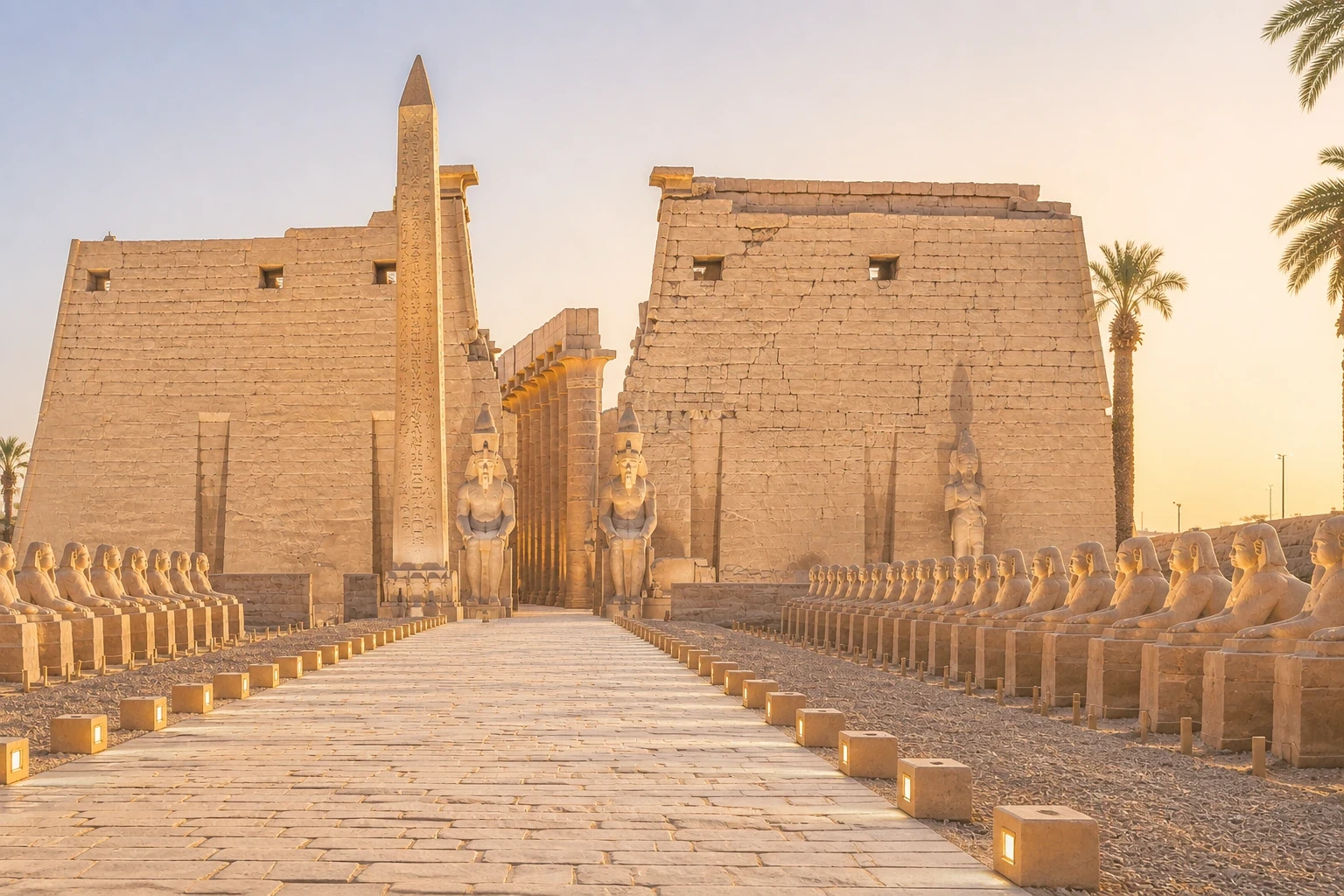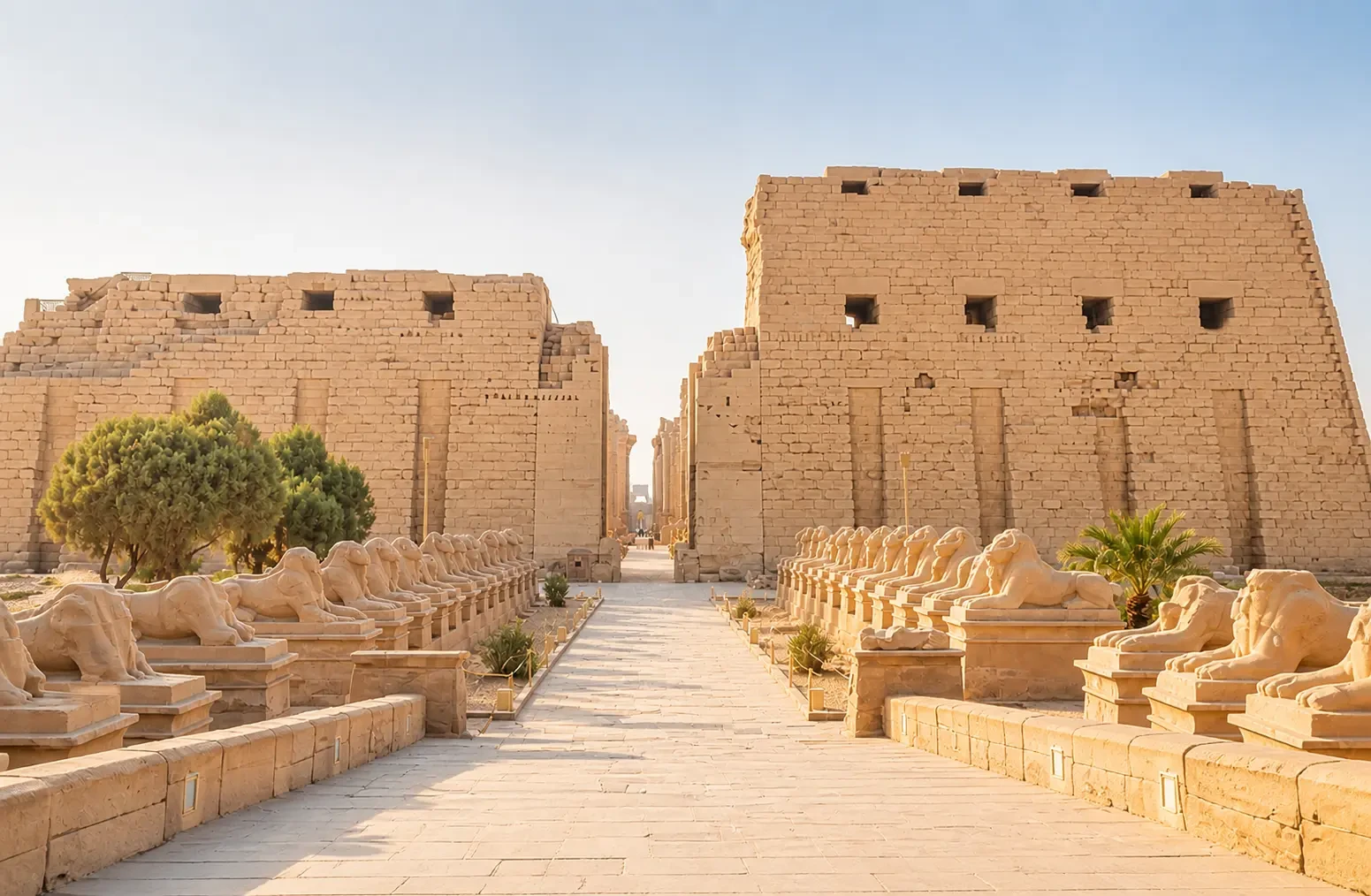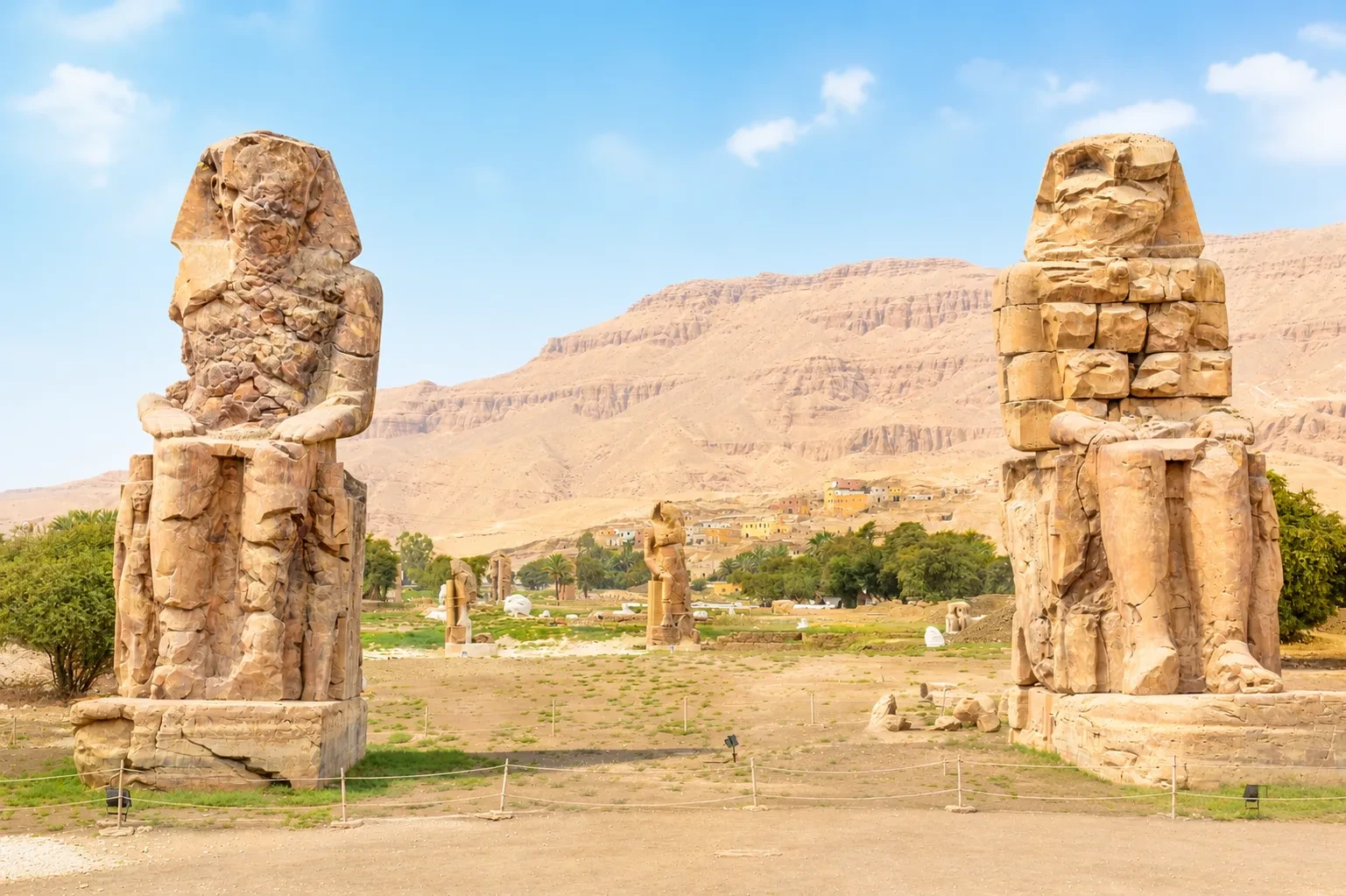


The Ramesseum is one of the most historically evocative and artistically magnificent ancient monuments in Egypt, and a destination that every traveler to Luxor who wants to go beyond the most famous sites must experience. Located on the west bank of the Nile River in the city of Luxor, ancient Thebes, the Ramesseum, also widely known as the Temple of Ramesses II, stands as the mortuary temple of the greatest pharaoh in Egyptian history, the monument through which Ramesses II sought to secure his eternal glory and divine status for all time. This legendary landmark sits at the heart of some of Egypt's greatest travel experiences, including Luxor Tours, Luxor Day Tours, Luxor East Bank Tours, Luxor West Bank Tours, Ramesseum Temple Tours, Dahabiya Nile River Cruises, and Luxor Aswan Nile River Cruises, all of which WOW Egypt Tours proudly offers to travelers from around the world. The Ramesseum is also a highlight of Egypt Tours Packages, Egypt Travel Packages, and Safaga Shore Excursions, making it one of the most historically significant and artistically rewarding ancient sites available anywhere in Upper Egypt.
Built during the reign of Pharaoh Ramesses II of the 19th Dynasty between approximately 1279 BCE and 1213 BCE, the Ramesseum Egypt was dedicated to the god Amun and to the deified memory of Ramesses II himself, whose 67-year reign was the longest and most celebrated in the history of the New Kingdom. Known in ancient Egyptian as the House of Millions of Years of Usermaatra Setepenra in the Estate of Amun on the West of Thebes, the Ramesseum was the model for all subsequent mortuary temples on the Theban West Bank, including the later Temple of Ramesses III at Medinet Habu. Visiting the Ramesseum, the Temple of Ramesses II, is not simply a sightseeing stop; it is an encounter with the physical remains of the most ambitious self-glorification project in the ancient world, a place where the greatest conqueror and builder of the New Kingdom inscribed his name and his deeds on stone for eternity, and where his fallen colossal statue inspired one of the most celebrated poems in the English language.
The Ramesseum is part of the ancient Theban necropolis, the vast city of the dead that spread across the entire west bank of the Nile opposite ancient Thebes, encompassing the Valley of the Kings, the Valley of the Queens, Deir el-Medina, and the other great mortuary temples of the Theban plain.

Who Built The Ramesseum In Egypt?
The Ramesseum was built by Pharaoh Ramesses II, also known as Ramesses the Great, the third pharaoh of the 19th Dynasty, who ruled Egypt for approximately 67 years from 1279 BCE to 1213 BCE. Ramesses II is the most celebrated pharaoh in the history of ancient Egypt, renowned not only for his military campaigns and his colossal building programme but for the sheer scale of his self-promotion and the extraordinary number of monuments, statues, and inscriptions he left across Egypt and Nubia. He fathered well over a hundred children, fought the famous Battle of Kadesh against the Hittites in his fifth regnal year around 1274 BCE, and subsequently concluded the world's first recorded peace treaty. He built the great temples of Abu Simbel in Nubia, added extensively to Karnak Temple and Luxor Temple, and commissioned the construction of the Ramesseum on the Theban West Bank as his principal mortuary temple, the institution that would maintain his royal cult for eternity after his death.
Construction of the Ramesseum began early in the reign of Ramesses II and continued for much of his 67-year rule, with the decoration of the walls proceeding systematically from the innermost sanctuary outward. The temple was designed by the royal architects to be the supreme mortuary temple on the Theban West Bank, combining the religious functions of a divine cult institution with the commemorative function of a royal victory monument, making it unique among New Kingdom mortuary temples in the depth and completeness of its historical and mythological narrative decoration.
Who Was Ramesses II?
Ramesses II, called Ramesses the Great and by the ancient Egyptians simply as the Great Ancestor, was the most powerful and celebrated pharaoh in the entire history of ancient Egypt. Born around 1303 BCE as the son of Pharaoh Seti I and Queen Tuya, he became co-regent with his father as a teenager and assumed sole rule around 1279 BCE. He ruled for approximately 67 years, living to an age estimated at around 90 years, and was still pharaoh at the time of his death around 1213 BCE, having outlived most of his children and grandchildren.
Ramesses II presided over one of the most militarily active and architecturally productive periods in Egyptian history. He conducted campaigns in Nubia, Libya, and the Levant, fighting the famous Battle of Kadesh against the Hittite king Muwatalli II around 1274 BCE, which ended inconclusively but which Ramesses subsequently represented on every available wall as a personal triumph of divine courage. The Battle of Kadesh is documented in more surviving texts and images than any other event in ancient Egyptian military history, and the subsequent peace treaty between Egypt and the Hittites, concluded around 1259 BCE, is the earliest surviving international peace agreement and is today displayed in a reproduction at the United Nations headquarters in New York. The mummy of Ramesses II is now displayed in the Royal Mummies Hall of the Grand Egyptian Museum in Giza, where his remarkably well-preserved face continues to fascinate visitors from around the world.
Ramesseum Temple Location In Egypt
The Ramesseum is located on the west bank of the Nile River in the city of Luxor, at the northern end of the Theban mortuary temple zone, approximately 1 kilometer south of the approach road to the Valley of the Kings and immediately north of the Valley of the Nobles hillside. The temple faces east toward the Nile and the rising sun, as do all ancient Egyptian mortuary temples, and its position on the edge of the cultivation gives it a dramatic setting against the backdrop of the Theban limestone cliffs. WOW Egypt Tours provides private air-conditioned transportation directly from Luxor hotels to the Ramesseum on all extended Luxor West Bank Tours, Egypt Tours Packages, Egypt Travel Packages, and Safaga Shore Excursions.
Ramesseum Temple Fun Facts
The Ramesseum is known above all for the colossal fallen statue of Ramesses II that lies shattered on the ground of the second courtyard, the largest single piece of carved granite ever found in Egypt. The statue, which once stood approximately 17 meters high and weighed an estimated 1,000 tonnes, was one of the most massive single sculptures in the ancient world, and its fragments, scattered across the courtyard floor where they fell in antiquity, made a profound impression on the imagination of European travelers who visited the site in the 19th century. The Italian explorer Giovanni Belzoni managed to remove the upper portion of a similar colossal head and torso from the site in 1821 and transport it to London, where it is now one of the most celebrated objects in the British Museum. The sight of the fallen colossus inspired the English poet Percy Bysshe Shelley to write Ozymandias in 1818, one of the most famous sonnets in the English language, in which the shattered statue serves as an image of the inevitable collapse of all human ambition and earthly power.
The ancient Egyptian name for the temple complex was Per Ramesses Meryamun, meaning the House of Ramesses Beloved of Amun, a name that reflects the dual dedication of the temple to both the god Amun and to the deified pharaoh himself. The Ramesseum was not only a mortuary cult institution but a major economic establishment, managing extensive agricultural estates, granaries, and craft workshops that are documented in detail in the administrative papyri recovered from the site.
Why Is The Ramesseum Called By This Name In Egypt?
The modern name Ramesseum was coined by the French Egyptologist Jean-Francois Champollion, the decipherer of hieroglyphics, who visited the site in 1829 and applied the Latinized name Ramesseum to designate it as the temple of Ramesses, distinguishing it from other temples associated with the same pharaoh. The ancient Egyptian name for the temple was the Mansion of Millions of Years of Usermaatra Setepenra in the Estate of Amun, where Usermaatra Setepenra is the throne name of Ramesses II. The alternative modern name Temple of Ramesses II is a straightforward descriptive designation that identifies the temple by its builder and is equally widely used in scholarly literature and tourism alongside the traditional name Ramesseum.
Ramesseum Temple History
Construction of the Ramesseum, the Temple of Ramesses II, began early in the reign of Ramesses II, around 1279 BCE, and continued for much of his extraordinarily long rule. The temple was built on the site of an earlier mortuary chapel of Seti I, and its construction involved the dismantling and reuse of some earlier monuments. The decoration of the temple walls proceeded systematically over several decades, with the great Battle of Kadesh reliefs on the first and second pylons among the earliest elements to be completed and the inner sanctuary reliefs added last.
After the death of Ramesses II around 1213 BCE, the Ramesseum continued to function as a mortuary cult institution for several centuries, with priests maintaining the cult of the deified pharaoh and the great granary and economic complex associated with the temple continuing to operate through the Third Intermediate Period. During the Third Intermediate and Late Periods, the temple was increasingly dismantled for building materials, with blocks and columns from the pylon facades and peripheral structures reused in later construction projects across the Theban West Bank. The mud-brick vaulted storerooms and administrative buildings that surrounded the main temple largely survived the stone quarrying that devastated the temple itself, and their preserved remains are one of the most remarkable features of the Ramesseum site today. The site was extensively documented by the French expedition to Egypt in 1798 and by Champollion in 1829, and it has been the subject of ongoing archaeological investigation ever since, most recently by the Centre Franco-Egyptien d'Etude des Temples de Karnak and associated French-Egyptian archaeological missions.
The Story Of Building The Ramesseum
Ramesses II built the Ramesseum, the Temple of Ramesses II, for the same fundamental reasons that motivated every New Kingdom pharaoh to build a mortuary temple on the Theban West Bank: to provide a permanent institution for the maintenance of his royal cult after death, ensuring his eternal life through the regular performance of offerings and rituals by the temple priesthood. However, Ramesses II brought to his mortuary temple an ambition and a scale of self-presentation that went far beyond the conventional purposes of the institution.
The primary purpose beyond the cult function was historical commemoration. The walls of the Ramesseum are covered with some of the most extensive and detailed narrative battle reliefs in ancient Egyptian art, documenting the campaigns of Ramesses II in Nubia and Syria and above all the great Battle of Kadesh in his fifth regnal year, which is recorded in the Ramesseum in more detail and with more artistic splendor than anywhere else in Egypt. By covering his mortuary temple with these images, Ramesses II was ensuring that his greatest military achievement would be preserved for eternity in the most sacred and permanent medium available to him: carved and painted stone in a divine temple. The Ramesseum was therefore simultaneously a religious institution, a state archive, and a personal victory monument, combining these functions in a way that reflects the extraordinary ambition and the theatrical genius for self-promotion that characterized everything Ramesses II undertook.
Ramesseum Temple Architecture
The First Pylon And Battle Of Kadesh Reliefs
The entrance to the Ramesseum, the Temple of Ramesses II, was through a massive first pylon, now largely ruined, whose exterior faces were originally covered with carved and painted scenes of the Battle of Kadesh showing Ramesses II in his war chariot storming the Hittite fortress and routing the enemy army in single-handed combat. The first pylon is now largely destroyed, with only the lower portions of its walls surviving, but the fragmentary remains of the battle reliefs are still visible on the surviving sections and give a powerful impression of the original visual programme that once dominated the temple facade.
The First Courtyard And The Fallen Colossus
The first courtyard of the Ramesseum is now largely open to the sky, with only the foundations of its colonnades surviving. On the south side of the courtyard stand the remains of a small palace that Ramesses II used when visiting the temple for festivals, one of the few examples of a royal palace directly attached to a mortuary temple to survive in any form. In the northwest corner of the first courtyard lies the most celebrated single object at the Ramesseum: the shattered upper portion of the colossal statue of Ramesses II, a granite colossus that once stood approximately 17 meters high on a throne base in front of the second pylon and is now scattered in enormous fragments across the courtyard floor. The fallen head of the colossus, measuring approximately 2.7 meters across, is the most immediately recognizable object at the site and the inspiration for Shelley's famous poem Ozymandias.
The Second Pylon And Kadesh Inscriptions
The second pylon of the Ramesseum retains significant sections of its original carved decoration, including the most extensive surviving version of the Poem of Pentaur, the literary account of the Battle of Kadesh written in elevated Egyptian poetic style, which covers much of the interior face of the second pylon wall. The Poem of Pentaur, which describes the heroic courage of Ramesses II at Kadesh and his divine protection by the god Amun, is the most widely copied ancient Egyptian literary text known, appearing in multiple copies across temples from Abu Simbel to the Ramesseum, and its presence here in one of its most complete and clearly legible versions makes the second pylon of the Temple of Ramesses II one of the most important epigraphic monuments in ancient Egyptian literature.
The Second Courtyard And Osirian Pillars
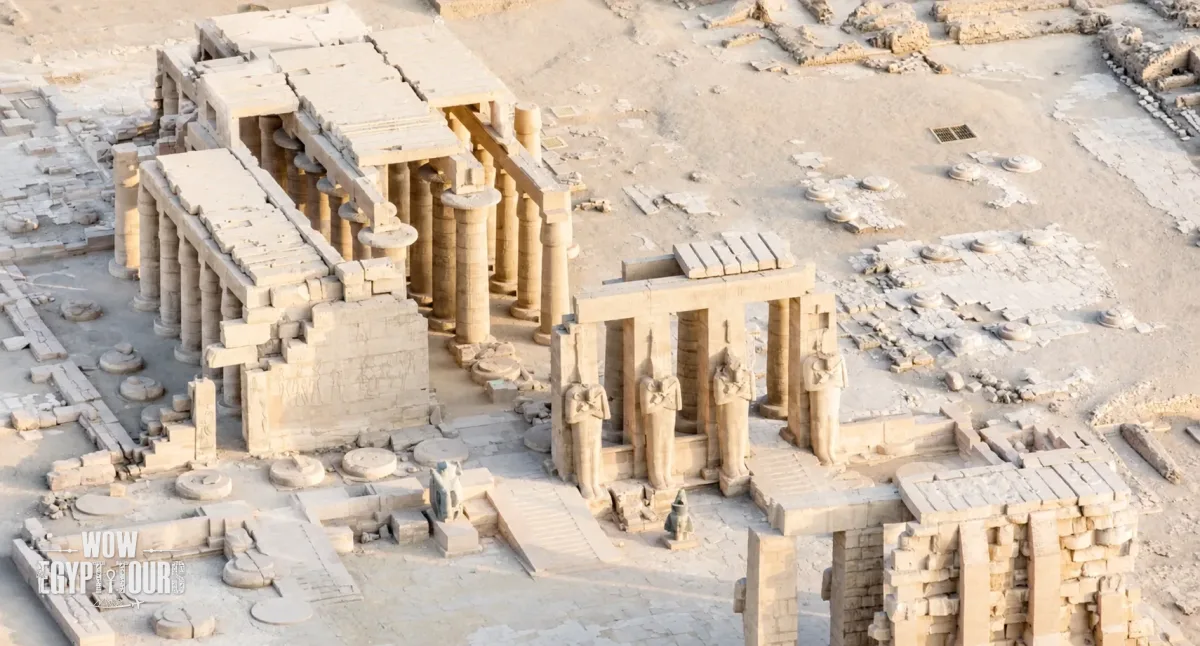
The second courtyard of the Ramesseum is better preserved than the first and retains significant portions of its colonnaded porticoes. On the south side, a double row of columns with papyrus bud capitals defines a shaded walkway, while on the north side stand the remains of Osirian pillars showing Ramesses II in the wrapped form of Osiris, the god of resurrection, his arms crossed over his chest holding the crook and flail of divine kingship. The walls of the second courtyard are decorated with scenes from the festival of Min, the ancient god of fertility and agricultural abundance, and with the famous astronomical ceiling of the hypostyle hall that depicts the Egyptian calendar and the constellations of the northern sky.
The Great Hypostyle Hall
Beyond the second courtyard lies the great hypostyle hall of the Ramesseum, now largely roofless but still partially standing, whose ceiling was once supported by 48 papyrus columns arranged in rows. The central row of columns, which rose to a greater height than the flanking rows, created a clerestory lighting effect that illuminated the interior with filtered light through high stone grilles. The walls and columns of the hypostyle hall are decorated with religious scenes showing Ramesses II in the presence of Amun and other gods, and with the extraordinary astronomical ceiling that preserves one of the most complete ancient Egyptian star maps in existence, with the months of the year, the constellations, and the major astronomical phenomena of the Egyptian calendar depicted in detail.
The Inner Halls And Sanctuary
Beyond the hypostyle hall, the Ramesseum continues through a series of smaller halls and vestibules leading to the inner sanctuary of Amun, now largely destroyed. The surviving inner rooms retain significant sections of their original carved and painted decoration, including scenes of the sacred barque of Amun, the coronation of Ramesses II by the gods, and the mysterious divine birth of the pharaoh from Amun himself, paralleling the divine birth narrative in the Temple of Hatshepsut at Deir el-Bahari.
The Mud-Brick Vaulted Storerooms
One of the most remarkable and least-known features of the Ramesseum is the extraordinary complex of mud-brick vaulted storerooms and administrative buildings that surrounded the main temple on the north, south, and west sides. These barrel-vaulted brick structures, now preserved to a significant height in many areas, once served as granaries, armories, scribal offices, workshops, and residences for the temple staff. Their survival while much of the stone temple above them has been quarried away gives the Ramesseum a uniquely complete picture of the administrative and economic infrastructure of a major New Kingdom royal cult institution, and walking through the preserved vaulted corridors of the storeroom complex is one of the most atmospheric experiences available anywhere on the Theban West Bank.
The Smaller Temple Of Ramesses II
To the north of the main Ramesseum temple building, within the outer enclosure wall, stands a smaller temple also built by Ramesses II, dedicated to his mother Tuya and his great royal wife Nefertari. This smaller temple is now significantly ruined but retains portions of its decorated walls showing Ramesses II presenting offerings to his deified mother and wife, giving the Ramesseum complex a personal and familial dimension that complements the grand official programme of the main temple building.
Why Is The Ramesseum Important?
The Ramesseum, the Temple of Ramesses II, is important for reasons that extend far beyond its status as a magnificent ruined temple. It is the primary source in Egypt for the Poem of Pentaur, the most widely distributed literary text in ancient Egyptian history and the definitive literary account of the Battle of Kadesh, one of the most significant military engagements of the Bronze Age. Its astronomical ceiling preserves one of the most complete ancient Egyptian star maps in existence, providing essential evidence for the Egyptian calendar and astronomical traditions. Its preserved mud-brick storerooms and administrative buildings offer an irreplaceable record of the economic and administrative organization of a major New Kingdom mortuary temple complex.
The Ramesseum is also important as the monument that inspired Shelley's Ozymandias, establishing a permanent connection between ancient Egyptian civilization and the English literary tradition that has shaped Western understanding of Egypt for two centuries. And it is important as a tangible reminder of the astonishing ambition and creative energy of Ramesses II himself, whose determination to leave his mark on every available surface of the ancient world resulted in more surviving monuments, more surviving texts, and more surviving images than any other pharaoh in history. WOW Egypt Tours includes the Ramesseum as a recommended extension on all comprehensive Luxor West Bank programmes.
What Are Some Interesting Facts About The Ramesseum?
Ozymandias And The Fallen Colossus
In 1817, the British Museum acquired through the efforts of Giovanni Belzoni a colossal granite bust of Ramesses II, weighing approximately 7.25 tonnes, removed from the Ramesseum and transported to London after enormous logistical difficulty. The bust, now one of the most celebrated objects in the British Museum's Egyptian collection, was widely discussed in London intellectual circles and inspired the poet Percy Bysshe Shelley to write his famous sonnet Ozymandias in 1818. The sonnet describes a traveler who encounters the shattered remains of a colossal statue in the desert, its base inscribed with the words My name is Ozymandias, King of Kings: Look on my works, ye Mighty, and despair, and reflects on the irony of a monument to eternal power lying broken and forgotten in the sand. Ozymandias is a Greek form of Usermaatra, the throne name of Ramesses II, confirming that Shelley's poem was directly inspired by the fallen colossus at the Ramesseum. The poem has become one of the most quoted meditations on the transience of human power and ambition in the English language, giving the Temple of Ramesses II a permanent place in world literature that extends far beyond Egyptology.
The Battle Of Kadesh In Detail
The walls of the Ramesseum, the Temple of Ramesses II, preserve the most detailed and extensively illustrated account of the Battle of Kadesh in ancient Egyptian art. The battle, fought around 1274 BCE between the Egyptian forces of Ramesses II and the Hittite army of Muwatalli II near the city of Kadesh on the Orontes River in modern Syria, was the largest chariot battle in the ancient world, with an estimated 5,000 to 6,000 chariots engaged on both sides. The battle ended inconclusively, with neither side achieving a decisive victory, but Ramesses II chose to represent it as a personal triumph in which his own divine courage, supported by the god Amun, turned the tide of battle when he was temporarily surrounded by Hittite forces. The scenes on the Ramesseum walls show the Egyptian camp, the Hittite chariot charge, Ramesses II in his chariot charging single-handed into the enemy, the routing of the Hittites, and the counting of the severed hands of the slain enemy, all rendered with remarkable narrative detail and dramatic energy.
The Astronomical Ceiling
The hypostyle hall of the Ramesseum preserves one of the most spectacular astronomical ceilings in ancient Egypt, depicting the Egyptian calendar, the constellations of the northern sky, and the major astronomical phenomena of the Egyptian year in a composition of extraordinary richness and scientific detail. The ceiling shows the decans, the 36 star groups used by the ancient Egyptians to divide the night sky, the circumpolar stars that never set below the horizon in Egypt, and the monthly cycle of the moon, all rendered in white and yellow paint against a deep blue ground that evokes the actual night sky. The astronomical ceiling of the Ramesseum is one of the most important surviving sources for knowledge of ancient Egyptian astronomy and the calendar system, and its presence in the Temple of Ramesses II reflects the scientific sophistication of the royal court at the height of the 19th Dynasty.
What Is So Special About The Ramesseum?
The Most Poetically Celebrated Ruin In Egypt
What makes the Ramesseum, the Temple of Ramesses II, uniquely special among all the mortuary temples of the Theban West Bank is its extraordinary combination of physical grandeur in decay and literary fame. The fallen colossus in the first courtyard, the shattered pylon, the roofless hypostyle hall open to the Egyptian sky, and the haunting vaulted corridors of the mud-brick storerooms create an atmosphere of romantic desolation that is unlike anything at the better-preserved Theban monuments. The Ramesseum is a ruin in the fullest and most beautiful sense of the word: a place where the overwhelming ambition of the ancient world and the patient power of time are equally and simultaneously present, producing an experience of historical depth and emotional resonance that perfectly preserved monuments can rarely achieve.
The Atmosphere Of Ancient Egypt Undisturbed
Because the Ramesseum receives significantly fewer visitors than the most famous West Bank sites, it offers an experience of extraordinary quiet and spaciousness that is becoming increasingly rare at major ancient monuments in Egypt. Walking through the partially standing hypostyle hall, with its columns casting long shadows across the carved reliefs, or sitting in the shade of the vaulted mud-brick storerooms while listening to the silence of the Theban plain, visitors can experience something that approaches the solitude and intimacy that the first European explorers felt when they encountered these ruins in the early 19th century. For travelers who want to go beyond the crowds and experience ancient Egypt in an atmosphere of genuine contemplative calm, the Temple of Ramesses II at the Ramesseum is one of the most rewarding destinations on the entire Theban West Bank.
Ramesseum Temple Through The Ages: From Ancient Egypt To The Present
The history of the Ramesseum spans from its construction during the reign of Ramesses II around 1279 BCE through its gradual decline and the dramatic events of its modern rediscovery. During the New Kingdom, the Temple of Ramesses II functioned as one of the most important religious and economic institutions on the Theban West Bank, managing extensive agricultural estates, granaries, and workshops and maintaining the mortuary cult of the deified pharaoh with regular offerings and ritual performances. After the death of Ramesses II around 1213 BCE, the Ramesseum continued to function for several centuries, with the temple priests maintaining the cult and the administrative complex continuing to manage the estate.
During the Third Intermediate and Late Periods, the great stone blocks of the Ramesseum's pylons and outer walls were quarried for reuse in later construction projects, reducing much of the original temple to its present ruined state. The mud-brick vaulted storerooms, being less easily quarried and rebuilt, survived in much better condition than the stone temple above them and represent the most complete preserved example of New Kingdom royal mortuary temple administrative architecture in existence. During the Ptolemaic Period, a small chapel was added within the Ramesseum precinct, and during the early Christian era the site attracted Coptic Christian occupation, with the storeroom vaults serving as refuges and storage areas. The modern rediscovery of the Ramesseum began with the Napoleonic expedition of 1798 and was dramatically advanced by Champollion's visit in 1829, which produced the first systematic documentation of the temple's inscriptions and decoration. Ongoing French-Egyptian archaeological work at the site continues to reveal new aspects of the temple's history and of the remarkable administrative city that once surrounded it.
Ramesseum Temple UNESCO World Heritage Site
The Ramesseum is part of the Ancient Thebes with its Necropolis UNESCO World Heritage Site, inscribed in 1979. This designation recognizes the outstanding universal value of the entire Theban region, which includes the Ramesseum, the Valley of the Kings, the Valley of the Queens, Luxor Temple, Karnak Temple, and the many temples and tombs of the West Bank of the Nile. UNESCO recognizes the Ramesseum as one of the most significant surviving mortuary temple complexes of the New Kingdom and as an outstanding example of ancient Egyptian royal funerary architecture, military commemoration, and economic organization. The UNESCO inscription has supported ongoing international conservation work at the site, including the documentation and stabilization of the surviving carved reliefs and the preservation of the unique mud-brick vaulted storeroom complex.
Best Time To Visit The Ramesseum
The best time to visit the Ramesseum, the Temple of Ramesses II, is during the cooler months from October through April, when temperatures in Luxor are moderate and the site is comfortable for outdoor exploration. The summer months from May to September can be very hot at the Ramesseum site, though the vaulted mud-brick storerooms provide significant shade and are considerably cooler than fully exposed outdoor areas. If visiting during summer, plan your visit for early morning when the long shadows of the partially standing columns and the ruined pylons create the most dramatic and atmospheric lighting conditions for photography and exploration. WOW Egypt Tours operates Luxor West Bank Tours throughout the year and plans all timings carefully to ensure the most comfortable and rewarding visit to the Ramesseum possible regardless of the season.
Ramesseum Temple Opening Hours
The Ramesseum is open to visitors every day of the week, including public holidays. The temple opens at 6:00 AM and closes at 5:00 PM during both winter and summer months. Visitors who prefer the most atmospheric and uncrowded experience should arrive early in the morning when the ruins are bathed in golden light and before the heat of the day makes the open courtyards uncomfortable.
Ramesseum Temple Entrance Fees
Adults: EGP 220
Students: EGP 110
Keep your ticket safe throughout your visit. Entrance fees are included in all Ramesseum Temple Tours, Egypt Tours Packages, and Safaga Shore Excursions booked through WOW Egypt Tours.
How To Get To The Ramesseum
The Ramesseum, the Temple of Ramesses II, is located on the west bank of the Nile in Luxor, approximately 2 kilometers northwest of the Colossi of Memnon along the desert edge road. From central Luxor, visitors cross the Nile by public ferry or private motorboat to the West Bank landing, from which taxis, minibuses, and organized tour vehicles travel northwest along the road toward the Valley of the Kings, passing the Ramesseum on the right before reaching the Temple of Hatshepsut and the Valley of the Kings road junction. The journey from the Nile landing to the Ramesseum takes approximately 15 minutes by road.
Visitors arriving by air land at Luxor International Airport on the East Bank, from which private transfers to the West Bank are readily available. Nile cruise ships dock along the Corniche on the East Bank and all cruise itineraries include organized transportation to the West Bank sites. Travelers joining Safaga Shore Excursions with WOW Egypt Tours are collected directly from Safaga Port and transferred comfortably to the Ramesseum by private air-conditioned vehicle. All extended Luxor West Bank Tours operated by WOW Egypt Tours include private air-conditioned transportation directly to and from the Ramesseum.
How Long To Spend At The Ramesseum
Most visitors spend between one and two hours at the Ramesseum, the Temple of Ramesses II, which is sufficient time to explore the main temple areas including the first and second courtyards, the fallen colossus, the surviving portions of the hypostyle hall, and the vaulted mud-brick storerooms. Visitors with a deeper interest in the Battle of Kadesh reliefs, the astronomical ceiling, or the administrative and economic organization of the temple complex may wish to allow two to two and a half hours. The Ramesseum is ideally combined on the same day with the Valley of the Kings, the Temple of Hatshepsut, and the Colossi of Memnon as part of a full Luxor West Bank Tour.
Tips For Visiting The Ramesseum
Arrive early in the morning for the most atmospheric lighting conditions and the coolest temperatures, particularly important in summer. Take time to explore the vaulted mud-brick storerooms behind the main temple, which are one of the most remarkable and least-known features of the site and provide a uniquely atmospheric experience of ancient Egyptian administrative architecture. Do not touch the carved reliefs anywhere in the temple, as the oils from human hands cause irreversible damage to the ancient stone surfaces. A licensed Egyptologist guide from WOW Egypt Tours is strongly recommended: the historical significance of the Battle of Kadesh reliefs, the literary meaning of the fallen colossus and its connection to Ozymandias, and the astronomical content of the hypostyle ceiling are all greatly enriched by expert explanation. Bring water and sunscreen for the open courtyard areas, and wear comfortable closed-toe walking shoes for the uneven stone and mud-brick surfaces throughout the site.
What To Wear At The Ramesseum
The Ramesseum, the Temple of Ramesses II, combines open-air ruined courtyards and enclosed mud-brick vaulted passageways, requiring practical and adaptable clothing. Lightweight, breathable clothing covering the shoulders and knees is recommended for both comfort in the Egyptian heat and as a mark of respect. A wide-brimmed hat and sunscreen are essential for the open courtyards and the exterior approach to the site. Comfortable, closed-toe walking shoes with good grip are necessary for the uneven stone and mud-brick surfaces throughout the complex. Visitors entering the vaulted storeroom passageways should be prepared for low ceilings in some sections and a sudden drop in temperature relative to the exterior courtyards, which makes the vaulted areas a welcome refuge in summer but can require a light layer in winter.
Photography At The Ramesseum
The Ramesseum is one of the finest photography destinations on the Theban West Bank, offering an extraordinary combination of dramatic ruined architecture, intimate carved reliefs, the famous fallen colossus, the atmospheric vaulted storerooms, and the magnificent natural setting against the Theban limestone cliffs. Photography with a standard camera or smartphone is permitted throughout most areas of the complex. Flash photography is strictly prohibited near all carved and painted surfaces. The best exterior photography is achieved in the early morning when the low sun creates dramatic shadows across the ruined pylon facade, the partially standing columns of the hypostyle hall, and the fallen fragments of the colossal statue. For photography in the vaulted storerooms, a camera with good low-light performance is recommended as the interiors are significantly darker than the exterior. Professional photography or filming with specialized equipment requires a separate permit from Egypt's Ministry of Tourism and Antiquities.
Ramesseum Temple Tours
Single Attraction Visit: Ramesseum Temple Tour
This tour covers the Ramesseum as a standalone visit. It is suitable for travelers with a particular interest in the reign of Ramesses II, the Battle of Kadesh and ancient Egyptian military history, the poem of Ozymandias and its ancient Egyptian context, or the atmospheric beauty of ruined ancient architecture.
What Is Covered
Full guided visit of the Ramesseum including the first courtyard with the fallen colossus, the second courtyard with the Osirian pillars, the surviving portions of the hypostyle hall with the astronomical ceiling, the inner sanctuary rooms, the Poem of Pentaur on the second pylon, and the remarkable mud-brick vaulted storerooms and administrative buildings surrounding the main temple.
Duration
1 to 2 hours inside the complex.
Includes
Private transportation, private licensed Egyptologist guide, and entrance fees. Available for morning and afternoon departures. Morning visits are recommended for the best light on the carved reliefs and the fallen colossus.
Luxor West Bank Tours: Ramesseum Temple, Valley Of The Kings, Hatshepsut Temple And More
This full-day extended tour covers the major sites on the West Bank of Luxor including the Ramesseum as a dedicated stop. It is suitable for travelers who want the most comprehensive West Bank experience available in a single day.
What Is Covered
The Valley of the Kings with entry to three royal tombs. The Temple of Hatshepsut at Deir el-Bahari. The Colossi of Memnon. The Ramesseum, the Temple of Ramesses II, with a full guided visit of the main temple areas and the vaulted storerooms. Optional extensions include the Valley of the Queens, Medinet Habu Temple, the Valley of the Nobles, and Deir el-Medina.
Duration
Full day, approximately 7 to 8 hours.
Includes
Private air-conditioned transportation, Nile crossing, private licensed Egyptologist guide, and entrance fees to all main sites. Available for morning departures.
Luxor East Bank Tours: Karnak Temple, Luxor Temple, Luxor Museum And Mummification Museum
This full-day tour covers the four main sites on the East Bank of Luxor.
What Is Covered
Karnak Temple with a full guided visit including the Great Hypostyle Hall, the Sacred Lake, and the Open Air Museum. The Avenue of Sphinxes connecting Karnak Temple to Luxor Temple. Luxor Temple including the entrance pylon, the great colonnade, the courtyard of Amenhotep III, and the inner halls. The Luxor Museum with a full guided visit of all galleries. The Mummification Museum covering the tools, methods, and materials used in ancient Egyptian embalming.
Duration
Full day, approximately 6 to 7 hours.
Includes
Private air-conditioned transportation, private licensed Egyptologist guide, and entrance fees to all four sites. Available for morning departures.
Luxor Day Tours: Combined East Bank And West Bank
This full-day combined tour covers the most important sites on both banks of the Nile in Luxor in a single day.
What Is Covered
West Bank: Valley of the Kings with three tomb entries, Temple of Hatshepsut at Deir el-Bahari, the Colossi of Memnon, and the Ramesseum, the Temple of Ramesses II, subject to available time. East Bank: Karnak Temple including the Great Hypostyle Hall and Sacred Lake, the Avenue of Sphinxes, and Luxor Temple.
Duration
Full day, approximately 8 to 9 hours.
Includes
Private air-conditioned transportation, Nile crossing, private licensed Egyptologist guide, and entrance fees to all sites. Available for morning departures.
Safaga Shore Excursions To The Ramesseum
Safaga Port is located on the Red Sea coast, approximately 250 kilometers (155 miles) from Luxor. WOW Egypt Tours operates Safaga Shore Excursions that transfer cruise ship passengers from Safaga Port to Luxor and back within a single port day. The transfer is approximately 2.5 to 3 hours each way by private air-conditioned vehicle.
What Is Covered
The Valley of the Kings with entry to three royal tombs. The Colossi of Memnon. Karnak Temple including the Great Hypostyle Hall and the Sacred Lake. The Ramesseum, the Temple of Ramesses II, subject to available time. Optional addition: Luxor Temple subject to available time.
Duration
Full day from port departure to port return, approximately 12 to 13 hours including transfers.
Includes
Private air-conditioned vehicle from Safaga Port, private licensed Egyptologist guide, entrance fees to all included sites, and return transfer to the ship. All Safaga Shore Excursions are coordinated around each ship's port schedule to guarantee return to the vessel before departure.
Dahabiya Nile River Cruise
A Dahabiya Nile River Cruise is a small-vessel sailing experience on the Nile between Luxor and Aswan aboard a traditional wooden dahabiya. WOW Egypt Tours operates dahabiya cruises with private cabins, all meals, a private licensed Egyptologist guide on board, and guided shore excursions at every stop.
4 Days 3 Nights Dahabiya Nile River Cruise From Aswan To Luxor
Route: Aswan to Luxor, sailing north.
Itinerary
Day 1: Embarkation in Aswan. Visit to Philae Temple and the Unfinished Obelisk. Sail north to Kom Ombo. Guided visit to Kom Ombo Temple. Continue to Gebel el Silsila. Overnight on board.
Day 2: Guided visit to Gebel el Silsila. Sail to the Village of Basaw. Guided visit to Village of Basaw. Continue to Edfu. Guided visit to the Temple of Horus at Edfu. Overnight on board.
Day 3: Sail to El Kab. Guided visit to El Kab Tombs. Sail to El Hagaz Island. Swimming stop. Overnight on board.
Day 4: Sail to Esna. Visit Khnum Temple at Esna. Disembarkation in Esna. Transfer to Luxor, approximately 55 kilometers (35 miles).
Includes
Private cabin, all meals on board, private licensed Egyptologist guide, entrance fees to all temple visits, and private transfers.
5 Days 4 Nights Dahabiya Nile River Cruise From Luxor To Aswan
Route: Luxor to Aswan, sailing south.
Itinerary
Day 1: Embarkation in Luxor. Transfer to Esna, approximately 55 kilometers (35 miles). Visit Khnum Temple at Esna. Sail to El Hagaz Island. Overnight on board.
Day 2: Sail to El Kab. Guided visit to El Kab Tombs. Continue to Edfu. Guided visit to the Temple of Horus at Edfu. Sail to the Village of Basaw. Guided visit to Village of Basaw. Overnight on board.
Day 3: Sail to Gebel el Silsila. Guided visit to Gebel el Silsila. Sail south to Kom Ombo. Guided visit to Kom Ombo Temple. Sail to Daraw Village. Overnight on board.
Day 4: Guided visit to Daraw Village. Sail to Herbiab Island. Swimming stop. Philae Sound and Light Show. Overnight on board.
Day 5: Optional Abu Simbel visit available by air or road. Guided visits to Philae Temple, the High Dam, and the Unfinished Obelisk. Disembarkation in Aswan.
Includes
Private cabin, all meals on board, private licensed Egyptologist guide, entrance fees to all temple visits, and private transfers.
8 Days 7 Nights Dahabiya Nile River Cruise Round Trip From Luxor (Via Aswan)
Route: Luxor and Aswan, sailing north and south.
Itinerary
Day 1: Embarkation in Luxor. Transfer to Esna, approximately 55 kilometers (35 miles). Visit Khnum Temple at Esna. Sail to El Hagaz Island. Overnight on board.
Day 2: Sail to El Kab. Continue to Edfu. Guided visit to the Temple of Horus at Edfu. Sail to the Village of Basaw. Guided visit to Village of Basaw. Overnight on board.
Day 3: Sail to Gebel el Silsila. Sail south to Kom Ombo. Guided visit to Kom Ombo Temple. Sail to Daraw Village. Overnight on board.
Day 4: Guided visit to Daraw Village. Sail to Herbiab Island. Swimming stop. Philae Sound and Light Show. Overnight on board.
Day 5: Optional Abu Simbel visit available by air or road. Guided visits to Philae Temple, the High Dam, and the Unfinished Obelisk. Sail north to Kom Ombo. Continue to Gebel el Silsila. Overnight on board.
Day 6: Guided visit to Gebel el Silsila. Sail to the Village of Basaw. Continue to Edfu. Overnight on board.
Day 7: Sail to El Kab. Guided visit to El Kab Tombs. Sail to El Hagaz Island. Swimming stop. Overnight on board.
Day 8: Disembarkation in Esna. Transfer to Luxor, approximately 55 kilometers (35 miles).
Includes
Private cabin, all meals on board, private licensed Egyptologist guide, entrance fees to all temple visits, and private transfers.
8 Days 7 Nights Dahabiya Nile River Cruise Round Trip From Aswan (Via Luxor)
Route: Luxor and Aswan, sailing north and south.
Itinerary
Day 1: Embarkation in Aswan. Visit to Philae Temple and the Unfinished Obelisk. Sail north to Kom Ombo. Continue to Gebel el Silsila. Overnight on board.
Day 2: Guided visit to Gebel el Silsila. Sail to the Village of Basaw. Continue to Edfu. Overnight on board.
Day 3: Sail to El Kab. Guided visit to El Kab Tombs. Sail to El Hagaz Island. Swimming stop. Overnight on board.
Day 4: Sail to Esna. Visit Khnum Temple at Esna. Sail to El Hagaz Island. Overnight on board.
Day 5: Sail to El Kab. Continue to Edfu. Guided visit to the Temple of Horus at Edfu. Sail to the Village of Basaw. Guided visit to Village of Basaw. Overnight on board.
Day 6: Sail to Gebel el Silsila. Sail south to Kom Ombo. Guided visit to Kom Ombo Temple. Sail to Daraw Village. Overnight on board.
Day 7: Guided visit to Daraw Village. Sail to Herbiab Island. Swimming stop. Philae Sound and Light Show. Overnight on board.
Day 8: Disembarkation in Aswan.
Includes
Private cabin, all meals on board, private licensed Egyptologist guide, entrance fees to all temple visits, and private transfers.
Luxor And Aswan Nile River Cruise
The Luxor and Aswan Nile River Cruise is a standard Nile cruise product operated aboard a full-size cruise ship between Luxor and Aswan. WOW Egypt Tours operates this cruise in both directions with private licensed Egyptologist guides, all meals included, private cabins, and guided shore excursions at every port of call. The Ramesseum, the Temple of Ramesses II, is available as an optional West Bank extension on all itineraries that include Luxor.
4 Days 3 Nights Luxor And Aswan Nile River Cruise From Aswan To Luxor
Route: Aswan to Luxor, sailing north.
Itinerary
Day 1: Embarkation in Aswan. Guided visits to Philae Temple, the High Dam, and the Unfinished Obelisk. Overnight on board in Aswan.
Day 2: Sail north to Kom Ombo. Guided visit to Kom Ombo Temple. Continue to Edfu. Overnight on board.
Day 3: Guided visit to the Temple of Horus at Edfu. Continue north toward Luxor. Guided visit to Luxor Temple and Karnak Temple. Overnight on board in Luxor.
Day 4: Optional Sunrise Hot Air Balloon available. Guided visits to Valley of the Kings, Queen Hatshepsut Temple, and Colossi of Memnon. Disembarkation in Luxor.
Includes
Private cabin, all meals on board, private licensed Egyptologist guide, entrance fees to all temple visits, and private transfers.
5 Days 4 Nights Luxor And Aswan Nile River Cruise From Luxor To Aswan
Route: Luxor to Aswan, sailing south.
Itinerary
Day 1: Embarkation in Luxor. Guided visits to Luxor Temple and Karnak Temple. Overnight on board in Luxor.
Day 2: Optional Sunrise Hot Air Balloon available. Guided visits to Valley of the Kings, Queen Hatshepsut Temple, and Colossi of Memnon. Pass through the Esna locks. Sail south to Edfu. Overnight on board.
Day 3: Guided visit to the Temple of Horus at Edfu. Continue to Kom Ombo. Guided visit to Kom Ombo Temple. Overnight on board.
Day 4: Continue south toward Aswan. Guided visits to Philae Temple, the High Dam, and the Unfinished Obelisk. Overnight on board in Aswan.
Day 5: Optional Abu Simbel visit available by air or road. Disembarkation in Aswan.
Includes
Private cabin, all meals on board, private licensed Egyptologist guide, entrance fees to all temple visits, and private transfers.
8 Days 7 Nights Luxor And Aswan Nile River Cruise Round Trip From Luxor (Via Aswan)
Route: Luxor and Aswan, sailing north and south.
Itinerary
Day 1: Embarkation in Luxor. Guided visits to Luxor Temple and Karnak Temple. Overnight on board in Luxor.
Day 2: Guided visits to Luxor Museum. Pass through the Esna locks. Sail south to Edfu. Overnight on board.
Day 3: Guided visit to the Temple of Horus at Edfu. Continue to Kom Ombo. Overnight on board.
Day 4: Continue south toward Aswan. Guided visits to Philae Temple, the High Dam, and the Unfinished Obelisk. Overnight on board in Aswan.
Day 5: Abu Simbel visit available by road. Sound and Light Show at Philae Temple. Overnight on board in Aswan.
Day 6: Guided visits to Nubian Village. Sail north to Kom Ombo. Guided visit to Kom Ombo Temple. Continue to Edfu. Overnight on board.
Day 7: Guided visits to Valley of the Kings, Queen Hatshepsut Temple, and Colossi of Memnon. Pass through the Esna locks. Sail south to Edfu. Overnight on board.
Day 8: Optional Sunrise Hot Air Balloon available. Disembarkation in Luxor.
Includes
Private cabin, all meals on board, private licensed Egyptologist guide, entrance fees to all temple visits, and private transfers.
8 Days 7 Nights Luxor And Aswan Nile River Cruise Round Trip From Aswan (Via Luxor)
Route: Luxor and Aswan, sailing north and south.
Itinerary
Day 1: Embarkation in Aswan. Guided visits to Philae Temple, the High Dam, and the Unfinished Obelisk. Overnight on board in Aswan.
Day 2: Sail north to Kom Ombo. Guided visit to Nubian Village and Kom Ombo Temple. Continue to Edfu. Overnight on board.
Day 3: Continue north toward Luxor. Guided visit to Luxor Museum and Karnak Sound and Light Show. Overnight on board in Luxor.
Day 4: Guided visits to Luxor Temple and Karnak Temple. Overnight on board in Luxor.
Day 5: Optional Sunrise Hot Air Balloon available. Guided visits to Valley of the Kings, Queen Hatshepsut Temple, and Colossi of Memnon. Pass through the Esna locks. Sail south to Edfu. Overnight on board.
Day 6: Guided visit to the Temple of Horus at Edfu. Continue to Kom Ombo. Overnight on board.
Day 7: Sound and Light Show at Philae Temple. Overnight on board in Aswan.
Day 8: Abu Simbel visit available by road. Disembarkation in Aswan.
Includes
Private cabin, all meals on board, private licensed Egyptologist guide, entrance fees to all temple visits, and private transfers.
Combine The Ramesseum With Your Egypt Tours Package
The Ramesseum, the Temple of Ramesses II, is included as a featured West Bank stop across the full range of WOW Egypt Tours travel products. Browse the options below to find the Egypt experience that is right for you.
Egypt Tour Packages: Multi-day guided Egypt tours organized by duration, including 2 Days Egypt Packages, 3 Days Egypt Packages, 4 Days Egypt Packages, 5 Days Egypt Packages, 6 Days Egypt Packages, 7 Days Egypt Packages, 8 Days Egypt Packages, 10 Days Egypt Packages, and longer itineraries. All packages include private air-conditioned transportation, private licensed Egyptologist guide, accommodations, entrance fees to all included sites, and private transfers throughout Egypt.
Egypt Travel Packages: Themed Egypt travel packages designed around specific travel styles and interests, including Egypt Honeymoon Travel Packages, Egypt Budget Travel Packages, Egypt Family Travel Packages, Egypt Luxury Travel Packages, Egypt Adventure Travel Packages, Egypt Cultural Travel Packages, and Egypt Christmas and New Year Travel Packages. All packages include private air-conditioned transportation, private licensed Egyptologist guide, accommodations, meals, entrance fees to all included sites, and private transfers.
Egypt Nile Cruise Packages: Complete Egypt travel packages combining Cairo sightseeing with a fully guided Nile cruise between Luxor and Aswan, available as Cairo and Nile Cruise Packages, Egypt and Nile Cruise Packages, and Nile Cruise and Red Sea Packages. All packages include private cabin on board, all meals, private licensed Egyptologist guide, entrance fees to all temple visits, and private transfers.
Nile River Cruises: All WOW Egypt Tours Nile cruise options between Luxor and Aswan, available across four ship categories, Standard, Deluxe, Ultra Deluxe, and Luxury, as well as private Dahabiya sailing vessels. All cruises include private cabin on board, all meals, private licensed Egyptologist guide, entrance fees to all temple visits, and private transfers.
Luxor Aswan Nile Cruises: The classic Upper Egypt Nile cruise route between Luxor and Aswan, available in both directions and in durations of 4 Days 3 Nights, 5 Days 4 Nights, and 8 Days 7 Nights round trip. The Ramesseum, the Temple of Ramesses II, is available as a West Bank extension on all itineraries. All cruises include private cabin on board, all meals, private licensed Egyptologist guide, entrance fees to all sites, and private transfers.
Standard Nile Cruises: Comfortable standard-category cruise ships sailing between Luxor and Aswan, available in 4 Days 3 Nights, 5 Days 4 Nights, and 8 Days 7 Nights itineraries in both directions. Includes standard cabin on board, all meals, private licensed Egyptologist guide, entrance fees to all temple visits, and private transfers.
Deluxe Nile Cruises: Deluxe-category cruise ships with enhanced cabin comfort and upgraded dining, sailing between Luxor and Aswan in 4 Days 3 Nights, 5 Days 4 Nights, and 8 Days 7 Nights itineraries in both directions. Includes deluxe cabin on board, all meals, private licensed Egyptologist guide, entrance fees to all temple visits, and private transfers.
Ultra Deluxe Nile Cruises: Ultra deluxe-category cruise ships offering superior cabins, premium dining, and an elevated onboard experience, sailing between Luxor and Aswan in 4 Days 3 Nights, 5 Days 4 Nights, and 8 Days 7 Nights itineraries in both directions. Includes ultra deluxe cabin on board, all meals, private licensed Egyptologist guide, entrance fees to all temple visits, and private transfers.
Luxury Nile Cruises: Luxury-category cruise ships with the finest cabins, exceptional cuisine, and premium onboard facilities, sailing between Luxor and Aswan in 4 Days 3 Nights, 5 Days 4 Nights, and 8 Days 7 Nights itineraries in both directions. Includes luxury cabin on board, all meals, private licensed Egyptologist guide, entrance fees to all temple visits, and private transfers.
Dahabiya Nile Cruises: Private small-vessel sailing experience aboard a traditional wooden dahabiya between Luxor and Aswan, available in four itineraries: 4 Days 3 Nights Dahabiya From Aswan To Luxor, 5 Days 4 Nights Dahabiya From Luxor To Aswan, 8 Days 7 Nights Dahabiya Round Trip From Luxor via Aswan, and 8 Days 7 Nights Dahabiya Round Trip From Aswan via Luxor. Includes private cabin on board, all meals, private licensed Egyptologist guide, entrance fees to all temple visits, and private transfers.
Luxor Tours: Day tours and multi-day tours of Luxor covering all major sites on both banks of the Nile, including extended Luxor West Bank Tours covering the Ramesseum, the Temple of Ramesses II, the Valley of the Kings, Temple of Hatshepsut, and Colossi of Memnon; Luxor East Bank Tours covering Karnak Temple, Luxor Temple, Luxor Museum, and Mummification Museum; and combined Luxor Day Tours covering both banks in a single day. All tours include private air-conditioned transportation, private licensed Egyptologist guide, entrance fees to all included sites, and private transfers.
Shore Excursions: Guided day excursions from Egypt's Red Sea ports to the Ramesseum and the monuments of Upper Egypt, available for cruise ship passengers with a port call at Safaga, Hurghada, Port Said, Alexandria, and Sokhna. Includes private air-conditioned transportation from the port, private licensed Egyptologist guide, entrance fees to all included sites, and return transfer to the ship, with all timings coordinated around each vessel's port schedule.
Safaga Port Excursions: Shore excursions departing from Safaga Port on the Red Sea coast, approximately 250 kilometers (155 miles) from Luxor, covering the Ramesseum, the Temple of Ramesses II, the Valley of the Kings, Colossi of Memnon, Karnak Temple, and Luxor Temple as a full-day trip within a single port call. Available options include Safaga to Luxor West Bank Tours, Safaga to Luxor East Bank Tours, and combined Safaga to Luxor Day Tours. Includes private air-conditioned vehicle from Safaga Port, private licensed Egyptologist guide, entrance fees to all included sites, and return transfer to the ship.
Nearby Attractions To The Ramesseum
The Ramesseum, the Temple of Ramesses II, sits at the center of one of the richest archaeological landscapes on the Theban West Bank, with world-class ancient monuments accessible in every direction. The Valley of the Nobles hillside is located immediately to the south and east of the Ramesseum, with the decorated private tomb chapels of the New Kingdom elite visible on the hillside directly behind the temple. The Temple of Hatshepsut at Deir el-Bahari is located approximately 1.5 kilometers to the northwest and is the essential architectural companion to the Ramesseum on any comprehensive West Bank visit. The Valley of the Kings is located approximately 3 kilometers to the northwest beyond the Temple of Hatshepsut.
The Deir el-Medina village and necropolis, home of the craftsmen who built the Ramesseum and the other great monuments of the West Bank, is located approximately 1.5 kilometers to the south. The Valley of the Queens, where Queen Nefertari, the great royal wife of Ramesses II, is buried in the most beautiful tomb in Egypt, lies just beyond Deir el-Medina. The Medinet Habu Temple of Ramesses III, built in deliberate imitation of the Ramesseum but better preserved, is approximately 2.5 kilometers to the south. The Colossi of Memnon stand at the entrance to the West Bank plain approximately 2 kilometers to the east. On the East Bank, Luxor Temple, Karnak Temple, the Luxor Museum, and the Mummification Museum complete the extraordinary range of monuments available in the Luxor area.
Frequently Asked Questions About The Ramesseum
What is the Ramesseum?
The Ramesseum, also known as the Temple of Ramesses II, is the mortuary temple of Pharaoh Ramesses II located on the west bank of the Nile in Luxor, built between approximately 1279 BCE and 1213 BCE and dedicated to the god Amun and the deified memory of Ramesses II himself. The Ramesseum is a featured destination in extended Luxor West Bank Tours, Egypt Tours Packages, Egypt Travel Packages, and Safaga Shore Excursions offered by WOW Egypt Tours.
Who built the Ramesseum?
The Ramesseum was built by Pharaoh Ramesses II, also known as Ramesses the Great, the third pharaoh of the 19th Dynasty who ruled Egypt for approximately 67 years from 1279 BCE to 1213 BCE. He is the most celebrated pharaoh in the history of ancient Egypt.
What does Ramesseum mean?
The name Ramesseum was coined by the French Egyptologist Jean-Francois Champollion in 1829 to designate the temple as the monument of Ramesses. The ancient Egyptian name was the Mansion of Millions of Years of Usermaatra Setepenra in the Estate of Amun, where Usermaatra Setepenra is the throne name of Ramesses II. The alternative name Temple of Ramesses II is equally widely used today.
What is the connection between the Ramesseum and the poem Ozymandias?
The English poet Percy Bysshe Shelley wrote the famous sonnet Ozymandias in 1818, inspired by reports of the fallen colossal statue of Ramesses II at the Ramesseum and the imminent arrival of a colossal bust from the site in London. Ozymandias is a Greek form of Usermaatra, the throne name of Ramesses II, and the poem's meditation on the irony of a monument to eternal power lying shattered in the desert was directly inspired by the fallen colossus at the Temple of Ramesses II.
What is the fallen colossus at the Ramesseum?
The fallen colossus is the shattered remains of a colossal granite statue of Ramesses II that once stood approximately 17 meters high in the first courtyard of the Ramesseum, weighing an estimated 1,000 tonnes. It is now lying in fragments across the courtyard floor and is the most immediately recognizable object at the Temple of Ramesses II.
What are the Battle of Kadesh reliefs?
The Battle of Kadesh reliefs are a series of carved scenes on the walls of the Ramesseum documenting the famous battle between Ramesses II and the Hittite king Muwatalli II around 1274 BCE. They include the most extensive surviving version of the Poem of Pentaur, the literary account of the battle, and the most detailed surviving visual record of the engagement, showing the Egyptian camp, the Hittite chariot charge, and the heroic combat of Ramesses II.
What are the mud-brick vaulted storerooms at the Ramesseum?
The mud-brick vaulted storerooms are a remarkable complex of barrel-vaulted brick structures that surrounded the main stone temple building of the Ramesseum on three sides, serving as granaries, armories, scribal offices, and residences for the temple staff. They are now the best-preserved example of New Kingdom royal mortuary temple administrative architecture in existence and are one of the most atmospheric and least-known features of the site.
What are the opening hours of the Ramesseum?
The Ramesseum is open daily from 6:00 AM to 5:00 PM, including public holidays.
How much does it cost to enter the Ramesseum?
The entrance fee is EGP 220 for adults and EGP 110 for students. Entrance fees are included in all Ramesseum Temple Tours, Egypt Tours Packages, and Safaga Shore Excursions booked through WOW Egypt Tours.
How long does it take to visit the Ramesseum?
Most visitors spend between one and two hours at the Ramesseum. Those who wish to explore the full complex including the vaulted storerooms and the inner sanctuary rooms should allow two to two and a half hours.
What is the best time of year to visit the Ramesseum?
October to April is the most comfortable period. Early morning visits are recommended year-round both for the quality of light on the carved reliefs and for the cooler temperatures before the midday heat.
How do I get to the Ramesseum?
The Ramesseum is located on the West Bank of Luxor, approximately 2 kilometers northwest of the Colossi of Memnon along the road toward the Valley of the Kings. All extended Luxor West Bank Tours, Luxor Day Tours, and Safaga Shore Excursions with WOW Egypt Tours include private transportation to and from the Ramesseum.
Can I combine the Ramesseum with the Valley of the Kings in one day?
Yes. The Ramesseum and the Valley of the Kings can be combined on the same day as part of a comprehensive extended Luxor West Bank Tour with WOW Egypt Tours, along with the Temple of Hatshepsut and the Colossi of Memnon.
Is a guide necessary at the Ramesseum?
A guide is not required to enter but is strongly recommended. The historical significance of the Battle of Kadesh reliefs, the literary meaning of the fallen colossus, the content of the astronomical ceiling, and the architectural history of the mud-brick storeroom complex are all greatly enriched by expert explanation. WOW Egypt Tours provides licensed Egyptologist guides for all Ramesseum Temple Tours, Egypt Tours Packages, and Safaga Shore Excursions.
Can I take photographs at the Ramesseum?
Photography with a standard camera or smartphone is permitted throughout most of the complex. Flash photography is strictly prohibited near all carved and painted surfaces. A camera with good low-light performance is recommended for the vaulted storeroom interiors. Professional filming requires a separate permit.
What should I wear to visit the Ramesseum?
Lightweight clothing covering the shoulders and knees, a wide-brimmed hat, sunscreen, and comfortable closed-toe walking shoes with good grip for the uneven stone and mud-brick surfaces.
Is the Ramesseum a UNESCO World Heritage Site?
Yes. The Ramesseum is part of the Ancient Thebes with its Necropolis UNESCO World Heritage Site, inscribed in 1979, which also includes the Valley of the Kings, Luxor Temple, Karnak Temple, and the monuments of the West Bank.
What is the difference between the Ramesseum and Medinet Habu Temple?
The Ramesseum is the mortuary temple of Ramesses II and was built as the model and prototype for all subsequent New Kingdom mortuary temples, but is now largely ruined with its stone superstructure heavily quarried in antiquity, while its mud-brick storerooms are among the best-preserved examples of their type. Medinet Habu Temple is the mortuary temple of Ramesses III, built in deliberate imitation of the Ramesseum but surviving in far better condition with most of its roof intact, its walls covered in carved reliefs, and its great enclosure walls still standing.
What Nile cruise options include the Ramesseum?
WOW Egypt Tours offers both Dahabiya Nile River Cruises and Luxor Aswan Nile River Cruises, all of which include West Bank excursions in Luxor. The Ramesseum, the Temple of Ramesses II, can be included as an extension on all itineraries. All cruises are available as part of WOW Egypt Tours Egypt Tours Packages and Egypt Travel Packages.
Can I visit the Ramesseum as part of a Safaga Shore Excursion?
Yes. WOW Egypt Tours offers dedicated Safaga Shore Excursions that can include the Ramesseum as part of an extended West Bank programme, subject to available time within the port schedule. Our team handles all transportation, guiding, entrance fees, and logistics.
How do I book a Ramesseum Temple Tour with WOW Egypt Tours?
You can book any Ramesseum Temple Tour, Luxor West Bank Tour, Luxor Day Tour, Dahabiya Nile River Cruise, Luxor Aswan Nile River Cruise, Egypt Tours Package, Egypt Travel Package, or Safaga Shore Excursion directly through WOW Egypt Tours. Our team of travel specialists will arrange everything from private transportation and licensed Egyptologist guides to hotel pick-up and entrance fees, ensuring a seamless and unforgettable experience of the Ramesseum, the Temple of Ramesses II, and all the wonders of ancient Egypt.