

Medinet Habu Temple is one of the most magnificent, best-preserved, and historically remarkable ancient monuments in Egypt, and a destination that every traveler to Luxor must experience. Located on the west bank of the Nile River in the city of Luxor, ancient Thebes, Medinet Habu stands as the mortuary temple of Pharaoh Ramesses III, the last great pharaoh of the New Kingdom, and is the largest and most completely preserved mortuary temple complex on the entire Theban West Bank. This extraordinary landmark sits at the heart of some of Egypt's greatest travel experiences, including Luxor Tours, Luxor Day Tours, Luxor East Bank Tours, Luxor West Bank Tours, Medinet Habu Temple Tours, Dahabiya Nile River Cruises, and Luxor Aswan Nile River Cruises, all of which WOW Egypt Tours proudly offers to travelers from around the world. Medinet Habu Temple is also a highlight of Egypt Tours Packages, Egypt Travel Packages, and Safaga Shore Excursions, making it one of the most rewarding and least crowded major ancient sites available anywhere in Upper Egypt.
Built primarily during the reign of Ramesses III of the 20th Dynasty between approximately 1186 BCE and 1155 BCE, the Medinet Habu mortuary temple complex covers an area of approximately 66,000 square meters enclosed within massive mud-brick walls that still stand to their original height in many sections. The temple is dedicated to the god Amun and to the divine memory of Ramesses III himself, and is celebrated above all for the extraordinary quality and completeness of its carved and painted wall reliefs, which cover nearly every surface of the temple interior and exterior with an unmatched visual record of the reign of one of ancient Egypt's most fascinating and embattled rulers. Visiting Medinet Habu Temple Egypt is not simply a sightseeing stop; it is an encounter with some of the most dramatic narrative reliefs in the ancient world, including the celebrated battle scenes depicting Ramesses III's victories over the Sea Peoples and the Libyans that transformed the political history of the ancient Mediterranean.
Medinet Habu Temple is part of the ancient Theban necropolis, the vast city of the dead that spread across the entire west bank of the Nile opposite ancient Thebes, encompassing the Valley of the Kings, the Valley of the Queens, Deir el-Medina, and the other great mortuary temples of the Theban plain.

Who Built Medinet Habu Temple In Egypt?
The main temple at Medinet Habu was built by Pharaoh Ramesses III of the 20th Dynasty, who ruled Egypt from approximately 1186 BCE to 1155 BCE. Ramesses III was one of the last great pharaohs of the New Kingdom and deliberately modeled his reign and his mortuary temple on those of his great predecessor Ramesses II, even taking the same throne name and building his temple in deliberate imitation of the Ramesseum across the plain. However, Medinet Habu Temple surpassed the Ramesseum in both its state of preservation and the completeness and quality of its carved decoration, making it the finest surviving mortuary temple on the Theban West Bank.
The site of Medinet Habu had been sacred long before Ramesses III chose it for his mortuary temple. An earlier temple dedicated to Amun was already standing on the site, built during the 18th Dynasty and subsequently added to by Queen Hatshepsut and Thutmose III. This earlier temple, known today as the Small Temple of Amun, stands within the great enclosure of Medinet Habu and predates the main temple of Ramesses III by approximately three centuries. Additions to the complex were also made by later pharaohs of the 25th and 26th Dynasties, by Nectanebo I of the 30th Dynasty, and by rulers of the Ptolemaic Period, making Medinet Habu one of the most architecturally layered sites on the Theban West Bank.
Who Was Ramesses III?
Ramesses III was the second pharaoh of the 20th Dynasty and the last of the great warrior pharaohs of the New Kingdom. He ruled Egypt for approximately 31 years during one of the most turbulent and threatened periods in the history of ancient Egyptian civilization, successfully defending Egypt against multiple waves of invasion by the Sea Peoples and the Libyans at a time when these same groups were destroying the great Bronze Age civilizations of the Hittites, the Mycenaeans, and the Canaanites across the entire eastern Mediterranean world. His three great military campaigns, against the Libyans in his fifth and eleventh regnal years and against the Sea Peoples in his eighth regnal year, are documented in unparalleled detail on the walls of his mortuary temple at Medinet Habu and represent the most complete surviving record of a major ancient Egyptian military campaign in existence.
Despite his military successes, the reign of Ramesses III was also marked by increasing internal instability. The first recorded labor strike in history took place during his reign, when the royal tomb builders of Deir el-Medina abandoned work on the royal tomb because their food rations had not been delivered. Ramesses III was also the victim of the Harem Conspiracy, an assassination plot organized by one of his secondary wives, Tiye, who sought to place her son on the throne. The conspiracy was discovered and the conspirators were tried, convicted, and executed, but Ramesses III may have died of his wounds before the outcome of the trial was known, as revealed by modern forensic examination of his mummy.
Medinet Habu Temple Location In Egypt
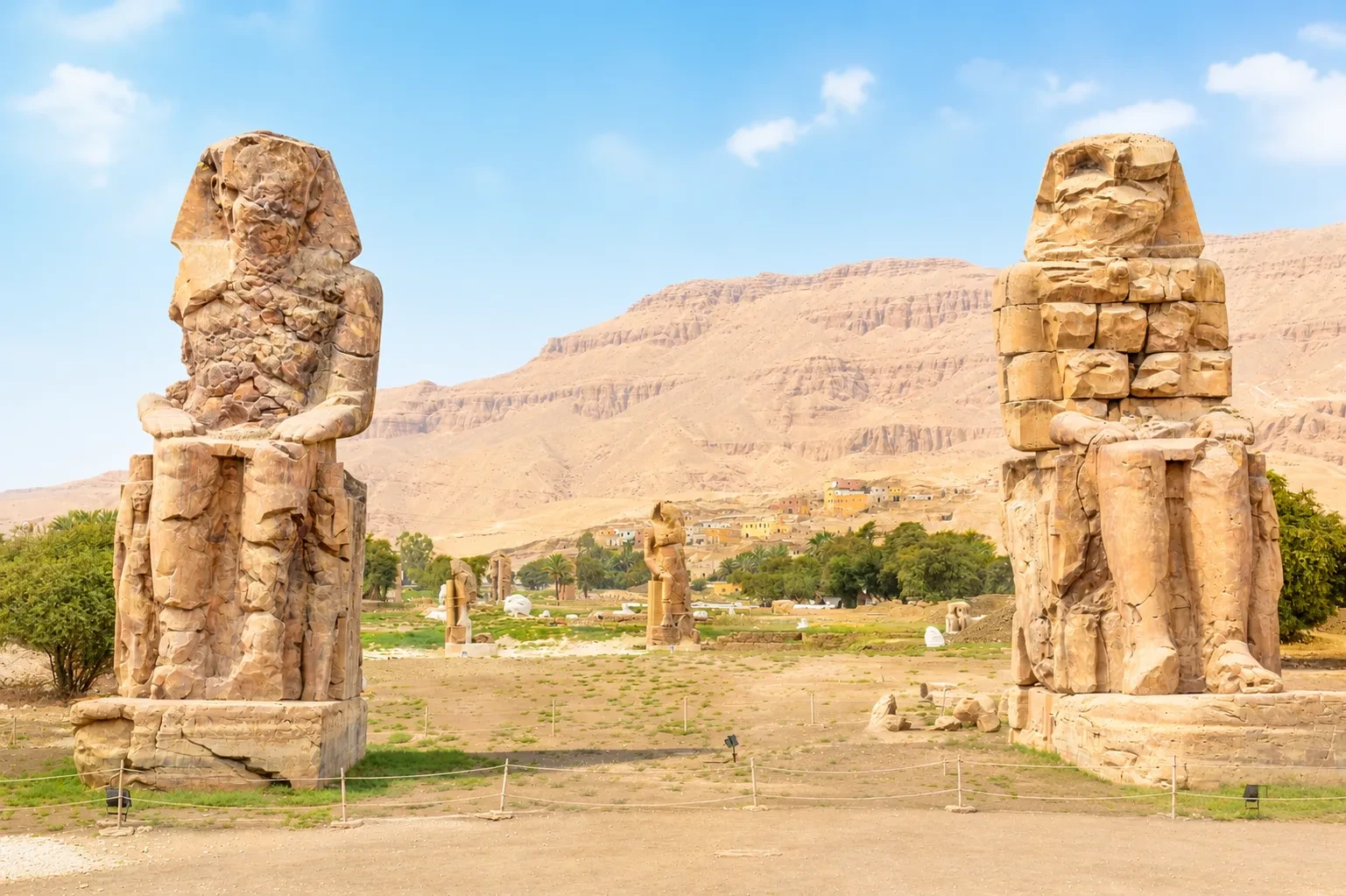
Medinet Habu Temple is located at the southern end of the Theban West Bank in the city of Luxor, at the foot of the Theban hills approximately 2 kilometers south of the Ramesseum and adjacent to the village of Deir el-Medina. The temple is reached from Luxor by crossing the Nile to the West Bank and then traveling south along the edge of the Theban plain past the Colossi of Memnon. Its location at the quieter southern end of the West Bank means that it receives significantly fewer visitors than the nearby Valley of the Kings and Temple of Hatshepsut, making it one of the most peaceful and uncrowded major ancient sites in all of Luxor. WOW Egypt Tours provides private air-conditioned transportation directly from Luxor hotels to Medinet Habu Temple on all Luxor West Bank Tours, Egypt Tours Packages, Egypt Travel Packages, and Safaga Shore Excursions.
Medinet Habu Temple Fun Facts
Medinet Habu Temple is the largest and most completely preserved mortuary temple on the Theban West Bank and one of the best-preserved ancient Egyptian temple complexes in the world. The temple's great enclosure walls, built of mud brick, still stand to their original height of approximately 18 meters in many sections and enclose an area of approximately 66,000 square meters, making the Medinet Habu complex one of the largest walled ancient sites in Egypt. The outer walls of the main temple are covered with some of the most dramatic relief carvings in the ancient world, including the famous Sea Peoples battle reliefs on the north exterior wall that document in vivid detail the great naval and land battles of Ramesses III's eighth regnal year.
The ancient Egyptian name for the Medinet Habu site was Djamet, meaning the Mound, a reference to the sacred hill that the ancient Egyptians believed to be one of the primordial mounds of creation where Amun first appeared at the beginning of the world. This made the Djamet site one of the holiest locations in all of Thebes, predating the construction of any temple on the site by thousands of years of sacred tradition. The Arabic name Medinet Habu means roughly the City of Habu, a name derived from the medieval Arabic corruption of an ancient priestly name for the site.
Why Is Medinet Habu Temple Called By This Name In Egypt?
The modern name Medinet Habu is an Arabic name meaning roughly the City of Habu, derived from the medieval Arabic corruption of an ancient priestly designation for the site. The ancient Egyptian name for the site was Djamet, meaning the Mound, a reference to the primordial sacred hill that the ancient Egyptians believed to be one of the original places of creation where the god Amun emerged at the very beginning of the world. The official ancient Egyptian name for the temple of Ramesses III within the site was Khenet-Ahet, meaning Mansion of Millions of Years, the standard term for a royal mortuary temple in the New Kingdom. Over the centuries, the site was known by various names in ancient Egyptian, Coptic, and Arabic, but the name Medinet Habu, which has been in use since at least the medieval period, is now the universally recognized designation for this extraordinary complex throughout the world.
Medinet Habu Temple History
The history of the Medinet Habu site stretches back to the earliest periods of ancient Egyptian civilization. The sacred hill of Djamet was venerated as a primordial site of creation long before any temple was built there, and the first permanent temple structure on the site was the Small Temple of Amun, built during the early 18th Dynasty and subsequently enlarged and decorated by Queen Hatshepsut and Thutmose III around 1470 BCE. This earlier temple, which still stands within the great enclosure of the Medinet Habu complex, was one of the most important religious institutions on the Theban West Bank for centuries before Ramesses III chose the site for his own mortuary temple.
Construction of the main temple of Ramesses III began around 1186 BCE and continued throughout most of his 31-year reign, with the decoration of the walls proceeding systematically from the innermost sanctuary outward to the pylons and exterior walls. After the death of Ramesses III around 1155 BCE, the temple continued to function as a major religious institution for several centuries, receiving additions and modifications from later pharaohs of the 25th and 26th Dynasties. During the Third Intermediate Period, the great enclosure walls of Medinet Habu served as a fortified refuge for the population of the Theban West Bank during times of political instability, and the Coptic Christian community of Djamet established a town within the temple precinct during the early Christian era, leaving traces of their occupation including Coptic graffiti and painted Christian imagery on some of the ancient Egyptian reliefs. The medieval Arabic village that gave the site its modern name also occupied parts of the complex for several centuries before excavation began in the 19th century.
The Story Of Building Medinet Habu Temple
Ramesses III built his great mortuary temple at Medinet Habu for the same fundamental religious and political reasons that motivated every New Kingdom pharaoh to build a mortuary temple on the Theban West Bank: to provide a permanent institution for the maintenance of his royal cult after death, ensuring his eternal life through the continuous performance of offerings and ritual by the temple priests. However, Ramesses III also had additional and very specific reasons for the extraordinary scale and ambition of his building programme at Medinet Habu.
The first was a deep personal and dynastic identification with Ramesses II, whom Ramesses III regarded as the supreme model of royal greatness. By building his temple in direct imitation of the Ramesseum and by covering its walls with reliefs depicting his own military victories in deliberate parallel to the great battle scenes of Ramesses II, Ramesses III was asserting his place in the tradition of the warrior pharaohs and claiming the prestige of the greatest New Kingdom reign for his own dynasty. The second reason was the specific historical context of his reign: having successfully defended Egypt against the most severe external threats it had faced since the Hyksos period, Ramesses III wanted to commemorate his military achievements in the most permanent and visible form possible. The walls of Medinet Habu became his victory monument, his historical record, and his claim to immortal glory, all combined into a single extraordinary building.
Medinet Habu Temple Architecture
The Migdol Gateway
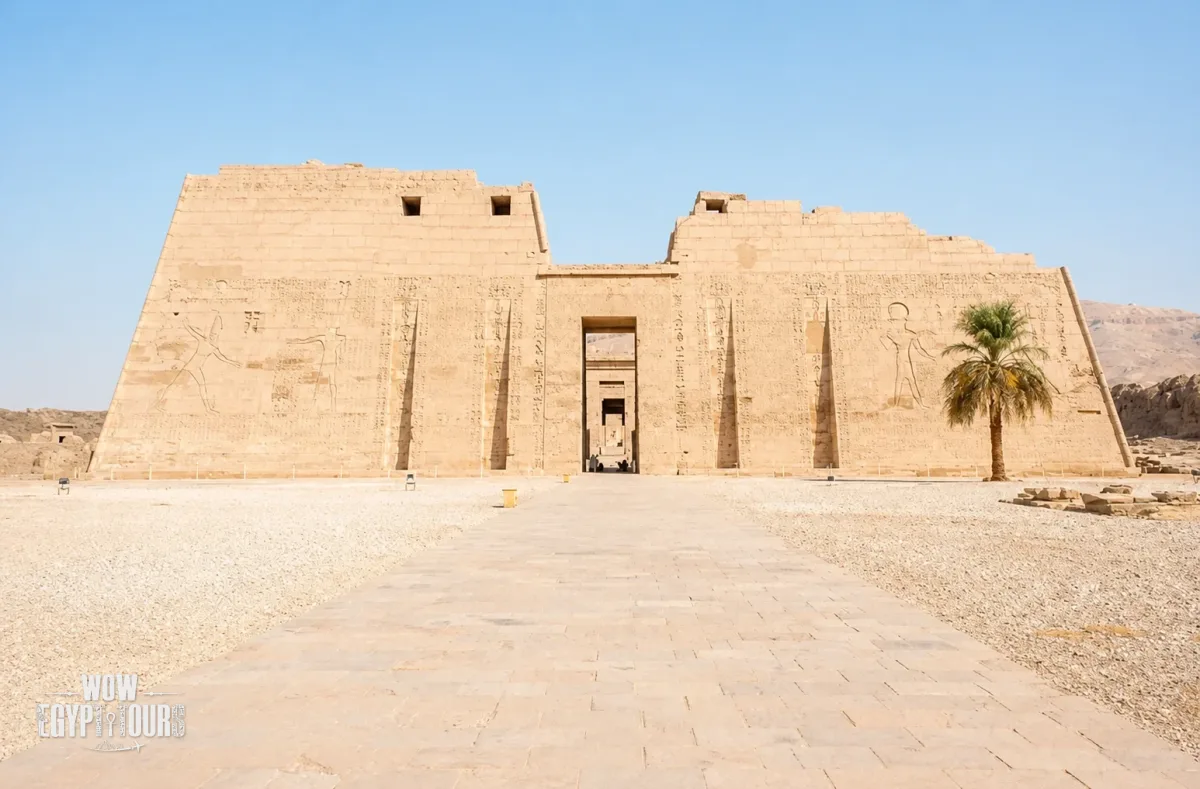
The entrance to the Medinet Habu complex from the east is through one of the most remarkable and unusual architectural features in ancient Egypt: the Migdol Gateway, a massive fortified entrance tower built in the style of a Syrian fortress. The Migdol, which means fortress or tower in both ancient Egyptian and Semitic languages, was a deliberate architectural statement of the military power of Ramesses III, designed in imitation of the fortified gateways of the Syrian cities he had encountered during his campaigns. The upper stories of the Migdol were used by Ramesses III as a private retreat, and the walls of the upper chambers are decorated with unusually intimate scenes showing the pharaoh in the company of women from his harem, playing board games and engaged in personal activities quite unlike the formal ceremonial scenes found in the temple below. The Migdol Gateway is one of the best-preserved ancient gatehouse structures in Egypt and one of the most architecturally distinctive features of the entire Medinet Habu complex.
The First And Second Pylons
Passing through the Migdol Gateway leads into the great forecourt of the Medinet Habu complex and then to the main temple proper, which is entered through two massive pylons in sequence. The first pylon is the largest and most imposing, standing approximately 27 meters high and 65 meters wide, with its exterior faces covered in carved reliefs showing Ramesses III presenting his Libyan and Sea Peoples captives to the gods Amun and Ra-Horakhty. The exterior face of the first pylon also bears the famous Calendar of Feasts and Offerings, a detailed administrative inscription recording the enormous quantities of food, animals, precious materials, and ritual objects that Ramesses III endowed to the temple for the maintenance of its cult, providing one of the most detailed records of a New Kingdom temple economy ever discovered.
The Battle Reliefs Of The Sea Peoples
The north exterior wall of the main temple of Ramesses III at Medinet Habu is covered with the most famous and historically significant military reliefs in the ancient world: the great battle scenes depicting the campaigns of Ramesses III against the Sea Peoples in his eighth regnal year, around 1178 BCE. The Sea Peoples were a confederation of maritime raiders and migrating peoples from the Aegean and Anatolia whose movements during the late Bronze Age contributed to the collapse of the Hittite Empire, the destruction of the cities of Ugarit and Alalakh, and the devastation of Cyprus, effectively ending the Bronze Age civilization of the eastern Mediterranean. The reliefs at Medinet Habu show both the great naval battle fought in the mouths of the Nile delta and the simultaneous land battle on the coastal road, depicting the Egyptian forces defeating the Sea Peoples with extraordinary narrative detail including the individual combat of soldiers, the capsizing of enemy ships, and the processing of captives before the pharaoh. These reliefs are the primary ancient source for knowledge of the Sea Peoples and their appearance, weaponry, and ships, making Medinet Habu Temple one of the most important historical documents in the ancient world.
The Libyan Battle Reliefs
The south exterior wall of the main temple and sections of the first pylon are decorated with reliefs depicting Ramesses III's campaigns against the Libyan peoples in his fifth and eleventh regnal years. The Libyan reliefs, while less celebrated internationally than the Sea Peoples scenes, are equally dramatic in their execution and equally important as historical documents, showing the Egyptian forces in battle formation, the counting of the severed hands of the slain enemy as a measure of the Egyptian victory, and the presentation of Libyan captives and tribute before the enthroned pharaoh. Together with the Sea Peoples reliefs, the Libyan battle scenes make the exterior walls of the Medinet Habu Temple the most complete surviving record of ancient Egyptian military history.
The First Courtyard
The first courtyard of the main temple, entered through the first pylon, is one of the largest open spaces in the temple complex and is lined on both sides with colonnaded porticoes, with Osirian pillars on the south side showing Ramesses III in the wrapped form of the god of resurrection and conventional papyrus-bud columns on the north side. The walls of the first courtyard are decorated with extensive festival scenes showing the pharaoh performing religious rituals and the temple priesthood engaged in procession, providing a vivid picture of the ceremonial life of a major New Kingdom mortuary temple.
The Second Courtyard
The second courtyard, reached through the second pylon, is considered the artistic heart of the Medinet Habu Temple and contains some of the finest relief carving in the entire complex. Both sides of the second courtyard are lined with Osirian pillars and the walls are decorated with scenes from the great festivals of Amun, Min, and Sokar, providing a remarkably complete visual record of the major religious celebrations of the New Kingdom Theban year. The quality of the carving in the second courtyard is exceptionally high, with figures of unusual grace and detail that compare favorably with the finest relief work of the 18th Dynasty.
The Hypostyle Hall And Inner Sanctuary
Beyond the second courtyard, the main temple continues through a series of hypostyle halls, vestibules, and inner sanctuaries dedicated to Amun and to the mortuary cult of Ramesses III himself. The innermost rooms of the temple are cut partially into the bedrock of the Theban plain and retain significant areas of their original painted decoration, with vivid colors in some sections that give visitors a direct impression of the original appearance of the fully decorated interior. The sanctuary of Amun at the innermost point of the temple is the most sacred space in the complex and the ultimate goal of the religious processions that entered from the forecourt during the great festivals of the Theban year.
The Small Temple Of Amun
Within the great enclosure of Medinet Habu, adjacent to the main temple of Ramesses III, stands the Small Temple of Amun, the earlier 18th Dynasty structure that predates the main temple by approximately three centuries. Originally built during the reign of Hatshepsut and Thutmose III, the Small Temple of Amun was subsequently modified and decorated by rulers of the 25th Dynasty, the 26th Dynasty, the 30th Dynasty of Nectanebo I, and the Ptolemaic Period, making it one of the most chronologically layered structures within the already extraordinary Medinet Habu complex. The Small Temple is among the most historically interesting buildings at the site, illustrating the continuous sacred tradition of the Djamet site across more than two thousand years of Egyptian religious history.
The Chapels Of The Divine Votaresses
Along the northern side of the main enclosure of Medinet Habu stand the Chapels of the Divine Votaresses, also known as the Chapels of the God's Wives of Amun, a series of small but beautifully decorated funerary chapels built for the great female religious figures known as the God's Wives of Amun or Divine Adoratrices who governed Thebes during the Third Intermediate and Late Periods. These extraordinary women, who were celibate daughters of the pharaoh appointed to serve as the earthly consort of the god Amun, wielded enormous political and religious power in Upper Egypt, and their chapels at Medinet Habu are among the finest examples of Late Period funerary architecture in Egypt.
The Sacred Lake
Within the great enclosure of Medinet Habu there is a sacred lake, smaller than the famous Sacred Lake of Karnak Temple but serving the same ritual function as a place of purification for the priests of the temple before performing their sacred duties. The area around the sacred lake is one of the quieter and more contemplative spaces within the Medinet Habu complex and offers an atmospheric setting that rewards visitors who take time to explore beyond the main temple building.
Why Is Medinet Habu Temple Important?
Medinet Habu Temple is important for three reasons that together make it one of the most significant ancient sites in Egypt. The first is historical: the battle reliefs of the Sea Peoples and the Libyans on its exterior walls are the primary ancient source for the most catastrophic geopolitical event of the late Bronze Age, and any understanding of the collapse of Bronze Age civilization in the eastern Mediterranean must engage seriously with what the walls of Medinet Habu record. The second is art historical: Medinet Habu is the most completely preserved large-scale New Kingdom mortuary temple in existence, and its walls present a more complete picture of the religious, ceremonial, and administrative life of a New Kingdom royal temple than any other surviving monument. The third is architectural: the completeness of the Medinet Habu complex, including its enclosure walls, its Migdol Gateway, its small temple, and its chapels, gives visitors a uniquely comprehensive impression of what a great ancient Egyptian temple precinct actually looked like and how it functioned as a living religious, administrative, and economic institution.
WOW Egypt Tours includes Medinet Habu Temple as a featured destination in Luxor West Bank Tours, Egypt Tours Packages, and Safaga Shore Excursions, and strongly recommends it to all visitors to Luxor who want to go beyond the most famous monuments and experience one of the great undiscovered gems of the Theban West Bank.
What Are Some Interesting Facts About Medinet Habu Temple?
The Sea Peoples Battle Reliefs
The battle reliefs on the north exterior wall of the Medinet Habu Temple are the most important ancient Egyptian historical document in existence for the events of the late Bronze Age collapse, the catastrophic geopolitical crisis of around 1200 BCE that destroyed the Hittite Empire, the Mycenaean civilization, and the urban cultures of the Levantine coast within the space of a few decades. The Medinet Habu reliefs show the Sea Peoples in unprecedented detail, depicting their clothing, weaponry, ships, and distinctive horned helmets with an accuracy that allows modern scholars to identify specific ethnic groups and connect them to archaeological evidence from across the eastern Mediterranean. No other ancient source provides such a detailed visual record of these mysterious raiders and migrants who transformed the ancient world, making the walls of Medinet Habu Temple a primary source not only for ancient Egyptian history but for the history of the entire ancient Mediterranean world.
The First Recorded Labor Strike In History
Among the most extraordinary historical documents associated with the Medinet Habu site are the ostraca and papyri recovered from the nearby village of Deir el-Medina, which record the first documented labor strike in human history. In the 29th year of the reign of Ramesses III, the royal tomb builders of Deir el-Medina abandoned their work on the royal tomb in the Valley of the Kings because their food rations had not been delivered for eighteen days. The workers marched to the outer walls of the Medinet Habu Temple precinct, sat down in protest, and refused to return to work until their demands were met. The episode is recorded in remarkable detail in ancient papyri and ostraca that preserve the actual words spoken by the workers during the strike, giving the Medinet Habu site an intimate connection to one of the most humanly resonant events in the entire history of ancient Egypt.
The Harem Conspiracy Papyri
The fate of Ramesses III was revealed in modern times through a remarkable combination of ancient documents and modern forensic science. The Judicial Papyrus of Turin and the Lee and Rollin Papyri, ancient Egyptian legal documents preserved in European museum collections, record in considerable detail the trial of the conspirators who plotted to assassinate Ramesses III in the Harem Conspiracy, organized by his secondary wife Tiye who hoped to place her son on the throne. Modern forensic examination of the mummy of Ramesses III, carried out using CT scanning technology in 2012, revealed a deep throat wound consistent with an assassination attempt, suggesting that the conspiracy may have succeeded and that Ramesses III died of his injuries. The mummy of a young man found in the same cache as Ramesses III and long known as the Screaming Mummy due to its anguished facial expression has also been identified through DNA analysis as a likely son of Ramesses III, possibly a conspirator who was forced to commit suicide as punishment. Together these discoveries give Medinet Habu Temple a connection to one of the most dramatic human stories in the history of ancient Egypt.
What Is So Special About Medinet Habu Temple?
The Best-Preserved Mortuary Temple On The Theban West Bank
What makes Medinet Habu Temple uniquely special among all the mortuary temples of the Theban West Bank is its extraordinary state of preservation. While the Ramesseum of Ramesses II and many other West Bank mortuary temples survive only in fragments and ruins, the main temple building of Ramesses III at Medinet Habu stands to nearly its full original height with most of its roof intact, creating enclosed interior spaces with an atmosphere of darkness, mystery, and ancient presence that is completely unlike the experience of visiting a roofless ruin. Walking through the intact hypostyle halls and inner sanctuaries of Medinet Habu, with their original painted ceilings and their walls covered in vivid carved reliefs, provides one of the most direct and authentic encounters with the interior of a functioning ancient Egyptian temple available anywhere in Egypt.
A Site That Rewards Slow Exploration
Medinet Habu Temple is a site that rewards the visitor who takes time to explore beyond the obvious highlights. Beyond the famous battle reliefs and the great pylons, the complex contains layer upon layer of extraordinary detail: the intimate harem scenes in the upper rooms of the Migdol Gateway, the detailed administrative Calendar of Feasts and Offerings on the first pylon, the beautifully preserved festival reliefs in the second courtyard, the ancient Sacred Lake within the enclosure, the chronologically complex Small Temple of Amun, and the elegant Chapels of the Divine Votaresses along the northern enclosure wall. No single visit can exhaust what Medinet Habu has to offer, and many visitors who arrive expecting to spend an hour find themselves still exploring two or three hours later. WOW Egypt Tours recommends allowing a full morning for Medinet Habu on any Luxor West Bank itinerary.
Medinet Habu Temple Through The Ages: From Ancient Egypt To The Present
The history of Medinet Habu spans more than three thousand years of continuous human engagement, from the earliest sacred traditions of the Djamet mound through the construction of Egypt's finest surviving mortuary temple complex to the modern era. After the decline of the New Kingdom, Medinet Habu continued to function as an active religious site through the Third Intermediate Period, when the God's Wives of Amun used the precinct for their funerary chapels, and through the Late and Ptolemaic Periods when further additions were made to the Small Temple of Amun within the enclosure.
During the early Christian era, the great enclosure walls of Medinet Habu provided shelter for a Coptic town that grew up within the temple precinct, and the main temple building was used as a Coptic Christian church, with painted Christian imagery added over sections of the ancient Egyptian decoration. The Arabic village of Medinet Habu occupied parts of the site through the medieval and modern periods until its clearance by the Egyptian Antiquities Service in the early 20th century. The Oriental Institute of the University of Chicago conducted systematic excavation and recording of the Medinet Habu complex from 1924 onwards, producing the definitive scholarly publication of the temple in eight volumes that remains the standard reference work on the site. Today Medinet Habu Temple is managed by the Egyptian Ministry of Tourism and Antiquities and receives visitors from around the world, though it remains far less crowded than the more famous West Bank sites to the north, giving visitors an experience of unusual peace and intimacy with one of the greatest ancient monuments in Egypt.
Medinet Habu Temple UNESCO World Heritage Site
Medinet Habu Temple is part of the Ancient Thebes with its Necropolis UNESCO World Heritage Site, inscribed in 1979. This designation recognizes the outstanding universal value of the entire Theban region, which includes Medinet Habu Temple, the Valley of the Kings, the Valley of the Queens, Luxor Temple, Karnak Temple, and the many temples and tombs of the West Bank of the Nile. UNESCO recognizes Medinet Habu Temple specifically as the finest surviving mortuary temple complex in ancient Egypt and a monument of outstanding universal value for its historical documentation of the late Bronze Age world, its architectural completeness, and its extraordinary programme of carved and painted wall reliefs. The UNESCO inscription has supported ongoing international conservation work at the site, including the stabilization of relief surfaces, the documentation of painted decoration, and the management of visitor access to the most fragile areas of the complex.
Best Time To Visit Medinet Habu Temple
The best time to visit Medinet Habu Temple is during the cooler months from October through April, when temperatures in Luxor are moderate and the site is comfortable for outdoor and indoor exploration. Because the main temple building at Medinet Habu retains much of its original roof, the interior hypostyle halls and inner sanctuaries provide significant shade and are considerably cooler than fully exposed outdoor sites such as the Valley of the Kings, making Medinet Habu a relatively manageable visit even during the hotter summer months. If visiting during summer, plan your visit for early morning or late afternoon to avoid the most intense midday heat in the exterior courts and enclosure. WOW Egypt Tours operates Luxor West Bank Tours throughout the year and plans all timings carefully to ensure the most comfortable and rewarding visit to Medinet Habu Temple possible regardless of the season.
Medinet Habu Temple Opening Hours
Medinet Habu Temple is open to visitors every day of the week, including public holidays. The temple opens at 6:00 AM and closes at 5:00 PM during the winter months from October to April, and remains open until 5:00 PM during the summer months from May to September. Visitors who prefer the most peaceful experience should arrive early in the morning, as Medinet Habu receives fewer visitors than the more famous West Bank sites and is rarely crowded at any time of day, but early morning light across the great pylons and battle reliefs is particularly beautiful for photography.
Medinet Habu Temple Entrance Fees
Adults: EGP 220
Students: EGP 110
Keep your ticket safe throughout your visit. Entrance fees are included in all Medinet Habu Temple Tours, Egypt Tours Packages, and Safaga Shore Excursions booked through WOW Egypt Tours.
How To Get To Medinet Habu Temple
Medinet Habu Temple is located at the southern end of the Theban West Bank in Luxor, approximately 3 kilometers south of the Colossi of Memnon along the road that runs along the base of the Theban hills. From central Luxor, visitors cross the Nile by public ferry or private motorboat to the West Bank landing, from which taxis, minibuses, and organized tour vehicles travel south along the desert edge road to the temple entrance. The journey from the Nile landing to Medinet Habu Temple takes approximately 20 to 25 minutes by road.
Visitors arriving by air land at Luxor International Airport on the East Bank, from which private transfers to the West Bank are readily available. Those traveling from Cairo or Aswan by train arrive at Luxor Railway Station on the East Bank. Nile cruise ships dock along the Corniche on the East Bank and all cruise itineraries include organized transportation to the West Bank sites. Travelers joining Safaga Shore Excursions with WOW Egypt Tours are collected directly from Safaga Port and transferred comfortably to Medinet Habu Temple by private air-conditioned vehicle. All Luxor West Bank Tours operated by WOW Egypt Tours include private air-conditioned transportation directly to and from Medinet Habu Temple.
How Long To Spend At Medinet Habu Temple
Most visitors spend between one and two hours at Medinet Habu Temple, which covers the main highlights including the Migdol Gateway, the first and second pylons, the battle reliefs of the Sea Peoples and Libyans, the first and second courtyards, and the hypostyle hall. Visitors who want to explore the full complex including the Small Temple of Amun, the Chapels of the Divine Votaresses, the Sacred Lake, and the inner sanctuary rooms should allow two to three hours. WOW Egypt Tours recommends allocating a full morning to Medinet Habu Temple on any West Bank itinerary, as the depth and quality of the site reward extended exploration. The temple is ideally combined on the same day with the Valley of the Kings, the Temple of Hatshepsut, and the Colossi of Memnon as part of a full Luxor West Bank Tour.
Tips For Visiting Medinet Habu Temple
Arrive early in the morning for the best light on the battle reliefs of the exterior north wall, which are best photographed with the low morning sun creating dramatic shadows across the carved surfaces. Bring water and wear a hat and sunscreen for the exterior courts and enclosure areas. Take time to explore the full complex beyond the main temple building, including the Small Temple of Amun and the Chapels of the Divine Votaresses, which are often overlooked by visitors who focus exclusively on the main temple. Do not touch the painted and carved surfaces inside the temple, as the oils from human hands cause irreversible damage to the ancient pigments. A licensed Egyptologist guide from WOW Egypt Tours is strongly recommended: the historical narrative of the Sea Peoples battle reliefs, the iconographic programme of the festival scenes, and the architectural complexity of the site are all significantly enriched by expert explanation. Wear comfortable, closed-toe walking shoes with good grip for the uneven stone surfaces throughout the complex.
What To Wear At Medinet Habu Temple
Medinet Habu Temple is a large archaeological site combining open-air exterior areas and enclosed interior temple spaces, requiring practical and adaptable clothing. Lightweight, breathable clothing covering the shoulders and knees is recommended for both comfort in the Egyptian heat and as a mark of respect for the sacred nature of the site. A wide-brimmed hat and sunscreen are necessary for the exterior courts and the approach to the complex. Comfortable, closed-toe walking shoes with good grip are essential for the uneven stone surfaces throughout the complex. Visitors entering the enclosed inner hypostyle halls and sanctuary rooms should be prepared for a sudden transition from bright sunlight to relative darkness, and eyes should be allowed time to adjust before moving deeper into the temple interior. In winter evenings, a light layer is useful as temperatures on the West Bank can drop noticeably after sunset.
Photography At Medinet Habu Temple
Medinet Habu Temple is one of the finest photography destinations on the Theban West Bank, offering an extraordinary combination of monumental exterior architecture, dramatic battle reliefs, richly painted interior spaces, and a setting of peaceful isolation that is rarely found at the more famous West Bank sites. Photography with a standard camera or smartphone is permitted throughout most areas of the complex. Flash photography is strictly prohibited near all painted and carved surfaces, as the intense light causes irreversible damage to ancient pigments. The best exterior photography is achieved in the early morning when the low sun creates dramatic raking light across the carved battle reliefs on the north wall and the sculptural facade of the first pylon. For interior photography in the hypostyle halls and sanctuary rooms, a camera with strong low-light performance is recommended, as the enclosed spaces receive very little natural light. Professional photography or filming with specialized equipment requires a separate permit from Egypt's Ministry of Tourism and Antiquities.
Medinet Habu Temple Tours
Single Attraction Visit: Medinet Habu Temple Tour
This tour covers Medinet Habu Temple as a standalone visit. It is suitable for travelers with a particular interest in New Kingdom military history, ancient Egyptian temple architecture, the Sea Peoples and the Bronze Age collapse, or the art and iconography of the 20th Dynasty, as well as visitors who want to experience one of the finest ancient monuments in Egypt in an atmosphere of unusual calm and spaciousness.
What Is Covered
Full guided visit of Medinet Habu Temple including the Migdol Gateway and its upper chambers, the first pylon with the Calendar of Feasts and the battle reliefs, the first courtyard with its Osirian pillars, the second courtyard with the festival reliefs, the hypostyle hall, the inner sanctuary, the Small Temple of Amun, the Chapels of the Divine Votaresses, and the Sacred Lake within the enclosure.
Duration
1.5 to 2.5 hours inside the complex.
Includes
Private transportation, private licensed Egyptologist guide, and entrance fees. Available for morning and afternoon departures. Morning visits are recommended for the best light on the exterior battle reliefs.
Luxor West Bank Tours: Medinet Habu Temple, Valley Of The Kings, Hatshepsut Temple And More
This full-day tour covers the major sites on the West Bank of Luxor, the ancient burial ground of the pharaohs and their families. It is suitable for travelers who want a complete West Bank experience in a single day.
What Is Covered
The Valley of the Kings with entry to three royal tombs. The Temple of Hatshepsut at Deir el-Bahari. The Colossi of Memnon. Medinet Habu Temple with a full guided visit of the main temple, battle reliefs, courtyards, and the Small Temple of Amun. Optional extensions include the Valley of the Queens, the Ramesseum, the Valley of the Nobles, and Deir el-Medina.
Duration
Full day, approximately 7 to 8 hours.
Includes
Private air-conditioned transportation, Nile crossing, private licensed Egyptologist guide, and entrance fees to all main sites. Available for morning departures.
Luxor East Bank Tours: Karnak Temple, Luxor Temple, Luxor Museum And Mummification Museum
This full-day tour covers the four main sites on the East Bank of Luxor, combining the great open-air temple complexes with Luxor's two main museums.
What Is Covered
Karnak Temple with a full guided visit including the Great Hypostyle Hall, the Sacred Lake, and the Open Air Museum. The Avenue of Sphinxes connecting Karnak Temple to Luxor Temple. Luxor Temple including the entrance pylon, the great colonnade, the courtyard of Amenhotep III, and the inner halls. The Luxor Museum with a full guided visit of all galleries. The Mummification Museum covering the tools, methods, and materials used in ancient Egyptian embalming.
Duration
Full day, approximately 6 to 7 hours.
Includes
Private air-conditioned transportation, private licensed Egyptologist guide, and entrance fees to all four sites. Available for morning departures.
Luxor Day Tours: Combined East Bank And West Bank
This full-day combined tour covers the most important sites on both banks of the Nile in Luxor in a single day.
What Is Covered
West Bank: Valley of the Kings with three tomb entries, Temple of Hatshepsut at Deir el-Bahari, the Colossi of Memnon, and Medinet Habu Temple subject to available time. East Bank: Karnak Temple including the Great Hypostyle Hall and Sacred Lake, the Avenue of Sphinxes, and Luxor Temple.
Duration
Full day, approximately 8 to 9 hours.
Includes
Private air-conditioned transportation, Nile crossing, private licensed Egyptologist guide, and entrance fees to all sites. Available for morning departures.
Safaga Shore Excursions To Medinet Habu Temple
Safaga Port is located on the Red Sea coast, approximately 250 kilometers (155 miles) from Luxor. WOW Egypt Tours operates Safaga Shore Excursions that transfer cruise ship passengers from Safaga Port to Luxor and back within a single port day. The transfer is approximately 2.5 to 3 hours each way by private air-conditioned vehicle.
What Is Covered
The Valley of the Kings with entry to three royal tombs. The Colossi of Memnon. Karnak Temple including the Great Hypostyle Hall and the Sacred Lake. Medinet Habu Temple subject to available time. Optional addition: Luxor Temple and Luxor Museum subject to available time.
Duration
Full day from port departure to port return, approximately 12 to 13 hours including transfers.
Includes
Private air-conditioned vehicle from Safaga Port, private licensed Egyptologist guide, entrance fees to all included sites, and return transfer to the ship. All Safaga Shore Excursions are coordinated around each ship's port schedule to guarantee return to the vessel before departure.
Dahabiya Nile River Cruise
A Dahabiya Nile River Cruise is a small-vessel sailing experience on the Nile between Luxor and Aswan aboard a traditional wooden dahabiya. WOW Egypt Tours operates dahabiya cruises with private cabins, all meals, a private licensed Egyptologist guide on board, and guided shore excursions at every stop.
4 Days 3 Nights Dahabiya Nile River Cruise From Aswan To Luxor
Route: Aswan to Luxor, sailing north.
Itinerary
Day 1: Embarkation in Aswan. Visit to Philae Temple and the Unfinished Obelisk. Sail north to Kom Ombo. Guided visit to Kom Ombo Temple. Continue to Gebel el Silsila. Overnight on board.
Day 2: Guided visit to Gebel el Silsila. Sail to the Village of Basaw. Guided visit to Village of Basaw. Continue to Edfu. Guided visit to the Temple of Horus at Edfu. Overnight on board.
Day 3: Sail to El Kab. Guided visit to El Kab Tombs. Sail to El Hagaz Island. Swimming stop. Overnight on board.
Day 4: Sail to Esna. Visit Khnum Temple at Esna. Disembarkation in Esna. Transfer to Luxor, approximately 55 kilometers (35 miles).
Includes
Private cabin, all meals on board, private licensed Egyptologist guide, entrance fees to all temple visits, and private transfers.
5 Days 4 Nights Dahabiya Nile River Cruise From Luxor To Aswan
Route: Luxor to Aswan, sailing south.
Itinerary
Day 1: Embarkation in Luxor. Transfer to Esna, approximately 55 kilometers (35 miles). Visit Khnum Temple at Esna. Sail to El Hagaz Island. Overnight on board.
Day 2: Sail to El Kab. Guided visit to El Kab Tombs. Continue to Edfu. Guided visit to the Temple of Horus at Edfu. Sail to the Village of Basaw. Guided visit to Village of Basaw. Overnight on board.
Day 3: Sail to Gebel el Silsila. Guided visit to Gebel el Silsila. Sail south to Kom Ombo. Guided visit to Kom Ombo Temple. Sail to Daraw Village. Overnight on board.
Day 4: Guided visit to Daraw Village. Sail to Herbiab Island. Swimming stop. Philae Sound and Light Show. Overnight on board.
Day 5: Optional Abu Simbel visit available by air or road. Guided visits to Philae Temple, the High Dam, and the Unfinished Obelisk. Disembarkation in Aswan.
Includes
Private cabin, all meals on board, private licensed Egyptologist guide, entrance fees to all temple visits, and private transfers.
8 Days 7 Nights Dahabiya Nile River Cruise Round Trip From Luxor (Via Aswan)
Route: Luxor and Aswan, sailing north and south.
Itinerary
Day 1: Embarkation in Luxor. Transfer to Esna, approximately 55 kilometers (35 miles). Visit Khnum Temple at Esna. Sail to El Hagaz Island. Overnight on board.
Day 2: Sail to El Kab. Continue to Edfu. Guided visit to the Temple of Horus at Edfu. Sail to the Village of Basaw. Guided visit to Village of Basaw. Overnight on board.
Day 3: Sail to Gebel el Silsila. Sail south to Kom Ombo. Guided visit to Kom Ombo Temple. Sail to Daraw Village. Overnight on board.
Day 4: Guided visit to Daraw Village. Sail to Herbiab Island. Swimming stop. Philae Sound and Light Show. Overnight on board.
Day 5: Optional Abu Simbel visit available by air or road. Guided visits to Philae Temple, the High Dam, and the Unfinished Obelisk. Sail north to Kom Ombo. Continue to Gebel el Silsila. Overnight on board.
Day 6: Guided visit to Gebel el Silsila. Sail to the Village of Basaw. Continue to Edfu. Overnight on board.
Day 7: Sail to El Kab. Guided visit to El Kab Tombs. Sail to El Hagaz Island. Swimming stop. Overnight on board.
Day 8: Disembarkation in Esna. Transfer to Luxor, approximately 55 kilometers (35 miles).
Includes
Private cabin, all meals on board, private licensed Egyptologist guide, entrance fees to all temple visits, and private transfers.
8 Days 7 Nights Dahabiya Nile River Cruise Round Trip From Aswan (Via Luxor)
Route: Luxor and Aswan, sailing north and south.
Itinerary
Day 1: Embarkation in Aswan. Visit to Philae Temple and the Unfinished Obelisk. Sail north to Kom Ombo. Continue to Gebel el Silsila. Overnight on board.
Day 2: Guided visit to Gebel el Silsila. Sail to the Village of Basaw. Continue to Edfu. Overnight on board.
Day 3: Sail to El Kab. Guided visit to El Kab Tombs. Sail to El Hagaz Island. Swimming stop. Overnight on board.
Day 4: Sail to Esna. Visit Khnum Temple at Esna. Sail to El Hagaz Island. Overnight on board.
Day 5: Sail to El Kab. Continue to Edfu. Guided visit to the Temple of Horus at Edfu. Sail to the Village of Basaw. Guided visit to Village of Basaw. Overnight on board.
Day 6: Sail to Gebel el Silsila. Sail south to Kom Ombo. Guided visit to Kom Ombo Temple. Sail to Daraw Village. Overnight on board.
Day 7: Guided visit to Daraw Village. Sail to Herbiab Island. Swimming stop. Philae Sound and Light Show. Overnight on board.
Day 8: Disembarkation in Aswan.
Includes
Private cabin, all meals on board, private licensed Egyptologist guide, entrance fees to all temple visits, and private transfers.
Luxor And Aswan Nile River Cruise
The Luxor and Aswan Nile River Cruise is a standard Nile cruise product operated aboard a full-size cruise ship between Luxor and Aswan. WOW Egypt Tours operates this cruise in both directions with private licensed Egyptologist guides, all meals included, private cabins, and guided shore excursions at every port of call. Medinet Habu Temple is available as an optional West Bank extension on all itineraries that include Luxor.
4 Days 3 Nights Luxor And Aswan Nile River Cruise From Aswan To Luxor
Route: Aswan to Luxor, sailing north.
Itinerary
Day 1: Embarkation in Aswan. Guided visits to Philae Temple, the High Dam, and the Unfinished Obelisk. Overnight on board in Aswan.
Day 2: Sail north to Kom Ombo. Guided visit to Kom Ombo Temple. Continue to Edfu. Overnight on board.
Day 3: Guided visit to the Temple of Horus at Edfu. Continue north toward Luxor. Guided visit to Luxor Temple and Karnak Temple. Overnight on board in Luxor.
Day 4: Optional Sunrise Hot Air Balloon available. Guided visits to Valley of the Kings, Queen Hatshepsut Temple, and Colossi of Memnon. Disembarkation in Luxor.
Includes
Private cabin, all meals on board, private licensed Egyptologist guide, entrance fees to all temple visits, and private transfers.
5 Days 4 Nights Luxor And Aswan Nile River Cruise From Luxor To Aswan
Route: Luxor to Aswan, sailing south.
Itinerary
Day 1: Embarkation in Luxor. Guided visits to Luxor Temple and Karnak Temple. Overnight on board in Luxor.
Day 2: Optional Sunrise Hot Air Balloon available. Guided visits to Valley of the Kings, Queen Hatshepsut Temple, and Colossi of Memnon. Pass through the Esna locks. Sail south to Edfu. Overnight on board.
Day 3: Guided visit to the Temple of Horus at Edfu. Continue to Kom Ombo. Guided visit to Kom Ombo Temple. Overnight on board.
Day 4: Continue south toward Aswan. Guided visits to Philae Temple, the High Dam, and the Unfinished Obelisk. Overnight on board in Aswan.
Day 5: Optional Abu Simbel visit available by air or road. Disembarkation in Aswan.
Includes
Private cabin, all meals on board, private licensed Egyptologist guide, entrance fees to all temple visits, and private transfers.
8 Days 7 Nights Luxor And Aswan Nile River Cruise Round Trip From Luxor (Via Aswan)
Route: Luxor and Aswan, sailing north and south.
Itinerary
Day 1: Embarkation in Luxor. Guided visits to Luxor Temple and Karnak Temple. Overnight on board in Luxor.
Day 2: Guided visits to Luxor Museum. Pass through the Esna locks. Sail south to Edfu. Overnight on board.
Day 3: Guided visit to the Temple of Horus at Edfu. Continue to Kom Ombo. Overnight on board.
Day 4: Continue south toward Aswan. Guided visits to Philae Temple, the High Dam, and the Unfinished Obelisk. Overnight on board in Aswan.
Day 5: Abu Simbel visit available by road. Sound and Light Show at Philae Temple. Overnight on board in Aswan.
Day 6: Guided visits to Nubian Village. Sail north to Kom Ombo. Guided visit to Kom Ombo Temple. Continue to Edfu. Overnight on board.
Day 7: Guided visits to Valley of the Kings, Queen Hatshepsut Temple, and Colossi of Memnon. Pass through the Esna locks. Sail south to Edfu. Overnight on board.
Day 8: Optional Sunrise Hot Air Balloon available. Disembarkation in Luxor.
Includes
Private cabin, all meals on board, private licensed Egyptologist guide, entrance fees to all temple visits, and private transfers.
8 Days 7 Nights Luxor And Aswan Nile River Cruise Round Trip From Aswan (Via Luxor)
Route: Luxor and Aswan, sailing north and south.
Itinerary
Day 1: Embarkation in Aswan. Guided visits to Philae Temple, the High Dam, and the Unfinished Obelisk. Overnight on board in Aswan.
Day 2: Sail north to Kom Ombo. Guided visit to Nubian Village and Kom Ombo Temple. Continue to Edfu. Overnight on board.
Day 3: Continue north toward Luxor. Guided visit to Luxor Museum and Karnak Sound and Light Show. Overnight on board in Luxor.
Day 4: Guided visits to Luxor Temple and Karnak Temple. Overnight on board in Luxor.
Day 5: Optional Sunrise Hot Air Balloon available. Guided visits to Valley of the Kings, Queen Hatshepsut Temple, and Colossi of Memnon. Pass through the Esna locks. Sail south to Edfu. Overnight on board.
Day 6: Guided visit to the Temple of Horus at Edfu. Continue to Kom Ombo. Overnight on board.
Day 7: Sound and Light Show at Philae Temple. Overnight on board in Aswan.
Day 8: Abu Simbel visit available by road. Disembarkation in Aswan.
Includes
Private cabin, all meals on board, private licensed Egyptologist guide, entrance fees to all temple visits, and private transfers.
Combine Medinet Habu Temple With Your Egypt Tours Package
Medinet Habu Temple is included as a featured West Bank stop across the full range of WOW Egypt Tours travel products. Browse the options below to find the Egypt experience that is right for you.
Egypt Tour Packages: Multi-day guided Egypt tours organized by duration, including 2 Days Egypt Packages, 3 Days Egypt Packages, 4 Days Egypt Packages, 5 Days Egypt Packages, 6 Days Egypt Packages, 7 Days Egypt Packages, 8 Days Egypt Packages, 10 Days Egypt Packages, and longer itineraries. All packages include private air-conditioned transportation, private licensed Egyptologist guide, accommodations, entrance fees to all included sites, and private transfers throughout Egypt.
Egypt Travel Packages: Themed Egypt travel packages designed around specific travel styles and interests, including Egypt Honeymoon Travel Packages, Egypt Budget Travel Packages, Egypt Family Travel Packages, Egypt Luxury Travel Packages, Egypt Adventure Travel Packages, Egypt Cultural Travel Packages, and Egypt Christmas and New Year Travel Packages. All packages include private air-conditioned transportation, private licensed Egyptologist guide, accommodations, meals, entrance fees to all included sites, and private transfers.
Egypt Nile Cruise Packages: Complete Egypt travel packages combining Cairo sightseeing with a fully guided Nile cruise between Luxor and Aswan, available as Cairo and Nile Cruise Packages, Egypt and Nile Cruise Packages, and Nile Cruise and Red Sea Packages. All packages include private cabin on board, all meals, private licensed Egyptologist guide, entrance fees to all temple visits, and private transfers.
Nile River Cruises: All WOW Egypt Tours Nile cruise options between Luxor and Aswan, available across four ship categories, Standard, Deluxe, Ultra Deluxe, and Luxury, as well as private Dahabiya sailing vessels. All cruises include private cabin on board, all meals, private licensed Egyptologist guide, entrance fees to all temple visits, and private transfers.
Luxor Aswan Nile Cruises: The classic Upper Egypt Nile cruise route between Luxor and Aswan, available in both directions and in durations of 4 Days 3 Nights, 5 Days 4 Nights, and 8 Days 7 Nights round trip. Medinet Habu Temple is available as a West Bank extension on all itineraries. All cruises include private cabin on board, all meals, private licensed Egyptologist guide, entrance fees to all sites, and private transfers.
Standard Nile Cruises: Comfortable standard-category cruise ships sailing between Luxor and Aswan, available in 4 Days 3 Nights, 5 Days 4 Nights, and 8 Days 7 Nights itineraries in both directions. Includes standard cabin on board, all meals, private licensed Egyptologist guide, entrance fees to all temple visits, and private transfers.
Deluxe Nile Cruises: Deluxe-category cruise ships with enhanced cabin comfort and upgraded dining, sailing between Luxor and Aswan in 4 Days 3 Nights, 5 Days 4 Nights, and 8 Days 7 Nights itineraries in both directions. Includes deluxe cabin on board, all meals, private licensed Egyptologist guide, entrance fees to all temple visits, and private transfers.
Ultra Deluxe Nile Cruises: Ultra deluxe-category cruise ships offering superior cabins, premium dining, and an elevated onboard experience, sailing between Luxor and Aswan in 4 Days 3 Nights, 5 Days 4 Nights, and 8 Days 7 Nights itineraries in both directions. Includes ultra deluxe cabin on board, all meals, private licensed Egyptologist guide, entrance fees to all temple visits, and private transfers.
Luxury Nile Cruises: Luxury-category cruise ships with the finest cabins, exceptional cuisine, and premium onboard facilities, sailing between Luxor and Aswan in 4 Days 3 Nights, 5 Days 4 Nights, and 8 Days 7 Nights itineraries in both directions. Includes luxury cabin on board, all meals, private licensed Egyptologist guide, entrance fees to all temple visits, and private transfers.
Dahabiya Nile Cruises: Private small-vessel sailing experience aboard a traditional wooden dahabiya between Luxor and Aswan, available in four itineraries: 4 Days 3 Nights Dahabiya From Aswan To Luxor, 5 Days 4 Nights Dahabiya From Luxor To Aswan, 8 Days 7 Nights Dahabiya Round Trip From Luxor via Aswan, and 8 Days 7 Nights Dahabiya Round Trip From Aswan via Luxor. Includes private cabin on board, all meals, private licensed Egyptologist guide, entrance fees to all temple visits, and private transfers.
Luxor Tours: Day tours and multi-day tours of Luxor covering all major sites on both banks of the Nile, including Luxor West Bank Tours covering Medinet Habu Temple, Valley of the Kings, Temple of Hatshepsut, and Colossi of Memnon; Luxor East Bank Tours covering Karnak Temple, Luxor Temple, Luxor Museum, and Mummification Museum; and combined Luxor Day Tours covering both banks in a single day. All tours include private air-conditioned transportation, private licensed Egyptologist guide, entrance fees to all included sites, and private transfers.
Shore Excursions: Guided day excursions from Egypt's Red Sea ports to Medinet Habu Temple and the monuments of Upper Egypt, available for cruise ship passengers with a port call at Safaga, Hurghada, Port Said, Alexandria, and Sokhna. Includes private air-conditioned transportation from the port, private licensed Egyptologist guide, entrance fees to all included sites, and return transfer to the ship, with all timings coordinated around each vessel's port schedule.
Safaga Port Excursions: Shore excursions departing from Safaga Port on the Red Sea coast, approximately 250 kilometers (155 miles) from Luxor, covering Medinet Habu Temple, Valley of the Kings, Colossi of Memnon, Karnak Temple, and Luxor Temple as a full-day trip within a single port call. Available options include Safaga to Luxor West Bank Tours, Safaga to Luxor East Bank Tours, and combined Safaga to Luxor Day Tours. Includes private air-conditioned vehicle from Safaga Port, private licensed Egyptologist guide, entrance fees to all included sites, and return transfer to the ship.
Nearby Attractions To Medinet Habu Temple
Medinet Habu Temple sits at the southern end of the Theban West Bank surrounded by extraordinary ancient monuments in every direction. The village and tombs of Deir el-Medina, home of the royal tomb builders who constructed both Medinet Habu and the tombs of the Valley of the Kings, is located immediately adjacent to the Medinet Habu enclosure to the northeast. The Valley of the Queens, containing the celebrated tomb of Queen Nefertari, is located just north of Medinet Habu at the foot of the southern Theban hills. The Ramesseum, the mortuary temple of Ramesses II, is located approximately 2 kilometers to the north along the desert edge road. The Valley of the Nobles, with its vivid scenes of New Kingdom everyday life, lies to the north between the Ramesseum and the road to the Valley of the Kings. The Colossi of Memnon stand at the edge of the cultivation on the road between Medinet Habu and the Nile landing. The Temple of Hatshepsut at Deir el-Bahari and the Valley of the Kings are both accessible as part of a full West Bank day arranged by WOW Egypt Tours. On the East Bank, the Luxor Museum, the Mummification Museum, Luxor Temple, and Karnak Temple complete the full range of monuments available in the Luxor area.
Frequently Asked Questions About Medinet Habu Temple
What is Medinet Habu Temple?
Medinet Habu Temple is the mortuary temple complex of Pharaoh Ramesses III, located on the west bank of the Nile in Luxor and built between approximately 1186 BCE and 1155 BCE. It is the largest and most completely preserved mortuary temple on the Theban West Bank and is celebrated for its extraordinary battle reliefs documenting Ramesses III's wars against the Sea Peoples and Libyans. Medinet Habu Temple is a featured destination in all Luxor West Bank Tours, Egypt Tours Packages, Egypt Travel Packages, and Safaga Shore Excursions offered by WOW Egypt Tours.
Who built Medinet Habu Temple?
The main temple at Medinet Habu was built by Pharaoh Ramesses III of the 20th Dynasty, who ruled Egypt from approximately 1186 BCE to 1155 BCE. The site also contains a Small Temple of Amun built during the 18th Dynasty by Hatshepsut and Thutmose III, with later additions by rulers of the 25th Dynasty, 26th Dynasty, 30th Dynasty, and Ptolemaic Period.
What does Medinet Habu mean?
The name Medinet Habu is an Arabic name meaning roughly the City of Habu, derived from a medieval Arabic corruption of an ancient priestly designation for the site. The ancient Egyptian name was Djamet, meaning the Mound, a reference to the primordial sacred hill believed to be one of the original places of creation where the god Amun first appeared.
What are the Sea Peoples battle reliefs?
The Sea Peoples battle reliefs are a series of carved scenes on the north exterior wall of the main temple at Medinet Habu, documenting in vivid detail the naval and land battles of Ramesses III against the Sea Peoples in his eighth regnal year around 1178 BCE. They are the primary ancient source for knowledge of the Sea Peoples, a confederation of raiders and migrants whose movements contributed to the collapse of Bronze Age civilizations across the eastern Mediterranean.
What is the Migdol Gateway?
The Migdol Gateway is the massive fortified entrance tower built in the style of a Syrian fortress that serves as the main entrance to the Medinet Habu complex from the east. Its upper stories were used by Ramesses III as a private retreat and are decorated with intimate harem scenes, making it one of the most architecturally and iconographically distinctive features of the entire complex.
What is the Small Temple of Amun at Medinet Habu?
The Small Temple of Amun is an earlier 18th Dynasty temple originally built by Hatshepsut and Thutmose III within the Medinet Habu enclosure, predating the main temple of Ramesses III by approximately three centuries. It was subsequently modified by rulers of the 25th, 26th, and 30th Dynasties and the Ptolemaic Period, making it one of the most chronologically layered structures at the site.
What are the opening hours of Medinet Habu Temple?
Medinet Habu Temple is open daily from 6:00 AM to 5:00 PM, including public holidays.
How much does it cost to enter Medinet Habu Temple?
The entrance fee is EGP 220 for adults and EGP 110 for students. Entrance fees are included in all Medinet Habu Temple Tours, Egypt Tours Packages, and Safaga Shore Excursions booked through WOW Egypt Tours.
How long does it take to visit Medinet Habu Temple?
Most visitors spend between one and two hours at the main highlights of Medinet Habu Temple. Those who wish to explore the full complex including the Small Temple of Amun, the Chapels of the Divine Votaresses, and the Sacred Lake should allow two to three hours.
What is the best time of year to visit Medinet Habu Temple?
October to April is the most comfortable period for visiting. The enclosed interior spaces of the main temple provide significant shade even in summer, making Medinet Habu more manageable in hot weather than fully open-air sites.
How do I get to Medinet Habu Temple?
Medinet Habu Temple is located at the southern end of the Theban West Bank in Luxor, reached by crossing the Nile and traveling south along the desert edge road approximately 3 kilometers beyond the Colossi of Memnon. All Luxor West Bank Tours, Luxor Day Tours, and Safaga Shore Excursions with WOW Egypt Tours include private transportation directly to and from the temple.
Can I combine Medinet Habu Temple with the Valley of the Kings in one day?
Yes. Medinet Habu Temple and the Valley of the Kings can be combined on the same day as part of a comprehensive Luxor West Bank Tour with WOW Egypt Tours, along with the Temple of Hatshepsut and the Colossi of Memnon.
Is a guide necessary at Medinet Habu Temple?
A guide is not required to enter but is strongly recommended. The historical significance of the Sea Peoples battle reliefs, the iconographic complexity of the festival scenes, and the architectural layering of the complex all require expert interpretation to fully appreciate. WOW Egypt Tours provides licensed Egyptologist guides for all Medinet Habu Temple Tours, Egypt Tours Packages, and Safaga Shore Excursions.
Can I take photographs at Medinet Habu Temple?
Photography with a standard camera or smartphone is permitted throughout most of the complex. Flash photography is strictly prohibited near all painted and carved surfaces. For interior shots in the enclosed hypostyle halls, a camera with strong low-light performance is recommended. Professional filming requires a separate permit.
What should I wear to visit Medinet Habu Temple?
Lightweight clothing covering the shoulders and knees, a wide-brimmed hat, sunscreen, and comfortable closed-toe walking shoes with good grip. The enclosed interior spaces are significantly cooler than the exterior, so no special preparation is needed for indoor sections.
Is Medinet Habu Temple a UNESCO World Heritage Site?
Yes. Medinet Habu Temple is part of the Ancient Thebes with its Necropolis UNESCO World Heritage Site, inscribed in 1979, which also includes the Valley of the Kings, Luxor Temple, Karnak Temple, and the monuments of the West Bank.
What is the difference between Medinet Habu Temple and the Ramesseum?
Medinet Habu Temple is the mortuary temple of Ramesses III and is the largest and most completely preserved mortuary temple on the Theban West Bank, with most of its roof intact and its walls covered in extensive carved and painted reliefs. The Ramesseum is the mortuary temple of Ramesses II and survives largely in ruins, with its hypostyle hall partially standing but much of the main building destroyed by ancient stone robbers and flood damage. Medinet Habu offers a more complete and immersive experience of a functioning New Kingdom mortuary temple, while the Ramesseum is celebrated for its fallen colossal statue of Ramesses II that inspired Shelley's famous poem Ozymandias.
What Nile cruise options include Medinet Habu Temple?
WOW Egypt Tours offers both Dahabiya Nile River Cruises and Luxor Aswan Nile River Cruises, all of which include West Bank excursions in Luxor. Medinet Habu Temple can be included as an extension on all itineraries, particularly the longer 8-day round-trip options. All cruises are available as part of WOW Egypt Tours Egypt Tours Packages and Egypt Travel Packages.
Can I visit Medinet Habu Temple as part of a Safaga Shore Excursion?
Yes. WOW Egypt Tours offers dedicated Safaga Shore Excursions that can include Medinet Habu Temple as part of a full West Bank programme, subject to available time within the port schedule. Our team handles all transportation, guiding, entrance fees, and logistics.
How do I book a Medinet Habu Temple Tour with WOW Egypt Tours?
You can book any Medinet Habu Temple Tour, Luxor West Bank Tour, Luxor Day Tour, Dahabiya Nile River Cruise, Luxor Aswan Nile River Cruise, Egypt Tours Package, Egypt Travel Package, or Safaga Shore Excursion directly through WOW Egypt Tours. Our team of travel specialists will arrange everything from private transportation and licensed Egyptologist guides to hotel pick-up and entrance fees, ensuring a seamless and unforgettable experience of Medinet Habu Temple and all the wonders of ancient Egypt.