

Deir el-Medina is one of the most extraordinary and uniquely human ancient sites in Egypt, and a destination that every traveler to Luxor must experience. Located on the west bank of the Nile River in the city of Luxor, ancient Thebes, Deir el-Medina stands as the preserved village and necropolis of the royal tomb builders and craftsmen who created the great monuments of the Valley of the Kings, the Valley of the Queens, and the mortuary temples of the Theban West Bank. Known internationally as the Valley of the Artisans, the Workers' Village, or the Village of the Tomb Builders, this remarkable site sits at the heart of some of Egypt's greatest travel experiences, including Luxor Tours, Luxor Day Tours, Luxor East Bank Tours, Luxor West Bank Tours, Deir el-Medina Tours, Dahabiya Nile River Cruises, and Luxor Aswan Nile River Cruises, all of which WOW Egypt Tours proudly offers to travelers from around the world. Deir el-Medina is also a highlight of Egypt Tours Packages, Egypt Travel Packages, and Safaga Shore Excursions, making it one of the most intellectually rewarding and emotionally engaging ancient sites available anywhere in Upper Egypt.
Occupied continuously for approximately 450 years during the New Kingdom period from around 1550 BCE to 1080 BCE, the Valley of the Artisans at Deir el-Medina Egypt was home to a community of highly skilled craftsmen known in ancient Egyptian as the Servants in the Place of Truth, who lived with their families in a specially built walled village between the Valley of the Queens and the Theban plain. These were the most literate and artistically accomplished workmen in the ancient world, and the extraordinary body of written documents they left behind, including administrative records, legal contracts, personal letters, love poems, satirical texts, and the records of the world's first known labor strike, gives us a more detailed and intimate picture of ancient Egyptian daily life than we have for any other community in the ancient world.
The tombs that the Deir el-Medina craftsmen built for themselves are some of the most beautifully painted private tombs in the entire Theban necropolis, decorated with vivid and colorful scenes that rival the royal tombs of the Valley of the Kings in their artistic quality while being far more accessible and intimate in their scale. Visiting Deir el-Medina, the Workers' Village of ancient Thebes, is not simply a sightseeing stop; it is an encounter with the human reality behind the greatest building programme in the ancient world, and a chance to know the people who created the wonders that every visitor to Luxor comes to see.

Who Built Deir el-Medina In Egypt?
The workers' village of Deir el-Medina was founded at the beginning of the New Kingdom, around 1550 BCE, when Pharaoh Thutmose I established the Valley of the Kings as the new royal burial ground and needed to house the skilled craftsmen required to excavate and decorate the royal tombs in complete secrecy. The village was built by the state on a barren hillside between the Valley of the Queens and the Theban plain, deliberately isolated from the main population centers of Thebes to maintain the secrecy of the royal burial locations. The community was known in ancient Egyptian as Pa Demi, meaning the village, and its inhabitants were given the official title of Servants in the Place of Truth, reflecting their sacred role in preparing the eternal resting places of the pharaohs.
The community at the Valley of the Artisans was organized into two gangs, a left gang and a right gang, each under the supervision of a foreman, working alternating shifts on the royal tombs in the Valley of the Kings. The village was supplied by the state with grain, water, fish, vegetables, clothing, and other necessities, since the location was too remote and barren for the community to grow its own food. The necropolis of Deir el-Medina, containing the tombs that the craftsmen built for themselves and their families, reflects the extraordinary artistic skill of the community: these were the finest craftsmen in ancient Egypt, and they brought the full measure of their ability to the preparation of their own eternal homes.
Who Were The Servants In The Place Of Truth?
The Servants in the Place of Truth, as the craftsmen of Deir el-Medina were officially titled, were the most privileged and best-documented community of workmen in the ancient world. They included tomb cutters, plasterers, draftsmen, painters, sculptors, carpenters, and administrators, organized in a hierarchical structure headed by two foremen and a scribe, with a vizier representing royal authority over the entire operation. Their skills were so specialized and so highly valued by the state that they were exempt from most of the labor duties imposed on ordinary Egyptians and were supplied with everything they needed by the royal administration.
What makes the people of the Workers' Village uniquely known to us as individuals is the extraordinary body of written material they left behind. The dry desert conditions of the Valley of the Artisans preserved tens of thousands of ostraca, potsherds and limestone flakes used as writing surfaces, on which the workmen and their families wrote everything from work records and legal contracts to personal letters, magical spells, love songs, and complaints about late rations. These documents give us the names, relationships, personalities, disputes, dreams, and daily concerns of hundreds of individual ancient Egyptians who would otherwise be completely unknown, and they make Deir el-Medina the most intimately documented community in the entire ancient world.
Deir el-Medina Location In Egypt
Deir el-Medina is located on the west bank of the Nile River in the city of Luxor, in the valley between the Valley of the Queens to the west and the Medinet Habu Temple to the east, at the southern end of the Theban West Bank. The site is reached from Luxor by crossing the Nile to the West Bank and then traveling south along the desert edge road past the Colossi of Memnon and Medinet Habu Temple into the southern Theban hills. Its location at the quiet southern end of the West Bank means that Deir el-Medina, the Valley of the Artisans, receives significantly fewer visitors than the more famous sites to the north, giving visitors an experience of unusual peace and intimacy. WOW Egypt Tours provides private air-conditioned transportation directly from Luxor hotels to Deir el-Medina on all Luxor West Bank Tours, Egypt Tours Packages, Egypt Travel Packages, and Safaga Shore Excursions.
Deir el-Medina Fun Facts
The Workers' Village of Deir el-Medina is the best-documented community in the entire ancient world, thanks to the extraordinary quantity of written documents recovered from the site. More than 10,000 ostraca have been found at Deir el-Medina, the Valley of the Artisans, and these potsherds and limestone flakes inscribed with texts in hieratic script preserve an astonishing record of ancient Egyptian daily life including work rosters, absence records, legal disputes, personal letters, love poetry, dream interpretation texts, satirical stories, and administrative accounts. The world's oldest known labor strike took place here in the 29th year of Ramesses III, when the workers downed tools and marched to the Medinet Habu Temple precinct to demand their overdue food rations.
The tombs that the craftsmen of the Valley of the Artisans built for themselves are decorated with some of the most vivid and colorful painting in the entire Theban necropolis. Despite being private rather than royal tombs, many of the Deir el-Medina tombs use the same iconographic programme as the great royal tombs of the Valley of the Kings, reflecting the remarkable theological literacy of a community that spent their working lives creating and decorating royal funerary monuments. The tomb of Sennedjem, discovered intact in 1886 by Gaston Maspero, contained the complete burial assemblage of an entire family and is now celebrated as one of the finest examples of New Kingdom private funerary art ever discovered.
Why Is Deir el-Medina Called By This Name In Egypt?
The modern Arabic name Deir el-Medina means the Monastery of the Town or the Monastery of the City, derived from the Coptic Christian monastery that was established within the ruins of the ancient Ptolemaic temple at the site during the early Christian era. This monastery gave the site its Arabic name, which is now the universally recognized designation for the ancient workers' village and necropolis. The ancient Egyptian name for the village was Pa Demi, simply meaning the village, while the official title of the entire community was Set Maat, meaning the Place of Truth, a reference to the sacred and secret nature of the royal burial work carried out by its inhabitants. The modern alternative names of Valley of the Artisans and Workers' Village are descriptive English designations that reflect the nature of the site and its community and are widely used in both scholarly and tourist literature alongside the traditional Arabic name Deir el-Medina.
Deir el-Medina History
The Workers' Village of Deir el-Medina was founded at the very beginning of the New Kingdom, around 1550 BCE, when the decision was made to establish the Valley of the Kings as the new royal necropolis and a dedicated community of craftsmen was required to work on the royal tombs in isolation and secrecy. The earliest village was a modest settlement, but it grew over the following centuries into a well-organized community of approximately 60 to 70 households at its peak, housing perhaps 400 to 500 people including workers, their wives, children, and servants.
The community of the Valley of the Artisans was briefly abandoned during the reign of Akhenaten, when the royal tomb building programme was relocated to the new capital at Amarna, but was re-established under Horemheb and flourished through the 18th, 19th, and 20th Dynasties, reaching its greatest artistic and intellectual productivity during the Ramesside Period. The village was permanently abandoned around 1080 BCE at the end of the New Kingdom, when increasing instability and the threat of Libyan raids made the isolated location untenable. After its abandonment, the site gradually fell into ruin and was partly buried by sand and debris. A Ptolemaic temple to Hathor and Maat was built within the site during the 3rd century BCE and its substantial ruins are still standing today. The first systematic archaeological excavation of Deir el-Medina was carried out by the Italian Archaeological Mission in the early 20th century, and the definitive excavation was conducted by the French Institute of Oriental Archaeology under Bernard Bruyère between 1922 and 1951, which produced the extensive scholarly documentation of the site that remains the foundation of all subsequent research.
The Story Of The Workers' Village At Deir el-Medina
The community that lived at the Workers' Village of Deir el-Medina existed for a single purpose: to create and decorate the eternal homes of the pharaohs of the New Kingdom in the Valley of the Kings and the tombs of their queens and children in the Valley of the Queens. This was work of the most sacred and confidential nature, carried out deep within the Theban hills away from the eyes of ordinary Egyptians, and the craftsmen who performed it were both privileged members of the royal household and prisoners of a kind, bound by their knowledge of the royal burial locations to remain in their isolated village.
The state provided everything the Valley of the Artisans community needed to survive: grain was delivered on a monthly basis to be divided among the workers according to their rank, along with fish, vegetables, oil, salt, pottery, and clothing. Water had to be carried from the Nile valley by donkey, a constant logistical challenge in the barren desert location. The workers organized themselves into rotating work gangs that spent eight days in ten at the royal tomb sites and returned to the village for two days of rest, a schedule documented in remarkable detail in the work records preserved on the ostraca recovered from Deir el-Medina. When rations were delayed, as happened repeatedly during the troubled reign of Ramesses III, the workers did not simply endure the hardship but organized themselves, walked to the nearest authority, and demanded their rights, giving history its first documented labor action.
Deir el-Medina Architecture And The Tombs
The Workers' Village Ruins
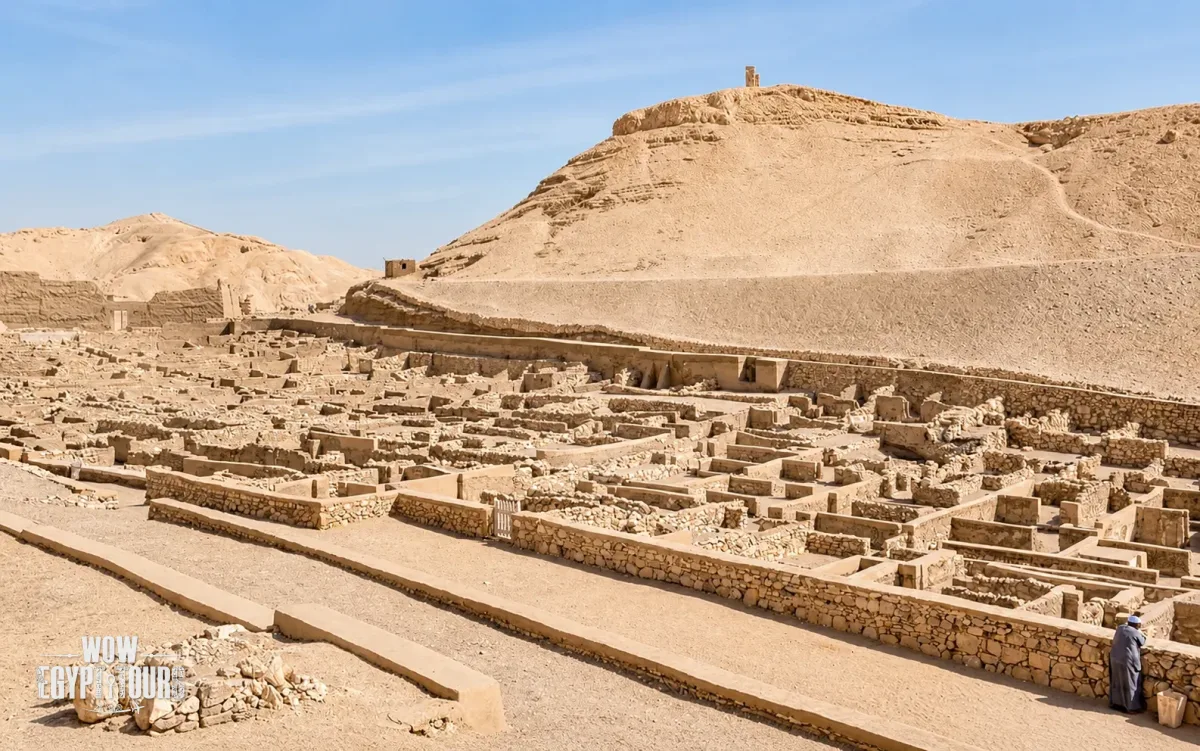
The walled village of Deir el-Medina preserves the ruins of approximately 70 stone houses arranged along a single main street running north to south, enclosed within a large mud-brick wall that separated the community from the surrounding desert. The houses were built of stone rubble and mud brick with whitewashed interiors, and each typically consisted of four or five rooms arranged in a linear sequence including an entrance hall, a main living room with a raised sleeping platform and small shrine, a bedroom, a kitchen, and a cellar. The stone bases of the walls survive to a significant height in many houses, giving visitors a clear impression of the layout and scale of an ancient Egyptian working-class home that is virtually unique in the archaeological record of Egypt.
The Tomb Of Sennedjem (TT1)
The most celebrated tomb at Deir el-Medina, and one of the most beautifully painted private tombs in the entire Theban necropolis, is the tomb of Sennedjem (TT1), a servant in the Place of Truth who lived during the reigns of Seti I and Ramesses II in the 19th Dynasty. Discovered intact by Gaston Maspero in 1886, the tomb contained the complete burial assemblage of Sennedjem, his wife Iineferti, and members of their family, all preserved in extraordinary condition after more than three thousand years underground. The burial chamber of the tomb is decorated on every surface with painted scenes from the Book of the Dead and the Amduat, rendered in the most vivid and exuberant colors in the entire Valley of the Artisans necropolis. The famous scene on the end wall showing Sennedjem and his wife working in the fields of Iaru, the Egyptian paradise, with its brilliant yellows, greens, and blues against a pure white ground, is one of the most celebrated images of New Kingdom funerary art and is reproduced in art history books throughout the world.
The Tomb Of Inherkhau (TT359)
The tomb of Inherkhau (TT359) is one of the largest and most extensively decorated private tombs at the Workers' Village, belonging to a foreman of the royal tomb builders who served during the reigns of Ramesses III and Ramesses IV in the 20th Dynasty. The burial chamber of Inherkhau's tomb is decorated with scenes of unusual diversity and iconographic richness, including the famous scene of a cat killing the serpent Apep beneath the sacred persea tree, an image of the solar victory over the forces of chaos that is one of the most powerful single images in New Kingdom private funerary art. The tomb also contains a celebrated scene showing Inherkhau listening to a harper, reflecting the same tradition of musical celebration that appears in the famous Harper's Tomb scenes of the royal tombs.
The Tomb Of Pashedu (TT3)
The tomb of Pashedu (TT3) is one of the most atmospherically beautiful private tombs at Deir el-Medina, belonging to a servant in the Place of Truth who lived during the 19th Dynasty. The burial chamber is decorated with a remarkable scene showing Pashedu kneeling beneath a date palm tree at the edge of a pool of water, drinking from the sacred pool in a moment of eternal refreshment in the paradise of the afterlife. The deep blue of the water, the rich brown of the palm trunk, and the vivid green of the fronds create a composition of unusual natural beauty that is unlike any other scene in the Workers' Village necropolis and gives the tomb of Pashedu an immediately recognizable visual identity.
The Tomb Of Ipuy (TT217)
The tomb of Ipuy (TT217), a sculptor of the Place of Truth who worked during the reign of Ramesses II, is celebrated for its unusually detailed scenes of everyday life, showing craftsmen at work in their workshops making furniture, jewelry, and other luxury objects for the tomb of Amenhotep I. The Ipuy tomb scenes provide one of the most vivid and detailed visual records of ancient Egyptian craft production available anywhere in the Theban necropolis and give visitors a fascinating insight into the daily working world of the Deir el-Medina community.
The Ptolemaic Temple Of Hathor And Maat
Within the Deir el-Medina site, just to the north of the workers' village ruins, stands the well-preserved Ptolemaic temple of Hathor and Maat, built during the reigns of Ptolemy IV and Ptolemy VI in the 3rd and 2nd centuries BCE. The temple is dedicated to Hathor, the goddess of love and beauty who was particularly venerated by the workers of the Valley of the Artisans as a protector of women and children, and to Maat, the goddess of truth, justice, and cosmic order. The temple is built over the site of earlier New Kingdom sanctuaries that served the religious needs of the Deir el-Medina community during the active life of the village, and its well-preserved state of preservation makes it one of the most complete Ptolemaic temple structures on the Theban West Bank.
The Great Pit And The Deir el-Medina Well
Within the village area at Deir el-Medina, excavations revealed a great pit approximately 52 meters deep that was dug by the ancient inhabitants in a futile attempt to find a permanent water source within the village, a project that consumed enormous labor over several generations without ultimate success. The failure to find water in the pit confirmed the total dependence of the community on water deliveries from the Nile valley. The pit is now visible as an archaeological feature within the site and gives visitors a vivid physical reminder of the daily practical challenges of life in this isolated desert community.
Why Is Deir el-Medina Important?
Deir el-Medina, the Workers' Village, is important in ways that go far beyond its architectural and artistic significance. It is the primary source of our knowledge about ancient Egyptian daily life, social organization, family relationships, legal practices, religious beliefs, and working conditions for the vast majority of Egyptian society that is not represented in the great temples and royal tombs. The ostraca and papyri recovered from the Valley of the Artisans site preserve the actual voices of ancient Egyptian working people in a way that no other site in Egypt can match, giving us not only the names and titles of the craftsmen but their opinions, their complaints, their affections, their fears, and their humor.
The tombs of Deir el-Medina are equally important as works of art in their own right. The craftsmen of the Workers' Village were the finest painters and sculptors in ancient Egypt, and the private tombs they created for themselves represent the pinnacle of New Kingdom private funerary art, with a freedom of expression and a personal warmth that distinguishes them from the more formal and theologically prescribed decoration of the royal tombs. For any visitor to Luxor who wants to go beyond the grandeur of the great monuments and encounter the human reality of ancient Egyptian civilization at its most intimate and alive, Deir el-Medina is an essential destination. WOW Egypt Tours includes Deir el-Medina as a recommended addition to all extended Luxor West Bank programmes.
What Are Some Interesting Facts About Deir el-Medina?
The World's First Recorded Labor Strike
The most famous single event in the history of the Workers' Village of Deir el-Medina is the labor strike of the 29th year of Ramesses III, which is the first recorded labor action in human history. In November of that year, the workers of the royal tomb crews stopped work and marched to the outer walls of the Medinet Habu Temple precinct to protest that their monthly grain rations had not been delivered for eighteen days. The workers sat down in protest outside the temple walls and refused to return to work, telling the officials who came to negotiate with them that they were driven by hunger and thirst. The episode is recorded in remarkable detail in the Turin Strike Papyrus and in the contemporaneous ostraca of the Valley of the Artisans, which preserve the actual words spoken by both the workers and the officials during the negotiations. The strike is a landmark not only in the history of labor relations but in the history of human self-advocacy, demonstrating that even in the most hierarchical society of the ancient world, working people were willing and able to organize themselves and demand their rights.
The Intact Tomb Of Sennedjem
When the French Egyptologist Gaston Maspero and his team opened the tomb of Sennedjem (TT1) at Deir el-Medina on the 6th of February 1886, they found a burial assemblage of extraordinary completeness and beauty that had remained undisturbed for more than three thousand years. Inside the sealed burial chamber were the mummies of Sennedjem himself, his wife Iineferti, their son Khonsu with his wife and child, and at least nine other family members, all wrapped and coffined and arranged with their full complement of funerary equipment including canopic chests, ushabti boxes, shabtis, heart scarabs, amulets, and painted wooden objects. The two outer coffins of Sennedjem and the painted walls of the burial chamber are among the finest surviving examples of Ramesside funerary art, and the discovery of the intact tomb caused an immediate international sensation. Most of the burial equipment from the tomb of Sennedjem is now in the Egyptian Museum in Cairo and the Metropolitan Museum of Art in New York.
Love Poetry From The Valley Of The Artisans
Among the tens of thousands of ostraca recovered from the Deir el-Medina site are a remarkable collection of love poems, the oldest surviving love poetry in the world, written by and for the young men and women of the Valley of the Artisans community. These poems, written in the colloquial Egyptian of the Ramesside Period, speak of longing, desire, heartache, and joy in language that feels entirely contemporary and human across the distance of three thousand years. The lover is described as the heart's physician, the beloved is compared to a rare flower, and the pain of separation is expressed with an emotional directness that makes these texts among the most moving personal documents surviving from the ancient world. The love poetry of Deir el-Medina gives the Workers' Village a human warmth that no other ancient Egyptian site can match and confirms that the people who built the greatest royal tombs in history were also people of feeling, imagination, and desire.
What Is So Special About Deir el-Medina?
The Most Human Ancient Site In Egypt
What makes Deir el-Medina, the Valley of the Artisans, uniquely special among all the great ancient sites of the Theban West Bank is the quality of human presence it preserves. At the great temples and royal tombs, the dominant experience is one of divine power, cosmic grandeur, and the overwhelming ambition of the pharaohs. At the Workers' Village, by contrast, visitors encounter the people behind those monuments: the painters who mixed the pigments and applied them to the tomb walls, the sculptors who carved the reliefs, the scribes who recorded the work, and the mothers and fathers, husbands and wives, who lived their daily lives in the shadow of the greatest building project the ancient world had ever seen. The intimacy of the village ruins, the vivid colors of the private tomb paintings, and the extraordinary wealth of personal written documents from the site combine to create an encounter with ancient Egypt that is unlike anything available at any other site in the country.
The Finest Private Tomb Paintings In Egypt
The private tombs of the Deir el-Medina necropolis contain some of the most brilliantly colored and artistically accomplished funerary paintings in Egypt. Because the craftsmen who decorated these tombs were the same people who painted the great royal tombs of the Valley of the Kings, working in their own time and for their own eternity, the private tombs of the Valley of the Artisans reflect a freedom and personal expressiveness that is not always present in the more formally prescribed royal programme. The colors in the Deir el-Medina tombs, particularly those of Sennedjem, Inherkhau, and Pashedu, are among the most vivid and well-preserved in the entire Theban necropolis, and the experience of entering these small, jewel-like painted chambers is one that many visitors consider the most memorable single experience of their entire trip to Luxor.
Deir el-Medina Through The Ages: From Ancient Egypt To The Present
The history of Deir el-Medina spans from its founding as the Workers' Village around 1550 BCE through its abandonment at the end of the New Kingdom around 1080 BCE, and continues through the subsequent uses and reuses of the site over more than three thousand years. After the abandonment of the village, the site gradually fell into ruin and was partly buried by sand and debris, but the location retained its sacred character and a series of small temples and shrines continued to be used on the site through the Third Intermediate and Late Periods. During the Ptolemaic Period, a substantial temple to Hathor and Maat was built within the site, the ruins of which still stand today as the most visible above-ground structure at Deir el-Medina.
During the early Christian era, the Valley of the Artisans attracted Coptic Christian hermits who established a monastery within the ruins of the Ptolemaic temple, giving the site its modern Arabic name of Deir el-Medina. In the medieval and Ottoman periods, local villagers quarried building materials from the ancient structures and the site fell into increasing obscurity until the beginning of systematic archaeological investigation in the 19th century. The definitive excavation of Deir el-Medina, conducted by the French Institute of Oriental Archaeology under Bernard Bruyère from 1922 to 1951, transformed scholarly understanding of ancient Egyptian social history and established the Workers' Village as one of the most important archaeological sites in the world. Today the site is managed by the Egyptian Ministry of Tourism and Antiquities and continues to attract visitors from every country, though it remains far less crowded than the major West Bank sites to the north, offering an experience of unusual intimacy with one of the most humanly compelling ancient communities ever documented.
Deir el-Medina UNESCO World Heritage Site
Deir el-Medina is part of the Ancient Thebes with its Necropolis UNESCO World Heritage Site, inscribed in 1979. This designation recognizes the outstanding universal value of the entire Theban region, which includes Deir el-Medina, the Valley of the Kings, the Valley of the Queens, Luxor Temple, Karnak Temple, and the many temples and tombs of the West Bank of the Nile. UNESCO recognizes the Workers' Village of Deir el-Medina specifically as an outstanding example of a preserved ancient settlement and necropolis that provides irreplaceable evidence for the daily life, social organization, and artistic achievements of an ancient community and as a primary source for understanding the construction and decoration of the New Kingdom royal tombs that are themselves among the most significant cultural monuments of the ancient world.
Best Time To Visit Deir el-Medina
The best time to visit Deir el-Medina, the Valley of the Artisans, is during the cooler months from October through April, when temperatures in Luxor are moderate and the site is comfortable for outdoor exploration. The site combines open-air village ruins and enclosed tomb interiors, so the experience is more manageable in hot weather than fully open-air sites, but the exterior areas can still be very hot between May and September. If visiting during summer, plan your visit for early morning when the valley is at its coolest and the low sun creates the most dramatic lighting conditions in the village ruins and at the tomb entrances. WOW Egypt Tours operates Luxor West Bank Tours throughout the year and plans all timings carefully to ensure the most comfortable and rewarding visit to Deir el-Medina possible regardless of the season.
Deir el-Medina Opening Hours
Deir el-Medina is open to visitors every day of the week, including public holidays. The site opens at 6:00 AM and closes at 5:00 PM during the winter months from October to April, and remains open until 5:00 PM during the summer months from May to September. Visitors who prefer the most peaceful and uncrowded experience should arrive early in the morning, as Deir el-Medina receives significantly fewer visitors than the major West Bank sites and is rarely crowded at any time of day, but early morning is particularly rewarding for the quality of light in the tomb interiors.
Deir el-Medina Entrance Fees
Adults: EGP 220
Students: EGP 110
Keep your ticket safe throughout your visit. Entrance fees are included in all Deir el-Medina Tours, Egypt Tours Packages, and Safaga Shore Excursions booked through WOW Egypt Tours.
How To Get To Deir el-Medina
Deir el-Medina, the Workers' Village, is located on the west bank of the Nile in Luxor at the southern end of the Theban West Bank, in the valley between the Valley of the Queens and the Medinet Habu Temple. From central Luxor, visitors cross the Nile by public ferry or private motorboat to the West Bank landing, from which taxis, minibuses, and organized tour vehicles travel south along the desert edge road to the Deir el-Medina site. The journey from the Nile landing to the Valley of the Artisans takes approximately 25 minutes by road.
Visitors arriving by air land at Luxor International Airport on the East Bank, from which private transfers to the West Bank are readily available. Nile cruise ships dock along the Corniche on the East Bank and all cruise itineraries include organized transportation to the West Bank sites. Travelers joining Safaga Shore Excursions with WOW Egypt Tours are collected directly from Safaga Port and transferred comfortably to Deir el-Medina by private air-conditioned vehicle. All Luxor West Bank Tours operated by WOW Egypt Tours include private air-conditioned transportation directly to and from Deir el-Medina.
How Long To Spend At Deir el-Medina
Most visitors spend between one and one and a half hours at Deir el-Medina, the Valley of the Artisans, which is sufficient time to visit two or three of the main decorated tombs, walk through the village ruins, and see the Ptolemaic temple of Hathor. Visitors with a deeper interest in the social history of the site, the painted tomb decoration, or the extraordinary written documents recovered from the village may wish to allow two to two and a half hours. The Workers' Village is ideally combined on the same day with the Valley of the Queens and the Medinet Habu Temple as part of a southern West Bank extension to the standard Valley of the Kings and Temple of Hatshepsut programme, or as a standalone destination on a dedicated West Bank day arranged by WOW Egypt Tours.
Tips For Visiting Deir el-Medina
Allow more time than you think you need, as the combination of the village ruins, the multiple decorated tombs, and the Ptolemaic temple makes Deir el-Medina a richer and more extensive site than it initially appears. A licensed Egyptologist guide from WOW Egypt Tours is strongly recommended: the social history of the Workers' Village community, the iconographic details of the tomb paintings, and the extraordinary body of written documents from the site are all significantly enriched by expert narration. Do not touch the painted walls inside any of the tombs, as the oils from human hands cause irreversible damage to the ancient pigments. Bring a small torch or use your phone camera in low-light mode for the darker sections of the tomb interiors, as some chambers receive very little natural light. Wear comfortable, closed-toe walking shoes for the uneven terrain of the village ruins. Combine your visit with the Valley of the Queens immediately to the west for a uniquely complete experience of the southern Theban necropolis.
What To Wear At Deir el-Medina
Deir el-Medina is a site combining open-air ruins and enclosed tomb interiors, requiring practical and adaptable clothing. Lightweight, breathable clothing covering the shoulders and knees is recommended for both comfort in the Egyptian heat and as a mark of respect for the sacred nature of the ancient burials. A wide-brimmed hat and sunscreen are necessary for the open-air village ruins and the approach paths between tombs. Comfortable, closed-toe walking shoes with good grip are essential, as the terrain around the Workers' Village ruins and the paths to the tomb entrances are uneven and involve short steep sections. Visitors entering the smaller tomb chambers should be prepared for low ceilings and a sudden transition from bright sunlight to near-darkness, and eyes should be given time to adjust before examining the painted walls.
Photography At Deir el-Medina
Deir el-Medina is a wonderful photography destination, offering a combination of picturesque village ruins, brilliantly painted tomb interiors, a well-preserved Ptolemaic temple, and the dramatic natural setting of the southern Theban hills. Photography with a standard camera or smartphone is permitted throughout most areas of the site. Flash photography is strictly prohibited in all the decorated tombs, as the intense light causes irreversible bleaching of the ancient organic pigments. For interior photography in the tombs, a camera with strong low-light performance is essential, as the chambers are small and receive very little natural light. The village ruins and the Ptolemaic temple are best photographed in early morning or late afternoon when the low sun creates dramatic shadow and texture across the stone surfaces. Professional photography or filming with specialized equipment requires a separate permit from Egypt's Ministry of Tourism and Antiquities.
Deir el-Medina Tours
Single Attraction Visit: Deir el-Medina Tour
This tour covers Deir el-Medina as a standalone visit. It is suitable for travelers with a particular interest in ancient Egyptian social history, daily life, private funerary art, or the human story behind the great monuments of the Theban West Bank.
What Is Covered
Full guided visit of Deir el-Medina including the workers' village ruins, the main decorated tombs of the necropolis beginning with the tomb of Sennedjem (TT1), the tomb of Inherkhau (TT359), and the tomb of Pashedu (TT3), the Ptolemaic temple of Hathor and Maat, and the well shaft and great pit within the village area.
Duration
1 to 1.5 hours inside the site.
Includes
Private transportation, private licensed Egyptologist guide, and entrance fees. Available for morning and afternoon departures.
Luxor West Bank Tours: Deir el-Medina, Valley Of The Kings, Hatshepsut Temple And More
This full-day tour covers the major sites on the West Bank of Luxor. It is suitable for travelers who want a complete West Bank experience including both the famous royal monuments and the uniquely human site of the Workers' Village.
What Is Covered
The Valley of the Kings with entry to three royal tombs. The Temple of Hatshepsut at Deir el-Bahari. The Colossi of Memnon. Deir el-Medina, the Valley of the Artisans, with a guided visit to the village ruins, the main decorated tombs, and the Ptolemaic temple. Optional extensions include the Valley of the Queens, the Ramesseum, Medinet Habu Temple, and the Valley of the Nobles.
Duration
Full day, approximately 7 to 8 hours.
Includes
Private air-conditioned transportation, Nile crossing, private licensed Egyptologist guide, and entrance fees to all main sites. Available for morning departures.
Luxor East Bank Tours: Karnak Temple, Luxor Temple, Luxor Museum And Mummification Museum
This full-day tour covers the four main sites on the East Bank of Luxor.
What Is Covered
Karnak Temple with a full guided visit including the Great Hypostyle Hall, the Sacred Lake, and the Open Air Museum. The Avenue of Sphinxes connecting Karnak Temple to Luxor Temple. Luxor Temple including the entrance pylon, the great colonnade, the courtyard of Amenhotep III, and the inner halls. The Luxor Museum with a full guided visit of all galleries. The Mummification Museum covering the tools, methods, and materials used in ancient Egyptian embalming.
Duration
Full day, approximately 6 to 7 hours.
Includes
Private air-conditioned transportation, private licensed Egyptologist guide, and entrance fees to all four sites. Available for morning departures.
Luxor Day Tours: Combined East Bank And West Bank
This full-day combined tour covers the most important sites on both banks of the Nile in Luxor in a single day.
What Is Covered
West Bank: Valley of the Kings with three tomb entries, Temple of Hatshepsut at Deir el-Bahari, the Colossi of Memnon, and Deir el-Medina, the Workers' Village, subject to available time. East Bank: Karnak Temple including the Great Hypostyle Hall and Sacred Lake, the Avenue of Sphinxes, and Luxor Temple.
Duration
Full day, approximately 8 to 9 hours.
Includes
Private air-conditioned transportation, Nile crossing, private licensed Egyptologist guide, and entrance fees to all sites. Available for morning departures.
Safaga Shore Excursions To Deir el-Medina
Safaga Port is located on the Red Sea coast, approximately 250 kilometers (155 miles) from Luxor. WOW Egypt Tours operates Safaga Shore Excursions that transfer cruise ship passengers from Safaga Port to Luxor and back within a single port day. The transfer is approximately 2.5 to 3 hours each way by private air-conditioned vehicle.
What Is Covered
The Valley of the Kings with entry to three royal tombs. The Colossi of Memnon. Karnak Temple including the Great Hypostyle Hall and the Sacred Lake. Deir el-Medina, the Valley of the Artisans, including the main decorated tombs and village ruins, subject to available time.
Duration
Full day from port departure to port return, approximately 12 to 13 hours including transfers.
Includes
Private air-conditioned vehicle from Safaga Port, private licensed Egyptologist guide, entrance fees to all included sites, and return transfer to the ship. All Safaga Shore Excursions are coordinated around each ship's port schedule to guarantee return to the vessel before departure.
Dahabiya Nile River Cruise
A Dahabiya Nile River Cruise is a small-vessel sailing experience on the Nile between Luxor and Aswan aboard a traditional wooden dahabiya. WOW Egypt Tours operates dahabiya cruises with private cabins, all meals, a private licensed Egyptologist guide on board, and guided shore excursions at every stop.
4 Days 3 Nights Dahabiya Nile River Cruise From Aswan To Luxor
Route: Aswan to Luxor, sailing north.
Itinerary
Day 1: Embarkation in Aswan. Visit to Philae Temple and the Unfinished Obelisk. Sail north to Kom Ombo. Guided visit to Kom Ombo Temple. Continue to Gebel el Silsila. Overnight on board.
Day 2: Guided visit to Gebel el Silsila. Sail to the Village of Basaw. Guided visit to Village of Basaw. Continue to Edfu. Guided visit to the Temple of Horus at Edfu. Overnight on board.
Day 3: Sail to El Kab. Guided visit to El Kab Tombs. Sail to El Hagaz Island. Swimming stop. Overnight on board.
Day 4: Sail to Esna. Visit Khnum Temple at Esna. Disembarkation in Esna. Transfer to Luxor, approximately 55 kilometers (35 miles).
Includes
Private cabin, all meals on board, private licensed Egyptologist guide, entrance fees to all temple visits, and private transfers.
5 Days 4 Nights Dahabiya Nile River Cruise From Luxor To Aswan
Route: Luxor to Aswan, sailing south.
Itinerary
Day 1: Embarkation in Luxor. Transfer to Esna, approximately 55 kilometers (35 miles). Visit Khnum Temple at Esna. Sail to El Hagaz Island. Overnight on board.
Day 2: Sail to El Kab. Guided visit to El Kab Tombs. Continue to Edfu. Guided visit to the Temple of Horus at Edfu. Sail to the Village of Basaw. Guided visit to Village of Basaw. Overnight on board.
Day 3: Sail to Gebel el Silsila. Guided visit to Gebel el Silsila. Sail south to Kom Ombo. Guided visit to Kom Ombo Temple. Sail to Daraw Village. Overnight on board.
Day 4: Guided visit to Daraw Village. Sail to Herbiab Island. Swimming stop. Philae Sound and Light Show. Overnight on board.
Day 5: Optional Abu Simbel visit available by air or road. Guided visits to Philae Temple, the High Dam, and the Unfinished Obelisk. Disembarkation in Aswan.
Includes
Private cabin, all meals on board, private licensed Egyptologist guide, entrance fees to all temple visits, and private transfers.
8 Days 7 Nights Dahabiya Nile River Cruise Round Trip From Luxor (Via Aswan)
Route: Luxor and Aswan, sailing north and south.
Itinerary
Day 1: Embarkation in Luxor. Transfer to Esna, approximately 55 kilometers (35 miles). Visit Khnum Temple at Esna. Sail to El Hagaz Island. Overnight on board.
Day 2: Sail to El Kab. Continue to Edfu. Guided visit to the Temple of Horus at Edfu. Sail to the Village of Basaw. Guided visit to Village of Basaw. Overnight on board.
Day 3: Sail to Gebel el Silsila. Sail south to Kom Ombo. Guided visit to Kom Ombo Temple. Sail to Daraw Village. Overnight on board.
Day 4: Guided visit to Daraw Village. Sail to Herbiab Island. Swimming stop. Philae Sound and Light Show. Overnight on board.
Day 5: Optional Abu Simbel visit available by air or road. Guided visits to Philae Temple, the High Dam, and the Unfinished Obelisk. Sail north to Kom Ombo. Continue to Gebel el Silsila. Overnight on board.
Day 6: Guided visit to Gebel el Silsila. Sail to the Village of Basaw. Continue to Edfu. Overnight on board.
Day 7: Sail to El Kab. Guided visit to El Kab Tombs. Sail to El Hagaz Island. Swimming stop. Overnight on board.
Day 8: Disembarkation in Esna. Transfer to Luxor, approximately 55 kilometers (35 miles).
Includes
Private cabin, all meals on board, private licensed Egyptologist guide, entrance fees to all temple visits, and private transfers.
8 Days 7 Nights Dahabiya Nile River Cruise Round Trip From Aswan (Via Luxor)
Route: Luxor and Aswan, sailing north and south.
Itinerary
Day 1: Embarkation in Aswan. Visit to Philae Temple and the Unfinished Obelisk. Sail north to Kom Ombo. Continue to Gebel el Silsila. Overnight on board.
Day 2: Guided visit to Gebel el Silsila. Sail to the Village of Basaw. Continue to Edfu. Overnight on board.
Day 3: Sail to El Kab. Guided visit to El Kab Tombs. Sail to El Hagaz Island. Swimming stop. Overnight on board.
Day 4: Sail to Esna. Visit Khnum Temple at Esna. Sail to El Hagaz Island. Overnight on board.
Day 5: Sail to El Kab. Continue to Edfu. Guided visit to the Temple of Horus at Edfu. Sail to the Village of Basaw. Guided visit to Village of Basaw. Overnight on board.
Day 6: Sail to Gebel el Silsila. Sail south to Kom Ombo. Guided visit to Kom Ombo Temple. Sail to Daraw Village. Overnight on board.
Day 7: Guided visit to Daraw Village. Sail to Herbiab Island. Swimming stop. Philae Sound and Light Show. Overnight on board.
Day 8: Disembarkation in Aswan.
Includes
Private cabin, all meals on board, private licensed Egyptologist guide, entrance fees to all temple visits, and private transfers.
Luxor And Aswan Nile River Cruise
The Luxor and Aswan Nile River Cruise is a standard Nile cruise product operated aboard a full-size cruise ship between Luxor and Aswan. WOW Egypt Tours operates this cruise in both directions with private licensed Egyptologist guides, all meals included, private cabins, and guided shore excursions at every port of call. Deir el-Medina, the Workers' Village, is available as an optional West Bank extension on all itineraries that include Luxor.
4 Days 3 Nights Luxor And Aswan Nile River Cruise From Aswan To Luxor
Route: Aswan to Luxor, sailing north.
Itinerary
Day 1: Embarkation in Aswan. Guided visits to Philae Temple, the High Dam, and the Unfinished Obelisk. Overnight on board in Aswan.
Day 2: Sail north to Kom Ombo. Guided visit to Kom Ombo Temple. Continue to Edfu. Overnight on board.
Day 3: Guided visit to the Temple of Horus at Edfu. Continue north toward Luxor. Guided visit to Luxor Temple and Karnak Temple. Overnight on board in Luxor.
Day 4: Optional Sunrise Hot Air Balloon available. Guided visits to Valley of the Kings, Queen Hatshepsut Temple, and Colossi of Memnon. Disembarkation in Luxor.
Includes
Private cabin, all meals on board, private licensed Egyptologist guide, entrance fees to all temple visits, and private transfers.
5 Days 4 Nights Luxor And Aswan Nile River Cruise From Luxor To Aswan
Route: Luxor to Aswan, sailing south.
Itinerary
Day 1: Embarkation in Luxor. Guided visits to Luxor Temple and Karnak Temple. Overnight on board in Luxor.
Day 2: Optional Sunrise Hot Air Balloon available. Guided visits to Valley of the Kings, Queen Hatshepsut Temple, and Colossi of Memnon. Pass through the Esna locks. Sail south to Edfu. Overnight on board.
Day 3: Guided visit to the Temple of Horus at Edfu. Continue to Kom Ombo. Guided visit to Kom Ombo Temple. Overnight on board.
Day 4: Continue south toward Aswan. Guided visits to Philae Temple, the High Dam, and the Unfinished Obelisk. Overnight on board in Aswan.
Day 5: Optional Abu Simbel visit available by air or road. Disembarkation in Aswan.
Includes
Private cabin, all meals on board, private licensed Egyptologist guide, entrance fees to all temple visits, and private transfers.
8 Days 7 Nights Luxor And Aswan Nile River Cruise Round Trip From Luxor (Via Aswan)
Route: Luxor and Aswan, sailing north and south.
Itinerary
Day 1: Embarkation in Luxor. Guided visits to Luxor Temple and Karnak Temple. Overnight on board in Luxor.
Day 2: Guided visits to Luxor Museum. Pass through the Esna locks. Sail south to Edfu. Overnight on board.
Day 3: Guided visit to the Temple of Horus at Edfu. Continue to Kom Ombo. Overnight on board.
Day 4: Continue south toward Aswan. Guided visits to Philae Temple, the High Dam, and the Unfinished Obelisk. Overnight on board in Aswan.
Day 5: Abu Simbel visit available by road. Sound and Light Show at Philae Temple. Overnight on board in Aswan.
Day 6: Guided visits to Nubian Village. Sail north to Kom Ombo. Guided visit to Kom Ombo Temple. Continue to Edfu. Overnight on board.
Day 7: Guided visits to Valley of the Kings, Queen Hatshepsut Temple, and Colossi of Memnon. Pass through the Esna locks. Sail south to Edfu. Overnight on board.
Day 8: Optional Sunrise Hot Air Balloon available. Disembarkation in Luxor.
Includes
Private cabin, all meals on board, private licensed Egyptologist guide, entrance fees to all temple visits, and private transfers.
8 Days 7 Nights Luxor And Aswan Nile River Cruise Round Trip From Aswan (Via Luxor)
Route: Luxor and Aswan, sailing north and south.
Itinerary
Day 1: Embarkation in Aswan. Guided visits to Philae Temple, the High Dam, and the Unfinished Obelisk. Overnight on board in Aswan.
Day 2: Sail north to Kom Ombo. Guided visit to Nubian Village and Kom Ombo Temple. Continue to Edfu. Overnight on board.
Day 3: Continue north toward Luxor. Guided visit to Luxor Museum and Karnak Sound and Light Show. Overnight on board in Luxor.
Day 4: Guided visits to Luxor Temple and Karnak Temple. Overnight on board in Luxor.
Day 5: Optional Sunrise Hot Air Balloon available. Guided visits to Valley of the Kings, Queen Hatshepsut Temple, and Colossi of Memnon. Pass through the Esna locks. Sail south to Edfu. Overnight on board.
Day 6: Guided visit to the Temple of Horus at Edfu. Continue to Kom Ombo. Overnight on board.
Day 7: Sound and Light Show at Philae Temple. Overnight on board in Aswan.
Day 8: Abu Simbel visit available by road. Disembarkation in Aswan.
Includes
Private cabin, all meals on board, private licensed Egyptologist guide, entrance fees to all temple visits, and private transfers.
Combine Deir el-Medina With Your Egypt Tours Package
Deir el-Medina, the Valley of the Artisans, is included as a featured West Bank stop across the full range of WOW Egypt Tours travel products. Browse the options below to find the Egypt experience that is right for you.
Egypt Tour Packages: Multi-day guided Egypt tours organized by duration, including 2 Days Egypt Packages, 3 Days Egypt Packages, 4 Days Egypt Packages, 5 Days Egypt Packages, 6 Days Egypt Packages, 7 Days Egypt Packages, 8 Days Egypt Packages, 10 Days Egypt Packages, and longer itineraries. All packages include private air-conditioned transportation, private licensed Egyptologist guide, accommodations, entrance fees to all included sites, and private transfers throughout Egypt.
Egypt Travel Packages: Themed Egypt travel packages designed around specific travel styles and interests, including Egypt Honeymoon Travel Packages, Egypt Budget Travel Packages, Egypt Family Travel Packages, Egypt Luxury Travel Packages, Egypt Adventure Travel Packages, Egypt Cultural Travel Packages, and Egypt Christmas and New Year Travel Packages. All packages include private air-conditioned transportation, private licensed Egyptologist guide, accommodations, meals, entrance fees to all included sites, and private transfers.
Egypt Nile Cruise Packages: Complete Egypt travel packages combining Cairo sightseeing with a fully guided Nile cruise between Luxor and Aswan, available as Cairo and Nile Cruise Packages, Egypt and Nile Cruise Packages, and Nile Cruise and Red Sea Packages. All packages include private cabin on board, all meals, private licensed Egyptologist guide, entrance fees to all temple visits, and private transfers.
Nile River Cruises: All WOW Egypt Tours Nile cruise options between Luxor and Aswan, available across four ship categories, Standard, Deluxe, Ultra Deluxe, and Luxury, as well as private Dahabiya sailing vessels. All cruises include private cabin on board, all meals, private licensed Egyptologist guide, entrance fees to all temple visits, and private transfers.
Luxor Aswan Nile Cruises: The classic Upper Egypt Nile cruise route between Luxor and Aswan, available in both directions and in durations of 4 Days 3 Nights, 5 Days 4 Nights, and 8 Days 7 Nights round trip. Deir el-Medina, the Workers' Village, is available as a West Bank extension on all itineraries. All cruises include private cabin on board, all meals, private licensed Egyptologist guide, entrance fees to all sites, and private transfers.
Standard Nile Cruises: Comfortable standard-category cruise ships sailing between Luxor and Aswan, available in 4 Days 3 Nights, 5 Days 4 Nights, and 8 Days 7 Nights itineraries in both directions. Includes standard cabin on board, all meals, private licensed Egyptologist guide, entrance fees to all temple visits, and private transfers.
Deluxe Nile Cruises: Deluxe-category cruise ships with enhanced cabin comfort and upgraded dining, sailing between Luxor and Aswan in 4 Days 3 Nights, 5 Days 4 Nights, and 8 Days 7 Nights itineraries in both directions. Includes deluxe cabin on board, all meals, private licensed Egyptologist guide, entrance fees to all temple visits, and private transfers.
Ultra Deluxe Nile Cruises: Ultra deluxe-category cruise ships offering superior cabins, premium dining, and an elevated onboard experience, sailing between Luxor and Aswan in 4 Days 3 Nights, 5 Days 4 Nights, and 8 Days 7 Nights itineraries in both directions. Includes ultra deluxe cabin on board, all meals, private licensed Egyptologist guide, entrance fees to all temple visits, and private transfers.
Luxury Nile Cruises: Luxury-category cruise ships with the finest cabins, exceptional cuisine, and premium onboard facilities, sailing between Luxor and Aswan in 4 Days 3 Nights, 5 Days 4 Nights, and 8 Days 7 Nights itineraries in both directions. Includes luxury cabin on board, all meals, private licensed Egyptologist guide, entrance fees to all temple visits, and private transfers.
Dahabiya Nile Cruises: Private small-vessel sailing experience aboard a traditional wooden dahabiya between Luxor and Aswan, available in four itineraries: 4 Days 3 Nights Dahabiya From Aswan To Luxor, 5 Days 4 Nights Dahabiya From Luxor To Aswan, 8 Days 7 Nights Dahabiya Round Trip From Luxor via Aswan, and 8 Days 7 Nights Dahabiya Round Trip From Aswan via Luxor. Includes private cabin on board, all meals, private licensed Egyptologist guide, entrance fees to all temple visits, and private transfers.
Luxor Tours: Day tours and multi-day tours of Luxor covering all major sites on both banks of the Nile, including Luxor West Bank Tours covering Deir el-Medina, the Valley of the Kings, Temple of Hatshepsut, and Colossi of Memnon; Luxor East Bank Tours covering Karnak Temple, Luxor Temple, Luxor Museum, and Mummification Museum; and combined Luxor Day Tours covering both banks in a single day. All tours include private air-conditioned transportation, private licensed Egyptologist guide, entrance fees to all included sites, and private transfers.
Safaga Port Excursions: Shore excursions departing from Safaga Port on the Red Sea coast, approximately 250 kilometers (155 miles) from Luxor, covering Deir el-Medina, the Valley of the Kings, Colossi of Memnon, Karnak Temple, and Luxor Temple as a full-day trip within a single port call. Available options include Safaga to Luxor West Bank Tours, Safaga to Luxor East Bank Tours, and combined Safaga to Luxor Day Tours. Includes private air-conditioned vehicle from Safaga Port, private licensed Egyptologist guide, entrance fees to all included sites, and return transfer to the ship.
Nearby Attractions To Deir el-Medina
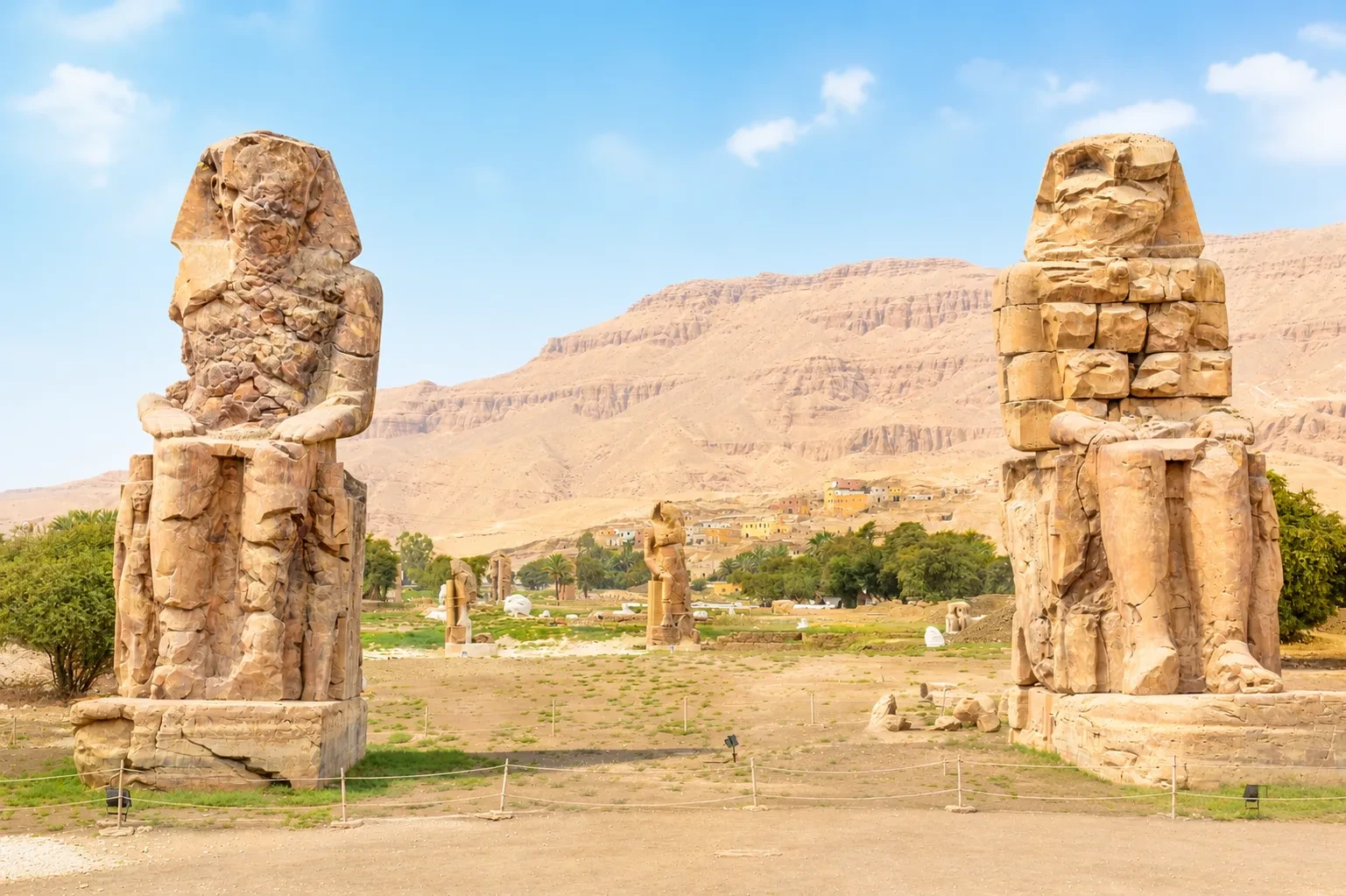
Deir el-Medina, the Workers' Village, is surrounded by extraordinary ancient monuments at every turn. The Valley of the Queens is located immediately to the west, accessible on foot through the narrow valley between the two sites, and can be combined with the Workers' Village as a natural half-day or full-day southern West Bank programme. The Medinet Habu Temple, the best-preserved mortuary temple on the West Bank, is located a short distance to the east and is one of the most rewarding optional extensions to any Deir el-Medina visit. The Ramesseum, the mortuary temple of Ramesses II, is accessible to the north, and the Valley of the Nobles lies to the northeast along the desert edge road. The Colossi of Memnon stand at the entrance to the West Bank plain and are passed on the way to and from all West Bank sites. The Temple of Hatshepsut at Deir el-Bahari and the Valley of the Kings are accessible as part of a full West Bank day. On the East Bank, the Luxor Museum, the Mummification Museum, Luxor Temple, and Karnak Temple complete the full range of monuments available in the Luxor area.
Frequently Asked Questions About Deir el-Medina
What is Deir el-Medina?
Deir el-Medina is the preserved ancient village and necropolis of the royal tomb builders who created the great monuments of the Valley of the Kings and Valley of the Queens during the New Kingdom period, located on the west bank of the Nile in Luxor. Also known as the Valley of the Artisans and the Workers' Village, it is the best-documented ancient community in the world and is a featured destination in all Luxor West Bank Tours, Egypt Tours Packages, Egypt Travel Packages, and Safaga Shore Excursions offered by WOW Egypt Tours.
Why is Deir el-Medina also called the Valley of the Artisans?
Deir el-Medina is called the Valley of the Artisans because it was home to the most skilled craftsmen in ancient Egypt, the painters, sculptors, carpenters, and draftsmen who created the royal tombs. The community is also referred to as the Workers' Village and the Village of the Tomb Builders, all names that reflect the unique occupational identity of its ancient inhabitants.
What does Deir el-Medina mean?
Deir el-Medina is an Arabic name meaning the Monastery of the Town, derived from the Coptic Christian monastery established within the site during the early Christian era. The ancient Egyptian name was Pa Demi, simply meaning the village, while the official title was Set Maat, the Place of Truth.
Who lived at Deir el-Medina?
Deir el-Medina, the Valley of the Artisans, was home to the Servants in the Place of Truth, a community of approximately 60 to 70 households at its peak comprising tomb cutters, plasterers, draftsmen, painters, sculptors, scribes, and administrators, along with their wives, children, and servants. The community was funded entirely by the royal state and lived in deliberate isolation to maintain the secrecy of the royal burial locations.
What is the most famous tomb at Deir el-Medina?
The most celebrated tomb at the Workers' Village is TT1, the tomb of Sennedjem, a servant in the Place of Truth who lived during the 19th Dynasty. The tomb was discovered intact in 1886 and its burial chamber is decorated with some of the most vivid and beautiful funerary paintings in the entire Theban necropolis.
What was the first labor strike in history?
The first recorded labor strike in human history took place in the 29th year of Ramesses III, when the workers of Deir el-Medina abandoned their work on the royal tomb because their grain rations had not been delivered for eighteen days. The workers marched to the outer walls of the Medinet Habu Temple precinct and refused to return until their demands were met. The episode is documented in the Turin Strike Papyrus and in contemporaneous ostraca from the Valley of the Artisans site.
What is the Ptolemaic temple at Deir el-Medina?
The Ptolemaic temple at Deir el-Medina is a well-preserved temple dedicated to Hathor and Maat, built during the reigns of Ptolemy IV and Ptolemy VI in the 3rd and 2nd centuries BCE. It stands within the Workers' Village site and is one of the most complete Ptolemaic temple structures on the Theban West Bank.
What are the opening hours of Deir el-Medina?
Deir el-Medina is open daily from 6:00 AM to 5:00 PM, including public holidays.
How much does it cost to enter Deir el-Medina?
The entrance fee is EGP 220 for adults and EGP 110 for students. Entrance fees are included in all Deir el-Medina Tours, Egypt Tours Packages, and Safaga Shore Excursions booked through WOW Egypt Tours.
How long does it take to visit Deir el-Medina?
Most visitors spend between one and one and a half hours at Deir el-Medina for the main decorated tombs and village ruins. Those who wish to explore the full site including the Ptolemaic temple, all major tombs, and the village layout in detail should allow two to two and a half hours.
What is the best time of year to visit Deir el-Medina?
October to April is the most comfortable period. The enclosed tomb interiors are significantly cooler than the outside, making Deir el-Medina more manageable in summer heat than fully open-air sites.
How do I get to Deir el-Medina?
Deir el-Medina is located at the southern end of the Theban West Bank, between the Valley of the Queens and Medinet Habu Temple, reached by crossing the Nile from Luxor and traveling south along the desert edge road. All Luxor West Bank Tours, Luxor Day Tours, and Safaga Shore Excursions with WOW Egypt Tours include private transportation directly to and from the Workers' Village.
Can I combine Deir el-Medina with the Valley of the Queens in one day?
Yes. Deir el-Medina, the Valley of the Artisans, and the Valley of the Queens are adjacent and are ideally visited together as part of a southern West Bank programme. WOW Egypt Tours can arrange a combined visit to both sites along with the Medinet Habu Temple as part of any extended Luxor West Bank Tour.
Is a guide necessary at Deir el-Medina?
A guide is not required to enter but is strongly recommended. The social history of the Workers' Village community, the iconographic details of the tomb paintings, and the extraordinary body of written documents from the site are all significantly enriched by expert narration. WOW Egypt Tours provides licensed Egyptologist guides for all Deir el-Medina Tours, Egypt Tours Packages, and Safaga Shore Excursions.
Can I take photographs at Deir el-Medina?
Photography with a standard camera or smartphone is permitted throughout most of the site. Flash photography is strictly prohibited in all decorated tombs. A camera with strong low-light performance is recommended for the tomb interiors. Professional filming requires a separate permit.
What should I wear to visit Deir el-Medina?
Lightweight clothing covering the shoulders and knees, a wide-brimmed hat, sunscreen, and comfortable closed-toe walking shoes with good grip. Bring a small torch or use phone camera lighting for the darker tomb interiors.
Is Deir el-Medina a UNESCO World Heritage Site?
Yes. Deir el-Medina is part of the Ancient Thebes with its Necropolis UNESCO World Heritage Site, inscribed in 1979, which also includes the Valley of the Kings, Valley of the Queens, Luxor Temple, Karnak Temple, and the monuments of the West Bank.
What is the difference between Deir el-Medina and the Valley of the Nobles?
Deir el-Medina, the Valley of the Artisans, was the village and necropolis of the royal tomb builders and craftsmen, a specific community of state employees who lived together in a walled village and are documented with extraordinary precision through tens of thousands of written documents. The Valley of the Nobles is the collective name for the scattered private tomb chapels of the high officials, nobles, and administrators of the New Kingdom court, spread across the northern Theban hills. While both contain beautiful private tomb paintings, Deir el-Medina provides a more intimate and personally documented picture of its community, while the Valley of the Nobles contains a wider range of tomb owners and a broader panorama of New Kingdom elite society.
What Nile cruise options include Deir el-Medina?
WOW Egypt Tours offers both Dahabiya Nile River Cruises and Luxor Aswan Nile River Cruises, all of which include West Bank excursions in Luxor. Deir el-Medina can be included as an extension on all itineraries, particularly the longer 8-day round-trip options. All cruises are available as part of WOW Egypt Tours Egypt Tours Packages and Egypt Travel Packages.
Can I visit Deir el-Medina as part of a Safaga Shore Excursion?
Yes. WOW Egypt Tours offers dedicated Safaga Shore Excursions that can include Deir el-Medina as part of an extended West Bank programme, subject to available time within the port schedule. Our team handles all transportation, guiding, entrance fees, and logistics.
How do I book a Deir el-Medina Tour with WOW Egypt Tours?
You can book any Deir el-Medina Tour, Luxor West Bank Tour, Luxor Day Tour, Dahabiya Nile River Cruise, Luxor Aswan Nile River Cruise, Egypt Tours Package, Egypt Travel Package, or Safaga Shore Excursion directly through WOW Egypt Tours. Our team of travel specialists will arrange everything from private transportation and licensed Egyptologist guides to hotel pick-up and entrance fees, ensuring a seamless and unforgettable experience of Deir el-Medina, the Valley of the Artisans, and all the wonders of ancient Egypt.