
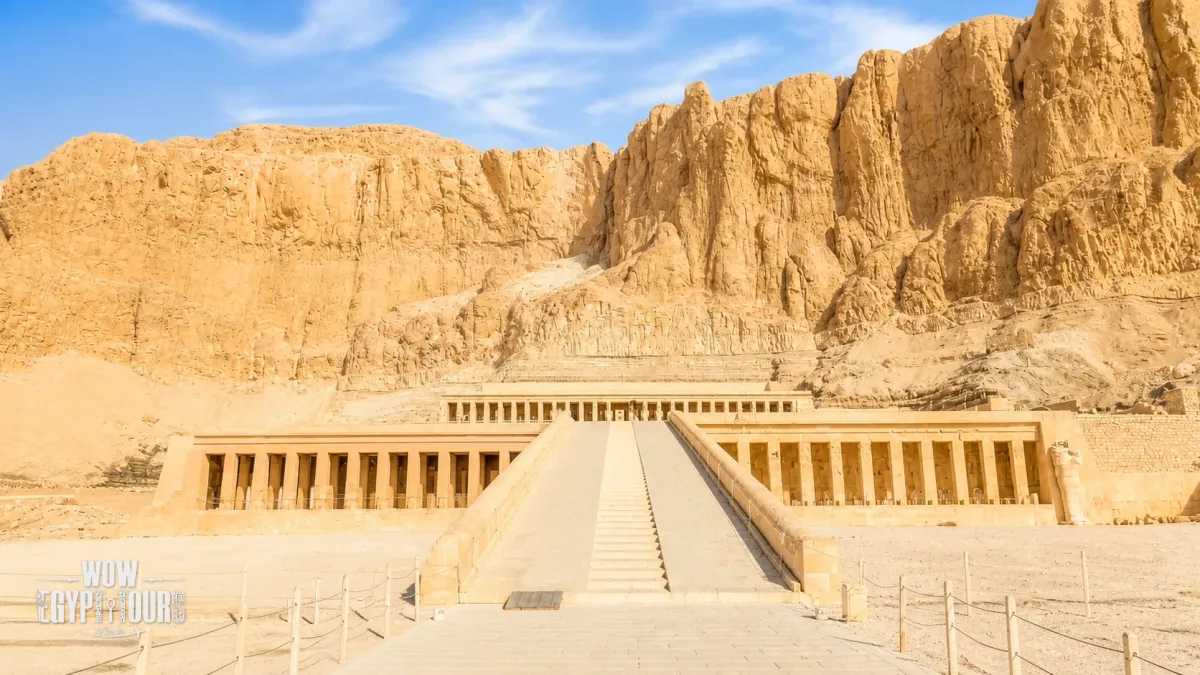

The Temple of Queen Hatshepsut is one of the most spectacular and architecturally magnificent ancient monuments in Egypt, and a destination that every traveler to Luxor must experience. Located on the west bank of the Nile River in the city of Luxor, ancient Thebes, the Hatshepsut Temple at Deir el-Bahari at Deir el-Bahari stands as the supreme example of ancient Egyptian mortuary temple architecture, built into a great natural amphitheater of towering limestone cliffs that makes it one of the most dramatically situated buildings in the history of human civilization. This extraordinary landmark sits at the heart of some of Egypt's greatest travel experiences, including Luxor Tours, Luxor Day Tours, Luxor East Bank Tours, Luxor West Bank Tours, Hatshepsut Temple Tours, Dahabiya Nile River Cruises, and Luxor Aswan Nile River Cruises, all of which WOW Egypt Tours proudly offers to travelers from around the world. The Mortuary Temple of Hatshepsut is also a highlight of Egypt Tours Packages, Egypt Travel Packages, and Safaga Shore Excursions, making it one of the most visited and most celebrated ancient sites in all of Egypt.
Built around 1470 BCE during the reign of Pharaoh Hatshepsut, the fifth pharaoh of the 18th Dynasty and one of the most successful rulers in the entire history of ancient Egypt, the Temple of Queen Hatshepsut Egypt is a three-tiered colonnaded mortuary temple dedicated to the god Amun and to the divine memory of Hatshepsut herself. Known in ancient Egyptian as Djeser-Djeseru, meaning the Holy of Holies or the Sublime of Sublimes, the temple was designed by Hatshepsut's brilliant royal architect Senenmut and is universally considered the masterpiece of New Kingdom mortuary temple architecture. Visiting the Temple of Hatshepsut is not simply a sightseeing stop; it is an encounter with a monument of breathtaking beauty and historical significance, built by a woman who ruled Egypt as a pharaoh for more than twenty years and left behind one of the greatest architectural achievements of the ancient world.
The Hatshepsut Temple at Deir el-Bahari is part of the ancient Theban necropolis, the vast city of the dead that spread across the entire west bank of the Nile opposite ancient Thebes, encompassing the Valley of the Kings, the Valley of the Queens, Deir el-Medina, and the great mortuary temples of the Theban plain.

Who Built Queen Hatshepsut's Temple In Egypt?
The Mortuary Temple of Hatshepsut was built by Pharaoh Hatshepsut, who ruled Egypt as a full pharaoh from approximately 1473 BCE to 1458 BCE, making her one of the most successful and longest-reigning female pharaohs in the history of ancient Egypt. Hatshepsut was the daughter of Thutmose I, the wife of Thutmose II, and the stepmother of Thutmose III, who was still a child when Hatshepsut assumed the full titles and regalia of pharaoh and began ruling Egypt in her own right. She is depicted in her temple wearing the double crown, the false beard, and the kilt of a male pharaoh, asserting her divine right to the throne as the daughter of Amun himself. The design of the temple was entrusted to her brilliant royal architect and close companion Senenmut, who was also the tutor of Hatshepsut's daughter Neferure. The construction was carried out by the royal tomb builders and craftsmen of Deir el-Medina, who lived in the village just over the ridge from the temple site.
Who Was Queen Hatshepsut?
Hatshepsut was one of the most remarkable rulers in the entire history of ancient Egypt. Born around 1507 BCE as the daughter of Pharaoh Thutmose I and his principal wife Ahmose, she married her half-brother Thutmose II and became great royal wife. When Thutmose II died around 1479 BCE, leaving as his heir only a young son, Thutmose III, born of a secondary wife, Hatshepsut initially served as regent for the child pharaoh. Within a few years, however, she had assumed the full titles and regalia of a pharaoh and was ruling Egypt as an equal co-regent, an unprecedented step that she justified through the religious claim that she was the divine daughter of Amun himself, conceived when the god visited her mother in human form.
Hatshepsut's reign of approximately twenty years was one of the most prosperous and peaceful in Egyptian history. She launched major trading expeditions including the famous voyage to the land of Punt, depicted in detail on the walls of her temple, which returned with myrrh trees, ebony, ivory, gold, and live animals. She commissioned some of the most magnificent building projects of the New Kingdom, including the two tallest obelisks ever erected in Egypt at Karnak Temple, her mortuary temple at Deir el-Bahari, and numerous other temples and monuments throughout Egypt and Nubia. After her death, her successor Thutmose III systematically had her images and inscriptions erased from her monuments, replacing her name with his own or those of his predecessors, in what was once interpreted as personal animosity but is now generally understood as a political measure taken late in his reign to prevent her from being counted in the royal succession.
Queen Hatshepsut's Temple Location In Egypt
The Temple of Queen Hatshepsut is located on the west bank of the Nile River in the city of Luxor, at the site known as Deir el-Bahari, meaning the Northern Monastery, a name given by Arab settlers who found the ruins of a Coptic Christian monastery on the site. The temple is built at the foot of a great natural semicircular cliff amphitheater in the northern end of the Theban hills, approximately 1 kilometer from the Valley of the Kings, which lies just over the ridge behind the temple. The site is reached from Luxor by crossing the Nile to the West Bank and then traveling west through the agricultural plain past the Colossi of Memnon and up into the desert. WOW Egypt Tours provides private air-conditioned transportation directly from Luxor hotels to the Temple of Hatshepsut on all Luxor West Bank Tours, Egypt Tours Packages, Egypt Travel Packages, and Safaga Shore Excursions.
Queen Hatshepsut's Temple Fun Facts
The Hatshepsut Temple at Deir el-Bahari is known in ancient Egyptian as Djeser-Djeseru, meaning the Holy of Holies or the Sublime of Sublimes, a name that reflects both its supreme architectural beauty and its status as the most sacred mortuary temple on the Theban West Bank. The temple was designed with three ascending terraced colonnades that mirror the natural layering of the limestone cliffs behind it, creating a seamless integration of architecture and landscape that was unprecedented in ancient Egypt and has never been surpassed in the entire subsequent history of Egyptian temple building. The temple was originally fronted by a large garden planted with myrrh trees brought back from the land of Punt by Hatshepsut's trading expedition, the roots of which can still be seen in the stone pits on the lower terrace.
The ancient Egyptians did not limit the site to a single monument: the Deir el-Bahari bay had been used as a sacred location before Hatshepsut's reign. The 11th Dynasty pharaoh Mentuhotep II built his own mortuary temple at the southern end of the same cliff bay more than 500 years earlier, and the ruins of that temple are still visible beside the Mortuary Temple of Hatshepsut today. Thutmose III also built his own temple at Deir el-Bahari between the two earlier structures, though it has been largely destroyed.
Why Is Queen Hatshepsut's Temple Called By This Name In Egypt?
The modern name Temple of Queen Hatshepsut refers simply to the pharaoh who built it, Hatshepsut herself. The ancient Egyptian name Djeser-Djeseru, meaning the Holy of Holies, was the name given to the temple at the time of its construction and reflects its supreme religious status as the most sacred mortuary temple on the Theban West Bank, the dwelling place of the deified Hatshepsut after her death. The modern site name Deir el-Bahari, meaning the Northern Monastery, comes from the Coptic Christian monastery that was built in the ruins of the temple complex in the early centuries CE and whose name was later applied by Arab settlers to the entire site. In scholarly literature and tourism, the temple is most commonly referred to simply as the Temple of Hatshepsut or Deir el-Bahari, with both names in wide use throughout the world.
Queen Hatshepsut's Temple History
Construction of the Hatshepsut Temple at Deir el-Bahari began around 1470 BCE under the direction of the royal architect Senenmut and continued for approximately fifteen years until the temple was completed and dedicated around 1455 BCE. The temple was built on the site of an older 11th Dynasty sanctuary and was designed from the outset as the most magnificent mortuary temple on the Theban West Bank, intended to house the cult of the deified Hatshepsut, the god Amun, and several other deities after her death.
Following the death of Hatshepsut around 1458 BCE, her successor Thutmose III initiated a systematic campaign to erase her image and name from the temple walls and replace them with his own or those of earlier pharaohs. Despite this attempted erasure, which was thorough but never entirely complete, enough of the original decoration survived for modern Egyptologists to reconstruct the original programme of the temple with reasonable completeness. After the New Kingdom, the temple continued to be used as a place of worship through the Late Period and Ptolemaic Period. During the early Christian era, a Coptic monastery was established in the ruins, and traces of Coptic paintings and inscriptions are still visible in some areas of the temple. The modern rediscovery and excavation of Deir el-Bahari began with the expedition of Auguste Mariette in the 1850s and was followed by major systematic excavations by the Egypt Exploration Fund under Édouard Naville from 1893 to 1906, which revealed the full extent and magnificence of the temple. Ongoing restoration and reconstruction work by the Polish Archaeological Mission has continued since 1961 and has restored the temple to the condition visible today.
The Story Of Building Queen Hatshepsut's Temple
Hatshepsut built her great mortuary temple at Deir el-Bahari for several deeply interconnected religious, political, and personal reasons. The primary purpose was religious: a mortuary temple was the essential institution for maintaining the cult of the deceased pharaoh after death, providing a permanent space for the offerings and rituals that sustained the royal soul for eternity. By building the most magnificent mortuary temple on the Theban West Bank, Hatshepsut was securing her eternal life in the most comprehensive and permanent way available to an ancient Egyptian ruler.
The second and equally important purpose was political and ideological. Hatshepsut's claim to the throne rested on her assertion that she was the daughter of Amun himself, conceived when the god visited her mother in divine form. The temple at Deir el-Bahari gave this claim its permanent monumental form: the inner sanctuary of the second terrace is dedicated to the divine birth of Hatshepsut from Amun, with a complete cycle of painted reliefs depicting the god's visit to her mother, the conception, the birth, and the divine recognition of the infant Hatshepsut as the rightful heir to the throne of Egypt. By inscribing this narrative on the walls of her greatest monument, Hatshepsut placed her divine legitimacy beyond challenge for eternity.
Queen Hatshepsut's Temple Architecture
The Approach Causeway And Lower Court
The original approach to the Mortuary Temple of Hatshepsut was along a broad processional causeway that extended from the edge of the cultivation at the foot of the Theban hills to the entrance of the first terrace of the temple. The causeway was originally lined on both sides with sphinx statues bearing the face of Hatshepsut, most of which were destroyed after her death on the orders of Thutmose III. The lower court at the foot of the first terrace ramp was originally planted as a formal garden, with two rows of myrrh trees in stone-lined planting pits, their fragrant resin perfuming the entire approach to the sacred temple. The roots of some of these myrrh trees, brought back from the land of Punt during Hatshepsut's famous trading expedition, are still visible in the stone planting pits on the lower terrace today.
The Lower Terrace And Colonnade
The first and lowest of the three terraces of the Temple of Queen Hatshepsut is fronted by a double colonnade of square pillars, originally decorated with painted reliefs that have largely been destroyed. The ramp connecting the lower terrace to the middle terrace is flanked by the remains of colossal sphinxes and leads upward to the architectural climax of the second terrace, which contains the most important and best-preserved decorated areas of the entire temple.
The Punt Colonnade
On the southern side of the second terrace, the Punt Colonnade contains some of the most extraordinary and historically important reliefs in the entire temple. These scenes document in extraordinary detail the trading expedition that Hatshepsut sent to the land of Punt around 1470 BCE, depicting the outward journey by sea, the arrival of the Egyptian ships at the coast of Punt, the meeting with the king and queen of Punt and their court, the trading negotiations, the loading of the ships with myrrh trees, ebony logs, ivory, animal skins, live baboons, gold, and other exotic products, and the triumphant return to Egypt. The queen of Punt is depicted with a distinctive heavy-set figure that has fascinated Egyptologists and medical historians for decades. The Punt Colonnade reliefs represent one of the earliest and most detailed records of African geography, trade, and diplomacy surviving from the ancient world.
The Hathor Chapel
At the southern end of the second terrace, a chapel dedicated to the goddess Hathor projects outward from the main body of the temple. The Hathor Chapel is entered through a portico whose columns bear the distinctive Hathor-headed capital, with the face of the goddess on all four sides of each column capital, creating an effect of extraordinary visual richness. The interior of the Hathor Chapel retains much of its original painted decoration, with scenes of the goddess receiving offerings and the ritual music, dancing, and celebration associated with her cult. The Hathor Chapel is one of the best-preserved and most atmospherically intact spaces in the entire temple.
The Divine Birth Colonnade And Sanctuary
On the northern side of the second terrace, the Divine Birth Colonnade and its inner sanctuary contain the most theologically significant decoration in the Temple of Hatshepsut. The reliefs here depict the miraculous divine conception and birth of Hatshepsut, showing the god Amun visiting her mother Queen Ahmose in the form of Thutmose I, the divine conception of the future queen, the announcement of her birth to the gods, the modeling of her body and soul by the god Khnum on his potter's wheel, the birth scene, and the recognition of the infant as the rightful heir to the throne of Egypt by the gods and by her divine father Amun. These scenes are the most complete surviving example of the royal divine birth narrative in ancient Egyptian art and provide the essential theological justification for Hatshepsut's claim to the pharaonic title.
The Anubis Chapel
At the northern end of the second terrace, a chapel dedicated to the jackal god Anubis, the divine guardian of the dead and patron deity of embalmers, is one of the most richly decorated spaces in the temple. The chapel retains large areas of its original painted decoration, with vivid scenes in brilliant colors showing Hatshepsut and Thutmose III making offerings to Anubis and other funerary deities. The preservation of the paint in the Anubis Chapel is particularly good, providing visitors with one of the most striking direct encounters with New Kingdom polychrome temple decoration available anywhere on the Theban West Bank.
The Upper Terrace And Inner Sanctuary
The uppermost and most sacred terrace of the Hatshepsut Temple at Deir el-Bahari is accessed by a second broad central ramp and is fronted by a colonnade of Osirian pillars, with rectangular engaged pillars bearing the wrapped form of the deified Hatshepsut in the guise of Osiris, the god of resurrection and eternal life. The inner rooms of the upper terrace include the main sanctuary of Amun cut deep into the cliff face, a solar court open to the sky, and chapels dedicated to Hatshepsut herself and to the deified parents of Hatshepsut, Thutmose I and Queen Ahmose. The inner sanctuary of Amun, cut directly into the living rock of the cliff, is the most sacred and intimate space in the entire temple and the ultimate goal of the religious processions that descended from Karnak Temple during the Beautiful Feast of the Valley.
The Senenmut Graffiti
In the unfinished and less accessible areas of the temple, particularly behind the upper colonnade, ancient graffiti left by the workmen who built and decorated the temple includes some of the most remarkable and irreverent images ever discovered in an ancient Egyptian royal monument. Among these graffiti is a series of crude but explicit images that appear to show intimate scenes involving figures identified by some scholars as Hatshepsut and Senenmut, her royal architect and closest companion. These images, which date to the period of construction and represent the humor of the workmen rather than any official statement, have been a subject of fascinated scholarly debate since their discovery and give the Mortuary Temple of Hatshepsut an unexpectedly human dimension that no other royal monument in Egypt possesses.
Why Is Queen Hatshepsut's Temple Important?
The Temple of Queen Hatshepsut is important for reasons that span art history, archaeology, and the history of women in positions of political power. Architecturally, it is the masterpiece of New Kingdom mortuary temple design, the most perfectly integrated marriage of building and landscape in the entire ancient Egyptian architectural tradition, and the model that all subsequent mortuary temples on the Theban West Bank attempted to imitate. Historically, it is the primary monument of one of the most extraordinary individuals in the ancient world, a woman who governed the most powerful state in the eastern Mediterranean for twenty years, launched Egypt's greatest trading expedition, built some of the tallest obelisks in history, and left behind a monument of such perfection that it stands today as one of the supreme achievements of human architecture in any civilization or any period.
The temple is also important as the site of one of the most significant archaeological discoveries in the history of Egyptology: the great Deir el-Bahari cache, discovered in 1881, in which more than 50 royal mummies including those of Thutmose I, Thutmose II, Thutmose III, Amenhotep I, Seti I, and Ramesses II were found hidden in a cliff shaft near the temple, placed there by the priests of the 21st Dynasty to protect them from tomb robbers. WOW Egypt Tours includes the Temple of Hatshepsut as a central feature of all Luxor West Bank Tours, Egypt Tours Packages, and Safaga Shore Excursions.
What Are Some Interesting Facts About Queen Hatshepsut's Temple?
The Voyage To The Land Of Punt
One of the most celebrated features of the Hatshepsut Temple at Deir el-Bahari is the detailed documentary record of the trading expedition to the land of Punt, depicted in the Punt Colonnade reliefs on the second terrace. This expedition, dispatched by Hatshepsut around 1470 BCE, sailed south along the Red Sea to reach the mysterious land of Punt, which the ancient Egyptians called the God's Land and which is believed by modern scholars to correspond to the region of present-day Somalia, Eritrea, or Djibouti. The expedition returned with living myrrh trees, the first recorded attempt in history to transplant living trees from one country to another, as well as ebony, ivory, gold, animal skins, live animals including baboons and a giraffe, and precious resins. The Punt reliefs are one of the most important ancient geographical and ethnographic documents surviving from the ancient world, providing detailed visual evidence of the appearance, dress, customs, and environment of a people and place that are otherwise almost completely unknown from ancient sources.
The Deir El-Bahari Royal Cache
In 1881, one of the most sensational discoveries in the history of Egyptology was made in a cliff shaft near the Mortuary Temple of Hatshepsut at Deir el-Bahari. Local residents of the Abd el-Rassul family had been secretly discovering and selling objects from a hidden shaft for nearly a decade before the Egyptian Antiquities Service was alerted and the full contents of the cache were revealed. Inside the shaft, which had been sealed and hidden by the priests of the 21st Dynasty around 1000 BCE to protect the royal mummies from tomb robbers, lay the preserved bodies of more than 50 of Egypt's greatest rulers, including Thutmose I, Thutmose II, Thutmose III, Amenhotep I, Seti I, and Ramesses II himself. The discovery transformed Egyptological understanding of the New Kingdom royal succession and provided the physical remains of the most celebrated pharaohs in history. Most of the mummies from the Deir el-Bahari cache are now displayed in the Royal Mummies Hall of the Grand Egyptian Museum in Giza.
The 1997 Luxor Massacre
On the 17th of November 1997, the Temple of Queen Hatshepsut at Deir el-Bahari was the site of one of the most tragic events in the modern history of Egyptian tourism, when a terrorist attack by Islamist extremists resulted in the deaths of 62 people, the majority of them foreign tourists. The attack, which was immediately condemned by the Egyptian government and the Egyptian people, led to a dramatic strengthening of security measures at all major archaeological sites across Egypt and a period of severe decline in Egyptian tourism that lasted for several years. The site has been secure and well-protected since then and receives millions of visitors each year, but the events of 1997 remain a part of the modern history of Deir el-Bahari that any complete account of the temple must acknowledge.
What Is So Special About Queen Hatshepsut's Temple?
The Most Perfectly Situated Ancient Monument In Egypt
What makes the Temple of Hatshepsut uniquely extraordinary among all the great monuments of ancient Egypt is its incomparable setting. No other ancient building in the world is situated with such perfect dramatic effect within its natural landscape. The great semicircular cliff bay of Deir el-Bahari frames the three ascending terraces of the temple with a natural grandeur that makes the building seem to grow organically from the living rock, its white colonnades rising in perfect harmony with the soaring limestone cliffs that tower above them. The effect is one of overwhelming architectural beauty that strikes every visitor with immediate and undeniable force, regardless of their familiarity with ancient Egypt or with architecture generally, making the Hatshepsut Temple at Deir el-Bahari one of the most powerful and memorable visual experiences available anywhere in the world.
A Monument To Female Power
The Mortuary Temple of Hatshepsut is also uniquely significant as the greatest monument ever built by a woman in the history of the ancient world. In an age when kingship was overwhelmingly a male prerogative, Hatshepsut ruled Egypt as a full pharaoh for twenty years, governing one of the most sophisticated and powerful states in the ancient world with extraordinary success, launching great trading expeditions, commissioning the most magnificent building projects of her era, and leaving behind a monument whose beauty and ambition proclaim her genius as a ruler and her determination to be remembered by history on her own terms. The Temple of Queen Hatshepsut is therefore not only an architectural masterpiece but a statement of human agency and ambition that resonates across three and a half thousand years.
Queen Hatshepsut's Temple Through The Ages: From Ancient Egypt To The Present
The Temple of Hatshepsut has been in continuous human awareness and engagement since its construction around 1470 BCE. During the New Kingdom, it served as the terminal point of the Beautiful Feast of the Valley, the great annual festival during which the sacred barque of Amun was carried in procession from Karnak Temple across the Nile and up to the temples of the Theban West Bank, with the Hatshepsut Temple at Deir el-Bahari as its principal destination. After the death of Hatshepsut, Thutmose III systematically defaced her images and erased her name from the temple walls, a process that was never entirely completed and that modern restoration has partly reversed. The temple continued in use as a place of worship through the Late Period and Ptolemaic Period, receiving additional decorations from later pharaohs.
During the early Christian era, a Coptic monastery was established within the ruins of the lower court, giving the site its modern Arabic name of Deir el-Bahari, the Northern Monastery. Traces of Coptic paintings and inscriptions are still visible in some areas of the temple. The modern archaeological rediscovery of the temple began with the great survey of the Napoleonic expedition in 1798 and was followed by systematic excavations from the 1850s onwards. The Poland-based Centre of Mediterranean Archaeology has conducted continuous restoration and conservation work at the temple since 1961, reconstructing fallen columns, reassembling scattered relief blocks, and restoring the polychrome painted decoration to a state that allows visitors to experience something close to the original appearance of this extraordinary monument.
Queen Hatshepsut's Temple UNESCO World Heritage Site
The Mortuary Temple of Hatshepsut is part of the Ancient Thebes with its Necropolis UNESCO World Heritage Site, inscribed in 1979. This designation recognizes the outstanding universal value of the entire Theban region, which includes the Temple of Queen Hatshepsut, the Valley of the Kings, the Valley of the Queens, Luxor Temple, Karnak Temple, and the many temples and tombs of the West Bank of the Nile. UNESCO recognizes the Temple of Hatshepsut specifically as one of the supreme achievements of ancient Egyptian architecture and the finest surviving example of New Kingdom mortuary temple design. The UNESCO inscription has supported ongoing international conservation work at the site, including the Polish restoration programme that has transformed the temple into one of the best-presented ancient monuments in all of Egypt.
Best Time To Visit Queen Hatshepsut's Temple
The best time to visit the Hatshepsut Temple at Deir el-Bahari is during the cooler months from October through April, when temperatures in Luxor are moderate and the desert site is comfortable for outdoor exploration. The summer months from May to September can be intensely hot at the Deir el-Bahari site, where the great limestone cliff bay creates a natural heat trap that can make the temperature significantly higher than in the open desert. If visiting during summer, plan your visit for the earliest morning hours immediately after opening when the cliff face is still in shade and the temperature is at its most bearable. WOW Egypt Tours operates Luxor West Bank Tours throughout the year and plans all timings carefully to ensure the most comfortable and rewarding visit to the Mortuary Temple of Hatshepsut possible regardless of the season.
Queen Hatshepsut's Temple Opening Hours
The Temple of Queen Hatshepsut is open to visitors every day of the week, including public holidays. The temple opens at 6:00 AM and closes at 5:00 PM during the winter months from October to April, and remains open until 5:00 PM during the summer months from May to September. Visitors who prefer a quieter experience should arrive as close to opening time as possible, as the temple becomes significantly more crowded from mid-morning onwards when the main tour groups from Luxor arrive. Early morning visits also benefit from the cliff face being in shadow, which makes the temperature much more comfortable and the photography more dramatic.
Queen Hatshepsut's Temple Entrance Fees
Adults: EGP 440
Students: EGP 220
Keep your ticket safe throughout your visit, as it will be checked at the entrance. Entrance fees are included in all Temple of Hatshepsut Tours, Egypt Tours Packages, and Safaga Shore Excursions booked through WOW Egypt Tours.
How To Get To Queen Hatshepsut's Temple
The Hatshepsut Temple at Deir el-Bahari is located on the west bank of the Nile in Luxor at the site of Deir el-Bahari, approximately 4 kilometers west of the Nile riverbank. From central Luxor, visitors cross the Nile by public ferry or private motorboat to the West Bank landing, from which taxis, minibuses, and organized tour vehicles travel west through the agricultural plain past the Colossi of Memnon and into the desert hills to the Deir el-Bahari site. The journey from the Nile landing to the Mortuary Temple of Hatshepsut takes approximately 20 minutes by road. A small electric tram connects the car park at the base of the site to the lower terrace of the temple.
Visitors arriving by air land at Luxor International Airport on the East Bank, from which private transfers to the West Bank are readily available. Those traveling from Cairo or Aswan by train arrive at Luxor Railway Station on the East Bank, a short transfer from the Nile crossing. Nile cruise ships dock along the Corniche on the East Bank and all cruise itineraries include organized transportation to the West Bank sites. Travelers joining Safaga Shore Excursions with WOW Egypt Tours are collected directly from Safaga Port and transferred comfortably to the Temple of Queen Hatshepsut by private air-conditioned vehicle. All Luxor West Bank Tours operated by WOW Egypt Tours include private air-conditioned transportation directly to and from the Temple of Hatshepsut.
How Long To Spend At Queen Hatshepsut's Temple
Most visitors spend between one and two hours at the Hatshepsut Temple at Deir el-Bahari, which is enough time to walk through all three terraces, visit the Punt Colonnade, the Hathor Chapel, the Anubis Chapel, the Divine Birth sanctuary, and the upper terrace inner rooms. Visitors with a deeper interest in the architectural history, the Punt expedition reliefs, or the political history of Hatshepsut herself may wish to allow two to three hours. The Mortuary Temple of Hatshepsut is ideally combined on the same day with the Valley of the Kings and the Colossi of Memnon as part of a full Luxor West Bank Tour arranged by WOW Egypt Tours.
Tips For Visiting Queen Hatshepsut's Temple
Arrive at opening time for the smallest crowds and the most dramatic lighting conditions, with the cliff face still in shade and the temperature at its coolest. Bring plenty of water and wear a wide-brimmed hat and sunscreen, as the upper terraces of the temple are fully exposed to the sun with very little shade. Wear comfortable closed-toe walking shoes with good grip, as the ramps connecting the terraces and the inner rooms of the upper terrace involve uneven stone surfaces. Do not touch the painted reliefs inside the Hathor Chapel, the Anubis Chapel, or the Divine Birth sanctuary, as the oils from human hands cause irreversible damage to the ancient pigments. A licensed Egyptologist guide from WOW Egypt Tours is strongly recommended: the iconographic programme of the temple, particularly the divine birth reliefs and the Punt Colonnade, is extraordinarily rich in historical and religious significance that a knowledgeable guide can unlock in ways that labels alone cannot. Allow time to appreciate the extraordinary natural setting of the temple within the cliff bay, which is one of the most spectacular ancient architectural environments in the world.
What To Wear At Queen Hatshepsut's Temple
The Temple of Queen Hatshepsut is a large open-air archaeological site with no strict religious dress code for general visitors. Lightweight, breathable clothing covering the shoulders and knees is recommended for both comfort in the Egyptian heat and as a mark of respect for the sacred nature of the site. A wide-brimmed hat and generous sunscreen are essential, particularly for the upper terraces which are fully exposed to the sun throughout the day. Comfortable, closed-toe walking shoes or sandals with good grip are necessary, as the ramps between terraces and the paths around the site involve uneven ancient stone surfaces. Visitors exploring the inner chapels should be prepared for a sudden transition from bright sunlight to relative darkness, and eyes should be given time to adjust before moving through the painted interiors.
Photography At Queen Hatshepsut's Temple
The Temple of Hatshepsut is one of the most photographically spectacular ancient sites in Egypt, offering an extraordinary combination of monumental architecture, intricate painted reliefs, and a natural landscape setting of unmatched drama. Photography with a standard camera or smartphone is permitted throughout most areas of the temple. Flash photography is strictly prohibited near all painted and decorated surfaces, as the intense light causes irreversible damage to ancient pigments. The most dramatic exterior photography is best achieved in the early morning when the cliff face is in shade and the white colonnades stand out brilliantly against the limestone backdrop, or in the late afternoon when the low sun creates warm raking light across the colonnaded facade. For interior photography in the painted chapels, a camera with good low-light performance is recommended. Professional photography or filming with specialized equipment requires a separate permit from Egypt's Ministry of Tourism and Antiquities.
Queen Hatshepsut's Temple Tours
Single Attraction Visit: Queen Hatshepsut's Temple Tour
This tour covers the Hatshepsut Temple at Deir el-Bahari as a standalone visit. It is suitable for travelers with a particular interest in ancient Egyptian architecture, the history of women in power, or the art and iconography of the 18th Dynasty, as well as visitors who want to spend extended time exploring the Punt Colonnade, the Divine Birth sanctuary, the Hathor Chapel, and the extraordinary natural setting of Deir el-Bahari.
What Is Covered
Full guided visit of the Mortuary Temple of Hatshepsut including the lower terrace and approach causeway area, the middle terrace with the Punt Colonnade, the Hathor Chapel, the Anubis Chapel, and the Divine Birth sanctuary, and the upper terrace with the Osirian pillars, the inner sanctuary of Amun, and the chapels of Hatshepsut and her parents.
Duration
1.5 to 2 hours inside the temple.
Includes
Private transportation, private licensed Egyptologist guide, and entrance fees. Available for morning departures. Early morning visits are strongly recommended to avoid the midday heat and enjoy the dramatic lighting conditions at the cliff face.
Luxor West Bank Tours: Queen Hatshepsut's Temple, Valley Of The Kings And More
This full-day tour covers the major sites on the West Bank of Luxor, the ancient burial ground of the pharaohs and their families. It is suitable for travelers who want a complete West Bank experience in a single day.
What Is Covered
The Valley of the Kings with entry to three royal tombs including options for the tombs of Tutankhamun, Ramesses II, Seti I, and others depending on availability. The Temple of Queen Hatshepsut at Deir el-Bahari with a full guided visit of all three terraces and the decorated chapels. The Colossi of Memnon, two 18-meter seated statues of Amenhotep III. Optional extensions include the Valley of the Queens, the Ramesseum, Medinet Habu Temple, the Valley of the Nobles, and Deir el-Medina.
Duration
Full day, approximately 6 to 7 hours.
Includes
Private air-conditioned transportation, Nile crossing, private licensed Egyptologist guide, and entrance fees to the main sites. Available for morning departures.
Luxor East Bank Tours: Karnak Temple, Luxor Temple, Luxor Museum And Mummification Museum
This full-day tour covers the four main sites on the East Bank of Luxor, combining the great open-air temple complexes with Luxor's two main museums.
What Is Covered
Karnak Temple with a full guided visit of the main precinct including the Great Hypostyle Hall, the Sacred Lake, and the Open Air Museum. The Avenue of Sphinxes connecting Karnak Temple to Luxor Temple. Luxor Temple including the entrance pylon, the great colonnade, the courtyard of Amenhotep III, and the inner halls. The Luxor Museum with a full guided visit of all galleries. The Mummification Museum covering the tools, methods, and materials used in ancient Egyptian embalming.
Duration
Full day, approximately 6 to 7 hours.
Includes
Private air-conditioned transportation, private licensed Egyptologist guide, and entrance fees to all four sites. Available for morning departures.
Luxor Day Tours: Combined East Bank And West Bank
This full-day combined tour covers the most important sites on both banks of the Nile in Luxor in a single day.
What Is Covered
West Bank: Valley of the Kings with three tomb entries, Temple of Hatshepsut at Deir el-Bahari, and the Colossi of Memnon. East Bank: Karnak Temple including the Great Hypostyle Hall and Sacred Lake, the Avenue of Sphinxes, and Luxor Temple.
Duration
Full day, approximately 8 to 9 hours.
Includes
Private air-conditioned transportation, Nile crossing, private licensed Egyptologist guide, and entrance fees to all sites. Available for morning departures.
Safaga Shore Excursions To Queen Hatshepsut's Temple
Safaga Port is located on the Red Sea coast, approximately 250 kilometers (155 miles) from Luxor. WOW Egypt Tours operates Safaga Shore Excursions that transfer cruise ship passengers from Safaga Port to Luxor and back within a single port day. The transfer is approximately 2.5 to 3 hours each way by private air-conditioned vehicle.
What Is Covered
The Valley of the Kings with entry to three royal tombs. The Hatshepsut Temple at Deir el-Bahari at Deir el-Bahari. The Colossi of Memnon. Karnak Temple including the Great Hypostyle Hall and the Sacred Lake. Optional addition: Luxor Temple and Luxor Museum subject to available time.
Duration
Full day from port departure to port return, approximately 12 to 13 hours including transfers.
Includes
Private air-conditioned vehicle from Safaga Port, private licensed Egyptologist guide, entrance fees to all included sites, and return transfer to the ship. All Safaga Shore Excursions are coordinated around each ship's port schedule to guarantee return to the vessel before departure.
Dahabiya Nile River Cruise
A Dahabiya Nile River Cruise is a small-vessel sailing experience on the Nile between Luxor and Aswan aboard a traditional wooden dahabiya. WOW Egypt Tours operates dahabiya cruises with private cabins, all meals, a private licensed Egyptologist guide on board, and guided shore excursions at every stop.
4 Days 3 Nights Dahabiya Nile River Cruise From Aswan To Luxor
Route: Aswan to Luxor, sailing north.
Itinerary
Day 1: Embarkation in Aswan. Visit to Philae Temple and the Unfinished Obelisk. Sail north to Kom Ombo. Guided visit to Kom Ombo Temple. Continue to Gebel el Silsila. Overnight on board.
Day 2: Guided visit to Gebel el Silsila. Sail to the Village of Basaw. Guided visit to Village of Basaw. Continue to Edfu. Guided visit to the Temple of Horus at Edfu. Overnight on board.
Day 3: Sail to El Kab. Guided visit to El Kab Tombs. Sail to El Hagaz Island. Swimming stop. Overnight on board.
Day 4: Sail to Esna. Visit Khnum Temple at Esna. Disembarkation in Esna. Transfer to Luxor, approximately 55 kilometers (35 miles).
Includes
Private cabin, all meals on board, private licensed Egyptologist guide, entrance fees to all temple visits, and private transfers.
5 Days 4 Nights Dahabiya Nile River Cruise From Luxor To Aswan
Route: Luxor to Aswan, sailing south.
Itinerary
Day 1: Embarkation in Luxor. Transfer to Esna, approximately 55 kilometers (35 miles). Visit Khnum Temple at Esna. Sail to El Hagaz Island. Overnight on board.
Day 2: Sail to El Kab. Guided visit to El Kab Tombs. Continue to Edfu. Guided visit to the Temple of Horus at Edfu. Sail to the Village of Basaw. Guided visit to Village of Basaw. Overnight on board.
Day 3: Sail to Gebel el Silsila. Guided visit to Gebel el Silsila. Sail south to Kom Ombo. Guided visit to Kom Ombo Temple. Sail to Daraw Village. Overnight on board.
Day 4: Guided visit to Daraw Village. Sail to Herbiab Island. Swimming stop. Philae Sound and Light Show. Overnight on board.
Day 5: Optional Abu Simbel visit available by air or road. Guided visits to Philae Temple, the High Dam, and the Unfinished Obelisk. Disembarkation in Aswan.
Includes
Private cabin, all meals on board, private licensed Egyptologist guide, entrance fees to all temple visits, and private transfers.
8 Days 7 Nights Dahabiya Nile River Cruise Round Trip From Luxor (Via Aswan)
Route: Luxor and Aswan, sailing north and south.
Itinerary
Day 1: Embarkation in Luxor. Transfer to Esna, approximately 55 kilometers (35 miles). Visit Khnum Temple at Esna. Sail to El Hagaz Island. Overnight on board.
Day 2: Sail to El Kab. Continue to Edfu. Guided visit to the Temple of Horus at Edfu. Sail to the Village of Basaw. Guided visit to Village of Basaw. Overnight on board.
Day 3: Sail to Gebel el Silsila. Sail south to Kom Ombo. Guided visit to Kom Ombo Temple. Sail to Daraw Village. Overnight on board.
Day 4: Guided visit to Daraw Village. Sail to Herbiab Island. Swimming stop. Philae Sound and Light Show. Overnight on board.
Day 5: Optional Abu Simbel visit available by air or road. Guided visits to Philae Temple, the High Dam, and the Unfinished Obelisk. Sail north to Kom Ombo. Continue to Gebel el Silsila. Overnight on board.
Day 6: Guided visit to Gebel el Silsila. Sail to the Village of Basaw. Continue to Edfu. Overnight on board.
Day 7: Sail to El Kab. Guided visit to El Kab Tombs. Sail to El Hagaz Island. Swimming stop. Overnight on board.
Day 8: Disembarkation in Esna. Transfer to Luxor, approximately 55 kilometers (35 miles).
Includes
Private cabin, all meals on board, private licensed Egyptologist guide, entrance fees to all temple visits, and private transfers.
8 Days 7 Nights Dahabiya Nile River Cruise Round Trip From Aswan (Via Luxor)
Route: Luxor and Aswan, sailing north and south.
Itinerary
Day 1: Embarkation in Aswan. Visit to Philae Temple and the Unfinished Obelisk. Sail north to Kom Ombo. Continue to Gebel el Silsila. Overnight on board.
Day 2: Guided visit to Gebel el Silsila. Sail to the Village of Basaw. Continue to Edfu. Overnight on board.
Day 3: Sail to El Kab. Guided visit to El Kab Tombs. Sail to El Hagaz Island. Swimming stop. Overnight on board.
Day 4: Sail to Esna. Visit Khnum Temple at Esna. Sail to El Hagaz Island. Overnight on board.
Day 5: Sail to El Kab. Continue to Edfu. Guided visit to the Temple of Horus at Edfu. Sail to the Village of Basaw. Guided visit to Village of Basaw. Overnight on board.
Day 6: Sail to Gebel el Silsila. Sail south to Kom Ombo. Guided visit to Kom Ombo Temple. Sail to Daraw Village. Overnight on board.
Day 7: Guided visit to Daraw Village. Sail to Herbiab Island. Swimming stop. Philae Sound and Light Show. Overnight on board.
Day 8: Disembarkation in Aswan.
Includes
Private cabin, all meals on board, private licensed Egyptologist guide, entrance fees to all temple visits, and private transfers.
Luxor And Aswan Nile River Cruise
The Luxor and Aswan Nile River Cruise is a standard Nile cruise product operated aboard a full-size cruise ship between Luxor and Aswan. WOW Egypt Tours operates this cruise in both directions with private licensed Egyptologist guides, all meals included, private cabins, and guided shore excursions at every port of call. The Mortuary Temple of Hatshepsut is a guided stop on all itineraries in both directions.
4 Days 3 Nights Luxor And Aswan Nile River Cruise From Aswan To Luxor
Route: Aswan to Luxor, sailing north.
Itinerary
Day 1: Embarkation in Aswan. Guided visits to Philae Temple, the High Dam, and the Unfinished Obelisk. Overnight on board in Aswan.
Day 2: Sail north to Kom Ombo. Guided visit to Kom Ombo Temple. Continue to Edfu. Overnight on board.
Day 3: Guided visit to the Temple of Horus at Edfu. Continue north toward Luxor. Guided visit to Luxor Temple and Karnak Temple. Overnight on board in Luxor.
Day 4: Optional Sunrise Hot Air Balloon available. Guided visits to Valley of the Kings, Queen Hatshepsut Temple, and Colossi of Memnon. Disembarkation in Luxor.
Includes
Private cabin, all meals on board, private licensed Egyptologist guide, entrance fees to all temple visits, and private transfers.
5 Days 4 Nights Luxor And Aswan Nile River Cruise From Luxor To Aswan
Route: Luxor to Aswan, sailing south.
Itinerary
Day 1: Embarkation in Luxor. Guided visits to Luxor Temple and Karnak Temple. Overnight on board in Luxor.
Day 2: Optional Sunrise Hot Air Balloon available. Guided visits to Valley of the Kings, Queen Hatshepsut Temple, and Colossi of Memnon. Pass through the Esna locks. Sail south to Edfu. Overnight on board.
Day 3: Guided visit to the Temple of Horus at Edfu. Continue to Kom Ombo. Guided visit to Kom Ombo Temple. Overnight on board.
Day 4: Continue south toward Aswan. Guided visits to Philae Temple, the High Dam, and the Unfinished Obelisk. Overnight on board in Aswan.
Day 5: Optional Abu Simbel visit available by air or road. Disembarkation in Aswan.
Includes
Private cabin, all meals on board, private licensed Egyptologist guide, entrance fees to all temple visits, and private transfers.
8 Days 7 Nights Luxor And Aswan Nile River Cruise Round Trip From Luxor (Via Aswan)
Route: Luxor and Aswan, sailing north and south.
Itinerary
Day 1: Embarkation in Luxor. Guided visits to Luxor Temple and Karnak Temple. Overnight on board in Luxor.
Day 2: Guided visits to Luxor Museum. Pass through the Esna locks. Sail south to Edfu. Overnight on board.
Day 3: Guided visit to the Temple of Horus at Edfu. Continue to Kom Ombo. Overnight on board.
Day 4: Continue south toward Aswan. Guided visits to Philae Temple, the High Dam, and the Unfinished Obelisk. Overnight on board in Aswan.
Day 5: Abu Simbel visit available by road. Sound and Light Show at Philae Temple. Overnight on board in Aswan.
Day 6: Guided visits to Nubian Village. Sail north to Kom Ombo. Guided visit to Kom Ombo Temple. Continue to Edfu. Overnight on board.
Day 7: Guided visits to Valley of the Kings, Queen Hatshepsut Temple, and Colossi of Memnon. Pass through the Esna locks. Sail south to Edfu. Overnight on board.
Day 8: Optional Sunrise Hot Air Balloon available. Disembarkation in Luxor.
Includes
Private cabin, all meals on board, private licensed Egyptologist guide, entrance fees to all temple visits, and private transfers.
8 Days 7 Nights Luxor And Aswan Nile River Cruise Round Trip From Aswan (Via Luxor)
Route: Luxor and Aswan, sailing north and south.
Itinerary
Day 1: Embarkation in Aswan. Guided visits to Philae Temple, the High Dam, and the Unfinished Obelisk. Overnight on board in Aswan.
Day 2: Sail north to Kom Ombo. Guided visit to Nubian Village and Kom Ombo Temple. Continue to Edfu. Overnight on board.
Day 3: Continue north toward Luxor. Guided visit to Luxor Museum and Karnak Sound and Light Show. Overnight on board in Luxor.
Day 4: Guided visits to Luxor Temple and Karnak Temple. Overnight on board in Luxor.
Day 5: Optional Sunrise Hot Air Balloon available. Guided visits to Valley of the Kings, Queen Hatshepsut Temple, and Colossi of Memnon. Pass through the Esna locks. Sail south to Edfu. Overnight on board.
Day 6: Guided visit to the Temple of Horus at Edfu. Continue to Kom Ombo. Overnight on board.
Day 7: Sound and Light Show at Philae Temple. Overnight on board in Aswan.
Day 8: Abu Simbel visit available by road. Disembarkation in Aswan.
Includes
Private cabin, all meals on board, private licensed Egyptologist guide, entrance fees to all temple visits, and private transfers.
Combine Queen Hatshepsut's Temple With Your Egypt Tours Package
The Temple of Queen Hatshepsut is included as a featured stop across the full range of WOW Egypt Tours travel products. Browse the options below to find the Egypt experience that is right for you.
Egypt Tour Packages: Multi-day guided Egypt tours organized by duration, including 2 Days Egypt Packages, 3 Days Egypt Packages, 4 Days Egypt Packages, 5 Days Egypt Packages, 6 Days Egypt Packages, 7 Days Egypt Packages, 8 Days Egypt Packages, 10 Days Egypt Packages, and longer itineraries. All packages include private air-conditioned transportation, private licensed Egyptologist guide, accommodations, entrance fees to all included sites, and private transfers throughout Egypt.
Egypt Travel Packages: Themed Egypt travel packages designed around specific travel styles and interests, including Egypt Honeymoon Travel Packages, Egypt Budget Travel Packages, Egypt Family Travel Packages, Egypt Luxury Travel Packages, Egypt Adventure Travel Packages, Egypt Cultural Travel Packages, and Egypt Christmas and New Year Travel Packages. All packages include private air-conditioned transportation, private licensed Egyptologist guide, accommodations, meals, entrance fees to all included sites, and private transfers.
Egypt Nile Cruise Packages: Complete Egypt travel packages combining Cairo sightseeing with a fully guided Nile cruise between Luxor and Aswan, available as Cairo and Nile Cruise Packages, Egypt and Nile Cruise Packages, and Nile Cruise and Red Sea Packages. All packages include private cabin on board, all meals, private licensed Egyptologist guide, entrance fees to all temple visits including the Temple of Hatshepsut, and private transfers.
Nile River Cruises: All WOW Egypt Tours Nile cruise options between Luxor and Aswan, available across four ship categories, Standard, Deluxe, Ultra Deluxe, and Luxury, as well as private Dahabiya sailing vessels. All cruises include private cabin on board, all meals, private licensed Egyptologist guide, entrance fees to all temple visits, and private transfers.
Luxor Aswan Nile Cruises: The classic Upper Egypt Nile cruise route between Luxor and Aswan, available in both directions and in durations of 4 Days 3 Nights, 5 Days 4 Nights, and 8 Days 7 Nights round trip. The Hatshepsut Temple at Deir el-Bahari is included as a guided West Bank stop on all itineraries. All cruises include private cabin on board, all meals, private licensed Egyptologist guide, entrance fees to all sites, and private transfers.
Standard Nile Cruises: Comfortable standard-category cruise ships sailing between Luxor and Aswan, available in 4 Days 3 Nights, 5 Days 4 Nights, and 8 Days 7 Nights itineraries in both directions. Includes standard cabin on board, all meals, private licensed Egyptologist guide, entrance fees to all temple visits, and private transfers.
Deluxe Nile Cruises: Deluxe-category cruise ships with enhanced cabin comfort and upgraded dining, sailing between Luxor and Aswan in 4 Days 3 Nights, 5 Days 4 Nights, and 8 Days 7 Nights itineraries in both directions. Includes deluxe cabin on board, all meals, private licensed Egyptologist guide, entrance fees to all temple visits, and private transfers.
Ultra Deluxe Nile Cruises: Ultra deluxe-category cruise ships offering superior cabins, premium dining, and an elevated onboard experience, sailing between Luxor and Aswan in 4 Days 3 Nights, 5 Days 4 Nights, and 8 Days 7 Nights itineraries in both directions. Includes ultra deluxe cabin on board, all meals, private licensed Egyptologist guide, entrance fees to all temple visits, and private transfers.
Luxury Nile Cruises: Luxury-category cruise ships with the finest cabins, exceptional cuisine, and premium onboard facilities, sailing between Luxor and Aswan in 4 Days 3 Nights, 5 Days 4 Nights, and 8 Days 7 Nights itineraries in both directions. Includes luxury cabin on board, all meals, private licensed Egyptologist guide, entrance fees to all temple visits, and private transfers.
Dahabiya Nile Cruises: Private small-vessel sailing experience aboard a traditional wooden dahabiya between Luxor and Aswan, available in four itineraries: 4 Days 3 Nights Dahabiya From Aswan To Luxor, 5 Days 4 Nights Dahabiya From Luxor To Aswan, 8 Days 7 Nights Dahabiya Round Trip From Luxor via Aswan, and 8 Days 7 Nights Dahabiya Round Trip From Aswan via Luxor. Includes private cabin on board, all meals, private licensed Egyptologist guide, entrance fees to all temple visits, and private transfers.
Luxor Tours: Day tours and multi-day tours of Luxor covering all major sites on both banks of the Nile, including Luxor West Bank Tours covering the Mortuary Temple of Hatshepsut, Valley of the Kings, and Colossi of Memnon; Luxor East Bank Tours covering Karnak Temple, Luxor Temple, Luxor Museum, and Mummification Museum; and combined Luxor Day Tours covering both banks in a single day. All tours include private air-conditioned transportation, private licensed Egyptologist guide, entrance fees to all included sites, and private transfers.
Shore Excursions: Guided day excursions from Egypt's Red Sea ports to the Temple of Queen Hatshepsut and the monuments of Upper Egypt, available for cruise ship passengers with a port call at Safaga, Hurghada, Port Said, Alexandria, and Sokhna. Includes private air-conditioned transportation from the port, private licensed Egyptologist guide, entrance fees to all included sites, and return transfer to the ship, with all timings coordinated around each vessel's port schedule.
Safaga Port Excursions: Shore excursions departing from Safaga Port on the Red Sea coast, approximately 250 kilometers (155 miles) from Luxor, covering the Temple of Hatshepsut, Valley of the Kings, Colossi of Memnon, Karnak Temple, and Luxor Temple as a full-day trip within a single port call. Available options include Safaga to Luxor West Bank Tours, Safaga to Luxor East Bank Tours, and combined Safaga to Luxor Day Tours. Includes private air-conditioned vehicle from Safaga Port, private licensed Egyptologist guide, entrance fees to all included sites, and return transfer to the ship.
Nearby Attractions To Queen Hatshepsut's Temple
The Hatshepsut Temple at Deir el-Bahari at Deir el-Bahari sits within one of the most extraordinary concentrations of ancient funerary monuments in the world. The Valley of the Kings is located just over the ridge behind the temple, approximately 1 kilometer by direct path through the hills and 15 minutes by road, and is the essential companion visit on any Luxor West Bank Tour. The 11th Dynasty mortuary temple of Mentuhotep II is located at the southern end of the same cliff bay as the Mortuary Temple of Hatshepsut and its ruins are visible beside the main temple site. The Valley of the Queens, containing the tomb of Queen Nefertari, is located at the southern end of the Theban hills approximately 3 kilometers south of the temple.
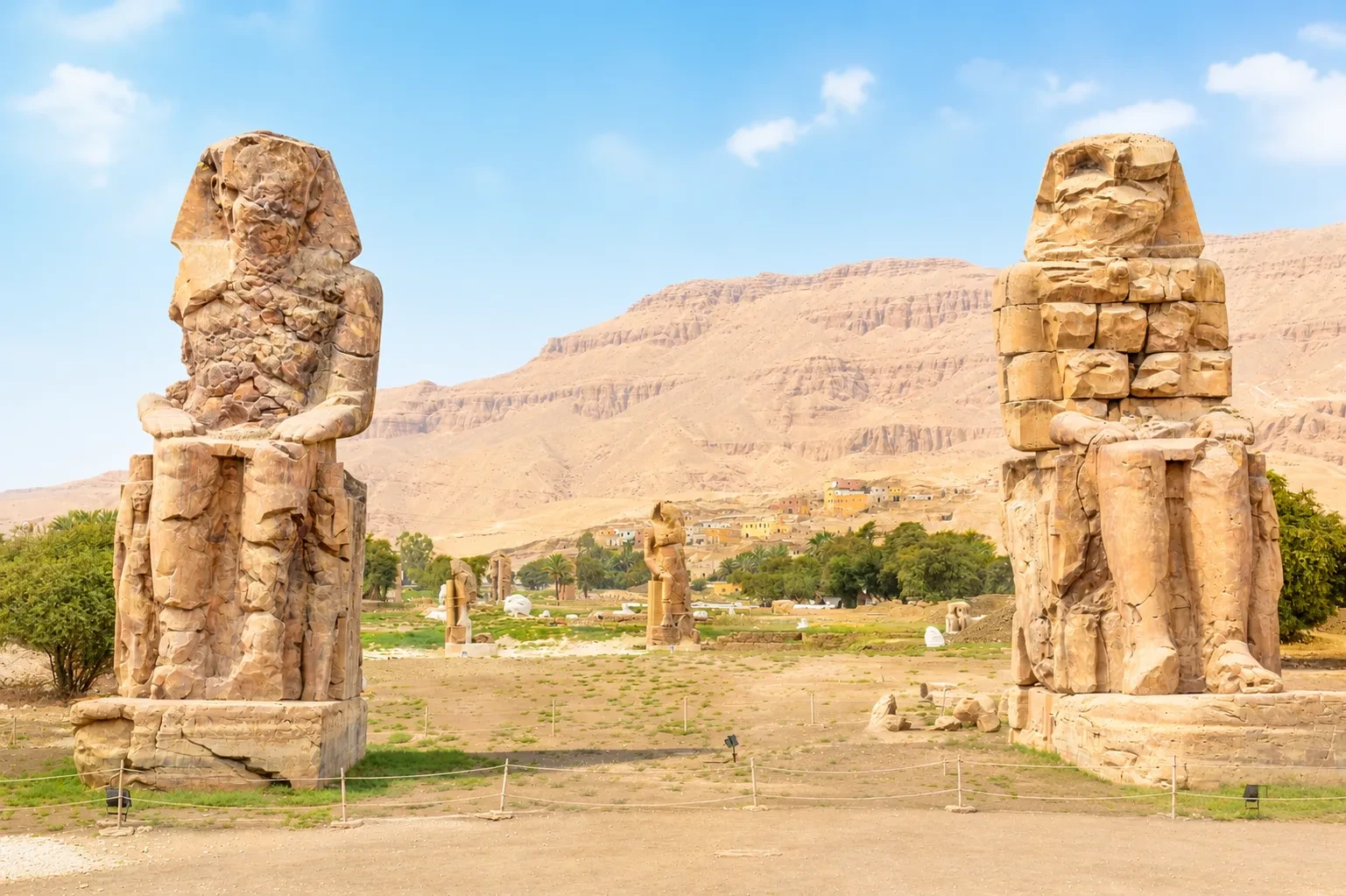
The village and tombs of Deir el-Medina, home of the craftsmen who built and decorated the temple, lies in the valley between the Temple of Queen Hatshepsut and the Valley of the Queens and contains some of the most beautifully painted private tombs in ancient Egypt. The Ramesseum, the mortuary temple of Ramesses II, and Medinet Habu Temple, the mortuary temple of Ramesses III, are both located on the Theban plain to the south and west of the temple. The Colossi of Memnon stand at the edge of the cultivation at the entrance to the West Bank and are passed on the way to and from the Temple of Hatshepsut on all West Bank tours. The Valley of the Nobles is also easily accessible on the same day. On the East Bank, the Luxor Museum, the Mummification Museum, Luxor Temple, and Karnak Temple complete the extraordinary range of monuments available in the greater Luxor area.
Frequently Asked Questions About Queen Hatshepsut's Temple
What is Queen Hatshepsut's Temple?
The Hatshepsut Temple at Deir el-Bahari is a three-tiered colonnaded mortuary temple located at Deir el-Bahari on the west bank of the Nile in Luxor, built around 1470 BCE by Pharaoh Hatshepsut and her architect Senenmut. It is universally regarded as the masterpiece of New Kingdom mortuary temple architecture and one of the most spectacular ancient monuments in the world. The Mortuary Temple of Hatshepsut is a featured destination in all Luxor West Bank Tours, Egypt Tours Packages, Egypt Travel Packages, and Safaga Shore Excursions offered by WOW Egypt Tours.
Who was Hatshepsut?
Hatshepsut was the fifth pharaoh of the 18th Dynasty, the daughter of Thutmose I, and one of the most successful rulers in the history of ancient Egypt. She ruled as a full pharaoh for approximately twenty years, launched the famous trading expedition to the land of Punt, erected the tallest obelisks in Egypt at Karnak Temple, and built the most magnificent mortuary temple on the Theban West Bank at Deir el-Bahari.
What does Djeser-Djeseru mean?
Djeser-Djeseru is the ancient Egyptian name for the Temple of Queen Hatshepsut, meaning the Holy of Holies or the Sublime of Sublimes. It was the name given to the temple at the time of its construction, reflecting its supreme religious status as the most sacred mortuary temple on the Theban West Bank.
What is the Punt Colonnade?
The Punt Colonnade is a decorated portico on the southern side of the second terrace of the Temple of Hatshepsut, containing detailed relief scenes documenting Hatshepsut's famous trading expedition to the land of Punt around 1470 BCE. The scenes depict the journey to Punt, the trading negotiations, the goods obtained including living myrrh trees, ebony, ivory, and gold, and the triumphant return to Egypt, and are one of the most important ancient geographical and ethnographic documents surviving from the ancient world.
Why did Thutmose III erase Hatshepsut's images?
Thutmose III systematically defaced the images and erased the name of Hatshepsut from her temples and monuments, replacing them with his own or those of earlier kings. This was once interpreted as personal revenge for her long regency over him, but modern Egyptologists generally believe it was a political measure taken late in his reign to ensure a smooth succession and prevent Hatshepsut from being counted in the official royal succession at a time when issues of legitimate kingship were of political sensitivity.
What are the opening hours of Queen Hatshepsut's Temple?
The Hatshepsut Temple at Deir el-Bahari is open daily from 6:00 AM to 5:00 PM, including public holidays.
How much does it cost to enter Queen Hatshepsut's Temple?
The entrance fee is EGP 440 for adults and EGP 220 for students. Entrance fees are included in all Mortuary Temple of Hatshepsut Tours, Egypt Tours Packages, and Safaga Shore Excursions booked through WOW Egypt Tours.
How long does it take to visit Queen Hatshepsut's Temple?
Most visitors spend between one and two hours at the Temple of Queen Hatshepsut, sufficient to walk through all three terraces and visit the main decorated chapels. Those with a deeper interest may wish to allow two to three hours.
What is the best time of year to visit Queen Hatshepsut's Temple?
October to April is the most comfortable period, with moderate temperatures. Summer visits are best planned for the earliest morning hours when the cliff face is still in shade and temperatures are bearable.
How do I get to Queen Hatshepsut's Temple?
The Temple of Hatshepsut is located at Deir el-Bahari on the West Bank of Luxor, reached by crossing the Nile and traveling approximately 4 kilometers by road through the desert hills. All Luxor West Bank Tours, Luxor Day Tours, and Safaga Shore Excursions with WOW Egypt Tours include private transportation directly to and from the temple.
Can I combine Queen Hatshepsut's Temple with the Valley of the Kings in one day?
Yes. The Hatshepsut Temple at Deir el-Bahari and the Valley of the Kings are covered together on all WOW Egypt Tours Luxor West Bank Tours, along with the Colossi of Memnon and optional extensions to the Valley of the Queens and Medinet Habu Temple.
Is a guide necessary at Queen Hatshepsut's Temple?
A guide is not required to enter but is strongly recommended. The iconographic programme of the temple, particularly the divine birth reliefs and the Punt Colonnade, is extraordinarily rich in historical and religious significance. WOW Egypt Tours provides licensed Egyptologist guides for all Mortuary Temple of Hatshepsut Tours, Egypt Tours Packages, and Safaga Shore Excursions.
Can I take photographs at Queen Hatshepsut's Temple?
Photography with a standard camera or smartphone is permitted throughout most areas of the temple. Flash photography is strictly prohibited near all painted and decorated surfaces. Professional filming requires a separate permit from Egypt's Ministry of Tourism and Antiquities.
What should I wear to visit Queen Hatshepsut's Temple?
Lightweight clothing covering the shoulders and knees, a wide-brimmed hat, generous sunscreen, and comfortable closed-toe walking shoes with good grip. Bring plenty of water, particularly for visits to the upper terraces which are fully exposed to the sun.
Is Queen Hatshepsut's Temple a UNESCO World Heritage Site?
Yes. The Temple of Queen Hatshepsut is part of the Ancient Thebes with its Necropolis UNESCO World Heritage Site, inscribed in 1979, which also includes the Valley of the Kings, Luxor Temple, Karnak Temple, and the monuments of the West Bank.
What is the difference between Queen Hatshepsut's Temple and the mortuary temples of Ramesses II and Ramesses III?
The Temple of Hatshepsut at Deir el-Bahari is architecturally the most sophisticated and beautifully designed mortuary temple on the Theban West Bank, built on three ascending terraces against the natural amphitheater of the limestone cliffs. The Ramesseum of Ramesses II and Medinet Habu Temple of Ramesses III follow the more conventional flat-plan pyloned temple design, though both contain magnificent carved reliefs and Medinet Habu is the best-preserved mortuary temple on the West Bank.
What Nile cruise options include Queen Hatshepsut's Temple?
WOW Egypt Tours offers both Dahabiya Nile River Cruises and Luxor Aswan Nile River Cruises, all of which include a guided visit to the Hatshepsut Temple at Deir el-Bahari as part of the West Bank excursion in Luxor. Itineraries range from 4 to 8 days and are available as part of all WOW Egypt Tours Egypt Tours Packages and Egypt Travel Packages.
Can I visit Queen Hatshepsut's Temple as part of a Safaga Shore Excursion?
Yes. WOW Egypt Tours offers dedicated Safaga Shore Excursions that include the Mortuary Temple of Hatshepsut as part of a full West Bank programme for cruise ship passengers arriving at Safaga Port. Our team handles all transportation, guiding, entrance fees, and logistics.
How do I book a Queen Hatshepsut's Temple Tour with WOW Egypt Tours?
You can book any Temple of Queen Hatshepsut Tour, Luxor West Bank Tour, Luxor Day Tour, Dahabiya Nile River Cruise, Luxor Aswan Nile River Cruise, Egypt Tours Package, Egypt Travel Package, or Safaga Shore Excursion directly through WOW Egypt Tours. Our team of travel specialists will arrange everything from private transportation and licensed Egyptologist guides to hotel pick-up and entrance fees, ensuring a seamless and unforgettable experience of the Temple of Hatshepsut and all the wonders of ancient Egypt.