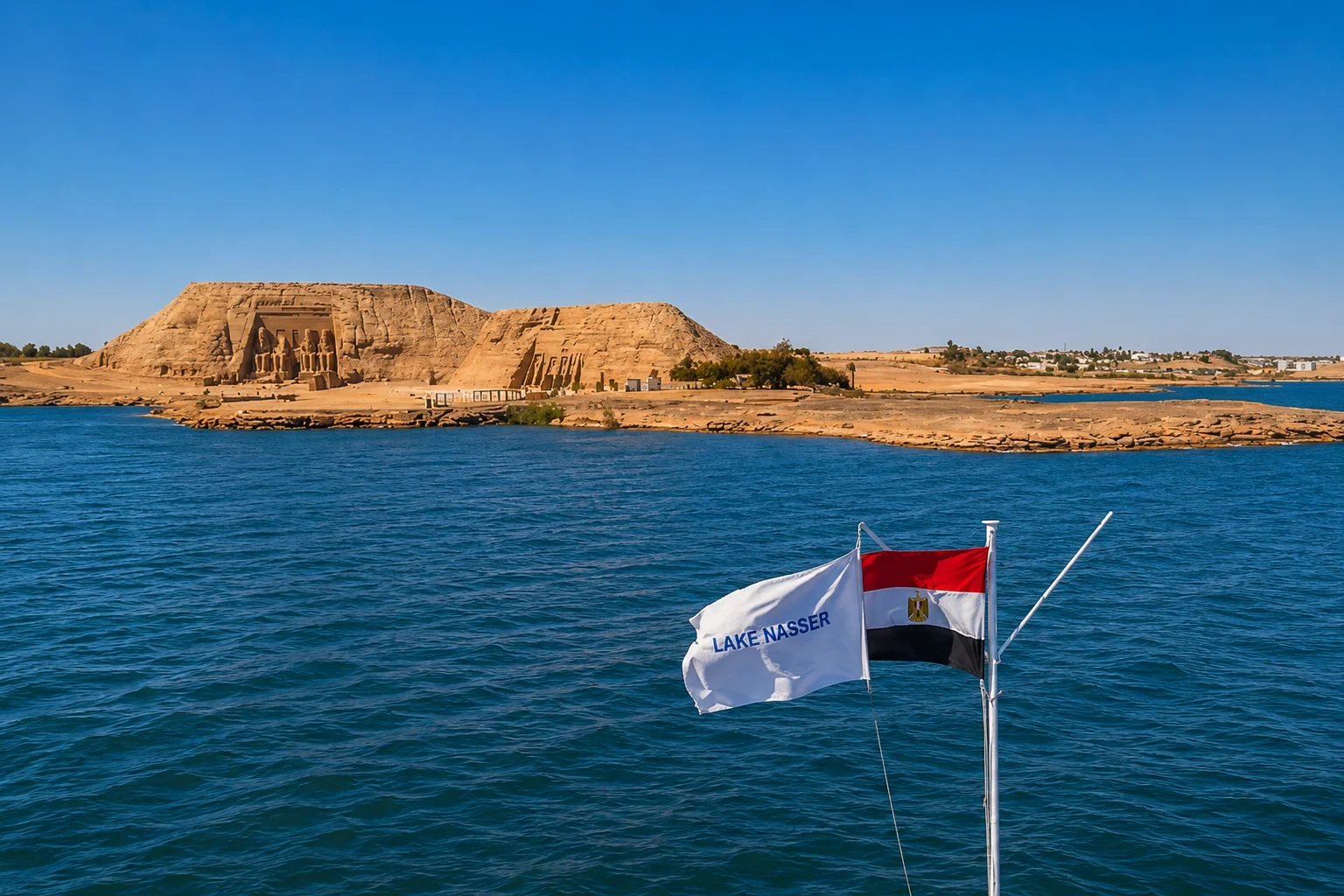

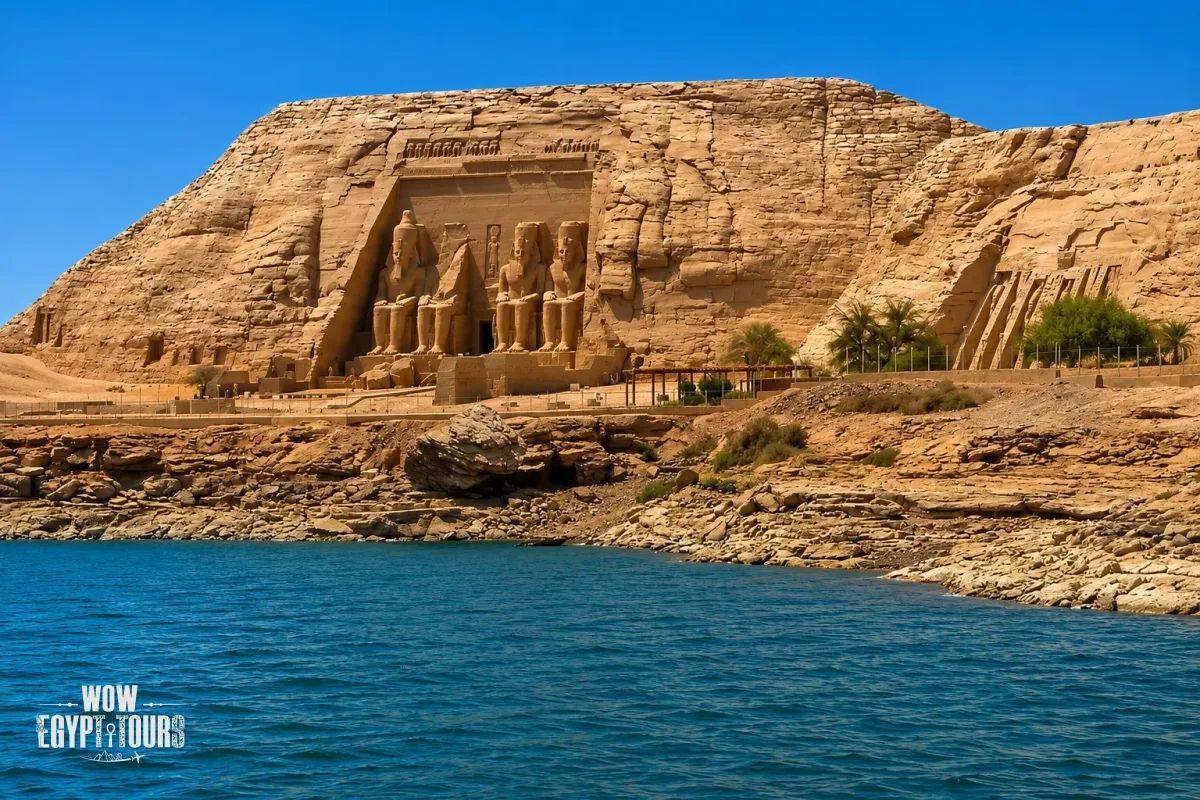

The Abu Simbel Temples are the most magnificent, the most awe-inspiring, and the most universally celebrated ancient monuments in all of Nubia, two extraordinary rock-cut temples carved directly into the sandstone cliffs above the Nile by Pharaoh Ramesses II in the 13th century BCE as the supreme statement of Egyptian imperial power and royal divinity at the southernmost reach of the Egyptian empire. Located approximately 280 kilometers south of Aswan on the western shore of Lake Nasser, near the border between Egypt and Sudan, the Abu Simbel Temples are one of the most famous ancient monuments in the entire world, recognized instantly by travelers from every country who have seen their image in books, museums, and films, and yet consistently described by those who visit them in person as far more overwhelming, far more emotionally powerful, and far more visually dramatic than any photograph or description had prepared them to expect. This extraordinary destination sits at the heart of some of Egypt's greatest heritage travel experiences, including Abu Simbel Day Tours From Aswan By Road, Abu Simbel Day Tours From Aswan By Air, Abu Simbel Overnight Tours with the Sound and Light Show, and Lake Nasser Cruises, all of which WOW Egypt Tours proudly offers to travelers from around the world. The Abu Simbel Temples are also a highlight of Egypt Tours Packages and Egypt Travel Packages, making them one of the most essential and most unforgettable destinations on any comprehensive Egypt itinerary.
The Abu Simbel Temples Egypt comprise two distinct temple complexes: the Great Temple of Ramesses II, whose four colossal seated statues of the pharaoh rising more than 20 meters above the temple entrance constitute one of the most immediately dramatic ancient facades in the world, and the Small Temple of Hathor and Nefertari, the first temple in ancient Egyptian history to be dedicated to a queen, whose six massive facade statues of Ramesses and his beloved wife Nefertari standing as equals are the most intimate and most personally moving royal monument of the entire New Kingdom. The Abu Simbel Temples are also the most celebrated product of the UNESCO International Campaign to Save the Monuments of Nubia, the extraordinary engineering operation conducted between 1964 and 1968 that cut both temples into approximately 1,036 large numbered blocks, transported each block up the cliff face, and reassembled the complete temples in their precise original arrangement on an artificial hill 65 meters above and 210 meters back from their original position above the rising waters of Lake Nasser, saving them from permanent submersion behind the Aswan High Dam and preserving them for all future generations in a new location whose visual drama, while necessarily different from the original, is itself extraordinary. The Abu Simbel Temples are reached most conveniently from Aswan by air in approximately 45 minutes, or by road in approximately 3 to 3.5 hours, and are one of the most rewarding day excursions or overnight experiences available from Aswan as part of any Lake Nasser heritage programme.

Who Built The Abu Simbel Temples?
The Abu Simbel Temples were built by Pharaoh Ramesses II of the 19th Dynasty, one of the greatest builders, the most prolific monument constructors, and one of the longest-reigning rulers in the entire history of ancient Egypt, whose 67-year reign from approximately 1279 BCE to 1213 BCE left a physical mark on the Nile Valley from the Delta to the Nubian desert that is visible at almost every major ancient site in Egypt. Ramesses II, known to the ancient Egyptians as Ramesses the Great and to modern Egyptologists as one of the most artistically and architecturally ambitious pharaohs of the New Kingdom, built more temples, erected more colossal statues, carved more relief inscriptions, and left more monuments bearing his cartouche than any other pharaoh before or after him. His building programme extended throughout the entire length of the Egyptian Nile Valley and deep into the Egyptian-controlled territory of Nubia to the south, where the Abu Simbel Temples represent the most ambitious and the most dramatically sited of all his Nubian building projects.
The construction of the Abu Simbel Temples began approximately in the 24th year of Ramesses II's reign, around 1264 BCE, and was completed approximately 20 years later around 1244 BCE. The work involved carving an entire mountain of Nubian sandstone to create two complete temple complexes with all their interior chambers, columns, statues, and decorated walls cut directly from the living rock of the cliff face, a technical achievement of the first order that demonstrates both the organizational capacity of the Ramesside state and the extraordinary skill of the royal quarrymen and craftsmen who executed the project. The temples were carved by teams of specialized royal craftsmen working under the direction of the Viceroy of Kush, the royal governor of the Nubian province, and the principal artisans responsible for the decoration of the interior chambers were among the most accomplished painters and relief carvers of the 19th Dynasty, as the exceptional quality of the preserved decoration throughout both temples clearly demonstrates.
Who Was Ramesses II?
Ramesses II, the Great, is the most celebrated and the most universally recognized pharaoh in the history of ancient Egypt, a ruler whose 67-year reign from approximately 1279 BCE to 1213 BCE made him the longest-ruling pharaoh of the New Kingdom and whose building programme, military campaigns, diplomatic achievements, and self-promotional genius left an indelible mark on the physical and cultural landscape of the entire Nile Valley. Ramesses II was the son of Seti I of the 19th Dynasty, whose own remarkable reign and extraordinary temple at Abydos had established the artistic and administrative framework within which the younger Ramesses would operate with such spectacular ambition and such extraordinary prolificacy. From his earliest co-regency with his father, Ramesses demonstrated the aggressive personal promotion and the grandiose architectural ambition that would define his entire reign, inscribing his name on monuments throughout Egypt and commissioning new building projects on a scale that no single reign in Egyptian history had previously approached.
The most famous military achievement of Ramesses II was the Battle of Kadesh, fought against the Hittite king Muwatalli II around 1274 BCE in Syria, a battle that ended in a strategic stalemate but that Ramesses transformed through a comprehensive propaganda campaign, including the famous Poem of Pentaur carved on the walls of temples throughout Egypt including Abu Simbel, into the greatest personal military triumph in Egyptian history. The subsequent Treaty of Kadesh between Egypt and the Hittites, concluded around 1259 BCE, was the first known international peace treaty in world history and was sealed by the marriage of Ramesses to a Hittite princess, a diplomatic achievement of the first order. Ramesses II built temples, pylons, and colossal statues at virtually every major ancient site in the Nile Valley, from Luxor and Karnak in the north to Abu Simbel in the far south, leaving his cartouche on existing monuments and claiming the building projects of his predecessors as his own with a systematic thoroughness that made his physical presence felt throughout the entire extent of the Egyptian state and its Nubian empire. He is believed to have fathered more than a hundred children by his numerous royal wives and concubines, and he outlived most of his sons, eventually being succeeded by his thirteenth son Merenptah at an age estimated to have been between 80 and 90 years. Ramesses II is widely identified by scholars as the pharaoh of the biblical Exodus narrative, though this identification remains debated.
Abu Simbel Temples Location In Egypt
The Abu Simbel Temples are located on the western shore of Lake Nasser, approximately 280 kilometers south of Aswan by road or approximately 230 kilometers by air in a direct line, near the small town of Abu Simbel that has grown up around the temple site and its associated tourism infrastructure. The temples sit near the border between Egypt and Sudan, at approximately 22 degrees north latitude, in the extreme southern reach of Egypt at the edge of the Nubian desert. The nearest major Sudanese town, Wadi Halfa, is approximately 50 kilometers to the south across the border. The original position of the temples, before their relocation by the UNESCO campaign between 1964 and 1968, was at the base of a sandstone cliff directly above the level of the Nile, facing east across the river toward the rising sun in a solar alignment of enormous theological significance. The reassembled temples now stand 65 meters above their original position, embedded in an artificial dome-shaped hill constructed from reinforced concrete and covered with sandstone debris to blend visually with the natural cliff landscape, facing east across the waters of Lake Nasser in the same solar orientation as the originals. The Abu Simbel site is accessible from Aswan by air to Abu Simbel Airport, approximately 45 minutes flight, or by road along the desert highway following the western shore of Lake Nasser, approximately 3 to 3.5 hours. WOW Egypt Tours organizes both road and air transfers from Aswan to Abu Simbel on all Abu Simbel Day Tours, Overnight Tours, and Lake Nasser Cruise programmes.
Abu Simbel Temples Fun Facts
The most celebrated single fact about the Great Temple of Ramesses II at Abu Simbel is the solar alignment phenomenon that occurs twice each year, on 22 February and 22 October, when the rising sun penetrates approximately 60 meters along the main axis of the temple through the entrance pylon, through the great hypostyle hall, through the vestibule, and into the innermost sanctuary to illuminate three of the four seated statues in the sanctuary niche: the statues of Ra-Horakhty, the deified Ramesses II, and Amun-Ra. The fourth statue, that of the god Ptah, remains in shadow, as is theologically appropriate since Ptah was the god of darkness and the underworld. The dates of these solar alignment events, 22 February and 22 October, are believed to correspond to the birthday and the coronation date of Ramesses II, making the solar alignment a literally celestial celebration of the most important moments in the royal biography. Remarkably, despite the 65-meter vertical relocation of the temple during the UNESCO rescue operation, the engineers succeeded in preserving this solar alignment in the new position, so that the same phenomenon still occurs at the reassembled temple, a feat of engineering precision that adds an extraordinary dimension to the achievement of the rescue operation.
The Abu Simbel UNESCO rescue operation between 1964 and 1968 was the most ambitious ancient monument relocation operation in history, involving the cutting of both temples into approximately 1,036 individually numbered blocks weighing between 10 and 40 tonnes each, the transportation of each block up the cliff face by crane and truck, and the precise reassembly of all blocks in their correct positions within the artificial hill structure built to receive them. The operation employed approximately 3,000 workers of 30 different nationalities, cost approximately 80 million US dollars financed by 52 contributing countries, and took nearly five years from beginning to end. The precision of the reassembly was such that the joins between individual blocks are virtually invisible in the finished temple interiors, and the preservation of the solar alignment demonstrates an accuracy of orientation and positioning that represents one of the most impressive engineering achievements of the 20th century.
The Small Temple of Nefertari at Abu Simbel was the first temple in ancient Egyptian history to be built by a pharaoh in honor of his queen, and the facade statues, which show Ramesses and Nefertari at equal scale rather than in the diminutive relative size that conventions of royal representation normally required for queens, represent the most spectacular surviving expression of the extraordinary personal relationship between the most powerful pharaoh of the New Kingdom and his most beloved wife.
Why Are The Abu Simbel Temples Called By This Name?
The name Abu Simbel has a somewhat uncertain origin that has been the subject of scholarly debate. The name was recorded by the early 19th century European travelers who rediscovered the temples, and the most commonly accepted explanation derives the name from a local Nubian boy who reportedly guided the Swiss explorer Jean-Louis Burckhardt to the partially sand-buried temples in 1813, a boy whose name was variously recorded as Abu Simbel, Abu Simhel, or similar forms. The ancient Egyptian name for the site is not definitively known, though the temples themselves carry inscriptions referring to the Great Temple as the Temple of Ramesses-Meryamun, meaning Ramesses Beloved of Amun, and to the Small Temple as the Temple of Nefertari-for-whose-sake-the-Sun-does-Shine, a translation of the Nefertari name that is itself one of the most poetically beautiful royal epithets in all of ancient Egyptian literature. The modern Arabic name Abu Simbel is used universally for the site today in both Egyptian and international usage, and has been so thoroughly associated with the temples through more than two centuries of tourism and scholarship that it is the universally recognized designation for these monuments in every language.
Abu Simbel Temples History
The history of the Abu Simbel Temples encompasses the complete arc of Nubian cultural history from the 13th century BCE to the present day, spanning the original New Kingdom construction, more than three thousand years of burial under sand, modern rediscovery, the threatened submersion by Lake Nasser, and the extraordinary rescue operation that saved them for all future generations. The temples were constructed over approximately twenty years during the reign of Ramesses II, with the decoration of the Great Temple walls recording the major military campaigns and religious observances of the reign in a programme of pictorial and textual narrative of extraordinary scale and visual power. After the end of the New Kingdom period around 1070 BCE and the gradual decline of Egyptian administrative control over Nubia, the temples fell progressively out of active religious use and were gradually buried under the wind-blown sand of the Nubian desert, a process that eventually concealed the lower portions of the facade statues and all the interior spaces under a deep layer of protective desert sand.
The temples were known to local Nubian communities throughout the medieval and Ottoman periods as a buried ancient structure, though their precise form and extent were unknown. The Swiss explorer Jean-Louis Burckhardt first encountered the sand-buried temples in 1813 and reported their existence to the Italian explorer Giovanni Belzoni, who led the first modern expedition to the site in 1817 and, after considerable difficulty excavating the accumulated sand from the entrance, became the first person in modern times to enter the interior of the Great Temple. The subsequent decades of the 19th century saw the temples progressively excavated, documented, and visited by increasing numbers of European travelers and scholars, with the site becoming one of the most celebrated and most visited ancient monuments in Nubia. In the 20th century, the completion of the Aswan Low Dam caused periodic flooding of the lower temple areas, and the announcement of the Aswan High Dam project in the late 1950s raised the immediate prospect of permanent submersion. The UNESCO International Campaign to Save the Monuments of Nubia, launched in 1960, identified the Abu Simbel Temples as the highest priority rescue target, and the extraordinary engineering operation that saved them between 1964 and 1968 is now recognized as the founding achievement of modern international heritage conservation.
The Story Of The UNESCO Rescue Of Abu Simbel
The story of the UNESCO rescue of the Abu Simbel Temples is one of the most dramatic and most inspiring narratives in the entire history of human civilization's relationship with its own heritage, a story in which the threat of irreversible cultural loss motivated an unprecedented international response that demonstrated what the world community can achieve when it decides that something is too important to be lost. When it became clear in the late 1950s that the construction of the Aswan High Dam would create a reservoir that would permanently submerge the Abu Simbel cliff face and all its temples under approximately 60 meters of water, UNESCO launched a worldwide appeal for technical proposals and financial contributions to save the temples. More than fifty countries contributed to the rescue fund, and international teams of engineers, archaeologists, and consultants developed multiple competing proposals for the salvation of the temples, ranging from the construction of a protective dam around the site to the raising of the temples on hydraulic jacks to their physical relocation to a higher position.
The winning proposal, developed by a joint Swedish-Egyptian engineering team and ultimately executed by an international consortium of contractors, involved the complete physical dismantling of both temples and their reassembly on the artificial hill above the floodline. Between 1964 and 1968, working against the inexorably rising waters of Lake Nasser, the engineering team cut both temples into 1,036 individually numbered blocks, each weighing between 10 and 40 tonnes, using precision diamond-tipped cutting saws that operated in channels between the blocks with tolerances of approximately 20 centimeters. Each block was carefully removed from its position, transported by crane and truck up the cliff face and across the desert surface to the construction site of the artificial hill, and reassembled within the hill structure in its precise original position relative to all surrounding blocks. The precision of the cutting and reassembly was such that the block joins are virtually invisible in the finished interior spaces, and the solar alignment of the Great Temple was preserved to within a 24-hour margin of its original dates. The operation cost approximately 80 million US dollars, was funded by contributions from 52 countries, employed approximately 3,000 workers of 30 nationalities, and was completed in 1968, one year ahead of the deadline imposed by the rising lake level. The Abu Simbel rescue established the methodology and the international cooperation framework that all subsequent UNESCO heritage rescue operations have followed, and its success directly inspired the drafting of the UNESCO World Heritage Convention in 1972 and the creation of the World Heritage List that now protects outstanding cultural and natural heritage sites throughout the world.
Abu Simbel Temples Architecture And Key Features
The Great Temple Facade And Colossal Statues
The facade of the Great Temple of Ramesses II at Abu Simbel is one of the most immediately overwhelming ancient architectural compositions in the world, a 35-meter high by 38-meter wide cliff face transformed by the ancient carvers into a monumental pylon through which four colossal seated statues of Ramesses II, each measuring approximately 21 meters from base to crown, stare out across the Nile (now Lake Nasser) with the serene and impassive authority of a god-king at the height of his imperial power. The four seated colossi represent Ramesses II at four stages of his long reign, all wearing the double crown of Egypt with the uraeus cobra at the brow and the false beard of divine kingship on the chin, with their massive hands resting flat on their massive thighs in the canonical pose of eternal royal composure. Between the legs and beside the feet of the colossi, smaller figures of members of the royal family including Nefertari, the royal mother Mut-Tuy, and various royal sons and daughters are carved in much smaller scale, reflecting the hierarchical proportionality of Egyptian royal art in which the size of a figure expresses its divine or social status. The second colossal statue from the left was damaged in antiquity, probably by an earthquake, and its upper torso and head fell to the temple platform where they still lie today, unrestored and left as a powerful reminder of the temple's pre-modern history.
The Great Hypostyle Hall
The entrance through the temple facade leads into the Great Hypostyle Hall, a chamber measuring approximately 18 meters long by 16 meters wide, whose ceiling is supported by eight massive square pillars, each fronted by an 10-meter statue of the deified Ramesses in the form of Osiris, the god of resurrection, holding the crook and flail of royal authority. The walls of the hypostyle hall are covered on all sides with the most extensive and most dramatically presented programme of military narrative relief in any ancient Egyptian temple, dominated by the famous Battle of Kadesh cycle that covers the entire north wall in a panoramic depiction of the great Syrian battle of the 5th year of Ramesses's reign, with the pharaoh shown in his war chariot charging into the massed ranks of the Hittite enemy in a composition of extraordinary visual dynamism and propagandistic power. The south wall depicts the assault on the Libyan fortress of Dapur and other military campaigns, while the entrance wall shows the traditional royal smiting scene in which Ramesses dispatches Nubian and Libyan prisoners before the gods Amun and Ra-Horakhty. The painted decoration that originally covered all the carved relief surfaces of the hypostyle hall was largely preserved under the sand burial and is still visible in many areas of the hall, giving the Great Temple one of the finest surviving examples of New Kingdom painted relief in situ in any temple interior.
The Inner Sanctuary And The Solar Alignment
At the far end of the temple axis, through a vestibule and an antechamber, lies the innermost sanctuary of the Great Temple, a small carved chamber approximately 7 meters wide and 7 meters deep that contains the most important and most dramatically conceived architectural feature of the entire temple: the sanctuary niche in the rear wall with its four seated statues of the temple's divine inhabitants, the gods Ra-Horakhty and Amun-Ra, the deified Ramesses II, and the god Ptah, carved from the living rock and looking eternally eastward along the temple axis toward the entrance. It is these four statues that receive the solar alignment light on 22 February and 22 October, when the rising sun penetrates the full 60-meter depth of the temple to illuminate the three rightmost figures while the statue of Ptah, theologically appropriate as the god of darkness, remains in shadow. Standing in the sanctuary on the morning of the solar alignment event and watching the shaft of golden sunlight travel slowly across the sanctuary floor to illuminate the faces of the ancient gods is described by all who experience it as one of the most emotionally overwhelming and most spiritually powerful ancient monument experiences available anywhere in the heritage world.
The Small Temple Of Nefertari And Hathor
Approximately 100 meters north of the Great Temple, the Small Temple of Nefertari and Hathor presents a facade of comparable visual impact in a more intimate scale, with six massive standing statues carved from the cliff face: two colossal figures of Nefertari flanking four colossal figures of Ramesses II, all approximately 10 meters tall, with smaller figures of royal children carved between their legs. The fundamental innovation of the Small Temple facade is the presentation of Nefertari at the same scale as Ramesses, rather than the diminutive scale normally reserved for queens, a departure from canonical Egyptian royal representation that is both archaeologically unprecedented and personally moving as a statement of the pharaoh's love and respect for his favorite wife. The inscription on the facade reads that Ramesses made a temple in the mountain of pure white sandstone for his Great Royal Wife Nefertari, for whose sake the sun does shine, one of the most tender official royal dedications in all of ancient Egyptian epigraphy. The interior of the Small Temple, while smaller and less elaborately decorated than the Great Temple, contains some of the most beautiful and most intimately executed painted reliefs of the 19th Dynasty, particularly the scenes of Nefertari being crowned by Hathor and Isis and the tender scenes of the royal couple making offerings together before the gods.
The Abu Simbel Museum And Visitor Facilities
The Abu Simbel site includes a visitor center and a small museum displaying photographs, drawings, and documentation from the original temple excavations and from the UNESCO rescue operation, providing the most accessible available introduction to the history of the site and the extraordinary engineering achievement of the relocation. The artificial hill within which the reassembled temples are housed is also accessible through a small entrance in the hillside that allows visitors to see the concrete and rock-fill structure that surrounds and supports the relocated temple blocks, one of the most fascinating and most humbling engineering experiences available at any ancient monument site in Egypt, a direct encounter with the physical infrastructure of the 20th century miracle that saved these temples for all subsequent generations.
Why Are The Abu Simbel Temples Important?
The Abu Simbel Temples are important in ways that span ancient history, modern heritage conservation, and the ongoing story of international cultural cooperation. As ancient monuments, they represent the supreme achievement of the Ramesside royal building programme in Nubia, the most ambitious and most technically accomplished rock-cut temple complex in the ancient world, and the most dramatic surviving statement of the Egyptian imperial presence in the Nubian province at the height of the New Kingdom. The decoration of the Great Temple, including the Battle of Kadesh cycle and the extensive programme of offering and divine presence scenes, constitutes one of the most complete and most beautifully executed royal religious and military narrative programmes of any period in ancient Egyptian art. The Small Temple is the most significant royal monument dedicated to a queen in the entire Egyptian heritage record, and its facade presents the most dramatic surviving expression of queenly status in the New Kingdom tradition.
As monuments of modern heritage conservation, the Abu Simbel Temples represent the founding achievement of the UNESCO World Heritage system, the rescue operation that proved the feasibility of international cooperation for cultural heritage protection and that directly inspired the World Heritage Convention of 1972 and the World Heritage List that now protects more than 1,100 outstanding cultural and natural heritage sites throughout the world. Every UNESCO World Heritage Site in existence today owes something to the precedent set by the Abu Simbel rescue, making the temples not only great monuments in their own right but the physical foundation of the modern international system of heritage protection. WOW Egypt Tours includes the Abu Simbel Temples as the culminating monument of all Lake Nasser heritage programmes and as an essential optional addition to all Aswan Day Tour and Nile cruise itineraries.
What Are Some Interesting Facts About The Abu Simbel Temples?
The Solar Alignment Miracle
The solar alignment phenomenon of the Great Temple is one of the most precise and most theologically sophisticated astronomical architectural achievements of the ancient world, demonstrating a knowledge of solar movement and architectural orientation that was able to calculate the exact angle of the rising sun on two specific dates of the year and align the entire 60-meter depth of the rock-cut temple to a tolerance that would be impressive even with modern surveying technology. The ancient Egyptian architects who designed and executed this alignment did so without any of the measuring instruments or computational tools that modern engineers take for granted, using only their accumulated knowledge of solar movement, their geometrical skill, and their extraordinary practical experience of rock-cut architecture to create a solar event that has repeated itself every year for more than three thousand years, was preserved through the 20th century rescue operation, and continues to draw thousands of specially motivated visitors to Abu Simbel on the solar alignment dates of 22 February and 22 October.
The First Temple For A Queen
The Small Temple of Nefertari at Abu Simbel holds the unique distinction of being the first temple in the entire history of ancient Egypt to be built by a pharaoh in honor of his living queen. While queens had received funerary temples and religious endowments throughout Egyptian history, the explicit dedication of a complete, independent cult temple to a living queen as a divine being was unprecedented before Abu Simbel and speaks powerfully to the extraordinary personal relationship between Ramesses II and Nefertari. The equation of the queen with the goddess Hathor in the temple's theological programme, and the presentation of Nefertari at equal height with the pharaoh on the facade, together make the Small Temple the most personal and the most emotionally revealing royal monument of the entire New Kingdom period, a love letter in stone from the most powerful pharaoh in the world to the woman he most admired.
Rediscovered After Three Thousand Years
The story of the rediscovery of Abu Simbel in 1813 is one of the most romantic narratives in the history of Egyptology. Jean-Louis Burckhardt, the Swiss explorer who was also the first European in the modern era to visit Petra in Jordan, was traveling in Nubia when a local boy named Abu Simbel reportedly pointed out to him the tops of two large seated statues emerging from the sand on the cliff face. Burckhardt recognized the significance of what he was seeing but was unable to excavate further at the time, and it fell to the Italian strongman-turned-Egyptologist Giovanni Belzoni to lead the first serious excavation of the site in 1817, removing the sand from the temple entrance and being the first modern person to enter the Great Temple. Belzoni's account of his discovery of the temple interior, with its magnificent painted reliefs emerging from the darkness of centuries as his torch illuminated them for the first time in the modern era, is one of the most vivid and most dramatically written passages in the entire literature of Egyptian archaeological discovery.
What Is So Special About The Abu Simbel Temples?
The Most Overwhelming Ancient Facade In The World
What makes the Abu Simbel Temples uniquely special among all the ancient monuments of Egypt, and indeed among all the ancient monuments of the world, is the quality of sheer visual and emotional overwhelm that the Great Temple facade produces in virtually every visitor who approaches it for the first time. The four colossal seated statues of Ramesses II, rising more than 20 meters above the ancient temple platform and staring with impassive divine authority across the waters of Lake Nasser, are experienced not merely as large old stone objects but as a visceral physical encounter with the concept of absolute royal power at its most total and most explicit expression. Standing on the ancient platform before the Great Temple facade and looking up at the four colossi, with the red Nubian sandstone still bearing traces of its original painted surface and the Lake Nasser stretching blue and vast behind the visitor, almost every traveler experiences a response that goes beyond aesthetic appreciation into something closer to genuine awe, the ancient designed experience of the temple facade working across more than three thousand years to produce the intended effect of royal and divine majesty that the Ramesside builders calculated with such extraordinary precision.
Twice Saved For All Humanity
The Abu Simbel Temples are also uniquely special because they have effectively been saved twice for humanity: once by the desert sand that buried and preserved them for more than three thousand years after the end of the ancient Egyptian Nubian empire, and once by the extraordinary international engineering operation that relocated them above the rising waters of Lake Nasser between 1964 and 1968. The combination of these two acts of preservation, one natural and one human, gives the Abu Simbel Temples a quality of historical drama that no other ancient monument in the world can quite match. Standing in the Great Temple sanctuary and knowing that the carved and painted walls around you were buried under wind-blown Nubian desert sand for more than three thousand years, then cut into blocks and reassembled on a new artificial hill in the 1960s while Lake Nasser rose around the original site, and yet still present and still illuminated by the same annual solar event for which they were originally designed, is to experience a depth of historical consciousness and a sense of continuity between the ancient and modern worlds that is the highest and most profound gift that any heritage site can offer.
Abu Simbel Temples Through The Ages: From Ancient Nubia To The Present
After the end of Ramesses II's reign around 1213 BCE and the gradual decline of the Egyptian New Kingdom during the 20th Dynasty, the Abu Simbel Temples remained in active use for several more centuries, with inscriptions from the later New Kingdom and the subsequent Third Intermediate Period recording continued royal and priestly activity at the site. As Egyptian power over Nubia declined and ultimately ended, the temples fell progressively out of active religious use, and the wind-blown sand of the Nubian desert began the slow process of burial that would eventually conceal the lower portions of the facade statues and all the interior spaces under a deep protective layer of desert sand. The temples were known to the ancient Nubian kingdoms of Napata and Meroe that succeeded Egyptian rule in the region, and several Nubian rulers left graffiti inscriptions on the facade recording their visits to the ancient temples, evidence that the monuments retained their significance and their accessibility to the educated elite of the post-pharaonic Nubian kingdoms even after they had ceased to function as active cult sites.
During the medieval period, the partially buried temples were known to local Nubian communities as an ancient sacred site, referred to in Arabic records as Abu Simbel after the local boy who would eventually guide the first European explorers to the site in 1813. The 19th century rediscovery and subsequent systematic excavation, documentation, and tourism development of the site transformed Abu Simbel from a local Nubian heritage site into an internationally celebrated ancient monument, attracting European travelers, scholars, and artists in increasing numbers throughout the 19th and early 20th centuries and eventually becoming one of the most photographed and most widely known ancient sites in the world. The 20th century completion of the Aswan Low Dam caused periodic flooding of the lower temple areas in the years around 1902, providing an early warning of the threat that the more ambitious High Dam project would eventually pose. The UNESCO rescue operation of 1964 to 1968 completed the transformation of Abu Simbel from a threatened regional heritage site into a globally celebrated symbol of international cultural cooperation, and the site's inscription as part of the Nubian Monuments UNESCO World Heritage Site in 1979 confirmed its permanent status as one of the outstanding universal heritage monuments of all humanity. Today the Abu Simbel Temples receive hundreds of thousands of visitors annually from every country in the world.
Abu Simbel Temples UNESCO World Heritage Site
The Abu Simbel Temples are inscribed as part of the Nubian Monuments from Abu Simbel to Philae UNESCO World Heritage Site, designated in 1979 as one of the first ten sites inscribed on the UNESCO World Heritage List. The designation recognizes the outstanding universal value of the Abu Simbel Temples both as supreme examples of ancient Egyptian rock-cut temple architecture and as the most celebrated product of the UNESCO International Campaign to Save the Monuments of Nubia, the rescue operation that established the precedent for all subsequent international heritage conservation. The World Heritage designation also encompasses the other monuments rescued from Lake Nasser including the Philae Temple complex and the various Nubian temples relocated to safety along the lake shores. The inscription of Abu Simbel was not only a recognition of the ancient monuments themselves but also of the extraordinary modern achievement of their rescue, making the World Heritage site simultaneously a monument to the ancient past and to the 20th century's most ambitious act of cultural heritage preservation.
Best Time To Visit The Abu Simbel Temples
The best time to visit the Abu Simbel Temples is during the cooler months from October through April, when temperatures at Abu Simbel, which is one of the hottest locations in Egypt due to its extreme southern latitude and its desert setting, are moderate and comfortable for outdoor exploration of the temple facades, the platform areas, and the surrounding site. The summer months from May to September bring extreme heat to Abu Simbel, with temperatures regularly exceeding 45 degrees Celsius, making outdoor visits extremely challenging and the air-conditioned interior of the Great Temple a welcome but inadequate refuge from the heat. If visiting in summer, the very early morning, immediately after the temples open at 5:00 AM, provides the most comfortable outdoor conditions. The special solar alignment events on 22 February and 22 October attract large crowds of specially motivated visitors and tour groups, and while the alignment itself is a unique and overwhelming experience, the crowd levels on these specific dates are significantly higher than on normal visiting days and advance booking of flights or road transfers and accommodation is essential. WOW Egypt Tours plans all Abu Simbel visits at the optimal time of day and arranges all required advance bookings for solar alignment date visits.
Abu Simbel Temples Opening Hours
The Abu Simbel Temples are open every day of the week, including public holidays. The temples open at 5:00 AM and close at 6:00 PM throughout the year. The very early morning opening allows visitors arriving on the first morning flights from Aswan to visit the temples in the cool of the early morning before the heat of the day becomes intense. The Abu Simbel Sound and Light Show is held on most evenings in two sessions, typically at 7:00 PM and 8:30 PM, with different language versions on different evenings. The most popular visiting time is between 6:00 AM and 10:00 AM, when the morning light illuminates the colossal facade statues most beautifully from the east and the temperature is at its most comfortable. The temples can also be visited in the late afternoon from approximately 3:00 PM to 6:00 PM when the main tour groups have departed and the evening light creates spectacular photographic conditions on the western-facing lake side of the temple hill.
Abu Simbel Temples Entrance Fees
Adults: EGP 822
Students: EGP 445.5
The entrance fee covers access to both the Great Temple of Ramesses II and the Small Temple of Nefertari and Hathor, including all interior chambers and the exterior platform areas. The Abu Simbel Sound and Light Show has a separate admission fee. The Abu Simbel Museum and visitor facilities are included in the entrance fee. Entrance fees to both Abu Simbel Temples are included in all Abu Simbel Day Tours, Overnight Tours, and Lake Nasser Cruise programmes booked through WOW Egypt Tours.
How To Get To Abu Simbel
Abu Simbel is accessible from Aswan by two primary transport options: by air and by road. By air, EgyptAir operates daily flights from Aswan International Airport to Abu Simbel Airport, a journey of approximately 45 minutes each way, with departure times in the early morning to allow day visitors to arrive at the temples before the main heat of the day. By road, Abu Simbel is reached via the desert highway that follows the western shore of Lake Nasser from Aswan southward, a distance of approximately 280 kilometers that takes approximately 3 to 3.5 hours by private vehicle in comfortable air-conditioned conditions. The road journey, while longer, offers spectacular views of the Lake Nasser landscape and the Nubian desert and provides an experience of the scale and the remoteness of the southern Egyptian landscape that the brief air journey cannot convey. The choice between air and road depends on the available time and the physical preferences of the traveler: the air option allows the most time at the temples but loses the overland landscape experience, while the road option provides the fuller geographical context but requires a longer day. WOW Egypt Tours organizes both air and road transfer options from Aswan on all Abu Simbel Day Tours, Overnight Tours, and Lake Nasser Cruise programmes.
How Long To Spend At The Abu Simbel Temples
Most visitors spend between one and two hours at the Abu Simbel Temples, which is sufficient time to view the Great Temple facade with its four colossal statues, walk through the complete interior sequence of the Great Temple from the hypostyle hall through the vestibule to the inner sanctuary, visit the Small Temple of Nefertari with a complete interior walk, explore the visitor center and museum, and spend some time on the ancient platform with views across Lake Nasser toward Sudan. Visitors with a particular interest in the Ramesside art programme, the Battle of Kadesh relief cycle, or the UNESCO rescue story may wish to allow two hours. The Abu Simbel temples, while smaller in footprint than the great open-air temple complexes of Luxor, are more intensively decorated per square meter than virtually any other ancient Egyptian monument, and reward slow and attentive exploration more than quick passage through. The Abu Simbel Sound and Light Show lasts approximately one hour in the evening. For travelers on a Lake Nasser Cruise, multiple visits to Abu Simbel are possible, typically including an afternoon visit on arrival day and a dawn visit on the following morning, the latter providing the most dramatic and the most memorable encounter with the colossi in the golden light of the Nubian sunrise.
Tips For Visiting The Abu Simbel Temples
Arrive as early as possible, ideally on the first morning flight from Aswan or at the road convoy departure time, to experience the temples in the early morning light when the facade is illuminated from the east and the temperature is at its most comfortable. Begin with the Great Temple facade and spend time examining each of the four colossal statues individually before entering the interior, as the scale and the detail of the facade are best appreciated in a slow and attentive external examination rather than a quick look before rushing inside. Inside the Great Temple, begin at the entrance wall and work your way systematically through the hypostyle hall, paying particular attention to the Battle of Kadesh panorama on the north wall, which is the most extensive and most dramatically composed military narrative in ancient Egyptian art. Do not miss the inner sanctuary, even if there is a queue of other visitors: the four seated statues in the sanctuary niche and the knowledge of the solar alignment phenomenon make this the most theologically and historically significant single space in the temple. Give equal time to the Small Temple of Nefertari, which many visitors rush through after the dramatic scale of the Great Temple, as its painted decoration is of exceptional quality and its theological significance as the first royal queen's temple is unique in the entire Egyptian heritage record. A licensed guide from WOW Egypt Tours who is expert in the Ramesside artistic programme and the UNESCO rescue story is essential for the fullest appreciation of Abu Simbel. Consider attending the evening Sound and Light Show if staying overnight, as the illuminated facade of the Great Temple in the darkness of the Nubian night is one of the most dramatically atmospheric heritage experiences available anywhere in Egypt.
What To Wear At The Abu Simbel Temples
The Abu Simbel Temples are located in one of the hottest and most exposed desert environments of any ancient monument site in Egypt, with minimal shade outside the temple interiors and intense solar radiation reflected from the pale sandstone and the lake surface. Lightweight, breathable clothing covering the shoulders and knees is strongly recommended for both comfort and respect for the sacred ancient spaces. A wide-brimmed hat and very generous sunscreen are absolutely essential for outdoor portions of the visit regardless of season. Comfortable, flat walking shoes are adequate for the smooth ancient platform surfaces and the interior temple floors. Bring substantial quantities of water, as refreshment facilities at the site are limited. The interior of the Great Temple is pleasantly cool even in summer, providing welcome temporary relief from the outdoor heat. For the evening Sound and Light Show, a warm layer is recommended in winter as the desert temperatures drop sharply after sunset, while in summer the evening air remains warm and comfortable for outdoor seating.
Photography At The Abu Simbel Temples
The Abu Simbel Temples are among the finest photography destinations in all of Egypt, offering an extraordinary combination of the colossal facade with its four massive statues in the early morning light, the intimate painted reliefs of the interior walls, the Small Temple facade with the unique equal-scale statues of Ramesses and Nefertari, and the spectacular Lake Nasser waterscape backdrop visible from the temple platform. The most dramatic exterior photography of the Great Temple facade is achieved in the early morning when the rising sun illuminates the four colossi from the east in golden Nubian light, with long shadows cast by the facial planes and headdresses of the statues creating a sculptural depth that midday overhead light completely eliminates. Photography with a standard camera or smartphone is permitted throughout the site including the temple platform and the exterior facades. Flash photography is strictly prohibited inside both temples, as the intense light causes irreversible damage to the ancient painted surfaces. A camera with strong low-light performance is recommended for the temple interiors, which are lit by artificial lighting of variable quality in different sections. The Sound and Light Show provides unique opportunities for long-exposure photography of the illuminated facade reflected in the lake. Professional photography or filming requires a separate permit from Egypt's Ministry of Tourism and Antiquities.
Abu Simbel Temples Tours
Abu Simbel Day Tour From Aswan By Road
This full-day excursion from Aswan travels to Abu Simbel by private air-conditioned vehicle along the desert highway following the western shore of Lake Nasser, a journey of approximately 3 to 3.5 hours each way that provides a comprehensive experience of the Lake Nasser desert landscape and the scale of the southern Egyptian Nubian geography before arriving at the temples for a guided visit.
What Is Covered
Departure from Aswan hotel in the early morning by private air-conditioned vehicle. Road journey of approximately 3 to 3.5 hours along the Lake Nasser desert highway, passing through the Nubian desert landscape with views across the lake. Arrival at Abu Simbel with a full guided visit to both the Great Temple of Ramesses II and the Small Temple of Nefertari, including the complete interior programme of the Great Temple from the hypostyle hall through to the inner sanctuary, a guided explanation of the solar alignment phenomenon and the Battle of Kadesh cycle, and a full visit to the Small Temple with explanation of its unique significance as the first royal queen's temple. Visit to the Abu Simbel visitor center and the museum documenting the UNESCO rescue operation. Return road journey to Aswan arriving in the early afternoon.
Duration
Full day from Aswan. Departure approximately 4:00 AM to 5:00 AM to arrive at Abu Simbel by 7:30 AM to 8:30 AM. Approximately 1.5 to 2 hours at the temples. Return to Aswan approximately 12:00 PM to 2:00 PM.
Includes
Private air-conditioned vehicle from Aswan hotel, private licensed Egyptologist guide, entrance fees to both Abu Simbel Temples, and return road transfer to Aswan hotel.
Abu Simbel Day Tour From Aswan By Air
This half-day excursion from Aswan travels to Abu Simbel by domestic flight, covering the approximately 230-kilometer distance in approximately 45 minutes and allowing the maximum possible time at the temple site within a single day trip from Aswan. The air option is the most time-efficient way to visit Abu Simbel as a day excursion and allows travelers with limited time in Aswan to experience the temples without committing a full day to the road journey.
What Is Covered
Private vehicle from Aswan hotel to Aswan International Airport. Domestic flight of approximately 45 minutes from Aswan to Abu Simbel Airport. Private vehicle from Abu Simbel Airport to the temple site. Full guided visit to both the Great Temple of Ramesses II and the Small Temple of Nefertari, including the complete interior of the Great Temple, the Battle of Kadesh cycle, the inner sanctuary and solar alignment explanation, the Small Temple interior with its exceptional painted reliefs, and the visitor center and museum. Return flight from Abu Simbel to Aswan. Private vehicle from Aswan Airport to Aswan hotel.
Duration
Half day to full day from Aswan depending on flight schedule. Typically departs Aswan early morning, arrives Abu Simbel approximately 6:00 AM to 7:00 AM, approximately 1.5 to 2 hours at the temples, return flight to Aswan arriving approximately 11:00 AM to 12:00 PM.
Includes
Private vehicle from Aswan hotel to the airport, return domestic flights between Aswan and Abu Simbel, private vehicle from Abu Simbel Airport to the temple site, private licensed Egyptologist guide, and entrance fees to both Abu Simbel Temples. Flight tickets are subject to availability and should be booked in advance through WOW Egypt Tours.
Abu Simbel Overnight Tour With Sound And Light Show And Nubian House Accommodation, Traveling By Road
This overnight excursion from Aswan by road provides the most complete and most relaxed experience of the Abu Simbel Temples available on any day tour or overnight programme, combining the road journey through the Lake Nasser desert landscape with a late afternoon visit to the temples, the evening Abu Simbel Sound and Light Show with the illuminated colossi reflected in the lake, an overnight stay in a traditional Nubian guesthouse at Abu Simbel, and a second visit to the temples at dawn the following morning before the road return to Aswan.
What Is Covered
Day 1: Departure from Aswan hotel by private air-conditioned vehicle in the late morning or early afternoon. Road journey of approximately 3 to 3.5 hours to Abu Simbel along the Lake Nasser desert highway. Arrival at Abu Simbel in the late afternoon. First guided visit to both the Great Temple of Ramesses II and the Small Temple of Nefertari in the late afternoon light. Check-in at a traditional Nubian house guesthouse in the Abu Simbel village, offering an intimate and culturally authentic overnight accommodation experience in a painted Nubian home with traditional hospitality including a Nubian dinner prepared by the host family. Attendance at the Abu Simbel Sound and Light Show in the evening, in which the illuminated facade of the Great Temple and its reflection in Lake Nasser create one of the most atmospherically beautiful heritage experiences in Egypt. Overnight at the Nubian guesthouse.
Day 2: Very early morning rise before dawn. Second guided visit to the Abu Simbel Temples at sunrise, experiencing the colossal facade statues in the golden light of the Nubian dawn in conditions of extraordinary beauty and with far fewer visitors than the main morning tourist rush. Optional: visit on 22 February or 22 October to witness the solar alignment phenomenon in the inner sanctuary. Breakfast at the Nubian guesthouse. Return road journey to Aswan, arriving in the early afternoon.
Duration
2 Days 1 Night. Day 1 departure from Aswan in the early afternoon. Day 2 return to Aswan in the early afternoon.
Includes
Private air-conditioned vehicle from Aswan hotel and return, private licensed Egyptologist guide throughout, entrance fees to both Abu Simbel Temples on both visits, Abu Simbel Sound and Light Show admission, one night in a traditional Nubian house guesthouse including dinner and breakfast, and all transfers between the guesthouse and temple site.
Abu Simbel Overnight Tour With Sound And Light Show And Nubian House Accommodation, Traveling By Air
This overnight excursion from Aswan by air combines the speed and convenience of the domestic flight with the most complete possible overnight experience at Abu Simbel, arriving by air in the morning for a first full temple visit, enjoying the afternoon in and around Abu Simbel village, attending the evening Sound and Light Show, staying overnight in a traditional Nubian guesthouse, and visiting the temples again at dawn before the return flight to Aswan.
What Is Covered
Day 1: Private vehicle from Aswan hotel to Aswan International Airport. Early morning domestic flight of approximately 45 minutes from Aswan to Abu Simbel Airport. Private vehicle from Abu Simbel Airport to the temple site. Full morning guided visit to both the Great Temple of Ramesses II and the Small Temple of Nefertari, including the complete interior programme, the Battle of Kadesh cycle, the inner sanctuary and solar alignment explanation, and the Small Temple painted reliefs. Visit to the Abu Simbel visitor center and museum. Afternoon at leisure in Abu Simbel village, with optional Nubian cultural walk. Check-in at a traditional Nubian house guesthouse. Traditional Nubian dinner prepared by the host family. Evening Abu Simbel Sound and Light Show. Overnight at the Nubian guesthouse.
Day 2: Very early morning dawn visit to the Abu Simbel Temples in the golden light of the Nubian sunrise. Breakfast at the Nubian guesthouse. Check-out and private vehicle to Abu Simbel Airport. Return domestic flight to Aswan. Private vehicle from Aswan Airport to Aswan hotel.
Duration
2 Days 1 Night. Day 1 departure from Aswan in the early morning. Day 2 return to Aswan in the mid-morning.
Includes
Private vehicle from Aswan hotel to the airport and return, return domestic flights between Aswan and Abu Simbel, private vehicle from Abu Simbel Airport to the temple site and guesthouse, private licensed Egyptologist guide throughout, entrance fees to both Abu Simbel Temples on both visits, Abu Simbel Sound and Light Show admission, one night in a traditional Nubian house guesthouse including dinner and breakfast. Flight tickets are subject to availability and should be booked in advance through WOW Egypt Tours.
Lake Nasser Cruise
A Lake Nasser Cruise is a luxury cruising experience on the waters of Lake Nasser, the vast artificial lake created by the Aswan High Dam, visiting the remarkable collection of ancient Nubian temples rescued from the rising waters by the UNESCO International Campaign and reassembled along the lake shores. WOW Egypt Tours operates Lake Nasser Cruises with private cabins, all meals, a private licensed Egyptologist guide on board, and guided shore excursions at every stop. The Abu Simbel Temples are the supreme destination and the most celebrated monument of every Lake Nasser Cruise itinerary, visited typically both in the late afternoon on arrival day and again at dawn the following morning, with the optional Sound and Light Show on the evening between the two visits providing the most complete and most atmospheric experience of the temples available on any Lake Nasser itinerary.
5 Days 4 Nights Lake Nasser Cruise From Aswan To Abu Simbel
Route: Aswan to Abu Simbel, sailing south on Lake Nasser.
Itinerary
Day 1: Embarkation in Aswan. Guided visits to the Aswan High Dam, the Unfinished Obelisk, and Philae Temple. Embarkation and sail south on Lake Nasser. Overnight on board.
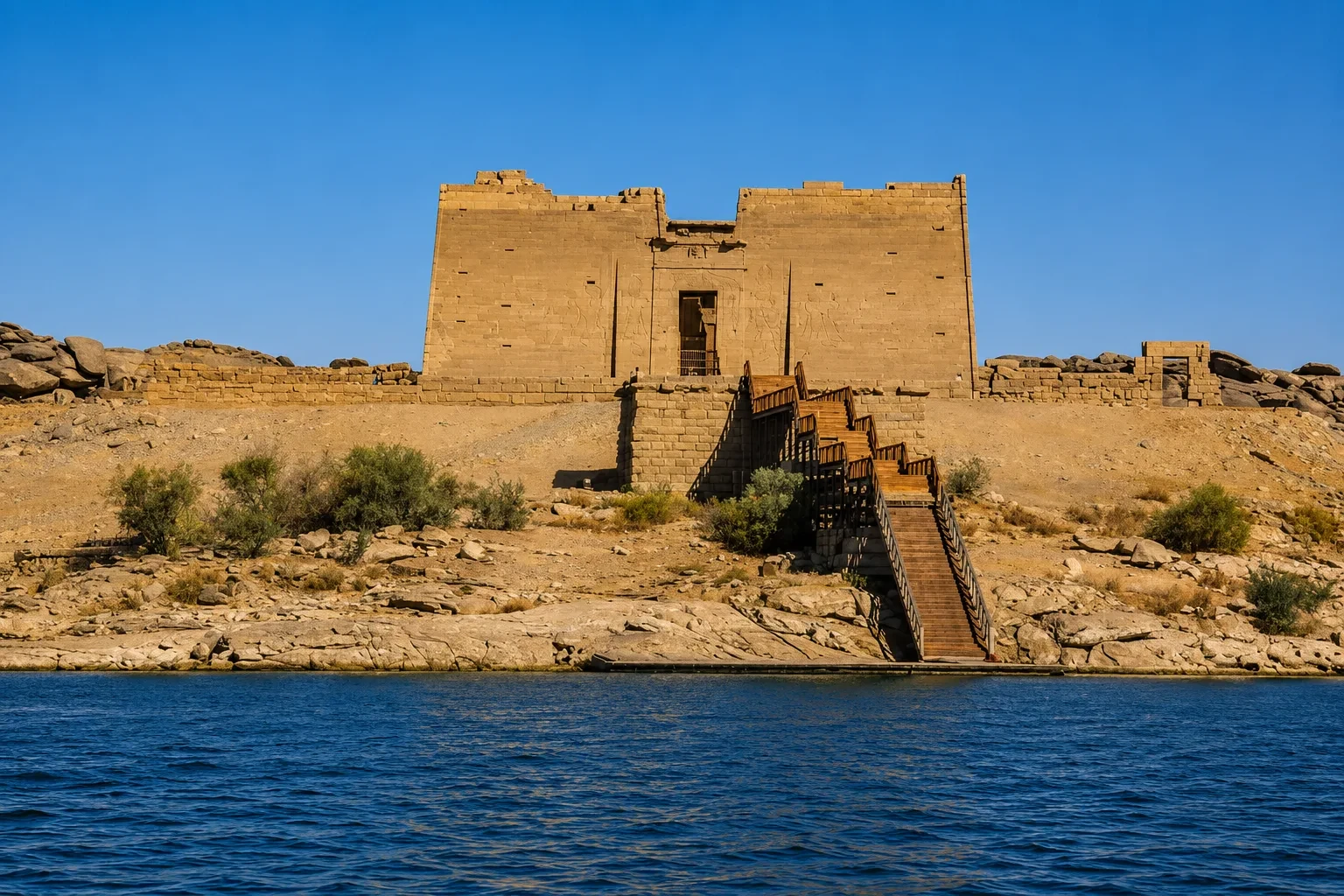
Day 2: Sail south to Kalabsha. Guided visit to the Temple of Kalabsha, the largest free-standing ancient temple in Nubia, and the associated temples of Beit el-Wali and Kertassi. Continue sailing south to Wadi el-Seboua. Overnight on board.
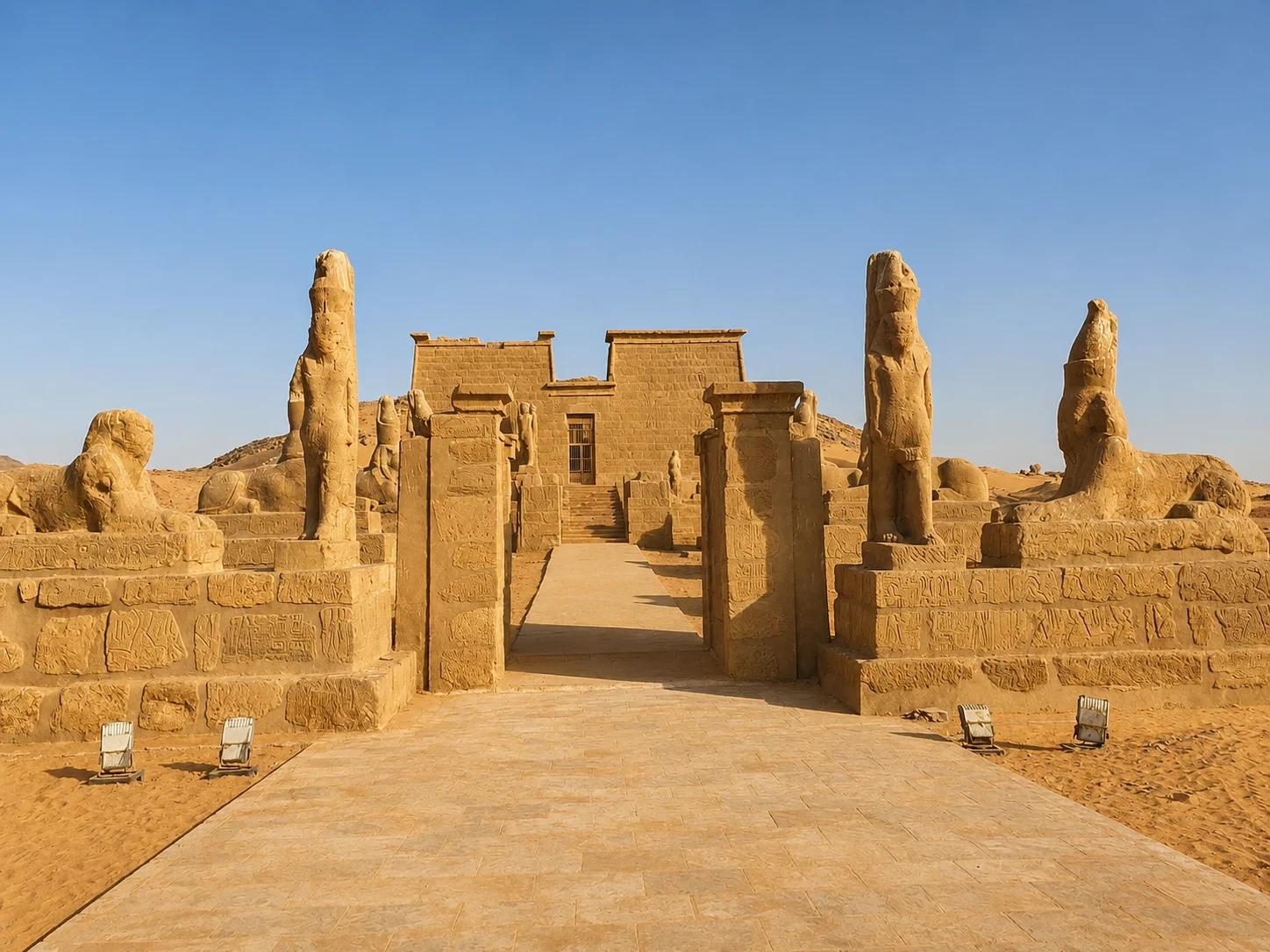
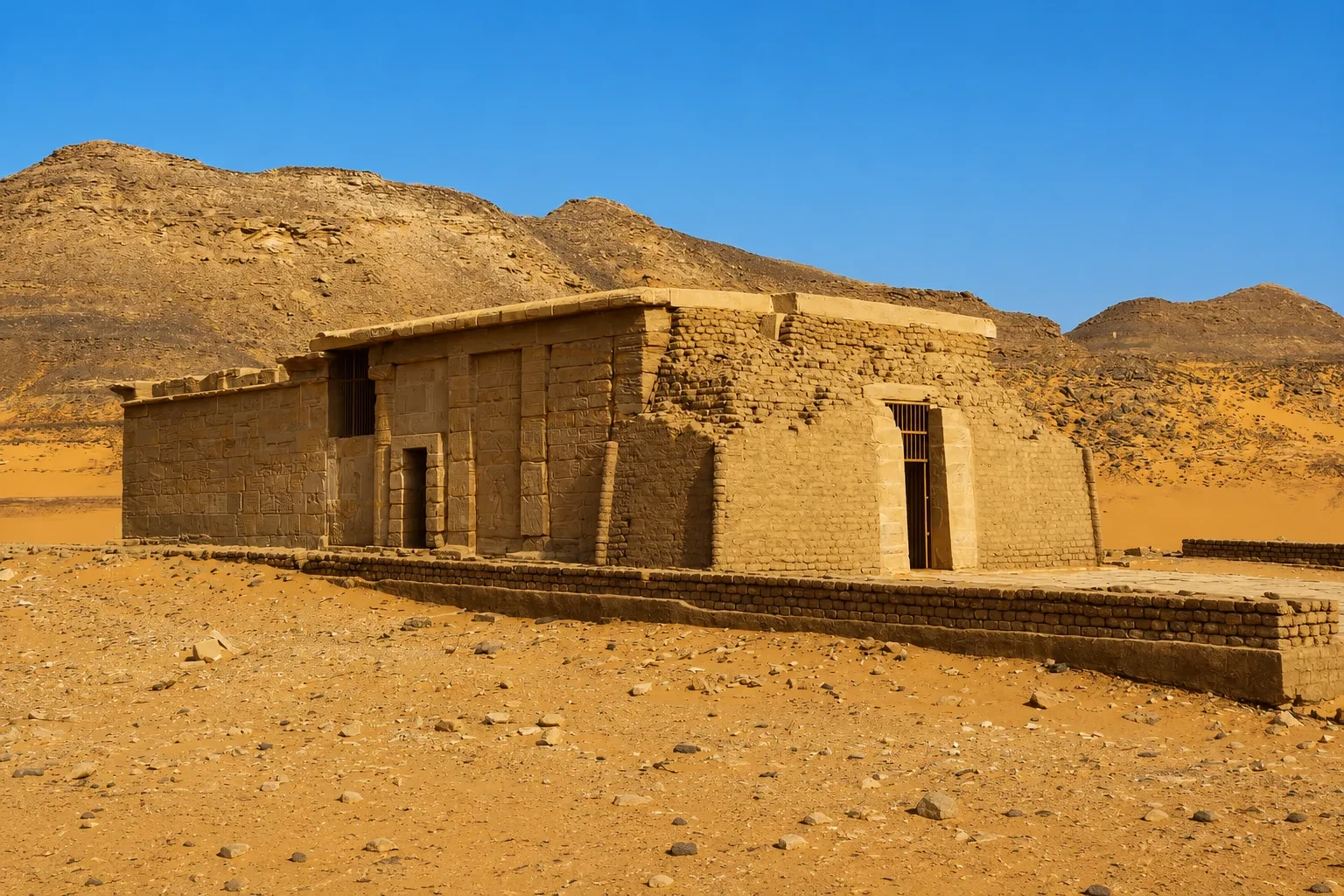
Day 3: Guided visit to the Temples of Wadi el-Seboua, the remarkable Ramesside processional avenue of sphinxes and the attached temple. Guided visit to the Temple of Amada, the oldest surviving temple on Lake Nasser and one of the finest examples of New Kingdom painted relief decoration in Nubia. Continue south. Overnight on board.
Day 4: Sail to Kasr Ibrim. Guided visit to Kasr Ibrim, the only ancient Nubian site remaining in its original above-water location on Lake Nasser, viewed from the ship. Continue south to Abu Simbel. First guided visit to the Abu Simbel Temples in the late afternoon, covering both the Great Temple of Ramesses II and the Small Temple of Nefertari. Optional Abu Simbel Sound and Light Show in the evening. Overnight on board at Abu Simbel.
Day 5: Second guided visit to the Abu Simbel Temples at sunrise, experiencing the colossi in the golden light of the Nubian dawn. Farewell breakfast on board. Disembarkation at Abu Simbel. Transfer by air or road back to Aswan.
Includes
Private cabin, all meals on board, private licensed Egyptologist guide, entrance fees to all temple visits including both Abu Simbel Temples on both visits, motorboat transfer to Philae Island on embarkation day, and private transfers. Abu Simbel Sound and Light Show attendance available as an optional addition.
4 Days 3 Nights Lake Nasser Cruise From Abu Simbel To Aswan
Route: Abu Simbel to Aswan, sailing north on Lake Nasser.
Itinerary
Day 1: Arrival at Abu Simbel by air or road from Aswan. Embarkation at Abu Simbel. Full afternoon guided visit to the Abu Simbel Temples, the two extraordinary rock-cut temples of Ramesses II and Queen Nefertari. Optional Abu Simbel Sound and Light Show in the evening. Overnight on board at Abu Simbel.
Day 2: Second guided visit to the Abu Simbel Temples at sunrise for the most spectacular dawn lighting of the colossi. Sail north on Lake Nasser. Guided visit to Kasr Ibrim from the ship deck. Guided visit to the Temple of Amada, the oldest and most beautifully painted surviving temple on Lake Nasser. Guided visit to the Temples of Wadi el-Seboua, including the remarkable processional avenue of sphinxes. Overnight on board.
Day 3: Continue north to Kalabsha. Guided visit to the Temple of Kalabsha and associated temples. Continue north toward Aswan. Guided visits to the Aswan High Dam, the Unfinished Obelisk, and Philae Temple. Overnight on board in Aswan.
Day 4: Guided visits to the Nubian Museum and Nubian Village. Optional Elephantine Island and Kitchener's Island Botanical Garden. Farewell breakfast on board. Disembarkation in Aswan.
Includes
Private cabin, all meals on board, private licensed Egyptologist guide, entrance fees to all temple visits including both Abu Simbel Temples on both visits, motorboat transfer to Philae Island, and private transfers. Abu Simbel Sound and Light Show attendance available as an optional addition.
Luxor And Aswan Nile River Cruise
The Luxor and Aswan Nile River Cruise is a standard Nile cruise product operated aboard a full-size cruise ship between Luxor and Aswan. WOW Egypt Tours operates this cruise in both directions with private licensed Egyptologist guides, all meals included, private cabins, and guided shore excursions at every port of call. A visit to the Abu Simbel Temples is available as an optional day excursion by air or by road from the Aswan overnight stop on all Luxor and Aswan Nile River Cruise itineraries, providing the opportunity to combine the complete Nile Valley heritage experience between Luxor and Aswan with the supreme ancient monument of the Nubian world.
4 Days 3 Nights Luxor And Aswan Nile River Cruise From Aswan To Luxor
Route: Aswan to Luxor, sailing north.
Itinerary
Day 1: Embarkation in Aswan. Guided visits to Philae Temple, the Aswan High Dam, and the Unfinished Obelisk. Optional Abu Simbel day excursion by air available on request with advance booking. Overnight on board in Aswan.
Day 2: Sail north to Kom Ombo. Guided visit to Kom Ombo Temple and Crocodile Museum. Continue to Edfu. Overnight on board.
Day 3: Guided visit to the Temple of Horus at Edfu. Continue north toward Luxor. Pass through the Esna Lock. Optional visit to Khnum Temple at Esna. Guided visit to Luxor Temple and Karnak Temple. Overnight on board in Luxor.
Day 4: Optional Sunrise Hot Air Balloon available. Guided visits to Valley of the Kings, Queen Hatshepsut Temple, and Colossi of Memnon. Disembarkation in Luxor.
Includes
Private cabin, all meals on board, private licensed Egyptologist guide, entrance fees to all temple visits, motorboat transfer to Philae Island, and private transfers. Abu Simbel day excursion available as an optional addition with advance booking.
5 Days 4 Nights Luxor And Aswan Nile River Cruise From Luxor To Aswan
Route: Luxor to Aswan, sailing south.
Itinerary
Day 1: Embarkation in Luxor. Guided visits to Luxor Temple and Karnak Temple. Overnight on board in Luxor.
Day 2: Optional Sunrise Hot Air Balloon available. Guided visits to Valley of the Kings, Queen Hatshepsut Temple, and Colossi of Memnon. Pass through the Esna Lock. Visit to Khnum Temple at Esna. Sail south to Edfu. Overnight on board.
Day 3: Guided visit to the Temple of Horus at Edfu. Continue to Kom Ombo. Guided visit to Kom Ombo Temple and Crocodile Museum. Overnight on board.
Day 4: Continue south toward Aswan. Guided visits to Philae Temple, the Aswan High Dam, and the Unfinished Obelisk. Overnight on board in Aswan.
Day 5: Abu Simbel day excursion available by air or road with advance booking. Disembarkation in Aswan.
Includes
Private cabin, all meals on board, private licensed Egyptologist guide, entrance fees to all temple visits, motorboat transfer to Philae Island, and private transfers. Abu Simbel day excursion available as an optional addition on Day 5 with advance booking.
8 Days 7 Nights Luxor And Aswan Nile River Cruise Round Trip From Luxor (Via Aswan)
Route: Luxor and Aswan, sailing north and south.
Itinerary
Day 1: Embarkation in Luxor. Guided visits to Luxor Temple and Karnak Temple. Overnight on board in Luxor.
Day 2: Guided visits to Luxor Museum. Pass through the Esna Lock. Visit to Khnum Temple at Esna. Sail south to Edfu. Overnight on board.
Day 3: Guided visit to the Temple of Horus at Edfu. Continue to Kom Ombo. Guided visit to Kom Ombo Temple and Crocodile Museum. Overnight on board.
Day 4: Continue south toward Aswan. Guided visits to Philae Temple, the Aswan High Dam, and the Unfinished Obelisk. Overnight on board in Aswan.
Day 5: Abu Simbel day excursion available by air or road with advance booking. Nubian Museum visit. Nubian Village visit. Sound and Light Show at Philae Temple. Overnight on board in Aswan.
Day 6: Sail north to Kom Ombo. Guided visit to Kom Ombo Temple. Continue north. Overnight on board.
Day 7: Guided visits to Valley of the Kings, Queen Hatshepsut Temple, and Colossi of Memnon. Pass through the Esna Lock. Visit to Khnum Temple at Esna. Overnight on board in Luxor.
Day 8: Optional Sunrise Hot Air Balloon available. Disembarkation in Luxor.
Includes
Private cabin, all meals on board, private licensed Egyptologist guide, entrance fees to all temple visits, motorboat transfer to Philae Island, and private transfers. Abu Simbel day excursion available as an optional addition with advance booking.
8 Days 7 Nights Luxor And Aswan Nile River Cruise Round Trip From Aswan (Via Luxor)
Route: Luxor and Aswan, sailing north and south.
Itinerary
Day 1: Embarkation in Aswan. Guided visits to Philae Temple, the Aswan High Dam, and the Unfinished Obelisk. Nubian Museum visit. Overnight on board in Aswan.
Day 2: Sail north to Kom Ombo. Guided visit to Nubian Village and Kom Ombo Temple and Crocodile Museum. Continue to Edfu. Overnight on board.
Day 3: Continue north toward Luxor. Pass through the Esna Lock. Visit to Khnum Temple at Esna. Guided visit to Luxor Museum and Karnak Sound and Light Show. Overnight on board in Luxor.
Day 4: Guided visits to Luxor Temple and Karnak Temple. Overnight on board in Luxor.
Day 5: Optional Sunrise Hot Air Balloon available. Guided visits to Valley of the Kings, Queen Hatshepsut Temple, and Colossi of Memnon. Pass through the Esna Lock. Sail south to Edfu. Overnight on board.
Day 6: Guided visit to the Temple of Horus at Edfu. Continue to Kom Ombo. Guided visit to Kom Ombo Temple. Overnight on board.
Day 7: Sound and Light Show at Philae Temple. Overnight on board in Aswan.
Day 8: Abu Simbel day excursion available by air or road with advance booking. Disembarkation in Aswan.
Includes
Private cabin, all meals on board, private licensed Egyptologist guide, entrance fees to all temple visits, motorboat transfer to Philae Island, and private transfers. Abu Simbel day excursion available as an optional addition with advance booking.
Combine Abu Simbel With Your Egypt Tours Package
The Abu Simbel Temples are featured as the supreme destination of the Lake Nasser heritage programme and as an optional day excursion from Aswan across the full range of WOW Egypt Tours travel products. Browse the options below to find the Egypt experience that is right for you.
Egypt Tour Packages: Multi-day guided Egypt tours organized by duration, including 2 Days Egypt Packages, 3 Days Egypt Packages, 4 Days Egypt Packages, 5 Days Egypt Packages, 6 Days Egypt Packages, 7 Days Egypt Packages, 8 Days Egypt Packages, 10 Days Egypt Packages, and longer itineraries. All packages that include Aswan can feature an Abu Simbel day excursion by air or road as an optional addition to the Aswan programme. All packages include private air-conditioned transportation, private licensed Egyptologist guide, accommodations, entrance fees to all included sites including the Abu Simbel Temples, and private transfers throughout Egypt.
Egypt Travel Packages: Themed Egypt travel packages designed around specific travel styles and interests, including Egypt Honeymoon Travel Packages, Egypt Budget Travel Packages, Egypt Family Travel Packages, Egypt Luxury Travel Packages, Egypt Adventure Travel Packages, Egypt Cultural Travel Packages, and Egypt Christmas and New Year Travel Packages. Abu Simbel is featured on all themed packages that include Aswan, with the option of a day excursion or overnight programme. All packages include private transportation, licensed guide, accommodations, meals, and private transfers.
Egypt Nile Cruise Packages: Complete Egypt travel packages combining Cairo sightseeing with a fully guided Nile cruise. Abu Simbel is available as an optional addition at the Aswan overnight stop of all Nile cruise packages, or as part of a Lake Nasser Cruise extension. All packages include private cabin, all meals, licensed guide, and private transfers.
Nile River Cruises: All WOW Egypt Tours Nile cruise options. Abu Simbel is the supreme destination of the Lake Nasser Cruise and an optional excursion from the Aswan overnight stop of all standard Nile River Cruise itineraries.
Luxor Aswan Nile Cruises: Available in both directions and in durations of 4 Days 3 Nights, 5 Days 4 Nights, and 8 Days 7 Nights round trip. Abu Simbel available as an optional day excursion by air or road from the Aswan overnight stop on all itineraries with advance booking.
Standard Nile Cruises: Comfortable standard-category cruise ships. Abu Simbel available as an optional excursion from Aswan overnight stop.
Deluxe Nile Cruises: Deluxe-category cruise ships. Abu Simbel available as an optional excursion from Aswan overnight stop.
Ultra Deluxe Nile Cruises: Ultra deluxe-category cruise ships. Abu Simbel available as an optional excursion from Aswan overnight stop.
Luxury Nile Cruises: Luxury-category cruise ships. Abu Simbel available as an optional excursion from Aswan overnight stop.
Dahabiya Nile Cruises: Private small-vessel sailing experience between Luxor and Aswan. Abu Simbel is available as an optional day excursion by air or road from Aswan on the embarkation or disembarkation day of all Dahabiya itineraries. Includes private cabin, all meals, licensed guide, entrance fees, and private transfers.
Lake Nasser Cruises: The supreme way to experience Abu Simbel as part of the complete Lake Nasser Nubian heritage programme, with Abu Simbel as the climactic destination of every Lake Nasser Cruise itinerary, visited twice: once in the afternoon and once at dawn the following morning. Available in 5 Days 4 Nights from Aswan to Abu Simbel and 4 Days 3 Nights from Abu Simbel to Aswan, also visiting the Temple of Kalabsha, the Temples of Wadi el-Seboua, and the Temple of Amada. Includes private cabin, all meals, licensed guide, entrance fees to both Abu Simbel Temples on both visits, and private transfers.
Luxor Tours: Day tours from Luxor covering the major sites of Upper Egypt. Abu Simbel can be reached from Luxor as part of a comprehensive Aswan and Abu Simbel programme, typically combining an overnight stay in Aswan with an Abu Simbel day excursion by air. All tours include private air-conditioned transportation, private licensed Egyptologist guide, entrance fees, and private transfers.
Nearby Attractions To The Abu Simbel Temples
The Abu Simbel Temples are located in the most remote and most spectacularly isolated position of any major ancient monument in Egypt, at the southern extremity of the Lake Nasser heritage zone near the Sudan border, surrounded by the vast expanse of the Nubian desert and the blue water of Lake Nasser with no other major heritage site in their immediate vicinity. The nearest ancient monuments to Abu Simbel are the other temples of the Lake Nasser heritage zone that can be visited by Lake Nasser Cruise during the journey between Aswan and Abu Simbel.
The Temple of Amada, the oldest surviving temple on Lake Nasser, is located approximately 180 kilometers north of Abu Simbel and represents one of the finest examples of New Kingdom painted relief decoration in all of Nubia, with an extraordinary state of preservation of its original painted surfaces. The Temples of Wadi el-Seboua, the Valley of the Lions, with their remarkable avenue of ram-headed sphinxes extending from the Nile waterfront to the temple entrance in the most evocative processional approach of any rescued Nubian temple, are located approximately 145 kilometers north of Abu Simbel. The Temple of Kalabsha, the largest free-standing ancient temple in Nubia, is located approximately 230 kilometers north of Abu Simbel near the Aswan High Dam and is most easily visited on the Lake Nasser Cruise embarkation day from Aswan. All these temples are most conveniently and most completely experienced as part of a Lake Nasser Cruise between Aswan and Abu Simbel rather than as separate excursions, as the cruise itinerary provides the most logical and most comfortable way to cover the complete range of Lake Nasser heritage temples in a single continuous journey through the most ancient and most spectacularly isolated heritage landscape in all of Egypt.
In Aswan, the starting point for all Abu Simbel visits, the major attractions including the Temple of Isis at Philae, the Unfinished Obelisk, the Aswan High Dam, the Nubian Museum, the Nubian Village, and Elephantine Island all provide the ideal cultural preparation and the most complete Upper Egyptian heritage experience to surround the supreme highlight of the Abu Simbel temples visit.
Frequently Asked Questions About The Abu Simbel Temples
What are the Abu Simbel Temples?
The Abu Simbel Temples are two extraordinary rock-cut temple complexes carved directly into the Nubian sandstone cliffs by Pharaoh Ramesses II in the 13th century BCE, located approximately 280 kilometers south of Aswan on the western shore of Lake Nasser. The Great Temple of Ramesses II, with its four 21-meter colossal facade statues, and the Small Temple of Nefertari and Hathor, the first temple dedicated to a living queen in Egyptian history, together constitute the supreme ancient monument of the Nubian world and one of the most celebrated ancient heritage sites in the entire world. They were relocated 65 meters above their original position by the UNESCO International Campaign between 1964 and 1968 to save them from the rising waters of Lake Nasser, and are inscribed as part of the Nubian Monuments UNESCO World Heritage Site. WOW Egypt Tours offers day tours by road and air, overnight programmes, and Lake Nasser Cruises that include Abu Simbel as the supreme destination.
Who built the Abu Simbel Temples?
The Abu Simbel Temples were built by Pharaoh Ramesses II of the 19th Dynasty, who ruled Egypt for approximately 67 years from around 1279 to 1213 BCE. Construction began in approximately the 24th year of his reign around 1264 BCE and was completed approximately 20 years later around 1244 BCE. The Great Temple was dedicated to the gods Ra-Horakhty, Amun-Ra, and Ptah as well as to the deified Ramesses himself. The Small Temple was dedicated to the goddess Hathor and to the deified Queen Nefertari.
What is the solar alignment at Abu Simbel?
The solar alignment is a phenomenon that occurs twice each year, on 22 February and 22 October, when the rising sun penetrates approximately 60 meters along the main axis of the Great Temple to illuminate the three rightmost statues in the inner sanctuary: Ra-Horakhty, the deified Ramesses II, and Amun-Ra. The fourth statue, of the god Ptah, remains in shadow. The dates are believed to correspond to the birthday and coronation date of Ramesses II. Remarkably, the UNESCO relocation preserved this alignment in the new position to within a 24-hour margin of the original dates.
Why were the Abu Simbel Temples moved?
The Abu Simbel Temples were threatened with permanent submersion by the rising waters of Lake Nasser, created by the construction of the Aswan High Dam. UNESCO launched the International Campaign to Save the Monuments of Nubia, which between 1964 and 1968 cut both temples into approximately 1,036 individually numbered blocks weighing between 10 and 40 tonnes each, transported each block to a new location 65 meters above and 210 meters back from the original position, and reassembled the complete temples within an artificial hill structure, preserving both the original architectural arrangement and the solar alignment.
What is the Small Temple of Nefertari?
The Small Temple of Nefertari and Hathor is the smaller of the two Abu Simbel temples, dedicated to the goddess Hathor and to Queen Nefertari, the most beloved wife of Ramesses II. It is the first temple in ancient Egyptian history to be dedicated to a living queen, and its facade presents Ramesses and Nefertari at equal scale rather than the diminutive size normally reserved for queens, making it the most dramatic surviving expression of queenly status in the New Kingdom and the most personally revealing monument of the extraordinary royal marriage between Ramesses and Nefertari.
What are the opening hours of the Abu Simbel Temples?
The Abu Simbel Temples are open every day from 5:00 AM to 6:00 PM. The early morning opening allows visitors arriving on the first flights from Aswan to visit in the cool of the early morning. The Abu Simbel Sound and Light Show is held on most evenings, typically at 7:00 PM and 8:30 PM.
How much does it cost to enter the Abu Simbel Temples?
The entrance fee to both temples is EGP 822 for adults and EGP 445.5 for students. The Sound and Light Show has a separate admission fee. Entrance fees are included in all Abu Simbel Day Tours, Overnight Tours, and Lake Nasser Cruise programmes booked through WOW Egypt Tours.
How do I get to Abu Simbel from Aswan?
Abu Simbel is accessible from Aswan by domestic flight (approximately 45 minutes each way) or by road (approximately 3 to 3.5 hours each way along the Lake Nasser desert highway). WOW Egypt Tours organizes both road and air transfer options from Aswan on all Abu Simbel programmes.
Is it better to visit Abu Simbel by road or by air?
Both options have their advantages. The air option is faster, leaving more time at the temples, and is recommended for travelers with limited time in Aswan. The road option provides a comprehensive experience of the Lake Nasser desert landscape, the scale and remoteness of the southern Egyptian geography, and the Nubian landscape along the western lake shore, and is recommended for travelers who want the fullest geographical context for their Abu Simbel experience. The overnight programme with Sound and Light Show is available by both road and air.
What is the Abu Simbel Sound and Light Show?
The Abu Simbel Sound and Light Show is an evening illuminated presentation in which the Great Temple facade and the surrounding lake landscape are dramatically lit in colored light while recorded narration tells the story of Ramesses II, the construction of the temples, and the UNESCO rescue operation. The illuminated colossal statues reflected in Lake Nasser create one of the most atmospherically powerful heritage experiences in Egypt, available to visitors staying overnight at Abu Simbel as part of an overnight programme or a Lake Nasser Cruise.
How long does it take to visit the Abu Simbel Temples?
Most visitors spend 1 to 2 hours for a complete visit to both temples including the full interior of the Great Temple and the interior and facade of the Small Temple. Visitors with a particular interest in the Battle of Kadesh reliefs or the Ramesside art programme may wish to allow 2 hours.
What is the best time of year to visit Abu Simbel?
October to April is the most comfortable period for the outdoor portions of the visit. The solar alignment dates of 22 February and 22 October are extraordinary special experiences but attract larger crowds and require advance booking of all logistics. Summer visits are possible with very early morning timing.
What is a Lake Nasser Cruise and is it the best way to visit Abu Simbel?
A Lake Nasser Cruise is a luxury cruising experience on Lake Nasser visiting all the major Nubian temples rescued from submersion. It is the most comprehensive and most atmospheric way to experience Abu Simbel, as the cruise itinerary includes both an afternoon visit and a dawn visit to the temples, the optional Sound and Light Show in between, and the complete range of Lake Nasser Nubian temple heritage en route between Aswan and Abu Simbel.
Can I see the solar alignment event?
Yes. The solar alignment at Abu Simbel occurs on 22 February and 22 October each year. Visits on these specific dates require advance booking of all logistics (flights or road transfers and accommodation) as they attract large crowds of specially motivated visitors. WOW Egypt Tours can organize specialized solar alignment date tours with all advance bookings handled.
Is a guide necessary at Abu Simbel?
A licensed Egyptologist guide is strongly recommended. The identification and explanation of the Battle of Kadesh cycle, the iconographic programme of the inner sanctuary, the theological significance of the solar alignment, the history of the Ramesside Nubian empire, and the details of the UNESCO rescue operation all greatly enrich the experience. WOW Egypt Tours provides licensed guides with Ramesside period expertise on all Abu Simbel programmes.
Can I take photographs at Abu Simbel?
Photography with a standard camera or smartphone is permitted throughout the site including both temple facades and the ancient platform. Flash photography is strictly prohibited inside both temples. A camera with good low-light performance is recommended for the interior spaces. The Sound and Light Show provides unique opportunities for long-exposure photography.
What other Lake Nasser temples can I visit from Abu Simbel?
The other major Lake Nasser temples are the Temple of Kalabsha, the Temples of Wadi el-Seboua, and the Temple of Amada. These are most conveniently visited as part of a Lake Nasser Cruise between Aswan and Abu Simbel, as they are scattered along the lake shore between Aswan and Abu Simbel and are not practical as individual road excursions from Abu Simbel itself.
How do I book an Abu Simbel tour with WOW Egypt Tours?
You can book any Abu Simbel Day Tour by Road, Abu Simbel Day Tour by Air, Abu Simbel Overnight Tour with Sound and Light Show by Road or by Air, Lake Nasser Cruise, Egypt Tours Package, or Egypt Travel Package that includes Abu Simbel directly through WOW Egypt Tours. Our team of travel specialists will arrange everything from domestic flights and road transfers to licensed Egyptologist guides, Sound and Light Show reservations, Nubian house accommodation, and all the logistics of the Abu Simbel experience, ensuring a seamless and unforgettable encounter with the most magnificent ancient temples of the Nubian world.