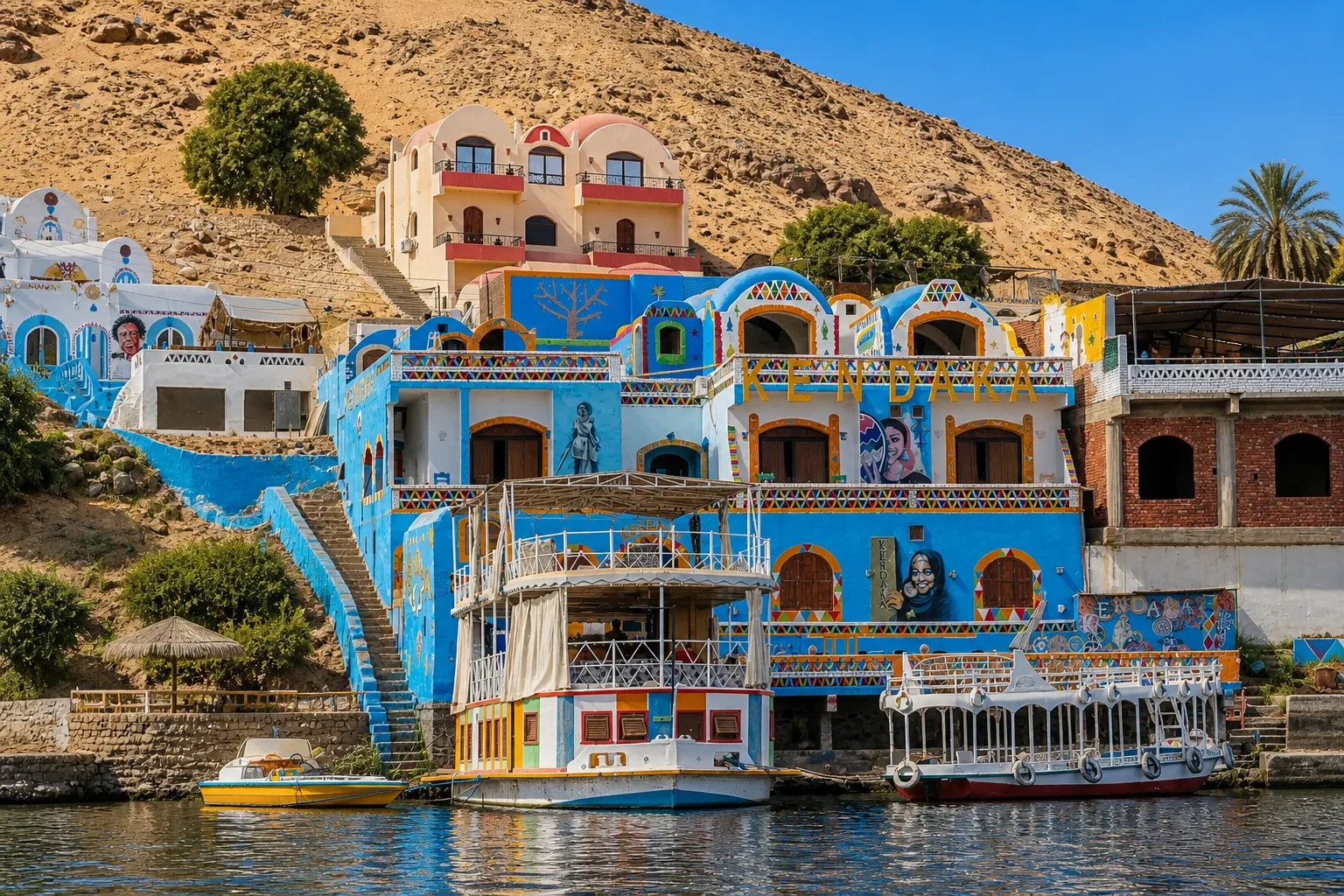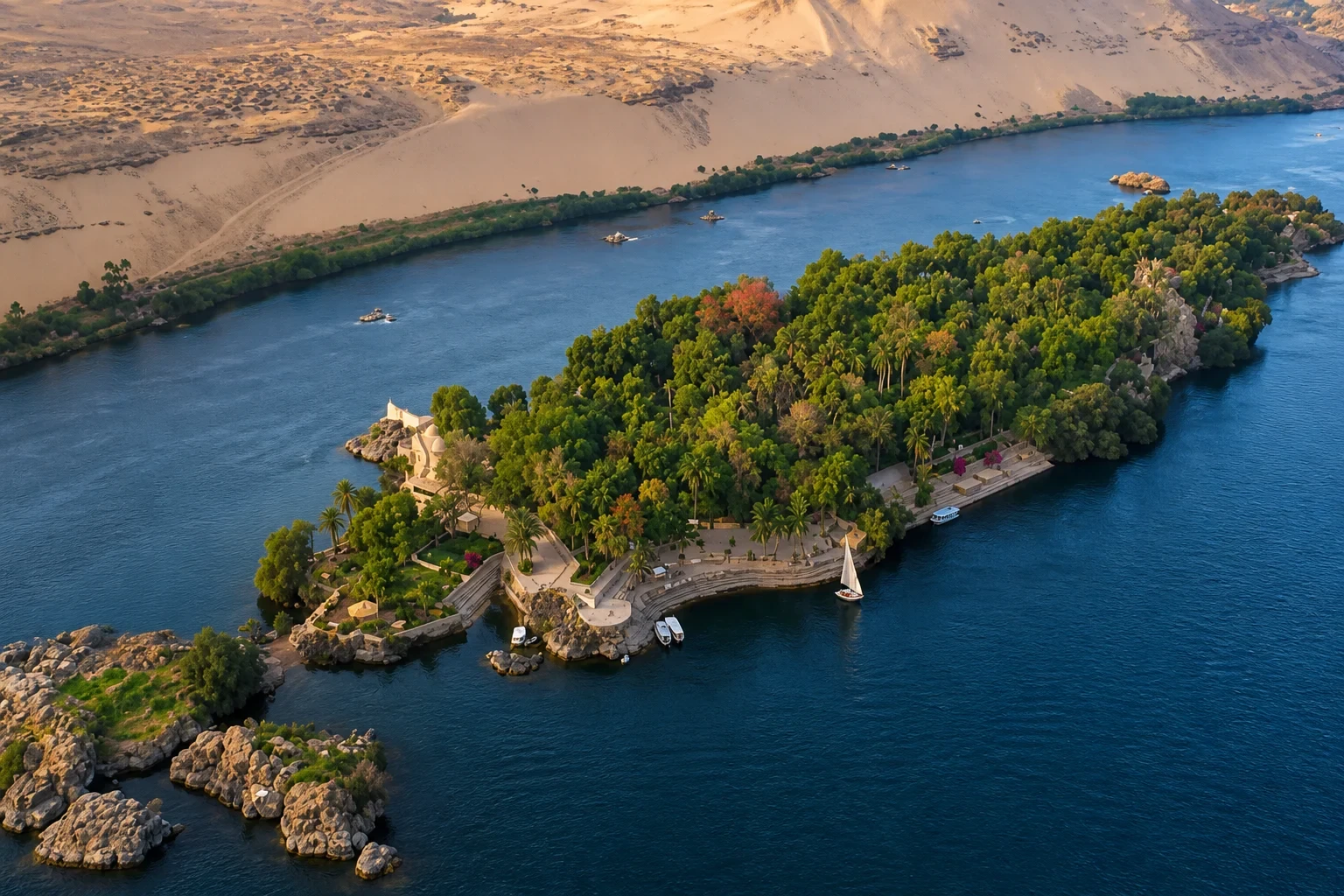


The Nubian Museum is the finest and most comprehensive museum in all of Aswan, one of the most beautifully designed and most intellectually rewarding museums in Egypt, and an absolutely essential destination for every traveler who wishes to understand the full depth and richness of the ancient and living Nubian civilization that gave the First Cataract region its extraordinary historical significance. Located on a hillside overlooking the Nile in the southern part of the modern city of Aswan, the Nubian Museum was inaugurated in 1997 after more than two decades of planning and construction, and was designed by the Egyptian architect Mahmoud El-Hakim in a building that combines modern architectural ambition with the traditional aesthetics of the Nubian cultural landscape in one of the most beautifully realized museum buildings in the Middle East. This extraordinary institution sits at the heart of some of Egypt's most culturally rich travel experiences, including Aswan Day Tours, Nubian Museum Tours, Dahabiya Nile River Cruises, Luxor Aswan Nile River Cruises, and Lake Nasser Cruises, all of which WOW Egypt Tours proudly offers to travelers from around the world. The Nubian Museum is also a highlight of Egypt Tours Packages and Egypt Travel Packages, making it one of the most intellectually enriching and most emotionally resonant cultural institutions available to visitors in all of Aswan.
The Nubian Museum Egypt is the primary museum dedicated to the history, culture, and artistic achievements of the Nubian people and the Nubian civilization of the Upper Nile Valley, covering the complete chronological range from the earliest prehistoric human occupation of the region through the extraordinary ancient Nubian kingdoms of Kerma, Kush, Napata, and Meroe, through the Christianization and subsequent Islamization of Nubia, to the catastrophic displacement caused by the construction of the Aswan High Dam and the creation of Lake Nasser, and the living Nubian culture that visitors encounter today in the Nubian Villages of the Aswan area. The museum collection, spanning this vast chronological and cultural range in a building of exceptional architectural quality, provides the essential intellectual framework for understanding everything else that visitors see and experience in the Aswan area, from the ancient temples of Elephantine Island and the monuments of Lake Nasser to the living Nubian communities of the First Cataract. Visiting the Nubian Museum is not simply a museum visit; it is the acquisition of the entire cultural vocabulary necessary to make the Aswan experience fully comprehensible and fully meaningful.

Who Created The Nubian Museum?
The Nubian Museum was created by the Egyptian government in partnership with UNESCO as part of the broader international effort to acknowledge and preserve the cultural heritage of the Nubian people following the catastrophic displacement caused by the construction of the Aswan High Dam and the creation of Lake Nasser in the 1960s and 1970s. The museum was inaugurated on 23 February 1997 by Egyptian President Hosni Mubarak and UNESCO Director-General Federico Mayor, in a ceremony that recognized the institution as both a scientific and cultural achievement and as a monument to the Nubian community's extraordinary cultural survival in the face of the most complete displacement of a traditional homeland in the modern history of the Nile Valley.
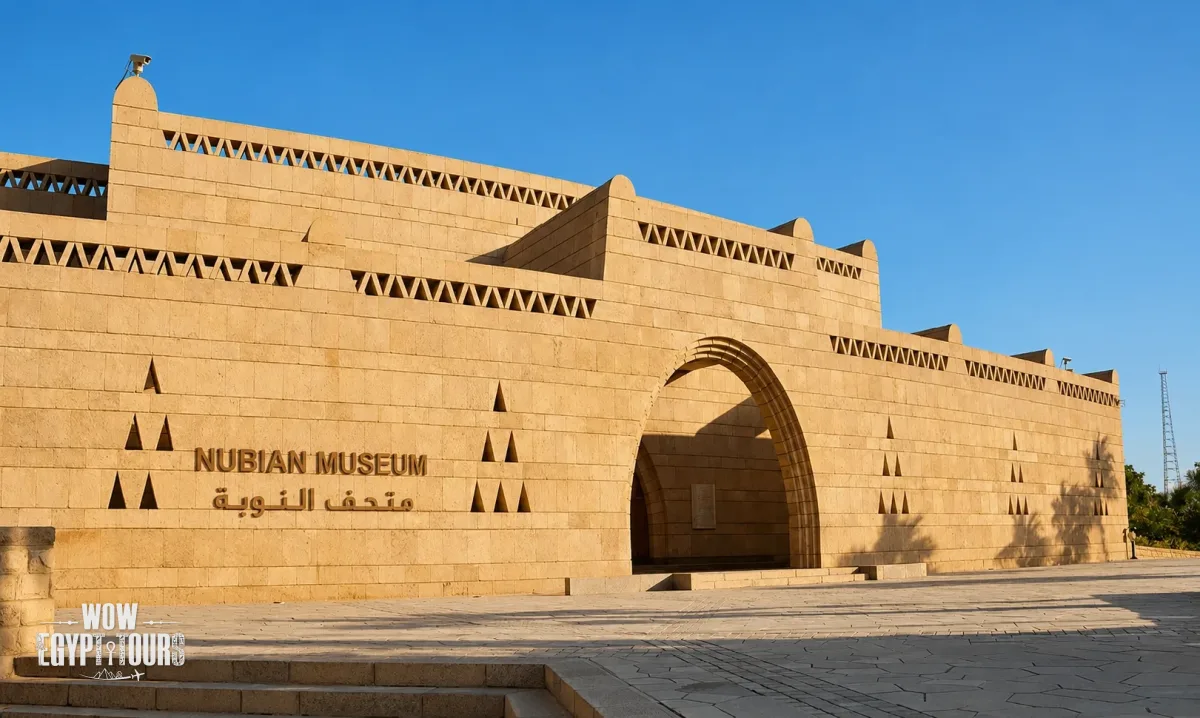
The building was designed by the Egyptian architect Mahmoud El-Hakim, who drew on the architectural traditions of the ancient Nubian building culture, particularly the characteristic use of mud-brick construction, arched rooflines, and integrated landscape design, to create a museum building that is simultaneously modern in its technical achievement and deeply rooted in the visual traditions of the region it celebrates. The construction took more than two decades from initial planning to completion, and the result is widely regarded as one of the finest museum buildings in the Middle East, a structure that enhances rather than overwhelms the spectacular natural landscape of the Aswan hillside on which it is built, with terraced gardens incorporating rock formations, a pool, and traditional Nubian architectural elements that blend seamlessly with the natural granite landscape of the First Cataract.
What Is The Nubian Museum About?
The Nubian Museum is dedicated to the complete cultural, historical, and artistic heritage of the Nubian people and the Nubian civilization of the Upper Nile Valley from the earliest periods of human occupation through the present day. The museum's intellectual scope is extraordinary, covering more than seven thousand years of continuous human culture in the Nile Valley south of Aswan, from the earliest Paleolithic and Neolithic communities whose stone tools and pottery are preserved in the earliest gallery of the museum, through the great Nubian kingdoms of antiquity that at various periods rivaled and even surpassed the power of the Egyptian state, through the Christian and Islamic periods that transformed Nubian religious and social life while leaving its underlying cultural identity intact, to the 20th century tragedy of the Lake Nasser displacement and the living Nubian culture that has survived and revived in its wake.
The museum presents the Nubian story not as a footnote to Egyptian history but as a civilization in its own right, with its own artistic traditions, its own architectural achievements, its own royal dynasties, its own religious innovations, and its own extraordinarily rich material culture, that must be understood on its own terms rather than always in relation to the more familiar ancient Egyptian civilization to the north. This intellectual reframing, which the museum accomplishes through the quality and comprehensiveness of its displays, is one of its most important educational achievements, correcting the systematic underrepresentation of Nubian civilization in the mainstream narrative of ancient world history and giving visitors the tools to appreciate the full significance of the Nubian heritage landscape that surrounds them in the Aswan area.
Nubian Museum Location In Egypt
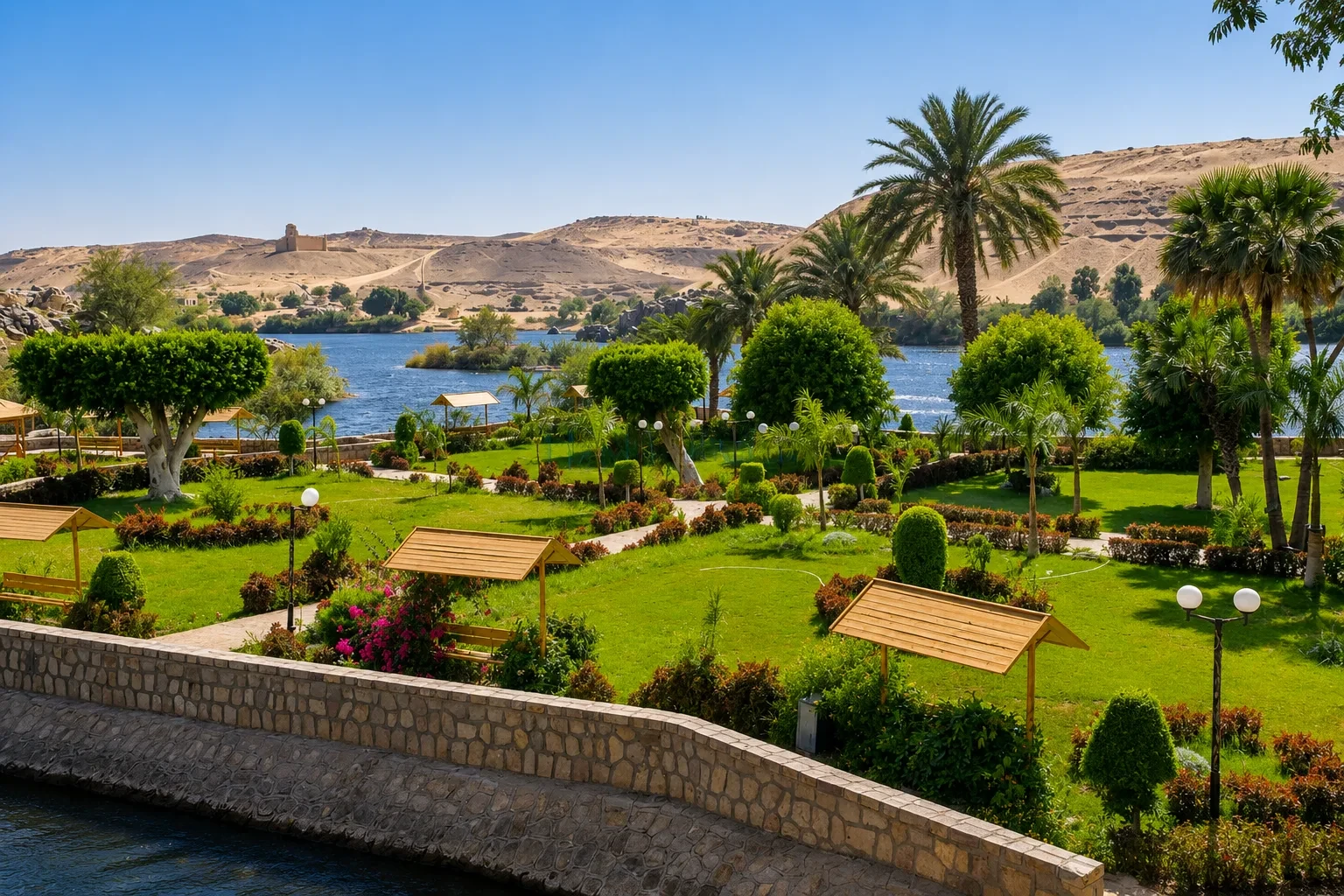
The Nubian Museum is located in the southern part of the modern city of Aswan, on a hillside overlooking the Nile River near the Basma Hotel, approximately 1.5 kilometers south of the Aswan city center and Corniche waterfront. The museum building is set within a beautifully landscaped garden of approximately 50,000 square meters that incorporates natural granite rock formations from the First Cataract landscape, a reflecting pool, traditional Nubian architectural elements, and plantings that reference the botanical heritage of the Nubian Nile Valley. The hillside position of the museum gives it spectacular views across the Nile to the west bank desert and the Nubian Village communities opposite, making the garden and its viewpoints an important part of the Nubian Museum experience in addition to the interior galleries. WOW Egypt Tours provides private air-conditioned transportation directly from Aswan hotels to the Nubian Museum on all Aswan Day Tours, Egypt Tours Packages, and Nile River Cruise programmes that include the museum.
Nubian Museum Fun Facts
The Nubian Museum won the Aga Khan Award for Architecture in 2001, one of the most prestigious international awards for architectural achievement in the Islamic world, in recognition of the exceptional quality of the building's design and its successful integration of contemporary architectural practice with the traditional aesthetics of the Nubian cultural landscape. The award specifically recognized the building's sensitive response to its natural setting, its incorporation of traditional Nubian architectural elements, and its success in creating a museum environment that genuinely reflects and honors the culture it displays rather than imposing an alien architectural identity on a sensitive cultural heritage context.
The museum's outdoor garden contains a remarkable open-air display of ancient Nubian architectural elements and sculptures, including a full-scale reconstruction of a traditional Nubian house that allows visitors to experience the scale, the spatial organization, and the material qualities of the traditional domestic architecture that the museum's gallery displays document in artifact form. The garden also incorporates several relocated ancient monuments from the Aswan region, including inscribed rock surfaces and smaller sculptural elements, that extend the museum's collection into the landscape and create a seamless transition between the interior gallery displays and the natural and cultural landscape of the surrounding Aswan area.
The Nubian Museum collection includes more than three thousand artifacts, spanning the complete chronological range from Paleolithic stone tools of the earliest human occupation of the Nubian Nile Valley to traditional craft objects, photographs, and documents from the living Nubian community of the 20th and 21st centuries. The collection was assembled partly from the finds of the UNESCO International Campaign rescue excavations in the area that would be submerged by Lake Nasser, partly from earlier excavations at Nubian sites, and partly from donations and acquisitions representing the living material culture of the Nubian community in Aswan and throughout Egypt.
Why Is The Nubian Museum Called By This Name In Egypt?
The Nubian Museum takes its name directly from the people and the civilization it celebrates: the Nubian people, the indigenous inhabitants of the Nile Valley south of Aswan whose ancient name derives from the ancient Egyptian word Nub, meaning gold, and whose cultural heritage the museum was specifically created to document, preserve, and present to international and Egyptian audiences. The name was carefully chosen to emphasize that the museum is about a specific people and their civilization, not merely about a geographic region or an archaeological period, and to assert the cultural identity and historical significance of the Nubian people in a way that the museum's predecessor institutions, which subsumed Nubian material within broader Egyptian antiquities collections, had consistently failed to do. The official Arabic name of the museum is Al-Mathaf Al-Nubi, simply The Nubian Museum, a direct translation that carries in Arabic all the same cultural assertion of Nubian identity and cultural pride that the English name conveys.
Nubian Museum History
The history of the Nubian Museum as an institution is inseparable from the history of the cultural displacement of the Nubian people and the international response to that displacement. The idea of a dedicated Nubian museum in Aswan was first proposed in the early 1970s, shortly after the completion of the Aswan High Dam and the resettlement of the Nubian community, when UNESCO and the Egyptian government recognized that the extraordinary collection of artifacts recovered during the rescue excavations of the Lake Nasser area needed a permanent and appropriate home, and that the Nubian cultural heritage more broadly needed an institution that would document and celebrate it in ways that mainstream Egyptian antiquities museums had never done.
The planning and design process for the museum occupied much of the 1970s and 1980s, with the Egyptian architect Mahmoud El-Hakim developing the building design through an extended period of research into Nubian architectural traditions and landscape contexts that informed every aspect of the final design. Construction of the museum building and its surrounding gardens began in the early 1990s and was completed in 1997, with the inauguration ceremony attended by President Mubarak and the UNESCO Director-General marking the formal opening of the institution to the public. The museum's recognition with the Aga Khan Award for Architecture in 2001 confirmed its status as one of the finest cultural buildings constructed in Egypt in the modern era and established its reputation as an international model for culturally sensitive museum design in heritage contexts.
The Story Of The Nubian Museum And Cultural Justice
The story of the Nubian Museum is ultimately a story of cultural justice, of a community that lost its homeland and used the process of cultural documentation and museum creation to assert the value, the depth, and the continuing vitality of the civilization that the waters of Lake Nasser had submerged. For the Nubian people displaced by the construction of the Aswan High Dam, the loss of their homeland was not simply a physical displacement but a profound cultural rupture that threatened the continuity of a civilization stretching back thousands of years. The creation of the Nubian Museum was one of the primary institutional responses to this rupture, an attempt to use the tools of modern museum practice to preserve the memory, the material culture, and the historical narrative of a civilization whose living context had been literally drowned.
The museum achieves this goal with extraordinary success, presenting the Nubian story from the very beginning of human occupation of the region to the present day in a narrative that is comprehensive, scholarly, visually beautiful, and above all honest about the disruption caused by the dam and the displacement. The gallery dedicated to the Lake Nasser displacement and its consequences is one of the most moving sections of the museum, using photographs, documents, personal objects, and testimony to convey the human reality of the relocation in a way that gives the physical and geological facts of the dam and the lake a profound human dimension. For visitors who have already seen the Aswan High Dam, the museum provides the essential counternarrative, the story of what was lost when the waters rose, that makes the engineering achievement of the dam comprehensible in its full human and cultural complexity.
Nubian Museum Architecture And Key Features
The Building And Its Design
The Nubian Museum building is one of the most beautifully designed and most architecturally significant museum buildings in the Middle East, winner of the Aga Khan Award for Architecture in 2001 and widely regarded as a masterwork of culturally sensitive contemporary design. The building was designed by Egyptian architect Mahmoud El-Hakim to respond to both the natural landscape of the Aswan hillside and the traditional architectural aesthetics of the Nubian culture it houses, using the characteristic forms of Nubian mud-brick architecture including arched rooflines, thick walls, small decorative windows, and integrated courtyard spaces in a building that is simultaneously modern in its technical execution and deeply traditional in its visual character. The building's exterior surfaces are finished in materials and textures that reference the desert granite landscape of the First Cataract, creating a seamless visual transition between the museum and its natural setting that is one of the most impressive achievements of the design. The interior spaces are organized around a dramatic central hall that rises the full height of the building, with the major galleries arranged on multiple levels around this central volume and connected by ramps and staircases that allow visitors to experience the collections in a continuous flowing circulation that follows the chronological narrative of Nubian history from the prehistoric galleries on the upper level down to the modern Nubian culture displays near the entrance.
The Prehistoric And Predynastic Gallery
The museum's chronological narrative begins with the prehistoric and Predynastic gallery, which presents the evidence for human occupation of the Nubian Nile Valley from the Paleolithic period onwards, using stone tools, pottery, rock art reproductions, and early skeletal remains to document the earliest human communities of the First Cataract region. This gallery establishes the extraordinary time depth of human presence in the Nubian landscape, demonstrating that the First Cataract has been a center of human life and cultural development for hundreds of thousands of years, long before the first pharaohs united Egypt to the north. The early Nubian pottery displayed in this gallery, with its characteristic black-topped red ware and its incised geometric decoration, is among the earliest and most technically accomplished ceramic tradition in the Nile Valley, preceding the development of the characteristic pharaonic pottery tradition and providing important evidence for the independent cultural development of the Nubian region in the prehistoric period.
The Ancient Nubian Kingdoms Gallery
The heart of the Nubian Museum collection is the gallery devoted to the great ancient Nubian kingdoms, the civilizations of Kerma, Kush, Napata, and Meroe that at various periods between approximately 2500 BCE and 400 CE rivaled and in some respects surpassed the achievements of ancient Egypt to the north. The Kerma culture of approximately 2500 to 1500 BCE is represented by remarkable pottery and personal ornaments of extraordinary technical refinement, demonstrating the sophisticated artistic traditions of early Nubian civilization at a level that challenges the common assumption of Egyptian cultural superiority. The New Kingdom Egyptian colonial period in Nubia from approximately 1550 to 1070 BCE is represented by temple reliefs, administrative documents, and material culture showing the complex interaction of Egyptian and Nubian cultural traditions during the colonial period. The great Napatan and Meroitic kingdoms of the 1st millennium BCE and early Common Era are represented by some of the museum's finest objects, including royal sculpture, jewelry of extraordinary refinement, and the remarkable collection of objects associated with the Nubian royal burial traditions at Meroe and Nuri that demonstrate the synthesis of Egyptian and African artistic traditions in the art of the later Nubian kingdoms.
The Statue Of Taharqa
Among the most important and most impressive individual objects in the Nubian Museum collection is a remarkable statue of the Nubian pharaoh Taharqa, the most celebrated ruler of the 25th Dynasty of Egypt, which stands as the centerpiece of the ancient Nubian kingdoms gallery and as the most powerful single image in the museum of the Nubian achievement of supreme political power over the Egyptian state. Taharqa ruled all of Egypt from approximately 690 to 664 BCE as the most powerful pharaoh of the 25th Dynasty, a period when Nubian rulers controlled the wealthiest and most powerful state in the ancient world. The Nubian Museum statue of Taharqa captures the specific physiognomy of Nubian royal portraiture, with the characteristic broad face, full lips, and double uraeus headdress that distinguishes the sculpture of the 25th Dynasty from the earlier Egyptian royal tradition, and stands as one of the most compelling images of the Nubian contribution to the shared civilization of the ancient Nile Valley.
The Christian And Islamic Period Gallery
The section of the museum covering the Christianization and subsequent Islamization of Nubia presents one of the most complex and least familiar chapters in the Nubian cultural narrative, documenting the transformation of a society from the ancient polytheistic tradition of Nubian religion through a Christian period of several centuries, during which a network of Nubian Christian kingdoms maintained their independence and their distinctive artistic tradition, to the gradual conversion to Islam that was completed by approximately the 15th century CE. The Christian period objects in the museum, including beautifully painted wall fragments from Nubian churches, decorated liturgical vessels, and religious manuscripts, demonstrate the distinctive Nubian synthesis of Byzantine Christian artistic traditions with indigenous Nubian visual conventions, creating a body of Christian art that is unlike anything produced in Egypt to the north or in the Coptic tradition and that deserves much wider recognition as one of the most significant African Christian artistic traditions of the early medieval period. The Islamic period objects, spanning from the 15th century to the early 20th century, show the gradual integration of Nubian community life into the broader Islamic world while maintaining the distinctive Nubian material culture, architectural tradition, and community organization that continued to define Nubian identity through the Ottoman period and into the modern era.
The Lake Nasser Displacement Gallery
The most historically immediate and most emotionally affecting section of the Nubian Museum is the gallery devoted to the construction of the Aswan High Dam, the creation of Lake Nasser, and the displacement of the Nubian community from its traditional homeland. This gallery uses photographs, maps, documentary films, personal objects, and the voices of Nubian community members to convey the human reality of one of the most complete cultural displacements of the 20th century, a story that is known to archaeologists and historians through the UNESCO rescue campaign but that is rarely told from the perspective of the Nubian community itself. The photographs of the drowned villages, the accounts of the relocation process, the objects brought from the submerged homes as the only surviving material connection with the lost landscape, and the documentation of the resettlement process and its consequences together constitute one of the most moving and most historically important gallery displays in any museum in Egypt. Visitors who have already seen the Aswan High Dam and understood its engineering dimensions find in this gallery the human counterpart that gives the technical achievement its full and sobering context.
The Living Nubian Culture Gallery
The final section of the museum's chronological narrative is devoted to the living Nubian culture of today, presented through traditional crafts, textiles, jewelry, musical instruments, domestic objects, and photographic documentation of the Nubian community life in the Aswan area and throughout Egypt. This gallery provides the bridge between the ancient civilizations documented in the earlier galleries and the living communities that visitors encounter in the Nubian Villages around Aswan, demonstrating the continuity of Nubian cultural identity across more than seven thousand years of documented history and the creative resilience with which the Nubian community has maintained its distinctive traditions in the face of displacement, assimilation pressure, and cultural change. The traditional Nubian craft objects displayed in this gallery, particularly the embroidered textiles and painted pottery, are directly comparable to items available for purchase in the Nubian Village craft shops, giving museum visitors the cultural vocabulary to appreciate what they see and buy in the living community visit that typically follows the museum programme.
The Outdoor Garden And Open-Air Displays
The museum's garden is an integral part of the Nubian Museum experience, a landscaped hillside of approximately 50,000 square meters that incorporates natural granite rock formations from the First Cataract landscape, a reflecting pool, traditional Nubian architectural elements including a full-scale reconstruction of a traditional Nubian house, relocated ancient monuments from the Aswan region, and plantings that reference the botanical heritage of the Nubian Nile Valley. The garden provides spectacular views across the Nile to the west bank desert and the Nubian Village communities on the opposite shore, creating a direct visual connection between the museum's historical narrative and the living landscape of contemporary Nubian Aswan. The full-scale Nubian house reconstruction in the garden is one of the most immediately accessible and most practically informative elements of the entire museum experience, allowing visitors to step inside a traditional Nubian domestic space and experience directly the scale, the organization, and the material qualities of the architectural tradition that the interior galleries document in artifact form. Walking through the museum garden before or after visiting the interior galleries extends the museum experience into the natural landscape of the First Cataract and provides one of the most panoramic and most beautiful views available anywhere in Aswan.
Why Is The Nubian Museum Important?
The Nubian Museum is important for reasons that span cultural justice, historical scholarship, and practical tourism experience. Culturally, it is the primary institution dedicated to asserting and documenting the significance of the Nubian civilization in the broader narrative of African and world history, correcting the systematic underrepresentation of Nubian cultural achievements in the mainstream historical record and giving the Nubian community the international platform and the scholarly validation that its extraordinary five-thousand-year cultural tradition deserves. Historically, it houses the most comprehensive and best-presented collection of Nubian artifacts in existence, providing scholars, students, and visitors with the most complete available introduction to the archaeology, art, and cultural history of the Nubian Nile Valley from the prehistoric period through the present day.
For practical tourism experience, the Nubian Museum provides the essential cultural preparation for the entire Aswan heritage experience, giving visitors the historical context and the cultural vocabulary that make the ancient monuments of Elephantine Island, the Nilometer, the rescued temples of Lake Nasser, and the living Nubian community visits fully comprehensible and fully meaningful rather than isolated spectacles without narrative connection. WOW Egypt Tours includes the Nubian Museum as a strongly recommended visit on extended Aswan Day Tours, Nile River Cruise overnight programmes, and Lake Nasser Cruise embarkation and disembarkation day programmes, recognizing it as the single institution that most completely contextualizes every other Aswan and Lake Nasser heritage experience.
What Are Some Interesting Facts About The Nubian Museum?
An Aga Khan Award Winner
The Nubian Museum's receipt of the Aga Khan Award for Architecture in 2001 placed it in the company of the most celebrated contemporary buildings in the Islamic world and confirmed the exceptional achievement of its architect Mahmoud El-Hakim in creating a museum that is both technically sophisticated and culturally appropriate to its subject and its setting. The Aga Khan Award, which has been given every three years since 1977 to buildings that successfully address the needs and aspirations of Muslim communities, specifically recognized the Nubian Museum for its sensitive response to the cultural traditions and the natural landscape of the Aswan region, its successful integration of traditional Nubian architectural forms with modern construction technology, and its achievement as a cultural institution in presenting and celebrating the Nubian heritage at the highest international scholarly and curatorial standards. The award brought the museum to the attention of the international architectural and cultural heritage community and established its reputation as a model for culturally sensitive museum design in heritage contexts throughout the Islamic world and beyond.
The Museum As Reparation
One of the most historically significant aspects of the Nubian Museum is its explicit acknowledgment of the cultural debt that the Egyptian state owed to the Nubian community following the displacement caused by the Aswan High Dam. The UNESCO partnership in the museum's creation, and the specific dedication of its most affecting gallery to the documentation of the displacement itself, make the Nubian Museum one of the rare instances in which a museum institution directly confronts the historical injustice that necessitated its own existence. By presenting the story of the Lake Nasser displacement honestly and from the perspective of the displaced community, the museum performs a function of cultural reparation that goes beyond the scholarly and curatorial functions of conventional museum practice, acknowledging that the Nubian community's cultural heritage was endangered by the actions of the state and that the state has an obligation to support its preservation and recognition. This dimension of cultural reparation gives the Nubian Museum a moral authority and an emotional resonance that few other museums in the world can claim.
Seven Thousand Years In A Single Visit
The Nubian Museum's chronological span of more than seven thousand years, from the earliest Paleolithic occupation of the First Cataract region to the living Nubian culture of the 21st century, makes it one of the most temporally comprehensive museums in the world for a single regional cultural tradition. No other museum in Egypt, and very few in the world, presents the complete cultural history of a single people and place across such an extraordinary timespan, from the earliest stone tools of hunter-gatherers in the African savanna through the pyramids of the Meroitic kings to the embroidered textiles of the 20th century Nubian village women. This temporal comprehensiveness gives the Nubian Museum a depth and a coherence of cultural narrative that is genuinely unusual in the museum world, and that makes a visit to its galleries one of the most intellectually satisfying and most humanly complete museum experiences available anywhere in Upper Egypt.
What Is So Special About The Nubian Museum?
The Museum That Makes Everything Else Make Sense
What makes the Nubian Museum uniquely special among all the cultural institutions and heritage sites of the Aswan area is the function it performs as the interpretive key to the entire Aswan and Lake Nasser heritage experience. Visitors who see the Philae Temple, the ancient monuments of Elephantine Island, the Nubian Villages, and the Lake Nasser temples without first visiting the Nubian Museum encounter extraordinary things whose significance they can appreciate only partially, because they lack the cultural framework that connects these separate experiences into a coherent narrative of one of the world's most ancient and most enduring civilizations. Visitors who see these same things after visiting the Nubian Museum encounter them as chapters in a story they already know, recognizing in each monument, each craft object, and each community tradition the specific cultural context that the museum has given them, and finding in the combination of museum knowledge and direct heritage experience one of the most complete and most satisfying cultural encounters available anywhere in the heritage world.
A Museum That Tells The Full Story
The Nubian Museum is also uniquely special for its willingness to tell the full story of Nubian civilization, including the difficult chapters that most institutional narratives prefer to omit. The honest presentation of the Lake Nasser displacement and its human consequences, the acknowledgment of the state's responsibility for the cultural rupture it imposed on the Nubian community, and the recognition of the Nubian community's ongoing struggle for cultural recognition and the right of return together give the Nubian Museum a moral seriousness and a political honesty that is rare in any museum context. A visit to the Nubian Museum is therefore not simply a pleasant heritage experience but an encounter with one of the most important and most unresolved stories in the modern history of the Nile Valley, a story whose final chapter has not yet been written and whose resolution will determine the cultural future of one of the oldest civilizations on earth.
Nubian Museum Through The Ages: From Opening To The Present
Since its inauguration in 1997, the Nubian Museum has established itself as one of the most important cultural institutions in Upper Egypt and as a primary destination for international visitors to Aswan who seek to go beyond the standard monument circuit and engage with the deeper cultural and historical dimensions of the First Cataract region. The museum's receipt of the Aga Khan Award for Architecture in 2001 brought it to international attention and significantly enhanced both its scholarly reputation and its profile in the international cultural tourism market. In the two decades following its opening, the museum has become an essential component of the heritage circuit for serious travelers to Aswan, recognized by Egyptologists, archaeologists, cultural heritage specialists, and heritage tourism professionals as the single institution in the Aswan area that most completely addresses the full complexity and the full significance of the regional cultural heritage.
The museum has also played an increasingly important role in the political and cultural advocacy of the Nubian community, serving as a visible and internationally recognized institutional assertion of the cultural significance and the historical depth of the Nubian heritage at a time when the Nubian community continues to advocate for formal recognition of its right to return to the Lake Nasser shores and to rebuild community life in its traditional homeland. The museum's ongoing educational and outreach programmes for Nubian community members, particularly for young people who grew up in the resettlement communities and the urban diaspora without direct experience of the traditional homeland, represent one of the most practically important cultural functions of the institution, helping to maintain and transmit the knowledge, the skills, and the cultural identity that the museum's collections document and celebrate. Today the Nubian Museum continues to receive tens of thousands of visitors per year from Egypt and from around the world, and remains one of the most rewarding and most intellectually stimulating cultural institutions available to any traveler in the Aswan area.
Nubian Museum UNESCO Recognition
The Nubian Museum was created in partnership with UNESCO and its establishment was one of the outcomes of the broader UNESCO engagement with Nubian cultural heritage that began with the International Campaign to Save the Monuments of Nubia in the 1960s and continued through the creation of the Nubian Monuments from Abu Simbel to Philae UNESCO World Heritage Site in 1979. The museum's founding partnership with UNESCO gave it from its inception an international scholarly credibility and an institutional status that has been important both for its own curatorial development and for its role in the broader international advocacy for Nubian cultural recognition. The museum's collection includes significant artifacts from the UNESCO-funded rescue excavations in the Lake Nasser area, making it in a literal sense the institutional repository of the scientific knowledge generated by one of the most ambitious international heritage rescue operations in history. The UNESCO partnership is recognized in the museum's founding documents and in its institutional identity, and the relationship between the museum and UNESCO continues through ongoing collaborative programmes in documentation, education, and cultural heritage advocacy.
Best Time To Visit The Nubian Museum
The best time to visit the Nubian Museum is during the cooler months from October through April, when temperatures in the Aswan area are moderate and the combination of the interior gallery visit with the outdoor garden experience is comfortable throughout the day. Because the museum interior is fully air-conditioned, it is actually one of the most comfortable heritage destinations to visit in Aswan during the summer months, providing a cool and intellectually engaging respite from the intense heat of the outdoor sites. A summer visit to the Nubian Museum, combined with a morning or early morning visit to the outdoor sites when the heat is most manageable, can be an extremely efficient way to organize the Aswan heritage experience during the hot season. The museum is open throughout the year and is one of the few Aswan heritage destinations that can be visited with complete physical comfort in any season. WOW Egypt Tours plans all Nubian Museum visits at the optimal time of day for the season and the specific Aswan day programme.
Nubian Museum Opening Hours
The Nubian Museum is open to visitors every day of the week, including public holidays. The museum opens at 9:00 AM and closes at 5:00 PM throughout the year, with all galleries and the outdoor garden accessible during these hours. The museum is air-conditioned throughout the interior and is therefore equally comfortable to visit at any time of day regardless of the outside temperature. The most peaceful time to visit is in the morning from 9:00 AM to 11:00 AM before the main tour groups arrive, which allows the most contemplative and most rewarding engagement with the collection. The outdoor garden is most beautiful in the late afternoon when the warm light of the setting sun illuminates the natural granite landscape and the views across the Nile to the west bank take on a golden quality of exceptional beauty.
Nubian Museum Entrance Fees
Adults: EGP 400
Students: EGP 200
The entrance fee covers access to the complete museum including all interior galleries and the outdoor garden with its open-air displays, the full-scale Nubian house reconstruction, and the relocated ancient monuments. Photography inside the museum galleries may require a separate camera ticket; confirm at the ticket desk. Entrance fees to the Nubian Museum are included in all Aswan Day Tours, Egypt Tours Packages, Nile River Cruise itineraries, and Lake Nasser Cruise programmes that include the museum, booked through WOW Egypt Tours.
How To Get To The Nubian Museum
The Nubian Museum is located in the southern part of the modern city of Aswan, approximately 1.5 kilometers south of the city center and Corniche waterfront, near the Basma Hotel. From the Aswan city center, the museum is reached by private vehicle in approximately 10 minutes. The museum is well signposted within the city and has a dedicated entrance road, parking area, and clearly marked visitor facilities. All Aswan Day Tours, Egypt Tours Packages, Nile River Cruise shore excursion programmes, and Lake Nasser Cruise embarkation and disembarkation day programmes booked through WOW Egypt Tours include private air-conditioned transportation directly to and from the Nubian Museum as part of the Aswan programme.
How Long To Spend At The Nubian Museum
Most visitors spend between one and two hours at the Nubian Museum, which is sufficient time to walk through all the main interior galleries following the chronological narrative from the prehistoric gallery through the ancient Nubian kingdoms, the Christian and Islamic periods, the Lake Nasser displacement, and the living Nubian culture displays, and to spend some time in the outdoor garden with the full-scale Nubian house reconstruction and the Nile viewpoints. Visitors with a particular interest in ancient Nubian history, the Meroitic kingdom, the Christian Nubian art tradition, or the museum's architectural achievement may wish to allow two to two and a half hours. The Nubian Museum is most effectively visited at the beginning of any extended Aswan programme, as the cultural preparation it provides significantly enhances the subsequent experience of every other Aswan and Lake Nasser heritage site. It is naturally combined on the same day with the Nubian Village, the Temple of Isis at Philae, and the other major Aswan attractions for the most complete single-day Aswan heritage experience.
Tips For Visiting The Nubian Museum
Visit the Nubian Museum at the beginning of your Aswan programme rather than at the end, as the cultural context it provides will significantly enhance your understanding and appreciation of every other site you visit in the Aswan area and on any Lake Nasser itinerary. Allow yourself to spend time in the Lake Nasser displacement gallery even if the subject matter is challenging, as the honest and moving presentation of the human consequences of the dam's construction is one of the most important and most rarely encountered museum experiences in Egypt, providing the essential counternarrative to the engineering achievement visible at the dam viewpoint. Do not miss the outdoor garden and the full-scale Nubian house reconstruction, as these outdoor elements of the museum experience provide a physical and spatial understanding of Nubian domestic culture that the interior galleries can only approach through objects and photographs. A licensed guide from WOW Egypt Tours who is knowledgeable about both Nubian history and the museum's specific collection is strongly recommended: the connections between individual objects and the broader narrative of Nubian civilization, the significance of specific artistic and architectural traditions, and the historical context of the displacement gallery all greatly benefit from expert explanation. The museum shop offers some of the finest Nubia-related publications and high-quality reproduction craft items available in the Aswan area and is worth a visit after the gallery tour.
What To Wear At The Nubian Museum
The Nubian Museum is a fully air-conditioned indoor museum with an outdoor garden component. The interior galleries are cool and comfortable regardless of the outside temperature, making the museum one of the most physically comfortable heritage destinations in Aswan at any time of year. Lightweight, breathable clothing covering the shoulders and knees is appropriate for the museum visit as a mark of respect for the cultural institution. A light additional layer is recommended for summer visits as the air conditioning in the museum can be quite cool, particularly for visitors coming in from the intense summer heat outside. Comfortable, flat walking shoes are adequate for the smooth floors of the museum galleries and the garden paths. A wide-brimmed hat and sunscreen are useful for the outdoor garden portion of the visit, particularly in summer.
Photography At The Nubian Museum
Photography in the Nubian Museum's interior galleries may require a separate camera permit available at the ticket desk in addition to the standard entrance ticket. Flash photography is strictly prohibited near all ancient artifacts, textiles, and fragile materials, as the intense light causes irreversible damage to ancient pigments and organic materials. Photography of the museum building's exterior, the outdoor garden, the full-scale Nubian house reconstruction, and the Nile views from the garden terrace is permitted with no restrictions and produces some of the most architecturally rewarding photographs available in Aswan. The late afternoon light on the museum's exterior surfaces and on the garden's granite landscape elements is particularly beautiful. Professional photography or filming with specialized equipment requires a separate permit from the museum administration.
Nubian Museum Tours
Single Attraction Visit: Nubian Museum Tour From Aswan
This dedicated tour visits the Nubian Museum as a standalone cultural and educational excursion from Aswan, suitable for travelers with a particular interest in Nubian history, ancient African civilizations, the history of the Lake Nasser displacement, or the architectural achievement of the museum building itself.
What Is Covered
Full guided visit of the Nubian Museum including all interior galleries from the prehistoric collection through the ancient Nubian kingdoms, the Taharqa statue, the Christian and Islamic period materials, the Lake Nasser displacement gallery, and the living Nubian culture displays. Walk through the outdoor garden including the full-scale Nubian house reconstruction, the relocated ancient monuments, the reflecting pool, and the Nile viewpoints. Visit to the museum shop.
Duration
1 to 2 hours inside the museum and garden, plus approximately 10 minutes each way from the Aswan city center by private vehicle.
Includes
Private vehicle from Aswan hotel to the museum, licensed guide with expertise in Nubian history and culture, and entrance fees. Available for morning and afternoon departures.
Nubian Museum And Nubian Village Combined Cultural Tour
This full-day tour combines the Nubian Museum with a traditional Nubian Village visit, creating the most complete possible cultural encounter with the Nubian civilization as documented through museum scholarship and experienced through living community contact. Beginning with the museum provides the ideal intellectual preparation for the village visit, giving the visitor the cultural vocabulary and the historical context that transforms the village experience from a pleasant cultural excursion into a profound encounter with a five-thousand-year living tradition.
What Is Covered
Full guided visit of the Nubian Museum including all galleries and the outdoor garden. Motorboat transfer to a traditional Nubian Village on the west bank with a guided cultural visit including home hospitality, painted house exploration, craft market, and optional karkade tea ceremony.
Duration
Full day from Aswan, approximately 1.5 hours at the museum and 1 to 1.5 hours in the village.
Includes
Private air-conditioned transportation from Aswan hotel to the museum, motorboat transfer for the village visit, licensed guide with Nubian cultural expertise, and entrance fees. Available for morning departures.
Full Aswan Cultural Day: Nubian Museum, Nubian Village, And Philae Temple
This comprehensive full-day tour combines the Nubian Museum with the living cultural experience of the Nubian Village and the sacred beauty of the Temple of Isis at Philae, creating the most culturally complete and the most emotionally rich single-day Aswan experience available, moving from museum scholarship through living cultural encounter to ancient sacred architecture in a single coherent day that illuminates the full depth of the First Cataract heritage.
What Is Covered
Full guided visit of the Nubian Museum. Traditional Nubian Village visit with home hospitality and craft market. Motorboat transfer to Philae Island and full guided visit of the Temple of Isis at Philae including the outer colonnades, the main temple, the Kiosk of Trajan, and the birth house. Optional evening Sound and Light Show at Philae.
Duration
Full day from Aswan with appropriate time at each site.
Includes
Private air-conditioned transportation from Aswan hotel, motorboat transfers for all island and village visits, licensed guide, and entrance fees to all sites. Available for morning departures.
Dahabiya Nile River Cruise
A Dahabiya Nile River Cruise is a small-vessel sailing experience on the Nile between Luxor and Aswan aboard a traditional wooden dahabiya. WOW Egypt Tours operates dahabiya cruises with private cabins, all meals, a private licensed Egyptologist guide on board, and guided shore excursions at every stop. The Nubian Museum is available as an optional addition to all Dahabiya itineraries at the Aswan embarkation or disembarkation end of the journey, providing the most complete cultural preparation or conclusion for the complete Aswan and Nile Valley heritage experience.
4 Days 3 Nights Dahabiya Nile River Cruise From Aswan To Luxor
Route: Aswan to Luxor, sailing north.
Itinerary
Day 1: Embarkation in Aswan. Guided visits to Philae Temple, the Aswan High Dam, and the Unfinished Obelisk. Optional Nubian Museum visit. Sail north to Kom Ombo. Guided visit to Kom Ombo Temple and Crocodile Museum. Continue to Gebel el Silsila. Overnight on board.
Day 2: Guided visit to Gebel el Silsila. Sail to the Village of Basaw. Guided visit to Village of Basaw. Continue to Edfu. Guided visit to the Temple of Horus at Edfu. Overnight on board.
Day 3: Sail to El Kab. Guided visit to El Kab Tombs. Sail to El Hagaz Island. Swimming stop. Overnight on board.
Day 4: Sail to Esna. Visit Khnum Temple at Esna. Disembarkation in Esna. Transfer to Luxor, approximately 55 kilometers (35 miles).
Includes
Private cabin, all meals on board, private licensed Egyptologist guide, entrance fees to all site visits, and private transfers. Nubian Museum visit available as an optional addition on embarkation day.
5 Days 4 Nights Dahabiya Nile River Cruise From Luxor To Aswan
Route: Luxor to Aswan, sailing south.
Itinerary
Day 1: Embarkation in Luxor. Transfer to Esna, approximately 55 kilometers (35 miles). Visit Khnum Temple at Esna. Sail to El Hagaz Island. Overnight on board.
Day 2: Sail to El Kab. Guided visit to El Kab Tombs. Continue to Edfu. Guided visit to the Temple of Horus at Edfu. Sail to the Village of Basaw. Guided visit to Village of Basaw. Overnight on board.
Day 3: Sail to Gebel el Silsila. Guided visit to Gebel el Silsila. Sail south to Kom Ombo. Guided visit to Kom Ombo Temple and Crocodile Museum. Sail to Daraw Village. Overnight on board.
Day 4: Guided visit to Daraw Village. Sail to Herbiab Island. Swimming stop. Philae Sound and Light Show. Overnight on board.
Day 5: Guided visits to Philae Temple, the Aswan High Dam, and the Unfinished Obelisk. Nubian Museum visit. Disembarkation in Aswan.
Includes
Private cabin, all meals on board, private licensed Egyptologist guide, entrance fees to all site visits including the Nubian Museum, and private transfers.
8 Days 7 Nights Dahabiya Nile River Cruise Round Trip From Luxor (Via Aswan)
Route: Luxor and Aswan, sailing north and south.
Itinerary
Day 1: Embarkation in Luxor. Transfer to Esna, approximately 55 kilometers (35 miles). Visit Khnum Temple at Esna. Sail to El Hagaz Island. Overnight on board.
Day 2: Sail to El Kab. Continue to Edfu. Guided visit to the Temple of Horus at Edfu. Sail to the Village of Basaw. Guided visit to Village of Basaw. Overnight on board.
Day 3: Sail to Gebel el Silsila. Sail south to Kom Ombo. Guided visit to Kom Ombo Temple and Crocodile Museum. Sail to Daraw Village. Overnight on board.
Day 4: Guided visit to Daraw Village. Sail to Herbiab Island. Swimming stop. Philae Sound and Light Show. Overnight on board.
Day 5: Guided visits to Philae Temple, the Aswan High Dam, the Unfinished Obelisk, and Nubian Museum. Sail north to Kom Ombo. Continue to Gebel el Silsila. Overnight on board.
Day 6: Guided visit to Gebel el Silsila. Sail to the Village of Basaw. Continue to Edfu. Guided visit to the Temple of Horus at Edfu. Overnight on board.
Day 7: Sail to El Kab. Guided visit to El Kab Tombs. Sail to El Hagaz Island. Swimming stop. Overnight on board.
Day 8: Disembarkation in Esna. Transfer to Luxor, approximately 55 kilometers (35 miles).
Includes
Private cabin, all meals on board, private licensed Egyptologist guide, entrance fees to all site visits including the Nubian Museum, and private transfers.
8 Days 7 Nights Dahabiya Nile River Cruise Round Trip From Aswan (Via Luxor)
Route: Luxor and Aswan, sailing north and south.
Itinerary
Day 1: Embarkation in Aswan. Nubian Museum visit. Guided visits to Philae Temple, the Aswan High Dam, and the Unfinished Obelisk. Sail north to Kom Ombo. Guided visit to Kom Ombo Temple and Crocodile Museum. Continue to Gebel el Silsila. Overnight on board.
Day 2: Guided visit to Gebel el Silsila. Sail to the Village of Basaw. Continue to Edfu. Guided visit to the Temple of Horus at Edfu. Overnight on board.
Day 3: Sail to El Kab. Guided visit to El Kab Tombs. Sail to El Hagaz Island. Swimming stop. Overnight on board.
Day 4: Sail to Esna. Visit Khnum Temple at Esna. Sail to El Hagaz Island. Overnight on board.
Day 5: Sail to El Kab. Continue to Edfu. Guided visit to the Temple of Horus at Edfu. Sail to the Village of Basaw. Guided visit to Village of Basaw. Overnight on board.
Day 6: Sail to Gebel el Silsila. Sail south to Kom Ombo. Guided visit to Kom Ombo Temple and Crocodile Museum. Sail to Daraw Village. Overnight on board.
Day 7: Guided visit to Daraw Village. Sail to Herbiab Island. Swimming stop. Philae Sound and Light Show. Overnight on board.
Day 8: Guided visits to Philae Temple, the Aswan High Dam, and the Unfinished Obelisk. Disembarkation in Aswan.
Includes
Private cabin, all meals on board, private licensed Egyptologist guide, entrance fees to all site visits including the Nubian Museum, and private transfers.
Lake Nasser Cruise
A Lake Nasser Cruise is a luxury cruising experience on the waters of Lake Nasser, the vast reservoir created by the Aswan High Dam, visiting the rescued Nubian temples along the lake shores. WOW Egypt Tours operates Lake Nasser Cruises with private cabins, all meals, a private licensed Egyptologist guide on board, and guided shore excursions to all the major temples. The Nubian Museum is one of the most strongly recommended optional additions to any Lake Nasser Cruise itinerary, as its comprehensive presentation of the Nubian cultural heritage provides the essential intellectual context for the ancient Nubian monuments visited along the lake shores.
5 Days 4 Nights Lake Nasser Cruise From Aswan To Abu Simbel
Route: Aswan to Abu Simbel, sailing south on Lake Nasser.
Itinerary
Day 1: Embarkation in Aswan. Nubian Museum visit. Guided visits to the Aswan High Dam, the Unfinished Obelisk, and Philae Temple. Embarkation and sail south on Lake Nasser. Overnight on board.
Day 2: Sail south to Kalabsha. Guided visit to the Temple of Kalabsha and associated temples. Continue sailing south to Wadi el-Seboua. Overnight on board.
Day 3: Guided visit to the Temples of Wadi el-Seboua. Guided visit to the Temple of Amada. Continue south. Overnight on board.
Day 4: Sail to Kasr Ibrim. Guided visit to Kasr Ibrim. Continue south to Abu Simbel. Guided visit to the Abu Simbel Temples. Optional Sound and Light Show. Overnight on board at Abu Simbel.
Day 5: Second visit to Abu Simbel at sunrise. Farewell breakfast. Disembarkation at Abu Simbel. Transfer by air or road back to Aswan.
Includes
Private cabin, all meals on board, private licensed Egyptologist guide, entrance fees to all temple visits including the Nubian Museum, Philae Temple and Abu Simbel Temples, motorboat transfer to Philae Island, and private transfers.
4 Days 3 Nights Lake Nasser Cruise From Abu Simbel To Aswan
Route: Abu Simbel to Aswan, sailing north on Lake Nasser.
Itinerary
Day 1: Arrival at Abu Simbel. Embarkation. Full guided visit to the Abu Simbel Temples. Optional Sound and Light Show. Overnight on board at Abu Simbel.
Day 2: Sail north. Guided visit to Kasr Ibrim. Guided visit to the Temple of Amada. Guided visit to the Temples of Wadi el-Seboua. Overnight on board.
Day 3: Continue north to Kalabsha. Guided visit to the Temple of Kalabsha and associated temples. Continue north toward Aswan. Guided visits to the Aswan High Dam, the Unfinished Obelisk, and Philae Temple. Overnight on board in Aswan.
Day 4: Nubian Museum visit. Nubian Village visit. Optional Elephantine Island visit. Farewell breakfast on board. Disembarkation in Aswan.
Includes
Private cabin, all meals on board, private licensed Egyptologist guide, entrance fees to all temple visits including the Nubian Museum, Philae Temple and Abu Simbel Temples, motorboat transfers, and private transfers.
Luxor And Aswan Nile River Cruise
The Luxor and Aswan Nile River Cruise is a standard Nile cruise product operated aboard a full-size cruise ship between Luxor and Aswan. WOW Egypt Tours operates this cruise in both directions with private licensed Egyptologist guides, all meals included, private cabins, and guided shore excursions at every port of call. The Nubian Museum is available as an optional addition to all cruise itineraries on the Aswan overnight day, and is particularly recommended for longer cruise itineraries where the Aswan overnight stop provides sufficient time for both the standard Aswan highlights programme and the museum visit.
4 Days 3 Nights Luxor And Aswan Nile River Cruise From Aswan To Luxor
Route: Aswan to Luxor, sailing north.
Itinerary
Day 1: Embarkation in Aswan. Guided visits to Philae Temple, the Aswan High Dam, and the Unfinished Obelisk. Optional Nubian Museum visit. Overnight on board in Aswan.
Day 2: Sail north to Kom Ombo. Guided visit to Kom Ombo Temple and Crocodile Museum. Continue to Edfu. Overnight on board.
Day 3: Guided visit to the Temple of Horus at Edfu. Continue north toward Luxor. Pass through the Esna Lock. Optional visit to Khnum Temple at Esna. Guided visit to Luxor Temple and Karnak Temple. Overnight on board in Luxor.
Day 4: Optional Sunrise Hot Air Balloon available. Guided visits to Valley of the Kings, Queen Hatshepsut Temple, and Colossi of Memnon. Disembarkation in Luxor.
Includes
Private cabin, all meals on board, private licensed Egyptologist guide, entrance fees to all temple visits, motorboat transfer to Philae Island, and private transfers. Nubian Museum visit available as an optional addition.
5 Days 4 Nights Luxor And Aswan Nile River Cruise From Luxor To Aswan
Route: Luxor to Aswan, sailing south.
Itinerary
Day 1: Embarkation in Luxor. Guided visits to Luxor Temple and Karnak Temple. Overnight on board in Luxor.
Day 2: Optional Sunrise Hot Air Balloon available. Guided visits to Valley of the Kings, Queen Hatshepsut Temple, and Colossi of Memnon. Pass through the Esna Lock. Visit to Khnum Temple at Esna. Sail south to Edfu. Overnight on board.
Day 3: Guided visit to the Temple of Horus at Edfu. Continue to Kom Ombo. Guided visit to Kom Ombo Temple and Crocodile Museum. Overnight on board.
Day 4: Continue south toward Aswan. Guided visits to Philae Temple, the Aswan High Dam, and the Unfinished Obelisk. Nubian Museum visit. Overnight on board in Aswan.
Day 5: Optional Abu Simbel visit available by air or road. Disembarkation in Aswan.
Includes
Private cabin, all meals on board, private licensed Egyptologist guide, entrance fees to all temple visits including the Nubian Museum, motorboat transfer to Philae Island, and private transfers.
8 Days 7 Nights Luxor And Aswan Nile River Cruise Round Trip From Luxor (Via Aswan)
Route: Luxor and Aswan, sailing north and south.
Itinerary
Day 1: Embarkation in Luxor. Guided visits to Luxor Temple and Karnak Temple. Overnight on board in Luxor.
Day 2: Guided visits to Luxor Museum. Pass through the Esna Lock. Visit to Khnum Temple at Esna. Sail south to Edfu. Overnight on board.
Day 3: Guided visit to the Temple of Horus at Edfu. Continue to Kom Ombo. Guided visit to Kom Ombo Temple and Crocodile Museum. Overnight on board.
Day 4: Continue south toward Aswan. Guided visits to Philae Temple, the Aswan High Dam, and the Unfinished Obelisk. Overnight on board in Aswan.
Day 5: Nubian Museum visit. Nubian Village visit. Abu Simbel visit available by road or air. Sound and Light Show at Philae Temple. Overnight on board in Aswan.
Day 6: Sail north to Kom Ombo. Guided visit to Kom Ombo Temple. Continue north. Overnight on board.
Day 7: Guided visits to Valley of the Kings, Queen Hatshepsut Temple, and Colossi of Memnon. Pass through the Esna Lock. Visit to Khnum Temple at Esna. Overnight on board in Luxor.
Day 8: Optional Sunrise Hot Air Balloon available. Disembarkation in Luxor.
Includes
Private cabin, all meals on board, private licensed Egyptologist guide, entrance fees to all temple visits including the Nubian Museum, motorboat transfer to Philae Island, and private transfers.
8 Days 7 Nights Luxor And Aswan Nile River Cruise Round Trip From Aswan (Via Luxor)
Route: Luxor and Aswan, sailing north and south.
Itinerary
Day 1: Embarkation in Aswan. Nubian Museum visit. Guided visits to Philae Temple, the Aswan High Dam, and the Unfinished Obelisk. Overnight on board in Aswan.
Day 2: Sail north to Kom Ombo. Guided visit to Nubian Village and Kom Ombo Temple and Crocodile Museum. Continue to Edfu. Overnight on board.
Day 3: Continue north toward Luxor. Pass through the Esna Lock. Visit to Khnum Temple at Esna. Guided visit to Luxor Museum and Karnak Sound and Light Show. Overnight on board in Luxor.
Day 4: Guided visits to Luxor Temple and Karnak Temple. Overnight on board in Luxor.
Day 5: Optional Sunrise Hot Air Balloon available. Guided visits to Valley of the Kings, Queen Hatshepsut Temple, and Colossi of Memnon. Pass through the Esna Lock. Sail south to Edfu. Overnight on board.
Day 6: Guided visit to the Temple of Horus at Edfu. Continue to Kom Ombo. Guided visit to Kom Ombo Temple. Overnight on board.
Day 7: Sound and Light Show at Philae Temple. Overnight on board in Aswan.
Day 8: Abu Simbel visit available by road or air. Disembarkation in Aswan.
Includes
Private cabin, all meals on board, private licensed Egyptologist guide, entrance fees to all temple visits including the Nubian Museum, motorboat transfer to Philae Island, and private transfers.
Combine The Nubian Museum With Your Egypt Tours Package
The Nubian Museum is included as a featured or optional visit across the full range of WOW Egypt Tours travel products that include an Aswan component. Browse the options below to find the Egypt experience that is right for you.
Egypt Tour Packages: Multi-day guided Egypt tours organized by duration, including 2 Days Egypt Packages, 3 Days Egypt Packages, 4 Days Egypt Packages, 5 Days Egypt Packages, 6 Days Egypt Packages, 7 Days Egypt Packages, 8 Days Egypt Packages, 10 Days Egypt Packages, and longer itineraries. All packages that include Aswan can feature the Nubian Museum as a component of the Aswan programme. All packages include private air-conditioned transportation, private licensed Egyptologist guide, accommodations, entrance fees to all included sites, and private transfers throughout Egypt.
Egypt Travel Packages: Themed Egypt travel packages designed around specific travel styles and interests, including Egypt Honeymoon Travel Packages, Egypt Budget Travel Packages, Egypt Family Travel Packages, Egypt Luxury Travel Packages, Egypt Adventure Travel Packages, Egypt Cultural Travel Packages, and Egypt Christmas and New Year Travel Packages. The Nubian Museum is an essential inclusion in Cultural and Family travel packages and a strongly recommended addition to all other themed packages. All packages include private transportation, licensed guide, accommodations, meals, and private transfers.
Egypt Nile Cruise Packages: Complete Egypt travel packages combining Cairo sightseeing with a fully guided Nile cruise. The Nubian Museum is strongly recommended as an addition to the Aswan overnight day of all Nile cruise packages. All packages include private cabin, all meals, licensed guide, and private transfers.
Nile River Cruises: All WOW Egypt Tours Nile cruise options. The Nubian Museum is available as an optional addition at the Aswan end of all Nile River Cruise and Lake Nasser Cruise itineraries.
Luxor Aswan Nile Cruises: Available in both directions and in durations of 4 Days 3 Nights, 5 Days 4 Nights, and 8 Days 7 Nights round trip. Nubian Museum available as an optional addition at the Aswan overnight stop.
Standard Nile Cruises: Comfortable standard-category cruise ships. Nubian Museum available as an optional addition at Aswan.
Deluxe Nile Cruises: Deluxe-category cruise ships. Nubian Museum available as an optional addition at Aswan.
Ultra Deluxe Nile Cruises: Ultra deluxe-category cruise ships. Nubian Museum available as an optional addition at Aswan.
Luxury Nile Cruises: Luxury-category cruise ships. Nubian Museum available as an optional addition at Aswan.
Dahabiya Nile Cruises: Private small-vessel sailing experience between Luxor and Aswan. The Nubian Museum is available as an optional addition at the Aswan embarkation or disembarkation end of all Dahabiya itineraries, providing the essential cultural context for the complete Nile Valley heritage experience. Includes private cabin, all meals, licensed guide, entrance fees, and private transfers.
Lake Nasser Cruises: Luxury cruising on Lake Nasser between Aswan and Abu Simbel, visiting the Temple of Kalabsha, the Temples of Wadi el-Seboua, and the Temple of Amada. The Nubian Museum is a featured visit on the Lake Nasser Cruise embarkation day programme in Aswan, providing the essential cultural preparation for the entire Lake Nasser heritage experience and giving visitors the intellectual context to fully appreciate all the Nubian monuments visited along the lake shores. Available in 5 Days 4 Nights from Aswan to Abu Simbel and 4 Days 3 Nights from Abu Simbel to Aswan.
Luxor Tours: Day tours from Luxor covering the major sites of Upper Egypt, including specialized Aswan Day Tours that can incorporate the Nubian Museum as part of the full Aswan cultural programme. All tours include private air-conditioned transportation, private licensed guide, entrance fees, and private transfers.
Nearby Attractions To The Nubian Museum
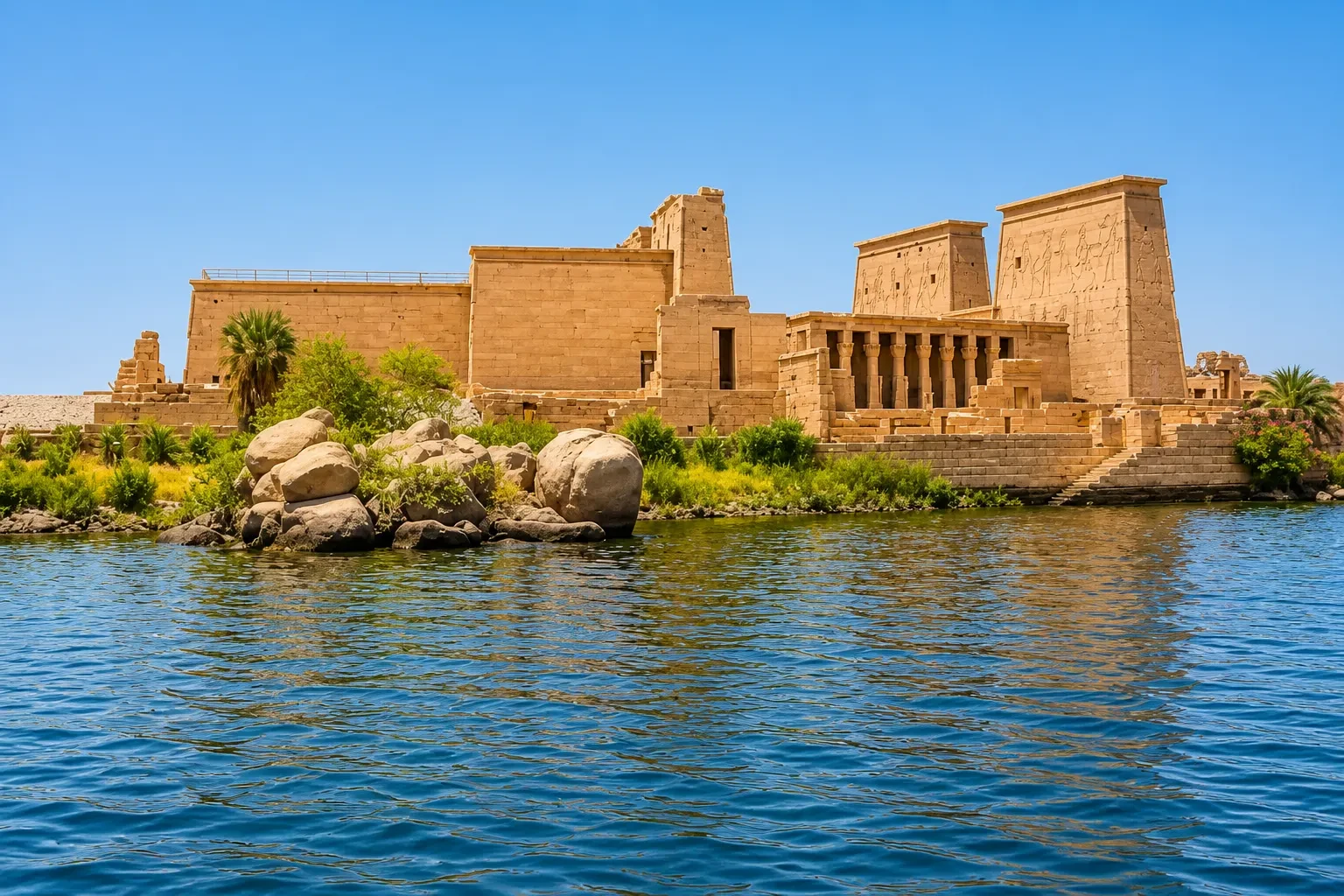
The Nubian Museum is located in the southern part of Aswan within easy reach of all the major heritage and cultural destinations of the First Cataract region. The most natural companion visits to the Nubian Museum are the Nubian Village communities on the west bank of the Nile, where the living cultural traditions documented in the museum's galleries can be experienced directly in the context of a warm and hospitable community visit, and the Temple of Isis at Philae, whose sacred island setting and Ptolemaic and Roman architecture represent the ancient heritage landscape that the museum contextualizes.
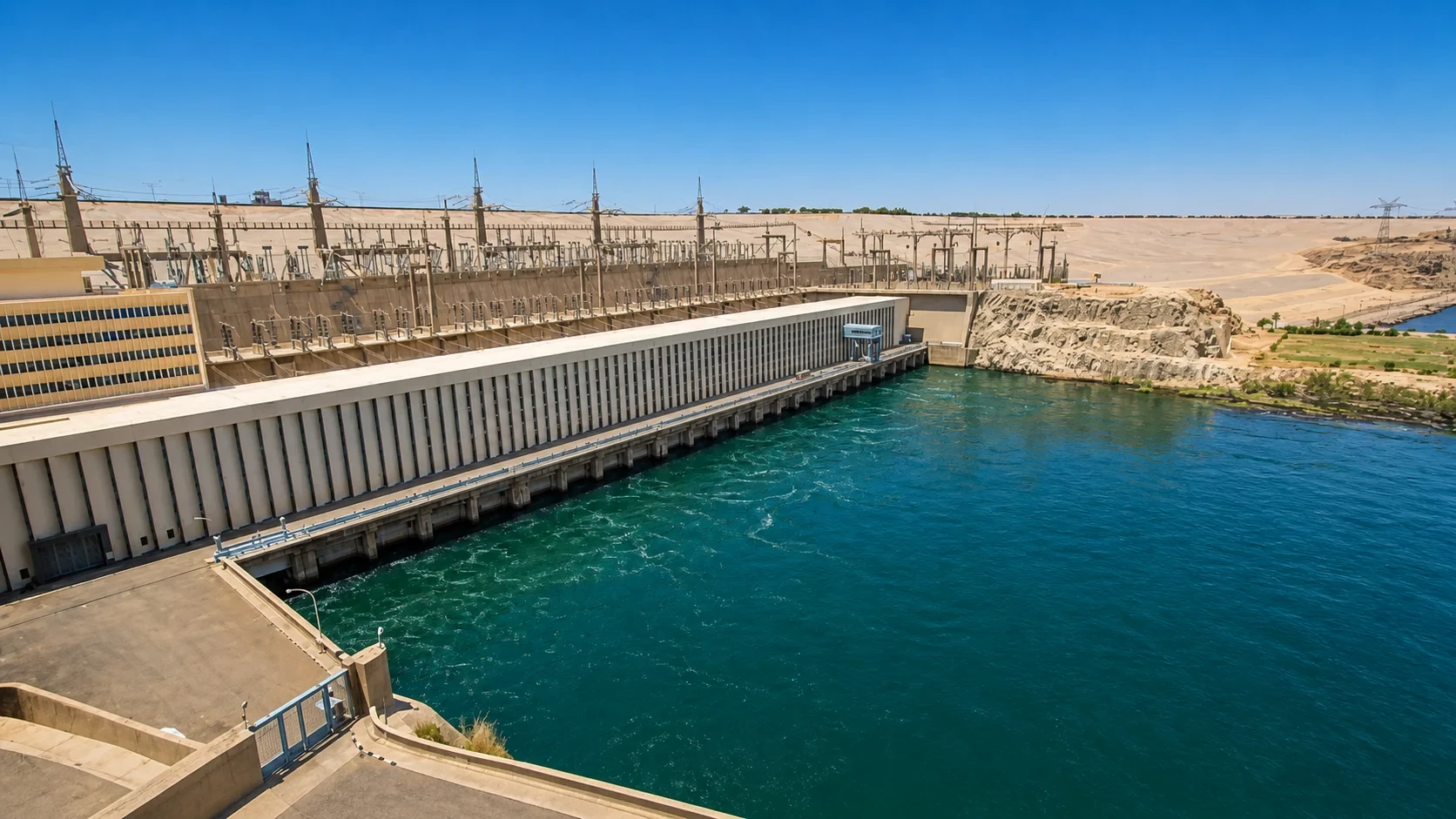
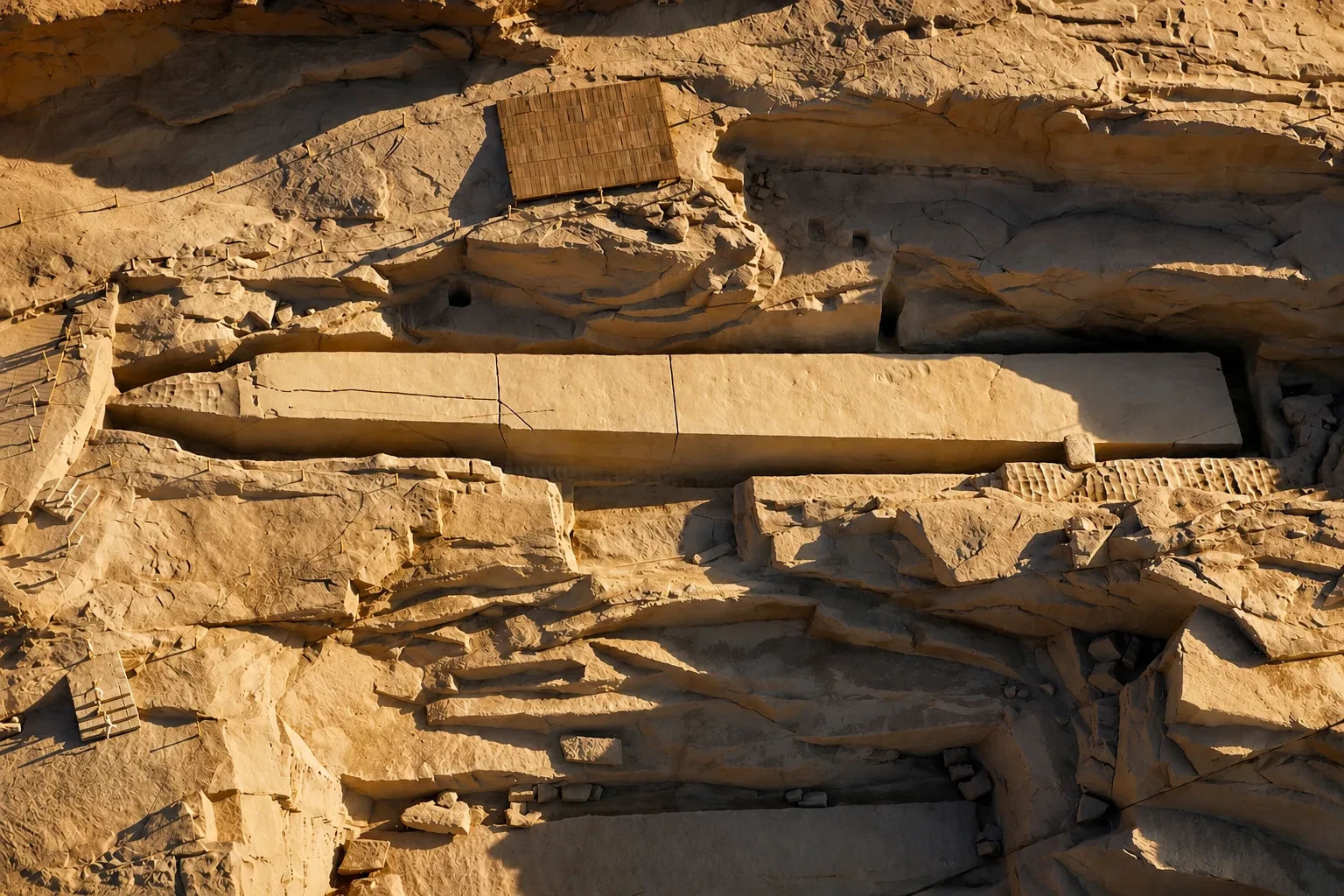
The Aswan High Dam, whose construction story occupies the most moving gallery in the museum, provides the engineering counterpart to the museum's human narrative of displacement and loss. The Unfinished Obelisk in the ancient granite quarries connects the museum's story of ancient Nubian and Egyptian civilization with the geological and industrial landscape from which both were built. Elephantine Island, with its five-thousand-year archaeological sequence and its active German Institute excavations, provides the most direct material complement to the museum's prehistoric and pharaonic galleries. The Aswan Botanical Garden on Kitchener's Island provides a beautiful natural respite from the intellectual intensity of the museum visit.
For travelers looking south toward the heritage landscape of Lake Nasser, the Lake Nasser Cruise provides access to the temples of Kalabsha, Wadi el-Seboua, Amada, and Abu Simbel, all of which take on a significantly deeper and more resonant meaning for visitors who have first engaged with the Nubian cultural narrative in the Nubian Museum galleries. All these sites are accessible through the Aswan Day Tours, Nile cruise itineraries, Lake Nasser Cruises, and Egypt Tours Packages offered by WOW Egypt Tours.
Frequently Asked Questions About The Nubian Museum
What is the Nubian Museum?
The Nubian Museum is the finest museum in Aswan and the primary institution dedicated to the history, culture, and artistic achievements of the Nubian people and civilization, covering more than seven thousand years from the earliest prehistoric occupation of the First Cataract region through the great ancient Nubian kingdoms, the Christian and Islamic periods, the Lake Nasser displacement, and the living Nubian culture of today. Inaugurated in 1997 and winner of the Aga Khan Award for Architecture in 2001, the museum is recognized as one of the most beautifully designed and most intellectually comprehensive cultural institutions in the Middle East. It is featured on Aswan Day Tours, Nile River Cruises, Lake Nasser Cruises, and Egypt Tours Packages offered by WOW Egypt Tours.
Who created the Nubian Museum?
The Nubian Museum was created by the Egyptian government in partnership with UNESCO, designed by Egyptian architect Mahmoud El-Hakim, and inaugurated in 1997. It was conceived as part of the broader international effort to acknowledge and preserve the cultural heritage of the Nubian people following the displacement caused by the construction of the Aswan High Dam.
Why did the Nubian Museum win the Aga Khan Award?
The Aga Khan Award for Architecture was given to the Nubian Museum in 2001 in recognition of the exceptional quality of the building's design, its sensitive response to the cultural traditions and natural landscape of the Aswan region, its successful integration of traditional Nubian architectural forms with modern construction technology, and its achievement as a cultural institution in presenting the Nubian heritage at the highest international scholarly and curatorial standards.
What is in the Nubian Museum collection?
The museum contains more than three thousand artifacts spanning the complete chronological range of Nubian civilization from Paleolithic stone tools through ancient Nubian royal sculpture and jewelry to traditional craft objects from the living 20th century Nubian community. Highlights include the statue of the Nubian pharaoh Taharqa of the 25th Dynasty, Kerma period pottery of extraordinary refinement, Meroitic royal objects, Christian Nubian painted wall fragments, and the remarkably moving Lake Nasser displacement gallery with its photographs, documents, and community testimony.
What is the Lake Nasser displacement gallery?
The Lake Nasser displacement gallery is the section of the Nubian Museum dedicated to the human consequences of the construction of the Aswan High Dam and the creation of Lake Nasser, which permanently submerged the traditional Nubian homeland and forced the relocation of approximately 50,000 Egyptian Nubian people between 1963 and 1966. The gallery presents this story through photographs, maps, documentary films, personal objects, and community testimony in one of the most moving and most historically important gallery displays in any museum in Egypt.
Who was Taharqa?
Taharqa was the most celebrated ruler of the 25th Dynasty of Egypt, the Nubian pharaohs who controlled all of Egypt from approximately 747 to 656 BCE, ruling as the most powerful state in the ancient world. He ruled from approximately 690 to 664 BCE and appears in the Hebrew Bible as an ally of the Israelite king Hezekiah. The Nubian Museum statue of Taharqa is one of the finest surviving examples of 25th Dynasty Nubian royal portraiture.
What are the opening hours of the Nubian Museum?
The Nubian Museum is open daily from 9:00 AM to 5:00 PM throughout the year, including public holidays.
How much does it cost to enter the Nubian Museum?
The entrance fee is EGP 400 for adults and EGP 200 for students. Photography inside the galleries may require a separate camera ticket. Entrance fees are included in all Aswan Day Tours, Nile River Cruise programmes, and Lake Nasser Cruise programmes booked through WOW Egypt Tours.
How long does it take to visit the Nubian Museum?
Most visitors spend 1 to 2 hours for a complete visit including all interior galleries and the outdoor garden. Those with a deeper interest in specific aspects of Nubian history or art may wish to allow 2 to 2.5 hours.
What is the best time of year to visit the Nubian Museum?
The museum is comfortable to visit throughout the year as it is fully air-conditioned. October to April is the most comfortable for the outdoor garden portion of the visit. The museum is particularly valuable as a cool indoor heritage experience during the hot summer months.
How do I get to the Nubian Museum?
The museum is located approximately 1.5 kilometers south of the Aswan city center, reached by private vehicle in approximately 10 minutes. All Aswan Day Tours and Nile River Cruise programmes with WOW Egypt Tours include private transportation directly to the museum.
Is a guide necessary at the Nubian Museum?
A guide with expertise in Nubian history and culture is strongly recommended. The connections between individual objects and the broader narrative of Nubian civilization, the significance of specific artistic traditions, and the historical context of all the museum's major galleries greatly benefit from expert explanation. WOW Egypt Tours provides licensed guides with Nubian cultural expertise on all Nubian Museum tours.
Can I take photographs at the Nubian Museum?
Photography inside the museum galleries may require a separate camera permit available at the ticket desk. Flash photography is strictly prohibited near all ancient artifacts. Photography of the building exterior and garden is permitted freely. Confirm camera permit requirements at the ticket desk on arrival.
What should I wear to visit the Nubian Museum?
Lightweight, breathable clothing covering the shoulders and knees. A light layer is recommended for the fully air-conditioned interior, which can be quite cool particularly in summer. Comfortable flat walking shoes for the museum galleries and garden paths. A hat and sunscreen for the outdoor garden portion.
What is in the outdoor garden of the Nubian Museum?
The approximately 50,000 square meter museum garden includes a full-scale reconstruction of a traditional Nubian house, relocated ancient monuments from the Aswan region, natural granite rock formations from the First Cataract landscape, a reflecting pool, traditional Nubian architectural elements, and spectacular views across the Nile to the west bank desert and Nubian village communities. The garden is an integral and beautiful part of the complete museum experience.
Is the Nubian Museum better visited before or after the Nubian Village?
The museum is most rewarding when visited before the Nubian Village, as the cultural context it provides about Nubian history, language, material culture, and the displacement story significantly enriches the subsequent village experience, giving visitors the vocabulary and the historical understanding to appreciate what they see and experience in the living community in a much more informed and much more meaningful way.
What other Aswan sites can I combine with the Nubian Museum?
The Nubian Museum is most naturally combined with the Nubian Village for the most complete Nubian cultural encounter, and as part of the full Aswan programme with the Temple of Isis at Philae, the Aswan High Dam, and the Unfinished Obelisk.
What Nile cruise options include the Nubian Museum?
The Nubian Museum is available as an optional or featured addition on all WOW Egypt Tours Nile River Cruises, including Luxor Aswan Nile River Cruises, Dahabiya Nile River Cruises, and Lake Nasser Cruises at the Aswan end of the journey. All cruises are available as part of WOW Egypt Tours Egypt Tours Packages and Egypt Travel Packages.
How do I book a Nubian Museum tour with WOW Egypt Tours?
You can book any Nubian Museum tour as a standalone cultural excursion, as a combined Nubian Museum and Nubian Village cultural day, as part of a full Aswan Day Tour, as an addition to any Dahabiya Nile River Cruise, Luxor Aswan Nile River Cruise, Lake Nasser Cruise, Egypt Tours Package, or Egypt Travel Package directly through WOW Egypt Tours. Our team of travel specialists will arrange everything from private transportation and licensed guides to hotel pick-up and entrance fees, ensuring a seamless and intellectually enriching experience of the Nubian Museum and all the wonders of ancient and modern Aswan.