 Travel Deals

 Tailor-Made
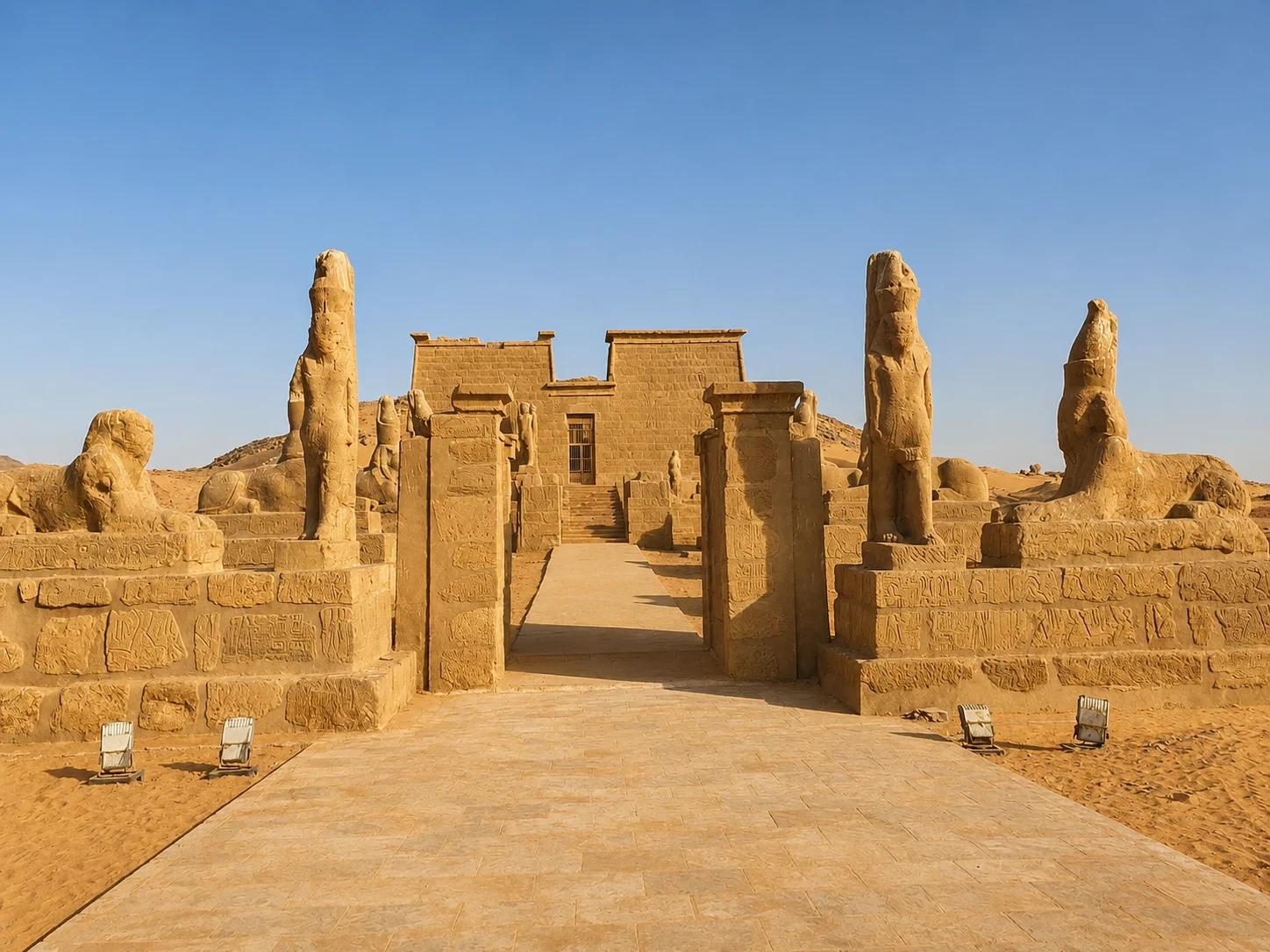

The Temples of Wadi El Seboua are among the most dramatically situated, most historically layered, and most archaeologically fascinating of all the ancient Nubian monuments rescued from the rising waters of Lake Nasser during the UNESCO International Campaign to Save the Monuments of Nubia, a remarkable cluster of three distinct ancient temple complexes from three entirely different periods of Nubian history that together constitute the most chronologically comprehensive collection of ancient religious architecture at any single site on the shores of Lake Nasser. Located on the western shore of Lake Nasser approximately 145 kilometers north of Abu Simbel and approximately 150 kilometers south of the Aswan High Dam, the Temples of Wadi El Seboua are accessible exclusively by Lake Nasser Cruise and form one of the most rewarding and most unexpected stops on any Lake Nasser heritage itinerary, offering a concentrated experience of Ramesside New Kingdom power, Ptolemaic religious syncretism, and Roman-period temple architecture in a single site of extraordinary visual drama and historical depth. This remarkable destination sits at the heart of Egypt's most immersive Nubian heritage experience, the Lake Nasser Cruise, which WOW Egypt Tours proudly offers to travelers from around the world as part of Egypt Tours Packages and Egypt Travel Packages that encompass the complete heritage of the ancient Nubian world south of Aswan.
The name Wadi El Seboua, meaning the Valley of the Lions in Arabic, refers to the most immediately dramatic feature of the site: the processional avenue of lion-bodied, human-headed sphinxes, the classic dromos of an ancient Egyptian temple approach, that was carved by Ramesses II for the principal temple of the group and that still stretches in two facing rows from the Nile waterfront toward the pylon entrance of the temple, creating one of the most atmospherically powerful ancient processional landscapes on the entire Lake Nasser shore. The three temples that make up the Wadi El Seboua complex span a period of more than a thousand years of ancient Nubian religious architecture, from the great Ramesside temple of Ramesses II of the 19th Dynasty built around 1265 BCE, through the Ptolemaic and Meroitic temple of Dakka dedicated to the god Thoth and built in the 3rd century BCE by the Nubian king Arkamani with subsequent additions by Ptolemaic and Roman rulers, to the unfinished Roman period temple of Maharraka dedicated to Serapis and Isis, the only ancient Egyptian temple known to have incorporated a spiral staircase in its construction. Together these three temples represent an extraordinary concentration of different cultural traditions and different historical periods at a single ancient site, and their rescue and reassembly on a new elevated location above the Lake Nasser waterline is a remarkable achievement of the UNESCO International Campaign that is fully appreciated only by those who visit the temples in person on a Lake Nasser Cruise.

Who Built The Temples Of Wadi El Seboua?
The three temples of the Wadi El Seboua complex were built by three entirely different rulers spanning more than a thousand years of ancient Nubian history, reflecting the importance of this stretch of the Nile Valley as a significant sacred and administrative location from the New Kingdom through the Roman period. The principal temple, and the one that gives the site its name, was built by Pharaoh Ramesses II of the 19th Dynasty, the most prolific builder of any period in ancient Egyptian history, around 1265 BCE as part of his comprehensive programme of temple construction throughout the Egyptian-controlled Nubian province. The Wadi El Seboua temple was one of three temples built by Ramesses in Nubia specifically designed to assert Egyptian imperial presence and royal divinity in the colonized southern territories, the other two being the supreme rock-cut temples of Abu Simbel to the south and the temple of Derr further north. The Wadi El Seboua temple is a hybrid structure, with an outer rock-cut sanctuary carved from the sandstone cliff and an inner courtyard built in free-standing masonry construction, a format sometimes called a speos or hemispeos temple that combines the permanence and the sacred associations of the rock-cut tradition with the architectural flexibility of constructed masonry.
The second temple of the Wadi El Seboua group, the Temple of Dakka, was founded by Arkamani, a Nubian king of the Meroitic kingdom who ruled around 220 to 185 BCE and who built a small sanctuary dedicated to the god Thoth at this location in the Ptolemaic period, demonstrating the active participation of the Nubian Meroitic rulers in the Ptolemaic religious landscape of the Nile Valley. The temple was subsequently enlarged and elaborated by several Ptolemaic rulers including Ptolemy IV Philopator, Ptolemy VIII Euergetes II, and Ptolemy IX Soter II, and was further developed by the Roman emperors Augustus and Tiberius who completed the outer pylon and the entrance hall. The Temple of Dakka is therefore a genuinely international monument, combining the architectural contributions of a Nubian king, multiple Ptolemaic rulers, and two Roman emperors in a single building that reflects the complex cultural environment of the Nile Valley during the Ptolemaic and early Roman periods. The third temple, Maharraka, was built during the early Roman period by an unknown patron, remained unfinished, and is notable primarily for its architectural anomaly of a spiral staircase built into the thickness of one of its walls, a feature without parallel in any other ancient Egyptian temple.
The Key Rulers Of Wadi El Seboua
The three most historically significant rulers associated with the temples of Wadi El Seboua are Ramesses II of Egypt, Arkamani of the Meroitic kingdom, and the Emperor Augustus of Rome, representing three entirely different civilizations and three entirely different approaches to religious architecture in the Nubian Nile Valley. Ramesses II, the Great Pharaoh of the 19th Dynasty, built the principal Wadi El Seboua temple as part of his Nubian imperial programme around 1265 BCE, carving the famous sphinx-lined processional avenue, the free-standing pylon, and the inner rock-cut sanctuary as a direct expression of Egyptian royal divinity and imperial domination of the Nubian province. The temple was dedicated to Amun and Ra-Horakhty as well as to the deified Ramesses himself, reflecting the theological programme of royal self-deification that Ramesses pursued in his Nubian temples with an intensity and an explicitness not found in his Egyptian monuments.
Arkamani of the Meroitic kingdom is one of the most historically interesting patrons of any Nubian monument, a Nubian king who chose to build a temple in the Egyptian tradition at a significant Nile Valley location during the Ptolemaic period, demonstrating the cultural ambivalence of the Meroitic rulers of this era who were simultaneously heirs to the ancient Nubian royal tradition and enthusiastic participants in the Ptolemaic religious world that was transforming the Nile Valley in the 3rd century BCE. The Temple of Dakka that Arkamani founded is one of the clearest architectural expressions of the cultural contact and mutual influence between the Meroitic Nubian kingdom and the Ptolemaic Egyptian state that characterized the relationship between the two powers during the later 3rd and early 2nd centuries BCE. The Roman emperor Augustus, who completed the outer pylon and entrance gate of the Dakka temple, continued the tradition established by his Ptolemaic predecessors of making contributions to the ancient Egyptian and Nubian temple tradition as a demonstration of imperial legitimacy and cultural continuity with the pharaonic past.
Wadi El Seboua Location On Lake Nasser
The Temples of Wadi El Seboua are located on the western shore of Lake Nasser, approximately 150 kilometers south of the Aswan High Dam and approximately 145 kilometers north of the Abu Simbel Temples, at a position roughly midway along the Egyptian section of Lake Nasser. The temples were originally located on the west bank of the Nile in the ancient valley of Wadi el-Seboua, named for the ancient sphinx avenue of the principal Ramesside temple. During the UNESCO International Campaign to Save the Monuments of Nubia, the three temples of the Wadi El Seboua group were dismantled and reassembled at a new site approximately 4 kilometers from their original location, elevated above the Lake Nasser waterline and positioned to preserve as far as possible the spatial relationships between the three individual temples as they existed in the original ancient landscape. The current site is accessible from the lake by small motorboat from the cruise ship anchorage, a short transfer across the shallow water near the temple platform landing. WOW Egypt Tours includes the Wadi El Seboua temples as a standard guided stop on all Lake Nasser Cruise itineraries between Aswan and Abu Simbel.
Wadi El Seboua Fun Facts
The most immediately striking feature of the Wadi El Seboua temple complex is the sphinx avenue, or dromos, of the principal Ramesside temple, which preserves one of the most complete and most atmospherically powerful ancient processional approaches of any Ramesside temple in Nubia. The dromos consists of two parallel rows of lion-bodied, human-headed sphinxes stretching from the waterfront toward the first pylon of the temple, creating a 50-meter processional avenue through which the ancient priests, pilgrims, and royal visitors would have walked to approach the divine sanctuary within. The sphinxes, carved from sandstone and bearing the features of Ramesses II, are smaller in scale than the monumental examples at the entrance to the Karnak Temple at Luxor, but their isolated setting in the desert landscape of the Lake Nasser shore and the directness of their confrontational gaze give the Wadi El Seboua sphinx avenue a quality of intimate ancient power that the more crowded and more touristically developed Karnak examples cannot quite match. The name Valley of the Lions derives directly from these sphinxes, whose lion bodies gave the ancient valley its distinctive character and its Arabic name long before the modern era.
The most extraordinary single feature of the Wadi El Seboua temple complex in terms of art historical significance is the conversion of the inner sanctuary of the Ramesside temple to a Christian church in the early Byzantine period, a transformation that involved the plastering over of the original ancient Egyptian relief decoration on the sanctuary walls and the painting of new Coptic Christian imagery on the plaster surface. When the plaster partially fell away in the centuries following the abandonment of the Christian community, it revealed beneath it the original ancient Egyptian reliefs, creating one of the most visually dramatic examples of religious stratigraphic layering available anywhere in the Nile Valley. In one famous composition in the sanctuary, a figure of the deified Ramesses II making offerings to the gods is now framed by the painted Coptic figures of Saints Peter and Paul that replaced the original divine recipients of the royal offering, creating a juxtaposition of pharaonic and Christian religious imagery that is as historically revealing as it is visually startling.
The Temple of Maharraka at Wadi El Seboua is one of the most architecturally anomalous ancient Egyptian temple buildings in existence, an unfinished Roman-period structure whose most notable feature is a spiral staircase built into the thickness of one of the outer walls, a structural feature with no parallel in any other ancient Egyptian temple and whose precise function remains debated among scholars. The spiral staircase, ascending through multiple turns to access what appears to have been an upper terrace or roof space, reflects the Roman period's more eclectic approach to ancient Egyptian temple architecture, freely introducing features and construction techniques from the broader Graeco-Roman building tradition that would have been unthinkable in the more rigidly canonical ancient Egyptian tradition.
Why Are The Wadi El Seboua Temples Called By This Name?
The name Wadi El Seboua is the Arabic name for the ancient valley location of the principal temple, meaning the Valley of the Lions, a reference to the lion-bodied sphinxes of the Ramesside processional avenue that are the most visually distinctive feature of the site and that gave this stretch of the Nile Valley its distinctive character in both ancient times and in the Arabic-speaking medieval and modern periods. The term Wadi, meaning valley or dry river bed in Arabic, refers to the ancient valley topography of the site, which in the original ancient landscape was a broad wadi or seasonal watercourse draining from the western desert plateau toward the Nile that created the natural sheltered setting in which the temple complex was built. The term El Seboua, the Lions, refers directly to the sphinxes of the processional avenue, whose lion bodies gave the valley its name in the Arabic-speaking world just as the same characteristic feature had given it its ancient Egyptian name in the pharaonic tradition. The three individual temples of the Wadi El Seboua group each have their own names: the principal Ramesside temple is simply known as the Temple of Wadi El Seboua or the Temple of Ramesses II at Wadi El Seboua; the Ptolemaic and Meroitic temple is known as the Temple of Dakka or the Temple of Thoth at Dakka after the nearby ancient settlement of Dakka; and the unfinished Roman temple is known as the Temple of Maharraka after the ancient settlement of Maharraka near its original location.
Wadi El Seboua History
The history of the Wadi El Seboua area as a sacred location begins in the New Kingdom period, when the valley's natural setting in the western desert margin of the Nubian Nile Valley and its position approximately midway between the major Ramesside administrative and religious centers of the Nubian province made it an appropriate location for one of Ramesses II's Nubian temple building projects around 1265 BCE. The Wadi El Seboua temple was one of the most significant New Kingdom temple foundations in Nubia after Abu Simbel, and its sphinx-lined processional avenue, its free-standing and rock-cut hybrid sanctuary plan, and its dedication to both the imperial gods Amun and Ra-Horakhty and to the deified Ramesses himself made it the primary religious center for the surrounding region of the middle Nubian Nile Valley during the later New Kingdom period.
After the end of the New Kingdom around 1070 BCE and the withdrawal of Egyptian administrative control from Nubia, the Wadi El Seboua area continued to be a significant religious and settlement location, as evidenced by the foundation of the Temple of Dakka by the Meroitic king Arkamani around 220 BCE in the Ptolemaic period. The choice of this location for a major new Ptolemaic-era temple construction demonstrates the continued significance of the Wadi El Seboua area in the religious landscape of the Nubian Nile Valley even after the end of the direct Egyptian colonial administration of the region. The successive additions to the Temple of Dakka by Ptolemaic rulers and Roman emperors spanning more than three centuries reflect the ongoing importance of the site as a significant temple precinct in the middle Nubian Nile Valley during the entire Ptolemaic and early Roman period. The Temple of Maharraka, built in the Roman period and left unfinished, suggests that construction activity was still being undertaken at this location in the early centuries CE, before the eventual decline and abandonment of the ancient religious traditions of the Nubian Nile Valley in the Christian period.
The conversion of the inner sanctuary of the Ramesside temple to a Christian church in the Byzantine period, with the plastering and repainting of the ancient Egyptian relief surfaces with Coptic Christian imagery, reflects the broader Christianization of the Nubian Nile Valley communities in the 5th and 6th centuries CE and the widespread practice of converting ancient Egyptian temple spaces to Christian use that is documented at multiple sites throughout the Nile Valley. During the medieval Islamic period, the temples were progressively buried under the accumulating desert sand, a process that preserved many of the decorated surfaces under a protective layer while gradually reducing the visible above-ground remains. The 19th and 20th century documentation of the Wadi El Seboua temples by European scholars and the subsequent UNESCO rescue and relocation of all three temples to their current elevated position above Lake Nasser between 1961 and 1965 preserved the complete group for future generations and made the Wadi El Seboua temples one of the most comprehensively documented ancient complexes in the entire Lake Nasser heritage zone.
The Story Of The Wadi El Seboua UNESCO Rescue
The rescue of the Wadi El Seboua temples was one of the earliest and most complex operations of the UNESCO International Campaign to Save the Monuments of Nubia, undertaken between 1961 and 1965, before the more celebrated but later operations that rescued the Abu Simbel temples and the Philae temples. The challenge of the Wadi El Seboua rescue was threefold: the three temples of the group were physically distinct structures built at different periods and with different construction techniques, requiring three entirely separate dismantling and reassembly operations; the original site was in a low-lying position that would be among the first areas to be submerged as the Lake Nasser water level rose; and the hybrid construction of the principal Ramesside temple, with its combination of free-standing masonry outer courts and rock-cut inner sanctuary, created significant technical challenges for the dismantling process.
The UNESCO engineering teams addressed these challenges by treating each of the three temples as a separate rescue operation while coordinating the overall site relocation to preserve the spatial relationships between the temples as closely as possible in the new elevated position. The free-standing masonry elements of all three temples were dismantled block by block, with each block individually numbered and recorded before removal, while the rock-cut portions of the Ramesside temple were cut from the surrounding cliff using the same precision sawing techniques that would later be applied on a much larger scale at Abu Simbel. The relocated temples were reassembled at their current position approximately 4 kilometers from the original site, with the sphinx avenue of the Ramesside temple fully reconstructed in its original orientation and with the three temple buildings positioned relative to each other in a spatial arrangement that approximates the original ancient landscape. The discovery during the rescue operation of the partial fall of the Christian plaster from the Ramesside sanctuary walls, revealing the original ancient Egyptian reliefs beneath the later Christian paintings, was one of the most dramatically unexpected art historical discoveries of the entire UNESCO Nubian campaign, creating the extraordinary palimpsest of pharaonic and Christian imagery that is now one of the most celebrated features of the entire Wadi El Seboua complex.
Wadi El Seboua Temples Architecture And Key Features
The Sphinx Avenue Processional Way
The most immediately dramatic and most photographically celebrated feature of the Wadi El Seboua temple complex is the sphinx avenue processional way, or dromos, of the principal Ramesside temple, a 50-meter avenue of lion-bodied, human-headed sphinxes arranged in two facing rows that stretches from the ancient waterfront landing toward the first pylon entrance of the temple. The sphinxes of the Wadi El Seboua dromos, carved from Nubian sandstone and bearing the facial features of Ramesses II wearing the nemes headdress and the double crown, are preserved in varying states of completeness, with some examples complete and clearly articulated and others reduced to their leonine bases. The processional avenue is oriented east to west, from the Nile waterfront toward the temple entrance and ultimately toward the inner sanctuary and the setting sun, in the canonical orientation of New Kingdom Nubian temples. Walking along the sphinx avenue toward the pylon entrance of the Ramesside temple, with the rows of ancient stone guardians lining the approach on both sides and the distant pylon rising at the end of the processional axis, visitors experience one of the most direct surviving encounters with the ancient theatrical architecture of royal divine approach available at any Ramesside site on the shores of Lake Nasser.
The Temple Of Ramesses II At Wadi El Seboua
The principal temple of the Wadi El Seboua group, the Temple of Ramesses II, is a hybrid hemispeos structure whose front courts and first pylon are built in free-standing masonry construction while the inner hypostyle hall and sanctuary are carved from the living rock of the cliff face, a format that combines the most permanent type of ancient Egyptian sacred space with the more practically flexible masonry construction of the outer public areas. The first pylon, originally decorated with large-scale relief scenes of Ramesses II smiting prisoners before the gods in the standard royal triumph composition of New Kingdom temple pylons, leads into a first open court and then a second court, both of which are decorated with carved relief scenes of ritual and offering activities. The inner hypostyle hall, carved from the rock, leads through an antechamber to the innermost sanctuary, where the famous palimpsest of pharaonic and Christian imagery creates the most visually startling art historical encounter available at any Ramesside site in Nubia. The rock-cut portions of the temple preserve significantly better the original painted surfaces of the 19th Dynasty decoration than the exposed masonry outer courts, and the quality of the painting in the inner spaces, though partly concealed under or revealed through the subsequent Christian plaster application, is demonstrably of the highest Ramesside workshop standard.
The Pharaonic And Christian Palimpsest
The most historically and artistically remarkable single feature of the entire Wadi El Seboua temple complex is the extraordinary visual palimpsest in the inner sanctuary of the Ramesside temple, where the ancient Egyptian relief decoration of the royal chapel was converted to Christian use by the application of plaster and the painting of Coptic Christian imagery on the plaster surface, and where the subsequent partial fall of the plaster has revealed beneath it the original ancient Egyptian reliefs in a dramatic overlap of two entirely different religious traditions. The most celebrated single image in this palimpsest, which has been reproduced in countless publications and is now one of the iconic images of the Lake Nasser heritage, shows the figure of the deified Ramesses II in the characteristic ancient Egyptian stance of a worshipper making offerings to a deity, with the deity he was originally offering to now replaced on the wall surface by the painted Coptic figures of Saints Peter and Paul, creating a composition in which the pharaoh of the New Kingdom appears to be venerating Christian apostles in a visual encounter across three thousand years of religious history that is simultaneously hilarious and profound and entirely unique in the heritage record of the ancient world. The palimpsest offers a direct visual metaphor for the entire history of religious transformation in the Nile Valley, from the pharaonic tradition through the Christian period, concentrated in a single sacred space that is small enough to take in as a complete visual whole.
The Temple Of Dakka
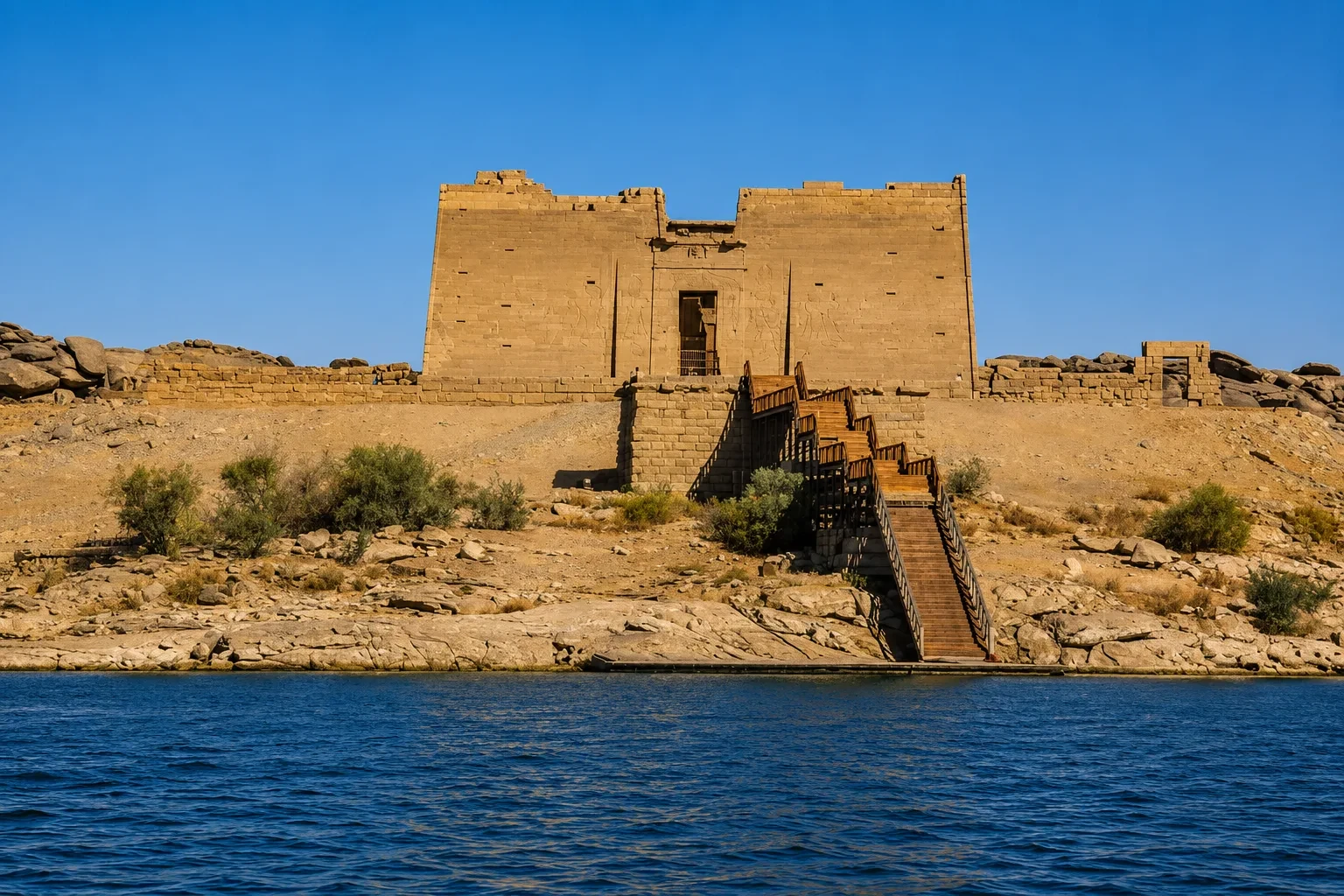
The Temple of Dakka, standing approximately 40 meters north of the principal Ramesside temple and dedicated to the god Thoth, presents a very different architectural character from the Ramesside hemispeos. It is a free-standing Ptolemaic temple of modest scale but exceptional historical interest, consisting of a large outer pylon of Roman-period construction, an outer forecourt, a hypostyle hall, two antechambers, and an inner sanctuary, all built progressively by different patrons over a period of approximately three centuries. The outer pylon, one of the most impressive architectural features of the Dakka temple, was built by the Roman emperor Augustus and has an unusually tall and narrow proportioning that gives it a distinctive visual character compared to the more massive proportions of the great Ptolemaic pylons at Edfu and Dendera. The interior spaces of the Dakka temple preserve carved and painted relief decoration from multiple Ptolemaic periods, including scenes by the Meroitic king Arkamani who founded the original sanctuary, by Ptolemy IV Philopator who added the main hall, and by the successive Ptolemaic and Roman rulers who completed the exterior. The temple's dedication to Thoth, the god of wisdom and writing, reflects the intellectual and scholarly character that the Ptolemaic rulers associated with this location in the middle Nubian Nile Valley, and the combination of Meroitic Nubian, Ptolemaic Greek, and Roman imperial contributions in a single temple building makes Dakka one of the most historically polyvalent monuments in the entire Lake Nasser collection.
The Temple Of Maharraka
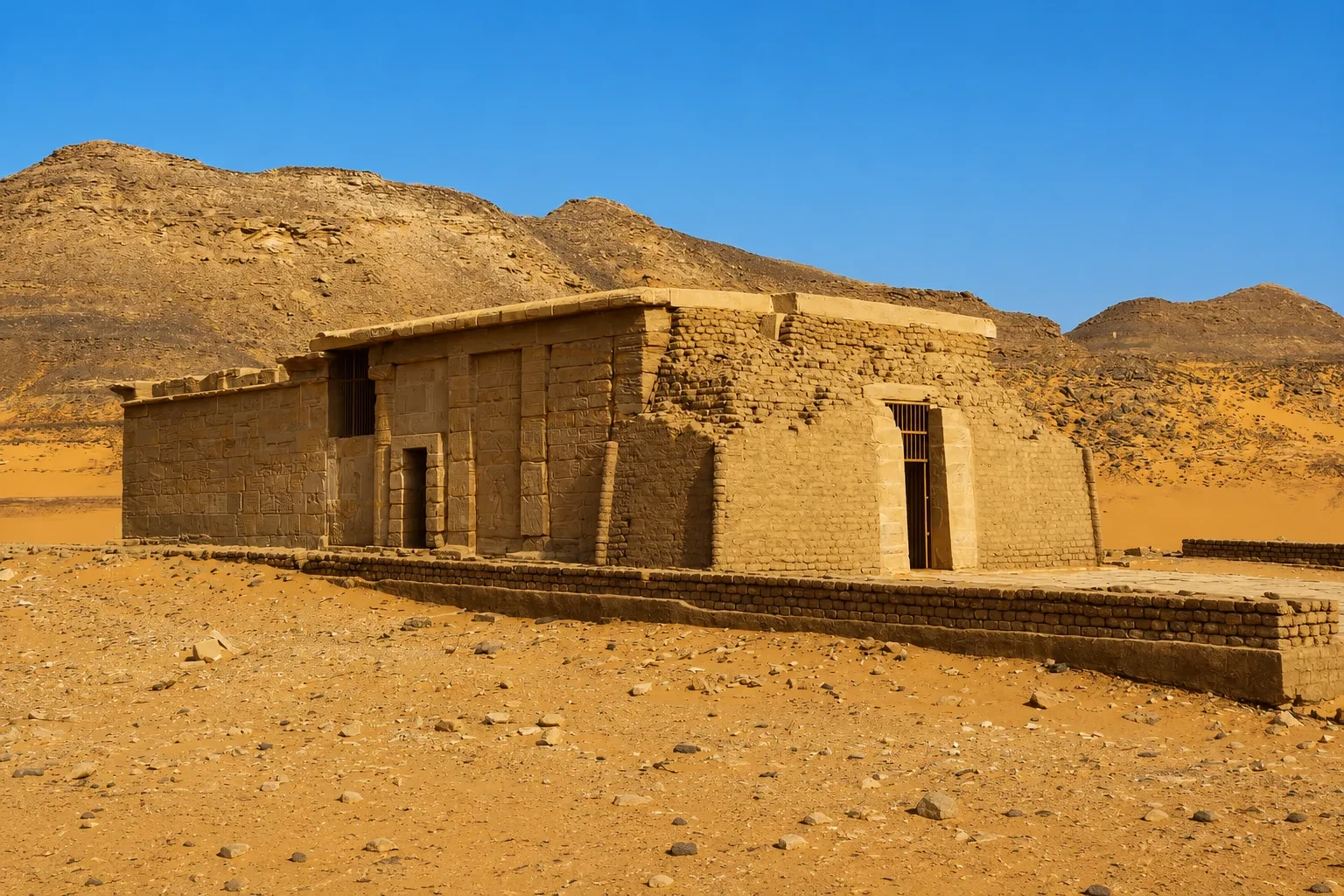
The smallest and most architecturally anomalous of the three temples of the Wadi El Seboua group, the Temple of Maharraka, stands approximately 40 meters south of the principal Ramesside temple and represents one of the most archaeologically puzzling monuments in the Lake Nasser heritage zone. The temple is an unfinished Roman-period structure of modest scale, consisting of a hypostyle hall with 16 columns arranged in four rows and an inner sanctuary chamber, all in free-standing masonry construction with the walls left largely undecorated. The architectural feature that makes Maharraka unique among all ancient Egyptian temples anywhere in the Nile Valley is the spiral staircase built into the thickness of the outer wall, ascending through two complete turns to access the roof level of the building in a construction entirely without parallel in the ancient Egyptian temple building tradition. The spiral staircase reflects the freedom with which Roman-period builders in Nubia introduced features from the broader Mediterranean architectural tradition into their Egyptian temple designs, creating buildings that are formally Egyptian in their overall layout and spatial organization but that incorporate individual technical solutions borrowed from the Graeco-Roman architectural vocabulary that their Egyptian predecessors would never have employed. The unfinished state of the temple, with its walls lacking both the carved relief decoration and the inscriptions that would in a completed Ptolemaic or Roman-period temple have identified its patron and its theological programme, adds an element of archaeological mystery to Maharraka that makes it one of the most intriguing monuments in the entire Lake Nasser heritage collection.
Why Are The Temples Of Wadi El Seboua Important?
The Temples of Wadi El Seboua are important for reasons that combine their individual archaeological and art historical significance with the broader importance of the Wadi El Seboua group as the most chronologically comprehensive temple complex in the Lake Nasser heritage zone. Each of the three temples represents a distinct and important chapter in the religious history of the Nubian Nile Valley: the Ramesside temple documents the Egyptian imperial assertion of divine royal power in the Nubian province at the height of the New Kingdom; the Temple of Dakka documents the complex cultural interaction between the Meroitic Nubian kingdom and the Ptolemaic Egyptian state in the 3rd century BCE; and the Temple of Maharraka documents the continuing Roman-period architectural activity in the middle Nubian Nile Valley in the early centuries CE. Together, the three temples span more than one thousand years of continuous ancient temple building activity at a single location and provide an unparalleled compressed history of Nubian sacred architecture from the Ramesside through the Roman periods.
The Wadi El Seboua temples are also important as exceptionally well-preserved examples of their respective construction periods in the Lake Nasser context, where the quality of preservation varies significantly between individual rescued temples. The sphinx avenue of the Ramesside temple is one of the finest surviving ancient processional approaches in Nubia, the palimpsest of the sanctuary provides one of the most dramatic art historical encounters available anywhere on the lake shore, and the Temple of Dakka preserves one of the most complete Ptolemaic temple sequences in the Nubian heritage zone. WOW Egypt Tours includes the Wadi El Seboua temples as a standard guided stop on all Lake Nasser Cruise itineraries, recognizing them as one of the most rewarding and most historically comprehensive stops in the complete Lake Nasser heritage programme.
What Are Some Interesting Facts About The Temples Of Wadi El Seboua?
Saints Peter And Paul Meet Ramesses II
The visual encounter in the inner sanctuary of the Ramesside Wadi El Seboua temple between the ancient Egyptian deified pharaoh and the Coptic Christian apostles is one of the most historically resonant and most visually arresting juxtapositions available anywhere in the ancient heritage of Egypt or Nubia. When the Byzantine-period Christian community converted the temple sanctuary to church use, they plastered over the ancient reliefs and painted their own Christian imagery on the plaster surface, a process common at many ancient Egyptian temple sites throughout the Nile Valley. When the plaster subsequently deteriorated and partially fell away, it revealed the original pharaonic reliefs beneath, creating in the sanctuary of the Wadi El Seboua temple the extraordinary composition in which Ramesses II, in the pose of a worshipper making a divine offering, appears to be presenting his offerings to Saints Peter and Paul rather than to the original ancient Egyptian gods who were carved on the wall beneath the later plaster. This accidental historical palimpsest, created not by deliberate artistic intention but by the processes of religious transformation, cultural change, and material decay across two thousand years, is one of the most perfectly concentrated visual metaphors for the complete history of religious transition in the Nile Valley available at any single ancient site.
A Temple Built By A Nubian King
The Temple of Dakka is one of the relatively rare surviving examples of a major temple construction project sponsored by a Nubian ruler in the Egyptian temple-building tradition, demonstrating the cultural sophistication and the diplomatic engagement of the Meroitic Nubian kingdom with the Ptolemaic Egyptian state in the 3rd century BCE. Arkamani, the Meroitic king who founded the Dakka sanctuary around 220 BCE, was a contemporary of the Ptolemaic king Ptolemy IV Philopator, and the evidence of the Dakka temple suggests that the relationship between the two monarchies in this period was one of mutual cultural engagement rather than simple political domination or exclusion. By choosing to build a temple in the Egyptian tradition at a location in the middle Nubian Nile Valley, Arkamani was participating in the shared religious landscape of the Nile Valley in a way that demonstrated both his cultural literacy in the Egyptian temple-building tradition and his ambition to be recognized as a legitimate participant in the sacred geography of the ancient Nile. The subsequent additions to the Dakka temple by Ptolemaic and Roman rulers confirm that the site was accepted by the dominant powers of the period as a significant sacred location, regardless of the Nubian origin of its foundation.
The Only Spiral Staircase In Ancient Egypt
The spiral staircase of the Temple of Maharraka at Wadi El Seboua is a feature so anomalous in the context of ancient Egyptian temple architecture that it has attracted scholarly attention out of all proportion to the modest scale and the incomplete state of the temple that contains it. Ancient Egyptian temples typically used straight-flight staircases or ramps to access roof levels, with the ramp being by far the most common access solution in the rock-cut and constructed temple traditions. The appearance of a spiral staircase at Maharraka, a construction technique with a long history in the Graeco-Roman architectural tradition but entirely without precedent in the ancient Egyptian tradition, speaks directly to the architectural freedom of the Roman-period builders in Nubia, who were evidently willing to draw on whatever technical solutions were most appropriate for their specific construction challenge without feeling constrained by the canonical forms of the ancient Egyptian building tradition. The Maharraka spiral staircase is a small but important piece of evidence for the architectural eclecticism of the Roman-period Nile Valley, demonstrating that even in a remote Nubian temple location, the Roman builders brought with them a broader Mediterranean architectural vocabulary that they applied with practical freedom.
What Is So Special About The Temples Of Wadi El Seboua?
One Thousand Years Of Nubian Sacred Architecture In One Place
What makes the Wadi El Seboua temple complex uniquely special among all the Lake Nasser heritage sites is the extraordinary chronological compression it achieves, presenting more than one thousand years of continuous sacred building activity from three entirely different ancient cultural traditions within the boundaries of a single, relatively compact ancient site. The Ramesside sphinx avenue, the Ptolemaic-Meroitic hypostyle hall, and the Roman spiral staircase are within walking distance of each other on the same raised terrace above Lake Nasser, and their visual juxtaposition creates a direct and immediate encounter with the complete cultural sequence of the Nubian Nile Valley from the height of the Egyptian New Kingdom empire through the Hellenistic cultural synthesis of the Ptolemaic period to the Roman imperial administration of the Nile Valley frontier. No other single site in the Lake Nasser heritage zone offers this quality of chronological comprehensiveness, and the Wadi El Seboua temples therefore serve as the most condensed and the most intellectually complete introduction to the full historical range of ancient Nubian sacred architecture available anywhere along the lake shore.
The Sphinx Avenue At Sunset
The Wadi El Seboua sphinx avenue is also uniquely special for the quality of the visual and atmospheric experience it provides to visitors arriving from the lake in the late afternoon or early evening light, which is the most common visiting time for Lake Nasser Cruise passengers as the ship approaches the site after a day of sailing from the Aswan end of the lake. Approaching the Wadi El Seboua temples by motorboat from the cruise ship anchorage, with the sphinx avenue visible from the water stretching from the ancient landing toward the pylon entrance of the Ramesside temple, and with the low sun of the late afternoon illuminating the sandstone sphinxes in warm golden light against the blue expanse of Lake Nasser, is one of the most dramatically beautiful heritage arrival experiences available anywhere in the Lake Nasser heritage zone, a visual composition of ancient stone, desert landscape, and African waterscape that rewards the long sailing day with an arrival of genuine aesthetic power.
Wadi El Seboua Through The Ages: From Ancient Nubia To The Present
After the construction of the three temples of the Wadi El Seboua group over the course of more than a thousand years of ancient Nubian history, the site entered a period of gradual abandonment and progressive burial under the desert sand similar to that experienced by most of the ancient monuments of the Nubian Nile Valley. The conversion of the Ramesside temple sanctuary to Christian use in the Byzantine period was one of the last significant transformations of the ancient religious site before its abandonment, and the subsequent centuries of Islamic rule in the Nile Valley saw the temples progressively buried under the accumulated desert sand while local communities continued to live and farm in the surrounding valley. The 19th century documentation of the Wadi El Seboua temples by European explorers and scholars, beginning with the first systematic records produced by the Napoleonic expedition's savants and continuing through the more detailed documentation of the 19th Dynasty Nubian temple inventory by later European Egyptologists, established the scholarly record that made the rescue and reassembly of the temples feasible when the Lake Nasser threat materialized in the 1960s.
The UNESCO rescue of the Wadi El Seboua temple group between 1961 and 1965 was one of the first major operations of the International Campaign to Save the Monuments of Nubia, and its successful completion provided important technical experience and organizational lessons that informed the subsequent and more ambitious rescue operations at Abu Simbel and Philae. The relocated temples were formally inaugurated at their new site above the Lake Nasser waterline in 1967, and the site has been open to visitors via Lake Nasser Cruise since the establishment of the regular cruise service on the lake. Today the Wadi El Seboua temples receive visitors exclusively from Lake Nasser Cruise ships, maintaining their character as one of the most remote and most exclusively accessible ancient heritage sites in all of Egypt, available only to the relatively small number of travelers who commit to the complete Lake Nasser Cruise experience between Aswan and Abu Simbel.
Wadi El Seboua UNESCO World Heritage Status
The Temples of Wadi El Seboua are part of the Nubian Monuments from Abu Simbel to Philae UNESCO World Heritage Site, inscribed in 1979 as one of the first ten sites on the UNESCO World Heritage List. The World Heritage designation encompasses the complete collection of ancient Nubian monuments rescued from the rising waters of Lake Nasser during the UNESCO International Campaign, including the Abu Simbel Temples, the Philae Temple complex, and all the other temples relocated and preserved along the Lake Nasser shores. The Wadi El Seboua temples are specifically recognized within the World Heritage designation for their exceptional quality as a preserved group of three distinct temple complexes from different ancient periods, representing the chronological breadth of ancient Nubian sacred building activity from the Ramesside through the Roman periods, and for the extraordinary art historical significance of the Ramesside sanctuary palimpsest that makes the Wadi El Seboua site unique among all the ancient monument sites in the entire Nile Valley heritage zone.
Best Time To Visit The Wadi El Seboua Temples
The best time to visit the Wadi El Seboua temples, which are accessible exclusively by Lake Nasser Cruise, follows the same seasonal guidance as for the Lake Nasser Cruise in general: October through April offers the most comfortable temperatures and the most pleasant conditions for outdoor exploration of the temple complex and the sphinx avenue. The intense summer heat of the Nubian desert, with temperatures regularly exceeding 45 degrees Celsius from May to September, makes the open desert setting of the Wadi El Seboua site challenging in summer months, though the temples themselves and the covered spaces of the three temple interiors provide some shelter from the direct sun. The most favorable visiting conditions within any Lake Nasser Cruise itinerary are in the late afternoon when the ship typically arrives at Wadi El Seboua after a day of sailing from the Aswan end of the lake, providing a golden-light encounter with the sphinx avenue and the temple facades that is among the most dramatically atmospheric in the entire Lake Nasser heritage programme. WOW Egypt Tours plans all Wadi El Seboua visits at the optimal time of day and season as part of the complete Lake Nasser Cruise programme.
Wadi El Seboua Temples Opening Hours
The Wadi El Seboua temples are accessible to Lake Nasser Cruise visitors during the daytime visiting hours coordinated with the cruise ship schedule. The temples open at 6:00 AM and close at 5:00 PM throughout the year. The visiting schedule for cruise ship passengers is coordinated by the cruise operator to arrive during the most comfortable and most visually rewarding hours of the day, typically the late afternoon when the sun is low and the light on the sphinx avenue and the temple facades is at its most beautiful. Because the site is accessible only from the lake, visiting outside of the Lake Nasser Cruise programme is not practically feasible for international visitors, and the site receives no independent visitors other than those arriving by cruise ship.
Wadi El Seboua Temples Entrance Fees
Adults: EGP 150
Students: EGP 75
The entrance fee covers access to all three temples of the Wadi El Seboua group including the Temple of Ramesses II with its sphinx avenue, the Temple of Dakka, and the Temple of Maharraka. Entrance fees to the Wadi El Seboua temples are included in all Lake Nasser Cruise programmes booked through WOW Egypt Tours.
How To Get To The Wadi El Seboua Temples
The Temples of Wadi El Seboua are accessible exclusively by Lake Nasser Cruise, as the site is located on the western shore of Lake Nasser approximately 150 kilometers south of Aswan in a position that has no practical road access for international visitors. The standard approach is by small motorboat from the cruise ship anchorage near the temple landing, a transfer of approximately 5 to 10 minutes from the anchored cruise vessel to the ancient platform at the foot of the sphinx avenue. The cruise ship anchorage at Wadi El Seboua is in a sheltered bay protected by the surrounding desert landscape, providing a comfortable and safe transfer environment for all weather conditions typical of the Lake Nasser region. All motorboat transfers from the cruise ship to the Wadi El Seboua temple landing are included as a standard component of all Lake Nasser Cruise itineraries operated by WOW Egypt Tours.
How Long To Spend At The Wadi El Seboua Temples
Most Lake Nasser Cruise itineraries allocate approximately one to one and a half hours for the Wadi El Seboua temple visit, which is sufficient time to walk the complete sphinx avenue of the Ramesside temple, visit the interior of the principal Ramesside temple including the sanctuary palimpsest, visit the Temple of Dakka with its impressive Roman pylon and its interior Ptolemaic and Meroitic decoration, and walk through the unfinished Temple of Maharraka including a look at the famous spiral staircase. Visitors with a particular interest in the art historical significance of the sanctuary palimpsest, the Meroitic contribution to the Dakka temple, or the architectural anomaly of the Maharraka staircase may wish for additional time at specific elements of the complex. The Wadi El Seboua visit on a Lake Nasser Cruise is typically combined on the same day with the Temple of Amada visit, with the two sites together constituting the most rewarding single day of temple visits in the middle section of the Lake Nasser heritage programme between the Kalabsha temples near Aswan and the Abu Simbel temples in the south.
Tips For Visiting The Wadi El Seboua Temples
Begin with the sphinx avenue of the principal Ramesside temple, walking its full length from the waterfront landing toward the pylon entrance to appreciate the full theatrical impact of the ancient processional approach before entering the temple interior. Make sure to spend time in the inner sanctuary of the Ramesside temple to examine the palimpsest of pharaonic and Christian imagery, and ask your guide to identify the specific figures of Ramesses II and the Coptic apostles in the overlapping composition, as the visual complexity of the palimpsest requires expert interpretation to be fully appreciated. Do not overlook the Temple of Dakka, which receives less visitor attention than the more dramatically situated Ramesside temple but whose combination of Meroitic, Ptolemaic, and Roman architectural phases makes it one of the most historically nuanced monuments in the Lake Nasser collection. Climb the Roman pylon of the Dakka temple if access is permitted, as the views from the pylon top across the lake and the desert landscape are among the finest panoramic views available from any temple structure on the Lake Nasser shore. Find and examine the spiral staircase in the Temple of Maharraka, which is one of the most architecturally distinctive features of any ancient building in the entire Nile Valley heritage zone. A licensed guide from WOW Egypt Tours is essential for the full appreciation of all three temples. Bring water, a hat, and sunscreen as the open desert site provides limited shade outside the temple interiors.
What To Wear At The Wadi El Seboua Temples
The Wadi El Seboua temples are an open-air desert site with direct sun exposure on the sphinx avenue, the courtyard areas of the Ramesside temple, and the spaces between and around the three temples. Lightweight, breathable clothing covering the shoulders and knees is recommended for both comfort and respect for the sacred ancient spaces. A wide-brimmed hat and generous sunscreen are essential, as the open desert setting and the reflecting surface of Lake Nasser visible from the site amplify the solar intensity significantly. Comfortable, flat walking shoes are adequate for the well-maintained paths of the temple area. The motorboat transfer from the cruise ship requires flat non-slip footwear for boarding and alighting. Bring water as there are no refreshment facilities at the Wadi El Seboua site itself. A warm layer is recommended for evening visits in winter as the desert temperature drops quickly after sunset.
Photography At The Wadi El Seboua Temples
The Wadi El Seboua temples offer some of the finest and most distinctive photography opportunities of any Lake Nasser heritage site, combining the dramatic visual impact of the sphinx avenue in golden late afternoon light with the intimate architectural details of three temples of very different characters and periods. The sphinx avenue processional approach is best photographed from the waterfront looking west toward the temple pylon in the late afternoon, when the low sun illuminates the sphinx faces from the front and creates the most dramatically detailed shadow modeling on the sculptural surfaces. The sanctuary palimpsest is best photographed with a camera set for low-light interior conditions, with flash strictly prohibited, as the overlapping pharaonic reliefs and Christian paintings require the longest possible exposure time to capture the full visual complexity of the layered surfaces. The Temple of Dakka pylon provides a fine architectural photography subject from any angle, with the unusually tall and narrow proportions of the Roman-period pylon creating a distinctive vertical composition against the desert and lake horizon. Photography with a standard camera or smartphone is permitted throughout the site. Flash photography is strictly prohibited inside all three temples near ancient decorated surfaces. Professional photography or filming requires a separate permit from Egypt's Ministry of Tourism and Antiquities.
Wadi El Seboua Temples Tours
Wadi El Seboua As Part Of The Lake Nasser Cruise Programme
The Temples of Wadi El Seboua are accessible exclusively via the Lake Nasser Cruise and are a standard guided stop on all Lake Nasser Cruise itineraries between Aswan and Abu Simbel operated by WOW Egypt Tours. The Wadi El Seboua temples are typically visited on Day 3 of the 5-day northbound itinerary from Aswan to Abu Simbel, after the Kalabsha temples on Day 2 and the Temple of Amada which is often visited the same day as Wadi El Seboua.
What Is Covered
Motorboat transfer from the cruise ship to the Wadi El Seboua temple landing. Full guided visit of the three temple complex including: the complete sphinx avenue processional approach of the principal Ramesside temple; the free-standing pylon and courtyard areas; the inner hypostyle hall and rock-cut sanctuary with the extraordinary palimpsest of pharaonic and Christian imagery; the complete Temple of Dakka with its Roman pylon and Ptolemaic and Meroitic interior; and the unfinished Temple of Maharraka with the unique spiral staircase. Return motorboat transfer to the cruise ship.
Duration
Approximately 1 to 1.5 hours on shore, plus motorboat transfer time from the cruise ship anchorage.
Includes
Motorboat transfer from cruise ship, private licensed Egyptologist guide, and entrance fees to all three temples. Included in all Lake Nasser Cruise programmes booked through WOW Egypt Tours.
Lake Nasser Cruise
A Lake Nasser Cruise is a luxury cruising experience on the waters of Lake Nasser, the vast artificial reservoir created by the Aswan High Dam, visiting the remarkable collection of ancient Nubian temples rescued from the rising waters along both shores of the lake. WOW Egypt Tours operates Lake Nasser Cruises with private cabins, all meals, a private licensed Egyptologist guide on board, and guided shore excursions at every stop including the Wadi El Seboua temples. The Temples of Wadi El Seboua are a standard guided stop on all Lake Nasser Cruise itineraries, visited on the journey between the Kalabsha temples near Aswan and the Abu Simbel temples in the south.
5 Days 4 Nights Lake Nasser Cruise From Aswan To Abu Simbel
Route: Aswan to Abu Simbel, sailing south on Lake Nasser.
Itinerary
Day 1: Embarkation in Aswan. Guided visits to the Aswan High Dam, the Unfinished Obelisk, and Philae Temple. Embarkation and sail south on Lake Nasser. Overnight on board.
Day 2: Sail south to Kalabsha. Guided visit to the Temple of Kalabsha, the largest free-standing ancient temple in Nubia, and the associated temples of Beit el-Wali and Kertassi. Continue sailing south toward Wadi El Seboua. Overnight on board.
Day 3: Guided visit to the Temples of Wadi El Seboua, including the complete sphinx avenue processional approach of the Ramesside temple, the sanctuary palimpsest, the Temple of Dakka with its Meroitic and Ptolemaic decoration, and the unfinished Temple of Maharraka with its unique spiral staircase. Guided visit to the Temple of Amada, the oldest surviving temple on Lake Nasser with exceptionally well-preserved New Kingdom painted reliefs. Continue south. Overnight on board.
Day 4: Sail to Kasr Ibrim. Guided visit to Kasr Ibrim from the ship deck. Continue south to Abu Simbel. First guided visit to the Abu Simbel Temples. Optional Abu Simbel Sound and Light Show. Overnight on board at Abu Simbel.
Day 5: Second guided visit to the Abu Simbel Temples at sunrise. Farewell breakfast. Disembarkation at Abu Simbel. Transfer by air or road to Aswan.
Includes
Private cabin, all meals on board, private licensed Egyptologist guide, entrance fees to all temple visits including the Wadi El Seboua temples, Philae Temple, and Abu Simbel Temples, motorboat transfers, and private transfers.
4 Days 3 Nights Lake Nasser Cruise From Abu Simbel To Aswan
Route: Abu Simbel to Aswan, sailing north on Lake Nasser.
Itinerary
Day 1: Arrival at Abu Simbel by air or road from Aswan. Embarkation. Full guided visit to the Abu Simbel Temples. Optional Sound and Light Show. Overnight on board at Abu Simbel.
Day 2: Second guided visit to Abu Simbel at dawn. Sail north. Guided visit to Kasr Ibrim from the ship deck. Guided visit to the Temple of Amada. Guided visit to the Temples of Wadi El Seboua, including the sphinx avenue, the Ramesside sanctuary palimpsest, the Temple of Dakka, and the Temple of Maharraka. Overnight on board.
Day 3: Continue north to Kalabsha. Guided visit to the Temple of Kalabsha and associated temples. Continue north toward Aswan. Guided visits to the Aswan High Dam, the Unfinished Obelisk, and Philae Temple. Overnight on board in Aswan.
Day 4: Guided visits to the Nubian Museum and Nubian Village. Optional Elephantine Island and Kitchener's Island Botanical Garden. Farewell breakfast. Disembarkation in Aswan.
Includes
Private cabin, all meals on board, private licensed Egyptologist guide, entrance fees to all temple visits including the Wadi El Seboua temples, Philae Temple, and Abu Simbel Temples, motorboat transfers, and private transfers.
Combine The Wadi El Seboua Temples With Your Egypt Tours Package
The Temples of Wadi El Seboua are featured as a standard stop on the Lake Nasser Cruise programme across the full range of WOW Egypt Tours travel products. Browse the options below to find the Egypt experience that includes the Wadi El Seboua temples.
Egypt Tour Packages: Multi-day guided Egypt tours organized by duration, including 2 Days Egypt Packages, 3 Days Egypt Packages, 4 Days Egypt Packages, 5 Days Egypt Packages, 6 Days Egypt Packages, 7 Days Egypt Packages, 8 Days Egypt Packages, 10 Days Egypt Packages, and longer itineraries. All packages that include a Lake Nasser Cruise component feature the Wadi El Seboua temples as a standard stop on the cruise itinerary. All packages include private air-conditioned transportation, private licensed Egyptologist guide, accommodations, entrance fees to all included sites, and private transfers throughout Egypt.
Egypt Travel Packages: Themed Egypt travel packages designed around specific travel styles and interests, including Egypt Honeymoon Travel Packages, Egypt Budget Travel Packages, Egypt Family Travel Packages, Egypt Luxury Travel Packages, Egypt Adventure Travel Packages, Egypt Cultural Travel Packages, and Egypt Christmas and New Year Travel Packages. All themed packages that include a Lake Nasser Cruise feature the Wadi El Seboua temples. All packages include private transportation, licensed guide, accommodations, meals, and private transfers.
Egypt Nile Cruise Packages: Complete Egypt travel packages combining Cairo sightseeing with a fully guided Nile cruise. The Wadi El Seboua temples are accessible as part of a Lake Nasser Cruise extension added to any Egypt Nile Cruise Package that ends in Aswan. All packages include private cabin, all meals, licensed guide, and private transfers.
Nile River Cruises: All WOW Egypt Tours Nile cruise options. The Wadi El Seboua temples are a standard stop on the Lake Nasser Cruise and are accessible as an extension from the Aswan end of all other Nile River Cruise itineraries.
Lake Nasser Cruises: The exclusive means of visiting the Wadi El Seboua temples, the Lake Nasser Cruise between Aswan and Abu Simbel features the Wadi El Seboua temples as a standard guided stop on both the 5 Days 4 Nights from Aswan to Abu Simbel and the 4 Days 3 Nights from Abu Simbel to Aswan itineraries, alongside the Temple of Kalabsha and the Temple of Amada. Includes private cabin, all meals, licensed guide, entrance fees to all temples including Wadi El Seboua, motorboat transfers, and private transfers.
Nearby Attractions To The Wadi El Seboua Temples
The Temples of Wadi El Seboua are located at the midpoint of the Lake Nasser heritage zone, equidistant from the temple groups at both the northern and southern ends of the lake, and their nearest heritage neighbors are the other rescued Nubian temples visited on the standard Lake Nasser Cruise itinerary. The most frequently combined visit with the Wadi El Seboua temples on the Lake Nasser Cruise programme is the Temple of Amada, the oldest surviving temple on Lake Nasser, which is typically visited on the same day as Wadi El Seboua as the two sites are within a few hours sailing distance of each other. The Temple of Amada, with its exceptionally well-preserved New Kingdom painted reliefs spanning the reigns of Thutmose III, Amenhotep II, and Ramesses II, provides a perfect complement to the Ramesside temple of Wadi El Seboua, allowing the visitor to compare the decorative programmes and architectural styles of the two most significant New Kingdom royal temples in the middle Lake Nasser heritage zone in a single day.
The Temple of Kalabsha, the largest free-standing ancient temple in Nubia, is typically visited on the day before Wadi El Seboua on the southbound cruise itinerary, approximately two days sailing to the north. Kasr Ibrim, the only ancient Nubian site remaining in its original above-water location on Lake Nasser, is typically visited on the day after Wadi El Seboua on the southbound itinerary, a half-day sailing to the south. At the southern end of the Lake Nasser heritage zone, the supreme monuments of Abu Simbel await as the culminating destination of the complete Lake Nasser Cruise programme. At the northern end of the Lake Nasser heritage zone, the extraordinary Aswan attractions including the Temple of Isis at Philae, the Unfinished Obelisk, the Aswan High Dam, the Nubian Museum, and the Nubian Village complete the comprehensive Lake Nasser and Aswan heritage experience. All these sites are accessible through the Lake Nasser Cruises, Egypt Tours Packages, and Egypt Travel Packages offered by WOW Egypt Tours.
Frequently Asked Questions About The Temples Of Wadi El Seboua
What are the Temples of Wadi El Seboua?
The Temples of Wadi El Seboua are a group of three ancient temple complexes from three different historical periods located on the western shore of Lake Nasser approximately 150 kilometers south of the Aswan High Dam. The three temples are the Temple of Ramesses II (19th Dynasty, approximately 1265 BCE) with its famous sphinx processional avenue; the Temple of Dakka dedicated to Thoth, founded by the Meroitic king Arkamani around 220 BCE and added to by Ptolemaic and Roman rulers; and the unfinished Roman-period Temple of Maharraka with its unique spiral staircase. All three were rescued from the rising waters of Lake Nasser during the UNESCO International Campaign between 1961 and 1965. They are accessible exclusively by Lake Nasser Cruise as a standard guided stop on all WOW Egypt Tours Lake Nasser itineraries.
Why is the site called Wadi El Seboua?
Wadi El Seboua means Valley of the Lions in Arabic, referring to the lion-bodied sphinxes of the processional avenue (dromos) of the Ramesside temple, which line the approach from the Nile waterfront to the temple entrance and give the valley its distinctive character.
What is the famous palimpsest of Wadi El Seboua?
The palimpsest is the extraordinary visual overlap in the inner sanctuary of the Ramesside temple where Byzantine-period Christians plastered over the ancient pharaonic relief decoration and painted Coptic Christian imagery on top. When the plaster subsequently fell away, it revealed beneath the Christian saints the original ancient Egyptian reliefs, creating a dramatic composition in which the deified Ramesses II appears to be making offerings to Saints Peter and Paul rather than to the original ancient Egyptian gods, a unique and visually startling juxtaposition of pharaonic and Christian religious imagery.
What is the unique feature of the Temple of Maharraka?
The Temple of Maharraka contains the only spiral staircase known in any ancient Egyptian temple, built into the thickness of one of the outer walls and ascending through two complete turns to access the roof level. This feature is entirely without parallel in the ancient Egyptian building tradition and reflects the architectural eclecticism of the Roman-period builders in Nubia who drew on Mediterranean construction techniques.
Who was Arkamani and why is he important at Wadi El Seboua?
Arkamani was a Nubian king of the Meroitic kingdom who ruled around 220 to 185 BCE and who founded the Temple of Dakka at Wadi El Seboua, making it one of the most important surviving examples of a major temple construction project sponsored by a Nubian ruler in the Egyptian temple-building tradition. His choice to build in the Egyptian style at this location demonstrates the cultural engagement of the Meroitic kingdom with the Ptolemaic Egyptian world during the 3rd century BCE.
How do I get to the Wadi El Seboua temples?
The Wadi El Seboua temples are accessible exclusively by Lake Nasser Cruise. Visitors are transferred from the cruise ship to the temple landing by small motorboat. There is no practical road access for international visitors.
How much does it cost to enter the Wadi El Seboua temples?
The entrance fee is EGP 150 for adults and EGP 75 for students, covering access to all three temples. Entrance fees are included in all Lake Nasser Cruise programmes booked through WOW Egypt Tours.
How long does it take to visit the Wadi El Seboua temples?
Most Lake Nasser Cruise itineraries allow approximately 1 to 1.5 hours for a complete visit to all three temples including the sphinx avenue, the Ramesside interior, the Temple of Dakka, and the Temple of Maharraka with its spiral staircase.
What is the best time of year to visit?
October to April is the most comfortable period, following the same seasonal guidance as for the Lake Nasser Cruise in general. The late afternoon light is particularly beautiful on the sphinx avenue and the temple facades.
Is a guide necessary at Wadi El Seboua?
A guide is essential. The identification of the pharaonic and Christian layers in the palimpsest, the historical significance of Arkamani's Meroitic contribution to the Dakka temple, the architectural significance of the Maharraka spiral staircase, and the broader context of all three temples within the Lake Nasser heritage story all require expert explanation. WOW Egypt Tours provides licensed Egyptologist guides on all Lake Nasser Cruise programmes.
Can I see the sphinx avenue?
Yes. The sphinx processional avenue of the Ramesside temple is the most dramatic and most photographically celebrated feature of the Wadi El Seboua site, preserved in varying states of completeness and fully accessible to visitors arriving by motorboat from the Lake Nasser Cruise ship. Walking the sphinx avenue is the first experience of the site for arriving visitors.
What other Lake Nasser temples are visited near Wadi El Seboua?
The Temple of Amada is typically visited on the same day as Wadi El Seboua. The Temple of Kalabsha is visited on the previous day. The Abu Simbel Temples are the culminating destination one to two days further south by sailing.
What is the Temple of Dakka dedicated to?
The Temple of Dakka is dedicated to the god Thoth, the ancient Egyptian god of wisdom, writing, and knowledge, and was founded by the Meroitic king Arkamani around 220 BCE with additions by Ptolemy IV Philopator, Ptolemy VIII Euergetes II, Ptolemy IX Soter II, Augustus, and Tiberius, making it one of the most internationally contributed temple buildings in the entire Nile Valley heritage.
Were the Wadi El Seboua temples affected by Lake Nasser?
Yes. The original sites of all three temples were in a low-lying position that would have been permanently submerged by the rising waters of Lake Nasser. The UNESCO International Campaign dismantled and relocated all three temples to their current elevated position approximately 4 kilometers from the originals between 1961 and 1965, preserving them above the lake waterline. The temples' original positions are now under the waters of Lake Nasser.
How do I book a visit to the Wadi El Seboua temples?
A visit to the Wadi El Seboua temples can only be booked as part of a Lake Nasser Cruise programme. You can book any Lake Nasser Cruise, Egypt Tours Package, or Egypt Travel Package that includes the Lake Nasser Cruise directly through WOW Egypt Tours. Our team of travel specialists will arrange everything from the cruise cabin and all meals to the licensed Egyptologist guide, entrance fees to all temples including Wadi El Seboua, and all motorboat transfers, ensuring a seamless and unforgettable experience of the complete Lake Nasser Nubian heritage programme.
What is the relationship between the three Wadi El Seboua temples?
The three temples are independent structures from three different historical periods built at the same general location in the ancient Nubian valley of Wadi el-Seboua. They were not built as a single unified complex but as separate foundations by different patrons over more than a thousand years of continuous ancient building activity at this sacred Nile Valley location. Their current spatial grouping reflects both their original proximity in the ancient landscape and the deliberate decision of the UNESCO rescue team to preserve their relative spatial relationships in the new elevated location above the Lake Nasser waterline.
Is the Wadi El Seboua sphinx avenue the same as at Karnak?
The Wadi El Seboua sphinx avenue is conceptually similar to the famous Avenue of Sphinxes connecting Karnak and Luxor temples in the sense that both are processional dromos of sphinx figures lining the approach to a major temple entrance, but they differ significantly in scale, preservation, and character. The Karnak-Luxor Avenue of Sphinxes is approximately 3 kilometers long with hundreds of ram-headed sphinxes, while the Wadi El Seboua sphinx avenue is approximately 50 meters long with lion-bodied, human-headed sphinxes. The Wadi El Seboua avenue has a quality of isolated ancient power in its desert landscape setting that its larger and more famous counterpart in the heart of Luxor cannot replicate.