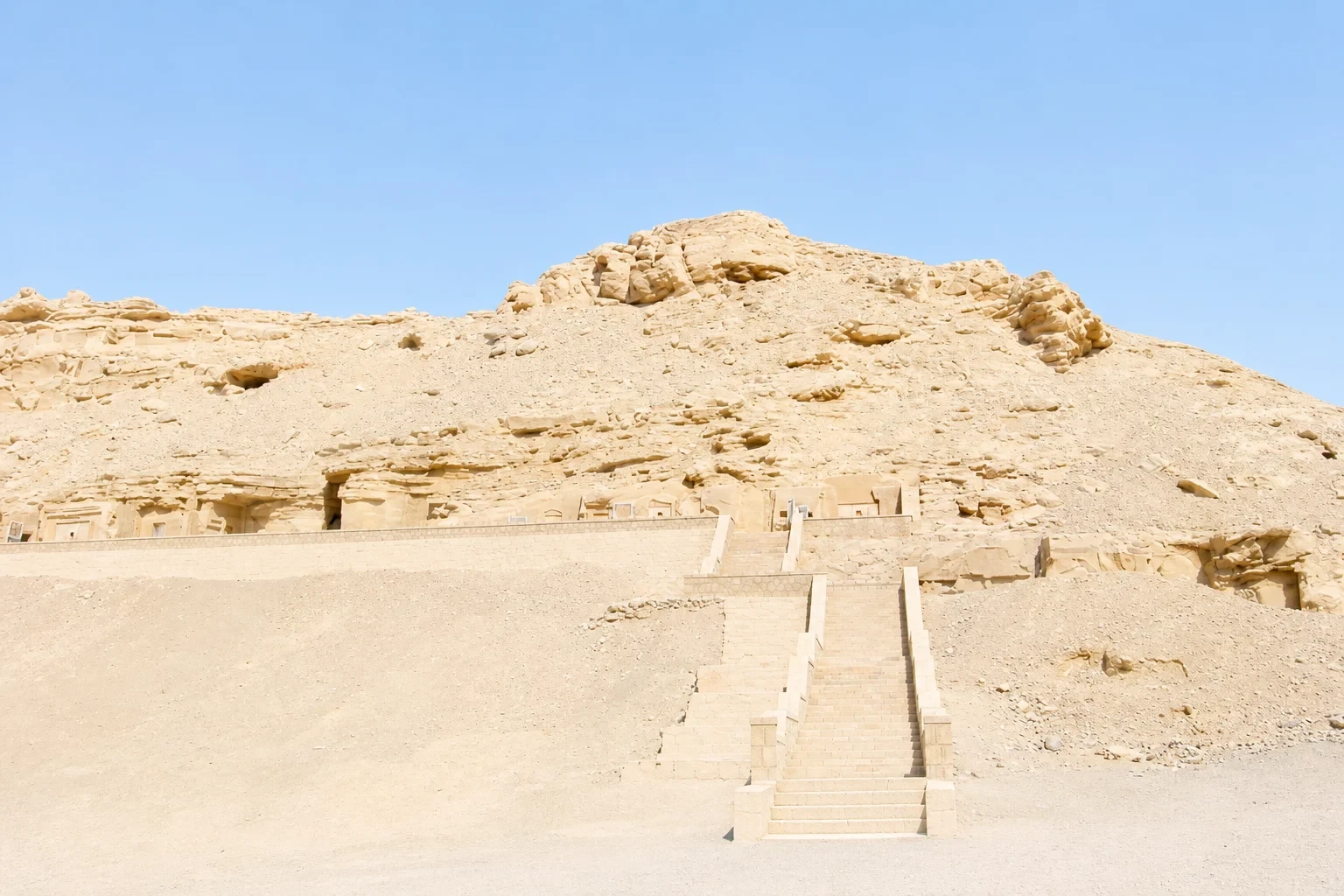

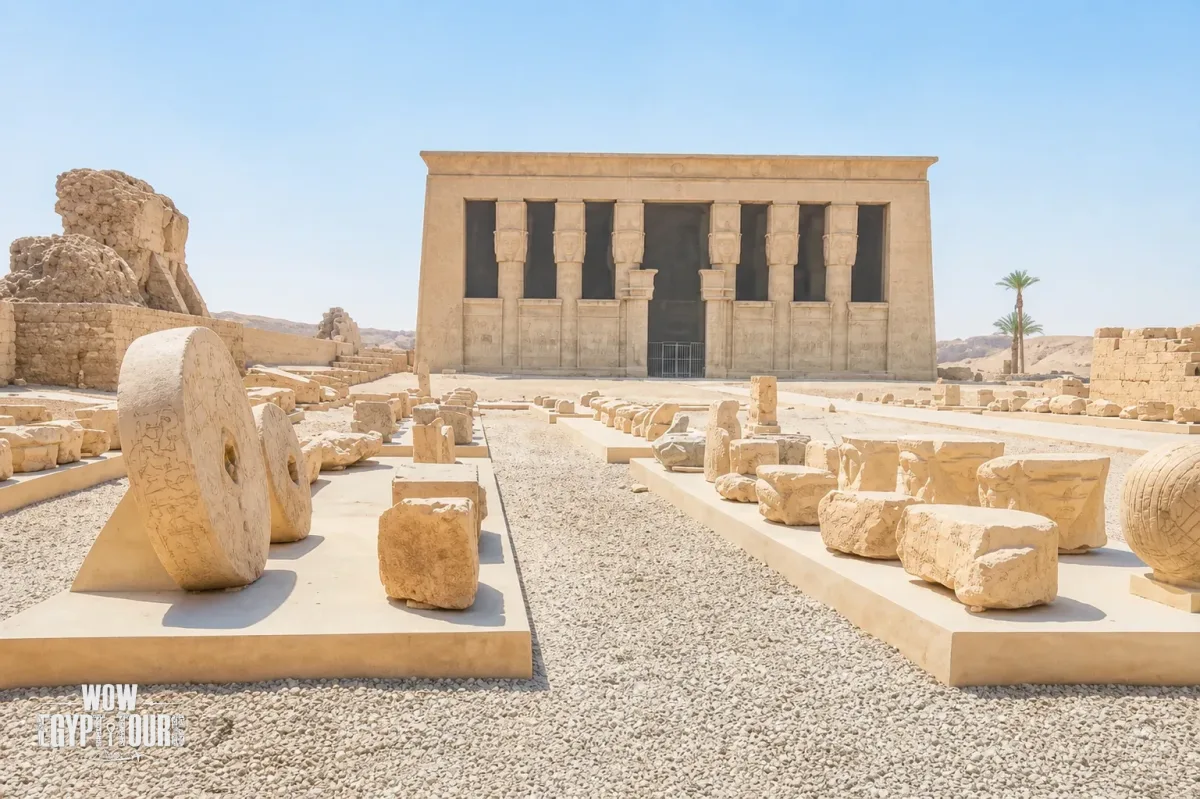

The Temple of Hathor at Dendera is one of the most magnificent, best-preserved, and most visually spectacular ancient monuments in Egypt, and a destination that every traveler with a serious interest in ancient Egyptian civilization must experience. Located approximately 60 kilometers north of Luxor on the west bank of the Nile River in the Qena Governorate of Upper Egypt, the Dendera Temple complex is the principal sacred precinct of the goddess Hathor, the divine mother, the lady of love, music, and beauty, and one of the most ancient and most universally venerated deities in the entire ancient Egyptian religious tradition. This extraordinary landmark sits at the heart of some of Egypt's greatest travel experiences, including Luxor Day Tours, Dendera Temple Tours, Abydos and Dendera combined tours, and tours from the major Red Sea ports, all of which WOW Egypt Tours proudly offers to travelers from around the world. The Temple of Hathor at Dendera is also a highlight of Egypt Tours Packages, Egypt Travel Packages, and Safaga Shore Excursions, making it one of the most rewarding and artistically breathtaking ancient sites available anywhere in Upper Egypt.
Built primarily during the Ptolemaic Period between approximately 54 BCE and 20 CE, with the main hypostyle hall completed under the Roman emperors Augustus and Tiberius, the Dendera Temple Egypt is celebrated above all for three extraordinary features that set it apart from every other ancient temple in the Nile Valley: the spectacular painted astronomical ceiling of the inner hypostyle hall, one of the most detailed and brilliantly colored ancient astronomical charts in existence; the famous Dendera Zodiac, the earliest known complete depiction of the Greco-Egyptian zodiac in circular form, now replaced at Dendera by a plaster cast while the original is in the Louvre in Paris; and the remarkable rooftop chapels and the processional staircase of the main temple, which preserve some of the most extraordinary ancient Egyptian painted relief decoration in existence. Visiting the Temple of Hathor at Dendera is not simply a sightseeing stop; it is an encounter with the most completely decorated and artistically accomplished Ptolemaic and Roman temple in all of Egypt, a building that allowed the ancient viewer to experience the divine presence of Hathor in an environment of overwhelming architectural and decorative grandeur.
The Temple of Hathor at Dendera can be visited as a single-day excursion from Luxor, and is most magnificently experienced when combined with the Temple of Seti I at Abydos, approximately 60 kilometers further north, for a comprehensive exploration of two of the most important ancient religious sites in Upper Egypt in a single extraordinary day.

Who Built The Temple Of Hathor At Dendera?
The Temple of Hathor at Dendera was built primarily by the Ptolemaic rulers of Egypt and by the Roman emperors who succeeded them, over a period of construction and decoration spanning more than a century. The foundation of the current main temple building was laid during the reign of Ptolemy XII Auletes, the father of Cleopatra VII, around 54 BCE, though earlier temples on the same sacred site at Dendera date back to the Old Kingdom and possibly even earlier. The construction of the main temple building continued under Julius Caesar, Augustus, and subsequently Tiberius, who completed the great outer hypostyle hall whose columns bear the famous Hathor-headed capitals. Later Roman emperors including Claudius, Nero, Domitian, Nerva, Trajan, Hadrian, Antoninus Pius, and Marcus Aurelius also left dedications at Dendera, making the temple complex one of the most extensively annotated Roman period buildings in Egypt.
An earlier Ptolemaic birth house, or mammisi, dating from the reign of Nectanebo I of the 30th Dynasty and subsequently rebuilt during the Ptolemaic Period, stands within the temple enclosure alongside a later Roman mammisi, giving the Dendera complex two birth houses that together document more than five centuries of the divine birth celebration tradition at this sacred site. The great enclosure wall of the Dendera complex, one of the best-preserved ancient Egyptian enclosure walls in existence, and the well-preserved sanctuary of Isis within the complex, together with several subsidiary chapels, create a sacred precinct of extraordinary completeness that gives visitors a uniquely comprehensive experience of a major ancient Egyptian temple complex in its full architectural context.
Who Was Hathor?
Hathor was one of the most ancient, most universally beloved, and most theologically complex goddesses in the entire ancient Egyptian religious tradition, worshipped from the earliest periods of Egyptian civilization as the divine mother, the lady of the sky, the mistress of love and music and beauty, the protector of women in childbirth, and the keeper of the western horizon where the dead entered the afterlife. Hathor was the cow goddess par excellence, depicted either as a beautiful woman wearing a headdress of cow horns enclosing the solar disk, or as a celestial cow whose body arched across the sky. She was the mother of Horus in his solar aspect, the divine consort of Ra, and the gentle and protective counterpart to the fierce lioness goddess Sekhmet, who represented the destructive power of the sun.
At Dendera, Hathor was venerated in her most complete and most elevated theological form as the Lady of Dendera, the mistress of the sacred precinct that was her principal home in the physical world. The annual festival celebrated at Dendera included the most important religious journey in the calendar of Upper Egyptian sacred life: the Beautiful Feast of Meeting, during which the cult statue of Hathor was placed in her sacred barque and sailed south along the Nile to Edfu, where she was reunited with Horus for the divine marriage celebrated in the Temple of Horus at Edfu. This great annual journey, documented in remarkable detail on the walls of both the Dendera and Edfu temples, was one of the most theatrically elaborate and publicly celebrated religious events in the ancient Egyptian year, and its memory gives the Dendera Temple a particular historical and emotional richness for visitors who understand its place in the sacred geography of the Upper Nile.
Dendera Temple Location In Egypt
The Temple of Hathor at Dendera is located on the west bank of the Nile River in the Qena Governorate of Upper Egypt, approximately 60 kilometers north of Luxor and 4 kilometers southwest of the provincial town of Qena. The temple complex is situated on a low desert escarpment above the agricultural plain of the Nile Valley, with views across the river valley and the Eastern Desert that make the site one of the most spaciously situated ancient temples in Upper Egypt. The town of Dendera, which gives its name to the site, is a small agricultural settlement adjacent to the temple complex, and the modern approach to the temple is through an open archaeological landscape that allows visitors to appreciate the full scale of the great enclosure wall and the various structures within the precinct from a distance before entering the complex. WOW Egypt Tours provides private air-conditioned transportation directly from Luxor hotels to the Temple of Hathor at Dendera on all Day Tours, Egypt Tours Packages, Egypt Travel Packages, and excursions from the Red Sea ports.
Dendera Temple Fun Facts
The Temple of Hathor at Dendera is the largest and most completely preserved Ptolemaic temple complex in Egypt after the Temple of Horus at Edfu, covering a total sacred precinct of approximately 40,000 square meters within the great enclosure wall. The main temple building measures approximately 81 meters long and 29 meters wide, and is entered through one of the most spectacular intact ancient Egyptian temple facades in existence, with six enormous Hathor-headed columns supporting the richly decorated ceiling of the outer hypostyle hall.
The Dendera Zodiac, the original of which was removed by French archaeologists in 1820 and is now in the Louvre Museum in Paris, is the earliest known complete depiction of the Greco-Egyptian zodiac in the standard circular format that became the basis for all subsequent western zodiacal tradition. The circular carved relief, showing the twelve signs of the zodiac together with the Egyptian decans and planetary deities arranged in a celestial map, was carved on the ceiling of one of the rooftop chapels of the main temple and is one of the most scientifically and historically significant astronomical documents surviving from the ancient world. A plaster cast of the zodiac is displayed at Dendera in its original location, allowing visitors to appreciate the extraordinary visual complexity and astronomical sophistication of this unique ancient monument.
The painted ceiling of the outer hypostyle hall at Dendera is one of the largest areas of intact ancient Egyptian painted decoration in existence, covering the complete ceiling vault of the hall with astronomical scenes in brilliant polychrome colors. Recent conservation work has removed centuries of soot from the ceiling, revealing a brilliance and complexity of color that represents the ancient painted surface in a condition closer to its original appearance than at any other comparably scaled ancient Egyptian temple.
Why Is The Dendera Temple Called By This Name In Egypt?
The modern name Dendera is derived from the ancient Egyptian name Ta-ynt-netjer, meaning the Town of the Pillar or the Divine Pillar, a name that reflects the ancient theological tradition of the site as a place where one of the primordial divine pillars supporting the vault of heaven was believed to be located. The Greek name for the town was Tentyris or Tentyra, derived from the same ancient Egyptian root, and the Greek name Tentyris was used by ancient Greek and Roman writers to refer both to the town and to the great temple of Hathor within it. The local Arabic name is Dandarah, a direct phonetic rendering of the ancient Greek form. The most ancient Egyptian name for the Hathor temple itself was Hwt-Sistrum, meaning the House of the Sistrum, a reference to the sacred musical instrument most closely associated with Hathor, whose rattle was believed to contain and express the divine creative power of the goddess herself.
Dendera Temple History
The history of the sacred site at Dendera stretches back to at least the Old Kingdom period around 2500 BCE, making it one of the oldest and most continuously venerated religious locations in the entire Nile Valley. Ancient texts record that the earliest temple at Dendera was founded by Pharaoh Pepi I of the 6th Dynasty, and subsequent temples were built and rebuilt by Middle Kingdom and New Kingdom pharaohs, each new construction incorporating or replacing the preceding structure and accumulating the sacred prestige of an ever-longer tradition of divine worship at this location.
The current main temple building was begun during the reign of Ptolemy XII Auletes around 54 BCE and completed under Augustus and Tiberius in the first decades of the Common Era, with the great outer hypostyle hall added last as the grand entrance to a fully decorated interior that had been accumulating its extraordinary painted and carved programme over approximately a century of artistic production. The Roman emperors who succeeded the Ptolemies continued to contribute to the temple decoration, and the cartouches of more than fifteen Roman emperors are preserved on the walls and columns of the Dendera complex. During the early Christian era, a large church was built within the temple enclosure and the faces of many divine figures in the temple interior were defaced by early Christian zealots, though the overall state of preservation of the temple remains extraordinary. The great enclosure wall and many subsidiary structures survived intact, and the temple was studied by the French scholars of the Napoleonic expedition in 1799 before being more systematically investigated by European archaeologists and Egyptologists throughout the 19th and 20th centuries.
The Story Of Building The Temple Of Hathor At Dendera
The decision to build the magnificent Ptolemaic temple at Dendera that visitors see today was motivated by the same combination of religious devotion, political legitimacy, and cultural continuity that drove the Ptolemaic rulers of Egypt to invest so heavily in temple building throughout the Nile Valley. For the Macedonian Greek rulers of Egypt, the construction of temples in the traditional ancient Egyptian style was one of the most important and most visible ways of asserting their legitimacy as pharaohs in the eyes of the native Egyptian population, and no divine cult was more universally beloved or more politically useful to patronize than that of Hathor, the great mother goddess whose worship embraced the entire Egyptian population regardless of social status.
The architectural programme of the Dendera Temple was designed to create the most complete and most magnificent earthly house for Hathor that the resources of the Ptolemaic state could achieve. The innermost sanctuary, known as the Holy of Holies, was designed as a literal house for the divine image of Hathor, its walls covered with the most sacred ritual texts and the most exquisitely carved divine figures, its darkness penetrated only by the light of ritual lamps during the performance of the daily cult. Around this innermost sanctuary, a series of surrounding corridors and chapels created a protective ring of divine presence, with each space dedicated to a specific aspect of the Hathor cult and the sacred festivals of the religious year. The outer hypostyle hall, completed last under the Roman emperors, provided the great public entrance to this sacred world, its eighteen enormous Hathor-headed columns announcing even before the visitor crossed the threshold that they were entering the domain of the goddess of love and beauty.
Dendera Temple Architecture And Key Features
The Outer Hypostyle Hall And Hathor Columns
The entrance to the main temple at Dendera is through the great outer hypostyle hall, one of the most spectacular and immediately recognizable ancient Egyptian architectural spaces in existence. The hall is supported by eighteen enormous columns arranged in three rows, each column bearing a four-sided Hathor capital showing the face of the goddess in two different moods: the full frontal Hathor face with cow ears, a nemes headdress, and a gentle expression on one side, and a slightly different presentation of the same divine face on the opposite side. These Hathor-headed column capitals, stacked in double registers with two faces per capital face, create an effect of overwhelming divine presence as the visitor enters the hall, surrounded on all sides by the calm and beautiful face of the goddess of love repeated forty-eight times across the eighteen capitals of the six front columns.
The ceiling of the outer hypostyle hall at Dendera is one of the most spectacular and largest intact ancient painted ceilings in existence, covering the complete vault of the hall with an astronomical programme of extraordinary detail and color. The ceiling shows the sky goddess Nut arched across the vault of heaven, the solar and lunar barques making their daily and nightly journeys across the sky, the 36 decans of the Egyptian astronomical calendar, the months and seasons of the year, and detailed astronomical charts of unprecedented complexity and scientific content. Conservation work in recent years has dramatically revealed the brilliance of the original painted colors beneath centuries of accumulated soot, and the restored ceiling is now one of the most visually overwhelming experiences available in any ancient Egyptian monument.
The Inner Hypostyle Hall
Beyond the outer hypostyle hall, the Temple of Hathor at Dendera continues through the inner hypostyle hall, a slightly smaller space supported by six more Hathor-headed columns, whose walls are decorated with scenes of the royal rituals performed at the great festivals of the Hathor cult. The inner hypostyle hall also gives access to the laboratory, a small room where the formulas for the sacred unguents and incense used in the daily cult of Hathor are inscribed in remarkable detail on the walls, providing one of the most complete surviving ancient Egyptian records of the preparation of ritual materials. The formula room is one of the most immediately practical and humanly accessible spaces in the temple, with its detailed ingredient lists and preparation instructions creating a direct connection with the daily working life of the ancient Dendera priesthood.
The Inner Sanctuary And Surrounding Chapels
The innermost sanctuary of the Temple of Hathor at Dendera, the Holy of Holies where the sacred image of the goddess was kept in her portable shrine, is accessed through a progressively narrowing sequence of vestibules and corridors that take the visitor deeper and deeper into the architectural and spiritual heart of the building. The walls of the inner sanctuary are covered with the most sacred ritual texts and the most exquisitely detailed carved relief figures in the entire temple, rendered with a precision and delicacy of line that is characteristic of the finest Ptolemaic decorative carving. Around the main sanctuary, a series of eleven small chapels are dedicated to specific aspects of the Hathor cult and to various deities associated with the sacred geography of Dendera, creating a complete theological world in miniature within the inner precincts of the temple.
The Rooftop Chapels And The Dendera Zodiac
One of the most extraordinary and least anticipated experiences at the Temple of Hathor at Dendera is the ascent via processional staircases to the roof of the main temple building, where a series of small open-air chapels and enclosed sanctuary spaces were used for specific rituals connected with the new year festival and the resurrection of the dead. The walls of the staircase passages are decorated with detailed relief scenes showing the Ptolemaic ruler leading the procession of priests carrying the sacred portable shrine of Hathor up to the roof, and the rooftop chapels themselves are decorated with some of the most intimate and emotionally charged ritual scenes in the entire Dendera complex. In one of the rooftop chapels, a plaster cast of the famous Dendera Zodiac is displayed in its original position on the ceiling, allowing visitors to appreciate in situ the astronomical context of this celebrated monument whose original was removed to Paris in 1820.
The Crypt Of Dendera
Beneath the main temple building, a series of underground crypts are accessible to visitors, revealing some of the most extraordinary and most recently conserved painted relief decoration in the entire temple complex. These basement crypts, carved into the bedrock beneath the temple floor, were used for the storage of sacred cult objects including the golden statue of Hathor herself, and their walls are decorated with detailed relief scenes showing the objects stored within them, including sacred musical instruments, divine standards, and ritual vessels. The crypt decoration includes some of the finest carved relief work at Dendera, executed in a scale that makes it simultaneously intimate and overwhelming, and includes one of the most celebrated and most discussed individual images in all of ancient Egyptian art: a figure that some modern observers have interpreted as depicting an ancient electric light bulb or other anachronistic technology, though Egyptologists consistently identify it as a standard ancient Egyptian lotus and serpent in a djed pillar composition.
The Isis Chapel
Within the great enclosure of the Dendera complex, a small but beautifully decorated sanctuary of Isis stands to the northeast of the main temple, providing a separate sacred space for the worship of the great mother goddess whose mythology was so closely intertwined with that of Hathor. The Isis chapel at Dendera, built during the Ptolemaic Period, retains significant areas of its original painted and carved decoration, with the distinctive imagery of Isis and Osiris rendered in the fine-line style characteristic of the Ptolemaic decorative tradition. The chapel provides one of the most intimate and best-preserved examples of Ptolemaic divine cult architecture in the Dendera complex.
The Birth Houses
Two birth houses or mammisi stand within the Dendera temple precinct, representing two different periods of the long tradition of divine birth celebration at this sacred site. The earlier mammisi, begun by Nectanebo I of the 30th Dynasty and completed during the Ptolemaic Period, stands in a ruined state to the west of the main temple entrance. The later Roman mammisi, built by the Roman emperor Augustus, stands in a much better state of preservation directly in front of the main temple facade and is one of the most completely preserved Roman period birth houses in Egypt, with its distinctive Bes-pillar colonnade and decorated interior walls providing one of the finest examples of the mammisi architectural type available anywhere in the Nile Valley.
The Sacred Lake
Within the great enclosure of the Dendera complex, the large rectangular sacred lake serves the same purification and ritual function as the sacred lakes at other major Egyptian temple complexes, including the celebrated Sacred Lake of Karnak Temple. The Dendera sacred lake is well preserved and its surrounding masonry retaining walls are intact, giving visitors a clear impression of the original sacred lake as a body of pure water within the temple precinct used by the priests for ritual purification before performing the daily cult of Hathor.
Why Is The Temple Of Hathor At Dendera Important?
The Temple of Hathor at Dendera is important for several interconnected reasons that together make it one of the most significant ancient monuments in Egypt. Architecturally, it is the largest and most completely preserved Ptolemaic temple complex in Egypt after Edfu, and the best-preserved example of the standard Ptolemaic temple plan with its complete complement of hypostyle halls, inner sanctuaries, surrounding chapels, crypts, rooftop chapels, birth houses, and sacred lake all preserved within an intact enclosure wall. This architectural completeness allows visitors to experience the full spatial and programmatic complexity of a major ancient Egyptian temple complex in a way that is impossible at more fragmentary sites.
Astronomically, the Dendera complex preserves one of the most important collections of ancient astronomical imagery and text in the world, including the famous zodiac, the outer hypostyle ceiling, and the comprehensive astronomical programme of the inner rooms, making Dendera an essential site for the history of astronomy and for understanding the transmission of astronomical knowledge from the ancient Egyptian priestly tradition into the Greco-Roman world. Artistically, the painted and carved decoration of the Dendera Temple represents the highest achievement of the late Ptolemaic and early Roman decorative tradition in Egypt, with a quality of carving and a sophistication of iconographic programme that is unmatched in any other temple of the same period. WOW Egypt Tours includes the Temple of Hathor at Dendera as a featured destination on Luxor Day Tours, combined Abydos and Dendera Tours, Egypt Tours Packages, and excursions from the Red Sea ports.
What Are Some Interesting Facts About The Dendera Temple?
The Dendera Zodiac And Its Journey To Paris
The original Dendera Zodiac, carved on the ceiling of one of the rooftop chapels of the main temple, is one of the most famous and most controversial ancient artifacts in the history of Egyptology. Carved during the reign of Ptolemy XII Auletes in the 1st century BCE, the circular zodiac depicts the twelve signs of the Greco-Egyptian zodiac together with the Egyptian decans and the five planets visible to the naked eye, arranged in a complete circular celestial map that is the earliest known depiction of the standard zodiacal circle in the format that became the basis for all subsequent western astrological tradition. The zodiac was sawn from its original position on the chapel ceiling by French engineer Jean-Baptiste Lelorrain in 1820 and transported to Paris, where it was purchased by the French government and is now displayed in the Louvre Museum. A plaster cast of the original is displayed at Dendera in its original architectural position, allowing visitors to appreciate the extraordinary astronomical and artistic achievement of the ancient carvers in its original context while the original rests in the Paris museum.
Cleopatra And Caesar At Dendera
The outer rear wall of the main temple at Dendera preserves one of the most celebrated and most historically fascinating carvings in Egypt: a large relief showing the legendary Queen Cleopatra VII, the last Ptolemaic ruler of Egypt and perhaps the most famous woman in the ancient world, in her ceremonial role as pharaoh making offerings before the gods, accompanied by her son by Julius Caesar, the young Ptolemy XV Caesarion. This image of Cleopatra, carved on the outer wall of the temple she herself helped to build, is one of the very few surviving ancient monumental representations of Egypt's most celebrated queen and provides a direct connection between the most glamorous story in the ancient world and the sacred precinct of the goddess of love at Dendera. The carving of Cleopatra on the Dendera temple wall has become one of the most widely reproduced images of the ancient queen in scholarly and popular literature, and encountering it in its original context on the temple wall is one of the most powerful historical experiences available at the site.
The Largest Intact Painted Ceiling In Egypt
The painted astronomical ceiling of the outer hypostyle hall at Dendera is widely regarded as the largest intact area of ancient Egyptian painted decoration in existence, covering the complete ceiling vault of a major temple entrance hall in brilliant polychrome colors. Recent conservation work has removed the thick black layer of soot deposited by the fires of Coptic Christian inhabitants who lived in the temple for several centuries after its abandonment as a pagan religious institution, revealing beneath the soot a painted surface of extraordinary quality, complexity, and color that had been invisible since at least the 7th century CE. The blues, greens, yellows, and reds of the recovered ceiling painting are among the most vivid and well-preserved colors in any ancient Egyptian monument, and the astronomical programme they decorate is of extraordinary scientific complexity, representing the full knowledge of the ancient Egyptian astronomical tradition in its most elaborate and most complete surviving form.
What Is So Special About The Temple Of Hathor At Dendera?
The Face Of The Goddess
What makes the Temple of Hathor at Dendera uniquely special among all the ancient temples of the Upper Egyptian Nile Valley is the overwhelming and immediate quality of divine presence that the temple creates through the repetition of the Hathor face on its entrance columns. Walking toward the entrance of the Dendera Temple and seeing for the first time the six enormous columns of the outer hypostyle hall facade, each bearing four Hathor faces that look outward in every direction with expressions of calm, maternal beauty, is one of the most powerful first encounters with an ancient Egyptian temple available anywhere in Egypt. The face of Hathor, repeated forty-eight times across the entrance facade, watches every visitor approaching the temple from every angle, creating a unique sensation of being simultaneously welcomed and observed by the divine presence of the goddess herself, an effect that no other temple entrance in Egypt can replicate.
The Most Complete Ptolemaic Religious Complex In Egypt
The Temple of Hathor at Dendera also offers the most complete surviving example of a major Ptolemaic religious complex in Egypt, with its main temple, two birth houses, Isis sanctuary, sacred lake, well, and great enclosure wall all preserved within a single visit. Understanding how the various elements of a great ancient Egyptian temple precinct related to each other architecturally, ritually, and theologically is much easier at Dendera than at any other Ptolemaic site, because so much more of the original context survives at Dendera than anywhere else. For any traveler who wants to understand the spatial and theological logic of the ancient Egyptian temple as a complete religious institution rather than simply as a collection of impressive architectural elements, Dendera is the essential destination.
Dendera Temple Through The Ages: From Ancient Egypt To The Present
The history of Dendera after the Ptolemaic and Roman periods is one of gradual transformation from one of the most important religious sites in Egypt to a abandoned and partially damaged temple complex, and ultimately to one of the most visited ancient monuments in Upper Egypt. During the early Christian era, a large Christian basilica was built within the temple enclosure using blocks quarried from the ancient structures, and Coptic Christian hermits occupied the temple interior for several centuries, lighting fires for warmth and cooking that deposited the thick soot layer on the painted ceilings and making the deliberate defacement of many of the carved divine faces in the interior. The Arabic name Dandara was applied to the site during the medieval period, and the temple was visited and documented by a succession of Arab geographers and later European travelers.
The scientific rediscovery of Dendera began with the Napoleonic expedition of 1798 to 1799, whose savants produced the first detailed plans and descriptions of the temple complex. The removal of the Dendera Zodiac to Paris in 1820 brought the site to international attention, and subsequent decades saw systematic Egyptological investigation by scholars including Auguste Mariette, who conducted excavations at Dendera in the 1870s. The definitive scholarly publication of the Dendera temple decoration was produced by the French Egyptological mission led by Emile Chassinat between 1934 and 1952, filling fifteen volumes of text and plates and remaining the standard reference work on the temple to the present day. Today the Dendera complex receives hundreds of thousands of visitors per year and is recognized by WOW Egypt Tours as one of the most rewarding and most visually spectacular ancient destinations available on any Upper Egypt itinerary.
Dendera Temple UNESCO World Heritage Status
The Temple of Hathor at Dendera is part of the broader landscape of Upper Egyptian heritage recognized internationally as among the most outstanding cultural concentrations in the world. The Nile River Valley of Upper Egypt between Luxor and the Qena region, encompassing the Dendera complex alongside the Temple of Seti I at Abydos further north and the extraordinary concentration of monuments in the Luxor area to the south, represents one of the most significant ancient heritage landscapes in the world. The Dendera Temple is recognized internationally as the finest surviving example of a complete Ptolemaic religious complex and one of the most important individual ancient monuments in the Upper Egyptian Nile Valley for its architectural completeness, its astronomical content, and the extraordinary quality of its painted and carved decoration.
Best Time To Visit The Temple Of Hathor At Dendera
The best time to visit the Temple of Hathor at Dendera is during the cooler months from October through April, when temperatures in Upper Egypt are moderate and both the outdoor approach to the temple and the enclosed interior spaces are comfortable for extended exploration. Because a significant proportion of the temple interior is enclosed under its largely intact roof, including the outer hypostyle hall and the inner sanctuary complex, the Dendera Temple is one of the more manageable summer visits among the major ancient sites of Upper Egypt. If visiting during summer, plan to arrive at the temple as early as possible in the morning before the outdoor areas including the rooftop chapels become uncomfortably hot. WOW Egypt Tours plans all day tour visits to the Temple of Hathor at Dendera at the optimal time of day for the season and for the specific itinerary, whether as a single-site visit from Luxor or combined with the Temple of Seti I at Abydos.
Dendera Temple Opening Hours
The Temple of Hathor at Dendera is open to visitors every day of the week, including public holidays. The temple opens at 7:00 AM and closes at 5:00 PM from October to April, and from 7:00 AM to 6:00 PM from May to September. The rooftop chapels are accessible during normal opening hours and are part of the standard visit to the temple complex. Visitors who prefer the most peaceful and uncrowded experience should arrive as early as possible after opening, before the main tourist groups arrive from Luxor.
Dendera Temple Entrance Fees
Adults: EGP 300
Students: EGP 150
Keep your ticket safe throughout your visit. Entrance fees to the Temple of Hathor at Dendera are included in all Dendera Temple Tours, combined Abydos and Dendera Tours, Luxor Day Tours, Egypt Tours Packages, and excursions from the Red Sea ports booked through WOW Egypt Tours.
How To Get To The Temple Of Hathor At Dendera
The Temple of Hathor at Dendera is located approximately 60 kilometers north of Luxor on the west bank of the Nile River, reached from Luxor by private car or minibus along the main Nile Valley highway in approximately one hour to one hour and fifteen minutes. The town of Qena on the east bank of the Nile is the nearest significant urban center, approximately 4 kilometers from the temple site, and is connected to the west bank by road bridge. From Sohag or Assiut to the north, the temple is accessible by road in approximately two to three hours.
For travelers coming from the Red Sea ports, the Temple of Hathor at Dendera is accessible from Safaga Port via the Eastern Desert road in approximately 2.5 to 3 hours, making it a feasible single-day destination from Safaga on its own or combined with the nearby Temple of Seti I at Abydos as an overnight excursion. All Luxor Day Tours, combined Abydos and Dendera Tours, and Red Sea port excursions with WOW Egypt Tours include private air-conditioned transportation directly to and from the Temple of Hathor at Dendera.
How Long To Spend At The Temple Of Hathor At Dendera
Most visitors spend between one and a half and two and a half hours at the Temple of Hathor at Dendera, which is sufficient time to walk through the complete temple programme from the outer hypostyle hall to the inner sanctuary, ascend to the rooftop chapels, view the Dendera Zodiac cast in its original position, descend through the processional staircase decorated with offering reliefs, visit the accessible crypts beneath the temple, and explore the birth houses and the sacred lake within the outer enclosure. Visitors with a particular interest in the astronomical ceiling, the Cleopatra relief, or the theological programme of the inner sanctuaries may wish to allow two and a half to three hours.
The Temple of Hathor at Dendera is ideally combined in a single day from Luxor with the Temple of Seti I at Abydos, approximately 60 kilometers further north, for the most comprehensive and contrasting ancient temple experience available on any single day from Luxor. Allow approximately six to seven hours from Luxor for the combined Abydos and Dendera day tour, with an early morning departure to maximize time at both sites.
Tips For Visiting The Temple Of Hathor At Dendera
Do not miss the ascent to the rooftop, which is one of the most distinctive and most memorable experiences at the Dendera Temple and which most visitors find completely unexpected in its beauty and intimacy. Look up at the painted astronomical ceiling of the outer hypostyle hall from directly below to appreciate the full scale and the extraordinary color of the recently restored painting. Ask your guide to locate the Cleopatra and Caesarion relief on the exterior rear wall of the main temple, which is one of the most historically significant and most immediately compelling single carved images in Egypt. Visit the underground crypts if they are accessible on the day of your visit, as the carved decoration in these underground spaces is among the finest and most intimate in the entire temple. A licensed Egyptologist guide from WOW Egypt Tours is essential: the astronomical content of the ceiling and the zodiac, the theological significance of the rooftop chapels, and the historical importance of the Cleopatra relief are all greatly enriched by expert explanation. Do not touch any painted or carved surfaces anywhere in the temple.
What To Wear At The Temple Of Hathor At Dendera
The Temple of Hathor at Dendera combines enclosed interior spaces with open-air courtyards, rooftop chapels, and the outer enclosure area, requiring practical and adaptable clothing. Lightweight, breathable clothing covering the shoulders and knees is recommended for both comfort and respect. A wide-brimmed hat and sunscreen are essential for the rooftop visit and the outdoor areas within the enclosure. Comfortable, closed-toe walking shoes with good grip are necessary for the rooftop staircases, the uneven stone floors within the temple, and the steps down into the accessible crypts. For the enclosed interior, a light layer is useful in winter as the thick stone walls and intact roof can make the interior noticeably cooler than the outside temperature in the colder months.
Photography At The Temple Of Hathor At Dendera
The Temple of Hathor at Dendera is one of the finest photography destinations in Upper Egypt, offering an extraordinary combination of the spectacular Hathor-column facade, the brilliant painted astronomical ceiling, the intimate carved reliefs of the inner sanctuary, the rooftop chapels with their zodiac cast, and the panoramic views across the Nile Valley from the temple roof. Photography with a standard camera or smartphone is permitted throughout most areas of the complex. Flash photography is strictly prohibited near all painted and carved surfaces. For the painted ceiling of the outer hypostyle hall, a camera with good low-light performance and a wide-angle lens is strongly recommended to capture the full scale of the ceiling programme. For the crypts and inner sanctuary rooms, similarly good low-light capability is essential. The rooftop offers spectacular panoramic photography of the Nile Valley landscape and the Dendera complex below. Professional photography or filming with specialized equipment requires a separate permit from Egypt's Ministry of Tourism and Antiquities.
Dendera Temple Tours
Single Attraction Visit: Dendera Temple Tour From Luxor
This half-day or full-day tour from Luxor visits the Temple of Hathor at Dendera as a single dedicated excursion. It is suitable for travelers with a particular interest in Ptolemaic and Roman temple art, ancient Egyptian astronomy and the Dendera Zodiac, the worship of Hathor and the divine feminine in ancient Egypt, or the historical period of Cleopatra.
What Is Covered
Full guided visit of the Temple of Hathor at Dendera including the outer hypostyle hall with the Hathor columns and the painted astronomical ceiling, the inner hypostyle hall and the laboratory room with its sacred unguent formulas, the inner sanctuary complex with its surrounding chapels, the accessible underground crypts, the rooftop chapels with the Dendera Zodiac cast and the processional staircase, the Cleopatra and Caesarion relief on the exterior rear wall, the Roman birth house, and the sacred lake. Optional visit to the Isis chapel within the enclosure.
Duration
1.5 to 2.5 hours inside the temple complex, plus approximately 1 hour each way from Luxor by private vehicle.
Includes
Private air-conditioned transportation from Luxor, private licensed Egyptologist guide, and entrance fees. Available for morning and afternoon departures.
Combined Abydos And Dendera Tour From Luxor
This full-day tour from Luxor combines the Temple of Hathor at Dendera with the Temple of Seti I at Abydos, creating the most comprehensive and contrasting ancient temple experience available on any single day excursion from Luxor. Abydos is the sacred city of Osiris, the most theologically significant site in ancient Egypt, and its New Kingdom temple is one of the finest examples of ancient Egyptian painted relief decoration in existence. Combined with the Ptolemaic grandeur of Dendera, the two temples offer an experience that spans more than a thousand years of ancient Egyptian sacred architecture and divine worship.
What Is Covered
The Temple of Seti I at Abydos, approximately 130 kilometers north of Luxor and 60 kilometers north of Dendera, with a full guided visit of the main temple including the seven sanctuary chapels dedicated to the seven principal deities, the extraordinary painted relief decoration, the King List of Abydos, the hypostyle hall, and the enigmatic Osireion. The Temple of Hathor at Dendera with a full guided visit of all the major spaces and features described in the Single Attraction visit above.
Duration
Full day from Luxor, approximately 1.5 to 2 hours at each temple, with travel time between sites included. An early morning departure from Luxor of approximately 6:00 AM is recommended to maximize time at both temples.
Includes
Private air-conditioned transportation from Luxor, private licensed Egyptologist guide, and entrance fees to both temples. Available for early morning departures only due to the total distance involved.
Safaga Shore Excursion: Single Day To Dendera Temple
Safaga Port is located on the Red Sea coast, approximately 180 kilometers from the Temple of Hathor at Dendera via the Eastern Desert road through the Qena region. Unlike the more distant sites of Edfu and Kom Ombo, the Dendera Temple is accessible from Safaga Port as a single-day shore excursion, with the journey taking approximately 2.5 to 3 hours each way and leaving sufficient time for a complete guided visit to the temple within a standard port day.
What Is Covered
Full guided visit of the Temple of Hathor at Dendera including the outer hypostyle hall with the painted astronomical ceiling and the Hathor columns, the inner sanctuary complex, the accessible crypts, the rooftop chapels with the Dendera Zodiac cast, the Cleopatra and Caesarion relief on the exterior wall, the Roman birth house, and the sacred lake.
Duration
Full day from port departure to port return, approximately 10 to 11 hours including transfers.
Includes
Private air-conditioned vehicle from Safaga Port, private licensed Egyptologist guide, entrance fees to the Temple of Hathor at Dendera, and return transfer to the ship. All Safaga Shore Excursions are coordinated around each ship's port schedule to guarantee return to the vessel before departure.
Safaga Shore Excursion: Overnight To Abydos And Dendera
For travelers wishing to combine both the Temple of Seti I at Abydos and the Temple of Hathor at Dendera from Safaga Port, WOW Egypt Tours offers an overnight shore excursion programme that makes both temples accessible within two days from the Red Sea.
Itinerary
Day 1: Depart Safaga Port by private air-conditioned vehicle. Travel to the Temple of Seti I at Abydos, approximately 3 hours via the Eastern Desert road and Nile Valley highway. Full guided visit of the Temple of Seti I at Abydos including the seven sanctuary chapels, the King List, the Osireion, and the Ramesses II temple. Travel south to Luxor, approximately 1.5 hours. Guided visit of Luxor Temple in the evening. Overnight in Luxor at a selected hotel.
Day 2: Early morning guided visit of Karnak Temple. Travel north to the Temple of Hathor at Dendera, approximately 1 hour from Luxor. Full guided visit of the Dendera Temple including the outer hypostyle hall, the rooftop chapels with the Dendera Zodiac cast, the underground crypts, the Cleopatra relief, and the sacred lake. Return to Safaga Port via the Eastern Desert road, approximately 2.5 to 3 hours. Return to ship.
Includes
Private air-conditioned vehicle throughout, private licensed Egyptologist guide, one night accommodation in Luxor, entrance fees to all included sites, and return transfer to the ship. All overnight Safaga Shore Excursions are coordinated with each ship's schedule to confirm departure and return timings in advance.
Luxor Day Tours Combined
The Temple of Hathor at Dendera is ideally visited as part of a comprehensive Upper Egypt itinerary from Luxor that also covers the great monuments of the Luxor area. WOW Egypt Tours offers a range of multi-day Luxor programmes that combine the Dendera Temple with the Valley of the Kings, Karnak Temple, Luxor Temple, and the West Bank monuments to create the most complete Upper Egypt experience available within any given number of days.
Dahabiya Nile River Cruise
A Dahabiya Nile River Cruise is a small-vessel sailing experience on the Nile between Luxor and Aswan aboard a traditional wooden dahabiya. WOW Egypt Tours operates dahabiya cruises with private cabins, all meals, a private licensed Egyptologist guide on board, and guided shore excursions at every stop. The Dendera Temple is located north of Luxor rather than on the Luxor-Aswan river route, so it is not included as a standard cruise stop. However, the Dendera Temple can be visited as an optional private excursion from Luxor on the first or last day of any Dahabiya cruise itinerary, allowing Dahabiya cruise passengers to combine the river experience with a visit to this extraordinary temple.
4 Days 3 Nights Dahabiya Nile River Cruise From Aswan To Luxor
Route: Aswan to Luxor, sailing north.
Itinerary
Day 1: Embarkation in Aswan. Visit to Philae Temple and the Unfinished Obelisk. Sail north to Kom Ombo. Guided visit to Kom Ombo Temple and Crocodile Museum. Continue to Gebel el Silsila. Overnight on board.
Day 2: Guided visit to Gebel el Silsila. Sail to the Village of Basaw. Guided visit to Village of Basaw. Continue to Edfu. Guided visit to the Temple of Horus at Edfu. Overnight on board.
Day 3: Sail to El Kab. Guided visit to El Kab Tombs. Sail to El Hagaz Island. Swimming stop. Overnight on board.
Day 4: Sail to Esna. Visit Khnum Temple at Esna. Disembarkation in Esna. Transfer to Luxor, approximately 55 kilometers (35 miles). Optional private excursion to Dendera Temple from Luxor on the disembarkation day, subject to arrival time.
Includes
Private cabin, all meals on board, private licensed Egyptologist guide, entrance fees to all site visits, and private transfers. Dendera Temple excursion available as an optional addition.
5 Days 4 Nights Dahabiya Nile River Cruise From Luxor To Aswan
Route: Luxor to Aswan, sailing south.
Itinerary
Day 1: Optional private excursion to Dendera Temple from Luxor on the embarkation day. Embarkation in Luxor. Transfer to Esna, approximately 55 kilometers (35 miles). Visit Khnum Temple at Esna. Sail to El Hagaz Island. Overnight on board.
Day 2: Sail to El Kab. Guided visit to El Kab Tombs. Continue to Edfu. Guided visit to the Temple of Horus at Edfu. Sail to the Village of Basaw. Guided visit to Village of Basaw. Overnight on board.
Day 3: Sail to Gebel el Silsila. Guided visit to Gebel el Silsila. Sail south to Kom Ombo. Guided visit to Kom Ombo Temple and Crocodile Museum. Sail to Daraw Village. Overnight on board.
Day 4: Guided visit to Daraw Village. Sail to Herbiab Island. Swimming stop. Philae Sound and Light Show. Overnight on board.
Day 5: Optional Abu Simbel visit available by air or road. Guided visits to Philae Temple, the High Dam, and the Unfinished Obelisk. Disembarkation in Aswan.
Includes
Private cabin, all meals on board, private licensed Egyptologist guide, entrance fees to all site visits, and private transfers. Dendera Temple excursion available as an optional addition on embarkation day.
8 Days 7 Nights Dahabiya Nile River Cruise Round Trip From Luxor (Via Aswan)
Route: Luxor and Aswan, sailing north and south.
Itinerary
Day 1: Embarkation in Luxor. Transfer to Esna, approximately 55 kilometers (35 miles). Visit Khnum Temple at Esna. Sail to El Hagaz Island. Overnight on board.
Day 2: Sail to El Kab. Continue to Edfu. Guided visit to the Temple of Horus at Edfu. Sail to the Village of Basaw. Guided visit to Village of Basaw. Overnight on board.
Day 3: Sail to Gebel el Silsila. Sail south to Kom Ombo. Guided visit to Kom Ombo Temple and Crocodile Museum. Sail to Daraw Village. Overnight on board.
Day 4: Guided visit to Daraw Village. Sail to Herbiab Island. Swimming stop. Philae Sound and Light Show. Overnight on board.
Day 5: Optional Abu Simbel visit available by air or road. Guided visits to Philae Temple, the High Dam, and the Unfinished Obelisk. Sail north to Kom Ombo. Continue to Gebel el Silsila. Overnight on board.
Day 6: Guided visit to Gebel el Silsila. Sail to the Village of Basaw. Continue to Edfu. Guided visit to the Temple of Horus at Edfu. Overnight on board.
Day 7: Sail to El Kab. Guided visit to El Kab Tombs. Sail to El Hagaz Island. Swimming stop. Overnight on board.
Day 8: Disembarkation in Esna. Transfer to Luxor. Optional private excursion to Dendera Temple from Luxor on the disembarkation day.
Includes
Private cabin, all meals on board, private licensed Egyptologist guide, entrance fees to all site visits, and private transfers. Dendera Temple excursion available as an optional addition.
8 Days 7 Nights Dahabiya Nile River Cruise Round Trip From Aswan (Via Luxor)
Route: Luxor and Aswan, sailing north and south.
Itinerary
Day 1: Embarkation in Aswan. Visit to Philae Temple and the Unfinished Obelisk. Sail north to Kom Ombo. Guided visit to Kom Ombo Temple and Crocodile Museum. Continue to Gebel el Silsila. Overnight on board.
Day 2: Guided visit to Gebel el Silsila. Sail to the Village of Basaw. Continue to Edfu. Guided visit to the Temple of Horus at Edfu. Overnight on board.
Day 3: Sail to El Kab. Guided visit to El Kab Tombs. Sail to El Hagaz Island. Swimming stop. Overnight on board.
Day 4: Sail to Esna. Visit Khnum Temple at Esna. Sail to El Hagaz Island. Overnight on board.
Day 5: Sail to El Kab. Continue to Edfu. Guided visit to the Temple of Horus at Edfu. Sail to the Village of Basaw. Guided visit to Village of Basaw. Overnight on board.
Day 6: Sail to Gebel el Silsila. Sail south to Kom Ombo. Guided visit to Kom Ombo Temple and Crocodile Museum. Sail to Daraw Village. Overnight on board.
Day 7: Guided visit to Daraw Village. Sail to Herbiab Island. Swimming stop. Philae Sound and Light Show. Overnight on board.
Day 8: Disembarkation in Aswan.
Includes
Private cabin, all meals on board, private licensed Egyptologist guide, entrance fees to all site visits, and private transfers.
Luxor And Aswan Nile River Cruise
The Luxor and Aswan Nile River Cruise is a standard Nile cruise product operated aboard a full-size cruise ship between Luxor and Aswan. WOW Egypt Tours operates this cruise in both directions with private licensed Egyptologist guides, all meals included, private cabins, and guided shore excursions at every port of call. The Temple of Hathor at Dendera is located north of Luxor rather than on the standard Luxor-Aswan cruise route, and is not included as a standard cruise stop. Cruise passengers who wish to visit Dendera should arrange a private day excursion from Luxor on the first or last day of their cruise itinerary.
4 Days 3 Nights Luxor And Aswan Nile River Cruise From Aswan To Luxor
Route: Aswan to Luxor, sailing north.
Itinerary
Day 1: Embarkation in Aswan. Guided visits to Philae Temple, the High Dam, and the Unfinished Obelisk. Overnight on board in Aswan.
Day 2: Sail north to Kom Ombo. Guided visit to Kom Ombo Temple and Crocodile Museum. Continue to Edfu. Overnight on board.
Day 3: Guided visit to the Temple of Horus at Edfu. Continue north toward Luxor. Pass through the Esna Lock. Optional visit to Khnum Temple at Esna. Guided visit to Luxor Temple and Karnak Temple. Overnight on board in Luxor.
Day 4: Optional Sunrise Hot Air Balloon available. Guided visits to Valley of the Kings, Queen Hatshepsut Temple, and Colossi of Memnon. Optional private excursion to Dendera Temple available on disembarkation day after standard Luxor West Bank programme. Disembarkation in Luxor.
Includes
Private cabin, all meals on board, private licensed Egyptologist guide, entrance fees to all temple visits, and private transfers. Dendera Temple excursion available as an optional addition on disembarkation day.
5 Days 4 Nights Luxor And Aswan Nile River Cruise From Luxor To Aswan
Route: Luxor to Aswan, sailing south.
Itinerary
Day 1: Optional private excursion to Dendera Temple available on embarkation day before standard Luxor programme. Embarkation in Luxor. Guided visits to Luxor Temple and Karnak Temple. Overnight on board in Luxor.
Day 2: Optional Sunrise Hot Air Balloon available. Guided visits to Valley of the Kings, Queen Hatshepsut Temple, and Colossi of Memnon. Pass through the Esna Lock. Visit to Khnum Temple at Esna. Sail south to Edfu. Overnight on board.
Day 3: Guided visit to the Temple of Horus at Edfu. Continue to Kom Ombo. Guided visit to Kom Ombo Temple and Crocodile Museum. Overnight on board.
Day 4: Continue south toward Aswan. Guided visits to Philae Temple, the High Dam, and the Unfinished Obelisk. Overnight on board in Aswan.
Day 5: Optional Abu Simbel visit available by air or road. Disembarkation in Aswan.
Includes
Private cabin, all meals on board, private licensed Egyptologist guide, entrance fees to all temple visits, and private transfers. Dendera Temple excursion available as an optional addition on embarkation day.
8 Days 7 Nights Luxor And Aswan Nile River Cruise Round Trip From Luxor (Via Aswan)
Route: Luxor and Aswan, sailing north and south.
Itinerary
Day 1: Embarkation in Luxor. Guided visits to Luxor Temple and Karnak Temple. Overnight on board in Luxor.
Day 2: Guided visits to Luxor Museum. Pass through the Esna Lock. Visit to Khnum Temple at Esna. Sail south to Edfu. Overnight on board.
Day 3: Guided visit to the Temple of Horus at Edfu. Continue to Kom Ombo. Guided visit to Kom Ombo Temple and Crocodile Museum. Overnight on board.
Day 4: Continue south toward Aswan. Guided visits to Philae Temple, the High Dam, and the Unfinished Obelisk. Overnight on board in Aswan.
Day 5: Abu Simbel visit available by road. Sound and Light Show at Philae Temple. Overnight on board in Aswan.
Day 6: Guided visits to Nubian Village. Sail north to Kom Ombo. Guided visit to Kom Ombo Temple. Continue north. Overnight on board.
Day 7: Guided visits to Valley of the Kings, Queen Hatshepsut Temple, and Colossi of Memnon. Pass through the Esna Lock. Visit to Khnum Temple at Esna. Overnight on board in Luxor.
Day 8: Optional private excursion to Dendera Temple on disembarkation day. Disembarkation in Luxor.
Includes
Private cabin, all meals on board, private licensed Egyptologist guide, entrance fees to all temple visits, and private transfers. Dendera Temple excursion available as an optional addition.
8 Days 7 Nights Luxor And Aswan Nile River Cruise Round Trip From Aswan (Via Luxor)
Route: Luxor and Aswan, sailing north and south.
Itinerary
Day 1: Embarkation in Aswan. Guided visits to Philae Temple, the High Dam, and the Unfinished Obelisk. Overnight on board in Aswan.
Day 2: Sail north to Kom Ombo. Guided visit to Nubian Village and Kom Ombo Temple and Crocodile Museum. Continue to Edfu. Overnight on board.
Day 3: Continue north toward Luxor. Pass through the Esna Lock. Visit to Khnum Temple at Esna. Guided visit to Luxor Museum and Karnak Sound and Light Show. Overnight on board in Luxor.
Day 4: Guided visits to Luxor Temple and Karnak Temple. Overnight on board in Luxor.
Day 5: Optional Sunrise Hot Air Balloon available. Guided visits to Valley of the Kings, Queen Hatshepsut Temple, and Colossi of Memnon. Pass through the Esna Lock. Sail south to Edfu. Overnight on board.
Day 6: Guided visit to the Temple of Horus at Edfu. Continue to Kom Ombo. Guided visit to Kom Ombo Temple. Overnight on board.
Day 7: Sound and Light Show at Philae Temple. Overnight on board in Aswan.
Day 8: Abu Simbel visit available by road. Disembarkation in Aswan.
Includes
Private cabin, all meals on board, private licensed Egyptologist guide, entrance fees to all temple visits, and private transfers.
Combine The Temple Of Hathor At Dendera With Your Egypt Tours Package
The Temple of Hathor at Dendera is included as a featured day excursion destination across the full range of WOW Egypt Tours travel products. Browse the options below to find the Egypt experience that is right for you.
Egypt Tour Packages: Multi-day guided Egypt tours organized by duration, including 2 Days Egypt Packages, 3 Days Egypt Packages, 4 Days Egypt Packages, 5 Days Egypt Packages, 6 Days Egypt Packages, 7 Days Egypt Packages, 8 Days Egypt Packages, 10 Days Egypt Packages, and longer itineraries. All packages include private air-conditioned transportation, private licensed Egyptologist guide, accommodations, entrance fees to all included sites including the Temple of Hathor at Dendera, and private transfers throughout Egypt.
Egypt Travel Packages: Themed Egypt travel packages designed around specific travel styles and interests, including Egypt Honeymoon Travel Packages, Egypt Budget Travel Packages, Egypt Family Travel Packages, Egypt Luxury Travel Packages, Egypt Adventure Travel Packages, Egypt Cultural Travel Packages, and Egypt Christmas and New Year Travel Packages. All packages include private air-conditioned transportation, private licensed Egyptologist guide, accommodations, meals, entrance fees to all included sites, and private transfers.
Egypt Nile Cruise Packages: Complete Egypt travel packages combining Cairo sightseeing with a fully guided Nile cruise between Luxor and Aswan, available as Cairo and Nile Cruise Packages, Egypt and Nile Cruise Packages, and Nile Cruise and Red Sea Packages. The Temple of Hathor at Dendera can be included as a private day excursion from Luxor on the first or last day of any cruise package. All packages include private cabin on board, all meals, private licensed Egyptologist guide, entrance fees to all included site visits, and private transfers.
Nile River Cruises: All WOW Egypt Tours Nile cruise options between Luxor and Aswan. The Dendera Temple is north of Luxor and not on the standard cruise route, but can be included as an optional private excursion from Luxor in conjunction with any cruise itinerary.
Luxor Aswan Nile Cruises: Available in both directions and in durations of 4 Days 3 Nights, 5 Days 4 Nights, and 8 Days 7 Nights round trip. Dendera can be added as an optional private excursion from Luxor.
Standard Nile Cruises: Comfortable standard-category cruise ships sailing between Luxor and Aswan. Dendera available as optional private excursion from Luxor.
Deluxe Nile Cruises: Deluxe-category cruise ships with enhanced comfort. Dendera available as optional private excursion from Luxor.
Ultra Deluxe Nile Cruises: Ultra deluxe-category cruise ships. Dendera available as optional private excursion from Luxor.
Luxury Nile Cruises: Luxury-category cruise ships. Dendera available as optional private excursion from Luxor.
Dahabiya Nile Cruises: Private small-vessel sailing experience between Luxor and Aswan. The Temple of Hathor at Dendera is available as an optional private excursion from Luxor on the first or last day of the Dahabiya cruise, combining the intimacy of the small-vessel river experience with a visit to one of the finest Ptolemaic temples in Egypt.
Luxor Tours: Day tours from Luxor covering the major sites of Upper Egypt, including dedicated single-site tours to the Temple of Hathor at Dendera and the celebrated combined Abydos and Dendera day tour that covers two of the most important ancient religious sites in Egypt in a single extraordinary day. All tours include private air-conditioned transportation, private licensed Egyptologist guide, entrance fees to all included sites, and private transfers.
Shore Excursions: Guided day excursions from Egypt's Red Sea ports to the Temple of Hathor at Dendera, available as a single-day shore excursion from Safaga Port due to the relatively shorter distance compared to the Edfu and Kom Ombo temples. Includes private air-conditioned transportation from the port, private licensed Egyptologist guide, entrance fees to the Dendera Temple, and return transfer to the ship.
Safaga Port Excursions: Shore excursions from Safaga Port available in two formats for the Dendera Temple: as a single-day excursion to the Temple of Hathor at Dendera alone, approximately 2.5 to 3 hours each way via the Eastern Desert road with sufficient time for a complete guided visit; or as part of an overnight excursion programme that combines the Temple of Seti I at Abydos on Day 1 with the Temple of Hathor at Dendera on Day 2, with an overnight stay in Luxor. Both options include private air-conditioned vehicle from Safaga Port, private licensed Egyptologist guide, entrance fees to all included sites, and return transfer to the ship.
Nearby Attractions To The Temple Of Hathor At Dendera
The Temple of Hathor at Dendera occupies a unique position in the Upper Egyptian heritage landscape, located approximately 60 kilometers north of Luxor in the Qena Governorate, between the extraordinary concentration of monuments at Luxor to the south and the equally remarkable ancient sites of Abydos to the north. The most natural and most rewarding companion visit to Dendera is the Temple of Seti I at Abydos, approximately 60 kilometers further north, one of the most theologically important and most beautifully decorated ancient monuments in Egypt, whose New Kingdom painted reliefs offer the most striking possible contrast with the Ptolemaic grandeur of Dendera.
To the south, the ancient city of Luxor provides the full range of pharaonic monuments from both banks of the Nile, including the Valley of the Kings, Karnak Temple, Luxor Temple, the Temple of Hatshepsut, the Luxor Museum, and the Mummification Museum. Further south along the Nile, the great Ptolemaic temples of Esna, Edfu, and Kom Ombo complete the extraordinary chain of Ptolemaic sacred architecture that makes the Upper Egyptian Nile Valley the richest concentration of ancient temple heritage in the world. All these sites are accessible through the Luxor Day Tours, Nile cruise itineraries, Egypt Tours Packages, and Safaga Shore Excursions offered by WOW Egypt Tours.
Frequently Asked Questions About The Temple Of Hathor At Dendera
What is the Temple of Hathor at Dendera?
The Temple of Hathor at Dendera is the largest and most completely preserved Ptolemaic temple complex in Egypt after Edfu, located approximately 60 kilometers north of Luxor on the west bank of the Nile in the Qena Governorate. Built primarily between 54 BCE and 20 CE, it is dedicated to Hathor, the goddess of love, music, and beauty, and is celebrated for its extraordinary painted astronomical ceiling, the famous Dendera Zodiac, the iconic Hathor-headed column capitals, and the image of Cleopatra VII on its exterior wall. The Dendera Temple is a featured destination in Luxor Day Tours, combined Abydos and Dendera Tours, Egypt Tours Packages, and Safaga Shore Excursions offered by WOW Egypt Tours.
Who was Hathor?
Hathor was one of the most ancient and most universally beloved goddesses in the Egyptian religious tradition, the divine mother, the lady of love and music and beauty, the protector of women in childbirth, and the keeper of the western horizon. She was venerated as the divine consort of Ra, the mother of Horus in his solar aspect, and the celestial cow whose body arched across the sky. At Dendera, she was worshipped as the Lady of Dendera in her most complete and elevated theological form.
What is the Dendera Zodiac?
The Dendera Zodiac is the earliest known complete depiction of the Greco-Egyptian zodiac in circular form, originally carved on the ceiling of a rooftop chapel of the main temple around the 1st century BCE. It shows the twelve zodiac signs together with Egyptian decans and planetary deities in a complete celestial map. The original was removed to Paris in 1820 and is now in the Louvre Museum. A plaster cast is displayed in its original position at Dendera.
Who are Cleopatra and Caesarion at Dendera?
The exterior rear wall of the Dendera Temple preserves a famous carved relief showing Queen Cleopatra VII, the last Ptolemaic ruler of Egypt, in her role as pharaoh making offerings before the gods, accompanied by her son by Julius Caesar, Ptolemy XV Caesarion. This is one of the very few surviving ancient monumental representations of Cleopatra and provides a direct historical connection between the most famous woman of the ancient world and the sacred precinct of Hathor at Dendera.
What is the astronomical ceiling at Dendera?
The outer hypostyle hall of the Dendera Temple has a completely painted astronomical ceiling covering the full vault of the hall, depicting the sky goddess Nut, the solar and lunar barques, the 36 decans of the Egyptian calendar, and detailed astronomical charts. It is one of the largest intact ancient Egyptian painted ceilings in existence, and recent conservation work has revealed its brilliant original colors after centuries of soot concealment.
What are the rooftop chapels at Dendera?
The rooftop chapels at Dendera are a series of small open-air and enclosed sanctuary spaces on the roof of the main temple building, used for specific rituals connected with the new year festival and the resurrection of the dead. They are accessed via processional staircases whose walls are decorated with detailed reliefs of the ceremonial procession carrying the sacred barque of Hathor to the roof, and they include the chapel where the Dendera Zodiac cast is displayed.
What are the opening hours of the Dendera Temple?
The Temple of Hathor at Dendera is open daily from 7:00 AM to 5:00 PM from October to April, and from 7:00 AM to 6:00 PM from May to September.
How much does it cost to enter the Dendera Temple?
The entrance fee is EGP 300 for adults and EGP 150 for students. Entrance fees are included in all Dendera Temple Tours, combined Abydos and Dendera Tours, Luxor Day Tours, Egypt Tours Packages, and Safaga Shore Excursions booked through WOW Egypt Tours.
How long does it take to visit the Dendera Temple?
Most visitors spend between one and a half and two and a half hours at the Dendera Temple for a complete visit including the outer and inner hypostyle halls, the inner sanctuary, the rooftop chapels, the crypts, the Cleopatra relief, and the birth house. Those with a deeper interest may wish to allow two and a half to three hours.
What is the best time of year to visit the Dendera Temple?
October to April is the most comfortable period. The largely enclosed interior of the main temple is manageable in summer, though the rooftop visit should be planned for the cool early morning.
How do I get to the Dendera Temple?
The Dendera Temple is approximately 60 kilometers north of Luxor by road, approximately 1 hour to 1 hour and 15 minutes by private vehicle. From Safaga Port on the Red Sea it is approximately 2.5 to 3 hours via the Eastern Desert road. All Luxor Day Tours and Safaga Shore Excursions with WOW Egypt Tours include private transportation directly to and from the temple.
Can I combine Dendera Temple with Abydos in one day from Luxor?
Yes. The combined Abydos and Dendera day tour from Luxor is one of the most popular and most rewarding full-day excursions available from Luxor. WOW Egypt Tours operates this tour with a very early morning departure of approximately 6:00 AM from Luxor to maximize time at both temples.
Can I visit the Dendera Temple as a single-day Safaga Shore Excursion?
Yes. Unlike the more distant Edfu and Kom Ombo temples, the Dendera Temple is accessible from Safaga Port as a single-day shore excursion, with the journey taking approximately 2.5 to 3 hours each way via the Eastern Desert road and leaving sufficient time for a complete guided visit. WOW Egypt Tours offers dedicated single-day Safaga Port Excursions to the Temple of Hathor at Dendera.
Is a guide necessary at the Dendera Temple?
A guide is strongly recommended. The astronomical content of the ceiling and the zodiac, the theological significance of the rooftop chapels, the historical importance of the Cleopatra relief, and the iconographic programme of the inner sanctuary complex are all greatly enriched by expert explanation. WOW Egypt Tours provides licensed Egyptologist guides on all Dendera Temple Tours.
Can I take photographs at the Dendera Temple?
Photography with a standard camera or smartphone is permitted throughout most of the complex. Flash photography is strictly prohibited near all painted and carved surfaces. A camera with good low-light performance is recommended for the painted ceiling and the underground crypts. Professional filming requires a separate permit.
What should I wear to visit the Dendera Temple?
Lightweight clothing covering the shoulders and knees, a wide-brimmed hat and sunscreen for the rooftop and outdoor areas, and comfortable closed-toe walking shoes. A light layer is useful in winter for the cooler enclosed interior spaces.
What is the difference between Dendera Temple and Edfu Temple?
The Temple of Horus at Edfu is the largest Ptolemaic temple in Egypt and is dedicated to Horus with a single divine axis, remarkable for its exceptional completeness including the original naos and its largely intact roof creating an almost total enclosure of the sacred space. The Temple of Hathor at Dendera is the most completely decorated Ptolemaic complex in Egypt, famous for its rooftop chapels, the zodiac, the astronomical ceiling, the Cleopatra relief, and the complete temple precinct with birth houses and sacred lake. Both are essential visits and reward comparison as the two supreme achievements of Ptolemaic sacred architecture.
What Nile cruise options include the Dendera Temple?
The Dendera Temple is north of Luxor and is not on the standard Luxor-Aswan Nile cruise route. However, it can be included as an optional private excursion from Luxor in conjunction with any WOW Egypt Tours Nile River Cruise or Dahabiya Nile River Cruise, on the first or last day of the cruise itinerary.
How do I book a Dendera Temple Tour with WOW Egypt Tours?
You can book a single-site Dendera Temple Day Tour from Luxor, a combined Abydos and Dendera Day Tour from Luxor, a Safaga Shore Excursion to Dendera, an overnight Safaga Shore Excursion combining Abydos and Dendera, or any Egypt Tours Package or Egypt Travel Package that includes Dendera directly through WOW Egypt Tours. Our team of travel specialists will arrange everything from private transportation and licensed Egyptologist guides to hotel pick-up and entrance fees, ensuring a seamless and unforgettable experience of the Temple of Hathor at Dendera and all the wonders of the Upper Egyptian Nile Valley.