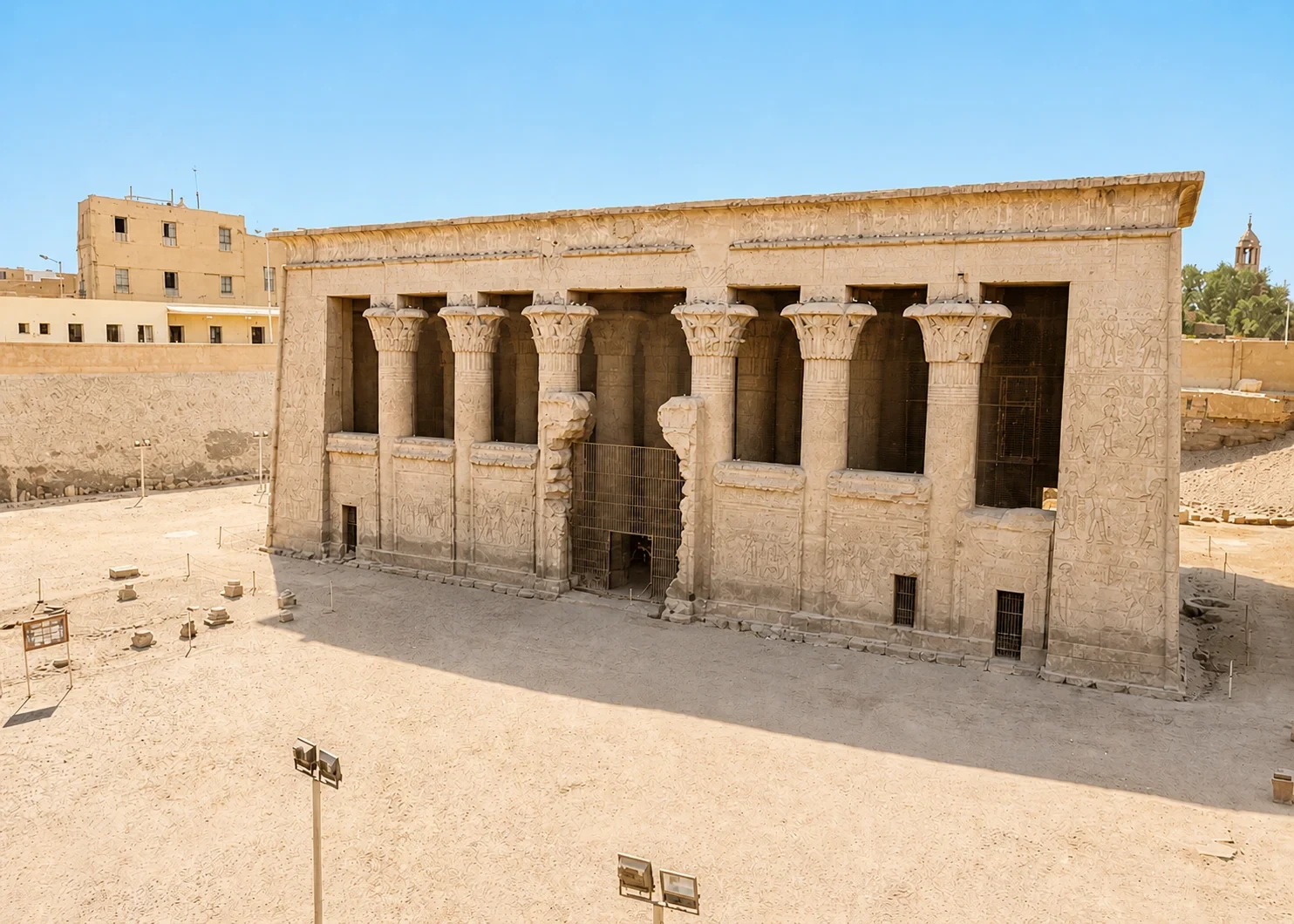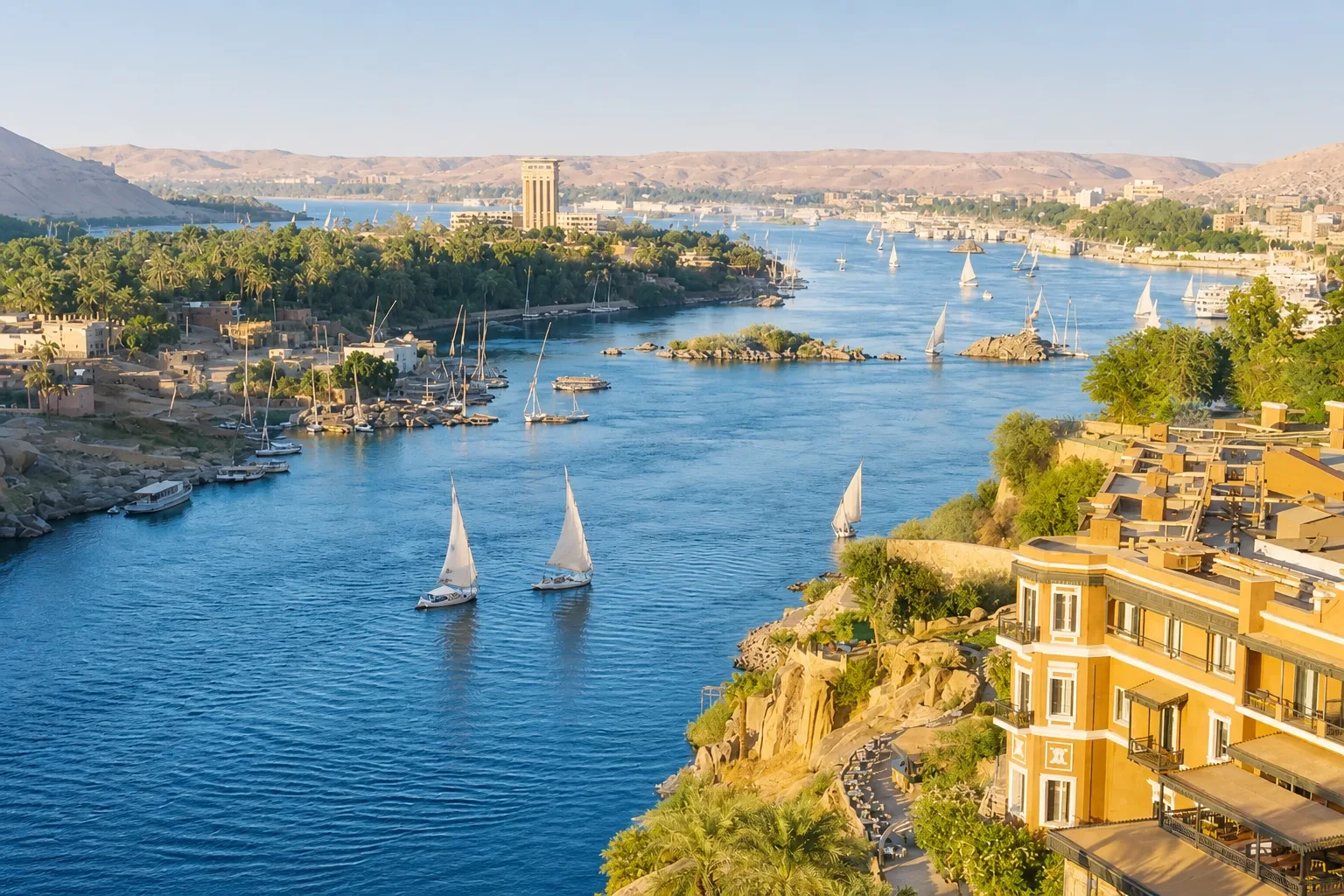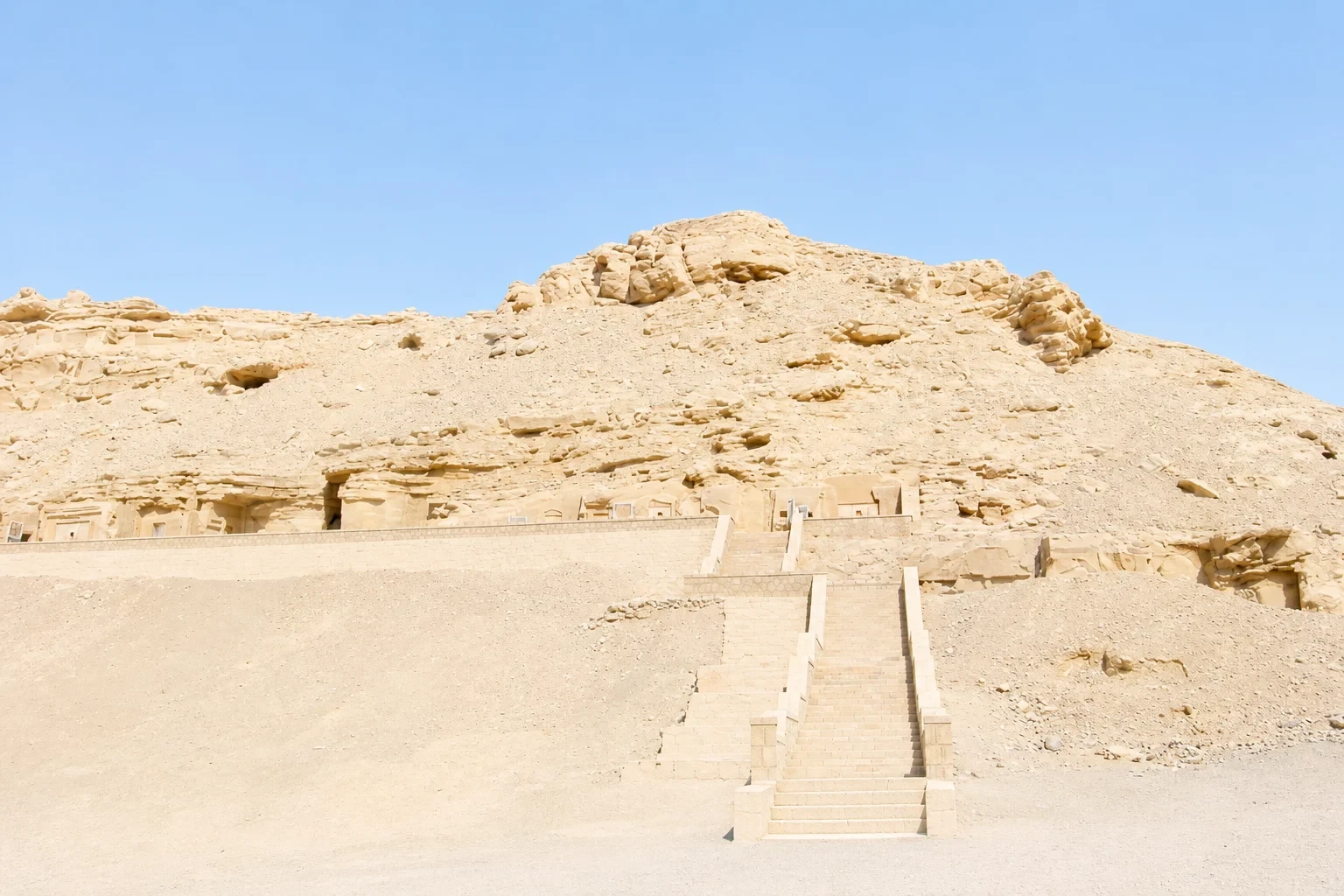

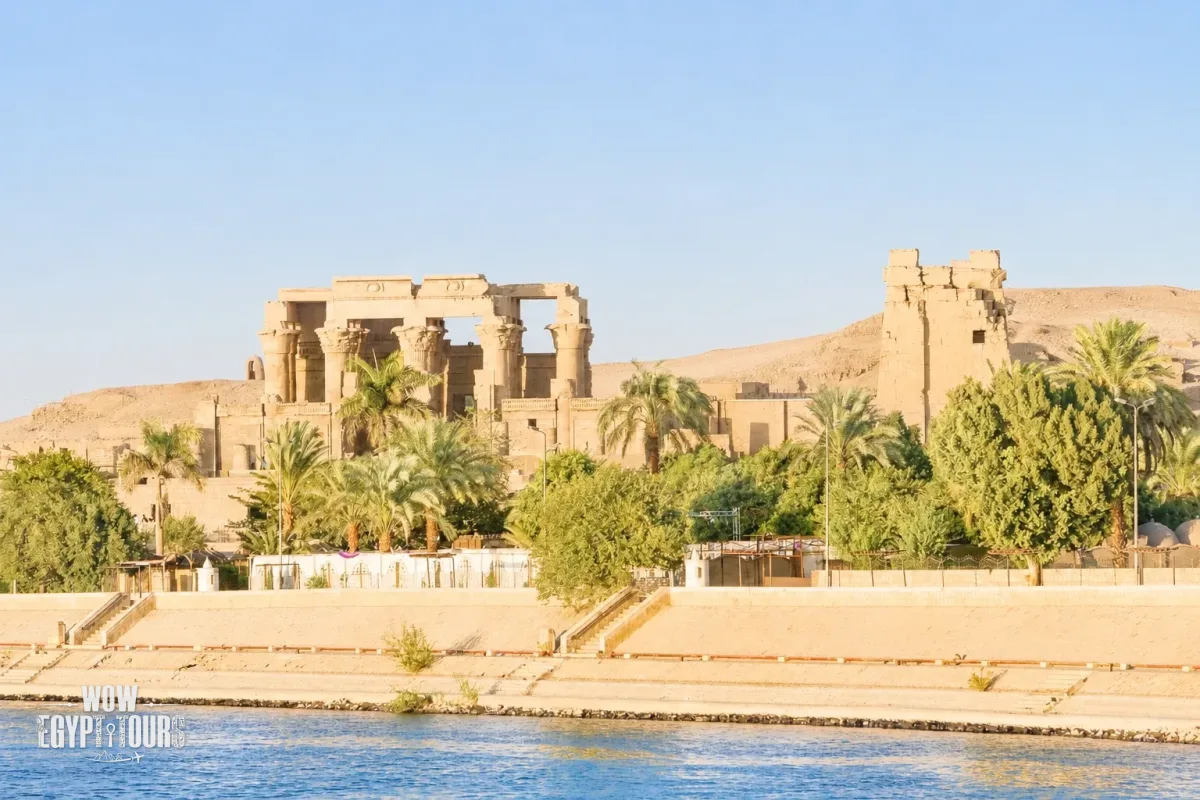

Kom Ombo Temple is one of the most visually striking and architecturally unique ancient monuments in Egypt, and a destination that every traveler on the Nile between Luxor and Aswan must experience. Located on the east bank of the Nile River in the town of Kom Ombo in Upper Egypt, approximately 45 kilometers north of Aswan and 170 kilometers south of Luxor, the Temple of Kom Ombo is the only surviving ancient Egyptian temple built as a perfectly symmetrical double temple, dedicated simultaneously to two gods and organized around two parallel axes that run from the entrance pylons to the twin inner sanctuaries at the heart of the building. This extraordinary landmark sits at the heart of some of Egypt's greatest travel experiences, including Aswan Day Tours, Luxor Day Tours, Kom Ombo Temple Tours, Dahabiya Nile River Cruises, and Luxor Aswan Nile River Cruises, all of which WOW Egypt Tours proudly offers to travelers from around the world. The Temple of Sobek at Kom Ombo is also a highlight of Egypt Tours Packages, Egypt Travel Packages, and Safaga Shore Excursions, making it one of the most visited and most memorable ancient sites on the entire Upper Egyptian Nile.
Built primarily during the Ptolemaic Period between approximately 180 BCE and 47 BCE, with later additions during the Roman Period, the Temple of Kom Ombo Egypt is dedicated on its southern half to the crocodile god Sobek, the lord of the Nile and god of fertility, and on its northern half to Haroeris, or Horus the Elder, the falcon-headed sky god who was a form of the sun god Ra and a great cosmic warrior. This unique dual dedication gives the Temple of Sobek at Kom Ombo a character unlike any other temple in Egypt, with every element of the architectural plan mirrored and repeated on both sides of the central axis: two entrance gates, two hypostyle halls, two vestibules, two inner sanctuaries, two sacred lakes, and two complete programmes of wall decoration running in parallel from the entrance to the deepest chambers of the building. Visiting the Temple of Kom Ombo is not simply a sightseeing stop on the Nile cruise route; it is an encounter with one of the most innovative architectural solutions in the history of ancient Egyptian religion, set against one of the most dramatically beautiful Nile riverside locations in all of Egypt.
The Temple of Kom Ombo can be visited as part of a day tour from Aswan or from Luxor, and is ideally combined with the Horus Temple at Edfu and the Khnum Temple at Esna for a comprehensive experience of the great Ptolemaic temples of the Upper Egyptian Nile Valley.

Who Built Kom Ombo Temple In Egypt?
The Temple of Kom Ombo was built primarily by the Ptolemaic rulers of Egypt, the Greek dynasty that governed Egypt from the death of Alexander the Great in 323 BCE until the Roman conquest in 30 BCE. Construction of the main temple building began under Ptolemy VI Philometor around 180 BCE and continued under successive Ptolemaic rulers, with major contributions from Ptolemy VIII Euergetes II, Ptolemy IX Soter II, Ptolemy X Alexander I, and Ptolemy XII Auletes, the father of Cleopatra VII. The Roman emperors Augustus and Tiberius added the outer hypostyle hall and the outer enclosure wall, completing the complex in its present form during the early Roman Period.
An earlier temple on the site, dedicated to Sobek during the New Kingdom, predated the current Ptolemaic building, and fragments of earlier decoration from the reigns of Thutmose III and Amenhotep I have been found at the site. The current Temple of Sobek at Kom Ombo was therefore built over a site of ancient sacred tradition that stretched back to at least the 18th Dynasty, more than a thousand years before the Ptolemaic period. The Ptolemaic rulers of Egypt, who presented themselves publicly as pharaohs in the ancient Egyptian tradition while privately maintaining a Greek court culture, were prolific builders of temples throughout the Nile Valley, and the great Ptolemaic temples at Kom Ombo, Edfu, Dendera, and Esna represent the final flowering of the ancient Egyptian temple building tradition.
Who Were Sobek And Haroeris?
The two divine residents of the Temple of Kom Ombo, Sobek and Haroeris, represent two of the most ancient and most powerful deities in the Egyptian religious tradition, each commanding a distinct theological domain and a distinct devotional following throughout the Nile Valley.
Sobek, the crocodile god, was one of the oldest deities in the Egyptian pantheon, worshipped since the Predynastic period as the lord of the Nile River, the god of fertility and agricultural abundance, and the protector of the pharaoh. Sobek was associated with the life-giving power of the Nile floodwaters and with the fearsome predatory force of the crocodile, one of the most dangerous and impressive creatures of the ancient Egyptian Nile. At Kom Ombo, Sobek was particularly venerated as a local deity of great power, and the town of Kom Ombo was an important center of crocodile worship. Live sacred crocodiles were kept in the temple precinct, venerated as earthly manifestations of the god, fed and adorned with gold jewelry, and mummified after their deaths. Hundreds of mummified crocodiles recovered from the Kom Ombo area are now displayed in the Crocodile Museum adjacent to the main temple, providing a vivid illustration of the intensity of the ancient crocodile cult at this site.
Haroeris, or Horus the Elder, was a form of the great falcon-headed sky god Horus who predated the more famous Horus the son of Osiris and represented the ancient cosmic warrior aspect of the god. Haroeris was associated with the sun and the moon as his two eyes, with the right eye representing the sun and the left eye the moon, and with divine kingship and the protection of the pharaoh. At Kom Ombo, Haroeris was paired with Sobek in a theological arrangement that balanced the reptilian, earthly, Nile-associated power of Sobek with the aerial, celestial, solar power of Horus, creating a divine partnership that reflected the dual nature of Egyptian sacred geography: the river below and the sky above.
Kom Ombo Temple Location In Egypt
The Temple of Kom Ombo is located in the town of Kom Ombo in Upper Egypt, on the east bank of the Nile River, approximately 45 kilometers north of Aswan, 65 kilometers south of Edfu, and 170 kilometers south of Luxor. The temple occupies a prominent promontory directly on the Nile riverbank, with its entrance pylon facing northwest toward the river, giving it one of the most visually spectacular settings of any temple in Egypt: a broad riverside terrace with the Nile sweeping around a wide bend to the north and the gentle hills of the eastern desert rising behind the town. The dramatic riverside position of the Temple of Sobek at Kom Ombo makes it one of the most photogenic ancient monuments in the Nile Valley, particularly in the late afternoon when the golden light of the setting sun illuminates the warm sandstone of the temple facade from the west. WOW Egypt Tours provides private air-conditioned transportation directly from Aswan and Luxor hotels to Kom Ombo Temple on all Day Tours, Egypt Tours Packages, Egypt Travel Packages, and Safaga Shore Excursions.
Kom Ombo Temple Fun Facts
The Temple of Kom Ombo is the only perfectly symmetrical double temple in ancient Egypt, with every architectural element and every wall decoration programme mirrored on both the Sobek side (southern half) and the Haroeris side (northern half) of the building. The central axis of the temple runs between two entrance gates, through two hypostyle halls, two vestibules, and two antechambers to reach two separate inner sanctuaries, one for each of the two divine residents. Even the sacred lake, the well, and the mammisi or birth house are duplicated on both sides of the complex, making the Temple of Kom Ombo the most architecturally symmetrical religious building in the ancient world.
The outer ambulatory corridor that runs around the exterior of the main temple building contains a remarkable carved relief that is unique in ancient Egyptian art: a detailed depiction of a collection of surgical and medical instruments including scalpels, forceps, probes, clamps, and dental instruments, arranged in a display that represents the earliest known visual catalogue of medical tools in the history of medicine. This relief has led many scholars to suggest that Kom Ombo may have served as an important center of medical practice in the ancient world, possibly related to the healing functions of Haroeris who was associated with the restoration of the injured eye of Horus.
The Crocodile Museum, opened in 2012 in a restored chapel adjacent to the main Temple of Sobek at Kom Ombo, displays more than 300 mummified crocodiles recovered from the Kom Ombo area during excavations, ranging from full-grown adults more than two meters long to newly hatched hatchlings and eggs, providing a comprehensive and fascinating picture of the ancient crocodile cult that once dominated religious life at this site.
Why Is Kom Ombo Temple Called By This Name In Egypt?
The modern name Kom Ombo combines two elements of ancient and Arabic origin. Kom is the Arabic word for a mound or tell, referring to the elevated ancient settlement mound on which the temple and the surrounding ancient city were built over many centuries of accumulated occupation debris. Ombo, or Ombos, is the Greek form of the ancient Egyptian name Nubt, meaning the city of gold, a name that reflects the site's importance as a regional commercial and political center in ancient times. The full name Kom Ombo therefore means the mound of Ombos, or the mound of the golden city, a name that has been in continuous use in various forms since the Ptolemaic period when the Greek name Ombos was applied to the ancient Egyptian settlement.
The Temple of Kom Ombo is also widely known as the Temple of Sobek and Haroeris, a name that directly identifies it by its two divine residents and its unique dual dedication, and as the Temple of Sobek at Kom Ombo, emphasizing the crocodile god who is the more famous and more immediately recognizable of the two deities associated with the site. All three names, Temple of Kom Ombo, Temple of Sobek at Kom Ombo, and Temple of Sobek and Haroeris, are used interchangeably in scholarly literature and tourism to refer to the same monument.
Kom Ombo Temple History
The history of the sacred site at Kom Ombo stretches back to the New Kingdom period, around 1550 BCE to 1070 BCE, when an earlier temple dedicated to Sobek was already standing on the promontory above the Nile at this location. Fragments of decoration from the reigns of Thutmose III and Amenhotep I have been found at the site, confirming the antiquity of the religious tradition at Kom Ombo long before the current Ptolemaic building was constructed. The site was also significant in the early history of Egypt as a crossing point between the Nile Valley and the Eastern Desert trade routes, and as a northern gateway to the region of Nubia.
The main Temple of Kom Ombo as it stands today was begun around 180 BCE under Ptolemy VI Philometor and continued under successive Ptolemaic rulers for more than a century. The construction of the temple reflected the Ptolemaic policy of actively promoting Egyptian religious traditions as a means of legitimizing Greek rule over Egypt, and the temple's decoration, in which the Ptolemaic rulers are shown in purely Egyptian style performing offerings and rituals before the gods, represents one of the most sophisticated examples of cultural assimilation in the ancient world. Roman emperors including Augustus and Tiberius continued to add to the temple complex in the early centuries of the Common Era, demonstrating the continued political importance of participating in the traditional Egyptian temple building programme long after the Ptolemaic dynasty had ended. The temple suffered significant damage over the subsequent centuries, with the Nile bank gradually eroding and carrying away large portions of the original building, and with later inhabitants quarrying the stone for building materials. The modern conservation and presentation of the Temple of Kom Ombo was carried out primarily in the late 19th and early 20th centuries under the direction of the Egyptian Antiquities Service.
The Story Of The Double Temple At Kom Ombo
The decision to build a double temple at Kom Ombo, serving two separate divine cults within a single architecturally unified building, was a theological and practical solution to the particular religious situation of this site, where two ancient and important divine cults had long coexisted. Sobek, the crocodile god, had been worshipped at Kom Ombo since the earliest periods of Egyptian history, and the town was one of the most important centers of his cult in Upper Egypt. Haroeris, or Horus the Elder, was equally well-established as a divine presence in the region, associated with the falcon that was the symbol of royal power and with the sky that arched over both the crocodile-haunted Nile and the agricultural lands on either side.
Rather than subordinating one cult to the other or building two separate temples on the same site, the Ptolemaic builders created the uniquely elegant solution of a perfectly symmetrical double temple in which both gods were honored equally, their cults running in parallel through the entire architectural programme without either taking precedence. This solution required not only architectural ingenuity but theological sophistication: the decorative programme of the Temple of Sobek at Kom Ombo had to be designed so that each side presented a complete and coherent programme of divine worship for its resident deity while maintaining perfect visual balance with the other side across the central axis. The result is a building of extraordinary conceptual elegance that continues to fascinate architects, art historians, and theologians as one of the most intellectually ambitious achievements in the history of ancient Egyptian temple design.
Kom Ombo Temple Architecture
The Entrance Pylon And Outer Hypostyle Hall
The main entrance to the Temple of Kom Ombo is through the remains of the outer enclosure wall and a broad terrace directly above the Nile riverbank. The original entrance pylon is largely destroyed, with only the lower sections of its towers surviving, but the outer hypostyle hall added by the Roman emperors Augustus and Tiberius stands in relatively good preservation and provides the visitor's first encounter with the characteristic double-axis organization of the temple. The columns of the outer hypostyle hall are arranged in two groups flanking the central passageway, each group serving one of the two divine residents, and the wall reliefs show the Roman emperors performing offerings and rituals in a purely Egyptian style that continues the visual tradition established by the Ptolemaic builders.
The Inner Hypostyle Hall
The inner hypostyle hall is the best-preserved and most elaborately decorated interior space in the Temple of Kom Ombo. Its ceiling is supported by fifteen columns arranged in three rows, decorated with astronomical scenes depicting the night sky, the decans, and the monthly movements of the moon, which were of particular religious significance at a temple dedicated in part to Haroeris, whose two eyes represented the sun and moon. The walls of the inner hypostyle hall are covered with relief scenes showing the Ptolemaic rulers in the presence of Sobek and Haroeris, receiving the symbols of divine power and performing the standard rituals of temple cult. The quality of the carving in this hall is exceptionally fine, with the characteristic refinement of late Ptolemaic relief work visible in the elegant proportions of the divine figures and the careful articulation of detail in the hieroglyphic inscriptions.
The Vestibules And Inner Sanctuaries
Beyond the inner hypostyle hall, the Temple of Sobek at Kom Ombo continues through two vestibules of progressively decreasing size to the twin inner sanctuaries at the innermost point of the building. The two sanctuaries, one for Sobek on the southern side and one for Haroeris on the northern side, are now completely roofless and their floor paving is largely destroyed, but the lower sections of their decorated walls survive to show the continuation of the double-axis decorative programme to the very heart of the building. Between the two sanctuaries, a hidden passage runs behind the back wall of the sanctuary area, accessible through a concealed doorway in the sanctuary floor, which was used by the priests to create the impression that the gods themselves were speaking from within the sealed sanctuary by passing messages through the hidden corridor.
The Medical Instruments Relief
One of the most celebrated and most discussed individual carved reliefs in the entire Temple of Kom Ombo is found in the outer ambulatory corridor that runs around the exterior of the main temple building. On one section of the outer corridor wall, a detailed relief depicts an array of objects that scholars have identified as a collection of ancient Egyptian surgical and medical instruments, including scalpels, lancets, forceps, probes, clamps, bone saws, and other implements arranged in a carefully organized display. This remarkable relief is unique in ancient Egyptian art and represents the earliest surviving visual catalogue of medical instruments in the history of medicine. Its presence at the Temple of Sobek at Kom Ombo has been connected to the healing traditions associated with Haroeris and with the restoration of the injured eye of Horus, suggesting that the temple may have served as a site of healing pilgrimage and medical practice in addition to its primary function as a divine cult institution.
The Nilometer
Within the precinct of the Temple of Kom Ombo, close to the main temple building, is a well-preserved ancient Nilometer, the measuring device used by the ancient Egyptians and later the Romans and Arabs to monitor the height of the annual Nile inundation. The Nilometer at Kom Ombo consists of a circular shaft cut into the bedrock with a central measuring column marked with graduated measurements, accessible by a staircase cut into the surrounding stone. The annual flood height measured at the Nilometer was used to calculate the expected agricultural yield for the coming year and therefore the tax assessment for the population of the surrounding region. The presence of a Nilometer within the temple precinct at Kom Ombo reflects the deep theological connection between Sobek, the god of the Nile, and the practical management of the river's annual cycle on which Egyptian civilization depended.
The Crocodile Museum
Adjacent to the main Temple of Kom Ombo, in a restored chapel that was once part of the ancient temple complex, the Crocodile Museum opened in 2012 to display the extraordinary collection of mummified crocodiles recovered during excavations in the Kom Ombo area. The museum contains more than 300 mummified specimens, ranging from full-grown adult crocodiles more than two meters in length to newly hatched hatchlings and fossilized eggs, all mummified according to the precise ritual procedures prescribed for the sacred animals of the Sobek cult. Several of the most complete specimens are displayed unwrapped to show the remarkable preservation of the ancient mummification technique, while others are shown in their original linen wrappings with painted or gilded cartonnage masks. The Crocodile Museum is one of the most fascinating and immediately accessible small museums in Upper Egypt and should not be missed by any visitor to the Temple of Sobek at Kom Ombo.
The Sacred Lake And Mammisi
The precinct of the Temple of Kom Ombo originally contained a sacred lake, now largely filled in, which served for the ritual purification of the priests before performing their daily duties and as the site of sacred ceremonies connected with the divine cycles of birth and death. The remains of a mammisi or birth house, the small chapel in which the miraculous divine birth of the divine child was celebrated annually in ancient Egyptian temples from the New Kingdom onwards, are also preserved within the temple precinct. Like all the other elements of the Temple of Sobek at Kom Ombo, both the sacred lake and the mammisi were designed to serve both divine residents of the double temple, reflecting the extraordinary architectural and theological consistency that characterizes the entire building.
Why Is Kom Ombo Temple Important?
The Temple of Kom Ombo is important for several interconnected reasons that extend beyond its undeniable beauty and visual interest. It is the only perfectly symmetrical double temple in the entire history of ancient Egyptian architecture, representing a unique theological and architectural solution to the challenge of serving two equally important divine cults within a single sacred precinct. This uniqueness makes the Temple of Sobek at Kom Ombo an irreplaceable document in the history of ancient Egyptian religious thought and architectural practice.
The medical instruments relief in the outer ambulatory corridor is one of the most historically significant individual carved images in ancient Egypt, representing the earliest known visual catalogue of surgical and medical instruments and providing direct evidence for the sophistication of ancient Egyptian medical practice. The Crocodile Museum associated with the temple complex is among the most specialized and educationally valuable small museums in the Nile Valley, offering a unique window into the ancient crocodile cult that was one of the most distinctive religious traditions of Upper Egypt. And the dramatic riverside setting of the Temple of Kom Ombo, directly above the Nile on a sandstone promontory that has commanded the bend of the river for more than two thousand years, makes it one of the most photogenic and atmospherically compelling ancient monuments available to travelers on the Nile between Luxor and Aswan. WOW Egypt Tours includes Kom Ombo Temple as a featured stop on all Nile River Cruise itineraries and as a dedicated destination on Aswan and Luxor Day Tours.
What Are Some Interesting Facts About Kom Ombo Temple?
The Only Double Temple In Egypt
The Temple of Kom Ombo is the only ancient Egyptian temple ever built with a perfectly symmetrical double-axis organization serving two equally ranked divine residents. Every other ancient Egyptian temple, however complex its dedication to multiple deities, has a single dominant axis leading from the entrance pylon to the primary inner sanctuary, with subsidiary chapels for other gods arranged asymmetrically around this central axis. The bold architectural decision to give Sobek and Haroeris equal architectural status within a single perfectly balanced building represents the most radical departure from the standard Egyptian temple plan ever realized in stone, and reflects a theological sophistication that continues to earn the admiration of Egyptologists and architectural historians worldwide.
The Ancient Surgical Instruments
The medical instruments relief at the Temple of Sobek at Kom Ombo is of extraordinary historical significance for the history of medicine as well as for Egyptology. The carved objects depicted in the relief are sufficiently detailed and realistic to allow modern medical historians to identify specific instruments, including suction cups, tongue depressors, scalpels of various sizes, birthing chairs, dental instruments, and bone saws, that correspond closely to ancient medical implements known from written papyri and from actual instrument finds at other ancient sites. The presence of this relief at Kom Ombo has led to the identification of the temple as a possible center of healing practice and medical pilgrimage in the Ptolemaic and Roman periods, when the healing traditions of Egyptian temple religion were widely respected throughout the Mediterranean world and attracted patients seeking divine as well as medical cures.
The Crocodiles Of Kom Ombo
The ancient crocodile cult at Kom Ombo was one of the most intense and elaborate animal cult traditions in ancient Egypt. Live sacred crocodiles, believed to be earthly manifestations of the god Sobek, were kept in a pool within the temple precinct, where they were fed, adorned with golden earrings and bracelets, and treated with the reverence due to living gods. When a sacred crocodile died, it was mummified with the same care applied to human mummies, wrapped in linen bandages, fitted with a painted or gilded cartonnage mask, and deposited in a sacred burial chamber. The hundreds of crocodile mummies now displayed in the Crocodile Museum adjacent to the Temple of Kom Ombo represent only a fraction of the total number of sacred crocodiles mummified and buried in the Kom Ombo area over the course of many centuries, and their display gives visitors one of the most direct and tangible encounters with ancient Egyptian animal cult religion available anywhere in the Nile Valley.
What Is So Special About Kom Ombo Temple?
The Most Dramatically Sited Temple On The Nile
What makes the Temple of Kom Ombo uniquely special among all the Ptolemaic temples of the Upper Egyptian Nile Valley is the extraordinary drama of its natural setting. Perched on a sandstone promontory directly above the east bank of the Nile at a point where the river sweeps around a broad bend, the Temple of Sobek at Kom Ombo commands one of the most spectacular riverside positions of any ancient monument in Egypt. Approaching the temple by Nile cruise ship, as the great vessel rounds the bend of the river and the golden sandstone facade of the temple rises above the bank ahead, is one of the defining visual moments of the entire Nile cruise experience, and the image of the temple columns reflected in the Nile at sunset has become one of the most iconic photographs of Upper Egypt. No other temple on the Nile cruise route between Luxor and Aswan offers the same combination of architectural grandeur and natural riverside drama as the Temple of Kom Ombo.
A Living Archaeological Discovery
The Temple of Kom Ombo continues to yield new discoveries and new understanding as archaeological work proceeds at the site. The Crocodile Museum, opened in 2012, was made possible by the discovery and conservation of mummified crocodile specimens during excavations in the surrounding area, and ongoing archaeological investigation of the Kom Ombo promontory continues to reveal new evidence of the history and extent of the ancient sacred site. The conservation and interpretation of the temple is an active and ongoing process, and visitors to the Temple of Sobek at Kom Ombo today encounter a living archaeological site rather than a static heritage monument, with new research continuously expanding knowledge of this extraordinary temple and its sacred traditions.
Kom Ombo Temple Through The Ages: From Ancient Egypt To The Present
The history of the sacred site at Kom Ombo spans from the earliest periods of ancient Egyptian civilization to the present day. The site was venerated as a sacred location associated with Sobek from at least the New Kingdom period, and an earlier temple predating the current Ptolemaic building was already standing on the promontory when the Ptolemaic rulers began construction of the magnificent double temple that survives today. The Ptolemaic and Roman periods, from the 3rd century BCE to the 4th century CE, represent the most productive era of building and decoration at the Temple of Kom Ombo, with successive rulers contributing to an architectural programme that unfolded over more than five centuries.
During the early Christian era, parts of the temple complex were converted to Christian use, with crosses carved on some of the ancient relief figures and a church established within the precinct. The gradual retreat of the Nile bank over the subsequent centuries carried away large sections of the eastern and southern portions of the original building, including most of the entrance pylon and the outer enclosure walls on those sides. The temple suffered further damage from stone robbers throughout the medieval and Ottoman periods, but the main body of the building survived in sufficient completeness to be recognized by early European travelers as one of the finest ancient monuments on the Upper Egyptian Nile. The modern presentation of the Temple of Sobek at Kom Ombo was largely the work of the Egyptian Antiquities Service in the late 19th and early 20th centuries, including the clearance of sand and debris from the interior, the consolidation of surviving architecture, and the erection of the informational infrastructure that guides visitors through the site today. The construction of the Crocodile Museum in 2012 represents the most recent significant development at the site and has substantially enhanced the visitor experience of the ancient crocodile cult traditions of Kom Ombo.
Kom Ombo Temple UNESCO World Heritage Site
The Temple of Kom Ombo is part of the broader landscape of Upper Egyptian Nile Valley heritage recognized by UNESCO as among the most outstanding cultural heritage concentrations in the world. The Nile River Valley between Luxor and Aswan, encompassing the great Ptolemaic temples at Kom Ombo, Edfu, and Esna together with the monuments of the ancient cities of Luxor and Aswan, represents one of the most concentrated assemblages of ancient monumental architecture in the world and is subject to comprehensive international conservation attention coordinated by UNESCO and the Egyptian Ministry of Tourism and Antiquities. The exceptional state of preservation of the Temple of Sobek at Kom Ombo, and the unique architectural and historical significance of its double-temple design, make it one of the most important individual ancient monuments in the Upper Nile Valley heritage zone.
Best Time To Visit Kom Ombo Temple
The best time to visit the Temple of Kom Ombo is during the cooler months from October through April, when temperatures in Upper Egypt are moderate and outdoor exploration of the riverside temple precinct is comfortable throughout the day. The summer months from May to September are intensely hot in this part of Upper Egypt, with temperatures regularly exceeding 40 degrees Celsius, and outdoor visits require very early morning planning. For Nile cruise visitors, the temple is most commonly visited in the late afternoon or early evening when the cruise ships stop at Kom Ombo, and the sunset light on the temple facade and the reflection of the illuminated evening temple in the Nile are among the most spectacular visual experiences of the entire cruise. WOW Egypt Tours plans all day tour visits to the Temple of Sobek at Kom Ombo at the optimal time of day for the season and for the specific itinerary, whether as part of a Kom Ombo Day Tour from Aswan, a day tour from Luxor, or a Nile cruise shore excursion.
Kom Ombo Temple Opening Hours
The Temple of Kom Ombo is open to visitors every day of the week, including public holidays. The temple opens at 6:00 AM and closes at 10:00 PM, including evening opening hours that make it one of the few ancient sites in Egypt that can be visited after dark. The evening opening is particularly popular with Nile cruise visitors whose ships dock at Kom Ombo in the late afternoon and who can visit the illuminated temple at dusk or in the early evening. The Crocodile Museum adjacent to the main temple is open during the same hours as the main temple. The most peaceful and uncrowded time to visit is early morning before 9:00 AM, when Nile cruise ships have not yet arrived and the temple can be explored in near-total tranquility.
Kom Ombo Temple Entrance Fees
Adults: EGP 450
Students: EGP 225
The Crocodile Museum adjacent to the main temple has a separate entrance fee:
Adults: EGP 200
Students: EGP 100
Keep your tickets throughout your visit. Entrance fees to the Temple of Sobek at Kom Ombo and the Crocodile Museum are included in all Kom Ombo Temple Tours, Aswan Day Tours, Luxor Day Tours, Egypt Tours Packages, and Safaga Shore Excursions booked through WOW Egypt Tours.
How To Get To Kom Ombo Temple
Kom Ombo is located approximately 45 kilometers north of Aswan and 170 kilometers south of Luxor on the east bank of the Nile. From Aswan, the Temple of Sobek at Kom Ombo is reached by private car or minibus along the main Nile Valley highway in approximately 45 to 60 minutes. From Luxor, the journey south to Kom Ombo by private vehicle takes approximately 2.5 to 3 hours, usually combined with a stop at the Horus Temple at Edfu and optionally the Khnum Temple at Esna. Nile cruise ships traveling between Luxor and Aswan dock directly at the Kom Ombo waterfront, allowing passengers to walk from the ship to the temple entrance in just a few minutes.
All Aswan Day Tours, Luxor Day Tours, and Safaga Shore Excursions with WOW Egypt Tours include private air-conditioned transportation directly to and from the Temple of Kom Ombo. Travelers joining Safaga Shore Excursions are collected from Safaga Port on the Red Sea coast, approximately 290 kilometers from Kom Ombo, and transferred by private vehicle through the Eastern Desert road via Edfu to reach Kom Ombo as part of a full-day Upper Nile Valley programme.
How Long To Spend At Kom Ombo Temple
Most visitors spend between 45 minutes and one and a half hours at Kom Ombo Temple, which is sufficient time to walk through the complete temple programme from the outer hypostyle hall to the inner sanctuaries, examine the medical instruments relief in the outer ambulatory corridor, view the Nilometer, and visit the Crocodile Museum. Visitors with a particular interest in the iconographic programme of the dual deity decoration, the astronomical ceiling of the inner hypostyle hall, or the history and significance of the ancient crocodile cult may wish to allow two hours. The Temple of Sobek at Kom Ombo is best combined on the same day with the Horus Temple at Edfu to the north and optionally the Khnum Temple at Esna for a comprehensive experience of the great Ptolemaic temples of the Upper Nile Valley.
Tips For Visiting Kom Ombo Temple
Visit the Crocodile Museum immediately upon arrival before joining any guided tour of the main temple, as the museum provides essential context for understanding the crocodile cult that is central to the significance of the site. Do not miss the medical instruments relief in the outer ambulatory corridor on the eastern side of the main temple, which is one of the most historically significant individual carved images in ancient Egypt and is frequently overlooked by visitors who focus exclusively on the main internal spaces. Visit the Nilometer at the northern end of the temple precinct, which is one of the best-preserved ancient measuring devices in Egypt. A licensed Egyptologist guide from WOW Egypt Tours is strongly recommended: the dual deity iconographic programme, the theological significance of the double-temple design, and the historical and medical content of the outer corridor reliefs are all greatly enriched by expert explanation. Do not touch the carved relief surfaces anywhere in the temple. Bring water and sunscreen for visits in warm months, as the riverside location provides relatively little shade.
What To Wear At Kom Ombo Temple
The Temple of Kom Ombo is an open-air site with significant areas exposed to direct sun, particularly in the outer courtyards and the ambulatory corridor. Lightweight, breathable clothing covering the shoulders and knees is recommended for both comfort in the Upper Egyptian heat and as a mark of respect for the ancient sacred site. A wide-brimmed hat and sunscreen are essential for any visit. Comfortable, closed-toe walking shoes with good grip are recommended for the uneven stone surfaces throughout the complex. For evening visits, a light additional layer is useful in winter as temperatures on the Nile riverbank can be noticeably cooler after sunset than during the day.
Photography At Kom Ombo Temple
The Temple of Kom Ombo is one of the most photogenic ancient monuments on the Upper Egyptian Nile, offering a unique combination of the elaborate carved relief decoration of the Ptolemaic style, the dramatic riverside setting with the Nile as a foreground element, and the warm golden tones of the local sandstone that glow brilliantly in both morning and late afternoon light. Photography with a standard camera or smartphone is permitted throughout the main temple and the Crocodile Museum. Flash photography is strictly prohibited near all carved and painted surfaces. The most dramatic exterior photography is achieved either in the early morning when the low sun illuminates the entrance facade from the east, or in the late afternoon and evening when the temple is lit and the riverside setting creates a spectacular reflective composition. The view of the temple from a Nile cruise ship approaching from the north, with the facade reflected in the Nile, is one of the most celebrated landscape photographs of Upper Egypt. Professional photography or filming requires a separate permit from Egypt's Ministry of Tourism and Antiquities.
Kom Ombo Temple Tours
Day Tour To Kom Ombo Temple From Aswan
This half-day or full-day tour visits the Temple of Kom Ombo as a dedicated excursion from Aswan. It is suitable for travelers staying in Aswan who want a focused visit to the unique double temple of Sobek and Haroeris, including the Crocodile Museum and the Nilometer, without the longer journey required from Luxor.
What Is Covered
Full guided visit of the Temple of Kom Ombo including the outer and inner hypostyle halls, the vestibules, the twin inner sanctuaries, the medical instruments relief in the outer ambulatory corridor, the Nilometer, and the Crocodile Museum. The visit begins at the main temple entrance and proceeds through the complete architectural programme of the double temple under the guidance of a private licensed Egyptologist.
Duration
Half day from Aswan, approximately 1 to 1.5 hours at the temple plus approximately 1 hour each way by private vehicle.
Includes
Private air-conditioned transportation from Aswan, private licensed Egyptologist guide, and entrance fees to the temple and Crocodile Museum. Available for morning and afternoon departures.
Day Tour To Kom Ombo Temple From Luxor Combined With Edfu And Esna
This full-day tour from Luxor travels south along the Nile Valley road to visit three of the most impressive Ptolemaic temples in Egypt in a single day: the Khnum Temple at Esna, the Horus Temple at Edfu, and the Temple of Kom Ombo. It is suitable for travelers based in Luxor who want a comprehensive experience of the great Ptolemaic temples of the Upper Nile Valley.
What Is Covered
The Khnum Temple at Esna, approximately 55 kilometers south of Luxor, one of the best-preserved Ptolemaic temples in Egypt dedicated to the ram-headed creator god Khnum. The Horus Temple at Edfu, the largest and most completely preserved Ptolemaic temple in the world, dedicated to the falcon god Horus and covering more than 137 meters from entrance pylon to inner sanctuary. The Temple of Kom Ombo including the complete double-temple programme, the medical instruments relief, the Nilometer, and the Crocodile Museum.
Duration
Full day from Luxor, approximately 1 to 1.5 hours at each temple, with travel time between sites included in the day programme.
Includes
Private air-conditioned transportation from Luxor, private licensed Egyptologist guide, and entrance fees to all three temples. Available for early morning departures to maximize time at each site.
Day Tour To Kom Ombo And Edfu Temples From Aswan
This full-day tour from Aswan combines the Temple of Kom Ombo with the great Horus Temple at Edfu to the north, offering the two finest Ptolemaic temples on the Upper Nile in a single comprehensive day excursion.
What Is Covered
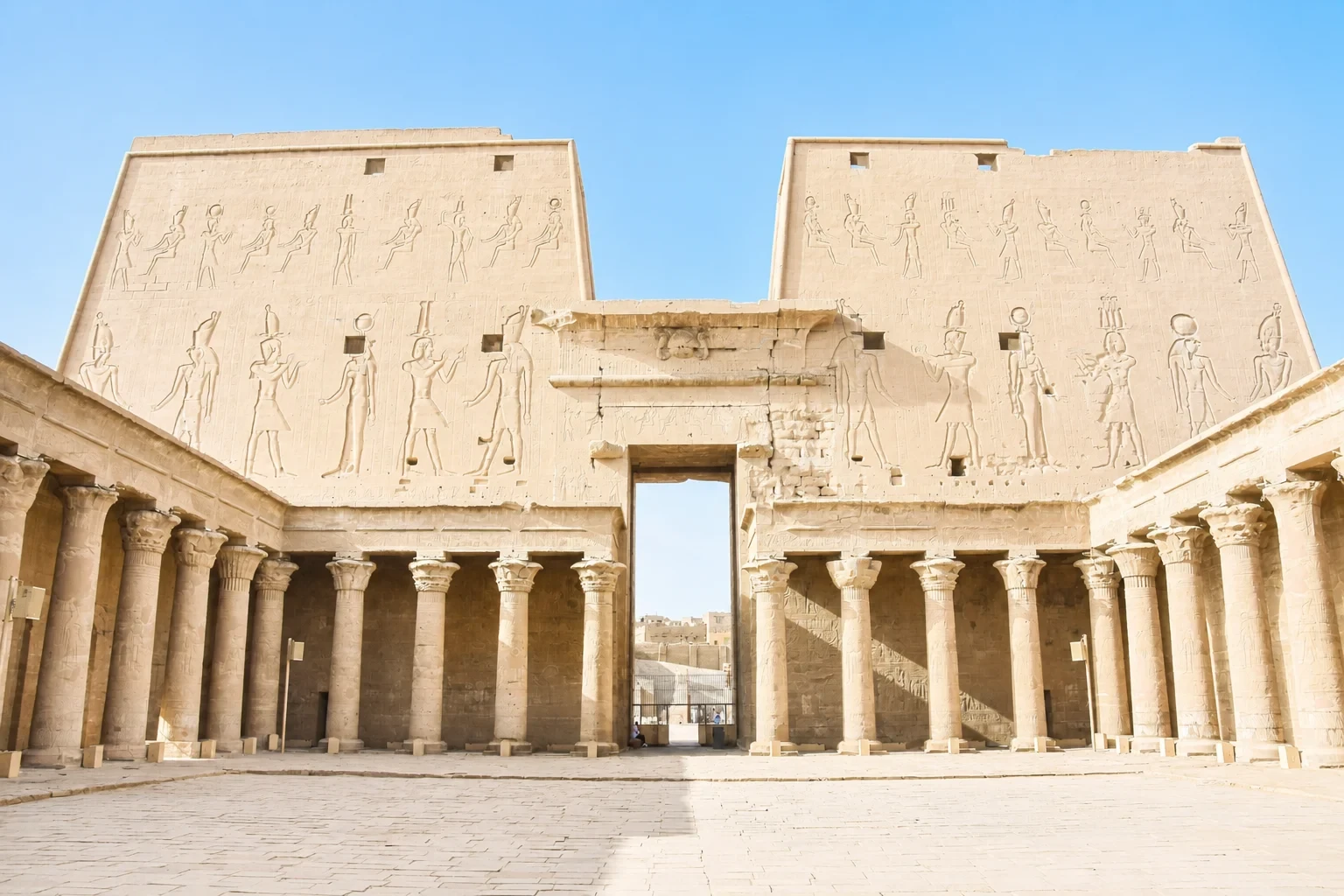
The Temple of Kom Ombo with a full guided visit of the double temple programme, the Crocodile Museum, and the Nilometer. The Horus Temple at Edfu with a full guided visit of the entrance pylon, the outer and inner hypostyle halls, the vestibules, the inner sanctuary with the granite naos, and the outer ambulatory corridor with its famous Festival of the Beautiful Meeting reliefs.
Duration
Full day from Aswan, approximately 1 to 1.5 hours at each temple.
Includes
Private air-conditioned transportation from Aswan, private licensed Egyptologist guide, and entrance fees to both temples. Available for morning departures.
Safaga Shore Excursions Combined With Kom Ombo Temple
Safaga Port is located on the Red Sea coast, approximately 290 kilometers from Kom Ombo and more than 340 kilometers from Aswan via the Eastern Desert road. Due to this distance, Kom Ombo Temple cannot be comfortably reached and returned from as a single-day shore excursion from Safaga Port. However, WOW Egypt Tours offers an overnight Safaga shore excursion programme that makes a visit to Kom Ombo Temple fully possible for Red Sea cruise passengers.
Overnight Safaga Shore Excursion Via Luxor To Kom Ombo
Day 1: Depart Safaga Port by private air-conditioned vehicle. Travel to Luxor via the Eastern Desert highway, approximately 3 hours. Full guided visit of the major Luxor West Bank sites: Valley of the Kings, Temple of Hatshepsut, and Colossi of Memnon. Evening guided visit of Luxor Temple and optional Karnak Sound and Light Show. Overnight in Luxor at a selected hotel.
Day 2: Morning guided visit of Karnak Temple. Travel south from Luxor to Kom Ombo, approximately 2.5 hours. Full guided visit of Kom Ombo Temple including the double temple programme, the Crocodile Museum, and the Nilometer. Optional stop at the Horus Temple at Edfu en route. Return to Safaga Port via the Eastern Desert road, approximately 2.5 to 3 hours. Return to ship.
Includes
Private air-conditioned vehicle throughout, private licensed Egyptologist guide, one night accommodation in Luxor, entrance fees to all included sites, and return transfer to the ship. All overnight Safaga Shore Excursions are coordinated with each ship's schedule to confirm departure and return timings in advance.
Dahabiya Nile River Cruise
A Dahabiya Nile River Cruise is a small-vessel sailing experience on the Nile between Luxor and Aswan aboard a traditional wooden dahabiya. WOW Egypt Tours operates dahabiya cruises with private cabins, all meals, a private licensed Egyptologist guide on board, and guided shore excursions at every stop. The Temple of Kom Ombo is a featured stop on all Dahabiya itineraries in both directions.
4 Days 3 Nights Dahabiya Nile River Cruise From Aswan To Luxor
Route: Aswan to Luxor, sailing north.
Itinerary
Day 1: Embarkation in Aswan. Visit to Philae Temple and the Unfinished Obelisk. Sail north to Kom Ombo. Guided visit to Kom Ombo Temple and Crocodile Museum. Continue to Gebel el Silsila. Overnight on board.
Day 2: Guided visit to Gebel el Silsila. Sail to the Village of Basaw. Guided visit to Village of Basaw. Continue to Edfu. Guided visit to the Temple of Horus at Edfu. Overnight on board.
Day 3: Sail to El Kab. Guided visit to El Kab Tombs. Sail to El Hagaz Island. Swimming stop. Overnight on board.
Day 4: Sail to Esna. Visit Khnum Temple at Esna. Disembarkation in Esna. Transfer to Luxor, approximately 55 kilometers (35 miles).
Includes
Private cabin, all meals on board, private licensed Egyptologist guide, entrance fees to all temple visits including Kom Ombo Temple, and private transfers.
5 Days 4 Nights Dahabiya Nile River Cruise From Luxor To Aswan
Route: Luxor to Aswan, sailing south.
Itinerary
Day 1: Embarkation in Luxor. Transfer to Esna, approximately 55 kilometers (35 miles). Visit Khnum Temple at Esna. Sail to El Hagaz Island. Overnight on board.
Day 2: Sail to El Kab. Guided visit to El Kab Tombs. Continue to Edfu. Guided visit to the Temple of Horus at Edfu. Sail to the Village of Basaw. Guided visit to Village of Basaw. Overnight on board.
Day 3: Sail to Gebel el Silsila. Guided visit to Gebel el Silsila. Sail south to Kom Ombo. Guided visit to Kom Ombo Temple and Crocodile Museum. Sail to Daraw Village. Overnight on board.
Day 4: Guided visit to Daraw Village. Sail to Herbiab Island. Swimming stop. Philae Sound and Light Show. Overnight on board.
Day 5: Optional Abu Simbel visit available by air or road. Guided visits to Philae Temple, the High Dam, and the Unfinished Obelisk. Disembarkation in Aswan.
Includes
Private cabin, all meals on board, private licensed Egyptologist guide, entrance fees to all temple visits including Kom Ombo Temple, and private transfers.
8 Days 7 Nights Dahabiya Nile River Cruise Round Trip From Luxor (Via Aswan)
Route: Luxor and Aswan, sailing north and south.
Itinerary
Day 1: Embarkation in Luxor. Transfer to Esna, approximately 55 kilometers (35 miles). Visit Khnum Temple at Esna. Sail to El Hagaz Island. Overnight on board.
Day 2: Sail to El Kab. Continue to Edfu. Guided visit to the Temple of Horus at Edfu. Sail to the Village of Basaw. Guided visit to Village of Basaw. Overnight on board.
Day 3: Sail to Gebel el Silsila. Sail south to Kom Ombo. Guided visit to Kom Ombo Temple and Crocodile Museum. Sail to Daraw Village. Overnight on board.
Day 4: Guided visit to Daraw Village. Sail to Herbiab Island. Swimming stop. Philae Sound and Light Show. Overnight on board.
Day 5: Optional Abu Simbel visit available by air or road. Guided visits to Philae Temple, the High Dam, and the Unfinished Obelisk. Sail north to Kom Ombo. Continue to Gebel el Silsila. Overnight on board.
Day 6: Guided visit to Gebel el Silsila. Sail to the Village of Basaw. Continue to Edfu. Overnight on board.
Day 7: Sail to El Kab. Guided visit to El Kab Tombs. Sail to El Hagaz Island. Swimming stop. Overnight on board.
Day 8: Disembarkation in Esna. Transfer to Luxor, approximately 55 kilometers (35 miles).
Includes
Private cabin, all meals on board, private licensed Egyptologist guide, entrance fees to all temple visits including Kom Ombo Temple, and private transfers.
8 Days 7 Nights Dahabiya Nile River Cruise Round Trip From Aswan (Via Luxor)
Route: Luxor and Aswan, sailing north and south.
Itinerary
Day 1: Embarkation in Aswan. Visit to Philae Temple and the Unfinished Obelisk. Sail north to Kom Ombo. Guided visit to Kom Ombo Temple and Crocodile Museum. Continue to Gebel el Silsila. Overnight on board.
Day 2: Guided visit to Gebel el Silsila. Sail to the Village of Basaw. Continue to Edfu. Overnight on board.
Day 3: Sail to El Kab. Guided visit to El Kab Tombs. Sail to El Hagaz Island. Swimming stop. Overnight on board.
Day 4: Sail to Esna. Visit Khnum Temple at Esna. Sail to El Hagaz Island. Overnight on board.
Day 5: Sail to El Kab. Continue to Edfu. Guided visit to the Temple of Horus at Edfu. Sail to the Village of Basaw. Guided visit to Village of Basaw. Overnight on board.
Day 6: Sail to Gebel el Silsila. Sail south to Kom Ombo. Guided visit to Kom Ombo Temple and Crocodile Museum. Sail to Daraw Village. Overnight on board.
Day 7: Guided visit to Daraw Village. Sail to Herbiab Island. Swimming stop. Philae Sound and Light Show. Overnight on board.
Day 8: Disembarkation in Aswan.
Includes
Private cabin, all meals on board, private licensed Egyptologist guide, entrance fees to all temple visits including Kom Ombo Temple, and private transfers.
Luxor And Aswan Nile River Cruise
The Luxor and Aswan Nile River Cruise is a standard Nile cruise product operated aboard a full-size cruise ship between Luxor and Aswan. WOW Egypt Tours operates this cruise in both directions with private licensed Egyptologist guides, all meals included, private cabins, and guided shore excursions at every port of call. The Temple of Kom Ombo is a featured guided stop on all Luxor and Aswan Nile River Cruise itineraries in both directions.
4 Days 3 Nights Luxor And Aswan Nile River Cruise From Aswan To Luxor
Route: Aswan to Luxor, sailing north.
Itinerary
Day 1: Embarkation in Aswan. Guided visits to Philae Temple, the High Dam, and the Unfinished Obelisk. Overnight on board in Aswan.
Day 2: Sail north to Kom Ombo. Guided visit to Kom Ombo Temple and Crocodile Museum. Continue to Edfu. Overnight on board.
Day 3: Guided visit to the Temple of Horus at Edfu. Continue north toward Luxor. Guided visit to Luxor Temple and Karnak Temple. Overnight on board in Luxor.
Day 4: Optional Sunrise Hot Air Balloon available. Guided visits to Valley of the Kings, Queen Hatshepsut Temple, and Colossi of Memnon. Disembarkation in Luxor.
Includes
Private cabin, all meals on board, private licensed Egyptologist guide, entrance fees to all temple visits including Kom Ombo Temple, and private transfers.
5 Days 4 Nights Luxor And Aswan Nile River Cruise From Luxor To Aswan
Route: Luxor to Aswan, sailing south.
Itinerary
Day 1: Embarkation in Luxor. Guided visits to Luxor Temple and Karnak Temple. Overnight on board in Luxor.
Day 2: Optional Sunrise Hot Air Balloon available. Guided visits to Valley of the Kings, Queen Hatshepsut Temple, and Colossi of Memnon. Pass through the Esna locks. Sail south to Edfu. Overnight on board.
Day 3: Guided visit to the Temple of Horus at Edfu. Continue to Kom Ombo. Guided visit to Kom Ombo Temple and Crocodile Museum. Overnight on board.
Day 4: Continue south toward Aswan. Guided visits to Philae Temple, the High Dam, and the Unfinished Obelisk. Overnight on board in Aswan.
Day 5: Optional Abu Simbel visit available by air or road. Disembarkation in Aswan.
Includes
Private cabin, all meals on board, private licensed Egyptologist guide, entrance fees to all temple visits including Kom Ombo Temple, and private transfers.
8 Days 7 Nights Luxor And Aswan Nile River Cruise Round Trip From Luxor (Via Aswan)
Route: Luxor and Aswan, sailing north and south.
Itinerary
Day 1: Embarkation in Luxor. Guided visits to Luxor Temple and Karnak Temple. Overnight on board in Luxor.
Day 2: Guided visits to Luxor Museum. Pass through the Esna locks. Sail south to Edfu. Overnight on board.
Day 3: Guided visit to the Temple of Horus at Edfu. Continue to Kom Ombo. Guided visit to Kom Ombo Temple and Crocodile Museum. Overnight on board.
Day 4: Continue south toward Aswan. Guided visits to Philae Temple, the High Dam, and the Unfinished Obelisk. Overnight on board in Aswan.
Day 5: Abu Simbel visit available by road. Sound and Light Show at Philae Temple. Overnight on board in Aswan.
Day 6: Guided visits to Nubian Village. Sail north to Kom Ombo. Guided visit to Kom Ombo Temple and Crocodile Museum. Continue north. Overnight on board.
Day 7: Guided visits to Valley of the Kings, Queen Hatshepsut Temple, and Colossi of Memnon. Pass through the Esna locks. Sail south to Edfu. Overnight on board.
Day 8: Optional Sunrise Hot Air Balloon available. Disembarkation in Luxor.
Includes
Private cabin, all meals on board, private licensed Egyptologist guide, entrance fees to all temple visits including Kom Ombo Temple, and private transfers.
8 Days 7 Nights Luxor And Aswan Nile River Cruise Round Trip From Aswan (Via Luxor)
Route: Luxor and Aswan, sailing north and south.
Itinerary
Day 1: Embarkation in Aswan. Guided visits to Philae Temple, the High Dam, and the Unfinished Obelisk. Overnight on board in Aswan.
Day 2: Sail north to Kom Ombo. Guided visit to Nubian Village and Kom Ombo Temple and Crocodile Museum. Continue to Edfu. Overnight on board.
Day 3: Continue north toward Luxor. Guided visit to Luxor Museum and Karnak Sound and Light Show. Overnight on board in Luxor.
Day 4: Guided visits to Luxor Temple and Karnak Temple. Overnight on board in Luxor.
Day 5: Optional Sunrise Hot Air Balloon available. Guided visits to Valley of the Kings, Queen Hatshepsut Temple, and Colossi of Memnon. Pass through the Esna locks. Sail south to Edfu. Overnight on board.
Day 6: Guided visit to the Temple of Horus at Edfu. Continue to Kom Ombo. Guided visit to Kom Ombo Temple. Overnight on board.
Day 7: Sound and Light Show at Philae Temple. Overnight on board in Aswan.
Day 8: Abu Simbel visit available by road. Disembarkation in Aswan.
Includes
Private cabin, all meals on board, private licensed Egyptologist guide, entrance fees to all temple visits including Kom Ombo Temple, and private transfers.
Combine Kom Ombo Temple With Your Egypt Tours Package
The Temple of Kom Ombo is included as a featured stop across the full range of WOW Egypt Tours travel products. Browse the options below to find the Egypt experience that is right for you.
Egypt Tour Packages: Multi-day guided Egypt tours organized by duration, including 2 Days Egypt Packages, 3 Days Egypt Packages, 4 Days Egypt Packages, 5 Days Egypt Packages, 6 Days Egypt Packages, 7 Days Egypt Packages, 8 Days Egypt Packages, 10 Days Egypt Packages, and longer itineraries. All packages include private air-conditioned transportation, private licensed Egyptologist guide, accommodations, entrance fees to all included sites including the Temple of Sobek at Kom Ombo, and private transfers throughout Egypt.
Egypt Travel Packages: Themed Egypt travel packages designed around specific travel styles and interests, including Egypt Honeymoon Travel Packages, Egypt Budget Travel Packages, Egypt Family Travel Packages, Egypt Luxury Travel Packages, Egypt Adventure Travel Packages, Egypt Cultural Travel Packages, and Egypt Christmas and New Year Travel Packages. All packages include private air-conditioned transportation, private licensed Egyptologist guide, accommodations, meals, entrance fees to all included sites, and private transfers.
Egypt Nile Cruise Packages: Complete Egypt travel packages combining Cairo sightseeing with a fully guided Nile cruise between Luxor and Aswan, available as Cairo and Nile Cruise Packages, Egypt and Nile Cruise Packages, and Nile Cruise and Red Sea Packages. All packages include private cabin on board, all meals, private licensed Egyptologist guide, entrance fees to all temple visits including Kom Ombo Temple, and private transfers.
Nile River Cruises: All WOW Egypt Tours Nile cruise options between Luxor and Aswan, available across four ship categories — Standard, Deluxe, Ultra Deluxe, and Luxury — as well as private Dahabiya sailing vessels. The Temple of Kom Ombo is a featured stop on all Nile River Cruise itineraries. All cruises include private cabin on board, all meals, private licensed Egyptologist guide, entrance fees to all temple visits, and private transfers.
Luxor Aswan Nile Cruises: The classic Upper Egypt Nile cruise route between Luxor and Aswan, available in both directions and in durations of 4 Days 3 Nights, 5 Days 4 Nights, and 8 Days 7 Nights round trip. The Temple of Sobek at Kom Ombo is a guided stop on all itineraries. All cruises include private cabin on board, all meals, private licensed Egyptologist guide, entrance fees to all sites, and private transfers.
Standard Nile Cruises: Comfortable standard-category cruise ships sailing between Luxor and Aswan, available in 4 Days 3 Nights, 5 Days 4 Nights, and 8 Days 7 Nights itineraries in both directions. Includes standard cabin on board, all meals, private licensed Egyptologist guide, entrance fees to all temple visits including Kom Ombo Temple, and private transfers.
Deluxe Nile Cruises: Deluxe-category cruise ships with enhanced cabin comfort and upgraded dining, sailing between Luxor and Aswan in 4 Days 3 Nights, 5 Days 4 Nights, and 8 Days 7 Nights itineraries in both directions. Includes deluxe cabin on board, all meals, private licensed Egyptologist guide, entrance fees to all temple visits, and private transfers.
Ultra Deluxe Nile Cruises: Ultra deluxe-category cruise ships offering superior cabins, premium dining, and an elevated onboard experience, sailing between Luxor and Aswan in 4 Days 3 Nights, 5 Days 4 Nights, and 8 Days 7 Nights itineraries in both directions. Includes ultra deluxe cabin on board, all meals, private licensed Egyptologist guide, entrance fees to all temple visits, and private transfers.
Luxury Nile Cruises: Luxury-category cruise ships with the finest cabins, exceptional cuisine, and premium onboard facilities, sailing between Luxor and Aswan in 4 Days 3 Nights, 5 Days 4 Nights, and 8 Days 7 Nights itineraries in both directions. Includes luxury cabin on board, all meals, private licensed Egyptologist guide, entrance fees to all temple visits, and private transfers.
Dahabiya Nile Cruises: Private small-vessel sailing experience aboard a traditional wooden dahabiya between Luxor and Aswan, available in four itineraries: 4 Days 3 Nights Dahabiya From Aswan To Luxor, 5 Days 4 Nights Dahabiya From Luxor To Aswan, 8 Days 7 Nights Dahabiya Round Trip From Luxor via Aswan, and 8 Days 7 Nights Dahabiya Round Trip From Aswan via Luxor. Includes private cabin on board, all meals, private licensed Egyptologist guide, entrance fees to all temple visits including Kom Ombo Temple, and private transfers.
Luxor Tours: Day tours from Luxor covering the major sites of Upper Egypt, including day tours from Luxor to Kom Ombo Temple combined with the Horus Temple at Edfu and the Khnum Temple at Esna. All tours include private air-conditioned transportation, private licensed Egyptologist guide, entrance fees to all included sites, and private transfers.
Nearby Attractions To Kom Ombo Temple
Kom Ombo Temple sits at a pivotal point on the Upper Egyptian Nile between the great heritage cities of Luxor and Aswan, within easy reach of a remarkable concentration of ancient monuments in both directions. Approximately 45 kilometers to the south, Aswan is home to Philae Temple, the High Dam and Lake Nasser, the Unfinished Obelisk, the Nubian Museum, and the ancient granite quarries of the Aswan area. Approximately 65 kilometers to the north, the Horus Temple at Edfu is the largest and most completely preserved Ptolemaic temple in the world, dedicated to the falcon god Horus and offering one of the most complete experiences of a functioning ancient Egyptian temple available anywhere in Egypt. The ancient sandstone quarries of Gebel el-Silsila, located between Kom Ombo and Edfu, are one of the most atmospheric and least visited ancient sites on the Nile, with rock shrines, inscriptions, and the ancient quarry faces where the stone for many of Egypt's great temples was cut directly visible in the riverbank cliffs.
Further north, the Khnum Temple at Esna is a beautifully preserved Ptolemaic and Roman temple famous for its astronomical ceiling and the remarkable Coptic graffiti that covers many of its ancient columns. The village and rock tombs of El Kab preserve some of the earliest surviving examples of ancient Egyptian decorated private tomb chapels from the early New Kingdom period. Further north still, the great ancient cities of Luxor with their extraordinary concentration of temples, tombs, and museums represent the culminating destination of any Upper Egyptian Nile Valley itinerary. All these sites are accessible through the Nile cruise itineraries, day tours, Egypt Tours Packages, and Safaga Shore Excursions offered by WOW Egypt Tours.
Frequently Asked Questions About Kom Ombo Temple
What is Kom Ombo Temple?
Kom Ombo Temple, also known as the Temple of Kom Ombo and the Temple of Sobek at Kom Ombo, is the only perfectly symmetrical double temple in ancient Egypt, dedicated simultaneously to the crocodile god Sobek and the falcon god Haroeris (Horus the Elder), located on the east bank of the Nile approximately 45 kilometers north of Aswan. It is a featured stop on all Nile River Cruise itineraries, Aswan Day Tours, Luxor Day Tours, Egypt Tours Packages, and Safaga Shore Excursions offered by WOW Egypt Tours.
Why is Kom Ombo Temple unique in Egypt?
The Temple of Sobek at Kom Ombo is the only ancient Egyptian temple built with a perfectly symmetrical double-axis organization serving two equally ranked divine residents, with every architectural element and wall decoration programme exactly mirrored on both the Sobek (southern) and the Haroeris (northern) sides of the building. No other ancient Egyptian temple was ever built to this design.
Who were the gods at Kom Ombo Temple?
The two divine residents of the Temple of Kom Ombo are Sobek, the crocodile god of the Nile and divine fertility, and Haroeris (Horus the Elder), the ancient falcon-headed sky god associated with the sun and moon and with divine royal power. Sobek occupied the southern half of the double temple and Haroeris the northern half, with both gods accorded equal architectural status throughout the building.
Who built the Temple of Kom Ombo?
The Temple of Sobek at Kom Ombo was built primarily by the Ptolemaic rulers of Egypt, with construction beginning under Ptolemy VI Philometor around 180 BCE and continuing under successive Ptolemaic rulers. The outer hypostyle hall and outer enclosure wall were added by the Roman emperors Augustus and Tiberius in the early centuries of the Common Era.
What is the Crocodile Museum at Kom Ombo?
The Crocodile Museum is a specialized museum opened in 2012 in a restored chapel adjacent to the main Temple of Kom Ombo, displaying more than 300 mummified crocodiles recovered from excavations in the area. The collection ranges from full-grown adults to hatchlings and eggs, and provides a fascinating window into the ancient crocodile cult of Sobek that was central to religious life at Kom Ombo.
What are the medical instruments at Kom Ombo Temple?
The medical instruments relief at the Temple of Sobek at Kom Ombo is a carved depiction of a collection of ancient Egyptian surgical and medical tools, including scalpels, forceps, probes, clamps, and other instruments, found on the outer ambulatory corridor of the main temple. It is the earliest known visual catalogue of medical instruments in the history of medicine and is unique in ancient Egyptian art.
What is the Nilometer at Kom Ombo?
The Nilometer at Kom Ombo is a circular shaft cut into the bedrock within the temple precinct, used to measure the height of the annual Nile inundation and calculate the expected agricultural yield and tax assessment for the coming year. It is one of the best-preserved ancient Nilometers in Upper Egypt.
What are the opening hours of Kom Ombo Temple?
The Temple of Kom Ombo is open daily from 6:00 AM to 10:00 PM, including evening hours that make it one of the few ancient sites in Egypt accessible after dark.
How much does it cost to enter Kom Ombo Temple?
The main temple entrance fee is EGP 450 for adults and EGP 225 for students. The Crocodile Museum has a separate fee of EGP 200 for adults and EGP 100 for students. Both are included in all Kom Ombo Temple Tours, Aswan Day Tours, Luxor Day Tours, Egypt Tours Packages, and Safaga Shore Excursions booked through WOW Egypt Tours.
How long does it take to visit Kom Ombo Temple?
Most visitors spend between 45 minutes and one and a half hours at the Temple of Sobek at Kom Ombo for a complete visit including the main temple and the Crocodile Museum.
What is the best time of year to visit Kom Ombo Temple?
October to April is the most comfortable period for visiting. Sunset and evening visits are particularly spectacular year-round due to the riverside setting and the evening illumination of the temple.
How do I get to Kom Ombo Temple?
Kom Ombo is approximately 45 kilometers north of Aswan by road, or 170 kilometers south of Luxor. All Day Tours, Nile River Cruises, and Safaga Shore Excursions with WOW Egypt Tours include private transportation to and from Kom Ombo Temple.
Can I visit Kom Ombo Temple as a day trip from Aswan?
Yes. Kom Ombo Temple is an easy half-day trip from Aswan, approximately 45 to 60 minutes by private vehicle. WOW Egypt Tours operates dedicated Aswan Day Tours to Kom Ombo Temple, as well as combined day tours covering both Kom Ombo and the Horus Temple at Edfu.
Can I visit Kom Ombo Temple as a day trip from Luxor?
Yes. Kom Ombo Temple can be visited as a full-day excursion from Luxor, most productively combined with the Khnum Temple at Esna and the Horus Temple at Edfu to cover three of the finest Ptolemaic temples in Egypt in a single day.
Is a guide necessary at Kom Ombo Temple?
A guide is not required to enter but is strongly recommended. The dual deity iconographic programme, the significance of the double-temple design, the medical instruments relief, and the history of the ancient crocodile cult are all greatly enriched by expert explanation. WOW Egypt Tours provides licensed Egyptologist guides on all Kom Ombo Temple Tours, Day Tours, and Nile Cruises.
Can I take photographs at Kom Ombo Temple?
Photography with a standard camera or smartphone is permitted throughout the temple and the Crocodile Museum. Flash photography is strictly prohibited near all carved and painted surfaces. Evening photography of the illuminated temple is particularly rewarding. Professional filming requires a separate permit.
What should I wear to visit Kom Ombo Temple?
Lightweight clothing covering the shoulders and knees, a wide-brimmed hat, sunscreen, and comfortable closed-toe walking shoes. For evening visits, a light layer is useful in winter as the riverside location can be cool after sunset.
What is the difference between Kom Ombo Temple and Edfu Temple?
The Horus Temple at Edfu is the largest and most completely preserved Ptolemaic temple in the world, dedicated solely to Horus with a single-axis plan, and is remarkable for its exceptional state of completeness with roof intact and original doors still in place. The Temple of Sobek at Kom Ombo is smaller but architecturally unique as the only double-temple in Egypt, with its dramatic Nile riverside setting, the fascinating Crocodile Museum, and the historically significant medical instruments relief giving it a distinctive character that complements rather than duplicates the experience of visiting Edfu.
What Nile cruise options include Kom Ombo Temple?
All WOW Egypt Tours Nile River Cruises, including both Luxor Aswan Nile River Cruises and Dahabiya Nile River Cruises, include a guided visit to Kom Ombo Temple as a standard stop on all itineraries in both directions. All cruises are available as part of WOW Egypt Tours Egypt Tours Packages and Egypt Travel Packages.
Can I visit Kom Ombo Temple as part of a Safaga Shore Excursion?
Yes, though due to the distance between Safaga Port and Kom Ombo, a visit to the Temple of Sobek at Kom Ombo requires an overnight excursion rather than a single-day port call. WOW Egypt Tours offers a dedicated overnight Safaga Shore Excursion programme that combines Luxor sightseeing on the first day with a visit to Kom Ombo Temple and the Horus Temple at Edfu on the second day, returning to Safaga in the evening. Our team handles all transportation, accommodation, guiding, entrance fees, and logistics.
How do I book a Kom Ombo Temple Tour with WOW Egypt Tours?
You can book any Kom Ombo Temple Day Tour from Aswan, Kom Ombo Temple Day Tour from Luxor, combined Edfu and Kom Ombo Tour, Dahabiya Nile River Cruise, Luxor Aswan Nile River Cruise, Egypt Tours Package, Egypt Travel Package, or Safaga Shore Excursion directly through WOW Egypt Tours. Our team of travel specialists will arrange everything from private transportation and licensed Egyptologist guides to hotel pick-up and entrance fees, ensuring a seamless and unforgettable experience of Kom Ombo Temple and all the wonders of the Upper Egyptian Nile Valley.