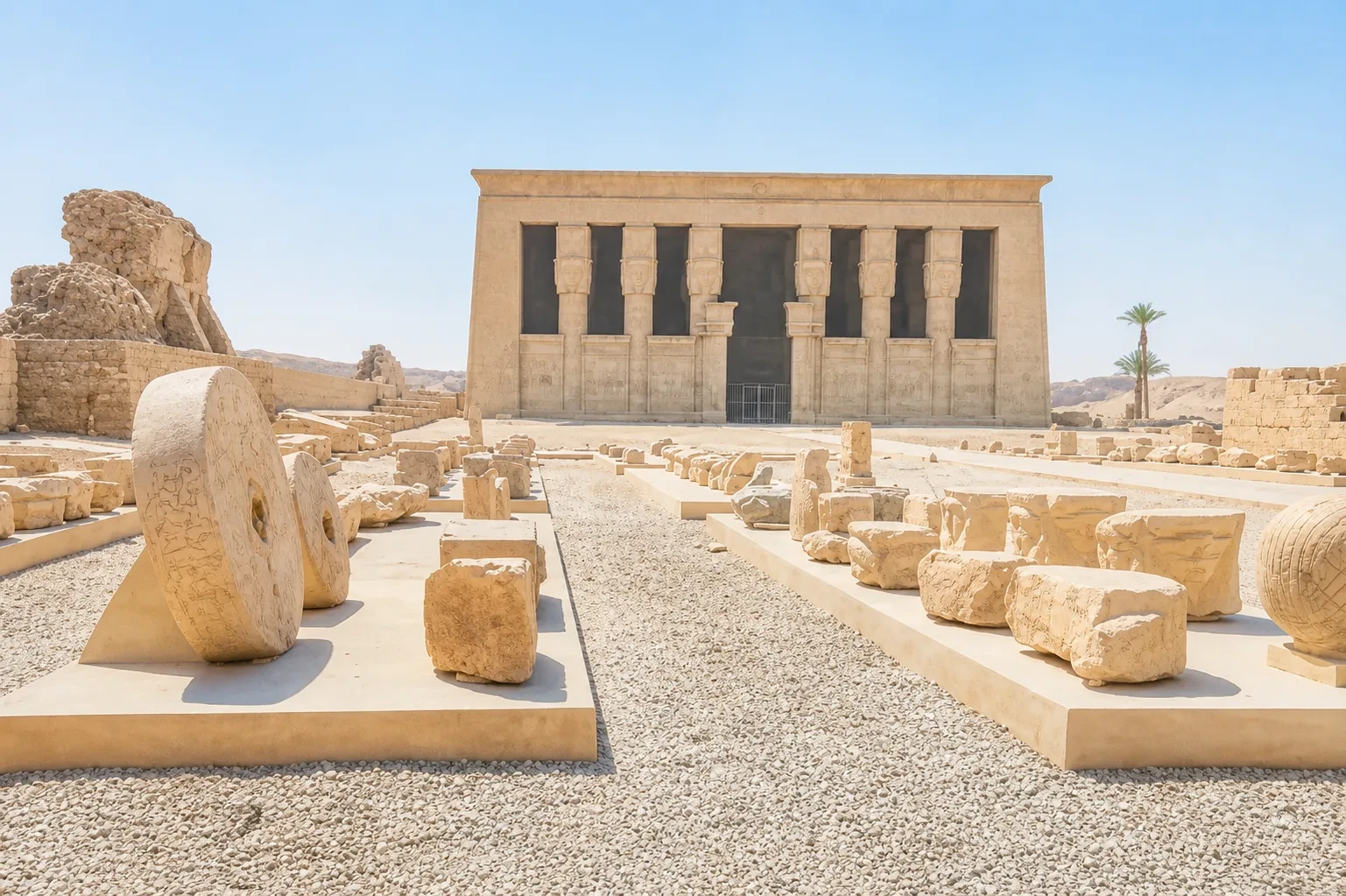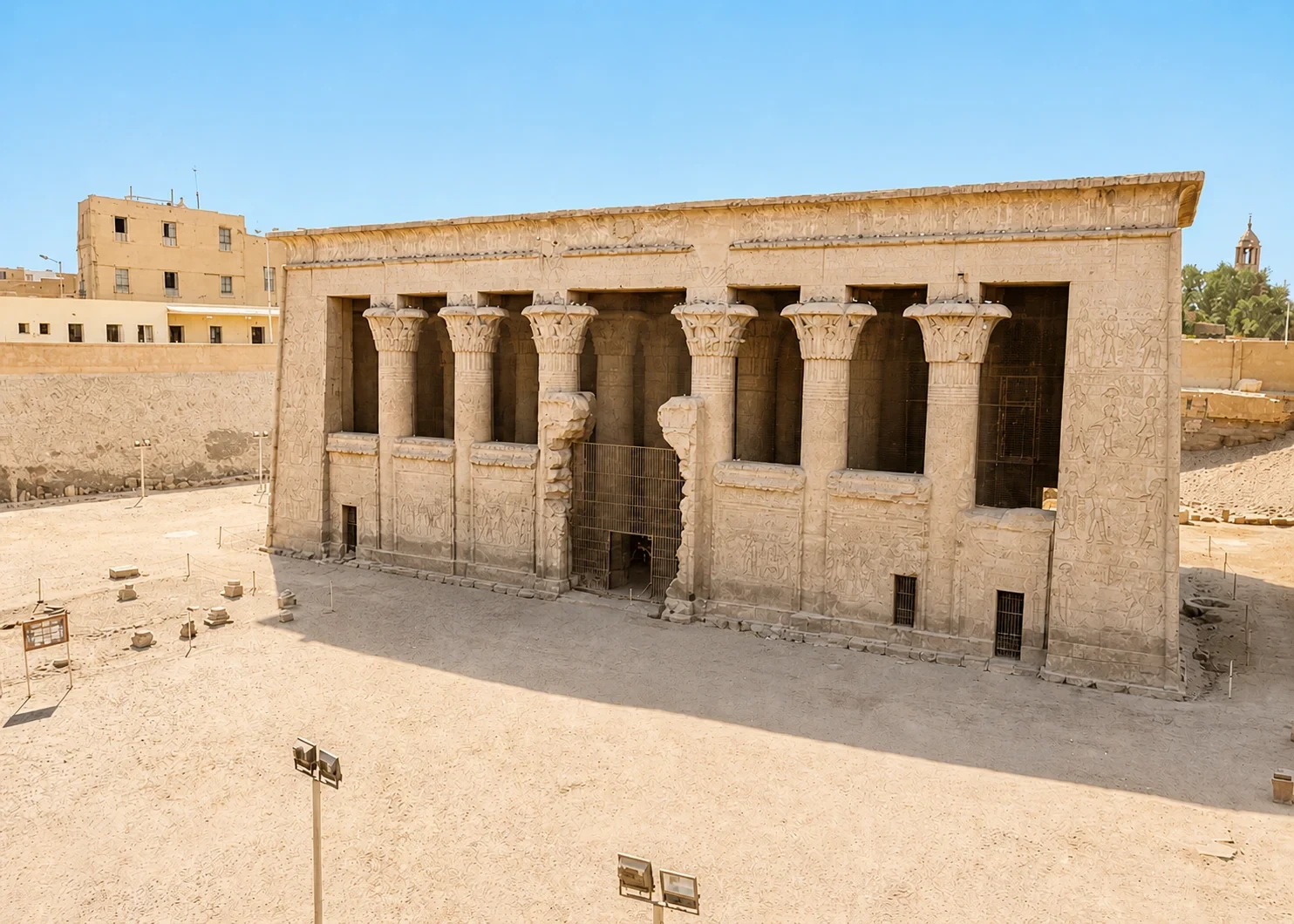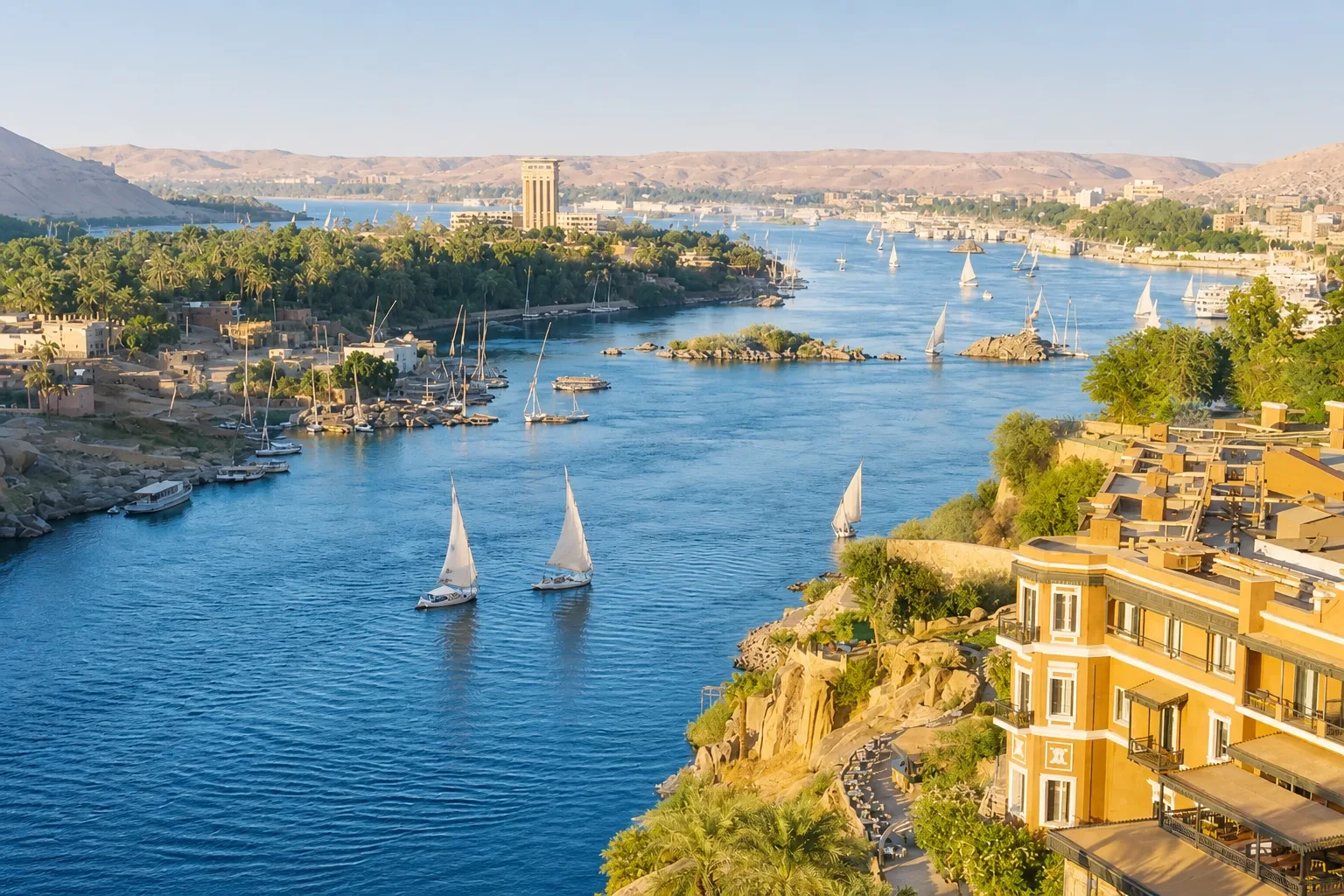

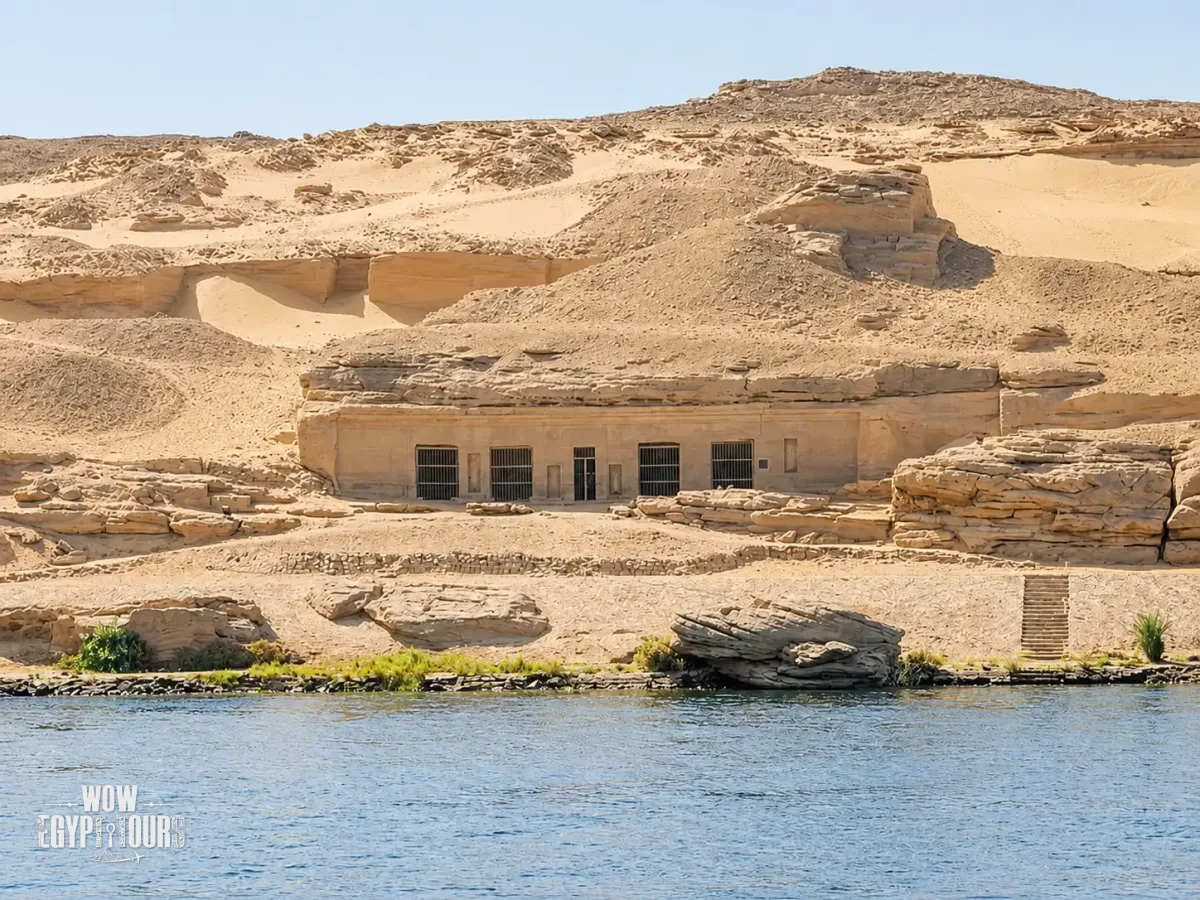

Gebel el-Silsila is one of the most atmospheric, historically significant, and least visited ancient sites on the entire Upper Egyptian Nile, and a destination that rewards every traveler who seeks to go beyond the famous Ptolemaic temples and royal tombs to encounter ancient Egypt at its most raw and immediate. Located on both banks of the Nile River in Upper Egypt, approximately 65 kilometers south of Edfu and 42 kilometers north of Kom Ombo, Gebel el-Silsila, meaning the Mountain of the Chain or the Mountain of the Rope, is the ancient sandstone quarry that supplied the building material for the majority of the greatest temples ever constructed in ancient Egypt, including the Temple of Amun at Karnak, the temples of Abu Simbel, and the mortuary temples of the Theban West Bank. This extraordinary site sits at the heart of some of Egypt's most rewarding Nile Valley travel experiences, including Dahabiya Nile River Cruises and Luxor Aswan Nile River Cruises, all of which WOW Egypt Tours proudly offers to travelers from around the world. Gebel el-Silsila is also a highlight of Egypt Tours Packages, Egypt Travel Packages, and Safaga Shore Excursions, making it one of the most evocative and geologically dramatic ancient sites in all of Upper Egypt.
At Gebel el-Silsila, the Nile Valley narrows dramatically to its most constricted point in all of Upper Egypt, where the sandstone cliffs press in on both banks to create a natural gateway that the ancient Egyptians regarded as a sacred threshold. This geological feature made Gebel el-Silsila Egypt simultaneously the most productive sandstone quarry in the ancient world and one of the most important sacred sites in the Nile Valley, venerated as a place where the earth itself was alive with divine power. The site preserves on the west bank a remarkable series of rock-cut shrines, stelae, inscriptions, and speos temples spanning more than fifteen centuries of ancient Egyptian royal patronage from the New Kingdom to the Ptolemaic Period, as well as the great open-cast quarry faces themselves, still bearing the marks of the ancient quarrymen's tools in the sandstone cliff. On the east bank, additional quarry installations and a smaller group of ancient shrines and inscriptions complement the richer west bank remains. Visiting Gebel el-Silsila is not simply a sightseeing stop; it is an encounter with the physical origin of much of ancient Egyptian monumental architecture, a place where visitors can touch the same stone that became the columns of Karnak and the colossi of Abu Simbel and understand for the first time the sheer geological and logistical achievement that underlay the ancient world's greatest building programme.
Gebel el-Silsila can be visited as part of a Dahabiya Nile River Cruise and is ideally combined with the Temple of Horus at Edfu to the north and the Temple of Kom Ombo to the south for a comprehensive experience of the Upper Egyptian Nile Valley between Luxor and Aswan.

Who Built At Gebel el-Silsila In Egypt?
The rock-cut shrines, temples, and stelae at Gebel el-Silsila were created by the pharaohs and officials of the New Kingdom, Ptolemaic Period, and Roman Period, spanning more than fifteen centuries of continuous ancient Egyptian royal and religious activity at this sacred site. The earliest significant royal monuments at Gebel el-Silsila date to the reign of Thutmose III of the 18th Dynasty around 1450 BCE, and the site received royal dedications from virtually every major pharaoh of the New Kingdom, including Amenhotep II, Amenhotep III, Horemheb, Seti I, Ramesses II, and Ramesses III, whose names and images appear in the rock-cut shrines and stelae of the west bank quarry face.
The most ambitious architectural undertaking at Gebel el-Silsila is the Speos of Horemheb, a rock-cut temple carved into the west bank cliff face by the last pharaoh of the 18th Dynasty around 1323 BCE, which is the largest single ancient monument at the site and the finest example of rock-cut temple architecture on the Upper Nile between Luxor and Aswan. Beyond the royal monuments, the quarrymen and administrators who worked at Gebel el-Silsila over many centuries left their own marks on the sandstone cliffs in the form of hundreds of graffiti inscriptions, work records, prayers to local deities, and personal name inscriptions that constitute one of the most extensive collections of ancient workmen's graffiti in Egypt. The quarry itself was not a passive geological resource but an actively managed royal institution, supervised by high officials sent from the pharaoh's court to oversee the extraction and transport of the stone that would become the temples and monuments of the entire Nile Valley.
Why Was Gebel el-Silsila Sacred?
The sacredness of Gebel el-Silsila in ancient Egyptian religious and cultural life derived from two interconnected features of the site: its geological character as the narrowest and most dramatically constricted point on the Nile in Upper Egypt, and its role as the source of the sandstone from which the majority of Egypt's greatest temples were built. The ancient Egyptians believed that the Nile flood, the annual inundation that sustained all life in the Nile Valley, originated from the divine depths of the earth at this location, where the narrowing of the valley and the pressing in of the cliffs on both banks created a visible geological drama that seemed to express the power of the hidden forces beneath the earth. The annual Nile flood, the most important natural event in the Egyptian year, was believed to rise from two sacred caverns in the Nile bed at Gebel el-Silsila, and the site was accordingly venerated as one of the primary sources of the divine generative power on which Egyptian civilization depended.
The sandstone of Gebel el-Silsila was also itself regarded as sacred material, carrying the divine power of the site into the temples built from it throughout Egypt. The ancient Egyptian name for the site was Khenu, meaning the Place of Rowing or the Place of the River Passage, reflecting the navigational significance of the narrow gorge as a point that all Nile traffic had to negotiate carefully, and secondarily Khen-Ahet, meaning the Door of the Flood, expressing the theological belief that the annual inundation passed through this sacred gateway on its way north to nourish the fields of Egypt. The combination of geological drama, theological significance, and practical importance as the primary quarry of the Egyptian state gave Gebel el-Silsila a unique place in the sacred geography of the ancient Nile Valley that is reflected in the extraordinary density and variety of monuments carved into its cliffs over more than fifteen centuries of pharaonic history.
Gebel el-Silsila Location In Egypt
Gebel el-Silsila is located approximately 65 kilometers south of Edfu and 42 kilometers north of Kom Ombo on both banks of the Nile in Upper Egypt, at the point where the Nile Valley narrows most dramatically between Luxor and Aswan as the sandstone cliffs press in on both sides of the river. The site is not located near any significant modern town and is accessible primarily by river, making it a natural and exclusive stop on Dahabiya Nile River Cruises that anchor in the river and allow passengers to disembark by small boat onto the west bank. The remoteness and the absence of the standard tourist infrastructure that characterizes more famous sites gives Gebel el-Silsila an atmosphere of wild and unspoiled antiquity that is increasingly rare in the more heavily visited parts of the Upper Egyptian Nile Valley. WOW Egypt Tours includes Gebel el-Silsila as a featured shore excursion stop on all Dahabiya Nile River Cruise itineraries in both directions.
Gebel el-Silsila Fun Facts
Gebel el-Silsila is the largest and most productive ancient sandstone quarry in Egypt, supplying the building material for a significant proportion of the greatest monumental structures in the ancient world. Among the monuments built from Gebel el-Silsila sandstone are the great hypostyle hall of Karnak Temple with its 134 enormous columns, the Abu Simbel temples of Ramesses II, the mortuary temples of the Theban West Bank, the Luxor Temple colonnade of Amenhotep III, and numerous other temples and monuments throughout Egypt and Nubia. The sheer scale of the quarrying operations at Gebel el-Silsila over more than a thousand years of active use is still visible in the vast open-cast quarry faces on both banks of the Nile, where the removal of millions of tonnes of sandstone has left cliff faces bearing the scars of chisel marks, quarrymen's graffiti, and the rectangular slots cut for the iron wedges used to split stone blocks from the parent rock.
The site preserves more than nine hundred individual shrines, niches, stelae, and graffiti inscriptions on the west bank alone, making it one of the most densely inscribed cliff faces in ancient Egypt. The most famous individual monument at Gebel el-Silsila is the Speos of Horemheb, a rock-cut temple of the 18th Dynasty that is one of the most complete and artistically accomplished small rock-cut temples in Upper Egypt. The festival stela of Amenhotep IV, better known as Akhenaten, carved at Gebel el-Silsila before his religious revolution transformed Egyptian art and religion, is one of the earliest surviving monumental images of the future heretic pharaoh in his conventional pre-Amarna style.
Why Is Gebel el-Silsila Called By This Name In Egypt?
The modern Arabic name Gebel el-Silsila means the Mountain of the Chain or the Mountain of the Rope, a name that derives from an ancient tradition that a great chain was stretched across the Nile at this narrow point to control river traffic and collect tolls from passing vessels. This tradition, which is attested in medieval Arabic geographical sources, reflects the practical reality that Gebel el-Silsila was the narrowest navigable point on the Nile in Upper Egypt, where the pressing of the sandstone cliffs on both banks reduced the navigable channel to its minimum width and where any authority wishing to control Nile traffic would have been able to do so most effectively. The ancient Egyptian name for the site was Khenu, meaning the Place of Rowing, reflecting the navigational challenges of the narrow gorge, with the alternative name Khen-Ahet, the Door of the Flood, expressing the theological belief in the site as the gateway through which the annual Nile inundation passed on its way north. Both the Arabic and the ancient Egyptian names therefore reflect the same fundamental geographical reality: that Gebel el-Silsila is the place where the Nile is at its most narrow, most dramatic, and most powerful.
Gebel el-Silsila History
The history of Gebel el-Silsila as a sacred and economically important site stretches back to the very earliest periods of ancient Egyptian civilization. The site was venerated as a sacred location from at least the Old Kingdom period, and the tradition of carving votive stelae and prayer inscriptions into the sandstone cliffs appears to have begun well before the systematic quarrying operations of the New Kingdom. The most intensive period of quarrying activity at Gebel el-Silsila coincides with the greatest era of ancient Egyptian temple building, during the New Kingdom from approximately 1550 BCE to 1070 BCE, when the successive pharaohs of the 18th, 19th, and 20th Dynasties launched the most ambitious programme of religious construction in the history of the ancient world and required enormous quantities of sandstone to realize their architectural ambitions.
The royal dedications and rock-cut shrines at Gebel el-Silsila reflect both the practical relationship between the pharaoh and the quarry, with the king depicted as the divine patron of the extraction operations, and the religious belief in the site as a sacred location where offerings to the Nile flood deity were required to ensure the continued generosity of the annual inundation. Amenhotep III commissioned an annual festival at Gebel el-Silsila to propitiate the Nile flood, and the stelae recording these celebrations are among the most important surviving documents relating to ancient Egyptian flood ritual. After the New Kingdom, the pace of quarrying at Gebel el-Silsila declined significantly, though Ptolemaic rulers continued to add to the collection of shrines and inscriptions on the west bank cliff face, and the site was visited and documented by ancient Greek and Roman travelers who left their own graffiti alongside those of the ancient pharaohs and quarrymen. Modern systematic archaeological investigation of Gebel el-Silsila was initiated by a Swedish-Egyptian Archaeological Mission in 2012, which has conducted intensive survey and excavation work at the site, discovering hundreds of previously unrecorded monuments and significantly transforming scholarly understanding of the site's complexity and importance.
The Story Of The Great Quarry At Gebel el-Silsila
The story of Gebel el-Silsila as a quarry is the story of the logistical backbone of one of the greatest building programmes in human history. Every time a pharaoh of the New Kingdom decided to build a new temple, enlarge an existing sanctuary, or commission a new colossal statue, the process began here at the sandstone cliffs of Gebel el-Silsila, where royal quarrymen organized in work gangs under the supervision of royal officials would begin the process of extracting, shaping, and transporting the raw stone that would eventually become architecture and sculpture.
The quarrying process at Gebel el-Silsila involved the use of copper and bronze chisels to cut horizontal channels in the cliff face, creating a series of parallel grooves that defined the edges of the block to be extracted. Iron wedges were then driven into slots cut across the base of the block and wetted to make the wood swell, splitting the block free from the parent rock face. The extracted blocks were then roughly shaped on site to reduce their weight for transport, dragged on wooden sledges to the river's edge, loaded onto flat-bottomed transport barges, and floated north with the prevailing current to the construction sites in the Nile Valley. The scale of this operation during the peak quarrying periods of the New Kingdom was staggering: thousands of workmen working simultaneously in multiple quarry faces, organized into precisely managed work gangs, producing the hundreds of thousands of blocks required for a single major temple project.
The workers of Gebel el-Silsila left their own records of this extraordinary effort on the quarry face in the form of thousands of graffiti inscriptions, ranging from formal work records noting the quantities of stone extracted in a given period to personal prayers for divine protection, dedications to local deities, and simple name inscriptions recording the presence of an individual worker at this sacred and dangerous location. These graffiti, now catalogued as part of the ongoing Swedish-Egyptian archaeological survey, represent one of the most extensive and most humanly immediate collections of ancient workmen's records available anywhere in Egypt.
Gebel el-Silsila Architecture And Key Monuments
The Speos Of Horemheb
The most important and most completely preserved ancient monument at Gebel el-Silsila is the Speos of Horemheb, a rock-cut temple carved into the west bank cliff face by the last pharaoh of the 18th Dynasty, Horemheb, around 1323 BCE. The speos, a Greek term for a rock-cut sanctuary, consists of a facade cut into the cliff face, a broad rectangular inner hall, and a series of small inner chambers leading to a sanctuary at the back. The facade of the Horemheb speos is decorated with carved relief scenes showing the pharaoh in the presence of the principal deities of the Gebel el-Silsila divine family, including Sobek the crocodile god, Taweret the hippopotamus goddess, Amun, Mut, and Khonsu, and the inner chambers retain sections of their original painted and carved decoration. Seven niches cut into the rear wall of the inner hall contain carved figures of Horemheb and six major deities receiving offerings, creating the most complete surviving programme of divine niche sculpture in any rock-cut monument between Luxor and Aswan. The Horemheb speos is the only rock-cut temple at Gebel el-Silsila that has a proper interior with decorated walls and divine statuary, distinguishing it from the smaller rock-cut shrines and niches that make up the majority of the ancient monuments at the site.
The Rock-Cut Shrines And Niches
Along the west bank cliff face north and south of the Horemheb speos, a series of smaller rock-cut shrines, votive niches, and ceremonial platforms were carved during the New Kingdom and Ptolemaic Period by pharaohs, high officials, and quarry administrators wishing to make permanent dedications at this sacred site. These shrines range in scale from the full speos of Horemheb to simple niches barely large enough to contain a single carved figure, and they were dedicated to the local deities of Gebel el-Silsila including Sobek and to the major deities of the Egyptian state including Amun, Ra, and Ptah. Many of the shrines are decorated with carved relief scenes showing the dedication of offerings and the performance of rituals, and a significant number preserve inscriptions identifying the dedicant, the deity, and the occasion of the dedication.
The Royal Stelae And Festival Inscriptions
Among the most historically important monuments at Gebel el-Silsila are the royal stelae and festival inscriptions carved into prominent sections of the west bank cliff face by the pharaohs of the New Kingdom. The most celebrated of these is the great festival stela of Amenhotep III, recording the annual ceremony performed at Gebel el-Silsila to propitiate the Nile flood and ensure the generosity of the annual inundation, which gives one of the most detailed surviving accounts of ancient Egyptian flood propitiation ritual. A stela of Amenhotep IV, carved before he became the heretic pharaoh Akhenaten and changed the religious landscape of Egypt forever, shows the future revolutionary in purely conventional style adoring the traditional gods, providing a fascinating early portrait of one of the most controversial figures in ancient Egyptian history. The stela of Ramesses II at Gebel el-Silsila records the dispatch of a quarrying expedition to obtain sandstone for the construction of his mortuary temple at Thebes, documenting in precise administrative detail the scale and organization of the royal quarrying operations.
The Quarry Faces
The most immediately striking and physically overwhelming feature of Gebel el-Silsila for any visitor arriving by boat is the scale and drama of the ancient quarry faces themselves, where the systematic removal of millions of tonnes of sandstone over more than a thousand years of quarrying activity has left vertical cliff faces of extraordinary proportions bearing the visible marks of the ancient extraction process. The parallel horizontal channels cut by the quarrymen's chisels, the rectangular slots cut for iron splitting wedges, the roughly shaped block outlines still partially attached to the parent rock, and the graffiti and inscription panels covering the quarry face all make the Gebel el-Silsila quarry one of the most immediate and physically tangible encounters with ancient industrial activity available anywhere in Egypt. Standing in front of the quarry face and understanding that the stone cut here traveled by river barge to become the Karnak hypostyle columns, the Abu Simbel colossi, and the temple pylons of Luxor is one of the most intellectually and emotionally resonant experiences available on the entire Nile between Luxor and Aswan.
The Quarrymen's Graffiti
Covering large areas of the quarry face and the cliff surfaces surrounding the formal royal monuments are hundreds and eventually thousands of quarrymen's graffiti inscriptions, recording in hieratic and hieroglyphic script the names, titles, prayers, and work records of the men who spent their working lives at the sandstone cliffs of Gebel el-Silsila. These graffiti, ranging in date from the New Kingdom to the Roman Period, are among the most extensive and most varied collections of ancient workmen's inscriptions in Egypt and provide an invaluable complement to the formal royal and official monuments at the site, giving visitors a direct encounter with the ordinary ancient Egyptians whose labor built the monuments that the pharaohs took credit for. The ongoing cataloguing of the Gebel el-Silsila graffiti by the Swedish-Egyptian Archaeological Mission continues to reveal new texts and new dimensions of the site's human history that transform scholarly and public understanding of the working life of the ancient quarry.
The Sacred Lake And Crocodile Cemetery
Within the Gebel el-Silsila site, archaeological investigations have revealed the remains of a sacred lake associated with the ancient religious complex and a crocodile cemetery where mummified crocodiles, sacred animals of the Nile god Sobek who was prominently venerated at Gebel el-Silsila, were deposited in formal burials. The crocodile cult at Gebel el-Silsila, associated both with the river god Sobek and with the sacred power of the Nile flood believed to originate at this location, reflects the same ancient Upper Egyptian religious tradition visible at the Temple of Kom Ombo further south, where crocodile mummies are displayed in the adjacent Crocodile Museum. The discovery of the crocodile cemetery at Gebel el-Silsila by the Swedish-Egyptian Archaeological Mission has been one of the most significant recent findings at the site and has substantially expanded knowledge of the ancient religious life of the quarry community.
Why Is Gebel el-Silsila Important?
Gebel el-Silsila is important for reasons that span archaeology, economic history, religious history, and the history of ancient technology. It is the primary source of the sandstone from which the majority of the greatest temples of the New Kingdom were built, making it literally the geological foundation of a significant proportion of the most celebrated ancient monuments in the world. Understanding Gebel el-Silsila means understanding how the temples of Karnak, Abu Simbel, the Ramesseum, and the Theban mortuary temples were actually constructed, from the geological extraction of the raw material through its transport by river to its final cutting and carving at the building site.
The site is also important as one of the most extensively inscribed ancient quarry sites in the world, preserving in its thousands of graffiti and formal inscriptions a uniquely comprehensive record of the royal and popular religious practices associated with ancient Egyptian quarrying, the administrative organization of large-scale state quarrying operations, and the personal religious lives of the quarrymen who carried out this essential work. The ongoing archaeological discoveries at Gebel el-Silsila, including the crocodile cemetery, previously unrecorded shrines, and new graffiti texts, continue to expand knowledge of the site and confirm its importance as one of the most archaeologically productive active research sites in Upper Egypt. WOW Egypt Tours includes Gebel el-Silsila as a featured shore excursion stop on all Dahabiya Nile River Cruise itineraries, recognizing it as one of the most intellectually rewarding and atmospherically powerful sites on the entire Upper Nile.
What Are Some Interesting Facts About Gebel el-Silsila?
The Source Of Egypt's Greatest Temples
The extraordinary historical significance of Gebel el-Silsila becomes viscerally apparent when visitors understand that the sandstone walls, columns, pylons, and colossi of some of the most famous buildings in the ancient world began their existence in the cliff faces that surround them at this site. The 134 enormous columns of the Great Hypostyle Hall of Karnak Temple, each standing more than twenty meters high, were quarried from the Gebel el-Silsila cliffs, shaped into cylinders on site, rafted north by river barge to Thebes, and erected by the quarrymen and builders of the New Kingdom in one of the most ambitious construction operations in the ancient world. Similarly, the twin rock-cut colossi of Ramesses II at Abu Simbel, each standing twenty meters high and carved from the living rock of the Abu Simbel cliff, were not quarried from Gebel el-Silsila, but the surrounding temple walls and the smaller sculptures within those temples incorporated material from the great Upper Egyptian quarry. Standing at Gebel el-Silsila and seeing the marks of the ancient chisels still fresh in the cliff face after three thousand years creates one of the most immediate connections with the physical reality of ancient Egyptian civilization available anywhere along the Nile.
A Living Archaeological Discovery
The Swedish-Egyptian Archaeological Mission that has been conducting systematic survey and excavation at Gebel el-Silsila since 2012 has transformed the scholarly understanding of the site, discovering hundreds of previously unrecorded monuments, shrines, stelae, graffiti, and archaeological deposits that have been largely unknown to modern scholarship. Among the most significant discoveries have been the crocodile mummy cemetery, multiple previously unrecorded New Kingdom shrines, an extensive assemblage of ancient quarrying tools and equipment, and thousands of previously uncatalogued graffiti inscriptions. These ongoing discoveries confirm that Gebel el-Silsila, despite its relative obscurity compared to the great Ptolemaic temples of the Upper Nile Valley, is one of the most archaeologically productive and historically important sites in all of Upper Egypt, and that its full significance is still in the process of being revealed.
The Narrowest Point On The Upper Nile
The physical drama of Gebel el-Silsila is as important as its archaeological content. The site marks the narrowest navigable point on the Nile between the First Cataract at Aswan and the Nile Delta, where the sandstone cliffs press in on both banks to create a gorge of extraordinary visual power that reduces the broad tropical river to a compressed channel of swift and dark water. Approaching Gebel el-Silsila by river on a Dahabiya sailing vessel, the way the ancient quarrymen themselves experienced the site, the cliffs rise on both sides with an immediacy and a dramatic scale that no road approach can replicate, giving visitors one of the most powerful natural and historical experiences available on the entire Nile cruise route between Luxor and Aswan.
What Is So Special About Gebel el-Silsila?
The Most Unspoiled Ancient Site On The Upper Nile
What makes Gebel el-Silsila uniquely special among all the ancient sites of the Upper Egyptian Nile Valley between Luxor and Aswan is the quality of pristine and unspoiled archaeological experience it provides. While the great Ptolemaic temples of Edfu and Kom Ombo have been excavated, consolidated, fenced, ticketed, and equipped with visitor facilities over the course of more than a century of tourism infrastructure development, Gebel el-Silsila remains largely as the ancient quarrymen and the river left it: a great expanse of inscribed sandstone cliff rising from the Nile bank, accessible primarily by small boat, without the scaffolding of modern heritage management. Visitors who arrive by Dahabiya cruise find themselves stepping ashore at an ancient site where the marks of the ancient chisels are still sharp in the stone and where the weight of three thousand years of history is felt without the mediation of information panels, ticket booths, or guided tour routes. For travelers who want the experience of genuine archaeological discovery, Gebel el-Silsila is one of the last places on the Upper Egyptian Nile where it can still be found.
Exclusively Accessible By Dahabiya
Another distinctive feature of Gebel el-Silsila is that it is most fully and most atmospherically accessible exclusively by river, specifically by the small-vessel Dahabiya sailing experience rather than by road or by standard Nile cruise ship. The absence of road access to the most significant sections of the west bank site, and the fact that standard cruise ships do not stop at Gebel el-Silsila as a regular port of call, means that for most travelers the only way to visit the quarry shrines, the Horemheb speos, and the great quarry faces is aboard a Dahabiya Nile River Cruise. This exclusivity gives the Dahabiya cruise a unique experiential advantage over all other ways of traveling the Nile between Luxor and Aswan, and makes Gebel el-Silsila one of the primary reasons that many experienced Egypt travelers choose the Dahabiya experience over the standard cruise ship.
Gebel el-Silsila Through The Ages: From Ancient Egypt To The Present
The history of Gebel el-Silsila after the decline of the New Kingdom quarrying operations is primarily a story of gradual abandonment, occasional reuse, and ultimate rediscovery. After the New Kingdom, the pace of quarrying at the site declined significantly as the great temple-building programme of the 18th and 19th Dynasties wound down and successive Late Period and Ptolemaic rulers concentrated their building programmes in other materials and at other locations. The Ptolemaic Period saw a modest revival of activity at the site, with additional shrines and inscriptions added to the west bank cliff face, and the site was visited by ancient Greek and Roman travelers who left their own graffiti alongside those of the ancient Egyptians. During the early Christian era and the medieval period, the site was largely forgotten and visited only occasionally by local people quarrying stone for building purposes.
The first systematic modern documentation of Gebel el-Silsila was carried out by European travelers and scholars in the 19th century, including John Gardner Wilkinson who produced the first detailed map and description of the west bank monuments in 1824. However, the site received relatively little systematic archaeological attention throughout most of the 20th century, and it was only with the commencement of the Swedish-Egyptian Archaeological Mission survey in 2012 that the full scale and significance of the Gebel el-Silsila heritage began to be revealed to modern scholarship. The mission's work has dramatically transformed understanding of the site and established it as one of the most important active research locations in Upper Egypt, with new discoveries announced regularly from their ongoing fieldwork seasons.
Gebel el-Silsila UNESCO World Heritage Status
Gebel el-Silsila is part of the broader landscape of Upper Egyptian Nile Valley heritage recognized internationally as among the most outstanding cultural heritage concentrations in the world. The Nile River Valley between Luxor and Aswan, encompassing Gebel el-Silsila alongside the great Ptolemaic temples of Edfu, Kom Ombo, and Esna and the monuments of the ancient cities of Luxor and Aswan, represents one of the most concentrated assemblages of ancient monumental architecture in the world. The significance of Gebel el-Silsila as the primary geological source of the sandstone from which many of these monuments were built gives it a unique foundational importance within the Upper Nile Valley heritage landscape that is increasingly recognized by international scholarly and conservation bodies. The active archaeological research of the Swedish-Egyptian Archaeological Mission is substantially enhancing knowledge of the site and building the documentary foundation for future formal heritage protection designations.
Best Time To Visit Gebel el-Silsila
The best time to visit Gebel el-Silsila is during the cooler months from October through April, when temperatures in Upper Egypt are moderate and exploration of the open quarry faces and cliff monuments is comfortable for extended periods. The summer months from May to September can be intensely hot at this riverside desert site, where the sandstone cliffs absorb and radiate heat and the open river gorge provides relatively little shade during the middle of the day. If visiting during summer, the earliest morning hours immediately after the Dahabiya has anchored and before the sun climbs above the cliff faces provide the most comfortable conditions. WOW Egypt Tours plans all Dahabiya shore excursion visits to Gebel el-Silsila at the optimal time of day for the season and for the specific cruise itinerary.
Gebel el-Silsila Opening Hours
The Gebel el-Silsila site is open to visitors every day of the week, including public holidays. The site is accessible from 6:00 AM to 5:00 PM throughout the year. Because the site is primarily accessible by river and has no road-based visitor infrastructure, the practical visiting hours are determined more by the arrival and departure times of the Dahabiya cruise vessel at the site than by formal gatekeeping arrangements. Visitors arriving from the river should note that the site guardian and ticket arrangements are managed through the local Antiquities Service and that a small entrance fee is collected at the site.
Gebel el-Silsila Entrance Fees
Adults: EGP 100
Students: EGP 50
Keep your ticket for the duration of your visit. Entrance fees to Gebel el-Silsila are included in all Dahabiya Nile River Cruise shore excursions and Egypt Tours Packages that include the site, booked through WOW Egypt Tours.
How To Get To Gebel el-Silsila
Gebel el-Silsila is located approximately 65 kilometers south of Edfu and 42 kilometers north of Kom Ombo on both banks of the Nile in Upper Egypt. The site is not easily accessible by road: there is a road to the east bank of the Nile near the site, but the principal monuments and the most significant quarry areas are on the west bank, which has no road access and is reached only by river. The standard way to visit Gebel el-Silsila is by Dahabiya Nile River Cruise, with the small sailing vessel anchoring in the river and passengers disembarking by small rowboat or tender onto the west bank. The approach by river from the north, watching the sandstone cliffs narrow on both sides as the vessel enters the gorge, is one of the most dramatically beautiful approaches to any ancient site on the Nile and is itself an important part of the Gebel el-Silsila experience. WOW Egypt Tours Dahabiya cruises include Gebel el-Silsila as a featured shore excursion stop on all itineraries in both directions, with the Egyptologist guide accompanying passengers ashore and providing a full guided visit of the west bank monuments.
How Long To Spend At Gebel el-Silsila
Most Dahabiya visitors spend between one and two hours at Gebel el-Silsila, which is sufficient time to visit the Horemheb speos, walk along the west bank cliff face examining the rock-cut shrines and stelae, view the major quarry faces with their chisel marks and graffiti, and appreciate the extraordinary natural setting of the sandstone gorge. Visitors with a particular interest in the quarrying technology, the royal inscriptions, or the ongoing Swedish-Egyptian archaeological work may wish to allow two to two and a half hours. The Gebel el-Silsila shore excursion is typically timed to fit within the natural stopping point between the morning departure from Kom Ombo or Edfu and the afternoon or evening arrival at the next destination on the cruise itinerary.
Tips For Visiting Gebel el-Silsila
Approach the site by river rather than by road to experience the full drama of the narrowing Nile gorge and the rising cliff faces in the way the ancient quarrymen and visitors experienced the site. Allow your guide to point out the chisel marks, quarrying channels, and splitting wedge slots in the quarry face, as these physical traces of the ancient extraction process are among the most immediate and tactile connections with ancient Egyptian industrial history available anywhere in Egypt. Do not touch or disturb any inscribed surfaces or archaeological deposits. A licensed Egyptologist guide from WOW Egypt Tours is essential: the significance of individual shrines, the content of the major royal stelae, the identification of the quarrying features, and the context of the ongoing archaeological discoveries all require expert explanation to be fully appreciated. Bring water and sunscreen as the open cliff face provides very little shade. Wear comfortable, closed-toe walking shoes with good grip for the uneven rocky terrain along the river bank.
What To Wear At Gebel el-Silsila
Gebel el-Silsila is an entirely open-air site with no shade structures and no enclosed spaces apart from the interior of the Horemheb speos. Lightweight, breathable clothing covering the shoulders and knees is recommended for both comfort in the heat and respect for the sacred ancient site. A wide-brimmed hat and generous sunscreen are absolutely essential, as the sandstone cliffs reflect and amplify the solar heat and the riverside location provides very little natural shade during the middle of the day. Comfortable, closed-toe walking shoes with good grip are necessary for the rocky and uneven terrain along the cliff base. Because the site is accessed by small boat from the Dahabiya, visitors should dress practically for the short river crossing, avoiding loose or easily wind-caught clothing that might cause difficulties in a small open boat. Bring substantial quantities of water, as there are no visitor facilities at the site.
Photography At Gebel el-Silsila
Gebel el-Silsila is a photographer's site of extraordinary quality, combining the dramatic natural landscape of the sandstone gorge with the intimate human scale of the rock-cut shrines, the overwhelming physical presence of the quarry faces, and the golden light of the Upper Egyptian sun on warm sandstone surfaces. Photography with a standard camera or smartphone is permitted throughout the site. Flash photography is strictly prohibited near all carved and inscribed surfaces. The most dramatic landscape photographs are taken from the river itself, looking toward the cliff face as the boat approaches, or from the cliff top looking down at the Nile gorge below. For close-up photography of individual shrines and inscriptions, the raking light of early morning or late afternoon creates the most dramatic shadow and texture effects. The interior of the Horemheb speos requires a camera with good low-light performance as the interior is significantly darker than the exterior. Professional photography or filming requires a separate permit from Egypt's Ministry of Tourism and Antiquities.
Gebel el-Silsila Tours
Gebel el-Silsila Shore Excursion By Dahabiya
The primary and most atmospheric way to visit Gebel el-Silsila is as a dedicated shore excursion from a Dahabiya Nile River Cruise. The Dahabiya anchors in the river opposite the west bank monument area, and passengers are taken ashore by small boat to spend approximately one to two hours exploring the cliff monuments under the guidance of the onboard Egyptologist guide.
What Is Covered
The Speos of Horemheb with a guided visit of the facade, the inner hall with its seven deity niches, and the decorated interior chambers. The rock-cut shrines and votive niches of the New Kingdom and Ptolemaic Period along the west bank cliff face. The major royal stelae including the festival stela of Amenhotep III and the quarry dispatch stela of Ramesses II. The main open-cast quarry faces with their chisel marks, splitting wedge slots, and workmen's graffiti. The location of the crocodile mummy cemetery discovered by the Swedish-Egyptian Archaeological Mission.
Duration
1 to 2 hours at the site, with the Dahabiya anchored in the river throughout the visit.
Includes
Small boat transfer ashore, private licensed Egyptologist guide, and entrance fees. Included as a standard shore excursion on all WOW Egypt Tours Dahabiya Nile River Cruise itineraries that pass through the Gebel el-Silsila reach of the river.
Safaga Shore Excursions Combined With Gebel el-Silsila
Safaga Port is located on the Red Sea coast, and Gebel el-Silsila is located in a remote section of the Upper Nile Valley between Edfu and Kom Ombo, accessible primarily by river. Due to the distance from Safaga and the primarily river-accessed nature of the Gebel el-Silsila site, a visit to Gebel el-Silsila cannot be comfortably arranged as part of a standard single-day Safaga Shore Excursion. WOW Egypt Tours therefore recommends the overnight Safaga Shore Excursion programme for Red Sea cruise passengers who wish to experience the Upper Nile Valley between Edfu and Kom Ombo.
Overnight Safaga Shore Excursion Via Luxor To The Upper Nile Valley
Day 1: Depart Safaga Port by private air-conditioned vehicle. Travel to Luxor via the Eastern Desert highway, approximately 3 hours. Full guided visit of the major Luxor West Bank sites: Valley of the Kings, Temple of Hatshepsut, and Colossi of Memnon. Evening guided visit of Luxor Temple and optional Karnak Sound and Light Show. Overnight in Luxor at a selected hotel.
Day 2: Early morning departure from Luxor southward. Guided visit of the Khnum Temple at Esna subject to available time. Full guided visit of the Temple of Horus at Edfu. Optional visit to the El Kab Tombs between Esna and Edfu. Optional continuation to the Temple of Kom Ombo. Note: Gebel el-Silsila itself is most fully accessible by river rather than road, and for Red Sea cruise passengers wishing to experience both Gebel el-Silsila and the Edfu and Kom Ombo temples, the Dahabiya Nile River Cruise is the recommended travel option. Return to Safaga Port via the Eastern Desert road. Return to ship.
Includes
Private air-conditioned vehicle throughout, private licensed Egyptologist guide, one night accommodation in Luxor, entrance fees to all included sites, and return transfer to the ship. All overnight Safaga Shore Excursions are coordinated with each ship's schedule to confirm departure and return timings in advance.
Dahabiya Nile River Cruise
A Dahabiya Nile River Cruise is a small-vessel sailing experience on the Nile between Luxor and Aswan aboard a traditional wooden dahabiya, and is the only fully satisfactory way to visit Gebel el-Silsila and experience its most significant monuments on the west bank cliff face. WOW Egypt Tours operates dahabiya cruises with private cabins, all meals, a private licensed Egyptologist guide on board, and guided shore excursions at every stop. Gebel el-Silsila is a featured shore excursion stop on all Dahabiya itineraries in both directions.
4 Days 3 Nights Dahabiya Nile River Cruise From Aswan To Luxor
Route: Aswan to Luxor, sailing north.
Itinerary
Day 1: Embarkation in Aswan. Visit to Philae Temple and the Unfinished Obelisk. Sail north to Kom Ombo. Guided visit to Kom Ombo Temple and Crocodile Museum. Continue to Gebel el Silsila. Overnight on board.
Day 2: Guided visit to Gebel el-Silsila including the Speos of Horemheb, the rock-cut shrines, the royal stelae, and the great quarry faces. Sail to the Village of Basaw. Guided visit to Village of Basaw. Continue to Edfu. Guided visit to the Temple of Horus at Edfu. Overnight on board.
Day 3: Sail to El Kab. Guided visit to El Kab Tombs. Sail to El Hagaz Island. Swimming stop. Overnight on board.
Day 4: Sail to Esna. Visit Khnum Temple at Esna. Disembarkation in Esna. Transfer to Luxor, approximately 55 kilometers (35 miles).
Includes
Private cabin, all meals on board, private licensed Egyptologist guide, entrance fees to all site visits including Gebel el-Silsila, and private transfers.
5 Days 4 Nights Dahabiya Nile River Cruise From Luxor To Aswan
Route: Luxor to Aswan, sailing south.
Itinerary
Day 1: Embarkation in Luxor. Transfer to Esna, approximately 55 kilometers (35 miles). Visit Khnum Temple at Esna. Sail to El Hagaz Island. Overnight on board.
Day 2: Sail to El Kab. Guided visit to El Kab Tombs. Continue to Edfu. Guided visit to the Temple of Horus at Edfu. Sail to the Village of Basaw. Guided visit to Village of Basaw. Overnight on board.
Day 3: Sail to Gebel el Silsila. Guided visit to Gebel el-Silsila including the Speos of Horemheb, the rock-cut shrines, the royal stelae, and the great quarry faces. Sail south to Kom Ombo. Guided visit to Kom Ombo Temple and Crocodile Museum. Sail to Daraw Village. Overnight on board.
Day 4: Guided visit to Daraw Village. Sail to Herbiab Island. Swimming stop. Philae Sound and Light Show. Overnight on board.
Day 5: Optional Abu Simbel visit available by air or road. Guided visits to Philae Temple, the High Dam, and the Unfinished Obelisk. Disembarkation in Aswan.
Includes
Private cabin, all meals on board, private licensed Egyptologist guide, entrance fees to all site visits including Gebel el-Silsila, and private transfers.
8 Days 7 Nights Dahabiya Nile River Cruise Round Trip From Luxor (Via Aswan)
Route: Luxor and Aswan, sailing north and south.
Itinerary
Day 1: Embarkation in Luxor. Transfer to Esna, approximately 55 kilometers (35 miles). Visit Khnum Temple at Esna. Sail to El Hagaz Island. Overnight on board.
Day 2: Sail to El Kab. Continue to Edfu. Guided visit to the Temple of Horus at Edfu. Sail to the Village of Basaw. Guided visit to Village of Basaw. Overnight on board.
Day 3: Sail to Gebel el Silsila. Guided visit to Gebel el-Silsila. Sail south to Kom Ombo. Guided visit to Kom Ombo Temple and Crocodile Museum. Sail to Daraw Village. Overnight on board.
Day 4: Guided visit to Daraw Village. Sail to Herbiab Island. Swimming stop. Philae Sound and Light Show. Overnight on board.
Day 5: Optional Abu Simbel visit available by air or road. Guided visits to Philae Temple, the High Dam, and the Unfinished Obelisk. Sail north to Kom Ombo. Continue to Gebel el Silsila. Overnight on board.
Day 6: Guided visit to Gebel el-Silsila. Sail to the Village of Basaw. Continue to Edfu. Guided visit to the Temple of Horus at Edfu. Overnight on board.
Day 7: Sail to El Kab. Guided visit to El Kab Tombs. Sail to El Hagaz Island. Swimming stop. Overnight on board.
Day 8: Disembarkation in Esna. Transfer to Luxor, approximately 55 kilometers (35 miles).
Includes
Private cabin, all meals on board, private licensed Egyptologist guide, entrance fees to all site visits including Gebel el-Silsila, and private transfers.
8 Days 7 Nights Dahabiya Nile River Cruise Round Trip From Aswan (Via Luxor)
Route: Luxor and Aswan, sailing north and south.
Itinerary
Day 1: Embarkation in Aswan. Visit to Philae Temple and the Unfinished Obelisk. Sail north to Kom Ombo. Guided visit to Kom Ombo Temple and Crocodile Museum. Continue to Gebel el Silsila. Overnight on board.
Day 2: Guided visit to Gebel el-Silsila including the Speos of Horemheb, the rock-cut shrines, and the great quarry faces. Sail to the Village of Basaw. Continue to Edfu. Guided visit to the Temple of Horus at Edfu. Overnight on board.
Day 3: Sail to El Kab. Guided visit to El Kab Tombs. Sail to El Hagaz Island. Swimming stop. Overnight on board.
Day 4: Sail to Esna. Visit Khnum Temple at Esna. Sail to El Hagaz Island. Overnight on board.
Day 5: Sail to El Kab. Continue to Edfu. Guided visit to the Temple of Horus at Edfu. Sail to the Village of Basaw. Guided visit to Village of Basaw. Overnight on board.
Day 6: Sail to Gebel el Silsila. Guided visit to Gebel el-Silsila. Sail south to Kom Ombo. Guided visit to Kom Ombo Temple and Crocodile Museum. Sail to Daraw Village. Overnight on board.
Day 7: Guided visit to Daraw Village. Sail to Herbiab Island. Swimming stop. Philae Sound and Light Show. Overnight on board.
Day 8: Disembarkation in Aswan.
Includes
Private cabin, all meals on board, private licensed Egyptologist guide, entrance fees to all site visits including Gebel el-Silsila, and private transfers.
Luxor And Aswan Nile River Cruise
The Luxor and Aswan Nile River Cruise is a standard Nile cruise product operated aboard a full-size cruise ship between Luxor and Aswan. WOW Egypt Tours operates this cruise in both directions with private licensed Egyptologist guides, all meals included, private cabins, and guided shore excursions at every port of call. Standard Nile cruise ships do not stop at Gebel el-Silsila as a regular port of call due to the absence of standard docking facilities at the remote site. Travelers wishing to visit Gebel el-Silsila are therefore strongly recommended to choose the Dahabiya Nile River Cruise experience, which includes Gebel el-Silsila as a standard featured shore excursion on all itineraries.
4 Days 3 Nights Luxor And Aswan Nile River Cruise From Aswan To Luxor
Route: Aswan to Luxor, sailing north.
Itinerary
Day 1: Embarkation in Aswan. Guided visits to Philae Temple, the High Dam, and the Unfinished Obelisk. Overnight on board in Aswan.
Day 2: Sail north to Kom Ombo. Guided visit to Kom Ombo Temple and Crocodile Museum. Continue to Edfu. Overnight on board.
Day 3: Guided visit to the Temple of Horus at Edfu. Continue north toward Luxor. Pass through the Esna Lock. Optional visit to Khnum Temple at Esna. Guided visit to Luxor Temple and Karnak Temple. Overnight on board in Luxor.
Day 4: Optional Sunrise Hot Air Balloon available. Guided visits to Valley of the Kings, Queen Hatshepsut Temple, and Colossi of Memnon. Disembarkation in Luxor.
Includes
Private cabin, all meals on board, private licensed Egyptologist guide, entrance fees to all temple visits, and private transfers.
5 Days 4 Nights Luxor And Aswan Nile River Cruise From Luxor To Aswan
Route: Luxor to Aswan, sailing south.
Itinerary
Day 1: Embarkation in Luxor. Guided visits to Luxor Temple and Karnak Temple. Overnight on board in Luxor.
Day 2: Optional Sunrise Hot Air Balloon available. Guided visits to Valley of the Kings, Queen Hatshepsut Temple, and Colossi of Memnon. Pass through the Esna Lock. Visit to Khnum Temple at Esna. Sail south to Edfu. Overnight on board.
Day 3: Guided visit to the Temple of Horus at Edfu. Continue to Kom Ombo. Guided visit to Kom Ombo Temple and Crocodile Museum. Overnight on board.
Day 4: Continue south toward Aswan. Guided visits to Philae Temple, the High Dam, and the Unfinished Obelisk. Overnight on board in Aswan.
Day 5: Optional Abu Simbel visit available by air or road. Disembarkation in Aswan.
Includes
Private cabin, all meals on board, private licensed Egyptologist guide, entrance fees to all temple visits, and private transfers.
8 Days 7 Nights Luxor And Aswan Nile River Cruise Round Trip From Luxor (Via Aswan)
Route: Luxor and Aswan, sailing north and south.
Itinerary
Day 1: Embarkation in Luxor. Guided visits to Luxor Temple and Karnak Temple. Overnight on board in Luxor.
Day 2: Guided visits to Luxor Museum. Pass through the Esna Lock. Visit to Khnum Temple at Esna. Sail south to Edfu. Overnight on board.
Day 3: Guided visit to the Temple of Horus at Edfu. Continue to Kom Ombo. Guided visit to Kom Ombo Temple and Crocodile Museum. Overnight on board.
Day 4: Continue south toward Aswan. Guided visits to Philae Temple, the High Dam, and the Unfinished Obelisk. Overnight on board in Aswan.
Day 5: Abu Simbel visit available by road. Sound and Light Show at Philae Temple. Overnight on board in Aswan.
Day 6: Guided visits to Nubian Village. Sail north to Kom Ombo. Guided visit to Kom Ombo Temple. Continue north. Overnight on board.
Day 7: Guided visits to Valley of the Kings, Queen Hatshepsut Temple, and Colossi of Memnon. Pass through the Esna Lock. Visit to Khnum Temple at Esna. Overnight on board in Luxor.
Day 8: Optional Sunrise Hot Air Balloon available. Disembarkation in Luxor.
Includes
Private cabin, all meals on board, private licensed Egyptologist guide, entrance fees to all temple visits, and private transfers.
8 Days 7 Nights Luxor And Aswan Nile River Cruise Round Trip From Aswan (Via Luxor)
Route: Luxor and Aswan, sailing north and south.
Itinerary
Day 1: Embarkation in Aswan. Guided visits to Philae Temple, the High Dam, and the Unfinished Obelisk. Overnight on board in Aswan.
Day 2: Sail north to Kom Ombo. Guided visit to Nubian Village and Kom Ombo Temple and Crocodile Museum. Continue to Edfu. Overnight on board.
Day 3: Continue north toward Luxor. Pass through the Esna Lock. Visit to Khnum Temple at Esna. Guided visit to Luxor Museum and Karnak Sound and Light Show. Overnight on board in Luxor.
Day 4: Guided visits to Luxor Temple and Karnak Temple. Overnight on board in Luxor.
Day 5: Optional Sunrise Hot Air Balloon available. Guided visits to Valley of the Kings, Queen Hatshepsut Temple, and Colossi of Memnon. Pass through the Esna Lock. Sail south to Edfu. Overnight on board.
Day 6: Guided visit to the Temple of Horus at Edfu. Continue to Kom Ombo. Guided visit to Kom Ombo Temple. Overnight on board.
Day 7: Sound and Light Show at Philae Temple. Overnight on board in Aswan.
Day 8: Abu Simbel visit available by road. Disembarkation in Aswan.
Includes
Private cabin, all meals on board, private licensed Egyptologist guide, entrance fees to all temple visits, and private transfers.
Combine Gebel el-Silsila With Your Egypt Tours Package
Gebel el-Silsila is included as a featured shore excursion stop on all Dahabiya Nile River Cruise itineraries offered by WOW Egypt Tours. Browse the options below to find the Egypt experience that is right for you.
Egypt Tour Packages: Multi-day guided Egypt tours organized by duration, including 2 Days Egypt Packages, 3 Days Egypt Packages, 4 Days Egypt Packages, 5 Days Egypt Packages, 6 Days Egypt Packages, 7 Days Egypt Packages, 8 Days Egypt Packages, 10 Days Egypt Packages, and longer itineraries. Packages that include a Dahabiya Nile River Cruise will feature Gebel el-Silsila as a standard shore excursion stop.
Egypt Travel Packages: Themed Egypt travel packages designed around specific travel styles and interests, including Egypt Honeymoon Travel Packages, Egypt Budget Travel Packages, Egypt Family Travel Packages, Egypt Luxury Travel Packages, Egypt Adventure Travel Packages, Egypt Cultural Travel Packages, and Egypt Christmas and New Year Travel Packages. All packages include private air-conditioned transportation, private licensed Egyptologist guide, accommodations, meals, entrance fees to all included sites, and private transfers.
Egypt Nile Cruise Packages: Complete Egypt travel packages combining Cairo sightseeing with a fully guided Nile cruise between Luxor and Aswan. Packages that include a Dahabiya cruise will feature Gebel el-Silsila as a standard included stop. All packages include private cabin on board, all meals, private licensed Egyptologist guide, entrance fees to all site visits, and private transfers.
Nile River Cruises: All WOW Egypt Tours Nile cruise options between Luxor and Aswan. Gebel el-Silsila is a featured standard shore excursion stop exclusively on Dahabiya Nile River Cruises. All cruises include private cabin on board, all meals, private licensed Egyptologist guide, entrance fees to all site visits, and private transfers.
Luxor Aswan Nile Cruises: The classic Upper Egypt Nile cruise route between Luxor and Aswan, available in both directions and in durations of 4 Days 3 Nights, 5 Days 4 Nights, and 8 Days 7 Nights round trip. Standard cruise ships pass Gebel el-Silsila without stopping; the Dahabiya cruise is the recommended option for visitors wishing to explore the site.
Standard Nile Cruises: Comfortable standard-category cruise ships sailing between Luxor and Aswan, available in 4 Days 3 Nights, 5 Days 4 Nights, and 8 Days 7 Nights itineraries in both directions. Includes standard cabin, all meals, licensed guide, and entrance fees to all standard temple stops.
Deluxe Nile Cruises: Deluxe-category cruise ships with enhanced cabin comfort and upgraded dining, sailing between Luxor and Aswan in 4 Days 3 Nights, 5 Days 4 Nights, and 8 Days 7 Nights itineraries. Includes deluxe cabin, all meals, licensed guide, and entrance fees to all standard temple stops.
Ultra Deluxe Nile Cruises: Ultra deluxe-category cruise ships offering superior cabins, premium dining, and elevated onboard experience, sailing between Luxor and Aswan. Includes ultra deluxe cabin, all meals, licensed guide, and entrance fees to all standard temple stops.
Luxury Nile Cruises: Luxury-category cruise ships with the finest cabins, exceptional cuisine, and premium onboard facilities, sailing between Luxor and Aswan. Includes luxury cabin, all meals, licensed guide, and entrance fees to all standard temple stops.
Dahabiya Nile Cruises: Private small-vessel sailing experience aboard a traditional wooden dahabiya between Luxor and Aswan, available in four itineraries: 4 Days 3 Nights Dahabiya From Aswan To Luxor, 5 Days 4 Nights Dahabiya From Luxor To Aswan, 8 Days 7 Nights Dahabiya Round Trip From Luxor via Aswan, and 8 Days 7 Nights Dahabiya Round Trip From Aswan via Luxor. Gebel el-Silsila is a featured standard shore excursion stop on all Dahabiya itineraries. Includes private cabin, all meals, private licensed Egyptologist guide, entrance fees to all site visits including Gebel el-Silsila, and private transfers. The Dahabiya cruise is the strongly recommended option for all travelers who wish to visit Gebel el-Silsila.
Luxor Tours: Day tours from Luxor covering the major sites of Upper Egypt. Gebel el-Silsila is not typically accessible on standard road-based day tours due to its primarily river-accessed location. Travelers wishing to visit Gebel el-Silsila from Luxor are recommended to book a Dahabiya Nile River Cruise or a multi-day Upper Egypt tour that includes river access to the site.
Nearby Attractions To Gebel el-Silsila
Gebel el-Silsila sits at the geographic midpoint of the Upper Egyptian Nile Valley between Luxor and Aswan, with world-class ancient monuments accessible in both directions by river. Approximately 65 kilometers to the north, the Temple of Horus at Edfu is the largest and most completely preserved Ptolemaic temple in the world and the essential companion visit to Gebel el-Silsila on the northward Dahabiya cruise itinerary. Between Gebel el-Silsila and Edfu, the ancient rock tombs and enclosure walls of El Kab are accessible as a Dahabiya shore excursion stop. The village of Basaw, between Gebel el-Silsila and Edfu on the Dahabiya itinerary, is an authentic and welcoming Nubian village that offers visitors a vivid encounter with the contemporary life of the Nile Valley communities whose ancestors lived alongside the ancient quarrymen of Gebel el-Silsila.
Approximately 42 kilometers to the south, the Temple of Sobek and Haroeris at Kom Ombo offers the unique experience of the only double temple in ancient Egypt, perched dramatically on the east bank of the Nile above the river. The city of Aswan, approximately 90 kilometers south of Gebel el-Silsila, offers Philae Temple, the Unfinished Obelisk, the High Dam and Lake Nasser, the Nubian Museum, and the granite quarry landscapes of the Aswan region. To the north, the Khnum Temple at Esna and the full range of Luxor monuments complete the extraordinary heritage landscape of the Upper Egyptian Nile Valley. All these sites are accessible through the Dahabiya and standard Nile cruise itineraries, day tours, Egypt Tours Packages, and Safaga Shore Excursions offered by WOW Egypt Tours.
Frequently Asked Questions About Gebel el-Silsila
What is Gebel el-Silsila?
Gebel el-Silsila is the ancient sandstone quarry and sacred site located on both banks of the Nile approximately 65 kilometers south of Edfu in Upper Egypt, which supplied the building material for the majority of the greatest ancient Egyptian temples including Karnak, Abu Simbel, and the Theban mortuary temples. The site preserves more than nine hundred rock-cut shrines, stelae, inscriptions, and quarrying features on the west bank cliff face, including the Speos of Horemheb, one of the finest rock-cut temples in Upper Egypt. Gebel el-Silsila is a featured shore excursion stop on all WOW Egypt Tours Dahabiya Nile River Cruise itineraries.
What does Gebel el-Silsila mean?
Gebel el-Silsila is an Arabic name meaning the Mountain of the Chain or the Mountain of the Rope, derived from a medieval tradition that a great chain was stretched across the narrowest point of the Nile at this location to control river traffic. The ancient Egyptian name was Khenu, meaning the Place of Rowing, reflecting the navigational challenges of the narrow gorge.
Why was Gebel el-Silsila sacred to the ancient Egyptians?
Gebel el-Silsila was sacred because the ancient Egyptians believed the annual Nile flood originated from divine caverns in the Nile bed at this location, the narrowest point on the Upper Nile, making it a sacred gateway through which the life-giving inundation passed each year. The site was venerated as a place of divine power associated with the Nile flood god and with Sobek the crocodile god, and pharaohs performed annual festivals here to propitiate the flood and ensure a generous inundation.
What is the Speos of Horemheb at Gebel el-Silsila?
The Speos of Horemheb is the largest and most completely preserved ancient monument at Gebel el-Silsila, a rock-cut temple carved into the west bank cliff face by the last pharaoh of the 18th Dynasty around 1323 BCE. It consists of a decorated facade, a broad inner hall with seven divine niche statues, and several inner sanctuary chambers, and is one of the finest small rock-cut temples in Upper Egypt.
Which ancient temples were built from Gebel el-Silsila sandstone?
A significant proportion of the New Kingdom temples in Egypt were built using sandstone quarried at Gebel el-Silsila, including substantial portions of the Great Hypostyle Hall of Karnak Temple, various temples and monuments at Luxor, and numerous temples and structures throughout Upper Egypt and Nubia. The site was the primary source of sandstone for the New Kingdom building programme for more than five hundred years.
How is Gebel el-Silsila accessed?
The most significant monuments at Gebel el-Silsila are on the west bank of the Nile, which has no road access and is reached only by river. The site is best visited as a shore excursion from a Dahabiya Nile River Cruise, which anchors in the river and takes passengers ashore by small boat. Standard Nile cruise ships do not stop at Gebel el-Silsila.
Do standard Nile cruise ships stop at Gebel el-Silsila?
No. Standard Nile cruise ships do not stop at Gebel el-Silsila as a regular port of call. The site is most fully and most atmospherically accessible as a shore excursion from a Dahabiya Nile River Cruise. This is one of the significant experiential advantages of the Dahabiya cruise over the standard Nile cruise ship for travelers who want to visit the full range of Upper Nile Valley sites.
What is the Swedish-Egyptian Archaeological Mission at Gebel el-Silsila?
The Swedish-Egyptian Archaeological Mission is an international joint excavation and survey project that has been conducting intensive archaeological work at Gebel el-Silsila since 2012. The mission has discovered hundreds of previously unrecorded monuments, shrines, stelae, and graffiti, as well as the crocodile mummy cemetery and extensive assemblages of ancient quarrying tools and equipment, dramatically transforming scholarly understanding of the site and its importance.
What are the opening hours of Gebel el-Silsila?
The Gebel el-Silsila site is open daily from 6:00 AM to 5:00 PM. Practical visiting hours for Dahabiya cruise passengers are determined by the anchor schedule of the cruise vessel at the site.
How much does it cost to enter Gebel el-Silsila?
The entrance fee is EGP 100 for adults and EGP 50 for students. Entrance fees are included in all Dahabiya Nile River Cruise shore excursions and Egypt Tours Packages that include Gebel el-Silsila, booked through WOW Egypt Tours.
How long does it take to visit Gebel el-Silsila?
Most Dahabiya visitors spend between one and two hours at Gebel el-Silsila, sufficient time to visit the Horemheb speos, walk along the west bank cliff face, examine the major royal stelae and rock-cut shrines, and appreciate the quarry faces and their ancient tool marks.
What is the best time of year to visit Gebel el-Silsila?
October to April is the most comfortable period. The open riverside location with sandstone cliffs can be intensely hot in summer, making early morning visits essential from May to September.
Is a guide necessary at Gebel el-Silsila?
A guide is essential. The significance of individual shrines and stelae, the content of the royal inscriptions, the identification of the quarrying features, and the context of the ongoing archaeological discoveries all require expert explanation to be fully appreciated. WOW Egypt Tours provides private licensed Egyptologist guides on all Dahabiya Nile River Cruise shore excursions at Gebel el-Silsila.
Can I take photographs at Gebel el-Silsila?
Photography with a standard camera or smartphone is permitted throughout the site. Flash photography is strictly prohibited near all carved and inscribed surfaces. A camera with good low-light performance is recommended for the interior of the Horemheb speos. Professional filming requires a separate permit.
What should I wear to visit Gebel el-Silsila?
Lightweight clothing covering the shoulders and knees, a wide-brimmed hat, generous sunscreen, comfortable closed-toe walking shoes with good grip for the rocky terrain, and substantial quantities of water. Dress practically for the small boat transfer ashore from the Dahabiya.
What is the difference between Gebel el-Silsila and the standard Nile cruise temples?
The great Ptolemaic temples of Edfu, Kom Ombo, and Esna are fully excavated, fenced, ticketed heritage sites with modern visitor infrastructure, accessible by road and by standard cruise ship. Gebel el-Silsila is primarily accessible by river, has minimal modern visitor infrastructure, and preserves a quality of raw and unspoiled archaeological experience that is complementary rather than competitive to the Ptolemaic temples. Visiting Gebel el-Silsila on the same Dahabiya cruise that stops at Edfu and Kom Ombo gives travelers the full range of Upper Nile Valley heritage from the geological source of Egypt's temples to the temples themselves.
What Nile cruise options include Gebel el-Silsila?
Gebel el-Silsila is exclusively included as a standard featured shore excursion stop on Dahabiya Nile River Cruises operated by WOW Egypt Tours. Standard Nile cruise ships do not stop at the site. The Dahabiya cruise is available as part of all WOW Egypt Tours Egypt Tours Packages and Egypt Travel Packages.
Can I visit Gebel el-Silsila as part of a Safaga Shore Excursion?
Gebel el-Silsila is most completely accessible by river via the Dahabiya cruise rather than by road-based shore excursion. WOW Egypt Tours recommends that Red Sea cruise passengers wishing to experience Gebel el-Silsila combine their itinerary with a Dahabiya Nile River Cruise segment. The overnight Safaga Shore Excursion programme can include the nearby road-accessible temples at Edfu and Kom Ombo, while Gebel el-Silsila itself is best experienced by river.
How do I book a Gebel el-Silsila visit with WOW Egypt Tours?
You can book a Dahabiya Nile River Cruise, Egypt Tours Package, or Egypt Travel Package that includes Gebel el-Silsila directly through WOW Egypt Tours. Our team of travel specialists will arrange everything from the Dahabiya sailing vessel and private licensed Egyptologist guide to all entrance fees and logistics, ensuring a seamless and unforgettable experience of Gebel el-Silsila and all the wonders of the Upper Egyptian Nile Valley.