

The Tombs of El Kab are among the most historically significant and artistically rewarding ancient sites in all of Upper Egypt, and a destination that every traveler with a serious interest in ancient Egyptian history and art must experience. Located on the east bank of the Nile River in the small town of El Kab in Upper Egypt, approximately 80 kilometers south of Luxor and 25 kilometers north of Edfu, the El Kab Tombs are the decorated rock-cut burial chapels of the senior officials who served the pharaohs of the early New Kingdom, set within one of the oldest and most sacred ancient Egyptian towns in existence and surrounded by some of the most impressive ancient enclosure walls surviving anywhere in Egypt. This remarkable site sits at the heart of some of Egypt's most rewarding Nile Valley travel experiences, including Luxor Day Tours, El Kab Tombs Tours, Dahabiya Nile River Cruises, and Luxor Aswan Nile River Cruises, all of which WOW Egypt Tours proudly offers to travelers from around the world. The Tombs of El Kab are also a highlight of Egypt Tours Packages, Egypt Travel Packages, and Safaga Shore Excursions, making them one of the most intellectually stimulating and least crowded ancient sites on the entire Upper Egyptian Nile.
The El Kab Tombs Egypt are celebrated above all for the extraordinary historical texts preserved in the tomb of Ahmose Son of Ebana, a naval officer who served under the pharaohs Ahmose I, Amenhotep I, and Thutmose I at the very beginning of the New Kingdom period around 1550 BCE, and whose tomb biography is the primary ancient Egyptian source for the expulsion of the Hyksos invaders from Egypt and the foundation of the New Kingdom, one of the most pivotal events in the entire three-thousand-year history of ancient Egyptian civilization. Alongside the historical tombs, the ancient site of El Kab, known in ancient Egyptian as Nekheb, encompasses the remains of one of the most ancient and most sacred towns in Egypt, the sanctuary of the vulture goddess Nekhbet who was the patron deity of Upper Egypt and one of the two protective divine mothers of the pharaoh himself, whose image appeared on the royal brow beside the cobra goddess Wadjet as the Two Ladies of the double crown. Visiting the Tombs of El Kab is not simply a visit to a group of decorated ancient tombs; it is an encounter with the very origins of the New Kingdom and an opportunity to stand in a place that has been sacred to the people of the Nile Valley for more than five thousand years.
The El Kab Tombs can be visited as part of a day tour from Luxor and are ideally combined with the Temple of Horus at Edfu and the Khnum Temple at Esna for a comprehensive experience of the Upper Egyptian Nile Valley between Luxor and Aswan.

Who Built The Tombs Of El Kab In Egypt?
The decorated rock-cut tomb chapels of El Kab were built by the senior military officers and civil administrators who served the pharaohs of the early New Kingdom, principally during the reigns of Ahmose I, Amenhotep I, Thutmose I, and Thutmose III in the 18th Dynasty, between approximately 1550 BCE and 1400 BCE. El Kab was one of the most important provincial towns in Upper Egypt and the home of the hereditary ruling family of the Nekheb nome, a succession of governors and military commanders whose service to the early New Kingdom pharaohs is documented in the biographical tomb inscriptions of the El Kab Tombs in unmatched detail.
The most celebrated tomb owner at El Kab is Ahmose Son of Ebana, a naval officer and military commander from El Kab who served under three successive pharaohs at the very beginning of the New Kingdom and whose tomb contains the most complete and detailed first-person military biography surviving from ancient Egypt. His inscriptions describe the expulsion of the Hyksos from their capital at Avaris, the subsequent campaigns in Nubia and the Levant, and the rewards of gold and land that he received from three grateful pharaohs. His contemporary and fellow El Kab tomb owner Ahmose Pennekhbet recorded a similar biography spanning the reigns of six pharaohs, documenting half a century of Egyptian military expansion in the same detailed first-person style. Together, the El Kab military biographies constitute the single most important primary source for the early New Kingdom in all of ancient Egyptian literature.
Who Was Nekhbet And Why Was El Kab Sacred?
El Kab, ancient Nekheb, was sacred in ancient Egypt as the home of Nekhbet, the vulture goddess who was one of the most ancient and most powerful protective deities in the entire Egyptian religious tradition. Nekhbet was the patron goddess of Upper Egypt and one of the Two Ladies, the pair of protective divine mothers whose images adorned the royal brow: Nekhbet represented Upper Egypt as the white vulture, while Wadjet represented Lower Egypt as the red cobra, and together they embodied the unity of the Two Lands under the pharaoh. As the protective mother of the pharaoh himself, Nekhbet was venerated from the very earliest periods of Egyptian history, and her sanctuary at El Kab was one of the oldest and holiest religious sites in the entire Nile Valley.
The town of Nekheb, El Kab, was the principal city of the third nome of Upper Egypt and one of the most ancient continuously inhabited settlements in the Nile Valley, with evidence of human occupation dating back to the Predynastic period before 3000 BCE and with significant remains of ancient settlement preserved within the remarkable mud-brick enclosure walls that still define the boundaries of the ancient town. The sanctity of El Kab as the home of Nekhbet meant that the town and its environs were regarded as particularly sacred ground, and the rock-cut tombs of the El Kab officials in the cliffs above the town were positioned in a landscape already charged with divine presence by the proximity of the ancient goddess and her sanctuary.
El Kab Tombs Location In Egypt
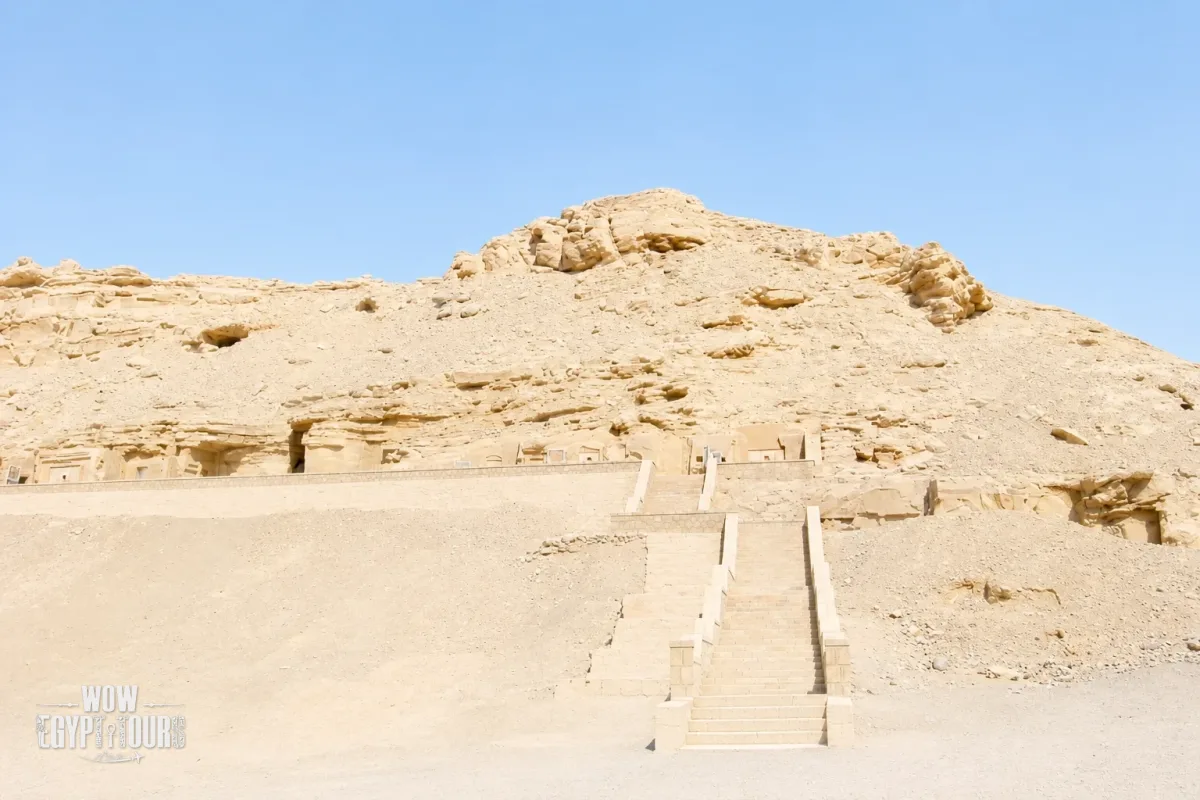
The Tombs of El Kab are located on the east bank of the Nile River in the small town of El Kab in Upper Egypt, approximately 80 kilometers south of Luxor, 25 kilometers north of Edfu, and 130 kilometers north of Aswan. The ancient site of El Kab consists of the walled ancient town, the rock-cut tomb chapels in the limestone cliffs immediately north of the town, a wadi temple and a rock shrine several kilometers into the Eastern Desert, and the remains of several ancient temple structures within the town enclosure. The Tombs of El Kab are reached from the main Nile Valley road, which passes directly through the site, and the ancient enclosure walls and the cliff face with the tomb entrances are immediately visible from the road. WOW Egypt Tours provides private air-conditioned transportation directly from Luxor hotels to El Kab on all Day Tours, Dahabiya Nile River Cruises that stop at the site, and Safaga Shore Excursions.
El Kab Tombs Fun Facts
The ancient enclosure walls of El Kab are among the most impressive surviving examples of ancient Egyptian mud-brick architecture in existence, standing in many sections to heights of more than 12 meters and enclosing an oval area of approximately 550 by 550 meters. These walls, built during the Late Period and 30th Dynasty but following the line of much earlier enclosures, give the El Kab site a dramatic and immediately visible ancient presence that is unlike anything at other Upper Egyptian Nile Valley towns. The thickness of the walls, which in some sections measures more than 11 meters at the base, reflects the defensive priorities of the Late Period, when Egyptian towns frequently faced threats from both internal instability and external invasion.
The Tombs of El Kab are unique in ancient Egyptian funerary art for preserving the most complete collection of early New Kingdom official biographical texts in existence. While the great royal tombs of the nearby Valley of the Kings are decorated primarily with religious funerary texts, the rock-cut tombs of El Kab contain extended prose autobiographies in the first person that describe actual historical events, named individuals, specific military operations, and personal rewards in a voice of direct human testimony that is rare in the more formal register of royal inscriptions. Reading the biography of Ahmose Son of Ebana in his tomb chapel at El Kab, where his own voice describes his role in one of the most transformative events in Egyptian history, is one of the most extraordinary encounters with the direct voice of an ancient individual available anywhere in Egypt.
Why Is El Kab Called By This Name In Egypt?
The modern Arabic name El Kab is derived from the ancient Egyptian name Nekheb, which was the name of both the ancient town and the vulture goddess who was its divine patron. Through successive linguistic transformations, Nekheb became Nekab in Coptic, then El Kab in Arabic, with the Arabic article El replacing the ancient Coptic prefix. The ancient Greek name for the site was Eileithyiaspolis, the City of Eileithyia, reflecting the standard Greek practice of identifying Egyptian deities with their Greek equivalents: Nekhbet, the protective vulture goddess and divine mother, was identified by the Greeks with Eileithyia, the Greek goddess of childbirth. The ancient Egyptian name Nekheb is also the source of the word Nekhen, the name of the great early Egyptian city on the opposite bank of the Nile known today as Hierakonpolis, which was the pre-dynastic capital of Upper Egypt and the ancient rival and companion city to Nekheb across the river.
El Kab Tombs History
The history of El Kab spans more than five thousand years of continuous human occupation, making it one of the oldest continuously inhabited sites in the entire Nile Valley. Archaeological evidence for Predynastic settlement at El Kab dates to before 3000 BCE, and the site has yielded some of the most important Predynastic and early Dynastic artifacts discovered anywhere in Egypt. The sanctuary of Nekhbet at El Kab was venerated from the very earliest periods of Egyptian civilization, and the town of Nekheb served as one of the primary religious and administrative centers of Upper Egypt throughout the entire pharaonic period.
The rock-cut tomb chapels that are the primary attraction for modern visitors were created during the early New Kingdom period, principally during the reigns of Ahmose I and his immediate successors in the 18th Dynasty, around 1550 BCE to 1400 BCE. These tombs reflect the extraordinary importance of the El Kab governing family at the pivotal moment of Egyptian history when the New Kingdom was being established through the military campaigns against the Hyksos and the subsequent expansion into Nubia and the Levant. After the New Kingdom period, El Kab continued to be an important religious site, with additions to its temples made during the Late Period, the 30th Dynasty, and the Ptolemaic Period. The great enclosure walls that are such a dramatic feature of the modern site were built primarily during the Late Period, around the 7th to 4th centuries BCE, as a defensive measure during a period of considerable political instability. The site was excavated systematically by a Belgian archaeological mission beginning in the 19th century, and ongoing Belgian and Egyptian archaeological work continues to reveal new aspects of the site's extraordinary five-thousand-year history.
The Story Of The El Kab Military Families
The story told in the El Kab Tombs is above all the story of a remarkable family of Upper Egyptian military commanders whose service to the early New Kingdom pharaohs shaped the course of Egyptian history. The most important figure is Ahmose Son of Ebana, whose tomb biography reads like a personal military memoir of extraordinary directness and detail. He describes his early service under Pharaoh Ahmose I as a young sailor on the royal fleet during the campaigns to expel the Hyksos from their Delta stronghold at Avaris, his participation in the siege and capture of the Hyksos stronghold of Sharuhen in Canaan, his subsequent service in Nubia under Amenhotep I, and his further campaigns under Thutmose I that took the Egyptian army to the banks of the Euphrates for the first time in history. Throughout his narrative, Ahmose Son of Ebana records the personal rewards he received for his valor: gold of honor awards, land grants, and human captives given to him as household servants by three successive pharaohs who recognized his military contribution to the new Egyptian empire.
His contemporary Ahmose Pennekhbet served under six pharaohs, from Ahmose I to Thutmose III, covering a span of more than half a century of the most eventful period in New Kingdom history. His tomb biography, while less detailed than that of Ahmose Son of Ebana, provides an invaluable cross-check and complement to the other's account, confirming the chronology of campaigns and the names of the pharaohs involved. Together these two men, buried in adjacent tomb chapels in the limestone cliffs above their home town of El Kab, provide more direct first-person testimony about the founding of the New Kingdom than any other source in ancient Egyptian literature.
El Kab Tombs Architecture And The Key Sites
The Tomb Of Ahmose Son Of Ebana
The tomb of Ahmose Son of Ebana is the most historically important private tomb in Upper Egypt and one of the most significant ancient Egyptian biographical documents in existence. Cut into the limestone cliff face above the ancient town of El Kab during the early 18th Dynasty, the tomb consists of a transverse outer hall and a longitudinal inner room decorated with painted and carved relief scenes and most importantly with the extraordinarily detailed biographical text that covers large sections of the wall surface. The military autobiography of Ahmose Son of Ebana, inscribed in hieroglyphs and accompanied by relief images showing his naval campaigns and the presentation of rewards by the pharaoh, is the primary ancient source for the campaigns of Ahmose I against the Hyksos, the Nubian campaigns of Amenhotep I, and the early Levantine and Nubian expeditions of Thutmose I. Reading this text in its original setting in the tomb chapel where Ahmose Son of Ebana himself had it inscribed is one of the most powerful encounters with ancient Egyptian personal testimony available anywhere along the Nile.
The Tomb Of Ahmose Pennekhbet
The tomb of Ahmose Pennekhbet, cut adjacent to that of Ahmose Son of Ebana in the same cliff face, belongs to a military commander who served under six successive pharaohs from Ahmose I to Thutmose III, spanning the entire formative period of the 18th Dynasty. Pennekhbet's biographical text records his service under each pharaoh in turn, noting the campaigns in which he participated and the honors he received, and is a valuable corroborating source for the chronology and events of the early New Kingdom. The tomb also contains painted religious scenes of the standard 18th Dynasty private funerary art tradition, making it a significant document of both historical and artistic history in the period immediately following the establishment of the New Kingdom.
The Tomb Of Paheri
The tomb of Paheri is the largest, most elaborately decorated, and most artistically distinguished private tomb at El Kab, belonging to a mayor of El Kab and Esna and royal tutor who served during the reign of Thutmose III in the mid-18th Dynasty. Unlike the primarily biographical tombs of the military officers, the tomb of Paheri is decorated in the full tradition of the painted New Kingdom private funerary art, with vivid and beautifully preserved scenes of agricultural activities on the great estates, banquet celebrations, musical performance, funerary rituals, and the journey to the afterlife. The agricultural scenes in the tomb of Paheri, showing the plowing of fields, the sowing and harvesting of grain, the threshing floor, the pressing of grapes, and the preparation of food and drink, are among the most detailed and beautifully preserved depictions of ancient Egyptian agricultural life in any private tomb of the 18th Dynasty. The colors in the Paheri tomb, though somewhat faded, retain a freshness and warmth that gives the painted scenes an immediate visual appeal that makes this tomb one of the most rewarding at El Kab for visitors interested in the beauty of ancient Egyptian private funerary art rather than primarily in historical content.
The Tomb Of Renni
The tomb of Renni belongs to the mayor of El Kab who served during the reign of Amenhotep I in the early 18th Dynasty, and is celebrated for the unusual delicacy and refinement of its carved relief decoration. Renni's tomb is decorated in a style transitional between the late Middle Kingdom and the early New Kingdom, with a quality of carving that is in some respects technically superior to the later painted tombs of the same site. The hunting scene in Renni's tomb, showing the tomb owner hunting in the marshes from a papyrus skiff, is one of the finest examples of the marsh hunting scene in New Kingdom private art and is remarkable for the detail and naturalism of the bird and fish figures depicted in the reed thickets around the boat.
The Ancient Town Enclosure Walls
The most immediately visible and physically impressive feature of the El Kab site for any visitor arriving from the Nile Valley road is the enormous mud-brick enclosure wall that defines the boundaries of the ancient town of Nekheb. Standing in many sections to heights of more than 12 meters and measuring up to 11 meters thick at the base, these massive walls enclose an oval area of approximately 550 by 550 meters and are among the best-preserved examples of ancient Egyptian mud-brick defensive architecture in existence. Built primarily during the Late Period and 30th Dynasty, the walls follow the line of much earlier enclosures and preserve within their circuit the remains of multiple ancient temples, administrative buildings, and domestic structures spanning more than three thousand years of occupation. Walking around the exterior base of the El Kab enclosure walls gives a vivid and immediate physical impression of the scale and solidity of ancient Egyptian civic architecture that is rarely available at better-known ancient sites where later development has obscured or destroyed the original urban fabric.
The Temple Of Nekhbet And Other Shrines
Within the great enclosure walls of El Kab, archaeologists have identified the remains of multiple ancient temple structures, including the principal sanctuary of the vulture goddess Nekhbet and smaller subsidiary chapels dedicated to other deities of the El Kab divine family. The remains of the Nekhbet temple are not fully excavated or presented for visitors, but the general layout of the ancient sacred precinct within the enclosure is visible and gives a sense of the religious importance of El Kab as a major Upper Egyptian cult center. A small Ptolemaic chapel, relatively well preserved, stands within the enclosure and provides the most accessible example of decorated ancient architecture at the El Kab town site.
The Wadi Chapel And Rock Shrine
Several kilometers into the Eastern Desert wadi behind the El Kab cliffs, accessible by a walk or short vehicle journey from the main site, stands the remarkable Wadi Chapel of El Kab, a small free-standing ancient Egyptian chapel built at a point in the desert wadi where the ancient processional route from El Kab to the Eastern Desert quarries and trade routes passed. The chapel, dedicated to a form of Nekhbet and the deified Thutmose III, preserves some of the finest small-scale carved relief decoration at El Kab and gives visitors who make the additional journey into the wadi an experience of an ancient sacred building in its original remote desert landscape context that is completely unlike the experience at the main cliff tomb site. The wadi also contains rock inscriptions from various periods documenting the ancient use of this route into the Eastern Desert.
Why Are The El Kab Tombs Important?
The Tombs of El Kab are important for reasons that go far beyond their considerable artistic merit. They are the primary historical source for the most pivotal period in the entire history of ancient Egyptian civilization: the establishment of the New Kingdom through the expulsion of the Hyksos and the subsequent military expansion that created Egypt's first true empire. The biographical text of Ahmose Son of Ebana in his El Kab tomb is, quite simply, the most detailed and most reliable first-person account of the founding of the New Kingdom in existence, the text that every historian of ancient Egypt must engage with when writing about the early 18th Dynasty.
Beyond their historical significance, the El Kab Tombs are important as a remarkable survival of early 18th Dynasty private funerary art in a provincial setting outside the great Theban necropolis, giving scholars and visitors a perspective on the artistic traditions of the New Kingdom that complements the better-known private tombs of the Valley of the Nobles in Luxor. The ancient town site of El Kab, with its extraordinary enclosure walls, its multiple temple remains, and its evidence of five thousand years of continuous occupation, is one of the most archaeologically rich and historically deep sites in the entire Nile Valley. WOW Egypt Tours includes the Tombs of El Kab as a featured stop on Dahabiya Nile River Cruise itineraries and as a dedicated destination on extended Luxor Day Tours of the Upper Nile Valley.
What Are Some Interesting Facts About The El Kab Tombs?
The Biography Of Ahmose Son Of Ebana
The autobiographical inscription of Ahmose Son of Ebana preserved in his rock-cut tomb chapel at El Kab is the most remarkable first-person historical document in all of ancient Egyptian literature. Written in the elevated biographical style of the early New Kingdom, the text reads with a directness and personal authority that is immediately compelling even in modern translation. Ahmose Son of Ebana describes his boyhood in El Kab, his first ship command as a young man, his participation in the siege and capture of the Hyksos capital at Avaris, the subsequent Nubian campaigns of Amenhotep I, and the far-flung expeditions of Thutmose I that took the Egyptian army to the banks of the Euphrates River in Mesopotamia, further north than any Egyptian army had ever traveled before. Throughout the narrative, he records in precise detail the personal rewards he received from three pharaohs for his military service: eleven specific grants of gold of honor, the highest military decoration in the New Kingdom, plus multiple land grants, human captives, and other rewards of distinction. The voice of Ahmose Son of Ebana speaking from his tomb at El Kab is one of the most immediate and powerful connections with a specific named ancient Egyptian individual available anywhere along the Nile.
Five Thousand Years Of Sacred History
The site of El Kab is one of the most ancient continuously occupied sacred places in the entire Nile Valley, with evidence of human veneration and settlement stretching back more than five thousand years to the Predynastic period before the founding of the Egyptian state. The vulture goddess Nekhbet, the protective divine mother of the pharaoh and patron deity of Upper Egypt, was worshipped at El Kab from at least the very beginning of the pharaonic period, and her image on the royal brow beside the cobra of Wadjet was one of the most fundamental and enduring symbols of Egyptian royal power throughout the entire three thousand years of pharaonic civilization. Standing within the ancient enclosure walls of El Kab, surrounded by remains of temples, chapels, and domestic structures spanning five millennia of unbroken religious tradition, visitors experience a depth of sacred time that few ancient sites anywhere in the world can match.
The Painted Agricultural Scenes Of Paheri
Among the most beautiful and immediately accessible ancient Egyptian painted scenes at El Kab are the agricultural scenes in the tomb of Paheri, which depict in vivid and detailed imagery the entire cycle of agricultural production on the great estates of an 18th Dynasty Upper Egyptian governor. The scenes show the plowing of fields by teams of oxen drawing wooden plows, the sowing of grain by hand, the harvest of the standing crop with sickles, the gathering and loading of grain onto donkeys for transport to the threshing floor, the winnowing of grain by workers tossing it into the air with wooden fans, and the measuring and recording of the grain harvest by scribes with measuring vessels and papyrus rolls. These scenes, painted with the characteristic warm colors and naturalistic observation of the early 18th Dynasty private art tradition, give visitors one of the most complete and visually compelling pictures of ancient Egyptian agricultural life available in any tomb chapel in Upper Egypt.
What Is So Special About The El Kab Tombs?
The Most Authentic Upper Egyptian Nile Valley Experience
What makes the Tombs of El Kab uniquely special among all the ancient sites of the Upper Egyptian Nile Valley between Luxor and Aswan is the quality of authentic archaeological experience they provide. The El Kab site receives very few visitors compared to the great Ptolemaic temples of Edfu and Kom Ombo, and it preserves a raw and immediate quality of encounter with ancient Egypt that is rare at more heavily visited and more comprehensively managed heritage sites. The walk from the Nile Valley road past the towering mud-brick enclosure walls to the cliff face with its tomb entrances takes visitors through an ancient landscape that is essentially unchanged from its appearance in the early 19th century, when the first European travellers arrived and found it largely as millennia had left it. For travelers who want to experience ancient Egypt without the scaffolding of modern visitor infrastructure, the Tombs of El Kab offer a genuinely unmediated encounter with the past.
History In The First Person
The Tombs of El Kab are also uniquely special for the quality of historical voice that they preserve. At the great royal temples and tomb complexes of Luxor, ancient Egypt speaks in the elevated formal register of divine kingship: the pharaoh performs offerings before the gods, defeats his enemies, and secures his eternal life in inscriptions that follow carefully prescribed conventions and leave almost no room for personal expression or individual voice. At El Kab, by contrast, history speaks in the first person: a man from a provincial Upper Egyptian town tells the story of his own life, names his pharaohs, describes his battles, records his rewards, and addresses posterity in a voice of direct and unmediated humanity that bridges three and a half thousand years as few ancient documents anywhere in the world can do.
El Kab Tombs Through The Ages: From Ancient Egypt To The Present
The history of El Kab after the New Kingdom is one of gradual transformation from a major Upper Egyptian religious and administrative center to a quieter provincial town whose ancient monuments were progressively buried under accumulated debris and partially quarried for building materials while their most durable elements survived. The great enclosure walls of El Kab were built during the Late Period and 30th Dynasty as a defensive measure during a period of external threat, demonstrating that the town remained an important enough regional center to justify such an enormous investment of labor and materials even after the end of the New Kingdom golden age. During the Ptolemaic Period, additional temples and chapels were added to the existing religious complex within the enclosure, and the site continued to attract royal patronage and religious investment.
During the early Christian era, El Kab was occupied by a Coptic Christian community, and several of the ancient tomb chapels were adapted as Coptic hermitages and prayer spaces, with Coptic inscriptions and painted crosses still visible on some tomb walls. The medieval and Ottoman periods saw the gradual accumulation of debris within the ancient enclosure and the progressive burial of the lower portions of many ancient structures, while the upper sections of the enclosure walls and the cliff face with the rock-cut tombs remained visible and accessible. Modern archaeological investigation of El Kab began with the early European travelers and scholars of the 19th century, and systematic excavation was initiated by the Belgian Archaeological Mission in Upper Egypt, which has conducted ongoing fieldwork at the site since the late 19th century and continues to produce important new discoveries about the archaeological history of this remarkable five-thousand-year site. Today El Kab is managed by the Egyptian Ministry of Tourism and Antiquities and receives a modest but appreciative number of visitors, principally from Dahabiya cruise passengers and from specialized archaeological travelers who seek out its extraordinary historical treasures.
El Kab Tombs UNESCO World Heritage Status
The El Kab Tombs and the ancient site of El Kab are part of the broader landscape of Upper Egyptian Nile Valley heritage recognized internationally as among the most outstanding cultural heritage concentrations in the world. The Nile River Valley between Luxor and Aswan, encompassing the El Kab site alongside the great Ptolemaic temples of Edfu, Kom Ombo, and Esna together with the monuments of Luxor and Aswan, represents one of the most concentrated assemblages of ancient monumental architecture in the world. The El Kab site is recognized by international scholarship as one of the most archaeologically significant ancient sites in Upper Egypt, combining the historical importance of the New Kingdom biographical tombs with the archaeological richness of a five-thousand-year continuously occupied sacred town, and is the subject of ongoing international archaeological research coordinated by the Belgian Archaeological Mission in cooperation with the Egyptian Ministry of Tourism and Antiquities.
Best Time To Visit The El Kab Tombs
The best time to visit the Tombs of El Kab is during the cooler months from October through April, when temperatures in Upper Egypt are moderate and both the outdoor approach through the ancient site and the enclosed tomb interiors are comfortable for extended exploration. The summer months from May to September can be intensely hot at El Kab, where the open desert landscape and the limestone cliff face create a heat-trapping environment that makes midday visits genuinely challenging. If visiting during summer, plan your visit for the very earliest morning hours when the cliff face is still in shade and the temperature is at its most manageable. Because El Kab is a relatively simple site with no tourist facilities, it is particularly important to bring adequate water in summer. WOW Egypt Tours plans all visits to the Tombs of El Kab at the optimal time of day for the season and for the specific itinerary.
El Kab Tombs Opening Hours
The El Kab Tombs are open to visitors every day of the week, including public holidays. The site opens at 6:00 AM and closes at 5:00 PM throughout the year. The tomb interiors are naturally shaded within the cliff face and are accessible during all daylight hours. There are no formal visitor facilities at the site, so visitors should bring water, snacks, and any other supplies they need from Edfu or Luxor before arriving at El Kab.
El Kab Tombs Entrance Fees
Adults: EGP 100
Students: EGP 50
Keep your ticket safe throughout your visit. Entrance fees to the El Kab Tombs are included in all El Kab Tombs Tours, Luxor Day Tours, Dahabiya Nile River Cruise shore excursions, and Egypt Tours Packages that include El Kab, booked through WOW Egypt Tours.
How To Get To The El Kab Tombs
El Kab is located on the east bank of the Nile, approximately 80 kilometers south of Luxor and 25 kilometers north of Edfu along the main Nile Valley highway. From Luxor, the Tombs of El Kab are reached by private vehicle in approximately one hour to one hour and fifteen minutes, making El Kab a natural first stop on a southward Luxor Day Tour that continues to Edfu and Kom Ombo. From Edfu, El Kab is approximately 25 kilometers to the north and is reached in approximately 30 minutes by private vehicle. From Aswan, El Kab is approximately 130 kilometers to the north and is reached in approximately 1.5 to 2 hours by private vehicle. The ancient site is directly beside the main Nile Valley road, with the enormous mud-brick enclosure walls and the cliff face visible from the road.
For Dahabiya Nile River Cruise visitors, El Kab is typically visited as a shore excursion when the dahabiya anchors in the river nearby. All Luxor Day Tours that include El Kab and all Safaga Shore Excursions with an El Kab component operated by WOW Egypt Tours include private air-conditioned transportation directly to and from the site.
How Long To Spend At The El Kab Tombs
Most visitors spend between one and one and a half hours at El Kab, which is sufficient time to visit the main tomb chapels of Ahmose Son of Ebana, Ahmose Pennekhbet, Paheri, and Renni, and to walk around the base of the ancient enclosure walls. Visitors with a particular interest in the biographical texts, the early New Kingdom artistic traditions, or the archaeological history of the ancient town may wish to allow two hours. The Tombs of El Kab are ideally combined on the same day with the Temple of Horus at Edfu to the south and the Khnum Temple at Esna to the north as part of a comprehensive Upper Nile Valley day excursion from Luxor. WOW Egypt Tours recommends allowing a full day from Luxor to comfortably cover El Kab, Edfu, and optionally Kom Ombo, with an early morning departure.
Tips For Visiting The El Kab Tombs
Ask your guide to read aloud and explain the biographical text of Ahmose Son of Ebana inside his tomb chapel, as the experience of hearing this extraordinary first-person historical account in its original setting is one of the most powerful encounters with ancient Egypt available anywhere along the Nile. Bring a small torch or use your phone camera's light for the darker sections of some tomb interiors, as the natural light from the tomb entrances does not always reach the inner walls. Do not touch any painted or carved surfaces inside the tombs. Walk around the exterior of the ancient enclosure walls to appreciate their extraordinary scale and preservation, as this is one of the finest surviving examples of ancient Egyptian mud-brick defensive architecture in existence. Bring adequate water and snacks, as there are no visitor facilities at the El Kab site. A licensed Egyptologist guide from WOW Egypt Tours is essential: the historical content of the biographical texts, the artistic significance of the Paheri tomb paintings, and the archaeological complexity of the ancient town site all require expert interpretation to be fully appreciated.
What To Wear At The El Kab Tombs
The El Kab Tombs are a completely open and unshaded archaeological site with the exception of the tomb interiors themselves, which are cut into the shaded cliff face. Lightweight, breathable clothing covering the shoulders and knees is recommended for both comfort and respect. A wide-brimmed hat and generous sunscreen are absolutely essential for visits in warm months, as the limestone cliff face and the surrounding desert landscape provide very little shade outside the tomb entrances themselves. Comfortable, closed-toe walking shoes with good grip are essential for the uneven desert terrain around the site and for the short climbs to some tomb entrances. Bring substantial quantities of water, particularly in summer. A light layer is useful in winter mornings as temperatures in the open desert can be cool before the sun reaches full strength.
Photography At The El Kab Tombs
The El Kab Tombs are a rewarding photography destination, offering a combination of intimate rock-cut tomb interiors with painted and carved decoration, the dramatic scale of the ancient mud-brick enclosure walls, and the spectacular natural setting of limestone cliffs against the Eastern Desert landscape. Photography with a standard camera or smartphone is permitted at the site. Flash photography is strictly prohibited inside all decorated tomb chambers, as the intense light causes irreversible damage to the ancient pigments. For interior photography in the tomb chambers, a camera with good low-light performance is essential, as many chambers receive very little natural light from their entrances. The most dramatic exterior photographs are taken from the road looking toward the cliff face with the tomb entrances and the enclosure walls, or from within the enclosure looking back toward the river. Professional photography or filming with specialized equipment requires a separate permit from Egypt's Ministry of Tourism and Antiquities.
El Kab Tombs Tours
Single Attraction Visit: El Kab Tombs Tour
This tour covers the El Kab Tombs as a standalone visit from Luxor. It is suitable for travelers with a particular interest in early New Kingdom history, the biography of Ahmose Son of Ebana, or the ancient town and enclosure walls of Nekheb.
What Is Covered
Full guided visit of the El Kab Tombs including the tomb of Ahmose Son of Ebana with a complete reading and explanation of the military biography, the tomb of Ahmose Pennekhbet, the tomb of Paheri with its agricultural and funerary painted scenes, and the tomb of Renni. Walk along the base of the ancient mud-brick enclosure walls and visit to the Ptolemaic chapel within the enclosure.
Duration
1 to 1.5 hours at the site, plus approximately 1 hour each way from Luxor by private vehicle.
Includes
Private air-conditioned transportation from Luxor, private licensed Egyptologist guide, and entrance fees. Available for morning departures.
Day Tour To El Kab, Edfu And Esna From Luxor
This full-day tour from Luxor travels south along the Nile Valley road to visit three of the most historically and artistically significant ancient sites between Luxor and Aswan: the Tombs of El Kab, the Temple of Horus at Edfu, and the Khnum Temple at Esna.
What Is Covered
The Khnum Temple at Esna, approximately 55 kilometers south of Luxor. The El Kab Tombs, approximately 80 kilometers south of Luxor, with a guided visit to the main decorated tomb chapels and the ancient enclosure walls. The Temple of Horus at Edfu, the largest and most completely preserved Ptolemaic temple in the world, with a full guided visit.
Duration
Full day from Luxor, with approximately 30 to 45 minutes at Esna, 1 to 1.5 hours at El Kab, and 1.5 to 2 hours at Edfu, with travel time between sites included.
Includes
Private air-conditioned transportation from Luxor, private licensed Egyptologist guide, and entrance fees to all sites. Available for early morning departures.
Day Tour To El Kab And Edfu From Luxor
This focused full-day tour from Luxor combines the historically priceless Tombs of El Kab with the architectural grandeur of the Temple of Horus at Edfu for a contrasting double experience of ancient Egyptian private funerary art and Ptolemaic religious architecture in the same day.
What Is Covered
The El Kab Tombs with a guided visit of the main tomb chapels, the ancient biography of Ahmose Son of Ebana, and the ancient enclosure walls. The Temple of Horus at Edfu with a full guided visit from entrance pylon to inner sanctuary.
Duration
Full day from Luxor, approximately 1 to 1.5 hours at El Kab and 1.5 to 2 hours at Edfu.
Includes
Private air-conditioned transportation from Luxor, private licensed Egyptologist guide, and entrance fees to both sites. Available for morning departures.
Safaga Shore Excursions Combined With The El Kab Tombs
Safaga Port is located on the Red Sea coast, approximately 200 kilometers from El Kab via the Eastern Desert road and the Nile Valley highway. Due to this distance and the additional travel involved in a round trip from Safaga, a visit to the El Kab Tombs requires an overnight excursion programme to allow a comfortable and complete visit alongside the other great Upper Nile Valley monuments. WOW Egypt Tours offers a dedicated overnight Safaga Shore Excursion programme that includes El Kab as part of a comprehensive Upper Nile Valley itinerary.
Overnight Safaga Shore Excursion Via Luxor To El Kab And Edfu
Day 1: Depart Safaga Port by private air-conditioned vehicle. Travel to Luxor via the Eastern Desert highway, approximately 3 hours. Full guided visit of the major Luxor West Bank sites: Valley of the Kings, Temple of Hatshepsut, and Colossi of Memnon. Evening guided visit of Luxor Temple and optional Karnak Sound and Light Show. Overnight in Luxor at a selected hotel.
Day 2: Early morning departure from Luxor southward. Guided visit of the Khnum Temple at Esna, approximately 55 kilometers south of Luxor, subject to available time. Continue to the El Kab Tombs, approximately 80 kilometers south of Luxor, with a full guided visit of the main tomb chapels including the biography of Ahmose Son of Ebana and the enclosure walls. Continue south to the Temple of Horus at Edfu with a guided visit of the complete Ptolemaic temple. Return to Safaga Port via the Eastern Desert road. Return to ship.
Includes
Private air-conditioned vehicle throughout, private licensed Egyptologist guide, one night accommodation in Luxor, entrance fees to all included sites, and return transfer to the ship. All overnight Safaga Shore Excursions are coordinated with each ship's schedule to confirm departure and return timings in advance.
Dahabiya Nile River Cruise
A Dahabiya Nile River Cruise is a small-vessel sailing experience on the Nile between Luxor and Aswan aboard a traditional wooden dahabiya. WOW Egypt Tours operates dahabiya cruises with private cabins, all meals, a private licensed Egyptologist guide on board, and guided shore excursions at every stop. The El Kab Tombs are a featured stop on all Dahabiya itineraries in both directions, giving the small-vessel cruise a unique advantage over the standard Nile cruise ship, which does not stop at El Kab.
4 Days 3 Nights Dahabiya Nile River Cruise From Aswan To Luxor
Route: Aswan to Luxor, sailing north.
Itinerary
Day 1: Embarkation in Aswan. Visit to Philae Temple and the Unfinished Obelisk. Sail north to Kom Ombo. Guided visit to Kom Ombo Temple and Crocodile Museum. Continue to Gebel el Silsila. Overnight on board.
Day 2: Guided visit to Gebel el Silsila. Sail to the Village of Basaw. Guided visit to Village of Basaw. Continue to Edfu. Guided visit to the Temple of Horus at Edfu. Overnight on board.
Day 3: Sail to El Kab. Guided visit to El Kab Tombs including the tomb of Ahmose Son of Ebana, the tomb of Paheri, and the ancient enclosure walls. Sail to El Hagaz Island. Swimming stop. Overnight on board.
Day 4: Sail to Esna. Visit Khnum Temple at Esna. Disembarkation in Esna. Transfer to Luxor, approximately 55 kilometers (35 miles).
Includes
Private cabin, all meals on board, private licensed Egyptologist guide, entrance fees to all site visits including the El Kab Tombs, and private transfers.
5 Days 4 Nights Dahabiya Nile River Cruise From Luxor To Aswan
Route: Luxor to Aswan, sailing south.
Itinerary
Day 1: Embarkation in Luxor. Transfer to Esna, approximately 55 kilometers (35 miles). Visit Khnum Temple at Esna. Sail to El Hagaz Island. Overnight on board.
Day 2: Sail to El Kab. Guided visit to El Kab Tombs including the tomb of Ahmose Son of Ebana, the tomb of Paheri, and the ancient enclosure walls. Continue to Edfu. Guided visit to the Temple of Horus at Edfu. Sail to the Village of Basaw. Guided visit to Village of Basaw. Overnight on board.
Day 3: Sail to Gebel el Silsila. Guided visit to Gebel el Silsila. Sail south to Kom Ombo. Guided visit to Kom Ombo Temple and Crocodile Museum. Sail to Daraw Village. Overnight on board.
Day 4: Guided visit to Daraw Village. Sail to Herbiab Island. Swimming stop. Philae Sound and Light Show. Overnight on board.
Day 5: Optional Abu Simbel visit available by air or road. Guided visits to Philae Temple, the High Dam, and the Unfinished Obelisk. Disembarkation in Aswan.
Includes
Private cabin, all meals on board, private licensed Egyptologist guide, entrance fees to all site visits including the El Kab Tombs, and private transfers.
8 Days 7 Nights Dahabiya Nile River Cruise Round Trip From Luxor (Via Aswan)
Route: Luxor and Aswan, sailing north and south.
Itinerary
Day 1: Embarkation in Luxor. Transfer to Esna, approximately 55 kilometers (35 miles). Visit Khnum Temple at Esna. Sail to El Hagaz Island. Overnight on board.
Day 2: Sail to El Kab. Guided visit to El Kab Tombs. Continue to Edfu. Guided visit to the Temple of Horus at Edfu. Sail to the Village of Basaw. Guided visit to Village of Basaw. Overnight on board.
Day 3: Sail to Gebel el Silsila. Sail south to Kom Ombo. Guided visit to Kom Ombo Temple and Crocodile Museum. Sail to Daraw Village. Overnight on board.
Day 4: Guided visit to Daraw Village. Sail to Herbiab Island. Swimming stop. Philae Sound and Light Show. Overnight on board.
Day 5: Optional Abu Simbel visit available by air or road. Guided visits to Philae Temple, the High Dam, and the Unfinished Obelisk. Sail north to Kom Ombo. Continue to Gebel el Silsila. Overnight on board.
Day 6: Guided visit to Gebel el Silsila. Sail to the Village of Basaw. Continue to Edfu. Guided visit to the Temple of Horus at Edfu. Overnight on board.
Day 7: Sail to El Kab. Guided visit to El Kab Tombs. Sail to El Hagaz Island. Swimming stop. Overnight on board.
Day 8: Disembarkation in Esna. Transfer to Luxor, approximately 55 kilometers (35 miles).
Includes
Private cabin, all meals on board, private licensed Egyptologist guide, entrance fees to all site visits including the El Kab Tombs, and private transfers.
8 Days 7 Nights Dahabiya Nile River Cruise Round Trip From Aswan (Via Luxor)
Route: Luxor and Aswan, sailing north and south.
Itinerary
Day 1: Embarkation in Aswan. Visit to Philae Temple and the Unfinished Obelisk. Sail north to Kom Ombo. Guided visit to Kom Ombo Temple and Crocodile Museum. Continue to Gebel el Silsila. Overnight on board.
Day 2: Guided visit to Gebel el Silsila. Sail to the Village of Basaw. Continue to Edfu. Guided visit to the Temple of Horus at Edfu. Overnight on board.
Day 3: Sail to El Kab. Guided visit to El Kab Tombs. Sail to El Hagaz Island. Swimming stop. Overnight on board.
Day 4: Sail to Esna. Visit Khnum Temple at Esna. Sail to El Hagaz Island. Overnight on board.
Day 5: Sail to El Kab. Guided visit to El Kab Tombs. Continue to Edfu. Guided visit to the Temple of Horus at Edfu. Sail to the Village of Basaw. Guided visit to Village of Basaw. Overnight on board.
Day 6: Sail to Gebel el Silsila. Sail south to Kom Ombo. Guided visit to Kom Ombo Temple and Crocodile Museum. Sail to Daraw Village. Overnight on board.
Day 7: Guided visit to Daraw Village. Sail to Herbiab Island. Swimming stop. Philae Sound and Light Show. Overnight on board.
Day 8: Disembarkation in Aswan.
Includes
Private cabin, all meals on board, private licensed Egyptologist guide, entrance fees to all site visits including the El Kab Tombs, and private transfers.
Luxor And Aswan Nile River Cruise
The Luxor and Aswan Nile River Cruise is a standard Nile cruise product operated aboard a full-size cruise ship between Luxor and Aswan. WOW Egypt Tours operates this cruise in both directions with private licensed Egyptologist guides, all meals included, private cabins, and guided shore excursions at every port of call. Standard Nile cruise ships do not stop at El Kab as a regular port of call, however the El Kab Tombs can be included as a private shore excursion for cruise passengers who wish to visit the site as a special extension on days when the itinerary provides sufficient flexibility.
4 Days 3 Nights Luxor And Aswan Nile River Cruise From Aswan To Luxor
Route: Aswan to Luxor, sailing north.
Itinerary
Day 1: Embarkation in Aswan. Guided visits to Philae Temple, the High Dam, and the Unfinished Obelisk. Overnight on board in Aswan.
Day 2: Sail north to Kom Ombo. Guided visit to Kom Ombo Temple and Crocodile Museum. Continue to Edfu. Overnight on board.
Day 3: Guided visit to the Temple of Horus at Edfu. Continue north toward Luxor. Pass through the Esna Lock. Optional visit to Khnum Temple at Esna during lock transit. Guided visit to Luxor Temple and Karnak Temple. Overnight on board in Luxor.
Day 4: Optional Sunrise Hot Air Balloon available. Guided visits to Valley of the Kings, Queen Hatshepsut Temple, and Colossi of Memnon. Disembarkation in Luxor.
Includes
Private cabin, all meals on board, private licensed Egyptologist guide, entrance fees to all temple visits, and private transfers.
5 Days 4 Nights Luxor And Aswan Nile River Cruise From Luxor To Aswan
Route: Luxor to Aswan, sailing south.
Itinerary
Day 1: Embarkation in Luxor. Guided visits to Luxor Temple and Karnak Temple. Overnight on board in Luxor.
Day 2: Optional Sunrise Hot Air Balloon available. Guided visits to Valley of the Kings, Queen Hatshepsut Temple, and Colossi of Memnon. Pass through the Esna Lock. Visit to Khnum Temple at Esna. Sail south to Edfu. Overnight on board.
Day 3: Guided visit to the Temple of Horus at Edfu. Continue to Kom Ombo. Guided visit to Kom Ombo Temple and Crocodile Museum. Overnight on board.
Day 4: Continue south toward Aswan. Guided visits to Philae Temple, the High Dam, and the Unfinished Obelisk. Overnight on board in Aswan.
Day 5: Optional Abu Simbel visit available by air or road. Disembarkation in Aswan.
Includes
Private cabin, all meals on board, private licensed Egyptologist guide, entrance fees to all temple visits, and private transfers.
8 Days 7 Nights Luxor And Aswan Nile River Cruise Round Trip From Luxor (Via Aswan)
Route: Luxor and Aswan, sailing north and south.
Itinerary
Day 1: Embarkation in Luxor. Guided visits to Luxor Temple and Karnak Temple. Overnight on board in Luxor.
Day 2: Guided visits to Luxor Museum. Pass through the Esna Lock. Visit to Khnum Temple at Esna. Sail south to Edfu. Overnight on board.
Day 3: Guided visit to the Temple of Horus at Edfu. Continue to Kom Ombo. Guided visit to Kom Ombo Temple and Crocodile Museum. Overnight on board.
Day 4: Continue south toward Aswan. Guided visits to Philae Temple, the High Dam, and the Unfinished Obelisk. Overnight on board in Aswan.
Day 5: Abu Simbel visit available by road. Sound and Light Show at Philae Temple. Overnight on board in Aswan.
Day 6: Guided visits to Nubian Village. Sail north to Kom Ombo. Guided visit to Kom Ombo Temple. Continue north. Overnight on board.
Day 7: Guided visits to Valley of the Kings, Queen Hatshepsut Temple, and Colossi of Memnon. Pass through the Esna Lock. Visit to Khnum Temple at Esna. Overnight on board in Luxor.
Day 8: Optional Sunrise Hot Air Balloon available. Disembarkation in Luxor.
Includes
Private cabin, all meals on board, private licensed Egyptologist guide, entrance fees to all temple visits, and private transfers.
8 Days 7 Nights Luxor And Aswan Nile River Cruise Round Trip From Aswan (Via Luxor)
Route: Luxor and Aswan, sailing north and south.
Itinerary
Day 1: Embarkation in Aswan. Guided visits to Philae Temple, the High Dam, and the Unfinished Obelisk. Overnight on board in Aswan.
Day 2: Sail north to Kom Ombo. Guided visit to Nubian Village and Kom Ombo Temple and Crocodile Museum. Continue to Edfu. Overnight on board.
Day 3: Continue north toward Luxor. Pass through the Esna Lock. Visit to Khnum Temple at Esna. Guided visit to Luxor Museum and Karnak Sound and Light Show. Overnight on board in Luxor.
Day 4: Guided visits to Luxor Temple and Karnak Temple. Overnight on board in Luxor.
Day 5: Optional Sunrise Hot Air Balloon available. Guided visits to Valley of the Kings, Queen Hatshepsut Temple, and Colossi of Memnon. Pass through the Esna Lock. Sail south to Edfu. Overnight on board.
Day 6: Guided visit to the Temple of Horus at Edfu. Continue to Kom Ombo. Guided visit to Kom Ombo Temple. Overnight on board.
Day 7: Sound and Light Show at Philae Temple. Overnight on board in Aswan.
Day 8: Abu Simbel visit available by road. Disembarkation in Aswan.
Includes
Private cabin, all meals on board, private licensed Egyptologist guide, entrance fees to all temple visits, and private transfers.
Combine The El Kab Tombs With Your Egypt Tours Package
The El Kab Tombs are included as a featured stop on Dahabiya Nile River Cruise itineraries and as an optional extension on extended Luxor Day Tours across the full range of WOW Egypt Tours travel products. Browse the options below to find the Egypt experience that is right for you.
Egypt Tour Packages: Multi-day guided Egypt tours organized by duration, including 2 Days Egypt Packages, 3 Days Egypt Packages, 4 Days Egypt Packages, 5 Days Egypt Packages, 6 Days Egypt Packages, 7 Days Egypt Packages, 8 Days Egypt Packages, 10 Days Egypt Packages, and longer itineraries. All packages include private air-conditioned transportation, private licensed Egyptologist guide, accommodations, entrance fees to all included sites, and private transfers throughout Egypt.
Egypt Travel Packages: Themed Egypt travel packages designed around specific travel styles and interests, including Egypt Honeymoon Travel Packages, Egypt Budget Travel Packages, Egypt Family Travel Packages, Egypt Luxury Travel Packages, Egypt Adventure Travel Packages, Egypt Cultural Travel Packages, and Egypt Christmas and New Year Travel Packages. All packages include private air-conditioned transportation, private licensed Egyptologist guide, accommodations, meals, entrance fees to all included sites, and private transfers.
Egypt Nile Cruise Packages: Complete Egypt travel packages combining Cairo sightseeing with a fully guided Nile cruise between Luxor and Aswan, available as Cairo and Nile Cruise Packages, Egypt and Nile Cruise Packages, and Nile Cruise and Red Sea Packages. All packages include private cabin on board, all meals, private licensed Egyptologist guide, entrance fees to all site visits, and private transfers.
Nile River Cruises: All WOW Egypt Tours Nile cruise options between Luxor and Aswan, available across four ship categories — Standard, Deluxe, Ultra Deluxe, and Luxury — as well as private Dahabiya sailing vessels. The El Kab Tombs are a featured stop on all Dahabiya Nile River Cruise itineraries. All cruises include private cabin on board, all meals, private licensed Egyptologist guide, entrance fees to all temple and tomb visits, and private transfers.
Luxor Aswan Nile Cruises: The classic Upper Egypt Nile cruise route between Luxor and Aswan, available in both directions and in durations of 4 Days 3 Nights, 5 Days 4 Nights, and 8 Days 7 Nights round trip. The El Kab Tombs can be included as a private shore excursion extension on longer itineraries. All cruises include private cabin on board, all meals, private licensed Egyptologist guide, entrance fees to all sites, and private transfers.
Standard Nile Cruises: Comfortable standard-category cruise ships sailing between Luxor and Aswan, available in 4 Days 3 Nights, 5 Days 4 Nights, and 8 Days 7 Nights itineraries in both directions. Includes standard cabin on board, all meals, private licensed Egyptologist guide, entrance fees to all temple visits, and private transfers.
Deluxe Nile Cruises: Deluxe-category cruise ships with enhanced cabin comfort and upgraded dining, sailing between Luxor and Aswan in 4 Days 3 Nights, 5 Days 4 Nights, and 8 Days 7 Nights itineraries in both directions. Includes deluxe cabin on board, all meals, private licensed Egyptologist guide, entrance fees to all temple visits, and private transfers.
Ultra Deluxe Nile Cruises: Ultra deluxe-category cruise ships offering superior cabins, premium dining, and an elevated onboard experience, sailing between Luxor and Aswan in 4 Days 3 Nights, 5 Days 4 Nights, and 8 Days 7 Nights itineraries in both directions. Includes ultra deluxe cabin on board, all meals, private licensed Egyptologist guide, entrance fees to all temple visits, and private transfers.
Luxury Nile Cruises: Luxury-category cruise ships with the finest cabins, exceptional cuisine, and premium onboard facilities, sailing between Luxor and Aswan in 4 Days 3 Nights, 5 Days 4 Nights, and 8 Days 7 Nights itineraries in both directions. Includes luxury cabin on board, all meals, private licensed Egyptologist guide, entrance fees to all temple visits, and private transfers.
Dahabiya Nile Cruises: Private small-vessel sailing experience aboard a traditional wooden dahabiya between Luxor and Aswan, available in four itineraries: 4 Days 3 Nights Dahabiya From Aswan To Luxor, 5 Days 4 Nights Dahabiya From Luxor To Aswan, 8 Days 7 Nights Dahabiya Round Trip From Luxor via Aswan, and 8 Days 7 Nights Dahabiya Round Trip From Aswan via Luxor. The El Kab Tombs are a featured shore excursion stop on all Dahabiya itineraries. Includes private cabin on board, all meals, private licensed Egyptologist guide, entrance fees to all site visits including El Kab, and private transfers.
Luxor Tours: Day tours from Luxor covering the major sites of Upper Egypt, including full-day tours from Luxor to the El Kab Tombs combined with the Temple of Horus at Edfu and the Khnum Temple at Esna. All tours include private air-conditioned transportation, private licensed Egyptologist guide, entrance fees to all included sites, and private transfers.
Nearby Attractions To The El Kab Tombs
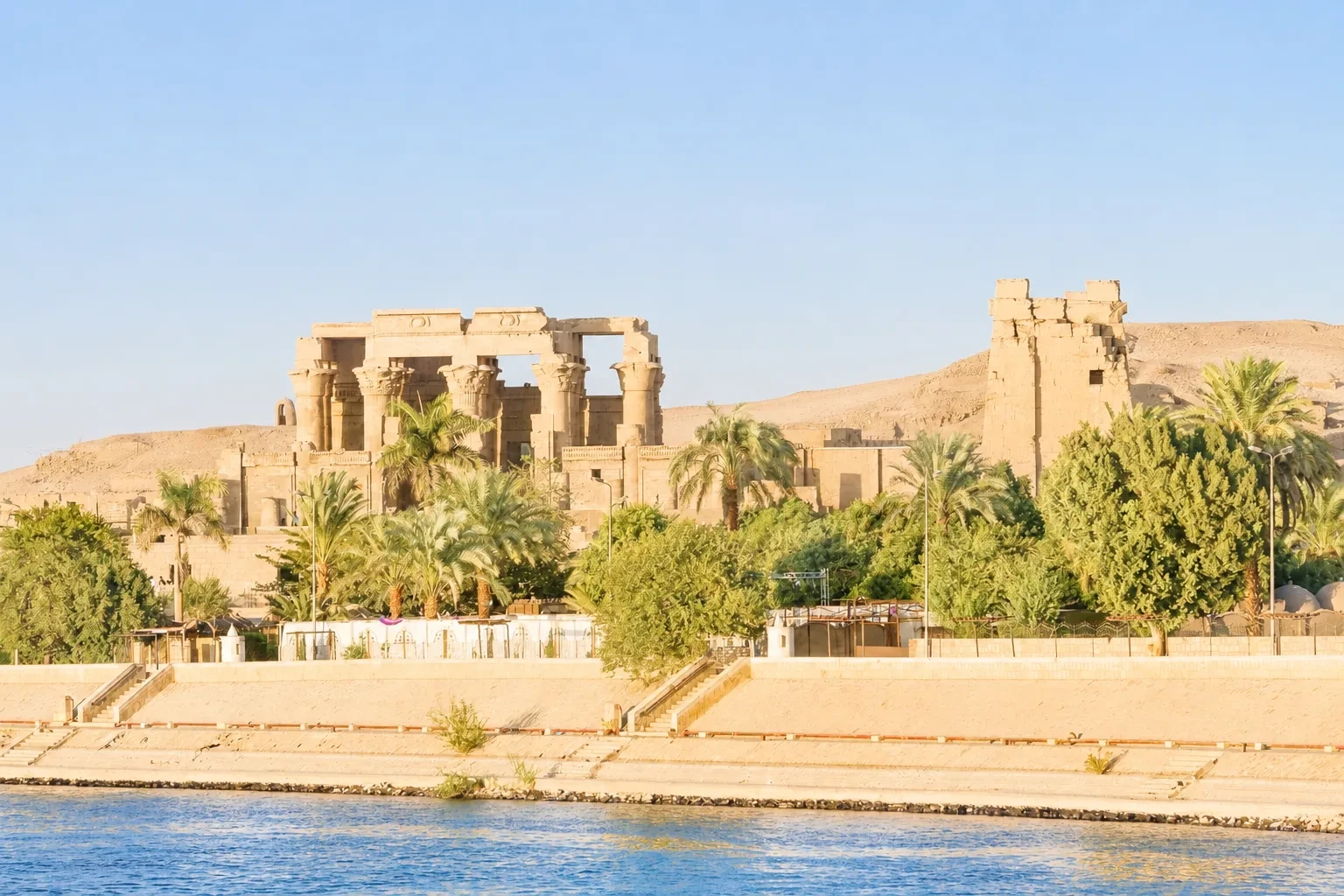
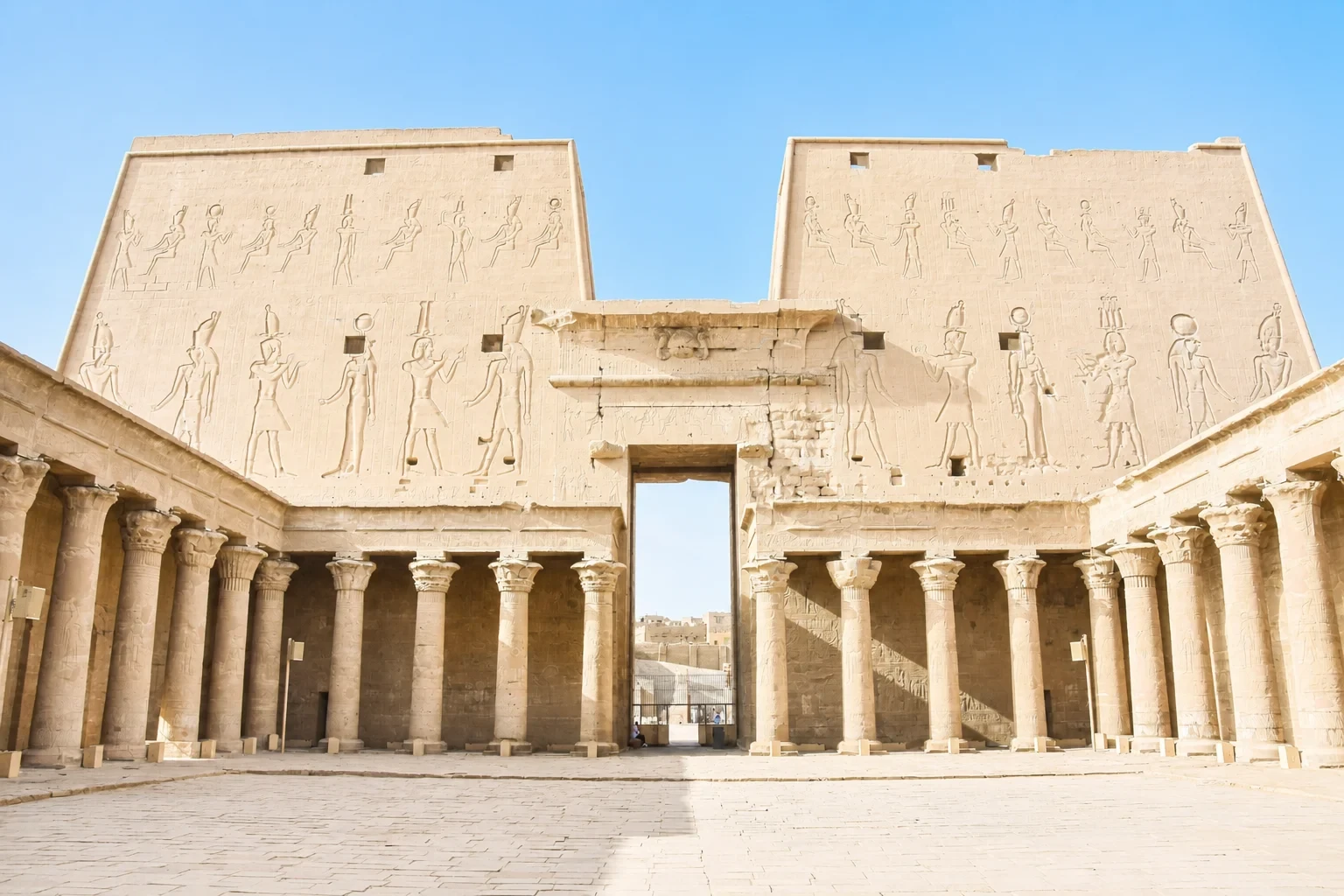
The El Kab Tombs occupy a central position on the Upper Egyptian Nile between Luxor and Aswan, within easy reach of a remarkable range of ancient monuments in both directions. Approximately 25 kilometers to the south, the Temple of Horus at Edfu is the largest and most completely preserved Ptolemaic temple in the world and the essential companion visit to El Kab on any Upper Nile Valley day excursion. Between El Kab and Edfu, the ancient sandstone quarries of Gebel el-Silsila, located approximately 15 kilometers south of El Kab, are one of the most atmospheric and least visited ancient sites on the Nile, with rock shrines, royal stelae, and the great quarry faces visible in the Nile riverbank cliffs. The Temple of Sobek and Haroeris at Kom Ombo, approximately 90 kilometers south of El Kab, offers the unique experience of the only double temple in ancient Egypt. The ancient city of Aswan, with Philae Temple, the Unfinished Obelisk, and the Nubian Museum, is approximately 130 kilometers to the south.
To the north, the Khnum Temple at Esna is approximately 25 kilometers from El Kab and is an easy additional stop on any northward journey toward Luxor. The ancient cities of Luxor, approximately 80 kilometers to the north, represent the culminating heritage destination of the Upper Egyptian Nile Valley itinerary, with the extraordinary range of temples, tombs, and museums described in the Luxor The Ancient City guide. All these sites are accessible through the Nile cruise itineraries, day tours, Egypt Tours Packages, and Safaga Shore Excursions offered by WOW Egypt Tours.
Frequently Asked Questions About The El Kab Tombs
What are the El Kab Tombs?
The El Kab Tombs, also known as the Tombs of El Kab, are the decorated rock-cut burial chapels of senior military officers and civil administrators who served the pharaohs of the early New Kingdom, located at the ancient site of El Kab on the east bank of the Nile approximately 80 kilometers south of Luxor. The site also encompasses the remains of the ancient town of Nekheb, including its extraordinary mud-brick enclosure walls, temple remains, and more than five thousand years of continuous occupation. The El Kab Tombs are a featured stop on Dahabiya Nile River Cruises and an optional addition on extended Luxor Day Tours offered by WOW Egypt Tours.
Why are the El Kab Tombs historically important?
The El Kab Tombs are historically important primarily because of the extraordinary military biography preserved in the tomb of Ahmose Son of Ebana, which is the primary ancient Egyptian source for the expulsion of the Hyksos invaders from Egypt and the foundation of the New Kingdom under Pharaoh Ahmose I around 1550 BCE, one of the most pivotal events in the entire three-thousand-year history of ancient Egyptian civilization.
Who was Ahmose Son of Ebana?
Ahmose Son of Ebana was a naval officer and military commander from El Kab who served under three successive pharaohs, Ahmose I, Amenhotep I, and Thutmose I, at the beginning of the New Kingdom. His tomb biography is the most detailed and most reliable first-person military autobiography in all of ancient Egyptian literature, describing his service in the campaigns against the Hyksos, in Nubia, and in the Levant, and the honors and rewards he received from three pharaohs for his military contributions to the new Egyptian empire.
What are the main tombs to visit at El Kab?
The main decorated tombs at El Kab are the tomb of Ahmose Son of Ebana, the most historically important private tomb in Upper Egypt; the tomb of Ahmose Pennekhbet, a companion biographical tomb spanning six pharaonic reigns; the tomb of Paheri, the largest and most artistically distinguished tomb at the site, celebrated for its agricultural and funerary painted scenes; and the tomb of Renni, notable for the delicacy of its carved relief decoration.
What is the ancient town of El Kab?
The ancient town of El Kab, known to the ancient Egyptians as Nekheb, was one of the oldest and most sacred towns in the Nile Valley, home of the vulture goddess Nekhbet who was the patron deity of Upper Egypt and one of the protective divine mothers of the pharaoh. The town is enclosed by remarkable mud-brick walls standing up to 12 meters high, built during the Late Period, which are among the best-preserved examples of ancient Egyptian mud-brick defensive architecture in existence.
Who was Nekhbet?
Nekhbet was the ancient vulture goddess of Upper Egypt, one of the Two Ladies whose images appeared on the royal brow alongside Wadjet the cobra goddess of Lower Egypt as the protective divine mothers of the pharaoh. She was venerated at El Kab from the very earliest periods of Egyptian history and her sanctuary at the site was one of the oldest and holiest religious institutions in the Nile Valley.
What are the opening hours of the El Kab Tombs?
The El Kab Tombs are open daily from 6:00 AM to 5:00 PM, including public holidays.
How much does it cost to enter the El Kab Tombs?
The entrance fee is EGP 100 for adults and EGP 50 for students. Entrance fees are included in all El Kab Tombs Tours, Luxor Day Tours, and Dahabiya Nile River Cruise shore excursions booked through WOW Egypt Tours.
How long does it take to visit the El Kab Tombs?
Most visitors spend between one and one and a half hours at El Kab for the main tomb chapels and the enclosure walls. Those with a deeper interest in the biographical texts or the archaeological site may wish to allow two hours.
What is the best time of year to visit the El Kab Tombs?
October to April is the most comfortable period. The open desert setting of El Kab makes it particularly hot in summer, so early morning visits are essential from May to September.
How do I get to the El Kab Tombs?
El Kab is located approximately 80 kilometers south of Luxor and 25 kilometers north of Edfu on the east bank of the Nile. All Luxor Day Tours and Dahabiya Nile River Cruise shore excursions that include El Kab, operated by WOW Egypt Tours, include private transportation directly to and from the site.
Can I visit the El Kab Tombs as a day trip from Luxor?
Yes. El Kab is an excellent addition to any southward day tour from Luxor, most productively combined with the Temple of Horus at Edfu approximately 25 kilometers further south and the Khnum Temple at Esna approximately 25 kilometers north of El Kab on the way back to Luxor.
Do standard Nile cruise ships stop at El Kab?
Standard Nile cruise ships do not stop at El Kab as a regular port of call, but Dahabiya Nile River Cruises operated by WOW Egypt Tours include El Kab as a featured shore excursion stop on all itineraries. This is one of the significant advantages of the Dahabiya small-vessel cruise over the standard Nile cruise ship for travelers who want to experience the full range of Upper Nile Valley sites.
Is a guide necessary at the El Kab Tombs?
A guide is strongly recommended. The historical content of the Ahmose Son of Ebana biography, the artistic tradition represented by the Paheri tomb paintings, and the archaeological complexity of the ancient town site all require expert interpretation to be fully appreciated. WOW Egypt Tours provides licensed Egyptologist guides on all El Kab Tombs Tours, Luxor Day Tours, and Dahabiya Cruise shore excursions.
Can I take photographs at the El Kab Tombs?
Photography with a standard camera or smartphone is permitted at the site. Flash photography is strictly prohibited inside all decorated tombs. A camera with good low-light performance is recommended for the tomb interiors. Professional filming requires a separate permit.
What should I wear to visit the El Kab Tombs?
Lightweight clothing covering the shoulders and knees, a wide-brimmed hat, generous sunscreen, comfortable closed-toe walking shoes with good grip for the desert terrain, and substantial quantities of water. There are no visitor facilities at the site.
What is the difference between El Kab Tombs and the Valley of the Nobles in Luxor?
The Valley of the Nobles in Luxor contains more than 400 private tomb chapels of the New Kingdom Theban court elite, with vivid scenes of daily life and religious ritual, and is the largest and most diverse collection of decorated private funerary monuments in Egypt. The El Kab Tombs are a smaller and more specialized group of tombs belonging specifically to the El Kab provincial military family of the early 18th Dynasty, and are distinguished above all by the extraordinary first-person historical biographies that make them the primary source for the founding of the New Kingdom. The two sites complement each other perfectly for any traveler with a deep interest in New Kingdom private funerary art and history.
Can I visit the El Kab Tombs as part of a Safaga Shore Excursion?
Yes, though WOW Egypt Tours recommends an overnight excursion programme to allow a comfortable visit to El Kab from Safaga Port. The overnight Safaga Shore Excursion combines Luxor sightseeing on the first day with a visit to the El Kab Tombs, the Temple of Horus at Edfu, and optionally the Khnum Temple at Esna on the second day before returning to Safaga. Our team handles all transportation, accommodation, guiding, entrance fees, and logistics.
How do I book an El Kab Tombs Tour with WOW Egypt Tours?
You can book any El Kab Tombs Day Tour from Luxor, combined El Kab and Edfu Tour, Dahabiya Nile River Cruise, Luxor Aswan Nile River Cruise, Egypt Tours Package, Egypt Travel Package, or Safaga Shore Excursion directly through WOW Egypt Tours. Our team of travel specialists will arrange everything from private transportation and licensed Egyptologist guides to hotel pick-up and entrance fees, ensuring a seamless and unforgettable experience of the El Kab Tombs and all the wonders of the Upper Egyptian Nile Valley.