

The Nile River Valley is the most extraordinary concentration of ancient heritage in the world, a living corridor of civilization stretching along the banks of the world's greatest river from the sacred desert city of Abydos in the north through the Ptolemaic temple towns of Dendera, Esna, Edfu, and Kom Ombo to the granite threshold of Aswan and the ancient sandstone quarries of Gebel el-Silsila in the south, encompassing in its course some of the most magnificent, most historically significant, and most artistically breathtaking ancient monuments that human civilization has ever produced. The Nile River Valley between Luxor and Aswan, and north toward Sohag and Qena, is the sacred heartland of ancient Egypt, the landscape where pharaohs built their temples to the gods and their tombs for eternity, where priests maintained the fires of three-thousand-year-old religious traditions, where quarrymen cut the stone that became the columns of Karnak and the colossi of Abu Simbel, and where ordinary Egyptians of every social class lived, worked, prayed, and hoped for resurrection in the shadow of the most astonishing civilization the ancient world ever produced. This incomparable destination sits at the heart of Egypt's greatest travel experiences, including Luxor Day Tours, Nile River Valley Tours, Dahabiya Nile River Cruises, and Luxor Aswan Nile River Cruises, all of which WOW Egypt Tours proudly offers to travelers from around the world. The Nile River Valley is also the defining experience of Egypt Tours Packages, Egypt Travel Packages, and Safaga Shore Excursions, making it the single most important heritage destination in all of Egypt and one of the most remarkable places in the world for any traveler with an interest in the history and achievements of human civilization.
The Nile River Valley covered in this guide encompasses the complete stretch of the Upper Egyptian Nile from the ancient pilgrimage city of Abydos in the Sohag Governorate and the great Ptolemaic complex of the Temple of Hathor at Dendera in the Qena Governorate, south through the ancient city of Luxor and the extraordinary concentration of monuments at the heart of the ancient world, continuing south through the Khnum Temple at Esna, the Tombs of El Kab, the great Temple of Horus at Edfu, the ancient sandstone quarries of Gebel el-Silsila, and the unique double temple of Kom Ombo to the threshold of Aswan and the First Cataract of the Nile in the far south. Every kilometer of this extraordinary valley contains ancient monuments of world historical significance, and traveling its length by road or by river is an experience that immerses the traveler in the full depth and richness of the greatest civilization of the ancient world.

What Is The Nile River Valley?
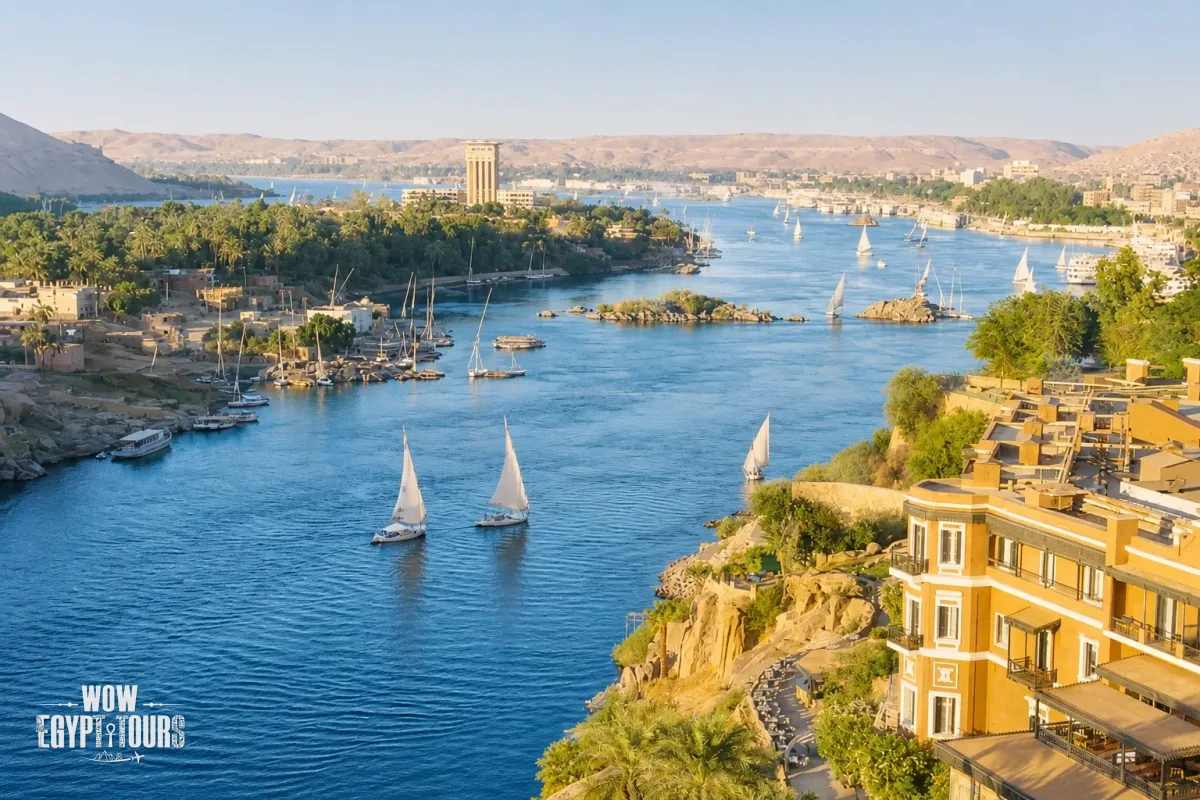
The Nile River Valley is the narrow fertile corridor created by the annual flooding of the Nile River through the northeastern corner of Africa, stretching for more than six thousand kilometers from the Central African highlands to the Mediterranean Sea. In Egypt, the Nile River Valley is the very foundation of civilization, the ribbon of productive agricultural land between two deserts whose annual inundation sustained the population of one of the ancient world's most sophisticated and most enduring states for more than three thousand years. Without the Nile River Valley, ancient Egypt could not have existed: the annual flood that deposited a fresh layer of rich black silt on the agricultural land each year, the river highway that connected every part of the country for trade and communication, and the granite and sandstone quarries of the southern Nile Valley that supplied the building material for the greatest stone construction programme in human history were all gifts of the Nile that made Egyptian civilization possible.
The section of the Nile River Valley that concerns this guide is Upper Egypt, the ancient Egyptian south, which corresponds broadly to the modern administrative governorates of Luxor, Aswan, Qena, and Sohag. It is this section of the Nile Valley, between the agricultural heartland of Middle Egypt to the north and the desert cataracts of Nubia to the south, that preserves the greatest concentration of ancient monuments in the world, from the royal tombs of the Valley of the Kings and the great temple complexes of Karnak and Luxor at the center to the Ptolemaic temples of the river corridor between Luxor and Aswan and the sacred landscapes of Abydos and Dendera in the north.
Who Built Along The Nile River Valley?
The monuments of the Nile River Valley between Luxor, Aswan, Sohag, and Qena were built by the pharaohs, priests, officials, craftsmen, and ordinary people of ancient Egypt over more than three thousand years of continuous civilization, from the earliest Predynastic settlements of the 4th millennium BCE to the final decorations added to the Esna Temple by the Roman emperor Decius around 250 CE. The pharaohs of the New Kingdom, particularly those of the 18th, 19th, and 20th Dynasties from approximately 1550 BCE to 1070 BCE, were responsible for the most ambitious and most spectacular building programme in the history of the Nile River Valley, constructing the great royal tombs of the Valley of the Kings, the mortuary temples of the West Bank, and the successive additions to the Karnak Temple complex that transformed it into the largest ancient religious complex in the world.
The Ptolemaic rulers of Egypt, the Greek dynasty established by Ptolemy I Soter following the death of Alexander the Great in 323 BCE, were responsible for the great Ptolemaic temples of the Upper Nile Valley river corridor, including the Temple of Horus at Edfu, the Temple of Sobek and Haroeris at Kom Ombo, the Temple of Khnum at Esna, and the great Temple of Hathor at Dendera. The Ptolemaic building programme represented the last great flowering of the ancient Egyptian temple building tradition, with the Greek rulers of Egypt investing enormous resources in constructing temples in the traditional pharaonic style as a demonstration of their legitimacy as rulers of Egypt and their devotion to the ancient gods. The Roman emperors who succeeded the Ptolemies continued to add to these temples for more than three centuries, with the last dated royal decoration in any ancient Egyptian temple produced at Esna by the Roman emperor Decius around 250 CE.
The Key Pharaohs And Rulers Of The Nile River Valley
The Nile River Valley between Luxor, Aswan, Sohag, and Qena was shaped by some of the most celebrated rulers in the history of the ancient world. Seti I of the 19th Dynasty built the most beautifully painted temple in ancient Egypt at Abydos and left his incomparable artistic legacy across the river valley from the tombs of the Valley of the Kings to the sacred city of Osiris. His son Ramesses II, the most prolific builder in Egyptian history, added pylons, courts, and colossal statues to virtually every major temple in the Nile River Valley and built his own mortuary temple, the Ramesseum, on the Luxor West Bank. Amenhotep III built the Luxor Temple colonnade and his own enormous mortuary complex on the West Bank, represented today only by the colossal seated statues of the Colossi of Memnon. Hatshepsut built the most architecturally innovative mortuary temple of the New Kingdom at Deir el-Bahari. Thutmose III transformed Karnak into the largest ancient religious complex in the world.
Among the Ptolemaic builders, Ptolemy III Euergetes I laid the foundation stone of the great Temple of Horus at Edfu in 237 BCE, beginning the most sustained Ptolemaic building programme on the Upper Nile. Ptolemy VI Philometor began the construction of the main hypostyle hall at Esna and major contributions at Kom Ombo. Ptolemy XII Auletes, the father of Cleopatra VII, began construction of the great Temple of Hathor at Dendera. The Roman emperors Augustus and Tiberius completed the outer hypostyle halls of both Edfu and Dendera. The New Kingdom military commanders of the El Kab Tombs, including the extraordinary Ahmose Son of Ebana, were instrumental in founding the New Kingdom itself through their military service under Ahmose I at the very beginning of Egypt's greatest imperial era.
Nile River Valley Location In Egypt
The Nile River Valley covered in this guide runs from approximately 130 kilometers north of Luxor, where the ancient sacred city of Abydos stands at the western edge of the cultivation in the Sohag Governorate, south through Luxor itself, continuing through the Esna region approximately 55 kilometers south of Luxor, past El Kab approximately 80 kilometers south of Luxor, through Edfu approximately 105 kilometers south of Luxor, past the ancient sandstone quarries of Gebel el-Silsila approximately 65 kilometers south of Edfu, to the unique double temple of Kom Ombo approximately 45 kilometers north of Aswan, and finally to the city of Aswan itself at the southern end of the Egyptian Nile Valley. The entire length of this route follows the course of the Nile River, which flows broadly from south to north through this section of Upper Egypt, with the ancient monuments distributed on both east and west banks in a pattern determined by the ancient geography of the sacred landscape.
The Nile River Valley in this section is generally between 5 and 25 kilometers wide, bounded on both sides by the desert plateau. The agricultural land immediately adjacent to the Nile is intensively cultivated and densely populated by modern farming communities, while the ancient monuments on both banks are set either within the modern towns that have grown around them, like the Esna Temple and the Luxor temples, or at the desert edge where the ancient builders sought the firm ground and the sacred geography of the transition between the fertile black land and the sterile red land of the desert. WOW Egypt Tours provides private air-conditioned transportation throughout the entire Nile River Valley for all Day Tours, Egypt Tours Packages, Egypt Travel Packages, and Safaga Shore Excursions.
Nile River Valley Fun Facts
The Nile River Valley of Upper Egypt between Luxor, Aswan, Sohag, and Qena contains approximately one third of all the ancient monuments in the world. The city of Luxor alone, built on the site of ancient Thebes, the greatest capital of the New Kingdom and the most powerful city in the ancient world during its peak from approximately 1550 BCE to 1070 BCE, encompasses within its boundaries a higher concentration of significant ancient sites than any other location on earth. The Theban necropolis on the West Bank of the Nile at Luxor alone contains more than 60 royal tombs in the Valley of the Kings, more than 90 tombs in the Valley of the Queens, and more than 400 decorated private tomb chapels in the Valley of the Nobles.
The Nile River Valley is the only place in the world where you can travel by river between ancient monuments and stop at a different significant ancient site on every single day of a week-long journey. The Dahabiya Nile River Cruise between Luxor and Aswan covers in its standard itinerary the Khnum Temple at Esna, the Tombs of El Kab, the Temple of Horus at Edfu, the ancient quarries and shrines of Gebel el-Silsila, and the unique double temple of Kom Ombo, all of which are world-class ancient monuments in their own right, while the broader itinerary encompasses the extraordinary range of Luxor and Aswan monuments at each end of the journey. This density of ancient heritage along a single river corridor is unmatched by any other heritage landscape in the world.
Why Is The Nile River Valley Called By This Name?
The Nile River is named after the ancient Greek word Neilos, whose ultimate origin is uncertain but which may derive from a Semitic root meaning river valley or from an ancient Egyptian word related to the concept of dark or blue, a reference to the dark fertile silt deposited by the annual flood and to the deep blue color of the river itself. The ancient Egyptians called their great river Iteru, simply meaning the river, because to the ancient Egyptians the Nile was not just a river but the river, the single defining geographical feature of their world without which civilization was impossible. The valley created by the Nile is called by the same name in every language, always identifying the valley by its river, because in Upper Egypt the two are inseparable: without the Nile, the valley is desert; without the valley, the Nile is just a channel through rock. Together, river and valley created and sustained the greatest civilization of the ancient world, and the monuments that survive along the Nile River Valley between Luxor, Aswan, Sohag, and Qena are the enduring physical record of that extraordinary achievement.
Nile River Valley History
The history of the Nile River Valley as a zone of human occupation stretches back more than half a million years to the earliest stone tool-using communities of the Paleolithic period, but the history that concerns modern visitors is the history of ancient Egyptian civilization, which began in earnest around 3100 BCE with the unification of the Two Lands of Upper and Lower Egypt under the first pharaoh and continued for more than three thousand years until the Roman conquest of Egypt in 30 BCE. Throughout this extraordinary span of time, the Nile River Valley was the physical and spiritual backbone of Egyptian civilization, and every period of Egyptian history left its mark on the landscape in the form of temples, tombs, inscriptions, and settlements that together constitute one of the most complete and most richly documented archaeological records of any ancient civilization in the world.
The earliest significant monuments in the Nile River Valley covered by this guide date to the Predynastic and Early Dynastic periods, around 3500 BCE to 2700 BCE, when the royal cemetery at Abydos was established as the burial ground of the first pharaohs of unified Egypt. The Old Kingdom period, from approximately 2700 BCE to 2200 BCE, saw the consolidation of the state and the development of the pyramid building tradition in the north, while Upper Egypt was developed as a network of regional administrative centers and sacred sites including Abydos and the early temples at Dendera. The Middle Kingdom period, from approximately 2055 BCE to 1650 BCE, brought a renewed focus on Upper Egypt as the cultural and religious heart of a reunified Egyptian state after the disruptions of the First Intermediate Period. The New Kingdom period, from approximately 1550 BCE to 1070 BCE, was the greatest era of monument building in the Nile River Valley, when the successive pharaohs of the 18th, 19th, and 20th Dynasties constructed the temples, tombs, and mortuary complexes that are today the most celebrated ancient monuments in the world. The Late Period, the Ptolemaic Period, and the Roman Period saw the construction of the great Ptolemaic temples of the Upper Nile Valley river corridor that round out the heritage landscape visible to modern visitors.
The Story Of The Nile River Valley As A Sacred Landscape
The story of the Nile River Valley is above all the story of a sacred landscape, a physical geography so deeply imbued with divine meaning and religious significance that every feature of its terrain, from the direction of the river's flow to the orientation of the desert cliffs, was interpreted by the ancient Egyptians as an expression of divine order and cosmic truth. The east bank of the Nile, where the sun rises each morning over the desert horizon, was the land of the living, the appropriate location for the temples of the gods whose divine presence sustained the living world. The west bank, where the sun sets each evening over the golden cliffs of the Western Desert, was the land of the dead, the appropriate location for the tombs of the pharaohs and the private funerary chapels of their officials and subjects who wished to rest eternally in the direction of the setting sun.
This sacred geography of east and west, life and death, sunrise and sunset, structured every decision about the placement of monuments throughout the Nile River Valley, creating a coherent sacred landscape whose internal logic remains visible and legible to any traveler who understands the basic principles. The great temples of Karnak and Luxor on the East Bank face west across the river toward the royal necropolis on the West Bank, as the gods of the living face toward the kingdom of the dead. The mortuary temples on the West Bank face east toward the river and the living city, as the dead face toward the rising sun and the world they have left behind. The ancient processional routes that connected the East Bank temples to the West Bank necropolis, most dramatically the great Avenue of Sphinxes connecting Karnak to Luxor and the procession route of the Beautiful Feast of the Valley from Karnak across the river to the West Bank temples, wove the entire landscape together into a single unified sacred geography that was experienced by the ancient Egyptians as a literal manifestation of the divine order of the cosmos. Traveling the Nile River Valley with the guidance of WOW Egypt Tours means traveling through this sacred landscape with a licensed Egyptologist guide who can illuminate the connections and the meanings that transform individual monument visits into a comprehensive experience of ancient Egyptian civilization in its full spatial and theological complexity.
The Major Monuments Of The Nile River Valley
Abydos Temple Of Seti I
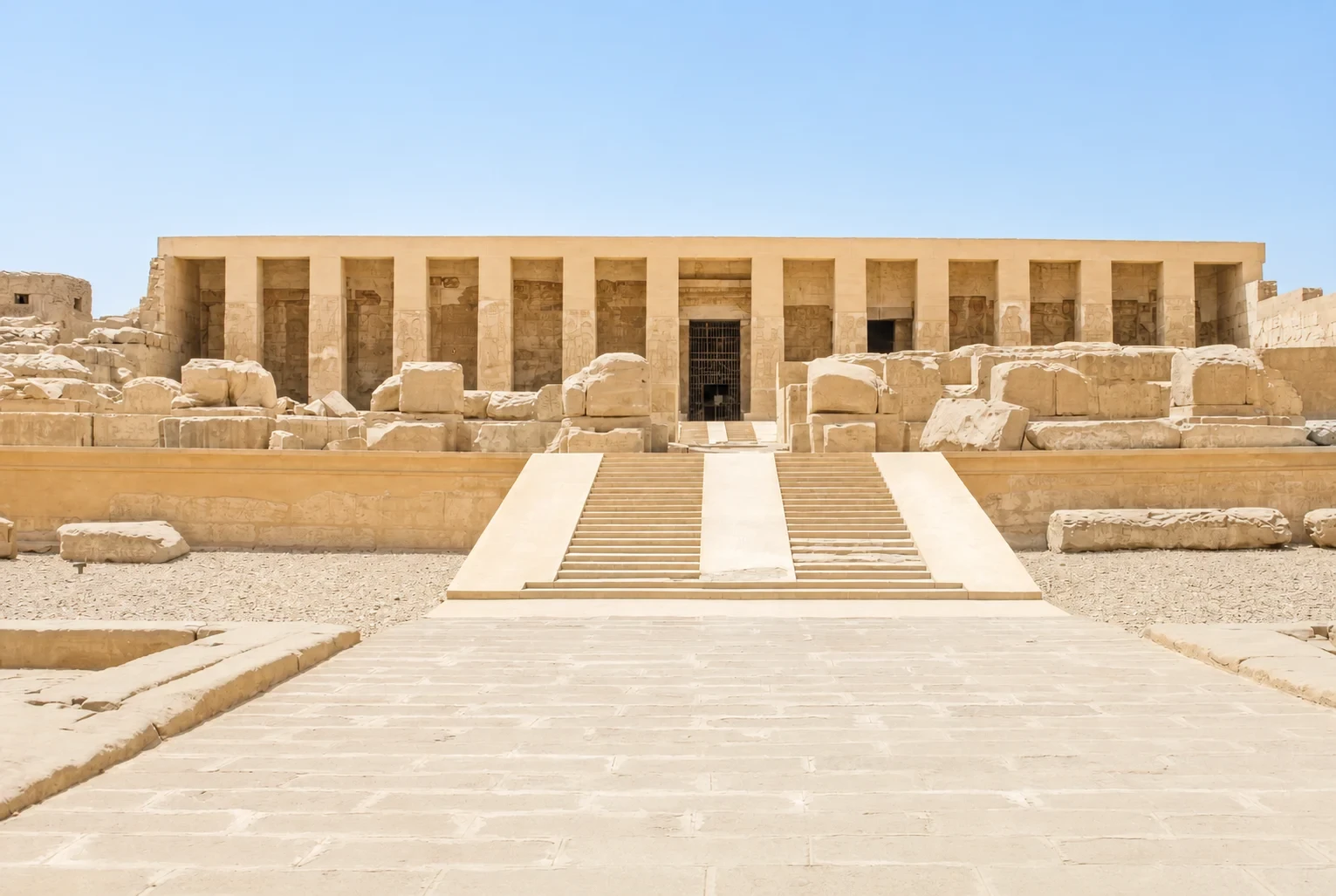
The Temple of Seti I at Abydos is the most sacred and most artistically magnificent New Kingdom temple in the Nile River Valley, built at the most holy site in all of ancient Egypt and containing the finest painted relief decoration of any surviving ancient Egyptian monument. The seven sanctuary chapels dedicated to Osiris, Isis, Horus, Ptah, Ra-Horakhty, Amun-Ra, and the deified Seti I are universally regarded as the supreme achievement of ancient Egyptian temple painting. The Abydos King List in the gallery corridor is one of the primary sources for ancient Egyptian royal chronology, and the mysterious Osireion behind the main temple is one of the most atmospherically powerful ancient structures in Egypt.
Dendera Temple Of Hathor
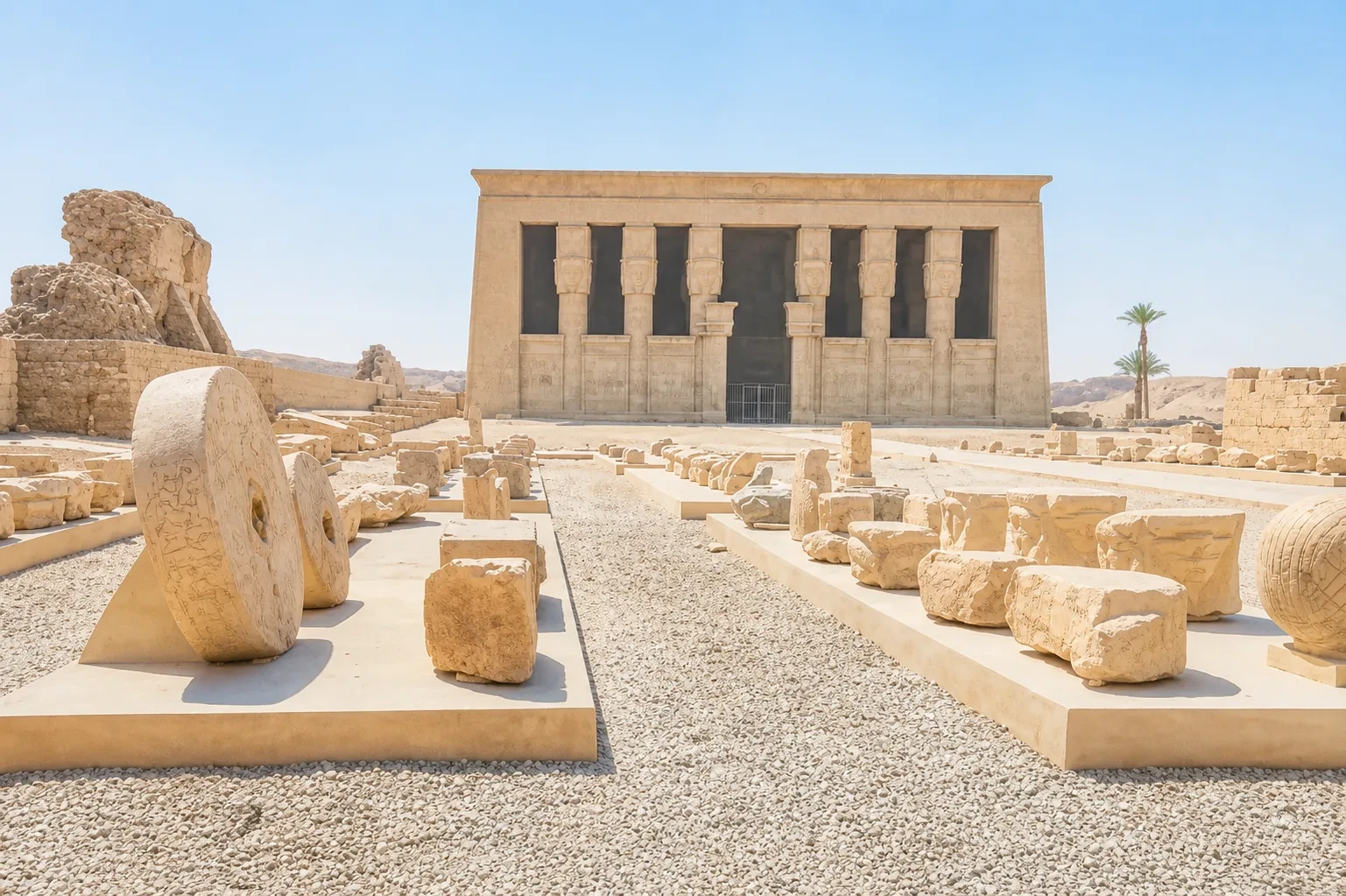
The Temple of Hathor at Dendera is the largest and most completely preserved Ptolemaic temple complex in Egypt after Edfu, celebrated for its spectacular painted astronomical ceiling, the famous Dendera Zodiac, the iconic Hathor-headed column capitals, the rooftop chapels, the accessible underground crypts, and the famous carved image of Cleopatra VII and her son Caesarion on the exterior rear wall. The Dendera complex is the most complete surviving example of a major Ptolemaic religious precinct, with its main temple, two birth houses, sacred lake, Isis sanctuary, and enclosure wall all preserved within a single visit.
Esna Temple Of Khnum
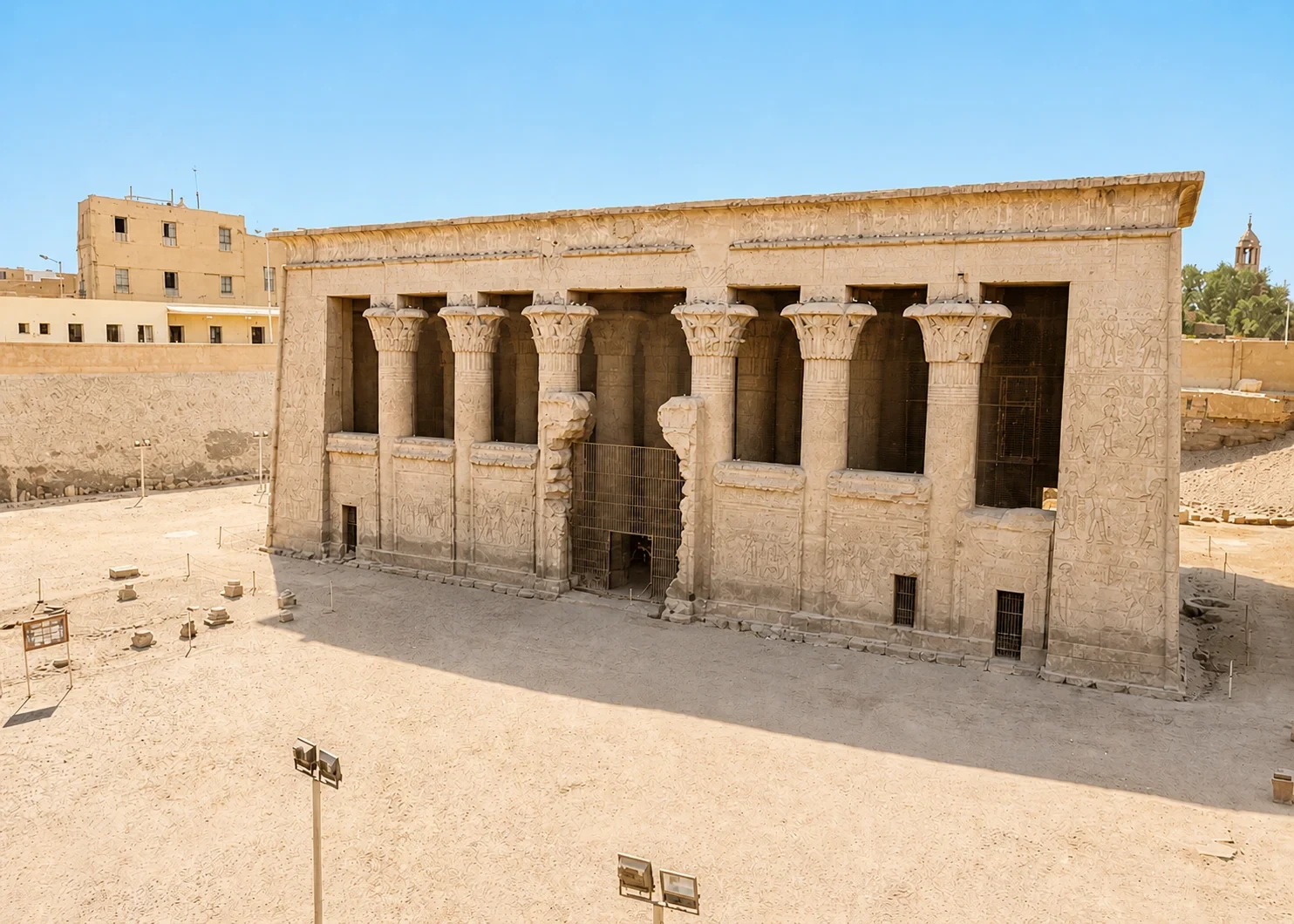
The Temple of Khnum at Esna is the last ancient Egyptian temple to have received royal decoration in the traditional pharaonic style, with the latest dated inscription produced by the Roman emperor Decius around 250 CE. Set approximately nine meters below the level of the modern town of Esna, accessible by descending through the heart of an animated modern market town, the surviving hypostyle hall preserves the most varied collection of column capitals in any ancient Egyptian temple, a remarkable cryptographic astronomical ceiling being progressively revealed by ongoing conservation work, and the most elaborate surviving examples of ancient Egyptian cryptographic religious writing.
El Kab Tombs
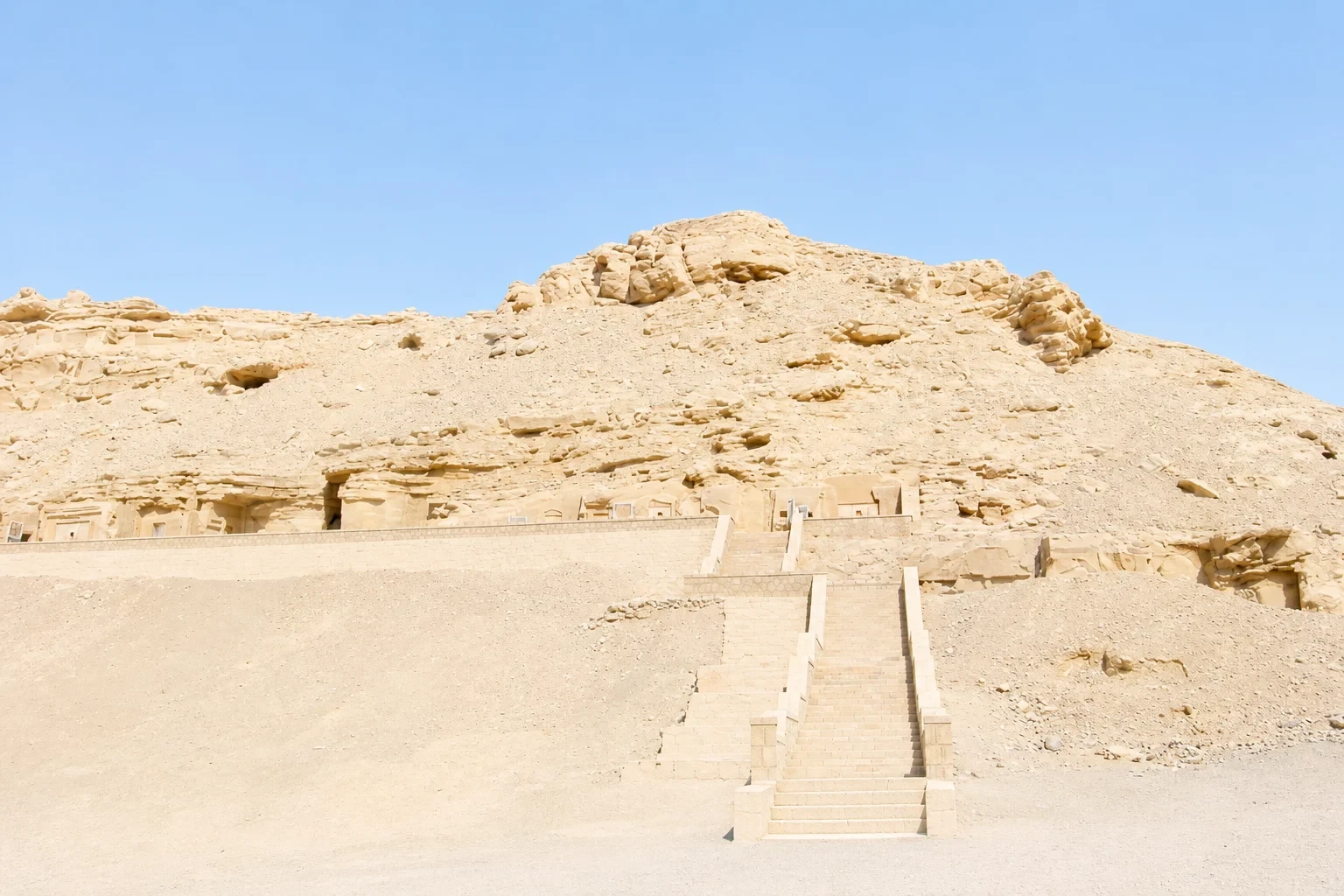
The Tombs of El Kab are the decorated rock-cut burial chapels of the early New Kingdom military commanders whose service to the pharaoh Ahmose I and his successors is documented in the most detailed and most direct first-person military biographies in all of ancient Egyptian literature. The tomb of Ahmose Son of Ebana, containing the primary ancient source for the expulsion of the Hyksos invaders and the founding of the New Kingdom, and the exquisitely painted agricultural scenes of the tomb of Paheri together make El Kab one of the most historically significant and most artistically rewarding sites on the Upper Nile. The ancient site also preserves some of the most impressive mud-brick enclosure walls in Egypt.
Edfu Temple Of Horus
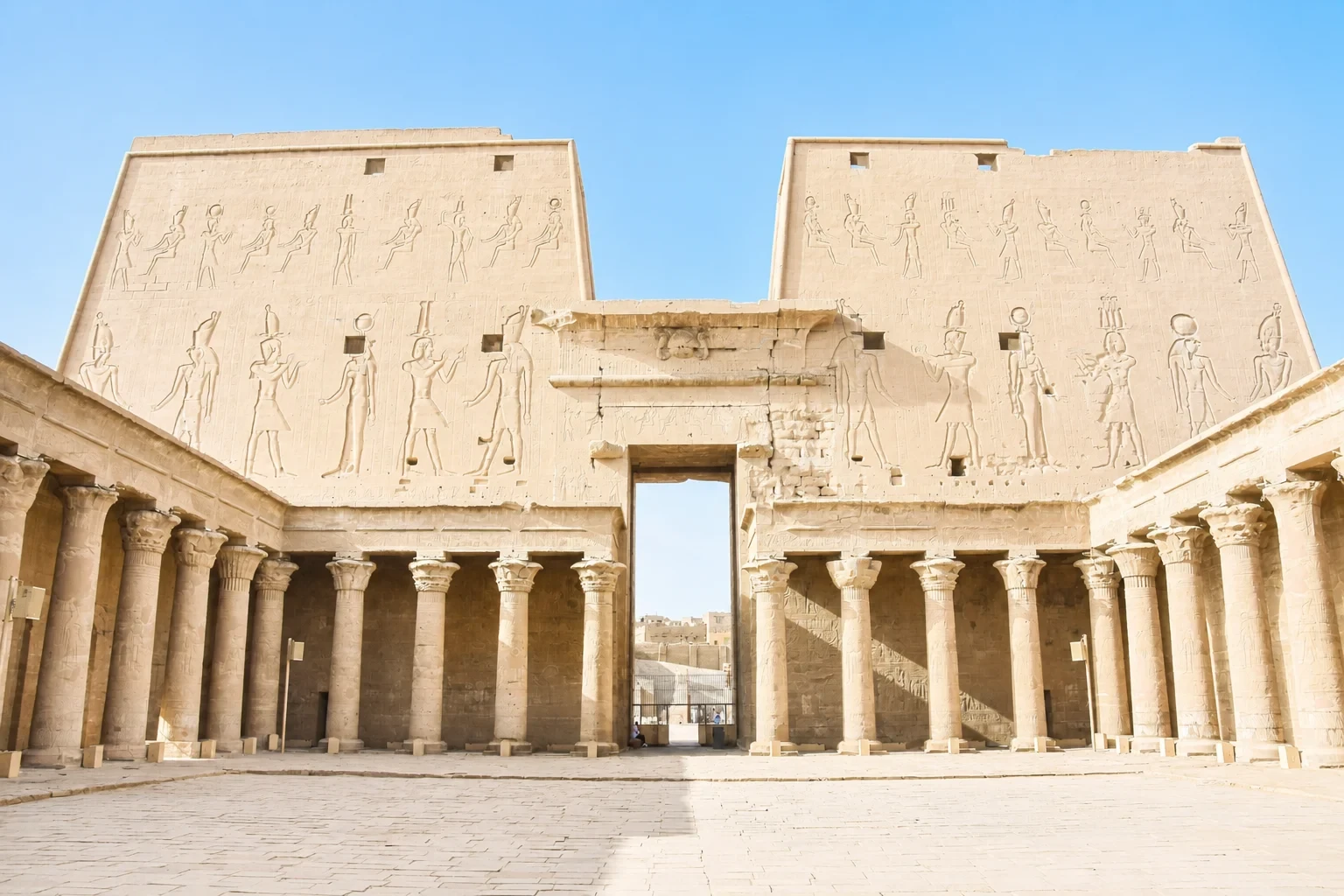
The Temple of Horus at Edfu is the largest and most completely preserved ancient Egyptian temple in the world, the definitive surviving example of the ancient Egyptian temple plan at full scale, and the monument that allows modern visitors to experience the interior of a complete ancient Egyptian religious building as the ancient Egyptians actually built and experienced it. From the enormous 36-meter entrance pylon to the innermost sanctuary with the original black granite naos still in place, the Edfu Temple is a journey through the complete spatial and theological sequence of ancient Egyptian sacred architecture that is available nowhere else on earth.
Gebel el-Silsila
Gebel el-Silsila is the ancient sandstone quarry that supplied the building material for the majority of the greatest temples ever constructed in ancient Egypt, located at the narrowest and most dramatic point on the Upper Nile where the sandstone cliffs press in on both banks to create a sacred gorge of extraordinary natural power. The west bank cliff face preserves more than nine hundred ancient shrines, stelae, inscriptions, and quarrying features spanning fifteen centuries of royal and popular religious activity, including the remarkable Speos of Horemheb, the most completely preserved rock-cut temple on the Upper Nile between Luxor and Aswan. Gebel el-Silsila is exclusively accessible by Dahabiya Nile River Cruise, making it the defining privilege of the small-vessel river experience over the standard cruise ship.
Kom Ombo Temple Of Sobek And Haroeris
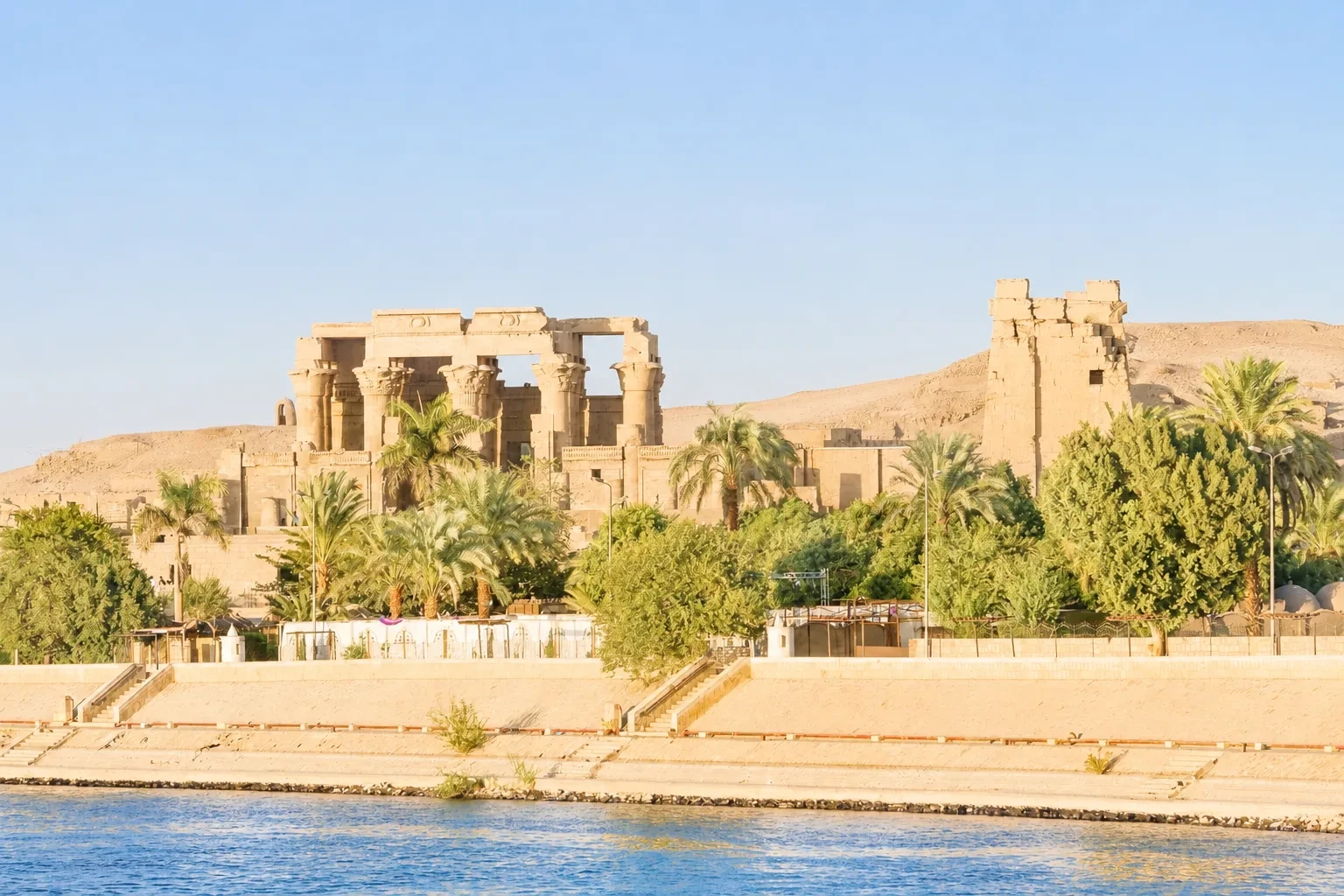
The Temple of Sobek and Haroeris at Kom Ombo is the only perfectly symmetrical double temple in ancient Egypt, perched dramatically on a sandstone promontory above the east bank of the Nile with one of the most spectacular riverside settings of any ancient monument in the Nile River Valley. Dedicated simultaneously to the crocodile god Sobek and the falcon god Haroeris in a unique dual architectural programme, the Kom Ombo Temple is also celebrated for its ancient medical instruments relief, its Nilometer, and the adjacent Crocodile Museum displaying hundreds of mummified sacred crocodiles.
Why Is The Nile River Valley Important?
The Nile River Valley is important in ways that are difficult to overstate for any traveler interested in the history, art, religion, or achievement of human civilization. It is the physical landscape that made ancient Egyptian civilization possible, providing the agricultural fertility, the river transportation, the building materials, and the sacred geography that sustained one of the most sophisticated and most durable states in the history of the world. It is the location of approximately one third of all the ancient monuments in the world, encompassing within its length the largest temple complex ever built in the ancient world, the most completely preserved Ptolemaic temple in existence, the finest ancient Egyptian painted reliefs of any period, the most sacred pilgrimage site of the ancient world, and dozens of other monuments of world historical significance.
The Nile River Valley is also important as a living landscape, not simply an archaeological zone. The communities of Upper Egypt who live and farm along the Nile today are the direct inheritors of the world's oldest continuously inhabited agricultural civilization, and the relationship between the people of the Nile Valley and their river, their land, and their extraordinary ancient heritage creates a human context for the ancient monuments that gives the Nile River Valley a depth and a vitality that pure archaeological tourism cannot provide. WOW Egypt Tours is proud to offer the most comprehensive and expertly guided access to the entire Nile River Valley available to international travelers, from the sacred city of Abydos in the Sohag Governorate to the ancient quarries of Aswan in the far south.
What Are Some Interesting Facts About The Nile River Valley?
The World's Longest Heritage Corridor
The Nile River Valley between Abydos in the north and Aswan in the south constitutes the longest continuous heritage corridor in the world, a stretch of approximately 350 kilometers along which every major stopping point provides access to one or more ancient monuments of world historical significance. No other river or road anywhere in the world connects a comparable density of important ancient sites within a single continuous journey, and the experience of traveling the Nile River Valley by river or by road is therefore unique in the heritage tourism of the entire world. Whether experienced over the course of a single long day from Luxor by private vehicle, covering the Abydos and Dendera temples to the north and the Esna and Edfu temples to the south, or over the course of a week by Dahabiya sailing vessel, stopping at El Kab, Gebel el-Silsila, and the Nile villages as well as the great temples, the Nile River Valley always delivers an accumulation of historical and aesthetic experience that is without parallel anywhere else on earth.
The River That Created Civilization
The Nile River Valley is also remarkable for what it reveals about the relationship between geography and civilization. Ancient Egypt was not simply a civilization that happened to be located near a river; it was a civilization that was created, structured, and sustained by a river in a way that is more direct and more total than the relationship between any other ancient civilization and its natural environment. The annual Nile flood, which the ancient Egyptians called the Inundation, was not simply a natural phenomenon to be managed or accommodated; it was the supreme divine act on which all life depended, the gift of the gods to their people on earth, the renewal of creation itself repeated each year in the waters of the sacred river. Every temple in the Nile River Valley, from the great mortuary temples of Luxor to the small rock-cut shrines of Gebel el-Silsila, is in some sense a monument to the Nile, because without the Nile none of these temples could have been built, maintained, or made meaningful to the civilization that created them.
The Last Surviving Ancient World Wonder
Among the Seven Wonders of the Ancient World, only the Great Pyramids of Giza survive intact to the present day. However, the Nile River Valley between Luxor and Aswan contains monuments that in their own way rival and in some respects exceed the visual and historical impact of the Pyramids. The Great Hypostyle Hall of Karnak Temple, with its 134 colossal columns rising more than 20 meters above the ancient floor, is one of the most overwhelming interior spaces created by any ancient civilization. The cliff-backed facade of the Temple of Hatshepsut at Deir el-Bahari, rising in three colonnaded terraces against the golden limestone of the Theban escarpment, is arguably the most dramatically situated ancient building in the world. The painted seven sanctuary chapels of the Temple of Seti I at Abydos represent the pinnacle of ancient Egyptian painting and perhaps of all ancient art. The Nile River Valley is not one wonder of the ancient world; it is dozens of wonders concentrated within a single extraordinary river valley that rewards discovery at every turn.
What Is So Special About The Nile River Valley?
Ancient Egypt Is Still Here
What makes the Nile River Valley uniquely special among all the great heritage destinations in the world is that ancient Egypt is not simply a subject of historical study in this landscape: it is a living presence, visible and tangible at every point along the river. The temples of Luxor and Karnak rise from the heart of the modern city, still dominating the urban landscape as they have for more than three thousand years. The West Bank of the Nile at Luxor is still farmed by local families whose fields directly abut the entrance to the Valley of the Kings. The market streets of Esna lead directly to a 24-column ancient hypostyle hall still being revealed in brilliant painted colors by ongoing conservation work. The Nile itself, broad and brown and ancient, carries the same water past the same cliffs and the same temple waterfront as it did when the pharaohs sailed these reaches in their gilded ceremonial barques. In the Nile River Valley, the three-thousand-year gap between antiquity and the present feels smaller than anywhere else in the world.
Every Way Of Traveling It Is Different And Rewarding
The Nile River Valley is also uniquely special for the variety of ways in which it can be experienced, each of which reveals different aspects of the same extraordinary landscape. By private vehicle along the Nile Valley highway, travelers can cover the major temple sites of both north and south in comprehensive day itineraries from Luxor, combining the New Kingdom masterpieces of Abydos with the Ptolemaic grandeur of Dendera in the north, and the intimate beauty of El Kab with the architectural magnificence of Edfu in the south. By standard Nile cruise ship between Luxor and Aswan, travelers experience the river itself as a moving landscape, with the great temples of Edfu and Kom Ombo rising from the bank as the vessel approaches and the Esna Lock providing a natural pause in which the nearby Khnum Temple can be visited. By Dahabiya sailing vessel, the most intimate and most historically authentic way to experience the Nile River Valley, travelers gain access to sites including the ancient quarries of Gebel el-Silsila and the El Kab Tombs that are simply not available on any other form of travel, while also experiencing the river itself at its most immediate and most beautiful, from the deck of a traditional wooden sailing boat moving at the pace of wind and current.
The Nile River Valley Through The Ages: From Ancient Egypt To The Present
The Nile River Valley has been continuously inhabited and continuously important from the earliest periods of human prehistory to the present day, and its history after the pharaonic period is as rich and complex as the ancient history that is the primary focus of modern heritage tourism. After the end of the pharaonic tradition in the 4th and 5th centuries CE, the Nile River Valley was Christianized and transformed as Coptic Christian communities settled throughout the region, establishing monasteries and churches in and around the ancient monuments, converting some temple spaces to Christian use, and creating a new religious tradition in the Nile Valley that continues to the present day in the form of Egypt's vibrant Coptic Christian community.
The Arab conquest of Egypt in 641 CE brought a new language, a new religion, and new cultural traditions to the Nile River Valley, giving the ancient monuments their modern Arabic names, El-Uqsur for Luxor, Aswan from the ancient Swenet, and Dandara for Dendera among many others, while the ancient temples and tombs continued to be visited, quarried for building materials, and occasionally inhabited by local communities for whom the ancient ruins were simply a feature of the familiar landscape. The medieval period saw the Nile Valley integrated into the broader Islamic world as a major agricultural and commercial corridor, with the ancient monuments serving primarily as a source of building stone and occasionally as forts, warehouses, or dwellings. The Ottoman period brought new administrative structures but relatively little change to the agricultural and cultural life of the Nile Valley communities. The modern rediscovery of the ancient Nile River Valley heritage began with the Napoleonic expedition of 1798, whose savants produced the first systematic scientific survey of the ancient monuments, and continued through the 19th and 20th centuries with a succession of extraordinary archaeological discoveries, scholarly publications, and conservation projects that have transformed the Nile River Valley into the premier heritage tourism destination in the world. Today the Nile River Valley receives millions of visitors from every country in the world each year, and continues to yield new discoveries and new understanding through the ongoing work of Egyptian and international archaeologists at sites throughout the region.
Nile River Valley UNESCO World Heritage Sites
The Nile River Valley of Upper Egypt encompasses multiple UNESCO World Heritage Sites and heritage zones that together represent one of the most extensive and most significant concentrations of designated world heritage in any single country. The Ancient Thebes with its Necropolis UNESCO World Heritage Site, inscribed in 1979, encompasses the complete Theban landscape on both banks of the Nile including all the major temples, tombs, and funerary monuments of the East and West Banks at Luxor. The broader Upper Nile Valley heritage corridor, encompassing the great Ptolemaic temples at Edfu, Kom Ombo, Esna, and Dendera, the ancient city of Abydos with its New Kingdom temples and Predynastic royal cemetery, and the ancient quarry landscape of Gebel el-Silsila, is recognized internationally as among the most outstanding cultural heritage concentrations in the world and is the subject of comprehensive international conservation attention coordinated by UNESCO and the Egyptian Ministry of Tourism and Antiquities. WOW Egypt Tours is committed to the protection and responsible enjoyment of the entire Nile River Valley heritage, supporting conservation efforts through responsible tourism practices on all guided tours and excursions throughout the region.
Best Time To Visit The Nile River Valley
The best time to visit the Nile River Valley is during the cooler months from October through April, when daytime temperatures throughout Upper Egypt are comfortable for outdoor exploration and the clear blue skies provide the best conditions for photography of the ancient monuments. December, January, and February are the coolest and most popular months, with daytime temperatures typically ranging from 18 to 28 degrees Celsius throughout the Nile River Valley from Abydos to Aswan. The summer months from May to September are intensely hot in Upper Egypt, with daytime temperatures regularly exceeding 40 degrees Celsius in the Luxor and Aswan areas, and even higher at enclosed outdoor sites like the Valley of the Kings. Summer travel in the Nile River Valley is entirely feasible with careful planning, very early morning starts, and an itinerary that balances outdoor and enclosed monument visits, but requires more logistical attention than winter travel.
The shoulder seasons of October to November and March to April offer excellent conditions for travel, with moderate temperatures, manageable visitor numbers, and the beautiful golden afternoon light on the sandstone temples that creates some of the most spectacular heritage photography available anywhere in Egypt. WOW Egypt Tours operates comprehensive tours throughout the Nile River Valley in all seasons and provides expert guidance on the optimal timing and sequencing of monument visits for any time of year.
Nile River Valley Opening Hours And Entrance Fees
Each of the major monuments in the Nile River Valley has its own specific opening hours and entrance fees. As a general guide, the major outdoor archaeological sites throughout the valley open at 6:00 AM and close between 5:00 PM and 6:00 PM depending on the season. Indoor museum sites in Luxor have morning and afternoon sessions. All entrance fees to monuments visited are included in all Day Tours, Nile River Cruise itineraries, Egypt Tours Packages, and Safaga Shore Excursions booked through WOW Egypt Tours. Representative entrance fees for the key Nile River Valley attractions are as follows:
Temple of Seti I at Abydos: EGP 180 adults, EGP 90 students. Temple of Hathor at Dendera: EGP 200 adults, EGP 100 students. Temple of Khnum at Esna: EGP 180 adults, EGP 90 students. El Kab Tombs: EGP 100 adults, EGP 50 students. Temple of Horus at Edfu: EGP 360 adults, EGP 180 students. Gebel el-Silsila: EGP 60 adults, EGP 30 students. Temple of Sobek and Haroeris at Kom Ombo: EGP 180 adults, EGP 90 students, with the adjacent Crocodile Museum EGP 50 adults, EGP 25 students.
How To Get To The Nile River Valley
The Nile River Valley of Upper Egypt is accessible by several different modes of transport from Cairo and from the major Red Sea ports. Luxor International Airport receives daily flights from Cairo and a growing number of direct international flights from European cities, making Luxor the most convenient entry point for the central and southern Nile River Valley. Luxor Railway Station receives multiple daily trains from Cairo, with the overnight sleeper service providing the most comfortable and most atmospheric rail option. Nile cruise ships travel between Luxor and Aswan over four to eight days depending on the itinerary, providing the most immersive river experience of the southern Nile River Valley from Esna to Aswan.
For travelers coming from the Red Sea coast, Safaga Port is the primary embarkation point for shore excursions to the Nile River Valley, located approximately 180 to 300 kilometers from various Nile River Valley monuments via the Eastern Desert highway. WOW Egypt Tours operates Safaga Shore Excursions covering the major Nile River Valley monuments including the Temple of Hathor at Dendera and the Temple of Seti I at Abydos as single-day excursions, and the Edfu and Kom Ombo temples as part of an overnight excursion programme. All transfers, internal transportation, and logistics throughout the Nile River Valley are handled by WOW Egypt Tours on all Day Tours, Nile River Cruises, Egypt Tours Packages, and Safaga Shore Excursions.
How Long To Spend In The Nile River Valley
The Nile River Valley rewards extended visits more than any other heritage destination in Egypt, and the minimum recommended time for a meaningful experience of both the principal monuments at Luxor and the great temples of the river corridor between Luxor and Aswan is five to seven days. A single day from Luxor can cover either the major monuments of the Luxor area or a selection of the northern Nile Valley temples (Abydos and Dendera) or the southern corridor temples (Esna, El Kab, and Edfu), but cannot adequately cover all of these simultaneously. A four to five day Nile cruise covers the river corridor between Luxor and Aswan with guided visits to the main temples at each port of call. The full Dahabiya Nile River Cruise experience of eight days in both directions covers every significant site between Luxor and Aswan including Gebel el-Silsila and El Kab that are not accessible on the standard cruise ship. Travelers who wish to experience both the Luxor monuments and the full range of Nile River Valley temples to both north and south should plan for a minimum of seven to ten days in the region. WOW Egypt Tours designs customized Nile River Valley itineraries of any duration from a single day to multiple weeks, ensuring that every visitor gets the most comprehensive and most rewarding possible experience of this extraordinary heritage landscape.
Tips For Visiting The Nile River Valley
Plan your Nile River Valley itinerary carefully to avoid unnecessary backtracking, organizing monument visits geographically rather than thematically so that you are always moving in a consistent direction along the river. A licensed Egyptologist guide from WOW Egypt Tours is essential throughout the Nile River Valley: the connections between monuments, the historical and religious context that makes each site meaningful, and the ongoing archaeological discoveries that continuously transform understanding of the ancient landscape all require expert interpretation to be fully appreciated at every major site. Consider the Dahabiya Nile River Cruise as the most complete and most authentic way to experience the southern Nile River Valley between Luxor and Aswan, providing access to Gebel el-Silsila and the El Kab Tombs that standard cruise ships do not stop at. For the northern Nile River Valley monuments at Abydos and Dendera, a private day tour from Luxor is the most practical option and is easily arranged through WOW Egypt Tours. Carry water and sunscreen for all outdoor visits throughout the valley regardless of season. Do not touch carved or painted surfaces at any ancient monument. Allow yourself time to simply sit quietly in the great hypostyle halls and roofed interiors of the best-preserved temples, and let the scale and the beauty of the ancient spaces speak for themselves.
What To Wear In The Nile River Valley
The Nile River Valley combines open-air outdoor archaeological sites, enclosed temple interiors, riverside promenades, and the spaces of living modern towns, requiring practical and adaptable clothing for any visit. Lightweight, breathable clothing covering the shoulders and knees is recommended for all temple and tomb visits as a mark of respect for the ancient sacred spaces and as a practical response to the Egyptian sun. A wide-brimmed hat and generous sunscreen are essential for all outdoor visits regardless of season. Comfortable, closed-toe walking shoes with good grip are necessary for the uneven ancient stone surfaces that characterize all the major outdoor sites throughout the valley. For Dahabiya Nile River Cruise visits, dress practically for the small boat shore excursion transfers at sites like Gebel el-Silsila. In winter, a warm layer is recommended for evenings as temperatures can drop noticeably after sunset even when daytime temperatures are warm.
Photography In The Nile River Valley
The Nile River Valley is one of the most photographically spectacular destinations in the world, offering an extraordinary range of subjects from the immense temple facades and hypostyle halls of the Ptolemaic temples to the intimate painted chambers of the El Kab Tombs, from the dramatic cliff quarry faces of Gebel el-Silsila to the spectacular riverside setting of the Kom Ombo Temple, from the painted astronomical ceiling of Dendera to the luminous sanctuary chapels of the Abydos Temple. Photography rules vary by site and sometimes by individual monument within a site. Flash photography is strictly prohibited in all decorated tombs, chapels, and enclosed temple interiors throughout the valley. Photography is generally permitted at most outdoor sites with a standard camera or smartphone. For the finest photography of the outdoor monuments, early morning and late afternoon provide the most dramatic light, while the Nile itself provides spectacular reflective compositions for the waterfront temples including Kom Ombo and Esna. Professional photography or filming with specialized equipment requires permits from Egypt's Ministry of Tourism and Antiquities at each site.
Nile River Valley Tours
North Nile River Valley Day Tour: Abydos And Dendera From Luxor
This full-day tour from Luxor explores the two most important ancient sites in the northern Nile River Valley, the Temple of Seti I at Abydos and the Temple of Hathor at Dendera. The theological, artistic, and historical contrast between the New Kingdom Osirian temple at Abydos and the Ptolemaic Hathorian complex at Dendera makes this the most intellectually comprehensive single-day temple experience available in the northern Nile River Valley.
Duration
Full day from Luxor with a very early morning departure, approximately 1.5 to 2 hours at each temple.
Includes
Private air-conditioned transportation from Luxor, private licensed Egyptologist guide, and entrance fees to both temples.
South Nile River Valley Day Tour: Esna, El Kab, And Edfu From Luxor
This full-day tour from Luxor covers three of the most significant ancient sites in the southern Nile River Valley: the Khnum Temple at Esna, the Tombs of El Kab, and the Temple of Horus at Edfu.
Duration
Full day from Luxor with an early morning departure, approximately 30 to 45 minutes at Esna, 1 to 1.5 hours at El Kab, and 1.5 to 2 hours at Edfu.
Includes
Private air-conditioned transportation from Luxor, private licensed Egyptologist guide, and entrance fees to all three sites.
Safaga Shore Excursion: Single Day To Dendera Or Abydos
Safaga Port is located on the Red Sea coast, with the northern Nile River Valley temples accessible as single-day shore excursions. The Temple of Hathor at Dendera is approximately 2.5 to 3 hours from Safaga and is accessible as a comfortable single-day excursion. The Temple of Seti I at Abydos is approximately 3 to 3.5 hours from Safaga and is also accessible as a single-day excursion within a long port day.
Includes
Private air-conditioned vehicle from Safaga Port, private licensed Egyptologist guide, entrance fees, and return transfer to the ship. All Safaga Shore Excursions are coordinated around each ship's port schedule.
Safaga Shore Excursion: Overnight To Abydos, Dendera, And Luxor
For travelers wishing to experience both the northern Nile River Valley temples and the major monuments of Luxor from Safaga Port, WOW Egypt Tours offers an overnight excursion programme covering the Temple of Seti I at Abydos on Day 1, an overnight in Luxor, and the Temple of Hathor at Dendera combined with major Luxor monuments on Day 2.
Includes
Private air-conditioned vehicle throughout, private licensed Egyptologist guide, one night accommodation in Luxor, entrance fees to all included sites, and return transfer to the ship.
Dahabiya Nile River Cruise
A Dahabiya Nile River Cruise is the most complete, most intimate, and most historically authentic way to experience the southern Nile River Valley between Luxor and Aswan. WOW Egypt Tours operates dahabiya cruises with private cabins, all meals, a private licensed Egyptologist guide on board, and guided shore excursions at every stop. The Dahabiya cruise is the only way to visit Gebel el-Silsila and is the most atmospheric way to visit all the other southern Nile River Valley monuments.
4 Days 3 Nights Dahabiya Nile River Cruise From Aswan To Luxor
Route: Aswan to Luxor, sailing north.
Itinerary
Day 1: Embarkation in Aswan. Visit to Philae Temple and the Unfinished Obelisk. Sail north to Kom Ombo. Guided visit to Kom Ombo Temple and Crocodile Museum. Continue to Gebel el Silsila. Overnight on board.
Day 2: Guided visit to Gebel el-Silsila including the Speos of Horemheb, the rock-cut shrines, and the quarry faces. Sail to the Village of Basaw. Guided visit to Village of Basaw. Continue to Edfu. Guided visit to the Temple of Horus at Edfu. Overnight on board.
Day 3: Sail to El Kab. Guided visit to El Kab Tombs including the tomb of Ahmose Son of Ebana and the ancient enclosure walls. Sail to El Hagaz Island. Swimming stop. Overnight on board.
Day 4: Sail to Esna. Visit Khnum Temple at Esna. Disembarkation in Esna. Transfer to Luxor, approximately 55 kilometers (35 miles).
Includes
Private cabin, all meals on board, private licensed Egyptologist guide, entrance fees to all site visits, and private transfers.
5 Days 4 Nights Dahabiya Nile River Cruise From Luxor To Aswan
Route: Luxor to Aswan, sailing south.
Itinerary
Day 1: Embarkation in Luxor. Transfer to Esna, approximately 55 kilometers (35 miles). Visit Khnum Temple at Esna. Sail to El Hagaz Island. Overnight on board.
Day 2: Sail to El Kab. Guided visit to El Kab Tombs. Continue to Edfu. Guided visit to the Temple of Horus at Edfu. Sail to the Village of Basaw. Guided visit to Village of Basaw. Overnight on board.
Day 3: Sail to Gebel el Silsila. Guided visit to Gebel el-Silsila. Sail south to Kom Ombo. Guided visit to Kom Ombo Temple and Crocodile Museum. Sail to Daraw Village. Overnight on board.
Day 4: Guided visit to Daraw Village. Sail to Herbiab Island. Swimming stop. Philae Sound and Light Show. Overnight on board.
Day 5: Optional Abu Simbel visit available by air or road. Guided visits to Philae Temple, the High Dam, and the Unfinished Obelisk. Disembarkation in Aswan.
Includes
Private cabin, all meals on board, private licensed Egyptologist guide, entrance fees to all site visits, and private transfers.
8 Days 7 Nights Dahabiya Nile River Cruise Round Trip From Luxor (Via Aswan)
Route: Luxor and Aswan, sailing north and south.
Itinerary
Day 1: Embarkation in Luxor. Transfer to Esna. Visit Khnum Temple at Esna. Sail to El Hagaz Island. Overnight on board.
Day 2: Sail to El Kab. Guided visit to El Kab Tombs. Continue to Edfu. Guided visit to the Temple of Horus at Edfu. Sail to the Village of Basaw. Guided visit. Overnight on board.
Day 3: Sail to Gebel el Silsila. Guided visit. Sail south to Kom Ombo. Guided visit. Sail to Daraw Village. Overnight on board.
Day 4: Guided visit to Daraw Village. Sail to Herbiab Island. Swimming stop. Philae Sound and Light Show. Overnight on board.
Day 5: Optional Abu Simbel available. Guided visits to Philae Temple, High Dam, and Unfinished Obelisk. Sail north to Kom Ombo. Continue to Gebel el Silsila. Overnight on board.
Day 6: Guided visit to Gebel el-Silsila. Sail to Village of Basaw. Continue to Edfu. Guided visit. Overnight on board.
Day 7: Sail to El Kab. Guided visit. Sail to El Hagaz Island. Swimming stop. Overnight on board.
Day 8: Disembarkation in Esna. Transfer to Luxor.
Includes
Private cabin, all meals on board, private licensed Egyptologist guide, entrance fees to all site visits, and private transfers.
8 Days 7 Nights Dahabiya Nile River Cruise Round Trip From Aswan (Via Luxor)
Route: Luxor and Aswan, sailing north and south.
Itinerary
Day 1: Embarkation in Aswan. Visit to Philae Temple and the Unfinished Obelisk. Sail north to Kom Ombo. Guided visit. Continue to Gebel el Silsila. Overnight on board.
Day 2: Guided visit to Gebel el-Silsila. Sail to Village of Basaw. Continue to Edfu. Guided visit. Overnight on board.
Day 3: Sail to El Kab. Guided visit. Sail to El Hagaz Island. Swimming stop. Overnight on board.
Day 4: Sail to Esna. Visit Khnum Temple. Sail to El Hagaz Island. Overnight on board.
Day 5: Sail to El Kab. Continue to Edfu. Guided visit. Sail to Village of Basaw. Guided visit. Overnight on board.
Day 6: Sail to Gebel el Silsila. Guided visit. Sail south to Kom Ombo. Guided visit. Sail to Daraw Village. Overnight on board.
Day 7: Guided visit to Daraw Village. Sail to Herbiab Island. Swimming stop. Philae Sound and Light Show. Overnight on board.
Day 8: Disembarkation in Aswan.
Includes
Private cabin, all meals on board, private licensed Egyptologist guide, entrance fees to all site visits, and private transfers.
Luxor And Aswan Nile River Cruise
The Luxor and Aswan Nile River Cruise is a standard Nile cruise product operated aboard a full-size cruise ship between Luxor and Aswan. WOW Egypt Tours operates this cruise in both directions with private licensed Egyptologist guides, all meals included, private cabins, and guided shore excursions at every port of call. The standard cruise covers the southern Nile River Valley from Luxor to Aswan with guided visits to Esna, Edfu, and Kom Ombo as standard stops.
4 Days 3 Nights Luxor And Aswan Nile River Cruise From Aswan To Luxor
Route: Aswan to Luxor, sailing north.
Itinerary
Day 1: Embarkation in Aswan. Guided visits to Philae Temple, the High Dam, and the Unfinished Obelisk. Overnight on board in Aswan.
Day 2: Sail north to Kom Ombo. Guided visit to Kom Ombo Temple and Crocodile Museum. Continue to Edfu. Overnight on board.
Day 3: Guided visit to the Temple of Horus at Edfu. Continue north toward Luxor. Pass through the Esna Lock. Optional visit to Khnum Temple at Esna. Guided visit to Luxor Temple and Karnak Temple. Overnight on board in Luxor.
Day 4: Optional Sunrise Hot Air Balloon available. Guided visits to Valley of the Kings, Queen Hatshepsut Temple, and Colossi of Memnon. Disembarkation in Luxor.
Includes
Private cabin, all meals on board, private licensed Egyptologist guide, entrance fees to all temple visits, and private transfers.
5 Days 4 Nights Luxor And Aswan Nile River Cruise From Luxor To Aswan
Route: Luxor to Aswan, sailing south.
Itinerary
Day 1: Embarkation in Luxor. Guided visits to Luxor Temple and Karnak Temple. Overnight on board in Luxor.
Day 2: Optional Sunrise Hot Air Balloon available. Guided visits to Valley of the Kings, Queen Hatshepsut Temple, and Colossi of Memnon. Pass through the Esna Lock. Visit to Khnum Temple at Esna. Sail south to Edfu. Overnight on board.
Day 3: Guided visit to the Temple of Horus at Edfu. Continue to Kom Ombo. Guided visit to Kom Ombo Temple and Crocodile Museum. Overnight on board.
Day 4: Continue south toward Aswan. Guided visits to Philae Temple, the High Dam, and the Unfinished Obelisk. Overnight on board in Aswan.
Day 5: Optional Abu Simbel visit available by air or road. Disembarkation in Aswan.
Includes
Private cabin, all meals on board, private licensed Egyptologist guide, entrance fees to all temple visits, and private transfers.
8 Days 7 Nights Luxor And Aswan Nile River Cruise Round Trip From Luxor (Via Aswan)
Route: Luxor and Aswan, sailing north and south.
Itinerary
Day 1: Embarkation in Luxor. Guided visits to Luxor Temple and Karnak Temple. Overnight on board in Luxor.
Day 2: Guided visits to Luxor Museum. Pass through the Esna Lock. Visit to Khnum Temple at Esna. Sail south to Edfu. Overnight on board.
Day 3: Guided visit to the Temple of Horus at Edfu. Continue to Kom Ombo. Guided visit to Kom Ombo Temple and Crocodile Museum. Overnight on board.
Day 4: Continue south toward Aswan. Guided visits to Philae Temple, the High Dam, and the Unfinished Obelisk. Overnight on board in Aswan.
Day 5: Abu Simbel visit available by road. Sound and Light Show at Philae Temple. Overnight on board in Aswan.
Day 6: Guided visits to Nubian Village. Sail north to Kom Ombo. Guided visit to Kom Ombo Temple. Continue north. Overnight on board.
Day 7: Guided visits to Valley of the Kings, Queen Hatshepsut Temple, and Colossi of Memnon. Pass through the Esna Lock. Visit to Khnum Temple at Esna. Overnight on board in Luxor.
Day 8: Optional Sunrise Hot Air Balloon available. Disembarkation in Luxor.
Includes
Private cabin, all meals on board, private licensed Egyptologist guide, entrance fees to all temple visits, and private transfers.
8 Days 7 Nights Luxor And Aswan Nile River Cruise Round Trip From Aswan (Via Luxor)
Route: Luxor and Aswan, sailing north and south.
Itinerary
Day 1: Embarkation in Aswan. Guided visits to Philae Temple, the High Dam, and the Unfinished Obelisk. Overnight on board in Aswan.
Day 2: Sail north to Kom Ombo. Guided visit to Nubian Village and Kom Ombo Temple and Crocodile Museum. Continue to Edfu. Overnight on board.
Day 3: Continue north toward Luxor. Pass through the Esna Lock. Visit to Khnum Temple at Esna. Guided visit to Luxor Museum and Karnak Sound and Light Show. Overnight on board in Luxor.
Day 4: Guided visits to Luxor Temple and Karnak Temple. Overnight on board in Luxor.
Day 5: Optional Sunrise Hot Air Balloon available. Guided visits to Valley of the Kings, Queen Hatshepsut Temple, and Colossi of Memnon. Pass through the Esna Lock. Sail south to Edfu. Overnight on board.
Day 6: Guided visit to the Temple of Horus at Edfu. Continue to Kom Ombo. Guided visit to Kom Ombo Temple. Overnight on board.
Day 7: Sound and Light Show at Philae Temple. Overnight on board in Aswan.
Day 8: Abu Simbel visit available by road. Disembarkation in Aswan.
Includes
Private cabin, all meals on board, private licensed Egyptologist guide, entrance fees to all temple visits, and private transfers.
Combine The Nile River Valley With Your Egypt Tours Package
The Nile River Valley is the defining experience of the complete range of WOW Egypt Tours travel products. Browse the options below to find the Egypt experience that is right for you.
Egypt Tour Packages: Multi-day guided Egypt tours organized by duration, including 2 Days Egypt Packages, 3 Days Egypt Packages, 4 Days Egypt Packages, 5 Days Egypt Packages, 6 Days Egypt Packages, 7 Days Egypt Packages, 8 Days Egypt Packages, 10 Days Egypt Packages, and longer itineraries. All packages include private air-conditioned transportation, private licensed Egyptologist guide, accommodations, entrance fees to all included sites throughout the Nile River Valley, and private transfers throughout Egypt.
Egypt Travel Packages: Themed Egypt travel packages designed around specific travel styles and interests, including Egypt Honeymoon Travel Packages, Egypt Budget Travel Packages, Egypt Family Travel Packages, Egypt Luxury Travel Packages, Egypt Adventure Travel Packages, Egypt Cultural Travel Packages, and Egypt Christmas and New Year Travel Packages. All packages include private air-conditioned transportation, private licensed Egyptologist guide, accommodations, meals, entrance fees to all included Nile River Valley sites, and private transfers.
Egypt Nile Cruise Packages: Complete Egypt travel packages combining Cairo sightseeing with a fully guided Nile cruise through the heart of the Nile River Valley between Luxor and Aswan, available as Cairo and Nile Cruise Packages, Egypt and Nile Cruise Packages, and Nile Cruise and Red Sea Packages. All packages include private cabin on board, all meals, private licensed Egyptologist guide, entrance fees to all Nile River Valley temple visits, and private transfers.
Nile River Cruises: All WOW Egypt Tours Nile cruise options through the Nile River Valley between Luxor and Aswan, available across four ship categories — Standard, Deluxe, Ultra Deluxe, and Luxury — as well as private Dahabiya sailing vessels. All cruises include private cabin on board, all meals, private licensed Egyptologist guide, entrance fees to all Nile River Valley temple visits, and private transfers.
Luxor Aswan Nile Cruises: The classic Nile River Valley cruise route between Luxor and Aswan, covering the great Ptolemaic temples of Esna, Edfu, and Kom Ombo in both directions and in durations of 4 Days 3 Nights, 5 Days 4 Nights, and 8 Days 7 Nights round trip. All cruises include private cabin on board, all meals, private licensed Egyptologist guide, entrance fees to all Nile River Valley sites, and private transfers.
Standard Nile Cruises: Comfortable standard-category cruise ships sailing through the Nile River Valley between Luxor and Aswan. Includes standard cabin, all meals, licensed guide, and entrance fees to all standard Nile River Valley temple stops.
Deluxe Nile Cruises: Deluxe-category cruise ships with enhanced cabin comfort and upgraded dining. Includes deluxe cabin, all meals, licensed guide, and entrance fees to all Nile River Valley temple stops.
Ultra Deluxe Nile Cruises: Ultra deluxe-category cruise ships offering superior cabins and premium dining. Includes ultra deluxe cabin, all meals, licensed guide, and entrance fees to all Nile River Valley temple stops.
Luxury Nile Cruises: Luxury-category cruise ships with the finest cabins, exceptional cuisine, and premium onboard facilities. Includes luxury cabin, all meals, licensed guide, and entrance fees to all Nile River Valley temple stops.
Dahabiya Nile Cruises: Private small-vessel sailing experience through the Nile River Valley aboard a traditional wooden dahabiya between Luxor and Aswan, the only way to visit Gebel el-Silsila and one of the finest ways to experience all the other Nile River Valley sites between Luxor and Aswan. Available in four itineraries: 4 Days 3 Nights From Aswan To Luxor, 5 Days 4 Nights From Luxor To Aswan, 8 Days 7 Nights Round Trip From Luxor, and 8 Days 7 Nights Round Trip From Aswan. Includes private cabin, all meals, private licensed Egyptologist guide, entrance fees to all Nile River Valley site visits, and private transfers.
Luxor Tours: Day tours from Luxor covering all the major Nile River Valley sites accessible by road, including the northern Nile River Valley temples of Abydos and Dendera and the southern corridor temples of Esna, El Kab, and Edfu. All tours include private air-conditioned transportation, private licensed Egyptologist guide, entrance fees to all included sites, and private transfers.
Shore Excursions: Guided excursions from Egypt's Red Sea ports to the Nile River Valley monuments, available for cruise ship passengers with a port call at Safaga, Hurghada, Port Said, Alexandria, and Sokhna. Single-day Safaga Shore Excursions cover the northern Nile River Valley temples of Abydos and Dendera. Overnight Safaga Shore Excursions cover the full range of Nile River Valley monuments from Abydos in the north to Kom Ombo in the south, with an overnight stay in Luxor. Includes private air-conditioned transportation from the port, private licensed Egyptologist guide, entrance fees to all included sites, and return transfer to the ship.
Safaga Port Excursions: Shore excursions from Safaga Port on the Red Sea coast covering the Nile River Valley monuments in two formats. Single-day excursions cover the Temple of Hathor at Dendera (2.5 to 3 hours from Safaga) or the Temple of Seti I at Abydos (3 to 3.5 hours from Safaga) within a single port day. Overnight excursions combine Luxor sightseeing with a comprehensive southward journey through the Nile River Valley covering Abydos, Dendera, Esna, El Kab, Edfu, and optionally Kom Ombo across two days with an overnight stay in Luxor. Includes private air-conditioned vehicle, private licensed Egyptologist guide, accommodation in Luxor where applicable, entrance fees to all included sites, and return transfer to the ship.
All Nile River Valley Attractions
The major attractions of the Nile River Valley covered in this guide, each of which is the subject of a comprehensive individual visitor's guide on the WOW Egypt Tours website, are listed below from north to south. All these sites are accessible through the tours, cruises, packages, and shore excursions offered by WOW Egypt Tours.
The Temple of Seti I at Abydos, the most sacred site in ancient Egypt and the home of the finest painted relief decoration of any ancient Egyptian temple, located approximately 130 kilometers north of Luxor in the Sohag Governorate.
The Temple of Hathor at Dendera, the largest and most completely preserved Ptolemaic temple complex in Egypt after Edfu, celebrated for its astronomical ceiling, the Dendera Zodiac, the Cleopatra relief, and its extraordinary rooftop chapels, located approximately 60 kilometers north of Luxor in the Qena Governorate.
The Temple of Khnum at Esna, the last ancient Egyptian temple to have received royal decoration in the traditional pharaonic style, celebrated for its varied Hathor column capitals, its remarkable cryptographic texts, and its painted astronomical ceiling currently being revealed by ongoing conservation work, located approximately 55 kilometers south of Luxor in the heart of the modern town of Esna.
The Tombs of El Kab, the decorated rock-cut burial chapels of the early New Kingdom military commanders whose first-person biographical texts are the primary ancient source for the founding of the New Kingdom, set within the ancient town of Nekheb with its remarkable mud-brick enclosure walls, located approximately 80 kilometers south of Luxor.
The Temple of Horus at Edfu, the largest and most completely preserved ancient Egyptian temple in the world, the supreme example of Ptolemaic sacred architecture at full scale, located approximately 105 kilometers south of Luxor on the west bank of the Nile.
The ancient sandstone quarries and sacred shrines of Gebel el-Silsila, the primary geological source of the sandstone from which the majority of Egypt's greatest temples were built, accessible exclusively by Dahabiya Nile River Cruise, located approximately 65 kilometers south of Edfu.
The Temple of Sobek and Haroeris at Kom Ombo, the only perfectly symmetrical double temple in ancient Egypt, celebrated for its unique dual deity architectural programme, its ancient medical instruments relief, its Crocodile Museum, and its dramatic Nile riverside setting, located approximately 45 kilometers north of Aswan.
Frequently Asked Questions About The Nile River Valley
What is the Nile River Valley?
The Nile River Valley is the narrow fertile corridor created by the annual flooding of the Nile River through northeastern Africa, and in Egypt it is the physical landscape that made ancient Egyptian civilization possible. The section of the Nile River Valley covered in this guide encompasses the Upper Egyptian reach from the ancient sacred city of Abydos in the Sohag Governorate and the Dendera Temple complex in the Qena Governorate, south through Luxor, Esna, El Kab, Edfu, Gebel el-Silsila, and Kom Ombo to the city of Aswan at the threshold of Nubia. This stretch of the Nile River Valley contains approximately one third of all the ancient monuments in the world.
What are the major ancient sites in the Nile River Valley?
The major ancient sites in the Nile River Valley between Luxor, Aswan, Sohag, and Qena include the Temple of Seti I at Abydos, the Temple of Hathor at Dendera, the Temple of Khnum at Esna, the Tombs of El Kab, the Temple of Horus at Edfu, the ancient sandstone quarries of Gebel el-Silsila, and the Temple of Sobek and Haroeris at Kom Ombo, in addition to the extraordinary concentration of monuments at Luxor The Ancient City.
What is the best way to travel the Nile River Valley?
The best way to travel the Nile River Valley depends on the time available and the sites to be visited. A Dahabiya Nile River Cruise between Luxor and Aswan is the most complete and most atmospherically authentic experience of the southern Nile River Valley, covering all the major sites including Gebel el-Silsila and El Kab that standard cruise ships do not stop at. The standard Nile cruise ship covers the southern corridor from Luxor to Aswan with guided visits to Esna, Edfu, and Kom Ombo. For the northern Nile River Valley monuments at Abydos and Dendera, a private day tour from Luxor is the most practical option.
How many days do I need to visit the Nile River Valley?
A minimum of five to seven days is recommended for a meaningful experience of both the Luxor monuments and the major Nile River Valley temples between Luxor and Aswan and north toward Abydos and Dendera. A four-day Nile cruise covers the southern river corridor. A full Dahabiya cruise of eight days covers all the sites between Luxor and Aswan. Additional days are needed for Abydos and Dendera to the north, ideally as day tours from Luxor at the beginning or end of any cruise itinerary.
What is the best time of year to visit the Nile River Valley?
October through April is the most comfortable period, with moderate temperatures and clear skies throughout the region. December, January, and February are the coolest and most popular months. Summer travel is possible with careful early morning planning but requires more logistical attention due to the intense heat.
Can I visit the Nile River Valley from Safaga Port?
Yes. WOW Egypt Tours operates Safaga Port Excursions to the Nile River Valley in two formats: single-day excursions to the northern temples at Dendera or Abydos, and overnight excursion programmes combining Luxor sightseeing with comprehensive coverage of multiple Nile River Valley monuments including Esna, El Kab, Edfu, and Kom Ombo.
Is Gebel el-Silsila accessible by standard Nile cruise ship?
No. Standard Nile cruise ships do not stop at Gebel el-Silsila. The ancient sandstone quarry site is exclusively accessible as a shore excursion from a Dahabiya Nile River Cruise, making the Dahabiya cruise the strongly recommended option for travelers who wish to visit the full range of Nile River Valley sites between Luxor and Aswan.
What is the difference between the northern and southern Nile River Valley sites?
The northern Nile River Valley sites, primarily the Temple of Seti I at Abydos and the Temple of Hathor at Dendera, are located north of Luxor and are not on the standard Nile cruise route. They are best visited as day tours from Luxor by private vehicle. The southern Nile River Valley sites from Esna to Aswan are the standard Nile cruise route and are most comprehensively experienced by Dahabiya or standard cruise ship between Luxor and Aswan.
Is a guide necessary in the Nile River Valley?
A licensed Egyptologist guide is strongly recommended throughout the entire Nile River Valley. The connections between monuments, the historical and religious context that makes each site meaningful, and the ongoing archaeological discoveries that continuously expand understanding of the ancient landscape all require expert interpretation at every major site. WOW Egypt Tours provides private licensed Egyptologist guides on all Nile River Valley tours, Nile cruise itineraries, and Safaga Shore Excursions.
Can I combine the Nile River Valley with other parts of Egypt?
Yes. The Nile River Valley is most effectively combined with Cairo and the Pyramids of Giza to create a comprehensive Egypt itinerary covering both the monuments of the north and the temples and tombs of the Upper Egyptian Nile Valley. WOW Egypt Tours offers a full range of Egypt Tours Packages and Egypt Travel Packages that combine the Nile River Valley with Cairo, Alexandria, the Red Sea, and other destinations to create the most comprehensive Egypt experience available.
What are the UNESCO World Heritage Sites in the Nile River Valley?
The Ancient Thebes with its Necropolis UNESCO World Heritage Site, inscribed in 1979, encompasses the complete Theban landscape at Luxor on both banks of the Nile. The broader Upper Nile Valley heritage corridor, including the Ptolemaic temples of Edfu, Kom Ombo, Esna, and Dendera and the ancient site of Abydos, is recognized internationally as among the most outstanding cultural heritage concentrations in the world and is subject to comprehensive international conservation attention.
How do I book a Nile River Valley tour with WOW Egypt Tours?
You can book any Nile River Valley experience, from a single-day Luxor Day Tour to a comprehensive multi-week Egypt itinerary covering every major monument from Abydos to Aswan, directly through WOW Egypt Tours. Our team of travel specialists will arrange everything from private transportation and licensed Egyptologist guides to hotel accommodations, Nile cruise bookings, entrance fees, and Safaga Shore Excursion logistics, ensuring a seamless and unforgettable journey through the greatest heritage corridor in the world.
What is the most complete way to experience the entire Nile River Valley?
The most complete experience of the entire Nile River Valley from Abydos in the north to Aswan in the south combines a private day tour from Luxor to the Temple of Seti I at Abydos and the Temple of Hathor at Dendera before or after an eight-day Dahabiya Nile River Cruise between Luxor and Aswan, combined with a comprehensive programme of Luxor monument visits covering both the East Bank temples of Karnak and Luxor and the West Bank sites of the Valley of the Kings, the Temple of Hatshepsut, and the other great mortuary monuments of the Theban necropolis. WOW Egypt Tours designs customized comprehensive Nile River Valley itineraries of any duration for individual travelers, couples, families, and groups, ensuring the most complete and most rewarding possible encounter with the greatest heritage landscape in the world.
What Nile cruise options cover the Nile River Valley?
All WOW Egypt Tours Nile River Cruises, including both Luxor Aswan Nile River Cruises on standard cruise ships and Dahabiya Nile River Cruises on traditional small sailing vessels, travel through the heart of the Upper Egyptian Nile River Valley between Luxor and Aswan with guided visits to the principal ancient monuments at each port of call. The Dahabiya cruise additionally includes exclusive access to Gebel el-Silsila and the El Kab Tombs that are not accessible on the standard cruise ship. All Nile River cruises are available as part of WOW Egypt Tours Egypt Tours Packages and Egypt Travel Packages.