Islamic Cairo Tour

divider

Tour Overview

divider

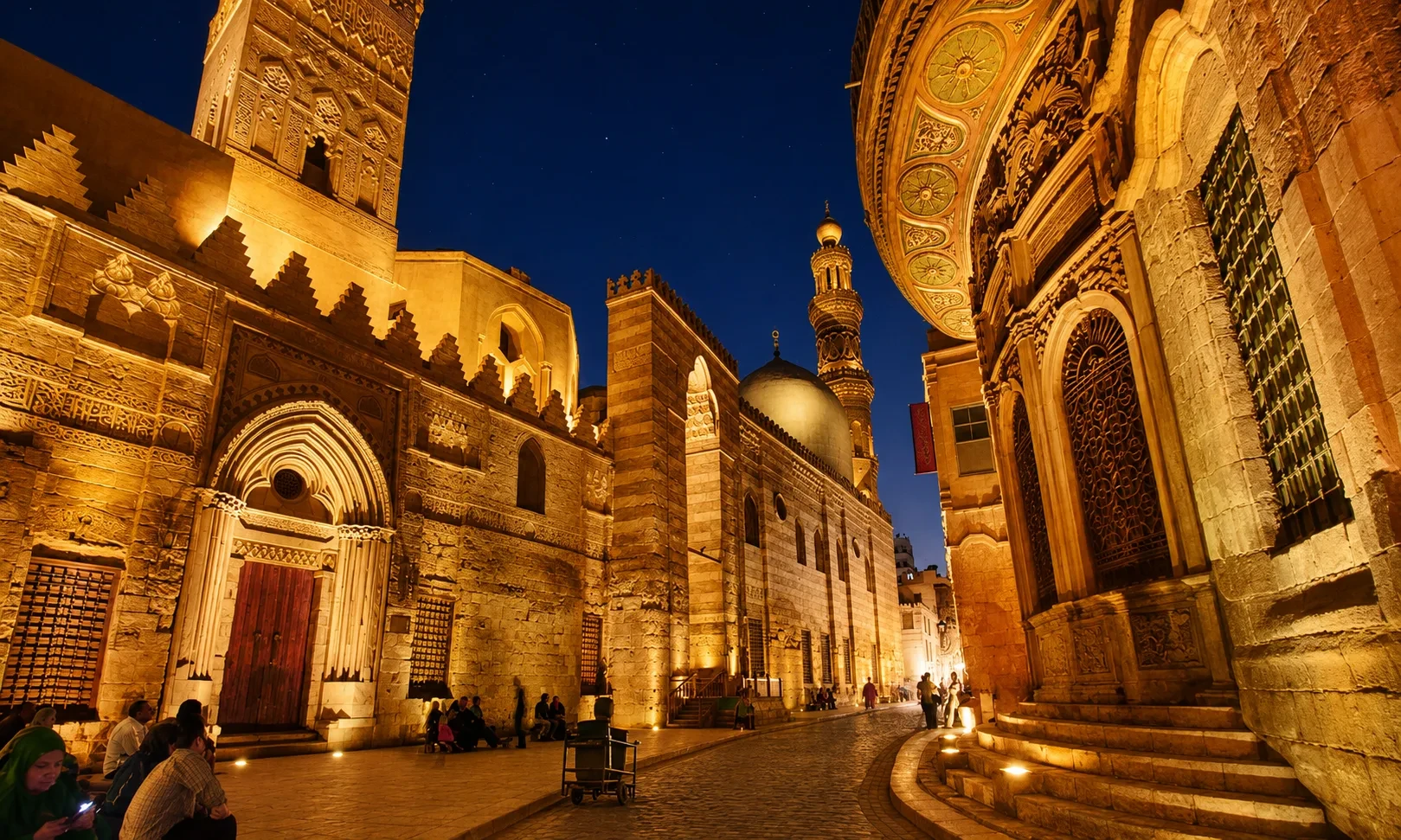
Islamic Cairo Tour is a private Cairo tour planned for travelers who want to visit the main Islamic monuments, historic mosques, medieval streets, and old bazaar areas in Cairo. This tour covers Saladin Citadel, Muhammad Ali Mosque, Sultan Hassan Madrassa and Mosque, Al Rifa'i Mosque, Ibn Tulun Mosque, El Moez Street, and Khan El Khalili Bazaar with a private Egyptologist guide, private air-conditioned transfers, entrance fees, lunch, bottled water, and pickup and drop-off from your hotel, Cairo International Airport, Giza hotel, or your location in Cairo or Giza.

This Islamic Cairo Tour is one of the main Cairo Tours for travelers who want to focus on Islamic architecture, medieval Cairo, historic mosques, old markets, and important monuments from the Ayyubid, Mamluk, Ottoman, and Fatimid periods in Cairo, the Capital of Egypt.

It is suitable for visitors searching for Cairo Trips, Cairo Excursions, Cairo Day Tours, Cairo Day Trips, Islamic Cairo Tour, Old Cairo Islamic Tour, and private Cairo sightseeing tours.

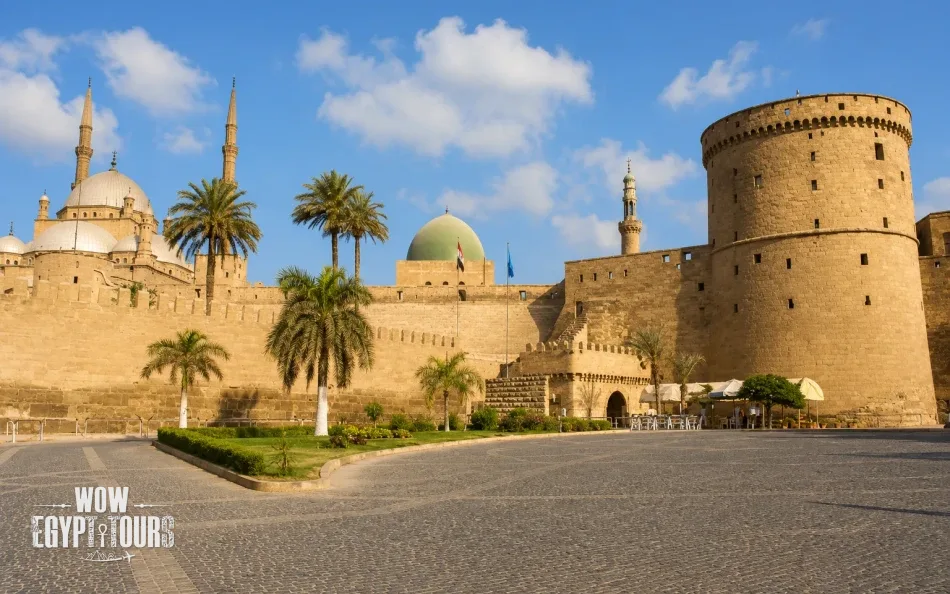
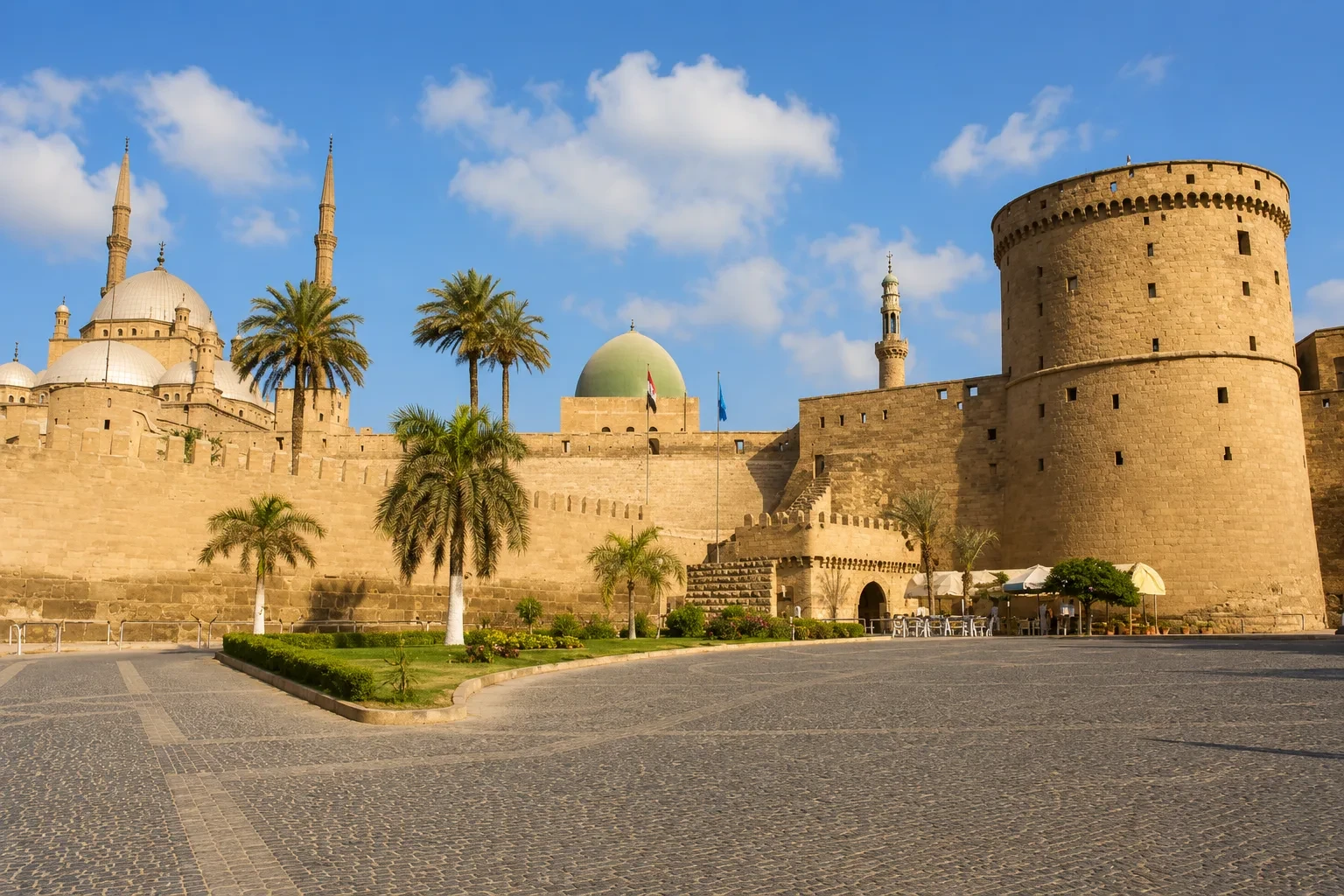
During the tour, you will visit the Saladin Citadel, one of Cairo’s main medieval landmarks. The citadel was started by Salah al-Din in 1176 AD and became an important military and political center in Cairo for several centuries.

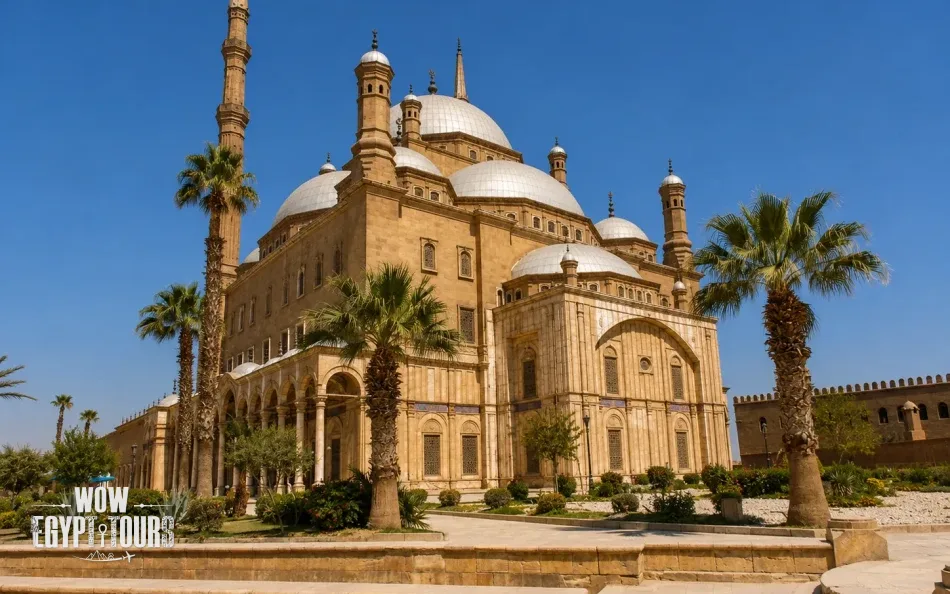
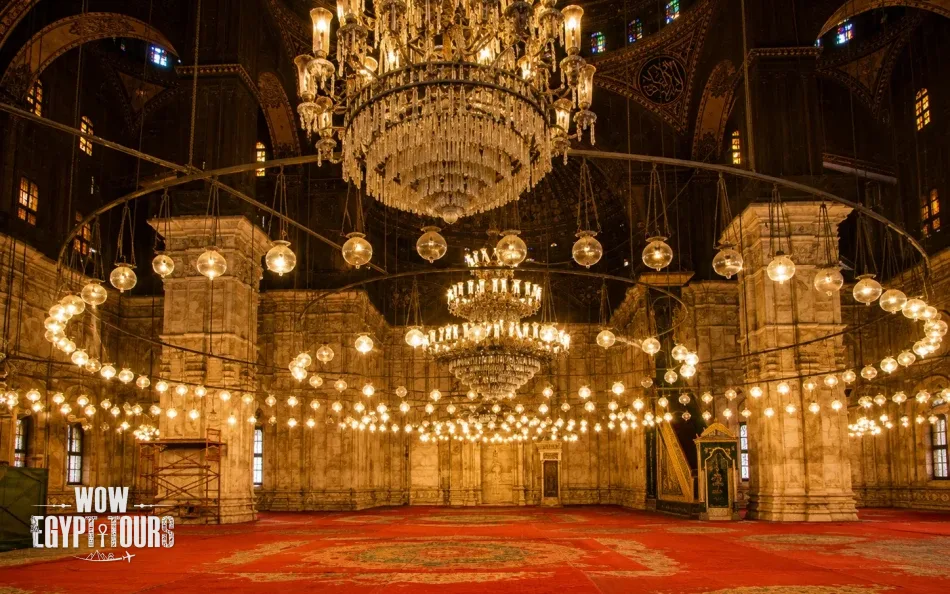
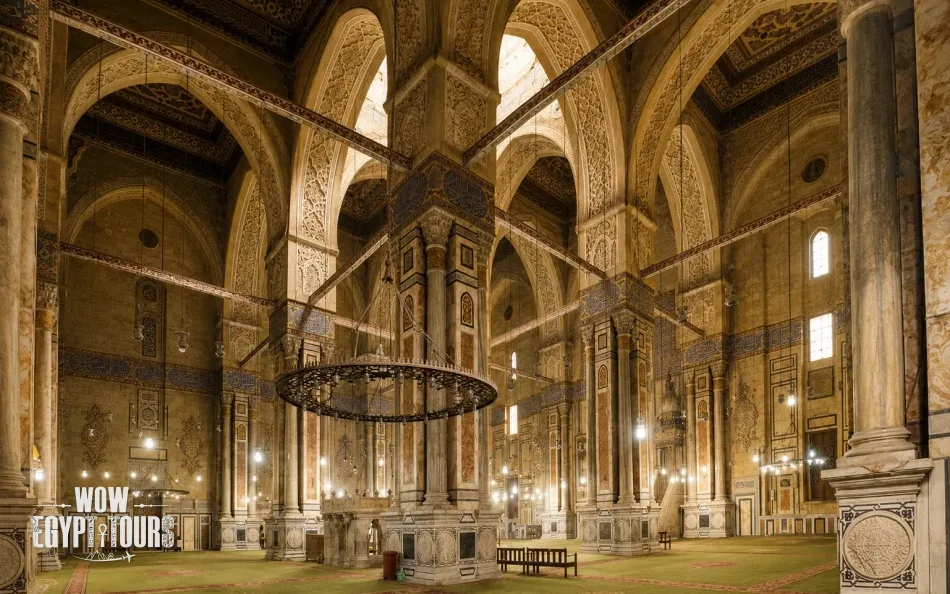
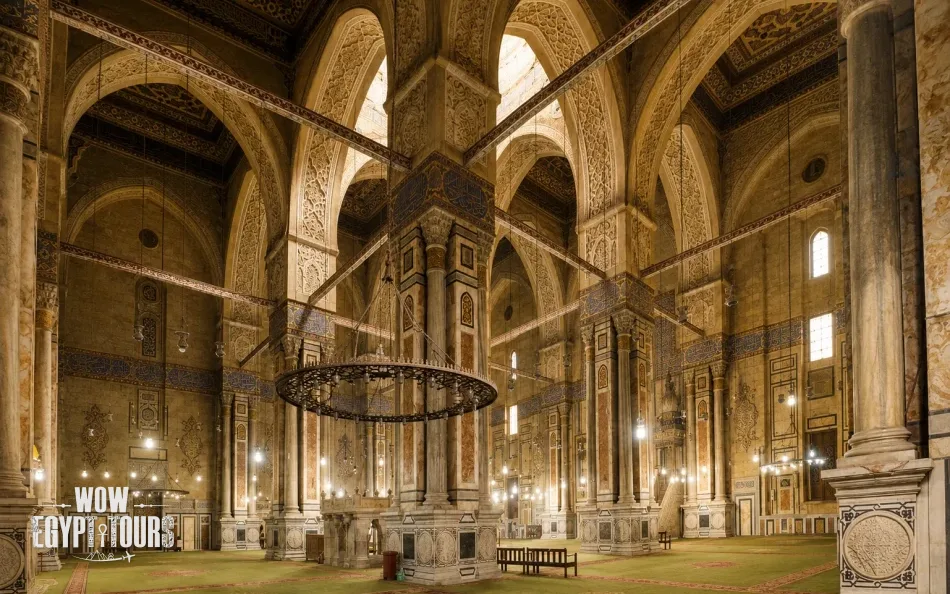
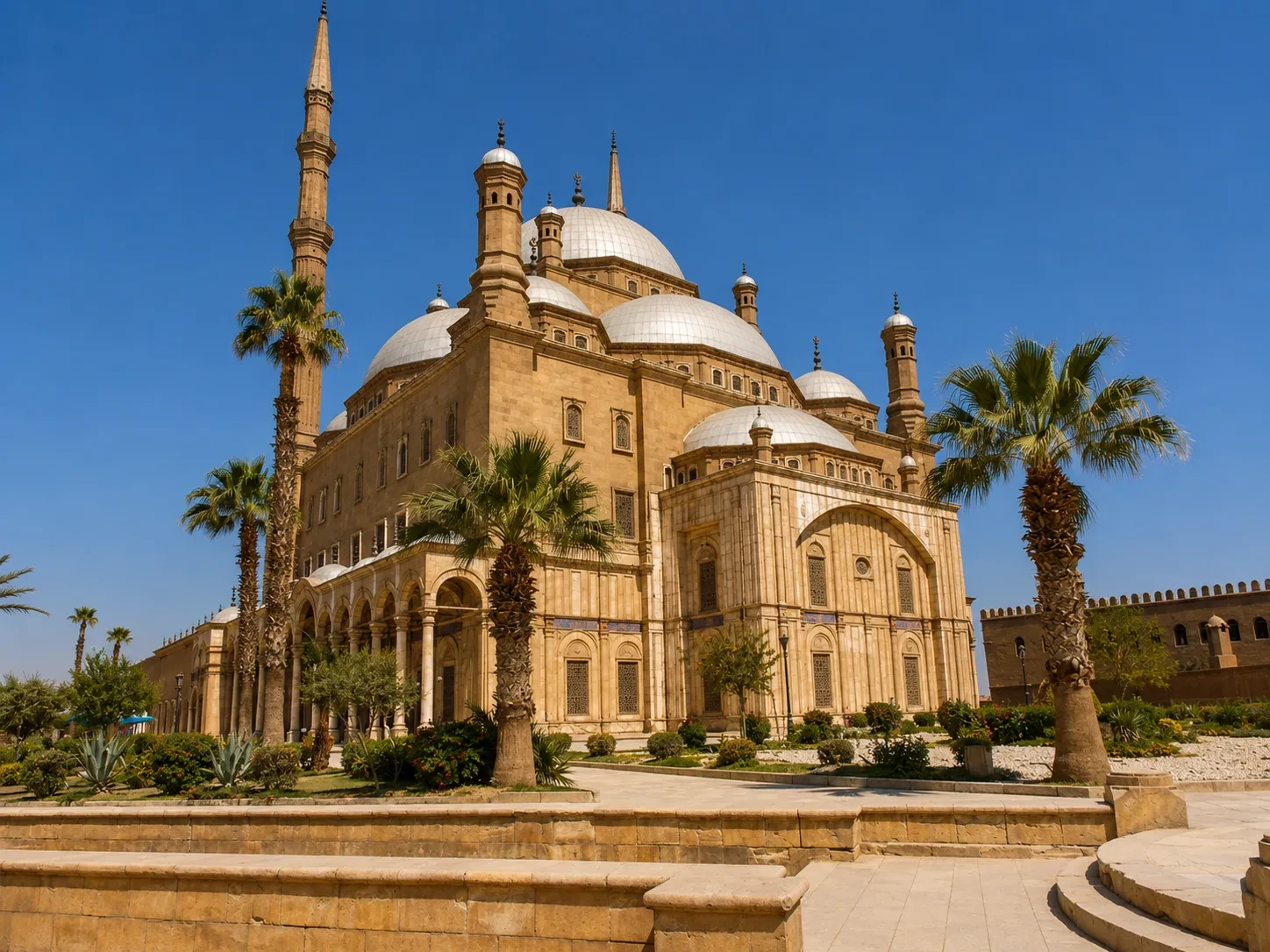
You will also visit the Muhammad Ali Mosque, located inside the Citadel. The mosque was built between 1830 and 1848 AD during the rule of Muhammad Ali Pasha and is known for its Ottoman-style architecture, domes, minarets, courtyard, and high position overlooking Cairo.

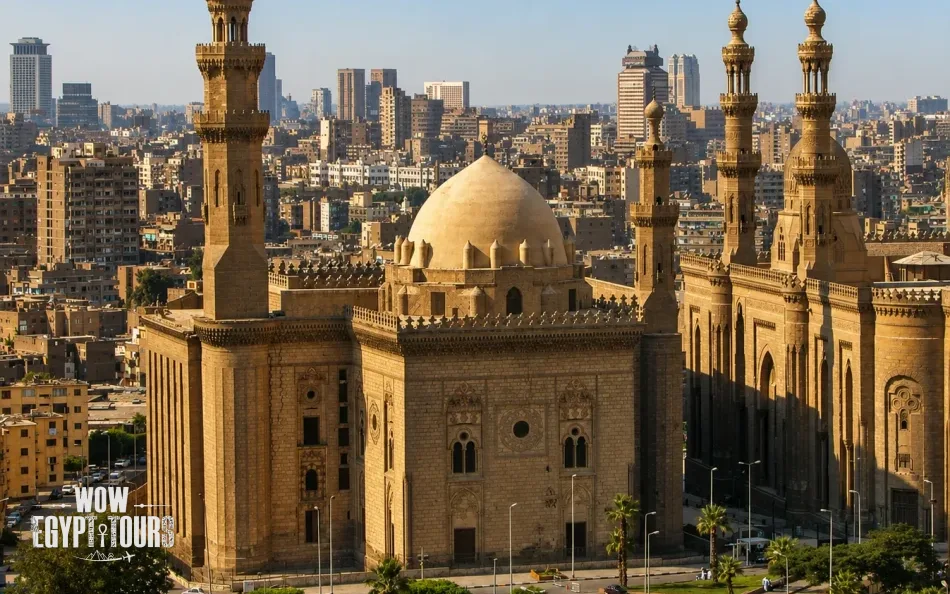
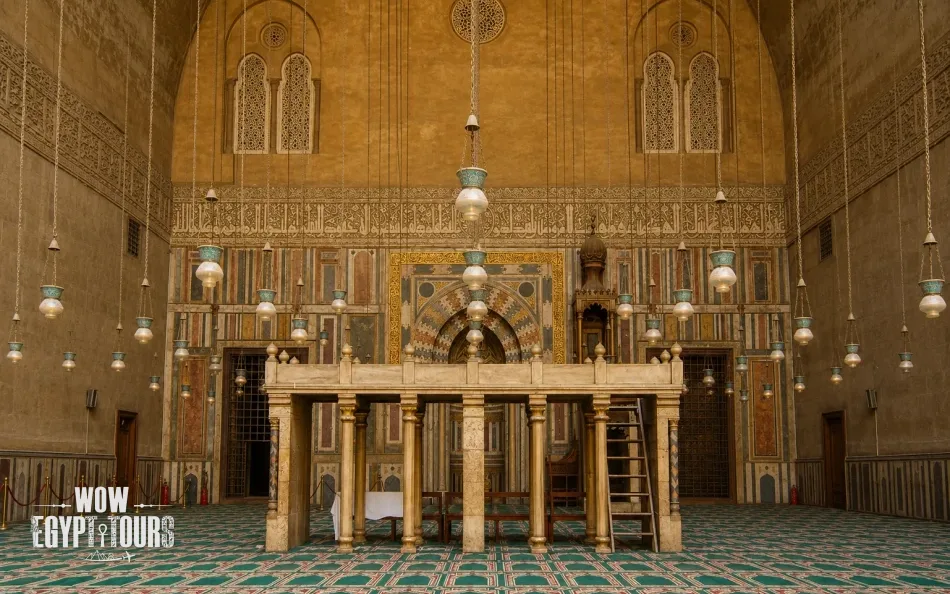
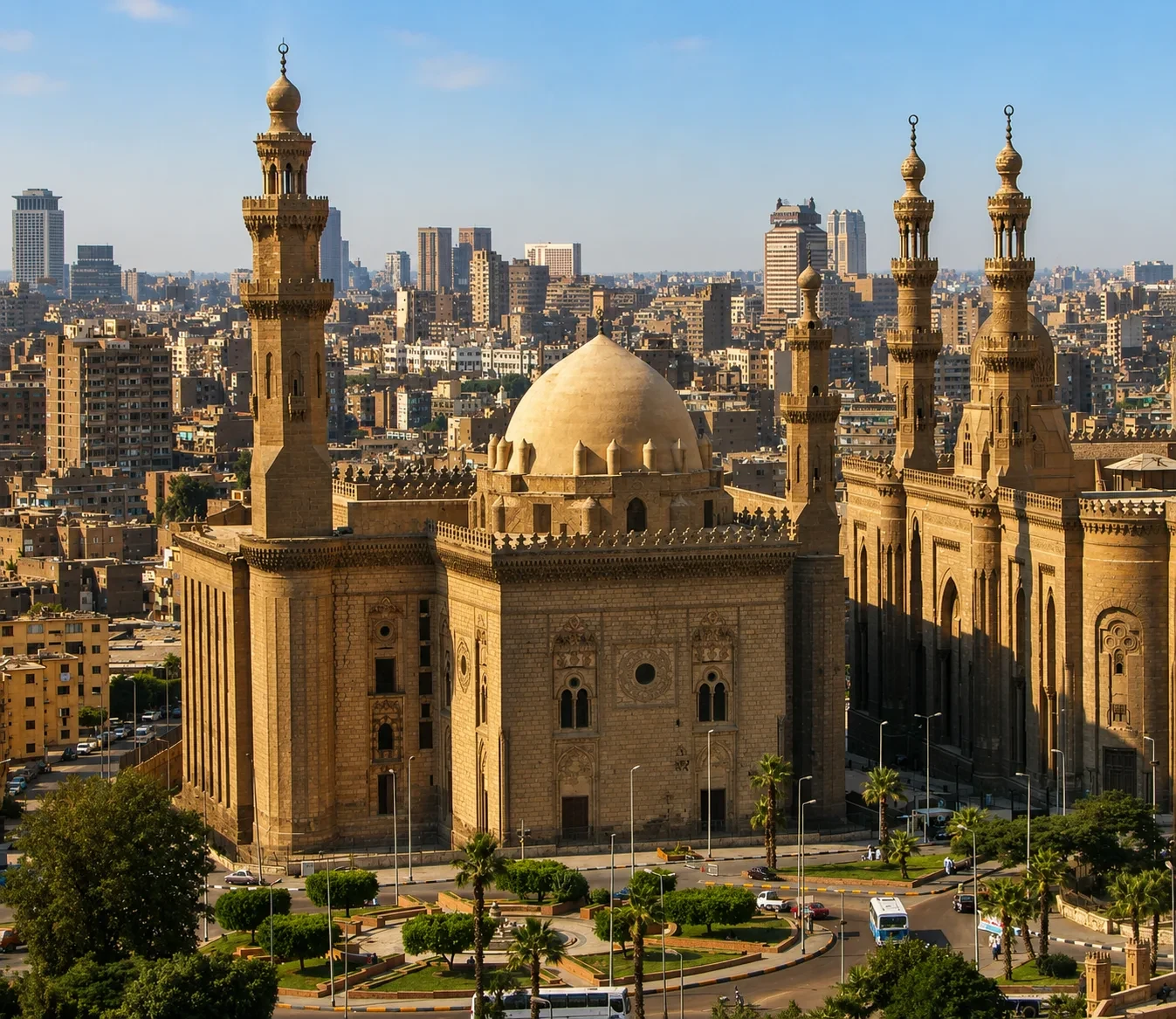
The tour also includes the Sultan Hassan Madrassa and Mosque, built in the 14th century AD during the Mamluk period. It was constructed between 1356 and 1363 AD and is one of the most important examples of Mamluk religious architecture in Cairo.

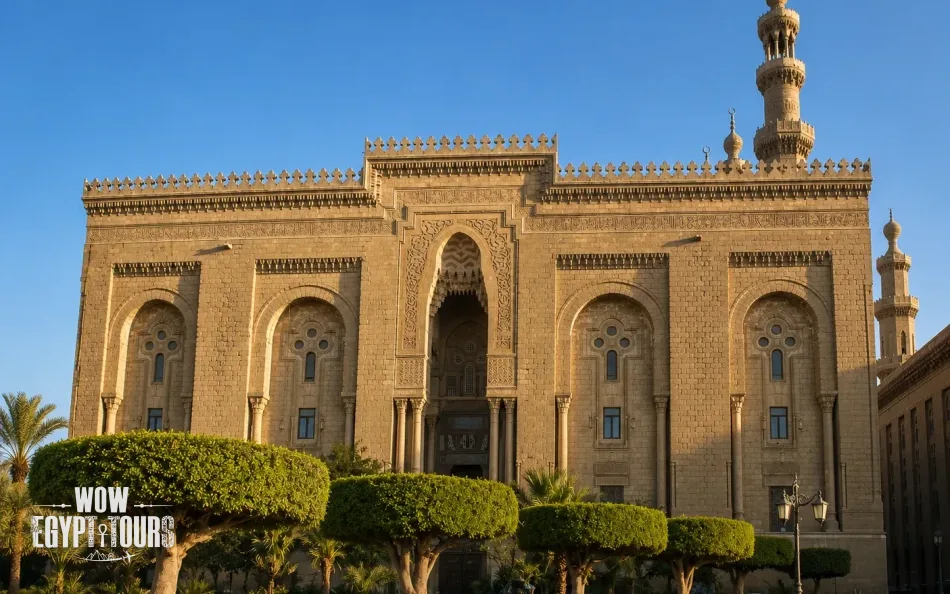
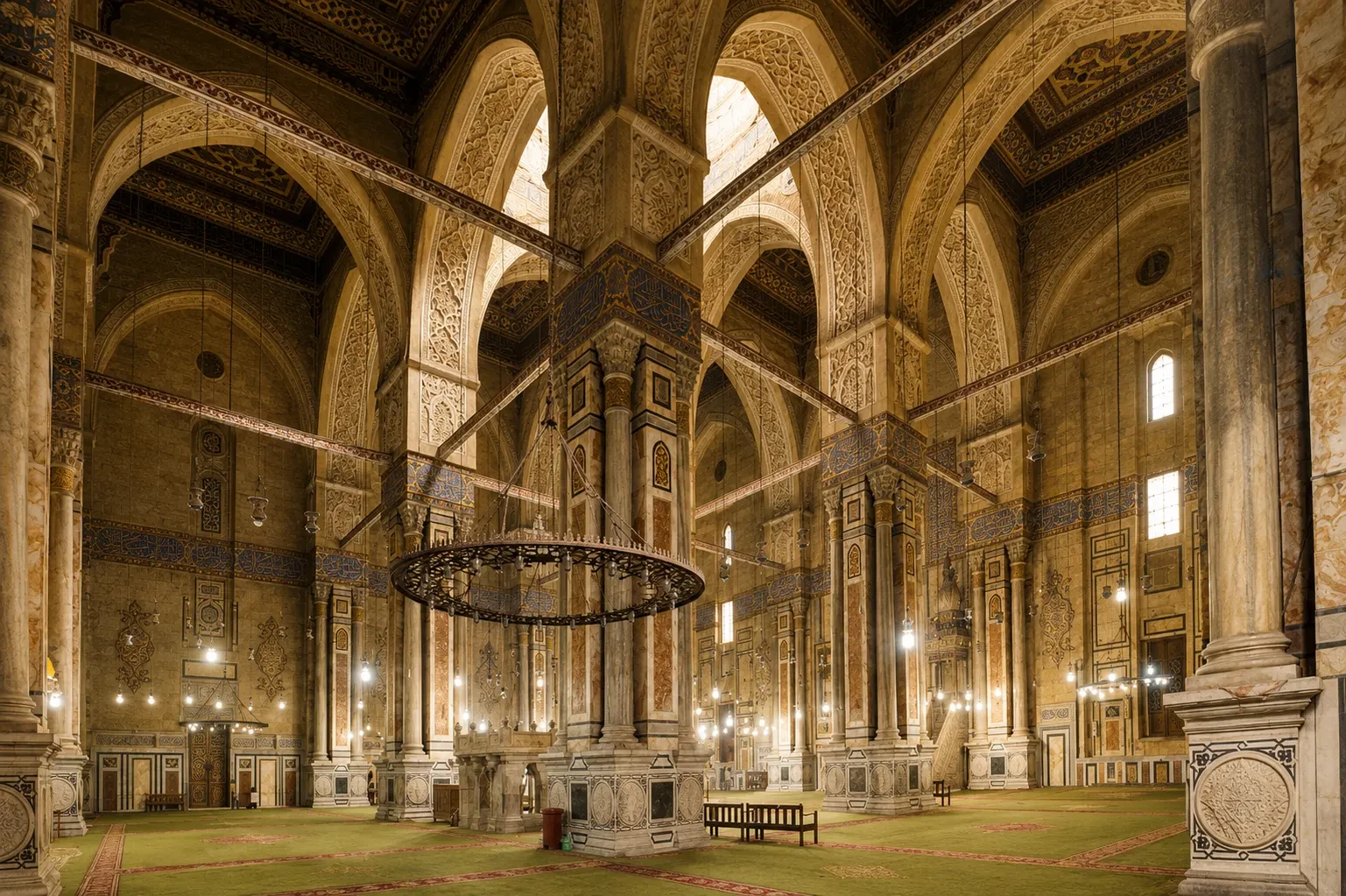
You will also visit Al Rifa'i Mosque, built mainly in the 19th and early 20th centuries. The mosque stands beside Sultan Hassan Mosque and is known for its large prayer hall, royal burials, and connection with modern Egyptian history.

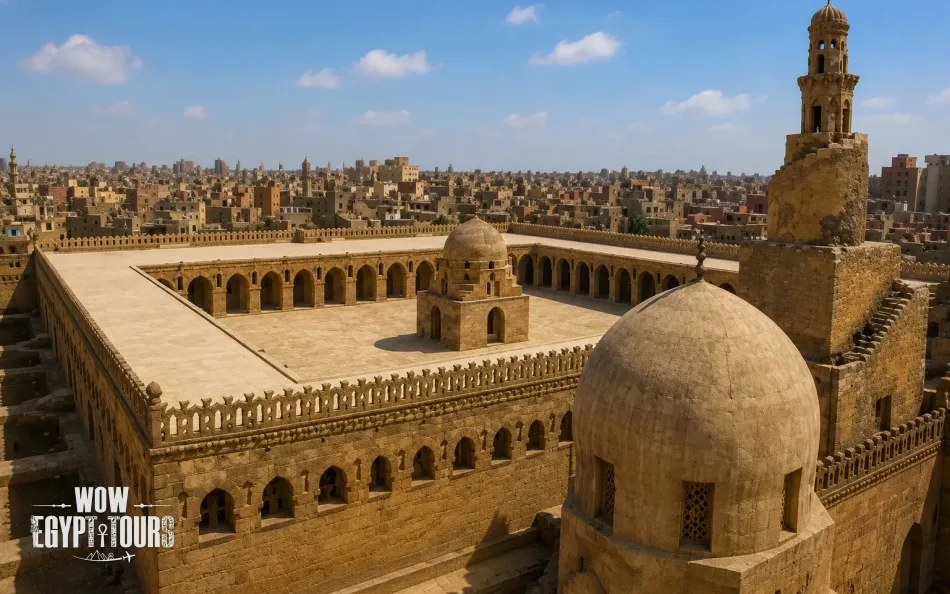
The tour also includes the Mosque of Ibn Tulun, built in the 9th century AD during the Tulunid period. The mosque was completed around 879 AD and is considered one of the oldest surviving mosques in Cairo, with a large courtyard, arcades, and a distinctive spiral minaret.

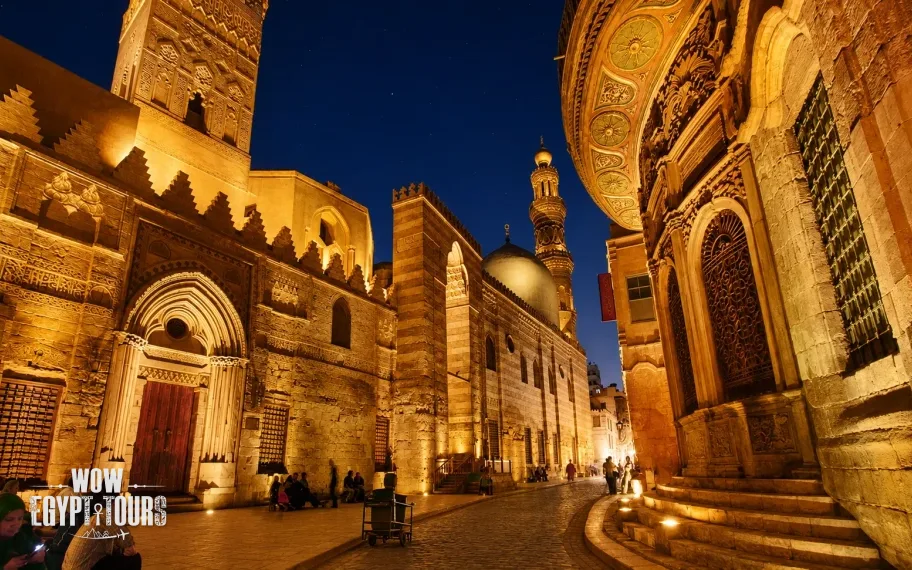
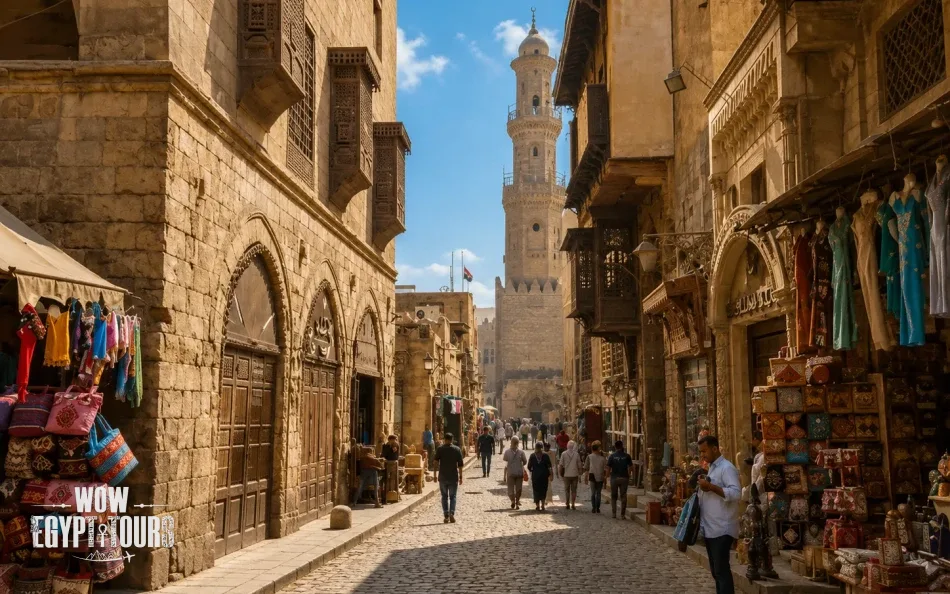
You will continue to El Moez Street, one of the most important streets in historic Cairo. The street is connected with the foundation of Fatimid Cairo in 969 AD and extends for about 1 km through Islamic Cairo, with mosques, madrasas, houses, gates, and monuments from different Islamic periods.

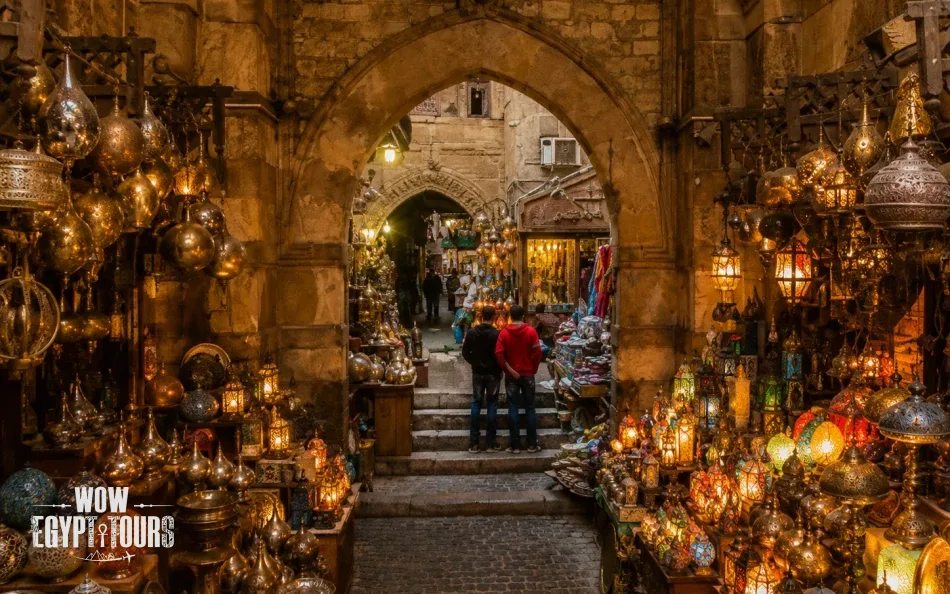
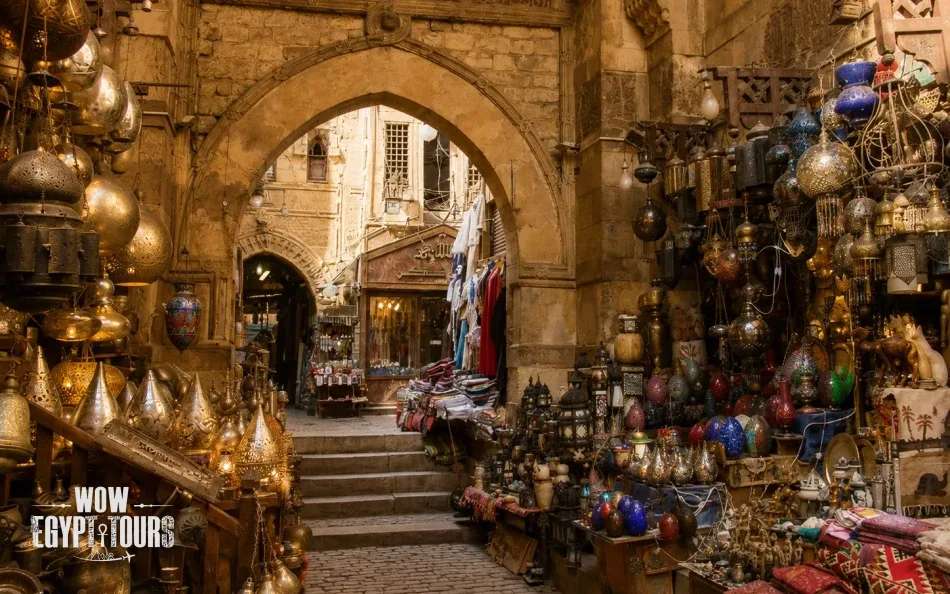
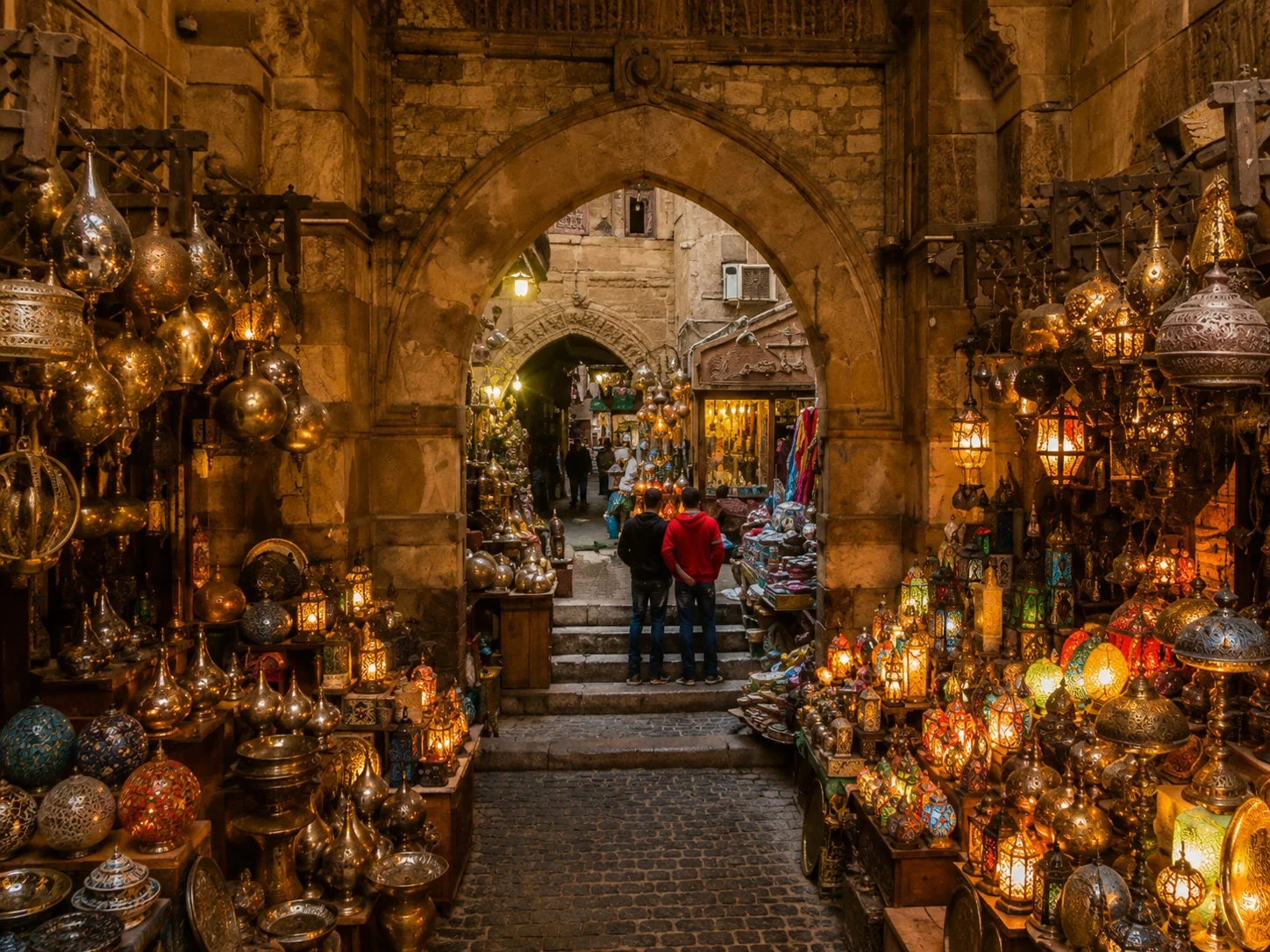
The tour also includes Khan El Khalili Bazaar, the historic bazaar area founded in the late 14th century AD around 1382 AD during the Mamluk period. The bazaar is located near Al-Azhar Mosque, founded in 970 AD, and remains one of the main old market districts in Cairo.

These sites are among the main Cairo Attractions for travelers interested in Islamic Cairo, medieval architecture, historic mosques, old markets, Islamic monuments, and the urban history of the city. They give clear context about the Fatimid, Ayyubid, Mamluk, Ottoman, and modern periods of Cairo.

WOW Egypt Tours arranges this private Islamic Cairo Tour with clear organization and direct sightseeing. The tour includes private transfers in Cairo and Giza, a private Egyptologist guide, entrance fees to the mentioned sightseeing sites, lunch at a local restaurant, bottled water, and all service charges and taxes.

divider

Tour Summary

divider
  • From: $80
  • Duration: 9 Hours
  • Schedule: Daily
  • Location:
    Cairo
  • Group Size: Private Group
  • Category: Religious Tour
  • Trip Type: Tour
  • Pick-up & Drop-off:
    Cairo
divider

Tour Attractions

Saladin Citadel

Saladin Citadel

View Attraction Guide

Muhammad Ali Mosque

Muhammad Ali Mosque

View Attraction Guide

Sultan Hassan Mosque

Sultan Hassan Mosque

View Attraction Guide

Mosque of Ibn Tulun

Mosque of Ibn Tulun

View Attraction Guide

Khan El Khalili Bazaar

Khan El Khalili Bazaar

View Attraction Guide

El Moez Street

El Moez Street

View Attraction Guide

divider

Tour Itinerary

1 Pickup

Your WOW Egypt Tours representative and driver will pick you up from your hotel, Cairo International Airport, Giza hotel, or your location in Cairo or Giza. You will be transferred by private modern air-conditioned vehicle with your private Egyptologist guide to begin your Islamic Cairo Tour.


2 Saladin Citadel

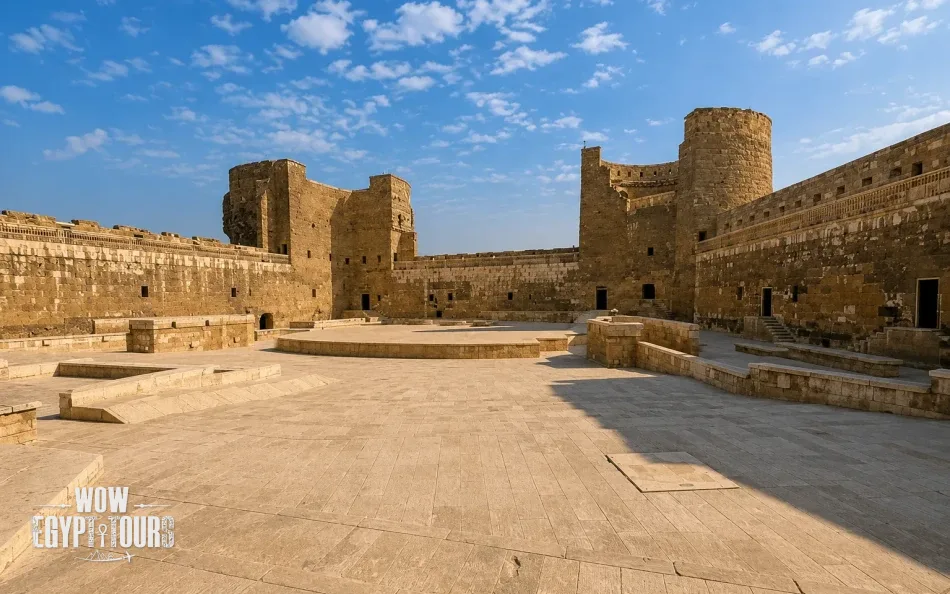
Start your tour with a visit to Saladin Citadel, one of the most important medieval monuments in Cairo. The Citadel was started by Salah al-Din in 1176 AD as a fortified complex to protect Cairo and became a major seat of government for several centuries.

During your visit, your private Egyptologist guide will explain the history of the Citadel, its military role, its location overlooking Cairo, and its importance during the Ayyubid, Mamluk, and Ottoman periods. The site gives clear context about Cairo’s political and military history after the Fatimid period.

Saladin Citadel remained an important center of power in Egypt from the late 12th century AD until the 19th century. Its high position on the Mokattam Hills gives wide views over Cairo and helps explain why the site was chosen for defense, administration, and control of the city.


3 Mohamed Ali Mosque

Continue inside the Citadel to visit Mohamed Ali Mosque, also known as the Alabaster Mosque. The mosque was built between 1830 and 1848 AD during the rule of Muhammad Ali Pasha and is one of the most recognized Ottoman-style landmarks in Cairo.

Your guide will explain the architecture of the mosque, its domes, minarets, courtyard, interior decoration, and its connection with Muhammad Ali Pasha, who ruled Egypt in the 19th century and played an important role in the country’s modern history.

The mosque is located inside Saladin Citadel on the Mokattam Hills and is known for its high position overlooking Cairo. Its large central dome, two slender minarets, alabaster-covered walls, and wide courtyard make it one of the main highlights of Islamic Cairo sightseeing tours.


4 Lunch Time

Lunch is served at local restaurant.


5 Sultan Hassan Madrassa and Mosque

After lunch, continue to Sultan Hassan Madrassa and Mosque, one of the most important Mamluk monuments in Cairo. It was built during the 14th century AD under Sultan Hassan and is known for its large scale, high entrance, stonework, and strong Mamluk architectural style.

Sultan Hassan Madrassa and Mosque was constructed between 1356 and 1363 AD and is considered one of the major examples of Mamluk religious architecture in Cairo. During your visit, your private Egyptologist guide will explain the function of the building as both a mosque and a madrassa, the role of religious education in medieval Cairo, and the importance of Mamluk architecture in the city’s Islamic monuments.

The building gives clear context about Islamic Cairo during the Mamluk period, including mosque design, madrassa planning, religious teaching, stone decoration, monumental entrances, and the political power of Mamluk sultans in the 14th century AD.


6 Al Rifa'i Mosque

Continue to Al Rifa'i Mosque, located beside Sultan Hassan Mosque. The mosque was built mainly during the 19th and early 20th centuries and is known for its large prayer hall, royal tombs, and architectural connection with the older Sultan Hassan complex nearby.

Al Rifa'i Mosque was completed in 1912 AD after a long construction period that began in the 19th century. Your guide will explain the history of the mosque, its role as a royal burial place, and how its design was planned to stand beside one of Cairo’s major Mamluk monuments.

The mosque gives clear context about later Islamic architecture in Cairo, royal burial traditions, and the connection between 19th-century religious buildings and older Mamluk monuments in the historic Citadel area.


7 Ibn Tulun Mosque

Continue to Ibn Tulun Mosque, one of the oldest surviving mosques in Cairo. It was built in the 9th century AD during the Tulunid period and is known for its large open courtyard, arcades, simple brick architecture, and distinctive spiral-style minaret.

Ibn Tulun Mosque was completed around 879 AD by Ahmad Ibn Tulun, the founder of the Tulunid dynasty in Egypt. The mosque covers a large area and is considered one of the most important early Islamic monuments in Cairo.

During your visit, your guide will explain the history of Ahmad Ibn Tulun, the Tulunid period in Egypt, the mosque’s architectural layout, and why this monument is important for understanding early Islamic architecture in Cairo.

The mosque gives clear context about 9th-century Islamic Cairo, early mosque planning, open courtyard design, brick architecture, and the development of religious buildings before the later Fatimid, Ayyubid, Mamluk, and Ottoman periods.


8 Khan El Khalili Bazaar

Continue to Khan El Khalili Bazaar, one of Cairo’s most famous historic market areas. The bazaar was founded in the late 14th century AD, around 1382 AD, during the Mamluk period and remains an important commercial and cultural area in Islamic Cairo.

During your visit, you will walk through old market lanes, shops, and historic streets near El Moez Street. Your guide will explain the history of the bazaar, its connection with trade in medieval Cairo, and its role as one of the most visited old market areas in Egypt.

Khan El Khalili Bazaar is located near Al-Azhar Mosque, which was founded in 970 AD, and close to several monuments and streets from the Mamluk and Ottoman periods. The area gives clear context about markets, trade, local crafts, and daily commercial life in historic Cairo.


9 El Moez Street

End your tour with a visit to El Moez Street, also known as Al Muizz Street, one of the most important historic streets in Cairo. The street is connected with the foundation of Fatimid Cairo in 969 AD and includes many Islamic monuments from the Fatimid, Ayyubid, Mamluk, and Ottoman periods.

El Moez Street extends for about 1 km through Islamic Cairo and includes gates, mosques, madrasas, sabils, palaces, old houses, and historic commercial areas. During your walking visit, your guide will explain the history of the street, its main monuments, and its importance in the urban layout of medieval Cairo.

El Moez Street gives a clear view of Islamic architectural development in Cairo over more than 1,000 years, from the Fatimid foundation of the city in the 10th century AD through later Mamluk and Ottoman additions.


10 Drop-off

After completing your Islamic Cairo Tour, you will be transferred back by private air-conditioned vehicle to your hotel, Cairo International Airport, Giza hotel, or your location in Cairo or Giza.


divider

Tour Inclusions

  • Private Modern Air-Conditioned Vehicle
  • Private Transfers in Cairo and Giza
  • Private Egyptologist Guide During the Tour
  • Visit to Saladin Citadel
  • Visit to Mohamed Ali Mosque
  • Visit to Sultan Hassan Madrassa and Mosque
  • Visit to Al Rifa'i Mosque
  • Visit to Ibn Tulun Mosque
  • Visit to El Moez Street
  • Visit to Khan El Khalili Bazaar
  • Entrance Fees to the Mentioned Sightseeing Sites
  • Lunch at a Local Restaurant
  • Bottled Water During the Tour
  • All Service Charges and Taxes
divider

Tour Exclusions

  • International Airfare
  • Egypt Entry Visa
  • Any Extras Not Mentioned in the Itinerary
  • Personal Expenses
  • Meals and Drinks Not Mentioned in the Inclusions
  • Tipping
divider

Tour Notes

  • This itinerary can be customized. You can adjust the order of visits according to your pickup location, route, prayer times, traffic, and operating conditions on the day of your tour.
  • Modest clothing is recommended for mosque visits. Shoulders and knees should be covered when entering religious sites.
  • Shoes may need to be removed before entering mosque prayer areas according to site rules.
  • This tour includes walking sections, especially around El Moez Street and Khan El Khalili Bazaar.
  • This tour can be organized for individuals, couples, families, private groups, and travelers arriving at Cairo International Airport.
  • You can combine this tour with Coptic Cairo and Jewish Cairo sites such as the Hanging Church, St. George Church, St. Virgin Mary Church, the Coptic Museum, and Ben Ezra Synagogue.
  • You can also add museum visits such as the Grand Egyptian Museum GEM or the Egyptian Museum.
  • If you want to understand the city before planning more visits, you can also check our guide to Cairo, the Capital of Egypt.
  • If you are planning a longer Egypt program, you can also check our Egypt Tour Packages and Egypt Travel Packages.

divider

Tour Price Details

Group Size Price Details
group 1 Person
$198 Per Person
group 2 Persons
$120 Per Person
group 3 Persons
$114 Per Person
group 4 Persons
$108 Per Person
group 5 Persons
$103 Per Person
group 6 Persons
$98 Per Person
group 7 Persons
$93 Per Person
group 8 Persons
$88 Per Person
group 9 Persons
$84 Per Person
group 10 Persons
$80 Per Person
Notes
Children 0 - 1.9 years old: Free of charge
Children 2 - 5.9 years old: 25% of the adult price
Children 6 - 11.9 years old: 50% of the adult price
Children 12+ years old: Full adult price
Large groups: Special prices are available. Please contact us for a custom group rate.
divider

Resources

Your booking is confirmed after receiving your tour request and confirming the availability of the guide, vehicle, and selected tour date.

The final pickup time and meeting details will be sent after confirmation.

Payment can be made by Bank Transfer, Credit Card, Debit Card, or cash.

Online payment details can be sent after confirmation if you prefer to pay by card or bank transfer. Cash payment can be made on arrival or on the tour day, depending on the confirmed booking terms.

Free cancellation is available up to 48 hours before the tour date.

Cancellations made less than 24 hours before the tour date are subject to a 50% cancellation fee.

In case of no-show on the tour date, the booking may be treated as non-refundable.

Children prices are based on the child’s age on the tour date.

  • 0 - 1.9 years old: Free of charge
  • 2 - 5 years old: 25% of the adult price
  • 6 - 11 years old: 50% of the adult price
  • 12+ years old: Full adult price

Children must be accompanied by an adult during the tour.

Special prices are available for large groups, families, student groups, corporate groups, and travel agencies.

Please contact WOW Egypt Tours with the tour name, travel date, number of travelers, and pickup location to receive a custom group rate.

Please bring a passport copy or ID if required, comfortable walking shoes, sunglasses, sunscreen, and cash for personal expenses or optional tipping.

If you have any special request, such as a specific guide language, child seat, wheelchair assistance, dietary request, or a different pickup point, please mention it when sending your booking request.

Tipping is not included in the tour price and remains optional.

Suggested tipping range:

  • Private Egyptologist guide: $5 - $8
  • Private driver: $2 - $5

Tipping can be given directly at the end of the tour if you are satisfied with the service.

divider
Tripadvisor Traveler Reviews
View Verified Reviews
WOW Egypt Tours
A1, Luxor Temple St, Luxor 85951, Egypt

Tour Tips

Clear tips for Egypt tours including daily planning, site visits, guides, transport, and how to organize efficient day trips.

Our Cairo tours are private tours for you and your group or family only. You do not join other travelers. Each tour is arranged with private pickup and drop-off, a private modern air-conditioned vehicle, a private driver, and a private professional Egyptologist guide.

Depending on the selected Cairo tour, the program can include the Giza Pyramids, the Great Sphinx, the Egyptian Museum, the Grand Egyptian Museum, the National Museum of Egyptian Civilization, Islamic Cairo, Coptic Cairo, Khan El Khalili Bazaar, Memphis, Saqqara, Dahshur, and other Cairo sightseeing sites.

Always check the tour inclusions before booking because each Cairo tour has its own route, duration, pickup time, entrance fees, meals, transport details, and airport pickup or drop-off options when required.

View available private Cairo tours here: Cairo Tours, Trips and Excursions.

Choose your Cairo tour based on the sightseeing sites you want to include and the time available. Classic Cairo tours usually include the Giza Pyramids, the Great Sphinx, and the Egyptian Museum or the Grand Egyptian Museum. Other Cairo tours can include Old Cairo, Islamic Cairo, Coptic Cairo, Khan El Khalili Bazaar, or the National Museum of Egyptian Civilization.

If you want to visit ancient sites outside central Cairo, choose a tour that includes Memphis, Saqqara, and Dahshur. These sites require more driving time than the main city tours, so the route and duration should be checked before confirmation.

Check the main Cairo sites before booking here: Cairo Attractions Guide.

For a custom itinerary, use: Tailor-Made Egypt Tours.

Other Recommended Tours

Featuring comfortable transportation, knowledgeable guides, and efficient planning.

Coptic Cairo Tour

Coptic Cairo Tour is a private Cairo tour planned for travelers who want to visit the...

  • Trip Type Tour
  • Duration 9 Hours
  • Group Size Private Group
  • Schedule Daily
Cairo
From: $80 — Taxes Incl. / Per Person

Jewish Cairo Tour

Jewish Cairo Tour is a private Cairo tour planned for travelers who want to visit the...

  • Trip Type Tour
  • Duration 3 Hours
  • Group Size Private Group
  • Schedule Daily
Cairo
From: $50 — Taxes Incl. / Per Person

Saladin Citadel

Cairo Citadel

Saladin Citadel
The Saladin Citadel is the most strategically commanding, the most historically consequential, and the most personally extraordinary medieval Islamic fortification in Egypt, a massive hilltop fortress complex of such completely extraordinary historical depth, such completely overwhelming visual dominance of the complete Cairo urban landscape, and such completely personal biographical richness in the succession of the most powerful and the most culturally extraordinary rulers who have governed Egypt from within its walls across more than eight centuries of continuous use as the primary seat of political power in the Egyptian state that it occupies a position in the complete heritage record of the Islamic Egyptian civilization comparable in its political foundational character to the position of the ancient pharaonic capital of Memphis in the heritage of the ancient Egyptian state, the specific physical location where the primary political authority of the Egyptian state resided and where the most consequential decisions about the governance, the defense, the cultural direction, and the religious identity of the Egyptian civilization were made across the most productive and the most politically dramatic centuries of the medieval Islamic Egyptian world. Built between 1176 and 1183 CE by the extraordinary Sultan Salah al-Din al-Ayyubi, universally known in the Western world as Saladin, on the spur of the Muqattam hill that rises dramatically above the complete historic Islamic Cairo quarter in the most strategically commanding position available at any elevated site in the complete Cairo urban topography, the Saladin Citadel served as the primary residence of the Egyptian rulers, the primary seat of the Egyptian state administration, and the primary military headquarters of the most powerful Islamic state in the complete medieval eastern Mediterranean world for an uninterrupted period of approximately 700 years from Saladin's original construction through the Mamluk period's extraordinary cultural flowering to the Ottoman conquest of 1517 and the subsequent Ottoman period's use of the Citadel as the primary seat of the Ottoman viceroys of Egypt until Muhammad Ali Pasha's transformation of the complex in the early 19th century.
View Guide Details

Muhammad Ali Mosque

Muhammad Ali Mosque

Muhammad Ali Mosque
The Muhammad Ali Mosque, also known as the Alabaster Mosque for the extraordinary pale Egyptian alabaster that lines its lower interior walls and gives its exterior a quality of luminous pale stone beauty in the most dramatically revealing morning and afternoon light conditions available at any accessible Islamic monument in the complete Cairo heritage landscape, is the most visually dominant, the most immediately personally recognizable, and the most universally celebrated single building in the complete Cairo urban skyline, a mosque of such completely extraordinary visual presence, such completely overwhelming architectural drama, and such completely personal biographical richness in its connection to the most consequential single ruler of the modern Egyptian state that it occupies a position in the Islamic architectural heritage of Cairo entirely its own, simultaneously the largest Ottoman-style mosque in Egypt, the most completely realized expression of the specifically Ottoman architectural tradition accessible at any heritage mosque in the complete African and Middle Eastern world outside the Ottoman heartland of Turkey itself, and the most personally extraordinary elevated Islamic building accessible at any heritage site in the complete Egyptian capital by virtue of its specific position at the highest point of the Saladin Citadel's Muqattam spur whose commanding elevation above the complete Cairo urban landscape gives the mosque's twin pencil minarets and its soaring central dome the most dramatically extraordinary and the most personally affecting single building skyline presence of any building accessible in the complete Egyptian capital, visible from virtually every point in the greater Cairo metropolitan area as the most immediately recognizable and the most personally extraordinary elevated Islamic monument on the complete Cairo horizon. Built between 1830 and 1848 CE by Muhammad Ali Pasha, the Albanian-born Ottoman military commander who founded the dynasty that governed Egypt from 1805 to 1952 and who through the most remarkable individual exercise of political will and institutional creativity in the complete modern history of the Egyptian state transformed Egypt from an impoverished Ottoman province into an ambitious modernizing regional power whose military strength, administrative sophistication, agricultural productivity, and cultural ambition gave the Egyptian state under his personal leadership the most consequential and the most personally extraordinary political transformation of any Islamic state in the complete 19th century world, the Muhammad Ali Mosque is simultaneously the primary monument of the complete Muhammad Ali-era architectural heritage, the most visually extraordinary building of the complete Saladin Citadel complex, and the most personally affecting single testimony to the extraordinary individual ambition and the extraordinary personal cultural vision of the man who created modern Egypt.
View Guide Details

Sultan Hassan Mosque

Sultan Hassan Mosque

Sultan Hassan Mosque
The Mosque and Madrasa of Sultan Hassan is the most magnificent, the most architecturally extraordinary, and by universal critical agreement the most sublime masterpiece of medieval Islamic architecture in Egypt and one of the greatest buildings of the medieval Islamic world, a monument of such completely overwhelming physical scale, such completely extraordinary spatial drama, and such completely unparalleled quality of architectural conception and architectural execution that it stands in the complete heritage record of the Islamic architectural tradition in the same position of supreme individual achievement that the Great Pyramid of Khufu occupies in the complete heritage record of the ancient Egyptian architectural tradition, the building that every serious student of Islamic architecture must encounter directly to understand what the Islamic architectural tradition at its most ambitious and its most completely realized is capable of achieving. Built between 1356 and 1363 CE under the patronage of the Mamluk Sultan Hassan ibn Muhammad ibn Qalawun in a location immediately below the Saladin Citadel on the slope of the Muqattam hill overlooking the complete historic Islamic Cairo quarter, the Sultan Hassan Mosque combines in a single building of approximately 7,900 square meters of total floor area the most ambitious spatial programme, the most dramatic structural engineering, the most refined decorative achievement, and the most complete expression of the specifically Mamluk architectural synthesis of earlier Islamic architectural traditions that any single medieval Islamic building in Egypt or in the complete African and Middle Eastern world has ever achieved in the combined force of a single monument whose individual qualities each represent the supreme expression of their specific category in the complete medieval Egyptian Islamic building tradition.
View Guide Details

Mosque of Ibn Tulun

Ibn Tulun Mosque

Mosque of Ibn Tulun
The Mosque of Ibn Tulun is the oldest mosque in Cairo to have survived in anything approaching its original architectural form, the largest mosque in Cairo by total area, and one of the most personally extraordinary, the most atmospherically complete, and the most architecturally unique Islamic monuments accessible at any heritage site in the complete Egyptian capital, a building of such completely extraordinary personal atmospheric power, such completely distinctive architectural character, and such completely extraordinary historical depth that it occupies a position in the Islamic architectural heritage of Cairo that is genuinely and irreplaceably its own, unlike any other accessible Islamic monument in the complete Egyptian capital in its specific combination of extreme architectural antiquity, architectural uniqueness, and personal atmospheric grandeur that gives every visitor who enters its vast courtyard the most immediately personal and the most completely affecting encounter with the earliest surviving Islamic architectural tradition in the complete Cairo heritage landscape. Built between 876 and 879 CE by Ahmad ibn Tulun, the ambitious and extraordinarily gifted Turkish-born governor of Egypt who established the semi-independent Tulunid dynasty and created his own capital city of Al-Qata'i whose complete urban fabric has since been consumed by the growth of Cairo leaving the mosque as the only surviving structure of the complete Tulunid capital and the most direct and the most personally affecting physical relic of the first period of independent political authority in the history of the Islamic Egyptian state, the Mosque of Ibn Tulun is the sole surviving monument of an entire medieval Islamic city, a building that stands not simply as a mosque of extraordinary heritage but as the entire physical legacy of one of the most personally fascinating and the most politically consequential rulers in the complete history of the Islamic Egyptian civilization.
View Guide Details

Khan El Khalili Bazaar

Khan El Khalili Bazaar

Khan El Khalili Bazaar
Khan El Khalili is the most celebrated, the most historically resonant, the most personally atmospheric, and the most completely extraordinary medieval Islamic bazaar in Egypt and one of the most famous and the most personally affecting historic commercial markets in the entire world, a labyrinthine network of narrow covered alleys, ancient caravanserai courtyards, historic khan buildings, and centuries-old commercial workshops in the heart of the Islamic Cairo heritage district whose existence as a continuously active trading center since its foundation by the Mamluk Amir Jarkas al-Khalili in 1382 CE makes it the oldest surviving commercial institution in the complete Egyptian urban heritage record and one of the most continuously inhabited and the most continuously commercially active historic market environments accessible at any heritage destination in the complete African and Middle Eastern world. Khan El Khalili is the place where medieval Islamic commerce and contemporary Egyptian daily life intersect in their most personally extraordinary and their most atmospherically complete form, a market whose ancient covered alleyways of gold and silver jewellery, spice and incense merchants, hand-crafted copper and brass workshop products, traditional Egyptian textiles and embroideries, alabaster and papyrus tourist souvenirs, hookah tobacco and glass lamp workshops, hand-painted pottery and ceramic goods, and the extraordinary variety of the complete Egyptian traditional craft production tradition create the most immediately personally overwhelming and the most humanly animated ancient commercial heritage environment accessible to international visitors at any market in the complete North African and Middle Eastern heritage tourism landscape.
View Guide Details

El Moez Street

El Moez Street

El Moez Street
El Moez Street, officially known as Al-Muizz li-Din Allah Street and universally celebrated among heritage travelers, architects, historians, and Islamic art scholars as the most extraordinary open-air museum of medieval Islamic architecture in the entire world, is a historic thoroughfare of approximately one kilometer in length running north to south through the beating heart of Fatimid Cairo whose ancient stone-paved surface has been the primary processional axis of the Islamic Egyptian capital since the Fatimid dynasty founded the city of Al-Qahira in 969 CE and organized its complete urban plan around this central spine of religious, commercial, and ceremonial life that remains today the most completely preserved and the most personally extraordinary medieval Islamic urban streetscape accessible at any heritage site in the complete African and Middle Eastern world. El Moez Street is the physical embodiment of more than a thousand years of continuous Islamic architectural achievement in the most concentrated and the most immediately accessible form available at any single urban heritage site on earth, its approximately one-kilometer length lined on both sides with the most complete and the most chronologically comprehensive succession of medieval mosques, madrasas, mausoleums, caravanserais, palaces, water dispensaries, and commercial buildings from the Fatimid, Ayyubid, Mamluk, and Ottoman periods of Islamic Egyptian civilization that any single street in any Islamic city in the world can claim, making it the most personally overwhelming and the most intellectually extraordinary single urban heritage walk available to any visitor with an interest in Islamic architecture, Islamic history, or the extraordinary story of Cairo as the most important Islamic city of the medieval Mediterranean and Middle Eastern world.
View Guide Details

Our Service Standards

Professional team, clear communication, and value you can count on.

Award-Winning Services
Personalized Service
Trustworthiness
Experts Team
Support 24/7
Reasonable Prices

What Travelers Say

Private tours, Public reviews

Private tours, Public reviews

Before you choose a tour company, see what other travelers say. On TripAdvisor, Trustpilot, and Google Reviews you will find verified reviews describing how we plan itineraries, manage airport meet and assist, handle day to day timing, and support guests on WhatsApp, email, and phone throughout the tour. Many reviews explain why our private tours, flexible options, and local team make travel easier. Read their feedback to understand what to expect from start to finish with WOW Egypt Tours.

We highly recommend Step To Egypt-they made our trip to Egypt truly unforgettable. A special thank you to Salma the coordinator . Her professionalism, responsiveness, and attention to detail were outstanding. Every email and question we had was answ...

They are the Best
They are the Best
FAMILY

an amazing 8days/7nights trip, and everything was perfectly organized from start to finish. We started in Cairo, then flew to Luxor for a Nile cruise, visiting Edfu, Kom Ombo, Aswan, and Abu Simbel along the way. It was truly a trip of a lifetime!...

Amazing trip!
Amazing trip!
FAMILY

Wir hatten eine unglaubliche 2-tägige Tour in Luxor mit Step To Egypt! Wir waren eine Gruppe von 9 Kollegen auf einer Geschäftsreise, und alles war einfach perfekt. Unser Aufenthalt im Steigenberger Achti direkt am Nil war fantastisch – die Aussicht...

Tolle Erfahrung
Tolle Erfahrung
Geschäft

Step To Egypt has been a pleasure to work with. Booking was very easy working with the team. Walaa was a fantastic tour agent and has made the booking experience a breeze. Will update after our tour experience

11 Day Historic Tour
COUPLES

Frequent Asked Questions

Quick answers to the most asked questions.

This FAQ covers core Egypt travel facts: visa on arrival and e-visa options, safety and health basics, average trip costs and cash/card tips, best months by region, what to wear and pack, local customs and public holidays, weather by season, official language and useful phrases, mobile data/Wi-Fi and SIM cards, transport (flights, trains, taxis, ride-hailing), tipping norms, and guidance for solo travelers and families. Use it to plan quickly and avoid surprises.

Getting into Egypt is genuinely easy. Most nationalities receive a 30-day visa on arrival at Cairo, Luxor, and Hurghada airports for just USD 30, paid in cash at the bank counter before immigration. If you prefer to sort it before you fly, Egypt's official e-Visa takes 3 to 5 business days and costs the same amount. Your passport needs to be valid for at least 6 months from your travel date. When you book with WOW Egypt Tours, your dedicated advisor confirms your exact visa route before anything else, so there is no guesswork on your end.

Absolutely. WOW Egypt Tours specialises in shore excursions from Egypt's main cruise ports including Alexandria for Cairo and the Pyramids, Port Said for Cairo, Safaga for Luxor and the Valley of the Kings, and Sokhna. Your guide meets you directly at the dock, the itinerary is timed precisely to get you back well before all-aboard, and everything runs in a private vehicle with no waiting around. Just share your ship name, port of call, and docking time when you get in touch and we handle the rest.

Start with a message through our contact page, WhatsApp, or email at booking@WOWEgyptTours.com. From that first message you will deal with one dedicated advisor who designs the itinerary, answers every question, and manages your trip from start to finish. A deposit secures your dates and the balance can be paid before arrival or on arrival in Egypt, depending on the package. Your advisor confirms the available payment methods for your specific booking. There are no surprise charges along the way.


This is genuinely what we do best. Through our tailor-made experience, your advisor starts from scratch with your travel dates, the destinations you care about, the pace you prefer, your accommodation style, and your budget, then builds an itinerary around all of it. Want to add a sunrise hot air balloon over Luxor, a private yacht on the Nile, a marriage proposal at Abu Simbel, a family trip mapped around your children's interests, or a wheelchair-accessible route through the Pyramids? All of it is possible and all of it has been done before.


Think light, breathable, and modest. Loose cotton or linen clothing works brilliantly in the heat and dries fast. Inside temples, mosques, and religious sites, covered shoulders and knees are required, so a lightweight scarf or wrap folds into any bag and solves the problem instantly. Comfortable, closed-toe walking shoes matter more than you might expect as ancient surfaces are uneven. Sunscreen, sunglasses, and a hat are non-negotiable in summer. A small reusable water bottle is a good idea everywhere. For desert or Sinai trips, pack a warm layer as nights drop sharply once the sun goes down. Find destination-specific tips in our Wiki and Guides section.

aaaaaaaaaaaaaaaaaaaaaaaaaaa

bbbbbb

Exclusive Egypt Travel Deals

Private packages and cruises on sale

Limited availability on set itineraries across Egypt.

Pick a trip, choose your dates, and get prompt confirmation with dedicated support before and during travel.