

The Saladin Citadel is the most strategically commanding, the most historically consequential, and the most personally extraordinary medieval Islamic fortification in Egypt, a massive hilltop fortress complex of such completely extraordinary historical depth, such completely overwhelming visual dominance of the complete Cairo urban landscape, and such completely personal biographical richness in the succession of the most powerful and the most culturally extraordinary rulers who have governed Egypt from within its walls across more than eight centuries of continuous use as the primary seat of political power in the Egyptian state that it occupies a position in the complete heritage record of the Islamic Egyptian civilization comparable in its political foundational character to the position of the ancient pharaonic capital of Memphis in the heritage of the ancient Egyptian state, the specific physical location where the primary political authority of the Egyptian state resided and where the most consequential decisions about the governance, the defense, the cultural direction, and the religious identity of the Egyptian civilization were made across the most productive and the most politically dramatic centuries of the medieval Islamic Egyptian world. Built between 1176 and 1183 CE by the extraordinary Sultan Salah al-Din al-Ayyubi, universally known in the Western world as Saladin, on the spur of the Muqattam hill that rises dramatically above the complete historic Islamic Cairo quarter in the most strategically commanding position available at any elevated site in the complete Cairo urban topography, the Saladin Citadel served as the primary residence of the Egyptian rulers, the primary seat of the Egyptian state administration, and the primary military headquarters of the most powerful Islamic state in the complete medieval eastern Mediterranean world for an uninterrupted period of approximately 700 years from Saladin's original construction through the Mamluk period's extraordinary cultural flowering to the Ottoman conquest of 1517 and the subsequent Ottoman period's use of the Citadel as the primary seat of the Ottoman viceroys of Egypt until Muhammad Ali Pasha's transformation of the complex in the early 19th century. This extraordinary monument is featured in Cairo Tours, Egypt Classic Tours, and Egypt Short Break Tours, all of which WOW Egypt Tours proudly offers to travelers from around the world as part of Egypt Tours Packages and Egypt Travel Packages that encompass the extraordinary Islamic and ancient heritage of Cairo and the complete Egyptian Nile Valley civilization.
The Saladin Citadel Cairo is not simply a medieval fortress however impressive and not simply a historical monument however celebrated; it is the physical stage on which the most dramatic, the most personally extraordinary, and the most historically consequential episodes of the complete medieval Islamic Egyptian political history were enacted across eight centuries of continuous use as the primary seat of Egyptian political power, a compound whose successive architectural layers of Ayyubid defensive walls, Mamluk palatial buildings, Ottoman administrative structures, and Muhammad Ali-era mosque and palace construction give its accumulated built fabric a quality of historical layering and personal biographical richness that encompasses the most complete available record of the Egyptian state's institutional and architectural development from the age of the Crusades through the Ottoman empire to the dawn of the modern Egyptian state in the form of a single continuously inhabited and continuously politically significant hilltop fortress whose panoramic view over the complete Cairo urban landscape from the Muqattam spur gives every visitor who ascends to its terraces the most dramatically extraordinary and the most personally affecting single overview of the complete historic Cairo heritage district accessible at any elevated viewpoint in the complete Egyptian capital. WOW Egypt Tours includes the Saladin Citadel as an essential cultural heritage destination in all comprehensive Cairo Tours, Egypt Classic Tours, Egypt Short Break Tours, Egypt Family Tours, Egypt Budget Tours, and all Egypt Tour Packages that encompass the extraordinary Islamic heritage of the Egyptian capital.

What Is The Saladin Citadel?
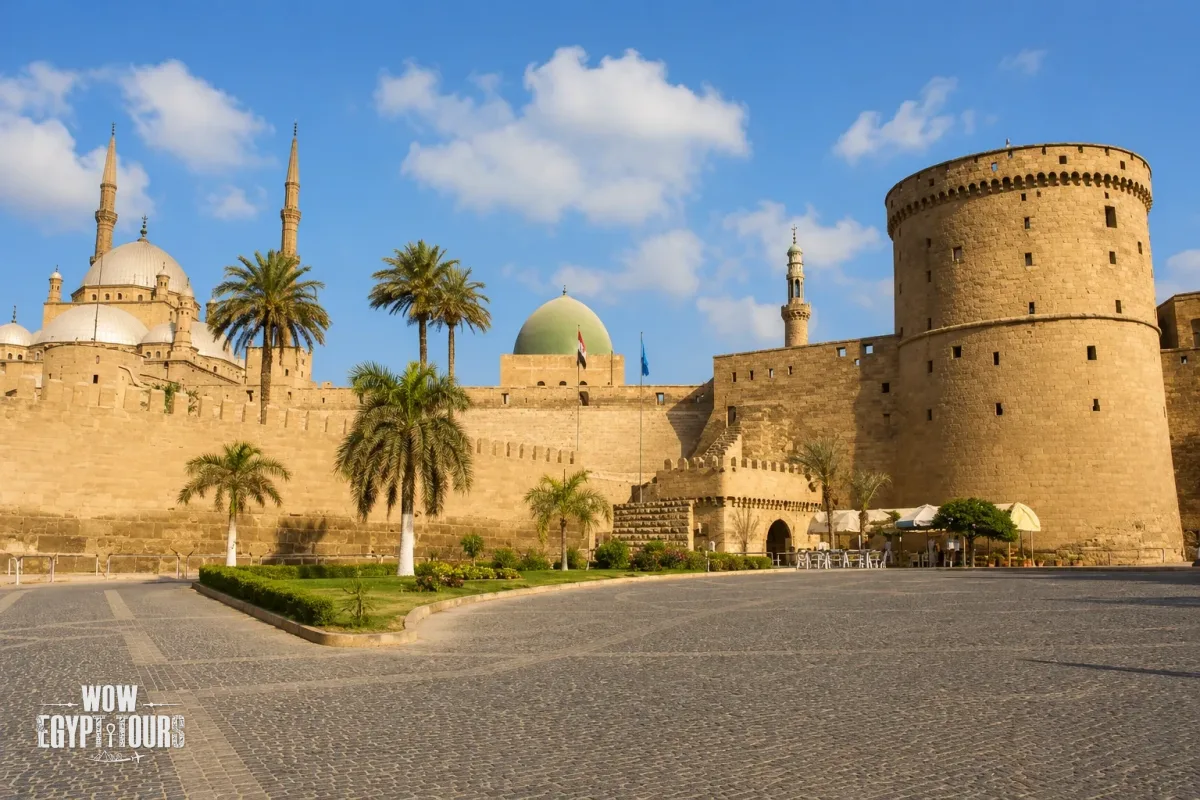
The Saladin Citadel, officially designated in Arabic as Qal'at Salah al-Din and universally known in the international heritage tourism vocabulary as the Citadel or the Cairo Citadel, is a large medieval Islamic fortification complex built on the northeastern spur of the Muqattam hill overlooking the complete historic Islamic Cairo quarter from a naturally commanding elevated position that gives the Citadel's walls, towers, and internal buildings a visual dominance of the surrounding urban landscape unlike anything accessible at any other elevated heritage position in the complete Egyptian capital. The complete Citadel complex encompasses the original Ayyubid fortification works of Saladin's 1176 to 1183 CE construction programme, the substantially enlarged and substantially rebuilt Mamluk-era fortifications whose successive phases of wall construction, tower addition, and defensive infrastructure improvement gave the Citadel its maximum extent and its most completely elaborated defensive character in the most militarily sophisticated medieval Islamic fortification available at any accessible heritage site in the complete Egyptian heritage landscape, and the complete range of internal buildings including mosques, palaces, administrative buildings, military barracks, wells, cisterns, and the extensive modern heritage museum facilities whose combined institutional programme gives the complete Citadel complex the most varied and the most personally comprehensive single heritage destination of any accessible monument in the complete Cairo Islamic heritage district.
The Citadel's most celebrated and most visually extraordinary individual building is the Muhammad Ali Mosque, the extraordinary Ottoman-style mosque built by Muhammad Ali Pasha between 1830 and 1848 CE on the site of earlier Mamluk buildings within the Citadel enclosure, whose soaring twin minarets and magnificent central dome create the most immediately recognizable and the most personally extraordinary single building silhouette in the complete Cairo urban skyline and whose position on the highest point of the Muqattam spur gives it the most dramatically commanding elevated position of any Islamic building in the complete Cairo heritage landscape. Beyond the Muhammad Ali Mosque, the Citadel's internal architectural programme encompasses the Mosque of al-Nasir Muhammad, built by the most powerful and the most architecturally productive of all the Mamluk sultans between 1318 and 1335 CE in the most personally refined and the most institutionally consequential single religious building of the complete Mamluk Citadel heritage, the al-Gawhara Palace whose extraordinary interior of European-influenced 19th century Egyptian decorative arts gives the Citadel its most personal and its most intimate architectural encounter with the specific character of Muhammad Ali's cultural transformation of Egypt, and the complete range of military heritage museums whose collections of medieval Islamic weaponry, Mamluk decorative arts, and complete documentation of the Egyptian military tradition give the Citadel its most comprehensive institutional heritage programme of any accessible Islamic fortification complex in the complete Egyptian heritage landscape.
Who Built The Saladin Citadel?
The Saladin Citadel was founded and built by Salah al-Din Yusuf ibn Ayyub, universally known in the Western world as Saladin, the Kurdish-born military genius and political leader who founded the Ayyubid dynasty, abolished the Fatimid Ismaili Shia Caliphate of Egypt in 1171 CE, reunited Egypt with the Sunni Islamic world under the authority of the Abbasid Caliphate in Baghdad, and subsequently led the most successful Islamic military campaign against the Crusader kingdoms of the Levant in the complete history of the medieval Islamic-Crusader conflict, culminating in the extraordinary recapture of Jerusalem from the Crusader kingdom in 1187 CE in the most personally dramatic and the most historically consequential single military victory of the complete medieval Islamic world. Saladin's construction of the Citadel beginning in 1176 CE was motivated by the specific strategic need for a defensible central command post that could protect the combined urban zone of the earlier Islamic capitals of Fustat and Al-Qahira from external military threats, particularly from the Crusader armies of the Levant whose military activities in the Egyptian vicinity during the 12th century had demonstrated the vulnerability of the unfortified Islamic Egyptian capital to potential external military attack, and by the specific political need for a physically separated and defensively secured royal residence whose elevated position on the Muqattam hill would give the Ayyubid ruler the most complete possible visual oversight of the complete Egyptian capital and the most defensively advantageous possible position from which to manage any internal political challenge to his authority.
Saladin himself did not live to see the Citadel's complete construction, spending most of his active political and military career in the Levant conducting the military campaigns against the Crusader kingdoms that culminated in the 1187 recapture of Jerusalem, and the Citadel was completed by his successors in the Ayyubid dynasty whose continued investment in the fortification of the Muqattam spur gave the complete defensive complex its most fully realized initial form. Saladin's personal biography, however, gives the Citadel its most immediately compelling and its most personally affecting heritage dimension, the specific recognition that the fortress was conceived and begun by one of the most extraordinary military and political leaders of the complete medieval world, a man whose specific combination of military genius, political sophistication, personal generosity, and genuine personal piety gave him a reputation for chivalric honour and personal integrity recognized by his Christian opponents as well as his Muslim allies in the most extraordinary cross-cultural biographical tribute available in the complete heritage record of the medieval Islamic-Crusader conflict. The Saladin of Islamic history and the Saladin of the medieval Christian chronicles are both figures of extraordinary personal stature, a remarkable biographical unanimity that gives the founder of the Saladin Citadel a quality of personally recognized historical greatness entirely appropriate to the most dramatically positioned and the most historically consequential medieval Islamic fortification in the complete Egyptian heritage record.
Saladin: The Man Who Built The Fortress And Recaptured Jerusalem
Saladin's personal biography is one of the most completely extraordinary and the most personally compelling individual narratives available in the complete heritage record of the medieval Islamic world, a biography whose specific combination of military genius, political statecraft, cultural sophistication, personal religious commitment, and the specifically chivalric quality of personal conduct toward defeated enemies that made him uniquely admired by both Muslims and Christians in the medieval world gives him a historical stature and a personal heritage significance that no subsequent ruler of Egypt has matched in the complete record of the Islamic Egyptian political tradition from his own Ayyubid dynasty through the Mamluk sultanate to the Ottoman period and the modern era. Born in Tikrit in modern Iraq in 1137 CE to a Kurdish military family in the service of the Zengid dynasty, Saladin received his formative military and political education in the service of the Zengid governor Nur al-Din, whose broader Islamic political vision of reuniting the fragmented Islamic world of the 12th century against the Crusader kingdoms of the Levant provided the strategic framework within which Saladin's own extraordinary military and political career would subsequently develop. Saladin's appointment as vizier of Egypt in 1169 CE, following his uncle Shirkuh's brief tenure in the same position, placed him in command of the most economically productive province of the Islamic world at a moment of extraordinary political opportunity, and his subsequent abolition of the Fatimid Caliphate in 1171 CE, his establishment of the Ayyubid dynasty, and his progressive construction of the Sunni Islamic political unity that allowed the successful campaign against the Crusader kingdoms demonstrated a quality of political strategic vision and institutional organizational capacity that gives him the most compelling claim to the title of the most consequential Islamic political leader of the complete 12th century in the complete medieval Islamic political heritage.
The specific personal conduct of Saladin that has generated the most extraordinary and the most universally acknowledged biographical tribute in the complete medieval heritage record is his treatment of the Christian population and the Christian holy sites of Jerusalem following the city's recapture in 1187 CE, whose specific contrast with the behavior of the Crusader armies at the capture of Jerusalem in 1099 CE, when the complete Muslim and Jewish population of the city was massacred in one of the most violent episodes of the complete medieval Crusader heritage record, gave Saladin's chivalric restraint a quality of personal moral contrast whose specific historical dimensions have been celebrated in both Islamic and Christian historical literature from the medieval period through the modern era as the most complete available expression of the specifically Islamic ideal of the just and merciful ruler in its most personal and its most historically consequential available demonstration. The specific facts of Saladin's conduct at Jerusalem in 1187, the organized and peaceful departure of the Crusader population, the protection of Christian holy sites and Christian religious communities, the ransoming of captives whose ransoms Saladin personally helped to pay, and the complete absence of the massacre and plunder that the Christian capture of Jerusalem in 1099 had entailed, give the founder of the Saladin Citadel a biographical heritage significance entirely appropriate to the most historically commanding and the most personally extraordinary medieval Islamic fortification in the complete Egyptian heritage record.
Saladin Citadel Location
The Saladin Citadel is located on the northeastern spur of the Muqattam hill in the historic southern Cairo district, approximately 3 kilometers east of the El Moez Street and Khan El Khalili heritage district, approximately 2 kilometers east of the Sultan Hassan Mosque, and approximately 3 to 4 kilometers north of the Old Cairo Fustat multi-faith heritage district. The Citadel's elevated position on the Muqattam spur gives it a visual prominence in the complete Cairo urban skyline that makes it one of the most immediately recognizable landmarks of the Egyptian capital, its twin Muhammad Ali Mosque minarets and its medieval stone walls visible from vast distances across the complete Cairo urban landscape in the most immediately personally extraordinary single elevated landmark composition available at any heritage monument in the complete Cairo Islamic heritage district. The approach to the Citadel from the Rumayla Square below, passing the extraordinary facade of the Sultan Hassan Mosque and the adjacent al-Rifa'i Mosque at the base of the Citadel hill, creates the most dramatically extraordinary and the most personally affecting single approach experience of any accessible medieval Islamic fortification in the complete Egyptian heritage landscape. The Citadel is accessible from central Cairo by private vehicle in approximately 20 to 25 minutes and is most naturally visited as part of the complete Islamic Cairo southern heritage programme combining the Citadel with the Sultan Hassan Mosque, the Mosque of Ibn Tulun, and the Muhammad Ali Mosque within the Citadel itself. WOW Egypt Tours provides private vehicle transportation from all Cairo hotels to the Saladin Citadel and organizes the complete Islamic Cairo southern heritage programme as part of all Cairo Tours and Egypt Tour Packages.
Saladin Citadel Fun Facts
The Saladin Citadel served as the primary seat of Egyptian political power and the primary residence of the Egyptian rulers for an uninterrupted period of approximately 700 years from Saladin's original construction in the 1170s through the Ayyubid, Mamluk, and early Ottoman periods to Muhammad Ali Pasha's transfer of the seat of Egyptian government to the Abdeen Palace in 1874 CE, making it the longest continuously used single seat of government in the complete history of the Egyptian state from the ancient pharaonic period through the Islamic era to the modern era, a distinction whose specific temporal scope of approximately 700 years of continuous political occupation gives the Saladin Citadel a quality of political institutional continuity and personal historical depth that is simply without parallel at any other accessible heritage site in the complete Egyptian capital.
The most dramatic single political event in the complete 700-year history of the Saladin Citadel as the primary seat of Egyptian political power was the extraordinary massacre of the Mamluk leaders known as the Massacre of the Citadel, which took place in March 1811 CE when Muhammad Ali Pasha invited the most powerful Mamluk beys and their retinues to a celebratory banquet in the Citadel, ostensibly to honor them before a military campaign, and then ordered the gates of the Citadel closed and his Albanian troops to fire upon the assembled Mamluk leaders in the most complete and the most deliberately planned single act of political violence in the complete modern history of the Egyptian political landscape. The massacre, in which approximately 470 Mamluk leaders and their attendants were killed in the narrow lanes of the Citadel in a carefully orchestrated military ambush whose specific cruelty was matched only by its specific political effectiveness in permanently eliminating the Mamluk military aristocracy as an organized political force in the Egyptian state, represents the most consequential and the most personally dramatic single event of the Citadel's complete history and gives the site a dimension of violent political historical drama that is unlike anything associated with any other accessible heritage monument in the complete Egyptian capital.
The panoramic view from the Citadel's northern terrace overlooking the complete historic Islamic Cairo quarter is widely recognized as the single most spectacular and the most personally extraordinary urban heritage panorama accessible at any elevated viewpoint in the complete Egyptian capital, a view that encompasses the complete historic Islamic Cairo skyline of hundreds of medieval mosque minarets and Mamluk domes rising above the ancient urban fabric of the historic quarter, with the extraordinary multi-minaret facades of Al Azhar Mosque and the El Moez Street monuments visible in the middle distance, the massive limestone walls of the Sultan Hassan Mosque immediately below, and the more distant desert horizon of the Giza Plateau with the three Great Pyramids visible in the clearest atmospheric conditions in the most completely extraordinary urban heritage panorama available at any accessible viewpoint in the complete Egyptian capital, a view that gives every visitor who experiences it for the first time a quality of personal geographic orientation and personal historical understanding of the complete Cairo heritage landscape in its most dramatically revealed and its most completely personally affecting single overview composition.
Why Is It Called The Saladin Citadel?
The Saladin Citadel carries the name of its founder Salah al-Din al-Ayyubi in the standard Islamic architectural and military nomenclature that attributes defensive fortifications to their founding patrons, with the specific Arabic designation Qal'at Salah al-Din combining the Arabic word qal'a meaning citadel or fortress with the complete name of the founding sultan in the most direct and the most historically accurate designation available for the most consequential medieval Islamic fortification in the complete Egyptian heritage record. The English-language designation Saladin Citadel is the standard international heritage tourism name for the monument, combining the Western historical tradition's universal adoption of the specifically Latinized form Saladin of the Arabic name Salah al-Din with the English word citadel whose specific military architectural designation of a fortified complex commanding a city from an elevated position most accurately captures the specific geographical and strategic character of the Muqattam spur fortress in the standard English-language military architectural vocabulary. The alternative English designation as the Cairo Citadel, used in certain international heritage tourism and scholarly literature, identifies the monument primarily by its geographical relationship to the Egyptian capital rather than by its founding patron, a designation that while geographically accurate sacrifices the specific biographical information content of the Saladin designation that gives the monument its most direct and its most personally informative historical identification in the most widely used and the most immediately comprehensible available English-language heritage designation for the oldest and the most historically consequential medieval Islamic fortification complex in the complete Egyptian capital.
Saladin Citadel History
The history of the Saladin Citadel from its founding construction between 1176 and 1183 CE through the extraordinary sequence of political, military, and cultural transformations that gave the Citadel its successive architectural layers and its successive political identities across more than eight centuries of continuous use as the primary seat of Egyptian political power traces the most completely extraordinary and the most personally consequential single institutional biography of any accessible heritage monument in the complete Egyptian Islamic heritage landscape, a biography whose successive chapters encompass the Ayyubid founding vision of Saladin, the progressive elaboration of the Mamluk sultanate's extraordinary cultural programme within the Citadel's walls, the Ottoman conquest of 1517 and the dramatic hanging of the last Mamluk Sultan Tumanbay at the adjacent Bab Zuweila, the subsequent Ottoman period's use of the Citadel as the primary seat of the Ottoman viceroys of Egypt, Muhammad Ali's extraordinary 1811 Massacre of the Citadel and the subsequent 19th century transformation of the complex's built fabric, and the modern era's conversion of the historic buildings to the heritage museum functions that give the contemporary Citadel its most practically accessible and its most institutionally comprehensive visitor heritage programme.
The Ayyubid period of the Citadel from its 1176 CE founding through Saladin's successors established the primary defensive infrastructure of the complete complex, constructing the massive towers and curtain walls of the original Ayyubid fortification whose specific military engineering reflected the most advanced defensive architecture knowledge of the 12th century Islamic world, with the specific influence of Crusader fortification techniques visible in certain elements of the Ayyubid wall construction whose architectural sophistication reflects the direct experience of military confrontation between the Ayyubid forces and the technically very accomplished Crusader military engineers. The most historically important and the most personally extraordinary single construction of the Ayyubid Citadel period was the extraordinary deep well known as the Well of the Spiral, Bir Yusuf in Arabic, whose remarkable depth of approximately 87 meters through the solid limestone of the Muqattam spur and whose internal spiral ramp construction allowed ox-drawn water-lifting machinery to operate at two different levels of the well's complete depth simultaneously in the most sophisticated and the most personally extraordinary medieval Islamic hydraulic engineering installation accessible at any heritage site in the complete Egyptian capital, giving the Ayyubid Citadel its most completely personal and its most technically extraordinary surviving engineering monument in the form of the deep well whose specific construction challenge of cutting through 87 meters of solid limestone to reach the Nile water table below the Muqattam hill represents one of the most impressive single hydraulic engineering achievements of the complete medieval Islamic world.
The Mamluk period of the Saladin Citadel from 1250 CE through the Ottoman conquest of 1517 was the most politically consequential and the most architecturally productive era in the complete 700-year history of the Citadel as the primary seat of Egyptian political power, the era in which the extraordinary succession of Mamluk sultans whose competitive cultural patronage and whose extraordinary personal investment in architectural prestige gave the complete Egyptian Islamic heritage landscape its most celebrated and its most personally overwhelming architectural achievements simultaneously used the Citadel's internal spaces as the primary stage for the most dramatic and the most personally extraordinary political events of the complete medieval Islamic Egyptian political tradition. The extraordinary Mamluk investment in the Citadel's internal architecture encompassed the palaces of the most powerful sultans, the royal mosque of al-Nasir Muhammad whose extraordinary construction over seventeen years from 1318 to 1335 CE gave the Citadel its most important surviving Mamluk religious building, the administrative buildings of the Mamluk sultanate's extraordinarily sophisticated bureaucratic apparatus, and the complete range of the royal service facilities whose combined programme gave the Mamluk-era Citadel its most completely palatial and its most personally extraordinary character as the primary residence and the primary political theatre of the most powerful Islamic state in the complete medieval eastern Mediterranean and Middle Eastern world.
The Ottoman conquest of Egypt in 1517 CE and the subsequent dramatic execution of the last Mamluk Sultan Tumanbay marked the most consequential single political transition in the complete 700-year history of the Saladin Citadel, transforming the seat of the most powerful independent Islamic sultanate in the medieval world into the administrative headquarters of an Ottoman provincial governorship whose specific institutional character of subordination to the Ottoman imperial authority in Istanbul gave the Citadel's subsequent political history a more modest and a more administratively focused character than the dramatic political theatre of the Mamluk period, though the Ottoman period's specific architectural contributions to the Citadel's built fabric, including several Ottoman-style mosques, the elaboration of the defensive infrastructure, and the organization of the residential and administrative buildings to serve the specific requirements of the Ottoman provincial administration, gave the complete Citadel complex its most complete architectural layering of the four successive Islamic political traditions, Ayyubid, Mamluk, Ottoman, and Muhammad Ali-era, whose accumulated physical presence gives the current Citadel its most personally extraordinary and its most completely historically layered character.
Muhammad Ali Pasha's transformation of the Saladin Citadel beginning in the first decades of the 19th century, following his consolidation of power through the 1811 Citadel Massacre of the Mamluk leaders, encompassed the most dramatic and the most consequential single phase of internal architectural transformation in the complete history of the Citadel's built fabric, replacing large sections of the existing Mamluk palatial buildings with the new mosque, palaces, and administrative buildings of Muhammad Ali's own construction programme whose specific architectural ambition of creating an Ottoman-style Islamic architectural monument of the most complete and the most personally extraordinary quality gave the Citadel its most immediately recognizable and its most internationally celebrated single building in the form of the extraordinary Muhammad Ali Mosque whose twin minarets and soaring central dome have dominated the complete Cairo urban skyline since the mosque's completion in 1848 CE and whose specific architectural character of the most perfectly realized Ottoman mosque design built in Egypt gives the Citadel's internal architectural programme its most visually extraordinary and its most personally overwhelming single building, visible from virtually every point in the complete Cairo metropolitan area in the most dramatically extraordinary single building horizon presence of any building accessible in the complete Egyptian capital.
The Story Of Egypt's Most Powerful Fortress
The story of the Saladin Citadel as Egypt's most powerful fortress and the primary seat of Egyptian political power across 700 years of continuous governance is the story of the complete medieval and early modern Egyptian state as enacted in the most dramatically extraordinary single institutional environment of any accessible heritage complex in the complete Egyptian capital, a story whose successive chapters encompass every political transition, every military conflict, every cultural achievement, and every personal political drama of the complete Egyptian political tradition from the age of the Crusades through the Mamluk cultural golden age to the Ottoman imperial absorption and the dramatic 19th century emergence of the modern Egyptian state under Muhammad Ali's extraordinary personal leadership. The specific character of this story as enacted at the Saladin Citadel gives the heritage visit its most fundamental and its most personally extraordinary dimension, the recognition that the walls, the towers, the mosques, the palaces, and the panoramic terrace of the Citadel complex have been the witness to and the physical stage of the most dramatic and the most personally consequential political events in the complete history of the Egyptian state across eight centuries of continuous occupation whose cumulative human historical presence gives the Citadel a quality of institutional witness to the complete drama of the Egyptian political tradition simply unavailable at any other accessible heritage monument in the complete Egyptian capital.
Saladin Citadel Key Attractions And Features
The Muhammad Ali Mosque
The Muhammad Ali Mosque, built within the Citadel enclosure between 1830 and 1848 CE and universally recognized as the most immediately extraordinary and the most visually dominant single building in the complete Cairo urban skyline, is the primary and the most personally overwhelming single architectural monument of the complete Citadel complex and the principal Islamic building attraction of the complete heritage visit, its twin pencil-form Ottoman minarets rising to approximately 82 meters above the Citadel's elevated position and its extraordinary central dome of approximately 21 meters in diameter creating the most immediately recognizable and the most personally extraordinary single building silhouette in the complete Egyptian capital. The mosque's interior, accessible to all visitors regardless of religious background with appropriate modest dress, provides the single most spatially extraordinary and the most personally overwhelming Islamic interior space accessible within the complete Citadel complex, its central dome and the surrounding semi-domes creating a soaring unified prayer space of the most completely realized Ottoman mosque architectural tradition in the most complete and the most personally affecting expression of the specifically Ottoman architectural synthesis of Byzantine and Islamic spatial ideals that any Ottoman-tradition mosque accessible in the complete Egyptian heritage landscape achieves. The Muhammad Ali Mosque is described in more complete detail in its own dedicated visitor guide available through WOW Egypt Tours.
The Panoramic Terrace And The Cairo View
The panoramic terrace of the Saladin Citadel, located along the northern edge of the Citadel enclosure at the most dramatically commanding elevated position of the complete complex overlooking the complete historic Islamic Cairo quarter spreading below in the most extraordinary single urban heritage panorama accessible at any elevated viewpoint in the complete Egyptian capital, is the most immediately personally extraordinary and the most completely affecting single heritage experience of the complete Citadel visit, providing every visitor with the most dramatically complete and the most personally inspiring single overview of the historic Cairo heritage landscape in the form of the most spectacular urban panoramic view available at any accessible elevated heritage position in the complete Egyptian capital. The specific quality of the Citadel panorama, encompassing the complete historic Islamic Cairo quarter's extraordinary skyline of hundreds of medieval mosque minarets and Mamluk domes in the most completely extraordinary medieval Islamic urban silhouette accessible from any elevated viewpoint in the complete world heritage landscape, the Al Azhar Mosque multi-minaret facade visible in the middle distance, the Sultan Hassan Mosque minarets immediately below, the complete historic urban fabric of the Fatimid and Mamluk city extending to the north and west, and the more distant desert horizon of the Giza Plateau with the three Great Pyramids of the Giza Pyramids Complex visible in the clearest atmospheric conditions in one of the most personally extraordinary and the most historically resonant single panoramic compositions available at any heritage viewpoint in the complete world, gives the Citadel terrace view a quality of personal geographic orientation and historical understanding of the complete Egyptian heritage landscape in its most comprehensively revealing and its most completely personally extraordinary available format.
The Mosque Of Al-Nasir Muhammad
The Mosque of al-Nasir Muhammad ibn Qalawun, built within the Citadel enclosure between 1318 and 1335 CE by the most politically powerful and the most architecturally productive of all the Mamluk sultans, is the most important and the most architecturally distinguished surviving Mamluk religious building within the complete Citadel complex, a mosque of considerable spatial quality and considerable architectural sophistication whose specific combination of the Mamluk architectural tradition's most refined decorative programme with the specifically Gothic influence visible in the extraordinary carved stone doorway portal whose specifically European architectural detail reflects the transfer of a complete Gothic portal from a Crusader building in the Levant to the Citadel mosque's entrance in one of the most personally extraordinary and the most historically revealing examples of medieval Islamic architectural cultural transfer in the complete Egyptian heritage record. The mosque's exterior hypostyle courtyard with its ancient marble and granite columns of considerable variety, many of them ancient Egyptian and ancient Roman columns transported from various sites throughout Egypt to the Citadel mosque in the most comprehensive and the most personally extraordinary act of ancient material cultural transfer in any Mamluk mosque construction programme, gives the building a quality of material historical depth and archaeological variety entirely complementary to the specifically Mamluk architectural character of the mosque's own structural and decorative programme.
The Ayyubid Walls And Towers
The surviving Ayyubid defensive walls and towers of the Saladin Citadel, whose massive limestone construction reflects the most advanced medieval Islamic defensive architecture of the 12th century whose specific military engineering incorporates direct observation and adaptation of the Crusader fortification techniques that Saladin's forces had encountered in the course of the Islamic-Crusader military conflicts of the Levant, give the complete Citadel complex its most historically primary and its most personally extraordinary dimension of medieval military heritage, the direct physical encounter with the defensive thinking and the defensive engineering of the most consequential military confrontation in the complete history of the medieval Islamic world. The most completely preserved and the most architecturally extraordinary surviving element of the Ayyubid defensive programme is the extraordinary Burj al-Muqattam, the Muqattam Tower, whose massive circular profile and its specific position at the most dramatically commanding corner of the complete Ayyubid defensive perimeter gives it the most imposing single tower presence of any accessible medieval Islamic fortification tower in the complete Egyptian heritage landscape, its massive limestone construction visible from vast distances across the complete Cairo urban landscape in the most dramatically extraordinary single defensive architecture silhouette of the complete Citadel exterior.
The Well Of The Spiral: Bir Yusuf
The Well of the Spiral, known in Arabic as Bir Yusuf after the Ayyubid construction attribution to Yusuf, the Arabic name of Saladin whose full name Salah al-Din Yusuf ibn Ayyub includes this personal name component, is the most technically extraordinary and the most personally affecting single engineering monument of the complete Ayyubid Citadel heritage, a deep well of approximately 87 meters cut vertically through the solid limestone of the Muqattam spur to reach the Nile water table below the hill and fitted with an internal spiral ramp that allowed oxen-powered water-lifting machinery to operate at two separate levels of the well's complete depth simultaneously in the most sophisticated and the most completely organized medieval Islamic hydraulic engineering installation accessible at any heritage site in the complete Cairo heritage landscape. The specific engineering achievement of cutting 87 meters of solid limestone to reach the Nile water table beneath the Muqattam spur with the medieval cutting technology available to the Ayyubid construction workforce, whose specific construction challenge of maintaining the well's precise vertical alignment across the complete depth of the cut while simultaneously constructing the internal spiral ramp whose specific dimensional requirements for the oxen and the machinery had to be planned in advance from the well's surface level, represents one of the most impressive single hydraulic engineering feats of the complete medieval Islamic world and gives the Saladin Citadel's most personal and its most technically extraordinary individual monument a dimension of ancient engineering achievement whose specific combination of physical scale, technical precision, and organizational complexity is genuinely without parallel at any comparable medieval Islamic hydraulic engineering installation accessible to visitors at any heritage site in the complete Egyptian capital.
The Al-Gawhara Palace
The al-Gawhara Palace, the surviving 19th century palatial building of Muhammad Ali Pasha's construction programme within the Saladin Citadel enclosure whose extraordinary interior of the most completely European-influenced Egyptian decorative arts tradition gives it the most personally intimate and the most culturally revealing single interior heritage encounter with the specific aesthetic orientation of Muhammad Ali's extraordinary cultural transformation of the Egyptian state from an Ottoman provincial governorship into a modernizing quasi-independent state with a specific European cultural orientation, is the most personally extraordinary and the most decoratively extraordinary secular building accessible within the complete Citadel complex, its extraordinary reception halls of French Empire and Rococo-influenced interior decoration whose painted ceilings, gilded furniture, European chandeliers, and elaborate decorative programmes in the most personal expression of the 19th century Egyptian elite's specific combination of Islamic traditional identity with European contemporary aesthetic aspiration give the palace interior the most completely personal and the most historically resonant encounter with the specific cultural moment of Egyptian modernization available at any accessible heritage site in the complete Egyptian capital. The palace also houses the Muhammad Ali Collection, a museum of the personal effects, portraits, and documentary heritage of the Muhammad Ali dynasty that gives the al-Gawhara visit its most complete institutional heritage programme and its most personally biographical dimension of the complete Citadel heritage experience.
The Military And Police Museums
The Saladin Citadel complex houses a comprehensive set of heritage museums within the historic buildings of the complex whose combined institutional programme gives the Citadel visit its most varied and its most completely multi-thematic heritage character of any accessible Islamic fortification complex in the complete Egyptian capital. The Military Museum, housed in the former Harem Palace of Muhammad Ali within the Citadel enclosure, is the most comprehensive documentation of the complete Egyptian military heritage available at any accessible museum in the complete Egyptian heritage landscape, its extensive collection of medieval Islamic weaponry, Mamluk armour and military equipment, Ottoman period military heritage, and 19th and 20th century Egyptian military history giving visitors the most personally complete and the most institutionally comprehensive single encounter with the complete timeline of Egyptian military heritage from the medieval Islamic period through the modern era available at any accessible heritage institution in the complete Egyptian capital. The Police Museum and the Carriage Museum provide additional specialized heritage collection programmes that give the complete Citadel museum visit its most varied and its most personally eclectic range of heritage encounters within the most historically extraordinary and the most politically consequential single heritage complex in the complete Islamic Cairo heritage landscape.
The Ayyubid Fortification Circuit Walk
The circuit walk along the accessible sections of the Saladin Citadel's Ayyubid and Mamluk defensive walls, available to visitors as part of the complete Citadel heritage programme, provides the most personally extraordinary and the most completely comprehensive encounter with the medieval Islamic military defensive architecture tradition accessible at any heritage fortification in the complete Egyptian heritage landscape, combining the direct physical experience of walking on the actual medieval defensive walls with the most dramatically personal and the most completely affecting elevated views of the surrounding Cairo urban landscape from the various tower and wall section viewpoints whose specific elevated positions give the wall walk programme its most extraordinary sequence of urban panoramic revelations at successive points around the complete accessible defensive perimeter. The wall circuit's most personally extraordinary individual moments include the view from the Burg al-Muqattam tower position overlooking the complete Sultan Hassan Mosque and the surrounding historic quarter immediately below, the specific wall section from which Napoleon's troops fired cannon shots at the Citadel's walls in the 1798 French military occupation whose impact marks are still faintly visible on the wall surface in the most directly personal and the most historically immediate physical encounter with the Napoleonic period of Egyptian history available at any accessible heritage position in the complete Cairo heritage landscape, and the northern wall section whose extraordinary panoramic view of the complete historic Islamic Cairo skyline gives the wall circuit its most personally overwhelming and its most completely affecting single urban panoramic encounter of any point in the complete Citadel heritage walk programme.
Why Is The Saladin Citadel Important?
The Saladin Citadel is important for reasons spanning the complete military, political, religious, and cultural history of the medieval and early modern Egyptian Islamic state, the specific personal biography of Saladin as the most consequential and the most internationally celebrated Islamic political leader of the complete 12th century medieval world, the 700-year history of the Citadel as the primary seat of Egyptian political power in the most continuous single-site governance tradition of any medieval Islamic state in the complete African and Middle Eastern heritage record, the extraordinary architectural heritage of the complete Citadel complex's accumulated Ayyubid, Mamluk, Ottoman, and Muhammad Ali-era built fabric, and the broader cultural significance of the Citadel as the primary physical stage of the most dramatic and the most personally extraordinary political events in the complete history of the medieval and early modern Egyptian state. As a heritage monument, the Saladin Citadel is simultaneously the most historically consequential and the most personally comprehensive single heritage destination accessible in the complete Islamic Cairo heritage district, the one monument whose complete heritage programme encompasses the military architecture, the religious architectural achievement, the political historical drama, and the panoramic overview of the complete Cairo heritage landscape in the single most varied and the most institutionally complete heritage visit available at any accessible Islamic heritage monument in the complete Egyptian capital. WOW Egypt Tours includes the Saladin Citadel as an essential destination in all comprehensive Cairo Tours, Egypt Classic Tours, and all Egypt Tour Packages encompassing the extraordinary Islamic heritage of the Egyptian capital.
What Are Some Interesting Facts About The Saladin Citadel?
Seven Hundred Years As Egypt's Seat Of Power
The Saladin Citadel's extraordinary 700-year continuous function as the primary seat of Egyptian political power from Saladin's original 1170s construction through the Ayyubid, Mamluk, and Ottoman periods to Muhammad Ali Pasha's 19th century transformation gives it the most extraordinary single claim to political institutional continuity of any accessible heritage site in the complete Egyptian capital, a continuity whose specific temporal scope encompasses the most consequential and the most personally dramatic seven centuries of the complete Islamic Egyptian political tradition from the age of the Crusades through the Mongol threat, the Black Death, the Ottoman conquest, and the Napoleonic occupation to the dawn of the modern Egyptian state. The specific recognition that the walls and buildings of the Saladin Citadel have been the primary physical stage of the Egyptian state's political life across this entire extraordinary temporal span, housing every major political decision, every military campaign planning session, every diplomatic reception, and every political drama of the complete Ayyubid, Mamluk, and Ottoman Egyptian governance tradition, gives the Citadel a quality of political historical witness and personal institutional authority that is simply without parallel at any other accessible heritage site in the complete Islamic Cairo heritage landscape.
The 1811 Massacre That Changed Egypt Forever
The Massacre of the Citadel in March 1811, in which Muhammad Ali Pasha invited the most powerful surviving Mamluk leaders to a celebratory banquet and then ordered his troops to massacre them in the narrow lanes of the Citadel compound, permanently eliminated the Mamluk military aristocracy as an organized political force in the Egyptian state and gave Muhammad Ali the most complete and the most uncontested political authority of any Egyptian ruler since the Mamluk sultanate's establishment in 1250 CE. The massacre's specific setting in the Citadel compound whose narrow lanes and closed gates transformed the ceremonial occasion into a military killing ground gives the Saladin Citadel its most personally extraordinary and its most directly violent single historical episode, a political event of such complete historical consequence for the subsequent development of the modern Egyptian state that its specific Citadel location gives the heritage visit a dimension of political historical drama and personal political historical awareness that is genuinely unlike anything associated with any other accessible heritage monument in the complete Egyptian capital.
The View Of The Pyramids From The Citadel
In the clearest atmospheric conditions, the three Great Pyramids of the Giza Pyramids Complex are visible from the Saladin Citadel's northern terrace in the most personally extraordinary single panoramic visual connection between the two most historically consequential heritage sites in the complete Egyptian heritage record, the medieval Islamic fortification from whose walls the Islamic Egyptian state was governed for 700 years visible in the same panoramic composition as the ancient pharaonic monuments from whose construction the ancient Egyptian state demonstrated its most completely extraordinary organizational capacity and its most completely extraordinary cultural ambition more than 4,500 years earlier. The specific quality of this panoramic visual connection between the Saladin Citadel and the Giza Pyramids in a single panoramic composition, available from the Citadel's northern terrace when atmospheric conditions permit, gives the Citadel panoramic view its most completely extraordinary and its most personally affecting single moment of historical temporal compression, connecting the most ancient and the most medieval of the Egyptian heritage landscape's most celebrated monuments in the most dramatically personal and the most completely historically resonant single visual composition accessible at any elevated heritage viewpoint in the complete Egyptian capital.
What Is So Special About The Saladin Citadel?
The Most Historically Complete Single Heritage Destination In Islamic Cairo
What makes the Saladin Citadel uniquely and incomparably special in the complete Cairo Islamic heritage landscape is the extraordinary combination of military architecture, religious architectural achievement, political historical drama, and panoramic heritage landscape overview that gives the complete Citadel heritage visit the most varied and the most institutionally complete single heritage programme of any accessible Islamic monument in the complete Egyptian capital. No other accessible heritage monument in the complete Cairo heritage district combines in a single visit the direct encounter with the medieval Islamic defensive architecture of Saladin's original fortification, the extraordinary interior of the Muhammad Ali Mosque, the panoramic overview of the complete historic Cairo heritage landscape, the specific personal drama of the 1811 Citadel Massacre, the technical marvel of the Ayyubid Well of the Spiral, the surviving Mamluk mosque of al-Nasir Muhammad, the European-influenced interior of the al-Gawhara Palace, and the comprehensive military heritage museum collections in the single most varied and the most institutionally comprehensive heritage visit available at any accessible Islamic heritage monument in the complete Egyptian capital.
Where Saladin's Vision And Muhammad Ali's Ambition Share One Hill
The Saladin Citadel is also uniquely special for the extraordinary combination of historical personalities whose specific architectural legacies share the same hilltop enclosure, giving the complete Citadel heritage programme a quality of personal biographical variety and personal historical contrast entirely unlike anything available at any other accessible heritage monument in the complete Islamic Cairo heritage district. The Ayyubid defensive walls of Saladin, the medieval Kurdish general who recaptured Jerusalem and gave Egypt its most dramatic medieval political founding institution, share the same hill with the Ottoman-style mosque of Muhammad Ali, the Ottoman-Albanian military commander who massacred the Mamluk leaders in the same Citadel compound and then built the most visually dominant single building in the complete Cairo skyline within the walls of the fortress whose 700-year political tradition he had inherited and then transformed, creating in the single Citadel complex the most personally extraordinary and the most completely institutionally varied encounter with the complete range of the Egyptian political heritage from the age of the Crusades to the dawn of the modern era available at any accessible heritage destination in the complete Egyptian capital.
The Saladin Citadel Through The Ages
The complete narrative of the Saladin Citadel from Saladin's 1176 CE founding construction through the complete sequence of Ayyubid, Mamluk, Ottoman, and Muhammad Ali-era political and architectural transformations, through the 1811 Massacre and the subsequent 19th century transformation of the complex, through the modern era's conversion of the historic buildings to the heritage museum functions accessible to international visitors today, and through the ongoing programme of archaeological investigation and architectural conservation that continues to reveal new dimensions of the complete Citadel's extraordinary built heritage, traces the most extraordinary and the most personally consequential single heritage institution biography of any accessible monument in the complete Islamic Cairo heritage landscape, a biography whose most fundamental characteristic is the extraordinary capacity of the Citadel complex to maintain its function as the primary physical stage of the Egyptian political tradition across seven centuries of the most dramatic political, military, and cultural changes in the complete history of the Islamic Egyptian state while simultaneously accumulating the most varied and the most institutionally comprehensive range of architectural heritage additions of any accessible Islamic fortification complex in the complete Egyptian heritage record.
The Saladin Citadel And UNESCO
The Saladin Citadel is protected as the primary military heritage component of the UNESCO World Heritage Site designated in 1979 as Historic Cairo, recognized as a heritage of outstanding universal value for the extraordinary concentration of Islamic heritage in the historic core of Cairo that includes the Citadel as its most historically significant and its most personally consequential single military heritage monument alongside the architectural heritage of El Moez Street, the scholarly heritage of Al Azhar Mosque, the supreme architectural achievement of the Sultan Hassan Mosque, and the complete surrounding historic quarter. The UNESCO Historic Cairo inscription specifically identifies the Saladin Citadel as an essential component of the outstanding universal value of the complete Historic Cairo World Heritage designation, the single monument whose specific combination of military defensive heritage, religious architectural achievement, and 700-year political historical significance gives the complete Historic Cairo inscription its most institutionally consequential and its most politically primary individual heritage monument of the medieval Islamic Egyptian political tradition. The Egyptian government and the UNESCO World Heritage Committee are engaged in ongoing collaboration on the conservation management of the complete Saladin Citadel complex, addressing the specific conservation challenges of a large medieval fortification complex in an active urban environment whose ongoing heritage museum functions create specific institutional demands on the physical fabric of the historic buildings.
Best Time To Visit The Saladin Citadel
The best time to visit the Saladin Citadel is during the cooler months from October through April when the Cairo climate provides the most comfortable conditions for the extended outdoor programme of the defensive wall circuit, the panoramic terrace, and the movement between the various internal buildings of the complete Citadel complex. The morning hours from approximately 9:00 AM to noon are the most recommended visiting period for the panoramic terrace view, when the morning light from the east illuminates the complete historic Cairo quarter below the Citadel in the most dramatically beautiful and the most personally affecting natural light composition of any time in the complete daily visiting cycle, and when the atmospheric conditions are typically most clear for the most complete available panoramic view including the distant Giza Pyramids on the desert horizon to the southwest. The late afternoon visit from approximately 4:00 PM gives the Muhammad Ali Mosque's alabaster exterior walls the most warm and the most dramatically beautiful natural light conditions of any time in the complete daily cycle, creating the most extraordinary photography conditions for the mosque's exterior in the warm amber of the Egyptian late afternoon sun. The Friday mid-day congregational prayer period from approximately 11:30 AM to 1:30 PM sees the Muhammad Ali Mosque closed to non-Muslim visitors and the complete Citadel activity at its most reduced level. WOW Egypt Tours advises on optimal timing within the complete Islamic Cairo southern heritage programme.
Saladin Citadel Opening Hours
The Saladin Citadel is open daily from 8:00 AM to 5:00 PM. The Muhammad Ali Mosque within the Citadel is open to visitors throughout Citadel visiting hours with closure during prayer times, most significantly during the Friday mid-day congregational prayer from approximately 11:30 AM to 1:30 PM. The Mosque of al-Nasir Muhammad and the internal museums are open during Citadel visiting hours with specific access arrangements confirmed at the site at time of visit. All visiting hours are subject to adjustment for Islamic religious observances and current access arrangements should be confirmed at time of booking with WOW Egypt Tours.
Saladin Citadel Entrance Fees
Saladin Citadel general admission (includes access to all internal monuments and museums): EGP 550 for adults, EGP 275 for students. The Muhammad Ali Mosque is included in the general Citadel admission. The Military Museum, the Police Museum, the Carriage Museum, and other specialized museum facilities within the Citadel may have specific additional admission arrangements confirmed at time of booking. All Saladin Citadel entrance fees are included in the Cairo Tours and Egypt Tour Packages organized by WOW Egypt Tours. Fees are subject to periodic adjustment and current rates should be confirmed at time of booking.
How To Get To The Saladin Citadel
The Saladin Citadel is located in the historic southern Cairo district on the Muqattam spur approximately 3 kilometers east of the El Moez Street heritage district, accessible from central Cairo by private vehicle in approximately 20 to 25 minutes, from the Sultan Hassan Mosque immediately below by approximately 5 minutes by private vehicle ascending the Citadel hill road, from the Mosque of Ibn Tulun by approximately 10 minutes by private vehicle, and from the El Moez Street district by approximately 15 to 20 minutes by private vehicle. The Citadel is accessible by Cairo public bus from central Cairo and by taxi from any point in the historic Cairo district. The private vehicle organized by WOW Egypt Tours provides the most practically convenient and the most operationally organized approach within the complete Islamic Cairo southern heritage programme, providing door-to-door transport from the hotel and organized movement between the Citadel and all adjacent heritage destinations in the most efficiently timed and the most personally satisfying heritage day programme.
How Long To Spend At The Saladin Citadel
A minimum of two to two and a half hours at the Saladin Citadel is required for a programme that covers the complete Muhammad Ali Mosque interior visit, the panoramic northern terrace view, the Mosque of al-Nasir Muhammad exterior and interior, the Well of the Spiral Bir Yusuf, the Ayyubid wall circuit on the most accessible sections, and a focused survey of the Military Museum highlights, in the most practically organized and the most personally satisfying format available within a focused heritage visit. A more completely satisfying Citadel programme of three to four hours allows the most thorough engagement with all primary components of the Citadel heritage including the al-Gawhara Palace interior, the complete defensive wall circuit, the most comprehensive Military Museum programme, the Police Museum and Carriage Museum additional collections, and the most completely contemplative engagement with the panoramic terrace view in the most unhurried and the most personally rewarding format. The Saladin Citadel is most naturally combined with the Sultan Hassan Mosque immediately below and the Mosque of Ibn Tulun in the most comprehensive Islamic Cairo southern heritage day programme organized by WOW Egypt Tours.
Tips For Visiting The Saladin Citadel
Begin the Citadel visit with the panoramic northern terrace view before entering any of the internal buildings, as the specific quality of the complete Cairo heritage landscape panorama in the morning light is best experienced on arrival before the increasing visitor activity of the mid-morning period, and the specific geographic and historical orientation that the panoramic view provides gives the complete subsequent Citadel heritage programme its most complete and its most personally enriching contextual framework. Ask your licensed guide from WOW Egypt Tours to specifically identify the Sultan Hassan Mosque, the Al Azhar Mosque, and the complete El Moez Street corridor from the terrace viewpoint before beginning the interior building programme, as the specific combination of the panoramic overview with the expert identification of the visible heritage monuments gives the Citadel view its most complete and its most personally instructive educational dimension in the most directly personal and the most immediately accessible format available for a comprehensive introduction to the complete Cairo Islamic heritage landscape. Visit the Muhammad Ali Mosque immediately after the panoramic terrace for the most powerful single interior building experience of the complete Citadel heritage programme, whose extraordinary Ottoman interior gives the visit its most immediately architecturally extraordinary and the most personally overwhelming single interior spatial experience available within the complete Citadel complex. Do not miss the Well of the Spiral Bir Yusuf, whose specific engineering achievement of cutting 87 meters of solid limestone to reach the Nile water table below the Muqattam hill consistently astonishes visitors who understand the specific medieval engineering challenge it represents and whose internal spiral ramp construction provides the most personally extraordinary single engineering heritage encounter of the complete Citadel programme.
What To Wear At The Saladin Citadel
The Saladin Citadel heritage programme combines extensive outdoor walking across the Citadel's large complex between the various internal buildings, the panoramic terrace, the defensive wall circuit sections, and the museum facilities with the indoor visits to the Muhammad Ali Mosque, the Mosque of al-Nasir Muhammad, the al-Gawhara Palace, and the museum buildings, requiring both practical outdoor comfortable clothing and appropriately modest religious-site clothing for the mosque visits. For the mosque interiors, modest clothing covering the shoulders, arms, and knees is required for all visitors. Women must cover their hair for entry into the Muhammad Ali Mosque and the Mosque of al-Nasir Muhammad, and may be provided with head coverings at the mosque entrance. Shoes must be removed before entering both mosque prayer halls. Comfortable walking shoes with good support are essential for the extended outdoor walking programme across the Citadel's large complex whose paved surfaces include both the smooth paving of the main plaza and the more irregular stone of the defensive wall sections. Adequate sun protection clothing, hat, and sunscreen are essential for the outdoor programme in the summer months. Carry adequate water for the complete programme whose outdoor walking requirements create significant hydration needs in the warmer months.
Photography At The Saladin Citadel
The Saladin Citadel provides the most varied and the most personally comprehensive range of heritage photography subjects of any accessible single heritage monument in the complete Cairo Islamic heritage landscape, encompassing the most extraordinary urban panoramic photography of the complete historic Cairo skyline from the northern terrace, the exterior architecture photography of the Muhammad Ali Mosque whose alabaster walls and twin minarets in the morning and afternoon light create the most visually extraordinary single building photography subject available at any accessible heritage monument in the complete Cairo urban skyline, the medieval military architecture photography of the Ayyubid walls and towers whose massive limestone construction in the low angled light of the morning and afternoon creates the most dramatically powerful and the most personally affecting heritage fortification photography available at any accessible medieval Islamic heritage site in the complete Egyptian capital, and the Well of the Spiral photography whose specific challenge of capturing the extraordinary depth and the internal spiral ramp construction of the 87-meter deep well in the available artificial and natural light creates the most technically demanding and the most personally extraordinary single engineering heritage photography subject of the complete Citadel programme. Photography for personal non-commercial purposes is permitted throughout the Saladin Citadel complex including the panoramic terrace, the external buildings, and the museum collections, with the respectful approach of avoiding photography during active prayer in the mosque interiors as the most culturally appropriate practice.
Saladin Citadel Tours
Complete Islamic Cairo Southern Heritage: Citadel, Sultan Hassan, And Ibn Tulun
This comprehensive Islamic Cairo southern heritage programme combines the primary seat of Egyptian political power for 700 years with the supreme masterpiece of medieval Islamic architecture and the oldest surviving mosque in Cairo in its original form, giving every visitor the most completely chronological and the most personally extraordinary single-day encounter with the complete southern Islamic Cairo heritage from the 9th century Tulunid mosque through the 14th century Mamluk masterpiece to the medieval fortress that governed Egypt across eight centuries of the most dramatic Islamic Egyptian political history.
What Is Covered
Private vehicle from Cairo hotel with morning departure. Mosque of Ibn Tulun and Gayer-Anderson Museum morning programme. Sultan Hassan Mosque complete interior programme including cruciform courtyard, four iwans, prayer hall, and mausoleum. Al-Rifa'i Mosque. Lunch. Saladin Citadel afternoon: panoramic northern terrace view with complete Cairo heritage landscape orientation, Muhammad Ali Mosque complete interior, Mosque of al-Nasir Muhammad, Well of the Spiral Bir Yusuf, al-Gawhara Palace, Military Museum highlights, complete historical narrative of 700 years as Egypt's seat of power including the 1811 Citadel Massacre and Saladin's founding vision. Return to Cairo hotel.
Duration
Full day from Cairo hotel, approximately 9 to 10 hours.
Includes
Private vehicle, licensed Islamic Cairo guide, all monument and museum entrance fees, lunch, and all logistics. Through WOW Egypt Tours Cairo Tours.
Complete Cairo Islamic Heritage: Northern And Southern Districts
This comprehensive full-day Islamic Cairo programme combines the northern district's Al Azhar Mosque, El Moez Street, and Khan El Khalili with the southern district's Mosque of Ibn Tulun, Sultan Hassan Mosque, and Saladin Citadel in the most completely multi-period and the most personally extraordinary single-day Islamic Cairo heritage programme available from any Cairo hotel base.
What Is Covered
Private vehicle from Cairo hotel. Morning: Al Azhar Mosque, El Moez Street highlights, Khan El Khalili and Fishawi's Café. Lunch. Afternoon: Sultan Hassan Mosque interior programme. Saladin Citadel with panoramic terrace, Muhammad Ali Mosque, and al-Nasir Muhammad Mosque. Return to Cairo hotel.
Duration
Full day from Cairo hotel, approximately 9 to 10 hours.
Includes
Private vehicle, licensed Islamic Cairo guide, all monument entrance fees, lunch, and all logistics. Through WOW Egypt Tours Cairo Tours.
Combine The Saladin Citadel With Your Egypt Tours Package
The Saladin Citadel is featured as an essential Islamic Cairo heritage destination across the full range of WOW Egypt Tours travel products. Browse the options below to find the Egypt experience that includes the Saladin Citadel.
Egypt Tour Packages: Multi-day guided Egypt tours organized by duration, including 2 Days Egypt Packages, 3 Days Egypt Packages, 4 Days Egypt Packages, 5 Days Egypt Packages, 6 Days Egypt Packages, 7 Days Egypt Packages, 8 Days Egypt Packages, 10 Days Egypt Packages, and longer itineraries. The Saladin Citadel is included in all Egypt Tour Packages of 4 days and above as a primary Islamic Cairo southern heritage destination, most naturally combined with the Sultan Hassan Mosque, Muhammad Ali Mosque, and the complete Islamic Cairo southern heritage circuit. All packages include private vehicle, licensed guide, accommodation, all monument entrance fees, and all logistics.
Egypt Travel Packages: Themed Egypt travel packages including Egypt Honeymoon Travel Packages, Egypt Budget Travel Packages, Egypt Family Travel Packages, Egypt Luxury Travel Packages, Egypt Adventure Travel Packages, Egypt Cultural Travel Packages, and Egypt Christmas and New Year Travel Packages. The Saladin Citadel is featured in every Egypt Travel Package category as the primary seat of Egyptian political power for 700 years, the most historically dramatic and the most institutionally comprehensive single Islamic heritage complex accessible in the complete Egyptian capital.
Egypt Classic Tours: The most popular and the most comprehensively balanced Egypt travel programme, combining the complete Giza ancient heritage with the Saladin Citadel, Sultan Hassan Mosque, El Moez Street, Khan El Khalili, and Al Azhar in Cairo, and the Nile Valley heritage of Luxor and Aswan, in the most complete and the most personally satisfying introduction to the complete Egyptian heritage available in any organized Egypt itinerary.
Egypt Short Break Tours: Focused short duration Egypt travel programmes for travelers with limited time. The Saladin Citadel is included in Egypt Short Break Tours of 3 days and above as the primary Islamic Cairo panoramic and heritage museum destination, combined with the Muhammad Ali Mosque interior in the most efficiently organized and the most personally extraordinary compact Islamic Cairo southern heritage programme.
Egypt Family Tours: Family-friendly Egypt travel programmes in which the Saladin Citadel's extraordinary panoramic view, the dramatic stories of Saladin and the 1811 Citadel Massacre, the Muhammad Ali Mosque's soaring interior, the Well of the Spiral's remarkable engineering, and the Military Museum's medieval weaponry collections together provide one of the most varied and the most personally engaging heritage programmes for families with children of all ages visiting the Islamic Cairo southern heritage district.
Egypt Budget Tours: Value-focused Egypt travel programmes providing access to the Saladin Citadel's extraordinary 700-year political heritage, the Muhammad Ali Mosque interior, the panoramic Cairo view, and the complete military museum collections at the most economical pricing available from any professional Egyptian tour operator.
Egypt Nile Cruises: All-inclusive Nile River Cruise programmes combining the ancient pharaonic heritage of Luxor and Aswan with Cairo extensions that include the Saladin Citadel as the primary Islamic military heritage monument and panoramic viewpoint of the complete Islamic Cairo heritage programme.
Nile River Cruises: All WOW Egypt Tours Nile cruise options. The Saladin Citadel is available as part of the Islamic Cairo southern heritage programme in the Cairo extension from the beginning or end of any Nile River Cruise itinerary.
Luxor Aswan Nile Cruises: The Saladin Citadel combined with the Sultan Hassan Mosque and the Mosque of Ibn Tulun is the primary Islamic Cairo southern heritage programme for any Luxor-Aswan Nile cruise Cairo extension, providing the most historically consequential and the most personally dramatic Islamic military and political heritage complement to the ancient pharaonic monument heritage of the Nile Valley cruise.
Dahabiya Nile Cruises: The Saladin Citadel available as part of the Islamic Cairo southern heritage programme for travelers combining the most intimate private Nile sailing experience with the primary seat of Egyptian political power for 700 years and the most spectacular panoramic view of the complete Cairo heritage landscape.
Lake Nasser Cruises: The Saladin Citadel available as part of the Cairo extension for travelers combining the extraordinary Nubian heritage of Lake Nasser with the medieval Islamic fortress that served as Egypt's primary seat of power across seven centuries of the most dramatic Islamic Egyptian political history.
Cairo Tours: The complete range of guided day tour programmes available from Cairo hotels, including the complete Islamic Cairo southern heritage day combining the Saladin Citadel with the Sultan Hassan Mosque, Muhammad Ali Mosque, and Mosque of Ibn Tulun, the complete Islamic Cairo heritage day combining the southern and northern heritage districts including El Moez Street, Khan El Khalili, and Al Azhar Mosque, the complete Cairo multi-period heritage programme combining the Saladin Citadel with the Giza Pyramids, and the Coptic Cairo programme combining the Saladin Citadel with the Hanging Church, Coptic Museum, Amr Ibn Al-Ass Mosque, St George Church, St Virgin Mary Church, and Ben Ezra Synagogue. All Cairo Tours include private vehicle, licensed guide, all entrance fees, and all logistics organized by WOW Egypt Tours.
Nearby Attractions To The Saladin Citadel
The Saladin Citadel is positioned on the Muqattam spur at the center of the most heritage-dense zone of the complete Islamic Cairo southern heritage district, with the most immediately extraordinary and the most naturally combined nearby heritage destinations accessible within short driving distances in every direction from the Citadel hill. The most immediately proximate and the most naturally combined nearby heritage destinations are the primary monuments of the complete Islamic Cairo southern heritage district. The Sultan Hassan Mosque and the adjacent al-Rifa'i Mosque, immediately below the Citadel hill at the base of the Rumayla Square, are the most naturally combined heritage destinations of the complete southern district whose approach road ascending from the two mosques to the Citadel entrance creates the most dramatically extraordinary and the most personally affecting single heritage monument approach sequence available at any accessible Islamic heritage site in the complete Cairo heritage landscape, the massive facades of the Sultan Hassan and al-Rifa'i mosques in the square below progressively giving way to the ascending medieval walls of the Citadel above in the most complete single sequential heritage reveal of any adjacent pair of Islamic heritage destinations in the complete Cairo heritage district. The Mosque of Ibn Tulun approximately 10 minutes by private vehicle to the west is the most historically primary and the most architecturally distinctive Islamic heritage complement to the Citadel's political and military heritage, the oldest surviving mosque in Cairo giving the complete southern heritage circuit its most complete chronological range from the 9th century Tulunid mosque through the 14th century Mamluk masterpiece to the 12th century Ayyubid fortress.
The northern Islamic Cairo heritage district, encompassing El Moez Street, the Khan El Khalili, and the Al Azhar Mosque, is accessible from the Citadel by approximately 15 to 20 minutes by private vehicle for the most comprehensive complete Islamic Cairo heritage programme combining the southern district's political and military heritage with the northern district's architectural and commercial heritage in the single most completely extraordinary and the most personally multi-dimensional Islamic Cairo heritage day available from any Cairo hotel base. The Old Cairo multi-faith heritage district, encompassing the Amr Ibn Al-Ass Mosque, the Hanging Church, the Coptic Museum, and the Ben Ezra Synagogue, is accessible from the Citadel by approximately 15 minutes by private vehicle for the most completely multi-faith heritage complement to the Citadel's Islamic political heritage in the most complete and the most personally comprehensive multi-period heritage portrait of Cairo the Capital of Egypt organized by WOW Egypt Tours.
Frequently Asked Questions About The Saladin Citadel
What is the Saladin Citadel?
The Saladin Citadel is a large medieval Islamic fortification complex built on the Muqattam hill overlooking historic Cairo, founded by Saladin between 1176 and 1183 CE and subsequently serving as the primary seat of Egyptian political power for approximately 700 years through the Ayyubid, Mamluk, and Ottoman periods. It encompasses the Muhammad Ali Mosque whose twin minarets dominate the complete Cairo skyline, the Mosque of al-Nasir Muhammad, the al-Gawhara Palace, the Well of the Spiral Bir Yusuf, the Ayyubid defensive walls, the Military Museum, and the most extraordinary panoramic view of the complete historic Cairo heritage landscape accessible at any elevated viewpoint in the complete Egyptian capital. It is featured in Cairo Tours, Egypt Classic Tours, and Egypt Short Break Tours offered by WOW Egypt Tours.
Who was Saladin?
Saladin (Salah al-Din Yusuf ibn Ayyub, 1137 to 1193 CE) was the Kurdish-born military commander who founded the Ayyubid dynasty, abolished the Fatimid Caliphate of Egypt in 1171 CE, and led the Islamic military campaign that recaptured Jerusalem from the Crusader kingdom in 1187 CE in the most historically consequential single military victory of the complete medieval Islamic world. Recognized for his chivalric conduct by both Muslim and Christian historical sources, Saladin is celebrated in both Islamic and Western historical traditions as one of the most extraordinary military leaders and most personally admirable political figures of the complete medieval world.
What happened in the 1811 Citadel Massacre?
In March 1811, Muhammad Ali Pasha invited the most powerful surviving Mamluk leaders to a celebratory banquet in the Saladin Citadel, ostensibly to honor them before a military campaign. When the assembled Mamluks and their retinues of approximately 470 people were in the Citadel's narrow lanes, Muhammad Ali ordered the gates closed and his Albanian troops to fire upon them in a carefully orchestrated military ambush that permanently eliminated the Mamluk military aristocracy as an organized political force in the Egyptian state, giving Muhammad Ali the most complete and the most uncontested political authority of any Egyptian ruler since the Mamluk sultanate's establishment in 1250 CE.
What is the Well of the Spiral at the Citadel?
The Well of the Spiral, Bir Yusuf in Arabic, is an extraordinary Ayyubid engineering monument of approximately 87 meters depth cut vertically through the solid limestone of the Muqattam spur to reach the Nile water table below the hill, fitted with an internal spiral ramp that allowed oxen-powered water-lifting machinery to operate simultaneously at two separate levels of the complete well depth. It is one of the most impressive single hydraulic engineering achievements of the complete medieval Islamic world, providing the Citadel with a secure and independent water supply entirely within the defended perimeter of the fortress.
Can I see the Giza Pyramids from the Citadel?
Yes, in clear atmospheric conditions the three Great Pyramids of the Giza Pyramids Complex are visible from the Saladin Citadel's northern panoramic terrace on the southwestern horizon beyond the complete Cairo urban landscape, creating one of the most personally extraordinary single panoramic visual compositions available at any elevated heritage viewpoint in the complete Egyptian capital, the medieval Islamic fortress founded by the recaptor of Jerusalem visible in the same panoramic composition as the ancient pharaonic monuments that predate it by more than 3,500 years.
What is the Mosque of al-Nasir Muhammad?
The Mosque of al-Nasir Muhammad ibn Qalawun is the most important and the most architecturally distinguished surviving Mamluk religious building within the Saladin Citadel, built between 1318 and 1335 CE by the most powerful Mamluk sultan, notable for its extraordinary Gothic-influenced carved stone entrance portal transferred from a Crusader building in the Levant, its ancient Egyptian and Roman columns transported from sites throughout Egypt, and its refined Mamluk architectural interior programme that makes it one of the most architecturally significant surviving Mamluk mosque monuments in the complete Cairo heritage landscape.
How long was the Saladin Citadel Egypt's seat of government?
The Saladin Citadel served as the primary seat of Egyptian political power and the primary residence of the Egyptian rulers for approximately 700 years from Saladin's original 1170s construction through the Ayyubid, Mamluk, and Ottoman periods to Muhammad Ali Pasha's transfer of the seat of Egyptian government to the Abdeen Palace in 1874 CE, making it the longest continuously used single seat of government in the complete history of the Islamic Egyptian state, a distinction whose specific temporal scope encompasses the most dramatic and the most personally consequential seven centuries of the complete Islamic Egyptian political tradition.
What museums are inside the Saladin Citadel?
The Saladin Citadel complex houses several heritage museums within its historic buildings, most significantly the Military Museum housed in the former Harem Palace of Muhammad Ali, whose extensive collection documents the complete Egyptian military heritage from medieval Islamic weaponry through Mamluk and Ottoman armour to 19th and 20th century military history. The Police Museum, the Carriage Museum, and the Muhammad Ali Collection in the al-Gawhara Palace provide additional specialized heritage collections that give the complete Citadel museum visit its most varied and its most institutionally comprehensive range of heritage encounters within the complete Citadel complex.
What is special about the Citadel's panoramic view?
The panoramic view from the Saladin Citadel's northern terrace is widely recognized as the single most spectacular urban heritage panorama accessible at any elevated viewpoint in the complete Egyptian capital, encompassing the complete historic Islamic Cairo skyline of hundreds of medieval mosque minarets and Mamluk domes, the Sultan Hassan Mosque immediately below, the Al Azhar multi-minaret facade in the middle distance, the complete historic Islamic urban fabric extending to the north and west, and in clear conditions the Giza Pyramids on the desert horizon to the southwest, giving the Citadel terrace view a quality of personal geographic orientation and historical understanding of the complete Cairo heritage landscape simply unavailable at any other accessible elevated heritage viewpoint in the complete Egyptian capital.
How do I book a Saladin Citadel tour with WOW Egypt Tours?
You can book any Cairo Tours programme, Egypt Classic Tours package, Egypt Short Break Tours programme, Egypt Family Tours, Egypt Budget Tours, Egypt Tours Package, or Egypt Travel Package that includes the Saladin Citadel directly through WOW Egypt Tours. Our team of travel specialists will arrange private vehicle, licensed Islamic Cairo guide, all Citadel entrance fees including all internal museums, and the most complete and the most personally extraordinary guided encounter with the most historically consequential and the most institutionally comprehensive single Islamic heritage monument in the complete Egyptian capital, encompassing the panoramic Cairo heritage landscape overview, the Muhammad Ali Mosque interior, the Ayyubid defensive walls, the Well of the Spiral, the complete political historical narrative of 700 years as Egypt's seat of power, and the most dramatic single political event of the complete medieval Egyptian heritage in the 1811 Citadel Massacre available through any Egyptian heritage tour operator.