

El Moez Street, officially known as Al-Muizz li-Din Allah Street and universally celebrated among heritage travelers, architects, historians, and Islamic art scholars as the most extraordinary open-air museum of medieval Islamic architecture in the entire world, is a historic thoroughfare of approximately one kilometer in length running north to south through the beating heart of Fatimid Cairo whose ancient stone-paved surface has been the primary processional axis of the Islamic Egyptian capital since the Fatimid dynasty founded the city of Al-Qahira in 969 CE and organized its complete urban plan around this central spine of religious, commercial, and ceremonial life that remains today the most completely preserved and the most personally extraordinary medieval Islamic urban streetscape accessible at any heritage site in the complete African and Middle Eastern world. El Moez Street is the physical embodiment of more than a thousand years of continuous Islamic architectural achievement in the most concentrated and the most immediately accessible form available at any single urban heritage site on earth, its approximately one-kilometer length lined on both sides with the most complete and the most chronologically comprehensive succession of medieval mosques, madrasas, mausoleums, caravanserais, palaces, water dispensaries, and commercial buildings from the Fatimid, Ayyubid, Mamluk, and Ottoman periods of Islamic Egyptian civilization that any single street in any Islamic city in the world can claim, making it the most personally overwhelming and the most intellectually extraordinary single urban heritage walk available to any visitor with an interest in Islamic architecture, Islamic history, or the extraordinary story of Cairo as the most important Islamic city of the medieval Mediterranean and Middle Eastern world. This extraordinary heritage street is featured in Cairo Tours, Egypt Classic Tours, and Egypt Short Break Tours, all of which WOW Egypt Tours proudly offers to travelers from around the world as part of Egypt Tours Packages and Egypt Travel Packages that encompass the extraordinary Islamic and ancient heritage of Cairo and the complete Egyptian Nile Valley civilization.
El Moez Street Cairo is not simply an unusually beautiful historic street, however extraordinarily beautiful and however historically significant its individual architectural monuments may be; it is the physical record of the complete medieval Islamic civilization of Egypt written most directly, most personally, and most completely in the successive layers of architectural patronage whose visible accumulation along the street's ancient course over more than ten centuries of continuous Islamic urban history gives every visitor who walks its full length from the Bab al-Futuh northern gate to the Bab Zuweila southern gate the most direct and the most personally affecting single encounter with the complete spectrum of the medieval Islamic Egyptian architectural tradition available at any accessible heritage destination in the African and Middle Eastern world. The street's extraordinary concentration of Islamic architectural heritage, recognized by the UNESCO World Heritage Committee as the highest density of medieval Islamic architectural monuments accessible on any single street anywhere in the world, gives El Moez its most authoritative and its most internationally credible heritage designation as the supreme example of the medieval Islamic urban heritage tradition at its most concentrated, its most chronologically complete, and its most personally extraordinary accessible form, a designation whose specific archaeological and architectural basis in the actual physical character of the monuments lining the street is as completely and as immediately legible to every heritage visitor who walks its length as any scholarly explanation of its significance can make it. WOW Egypt Tours includes El Moez Street as an essential cultural heritage destination in all comprehensive Cairo Tours, Egypt Classic Tours, Egypt Short Break Tours, Egypt Family Tours, Egypt Budget Tours, and all Egypt Tour Packages that encompass the extraordinary Islamic and ancient heritage of the Egyptian capital.

What Is El Moez Street?
El Moez Street is the central processional thoroughfare of the historic Fatimid city of Al-Qahira, the original walled Islamic Cairo founded in 969 CE by the Fatimid general Jawhar al-Siqilli following the Fatimid conquest of Egypt under the Caliph al-Muizz li-Din Allah, whose name the street carries as its official designation in recognition of the Fatimid Caliph whose conquest of Egypt in 969 CE established the political framework within which the extraordinary Islamic city of Al-Qahira was founded and whose complete architectural and urban legacy the street most directly and most completely embodies in its surviving built fabric. The street runs in a roughly north-south direction for approximately one kilometer from the Bab al-Futuh, the Gate of Conquests, at the northern city wall of Fatimid Cairo to the Bab Zuweila, the Gate of Zuweila, at the southern city wall, following the original Fatimid processional axis of the medieval Islamic capital in a course that was the primary route of all royal ceremonies, religious processions, commercial caravans, and diplomatic missions that passed through the heart of the Islamic Egyptian city from the Fatimid founding in 969 CE through the Ayyubid period of Saladin's successors, the extraordinary Mamluk period of military-aristocratic cultural patronage from 1250 to 1517 CE, and the subsequent Ottoman period from 1517 to 1798 CE whose architectural contributions to the street's built fabric complete the most extraordinary successive accumulation of Islamic architectural patronage available on any single street in the complete medieval Islamic world.
The street was designated a UNESCO World Heritage Site as part of the Historic Cairo inscription of 1979, which recognized the extraordinary concentration of Islamic architectural heritage monuments in the historic core of Cairo as a heritage of outstanding universal value for the medieval Islamic civilization's most complete and most personally accessible surviving urban expression, and which specifically identified El Moez Street as the primary organizing element of the historic Islamic Cairo heritage zone whose density and whose chronological completeness of medieval Islamic architectural production give it a character of heritage significance without parallel at any comparable historic Islamic urban site in the complete world heritage landscape. The street has been subject to an extensive pedestrianization and heritage restoration programme in recent decades that has progressively transformed its physical condition from the somewhat deteriorated urban thoroughfare of the late 20th century into the most comprehensively restored and the most pedestrian-friendly medieval Islamic heritage street in the complete Egyptian urban heritage landscape, giving modern visitors an experience of the ancient street and its extraordinary architectural heritage that is both physically comfortable and historically authentic in the most completely realized available form of any comparable medieval Islamic urban heritage restoration programme in the complete African and Middle Eastern world.
Who Named El Moez Street?
El Moez Street carries the name of the Fatimid Caliph al-Muizz li-Din Allah, the fourth Caliph of the Fatimid dynasty and the ruler under whose political authority the Fatimid conquest of Egypt was accomplished and the new Islamic capital of Al-Qahira was founded in 969 CE, in recognition of the most direct and the most historically consequential connection between the Fatimid Caliphate's specific exercise of imperial political power and the creation of the extraordinary medieval Islamic city whose primary processional axis the street most directly embodies and most completely represents in its surviving built fabric. Al-Muizz li-Din Allah, whose full Fatimid caliphal title means The One Who Makes Mighty the Religion of God in the specific theological vocabulary of the Ismaili Shia tradition that the Fatimid dynasty represented, never actually visited the city of Al-Qahira that was named after his conquest of Egypt, making his triumphant ceremonial entry into the new city in 973 CE as the first Fatimid Caliph to actually reside there four years after the city's foundation, and spending the remaining four years of his life in the new Egyptian capital whose extraordinary cultural and intellectual resources he cultivated with a personal scholarly commitment and a personal cultural patronage that gave the early Fatimid court in Cairo its most distinctive and its most personally extraordinary character as one of the most intellectually sophisticated and the most culturally ambitious royal courts of the complete medieval Islamic world. The naming of the street after al-Muizz acknowledges his specific historical role as the Fatimid Caliph under whose political authority the extraordinary medieval Islamic city of Cairo was created, giving the street its most authoritative and its most historically appropriate designation as the primary physical embodiment of the Fatimid caliphal urban vision that transformed the ancient capital of the pharaonic civilization into the most important Islamic city of the medieval Mediterranean and Middle Eastern world.
El Moez Street History
The history of El Moez Street encompasses the complete narrative of medieval Islamic Cairo from the Fatimid founding in 969 CE through the extraordinary Mamluk cultural flowering of the 13th to 16th centuries to the Ottoman period and the modern era of heritage restoration, a narrative of such extraordinary variety and such completely extraordinary cultural significance that it gives the street's surviving built fabric a depth of historical layering and a density of civilizational achievement that is simply unavailable at any comparable single urban thoroughfare in the complete world heritage landscape. The Fatimid founding of Al-Qahira in 969 CE established the street as the primary processional axis of the new Islamic capital, whose original layout as a royal city closed to the general population and serving primarily as the residence of the Fatimid Caliph, his court, and his military forces was progressively transformed over the subsequent centuries into the most completely open and the most commercially active medieval Islamic urban thoroughfare in the complete Egyptian urban landscape as the original restrictions on public access were relaxed and the extraordinary commercial and religious buildings of successive Mamluk and Ottoman architectural patrons progressively lined both sides of the ancient processional axis with the extraordinary succession of mosques, madrasas, mausoleums, caravanserais, and palaces that now constitute the most complete and the most personally extraordinary medieval Islamic architectural heritage of any single street in the complete world heritage record.
The Fatimid period from 969 to 1171 CE established the foundational Islamic architectural identity of the street with the construction of the great mosque of al-Hakim bi-Amr Allah, the extraordinarily beautiful Mosque of Al-Aqmar whose carved stone facade is the oldest surviving example of a stone-carved mosque facade in the complete Egyptian Islamic architectural heritage, and the northern fortified gateways of Bab al-Futuh and Bab al-Nasr whose massive stone construction by the extraordinary Fatimid architect Badr al-Jamali in 1087 CE represents the most completely preserved and the most technically extraordinary example of medieval Islamic military architecture accessible at any heritage site in the complete Egyptian urban landscape. The Ayyubid period from 1171 to 1250 CE, inaugurated by the extraordinary Saladin whose name is most directly associated with the Saladin Citadel rather than with the El Moez Street heritage, saw the progressive opening of the Fatimid royal city to general commerce and residential use that transformed the street's character from a closed royal precinct into the most active and the most commercially vital thoroughfare of the complete medieval Islamic Cairo urban landscape. The Mamluk period from 1250 to 1517 CE is the most architecturally productive and the most personally extraordinary chapter in the complete architectural history of El Moez Street, the era in which the most celebrated and the most architecturally magnificent of the street's surviving monuments were built by successive generations of Mamluk sultans whose competitive cultural patronage and whose extraordinary personal investment in architectural prestige produced the most extraordinary concentration of medieval Islamic architectural achievement available at any single urban site in the complete world heritage record. The Ottoman period from 1517 to the modern era added the final layer of architectural patronage to the street's accumulated built fabric in the form of the distinctive Ottoman sabil-kuttabs, the combined water dispensary and Quranic school buildings whose elegant curved facades and their typically Ottoman combination of charitable religious function with decorative architectural ambition give the Ottoman contribution to El Moez Street its most immediately distinctive and its most personally engaging architectural character within the complete medieval Islamic heritage of the ancient thoroughfare.
The Story Of A Thousand Years Of Islamic Architecture On One Street
The story of El Moez Street as the primary canvas for a thousand years of Islamic architectural patronage in medieval Egypt is the most extraordinary narrative of architectural cultural accumulation available in the complete heritage record of any single urban thoroughfare in the world, a story whose central theme is the way in which successive generations of Islamic rulers, generals, religious scholars, and wealthy merchants of different ethnic backgrounds, different religious orientations, different political allegiances, and completely different cultural traditions each contributed their own architectural vision to the continuous built fabric of the street in a process of cultural accumulation that was not organized by any single architectural master plan, that was not controlled by any single aesthetic authority, and that was not directed toward any single predetermined architectural outcome, yet whose cumulative result is the most completely extraordinary and the most personally affecting single medieval Islamic urban streetscape available to any heritage traveler at any accessible heritage site in the complete African and Middle Eastern world. The specific architecture of El Moez Street is not homogeneous in style, not unified in material, and not consistent in scale or proportion, but it is unified in a deeper and a more personally compelling sense by the shared Islamic cultural framework within which each successive architectural contribution was made, the shared understanding of the relationship between public architecture, religious obligation, charitable endowment, and personal prestige that gives the complete ensemble of El Moez Street its most profound and its most culturally consequential character as the most completely realized single-street expression of the medieval Islamic civilization's approach to the built environment as the primary vehicle of cultural identity, religious commitment, and political legitimacy available at any heritage destination in the complete world heritage landscape.
El Moez Street Location
El Moez Street is located in the heart of the historic Islamic Cairo district, the Al-Gamaleya quarter of central Cairo, running north to south for approximately one kilometer between the Bab al-Futuh northern gate and the Bab Zuweila southern gate of the original Fatimid walled city. The street is accessible from central Cairo by taxi or private vehicle in approximately 15 to 20 minutes from most Cairo city center hotels, or by the Cairo Metro to Al-Azhar station and then a short walk of approximately 5 to 10 minutes through the adjacent historic streets. The street runs parallel to and one street west of the extraordinary Khan El Khalili bazaar, with whose extraordinary commercial heritage it combines most naturally and most enjoyably in the most completely satisfying single Islamic Cairo heritage day programme available from any Cairo hotel base. The Al Azhar Mosque, one of the most important Islamic institutions in the world, is immediately adjacent to the southern section of El Moez Street near the Khan El Khalili end of the heritage walk. The Saladin Citadel and the Muhammad Ali Mosque are approximately 2 to 3 kilometers south of the Bab Zuweila end of El Moez Street. WOW Egypt Tours provides private vehicle transportation from all Cairo hotels and organizes the complete Islamic Cairo heritage programme combining El Moez Street with all adjacent heritage sites as part of all Cairo Tours and Egypt Tour Packages.
El Moez Street Fun Facts
El Moez Street contains the highest density of medieval Islamic architectural monuments accessible on any single street anywhere in the world, a distinction recognized by the UNESCO World Heritage Committee in the 1979 Historic Cairo inscription as one of the primary justifications for the outstanding universal value designation of the complete Islamic Cairo historic district. The specific number of individually significant medieval Islamic monuments within the approximately one-kilometer length of the street is remarkable: no fewer than 29 individually designated historic monuments of national or international heritage significance line the street's two-kilometer combined frontage in the most extraordinary single-street concentration of medieval Islamic architectural heritage available at any accessible urban heritage site in the complete world heritage record, a concentration whose specific density of approximately one major historic monument for every 35 meters of street frontage gives El Moez a character of architectural heritage accumulation that is genuinely unprecedented in the complete global heritage landscape of medieval Islamic cities.
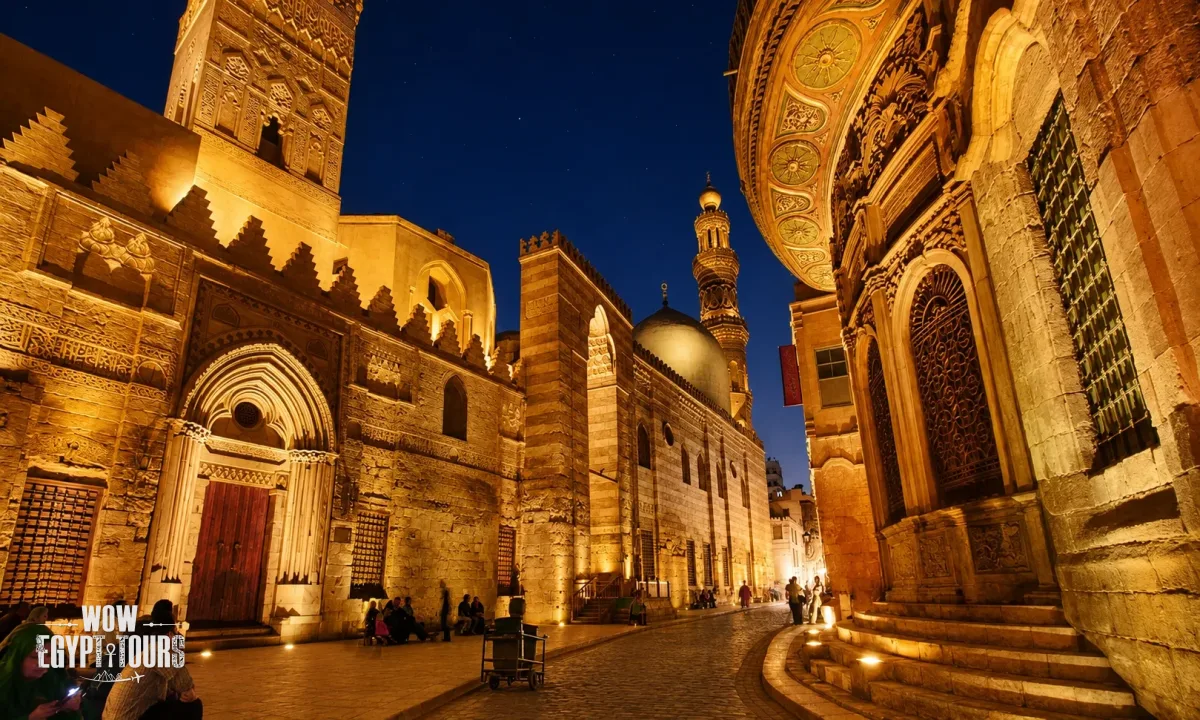
The street was fully pedestrianized and comprehensively restored through a major Egyptian government urban heritage conservation programme completed in the early 21st century that removed the motor vehicle traffic that had previously used the ancient thoroughfare, restored the paving, stabilized the monument facades, improved the visitor lighting for the extraordinary evening ambience that makes El Moez Street one of the most personally extraordinary and the most atmospherically beautiful heritage walks available in any major city in the world after dark, and established the most visitor-friendly heritage management framework of any comparable medieval Islamic urban corridor in the complete African and Middle Eastern heritage landscape. The evening El Moez Street experience, when the restored facades of the ancient mosques, madrasas, and palaces are illuminated by the carefully positioned heritage lighting of the restoration programme and the street's pedestrian character allows the most leisurely and the most personally contemplative engagement with the extraordinary medieval Islamic architectural heritage in the most completely atmospheric and the most personally affecting natural-light-and-artificial-light combined heritage environment available at any Islamic heritage destination in Cairo, is one of the most universally and most enthusiastically recommended heritage experiences of any visitor to the Egyptian capital and one of the most frequently cited as a highlight of the complete Cairo travel experience in every generation of international heritage traveler since the restoration programme's completion.
The Qalawun complex on El Moez Street, built by the Mamluk Sultan Qalawun between 1284 and 1285 CE, contains the most extraordinary single architectural space accessible within any monument on the complete street, a hospital whose specific function as the most advanced and the most completely equipped medical institution in the complete medieval Islamic world attracted patients from throughout the Islamic world and Europe and whose organizational sophistication and medical specialization exceeded anything available in contemporary European or Byzantine medicine, giving the El Moez Street heritage programme a dimension of medieval Islamic scientific and medical achievement entirely complementary to the primarily religious and artistic character of most other monuments on the street and entirely appropriate to a monument whose patron, the Mamluk Sultan Qalawun, was simultaneously one of the most militarily powerful and the most personally cultured of all the Mamluk sultans whose extraordinary architectural patronage gives El Moez Street its most celebrated and its most chronologically concentrated medieval Islamic architectural heritage.
Why Is It Called El Moez Street?
El Moez Street takes its name from the Fatimid Caliph al-Muizz li-Din Allah, whose title in Arabic translates as He Who Makes Mighty the Religion of God, and whose political authority and military power made possible the Fatimid conquest of Egypt in 969 CE and the subsequent foundation of the new Islamic capital of Al-Qahira on the eastern bank of the Nile north of the ancient capital of Memphis and the earlier Islamic city of Fustat. The Arabic colloquial pronunciation of the street's name as El Moez rather than Al-Muizz reflects the standard Egyptian Arabic phonological simplification of the classical Arabic caliphal title, a linguistic adaptation that is entirely consistent with the Egyptian Arabic tradition of phonologically simplifying complex classical Arabic names and titles into more naturally flowing colloquial forms without changing the essential historical reference of the designation. The complete formal name Al-Muizz li-Din Allah al-Fatimi Street is used in official Egyptian government documents and in the formal academic Egyptological and Islamic architectural scholarship literature that deals with the street and its monuments, while El Moez Street or simply El Moez has become the universal colloquial and international tourism designation for this most celebrated of the Islamic Cairo historic streets in every practical context from tour guide narratives to international travel journalism to UNESCO heritage management documentation.
El Moez Street Key Attractions And Features
Bab Al-Futuh And Bab Al-Nasr: The Northern Gates Of Fatimid Cairo
The Bab al-Futuh, the Gate of Conquests, and the Bab al-Nasr, the Gate of Victory, the two massive stone-built northern gateways of the original Fatimid walled city of Al-Qahira that mark the northern terminus of El Moez Street's heritage corridor, are the most completely preserved and the most technically extraordinary examples of medieval Islamic military defensive architecture accessible at any heritage site in the complete Egyptian urban landscape, massive structures of beautifully cut stone whose specific construction technique of finely dressed ashlar masonry in large interlocking blocks reflects the specific expertise of the Armenian architects from the Byzantine and Crusader architectural tradition whom the Fatimid general Badr al-Jamali brought from Syria to design and build the new northern fortifications of the Islamic Egyptian capital in 1087 CE. The Bab al-Futuh's circular towers flanking the grand arched gateway and the Bab al-Nasr's square towers flanking its own gateway create two dramatically different medieval Islamic gateway compositions within meters of each other in the most immediately extraordinary gateway heritage encounter available at any accessible Islamic Cairo heritage site, giving the northern approach to El Moez Street the most dramatically architecturally powerful entry point of any medieval Islamic urban heritage walk available in the complete Egyptian urban heritage landscape. The interior of the city wall section connecting the two gates can be walked by visitors with a licensed guide, providing a unique elevated perspective on the medieval Islamic urban fabric of the historic quarter below and the most direct physical encounter with the medieval Islamic defensive architecture tradition that the complete Fatimid city wall system represents in its most accessible and its most personally affecting surviving form.
The Mosque Of Al-Hakim Bi-Amr Allah
The Mosque of Al-Hakim bi-Amr Allah, built between 990 and 1013 CE under the patronage of the third and the most historically controversial of the Fatimid Caliphs of Egypt, whose extraordinary personality combined extraordinary religious scholarship, extraordinary philosophical speculations about his own divine nature, and episodes of extraordinary public behavior that have made him one of the most fascinating and the most personally compelling figures in the complete history of the Fatimid caliphate, is the most historically significant and the most completely preserved of the Fatimid period mosques on El Moez Street, a building of considerable architectural grandeur whose two distinctive corner towers flanking the northern facade give it the most immediately recognizable architectural silhouette of any Fatimid mosque monument accessible in the historic Islamic Cairo heritage zone. The mosque's extraordinary historical biography encompasses the most dramatic range of post-construction uses available at any single Islamic monument in the complete Cairo heritage landscape, having served at different periods of its long history as a prison for Crusader captives during the medieval period, as a stable and a storage facility, as a Napoleonic-era garrison and later warehouse, and ultimately as its present restored state as an active Ismaili Dawoodi Bohra mosque whose remarkable full restoration funded by the Ismaili Dawoodi Bohra community of India in the late 20th century gives the monument the most completely realized and the most visually extraordinary restoration of any Fatimid mosque monument in the complete Islamic Cairo historic district. The restored interior, with its restored mihrab, its restored wooden minbar, and its extraordinary Fatimid decorative programme recreated in the most faithful available reproduction of the original architectural character, provides visitors with the most complete and the most personally affecting encounter with the interior architectural quality of the Fatimid mosque tradition available at any accessible heritage site in the complete Islamic Cairo landscape.
The Mosque Of Al-Aqmar: The Moonlit Mosque
The Mosque of Al-Aqmar, whose Arabic name means the Moonlit or the Silver Moon and refers to the extraordinary quality of the pale limestone of its front facade that gives the building a distinctive luminosity in the moonlight and the artificial lighting of the evening heritage walk, is one of the oldest and the most architecturally extraordinary of all the Fatimid period mosques in the complete Islamic Cairo heritage landscape, built in 1125 CE under the Fatimid Caliph al-Amir bi-Ahkam Allah and representing the most completely preserved and the most immediately personally affecting example of the specifically Fatimid carved stone mosque facade tradition whose extraordinary decorative programme of geometric and epigraphic stone carving gives the Al-Aqmar facade its most distinctive and its most universally admired architectural character in the complete El Moez Street heritage experience. The Al-Aqmar facade is the oldest surviving example of a stone-carved decorative mosque facade in the complete Egyptian Islamic architectural heritage record, a distinction whose specific historical significance places the building at the beginning of the most important single architectural development in the complete medieval Islamic Egyptian building tradition, the elaboration of the mosque facade from a simple functional enclosing wall into the most sophisticated and the most beautifully decorated element of the complete mosque architectural programme whose subsequent development in the extraordinary Mamluk mosque facades of the El Moez Street corridor gives the complete street its most immediately beautiful and its most personally affecting sequence of architectural decorative experiences available in the complete Islamic Cairo urban heritage landscape. The Al-Aqmar's distinctive architectural feature of an offset interior orientation to Mecca achieved through the specifically angled arrangement of the facade relative to the interior prayer hall demonstrates the earliest surviving example of the sophisticated architectural planning technique that resolved the standard urban challenge of aligning a mosque's interior properly toward Mecca while maintaining the mosque facade's alignment with the pre-existing urban street grid in the most clever and the most architecturally elegant manner available to the medieval Islamic urban architect.
The Qalawun Complex
The Qalawun Complex, built by the powerful Mamluk Sultan Qalawun between 1284 and 1285 CE in a construction period of extraordinary speed and organizational efficiency whose specific rapidity has impressed every generation of architectural historians who have studied the monument, is the most comprehensive and the most architecturally distinguished of all the Mamluk sultan complexes on El Moez Street, a multi-functional religious and charitable endowment whose components encompass a madrasa, a mausoleum, and a bimaristan (hospital) in the most complete and the most personally extraordinary surviving example of the distinctively Mamluk tradition of combining multiple institutional functions within a single architecturally unified complex. The Qalawun Complex's mausoleum is the most personally affecting and the most architecturally extraordinary interior space accessible within any monument on El Moez Street, a domed chamber of extraordinary spatial quality whose interior decorative programme of carved and painted stucco, colored marble revetment in geometric patterns of exceptional refinement, and the extraordinary stained glass windows whose colored light plays across the polished marble surfaces of the interior gives the space a quality of sacred architectural beauty and personal atmospheric impact whose specific combination of visual richness and spatial serenity is unlike anything available in any other accessible Islamic monument interior in the complete Cairo heritage landscape. The bimaristan of the Qalawun Complex, the medieval Islamic hospital whose functional programme of specialized medical wards for different categories of patient, a pharmacy, separate wards for men and women, a dedicated mental health treatment facility, and an outpatient consultation service made it the most organizationally sophisticated and the most medically advanced medical institution in the complete medieval Islamic world and whose charitable endowment provided free medical care to all patients regardless of their social status or their financial means, gives the Qalawun Complex a dimension of medieval Islamic social and scientific achievement that is simply without parallel at any other accessible heritage monument in the complete Egyptian Islamic architectural landscape.
The Madrasa And Mausoleum Of Sultan Barquq
The Madrasa and Mausoleum of Sultan Barquq, built in 1386 CE by the first sultan of the Circassian Mamluk line whose accession to power began the most culturally productive and the most architecturally ambitious final phase of the complete Mamluk sultanate's extraordinary 267-year history as the primary political and cultural authority in Egypt, is the first Mamluk sultan's monument to be built within the El Moez Street corridor itself rather than in the adjacent cemetery districts of the Southern and Northern Cities of the Dead where most earlier and later Mamluk royal mausoleums were located, giving the Barquq Complex a specific historical position as the monument that most directly and most personally established the Mamluk tradition of royal architectural patronage within the El Moez Street processional corridor and that gave the complete street its most important single architectural statement of the later Mamluk period's specifically royal engagement with the ancient Fatimid processional axis as a stage for the demonstration of Mamluk cultural authority and architectural ambition. The Barquq Complex's extraordinary facade of alternating white limestone and black basalt courses in the distinctive Mamluk ablaq decorative masonry tradition, the extraordinary carved stone portal of exceptional refinement and decorative elaboration, and the extraordinary interior courtyard with its four iwans in the most completely realized Mamluk cruciform mosque plan give the monument a quality of architectural distinction and personal visual impact that gives it its most celebrated position as the finest individual Mamluk sultan complex monument on the complete El Moez Street heritage corridor.
The Sabil-Kuttab Of Abd Al-Rahman Katkhuda
The Sabil-Kuttab of Abd al-Rahman Katkhuda, built in 1744 CE during the Ottoman period of Egyptian Islamic history by one of the most important architectural patrons of the late Ottoman era in Cairo, is the most celebrated and the most architecturally distinguished of the several sabil-kuttab monuments on El Moez Street, a combined charitable water dispensary and Quranic school building whose elegant curved facade of finely carved stone, whose distinctive Ottoman-style grilled bronze windows through which water was distributed to passersby, and whose upper-floor Quranic school whose carved wooden ceiling and tile-decorated interior represent the most refined and the most personally beautiful surviving example of the specifically Ottoman Egyptian decorative tradition give the Abd al-Rahman Katkhuda Sabil-Kuttab a quality of architectural elegance and personal intimate scale that provides the most complete and the most immediately affecting contrast to the monumental scale of the great Mamluk sultan complexes that surround it on both sides of the El Moez Street corridor. The Sabil-Kuttab's specific position at the junction of El Moez Street with the lateral street leading to the Khan El Khalili market area gives it the most strategically significant location of any individual monument on the complete street, and its junction-marking architectural form whose curved facade was designed specifically to address both street frontages simultaneously makes it the most urbane and the most contextually sophisticated single architectural response to the specific challenge of the irregular medieval Islamic urban intersection available at any accessible heritage site in the complete historic Cairo quarter.
Bab Zuweila: The Southern Gate And The Muwaqqar Minaret View
The Bab Zuweila, the Gate of Zuweila, the most completely preserved and the most personally extraordinary of the three surviving original gates of the Fatimid walled city of Al-Qahira, marks the southern terminus of the El Moez Street heritage corridor and provides the most dramatically powerful and the most completely architecturally extraordinary single monument encounter of the complete street walk in the form of its massive paired circular towers flanking the great arched gateway in the most imposing single gateway composition of any medieval Islamic monument accessible in the complete Egyptian urban heritage landscape. The Bab Zuweila's specific historical significance as the ceremonial entry point of Fatimid and Mamluk royal processions into the city from the south, as the site of public executions and extraordinary public spectacles in the Mamluk period, and as the location where the last Mamluk Sultan Tumanbay was hanged by the Ottoman conqueror Selim I in 1517 CE in the most consequential single political execution in the complete history of the Mamluk sultanate, gives the gate a layer of human historical drama and political consequence that is unlike anything available at any other monument on the complete El Moez Street corridor. The most extraordinary feature of the Bab Zuweila experience available to visitors is the ascent of the twin minarets of the adjacent Mosque of Mu'ayyad Sheikh that rise from the gate's towers in the most dramatic and the most visually extraordinary minaret-above-gate architectural composition in the complete Islamic Cairo historic district, giving visitors who make the physically manageable ascent to the minaret galleries the most completely extraordinary panoramic view of the historic Islamic Cairo quarter available at any accessible elevated viewpoint in the complete heritage zone, a 360-degree panorama of the medieval Islamic urban fabric of the historic city extending in every direction to the modern Cairo skyline beyond whose specific combination of medieval minarets, historic domes, and modern towers creates the most personally extraordinary and the most atmospherically complete urban panorama available at any elevated heritage viewpoint in the complete Egyptian capital.
Qasr Bashtak Palace
The Qasr Bashtak Palace, the most completely surviving secular palace monument on El Moez Street and one of the most completely preserved secular Mamluk architectural monuments accessible at any heritage site in the complete Islamic Cairo heritage district, was built in the early 14th century CE by the Mamluk Amir Bashtak, one of the most powerful and the most personally colorful of the non-royal Mamluk military aristocracy whose extraordinary wealth and personal ambition expressed in a palatial residential complex of five floors overlooking the El Moez Street processional corridor in the most assertively public architectural statement of non-royal Mamluk private patronage available at any accessible secular heritage building in the complete Islamic Cairo landscape. The palace's surviving interior spaces, including the extraordinary reception hall whose decorated wooden ceiling, whose marble floor, and whose mashrabiyya screen windows with their extraordinary geometric carved woodwork give it a quality of Mamluk secular interior decoration that is the most completely realized and the most personally affecting example of the Mamluk palatial domestic interior tradition accessible to visitors at any heritage site in the complete Islamic Cairo historic district, provide the most direct and the most personally affecting encounter with the private rather than the public dimension of the Mamluk architectural tradition available on El Moez Street, giving the complete street walk its most important secular architectural complement to the predominantly religious and charitable monuments that constitute the primary heritage programme of the complete El Moez Street corridor.
The Al-Ghuri Complex
The Al-Ghuri Complex at the southern end of El Moez Street, built between 1504 and 1505 CE by the penultimate Mamluk Sultan of Egypt Qansuh al-Ghuri, is the last major Mamluk royal architectural complex to be built in the historic Islamic Cairo quarter before the Ottoman conquest of 1517 CE ended the Mamluk sultanate and with it the extraordinary Mamluk tradition of competitive royal architectural patronage on El Moez Street whose cumulative legacy gives the complete street its most celebrated and its most internationally recognized medieval Islamic architectural character. The Al-Ghuri complex encompasses a mosque-madrasa, a mausoleum, a caravanserai, and a sabil-kuttab in the most complete surviving Mamluk multi-functional complex on the southern El Moez Street, whose specific position at the junction between El Moez Street proper and the adjacent street leading to the Al Azhar Mosque gives it the most commercially and the most ceremonially significant location of any Mamluk complex on the complete El Moez Street heritage corridor. The Al-Ghuri mosque's extraordinary red-and-white striped minaret, visible from the Al Azhar square approach that most visitors use to enter El Moez Street from the south, is one of the most distinctive and the most immediately personally recognizable single architectural elements in the complete Islamic Cairo skyline, a minaret whose specifically unusual striped decorative programme and whose specific late Mamluk architectural character make it the most visually distinctive Islamic minaret monument on the complete El Moez Street heritage corridor. The Al-Ghuri caravanserai, now converted into an extraordinary cultural centre hosting the most celebrated Egyptian folklore performance, the Tanoura whirling dervish show, provides visitors with the most directly personal and the most immediately engaging encounter with the living Egyptian Islamic cultural performance tradition available at any accessible heritage venue in the complete Islamic Cairo district.
The Whirling Dervish Show At Al-Ghuri
The Tanoura whirling dervish performance hosted in the Al-Ghuri caravanserai, performed on specific evenings each week in the most historic and the most atmospherically extraordinary venue available for traditional Egyptian Islamic performing arts in the complete Cairo cultural heritage landscape, is one of the most personally extraordinary and the most completely affecting live cultural heritage performances accessible to international visitors at any venue in the complete Egyptian heritage tourism landscape, a traditional Sufi spiritual practice of rhythmic spinning and musical devotion whose specific performance in the extraordinary medieval architectural environment of the Al-Ghuri caravanserai, surrounded by the ancient stone arches and the historic Islamic architectural heritage of the oldest Islamic art venue in the complete Egyptian capital, gives the traditional Sufi whirling dervish performance a quality of atmospheric authenticity and personal spiritual engagement that is simply not available at any comparable performance venue in the modern Cairo entertainment landscape. The specific schedule and the specific admission arrangements for the Tanoura performance at Al-Ghuri should be confirmed at time of booking with WOW Egypt Tours, as the performance schedule varies seasonally and is subject to public holiday adjustments.
Why Is El Moez Street Important?
El Moez Street is important for reasons spanning the complete history of the medieval Islamic civilization of Egypt, the specific architectural history of the Fatimid, Ayyubid, Mamluk, and Ottoman building traditions in their most concentrated and their most personally accessible surviving urban expression, the UNESCO World Heritage significance of the historic Islamic Cairo district as the most completely preserved medieval Islamic city in the complete world heritage record, and the broader cultural significance of El Moez Street as the primary urban embodiment of Cairo's historic identity as the most important Islamic city of the medieval Mediterranean and Middle Eastern world. As an architectural heritage site, El Moez Street provides the most completely extraordinary and the most personally overwhelming single-street encounter with the complete spectrum of the medieval Islamic Egyptian architectural tradition available at any accessible heritage destination in the African and Middle Eastern world, whose specifically sequential architectural experience of walking from the Fatimid northern gates through the complete Mamluk architectural heritage to the Ottoman period monuments of the southern end gives every visitor the most directly personal and the most chronologically complete education in the medieval Islamic Egyptian architectural tradition available in any accessible urban heritage format in the complete world heritage landscape. WOW Egypt Tours includes El Moez Street as an essential cultural heritage destination in all comprehensive Cairo Tours, Egypt Classic Tours, and all Egypt Tour Packages encompassing the extraordinary Islamic heritage of the Egyptian capital.
What Are Some Interesting Facts About El Moez Street?
The World's Highest Concentration Of Medieval Islamic Monuments
El Moez Street's UNESCO World Heritage designation specifically acknowledges its character as the single street anywhere in the world with the highest density of medieval Islamic architectural monuments, a distinction whose specific archaeological and architectural basis in the actual physical count of individually significant historic monuments within the street's approximately one-kilometer length is as completely verifiable and as immediately personally legible as any heritage superlative in the complete world heritage vocabulary. The specific density of approximately one major historic monument for every 35 meters of street frontage, combined with the extraordinary chronological range of those monuments from the 987 CE founding of the Al-Hakim Mosque through the extraordinary Mamluk heritage of the 13th to 16th centuries to the 18th century Ottoman sabil-kuttabs, gives El Moez Street a quality of architectural heritage accumulation and heritage variety that is genuinely unprecedented in the complete global heritage landscape of medieval Islamic cities, making it the most architecturally educational and the most personally extraordinary single medieval Islamic urban heritage walk available to any heritage traveler at any accessible Islamic heritage destination in the world.
The Hospital That Led The Medieval World In Medicine
The bimaristan of Sultan Qalawun's 1285 CE complex on El Moez Street was at the time of its founding the most organizationally sophisticated and the most medically advanced hospital in the complete medieval world, Islamic or otherwise, whose specific organizational features of specialized wards for different disease categories, a dedicated pharmacy of extraordinary completeness, separate wings for male and female patients, a specifically organized mental health treatment facility that applied music therapy and other non-restraint approaches to the treatment of psychological disturbance, a free outpatient consultation service available to anyone regardless of social status or financial means, and an education programme for medical students whose practical clinical training in the hospital wards established the most systematic medical education tradition in the complete medieval Islamic world, gave the Qalawun hospital a character of medical institutional excellence and social charitable commitment that was literally without parallel at any comparable institution in contemporary European or Byzantine civilization and that made it the most visited and the most internationally celebrated medical institution of the complete medieval period among the European, Byzantine, and Islamic physicians, scholars, and travelers who documented it in their writings over the two centuries of its most active medical operation.
The Last Mamluk's Final Walk
The Bab Zuweila, the southern gate that marks the terminus of the El Moez Street heritage corridor, was the site of one of the most consequential and the most personally dramatic single events in the complete history of medieval Islamic Egypt: the public hanging of the last Mamluk Sultan of Egypt, Tumanbay, by the Ottoman Sultan Selim I in 1517 CE in the immediate aftermath of the Ottoman conquest that ended the 267-year Mamluk sultanate and permanently transformed the political and cultural landscape of Egypt. The specific historical narrative of Tumanbay's capture after the decisive Ottoman military victory, his transport to Cairo, and his public execution at the Bab Zuweila in front of the population of the city whose rulers he had been for the brief period of his sultanate before the Ottoman advance overwhelmed his military forces gives the Bab Zuweila a dimension of historical human drama and political historical consequence that is simply unavailable at any other single point on the complete El Moez Street heritage corridor, making the gate's visit not simply an encounter with extraordinary medieval Islamic military architecture but a direct physical encounter with the most consequential moment in the complete political history of the medieval Islamic Egyptian capital.
What Is So Special About El Moez Street?
A Living Walk Through A Thousand Years Of Islamic History
What makes El Moez Street uniquely and incomparably special among all the heritage destinations of the Islamic Cairo district, and among all the heritage destinations of the complete Egyptian capital, is the extraordinary quality of a living historical walk in which the passage from the Bab al-Futuh northern gate to the Bab Zuweila southern gate traverses in physical movement through actual urban space the complete chronological sequence of a thousand years of Islamic architectural patronage in Egypt, from the earliest Fatimid monuments of the late 10th and 11th centuries through the extraordinary Mamluk cultural flowering of the 13th to 16th centuries to the Ottoman period monuments of the 18th century, in the most completely organized and the most personally affecting single heritage walk available at any Islamic heritage destination in the complete world heritage landscape. The specific quality of this walking historical sequence, in which the visitor moves through chronological time as they move through urban space, gives El Moez Street a heritage experience dimension that no museum collection however beautifully organized, no architectural publication however comprehensively documented, and no scholarly lecture however expertly delivered can replicate in the same immediately personal and the same physically immediate form as the actual walk along the ancient stone-paved thoroughfare whose specific succession of architectural monuments in their specific chronological order gives the complete walk its most directly educational and its most personally affecting heritage encounter quality.
The Most Atmospheric Evening Heritage Walk In Cairo
El Moez Street is also uniquely special for the extraordinary quality of its evening heritage experience, the specific atmospheric character of the pedestrianized ancient thoroughfare illuminated by the heritage lighting programme whose warm amber light on the carved stone facades of the ancient mosques, madrasas, and palaces creates the most personally extraordinary and the most completely affecting medieval Islamic urban atmosphere available at any accessible heritage destination in the complete Egyptian capital. The evening walk along El Moez Street from the Bab al-Futuh to the Bab Zuweila in the warm light of the heritage illumination, with the street's relatively modest commercial activity creating the most lively and the most humanly animated ancient market street atmosphere available at any evening heritage walk in the complete Cairo Islamic heritage district, and with the extraordinary succession of illuminated medieval monuments creating a sequence of architectural revelation and personal aesthetic impact that gives the complete evening walk a quality of personal heritage intensity and personal atmospheric beauty that the daytime visit, however historically rewarding, cannot quite replicate in the same atmospheric and the same immediately sensory form, is one of the most consistently described and the most universally recommended heritage experiences of Cairo in the complete international heritage tourism literature and one of the most frequently cited highlights of the complete Egyptian heritage journey in the travel accounts of every generation of sophisticated international heritage travelers who have experienced it since the street's comprehensive restoration and pedestrianization.
El Moez Street Through The Ages
The complete narrative of El Moez Street from the Fatimid founding of Al-Qahira in 969 CE and the establishment of the processional axis that became the street through the extraordinary Mamluk period of competitive royal architectural patronage, through the Ottoman transformation of 1517 and the progressive addition of Ottoman charitable architectural forms, through the 19th and 20th century decades of relative neglect and progressive physical deterioration, to the comprehensive modern restoration programme of the early 21st century that transformed the street into the most visitor-friendly and the most completely restored medieval Islamic heritage corridor in the complete Egyptian urban heritage landscape, traces one of the most extraordinary and the most personally consequential urban heritage biographies available at any single street in the complete world heritage record, a biography whose most recent chapters of systematic restoration and heritage management represent the most significant and the most personally consequential investment in the physical fabric and the visitor accessibility of the Islamic Cairo heritage that has been made in the complete modern history of Egyptian heritage conservation, giving the contemporary visitor an experience of El Moez Street that is simultaneously the most historically authentic and the most personally comfortable and the most practically accessible that any generation of heritage visitors to the ancient thoroughfare has ever been able to enjoy.
El Moez Street And UNESCO
El Moez Street is protected as the primary architectural heritage element of the UNESCO World Heritage Site designated in 1979 as Historic Cairo, recognized as a heritage of outstanding universal value for the extraordinary concentration of medieval Islamic architectural monuments in the historic core of Cairo that includes El Moez Street, the Khan El Khalili historic bazaar, the Al Azhar Mosque and University, and the complete surrounding historic quarter whose combined heritage gives Cairo its most important and its most internationally recognized Islamic heritage identity. The UNESCO Historic Cairo inscription specifically acknowledges El Moez Street as the embodiment of the outstanding universal value of the complete historic Islamic Cairo heritage zone, identifying the street's extraordinary density of medieval Islamic architectural monuments as the primary justification for the heritage designation's claim of outstanding universal value on behalf of the complete historic district. The Egyptian government and the UNESCO World Heritage Committee are engaged in ongoing collaboration on the conservation management of the complete Historic Cairo heritage zone including El Moez Street, addressing the specific challenges of conserving extraordinary medieval Islamic monuments within a densely populated and continuously inhabited historic urban district whose specific social and economic dynamics create the most complex and the most personally consequential heritage management challenges of any comparable historic urban heritage zone in the complete African and Middle Eastern world heritage landscape.
Best Time To Visit El Moez Street
El Moez Street is one of the most completely year-round accessible heritage destinations in the complete Cairo heritage landscape, with its pedestrianized and covered or semi-covered architectural heritage providing a degree of natural shade and shelter from the sun that makes it significantly more comfortable in the summer months than the completely exposed outdoor pyramid and desert sites of the Greater Cairo area. The most strongly recommended visiting period is the late afternoon from approximately 4:00 PM onwards through the evening, when the reducing daylight heat of the Egyptian afternoon makes outdoor walking most comfortable and when the progressive illumination of the heritage lighting programme as the natural light fades creates the most extraordinary and the most personally affecting architectural atmosphere of any time in the complete daily cycle. The evening visit from approximately 7:00 PM to 10:00 PM provides the most completely extraordinary and the most personally memorable El Moez Street experience of any available visiting time, with the heritage lighting at its most dramatic and the street's commercial and social activity at its most animated and its most humanly engaging. Morning visits from approximately 9:00 AM to noon are also excellent for the most complete photographic coverage of the monument facades in the natural light and for the most manageable visitor density at the most popular individual monument sites including the Qalawun mausoleum interior and the Bab Zuweila minaret ascent. The months of October through April provide the most comfortable daytime temperatures for the complete El Moez Street walk. WOW Egypt Tours organizes El Moez Street visits at the optimal time within the complete Islamic Cairo heritage day programme.
El Moez Street Opening Hours
El Moez Street itself as a public thoroughfare is accessible at all hours throughout the year. The individual monument interiors on El Moez Street generally follow visiting hours of approximately 9:00 AM to 5:00 PM for the primary historic monuments including the Qalawun Complex, the Barquq Complex, and the Al-Hakim Mosque. The Bab Zuweila and the Mu'ayyad Sheikh Mosque minaret ascent are accessible during similar daytime hours with a separate entry fee. The Al-Ghuri Tanoura whirling dervish performance has a specific weekly schedule whose current days and times should be confirmed at time of booking with WOW Egypt Tours. All individual monument visiting hours are subject to adjustment for Islamic religious observances including Friday prayer times and the complete schedule of Islamic holidays, and current access arrangements should be confirmed at time of booking.
El Moez Street Entrance Fees
El Moez Street itself as a public thoroughfare has no entrance fee. Individual monument interiors carry separate admission fees whose specific current amounts should be confirmed at time of booking with WOW Egypt Tours as fees are subject to periodic revision. The primary fee-bearing monuments include the Qalawun Complex interior, the Barquq Complex interior, the Bab Zuweila and Mu'ayyad Mosque minaret ascent, and the Qasr Bashtak palace interior. Several monuments on El Moez Street are freely accessible without any admission fee including the Al-Hakim Mosque and the Al-Aqmar Mosque as active places of worship. All El Moez Street monument entrance fees are included in the Cairo Tours and Egypt Tour Packages organized by WOW Egypt Tours. The Al-Ghuri Tanoura performance admission is included in the organized programme where applicable.
How To Get To El Moez Street
El Moez Street is located in the historic Islamic Cairo district approximately 3 to 4 kilometers east of the Egyptian Museum in Tahrir Square and approximately 2 to 3 kilometers northeast of central Cairo, accessible by taxi or private vehicle in approximately 15 to 20 minutes from most Cairo city center hotels, by the Cairo Metro to Al-Azhar station and then a 5 to 10 minute walk through the historic quarter, or by the organized private vehicle transportation provided by WOW Egypt Tours as part of the complete Islamic Cairo heritage programme. The most naturally combined approach to El Moez Street from the Khan El Khalili direction is through the historic Bab al-Ghuri entrance near the Al-Ghuri Complex at the street's southern end, and the most dramatic approach is from the northern Bab al-Futuh end where the massive Fatimid city wall gates create the most powerful architectural entry point to the complete El Moez Street heritage walk. The private vehicle organized by WOW Egypt Tours provides the most practically efficient and the most organizationally seamless approach to the complete Islamic Cairo heritage programme combining El Moez Street with all adjacent attractions.
How Long To Spend On El Moez Street
A minimum of two hours on El Moez Street is required for a programme that covers the complete street walk from Bab al-Futuh to Bab Zuweila with stops at the most important individual monument exteriors, the Qalawun mausoleum interior, the Barquq Complex courtyard, the Al-Aqmar facade, and the Bab Zuweila gate approach. A more completely satisfying El Moez Street programme of three to four hours allows the most thorough engagement with all primary monument interiors including the Qalawun Complex mausoleum, the Barquq Complex, the Qasr Bashtak palace interior, the Bab Zuweila and Mu'ayyad minaret ascent, and the Al-Ghuri complex, plus adequate time for the most contemplative and the most personally rewarding individual exploration of the street's architectural character at the most characteristic and the most personally extraordinary individual viewpoints. El Moez Street is most naturally and most efficiently combined with the Khan El Khalili bazaar, the Al Azhar Mosque, and the Saladin Citadel in the most comprehensive Islamic Cairo heritage day programme organized by WOW Egypt Tours.
Tips For Visiting El Moez Street
Begin the El Moez Street walk from the northern Bab al-Futuh end for the most chronologically organized and the most architecturally educational heritage experience, walking southward through the Fatimid monuments first and then through the progressive Mamluk and Ottoman architectural heritage to the Bab Zuweila southern terminus in the most historically coherent and the most personally instructive sequence of the complete street walk. Ask your licensed guide from WOW Egypt Tours to ascend the city wall section between the two northern gates for the most extraordinary elevated view of the historic quarter and the most direct physical encounter with the Fatimid defensive architecture tradition. Dedicate the most time and the most careful attention to the Qalawun Complex mausoleum interior, asking your guide specifically to explain the medieval Islamic hospital's organizational sophistication and its specific medical specializations before entering the mausoleum, as the combination of the extraordinary decorated interior space with the specific narrative of the medieval Islamic medical achievement that the same complex embodied gives the Qalawun visit the most complete and the most personally enriching heritage encounter of any individual monument on the complete El Moez Street corridor. Do not miss the Bab Zuweila minaret ascent, which provides the most extraordinary panoramic view of the historic Islamic Cairo quarter from the most dramatically positioned elevated viewpoint in the complete heritage zone. For the most atmospherically extraordinary personal El Moez Street experience, arrange with WOW Egypt Tours to conclude the complete Islamic Cairo heritage day programme with an evening return to El Moez Street after the main daytime visits, experiencing the street in the extraordinary artificial illumination of the heritage lighting programme whose specific quality of warm amber light on the medieval stone facades creates the most personally unforgettable and the most atmospherically complete medieval Islamic heritage atmosphere available at any accessible heritage destination in the complete Egyptian capital.
What To Wear On El Moez Street
El Moez Street is an Islamic heritage district in which conservative modest clothing is strongly recommended as a matter of both cultural respect and practical visitor appropriateness for entering the active religious and educational institutions that constitute the primary heritage monuments of the street. Clothing covering the shoulders, the arms, and the knees is required for entry into all active mosques on the street including the Al-Hakim Mosque and the Al-Aqmar Mosque, and is strongly recommended throughout the complete El Moez Street walk as the most appropriate and the most personally respectful approach to visiting an active Islamic urban heritage district. Women are required to cover their hair for entry into active mosque interiors and may be provided with head coverings at the mosque entrance if not bringing their own. Comfortable walking shoes with good support are essential for the complete El Moez Street walk whose ancient stone paving, while generally well restored, includes sections of uneven surface that require more robust footwear than light sandals or fashion shoes. The evening walk is most comfortable in light layers as the Cairo evening can be noticeably cooler than the afternoon, particularly in the winter months from November through February when the evening temperature in the historic quarter can be refreshingly cool after a warm winter day. Carry adequate water as the street's refreshment facilities, while available at various commercial points along the route, may not always be at the most convenient point in the walk programme.
Photography On El Moez Street
El Moez Street provides the most photographically extraordinary and the most personally distinctive Islamic heritage photography subjects of any urban heritage destination in the complete Greater Cairo area, encompassing the remarkable sequence of medieval Islamic monument facades in the natural daylight photography of the morning and midday hours, the extraordinary Qalawun mausoleum interior with its colored marble revetment and stained glass windows providing the most richly decorated and the most personally beautiful single Islamic interior heritage photography subject accessible at any monument on the complete street, the dramatic Bab al-Futuh and Bab Zuweila gateway compositions in the most spectacular medieval Islamic military architecture photography available at any accessible heritage site in the complete Egyptian urban landscape, and the extraordinary evening illumination photography whose warm amber light on the ancient carved stone facades of the succession of medieval mosques, madrasas, and palaces creates the most completely extraordinary and the most personally distinctive medieval Islamic urban night photography subjects available at any accessible heritage destination in the complete African and Middle Eastern world. Photography for personal non-commercial purposes is generally permitted throughout El Moez Street including all exterior monument facades and most accessible interior spaces, with the specific permission of mosque staff respectfully requested before photographing interior spaces during active religious use, whose specific moments of active prayer should be respected by all visitors with or without photographic interests.
El Moez Street Tours
Complete Islamic Cairo Heritage Day: El Moez Street, Khan El Khalili, And Al Azhar
This comprehensive Islamic Cairo heritage day programme combines the most extraordinary medieval Islamic architectural heritage walk in the world on El Moez Street with the most celebrated and the most historically significant Islamic commercial bazaar in Egypt at the Khan El Khalili and the most important Islamic religious and educational institution in Africa and the Middle East at Al Azhar Mosque in the most completely satisfying and the most personally extraordinary single-day Islamic Cairo heritage programme available from any Cairo hotel base.
What Is Covered
Private vehicle from Cairo hotel with morning departure. El Moez Street complete heritage walk from Bab al-Futuh to Bab Zuweila: northern gates with city wall section, Al-Hakim Mosque exterior and interior, Al-Aqmar Mosque facade, Sabil-Kuttab of Abd al-Rahman Katkhuda, Qalawun Complex mausoleum interior with hospital narrative, Barquq Complex courtyard and facade, Qasr Bashtak palace interior, Al-Ghuri Complex, Bab Zuweila gate and Mu'ayyad minaret ascent for panoramic view. Khan El Khalili bazaar exploration with expert guide narrative of the historic Islamic commercial district. Al Azhar Mosque visit. Lunch in the historic quarter. Afternoon: optional Saladin Citadel and Muhammad Ali Mosque. Return to Cairo hotel. Optional evening: return to El Moez Street for the heritage lighting evening walk and the Al-Ghuri Tanoura performance if scheduled.
Duration
Full day from Cairo hotel, approximately 8 to 9 hours excluding the optional evening return programme.
Includes
Private vehicle, licensed Islamic Cairo guide, all monument entrance fees, lunch in the historic quarter, and all logistics. Through WOW Egypt Tours Cairo Tours.
Cairo Multi-Period Heritage: Giza Pyramids Morning And Islamic Cairo Evening
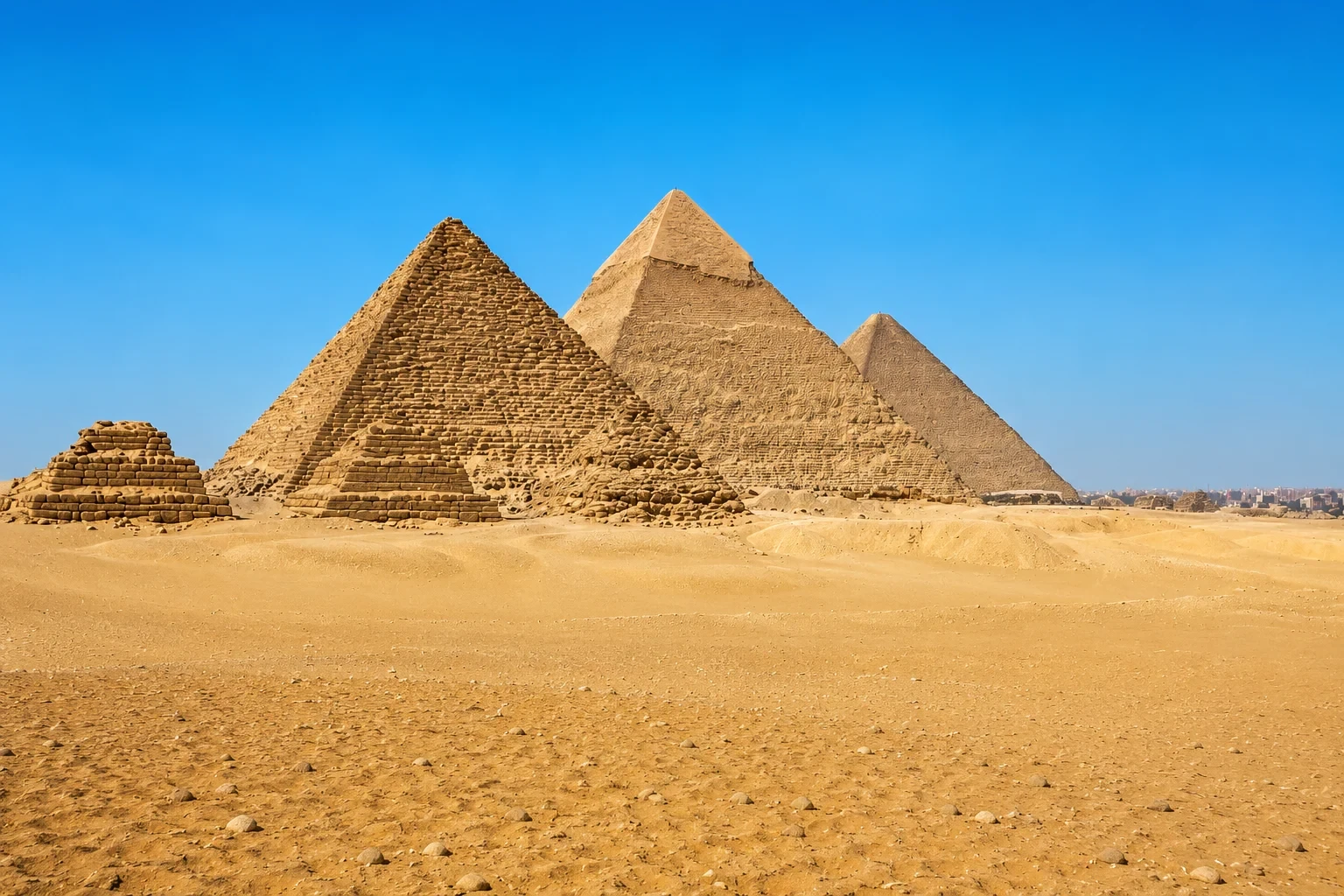
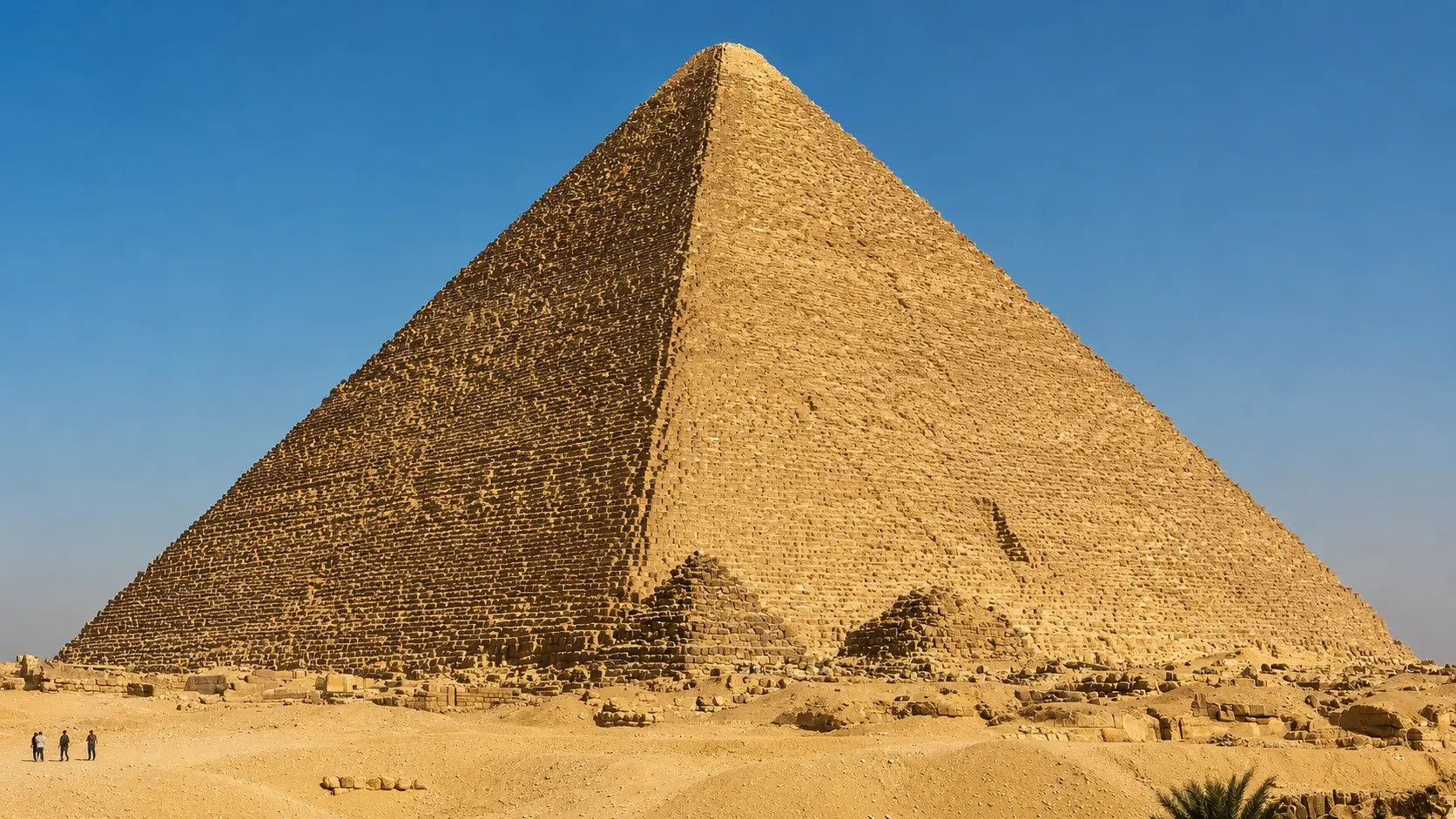
This extraordinary single-day programme combining the supreme ancient Egyptian heritage of the Giza Plateau in the morning with the supreme Islamic Egyptian heritage of El Moez Street and the Khan El Khalili in the evening gives every visitor the most completely dramatic and the most personally extraordinary single-day encounter with the complete range of the Egyptian heritage tradition, from the world's oldest ancient monuments to the world's most concentrated medieval Islamic architectural heritage, in the most naturally contrasting and the most personally enriching heritage programme available in the complete Cairo heritage landscape.
What Is Covered
Private vehicle from Cairo hotel with early morning departure. Morning: Giza Pyramids including the three pyramids, Great Sphinx, and Valley Temple. Lunch. Afternoon and evening: El Moez Street heritage walk combining the most important monument interiors with the extraordinary evening illuminated heritage walk atmosphere. Optional Khan El Khalili bazaar exploration. Return to Cairo hotel.
Duration
Full day from Cairo hotel, approximately 10 to 12 hours.
Includes
Private vehicle, licensed guide for both ancient and Islamic heritage programmes, all site and monument entrance fees, lunch, and all logistics. Through WOW Egypt Tours Cairo Tours.
Combine El Moez Street With Your Egypt Tours Package
El Moez Street is featured as an essential Islamic Cairo heritage destination across the full range of WOW Egypt Tours travel products. Browse the options below to find the Egypt experience that includes El Moez Street.
Egypt Tour Packages: Multi-day guided Egypt tours organized by duration, including 2 Days Egypt Packages, 3 Days Egypt Packages, 4 Days Egypt Packages, 5 Days Egypt Packages, 6 Days Egypt Packages, 7 Days Egypt Packages, 8 Days Egypt Packages, 10 Days Egypt Packages, and longer itineraries. El Moez Street is included in all Egypt Tour Packages of 4 days and above as the primary Islamic Cairo heritage destination, most naturally combined with the Khan El Khalili, Al Azhar Mosque, and the Saladin Citadel in the complete Islamic Cairo heritage day programme. All packages include private vehicle, licensed guide, accommodation, all monument entrance fees, and all logistics.
Egypt Travel Packages: Themed Egypt travel packages including Egypt Honeymoon Travel Packages, Egypt Budget Travel Packages, Egypt Family Travel Packages, Egypt Luxury Travel Packages, Egypt Adventure Travel Packages, Egypt Cultural Travel Packages, and Egypt Christmas and New Year Travel Packages. El Moez Street is featured in every Egypt Travel Package category as the most concentrated and the most personally extraordinary medieval Islamic heritage walk in the world, with the evening illumination programme particularly recommended in Honeymoon and Cultural themed packages.
Egypt Classic Tours: The most popular and the most comprehensively balanced Egypt travel programme, combining the complete Giza ancient heritage with the El Moez Street Islamic heritage walk, Khan El Khalili, Al Azhar, and the Saladin Citadel in Cairo, and the Nile Valley heritage of Luxor and Aswan, in the most complete and the most personally satisfying introduction to the complete Egyptian heritage available in any organized Egypt itinerary.
Egypt Short Break Tours: Focused short duration Egypt travel programmes for travelers with limited time. El Moez Street is included in Egypt Short Break Tours of 3 days and above as the primary Islamic Cairo heritage destination, with the complete street walk from Bab al-Futuh to Bab Zuweila as the most efficiently organized and the most personally extraordinary compact Islamic Cairo heritage programme available from any Cairo hotel base.
Egypt Family Tours: Family-friendly Egypt travel programmes in which El Moez Street's extraordinary medieval gateways, the minaret ascent panorama, the whirling dervish performance, and the succession of medieval Islamic monuments together provide one of the most varied and the most personally engaging heritage programmes for families with children of all ages in the complete Islamic Cairo heritage landscape.
Egypt Budget Tours: Value-focused Egypt travel programmes providing access to El Moez Street's extraordinary medieval Islamic heritage at the most economical pricing available from any professional Egyptian tour operator, with the street itself freely accessible and the most important monument interiors at very modest admission fees included in the complete Budget Tours programme.
Egypt Nile Cruises: All-inclusive Nile River Cruise programmes combining the ancient pharaonic heritage of Luxor and Aswan with Cairo extensions that include El Moez Street as part of the complete Islamic Cairo heritage programme for the most multi-period and the most personally complete Cairo heritage complement to the Nile Valley cruise experience.
Nile River Cruises: All WOW Egypt Tours Nile cruise options. El Moez Street is available as part of the Islamic Cairo heritage programme in the Cairo extension from the beginning or end of any Nile River Cruise itinerary.
Luxor Aswan Nile Cruises: El Moez Street combined with Khan El Khalili, Al Azhar, and the Saladin Citadel is the primary Islamic Cairo heritage programme for any Luxor-Aswan Nile cruise Cairo extension, providing the most completely extraordinary medieval Islamic heritage complement to the ancient pharaonic monument heritage of the Nile Valley cruise programme.
Dahabiya Nile Cruises: El Moez Street available as part of the Islamic Cairo heritage programme for travelers combining the most intimate private Nile sailing experience with the world's most concentrated medieval Islamic architectural heritage on a single street.
Lake Nasser Cruises: El Moez Street available as part of the Cairo extension for travelers combining the extraordinary Nubian heritage of Lake Nasser with the supreme medieval Islamic heritage of the Egyptian capital's most extraordinary historic thoroughfare.
Cairo Tours: The complete range of guided day tour programmes available from Cairo hotels, including the complete Islamic Cairo heritage day combining El Moez Street with the Khan El Khalili, Al Azhar Mosque, Saladin Citadel, Muhammad Ali Mosque, Sultan Hassan Mosque, and Mosque of Ibn Tulun, the combined ancient and Islamic Cairo programme combining the Giza Pyramids with the El Moez Street evening heritage walk, and the complete Cairo heritage circuit combining El Moez Street with the Coptic Cairo programme covering the Hanging Church, Coptic Museum, St George Church, St Virgin Mary Church, Amr Ibn Al-Ass Mosque, and Ben Ezra Synagogue. All Cairo Tours include private vehicle, licensed guide, all entrance fees, and all logistics organized by WOW Egypt Tours.
Nearby Attractions To El Moez Street
El Moez Street is positioned at the heart of the most extraordinary concentration of Islamic heritage in the complete Egyptian capital, surrounded in every direction by heritage destinations of the most personal significance and the most extraordinary historical depth in the complete Islamic Cairo heritage district. The most immediately proximate and the most naturally combined nearby heritage destinations are the other primary monuments of the complete historic Islamic Cairo quarter. The Khan El Khalili, the most celebrated and the most historically significant Islamic commercial bazaar in Egypt, is located immediately east of El Moez Street's southern section in a spatial relationship of such complete commercial and historical adjacency that the two destinations are inseparable in any comprehensive Islamic Cairo heritage programme, the Khan El Khalili providing the most directly engaging commercial heritage complement to the architectural heritage of El Moez Street in the most naturally combined single Islamic Cairo visit programme. The Al Azhar Mosque, one of the most important Islamic institutions in the world and the most historically significant Islamic university in Africa and the Middle East, is immediately adjacent to the southern end of El Moez Street and the Khan El Khalili in the most naturally and the most historically appropriate physical proximity of any mosque to any heritage street in the complete Islamic Cairo historic district.
The Saladin Citadel and the Muhammad Ali Mosque on the Muqattam hill, approximately 2 to 3 kilometers south of the Bab Zuweila end of El Moez Street, are the most naturally combined nearby heritage destinations for the afternoon component of the complete Islamic Cairo heritage day programme, their commanding elevated position overlooking the complete historic Islamic Cairo quarter creating the most spectacular available panoramic overview of the historic urban fabric below. The Sultan Hassan Mosque, the Mosque of Ibn Tulun, and the Amr Ibn Al-Ass Mosque complete the most comprehensive Islamic Cairo heritage programme combining El Moez Street with the most important additional Islamic monuments in the complete historic Cairo heritage district. The Coptic Cairo quarter with the Hanging Church, the Coptic Museum, the St George Church, the St Virgin Mary Church, and the Ben Ezra Synagogue provides the most complete and the most personally enriching religious heritage context for El Moez Street's Islamic heritage in the complete multi-faith heritage portrait of Cairo the Capital of Egypt organized by WOW Egypt Tours.
Frequently Asked Questions About El Moez Street
What is El Moez Street?
El Moez Street is the most extraordinary open-air museum of medieval Islamic architecture in the world, a historic thoroughfare of approximately one kilometer in the heart of Islamic Cairo containing the highest concentration of medieval Islamic architectural monuments on any single street anywhere in the world, including Fatimid, Mamluk, and Ottoman mosques, madrasas, mausoleums, palaces, and caravanserais spanning more than a thousand years of Islamic architectural history from 969 CE to the 18th century. It is featured in Cairo Tours, Egypt Classic Tours, and Egypt Short Break Tours offered by WOW Egypt Tours.
Who is El Moez Street named after?
El Moez Street is named after the Fatimid Caliph al-Muizz li-Din Allah, whose title means He Who Makes Mighty the Religion of God, under whose political authority the Fatimid conquest of Egypt was accomplished and the new Islamic capital of Al-Qahira was founded in 969 CE. The street was the primary processional axis of the Fatimid city and carries the Caliph's name in recognition of his foundational role in creating the extraordinary medieval Islamic city whose architectural legacy the street most completely and most directly embodies.
What is the Qalawun Complex on El Moez Street?
The Qalawun Complex was built in 1284 to 1285 CE by the Mamluk Sultan Qalawun and encompasses a madrasa, a mausoleum, and a bimaristan (hospital). The mausoleum is the most architecturally extraordinary and the most personally affecting interior space on El Moez Street, with carved stucco, colored marble revetment, and stained glass windows of exceptional beauty. The hospital was the most organizationally sophisticated and the most medically advanced medical institution in the complete medieval world, providing free medical care to all patients regardless of their social status or financial means.
What is the Bab Zuweila?
The Bab Zuweila is the most completely preserved of the three original Fatimid city gates of Al-Qahira and marks the southern terminus of El Moez Street's heritage corridor. It is historically significant as the site where the last Mamluk Sultan Tumanbay was publicly executed by the Ottoman Sultan Selim I in 1517 CE following the Ottoman conquest of Egypt. Visitors can ascend the twin minarets of the adjacent Mosque of Mu'ayyad Sheikh that rise from the gate's towers for the most extraordinary panoramic view of the historic Islamic Cairo quarter.
What is the Mosque of Al-Aqmar?
The Mosque of Al-Aqmar, built in 1125 CE, is the oldest surviving example of a stone-carved decorative mosque facade in the complete Egyptian Islamic architectural heritage record and one of the most architecturally extraordinary Fatimid monuments on El Moez Street. Its name means the Moonlit or the Silver Moon, referring to the extraordinary luminosity of its pale limestone facade in moonlight and artificial illumination. Its distinctive architectural feature of an offset interior orientation resolved the challenge of aligning the mosque toward Mecca while maintaining the facade's alignment with the street.
What is the whirling dervish show at Al-Ghuri?
The Tanoura whirling dervish performance is a traditional Sufi spiritual practice of rhythmic spinning and musical devotion hosted in the Al-Ghuri caravanserai on specific evenings each week, in the most historic and the most atmospherically extraordinary venue for traditional Egyptian Islamic performing arts in the complete Cairo cultural heritage landscape. The performance's combination of the traditional Sufi devotional practice with the extraordinary medieval architectural environment of the Al-Ghuri gives it a quality of atmospheric authenticity and personal spiritual engagement unavailable at any other performance venue in the modern Cairo entertainment landscape. Schedule should be confirmed with WOW Egypt Tours.
What is the best time to visit El Moez Street?
The evening from approximately 7:00 PM to 10:00 PM provides the most extraordinary and the most personally memorable El Moez Street experience, with the heritage lighting programme illuminating the medieval stone facades in warm amber light creating the most atmospherically beautiful medieval Islamic urban heritage walk available at any accessible heritage destination in the complete Egyptian capital. Morning hours from 9:00 AM to noon are best for monument interior visits in natural light and for the most manageable visitor density at the Qalawun mausoleum and Bab Zuweila minaret ascent.
Is El Moez Street free to visit?
El Moez Street itself as a public thoroughfare is completely free to walk and experience, with the extraordinary succession of medieval Islamic monument facades accessible for exterior viewing without any charge. Individual monument interiors carry modest admission fees for the most important heritage spaces including the Qalawun Complex mausoleum, the Barquq Complex, and the Bab Zuweila minaret ascent. Several monuments including the Al-Hakim Mosque and the Al-Aqmar Mosque are freely accessible as active places of worship. All monument fees are included in the Cairo Tours and Egypt Tour Packages organized by WOW Egypt Tours.
What other Islamic monuments are near El Moez Street?
The Khan El Khalili bazaar is immediately adjacent to the south. The Al Azhar Mosque is immediately adjacent to the southern section. The Saladin Citadel and Muhammad Ali Mosque are approximately 2 to 3 kilometers south. The Sultan Hassan Mosque and the Mosque of Ibn Tulun are additional major Islamic heritage monuments in the broader Islamic Cairo heritage district.
What is the Barquq Complex on El Moez Street?
The Madrasa and Mausoleum of Sultan Barquq, built in 1386 CE, is the first Mamluk sultan's monument to be built within El Moez Street itself and represents the most important architectural statement of the later Mamluk period's royal engagement with the historic processional corridor. Its extraordinary facade of alternating white limestone and black basalt courses in the Mamluk ablaq decorative masonry tradition, the carved stone portal of exceptional refinement, and the courtyard with four iwans in the most completely realized Mamluk cruciform mosque plan make it the finest individual Mamluk sultan complex monument on the complete El Moez Street heritage corridor.
How do I book an El Moez Street tour with WOW Egypt Tours?
You can book any Cairo Tours programme, Egypt Classic Tours package, Egypt Short Break Tours programme, Egypt Family Tours, Egypt Budget Tours, Egypt Tours Package, or Egypt Travel Package that includes El Moez Street directly through WOW Egypt Tours. Our team of travel specialists will arrange private vehicle, licensed Islamic Cairo guide, all monument entrance fees including the Qalawun mausoleum, Bab Zuweila minaret ascent, and the Al-Ghuri Tanoura performance where scheduled, and the most complete and the most personally extraordinary guided encounter with the world's highest concentration of medieval Islamic architectural monuments on a single street available through any Egyptian heritage tour operator.