

The Giza Pyramids Complex is the most famous, the most visited, the most photographed, the most written about, and the most universally recognized ancient monument ensemble in the entire history of human civilization, a plateau of limestone bedrock on the western edge of Cairo overlooking the Nile Valley from its desert escarpment where the three Great Pyramids of the 4th Dynasty pharaohs Khufu, Khafre, and Menkaure rise from the desert floor in the most immediately recognizable and the most personally overwhelming ancient architectural composition available at any heritage site in the world, accompanied by the enigmatic Great Sphinx, the Valley Temples, the causeways, the subsidiary pyramids, the ancient workers' village, and the extraordinary recently discovered remains of a lost harbor and logistics city whose progressive archaeological revelation continues to transform the scholarly understanding of how these extraordinary buildings were planned, organized, and constructed. The Giza Pyramids Complex is the sole surviving member of the Seven Wonders of the Ancient World, the ancient monument that has outlasted every other building of the classical world's list of supreme architectural achievements, standing unchanged in its essential physical character for more than four and a half thousand years through the complete rise and fall of every major civilization of the ancient and medieval world, through the pharaonic, Ptolemaic, Roman, Byzantine, Islamic, Ottoman, and modern Egyptian periods of Egyptian history, through every political upheaval, every religious transformation, every cultural revolution, and every geological event that has affected the Nile Valley and its civilization in the more than four and a half millennia since the last stone was placed on the apex of the Great Pyramid of Khufu. This extraordinary destination is the centerpiece of Cairo Tours, Egypt Classic Tours, and Egypt Short Break Tours, all of which WOW Egypt Tours proudly offers to travelers from around the world as part of Egypt Tours Packages and Egypt Travel Packages that encompass the extraordinary ancient heritage of Cairo and the complete Egyptian Nile Valley civilization.
The Giza Pyramids Complex Egypt is not simply a collection of ancient buildings however extraordinary; it is the physical expression of the most ambitious, the most technically sophisticated, and the most organizationally complex engineering and construction programme in the entire history of the ancient world, a programme that required the mobilization of a national workforce of tens of thousands of skilled workers, the development of entirely new quarrying, transportation, and construction technologies capable of moving and positioning millions of multi-ton limestone and granite blocks with a precision of fit and a precision of astronomical orientation that challenges the explanatory capacity of modern civil engineering to fully account for with the tools and resources that the ancient Egyptian state is documented to have possessed in the 4th Dynasty of the Old Kingdom period approximately 4,500 years ago. The question of how the pyramids were built, more specifically how a society without wheeled vehicles, without iron tools, without cranes, without mechanized lifting systems, and without any of the power-assisted construction technologies that modern civil engineering considers essential for work at the scale and precision of the Great Pyramid was able to plan and execute a building programme of such extraordinary complexity and such extraordinary physical achievement, is not simply a question of archaeological curiosity but one of the most profound and the most persistently fascinating questions in the intellectual history of human civilization, a question whose progressive resolution by the work of the most dedicated and the most brilliant Egyptologists and archaeologists of the modern era continues to generate new knowledge, new discoveries, and new astonishment at the extraordinary organizational genius and the extraordinary technical mastery of the ancient Egyptian civilization that produced the most enduring monuments in the history of the world. WOW Egypt Tours includes the Giza Pyramids Complex as the primary and the most fundamental destination in all comprehensive Cairo Tours, Egypt Classic Tours, Egypt Short Break Tours, Egypt Family Tours, Egypt Budget Tours, and all Egypt Tour Packages that encompass the extraordinary ancient heritage of the Egyptian capital.

What Is The Giza Pyramids Complex?
The Giza Pyramids Complex is an ancient royal necropolis of the Egyptian Old Kingdom 4th Dynasty, built on the Giza Plateau approximately 13 kilometers southwest of central Cairo on the western edge of the Nile Valley at the precise boundary between the fertile agricultural land of the Nile flood plain and the Saharan desert plateau that extends westward from the pyramid site across the African continent. The complex encompasses the three primary pyramid monuments, the Great Pyramid of Khufu, the Middle Pyramid of Khafre, and the Small Pyramid of Menkaure, together with their associated mortuary temples, causeways, valley temples, and subsidiary pyramid complexes for the queens and family members of the three pyramid-building pharaohs, the extraordinary Great Sphinx of Giza and its associated Valley Temple of Khafre, the ancient workers' village and administrative settlement whose excavation since the 1990s by Egyptologist Mark Lehner has revealed the most complete picture of the daily life and social organization of the pyramid-building workforce ever recovered from any ancient construction site, and the extraordinary Khufu Boat Museum housing the remarkably complete ancient cedar wood solar boat recovered from the sealed boat pit adjacent to the Great Pyramid whose extraordinary state of preservation gives it a quality of ancient material presence and personal heritage immediacy unmatched by any other comparable ancient Egyptian wooden object.
The total area of the Giza Plateau complex, encompassing all the monument structures, the archaeological excavation zones, the visitor management infrastructure, and the protected desert landscape that provides the visual setting for the complete ancient monument ensemble, is approximately 2.5 square kilometers of protected heritage landscape on the limestone plateau above the modern city of Giza whose development has progressively encroached on the plateau margins and whose presence on three sides of the complex creates the uniquely paradoxical heritage setting in which the oldest surviving Wonder of the Ancient World is surrounded on three sides by one of the most densely populated metropolitan areas in the African continent while retaining on its fourth side the open desert horizon to the south and west that gives the complex its most dramatic and its most completely authentic ancient landscape setting, the view from the plateau southward across the open desert that is most nearly equivalent to the view that the ancient visitors, the ancient pilgrims, and the ancient maintenance workers of the pyramid necropolis would have experienced when they approached the monuments across the desert from the west in the ancient period when the Nile Valley lay entirely to the east and the desert horizon was unbroken in every other direction.
Who Built The Giza Pyramids?
The three Great Pyramids of the Giza Plateau were built by three successive pharaohs of the Egyptian Old Kingdom 4th Dynasty, the grandfather, son, and grandson sequence of Khufu, Khafre, and Menkaure who reigned in approximately the period from 2589 to 2503 BCE and who together devoted the combined resources of the most powerful and the most organizationally sophisticated state in the ancient world to the construction of the most ambitious and the most enduring royal funerary monuments ever conceived by any civilization in the entire history of human civilization. The Great Pyramid of Khufu, also known as the Pyramid of Cheops in the Greek tradition, was built by the pharaoh Khufu (also known as Cheops) who reigned approximately from 2589 to 2566 BCE and who chose the Giza Plateau as the site for his royal tomb monument, establishing the location that would subsequently be used by his son and grandson for their own pyramid complexes and thereby creating the most extraordinary multi-generational architectural ensemble in the history of the ancient world. The Middle Pyramid of Khafre, built by Khufu's son Khafre who reigned approximately from 2558 to 2532 BCE, is the pyramid most closely associated with the Great Sphinx and the Valley Temple of Khafre that together constitute the most completely preserved ancient Egyptian royal funerary complex on the Giza Plateau. The Small Pyramid of Menkaure, built by Khafre's son Menkaure who reigned approximately from 2532 to 2503 BCE, is the smallest of the three Great Pyramids but remarkable for the extraordinary quality of its interior granite casing and the most beautiful of the three pyramid complexes in the sculptural refinement of its subsidiary elements.
The workforce that built the Giza Pyramids was not, as the ancient Greek historian Herodotus claimed and as popular tradition has long maintained, a force of enslaved people conscripted from the Egyptian peasant population and driven to their labor by royal coercion, but rather a paid and provisioned national workforce of skilled and semi-skilled Egyptian workers, organized in work gangs with documented names and documented daily rations of bread, beer, fish, and meat, housed in the purpose-built workers' village whose excavation by Mark Lehner's Giza Plateau Mapping Project since the 1990s has revealed the most complete and the most personally vivid picture of the daily life of the pyramid builders ever recovered from the Giza Plateau. The workers were organized in rotating teams of approximately 20,000 men at any one time, divided into larger divisions and smaller work crews who were responsible for specific construction tasks, fed from industrial-scale bakeries and breweries whose remains have been identified in the workers' village archaeological record, housed in purpose-built dormitory facilities whose location and capacity have been mapped by the ongoing archaeological investigation, and in many cases buried with honors in small shaft tombs adjacent to the pyramid complexes when they died in the service of the royal construction programme, evidence for a workforce that the Egyptian state treated as valued contributors to the most important national enterprise of the Old Kingdom era rather than as expendable human resources to be discarded after use.
The Pharaohs Of Giza: Khufu, Khafre, And Menkaure
The three pharaohs of the Giza pyramid complex, Khufu, Khafre, and Menkaure of the Egyptian Old Kingdom 4th Dynasty, are among the most famous and the most historically significant rulers of the entire ancient Egyptian pharaonic tradition, their names known throughout the world primarily through the monuments they built rather than through the historical record of their reigns which is, in common with most ancient Egyptian royal biographies, relatively sparse in personal and political detail compared to the extraordinary physical legacy of their architectural achievements. Khufu, the builder of the Great Pyramid, is known to us primarily through the monument itself and through a small number of ancient Egyptian inscriptions and administrative documents that confirm his identity as the pyramid's builder while telling us remarkably little about his personal character, his political achievements, or the specific organizational genius that produced the most remarkable building in human history. The only known three-dimensional portrait of Khufu is a small ivory statuette of approximately 7.5 centimeters in height, discovered at the ancient Egyptian site of Abydos in the early 20th century and currently housed in the Egyptian Museum in Cairo, whose diminutive scale creates the most extraordinary paradox in the history of ancient Egyptian royal portraiture: the builder of the largest building in the history of the world is represented in his only surviving three-dimensional portrait in the smallest format available to the ancient Egyptian sculptor's craft.
Khafre, the builder of the Middle Pyramid and the patron of the Great Sphinx, is somewhat better represented in the ancient Egyptian sculptural tradition, with the magnificent diorite statue of Khafre seated on his royal throne with the falcon god Horus spreading his wings protectively around the back of the royal head, one of the supreme masterpieces of ancient Egyptian royal sculpture and currently one of the most celebrated objects in the Egyptian Museum collection, giving us a portrait of extraordinary physical power and extraordinary sculptural mastery that is entirely appropriate to the pharaoh who commanded the carving of the largest and the most completely extraordinary royal portrait in the history of ancient Egypt, the Great Sphinx itself. Menkaure, the builder of the smallest of the three Great Pyramids, is perhaps the most immediately human of the three Giza pharaohs in the ancient artistic tradition, with the extraordinary triads showing Menkaure flanked by the goddess Hathor and various nome deities discovered in his Valley Temple representing some of the most beautifully crafted and the most personally appealing group sculptures of the complete ancient Egyptian artistic tradition, works whose quality of human warmth and sculptural refinement give the smallest pyramid complex at Giza a dimension of artistic excellence that entirely compensates for its more modest architectural scale.
Giza Pyramids Complex Location
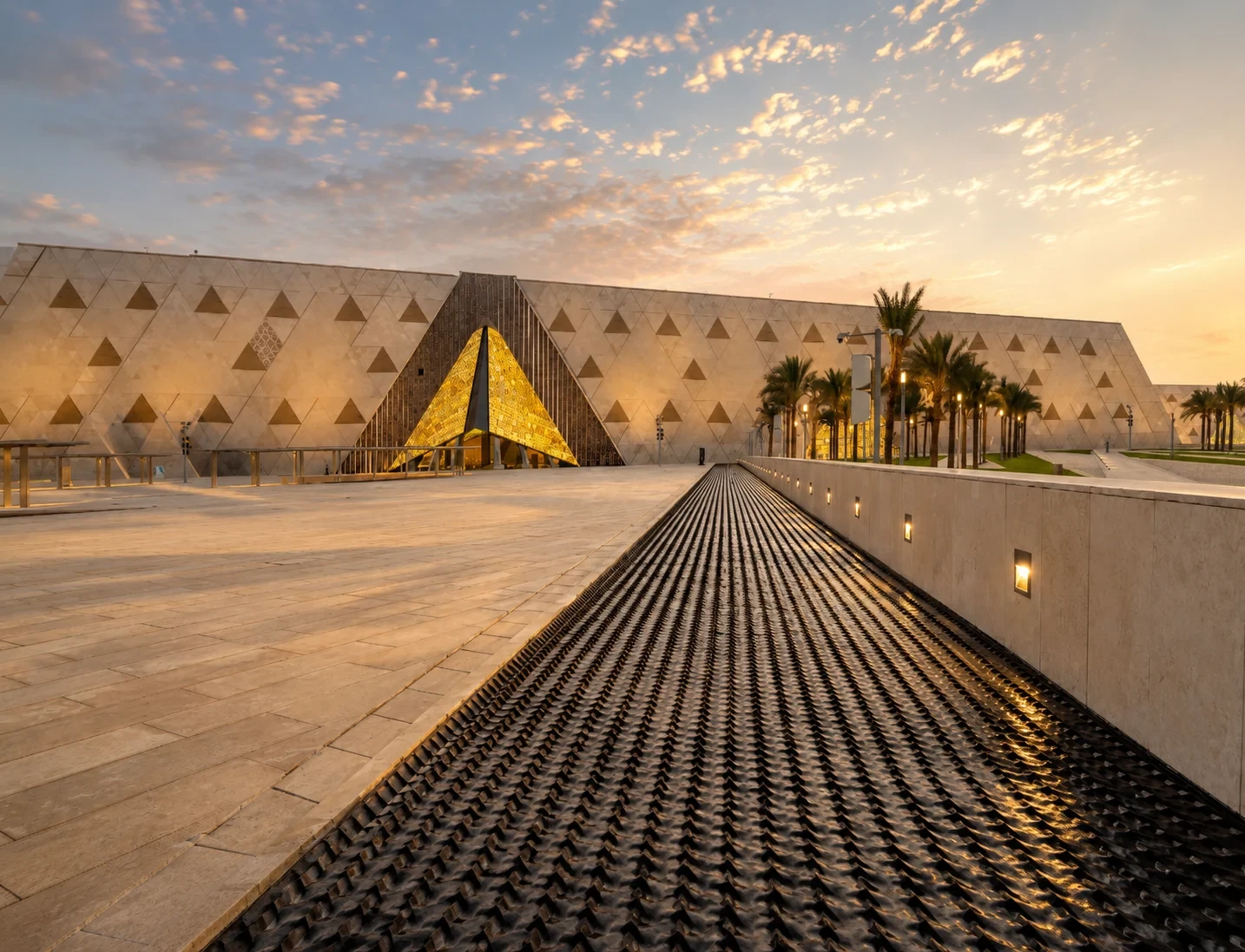
The Giza Pyramids Complex is located on the Giza Plateau in Giza Governorate, approximately 13 kilometers southwest of central Cairo and approximately 8 kilometers southwest of the city center of Giza, at the precise western margin of the Nile Valley where the fertile agricultural land of the ancient Egyptian flood plain gives way to the Saharan desert plateau whose bedrock limestone forms both the geological foundation of the pyramid monuments and the quarry source for much of the building material used in their construction. The site is accessible from central Cairo by taxi, metro to Giza station and then taxi, or by guided tour vehicle, with a journey time from central Cairo of approximately 30 to 45 minutes depending on traffic conditions in the Cairo metropolitan area whose increasingly congested road network makes early morning departure from central Cairo the most efficient approach for visitors wishing to arrive at the Giza Plateau before the main midday crowds. The main visitor entrance to the Giza Pyramids Complex is at the eastern edge of the plateau on the road approaching from the Giza city direction. The recently opened Grand Egyptian Museum (GEM) is located approximately 2 kilometers north of the Giza Plateau on the road between Cairo and the pyramid complex, making it the most natural and the most practically efficient combined heritage programme for any visitor to the Giza area. WOW Egypt Tours provides private air-conditioned vehicle transportation from all Cairo hotels to the Giza Pyramids Complex and organizes the complete Giza and Greater Cairo heritage programme as part of all Cairo Tours and Egypt Tour Packages.
Giza Pyramids Complex Fun Facts
The Great Pyramid of Khufu contains approximately 2.3 million individual stone blocks whose average weight is approximately 2.5 to 3 metric tonnes, with the largest individual blocks in the King's Chamber being of Aswan granite weighing up to 80 metric tonnes each, the quarrying, transportation, and precise positioning of which in the internal chambers of the pyramid at heights above ground level that required the development of entirely novel lifting and positioning technologies represents one of the most extraordinary engineering achievements of the ancient world. The total weight of stone in the Great Pyramid is estimated at approximately 5.75 million metric tonnes, a quantity of material that if distributed in a line one foot wide and one foot tall would extend approximately two thirds of the way around the equator of the earth, a physical fact that captures more effectively than any other single comparison the almost incomprehensible scale of the construction achievement that the Great Pyramid represents in the history of human physical endeavor.
The astronomical precision of the Great Pyramid's orientation is so extraordinary that the four sides of the pyramid's base align with the four cardinal directions to an accuracy of within three minutes of arc, a precision of astronomical orientation that the most sophisticated modern surveying instruments of the 19th and 20th centuries were barely able to measure let alone explain, and that was achieved by the ancient Egyptian surveyors and astronomers of the 4th Dynasty using star sightings, shadow observations, and geometric construction methods whose specific technical details remain a subject of active scholarly investigation and occasionally of passionate scholarly disagreement. The Great Pyramid remained the tallest human-built structure in the world for approximately 3,800 years from its completion in approximately 2560 BCE until the completion of the Lincoln Cathedral spire in England in approximately 1311 CE, a record of architectural supremacy that spans the complete histories of the ancient Egyptian, Greek, Roman, Byzantine, early Islamic, and medieval European civilizations in an unbroken tenure of architectural pre-eminence without parallel in the entire history of human construction.
The Giza Pyramids Complex receives more than 14 million visitors annually in peak years, making it the most visited heritage site in Africa and one of the most visited heritage sites in the entire world, a visitor number that reflects the extraordinary universality of the fascination with the ancient pyramids that transcends all cultural, linguistic, national, and educational boundaries to create the most genuinely globally shared heritage interest available at any ancient monument site in the world. The famous panoramic view of all three pyramids from the desert plateau to the southwest, accessible either on foot or by camel across the desert south of the main complex, is one of the most photographed single landscape compositions in the history of photography and the most immediately recognizable ancient heritage landscape image available in any international media.
Why Is It Called The Giza Pyramids Complex?
The name Giza, applied to the plateau, the district, and the city that have grown around the ancient pyramid necropolis, derives from the ancient Egyptian word Iat-Nefert or alternatively from Rosetau, both ancient Egyptian geographical designations for the Giza plateau area used in the ancient Egyptian religious and administrative texts of the pyramid period and subsequent eras, which were gradually adapted through the Coptic linguistic tradition as Kize and then through the Arabic adaptation as Giza or Al Jizah in the Arabic form that has been the standard designation for the plateau and its city in all Arabic and international geographical literature since the medieval Islamic period. The Arabic name Al Jizah, the official Egyptian Arabic designation for the modern city and the governorate that now surround the ancient pyramid site, translates approximately as the bank or the shore, a designation that likely reflects the ancient association of the Giza district with the western bank of the Nile whose annual flood in the ancient period extended much closer to the base of the desert plateau than the modern irrigated agricultural landscape suggests, creating a direct geographic and conceptual association between the pyramid necropolis on the desert edge and the life-giving river below that was fundamental to the ancient Egyptian religious geography of the dead and the sacred western horizon. The term Complex is applied to the Giza pyramid site in the modern heritage management vocabulary to designate the complete ensemble of pyramid monuments, sphinx, temples, causeways, subsidiary structures, and associated archaeological zones that together constitute the ancient necropolis as a single integrated heritage unit rather than as a collection of separate monuments, reflecting the fact that the individual structures of the Giza Plateau were designed, built, and functioned as interconnected components of a single royal funerary landscape system whose meaning and function can only be fully understood when all the components are considered together as part of a coherent ancient spatial and theological programme.
Giza Pyramids Complex History
The history of the Giza Pyramids Complex begins with the decision of Khufu, the second pharaoh of the Egyptian Old Kingdom 4th Dynasty, to select the Giza Plateau as the site of his royal pyramid complex approximately 2589 BCE, a decision whose specific motivations remain partly speculative but whose practical determinants clearly included the geological stability of the plateau's bedrock limestone as a foundation for the largest building that had ever been constructed, the proximity of the site to the Nile Valley quarries of the Maadi Formation limestone used for the pyramid casing, the proximity to Aswan by Nile transport for the granite blocks required for the internal chambers, and the symbolic appropriateness of the western desert plateau as the landscape of the ancient Egyptian Duat, the realm of the dead associated with the western horizon where the sun set and where the royal journey to eternal life began in the ancient Egyptian theological geography of death and resurrection. The construction of the Great Pyramid itself, the most ambitious single building project in the history of ancient Egypt and arguably in the history of human civilization, is believed to have taken approximately 20 years based on the ancient Egyptian administrative records recovered from the site and on the practical estimates of construction logistics that the archaeological investigation of the workers' village and the quarrying operations has made possible.
The ancient history of the Giza Pyramids after the end of the 4th Dynasty and the period of their active royal use encompasses the complete span of ancient Egyptian, Ptolemaic, Roman, Byzantine, and medieval Islamic history in a continuous record of veneration, curiosity, quarrying, pilgrimage, scholarly investigation, and popular fascination that makes the Giza Plateau one of the most continuously documented and the most continuously visited heritage sites in the entire history of the world. The ancient Egyptians themselves revered the Giza Pyramids as monuments of extraordinary divine significance throughout the Pharaonic period, restoring the Sphinx, maintaining the mortuary temples, and making regular offerings at the funerary installations long after the pyramid-building 4th Dynasty had been succeeded by many generations of pharaonic rulers. The ancient Greek historian Herodotus, who visited Giza in the 5th century BCE and recorded his impressions in astonished superlatives, provided the first extended literary description of the pyramids in the Western historical tradition and introduced the story of their construction by enslaved labor that, though almost certainly incorrect in its essential premise, has remained one of the most persistently repeated and the most dramatically satisfying narratives about the ancient pyramids in the popular imagination of every subsequent era. The medieval Islamic period saw the Giza Plateau used as a quarry for the limestone casing blocks stripped from the pyramid faces to build the mosques, bridges, and fortifications of medieval Cairo, a process of organized stone quarrying whose removal of the original casing has transformed the smooth-sided appearance of the pyramids in the ancient and medieval periods into the stepped, rough-surfaced appearance that is their most immediately familiar visual character in the modern heritage landscape.
The modern scientific and archaeological investigation of the Giza Pyramids began in the early 19th century with the expeditions of the Napoleonic scientific commission of 1798 to 1801, whose comprehensive survey and documentation of the pyramid complex produced the first scientifically organized measurements, architectural drawings, and geological analyses of the Giza monuments, and has continued without interruption to the present day with an increasingly sophisticated programme of non-invasive scanning, remote sensing, seismic investigation, and targeted archaeological excavation that continues to generate extraordinary new discoveries about the construction, organization, and social history of the pyramid complex. The discovery by the Giza Plateau Mapping Project of the workers' village in the 1990s, the ongoing scanning programme that has recently identified previously unknown internal void structures within the Great Pyramid using cosmic ray muon detection technology, and the progressive revelation of the ancient harbor and logistics infrastructure of the Nile Valley side of the complex through both excavation and historical document analysis together represent the most exciting period of scientific investigation of the Giza Plateau since the Victorian era and give the Giza complex a quality of continuing intellectual discovery and continuing scholarly relevance that is entirely appropriate to the most extraordinary ancient monument ensemble in the world.
The Story Of Building The World's Greatest Monument
The story of how the ancient Egyptians built the Great Pyramid and the other monuments of the Giza Plateau is one of the most extraordinary and the most endlessly fascinating narratives in the intellectual history of archaeology and engineering, a story whose central paradox, the demonstrably extraordinary technical achievement produced by a society whose available technology appears inadequate to the task, has attracted the most brilliant and the most creative minds in the history of archaeological investigation to the Giza Plateau and has generated the most extensive and the most internationally engaged scholarly literature devoted to the construction methods of any single ancient monument in the world. The current scholarly consensus on pyramid construction, developed through the combined contributions of experimental archaeology, computer modeling, ancient documentary analysis, and the physical evidence recovered from the workers' village and the quarrying and transport infrastructure of the Giza area, involves a combination of organized sledge transport on wet clay or wooden tracks for moving the quarried stone blocks from the quarries to the pyramid site, construction ramps of various designs whose specific geometry remains a subject of active scholarly debate, and organized work teams using wooden and copper tools, ropes, and lever mechanisms to position the multi-ton blocks in the precise locations specified by the pyramid's architectural plan.
The most recent and the most extraordinary documentary evidence for the logistics of pyramid construction is the Diary of Merer, a papyrus document discovered at the ancient Egyptian Red Sea port of Wadi el-Jarf in 2013 by a French-Egyptian archaeological team and dated to the reign of Khufu, which is the oldest papyrus document ever discovered in Egypt and the only surviving ancient Egyptian eyewitness account of the pyramid construction process. The Diary of Merer records in extraordinary daily detail the activities of an inspector named Merer and his team of approximately 40 men who spent their working months transporting white Tura limestone casing blocks by boat from the Tura quarries on the eastern bank of the Nile to the Giza construction site, providing for the first time direct ancient documentary evidence for one of the most important and the most logistically complex components of the pyramid construction system, the long-distance water transport of the casing stone from the quarry to the construction site by the Nile and through an artificial harbor canal that connected the Nile with the pyramid complex at Giza. The extraordinary specificity of the Diary of Merer's daily records, the quantities of stone transported, the journey times, the crew sizes, the provisioning arrangements, and the administrative oversight structure, gives the pyramid construction story a dimension of human documentary detail and personal historical immediacy that transforms the abstract engineering question of how the pyramids were built into the most personally vivid and the most humanly accessible story of organized ancient Egyptian labor and organizational genius available in the entire archaeological record of the pyramid-building era.
Giza Pyramids Complex Key Attractions And Features
The Great Pyramid Of Khufu
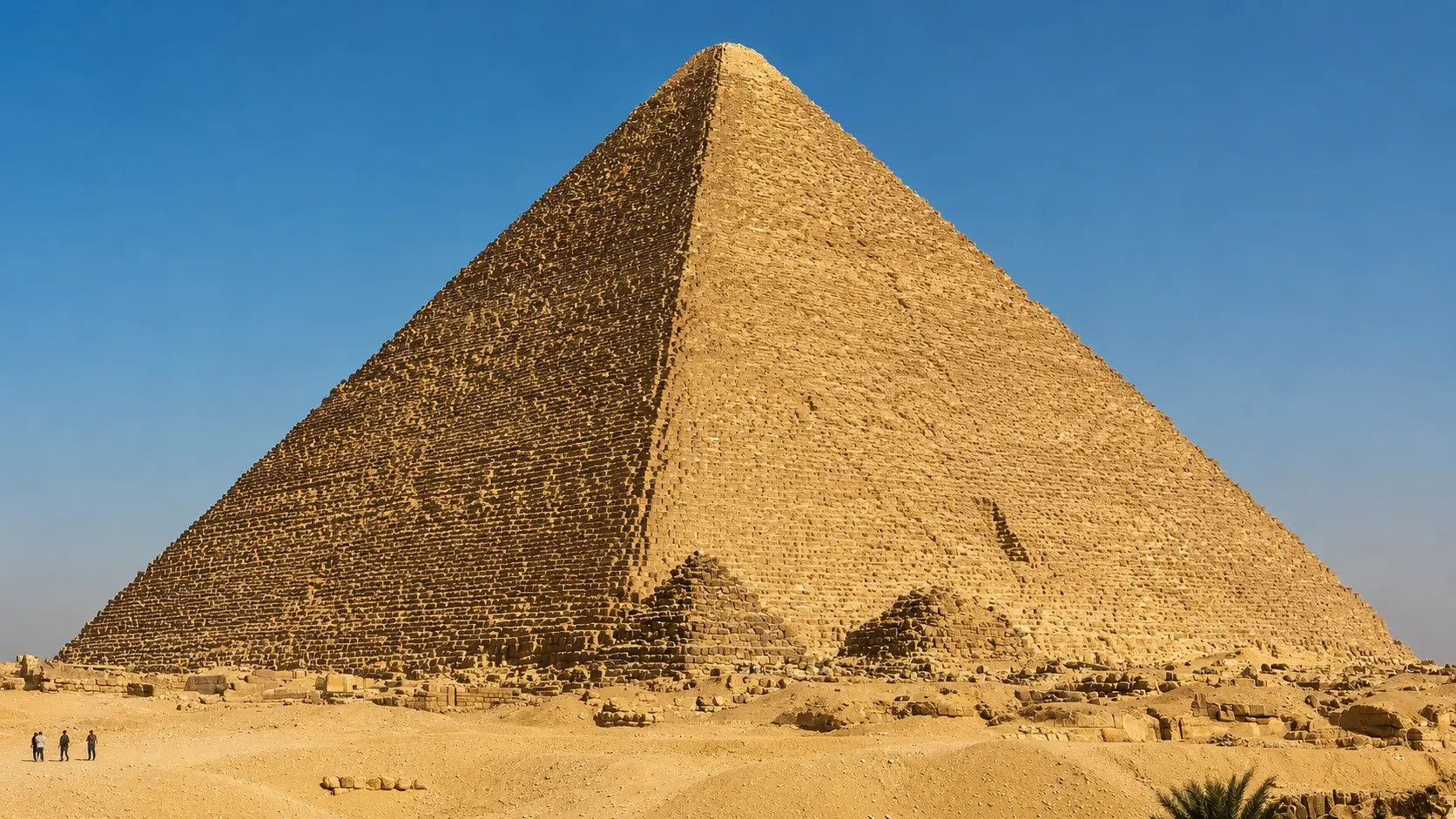
The Great Pyramid of Khufu is the largest, the oldest, and the most historically significant of the three Giza pyramids and the most immediately overwhelming ancient building accessible to visitors at any heritage site in the world, a monument of such extraordinary physical scale, such extraordinary mathematical precision, and such extraordinary historical resonance that it consistently produces in first-time visitors a response of complete astonishment at the reality of a building whose apparent familiarity from decades of photographs and films is entirely inadequate preparation for the direct physical encounter with its actual scale. Originally standing at 146.5 meters in height and now measuring 138.8 meters after the loss of its original limestone casing and capstone, the Great Pyramid was the tallest human-built structure in the world for 3,800 years. The pyramid's internal chamber system, accessible to visitors through the original entrance on the north face, encompasses the Descending Passage, the Ascending Passage, the Grand Gallery whose corbelled ceiling rising to 8.5 meters is one of the most remarkable internal architectural spaces in any ancient Egyptian monument, the Queen's Chamber whose purpose remains debated by scholars, the King's Chamber of Aswan granite blocks housing the empty red granite sarcophagus of Khufu, and the recently discovered additional void space above the Grand Gallery identified by the ScanPyramids project's cosmic ray muon detection programme in 2017 whose precise nature and function continue to generate intense scholarly investigation and excited public attention.
The Middle Pyramid Of Khafre
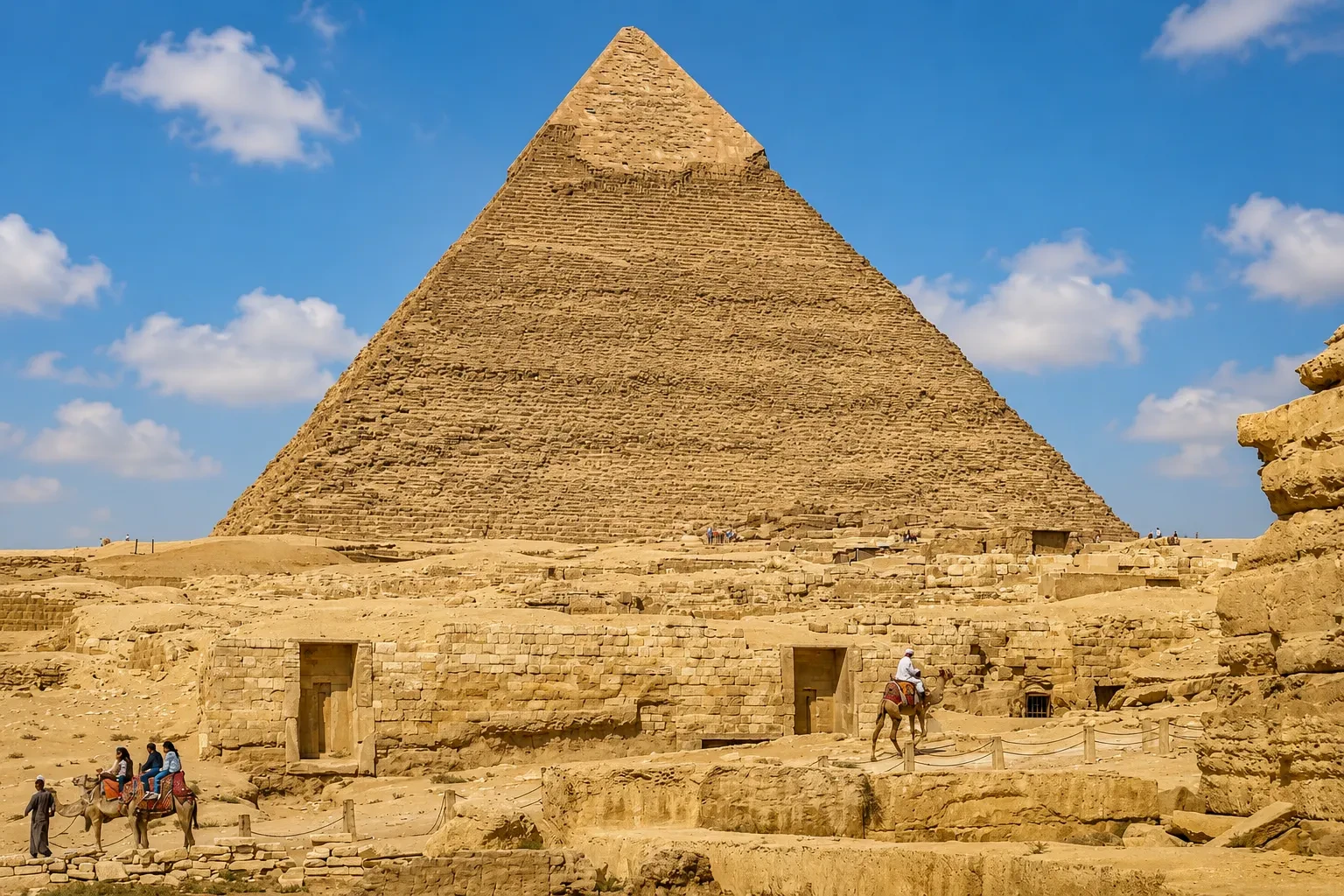
The Middle Pyramid of Khafre, standing at 136.4 meters in height and retaining at its apex the most complete and the most visually impressive section of original white Tura limestone casing visible on any of the three Giza pyramids, is the pyramid most immediately associated with the Great Sphinx and the most completely preserved of the three pyramid complexes in terms of its associated funerary infrastructure, including the remarkably intact Valley Temple of Khafre and the well-preserved sections of the causeway connecting the Valley Temple to the upper Mortuary Temple adjacent to the pyramid's eastern face. The Khafre pyramid complex represents the most completely legible of the three Giza royal funerary systems in its architectural organization, with the Valley Temple, the causeway, and the Mortuary Temple together constituting the most complete surviving example of the ancient Egyptian royal funerary landscape planning system of the Old Kingdom pyramid tradition, whose spatial logic organized the pharaoh's journey from the living world of the Nile Valley through the transitional space of the causeway to the eternal world of the pyramid and the necropolis in a physical architectural sequence of considerable theological sophistication and considerable architectural beauty.
The Small Pyramid Of Menkaure
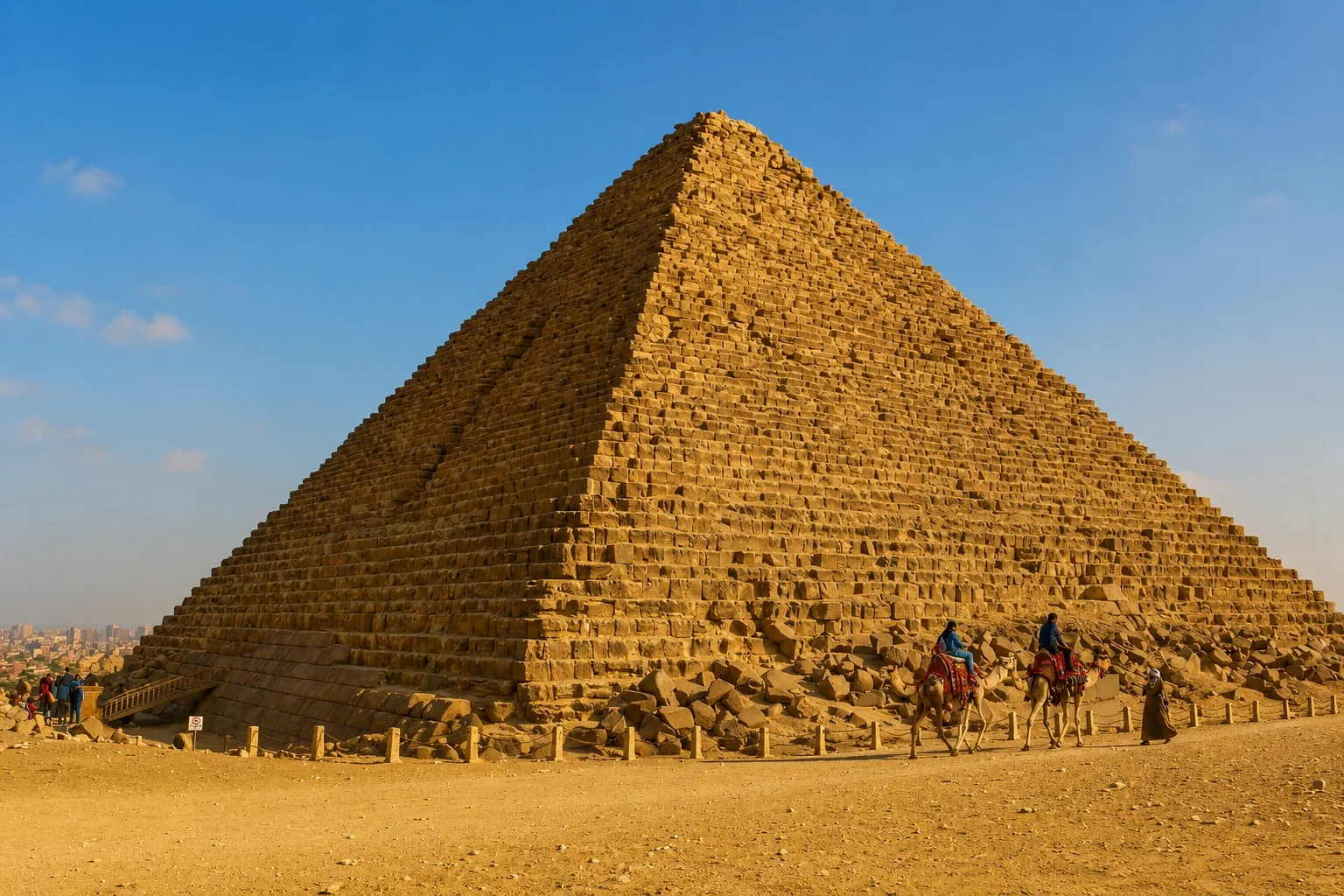
The Small Pyramid of Menkaure, the most modestly scaled of the three Great Pyramids at 65 meters in height, is remarkable for the extraordinary quality of its interior construction, with the lower courses of its interior lined in Aswan red granite whose precision of fitting and quality of finish surpasses even the granite work of the Great Pyramid's King's Chamber in the refinement of its execution, and for the exceptional beauty of the sculptural programme discovered in its Valley Temple in the early 20th century, including the extraordinary triads of Menkaure with the goddess Hathor and nome deities whose quality of sculptural idealization and human warmth represents the finest royal group sculpture of the complete Egyptian Old Kingdom tradition. The Menkaure pyramid complex, though smaller in scale than its two northern neighbors, provides the most personally intimate and the most architecturally approachable of the three Giza pyramid complexes for visitors who want to engage closely with the ancient Egyptian pyramid construction tradition without the intense visitor pressure and the physical challenge of the Great Pyramid's more demanding interior access.
The Great Sphinx And Valley Temple Of Khafre
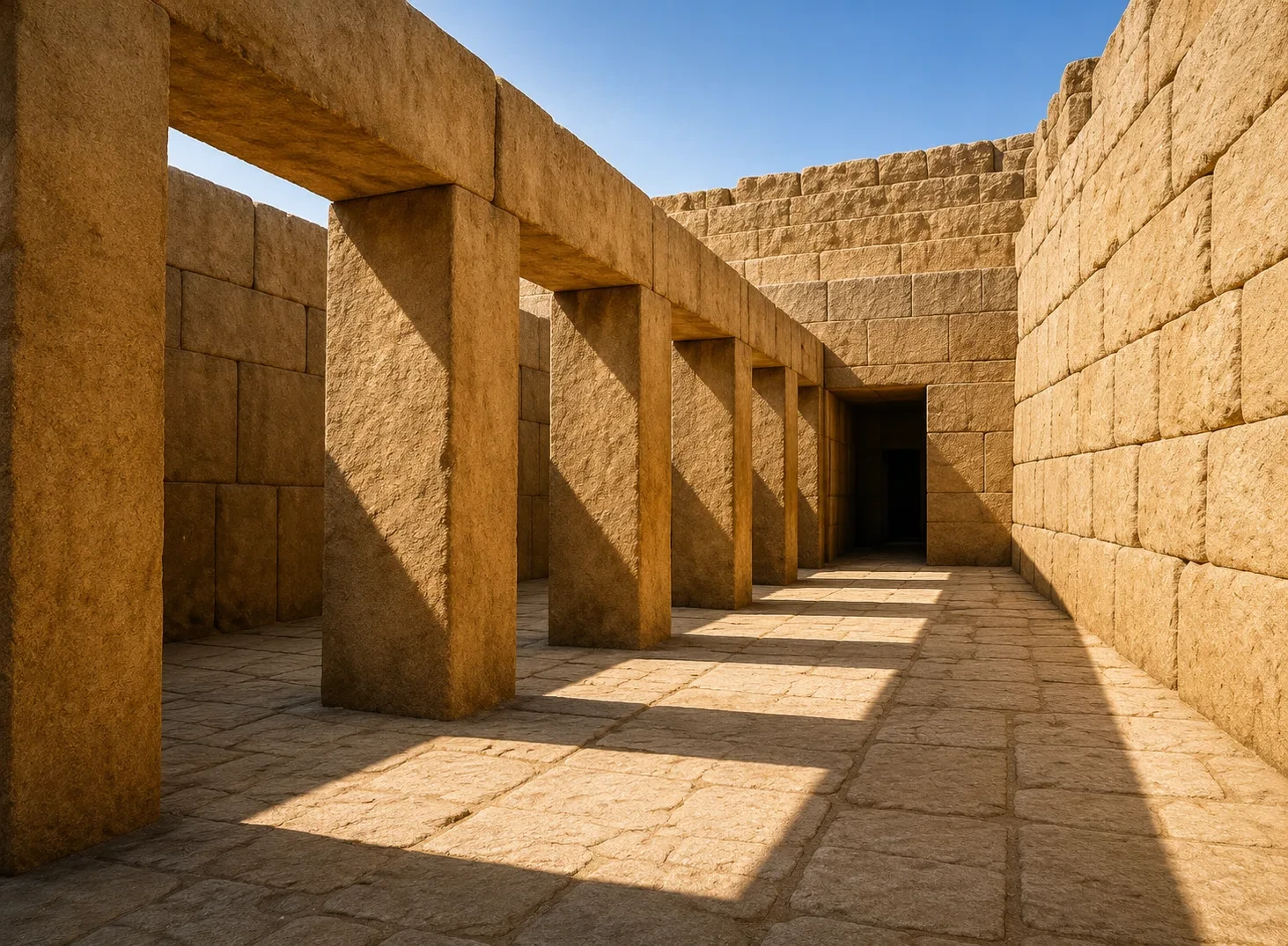
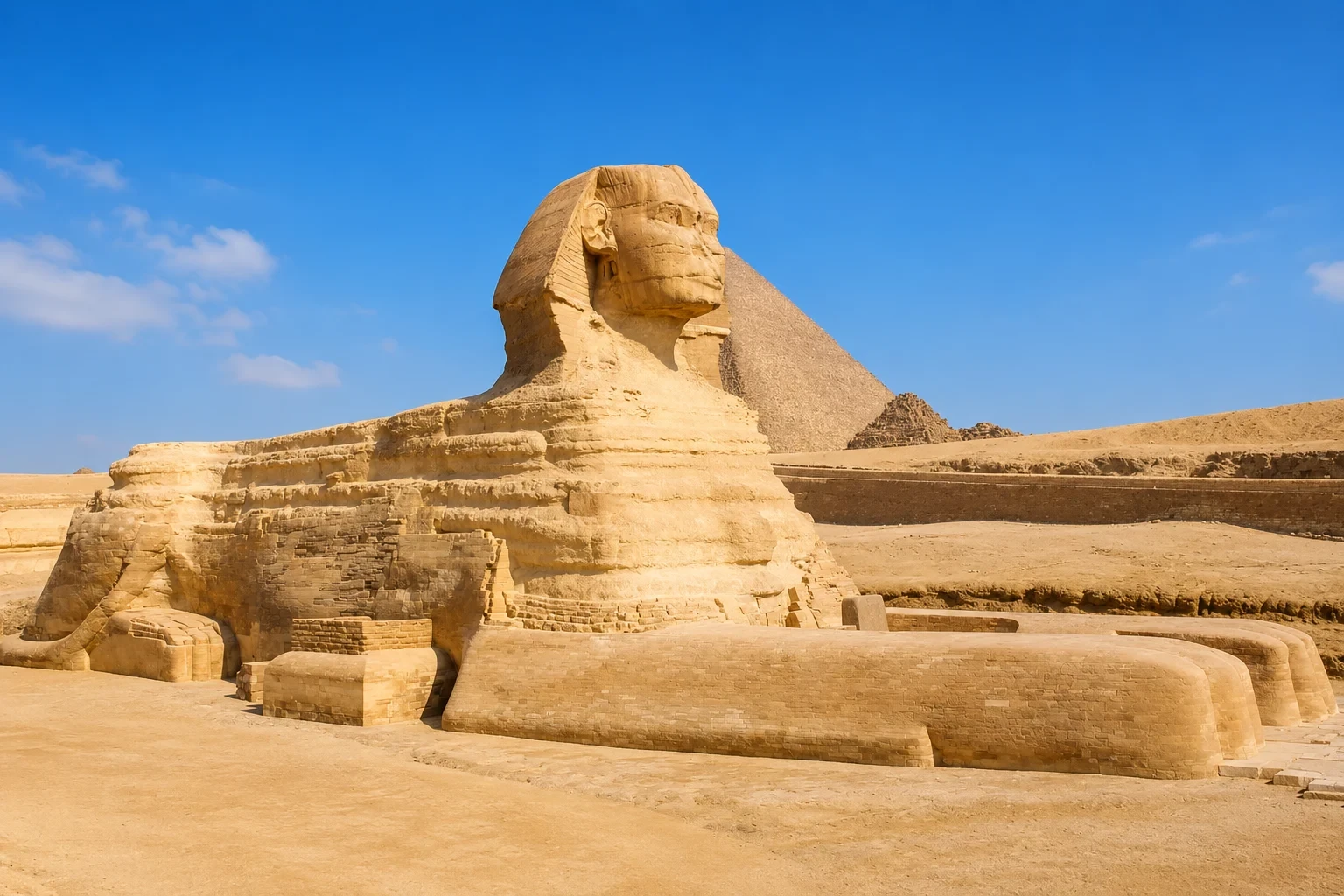
The Great Sphinx of Giza, the largest and the oldest monumental sculpture in the world, carved from the natural limestone bedrock of the Giza Plateau to a length of 73 meters and a height of 20 meters in the form of a recumbent lion with the human face of a pharaoh, almost certainly Khafre, in the most immediately recognizable and the most personally affecting ancient portrait in the history of art, stands at the eastern approach to the Khafre pyramid complex as the most dramatically powerful and the most visually extraordinary guardian monument of the ancient Egyptian royal necropolis tradition. The adjacent Valley Temple of Khafre, whose massive monolithic granite wall blocks in the most completely preserved and the most architecturally impressive ancient Egyptian Old Kingdom temple interior accessible to visitors at any site in Egypt, together with the great diorite statue of Khafre discovered in the temple's central hall pit and now one of the supreme masterpieces of the Egyptian Museum collection, gives the combined Sphinx and Valley Temple site a dimension of ancient sculptural and architectural excellence that is entirely commensurate with the extraordinary pyramid monuments they guard and complement.
The Khufu Solar Boat Museum
The Solar Boat of Khufu, discovered in 1954 in a sealed boat pit adjacent to the south face of the Great Pyramid and reconstructed from its 1,224 individual cedar planks and ropes into its original form of approximately 43.4 meters in length, is one of the most remarkable ancient Egyptian objects surviving intact from the Old Kingdom period and the most completely preserved ancient Egyptian wooden boat in the world, a vessel of extraordinary craftsmanship and extraordinary preservation whose presence in the Khufu Boat Museum immediately south of the Great Pyramid provides visitors with the most direct and the most personally astonishing encounter with the material culture of the pyramid-building era available at any point in the complete Giza Plateau complex. The boat's purpose, whether as a vehicle for the pharaoh's solar journey through the heavens after death, as a symbolic barque connecting the pharaoh to the sun god Re whose daily journey across the sky the solar boat was designed to facilitate, or as the actual river vessel used to transport the pharaoh's body from the Nile Valley to the pyramid necropolis, has been debated by Egyptologists without reaching a firm consensus, but the extraordinary quality of its construction, whose cedar planking joins were made without a single metal fastener and rely entirely on the swell of the cedar wood in water to create a watertight hull of remarkable structural integrity, speaks directly and powerfully to the extraordinary mastery of boat-building craft that the ancient Egyptian maritime tradition had achieved by the reign of Khufu approximately 4,500 years ago.
The Queens' Pyramids And Subsidiary Structures
The three principal pyramid complexes of Khufu, Khafre, and Menkaure are accompanied by nine subsidiary pyramid structures, three each serving the three queens or principal royal family members of each pharaoh, whose modest scales of 20 to 30 meters in height create a visual counterpoint to the massive royal pyramids that gives the complete Giza landscape its most complex and most architecturally varied skyline composition when viewed from the most comprehensive viewing points on the plateau south and west of the main complex. The Queens' Pyramids of Khufu, located immediately east and south of the Great Pyramid, include the pyramid of Queen Hetepheres I (Khufu's mother), the pyramid of Queen Meritites, and the pyramid of Queen Henutsen, whose underground burial chambers have been investigated by archaeological teams and whose surface structures provide the most accessible and the most personally engaging introduction to the ancient Egyptian pyramidal building tradition at a human scale that the overwhelming scale of the Great Pyramid itself makes unavailable for visitors whose height perception is challenged by the scale of the main monument. The Mastaba tomb fields extending east and west of the three main pyramids, whose hundreds of flat-roofed rectangular burial structures house the tombs of the senior officials, priests, family members, and administrative personnel of the 4th Dynasty royal court, provide the most completely preserved ancient Egyptian elite cemetery landscape of the Old Kingdom period accessible to visitors at any heritage site in Egypt.
The Panoramic Desert Viewpoint
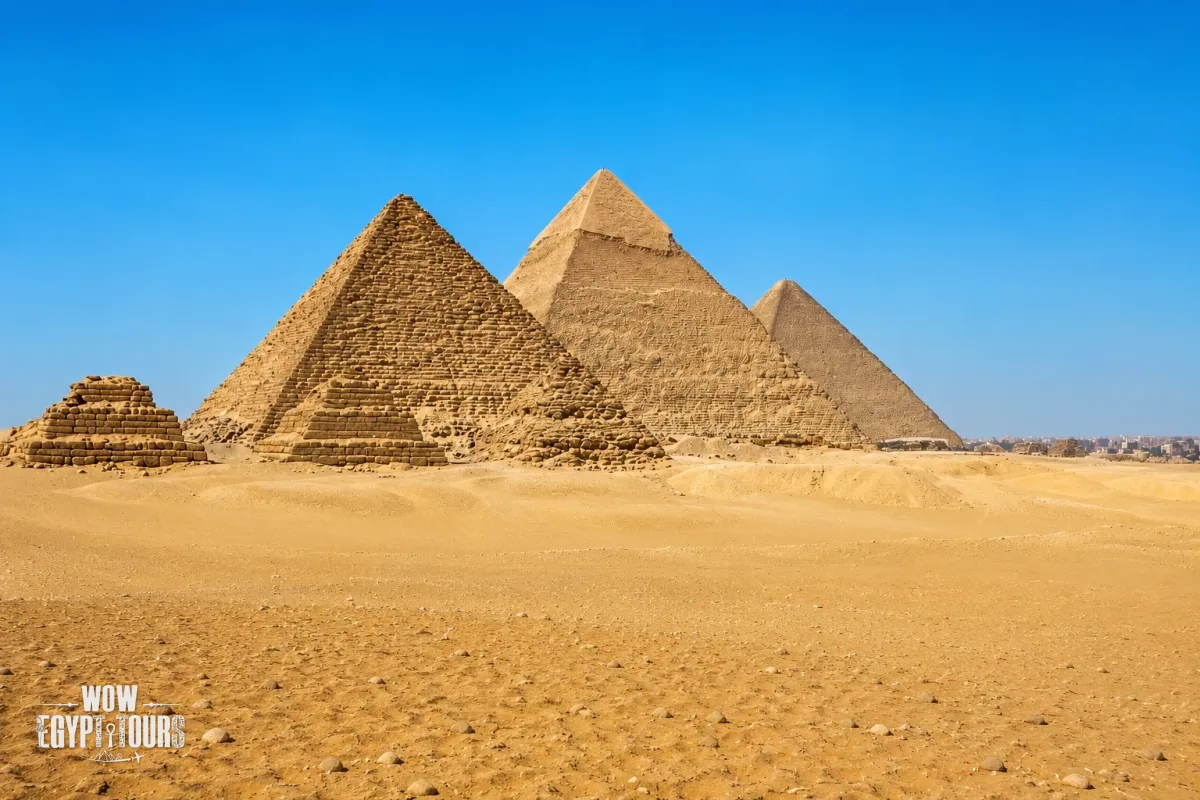
The most celebrated and the most universally reproduced single viewpoint of the complete Giza Pyramids Complex is the elevated desert plateau approximately 1.5 to 2 kilometers south and west of the main complex where the terrain rises above the level of the monument bases and the complete line of all three pyramids becomes visible against the sky in the most immediately recognizable and the most emotionally powerful ancient landscape composition in the entire heritage world. This viewpoint, accessible either on foot across the desert south of the Menkaure complex or by camel in the traditional tourist circuit that has operated in the Giza desert since the Victorian era, provides the most completely authentic desert landscape encounter with the ancient pyramids available at any accessible point of the complex, the view of the three pyramids against the open desert sky without modern intrusion on the western and southern horizon creating the most nearly accurate approximation of the ancient experience of approaching the pyramid necropolis across the desert that is available to any modern visitor. The sunset from the desert panorama viewpoint, when the three pyramids are illuminated in the extraordinary warm light of the Egyptian evening and cast their dramatic shadows across the desert floor in the most photographically spectacular and the most personally overwhelming natural lighting composition of the complete Giza heritage experience, is consistently described by all visitors who have experienced it as one of the most beautiful and the most personally unforgettable moments available at any heritage site in the world.
The Sound And Light Show
The Giza Sound and Light Show, performed in the open air of the Giza Plateau facing the Great Sphinx in the evening after the monument complex has closed to daytime visitors, is one of the most dramatically staged and the most visually spectacular heritage presentation experiences available at any ancient monument site in Egypt, combining the extraordinary physical setting of the illuminated pyramids and Sphinx against the night sky with the narrated story of the Giza monuments, their pharaohs, and the ancient Egyptian civilization they represent in a multimedia production of considerable theatrical impact and considerable personal emotional engagement. The spectacle of the Great Sphinx illuminated against the massive backdrop of the Khafre Pyramid and the Great Pyramid, with the sound of the ancient narrator's voice in the darkness, the changing colored lights on the pyramid faces, and the complete silence of the surrounding desert night creating an atmosphere of genuine ancient mystery and genuine personal awe, provides an experience of the Giza heritage at night that is entirely unlike and entirely complementary to the daytime visit, adding a theatrical and atmospheric dimension to the ancient monument encounter that gives the complete Giza experience its most completely emotional and its most personally dramatic conclusion.
Why Is The Giza Pyramids Complex Important?
The Giza Pyramids Complex is important for reasons that span the entirety of human cultural life, from the most fundamental philosophical questions about the nature and the limits of human achievement to the most specific scholarly questions about the organizational capacity and the technical mastery of the ancient Egyptian civilization at the peak of its Old Kingdom development. As the sole surviving member of the Seven Wonders of the Ancient World, Giza is the physical proof that the most extraordinary building ever conceived by the ancient imagination was actually built and has endured for more than four thousand years in direct contradiction of every expectation of physical permanence that the natural processes of erosion and human activity would suggest. As an archaeological site, the Giza Plateau continues to generate new knowledge and new discoveries that progressively transform the scholarly understanding of the ancient Egyptian state, society, and technology, with the Diary of Merer, the ScanPyramids void discoveries, the workers' village excavations, and the ancient harbor investigations of the most recent decades representing just the most visible and the most publicly celebrated examples of a continuous programme of new knowledge generation that makes Giza the most actively productive ancient monument site in the world for new scholarly understanding. WOW Egypt Tours includes the Giza Pyramids Complex as the most fundamental and the most personally important heritage destination in all comprehensive Cairo Tours, Egypt Classic Tours, Egypt Short Break Tours, and all Egypt Tour Packages.
What Are Some Interesting Facts About The Giza Pyramids Complex?
The Oldest Wonder Still Standing
The most immediately extraordinary single fact about the Giza Pyramids Complex is that the Great Pyramid of Khufu is the oldest and the sole surviving member of the Seven Wonders of the Ancient World, a list compiled by ancient Greek scholars approximately 2,200 years ago of the seven most remarkable human-built structures in the known world, all the other members of which, the Colossus of Rhodes, the Lighthouse of Alexandria, the Temple of Artemis at Ephesus, the Mausoleum at Halicarnassus, the Statue of Zeus at Olympia, and the Hanging Gardens of Babylon, have long since been destroyed by earthquakes, fire, floods, and the organized quarrying of their stone for later construction projects. The Great Pyramid's survival through the complete span of ancient, medieval, and modern history while all its fellow Wonders were destroyed is itself a testament to the extraordinary engineering quality and the extraordinary material durability of the ancient Egyptian construction tradition at its most ambitious expression, and gives the Giza Plateau a distinction in the history of human heritage that is absolutely unique in the entire world.
The Only Ancient Wonder Still Standing
The mathematical and astronomical precision of the Great Pyramid's construction, documented with increasingly precise modern instrumentation over more than two centuries of scientific investigation, is one of the most persistently astonishing facts about the ancient building and one of the most productive sources of the popular fascination with the pyramids that continues to generate an extraordinary volume of both serious scholarly investigation and less scholarly popular speculation. The pyramid's base is a near-perfect square with each side measuring approximately 230.4 meters with a precision of less than 0.1 percent deviation from perfect equality, the four sides are oriented to true north, south, east, and west with an accuracy of within 3 to 4 minutes of arc, and the four corner angles deviate from perfect right angles by less than one tenth of a degree in the most precisely surveyed measurements of the monument's base geometry, together constituting a precision of planning and execution in the largest building of the ancient world that consistently challenges the explanatory capacity of scholars, engineers, and mathematicians who try to understand how such accuracy was achieved with the surveying, measuring, and construction tools available to the ancient Egyptian builders.
The Workers Were Paid, Housed, And Fed
The progressive archaeological revelation of the Giza workers' village by the Giza Plateau Mapping Project since the 1990s has transformed the popular understanding of the social history of pyramid construction in one of the most consequential archaeological discoveries in the modern history of Giza investigation, demonstrating through the physical evidence of the purpose-built dormitory facilities, the industrial-scale bakeries and breweries, the animal bone deposits showing the consumption of enormous quantities of beef, sheep, and goat, and the workers' tombs whose presence adjacent to the pyramid complex is the most direct possible evidence for the respect accorded to the pyramid builders by the ancient Egyptian state, that the workforce who built the Giza Pyramids was a paid, fed, housed, and medically attended workforce of Egyptian workers rather than the enslaved labor force of ancient literary tradition and popular imagination, a finding of extraordinary importance for the understanding of the social organization and the labor relations of the ancient Egyptian Old Kingdom state at the most ambitious phase of its organizational development.
What Is So Special About The Giza Pyramids Complex?
The Most Universally Recognized Ancient Monument In The World
What makes the Giza Pyramids Complex uniquely special among all the heritage sites of the ancient world is the extraordinary combination of physical scale, mathematical precision, historical depth, and universal human recognition that gives it a quality of heritage significance and personal impact available at no other ancient monument site in the entire world. The pyramids are recognized as immediately and as powerfully by a visitor from Tokyo as by a visitor from London, from Lagos as from Buenos Aires, from Beijing as from Cairo, a quality of universal cultural recognition that transcends all linguistic, cultural, national, and religious boundaries to make the Giza Pyramids the single most genuinely globally shared heritage interest available at any ancient monument site on earth. This universality of recognition, combined with the physical reality of standing at the base of the Great Pyramid and experiencing directly the overwhelming scale that no photograph or film can adequately prepare even the most well-traveled and the most visually sophisticated visitor for, creates at Giza a heritage encounter of such immediate personal impact and such profound human significance that it is consistently described by visitors of every cultural background and every level of prior heritage experience as one of the most personally extraordinary and the most permanently memorable encounters with the ancient world available anywhere in the heritage landscape of the entire globe.
Where Scale And Mystery Meet
The Giza Pyramids Complex is also uniquely special for the extraordinary combination of complete visibility and persistent mystery that it provides, the paradox of the most thoroughly documented, the most extensively investigated, and the most widely known ancient monument in the world continuing to generate new questions, new discoveries, and new astonishment with every generation of scholarly investigation and with every individual first-time visitor who comes face to face with the physical reality of a building whose scale, whose precision, and whose age combine to challenge the comfortable assumption that the ancient world is fully known and fully understood. The ScanPyramids void discovery of 2017, the Diary of Merer discovery of 2013, the ongoing ancient harbor investigation, and the continuously evolving understanding of the workers' village social history together demonstrate that the Giza Pyramids are still generating new knowledge and new scholarly excitement after more than two centuries of modern scientific investigation, and that the sense of persistent mystery that makes the pyramids the most fascinating ancient monuments in the world is not a function of ignorance but a natural property of monuments of such extraordinary complexity and such extraordinary historical significance that the complete understanding of their creation and their meaning continues to exceed the best efforts of every generation of scholars who have devoted their careers to their investigation.
The Giza Pyramids Complex Through The Ages
The complete history of the Giza Pyramids Complex from the construction period of the 4th Dynasty approximately 2589 to 2503 BCE through the ancient Egyptian veneration period, the Ptolemaic and Roman scientific investigation tradition, the medieval Islamic quarrying era, the early modern European scholarly investigation of the 18th and 19th centuries, and the comprehensive modern archaeological and scientific investigation of the 20th and 21st centuries traces the most continuously documented and the most continuously significant heritage biography of any ancient monument in the world. The ancient Egyptians themselves continued to visit and to venerate the Giza monuments throughout the complete 3,000-year span of the Pharaonic period, with later pharaohs restoring the Sphinx, building new temples adjacent to the ancient monuments, leaving votive objects, and including references to the great pyramids in their royal inscriptions as symbols of eternal divine presence and eternal royal achievement.
The modern era of systematic scholarly investigation, beginning with the Napoleonic Description de l'Egypte of 1798 to 1809, continuing through the great 19th century investigations of Vyse, Perring, Petrie, and Lepsius, through the 20th century work of Selim Hassan, Mark Lehner, Zahi Hawass, and their numerous international colleagues, to the most recent era of non-invasive scanning, satellite archaeology, and advanced sedimentological and geochemical analysis, has progressively transformed the Giza Pyramids from monuments whose most basic facts of construction and social history were unknown or misunderstood into monuments whose organization, logistics, workforce, astronomical alignment, and internal architecture are the most thoroughly documented of any ancient building complex in the world, while continuing at the same time to generate new discoveries of such extraordinary importance and such surprising character that the intellectual excitement of Giza scholarship has never been greater than it is today and the sense of living in an extraordinary moment of pyramid knowledge generation has never been more palpably present in the Egyptological community.
The Giza Pyramids Complex And UNESCO
The Giza Pyramids Complex was designated a UNESCO World Heritage Site in 1979 as part of the Memphis and its Necropolis: the Pyramid Fields from Giza to Dahshur World Heritage inscription, recognized as a heritage of outstanding universal value for its extraordinary concentration of ancient Egyptian funerary monuments representing the supreme achievement of the Old Kingdom pyramid building tradition. The UNESCO World Heritage designation encompasses not only the Giza Plateau monuments but also the ancient city of Memphis, the step pyramid complex of Saqqara, and the royal pyramids of Dahshur in a single outstanding universal value designation that covers the complete sequence of ancient Egyptian pyramid development from the Step Pyramid of Djoser at Saqqara through the experimental transitional pyramids of Dahshur to the supreme achievements of the Giza Plateau, together constituting the most complete and the most historically significant concentration of ancient royal funerary monuments available at any UNESCO World Heritage property in the world. The Egyptian government, the UNESCO World Heritage Committee, and the international Egyptological and conservation science communities are engaged in ongoing consultation and collaborative management planning for the Giza Plateau monuments and their buffer zones, addressing the increasing visitor pressure, the encroachment of urban development, and the long-term conservation challenges of maintaining the extraordinary physical integrity of monuments whose age, scale, and material complexity make them among the most demanding conservation management challenges in the complete UNESCO World Heritage portfolio.
Best Time To Visit The Giza Pyramids Complex
The best time to visit the Giza Pyramids Complex is during the cooler months from October through April, when the Cairo and Giza climate provides the most comfortable conditions for the extended outdoor exploration of the plateau, the desert panorama viewpoint walk, the Sphinx enclosure visit, and the subsidiary structures and mastaba tomb field exploration that together constitute the most complete Giza heritage programme. The winter months of December through February are particularly pleasant for the Giza visit, with daytime temperatures of 15 to 22 degrees Celsius providing the most comfortable walking conditions for the considerable distances involved in exploring the complete complex, and the extraordinary quality of the winter light on the pyramid faces in the early morning and the late afternoon providing the most dramatically beautiful photography conditions of any season. The spring months of March and April and the autumn months of October and November provide similarly excellent conditions, and the spring and autumn are generally less crowded than the peak winter season when the largest numbers of international tourists combine with the Egyptian school holiday periods to create the highest visitor densities at the most popular sites. For the interior visit to the Great Pyramid, the early morning immediately after opening at 8:00 AM is the most strongly recommended time, as the number of visitors permitted inside the pyramid at any one time is controlled and the queues build rapidly through the morning hours. The summer months of June through September bring very hot temperatures regularly exceeding 35 to 40 degrees Celsius at the exposed Giza Plateau, making midday outdoor exploration genuinely difficult and making early morning and late afternoon the only comfortable outdoor activity times. WOW Egypt Tours organizes Giza Pyramids programmes throughout the year and advises on the optimal timing of the site visit within the available Cairo programme to maximize both the personal comfort and the photography quality of the complete Giza experience.
Giza Pyramids Complex Opening Hours
The Giza Pyramids Complex is open daily from 8:00 AM to 5:00 PM in the winter season (October through April) and from 7:00 AM to 7:00 PM in the summer season (May through September). The Great Pyramid interior is open daily for a limited number of visitors in two sessions, morning from opening until 12:00 PM and afternoon from 1:00 PM until closing. The Khufu Boat Museum is open daily from 9:00 AM to 5:00 PM. The Sound and Light Show is performed in the evening after the monument complex closes to daytime visitors, with multiple shows per evening in Arabic, English, French, Italian, German, Spanish, and Japanese, with the specific schedule confirmed at time of booking with WOW Egypt Tours. All visiting hours are subject to adjustment for Egyptian national holidays and special events, and current hours should be confirmed at the time of booking.
Giza Pyramids Complex Entrance Fees
General complex entrance: EGP 700for adults, EGP 350 for students.
Sound and Light Show: fees subject to confirmation at time of booking with WOW Egypt Tours.
All Giza Pyramids Complex entrance fees are included in the Cairo Tours and Egypt Tour Packages organized by WOW Egypt Tours. Fees are subject to periodic adjustment and current rates should be confirmed at time of booking.
How To Get To The Giza Pyramids Complex
The Giza Pyramids Complex is located approximately 13 kilometers southwest of central Cairo, accessible from the city center by taxi in approximately 30 to 45 minutes, by Cairo Metro to Giza station and then taxi for approximately 10 minutes more, or by private guided vehicle from any Cairo hotel as part of an organized Cairo Tours programme. The most convenient and the most operationally organized approach for international visitors is the private vehicle from the Cairo hotel provided by WOW Egypt Tours as part of the complete Cairo heritage programme, which provides door-to-door transport from the hotel to the main Giza complex entrance, transportation between the different sites within the Giza Plateau area including the Grand Egyptian Museum, the Egyptian Museum in central Cairo, Saqqara, Memphis, and Dahshur as part of the complete Greater Cairo and pyramid sites programme, and the licensed Egyptology guide whose expertise and whose knowledge of the optimal programme sequencing and timing at each site maximizes the quality and the personal completeness of the complete Cairo heritage visit.
How Long To Spend At The Giza Pyramids Complex
A minimum of three to four hours at the Giza Pyramids Complex is required for a programme that includes the exterior exploration of all three main pyramids, the Great Sphinx and the Valley Temple of Khafre, the panoramic desert viewpoint, and the Khufu Boat Museum, without the interior visit to any of the pyramids. A full-day programme of five to six hours allows the interior visit to the Great Pyramid in addition to the complete exterior programme, the Sound and Light Show in the evening, and sufficient time for the complete desert panorama viewpoint walk and the detailed exploration of the subsidiary pyramid and mastaba tomb field areas. For visitors combining the Giza Pyramids with the Grand Egyptian Museum, the most natural and the most logistically efficient combined programme allocates the morning hours to the Giza Plateau monuments and the afternoon to the Grand Egyptian Museum, as the museum's extraordinary collection of ancient objects recovered from the Giza monuments themselves, including the treasures of Tutankhamun and the Menkaure triads, provides the most directly relevant and the most personally enriching complementary heritage encounter to the physical monument visit. A two-day Cairo programme allowing one complete day at Giza and a second day at Saqqara, Memphis, and Dahshur provides the most comprehensive encounter with the complete ancient Egyptian pyramid heritage available in the greater Cairo area. WOW Egypt Tours designs Cairo ancient heritage programmes in all durations from focused half-day introductory visits to comprehensive multi-day pyramid circuits.
Tips For Visiting The Giza Pyramids Complex
Arrive at the complex entrance as close to opening time as possible, particularly if planning the Great Pyramid interior visit, as the combination of the daily visitor quota for the pyramid interior, the general morning crowd build-up, and the intense midday heat that makes the exposed plateau most uncomfortable together make the earliest possible start the most strongly recommended approach for any Giza visit programme. Decide before arriving whether to enter the Great Pyramid interior and purchase the additional pyramid interior ticket at the entrance rather than at the pyramid itself, as the advance purchase avoids the separate queue at the pyramid base and allows the most efficient sequencing of the complete plateau programme. Wear extremely comfortable walking shoes, as the Giza Plateau terrain is uneven limestone rock in many areas, the desert approach to the panoramic viewpoint is sandy and hilly, and the interior passages of the Great Pyramid require bending and climbing in a hot, confined space that makes physically unsuitable footwear genuinely problematic. Carry a minimum of one and a half liters of water per person for the Giza visit throughout the year and at least two liters in the warmer months. Firmly decline all unsolicited offers of camel rides, horse rides, or guide services at the gate and throughout the complex and engage only with the licensed guide provided by WOW Egypt Tours whose knowledge, credentials, and professional conduct are fully guaranteed by the agency. Visit the panoramic desert viewpoint in the late afternoon rather than in the harsh midday light as the warm late afternoon sun on the pyramid faces creates the most beautiful and the most personally memorable natural lighting of any time of day.
What To Wear At The Giza Pyramids Complex
Comfortable, breathable, lightweight clothing appropriate for extended outdoor walking in an exposed desert environment is the primary clothing requirement for the Giza Pyramids visit throughout the year, with additional warm layers required for the cooler months from November through February when the Egyptian winter mornings and evenings can be surprisingly cool at the exposed plateau site. A wide-brimmed hat is absolutely essential for sun protection in the completely exposed plateau environment where no natural shade is available at any point of the main visitor circuit outside the rock-cut Sphinx enclosure. For the Great Pyramid interior visit, lightweight clothing that allows comfortable movement through the narrow and low passages of the pyramid's internal access route is strongly recommended, as the interior passages can be warm and humid in any season and require bending, stooping, and climbing in spaces whose physical demands on clothing are significant. Modest clothing covering the shoulders and knees is appropriate throughout the Giza complex visit in the Egyptian cultural context. High-SPF sunscreen is absolutely essential for all outdoor activities at the plateau in every season, and UV-protective sunglasses are strongly recommended for the intense reflected light of the limestone plateau surface.
Photography At The Giza Pyramids Complex
The Giza Pyramids Complex provides the most photographically celebrated and the most universally recognized landscape photography subjects available at any heritage site in the world, with the complete range of subjects from the single pyramid close-up to the complete three-pyramid panorama, from the intimate Sphinx portrait to the wide-angle Valley Temple interior, and from the desert panorama to the Sound and Light Show illumination all providing photography challenges and photography rewards of the most extraordinary variety and the most extraordinary personal significance. The panoramic desert viewpoint is the most important single photography destination for any visitor with a camera, and the timing of the panorama visit for the late afternoon golden hour, when the three pyramids are illuminated in the warm directional light of the desert evening and cast dramatic shadows across the desert floor below, produces the single most beautiful and the most universally admired natural light pyramid photography available at any accessible viewpoint of the complete complex. The Great Pyramid close-up photography is most dramatically effective from a low angle at the northeast corner of the base, where the scale of the individual stone courses rising above the viewer communicates more effectively than any other single photographic composition the genuinely overwhelming physical scale of the building. Photography inside the pyramids is permitted in all accessible areas. The Sound and Light Show provides extraordinary opportunities for long-exposure night photography of the illuminated monument faces whose colored lighting creates dramatically beautiful photography subjects of an entirely different character from the daytime natural light images.
Giza Pyramids Complex Tours
Complete Giza Plateau Heritage Programme With Grand Egyptian Museum
This comprehensive full-day Cairo heritage programme combines the complete Giza Pyramids Complex ancient monument experience with the extraordinary collection of the newly opened Grand Egyptian Museum in the most completely satisfying and the most personally rewarding single-day heritage programme available anywhere in Cairo, giving every visitor the physical reality of the ancient pyramids in the morning and the extraordinary ancient objects recovered from them displayed in the most spectacular museum setting in Egypt in the afternoon.
What Is Covered
Private vehicle from Cairo hotel with early morning departure. Expert-guided exploration of the complete Giza Plateau complex including the exterior of all three main pyramids, the Great Sphinx and the Valley Temple of Khafre, the Khufu Boat Museum, and the panoramic desert viewpoint. Optional Great Pyramid interior visit with additional ticket. Lunch adjacent to the Giza plateau. Afternoon guided visit to the Grand Egyptian Museum including the Tutankhamun galleries and the complete ancient collection highlights. Return to Cairo hotel in the evening.
Duration
Full day from Cairo hotel, approximately 10 to 11 hours.
Includes
Private vehicle, licensed Egyptology guide, all site entrance fees, lunch, and all logistics. Through WOW Egypt Tours Cairo Tours.
Greater Cairo Pyramid Circuit: Giza, Saqqara, Memphis, And Dahshur
This extraordinary two-day Cairo heritage programme covers the complete sequence of ancient Egyptian pyramid development from the earliest Step Pyramid of Djoser at Saqqara through the experimental Bent and Red Pyramids of Dahshur to the supreme monuments of the Giza Plateau in the most chronologically complete and the most personally comprehensive pyramid circuit available as an organized heritage programme from any Cairo hotel base.
What Is Covered
Day 1: Private vehicle from Cairo hotel. Complete Giza Plateau programme including all three pyramids, the Great Sphinx, Valley Temple of Khafre, Khufu Boat Museum, and the panoramic desert viewpoint. Optional Great Pyramid interior. Afternoon: Grand Egyptian Museum. Optional evening: Giza Sound and Light Show.
Day 2: Private vehicle from Cairo hotel. Morning: Saqqara Step Pyramid Complex with the complete necropolis including the Djoser complex, the Unas pyramid and causeway, and the Old Kingdom mastaba tombs with their extraordinary painted relief decoration. Afternoon: Memphis ancient city museum and the colossal Ramesses II statue. Dahshur Pyramids including the Bent Pyramid and the Red Pyramid of Sneferu. Return to Cairo hotel.
Duration
2 Days from Cairo hotel.
Includes
Private vehicle both days, licensed Egyptology guide, all site entrance fees, lunch both days, and all logistics. Through WOW Egypt Tours Cairo Tours.
Combine The Giza Pyramids Complex With Your Egypt Tours Package
The Giza Pyramids Complex is the most fundamental and the most universally important destination in the complete Egyptian heritage tourism landscape and is therefore featured as the primary Cairo heritage destination across the full range of WOW Egypt Tours travel products. Browse the options below to find the Egypt experience that includes the Giza Pyramids.
Egypt Tour Packages: Multi-day guided Egypt tours organized by duration, including 2 Days Egypt Packages, 3 Days Egypt Packages, 4 Days Egypt Packages, 5 Days Egypt Packages, 6 Days Egypt Packages, 7 Days Egypt Packages, 8 Days Egypt Packages, 10 Days Egypt Packages, and longer itineraries. The Giza Pyramids Complex is included in all Egypt Tour Packages as the primary Cairo ancient heritage destination. All packages include private vehicle, licensed Egyptology guide, accommodation, all site entrance fees, and all logistics.
Egypt Travel Packages: Themed Egypt travel packages including Egypt Honeymoon Travel Packages, Egypt Budget Travel Packages, Egypt Family Travel Packages, Egypt Luxury Travel Packages, Egypt Adventure Travel Packages, Egypt Cultural Travel Packages, and Egypt Christmas and New Year Travel Packages. The Giza Pyramids Complex is featured in every Egypt Travel Package category as the single most important and the single most universally desired heritage destination in the complete Egyptian tourism offer.
Egypt Classic Tours: The most popular and the most comprehensively itinerary-balanced Egypt travel programme, combining the supreme ancient heritage destinations of Cairo including the Giza Pyramids, the Sphinx, the Grand Egyptian Museum, and the Egyptian Museum with the Nile Valley heritage of Luxor and Aswan in the most complete and the most personally satisfying introduction to the ancient Egyptian world available in any organized Egypt itinerary. All Egypt Classic Tours include the complete Giza Plateau programme with licensed Egyptology guide, private vehicle, all site entrance fees, and all accommodation and logistics.
Egypt Short Break Tours: Focused short duration Egypt travel programmes of 3 to 5 days designed for travelers with limited available time who want to experience the most important and the most personally extraordinary highlights of the Egyptian ancient heritage in the most efficiently organized and the most personally rewarding compact itinerary available. All Egypt Short Break Tours include the Giza Pyramids as the first and the most fundamental Cairo heritage programme, typically combined with the Grand Egyptian Museum and the Egyptian Museum in a Cairo-focused programme or with an express Luxor extension for the Karnak and Valley of the Kings experience.
Egypt Family Tours: Family-friendly Egypt travel programmes designed with the specific interests, the physical energy levels, and the cultural engagement requirements of family groups with children of all ages in mind, combining the most visually spectacular and the most immediately engaging ancient heritage experiences, of which the Giza Pyramids is the most universally appealing and the most personally exciting for children and adults of every age. All Egypt Family Tours include the Giza Pyramids with family-appropriate guided interpretation, the optional camel ride at the panoramic viewpoint, and the Khufu Boat Museum as a child-accessible complement to the main pyramid visit.
Egypt Budget Tours: Value-focused Egypt travel programmes providing access to the complete ancient Egyptian heritage including the Giza Pyramids at the most economical pricing available from any professional Egyptian tour operator, ensuring that the most important and the most personally significant heritage destinations in Egypt are accessible to travelers at every budget level. All Egypt Budget Tours include the Giza Pyramids with licensed guide, private vehicle, and all site entrance fees at the most competitive pricing available in the Egyptian heritage tourism market.
Egypt Nile Cruises: All-inclusive Nile River Cruise travel programmes combining the ancient pharaonic heritage of Luxor and Aswan with Cairo extensions that include the Giza Pyramids as the most important and the most universally significant ancient heritage destination in the complete Egypt Nile Cruise programme. Egypt Nile Cruises with Cairo extensions include the complete Giza Plateau programme with licensed Egyptology guide, the Grand Egyptian Museum, and the Egyptian Museum as the primary Cairo heritage components of the most complete available Egypt cruise and ancient heritage combination itinerary.
Nile River Cruises: All WOW Egypt Tours Nile cruise options. The Giza Pyramids Complex is available as a Cairo extension from the beginning or end of any Nile River Cruise itinerary, combining the most important ancient Cairo heritage with the supreme ancient monuments of the Nile Valley in the most complete possible Egypt ancient heritage programme.
Dahabiya Nile Cruises: Giza Pyramids available as a Cairo extension for travelers combining the most intimate private Nile sailing experience with the most fundamental ancient heritage of Cairo and the pyramid plateau.
Lake Nasser Cruises: Giza Pyramids available as a Cairo extension for travelers combining the extraordinary Nubian heritage of Lake Nasser with the supreme ancient monuments of the Giza Plateau.
Cairo Tours: The complete range of guided day tour programmes available from Cairo hotels, including the complete Giza Plateau programme, the Greater Cairo pyramid circuit combining Giza, Saqqara, Memphis, and Dahshur, the combined Giza and Grand Egyptian Museum full-day programme, the Islamic Cairo programme covering the Khan El Khalili, El Moez Street, the Saladin Citadel, and the Muhammad Ali Mosque, and the Coptic Cairo programme covering the Hanging Church, the Coptic Museum, and the Ben Ezra Synagogue. All Cairo Tours include private vehicle, licensed guide, all entrance fees, and all excursion logistics organized by WOW Egypt Tours.
Nearby Attractions To The Giza Pyramids Complex
The Giza Pyramids Complex is surrounded by the most remarkable concentration of ancient Egyptian heritage destinations accessible within a single day's programme from any Cairo hotel, with the most immediately proximate and the most naturally combined nearby attractions encompassing both the ancient monument heritage of the Greater Cairo archaeological zone and the extraordinary Islamic and Coptic heritage of the historic Cairo city districts. The most directly adjacent and the most logistically efficient nearby heritage destination is the Grand Egyptian Museum (GEM), located approximately 2 kilometers north of the Giza Plateau entrance on the road between the pyramid complex and central Cairo, whose extraordinary collection of ancient Egyptian artifacts including the complete Tutankhamun treasure, the Menkaure triads from the Giza Valley Temple, and the complete range of Old Kingdom royal portraiture from the pyramid building era makes it the most directly relevant and the most personally enriching complementary heritage destination to the Giza Plateau monument visit available anywhere in the Cairo area.
The ancient city of Memphis, the capital of ancient Egypt for much of the Old Kingdom period whose foundation is traditionally attributed to the legendary pharaoh Menes and whose colossal Ramesses II statue in the open-air museum provides the most immediately powerful single ancient sculpture encounter available at any Cairo area heritage site outside the Grand Egyptian Museum, is accessible from Giza in approximately 20 to 30 minutes by private vehicle. The extraordinary Step Pyramid complex of Saqqara, the oldest monumental stone building in the world and the architectural prototype that the subsequent generation of pyramid builders developed through the evolutionary sequence from the Step Pyramid to the smooth-sided perfection of the Giza monuments, is accessible from Giza in approximately 20 to 30 minutes and provides the most direct architectural and chronological context for the Giza monument achievement. The royal pyramids of Dahshur, including the extraordinary Bent Pyramid and Red Pyramid of Sneferu whose experimental transitional forms document the architectural development from the Step Pyramid to the true pyramid in its most physically direct and its most personally engaging form, are approximately 30 to 40 minutes south of the Giza Plateau by private vehicle.
In central Cairo, the Egyptian Museum in Tahrir Square, the world's most extensive collection of ancient Egyptian artifacts and the primary institutional repository for the royal treasures and the administrative documents of the pyramid-building Old Kingdom, is approximately 15 to 20 minutes from Giza by private vehicle and provides the most completely comprehensive scholarly and artistic context for the Giza monument visit that any museum in the world can offer. The extraordinary Islamic heritage of historic Cairo, encompassing the Saladin Citadel and the Muhammad Ali Mosque on the Muqattam hill, the medieval market district of Khan El Khalili, the extraordinary historic street of El Moez Street, and the ancient Islamic mosques of Sultan Hassan, Al Azhar, Amr Ibn Al-Ass, and Ibn Tulun, together with the extraordinary Coptic heritage of the Hanging Church, the Coptic Museum, the St George Church, the St Virgin Mary Church, and the Ben Ezra Synagogue, provide the complete multi-period heritage context of Cairo as the Capital of Egypt whose more than five thousand years of continuous urban significance as a center of pharaonic, Islamic, and modern Egyptian civilization makes it one of the most historically layered and the most personally rewarding heritage cities in the entire world, all accessible through the comprehensive Cairo Tours and Egypt Tour Packages offered by WOW Egypt Tours.
Frequently Asked Questions About The Giza Pyramids Complex
What is the Giza Pyramids Complex?
The Giza Pyramids Complex is the ancient royal necropolis of the Egyptian 4th Dynasty built on the Giza Plateau approximately 13 kilometers southwest of central Cairo, encompassing the three Great Pyramids of Khufu, Khafre, and Menkaure, the Great Sphinx, the Valley Temple of Khafre, the Khufu Boat Museum, and extensive subsidiary pyramid and mastaba tomb fields together constituting the world's most famous ancient monument ensemble and the sole surviving member of the Seven Wonders of the Ancient World. It is the centerpiece of Cairo Tours, Egypt Classic Tours, and Egypt Short Break Tours offered by WOW Egypt Tours.
Who built the Giza Pyramids?
The three Great Pyramids were built by three successive 4th Dynasty pharaohs: Khufu (Cheops), who built the Great Pyramid approximately 2589 to 2566 BCE; his son Khafre (Chephren), who built the Middle Pyramid approximately 2558 to 2532 BCE; and Khafre's son Menkaure (Mycerinus), who built the Small Pyramid approximately 2532 to 2503 BCE. The workforce was not enslaved people but a paid, provisioned, and medically attended national workforce of skilled Egyptian workers organized in rotating teams of approximately 20,000 men.
Can I go inside the Great Pyramid?
Yes. The Great Pyramid interior is open to visitors for a limited daily number in two sessions, with an additional ticket purchased beyond the general complex entrance fee. The interior access follows the Ascending Passage and Grand Gallery to the King's Chamber housing the empty granite sarcophagus of Khufu. The passage is narrow and warm and requires physical bending and climbing. The Khafre Pyramid and the Menkaure Pyramid are also accessible with separate additional tickets.
Why is the Great Pyramid considered a Wonder of the Ancient World?
The Great Pyramid of Khufu was recognized as a Wonder of the Ancient World by ancient Greek scholars approximately 2,200 years ago for the combination of its extraordinary physical scale (originally 146.5 meters, the tallest building in the world for 3,800 years), its mathematical and astronomical precision (sides aligned to cardinal directions within 3 to 4 minutes of arc), the extraordinary engineering achievement of moving and positioning 2.3 million stone blocks averaging 2.5 tonnes each, and its simple and perfect form whose beauty has impressed every civilization that has encountered it across more than four thousand years of continuous human history.
What is the Khufu Solar Boat?
The Solar Boat of Khufu is a remarkably complete ancient cedar wood ceremonial or funerary vessel of approximately 43.4 meters in length, discovered in 1954 in a sealed pit adjacent to the Great Pyramid's south face and reconstructed from its 1,224 individual planks. It is the most completely preserved ancient Egyptian wooden boat in the world and is displayed in the Khufu Boat Museum immediately south of the Great Pyramid in a climate-controlled museum environment that protects the extraordinary ancient wood from the deteriorating effects of the Cairo atmosphere.
Were the pyramids built by slaves?
No. The archaeological excavation of the Giza workers' village by the Giza Plateau Mapping Project since the 1990s has established conclusively that the pyramid builders were paid, fed, and housed Egyptian workers rather than enslaved people. The workers received daily rations of bread, beer, fish, and meat, were housed in purpose-built dormitory facilities, had access to basic medical care, and were buried with honors in small tombs adjacent to the pyramid complexes when they died in the service of the royal construction programme.
What is the Diary of Merer?
The Diary of Merer is the oldest papyrus document ever discovered in Egypt, found at the ancient Red Sea port of Wadi el-Jarf in 2013 and dated to the reign of Khufu. It records in extraordinary daily detail the activities of an inspector named Merer and his team who spent their working months transporting white Tura limestone casing blocks by boat from the quarries across the Nile to the Giza construction site, providing the first direct ancient documentary evidence for the logistics of pyramid construction from an eyewitness perspective.
What is the best time of day to visit the Giza Pyramids?
Early morning immediately after the 8:00 AM opening is strongly recommended for the interior visit to the Great Pyramid due to the daily visitor quota and the building queue. The late afternoon golden hour from approximately 4:00 PM onwards is the best time for the panoramic desert viewpoint photography when the three pyramids are illuminated in the warm directional light of the Egyptian evening. Avoid the midday hours from 11:00 AM to 2:00 PM in warmer months when the exposed plateau is most intensely hot.
How long does it take to visit the Giza Pyramids?
A minimum of three to four hours for the exterior programme covering all three pyramids, the Sphinx and Valley Temple, the Khufu Boat Museum, and the panoramic viewpoint without pyramid interior visits. A full programme of five to six hours adding the Great Pyramid interior visit. A full day of nine to ten hours combining Giza with the Grand Egyptian Museum. Two days for the complete Greater Cairo pyramid circuit adding Saqqara, Memphis, and Dahshur.
Is the Giza Pyramids Complex suitable for families with children?
Yes. The Giza Pyramids Complex is one of the most universally appealing heritage sites for children of all ages and is the single most consistently exciting ancient heritage encounter for children who experience it for the first time. The camel ride at the panoramic viewpoint is particularly popular with older children and teenagers. The Khufu Boat Museum is accessible and engaging for older children. The Great Pyramid interior visit is suitable for physically able children aged 10 and above who are comfortable in confined and warm spaces.
What other ancient sites can I combine with the Giza Pyramids?
The Grand Egyptian Museum is 2 kilometers away and the most natural single-day combination. The Saqqara Step Pyramid, Memphis, and Dahshur Pyramids together constitute the most complete Greater Cairo pyramid circuit for a second day. The Egyptian Museum in Tahrir Square provides the most comprehensive collection context for the pyramid monuments.
Is photography permitted at the Giza Pyramids?
Yes. Photography is freely permitted throughout the Giza Pyramids Complex including inside the accessible pyramid interiors. The panoramic desert viewpoint, the Sphinx enclosure, and the Valley Temple interior provide the most photographically spectacular subjects in the complete complex. The Sound and Light Show provides extraordinary night photography opportunities. Professional photography or filming for commercial purposes may require advance permits from the Egyptian Ministry of Tourism and Antiquities.
How do I book a Giza Pyramids tour with WOW Egypt Tours?
You can book any Cairo Tours programme, Egypt Classic Tours package, Egypt Short Break Tours programme, Egypt Family Tours, Egypt Budget Tours, Egypt Tours Package, or Egypt Travel Package that includes the Giza Pyramids Complex directly through WOW Egypt Tours. Our team of travel specialists will arrange everything from private vehicle and licensed Egyptology guide to all site entrance fees including the Great Pyramid interior, the Khufu Boat Museum, the Sound and Light Show, the complete panoramic desert viewpoint programme, and the most complete and the most personally extraordinary guided encounter with the most famous ancient monuments in the world available through any Egyptian heritage tour operator.