

The Egyptian Museum in Tahrir Square is the oldest, the most historically significant, the most institutionally beloved, and in the accumulated personal memory of more than a century of international heritage travelers the most emotionally resonant of all the national museum institutions of Egypt, a building of extraordinary personal charm and extraordinary scholarly tradition whose pink neoclassical facade on the northern edge of Cairo's central Tahrir Square has welcomed more than 100 million visitors since its inauguration in 1902 as the primary custodian and the primary public display institution for the most extraordinary single national collection of ancient artifacts assembled by any country in the complete history of the world. The Egyptian Museum is the building where the greatest archaeological discovery of the 20th century, the treasure of the pharaoh Tutankhamun recovered from the sealed Valley of the Kings tomb KV62 by Howard Carter and Lord Carnarvon's team in 1922, was housed and displayed for more than 90 years in the most celebrated ancient heritage display context available at any museum institution in the world, where the magnificent diorite throne statue of Khafre discovered by Auguste Mariette in the Valley Temple of Khafre in 1860 stands as the supreme masterpiece of ancient Egyptian Old Kingdom royal portraiture, where the extraordinary Royal Mummy Room houses the preserved bodies of the greatest pharaohs of ancient Egypt including Ramesses II, Seti I, Thutmose III, and Hatshepsut in the most personally extraordinary and the most historically consequential ancient human physical heritage encounter available at any museum institution in the world, and where more than 170,000 ancient Egyptian artifacts spanning the complete chronological range of pharaonic civilization from the Predynastic period through the Greco-Roman era are displayed in an atmosphere of accumulated scholarly character and personal museum charm that the most modern and the most technologically sophisticated of contemporary museum institutions cannot replicate. This extraordinary institution is featured in Cairo Tours, Egypt Classic Tours, and Egypt Short Break Tours, all of which WOW Egypt Tours proudly offers to travelers from around the world as part of Egypt Tours Packages and Egypt Travel Packages that encompass the extraordinary ancient heritage of Cairo and the complete Egyptian Nile Valley civilization.
The Egyptian Museum Cairo is not simply a collection of ancient objects however extraordinary; it is one of the most personally significant and the most institutionally consequential museums in the complete history of the world museum tradition, the institution that has done more than any other single museum to define the international understanding and the international cultural reception of the ancient Egyptian heritage across more than a century of international heritage tourism, scholarly investigation, and popular cultural engagement with the ancient Egyptian world, a museum whose specific collections, whose specific display character, and whose specific institutional atmosphere of slightly chaotic scholarly accumulation, of cases crammed with extraordinary objects without the clinical spaciousness of contemporary museum design, of labels that sometimes reveal more of the history of Egyptological attribution than the casual visitor expects, and of the complete absence of the calculated visitor experience architecture that the most modern museum institutions deploy in the service of visitor flow management and interpretive programme delivery, together give it a quality of direct personal encounter with the ancient Egyptian heritage that is unlike the experience of any contemporary purpose-built museum institution and that has created in every generation of heritage travelers who have visited it the most visceral and the most personally overwhelming encounter with the sheer quantity and the sheer variety of the extraordinary ancient Egyptian cultural production available at any museum in the world. WOW Egypt Tours includes the Egyptian Museum as an essential cultural heritage destination in all comprehensive Cairo Tours, Egypt Classic Tours, Egypt Short Break Tours, Egypt Family Tours, Egypt Budget Tours, and all Egypt Tour Packages that encompass the extraordinary ancient heritage of the Egyptian capital.

What Is The Egyptian Museum?
The Egyptian Museum in Cairo, officially designated the Museum of Egyptian Antiquities and universally known throughout the world's heritage traveling community as the Egyptian Museum or simply the Cairo Museum, is Egypt's original national museum of ancient Egyptian civilization, established in its current Tahrir Square building in 1902 to house and display the Egyptian national collection of ancient artifacts whose extraordinary growth through the systematic excavation of ancient sites throughout the Nile Valley, the Delta, and the Sinai Peninsula since the beginning of the modern scientific era of Egyptian archaeology in the early 19th century had rapidly outgrown every previous storage and display facility available to the Egyptian government. The museum's collection of more than 170,000 individual ancient Egyptian objects spans the complete chronological range of pharaonic civilization from the earliest Predynastic period of approximately 5,000 to 6,000 years ago through the Pharaonic Old, Middle, and New Kingdoms, the Third Intermediate Period, the Late Period, and the Ptolemaic and Roman periods to the early Christian era, encompassing in its extraordinary variety every category of ancient Egyptian material culture from the most intimate personal objects of daily life to the most imposing colossal royal sculpture, from the most delicate ancient jewelry to the most massive ancient stone sarcophagi, from the most beautifully painted ancient coffins to the most precisely inscribed ancient administrative papyri, in the single most comprehensive and the single most personally overwhelming collection of ancient Egyptian material culture available to visitors at any museum institution in the world.
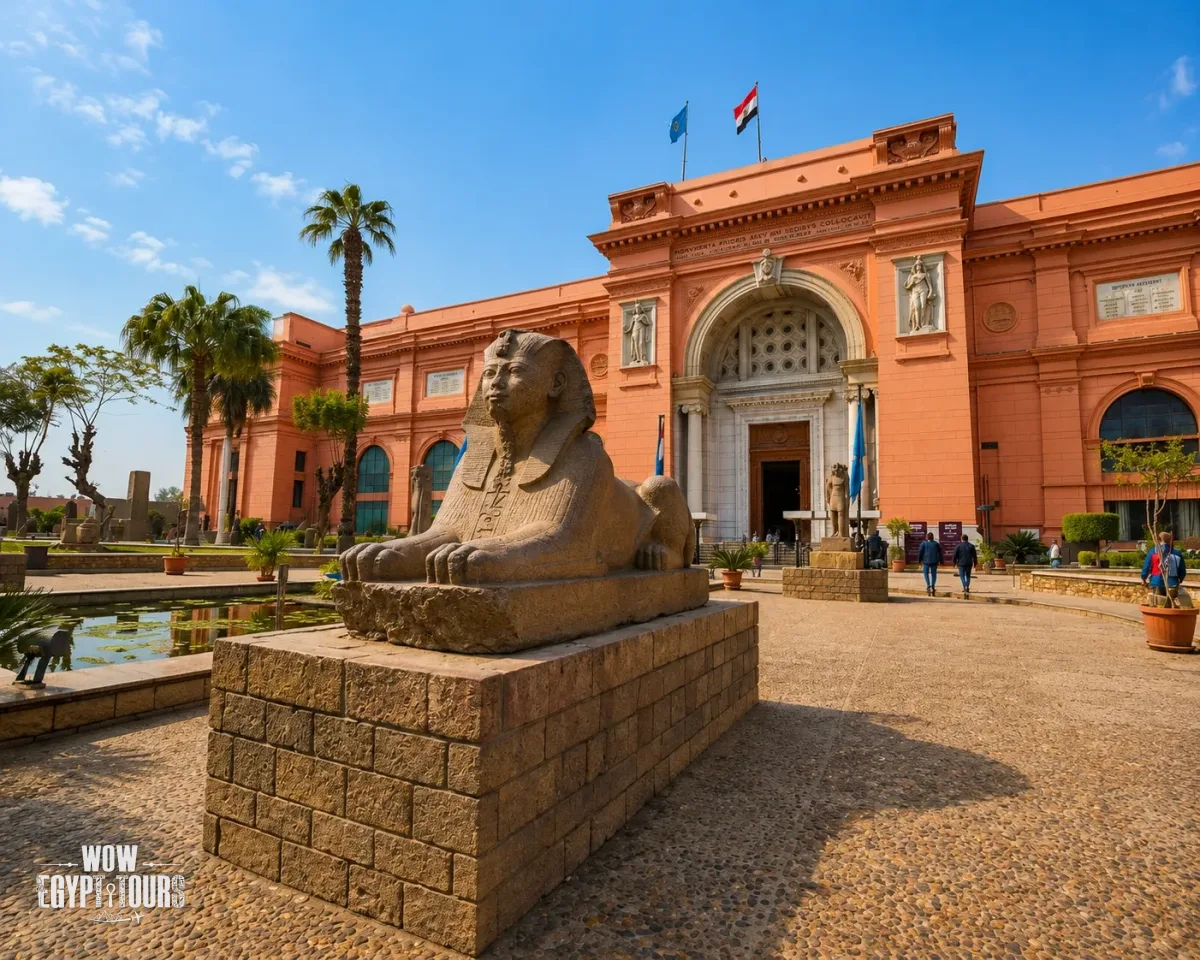
The museum building itself, designed by the French architect Marcel Dourgnon and inaugurated in 1902 in the neoclassical architectural style of late 19th century European public building, is the most immediately recognizable museum facade in the complete Egyptian heritage landscape, its pink painted stucco exterior with classical pilasters, arched windows, and the Egyptian Museum text inscription above the main entrance portal giving it the most instantly identifiable architectural character of any Egyptian museum institution and one of the most personally familiar and the most institutionally beloved museum facades in the complete international heritage tourism world. The building's interior encompasses two main floors of exhibition galleries organized around a central atrium whose clerestory skylights provide the primary natural lighting for the most important display halls, with the ground floor galleries devoted primarily to the larger and the heavier ancient Egyptian objects of all periods from the earliest Predynastic through the Roman era, and the upper floor galleries housing the most celebrated and the most personally overwhelming collections including the complete Tutankhamun treasure galleries, the Royal Mummy Room, the Amarna Period gallery, and the extensive jewellery and precious objects collections of the Middle and New Kingdom royal families.
Who Founded The Egyptian Museum?
The Egyptian Museum in its current institutional form and its current Tahrir Square building is the direct legacy of the vision and the tireless advocacy of Auguste Mariette, the extraordinary French Egyptologist who established both the Egyptian Antiquities Service and the concept of a national Egyptian museum as the twin institutional pillars of a modern Egyptian state commitment to the collection, preservation, and public display of the ancient Egyptian heritage rather than its export to the European museum collections that had been accumulating Egyptian antiquities since the Napoleonic expedition of 1798. Mariette, who arrived in Egypt in 1850 on a mission to collect Coptic manuscripts for the Louvre, became so completely absorbed in the Egyptian archaeological landscape that he never returned to France, spending the remaining 31 years of his life excavating the most important ancient Egyptian sites, discovering the Serapeum at Saqqara, the Valley Temple of Khafre and the diorite throne statue, the Dendera temple complex reliefs, and hundreds of other sites and objects of extraordinary importance while simultaneously fighting to establish the institutional framework of Egyptian antiquities protection that would prevent the continued haemorrhage of ancient objects from Egyptian soil to European collections.
Mariette succeeded in persuading the Egyptian Khedival government to establish the Egyptian Antiquities Service with himself as its first director general in 1858, an institution whose primary responsibility was the control and regulation of all archaeological excavation in Egypt and the prevention of unauthorized antiquity export, and to build Egypt's first dedicated antiquities museum at Boulaq in Cairo in 1863 to house the growing collection of objects recovered from Mariette's excavations and protected from export by the new antiquities law. The Boulaq museum, the first Egyptian national museum, outgrew its building twice before the current Tahrir Square building was inaugurated in 1902, the year after Mariette's death, under the directorship of Mariette's German successor Gaston Maspero, giving the current museum a founding legacy of visionary Egyptian national heritage protection and scholarly archaeological investigation that has defined the institution's character and its collecting programme for more than 120 years of continuous operation as the primary custodian of the ancient Egyptian national collection.
The Royal Mummy Room: The Most Extraordinary Ancient Human Heritage Encounter In The World
The Royal Mummy Room of the Egyptian Museum in Tahrir Square, housing the preserved mummified remains of eleven of the most powerful, the most historically significant, and the most personally celebrated pharaohs of ancient Egypt in the most extraordinary and the most personally overwhelming ancient human physical heritage encounter available at any museum institution anywhere in the world, is the single most immediately historically extraordinary and the single most personally affecting attraction of the complete Egyptian Museum collection programme, a gallery whose specific character of direct physical confrontation with the preserved faces, the preserved hands, and the preserved bodies of the greatest rulers of the ancient Egyptian empire creates a quality of personal encounter with the ancient human world that no amount of object display, however beautiful and however historically significant, can quite replicate or substitute for in the complete archaeology of ancient human physical presence accessible to modern museum visitors. The mummies displayed in the Royal Mummy Room include some of the most historically significant ancient Egyptian rulers in the complete pharaonic tradition, among them the greatest pharaoh of the Egyptian empire, Ramesses II the Great, whose extraordinary 67-year reign from approximately 1279 to 1213 BCE left the most completely extraordinary architectural legacy of any ancient Egyptian ruler in the complete New Kingdom tradition, and whose mummified face, preserved in astonishing detail for more than 3,200 years, gives every visitor who looks into it the most direct and the most personally overwhelming possible encounter with one of the most powerful individuals who has ever inhabited the human world.
The mummy of Ramesses II, whose extraordinarily detailed preservation allows the recognition in the ancient face of the specific strong jaw, the prominent aquiline nose, and the high cheekbones that characterize the royal portraiture of the Ramesside period and whose red hair, preserved in extraordinary detail in the most intimate ancient human physical evidence available at any museum in the world, is the result of the hennaing performed during the New Kingdom mummification process rather than a natural hair color that would be historically extraordinary for an ancient Egyptian, is consistently described by visitors who see it for the first time as the single most personally overwhelming and the single most completely extraordinary museum encounter of their complete travel lives, the moment when three thousand years of historical distance between the modern visitor and the ancient Egyptian world collapses most completely in the direct physical presence of the preserved face of the greatest pharaoh of the Egyptian empire. The additional mummies of Seti I, Thutmose III, Thutmose IV, Amenhotep I, Amenhotep II, Amenhotep III, Queen Hatshepsut, Ramesses III, Merenptah, and Ramesses V together constitute the most extraordinary gathering of ancient royal physical heritage available at any single museum institution in the world, giving the Royal Mummy Room a collective historical significance and a collective personal impact that far exceeds the sum of its individually extraordinary components.
Egyptian Museum Location
The Egyptian Museum is located on the northern edge of Tahrir Square in the center of Cairo, approximately 15 to 20 minutes by private vehicle from the Giza Pyramids Complex and approximately 10 to 15 minutes from most Cairo city center hotels, in the most central and the most accessible position of any major heritage institution in the complete Cairo heritage landscape. The museum's Tahrir Square location gives it the most immediately urban and the most personally Cairo-embedded setting of any Egyptian museum institution, its neoclassical pink facade visible across the square and visible as an immediate landmark from the Nile Corniche bridge approaches that most visitors use to access the Cairo city center, creating the most immediately iconic and the most personally familiar museum entrance experience in the complete Cairo heritage landscape. The museum shares its Tahrir Square neighborhood with the major hotels, government buildings, and transportation hubs of central Cairo, making it the most conveniently accessible heritage institution from any Cairo accommodation option and the most naturally combined museum destination with the Egyptian capital's Islamic and Coptic heritage sites that are also accessible from the central Cairo area by short taxi or private vehicle journey. WOW Egypt Tours provides private vehicle transportation from all Cairo hotels to the Egyptian Museum and organizes the most complete and the most personally satisfying Egyptian Museum visit as part of all Cairo Tours and Egypt Tour Packages.
Egyptian Museum Fun Facts
The Egyptian Museum in Tahrir Square contains more than 170,000 individual ancient Egyptian objects in its collection, of which only approximately 50,000 are currently on display in the museum's exhibition galleries with the remaining objects in storage, a statistic that gives some indication of the extraordinary density of the ancient Egyptian archaeological record that has been recovered by more than two centuries of systematic excavation across the complete Nile Valley landscape. The display density of the Egyptian Museum's galleries, in which cases are packed with objects to a density that no contemporary museum design would permit but that gives the museum its most immediately distinctive and its most personally overwhelming character of accumulated ancient treasure, means that even a visitor spending a full day in the museum will inevitably miss significant objects and significant gallery sections that a subsequent visit would reveal, giving the Egyptian Museum a quality of inexhaustible heritage richness that the most carefully curated and the most spaciously displayed contemporary museum galleries cannot replicate.
The specific mummy of the pharaoh Ramesses II displayed in the Egyptian Museum's Royal Mummy Room was flown to Paris in 1976 in a full head-of-state ceremonial reception that included a military guard of honour at Le Bourget airport, the only occasion in recorded history on which the mummified remains of an ancient pharaoh have received full diplomatic and military protocol honours as a visiting head of state, an extraordinary event whose specific combination of the most modern elements of international diplomatic protocol with the most ancient elements of Egyptian royal identity created one of the most personally extraordinary and the most institutionally remarkable moments in the complete modern diplomatic history of the French and Egyptian states. The mummy was traveling to Paris for conservation treatment of a fungal infection affecting its preservation, received the most advanced mycological conservation treatment available in France, and was returned to Cairo with the same ceremonial honours it had received on arrival.
The Narmer Palette, displayed in the Egyptian Museum's Predynastic and Early Dynastic gallery, is one of the most historically important and the most personally significant single ancient artifacts in the complete Egyptian national collection, a carved greywacke ceremonial palette of approximately 64 centimeters in height from the reign of the proto-pharaoh Narmer in approximately 3100 BCE that provides the earliest known example of hieroglyphic writing, the earliest known royal iconographic programme in the ancient Egyptian artistic tradition, and the earliest documented evidence for the political unification of Upper and Lower Egypt that is the founding event of the pharaonic civilization whose extraordinary 3,000-year cultural achievement is represented in all the subsequent galleries of the Egyptian Museum in Tahrir Square and the Grand Egyptian Museum on the Giza Plateau.
Why Is It Called The Egyptian Museum?
The name Egyptian Museum, applied to the national museum of ancient Egyptian antiquities in Cairo in both its official designation and its universal international colloquial usage, is simultaneously the most straightforward and the most completely appropriate name that any national museum institution has ever been given, identifying the museum with the most complete possible economy of descriptive language as the museum of Egypt and the museum of the Egyptian heritage in a single two-word designation that is universally understood in every language and every cultural tradition in the world without the need for any explanatory context or any qualifying adjective. The official full name, the Museum of Egyptian Antiquities, adds the qualification Antiquities to specify the ancient heritage focus of the collection as distinct from the ethnographic, the natural history, or the modern cultural heritage that other Egyptian national museum institutions address, a qualification that correctly identifies the Egyptian Museum as the institutional custodian of the ancient Pharaonic heritage in distinction from the other museum institutions of the Cairo museum landscape. The colloquial international designation as the Egyptian Museum has been universally adopted throughout the international heritage tourism literature since the museum's founding in 1902 and has achieved a currency and an immediacy of recognition that its official longer name designation has never matched in the practical vocabulary of heritage travelers, tour guides, academic Egyptologists, and international cultural media of every language and every cultural tradition that has engaged with the ancient Egyptian heritage over the past 120 years of the museum's operation.
Egyptian Museum History
The institutional history of the Egyptian Museum in its current Tahrir Square building begins with the inauguration of the Marcel Dourgnon-designed neoclassical building in 1902 under the directorship of Gaston Maspero, Mariette's successor as director general of the Egyptian Antiquities Service, but the deeper institutional history of the Egyptian national museum collection reaches back to Mariette's original Boulaq museum of 1863 and from there to the founding vision of a specifically Egyptian national museum that Mariette championed throughout his remarkable career as the primary architect of the modern Egyptian national heritage protection system. The Tahrir Square building was inaugurated with a collection that had already been substantially enriched by decades of systematic excavation, including the extraordinary finds from the Deir el-Bahari cache of royal mummies discovered in 1881, the Amenhotep II tomb cache of royal mummies discovered in 1898, and the progressive recovery of objects from the major New Kingdom temple and tomb sites of the Nile Valley that the Antiquities Service excavation programme had generated throughout the second half of the 19th century.
The single most consequential and the single most personally dramatic moment in the complete institutional history of the Egyptian Museum since its 1902 inauguration was the arrival of the Tutankhamun treasure from the Valley of the Kings between 1923 and the early 1930s, as Howard Carter's systematic clearance of the four sealed chambers of KV62 progressively transferred object by object the most extraordinary royal funerary assemblage ever recovered from an ancient Egyptian royal burial context to the museum's upper floor galleries for conservation, study, and public display. The decade-long process of Tutankhamun object arrival, conservation, and installation in the museum's galleries created a sustained period of public and scholarly attention of a completely unprecedented intensity and duration whose global cultural impact, the Tutankhamun phenomenon of the 1920s and 1930s in which the extraordinary finds from KV62 generated a worldwide fascination with ancient Egypt that has never fully subsided, transformed the Egyptian Museum from a respected scholarly institution of primarily specialist interest into the most visited and the most internationally celebrated museum in the African continent and one of the most visited heritage institutions in the entire world. The museum's most recent institutional transition, the progressive transfer of the complete Tutankhamun collection to the newly opened Grand Egyptian Museum on the Giza Plateau, completed in the early 2020s, has changed the museum's character significantly, removing its most celebrated collection anchor while allowing the institution to redefine itself around its extraordinary remaining collection of royal mummies, Old Kingdom masterpieces, Amarna period art, and the complete pre-Tutankhamun ancient Egyptian heritage that remains one of the most personally extraordinary and the most culturally significant archaeological collections accessible to visitors at any museum institution in the world.
The Story Of More Than A Century Of Egyptian Heritage
The story of the Egyptian Museum across its more than 120 years of continuous operation as the primary custodian and the primary public display institution of the Egyptian national ancient heritage collection is one of the most extraordinary institutional biographies in the complete history of the world museum tradition, a biography whose defining theme is the extraordinary tension between the museum's extraordinary institutional success in attracting and inspiring the most passionate international engagement with the ancient Egyptian heritage across more than a century of global cultural history and the practical institutional constraints of a 19th century building trying to house, care for, and display a collection of extraordinary size, extraordinary variety, and extraordinary importance that has grown far beyond anything the building's original designers could have anticipated. The museum has been simultaneously the most beloved and the most criticised heritage institution in Egypt, universally loved for the extraordinary richness and variety of its collection and for the specific atmospheric character of its accumulated scholarly display tradition, and simultaneously criticized for the inadequate conservation standards, the insufficient visitor interpretation, and the simple physical impossibility of displaying a collection of more than 170,000 objects in adequate conditions in a building designed for a fraction of that number, criticisms whose practical urgency has been the primary institutional motivation for the extraordinary ambition and the extraordinary investment of the Grand Egyptian Museum project.
The Egyptian Museum's position in the broader cultural history of the 20th century extends far beyond its role as a repository of ancient artifacts to encompass its function as the primary physical site of the most dramatic moments in the global cultural history of the ancient Egyptian heritage, the place where the Tutankhamun objects were first studied and first displayed, where generations of the most distinguished Egyptologists of every nationality conducted their formative scholarly encounters with the primary objects of the ancient Egyptian material tradition, where the most significant discoveries of the complete modern era of Egyptian archaeological investigation were first housed and first made available for scholarly study, and where more than 100 million individual visitors from every country and every cultural tradition in the world have experienced their most direct and their most personally consequential encounter with the extraordinary ancient Egyptian heritage. The museum's specific historical role in shaping the global cultural understanding and the global cultural reception of the ancient Egyptian world across more than a century of international engagement with that heritage gives it an institutional significance that no amount of physical refurbishment or contemporary museum design improvement could diminish, and whose continuation in the transformed post-Tutankhamun transfer era as a museum of extraordinary remaining collection richness and extraordinary institutional historical character gives the Egyptian Museum a quality of heritage relevance and personal heritage significance that the most modern and the most comprehensively equipped of contemporary museum institutions cannot quite replicate in the same form.
Egyptian Museum Key Attractions And Features
The Royal Mummy Room
The Royal Mummy Room of the Egyptian Museum, housing the preserved mummified remains of eleven ancient Egyptian pharaohs and royal family members in the most personally extraordinary and the most historically consequential ancient human physical heritage encounter available at any museum institution in the world, is the absolute primary attraction of the current Egyptian Museum collection programme and the experience that most consistently and most completely transforms the personal relationship of every visitor with the ancient Egyptian world from an intellectual appreciation of a distant civilization to a direct and physical encounter with the actual preserved bodies of the individuals who created and sustained that civilization across more than a millennium of the most extraordinary cultural achievement in the history of the ancient world. The mummies are displayed in individual climate-controlled cases arranged in a dedicated air-conditioned gallery whose specific atmospheric design of subdued lighting, reverent quiet, and the extraordinary physical presence of the ancient royal bodies creates the most completely extraordinary and the most personally affecting museum encounter available at any institution in the world. The mummy of Ramesses II is the gallery's most immediately powerful and the most personally overwhelming presence, his preserved face with its strong jaw, high cheekbones, and extraordinarily detailed skin texture preserved across more than 3,200 years of mummification creating the most direct possible confrontation between the modern visitor and the ancient Egyptian world in the most completely extraordinary ancient human physical heritage encounter available at any accessible heritage site in the world.
The Old Kingdom Masterpieces: Khafre And Menkaure
The Egyptian Museum's collection of Old Kingdom royal sculpture includes two of the most celebrated and the most universally admired ancient Egyptian royal portrait sculptures in the complete world heritage record, works whose extraordinary quality of artistic achievement and extraordinary quality of ancient material presence give the Egyptian Museum's Old Kingdom gallery a dimension of supreme sculptural excellence that no other museum gallery in the world can quite match in the specific quality of ancient Egyptian 4th Dynasty royal portraiture at its absolute artistic peak. The magnificent diorite throne statue of Khafre, discovered by Auguste Mariette in the sealed pit of the Valley Temple of Khafre on 26 February 1860 and universally recognized as the supreme masterpiece of ancient Egyptian Old Kingdom royal portraiture, shows the pharaoh seated on his royal throne with the falcon god Horus spreading his wings protectively behind the royal head in the most completely extraordinary and the most personally affecting ancient Egyptian royal portrait sculpture in the complete heritage of any civilization in any period of human history. The extraordinary collection of Menkaure triads recovered from the Valley Temple area of the Small Pyramid of Menkaure by George Reisner's Boston-Harvard Expedition between 1908 and 1910, widely recognized as the finest group portrait sculptures of the complete ancient Egyptian Old Kingdom tradition, display the pharaoh standing between the goddess Hathor and a nome deity in a compositional warmth and a sculptural refinement that gives the Menkaure triads a quality of direct human engagement and personal royal presence that is uniquely and incomparably their own in the complete world heritage of ancient sculpture. The tiny ivory statuette of Khufu, barely 7.5 centimeters tall, the only known three-dimensional portrait of the builder of the Great Pyramid, represents the most extraordinary paradox in the complete history of ancient royal portraiture available at any museum: the builder of the world's largest building in its smallest possible sculptural representation.
The Amarna Period Gallery
The Egyptian Museum's Amarna Period gallery, devoted to the extraordinary and the uniquely beautiful artistic production of the reign of the pharaoh Akhenaten, the revolutionary Pharaoh who abandoned the traditional Egyptian pantheon, established the monotheistic worship of the solar disc Aten as the supreme divine reality, moved the Egyptian royal court from Thebes to the entirely new city of Akhetaten at modern Amarna in Middle Egypt, and generated in the process an artistic revolution of such completely extraordinary character and such completely unprecedented artistic vision that the Amarna Period artistic tradition is recognized by art historians of every cultural background and every period specialization as one of the most distinctive, the most personally engaging, and the most artistically extraordinary artistic episodes in the complete history of the ancient world, is one of the most celebrated and the most consistently visited galleries of the complete Egyptian Museum collection programme. The gallery's colossal statues of Akhenaten in the revolutionary Amarna artistic style, whose elongated bodies, exaggerated facial features, sensuous naturalistic modelling, and complete departure from the canonical rigidity of the traditional Egyptian royal portrait formula create the most immediately startling and the most personally provocative ancient royal portraits in the complete Egyptian national collection, give the Amarna gallery a quality of artistic drama and personal intellectual provocation that is unique in the complete Egyptian Museum collection programme and that gives the museum visitor their most direct and their most complete encounter with the most radical and the most personally extraordinary artistic vision in the complete ancient Egyptian artistic tradition.
The Narmer Palette And The Predynastic Gallery
The Egyptian Museum's Predynastic and Early Dynastic gallery, housing the most important and the most historically consequential objects from the earliest phases of ancient Egyptian civilization before and immediately after the unification of the Two Lands into the single pharaonic state at the beginning of Dynasty 1 in approximately 3100 BCE, contains the single most historically significant ancient object in the complete Egyptian national collection in the form of the Narmer Palette, a carved greywacke ceremonial palette of approximately 64 centimeters height from the reign of the proto-pharaoh Narmer that provides the earliest known example of hieroglyphic writing in the ancient Egyptian tradition, the earliest known complete royal iconographic programme showing the pharaoh in the canonical smiting pose with the White Crown of Upper Egypt subduing an enemy of Lower Egypt, and the earliest surviving monumental historical narrative document in the complete ancient Egyptian artistic heritage, whose date of approximately 3100 BCE makes it the most ancient and the most historically consequential single work of royal commemorative art in the complete world heritage record accessible to visitors at any museum institution in the world.
The Middle Kingdom Collection
The Egyptian Museum's Middle Kingdom collection, encompassing the extraordinary royal and private sculpture, the magnificent wooden model collections, the extraordinary jewellery hoards of the Middle Kingdom royal and elite women, and the most important ancient Egyptian administrative and literary papyri of the classical period of ancient Egyptian literature, gives the museum's Middle Kingdom galleries a dimension of cultural completeness and personal heritage richness that gives visitors who engage with them the most complete available picture of the ancient Egyptian world at one of its most culturally productive and most personally human historical moments. The extraordinary wooden model collections of Middle Kingdom elite burials, with their miniature painted wooden armies, boats, workshops, breweries, and bakeries representing in the most immediately accessible and the most personally vivid miniature form the complete operational world of the ancient Egyptian estate in the early 2nd millennium BCE, are among the most universally engaging and the most consistently popular objects in the complete Egyptian Museum collection programme for visitors of every age and every cultural background, their extraordinary combination of detailed craftsmanship, vivid narrative content, and immediate historical information about ancient Egyptian daily life making them the most accessible and the most personally informative material documentation of the ancient Egyptian way of life available in a museum display context anywhere in the world.
The Jewellery Galleries And The Royal Treasure
The Egyptian Museum's jewellery and royal treasure galleries, housing the most extraordinary collection of ancient Egyptian goldsmithing, silversmithing, and inlay work accessible to visitors at any museum institution in the world, give the museum one of its most consistently celebrated and the most universally admired collection strengths in the specific technical quality and the specific artistic refinement of the ancient Egyptian luxury object production tradition at its most ambitious and its most completely realized historical expression. The jewellery collections of the Middle Kingdom royal women, recovered from intact burial shafts at Dahshur and Lahun and including the pectorals, collars, bracelets, and diadems of the princesses of the 12th Dynasty whose extraordinary technical mastery in cloisonné goldsmithing and semi-precious stone inlay represents the most refined expression of the ancient Egyptian jewellery tradition at the peak of its technical development, are among the most universally admired and the most consistently photographed objects in the complete Egyptian Museum collection, objects whose extraordinary combination of gold, carnelian, lapis lazuli, turquoise, and amethyst in the most exquisitely fitted cloisonné cells of the ancient Egyptian goldsmith's art create the most beautiful and the most completely extraordinary ancient jewellery available at any museum in the world outside the Tutankhamun collection now at the Grand Egyptian Museum.
The Yuya And Tjuya Tomb Treasure
The Egyptian Museum houses the extraordinary objects recovered from the intact tomb of Yuya and Tjuya, the parents of Queen Tiye and the grandparents of the pharaoh Akhenaten, discovered in the Valley of the Kings in 1905 and providing at the time of its discovery the most completely intact royal or near-royal burial context ever found in the Valley of the Kings before the subsequent discovery of Tutankhamun's tomb in 1922. The Yuya and Tjuya treasure, encompassing the extraordinary gilded wooden coffins of both Yuya and Tjuya whose extraordinary quality of artistic craftsmanship and extraordinary state of preservation give them a quality of ancient material presence equalled only by the finest objects of the Tutankhamun collection, the canopic equipment, the funerary furniture, and the extraordinary collection of personal objects and ritual equipment that together constitute the most completely preserved non-royal burial assemblage from the New Kingdom Valley of the Kings, gives the Egyptian Museum a collection highlight of extraordinary quality and extraordinary historical significance that remains in Tahrir Square while the Tutankhamun collection has moved to the GEM, maintaining the museum's extraordinary collection profile in the most important period of ancient Egyptian funerary culture.
The Atrium And The Display Atmosphere
The central atrium of the Egyptian Museum building, lit by the clerestory skylights of the Marcel Dourgnon design in a quality of natural light that gives the ground floor display hall its most distinctive and its most personally characteristic museum atmospheric quality, houses a collection of ancient Egyptian colossal sculpture and architectural elements in the most immediately overwhelming single museum display space in the complete Cairo museum landscape, with the massive granite statues of pharaohs, the enormous ancient Egyptian columns, the massive ancient sarcophagi, and the collection of extraordinary monumental ancient objects arranged throughout the atrium in an accumulation of ancient grandeur whose specific density and whose specific atmospheric character create the most completely extraordinary and the most personally overwhelming first encounter with the scale of the ancient Egyptian monumental tradition available at any museum interior in the complete world museum landscape. The museum's specific display atmosphere of accumulated scholarly character, of cases crammed with objects in the inherited arrangement of more than a century of incremental collection growth, of labels that reflect generations of Egyptological interpretation rather than any single coordinated interpretive programme, and of the complete absence of the calculated visitor experience architecture of contemporary museum design gives the Egyptian Museum a quality of direct antiquarian encounter with the ancient Egyptian heritage that is unlike the experience of any contemporary museum institution and that has a very specific and a very personal charm that the most modern and the most perfectly curated contemporary museum galleries cannot quite replicate.
Why Is The Egyptian Museum Important?
The Egyptian Museum in Tahrir Square is important for reasons spanning the institutional history of Egyptian cultural heritage management, the scholarly history of Egyptological investigation, the specific significance of the Royal Mummy Room as the most extraordinary ancient human physical heritage encounter in the world museum landscape, the extraordinary collection of Old Kingdom royal sculpture including the Khafre diorite throne statue and the Menkaure triads, the complete coverage of the ancient Egyptian artistic tradition from the Narmer Palette through the Amarna revolution to the Ptolemaic period in the most comprehensive chronological collection in any single institution, and the broader cultural significance of the museum as the primary institution through which the global cultural understanding of the ancient Egyptian heritage has been shaped and sustained across more than a century of international heritage engagement. As a heritage institution, the Egyptian Museum has done more than any other single organization to make the ancient Egyptian heritage accessible, legible, and personally meaningful to the international heritage visiting community across more than a century of global cultural history. As a scholarly resource, the museum's collection represents the primary research base for the most important and the most internationally productive Egyptological scholarship of the 20th and 21st centuries. WOW Egypt Tours includes the Egyptian Museum as an essential destination in all comprehensive Cairo Tours, Egypt Classic Tours, and all Egypt Tour Packages.
What Are Some Interesting Facts About The Egyptian Museum?
Ramesses II's Passport
The extraordinary 1976 journey of Ramesses II's mummy from Cairo to Paris for conservation treatment, conducted in full head-of-state diplomatic protocol with a military guard of honour at Le Bourget airport and the formal ceremonial reception accorded to a visiting foreign head of state, required the Egyptian government to issue the mummified pharaoh a formal Egyptian travel passport for the journey, a document of extraordinary historical novelty that identified the bearer as Ramesses II, King of Egypt, with a date of birth approximately 1303 BCE and a profession listed as King (deceased). The passport, and the extraordinary diplomatic and ceremonial circumstances of the mummy's journey to France, represent one of the most personally extraordinary and the most institutionally remarkable moments in the complete modern history of the Egyptian Museum's relationship with its most famous and its most historically significant human resident, a moment of such completely extraordinary institutional creativity and such completely personal humanity in the treatment of the ancient royal remains that it has become one of the most celebrated anecdotes in the complete institutional folklore of the Egyptian museum world.
The Museum Survived The 2011 Revolution
During the Egyptian Revolution of January and February 2011 that eventually led to the resignation of President Hosni Mubarak, the Egyptian Museum in Tahrir Square was the subject of intense international concern as the epicentre of the revolutionary protests in Tahrir Square brought crowds of hundreds of thousands of people to within meters of the museum's front entrance. The museum suffered limited damage and the theft of a small number of objects during the nights of the most intense public disorder, but the extraordinary response of Egyptian citizens who formed a human protective chain around the museum building to prevent further damage and theft, spontaneously organizing themselves as voluntary museum guards during the most chaotic nights of the revolutionary period, was one of the most personally extraordinary and the most nationally inspiring demonstrations of Egyptian civil society's commitment to the protection of the ancient heritage that any modern emergency has ever generated and a demonstration of the specifically Egyptian cultural relationship with the ancient heritage whose depth and whose personal immediacy the events of those extraordinary nights revealed most completely and most movingly.
The Oldest Museum In Africa
The Egyptian Museum in Tahrir Square, inaugurated in 1902, is the oldest national archaeological museum in Africa, predating all subsequent national museum institutions on the African continent by decades and establishing in the process the institutional model for the national management and the public display of ancient heritage that most subsequent African national museum systems have adopted in their own specific cultural and heritage contexts. The museum's more than 120 years of continuous operation as the primary custodian of the Egyptian national ancient heritage collection gives it an institutional longevity and an accumulated scholarly tradition that no other archaeological museum institution on the African continent can match, and that gives the physical building, with its early 20th century neoclassical architecture and its accumulated layers of institutional memory, a quality of heritage significance in its own right as the oldest and the most historically consequential national museum building on the African continent.
What Is So Special About The Egyptian Museum?
Where Ancient Royalty Still Walks Among Us
What makes the Egyptian Museum in Tahrir Square uniquely special and uniquely irreplaceable in the complete Cairo heritage landscape, even after the transfer of the Tutankhamun collection to the Grand Egyptian Museum, is the Royal Mummy Room, whose specific character of direct physical confrontation with the preserved faces and the preserved bodies of the greatest rulers of the ancient Egyptian world creates a quality of personal encounter with the ancient human heritage that is simply unavailable at any other museum institution in the world and that gives the Egyptian Museum a specific primary attraction of such completely extraordinary personal impact that it will continue to be the primary museum destination for an enormous proportion of heritage travelers visiting Cairo for precisely this encounter, unmediated and undiminished by the transfer of any other collection component to any other museum institution. The experience of standing before the mummy of Ramesses II or Seti I or Queen Hatshepsut in the Egyptian Museum's Royal Mummy Room and understanding that you are in the direct physical presence of the most celebrated and the most powerful rulers of the most extraordinary ancient civilization in the history of the world is simply one of the most personally extraordinary and the most permanently memorable heritage encounters available anywhere in the complete world heritage landscape, and it is available at this specific museum and at no other museum institution in the world in quite the same form or with quite the same specific collection of ancient royal human presences.
The Museum That Changed The World's Understanding Of Ancient Egypt
The Egyptian Museum is also uniquely special for its specific role in the cultural history of the 20th century as the institution through which the global cultural understanding of the ancient Egyptian heritage was most completely and most consequentially shaped, primarily through the Tutankhamun phenomenon of the 1920s and 1930s whose global cultural impact, generated by the progressive display of the extraordinary KV62 objects in the museum's upper floor galleries, created the most widespread and the most personally engaged international public interest in the ancient Egyptian heritage that any single archaeological discovery has ever generated in the complete history of the relationship between modern cultural life and the ancient world. The specific role of the Egyptian Museum in making the Tutankhamun discovery available to the international public, in hosting the scholarly investigation that documented and interpreted the discovery for the world, and in providing the primary physical context within which the global Tutankhamun cultural phenomenon developed and sustained itself across more than 90 years of continuous international engagement gives the museum a cultural history of such extraordinary consequence and such completely personal significance for the entire global community of ancient Egyptian heritage enthusiasts that its institutional significance cannot be measured by the quality of its current collection display alone but must include the full weight of its extraordinary cultural historical role in the most consequential century of international engagement with the ancient Egyptian world.
The Egyptian Museum Through The Ages
The complete narrative of the Egyptian Museum from Auguste Mariette's founding vision of a specifically Egyptian national museum and the Boulaq museum of 1863 through the transfer to the current Tahrir Square building in 1902, the extraordinary decade-long Tutankhamun treasure arrival of the 1920s and early 1930s, the extraordinary challenges and the extraordinary institutional resilience of the revolutionary period of 2011, and the most recent institutional transition of the Tutankhamun transfer to the Grand Egyptian Museum, traces one of the most extraordinary and the most personally consequential institutional biographies in the complete history of the world museum tradition, a biography whose defining theme is the extraordinary institutional commitment of successive generations of Egyptian heritage professionals to the protection, the study, and the public sharing of the most extraordinary ancient heritage in the world under conditions of political change, financial constraint, and physical plant inadequacy that would have defeated institutional programmes of far lesser heritage significance and far lesser national cultural importance. The most recent and the most institutionally consequential chapter of the Egyptian Museum's biography is its post-Tutankhamun redefinition as a museum of extraordinary remaining collection richness, whose Royal Mummy Room, Old Kingdom masterpieces, Amarna gallery, Middle Kingdom collections, jewellery galleries, and Yuya and Tjuya treasure together constitute a collection of such extraordinary quality and such completely personal heritage significance that the museum's continued operation as a primary Cairo heritage destination of the highest importance is secured by the quality of what remains in Tahrir Square regardless of what has been transferred to the Giza Plateau.
The Egyptian Museum And UNESCO
The Egyptian Museum in Tahrir Square, as the primary institutional custodian of the Egyptian national collection of ancient artifacts that includes objects from UNESCO World Heritage Sites throughout Egypt including the Giza Pyramids Complex, the Nile Valley temple sites, and the complete range of pharaonic monument zones, is the most important supporting institution for the Egyptian World Heritage Site conservation and management programme in the complete Egyptian heritage infrastructure. The museum's specific collections from UNESCO World Heritage Sites, including the Old Kingdom royal sculpture from the Giza Plateau, the New Kingdom royal mummies from the Valley of the Kings, and the extraordinary range of objects from temple and tomb sites throughout Upper and Lower Egypt whose UNESCO designation protects the primary in-situ heritage context of the museum's collection, give it a specific relationship with the UNESCO World Heritage programme that is unique among Egyptian museum institutions in its comprehensive collection-level coverage of the most important heritage sites across the complete Egyptian geographical landscape. The Egyptian government and the UNESCO World Heritage Committee are engaged in ongoing collaboration on the conservation, the documentation, and the scholarly investigation of the most significant objects in the Egyptian Museum collection in the most complete and the most internationally supported heritage care programme available for the Egyptian national ancient collection.
Best Time To Visit The Egyptian Museum
The best time to visit the Egyptian Museum is during the cooler months from October through April when the Cairo climate provides the most comfortable conditions for the extended walking that a comprehensive museum visit requires and when the museum's somewhat limited air conditioning is most adequate for the visitor comfort in the gallery spaces. The early morning hours from the museum's opening at 9:00 AM through approximately 11:00 AM are the most strongly recommended visiting period, as the museum's popularity means that the most celebrated galleries including the Royal Mummy Room can become significantly crowded in the mid-morning and afternoon hours, and the early morning visitor density is consistently the most manageable of any time in the complete daily visiting cycle. The Royal Mummy Room in particular benefits from an early morning visit when the reverent quiet of the gallery and the specific atmospheric quality of the early morning light in the climate-controlled display space create the most completely extraordinary and the most personally affecting encounter with the ancient royal mummies of any available visiting time. The summer months bring very hot external temperatures that make the museum's relatively limited air conditioning more challenging in the most crowded gallery spaces, though the indoor nature of the visit means that the museum remains a viable heritage destination throughout the year. WOW Egypt Tours organizes Egyptian Museum visits throughout the year and advises on optimal timing within the complete Cairo heritage programme.
Egyptian Museum Opening Hours
The Egyptian Museum in Tahrir Square is open daily from 9:00 AM to 5:00 PM, with the last admission at 4:00 PM. The Royal Mummy Room requires an additional ticket beyond the general museum admission and is open during museum hours. All visiting hours are subject to adjustment for Egyptian national holidays and special museum events, and current hours should be confirmed at time of booking with WOW Egypt Tours. The museum is closed on certain national holidays and the specific closure dates should be confirmed for the planned visit date. Photography is permitted in most gallery areas of the museum though specific restrictions apply to the Royal Mummy Room where photography is prohibited.
Egyptian Museum Entrance Fees
General Egyptian Museum admission: EGP 550 for adults, EGP 275 for students.
Photography permit: confirm at time of booking as photography regulations and fees are subject to periodic revision.
All Egyptian Museum entrance fees including the Royal Mummy Room are included in the Cairo Tours and Egypt Tour Packages organized by WOW Egypt Tours. Fees are subject to periodic adjustment and current rates should be confirmed at time of booking.
How To Get To The Egyptian Museum
The Egyptian Museum is located on the northern edge of Tahrir Square in the center of Cairo, accessible from most Cairo city center hotels by private vehicle in approximately 10 to 15 minutes, by the Cairo Metro to Sadat Station on Line 1 and Line 2 which intersect at Tahrir Square, or by taxi from any point in central Cairo. The museum's central location in Tahrir Square makes it the most conveniently accessible major heritage institution from any Cairo accommodation option, with its position on the most central public square in Cairo giving it the most immediately walkable museum location from the largest range of Cairo city center hotels of any Egyptian museum institution. Private vehicle from the Cairo hotel provided by WOW Egypt Tours as part of the complete Cairo heritage programme is the most practically convenient approach, providing door-to-door transport and seamless onward transportation to other Cairo heritage destinations in the most efficiently timed and the most personally satisfying combined heritage programme available in the complete Cairo ancient and Islamic heritage landscape.
How Long To Spend At The Egyptian Museum
A minimum of three hours is required for an Egyptian Museum visit that covers the Royal Mummy Room, the most important Old Kingdom sculpture gallery highlights including the Khafre diorite statue and the Menkaure triads, the Narmer Palette in the Predynastic gallery, the Amarna gallery, and the most celebrated jewellery highlights, in the most efficiently organized and the most personally satisfying format. A more completely satisfying visit of four to five hours allows the most thorough engagement with the complete Royal Mummy Room, the Old Kingdom and Middle Kingdom galleries, the Amarna collection, the jewellery galleries including the Middle Kingdom princess collections, and the Yuya and Tjuya tomb treasure in the most unhurried and the most personally enriching format. A full-day Egyptian Museum visit of six to seven hours is required to engage comprehensively with all the major gallery areas across both floors of the museum including the less-visited but equally rewarding Coptic and Late Period collections. The Egyptian Museum is most naturally combined with either the Grand Egyptian Museum or the Giza Pyramids Complex in two-day Cairo ancient heritage programmes that give both museums adequate time for comprehensive engagement. WOW Egypt Tours designs all Cairo museum programmes in the most practically efficient and the most personally satisfying format.
Tips For Visiting The Egyptian Museum
Purchase the Royal Mummy Room ticket at the museum entrance before proceeding into the main galleries, as the Mummy Room ticket is sold at a separate desk whose specific location within the entrance area should be confirmed with the museum staff on arrival, and proceeding to the Mummy Room as the first or second gallery visit of the morning ensures the most manageable visitor density in this most celebrated and most emotionally affecting gallery. Ask your licensed Egyptology guide from WOW Egypt Tours to introduce the complete historical background of each pharaoh whose mummy is displayed in the Royal Mummy Room before entering the gallery itself, as the combination of the specific historical narrative of each pharaoh's reign, battles, building programme, and legacy with the direct physical encounter with the preserved royal body gives the Royal Mummy Room experience its most complete and its most deeply personal historical resonance. Stand in front of the Khafre diorite throne statue and ask your guide to explain the specific material qualities of the diorite stone, the specific technical achievements of the ancient sculptor who carved it, and the specific discovery circumstances of 26 February 1860 when Mariette found it in the sealed pit of the Valley Temple, as the combination of these three dimensions of the statue's extraordinary significance gives the encounter with it the most complete and the most personally affecting quality of any museum object encounter available in the complete Egyptian Museum collection. Allow yourself to be surprised and delighted by objects in less-visited gallery sections that are not on the primary highlight circuit of most museum tours, as the Egyptian Museum's extraordinary collection density means that objects of genuine beauty and genuine historical significance are available in every gallery section including those that receive only a fraction of the attention directed to the most celebrated highlights.
What To Wear At The Egyptian Museum
The Egyptian Museum's indoor gallery environment is climate-controlled in the most celebrated gallery sections including the Royal Mummy Room, though the degree of air conditioning in other gallery areas varies and the large central atrium can be significantly warm in the summer months. Comfortable walking shoes with good support are essential for the considerable distances involved in a comprehensive Egyptian Museum programme across both floors of a large museum building. Light casual clothing is appropriate for the museum interior throughout the year. A light sweater or jacket may be useful in the most intensively cooled gallery sections including the Royal Mummy Room whose specific climate control for the preservation of the ancient human remains creates a gallery temperature significantly cooler than most other areas of the museum. Modest clothing covering the shoulders and knees is appropriate in the Egyptian cultural context throughout the museum visit. Carry adequate water as the museum's cafeteria facilities are located in specific sections of the building that are not always conveniently accessible from all gallery areas.
Photography At The Egyptian Museum
Photography for personal non-commercial purposes is permitted in most gallery areas of the Egyptian Museum without flash. Photography is expressly prohibited in the Royal Mummy Room where the dignity of the ancient royal remains and the conservation requirements of the climate-controlled display environment together make photographic restriction entirely appropriate and entirely respectful. The most photographically extraordinary subjects in the museum outside the Mummy Room include the Khafre diorite throne statue whose extraordinary surface quality and extraordinary sculptural presence reward the most careful close-range photography, the Menkaure triads whose warm dark green schist surface creates the most beautiful ancient portrait sculpture photography available at the museum, the Narmer Palette whose extraordinary historical significance and extraordinary carved narrative programme make it one of the most intellectually rewarding and the most personally extraordinary photography subjects in the complete museum collection, the colossal statuary of the central atrium in the extraordinary natural light of the clerestory skylights, and the extraordinary Middle Kingdom princess jewellery whose delicacy and whose extraordinary goldsmithing quality reward the most careful close-range photography through the protective glass of the display cases.
Egyptian Museum Tours
Egyptian Museum Highlights Programme With Royal Mummy Room
This comprehensive Egyptian Museum programme provides the most complete and the most expertly guided encounter with all the primary collection highlights of the world's oldest national archaeological museum in Africa, from the most extraordinary ancient human physical heritage encounter of the Royal Mummy Room through the supreme masterpieces of Old Kingdom royal sculpture to the Amarna revolution, the Middle Kingdom jewellery, and the Yuya and Tjuya tomb treasure.
What Is Covered
Private vehicle from Cairo hotel with morning departure. Royal Mummy Room with complete expert guided historical biography of each displayed pharaoh including Ramesses II, Seti I, Thutmose III, and Queen Hatshepsut. Old Kingdom gallery: Khafre diorite throne statue with complete Mariette discovery narrative, Menkaure triads with sculptural quality analysis, Khufu ivory statuette. Narmer Palette with explanation of Egypt's unification and the origins of hieroglyphic writing. Amarna Period gallery: Akhenaten colossal statues and the artistic revolution narrative. Middle Kingdom wooden models. Jewellery galleries: Middle Kingdom princess jewellery including Dahshur and Lahun finds. Yuya and Tjuya tomb treasure. Complete atrium colossal statuary programme. Return to Cairo hotel or onward transport to the next heritage destination.
Duration
Half day from Cairo hotel, approximately 4 to 5 hours.
Includes
Private vehicle, licensed Egyptology guide, general museum admission, Royal Mummy Room ticket, and all logistics. Through WOW Egypt Tours Cairo Tours.
Complete Cairo Museum Day: Egyptian Museum And Grand Egyptian Museum
This extraordinary combined museum programme provides the most complete and the most personally enriching encounter with the complete ancient Egyptian museum heritage of Cairo, combining the most extraordinary ancient human physical heritage of the Egyptian Museum's Royal Mummy Room with the most extraordinary ancient royal material treasure of the Grand Egyptian Museum's Tutankhamun galleries in the single most completely satisfying museum day available in the complete Cairo heritage landscape.
What Is Covered
Private vehicle from Cairo hotel with early morning departure. Morning: Egyptian Museum highlights programme including Royal Mummy Room, Old Kingdom masterpieces, Amarna gallery, and jewellery collections. Lunch. Afternoon: Grand Egyptian Museum with advance-booked Tutankhamun gallery timed entry, Grand Staircase, and pyramid-view terrace. Return to Cairo hotel in the evening.
Duration
Full day from Cairo hotel, approximately 9 to 10 hours.
Includes
Private vehicle, licensed Egyptology guide, all museum entrance fees including Royal Mummy Room and GEM Tutankhamun gallery advance booking, lunch, and all logistics. Through WOW Egypt Tours Cairo Tours.
Combine The Egyptian Museum With Your Egypt Tours Package
The Egyptian Museum is featured as an essential museum heritage destination across the full range of WOW Egypt Tours travel products. Browse the options below to find the Egypt experience that includes the Egyptian Museum.
Egypt Tour Packages: Multi-day guided Egypt tours organized by duration, including 2 Days Egypt Packages, 3 Days Egypt Packages, 4 Days Egypt Packages, 5 Days Egypt Packages, 6 Days Egypt Packages, 7 Days Egypt Packages, 8 Days Egypt Packages, 10 Days Egypt Packages, and longer itineraries. The Egyptian Museum is included in all Egypt Tour Packages as a primary Cairo museum destination, most naturally combined with the Giza Pyramids Complex and the Grand Egyptian Museum in a comprehensive two-day Cairo ancient heritage programme. All packages include private vehicle, licensed Egyptology guide, accommodation, all entrance fees, and all logistics.
Egypt Travel Packages: Themed Egypt travel packages including Egypt Honeymoon Travel Packages, Egypt Budget Travel Packages, Egypt Family Travel Packages, Egypt Luxury Travel Packages, Egypt Adventure Travel Packages, Egypt Cultural Travel Packages, and Egypt Christmas and New Year Travel Packages. The Egyptian Museum and its Royal Mummy Room are featured in every Egypt Travel Package category as the most personally extraordinary and the most historically consequential museum heritage encounter available in the complete Cairo museum landscape.
Egypt Classic Tours: The most popular and the most comprehensively balanced Egypt travel programme, combining the Egyptian Museum's Royal Mummy Room and Old Kingdom masterpieces with the Grand Egyptian Museum's Tutankhamun collection, the Giza Pyramids Complex, and the Nile Valley heritage of Luxor and Aswan in the most complete and the most personally satisfying introduction to the ancient Egyptian world available in any organized Egypt itinerary.
Egypt Short Break Tours: Focused short duration Egypt travel programmes for travelers with limited time. The Egyptian Museum's Royal Mummy Room and Old Kingdom sculpture galleries are always included in Egypt Short Break Tours itineraries as the most immediately extraordinary and the most personally transformative museum heritage encounters of the complete Cairo programme.
Egypt Family Tours: Family-friendly Egypt travel programmes in which the Egyptian Museum's Middle Kingdom wooden models, the Narmer Palette's extraordinary historical story, the Amarna period's revolutionary artistic transformation, and the Royal Mummy Room's extraordinary ancient human presence together make the Egyptian Museum one of the most varied and the most personally engaging cultural heritage experiences for families with children of all ages visiting Cairo. Note that the Royal Mummy Room content should be considered for age appropriateness for the youngest children.
Egypt Budget Tours: Value-focused Egypt travel programmes providing access to the Egyptian Museum and the Royal Mummy Room at the most economical pricing available from any professional Egyptian tour operator, ensuring that the most extraordinary ancient human physical heritage encounter in the world museum landscape is accessible to travelers at every budget level.
Egypt Nile Cruises: All-inclusive Nile River Cruise programmes combining the ancient pharaonic heritage of Luxor and Aswan with Cairo extensions that include the Egyptian Museum as an essential museum heritage component of any complete Cairo extension programme.
Nile River Cruises: All WOW Egypt Tours Nile cruise options. The Egyptian Museum is available as part of the Cairo extension from the beginning or end of any Nile River Cruise itinerary.
Luxor Aswan Nile Cruises: The Egyptian Museum combined with the Giza Pyramids and the Grand Egyptian Museum is the primary Cairo ancient heritage programme for any Luxor-Aswan Nile cruise extension, providing the most completely satisfying combination of ancient monument experience and ancient museum collection encounter available in the complete Cairo heritage landscape.
Dahabiya Nile Cruises: The Egyptian Museum available as part of the Cairo extension for travelers combining the most intimate private Nile sailing experience with the most extraordinary ancient human physical heritage of the Royal Mummy Room.
Lake Nasser Cruises: The Egyptian Museum available as part of the Cairo extension for travelers combining the extraordinary Nubian heritage of Lake Nasser with the supreme ancient human and artistic heritage of the Egyptian Museum in Tahrir Square.
Cairo Tours: The complete range of guided day tour programmes available from Cairo hotels, including the Egyptian Museum highlights programme with Royal Mummy Room, the combined Egyptian Museum and Grand Egyptian Museum full-day programme, the combined Egyptian Museum and Giza Pyramids programme, the combined Egyptian Museum and Islamic Cairo programme combining the ancient heritage of the museum with the extraordinary medieval Islamic heritage of the Khan El Khalili, El Moez Street, Saladin Citadel, and Muhammad Ali Mosque, and the complete Cairo heritage circuit combining the Egyptian Museum with the Coptic Cairo programme covering the Hanging Church, Coptic Museum, St George Church, St Virgin Mary Church, and Ben Ezra Synagogue. All Cairo Tours include private vehicle, licensed Egyptology guide, all entrance fees, and all logistics organized by WOW Egypt Tours.
Nearby Attractions To The Egyptian Museum
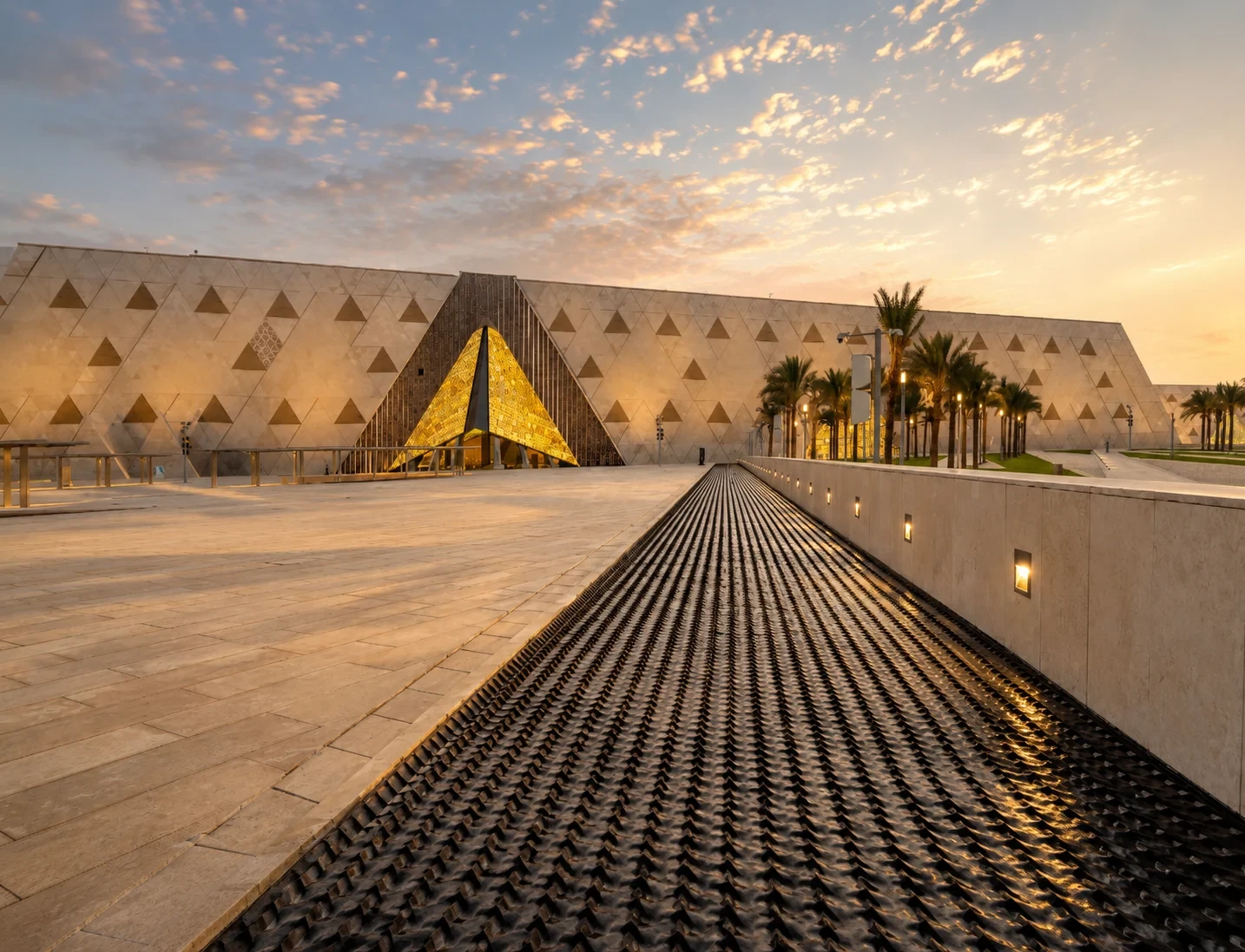
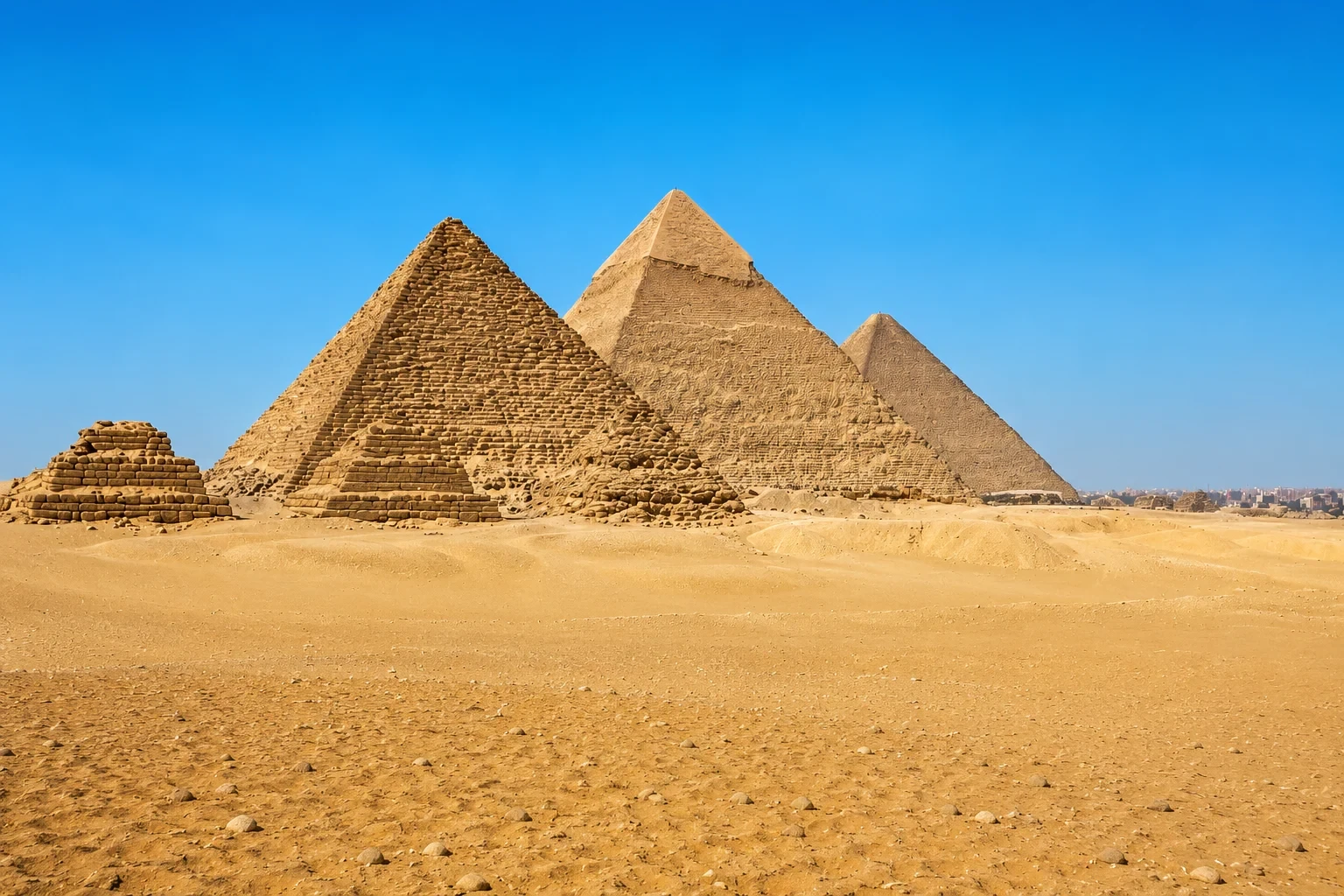
The Egyptian Museum's central Tahrir Square location gives it the most conveniently accessible position relative to all the other primary heritage destinations of central Cairo and the most naturally combined heritage programme options of any major museum institution in the complete Cairo heritage landscape. The most immediately proximate nearby heritage destinations are the other primary attractions of the central Cairo and greater Cairo heritage circuit. The Grand Egyptian Museum approximately 12 to 15 kilometers southwest of Tahrir Square on the desert road to Giza, accessible by private vehicle in approximately 25 to 35 minutes, is the most important complementary museum heritage destination for any Egyptian Museum visitor programme, the two institutions together providing the most completely comprehensive ancient Egyptian museum collection experience available in the complete Cairo heritage landscape. The Giza Pyramids Complex approximately 13 kilometers southwest, accessible by private vehicle in approximately 30 to 45 minutes, is the most important ancient monument heritage complement to the Egyptian Museum collection visit, the direct physical encounter with the ancient Giza monuments giving the museum collection programme its most completely legible ancient landscape context.
The extraordinary Islamic heritage district of historic Cairo, encompassing the Saladin Citadel and Muhammad Ali Mosque on the Muqattam hill visible from Tahrir Square, the historic commercial street of El Moez Street, the medieval market of Khan El Khalili, and the extraordinary ancient mosques of Sultan Hassan, Al Azhar, Amr Ibn Al-Ass, and Ibn Tulun is the most naturally combined heritage programme with the Egyptian Museum in a complete multi-period Cairo heritage day that covers both the ancient pharaonic heritage of the museum collection and the extraordinary medieval Islamic heritage of the historic city. The Coptic Cairo quarter, encompassing the Hanging Church, the Coptic Museum, the St George Church, the St Virgin Mary Church, and the Ben Ezra Synagogue, is also accessible from central Cairo as part of the most comprehensive multi-period heritage portrait of Cairo the Capital of Egypt organized by WOW Egypt Tours.
Frequently Asked Questions About The Egyptian Museum
What is the Egyptian Museum in Cairo?
The Egyptian Museum in Tahrir Square, Cairo, is the oldest national archaeological museum in Africa and one of the most important heritage institutions in the world, housing more than 170,000 ancient Egyptian objects spanning the complete pharaonic period from the Predynastic through the Greco-Roman era. It is most celebrated for its Royal Mummy Room housing eleven preserved ancient Egyptian pharaohs including Ramesses II, Seti I, and Queen Hatshepsut, the supreme Old Kingdom masterpieces including the Khafre diorite throne statue and the Menkaure triads, and the extraordinary Middle Kingdom jewellery and Yuya and Tjuya tomb treasure. It is featured in Cairo Tours, Egypt Classic Tours, and Egypt Short Break Tours offered by WOW Egypt Tours.
What is the Royal Mummy Room?
The Royal Mummy Room is the Egyptian Museum's most celebrated and most personally extraordinary gallery, housing the preserved mummified remains of eleven ancient Egyptian pharaohs including Ramesses II the Great, Seti I, Thutmose III, Amenhotep III, Merenptah, Queen Hatshepsut, and others in individually climate-controlled display cases. It is the single most personally overwhelming ancient human physical heritage encounter available at any museum institution in the world, requiring an additional ticket beyond the general museum admission and prohibiting photography out of respect for the ancient royal remains.
Who founded the Egyptian Museum?
The Egyptian Museum's institutional foundations were established by Auguste Mariette, the extraordinary French Egyptologist who created the Egyptian Antiquities Service in 1858 and Egypt's first national museum at Boulaq in 1863. The current Tahrir Square building was designed by French architect Marcel Dourgnon and inaugurated in 1902 under the directorship of Gaston Maspero, Mariette's successor, making it the third institutional home of the Egyptian national collection and the building in which it has been housed for more than 120 years.
Where is the Tutankhamun treasure now?
The complete Tutankhamun collection of more than 5,000 objects including the golden burial mask, the solid gold coffin, and the golden throne has been transferred from the Egyptian Museum in Tahrir Square to the dedicated Tutankhamun galleries of the Grand Egyptian Museum on the Giza Plateau, where it is now displayed in its entirety for the first time since the original 1922 discovery, in the most completely extraordinary and the most personally overwhelming museum display of this collection ever assembled.
What is the Narmer Palette?
The Narmer Palette is a carved greywacke ceremonial palette of approximately 64 centimeters height from the reign of the proto-pharaoh Narmer in approximately 3100 BCE, displayed in the Egyptian Museum's Predynastic gallery. It is the oldest known example of hieroglyphic writing, the oldest surviving complete royal iconographic programme in the ancient Egyptian artistic tradition, and the earliest surviving monumental historical narrative in the complete ancient Egyptian heritage record, documenting the political unification of Upper and Lower Egypt that is the founding event of the 3,000-year pharaonic civilization.
What are the Menkaure triads?
The Menkaure triads are a series of extraordinary dark green schist group portrait sculptures representing the pharaoh Menkaure standing between the goddess Hathor and a nome deity, recovered from the Valley Temple area of the Menkaure pyramid complex and universally recognized as the finest group portrait sculptures of the complete ancient Egyptian Old Kingdom artistic tradition. They are displayed in the Egyptian Museum as the most celebrated sculptural achievements of the 4th Dynasty royal artistic programme alongside the Khafre diorite throne statue.
What is the Amarna Period gallery?
The Amarna Period gallery houses objects from the revolutionary reign of the pharaoh Akhenaten, who established the monotheistic worship of the solar disc Aten, moved the royal court to the new city of Amarna, and generated an unprecedented artistic revolution whose elongated figures, exaggerated facial features, sensuous naturalistic modelling, and intimate royal family scenes created the most immediately startling and the most personally distinctive artistic episode in the complete ancient Egyptian artistic tradition, represented in the Egyptian Museum by extraordinary colossal statues of Akhenaten and related objects from Amarna and other New Kingdom contexts.
What are the Yuya and Tjuya treasures?
Yuya and Tjuya were the parents of Queen Tiye and the grandparents of Akhenaten, discovered in the Valley of the Kings in 1905 in the most intact royal-adjacent burial ever found before the Tutankhamun discovery. Their extraordinary gilded wooden coffins of exceptional artistic quality, canopic equipment, funerary furniture, and personal objects constitute the most completely preserved non-royal New Kingdom Valley of the Kings burial assemblage in the Egyptian Museum collection and remain in Tahrir Square as one of the museum's most extraordinary collection highlights following the Tutankhamun transfer to the GEM.
Is photography allowed in the Egyptian Museum?
Photography for personal non-commercial purposes is permitted in most gallery areas of the Egyptian Museum without flash. Photography is expressly prohibited in the Royal Mummy Room where the dignity of the ancient royal remains and the conservation requirements of the climate-controlled display environment make it inappropriate. A photography permit fee may be required for certain gallery areas and the current photography regulations should be confirmed at the museum entrance at time of visit.
What is the difference between the Egyptian Museum and the Grand Egyptian Museum?
The Egyptian Museum in Tahrir Square is the original 1902 national museum whose primary current attraction is the Royal Mummy Room with eleven ancient pharaoh mummies, the Old Kingdom masterpieces including the Khafre and Menkaure sculpture, and the extraordinary remaining collection not transferred to the GEM. The Grand Egyptian Museum is the world's largest archaeological museum opened on the Giza Plateau, housing the complete Tutankhamun collection of more than 5,000 objects for the first time, the Grand Staircase of colossal royal statuary, and the most comprehensive ancient Egyptian civilization galleries in the world. Both museums are essential Cairo heritage destinations of complementary and non-duplicating collection character.
How do I book an Egyptian Museum tour with WOW Egypt Tours?
You can book any Cairo Tours programme, Egypt Classic Tours package, Egypt Short Break Tours programme, Egypt Family Tours, Egypt Budget Tours, Egypt Tours Package, or Egypt Travel Package that includes the Egyptian Museum directly through WOW Egypt Tours. Our team of travel specialists will arrange private vehicle, licensed Egyptology guide, all museum entrance fees including the Royal Mummy Room, and the most complete and the most personally extraordinary guided encounter with the oldest national archaeological museum in Africa, the world's most extraordinary collection of ancient royal mummies, and the supreme masterpieces of ancient Egyptian Old Kingdom royal sculpture available through any Egyptian heritage tour operator.