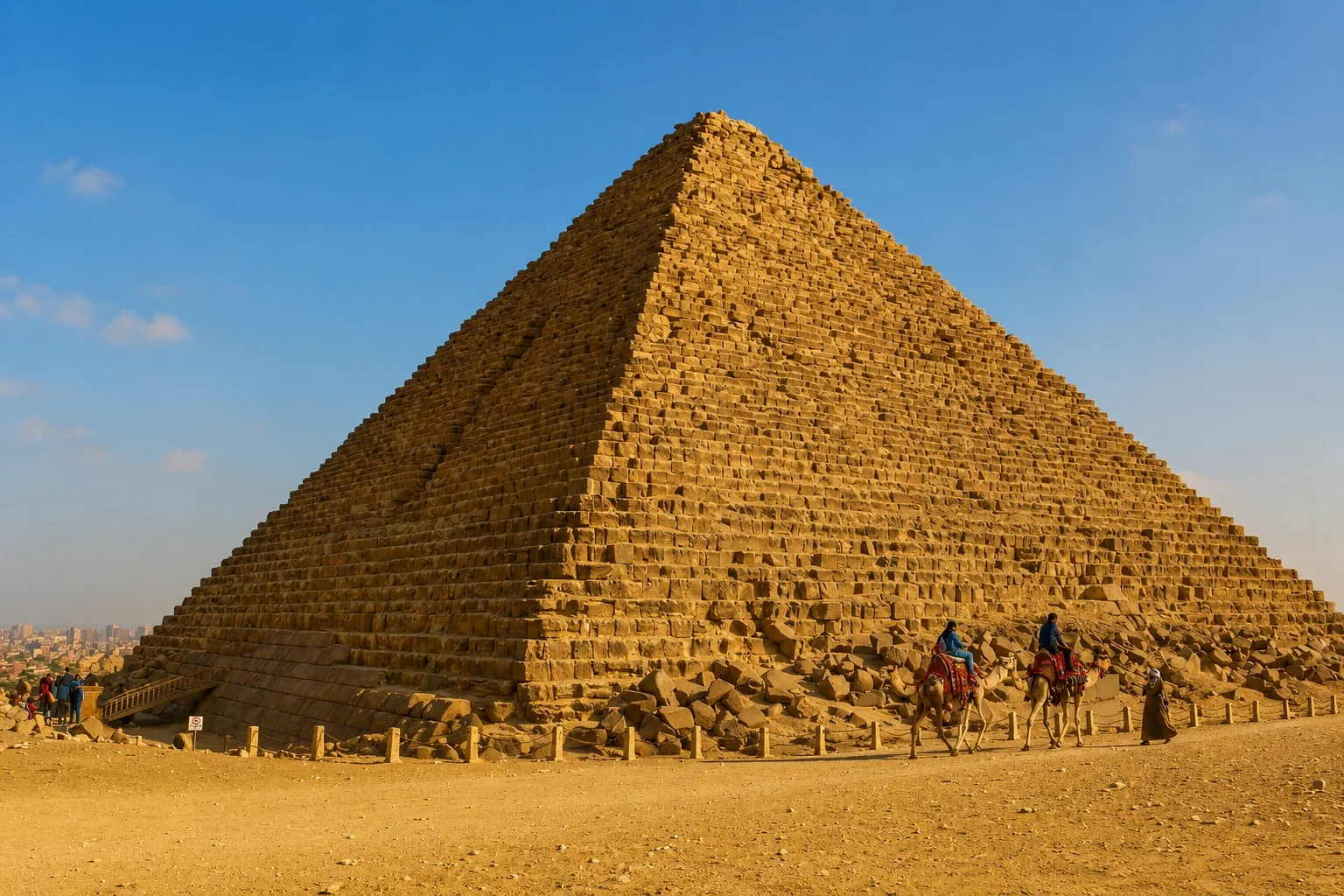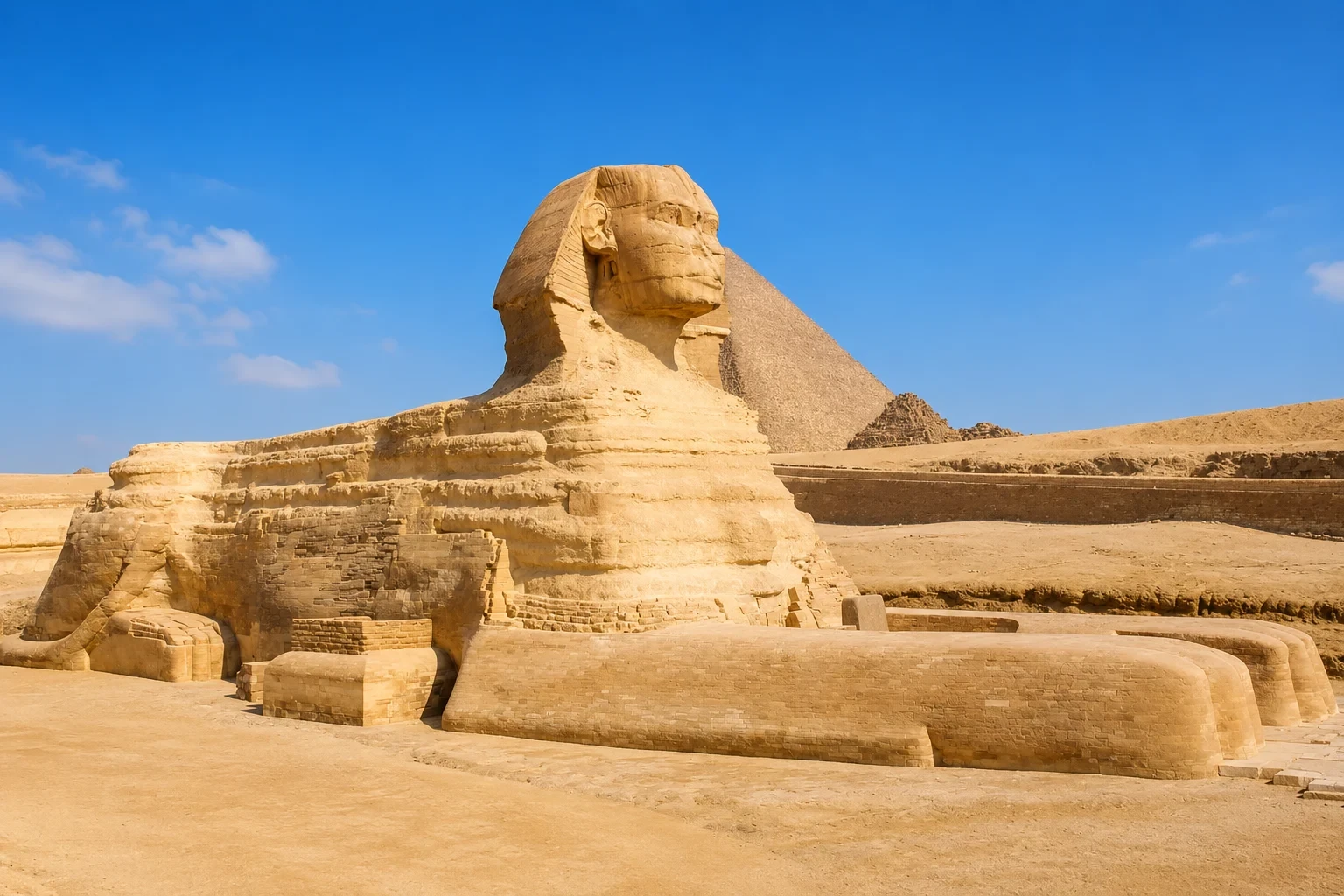


The Grand Egyptian Museum, universally known by its initials as the GEM and officially designated as the largest archaeological museum in the entire world, is a monument of such extraordinary ambition, such unprecedented cultural significance, and such completely extraordinary heritage achievement that its opening represents the single most consequential event in the history of Egyptian museum culture since the founding of the original Egyptian Museum in Tahrir Square in 1902, a new institution purpose-built on the edge of the Giza desert plateau approximately 2 kilometers north of the Giza Pyramids Complex to house the most extraordinary collection of ancient Egyptian artifacts assembled at any single museum in the world in the most completely spectacular, the most technologically sophisticated, and the most visually overwhelming museum environment that the contemporary international museum design tradition has ever devoted to the ancient Egyptian heritage. The Grand Egyptian Museum is the building that was specifically designed and purpose-built to achieve one of the most eagerly anticipated events in the complete history of ancient Egyptian archaeological display: the reunification for the first time since the discovery of the tomb of Tutankhamun in 1922 of the complete treasure of the boy pharaoh, all more than 5,000 individual objects of gold, lapis lazuli, alabaster, ivory, ebony, and semi-precious stone that Howard Carter and his team recovered from the four sealed chambers of the Valley of the Kings tomb over the decade-long clearance that followed its extraordinary discovery, displayed together in a single dedicated gallery space of sufficient scale and sufficient quality to do justice to the most complete and the most personally overwhelming ancient royal treasure ever recovered from any archaeological site in the entire history of human civilization. This extraordinary institution is the centerpiece of Cairo Tours, Egypt Classic Tours, and Egypt Short Break Tours, all of which WOW Egypt Tours proudly offers to travelers from around the world as part of Egypt Tours Packages and Egypt Travel Packages that encompass the extraordinary ancient heritage of Cairo and the complete Egyptian Nile Valley civilization.
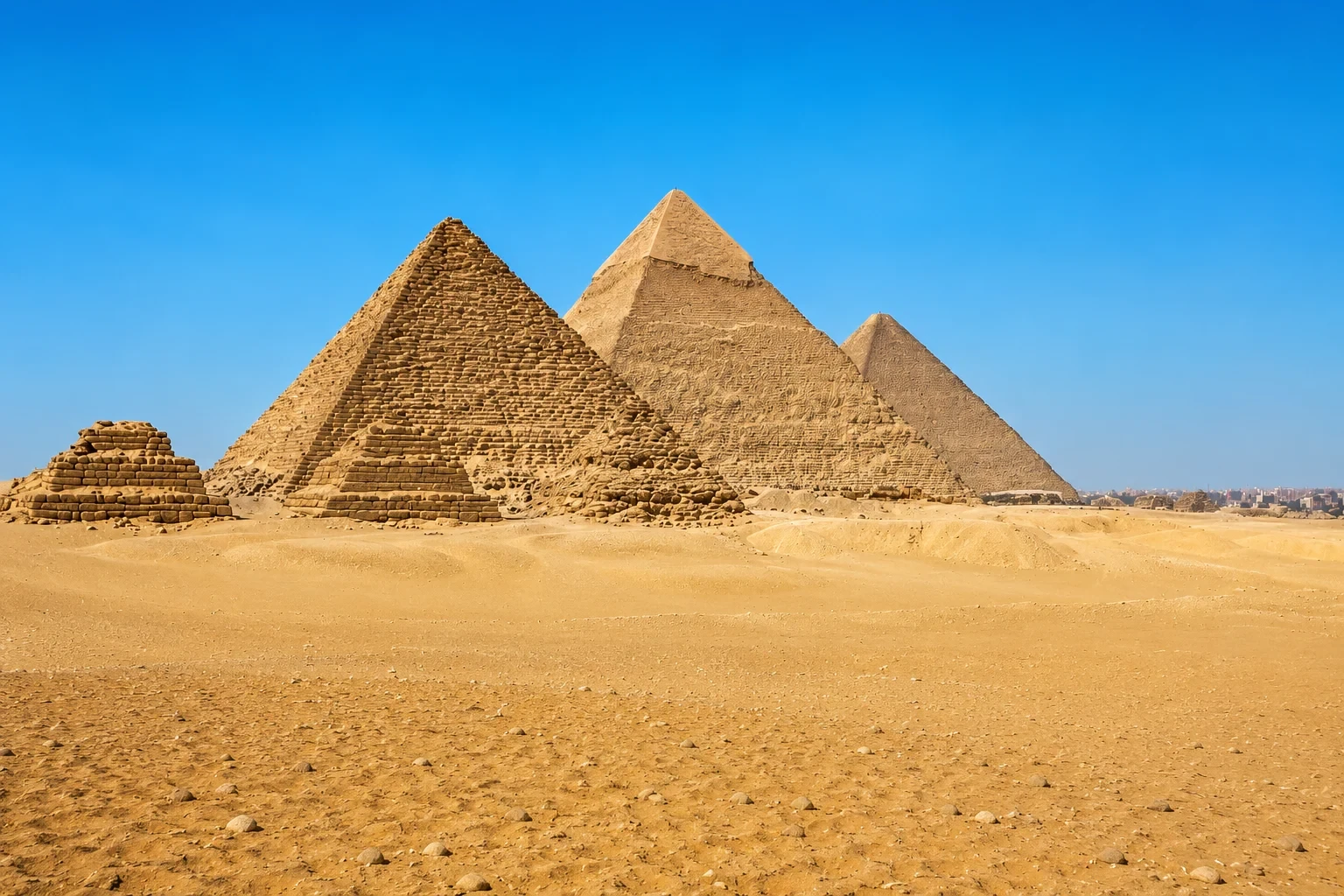
The Grand Egyptian Museum Egypt is not simply a larger version of the original Egyptian Museum in Tahrir Square, however extraordinary the original museum's collection and however beloved its position in the century-long history of Egyptological museum culture may be; the GEM is a completely new conception of what an ancient Egyptian national museum can and should be, a building whose architecture, whose collection presentation, whose visitor experience design, and whose educational and cultural programme together represent the most complete and the most ambitious statement of the Egyptian national commitment to the presentation and the celebration of the ancient Egyptian heritage in a museum environment of international standard and international quality that has ever been made by any Egyptian institution in the complete history of Egyptian museum culture. The building's extraordinary exterior of translucent alabaster-like panels filtering the Egyptian desert light across the geometric stone facade, its dramatic position overlooking the Giza Pyramids with the three Great Pyramids visible on the plateau skyline from the museum's external terrace in one of the most extraordinary cultural landscape compositions available to any museum visitor in the world, its grand staircase of monumental scale displaying one of the most spectacular ancient Egyptian collections of colossal royal statuary ascending in magnificent processional sequence from the ground floor entrance to the upper collection galleries, and its complete Tutankhamun treasure in the most spectacular and the most completely comprehensive display ever assembled for the ancient Egyptian world's most celebrated single archaeological discovery together give the Grand Egyptian Museum a quality of cultural grandeur and personal heritage impact that is genuinely unprecedented in the complete history of Egyptian museum institutions and that positions it as one of the most important and the most personally extraordinary museum experiences available to heritage travelers anywhere in the world. WOW Egypt Tours includes the Grand Egyptian Museum as a primary and essential cultural heritage destination in all comprehensive Cairo Tours, Egypt Classic Tours, Egypt Short Break Tours, Egypt Family Tours, Egypt Budget Tours, and all Egypt Tour Packages that encompass the extraordinary ancient heritage of the Egyptian capital.

What Is The Grand Egyptian Museum?
The Grand Egyptian Museum is Egypt's new national museum of ancient Egyptian civilization, constructed on a site of approximately 500,000 square meters in the desert plateau immediately north of the Giza Pyramids Complex with approximately 100,000 square meters of total floor area, of which approximately 45,000 square meters are dedicated to permanent exhibition galleries housing the most comprehensive and the most completely spectacular display of ancient Egyptian artifacts assembled at any single museum institution in the world. The museum is specifically positioned to create the most extraordinary possible cultural landscape relationship between the ancient heritage displayed within its galleries and the ancient heritage visible on the Giza Plateau immediately to the south, with the three Great Pyramids visible from the museum's main terrace and from selected internal gallery positions in a visual connection between the indoor museum experience and the outdoor ancient monument landscape that is unlike the relationship available at any other major archaeological museum in the world and that gives the GEM visit a dimension of direct visual connection to the living ancient landscape that no amount of excellent object display within the most beautifully designed gallery can fully substitute for. The museum's collection encompasses ancient Egyptian artifacts spanning the complete chronological range from the prehistoric period through the pharaonic Old, Middle, and New Kingdoms, the Third Intermediate Period, the Late Period, and the Ptolemaic and Roman periods to the Coptic and early Islamic eras, with the primary institutional focus on the pharaonic period whose extraordinary artistic, architectural, and technological achievements are represented in the GEM collection at a level of completeness and a level of quality that is simply unavailable at any other museum institution in the world.
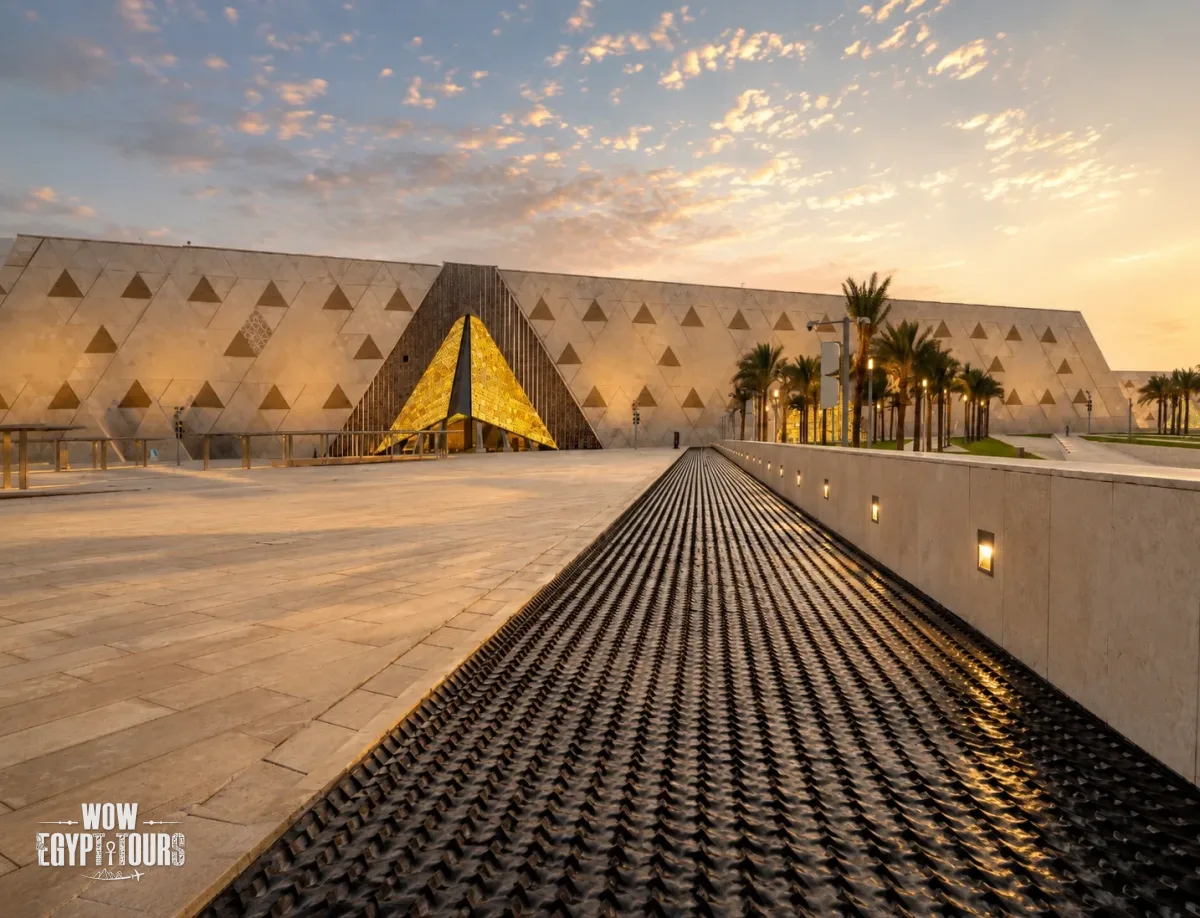
The Grand Egyptian Museum was designed by the Irish architectural firm Heneghan Peng Architects, selected through an international design competition in 2002, whose winning design proposed a building whose exterior facade of translucent stone panels, inspired by the ancient Egyptian use of alabaster as a light-filtering material in the sacred spaces of ancient temples and royal buildings, would filter the Egyptian desert light across the museum's entrance facade in a visual effect whose reference to the ancient Egyptian architectural tradition is simultaneously conceptually sophisticated and immediately visually beautiful. The building's triangular site plan and its specific positioning relative to the plateau edge were carefully calculated to maximize the visual relationship between the museum building and the pyramid skyline visible behind it, creating the most spectacular available museum approach experience whose final revelation of the pyramid skyline through and beyond the museum's translucent facade panels is among the most personally extraordinary moments of cultural landscape encounter available to any museum visitor anywhere in the contemporary international museum world.
Who Created The Grand Egyptian Museum?
The Grand Egyptian Museum was conceived, funded, and constructed by the Egyptian government as the most ambitious and the most consequential single investment in Egyptian cultural heritage infrastructure in the modern history of the Egyptian state, a project whose total cost of approximately one billion US dollars and whose construction period of more than two decades from the initial competition selection in 2002 to the museum's complete opening reflect both the extraordinary scale of the ambition that the Egyptian government brought to the creation of the new national museum and the extraordinary complexity of the logistical, political, and financial challenges that the construction of the world's largest archaeological museum on the edge of an active desert plateau adjacent to the world's most visited ancient monument complex inevitably presented. The museum project was initiated under the auspices of the Egyptian Supreme Council of Antiquities under the leadership of Dr. Zahi Hawass, who championed the GEM concept as the most appropriate and the most consequential response to the long-recognized inadequacy of the original Egyptian Museum in Tahrir Square whose 19th century building, however beloved and however historically significant as Egypt's first national museum, was simply not capable of housing the complete Egyptian national collection in the display conditions and the visitor experience quality that the collection's extraordinary importance and the international museum community's contemporary standards of museum practice required. The GEM's construction involved the contributions of international engineering firms, museum design specialists, conservation science teams, and educational programme developers from Egypt, Ireland, Japan, France, and dozens of other countries whose combined expertise gave the completed building and its collections programme a quality of international museum professionalism that reflects the Egyptian government's determination to create a museum institution capable of taking its place among the most significant and the most professionally excellent national museum institutions in the entire world.
The Tutankhamun Collection: The World's Greatest Treasure Reunited
The most celebrated, the most historically significant, and the most personally overwhelming single attraction of the complete Grand Egyptian Museum programme is without any question the complete Tutankhamun collection, the more than 5,000 individual objects of extraordinary beauty, extraordinary craftsmanship, and extraordinary material richness that Howard Carter and Lord Carnarvon's archaeological team recovered from the four sealed chambers of the Valley of the Kings tomb KV62 over the decade-long clearance programme that began with the discovery of the tomb on 4 November 1922 and whose extraordinary finds transformed the understanding of ancient Egyptian royal funerary culture in the most dramatic and the most personally affecting act of archaeological discovery in the complete history of Egyptological investigation. For the first time since Carter's team sealed the last crate of Tutankhamun's treasure and transported it from the Valley of the Kings to the original Egyptian Museum in Cairo in the early 1930s, the complete collection is now displayed together at the Grand Egyptian Museum in a series of dedicated Tutankhamun galleries of sufficient scale, sufficient display quality, and sufficient interpretive richness to present all more than 5,000 objects in the most completely extraordinary and the most personally overwhelming single gallery experience available at any museum in the world, giving every visitor to the GEM the opportunity to encounter the complete ancient royal treasury of one of the most celebrated pharaohs of the ancient Egyptian New Kingdom in the most completely realized museum presentation that this extraordinary collection has ever received in the entire history of its public display.
The objects of the Tutankhamun collection range across the complete spectrum of ancient Egyptian royal material culture from the smallest and the most intimately personal, the gilded sandals and the linen gloves that the young pharaoh wore in life and whose preservation in the sealed tomb for more than three thousand years gives them an immediacy of personal connection with the ancient individual that the larger and more visually spectacular objects of the collection cannot quite replicate, to the largest and the most visually overwhelming, the three nested coffins of which the innermost is the most extraordinary single ancient Egyptian object in the complete world heritage record, a solid gold anthropoid sarcophagus of 110.4 kilograms of beaten gold whose surface is covered in the most exquisite cloisonné enamel work in lapis lazuli, carnelian, and turquoise set in golden cells of extraordinary fineness and extraordinary technical mastery, representing the most completely precious and the most completely extraordinary single ancient artifact in any museum collection in the world. Between these two extremes of scale and material, the Tutankhamun collection encompasses the golden throne with its extraordinary inlaid scene of the king and queen in intimate domestic relaxation, the famous golden burial mask of 11 kilograms of solid gold and lapis lazuli that has been the single most universally recognized and the most personally affecting ancient Egyptian image since its discovery, the four alabaster Canopic jars with their golden stoppers in the form of the royal face, the extraordinary gilded shrine with its panels showing the young queen ministering to the young king in intimate narrative scenes of extraordinary artistic quality and personal warmth, and thousands of additional objects of extraordinary variety, extraordinary beauty, and extraordinary ancient human immediacy that together give the complete Tutankhamun collection a quality of ancient royal personal presence and ancient royal material richness that is genuinely without parallel in the complete world heritage record of any civilization in any period of human history.
Grand Egyptian Museum Location
The Grand Egyptian Museum is located on the edge of the Giza desert plateau approximately 2 kilometers north of the Giza Pyramids Complex entrance, immediately adjacent to the desert road that connects Cairo with the pyramid site in Giza Governorate approximately 11 kilometers southwest of central Cairo. The museum's position on the plateau edge gives it the extraordinary visual relationship with the Giza Pyramids skyline that is the museum's most immediately extraordinary geographical characteristic, with the three Great Pyramids visible from the museum's main external terrace and from selected gallery positions in the most spectacular cultural landscape composition available to any museum visitor in the world. The museum is accessible from central Cairo by taxi or private vehicle in approximately 25 to 35 minutes, and its position approximately 2 kilometers north of the Giza Pyramids Complex entrance on the same desert road makes it the most naturally and the most logistically efficiently combined heritage destination with the complete Giza Plateau monument visit in any Cairo heritage day programme. WOW Egypt Tours provides private air-conditioned vehicle transportation from all Cairo hotels to the Grand Egyptian Museum and organizes the most efficient and the most personally satisfying combined GEM and Giza Plateau heritage programme as part of all Cairo Tours and Egypt Tour Packages.
Grand Egyptian Museum Fun Facts
The Grand Egyptian Museum is the largest archaeological museum in the entire world, with a total floor area of approximately 100,000 square meters on a total site of approximately 500,000 square meters, housing more than 100,000 ancient Egyptian artifacts in its permanent collection galleries in the most comprehensive single-institution collection of ancient Egyptian material culture available at any museum in the world. The sheer scale of the museum building, visible from the desert road approaching from Cairo as an extraordinary translucent stone structure of dramatically contemporary architectural character rising from the edge of the Giza desert plateau with the ancient pyramid skyline visible behind it, is one of the most personally extraordinary and the most immediately memorable first encounters with any museum institution available to heritage travelers anywhere in the contemporary international museum world.
The solid gold innermost coffin of Tutankhamun, the most extraordinary single ancient object in the complete world heritage record now displayed in the Grand Egyptian Museum's Tutankhamun galleries, weighs 110.4 kilograms of beaten gold and is covered in cloisonné enamel work of extraordinary technical fineness in lapis lazuli, carnelian, and turquoise, making it simultaneously the heaviest and the most materially valuable single ancient Egyptian object in any museum collection in the world. The coffin's specific gold content, at the 2025 gold price, represents a material value of several million US dollars in the gold alone, entirely separate from its incalculable cultural and heritage value as the primary royal burial vessel of one of the most celebrated pharaohs in the complete history of ancient Egyptian civilization. Standing before the solid gold coffin of Tutankhamun in the GEM's dedicated Tutankhamun gallery and understanding that it was sealed in the Valley of the Kings for more than three thousand two hundred years before Howard Carter's team opened the burial chamber on 16 February 1923 is one of the most genuinely personally extraordinary moments available to any museum visitor at any museum in the world.
The Grand Staircase of the Grand Egyptian Museum, one of the most spectacular interior architectural spaces in any museum building in the world, displays a processional arrangement of ancient Egyptian royal statuary ascending across the staircase's multiple levels in the most visually overwhelming collection of ancient Egyptian colossal sculpture assembled in a single interior display context, with the extraordinary standing statue of Ramesses II at the staircase's primary focal point rising to a height of approximately 11 meters in the most dramatically powerful single ancient Egyptian sculpture installation in the GEM's entire extraordinary collection programme. The processional ascent of the Grand Staircase through successive levels of increasingly magnificent ancient Egyptian royal statuary, each level revealing new and increasingly extraordinary ancient sculptures in the most completely dramatic and the most carefully orchestrated heritage revelation sequence available at any museum institution in the world, is consistently described by visitors as one of the most personally extraordinary museum spatial experiences they have encountered at any institution in their complete travel lives.
Why Is It Called The Grand Egyptian Museum?
The name Grand Egyptian Museum was selected for the new national museum institution to distinguish it clearly from the original Egyptian Museum in Tahrir Square while simultaneously affirming the continuity of institutional purpose between the two museum buildings as successive expressions of the Egyptian national commitment to the collection, preservation, and public display of the ancient Egyptian heritage. The designation Grand, applied in the sense of the most significant, the most comprehensive, and the architecturally most imposing of the Egyptian national museum institutions, was chosen to signal the unprecedented scale and the unprecedented ambition of the new museum's collection programme and building design in comparison with all previous Egyptian museum institutions, establishing the GEM as the primary and the most completely realized expression of the Egyptian national museum ideal in the contemporary era. The designation Egyptian identifies the museum's specific national heritage focus as the complete ancient Egyptian civilization across its entire chronological range from prehistoric times through the pharaonic, Ptolemaic, and Roman periods to the early Christian and early Islamic eras, distinguishing it from the other national museum institutions of Egypt that focus on specific periods, specific material categories, or specific regional heritage. Museum identifies the institution in the standard international cultural heritage vocabulary as a public institution for the collection, preservation, study, and display of ancient artifacts in the most professionally organized and the most publicly accessible format available within the international museum tradition. The initials GEM, universally used in the Egyptian and international media and tourism literature to refer to the museum, have quickly become one of the most immediately recognizable acronyms in the complete international cultural heritage vocabulary and one of the most efficiently communicative short designations for any museum institution in the contemporary world.
Grand Egyptian Museum History
The history of the Grand Egyptian Museum as an institution begins with the recognition in the late 1990s by the Egyptian Ministry of Culture, the Egyptian Supreme Council of Antiquities, and the international Egyptological community that the original Egyptian Museum in Tahrir Square, whose building dates from 1902 and whose institutional infrastructure reflects the museum practice standards of the late 19th and early 20th centuries rather than the contemporary international museum standards of the 21st century, was no longer capable of providing the quality of collection care, the quality of display, or the quality of visitor experience that the world's most extraordinary single collection of ancient Egyptian artifacts deserved and that the Egyptian national commitment to the public presentation of the ancient Egyptian heritage required. The specific inadequacies of the Tahrir Square museum that most directly motivated the GEM project included the chronic shortage of conservation laboratory space, the insufficient climate control and environmental management infrastructure, the inadequate security systems, the limited gallery space that required large quantities of the national collection to remain in storage, and the absence of the educational, research, and public programming facilities that contemporary international museum standards consider essential for a major national museum institution.
The international design competition for the new museum, held in 2002, attracted more than 1,500 entries from architectural firms in more than 80 countries, the largest architectural competition in the complete history of museum building design, whose extraordinary scale of participation reflected the international recognition that the commission to design the world's largest archaeological museum on the edge of the Giza Plateau was the most prestigious and the most historically consequential museum architecture commission of the early 21st century. The winning design by the Irish firm Heneghan Peng Architects was selected from the final shortlist of twelve finalists for its extraordinary combination of architectural ambition, landscape sensitivity, and institutional functionality, whose translucent stone facade, dramatic plateau-edge siting, and carefully calculated visual relationship to the pyramid skyline gave the design a quality of cultural landscape integration entirely appropriate to the extraordinary ancient heritage context in which the new museum was to be built. Construction began in 2012 after a decade of planning, engineering assessment, and funding negotiation, and proceeded through multiple stages of partial opening and progressive gallery completion over the following decade, with the museum's complete official opening achieved in 2023 after a construction period whose length reflected both the extraordinary ambition of the museum programme and the practical challenges of constructing the world's largest archaeological museum in the desert environment adjacent to the world's most sensitive and the world's most heavily visited ancient heritage site.
The Story Of The World's Largest Archaeological Museum
The story of the Grand Egyptian Museum's creation is one of the most ambitious and the most personally consequential chapters in the complete modern history of Egyptian cultural heritage management, a story whose central theme is the Egyptian national determination to give the most extraordinary collection of ancient Egyptian artifacts in the world the museum environment, the display quality, and the interpretive richness that the collection's extraordinary importance demands and that the original Tahrir Square building, despite its own extraordinary heritage significance and its own extraordinary cultural legacy, was simply no longer able to provide. The decision to build the GEM adjacent to the Giza Pyramids rather than in the city center of Cairo was itself one of the most consequential and the most personally visionary choices in the museum's entire planning history, reflecting the recognition that the most natural and the most culturally resonant location for a museum dedicated primarily to the heritage of the ancient Egyptian Old Kingdom pyramid building tradition was immediately adjacent to the plateau where the supreme achievements of that tradition still stand in their extraordinary physical reality, creating for the first time in the history of Egyptian museum culture a direct visual and spatial connection between the ancient monuments displayed in replica and described in gallery panels within the museum building and the living ancient monuments of the same tradition visible on the plateau skyline immediately behind the building's translucent facade.
The progressive transfer of the Tutankhamun collection from the Tahrir Square Egyptian Museum to the Grand Egyptian Museum galleries, completed over a period of careful conservation assessment, packing, transportation, and reinstallation that involved the most complex and the most consequential museum object movement project in the complete history of Egyptian museum culture, was the single most eagerly anticipated and the single most consequentially significant institutional transition in the GEM's development history, giving the new museum the collection anchor that had been its most fundamental justification since the initial concept planning of the late 1990s. The complete reunification of all more than 5,000 Tutankhamun objects in a single dedicated gallery complex of the Grand Egyptian Museum, achieved for the first time since the original clearance of the Tutankhamun tomb and the deposition of all the objects in the Tahrir Square museum in the early 1930s, is the single most important institutional achievement of the GEM's opening programme and the single most culturally consequential museum collection event of the early 21st century in the complete international museum world.
Grand Egyptian Museum Key Attractions And Features
The Tutankhamun Galleries
The Tutankhamun galleries of the Grand Egyptian Museum, dedicated entirely to the display of all more than 5,000 objects from the tomb of the boy pharaoh in the most completely spectacular and the most personally extraordinary museum display environment ever created for this extraordinary collection, are the single most important and the single most personally overwhelming attraction of the complete GEM visitor programme and the primary reason for the visit to the museum for a substantial proportion of international heritage travelers who make the journey to Cairo specifically to see the complete Tutankhamun treasure in its new dedicated display context. The galleries are organized in a sequential narrative programme that takes the visitor through the complete story of the Tutankhamun tomb discovery and clearance, the ancient royal funerary programme of the New Kingdom pharaonic tradition, and the specific objects of the Tutankhamun collection in the most chronologically and thematically organized display sequence that the complete collection's extraordinary variety and extraordinary quantity allow, from the personal objects of the young pharaoh's daily life and his childhood to the supreme funerary objects of his burial programme including the nested coffins, the golden burial mask, the Canopic equipment, the royal chariot, and the thousands of additional objects that together constitute the most complete royal funerary assemblage ever recovered from any ancient Egyptian royal tomb. The gallery climax, the display hall housing the three nested coffins and the golden burial mask of Tutankhamun in the most spectacular and the most carefully designed display environment of the complete GEM collection programme, is consistently described by visitors as the single most personally extraordinary museum encounter of their complete travel lives, a quality of ancient royal personal presence and ancient material magnificence that no other museum collection in the world can approach in the same concentrated combination of gold, lapis lazuli, carnelian, and artistic mastery at the highest possible ancient level of royal funerary achievement.
The Grand Staircase And Colossal Royal Statuary
The Grand Staircase of the Grand Egyptian Museum is the most spectacular interior architectural and display space in any museum building in the world, a monumental ascending sequence of exhibition levels organized around the processional display of the most extraordinary collection of ancient Egyptian colossal royal statuary assembled in any single interior museum display context, whose progressive revelation of successively more magnificent and more personally overwhelming ancient sculptures as the visitor ascends from the ground floor entrance to the upper collection gallery level creates the most carefully orchestrated and the most completely extraordinary heritage revelation sequence available at any museum institution in the world. The centrepiece of the Grand Staircase display programme is the extraordinary standing statue of Ramesses II, one of the most celebrated and the most immediately personally overwhelming colossal royal sculptures in the complete ancient Egyptian heritage record, which anchors the staircase's primary display axis in the most dramatically powerful and the most visually complete single ancient sculpture installation in the GEM's entire extraordinary collection. The specific quality of the Grand Staircase experience, in which the visitor moves through successive revelations of ancient Egyptian royal statuary of increasing scale and increasing magnificence in the most completely designed and the most architecturally realized museum processional sequence available at any institution in the world, is unlike any other museum spatial experience currently available at any institution in the complete international museum landscape and gives the GEM's arrival experience a quality of personal heritage impact that prepares the visitor most completely and most dramatically for the extraordinary collection encounters of the individual gallery programmes that await in the museum's permanent exhibition spaces.
The Ancient Egyptian Civilization Galleries
Beyond the Tutankhamun galleries and the Grand Staircase, the Grand Egyptian Museum's permanent exhibition programme encompasses a comprehensive sequence of thematic and chronological galleries covering the complete span of ancient Egyptian civilization from the prehistoric Predynastic period through the Old, Middle, and New Kingdoms, the Late Period, and the Ptolemaic and Roman eras in the most completely organized and the most personally enriching narrative of the ancient Egyptian civilization available at any museum institution in the world. The Old Kingdom galleries, particularly relevant for visitors who have spent the morning at the Giza Pyramids Complex and who bring to the museum the direct physical experience of the ancient monuments whose cultural and material context the galleries illuminate, display the finest Old Kingdom royal and elite sculpture, the most important ancient administrative documents of the pyramid building era, and the most complete examples of ancient Egyptian daily life material culture of the pyramid-building 4th Dynasty in a display context that is directly and personally enriching for anyone who has experienced the physical reality of the Giza Plateau monuments. The New Kingdom galleries, housing the most extraordinary examples of ancient Egyptian royal and divine sculpture, relief carving, painting, and luxury object production of the empire period whose cultural achievements in art and architecture represent the most completely realized expression of the ancient Egyptian artistic tradition in its most fully developed and most completely confident historical phase, provide the most comprehensive and the most visually extraordinary gallery programme of the complete ancient Egyptian artistic heritage available at any museum institution in the world outside the GEM itself.
The Pyramid Terrace And The Pyramid View
The external terrace of the Grand Egyptian Museum, positioned to provide the most completely spectacular and the most personally extraordinary view of the Giza Pyramids Complex available from any publicly accessible point in the near vicinity of the plateau, is the single most extraordinary geographical feature of the complete GEM visitor experience and the point at which the relationship between the museum's indoor collection programme and the living ancient monument landscape of the Giza Plateau becomes most directly and most personally legible as the defining and the most completely extraordinary characteristic of the GEM's institutional identity. Standing on the GEM's external terrace and looking south across the desert toward the three Great Pyramids rising from the plateau edge in the most famous and the most personally overwhelming ancient heritage skyline in the world, with the museum building's translucent facade panels and contemporary architectural profile framing the ancient monuments in the most extraordinary cultural landscape composition available to any museum visitor anywhere in the contemporary world, is one of the most completely extraordinary and the most permanently memorable moments of any visit to the Grand Egyptian Museum, a moment that captures most directly and most personally the fundamental cultural proposition of the GEM's institutional design: that the most complete and the most carefully organized museum display of the ancient Egyptian material heritage is most perfectly and most powerfully realized in immediate visual proximity to the living ancient monuments from which that heritage comes.
The Second Khufu Solar Boat
The Grand Egyptian Museum houses one of the most extraordinary and the most historically significant ancient wooden objects in the complete world heritage record, the second solar boat of Khufu discovered in 1987 in the second sealed boat pit adjacent to the south face of the Great Pyramid of Khufu on the Giza Plateau and transferred to the GEM's dedicated boat hall for conservation, study, and public display. The second Khufu boat, approximately equal in original scale to the first boat now displayed in the Khufu Boat Museum adjacent to the pyramid on the Giza Plateau, was found in a significantly more deteriorated condition than the first boat and has required an extraordinary programme of conservation treatment and partial reconstruction before its public display in the GEM's dedicated exhibition space, where it provides the most direct and the most personally affecting ancient Egyptian wooden maritime heritage complement to the pyramid monuments visible on the plateau skyline through the museum's external terrace in the most completely extraordinary ancient maritime heritage encounter available at any museum institution in the complete Greater Cairo area. The display of the second Khufu boat in the GEM, alongside the exhibition of objects and interpretive materials related to the ancient Egyptian royal funerary programme of the Old Kingdom period, gives the GEM's ancient nautical heritage programme a dimension of extraordinary completeness and extraordinary personal impact that is unique in the complete Egyptian museum landscape and that provides the most direct and the most completely satisfying complement to the ancient maritime heritage of the first Khufu boat displayed adjacent to the pyramid on the Giza Plateau.
The Children's Museum And Educational Facilities
The Grand Egyptian Museum's Children's Museum, one of the most comprehensively designed and the most completely engaging dedicated children's heritage education facilities at any major archaeological museum in the world, provides the most age-appropriate and the most personally enriching introduction to the ancient Egyptian heritage available to young visitors at any heritage institution in the complete Egyptian museum landscape, combining hands-on learning activities, interactive displays, replica object handling, and storytelling programmes in a dedicated space whose design, whose material choices, and whose programme content are specifically calibrated to the learning needs, the physical abilities, and the personal engagement capacities of children from preschool age through early secondary school. The Children's Museum's programme, organized around the most immediately engaging and the most personally vivid dimensions of the ancient Egyptian heritage including hieroglyphic writing, ancient Egyptian daily life, the construction of the pyramids, the preparation of mummies, and the decoration of ancient tombs, provides family groups visiting the GEM with the most completely satisfying and the most educationally enriching combined museum experience available at any Egyptian museum institution, ensuring that every member of the family group from the youngest children to the most senior and the most experienced heritage travelers receives the most personally appropriate and the most personally rewarding encounter with the ancient Egyptian heritage that the GEM's extraordinary collection and its extraordinary educational programme can provide.
The Architectural Experience
The Grand Egyptian Museum's building is itself one of the most extraordinary and the most personally affecting architectural experiences of contemporary museum design accessible to heritage travelers anywhere in the world, a building whose specific combination of dramatic landscape positioning on the desert plateau edge, translucent stone facade panels filtering the Egyptian desert light in a reference to the ancient Egyptian use of alabaster as a sacred light-transmitting material, monumental interior spaces of dramatic architectural ambition in the Grand Staircase and the principal gallery halls, and completely extraordinary visual relationship to the Giza Pyramid skyline visible through and behind the building's transparent and translucent surfaces gives it a quality of cultural and spatial architectural achievement that is entirely appropriate to the extraordinary ancient heritage programme it serves and that gives the complete GEM visitor experience a dimension of contemporary architectural beauty and contemporary design achievement that complements the ancient heritage of the collection with a visual and spatial intelligence whose quality of contemporary excellence matches the quality of ancient excellence displayed within the galleries. The specific experience of the GEM facade in the late afternoon Egyptian light, when the translucent stone panels glow with the warm amber of the setting sun and the Great Pyramids are visible behind the building in the most dramatically beautiful natural lighting conditions of any time of day at this specific site, is one of the most personally extraordinary architectural landscape encounters available to any contemporary architecture enthusiast visiting Cairo.
Why Is The Grand Egyptian Museum Important?
The Grand Egyptian Museum is important for reasons spanning national cultural policy, international museum practice, ancient Egyptian heritage preservation, the specific significance of the Tutankhamun collection's complete reunification, the architectural achievement of the world's largest archaeological museum building, and the broader cultural significance of the GEM as the most complete and the most professionally realized expression of the Egyptian national commitment to the public presentation and the global sharing of the ancient Egyptian heritage with the international visiting community. As a museum institution, the GEM houses the most comprehensive and the most extraordinary single-institution collection of ancient Egyptian material culture in the world, providing scholars, students, and general visitors with access to the most important and the most representative sample of the ancient Egyptian artistic, technological, and cultural achievement at a display quality and an interpretive standard that sets a new benchmark for major national archaeological museum institutions worldwide. As a cultural heritage event, the complete reunification of the Tutankhamun treasure in the GEM's dedicated galleries represents the single most important museum collection development of the early 21st century in the complete international museum world, giving the most celebrated single archaeological discovery of the 20th century the display context that it deserved but never previously received in more than 90 years of public display in the Tahrir Square museum. WOW Egypt Tours includes the Grand Egyptian Museum as the primary and the most culturally consequential museum destination in all comprehensive Cairo Tours, Egypt Classic Tours, and all Egypt Tour Packages.
What Are Some Interesting Facts About The Grand Egyptian Museum?
The Largest Archaeological Museum In The World
The Grand Egyptian Museum's designation as the largest archaeological museum in the entire world is the single most immediately striking statistical fact associated with the institution, a distinction whose specific meaning in terms of the museum's capacity to display, to study, and to care for the Egyptian national collection of ancient artifacts gives it a significance far beyond the simple pride of institutional superlative that a record of this kind might otherwise represent. The museum's approximately 100,000 square meters of total floor area on a site of approximately 500,000 square meters gives the institution a physical scale that no other archaeological museum in the complete international museum landscape has ever approached, providing the Egyptian national collection with the most completely adequate storage, conservation, research, display, and educational programme facilities that any archaeological collection in the world has ever had access to at a single institution and giving the Egyptian national heritage authorities for the first time the capacity to display the complete Egyptian national collection in conditions of display quality and collection care standards that are entirely commensurate with the extraordinary importance of the ancient Egyptian heritage in the complete global cultural record.
The Design Competition That Drew 1,500 Entries
The international architectural design competition for the Grand Egyptian Museum, held in 2002, is the largest architectural competition in the complete history of museum building design, attracting more than 1,500 entries from architectural practices in more than 80 countries worldwide whose extraordinary scale of participation reflected the international architectural community's recognition that the commission to design the world's largest archaeological museum on the edge of the Giza Plateau in the visual proximity of the three Great Pyramids was the most historically significant and the most personally consequential museum architecture commission of the early 21st century. The winning entry by the Irish firm Heneghan Peng Architects, selected from a shortlist of twelve finalists by an international jury of museum design experts, architectural critics, and Egyptian heritage authorities, proposed a building whose specific combination of translucent stone facade panels, triangular site plan, dramatic plateau-edge positioning, and carefully calculated visual relationship to the pyramid skyline gave it a quality of design intelligence and cultural landscape sensitivity that the jury judged the most completely appropriate and the most architecturally distinguished response to the extraordinary design brief of the most ambitious museum building project in the history of the international museum tradition.
The Golden Mask That Waited A Century For Its Perfect Home
The golden burial mask of Tutankhamun, the 11-kilogram solid gold and lapis lazuli royal portrait mask that is the single most universally recognized and the single most personally affecting ancient Egyptian object in the complete world heritage record, waited more than 90 years from its discovery in the burial chamber of KV62 on 16 February 1923 for the museum display environment of sufficient quality, sufficient scale, and sufficient interpretive richness that its extraordinary importance demanded and that the Grand Egyptian Museum's dedicated Tutankhamun galleries now provide. The transfer of the golden mask from the Egyptian Museum in Tahrir Square to its new display position in the GEM's Tutankhamun galleries was the single most symbolically consequential and the single most publicly celebrated object movement in the complete history of Egyptian museum collection management, marking the most significant institutional transition in the public display history of the world's most celebrated ancient artifact since Howard Carter first lifted the golden mask from the royal mummy and photographed it in the flickering light of the Valley of the Kings burial chamber more than a century ago.
What Is So Special About The Grand Egyptian Museum?
The Only Place In The World To See The Complete Tutankhamun Treasure
What makes the Grand Egyptian Museum uniquely and incomparably special among all the museum institutions in the world is the fact that it is the only place in the world where the complete Tutankhamun treasure of more than 5,000 objects is displayed together in a single dedicated gallery complex of sufficient scale and sufficient quality to present the complete royal funerary assemblage of the most celebrated ancient Egyptian pharaoh in the most completely extraordinary and the most personally overwhelming museum encounter available to any heritage traveler at any museum institution anywhere in the world. The GEM's complete Tutankhamun display is not simply the largest and the most comprehensive display of the Tutankhamun collection ever assembled; it is the only complete display of the collection ever assembled, the first time since the original clearance of the tomb by Carter's team that all more than 5,000 objects have been visible at a single time in a single museum space, giving every visitor to the GEM an encounter with the complete ancient Egyptian royal treasury of Tutankhamun whose completeness and whose quality are genuinely unavailable at any other museum institution in the entire world and whose personal impact on every visitor who experiences it is consistently described as one of the most extraordinary and the most permanently memorable cultural encounters of their complete heritage travel lives.
Where Ancient And Contemporary Excellence Meet
The Grand Egyptian Museum is also uniquely special for the extraordinary meeting of ancient and contemporary excellence that its specific design proposition creates, the placement of the most extraordinary collection of ancient Egyptian material culture in the most completely extraordinary contemporary museum building, in immediate visual proximity to the most extraordinary ancient monument complex in the world, creating a heritage experience of such complete and such unprecedented excellence in both its ancient content and its contemporary form that it genuinely has no equivalent at any other museum institution in the complete world heritage landscape. The specific quality of standing in the GEM's Tutankhamun galleries before the solid gold coffin of the young pharaoh while the three Great Pyramids are visible through the gallery window in the Giza Plateau skyline beyond the museum's translucent facade, the ancient burial treasure of one Egyptian pharaoh displayed in immediate visual proximity to the ancient burial monuments of three others whose pyramids are the most extraordinary physical structures in the entire history of human civilization, creates a cultural heritage encounter of such complete and such extraordinary personal impact that it is quite simply unavailable at any comparable combination of ancient collection and ancient landscape at any other heritage institution in the world.
The Grand Egyptian Museum Through The Ages
The Grand Egyptian Museum, as the newest and the most recently completed major heritage institution in the complete Egyptian cultural heritage landscape, has only the briefest institutional history compared to the ancient monuments that its collection represents, but that brief history encompasses some of the most consequential and the most personally significant events in the complete modern history of Egyptian cultural heritage management, from the original recognition in the late 1990s of the need for a new national museum through the extraordinary international architectural competition of 2002, the decade of planning and engineering assessment, the construction programme of 2012 to 2023, the progressive partial openings of the early 2020s, and the complete official opening of 2023 in a development sequence of such extraordinary institutional ambition and such completely unprecedented cultural scale that it gives the GEM a foundational history of as great a personal drama and as great a historical consequence as the collections it houses. The most recent and the most consequential chapter of the GEM's institutional history is the complete display of the Tutankhamun collection in its dedicated gallery complex, achieved with the completion of the museum's full opening programme and representing the realization of the most fundamental and the most personally significant institutional objective that the GEM was created to achieve.
Best Time To Visit The Grand Egyptian Museum
The Grand Egyptian Museum is an indoor museum environment whose primary gallery spaces are air-conditioned and climate-controlled to international museum environmental standards throughout the year, making it one of the most comfortable heritage venues in the complete Cairo and Giza heritage landscape in every season and particularly valuable as an afternoon complement to the outdoor Giza Plateau monument visit in the warmer months when the exposed plateau environment is most demanding. The morning hours from opening time through approximately 12:00 PM are the most recommended visiting period for those who want to experience the Tutankhamun galleries and the Grand Staircase in the most manageable visitor density conditions, as the museum's popularity has grown rapidly since its complete opening and the most celebrated gallery spaces can become crowded in the mid-morning and afternoon periods of peak visitor flow. Visiting the GEM in the afternoon after a morning Giza Plateau visit is the most logistically natural and the most personally enriching programme sequence, as the direct experience of the ancient monuments in the morning gives the afternoon museum encounter a quality of contextual richness and personal archaeological immediacy that is simply not available when the museum is visited before the monuments. The late afternoon visit from approximately 3:00 PM allows the most extraordinary lighting experience of the GEM's external terrace and facade in the warm amber of the Egyptian desert evening light. WOW Egypt Tours organizes GEM visits throughout the year and advises on optimal timing within the complete Cairo heritage programme.
Grand Egyptian Museum Opening Hours
The Grand Egyptian Museum is open daily from 9:00 AM to 9:00 PM, with the last admission at 8:00 PM, providing one of the most generous daily visiting windows of any major museum institution in the complete Egyptian heritage landscape. The Tutankhamun galleries operate on a timed-entry system to manage visitor flow in the most celebrated and the most visited sections of the museum's permanent exhibition programme, with timed entry tickets available at the museum entrance or through WOW Egypt Tours advance booking. The museum restaurant and cafe facilities are open throughout museum visiting hours. The external terrace with the pyramid view is accessible throughout the museum's opening hours. All visiting hours are subject to adjustment for Egyptian national holidays and special museum events, and current hours should be confirmed at time of booking with WOW Egypt Tours.
Grand Egyptian Museum Entrance Fees
General Grand Egyptian Museum admission: fees subject to confirmation at time of booking with WOW Egypt Tours as the museum's admission pricing structure has been revised multiple times since the complete opening and the most current confirmed rates should be verified at time of programme booking.
Tutankhamun galleries: may require an additional ticket beyond the general museum admission depending on current pricing arrangements, confirmed at time of booking.
Children's Museum: included in the general museum admission or with specific children's pricing confirmed at time of booking.
All Grand Egyptian Museum entrance fees are included in the Cairo Tours and Egypt Tour Packages organized by WOW Egypt Tours, with all ticketing arranged in advance to guarantee timed-entry access to the Tutankhamun galleries at the most convenient available time within the programme schedule. Fees are subject to change and should be confirmed at time of booking.
How To Get To The Grand Egyptian Museum
The Grand Egyptian Museum is located approximately 2 kilometers north of the Giza Pyramids Complex entrance on the desert road connecting Cairo with the Giza Plateau, approximately 11 kilometers southwest of central Cairo and approximately 25 to 35 minutes by private vehicle from most Cairo city center hotels depending on traffic conditions. The most convenient and the most operationally organized approach for international visitors is the private vehicle from the Cairo hotel provided by WOW Egypt Tours as part of the complete Cairo heritage programme, which provides seamless door-to-door transport from the hotel to the museum entrance and organized movement between the GEM and the adjacent Giza Pyramids Complex in the most efficiently timed and the most personally satisfying combined heritage day programme available in the complete Cairo heritage landscape. The GEM is also accessible by the Giza Metro station and then taxi, or directly by Cairo Uber and ride-share services from central Cairo hotels.
How Long To Spend At The Grand Egyptian Museum
A minimum visit of three hours is required for a programme that covers the Grand Staircase and colossal statuary display, the complete Tutankhamun galleries, the external terrace pyramid view, and a selection of the permanent civilization galleries, in the most efficiently organized and the most personally satisfying format. A more completely satisfying GEM visit of four to five hours allows the most thorough engagement with the complete Tutankhamun gallery programme, the most detailed exploration of the Grand Staircase statuary, a comprehensive visit to the Old Kingdom and New Kingdom civilization galleries most directly relevant to the Giza Plateau monuments, the second Khufu solar boat display, and the Children's Museum for families. A full-day dedicated GEM visit of six to eight hours would be required to do full justice to the complete permanent exhibition programme across all the museum's major gallery areas, though the most practically satisfying visit for most heritage travelers combines a half-day GEM visit with a half-day Giza Plateau programme in the most completely realized single-day Cairo ancient heritage experience. WOW Egypt Tours designs GEM visit programmes of all durations, from focused three-hour Tutankhamun-specific visits to comprehensive full-day programmes, within the overall Cairo heritage itinerary.
Tips For Visiting The Grand Egyptian Museum
Book the Tutankhamun gallery timed-entry tickets in advance through WOW Egypt Tours rather than purchasing at the museum entrance on the day of visit, as the Tutankhamun galleries operate on a controlled-entry system whose available timed slots can sell out in advance during the peak international tourism seasons and whose advance booking through a licensed tour operator ensures the most convenient possible timed-entry window within the overall programme schedule. Visit the Grand Staircase before the Tutankhamun galleries as the programmatic sequence most in keeping with the museum's intended visitor journey, ascending through the processional display of ancient royal colossal statuary to arrive at the Tutankhamun gallery level with the most complete possible contextual preparation for the extraordinary objects of the royal treasure. Spend a minimum of 30 minutes on the external pyramid-view terrace to experience the most extraordinary cultural landscape composition available at any museum in the world, particularly in the late afternoon when the warm Egyptian desert light on the pyramid faces creates the most dramatically beautiful natural lighting of any time in the complete daily cycle. For families with children, allow additional time for the Children's Museum whose engaging hands-on programme provides the most personally appropriate and the most educationally enriching ancient Egyptian heritage encounter for younger visitors. The museum's restaurant and café facilities are of good quality and provide a welcome respite from gallery walking, particularly recommended for the mid-programme refreshment break that allows the most sustained engagement with the gallery programme across a full half-day or full-day visit.
What To Wear At The Grand Egyptian Museum
The Grand Egyptian Museum's climate-controlled interior galleries maintain a comfortable year-round temperature that makes heavy or weather-specific outdoor clothing unnecessary for the gallery programme itself. Comfortable walking shoes with good support are essential for the considerable distances involved in a comprehensive GEM gallery programme, as the museum's approximately 100,000 square meter floor area means that even a focused visit programme involves substantial walking across the museum's multiple gallery levels. Light casual clothing is entirely appropriate for the museum interior, though a light sweater or jacket may be useful in the most intensively air-conditioned gallery sections in the warmer summer months when the temperature differential between the outdoor desert heat and the museum's interior climate control can be significant. For visitors combining the GEM visit with the Giza Plateau monument visit in the same day, appropriate outdoor sun-protection clothing for the plateau programme should be carried and the transition between outdoor and indoor environments planned for the most practically convenient point in the combined day programme, most naturally at the programme mid-point when the transition from outdoor monuments to indoor museum provides the most welcome environmental change.
Photography At The Grand Egyptian Museum
Photography for personal non-commercial purposes is generally permitted in the Grand Egyptian Museum's permanent collection galleries without flash, though specific display cases and specific objects may have photography restrictions indicated by signage that should be respected. The Tutankhamun galleries' most celebrated objects including the golden burial mask and the solid gold coffin are the most eagerly photographed subjects in the complete GEM collection programme and their display cases are positioned to allow close-range photography without the severe distance limitations that apply to the same objects in other historical display arrangements. The Grand Staircase with the colossal Ramesses II statue and the complete processional statuary display provides the most architecturally dramatic photography subjects of the complete GEM interior programme, with wide-angle photography from the lower staircase levels capturing the most completely realized sense of the staircase's extraordinary spatial scale. The external terrace pyramid view is the most landscape-photographically extraordinary subject of the complete GEM visitor programme, and the most dramatic photography from this viewpoint is available in the late afternoon when the three pyramids are illuminated in the warm Egyptian evening light against the darkening desert sky. The museum's translucent facade panels photographed from the external approach in the morning and evening light create the most architecturally distinguished and the most personally distinctive photography subjects associated with the GEM building itself.
Grand Egyptian Museum Tours
Giza Pyramids Morning And Grand Egyptian Museum Afternoon: The Ultimate Cairo Heritage Day
This comprehensive full-day Cairo heritage programme combines the most overwhelming ancient monument experience of the Giza Plateau in the morning with the most extraordinary museum collection experience of the Grand Egyptian Museum in the afternoon, creating the single most completely satisfying and the most personally extraordinary one-day ancient Egyptian heritage programme available anywhere in the world, giving every visitor the direct physical encounter with the ancient monuments at the Giza Plateau and the most complete possible museum display context for the ancient material heritage of those monuments in a single day of such complete and such extraordinary personal heritage impact that it consistently transforms the understanding and the personal relationship with the ancient Egyptian world of every visitor who experiences it.
What Is Covered
Private vehicle from Cairo hotel with early morning departure. Morning: complete Giza Plateau programme including the Great Pyramid exterior and optional interior, Khufu Boat Museum, Great Sphinx enclosure, Valley Temple of Khafre, Khafre Pyramid, Menkaure Pyramid, and panoramic desert viewpoint. Lunch. Afternoon: Grand Egyptian Museum with advance-booked Tutankhamun gallery timed entry, complete Grand Staircase programme, pyramid-view terrace, second Khufu solar boat, and civilization gallery highlights most directly relevant to the morning monument programme. Return to Cairo hotel in the evening.
Duration
Full day from Cairo hotel, approximately 10 to 12 hours.
Includes
Private vehicle, licensed Egyptology guide, all Giza complex entrance fees including optional Great Pyramid interior, all Grand Egyptian Museum entrance fees including Tutankhamun gallery, advance timed-entry booking, lunch, and all logistics. Through WOW Egypt Tours Cairo Tours.
Dedicated Grand Egyptian Museum Full Programme
For visitors whose specific cultural interest in the ancient Egyptian museum collection warrants a dedicated full programme at the GEM beyond the standard combined Giza and museum day, this focused museum visit provides the most completely satisfying and the most personally enriching engagement with all the primary gallery programmes of the world's largest archaeological museum in the most unhurried and the most personally complete format.
What Is Covered
Private vehicle from Cairo hotel. Complete Grand Egyptian Museum programme: Grand Staircase and colossal statuary processional ascent with expert guided interpretation of all primary sculptural highlights. Complete Tutankhamun galleries with advance-booked timed entry and expert guided interpretation of all more than 5,000 collection highlights including the golden burial mask, the solid gold coffin, the golden throne, the Canopic equipment, and the complete range of royal funerary and personal objects. Second Khufu solar boat display. Civilization galleries: Old Kingdom pyramid era collection, New Kingdom empire period collection, and selected Ptolemaic and Greco-Roman highlights. External terrace pyramid view. Children's Museum for family groups. Museum restaurant lunch. Return to Cairo hotel.
Duration
Full day at the Grand Egyptian Museum, approximately 6 to 8 hours.
Includes
Private vehicle, licensed Egyptology guide, all GEM entrance fees including Tutankhamun gallery, advance timed-entry booking, museum lunch, and all logistics. Through WOW Egypt Tours Cairo Tours.
Combine The Grand Egyptian Museum With Your Egypt Tours Package
The Grand Egyptian Museum is featured as the primary museum destination and the most culturally significant heritage institution in the complete Cairo area across the full range of WOW Egypt Tours travel products. Browse the options below to find the Egypt experience that includes the Grand Egyptian Museum.
Egypt Tour Packages: Multi-day guided Egypt tours organized by duration, including 2 Days Egypt Packages, 3 Days Egypt Packages, 4 Days Egypt Packages, 5 Days Egypt Packages, 6 Days Egypt Packages, 7 Days Egypt Packages, 8 Days Egypt Packages, 10 Days Egypt Packages, and longer itineraries. The Grand Egyptian Museum is included in all Egypt Tour Packages of 4 days and above as the primary Cairo museum heritage destination combining with the Giza Pyramids Complex in the most completely satisfying single-day Cairo ancient heritage programme. All packages include private vehicle, licensed Egyptology guide, accommodation, all entrance fees, and all logistics.
Egypt Travel Packages: Themed Egypt travel packages including Egypt Honeymoon Travel Packages, Egypt Budget Travel Packages, Egypt Family Travel Packages, Egypt Luxury Travel Packages, Egypt Adventure Travel Packages, Egypt Cultural Travel Packages, and Egypt Christmas and New Year Travel Packages. The Grand Egyptian Museum and the complete Tutankhamun treasure are featured in every Egypt Travel Package category as the most important and the most personally extraordinary museum collection in Egypt, with the GEM programme most extensively developed in Luxury, Cultural, Honeymoon, and Family themed packages.
Egypt Classic Tours: The most popular and the most comprehensively balanced Egypt travel programme, combining the complete Giza Plateau programme with the Grand Egyptian Museum's extraordinary Tutankhamun collection and the Nile Valley heritage of Luxor and Aswan in the most complete and the most personally satisfying introduction to the ancient Egyptian world available in any organized Egypt itinerary. The GEM and Giza combined day programme is the primary Cairo heritage anchor of every Egypt Classic Tours itinerary.
Egypt Short Break Tours: Focused short duration Egypt travel programmes for travelers with limited time. The Grand Egyptian Museum is included in Egypt Short Break Tours itineraries of 4 days and above, combined with the Giza Plateau in the most efficiently organized and the most personally extraordinary single-day Cairo ancient heritage programme, with the Tutankhamun gallery as the non-negotiable primary museum attraction of every Cairo museum visit.
Egypt Family Tours: Family-friendly Egypt travel programmes in which the Grand Egyptian Museum's Children's Museum, the Tutankhamun galleries with the golden burial mask and the solid gold coffin, and the Grand Staircase's colossal royal statuary together make the GEM the most varied and the most comprehensively engaging cultural heritage destination for families with children of all ages visiting Cairo. All Egypt Family Tours include the GEM with specific Children's Museum programme and family-appropriate guided interpretation of the Tutankhamun collection.
Egypt Budget Tours: Value-focused Egypt travel programmes providing access to the Grand Egyptian Museum and the complete Tutankhamun collection at the most economical pricing available from any professional Egyptian tour operator, ensuring that the world's largest archaeological museum and the world's most celebrated ancient royal treasure are accessible to travelers at every budget level.
Egypt Nile Cruises: All-inclusive Nile River Cruise programmes combining the ancient pharaonic heritage of Luxor and Aswan with Cairo extensions that include the Grand Egyptian Museum as the most important and the most culturally significant museum destination in any Cairo extension programme.
Nile River Cruises: All WOW Egypt Tours Nile cruise options. The Grand Egyptian Museum is available as the primary museum component of the Cairo extension from the beginning or end of any Nile River Cruise itinerary.
Luxor Aswan Nile Cruises: The Grand Egyptian Museum combined with the Giza Pyramids is the primary Cairo ancient heritage programme for any Luxor-Aswan Nile cruise extension, providing the most completely satisfying and the most culturally consequential museum encounter available in the complete Cairo heritage landscape as the complement to the ancient monument experience of the Giza Plateau.
Dahabiya Nile Cruises: The Grand Egyptian Museum available as the primary museum destination in the Cairo extension for travelers combining the most intimate private Nile sailing experience with the world's most extraordinary collection of ancient Egyptian artifacts.
Lake Nasser Cruises: The Grand Egyptian Museum available as part of the Cairo extension for travelers combining the extraordinary Nubian heritage of Lake Nasser with the supreme ancient museum collections of the Giza Plateau area.
Cairo Tours: The complete range of guided day tour programmes available from Cairo hotels, including the Giza Pyramids and Grand Egyptian Museum combined full-day programme, the dedicated Grand Egyptian Museum full programme, the complete Cairo heritage circuit combining GEM with the Egyptian Museum in Tahrir Square, the Greater Cairo pyramid circuit combining GEM with Saqqara, Memphis, and Dahshur, the Islamic Cairo programme covering the Khan El Khalili, El Moez Street, Saladin Citadel, and Muhammad Ali Mosque, and the Coptic Cairo programme covering the Hanging Church, Coptic Museum, and Ben Ezra Synagogue. All Cairo Tours include private vehicle, licensed Egyptology guide, all entrance fees, and all logistics organized by WOW Egypt Tours.
Nearby Attractions To The Grand Egyptian Museum
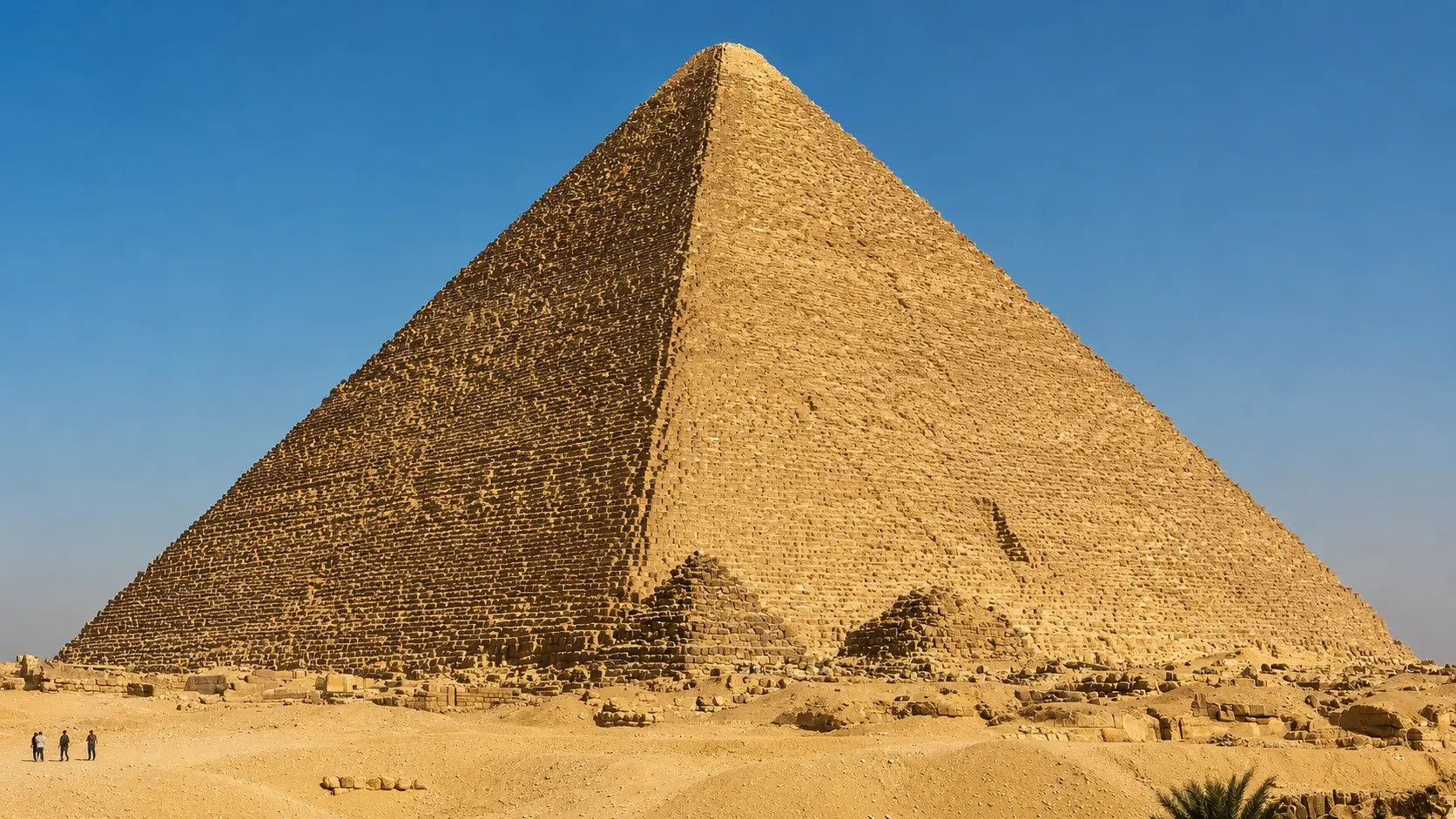
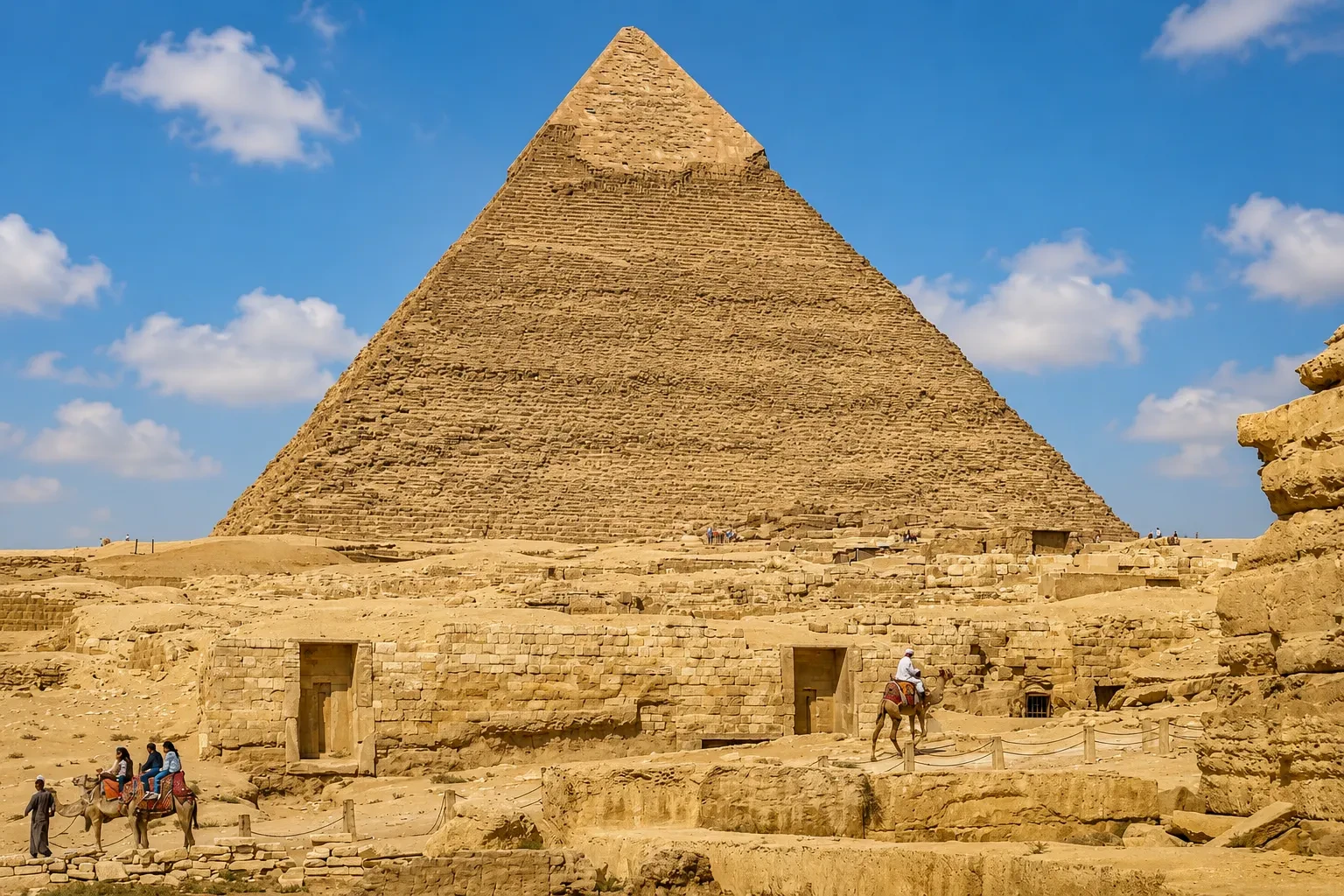
The Grand Egyptian Museum's position approximately 2 kilometers north of the Giza Pyramids Complex entrance on the same desert road makes the complete Giza Plateau monument complex the single most immediately proximate and the single most naturally combined nearby attraction for any GEM visit programme, with the three Great Pyramids visible from the museum's external terrace and accessible by private vehicle in approximately 5 to 10 minutes from the museum entrance. The Giza Pyramids Complex including the Great Pyramid of Khufu, the Great Sphinx, the Valley Temple of Khafre, the Middle Pyramid of Khafre, and the Small Pyramid of Menkaure are the primary ancient monument heritage complement to the museum collection programme, providing the most direct and the most personally immediate encounter with the living ancient monuments whose material culture the GEM's galleries display in the most completely organized and the most expertly curated museum context.
In central Cairo, the Egyptian Museum in Tahrir Square, the original national museum of ancient Egyptian civilization whose collection before the transfer of the Tutankhamun treasure to the GEM was the most celebrated single-institution ancient Egyptian collection in the world, remains an important and deeply personally significant heritage destination in its own right, housing objects not yet transferred to the GEM and maintaining the most historically resonant and the most institutionally beloved of the Egyptian national museum buildings in a specific character of antiquated museum atmosphere and accumulated scholarly tradition that gives it a quality of personal heritage charm and historical resonance entirely complementary to the state-of-the-art museum excellence of the GEM. The ancient city of Memphis, the Saqqara Step Pyramid, and the Dahshur Pyramids complete the most comprehensive Greater Cairo ancient heritage circuit for the most historically complete encounter with the complete sequence of ancient Egyptian pyramid building tradition. The extraordinary Islamic heritage of Khan El Khalili, El Moez Street, and the Saladin Citadel and the Coptic heritage of the Hanging Church and the Coptic Museum complete the most comprehensive and the most personally enriching multi-period heritage portrait of Cairo the Capital of Egypt in the most completely satisfying multi-day Cairo heritage programme available through WOW Egypt Tours.
Frequently Asked Questions About The Grand Egyptian Museum
What is the Grand Egyptian Museum?
The Grand Egyptian Museum (GEM) is the world's largest archaeological museum, located approximately 2 kilometers from the Giza Pyramids Complex, housing more than 100,000 ancient Egyptian artifacts in approximately 45,000 square meters of permanent exhibition space. It is specifically notable as the only place in the world where the complete Tutankhamun treasure of more than 5,000 objects, including the golden burial mask and the solid gold coffin, is displayed together for the first time since their original discovery in 1922. It is featured in Cairo Tours, Egypt Classic Tours, and Egypt Short Break Tours offered by WOW Egypt Tours.
Can I see the Tutankhamun treasure at the GEM?
Yes. The Grand Egyptian Museum houses the complete Tutankhamun collection of more than 5,000 objects in a series of dedicated Tutankhamun galleries, including the golden burial mask (11 kilograms of solid gold and lapis lazuli), the solid gold innermost coffin (110.4 kilograms of beaten gold covered in cloisonné enamel work), the golden throne, the Canopic equipment, and thousands of additional royal funerary and personal objects. The Tutankhamun galleries operate on a timed-entry system bookable in advance through WOW Egypt Tours.
What is the Grand Staircase of the GEM?
The Grand Staircase is the most spectacular interior architectural space of the Grand Egyptian Museum, a monumental ascending exhibition sequence displaying the most extraordinary collection of ancient Egyptian colossal royal statuary ever assembled in a single interior museum context, organized in a processional arrangement ascending from the ground floor entrance to the upper gallery level with the extraordinary standing statue of Ramesses II as the primary staircase focal point, rising to approximately 11 meters in the most dramatically powerful single ancient Egyptian sculpture installation in the museum's complete collection programme.
How is the GEM different from the Egyptian Museum in Tahrir Square?
The Grand Egyptian Museum is an entirely new purpose-built institution of approximately 100,000 square meters designed to international contemporary museum standards, housing the complete Tutankhamun treasure for the first time in a single dedicated gallery complex, with state-of-the-art conservation facilities, climate control, security, educational programmes, and visitor experience design throughout. The original Egyptian Museum in Tahrir Square is a historically significant 1902 building of great personal charm and accumulated scholarly tradition, still housing important collections not yet transferred to the GEM, with a more intimate and more atmospheric character that gives it a complementary and specifically different heritage experience from the GEM's contemporary museum excellence.
Can I see the Giza Pyramids from the GEM?
Yes. The three Great Pyramids of Giza are visible from the Grand Egyptian Museum's main external terrace and from selected internal gallery positions, creating one of the most extraordinary cultural landscape compositions available to any museum visitor in the world — the most celebrated ancient royal treasure of one pharaoh displayed in immediate visual proximity to the most extraordinary ancient burial monuments of three others, a heritage encounter of such complete cultural resonance and such completely extraordinary personal impact that it is genuinely unavailable anywhere else in the complete world museum landscape.
What is the second Khufu boat at the GEM?
The second Khufu solar boat, discovered in 1987 in the second sealed boat pit adjacent to the south face of the Great Pyramid, was transferred to the Grand Egyptian Museum for conservation, study, and public display. Approximately equal in original scale to the first Khufu boat still displayed in the Khufu Boat Museum adjacent to the pyramid on the Giza Plateau, the second boat was found in a significantly more deteriorated condition and has received an extensive conservation treatment before its display in the GEM's dedicated boat exhibition hall.
Is the GEM good for families with children?
Yes. The Grand Egyptian Museum's dedicated Children's Museum provides the most comprehensively designed and the most personally engaging heritage education programme for young visitors at any major archaeological museum in Egypt, combining hands-on activities, interactive displays, replica object handling, and storytelling about hieroglyphic writing, ancient daily life, pyramid construction, mummification, and tomb decoration in an age-appropriate dedicated space. The Tutankhamun galleries' golden objects, particularly the golden burial mask and the solid gold coffin, are consistently the most immediately fascinating and the most personally overwhelming museum encounters for children and teenagers visiting Cairo for the first time.
How far is the GEM from the Giza Pyramids?
The Grand Egyptian Museum is approximately 2 kilometers north of the Giza Pyramids Complex entrance on the same desert road, approximately 5 to 10 minutes by private vehicle. The museum's position makes it the most naturally and the most logistically efficiently combined heritage destination with the complete Giza Plateau monument visit, with the morning Giza Plateau and afternoon GEM combined day programme being the single most popular and the most personally satisfying Cairo heritage day arrangement available through WOW Egypt Tours.
When did the Grand Egyptian Museum open?
The Grand Egyptian Museum had a soft opening of selected galleries in 2021 and progressively opened additional gallery areas through 2022 and 2023, with the complete official opening including the full Tutankhamun gallery programme achieved in 2023. The museum was designed by the Irish firm Heneghan Peng Architects, selected through an international competition in 2002 that attracted more than 1,500 entries from more than 80 countries, the largest architectural competition in the complete history of museum building design.
Do I need to book the Tutankhamun gallery in advance?
Yes. Advance booking of the Tutankhamun gallery timed-entry is strongly recommended and is arranged by WOW Egypt Tours as part of all Cairo Tours and Egypt Tour Packages that include the GEM, ensuring guaranteed access to the museum's most celebrated and most visited gallery complex at the most convenient available timed-entry window within the programme schedule. Walk-in timed-entry tickets may be available at the museum entrance on the day of visit but cannot be guaranteed during peak international tourism periods.
What is the golden burial mask of Tutankhamun?
The golden burial mask of Tutankhamun is the most universally recognized and the most personally affecting ancient Egyptian object in the complete world heritage record, an 11-kilogram solid gold anthropoid mask covering the royal mummy's head and shoulders, its surface decorated with inlaid lapis lazuli, carnelian, quartz, obsidian, turquoise, and faience in a masterwork of ancient Egyptian goldsmithing and inlay technique that represents the highest available expression of the New Kingdom royal funerary art in its most precious material and its most completely extraordinary artistic form. Discovered by Howard Carter on 16 February 1923 in the burial chamber of KV62, the mask has been the single most reproduced and the single most globally distributed image of the ancient Egyptian heritage since its discovery and is now displayed in the GEM's Tutankhamun galleries.
How do I book a Grand Egyptian Museum tour with WOW Egypt Tours?
You can book any Cairo Tours programme, Egypt Classic Tours package, Egypt Short Break Tours programme, Egypt Family Tours, Egypt Budget Tours, Egypt Tours Package, or Egypt Travel Package that includes the Grand Egyptian Museum directly through WOW Egypt Tours. Our team of travel specialists will arrange private vehicle, licensed Egyptology guide, all GEM entrance fees, advance Tutankhamun gallery timed-entry booking, the complete collection programme from the Grand Staircase through the Tutankhamun galleries to the pyramid-view terrace, and the most personally extraordinary encounter with the world's largest archaeological museum and the world's most celebrated ancient royal treasure available to any heritage traveler visiting Cairo.