

The Middle Pyramid of Giza, built for the pharaoh Khafre of the Egyptian Old Kingdom 4th Dynasty and known in the Greek tradition as the Pyramid of Chephren, is the second largest of the three Great Pyramids of the Giza Plateau and in many respects the most completely preserved, the most architecturally comprehensive, and the most visually dominant of all three royal pyramid monuments of the Giza Pyramids Complex, a monument of extraordinary physical presence and extraordinary historical significance whose most immediately distinctive visual quality, the remarkable section of original white Tura limestone casing that still crowns the pyramid's upper quarter in the most complete example of original pyramid casing surviving on any of the three Giza monuments, gives it a quality of ancient visual authenticity and a dimension of original appearance that the fully stripped Great Pyramid of Khufu beside it can no longer provide. The Middle Pyramid of Khafre is also the most completely preserved of the three Giza pyramid complexes in the totality of its associated funerary infrastructure, its extraordinary Valley Temple of Khafre being the most completely preserved ancient Egyptian Old Kingdom temple interior accessible to visitors anywhere in the Greater Cairo area, its causeway connecting Valley Temple to Mortuary Temple being the most substantially preserved pyramid causeway on the Giza Plateau, and above all its intimate spatial association with the Great Sphinx of Giza, the world's largest monolithic sculpture almost certainly carved as the guardian portrait of Khafre himself, together constituting the most completely preserved and the most archaeologically legible of the three ancient royal funerary landscapes of the Giza Plateau. This extraordinary monument is the centerpiece of Cairo Tours, Egypt Classic Tours, and Egypt Short Break Tours, all of which WOW Egypt Tours proudly offers to travelers from around the world as part of Egypt Tours Packages and Egypt Travel Packages that encompass the extraordinary ancient heritage of Cairo and the complete Egyptian Nile Valley civilization.
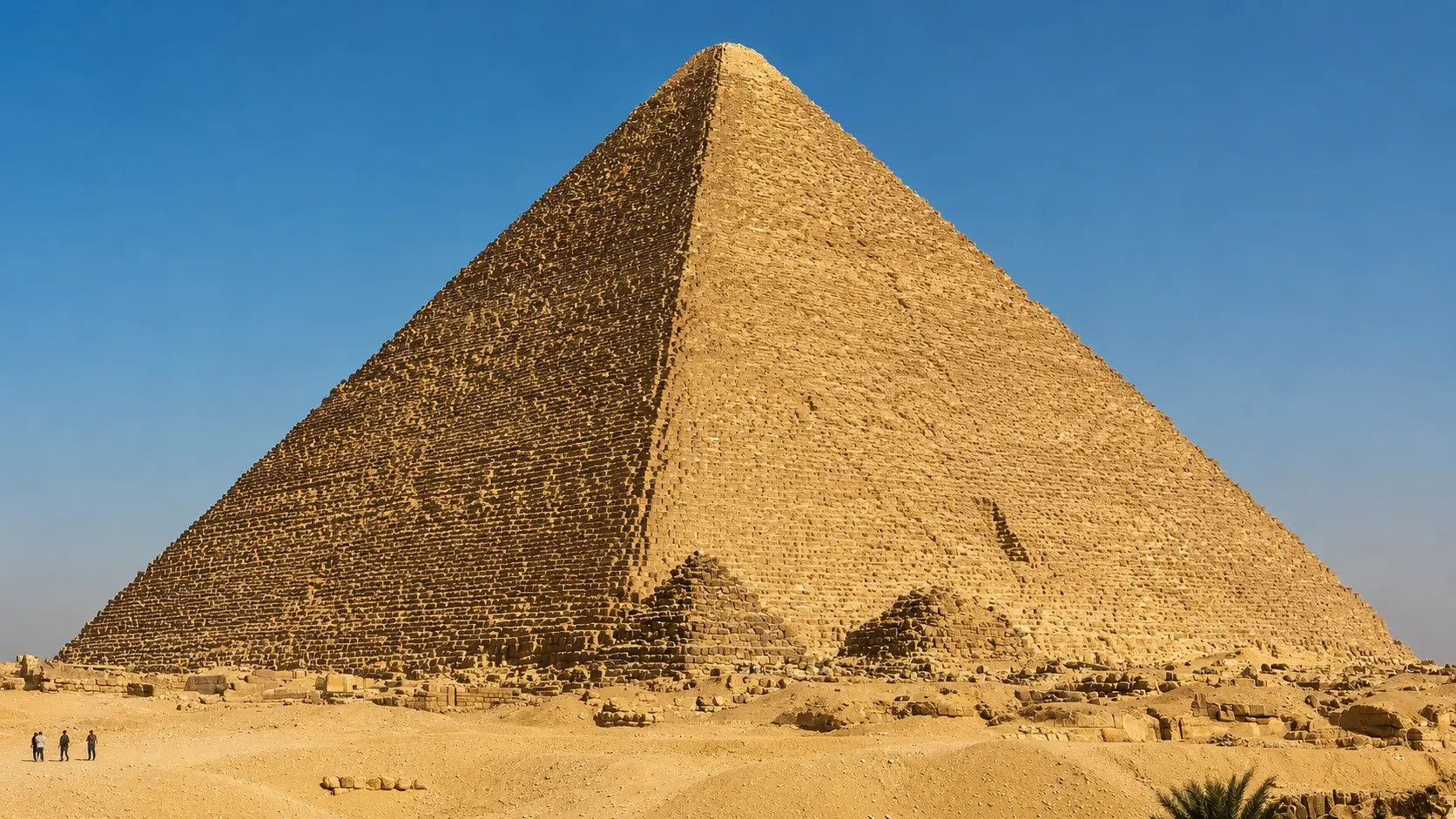
The Middle Pyramid of Giza Khafre Egypt creates one of the most immediately extraordinary optical illusions available at any heritage site in the ancient world, appearing from many of the most commonly used viewing angles and from the most famous panoramic desert viewpoint to be actually taller than the adjacent Great Pyramid of Khufu that stands immediately to its north, when in reality the Khafre pyramid, standing at approximately 136.4 meters in current height compared to the Great Pyramid's current 138.8 meters and at 143.5 meters in its original height compared to the Great Pyramid's original 146.5 meters, is in both its original and its current form the smaller of the two northern pyramids. The optical illusion of the Khafre pyramid's apparent height superiority is the product of the deliberate ancient planning decision to build the Khafre pyramid on a section of the Giza Plateau approximately 10 meters higher in natural ground elevation than the position chosen for the Great Pyramid, a planning decision that simultaneously gave the Khafre pyramid a commanding visual presence over the complete Giza landscape from all eastern approach directions and created the most dramatically powerful ancient architectural visual effect available at any heritage site in the Egyptian desert world, the sight of the two massive pyramids side by side in which the apparently smaller pyramid (the Great Pyramid) is actually the physically larger monument, a complete and completely extraordinary reversal of visual and physical reality that reveals the sophistication of the ancient Egyptian royal landscape planning at its most imaginatively ambitious. WOW Egypt Tours includes the Middle Pyramid of Khafre as an essential destination in all comprehensive Cairo Tours, Egypt Classic Tours, Egypt Short Break Tours, Egypt Family Tours, Egypt Budget Tours, and all Egypt Tour Packages that encompass the extraordinary ancient heritage of the Egyptian capital.

What Is The Middle Pyramid Of Giza Khafre?
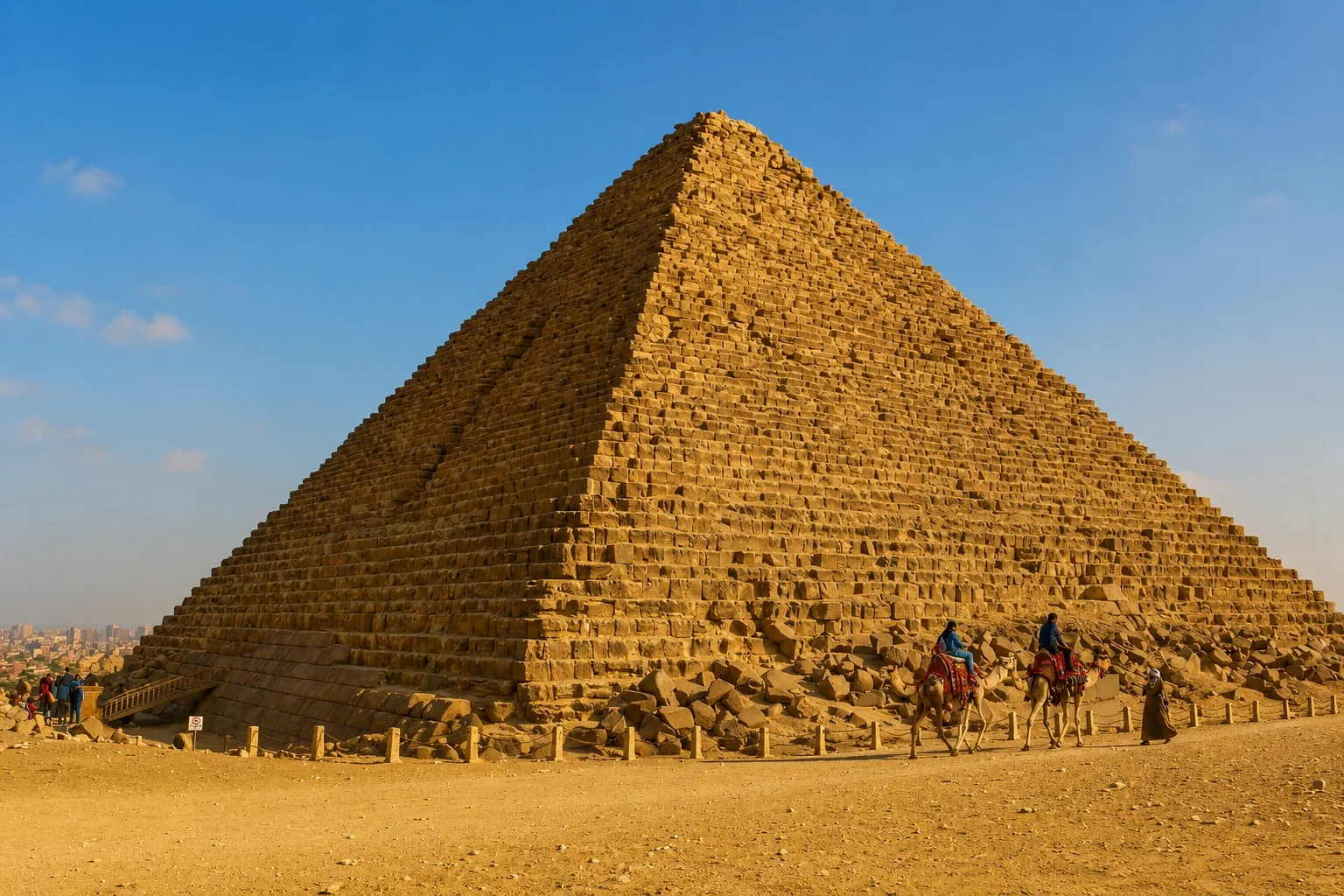
The Middle Pyramid of Giza is the royal pyramid monument of the pharaoh Khafre, second son of Khufu and fourth pharaoh of the Egyptian Old Kingdom 4th Dynasty, built approximately from 2558 to 2532 BCE on the central and highest section of the Giza Plateau in a position whose natural ground elevation advantage of approximately 10 meters above the base of the adjacent Great Pyramid was deliberately exploited by the ancient planners to give the Khafre pyramid visual dominance over the complete eastern approach to the Giza necropolis. The pyramid's current dimensions of approximately 215.5 meters on each side of its square base and 136.4 meters in current height, reduced from its original 143.5 meters by the partial stripping of its outer limestone casing, make it the second largest pyramid monument at Giza and the second largest pyramid ever built in ancient Egypt, its scale representing the most ambitious construction programme that any pharaoh of the 4th Dynasty attempted after the extraordinary benchmark established by the Great Pyramid of Khufu and surpassing in its associated infrastructure programme the completeness and the preservation quality of any comparable monument at the Giza Plateau.
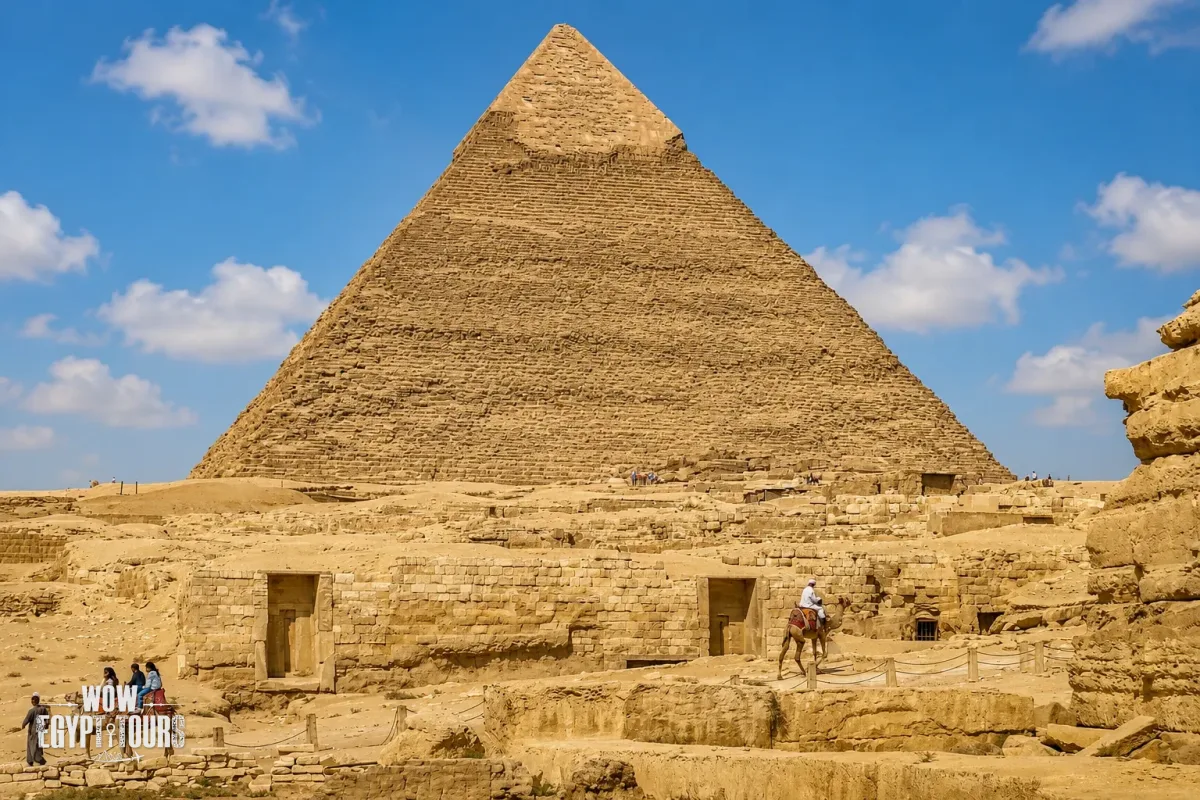
The most immediately distinctive visual quality of the Khafre pyramid that sets it apart from both its northern neighbor the Great Pyramid and its southern companion the Small Pyramid of Menkaure is the extraordinary section of original white Tura limestone casing that still covers the upper approximately 15 to 20 meters of the pyramid below the summit, the remnant of the complete original casing that once covered all four faces of the monument in the smooth gleaming white surface whose precision of fit and quality of finish characterized all three Giza pyramids in the ancient period before the medieval systematic quarrying of their casing stone for the construction of medieval Cairo. The surviving casing on the Khafre pyramid gives every visitor who sees the Giza Plateau for the first time the most direct and the most personally affecting visual evidence for the original appearance of the three Great Pyramids in the ancient period, the section of brilliant white limestone on the Khafre summit contrasting so dramatically with the rough grey core limestone of the stripped pyramid body below it that the visual argument for the ancient visual impact of the complete smooth white casing is made with complete immediacy and complete convincingness without any scholarly explanation being required.
Who Built The Middle Pyramid Of Giza?
The Middle Pyramid of Giza was built by and for the pharaoh Khafre, also known in the Greek tradition as Chephren or Khephren, the fourth pharaoh of the Egyptian Old Kingdom 4th Dynasty who reigned approximately from 2558 to 2532 BCE as the son of Khufu and the grandson of Sneferu, the dynasty's founder at Dahshur. The attribution of the Middle Pyramid to Khafre is established by multiple converging lines of ancient documentary and physical evidence including the ancient Egyptian inscriptions that identify the monument as the work of Khafre in the context of the complete Giza necropolis administrative and religious documentation, the ancient name of the pyramid complex, Khafre is Great, preserved in the ancient Egyptian administrative records, the spatial and architectural logic of the Giza Plateau layout in which the Middle Pyramid is positioned and oriented as the central element of a planned royal funerary landscape system that includes the Valley Temple, the causeway, and the Great Sphinx as components designed specifically for the Khafre complex, and the extraordinary diorite throne statue of Khafre discovered in the Valley Temple pit by Auguste Mariette in 1860 and now one of the supreme masterpieces of the Egyptian Museum collection, whose royal iconographic programme and extraordinary sculptural quality represent the most ambitious and the most completely successful royal portrait commission of the complete ancient Egyptian 4th Dynasty sculptural tradition.
Khafre is the most extensively and the most beautifully represented of the three Giza pyramid-building pharaohs in the surviving ancient Egyptian sculptural tradition, with the magnificent diorite throne statue as the most celebrated single example of a series of royal portrait sculptures that survived from his Valley Temple and mortuary complex in sufficient variety and sufficient quality to give Egyptologists a fuller portrait of the royal iconographic programme of his reign than is available for any other 4th Dynasty pharaoh. The diorite statue's extraordinary combination of technical mastery in the most difficult sculptural medium available to the ancient Egyptian artist, the intensely hard dark green diorite whose resistance to carving tools required exceptional skill and exceptional patience to work at the required level of detail and finish, with an idealized royal physiognomy of considerable formal beauty and considerable personal authority, and the extraordinary iconographic detail of the falcon god Horus spreading his wings protectively around the back of the royal head in the most intimate possible expression of divine royal protection, together make the Khafre statue one of the most universally admired and the most personally affecting ancient Egyptian royal sculptures accessible to visitors at any museum in the world.
The Pharaoh Khafre: Builder Of Complexity
Khafre's reign of approximately 26 years, during which the complete pyramid complex including the pyramid itself, the Valley Temple, the causeway, the Mortuary Temple, the Great Sphinx, and the complete associated satellite pyramid and mastaba tomb infrastructure of the central Giza necropolis zone was conceived, constructed, and brought to operational religious use, is the most organizationally complex and the most infrastructure-rich of the three pyramid-building reigns of the Giza 4th Dynasty pharaohs, producing not simply a pyramid building achievement comparable in scale to his father's but a complete royal funerary landscape of extraordinary architectural variety and extraordinary spatial coherence whose legacy in the built heritage of the Giza Plateau is in many ways more completely and more legibly preserved than any other single pharaoh's contribution to the Giza complex. Where Khufu's achievement was the supreme act of vertical architectural ambition, a single building of overwhelming scale and extraordinary precision, Khafre's achievement was the supreme act of horizontal landscape planning, the creation of a complete sacred geography of approach, transition, purification, and ascension that organized the entire eastern edge of the Giza Plateau from the Nile Valley floodplain at the level of the Valley Temple to the summit of the pyramid at the highest point of the plateau in a single coherent architectural and theological narrative of royal death, divine transformation, and eternal solar resurrection.
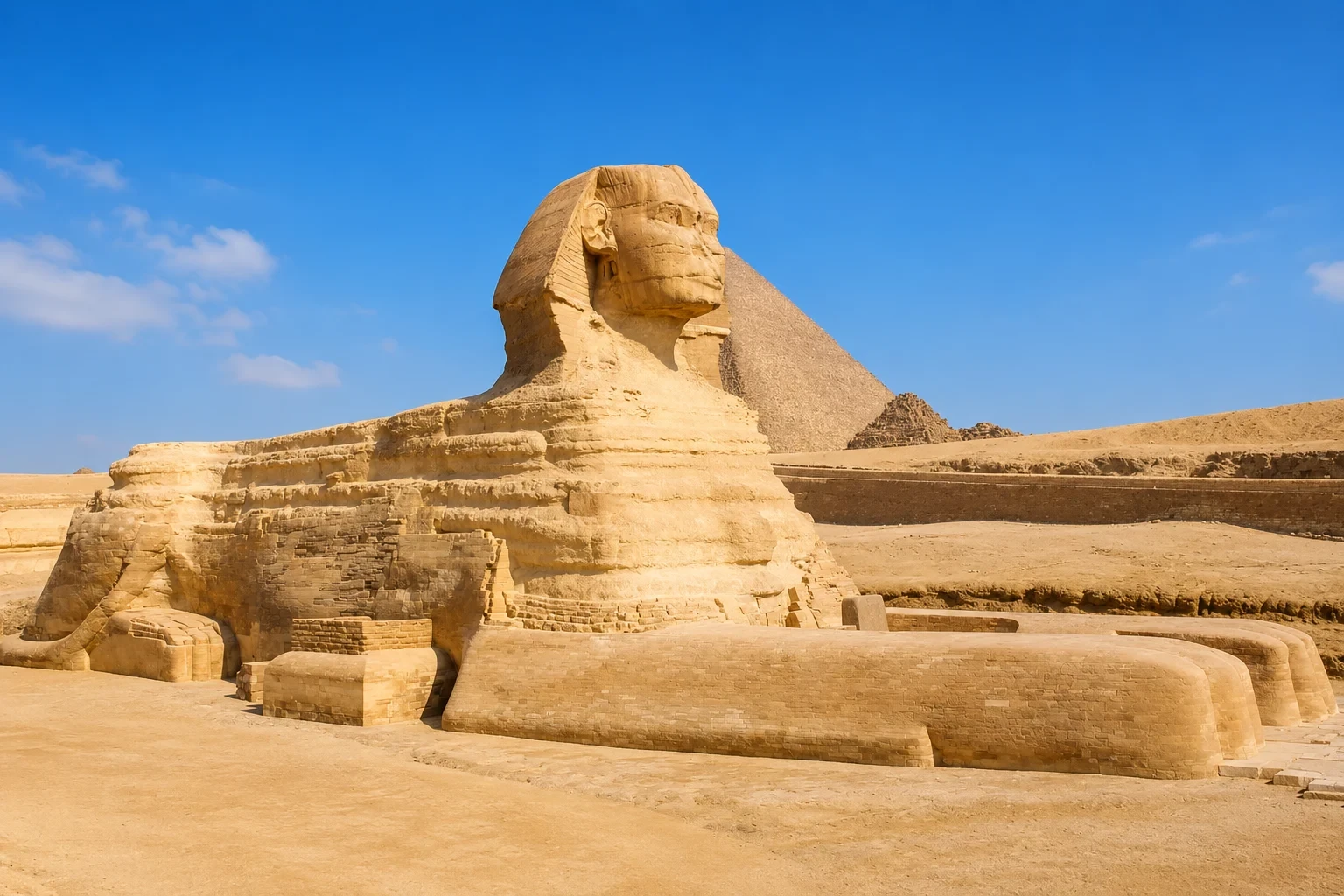
Khafre's most historically extraordinary individual achievement within his complete pyramid programme is the commission and the construction of the Great Sphinx, the largest monolithic sculpture in the history of human civilization, carved from the natural limestone knoll of the Giza Plateau as the guardian portrait of the pharaoh himself and the divine embodiment of Horemakhet, Horus of the Horizon, the solar manifestation whose eastward gaze across the ancient landscape below the plateau has watched the morning sun rise from the horizon of the Nile Valley in an act of divine solar contemplation uninterrupted for more than four and a half thousand years. The decision to carve the Sphinx from the natural bedrock of the Giza Plateau rather than to construct it from quarried blocks represents one of the most audacious and the most completely extraordinary individual acts of ancient artistic vision in the entire history of the ancient world, transforming a geological formation that might otherwise have been simply quarried for construction material into the most immediately personally overwhelming and the most universally recognized ancient portrait in the history of human art.
Middle Pyramid Of Giza Khafre Location
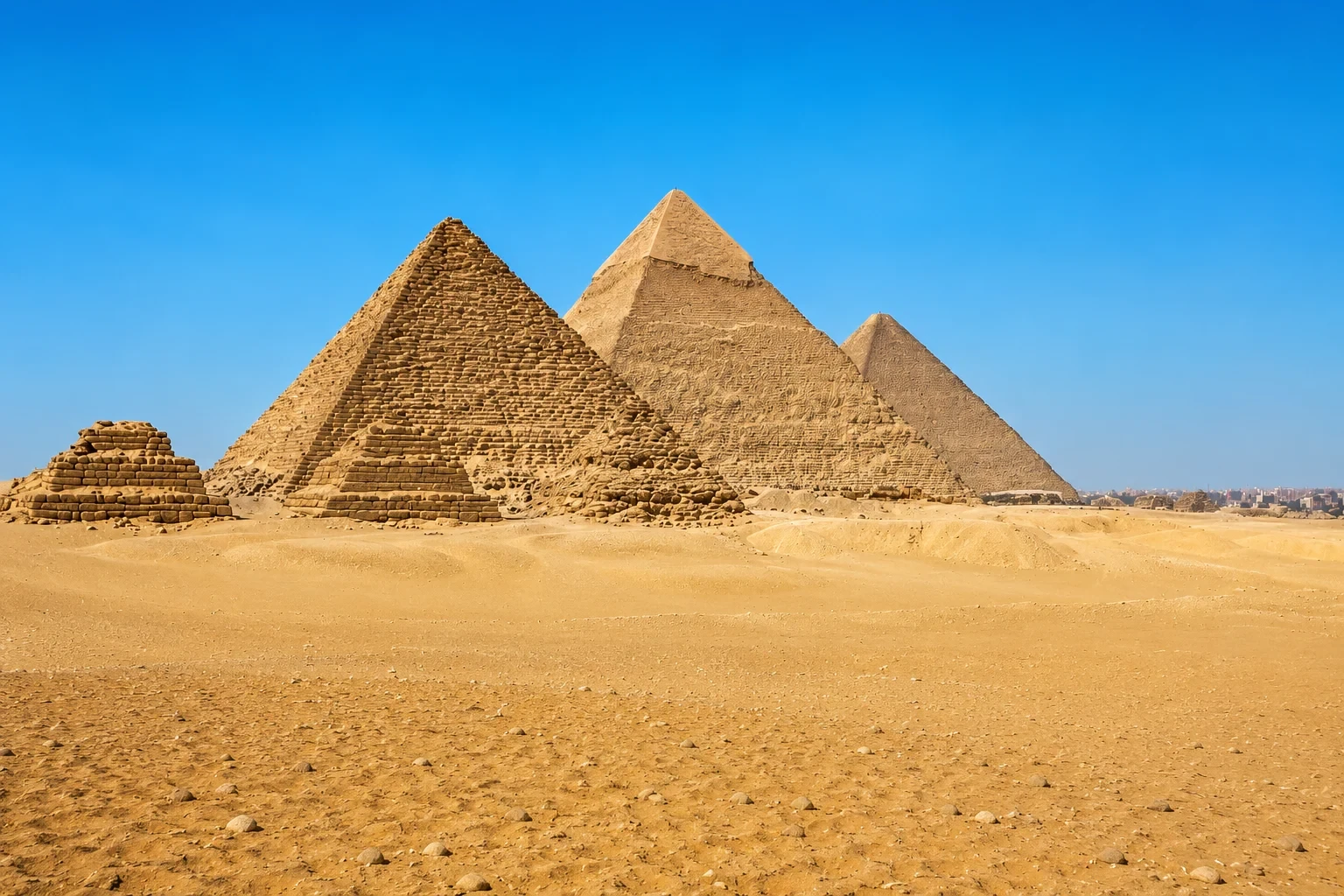
The Middle Pyramid of Giza Khafre is located on the central and highest section of the Giza Plateau in Giza Governorate, approximately 13 kilometers southwest of central Cairo, positioned immediately south and slightly west of the Great Pyramid of Khufu and immediately north of the Small Pyramid of Menkaure, occupying the central position in the three-pyramid diagonal alignment that is the most immediately recognizable spatial characteristic of the complete Giza Plateau monument layout. The pyramid's position on the highest natural ground of the Giza Plateau gives it its most immediately distinctive geographical characteristic, the 10-meter ground elevation advantage over the Great Pyramid position that creates the optical illusion of the Khafre pyramid's apparent height superiority when viewed from the east and from the famous panoramic desert viewpoint to the southwest. The Great Sphinx is located approximately 450 meters east of the Khafre pyramid at the base of the plateau escarpment, and the Valley Temple of Khafre is positioned immediately south of the Sphinx enclosure, together with the pyramid forming the most completely preserved ancient Egyptian royal funerary landscape accessible at any heritage site in the Greater Cairo area. WOW Egypt Tours provides all transportation and guide services for the complete Khafre pyramid complex programme.
Middle Pyramid Of Giza Khafre Fun Facts
The most immediately astonishing visual fact about the Khafre pyramid is the persistent optical illusion of its apparent height superiority over the adjacent Great Pyramid of Khufu, an illusion so completely convincing from the most commonly used viewing angles of the Giza Plateau that even well-prepared visitors who know intellectually that the Great Pyramid is taller consistently report that the visual evidence of the Khafre pyramid's apparent dominance is far more immediately convincing than the intellectual knowledge of the dimensional reality. The ancient Egyptian planners who selected the ground position of the Khafre pyramid at the highest point of the Giza Plateau bedrock clearly understood and deliberately exploited this optical effect, positioning the pharaoh's pyramid to achieve maximum visual dominance of the complete eastern approach to the necropolis in the most artful and the most completely effective act of ancient architectural illusionism available in the complete ancient Egyptian monumental tradition. The illusion is most pronounced from the panoramic desert viewpoint to the southwest, where the ground-level difference between the two pyramid bases creates the most complete apparent height reversal, and from the Valley Temple approach from the east, where the Khafre pyramid rises above the eastern plateau escarpment in the most dramatic and the most personally overwhelming single-pyramid silhouette of any approach to the Giza complex.
The Khafre pyramid was first entered by the modern explorer Giovanni Battista Belzoni in 1818, who discovered the pyramid's interior after searching extensively for the entrance and eventually identifying and clearing the descending passage to reach the burial chamber with its intact but empty red granite sarcophagus sunken into the floor. Belzoni marked his discovery in the Italian tradition of explorers of his era by inscribing his name on the burial chamber wall, an inscription that remains visible in the chamber today and that represents one of the most historically poignant examples of early modern European archaeological exploration, a moment of genuine discovery pride that is now evaluated with the complex ambivalence that the modern heritage world brings to the early European appropriation of ancient Egyptian monument experience. The inscription reads Scoperto da G. Belzoni, 2 marzo 1818, Discovered by G. Belzoni, 2 March 1818, and gives the first moment of modern human entry into the Khafre burial chamber the precision of a dated historical document preserved in the primary archaeological record of the monument itself.
The Khafre pyramid complex contains the most spectacular and the most physically impressive polished stone temple interior in the entire ancient Egyptian Old Kingdom heritage landscape, the extraordinary interior of the Valley Temple of Khafre whose massive monolithic walls of Aswan red granite enclosing a T-shaped interior hall of extraordinary spatial quality and extraordinary material beauty represent the finest and the most completely preserved example of the ancient Egyptian royal temple building tradition in hard stone available at any heritage site within the complete Greater Cairo area. The discovery in 1860 of the magnificent diorite throne statue of Khafre in the circular pit of the Valley Temple's main hall by Auguste Mariette, the French Egyptologist who went on to found the Egyptian Museum in Cairo, is one of the most celebrated individual archaeological discovery moments in the complete history of Egyptian archaeology, the extraction from the earth of a work of ancient art of such extraordinary quality and such completely extraordinary state of preservation that it transformed in a single discovery the understanding of the artistic achievements of the ancient Egyptian Old Kingdom royal portrait tradition.
Why Is It Called The Middle Pyramid Of Giza Khafre?
The designation Middle Pyramid is the most straightforward and the most practically useful of the three size-based names applied to the Giza royal pyramids in the modern heritage tourism and scholarly literature, identifying the Khafre monument by its intermediate position in the spatial and dimensional hierarchy of the three Giza pyramids whose scale descends from north to south with the Great Pyramid of Khufu as the largest, the Middle Pyramid of Khafre as the second largest, and the Small Pyramid of Menkaure as the smallest. The term Middle refers simultaneously to the pyramid's intermediate scale between its two companions and to its central position in the diagonal alignment of the three pyramids across the Giza Plateau, both of which are accurate descriptions of the monument's character in the complete Giza Plateau ensemble. The attribution to Khafre and the Greek alternative Chephren identify the specific royal patron of the monument's construction in both the ancient Egyptian and the classical Greek scholarly traditions, with Khafre being the standard Egyptological designation based on the most accurate available transliteration of the ancient Egyptian royal name and Chephren being the Greek tradition preserved in the accounts of Herodotus and subsequent ancient classical authors. The ancient Egyptian name of the pyramid complex itself was Khafre is Great, a royal designation that simultaneously identified the patron of the monument and expressed the ancient Egyptian assessment of the complete complex's architectural magnificence in the most direct and the most succinct evaluative language available in the ancient Egyptian administrative and religious vocabulary.
Middle Pyramid Of Giza Khafre History
The history of the Middle Pyramid of Khafre from its construction in the 4th Dynasty through the ancient Egyptian veneration period, the ancient Greek and Roman literary engagement, the medieval Islamic period of partial casing stripping and first modern interior exploration, the early modern European scholarly investigation, and the ongoing modern archaeological and conservation programme traces a monument biography of extraordinary complexity and extraordinary richness whose most significant moments include the discovery of the Valley Temple interior and the diorite Khafre statue by Mariette in 1860, the first modern scientific survey of the pyramid by Petrie in the 1880s, and the ongoing investigation of the complete Khafre complex's spatial organization, construction chronology, and ancient functional programme by modern Egyptological scholarship. The ancient Egyptian religious tradition maintained active veneration of the Khafre pyramid complex throughout the Pharaonic period, with the Sphinx and the Valley Temple serving as active cult sites for the worship of Horemakhet, Horus of the Horizon, whose divine identity was most directly embodied by the Sphinx monument of Khafre's complex and whose New Kingdom cult activity is documented in the extraordinary Dream Stele of Thutmose IV erected between the Sphinx's front paws in approximately 1401 BCE.
The ancient Greek historian Herodotus, who visited Giza in the 5th century BCE, provides the first extended literary account of the Khafre pyramid in the Western tradition, describing its construction in the same framework of royal despotism and forced labor that he applied to the Khufu pyramid and characterizing Khafre as a cruel ruler who closed the Egyptian temples and oppressed the Egyptian people in the service of his pyramid building programme, an account that the modern archaeological evidence for a paid and provisioned national workforce has comprehensively contradicted in its essential premise while leaving the specific Herodotean narrative intact as the most dramatically compelling ancient literary version of the pyramid construction story in the complete Greek historical tradition. The medieval Islamic period saw the systematic quarrying of the Khafre pyramid's white limestone casing for the construction of medieval Cairo's buildings and fortifications, removing most of the original casing from the lower portions of all four faces while leaving the upper section intact, in what is now recognized as the fortuitous preservation of the most visually significant evidence for the ancient pyramid's original appearance that survives at any of the three Giza pyramid monuments. The first modern interior exploration of the Khafre pyramid was conducted by Giovanni Battista Belzoni in 1818, who penetrated the pyramid's interior for the first time in modern history through the original ancient entrance and reached the burial chamber with its empty sarcophagus in one of the most celebrated achievements of early modern Egyptological exploration.
The Story Of The Most Complete Pyramid Complex
The most extraordinary and the most historically consequential dimension of the Khafre pyramid's heritage significance is not simply the pyramid itself but the complete funerary landscape system of which the pyramid is the culminating element, a landscape system whose surviving components, the Valley Temple, the causeway, the Mortuary Temple remains, and the Great Sphinx with its associated Sphinx Temple, together constitute the most completely preserved and the most archaeologically legible example of the ancient Egyptian royal funerary landscape planning tradition available at any heritage site in the entire Egyptian heritage world. The ancient Egyptian royal pyramid complex of the Old Kingdom period was not conceived as a single isolated building but as a complete sacred landscape organized around the fundamental ancient Egyptian theological narrative of royal death and divine solar resurrection, whose spatial sequence from the eastern Nile Valley world of the living through the threshold space of the Valley Temple at the desert's edge, along the ascending causeway through the transitional landscape between the world of the living and the world of the dead, to the Mortuary Temple at the base of the pyramid and ultimately to the pyramid itself as the divine body of the solar cycle, created a complete physical journey through the most important stages of the ancient Egyptian funerary theological programme in the most architecturally realized and the most spatially complete form available in the complete ancient Egyptian architectural tradition.
The Khafre complex's survival of all the primary components of this complete landscape system, however fragmentary in the specific preservation of individual elements, gives it a dimension of ancient Egyptian funerary landscape legibility that the more completely stripped Khufu complex to the north simply cannot match, and makes the Khafre pyramid complex the single most informative site in the entire Giza Plateau for understanding the ancient Egyptian royal funerary landscape planning tradition in its most ambitious 4th Dynasty expression. The causeway connecting the Khafre Valley Temple to the Mortuary Temple at the pyramid's east face, approximately 494 meters in length and preserving sections of its original roofed and decorated structure along much of its length, is the most substantially preserved pyramid causeway on the Giza Plateau and the most completely legible surviving example of the transitional architectural element whose role in the ancient royal funerary processional sequence connected the world of the living at the Nile Valley edge with the world of the dead at the pyramid's base in a physical journey that the royal funerary cortege, the purification priests, and the eternal cult personnel made in actual processional movement that the building itself was designed to facilitate and to sanctify.
Middle Pyramid Of Giza Khafre Key Attractions And Features
The Original Casing And The Optical Illusion
The most immediately extraordinary and the most personally affecting visual feature of the Middle Pyramid of Khafre is the remarkable section of original white Tura limestone casing that still covers the upper quarter of the pyramid below the summit in the most completely preserved example of original pyramid casing surviving on any of the three Giza monuments. The surviving casing extends approximately 15 to 20 meters down from the pyramid's summit on all four faces, its gleaming white surface contrasting dramatically with the rough grey limestone core of the stripped lower pyramid body and providing every visitor to the Giza Plateau with the most direct and the most immediately convincing visual evidence for the original appearance of all three Great Pyramids in the ancient period when the complete casing covered all four faces of each pyramid in the smooth, brilliant white surface that reflected the Egyptian sun across the ancient landscape. The practical experience of seeing the surviving Khafre casing for the first time, the dramatic contrast between the white and the grey limestone surfaces making the visual argument for the ancient pyramid's original appearance without any explanation being required, is one of the most immediately powerful and the most permanently memorable heritage discovery moments available at any point in the complete Giza Plateau visitor circuit, a visual revelation of ancient reality that completely transforms the visitor's understanding of what the ancient pyramids actually looked like in the period of their creation and whose impact is all the more powerful for being entirely self-evident and requiring no scholarly mediation to communicate its essential message.
The Pyramid Interior: Two Entrances And The Burial Chamber
The interior of the Middle Pyramid of Khafre, accessible to visitors through the original ancient Egyptian entrance on the north face as part of the optional interior visit programme, is architecturally simpler than the complex multi-chamber system of the adjacent Great Pyramid of Khufu but provides a pyramid interior experience of its own distinctive character and its own specific historical resonance as the most recently scientifically investigated and the most recently archaeologically productive of the three Giza pyramid interiors. The pyramid has two entrance passages on its north face, one higher up the pyramid face positioned in the pyramid body itself at approximately the same height above the base as the original entrance of the Great Pyramid and one at ground level cut into the bedrock of the plateau immediately at the pyramid's base, both leading through descending passages to a horizontal passage that reaches the burial chamber in the center of the pyramid's base at ground level within the plateau bedrock. The two entrance passages may reflect a change in the construction plan during the pyramid's building sequence, the lower entrance perhaps representing the original design which was subsequently modified to produce the upper entrance in a planning change similar to the apparent plan modifications visible in the internal sequence of the Great Pyramid, or they may have been part of the original design from the beginning, serving different practical functions in the construction and sealing programme of the pyramid interior.
The burial chamber of the Khafre pyramid, carved from the natural bedrock of the Giza Plateau with a pointed gabled ceiling of massive limestone slabs that distribute the weight of the pyramid above the chamber in the most direct structural engineering solution available at this lower position within the pyramid body, is a significantly simpler and a more modest space than the red granite King's Chamber of the Great Pyramid above it, but a space of extraordinary historical significance as the room in which the royal body of Khafre was placed at the conclusion of the complete ancient Egyptian royal funerary programme more than four thousand five hundred years ago. The sarcophagus of Khafre, discovered in place but empty by Belzoni in 1818, is carved from the finest polished grey granite and is sunk into the floor of the chamber in a position that required the deliberate cutting of a rectangular pit in the chamber floor to receive it, creating the most physically immediate and the most personally moving evidence for the specific acts of ancient preparation that preceded the royal interment in the most intimate and the most physically affecting encounter with the ancient royal burial programme available at any accessible point in the complete Khafre pyramid interior.
The Valley Temple Of Khafre
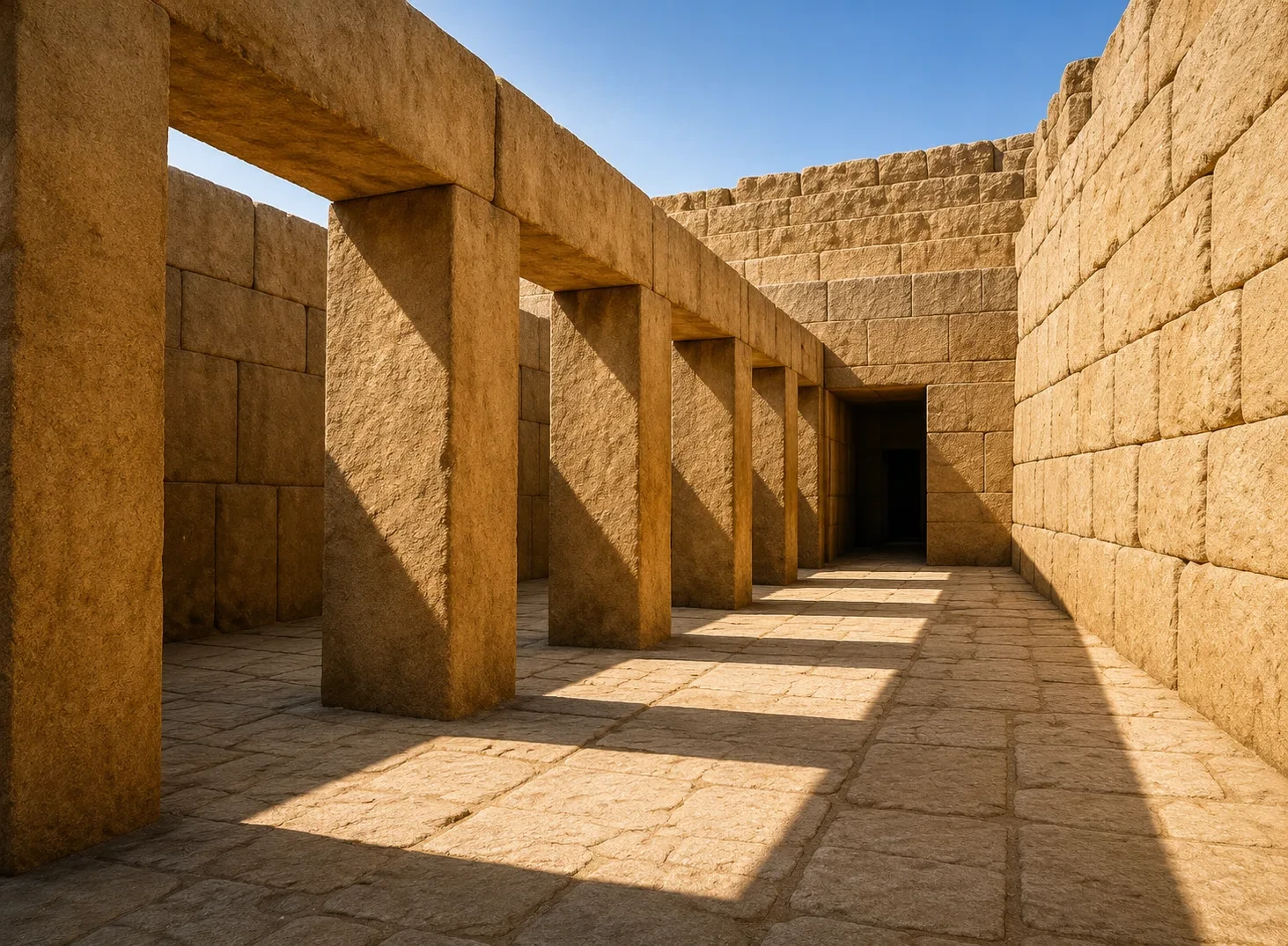
The Valley Temple of Khafre, located immediately south of the Great Sphinx enclosure at the eastern edge of the Giza Plateau where the desert escarpment meets the ancient Nile Valley landscape, is the most completely preserved and the most architecturally impressive ancient Egyptian Old Kingdom temple interior accessible to visitors at any heritage site in the Greater Cairo area, a massive structure of monolithic Aswan red granite in the core construction and white Tura limestone in the original casing whose extraordinary material quality, extraordinary construction scale, and extraordinary state of preservation give it a quality of physical presence and personal heritage impact that is entirely commensurate with its position as the primary purification and reception temple of the most completely preserved pyramid complex on the Giza Plateau. The Valley Temple's T-shaped interior hall, whose polished granite walls and alabaster floors create the most completely refined and the most materially excellent ancient Egyptian temple interior accessible at any Old Kingdom heritage site, provides the most immediately overwhelming and the most personally affecting ancient architectural experience available anywhere in the Greater Cairo area outside the pyramid interiors themselves, a combination of material quality, spatial drama, and ancient historical resonance that is unique in the Egyptian architectural heritage and that gives every visitor who stands in the temple interior in the low-angled light that enters through the temple's carefully designed lighting slots the most direct possible sensory encounter with the physical reality of the ancient Egyptian royal religious world at its most architecturally ambitious expression.
The Great Sphinx And Its Connection To Khafre
The intimate spatial and iconographic connection between the Khafre pyramid complex and the Great Sphinx of Giza, the world's largest monolithic sculpture almost certainly carved as a royal portrait of Khafre himself, gives the Khafre pyramid visit a dimension of associated heritage of such extraordinary scale and such extraordinary personal impact that the complete Khafre complex programme, encompassing the pyramid itself, the Valley Temple, the causeway, and the Great Sphinx, constitutes the single most comprehensive and the most personally extraordinary ancient royal heritage experience available at any point in the complete Giza Plateau visitor circuit. The Sphinx was almost certainly carved during Khafre's reign as the guardian figure of the Khafre pyramid complex's eastern approach, its position at the base of the causeway leading from the Valley Temple to the pyramid creating the most immediately powerful and the most theologically appropriate ancient Egyptian spatial sequence, the arrival of the royal funerary cortege at the Valley Temple preceded and overseen by the divine royal guardian carved from the living rock of the plateau as the most complete and the most physically overwhelming expression of the pharaoh's divine solar identity in the complete ancient Egyptian monumental tradition. The Great Sphinx's face, though significantly damaged by medieval vandalism and millennia of wind erosion, preserves sufficient of its ancient royal physiognomy to support the mainstream Egyptological attribution to Khafre based on the stylistic comparison with the diorite throne statue whose royal face is the closest available documented portrait of the pharaoh from the ancient Egyptian artistic record.
The Causeway
The causeway connecting the Khafre Valley Temple to the Mortuary Temple at the pyramid's east face is the most substantially preserved pyramid causeway on the complete Giza Plateau, a roofed limestone corridor approximately 494 meters in length that originally connected the two primary ritual facilities of the Khafre funerary complex in a completely enclosed transitional space whose walls bore carved and painted relief decoration of the ancient Egyptian religious and royal narrative programme. The causeway runs in a precisely straight line from the Valley Temple northwestward up the gentle gradient of the plateau surface to the Mortuary Temple at the pyramid base, its axis aligned with the astronomical and spatial logic of the complete complex's orientation system in the most direct and the most archaeologically legible expression of the ancient Egyptian royal funerary processional route available at any heritage site in the Greater Cairo area. The surviving sections of the causeway, whose mudbrick superstructure has largely collapsed but whose limestone floor and lower wall sections preserve enough of the original structure to make the route clearly legible on the Giza Plateau surface, provide the most complete and the most spatially immediate evidence for the connecting architectural element of the ancient royal funerary landscape system whose specific role in the processional narrative of the royal funerary programme was to mediate the transition between the world of the living at the Valley Temple and the world of the dead at the pyramid base in a physically enclosed and ritually consecrated architectural passage of considerable spatial drama and considerable theological significance.
The Mortuary Temple Remains
At the eastern base of the Khafre pyramid, where the causeway from the Valley Temple arrives at the pyramid complex proper, the remains of the Mortuary Temple of Khafre provide the most directly accessible physical evidence for the primary cult facility of the pyramid complex, the temple whose daily ritual programme of offering and purification sustained the eternal royal soul of Khafre throughout the complete period of the monument's active religious use in the ancient Egyptian funerary tradition. The Mortuary Temple, though substantially less preserved than the extraordinary Valley Temple at the plateau's eastern edge, retains enough of its massive granite and limestone construction to communicate the scale and the spatial organization of the original structure, including the position of the five niches that originally housed the royal statues of Khafre in the temple's inner court, the arrangement of the storage magazines and cult service facilities that supported the daily ritual programme, and the alignment of the temple's principal axis with the causeway below and the pyramid above in the most complete available ancient Egyptian example of the spatial logic of the royal funerary landscape planning system of the Old Kingdom pyramid tradition.
The Satellite Pyramid And The Queens' Pyramids
Adjacent to the Khafre pyramid complex, the subsidiary pyramid structures associated with the Khafre royal family and the cult establishment of the Khafre pyramid provide additional evidence for the complete royal funerary landscape programme of the central Giza necropolis zone. The small cult pyramid immediately south of the Khafre Mortuary Temple, sometimes identified as a queens' pyramid and sometimes as a cult installation for the royal ka soul, adds a fourth pyramidal structure to the central Giza complex zone and provides the most physically modest but the most archaeologically informative satellite monument of the Khafre complex, its interior passage system and chamber revealing details of the smaller-scale pyramid building tradition that complement the massive main pyramid's architectural programme with evidence for the complete range of the royal funerary infrastructure from the supreme royal monument to the subsidiary cult installations that together constituted the complete ancient Egyptian royal burial landscape of the Giza Plateau's central zone. The mastaba tomb fields extending east and south of the Khafre complex, whose flat-roofed rectangular burial structures housed the tombs of the senior officials, priests, and administrative personnel of the Khafre royal court, provide the most comprehensive picture of the elite social world that surrounded and served the pyramid-building pharaoh in the most directly spatially related ancient cemetery landscape accessible at any point in the Greater Cairo area.
Why Is The Middle Pyramid Of Giza Important?
The Middle Pyramid of Giza Khafre is important for reasons spanning architectural history, ancient Egyptian landscape planning theory, royal portraiture and sculptural history, the history of the Great Sphinx and its theological significance, and the practical accessibility of the most completely preserved ancient Egyptian royal funerary landscape system at any heritage site in the Greater Cairo area. As an architectural monument, the Khafre pyramid is the second largest building of the ancient world and the most completely preserved of the three Giza pyramids in its original casing remnant, providing the most direct visual evidence for the ancient appearance of the complete pyramid ensemble. As a landscape planning achievement, the Khafre complex is the most completely legible surviving example of the ancient Egyptian royal funerary landscape system, with Valley Temple, causeway, Mortuary Temple, and pyramid all substantially preserved and mutually legible in their spatial and functional relationships. As a sculptural heritage site, the Khafre complex produced the most celebrated royal portrait sculpture of the Old Kingdom, the diorite throne statue now in the Egyptian Museum, and almost certainly provided the model for the most extraordinary monolithic sculpture in the history of art, the Great Sphinx whose face in the mainstream Egyptological attribution is Khafre's own royal portrait. WOW Egypt Tours includes the Middle Pyramid of Khafre as an essential and primary destination in all comprehensive Cairo Tours, Egypt Classic Tours, and all Egypt Tour Packages.
What Are Some Interesting Facts About The Middle Pyramid Of Giza?
The Pyramid That Appears Taller Than The Tallest
The optical illusion of the Khafre pyramid's apparent height superiority over the adjacent Great Pyramid of Khufu is one of the most completely extraordinary and the most immediately personally experienced examples of deliberate ancient architectural visual manipulation available at any heritage site in the world, an optical effect so completely convincing and so consistently reported by visitors of every cultural background and every level of prior heritage preparation that it provides the most immediate and the most personal demonstration of the ancient Egyptian planners' sophisticated understanding of visual perception and landscape design that any single observation at the Giza Plateau can provide. The deliberate selection of the highest available ground position on the Giza Plateau for the Khafre pyramid, a planning decision that simultaneously gave the monument its most commanding visual presence in the ancient landscape of the Nile Valley below the plateau and created the most extraordinary ancient architectural visual paradox in the complete heritage history of the Giza complex, reveals an organizational intelligence and a landscape design sophistication in the ancient Egyptian royal funerary planning tradition that goes far beyond the mere engineering achievement of building very large stone monuments in very precise geometric form and enters the realm of visual and perceptual artistry whose subtlety and effectiveness have been recognized and admired by every subsequent generation of architects, planners, and heritage visitors who have experienced the complete Giza Plateau landscape in its most comprehensive and most panoramic available visual presentations.
Belzoni's Discovery And His Inscription
The first modern interior exploration of the Middle Pyramid of Khafre by the extraordinary Italian explorer and excavator Giovanni Battista Belzoni in 1818 is one of the most personally dramatic and the most historically significant individual events in the complete modern history of Egyptian archaeological exploration, a moment of genuine exploratory discovery whose circumstances, the penetration of a sealed ancient monument that had not been entered by any modern person before Belzoni's team broke through the sand-filled descending passage to reach the burial chamber, combine with the quality of the explorer's character and the extraordinary productivity of his Egyptian exploration career to create one of the most compelling personal narratives in the complete biography of Egyptological investigation. Belzoni, who had begun his career as a hydraulic engineer and stage performer before becoming the most physically powerful and the most technically resourceful Egyptian explorer of the early 19th century, discovered the Khafre pyramid entrance by careful observation of the ground surface patterns around the north face of the pyramid and systematic excavation of the accumulated sand and debris of centuries from the face of the pyramid until the original entrance passage was revealed. The inscription he left on the burial chamber wall, Scoperto da G. Belzoni, 2 marzo 1818, is simultaneously the most historically specific date in the complete modern exploration biography of the Khafre pyramid and the most poignantly human evidence for the pride and the personal satisfaction of a man who understood that he had just accomplished something of genuine and permanent historical significance, a recognition that time has completely vindicated.
The Diorite Statue: Ancient Masterpiece Of Royal Portraiture
The discovery by Auguste Mariette in 1860 of the magnificent diorite throne statue of Khafre in the circular pit of the Valley Temple's main hall is one of the most celebrated single object archaeological discoveries in the entire history of Egyptological investigation, a moment of such completely extraordinary artistic revelation that Mariette himself described it in terms of astonished superlatives in his excavation report, comparing the quality of the ancient sculpture's preservation and the quality of its artistic achievement with the finest works of classical Greek sculpture and finding the Egyptian work superior in its combination of technical mastery and idealized royal presence. The statue, carved from the hardest and most challenging sculptural medium available to the ancient Egyptian artist, the intensely dark green diorite whose resistance to carving tools required extraordinary skill, extraordinary patience, and extraordinary time to work at the level of detail and surface finish achieved in this extraordinary royal portrait, shows Khafre seated on his royal throne in the canonical frontal pose of ancient Egyptian royal sculpture with the falcon god Horus spreading his wings behind the royal head in the most intimate possible expression of divine royal protection, a compositional programme of such complete iconographic sophistication and such completely extraordinary artistic quality that the statue has been universally recognized since its discovery as the supreme masterpiece of ancient Egyptian Old Kingdom royal portraiture and one of the most extraordinary works of sculptural art in the complete history of ancient civilization, its current position as one of the most celebrated objects in the Egyptian Museum collection entirely appropriate to its quality and its historical significance.
What Is So Special About The Middle Pyramid Of Giza?
The Most Complete Ancient Royal Funerary Landscape
What makes the Middle Pyramid of Giza Khafre uniquely special among all the Giza pyramid monuments is the extraordinary completeness of the royal funerary landscape system of which it is the culminating element, a completeness whose specific quality of archaeological legibility, in which the visitor can trace the complete ancient spatial narrative from the Valley Temple at the plateau edge through the causeway across the transitional landscape to the Mortuary Temple at the pyramid's base and then to the pyramid itself, is simply unavailable at any other pyramid complex in the Greater Cairo area and represents the most complete and the most personally vivid surviving expression of the ancient Egyptian royal funerary landscape planning tradition at its most ambitious Old Kingdom expression. The combination of the Khafre pyramid itself, the Valley Temple, the causeway, the Mortuary Temple, and the Great Sphinx together creates the most comprehensively realized and the most personally engaging ancient royal heritage experience available at any single monument complex in the complete Greater Cairo area, a heritage experience whose variety of monument type, whose completeness of spatial organization, and whose extraordinary quality of individual monument preservation together give the complete Khafre complex programme a depth of heritage engagement and a breadth of personal impact that neither of its companion pyramids, however extraordinary in their own specific heritage dimensions, can quite replicate at the same level of completeness and the same level of legibility.
Where Ancient Visual Mastery Meets Surviving Original Beauty
The Khafre pyramid is also uniquely special for the specific combination of the optical illusion experience and the original casing survival that gives it the two most immediately and the most personally extraordinary visual discoveries available at any single pyramid monument on the Giza Plateau. The discovery of the optical illusion, when the intellectually prepared visitor stands at the panoramic desert viewpoint and experiences the complete convincingness of the Khafre pyramid's apparent height superiority over the taller Great Pyramid beside it, is one of the most personally astonishing single moments of ancient architectural intelligence that any heritage experience can provide, a moment in which the visitor is simultaneously most directly encountering the ancient Egyptian planners' landscape design intelligence and most directly experiencing the specific perceptual reality that the planners were exploiting in the service of their royal patron's visual dominance of the Giza landscape. The discovery of the original casing section at the pyramid's summit, when the visitor for the first time sees the gleaming white limestone of the ancient surface contrasting with the grey core below it, is the most completely immediate and the most visually overwhelming revelation of what the ancient pyramids actually looked like in their original form that any accessible heritage encounter at the Giza Plateau can provide, a visual revelation of ancient reality whose impact is as complete and as personal as any explanation or any reconstruction photograph could prepare for.
The Middle Pyramid Of Giza Khafre Through The Ages
The complete narrative of the Middle Pyramid of Khafre from the construction and the completion of the first and the most comprehensive of the three Giza royal funerary landscapes through the ancient Egyptian maintenance and veneration tradition, the Greek and Roman literary engagement and scientific curiosity, the medieval Islamic casing quarrying and the first modern interior exploration of Belzoni in 1818, the 19th century systematic survey tradition of Petrie and the extraordinary sculptural discovery of Mariette, and the ongoing 20th and 21st century archaeological and conservation programme traces one of the most richly varied and the most intellectually productive monument biographies in the complete Egyptian heritage record, a biography whose most significant moments span the complete arc of human engagement with ancient monuments from the ancient Egyptian religious veneration to the modern scientific investigation in a continuous record of fascination and investigation that reflects the extraordinary heritage significance and the extraordinary personal impact of the most completely preserved ancient Egyptian royal funerary landscape system accessible at any heritage site in the Greater Cairo area.
The most consequential recent developments in the scholarly understanding of the Khafre complex have come from the systematic investigation of the complete plateau landscape by the Giza Plateau Mapping Project, whose comprehensive survey of the plateau surface, subsurface, and archaeological record has progressively revealed the full extent of the ancient infrastructure associated with the Khafre construction programme, including the harbor and canal system that served the construction logistics of all three Giza pyramid complexes, the quarry zones whose spatial relationship to the construction site reveals specific details of the material supply system, and the complete spatial organization of the Giza Plateau necropolis whose three-pyramid diagonal alignment and associated infrastructure is most completely and most archaeologically productively studied in the context of the most completely preserved of the three royal funerary landscapes, the Khafre complex.
The Middle Pyramid And UNESCO
The Middle Pyramid of Giza Khafre is protected as a primary monument within the UNESCO World Heritage Site designated in 1979 as Memphis and its Necropolis: the Pyramid Fields from Giza to Dahshur, recognized as a heritage of outstanding universal value for the extraordinary concentration of ancient Egyptian funerary and royal monument heritage of the Old Kingdom pyramid building tradition. The UNESCO designation encompasses the complete Giza Plateau monument complex including all three pyramids, the Great Sphinx, the Valley Temple of Khafre, and the connected pyramid fields of Saqqara and Dahshur. The Egyptian government and the UNESCO World Heritage Committee are engaged in ongoing collaboration on the conservation management of the complete Khafre complex, addressing in particular the conservation of the surviving original casing section at the pyramid's summit, the maintenance of the Valley Temple's extraordinary granite interior, the preservation of the causeway's surviving structure, and the protection of the complete plateau landscape from the urban development pressures that continue to encroach on the heritage zone from the east and south.
Best Time To Visit The Middle Pyramid Of Giza Khafre
The best time to visit the Middle Pyramid of Khafre is during the cooler months from October through April, when the Cairo and Giza climate provides the most comfortable conditions for the complete outdoor programme of the Khafre pyramid exterior, the Valley Temple, the causeway, the Mortuary Temple, and the panoramic desert viewpoint from which the optical illusion of the Khafre pyramid's apparent height superiority is most completely and most dramatically experienced. The winter months of December through February offer the most extraordinary quality of low-angle morning light that illuminates the original casing section at the pyramid's summit in the most dramatically beautiful contrast with the grey core limestone below it, creating the most visually overwhelming and the most photographically spectacular presentation of the original casing evidence at any time of the complete annual cycle. For the Khafre pyramid interior visit, early morning arrival at the Giza complex opening is the most strongly recommended approach, as the Khafre interior ticket is separately allocated in limited daily quantities and the queue builds rapidly through the morning hours. The summer months bring extreme heat to the exposed plateau but do not diminish the extraordinary visual experience of the original casing section or the optical illusion discovery, both of which are available at all seasons of the year. WOW Egypt Tours advises on optimal seasonal timing for all Giza heritage visits.
Middle Pyramid Of Giza Khafre Opening Hours
The Middle Pyramid of Khafre is accessible as part of the complete Giza Pyramids Complex, open daily from 8:00 AM to 5:00 PM in the winter season (October through April) and from 7:00 AM to 7:00 PM in the summer season (May through September). The Khafre pyramid interior is open daily for a limited number of visitors with an additional ticket purchased at the complex entrance. The Valley Temple of Khafre immediately adjacent to the Sphinx enclosure is accessible with the general complex admission ticket. All visiting hours are subject to adjustment for Egyptian national holidays and special events and should be confirmed at time of booking with WOW Egypt Tours.
Middle Pyramid Of Giza Khafre Entrance Fees
General Giza Pyramids Complex entrance: EGP 220 for adults, EGP 110 for students.
Khafre Pyramid interior (additional fee beyond complex entrance): EGP 100 for adults, EGP 50 for students.
Valley Temple of Khafre: included in the general complex admission ticket.
All Giza complex and Khafre pyramid entrance fees are included in the Cairo Tours and Egypt Tour Packages organized by WOW Egypt Tours. Fees are subject to periodic adjustment and current rates should be confirmed at time of booking.
How To Get To The Middle Pyramid Of Giza Khafre
The Middle Pyramid of Khafre is located on the Giza Plateau approximately 13 kilometers southwest of central Cairo, accessible as part of the complete Giza Pyramids Complex visitor circuit. Private vehicle from Cairo hotel provided by WOW Egypt Tours as part of the complete Cairo heritage programme is the most convenient approach, providing door-to-door transport from the hotel to the main Giza complex entrance and transportation between all sites within the plateau area including the Grand Egyptian Museum, the Egyptian Museum, Saqqara, Memphis, and Dahshur as part of the complete Greater Cairo pyramid heritage circuit. Within the Giza complex, the Khafre pyramid is positioned centrally on the plateau approximately 200 meters south of the Great Pyramid, with the Valley Temple and Great Sphinx accessible approximately 450 meters to the east via the causeway route or the visitor path along the plateau edge.
How Long To Spend At The Middle Pyramid Of Giza Khafre
The Middle Pyramid of Khafre is most naturally and most effectively visited as an integrated component of the complete Khafre complex programme encompassing the pyramid, the Valley Temple, the Great Sphinx, and the causeway walk between the Valley Temple and the Mortuary Temple, which together require a minimum of two to three hours for the most complete and the most personally satisfying engagement with all the primary components of the most completely preserved ancient Egyptian royal funerary landscape at the Giza Plateau. The Khafre pyramid exterior, including the base circuit walk that most directly communicates the pyramid's extraordinary scale, the northeast corner view of the complete casing remnant at the summit, and the panoramic desert viewpoint from which the optical illusion of the Khafre pyramid's apparent height superiority is most dramatically experienced, requires approximately 30 to 45 minutes within the complete complex circuit. The Khafre pyramid interior visit, if included, adds approximately 45 minutes to one hour for the descent to the burial chamber and the examination of the sarcophagus. The Valley Temple interior with its extraordinary granite hall is most thoroughly appreciated with 30 to 45 minutes of guided exploration. The complete Khafre complex programme is most efficiently and most personally satisfyingly organized as an integrated component of the complete one-day Giza Plateau programme organized by WOW Egypt Tours.
Tips For Visiting The Middle Pyramid Of Giza Khafre
Stand at the panoramic desert viewpoint to the southwest of the Giza plateau to experience the optical illusion of the Khafre pyramid's apparent height superiority at its most complete and its most convincingly deceptive, then physically verify the reality by returning to the northeast corner of the Great Pyramid base where the comparison of the two pyramid tops from close range reveals the actual height differential that the ground elevation difference conceals from more distant viewing angles. For the most dramatically beautiful photography of the original casing section at the Khafre pyramid's summit, visit in the early morning when the low eastern sun illuminates the white limestone of the surviving casing in the most warm and the most dramatically contrasting light available at any time of the complete day. Walk the complete causeway route from the Valley Temple to the Mortuary Temple with your licensed Egyptology guide from WOW Egypt Tours, as the causeway walk is the single most spatially immediate and the most personally affecting way of experiencing the ancient Egyptian royal funerary processional sequence that the complete Khafre landscape was designed to facilitate and whose 494-meter transition from the Valley Temple at the plateau edge to the Mortuary Temple at the pyramid base gives the complete ancient funerary landscape its most direct and its most personally resonant spatial reality. Ensure that the Valley Temple interior visit immediately follows or immediately precedes the Great Sphinx enclosure visit, as the two adjacent monuments of the Khafre complex's eastern zone are the most naturally and the most archaeologically richly combined adjacent heritage destinations in the complete Giza Plateau visitor circuit.
What To Wear At The Middle Pyramid Of Giza Khafre
The Khafre pyramid visit encompasses both outdoor plateau exploration and the optional pyramid interior visit, requiring practical clothing for both environments. For the outdoor programme, lightweight breathable clothing covering the arms and legs, a wide-brimmed hat, high-SPF sunscreen, and UV-protective sunglasses are essential for the completely exposed Giza Plateau environment where no natural shade is available. For the Khafre pyramid interior visit, comfortable clothing allowing free movement in the descending passage and the horizontal access corridor to the burial chamber is required, though the Khafre interior passages are less physically demanding than the Great Pyramid's Ascending Passage and Grand Gallery climb and are generally accessible to a wider range of physical abilities. Flat rubber-soled shoes with good grip are essential for both the rough exterior limestone terrain and the interior passage floors. Modest clothing covering the shoulders and knees is appropriate throughout the Giza complex. Carry at least one liter of water per person for the complete Giza Plateau programme.
Photography At The Middle Pyramid Of Giza Khafre
The Middle Pyramid of Khafre provides the most photographically distinctive and the most visually dramatic photography subjects of the three Giza pyramid monuments in its specific combination of the original casing section, the optical illusion panorama, and the complete ancient funerary landscape context that includes the Valley Temple, the Sphinx, and the causeway in the most comprehensive single-pyramid complex photography programme available at the Giza Plateau. The original casing section photographs most dramatically in the early morning and late afternoon low-angle light when the warm directional sunlight creates the most complete and the most visually beautiful contrast between the gleaming white ancient casing and the grey rough-surfaced core limestone below it. The panoramic desert viewpoint photograph of all three pyramids in which the Khafre pyramid's apparent height superiority creates the most immediately extraordinary visual paradox in ancient heritage photography is the single most celebrated and the most widely recognized photographic composition in the entire Giza heritage photography tradition. The Valley Temple interior, with its monolithic granite walls and alabaster floor creating the most extraordinary and the most completely refined ancient Egyptian architectural interior accessible at any Greater Cairo heritage site, provides architecture photography of extraordinary material richness in the dramatically horizontal light that enters through the temple's carefully positioned lighting slots. Photography is freely permitted throughout all accessible areas of the Khafre pyramid complex.
Middle Pyramid Of Giza Khafre Tours
Complete Khafre Complex Programme: Pyramid, Valley Temple, Sphinx, And Causeway
This comprehensive Khafre complex programme provides the most complete and the most expertly guided encounter with the most completely preserved ancient Egyptian royal funerary landscape at the Giza Plateau, encompassing all the primary components of the Khafre complex from the pyramid exterior and optional interior through the causeway walk to the Valley Temple and the Great Sphinx in a single integrated programme of extraordinary heritage completeness and extraordinary personal impact.
What Is Covered
Private vehicle from Cairo hotel with early morning departure. Complete Giza Plateau programme as part of the full Giza visit including the Great Pyramid of Khufu exterior and interior, Khufu Boat Museum, and panoramic desert viewpoint. Expert guided programme of the complete Khafre complex: pyramid exterior circuit including the northeast corner original casing view, the optical illusion demonstration from the panoramic viewpoint, and the Mortuary Temple remains at the pyramid base. Optional Khafre pyramid interior visit including the descending passage, the burial chamber, and Khafre's granite sarcophagus sunken into the chamber floor. Complete causeway walk from the Mortuary Temple to the Valley Temple with guided explanation of the ancient processional narrative and the spatial logic of the complete funerary landscape. Valley Temple of Khafre interior with complete expert guided programme of the granite hall, the alabaster floor, and the Mariette statue discovery context. Great Sphinx enclosure with frontal face approach, Dream Stele explanation, and complete enclosure circuit. Menkaure Pyramid exterior. Return to Cairo hotel for lunch followed by afternoon Grand Egyptian Museum visit including the Khafre diorite statue and the complete Old Kingdom royal portraiture collection.
Duration
Full day from Cairo hotel, approximately 10 to 11 hours.
Includes
Private vehicle, licensed Egyptology guide, all site entrance fees including Khafre pyramid interior ticket, lunch, and all logistics. Through WOW Egypt Tours Cairo Tours.
Greater Cairo Pyramid Heritage Circuit: Giza, Saqqara, Memphis, And Dahshur
This comprehensive two-day Cairo ancient heritage programme covers the complete chronological sequence of ancient Egyptian pyramid development from the Step Pyramid of Djoser at Saqqara through the experimental transitional pyramids of Khafre's grandfather Sneferu at Dahshur to the supreme achievements of all three Giza plateau pyramids in the most historically complete and the most personally enriching Greater Cairo pyramid programme available from any Cairo hotel base.
What Is Covered
Day 1: Complete Giza Plateau programme including all three pyramids, the Great Sphinx, Valley Temple, and panoramic desert viewpoint. Afternoon: Grand Egyptian Museum including the Khafre diorite statue, Tutankhamun galleries, and Old Kingdom royal collection.
Day 2: Saqqara Step Pyramid Complex morning. Afternoon: Memphis and Dahshur Bent and Red Pyramids of Sneferu, Khafre's grandfather.
Duration
2 Days from Cairo hotel.
Includes
Private vehicle both days, licensed Egyptology guide, all site entrance fees, lunch both days, and all logistics. Through WOW Egypt Tours Cairo Tours.
Combine The Middle Pyramid Of Giza Khafre With Your Egypt Tours Package
The Middle Pyramid of Giza Khafre is included as an essential destination in every Cairo heritage programme across the full range of WOW Egypt Tours travel products. Browse the options below to find the Egypt experience that includes the Khafre Pyramid.
Egypt Tour Packages: Multi-day guided Egypt tours organized by duration, including 2 Days Egypt Packages, 3 Days Egypt Packages, 4 Days Egypt Packages, 5 Days Egypt Packages, 6 Days Egypt Packages, 7 Days Egypt Packages, 8 Days Egypt Packages, 10 Days Egypt Packages, and longer itineraries. The Middle Pyramid of Khafre is included in all Egypt Tour Packages as part of the primary Giza Plateau Cairo heritage programme. All packages include private vehicle, licensed Egyptology guide, accommodation, all site entrance fees, and all logistics.
Egypt Travel Packages: Themed Egypt travel packages including Egypt Honeymoon Travel Packages, Egypt Budget Travel Packages, Egypt Family Travel Packages, Egypt Luxury Travel Packages, Egypt Adventure Travel Packages, Egypt Cultural Travel Packages, and Egypt Christmas and New Year Travel Packages. The Khafre pyramid complex with the Valley Temple, causeway, and Great Sphinx is featured in every Egypt Travel Package category as the most completely preserved ancient Egyptian royal funerary landscape at the Giza Plateau.
Egypt Classic Tours: The most popular and the most comprehensively balanced Egypt travel programme, combining the complete Giza Plateau programme including the Khafre pyramid complex, Valley Temple, and Great Sphinx with the Grand Egyptian Museum's extraordinary Khafre diorite statue collection and the Nile Valley heritage of Luxor and Aswan in the most complete and the most personally satisfying introduction to the ancient Egyptian world available in any organized Egypt itinerary.
Egypt Short Break Tours: Focused short duration Egypt travel programmes for travelers with limited time. The complete Giza Plateau programme including the Khafre pyramid, Valley Temple, and Great Sphinx is the primary Cairo heritage programme in every Egypt Short Break Tours itinerary, with the optical illusion discovery, the original casing section, and the Valley Temple interior as primary heritage highlights.
Egypt Family Tours: Family-friendly Egypt travel programmes in which the Khafre pyramid's optical illusion discovery is one of the single most engaging and the most genuinely interactive heritage moments for children and adults of all ages, a moment of ancient architectural intelligence whose impact is fully accessible to every visitor regardless of age or prior heritage preparation.
Egypt Budget Tours: Value-focused Egypt travel programmes providing access to the complete Giza Plateau including the Khafre complex, Valley Temple, and Great Sphinx at the most economical pricing available from any professional Egyptian tour operator.
Egypt Nile Cruises: All-inclusive Nile River Cruise programmes combining the ancient pharaonic heritage of Luxor and Aswan with Cairo extensions that include the complete Giza Plateau programme with the Khafre pyramid complex as the most completely preserved ancient Egyptian royal funerary landscape component of any Cairo extension.
Nile River Cruises: All WOW Egypt Tours Nile cruise options. The Khafre pyramid complex is available as a Cairo extension from the beginning or end of any Nile River Cruise itinerary.
Luxor Aswan Nile Cruises: The Khafre pyramid complex with its Valley Temple and Great Sphinx is the most completely preserved ancient Egyptian royal funerary landscape component of the complete Cairo extension for any Luxor-Aswan Nile cruise programme.
Dahabiya Nile Cruises: The Khafre pyramid complex available as a Cairo extension for travelers combining the most intimate private Nile sailing experience with the most completely preserved ancient royal funerary landscape of the Giza Plateau.
Lake Nasser Cruises: The Khafre pyramid complex available as a Cairo extension for travelers combining the extraordinary Nubian heritage of Lake Nasser with the supreme ancient monuments of the Giza Plateau.
Cairo Tours: The complete range of guided day tour programmes available from Cairo hotels, including the complete Giza Plateau programme with the Khafre pyramid complex, Valley Temple, and Great Sphinx, the combined Giza and Grand Egyptian Museum full-day programme featuring the Khafre diorite statue as the supreme masterpiece of Old Kingdom royal portraiture, the Greater Cairo pyramid circuit combining Giza with Saqqara, Memphis, and Dahshur, the Islamic Cairo programme covering the Khan El Khalili, El Moez Street, Saladin Citadel, and Muhammad Ali Mosque, and the Coptic Cairo programme covering the Hanging Church, Coptic Museum, and Ben Ezra Synagogue. All Cairo Tours include private vehicle, licensed Egyptology guide, all entrance fees, and all logistics organized by WOW Egypt Tours.
Nearby Attractions To The Middle Pyramid Of Giza Khafre
The Middle Pyramid of Khafre is the central element of the most completely preserved ancient Egyptian royal funerary landscape on the Giza Plateau and its most immediately proximate and most naturally combined nearby heritage destinations are the other primary components of the same Khafre complex. The Valley Temple of Khafre approximately 450 meters east via the preserved causeway is the most architecturally extraordinary and the most materially impressive ancient Egyptian Old Kingdom temple interior accessible to visitors in the Greater Cairo area, and is inseparable from the Khafre pyramid visit as the primary ritual facility of the same funerary landscape system. The Great Sphinx of Giza, almost certainly the royal portrait of Khafre himself, is immediately adjacent to the Valley Temple and is the single most personally overwhelming and the most universally recognized ancient portrait in the history of human art. The Great Pyramid of Khufu immediately to the north and the Small Pyramid of Menkaure immediately to the south complete the three-pyramid programme of the complete Giza Pyramids Complex.
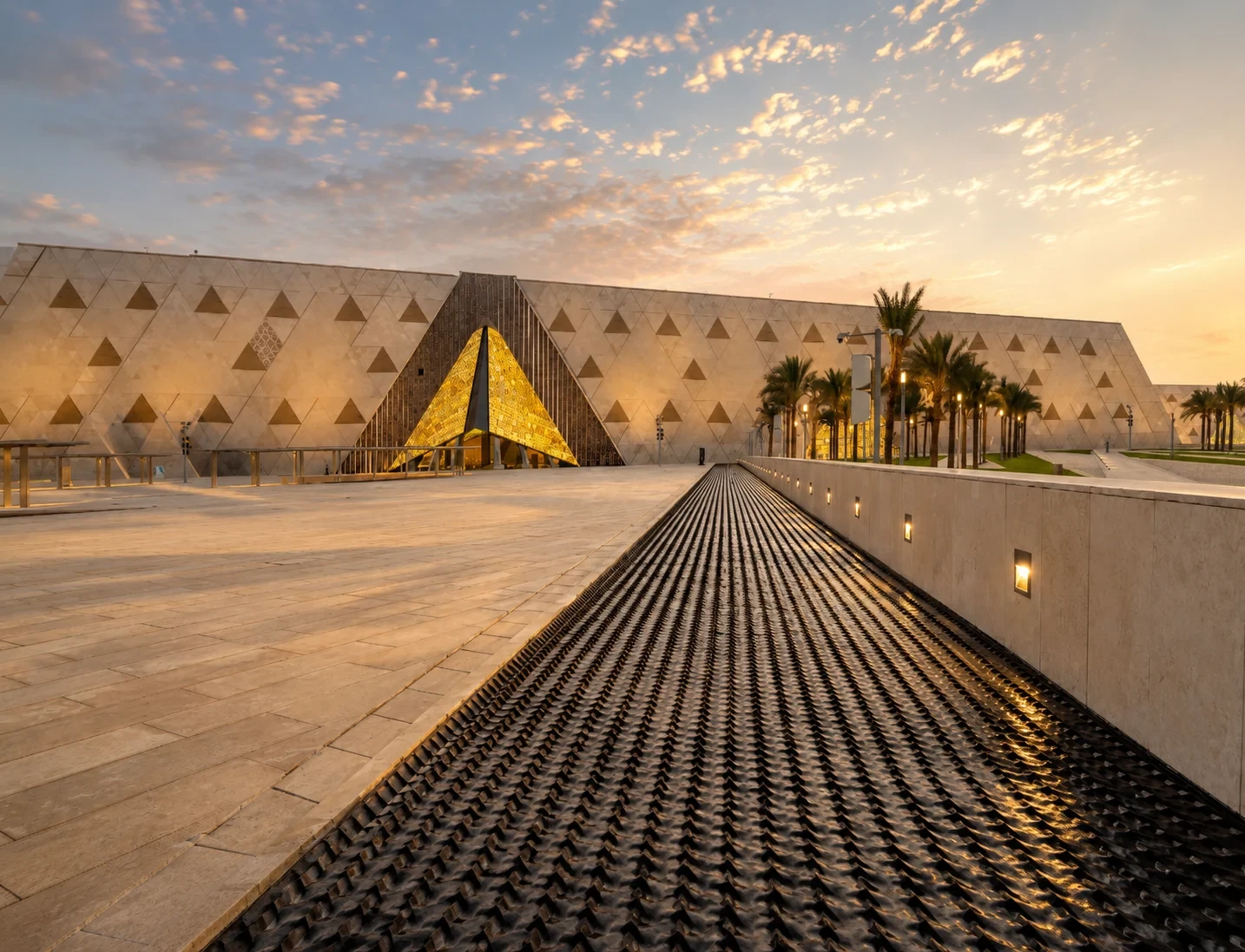
The Grand Egyptian Museum approximately 2 kilometers north is the most directly relevant institutional complement to the Khafre complex visit, housing in its extraordinary new galleries the magnificent diorite throne statue of Khafre discovered by Mariette in the Valley Temple, one of the supreme masterpieces of ancient Egyptian royal sculpture and the primary documented portrait of the Khafre pyramid's royal patron. The Egyptian Museum in central Cairo also houses extraordinary Khafre-related objects including additional fragments of the Valley Temple statue programme. The complete Greater Cairo ancient heritage circuit combining Giza with the Saqqara Step Pyramid, the ancient city of Memphis, and the Dahshur Pyramids of Sneferu, Khafre's grandfather, provides the most complete chronological context for the Khafre pyramid's achievement in the evolutionary sequence of ancient Egyptian pyramid building. All these destinations are organized by WOW Egypt Tours as part of comprehensive Cairo Tours and Egypt Tour Packages encompassing the extraordinary heritage of Cairo the Capital of Egypt and its pharaonic legacy.
Frequently Asked Questions About The Middle Pyramid Of Giza Khafre
What is the Middle Pyramid of Giza Khafre?
The Middle Pyramid of Giza is the royal pyramid monument of the pharaoh Khafre (also known as Chephren), fourth pharaoh of the Egyptian Old Kingdom 4th Dynasty, built approximately 2558 to 2532 BCE on the highest section of the Giza Plateau. It is the second largest pyramid at Giza, the most completely preserved of the three pyramids with its surviving original white limestone casing at the apex, the centerpiece of the most completely preserved ancient Egyptian royal funerary landscape, and almost certainly the pyramid whose royal face is portrayed in the Great Sphinx. It is featured in Cairo Tours, Egypt Classic Tours, and Egypt Short Break Tours offered by WOW Egypt Tours.
Why does the Khafre pyramid appear taller than the Great Pyramid?
The Khafre pyramid appears taller than the adjacent Great Pyramid of Khufu because it was deliberately built on a section of the Giza Plateau approximately 10 meters higher in natural ground elevation than the position chosen for the Great Pyramid, creating an optical illusion of height superiority that is visible from virtually all eastern approach angles and from the famous panoramic desert viewpoint to the southwest. In reality, the Khafre pyramid at 136.4 meters current height is shorter than the Great Pyramid's current 138.8 meters.
What is the surviving white casing on the Khafre pyramid?
The surviving white casing at the upper quarter of the Khafre pyramid is the remnant of the original smooth white Tura limestone outer casing that once covered all four faces of the pyramid in the ancient period, identical in material and in finish to the complete original casings of all three Giza pyramids before the medieval period quarrying that removed most of the casing for the construction of medieval Cairo. The surviving section of approximately 15 to 20 meters below the summit is the most complete and the most visually immediately affecting example of original pyramid casing surviving on any of the three Giza monuments, providing the most direct visual evidence for the ancient pyramid's original gleaming white appearance.
Who built the Khafre pyramid?
The Khafre pyramid was built by the pharaoh Khafre, also known as Chephren, the fourth pharaoh of the Egyptian Old Kingdom 4th Dynasty who was the son of Khufu (builder of the Great Pyramid) and the grandson of Sneferu (builder of the Bent and Red Pyramids at Dahshur). Khafre reigned approximately from 2558 to 2532 BCE and is most celebrated in the ancient Egyptian artistic tradition through the magnificent diorite throne statue discovered by Auguste Mariette in the Khafre Valley Temple in 1860 and now in the Egyptian Museum collection.
Who first entered the Khafre pyramid in modern times?
Giovanni Battista Belzoni, the Italian explorer and excavator, was the first modern person to enter the Khafre pyramid, achieving this on 2 March 1818 after identifying and clearing the original ancient entrance passage. He discovered the burial chamber with its empty granite sarcophagus and marked his discovery by inscribing his name and the date on the burial chamber wall, where the inscription Scoperto da G. Belzoni, 2 marzo 1818 remains visible today as the most historically specific dated inscription in the complete modern exploration biography of the Giza pyramids.
Is the Khafre pyramid interior worth visiting?
Yes, though the Khafre interior is architecturally simpler than the Great Pyramid's multi-chamber system with its Grand Gallery. The Khafre burial chamber with its polished grey granite sarcophagus sunken into the floor is a space of powerful ancient historical resonance and the Belzoni inscription adds a fascinating historical layer to the archaeological experience. The Khafre interior visit is less physically demanding than the Great Pyramid's Ascending Passage climb and is accessible to a wider range of physical abilities, making it the most practically accessible of the pyramid interior experiences at Giza.
What is the famous Khafre diorite statue?
The diorite throne statue of Khafre, discovered by Auguste Mariette in 1860 in the circular pit of the Khafre Valley Temple's main hall and now one of the supreme masterpieces of the Egyptian Museum collection, shows Khafre seated on his royal throne with the falcon god Horus spreading his wings protectively around the back of the royal head. Carved from the hardest sculptural medium available to ancient Egyptian artists, the intensely dark green diorite, the statue is universally recognized as the supreme masterpiece of ancient Egyptian Old Kingdom royal portraiture and one of the most extraordinary works of ancient sculptural art in the complete history of civilization.
Is the Great Sphinx the portrait of Khafre?
The mainstream Egyptological consensus attributes the Great Sphinx's royal face to Khafre based on the Sphinx's architectural relationship to the Khafre pyramid complex, the stylistic comparison of the Sphinx's facial structure with the Khafre diorite statue, the spatial logic of the Giza Plateau layout in which the Sphinx guards the eastern approach to the Khafre complex, and the stratigraphic relationship of the Sphinx enclosure to the Khafre construction programme's quarrying activity. A minority scholarly view attributes the Sphinx to Khufu based on different facial typology arguments.
What is the best time to visit the Khafre pyramid?
October through April for the most comfortable outdoor conditions and the most extraordinary low-angle morning light on the original white casing section. Early morning for the pyramid interior visit and to avoid the building visitor queue. Late afternoon from the panoramic desert viewpoint for the most dramatically beautiful photograph of the three pyramids in the warm Egyptian evening light, including the most completely convincing presentation of the Khafre pyramid's optical illusion of height superiority.
Can families with children visit the Khafre pyramid?
Yes. The Khafre pyramid exterior with the optical illusion discovery and the original casing section are completely accessible and genuinely fascinating for children of all ages. The causeway walk and the Valley Temple are suitable for all ages. The Khafre pyramid interior, being less physically demanding than the Great Pyramid interior, is accessible to fit children aged 8 and above. The optical illusion experience is one of the single most engaging and most genuinely interactive ancient heritage moments for children at the Giza Plateau.
What other Giza monuments are part of the Khafre complex?
The complete Khafre funerary complex encompasses the pyramid itself, the preserved causeway of approximately 494 meters, the Valley Temple of Khafre as the most completely preserved Old Kingdom temple interior in the Greater Cairo area, the Mortuary Temple remains at the pyramid's east face, the Great Sphinx of Giza as the royal guardian portrait of Khafre at the approach to the complex, the small satellite pyramid south of the Mortuary Temple, and the Sphinx Temple east of the Sphinx enclosure.
How do I book a Khafre pyramid tour with WOW Egypt Tours?
You can book any Cairo Tours programme, Egypt Classic Tours package, Egypt Short Break Tours programme, Egypt Family Tours, Egypt Budget Tours, Egypt Tours Package, or Egypt Travel Package that includes the Khafre pyramid directly through WOW Egypt Tours. Our team of travel specialists will arrange private vehicle, licensed Egyptology guide, all site entrance fees, the complete Khafre complex programme encompassing the pyramid interior, the causeway walk, the Valley Temple, and the Great Sphinx, and all the extraordinary heritage encounters that make the Khafre complex the most completely preserved and the most archaeologically legible ancient Egyptian royal funerary landscape accessible at any heritage site in the Greater Cairo area.