
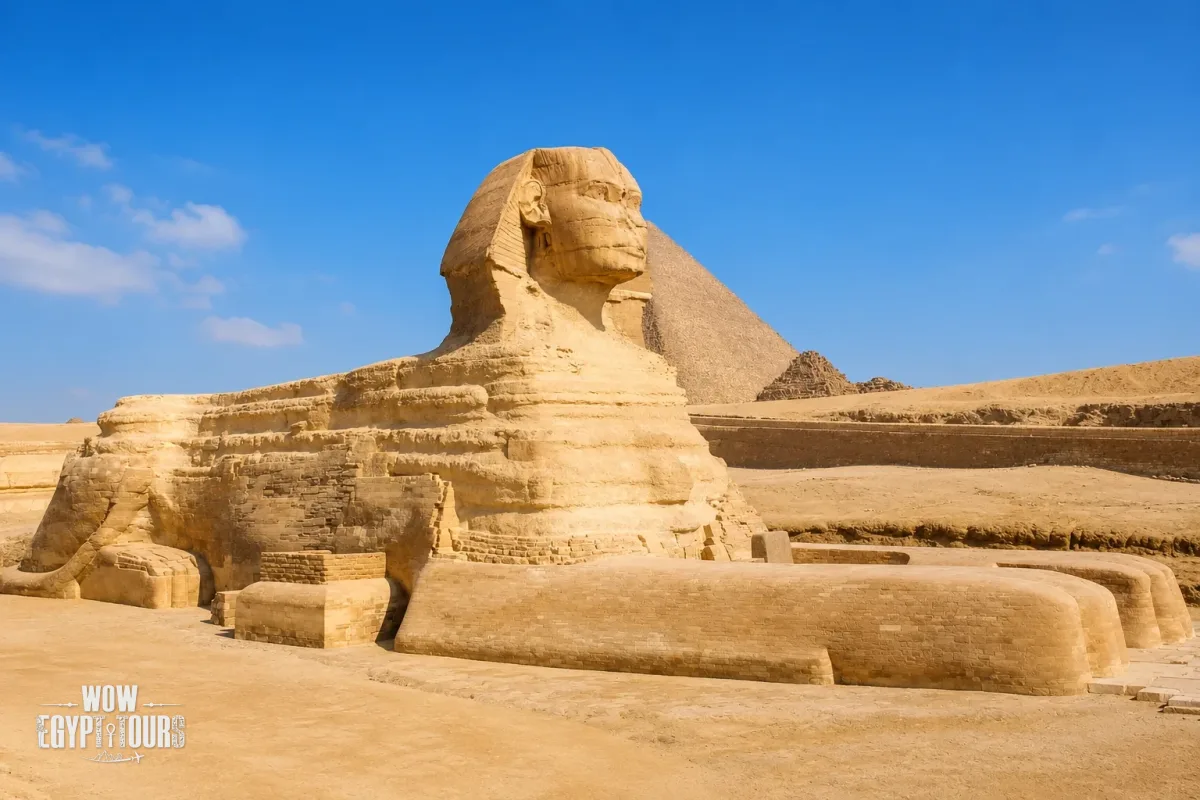

The Great Sphinx of Giza is the largest, the oldest, and the most immediately recognizable monumental sculpture in the entire history of human civilization, a colossus of extraordinary physical presence and extraordinary historical depth carved from the natural limestone bedrock of the Giza Plateau in the form of a recumbent lion with the human head of a pharaoh, its massive body of 73 meters in length, 20 meters in height, and 14 meters in width hewn directly from the living rock of the plateau in a single continuous act of ancient sculptural vision whose audacity, whose technical mastery, and whose completely extraordinary result have made it one of the most personally overwhelming and the most universally celebrated ancient monuments accessible to visitors at any heritage site in the world. The Great Sphinx crouches at the eastern approach to the Giza Pyramids Complex, its gaze fixed permanently on the eastern horizon in the direction of the rising sun, in a position of such complete visual authority and such complete spatial dominance of the ancient necropolis approach that the encounter with the Sphinx at the end of the descending causeway from the Valley Temple of Khafre immediately to its south has been described by every traveler, every scholar, and every visitor who has experienced it from the ancient Greek historians through the medieval Arabic geographers to the millions of modern international heritage travelers who encounter it annually as one of the most immediately personally overwhelming and the most completely unforgettable encounters with the ancient world available anywhere in the heritage landscape of the entire globe. This extraordinary destination is the centerpiece of Cairo Tours, Egypt Classic Tours, and Egypt Short Break Tours, all of which WOW Egypt Tours proudly offers to travelers from around the world as part of Egypt Tours Packages and Egypt Travel Packages that encompass the extraordinary ancient heritage of Cairo and the complete Egyptian Nile Valley civilization.
The Great Sphinx of Giza Egypt is more than simply a very large ancient sculpture; it is the most completely extraordinary single act of ancient Egyptian artistic vision available at any accessible heritage site in the world, the point where the ancient Egyptian sculptor's art reaches its absolute maximum of physical ambition and its absolute maximum of cosmic theological meaning, transforming an entire limestone formation of the Giza Plateau into a single divine portrait that embodies simultaneously the earthly power of the lion, the divine intelligence of the pharaoh, and the solar theological significance of Horemakhet, Horus of the Horizon, the manifestation of the morning sun god whose eastern gaze across the ancient landscape below the plateau forever watches the solar disc rise from the eastern horizon in the most complete and the most personally affecting ancient Egyptian expression of the divine solar cycle that any single ancient monument can embody. The mystery of the Sphinx, the questions of its precise age, the identity of the royal face it carries, the full extent of its original decorative programme of paint and royal regalia, the purpose and the meaning of the extraordinary Dream Stele erected between its paws by the New Kingdom pharaoh Thutmose IV, and the extraordinary story of the Sphinx's progressive burial under the desert sands and its equally extraordinary series of excavations and restorations across nearly four thousand years of documented human engagement with the monument, together give the Great Sphinx a dimension of personal mystery and intellectual fascination that no other single ancient monument in the world possesses in the same combination of physical immediacy, scholarly depth, and popular cultural resonance. WOW Egypt Tours includes the Great Sphinx as an essential and primary destination in all comprehensive Cairo Tours, Egypt Classic Tours, Egypt Short Break Tours, Egypt Family Tours, Egypt Budget Tours, and all Egypt Tour Packages that encompass the extraordinary ancient heritage of the Giza Plateau.

What Is The Great Sphinx Of Giza?
The Great Sphinx of Giza is a monumental limestone sculpture carved directly from the natural bedrock of the Giza Plateau in the form of a recumbent sphinx, a composite creature of the ancient Egyptian artistic tradition whose standard form combines the powerful body of a lion with the intelligent and divinely appointed head of a human being in a symbolic fusion of the most powerful animal in the Egyptian natural world with the most divinely elevated human being in the Egyptian social and theological hierarchy, the pharaoh himself. The Great Sphinx measures approximately 73 meters in length from the tip of its outstretched front paws to the rear of its haunches, approximately 20 meters in height from the base of its body to the top of its head, and approximately 14 meters in width across its shoulders, dimensions that make it the largest monolithic sculpture in the entire ancient world and the largest freestanding animal sculpture that the ancient Egyptian artistic tradition ever produced, a scale of sculptural ambition that has no precedent in the earlier periods of ancient Egyptian art and no successor of comparable size anywhere in the subsequent tradition of the pharaonic civilization.
The Sphinx was carved from an enormous natural knoll of limestone that projected from the Giza Plateau bedrock at the eastern edge of the plateau, above the Nile Valley floodplain whose level in the ancient period was significantly higher than the modern agricultural landscape suggests, and its carving involved the removal of hundreds of thousands of tonnes of limestone from the surrounding bedrock to create the enormous pit or enclosure in which the Sphinx crouches, a process that simultaneously created the stone quarry whose extracted limestone was used for the construction of the causeway and the temples of the adjacent pyramid complex. The Sphinx enclosure, the roughly rectangular depression approximately 19 meters deep carved from the natural limestone of the plateau around the body of the Sphinx, is one of the most archaeologically informative and the most geologically revealing features of the complete Sphinx monument, its walls preserving the differential weathering patterns and the stratigraphic evidence that have been central to the most important scholarly debates about the monument's age, its original water table environment, and the ancient landscape conditions in which it was created.
Who Built The Great Sphinx Of Giza?
The question of who built the Great Sphinx, or more precisely who ordered the carving of the Sphinx from the natural limestone knoll of the Giza Plateau, is one of the most energetically debated questions in the entire scholarly literature of Egyptology, a question whose apparent simplicity conceals a genuine complexity of archaeological, geological, and art historical evidence whose interpretation requires the most careful and the most nuanced scholarly engagement. The mainstream Egyptological consensus, supported by the convergent evidence of the Sphinx's architectural relationship to the adjacent Middle Pyramid of Khafre and the Valley Temple of Khafre, the stylistic comparison of the Sphinx's royal face with the known portraiture of Khafre including the famous diorite throne statue in the Egyptian Museum, the stratigraphic relationship of the Sphinx enclosure to the quarrying activities of the Khafre pyramid building programme, and the general spatial logic of the Giza Plateau layout in which the Sphinx serves as the guardian of the Khafre pyramid complex's eastern approach, attributes the carving of the Great Sphinx to the pharaoh Khafre of the Egyptian Old Kingdom 4th Dynasty, who reigned approximately from 2558 to 2532 BCE and who also built the Middle Pyramid of the Giza complex and commissioned the magnificent diorite throne statue whose royal face is the closest available comparison for the facial type of the Great Sphinx.
A minority scholarly view, proposed primarily by Egyptologist Rainer Stadelmann and supported by some specific considerations of facial typology and architectural context, attributes the Sphinx's creation to Khufu, Khafre's father and the builder of the Great Pyramid, arguing that the Sphinx was carved early in the Giza construction sequence as a guardian of the entire plateau rather than specifically of the Khafre complex. Stadelmann's argument draws on the specific proportional relationship between the Sphinx's face and the face style of early 4th Dynasty portraiture that he associates with Khufu, and on the presence of the Sphinx in an axial relationship with the entire plateau rather than only with the Khafre complex. Neither scholarly position can be considered definitively established by the available evidence, and the question of the Sphinx's precise royal patron remains the most productively debated attribution problem in the complete Giza scholarship, generating new considerations and new evidence from each generation of investigators who bring fresh analytical tools to the examination of this most extraordinary ancient monument.
The Mystery Of The Sphinx's Face
The royal face of the Great Sphinx, the most immediately recognizable and the most personally affecting ancient portrait available at any heritage site in the world, is a face of extraordinary presence and extraordinary individual character whose specific royal identity has been the subject of sustained scholarly attention and sustained popular fascination since the systematic study of the Giza monuments began in the early modern period of European engagement with ancient Egypt. The face as it survives today, significantly damaged by centuries of exposure to wind erosion, salt crystallization from the underlying limestone, and the deliberate disfigurement of the nose whose loss in the medieval period transformed the Sphinx's physiognomy in the most immediately obvious and the most popularly discussed alteration visible in any ancient Egyptian royal portrait, still retains sufficient coherent anatomical structure to permit meaningful comparison with the documented royal portraiture of the 4th Dynasty pharaohs whose relative dating positions make one of them the most probable patron of the monument's creation.
The comparison of the Sphinx's face with the diorite throne statue of Khafre in the Egyptian Museum, whose idealized royal features have been studied by Egyptologists and art historians for more than a century, reveals sufficient points of similarity in the broad cheekbones, the wide jaw structure, the specific treatment of the eye, and the overall proportional relationship of facial features to support the mainstream attribution to Khafre while not providing the kind of definitive proof that would resolve the scholarly debate beyond further argument. The New York Police Department's Identikit facial reconstruction comparison conducted in the 1990s by the forensic artist Frank Domingo, who compared the facial geometry of the Sphinx with the facial geometry of the Khafre throne statue using the same forensic portrait comparison techniques used in criminal investigation to establish or exclude the identity of crime suspects, produced a report concluding that the two faces had enough structural divergence to suggest they were not portraits of the same individual, a finding that supports the Stadelmann attribution to Khufu rather than the mainstream Khafre attribution and that demonstrates the extraordinary range of investigative approaches that the Sphinx's identity question has attracted from both the scholarly community and the broader world of interested investigators whose contributions, however unconventional their methodologies, reflect the universal fascination that the mystery of the Sphinx's royal identity continues to generate in every audience that encounters it.
Great Sphinx Of Giza Location
The Great Sphinx of Giza is located on the Giza Plateau in Giza Governorate, approximately 13 kilometers southwest of central Cairo, positioned immediately east of the Middle Pyramid of Khafre at the foot of the causeway connecting the Khafre pyramid's Mortuary Temple on the plateau with the Valley Temple of Khafre immediately to its south. The Sphinx crouches at the lowest eastern edge of the Giza Plateau, at the precise boundary between the desert limestone plateau and the ancient agricultural flood zone of the Nile Valley below, in a position that is simultaneously the most visually dominant point of the complete ancient necropolis approach from the east and the most astronomically significant, being aligned with the due east solar rise direction that gives the Sphinx its ancient Egyptian name Horemakhet and its most fundamental theological significance as the guardian of the solar horizon. The Sphinx enclosure, the rectangular limestone depression approximately 19 meters deep carved from the plateau bedrock around the monument's body, can be accessed by visitors from the main Giza Plateau visitor circuit and from the Valley Temple area to the south, giving multiple approach angles and multiple viewing distances for the complete Sphinx encounter. WOW Egypt Tours provides private air-conditioned vehicle transportation from all Cairo hotels to the Giza Plateau and organizes the complete Giza Sphinx and pyramid heritage programme as part of all Cairo Tours and Egypt Tour Packages.
Great Sphinx Of Giza Fun Facts
The Great Sphinx was buried under the desert sand up to its neck for most of its post-ancient history, with the shifting desert dunes progressively covering the monument's body in the centuries following the end of the active use of the Giza necropolis in the ancient period, creating the extraordinary paradox of the world's most famous monument being for most of the period between ancient Egypt and the modern era either completely invisible or only partially visible above the encroaching sand. The Sphinx was first partially excavated in the New Kingdom period by Thutmose IV in approximately 1401 BCE, re-excavated by various administrators and explorers in the medieval and early modern periods, and not completely freed from the enclosing sand until the systematic excavation conducted by the French Egyptologist Émile Baraize between 1925 and 1936, a period of more than 3,000 years during which the Great Sphinx was either buried or partially buried and during which the limestone of its body was simultaneously protected from surface wind erosion by the encasing sand and progressively damaged by the salt crystallization and capillary moisture processes that occur in the limestone below the surface of the surrounding sand.
The nose of the Great Sphinx was deliberately removed in the medieval period, not by Napoleon's soldiers as the most persistently popular but entirely false legend maintains, but by Muhammad Sa'im al-Dahr, an Islamic religious official who vandalized the Sphinx in approximately 1378 CE in response to what he considered the idolatrous veneration of the monument by local Egyptian peasants who were making offerings to the Sphinx in hope of a more abundant agricultural harvest. The Egyptian medieval historian al-Maqrizi records in his chronicle of Egyptian history that Muhammad Sa'im al-Dahr was subsequently arrested and executed for his vandalism, a fact that gives the story of the Sphinx's nose a moral conclusion somewhat more satisfying than the popular Napoleon legend while doing nothing to restore the missing facial feature that has given the Sphinx its most immediately distinctive physiognomic character in all post-medieval images and all modern encounters with the monument.
The Great Sphinx was painted in ancient times, its limestone surfaces covered with the bold primary colors of the ancient Egyptian artistic tradition whose pigment traces, red on the face, yellow on the body, and blue in some areas of the royal regalia, have been identified in the most protected areas of the monument surface by the conservation scientists who have conducted detailed physical and chemical analysis of the surviving surface. The original appearance of the fully painted Sphinx, with the full royal regalia including the royal nemes headdress, the divine royal beard whose fragments are preserved in the Egyptian Museum in Cairo and in the British Museum in London, and the brightly painted surface whose colors created a visual impact in the ancient desert landscape entirely different from the weathered limestone face that modern visitors encounter, would have been dramatically more vivid and dramatically more overtly divine in its ancient presentation than the battered but still extraordinarily powerful monument that survives today.
Why Is It Called The Great Sphinx Of Giza?
The name Sphinx applied to the Giza monument in the Western scholarly and popular tradition is a Greek word rather than an ancient Egyptian one, derived from the Greek sphingein meaning to squeeze or to strangle, applied by the ancient Greeks to the mythological composite creature of the Greek tradition, a winged woman with a lion's body who strangled those who could not answer her riddle, a creature whose composite lion-human form superficially resembled the recumbent lion-human composite of the Egyptian monumental tradition but whose mythological character and theological significance were entirely different from the divine royal guardian meaning of the Egyptian composite creature. The application of the Greek Sphinx designation to the Giza monument by the ancient Greeks who encountered it during the Ptolemaic period is one of the most consequential and the most enduringly influential cross-cultural misattributions in the history of ancient heritage naming, establishing in the Western cultural tradition a name for the monument that completely misrepresents its ancient Egyptian meaning while being too deeply embedded in more than two thousand years of international usage to be replaced by the more accurate ancient Egyptian designation.
The ancient Egyptians themselves knew the Giza monument by several names at different periods of their history. In the New Kingdom period the Sphinx was most commonly designated as Horemakhet, meaning Horus of the Horizon or Horus in the Horizon, a name that directly encapsulates the most important dimension of the monument's theological significance as the manifestation of the solar god Horus at the precise moment of the eastern horizon sunrise that the Sphinx's eastward gaze forever contemplates. The monument was also called Hor-em-akhet-Khepri-Re-Atum in some New Kingdom inscriptions, a composite divine name identifying the Sphinx simultaneously with the morning sun god Khepri, the midday sun god Re, and the evening sun god Atum in a single divine designation of extraordinary theological completeness that identifies the Sphinx as the eternal guardian of the complete solar cycle from dawn to dusk. The Arabic name for the Sphinx used by the medieval Islamic and modern Arab communities is Abu al-Hol, meaning the Father of Terror or the Father of Dread, a designation of considerable poetic power that captures in a different cultural register the overwhelming and somewhat frightening personal impact of encountering the monument for the first time in the desert landscape of the Giza Plateau, an impact that transcends cultural background and historical period to produce in every encounter the same response of genuine astonishment that gives the monument its most fundamental character as the most immediately personally overwhelming ancient sculpture in the world.
Great Sphinx Of Giza History
The history of the Great Sphinx from its creation in the Old Kingdom period of ancient Egypt through the New Kingdom veneration, the Greco-Roman scientific interest, the medieval Islamic period, the early modern European discovery, and the modern archaeological and conservation era traces one of the most completely extraordinary monument biographies in the entire history of ancient heritage, a biography whose most defining feature is the paradox of a monument of such extraordinary fame and such extraordinary physical presence spending more than half of its entire documented existence buried in the desert sand that simultaneously protected and damaged it, alternately revealed and concealed by the changing desert wind patterns and the changing human investment in its excavation and maintenance that have characterized its relationship with the successive civilizations and the successive political powers that have occupied the Nile Valley in the more than four thousand years since its creation.
The earliest and the most important documented moment in the post-creation history of the Sphinx is the New Kingdom excavation and restoration conducted by the pharaoh Thutmose IV in approximately 1401 BCE, recorded on the extraordinary Dream Stele erected between the Sphinx's paws and still visible in its original position in the Sphinx enclosure today, whose hieroglyphic text narrates the divine dream in which the sun god Horemakhet appeared to the young prince Thutmose while he rested in the shadow of the partially buried Sphinx during a hunting expedition on the Giza Plateau and promised him the kingship of Egypt if he would clear the sand that was burying the divine monument. Thutmose, who subsequently became pharaoh as Thutmose IV, fulfilled the god's command by organizing the excavation of the sand from the Sphinx's body and the restoration of the monument's deteriorated surfaces, the construction of the mudbrick walls that contained the enclosing sand, and the erection of the Dream Stele itself as a monumental advertisement of the divine transaction that had validated his unexpected accession to the pharaonic throne over the heads of his older brothers. The Dream Stele is therefore simultaneously the most important single ancient document relating to the Sphinx, the primary evidence for the monument's New Kingdom religious significance as an object of divine veneration and royal interaction, and one of the most extraordinary examples of ancient Egyptian royal self-promotion available at any ancient monument site in Egypt.
The Ptolemaic and Roman periods saw the Sphinx venerated as a divine oracle whose pronouncements on personal and political matters were sought by visitors from throughout the Mediterranean world, a role that connected the ancient Egyptian monument to the broader ancient Mediterranean tradition of oracular consultation embodied by the Oracle of Apollo at Delphi and the Oracle of Amun at Siwa and that generated an extraordinary volume of votive offerings, dedicatory inscriptions, and administrative records documenting the religious pilgrimage traffic to the Sphinx in the late antique period. The medieval Islamic period, during which the deliberate destruction of the nose by Muhammad Sa'im al-Dahr in 1378 CE was the most significant single event in the monument's history of physical alteration, saw the Sphinx interpreted by Arab geographers and travelers in the framework of the Islamic scholarly tradition as an extraordinary ancient idol whose presence in the landscape of Muslim Egypt was explained by a variety of ingenious rationalizations drawn from the Islamic historical and theological traditions. The modern period of systematic scientific investigation began with the Napoleonic expedition's survey of 1798 to 1799 and has continued without interruption to the present with the most recent contributions including the NOVA Sphinx Project's comprehensive geological and architectural survey of the 1990s, the ongoing Egyptian Supreme Council of Antiquities conservation programme, and the most recent geophysical investigations that have identified possible cavity structures beneath the Sphinx enclosure floor whose nature and significance continue to attract scholarly investigation and public interest.
The Story Of The Dream Stele And Thutmose IV
The Dream Stele of Thutmose IV, erected between the outstretched front paws of the Great Sphinx in approximately 1401 BCE and still visible in its original position in the Sphinx enclosure today as the most extraordinary and the most personally moving ancient Egyptian royal monument accessible within the immediate context of the Sphinx itself, tells the most famous story in the complete ancient biography of the Great Sphinx and provides simultaneously the most important surviving documentary evidence for the monument's New Kingdom religious significance, the most extraordinary example of ancient Egyptian royal political self-justification, and the most personally affecting ancient Egyptian narrative of divine appointment and human royal response available at any monument site in the complete Egyptian heritage landscape. The Dream Stele tells, in the first-person hieroglyphic narrative voice of the pharaoh Thutmose IV himself, the story of a divine dream received by the young prince Thutmose while he rested in the shadow of the partially buried Sphinx during a hunting expedition on the Giza Plateau, in which the sun god Horemakhet-Khepri-Re-Atum, the divine identity of the Sphinx monument itself, appeared to the sleeping prince and spoke to him in the divine voice of the most ancient and the most universally revered sun god of the ancient Egyptian pantheon.
The divine voice of Horemakhet in the Dream Stele narrative addresses the sleeping prince as his beloved son and promises him the kingship of all Egypt, the double crown of Upper and Lower Egypt, the eternal throne of the pharaonic succession, and all the material prosperity and divine protection that the pharaonic office carries with it in the ancient Egyptian royal theology, in exchange for the single act of clearing the sand that was burying the divine monument and restoring the Sphinx to its full ancient dignity and visibility. The promise of kingship in exchange for the restoration of the Sphinx is the most direct and the most politically consequential divine transaction in the entire ancient Egyptian royal narrative tradition, carrying the unmistakable implication that Thutmose IV's accession to the pharaonic throne, which must have been unexpected given his position among Amenhotep II's many sons, was divinely mandated and divinely compensated through his prior service to the Sphinx god, a theological argument of considerable political utility for a pharaoh whose legitimacy might otherwise have been questioned. Whether the dream actually happened in the form described in the stele text, whether it was a carefully constructed political fiction designed to legitimize an unexpected succession, or some combination of genuine religious experience and political narrative whose specific proportions are no longer separable by any modern analytical tool, the Dream Stele remains the most extraordinary and the most personally affecting ancient Egyptian royal monument accessible in the immediate context of the Sphinx and one of the most humanly resonant ancient Egyptian inscriptions available at any heritage site in Egypt.
The Great Sphinx Of Giza Key Attractions And Features
The Sphinx Enclosure And The Complete Monument
The Sphinx enclosure, the roughly rectangular depression approximately 19 meters deep and 57 meters wide cut from the natural limestone of the Giza Plateau around the body of the Sphinx, is the most architecturally informative and the most geologically revealing feature of the complete Sphinx monument complex, providing both the most comprehensively textured immediate landscape context for the direct encounter with the monument itself and the most important physical evidence for the ongoing scholarly debates about the Sphinx's age, its construction process, and the ancient environmental conditions of the Giza Plateau in the period of the monument's creation. The enclosure walls, whose eroded and striated limestone surfaces preserve in their physical character the differential weathering record that geologists Robert Schoch and John West have argued constitutes evidence for water erosion pre-dating the 4th Dynasty construction of the adjacent pyramid complex and mainstream Egyptologists have attributed to the standard wind and salt erosion processes of the known historic and proto-historic periods, are the most direct and the most physically accessible evidence for the Sphinx age debate's most technically demanding geological arguments, giving every visitor who stands in the enclosure and examines the walls with the guidance of a knowledgeable licensed Egyptology guide from WOW Egypt Tours an extraordinary opportunity to engage directly with one of the most important and the most passionately contested questions in the current Giza scholarship.
The Dream Stele Of Thutmose IV
The Dream Stele erected between the outstretched front paws of the Great Sphinx by the pharaoh Thutmose IV in approximately 1401 BCE is the single most historically significant and the most personally affecting ancient monument accessible within the immediate spatial context of the Sphinx itself, a granite slab approximately 3.6 meters in height carved with the hieroglyphic text of the most extraordinary divine transaction narrative in the complete ancient Egyptian royal inscriptional tradition and surviving in its original position between the Sphinx's paws in a condition sufficiently complete to permit reading of most of the text by Egyptologists who have studied and published the inscription. The stele's presence between the Sphinx's paws creates the most immediate and the most personally resonant encounter with the ancient human dimension of the Sphinx worship tradition available to any visitor in the enclosure, giving the monument its most direct connection to the individual human story of a young prince who slept in the shadow of the ancient monster of stone and received in his dream the promise of the greatest kingdom in the ancient world in exchange for the seemingly modest task of clearing the sand that buried the divine image.
The Sphinx Temple
The Sphinx Temple, located immediately east of the Sphinx enclosure in a position facing the monument's front paws and aligned with the sunrise direction that gives the Sphinx its most fundamental theological significance, is an ancient Egyptian temple complex of the Old Kingdom period whose mud-brick and limestone construction, currently partially restored and partially in archaeological exposure, was dedicated to the worship of Horemakhet, the solar divine identity of the Sphinx, and provided the ritual infrastructure for the systematic performance of the Sphinx cult in the ancient period. The Sphinx Temple's most architecturally distinctive feature is its central court, whose twenty-four pillars, twelve on the east side and twelve on the west side, are now understood by Egyptologists to be solar calendar markers whose specific number relates to the twenty-four hours of the ancient Egyptian day and night cycle and whose spatial organization creates a precisely calculated solar light play at the equinoctial sunrise that illuminates the Sphinx through the eastern gate of the temple in the most dramatically beautiful natural lighting of the complete annual calendar. The Sphinx Temple, though less extensively preserved than the adjacent Valley Temple of Khafre and requiring some scholarly interpretation to read its architectural form effectively, provides the most immediately visible evidence for the organized cult activity that surrounded the Sphinx monument in the Old Kingdom period and gives the complete Sphinx site an institutional heritage dimension that the monument's popular image as a solitary desert guardian tends to obscure.
The Valley Temple Of Khafre
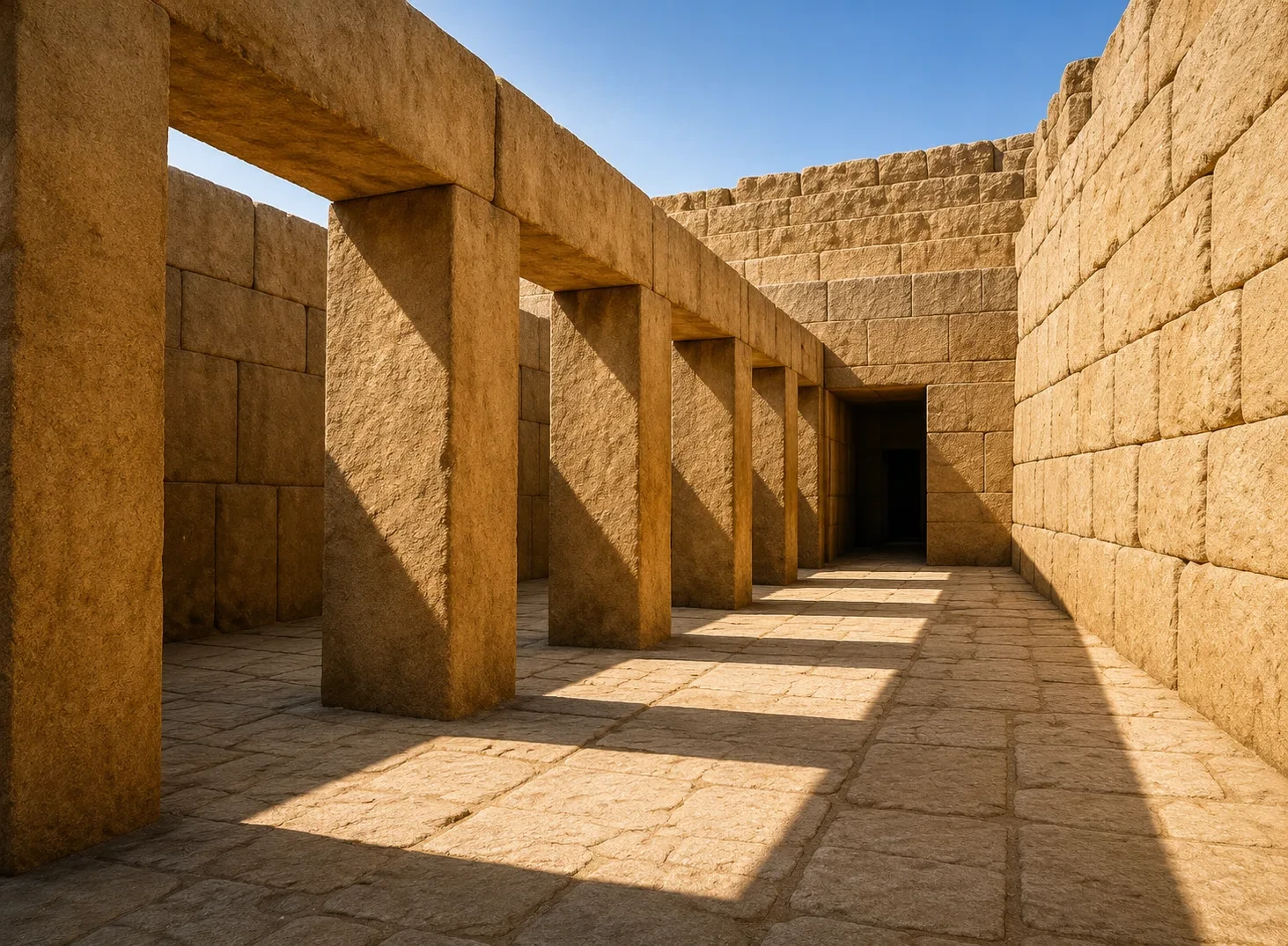
Immediately south of the Sphinx enclosure, the Valley Temple of Khafre is the most completely preserved and the most architecturally impressive ancient Egyptian Old Kingdom temple interior accessible to visitors at any site in the Greater Cairo area, a massive structure of monolithic Aswan red granite blocks in the core construction and white Tura limestone in the original casing whose extraordinary material quality, extraordinary size, and extraordinary state of preservation give it a quality of physical presence and personal heritage impact entirely appropriate to its position as the primary ritual facility of the Khafre pyramid complex and the direct architectural neighbor of the Great Sphinx whose sculptured image it was designed to visually frame and theologically complement. The Valley Temple's T-shaped interior hall, whose twenty-three granite statue bases found empty by the excavators who cleared the temple in the 19th and early 20th centuries originally bore the statue programme of Khafre in multiple manifestations including the extraordinary diorite throne statue whose presence in the temple until its discovery in the circular pit of the main hall gave the Valley Temple one of the most magnificent royal sculptural programmes of the complete Old Kingdom tradition, provides the most immediately impressive and the most viscerally affecting ancient Egyptian interior architectural experience accessible at any non-Nile Valley heritage site in the complete Cairo and Greater Cairo area.
The Sphinx Panoramic Views
The Great Sphinx can be approached and viewed from multiple different directions and at multiple different distances within the Giza Plateau visitor circuit, each offering a completely different and completely distinctive visual experience of the monument whose total visual character can only be fully appreciated through the cumulative experience of multiple approach angles and multiple distances rather than from any single fixed viewpoint. The frontal approach from the east, coming toward the Sphinx along the ancient causeway axis from the Valley Temple direction, provides the most directly confrontational and the most personally overwhelming encounter with the monument's face, the moment when the visitor moves from a general awareness of the Sphinx's presence as a massive limestone formation on the plateau edge to the direct visual encounter with the royal face whose scale, whose state of preservation, and whose extraordinary ancient presence create an experience of personal proximity to the ancient world that is simply unavailable at any other distance or direction of approach. The lateral views from the north and south, looking along the full 73-meter length of the lion body, provide the most complete appreciation of the monument's extraordinary physical scale in a single compositional view. The elevated views from the Giza Plateau to the west, where the Sphinx appears in the middle distance between the viewer and the Nile Valley below with the pyramids rising behind it, provide the most complete spatial understanding of the monument's strategic position at the boundary between the desert plateau and the ancient Nile Valley landscape.
The Sphinx Conservation And Restoration Work
The ongoing conservation and restoration programme of the Great Sphinx, conducted by the Egyptian Supreme Council of Antiquities with support from international conservation science institutions, is one of the most demanding, the most technically sophisticated, and the most personally consequential conservation challenges in the entire world of ancient heritage management, addressing the complex deterioration processes of a monument whose 4,500-year exposure to wind erosion, salt crystallization from the underlying water table, thermal cycling between the extreme temperatures of the Egyptian day and night, and the periodic immersion in sand that has simultaneously protected and damaged different sections of the monument surface at different periods of its history has produced a pattern of decay whose specific mechanisms require individualized conservation interventions of extraordinary technical complexity and whose overall management requires the most comprehensive understanding of the monument's physical history, geological structure, and environmental conditions that any single ancient monument conservation programme in the world has been required to develop. Visitors to the Sphinx who observe conservation materials, scaffolding, or restoration work on the monument surface should understand that this work represents some of the most important and the most technically demanding ancient heritage conservation work being conducted anywhere in the world and that the conservation teams responsible for it are the most dedicated and the most expert practitioners of their field available for work on this most extraordinary and most irreplaceable of the world's ancient heritage monuments.
Why Is The Great Sphinx Of Giza Important?
The Great Sphinx of Giza is important for reasons spanning art history, archaeology, theology, political history, conservation science, and the broader cultural significance of the monument as the single most universally recognized and the most universally affecting ancient portrait in the entire history of human art. As an artistic achievement, the Great Sphinx represents the absolute maximum of physical ambition and sculptural vision in the ancient Egyptian monumental tradition, the largest monolithic sculpture ever created by any human civilization and the most completely overwhelming single act of artistic transformation of natural geological material into a divine royal portrait that the complete history of art can offer. As an archaeological site, the Sphinx enclosure, the Dream Stele, the Sphinx Temple, and the associated Valley Temple together constitute the most completely extraordinary concentration of Old Kingdom royal monument heritage accessible at any single site in the Greater Cairo area. As a cultural monument, the Sphinx is the most universally recognized ancient image in the entire world, known and recognized by every human population on every continent in the most completely global exercise of shared cultural heritage that any single ancient artwork has ever achieved. WOW Egypt Tours includes the Great Sphinx as an essential primary destination in all comprehensive Cairo Tours, Egypt Classic Tours, Egypt Short Break Tours, and all Egypt Tour Packages.
What Are Some Interesting Facts About The Great Sphinx Of Giza?
Napoleon Did Not Destroy The Sphinx's Nose
The single most persistently repeated and the most completely false popular legend about the Great Sphinx of Giza is the story that Napoleon Bonaparte's soldiers destroyed the Sphinx's nose during the French campaign in Egypt of 1798 to 1801, either by using the monument as a target for artillery practice or through some other form of military vandalism associated with the French military presence at Giza during the Egyptian campaign. This legend is comprehensively and definitively refuted by the historical record in the most direct and the most immediately verifiable way: European travelers visiting Giza and drawing or painting the Sphinx before Napoleon's arrival in Egypt, specifically the drawings made by the Danish naval captain Frederick Lewis Norden in 1737, more than sixty years before Napoleon's Egyptian campaign, clearly show the Sphinx already without its nose in precisely the condition that subsequent European artists, explorers, and eventually photographers have documented up to the present day. The actual destruction of the nose is documented in the medieval Arabic historical record of the Egyptian chronicler al-Maqrizi, who records in his 15th century Chronicle of Egypt that a Muslim religious official named Muhammad Sa'im al-Dahr deliberately vandalized the Sphinx's face in approximately 1378 CE in response to the continued veneration of the ancient idol by local Egyptian peasant farmers, and that he was subsequently arrested and executed for this act of religious vandalism, giving the story of the missing nose a complete historical narrative whose documentation predates Napoleon's birth by more than four centuries.
The Sphinx Was Originally Brightly Painted
The conservation scientists and archaeological chemists who have conducted detailed physical and chemical analysis of the surviving surface of the Great Sphinx have identified traces of ancient pigment in the most protected areas of the monument surface, specifically the traces of red ochre on the limestone of the face in the most sheltered sections beneath the headdress, evidence for a brightly painted decorative programme that covered the complete surface of the Sphinx in the bold primary colors of the ancient Egyptian artistic tradition when the monument was newly created and the paint was fresh. The original appearance of the fully painted Great Sphinx, with its red-painted face whose bold color against the white and yellow of the body and the blue and gold of the royal regalia would have made the monument visible from many kilometers across the ancient landscape in the clear desert air of the Old Kingdom Giza Plateau, and with the complete royal headdress and divine royal beard that gave the monument its full ancient Egyptian royal iconographic programme, would have been dramatically different from and dramatically more vivid than the worn limestone grey of the current monument surface whose millennia of weathering have removed all but the most protected traces of the original painted decoration. The complete ancient appearance of the Sphinx has been reconstructed by Egyptologists and digital artists in both academic and popular publications, and the reconstruction, however approximate, gives the monument a quality of ancient visual completeness and ancient royal authority that the current weathered surface, however powerful in its own right, can only partially suggest.
The Sphinx Age Debate
One of the most energetically contested questions in the contemporary Egyptological and geological study of the Giza Plateau is the question of the Great Sphinx's precise age, most specifically the claim advanced by the geologist Robert Schoch of Boston University in the early 1990s that the pattern of erosion visible on the walls of the Sphinx enclosure is the result of extended water erosion consistent with precipitation rainfall rather than the wind and salt erosion processes that Egyptologists attribute to the monument's documented age of approximately 4,500 years. Schoch's geological argument, which he presented at the 1992 meeting of the Geological Society of America and which attracted worldwide media attention and considerable public enthusiasm for its implication that the Sphinx might be far older than the mainstream Egyptological chronology allows, claims that the depth and the specific character of the undulating erosion profile visible in the Sphinx enclosure walls is more consistent with thousands of years of heavy rainfall erosion than with the wind and salt processes of the approximately 4,500 year period since the Sphinx's conventional 4th Dynasty construction date, and would therefore require a construction date in an earlier period of wetter climate in the Giza area, potentially as much as 7,000 to 9,000 years before the present. The mainstream Egyptological response, articulated most comprehensively by the Egyptologist Mark Lehner and the geologist K. Lal Gauri, argues that the specific erosion patterns of the Sphinx enclosure can be fully explained by the combined processes of wind erosion, salt crystallization, and the periodic effects of the ancient water table and the Nile flood on the lower sections of the enclosure walls, and that the complete absence of any other evidence, architectural, artifactual, or documentary, for a predynastic civilization capable of creating the Sphinx in the 7th to 9th millennium BCE makes the alternative geological chronology untenable as a complete historical hypothesis however interesting its specific geological observations may be. The debate continues to generate scholarly publications and public interest and is the most productive example in the complete Giza scholarship of how a genuinely interesting and genuinely important question about the ancient monument's history can attract serious engagement from multiple disciplines and multiple perspectives in a way that progressively advances the total understanding of the monument even when no definitive consensus is reached.
What Is So Special About The Great Sphinx Of Giza?
The Most Universally Recognized Face In The Ancient World
What makes the Great Sphinx of Giza uniquely special among all the ancient monuments of the world is the extraordinary combination of physical scale, ancient mystery, universal cultural recognition, and immediate personal impact that gives it a quality of heritage experience available at no other single ancient sculpture in the entire world. The face of the Great Sphinx is recognized as immediately and as powerfully across every cultural tradition in the contemporary world as the face of the Mona Lisa or the statue of David, but unlike those Renaissance masterpieces it is recognized with a dimension of genuine ancient mystery and genuine unresolved scholarly debate that no work of the historically documented modern era can provide, the mystery of whose face is actually portrayed, how old the monument truly is, what its precise role in the ancient Egyptian religious geography of the Giza Plateau was, and what the complete ancient iconographic programme of paint and regalia looked like adding dimensions of intellectual fascination and personal curiosity to the direct encounter with the monument that make the Sphinx not simply a magnificent ancient object to be looked at and admired but a genuinely open question about the ancient world to be engaged with, considered, and ultimately appreciated as the most perfectly constructed historical mystery available at any heritage site in the world.
Where Ancient Power And Eternal Mystery Meet
The Great Sphinx is also uniquely special for the extraordinary quality of direct personal encounter it provides, the experience of standing in the Sphinx enclosure beneath the enormous stone face and understanding in the most direct and the most visceral way possible that you are in the presence of the largest monolithic sculpture in human history carved by the hands of ancient Egyptian workers more than four and a half thousand years ago in the most complete and the most physically overwhelming act of ancient artistic ambition that any civilization has ever directed at the carving of a single stone formation. The transition from the intellectual knowledge of the Sphinx's age, scale, and significance, the knowledge that any well-prepared visitor brings to the Giza Plateau from whatever reading or image study precedes the physical visit, to the direct physical encounter with the monument itself, standing in the enclosure with the lion body stretching behind the face for 73 meters and the face itself rising 20 meters above the enclosure floor in the most completely overwhelming ancient sculptural presence available anywhere in the world, is one of the most reliably extraordinary and the most consistently reported heritage experiences described by travelers of every cultural background and every level of prior heritage experience as the single most personally overwhelming moment of their complete Egyptian journey.
The Great Sphinx Of Giza Through The Ages
The complete biographical narrative of the Great Sphinx from its creation in the Old Kingdom period through the New Kingdom veneration and excavation of Thutmose IV, the Ptolemaic and Roman oracle tradition, the medieval Islamic vandalism and the removal of the nose, the Ottoman and early modern European discovery tradition, and the modern era of systematic scientific investigation and conservation management traces the most completely extraordinary individual monument biography available in the entire world heritage record, a biography whose most remarkable feature is the extraordinary continuity of human fascination with and human engagement with the monument across more than four thousand years of documented history without any significant interruption or any significant diminishment of the intensity and the variety of that engagement from the ancient Egyptian peasant farmers who made offerings to the Sphinx monument in the medieval period for which Muhammad Sa'im al-Dahr punished the nose to the millions of digital-age international tourists whose Instagram and TikTok images of the monument constitute the most comprehensively documented and the most globally distributed visual record of any ancient heritage site in the contemporary world.
The most recent chapter of the Sphinx's biography, the ongoing conservation programme whose technical complexity and whose global institutional significance reflect the extraordinary heritage importance of the monument it serves, is in many ways the most demanding and the most consequential that the ancient monument has faced since its creation, as the combination of the Cairo metropolitan area's atmospheric pollution, the rising groundwater that brings corrosive salts to the monument's limestone surfaces through capillary action, and the increasing visitor pressure of the global heritage tourism industry together create a conservation challenge of unprecedented complexity for a monument of unprecedented global significance. The work of the Egyptian Supreme Council of Antiquities and its international conservation science partners in addressing these complex deterioration processes, developing and testing new conservation materials and techniques, and maintaining the extraordinary ancient monument in the best possible physical condition for all future generations of visitors, researchers, and custodians, represents the most important and the most consequential heritage conservation programme currently underway anywhere in the Egyptian heritage landscape and deserves the most complete possible public awareness and public support from the international community of heritage travelers whose visits to the monument make both the economic case for its conservation and the moral case for its protection as the most universally shared heritage of all human civilization.
The Great Sphinx And UNESCO
The Great Sphinx of Giza is protected as part of the UNESCO World Heritage Site designated in 1979 as Memphis and its Necropolis: the Pyramid Fields from Giza to Dahshur, recognized as a heritage of outstanding universal value for the extraordinary concentration of ancient Egyptian funerary and royal monument heritage of the Old Kingdom pyramid building tradition that it encompasses. The UNESCO designation covers the complete Giza Plateau monument complex including the Giza Pyramids Complex, the Great Sphinx, the associated temples and cemeteries, and the connected pyramid fields of Saqqara and Dahshur in a single outstanding universal value designation whose breadth and whose significance reflect the unique character of the Greater Cairo area as the world's most completely extraordinary concentration of ancient royal monument heritage. The UNESCO World Heritage Committee, the Egyptian government, and the international conservation science community are engaged in continuous consultation on the most appropriate and the most effective conservation management strategies for the Great Sphinx and its associated monuments, addressing the growing threats of urban encroachment, atmospheric pollution, rising groundwater, and intensive tourism pressure that together constitute the most serious conservation challenges the Sphinx monument has faced in its entire documented history.
Best Time To Visit The Great Sphinx Of Giza
The best time to visit the Great Sphinx of Giza is during the cooler months from October through April, when the Cairo and Giza climate provides the most comfortable conditions for the extended outdoor exploration of the Sphinx enclosure, the Valley Temple, the Sphinx Temple, and the complete visual circuit of the monument from its multiple approach angles and viewing distances. The winter months of December through February offer particularly pleasant daytime temperatures of 15 to 22 degrees Celsius that make the comprehensive Sphinx and Giza Plateau programme most comfortable and the photography most rewarding in the extraordinary quality of the low-angle winter light that the Sphinx's southern and eastern faces in the morning hours. The early morning, arriving at the Giza complex entrance immediately at the 8:00 AM opening and proceeding directly to the Sphinx enclosure before the main visitor crowds of the mid-morning build up, provides the most atmospheric, the most photogenically extraordinary, and the most personally affecting Sphinx encounter of any time of day, with the monument illuminated in the warm light of the Egyptian morning sun at its most dramatic and the enclosure relatively free of the visitor density that makes the mid-morning and midday Sphinx visit significantly more challenging. The Giza Sound and Light Show, which includes the most extraordinarily illuminated and the most dramatically narrated presentation of the Sphinx in any format accessible to visitors, is best experienced in the cooler months when the evening temperature makes the open-air plateau event most comfortable. WOW Egypt Tours advises on optimal seasonal timing for all Giza heritage activities.
Great Sphinx Of Giza Opening Hours
The Great Sphinx of Giza is accessible as part of the complete Giza Pyramids Complex, which is open daily from 8:00 AM to 5:00 PM in the winter season (October through April) and from 7:00 AM to 7:00 PM in the summer season (May through September). The Sphinx enclosure and the Dream Stele are included in the general complex admission ticket. The Valley Temple of Khafre, accessible by the visitor path immediately south of the Sphinx enclosure, is included in the general complex ticket. The Giza Sound and Light Show, which includes the most dramatically staged presentation of the Sphinx in the evening, is performed after complex closing hours with a separate ticket and is available in multiple languages on a schedule confirmed at time of booking with WOW Egypt Tours. All visiting hours are subject to adjustment for Egyptian national holidays and special events.
Great Sphinx Of Giza Entrance Fees
The Great Sphinx of Giza is accessible with the general Giza Pyramids Complex entrance ticket: EGP 220 for adults, EGP 110 for students. There is no additional entrance fee specifically for the Sphinx enclosure or the Dream Stele, both of which are included in the general complex admission. The Valley Temple of Khafre immediately adjacent to the Sphinx is also included in the general complex admission. The Giza Sound and Light Show has a separate ticket whose current price should be confirmed with WOW Egypt Tours at time of booking. All entrance fees are included in the Cairo Tours and Egypt Tour Packages organized by WOW Egypt Tours and are subject to periodic adjustment.
How To Get To The Great Sphinx Of Giza
The Great Sphinx of Giza is located on the Giza Plateau approximately 13 kilometers southwest of central Cairo, accessible as part of the complete Giza Pyramids Complex visitor circuit. The most convenient and the most operationally organized approach for international visitors is the private vehicle from the Cairo hotel provided by WOW Egypt Tours as part of the complete Cairo heritage programme, providing door-to-door transport from the hotel to the main Giza complex entrance and transportation between all the sites within the Giza Plateau area including the Grand Egyptian Museum, the Egyptian Museum, Saqqara, Memphis, and Dahshur as part of the complete Greater Cairo and pyramid sites programme. Within the Giza complex, the Sphinx is accessible on foot from the main plateau visitor circuit by descending to the eastern edge of the plateau where the Sphinx enclosure is located, a walk of approximately 10 to 15 minutes from the Great Pyramid area. The Valley Temple of Khafre, immediately south of the Sphinx, is the most naturally combined adjacent heritage destination in the complete Sphinx visit programme.
How Long To Spend At The Great Sphinx Of Giza
The Great Sphinx should be allocated a minimum of one hour within the broader Giza Plateau programme, sufficient for the complete circuit of the Sphinx enclosure, the close examination of the Dream Stele, the frontal approach view, the lateral body views from both the north and south, and the Valley Temple of Khafre visit immediately adjacent. A more complete and more personally rewarding Sphinx programme of one and a half to two hours allows the multiple approach and viewing angle experiences, the extended contemplation of the Dream Stele text with guided explanation, and the complete Valley Temple interior exploration in the most unhurried and the most personally complete format. The Sphinx is most naturally visited as part of the complete Giza Plateau programme that includes the three main pyramids, the Khufu Boat Museum, and the panoramic desert viewpoint, and its position in the programme sequence is most effectively at the conclusion of the main pyramid circuit when the Sphinx enclosure approach from the north completes the visual narrative of the complete ancient necropolis in the most dramatically satisfying compositional sequence, the Sphinx and the Valley Temple providing the most human-scale and the most contextually complete heritage conclusion to the otherwise overwhelming scale of the pyramid monuments above.
Tips For Visiting The Great Sphinx Of Giza
Visit the Sphinx enclosure in the early morning immediately after the Giza complex opening, when the monument's east-facing face is most dramatically illuminated by the low morning sun in the most extraordinarily beautiful photography light of any time of day and when the visitor density in the enclosure is at its lowest point of the opening hours. Ask your licensed Egyptology guide from WOW Egypt Tours to explain the Dream Stele text in detail before approaching the stele itself, as the combination of the textual narrative of Thutmose IV's divine dream, the political implications of the royal self-justification argument it advances, and the physical reality of the stele standing in its original position between the Sphinx's paws exactly where Thutmose IV erected it approximately 3,400 years ago creates the single most completely extraordinary historical encounter available at any point in the complete Sphinx visit. Stand at the northeast corner of the Sphinx enclosure for the frontal face portrait view that most completely captures the extraordinary personal presence and the extraordinary ancient authority of the royal face in the most directly confrontational compositional angle available from any accessible point in the enclosure. Visit the Valley Temple of Khafre immediately after the Sphinx enclosure, as the transition from the enormous outdoor scale of the Sphinx to the massively proportioned but intimate interior of the granite-walled temple creates one of the most dramatically contrasting heritage sequences available within the single site visit of any monument in the Greater Cairo area. Avoid the midday period from 11:00 AM to 2:00 PM in the warmer months when the south-facing and west-facing walls of the Sphinx enclosure reflect the intense direct sunlight in conditions that make extended outdoor examination of the monument both physically uncomfortable and photographically challenging.
What To Wear At The Great Sphinx Of Giza
The Sphinx enclosure visit is entirely outdoors in the exposed limestone environment of the Giza Plateau where no natural shade is available at any point of the visitor circuit, requiring the same practical sun-protection clothing as the complete Giza Plateau programme. Lightweight, breathable, long-sleeved clothing covering the arms and legs provides the best combination of sun protection and ventilation for the exposed enclosure environment. A wide-brimmed hat is absolutely essential for sun protection throughout the year. Comfortable, sturdy walking shoes with good grip are required for the uneven limestone terrain of the enclosure floor and the Valley Temple interior. Modest clothing covering the shoulders and knees is appropriate throughout the Giza complex in the Egyptian cultural context. High-SPF sunscreen and UV-protective sunglasses are essential for all outdoor activities at the plateau in every season, and the reflected UV from the limestone surfaces of the enclosure walls adds to the already intense direct solar UV exposure of the open plateau environment. At least one liter of water per person should be carried for the Sphinx and Valley Temple visit portion of the complete Giza programme.
Photography At The Great Sphinx Of Giza
The Great Sphinx of Giza provides the most celebrated and the most universally recognized portrait photography subject available at any heritage site in the world, a fact that simultaneously makes it the most extensively photographed ancient monument on earth and creates the most demanding creative challenge for any photographer who wants to produce images of the Sphinx that go beyond the millions of existing standard tourist photographs to capture something genuinely distinctive and genuinely personal about the encounter with this most extraordinary ancient monument. The early morning frontal face portrait from the northeast corner of the enclosure, with the warm morning sun illuminating the Sphinx's face from the east in the same direction as the ancient solar theology the monument embodies, provides the most dramatically beautiful and the most personally affecting Sphinx portrait photography of any time or angle of approach. The lateral body shots from the north side of the enclosure, capturing the full 73-meter extent of the lion body with the Khafre pyramid rising behind the monument's back, provide the most completely compositionally satisfying single-image summary of the complete Sphinx monument in its Giza Plateau context. The Dream Stele close-up photography, capturing the hieroglyphic text in the most complete and the most detailed format that the available light and the visitor access distance permit, provides the most direct and the most personally affecting documentary photography of the monument's most historically significant single accessory. The Sound and Light Show provides extraordinary long-exposure night photography opportunities whose colored illumination of the Sphinx and the adjacent pyramids creates the most dramatically spectacular and the most visually distinctive Sphinx photography available at any time or in any natural lighting condition of the complete day.
Great Sphinx Of Giza Tours
Complete Giza Plateau Programme: Pyramids, Sphinx, And Valley Temple
This comprehensive Giza Plateau heritage programme combines the complete ancient monument experience of the three Great Pyramids, the Great Sphinx, the Dream Stele, the Valley Temple of Khafre, and the Khufu Boat Museum in the most completely satisfying and the most personally rewarding single-day ancient heritage programme available anywhere in the Greater Cairo area, giving every visitor the most complete and the most expertly guided encounter with the most extraordinary ancient monument ensemble in the world.
What Is Covered
Private vehicle from Cairo hotel with early morning departure. Expert-guided exterior exploration of all three main pyramids including the Great Pyramid of Khufu, the Middle Pyramid of Khafre, and the Small Pyramid of Menkaure. Optional Great Pyramid interior visit with additional ticket. Khufu Boat Museum. Panoramic desert viewpoint. Complete Sphinx enclosure programme including the frontal face portrait view, the lateral body views, the Dream Stele with full guided textual explanation, and the complete enclosure circuit. Valley Temple of Khafre interior with full architectural and historical explanation of the royal statue programme and the cult function of the temple. Return to Cairo hotel in the afternoon. Optional evening: Giza Sound and Light Show with the most dramatically illuminated Sphinx experience of any available programme.
Duration
Full day from Cairo hotel, approximately 8 to 9 hours excluding the optional Sound and Light Show extension.
Includes
Private vehicle, licensed Egyptology guide, all site entrance fees, lunch adjacent to the plateau, and all logistics. Through WOW Egypt Tours Cairo Tours.
Sphinx And Grand Egyptian Museum: The Ancient Giza World Indoors And Out
This extraordinary combined programme pairs the direct physical encounter with the Great Sphinx in the Giza Plateau enclosure with the extraordinary collection of ancient objects recovered from the Sphinx site and the Giza Plateau monuments in the newly opened Grand Egyptian Museum, giving visitors the most complete and the most personally enriching encounter with the ancient Giza world available in any single-day Cairo heritage programme.
What Is Covered
Private vehicle from Cairo hotel with early morning departure. Morning: complete Giza Plateau programme including the Great Sphinx, Dream Stele, Valley Temple, the three pyramids, and the Khufu Boat Museum. Lunch. Afternoon: Guided visit to the Grand Egyptian Museum with particular focus on the Giza-specific collection highlights including the Menkaure triads, the Old Kingdom royal portraiture, and the extraordinary Tutankhamun galleries. Return to Cairo hotel in the evening.
Duration
Full day from Cairo hotel, approximately 10 to 11 hours.
Includes
Private vehicle, licensed Egyptology guide, all entrance fees for both sites, lunch, and all logistics. Through WOW Egypt Tours Cairo Tours.
Combine The Great Sphinx With Your Egypt Tours Package
The Great Sphinx of Giza is included as an essential destination in every Cairo heritage programme across the full range of WOW Egypt Tours travel products. Browse the options below to find the Egypt experience that includes the Great Sphinx.
Egypt Tour Packages: Multi-day guided Egypt tours organized by duration, including 2 Days Egypt Packages, 3 Days Egypt Packages, 4 Days Egypt Packages, 5 Days Egypt Packages, 6 Days Egypt Packages, 7 Days Egypt Packages, 8 Days Egypt Packages, 10 Days Egypt Packages, and longer itineraries. The Great Sphinx is included in all Egypt Tour Packages as part of the primary Giza Plateau Cairo heritage programme. All packages include private vehicle, licensed Egyptology guide, accommodation, all site entrance fees, and all logistics.
Egypt Travel Packages: Themed Egypt travel packages including Egypt Honeymoon Travel Packages, Egypt Budget Travel Packages, Egypt Family Travel Packages, Egypt Luxury Travel Packages, Egypt Adventure Travel Packages, Egypt Cultural Travel Packages, and Egypt Christmas and New Year Travel Packages. The Great Sphinx is featured in every Egypt Travel Package category as an essential and primary ancient heritage destination whose universal appeal and extraordinary personal impact make it a defining experience in every complete Egypt travel programme regardless of theme or travel style.
Egypt Classic Tours: The most popular and the most comprehensively balanced Egypt travel programme, combining the supreme ancient heritage destinations of Cairo including the Great Sphinx, the Giza Pyramids, the Grand Egyptian Museum, and the Egyptian Museum with the Nile Valley heritage of Luxor and Aswan in the most complete and the most personally satisfying introduction to the ancient Egyptian world available in any organized Egypt itinerary. The complete Giza Plateau programme including the Sphinx, the Dream Stele, and the Valley Temple of Khafre is the primary Cairo heritage component of every Egypt Classic Tours itinerary.
Egypt Short Break Tours: Focused short duration Egypt travel programmes of 3 to 5 days for travelers with limited time who want the most important and the most personally extraordinary highlights of the Egyptian ancient heritage in the most efficiently organized compact itinerary. The Great Sphinx and the Giza Pyramids are always the first and the most fundamental Cairo ancient heritage programme in every Egypt Short Break Tours itinerary.
Egypt Family Tours: Family-friendly Egypt travel programmes combining the most visually spectacular and the most immediately engaging ancient heritage experiences for all ages, of which the Great Sphinx is the single most universally exciting ancient monument for children who encounter it for the first time. All Egypt Family Tours include the Sphinx with family-appropriate guided interpretation including the Napoleon nose legend and its historical correction, the Dream Stele narrative, and the ancient painted appearance reconstruction.
Egypt Budget Tours: Value-focused Egypt travel programmes providing access to the complete Egyptian ancient heritage including the Great Sphinx at the most economical pricing available from any professional Egyptian tour operator, ensuring that the most universally significant ancient portrait in the history of human art is accessible to travelers at every budget level.
Egypt Nile Cruises: All-inclusive Nile River Cruise travel programmes combining the ancient pharaonic heritage of Luxor and Aswan with Cairo extensions that include the Great Sphinx and the complete Giza Plateau programme as the most important and the most universally significant ancient heritage component of the complete Egypt Nile Cruise programme.
Nile River Cruises: All WOW Egypt Tours Nile cruise options. The Great Sphinx is available as a Cairo extension from the beginning or end of any Nile River Cruise itinerary.
Luxor Aswan Nile Cruises: The Great Sphinx is the most naturally combined Cairo heritage destination with the Luxor-Aswan Nile cruise, included in all cruise programmes as a Cairo extension at the beginning or end of the river journey.
Dahabiya Nile Cruises: Great Sphinx available as a Cairo extension for travelers combining the most intimate private Nile sailing experience with the most fundamental ancient heritage of the Giza Plateau.
Lake Nasser Cruises: Great Sphinx available as a Cairo extension for travelers combining the extraordinary Nubian heritage of Lake Nasser with the supreme ancient monuments of the Giza Plateau.
Cairo Tours: The complete range of guided day tour programmes from Cairo hotels, including the complete Giza Plateau programme with the Great Sphinx, the Dream Stele, and the Valley Temple, the combined Giza and Grand Egyptian Museum full-day programme, the Greater Cairo pyramid circuit combining Giza, Saqqara, Memphis, and Dahshur, the Islamic Cairo programme covering the Khan El Khalili, El Moez Street, the Saladin Citadel, and the Muhammad Ali Mosque, and the Coptic Cairo programme covering the Hanging Church, the Coptic Museum, and the Ben Ezra Synagogue. All Cairo Tours include private vehicle, licensed Egyptology guide, all entrance fees, and all logistics organized by WOW Egypt Tours.
Nearby Attractions To The Great Sphinx Of Giza
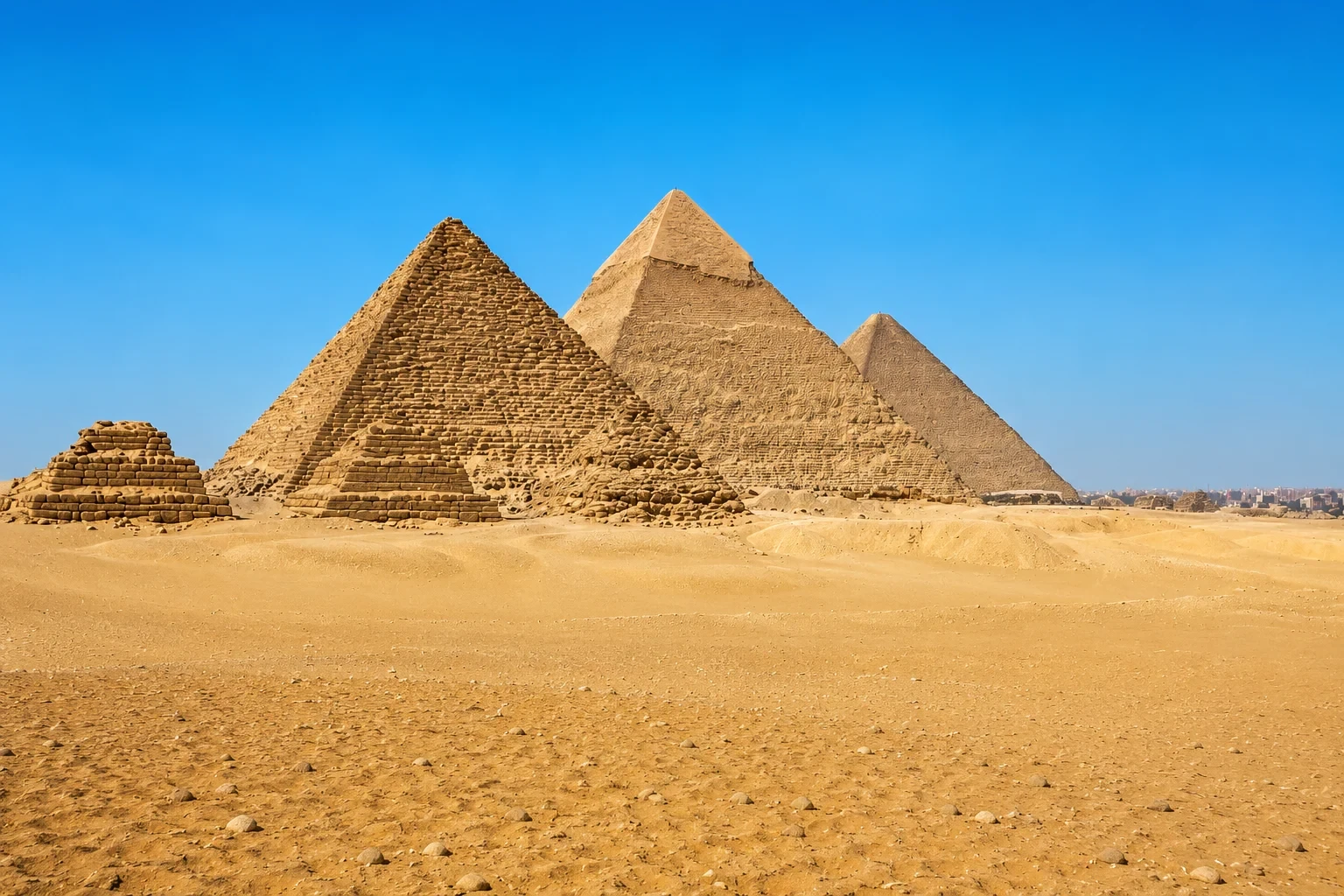
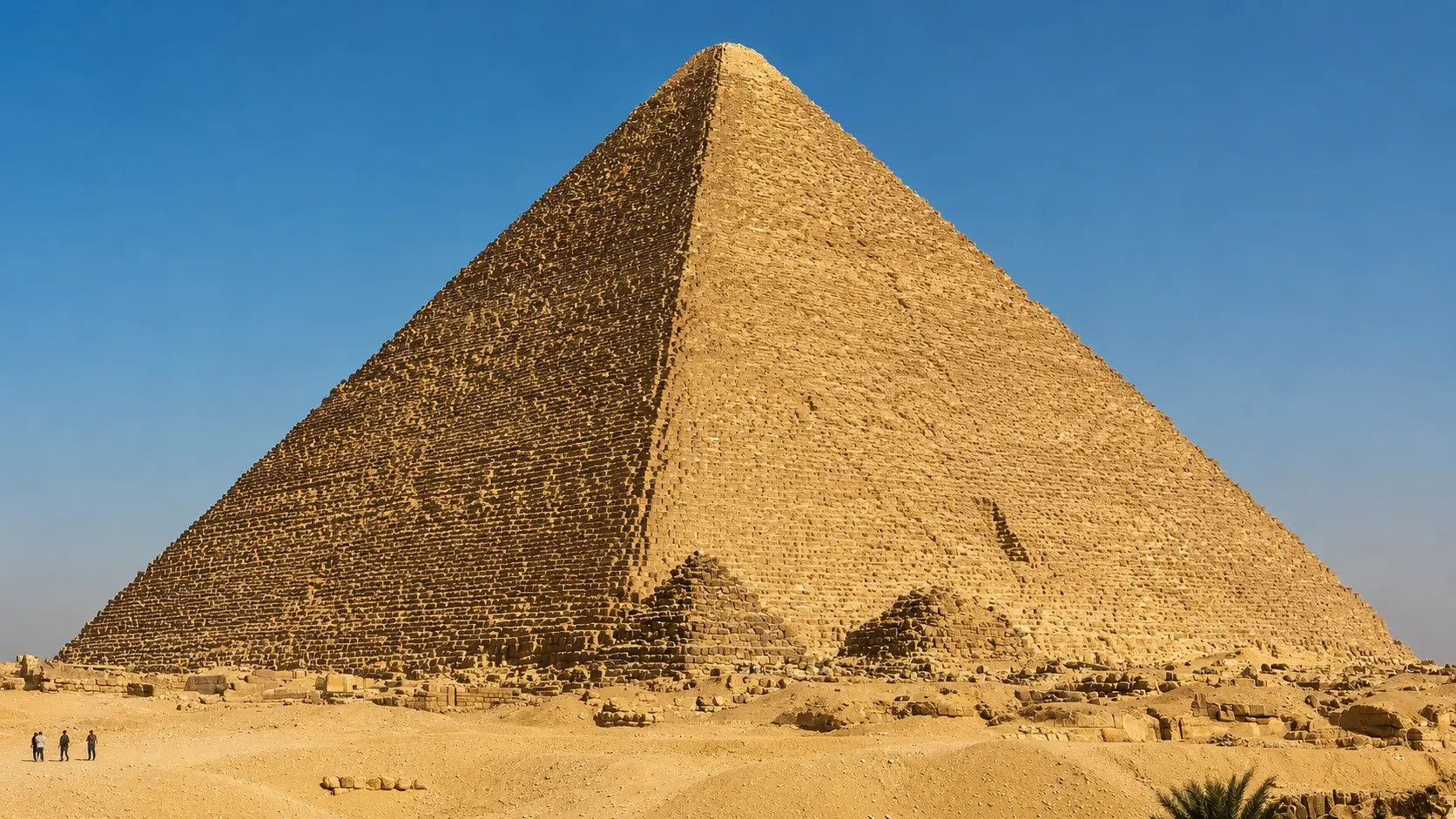
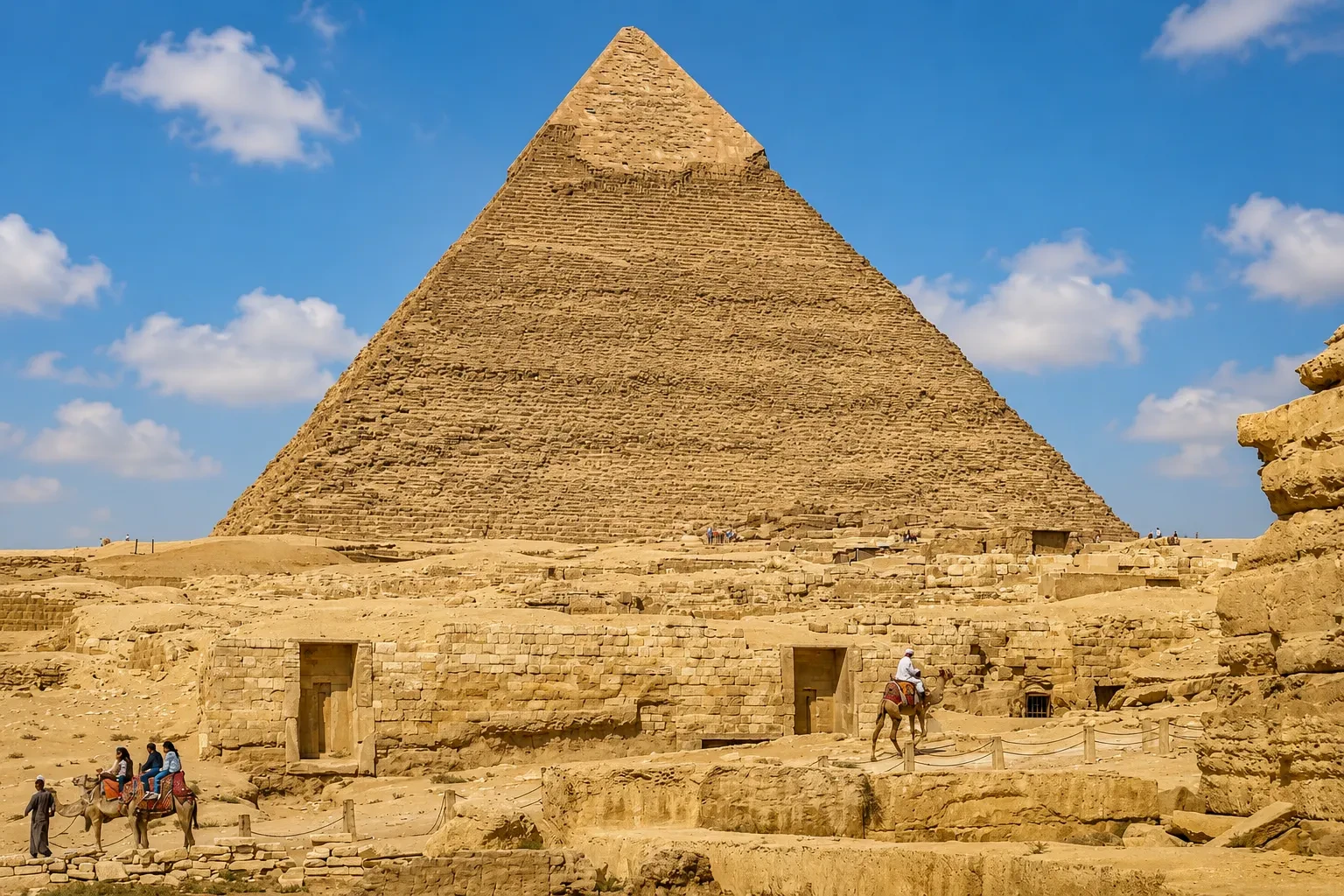
The Great Sphinx is positioned at the eastern edge of the Giza Plateau within the complete Giza Pyramids Complex, and its most immediately proximate and most naturally combined nearby heritage destinations are the other monuments of the same plateau complex. The Valley Temple of Khafre immediately south of the Sphinx enclosure is the most architecturally immediately related and the most contextually inseparable nearby monument, providing the most completely relevant and the most architecturally dramatic complement to the Sphinx visit within the same site zone. The Middle Pyramid of Khafre, rising directly behind the Sphinx to the northwest, is the most visually dominant companion monument of the Sphinx's immediate landscape context. The Great Pyramid of Khufu and the Small Pyramid of Menkaure complete the three-pyramid heritage programme of the complete Giza Plateau.
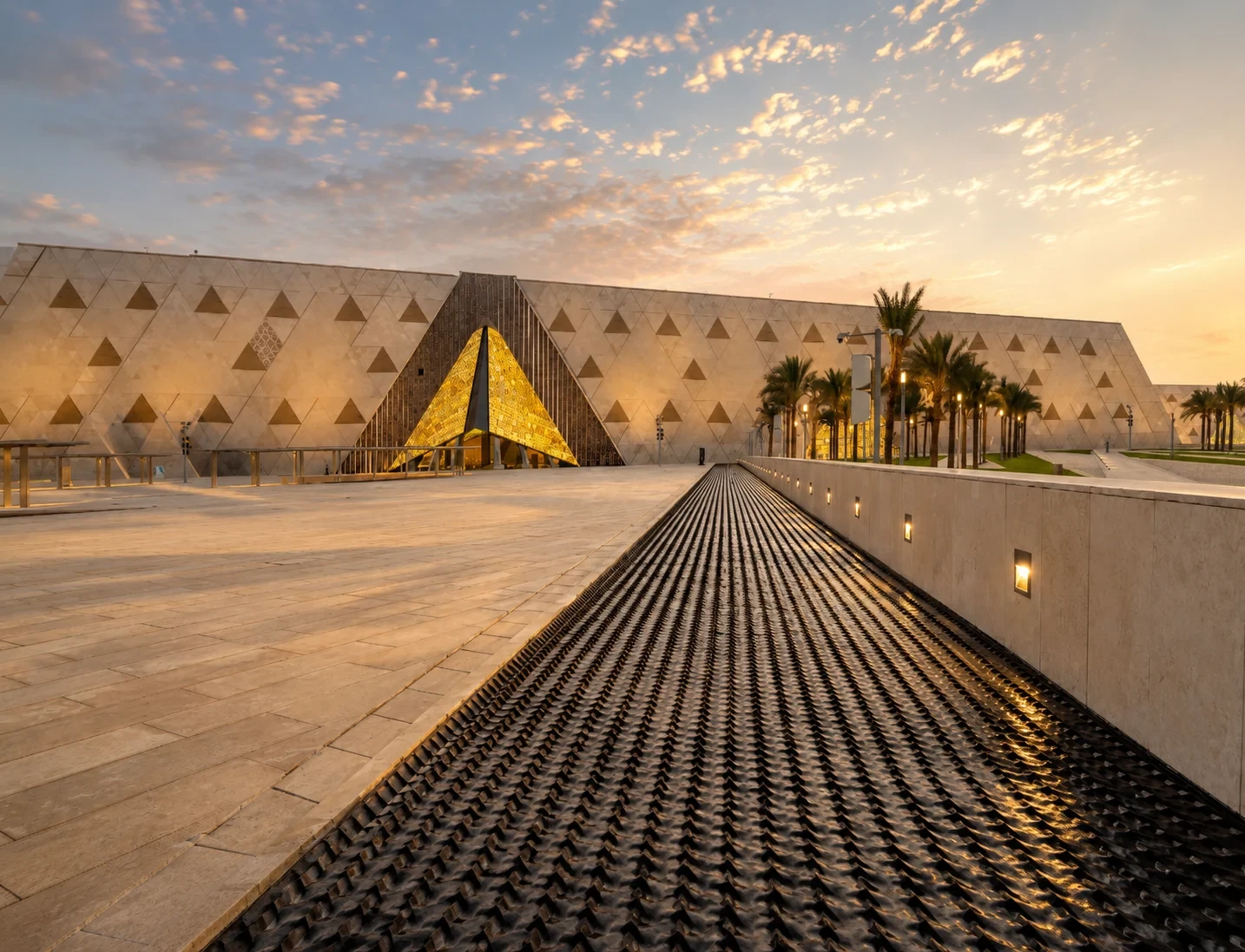
The Grand Egyptian Museum, approximately 2 kilometers north of the Giza Plateau, is the most directly relevant and the most logistically convenient institutional heritage complement to the Sphinx visit, providing the complete ancient Egyptian object collection context for the monument experience in the most beautifully designed and the most comprehensively organized museum environment in Egypt. The Egyptian Museum in Cairo's Tahrir Square, approximately 15 minutes by private vehicle from Giza, provides the most extensive ancient Egyptian collection including the diorite statue of Khafre and the royal beard fragments of the Great Sphinx itself. The ancient city of Memphis, the Saqqara Step Pyramid, and the Dahshur Pyramids together constitute the complete Greater Cairo pyramid heritage circuit most naturally combined with the Giza Sphinx visit in a comprehensive multi-day Cairo ancient heritage programme. The Islamic and Coptic heritage of central Cairo, encompassing the Saladin Citadel, the Khan El Khalili, and the Hanging Church of the Coptic quarter, provides the complete multi-period heritage context of Cairo the Capital of Egypt for the most completely diverse and the most historically comprehensive multi-day Cairo heritage programme organized by WOW Egypt Tours.
Frequently Asked Questions About The Great Sphinx Of Giza
What is the Great Sphinx of Giza?
The Great Sphinx of Giza is the largest and the oldest monolithic sculpture in the world, carved from the natural limestone bedrock of the Giza Plateau in the form of a recumbent lion with a human royal head, measuring 73 meters in length and 20 meters in height. It is almost certainly a portrait of the 4th Dynasty pharaoh Khafre, facing east toward the rising sun as the divine manifestation of Horemakhet (Horus of the Horizon), and is the most universally recognized ancient portrait in the history of human art. It is featured in Cairo Tours, Egypt Classic Tours, and Egypt Short Break Tours offered by WOW Egypt Tours.
Who built the Great Sphinx?
The mainstream Egyptological consensus attributes the Great Sphinx to the pharaoh Khafre of the 4th Dynasty, who reigned approximately 2558 to 2532 BCE and also built the Middle Pyramid of the Giza complex. The attribution is based on the Sphinx's architectural relationship to the adjacent Khafre pyramid complex, the stylistic comparison of the Sphinx's face with Khafre's documented portraiture, and the spatial logic of the Giza Plateau layout. A minority scholarly view attributes the Sphinx to Khufu, Khafre's father, based on facial typology arguments.
Who destroyed the Sphinx's nose?
The nose was deliberately removed by Muhammad Sa'im al-Dahr, an Islamic religious official, in approximately 1378 CE, as recorded by the medieval Egyptian chronicler al-Maqrizi. He vandalized the Sphinx in response to what he considered idolatrous veneration of the monument by local farmers and was subsequently arrested and executed for the act. Napoleon Bonaparte's soldiers did not destroy the nose; European drawings from 1737, more than sixty years before Napoleon arrived in Egypt, already show the Sphinx without its nose.
What is the Dream Stele?
The Dream Stele is a granite monument approximately 3.6 meters in height erected between the Sphinx's front paws by the pharaoh Thutmose IV in approximately 1401 BCE, recording in hieroglyphic text the divine dream in which the sun god Horemakhet appeared to the young prince Thutmose and promised him the kingship of Egypt if he would clear the sand burying the Sphinx. Still visible in its original position in the Sphinx enclosure, it is the primary ancient document relating to the monument's New Kingdom religious significance and royal political use.
How old is the Great Sphinx?
The mainstream Egyptological consensus dates the Great Sphinx to approximately 2558 to 2532 BCE, the reign of Khafre of the 4th Dynasty, making it approximately 4,500 to 4,600 years old. The geologist Robert Schoch has controversially argued that the erosion patterns in the Sphinx enclosure suggest a much earlier date, potentially 7,000 to 9,000 years before the present, based on water erosion evidence, though the mainstream Egyptological response attributes the erosion patterns to known wind, salt, and periodic water table processes of the documented historic period.
What does the Sphinx's name mean?
The name Sphinx is Greek in origin, applied by the ancient Greeks who encountered the monument. The ancient Egyptians knew the monument as Horemakhet, meaning Horus of the Horizon, reflecting its theological role as a manifestation of the solar god at the eastern sunrise point. The Arabic name Abu al-Hol means the Father of Terror or the Father of Dread, capturing the overwhelming personal impression the monument makes in the desert landscape.
What did the Sphinx originally look like?
The original Sphinx was brightly painted in the bold colors of the ancient Egyptian artistic tradition: red ochre on the face, yellow and cream on the body, and blue and gold on the royal regalia. It also wore the royal nemes headdress and the divine royal beard whose fragments are preserved in the Egyptian Museum in Cairo and the British Museum in London. The fully painted and fully regalia-equipped original Sphinx would have been dramatically more vivid and more overtly divine in its ancient presentation than the weathered limestone monument that survives today.
Can I enter the Sphinx?
No. The Great Sphinx does not have interior chambers accessible to visitors. The monument is solid limestone except for a small passage discovered in the 19th century in the Sphinx's rump area that leads to a small chamber of uncertain purpose and is not open to the public. All visitor access to the Sphinx is exterior, in the Sphinx enclosure surrounding the monument, where visitors can approach and closely examine the body, the face, and the Dream Stele.
What is the best time of day to see the Sphinx?
Early morning immediately after the 8:00 AM Giza complex opening provides the most dramatically beautiful photography light on the Sphinx's east-facing face and the lowest visitor density in the enclosure. The Sound and Light Show in the evening provides the most dramatically illuminated and most theatrically presented Sphinx experience of any available programme. Avoid midday from 11:00 AM to 2:00 PM in warmer months when the reflected heat in the enclosure makes extended outdoor examination uncomfortable.
Is the Great Sphinx suitable for children?
Yes, the Great Sphinx is one of the most immediately exciting and the most personally astonishing ancient monuments for children of all ages, combining the overwhelming scale of the world's largest monolithic sculpture with the mystery of the missing nose, the story of the Dream Stele, and the fascination of an ancient royal portrait of such extraordinary age and such extraordinary survival. The Napoleon nose legend and its historical correction through the Norden drawings of 1737 is a particularly engaging teaching moment for older children and teenagers.
What is the Valley Temple of Khafre near the Sphinx?
The Valley Temple of Khafre is immediately south of the Sphinx enclosure, the most completely preserved and the most architecturally impressive Old Kingdom temple interior accessible to visitors in the Greater Cairo area, built of monolithic Aswan red granite blocks and originally housing twenty-three royal statues of Khafre including the extraordinary diorite throne statue now in the Egyptian Museum. It is the most naturally combined adjacent heritage destination in the complete Sphinx visit programme.
How do I book a Great Sphinx tour with WOW Egypt Tours?
You can book any Cairo Tours programme, Egypt Classic Tours package, Egypt Short Break Tours programme, Egypt Family Tours, Egypt Budget Tours, Egypt Tours Package, or Egypt Travel Package that includes the Great Sphinx directly through WOW Egypt Tours. Our team of travel specialists will arrange everything from private vehicle and licensed Egyptology guide to all site entrance fees, the Dream Stele guided textual narrative, the Valley Temple interior exploration, the complete Sphinx enclosure circuit, and all the extraordinary scholarly and personal heritage encounters that make the Great Sphinx of Giza not simply the most famous ancient portrait in the world but the most personally extraordinary and the most intellectually endlessly fascinating ancient monument encounter available at any heritage site on earth.