
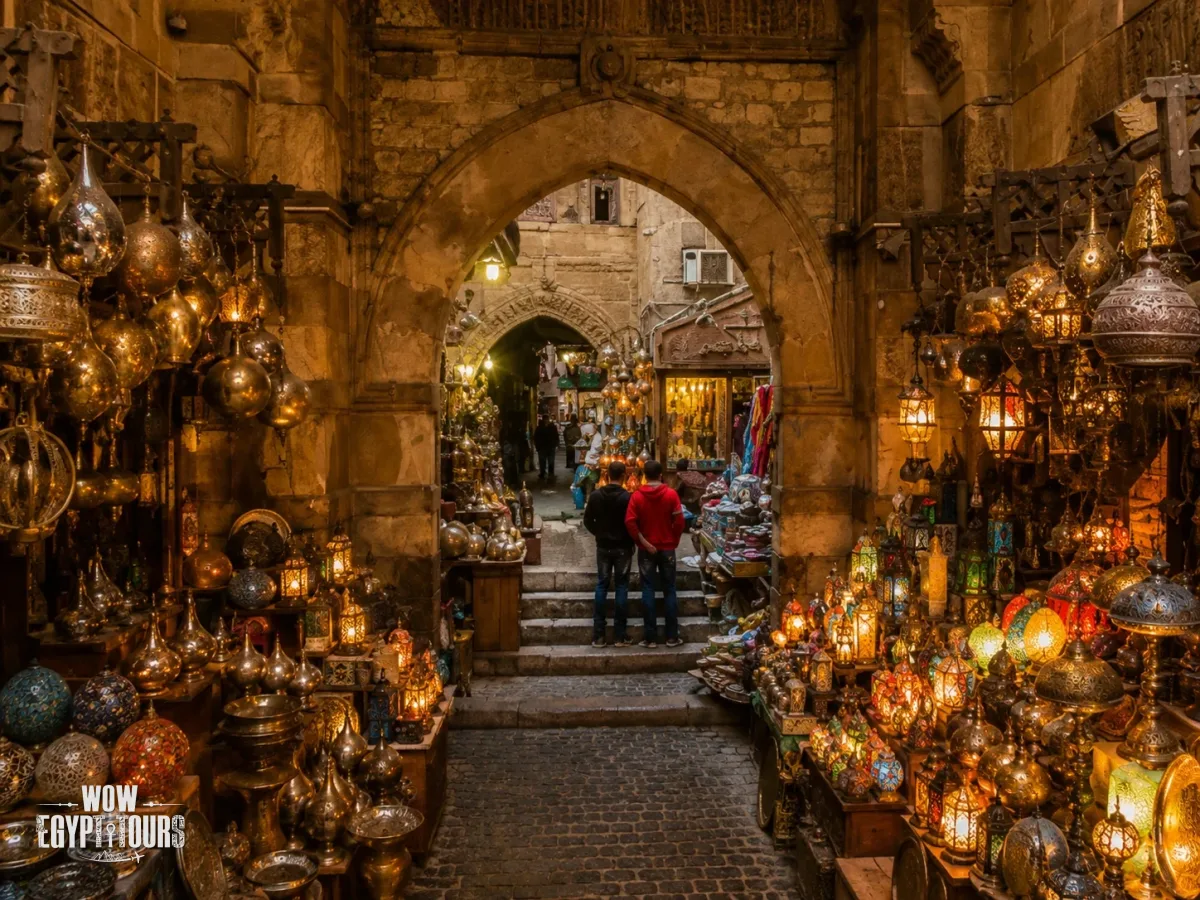

Khan El Khalili is the most celebrated, the most historically resonant, the most personally atmospheric, and the most completely extraordinary medieval Islamic bazaar in Egypt and one of the most famous and the most personally affecting historic commercial markets in the entire world, a labyrinthine network of narrow covered alleys, ancient caravanserai courtyards, historic khan buildings, and centuries-old commercial workshops in the heart of the Islamic Cairo heritage district whose existence as a continuously active trading center since its foundation by the Mamluk Amir Jarkas al-Khalili in 1382 CE makes it the oldest surviving commercial institution in the complete Egyptian urban heritage record and one of the most continuously inhabited and the most continuously commercially active historic market environments accessible at any heritage destination in the complete African and Middle Eastern world. Khan El Khalili is the place where medieval Islamic commerce and contemporary Egyptian daily life intersect in their most personally extraordinary and their most atmospherically complete form, a market whose ancient covered alleyways of gold and silver jewellery, spice and incense merchants, hand-crafted copper and brass workshop products, traditional Egyptian textiles and embroideries, alabaster and papyrus tourist souvenirs, hookah tobacco and glass lamp workshops, hand-painted pottery and ceramic goods, and the extraordinary variety of the complete Egyptian traditional craft production tradition create the most immediately personally overwhelming and the most humanly animated ancient commercial heritage environment accessible to international visitors at any market in the complete North African and Middle Eastern heritage tourism landscape. This extraordinary heritage destination is featured in Cairo Tours, Egypt Classic Tours, and Egypt Short Break Tours, all of which WOW Egypt Tours proudly offers to travelers from around the world as part of Egypt Tours Packages and Egypt Travel Packages that encompass the extraordinary Islamic and ancient heritage of Cairo and the complete Egyptian Nile Valley civilization.
Khan El Khalili Cairo is not simply a market however historically significant and however commercially extraordinary; it is one of the most completely and the most personally extraordinary living heritage environments accessible at any heritage destination in the complete Egyptian capital, a place where the ancient Islamic commercial tradition of the caravanserai and the covered market bazaar is not reconstructed for tourist consumption but is genuinely, organically, and continuously alive in the daily commercial activity of the thousands of Egyptian merchants, craftsmen, cafe proprietors, spice sellers, gold dealers, copper beaters, glass blowers, and textile merchants whose families have in many cases maintained their specific commercial presence in the Khan El Khalili for multiple generations, whose specific knowledge of their crafts and their commodities is the most direct and the most personally accessible living link to the ancient Egyptian Islamic commercial tradition, and whose specific human presence and personal commercial engagement with every visitor who walks the Khan's ancient alleys gives the complete Khan El Khalili experience a dimension of direct human cultural encounter that no heritage museum display, however beautifully organized, and no heritage reconstruction, however archaeologically accurate, can provide in the same immediate and the same personally engaging form. WOW Egypt Tours includes Khan El Khalili as an essential cultural heritage destination in all comprehensive Cairo Tours, Egypt Classic Tours, Egypt Short Break Tours, Egypt Family Tours, Egypt Budget Tours, and all Egypt Tour Packages that encompass the extraordinary Islamic and ancient heritage of the Egyptian capital.

What Is Khan El Khalili?
Khan El Khalili is a historic bazaar and caravanserai complex in the heart of the Islamic Cairo heritage district, founded in 1382 CE by the Mamluk Amir Jarkas al-Khalili on the site of the former Fatimid royal mausoleum of the Caliphs whose demolition to create the commercial caravanserai complex represents one of the most politically consequential and the most urbanistically significant acts of Mamluk cultural patronage in the complete history of the Islamic Cairo built environment. The original Khan building, a large caravanserai of the specifically Islamic commercial architecture type whose rectangular courtyard organization with shops and storerooms on the ground floor and residential accommodation for traveling merchants on the upper floors served simultaneously as the commercial exchange point, the secure storage facility, and the residential accommodation for the long-distance trading caravans that constituted the primary vehicle of medieval Islamic commercial circulation across the complete Silk Road and Indian Ocean trade network, was established by al-Khalili as the primary commercial center of the Mamluk Egyptian economy at a time when Cairo under Mamluk governance was the most important single commercial hub in the complete eastern Mediterranean and Middle Eastern world, the primary entrepot through which the luxury goods of the Indian Ocean trade, the spices, the silk, the porcelain, the jewels, and the exotic raw materials of sub-Saharan Africa, the Arabian Peninsula, India, and Southeast Asia passed on their way from the eastern trade networks to the European markets of the Mediterranean world that depended on Cairo's commercial infrastructure for their access to the luxury commodities of the eastern world.
The modern Khan El Khalili extends far beyond the boundaries of the original al-Khalili caravanserai of 1382 CE to encompass a complete neighborhood of historic commercial buildings, historic workshop alleys, historic residential structures, and historic religious buildings whose combined extent covers many city blocks of the historic Islamic Cairo quarter in the most completely complex and the most personally labyrinthine historic commercial urban fabric accessible at any heritage destination in the complete Egyptian capital. The market is most naturally and most practically understood not as a single building or a single defined space but as a complete historic commercial neighborhood whose multiple quarters specialize in different categories of goods, whose different alley networks serve different commercial functions and attract different categories of merchants and customers, and whose complete atmospheric character is the product of the accumulated commercial presence of more than six centuries of continuous trading activity in the most perfectly preserved historic Islamic commercial urban environment in the complete Egyptian heritage landscape.
Who Founded Khan El Khalili?
Khan El Khalili was founded in 1382 CE by the Mamluk Amir Jarkas al-Khalili, the Master of Horse and one of the most important and the most personally powerful members of the Mamluk military aristocracy under the sultanate of Barquq, the first Circassian Mamluk sultan of Egypt whose accession to power in 1382 CE inaugurated the most culturally productive and the most architecturally ambitious final phase of the complete Mamluk sultanate's extraordinary 267-year history as the primary political authority in Egypt. Al-Khalili's specific choice of the site of the Fatimid royal Caliphal mausoleum for his commercial caravanserai represents one of the most politically assertive and the most culturally consequential acts of Mamluk patronage in the complete history of the Islamic Cairo built environment, the deliberate replacement of the primary sacred funerary monument of the deposed Fatimid Shia Caliphate with a specifically commercial Sunni Islamic institution whose organizational form of the caravanserai embodied the Mamluk military aristocracy's approach to the built environment as a vehicle of commercial power and commercial prestige rather than specifically religious or royal authority, a philosophical orientation toward architecture as an instrument of economic and commercial dominance that distinguished the Mamluk caravanserai tradition from the primarily religious and royal funerary architectural tradition of the Fatimid period whose sacred monuments al-Khalili's commercial foundation had so completely and so deliberately replaced.
The specific attribution of the complete modern Khan El Khalili to al-Khalili's original 1382 CE foundation is only partially accurate, as the complete commercial complex that modern visitors know as Khan El Khalili is the product of more than six centuries of progressive urban development, commercial expansion, and architectural transformation that has successively added, modified, and extended the original caravanserai fabric in ways that bear a complex and a sometimes indirect relationship to al-Khalili's specific foundation. The Mamluk Sultan al-Ghuri reconstructed and substantially enlarged the original Khan in 1511 CE, approximately 130 years after al-Khalili's original foundation, in the most consequential single act of architectural patronage directed specifically at the Khan El Khalili complex in its complete history, giving the market a new architectural identity and a new commercial organization whose specific character of expanded caravanserai infrastructure and improved commercial facilities represented the most ambitious single investment in the Islamic Cairo commercial heritage that any Egyptian ruler made in the complete period from al-Khalili's original foundation to the present day. The Ottoman period additions, the 19th century modifications, and the 20th century commercial developments have progressively added further layers to the accumulated commercial fabric of the complete Khan El Khalili in the most continuous and the most organically developing urban commercial heritage accumulation process accessible at any historic market in the complete Egyptian heritage landscape.
Khan El Khalili As The Heart Of Medieval Islamic Commerce
At the height of its Mamluk-era commercial significance in the 14th and 15th centuries CE, the Khan El Khalili complex was the most important single commercial node in the complete eastern Mediterranean and Middle Eastern trade system, the primary entrepot through which the luxury commodities of the Indian Ocean world, the spices of the Malabar Coast and the Spice Islands, the silk and porcelain of China and Southeast Asia, the precious stones of Ceylon and Borneo, the pearls of the Persian Gulf, the incense and myrrh of the Arabian Peninsula, the gold and ivory of sub-Saharan Africa, and the cotton textiles of the Egyptian Nile Valley itself circulated on their way from the producers and the primary markets of the eastern world to the consuming markets of the European Mediterranean whose entire supply of eastern luxury goods depended on the Cairo commercial infrastructure of which Khan El Khalili was the most visible and the most personally accessible expression. The specific commercial geography of the Mamluk Cairo bazaar system, in which different sections of the Khan El Khalili and the adjacent market streets were designated for specific commodity categories in the highly organized and the highly specialized commercial spatial distribution that is the most fundamental characteristic of the classic Islamic bazaar tradition, gave the complete commercial district a character of extraordinary commercial sophistication and extraordinary commodity variety whose specific organization into distinct specialized quarters for gold and silver, for spices, for textiles, for leather, for copperware, for pottery, and for the dozens of other commodity categories traded in the medieval Islamic Cairo economy created the most completely organized and the most commercially efficient market environment in the complete medieval Mediterranean and Middle Eastern world.
The specific role of Cairo and the Khan El Khalili in the global luxury trade was so completely dominant in the Mamluk period that the disruption of Cairo's commercial intermediary function by the Portuguese discovery of the direct sea route to India around the Cape of Good Hope in 1498 CE was one of the most consequential single economic events in the complete history of the pre-modern global economy, redirecting the primary flow of the Indian Ocean luxury trade from the Egyptian overland and Red Sea route through Cairo to the Atlantic maritime route around Africa and effectively ending the specific commercial dominance of Cairo and the Khan El Khalili in the global luxury trade that had been the primary foundation of the Mamluk Egyptian economy for more than two centuries. The economic consequences of the Portuguese rerouting of the Indian Ocean trade for the Cairo commercial economy were severe and lasting, contributing directly to the economic weakening of the Mamluk sultanate that facilitated the Ottoman conquest of Egypt in 1517 CE and transforming the Khan El Khalili from the primary node of the global luxury trade into the more locally and regionally focused commercial market that it has remained from the Ottoman period through the present day, its specific commercial character progressively transformed from a global entrepot of extraordinary economic importance into the primarily locally and tourist-oriented market that modern visitors experience, but whose ancient alleys and ancient commercial fabric retain the most direct and the most personally affecting physical memory of the extraordinary commercial significance that the Khan El Khalili once embodied at the peak of its medieval Islamic commercial glory.
Khan El Khalili Location
Khan El Khalili is located in the heart of the historic Islamic Cairo district, in the Al-Gamaleya quarter of central Cairo, immediately east of El Moez Street whose medieval Islamic monument heritage it most naturally and most productively complements, approximately 3 to 4 kilometers east of the Egyptian Museum in Tahrir Square and approximately 15 to 20 minutes by private vehicle from most Cairo city center hotels. The primary entrance to the Khan El Khalili for most international visitors is through the main Al-Badestan gateway on the Khan El Khalili Square side, immediately adjacent to the extraordinary Al Azhar Mosque and the surrounding Al Azhar Street commercial district, with the famous Khan El Khalili square in front of the Sayyidna al-Hussein Mosque providing the most ceremonially significant and the most personally atmospheric of all the available approaches to the complete market complex. The market's eastern boundary is defined by the Al-Hussein district, its western boundary by El Moez Street and the historic mosque quarter, its northern boundary by the Al-Gamaleya district, and its southern boundary by the Al Azhar Street and the Al Azhar Mosque area, giving the complete Khan El Khalili its most complete urban context as the commercial heart of the entire historic Islamic Cairo district. WOW Egypt Tours provides private vehicle transportation from all Cairo hotels to Khan El Khalili and organizes the complete Islamic Cairo heritage programme combining Khan El Khalili with El Moez Street and all adjacent heritage sites as part of all Cairo Tours and Egypt Tour Packages.
Khan El Khalili Fun Facts
The Khan El Khalili has been continuously commercially active since its foundation in 1382 CE, making it one of the oldest continuously operating commercial markets in the complete world, a distinction whose specific duration of more than 640 years of uninterrupted trading activity encompasses the complete span of the Mamluk sultanate, the entire Ottoman period of Egyptian history from 1517 to 1798, the French occupation of 1798 to 1801, the Muhammad Ali dynasty's modernization of Egypt from 1805 to 1952, the Egyptian Republic period from 1952 to the present, and the complete transformation of Egypt from a premodern agricultural society to a modern industrialized nation state, giving the Khan El Khalili's continuous commercial existence a quality of institutional persistence and historical resilience that is simply without parallel at any comparable historic market in the complete Egyptian urban heritage record and that gives the complete Khan El Khalili experience its most fundamental and its most personally affecting historical character as a living commercial institution of extraordinary ancient provenance whose specific continuity of commercial function across six and a half centuries of the most dramatic political, economic, and social transformations in the complete history of the Egyptian state gives it a quality of institutional authenticity and personal historical depth that the most beautifully reconstructed and the most carefully managed heritage market reproduction can never replicate.
The Nobel Prize-winning Egyptian author Naguib Mahfouz, whose extraordinary literary career encompassed the most celebrated and the most internationally recognized body of fiction produced by any Egyptian writer in the complete modern era of Egyptian literature, was a habitual and devoted frequenter of the historic Fishawi's Café in the Khan El Khalili market, spending hours each day at the legendary coffee house whose continuous operation since 1773 CE makes it the oldest café in the complete Egyptian capital and one of the oldest continuously operating coffee houses in the complete Islamic world. Mahfouz's specific association with Fishawi's Café, where he met with his literary friends, discussed his work in progress, and observed the extraordinary human variety of the Khan El Khalili's daily life that provided so much of the human material for his celebrated Cairo Trilogy and other major works of Egyptian fiction, gives the Khan El Khalili and specifically Fishawi's Café a literary heritage significance of the most extraordinary personal and institutional character, connecting the specific physical environment of the ancient market to the most celebrated literary achievement in the complete modern Arabic literary tradition through the most direct and the most personally evocative physical link of the author's own daily presence in the café whose specific atmosphere is the most directly documentary literary heritage environment accessible at any location in the complete Egyptian capital.
The gold and silver jewellery quarter of Khan El Khalili, concentrated in the covered al-Badestan section of the market, is one of the most important gold trading centers in the complete Egyptian economy, with the prices of gold jewellery in the Khan El Khalili traditionally set by reference to the international gold price of the day and with the Khan El Khalili gold dealers collectively representing one of the most significant concentrations of precious metal trading expertise and precious metal product variety accessible at any single retail market location in the complete African and Middle Eastern world. The specific quality of the Khan El Khalili gold jewellery, whose designs range from the most traditional ancient Egyptian and Islamic motifs of the complete Egyptian goldsmithing heritage through the most contemporary Egyptian fashion jewellery to the most international design standards of the global fine jewellery market, gives the Khan El Khalili gold quarter a commercial variety and a personal heritage shopping quality that is simply unmatched at any other accessible gold market in the complete Egyptian urban commercial landscape.
Why Is It Called Khan El Khalili?
The name Khan El Khalili combines two Arabic words whose combined meaning provides the most direct and the most historically accurate description of the market's original architectural and institutional character. Khan in Arabic is the standard designation for the caravanserai, the specifically Islamic commercial architecture type of the rectangular courtyard building whose combination of ground-floor commercial shops and storage facilities with upper-floor residential accommodation for traveling merchants served the primary organizational needs of the long-distance caravan trading system that constituted the commercial backbone of the medieval Islamic world's extraordinary long-distance exchange economy. The Khan designation identifies the original institutional character of al-Khalili's 1382 CE foundation as specifically a commercial caravanserai in the classic Islamic commercial architecture tradition, distinguishing it from the residential, religious, and administrative building types of the Islamic urban vocabulary and immediately communicating its specifically commercial function and its specifically trading community institutional identity in the most concise and the most immediately informative available Arabic architectural designation. Al-Khalili is the Arabic possessive form of the name of the founding Mamluk Amir Jarkas al-Khalili, identifying the caravanserai as the one belonging to al-Khalili in the standard Islamic naming convention that attributed the architectural monument to its patron rather than to its architect, its builder, or its commercial users, giving the complete name Khan El Khalili the direct and unambiguous meaning of al-Khalili's Caravanserai in the most straightforward possible Arabic architectural toponym whose specific historical information content remains completely transparent and completely immediately communicative more than 640 years after the foundation of the institution it names.
Khan El Khalili History
The history of Khan El Khalili from its foundation in 1382 CE by the Mamluk Amir al-Khalili through the extraordinary Mamluk commercial peak of the 14th and 15th centuries, the devastating blow of the Portuguese circumnavigation of Africa and its redirection of the Indian Ocean trade in 1498, the Ottoman conquest of 1517 and the subsequent transformation of the Egyptian commercial economy, the al-Ghuri reconstruction of 1511, the Ottoman period additions and modifications, the 19th century impact of European commercial penetration and Muhammad Ali's modernization programme on the traditional commercial structures of the historic Cairo market, the 20th century progressive transformation of the Khan El Khalili's commercial orientation from primarily local Egyptian domestic commerce toward the tourist and expatriate market that now constitutes its primary commercial focus, and the heritage restoration and conservation programme of the modern era that has sought to maintain the physical fabric and the commercial authenticity of the ancient market in the face of the specific pressures of contemporary commercial development and tourism market demands, traces the most extraordinary and the most personally consequential commercial heritage biography available at any single market institution in the complete Egyptian urban heritage record, a biography whose successive historical chapters are all visible in the accumulated architectural fabric and the specific commercial organization of the modern Khan El Khalili for any visitor who engages with the market's physical character and its commercial culture with the attention and the historical awareness that the most complete and the most personally rewarding Khan El Khalili experience requires.
The most commercially and the most urbanistically consequential single event in the complete post-foundation history of Khan El Khalili before the Portuguese circumnavigation was the comprehensive reconstruction and enlargement of the Khan by the Mamluk Sultan al-Ghuri in 1511 CE, approximately six years before the Ottoman conquest that ended the Mamluk sultanate and approximately thirteen years after Vasco da Gama's completion of the first Portuguese voyage from Europe to India via the Cape of Good Hope in 1498 that had begun the transformation of global commercial geography that would ultimately end Cairo's commercial pre-eminence in the global luxury trade. Al-Ghuri's 1511 reconstruction of the Khan El Khalili, which substantially expanded the physical extent of the market and improved its architectural infrastructure in the most ambitious single act of institutional patronage directed at the market's built fabric in its complete history, represents the most extraordinary paradox of commercial architectural investment in the complete history of the Egyptian Islamic built environment, a massive royal investment in the primary commercial institution of the Mamluk economy made precisely at the historical moment when that economy's commercial foundation in the Indian Ocean luxury trade was being fatally undermined by the Portuguese maritime revolution that al-Ghuri and his court apparently did not yet fully understand would permanently transform the global commercial geography on which Cairo's extraordinary medieval commercial wealth depended.
The Story Of Six Centuries Of Egyptian Commerce
The story of Khan El Khalili as six centuries of continuous Egyptian commercial life is one of the most extraordinary narratives of institutional persistence, commercial adaptation, and human commercial resilience available in the complete heritage record of any single market institution in the world, a story whose central theme is the extraordinary capacity of the Khan El Khalili's specific commercial community to adapt its commercial activities, its commodity ranges, its customer populations, and its institutional organization to the successive transformations of the Egyptian economic landscape across six and a half centuries of the most dramatic political, technological, and commercial changes that any market community in the complete history of Egyptian urban commerce has experienced. From the medieval Mamluk period's global luxury entrepot function through the Ottoman period's more locally focused domestic commerce to the 19th century's encounter with European commercial penetration through the 20th century's progressive transformation toward the tourist-oriented souvenir market to the contemporary period's complex mixture of tourist commerce, genuine Egyptian domestic trading, and heritage-conscious craft production, the Khan El Khalili's continuous commercial evolution demonstrates the most extraordinary institutional adaptability and the most genuine commercial resilience of any market institution in the complete Egyptian urban heritage record, a resilience whose specific quality of continuous commercial activity across six and a half centuries without any significant interruption gives the Khan El Khalili its most fundamental and its most personally affecting character as the most completely authentic living commercial heritage institution in the complete Egyptian capital.
Khan El Khalili Key Attractions And Features
The Main Khan El Khalili Bazaar And Its Covered Alleys
The primary commercial area of the Khan El Khalili, encompassing the main Al-Badestan covered market building and the network of narrow covered alleys that extend from it in every direction through the historic commercial fabric of the quarter, provides the most immediately personally overwhelming and the most completely atmospherically extraordinary ancient Islamic market environment accessible to international visitors at any heritage destination in the complete Egyptian capital, a labyrinthine network of ancient commercial spaces whose specific combination of the covered alley architecture of the classic Islamic bazaar tradition with the accumulated commercial activity of more than six centuries of continuous trading creates an environment of such completely extraordinary personal sensory intensity and such completely extraordinary personal human vitality that the first encounter with the complete atmosphere of the main Khan El Khalili alleys is consistently described by first-time visitors as one of the most immediately and the most completely personally overwhelming experiences of their complete Egyptian journey. The specific sensory character of the main Khan El Khalili experience, the combination of the visual complexity of the densely packed shop fronts displaying their extraordinary variety of commercial goods, the auditory richness of the market sounds of merchants, customers, craftsmen, and the continuous commercial negotiation of the bazaar, the olfactory extraordinary character of the mixed spice and incense fragrance of the spice quarter with the metallic smell of the copper and brass workshop alleys, and the specifically tactile invitation of the displayed goods whose physical variety from the smoothest silk textile to the most elaborately worked metal surface creates an environment of complete sensory engagement that is simply unlike anything available at any modern commercial shopping environment in the complete world and whose specific ancient commercial character gives the complete Khan El Khalili experience a dimension of personal cultural immersion in the living Egyptian Islamic commercial tradition that is genuinely irreplaceable in the complete Egyptian heritage tourism landscape.
The Gold And Silver Jewellery Quarter
The gold and silver jewellery quarter of Khan El Khalili, concentrated primarily in the historic covered al-Badestan section whose specifically architectural designation as the most secure and the most formally organized section of the complete market complex reflects its historic function as the primary trading location for the most valuable commodities of the ancient bazaar economy, is the most commercially significant and the most personally extraordinary of all the specialized commodity quarters of the complete market, its narrow alleys lined on both sides with the window displays of dozens of gold jewellery shops whose accumulated display of worked gold in every available design tradition from the most traditionally ancient Egyptian motifs through the most classically Islamic geometric and calligraphic patterns to the most internationally contemporary fashion jewellery designs gives the gold quarter a visual intensity and a commercial variety of precious metal product that is simply unmatched at any other accessible gold jewellery retail destination in the complete Egyptian urban commercial landscape. The gold prices in the Khan El Khalili are set by reference to the international gold price of the day, making the gold jewellery of the Khan El Khalili the most transparently and the most standardly priced precious metal product available at any retail market in the complete Egyptian commercial landscape, a commercial practice of considerable heritage in the Khan El Khalili gold trading tradition whose specific transparency of price-setting in relation to the international gold benchmark gives buyers the most reliable and the most personally confident commercial framework for precious metal purchases available at any accessible market in the complete Egyptian capital.
The Spice And Perfume Market
The spice and perfume quarter of Khan El Khalili, whose ancient commercial heritage as one of the primary spice trading centers of the medieval Islamic world gives it a specific historical depth and a specific commercial significance in the complete Egyptian commercial heritage record that no amount of subsequent commercial transformation has fully displaced or replaced, is the most immediately atmospherically extraordinary and the most personally affecting single commercial quarter of the complete market, its narrow alleys filled with the extraordinary olfactory complexity of the mixed fragrance of hundreds of individual spices, dried herbs, natural resins, incense materials, and traditional Egyptian perfume compounds whose combined atmospheric presence creates the most completely extraordinary and the most personally affecting commercial olfactory environment accessible at any heritage market in the complete Egyptian capital. The specific commodities of the Khan El Khalili spice quarter include the complete range of Egyptian domestic cooking spices whose variety and whose quality give Egyptian cuisine its most fundamental flavor character, the traditional Egyptian incense materials including frankincense, myrrh, and locally produced aromatic resins whose specific fragrance has been associated with the Islamic Egyptian religious tradition since the founding of the Fatimid city of Al-Qahira in 969 CE, the traditional Egyptian herbal medicine preparations and botanical remedies whose specific therapeutic applications in the Egyptian folk medical tradition give the spice market its most intimate and its most specifically culturally Egyptian commercial character, and the extraordinary range of natural perfume extracts and traditional Egyptian perfume compositions whose specific quality of locally produced artisan perfumery gives the Khan El Khalili perfume quarter a commercial distinction and a personal heritage shopping quality that is simply unavailable at any other accessible perfume market in the complete Egyptian urban commercial landscape.
The Copper And Brass Workshops
The copper and brass workshop alleys of Khan El Khalili, whose specific heritage of artisan metalwork production in the most traditional techniques and the most traditional design vocabulary of the complete Egyptian Islamic metalwork tradition gives them the most directly and the most personally engaging living craft heritage character of any artisan workshop quarter accessible to visitors at any heritage market in the complete Egyptian capital, provide the most personally extraordinary and the most humanly immediate encounter with the living Egyptian Islamic craft tradition available at any accessible heritage destination in the complete Islamic Cairo heritage district. The specific workshops of the copper and brass quarter, in whose narrow alleys the rhythmic sound of metal hammers on copper and brass surfaces creates the most distinctive and the most personally affecting acoustic signature of the complete Khan El Khalili market experience, produce a remarkable range of traditional Egyptian metalwork objects from the most utilitarian copper cooking vessels of the traditional Egyptian kitchen through the most elaborately worked decorative brass trays and lamp stands of the Islamic decorative metalwork tradition to the most precisely inlaid copper panels of the most refined and the most technically demanding Egyptian metalwork craft in a continuous production of the most traditional Egyptian craft vocabulary whose specific contemporary commercial vitality gives the Khan El Khalili metalwork quarter a dimension of living craft heritage authenticity that is genuinely and completely unlike the heritage reproduction character of most tourist-oriented craft markets in the complete Egyptian commercial landscape.
Fishawi's Café: The Oldest Coffee House In Cairo
Fishawi's Café, also known as the Mirror Café for the extraordinary collection of antique mirrors that line every available wall surface of its famous interior and the adjacent alley extension whose outdoor tables and chairs provide the most celebrated and the most personally atmospheric café seating available at any historic café in the complete Egyptian capital, is the oldest continuously operating café in Cairo, having maintained its specific commercial existence and its specific commercial character at its specific Khan El Khalili location since at least 1773 CE and in some claims of institutional continuity from a significantly earlier period of the Ottoman era. Fishawi's is the most personally resonant and the most literarily significant café in the complete Egyptian capital heritage landscape, its specific association with the Nobel Prize-winning Egyptian author Naguib Mahfouz whose daily presence in the café's ancient interior during the most creative period of his literary career from the 1940s through the 1980s gave it a literary heritage significance of extraordinary personal importance and extraordinary institutional consequence for the complete modern Arabic literary tradition, connecting the specific physical environment of the ancient mirror-lined café with the most celebrated imaginative achievement in the complete modern Egyptian literary heritage through the most direct and the most personally evocative physical link of the author's own daily use of the café as his primary literary social environment. A visit to Fishawi's for a traditional Egyptian mint tea or Arabic coffee, sitting in the mirror-lined interior or at the alley-side tables that extend into the adjacent Khan El Khalili alley, provides the most personally atmospheric and the most literarily resonant café heritage experience available at any accessible café heritage destination in the complete Egyptian capital, and should be considered an essential and non-negotiable component of any complete Khan El Khalili visit programme whose personal cultural completeness and whose specific Egyptian heritage depth is most directly expressed in this specific ancient commercial institution.
The Al-Badestan: The Historic Inner Market
The al-Badestan, the inner covered market building at the heart of the complete Khan El Khalili complex whose specific architectural designation as the most formally organized and the most securely enclosed section of the market reflects the historic Islamic commercial tradition of concentrating the most valuable and the most theft-vulnerable commodities, primarily gold, silver, and precious textiles, within the most architecturally secure and the most formally gatewayed section of the complete market complex, is the most architecturally distinguished and the most historically significant single building element of the complete Khan El Khalili, whose surviving historic gate and facade elements represent the most completely preserved Mamluk commercial architectural heritage accessible at any point within the contemporary market complex. The specific architectural character of the al-Badestan, whose covered interior with its historic gate and its specifically organized commercial layout most directly and most completely embodies the classic Islamic caravanserai and badestan commercial architecture type whose organizational principles were the most fundamental and the most personally consequential architectural innovation of the medieval Islamic commercial tradition, gives the complete Khan El Khalili its most important single architectural heritage element and its most directly historical connection to the original 1382 CE foundation of Jarkas al-Khalili that established the market as the primary commercial institution of the Mamluk Egyptian economy.
The Khan El Khalili Square And The Hussein Mosque
The Khan El Khalili Square, the primary open public space adjacent to the market complex whose western side is defined by the extraordinary facade of the Sayyidna al-Hussein Mosque, the most personally sacred and the most emotionally significant religious site in the complete Cairo Islamic heritage landscape for Egyptian Muslims whose specific veneration of the Mosque as the burial location of the head of the Prophet Muhammad's grandson al-Hussein ibn Ali gives it a religious significance of extraordinary personal intensity and extraordinary personal emotional power in the Islamic Egyptian devotional tradition, provides the most immediately dramatic and the most personally atmospheric public space of the complete Khan El Khalili heritage environment, a square whose combination of the extraordinary mosque facade on the west, the historic market archways and commercial buildings on the east and north, and the continuous animated public life of one of the most religiously and commercially significant public squares in the complete Islamic Cairo heritage district creates the most completely and the most personally overwhelming single public space experience accessible at any heritage destination in the complete Egyptian capital. The specific character of the Hussein Square on Thursday evenings and during the period of significant Islamic celebrations including Ramadan and the Prophet's Birthday, when the square becomes the most completely animated and the most personally extraordinary public space in the complete Cairo cultural landscape, with thousands of Egyptian families gathered for religious celebration, street food consumption, commercial shopping, and the specific social activities of the Egyptian Islamic holiday tradition, provides the most directly personal and the most humanly overwhelming encounter with the living Egyptian Islamic cultural tradition available to any visitor at any accessible heritage destination in the complete Egyptian capital.
The Textile And Embroidery Quarter
The textile and embroidery quarter of Khan El Khalili, whose specific commercial heritage as one of the primary textile trading centers of the medieval Islamic Egyptian economy connects it directly to the most important single commodity category of the complete Mamluk Egyptian commercial landscape, provides the most personally extraordinary and the most commercially varied encounter with the Egyptian traditional textile heritage available at any accessible market destination in the complete Egyptian capital, its alleyways lined with the displayed goods of dozens of textile merchants and embroidery specialists whose combined commercial range encompasses the most traditional Egyptian cotton and linen fabrics of the Nile Valley textile production tradition, the most elaborately hand-embroidered textiles of the Egyptian folk art tradition whose specific designs of the various Egyptian regional embroidery styles give each locally produced textile a direct and immediately legible connection to the specific community of women craft producers whose traditional embroidery skills are the most directly living expression of the Egyptian folk textile heritage available at any accessible commercial market in the complete Egyptian heritage landscape, the most ceremonially significant Islamic textiles including the Kiswa cloth samples and the hajj textile decorative tradition whose specific sacred character gives the textile market its most personally moving and its most culturally specific Egyptian commercial identity, and the most internationally contemporary Egyptian designer textile production whose specific quality of combining traditional Egyptian craft techniques with contemporary international fashion design gives the Khan El Khalili textile quarter its most surprising and its most personally engaging dimension of contemporary creative relevance within the ancient heritage commercial environment of the complete market.
The Papyrus And Souvenir Quarter
The papyrus and souvenir quarter of Khan El Khalili, whose commercial specialization in the tourist-oriented heritage souvenir market gives it the most directly internationally accessible and the most practically visitor-focused commercial character of any quarter in the complete market, provides the most completely organized and the most personally convenient encounter with the Egyptian heritage souvenir tradition available at any accessible market destination in the complete Egyptian capital, its shops and stalls displaying the most complete and the most varied range of Egypt-themed tourist commercial products from the most inexpensive mass-produced souvenir items through the most carefully hand-painted and the most genuinely artisan-produced heritage souvenir objects to the most antique and the most genuinely historically significant Egyptian commercial objects that the market's considerable archaeological and antique heritage commercial network makes available to the most serious collector visitors whose specific commercial interests in genuine Egyptian antique objects, textile fragments, vintage photographs, historic coins, and the other categories of authentic Egyptian heritage commercial material give the complete Khan El Khalili its most personally rewarding and its most intellectually engaging dimension of heritage commercial engagement beyond the straightforward tourist souvenir market.
Why Is Khan El Khalili Important?
Khan El Khalili is important for reasons spanning the complete history of the Islamic Egyptian commercial tradition, the specific architectural history of the Islamic caravanserai and bazaar building types in their most completely surviving Egyptian expression, the literary heritage of Naguib Mahfouz's extraordinary Cairo-based fiction whose specific setting in the Khan El Khalili world gives the market a dimension of international literary significance unique in the complete Egyptian commercial heritage landscape, the living craft heritage of the Egyptian Islamic artisan tradition whose most accessible and most personally engaging contemporary expression is found in the Khan El Khalili's active craft workshop quarter, and the broader cultural significance of the Khan El Khalili as the primary living institution of the Islamic Egyptian commercial tradition whose continuous six-century existence makes it the most historically consequential and the most institutionally authentic commercial heritage site in the complete Egyptian urban heritage record. As a commercial heritage institution, Khan El Khalili is the most directly personal and the most completely convincing available demonstration that the Islamic Egyptian commercial tradition is not simply an archaeological heritage subject but a living, adaptable, and continuously vital commercial culture whose six-century institutional continuity is the most powerful possible argument for the extraordinary resilience and the extraordinary cultural depth of the Egyptian Islamic commercial heritage. WOW Egypt Tours includes Khan El Khalili as an essential destination in all comprehensive Cairo Tours, Egypt Classic Tours, and all Egypt Tour Packages encompassing the extraordinary Islamic heritage of the Egyptian capital.
What Are Some Interesting Facts About Khan El Khalili?
Naguib Mahfouz And The Nobel Prize Legacy
The specific association of the Nobel Prize-winning Egyptian author Naguib Mahfouz with the Khan El Khalili market and with Fishawi's Café in particular represents one of the most personally extraordinary and the most institutionally consequential literary heritage connections available at any commercial market or any café heritage destination in the complete Egyptian capital. Mahfouz's celebrated Cairo Trilogy, the three-novel sequence of Bayn al-Qasrayn, Qasr al-Shawq, and al-Sukkariyya, set in the historic Islamic Cairo quarter immediately adjacent to the Khan El Khalili during the period from the 1910s to the 1950s, is widely considered the greatest single work of Arabic fiction of the 20th century and the primary literary achievement whose specific quality of social documentary realism, character depth, and narrative ambition earned Mahfouz the Nobel Prize for Literature in 1988. The specific physical environment of the Khan El Khalili market and the Fishawi's Café whose daily atmosphere Mahfouz absorbed during his years as a regular patron provided the most directly available social and physical raw material for the fictional world of the Cairo Trilogy and for many of the other major works of Mahfouz's extraordinarily productive literary career, giving the Khan El Khalili market and specifically Fishawi's Café a literary heritage significance of extraordinary personal importance and extraordinary international cultural consequence that is available at no other accessible commercial or café heritage destination in the complete Egyptian capital.
The Portuguese And The End Of An Era
The specific commercial consequence of Vasco da Gama's 1498 completion of the first Portuguese voyage to India via the Cape of Good Hope for the Khan El Khalili and the complete Egyptian medieval commercial economy is one of the most personally extraordinary and the most historically consequential single economic events in the complete history of the Egyptian commercial heritage, a moment whose specific geographical innovation of the direct Atlantic maritime route to the Indian Ocean luxury sources permanently ended Cairo's commercial pre-eminence as the primary intermediary node of the global luxury trade and progressively redirected the primary flow of the Indian Ocean commercial economy from the Egyptian overland and Red Sea routes to the Portuguese and subsequently Spanish, Dutch, and English Atlantic maritime routes that bypassed Egypt entirely. The specific decline of the Khan El Khalili's medieval commercial significance as a direct consequence of this global geographical commercial revolution gives the market's continuous subsequent existence and its contemporary commercial vitality a dimension of extraordinary institutional resilience and extraordinary commercial adaptability whose specific quality of six-century commercial survival through the most dramatic possible single negative economic shock gives the Khan El Khalili's continuous existence its most personally affecting and its most historically extraordinary character as the most resilient single commercial institution in the complete Egyptian urban commercial heritage record.
The Living Craft Workshops
The active craft workshops of the Khan El Khalili's metalwork, textile, glass, and ceramics quarters, in which visitors can observe and in some cases directly participate in the living craft production traditions of the Egyptian Islamic artisan heritage in their most authentic and their most personally immediate accessible form, provide the most completely extraordinary and the most personally affecting dimension of the complete Khan El Khalili experience for visitors with the most genuine interest in the living Egyptian craft tradition and the most complete personal commitment to engaging with the market's heritage beyond its obvious tourist commercial surface. The specific character of watching a Khan El Khalili copper beater shaping a traditional Egyptian water vessel from a raw sheet of metal in the ancient technique of hand-hammering over a wooden form, or a Khan El Khalili glass blower creating a traditional Egyptian glass hanging lamp from molten glass in the ancient technique of blowing and shaping that connects the modern artisan directly to the most ancient of the Egyptian Islamic glass-making traditions, provides the most directly personal and the most humanly immediate encounter with the living Egyptian Islamic craft heritage available at any accessible heritage destination in the complete Egyptian capital, a quality of direct observation of an ancient craft in its actual practice that is simply unavailable at any heritage museum display, any heritage reconstruction, or any academic documentary programme however excellently produced.
What Is So Special About Khan El Khalili?
The Most Authentic Living Heritage Market In Egypt
What makes Khan El Khalili uniquely and incomparably special among all the heritage destinations of the Islamic Cairo district, and among all the heritage destinations of the complete Egyptian capital, is the extraordinary combination of genuine institutional antiquity, genuine commercial continuity, genuine craft production authenticity, and genuine human cultural vitality that gives it a quality of living heritage experience that is simply unavailable at any heritage museum display, any heritage archaeological site, or any heritage monument however beautifully preserved and however expertly interpreted. The Khan El Khalili is not a reconstructed heritage environment, not a themed commercial experience designed for tourist consumption, and not a sanitized heritage presentation of a formerly active commercial tradition; it is the genuinely ancient, the genuinely continuous, and the genuinely living Egyptian Islamic commercial tradition in its most personal, most accessible, and most humanly engaging contemporary expression, a market whose specific quality of authentic commercial life creates the most completely personal and the most completely convincing available argument that the Egyptian Islamic heritage is not simply a matter of ancient buildings and ancient artifacts but a living, adaptable, and continuously vital cultural tradition whose most direct and most personally accessible contemporary expression is found precisely in this most ancient commercial institution of the Egyptian Islamic capital.
Where Ancient And Contemporary Egypt Meet
Khan El Khalili is also uniquely special for the extraordinary quality of personal cultural encounter it provides between the international heritage visitor and the contemporary Egyptian human reality, the specific meeting of very different cultural traditions and very different personal backgrounds in the shared space of the ancient market whose commercial activity provides the most natural and the most genuinely non-artificial social context for the most direct and the most personally affecting cross-cultural human exchange available at any heritage destination in the complete Egyptian capital. The specific character of the Khan El Khalili commercial interaction, the friendly competitive engagement of the bazaar negotiation tradition in which the merchant's invitation to enter the shop, the mutual assessment of goods and desires, the theatrical performance of pricing and counter-offering, and the eventual commercial conclusion or the equally amicable commercial failure together constitute the most perfectly organized and the most personally engaging form of cross-cultural human interaction available in any commercial heritage environment in the complete Egyptian heritage landscape, gives the Khan El Khalili experience a dimension of direct human cultural encounter and personal cross-cultural understanding that no cultural heritage museum, however comprehensively organized, can provide in the same immediate and the same personally engaging form.
Khan El Khalili Through The Ages
The complete narrative of Khan El Khalili from the Mamluk Amir al-Khalili's 1382 CE foundation on the site of the demolished Fatimid royal mausoleum through the extraordinary commercial peak of the Mamluk period's global luxury entrepot function, the devastating commercial impact of the Portuguese 1498 circumnavigation of Africa, the al-Ghuri 1511 reconstruction, the Ottoman conquest of 1517 and the subsequent transformation of the Egyptian commercial economy, the 19th century European commercial penetration and its specific impact on the Khan El Khalili's traditional commercial structures, the 20th century's progressive transformation of the market's commercial orientation toward the tourist and expatriate market, the Nobel Prize-winning Naguib Mahfouz's extraordinary literary celebration of the Khan El Khalili's human world in the Cairo Trilogy and other major works of his literary career, and the most recent heritage conservation and commercial revitalization programme that has sought to maintain both the physical fabric and the commercial authenticity of the ancient market traces one of the most extraordinarily varied and the most personally consequential commercial heritage biographies of any single market institution in the complete world commercial heritage record, a biography whose most recent chapters of heritage conservation effort and commercial revitalization give the contemporary Khan El Khalili experience a quality of institutional heritage awareness and personal cultural intentionality that enriches the straightforward commercial activity of the ancient market with a dimension of conscious heritage stewardship and cultural preservation commitment that is entirely appropriate to the extraordinary institutional legacy that six and a half centuries of continuous commercial activity represents in the complete human heritage record of commercial civilization.
Khan El Khalili And UNESCO
Khan El Khalili is protected as a primary commercial heritage component of the UNESCO World Heritage Site designated in 1979 as Historic Cairo, recognized as a heritage of outstanding universal value for the extraordinary concentration of Islamic heritage in the historic core of Cairo that includes the Khan El Khalili commercial complex, El Moez Street, the Al Azhar Mosque, and the complete surrounding historic quarter. The UNESCO Historic Cairo inscription specifically acknowledges the Khan El Khalili as an essential component of the Outstanding Universal Value of the complete historic Islamic Cairo heritage zone, identifying the market's extraordinary six-century commercial continuity and its specific character as the primary living institution of the Islamic Egyptian commercial tradition as primary justifications for the heritage significance of the complete historic district in which the market occupies its most commercially central and its most institutionally consequential position. The Egyptian government and the UNESCO World Heritage Committee are engaged in ongoing collaboration on the conservation management of the complete Historic Cairo heritage zone including the Khan El Khalili commercial complex, addressing the specific challenges of maintaining the physical fabric and the commercial authenticity of the ancient market within the context of the contemporary Egyptian commercial economy and the international tourism market whose specific demands on the Khan El Khalili's commercial orientation create the most complex and the most personally consequential heritage management challenges of the complete modern Egyptian urban heritage conservation programme.
Best Time To Visit Khan El Khalili
Khan El Khalili is at its most commercially active, its most humanly animated, and its most personally atmospherically extraordinary in the late afternoon and evening hours from approximately 4:00 PM through 10:00 PM or later, when the reduction of the daytime heat makes the narrow covered alleys and the open commercial areas most comfortable, when the market's commercial activity reaches its peak intensity of merchant engagement and customer variety, and when the specific evening atmosphere of the ancient market quarter with its traditional lighting and its characteristic evening sounds creates the most completely extraordinary and the most personally affecting ancient Islamic commercial heritage environment available at any accessible market destination in the complete Egyptian capital. The morning hours from approximately 10:00 AM to noon are the most recommended visiting period for gold purchase negotiations and craft workshop observations, when the market's specialist commercial quarters are at their most professionally active and most personally accessible for the most direct and the most substantive commercial engagement with the Khan El Khalili's most specialized merchant communities. The period of Ramadan is the single most extraordinary and the most personally overwhelming time to experience the Khan El Khalili, when the entire market, the Hussein Square, and the surrounding historic quarter are transformed by the most complete and the most personally extraordinary Egyptian Islamic religious celebration whose specific nocturnal intensity, with the complete market staying open until the pre-dawn meal and the Hussein Square filled with thousands of Egyptian families celebrating the holy month, creates the most completely and the most personally affecting cultural heritage experience available at any accessible destination in the complete Egyptian capital. WOW Egypt Tours advises on optimal timing for the Khan El Khalili visit within the complete Islamic Cairo heritage programme.
Khan El Khalili Opening Hours
The Khan El Khalili market is generally open daily from approximately 9:00 AM to 10:00 PM or later, with individual shops and commercial establishments maintaining their own specific operating hours within this general framework whose considerable variation from shop to shop and from quarter to quarter within the complete market complex reflects the specific commercial customs and personal working schedules of the individual merchant families and commercial establishments that constitute the market's commercial community. Most gold jewellery shops operate from approximately 10:00 AM to 8:00 PM. Most craft workshops and artisan production establishments open from approximately 9:00 AM and may close earlier than the retail shops. Fishawi's Café is open 24 hours and is one of the few heritage establishments in the complete Egyptian capital that maintains continuous 24-hour commercial activity throughout the year. The Friday mid-day period from approximately 11:30 AM to 1:30 PM sees reduced commercial activity throughout the Islamic Cairo quarter during the Friday prayer, and the market is generally at its quietest at this specific time. All visiting arrangements are organized by WOW Egypt Tours as part of the complete Islamic Cairo heritage programme.
Khan El Khalili Entrance Fees
The Khan El Khalili market is freely accessible as a public commercial space with no general entrance fee for the market complex itself. The only commercial charges associated with the Khan El Khalili visit are the prices of any goods purchased in the market, the cost of refreshments at Fishawi's Café or other market catering establishments, and the admission fees for any adjacent heritage monuments such as the Al Azhar Mosque whose visiting arrangements are confirmed at time of booking. All logistics for the complete Khan El Khalili and Islamic Cairo heritage programme are organized by WOW Egypt Tours whose licensed guide provides the most expert and the most personally helpful commercial guidance for any heritage shopping activities the visitor wishes to undertake during the market programme.
How To Get To Khan El Khalili
Khan El Khalili is located in the historic Islamic Cairo district approximately 3 to 4 kilometers east of the Egyptian Museum in Tahrir Square and approximately 15 to 20 minutes by private vehicle from most Cairo city center hotels, accessible by taxi, by the Cairo Metro to Al-Azhar station and then a 5 to 10 minute walk through the adjacent historic streets, or by the private vehicle transportation provided by WOW Egypt Tours as part of the complete Islamic Cairo heritage programme. The most naturally combined approach uses the Al Azhar Street approach from the south, entering the market through the main Khan El Khalili Square adjacent to the Hussein Mosque, or the El Moez Street approach from the west through the historic Islamic architectural heritage corridor. The private vehicle organized by WOW Egypt Tours provides the most practically efficient approach and departure from the complete Islamic Cairo heritage programme combining Khan El Khalili with El Moez Street and all adjacent heritage destinations.
How Long To Spend At Khan El Khalili
A minimum of one and a half to two hours at Khan El Khalili is required for a programme that covers the main bazaar alley exploration, a visit to Fishawi's Café, an exploration of the gold quarter, the spice market, and the primary craft workshop alley, and a general survey of the complete market character and commercial atmosphere. A more completely satisfying Khan El Khalili programme of two and a half to three hours allows the most thorough engagement with all primary commercial quarters including the gold and silver jewellery section, the spice and perfume market, the copper and brass workshops, the textile quarter, and the papyrus and souvenir quarter, plus adequate time for the most contemplative and the most personally rewarding café experience at Fishawi's, heritage shopping conversations and negotiations with individual merchants in the most interesting specialist commercial establishments, and a visit to the Hussein Square adjacent to the market. Khan El Khalili is most naturally and most efficiently combined with El Moez Street and the Al Azhar Mosque in the most comprehensive Islamic Cairo heritage day programme organized by WOW Egypt Tours.
Tips For Visiting Khan El Khalili
Begin the Khan El Khalili visit with a complete orientation walk through the main alley network before committing to any specific commercial engagement or purchase negotiation, as the most complete personal understanding of the market's complete commercial variety and the most informed basis for any heritage shopping decisions comes from the broadest possible initial survey of the complete market before focusing on specific commercial areas of particular personal interest. Ask your licensed guide from WOW Egypt Tours to navigate the most authentic and the most traditionally organized sections of the market beyond the most immediately tourist-accessible main alley commercial frontages, as the most genuine and the most personally extraordinary commercial experiences of the complete Khan El Khalili programme are frequently found in the narrower secondary alleys and the workshop quarter behind the primary commercial frontage whose specific character of active craft production and specialist commercial activity gives the complete market a dimension of authentic Egyptian commercial life simply unavailable at the most tourist-oriented commercial frontages. Understand and embrace the bazaar negotiation tradition as a genuine and a personally enjoyable form of commercial interaction rather than as a stressful or adversarial process, asking your guide before any commercial negotiation to provide the most useful context for the expected price range of any category of goods you are interested in purchasing, as the knowledge of the appropriate commercial price context gives you the most confident and the most personally enjoyable basis for the negotiation process. Allow sufficient time at Fishawi's Café for the most complete and the most personally atmospheric café heritage experience, sitting inside the mirror-lined interior of the ancient café for the most completely extraordinary literary heritage encounter and then moving to the alley-side tables for the most personally animated and the most humanly engaging people-watching experience available at any accessible café heritage destination in the complete Egyptian capital. For gold and silver jewellery purchases, confirm the international gold price of the day before entering the gold quarter and use this knowledge as the most reliable reference point for evaluating the commercial value of any gold jewellery offered in the market.
What To Wear At Khan El Khalili
Khan El Khalili is an Islamic heritage commercial district in which modest clothing is strongly recommended as a matter of both cultural respect and practical visitor appropriateness for visiting the religious sites adjacent to and within the market complex including the Hussein Mosque and the Al Azhar Mosque. Clothing covering the shoulders and the knees is strongly recommended throughout the complete Khan El Khalili market visit as the most appropriate and the most personally respectful approach to visiting an active Islamic urban commercial heritage district. Women should carry a head covering for entry into any mosque or active religious institution adjacent to or within the market area. Comfortable walking shoes with good support are essential for the extended exploration of the market's narrow and sometimes unevenly paved alleys. The market's covered alleys provide more protection from the sun than fully exposed outdoor sites but can be very warm in the summer months when the accumulated body heat of market activity and the limited air circulation of the covered sections create indoor temperatures significantly higher than the ambient outdoor temperature. Light, loose, comfortable clothing is the most practical choice for the summer months. Carry a small amount of Egyptian cash as many of the smaller specialist commercial establishments and the craft workshops operate primarily in the Egyptian pound cash commercial tradition rather than accepting international payment cards.
Photography At Khan El Khalili
Khan El Khalili provides the most photographically extraordinary and the most personally distinctive heritage market photography subjects of any commercial destination in the complete Greater Cairo area, encompassing the extraordinary visual richness of the densely packed shop fronts with their accumulated display of commercial goods of every variety and every material quality, the atmospheric narrow covered alley photography whose specific combination of filtered natural light, commercial activity, and ancient architectural fabric creates the most completely extraordinary and the most personally distinctive ancient Islamic bazaar photography available at any accessible heritage market in the complete Egyptian capital, the portrait photography of the Khan El Khalili merchant community whose specific human variety and whose specific personal commercial character provide the most completely extraordinary and the most humanly engaging portrait photography subjects of any commercial heritage environment in the complete Egyptian heritage landscape, and the architectural photography of the surviving historic building elements of the al-Badestan and the Khan gates whose Mamluk carved stone decorative detail provides the most architecturally distinguished and the most historically resonant photography subjects of the complete market's built heritage. Photography for personal non-commercial purposes is generally welcome throughout the market and most merchants are accustomed to and comfortable with being photographed in their commercial environment, though a personal and respectful approach of seeking permission before photographing individual merchants in their shops is always the most courteous and the most culturally appropriate practice, particularly in the most traditionally oriented sections of the complete market where the most authentic and the most personally extraordinary photography subjects are typically found.
Khan El Khalili Tours
Complete Islamic Cairo Heritage Day: Khan El Khalili, El Moez Street, And Al Azhar
This comprehensive Islamic Cairo heritage day programme combines the most celebrated and the most humanly extraordinary historic commercial market in Egypt with the world's most concentrated medieval Islamic architectural heritage walk and the most important Islamic religious and educational institution in Africa and the Middle East in the most completely satisfying and the most personally extraordinary single-day Islamic Cairo heritage programme available from any Cairo hotel base.
What Is Covered
Private vehicle from Cairo hotel with morning departure. El Moez Street heritage walk from Bab al-Futuh to Bab Zuweila with complete monument programme including Qalawun Complex mausoleum, Barquq Complex, Bab Zuweila minaret ascent panoramic view. Al Azhar Mosque visit. Khan El Khalili complete market exploration: gold quarter, spice and perfume market, copper and brass workshops, textile quarter, al-Badestan historic inner market, Hussein Square. Fishawi's Café mint tea or Arabic coffee. Lunch in the historic quarter. Afternoon: Saladin Citadel and Muhammad Ali Mosque. Return to Cairo hotel.
Duration
Full day from Cairo hotel, approximately 8 to 9 hours.
Includes
Private vehicle, licensed Islamic Cairo guide, all monument entrance fees, lunch in the historic quarter, and all logistics. Through WOW Egypt Tours Cairo Tours.
Complete Cairo Multi-Period Heritage: Ancient, Islamic, And Coptic
This extraordinary two-day Cairo multi-period heritage programme combines the supreme ancient Egyptian heritage of the Giza Plateau with the supreme medieval Islamic heritage of Khan El Khalili and El Moez Street and the extraordinary early Christian heritage of Coptic Cairo in the most completely multi-dimensional and the most personally extraordinary heritage portrait of the complete Egyptian capital available in any organized Cairo heritage programme.
What Is Covered
Day 1: Giza Pyramids and Grand Egyptian Museum.
Day 2: Khan El Khalili and El Moez Street Islamic Cairo heritage morning. Al Azhar Mosque. Lunch. Coptic Cairo afternoon: Hanging Church, Coptic Museum, Ben Ezra Synagogue. Saladin Citadel and Muhammad Ali Mosque. Return to Cairo hotel.
Duration
2 Days from Cairo hotel.
Includes
Private vehicle both days, licensed guide, all site and monument entrance fees, lunch both days, and all logistics. Through WOW Egypt Tours Cairo Tours.
Combine Khan El Khalili With Your Egypt Tours Package
Khan El Khalili is featured as an essential Islamic Cairo heritage destination across the full range of WOW Egypt Tours travel products. Browse the options below to find the Egypt experience that includes Khan El Khalili.
Egypt Tour Packages: Multi-day guided Egypt tours organized by duration, including 2 Days Egypt Packages, 3 Days Egypt Packages, 4 Days Egypt Packages, 5 Days Egypt Packages, 6 Days Egypt Packages, 7 Days Egypt Packages, 8 Days Egypt Packages, 10 Days Egypt Packages, and longer itineraries. Khan El Khalili is included in all Egypt Tour Packages of 4 days and above as a primary Islamic Cairo heritage destination, most naturally combined with El Moez Street, Al Azhar Mosque, and the Saladin Citadel. All packages include private vehicle, licensed guide, accommodation, all monument entrance fees, and all logistics.
Egypt Travel Packages: Themed Egypt travel packages including Egypt Honeymoon Travel Packages, Egypt Budget Travel Packages, Egypt Family Travel Packages, Egypt Luxury Travel Packages, Egypt Adventure Travel Packages, Egypt Cultural Travel Packages, and Egypt Christmas and New Year Travel Packages. Khan El Khalili is featured in every Egypt Travel Package category, with heritage shopping in the gold and silver quarter particularly highlighted in Honeymoon and Luxury packages, the craft workshop programme in Cultural packages, and the family-friendly market exploration in Family packages.
Egypt Classic Tours: The most popular and the most comprehensively balanced Egypt travel programme, combining the complete Giza ancient heritage with the Khan El Khalili and El Moez Street Islamic Cairo heritage, the Al Azhar Mosque, and the Saladin Citadel in Cairo, and the Nile Valley heritage of Luxor and Aswan, in the most complete and the most personally satisfying introduction to the complete Egyptian heritage available in any organized Egypt itinerary.
Egypt Short Break Tours: Focused short duration Egypt travel programmes for travelers with limited time. Khan El Khalili is included in Egypt Short Break Tours of 3 days and above as the primary Islamic Cairo heritage commercial destination, combined with El Moez Street in the most efficiently organized and the most personally satisfying compact Islamic Cairo heritage programme available from any Cairo hotel base.
Egypt Family Tours: Family-friendly Egypt travel programmes in which the Khan El Khalili's extraordinary sensory richness, the craft workshop observation programme, the Fishawi's Café experience, and the gold market exploration together provide one of the most varied and the most personally engaging heritage and cultural experiences for families with children of all ages visiting the Islamic Cairo heritage district.
Egypt Budget Tours: Value-focused Egypt travel programmes providing access to the Khan El Khalili's extraordinary Islamic commercial heritage at no entrance fee beyond any goods purchased, with the most complete heritage shopping guidance and the most expert licensed guide navigation of the authentic commercial quarters included in the Budget Tours programme.
Egypt Nile Cruises: All-inclusive Nile River Cruise programmes combining the ancient pharaonic heritage of Luxor and Aswan with Cairo extensions that include Khan El Khalili as part of the complete Islamic Cairo heritage programme for the most multi-period and the most personally complete Cairo heritage complement to the Nile Valley cruise experience.
Nile River Cruises: All WOW Egypt Tours Nile cruise options. Khan El Khalili is available as part of the Islamic Cairo heritage programme in the Cairo extension from the beginning or end of any Nile River Cruise itinerary.
Luxor Aswan Nile Cruises: Khan El Khalili combined with El Moez Street and the Saladin Citadel is the primary Islamic Cairo heritage programme for any Luxor-Aswan Nile cruise Cairo extension, providing the most completely extraordinary medieval Islamic commercial and architectural heritage complement to the ancient pharaonic monument heritage of the Nile Valley cruise.
Dahabiya Nile Cruises: Khan El Khalili available as part of the Islamic Cairo heritage programme for travelers combining the most intimate private Nile sailing experience with the most extraordinary living Islamic commercial heritage institution in the Egyptian capital.
Lake Nasser Cruises: Khan El Khalili available as part of the Cairo extension for travelers combining the extraordinary Nubian heritage of Lake Nasser with the supreme medieval Islamic commercial heritage of the Egyptian capital's most extraordinary historic market.
Cairo Tours: The complete range of guided day tour programmes available from Cairo hotels, including the complete Islamic Cairo heritage day combining Khan El Khalili with El Moez Street, Al Azhar Mosque, Saladin Citadel, Muhammad Ali Mosque, Sultan Hassan Mosque, Mosque of Ibn Tulun, and Amr Ibn Al-Ass Mosque, the combined ancient and Islamic Cairo programme combining the Giza Pyramids with the Khan El Khalili evening market programme, and the complete Cairo multi-period heritage circuit combining Khan El Khalili with the Coptic Cairo programme covering the Hanging Church, Coptic Museum, St George Church, St Virgin Mary Church, and Ben Ezra Synagogue. All Cairo Tours include private vehicle, licensed guide, all entrance fees, and all logistics organized by WOW Egypt Tours.
Nearby Attractions To Khan El Khalili
Khan El Khalili is positioned at the heart of the most extraordinary concentration of Islamic heritage in the complete Egyptian capital, surrounded by heritage destinations of the most extraordinary personal significance and the most complete historical depth in every direction within the historic Islamic Cairo district. The most immediately proximate and the most naturally combined nearby heritage destinations are the primary monuments and institutions of the complete historic Islamic Cairo quarter immediately adjacent to the market. El Moez Street, immediately west of the Khan El Khalili, provides the most extraordinary open-air museum of medieval Islamic architecture in the world in the most directly adjacent and the most spatially inseparable heritage complement to the market's commercial heritage, the architectural heritage of El Moez Street giving the complete Islamic Cairo heritage day its most historically substantive and its most architecturally extraordinary cultural complement to the humanly animated commercial heritage of the Khan El Khalili. The Al Azhar Mosque, immediately adjacent to the market's southern section, is one of the most important Islamic institutions in the world and the most historically significant Islamic university in Africa and the Middle East whose specific educational and religious heritage gives the complete Khan El Khalili heritage programme its most important religious and intellectual complement.
The Saladin Citadel and the Muhammad Ali Mosque on the Muqattam hill approximately 2 to 3 kilometers south provide the most spectacular elevated panoramic overview of the complete Islamic Cairo historic quarter below and the most important Islamic architectural monuments of the Ottoman and 19th century Egyptian periods as the most naturally combined afternoon component of the complete Islamic Cairo heritage day programme. The Sultan Hassan Mosque, the Mosque of Ibn Tulun, and the Amr Ibn Al-Ass Mosque complete the most comprehensive Islamic Cairo heritage programme combining Khan El Khalili with the most important additional Islamic architectural monuments of the complete historic Cairo heritage district. The Coptic Cairo quarter with the Hanging Church, the Coptic Museum, the St George Church, the St Virgin Mary Church, and the Ben Ezra Synagogue provides the most complete multi-faith heritage portrait of Cairo the Capital of Egypt as the most historically multi-layered and the most personally enriching heritage city in the complete African and Middle Eastern world, all organized by WOW Egypt Tours as part of comprehensive Cairo Tours and Egypt Tour Packages.
Frequently Asked Questions About Khan El Khalili
What is Khan El Khalili?
Khan El Khalili is the most famous and the most historically extraordinary medieval Islamic bazaar in Egypt, a continuously operating historic commercial market in the heart of Islamic Cairo founded in 1382 CE by the Mamluk Amir Jarkas al-Khalili, encompassing a labyrinthine network of ancient covered alleys, historic caravanserai buildings, gold and silver jewellery shops, spice and perfume markets, copper and brass workshops, textile merchants, and the legendary Fishawi's Café in operation since 1773. It is featured in Cairo Tours, Egypt Classic Tours, and Egypt Short Break Tours offered by WOW Egypt Tours.
Who founded Khan El Khalili?
Khan El Khalili was founded in 1382 CE by the Mamluk Amir Jarkas al-Khalili, the Master of Horse under the first Circassian Mamluk Sultan Barquq, on the site of the former Fatimid royal Caliphal mausoleum whose demolition to create the commercial caravanserai complex was one of the most politically assertive acts of Mamluk cultural patronage in the complete history of the Islamic Cairo built environment. The market was subsequently reconstructed and enlarged by the Mamluk Sultan al-Ghuri in 1511 CE.
What is Fishawi's Café?
Fishawi's Café, also known as the Mirror Café for its extraordinary collection of antique mirrors lining every wall, is the oldest continuously operating café in Cairo with a commercial existence dating to at least 1773 CE. It is most celebrated for its specific association with the Nobel Prize-winning Egyptian author Naguib Mahfouz who was a daily patron during the most creative period of his literary career, giving the café a literary heritage significance of the most extraordinary personal importance for the complete modern Arabic literary tradition. A visit for mint tea or Arabic coffee is an essential component of any complete Khan El Khalili programme.
How was Khan El Khalili affected by the Portuguese discovery of the sea route to India?
Vasco da Gama's 1498 completion of the first Portuguese voyage to India via the Cape of Good Hope permanently redirected the primary flow of the Indian Ocean luxury trade from the Egyptian overland and Red Sea route through Cairo, where Khan El Khalili served as the primary commercial entrepot, to the new Atlantic maritime route around Africa that bypassed Egypt entirely. This global commercial revolution ended Cairo's commercial pre-eminence and progressively transformed Khan El Khalili from the primary node of the global luxury trade into the more locally and regionally focused market it has remained ever since, demonstrating one of the most extraordinary examples of commercial institutional resilience in the complete world commercial heritage record.
Can I bargain at Khan El Khalili?
Yes. Price negotiation is the standard and the most culturally appropriate commercial practice throughout the Khan El Khalili market, with the exception of the gold jewellery quarter where prices are typically set by reference to the international gold price of the day and are less subject to negotiation. The bazaar negotiation tradition is one of the most humanly engaging and the most personally enjoyable dimensions of the complete Khan El Khalili commercial experience, and WOW Egypt Tours licensed guides provide the most useful context and the most expert guidance for any commercial negotiations the visitor wishes to undertake during the market programme.
What is the best time to visit Khan El Khalili?
Late afternoon from approximately 4:00 PM through the evening is the most commercially active, the most humanly animated, and the most personally atmospherically extraordinary visiting period. Morning hours from approximately 10:00 AM are best for gold purchase negotiations and craft workshop observations. The Ramadan period is the single most extraordinary time to experience the market's human vitality and cultural atmosphere. Friday midday from approximately 11:30 AM to 1:30 PM sees reduced commercial activity during prayer time.
Is Khan El Khalili safe to visit?
Yes. Khan El Khalili is one of the most visited heritage sites in Cairo and is well-managed for international visitor safety, with a visible tourist police presence throughout the market area. The most comfortable and the most personally confident visit is organized with the licensed guide provided by WOW Egypt Tours who provides the most expert navigation of the complete market complex, the most useful commercial guidance, and the most personally supportive cultural orientation for any visitor engaging with the Khan El Khalili's commercial culture for the first time.
What should I buy at Khan El Khalili?
The most authentic and the most personally meaningful heritage purchases available at Khan El Khalili include traditional Egyptian gold and silver jewellery in the most historic and the most culturally Egyptian design traditions, genuine Egyptian spice blends and natural aromatic preparations from the specialist spice merchants, hand-crafted copper and brass objects from the active metalwork workshops, traditional Egyptian textile embroideries from the regional craft traditions, hand-blown glass lamps and decorative objects from the glass workshop quarter, and the extraordinary range of natural Egyptian perfumes from the specialist perfume merchants whose specific quality of locally produced artisan perfumery gives the Khan El Khalili perfume purchase its most genuinely distinctive and its most personally memorable Egyptian heritage souvenir character.
What is adjacent to Khan El Khalili?
The most immediately adjacent heritage destinations are El Moez Street immediately to the west (the world's highest concentration of medieval Islamic monuments on a single street), the Al Azhar Mosque immediately to the south (one of the most important Islamic institutions in the world), and the Hussein Mosque and Hussein Square immediately adjacent (Cairo's most personally sacred and most emotionally significant Islamic site for Egyptian Muslims).
How do I book a Khan El Khalili tour with WOW Egypt Tours?
You can book any Cairo Tours programme, Egypt Classic Tours package, Egypt Short Break Tours programme, Egypt Family Tours, Egypt Budget Tours, Egypt Tours Package, or Egypt Travel Package that includes Khan El Khalili directly through WOW Egypt Tours. Our team of travel specialists will arrange private vehicle, licensed Islamic Cairo guide, expert commercial guidance for the gold, spice, craft, and textile quarters, Fishawi's Café heritage experience, and the most complete and the most personally extraordinary encounter with the oldest and the most historically extraordinary continuously operating commercial market in the complete Egyptian capital available through any Egyptian heritage tour operator.